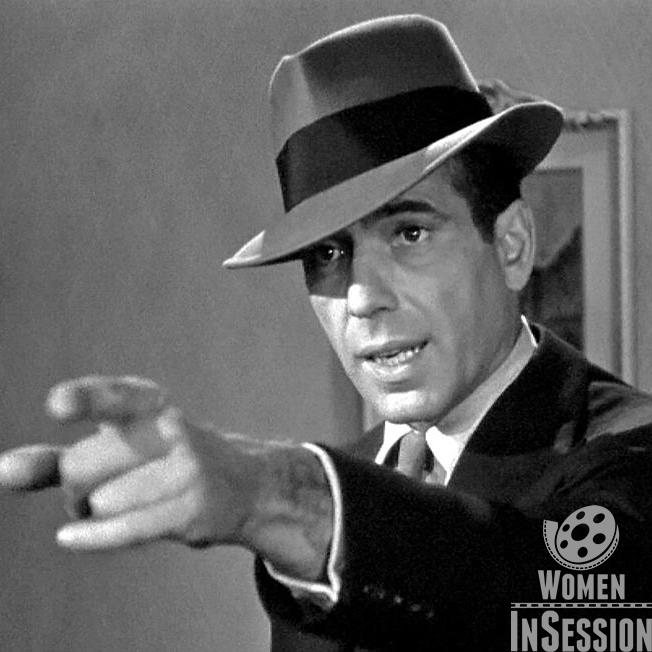
This week on Women InSession Podcast, we take a look back at the iconic career of Humphrey Bogart! We discuss everything from Casablanca to In a Lonely Place to To Have and Have Not to The Maltese Falcon and everything in between.
Panel: Kristin Battestella, Zita Short
On that note, check out this week’s show and let us know what you think in the comment section. Thanks for listening and for supporting the InSession Film Podcast!
To hear this Extra Film episode and everything else we do, download our apps on the Amazon Market for Android and the Podcast Source app on IOS devices. The mobile app covers all of our main shows, bonus podcasts and everything else relating to the InSession Film Podcast. Thanks for your wonderful support and for listening to our show. It means the world to us.
Writers: Tommy Swerdlow, Tom Wheeler, and Paul Fisher
Stars: Antonio Banderas, Salma Hayek, Florence Pugh
Synopsis: Puss in Boots discovers that his passion for adventure has taken its toll: he has burned through eight of his nine lives. Puss sets out on an epic journey to find the mythical Last Wish and restore his nine lives.
Puss in Boots: The Last Wish is an energetic, gleefully jovial, inventive, and surprisingly mature turn for Dreamworks charming swashbuckler. Directed by Joel Crawford and Januel Mercado, Puss in Boots: The Last Wish tells the story of Puss’s (Antonio Banderas) clash with death (Wagner Moura), as his nine lives have all been used up. The only hope for Puss is to find the last wishing star, and use its magical power to restore his 9 lives back to normal.
Shrek is one of my favorite movies. Shrek 2 is the sequel commonly lauded as the best sequel by many on the internet. And as a franchise, it’s been dead in the water for the past 11 years. The franchise that once started as a satire of Disney became as big as Disney and lost its magic. The photorealistic animation was never quite as good as what Pixar was doing, the innuendos became dull, and the celebrity casting for animated characters became the industry standard. And with the success of How To Train Your Dragon and Kung Fu Panda, there was no reason to return to far far away. Enter Puss in Boots: The Last Wish. The change in style, quality, and tone between the first and second films couldn’t be any sharper. Life has been breathed back into this series, and this is the fantasy adventure for the whole family this Christmas.
The first major change in Puss in Boots: The Last Wish, is its animated aesthetic. Over the last 4 years, animation has been undergoing a transformation away from the realistic design of Pixar, towards a more surreal, anime-inspired production. Into The Spiderverse, Arcane, and The Mitchells vs. The Machines have ushered in this era, and Puss in Boots: The Last Wish follows in their footsteps closely. Its pastel color palette and intimate shading technique that hints towards image depth create a journey that is visual candy. Every location is brought to life beautifully, from the enchanted forest to Horner’s pie factory. It’s made even more beautiful thanks to the wonderful characters, whose exaggerated features perfectly capture their personality. The sweet Kitty Softpaws is smoothly rendered, while the messy Bear crime family have twigs sticking out of their hair. Even Puss has undergone a transformation, with his facial features promoting his eyes and smile more than ever before. It all combines to create a gorgeous world worth admiring.
This world, however, doesn’t exist solely to be looked upon by the audience. The story, this time around, is centered on existential questions, and while it’s nothing new to older audiences, its delicate approach is surprising from this franchise. It’s a satisfying story about family, life, and death that isn’t so complex that younger audiences will miss it. The lovable cast of characters all have far more depth than what appears at face value, and it’s used to great effect as the film progresses. Florence Pugh shines in the role of Goldilocks, as the character attempts to lead the Bear family to the wishing star for her own, secret, selfish purposes. Her chemistry with Samson Kayo, who portrays Baby Bear, adds layers to the Bear crime family. The cast is stellar across the board, from Harvey Guillén to Wagner Moura. Every actor brings their A game to the film, endearing you to even the biggest of bad guys. And outside of the emotional story is a script full of genuine gags sure to bring a smile to your face. Unlike its predecessors, Puss in Boots: The Last Wish avoids simple crude jokes to keep the adults interested, rather resorting to visual gags only possible in the medium of film.
The final element that launches Puss in Boots: The Last Wish into greatness is its incredible action sequences. Not since the projects of the late Monty Ohm has there been an animated project that has action this fluid. The animation utilizes motion-lines to create speed, with editing that enhances the build-up to the swing of steel. Transformation weapons, one-take sequences, and constant movement give the film a rhythm and intensity that draws you into the moment. And it enables each character to shine, as their own styles of fighting are depicted beautifully.
Puss in Boots: The Last Wish is an 11 year sequel with something to prove, and while its meta-textual elements don’t quite reach the highs of Shrek 2, it’s a work of art you must see this holiday season.
Synopsis: A tale of outsized ambition and outrageous excess, it traces the rise and fall of multiple characters during an era of unbridled decadence and depravity in early Hollywood.
Damien Chazelle’s Babylon is a shot of adrenaline to the heart. This is a Hollywood epic of unfathomable proportions. It’s a film that no amount of studio marketing could properly translate to audiences everywhere. Perhaps that’s why many found its trailer to fall disappointingly flat for the past few months. In Chazelle’s previous three masterpieces (yes, they all absolutely rule), he depicts people unwilling to let their dreams fall to the wayside. His characters will do all they can to make it onto that stage, or in the case of First Man, the moon. But what happens when that is no longer an option? Whether it be self sabotage, or more realistically, the results of the system crashing in on itself, Babylon is not the gleaming portrait of Hollywood many might expect. With this film, Chazelle instead depicts what happens to his characters when they have exhausted all possible options. In a landscape like Hollywood, one that is inherently designed to swallow up everything around it, the characters in this film all seem to be strapped into a maddening rollercoaster that has lost all control of the brakes. Unaware of the impending doom, we witness them enjoy the ride of fame and fortune until the tracks disappear beneath them.
Babylon opens up in Los Angeles in the mid 1920s. Manny Torres (Diego Calva) is on his way to theevent of the century, or more in line with this film, of the night. Alongside an elephant, Manny stumbles his way through the extravaganza. In a jaw-droppingly impressive one-take. In this take, Chazelle weaves through just about every debaucherous act one could possibly imagine, as he introduces most of the film’s key players. This is one of many moments in the film that feel particularly reminiscent of Paul Thomas Anderson’s Boogie Nights. It may take some time for that comparison to be made internally however, as the opening chunk of this film feels as if it is trying to assault your brain into sensory overload. Yet it doesn’t really stop once the party ends. Instead, the chaos just feels a bit more reigned in as the action, the characters, and subsequently, the audience, get dragged onto a film set. As fictitious screen legend Jack Conrad (Brad Pitt) and fictitious newcomer Nellie LaRoy (Margot Robbie) make their way to set for an honest day’s work, the audience is treated to pure madness. Fires break out and on-screen injuries occur, contributing to a sense of haphazardness in just about every frame. Anybody who has spent any time on a film set can attest to it being hectic, but few could ever fathom what filmmaking must have been like 100 years ago aside from those who actually went through it. Yet Chazelle, who has previously depicted his passion for the olden days of Hollywood, does his best, and pulls it off pretty damn effectively.
It’s in the above treatment of Hollywood that Babylon excels. If one thing is clear from this film, it’s that Chazelle is deeply torn. The history of Hollywood during this time is inextricably linked to immoral, cruel, and unjust behavior. To sugarcoat any of it would be deeply irresponsible, and frankly, unsettling. There is absolutely still an undercurrent of, “As long as we get the shot” present, but those moments of capturing spectacle are juxtaposed against flat-out horror at times. While much of this film is fictitious and characters within are an amalgamation of real-life personas, one could assume that some of the events within are also stories that have been passed down in Hollywood. It’s in these moments of unsafe working conditions that Babylon could travel down some incredibly interesting, and mostly overlooked, paths of Hollywood history. Yet clocking in at a massive 189 minutes, it almost feels as if Chazelle tried to stuff two films into one: the love letter andthe manifesto damning the whole industry. For better or worse, he appears to lean into the former more often than not.
By all accounts, Babylon is an incredibly tough film to process. It’s an absolute marvel in terms of raw filmmaking and sheer scope. It’s unbelievably bold, and it’s the type of massive swing that somebody like myself hopes to see in big budget filmmaking. But it’s in the very spectacle that bolsters the film that Chazelle himself seems to get lost. It almost feels as if he made this film to have the opportunity to walk those very same halls. Because at the end of the day, the more interesting and important stories in Babylon are not the ones being told. Instead, they operate on the outer edges of the superstars at work. There are many principal characters introduced alongside Manny, Nellie, and Jack; yet they barely appear in the film aside from a few moments. I can’t help but wonder how or why so little time in this epic is devoted to jazz musician Sidney Palmer (Jovan Adepo) and singer/writer Lady Fay Zhu (Li Jun Li). And while Calva very much feels like he should be the narrative lead of Babylon, he, more often than not, gets sidelined. Here we have characters, all well-equipped to have deeply compelling and rarely seen experiences in Hollywood, cast aside narratively. It’s moments like these where Chazelle’s first signs of faltering in his career begin to show. I’m a sucker for spectacle, but I never believe it should operate by sacrificing characters, especially when they’re set up to be pivotal figures. At one point around midway through the film, Sidney’s character has to deal with a clearcut example of Hollywood executives pandering to racist audiences. Directly after this moment, Sidney all but disappears from the film only to show up in an epilogue. It’s clear that an epic of these proportions may be a bit out of reach for Chazelle textually if not stylistically.
This is no slight to Robbie or Pitt, as they deliver astonishing performances full of pain and utter defeat. However, while there’s plenty of full-on movie star work in every party sequence, I wonder what this film would be like if Nellie was played by somebody a bit less synonymous with superstardom. It feels like this is a large reason as to why Calva’s role is so effective, especially when paired with his wonderful performance. It’s one full of wonder and yearning, that all comes barreling to a head in the final moments of this film. I’m unsure if my brain will ever fully heal from what Chazelle goes-for-broke with in the extended finale of Babylon, but one thing is certain: audiences may very well never see anything like it ever again. Whether that’s for better or worse is up to the viewer at the end of the day.
Stars: Will Ferrell, Ryan Reynolds, Octavia Spencer
Synopsis: A musical version of Charles Dickens’s story of a miserly misanthrope who is taken on a magical journey.
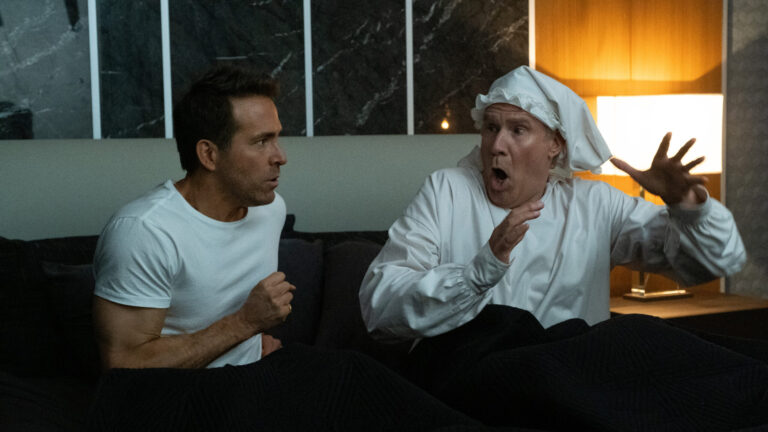
The latest version of Charles Dickens’ favorite misanthrope, Spirited, is a modernized musical update of the holiday classic. This time, Will Ferrell plays the Scrooge, who happens to be living his afterlife with his best life. He currently has the title Ghost of Christmas Present. Ebenezer works with a team of do-gooders who want nothing but to reclaim and tap into the holiday spirit in everyone. We get a taste early in the film, including winning over a woman aptly named Karen (Rose Byrne in a terrific cameo) who makes filing noise ordinances and homeowners association complaints an Olympic sport.
However, taking on these small projects has left our G.O.C.P. in an existential crisis. Sure, he can create change on the micro and mezzo levels, but what about a big fish that can make a real macro-level change? Like the Steve Bannons, Elon Musks, or Donald Trumps of the world? The ones that attack their enemies for profit. That rollback the civil rights of minority groups to make the alt-right great again. Even build fraudulent fundraising campaigns to get reality stars elected to public office. That’s where Ryan Reynolds comes in. He plays that miser — since Ferrell’s Scrooge has gone Mr. Rogers — a soulless media strategist and consultant specializing in the world of spin. To put it in perspective, If Shiv Roy of Succession uses her niceness as a weapon, like a machete, Briggs must be using a flamethrower.
Briggs appears charming but he is an expert on defeating your opponent by finding their weak spots. There’s nothing he won’t sell his soul for. (I’m certain pharmaceutical companies hired Briggs to spin opioids as breath mints). Case in point, when his adolescent niece Wren (Marlow Barkley) wants to win her school election, he finds dirt on her ten-year-old foe in the form of a social media post that will cancel the little guy for years to come. That makes him the perfect candidate to be reformed by the Ghost of Christmas Present. If he can reform Briggs, they can turn a slippery slope of a world going fashionably evil into something good.
Directed by Sean Anders, Spirited had me caught up in some grand mirthfulness and reminds us of what a good holiday comedy can bring. Yes, we still hold a grudge against Anders for subjecting us to That’s My Boy, but he hit the sweet spot with the family comedy Instant Family. The director brings that same empathetic heart to a fairly conventional comedy with glitz, glamour, and some delightful musical numbers by its top-notch cast. Including the wonderful and electric opening number, “That Christmas Morning Feelin’,” which sets the tone of the film. It’s also one of the cleverest uses of exposition I’ve seen in years. Reynolds and Ferrell both get their solo numbers with our Elf singing his little heart out with the heartfelt “Unredeemable,” and Reynolds puts a delightful spin on “Bringin’ Back Christmas.”
Yes, Spirited does give way to most of today’s sophomoric tropes. However, the cast here is amusing and likable, so you’ll forgive the use of them almost immediately. Besides Ferrell and Reynolds, you have the hilarious and often adorable Sunita Mani (Glow), who plays the Ghost of Christmas Past and can’t help but toss aside her responsibilities to get a roll in the hay with the man. I’m not sure if this was intentional, but Patrick Page’s channeling his inner-Christopher Plummer gave me TheSoundof Music holiday feels. There is the ultra-sweet romance between Ferrell’s Present and Octavia Spencer’s Kimberly that is as tender as your roasted turkey served during your holiday dinner.
You can dock Anders’s film for being a good half-hour too long and giving in to mainstream audience expectations. Still, Elf scribe David Berenbaum puts a whimsical spin on a thoroughly enjoyable Charles Dickens holiday staple. Ferrell and Reynolds have terrific buddy chemistry and are dependably funny here. All of this makes Spirited potentially another Will Ferrell (and friends) holiday classic that’s a delight from start to finish.
Synopsis: In 1950s London, a humorless civil servant decides to take time off work to experience life after receiving a grim diagnosis.
London in the early 1950s; a post-war gloom underscored by that most British of character traits, the stiff upper lip. Standing by platforms, awaiting the train which will carry them into the city, are multitudes of homogenous gentlemen, complete with pinstripe suits and bowler hats. Some gaze blankly into the distance, others fold open their copy of the Times; all have the same demeanor.
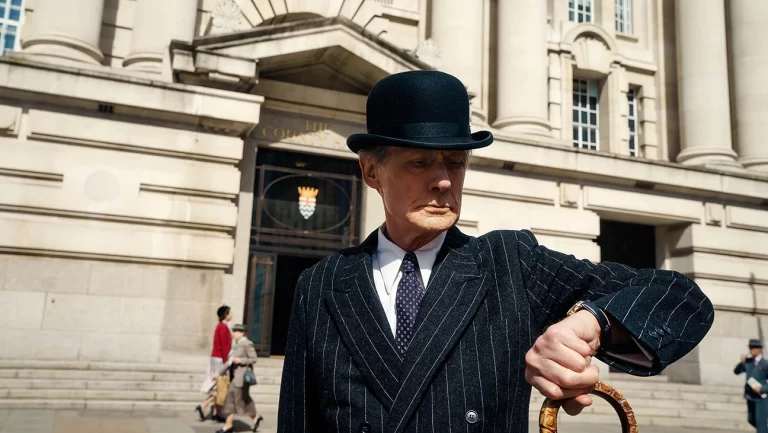
This is the world of straight lines and perfectly mannered stoicism in which we meet Mr. Williams (Bill Nighy). Mr. Williams is the perfect embodiment of the British mentality, the personification of class rigidity which was a large part of the culture then. He spends his days as a bureaucrat, pushing stacks of paper indicating planning permits from one tray to another. In this system, as in his life, everything moves very, very slowly. Everything, they say, is as it should be. The one glimpse into Mr. Williams’ personal life – such as it is – comes through his son, with whom he lives yet seems to enjoy no particularly close relationship.
Everything in Mr. Williams’ neatly ordered world changes when he is given a terminal cancer diagnosis by his doctor. “It’s never easy delivering this news” the doctor tells him, to which he simply responds, “quite”. Even the news of an impending death must not broach impropriety. That would not do.
And yet, as he reflects on the life he has lived, something changes in Mr. Williams. The exact nature of his ruminations is never fully revealed, but the impression is that he has spent his time following the rules and is now wondering quite what it was all for. And so the scene is set for Mr. Williams to begin, possibly for the first time in his life, to really live. Fully and unrestrained. In doing so he encounters a drunken raconteur (Tom Burke) concerned solely with drinking and chasing women, a sweet young woman from his office (Aimee Lou Wood) who secretly calls him Mr. Zombie and who yearns for something more than the staid office life into which she has found herself, and an amicable young man (Peter Wakeling) set to follow the same path Mr. Williams himself set upon many years ago.
To add complications to matters, a group of women begin making a nuisance of themselves in the office in an attempt to get planning permission to turn a disused section of their neighborhood into a swing park for the children. Mr. Williams, at first dismissive of such an endeavor, decides to make it a personal mission to see the swing park come to fruition, if it’s the last thing he ever does.
Living is an excellent, exquisite reimagining of Akira Kurosawa’s 1952 film Ikiru, itself an adaptation of Leo Tolstoy’s The Death of Ivan Ilyich, and adapted by Japanese-British novelist Kazuo Ishiguro (The Remains of the Day, Never Let Me Go, Klara and the Sun God). Ishiguro had long wanted to adapt Kurosawa’s classic, and his passion for the material shows. The lessons of Tolstoy’s original – of living for others, of the ephemeral nature of life and the meaning to be found in death – is a touchstone in any culture, in any era, and therefore universally adaptable. Ishiguro’s gambit is to move the scene from what was then present day Japan to post-war Britain, juxtaposing the stifling tedium of British values against the opportunities to create meaning and purpose. For all Mr. Williams spends his days in his office grinding the gears of bureaucratic power ever so slowly, there are people out living and thriving. The genius in Living’s script is to show these two examples set side-by-side.
The other masterstroke is in its casting. The story goes that Ishiguro pitched the idea to Bill Nighy one night when they met at a party. Nighy had never seen the original Ikiru, but immediately signed on as soon as he had watched it. It was a good thing that party happened, because it’s difficult to imagine anyone other than Nighy as Mr. Williams.
The now legendary British actor carries such an air of debonair wit and yet repressed stoicism that you feel he may have come from the womb in a crisp three piece suit, replete with bowler hat and walking cane. He suffuses Mr. Williams with such quiet force and gradually increasing vulnerability that the viewer can’t help but be carried along on the riptide of his journey. In Nighy’s frequently baleful gaze one is reminded of the oft-used Henry David Thoreau quote about the mass of men leading lives of quiet desperation. Nighy is never less than utterly compelling and convincing.
Elsewhere, Aimee Lou Wood portrays a woman who is virtually the opposite of Mr. Williams. Margaret is cheery, bright, and full of optimism for her future. She presents such a fresh perspective that it’s no wonder Mr. Williams feels drawn to her as he searches for a new meaning in his life. The two develop a wonderful dynamic, with Margaret slowly teasing Mr. Williams from his shell; their gradual, burgeoning friendship provides the emotional core of Living and is perhaps the most affecting part of it.
Tom Burke plays the roguish Sutherland, to whom Mr. Williams first confides his diagnosis and who, having taken pity on the old man, decides to show him the darker side of London. While Burke’s part is small, it is not inconsequential; Sutherland’s effrontery is an excellent counterpoint to the musn’t-say-that attitude of Mr. Williams and his peers. In Sutherland’s never ending quest for pleasure is an avenue for exploration that you sense Mr. Williams has never quite considered and so becomes an intriguing part of his journey. It also leads to one of the more heart rending moments in Living, as a drunken Mr. Williams launches into a haunting rendition of The Rowan Tree – an old Scottish folk song which had this Scottish film reviewer a little misty eyed – with only a piano as an accompaniment.
Finally, a third act change of structure feels initially jarring but turns out to be another masterstroke by Ishiguro as we move from the idea of meaning and purpose to the exploration of legacy and what we leave to others after our time is done. It is all handled with such graceful care by director Oliver Hermanus and deftly ties its themes together for a gut-puncher of a finale.
It certainly won’t be for everyone – Living is told at a slow pace, with much more meaning in what is left unsaid, and its unshowy, no-frills filmmaking, including a 1.33:1 aspect ratio meant to evoke the period alongside cinematographer Jamie Ramsay’s boxy framing, might put viewers off. However, surrender yourself to this quiet, contemplative piece of cinema and you might just find yourself thinking about it days after the curtain comes down.
Stars: Thobias Thorwid, Harris Dickinson, Charlbi Dean
Synopsis: A cruise for the super-rich sinks thus leaving survivors, including a fashion model celebrity couple, trapped on an island.
A young modeling couple has an interesting dynamic together: she makes a lot more than he. At the start, we are introduced to Carl (Harris Dickinson), who has to be part of the meat parade of shirtless men for gigs, and Yaya (Charlbi Dean), who is an influencer with a ton of Instagram followers. It bothers Carl that his success isn’t up to her level, and, he struggles to grasp that he should be pleased with a beautiful woman. They get a free getaway on an exclusive cruise for the ultra-rich – which was shot on the former Jackie O yacht owned by the Onassis family – and it’s a simple trip that should cover these cracks easily, right? Nope. It gets worse in many ways.
Writer/director Ruben Östlund follows up his Palme d’Or-winning The Square with another Palme d’Or-winning effort. Like his previous film, it’s a dark satire, a knee to the groin against the wealthy and the gap between them and the boat’s blue-collar workers. The top 1% are arrogant with ridiculous requests such as a French woman’s demand that the whole crew goes out for a swim, causing unintended consequences. A Russian industrialist who makes manure (“I sell shit”), a British couple who made their millions selling top-grade military weapons, and a German couple in which the wife has recovered from a stroke but can only say one sentence (“In the clouds,” is the German translation) are among the passengers who seem to boast about their wealth.
Then, there are the crew members which include the drunken captain Thomas (Woody Harrelson), head of staff Paula (Vicki Berlin) who tells the others to follow every request from the guests, and toilet cleaner Abigail, played by Dolly de Leon, whose performance is the MVP of the ensemble. Keep an eye on her, particularly in the film’s third part because it’s such a revelation to those who have never seen her before, which probably included Östlund because de Leon had no agent when she submitted her audition tape for the role. She steals the movie and controls the narrative which would make Marxists proud, the dictatorship of the proletariat. Or, to use Captain Phillips as a reference, “I’m the captain now.”
The lengthy sequence of seasickness, food poisoning, drunkenness, and ideological warfare is both stomach-curling and constantly hilarious as you would probably take pleasure in seeing ignorant wealthy people s***ing themselves and unable to walk in a straight line. If it weren’t any crazier, what happens next makes their trip from hell even more hellish where now they must survive, except no one really has those such talented skills except Abigail. Her turn as an Alpha of a group of wealthy lazies and getting them in line is a fantasy in itself, but what a twist it would be if that could happen in real life.
The movie drags off a bit too much in each of the three parts as it tries to expand more about the characters’ hypocrisies, but the power of Östlund’s dressing down of the affluent remains. He gives us the meaning of the film’s title in the first five minutes, which is perfect for our young, Millennial couple. Dickinson and Dean are not overpowering in their performances, but Östlund wonderfully makes them both central and side characters as the story progresses, especially because of the age gap between themselves and the others. However, the meaning of it can certainly be applied to all the characters. The comparison many people have made to Luis Bunuel’s The Discreet Charm Of The Bourgeoisie is right on the money. These people are far from reality, living in a la-la land where they think they can control everything. Not just on the cruise, but in the social hierarchy. Östlund drags them down to earth cruelly, and no champagne can clean this new stench.
Synopsis: Tech billionaire Miles Bron invites his friends, as well as Detective Benoit Blanc , for a “murder mystery party” getaway on Glass Onion, his private Greek island. However, when someone turns up dead for real, Blanc must crack the case and discover who the killer is.
One of the best experiences I have had at the movie theatres in a long time is with Rian Johnson’s Knives Out, a whodunnit that had audiences guessing and laughing for the entire runtime. When it was announced that Netflix had acquired the rights to distribute the next tale of detective Benoit Blanc, my first worry was that it would not be easily seen by the general public on the big screen. Experiencing the first film in a movie theatre elevated the material and I knew that it would not be the same watching Glass Onion at home, not having an audience laugh alongside the jokes and being a part of discovering the mystery together. That is why I made sure to see the film in a festival run at the first chance I had, and why I am glad that Netflix is having a week-long wide release in movie theatres across the world for this latest release.
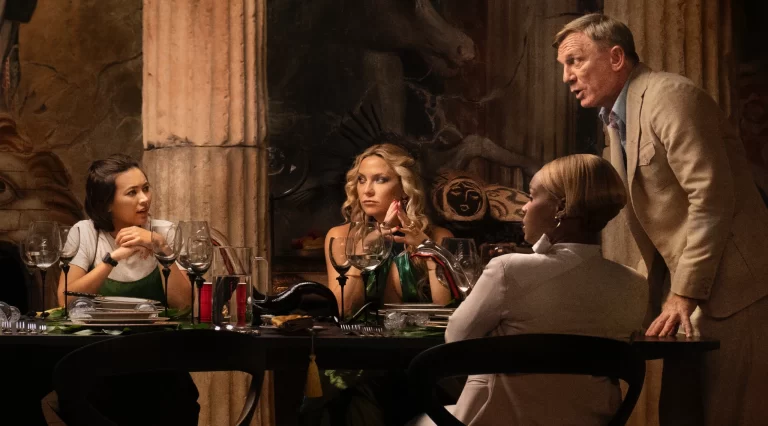
Just as with the original, Glass Onion is a true ensemble piece. Of course, it is great to see Daniel Craig return as Benoit Blanc, a character that I want to see him return to over and over again. However, the new cast of characters in this film are what elevate this story compared to Knives Out. It is easy to see why Janelle Monaé has been the one getting the most praise online, as they are given the most material to work with. The performance they give gets better throughout the film as more is revealed about the story, with Monaé potentially giving my favorite supporting performance of any film so far this year. Everyone in the cast deserves recognition for their work here, but one other stand out performance I would like to highlight is Dave Bautista, who continues to prove that he can be versatile and offer range unlike many others who make the move from wrestling to acting.
A big part of a good whodunnit is the murder mystery, and I like the idea that the beginning of this story sets up the idea of a fake murder mystery that the group of friends have to solve. While it is obvious from the start that something is going to go wrong and that someone would end up murdered, it gives the screenplay some breathing room to introduce the audience to the new batch of characters and learn about their connections, making us observant long before anything has even taken place. Rian Johnson is able to use the comedic relief of the fake murder mystery to shock the audience later on down the line, even when the audience is expecting something to happen, balancing humor with a darker plot line in the second half of the film.
Glass Onion is a film that was made during the COVID-19 pandemic, and that element is very much a part of the script. While it took me by surprise that the subject matter was being approached in what felt like a humorous manner, it does make sense for a story such as this one. To have a character such as Kate Hudson’s Birdie Jay ignore all of the warnings and instead go to parties reflects actions that we saw from influencers and celebrities during the pandemic. Additionally, having the pandemic as an element of the film gives the story a great excuse to have these characters meet up and go to a private island, reducing the number of people on screen needed for a majority of the film and making it easier to shoot at this time.
Glass Onion is another fantastic whodunnit from Rian Johnson, but is it better than Knives Out? Well, that comes down to personal preference and what you seek from these films. In terms of the murder mystery itself, Glass Onion feels more predictable and doesn’t land as hard with the big reveals. However, the back story is more compelling and the humor is elevated to another level, unafraid to commit to an almost caricature-level of writing and performance for many of the characters in this film. If you want to see Glass Onion, which you definitely should, make sure to catch it in the movie theatre if you are able to. These films demand to be seen with the biggest crowd possible.
Writer: Alejandro G. Iñárritu and Nicolás Giacobone
Stars: Daniel Giménez Cacho, Griselda Siciliani, Iker Solano
Synopsis: An acclaimed journalist-turned-documentarian goes on an oneiric introspective journey to reconcile with the past, the present and his Mexican identity.
As we become older, we begin to look into ourselves, reminiscing over the stories of our past. And although we cling to what has shaped and formed us throughout our lifetime — though we’ve lived every moment — these memories become hazy, as though we can see only a version of us through a looking glass. And before we know it, we have become an unreliable narrator — misremembering sequences of events, what things were said, and how those around us reacted. It’s a frequently used concept, and one that director Alejandro G. Iñárritu teases us with in his newest film Bardo: False Chronicle of a Handful of Truths.
Fact, fiction, or somewhere in-between? The question lingers heavy on our mind, but before we’re able to process such an idea, Iñárritu catapults us into the world that is his main character, Silverio (Daniel Giménez Cacho). Silverio is a journalist turned documentarian, and a well-accomplished one, at that. His resumé is full of achievements, which brings us to the days leading up to a major award he’s going to receive in Los Angeles. He’s Mexican born and raised, but has decided to live the past 20 years with his family in the United States working on various projects. It isn’t hard to equate the parallels between Iñárritu’s life and that of our main character. Fill in a couple of blanks with some of Iñárritu’s own achievements — his Oscar wins, for example — and you have some considerable similarities.
Silverio returns to Mexico after a long absence as his old friends and colleagues have a celebration in his honor — eager for a second of his time. But where there are his admirers, there are also some who believe that Silverio has become full of himself — fleeing the first chance he became famous, only to now be a microphone for the Americans, and an artist whose work drips with pretentious nonsense. His former friend, now enemy, Luis (Francisco Rubio) — a now popular Mexican talk show host — is most critical of Silverio’s work, and unforgiving for it. However, when it comes to Silverio, a man whose fantastical imagination and self-aggrandization leads to him rubbing shoulders with famous conquistadors and war heroes, Luis’ venomous words fall on Silverio’s deaf ears. Is that how it really happened? Who knows.
Wave after wave, Silverio is haunted by various memories — many not cohesively tethered to the last. He wonders if he’s a good husband, father, son, friend, and colleague. His wife Lucia (Griselda Siciliani) dotes upon him as his children, Lorenzo (Iker Solano) and Camila (Ximena Lamadrid) are seemingly important parts of Silverio’s personality. And yet, though the characters carry on with their lives as normal, there’s an overbearing feeling of something holding each one of them back. A memory, or ongoing circumstance, that serves to not let our characters feel like they can belong in a stable point in their lives.
My admiration and respect knows no bounds when it comes to Iñárritu’s filmmaking talents, as he’s shown us with his previous directing achievements such as Birdman or (The Unexpected Virtue of Ignorance) and The Revenant. But when it comes to Bardo, he shows us something different, more personal. At every turn, you are whisked away, enwrapped in a cacophony of music and color. Your mind is unable to fully wrap itself around the fantasy that’s unfolding. And because of that, one could easily write Bardo off as being surface level, or a film without substance. There’s a war, however, that fights in the heart of our main character. An internal struggle in a world where we cling so close to our roots of race or ethnicity, our hearts and minds become nomadic as we fall through the cracks of the places we believe we should belong.
In technical terms, the word bardo is Buddhist, meaning the “intermediate or transitional state between death and rebirth.” It’s a heavy word, but one that Iñárritu doesn’t take lightly, which is why the film may feel a bit chaotic at times. The mysterious artistry of leaving a reader or, in this case an audience, with the feeling of “is this part autobiography,” is nothing new. We can rake the film over with a fine tooth comb trying to interpret Iñárritu’s meaning of vast symbolism with regard to his own life, but do we really need to do that? Did these events actually happen? The point is that Iñárritu creates a world, in typical Iñárritu fashion, to illuminate the constant transitional state (the in-between) in so many of our lives.
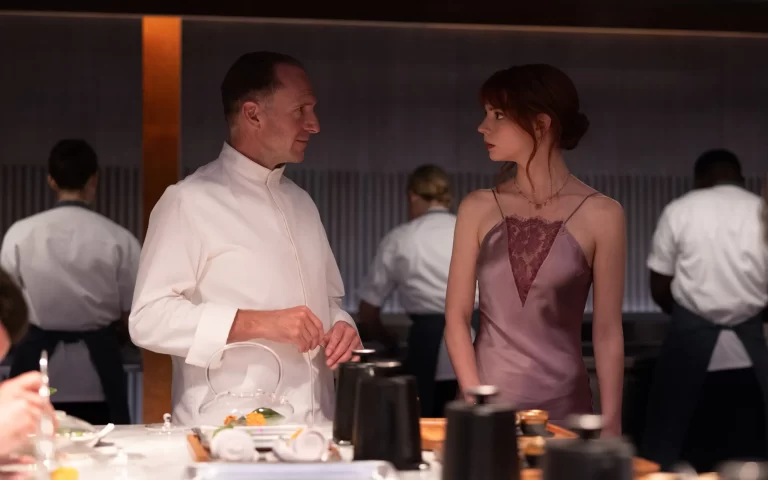
Stars: Ralph Fiennes, Anya Taylor-Joy, Nicholas Hoult and Hong Chau
Synopsis: A young couple travels to a remote island to eat at an exclusive restaurant where the chef has prepared a lavish menu, with some shocking surprises.
From the first minute of the film, the mystery of the night’s dinner has begun. With the audience unaware of how Margot (Anya Taylor-Joy) and Tyler (Nicholas Hoult) know each other, we are left second guessing everything that we see on screen. At first, it seems like the couple are simply going to a remote island to experience fine dining at the highest level, being given an exclusive tour of the premises and enjoying the night with food critics and celebrities. However, things quickly take a dark twist thanks to Chef Slowik’s (Ralph Fiennes) menu.
It is usually hard to shock an audience when they go into a film knowing that there will be twists and turns, something that heavily impacts the horror and thriller genre. However, when the first major twist in The Menu happens, it is done in a way that is effectively surprising due to the dramatic tone and editing style of the sequence. Nothing is left to the imagination as the viewer is placed in the perspective of the guests, realizing once and for all that they are in for a night that they didn’t expect.
The social commentary made in The Menu may feel obvious, having guests that feel like caricatures of food critics, celebrities, and rich businessmen; but that only heightens the drama unfolding in the film. It also balances nicely with the menu for the night presented by Chef Slowik, which plays into several aspects of fine dining that are criticized by people including small portion sizes, elaborate decorations, and garnishes for typically simple concepts, and themed menus that don’t generally relate to food. These sequences are some of the best within The Menu as director Mark Mylod inserts fancy shots of these meals as if they are a part of a cooking show, inserting humorous text to describe what is in the meal. Alongside the satirical descriptions, The Menu has perhaps the best food shots since the breakfast sandwich in Harley Quinn: Birds of Prey, particularly when it comes to the less elaborate meals on the menu. Despite occurring numerous times throughout the film, the running joke continues to get better, with the final meal even taking me by surprise.
The Menu is a film in which it is hard to sympathize with most of the characters who have found themselves partaking in this night, but there is one character that we do follow that we can feel bad for. Margot does not belong at the event, which is made clear right from the start when she is not specifically on the guest list, but instead as a replacement for Tyler’s assigned guest. Chef Slowik is also aware of this and makes it clear to her that she should not be there, showing that he did not plan this as part of his menu. The film does slowly hint at Margot’s past, something that is done incredibly effectively through little actions and small chat between the guests at the event, but the reveal of the reason for her presence is the most heart-breaking part of the story, especially when we see that she hadn’t realized the severity of the situation either. From that moment onwards, the stakes are raised as the audience is left caring about what happens to her, adding weight to the narrative that wasn’t as present in the first act of the film.
Despite knowing how the story goes and where the twists and turns are, The Menu is a film that I can see myself going back to again and again. From the editing style that elevates the satirical humor to balancing that humor with some dark twists and turns that managed to shock me repeatedly, this is one of the best thrillers of the past few years. Concisely told and cleverly scripted, strong performances from Taylor-Joy and Fiennes help to elevate the material and create a film that is hard to look away from. Turns out there were not too many cooks in the kitchen with this delicious serving.
Stars: Jim Parsons, Ben Aldridge, Sally Field, and Bill Irwin
Synopsis: The story of Michael Ausiello and Kit Cowan’s relationship that takes a tragic turn when Cowan is diagnosed with terminal cancer.
It won’t be hard for you to cry at Michael Showalter’s latest film, Spoiler Alert, even when it keeps telling you that the story will end with Kit Cowan (Ben Aldridge) dying. The movie even opens with Michael Ausiello (Jim Parsons) in the hospital, lying with Cowan in his final moments. And yet, after going through the emotional journey with the two, it won’t be hard to shed a few tears as the movie wraps up. It doesn’t always work, and feels too conventional for my taste, but the movie remains an admirable effort nonetheless.
Part of the reason why it’s effective is due to the two lead performances from Jim Parsons and Ben Aldridge, who bring a great amount of emotional depth to their respective characters. Ausiello and Cowan have a natural relationship together, and the actors’ chemistry is incredible. It’s the main reason that the film is as good as it is, because it re-treads many standard tropes from illness-driven biopics. At first, their relationship is incredible, even if they’re not necessarily “perfect” matches. Kit’s physique is much more imposing than Michael’s, who reveals he was a “former fat kid,” as explained through flashbacks that take the aesthetic of an ‘80s sitcom.
However, as time passes, they become more distant, to the point where they start to live separately, in an attempt to “salvage” their marriage. That does not go well, but during the holidays, Michael invites Kit over to dinner and sees him in immense pain. Something is wrong, and it is later revealed that he has been diagnosed with terminal cancer. Of course, the cancer diagnosis brings the couple closer together, as they share their final moments with deep intimacy and love for each other, alongside Kit’s parents, played by Sally Field and Bill Irwin.
Field and Irwin bring great levity to the material, especially during the more humorous scenes where Michael has to pretend he is just Kit’s friend, not knowing if their parents will accept his son as gay. That particular scene goes on for way too long, but it has the strongest humor of the movie. The comedy doesn’t always work, particularly the “sitcom” bits, but whenever it does, Showalter lingers on the comedy for way too long. For instance, in one of the film’s most poignant moments, Michael attempts to try weed with Kit, as it will be the last chance he will ever be able to do so. The scene starts playful enough, but stretches out to near-interminable lengths. Sure, the point of the sequence is to see Michael make a fool of himself, but did we need to see him painstakingly smoke weed twice? I don’t know about that…
The sitcom bits are also excruciatingly unfunny. At first, it’s novel enough to make us chuckle, but it quickly overstays its welcome as it goes into “dramatic” territory and still tries to make us laugh as Michael’s mother gets diagnosed with cancer with the old coughing of blood cliché to signal to the audience that the character is dying. It doesn’t work, and feels manipulative, compared to the more earnest, and emotionally poignant relationship with Kit and Michael.
When the movie either focuses on the two, or on Kit’s parents, it works. Michael develops a fun pair with Kit’s mother, whom Sally Field gives just the right amount of depth to her character to make the chemistry feel authentic. And there are plenty of scenes involving her character where it’s nothing but contemplation on what will happen next when Kit eventually passes away. These scenes aren’t easy to watch, but Field anchors her performance in a way that makes you sympathize with her, as if she were your own mother. And it’s harder to watch every character say goodbye to Kit, as the opening scene plays again, with more context, which only makes you want to ugly cry in the best way possible.
Sure, it’s an amazingly conventional biopic, going through the ups and downs of Michael’s time with Kit. But it’s also increasingly earnest, which most biopics lacknowadays. The film is primarily worth seeing for the lead performances of Jim Parsons and Ben Aldridge, who give the movie the emotional power it needs to work from beginning to end. And that’s good enough for me.
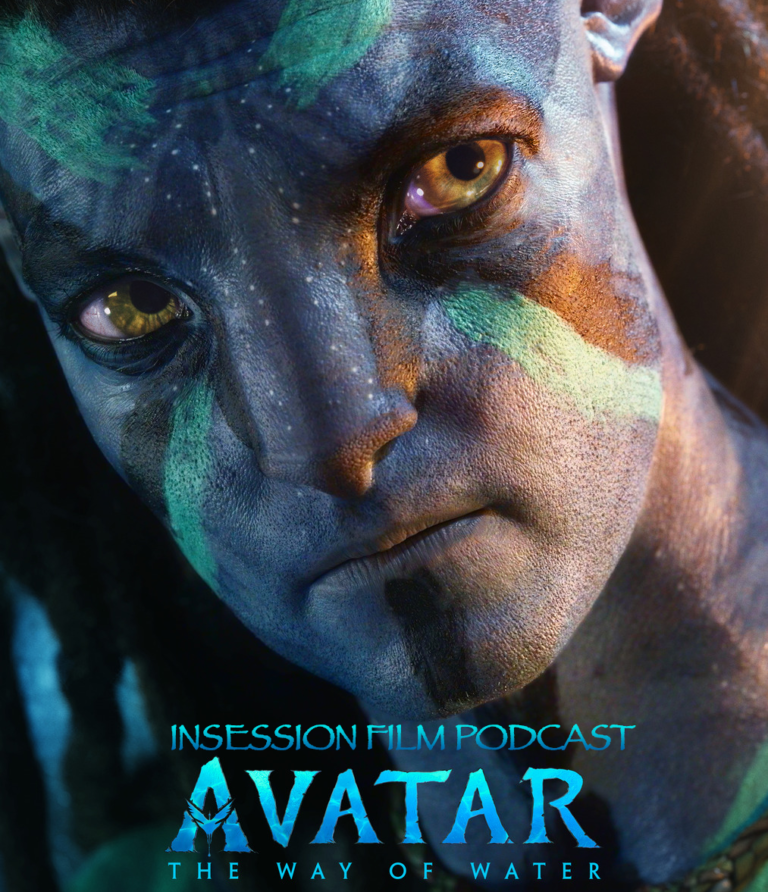
This week on the InSession Film Podcast, Calvin Kemph from The Twin Geeks joins us as we dive into James Cameron’s latest water epic Avatar: The Way of Water and also Noah Baumbach’s new film White Noise!
A big thanks to Calvin for joining us this week. He was a wonderful guest and we had a lot of fun talking about 🐐 Cameron. Avatar: The Way of Water is a big step up from Avatar, and we did our best to swim through all the reasons why that is the case. White Noise on the other hand is a very different film for Noah Baumbach, but an enjoyable ride nonetheless.
On that note, check out this week’s show and let us know what you think in the comment section. Thanks for listening and for supporting the InSession Film Podcast!
– Review: Avatar: The Way of Water (5:38) Director: James Cameron Writers: James Cameron, Rick Jaffa, Amanda Silver Stars: Sam Worthington, Zoe Saldaña, Sigourney Weaver, Stephen Lang
– Notes / Discussion (59:04)
This week for our break segment, JD and Brendan both give their thoughts on the Ikiru remake in Living starring the great Bill Nighy. Brendan also gives us his thoughts on Triangle of Sadness and JD offers up a sentiment on the holiday film Spirited.
Margot Robbie plays Nellie LaRoy and Diego Calva plays Manny Torres in Babylon from Paramount Pictures.
[divider]
Help Support The InSession Film Podcast
If you want to help support us, there are several ways you can help us and we’d absolutely appreciate it. Every penny goes directly back into supporting the show and we are truly honored and grateful. Thanks for your support and for listening to the InSession Film Podcast!
Writer: James Cameron, Rick Jaffa, and Amanda Silver
Stars: Sam Worthington, Zoe Saldana, Sigourney Weaver
Synopsis: Jake Sully lives with his newfound family formed on the extrasolar moon Pandora. Once a familiar threat returns to finish what was previously started, Jake must work with Neytiri and the army of the Na’vi race to protect their home.
While there’s a lacking narrative infrastructure, containing occasionally clunky dialogue and repetitive story exposition, James Cameron’s sequel to the 2009 box-office hit, Avatar: The Way of Water, is easily worth the thirteen-year wait. It is a visually arresting and immersive spectacle that pulls you into the depths of Pandora’s deep blue sea, making that lengthy three-hour runtime easily fly by.
Not only is James Cameron known for delivering great spectacles in the past, but delivering great world-building, even if the film in question has minor or plentiful flaws. In other words, I consider him an explorer – a filmmaker who branches out into the depths of cinema to create visually immersive tales. Cameron wields more than a camera in his backpack of cinematic serendipity; there’s a hammer to construct the awe-inspiring sets, binoculars for which he searches for the great beyond of visual presentation, and some paint to cover the atmosphere and setting with mesmerizing distinctiveness. It is pretty difficult to bet against the sixty-eight-year-old director when he has proven from time to time that when it comes to spectacle – what makes audiences around the world run to their local cinema – he’s one of the best. From Terminator (both the original and Judgement Day) to Titanic (which I admire more than I enjoy), Cameron has blessed us with plenty of cinematic moments and constructions that have stayed with us since their release, each time reimagining what grand scale high-budget blockbusters could do.
That’s why I respect him; he takes his time trying to find something we have never seen before in the vast cinematic landscape through his exploration of nature and technological advancements, even if the project doesn’t end up working altogether. One of his most significant achievements (which, redundantly, I personally call it a “miscue” or “unfulfillment”) is the 2009 global box-office smash, Avatar – a film that tested the possibilities of the third dimension phenomenon. In my opinion, showing a movie in 3D is a gimmick; it is done more for the “fun rollercoaster ride” aspect of a cinematic venture rather than a storytelling mechanism. Distilled laughter fills the screen when everyone puts on their third-dimension glasses. While Avatar ultimately lacks a proper screenplay and cohesive narrative structure, it is an impressive picture, at least regarding its technological aesthetics. It demonstrates the possibilities of what 3D can do (like Alfonso Cuarón did with Gravity) and the growth of visual effects and specialized advancements. Everyone was hooked; every single person on earth (an exaggeration, but “somewhat” true) watched that film when it was first released. It was a global phenomenon. This brings us to the long-awaited sequel, Avatar: The Way of Water, thirteen years later. Not only was it worth the wait, but it easily surpassed the original while still, lamentably, containing the array of narrative drawbacks we saw in the first installment that somewhat hurt its cinematic experience.
The first couple of minutes of Avatar: The Way of Water revolve around a collage-like procedure, where Cameron and crew deliver the backstory of the characters we know, like Jake Sully (James Worthington) and Ney’tiri (Zoe Saldaña), and how they have grown since we last them, both in terms of the relationship they have and as fighters of justice against the sky people. Immediately, you are immersed into the fantastical world of Pandora; even if you disliked the first one as I did, it is difficult not to be enamored by the brilliant visual effects and technological apparitions James Cameron has crafted. These first few minutes may be rushed to continue with the next chapter of Jake and Ney’tiri’s life, but they are equally enchanting. The sky people have begun a war against the Na’vi, burning most of its forests to build a base. However, they aren’t going to stand down. Their fight goes on and on for years to come (and it probably won’t end in the fourth or fifth Avatar sequel); even Jake and Ney’tiri have four kids while in the process of this ongoing war: Kiri (Sigourney Weaver), Neteyam (Jamie Flatters), Tuktirey (Jo-Li Bliss), and Lo’ak (Britain Dalton). They stick together no matter what, but they must leave their home and explore other regions of Pandora when the past comes haunting them.
By the end of the gigantic canvas of its three-hour-plus runtime, which isn’t surprisingly felt, they will have to confront the ghost of the past; the sky people and the Metkayina (the “Avatar” sea people) will have to have a mighty battle. Meanwhile,, we get to see new territories, most of them being submerged to explore the depths of Pandora’s deep blue sea. And, of course, those scenes are an absolute highlight of the film. Extraordinary stuff is happening on screen, leaving you in awe from beginning to end. The visual rapture of Cameron’s creative genius is not only distinctive but tremendously immersive. The 3D effect, HFR mirrorings, 48 fps, and IMAX screens lift that cinematic experience to one of the best of the year. Still, most of the props have to be given to the world-building, from the sea creature designs to the innovation of that underwater world. It is just a marvel of cinematic spectacle, easily one of the best action/adventure films of the year due to its allure – the “oooh’s and ahh’s” factor is ever-present, and audiences will gasp upon these achievements, at least visually and in terms of technological advancements.
In the last act, James Cameron takes us on a tour of his filmography, reenacting scenes from his most famous work, primarily Titanic (and its counterpart, Ronald Neame’s The Poseidon Adventure from 1972). It’s obvious, and those scenes arrive first-hand, without any subtlety, but they are tremendously entertaining. A flaming conclusion to a lavish film – what more would you want in terms of popcorn entertainment? Well… even though it might be a fascinating conclusion when it comes to its action, the screenplay falters heavily, causing some people to disengage entirely due to the bland lines written. When it comes to its narrative, that’s where it falls flat and feels lackluster. It is almost the same as the first one, but a bit better. Avatar: The Way of Water suffers from the same aspects as its 2009 introduction. While it might not be as increasingly annoying as the original, there’s a disjointed structure to the screenplay, containing repetitive expositions and some clunky dialogue (specifically Brendan Cowell saying the line “I have quotas to meet!” twice in the film, which caused a risible tidal wave upon some audience members when I watched it, including me). Lackluster character development is also a factor that is embalmed in both features.
Since this film introduces an array of characters (and a new world to begin with), it needed more time to explore how this setting change affects all of the main characters and how their problems in the forest translate into the ocean. Because there’s a lack of characterization, the themes aren’t fully explored. Teen angst, colonization, our connection with nature, and other ideas that Cameron wants to touch upon are mostly navigated through imagery rather than text, yet it would have been more precise if there was a dialogue amongst the Avatars regarding these topics (at least in a more proficient way). At least, script-wise, it ends on a high note. Some of the best-written lines in the film are said during the last couple of minutes. Those lines capture the essence of the concept of family and tradition in the world of Pandora – what it means to be a family and how the bonds that tie us are spread through love and loss. In the end, Avatar: The Way of Water delivers what it says on the tin: a gigantic cinematic experience, unlike everything you have ever seen. However, it arrives with a few reminiscent drawbacks,
This showcases that James Cameron’s only flaws are screenwriting and narrative structure. You can ignore many of those flaws due to the beautiful imagery presented on-screen and superior visual effects; I did a couple of times. Yet, it gets to a point where it is hard to ignore all of those dull lines or insipid remarks. Nevertheless, this Avatar sequel remains a top-notch cinematic experience when indulging in the whole show (IMAX screen and 3D glasses). Would you like to go on venture number three in the world of Pandora? After the first one, I would have said, “no, thanks”, but now, bring it on.
Stars: David Harbour, John Leguizamo, Alex Hassell
Synopsis: When a group of mercenaries attack the estate of a wealthy family, Santa Claus must step in to save the day (and Christmas).
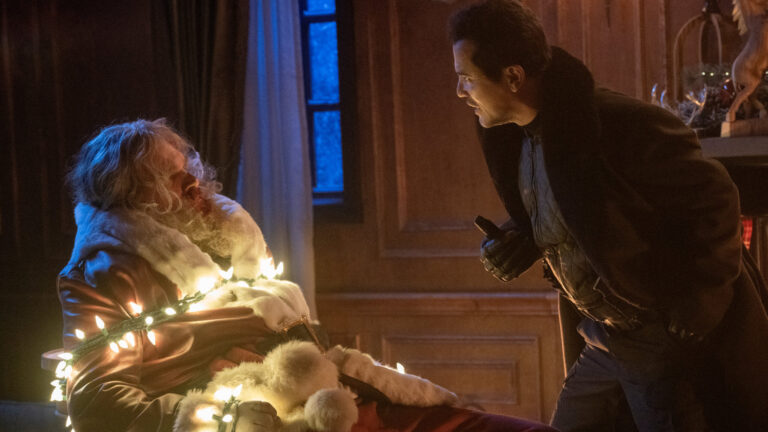
For those of us who are more “Humbug” than “Ho Ho Ho” about the Christmas season, Violent Night is a nice dose of holiday sneer. The film derides the commercialization, greed, and tackiness of the non-religious side of the holiday. At the start, Santa’s in a bad way. He’s lost his oomph and joie de tinsel. It’s been 1100 years since he started the job and the gifts he imparts are dull distractions that no one truly appreciates. That is until one little girl, held hostage by brutal mercenaries, brings back the magic of belief.
This film has that delicate balance in place. It’s gory, violent, disgusting, and also has the core of what a Christmas film should be. Writers Pat Casey and Josh Miller recognize that the season has been given real magic. It’s that feeling that on Christmas morning you may just get that thing you told no one about, that you held in your heart and it makes you feel like there really is a kind man flying around who knows you better than you know yourself. In the quiet moments between the mayhem, there is a nice, sweetness. The sweetness is a bit more practical. It makes it far more engaging than a lot of Christmas media sweetness with easy answers and solutions.
That sweetness is due in large part to David Harbour. He’s charming and gruff in a perfect mixture. It seems if you pair him with an adorable child, his powers only grow stronger. The conversations between Santa ( Harbour) and Trudy (Leah Brady) make the movie more palatable. Harbour has a spark about him, a believability and strength to his convictions. Even through the silly lines and puns, he makes everything so much more palatable with his dedication to the bit. One might even give him a round of a-claus for his big fat efforts.
Without Harbour in the lead, this all would have fallen very flat. The plot is just O.K., the hostages, with few exceptions, are completely unlikable, and the action is what we’ve seen in most action films of the past decade or so. Director Tommy Wirkola is playing from the same bag of toys we’ve seen time and again. Though, if you’re a gore averse viewer, the majority of Santa’s fight with multiple baddies takes place in a darkened shed, so the splatter is black and mercifully over quickly. The film also brilliantly eschews multiple Die Hard references and goes hard core on how incredibly horrific the pranks in Home Alone could be. It’s a very nice touch as a set piece.
Did we need a shallow dive into a deeper, new lore about Santa? No. Do we need the inevitable sequel with Valkyrie Mrs. Claus? Probably not, but it wouldn’t be a bad thing if we got it. Did we need shirtless Santa with his well sculpted dad bod with his runic and Celtic tattoos? Absolutely. For those of us who appreciate such things it was the best Christmas gift of all. Did we need Violent Night‘s entry into the Christmas canon? Yes.
Violent Night is like all Christmas films. It’s a bit excessive, quite magical, and will make you laugh in spite of yourself. It’s the Christmas action film we’ve all been pretending Die Hard is. It’s a film that will make your heart grow three sizes and also gag at one or two creative and gruesome deaths. Violent Night is one to add to the holiday rotation, but maybe only after not another creature is stirring.
Starring: Pam Grier, Samuel L. Jackson, Robert Forster, Bridget Fonda, Robert De Niro
Synopsis: A flight attendant with a criminal past gets nabbed by the ATF for smuggling. Under pressure to become an informant against the drug dealer she works for, she must find a way to secure her future without getting killed.
When Jackie Brown opened on Christmas weekend 1997, expectations were incredibly high. How could they not be? After making a giant splash on the cinema scene with 1992’s Reservoir Dogs, he returned with an even more acclaimed hit with critics and audiences two years later with 1994’s Pulp Fiction, a landmark film that hasn’t lost any of its power. Quentin Tarantino deservedly won the Best Original Screenplay Oscar with Roger Avary, and the film’s massive box office of more than one hundred million dollars ensured Tarantino could make practically anything he wanted for his follow-up.
Years passed, and the anticipation continued to grow for what his third film would be. His participation as a screenwriter and an actor in From Dusk Till Dawn showed that he was open to making action-filled genre movies, so when it was announced that his third feature directorial effort would be a film called Jackie Brown starring the 1970s exploitation queen Pam Grier, many thought he was going to be making an homage to those entertaining but cheesy indie action films from decades past. Whatever the tone was going to be, many assumed it would at least have the same kind of energy and narrative creativity of Pulp Fiction, especially when actors like Samuel L. Jackson and Robert De Niro were announced for the project.
What we ended up getting was a curiously quiet, thoughtful, and well-observed meditation on love and loss, on crime and redemption. It was the kind of slow burn that most audiences didn’t care for at the time, the love story between Pam Grier’s Jackie Brown and Robert Forster’s Max Cherry seeming too reserved and inconsequential. I saw this film at age thirteen with my dad super pumped to be getting a new Tarantino movie—Pulp Fiction was one of my favorites at the time—and I walked out of the theater shaking my head in disappointment, thinking the film was too slow and meandering.
Well, if there’s one film from all of 1997 I’ve changed my mind the most on, it’s certainly Jackie Brown. This is one of those rare films that seems to improve with every viewing. In the twenty-five years since its release, I’ve watched it at least ten times, and I always find new things to love about it, the characters bursting with life, the actors perfectly chosen for their roles, the beautifully written dialogue so sweet to the ear. The film, at times, is a struggle to follow on that first viewing, but I find the more I watch it, the more I understand all the pieces of the narrative, as well as the characters’ motivations every step of the way.
Something that has helped the growing affection for Jackie Brown throughout the years has been its special place in Tarantino’s filmography as the only real adaptation he’s brought to the screen, and his insistence on placing character over action or genre conventions. I adore his Kill Bill movies, Inglourious Basterds, and Once Upon a Time in Hollywood, but those movies have a boisterous visionary style to them that’s also to some extent in both Reservoir Dogs and Pulp Fiction, but not at all in Jackie Brown. It’s his one film where you really get to sit with the characters, let them talk, watch them be, without feeling like a big scene of violence is right around the corner.
Many critics loved the movie at the time, including Roger Ebert, who put Jackie Brown on his top ten list, but when it came to the awards season, Tarantino’s direction and screenplay were mostly passed over, Pam Grier recognized at the Golden Globes and SAG, while Robert Forster managed the film’s only Oscar nomination. But what an amazing nomination it is, the character actor’s career in the dumps before his understated performance breathed new life into his career, and is one of the greatest elements of the film that keeps me returning to it again and again. Jackie Brown is an outstanding drama, and is the film I believe to be Quentin Tarantino’s most lasting masterpiece.
Martin Charles Scorsese is considered by many to be the greatest filmmaker to ever step behind a movie camera. He is more than just what many consider a master of gangster dramas. He is a director who explores human conflict and troubled souls more than just about anyone. His catholic guilt and graphic take on the world are expressed through layered, erratic characters that sometimes mirror the man who created them. Working with some of the best actors in the finest roles of their careers, Scorsese is the boldest and brightest director of his or anyone’s era. With 25 narrative films and 16 documentaries, his legacy goes beyond what he has given us on screen, but rather his continued fight to keep movies alive, sparking a global dialogue that keeps audiences around the world on the edge of their seat every time he speaks. In other words, he is the definition of a living legend and in this 15-part series, his work speaks for itself, as Ryan McQuade and guest host Sophia Ciminello dive deep into the filmography of the GOAT, Martin Scorsese.
Mean Streets, 1973
Listen to our review below as heard on Extra Film.
Taxi Driver / The Last Waltz, 1976/1978
Listen to our review below as heard on Extra Film.
Raging Bull, 1980
Listen to our review below as heard on Extra Film.
The King of Comedy / After Hours, 1982/1985
Listen to our review below as heard on Extra Film.
The Color of Money, 1986
Listen to our review below as heard on Extra Film.
The Last Temptation of Christ, 1988
Listen to our review below as heard on Extra Film.
Goodfellas, 1990
Listen to our review below as heard on Extra Film.
Cape Fear, 1991
Listen to our review below as heard on Extra Film.
The Age of Innocence, 1993
Listen to our review below as heard on Extra Film.
Casino, 1995
Listen to our review below as heard on Extra Film.
Bringing Out the Dead, 1999
Listen to our review below as heard on Extra Film.
Gangs of New York, 2002
Listen to our review below as heard on Extra Film.
The Aviator, 2004
Listen to our review below as heard on Extra Film.
Shutter Island, 2010
Listen to our review below as heard on Extra Film.
Silence / The Irishman, 2016/2019
Listen to our review below as heard on Extra Film.
This week on the Extra Film Podcast, Ryan and Jay continue their Frank Capra Movie Series with You Can’t Take It with You and they also review the acclaimed Laura Poitras documentary All the Beauty and the Bloodshed!
You Can’t Take It with You is considered one of the weaker Best Picture winners at the Oscars, and for all the reasons wet get into on the show, perhaps there is some credence to that notion. It’s certainly not without merit, but that’s partially why it’s a fascinating conversation. All the Beauty and the Bloodshed on the other hand is one of the best documentaries of 2022.
On that note, check out this week’s show and let us know what you think in the comment section. Thanks for listening and for supporting the InSession Film Podcast!
– Movie Review: You Can’t Take It with You (5:14) Director: Frank Capra Writers: Robert Riskin Stars: Jean Arthur, Lionel Barrymore, James Stewart
– Movie Review: All the Beauty and the Bloodshed (46:18) Director: Laura Poitras
To hear this Extra Film episode and everything else we do, download our apps on the Amazon Market for Android and the Podcast Source app on IOS devices. The mobile app covers all of our main shows, bonus podcasts and everything else relating to the InSession Film Podcast. Thanks for your wonderful support and for listening to our show. It means the world to us.
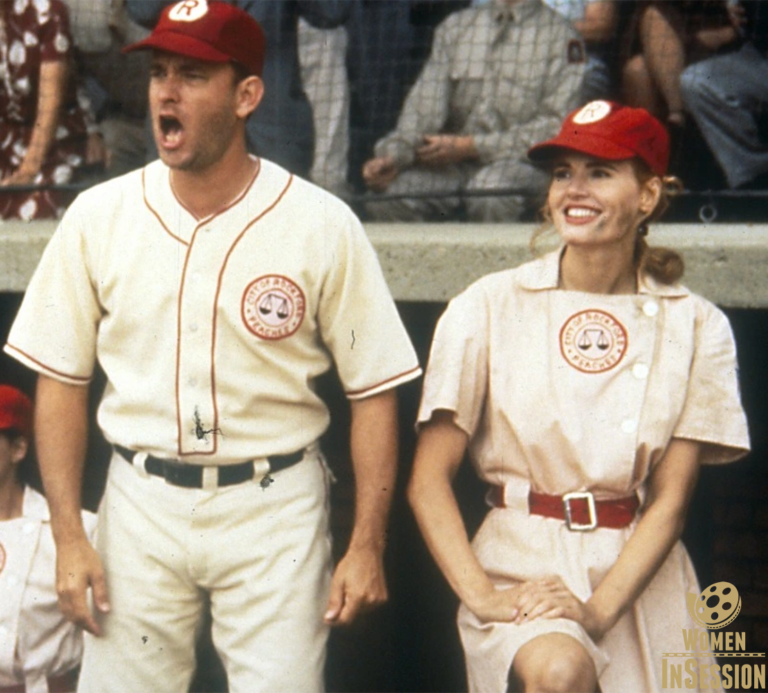
This week on Women InSession Podcast, we talk about our favorite sports movies! We talk everything baseball, football, hockey, and boxing in film and why they resonate with us.
On that note, check out this week’s show and let us know what you think in the comment section. Thanks for listening and for supporting the InSession Film Podcast!
To hear this Extra Film episode and everything else we do, download our apps on the Amazon Market for Android and the Podcast Source app on IOS devices. The mobile app covers all of our main shows, bonus podcasts and everything else relating to the InSession Film Podcast. Thanks for your wonderful support and for listening to our show. It means the world to us.
Stars: Sally Hawkins, Shonagh Price, and Helen Katamba
Synopsis: An amateur historian defies the stodgy academic establishment in her efforts to find King Richard III’s remains, which were lost for over 500 years.
Until a decade ago, the story of King Richard was only known through Shakespeare and his famous last lines, “My horse! My kingdom for a horse!” Killed and buried in what essentially was a pauper’s grave, his legacy was left to rot in history in a negative sense, labeled as a usurper by historians and the Royal Family. Then came his rediscovery through the push of an unlikely person, Philippa Langley, although the politics of how much credit she got versus Leicester University continues to this day. Hence, The Lost King is more of a fictionalized version of the events from Philippa’s point of view.
Sally Hawkins plays Philippa, the divorced mother of two boys who works in a dead-end job while struggling with chronic fatigue syndrome. After seeing a local production of King Richard III with her sons,Philippa becomes interested in his story and joins the Richard III Society, which shares with her that his remains are missing. Going on her curiosity and gut feeling, she collects pieces of the puzzle from various sources and zeros in on a parking lot behind Leicester’s Social Services building with an R on it. The story is a case of one person versus the establishment with its red tape and snobbery to boot. Philippa is the heart and soul of the search, allowing the film to depict the politicians, the university figures, and professional excavator Richard Buckley (Mark Addy), as the skeptics and stonewallers.
This is the second collaboration between Steve Coogan, who plays Phillipa’s ex-husband, and also co-wrote and co-produced the film, and director Stephen Frears, who helmed the much more emotional Philomena. Frears has made better films and Coogan is more reliable in comedy than drama. Philomena hit all the marks, but The Lost King does not. Hawkins is great and it is fantastic to see Mark Addy in a solid supporting role, but the writing feels daft and one-dimensional. In fact, the story seems to take too many liberties with the establishment who are resistant to this singular person. Of course, some dramatic license is understandable but it becomes a bit too unbelievable that Philippa did it all by herself. (It should be noted that Philippa felt “sidelined” when the announcement was made, which seems to get that correctly.)
On a side note, it should be noted that Philippa didn’t get interested in the King’s legacy from just watching the play. Instead, she was doing research for – wait for it – a screenplay(!) to write for spec. To history, Richard III was just an evil hunchback who killed his nephews and deserved his violent demise for trying to steal the crown. Why would historians going back to the Tudors lie about such history? Simple, to the victors, go the spoils and write the history books themselves. So, while the film retells the story of history being corrected, its presentation comes off dry, clotting together the loose elements of the entire story a bit clumsily.
This is still a feel-good film where the little woman (or man) comes out of it as the one who got it right the whole time, albeit slightly bittersweet. The caricatures of those who deny and doubt her credentials seem out of line, but being a slanted film towards Philippa’s side of the story, it can be accepted as how she felt or what she perceived as a slight towards some amateur sleuth-wannabe with a kooky theory. There is no tension between the ex-spouses and they are both committed together raising their sons. Buckley is supportive of Philippa after realizing the University’s prerogative of shutting her out. And the closing credits recognize that Philippa’s work was rewarded and that King Richard III’s status is restored in honor rather than shame.
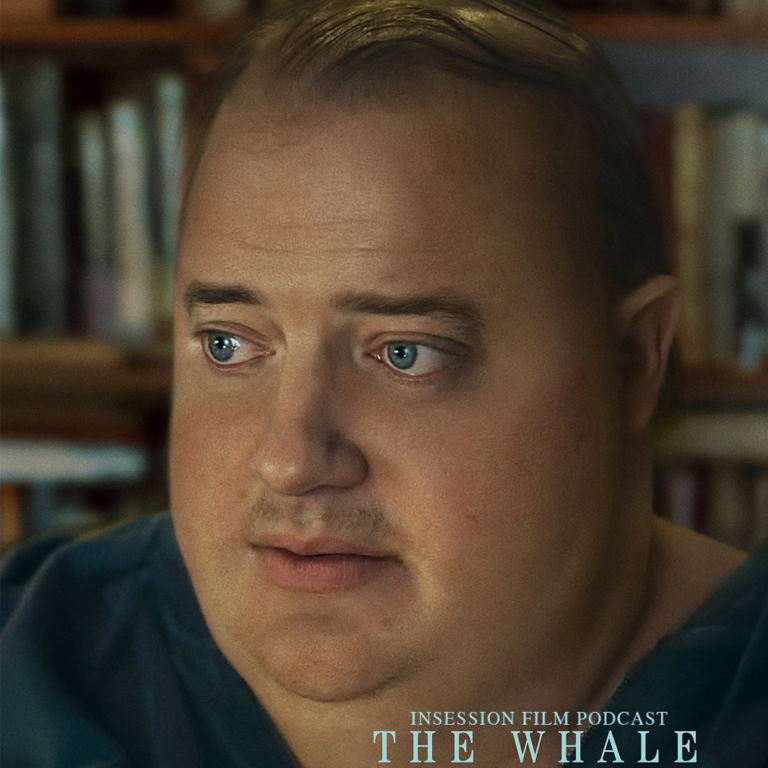
This week on the InSession Film Podcast, we discuss Darren Aronofsky’s polarizing new film The Whale and the latest from Sam Mendes in Empire of Light! Plus, a few thoughts on Blonde and The Menu.
This week’s episode was a little bit of a doozy. The Whale is a challenging film to talk about given how polarizing it is. Some people love it and others hate it with passionate conviction. We did our best to be open-minded about it and hopefully that comes through in our conversation. Same thing with Blonde during the break segment, as many have come to despite that film as well. Regardless, it was fun to talk about Brendan Fraser once again and we are rooting hard for the guy.
On that note, check out this week’s show and let us know what you think in the comment section. Thanks for listening and for supporting the InSession Film Podcast!
– Review: The Whale (5:38) Director: Darren Aronofsky Writers: Samuel D. Hunter Stars: Brendan Fraser, Sadie Sink, Hong Chau
– Notes / Discussion (59:04)
This week for our break segment, we talk about a few movies that we’ve recently caught up with, including Andrew Dominik’s Blonde, Cartoon Saloon’s My Father’s Dragon and the fun social satire The Menu!
Review: Avatar: The Way of Water
Top 3: N/A
Review: White Noise
[divider]
Help Support The InSession Film Podcast
If you want to help support us, there are several ways you can help us and we’d absolutely appreciate it. Every penny goes directly back into supporting the show and we are truly honored and grateful. Thanks for your support and for listening to the InSession Film Podcast!
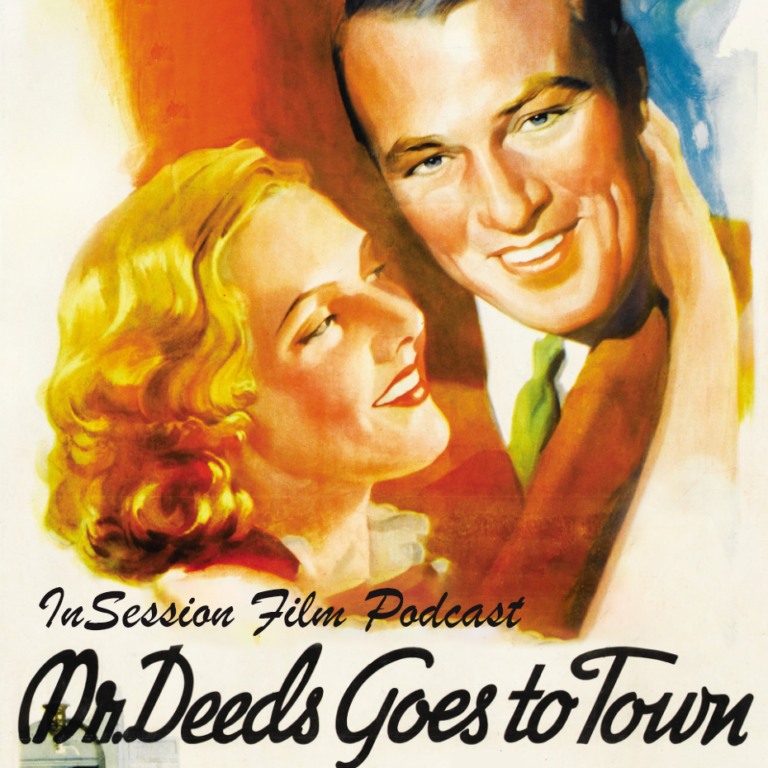
This week on the Extra Film Podcast, Ryan and Jay continue their Frank Capra Movie Series with Mr. Deeds Goes to Town and they also discuss the Danish entry for Best International Film in Holy Spider!
This week’s show features an interesting duo in that they have very little in common other than our response to them. Both films had great potential, but do they cross the finish line at their best? Well, we do our best to dissect why that may not be the case.
On that note, check out this week’s show and let us know what you think in the comment section. Thanks for listening and for supporting the InSession Film Podcast!
– Movie Review: Mr. Deeds Goes to Town (4:10) Director: Frank Capra Writers: Robert Riskin Stars: Gary Cooper, Jean Arthur, George Bancroft
– Movie Review: Holy Spider (42:17) Director: Ali Abbasi Writers: Ali Abbasi, Afshin Kamran Bahrami Stars: Mehdi Bajestani, Zar Amir Ebrahimi
To hear this Extra Film episode and everything else we do, download our apps on the Amazon Market for Android and the Podcast Source app on IOS devices. The mobile app covers all of our main shows, bonus podcasts and everything else relating to the InSession Film Podcast. Thanks for your wonderful support and for listening to our show. It means the world to us.