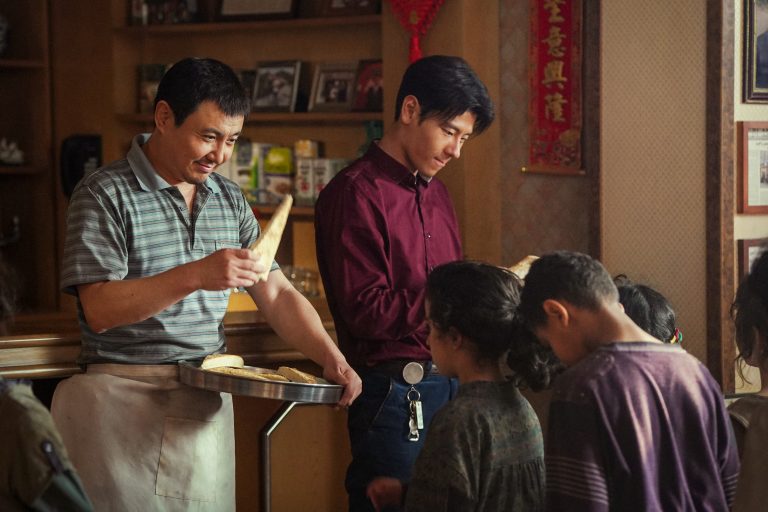
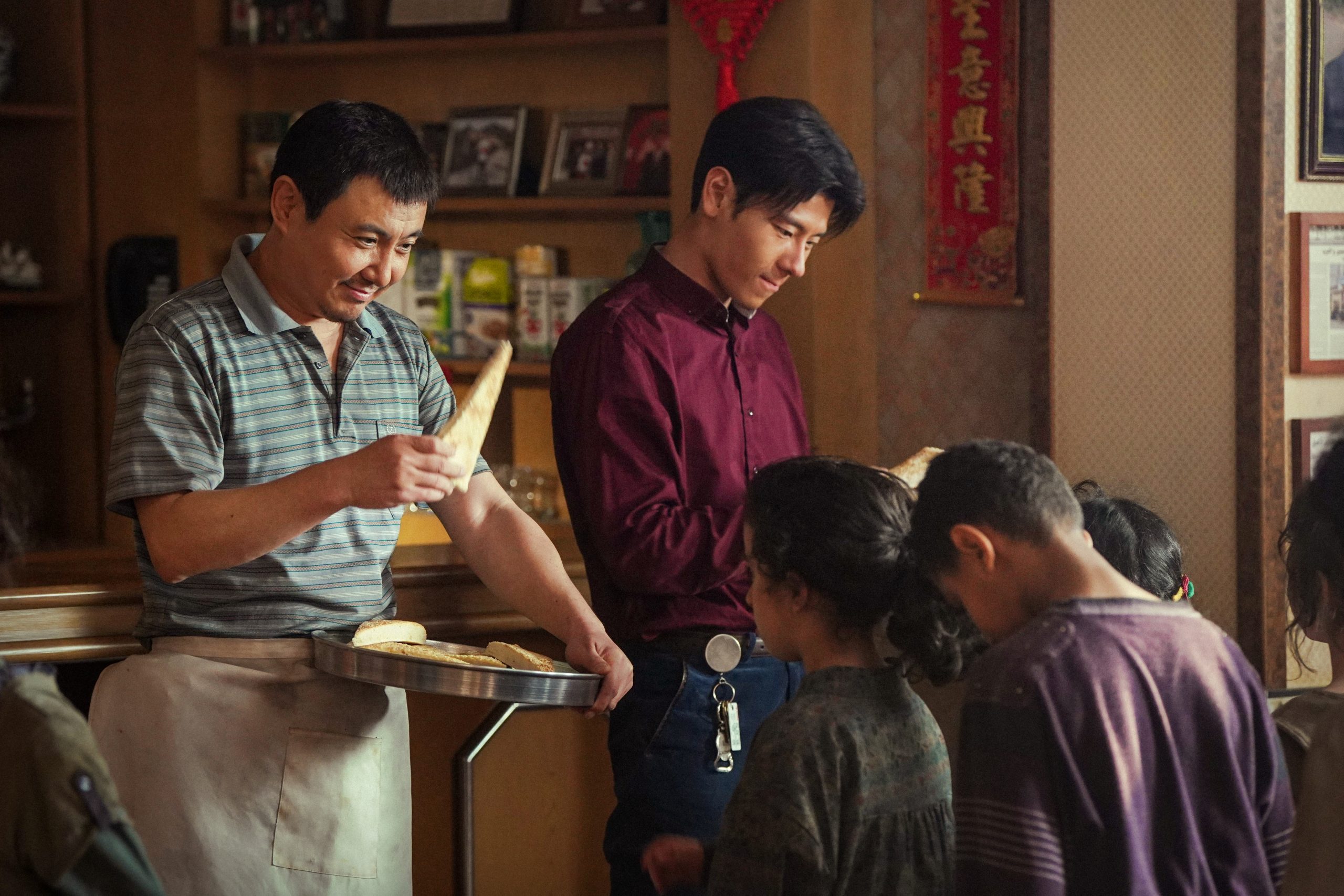
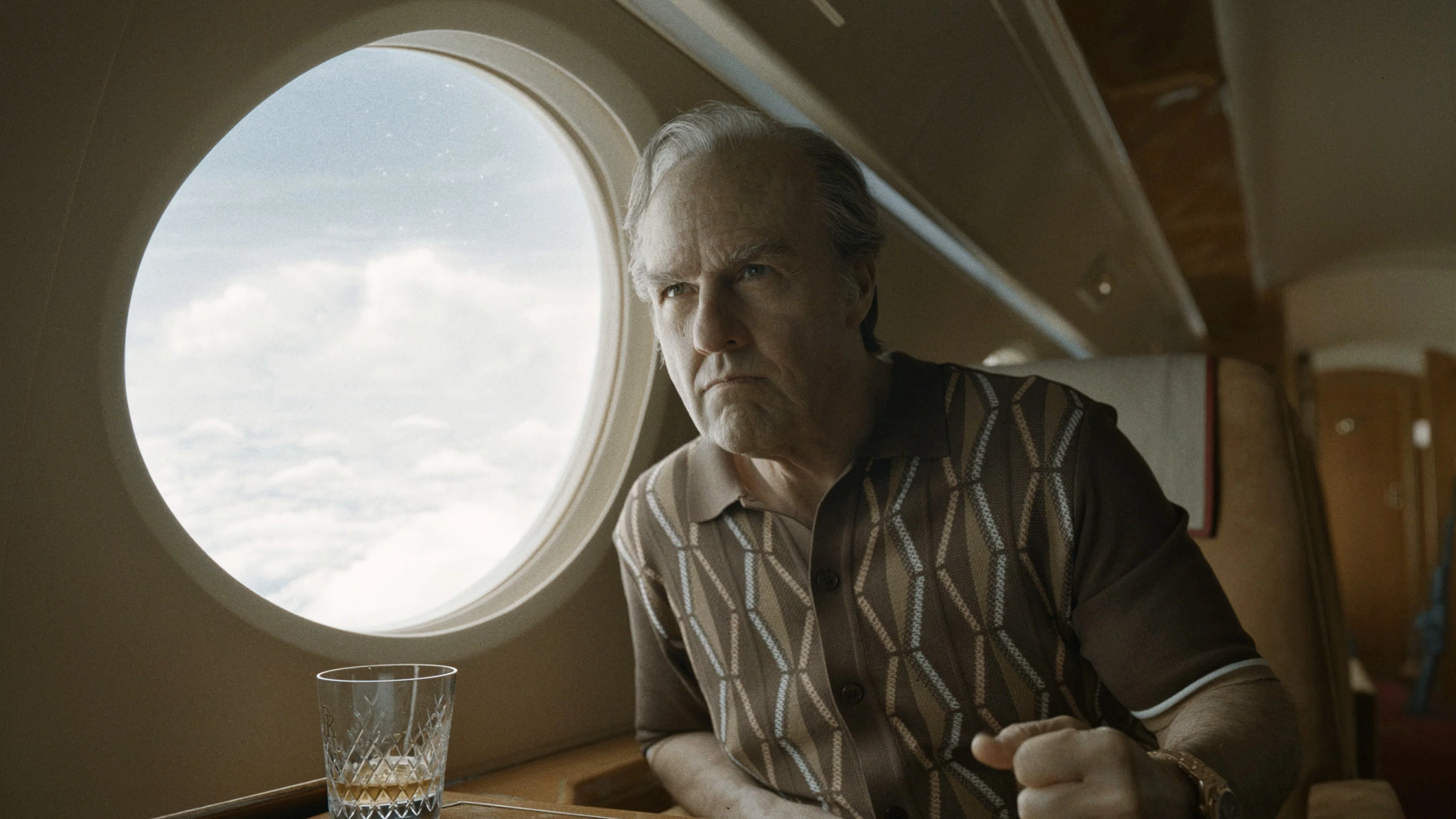
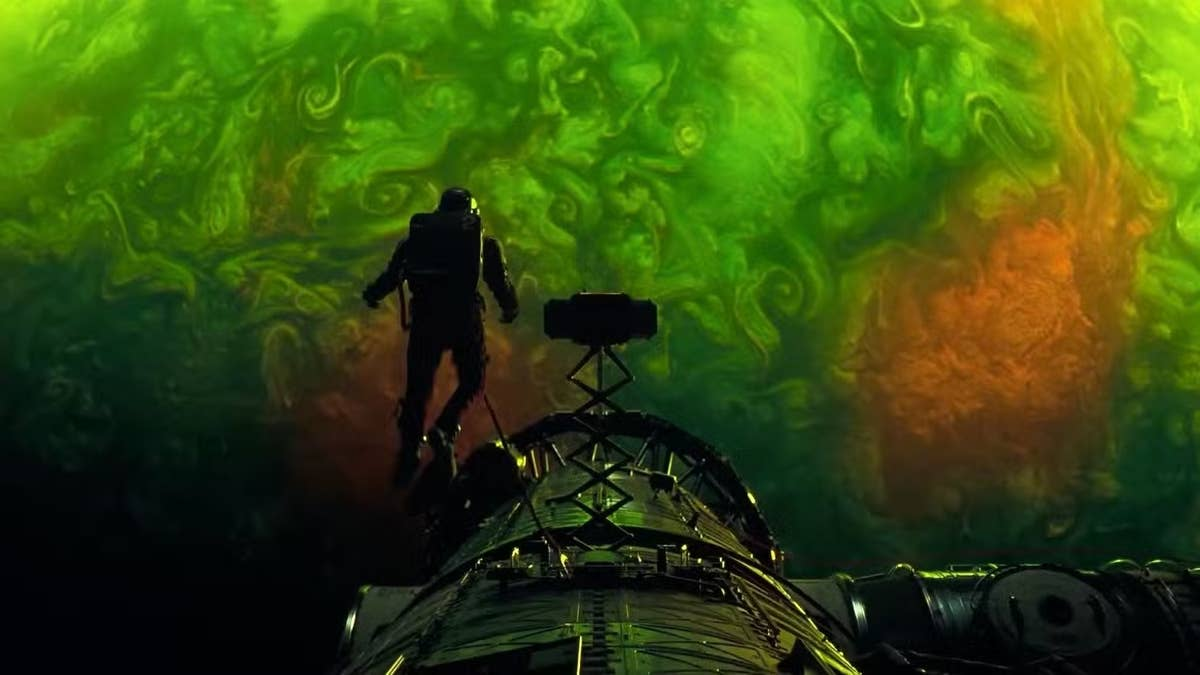
Synopsis: Xu Fu works as head chef of a Chinese restaurant in Middle East, running the Dragon Restaurant with manager Ma Junsheng. Xu must adapt and survive when war breaks out in the region.
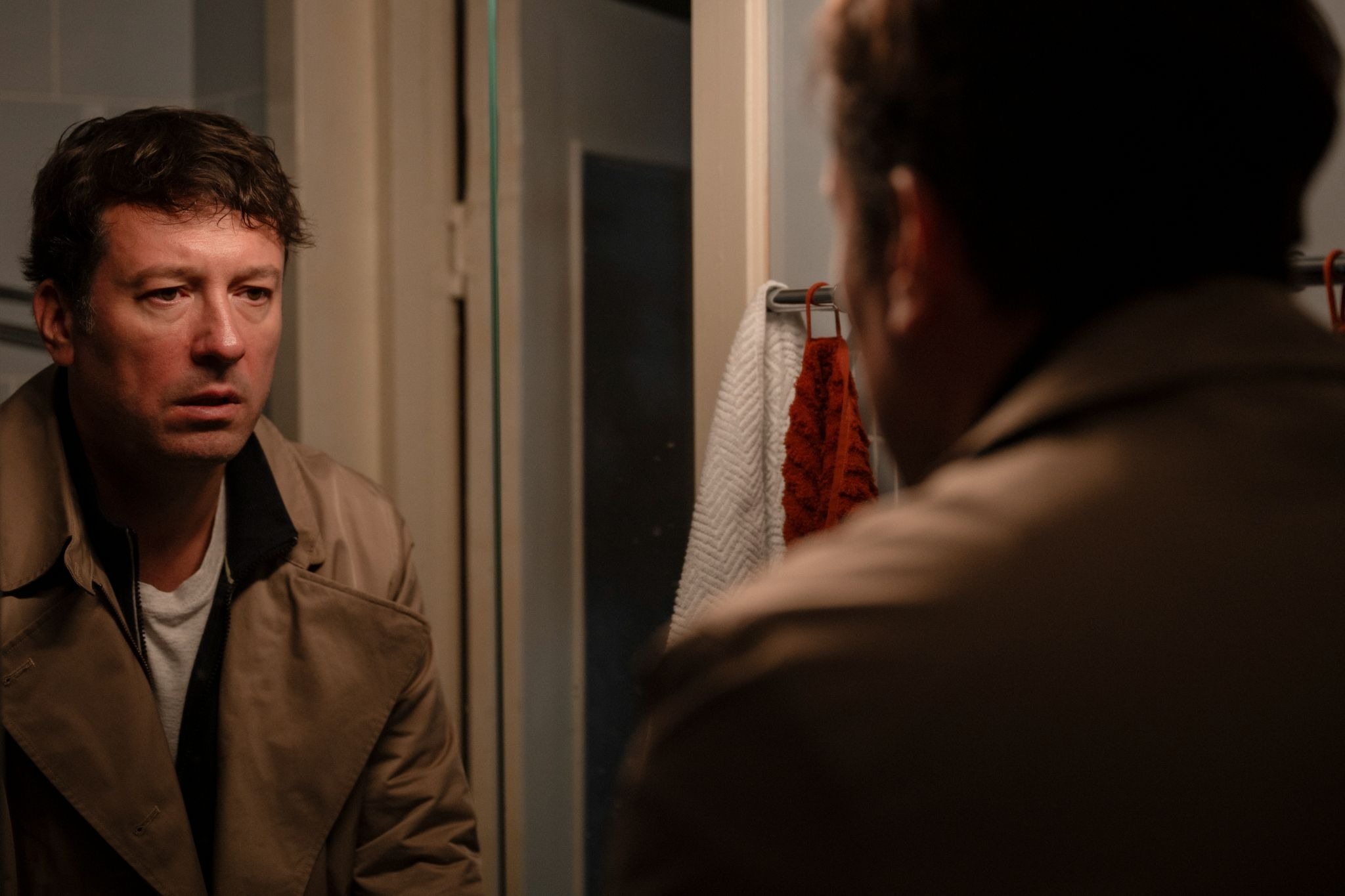
Imagine, if you will, the unfettered joy of crafting a meal, a la Julia Child or 2023’s The Taste of Things. The pure craftsmanship, preparation, and tenacity it takes to make a beautiful meal brings waves of love and happiness. If you drop that feeling into a hellish warzone, you might have an idea what to expect with Wen Muye’s Once Upon a Time in the Middle East.
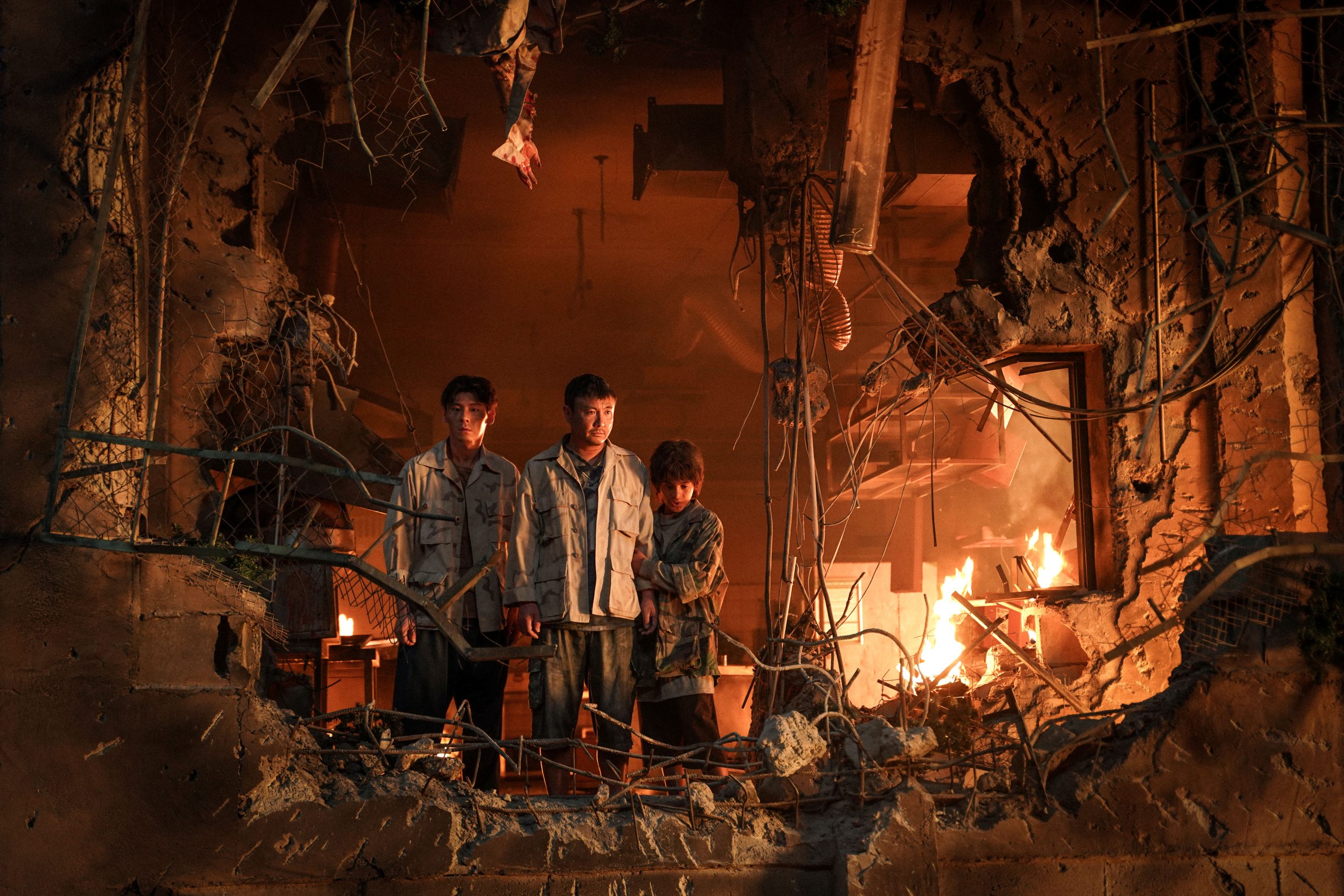
The film’s cheery poster and opening 20 minutes might give you the impression of a light-hearted story about bridging cultures, but then the bombs start dropping. Dropping a Chinese cook in the middle of a Middle Eastern war zone is certainly a new and engrossing idea, but the film has much more on its mind than just a simple story. What transpires is an epic tale of devastation, friendship, and the importance of a good meal.
Shen Teng stars as Xu Fu, a Chinese chef who travels to the fictional Middle Eastern city of Bahata to earn money to pay off his debts back home. As the head chef at Loong Restaurant, he works alongside Ma Jensheng (Jiang Qiming), the floor manager. Local government official Zaid (Sherif Sobhy) owns the restaurant, while Ma’s fiance Lina (Naira Al-Qasim) works as a teacher at a nearby orphanage, which includes young Seif (Omar Sherif) as a student. Despite the restaurant’s success, war breaks out with the United States, giving Xu, Ma, and Zaid the opportunity to stay in business despite the chaos around them.
With the orphanage destroyed in the war, the kids and Lina live and work at the restaurant, while Seif learns to cook under Xu’s tutelage. The restaurant becomes more successful than ever, but a series of tragic events and attacks turn the fortunes of Xu, Ma, and Seif into a downward spiral they struggle to overcome.
Having this film come from a Chinese perspective allows Once Upon a Time in the Middle East to have a true level of impartiality. While the film is “fictionalized” and isn’t directly stated as set during a particular conflict, there is a clear understanding of which war is being portrayed. Both the American involvement and the insurgent response is shown as having their massive faults as well as their levels of sympathy and humanity. American films dealing with the war-torn Middle East always have an inherent bias. This film takes no sides and just shows the horrors without worrying itself with solutions.
That even-handedness allows for fascinating perspectives. For example, an American lieutenant who heads the torture unit is particularly emboldened due to the death of his family in 9/11. On the flipside, a once-peaceful bureaucrat becomes a violent insurgent upon the death of his wife and daughter. The film never puts these characters side-to-side, but the steps to justification for each “side” is easily explained as passion and anger in hopes of revenge.
The war and battle sequences, while infrequent, might not have the bold viscerality of Saving Private Ryan or the bloody over-stylization of Hacksaw Ridge, but that doesn’t mean the film ignores the human toll. Characters are bloodily killed, limbs are lost, and each explosion contains a shockwave. While I wouldn’t classify it as a gory film, the body count is sizable and does not discriminate. Men, women, and children are among the victims. War is indeed hell.
The film lives and dies on the performance of Teng. Xu is a man of isolation and discipline, but Teng infuses him with life and complexity. Qiming gets to have much more fun as the sunny and outgoing Ma, at times lovesick, hopeful, reserved, but eternally optimistic. Sherif delivers a great youth performance, maintaining his youthful exuberance while also being forced to grow up way too soon. The supporting cast fills out the edges well, with Sobhy, Al-Qasim, Ahmed Salim, Russell Shealy, and Aarif Rahman all delivering memorable characters.
Once Upon a Time in the Middle East takes a unique approach to a more objective war story, infusing a fresh perspective, backed up with excellent performances. I doubt you’ll see anything else like it in American theaters.
Synopsis: When Gleb, a successful company director, finds himself under siege from mounting corporate pressures, an increasingly unstable world, and the discovery of his wife’s affair, the collapse of his carefully ordered life accelerates toward violence.
In a movie year where the most culturally-dominant adaptation of a Greek legend has been the most famous story ever told, consider the myth of the minotaur for a moment. Born to Queen Pasiphae after she succumbed to her lustful draw to the Cretan Bull, Asterion (translation: “the starry one”) entered the world half-man and half-bull, a plague that would cause his existence to devolve into savagery as he aged, leading to his ultimate exile. The creature was imprisoned in a labyrinth constructed by Daedalus, the same craftsman whose work had allowed his queen to be impregnated by the bull, which was a gift to King Minos from Poseidon and caused the transference of his love for the beast to his wife. The son may have been born from a distinct kind of generosity, but his life would result in reliance on sacrifices. Each year – though some say it was once a decade – 14 souls would be thrust into the maze, their death warrants signed in blood as they were devoured by the throne’s heir, now known as the Minotaur. What else is he to do, after all? Sit and wait for freedom? Or fight for every scrap, never knowing when the last taste may come?
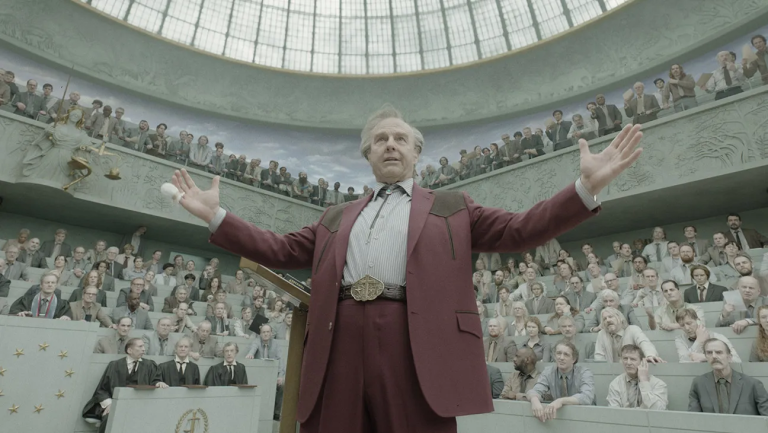
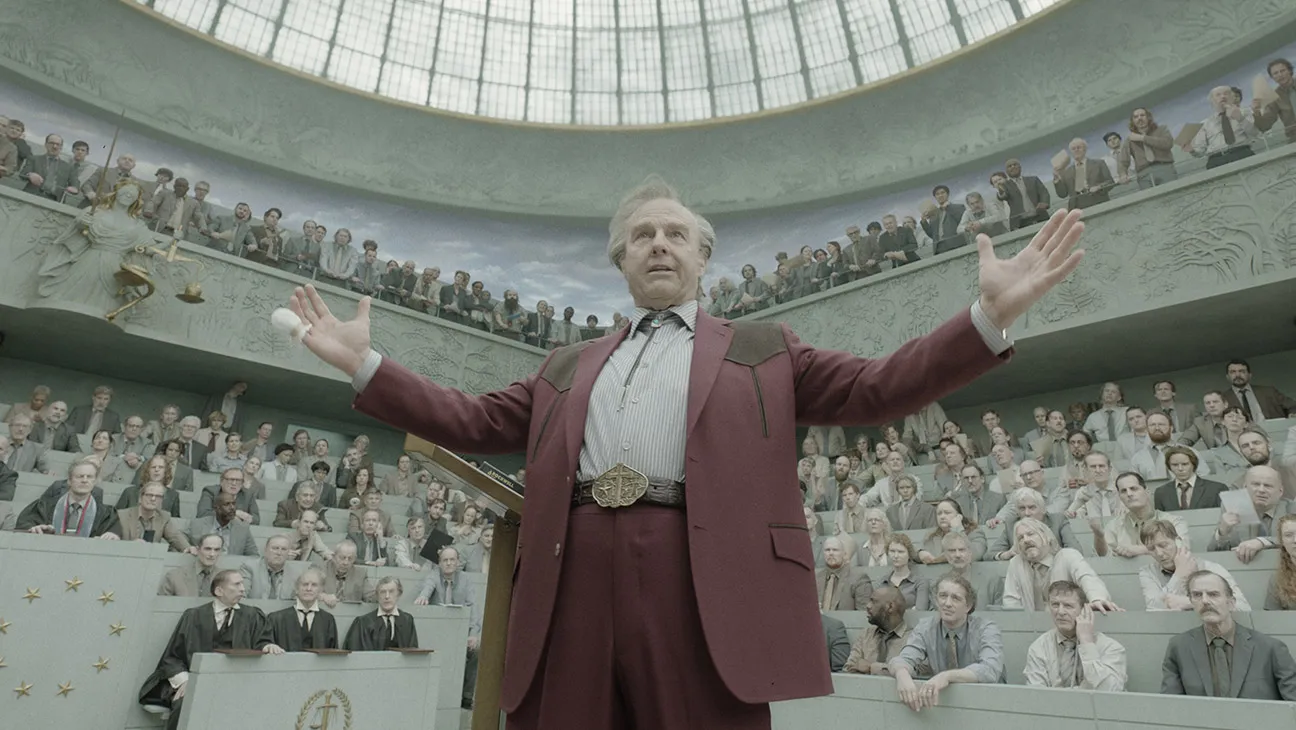
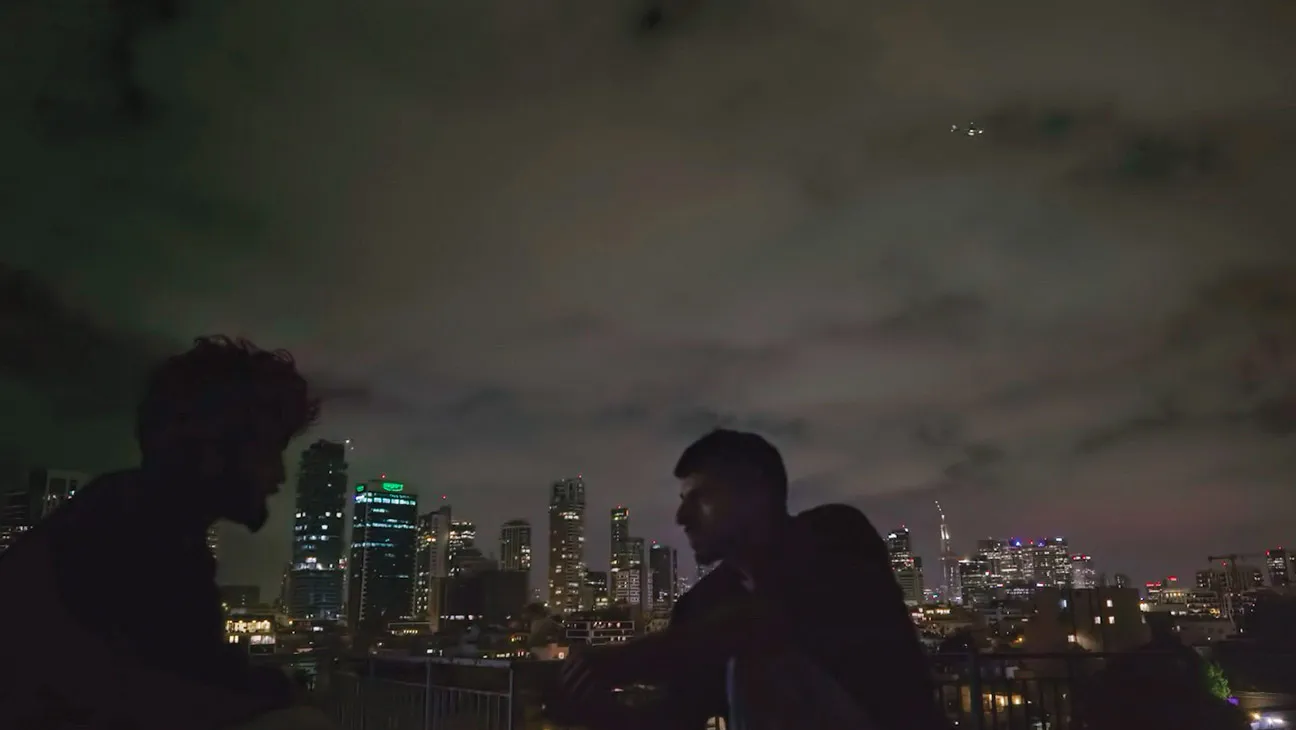
Leave it to one of our great auteurs, the Russian filmmaker Andrey Zvyagintsev, to wear this tale like a loose garment draped over a snugger piece of attire, Claude Chabrol’s 1949 film The Unfaithful Wife, and to turn the two stories into Minotaur. Staggering and masterful in its maze-like construction, Zvyagintsev’s domestic drama (screening at the 64th New York Film Festival) takes the essence of Chabrol’s erotic thriller and transposes it onto modern-ish Russia, where its character’s psyches are not only threatened by one another, but by the onset of the Russo-Ukrainian war. Combine such a thorny political football with the tension burbling beneath the foundation of of a near-loveless marriage, and you have not only one of the preeminent films of our time, but about our time, a work of genius that could feasibly have come to screens at any point yet feels particularly resonant in the here and now.
It comes as no surprise given Zvyagintsev’s track record, as his films – from 2003’s The Return to 2014’s Leviathan – have always seen contemporary anxieties reverberating through landscapes both familial and local. Perhaps the real shock is that Minotaur was made at all. Zvyagintsev had not delivered something new since 2017’s Loveless, though it was illness and not a lack of inspiration that caused the delay. More specifically, he was hospitalized in 2022 due to a severe reaction to the COVID-19 virus, eventually placed in an artificial coma due to further complications, and was only discharged from care after 11 months of lengthy hospital stays. The filmmaker was left with paralysis in his legs, an inability to speak or sit up on his own accord, and significant damage to his lungs. According to The Guardian, he has since re-learned to walk and even hold a spoon, all while living in exile due to his stance against Russia’s war with Ukraine. It was in France that Zvyagintsev made Minotaur, which later premiered at Cannes, won him the festival’s Grand Prix prize, and landed him on his home nation’s radar of foreign agents.
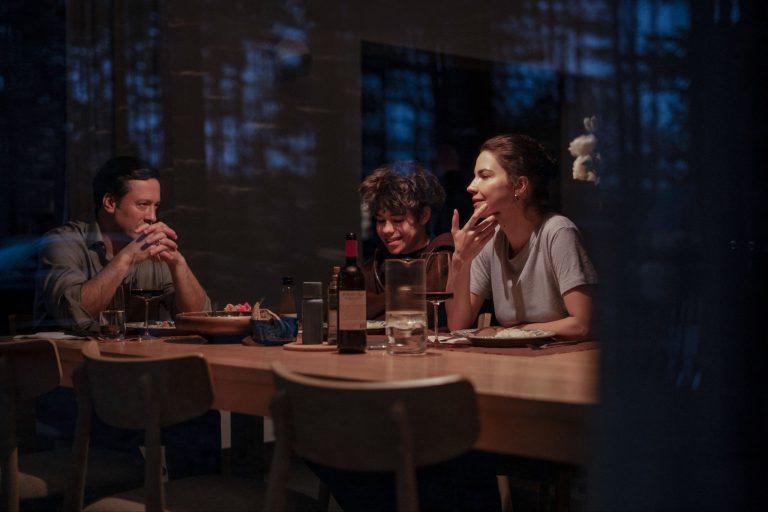
None of these burdens have caused him to forget how to make a film, however, as nearly 10 years have passed since his last and Zvyagintsev hasn’t skipped a beat. Minotaur centers on Gleb (an icy Dmitriy Mazurov), the CEO of a shipping company who finds himself under the pressure of both the nation – to deliver a list of 14 employees that should be drafted into the military, normal stuff – and his household, where his wife Galina is beyond fed up with the circumstances of their union. Played by Iris Lebedeva with both the fire and fatigue of a woman whose husband seems to be more turned on by low-cost box trucks than her presence in post-dinner lingerie, Galina has been reduced to the role of wife, mother, and lady of the house. Her only outlet of freedom, one that Zvyagintsev and co-writer Simon Liashenko spend little time concealing, is an affair with a younger photographer (Yuriy Zavalnyouk) who makes her feel desired and cherished, something worth savoring rather than a fixed entity as permanent as the glass fortress in which Galina lives with Gleb and their son Seryozha (Boris Kudrin). Her daily rendezvous seem secure until Gleb begins to notice inconsistencies within his wife’s daily routine and behavior; once he learns of Galina’s infidelity, he takes matters into his own hands, which always goes well.
This is as close to The Unfaithful Wife as Zvyagintsev allows his film to get, taking its familiar setup and reframing it in a modern light with an emphasis on international strife and marital dissonance in equal measure rather than forcing either element to play second fiddle. While Minotaur moves to the beat of its central relationship’s drum, institutional pressures remain abound, particularly those brought on by Gleb’s relationship with the town mayor (Vladimir Friedman). It affords Gleb lenience in one sense and ramps up his overall unease in another. Being a CEO is taxing enough. Who wouldn’t expect a tightly-wound man to snap after learning of his wife’s extracurriculars while also facing pressure from the Russian military?
“Snap” is one word for it; “devolve” is another, and Zvyagintsev takes great pleasure in playing in that sandbox, crafting a film that is both dark and darkly funny in moments when you least expect it. (It helps that laughter is hardly heard in Minotaur, so the brief moments of reprieve land solely for the audience and not the players.) Much of Gleb and Galina’s downward spiral towards psychological ruin comes within a literal sandbox, their modernist fortress clad with floor-to-ceiling windows and empty spaces galore, offering no place to hide. It’s a feat of production design (a dual effort by Andrey Ponkratov and Mariya Slavina) that the director’s go-to cinematographer Mikhail Krichman emphasizes with such clarity that the juxtaposition between what we’re witnessing and what Gleb and Galina are living is so stark, so vast that the proverbial exit signs are hidden in plain sight and thus even harder to find. This home is a cold one; you can practically see the sheets of ice beginning to crawl along each countertop and upholstery, but the outside is no warmer. Where is one to run in the first place?
The most glorious thing about Minotaur is in just how agonizing it can be to sit in, not a quality that detracts from that of the film, but one that underlines just how gifted Zvyagintsev is in crafting narratives – original and inspired by others – that feel conversant with those that we often go to great pains to avoid. (That the Film at Lincoln Center team programmed a day of press screenings that played Fjord, Naza, and Minotaur in back-to-back-to-back succession is nothing short of a test of wits and tear ducts, no?) The adultery-focused plot and its central downtrodden spouses may hint at treading waters we’ve waded in before, but like he’s done with housing crises and familial conflict before, Zvyagintsev persists in his efforts to destabilize expectations with real-world ideas baked into his projects and realizing their presences with actual importance.
Is Minotaur a marriage story? Is it a crime thriller? Is it a war drama? The answer to all three questions is the same: Yes, but it’s especially interesting because it is all three and more. Perhaps it is also the film that sends Zvyagintsev’s name into conversation with not just fellow international auteurs of preeminent standing (Cristian Mungiu, Ryusuke Hamaguchi, Lee Chang-Dong, and others come to mind) but those who stand atop the list of our best filmmakers, period. Something tells me he doesn’t care much about such accolades. It’s that the film got made – and that he was alive to make it – that matters most.
Minotaur had its New York premiere at the 64th New York Film Festival. Mubi will release the film in U.S. theaters on November 20.
As we roll out of the major film festivals and settle into the waiting game of the industry and critics getting caught up on their films to watch, I figured it was a good time to discuss who are some of the potential Best Lead Actor candidates we might see show up on Oscar nomination morning. Much like every year, we see ourselves chop the field down in half as we progress through the Fall season. The reason being was that either the films weren’t strong enough to generate passion, or the performances themselves ended up not being able to stay in the conversation long enough to get in the field.
This time, we still have some contenders that might be able to last long enough to hold down a spot. And others that may not, but who knows? The year may hold us a few surprises. In the article, I want to go over some of the more notable contenders, and throw out some possibilities on who I think may get in the field, who may not get in, and who I think might end up as our frontrunner to win Best Lead Actor. Without further adieu, let’s begin!
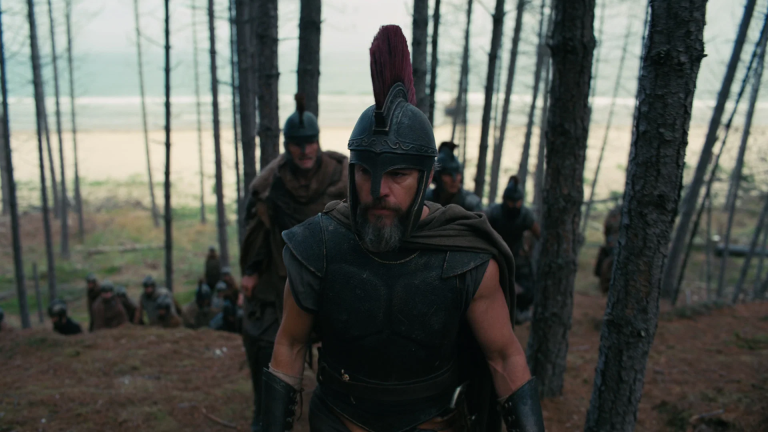
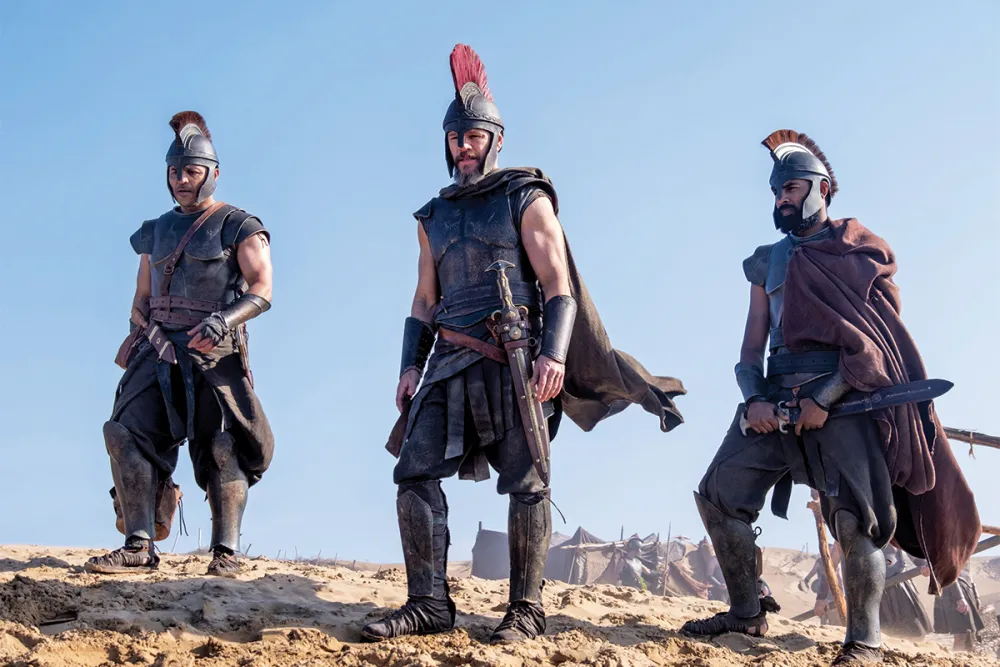
Matt Damon in The Odyssey
Matt Damon has been a prolific actor over the past few decades, starring in various franchises like the Ocean’s trilogy, the Bourne series, and even dabbled into the superhero pool with cameo appearances in Deadpool 2, Thor: Ragnarok, and Thor: Love and Thunder. He’s also starred in award-winning films that garnered Oscar buzz, like Syriana, The Departed, Oppenheimer, Ford v Ferrari, and The Martian. With a variety of films on his belt, it’s easy to see why Matt is seen as a known actor in Hollywood.
Which leads us into The Odyssey, his latest film working with Christopher Nolan as Odysseus, where he’s forced to undergo a long and perilous journey back home to reunite with his wife, Penelope. Not only was this beloved by critics and audiences to where people are watching this 5+ times in theaters, but it’s currently the highest-grossing R-rated film of all time; the previous record was held by Deadpool and Wolverine. And to think that people assumed this would flop, when Nolan hasn’t had a major flop in his career outside of Tenet, which was released theatrically during the COVID-19 pandemic.
The question stands: can Matt Damon win this category on the strength of the film? And the answer is yes. I’ve severely underestimated his chances, as my focus from the start was always on Tom Cruise, which we’ll get to later in the article. But after thinking it over, I think Matt Damon absolutely has a great shot at winning this Academy Award.
Not only is he the face of The Odyssey, but he’s working with an auteur-driven filmmaker that’s providing him with a transformative, leading role for the actor to play. I would also argue that Matt is in a relatively strong top three Best Picture contender, and usually when you’re in a competitive field that helps your chances at an Oscar win. Even Adrien Brody and Michael B. Jordan managed to win Lead Actor, as they were starring in strong contenders for the top prize with The Brutalist and Sinners, respectively.
It also helps that we know The Odyssey is likely going to be competitive in the tech categories like Best Cinematography and Original Score, as well as a possible second Best Director win for Christopher Nolan. Again, these may not be locked and loaded now, but we could see a world where it becomes a formidable contender in those categories. Another aspect to bring up is that while Matt Damon technically does have an Oscar, he’s never won one for the acting categories.
I, personally, think that if someone won a competitive Oscar they won the prize; even someone like Riz Ahmed who’s got his own Oscar but it was never for his acting performances. As for Matt Damon, he’s only received one Academy Award for his work on Good Will Hunting in the Best Original Screenplay category. Since then, he’s gotten nominated for starring in Invictus, The Martian, and producing Manchester by the Sea but none of them have translated to a win. And as we’ve seen lately, the Academy isn’t afraid handing out another set of Oscars to a previous winner:
Mahershala Ali for Green Book
Renée Zellweger for Judy
Brad Pitt for Once Upon a Time in Hollywood
Anthony Hopkins for The Father
Frances McDormand for Nomadland
Emma Stone for Poor Things
Adrien Brody for The Brutalist
Sean Penn for One Battle After Another
Now on the flipside, I can see Matt might not be able to win this. While he can be seen as a strong contender for the top prize, it’s rare to see the Academy go for an epic fantasy. The Lord of the Rings only won the tech categories until its final installment with The Return of the King. The Shape of Water was also seen as a fantasy film and won Best Picture and Director, but didn’t win in the acting categories.
Another aspect to consider is that it’s been tough for someone to win both a writing and acting Oscar. The only person in the history of the Academy Awards to pull this off was Emma Thompson. Not only was she the strong frontrunner for her acting win on Howards End, but her writing Oscar for Sense and Sensibility was a competitive year. It did work out in the end to where Emma won the writing Oscar, but it’s not easy winning both.
The true test on whether Matt Damon is strong enough to win the acting Oscar will be at the televised prizes, specifically with BAFTA and SAG. While Golden Globes and Critics’ Choice are also good places to make a stand, they’re not voted directly from the industry itself. Whereas SAG and BAFTA are voted by the populist part of the industry and the high-brow mind of the international voting block, respectively. This race is far from over, but I think if the train keeps chugging along as is, I wouldn’t be shocked if Matt Damon became our next Best Lead Actor winner.
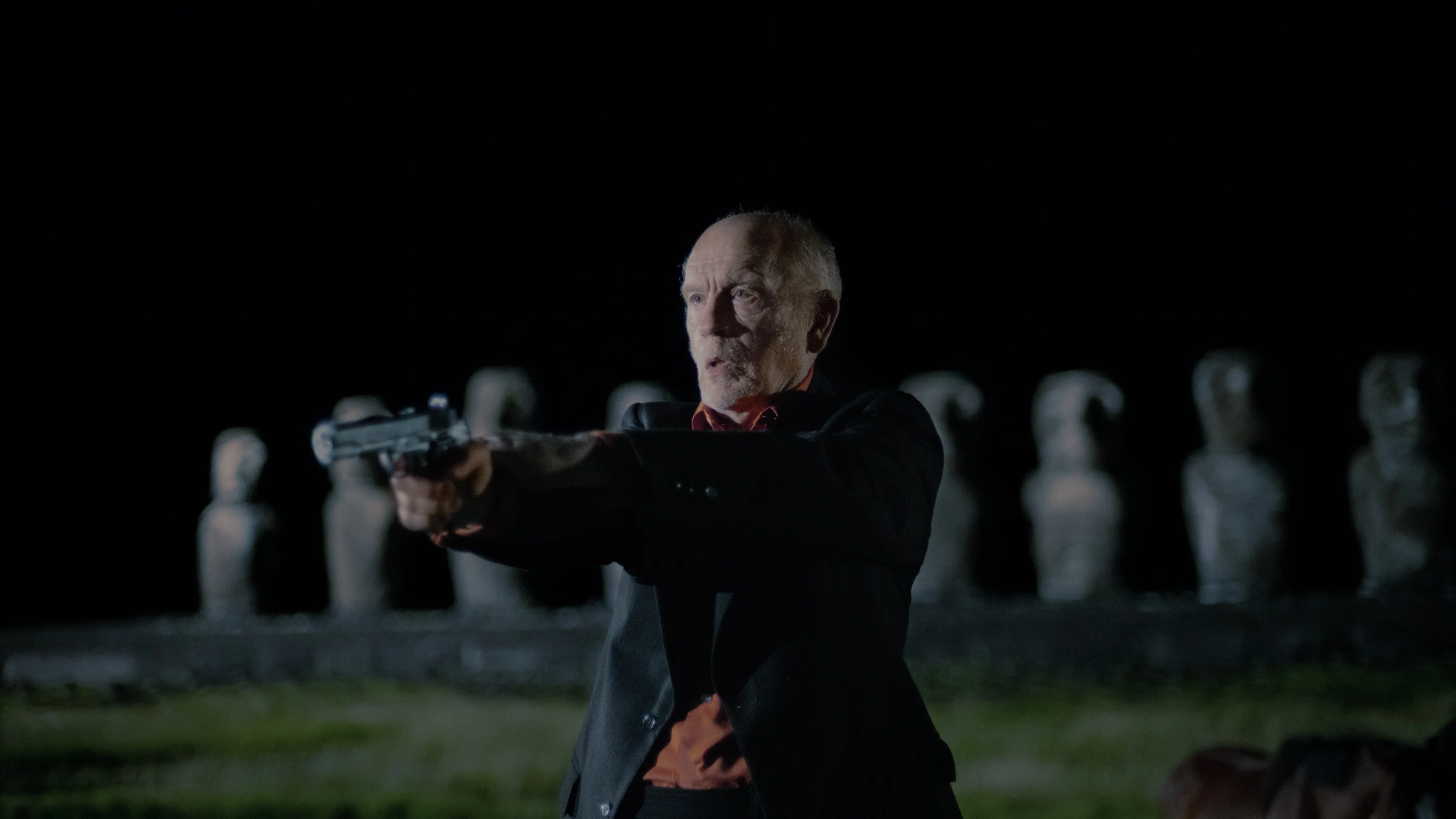
John Malkovich in Wild Horse Nine
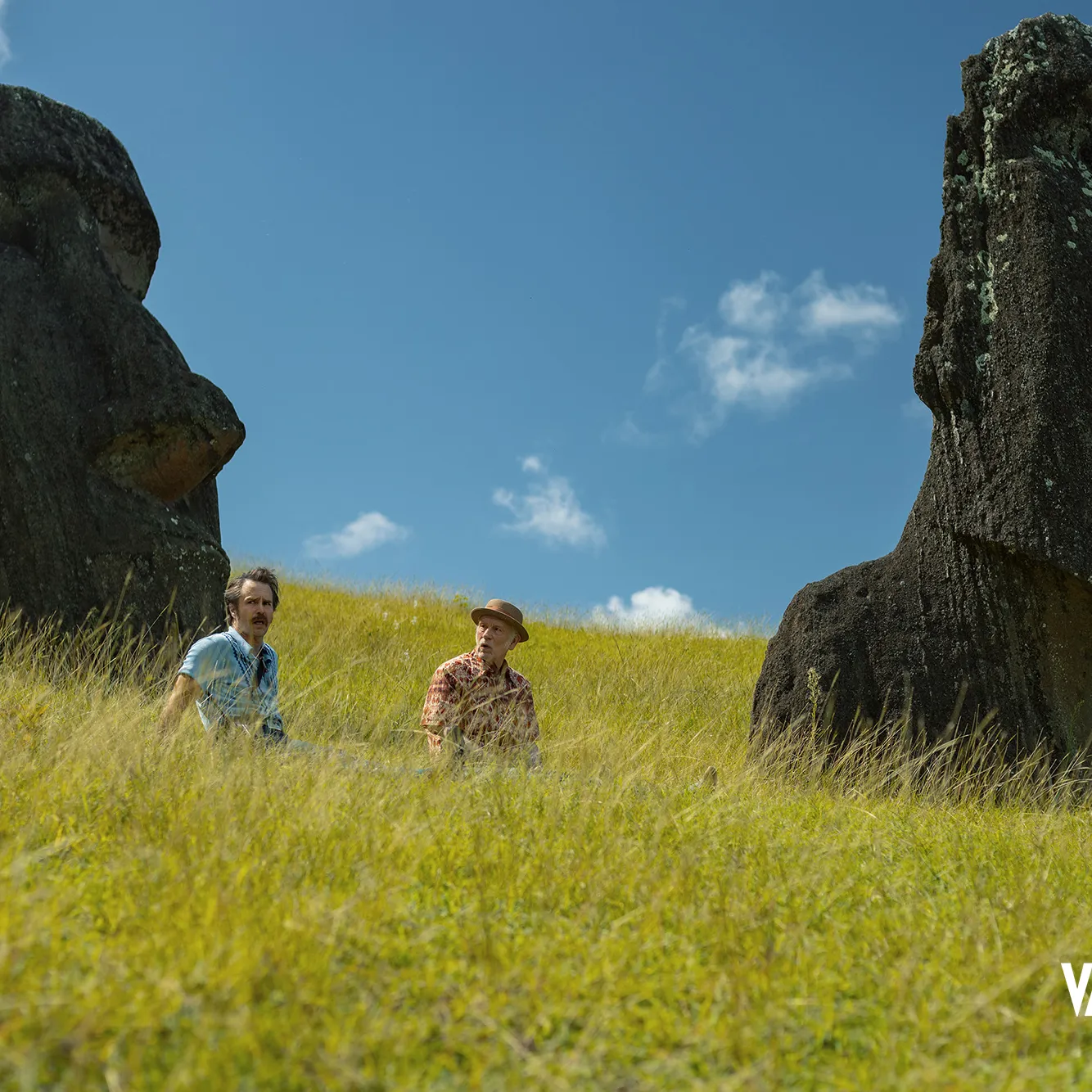
If we’re looking for a smart alternative to predict as our frontrunner in Best Actor, it is John Malkovich in Wild Horse Nine. He plays a veteran CIA officer by the name of Chris Carlisle, who is dispatched to Easter Island with his protégé, Lee Chesterfield, prior to the 1973 Chilean coup d’état. From there, Chris’s newfound bond with a pair of rebellious students threatens to send everyone’s trip to this remote paradise sideways.
Wild Horse Nine has gained critical acclaim ever since its Venice Film Festival premiere, and even garnered John a Volpi Cup for Best Actor. Ever since then, the film has gained enough critical acclaim that makes me believe this’ll be nominated for Best Picture. Whether or not it can translate to any above-the-line wins for Martin McDonagh himself is hard to say right now.
What I can say is that unless I see serious momentum being switched over when we get to the industry awards, I think John might not be our frontrunner as some pundits think he could. Yes; Martin’s feature films recently have received critical acclaim and even scored some Oscar nominations. Unfortunately, they haven’t won much outside of Three Billboards Outside Ebbing, Missouri. The Banshees of Inisherin was a likely runner-up in certain categories, like Best Original Screenplay, Supporting Actor, and Supporting Actress. But that’s the key word: likely. As there was a dominating player that season with Everything Everywhere All at Once winning those categories, as well as Best Picture and Director.
Another factor that’s making me hesitant in pulling the trigger on predicting John as our frontrunner is the Volpi Cup history. In all the years of the Venice Film Festival, sometimes the recipient of this prize gets nominated for the Oscars. We’ve seen many get that prize and score an acting Oscar nod, but only a select few tend to win the Oscar:
Dr. Jekyll and Mr. Hyde (1931) – Frederich March [Lead Actor]
The Sin of Madelon Caludet (1931) – Helen Hayes [Lead Actress]
The Story of Louis Pasteur (1936) – Paul Muni [Lead Actor]
Pygmalion (1938) – Leslie Howard [Lead Actor]
Marie Antoinette (1938) – Norma Shearer [Lead Actress]
Hamlet (1948) – Jean Simmons [Supporting Actress]
The Snake Pit (1949) – Olivia de Havilland [Lead Actress]
Caged (1950) – Eleanor Parker [Lead Actress]
The Asphalt Jungle (1950) – Sam Jaffe [Supporting Actor]
A Streetcar Named Desire (1951) – Vivien Leigh [Lead Actress]
A Hatful of Rain (1957) – Anthony Franciosa [Lead Actor]
Anatomy of a Murder (1959) – James Stewart [Lead Actor]
The Apartment (1960) – Shirley MacLaine [Lead Actress]
Birdman of Alcatraz (1962) – Burt Lancaster [Lead Actor]
Tom Jones (1963) – Albert Finney [Lead Actor]
Before Night Falls (2000) – Javier Bardem [Lead Actor]
Far from Heaven (2002) – Julianne Moore [Lead Actress]
Vera Drake (2004) – Imelda Staunton [Lead Actress]
Good Night, and Good Luck. (2005) – David Strathairn [Lead Actor]
The Queen (2006) – Helen Mirren [Lead Actress]
I’m Not There (2007) – Cate Blanchett [Supporting Actress]
A Single Man (2009) – Colin Firth [Lead Actor]
The Master (2012) – Joaquin Phoenix and Philip Seymour Hoffman [Lead Actor and Supporting Actor]
La La Land (2016) – Emma Stone [Lead Actress]
At Eternity’s Gate (2018) – Willem Dafoe [Lead Actor]
The Favourite (2018) – Olivia Colman [Lead Actress]
Pieces of a Woman (2020) – Vanessa Kirby [Lead Actress]
The Banshees of Inisherin (2022) – Colin Farrell [Lead Actor]
TÁR (2022) – Cate Blanchett [Lead Actress]
By this record, only seven actors have won both the Volpi Cup and the Academy Award for the same performance. It is possible that John can beat this so-called “stat”, but the odds may not look good against him when we get to the televised prizes and he starts losing them. Granted, I haven’t seen the film yet and don’t know how great he is in the role. I might even change my mind on this, but for now I still see Malkovich as our other candidate as to who could win Best Actor.
Andrew Scott in Elsinore
Andrew Scott has shown us how incredibly talented he can be, whether it’s on the stage, showing up in TV shows like Sherlock, or appearing on film as a leading man or a supporting player. This year, he’s impressing festival crowds with his performance in Elsinore, as he portrays Ian Charleson coming to grips that he’s gravely ill from AIDS while he’s preparing to play the titular role of Hamlet at the National Theatre. Already, the film has garnered critical acclaim for Andrew’s performance and could get into the Best Actor conversation.
The film hasn’t even come out yet for nationwide audiences, and it’s already won a couple of festival prizes; the two it has been honored with are the International People’s Choice from TIFF and the Acting Award from Mill Valley for Andrew. Now, I could see a world where he gets in the field, as he was seen by many as a major snub for not getting in the crowded lineup for All of Us Strangers. And it does help that he’s playing a known actor, whose filmography involved two Best Picture winners: Chariots of Fire and Gandhi.
The thing that I keep hearing from people who have seen it is that while they’re passionate and emotionally invested in Scott’s performance, I’m not hearing much passion for the overall film. I do think it is possible he’ll get in the field, as we’ve seen lone acting nominees as recently as last year. But not only is Best Picture becoming a crowded field, but Focus Features has another major awards contender that might be considered a priority for them, and that’s Obsession.
Say what you will about Obsession or whether it’s a comedy or dramatic film, that made well over $500 million worldwide and is now Focus’ highest-grossing film. Momentum for that film hasn’t stopped since its theatrical run back in May. If it doesn’t become a priority for the studio and they want to pivot, Elsinore could be their number one film to back up. But for now, I’m only seeing the film’s prospects with a possible Lead Actor nomination for Andrew Scott.
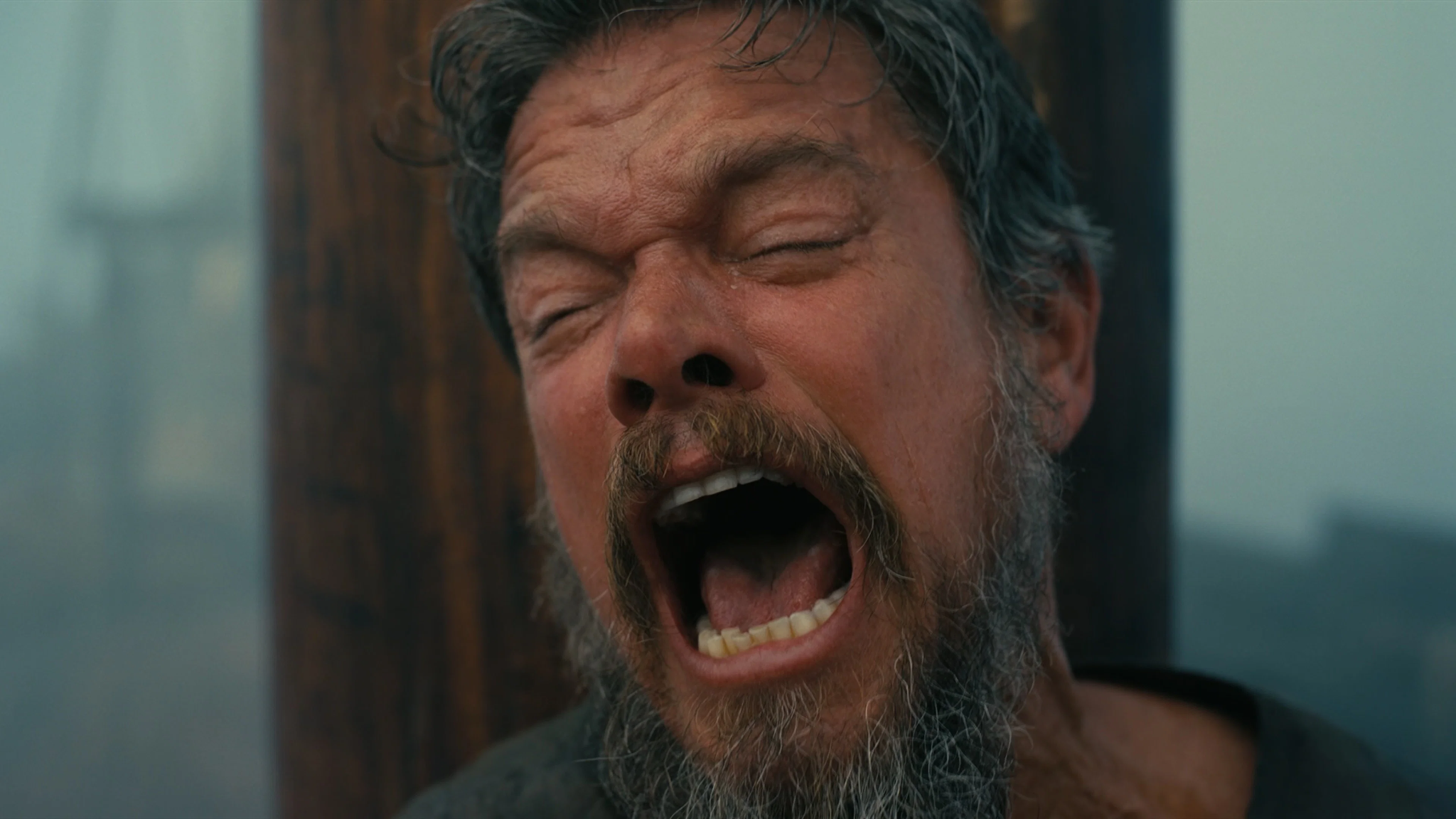
Tom Cruise in Digger
Tom Cruise has been out of the dramatic acting game for quite some time. Sure; he was recently nominated for producing Top Gun: Maverick, but he hasn’t received an acting nomination since his supporting part in Magnolia. This season, he’s working with Alejandro González Iñárritu in the titular role, Digger, where he plays an oil tycoon trying to save the world from his own actions.
While Tom Cruise is going all out in this performance, I could see a world where he misses the field. Not only was the film a major box-office disaster, but it also didn’t receive the greatest of reviews from critics; audiences were a little more favorable, but not enough to say it got the greatest reviews from that group. However, Alejandro’s films have always been nominated for something at the Oscars. Even Bardo got in for a Best Cinematography nomination for Darius Khondji; a man who hadn’t gotten nominated in the category since Evita (a movie that came out a year before I was born).
Another aspect to keep in mind is that while Tom’s chances of a win are gone, I still think he could get in as a bubble contender. The reason being is that not only is this a physical transformation with the makeup work by Oscar-winner, Kazu Hiro, but looking at Alejandro’s past films they also got in for acting categories when it came to his movie star films like 21 Grams, Babel, Birdman, & The Revenant. Tom is also a known, respected figure amongst the industry, so he may not be out of the game when it comes to a Best Actor nomination.
John Turturro in The Only Living Pickpocket in New York
John Turturro is in the awards conversation with The Only Living Pickpocket in New York. The film revolves around Harry Lehman, who’s an aging career pickpocket. During one of his robberies, he comes across a device that belongs to a young member of a major crime family and loses it. In order to get it back, Harry will have to use his lifetime of personal connections to make things right.
Turturro has been in the industry for a long time, and one of his early credits included being an extra in Martin Scorsese’s Raging Bull. Ever since then, he’s worked with a variety of directors that include Spike Lee, Woody Allen, the Coen brothers, and Guillermo del Toro. It’s honestly impressive that John’s never gotten this kind of consideration in his entire career up until this role. Pending on what happens with the race, but I can easily see this man finally score his first Academy Award nomination.
While it doesn’t sound like the film would be able to get any other major nomination, I am hearing enough buzz that the performance itself could carry through to the field. Not only is Turturro a respected, veteran actor who’s been known for working in the industry for decades, but the film has Sony Pictures Classics behind its back marketing it. They were able to get The Father nominated for a handful of Oscar nods, and even got I’m Still Here a surprise Best Picture nomination. For anyone scoffing at this possibility from happening, I’d suggest you don’t keep your eyes off this one.
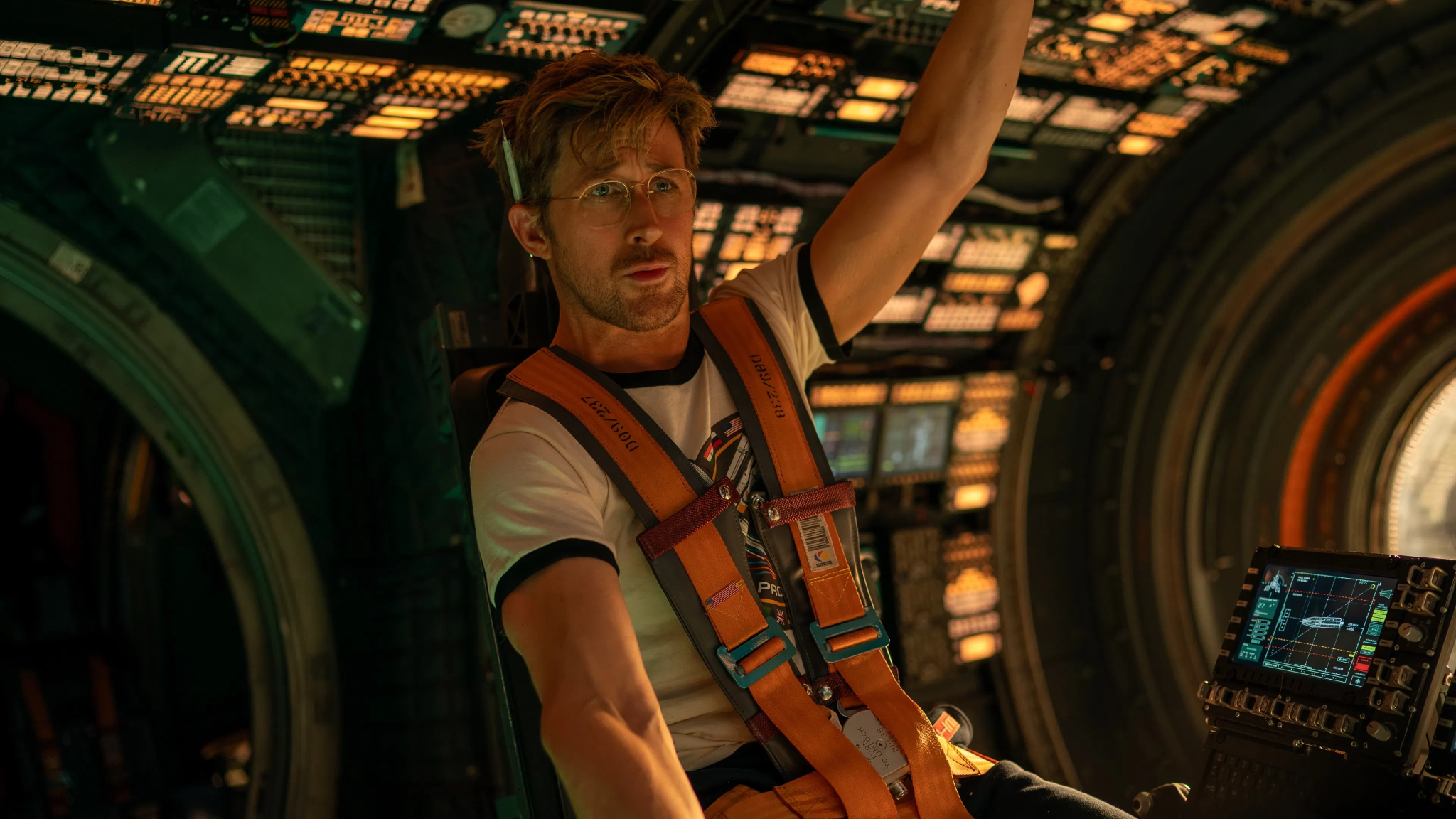
Ryan Gosling in Project Hail Mary
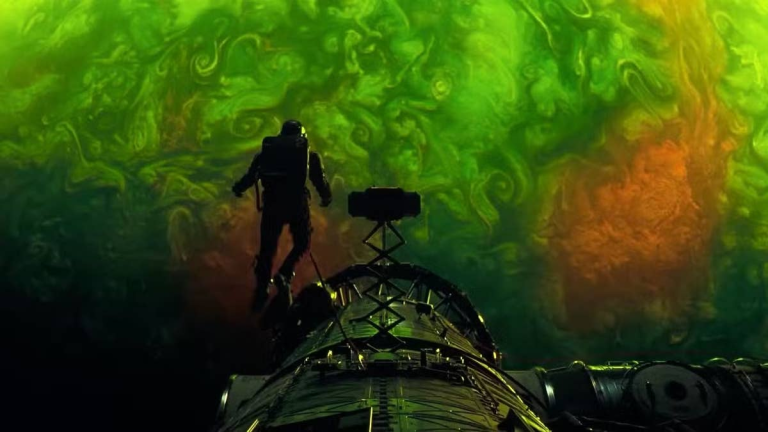
Ryan Gosling has recently taken a turn from challenging, arthouse roles to making populist, blockbuster fare. This time, he’s co-producing and starring in Project Hail Mary, where he plays a middle school teacher, Ryland Grace, and wakes up aboard an interstellar aircraft with no memory of how he got there. Even though the odds are against him, he’ll do whatever it takes to get himself out of this predicament and find a way back home.
As I’ve said, Ryan’s had a bit of a switch in his acting career lately. That’s not to say there’s anything wrong with making a career change, as we’ve seen plenty of actors do this and are successful at it. The same can be said for Ryan here, as Project Hail Mary made close to $700 million worldwide and got positive reviews from critics and audiences. I could see a world where he might be able to squeeze in the field this year, as he’s not only got a commercial hit but he’s working with a pair of Oscar-winning filmmakers, Phil Lord and Christopher Miller.
He’s also a part of an Andy Weir-adaptation, in which the last time it was received well with Academy voters was The Martian. They even hired Drew Goddard back to adapt this book as well, who also scored an Oscar nomination for Best Adapted Screenplay. The downside is that while I could see Ryan get in the field similarly to Matt Damon did with The Martian, I can also see Ryan being one of the bigger snubs. Not only because the Academy has five spots, but they’ve had a history of looking down upon performances within the populist films.
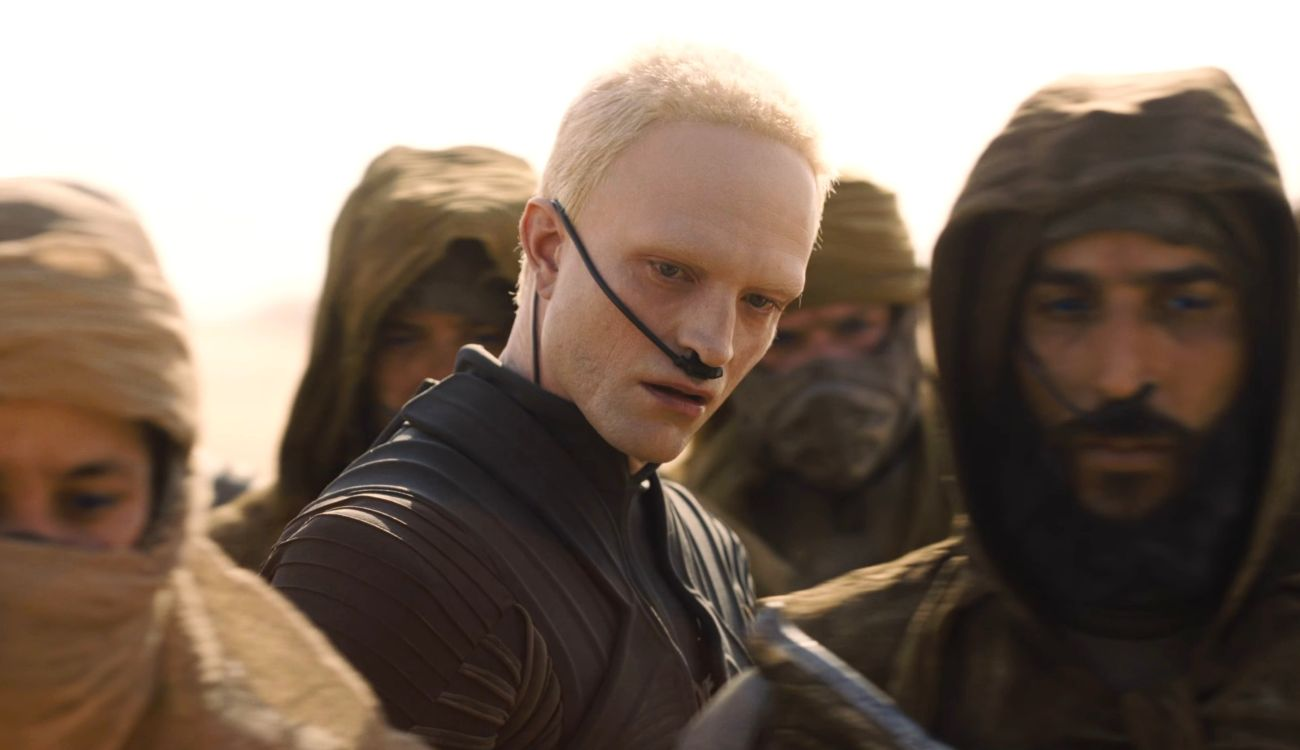
Something like Top Gun: Maverick or the Dune films aren’t seen by the Academy for their performances, because they always see them as money-making endeavors that captured the zeigeist. They also just don’t take them seriously when it comes to nominating said performances, when they have better alternatives. That’s one of the many reasons why someone like Timothée Chalamet got nominated for his performance as Bob Dylan in A Complete Unknown, as opposed to getting in for Dune: Part Two; a performance I’d argue is much better than the one he got nominated for. I could see Ryan Gosling get in the Oscar field, as he could score a Golden Globe and Critics’ Choice nomination. But if he can’t get into something like BAFTA or SAG, then we might see him as a possible miss for the Best Actor category.
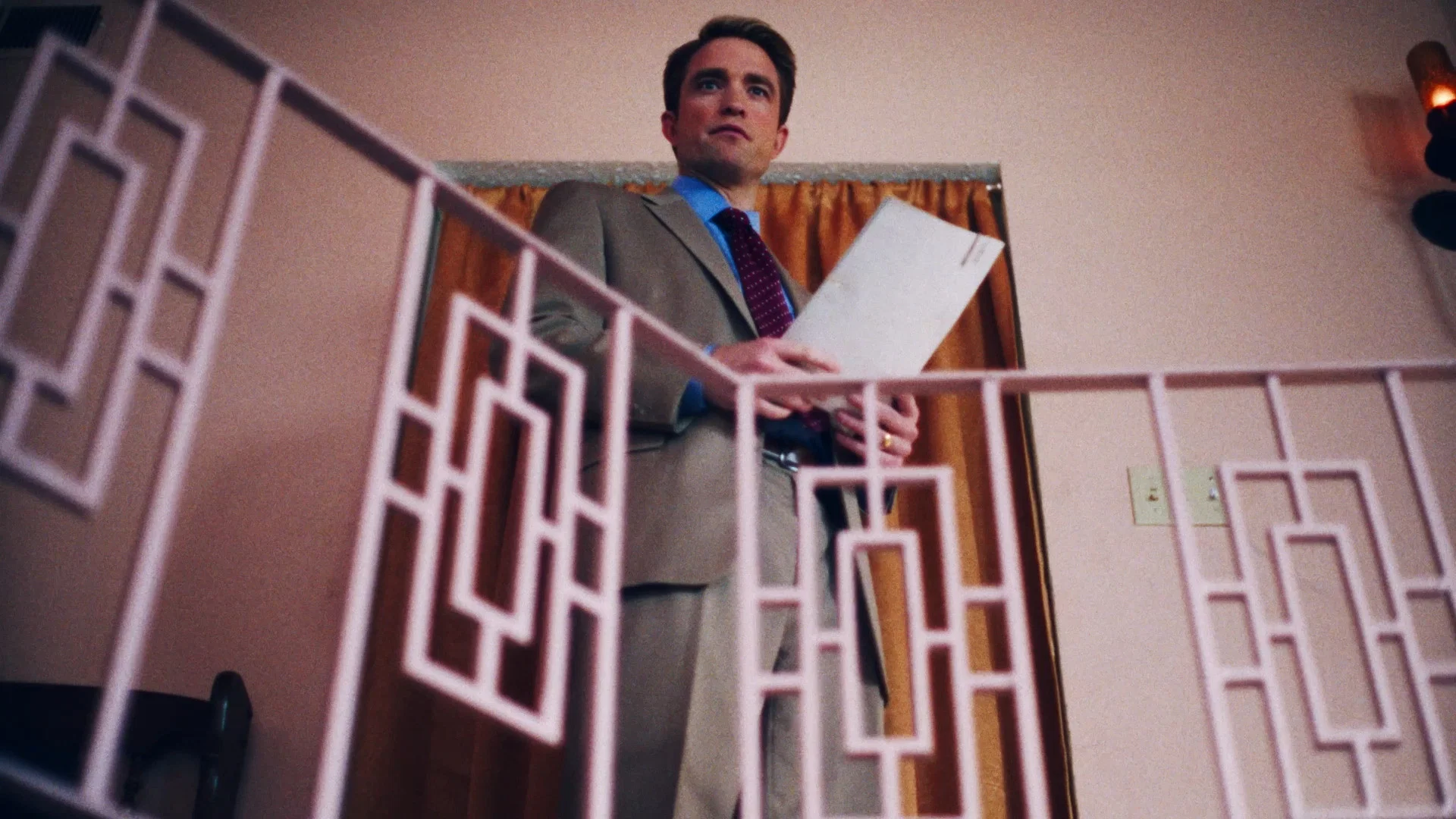
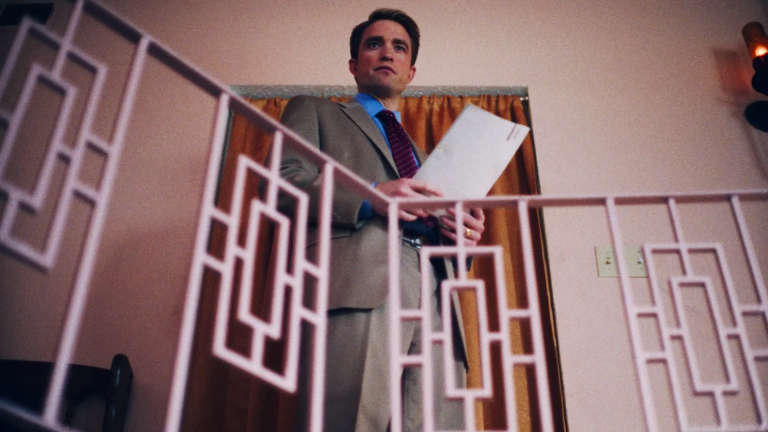
Robert Pattinson in Primetime
Robert Pattinson has had a tremendous year so far, starring in the romantic dark comedy, The Drama. Not only did this make well over $134 million worldwide, but he also starred in The Odyssey. Later this year, Robert’s got Dune: Part Three, but out of all of those films I believe the film that’ll give him a better shot at an Oscar nomination is Primetime. In the film, he plays Chris Hanson, hosting the reality television series, To Catch a Predator, in the hopes of cleansing the world of child predators all across the United States.
This film premiered at the Venice Film Festival, and while it didn’t score any prizes it earned enough critical acclaim for Robert Pattinson’s performance to generate buzz. As of now, Primetime has become a box-office hit, making back its $14.5 million budget worldwide. After now seeing the film and A24 backing this up, I’m starting to wonder if Robert can actually make it in the field.
Yes; it’s covering a dark subject matter and is presented in a grim manner, but as we’ve seen lately the Academy isn’t afraid of nominating films like this. Last year, we saw A24 back up Rose Byrne for a Lead Actress nod on If I Had Legs I’d Kick You. So, there is a chance Robert could squeak into the field, especially when the Academy loves to nominate biographical performances.
Now there are two problems this film might run into:
1) Even if the film may be too intense for voters, A24 has a lot on their plate this year. They have The Debut and The Invite to push out, as well as other contenders like Club Kid and You Can See Everything (which is mainly in the Best Documentary Feature category) as possible contenders in other major categories. I could see the path for Primetime to get campaigned, but Robert would have to advocate it throughout the various screenings. If they can push that onto SAG, then I can see him get in the Oscar lineup.
2) While Pattinson could become the film’s lone acting nominee, I don’t know if the film itself can get another nomination. The reason I say this is that I’m already predicting John Turturro and Andrew Scott as potential lone acting nominees for this category, and recently the branch goes mostly for Best Picture-nominated films. Last year, the Academy nominated four Best Picture nominees for Lead Actor, and the only non-BP nominee was Blue Moon. And as for Primetime, it’s a well-crafted film but nothing stood out to me as a Best Picture nomination or a possible tech nomination.
I have to see how this plays out, as I felt Robert Pattinson was terrific in the film and is given enough to get the nod. If he does get in the field, it’ll be a worthy nomination for an incredibly impressive career. To think that I almost gave up on the guy after doing those Twilight films. Now, he’s got a decade’s worth of incredible roles from Good Time, The Lighthouse, The Batman, and now Primetime.
One more note I’ll bring up regarding Pattinson’s possible nod with this: should he get in the Lead Actor field for this and Dune: Part Three gets nominated for Best Picture, this would be the third time this has occurred. The first two Dune films got in the Oscars, they ironically came out the same year Javier Bardem got in for Being the Ricardos and Timothée Chalamet got in for A Complete Unknown, respectively. Both of which starred in biographical films about known celebrities. We’ll see if Robert can repeat this weird trend, but if he can I’ll be laughing my way to the bank.
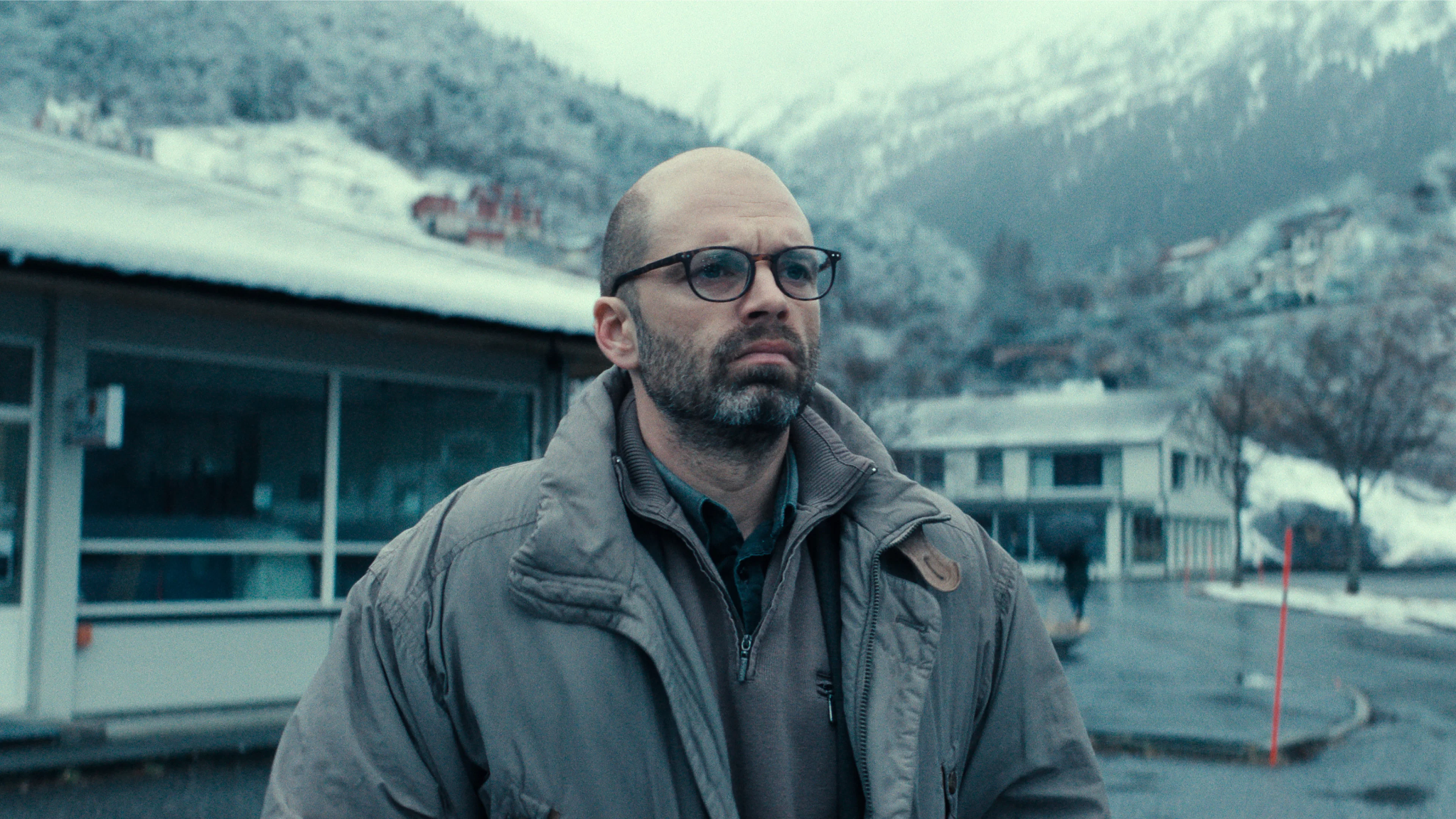
Sebastian Stan in Fjord
Sebastian Stan is in the running for another possible Lead Actor nomination. Last time, he was nominated for The Apprentice, where he played Donald Trump, who at this time was a real estate businessman in New York City as he was learning from attorney Roy Cohn. With Fjord, Sebastian plays a Romanian father, Mihai Gheorghiu, who moves his wife, Lisbet (Renate Reinsve), and kids to a remote Norwegian village and the couple are accused of abusing their children.
The biggest benefit Stan may have is not only is this a different role than his first Oscar nomination, but he’s a part of a possible Best Picture contender. I get that after Neon won the Palme d’Or for It Was Just An Accident and failed to pick up a Best Picture nomination, they had a lot on their plate to campaign. Add in the fact that they didn’t have any known actors for the Academy to advocate for, and you can see why it didn’t secure an Oscar nod outside of Best International Film and Original Screenplay.
With Fjord, I could see the path for this to potentially get in for acting nominations, especially when Sebastian and Renate are previous nominees. It also helps that Neon might put this up as their top priority for major categories over All of a Sudden, which also has potential acting nominations. I could also see a path for these subdued performances to get in, as they tend to go over well with the international voting block of the Academy. Even something like Wagna Moura’s quiet performance in The Secret Agent managed to get recognized by the voters.
So, while I can see legit reasons to not put Stan in their predictions, I’d say we should keep an eye out for him. For all we know, he might be a surprise nominee on the announcement morning. Until then, we’ll have to wait and see how this performance does with critics’ groups and the televised groups.
On this episode, JD is joined by Maxance Vincent and Shaurya Chawla to discuss Alejandro G. Iñárritu’s new film Digger! While it’s refreshing to see Tom Cruise fully committed in a different role, the film itself left us with some question to wrestle with as it doesn’t seem to know what it wants.
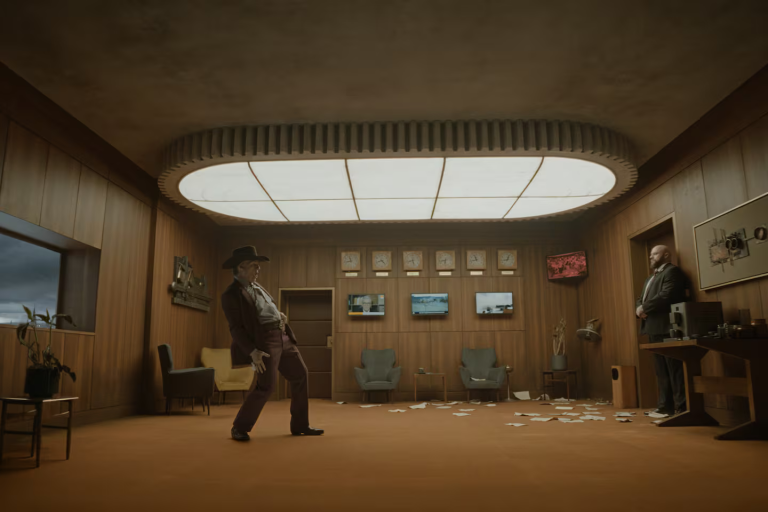
Review: Digger
Director: Alejandro G. Iñárritu Writers: Alejandro G. Iñárritu, Alexander Dinelaris Jr., Nicolás Giacobone, Sabina Berman Stars: Tom Cruise, Riz Ahmed, John Goodman, Sandra Hüller
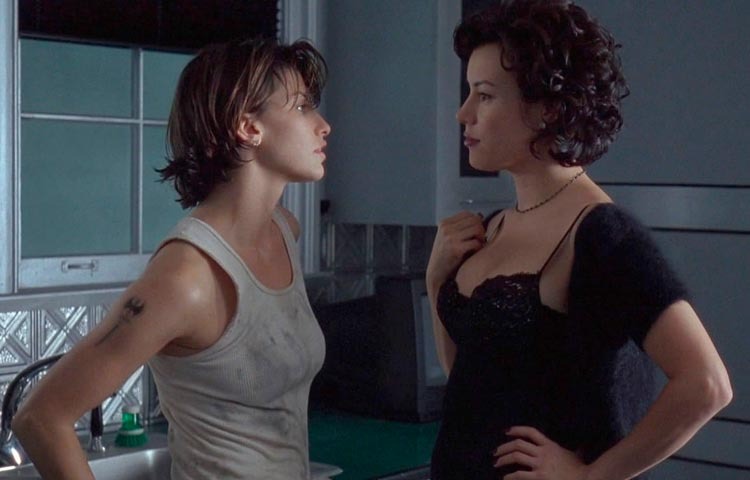
Director: Lana Wachowski, Lilly Wachowski Writer: Lana Wachowski, Lilly Wachowski Stars: Jennifer Tilly, Gina Gershon, Joe Pantoliano
Synopsis: Tough ex-con Corky and her lover Violet concoct a scheme to steal millions of stashed mob money and pin the blame on Violet’s crooked boyfriend Caesar.
When someone brings up legendary directors Lana and Lilly Wachowski, people most instantly think of The Matrix. And honestly, I wouldn’t blame them; the sci-fi action film became a complete phenomenon. It introduced Western audiences to Wire-Fu choreography, immersive CGI, and even got people into simulation theory. While The Matrix is undoubtedly a staple in movie history, before the “red pill” and “blue pill” craze, there was Bound, the Wachowskis’ directorial debut. 30 years later, the film still stands as one of the greatest debuts ever, and its success is no small feat.
For those who haven’t seen the thrilling lesbian neo-noir from 1996, it follows ex-con Corky (Gina Gershon), who falls for her neighbor Violet (Jennifer Tilly). There’s just one problem with their romance: Violet has a boyfriend, Caesar (Joe Pantoliano), a mafia man who won’t let her go without a fight. So the lovers have to create a plan not only to put Caesar away for good but also to secure their future together. In their minds, the best way is to steal a few million dollars of stashed-away mafia money and make Caesar the target.
Bound establishes early on that Lana and Lilly know how to write a captivating, yearning LGBTQ romance where Corky and Violet can be happy. They made a same sex couple in the ‘90s when most erotic thrillers that were popular during the time centered around a male lead and his female love interest. Corky is a rough-around-the-edges woman with plenty of run-ins with the law. Chewing on a toothpick in her blue jeans and white tank top, she exudes a masculine energy while maintaining her sensuality. On the other hand, Violet is the sultry femme fatale in dark lipstick and a plunging neckline; though she’s more than eye candy, her wit gets them out of trouble more than once. Their relationship is refreshingly confident in its portrayal, especially during its intimate moments; the film feels entirely made for the female gaze, where sex is desirable and consensual.
The Wachowskis show their confidence most in their masterful control of the film, even outside their writing of Corky and Violet. Bound comes across as exactly the vision Lana and Lilly aimed to make, and their passion for filmmaking shows in every frame. Their ability to work within a $6 million budget without compromising their vision shows what kind of directors they are. They showed studios they can work within cramped budgets and sets while still delivering a film that is groundbreaking in its narrative and its efficiency. A lesson even seasoned directors struggle with: they took limited filming space and created spatial design that reflects Corky and Violet’s relationship, with claustrophobic camera angles and numerous tracking shots. Thankfully, the Wachowskis kept control of their film and went on to direct The Matrix, where they became household names.
In a sea of impressive directorial debuts, such as David Lynch’s Eraserhead or, a personal favorite, Sofia Coppola’s The Virgin Suicides, Bound cuts to the central conflict of Lana and Lilly’s work. In their creative endeavors together, their films establish a narrative about people escaping the systems that oppress and control them. In Bound, Violet fights to break free of a life created by her abusive partner, Caesar, and find true happiness. At no point does the film suggest that either Wachowski is figuring out their cinematic voice; they already know it, and they are ready to share it with the world. Much like Lynch and Coppola, the Wachowskis deliver a debut that gives audiences a crystal-clear view of what to expect from their future work.
Bound truly wouldn’t be Bound without the performances from Tilly and Gershon. Their chemistry is incredible and makes the film that much more special. The care around both of them starts with the script and flows right off it. Gershon plays Corky as cool as humanly possible, communicating with actions and expressions rather than words. When she listens to her lover, she’s quiet and attentive, but her guard slowly comes down around Violet. She breaks the mold of masc women always needing to be tough. At the same time, Tilley plays Violet as a glamorous seductress in need of saving who uses her beauty and intelligence to break free from this cycle of abuse she is in. Both women subvert audience expectations with the roles they play, allowing the other to shine, because, much like their characters, they wouldn’t get their desired outcome without the other person.
It has been 30 years since Bound hit theaters, and time has only made the film more impactful. It’s the kind of film that takes directors years to craft, but the Wachowskis did it on their first outing together. An LGBTQ staple that doesn’t make a queer character a villain, a side character, or treat them like a taboo. It gives a lesbian couple the spotlight to find freedom within their true selves in a genre that heterosexual couples have oversaturated. Lana and Lilly make history with each film, and Bound was just the start.
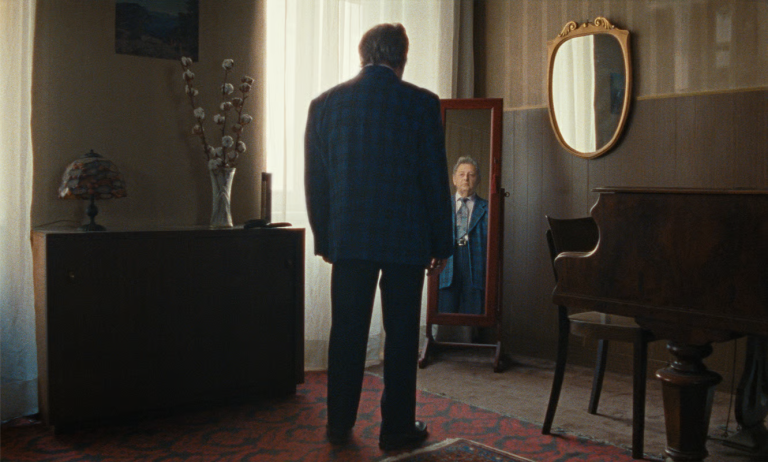
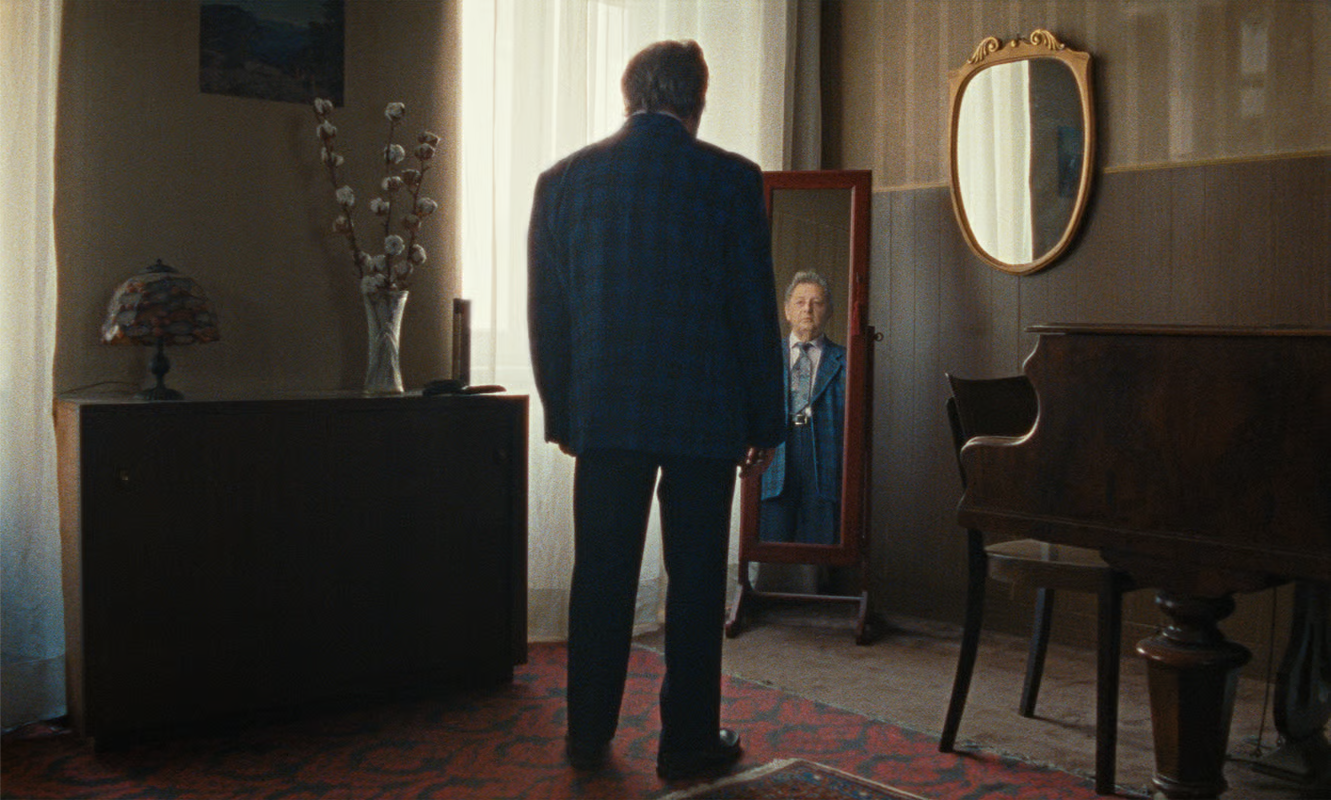
Director: Tizza Covi, Rainer Frimmel Writer: Tizza Covi Stars: Alfred Blechinger, Al Cook, Alois Koch
Synopsis: When blues musician Al Cook’s memory-filled apartment faces demolition, an old dream emerges from his isolated life.
Elton John sang it best in 1983: “I guess that’s why they call it the blues.” Such a fitting song for a film that’s bound to remain perhaps the most quietly devastating film of the year. It also feels appropriate that The Loneliest Man in Town relies quite heavily on themes most commonly found in blues music to push its narrative ever so mournfully forward. It’s obviously understood that great art, no matter its origins or firm sense of place, can transcend borders and language entirely. But fully embracing that beautiful fact still won’t brace an audience’s first meeting with Al Cook (Alois Koch, playing a fictionalized version of himself). He’s the type of enigmatic figure which begs the question of where in the world could somebody so distinct ever possibly have come from?
The sole tenant of the building he has lived in his entire life, writer/director duo Tizza Covi and Rainer Frimmel introduce Al and the primary setting of their film to their audience through an extended dialogue-free tour of sorts. Al goes into his basement storage unit, where every inch of the walls is seen covered in photographs of family and legendary musicians alike. Most of the floor space is also taken up by countless records, all devotedly and properly handled with the utmost care and respect. It would appear that Al is living the dream of many physical media aficionados: simply having a space to find serenity surrounded by something cherished. But that welcoming potential is quickly cut short by the first of many impeccable directing choices from Covi and Frimmel. Al puts on a 1950s Lonnie Johnson song titled “I’m So Tired of Living Alone.” All the warmth of this space is immediately sucked out of the frame, instead holding on Al’s face as he longingly looks at a picture of his wife fighting back tears. It may seem dull or trite, but in practice, it is indicative of setting up the exact wavelength Covi and Frimmel are going to operate in for the remainder of their film. From the initial set-up this film was building out, one might have expected the warm embrace of a Christmas-time set celebration. The look on Al’s face as he somberly decorates his Christmas tree tells a different story entirely. It’s one that becomes much more detailed the longer The Loneliest Man in Town plays out.
For all the enigmatic qualities Al appears to contain, Covi and Frimmel do a great job at building up Koch into a full-blown leading man. Besides, how could a blues musician pulling off such impeccable fits, done-up hairstyles, and vocal inflections not also be an incredibly engaging movie star? His performance feels like it was pulled right out of an Aki Kaurismäki film, which is equally fitting considering the desert-dry humor Covi and Frimmel rely on to inject levity into this deeply sad film. There’s a contrast that’s both shocking and comical between how great Al can make loneliness appear versus how achingly it sometimes pains him. There’s never a romanticism at play, but smartly, Covi and Frimmel provide Al without a lot of opportunity to remind the audience he still has a lot of life left in him. And yet, this film makes another smart decision in how it develops Al’s character with specific regards to his aged yet idiosyncratic gusto.
All the warmth of a rich record spinning and glowing candlelight in Al’s larger, more lived-in apartment upstairs can’t keep out the wintry sadness which is occasionally kept at bay, yet often accompanies the holidays in some shape or form. The power goes out completely, and upon further inspection, comes to realize it was shut off by his new landlords, a largely faceless corporation with the cruelly ironic slogan “building new values.” It certainly won’t be the last time Covi and Frimmel dole out harsh reminders to their audience and beloved protagonist of how horrid these property management companies are willing to behave as if real lives and histories aren’t being completely erased by their actions. And rather than make The Loneliest Man in Town about a lonely man’s lofty fight in his twilight years against a standardly-evil company, Covi and Frimmel make the devastating choice to make this a fundamentally honest film instead. The fight for ethical justice and standing up for one’s life in the face of cruelty such as this, however noble and worth it, can be too tiring and all-encompassing. After a few more deeply annoying, yet still quite funny, run-ins with the unbelievably cast goons of the faceless landlord, Al merely gives in. Critically, Covi and Frimmel never judge Al for this decision. How could they? How could anybody in the audience?
What then plays out across the remainder of The Loneliest Man in Town is an ode to looking towards the future despite being so firmly embedded in the past. There’s an innate understanding baked into this film regarding the bittersweet melancholy that accompanies a complete purge of items held onto because of emotional attachment. At one point, Al begins going through a collection of his VHS tapes. Some have Elvis performances stored on them, others go the way of home video capturing interviews from decades earlier or a simply touching serenade to his wife. As Al wistfully takes in the exuberance of his younger self, he finds himself hearing a key piece of self-delivered wisdom from decades prior: “People are ashamed to show feelings.”
With this film, Covi and Frimmel are not ashamed to do so in the slightest. They instead reckon with the freedom that can stem from moving forward towards a dream never realized, alongside the seemingly impossible task of completely cutting ourselves off from the past that formed us the version of ourselves which currently exists. It’s captured so wistfully through Koch’s performance, not just in terms of mannerism or dialogue, but in musical moments too. The first time audiences hear Koch sing will serve as the ultimate testament to him being such a singular force. There is such gravitas and depth behind his thickly-accented American blues music that remind the audience so clearly of Al’s storied life. It’s something we are only momentarily privy to. It’s far from over, but it’s certainly changing in some radical ways. Approaching such a truth can be wistful, as it certainly is portrayed in the film. But with a very touching final stroke of filmmaking genius, or perhaps providence, The Loneliest Man in Town serves as a reminder that a determined soul is a deeply powerful force. And we can allow ourselves to form some extraordinary new memories while holding onto the essential core of our past if we merely take the first step forward and fight on however we best can.
The Loneliest Man in Town is celebrating its North American Premiere in the Main Slate section at the 64th New York Film Festival.
Director: Michael Showalter Writer: Nick Antosca, Colleen Hoover Stars: Dakota Johnson, Anne Hathaway, Josh Hartnett
Synopsis: Lowen Ashleigh, hired to ghostwrite for Verity Crawford, uncovers what appears to be Verity’s autobiographical notes. She wrestles with the confessions about Verity’s husband and finds separating fiction from reality challenging
Verityis one of those films that is good until it’s definitely not. A thriller for the defense of the Lindsay Clancy crowd, the movie is suspenseful, sexy, and seductive; you cannot argue with how arresting it is as a piece of metafiction. The movie blurs the line between what is real and what is not, becoming a sensual unreliable-narrator cliché that, at times, can be genre popcorn-movie bliss.
Again, until Verity just cannot help itself, failing to keep the story simple. For almost 90 minutes, the filmmakers slowly churn up the suspense, and you cannot take your eyes off the leads. Yet the new Colleen Hoover adaptation loses its way by failing to understand what audiences want and need, causing a domino effect of pandering, eye-roll-inducing misdirection, and reveals.
Verity starts as a delicious thriller, where the audience can look past questionable character decisions, gaping plot holes, and bold choices of brutality that will make your jaw drop, but it ends up leaving a bad taste in your mouth. This is another Hoover adaptation that leaves more questions than answers, but those questions usually come around to, “What was the point?”
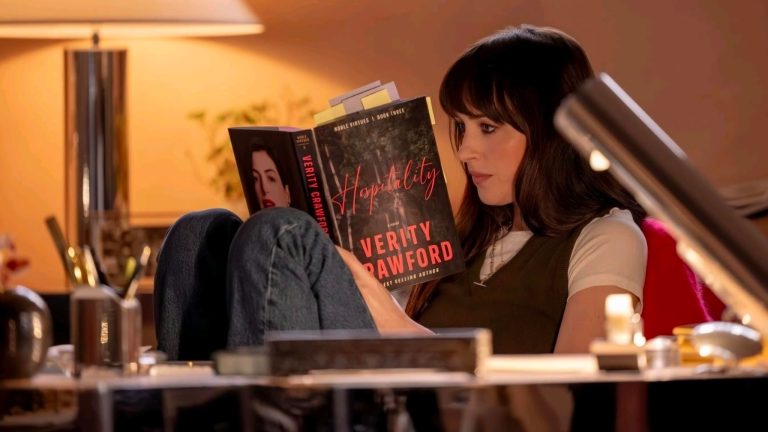
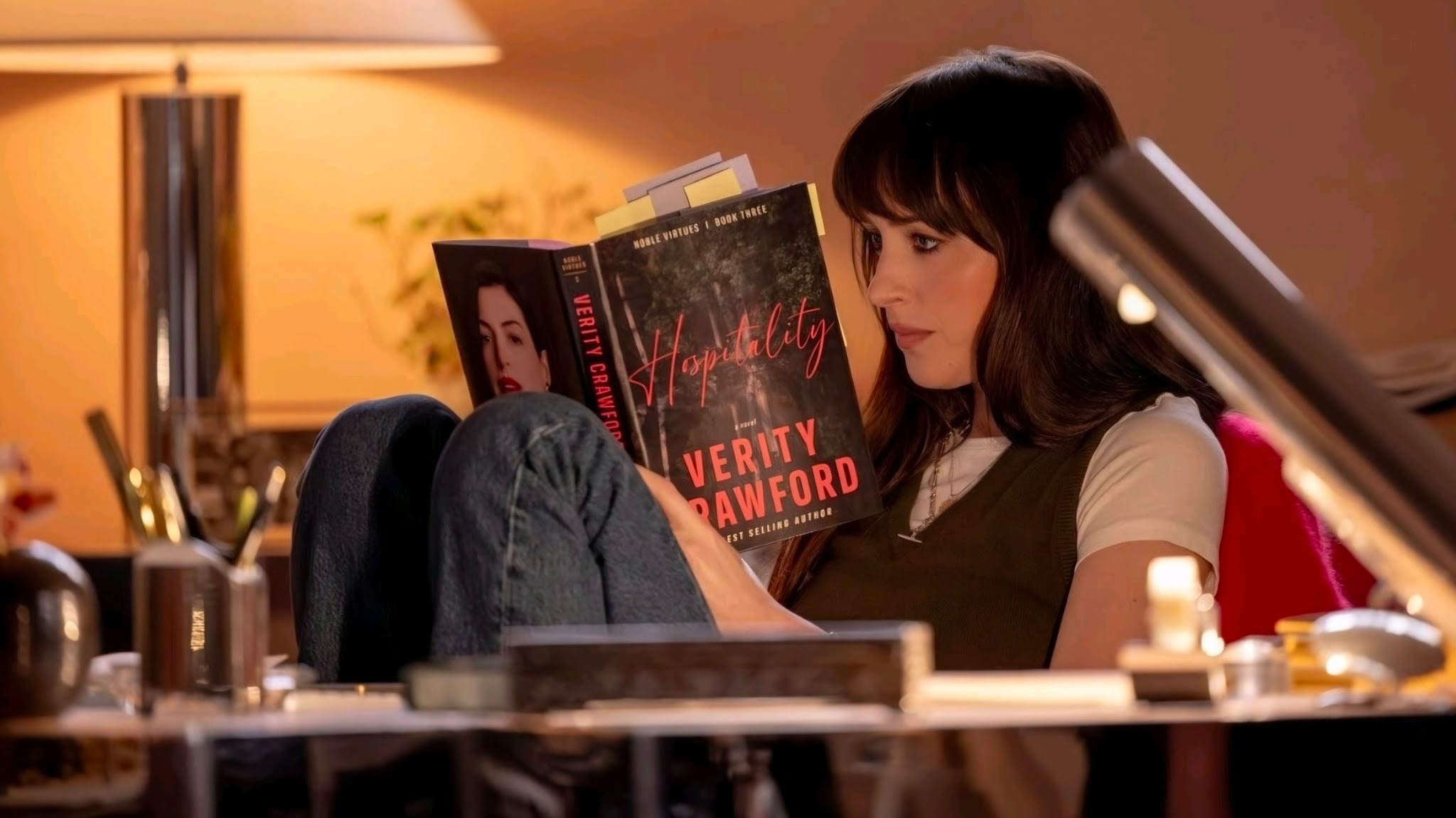
The story follows Lowen Ashleigh (Dakota Johnson), a respected writer who refuses to write for the airport-reading crowd, which reflects her current financial situation as she is being evicted from her apartment, where she uses a mattress as a futon. Depressed, she uses drugs and alcohol to numb the pain of losing her mother, who just lost a battle with cancer.
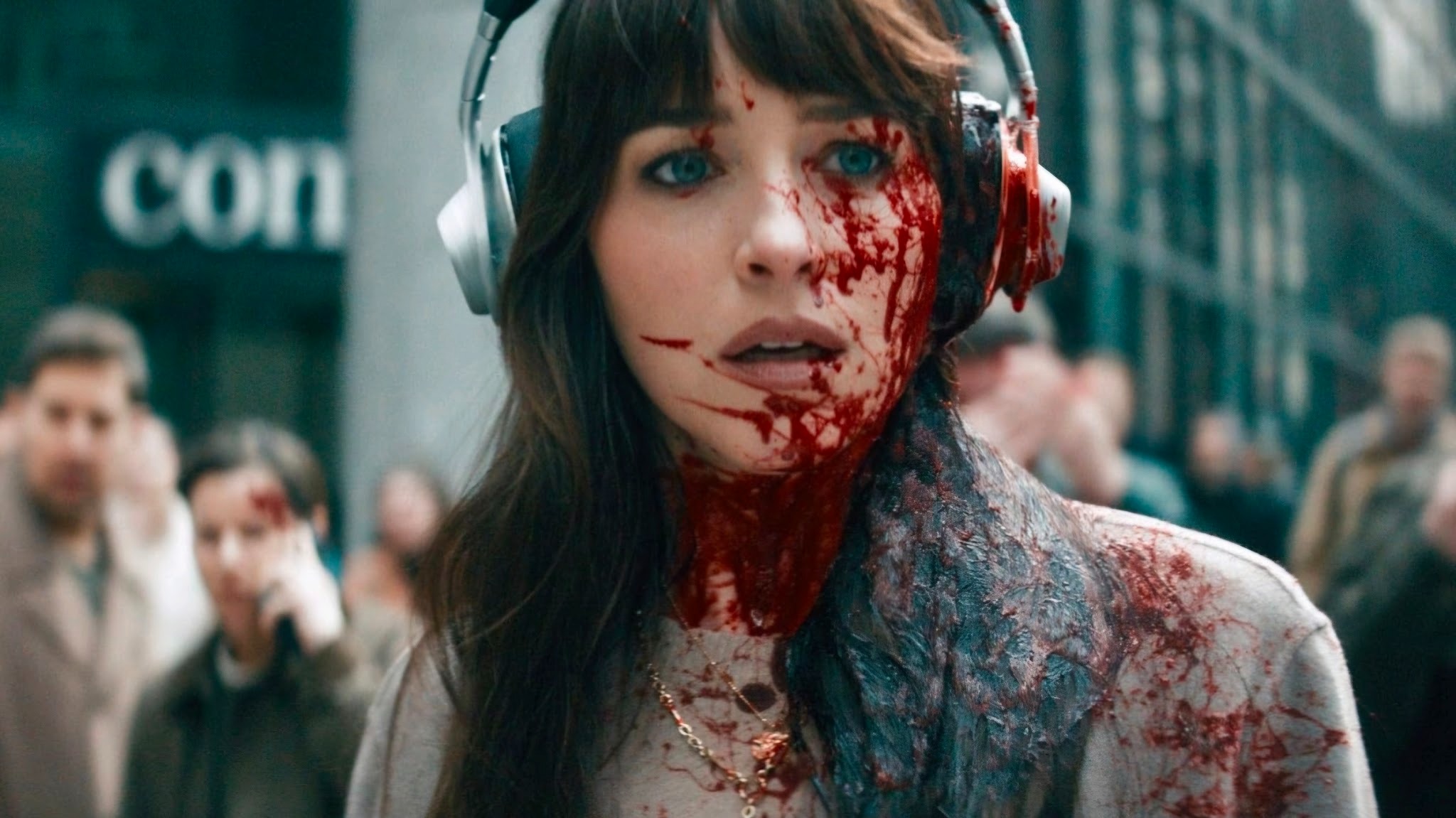
Luckily for Lowen, her literary agent, Cory (Ismael Cruz Córdova), finds her a book deal. Unlucky for the guy who gets hit by a car, splattering blood all over Lowen’s porcelain skin on her way to the meeting, a man named Jeremy sees Lowen (Trap’s Josh Hartnett) in shock. He walks her to the bathroom, gallantly giving her the shirt off his back because hers is drenched in blood.
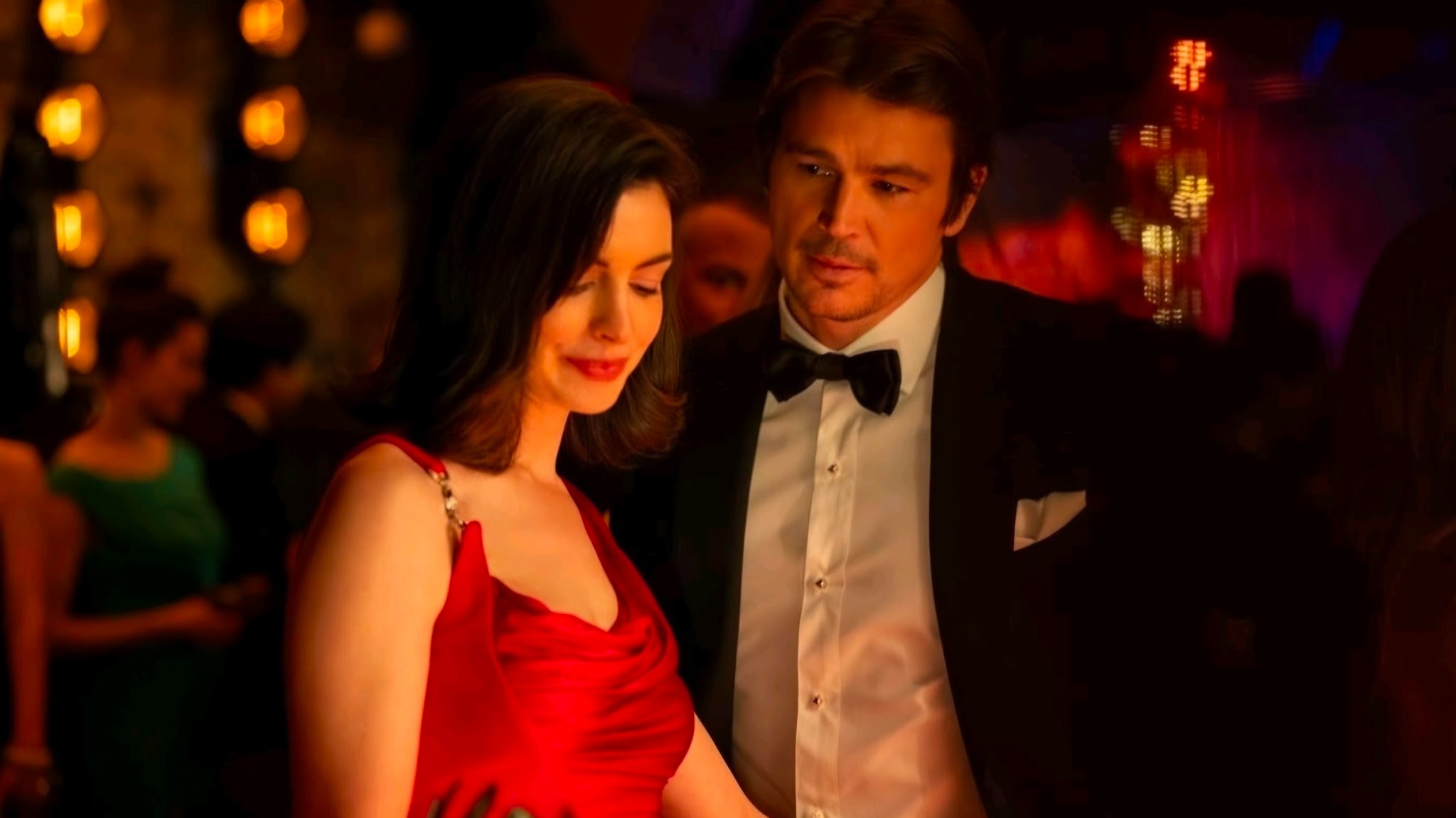
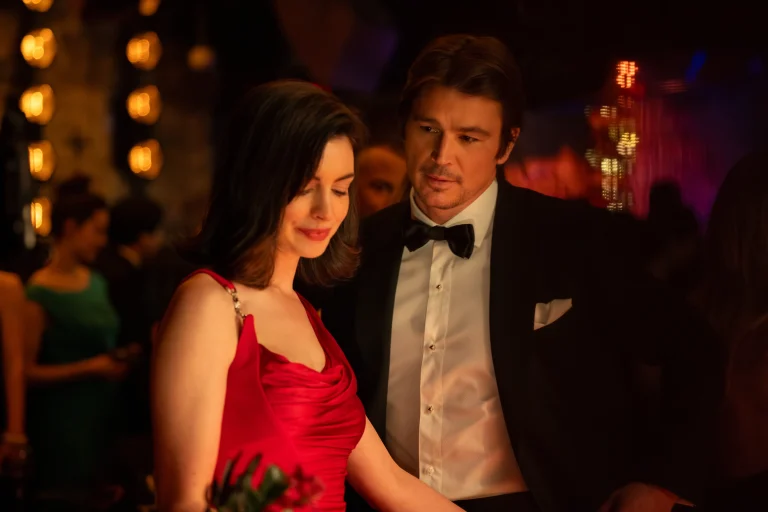
When Lowen arrives, Jeremy is there, who is the husband of Verity Crawford (Anne Hathaway), a Gillian Flynn-type author who sells more books in an hour than Lowen can sell in her lifetime. However, after an accident that has left Verity catatonic, the uber-popular “The Noble Virtues” series, Lowen is assigned the task of finishing the series and paid enough to clear her debts.
Verity is from Mike Showalter, a versatile director behind the cult classic Wet Hot American Summer and the Oscar-nominated The Big Sick. For the most part, Showalter is a steady hand, guiding Nick Antosca’s adaptation as Lowen discovers a manuscript that she has to decipher as a confession or provocative meta work of (erotic) art. In fact, the first two acts do a fantastic job of holding your attention.
Showalter’s framing and cinematographer Jim Frohna’s lens give the erotic thriller some sensual juice. Evocative and, at times, unsettling, with a few jump scares, the movie succeeds as an elevated B-movie because it is pulpy and genre-heavy, but never cheap. That is, of course, until the third act’s final minutes go from clever to absurd, and its visual style only serves to mask the source material’s lack of thematic depth.
In the end, even the committed and sexually charged performances from Johnson and Hathaway cannot save a film that abandons its own convictions. The result is the Verity experience with such low emotional stakes that it comes across as overwrought and contrived, hoping a certain demographic will put on their empathy blinders as an excuse for entertainment.
You can watch Verity exclusively in theaters starting October 2nd!
We’re just a week removed from the wide release of Lance Oppenheim’s feature debut, Primetime, which became A24’s third-best opening weekend of all time. The film’s success has brought a hefty dose of discourse, but the Chasing the Gold team wants to wade right through that and examine its chances for the impending awards cycle leading up to the 99th Academy Awards.
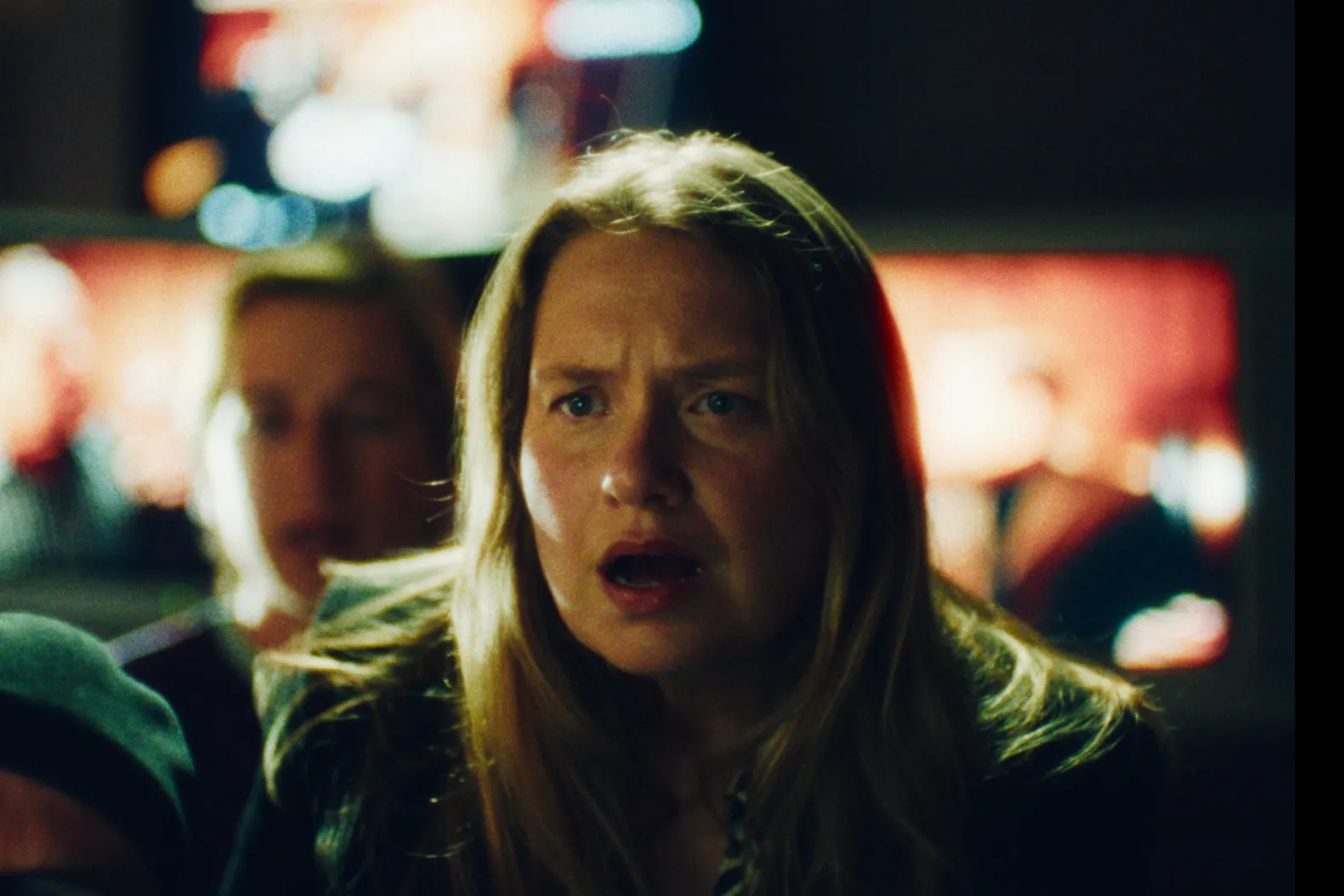
Primetime follows Chris Hanson (Robert Pattinson) as he and producer Andie Bender (Merritt Wever) attempt to get their TV show, To Catch a Predator, off the ground and compete with the big boys in the ratings game. The film also features prominent performances from Skylar Gisondo and Phoebe Bridgers as decoys the show uses to initially interact with these predators before Hanson confronts them, and Matthew Maher as Xavier, the tech wizard who finds the predators online and has a passion for what the show is trying to accomplish.
Despite the film’s success, I’m not sure it has a high ceiling for awards potential. The clear leader is a potential Best Actor nomination for Robert Pattinson, who is having an incredible run this year between the divisive The Drama, a strong supporting performance in The Odyssey, Primetime, and a role in the highly anticipated Dune: Part Three in December. It’s no secret that the Academy loves performances portraying real people, no matter how over-the-top. There’s a big difference between pure imitation and interpretation, and Pattinson is doing more of the latter here, making creative choices that may deviate from a more imitated performance of Chris Hanson. It’s my favorite performance of his this year, and voters may rally around it.
I’d be surprised if Pattinson does not get a nomination somewhere, and it’s my read that it will either be Best Supporting Actor for The Odyssey or Best Actor for Primetime. Of course, there’s a world where he gets in for both, but I do not believe we live in that world. The Odyssey will be nominated in double-digit categories, so it makes sense to assume that Pattinson will come along for the ride (with a decent chance to win). It’s not impossible for him to win the battle for that last Best Actor spot with enough support, and we know he will be campaigning for other films all season long.
Pattinson is astounding, but I was blown away by Wever and Gisondo. Unfortunately, the latter has little chance of getting in for Supporting Actor, but Wever could have a shot at Supporting Actress. If you take a look at the list of potential contenders for her category, you see four spots taken up by two names: Penelope Cruz and Sandra Hüller. Cruz is high on the list for both La Bola Negra and The Invite, while Hüller shows up further down for Project Hail Mary and Digger. Some other contenders have much smaller roles in their films than people realize, so they could fall away once more people have seen them. Wever’s performance grounds the film in reality, delivering one of the more powerful scenes in Primetime. With enough sustained support, she could sneak in if others lose momentum.
While Primetime’s nominations are likely limited to one or two acting nominations, I’d like to pitch one more category that would be exciting to see it get in for: David Bolen for Cinematography. The film doesn’t have wide, sweeping landscapes or immaculate camera movements, but it’s hard to deny the unique shots, beautiful lighting, and color grading. It has a grainy texture from shooting on 16mm and scanning it to digital, creating a unique viewing experience.
Pattinson is Primetime’s best chance at scoring an Oscar nomination, but it’s still early. Nobody is safe until all of these films come out, and some performances in other categories that seem like locks right now could underperform, making way for someone like Merritt Wever to sneak in for Best Supporting Actress. It’ll be fun to watch the race unfold over the next six months, and hopefully we’ll see some Primetime recognition at several awards shows along the way.
Director: Martin McDonagh Writer: Martin McDonagh Stars: John Malkovich, Sam Rockwell, Steve Buscemi
Synopsis: CIA agents Chris and Lee face a trust-testing mission from Santiago to Easter Island during 1973 in Chile.
Martin McDonagh is no stranger to making movies which tackle serious issues with a darkly comic edge. From In Bruges to Three Billboards Outside Ebbing, Missouri to The Banshees of Inisherin, McDonagh is incredibly effective at bringing across an emotionally powerful and damning story through his approaches, often giving his primary cast members a lot of range and room to work with the narrative. His latest effort, Wild Horse Nine, continues his tradition of telling stories with that particular directorial flourish.
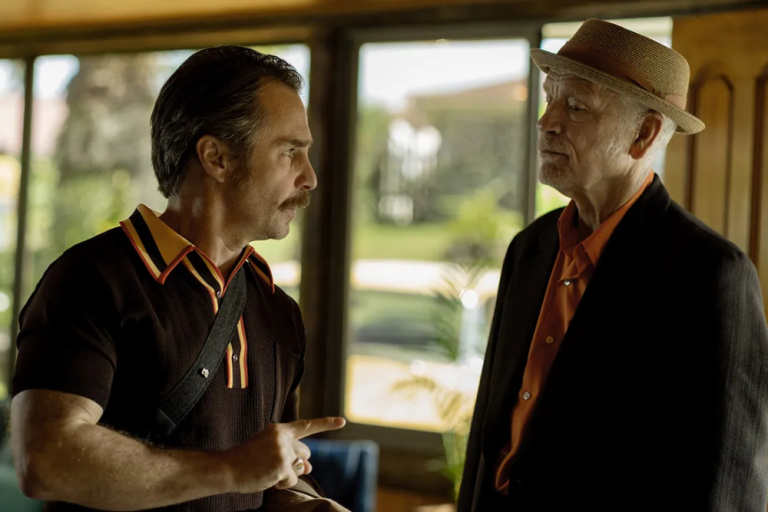
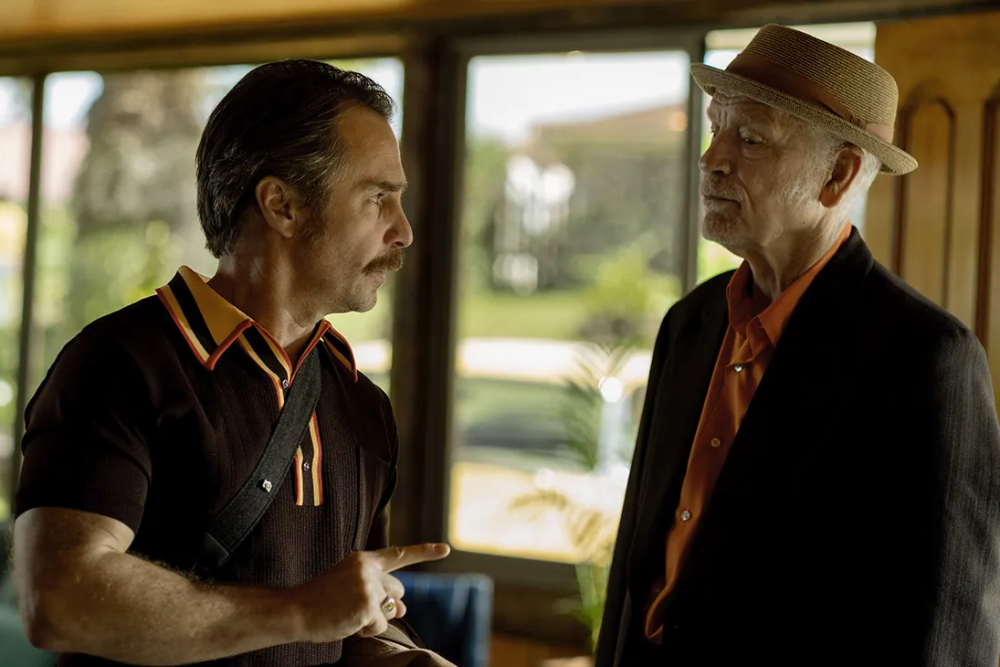
The year is 1973. CIA agents Chris and Lee (John Malkovich and Sam Rockwell), stationed in Santiago, Chile, have just been sent to Easter Island by their chief, MJ (Steve Buscemi). While positioned as a bit of a vacation for the two agents, in the midst of planning the incoming coup d’etat against the Chilean government–which did, in fact, happen in ‘73–things take a drastic turn when Chris, who has many years in the CIA under his belt and beginning to reckon with his darker past, begins to let loose about the details of his work, in a manner that may threaten to derail what is coming and lead to decisions being made that could affect both Chris and Lee’s visit.
Wild Horse Nine, in many ways, plays like a B-side to In Bruges, a comparison that will likely be echoed by many who watch the movie and are familiar with McDonagh’s work. Chris and Lee in many moments reflect the back and forth between Colin Farrell’s Ray and Brendan Gleeson’s Ken in that movie, and just like the duo from In Bruges, the two have an eccentric, bizarre boss in MJ, though he is not quite as unhinged as Ralph Fiennes’ Harry Waters. This is not a slight at Wild Horse Nine, mind you. It just means that fans of In Bruges will likely find this latest effort quite enjoyable on simply that level, but it also has a lot of McDonagh’s signature flourishes as far as storytelling that help make it an incredibly entertaining watch.
What is perhaps most interesting about Wild Horse Nine, however, is how emotionally somber its central narrative really is. Malkovich, giving one of his best performances in years, captures the years on Chris wonderfully, reflecting back to the audience a man who has spent so long in the system and witnessed so many events that the legacy he looks back on is one with great regret, seeking some form of absolution through everything but also, not holding back anymore on the CIA’s current operations This plays out particularly in his interactions with two university students (Mariana di Giorlamo and Ailín Salas), who grow increasingly concerned by Chris’ premonitions on the incoming coup. His observations in life continue to become more existential as well, leading to a very frustrated and confused Lee quite often, played brilliantly by Rockwell. The dynamic between the two is incredible, and the flow of dialogue and moments of comedy play like they have been doing this work for years together, almost improvisational in its approach and delivery. Buscemi, in his limited screen time, provides some hilarious deliveries as well, one in particular that might be among the best of 2026.
Wild Horse Nine is also stunning to behold, with Ben Davis’ gorgeous cinematography capturing the beautiful vistas and architecture of Easter Island–only the second movie ever to be filmed there–as well as the period of time the movie takes place, backed by a wonderful score from Carter Burwell and an increasingly twisty but darkly funny storyline unfolding as the dynamic of Chris and Lee begins to unravel and more truths are revealed in regards to their mission and the ultimate aim of what they plan to achieve. Parker Posey also gets a few hilarious moments sprinkled in as Marge, Lee’s wife, who he has an increasingly strained relationship with. There is hardly a dull moment to be had with Wild Horse Nine throughout its 1 hour and 57 minute runtime, moving at a pretty brisk pace throughout and never really losing its momentum till the end.
While Wild Horse Nine doesn’t let up and remains an engaging watch throughout, it does take a minute to really center itself and figure out where it wants to go with its broader narrative and zany characters. For a while, it really is just Chris and Lee having hilarious back-and-forth conversations about going to Easter Island or trying to keep major secrets from being revealed to others. Once it becomes clearer why many of these events are taking place, the movie stabilizes a bit more and then leads to an overall really great and satisfying third act that brings everything together. While it may not be quite as fine-tuned as some of McDonagh’s other works like In Bruges, Three Billboards Outside Ebbing, Missouri and The Banshees of Inisherin, it remains a really enjoyable time backed by incredible performances, tight dialogue writing and some intriguing and emotionally tumultuous storytelling. And yes, the title will make sense when you see it.
Director: Tony Gilroy Writer: Tony Gilroy Stars: Pedro Pascal, Olivia Wilde, Eva Victor, Will Arnett
Synopsis: Gifted cellist Alex Serian returns home to Los Angeles after 20 years on the road. Music, which has been the constant, all-consuming river of his life, begins to carry Alex on an adventure that will change him forever.
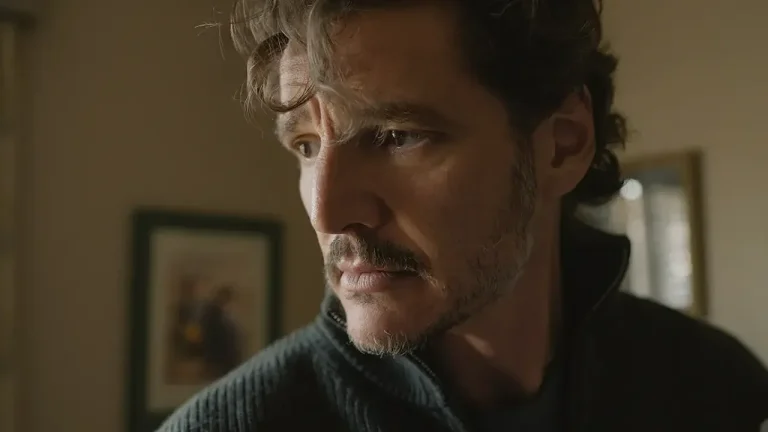
Alex Serian is a tough nut to crack. He’s a world class cellist, that we know. He seems to do pretty well with the ladies – he’s played by Pedro Pascal, so it’s not hard to solve that puzzle – but only to a point, rarely (if ever) allowing them to broach relationship territory. He has a mother who old friends ask about in the way you would ask about an ailing relative, offering a “How is she?” plus a head tilt and a hesitant tone, using but a few words in the hopes that you’ll learn something new and foundational. There’s a brother in the picture, too, but that seems complicated. In fact, it all seems to be complicated beyond the fact that he’s reasonably friendly and revered by his peers. For Alex, the lights are on, and someone is certainly home, but the curtains are drawn; you can see shadows moving about, but much is left to the imagination.
This is the aura of a calculated man, not in a menacing sense, but in the way that certain people mold themselves to operate on the defensive. One might say, as Pascal himself did when describing the main character of Tony Gilroy’s Behemoth! during a press conference following the film’s first “public” unveiling, that Alex is a “passenger [in] his life.” Things happen to him, but he lacks the emotional understanding of himself that would be necessary to fully process them. When the woman he’s sleeping with (Olivia Wilde’s Carol, who also happens to be an Angel donor to the Chicago Symphony Orchestra in which he is first chair) attempts to chase him down upon learning that he plans to leave his post, all he can think to do is run from her clicking heels. When he sees his brother (Will Arnett, hilariously playing a podcaster) having a fight with his wife through the windows of their home, Alex doesn’t address it; he merely waits for it to cool off before exiting his car and approaching the door. So it’s a shock when, having lost someone close to him sometime in the recent past, Alex chooses to venture down a path he knows nothing about: The path of self-discovery, where identities are forged long after we may have believed they first took shape, and feelings are prone to be felt. It’s terrifying, but in another way, it’s the most beautiful trek he’s ever taken.
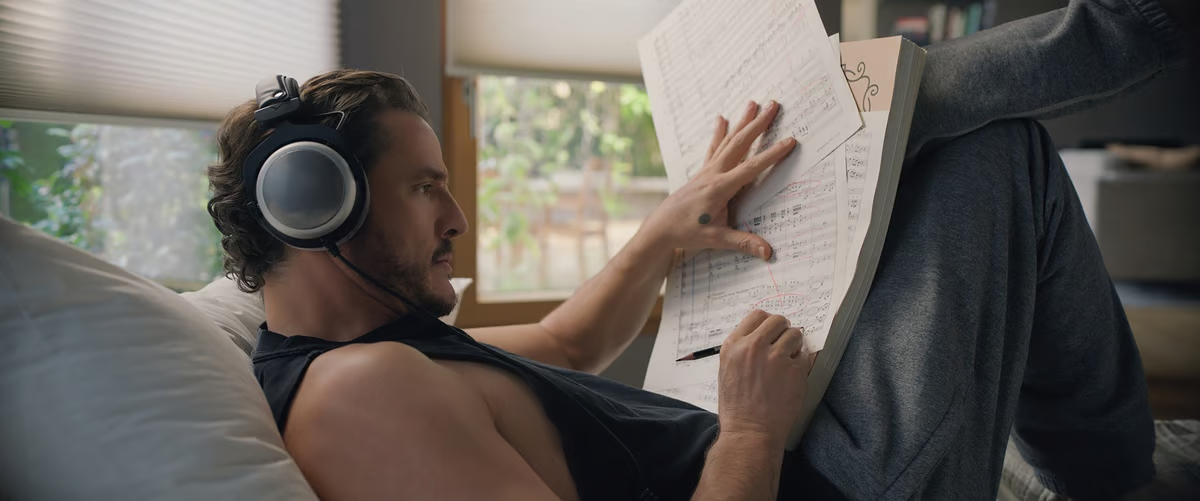
World premiering on Oct. 2 as the Centerpiece selection at the 64th New York Film Festival, Gilroy’s brilliant, time-maneuvering drama is both an odyssey and a triumph in just how meticulously it travels down each road along our tour of Alex’s past and present, foregoing “CITY NAME, YEAR” title cards in favor of an audience’s trust instead. We’re flung into Alex’s psyche immediately following a booming title card (fitting, given the title-capping exclamation point) and find him contemplatively awaiting his first cue. He’s signed on to play in a full orchestra brought in to record film scores, all of which he plays beautifully despite the sheet music being a sight unseen. Alex is a prodigy, you see, albeit a reluctant one, a man whose entire existence has formed and broken him in ways he has yet to comprehend. Guilt has often been a tool used against him, primarily by his father (Hank Azaria), a musician in his own right who created a ripple effect of dysfunction that now follows his son to all locations and lingers in every memory. It’s a common characterization, but one rarely handled as deftly as Gilroy and a never-better Pascal collaborate to turn Alex into an idea of a person into a real human being with human being problems, the kind that can either make a movie or cause it to quickly become a series of tropes without consequence.
Fortunately, the crew here has its conductors in a row, the cast and their director in perfect sync – a la players and their maestro – conjuring a symphony of a complicated life that routinely veers into organized chaos. Gilroy first conceived the idea while working on 2016’s Rogue One: A Star Wars Story, when he observed the sheer size of the film’s band and choir and wondered, “Why is there not a movie here?” As he told the Friday press screening’s audience, despite having enjoyed his own specific history with playing and loving music, he would never call himself a musician, merely a creative with ears and a good producer. “So I researched the shit out of it,” he said of the composition of film scores, and found the hook: “A life. In pieces,” as the film’s tagline reads, though the execution is more synthesized and clever than that selling point lets on.
The writer/director noted that while the film was a difficult one to finance, he was deadset on bringing together a group that would come to be called “The Behemoth! Collective,” a cavalry of composers that just one film would be considered fortunate to have on board. Original music by nine symphonists – James Newton Howard, Alan Silvestri, Brandon Roberts, Michael Abels, Emily Bear, Lukas Frank, Michael Giacchino, Henry Jackman, and Nami Melumad – is heard throughout the film, and not just heard, but appropriately incorporated into the narrative. Not only do we see Alex and his fellow virtuosos playing the numbers on the pages before them, but better yet, the pieces accompany the Behemoth!’s action as well. Scenes of Alex running – and there are a few – are soundtracked by dramatic, violent violins and intense horns hitting the highest notes. Giacchino crafts an antic cartoon theme for a moment; Silvestri delivers a suite late in the film that lingers long after the baton is lowered. When the film we’re watching takes its most drastic turn, the faux film being scored tags along. It’s unlike anything you’ve heard before, and in some cases seen before. That it is pulled off with few distractions away from the narrative Gilroy has constructed is an even broader feat.
And still, Behemoth!’s most striking achievement is its structure, one that bounces back and forth in an effort to keep us on our toes without ever totally wrong-footing the onlooker, a savvy trick that Gilroy seems to have been toying with for years yet never quite executed to this magnitude. That doesn’t mean that his new work is on par with Michael Clayton nor in dialogue with Andor. (Though it is a more outwardly joyous tonal exercise than both.) What it represents is a new kind of character study for Gilroy, a tremendous writer whose heroes are always complex but tend to strive for control, if not achieving it outright. Is Alex pursuing that? Not in simple terms. Like music, his lived experience is one of fits and starts, a prominent professional career that leaves plenty to be desired on the personal side. Eva Victor as Nadia is his most compelling scene partner in that their character challenges him more than others are willing to, asking for more than he is willing to give in terms of reason and intentions, while Wilde plays a maniacal lover whose furious lack of self control is testing, but more on our protagonist’s patience than the mind.
“The trick is to put him on the train without getting run over by it,” Gilroy said of Alex, who he and Victor would not describe as passive but active in an alternative fashion to what we’ve come to expect from the very idea of “action.” Active self-sabotage is still active, just as the task of picking up the pieces of one’s life can only be resoundingly successful if done by the soul living it. But like many of us, the thing about living is that it cannot be done in isolation, neither physical nor emotional, and that a life is never just touched by one being. Behemoth! is Alex’s story, but “Lives in pieces” works as a tagline for it, too. Everyone is playing their own song just by breathing. Whether or not they can hear it is the difference between rejecting the music and facing it.
Behemoth! world premiered at the 64th New York Film Festival. Searchlight Pictures will release the film on Dec. 4..
Director:Werner Herzog Writer: Werner Herzog Stars: Kate Mara, Rooney Mara, Orlando Bloom, Domhnall Gleeson
Synopsis: Twin sisters Jean and Joan Holbrooke, in search of an imaginary land where true love is possible, start digging a tunnel through a mountain range.
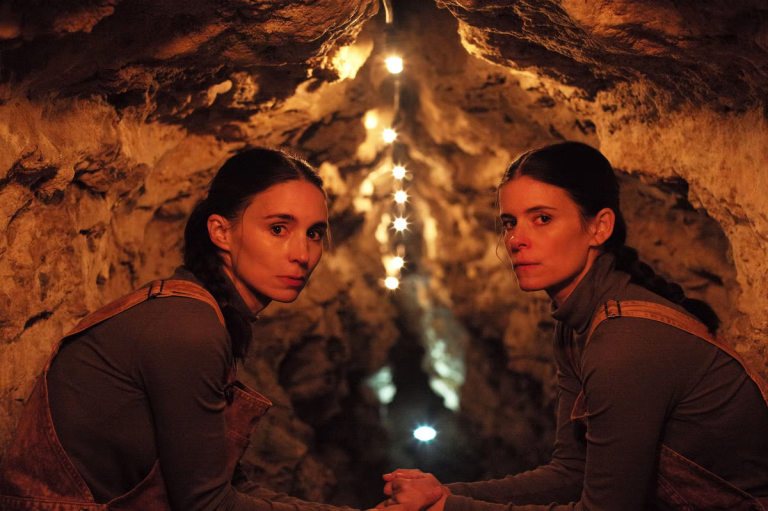
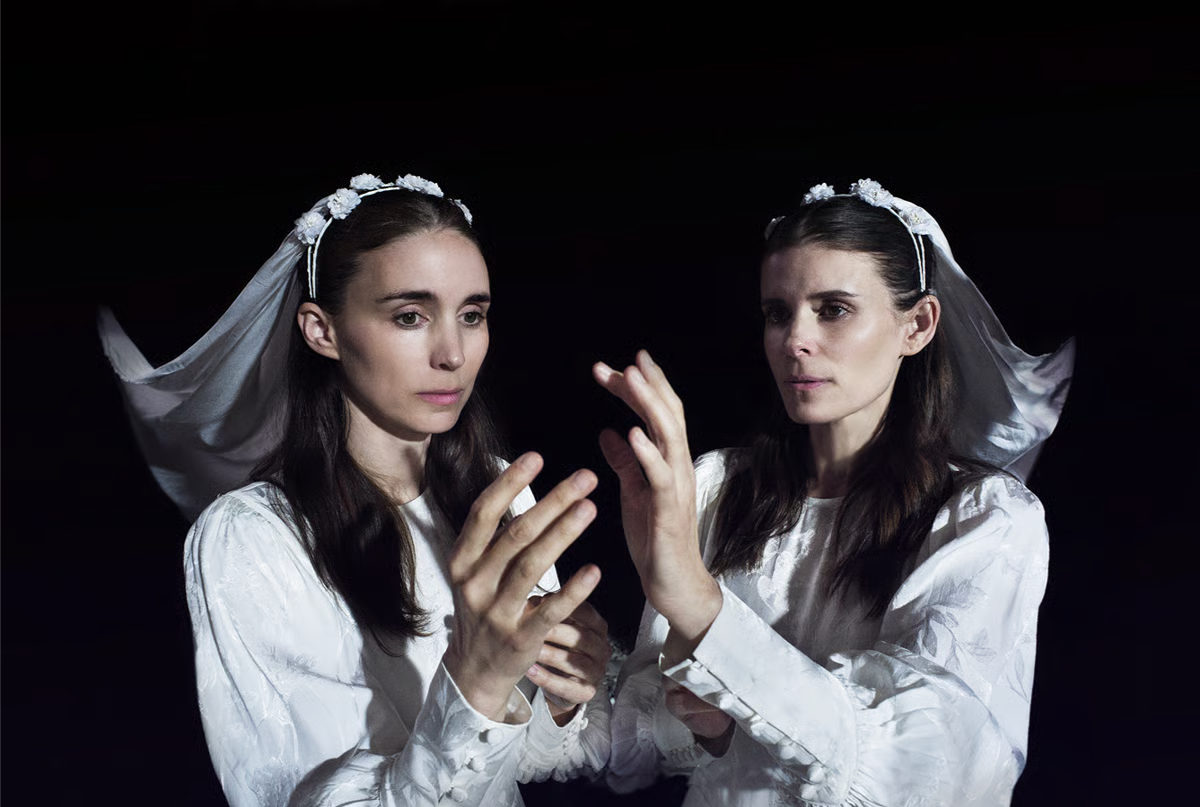
It would be rather unfair to the brilliant and singular Werner Herzog to describe his new film, Bucking Fastard, as “ordinary,” but by his typical nonconformist standards, this is likely about as close as his cinema has ever been to the “garden variety” type. Of course, what that means for Herzog is different from just about anyone and everyone else, for most gardens can be found sprouting tomatoes and flowers in one’s backyard, while he plants his in a cave to nowhere (or, perhaps, everywhere?) atop an Irish hill with a pair of siamese twins as its caretakers. Jean and Joan Holbrooke (Kate and Rooney Mara, respectively, and cleverly introduced with a title card that begins with only their surname and slowly reveals their first names) speak, act, and think in unison, only breaking off from this pattern when finishing each other’s sentences. They love the same man, Gareth Mulroney (Orlando Bloom), live the same life, and even fumble their words in court with the same vigor, hence the film’s playful title. Why are they in court, you ask? Oh, just a restraining order that has been filed by the slimy, married boy next door in order to keep them far from his wife and his life, one that happens to unfold on its own terms like the rest of us, not those of a sibling attached at our hip.
What was I saying about this being a “normal” movie? Again, it has to do with standards. It actually has more to do with how other films would likely treat Herzog’s conceit – loosely based on the story of the British sisters Freda and Greta Chaplin – as the butt of a joke, a dead horse worth beating further, or the entire narrative in and of itself. That’s not Herzog’s approach, and anyone who can appreciate his fascination with the conceptually strange will be unsurprised to know that his handling of Jean and Joan’s predisposition to synchronicity is of a more delicate, compassionate variety. It is the story of a chapter in their lives, not one about the opinions of onlookers. Naturally, side characters have their opinions, ranging from the intrusive to the crude, but to focus on those reactions would be downright un-Herzog-ian. Plus, it would make for a boring tale.
Rooney Mara (left) and Kate Mara (right) are siamese twins in Werner Herzog’s Bucking Fastard | Courtesy of Film at Lincoln Center
It may not have the same “what in the world?” factor as Fitzcarraldo nor a similar adventurous spirit to Aguirre, the Wrath of God, but Bucking Fastard is a more than worthwhile entrant in an evolving filmography that has always been alive with a rare sense of wonder. An auteur who has always been “starving for new images,” this picture offers less of what we have not seen than it does elements we have yet to see from Herzog, a slight twist on his pleasant preoccupation with the inextricably unique. It’s not that hard to get used to the “bit,” if you will, of Jean and Joan saying the same things at the same time, wearing the same outfits, and doing everything together as though they are a conjoined duo. In many ways, they are, simply without literal fusion. And to his credit, Herzog is much more interested in what life is like for them, circumstances included, than he is with what it could be like were they apart. That’s why their social worker, Timothy (Domhnall Gleeson), is such a small part; his presence is more necessary when the twins need to figure out how to use a can opener without four hands attempting to operate the tool, not as a means to separation.
So don’t let the wonky nature of this harmless beast fool you: Yes, Bucking Fastard is a riot, and yes, it is fascinating to watch the Mara sisters turn in two individually remarkable performances that are only extricable by the fact that we know which one is Kate and which one is Rooney. But it is also a lovely, moving testament to the power of human connection, whether it comes in the form of a person you shared a womb with or not. Even more so, it’s a film about the evasive desire for belonging, even blending in, in a world that is constantly trying to single you out for what makes you different in its eyes. “There must be a place for us somewhere,” one sister says (shockingly, without the other’s participation). And though these exchanges and others do feel a tad sing-songy, Herzog’s overall tonal choices go over well, allowing absurdity and genuinity to coexist, not compete.
Too nice? Maybe, but only just. This review may be focusing a great deal on how the main gambit here is far less out there than advertised – at least once it settles into a groove, which is swiftly – but there’s plenty of bizarre fun to be had. The aforementioned neverending cave gets its fair share of time as a principal setting, and watching the Maras hack away at its walls with picks and hammers is nothing short of a delightfully long trip; a potentially rabid fox the lasses name Cupid becomes an object of fascination for a time; a vacuum offers haughty chuckles. But too often nowadays are films marketed within an inch of their shelf lives on the backs of their “twists” and not on their simple merits. Let’s face it: The last thing a film with the title Bucking Fastard needs is further emphasis on what makes it wacky. It’s that, but it’s also plenty blissful. “We’ve been hiding long enough,” says one of the Holbrookes once it’s about time to break free from the shackles of the public’s gaze. Audiences would be doing a disservice to hide the film behind its kooks rather than embracing it for what it plainly tells us it is.
Bucking Fastard had its New York Premiere at the 64th New York Film Festival. It is currently seeking U.S. distribution.
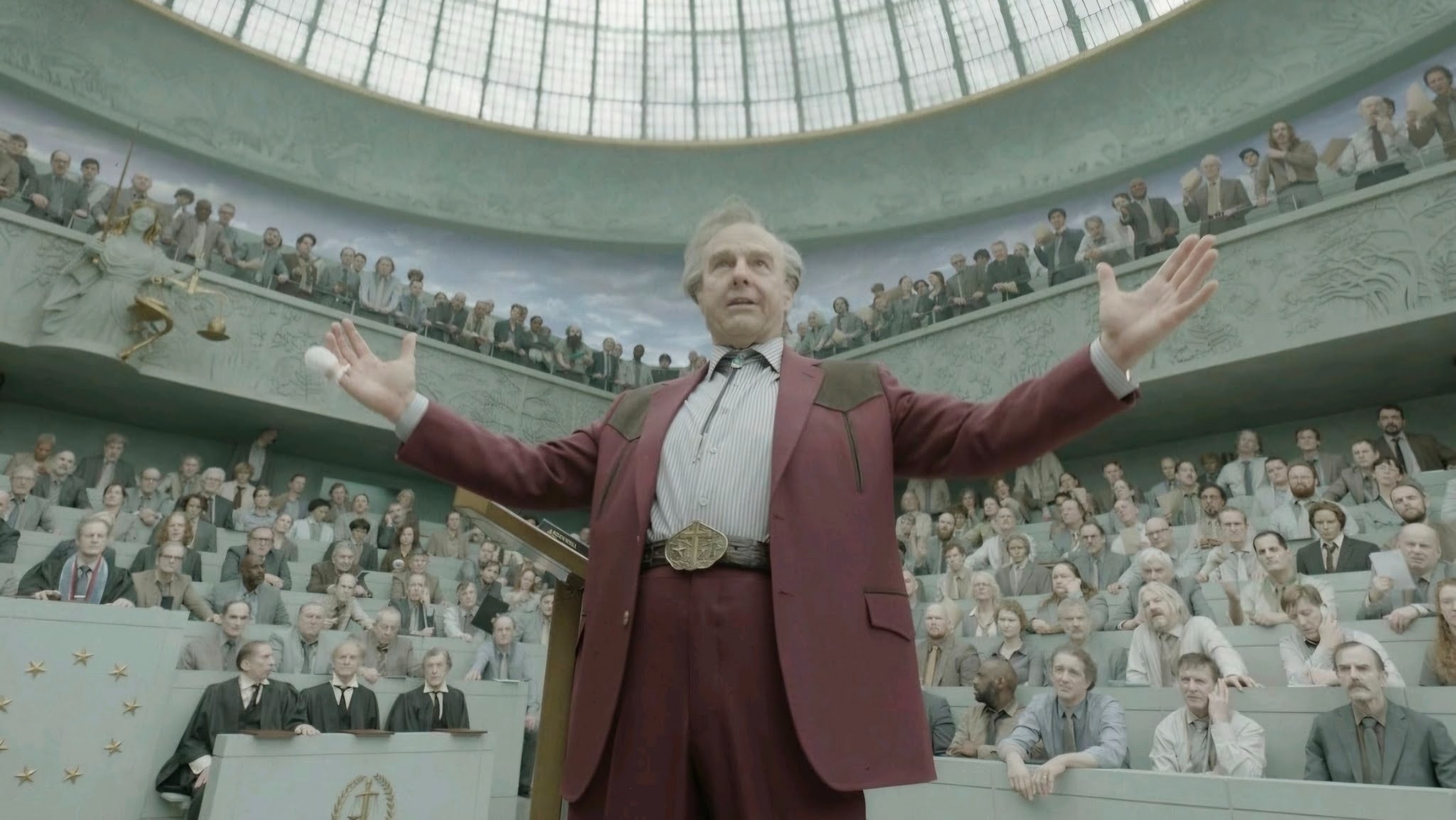
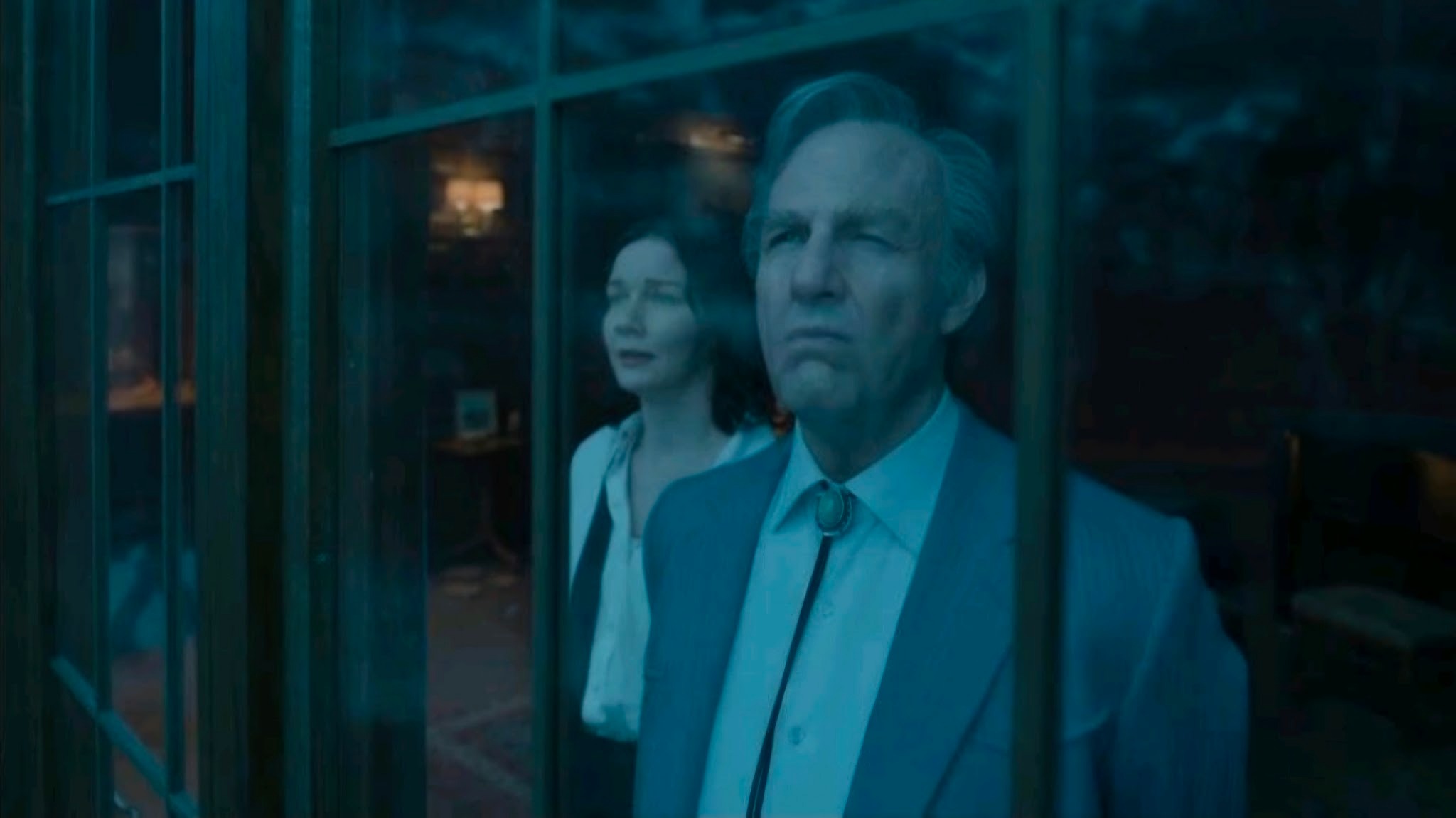
Here we are, once again, at the intersection between Oscar prognostication and degenerate gambling. Like I did with The Odyssey, I will be handicapping the Oscar chances of the much-derided effort of Alejandro G. Iñárritu’s Digger. I would also like to remind you this is my own opinion and not meant to be taken as actual bookmaking odds.
BEST PICTURE +1500
While it might have been an early-season favorite with the combination of Tom Cruise and Iñárritu, the critical drubbing will not do the film any favors. Often, a film can survive critical derision, as long as the public can get behind it. It doesn’t look like audiences will have that effect on this film. The polarizing reviews might help it a little, as the ones who like the film really like it. At this point, I would be shocked if it even got a Comedy/Musical nomination at the Golden Globes
BEST ACTOR, TOM CRUISE +500
When you are talking about what the Oscars want from their nominees, it’s big movie stars doing big things. That’s exactly what Cruise does in Digger. On the campaign side, Cruise is certainly out there pressing the flesh, but his credibility in awards circles certainly isn’t what it once was. Despite three previous nominations, he missed out on a Best Actor nod for Top Gun: Maverick back in 2022 and hasn’t been nominated for acting in 26 years. Some critics have singled him out for his work, but he should be seen as a longshot at this point. Only a resurgent series of awards from critic’s groups could resurrect his chances now.
BEST SUPPORTING ACTOR, RIZ AHMED +750
While the rest of the film’s supporting cast have quickly been dismissed, Ahmed has somehow made it through relatively unscathed, while also receiving multiple “best in show” acclaims. Already an Oscar winner and a previous nominee, his campaign accumen and good standing in the industry might get him further than most, but I would still consider his chances a longshot at best.
BEST DIRECTOR, ALEJANDRO G. INARRITU +2000 BEST ORIGINAL SCREENPLAY +2500
Cruise might be the face of the film, but the two-time Oscar-winning director is the one who is driving the ship. Following the divisive response to Bardo, any problems with this film were bound to be laid directly at his feet. Best Director is a quagmire of critical and probable audience acclaim, so Iñárritu will have to be happy with his two previous awards and sit this season out. The scripting team will suffer the same fate. No critic is going to give the script credit while shutting out the rest of the film.
BEST PRODUCTION DESIGN +250 BEST MAKEUP & HAIRSTYLING -125
For all the faults the film might have, the set decoration and makeup effects have been continually lauded. Without delving into spoilers, the production design and set decoration is a vital part of the plot mechanisms. Nothing feels over CGI, unless it’s supposed to feel that way. It’s a monumental achievement, but I would venture it can get lost in the shuffle when it comes to the end of the year awards. Films like this generally don’t get a single nomination for something like Production Design without corresponding nominations elsewhere.
The makeup has a similar trajectory, but with a caveat. If Cruise manages to sneak his way into Best Actor, then you can write in a Makeup nomination in pen. In the last five years, Best Actor nominees and winners such as Cillian Murphy (Oppenheimer), Bradley Cooper (Maestro), Austin Butler (Elvis), and Brendan Fraser (The Whale) have all accompanied their own nominations with nods for the Makeup team. This is probably Digger’s best hope at a solo nomination.
It’s a tall task ahead of the entire film, but you never know what can shake out in the midst of Oscar season.
On this episode of Chasing the Gold, Shadan is joined by Erica Richards to discuss the last of Anne Hathaway’s crazy year in Verity and Robert Pattinson in Primetime!
Check out this week’s show and let us know what you think in the comment section. Thanks for listening and for supporting the InSession Film Podcast!
On this episode, JD and Megan discuss the latest from Dreamworks in Forgotten Island! It’s a shame that the film is underperforming at the box office because the film takes some fascinating risks that most mainstream studios would avoid. But it’s quite good and we had fun with this one.
Review: Forgotten Island
Director: Joel Crawford, Januel Mercado Writers: Joel Crawford, Januel Mercado Stars: H.E.R., Liza Soberano, Dave Franco
On this episode, JD and Megan discuss Lance Oppenheim’s new film Primetime starring an incredible Robert Pattinson! There is tons to discuss here given the film’s evocative craft, remarkable performances and nuanced themes. And boy did we have fun breaking it all down.
Synopsis: In secret conversations on the rooftops of Tel Aviv at night, the systems behind Israel’s calculated mass killing of Palestinian civilians in Gaza are revealed by the people who designed and operated them.
You may think that Naza, the title of Yuval Abraham and Rachel Szor’s documentary, is a rejiggering act, one that takes the Palestinian city of Gaza and swaps out its first letter for one that tends to begin words with sour connotations. “No,” “negative,” “null,” perhaps “nauseating.” In reality, it’s shorthand for nezek agavi, which translates directly as “collateral damage.” It is a Hebrew phrase often used in military jargon, typically in relation to those who are “unintentionally” harmed during targeted attacks, though in the context of Israel’s ongoing genocide in the West Bank, “unintentional” is hardly the word that comes to mind. As Abraham, sitting on the rooftops of Tel Aviv, secretly interviews 24 anonymous IDF sources, the word is used colloquially, tossed around like “food,” “water,” and “sleep” in effortless conversation from the latter side. “Ten NAZA” is said to note that 10 additional bodies would be found at the scene despite there only being one predetermined target in an air strike. “Naza” does not consider blood shed; the designation merely cares about numbers.
Yuval Abraham (right) interviews anonymous IDF sources on the rooftops of Tel Aviv in Naza | Courtesy of The Guardian
If it feels like the phrase “numbers game” is more appropriate, you may be occupying a place on the right side of history. A vital and harrowing follow-up of sorts to 2024’s No Other Land, the Israeli collective of Abraham and Szor – who co-directed the Oscar-winning documentary with Basel Adra and Hamdan Ballal, neither of whom are present here – return with a film that, while 15 minutes leaner, packs no less of a blow to the crevice of the soul that holds hope as its interviewees detail firsthand accounts of Israel’s defense tactics, those designed to decimate a country and its people with the lone goal of complete control. “Do you think it’s a genocide?” Abraham asks one subject, and his swift reply of “Yes, absolutely,” does nothing to ease the pain nor the fury. If anything, what he goes on to say only exacerbates the truth that what is happening in the West Bank is nothing short of villainous: He describes these strikes as “fun” and “enjoyable.” A game, indeed, and the bodies dictate the score.
No “review” of a film like Naza is bound to capture its power in full; of course, only the film itself is capable of doing so. What has added to the necessity of existence, however unfortunate, harmful, and misguided – though stronger words could be used – is the discourse surrounding its existence, from the droves social media sh*tposting bots that swooped in to criticize the filmmakers for receiving a 25-minute standing ovation (a record) at its Venice Film Festival premiere, with many noting that Abraham and Szor would be “profiting” off of the genocide of Palestine’s people with the film and that they should not be celebrated because they are Israeli. Before Naza’s New York Film Festival premiere on Sept. 26, the Israeli-American Council formed a protest in front of Alice Tully Hall and argued that the film “makes serious allegations about the IDF’s conduct in the Gaza Strip while ignoring findings and information that contradict its claims.” Variety posted five videos from the protest on Twitter; only one post was dedicated to the filmmaker’s comments at the film’s post-screening Q&A, and made sure to highlight that Abraham’s criticism was specifically of the U.S. government’s continued financial aid to Israel.
Furthermore, Israel’s prime minister Benjamin Netanyahu – a war criminal with multiple international arrest warrants from the International Criminal Court and other law enforcement organizations for his crimes against humanity – has called for Abraham and Szor to have their Israeli citizenship stripped in response to Naza. His decry most certainly comes as a response to the outcry from many of his supporters and confidants, but I’m curious if he’s screened the film or has an answer to the claims made about him within, many of which come from his own soldiers. Though he’d likely take a page out of President Donald Trump’s playbook and insist that the statements are doctored or “fake,” multiple sources – shrouded in darkness in the film to protect their identities – note that Netanyahu’s mission is for the total eradication of the Palestinian state, and that the prime minister himself once called for an order that would kill 500 civilians (“500 Naza”) in order to take out a single target. And what of the 1986 news clip included in the film in which Netanyahu, Israel’s permanent U.N. representative at the time, defined terrorism as the “systematic and deliberate” targeting of civilians for political goals? His guest spot on PBS’s “Firing Line” that year came in relation to the release of the book “Terrorism: How the West Can Win,” which Netanyahu edited; in it, he wrote, “The root cause of terrorism lies not in grievances but in a disposition toward unbridled violence.”
The interviewees in Naza don’t hide this fact in their candor, and the film’s structure is itself an outright refutement to any claims that the filmmakers made the film in an effort to peddle falsities to its audiences. (Though if you needed that clarification, we have bigger problems to address.) In fact, there isn’t much of a structure, not beyond the interrogations Abraham conducts and very occasional archival footage of mourning Palestinians and news clips. It would be more appropriate to describe Naza as filmed journalism rather than a journalistic film. The sparse nature of its composition – cutaways to moments of normalcy unfolding throughout the city that serve as heartbreaking juxtaposition to destruction; an absent score; and a sound design team that is merely there to enhance mumbled audio and explosions/alarms in the background – enhances its power. Furthermore, many of the findings detailed in the film were previously published in The Guardian, +972 Magazine, and Local Call, like how an AI called “Lavender” is programmed to find “likely” Hamas targets, though it is frequently incorrect. That we could have read up on Naza’s revelations ourselves effectively demonstrates how important it is for them to be repeated until the truth has sunk in.
Will that day actually ever come? The odds aren’t particularly favorable. But courageous work such as Naza is designed to make a dent, actively working to create change, and above all, is shedding a light on the incessant darkness that millions pretend doesn’t exist just because it attempts to live in the shadows. It is not a work of entertainment; it is not a project conceived with the intent of winning awards; it is a movie, but it feels wrong to call it by such a trivial word. It’s a living, breathing document of a documentary that details death, brutality, and hatred; all persisting because the prayers for it to end fall on more deaf ears than open ones. That truth is hard enough to swallow; what about those that are offered in the film, yet still labeled as responses manipulated by the “enemy?” Maybe it’s not the facts themselves, but that these are the people delivering them, concealed in the dark while bringing so much to light.
Naza had its North American Premiere at the 64th New York Film Festival. MK2 Films and The Guardian are self-distributing the film and releasing it in theaters starting Sept. 30.
There is an iconic image of a goth girl running away from a castle in pulp horror romances. Those covers dominated the gothic horror romances of the ’60s and ’70s, but as a millennial bookworm I devoured those books. As a self-identified feminist teenager, those books were a guilty pleasure of mine. Imagining myself as this helpless, dainty woman, running away in a long, flowing chiffon gown with a fitted bodice, and a corset. There is always a corset at the crime scene to make my breasts bigger.
This image, as misogynistic and reductive as it is, haunted my gothic romance girl mind. I fantasized about it as I read one pulpy romance after another. Then it got buried deep inside the frozen lake in my psyche, reemerging after watching Jane Schoenbrun’s Teenage Sex and Death at Camp Miasma, especially the controversial scene that drove the internet wild with speculation, disdain, and repulsion…yet in other instances like mine, pure arousal. In that scene, Kris (Hannah Einbinder) runs away from danger in the dark forest. She is wearing a thin t-shirt, panties, and her nipples are hard as she runs away from danger. She’s scared but she’s also aroused by the imminent danger and the helplessness of her sexually submissive nature. It’s not an exaggeration when I say that this scene is what meme Martin Scorsese would describe as “Absolute Cinema!”
They say movies hit each of us differently, especially when it comes to alternative indie cinema, films that aren’t made for mass consumption. Some movies speak directly to a particular underrepresented community and still find universality because they tap into something deeply human that exists beyond the demographic they represent.
Schoenbrun’s cinema is horny, longing, and brutal. People have sex with slasher monsters, voyeurism is real and potent and the only way to get off and find orgasms, and people have to be buried alive to find release. Schoenbrun has made those films with a very unique experience in mind: their own queerness and the trans experience, but what about other people who haven’t gone through a similar experience of mega transformation, but who still have metamorphosis experiences of their own? How does it hit them?
In Schoenbrun’s world, characters live their deepest, darkest fantasies, shamelessly. Characters speak their minds, letting go of repressed desires and feelings.
In I Saw The TV Glow, they pay homage to those horror TV shows and TV movies. Are you Afraid of the Dark?Goosebumps, Twin Peaks, Sliders, and a dozen Stephen King TV adaptations come to mind as we watch Owen and Maddy’s story unfold. It’s that little TV show that no one in one’s community cares about. So when you find a person who shares the same passion, it’s like winning the lottery. Schoenbrun deep dives into how attachment to art works. Owen and Maddy bond over this fictional TV show The Pink Opaque, and immediately I remember my best friend in high school and me, and how I got her into fangirling over Roswell, the Jason Katims TV series inspired by the “Roswell High”series of books written by Melinda Metz. They capture this feeling brilliantly; not just the joy of discovery but the ecstatic expectant wait for every detail to be devoured by a like-minded friend. Like a secret that only two can experience, a popsicle of a taste that no one else has dared to taste. Back then, we were the only people in my school who had even remotely heard of Roswell, and that gave me all the rush to discuss the intricacies of every episode with her. Episode guides, spinoff book series, and the original series were consumed by us in the back of the school playground, or in hidden corners behind the giant staircase. We lived in a magical world that only we got to discover, and it felt better than a thousand conversations with classmates about popular films at the time.
With Teenage Sex and Death at Camp Miasma, there is a very self-centered, self-absorbed fantasy that Schoenbrun cherishes, and yet, in their brilliant artistic narcissism, they touch a lot of other people with similar fantasies. What if the heroes of the films we loved, those little films and genre TV that no one cared about but us, what if they existed in that world, and by some magical miracle extended a hand to drag us to TV land with them?
I think about all the times I obsessed over an actor or actress in a particular film or TV show. Dean Winchester in Bobby’s Lair or The Roadhouse. Wil Ohmsford in the Elcrys. Lucas Wolenczak inside the SeaQuest DSV under the sea. Rory and Lorelai at Luke’s Diner. Bodhi surfing forever at Latigo Beach. I imagine myself like Kris, awkward, imaginative, artistic, and eternally horny. My sexuality is always a block of ice in the face of my expectations and desires. Then I imagine all those actors I loved, not forever, but frozen in a fragment of their careers. Jensen Ackles forever trapped as the smoldering, sexy, sassy hunter Dean Winchester, traveling across the highways of Americana in his leather jacket, despite spending half of his life inside his muscle car, still smelling as I imagine him to be: Old Spice, cigarettes, whiskey, and cleanliness, like he washes himself every morning with morning dew. Austin Butler, never aging, this young, sensitive healer -no elf ears please, what a turn off- scouting this lonely island, Aborlon or the Druid’s Keep. His life is a series of cave exploration, herb collection, and saving princesses from silly MTV-coded monsters. Then I imagine Shiri Appleby, forever young as Liz Parker, in The Crashdown, that diner in the heart of the hot desert of Roswell, New Mexico, dreamy in her silly waitress costume, with long brown hair and caramel eyes. Then I extend the fantasy, and there I am, an awkward queer director struggling with sexual expression, meeting my heroes as they withdraw from the world, and live forever inside forgotten sets that -against all odds- seem fresh, like things have just been prepared for the new season.
But there’s also another grim fact. Schoenbrun shows how the show that one has loved and lusted after, or a sexual awakening moment for a young, sexually experienced girl watching her favorite actor onscreen could actually be this actor’s biggest misery. That’s what Kris discovers with Billy Presley (Gillian Anderson), in an honest moment that no one gets to glimpse in real life. Who wants real life when they can have this? Every fangirl’s dream: jump inside the set and have a deep, raw talk with the actor, suspended in time, who made them relevant in the first place. As a grown up now, reading some disturbing confessionals from actors about certain films they’ve made, and how the experience was to them behind the scenes rather than the joyful, immersive one that I got to experience as the gullible viewer, puts me as a fan in a really tight position: do I feel guilty for still finding a particular scene sexy? Do I feel bad for enjoying a character’s suffering when they probably were also suffering off screen?
I remember reading about Jared Padalecki during the shooting of the third season of Supernatural, and feeling guilty about making fun of Sam Winchester’s storyline, or even criticizing his look during the season. My mind would drift to moments where Sam was being tortured or breaking down during those seasons, and how as a hardcore fangirl I would find that sexy or exciting, then remembering the real person suffering in the background, and my empathetic nature wonders: is it wrong to consume art that way? Do I have to dig and find how the actor felt about that scene, or is ignorance a bliss? Was it wise of Kris to go deep and listen to Billy Presley’s heartfelt talk, that which awakened Little Death from his dormancy down the lake, and aroused him back into becoming a killing machine?
All Kris wants is to be a final girl in a slasher film: sexualized, objectified, helpless, and victimized. She liberates from the chains of female independence and expectations. She waits for her time as the masked killer takes those around her one by one. And in that death, she finds the ultimate release from the confinements of the real world.
Maddy professes to Owen that The Pink Opaque sometimes feels like real life more than real life. How truthful is that sentence. On the third season of Supernatural, when the clock was ticking for Dean to go to Hell, my sister and I would cry while watching every episode, in anticipation of the doomed season finale. I would go to college feeling suffocated underneath the feeling of distress and despair. I would tell my best friend then -who would later become my partner- that my heart was aching and I would cry before class thinking of Dean getting tortured in Hell. My best friend would then take me for ice cream and burgers to cheer me up, from the fictional verse I found myself sunk in, deep down a rabbit hole of intense feelings and worry over a fictional character, who to me was a person I would never meet.
Filmtwt declares that self-absorbed, masturbatory art is bad. But if anything, Schoenbrun did what none of us, self-reflective, painfully imaginative kids never dared to do. They turned hours-long fantasies and orgasmic bliss into masterpieces. Their films will live forever, and people will witness how they see art and artists, while our dreams and fantasies will remain behind the rusty doors of our souls.
So forgive me, Jane, for writing a masturbatory piece about your masturbatory art. It really deserves lusting after. To quote Ada in The Piano, “At night I think of my piano in its ocean grave, and sometimes of myself floating above it. Down there everything is so still and silent that it lulls me to sleep. It is a weird lullaby and so it is; it is mine.”
Substitute Little Death for Ada’s piano and you’ll get what I mean.
Director:Paula Delsol Writer: Paula Delsol Stars: Jacqueline Vandal, Lucien Barjon, André Nader
Synopsis: A carefree young woman navigates romantic and sexual encounters with various men while seeking freedom and self-discovery in the sun-drenched landscape of southern France after leaving Paris behind.
In the introduction for the new 4K restoration of Paula Delsol’s 1964 film, The Drift, the audience was reminded that Delsol has effectively been “completely forgotten” within the French New Wave, a movement historically connected to the idea of being a “boys club.” Obviously, Agnès Varda remains a vital name within the history of cinema and is widely regarded as a crucial figure in the landmark cinematic movement, but her name unfortunately rings out as an exception when looking at lists of those many consider to be the most well-known figures within the French New Wave. One can only hope that this restoration of Delsol’s first feature film will spark the necessary conversations surrounding all the female filmmakers who have been cast to the sidelines of cinema by the men of history. It’s also equally unfortunate that a film as playful, jaunty, and direct as this one has simply been lost to time for so long. To uncover more films such as this would be nothing but a gift to cinephiles everywhere.
The first piece of dialogue in Delsol’s debut is spoken into the void: “I’m so hungry.” It makes sense considering 20-year-old Jacquie (Jacqueline Vandal) has hitched her life onto Pierre who, despite the alluring charm of his bohemian, artist lifestyle, largely seems like a wishy-washy bum. Considering his disaffected demeanor, Jacquie may as well be speaking into a void whenever he’s nearby. And it’s through Jacquie that Delsol is also speaking directly to her audience. Here is a woman determined to put her art into the world, any obstacles be damned. Jacquie is a fitting vessel in that regard. As the beautiful couple manage their way through what could be considered a two-way conversation in the most generous of definitions, images of famous destinations around the world rapidly flash on screen. All Jacquie wants to do is drift. It’s a lifestyle which may cause its fair share of troubles, but in her own words, “I’d rather trouble than boredom.” It’s a fitting credo to live by, and one that will be tested over the course of the film’s 83-minute-runtime.
As Pierre abandons Jacquie in her sleep while on a train ride through the country, we are outright told by on-screen text that “this film is a portrait.” In other words, Delsol has no interest in shying away from any of the details that make up Jacquie’s life going from place to place or man to man. The film excels in that regard as it is effectively structured through vignettes which speak directly to Jacquie’s experiences. Through this framework, Delsol has the freedom to make a film that’s as multi-faceted as she chooses. Some of Jacquie’s experiences with these men can be freewheeling and fun. Others can be much more frightening. Some can even be tragic or unexplored by way of determined commitment. In any case, each encounter with a new man is depicted entirely without flair, instead choosing to focus on the more genuine emotions that can arise from a particular situation. One thing is made starkly clear, serving as one of the key through-lines of this film: men behaving as slimeballs is nothing new!
Left with little options on what to do next, Jacquie decides to return home to her mother and married sister for the first time in two years. While they may put on smiles and warmly welcome Jacquie back home, Delsol reveals a reality which is much more saddening. Through a montage that still finds a way to remain comedic, the entire town seems to be running its mouth with gossip as the news is broken of Jacquie’s return. The rapid pace with which Delsol traverses across town with this gossip is funny, but it speaks to how close-minded so many are when it comes to young people, particularly women, who choose to live life to the beat of their own drum. It’s made all the more disheartening upon Jacquie’s own mother using Jacquie’s sister as an example to follow, especially “after all that’s happened.” Rather than love her daughters equally for who they choose to be, she’d rather do all she can to force conformity upon Jacquie to fit within whatever boxes society deems “respectable” or “pragmatic.” It’s an issue that still plagues contemporary society to this day. This particular examination of society makes The Drift feel all the more striking as a rediscovery of how cinema grappling with the frustrations of a given time can still be felt for decades to come. It can be seen as an upsetting reminder that perhaps some things never change, but can also serve as a testament to the essential place art has in the world as a means to crystallize emotion across time and space in order to feel more accurately seen and understood.
Though what’s perhaps most wonderful about The Drift is how little it is interested in being a didactic film. Of course, Delsol is channeling her thoughts and frustrations about society through Jacquie, but this is ultimately quite the playful film in regards to how its main character explores all the experiences she’s living through. She certainly feels the pain that can still be experienced despite living with such freedoms. She directly clashes back about the transactional views so many men seem to have when it comes to the women in their lives. She resents the notion that she should ask for forgiveness from others who judge her for merely desiring freedom. But Jacquie is the compelling sort of character who is perhaps unwilling to radically alter any of her decisions because of these observations about the life she is building for herself. There’s a jaunty quality to this film which stems from Jacquie’s blind faith in following what she feels. Even if others cast judgment, to live life in our own distinct way feels more essential than pragmatism. It may lead to an endlessly repeating cycle, but if all we can do in life is merely live it however we are called to do so, then so be it. That The Drift is a film directly addressing the shamefulness of any such judgment and allowing its character the freedom to live life dully to her heart’s content paints a wonderfully entertaining film that flies by.
The new 4K restoration of The Drift is celebrating its North American premiere in the Revivals section at the 64th New York Film Festival.
Director:Alejandro G. Iñárritu Writer: Sabina Berman, Jez Butterworth, Alexander Dinelaris Stars: Tom Cruise, Riz Ahmed, John Goodman
Synopsis: The most powerful man in the world embarks on a frantic mission to prove he is humanity’s savior before the disaster he’s unleashed destroys everything.
Having just gotten out of a screening of Alejandro G. Iñárritu’s Digger, I have to explain what the hell I just saw. First, let’s make no mistake: Digger marks Tom Cruise’s return as an actor, with a wholly original performance that abandons the high-wattage movie-star charisma he has fine-tuned for decades through franchises like Mission: Impossible and Top Gun.
Cruise is jaw-dropping here, delivering one of the best performances of his career: a deranged, powder-keg turn that is an absolute knockout. Do you think I am lying? Just sit back and watch the Hollywood legend play a manic and vulgar force of nature who eats a big bowl of ego, profanity, and chaotic self-belief. Cruise’s Digger makes Les Grossman look downright domesticated.
This is the kind of turn from the man who was robbed of an Oscar for Born on the Fourth of July and so good in the scene-stealing small role in Paul Thomas Anderson’s Magnolia. Full of piss and vinegar, seething with caustic toxicity and sleazy allure, Cruise savagely does not so much set aside his movie star image as set fire to it.
If only Digger were tighter and more laser-focused, you could have something that goes beyond being one of Cruise’s finest works and all that Oscar hype.
Cruise plays Digger Rockwell, a wealthy oil tycoon who will spare no expense to save his decomposing cat but will let the world go to hell in a tightly sealed oil drum, which apparently is priceless. One example occurs when his team on the ground and scientists in Greenland tell him a crack in an iceberg has widened to thirty feet, with oil bubbling to the surface. Rockwell ignores emails, messages, and video conferences, choosing one path: nothing.
Digger simply will not allow any environmental protection worker he pays to serve as a failsafe against progress, which, to him, means destroying the planet to drill for black gold on his dime. He makes this clear to Ganesh (Riz Ahmed), another scientist Digger tolerates on his shoulder.
From there, Iñárritu’s script, co-written with Alexander Dinelaris (The Revenant), Nicolás Giacobone (Birdman), and Sabina Berman (Gloria), gives the film a Dr. Strangelove feel. Except, the film is more enjoyable if you stop worrying and learn to enjoy the chaos. The film’s political bent becomes almost overwrought, as John Goodman’s President Thompson, a Trump-like figure, becomes a puppet to Digger’s Musk-like supervillain.
Then, the movie takes an early turn, as Iñárritu introduces a plot twist that I wish had been saved for the final few scenes. Instead of tightening the satire, it sends Digger into a stretch of meta-filmmaking that feels overly ambitious rather than insightful or eye-opening. The choice fights the original entertaining absurdity instead of adding to it.
Yet, by the end, Digger is unlike anything Iñárritu has done before. The eclectic filmmaker operates in a wonderfully strange space: an eccentric, darkly comic piece of cinematic theater, meticulously composed and stomach-turningly deadpan. Think Coen brothers, with a Wes Anderson style, and seen through Iñárritu’s increasingly raw and feverish existential lens that is profound, if not heavy-handed.
Sometimes, you just need a film willing to go completely off the rails before it strikes oil.
You can watch Diggerexclusively in theaters starting October 2nd!
As we approach the fall, we are only a few months away from the annual awards season race. While categories such as Best Picture, Best Director, and the acting races tend to dominate mainstream awards coverage, Best Visual Effects can sometimes receive less attention outside of the film community. But the Visual Effects race is already beginning to take shape.
With the first wave of awards-season precursors approaching, now is a good time to look at some of the films that could contend for one of the five Visual Effects Oscar nominations. Nothing is guaranteed at this stage. We have yet to see several other potential contenders. But there are some familiar ingredients that tend to help a film in this category. The Visual Effects branch has historically embraced work that is both technically impressive and integral to a major cinematic experience, particularly when that work appears in a film competing for Best Picture. That immediately puts films such as Dune: Part Three, The Odyssey and Project Hail Mary on the radar.
Dune: Part Three
If we were making an early prediction for the Visual Effects winner in late summer, Dune: Part Three would be one of the safest bets. Denis Villeneuve’s highly anticipated conclusion to his Dune trilogy arrives with enormous expectations, but the franchise has already established an extraordinary relationship with the Visual Effects branch. Both Dune: Part One and Dune: Part Two won the Oscar for Visual Effects, with the latter following its predecessor’s success by expanding the franchise’s massive desert landscapes, creatures, crowds and large-scale action. The early footage for Part Three suggests Villeneuve is once again pushing the scale of the series. The film is being presented in IMAX 70mm, and its imagery continues the franchise’s reputation for combining enormous spectacle with tactile, grounded visual design.
That history matters. The Visual Effects branch already knows what the Dune team is capable of, and the previous two films have given the franchise considerable goodwill. If Dune: Part Three lives up to expectations, a nomination could feel almost inevitable. The bigger question is whether it can become the third consecutive Dune film to win. Even if the film ultimately receives a lighter Best Picture reception than expected, its Visual Effects work could still be considered too substantial to ignore.
Project Hail Mary
Project Hail Mary has another advantage that the Visual Effects branch has historically appreciated: space. From Aliens and Apollo 13 to Gravity, Interstellar, and First Man, space exploration has repeatedly provided a showcase for filmmakers and visual effects artists to demonstrate what the medium can accomplish. Project Hail Mary has already emerged as one of the year’s major successes, combining its science-fiction spectacle with an emotional, character-driven story. That combination could be particularly valuable during an awards campaign. The film’s interstellar environments provide plenty of opportunities for visual effects artistry, but perhaps the most interesting element is Rocky, the alien companion of protagonist Ryland Grace.
Rocky could have easily become another entirely digital creature. Instead, the filmmakers relied heavily on practical puppetry, with multiple puppeteers operating the character on set and digital effects used to enhance the final performance. The physical presence of Rocky also allowed Ryan Gosling to interact with the character more naturally during filming.
That combination of practical and digital effects could make Project Hail Mary particularly attractive to a branch that has increasingly demonstrated an appreciation for effects that feel tangible rather than purely computer generated. If the film’s emotional response continues to hold through awards season, don’t be surprised if Rocky becomes one of the year’s most recognizable Visual Effects contenders.
The Odyssey
If there is one thing we have learned about a Christopher Nolan film, it is that the Visual Effects branch will at least have a reason to pay attention. The Odyssey is one of the year’s defining theatrical events: a massive adaptation of Homer’s epic, shot entirely with IMAX film cameras and built around sequences involving mythology, monsters and supernatural environments. The Cyclops, Scylla, and Hades sequences make the film an obvious contender on paper. The film’s enormous scale also puts it firmly inside the Best Picture conversation, which only strengthens its case. Yet there is an interesting question surrounding Nolan’s relationship with this category.
His films have frequently received Visual Effects nominations, including The Dark Knight, Inception, Interstellar and Tenet, but not every effects-heavy Nolan film has made the cut. Dunkirk missed despite being a major Best Picture contender, while Oppenheimer was famously absent from the Visual Effects shortlist. Some of this may be attributed to Nolan’s preference for practical filmmaking. His movies frequently attempt to create as much as possible in camera rather than relying on digital effects. That makes The Odyssey particularly fascinating.
The film is undeniably effects-heavy, but it is also deeply rooted in practical filmmaking. If the Visual Effects branch sees the effects work as seamlessly supporting the physical production rather than overwhelming it, The Odyssey could be one of the strongest contenders of the year. But if voters favor more overtly digital showcases, Nolan’s latest could find itself competing against films with more obvious effects-driven spectacle.
Godzilla Minus Zero
Godzilla Minus One was one of the most remarkable Visual Effects stories of the past decade. Takashi Yamazaki’s 2023 film took a relatively modest budget and turned it into one of the most impressive blockbuster effects showcases of its era. It ultimately became the first Godzilla film to receive an Academy Award nomination for Visual Effects and the first Japanese language film to win the category. And now, Takashi Yamazaki is back.
Godzilla Minus Zero brings the franchise back with larger stakes and another major showcase for Yamazaki’s combination of filmmaking and visual effects work. Professionals describes the sequel as featuring even more ambitious effects choreography than its predecessor. The biggest question is whether lightning can strike twice.
The original film’s Oscar victory was historic precisely because it demonstrated that a Visual Effects contender did not need the resources of a Hollywood mega production to compete at the highest level. If Minus Zero receives a similarly enthusiastic response from critics and audiences, it could once again become one of the category’s most compelling contenders.
OTHER STRONG CONTENDERS
Marvel Studios
Marvel has a complicated history with the Visual Effects branch. The Marvel Cinematic Universe has accumulated 14 Visual Effects nominations since 2008, but the franchise entered the 2026 season having been shut out for two consecutive years. That raises an obvious question: has superhero fatigue finally caught up with the category? This year, however, Marvel has two potential contenders that may be too large to ignore: Spider-Man: Brand New Day and Avengers: Doomsday.
Spider-Man: Brand New Day has become one of the year’s biggest theatrical successes, while its visual approach pushes the character toward a more comic book inspired aesthetic. The film also builds on visual elements from a franchise the Academy has previously recognized, although Spider-Man: No Way Home remains the only live-action Spider-Man film since Spider-Man 2 to receive a Visual Effects nomination.
Then there is Avengers: Doomsday.
Historically, the Avengers franchise has been one of Marvel’s strongest performers in this category. Doomsday also appears to be embracing an enormous CGI driven crossover spectacle, bringing together the Avengers, the Fantastic Four and returning X-Men characters against Doctor Doom.
The concern, of course, is whether the film can stick the landing. Marvel’s enormous fan base guarantees attention, but attention alone does not guarantee an Oscar nomination. If Avengers: Doomsday manages to deliver both the spectacle and the emotional payoff that audiences expect, however, the Visual Effects branch may have a difficult time ignoring it.
Clayface
DC Studios’ Clayface is another intriguing possibility. The body horror comic-book adaptation follows a rising Hollywood actor whose life spirals into a transformation that turns him into the monstrous Clayface. The film’s horror angle immediately separates it from the typical superhero effects contender, while the transformation itself could provide a major Visual Effects showcase.
DC films have historically had a more complicated relationship with the Visual Effects category than Marvel, with Batman related films providing much of the studio’s strongest presence. Could Clayface break that pattern? If James Watkins’ horrordriven approach translates successfully to the screen and the transformation effects become one of the year’s most memorable showcases, it could become a legitimate contender.
Wildwood
Wildwood represents a very different type of Visual Effects contender. Laika’s first feature in more than six years is a stop-motion fantasy that reportedly required over 230 puppets and 136 handcrafted sets. The studio’s commitment to handcrafted animation makes the film a potential showcase for practical artistry in a category that frequently focuses on digital work.
Laika has already found success with the Visual Effects branch through Kubo and the Two Strings, which received a nomination in 2017. If Wildwood delivers on the technical ambition seen in its trailers and behind-the-scenes material, it could once again demonstrate that stop-motion has a place in the Visual Effects conversation.
The End of Oak Street
The End of Oak Street is another film worth keeping an eye on. David Robert Mitchell’s science-fiction survival film combines suburban horror with dinosaurs and cosmic phenomena, creating the kind of effects heavy premise that could appeal to the branch. The film’s creature work is particularly noteworthy given the long history of dinosaurs as a Visual Effects Oscar showcase. After the recent Jurassic World films, the Academy may or may not be ready for another dinosaur heavy contender. But if Mitchell’s more character riven approach allows the effects to feel distinctive, The End of Oak Street could sneak into the conversation.
Disclosure Day
Steven Spielberg is never someone to completely dismiss during awards season. Disclosure Day is a large scale science fiction event film centered on the possibility of humanity discovering that we are not alone. Spielberg’s history with the Visual Effects branch gives the film an obvious advantage, while the subject matter itself provides plenty of room for effects-driven spectacle.
The question is whether the finished visual effects will generate enough enthusiasm to overcome the film’s more mixed reception. Spielberg’s name alone will not guarantee a nomination. But if the film’s alien imagery and large-scale sequences prove more impressive on the big screen than they appear in promotional material, Disclosure Day could remain in the conversation.
There are still months to go before the Visual Effects Oscar shortlist is announced, and that means this race remains particularly vulnerable to surprises. Some of the films discussed here may ultimately fall out of the conversation. Others, like 20th Century’s Whalefall, could emerge as contenders once audiences and awards voters see the finished work.
For now, however, the category appears to have several recognizable lanes: massive science-fiction spectacles, practicals and digital hybrids, franchise filmmaking, creature work, stop motion artistry and Best Picture contenders with effects that are integral to their worlds. And perhaps that is what makes the Visual Effects race so interesting this early. Maybe the eventual five will be exactly the films everyone expects. Or maybe, by the time the shortlist arrives, we’ll be looking at an entirely different race.