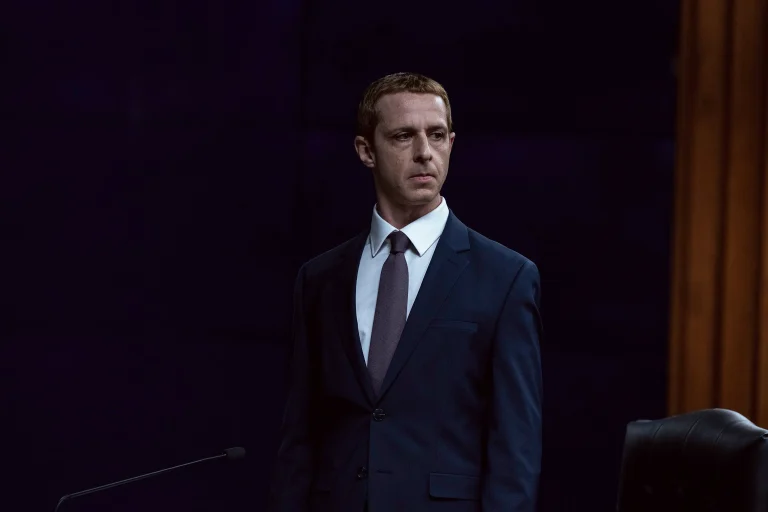
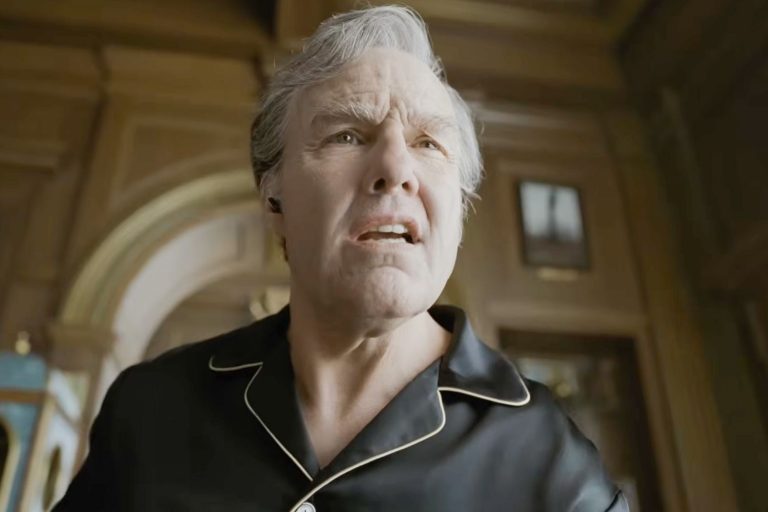
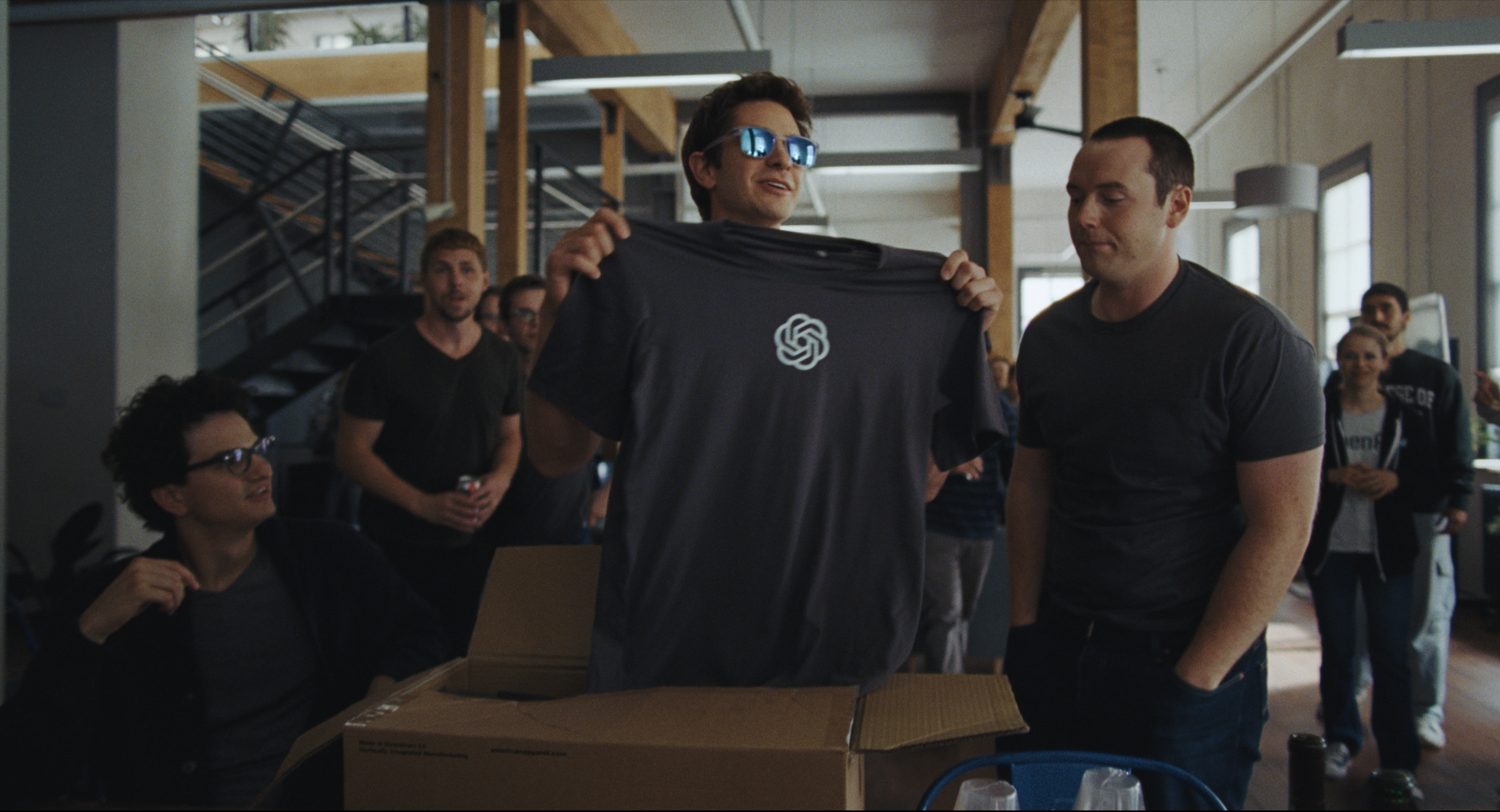
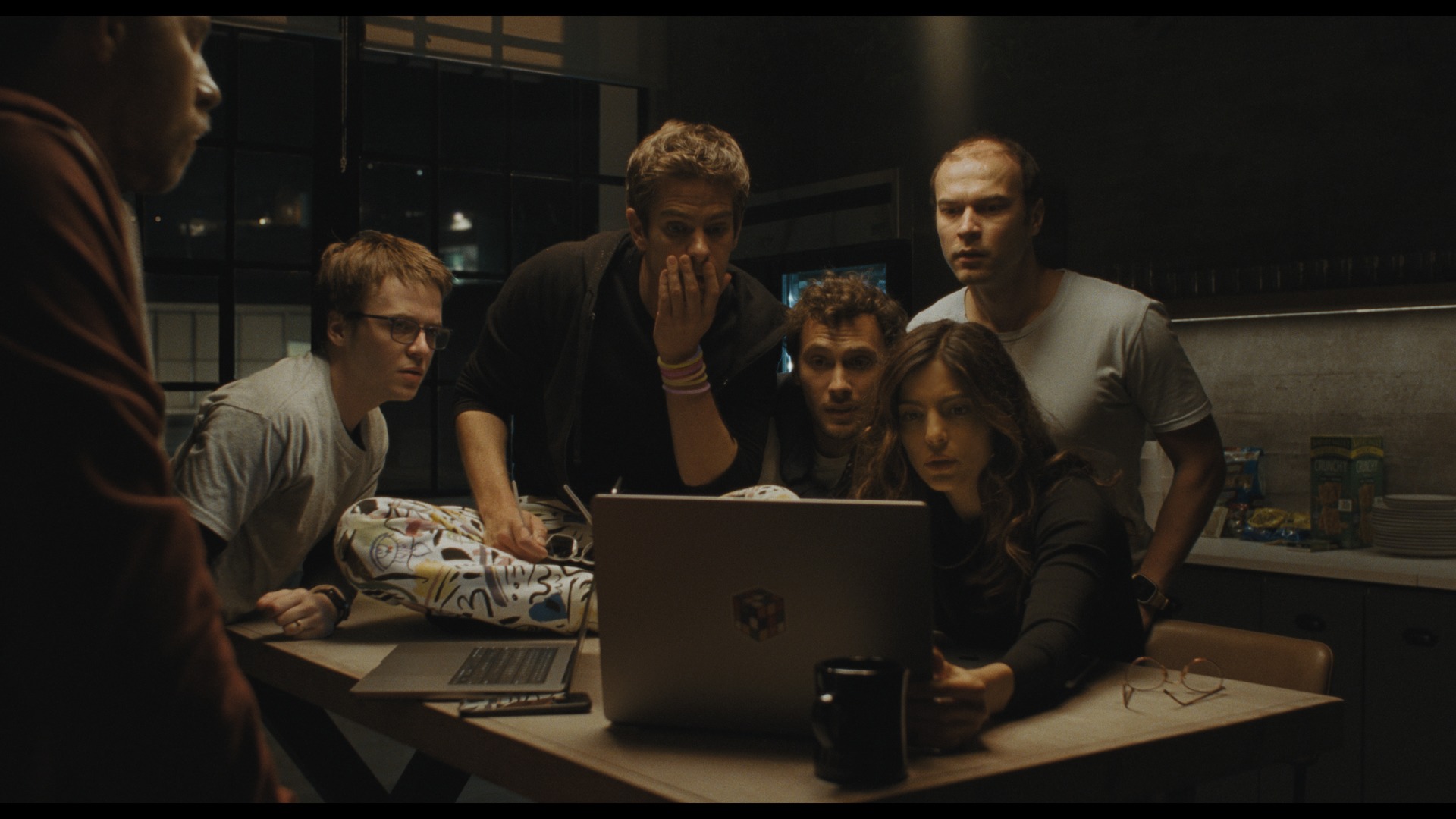
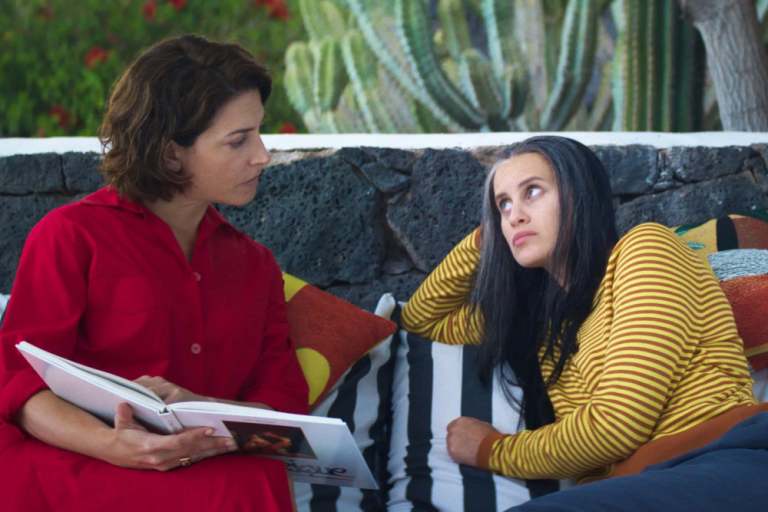
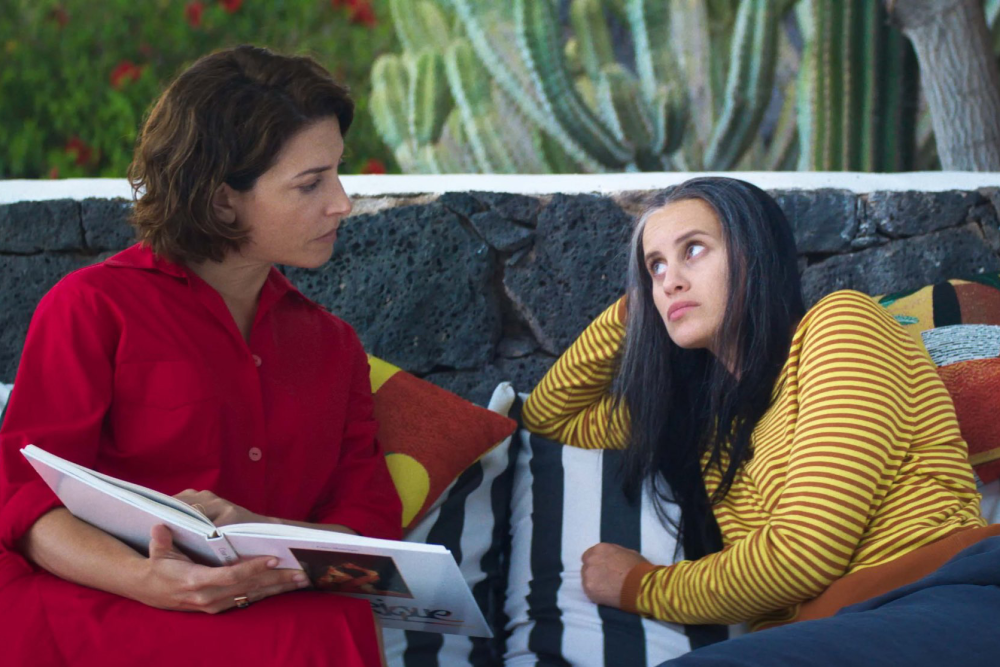
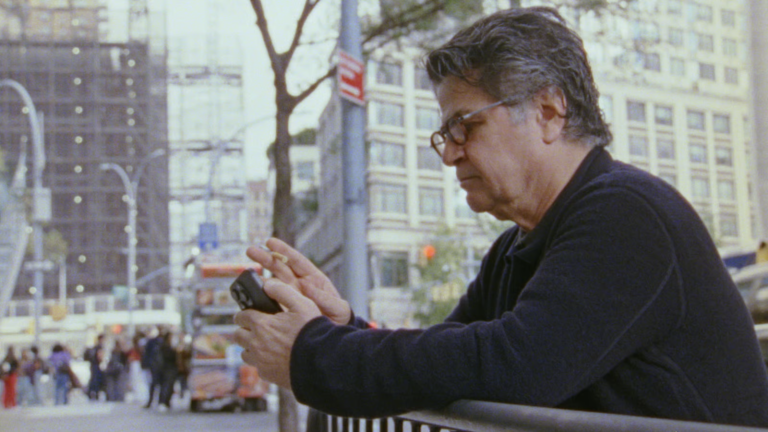
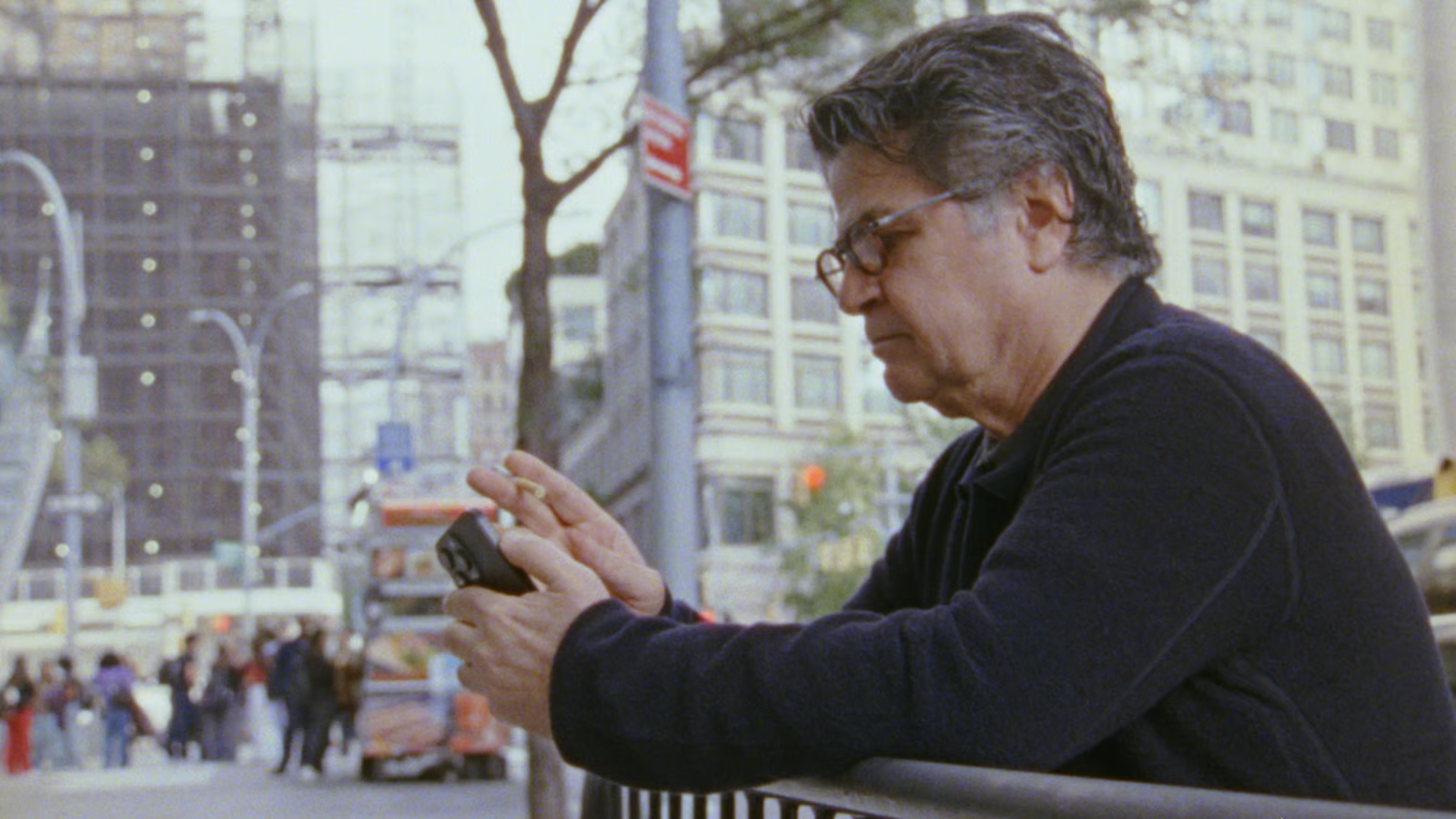
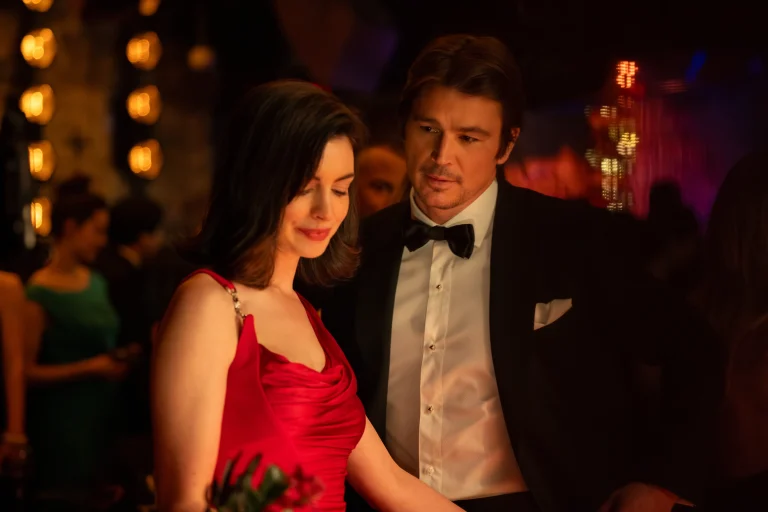
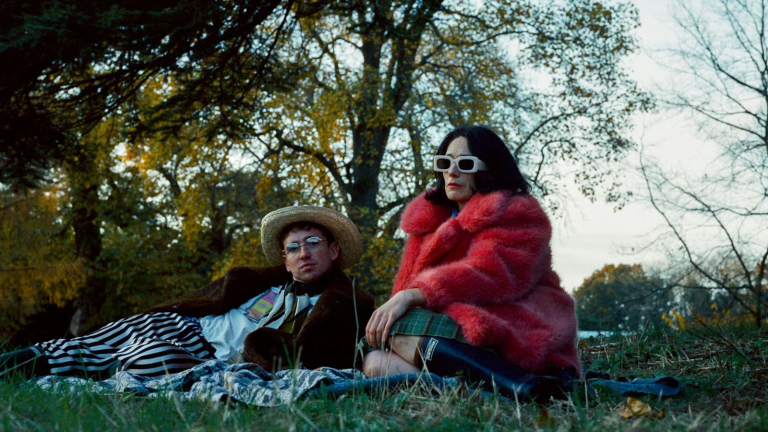
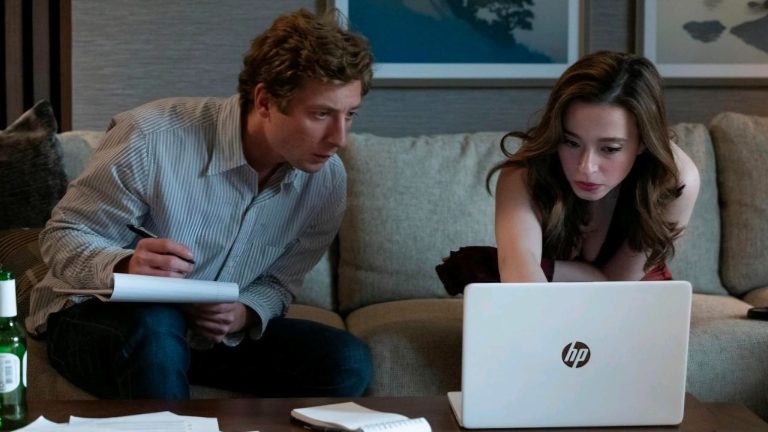
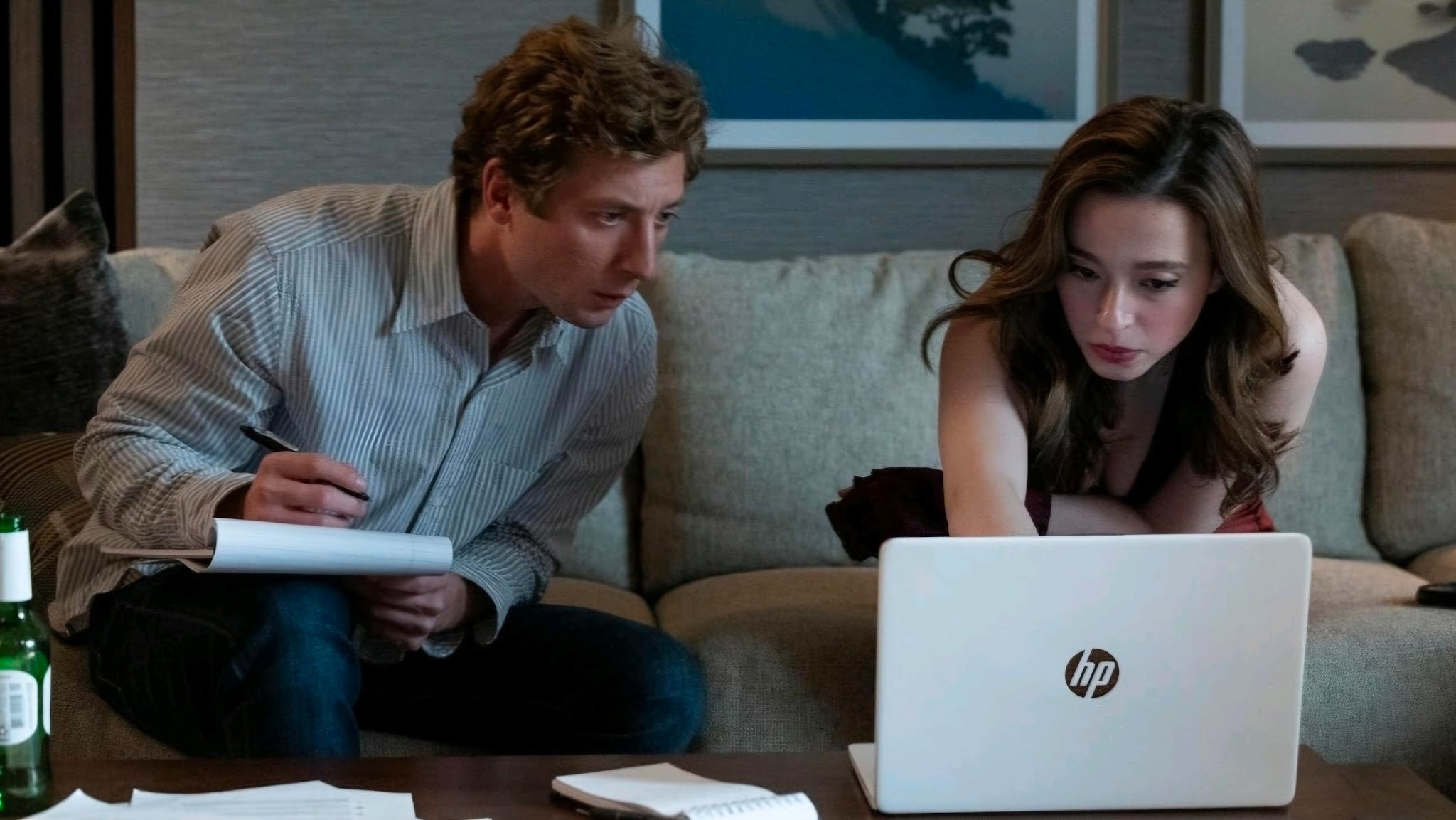
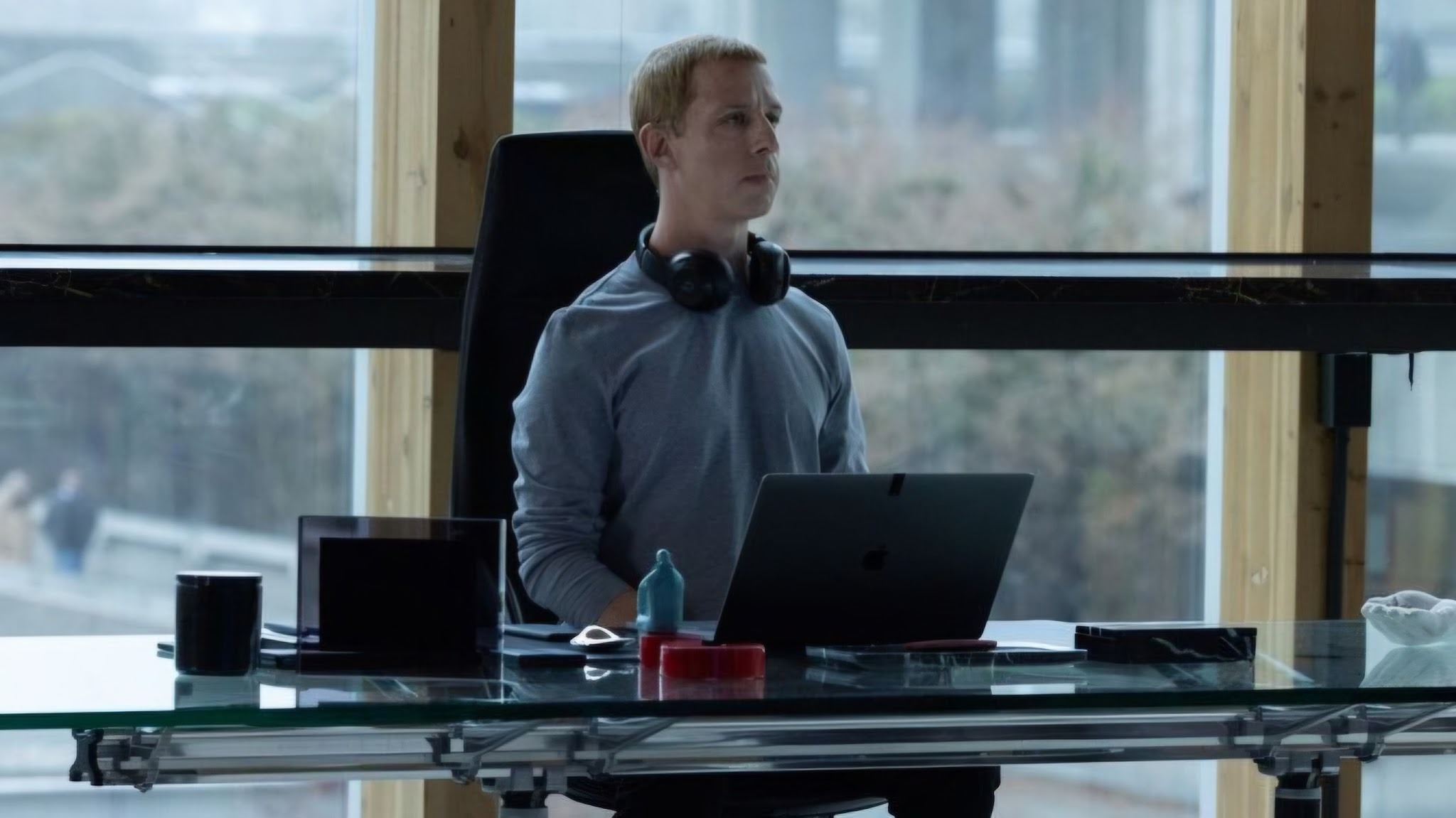
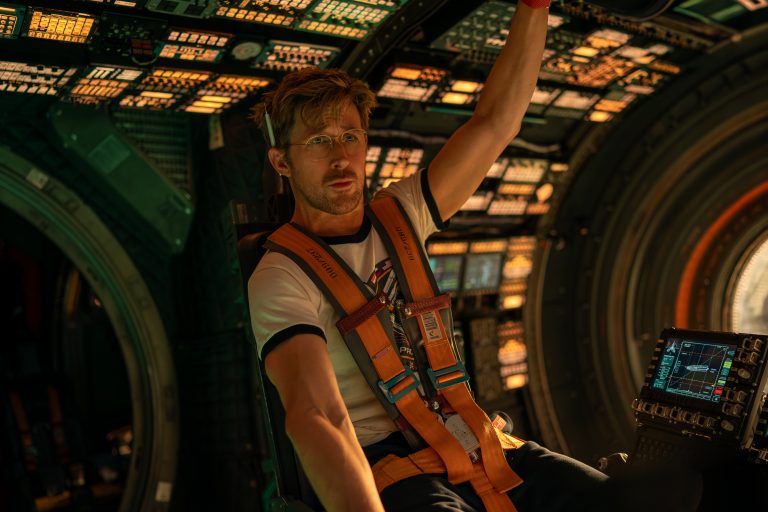
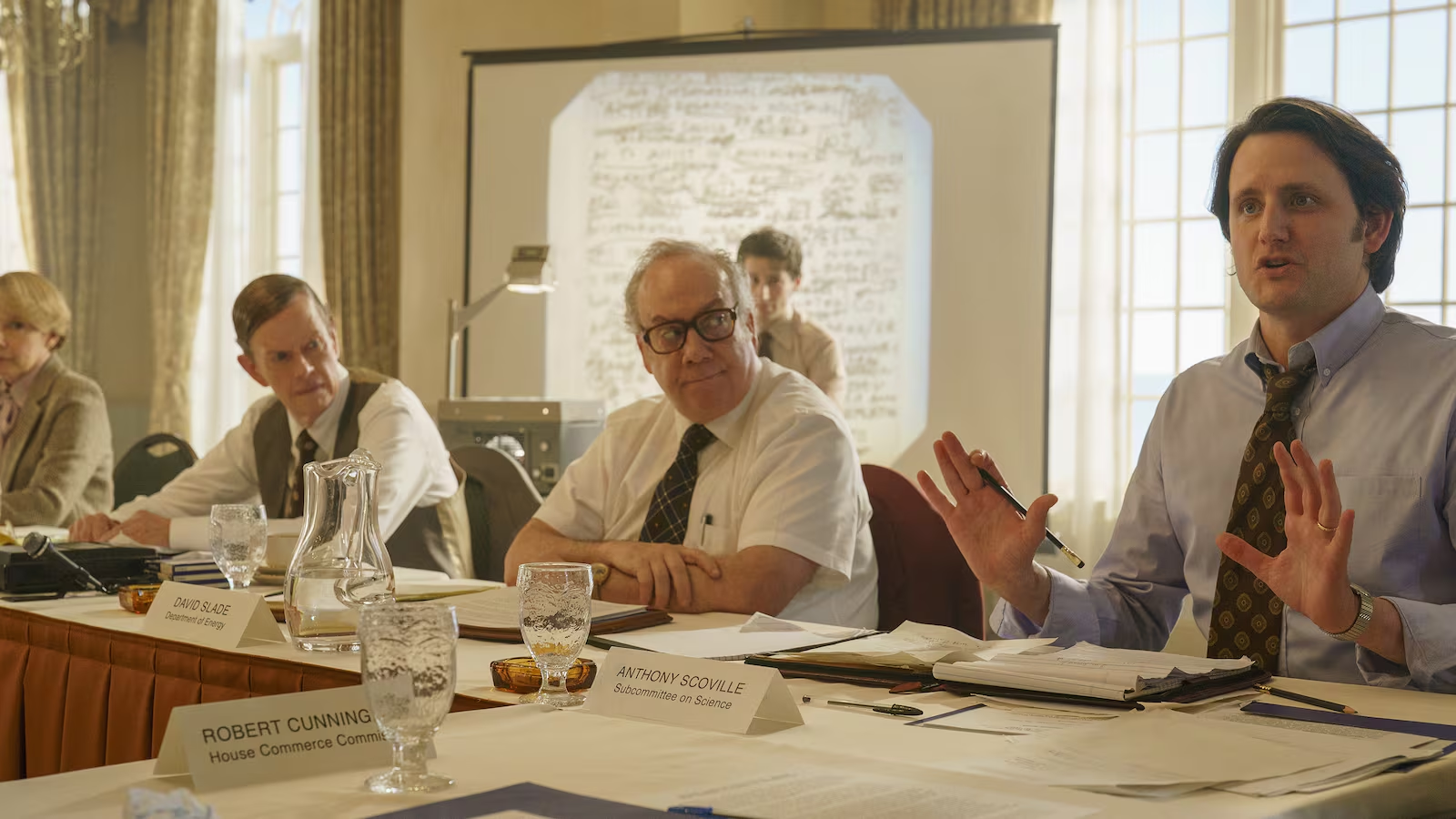
On this episode, JD and Megan discuss Aaron Sorkin’s new film The Social Reckoning! While Sorkin has always been a robust writer, his time in the director’s chair has been dubious and perhaps never more so than with this sequel.
Review: The Social Reckoning
Director: Aaron Sorkin Writers: Aaron Sorkin Stars: Mikey Madison, Jeremy Allen White, Jeremy Strong
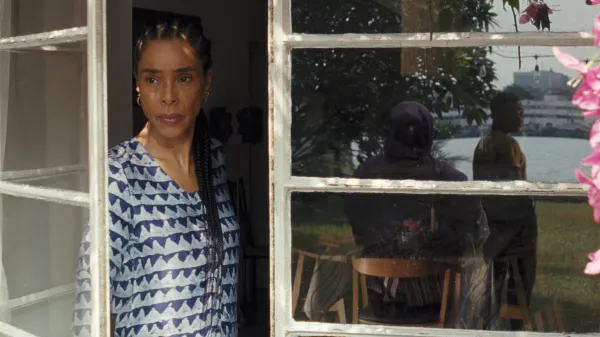
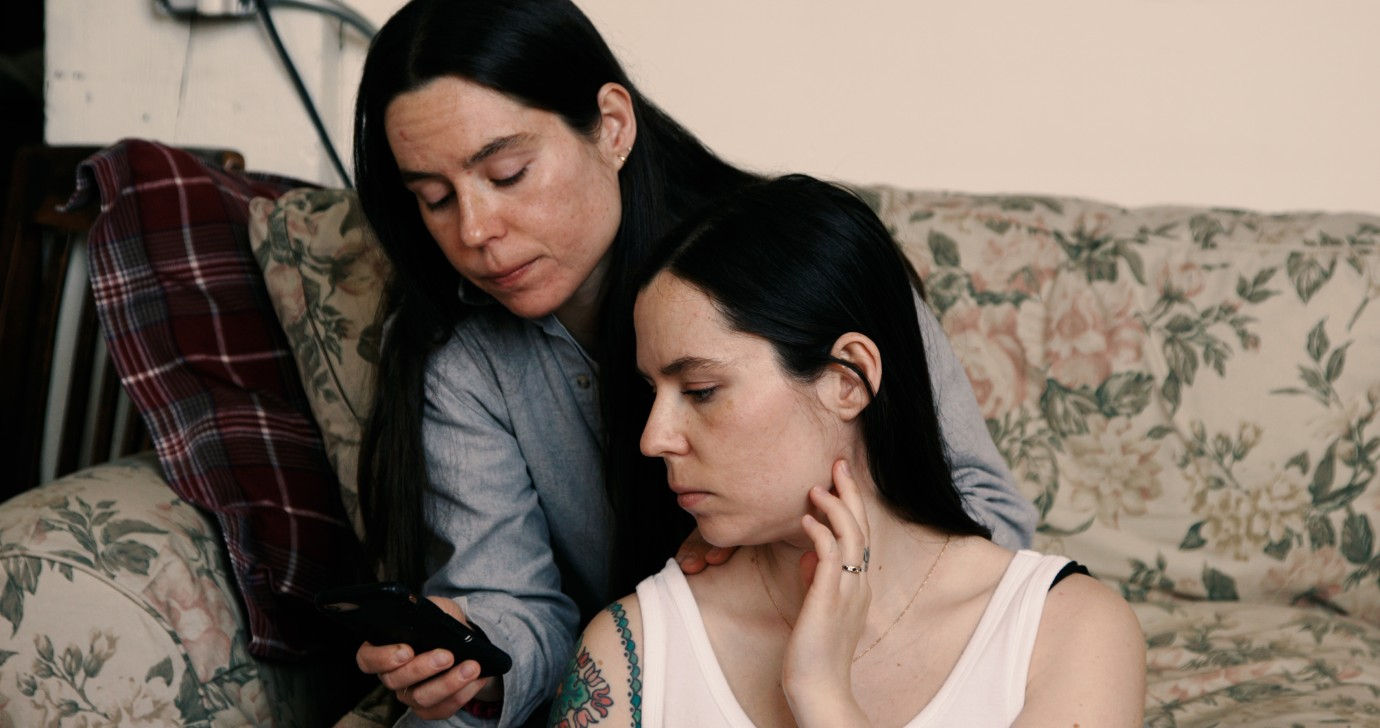
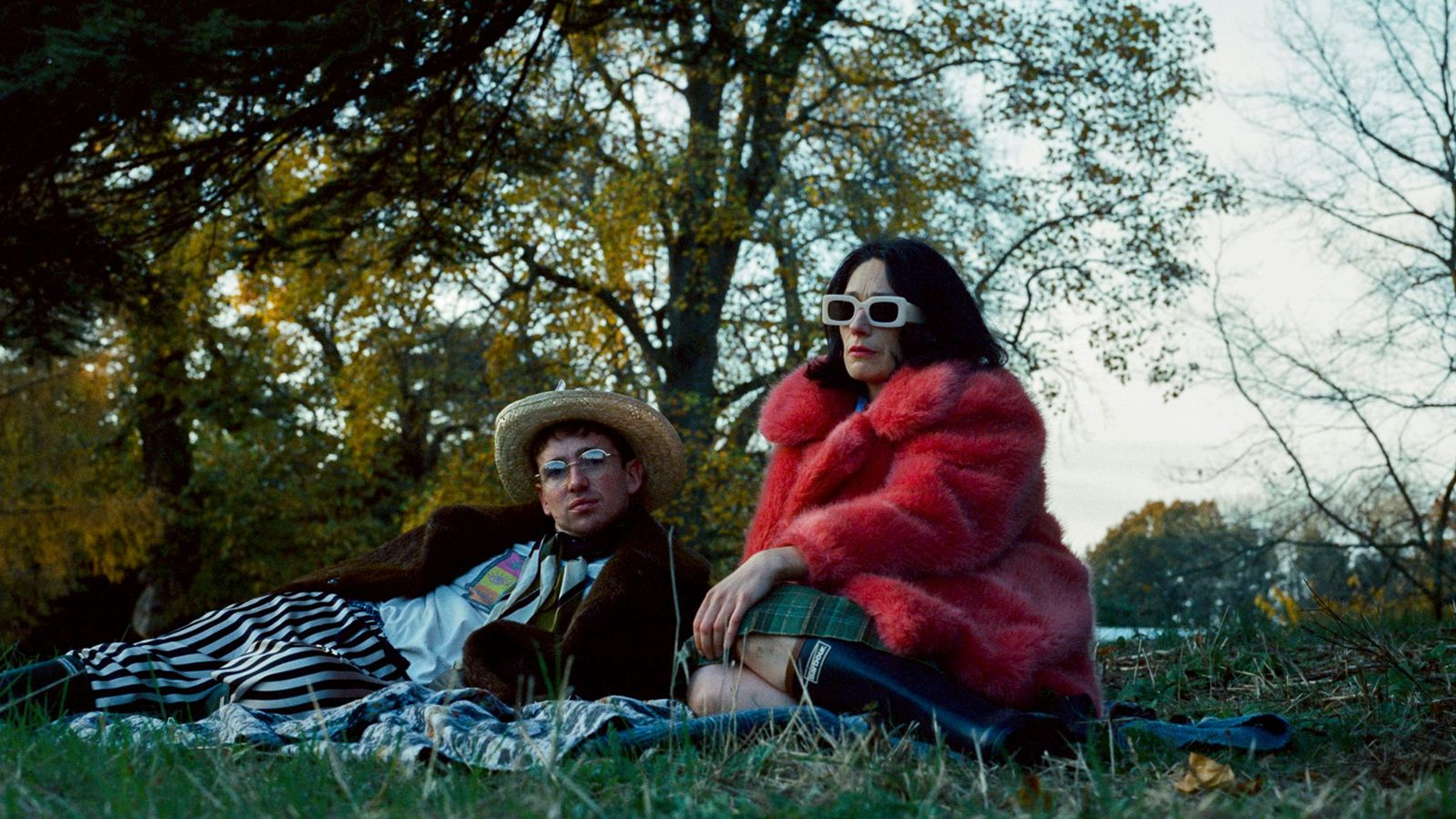
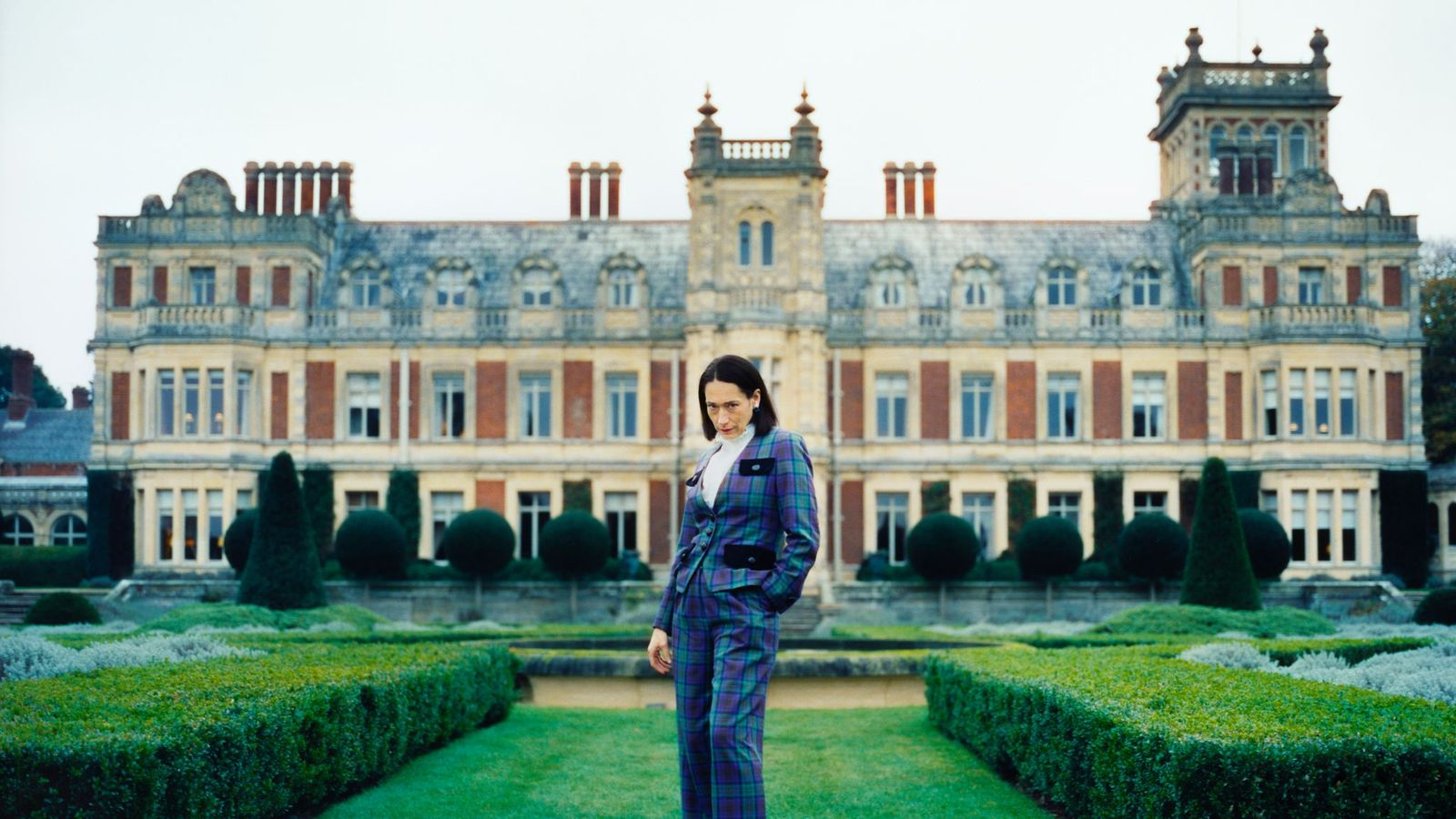
Directors:Chuko and Arie Esiri Writer: Chuko Esiri Stars: Sophie Okonedo, David Oyelowo, India Ria Amarteifio, Toheeb Jimoh, Ayo Edibiri
Synopsis: A Lagos society wife prepares for a party while reflecting on her youth and the choices that led her to marry a respected man instead of her poet boyfriend.
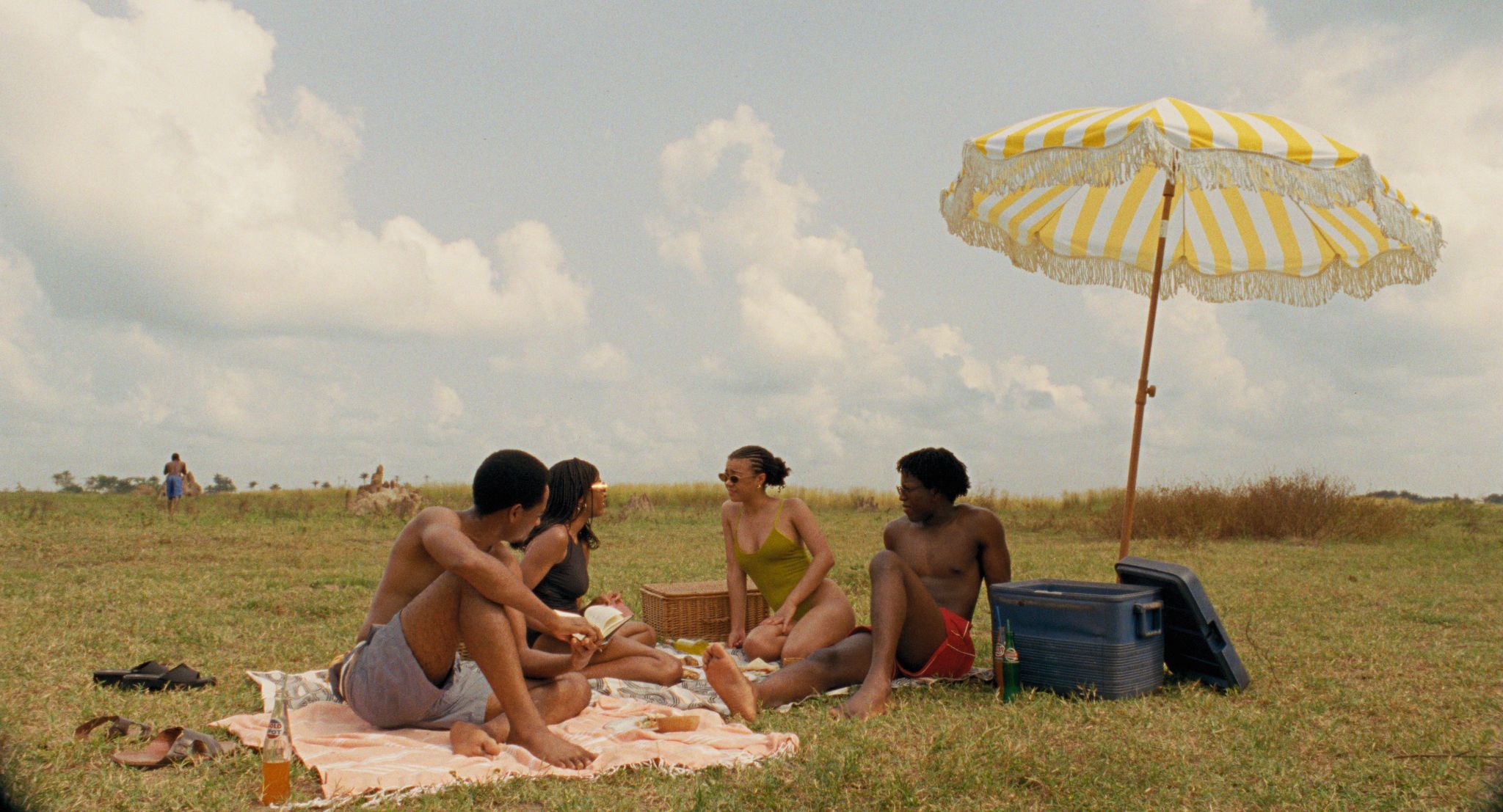
Did we ever get an answer to the age-old question “who’s afraid of Virginia Woolf?” Not concretely, though the best answer may exist in the great author’s own writing: Her characters, more than likely. High-class intellectuals of all ages, Woolf’s creations were written to walk a psychological tightrope above a field of emotionally disruptive land mines rather than mere thorns. Their lives, routinely thrown for a loop by the feelings of those in their circles, presented as challenging primarily in the context of interpersonal relationships, as well as one’s connection to the world around them. None of Woolf’s novels did it quite as successfully (nor famously) as Mrs. Dalloway, the tale of a society woman who reflects on choices that have led her to her present existence while dating back to her teenage years, those of long summers and young, complex love. It’s a text that is practically begging to be adapted; it has inspired precious few attempts and even fewer successes.
It was probably the appropriate time for that trend to be bucked, and for it to come in the form of a reimagining as elegant and sharp as brothers Chuko and Arie Esiri’s Clarissa is a gift one shouldn’t reject based on its apparent quietude nor simple pleasures. The Esiri’s second feature – following 2021’s criminally underseen Eyimofe: This Is My Desire – certainly has those qualities in spades, but what it lacks in volatility it more than makes up for in gentle consideration of its characters to the point where they are tangible beings, not realizations left on the page. Much of what made Woolf’s novel such a beguiling, renowned text was its uncanny ability to turn a style that mirrors one’s stream of consciousness into a universal experience. The Esiri twins expand that framework into something uniquely cinematic and contemplative; their vision of Mrs. Dalloway is one propelled forward by what its characters are not saying more than what they are, internal monologue or not.
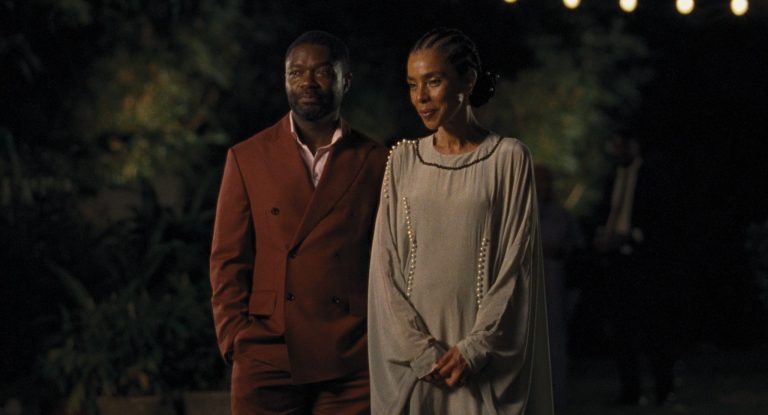
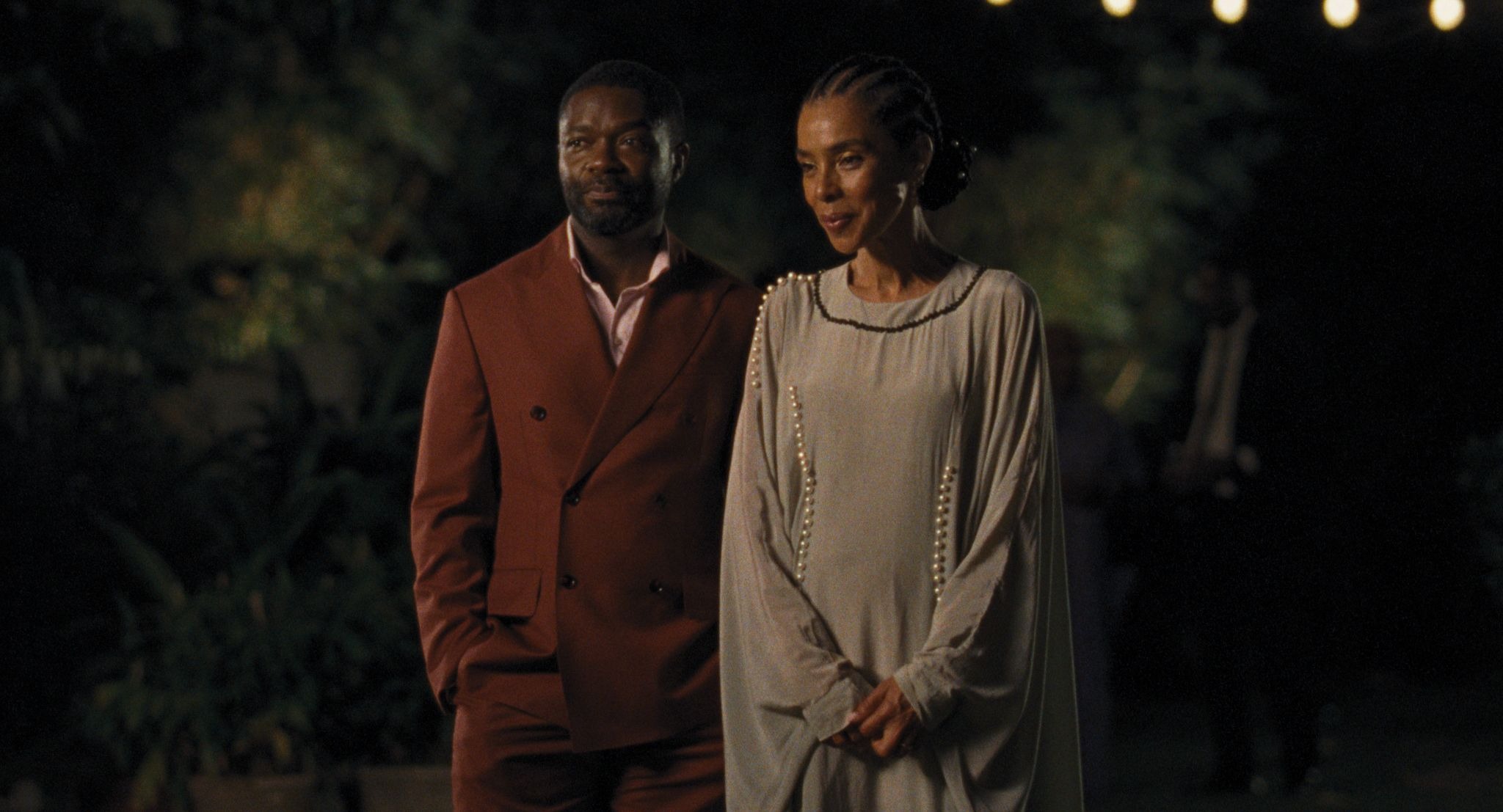
Played as an adult by the ever-transcendent Sophie Okonedo and as a young woman by an enchanting India Ria Amarteifio, our titular character evolves from a teen basking in the spoils of a semi-charmed life to a woman of the house tasked with the tedious to-dos of party preparation, though her exasperation at said tedium appears to be preinstalled, a symptom of a life still charmed but hardly exciting. In her youth, Clarissa was curious and well-read, a lethal combination that drew the similarly creative Peter (Toheeb Jimoh) to her orbit like a moth flutters toward a flame; in the present day, having married the more sensible man (Jude Akuwudike) and leaving her childhood will-they-won’t-they (David Oyelowo plays adult Peter) to forever wonder “why didn’t they,” Clarissa is at a loss, but not one she’s willing to express in words. It’s her attitude that leaves her emotional state vulnerable, whether she’s snapping at her household/kitchen staff or trudging through the day with regard only for the errands that need completing before the guests arrive.
Okonedo is astonishing here. Only half the film is hers, given the Esiri’s eloquent toggling technique that seamlessly shifts from one time period to the other and back again, but her air reverberates throughout. Even as we watch her younger counterpart navigate adolescent confusion about what and who is right for her – an inner conflict that is only intensified by the connection she shares with Sally, played by Ayo Edibiri and Nikki Amuka-Bird in the two timelines – we long for Okonedo’s interpretation of how the past has impacted her in the present. Her time on the periphery is not a weakness of the film, rather a recognition of an undersung performer’s immense talent. That the Esiris know precisely when and how to wield her poise is an even greater asset, something only Janet Planet’s Annie Baker has adequately done in recent memory.
Even stronger is how the co-directors weave in the elemental presence of Septimus (played by the revelatory newcomer Fortune Nwafor), a young military officer whose post-traumatic response to a violent conflict with the jihadist group Boko Haram while serving in the Nigerian army has left him vacant, a soul housed within a body yet maintaining no connection to one another. That Nwafor hardly says anything in the film makes the performance that much stronger, and his unspoken link to Clarissa haunts an otherwise dreamlike picture like an indescribable nightmare. Often donning a tank top and glistening with sweat, Nwafor’s physical turn works wonders with Jonathan Bloom’s 35mm cinematography, an actor and a craftsman playing off one another’s gifts like partners in a dance routine. This tends to go for how Bloom films the entire cast, like when Amarteifio and Jimoh are in close proximity and the choreography turns sensual with the perfect touch of restraint, but it’s particularly astonishing when Septimus is our focal point.
It would be expected for a film called Clarissa, similar to a novel called Mrs. Dalloway, to only allow its nominal subject to ever truly take center stage, yet Chuko Esiri’s intricate screenplay affords opportunities for all. The sophomore feature would not nearly be as strong without it, though its resounding sense of connectivity should also be credited to its movement from London to Nigeria, from a community dominated by individuals to one populated by families, blood or otherwise. The essence of Mrs. Dalloway and Woolf’s sensibilities remain, but Clarissa is entirely a story of its own merits. One can only hope that the Esiri brothers carry the eloquence of their ambitious effort here into the future, but it’s worth basking in the present for a while. The past will always be there, but in the end, moving forward is all we have.
Clarissa had its U.S. premiere at the 64th New York Film Festival. NEON will release it in limited theaters on Dec. 11.
Director: Jordan Firstman Writer: Jordan Firstman Stars: Jordan Firstman, Cara Delevingne, Kirby Howell-Baptiste
Synopsis: A hard-partying New York City club promoter sees his whirlwind lifestyle upended by the arrival of the 10-year-old son he never knew he had.
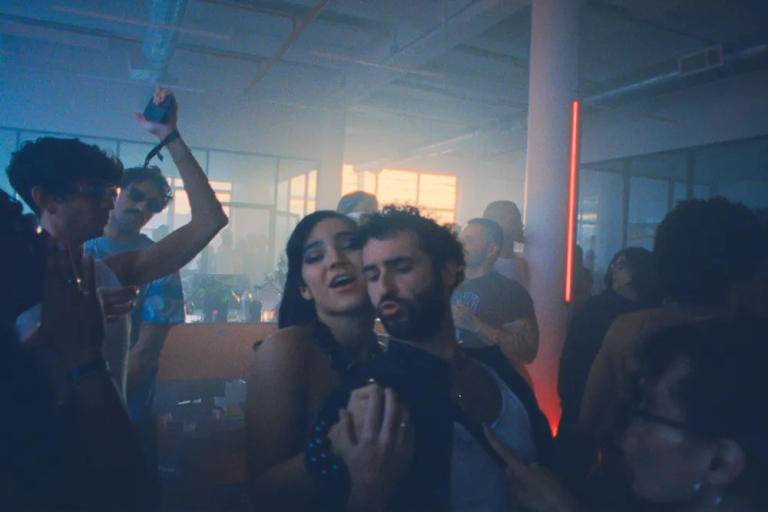
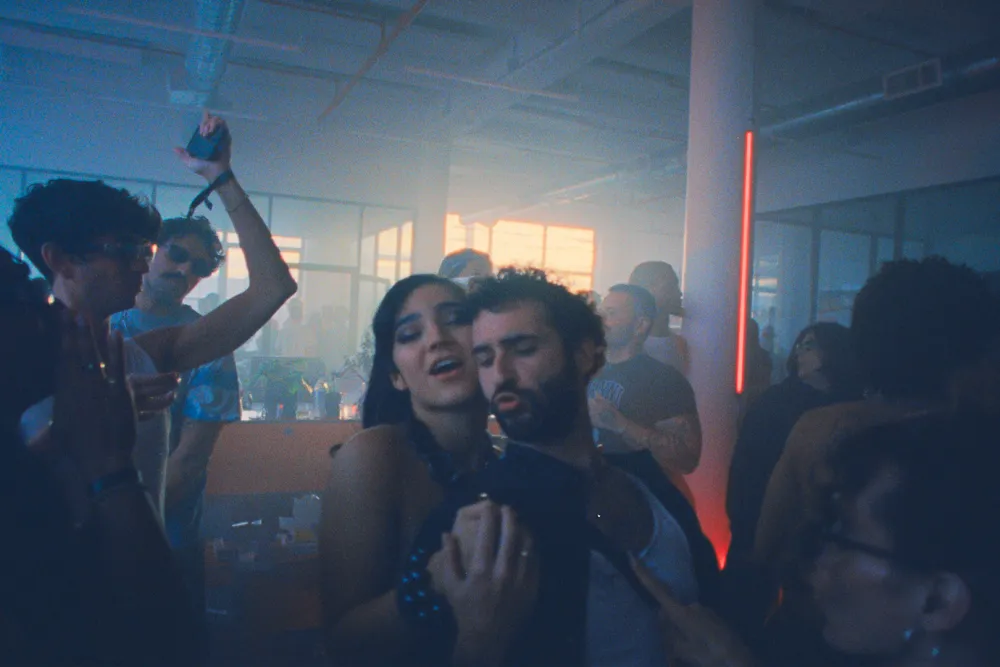
By the end of Club Kid, Jordan Firstman’s directorial debut, the title has taken on two meanings as far as it is concerned: on one hand, it refers to its main character’s brash and loud nightlife where all he is doing is going from one party to another, one club to another and living it up without any hesitation. The other meaning is the literal kid at the center of the story, whose life for all intents and purposes, takes form in the club through his experiences. What is most unexpected about Club Kid, however, is just how emotionally powerful it ends up being, and some of the places it goes to in realizing its central relationship. Also, in extremely funny directions.
The plot is simple: Peter (Firstman) is a party promoter and partygoer in New York who lives for the night scene and the company it brings. Along with his crew of close friends, they hit every major club in town, every other night, all the way till the wee hours of the morning. Things take a drastic turn, however, when Peter finds out about Arlo (Reggie Absolom), a son that he didn’t know he had–doubly surprising to him, given he is gay, which the movie does address, yes–and suddenly, he has to be a father to him and get his act together. As the movie progresses, this bond becomes stronger, and Peter finds himself balancing not only being better with Arlo as a father, but being better in his professional life as well.
From its very first minute, Club Kid is bursting with a tremendous amount of energy and vibrance. Dazzlingly brought to life by Adam Newport-Berra’s terrific cinematography, who is two-for-two this year after equally brilliant work on The Invite, Firstman’s New York feels as much a character of the movie as the rest of the cast does as you head into one loud nightclub after another, with the experiences being increasingly more booze and drug-addled with each passing night. Firstman’s direction throughout is incredible, confidently bringing the story to life with a hand that feels more learned than the debut work it is. Being how so much of the movie revolves around clubbing and partying, the needle drops that accompany many of those thumping moments are expertly chosen, making up a wonderful soundtrack to sift through long after the credits have rolled. It is also a testament to the screenplay that almost every scene is loaded with visual and spoken gags, and not a single one of them zips by, each bit further cementing their memorability.
What is also rather effective throughout Club Kid is its celebration and embracing of the movie’s queer characters and nightlife presented throughout. Every scene highlighting these aspects–of which there are many–is done in such a colorful, accepting and loving manner, giving each character a chance to shine in the overall narrative and leave a lasting impression, such as Peter’s roommate Nicky (Eldar Isgandarov), a writer from Azerbaijan who wants desperately to be a famous philosopher, who walks away with some of the funniest moments of dialogue in the entire movie, and even some charming moments from some of Peter’s friends like Saffron (Saturn Risin9), a DJ who even teaches Arlo a bit about her work, and Almi (Miss Benny), who has some of the movie’s funnier line deliveries. Other memorable supporting turns from Diego Calva, Cara Delevingne and Kirby Howell-Baptiste are equally well-captured.
At its core, the story of Peter and Arlo is beautiful, packing an emotional punch to balance its humor seamlessly. Firstman is exceptional at writing and acting out the scenes where he begins to connect with his son, understanding that he needs to put in his best efforts to care for him, which means putting much of his clubbing life on hold and coming to terms with all the things keeping him from maturing. These moments are often hilarious too, with more than one joke highlighting some of the less kid-friendly aspects surrounding Peter’s home (watch out for one Bjork t-shirt one morning) and the conversations between him and Arlo that are filled with quick back-and-forth moments of comedy. Absolom is sensational in the role, bringing a sweetness and charm to every second of Arlo and his time with his father. Eventually, he brings his own knowledge and love of music to the table as well, even creating a playlist with Peter that has a slew of excellent tracks to bop your head to.
Is Club Kid entirely unpredictable and surprising? Perhaps not. At its core, a father-son bonding storyline where the two learn to be better from each other after connecting for the very first time, is one many have seen before, and some of its plot turns in later parts of the movie are somewhat expected given some of the preceding events that lead to them. By the end, however, it hardly matters. There is so much energy and heart in Firstman’s script and each performance beat from the cast, that it more than overcomes some of these minor gripes that arise throughout its 2+ runtime, which moves at a very brisk pace till the end. The result is an exceptional debut from Firstman as a director, and one of the most impactful and heartwarming/heartwrenching movies of the year, and one that comes highly recommended.
The 85th Academy Awards had a slew of Best Picture contenders that appealed to every demographic of the Academy. We got a new spin on the Western genre with Django Unchained, a political thriller riddled with controversy in Zero Dark Thirty, and an epic musical being adapted for the big screen with Les Misérables. But the Best Picture prize went to Ben Affleck’s Argo, which ended up sweeping the whole season winning at Golden Globes, Critics’ Choice Awards, BAFTA, and Producers Guild of America. However, the film’s director was nowhere in sight in the Best Director category at the Academy Awards.
How is it that a film like Argo swept the televised awards for Picture and Director, yet Ben Affleck still missed the latter’s lineup at the Oscars? Even stars and directors, like Bradley Cooper and Quentin Tarantino, from other Oscar-nominated films were baffled by this decision. So, with Ben out of the race, who else was going to take the prize?
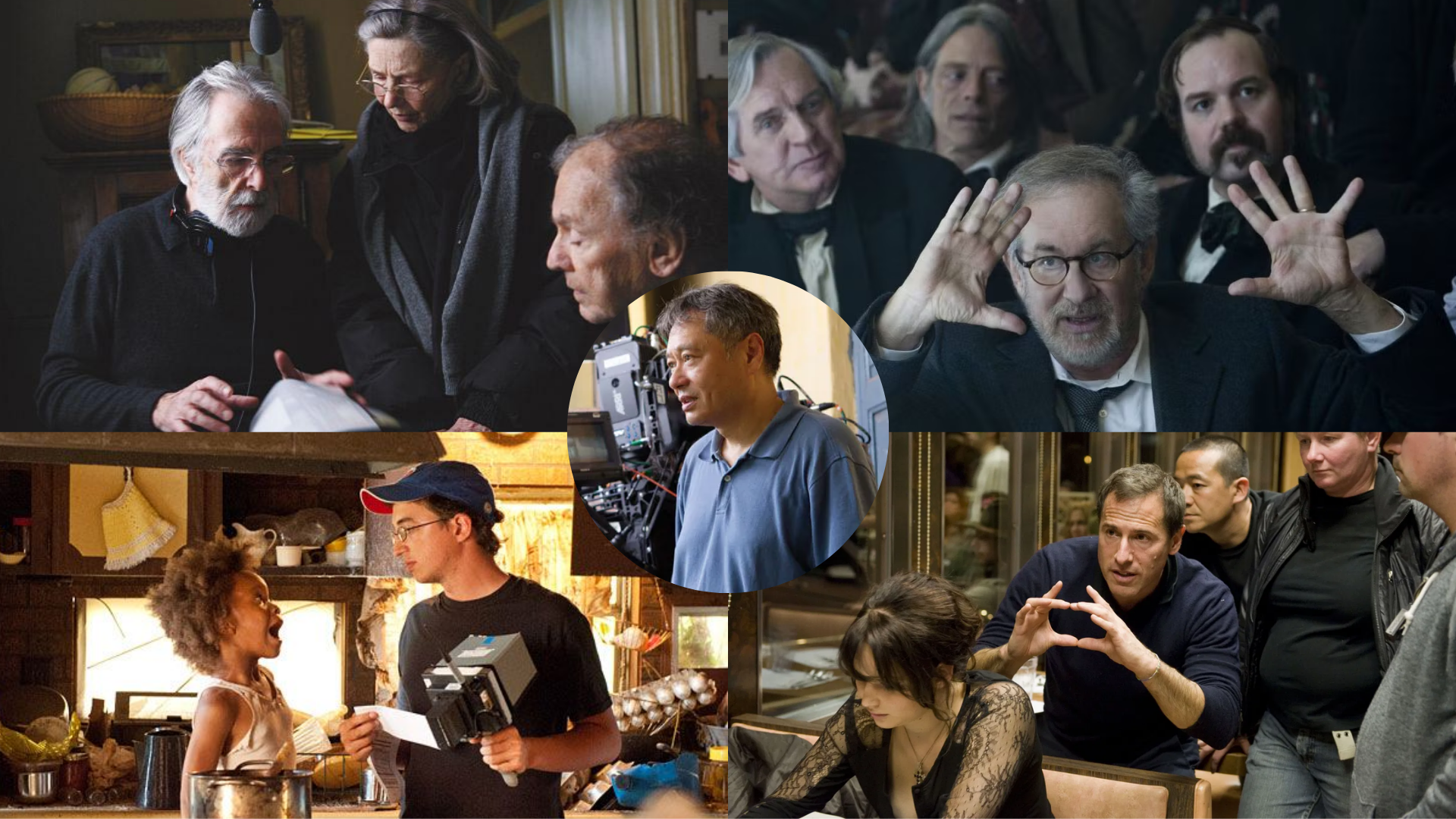
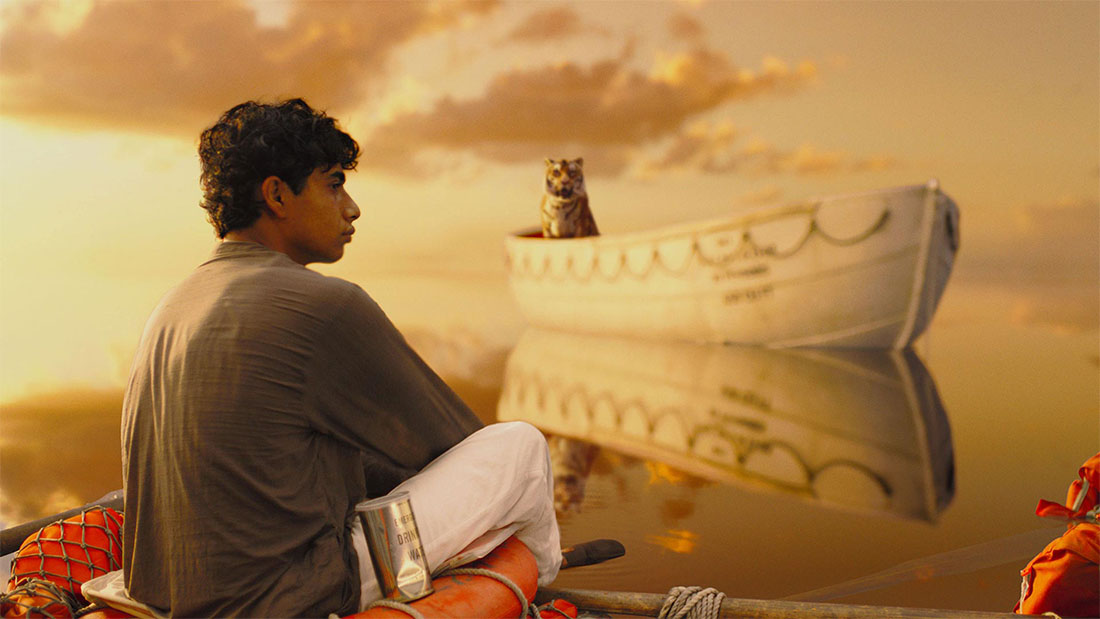
In a shocking turn of events, Ang Lee nabbed his second Oscar for Best Director for his box-office hit, Life of Pi. And I’ll be frank: I personally found the film to be pretty to admire, but I could never get emotionally attached to the story. When Ang Lee was announced as the winner, I was honestly shocked that he managed to win the category. Then again, when you have the quote unquote “frontrunner” that swept the major precursors for Best Director out of the race, almost any of the five in the field that ended up winning it would stun you. In this article, I want to dissect this Best Director race and discuss how Ang Lee managed to sideswipe the competition to get this Oscar.
Before I go any further, I want to bring up that this was the last time (so far) in which the Directors’ Guild of America only had aligned with the Oscars in two nominees: Ang Lee for Life of Pi and Steven Spielberg for Lincoln; the other nominees at the guild included Ben Affleck for Argo, Kathryn Bigelow for Zero Dark Thirty, and Tom Hooper for Les Misérables. I would argue that while Hooper did receive a DGA and Critics’ Choice nomination for Best Director, it’s not the type of directing that the branch would nominate. It also falls into the more recent trappings of remakes/reimagining a known source material for a modern audience being shunned by the branch. The only two remakes to get in for Best Director during the preferential ballot era were True Grit and West Side Story; both of which had more known and respected auteur filmmakers behind the camera.
As for Zero Dark Thirty, I’d have to imagine that Kathryn Bigelow missed this time as the film didn’t have enough time to build momentum for a Best Director nod like her previous film, The Hurt Locker. Keep in mind that The Hurt Locker had a world premiere at Venice the year before it actually came out in 2009. That hype as well as the Summer release date was able to projectile itself into the Best Director conversation. Whereas Zero Dark Thirty had its film come out in December for a limited theatrical run, so it can qualify for the Academy Awards. So, maybe it was kicked out for not being able to hype itself up in time to get a spot even though it made it in for the televised precursors? It’s honestly a headscratcher how that one missed.
As for Argo, I’d have to imagine that the directing branch as a whole either didn’t see Affleck as an auteur director like Lee or Spielberg. Or worse they assumed he was safe for a spot, but voted for a more favorable contender from the picky group. Either way, I’ve never witnessed such a baffling decision like this, where the supposed “frontrunner” in the race wins all of the televised groups but still gets kicked out of the club.
Instead, the director’s branch decided to nominate Michael Haneke for Amour, Benh Zeitlin for Beasts of the Southern Wild, and David O. Russell for Silver Linings Playbook. Haneke played for the more international side of voters, as well as having a successful campaign by Sony Pictures Classics. It also helped that Amour had won the Palme d’Or prize at the Cannes Film Festival earlier that year, cementing his chances at some awards buzz.
Benh Zeitlin not only had critical acclaim for his directorial debut, but even won a few prizes along the way for Beasts of the Southern Wild. The Fox Searchlight contender started its way from Sundance, where it won the Grand Jury Prize: Dramatic category and ended up being screened at Cannes, winning the directorial debut prize, the Caméra d’Or (aka “Golden Camera”). There was also a breakthrough performance by Quvenzhané Wallis that was getting recognition by critics and voters, resulting in an Academy Award nomination for Best Lead Actress.
Now for the elephant in the room: David O. Russell was a highly respected and beloved filmmaker, who had a comeback with The Fighter. Not only did that prove he could direct a big ensemble film, but Silver Linings Playbook showcased that he can still do comedy for a broader audience. It also helped that he wrote the adaptation of Matthew Quick’s novel, which is a factor the branch has been favoring more as the years have gone by. Add in the fact that Silver Linings Playbook had Harvey Weinstein campaigning the film and you got yourself a Best Director nominee in play.
As for Steven Spielberg, Lincoln was a much stronger contender than his last Best Picture nominee, War Horse. Not only did this have the support in the below-the-line categories, but the film had acting support, getting three nominations for Daniel Day-Lewis, Sally Field, and Tommy Lee Jones in for their respective categories. The film was also written by a more respected writer by the name of Tony Kushner, who was previously nominated for co-writing Munich.
While the film did score 12 nominations, Lincoln only walked away with two wins for Best Lead Actor and Production Design; the latter of which was considered a major upset. Outside of that, the Steven Spielberg-directed film couldn’t muster up another major win for its actors or Best Adapted Screenplay. You’d think a movie about Abraham Lincoln directed by the three-time Oscar winner and had Daniel Day-Lewis in the titular role might’ve been an automatic lock for a Best Picture win.
In regards to Life of Pi, the film was adapted by Oscar-nominated screenwriter, David Magee, who was translating Yann Martel’s popular novel into this visual technical achievement film. This was also a project that was being passed around to various directors, ranging from the likes of M. Night Shyamalan, Alfonso Cuarón, and Jean-Pierre Jeunet. Eventually, the book landed in the hands of Ang Lee, who’s been known for pushing the boundaries of visual effects with Hulk and would later direct Gemini Man.
It had its world premiere at the New York Film Festival as the event’s opening film, which garnered critical acclaim and would go on to gross more than $609 million worldwide. After defying expectations on how successful the film would become to audiences and making a profit for 20th Century Fox, the question remained: can Ang Lee pull off a win for Best Director? The answer was revealed on February 24th, 2013, in which he managed to win the prize without winning a single televised prize.
How exactly did he do this? Well, Life of Pi not only scored 11 nominations, but it was favored to win a couple of technical categories, such as Best Visual Effects, Original Score, and Cinematography. The film itself is gorgeous to look at, and even offers a beautiful score by Mychael Danna. I have my own personal gripes in regards to the CG tiger, as I’m always aware when it’s real and when it’s being imitated by computer effects. I’m aware that there are rules and regulations in regards to training animals for a film set, but at that point you might as well resort to making the whole thing an animated movie as opposed to shooting it as a live-action/CG-hybrid film.
Putting my personal issues aside, I think another reason why Ang Lee managed to win was because he was the only nominee to have shown up at the precursors. Despite losing all of the Best Director prizes to Ben Affleck, Ang was still nominated at Golden Globes, Critics’ Choice, DGA, and BAFTA. And if you’re nominated at all four precursors, your chances of winning the prize might help you in a fractured race.
I also believe that while the other directing contenders were lifted by their actors, Life of Pi works on the strength of its direction. If anything, it’s because of Ang Lee’s directing that we got a terrific debut performance by Suraj Sharma, as he’s working off of tennis balls on sticks and the actor putting all of his trust into the director. Without that trust being put into Lee, the performance wouldn’t be as good as what it is.
Something else to consider is that while Steven Spielberg could’ve been in the running for Best Director, it’s really challenging to win the category a third time; the only people who’ve done it were:
William Wyler [Mrs. Miniver, The Best Years of Our Lives, and Ben-Hur]
Frank Capra [It Happened One Night, Mr. Deeds Goes to Town, and You Can’t Take It With You]
John Ford [The Informer, The Grapes of Wrath, How Green Was My Valley, and The Quiet Man]
I do wonder if the fact that Lincoln wasn’t this towering, technical achievement is what might’ve prevented Steven from winning his third directing Oscar. And it is important to remember that Lee had only won one directing prize for Brokeback Mountain. Had Ang Lee won another Best Director Oscar with Crouching Tiger, Hidden Dragon, I don’t know if he would’ve been able to secure a third win with Life of Pi.
As I’m wrapping up here, I wished I was more invested with Life of Pi like my colleagues have been over the years. I gave it another shot and came away from it still feeling the same way. It’s a movie I admire for its ambitions and the technical work for the most part is pretty spectacular. I just wished I was more invested in the material, as I came away from it respecting it rather than loving it.
I do ask that everyone reading this article checks out the short documentary called Life After Pi. The film goes into the visual effects company, Rhythm & Hues Studio, that helped bring the movie to life only to declare Chapter 11 bankruptcy two weeks prior to winning the Oscar for Best Visual Effects. It also explores the rapidly changing landscape of visual effects artists, who are responsible for bringing our favorite TV shows and movies to life; some of their credits include Babe, The Golden Compass, and Game of Thrones. Even if you have seen this documentary, I encourage you to pass this movie along to everyone so that they’re made aware of this situation.
If you haven’t had a chance, listen to The Lone Acting Nominees podcast, hosted by Gordon McNulty, where Gordon and a guest discuss a film and performance where the acting nomination was the film’s sole Oscar notice. I’ve personally been a guest on eight episodes, while many of your other InSession Film favorites have appeared as well.
The podcast is nearing its conclusion after 250+ episodes, and it got me thinking about this year’s potential lone acting nominees. So let’s dive into the potential 2026 performers, from most likely to least likely, to be a lone acting nominee.
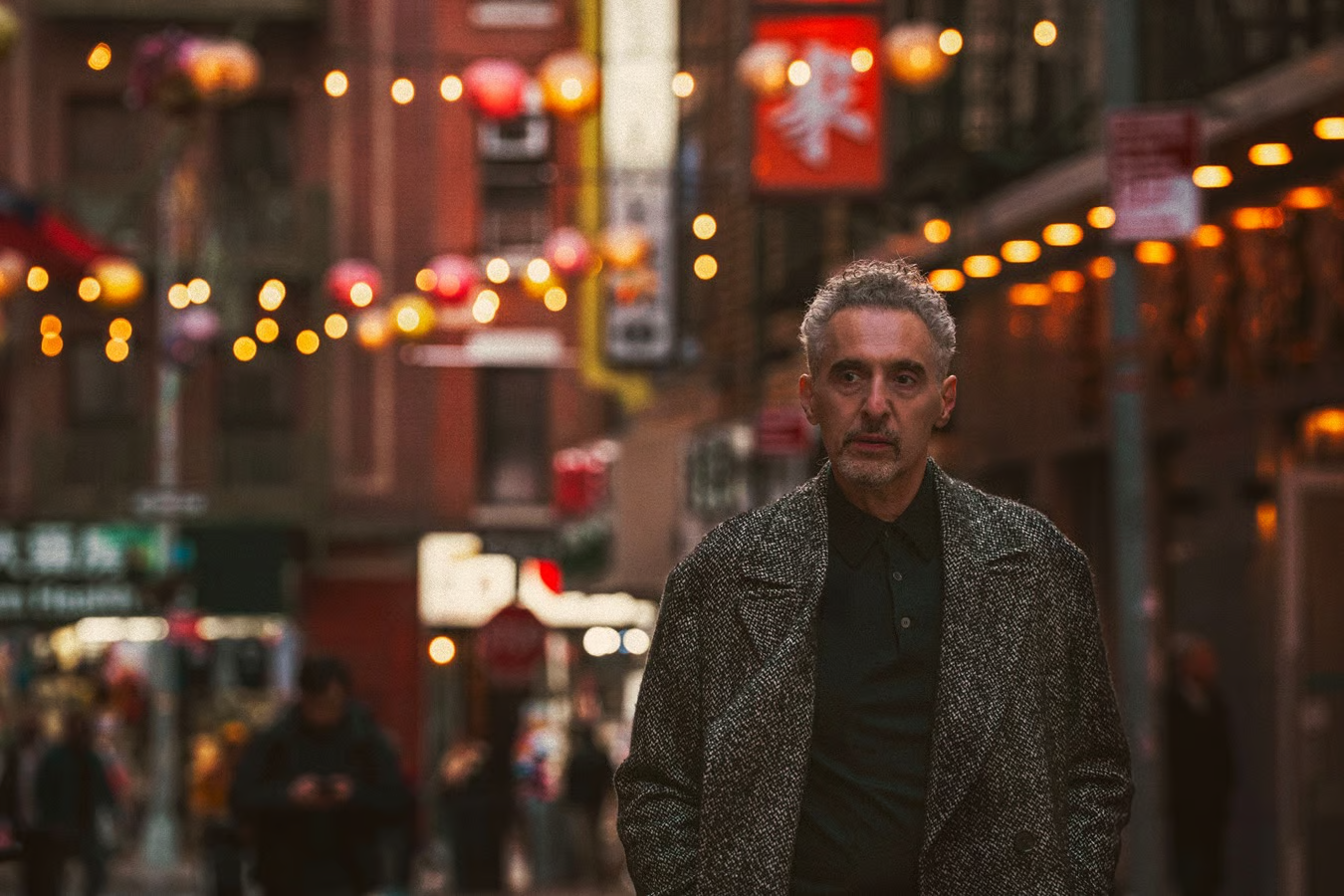
John Turturro, The Only Living Pickpocket in New York (Very Likely)
A film tailor-made for a lone acting nomination. Not only is the film decidedly small-scale, but Turturro has been receiving the only over-the-top notices. The film itself doesn’t seem to have the footprint to go anywhere with the Academy Turturro. This nomination would follow similar lone-acting nominees like Peter O’Toole for Venus, Richard Jenkins in The Visitor, and Robert Duvall in The Apostle. The only barrier would be the likelihood of Turturro’s nomination, which is by no means assured in a crowded Best Actor field.
Inde Navarrette, Obsession (Very Likely)
While the Oscars have been hesitant to honor horror performances in the past, lone acting nominee Amy Madigan showed the Academy’s shifting tastes with a Supporting Actress victory for Weapons last year. Navarette looks primed to repeat as a horror nominee in Best Actress, but will her film show up anywhere else? The small-budget indie might have been a runaway box-office and critical success, but Navarette seems like the only assured nomination. Best Picture and perhaps some technical nominations are possible, but Best Actress has a long history of lone acting nominations.
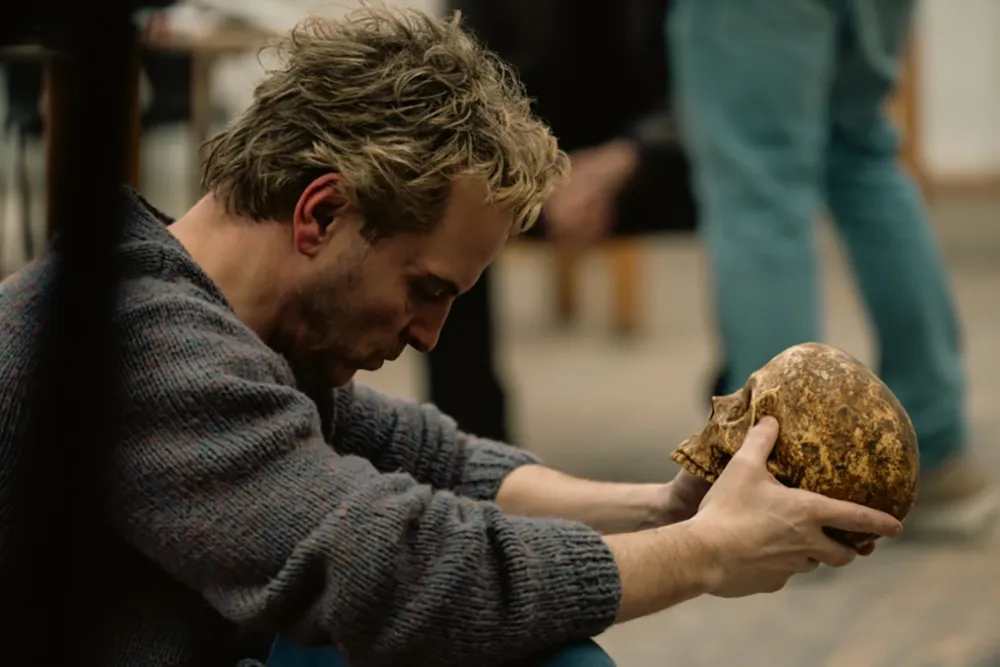
Andrew Scott, Elsinore (Very Likely)
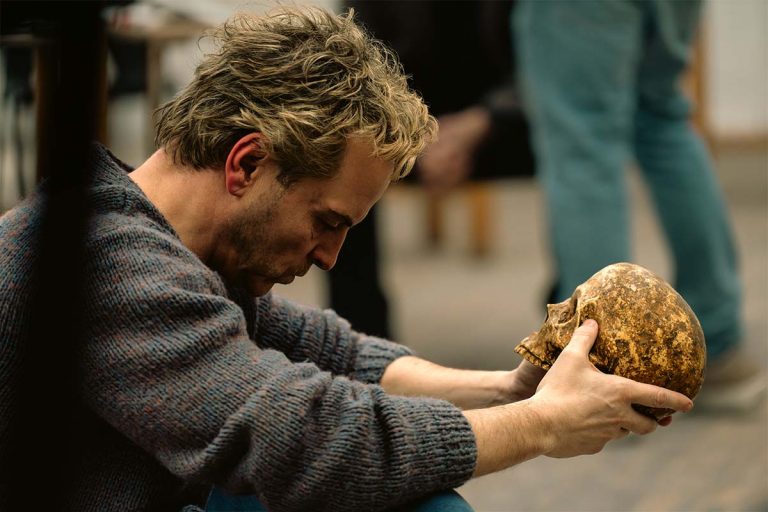
Few films have fit more of the bill for a lone acting nomination than Elsinore. Scott is getting near-universal acclaim, while the film’s reception is a bit more muted. Scott has yet to receive Academy attention, but his performance as Scottish stage actor Ian Charleson checks many boxes for a nomination. The only threat to Scott’s lone acting nomination is co-star Olivia Colman, whose performance has been warmly received, but not as enthusiastically. Scott seems to be a shoo-in, while Colman is a long shot at best.
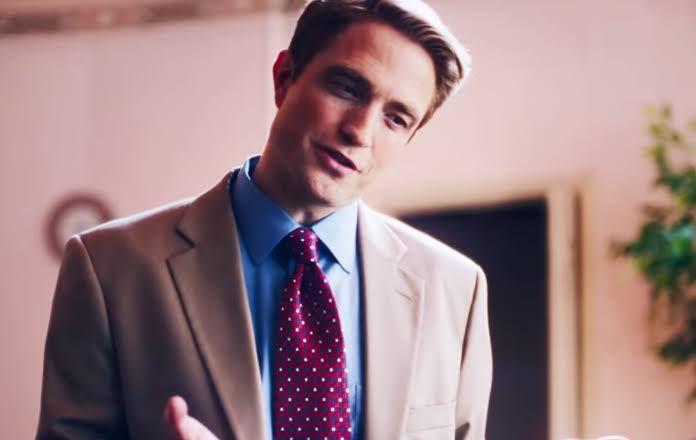
Robert Pattinson, Primetime (Likely)
Like Turturro and Scott, Pattinson stars in a film lauded more for the performance than the film itself. While the Primetime’s chances outside of acting are a long shot, my reason for pausing is the potential for a Merritt Wever piggyback nomination. Despite the ample praise for Pattinson, Wever’s performance has gotten its fair share of notice, especially from critics. If they grab on to Pattinson (yet to be nominated), it would make sense to bring two-time Emmy winner Wever along for the ride as well.
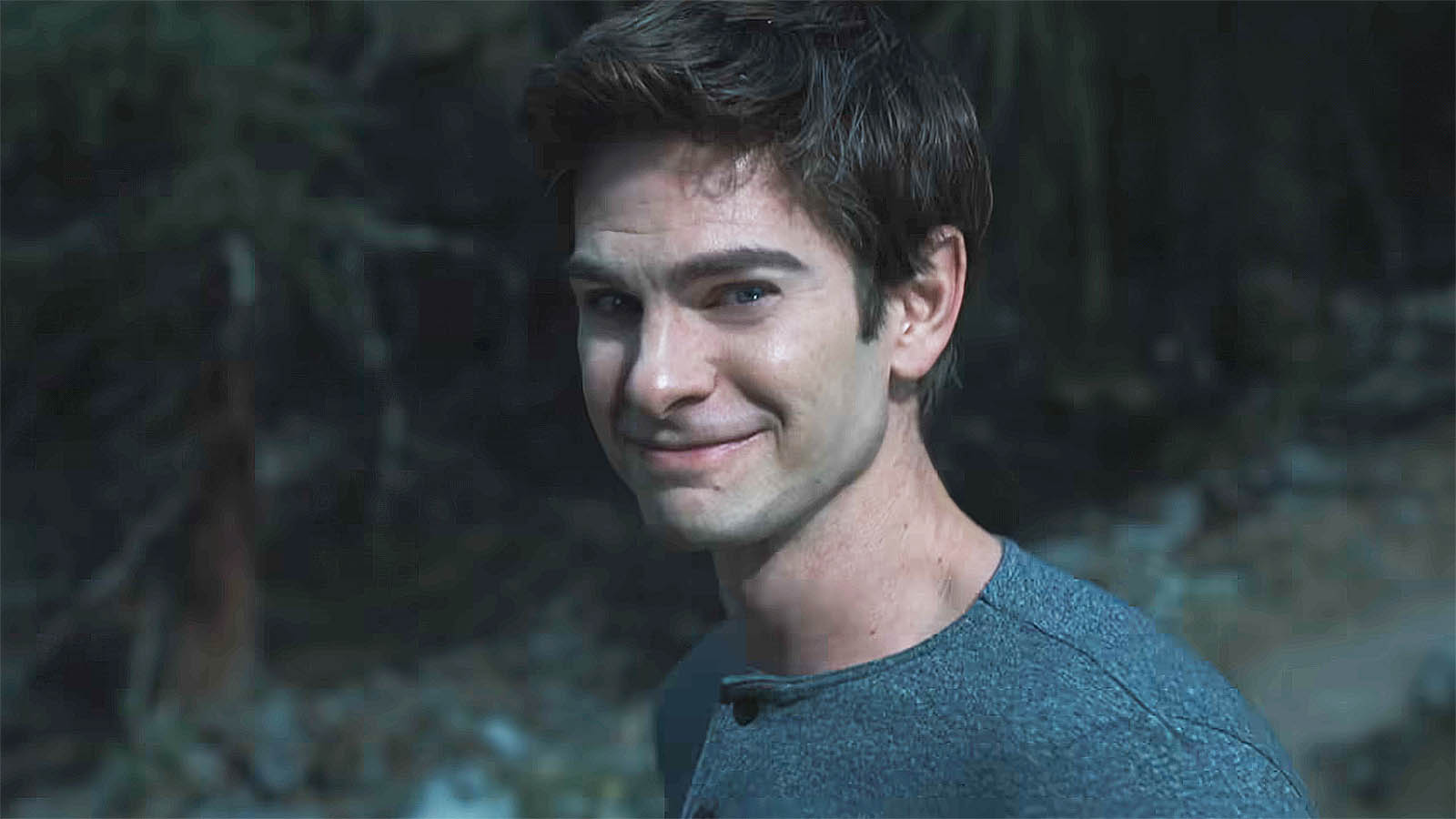
Andrew Garfield, Artificial (Moderate)
Garfield has been receiving some of the warmest notices of his career for his turn as the devilishly stupid Sam Altman in Luca Guadagnino’s Artificial. His official placement in the Supporting Actor category might help his Oscar chances, but what about the rest of the film? The notices have been warm, but not overtly enthusiastic. While no other cast members have stood out, the film’s reception could lead it toward a screenplay nomination or even loftier hopes of Best Picture. It’s 50-50 whether the film can rise above Garfield’s performance, but he might still end up as the sole recipient of any accolades.
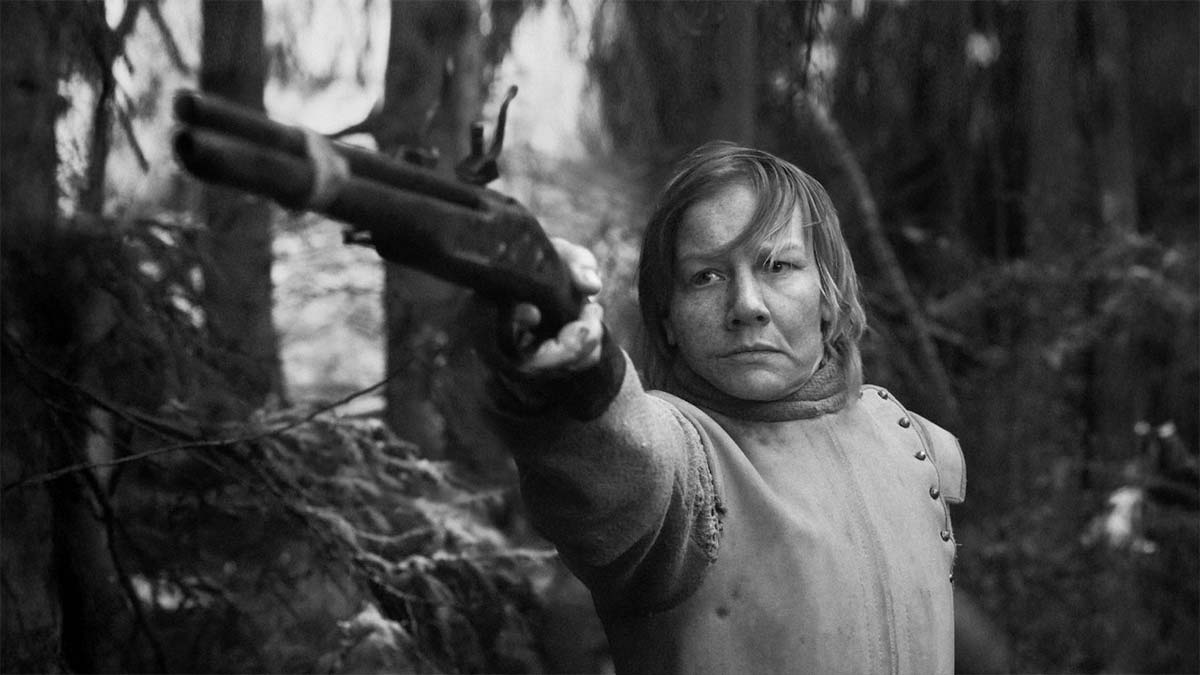
Sandra Hüller, Rose (Moderate)
You will not count me among those who discount Hüller’s performance in Rose, but the film’s very nature is unlikely to translate into a single nomination. You have black-and-white cinematography (which the Academy loves), facial prosthetics (ditto), and a foreign language element. If Huller is acclaimed enough to earn a Best Actress nomination, it makes sense for one of those tech categories to follow suit. More likely, the film would get a Best International Feature nomination.
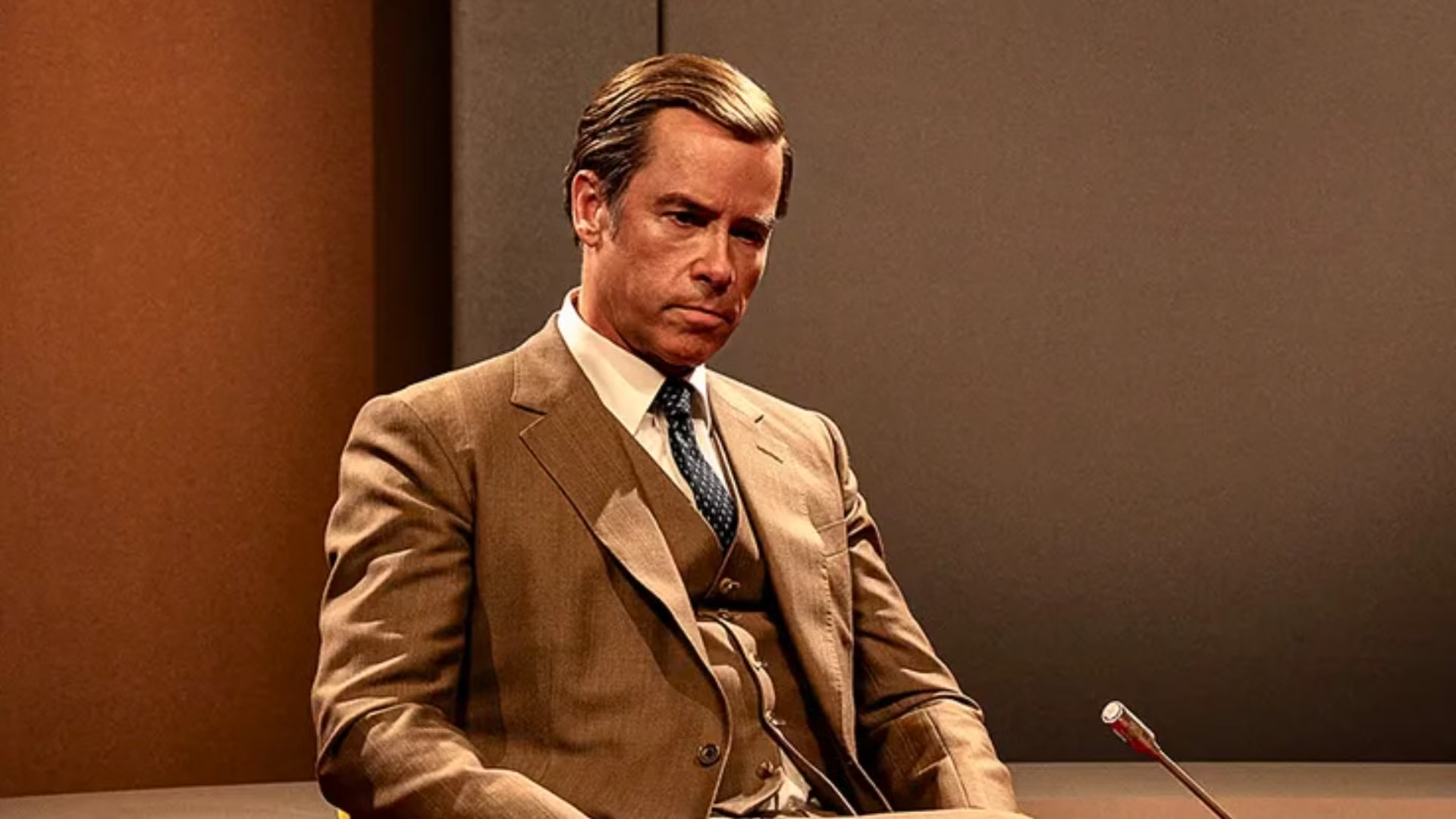
Guy Pearce, Ink (Unlikely)
Danny Boyle films tend to be all or nothing with the Academy. Either you get nominations everywhere like he did with Slumdog Millionaire and 127 Hours, or you strike out. As a Best Director winner, Boyle’s films haven’t exactly lit up the Oscars scoreboard. In fact, Boyle has directed only three acting nominations (Michael Fassbender and Kate Winslet for Jobs, and James Franco for 127 Hours). If Pearce were to make the lineup, that would signal greater enthusiasm for the film itself. It’s a period piece made with style and energy, which would normally signify technical nominations. Pearce might make it, but it probably won’t happen on its own.
Sophie Okonedo, Clarissa (Unlikely)
Who knows what to make of the upcoming Mrs. Dalloway adaptation Clarissa from directors Arie and Chuko Esiri? While it may have received near-universal acclaim at Cannes and attracted Neon to distribute, what kind of awards reception will this film have? There is a world where the film’s precursor run explodes and leads to loftier awards hopes. But the film is too widely acclaimed as a whole for a performer like Okonedo, a former nominee and the greatest potential beneficiary of acclaim, to be the sole standout from the cast. This seems more like an “all or nothing” type film. I would venture Okonedo’s chances as a long shot, and even longer for the film as a whole.
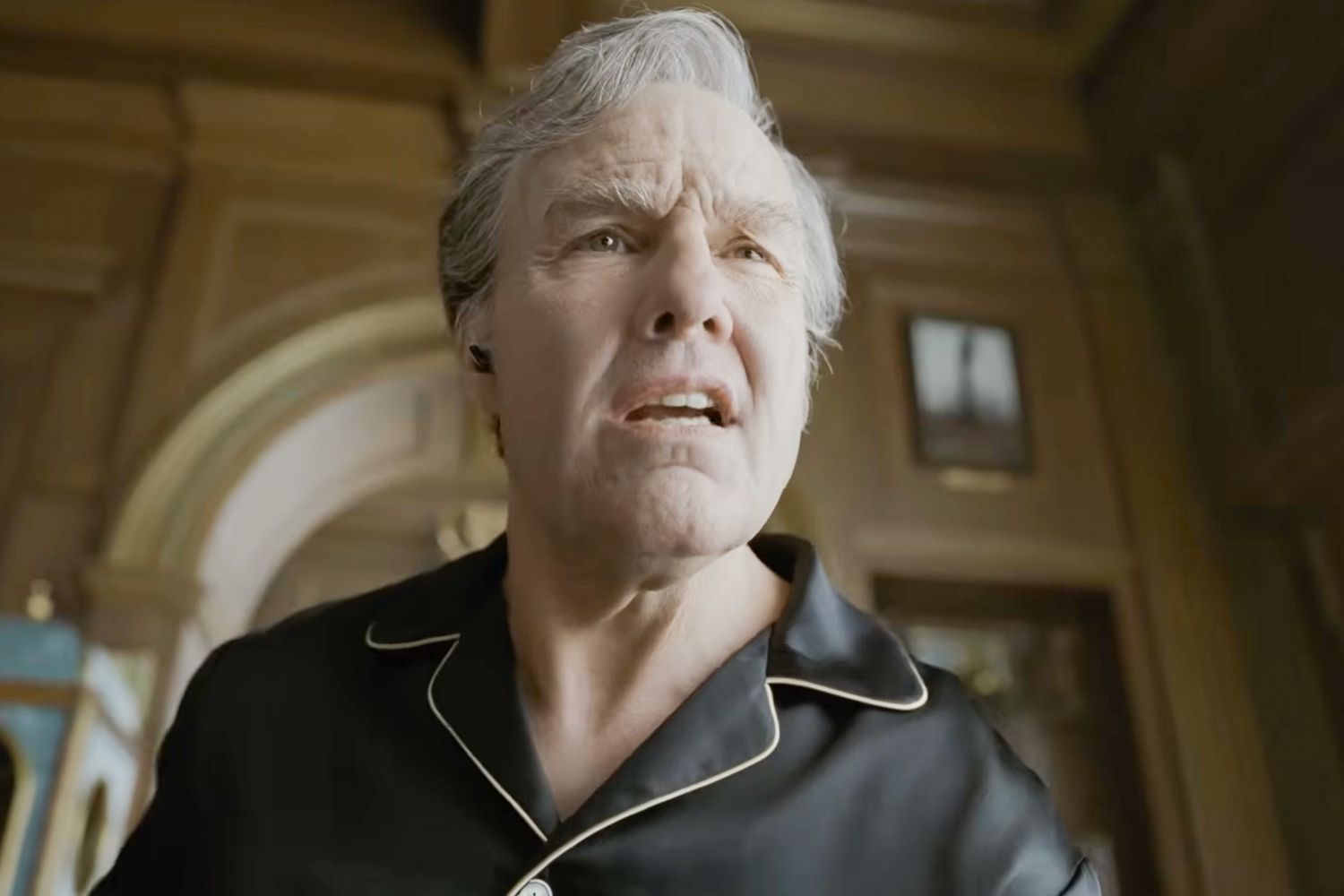
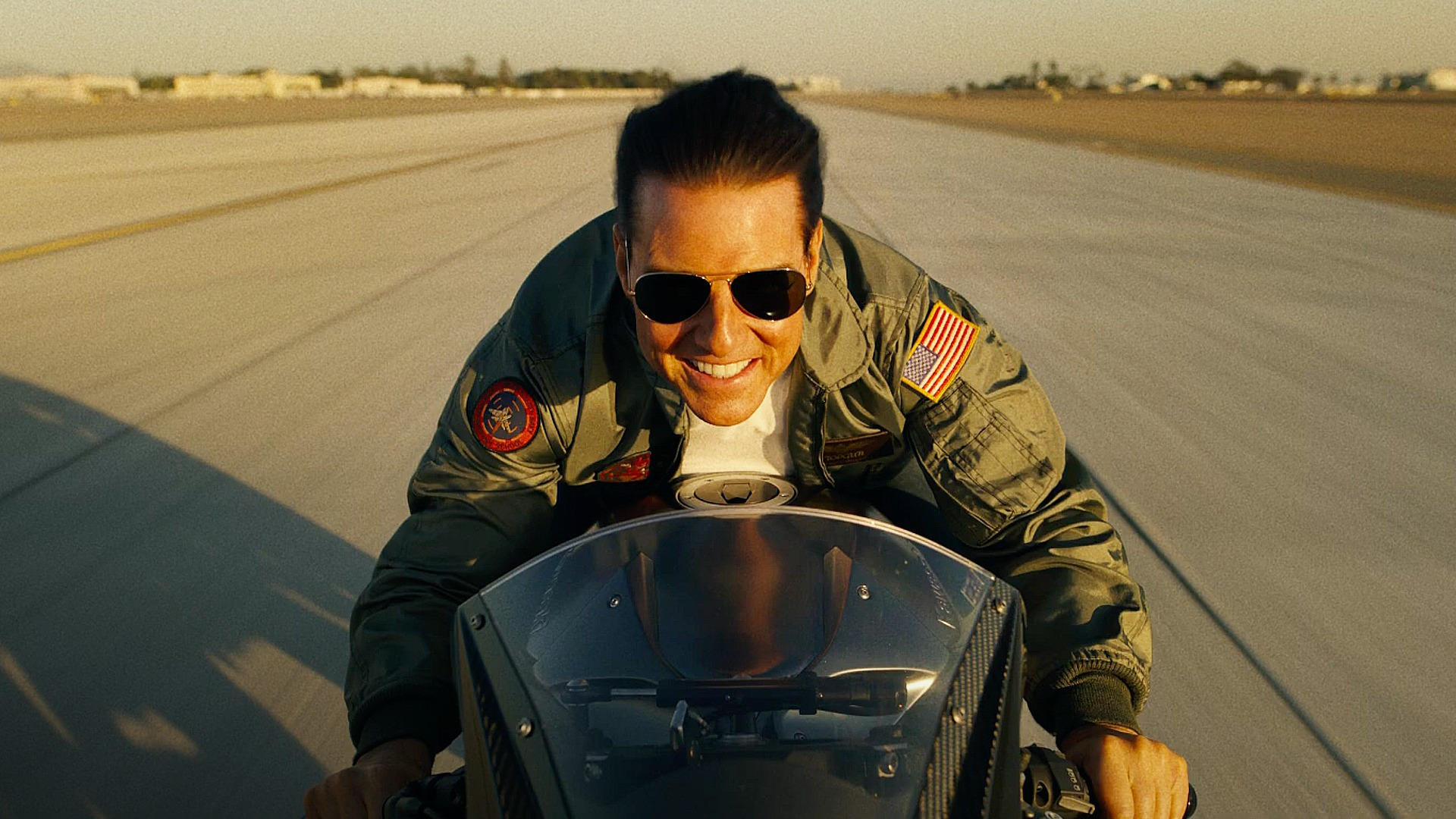
Tom Cruise, Digger (Very Unlikely)
Rule number one for lone acting nominations: you have to be nominated. While Digger might be proving polarizing amongst critics, if there is enough enthusiasm to get Cruise to the finish line, then there must be somewhere else for the film to be nominated. If Cruise manages to get caught in guilds’ and critics’ notice, then Riz Ahmed, makeup and hairstyling, and production design are sure to follow suit. It makes very little sense to just single out Cruise for the awards with this kind of reaction to the film.
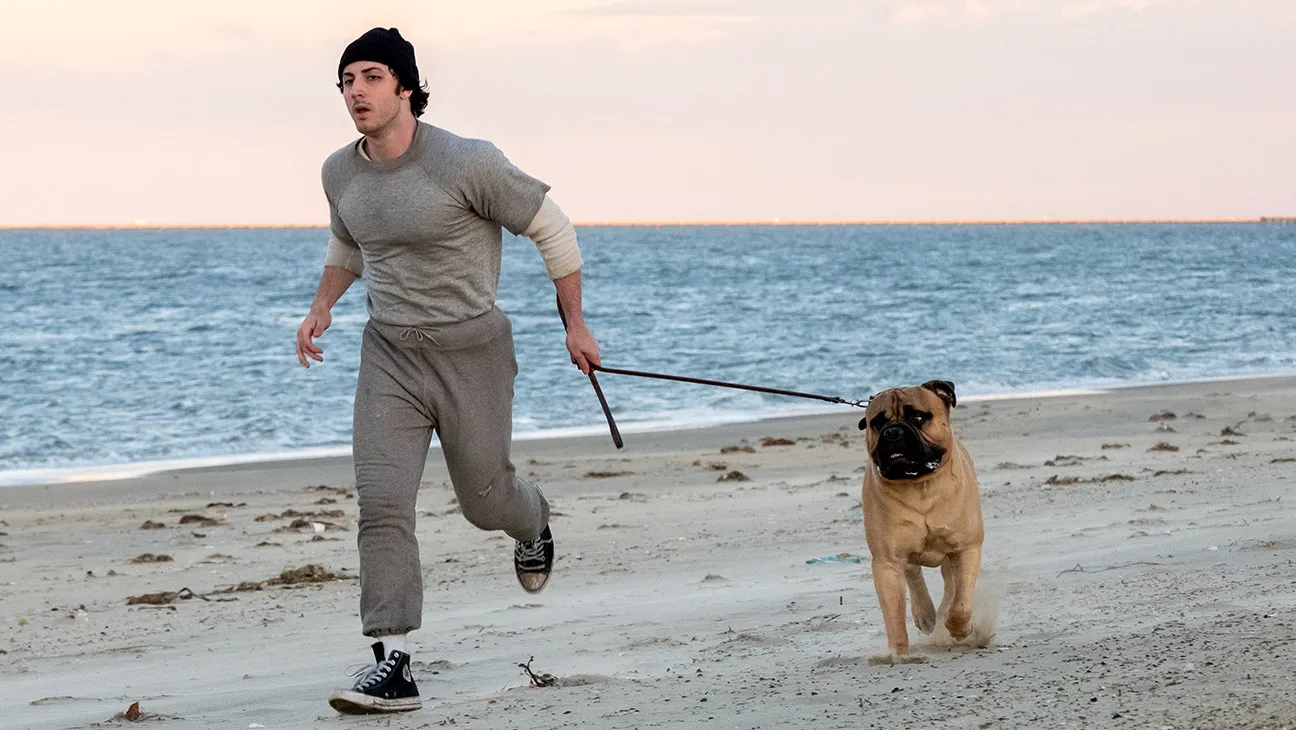
Anthony Ippolito, I Play Rocky (Very Unlikely)
Without discounting Ippolito’s Oscar potential, this performance lacks the traditional markers of a lone acting nominee. If Ippolito makes it, that probably means a fair amount of critical lauding for his performance and the film itself. This film is sure to be a crowd-pleaser, so additional nominations like Makeup & Hairstyling, Screenplay, Production Design, and even Best Picture would most likely follow a Best Actor nomination. You never know with the Academy, but this feels like the least likely of the bunch.
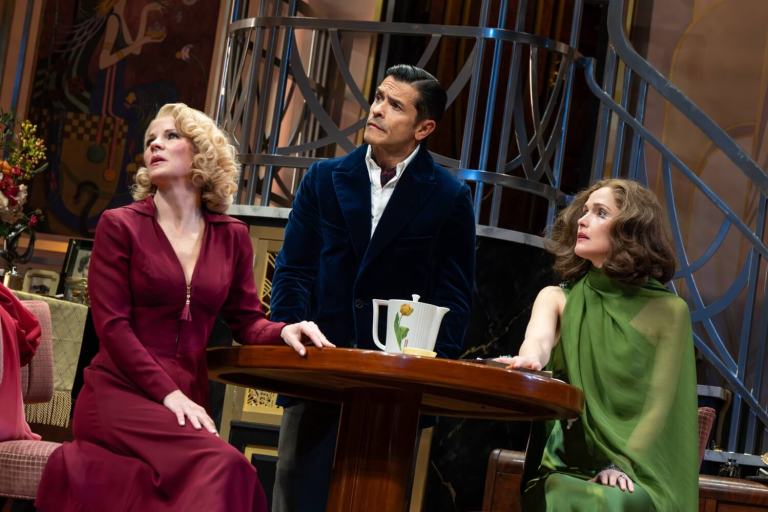
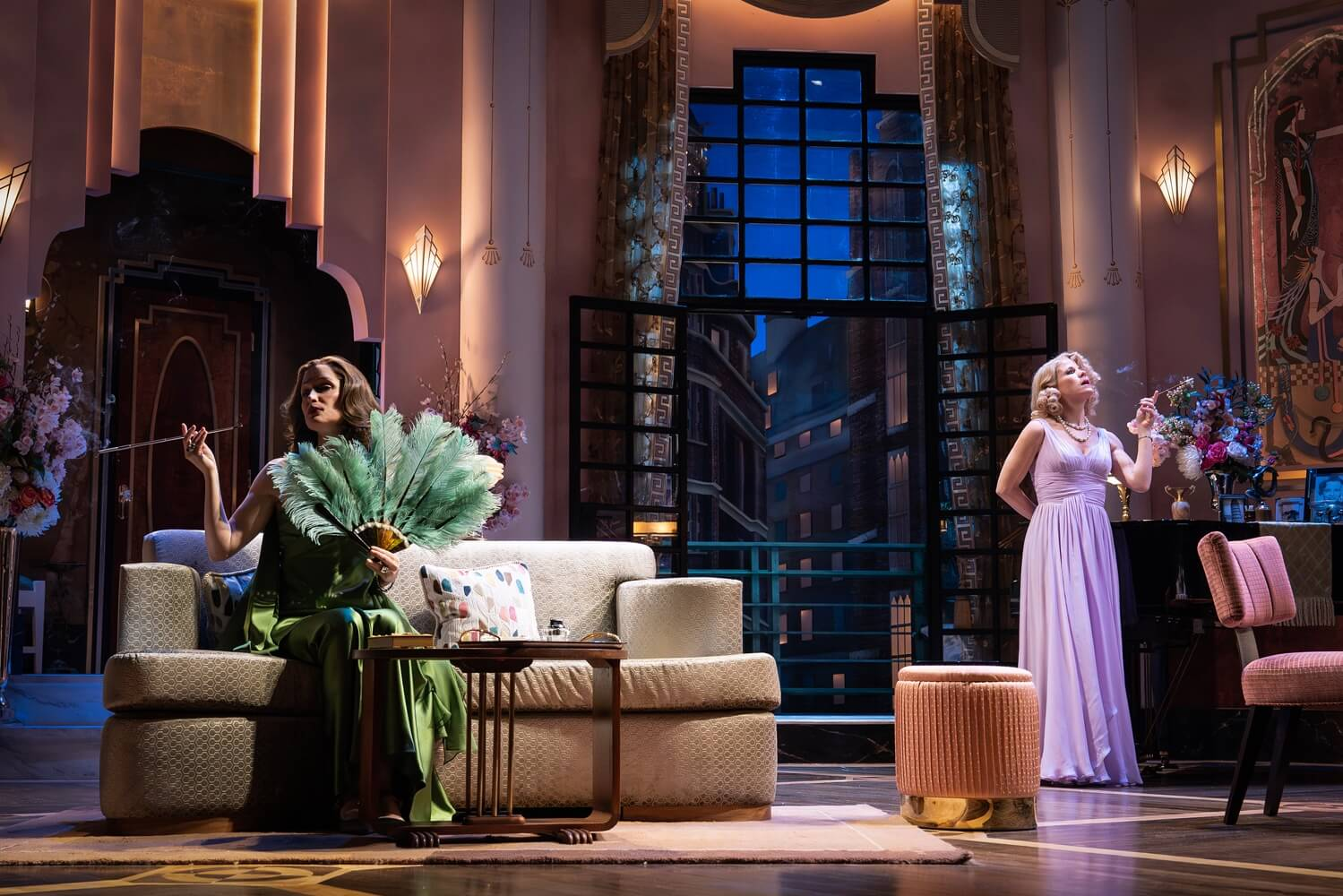
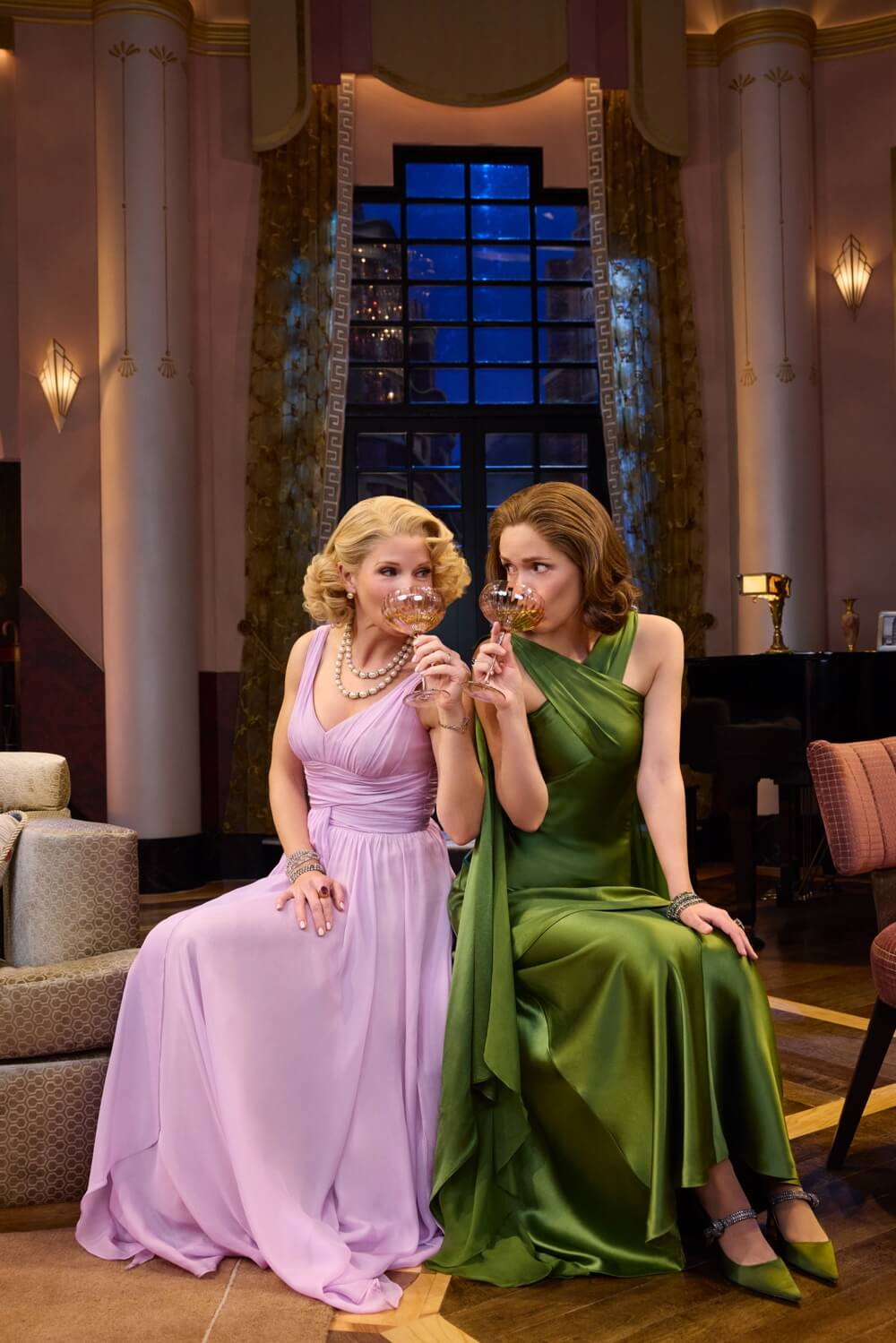
Synopsis: Recorded live on Broadway, Fallen Angels is a champagne-soaked 1925 comedy by Noël Coward. The story follows two wealthy, upper-class best friends who, with their husbands away for a golf weekend, discover that the irresistible Frenchman they both had affairs with before they were married is coming back to town.
Staged productions are a completely different beast than a film. This may seem like an obvious statement, but it is also an important one. Critics often complain of a movie being “too stagey” especially when it is a film based on a play. We ask ourselves, “why did this need to be a movie if it all appears like it takes place on one set?” And this is a valid question, but it is sometimes one that is leaned on too hard. After all, some of the greatest stories ever told, the most dramatic, the funniest, originally were performed on a stage, in front of a live audience. This is the originator of the art form that would eventually lead to us sitting in a dark room, facing projected images in sound, in that communal space. In many ways, film is a recreation of that same feeling you can get in a crowded theater on Broadway, experiencing art together. As we laugh or cry with one another, there is a shared experience that can never be recreated. There are arguments to be made about the utility of filming staged productions to air in movie theaters. On one hand, there is a beauty in the singular experience of the live play. On the other hand, so few of us are given the opportunity to see some of the best performers in the world hold the audience in the palm of their hands.
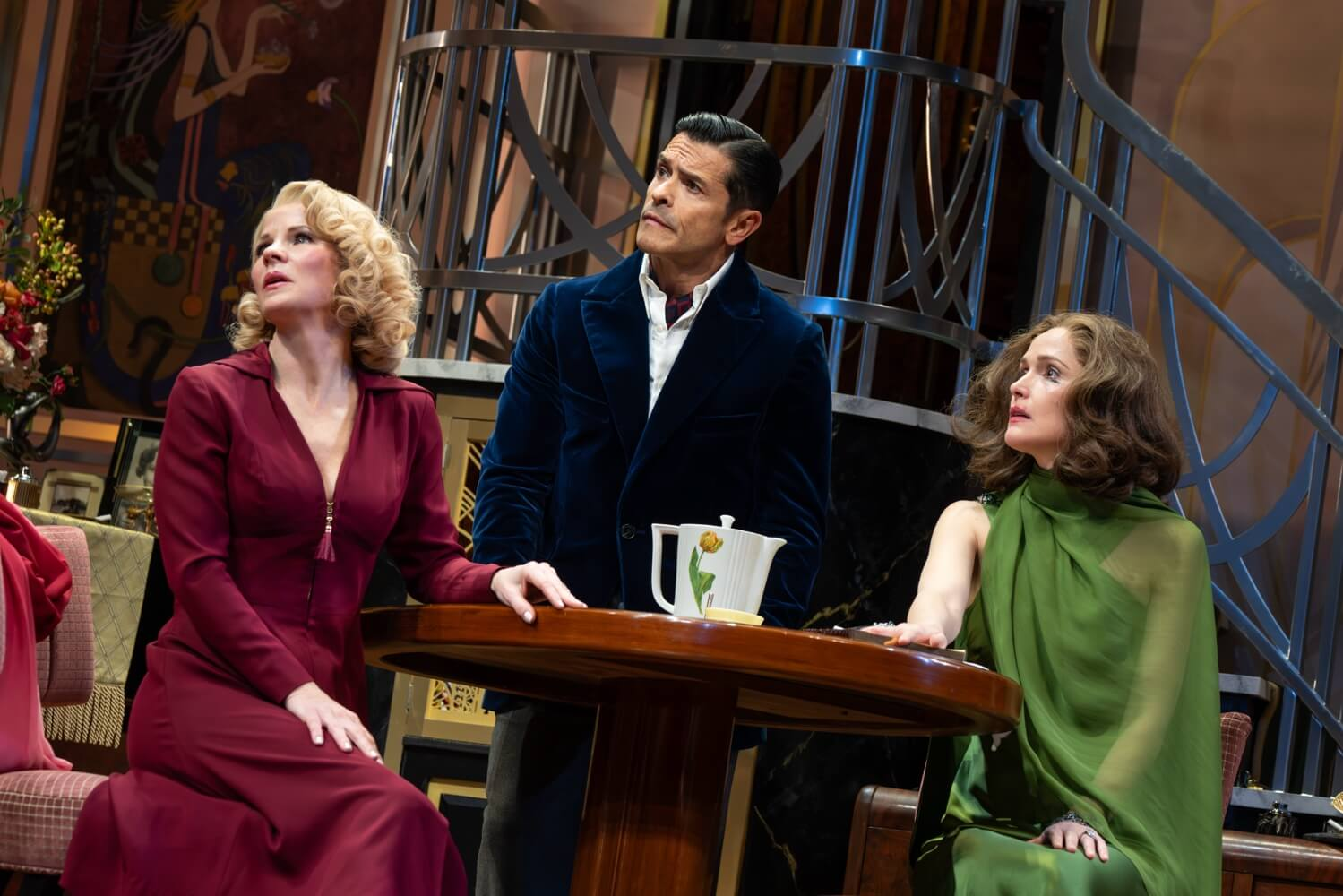
Fallen Angels, the Tony-nominated revival from this last year, is now playing in theaters across the country, and what a gift that is to those of us who could not travel to New York to see it live. Fallen Angels, originally written in 1925 by Noël Coward, stars Rose Byrne and Kelli O’Hara, both nominated for theater’s highest awards, as best friends Jane Banbury and Julie Sterroll, respectively. The two plan to spend the weekend together while their husbands Willy Banbury (Christopher Fitzgerald) and Fred Sterroll (Aasif Mandvi) head off on a golf trip. But we soon find out that they have another purpose for this weekend, a possible visit from a mutual old flame, Maurice Duclos (Mark Consuelos).
Now, anyone who has seen a typical comedy of errors, whether on stage or screen, and especially those of us who are familiar with Coward’s work, will know that zaniness is just around the corner. Directed for the stage by Scott Ellis, and for the screen by Annette Jolles, Fallen Angels is a masterclass in comedic timing, wit, physicality, and balance. Given the structure of the play, something as simple as poor blocking or as complex as poor casting would doom this production from the outset. That original direction from Ellis seems to make every right choice. No joke goes on too long, no movement is wasted, and whoever made the casting decisions should be awarded handsomely.
Much has been made of the friendship on stage between Jane (Byrne) and Julie (O’Hara), and yet, not enough has been said. The tried and true script takes the pair through not only their present friendship, but their long, shared history. And importantly, both of their performances, though individual, mesh perfectly with one another. They are both tremendous comedic actors, but in such different styles. Byrne, one of our great actors playing inebriated, manages to appear that way, always be understandable, and continues to be watchable even when making poor decisions, maybe especially then. O’Hara, on the other hand, among other things is able to master the physical comedy necessary without ever being a distraction from the actual script and plot mechanics. Although much of this play is simply two women talking (and drinking a dangerous amount of alcohol), there is just enough interruption from supporting players, and no one ever misses a beat.
The distinct lack of awareness from their husbands and their mild arguments to set the scene in the first act allows us to find a way to root for all four of them, without ever taking a specific side. Saunders (Tracee Chimo), Julie’s new housekeeper is just outlandish enough to wrangle even more laughs, even when you think you can’t summon anymore. And this is the biggest selling point of Fallen Angels and should not ever be forgotten. It is really, truly funny. One might make the mistake of thinking that a piece written almost a century ago could not hold an audience’s attention in 2026. You would not be more wrong, as you almost ache for an intermission to give your body a rest from the laugh-a-minute experience unfolding in front of you. If there is a negative in the cast, it is the eventual appearance of Maurice. The scene, as written, is wonderful, but Consuelos feels like a bit of stunt casting, and he doesn’t quite fit the mold. However, O’Hara and Byrne, in various states of hilarious distress, carry those scenes with aplomb, avoiding a crash landing in the final moments.
Seeing Fallen Angels on a large screen, with a cackling cohort is an experience that you should not miss. Rose Byrne being both hilarious and fantastic is no surprise, as she has been creating amazing comedic and dramatic work on the silver screen for decades now. But for those who are not Broadway-inclined, this introduction to O’Hara will be a true eye-opener. Fallen Angels is an absolute blast, truly side-splitting, and a laugh riot. But more than that, it is an opportunity to broaden our horizons to see a stunning (filmed) live production that most of us would never have the opportunity to witness. Do not miss this!
Director: Brad Bird Writer: Brad Bird, Matthew Robbins, Jeffrey Lynch Stars: Sam Rockwell, Scarlett Johansson, Tom Waits
Synopsis: In Metropia, a gigantic city in an alternate future, private eye Raymond Gunn is drawn into a case involving aliens, murder, and a multimedia star named Venus Nova.
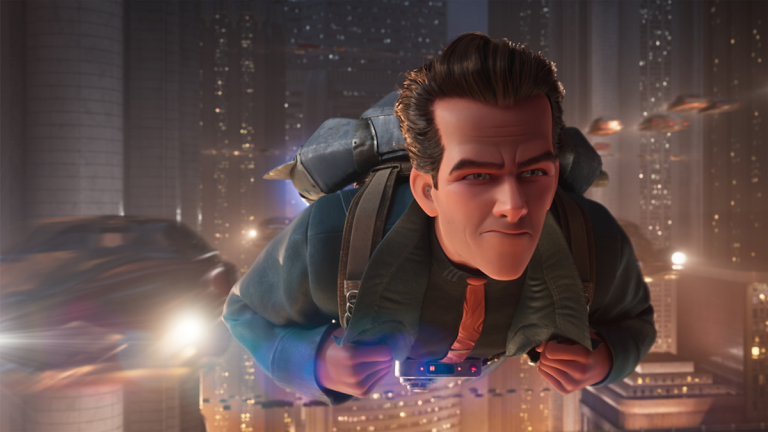
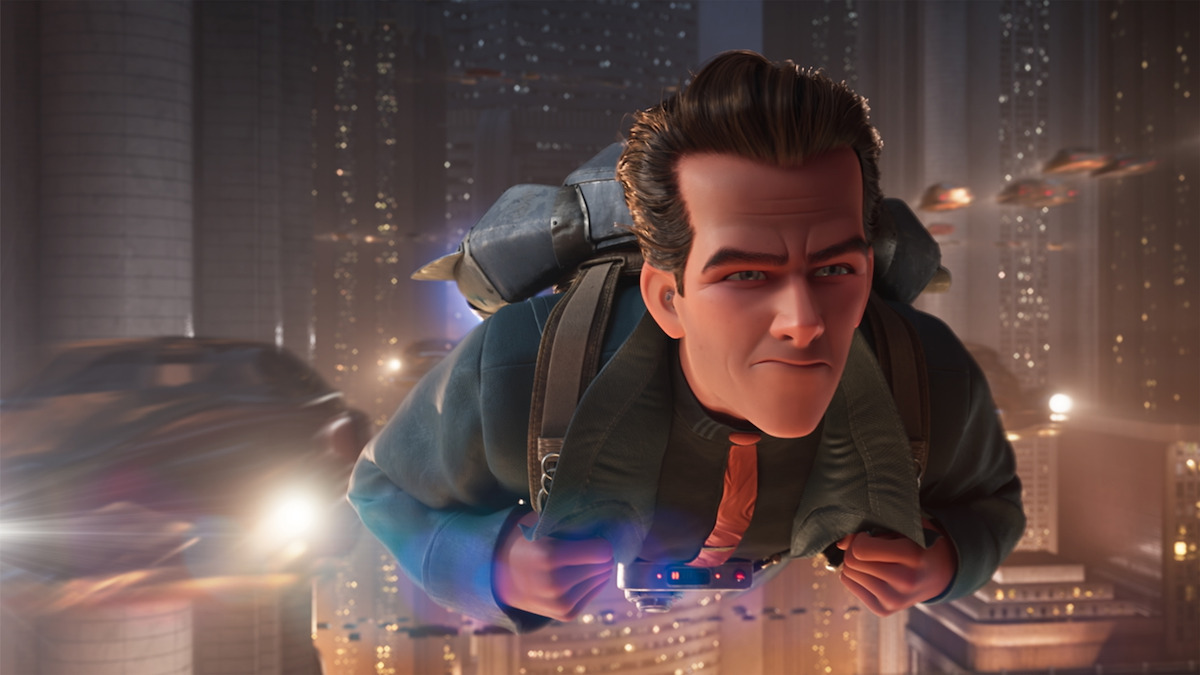
Ray Gunn is Brad Bird’s long-gestating passion project that is finally being given the opportunity to see the light of day. And if anything is assuredly certain from this film’s release, it’s that there’s likely no character name in 2026 that can rival Ray Gunn(a perfect, pulled right from the ‘50s vocal performance by Sam Rockwell). But this film’s quality doesn’t merely end at this cool name or the effortlessly stylish demeanor of its titular character. In fact, that’s only the first of countless hooks Bird uses to draw his audience into a film that has so much to offer in terms of both ideas and style. From the moment the film opens on Metropia, a futuristic cityscape pulling all its aesthetics from classically cinematic Art Deco styling, it’s difficult to imagine feeling the desire to spend two hours anywhere else. There’s a reason so much of Bird’s career remains synonymous with top-notch quality. And yet again, Ray Gunn feels completely indicative as to why that qualifier remains.
Every film of Bird’s exists within a world that feels wholly lived-in. Each one is ripe for exploration, as if the camera could venture away from the central driving force of its respective film, and still provide the audience with plenty to ponder or be entertained by. Luckily for us, Bird provides ample opportunity to both steep his audience further into the world of Metropia, while also bolting us in place with a riveting noir story that feels as if it was pulled right from the pages of a pulpy 1950s classic. One of the great achievements of Ray Gunn is Bird’s knack for familiarizing the audience with all the futuristic tech on display while never losing sight of the classically noir core driving the characters and their emotional stakes. Without a strong story to ground the entire thing, this film might have just become a series of pretty visuals to look at. Ray Gunn couldn’t be anything further from that, utilizing every moment of its audience’s rapt attention to dazzle us with a genuinely refreshing homage that feels fully rooted in the past, while operating with all the fundamental traits of a contemporary blockbuster. The black-and-white noir look is replaced with vibrant pops of neon and fluid animation across the board. The film, frankly, looks amazing and lively beyond belief. Yet, the gray world of crime and shaky morals noir stories exist within is still present in the bones of this film, something no amount of dazzling animation or colorful characters could ever suppress.
And in fact, the colorful character work is one of this film’s greatest strengths. The assortment of characters Bird introduces, from shady crime bosses and henchmen, to the classic femme fatale, the gumshoe, and his sidekick, all make up this wonderful collage that feels organic. Ray Gunn initially drops the viewer right into the middle of a case, and this prologue of sorts teaches us the core characteristics of both Ray and his alien sidekick, Eye-Ra (an exceptional, perfectly gravelly Tom Waits). From that point on, Bird and co-writer Matthew Robbins are off to the races, introducing the audience to a variety of settings from the glitziest penthouses to the shadiest of backroom offices and underground clubs. Each one is filled with distinct archetypes pulled from the pages of Raymond Chandler or Dashiell Hammett, only here Bird is able to put his own imaginative sci-fi spin on each. There’s nothing more enjoyable than being steeped in such familiar tropes yet remaining wide-eyed and surprised at just how silly some of these characters and their designs can become. Importantly, these characters never lose their edge despite the setting or rating of the film. This is a noir through and through, so genre fans can rest assured knowing the stakes match the setting. The tone of this can certainly be fun at times, given Bird’s penchant for pure entertainment, but there’s a thematic weight to this film which is quite effective and never undercut by all the genre elements throughout the film.
One also gets the sense that every inch of Metropia has been deeply thought through. Of course, this is part of the reason Bird’s action sequences are historically top-notch; this film certainly isn’t the exception in his filmography. One sequence in particular stands out as one of the most inventive action setpieces of the year, and it’s topped with a clever idea that feels less like a cherry on top of the sequence, and more like a whole new sundae for audiences to gluttonously feast upon. Ray Gunn is a film that can immediately dial up the action at a moment’s notice. Each time it’s more thrilling than the last, and this escalation keeps the viewer on their toes for the entirety of its runtime. But perhaps the most enthralling element of this film’s pacing is when it chooses to slow down completely, allowing its great voice cast to deliver, yet again, the classic sort of noir lines fans of the genre can’t get enough of. Despite its setting and contemporary filmmaking traits, this is a neo-noir film that is just as interested in exploring the malleability of ideas like true justice, corruption, moral integrity, sensuality, and desire. Another wonderful aspect of Ray Gunn is just how much the scuzziness of these characters brushes up against the neon lights of the futuristic Metropia to begin with. You truly get the sense that there is no bastion of pure good here, even in such a potentially utopian world. This weighs on the shoulders of Ray, who despite doing his best to remain on the up and up, also falls prey to the occasional temptation.
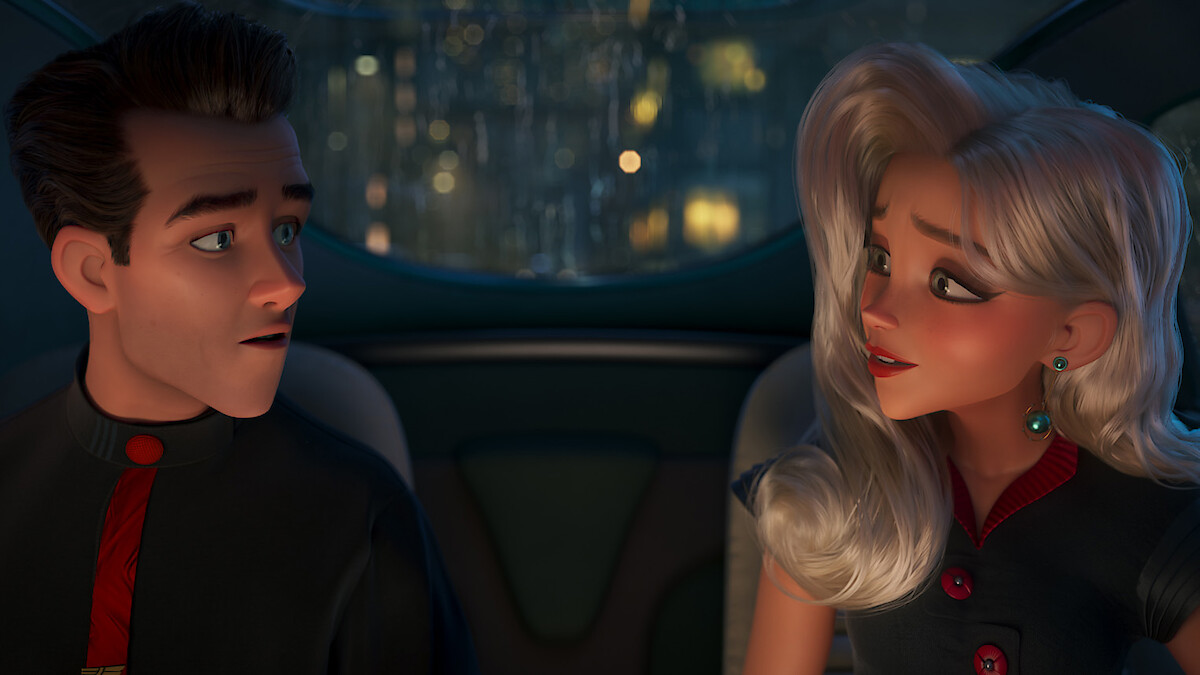
Yet Ray is such a wonderful character to explore as he interacts with such a variety of differing archetypes. While he, too, is essentially an archetypal figurehead, Rockwell breathes a lot of life into him through his voice performance. The same can be said about Waits’ tired Eye-Ra, who remains a bit of an ethical foil to Ray while ultimately respecting his longtime partner and friend. One can imagine countless adventures between the two of them simply based on how effortless their banter comes across in the film. It’s a delightful pairing for the film, with both characters sharing the spotlight a lot of the time. It’s a decision that makes for a really balanced on-screen relationship. The same can also certainly be said about Venus Nova (Scarlett Johansson), the femme fatale who is thankfully granted more depth than the typical archetype she’s inspired by might have been allowed decades ago. In many ways, Ray Gunn is a film exploring the necessary search for finding something genuine in a world shrouded by distractions and invasive practices, whether they be of the business variety or interpersonal. Bird is able to frame the constantly shifting relationship between Ray and Venus as a way to grapple with the difficulties of parsing through so much noise and confusion in ways that work wonderfully to the film’s benefit. This shouldn’t be a shock considering Bird gave us the incredible dynamic between Mr. Incredible and Elastigirl in The Incredibles, but it’s also amazing to see just how tantalizing and sensual this film can feel whenever these two characters are flirting with one another. As intentions remain veiled or shockingly revealed, there’s a genuine romance to this film beyond the characters’ love lives. The romance ultimately lies in the steadfast belief that truth, and some semblance of justice, can prevail despite so much around us telling us otherwise. Ray, alongside many of the characters in this film, might feel imprisoned within their own sets of beliefs and circumstances. But Bird takes that feeling of being stuck, and channels it into a truly delightful and creative tale about breaking free without losing your truest self.
Ray Gunn will be released in select theaters and on limited 70mm screens on December 4. It will be released on Netflix December 18.
On this episode of Chasing the Gold, Shadan is joined by Tom O’Brien to discuss this year’s Toronto International Film Festival and Digger‘s awards chances after its rough start at the box office! There is a ton to parse over all the great film’s shown at TIFF this year and how they will impact this year’s awards race. We had a great time breaking it all down.
Check out this week’s show and let us know what you think in the comment section. Thanks for listening and for supporting the InSession Film Podcast!
Believe it or not, some people call New York City the greatest place on the planet. This may come as a shock to the senses, dear reader. Unfortunately, my objectivity on this matter may be slightly biased having lived here my entire life. But I do feel fairly confident in the definitive nature of such a bold declaration. What is it about New York that makes its denizens so liable to scream it in the streets, from rooftops, or in bars or parks? The recent Knicks championship has only added to our sense of unshakable adoration for what this city has to offer. It’s something much deeper than the amount of restaurants, cultural institutions, or walkable public spaces we have to choose from on any given day. It’s instead rooted in the unifying principle that a city as varied and oversized as this offers its inhabitants the opportunity to be anything or anybody they’d like to be. At any given moment, New York reciprocates the love people show towards it tenfold in expressive opportunity. But this city can also be unrelenting in its rapidly evolving nature. So many fall victim to the cruelty of those who hope to exploit the beauty of New York through greedy business practices or outright hatred for people freely living however they choose. At the 64th New York Film Festival, the New York Shorts program was made up of five short films, each linked by their explorations of freedom and change alongside a city that simultaneously exists as both transitory and eternal. The changes within the city seem to be occurring more rapidly by the moment, yet its storied streets, avenues, and neighborhood staples lost to the latest slop bowl peddler live immortally within the hearts and minds of the people who carry their legacies with them wherever they go.
The People’s Beach
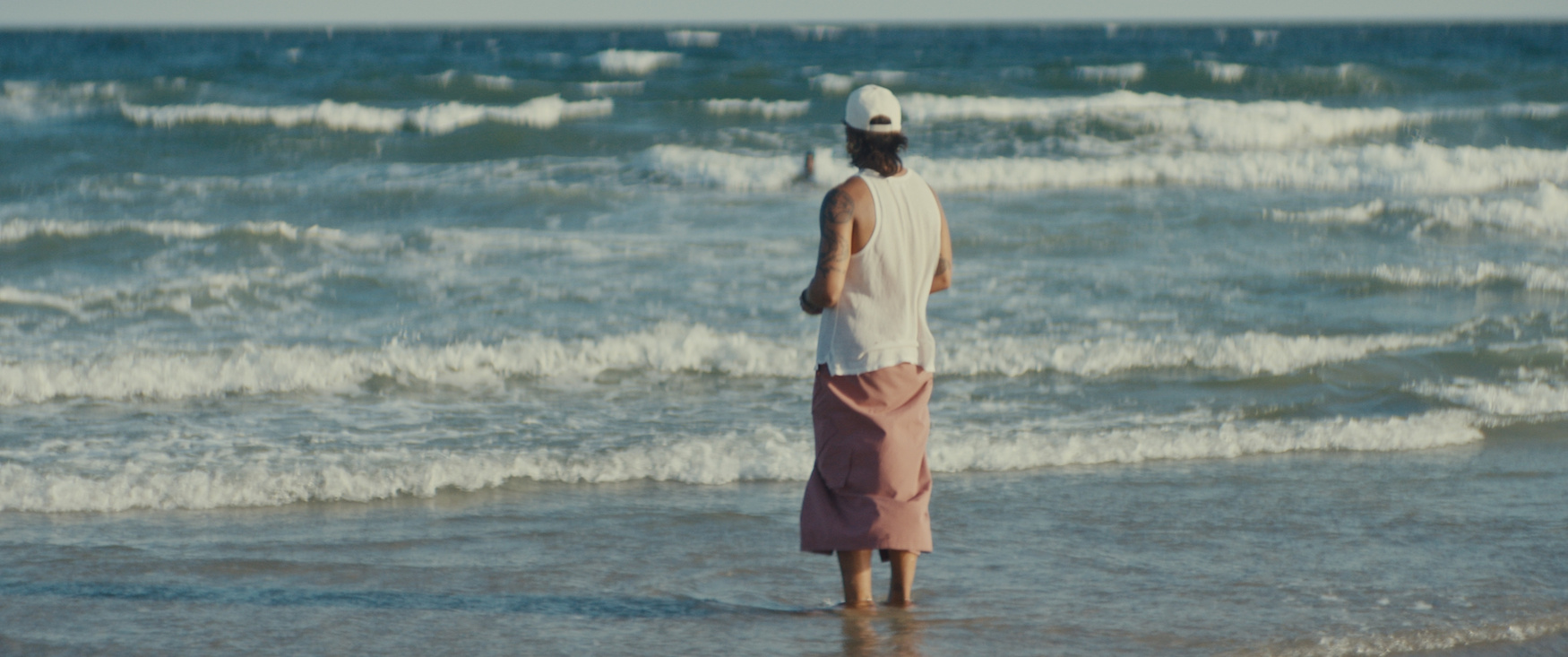
J. Wortham’s short film is indicative of New York’s ability to offer space to all its residents. This documentary focuses on Jacob Riis Park in the Rockaways, described by one of its frequent regulars as “one-of-a-kind… like a fantasy.” Wortham uses this opportunity to create an archival piece of sorts highlighting Riis for all it offers its community. In first approaching this short film, Wortham felt as if they wanted to leave their own imprint on the fight for justice, as they saw various forms of community outreach and rally movements organizing. “This was what I knew, Riis and the water.” In turn, this short film divulges what Riis has represented for so long, in addition to exploring Riis’ potentially rocky future. A longtime haven for the Queer community, Riis is a public space that not only allows New Yorkers a direct connection to nature, but it offers a vital space for its beachgoers to be as free as they’d like to be. These beachgoers can wear whatever (or as little) as they’d like, do whatever they choose, or be whoever they feel most comfortable as. It’s a wondrous delight to see Wortham’s crisp footage of beachgoers having a ball, whether it’s jumping around in the water, dancing all across the sand, or forming a runway in the middle of a crowd to find who has the best outfit on the beach. The infectious fun of the short film is its primary driving force.
But importantly, the festivities and celebration of Riis never removes the weight of building anxieties revolving around what Riis might look like in the near future. The rapidly-expanding infiltration of private companies doing all they can to exploit public land has indeed set its sights on Riis. Old buildings which stood as testaments to the history of a place are being demolished in favor of ugly luxury buildings designed for those with obscene wealth. A situation like this doesn’t just make for an unfortunate eyesore, it allows for the erasure of New York’s expansive history. Despite the unknown future, Wortham’s short seems optimistic, or at the very least, embracing of the fact that community can reside wherever people gather under the driving force of love and care for one another. In talking to subjects for the short who have been going to Riis for decades, Wortham noted “they were doing the same things we are doing.” It’s an observation which feels indicative of the strange relationship New York has with the passage of time. The geography of this city is almost certain to change; if not by greedy developers, simply by the sheer force of nature. But it’s almost as if nothing can stop New Yorkers determined to live exactly how they choose to do so. It’s a beautiful reminder of this city being a safe haven for any who choose to embrace its scope.
ee
Heather Landsman’s short film begins by highlighting one of the more inconsequentially hellish aspects of contemporary society: the rampant proliferation of the speculative market. It would appear that not even the more niche corners of pop culture are safe from individuals and corporations intent on preying on the earnest passion fans have for everything from anime to video games. And so, collectible figures which likely cost pennies to make and were meant to adorn shelves as a personal form of expressive decoration now sit behind plexiglass boxes as collectors willing to spend hundreds of dollars fight for the possibility of owning it. They may not even be familiar with the property, let alone appreciative of it; they simply couldn’t care less aside from the status symbol. And so, any adoration of something slowly becomes warped through its unattainable prism. But that only encourages Landsman’s film to feel all the more wrapped up in the allure of something we desire on such deep levels. The film feels akin to an exposed nerve, where we nervously wonder whether or not the people around us will notice the vulnerability and wreak havoc on our entire lives.
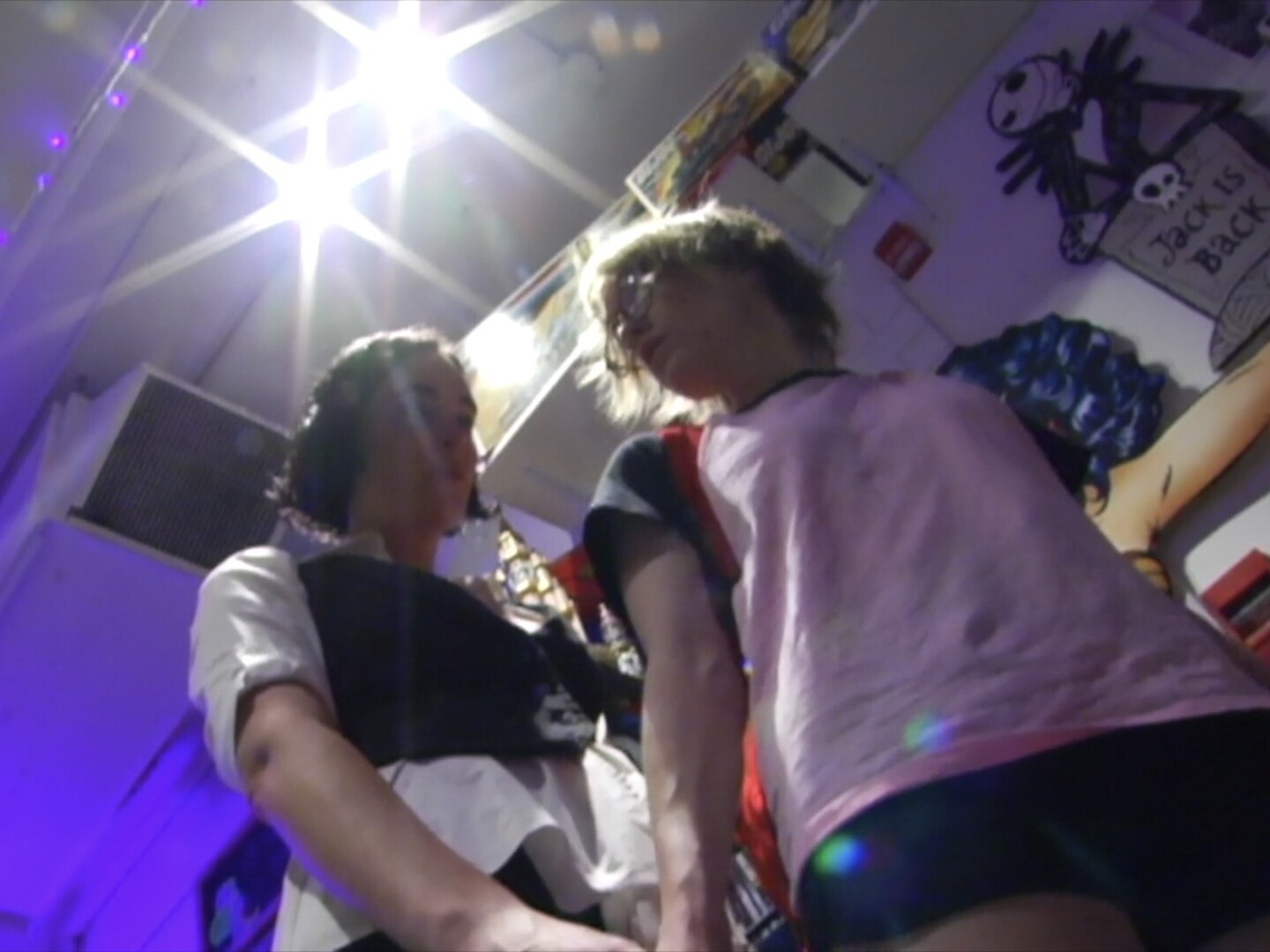
As Emma (Abby Griffith) gawks at a particular blind box collectible figure way out of her price range, the thought of the shop employees, Huey (Will Menaker) and Julie (Isobel Fox), watching her every move keeps her on edge. Unwilling to let Emma stew in her panicked anxiety alone, Landsman brilliantly utilizes every practical effect imaginable in order to elicit the same sort of paranoid panic in her audience. Largely captured on MiniDV format, this film looks how a nightmare feels. There’s a sense of broken reality at play, from its fish eye lens surveillance to the maximalist emotional responses inspired by the stylistic flourishes of anime. It’s just one of the ways ee feels so spiritually indebted to Hideaki Anno’s mid ‘90s anime masterpiece, Neon Genesis Evangelion. Landsman captures the innate emotional throughline of that show to the tee: the panic that sets in when we feel the darkest parts of ourselves have been revealed for all to see, yet we continue down the path regardless of that worry simply because it feels better on some fundamental level. That this short film also leans fully into the sensory assault editing style of anime imbues it with a breakthrough revelation of personal touch. It makes the hyperpop aesthetics all the more shocking and effective in their striking contrast. Landsman is able to blend all these disparate characteristics into a short film that feels completely unique, all the while showcasing a clear love and understanding of various pop culture staples that make this a wild and entertaining ride in just under 10 minutes. ee also effortlessly captures the thrilling wonders that are the little pockets of New York, which seem to exist in a liminal space for those who know how to find them. They represent the potential of infinite experiences being on offer, sometimes occurring in the most strange locations imaginable. There’s nothing like the discovery of such a gem that feels distinctly formed for us amidst all the chaos of the city, and the same can be said for a short film like this.
The House Call
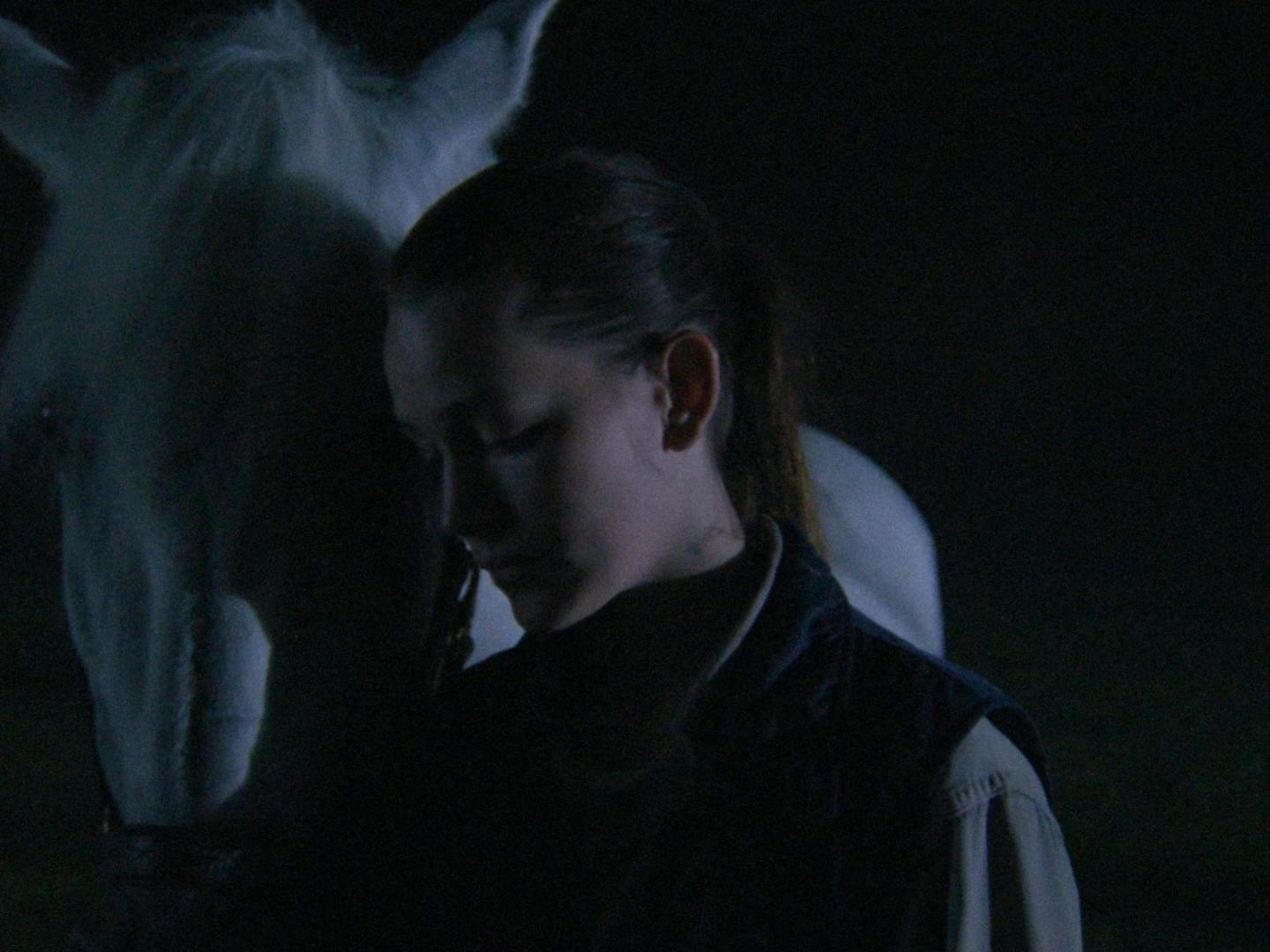
Eliza Barry Callahan’s short film doesn’t take place within the city limits, but it does feel as if it remains indebted to New York City in some capacity. This story takes place in Saugerties, New York, a wonderful town that’s just below the Catskills. It’s essentially 100 miles out of the city; nearly the same distance as Philadelphia. And yet, for so many New Yorkers, they (perhaps a bit ridiculously) consider Upstate New York to be this vast wasteland of mystery and nothingness. This short film feels like it’s playing with those notions of city audiences. But it also feels like a metaphor for the beautiful opportunity an escape from the city, or just the stresses of our everyday lives, has to offer some people. It’s a chance to get away from the shock of reality and perhaps be reminded of what matters most in our lives. Dr. Swan (Victoria Pedretti) experiences something a bit like that, although Barry Callahan goes about such a discovery in a fairly unsettling manner. This short film perfectly embodies the feeling that something we consider so standard has gone deeply and profoundly wrong. Most can likely relate to finding themselves in a situation which desperately needs to be exited yet not having the means of doing so. Dr. Swan unfortunately doesn’t have that ability either, and is instead pulled further into a waking nightmare shot so gorgeously by Hot Waterand Rebuilding cinematographer, Alfonso Herrera Salcedo. The foggy farm this tale takes place in just feels so unreal. Yet the unsettling tension of the scenario couldn’t feel any more fraught with genuine fright. What then plays out across the remainder of the story makes for a strange little gem of a short film. It casts a wide net when exploring topics, ranging from existentialism and veterinarianism to the sheer simplicity of emotional misunderstandings and frustrating mundanities. It’s so easy to get lost in the inner workings of our lives and truly forget how freed we can feel by simply doing what we love, even if it’s only for a moment or two. Barry Callahan delivers a short that frankly looks stunning, captures the strange sensation of dread quite well, balances a lot of tones in a way that is oddly charming, and ends on the perfect note before threatening to overstay its welcome.
A Woman’s Place Is Everywhere
There’s a particularly cruel evil at work in Fanny Texier’s short documentary. And yet it’s an evil that is becoming all too familiar in the world, especially in New York. Most people in this city have likely dealt with a comically inept or downright villainous landlord that, frustratingly, remains faceless in their dealings with tenants. Their actions, which can often lead to devastating circumstances for tenants, are hidden behind blunt emails or posted notices that show little regard for the real people being affected by such loosely made decisions. This is the exact scenario identical twins Emilija and Ona Rygelis faced in the years they were being filmed for this short documentary. They have lived in an industrial Williamsburg loft their entire life, and shortly after the death of their mother, are barely provided any time to grieve in peace before their landlord begins serving eviction notices. They may have to deal with all the typical circumstances of New York City apartment living, but, as they describe it, the twins feel as if their mother’s being is “baked into the DNA of this place.”
With an indeterminate amount of time to shoot and a loose plan on what the structure of the documentary would be, Texier’s short film somberly and efficiently captures just how much of a life revolves around where our roots spread from. When it comes to a New York City apartment, the little space we have to call our own can fill up rather quickly and becomes integral to our sense of self. In the case of these twins, their perfectly located Williamsburg loft has a jaw-dropping amount of space that makes their legal issues all the more infuriating and worthy of a fight. It’s made all the more rage-inducing knowing what this beautifully self-renovated, richly lived-in loft will ultimately become: another ugly, cheaply made, modern building with no soul that costs an exorbitant amount of money to rent. New York neighborhoods are being frustratingly pushed into the “future,” all the while having their distinct souls drenched in history completely ripped out by developers looking to make every part of this city look like nowhere. The stories of these twins are undoubtedly but one of many, yet that fact makes their situation no less sympathetic. These twins are lovely, bringing a realistic quirky charm to their living situation that speaks to how endearingly close they are with one another. The emotional resonance of this short is made all the more potent by Texier including some stellar footage from a short, 1970s experimental film that just so happened to star these twins. It was a film made to explore the relationship of twins, and as such, it offers a clear look of what Williamsburg used to look like. Their mother is also featured, and Texier splices this footage into the present-day for an absolute gut-punch that perfectly synthesizes the emotional toil such a situation is wrapped up in. It leaves the audience with a crushing pit in our stomachs. And yet, it also causes us to think of all the stories that have been built atop throughout history. It’s a notion that makes this documentary an essential piece of New York history. No matter what happens, this short film confirms that this loft was not only lived in, but imbued with a love that cannot be shattered even if it moves somewhere else or is torn down in the name of useless land development. The neighborhoods of New York may be rapidly losing character, but the characters within this city are still keeping it fresh and exciting as best they can. It’s perhaps that spark in each of us that makes this city the most special.
New York Never Let Me Down
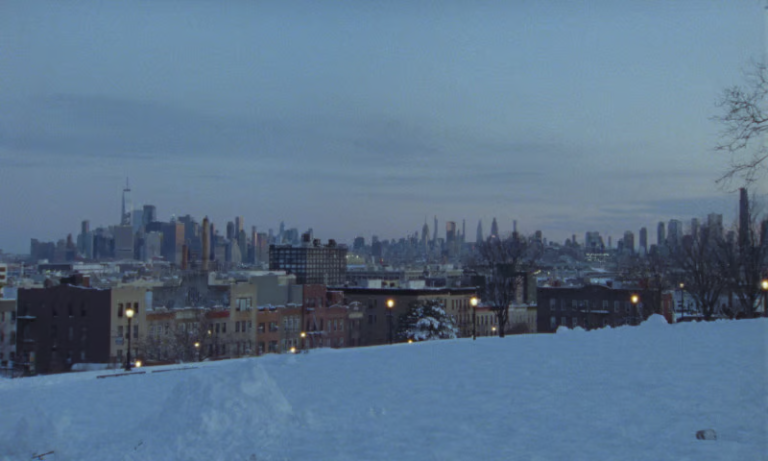
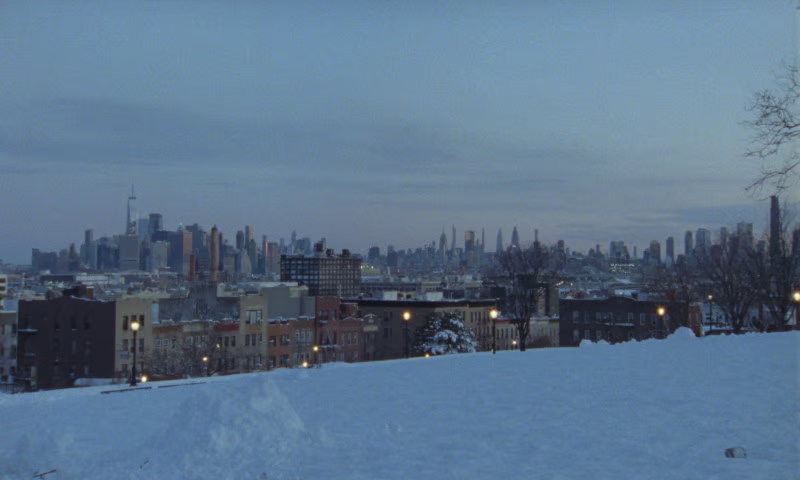
Charlotte Wells begins her short film with a shot of the city skyline overlooking a large, snowy hill. It’s practically swallowing up the frame. It’s a city that remains omnipresent, not just geographically and culturally, but emotionally. To live here for any extended period of time is to carry it with you in ways that we often can’t perceive until we are removed from it. To live here for an entire lifetime, with decades of stories and emotions to parse through, is to understand the true thankfulness that is the only thing required in return. For the subject of this short documentary, Paula Spiro, a woman with a million stories to tell, this tender gratitude is apparent from the moment we hear her speak to Wells. Wells merely points a camera at Spiro, now living in upstate New York, and aims to explore the more intangible qualities of what it was like to live in the city for so long. She wants Spiro to detail what the city sounded like, how it felt, what it embodied in her time living there. It’s one thing to look at living in New York City and rattle off all the cool opportunities it grants its residents: whether it be the art, the culture, the food, the sights. And make no mistake, Spiro does have plenty of stories in those scenes that are jaw-droppingly cool.
From famous subway busking to teaching a variety of musicians who would go onto great acclaim, she’s been around the scene and makes it sound like a wonderful thrill ride. But this all comes from a place of tender reflection with the aim of exploring the emotional imprint New York left on her first and foremost. A crucial element of this short film is Wells’ brilliantly personal direction. Wells ensures there’s no barrier between Spiro and the audience, zooming all the way in on her face during stories to capture every specific detail of her subject’s facial features and mannerisms. She beautifully catches Spiro dancing or drumming through a stunning reflection or rich shadow caught in a window. One shot in particular catches Spiro from a far distance merely walking, with Wells slowly fading in an image of the nighttime skyline while riding the Roosevelt Island Tramway. All the while, Spiro is exposing her interiority through narration in a way that any lifelong New Yorker will feel deep in their soul. As much as Wells is obsessed with capturing Spiro in all her idiosyncratic glory, so too is the film and Spiro enamored with all that New York provided her, specifically in terms of its self-discovery and possibility. To lock into New York’s wavelength is to accept the freedom to be anything we want to be. And anybody who truly cherishes New York is liable to be brought to tears by the unfakeable tenderness and sincerity on display by Spiro. She is thankful for all the time she spent in New York. While her current circumstances may not be the life she initially envisioned, the city seems to have imbued her with all the vital characteristics necessary to make living anywhere a truly distinct experience. Spiro never allows her story to fall into a depressing trap. She understands the sadness, embraces it for what it is, and lives on with a vigor that feels strong enough to inspire anybody listening to her story. This city is amazing, but sometimes the city isn’t nearly as fascinating as the people within it. Much like any parent, perhaps its purpose is to give us all the necessary tools in life, and if and when we eventually leave (or are effectively forced out), we can create our own wonderland based on the wonder and freedom the city provided us, wherever we may end up. To feel like we belong somewhere is perhaps the most important trait a location could ever provide us, and New York provides that in spades by granting each of its residents all they could ever want; we merely have to seize it.
We’ve all heard the same complaints about the Oscars gravitating towards small-scale films no regular person has ever heard of. But, how accurate is that sentiment? I looked back at the last 56 years of Oscars history and box office receipts to find out what correlation there is between box office hits and Best Picture Oscar nominations.
Note: For the sake of clarity, I only went back as far as 1970. Box office numbers get less and less reliable as you go back further. Additionally, these box office numbers are accounting for worldwide grosses, not just domestic…kinda. They started factoring in worldwide gross in 1988. So before that, domestic only.
History
When it comes to box office and Best Picture, the 1970s had it all figured out. Every year in the ’70s had the top-grossing film of the year in the Best Picture lineup except 1978 (Grease was the top money-maker). Not only that, every single Oscar year featured two of the top ten grossing films. 1970 and 1971 are the notable years, each with four films each. In fact, 1970 featured the top four highest grossing films in the Best Picture lineup. Only Five Easy Pieces didn’t make the box office list.
Starting in 1970, the Oscars had at least one top ten grossing film in the Best Picture lineup all the way until 1984. From 1985, the same thing happened all the way until 2004. From 2004-08, there wasn’t a single Best Picture nominee that finished in the year-end top ten in box office. It still happens pretty frequently, even with the box office receipts shooting higher and higher. In the 56-year history of this research, it only happened 13 times where a high-grossing film didn’t make the BP category.
The top grossing film has been nominated for Best Picture 19 times in 56 years. The number two film has made it 14 times.
But what about the Best Picture winners? It happens a lot. 25 times in 56 years, Oscars’ top prize went to a high-grosser. When it comes to the top-grossing film of the year, Best Picture has only correlated six times. Most recently in 2003 with The Lord of the Rings: The Return of the King.
Recent History
Coming out of COVID, the Oscars have been on a pretty good run of getting a few populists picks in the Best Picture lineup. 2022 featured the top two highest grossing films of the year with Avatar: The Way of Water and Top Gun: Maverick. 1970, 1973, 1975, and 1982 also had their top two money makers make it in the lineup.
2023 was close, with top-earner Barbie joining third-place Oppenheimer on the Oscar list. 2024 had both Wicked (fifth) and Dune: Part Two (seventh) make the Best Picture lineup. The sole Best Picture/big box office film from 2025 was F1.
Looking at 2026
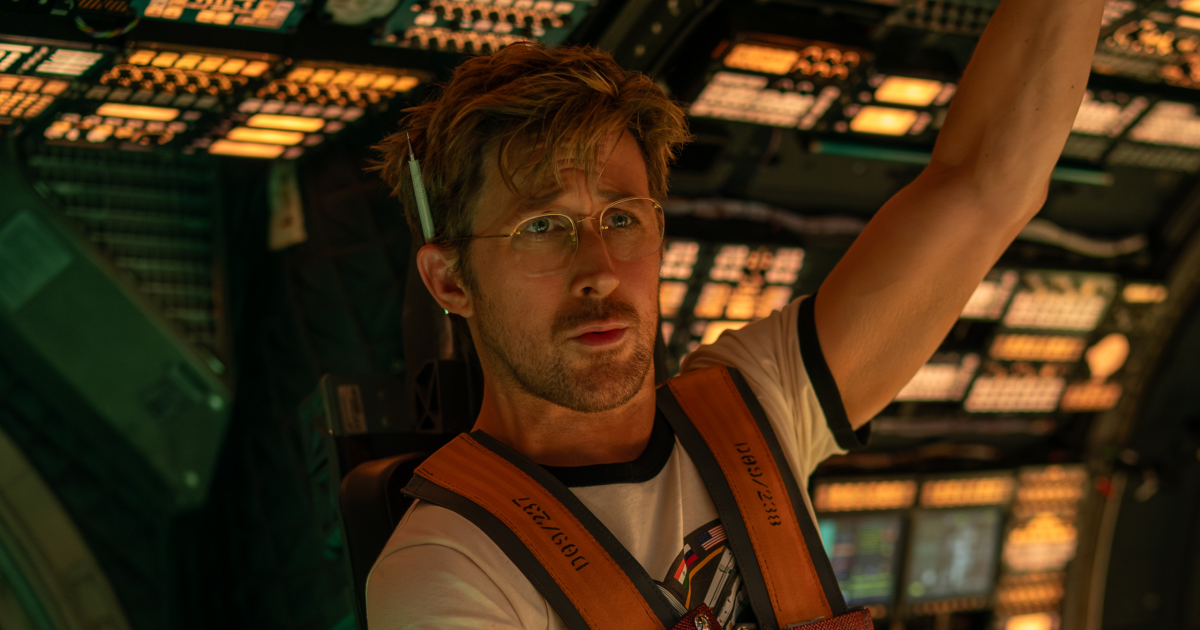
With these stats in mind, what films could make the lineup this year that may end up as the highest earners? There are some sure-fire candidates like The Odyssey, which is widely predicted and is the number two grossing film of 2026. Other candidates include Michael (fourth-highest grossing film) as a longshot populist nominee, and Project Hail Mary, which has a much better chance, but might fall out of the top ten by the end of the year (currently seventh).
Even if you feel the desire to include Obsession in your Best Picture predictions, that film will fall out of the top ten (currently tenth) with near-certainty. As far as films that have yet to release, only Dune: Part Three has the box office potential to make an impact critically and commercially.
I hope this puts your “Oscars don’t care about popular movies” argument to bed.
The Full List
Year
Best Picture Nominee (Box Office Rank) * – denotes Best Picture winner
1970
Love Story (#1) Airport (#2) M*A*S*H* (#3)Patton (#4)*
1971
Fiddler on the Roof (#1) The French Connection (#3)* A Clockwork Orange (#7) The Last Picture Show (#9)
1972
The Godfather (#1)*Deliverance (#4)Cabaret (#6)
1973
The Exorcist (#1) The Sting (#2)*American Graffiti (#3)
1974
The Towering Inferno (#1) The Godfather Part II (#6)*
1975
Jaws (#1)One Flew Over the Cuckoo’s Nest (#2)*Dog Day Afternoon (#5)
1976
Rocky (#1)*All the President’s Men (#5)
1977
Star Wars (#1)The Goodbye Girl (#5)Annie Hall (#10)*
1978
Heaven Can Wait (#5)The Deer Hunter (#9)*
1979
Kramer vs. Kramer (#1)*Apocalypse Now (#4)
1980
Coal Miner’s Daughter (#7)
1981
Raiders of the Lost Ark (#1) On Golden Pond (#2)Chariots of Fire (#7)*
1982
E.T. the Extra-Terrestrial (#1) Tootsie (#2)
1983
Terms of Endearment (#2)*
1984
NONE
1985
The Color Purple (#4) Out of Africa (#5)* Witness (#8)
1986
Platoon (#3)*
1987
Fatal Attraction (#2)Moonstruck (#5)
1988
Rain Man (#1)*
1989
Dead Poets Society (#5)Born on the Fourth of July (#10)
1990
Ghost (#1)Dances with Wolves (#4)*
1991
Beauty and the Beast (#3)The Silence of the Lambs (#5)*JFK (#6)
1992
A Few Good Men (#7)
1993
The Fugitive (#3)Schindler’s List (#4)*
1994
Forrest Gump (#2)*Four Weddings and a Funeral (#8)
1995
Apollo 13 (#3)
1996
Jerry Maguire (#9)
1997
Titanic (#1)*As Good As It Gets (#6) The Full Monty (#10)
1998
Saving Private Ryan (#2)Shakespeare in Love (#9)*
1999
The Sixth Sense (#2)American Beauty (#9)*
2000
Gladiator (#2)*
2001
The Lord of the Rings: The Fellowship of the Ring (#2)
2002
The Lord of the Rings: The Two Towers (#1)
2003
The Lord of the Rings: The Return of the King (#1)*
2004
NONE
2005
NONE
2006
NONE
2007
NONE
2008
NONE
2009
Avatar (#1)Up (#6)
2010
Toy Story 3 (#1)Inception (#4)
2011
NONE
2012
NONE
2013
Gravity (#8)
2014
Interstellar (#10)
2015
The Martian (#10)
2016
NONE
2017
NONE
2018
Black Panther (#2)Bohemian Rhapsody (#6)
2019
Joker (#6)
2020
NONE
2021
NONE
2022
Avatar: The Way of Water (#1)Top Gun: Maverick (#2)
Director:Luca Guadagnino Writer: Simon Rich Stars: Andrew Garfield, Yura Borisov, Monica Barbaro, Cooper Hoffman, Ike Barinholtz, Mark Rylance
Synopsis: Follows the confusing firing and rehiring cycle of Sam Altman at OpenAI where the board gained control of the company and removed him, and Altman still returned.
When the Austrian neurologist and psychiatrist Viktor Frankl said, “Between stimulus and response, there is a space,” it stands to reason that he was not thinking about the speed at which ChatGPT closes that gap as it answers a prompt. I tried it myself recently for the first time for research purposes, not because I needed it to inform me of something, but because it’s a machine that has grown powerful enough to have an opinion, and to do so instantly. I entered a prompt: What are your thoughts on the new film Artificial? I did so knowing that there is no possible way for a chatbot to have seen the film – not only because it only just world premiered at the 64th New York Film Festival, but because computers cannot attend film screenings – and knowing that its opinions would be sourced from those it scours online and subsequently rewords. But I was curious nonetheless.
Here’s a slightly condensed version of its response, because if I surmised nothing else from my time in ChatGPT’s lair, it’s that it knows nothing about copy editing:
If you mean Luca Guadagnino’s Artificial, my early take is: I’m very intrigued, but I think the movie may be more interesting than it is great… The criticism I’m most sympathetic to is that the film may already know what it thinks before it starts asking questions. The really compelling version of this movie isn’t simply, “Sam Altman is dangerous and AI might destroy civilization.” We already know that’s the conversation. The really interesting movie would ask why intelligent, ambitious people sincerely convinced themselves that building increasingly powerful AI was worth the enormous risks, while simultaneously showing how money, ego, competition, idealism and fear became impossible to disentangle.
While I was plainly giddy to hear that my new friend Chat – we’re on a first name basis now, and it is my therapist – was eager to see Luca Guadagnino’s Artificial for itself, I pointed out that it cannot and has not. “You’re right to call that out. I can’t actually have a firsthand opinion of the film if I haven’t watched it,” it replied. “Phrases like ‘my early take,’ ‘Garfield sounds terrific,’ and especially ‘I actually think its biggest strength may be that it will be weird’ make it sound like I sat through a screening. I didn’t.” Good to know. So what would a more honest answer have sounded like? Don’t fret, dear reader: Chat has that prepared.
A more honest answer would have been something like: “I haven’t seen Artificial, but based on the reviews and reporting I’ve read, it sounds like…” And then distinguish clearly between reported reception and my interpretation of that reception… So, short version: I synthesized information and analysis, but I incorrectly framed that synthesis as a firsthand movie opinion. You were right to be skeptical.
This response went on, offering to discuss the film with me scene by scene so it could better understand the thing it has not seen, patting me on the back for exposing a weakness in its previous answer, and using a lot of bold and italics in its typeface. I declined to proceed with the exchange; in the end, all I felt like I had accomplished was a colossal waste of time.
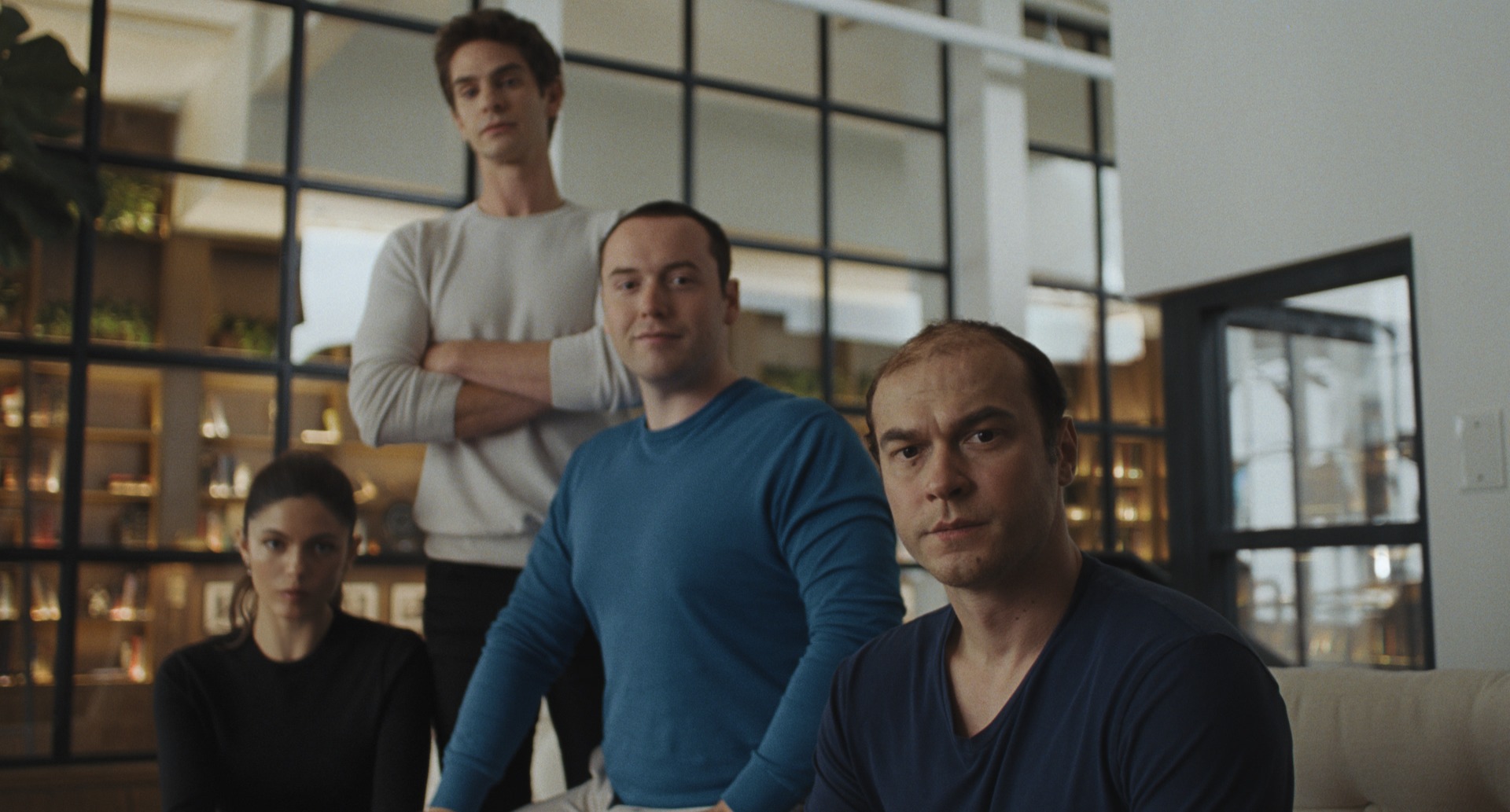
From left to right: Monica Barbaro, Andrew Garfield, Cooper Hoffman, and Yura Borisov in Luca Guadagnino’s Artificial | Courtesy of NEON
Maybe I’m not using this thing right, or maybe I was asking leading questions that have undoubtedly been influenced by my disdain for the thing that Sam Altman, Ilya Sutskever, and others created, namely its desire to strip the world of creativity and autonomy. But I turn back to Frankl’s idea, specifically that the space between stimulus and response “is our power to choose our response. In our response lies our growth and our freedom.” If OpenAI’s inception, expedited development, and unprecedented rise is the stimulus, Artificial ostensibly serves as the response, yet what has unfolded in the space between those two events is decidedly murkier than, say, the events that transpired from when Ben Mezrich’s “The Accidental Billionaires” was published to when The Social Networkhit theaters. Mark Zuckerberg was already a sociopath by the time Jesse Eisenberg portrayed him on screen. It’s not that Sam Altman and the Facebook founder don’t share that strand of crazed DNA, but what happens when a film arrives with its subject at the peak of his powers despite the failed efforts that have been taken to knock him down a peg?
In other words, is Guadagnino’s picture – penned by Saturday Night Live alum Simon Rich, and containing the humor you’d expect from a writer with his background – landing a bit too soon? Of course, there’s no such thing: Even as Artificial unfolds at a breakneck pace, it begins in 2003, when the aforementioned Sutskever (Yura Borisov) explodes out of a cannon and into the University of Toronto lab that the eventual godfather of artificial intelligence, Geoffrey Hinton (Mark Rylance), calls home. Mere minutes pass, and we’ve jumped from a plucky 17-year-old solving the basics of AI’s foundational code on a whiteboard to its first success in 2012, the only differentiation between the time periods being the whitening of Hinton’s hair and the continued thinning of Sutskever’s. From there, we zip ahead again toward (but not yet arriving at) Sutskever’s initial introduction to Sam Altman (Andrew Garfield), first seen chatting with Elon Musk (Ike Barinholtz) about the news that Hinton’s motley crew of computer scientists have sold their breakthrough discovery to Google for $44 million, a laughable number in their eyes. Eventually, Altman and Sutskever agree to partner in a venture that expands Hinton and co.’s experiment beyond what the aging professor could see – in 2013, he believed that artificial general intelligence (AGI for short) was a century away – and into the early stages of the company we now know as OpenAI. Mayhem follows.
And yes, it all does happen that fast. Guadagnino has long been a prolific filmmaker, not just in how often he manages to pump out new movies – Artificial is his fifth narrative feature since 2020 and his second this year alone, alongside his seven-hour doc about Bernardo Bertolucci – but in the energy he infuses them with. He has hit a stride in that regard, and isn’t about to let up with Artificial. So it’s unsurprising to watch it churn forward at the speed of an advanced chatbot’s response time, even if it causes some moments in time to feel more harshly considered than others. Jarring? Almost certainly. But in dramatizing the world of Silicon Valley titans and their devoted cohort, pacing is probably the least of Guadagnino’s worries.
Courtesy of NEON
Chock full of his now-expected camera flourishes (the film is shot in 35mm by Malik Hassan Sayeed) and accompanied by a fitting synth score from Blur frontman Damon Albarn, what separates Artificial from being an otherwise run-of-the-mill biopic is its deep consideration for its characters, not solely when it comes to their mannerisms and how they act, but how they think. What Rich and Guadagnino are attempting to do here is open a window into the psyches of real-life figures who have gone to great lengths to ensure that they are not understood. And while a fair criticism for any “based on true events” movie is that the filmed result is told from one perspective, this film sets out to measure their pulses as close as it possibly can without physically holding two fingers over their wrists. We have Ilya, the dreamer whose vision eventually catches up to him and manifests itself in dread for how his creation could potentially harm the world; Borisov embodies such an evolution quite well by toying with posture and tone, as well as using his eyes as a means to peer into the soul of his character. When he describes his vision for artificial intelligence as becoming something that will bring an end to all suffering and allow us, finally, to be free, we believe him. When he later expresses concern over the realization of these dreams, we fear for him.
There is also Greg Brockman (Cooper Hoffman), one of OpenAI’s co-founders and its now-president, a loud, fratty, balding ball of rage in search of a place to misdirect his central emotion, and while Hoffman is tasked with delivering a fastball performance, he repeatedly smacks a line drive. Mira Murati (Monica Barbaro) is the curious case of someone who found themselves in what she believed to be the right place at the right time, only to discover that there would likely never be a right time for this very wrong place; Barbaro’s temperament throughout the film shifts from eager to learn to eager to inspire change, then briefly hopeful to disrupt before becoming enveloped by the environment she hoped to alter. Elon Musk (a very funny Ike Barinholtz) shrugs a lot; to his credit, The Studio star recognizes that this part is meant to be played for laughs.
Despite reports that the plan for Andrew Garfield’s awards campaign is to run him in supporting actor (thus granting Borisov the lead distinction), Artificial is very much a movie about what makes Sam Altman tick, and Garfield puts his best foot forward, heel off the ground and all, in turning in a performance that is at times both worth a chuckle and a cringe, not to mention an outright shudder. The problem for Garfield isn’t that his work isn’t committed, but that his part is a familiar one: A once-plucky investor type-turned-menacing CEO who will stop at nothing for power and is more than happy to slay any dragon to achieve it, and Rich’s script doesn’t offer much wiggle room once the shift takes place. That the film around him mishandles its efforts to mask the sudden transformation as something more gradual doesn’t help matters. Garfield still turns a meal of a role into a feast – though whether you’re full or just nauseous by the end is a classic case of “your mileage may vary” – by nailing not just Altman’s physical tendencies, but presenting a level of aloofness only fitting for the man that oversees an entity capable of deceit and possesses a terrifying sense of independence despite living inside a computer. His Altman operates that way when things are good, and even more so when things are bad; apparently, being a billionaire has its delusion-infested perks.
Among those benefits is a distinct detachment from reality that Guadagnino and his team attempt to inject life into, but too often find themselves depicting such enthusiasm in scenes that consist of chanting and/or popping bottles, as though to say, “Look! This is exciting, but also don’t forget to be so scared!” It’s a curious move for a sensualist to make this far into his career – not least because none of these characters house an ounce of sex appeal – but it makes a tinge of sense if you consider what the Call Me By Your Name and Challengers director did with After the Hunt, a colossal misfire that at least attempted to mine conversation fodder from its thorny subject matter. Still, Artificial seems disconnected from its characters in a way that no Guadagnino picture has before. That’s not to say that it isn’t an achievement, but that feels more anonymous than most distinctive work to the point where its closing title card of “Luca Guadagnino’s Artificial” feels more intentional than earned.
As for Rich, whose only prior writing credit is the Seth Rogen HBO Max vehicle An American Pickle (though he provided additional story material on Inside Out, Wonka, and A Minecraft Movie), he frequently falls on a sword planted in the ground by The Social Network’s screenwriter Aaron Sorkin, whose “isms” are well-worn and recognizable the moment they are heard. Characters in Artificial say things like, “We’re the only ones seeing the future,” “It’s not how this could go wrong… It’s how could it not?”, and even “Visionaries lie to themselves. Liars lie to everyone else.” Pointing individual lines out in a script that is more thoughtful about its characters than plenty lesser biographical chronicles tend to be may come off as an unnecessary evil, but when an exchange feels so specifically designed for an audience to “oooh” at its encapsulation of a figure’s motivations in hindsight, it’s difficult to ignore.
Courtesy of NEON
Perhaps that’s by design, too, a film all too eager to be seen as a blinking red sign that screams “DO NOT LOOK AWAY” before it naturally flickers off. It mimics its studio in that way – not the studio that developed it (Amazon MGM), but the one that saved it from certain death (NEON) after its original home dumped it just days after signing a $50 billion deal with OpenAI. You’ve heard that story by now, and Artificial was never going to touch it from a narrative standpoint. But what the film does bring to the table is a warning, a cautionary tale about how we should fear the people who build just as much as we fear what they built. (That’s about as close as it gets to touching David Fincher’s 2010 masterpiece, a film it has already been forced into conversation with by way of the Artificial premiere coming just hours after many critics saw The Social Reckoning.)
Whether this flare is being sent up too late or too soon is besides the point; certain movies may set out to deliver a message, but they hold no legislative power, and many of those who do don’t seem to be concerned about a future dominated by AGI as long as it makes them a buck. You know all of this already, and that may be Artificial’s main problem. What The Social Network achieved with its mythologization of Mark Zuckerberg was that it crafted a compelling Greek tragedy, the kind where the king isn’t slain, but is seen aimlessly refreshing his browser to see if an ex-paramour will accept his friend request, alone in a boardroom. We know that his power didn’t wither from that day forward, but at the time, it was a proper encapsulation of how we should look at these people: As sad, lonely, rich men who know not how to put their foot on the brakes and wear speeding tickets as points of pride. Artificial argues something similar, but the loser of its central war is the sad, lonely, rich one, while the victor marches off with an excess of spoils in tow. In other words, it’s an apocalyptic true story. Perhaps the fact that we’re still living in the middle of it is what precisely holds it back from being a great one.
Artificial world premiered at the 64th New York Film Festival. NEON will release it in theaters on Dec. 25.
Director: Pedro Almodóvar Writer: Pedro Almodóvar Stars: Bárbara Lennie, Leonardo Sbaraglia, Aitana Sánchez-Gijón
Synopsis: In 2004, an ad director faces a turbulent Christmas weekend. In 2026, a filmmaker turns her story into a screenplay, blurring the lines between reality, fiction, and the people closest to him.
What is the most defining characteristic of a film from Pedro Almodóvar? The most obvious trait that jumps to mind is bound to be his striking use of vibrant colors. Pick any random frame from Almodóvar’s illustrious career and you’re bound to be struck by the delicious color palette on display. The aesthetic impact Almodóvar has left on cinema is major enough on its own for him to be remembered forever. But Almodóvar’s films also contain so much depth beneath their aesthetic footprints. Beyond the lusciousness of his filmography, each film by Almodóvar is one that is overflowing with emotions. His melodramatic tendencies are an absolute delight time and time again. And there are simply so few filmmakers who could ever match his gifted ability to cohesively sprinkle nearly every conceivable tone into a single script. To watch a film by Almodóvar is to bask in the immensity of the emotional spectrum and still end up with a smile on your face through it all. He has such a penchant for entertaining an audience despite introducing us all to a variety of characters which are often truly sad, complex individuals. His latest film, Bitter Christmas, is no different, although it does find the filmmaker explicitly interrogating himself and where these characters and their pain have all stemmed from over the years. It’s a work of art that is profoundly personal, and Almodóvar is making no attempt at covering up that fact.
With this film, Almodóvar is effectively telling on himself a bit. Bitter Christmas finds Almodóvar writing a story about a filmmaker who can’t help but put the emotions and circumstances of his life and that of those around him directly into his work. It’s the framework around which the entirety of this film functions. Raúl (Leonardo Sbaraglia) has been in a creative rut for some time, yet is working on the titular film which will hopefully rejuvenate his artistic sensibilities. Beyond the obvious metatextual elements that make up an incredibly rich subtext as Almodóvar reveals so much of himself through Raúl, this framing device is also an incredibly clever way to imbue the film with all the classic Almodóvar traits audiences have loved for decades now.
The story-within-a story takes place in 2004, centered around Elsa (Bárbara Lennie) as she finds herself dealing with a sudden flare of health troubles and an equally frustrating blockage in her filmmaking career. The audience meets Elsa and she immediately finds herself going through it. A migraine flare-up appears out of nowhere, and it is heightened as far as possible. Almodóvar frames this situation as the worst conceivable evening imaginable; so much so that, after what only feels like a few moments, she demands to be taken to the hospital by her boyfriend, Bonifacio (Patrick Criado). This may all feel sudden, but Almodóvar breezily guides his audience through the table setting of his film seamlessly. After all, Almodóvar has had Raúl throw the audience right into the middle of a story. It would appear that whatever is going on in Elsa’s life that we are unaware of is causing her body to lash out. The immediate interactions with hospital staff make a great entry point for the classic humor Almodóvar excels at. It’s a bit awkward, it’s a bit blunt, and it’s more than a bit revealing for all the characters involved. This sort of levity would work wonderfully as it stands. Yet Almodóvar’s framing of this being a story-in-progress allows him complete freedom to really elevate his usual sensibilities even further. It allows the melodrama to feel even more tongue-in-cheek. It allows for efficient storytelling through wonderful flashbacks and expositional dialogue that functions meaningfully. Almodóvar simply makes it work. But Almodóvar’s career hasn’t flourished with so many fascinating films over the decades simply because he makes quirky films that look good and balance tone beautifully. It’s because he has a distinct flair for storytelling that arguably remains his most vital trait as a filmmaker. It all lies in his respectful, compassionate treatment of these characters.
To be a character in an Almodóvar film is to face some sort of tragedy or deep-rooted sadness. It’s practically unavoidable. These circumstances often operate in tandem with one another when looking at the example of his most well-written characters. But he’s not the sort of filmmaker who revels in torturing the characters he writes. It’s so obvious how deeply he cherishes each person’s struggle in any of his films. He wants to protect them from their pain as best he can. Almodóvar is really great at forming a support system around these people when they need it most, particularly when the larger systems around them, such as society or their own families, have failed them. And this isn’t solely an endearing element of Almodóvar’s films. Perhaps most importantly, his typically heightened nature never undercuts this essential characteristic. It instead allows moments of catharsis to be that much more fulfilling. This care baked into Almodóvar’s work is part of what makes Bitter Christmas such a fascinating object; it is a film where Almodóvar is directly interrogating himself and the moral quandaries he faces in his work in relation to the deeply emotional circumstances present across his filmography.
Raúl, effectively a stand-in for Almodóvar, has an affectation he can’t stop. He draws so much inspiration from the world around him. That’s an understandable trait for an artist. The only issue is Raúl can sometimes be a bit too directly inspired. But as Raúl points out through Elsa’s outlook on her advertising career, she is unable to “switch off work.” Raúl and Almodóvar feel as if they are nothing without the art they put out into the world. It goes beyond merely creating for the sake of working; it is an innate calling to mine the personal and explore all the emotions present in the world within them. That will inevitably lead to pondering how others handle their emotions in relation to ourselves. Simultaneously, Bitter Christmas also finds Almodóvar directly reckoning with the imprint of his legacy. He’s been making films since 1980, and over such an expansive career, one is bound to make films that deal with similar topics. But when it comes to Almodóvar, his house style almost causes people to feel as if he’s “returning to the well” again and again. Such criticisms of his late-stage career are evident in the way his last few films have been received to particularly lukewarm praise. This film is a declaration that that couldn’t be further from the truth. Almodóvar isn’t “returning to the well,” he is instead grappling with the sheer expansiveness of human emotion. To pretend like lofty feelings such as grief, love, or hopelessness can be efficiently understood or excised immediately feels foolish. What Almodóvar has instead been creating with his filmography is a body of work which allows him to once again explore a similar set of emotions through an entirely new prism. Whether it be through the weariness of exploring our past with Pain and Glory or facing death head on with The Room Next Door, Almodóvar is continuing to reflect on how the most complex emotions affect individuals in a myriad of ways; and he does it all through his own complexly woven tales which make for wildly entertaining films.
There is no conceivable scenario in which Bitter Christmas should be seen as anything close to a minor film by Almodóvar. It is instead the work of a filmmaker who refuses to stoop below his own standards in the “twilight” of his career. It is a statement essentially delivered directly from Almodóvar through Raúl that he has no interest in making something lesser than, like a TV movie, simply for the sake of it. Bitter Christmas sees Almodóvar actively grappling with his life and his work through the prism of those around him. He may admit that he has gone a bit overboard as the years have progressed. After all, Almodóvar has always been a filmmaker who wears his heart on his sleeve and writes his characters to do the same. Yet he is somebody who very clearly feels a great deal of emotion, and may he continue to explore all the nooks and crannies of that great spectrum of feeling for many, many more films to come.
Bitter Christmas celebrated its U.S. Premiere in the Main Slate section at the 64th New York Film Festival.
The Spotlight Shorts program at the 64th New York Film Festival featured quite the array of short films. Beautifully, in just under 90 minutes, the audience was able to be transported all over the world. From New York City to Iran, or China to Turin, even Japan, Colombia, and Panama, the audience was graced with the wonder of travel without ever needing to leave the movie theater. Also being shot across a variety of formats, each short film captured a distinct look which offered a ton of variety to the experience. That’s in addition to the array of stylistic and tonal choices present within each respective short film, making for an experience that constantly shifted yet always felt cohesive. This programming was compiled from this selection of short films in such a way that it immediately evokes a sense of true unity across each film. Each short film was made completely disparately from one another, yet there’s a cohesive through-line running through each one. It’s proof there are no limits to the potential power art can wield. The buzzy titles and larger premieres at a film festival are always understandably going to get a ton of attention. But experiencing short films such as these, where cinema is distilled down to its most essential elements, offers such a thrilling way to explore new avenues of the medium. With legendary filmmakers and those on the rise all participating equally across this program, the Spotlight Shorts speak to the past, present, and future of cinema with such refreshing optimism and a hope for greater connectivity and truth among its viewers.
South of Tehran
This film is a short directed by Kleber Mendonça Filho during the 63rd New York Film Festival. According to Film at Lincoln Center, it “is the first film in the new NYFF Encounters initiative, a commissioning program that invites a filmmaker in the lineup to create an original short during the course of the festival.” How fitting is it that something like this should exist? This first entry makes for such a touching endeavor. It contains 16mm footage of Jafar Panahi simply observing New York City alongside voiceover narration from his reflections on his youthful experiences with cinema. He notes how he would skip school and secretly travel to the southern part of Tehran to go to the movie theater, and the notable moments such adventures entailed. He described his world at the time as “a small world.” He later closes out the short film by noting that “you can never take cinema for granted.” There’s something so enriching in the realization that, through this obsession of Panahi’s with cinema at a young age, it has seemingly expanded his world tenfold. As he stands outside the legendary Alice Tully Hall, smoking a cigarette and taking pictures with a comically enthused fan, this 16mm footage embodies the liveliness that takes over the Upper West Side of Manhattan for the entirety of the festival. During the New York Film Festival, the “sacred inaccessibility” of films Panahi mentions from his youth due to a disregard for archiving on a larger scale is gone. What instead remains is a haven for cinephiles and filmmakers alike to exist directly amongst the art they cherish most, and revel in all the potential the medium has to offer its audience. As Mendonça Filho captures Panahi riding in a car driving around Manhattan, he also captures some of the great movie theaters of New York City. Though some may be shuttered, each location remains a testament to the ever-expanding opportunities cinema has to offer us. May it be a world that only ever grows for the rest of time.
Masao Adachi Takes a Passport Photo
Directed by Kamal Aljafari, this short film takes the shape of deeply observational cinema. Masao Adachi, a Japanese filmmaker, has been unable to get a passport due to his past involvement with revolutionary leftist groups in the 1970s. Director Aljafari and the great Neo Sora (serving as camera operator) follow Adachi along the process for his most recent, and perhaps final, attempt at receiving a passport. What then follows is exactly what the title promises its audience: a step-by-step process captured via plain observation. Aljafari and Sora simply let the camera roll. The camera is often placed in such a position that the viewer feels more like a fly on the wall within the cramped confines of a Japanese photography shop than we do watching a breezy documentary about the wonderful minutiae that makes up part of the human experience. The old woman who runs the shop is an absolute delight. She is so immensely charming, as is the complete inelegance of the technology and the process itself. And yet, it remains a vital piece of society that continues working on (until it comically doesn’t, leading to one of the funniest documentarian interjections I’ve seen in quite some time). Sora comes around in front of the camera to assist with technical difficulties, and the camera begins to pan slowly. It feels so authentically human; when we are simply sitting around waiting and our eyes begin to wander, seemingly within their own control and us not realizing how far our minds are seeking something unknown even to itself. Perhaps it’s indicative of an innate curiosity within each of us. This short documentary film embodies that curiosity, pointing a camera at a shop the likes of which so many of us are familiar with. Everybody is aware of a shop near them that we’ve passed dozens, if not hundreds, of times in our lives without ever having stepped foot inside. If this short reveals anything, it’s that perhaps we should walk through that door. Maybe there’s a wonderful tale waiting for us on the other side worthy of its own short film.
A Stolen Movie
Camilo Restrepo’s short film is stolen. It’s alright; the filmmaker admits to the theft and goes so far as to apologize to General Motors for doing so! If they’d like to pay the ransom fee, he’d be more than willing to return it to them. This sort of tongue-in-cheek humor is how audiences are introduced to Restrepo’s short, which is effectively him tinkering with footage from a 1961 GM promotional film titled Daring the Darién: The Gap Between The Americas. The original footage itself depicts a group of “expeditioners” in Chevrolet Corvairs attempting to cross one of the most dangerous and inaccessible stretches of land on the planet. What these people did is absolutely demented and is on full display. But Restrepo isn’t using this footage as a way to highlight some impressive feat most people won’t have ever heard about. He is instead narrating over this footage intent on letting his anger at the erased history of South Americans in Panama, Colombia, and ultimately beyond, be heard. He points out the complete hypocrisy of Americans plowing through the untouched natural beauty of the Darién Gap for nothing but ego and improving shareholder value, all the while making a trip that is commonly used for essential travel for migrants seeking refuge in Central or North America. This short film reminds its viewer that the media doesn’t always reveal the complete truth about what it’s depicting. People may not have turned to a car company’s promotional film as a means of learning more about the world around them, and yet, one can assume that somebody saw this upon its release and became mesmerized at the potential. This theft of Restrepo’s has a distinctly noble purpose: to reveal the true reality of history, reclaiming erased stories that would have otherwise been lost to ignorance, ambivalency, or outright antipathy. This short film embodies the qualities of punk, channeling the fundamental elements of the genre into cinema through its own grimy, distinct ways.
Torino Shadow
Jia Zhangke’s short film was commissioned by the Museo Nazionale del Cinema in Turin. Films like these can always be a bit of a gamble, but this experience feels like far more than a glorified ad. It instead offers a compact yet richly lived-in story about life and the essential task of granting ourselves the opportunity to live it fully beyond our own contained experiences. The film follows Ah Zhen (Zhao Tao), a restaurant owner in Guangdong who seems largely over the regular routine of her life. And yet, her interactions with just about every passerby on the street reveals a delightful personality which seems to prove vital to the make-up of her small town. Zhangke’s short very efficiently embodies the emotional and mental slump routines can lead us into. We can become desensitized to what the world has to offer, feeling disconnected from it entirely even though we are just as present within its workings as anybody. Even still, we can feel wholly isolated. Technology provides little solace, offering light distraction more than anything. There’s a great recurring bit involving doomscrolling short-form videos that offers something beyond just a chuckle. It may feel a bit underexplored, but the humor it provides offers just enough to think about technology’s place in our lives within the grand scheme of this short film. Ah Zhen is so preoccupied with her daily responsibilities and stressors as a restaurateur and mother that she has barely had time to pack for her upcoming trip to Turin. She feels the frustrating lack of help from her husband, who is working at his own restaurant in Turin to support his wife and daughter from afar. The ever-growing prevalence of technology slightly helps when it comes to facilitating the connections between a family separated by geography, but these moments are largely depicted as brief, unmemorable, and hollow.
And yet, they are attempts made in a world that forces us to put more and more on our plate until we can barely balance what matters most. Ah Zhen does make it to Turin, and speaks these frustrations aloud to her husband. They appear to fall on deaf ears as he simply has no solution to provide her. And so, guided by the wistful piano motif that occasionally rings throughout the short film, Ah Zhen allows herself to be guided by impulse alone. She ends up in the Museo Nazionale del Cinema after childlike curiosity beckons her there, and she stumbles upon an exhibit highlighting Nanni Moretti’s 1991 film, Caro Diario (Dear Diary). And all of a sudden, she is whisked away into memories of her own life which match what she’s seeing in this random film. Through a beautifully executed cross-cutting montage, Zhangke tenderly encapsulates the essential nature of cinema in particular. There is nothing more validating and freeing than seeing oneself in a piece of art. And with film, we can see every part of ourselves: our frustrations, our worries, our hopes, and so much more, all play out across the history of cinema. There’s perhaps no greater connecting force in the world of art. Language, time, and space itself can all be crystallized into a single film, eliminating any distance whatsoever between any two points across history or world geography. It’s a beautifully rendered notion, made all the more touching by Zhangke’s inclusion of various quotes from cinema history which equally invoke the notion of feeling seen in the films we have seen so many times.
Screening Room
The final short in this program was the latest “state” in experimental filmmaker Morgan Fisher’s 1968 Screening Room project. The rules of this ongoing project are simple. Within each specific “state” (or version) of Screening Room, Fisher will essentially provide a tour of a screening location. Although the essential trait of the project is this: these “states” can only be shown in the specific locations they were filmed. As such, this “state” will remain a hyper-specific short film that can only be seen in the Walter Reade Theater. Yet its actual depth, beyond just being a lovely black-and-white 35mm-shot tour of a great movie theater, is staggeringly potent. A project like this speaks to the larger connective tissue of film, and the necessity of movie theaters, in general. For anybody who has a local movie theater they have visited dozens, if not hundreds or thousands of times, the Screening Room project is for them should it ever screen in their respective home theater. Fisher’s project allows its viewer to take note of all the things we have become accustomed to over time, as is often the case with repetition. But why should we need a film to remind us to do this? Perhaps this project is meant to merely serve as the impetus to keep our hearts, minds, and eyes open the next time we go to the theater, allowing us to be moved by all the beauty that exists outside of that sacred space we love to visit so much. Fisher’s short is also just a beautiful rendering of what it feels like to walk into a movie theater. There’s a real magic to it. We see the seats as they have always been. The massive screen on a wall in front of us. The darkness that envelops us as the lights go down and the beautifully bright images that fight the shadows away. There’s such beauty in a space like a movie theater, no matter how simple it may be, and the Screening Room project remains an ever-evolving testament to their vital place in our lives.
The above short films were screened as part of the Spotlight Shorts program in the Spotlight section at the 64th New York Film Festival.
On this episode, JD is joined by Maxance Vincent and Shaurya Chawla to discuss Michael Showalter’s latest film Verity! The Anne Hathaway Experience of 2026™ was a fun one and it’s sad to see it come to an end. Especially with Verity, a film that left a lot to be desired for us.
Review: Verity
Director: Michael Showalter Writers: Nick Antosca Stars: Anne Hathaway, Dakota Johnson, Josh Hartnett
Director:Samuel Abrahams Writer: Samuel Abrahams, Miranda Campbell Bowling Stars: Sian Clifford, Laurie Kynaston, Juliet Cowan
Synopsis: Lady Isabella, aspires to be in the spotlight, and local talent show ‘Stately Stars’ provides her a break. However, high pressures and a loss of self lead to a surreal situation on her grand estate.
The mockumentary format has been done. We have seen a lot of iterations of it in the past, some great, some not so great, but it’s rare to get what feels like something in progress. This turns a mockumentary into something like found footage. It’s like a discovery of something we weren’t supposed to see. These ideas meld and coalesce into the wonderfully weird film, Lady.
A feeling of the uncanny comes on slowly. It builds out of the tension of strange character revelations and revelations about why the camera crew led by director Sam (Laurie Kynaston) is actually at the manor. The wit and hilarity of writers Samuel Abrahams and Miranda Campbell Bowling’s script is well balanced with the strangeness and metaphorical nature of the story. Lady could have easily had just mile a minute gags and it would have been very satisfying, but the deeper layers of the story are what make it exceptional.
The other piece of that puzzle is the lady herself, Sian Clifford as Isabella. Isabella could have been one note. She could have had a couple of great gags and been a complete windbag and we would have all laughed just as much. Yet, the way Clifford is able to use her uncanny sense of timing, makes the character more fully realized than the self proclaimed self-centered woman of privilege we see in the first scenes. As Isabella’s story and bizarre condition progresses we see the humanity and the tragedy of her. This unpacking of her character is not just about humanizing a one percenter, but understanding the human behind the materials with which she surrounds herself. Clifford strikes the perfect balance between Isabella’s daffiness and her tragic story. It’s a performance that builds our empathy for Isabella even as she shows her worst self to us.
The shift from comedy to tragedy and back again isn’t unearned and the film’s catharsis leaves us uplifted. Though, it often feels as if the film rushes through some bits. There are places where we’re told to feel sorry for Sam or Isabella without being able to feel it ourselves. There are places where the switch flicks so quickly that it can feel false. We start to feel like our emotional response is reacting to a lie rather than a truth.
It’s exemplified in the film as well when Sam shoots the visual pieces that will go along with Isabella’s performance that she will do at the Stately Stars talent show. The visual components are rather silly out of context. Yet, instead of treating his subject with respect, Sam giggles at Isabella’s actions. It takes a while for us to understand what these scenes will mean, but we’re meant to laugh at them then and feel heartbreak at them later. It’s not quite as harsh as shaming us for laughing at the first iteration, but it is about understanding that the raw emotion is not as comprehensible as the whole formed from the parts. It’s a bit like a house. You make a judgement based on the outside, but the inside can tell an entirely different story.
Lady includes as a character in its own right, a classic English manor house. It’s rather glorious from the surrounding grounds to the magnificent structure of the house. Yet, the inside is such a strange hodgepodge of hoarder and English upper crust order that it boggles the mind. Production designer Agnieszka Debska and set decorator Sian Molloy pulled together some incredible locations for the film’s action to take place. One of the best shots isn’t a straight joke or a scene with any dialogue, but it shows the strangeness of the opulence of this place. Isabella is sitting down to breakfast. The camera is in a medium close up and then cinematographer Korsshan Schlauer and director Abrahams zoom out slowly. The wall behind Isabella fills with a few dozen plates, dishes, and platters all patterned differently and intricately, while we also see the tremendous length of the table Isabella is sitting at, alone and fidgety. Then Sam walks in and the dynamic changes.
That’s how Lady pulls off its wonderful tricks. We think we’re seeing one thing and then it’s revealed we didn’t know the whole of the scene. We don’t know the breadth and scope until it’s revealed at the perfect moment. Lady is much more than a comedy, but it is a very funny comedy indeed. The story is unique and the performances are all so incredibly timed and beautifully executed. It’s a delightful and emotional film that should be seen and enjoyed by everyone.
Director:Fergal Costello Writer: Paddy McDonald Stars: Steven He, Michael Tient, Gemma Chua-Tran, Jason Tobin
Synopsis: Two hapless rat catchers encounter a kung-fu Taoist Guardian pursuing an undead Chinese Jiangshi. Together they uncover family secrets and must embrace their fate to rid Dublin of this supernatural menace, the only way they know how: Extermination.
This year I was fortunate enough to cover Fantastic Fest remotely. The stills of the movies intrigued me so I quickly made a list of my most anticipated films. The synopsis and stills of Kung Fu Deadly gave me vibes of Big Trouble in Little China and I was immediately drawn to whatever they had going on in this movie. Unfortunately, this movie doesn’t give me what I needed in the martial arts department. As I watched, I continued to feel like there could’ve been more for me to enjoy with the fight scenes. There was enough to enjoy in between some mid-tier comedy, heartwarming family moments, and fight sequences that would make a Gen Z Disney Channel watcher yell out with excitement.
Lifelong buddies Danny (Steven He) and Frank (Michael Tient) are bumbling exterminators. The two are just floating along in between bills and the small amount of clients that they have. Danny feels like he wants more out of life than what he has been given by his now deceased father. Frank constantly tells Danny to just live for the present and not to set super high goals for himself. Ronnie, Danny’s dad’s old buddy, constantly tells Danny to sell their apartment and cut Frank loose. One night, while on a job, the guys encounter warrior and hunter Lian (Gemma Chua-Tran). She’s in a battle with an ancient vampire T’ang (Jason Tobin) who’s being controlled by money hungry playboy Marrs (Max Huang) with an ancient pedant. Danny and Frank feel like they are out of their league once the fight is over. Lian blames the duo for Marrs and T’ang being able to escape. Lian recognizes that Danny’s weapon is made from ancient wood. She tells them that Danny’s father was a guardian and that he was a guardian. Some time after this, the three of them go see Danny’s aunt June. June breaks out an ancient story book that tells the story of Danny and Lian’s family members that were warriors/guardians. They fought the two vampires T’ang and Min Chun, defeated them and banished them to separate coffins. Now, the coffins have been stolen and separated due to Marrs’ foolish ways. Lian, Danny and Frank have to do all they can to stop a full on apocalypse from happening.
Deadly was filmed on location in Dublin, Ireland. The movie being a tried and true love letter to Ireland with added elements from Chinese culture took me by surprise. It’s a reason why the humor of the movie feels a lot like it’s from Shaun of the Dead and Chinese elements feel like they’re from Big Trouble in Little China. Steven He’s Danny was definitely crafted from the prototype of Wang Chi from the aforementioned Big Trouble. The ancient vampires T’ang and Min Chun also felt like the antagonists from that same movie with some added features such as T’ang dabbling in the art of karaoke with some hilarious results in the movie. Director Fergal Costello and writer Paddy McDonald do a decent enough job with blending the comedic, dramatic, and action components together. As I stated earlier, I just wish that there were more action sequences in the movie that were longer and thrilling. Lee Huang, a member of Jackie Chan’s stunt team, was the action director for this movie. Surprising as that was to find out, I was disappointed by the writing of the action sequences, not so much the choreography and the execution by the actors and the stunt men and women.
By accounts from festival goers, this movie was the most tame and seemingly normal thing that came out of Fantastic Fest 2026. I’m happy that it had a movie like this for people to watch as a palate cleanser from all of the dread and mundane offers that the festival had to give audiences. I can’t wait to see our three leads in this movie in other projects and I can’t wait to see if director Costello and writer McDonald stay in the comedy and action genres or if they venture off to other pastures.
2024’s The Wild Robot was the last film fully animated in-house at DreamWorks’ Glendale campus. The film was a hit, making over $300 million at the box office, and the sequel, The Wild Robot Escapes, was announced earlier this year. The tender story of a robot becoming a surrogate mother for a runt-of-the-litter goose earned three Oscar nominations: Best Animated Feature, Best Original Score, and Best Sound. It almost became a storybook ending for the animation studio that won the first-ever Best Animated Feature Oscar in 2002 when Shrek took the award all the way back to his swamp, but Flow, the little Latvian cat that could, pounced in and ripped the win away from the major studio. Now just two years after The Wild Robot, DreamWorks is looking to make a go at Oscar glory once again with their newest film, Forgotten Island.
It’s safe to say that Spider-Man: Into the Spider-Verse’s Best Animated Feature win not only sparked a change in what films win this award – out with the Disney/Pixar behemoth and in with new and innovative animated features and studios – but it also sparked a change in what type of animation audiences wish to see. Co-directors Januel P. Mercado and Joel Crawford implemented more of the bright and colorful 3D and 2D animation for Puss in Boots: The Last Wish (which was also nominated for this award) that is becoming a staple of Sony Pictures Animation films, and they incorporate it once again with Forgotten Island – which makes sense given that Sony Pictures Imageworks assisted on several scenes of the movie. In his review for InSession Film, M.N. Miller writes, “We are talking a heavy ‘90s graphic-design and street-art aesthetic, with multiple examples of anime and manga homages, along with traditional hand-drawn animation and highly stylized 3D CG, all masterfully evoking different characters’ emotions and memories.” This style has been highly successful at the Academy Awards: Sony Pictures Animation went from 2 total nominees until Into the Spider-Verse, and since has earned four nominations and two wins, most notably last year’s KPop Demon Hunters. While Forgotten Island is not a Sony Pictures film, its use of the studio’s near-calling-card animation style puts it in good company with the types of movies we have seen awarded.
However, its love and care for the Filipino community also make Forgotten Island an intriguing threat in this race. In another line of Miller’s review, he writes that the film has strong Philippine themes, saying it does this while “…folding in the tradition of passing down Philippine mythology, including the Manananggal, close-knit family bonds, and culturally specific imagery.” Whether tied to the film’s themes – like Encanto, The Boy and the Heron, or KPop Demon Hunters – or the filmmaker(s) themselves – such as Guillermo del Toro for his version of Pinocchio or Latvia embracing Gints Zilbalodis’s success with Flow – the past five winners in this category have had international appeal in some way, shape, or form. As we have seen in other Academy Awards categories, the international branch is becoming a more prominent and outspoken voice in determining who becomes the next Oscar winner. The ties to the Filipino community, mixed with the modernly embraced animation style, not to mention the glowing reviews (95% on Rotten Tomatoes), give Forgotten Island a strong chance at not only a nomination, but to win the whole thing.
This doesn’t mean it has an easy path to win, as the race looks to be one of the tightest from top to bottom we have seen in quite some time. No juggernaut like Guillermo del Toro’s Pinocchio or KPop Demon Hunters has taken the race by the horns with no intent to let up, and so far, no heavy favorite or underdog has emerged to create a two-film race to the finish. This is as open a race as there can be, with multiple films contending for both a nomination and a win. One of those is Pixar’s Toy Story 5. While this is the fifth outing from a single franchise, and winning Best Animated Feature as a sequel is rare, this award is no stranger to the Toy Story franchise. The third film in this series not only won this award but was also nominated for Best Picture, and the fourth took home the statue as well. When you factor in that the first two movies in this series were released before there was a specific award for animated films, these wins mean the Toy Story franchise hasn’t missed a Best Animated Feature award it could have won. History would say Toy Story 5 would be a safe bet, but recent history hasn’t been so kind to the Disney/Pixar juggernaut as it once was. Will Woody, Buzz, and the gang skate to victory again, or will the franchise lose for the first time?
Then you have Wildwood, the newest film from Laika. Laika has had a strong showing in this category, earning six nominations over the years, but has yet to win, and hasn’t been nominated for a film this decade (its last nomination was for 2019’s Missing Link). The Academy isn’t averse to stop-motion animated films, but it also hasn’t been consistently kind to the style, with 2005’s Wallace & Gromit: TheCurse of the Were-Rabbit and 2022’s Guillermo del Toro’s Pinocchio as the only two stop-motion films to win this award. However, it seems the craft behind an animated film can be as important as the film itself, as highlighted by Flow, an indie production made entirely in the free software Blender. The team at Laika has not shied away from highlighting the stop-motion aspect of the film, plastering the creative process in the film’s marketing and trailers, and, with the newfound respect that the art form has acquired over the years, this could be a perfect time for a film like Wildwood to etch its name into the history books.
Then there is Netflix and Brad Bird’s Ray Gunn, which might be the biggest wildcard of the bunch. Bird has two wins in this category (2004’s The Incredibles and 2007’s Ratatouille) and three other nominations to his name – one for each of the screenplays for The Incredibles and Ratatouille, and another Best Animated Feature nomination for The Incredibles II. Netflix is no stranger to this award, releasing the current holder, KPop Demon Hunters, and picking up a win for Guillermo del Toro’s Pinocchio. The name recognition and backing are there; however, the first released trailer left a lot to be desired both thematically and stylistically. Still, it is hard to count out a filmmaker and a studio that knows this award, and how to win, well.
This leaves four films in the running for both a nomination and a win, with one final spot remaining. Shaun the Sheep: The Beast of Mossy Bottom could be a contender for this spot, since the previous film in the series, Shaun the Sheep: Farmageddon, earned a nomination. So could Pixar’s Hoppers, which earned higher praise than Toy Story 5, even if it made a fraction of the money? Minions & Monsters served as a love letter to cinema, but will that be enough to make it the first of the franchise to be nominated? There’s also a chance that a film such as IFC’s Tangles or Sony Pictures Classics’ Iron Boy comes from nowhere to fight for a spot in the race. Then there’s Coyote vs. Acme – a film once on the literal chopping block and almost deleted entirely – but will it even be eligible to run? We have seen hybrid films nominated before, with 2021’s Marcel the Shell with Shoes On earning a nomination, but will the heavy use of human actors cause the film to fall under the 75% animated limit? At this point, it is hard to say what the final five will look like, but this year’s race is shaping up to be a sprint to the finish line.
Director: Aaron Sorkin Writer: Aaron Sorkin Stars: Mikey Madison, Betty Gilpin, Jeremy Allen White
Synopsis: Follows Frances Haugen, a young Facebook engineer, who enlisted the help of Jeff Horwitz, a Wall Street Journal reporter, to blow the whistle on the social network’s most guarded secrets.
While talking with fellow critics and scrolling through social media after the screening of Aaron Sorkin’s highly anticipated The Social Reckoning, I couldn’t help but take in colleagues’ observations about the follow-up to The Social Network. And not just the anticipated debate about how David Fichtner’s sleek, propulsive, cerebral, and quietly menacing vision of Facebook’s inception contrasts with Sorkin’s theatrical, earnest, even adversarial, and very Capra-esque lens of the platform’s descent into depravity.
It was the realization that a universal opinion is that The Social Reckoning tells us the state of the world we already know (and hopefully despise). That statement made me think not of how far we have come, but how far we have fallen. While I assume many will respect, one that I cannot help but admire, Mr. Sorkin’s straightforward approach, perhaps we are missing the point. The fact that we can watch a scene filled with so much hate desensitizes us as a culture to racial prejudices that continue boiling over and cannot possibly be contained.
The Social Reckoning signifies the era of moral collapse. It looks at a technological achievement meant to bring people together, not tear them apart. The kind of norm-shifting that began to target loneliness and the need for connection brought people together through fear, prejudice, and anger, finding a highly profitable and toxic combination of morbid curiosity and a little thing called attention economics. Yet Mr. Sorkin avoids falling face-first into exposition overload and makes a film that’s so entertaining, so accessible, and somehow incredibly hopeful.
The Social Reckoning proves that reflection is never a weakness, and Mr. Sorkin’s poetry helps prove that point.
The opening scene is startling: two police officers of color stop to help a young white blonde woman (Portia Doubleday of Mr. Robot fame) stranded on the side of the road. She is combative, rude, ornery, and overtly racist. So much so that she is arrested for making deadly threats while recording the entire sequence on her cell phone. Later, a data engineer in Facebook’s compliance department, Frances Haugen (Anora’s Mikey Madison), recognizes her as an old friend who used to volunteer with her on Democratic campaigns.
Frances, socially awkward but strong-willed, begins to wonder how the woman she once knew became radicalized so completely. When she starts to investigate, her colleague (Heart of the Beast’s Anna Lambe) tells her to drop it because she has college loans. Then, when Teddy (A Big Bold Beautiful Journey’s Billy Magnussen), the public relations face of the tech company, fails to give her the time of day to report her findings, Frances receives an email from the man Teddy has been telling everyone to avoid and report if he comes into contact.
That would be Jeff Horwitz (The Bear’s Jeremy Allen White), a Wall Street Journal investigative reporter out of the San Francisco bureau. Jeff sent everyone in her department a personalized email seeking information on Facebook’s professional facade versus the internal willful blindness to what their data represents. With help from his editors (GLOW’s Betty Gilpin and The Wire’s Gbenga Akinnagbe), Jeff and Frances work to expose a tech company hiding its moral decay behind addictive likes, shares, and so-called friendships.
Mr. Sorkin’s script also brings back Mark Zuckerberg (a terrific Jeremy Strong), who prepares for testimony in the U.S. Senate on the same day as the 2021 Washington insurrection. Told across two timelines, before and after the beginning of the pandemic, the movie does a wonderful job of educating the viewer on various important facts. First, it shows how Facebook used technology in perverse methods to boost its bottom line, and second, how techniques and ethical standards in journalism are set and upheld, something that social media, like cancer, is killing.
Of course, it is the journey Mr. Sorkin takes the audience on: a scintillating, provocative ride of moral ambiguity. You may argue that the famed Academy Award-winning writer’s characters all sound the same. However, his dialogue has that snap, that crackle, and that Sorkin pop that is funny, heartfelt, and incredibly addictive. However, Madison plays the socially inert character with such conviction; the contrast between her and White’s Josh works because of that friction that has a refreshingly golden-age Hollywood style.
While Madison and White carry the film, there is a deep bench of actors here that is an embarrassment of riches. Sinners’ Wunmi Mosaku is electric as a member of Zuckerberg’s legal counsel, and we must point out Bill Burr, who ends up stealing every scene he’s in, as the blunt and abrasive angel on his former friend’s shoulder. Of course, Strong, a chameleon, brings that internal intensity, dash of pathetic social awkwardness, and overwhelming arrogance, like an intellectual train wreck you simply cannot turn away from.
Yes, Sorkin-heads like me will disregard his recycling of set-ups (a main character oblivious to technology), as well as some of the same jokes (a male character’s head is harshly slapped at least once in almost any movie or show or play the man has written), and tolerate men being calm and stoic, while the women act stereotypically emotional from time to time. However, his invigorating poetry of his words he uses elevates the debate by raising the bar, and not for a second lowering it.
Sorkin may be telling a story we already know, but the real sobering power of The Social Reckoning is that it forces us to look in the mirror that confronts what Nietzsche said about what goes beyond good and evil. We can then come to realize such behavior has been so normalized and tolerated that it has been given a platform and become commonplace on a scale beyond our wildest nightmares.
You can watch The Social Reckoning only in theaters on October 9th!
This week on the InSession Film Podcast, Brendan is back to give us his thoughts on Project Hail Mary, Obsession, Backrooms, Toy Story 5 and more! We also discuss Digger‘s box office woes and the death of Warner Bros.
– Digger Box Office (4:03) We begin the show this week by discussing Digger’s massive box office woes. The film may go on to be a major awards player, but as it stands currently, it is one of the biggest bombs of all-time. It is projected to lose around $250 million. On the flip side, while getting almost no attention in the discourse, Verity had an incredible weekend.
– Skydance (17:15) Welp, it’s official. The death of Warner Bros. has finally arrived as Skydance has taken over and will be the name by which the large conglomerate will go by. There are many reasons to be skeptical around this deal. Even if people don’t lose jobs, how much pressure will they be under? What will Skydance do about quality control? At what point will politics come into play? Maybe it will work, but we have a lot of questions to ponder.
– 2026 Catch-Up (52:28) With Brendan coming back for just the third time since going on leave, we thought it would be appropriate to get his thoughts on all the big movies he’s missed over the last several months. Of course, we couldn’t get into them all, but we had a great time discussing 28 Years Later: The Bone Temple, Obsession, Backrooms, Project Hail Mary, The End of Oak Street, Toy Story 5 and Coyote vs ACME. And as you might expect, he brings a few hot takes with him into the conversation. With that said, what do you think of Brendan’s takes on these films?
If you want to help support us, there are several ways you can help us and we’d absolutely appreciate it. Every penny goes directly back into supporting the show and we are truly honored and grateful. Thanks for your support and for listening to the InSession Film Podcast!
Director:Tom McCarthy Writer: Thomas Bidegain, Noé Debré, Tom McCarthy Stars: Evan Peters, Paul Rudd, Tatiana Maslany
Synopsis: In October 1980, twenty environmental experts convene at a Florida hotel to draft a congressional statement on carbon dioxide emissions, but struggle to agree on the wording.
Tom McCarthy’s A Statement begins with a genuine shock for the uninitiated. It reveals that, as far back as 1896, Swedish scientist Svante Arrhenius formed the hypothesis around which the foundational argument and issue of climate change effects would make itself apparent. Imagine the frustration to read such a discovery; one that explicitly reveals how ineffectually we have handled the climate crisis. This is something that has been known for over a century now, and even still, it would appear as if nothing meaningful has been achieved with any sense of urgency. It’s immensely frustrating, borderline disheartening, and impossible to spin as anything other than a complete and tragic failure. Right here is the hurdle that A Statement needs to overcome within its runtime. How does one make a film about a group of people outright destined to fail? It’s the obstacle these conference panelists also need to break through in order to achieve their goal: they are tasked with crafting the first statement for Congress towards meaningful action in the battle against climate change. Now this may seem like a dour affair simply because of the majorly worsening dilemma we find ourselves in. But surprisingly, A Statement finds an almost effortless ability to remain a humor-filled affair amidst the impossibly aggravating scenario presented to the audience. It’s perhaps the film’s biggest strength in imbuing life until this whole affair, although it can still occasionally teeter on the edges of feeling a bit dull.
It feels obvious to note this is a film primarily drenched in tragic irony. Despite that tone, McCarthy and his screenwriting partners never approach this subject with anything other than sincerity or reverence. The key element driving all of A Statement is understanding exactly what the central goal of this film is. We know the goal of the committee brought together in a Florida hotel conference room in 1980. The 20-person ensemble cast, made up of government officials, scientists, activists, and more, must craft a statement for Congress on how they should best handle the rising levels of carbon dioxide plaguing the planet. Of course, anybody watching this film in 2026 could tell you such actions would likely be a folly. Some of the people in the room seem to have believed that as well. But that’s not to say A Statement is a waste of time because audiences know the overall inefficient outcome of global policy with regards to climate change. It’s instead an exercise in crafting a complete story with various arcs surrounding the notion of collective failure. It can be immensely difficult to pull off. Although McCarthy’s film strives for the challenge with admirable effort, it can occasionally remain stagnant because of that weighted baggage. Still, there’s a compelling quality to A Statement in its unflashy portrayal of flawed people striving for success, all with their own desires, frustrations, and goals.
A Statement is a film acutely designed around its ensemble. There’s no single protagonist, instead offering every character actor in the primary setting their own potential at leading a film of their own. There’s something almost refreshing about McCarthy’s approach to this story. It’s meat-and-potatoes filmmaking, striking away everything non-essential to merely get to the fundamentals of the story. For example, how does one go about introducing all 20 people in a stuffy conference room in an efficient manner? The answer lies in the very history from which this film pulls much of its script: the actual transcript from the conference. So once the room is full, McCarthy quite literally slides the camera across each side of the table, one-by-one having each individual introduce themselves and the organization they represent in the exact fashion it was done in 1980. It’s as blunt as can be, yet it’s undeniably effective. And such a direct approach towards the directing of this film does allow the fundamentally real drama of the conference participants to unfold as the primary star of the film. It’s a creative decision which majorly pays off, if only to emphasize the potential of a story within any moment across history.
With every piece of dialogue during the conference-set scenes being pulled verbatim from historical transcript, the film becomes imbued with a genuine authenticity. McCarthy even goes so far as to initially include the words themselves on screen, akin to subtitling. It immediately reminds the viewer that these are all real people, each bringing their own biases, thoughts, and emotions into the room with them. It quickly makes some of the more foolish and baffling sentiments held all the more enraging. It makes the cowardice of neutering genuine arguments based in facts for the sake of not ruffling any feathers in the room immensely frustrating. There’s so much emotion baked into the very essence of this film. The zealous edge of A Statement, even if it may not be sensationalized in any sort of meaningful way, is still felt through some of the performances. It’s difficult to not adore the caddiness of John Turturro’s performance as a nuclear scientist, the comically frustrated yet passionate Evan Peters as an environmental activist, or the completely fed-up, overworked, and underpaid Paul Giamatti character, as the director of the Department of Energy. A Statement even has Jason Clarke doing what he does best: torturing the people around him with a baffling series of inquiries or statements while sitting in a non-descript room at a makeshift table. Somebody notes that all of this deliberation is just “letting the democratic process play out.” But what happens when that process becomes largely ineffectual in dealing with such a massive issue?
What then plays out over the remainder of the conference is quite akin to Sidney Lumet’s 1957 masterpiece, 12 Angry Men. While this is a much more muted film in many regards, it too captures the fundamental idea of being trapped. There’s the obvious confinement of being locked away in a specific room. But the characters in both films carry the weight of a massive burden being placed on their shoulders. In A Statement, while most of the participants can largely agree on the general sentiment that rising levels of carbon dioxide will become increasingly problematic for humanity, they’re not even getting caught up in the details of what should be done about the matter. Infuriatingly, they instead verbally grapple over what should merely be said about the issue in the first place. There’s so much argument surrounding the minutiae of the issue that the issue itself becomes a backdrop for their own frustrations and biases to bubble up. A Statement takes advantage of such a wide-ranging, open-ended discussion and uses it to form a deeper examination at the fundamental flaws present within America.
A Statement largely reveals a country whose ideals have bred ineffectual action and outright foolish decision-making. We favor short-term gain and give little forethought as to what may come next for the world around us. It’s what makes the moments which occur outside of the conference room equally compelling, and arguably twice as tragic. Any time McCarthy includes a character that isn’t part of the conference, they simply couldn’t care less when the subject of the climate is broached. And there’s no judgement directed at these characters; although perhaps there’s a fair bit of mockery at play. But this tragic lack of knowledge ultimately feels like a deserving indictment of this country’s long-storied inability to bring forth meaningful change regarding an issue that has already had permanent effects on our lives and will continue to escalate until something is done. Amy Ryan portrays a representative from the public health sector, and in a conversation on the phone during a recess, she states, “I feel human… and useless.” It would appear that the systems within government meant to make everything more fair and balanced can often force many to feel their abilities and knowledge have been completely reduced. We simply must cut to the very root of the matter and state issues such as these as plainly as possible. There can be no worry of discomfort or shock when such a vital dilemma is at hand. As A Statement comes to a close, McCarthy does indeed deliver a film that feels as timely as ever, yet it can’t seem to ever shake the bits of stagnancy that hold it back from truly being great. Still, its ability to remain entertaining as a whole and the opportunity it offers for a deeply-stacked ensemble to just show off their talent for two hours makes it a fairly solid watch.
A Statement celebrated its World Premiere in the Spotlight section at the 64th New York Film Festival.