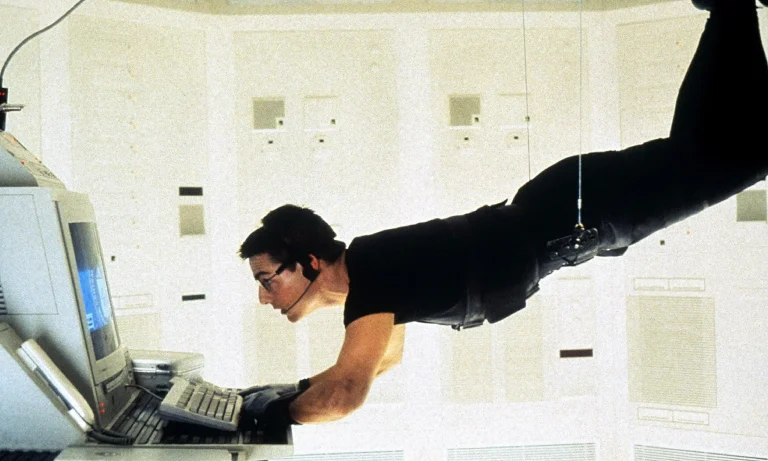
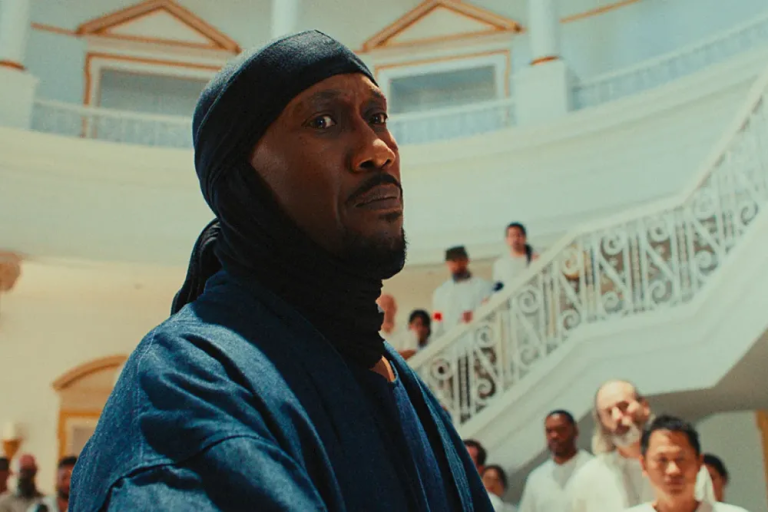
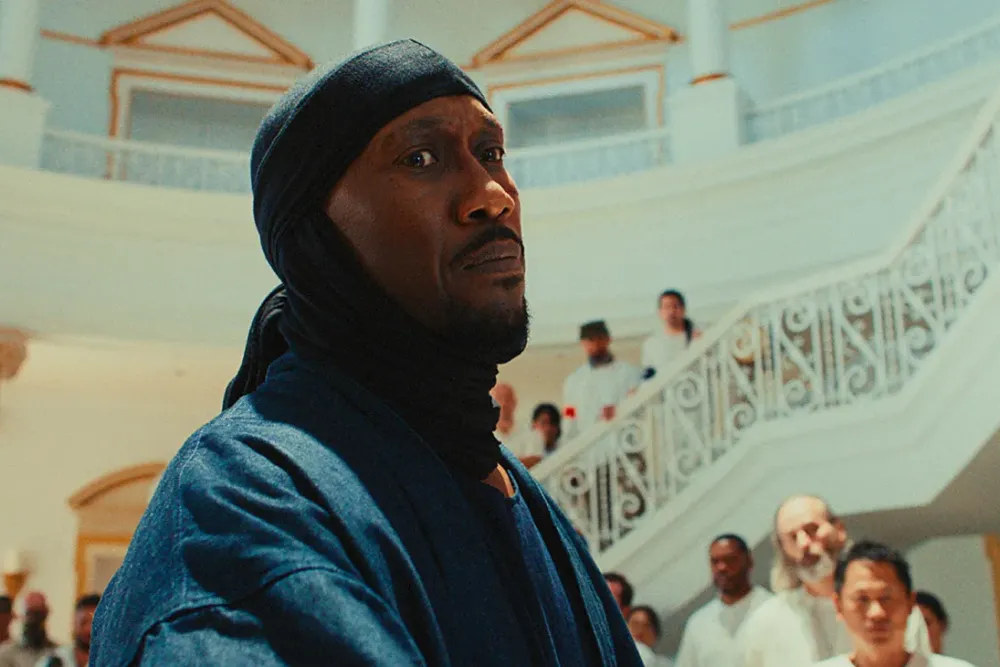
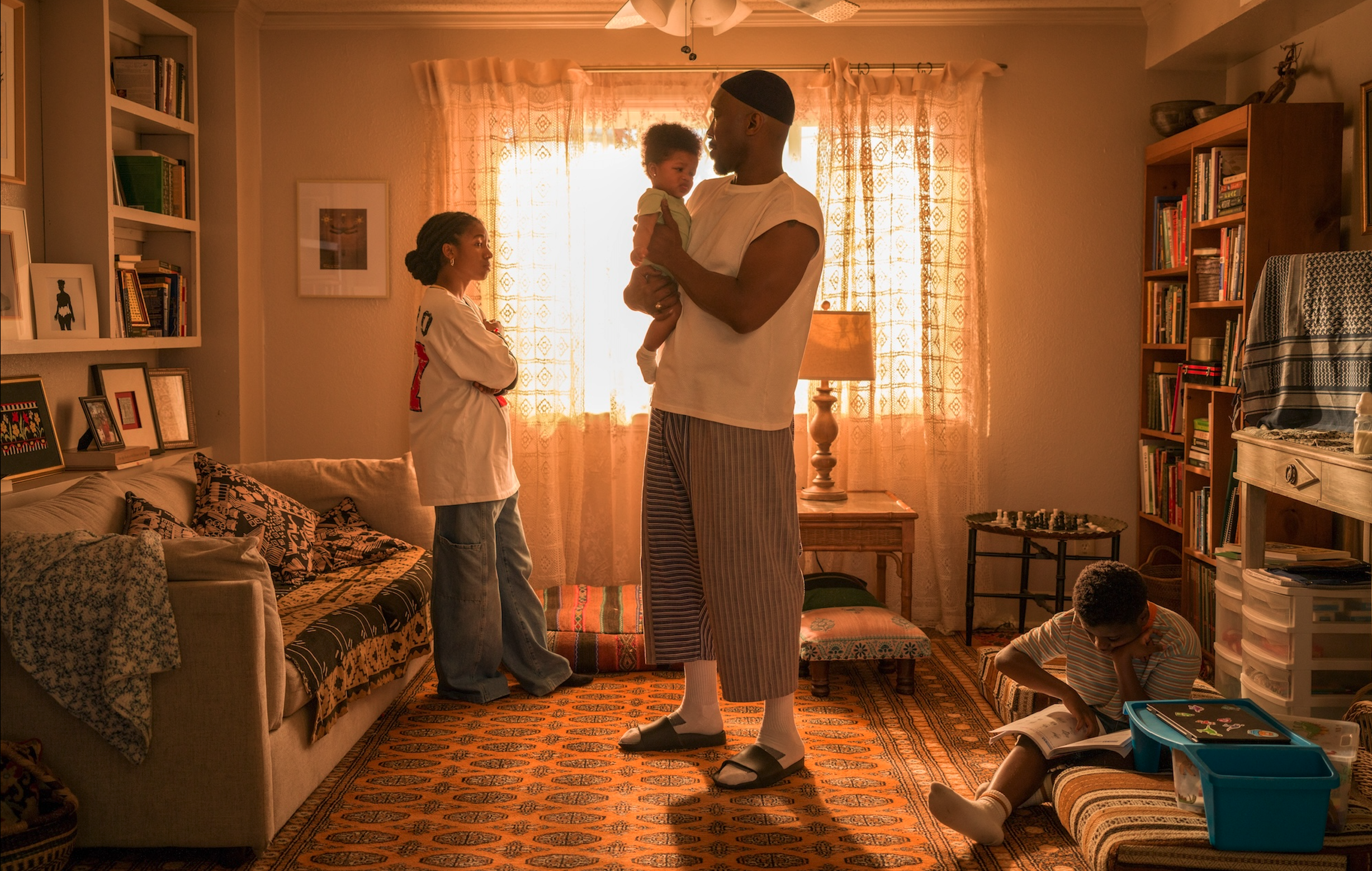
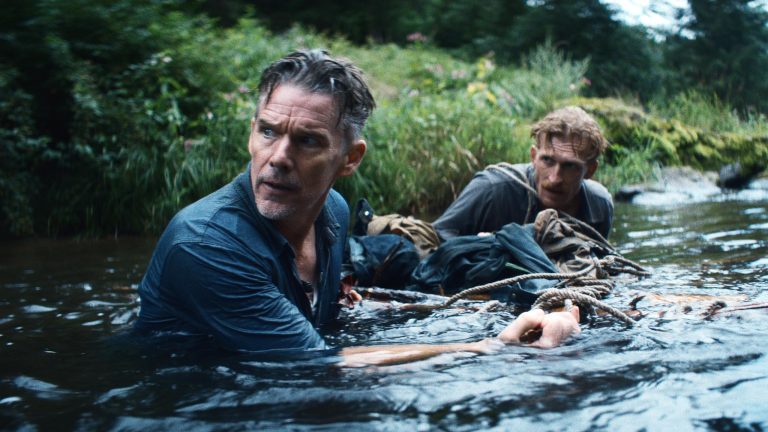
This week on the InSession Film Podcast, using Digger as inspiration, we draft our favorite Tom Cruise movies! Plus, a conversation on Avengers Endgame: Encore and the news that Jon Watts will be directing the new Star Wars.
– Box Office (3:28) We begin the show this week by detailing some box office numbers from the last few weeks. It’s been a historic year and now we can add Resident Evil and Primetime to the list. The latter isn’t going to shatter records, but Primetime is now A24’s third biggest domestic opening ever. Which is notable and when it’s all said and done, it could end up being one of their biggest awards players to date. Sadly, though, on the other side of the coin is Dreamworks’ Forgotten Island, which is off to a rough start.
– Avengers: Endgame / Star Wars (14:58) We next shift to Avengers Endgame: Encore, a film that has some people update because of how it teases Doomsday while “ruining” the original ending. It’s a silly notion as the original ending breaks the rules the film establishes, something Marvel has explored further in shows like Loki. In short, the teases they add at the end of Endgame are fine. We also had to talk briefly about Jon Watts being tapped to write the new Star Wars movie, which will apparently continue the Skywalker saga.
– Tom Cruise Draft (1:08:23) Tom Cruise is a (very understandably) polarizing figure, but his presence as an actor is undeniable. As is his passion for cinema and pushing the medium forward. So, with Digger coming out this weekend, we wanted to talk about his best movies and thought a draft would be a fun way to do it. We go back and forth, and honestly, there are two good “teams” selected here. With that said, who do you think won our Tom Cruise draft?
If you want to help support us, there are several ways you can help us and we’d absolutely appreciate it. Every penny goes directly back into supporting the show and we are truly honored and grateful. Thanks for your support and for listening to the InSession Film Podcast!
Synopsis: Set in 1949, the Shikishima family confronts a fresh catastrophe two years after surviving their previous ordeal with the legendary monster.
The roof of Alice Tully Hall felt close to being blown off by a kaiju blast during the 64th New York Film Festival’s Spotlight Gala screening. It was the world premiere of Takashi Yamazaki’s Godzilla Minus Zero, and the energy in the room felt as massive as the King of Monsters himself. One might be taken aback upon initially reckoning with the programming choice of a full-blown genre blockbuster’s inclusion in the festival lineup. But beyond it just being a wonderfully fun pick that’s indicative of both Dennis Lim’s and the selection committee’s excellent cinematic taste and the limitless potential within contemporary blockbuster filmmaking, it’s fairly easy to tell that this also isn’t your average monster movie. Much like its predecessor, both of Yamazaki’s Godzilla Minus films each feel like lofty dramas grappling with their own distinct emotional cores, and they both just so happen to star Godzilla in a stellar supporting role. But it’s also clear from the opening moment of Godzilla Minus Zero that Yamazaki understands the audience’s innate desire to see kaiju mayhem. He, of course, is quite the fan of Godzilla’s legacy himself. But both his films draw a crucial line in the sand despite their ability to deliver exactly what audiences want out of a Godzilla film.
The introduction to Godzilla Minus Zero is a thrilling single-take capturing absolute mayhem. As a group of scientists film the carnage surrounding them while running through rubble and away from shocking mutilation or death, it’s difficult not to think about the entire concept of war films and bombastic action setpieces in cinema. Yamazaki immediately poses a question to his audience and himself with this sequence: How can a filmmaker balance raw spectacle, of which this film has immense amounts, with the abject terror of such carnage? It’s an incredibly challenging balance for a filmmaker. Yet Yamazaki seems to have an innate ability to carve right into the most fundamental truths about such potential horrors of reality, and provide his audiences with a kaiju spectacle that always remains human-centric. If the lens of this film is channeled from the top-down, in this case how Godzilla views everything around him, the film would feel quite hollow. Just like Godzilla Minus One, Yamazaki still makes a film with Godzilla capturing and affecting its lens, but this film’s view comes from the bottom-up, allowing people’s worlds to be completely upended by the behemoth roaming through the streets of the small towns or major cities they once called home. It’s the type of scenario which reckons with a new reality that would shake anybody to their core. It’s what makes the family-centric core of this film’s screenplay so emotionally effective.
This film once again follows the Shikishima family, now a defined unit, as they try to live some semblance of a normal life. And yet, how could they ever possibly attain a shred of serenity after all they’ve been through? Beyond just the effects of their Godzilla encounters, Yamazaki introduces new faces and more deeply examines returning cast members with a varied series of each one being an individual who is doing all they can to deal with their own trauma in a post-WWII Japan. Yamazaki never abandons the roots of the Godzilla franchise in this regard, often to the point of shock at how willing he is as a filmmaker to explore imagery and ideas that would often seem impossible in a Hollywood film of this stature. There’s an exceptional reframing and reaffirmation of Godzilla Minus One within some of the choices made in this film that are simply stellar. Furthermore, Yamazaki is able to set the stage for so many ideas that are equal parts enthralling and shocking that it feels miraculous they are all able to work in tandem with one another so well. It speaks to his talent in crafting characters the audience cares deeply about, and the Shikishima family, alongside many of the other essential supporting characters in this film, ground the madness that Yamazaki has in store for his audience. And all the adoration built up for these characters is what makes Yamazaki’s film a genuinely grim and upsetting one.
The Shikishima family is put in quite the tough position in this sequel. It’s particularly tough on young Akiko (Sae Nagatani), who is terrified once again of the possibility that “something scary is coming.” For Koichi (Ryunosuke Kamiki), he is attempting to balance his desire to fight for the safety of his country with the responsibility of protecting Akiko and being present for her. Noriko (Minami Hamabe) is made even more active in this film’s plot, as she and Koichi both reckon with the pain of feeling unable to console a child who is terrified. In any case, Yamazaki explores the gray area of inaction, and whether that’s something which should be felt with shame or understanding how responsibilities shift as we move through life. It’s really compelling character work on a small scale that still feeds into the larger workings of the film’s thematic explorations. As interested as Yamazaki is in all the interpersonal relationships he has formed, he’s just as willing to explore larger geopolitical relationships as well. Japan’s response to the disasters of this film, in addition to U.S. interventionism, are thoroughly examined. Importantly, Yamazaki only ever reveals information coming down from the top and shows his audience the responses of the people it affects most. Volunteer pilots are lied to about the safety of a mission, leading some to abandon their post while others merely note that “a man’s gotta eat.” How Yamazaki can so effortlessly depict the varied responses to such loftily frightening circumstances is indicative of a writer fully empathetic to the human condition and all its contradictory forms.
Now, so much of this film does explicitly revolve around its human characters, but this is still the 39th Godzilla film in the franchise (the 34th produced by Toho)! Fans of the greatest monster of all time can rest assured knowing that this franchise is still in more than capable hands. And quite frankly, this film contains imagery audiences might almost be unlikely to believe were it not playing out spectacularly right before their very eyes. Yamazaki and the VFX team know how to craft not just spectacle, but awe-inspiring visuals that equally strike fear and astonished disbelief in an audience. Godzilla Minus Zero looks dazzlingly great, and the film is full of moments which could best be described as spine-tingling, or potentially, insane. For all the emotional horror and tragedy this film can expertly unleash on its audience, Yamazaki also turns in what feels like one of the best monster movies ever made. Its scale is so lofty that it feels unmatched, with less than a handful of rivals who could genuinely go toe-to-toe against it. And there’s one particular masterstroke in the third act that confirms Yamazaki’s fundamental understanding of what makes Godzilla such an enduring and essential figure not just in cinema, but in pop culture and history itself at large.
If Godzilla Minus Zero does anything, it reaffirms that the legacy of Godzilla can continue to evolve while remaining true to the roots of the franchise. It is also indicative of, despite being a period film, an ability to examine and represent the emotions and ideas of present day life through the past. That examination of past and present is an interesting point of view for the film to hold, as so much of the Shikishima family drama this time around boils down to parents being terrified of leaving their child in a world haunted by unfathomable tragedy and horror. Despite all the unthinkable that Yamazaki is able to somberly convey with genuine respect and earnestness, this film has a tinge of hopefulness to it which is undeniable. One amazing sequence involving a fixed camera exhibits the minutiae and dedication we must provide in order to leave the next generation with a chance for a brighter future. All we can do is remain steadfast in the belief that there is a chance for a better tomorrow, and that those who we surround ourselves with can ultimately fight for it together with an unrivaled passion that cannot be replicated or manipulated by any external force.
Godzilla Minus Zero celebrated its World Premiere as the Spotlight Gala film of the 64th New York Film Festival.
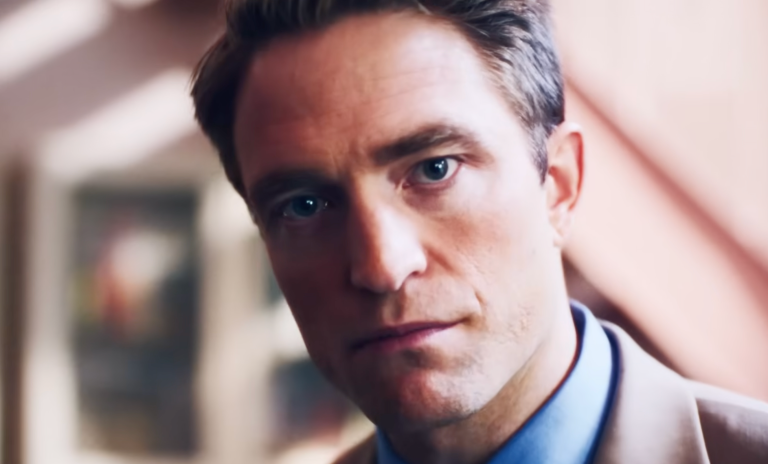
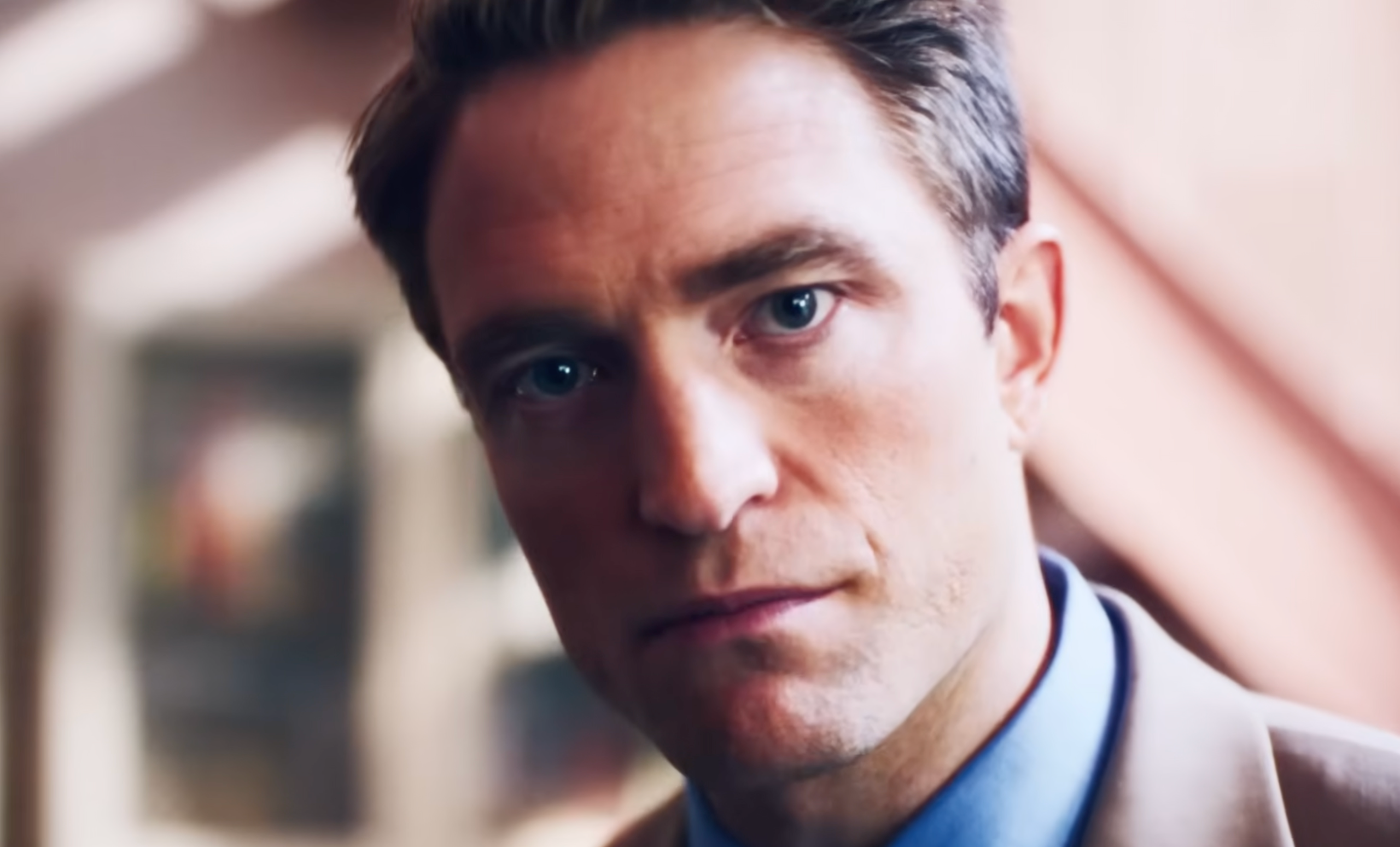
Have you heard? It was a rather jam-packed weekend at the movies. Multiplexes are thriving again, or “we’re so back,” one might say. What a time to be alive? Too much, but we have to find joy somewhere; what better place than at your local cinema, where you can likely be treated to an offering to scratch any itch. Perhaps you’re in the mood for a gritty, based-on-truth thriller starring Robert Pattinson as To Catch A Predator host Chris Hansen, that being Lance Oppenheim’s narrative debut, Primetime. Or maybe you want to take your kids to the latest animated flick from the minds behind Puss & Boots: The Last Wish, the delightful and vibrant Forgotten Island. Need a dose of adrenaline, or better yet, your first dose of leading man Mahershala Ali in, oh, five years? Check out Bassim Tariq’s Your Mother Your Mother Your Mother. Brad Pitt and a dog can be seen fighting for survival in Heart of the Beast. Hell, Avengers: Endgame is returning to theaters and becoming the first film to officially play in the long-anticipated, Marvel-invented “Infinity Vision.” Surely, you must have bought your tickets already.
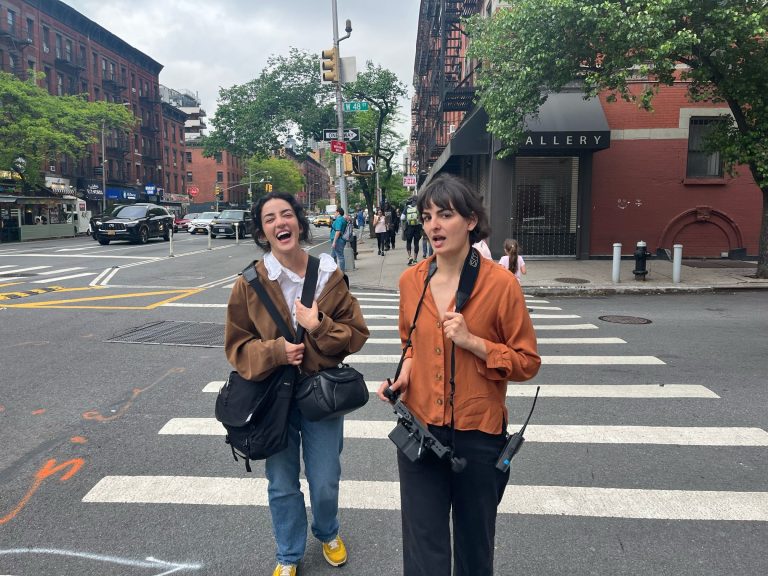
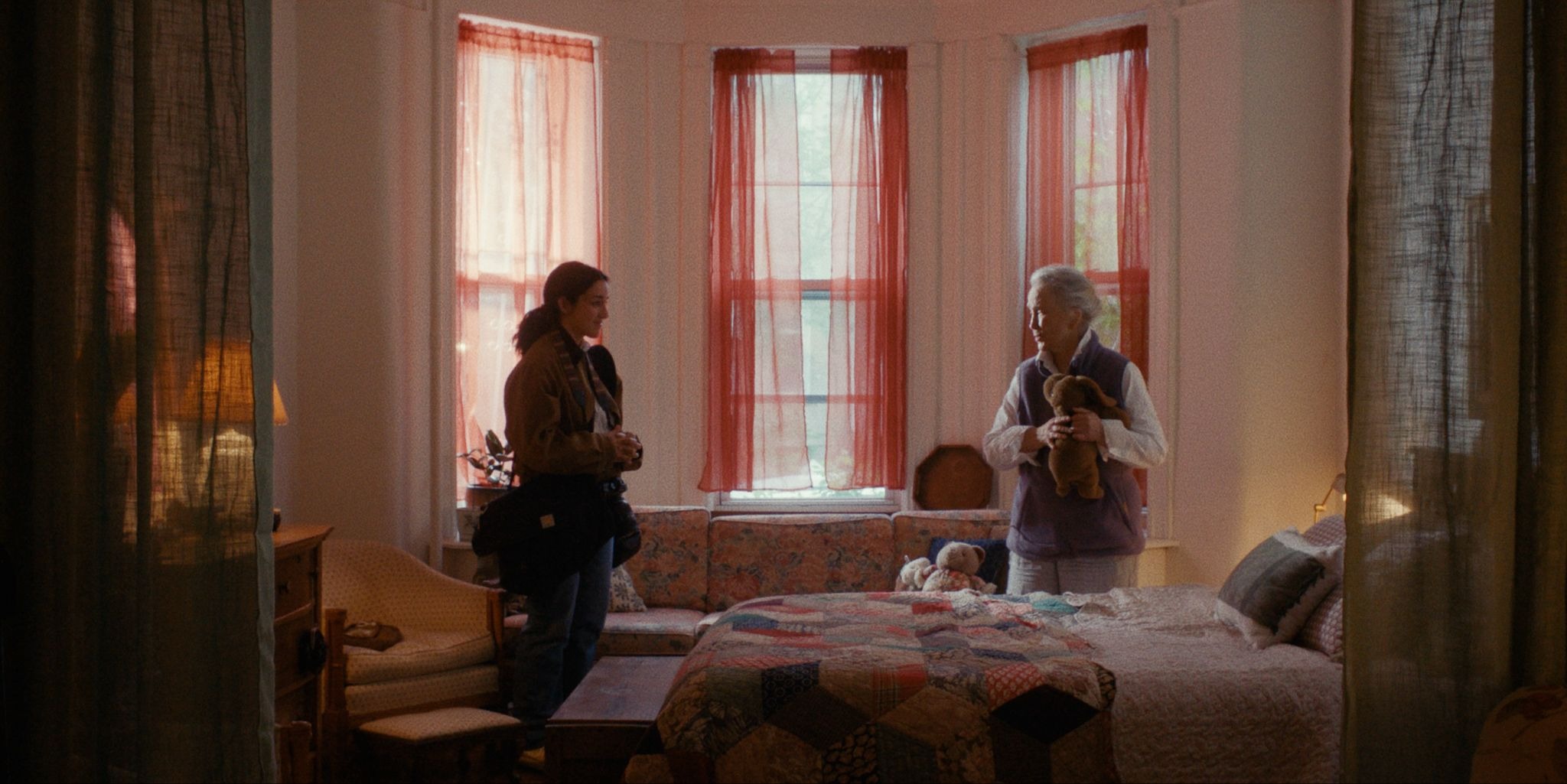
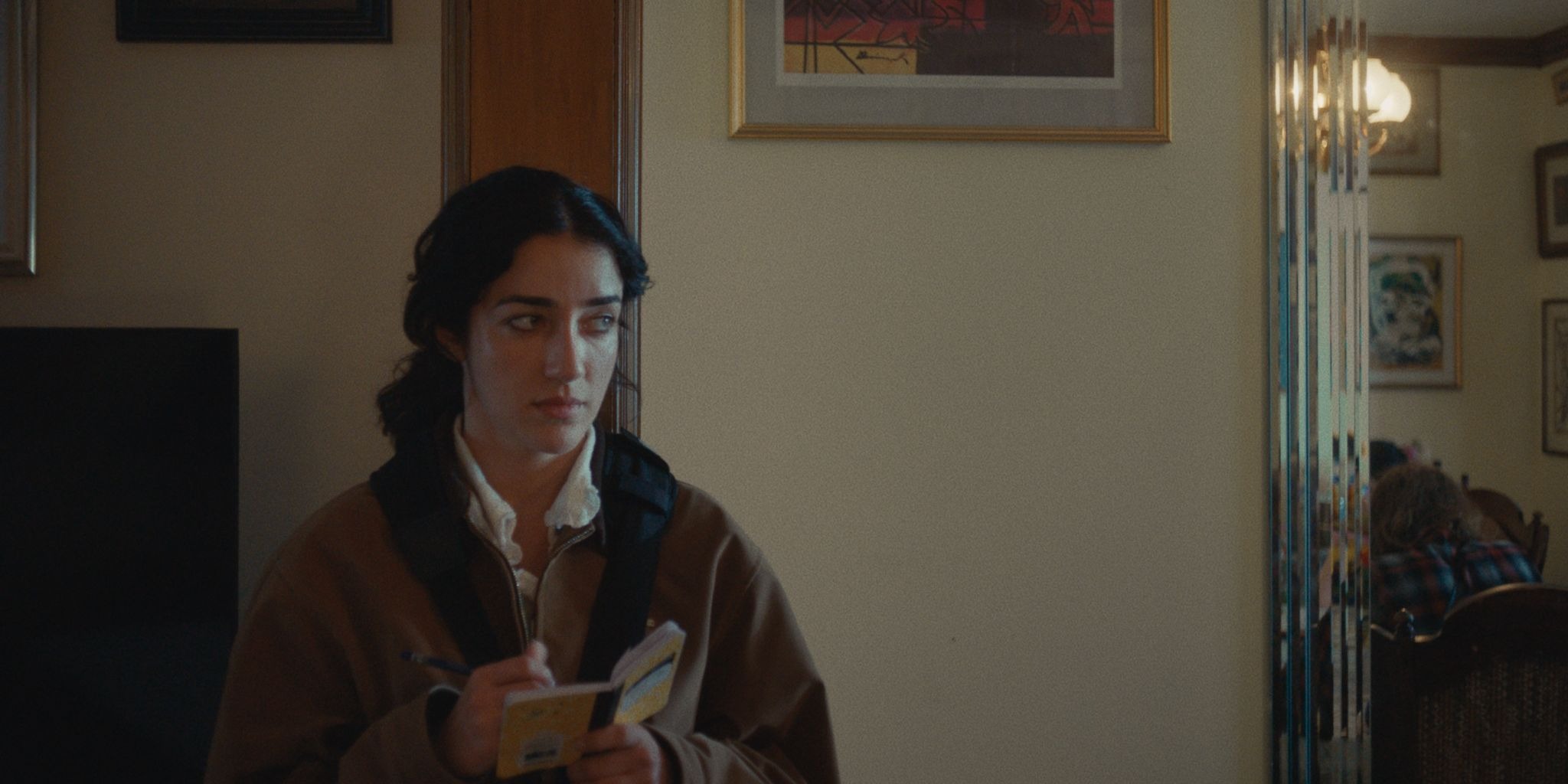
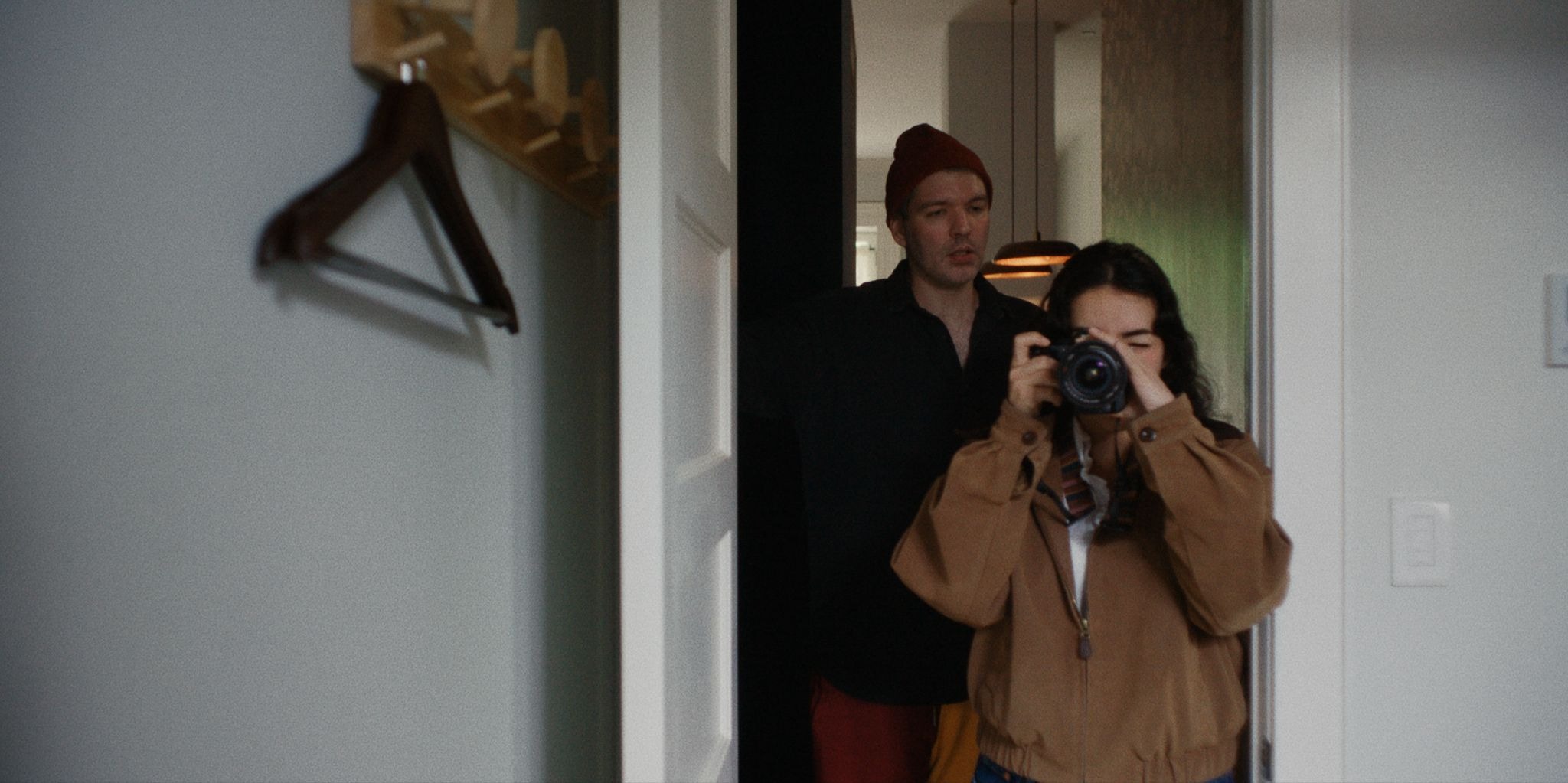
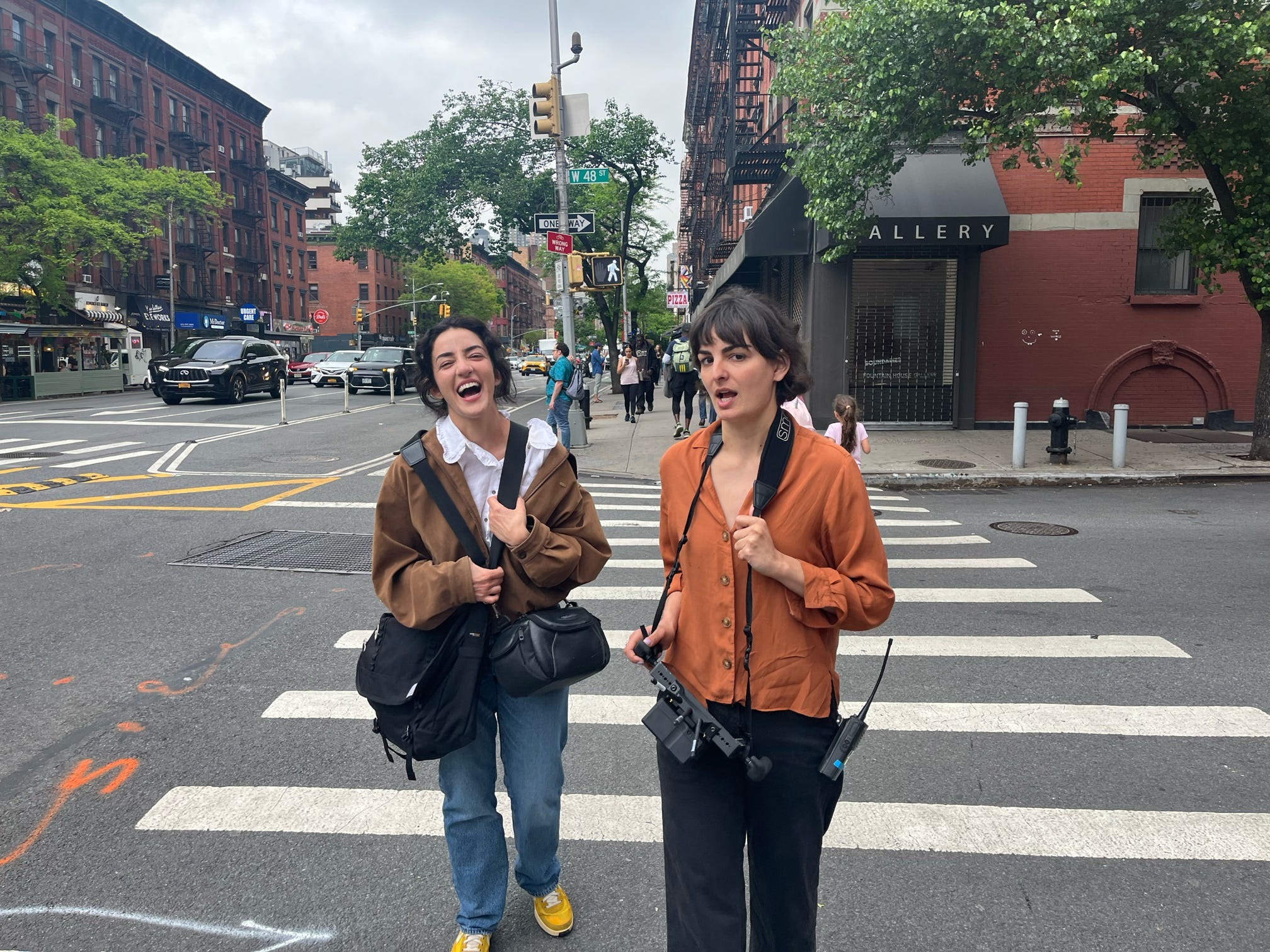
But if you happen to live in New York – cue the eyerolls, warranted and frequent – I’d suggest you venture over to Film Forum, where the best new release of the weekend is celebrating its theatrical premiere. Paula Gonzalez-Nasser’s tremendous feature debut, The Scout, arrives one year and change after it took its first bow at the Tribeca Film Festival. An intimate and remarkably personal drama that follows a film and television location scout and she searches for locales appropriate for a TV pilot’s setting, it was hands-down the best film I saw at the 2025 edition of the fest and promised the arrival of a genuine filmmaking talent in González-Nasser, who based the film on her real-life experiences. Over the course of a single day, Sofia (a soft and remarkable Mimi Davila in her first proper leading turn) experiences personal revelations in moments most of us would consider unassuming, though as I wrote in my InSession Film review last June, watching Sofia operate in a rut-adjacent routine for 89-minutes is never unfulfilling or uninteresting. Rather, it’s a film that capitalizes on the beauty of mundanity in a way that is as authentic as I’ve seen in some time. Basking in that experience is where the film’s tender nature derives from. I had the pleasure of speaking with the director and star about exactly that, among other topics aplenty. Our conversation has been edited and condensed for clarity.
InSession Film: Paula, I know the genesis for this film was your time spent as a film scout. But can you offer a little more background into exactly how that experience shaped The Scout?
Paula Gonzalez-Nasser: Yeah, it was definitely not an idea I had while I was scouting.
I think that I was very much not aware of what was interesting about the job while I was doing it. I think it took me having some distance away from the job to realize, “Wait a second, that was such a crazy job.” And it was a very interesting vessel for a story of a character whose day-to-day looks very different, even though it’s kind of the same as it adds on.
And to be honest, when I was thinking of what to make for my first feature – because I had produced a few small micro-budget features – and I was thinking, “Okay, now that we kind of know what we can do, what does that look like in terms of what’s interesting to me? I wanted to write something. And I think when I finished it, I texted [Mimi] and said, “Hey, can I talk to you about this movie idea that I’m having and have written with you in mind? No pressure, though.” [Laughs.]
But in terms of the scouting idea, I love anthology stories. I love short vignettes and repetition, because I love Chantelle Ackerman, and I think that’s very huge in her work. I saw The Meetings of Anna, and I thought, “Oh, that’s a little bit like what my life was like scouting,” except that in that story, you know, she’s like an accomplished filmmaker in Europe showing her film, and in this story, she’s an invisible person who has to interact with people in New York City. I thought that was such a great character to explore, someone who has to put on different faces. And I just thought Mimi was the perfect vessel for that, because I think she’s naturally a very curious person in general. She could talk to anyone at any party for hours and find out so many things about them.
Mimi Davila: [Not speaking, but making facial expressions and hand motions that are consistent with someone being extremely flattered, if not flat-out stunned.]
IF: Mimi, I kind of have to ask about your facial reactions.
MD: This is the first time I’m hearing that part of the reason why you wrote this is because I could be in it!
PGN: Yeah! I mean, I had only made a short film before this (aside from my projects in school), which I don’t think were even remotely exploratory of what my voice was because I didn’t know who I was or what I wanted to do. After [the short film] Limestone, Mimi and I just had such a good understanding of how to work with each other. So I just was like, “If I’m going to do a first feature, which seems scary, I want to do it with someone that understands me and not try and meet somebody from scratch and try and build that relationship over the course of, you know, 10 days.”
MD: That makes me so emotional because I think it’s rare to find a director that trusts their actor as much as [Paula]. I’m not trying to shine light on myself, but a director really trusting an actor, even if they don’t have a big name or anything, that bears so many fruits. I just think people need to hear that. Because at the end of the day, filmmaking is at its best when you have that kind of trust and intimacy with someone and you let it go outside of your own idea and let it evolve into something.
And I’m just like, how lucky am I that I met you?
IF: Obviously, the character in [The Scout] is named Sofia, not Paula. But it’s important to understand the truth of the experiences that inspire a film like this. What was the collaborative process like of realizing the character as a unit given the true elements?
MD: Paula told me about the practical and technical aspects of it. I would ask her really simple things, like, how am I supposed to use the camera? How would you walk around the space with the camera? I think the emotional life of the character is really a product of our relationship and our trust. It’s a fusion of her and I. We didn’t really speak about that in literal ways. I don’t remember us talking that much about it. I think it was just stuff that happened as a result of working together.
PGN: It’s not until now that I’m sort of realizing we never really talked about my experiences. And we weren’t trying to recreate those experiences. We were sort of like, “Let’s have these new experiences.”
And I would feed [Mimi], like you said, technical information about what a scout would and wouldn’t do. I think that’s where I was picky. Just because we were depicting what this job entails.
But as far as how this character would react to these situations, that was its own thing. Sophia was her own character. She wasn’t me. She wasn’t Mimi. She was this fusion that we were reacting to. And if you felt like something was off, you would adjust it. If I felt like there was a technical thing, like, “Oh, she wouldn’t really ask this here,” we would take it back. Or if you wanted to make sure that a story beat was being told. Because, again, as you know, the film is just a simple following.
MD: And you would sometimes direct me if I wasn’t exactly hitting a beat you needed to get through.
PGN: Yeah, and that’s true. There’s not a lot of places to hide in this film, both in the edit and performance-wise. So a lot of it did fall on you every single take. Because we would have these long takes to nail the emotional arc, the beats, and the technical aspects of the job. We kind of had to review ourselves a lot in that way. It was really fun to not be able to hide. I think I’ve worked on so many films that are great edit-wise because they, in their shooting style, lend themselves to be able to be molded in the edit. But this film was pretty straightforward. I mean, the assembly came together in like two days.
These are the scenes, and there’s only so much coverage that we have. Does it work? And if it doesn’t, how are we going to move things around? And that was its own challenge, the edit. But it was really fun, too.
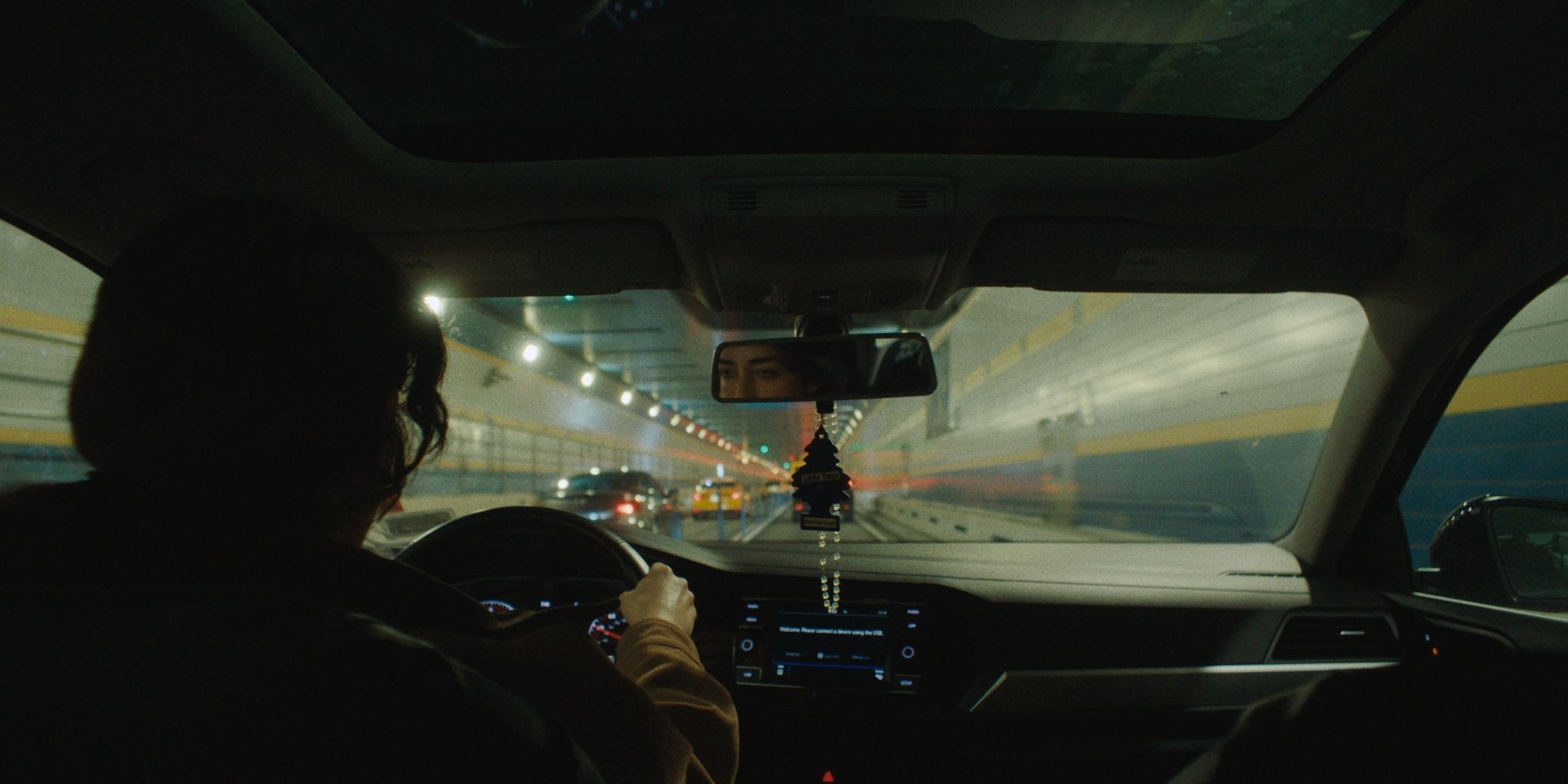
IF: How long was the shoot itself? You had the benefit of it all being set in one place, New York. Even if you’re traveling through the dreaded Lincoln Tunnel and other tunnels.
PGN: It was actually the Queens Midtown Tunnel. And that was intentional only because the Lincoln Tunnel tolls were insane. Even though I liked the Lincoln Tunnel visually more.
IF: It nearly passes as the Lincoln Tunnel, just so you know. All of the cars just happen to be going in the same direction.
PGN: Very good. Okay, I’m glad. The Lincoln Tunnel is even more constricting also. So it has this crazier feel when you’re going through it. But anyway, we shot for ten and a half days.
Five days in the first week, then a half day, then we took a two-day break. And then we did another five days.
IF: You kind of spoke to this a little bit, but the film is very much a simple following. And it isn’t so… I guess you could use the words “plot-dependent,” as another feature might be. It’s very much observational. We are just with this person. And the plot, insofar as we want to use that word, is the experience that this person is having. What drew you to that approach, Paula? And for you, Mimi, was that a unique experience as an actor? The docu-fictional, things unfolding naturally kind of narrative?
PGN: I take that as a compliment. Thank you. I’m drawn to stories like that. You know, right before we shot this, we saw [Wim Wenders’] Perfect Days. I love looking at someone’s life with a magnifying glass, no matter how insignificant a part of their life is. Because there’s so much actually underneath the surface of an ordinary day. And again, not to talk about Chantal Ackerman all the time, but that’s what she was so interested in. A woman’s ordinary day can be so charged and so political and so interesting, even though her work is often described as “nothing happens.” I think everything happens. And also, because this was always going to have to be a small film, and we were going to have to make it for very little money, I think there’s only so much that we can do within the scope that we have.
So the scope always had to be very contained. Luckily, that is what interests me. But we couldn’t… If we wanted to do her life throughout the season of this job, or through the three months that she’s starting, I think that would make the scope a little bigger and the stakes a little higher. There would be a lot more, I guess, action or plot heavy things. But when you set something in a day, how much can actually really happen? So that always drew me to it.
MD: I’m cheating right now, and I’m looking up this quote that I want to say. Okay, I’m going to botch it, but it’s about Eleonora Duse. What was said about her is the reason why she was so miraculous is that she could reveal the extraordinary through the ordinary. And I think that’s what this story does. That was very evident on the paper; the way [Paula] wrote it, it was already there. I was scared at first because I come from a background of doing a lot of character work, but my dream has always been to do something like this. I mean, this is an actor’s dream, a character study. So I was afraid because I was like, “Am I going to be interesting enough to do this?” And so it was scary. But it’s the kind of scary that you want to take on. That I want to take on.
IF: Was the experience of shooting in New York – with all the permits and red tape that comes with it – at all similar to working as a film scout?
PGN: That’s a great question. Yes, in hindsight. The shoot was very fun. I wouldn’t say it was very stressful, but it was more stressful than I often remember it to be. When you’re shooting everything in such a condensed timeline, nothing can go wrong. Or, there’s not a lot of room to change things around. Basically, what you set up that day, that’s what it’s going to be.
Filming was a similar feeling [to scouting] in that you’re going against the grain of the city. Production in New York city doesn’t really work at any scale. You’re sort of trying to take over a space that was not designed to be taken over. I mean, when you’re working on a [low-budget] shoot with trucks and campers and all this stuff, even though you have the permits and you are allowed to be there, the city is actively fighting you. You’re being disruptive, annoying the shit out of a neighborhood… And they should get upset! In the past, it was often my job to liaison for productions, but I would always be like, “Actually, these residents are right. This woman’s trying to get her baby to sleep, and here’s this 30-foot truck with an idling engine on the entire day and fumes going into her apartment. She should be upset!”
But for this shoot, it was so small. We didn’t even have to get parking permits because we just had an equipment van that we legally parked every day and everybody just took the train to set. But even that, you’re sort of going against the grain and you’re sometimes having to move during rush hour. And it’s like, “Oh, we’re never going to make it to this other place.” But as far as shooting in public, the city is great because New Yorkers are so used to seeing a camera and people filming everywhere that they’re, like, trained. They’re the perfect backdrop. All the exteriors were so easy because of that. The interiors and the private spaces were actually difficult because they didn’t already look amazing. We had to make them look good, while anything we shot outside was perfect as is. I mean, cars and bikers zooming past Mimi as she’s opening a door, it looks choreographed in a great way. and the synchronicity of like bikers was zooming past Mimi as she’s opening a door and it’s just, it looks choreographed in a great way.
IF: Mimi, how was that experience different potentially from the projects you’ve worked on in the past?
MD: The outdoor scenes, for sure. Because there’s so much life going on all the time, there’s so much to act off of. Even the architecture itself. We did a night where we were just shooting me walking and walking and walking and walking. And there were reflections, stairs, art… It really works well with the story because New York is so much bigger than all of us. It’s so grandiose. I think part of the heart of the story is how one can feel so small working all the time, being devoured by institutions and powers that are so much larger. That was very inspiring to me during the performance.
IF: Paula, do you know what you’re going to be doing next by any chance? And if so, can you talk about it?
MD: Can you?!
PGN: [Laughs.] I can definitely talk about it. The answer is I don’t know. That’s a great question. I know the idea is that you should know, but also when you’re working on a movie like The Scout, where it’s so small and everyone on the team is performing so many different roles, it is so consuming and you want to be as involved as possible – especially in your first film – to really get it out there and have it be shown to as many people who want to connect with it as possible. So I feel like I’ve just been in Scout mode for the past few years, and that’s neither bad nor good. That’s just what our life has been.
And Mimi, too. She’s been really an integral part of this whole process. We did shoot a movie; Mimi directed a film that I helped on as the first AD, so we’ve been doing that, and I’ve been working on other friends’ projects who worked on my films. We’re kind of just always working on each other’s stuff and it’s less, like, “What do I have in the works now?” My producer Ryan [Martin Brown] shot a feature that we’re editing now. I just like to work that way. Until I have something that I’m like, this is what I want to devote four years of my life to, I’m kind of a little bit like, “Let’s pump the brakes and really decide what we want to give our time to.” And I feel like I still have so much to learn just from this film. I am learning so much from it and what worked and what didn’t and what it is that we even want to do next. I know I want to work with Mimi again! We have talked about several ideas that we could shoot, not even in New York, but maybe in Florida where we’re both from. So hopefully something like that is what’s next, but we’ll see.
IF: It was last summer, 2025, when The Scout officially premiered. It’s now the fall of 2026. I would love to hear from both of you what it’s like to finally have the film enter the world officially where people get to see it.
MD: It doesn’t feel that long for me because I think it’s also rare. We shot it in 2024. Sometimes you work on a movie and you’re like, where the heck did it go? Like, it got caught up in the edit, or someone got into a fight, the producer left the company… You don’t know what happened. So the fact that it got made, edited, and premiered in a very timely fashion and is getting a theatrical release, I’m like, this is amazing.
PGN: I second Mimi. It has felt like a long time that we’ve been breathing and living this movie, but at the same time, our edit timeline was actually… I wouldn’t say fast, but for a film where you’re all doing everything and your producer is also your editor and they’re trying to live and pay rent, it was pretty fast. That we got to premiere it at Tribeca is so special, but I think what’s really breathing so much life into it is just how excited our distributor [Greenwich Entertainment] has been. And the fact that Film Forum wants to show it is making me excited about it all over again, like we’re just showing it for the first time again. We’re really grateful.
The Scout is now playing exclusively at New York’s Film Forum. It will expand into further cities and theaters in October.
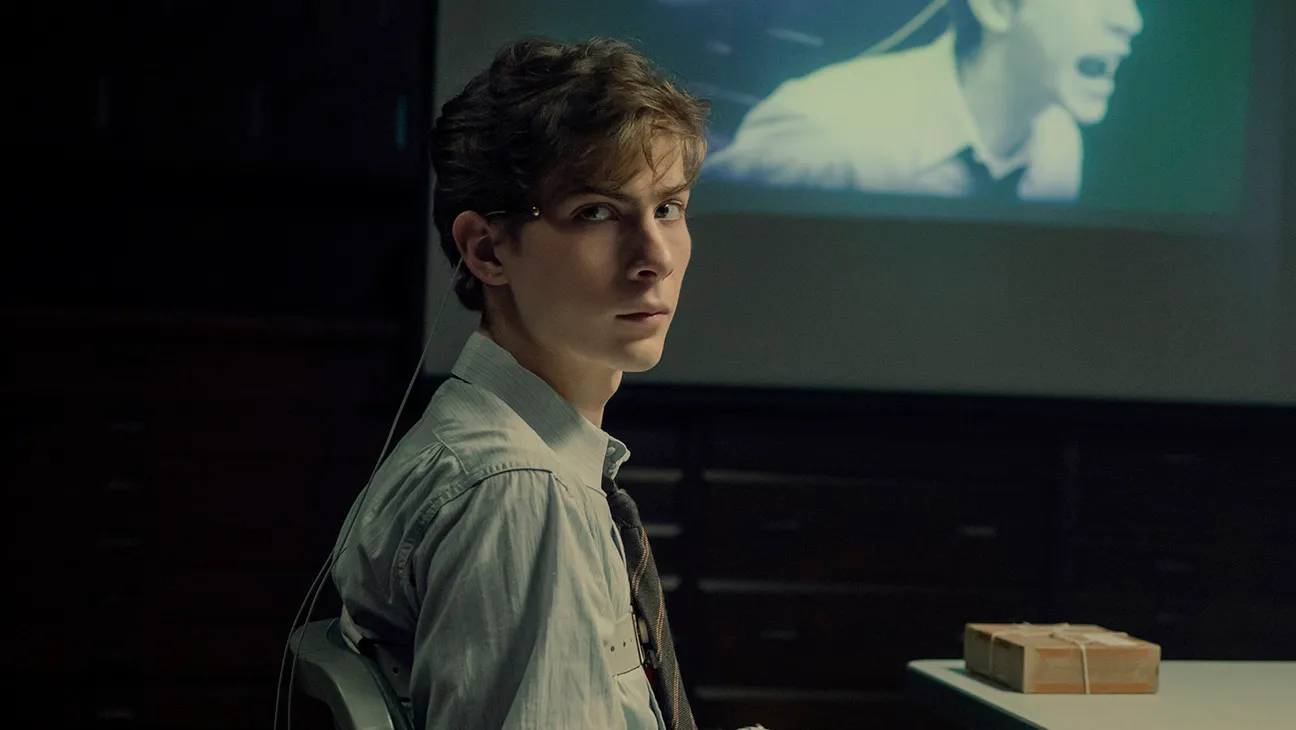
Director:Janus Metz Writers: Sam Chalsen, Nelson Greaves Stars: Jacob Tremblay, Russell Crowe, Shailene Woodley, Annabelle Wallis
Synopsis: A Harvard student becomes the Unabomber after psychological experiments. Years later, an FBI agent’s pursuit reveals how his past shaped his deadly campaign that killed 3 and injured 23 from 1978-1995.
Watching Janus Metz’s Unabomber, I was often reminded of the countless musical biopics. Not because of the tone or filmmaking style, but rather the complete suspension of disbelief required to enjoy these types of films. You can sit and enjoy what transpires, but there is always that feeling there is absolutely no way this is how it actually happened.
Needless to say, a film about Ted Kaczynski should be narratively potent. The film attempts to draw some parallels between Kaczynski’s past and his crimes, while also adding some red-scare government paranoia to the mix. The result is fine and flatly entertaining, but ends up being hollow. You don’t know anything more about Kaczynski than you did before the film began, because you certainly can’t believe any conjectures the film makes about the man.
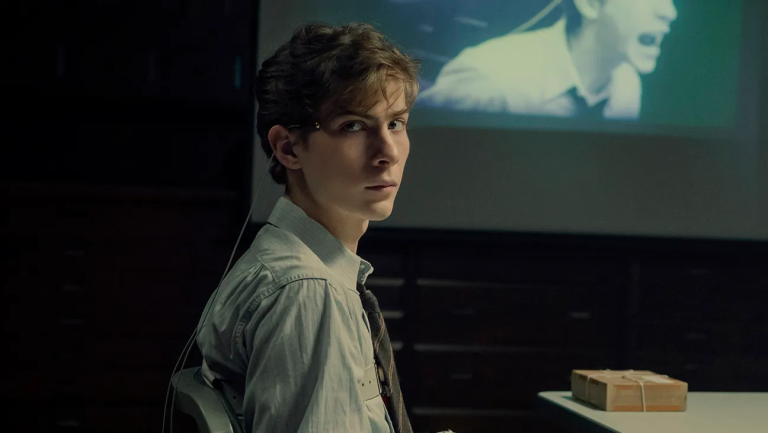
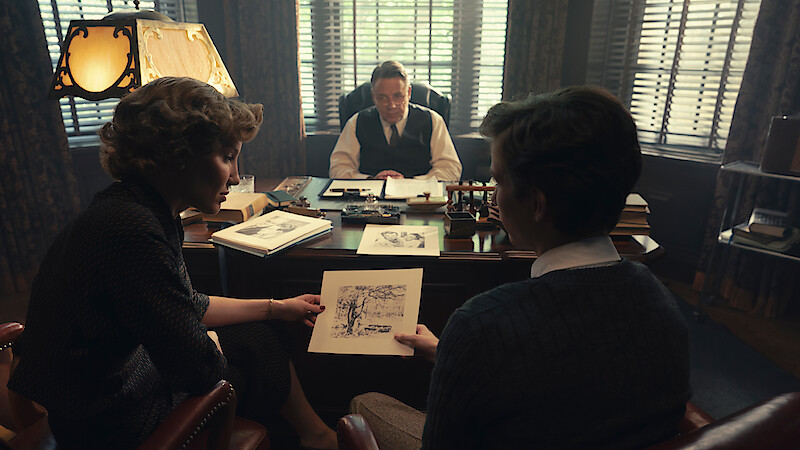
The film attempts to connect Kaczynski’s time at Harvard to his spree of bombings. Young Kaczynski (Jacob Tremblay) is interested in psychology, and joins a debate study helmed by professor Henry Murray (Russell Crowe). Those “debates” are very clearly a deeper psychological study meant to demean and berate the subjects. The filmmakers attempt to draw a throughline to determine if a monster is born that way or if he is built. Unfortunately, these attempts get absolutely nowhere and fail to land.
Instead of planting the morsels of how this kid could turn into an adult terrorist, the film feels the need to assume this single event was the catalyst to the man he would become. The film talks about all these other inciting events, but doesn’t dare depict them in order to stick to two distinct timelines. In classic film fashion, the narrative jumps between Murray toying with Kaczynski’s psyche in the late ‘50s and FBI agent Joanne Miller (Shailene Woodley),hunting Kaczynski in the ‘90s.
It also doesn’t help that history is well-documented. Kaczynski’s stranglehold on the country’s consciousness lends an air of predictability, as does the film’s genre conventions. The FBI’s general incompetence in finding the Unabomber is only outmatched by the tenacity of agent Miller, the one person who is sure Kaczynski is the guy. Not only do they have the stereotypical male counterpart undermining her at every turn (Alexander Ludwig), her boss (Steven Ogg) is equally dismissive. It’s one step short of “I just got off the phone with the mayor!”
Of course, that doesn’t stop our lady Joanne. She takes some “personal days” to go stake out Kaczynski’s middle-of-nowhere house, hoping to catch something. She has all the evidence she needs to be sure it’s him, but those dang bureaucrats in the FBI just aren’t willing to trust a woman with stone-cold facts. It will surprise absolutely no one that Miller is a fictional person. If she were real, and she did what she did, she would be a household name.
And that’s mostly the problem. All of this would be fascinating to learn if not for the availability of a quick Wikipedia search. Two things are very clear: Kaczynski took part in a study by Murray in the ‘50s, and he was the Unabomber. Everything else can be taken with a massive grain of salt. With that lack of credibility established, it throws every other piece of information into dispute. If the filmmakers wanted to show how a young man eventually becomes a murderer, they achieve that…as long as they think you are stupid.
The actors don’t do anything particularly interesting other than embody their characters the script gives them. Trembley never gets much of a grasp of the character in his youth, vacillating between coy and reserved to boisterous and ranting. Crowe is a very credible academic, but he is obviously up to no good with this study. Woodley gets to do nothing but scream about being right and hide in the woods on occasion. Other actors are peppered in for good measure, including Annabelle Wallis as Murray’s right-hand woman (and assumed lover) and Ludwig and Ogg at the FBI. No one makes any sort of impression worth noting.
While it might be flatly entertaining, Unabomber plays fast and loose with the facts. There is an interesting story to be told around Ted Kaczynski, but it’s not in this film.
As we start the 2026 holiday season, the Criterion Collection also goes on sale twice before the year closes out. This includes both the month-long half off November Barnes & Noble sale, as well as the 24 hour 50% flash sale through Criterion directly that happens every October. Anything since the end of July is fair game and if you’ve had your eye on something but haven’t pulled the trigger – now is the time to partake. Usually, Criterion announces more horror-centric films in their October slate and this month is no different. Criterion is upgrading a Collection staple in a new 4K+Blu-Ray set, two new Blu-Ray releases, two new 4K+Blu-Ray releases, a Blu-Ray Eclipse upgrade, and one gargantuan, unprecedented 4K+Blu-Ray box set featuring the filmography of master filmmaker Stanley Kubrick.
Welcome II The Terrordome (1995)
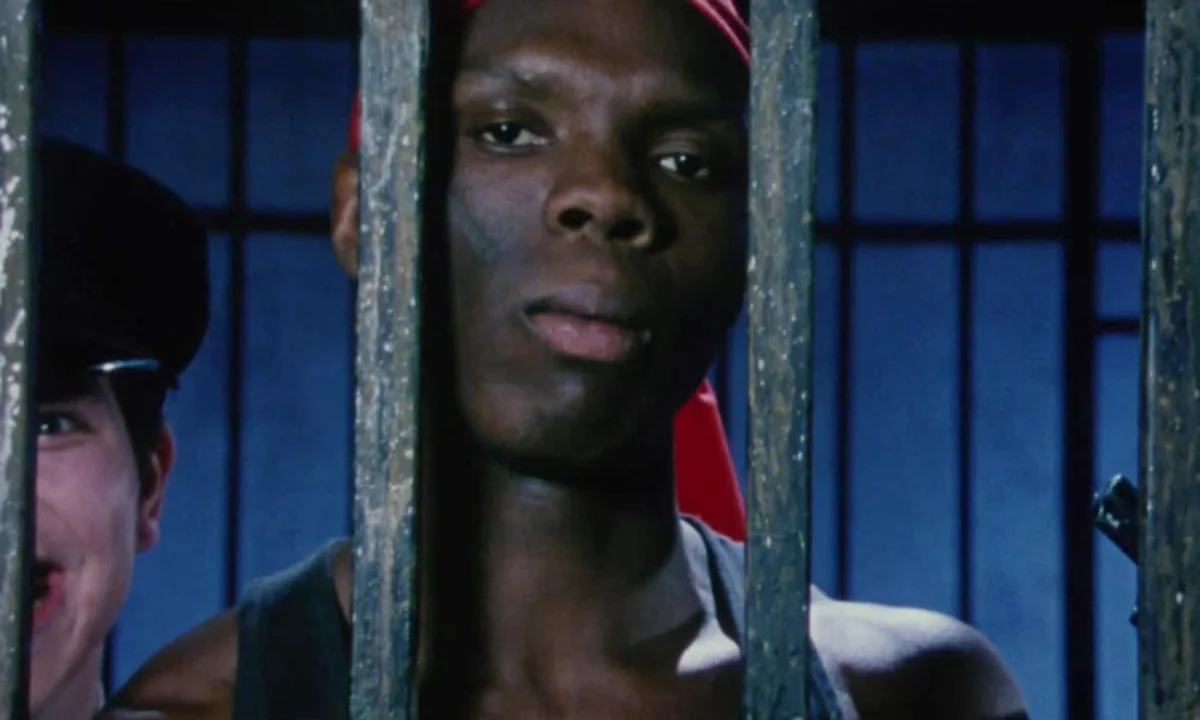
I only became aware of Welcome II The Terrordome after BAM added screenings of this with Janus Films attached as the distributor back in July. A film that covers difficult topics, with a rap soundtrack, with a stylish flare, in the 1990s is 100% my jam. Additionally, Welcome II The Terrordome is the first theatrically distributed British feature by a Black woman. It would be wrong of me to discuss the topics within this film as a white man, however the commentary is done incredibly well and it’s one of the best surprises I’ve seen this year. Welcome II The Terrordome is a Blu-Ray release featuring a new 2K digital restoration supervised and approved by cinematographer Alwin H. Küchler.
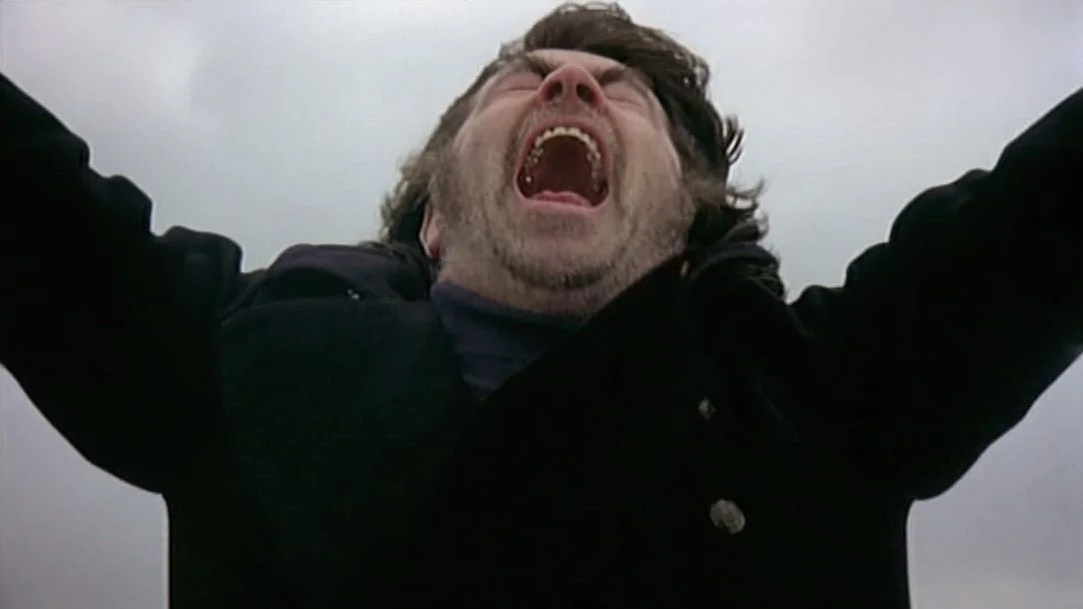
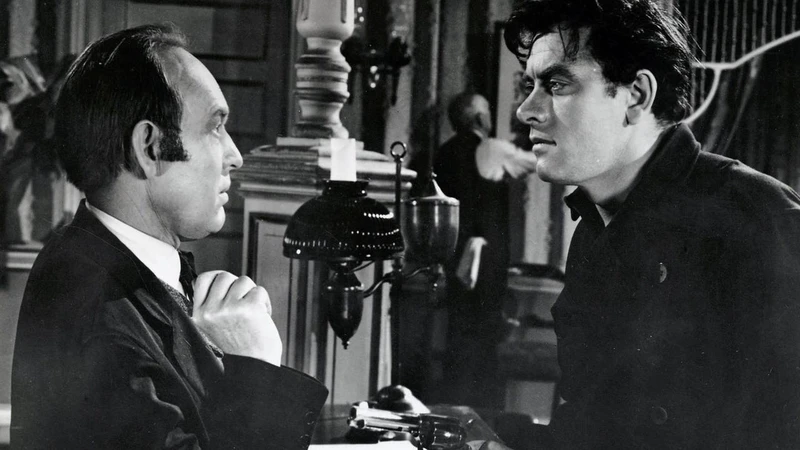
The Shout (1978)
There’s something very special about the horror films of the 1970s. The studio framework hadn’t entirely taken over, and there was a lot of analog and interpretive horror at play. Even though the slasher genre took over the ‘80s, the ‘70s gave way to what the modern slasher would look like. The Shout is a part of the drive in the ‘70s and has a mysterious man move into town that can shout so loud it can kill. The Shout is a great October flick with its pulpy premise and more silly aesthetic – you could pair this with your favorite Goosebumps episode or Friday the 13th sequel (Jason Voorhees in space or Manhattan are great options). The Shout is a Blu-Ray release featuring a 2K digital restoration approved by director Jerzy Skolimowski.
Eclipse Series 5: The First Films of Samuel Fuller
Samuel Fuller is one of the most brilliant filmmakers I’ve seen. Watching Shock Corridor at 16 years old was a shock (see what I did there) to the system. Someone making something so visually stylish and morally questionable in the 1960s seemed outlandish to my feeble little high schooler mind. I’ve seen more films from him since then, and the first films for any esteemed filmmaker is a great way to show the stepping stones to how someone shows their ethos in filmmaking before they’re allowed more budgetary power. This Eclipse was generously used for years when it was a DVD release, but the eventual upgrade to blu-ray will be ran back when I pick this up. Furthermore, a set with a great western, great noir, and a great war picture is a killer deal on any front. The films in this set are I Shot Jesse James, The Baron of Arizona, and The Steel Hamlet and they are all featured in a Blu-Ray box set.
The Complete Kubrick
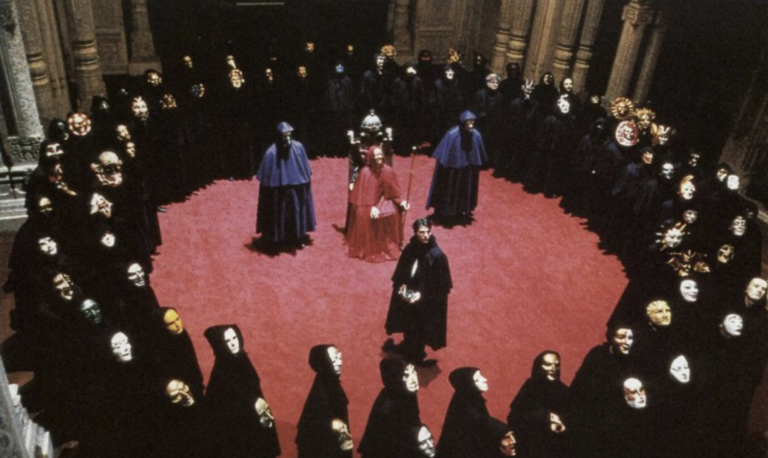
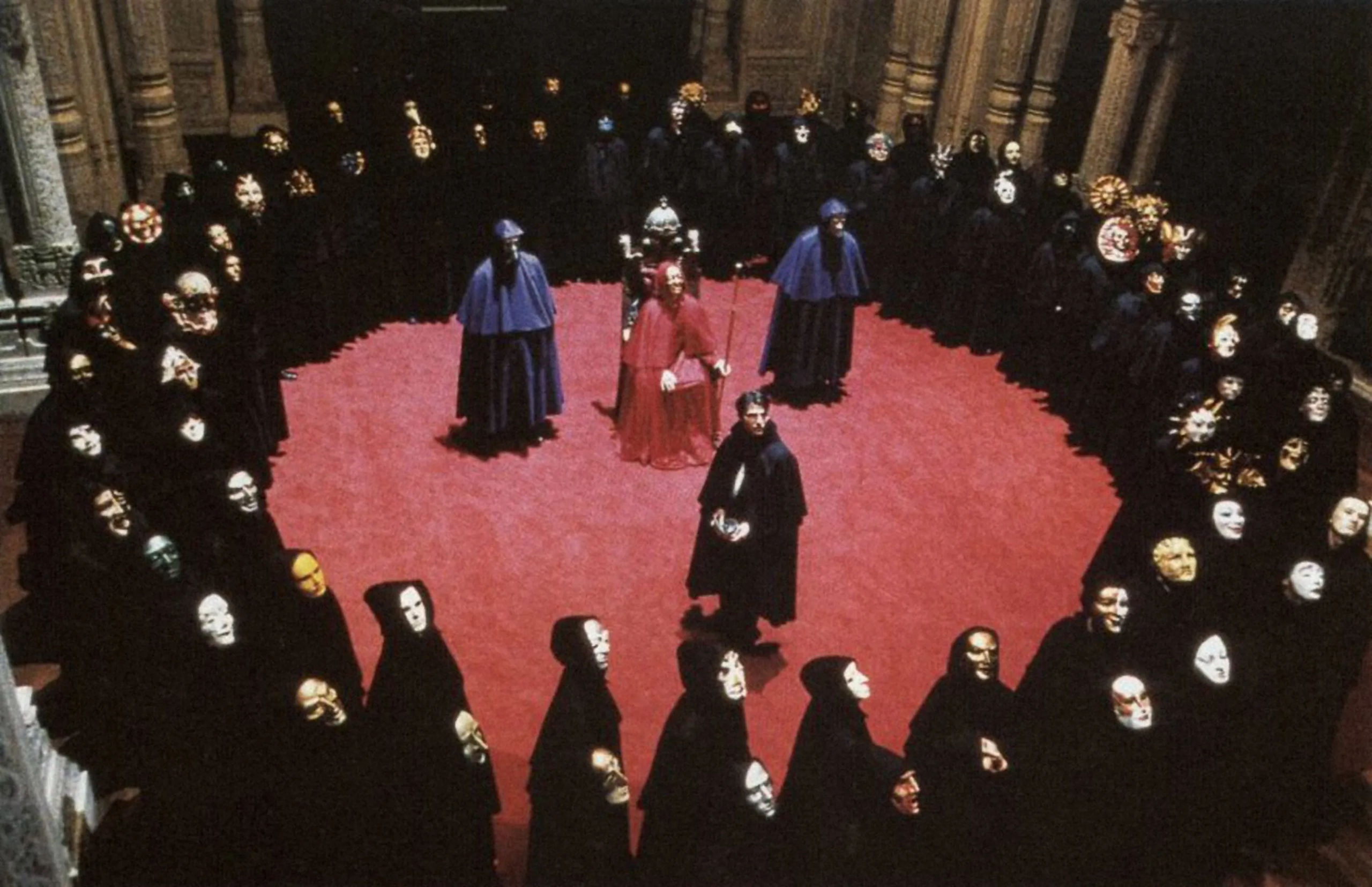
The Complete Kubrick is the entire filmography of legendary filmmaker Stanley Kubrick featuring 4K restorations of all 13 of his feature films. Stanley Kubrick is one of the most important filmmakers ever, in the same vein of Akira Kurosawa or Federico Fellini – but if you’re reading a monthly summary of Criterion’s physical media releases this entire sentence is incredibly silly and fluff as a film fan. This is far and away the most important piece of physical media that will be released this year (hell, probably the decade). This set will include the films Fear and Desire, Killer’s Kiss, The Killing, Paths of Glory, Spartacus, Lolita, Dr. Strangelove, or: How I Learned to Stopped Worrying and Love the Bomb, 2001: A Space Odyssey, A Clockwork Orange, Barry Lyndon, The Shining, Full Metal Jacket, and Eyes Wide Shut. Additionally, Kubrick’s three short films, Flying Padre, Day of the Fight, and The Seafarers, will also be in the release. While not specified on Criterion’s website, it is unsure as to whether these are all new 4K restorations. But it’s entirely possible that the Barry Lyndon and Eyes Wide Shut discs will feature the new restorations Criterion has previously done.
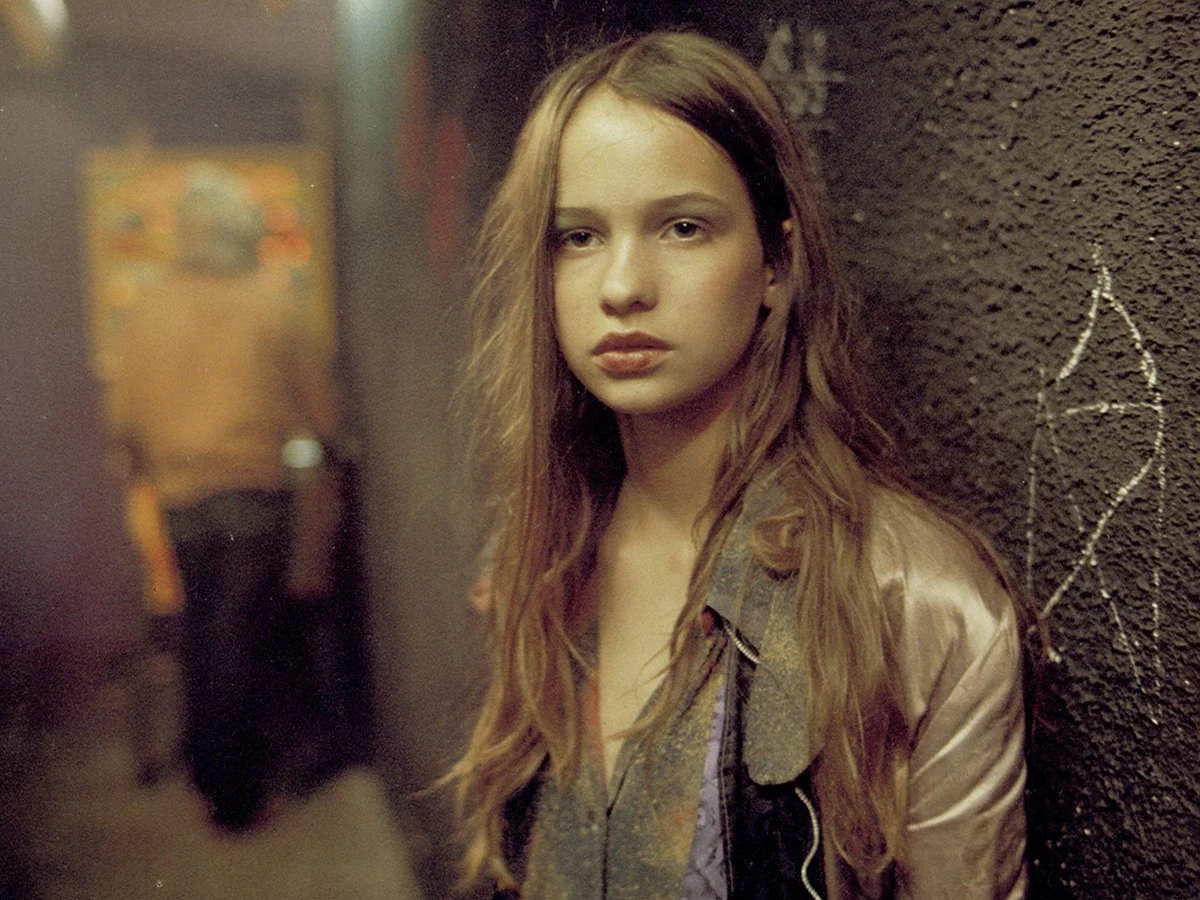
Christiane F.(1981)
Christiane F. is a film that I’ve avoided for some time. I’m no stranger to difficult films (Salo, La Grande Bouffet, Come and See, and In the Realm of the Senses have been viewed by these unfortunate eyes), but the events within Christian’s F. hit a weird spot for me personally. The film is about a 14-year-old girl who falls into heroin addiction in Berlin. My friends who have seen this describe it as depraved but sincere. Christiane F. has been a wishlist Criterion for some time and has a mass cult following behind it. I’m curious to check it out, and this new release might be the push I need to finally digest this picture. To add, this is another film in the Criterion Collection that stars the masterful David Bowie. Christiane F. is a 4K+Blu-Ray combo pack featuring a new 4K digital restoration approved by director Uli Edel.
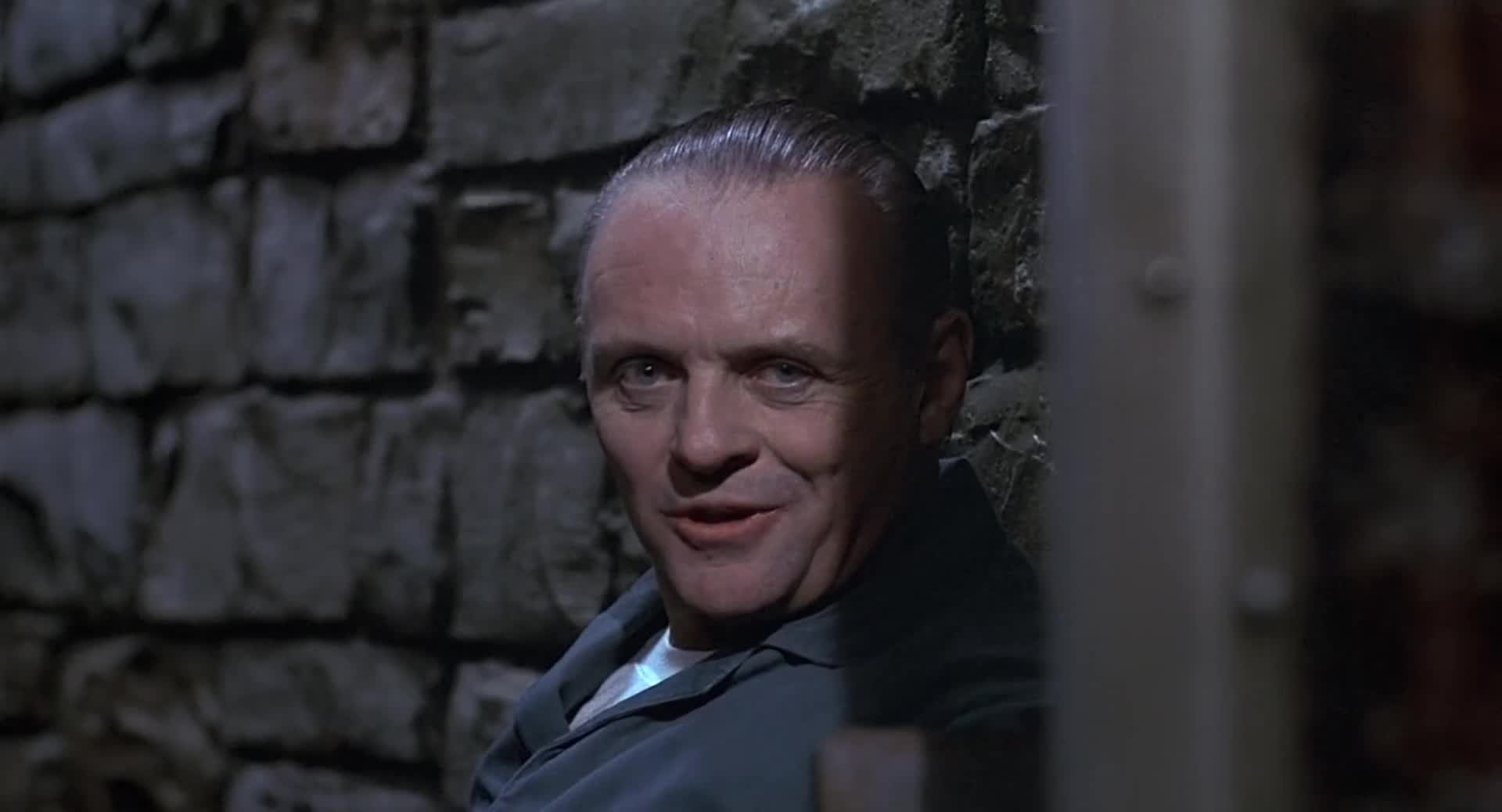
The Silence of the Lambs(1991)
It feels silly to go over in detail how incredible The Silence of the Lambs is. It wrote a whole new language of crime procedural with the monster guiding you to your destination. Jonathan Demme (rest his soul), was an excellent filmmaker and The Silence of the Lambs was his most successful feature on a critical and commercial level. Criterion has had the rights to its blu-ray for a number of years, but now we are getting a new 4K disc upgrade. I feel like anyone who collects Criterion has this release in their collection – so this should be an easy upgrade for any fan of cinema. The Silence of the Lambs is a 4K+Blu-Ray combo pack featuring a 4K digital restoration supervised by director of photography Tak Fujimoto.
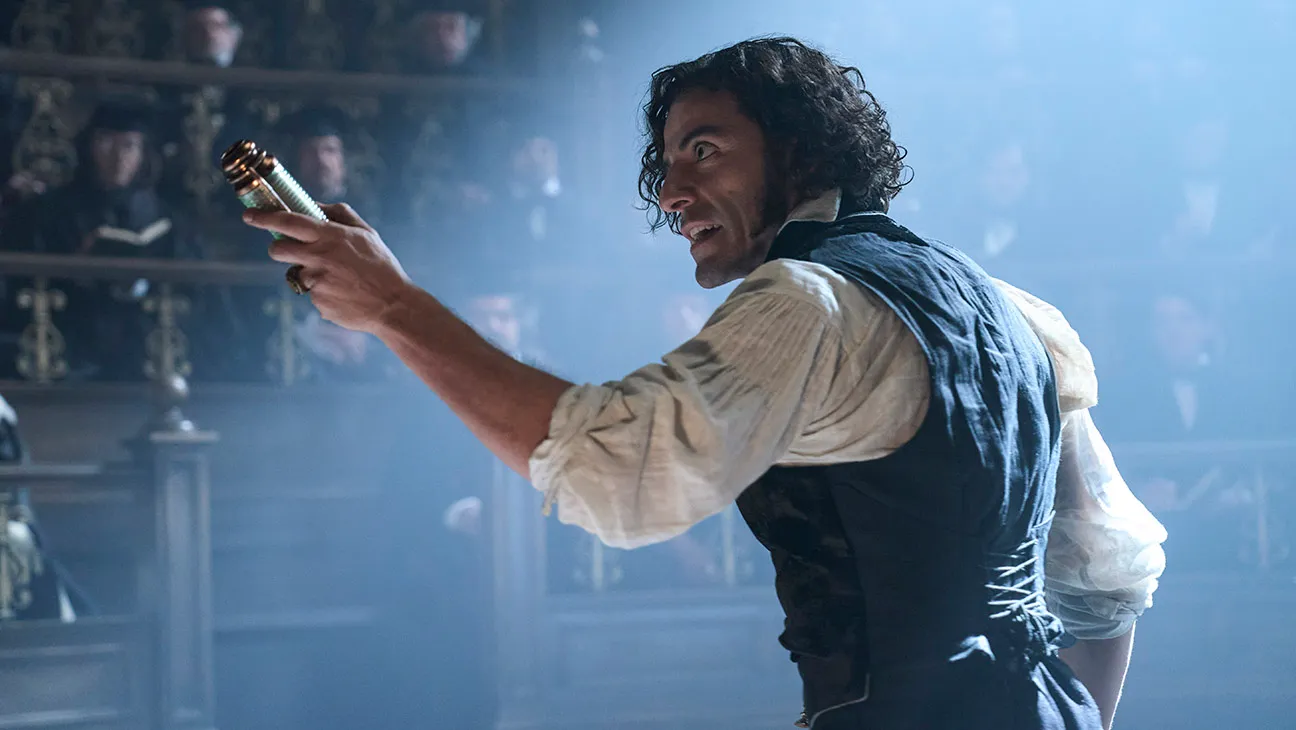
Frankenstein(2025)
Guillermo del Toro is one of my all time favorite filmmakers – and I’m a massive fan of Mary Shelley’s Frankenstein. Which is to say, I was a massive fan of this film. There were people who weren’t in love with this interpretation (and that’s fine!), but I think the production, the ethos, and the love put behind the camera really makes this film a hit for me. Following del Toro’s last Criterion release, the magnificently put together Nightmare Alley, we get another deluxe package for one of modern cinema’s greatest auteurs. It should be a no brainer that this is a day 1 purchase for me. Frankenstein is a 4K+Blu-Ray combo pack featuring a 4K digital restoration of both the theatrical release of the film as well as a new extended director’s cut.
Director: Nicolás Pereda Writers: Juan Francisco Maldonado, Nicolás Pereda Stars: Francisco Barreiro, Rosa Estela Juárez ,Luisa Pardo
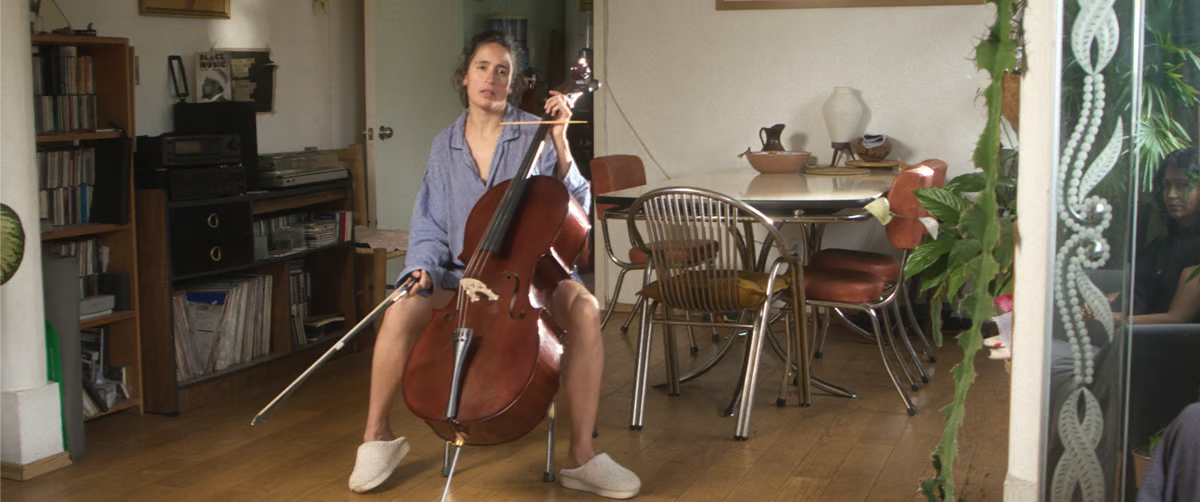
Synopsis: In Mexico, musician Tere hosts fellow composer Rosa for a TV interview. Their conversation wanders as unexpected guests arrive. A witty, absurdist comedy that lampoons art-world phoniness and pretension while honoring female friendship.
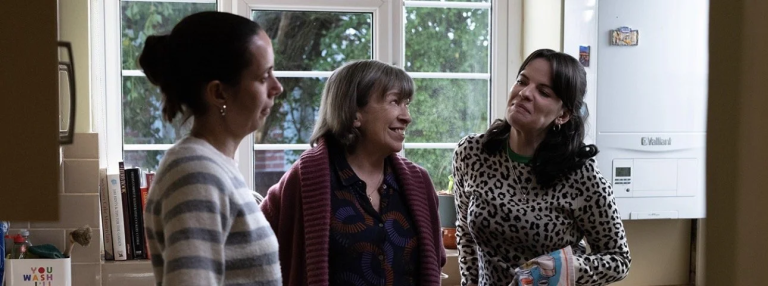
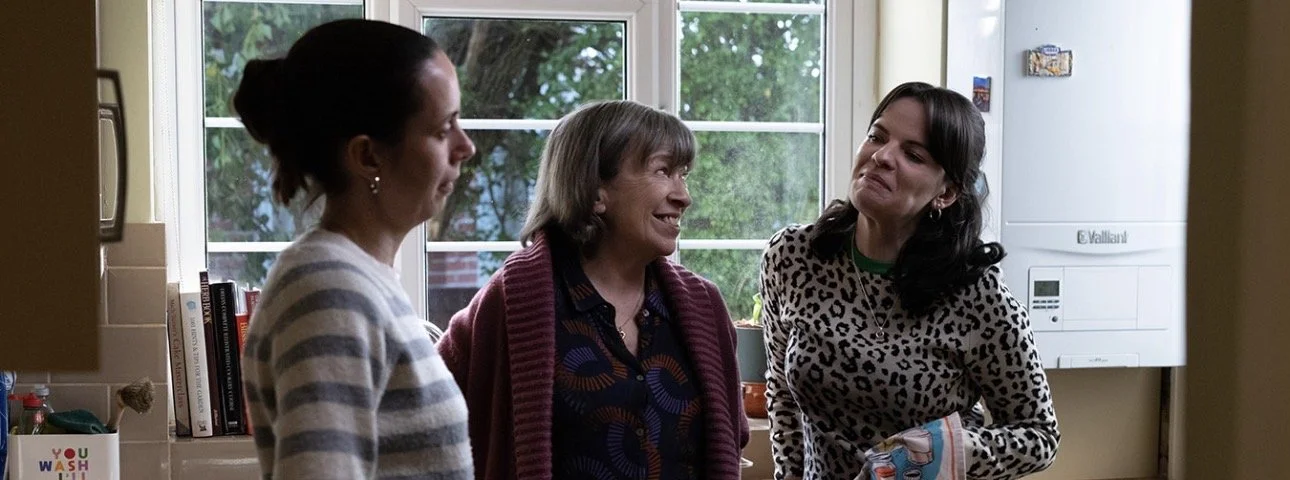
How can Nicolás Pereda’s Everything Else is Noise best be described? The most succinct, albeit crass, summation is this: it’s a 71 minute manifesto reminding its audience that men are trash. Impressively, as frustrating a reminder that this film is of that universal truth, one can’t help but giggle at its particular approach from the very outset. It’s all there in the introductory sequence which plays out as a backdrop to the opening credits. Set to a lovely classical composition, the first image Pereda captures is an absurd traffic jam. Even completely devoid of context, this scenario captured from a high-angled perch feels like we’re watching nature play out as it has since the inception of the personal motor vehicle. It’s a dilemma that couldn’t be more fundamentally understood. And in retrospect, as we see cars desperately try to inch their way towards freedom, or witness a train of cars forcibly seizing their way through a gap, the entire thesis of Everything Else Is Noise makes itself abundantly clear in these opening moments. They initially play out as merely a series of silly moments of human behavior for the audience to chuckle at. Yet it takes on the weight of being the perfect representation of life itself, in particular the experiences of the women at the center of this film and far beyond its 71 minutes alike.
That introductory traffic jam, much like life, is this constantly shapeshifting, ludicrous organism and experience. It simply works itself out however it best can because it must. And despite there surely being a more efficient method of handling traffic (or life) in a given situation, there will always be individuals who find it more befitting and beneficial to force their presence into a situation, leaving everybody else to fend fully for themselves in the wake of their selfishness. If it wasn’t obvious, the cars making a further mess of things in order to get themselves nowhere just a bit faster represent the men in the lives of Tere (Teresita Sánchez), Rosa (Rosa Estela Juárez Vargas), and Luisa (Luisa Pardo). We come to understand that Tere is watching this traffic jam from her apartment with quite the smile on her face. Tere perfectly understands the humor of the situation, yet also understands the inevitable frustrations it can bring to the surface. This observation shines a light on two central forces which will operate throughout the rest of Everything Else is Noise. Firstly, it’s indicative of the exact sort of dry humor this film will utilize as its bread and butter. Secondly, it is the first of many silent and effortless reveals about who Tere is as a person, and how she faces the struggles that come with merely existing as a woman. Through fundamentally simple traits such as these, Pereda is able to explore all the complexities within his central ideas while remaining completely distinct as a specific body of work.
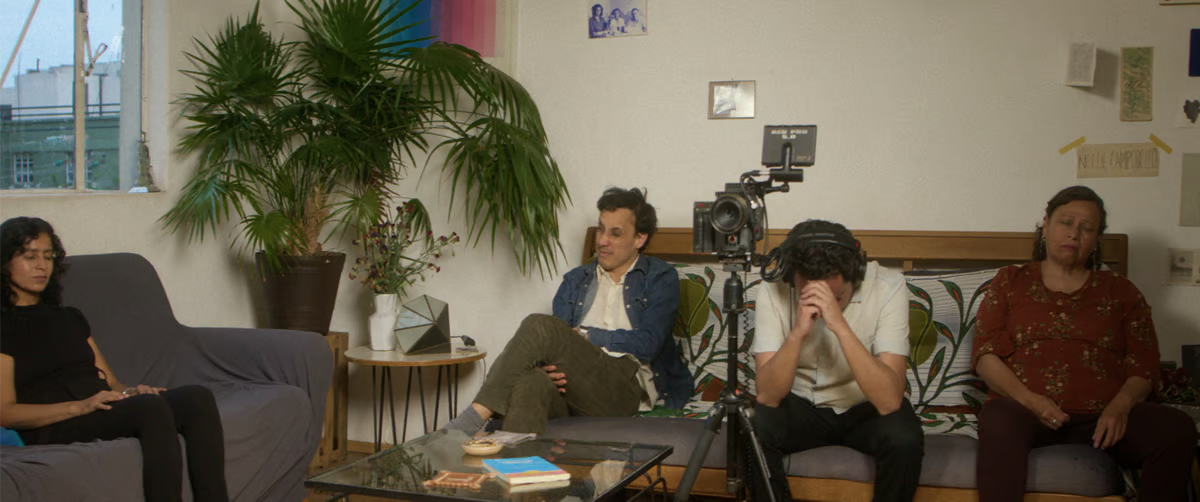
Despite its short runtime, Everything Else is Noise is overflowing with creativity and authenticity regarding its approach to exploring these women for all that they are. For as funny as this film is, and it is bound to cause uproarious laughter should an audience really key into its idiosyncratic wavelength, Everything Else is Noise is bathed in so much wistfulness. As we come to learn, Rosa is coming over because a documentary crew will be interviewing her and Tere’s space suits her needs in more ways than one. It’s perhaps less so because of the general ambience cited, and perhaps more due to the not-so-veiled notions of Rosa’s husband disapproving of any recognition towards her career as a composer. There’s an initial distance present in the very look and feel of the film that keeps the audience rapt with attention as we try to learn more about these women. The minimalist aesthetic works wonders in this regard, as the fuzziness of memories amongst these friends makes way for the potential opportunity of complete personal reinvention purely for entertainment’s sake. But it’s not all fun and games as we come to learn more about the lives of these women.
This is a great entry into the canon of single-day cinema. Beyond just the impressive nature of charting an entire day with varying levels of natural light or candlelight, this is also a film that reckons with the sheer passage of time. Specifically, it’s reckoning with a life that hasn’t just potentially passed by, but one that has been forcefully cast aside in favor of obnoxious men more than willing to play the part of “radical genius.” Luckily for the audience and the trio of women, Pereda and co-writer Juan Francisco Maldonado know exactly how to craft various exercises in toying with a few of these sorts of men. The documentary crew who arrive at Tere’s apartment are two of the male guinea pigs in this filmed experiment. During an initial setback, overblown frustrations lead the two men to take a walk while the issue remedies itself. During this time, Pereda keeps the camera within the apartment, yet all the audio from the women’s seemingly rich conversation is drowned out by the mundane ramblings of the two men in the street discussing their larger plans and passions. It’s designed to intentionally frustrate the audience; we immediately have the desire to learn more about these women and their lives as professional composers, yet are being forced to listen to everything else but that. The title of this film in moments like these rings true; all the distractions of life, from the blaring horns of street traffic to a neighbor’s dog incessantly barking, or the needless blathering of men showcasing their complete lack of creativity or originality is all just noise. It’s noise meant to drown out the rich lives and stories of three women eager to speak it all out into the world after years of frustrations and hardships.
Even with all that these women have experienced, still each one brings such a tender warmth to this film. We see such respectful understanding despite the frustrations and differences amongst one another. The mother/daughter relationship between Tere and Luisa is a particularly potent strength of this film which best embodies the rawness present across its brisk runtime. We see two women from completely different generations examining the hard-hitting truths about one another in an attempt to better understand the decisions that led them to their current circumstances. The documentary crew is asking surface-level questions in an attempt to sound more clever and artistic. These women instead seem to cut to the very essence of one another with simple observations that could only come from a place of innate curiosity and a desire to genuinely learn more in order to better help the other. It’s a beautiful sentiment, one captured so painfully by the performances of Sánchez and Pardo.
One more man enters the picture in the final moments of Everything Else is Noise and the thesis of the film clicks into place even further. His appearance perfectly crystallizes Pereda’s indictment on the insanely frustrating behavior men have gotten away with for far too long. As Tere is forced to hear countless digs towards her own work, Pereda captures a pure look of disgust on Sánchez’s face bathed in nothing but candlelight. It’s certainly one of the most striking images of the entire film, and likely one of the most effective of the entire year. Only then does it make way for an ending so joyous and touching that you can’t help but smile alongside the film and the whims of its filmmaker. For the men in this film, these women’s stories merely existed as a stepping stone on their illustrious paths upwards into the halls of artistic acclaim. But for these women, their experiences were merely their jobs, their lives, their entire calling, or some combination. But they’re also realistic in how they describe their experiences. Nothing was ever strictly a means to an end, but they acknowledge wholeheartedly that there’s little to no fluff or exciting flourish to their story. That’s not to diminish their experiences, but rather, is indicative of how the men in this film speak so loftily of themselves compared to the gentle demeanor of these women. That Everything Else is Noise can thread such a needle in such a short amount of time speaks to a clear talent in Pereda, and one that must be seen to be not only believed, but felt deeply.
Everything Else is Noise is celebrating its U.S. Premiere in the Main Slate section at the 64th New York Film Festival.
This week on Episode 706 of the InSession Film Podcast, inspired by the release of Primetime this weekend, we thought it would be fun to dive into our Top 5 movies about television! Not to be confused with television movies, which is a completely different list. There is something quite fascinating about the world of television, as depicted through the lens of cinema, as the films considered here are pretty extraordinary. This was a challenging list to narrow down given how rich the topic is overall. Even if a few seem pretty obvious as the best, there are some equally riveting underrated gems. Which is to say, we had a blast talking about these movies and why they resonate so viscerally. That said, here are our lists:
(Note: Please keep in mind that we each had different criteria for our selections)
JD
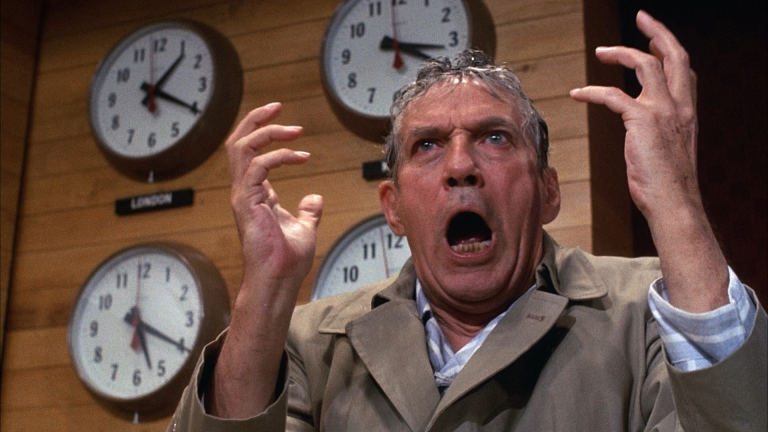
1) Network
2) Disclosure Day
3) I Saw the TV Glow
4) The Insider
5) Christine
Megan
1) The China Syndrome
2) The Truman Show
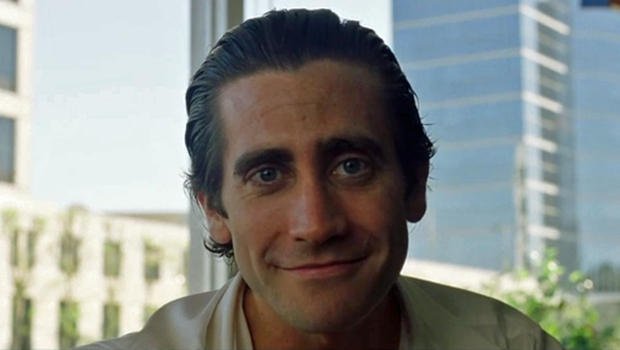
3) Nightcrawler
4) A Beautiful Day in the Neighborhood
5) The Hunger Games
Honorable Mentions (Combined) The King of Comedy, Good Night and Good Luck, Pleasantville, A Face in the Crowd, Broadcast News, Anchorman: The Legend of Ron Burgundy, Bamboozled, The Ring, Slumdog Millionaire, Saturday Night, Woman of the Hour, Scrooged
Hopefully you guys enjoyed our lists. If you agree or disagree with us, let us know in the comment section below. There are obviously more movies about television that we didn’t have time to mention (or they’re blindspots for us), so if your list looks very different than ours, we totally get it. That being said, what would be your Top 5? Leave a comment in the comment section or email us at [email protected].
For more lists done by the InSession Film crew and other guests, be sure see our Movie Lists page.
Director:David Ayer Writers: Cameron Alexander Stars: Brad Pitt, J.K. Simmons, Anna Lambe
Synopsis: After a harrowing plane crash, a Special Forces officer and his combat dog find themselves stranded deep in the Alaskan wilderness. Together, they are forced into a brutal fight for survival against the elements.
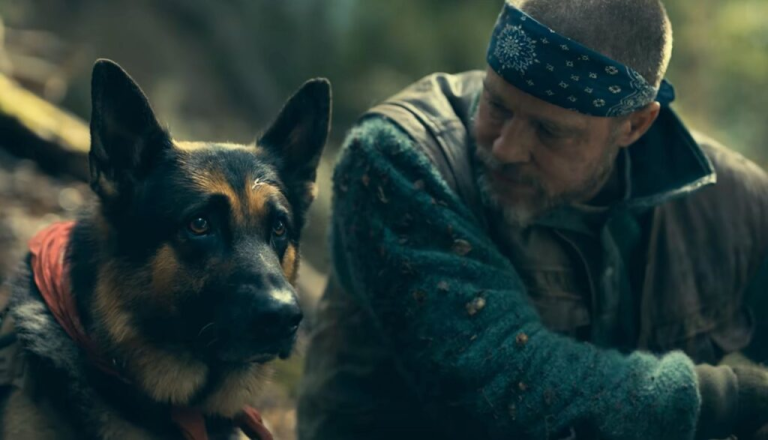
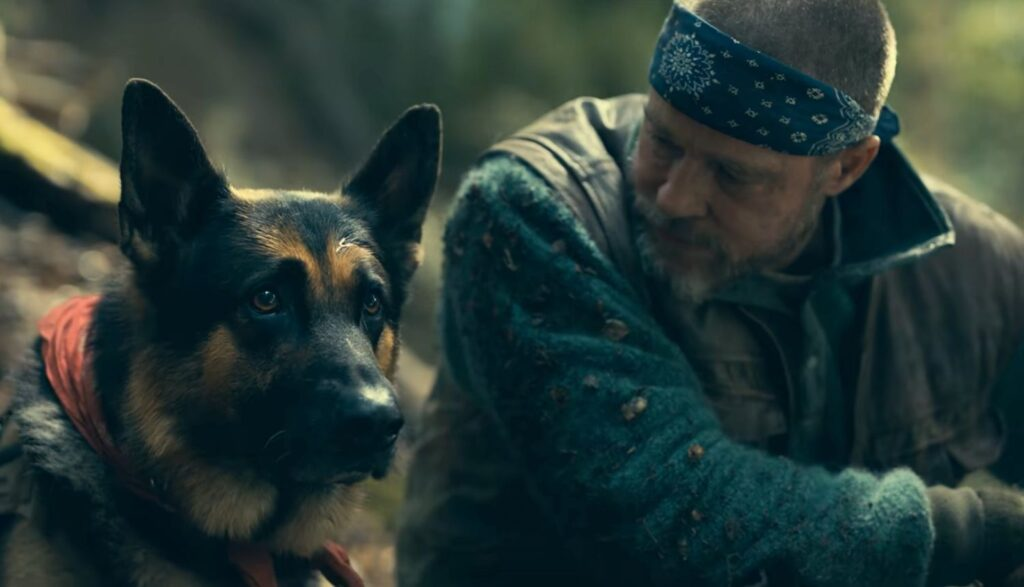
There needs to be a mild spoiler here, so skip this paragraph if you are not interested in that kind of direct plot detail. It’s hardly a spoiler as it happens a handful of minutes into the movie, but it is a plot point, so the warning is in place. This “spoiler” is only mentioned to set domestic animal lover’s minds at ease. We are given a scene at the beginning of the film of Odin (Uber), our dog friend, standing on a lonely country road with a person approaching him. After the close up of Odin’s eyes, we see a title on the next scene that reads, “One Week Earlier,” so yes, Odin survives this ordeal. With that said, Heart of the Beast still has a great deal of tension and suspense to keep us on the edge of our seats for the rest of the run time.
Humans, as a species, have created a society that keeps us from having to fight for survival. There are human systems within the human world, which absolutely create difficulties and challenges to the individual’s survival, but by and large we don’t have to sleep with one eye open. That’s why we go into the woods, or the bush, or any place without human inhabitants. We want to feel that closeness to other organisms, our planet, and the life cycle that keeps the natural order of things. We go to play at survival or to just try and find peace amongst our fellow sentient Earthlings. Though, it isn’t a controlled environment and as James (Brad Pitt) and Odin learn, there are variables even the most prepared can’t account for.
This is the biggest detriment to the film and Cameron Alexander’s script, though. Yes, James is the toughest of the tough. Yes, he is a man who can think quickly and competently about what he needs to do in order to survive. Though, by the third or fourth time he hits his head on something hard or is pulled underwater for too long, it borders on incredulity. The heart attack that puts James and Odin into this situation in the first place felt like it should have been the end, but it’s just one more thing for James to power through. Thankfully most of this is shown not told, so that we don’t have to have a hand wavy tough guy explanation. Alexander’s script gives us a lot of room to breathe and to understand.
If director David Ayer had written the script, it would have been filled with his usual talky manly man machismo which would have ruined this film. There’s only one scene that has some of this when James and Odin sit down with Watkins (J.K. Simmons). It’s there for us to avoid feelings and embrace bravado. Ayer instead creates a tension filled film with excellent action sequences from Alexander’s words. Ayer, along with cinematographer Mauro Fiore, show the harshness that belies a land of such beauty. The lushness of some scenes makes you feel as if you can smell the alpine trees and feel the spray of the cold water. They can also make you want to pet a very good boy.
While Brad Pitt is good, and is falling into a comfortable groove playing quiet, stoic types, Uber is the real star. The film finds itself more often than not in Odin’s perspective. It feels like it’s his story rather than James’ even if we are meant to identify with James more. Head dog trainer Esther Murphy has done an exceptional job here. Uber is a stellar animal actor. He conveys so much with the look of his beautiful honey eyes and, likely done later, a guttural groan or two. How much of this is editing doesn’t matter. The dog is there, he does that look, and steals the show. He’ll go down in the annals of great animal actors.
Heart of the Beast isn’t a perfect film. It isn’t even a great film. Yet, it’s a film that will surprise you with a tenderness and heartfelt warmth. It’s a film that shows that our connection to nature through pets and working animals that we care for is more than just a need for companionship. It’s a deep bond of true love and affection even in the most harrowing of circumstances. The ending is an absolute knock out because of that connection and makes the film worth seeing even if you’re not sold on the man vs. nature survival element.
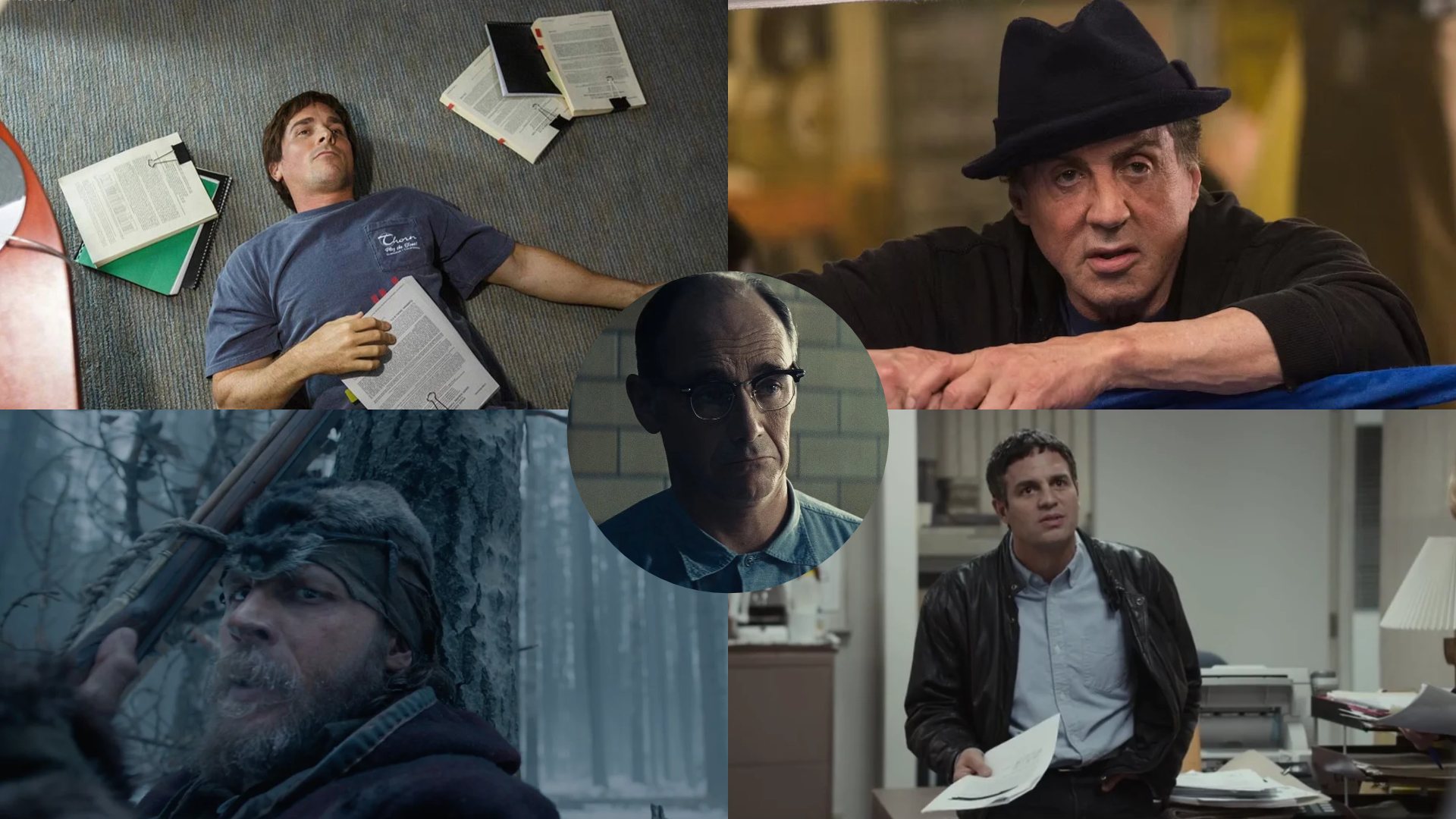
The 88th Academy Awards suffered a backlash after a lack of diversity amongst the acting categories, which was the second time in a row this happened. Even the Best Supporting Actor category could’ve given us a more interesting set of performances, but alas, this is what we got. We witnessed what felt like was going to be Sylvester Stallone’s shot at the title, but ended up going to a known character actor, Mark Rylance.
So, what happened here? How did Sylvester lose the Oscar? Was it his to win, or was it always going to be someone else winning the gold? In honor of I Play Rocky coming to theaters later this year, I’m going to examine how and why Mark Rylance managed to beat Sylvester Stallone at the Academy Awards.
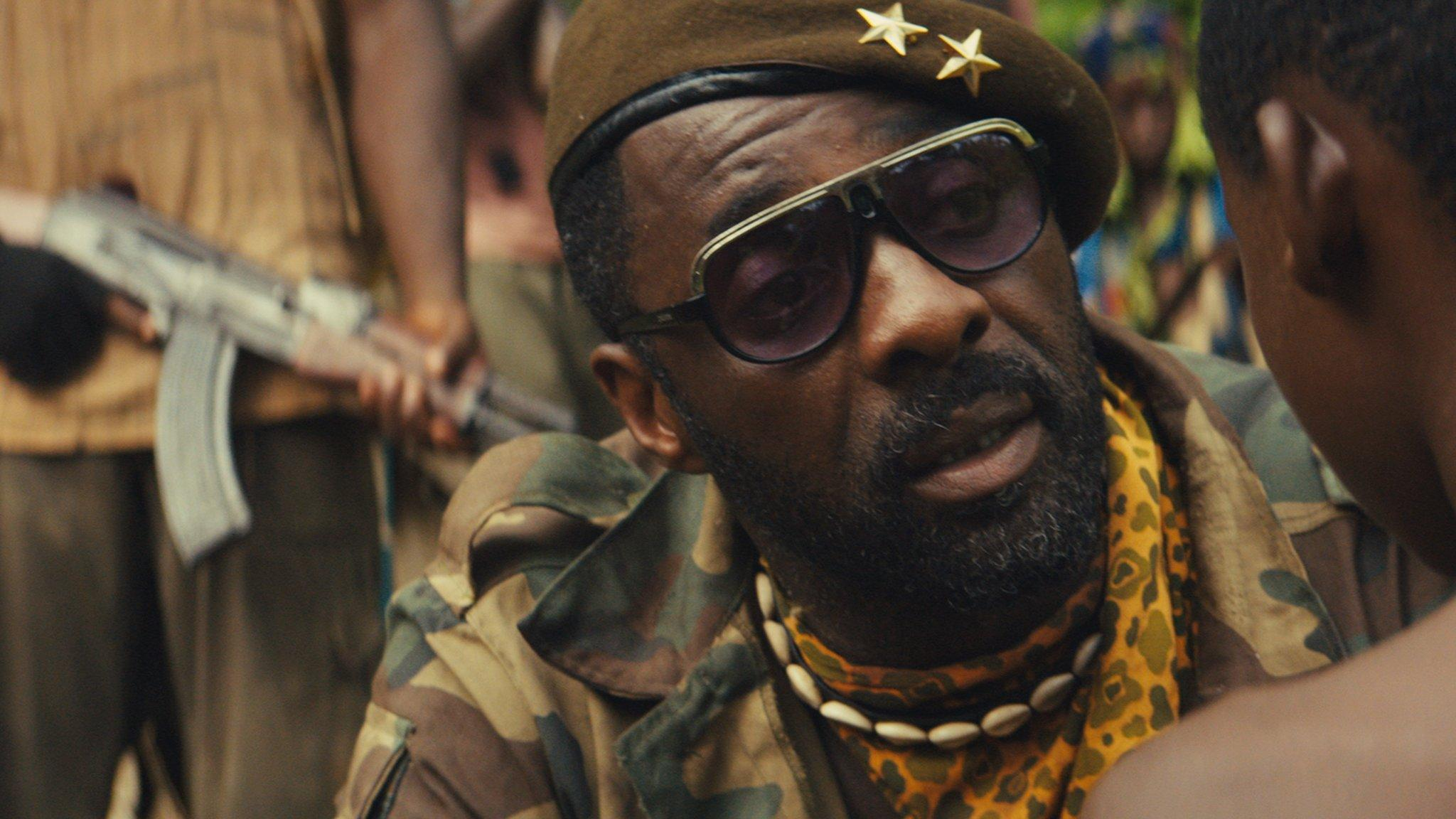
First thing we need to discuss are some of the potential contenders that could’ve been nominated in this category. We have Idris Elba in Beasts of No Nation, who got nominated at the Golden Globes, BAFTA, and won the SAG award. Another possible contender would’ve been Oscar Isaac for Ex Machina; I’m not the biggest fan of the film, but I felt Oscar did such a tremendous job in that role. I would’ve even taken Benicio del Toro for his performance in Sicario; after all, the film did score some tech nominations for Best Original Score, Sound Editing, and Cinematography.
As for the actual nominees, this was an underwhelming crop for me. They’re not terrible performances per say, but outside of Sylvester they’re not ones that I’d actively jump for to give an Oscar win. To me, the biggest surprise in terms of who showed up in this lineup was Tom Hardy for The Revenant.
I get that the film was a big hit for voters, but outside of Critics’ Choice Awards he didn’t land a nomination in any of the major televised awards. Then again, he also had a stacked year of films; some of which were disappointments like Child 44 or Legend, but another big one in 2015 was Mad Max: Fury Road. And sometimes when you have a solid year for a certain actor, voters can rally behind the more likelier contender and nominate them for that film. But with The Revenant, he had the sadistic and villainous role; a type of role that can get nominated at the Academy Awards. Without any major nominations from SAG or BAFTA, Tom had no shot at winning the gold.
What about Mark Ruffalo in Spotlight? Afterall, he’s in a top three contender with Spotlight and was coming into the night with a guaranteed Oscar win for Best Original Screenplay. While he was on his 3rd Oscar nod, he had missed out on getting a SAG nod for his performance; he did win with the cast at SAG for Best Cast Ensemble, but that doesn’t always help you out for the win. Also, I do believe that there were other performances in the ensemble that received better praise than Mark. Outside of his big acting moment towards the second half of the film, it’s not the type of acting that would warrant a nomination.
As for Christian Bale in The Big Short, he could’ve been a contender had he not already won a few years prior. I also feel that while the film was a top three contender for Best Picture, it was only guaranteed to win an Oscar for Best Adapted Screenplay. Yes; it did win the PGA and ACE Eddie prize for Comedy/Musical category, but it couldn’t nab the Best Ensemble prize at SAG.
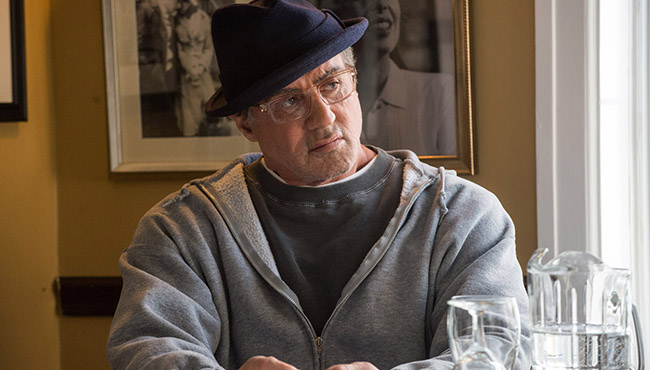
Of the actors in this category that I thought had a shot at winning the Oscar, I would argue it was Sylvester Stallone for Creed. While he hadn’t been nominated since his breakout film, Rocky, he was a known movie star for decades. Sylvester had his fair share of hits and bombs throughout his career, but was never taken seriously as a dramatic actor since then outside of Copland. It wasn’t until Ryan Coogler came in and pitched this story to the actor. Despite refusing to do Creed numerous times, Sylvester ultimately agreed to it.
Not only was this a box-office hit and critically acclaimed, it netted the actor his 3rd Academy Award nomination and even won a Golden Globe and Critics’ Choice Award for Best Supporting Actor. By that point, he had a narrative of being this overdue veteran, who went back to his roots and was to win this Oscar for a role many had thought he deserved with Rocky. Unfortunately, Sylvester Stallone came up short on Oscar night once again.
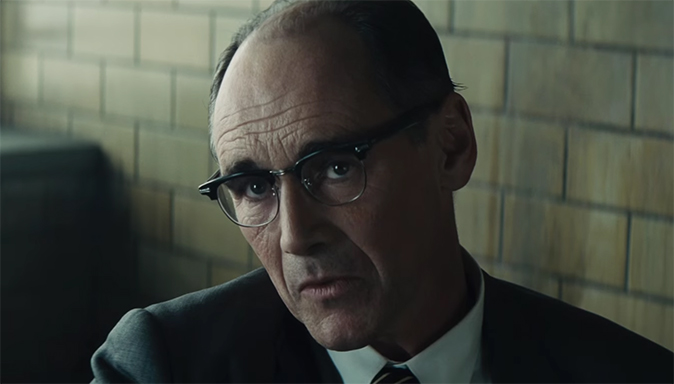
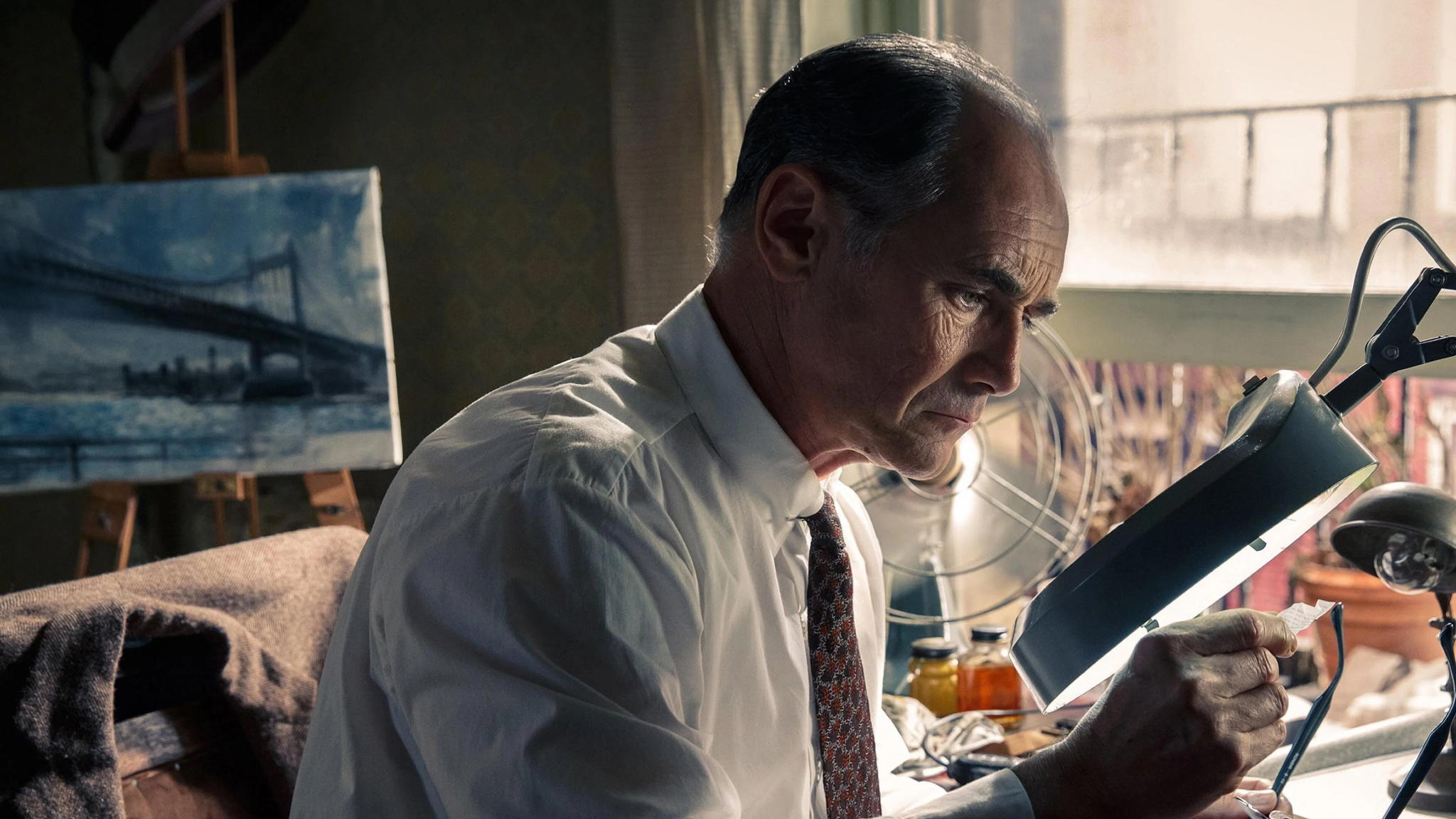
Much like his performance in Bridge of Spies, Mark Rylance was a quiet contender that slowly crept up on voters. Granted, he didn’t win many prizes and even lost SAG to Idris Elba for his performance in Beasts of No Nation, which didn’t even score an Academy Award nomination. When his name was called on Oscar night, my jaw dropped to the floor. I was stunned that not only did Sylvester Stallone lose the Oscar, but he lost to this performance. How exactly did this man win the prize?
First off, Mark Rylance was in a highly respected film directed by an Oscar-winning legend, Steven Spielberg. Bridge of Spies not only became a box-office hit, but also garnered critical acclaim and even scored six Academy Award nominations. Creed only managed to score a lone acting nod for Sylvester himself.
While the performance by Mark isn’t showy, it does leave an impact with his monologues and audiences can empathize with his character. If anything, people coming out of Bridge of Spies remembered his performance more than Tom Hanks. Even if he didn’t have a big name hanging on his shoulders back in 2015 for his film work, he was a respectable, character actor at that time for his stage and television work. On top of that, he had won a handful of prizes over the years for his work in theatre winning a few Tony awards.
As for his performance in Bridge of Spies, Mark Rylance only won the BAFTA. And while he lost Golden Globes and Critics’ Choice Awards, he managed to walk away with an industry prize. Yes; the Golden Globes and Critics’ Choice Awards can help you secure a spot at the Oscars, but they’re not voted by the industry themselves. They can help set up a narrative, but it’s the industry prizes with SAG and BAFTA that help you along the way to win the Oscar.
Something I didn’t realize until now as to why Mark lost at SAG was that Idris Elba had a stronger movie. While Bridge of Spies got a Best Supporting Actor nod from the guild, it wasn’t nominated elsewhere at the ceremony. Whereas Beasts of No Nation scored two nominations: Best Supporting Actor and Cast Ensemble. It was a similar advantage A Complete Unknown had years later, with Timothée Chalamet beating out the eventual Oscar winner, Adrien Brody, for The Brutalist. Not only was Beasts of No Nation a priority film for voters with its additional nomination, but Idris also had a great year on television for his work on Luther.
Bottom line: if you can’t score a win at BAFTA or SAG, your chances of winning the Oscar decrease. Sure; we’ve seen actors who’ve been able to win without those two. But as we’ve seen over the years, each season is not the same as the last one. We’ve witnessed completely different types of outcomes, especially in back-to-back years.
One year, we see Marcia Gay Harden win the Oscar without getting a single televised nomination for Pollock. But then the next year, we could witness a sweeper for the same category. Had Sylvester Stallone shown up as a nominee at SAG or BAFTA, or even Creed showed up in other categories like Best Picture or Director, maybe he could’ve had a shot at the title. As is, Sylvester Stallone will have to settle with his two prizes from Golden Globes and Critics’ Choice.
Synopsis: Follows Latif, a devoutly religious hitman, who embarks on a desperate journey across Houston to protect his children after his wife dies, confronting forces closing in and beliefs threatening to unravel.
Many people, at some point in our lives, have looked up to a higher power for answers. Being a devout follower of a religion and keeping your faith alive in even the shakiest moments of life, leading with the hope that someone is listening to your prayers and will come through as long as you believe. However, when that belief is shaken by personal hardships and loss, what then becomes of that side of ours, especially when it is most needed in those moments to find a path forward? What kind of a person will you be then? These are the central questions and themes of Bassam Tariq’s film, Your Mother Your Mother Your Mother.
Latif (Mahershala Ali) is a hitman who does his work as a “sword” for God, taking out targets who would otherwise bring harm upon others using only a blade at his disposal. A devoutly religious man who constantly looks to his faith to guide his hand and pave the way for him and his family, he finds his life shattered to pieces when his wife dies, leaving him alone to care for his three children, distraught and wondering why, after everything he has given to God, he is instead losing more. When he is given a job to take on Hwan Yoon (John Cho), a religious leader whose grip is tightening around Houston, Latif is torn between the trials and tribulations that arise from this situation, as well as having to care for his children, particularly his baby daughter Aziza who is in desperate need of breastmilk after her mother’s passing.
The title Your Mother Your Mother Your Mother comes from a hadith in Islam that highlights the account of a man asking who is most deserving of respect and love. The Prophet responds with “your mother.” When asked who comes next, the Prophet responds once again with “your mother”, and when asked who comes third, the Prophet says “your mother.” The man asks a fourth time, at which point he receives a different answer, but that is a discovery the movie holds on for a while. As Latif makes his way through life in the movie, the impact of his wife’s loss is one that informs every decision and emotional response, as he begins to reckon with being a father more than ever and having to be there for his children, who he has been distant from, thanks to his work. The biggest challenge comes through Cho’s Paster Hwan, who is menacing in the role as a conservative church leader who wants to “liberate” places where Islam is practiced. With his faith being on the line now as well, with less things working out for him and his work bringing danger to the doorstep, the characterization for Latif becomes far more complex, and brought to life brilliantly by Ali, giving one of his strongest and most powerful performances to date, and one of the year’s best in general.
Perhaps the most wonderful aspect of Your Mother Your Mother Your Mother is its look into religion and its beauty, even when you find yourself doubting it. While Latif may not be perfect, and he feels increasingly distanced from God, the movie often has moments, like with Latif’s children Fatiha and Qadir, brought to life by incredible performances from Adia and Jahleel Kamara, and his mosque’s imam (Giancarlo Esposito) that serve as a reminder of the paths we travel and finding a sense of absolution and goodness through it all, and how even when things seem strained, there is something to anchor us. It makes Bassam Tariq’s writing and direction all the more nuanced and transcendent in moments, especially elevated by Katelin Arizmendi’s stunning cinematography, which contains some of the year’s best visuals, and Son Lux’s wonderful score, proving to often be a celebration of Islam and capturing some incredibly powerful moments that elevate the movie and give more credence to its events.
Make no mistake, though, as Your Mother Your Mother Your Mother may be emotionally somber and look into such thematically deep aspects of its story, it is also extremely effective as an action thriller, especially when Latif has to take on multiple people going up against him and trying to evade a situation. The action is kinetic and terrifically filmed, with some brilliantly choreographed moments that are stunningly realized. It once again makes you lament that Tariq and Ali, who were previously attached to Blade at Marvel, never got to realize that vision, but the work here makes for more than effective compensation. To top it off, the movie is also extremely funny, with more than a handful of comedic moments and even running jokes that add levity to the increasingly darker story threads and escalating tensions. Among everything, the movie also nails its themes of fatherhood and Latif’s connection to his children, leading even more to some of the movie’s most emotionally strong and funny moments. The balance of these tonal shifts, expertly handled by Tariq, is commendable.
There is not a single second in Your Mother Your Mother Your Mother that is wasted. Every moment of visual storytelling, every line of dialogue, every shot feels like it is brimming with purpose, and each minute detail eventually has a payoff that makes every decision, particularly towards the final act as everything begins to come together. The result is a powerful, thrilling, funny, heartfelt, and beautiful movie that succeeds on every level. This is a brilliant showcase for Bassam Tariq as a storyteller and Mahershala Ali’s acting prowess. Further backed by excellent supporting turns and the movie’s vibrant visual canvas, the result is one of the best movies of the year.
On this episode, JD and Megan discuss Padraic McKinley’s directorial debut film The Weight! While there’s much to love about Ethan Hawke and Russell Crowe’s performances, it’s McKinley’s direction that maybe most impresses here.
Review: The Weight
Director: Padraic McKinley Writers: Matthew Booi, Shelby Gaines Stars: Ethan Hawke, Russell Crowe, Julia Jones
Director:Antonin Baudry Writers:Antonin Baudry, Bérénice Vila Stars: Simon Abkarian, Niels Schneider, Anamaria Vartolomei
Synopsis: 1943–1944. To free France, General de Gaulle must unite a divided Resistance. He also fights to establish his legitimacy with the Allies.
If you liked De Gaulle: Résistance, you’re going to like De Gaulle: Liberté. That much is clear. The second part of Antonin Baudry’s epic centered around French general Charles de Gaulle before he became President of France contains the same aesthetic impulses that defined Part One, and enough dense exposition to please any fan of historical epics. The only difference is that Volker Bertelmann did not return to compose part two and was instead replaced by Théo Cascio, in his second-ever feature film score.
At 29 years of age, Cascio creates an enveloping soundscape that refuses to follow in the footsteps of Bertelmann’s repetitive motifs. He will, of course, tip the hat to the sonic palette that the Oscar-winning composer established, but there’s never been a clearer difference in sound than if one hears both scores back-to-back. Anyone who has been accusing Bertelmann of “reheating his nachos” might be the most vindicated people alive once they heard what Cascio accomplishes in De Gaulle: Liberté, elevating the film’s on-screen action with enough ferocity to convert even the biggest skeptics of the character into fervent patriots.
Because, yes, Liberté once again bathes in the same excessive patriotism as its prior installment. Every action the protagonist performs is for the good of “LA FRANCE!” as he engages in diplomatic talks with United Kingdom Prime Minister Winston Churchill (Simon Russell Beale) and United States President Franklin D. Roosevelt (Campbell Scott) to establish his legitimacy within the allied forces. His goal is for France to be liberated from the Axis powers that have controlled the country since 1940 and to dissociate completely from the Vichyists, to the detriment of FDR, who believes Henri Giraud (Thierry Lhermitte) is best placed to lead the country following Admiral Darlan’s (Mathieu Kassovitz) assassination.
There are lots of diplomatic talks as De Gaulle is pressured to sign an agreement giving Giraud permission to lead France and the Allies into victory, but he refuses to sign anything because of the latter’s connections to the previous Vichy regime. De Gaulle believes he is the best placed to form a new – and liberated – France, if the powers that be give him complete control of the operations to ensure the freedom of his country, but the U.S. and U.K. are skeptical that his unorthodox methods will work.
Just like the first part, De Gaulle: Liberté can take a while to get going. We’re essentially following three parallel stories – De Gaulle attempting to convince Churchill and Roosevelt to trust, General Leclerc (Niels Schneider) facing German troops in the Libyan desert, and Jean Moulin (Félix Kysyl) ramping up the resistance with Olivia (Anamaria Vartolomei), within the streets of Paris – which eventually intersect during its final scene. It can feel like a lot to take in, especially when Baudry packs so much historical information into each exchange, but unlike the first part, none of it feels outright propagandistic. Some might disagree, especially if you have strong feelings (one way or another) about De Gaulle, but this critic had limited knowledge of who he was for France before seeing Baudry’s diptych.
Perhaps this influenced my judgment on the movie. It probably did, but the thing is: the craft that’s on screen is undeniable. The action sequences have a sweeping grandeur to them that is severely missing in American films, especially the Ksar Ghilane battle, which is as spectacular to look at as Résistance’s “morceau de bravoure” in Bir Hakeim. I was half-expecting Liberté to be more action-oriented than the first entry, but it’s as deliberately paced as its prior installment, which could alienate viewers looking for less “exposition” and more “action,” but I’m completely unsurprised by this choice, since De Gaulle’s actions during this time were primarily diplomatic.
Interestingly enough, instead of (yet again) recreating D-Day, in which the film culminates, Baudry utilizes archival footage after visualizing the most potent image of the entire duology, as De Gaulle stands in front of a cliff, looking onwards during a thunderstorm as lightning strikes, and shows the extent of the fleet preparing to travel to Normandy. This strong image is layered with so much significance and represents how De Gaulle will be remembered as in the eyes of France. Perhaps Liberté’s ending is a bit excessive in its patriotism, but the word “patriot” is probably closely associated with De Gaulle – no matter what his critics (and there are many valid criticisms) say.
In any event, Simon Akbarian’s performance succeeds greatly in expressing what De Gaulle means to the eyes of France, but I was surprised how more time was given to Schneider’s Leclerc and Vartolomei’s Olivia than to the film’s titular character. The latter, in particular, is one of the most exciting burgeoning talents working today, and her turn here is especially sensitive, especially during the film’s denouement, when France’s freedom inches closer to reality and Olivia is stuck between danger and liberation. It’s a final moment that cements the film as one of French cinema’s greatest contemporary achievements, even if its structure is slightly wobbly and Baudry seems more concerned with giving audiences a “history lesson” than with something with real cinematic weight.
However, when the action hits, it’s so spectacular that any thought of Liberté’s “dense plotting” immediately dissipates and perhaps will encourage you to yell out “LA FRANCE!” when the diptych eventually reaches its natural conclusion. It’s a rare two-part epic that doesn’t disappoint and gives us grandeur so palpable that Hollywood should feel ashamed of the garbage they put out weekly that qualifies as “epic.” Nothing more epic came out this year than De Gaulle, and that’s a fact.
This week on the InSession Film Podcast, using Primetime as inspiration, we discussed our Top 5 movies about television! JD also tells a funny story about his weekend and we give our thoughts on this year’s TIFF winners.
– JD Story (1:46) We begin the show this week with JD telling a funny story about taking his kids on a Disney cruise over the weekend. They tried to surprise their oldest (Sam) as an early birthday, and let’s just say it didn’t go as expected. Kids are fun.
– TIFF Winners (16:02) We next shift to this year’s Toronto International Film Festival and the winners announced over the weekend. To no one’s surprise, La Bola Negra won the People’s Choice Award and will likely be a major Oscar contender. The documentary award was a bit of a surprise, but generally there was some compelling winners this year.
– Movies About Television (29:07) Not sure what it is about exploring the world of television, but the films considered here are pretty extraordinary. This was a challenging list to narrow down given how rich the topic is overall. Even if a few seem pretty obvious as the best, there are some equally riveting underrated gems. Which is to say, we had a blast talking about these movies and why they resonate so viscerally. With that said, what are your favorite movies about television?
If you want to help support us, there are several ways you can help us and we’d absolutely appreciate it. Every penny goes directly back into supporting the show and we are truly honored and grateful. Thanks for your support and for listening to the InSession Film Podcast!
Director:Susanna White Writer:Suzie Miller Stars: Cynthia Erivo, Daniel Ings, Noma Dumezweni
Synopsis: Follows Tessa, an ambitious defense lawyer. She expertly represents her clients, including those who are accused of sexual assault. However, she finds out that the law does not provide justice after being raped by a coworker.
Popular stage-to-film adaptations have often become the darlings of Academy Awards voters, with over a dozen walking away with the coveted Best Picture Award. The latest to attempt the feat is Prima Facie, based on the one-woman show written by playwright Suzie Miller that landed actress Jodie Comer a Tony Award. Sadly, though, despite a brilliant turn from lead Cynthia Erivo, the film adaptation falls afoul of becoming an ultimately disappointing courtroom drama.
The film follows Tessa (Cynthia Erivo), a young, hard-working British defense barrister who has forged a notorious winning streak in the courtroom and garnered awards for her fierce approach. Via a rather annoying inner monologue that plagues much of the runtime, often spelling out thoughts and emotions that Erivo is perfectly capable of conveying herself, the audience learns of Tessa’s disdain for some of her fellow lawyers who received preferential treatment to get where they are. Meanwhile, she has had to overcome crippling imposter syndrome and being looked down upon to become one of the best in her firm. Her formidable reputation has largely been built on winning sexual assault cases, looking for any loophole the law allows before hounding victims on the stand to secure her clients a victory.
Everything on the surface is going brilliantly, and not just in her career, which is about to take another leap forward via a high-profile job offer. Her personal life is thriving too. Her brother, Johnny (Toheeb Jimoh), has just been told he’s about to become a dad for the first time, while Tessa has started a promising relationship with her co-worker Julian (Daniel Ings), who everyone regards as extremely charming. That is until one night, after the pair share what was seemingly a nice date, Julian rapes Tessa. Now finding herself on the other side of the legal system, with her whole world shattered into pieces, Tessa’s faith in that system is about to face the toughest test imaginable.
The biggest problem with Prima Facie is that it feels like two distinctly different movies stitched together to create one rather messy whole. Suzie Miller also penned the screenplay for the adaptation, which makes the first half feel all the more baffling. For those who go in blind, they could easily think the story is primarily about a Black barrister trying to make it in a whitewashed profession, where she faces prejudice while suffering from debilitating self-doubt. Around an hour of the movie’s 109-minute runtime is dedicated to building out Tessa’s life, to the point that it feels like an entirely different drama from the one that eventually emerges.
That tonal mismatch becomes even more glaring after the rape occurs and the film reveals its central dramatic conflict. Outside of a couple of scenes dealing with the immediate aftermath, it quite literally fast-forwards 1,107 days into the future. There’s no real delving into what happened to the personal and professional life we’ve been a part of up until that point, leaving huge parts of Tessa’s journey open to interpretation.
It’s such a significant gap because the first half spends so much time establishing her career, relationships and complicated attitude toward the very system she will eventually have to rely upon. By the movie’s own admission, the cases Tessa had been working on are like a “taxi rank:” you get what you’re given. It leaves open the uncomfortable question of whether, during those 1,107 days, Tessa continued fighting defense cases for accused sexual assaulters.
Skipping almost three years means the movie jumps over what could have been some of its most fascinating material. How did returning to work affect her? Did her approach to sexual assault cases change? How did somebody who had spent years exploiting weaknesses in victims’ testimony reconcile that with suddenly becoming a victim herself? Rather than feeling deliberately ambiguous, it feels like an entire act is missing.
From there, Prima Facie settles into a courtroom drama centered on Julian’s trial. At least there, the movie does a decent job of portraying the lengths defense attorneys will go to in order to reduce a woman’s claim to nothing. Simon Russell Beale plays Julian’s defense attorney, spinning stories that mess with the jury’s heads and seeking to take advantage of a vulnerable Tessa without outright calling her a liar. It’s an uncomfortable process, but one that feels necessary to highlight some of the gaping flaws in the justice system surrounding sexual assault.
Director Susanna White also delivers some incredibly chilling scenes that will move many to their core. One particular sequence, where Tessa’s mom June (Noma Dumezweni) is seen cleaning Tessa in the bathroom as a way of depicting her washing away the “shame” she feels, is particularly moving and hard-hitting. It’s handled in a way that doesn’t feel preachy and genuinely comes across as sympathetic toward the many victims of sexual assault.
However, those nuanced moments are too infrequent for the subject matter to consistently carry the visceral impact that it should. Particularly during the courtroom sequences, there are moments that feel overly familiar and almost engineered to become an awards player rather than anything outright profound. There was a chance for Prima Facie to dig deeper into both the prevalence of sexual violence against women and the difficulties victims face when seeking justice. Instead, aside from some text at the end highlighting alarming statistics, that wider discussion feels somewhat like an afterthought.
Cynthia Erivo, to her credit, does the very best she can with the material she’s given. The internal monologues often work against her rather than with her, unnecessarily explaining emotions that are already evident in her performance. Even so, she compellingly shows a multitude of different sides to her character. It’s genuinely impressive how she can go from a tender, caring person full of energy to a trauma-fueled individual showing all the signs of dissociating from the world around her. It’s a performance that absolutely deserves recognition but may find itself lost amid the movie’s shortcomings.
It’s abundantly clear what Prima Facie wants to say about a legal system that can make seeking justice an ordeal in itself for victims of sexual assault, something Miller’s play powerfully pointed out. The film adaptation has flashes where that message lands with devastating force, helped enormously by Erivo’s performance, but its decision to skip over such a crucial part of Tessa’s journey stops it from hitting as hard as it should.
That doesn’t mean the film has nothing worthwhile to say. If Prima Facie sparks conversations around how sexual assault cases are handled and encourages meaningful change, its impact could extend far beyond its shortcomings as a movie. But judged as an adaptation and a piece of cinema, there’s a frustrating feeling that a far more powerful version of Prima Facie was sitting somewhere within this one.
Synopsis: In 2006, To Catch a Predator host Chris Hansen sets out to make television history.
To Catch a Predator is the type of TV show that manages to capture the attention, or at least awareness, of nearly every person on the planet, regardless of their generation. It’s a show that’s struck a chord not just through the inner core of the mid-2000s, but also impacted the deeper, bleak realities we find today within the modern landscapes of both reality TV and journalism. Lance Oppenheim’s Primetime completely revels in the frenzy surrounding the American penchant for deriving entertainment from the darkest of true crime subjects, no matter what line needs to be crossed, and manages to delve into even more unsettling territory than the 2025 documentary Predators scratched the surface of thematically.
Primetime, above all else, is a surreal nightmare that bends the fabric of reality in between what we know as history before throwing us into the deep end of truly unsettling terror. The film acts as a microscope, viewing what was the beginning of an ever-festering corruption of sheer narcissism and never-ending hunger for more growth, disguised as an apparent beacon for justice that false prevalence breathes out, allowing evil to decay even the most naive of souls. There’s a delicate balance between dramatic distortion of events and satirical dark comedy that Primetime strides within its tones, and it only makes its reckoning with what we as an audience are comfortable consuming as entertainment even more powerful to witness. Compounded with an across-the-board impeccable cast, all anchored by an incredible performance from Robert Pattinson, Primetime is a deeply striking picture that will ask you to reckon with the ever-growing sensationalization of our media landscape.
We open in California, 2006, when the show was at its peak, as we get a glimpse into the broad strokes of the show with pedophile hunter Chris Hansen (Pattinson) going over the chat logs of the soon-to-arrive predator (Tony Revolori) and reading over them like they’re lines for a play audition. With the show’s producer, Andie (Merritt Wever), giving him updates and their current adult decoy, Del (Phoebe Bridgers), letting the predator into the sting house, we witness Hansen begin to strike. He slithers around behind the scenes and looks through door cracks before revealing himself to the predator and hidden surveillance cameras from the top of the staircase in a superhero entrance of sorts. In merely its opening, the film showcases the performative sensibilities of Hansen’s persona at hand.
Naturally, due to its killer premise, the show continues its rise in popularity, leading to NBC giving the show a primetime slot, but of course, with more eyes comes more pressure to keep up with the competition, and Hansen and co. are willing to do whatever it takes to keep up with the ratings chase. As newly hired decoy, Dan Plumb (Skyler Gisondo), hops onto the scene, we witness a relentless drive towards relevance within the cultural zeitgeist and eventually reach the historical point of the show’s infamous episode that led to its end in Murphy, Texas, after discovering a potential predator who is in a position of power.
Primetime will be heavily compared in both its anxiety-inducing atmosphere and dissection of the horrors found within journalism to Nightcrawler, but Oppenheim and his Director of Photography, David Bolen, are able to give the film a visual flavor that sets it apart. Before Primetime, Oppenheim has been mainly a documentary filmmaker, and one of the most transfixing aspects about his filmography that translates here is his ability to perfectly blur the lines between what’s real within the subject matter and what’s not within such immersive photography. Primetime, in comparison, occupies the same void but adds its own blur of the conflicting theatricality of To Catch a Predator and reality TV within the darker elements that erode each of these characters as people, and this is only exemplified by the hazy cinematography.
Every image in the film has such a striking presence. Hues of oversaturated color radiate through every frame, compounded side-by-side with scrappier surveillance, camcorder footage, and ultra-intense close-ups used within riveting conversational sequences. It’s all a visual experience that perfectly encapsulates the vibe and media frenzy of the 2000s, which lends itself well when the film emulates a more chilling atmosphere but surprisingly, also when it leans into the satirical aspects of its comedy as well. There are occasional moments where the movie can lose its grip the tiniest bit on the tonal inflections of its dark comedy, but it’s mostly pulled off in such an engrossing way that it never deters from the dark jabs at its own absurdity or the still percolating grimy nature that lies at the center of it all.
Hansen himself is portrayed with such insane range by Pattinson that he, alongside what’s on the page in Ajon Singh’s screenplay, truly probes into the psyche of Hansen and the idea of his influences as an ever-present figure in the mediascape, even to this day. A simple impression or imitation of the Hansen persona would be one thing, but Pattinson captures so much of the interiority of a man whose humanity has been completely distorted by his chase for fame, no matter what line he has to cross in doing so. Even when Pattinson is at his most unsettling or unhinged, you can always see a sliver of insecure desperation within him for relevance and how these qualities have impacted the world of what networks have sought after in dreams of success.
The rest of the cast is equally exceptional, with Merritt Wever and Phoebe Bridgers bringing deeper shades to their characters, but Skyler Gisondo stands out as one of the main reasons the film’s core remains intact. Gisondo’s Daniel is essentially one of the only truly naive characters here in the midst of the hypocritical corruption that lies at the heart of the acting dreams he aspires to. There are specific sequences where Daniel is just thrust into the circus and isn’t prepared for what lies at the heart of entertainment within this industry that breaks your heart silently amidst all the uneasiness, and Gisondo captures that silent sadness so eloquently. There’s a scene he and Pattinson share when Daniel isn’t sure of his purpose in the show, and Hansen transports him through his mind to a time to his apparent first beginning in hunting down predators, saying that they are cleansing the world of an ancient evil. The sequence likely emphasizes the surreal eeriness of the visuals and the central idea of Hansen as a figure of performative vigilante justice.
“What would have happened if I wasn’t here?” A question that has a double meaning in Primetime, as, of course, it’s the question that Hansen asks his prey while reprimanding them, but it also acts as a catalyst for the questions the film asks itself. Does what this show does truly do justice considering the methods it uses, or is it something darker making it a predator in a different way? Can there truly be justice when it’s commercialized to this scale? These questions are at the bedrock of Primetime, and Oppenheim transforms them into a hyper-satirical fever dream that is relentlessly unnerving. A full reckoning of the bleakness surrounding our ever-growing appetite for sensationalized entertainment in the media landscape, both then and now.
Directors:Joel Crawford, Januel P. Mercado Writers:Joel Crawford, Januel P. Mercado Stars: Dave Franco, Jenny Slate, Manny Jacinto
Synopsis: Two best friends become stranded on the mystical world of Nakali, where their only escape might cost them their shared lifetime of memories.
The new DreamWorks animated film Forgotten Island brings another round of hybrid animation to the silver screen, pairing eye-popping visuals with a story that stirs the imagination and a wonderful amount of heart. The film is ambitious, hardly boxing itself in, and changes its visual language as each character takes over a scene. The result is one of the few mainstream examples of the genre with well-drawn, three-dimensional characters. Yes, we get the irony.
Unlike other animated films, particularly the big three like DreamWorks, Illumination, and Pixar, the filmmakers fill Forgotten Island with bold, kinetic silhouettes; graphic streaks that exaggerate movement and impact; and raging anime-style speed lines built for this generation’s image-heavy culture. Yes, Forgotten Island pays nostalgic homage to Dragon Ball Z, Street Fighter, and Sailor Moon.
And while the film offers something louder, stranger, and more visually untamed, what makes it special is its unwavering emotional resonance: it keeps universal themes of family and friendship simple while crafting impressive, sophisticated, and immersive visual storytelling. All while folding in the tradition of passing down Philippine mythology, including the Manananggal, close-knit family bonds, and culturally specific imagery.
Set in the 1990s, the story follows Jo (voiced by Academy Award and Grammy Award winner H.E.R.) and Raissa (Lisa Frankenstein’s Liza Soberano), childhood best friends now navigating the end of their senior year in the Philippines. They complement and balance each other, as Jo’s rowdy ways break her education-oriented BFF Raissa out of her shell. In turn, Raissa offers Jo a support system she never had before.
Jo was raised by her grandmother (Dolly de Leon of Triangle of Sadness fame), who passed down stories of Nakali, a fantastical island filled with mythical creatures and colorful magic, through generations. Then, before Raissa leaves for school, the two stumble through a portal that transports them to the very land where they meet a talking dog named Aspin (Dave Franco), on an island they thought was only a legend.
Forgotten Island comes from animated filmmakers Joel Crawford and Januel Mercado, who made The Croods: A New Age and the Oscar-nominated Puss in Boots: The Last Wish. The dynamic, eclectic doodling duo’s new film uses that same throw-everything-at-the-kitchen-sink approach, drawing on multiple animation techniques the genre has to offer. Which may cause tonal whiplash for some, ignite the minds of others.
We are talking a heavy ‘90s graphic-design and street-art aesthetic, with multiple examples of anime and manga homages, along with traditional hand-drawn animation and highly stylized 3D CG, all masterfully evoking different characters’ emotions and memories. That is one thing about Crawford and Mercado’s script that has modern touches while still embracing classic family storytelling.
While Forgotten Island is far from perfect, its clutter of ideas occasionally brings the film dangerously close to visual gluttony, threatening to become more distracting than anticipated. So much so, it may achieve the rare feat of having so much going on that it actually calms an ADHD brain. Yes, less can be more, but it is almost refreshing to see a studio give you more that exceeds audiences’ expectations.
Yet, it is the teenage female friendship that keeps the viewer invested in this engaging adventure. Still, Forgotten Islandis a dazzling example of breathtaking, beautiful animation powered by a warm, beating heart, while honoring the cultural oral tradition handed down over generations. Let the creative breath of fresh air wash over you.
You can watch Forgotten Island exclusively in theaters on September 25th!
Directors:Mike Leigh Writer:Mike Leigh Stars: Kate O’Flynn, Alice Bailey Johnson, Marion Bailey, Paul Jesson
Synopsis: Amy, a government child protection worker, moves back with her upbeat best friend Rosie, a social services officer facing daily anger and resentment. Amy’s aging parents worry about her happiness while dealing with their own crisis.
At the age of 83 and after a career spanning more than five decades, acclaimed filmmaker Mike Leigh is seemingly bowing out with his latest movie, Tender Loving Care; his supposed final swansong. If that is to be the case, this is a brilliant note to exit on. True to its title, it is a tender, heartfelt story that delves deeply into how we as humans have the capacity to take great care of one another while also offering a different perspective on how we sometimes don’t. The result is a rather profound experience that even manages to pack in a few laughs as well as tears along the way.
Tender Loving Care follows childhood best friends and social workers, Amy (Kate O’Flynn) and Rosie (Alice Bailey Johnson), who are living together following Amy’s rather unceremonious breakup. It’s seemingly the perfect scenario for the pair as they share wine, laughs, and stories from work while performing one of the most thankless jobs around in an increasingly underfunded government sector. Both are overworked to the point of exhaustion while also wrestling with the internal struggle of feeling like they aren’t even making a difference. That’s before getting into their personal troubles as they gossip about their tragic dating lives.
Leigh’s screenplay also allows audiences to spend time with Amy’s aging parents, Birdie (Marion Bailey) and Geoff (Paul Jesson), who are the most typical British old married couple you’ll ever likely see, but for all the right reasons. They spend their days worrying about Amy’s happiness and when, or if, grandchildren will ever actually surface. So the news that Amy is single again comes as something of a welcome shock, as her partners are humorously never deemed good enough. Newly single, Amy finds herself visiting more often and even brings along Rosie, allowing audiences to see all four delightfully share the screen together. That warmth takes on a different complexion, however, when Geoff begins to show signs of cognitive decline.
Through a somewhat familiar story, Leigh explores a variety of themes, all of which are handled with an immense amount of care. The family dynamics are given the time to organically progress, allowing audiences to develop a genuine affection for characters they’ve only just met thanks to some superb writing. Leigh also knows exactly when to simply let these characters talk, with some of the quieter moments and awkward silences proving to be the most effective. It ensures that when Geoff’s cognitive decline becomes apparent and part of the day-to-day lives of Birdie and Amy, it lands with an emotional gut punch that is bound to resonate with many audience members who have experienced something similar.
Leigh also provides some extremely poignant commentary on the state of the United Kingdom’s continually declining state-funded services, utilizing Amy and Rosie as a means of outlining just how severe the social crisis is becoming. It’s a particular battle for the frequently underappreciated social workers who find themselves targeted by abhorrent abuse while simply trying to do their jobs. It’s a stroke of genius to utilize what could be his final screenplay to highlight such pertinent issues gripping a nation. For those unaware of those struggles beforehand, they will be acutely aware of them by the end.
Some of the very best moments of the film come from its beautifully crafted dialogue. Leigh has this rare talent to, in one moment, create some of the hardest-hitting dramatic scenes simply through actors conversing, only to have you in stitches the next thanks to the effortless chemistry he is able to create. The humor never feels forced either, instead coming naturally from the relationships and personalities that Leigh has established. It ensures you’re in for an emotional rollercoaster of a ride, but it’s one you can’t help but be enamored by as your connection to the story and its characters is given the space to gradually develop.
Of course, for a movie like Tender Loving Care to work as well as it does, it relies heavily on its four leads, and every one of them steps up to the mark. You would be hard-pressed to find four performances all year that reach the levels this ensemble achieves. Kate O’Flynn, as the movie’s lead, is truly sensational. She finds the ideal balance between her wicked sense of humor and the necessary dramatic turns her character demands, with some of her acting through facial expressions alone verging on heartbreaking at times. Alice Bailey Johnson, as her partner in crime, is consistently asked to be the main source of comic relief, and it’s a challenge she more than rises to, showing exactly why she deserves a more prominent role in future projects.
Supporting our main duo are the wonderful Paul Jesson and Marion Bailey, who are equally outstanding. Bailey gets more screen time, playing a concerned mother and an increasingly devastated, loving wife as Geoff’s illness becomes clearer. It’s a multifaceted role that requires her to shift her emotions at the flick of a switch, and it’s a challenge she meets time and time again. Jesson, especially in the final act, has virtually the entire weight of the film’s emotional core on his shoulders. He handles Geoff’s changes incredibly well as his condition worsens, making some of the final moments incredibly difficult to watch.
Ultimately, Tender Loving Care is a desperate cry for humanity to show more compassion toward one another, and it feels like it has arrived at an incredibly pertinent time. That message is woven throughout the movie, whether it’s through Amy and Rosie’s friendship, Birdie’s love for Geoff, or the care both women continue to provide through their work despite everything being thrown at them. Given Leigh’s previous abundance of Academy Award nominations and just how exquisitely written this movie is, it’s hard to imagine a world where he isn’t in contention yet again. It would be a well-deserved send-off for an accomplished filmmaker and another brilliant, moving original that deserves to be experienced by the masses.
Synopsis: A parable-like tale exploring themes of family, war, and revenge.
Having your heart in the right place as an artist is an important thing. Unfortunately, it is not the only thing. There are countless examples of films that wear their hearts on their sleeves and want to get across an important message. And that message is a part of the artform, but alone it is not nearly enough. Some of these films comes across more as a lesson than a story and thus, fails to reach an audience at a core level. Very unfortunately, Without Blood transfers over into that lecture hall tedium for the majority of its runtime.
Without Blood, based on the novel, “Senza Singua,” is a surprisingly simple story of revenge. Well, as simple as revenge can be. The film opens with some of the most beautiful images of director Angelina Jolie’s career. The sun-drenched, golden pallor of the countryside is truly idyllic, which of course is the entire point. That perfection is about to be abused and destroyed in a single moment of violence. Just before this, a nameless father figure (Alfredo Herrera), after seeing armed men arrive, gives his son (Alessandro D’Antuono) a rifle and stows his daughter (Karolay Fernandez) under some loose floorboards. From there, we see the brutal violence on display. We learn precious little about this man, but it is enough to keep us intrigued, even after his and his son’s death. His daughter survives, but only because of the kindness of one of his killers, Tito (Ariel Perez Lima).
After this extended opening sequence, the film truly begins on its path. The young girl, Nina is now much older, and of course, played by a different actress (Salma Hayek Pinault). Quietly, she walks up to a newsstand and strikes up a conversation with the owner (Demián Bichir), and takes him out for a meal. Although it is framed in a mysterious way, the script, adapted by Jolie, removes that riddle almost immediately. This man tells her flat out at the table that he knows who she is and has been waiting for her to find him.
The hair and makeup design for the film is impeccable and subtle. The choice of a grey streak in Hayek Pinault’s hair is indicative of her holding on to her pain so much that it may be leaking out. This is a common occurrence in many pieces of art, most memorably in “Les Miserables.” Bichir, for his part, appears haggard without it being painfully obvious. The structure of his face, paired with his posture, not to mention his stunted, halting speech patterns speak of a man who is not simply tired, but brutalized by his own choices. He may have saved Nina’s life, but that does not erase any of the guilt and pain he has earned.
Both of the lead performances border on greatness, so it is a shame that the story fails them at every turn. The vast majority of the film’s runtime is simply one long conversation over a meal. Without Blood attempts to make this one event, Nina’s family’s deaths, enough to propel the film enough that one elongated discussion can hold the audience’s attention. It feels crass to say it, but it simply fails at its one task. Hayek Pinault and Bichir wring every bit of emotionality out of the screenplay that they can manage, but one cannot help but wonder how much more talking is truly necessary.
The blocking and lighting of these back-and-forth moments is also both understated and efficiently shot. That lighting is purposefully reminiscent of the opening scene, bathed in golden light, but with a very different mood. Jolie does have a gift for choosing the right moment to flip between the two perspectives, even when the audience is squirming in their seats hoping for another flashback, simply for a little bit of excitement. Again, that 15 to 20 minute introduction is the only bit of action that we have to hang onto and her choice to make this film about war and conflict in general, rather than take a specific stand is probably a mistake in the long run.
Jolie does manage to get her points about revenge and family across, but at a very long, and tedious cost. Had this been a short film in which Bichir and Hayek Pinault bantered across the table, there is some cinematic glory to be had. Unfortunately the pacing of the film leaves the audience wondering why the points are so belabored and repetitive. Our two leads deserve better and Jolie, a gifted visual director at times, will hopefully find better material to provide that distinctive picture that I truly believe she has waiting for us.
Directors: Steve Cox, Matthew Walker Writers: Mark Burton, Giles Pilbrow Stars: Justin Fletcher, Nina Sosanya, John Sparkes
Synopsis: On Halloween Eve at Mossy Bottom Farm, excitement turns to dismay when the clumsy Farmer ruins the pumpkin patch. Shaun tries fixing it with science experiments, but things go wrong when a wild beast appears in the woods.
Stop motion animation is a great artform. It takes a significant skill and patience to get any movement, or prop, exactly right. Aardman Animation is one of the last studios still doing stop motion animation and still using modeling clay in their projects. They see the value in the human touch of their craft. Sure, there are tweaks and modifications with CGI, but no more than any standard film made today. This type of animation is special for a reason and you can see it in the great craft that went into Shaun the Sheep: The Beast of Mossy Bottom.
Senior animator Dan Ramsay and his team put a lot of care into this film. The movement of a stop motion film is always astonishing, but there is something even more impressive when wool and hair are involved. These are not natural to the clay form and have to move in a way that feels natural to the characters. When one character is nearly entirely made of hair it is especially important. The texture of the film is so vivid in every scene you almost feel as if you know exactly what each character and each prop feels like. As silly and cartoonish as it is, everything feels so lifelike and the details are so rich that it feels like this could be a village somewhere in England. It’s also good that the movement and action keep us rapt because this is a script with no dialogue.
Writers Mark Burton and Giles Pilbrow are able to convey most of what we need to know through grunts, groans, screams, snickers, and bleats. Honestly, if the film did have consistent dialogue it would lend itself to the film falling into the trap of most entertainment meant for a younger audience, which is over explaining everything and attempting to inject wall to wall verbal gags. This film really has no need for all that as it is visually appealing. Many of the sight gags are good, but one of the best is as Bitzer (John Sparkes), the Farmer’s (Sparkes) dog, is driving through a fog bank when he hits something. It happens to be a sign warning of the fog that surrounds the truck.
Though, for the most part, the plot is rote. There are new twists on old themes, though, which make for some fun moments. As this is also a Halloween film there are some excellent nods to classic horror tropes and films that the adults in the audience will enjoy. Yet, after the revelation of who the monster is and how it came to be is understood by the characters, we the audience already know, the plot tends to drag. There are some fun set pieces within, but this 80 minute movie feels as if it’s slowing every second with how the plot plods to its resolution.
In spite of this, Shaun the Sheep: The Beast of Mossy Bottom is a fun romp. The animals are terrifically funny, especially the pigs in the background and poor put upon Bitzer attempting to hide the goofy goings on from the hapless Farmer. You will laugh in spite of yourself because without clunky dialogue to get in the way, the physical humor is on full and glorious display. The film is reminiscent of a silent comedy in a way and Shaun is our fearless Harold Lloyd, Buster Keaton, or Charlie Chaplin, always coming up with a harebrained scheme to the horror and delight of the rest of the flock. In spite of some ho-hum plot elements, this film will surely keep all ages thoroughly entertained.
On this episode, Megan is joined by Josh Martin to discuss Zach Cregger’s new film Resident Evil! As fans of both Cregger’s previous works and the game franchise, it’s easy to see why we had a blast with this film and all of its gnarly qualities.
Review: Resident Evil
Director: Zach Cregger Writers: Zach Cregger, Shay Hatten Stars: Austin Abrams, Zach Cherry, Kali Reis, Paul Walter Hauser