



Director: Wen Muye
Writer: Wen Muye, Lang Qunli, Wei Zhong
Stars: Shen Feng, Jiang Qiming, Omar Sherif
Synopsis: Xu Fu works as head chef of a Chinese restaurant in Middle East, running the Dragon Restaurant with manager Ma Junsheng. Xu must adapt and survive when war breaks out in the region.
Imagine, if you will, the unfettered joy of crafting a meal, a la Julia Child or 2023’s The Taste of Things. The pure craftsmanship, preparation, and tenacity it takes to make a beautiful meal brings waves of love and happiness. If you drop that feeling into a hellish warzone, you might have an idea what to expect with Wen Muye’s Once Upon a Time in the Middle East.
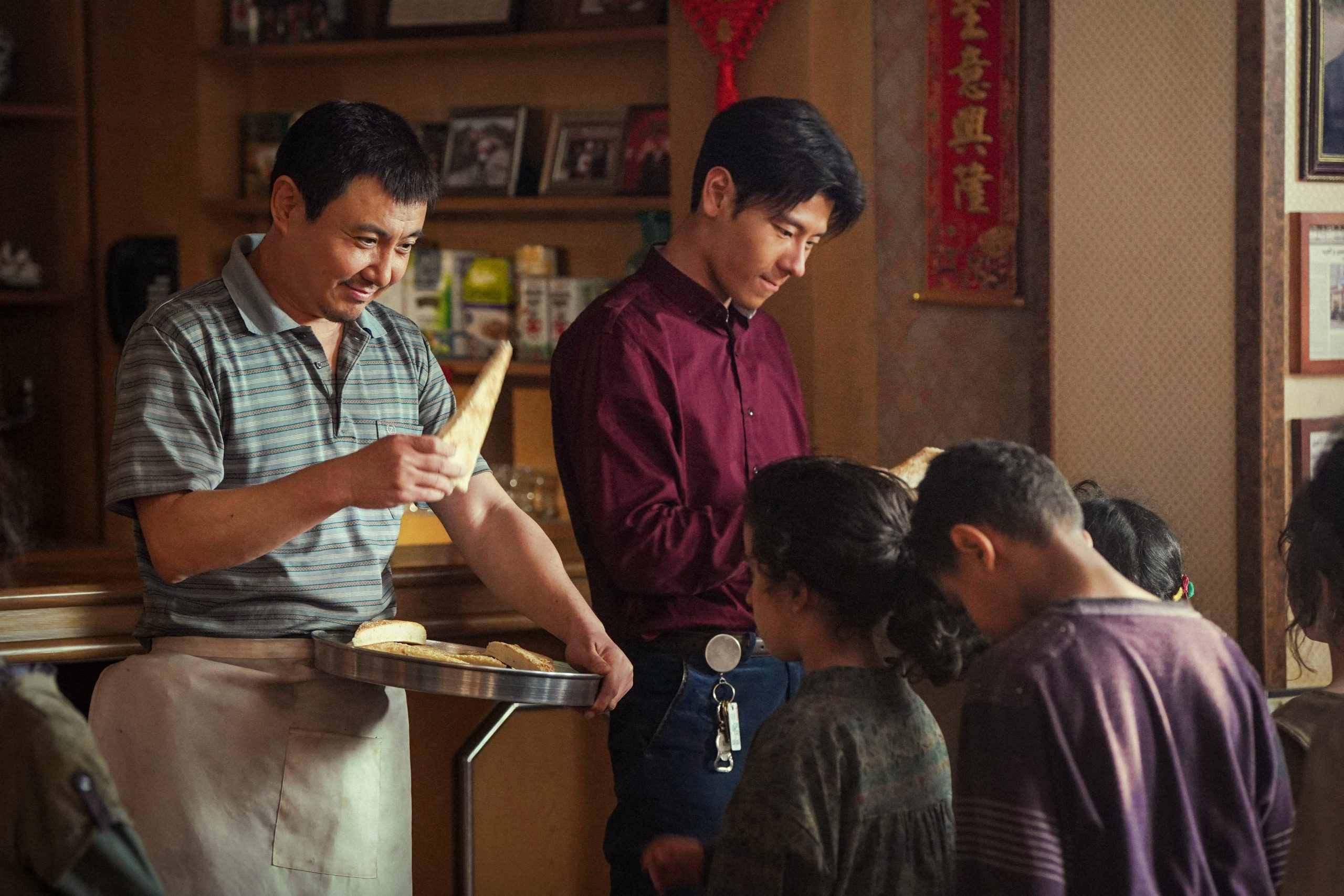
The film’s cheery poster and opening 20 minutes might give you the impression of a light-hearted story about bridging cultures, but then the bombs start dropping. Dropping a Chinese cook in the middle of a Middle Eastern war zone is certainly a new and engrossing idea, but the film has much more on its mind than just a simple story. What transpires is an epic tale of devastation, friendship, and the importance of a good meal.
Shen Teng stars as Xu Fu, a Chinese chef who travels to the fictional Middle Eastern city of Bahata to earn money to pay off his debts back home. As the head chef at Loong Restaurant, he works alongside Ma Jensheng (Jiang Qiming), the floor manager. Local government official Zaid (Sherif Sobhy) owns the restaurant, while Ma’s fiance Lina (Naira Al-Qasim) works as a teacher at a nearby orphanage, which includes young Seif (Omar Sherif) as a student. Despite the restaurant’s success, war breaks out with the United States, giving Xu, Ma, and Zaid the opportunity to stay in business despite the chaos around them.
With the orphanage destroyed in the war, the kids and Lina live and work at the restaurant, while Seif learns to cook under Xu’s tutelage. The restaurant becomes more successful than ever, but a series of tragic events and attacks turn the fortunes of Xu, Ma, and Seif into a downward spiral they struggle to overcome.
Having this film come from a Chinese perspective allows Once Upon a Time in the Middle East to have a true level of impartiality. While the film is “fictionalized” and isn’t directly stated as set during a particular conflict, there is a clear understanding of which war is being portrayed. Both the American involvement and the insurgent response is shown as having their massive faults as well as their levels of sympathy and humanity. American films dealing with the war-torn Middle East always have an inherent bias. This film takes no sides and just shows the horrors without worrying itself with solutions.
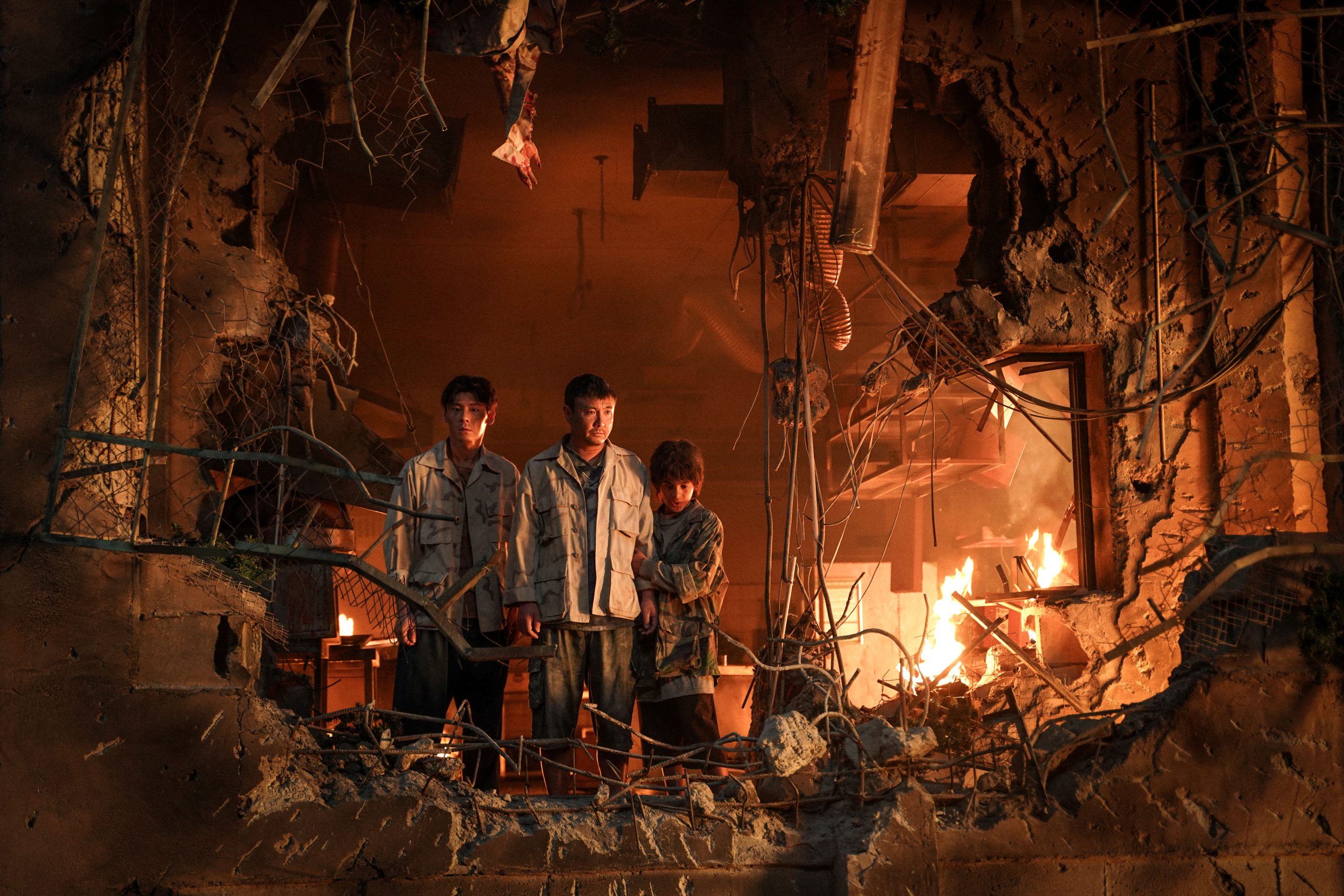
That even-handedness allows for fascinating perspectives. For example, an American lieutenant who heads the torture unit is particularly emboldened due to the death of his family in 9/11. On the flipside, a once-peaceful bureaucrat becomes a violent insurgent upon the death of his wife and daughter. The film never puts these characters side-to-side, but the steps to justification for each “side” is easily explained as passion and anger in hopes of revenge.
The war and battle sequences, while infrequent, might not have the bold viscerality of Saving Private Ryan or the bloody over-stylization of Hacksaw Ridge, but that doesn’t mean the film ignores the human toll. Characters are bloodily killed, limbs are lost, and each explosion contains a shockwave. While I wouldn’t classify it as a gory film, the body count is sizable and does not discriminate. Men, women, and children are among the victims. War is indeed hell.
The film lives and dies on the performance of Teng. Xu is a man of isolation and discipline, but Teng infuses him with life and complexity. Qiming gets to have much more fun as the sunny and outgoing Ma, at times lovesick, hopeful, reserved, but eternally optimistic. Sherif delivers a great youth performance, maintaining his youthful exuberance while also being forced to grow up way too soon. The supporting cast fills out the edges well, with Sobhy, Al-Qasim, Ahmed Salim, Russell Shealy, and Aarif Rahman all delivering memorable characters.
Once Upon a Time in the Middle East takes a unique approach to a more objective war story, infusing a fresh perspective, backed up with excellent performances. I doubt you’ll see anything else like it in American theaters.