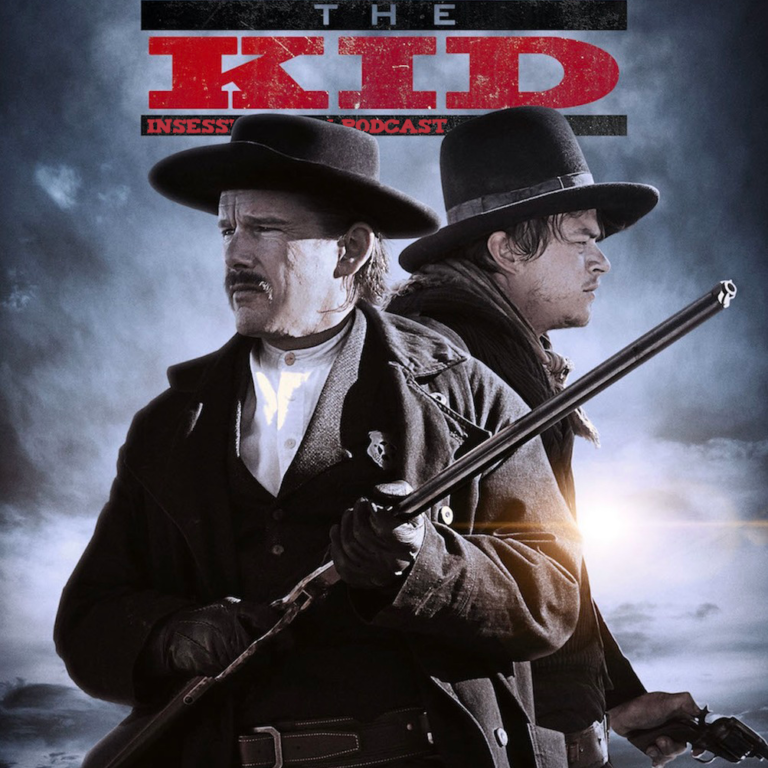
This week on the InSession Film Podcast: Extra Film segment, Ryan returns from South by Southwest to discuss the newest western The Kid with JD and then in the back half of the episode with Jay, they review the latest from Gaspar Noé, Climax.
This week’s show was a tale of two fascinating, entertaining reviews this week. With The Kid review was a classic one on one discussion that lead to a very interesting conversation considering that Ryan and JD had very different opinions on the film. While they could agree on a couple of smaller aspects of the film, the two get into a lively back and forth over a lot of the overall themes of the film. While the review was longer than they thought it would be, the passion from each side shines in this review.
Then there is the review of Climax, which will go down as one of the most memorable moments in not just Extra Film history but the history of InSession Film. While Ryan didn’t like the film either, the passionate disdain that Jay shows for this film leads to an outright thrashing of the film that is hilarious at times while also bringing up so many legitimate criticism. You are not going to want to miss this review!
Let us know what you thought of these films on social media and enjoy the show! Thanks for listening!
– Movie Review: The Kid (6:43) Director: Vincent D’Onofrio Writer: Andrew Lanham Stars: Chris Pratt, Dane DeHaan, Ethan Hawke
– Movie Review: Climax (48:41) Director: Gaspar Noé Writer: Gaspar Noé Stars: Sofia Boutella, Romain Guillermic, Souheila Yacoub
We try to make this the best movie podcast we possibly can and we hope you enjoy them. Subscribe today on iTunes, Spotfiy or Stitcher, and please leave us a review on iTunes. You can also find us on Soundcloud, PlayerFM and TuneIn Radio as well. We really appreciate all your support of the InSession Film Podcast.
To hear this Extra Film episode and everything else we do, download our apps on the Amazon Market for Android and the Podcast Box app on IOS devices. The mobile app covers all of our main shows, bonus podcast’s and everything else relating to the InSession Film Podcast. Thanks for your wonderful support and listening to our show. It means the world to us!
The great Stanley Kubrick would’ve turned 90 years old this year. He was 70 when he died during post-production of Eyes Wide Shut, ending the forty-odd year career of a man who emerged from New York City to throw us into a new dimension with a haunted hotel, the depths of space, the madness of war, and our obsession with sex and violence. He was only a photographer with a magazine at 17 when it turned into a career with motion pictures, starting from the bottom in the early 50s before Kirk Douglas called him in as an emergency director for the 1960 epic, Spartacus. This would be the full introductory in large productions we would know Kubrick for.
But like other major directors, the base of their portfolio are pieces homemade and on-the-go, especially when he didn’t come from film school or was connected to any film studio at the time in his native New York. Kubrick made short films for his magazine that was picked up for theatrical release, and with enough confidence and financial support, he decided to forge ahead with making full-length features. Here’s a rundown of his 50s catalog before he became the international director we have come to know and admire.
Fear And Desire (1953)
His first film was an hour long and only had fifteen people in the entire production, including writer Harry Sackler, a friend of Kubrick who would win the Pulitzer for his play The Great White Hope, and a young Paul Mazursky, who would go on to make Harry And Tonto and An Unmarried Woman. Set during an unspecified war featuring two unnamed countries, four soldiers behind enemy lines struggle with their conscience when they capture a young girl who does not know their language and planning a daring attempt to infiltrate the enemy base and kill the opposing general before escaping back. It is a prelude to the making of Paths of Glory in regards to what war is about and an example of low budget shooting; the money came from Kubrick’s family, namely his wealthy uncle. Years later, Kubrick said did not like the overall film, calling it, “a bumbling amateur film exercise.” It is a really good film exercise and in the public domain today.
Killer’s Kiss (1955)/The Killing (1956)
A boxer helps a dancer after she is beaten by her employer gangster and decides to help her get out of town. When they try to get the last of their money owed before fleeing, the gangster sends two of his men to rough up the boxer for interfering with his relationship, but end up killing the boxer’s manager instead. The boxer now has to find the dancer while fending off the gangster and his men from hunting him down. It is only sixty-seven minutes long, but Kubrick nails down the basics of noir and minimalizes the expansion of action with incredible You may find it for free on YouTube, but if you get the Criterion edition of Kubrick’s follow-up, you will also see it in a gorgeous restored high-definition version. Speaking of his follow-up with the same word in it…
Sterling Hayden plays the ringleader of a group of robbers planning a major heist at a racetrack during the main race. Like the template laid before with The Asphalt Jungle and Rififi and after with Ocean’s Eleven and Reservoir Dogs, one person has one thing else in mind and the plan, while executed, soon falls apart in the end through greed and backstabbing. This would be Kubrick’s way of getting into Hollywood through producer James B. Harris, who later directed The Bedford Incident (1965) and Cop (1988). Kubrick’s noir fell into the hands of United Artists who did the rest, but the critics ate up the hard-boiled, pulp, electric, sharp thriller that is considered Kubrick’s first mature film, synchronized and exciting.
Paths Of Glory (1958)
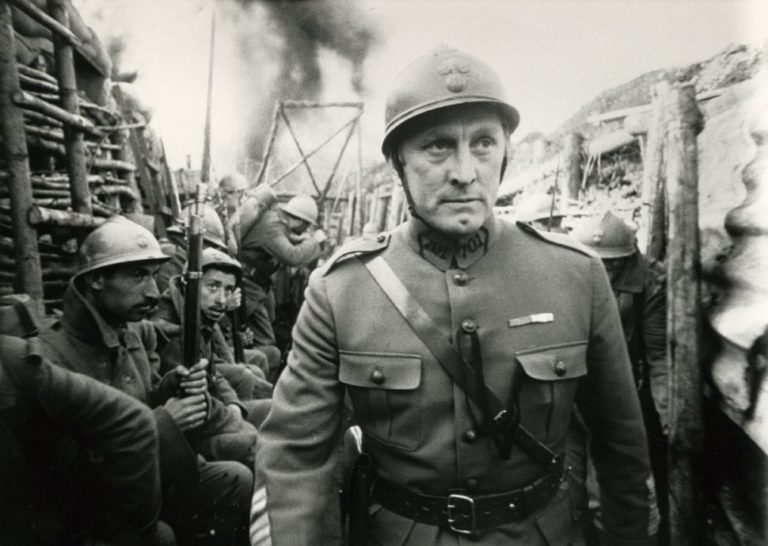
Set in World War I amongst the vicious trenches, Kirk Douglas, in the first of two collaborations with Kubrick, plays a colonel who fights with the army’s leaders when his men are accused of cowardice after failing to accomplish a mission that was impossible and unrealistic. Three men of the ground are randomly picked out for trial and execution in what is a kangaroo court, but Douglas argues tooth and nail in a stirring courtroom drama of war as so cruel that is so absurd in what the military can do to shield its own interests and save face. It also played out as much in real life when the French government successfully pressured the Berlin Film Festival to drop it and then ban it from France for twenty years.
The long takes going through every inch of the trench and coming face-to-face with a soldier clearly a victim of “shell shock,” of a large room full of memorabilia that labels everything in the empire, and the whole wide angle of the aim and fire of the soldiers’ execution would be the first of multiple shots of a kind in future movies. The last scene in which Kubrick’s future wife, Christine, sings the sentimental “Faithful Hussar,” capping of the anti-war, anti-militant mood which infuriated those who took part. The “talented shit,” Kirk Douglas once described Kubrick as for making the film is what got Kubrick his last-second gig in Spartacus.
Kubrick is among the greatest ever and in my personal Top 5 all-time greats behind the camera with Scorsese, Hitchcock, Kieslowski, and Truffaut. (Discuss among yourselves of your Top 5 filmmakers worldwide.) I always like to look at the start of a career to pick up the genius of a legend because it constructs the growing craft of a director and how they expand their grip on the art years later. We don’t get his colored epics without creating the characters and the expanded wide shots from this time. Besides shooting in LA and finding the place distasteful, he experienced European locations and found England fitting for his style. Like Scorsese’s Mean Streets, Hitchcock’s The Lodger, and Fellini’s Variety Lights, these early works laid the foundation of our admiration all these decades later.
Director: Harmony Korine Writers: Harmony Korine Stars: Matthew McConaughey, Isla Fisher, Snoop Dogg, Martin Lawrence, Stefania LaVie Owen
Synopsis: A rebellious stoner named Moondog lives life by his own rules.
[/info]
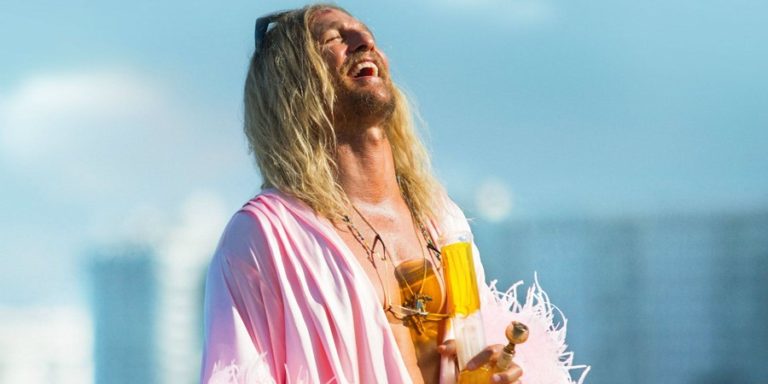
As Harmony Korine stumbled on to the stage to introduce his first feature film in nearly 7 years, I couldn’t help but observe the manner in which he presented himself. He was so deliberately nonchalant—or more likely under the influence of alcohol or marijuana(something he’s been known to publicly do). He didn’t have any substantial foreword to delight the audience with for the curation of the film and often found himself tripping over his unrehearsed selection of words. What struck a chord was the finality of his preface, in which he emphasized the basis for this project was sparked upon the idea that the current world has been so subjected to increasing principles of hostility in society. Through this outing he felt inspired to display a creative experience stimulated by utter pleasure, women, boat captains, rastas, poetry, and a whole lot of Mary Jane as a buoyant distraction from all of the world’s present-day shortcomings. The Beach Bum does that with flying colors.
Korine has always been somewhat of a polarizing figure in the spectacle of underground directors through modern day entertainment and film. Breaking onto the scene penning the 1995 feature Kids, he followed up with his critically-loathed directorial debut Gummo two years later. It seemed as though Korine’s films were only getting more obscure and obscene as the years progressed. With each future release of a new project, the term “you either love it or you hate it” was being thrown around more abundantly and distinctly. Blending genres that resembled mumblecore yet also incorporating the fear of a grounded sense of dystopia in to a variety of his depictions and movies is where he found his filmmaking niche. The biggest contradictory to that statement is perhaps The Beach Bum itself, Korine’s most light-hearted film ever.
If there’s any conclusive achievement to be crowned to Korine for this brash experience of a movie is just how gratifying it felt to be apart of. The steadily suggestive and extreme humor grapples laughter from the viewer throughout each scenario. Especially the more unorthodox they begin to get. The only exception being one scene utilized as plot escalation and is in no way glorified or blatantly extended. Nevertheless, it’s nonstop in every meaning of the word and even manages to sustain the audience’s undivided attention. Credit to the insanely stacked and talented cast for another subdued victory as this on-screen, unequivocal, multifaceted entourage. Matthew McConaughey playing the vulgar Moondog, who hasn’t but one care in the world, is an irreverent stoner and poet who’ll have a stamp in this year’s pop culture and perhaps even years to come. Despite McConaughey’s exuberance as this character, the rest of the supporting cast lineup initiates a lot more of the films worth while occasions. Snoop Dogg, Isla Fisher, Stefania LaVie Owen, Zac Efron, Jonah Hill, Martin Lawrence, and Jimmy Buffett are all marvelously hilarious and crude in their own definitive ways. All of their on-screen interactions with Moondog and with one another feed off of their prowess as actors in reality. They don’t quite have the most ept screen-time but are portrayed with such an air of eccentricity that you reminisce on them once they make a momentary departure, hoping for a subsequent return.
It’s hard to believe something like The Beach Bum was so methodical from the jump of the gun. A film that spends the majority of its time loitering around and highlighting the quirks of the environment amongst the often facetious and amplified versions of its natives, emanates a feeling of improvisation. It’s through the sheer rowdiness of the plot advancement that leads to this assumption, yet everything is delicately scripted to a baked (quite literally) excellence. Throughout the day’s striking golden haze and the nightly effervescent skyline, the schemes of these wild-mannered citizens preserved in this carefree atmosphere are so accurately embellished that it seems as though they could be factual people. There’s more than likely people somewhere in the world that reflect the conduct of each of these characters. In other words, they’re all produced with such specificity that’s it easy to believe there’s a high probability of people that mirror this type of reasoning and lifestyle.
For a film that’s so self-indulgent in the outrageous bravado of having a good time, the film blossoms like a byproduct of Korine’s personal attitude. He’s even said it himself, he’s not exactly the most productive in the assembly of film’s compared to his fellow counterparts. The character of Moondog is so negligent through the work ethic of his poetry, that he only feels obligated to write during or after his episodes of intoxication. I’d like to believe that persona is a culmination of an over-exaggerated offspring of Korine. Not the excessive partying and drinking, but for a corresponding reality that links to him only wanting to direct a film if he really feels it. It’s definitely a subconscious identification that may or may not pin Moondog to himself. Or maybe I’ve just read too much in to it.
Those who despise Korine’s former endeavors or even those unfamiliar with his peculiar style will have complaints equipped as soon as the floodgates open. Even though it’ll be labeled as a shocking and pointless “thing” of repetitious muck with inexcusable stakes, I can understandably see where that point of reference stems from. Through all of the nihilistic amusement, the bubbly imagery of a Floridian haven, and the clouds of weed smoke, it does tend to linger around possibly longer than it should. Not to say I didn’t enjoy those extra occurrences of a poetically induced paradise, but it raises the question of how long you can continue an arc without changing directions and losing previously invested viewers. For that aspect I can discern it’s incoming criticisms, but in relation to the lack of substance; what did you expect? A deeper commentary (something like Spring Breakers) disguised in party soaked euphoria? The Beach Bum has no ulterior connotation other than what’s portrayed. And even then there’s no denying it’s grimy elegance.
As stated, one can already perceive the slew of insults and flack heading this films direction in a few weeks, yet it shouldn’t necessarily be accounted for. The Beach Bum is something so vile and provocative. You could use virtually any word from the English language to categorize this film based on perspective. It’s ignorant bliss that I applaud for it’s effort of never failing to boost a smile on my face—especially as I exited the auditorium. It’ll be unruly received by people far too extensively. However, it’s refreshing for anyone who’s down for an hour and a half of sinful debauchery and wholehearted stoner antics. Also always remember, sometimes you gotta go low to get high.
Overall Grade: A
[divider]
Hear our podcast review on Extra Film, coming soon!
For our Episode 317 Bonus Content, Ryan McQuade joins us to recap his experience at the 2019 SXSW Film Festival and the films we should look forward to the rest of the year!
[divider]
HELP SUPPORT THE SHOW
To hear our bonus content episodes early, subscribe now on Patreon. In many cases, though, we offer our bonus content for free after a certain period of time and we do encourage (and very much appreciate) a small donation of $0.99 as a way to help support the show if signing up on Patreon isn’t for you. Click on the PayPal button below to donate and thanks so much for your support. You can also hear much of our Bonus Content via our mobile apps. See the information at the bottom of the post for more details.
[divider]
Mobile Apps!
Listen to all of our bonus content on our apps for just a one-time fee! Whether you have an iPhone, Android or Windows phone, our apps are available in many different ways that is convenient for you. With our mobile app, not only can you listen to all of our bonus content, but our main shows and our Extra Film podcasts as well. Click here for more info!
If you don’t want to purchase our bonus content, but still want to support us, there are other you can help us out. Click here for more info.
This weekend on Episode 318, we’ll be diving into Jordan’s Peele’s sophomore effort in Us. By all accounts, it’s a viscerally thought-provoking experience that will leave you wrestling with the questions it evokes. We’ll discuss more on the show this weekend, but for now we’re more focusing on its title. Us. Two letters. Two letters that actually carries a lot of weight – or at least I presume so based of its trailers.
With that as inspiration, what is your favorite film with a two-letter title?
Director: J.C. Chandor Writers: Mark Boal, J.C. Chandor Stars: Ben Affleck, Oscar Isaac, Charlie Hunnam, Garret Hedlund
Synopsis: Loyalties are tested when five former special forces operatives reunite to steal a drug lord’s fortune, unleashing a chain of unintended consequences.
[/info]
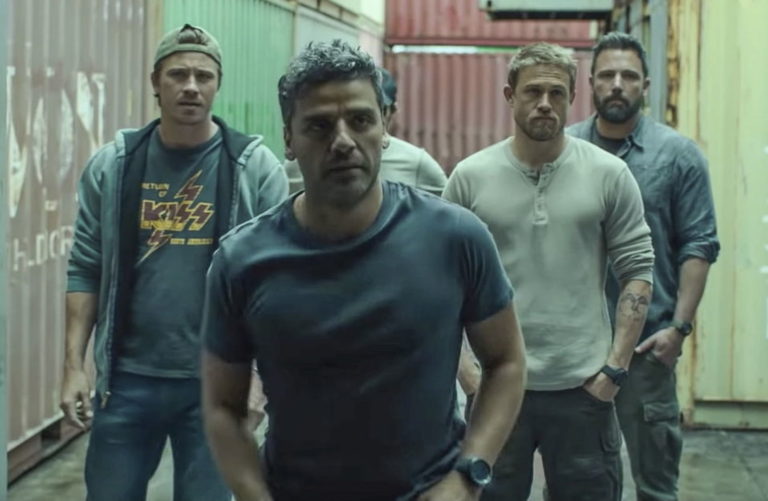
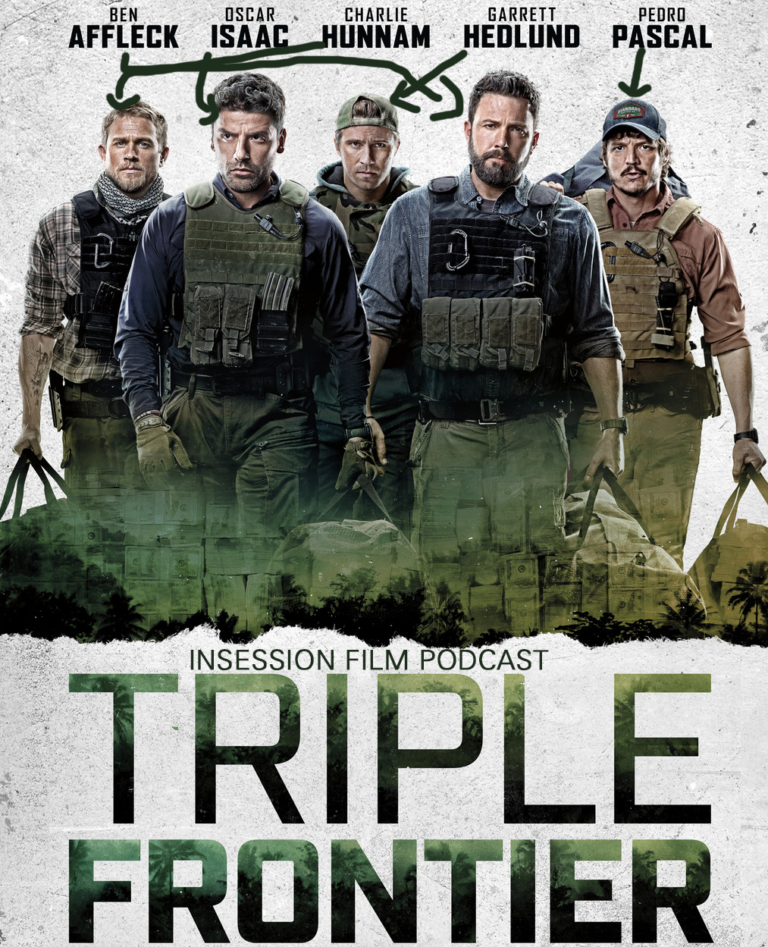
Netflix’s new film Triple Frontier had me intrigued before I saw a single frame. Any film with Oscar Isaac in it already has my interest, and say what you will about Ben Affleck, but it’s clear that he is a talented actor and filmmaker. And this film is only getting started with those two. The film is produced by Kathryn Bigelow and Mark Boal, and Boal provided the story of the film as well as co-writing the screenplay with director J.C. Chandor. Then the cast is filled out nicely by Garrett Hedlund, Charlie Hunnam (those two have always seemed to be twins to me), and Pedro Pascal among others. It’s a star-studded lineup of talent both in front of and behind the camera. I wonder if that is why the film bites off more than it can chew.
You may think that this is going to be a war film. It is that, in some ways. But early in the film, when William “Ironhead” Miller (Hunnam) is giving one of his many motivational speeches to a group of reservists, he talks about the biological and psychological impacts of going to war. He says that taking out that level of violence against other human beings sticks with you. At that point, you realize that this film is going to go in different ways than you might expect.
After that speech, Miller is approached by Santiago “Pope” Garcia (Isaac) about a possible job. Garcia has been working in South America to apprehend drug lord Gabriel Martin Lorea (Reynaldo Gallegos). He has a contact named Yovanna (Adria Arjona) who has infiltrated Lorea’s operation, providing a window for a possible takedown. He needs a team that can go in on a reconnaissance mission to confirm. For this, he goes to his old friends.
Ironhead says he’s in only if “Redfly” is in. That would Tom “Redfly” Davis (Affleck). He is now working as a real estate salesman. He is recently-divorced and, though he attempts to hide it, the situation is taking its toll on his life. He seems reticent at first, but after Benny Miller (Hedlund) and Francisco “Catfish” Morales, Redfly finally gives in.
All of the main members of the cast give fine performances, except for Affleck. As I said before, he is certainly talented, but he seems to be phoning it in here. I thought Isaac was good, as usual, but Hedlund gives the film’s best performance. They do have a certain team chemistry that is necessary in a film like this, and what success the film has certainly comes from their performances.
I think I preferred these early scenes because they were narratively-focused. Here the film is all about setting up its characters and the notion that the country these men fought for has taken advantage of them. The way our country treats its veterans is deplorable in many ways, but this film goes deeper to showcase the ways this impacts the psyche of a person. These men served voluntarily, and they were proud to do so. Yet, the fact remains that the prime years of their life have been spent, and they don’t have much to show for it. One character makes a comment that, in another profession, their service and skill set would have set them up for life. As it stands, they all struggle to make ends meet.
Part of the draw of the reconnaissance mission is that it will pay well – $17,000 for a week’s work. They mention that the skills they learned in the military are what they have. They might as well get paid for using them. These are the notions that really interested me – the psychological aftereffects of war and how one might go about managing them. But from there, the film gets pulled in other ways.
Once they get to South America, they quickly begin to realize that Garcia did not give them the full story. The reconnaissance mission unearths that his real plan was to rob and kill Lorea using their small team. It may sound preposterous at first, but these men have this work in their blood now. War has done that to them. They decide to move forward. Here, the film that Triple Frontier could have been reaches out one last time for a more psychologically-focused narrative. But it does not win out.
From this point on, the film becomes a tactical mission tale and a step-by-step showing of how you attempt to move millions of dollars through the Andes Mountains. I won’t deny that it is interesting and action-packed, it just pulls the film in too many directions to be successful.
While they are carrying out their mission at Lorea’s compound, they find his incredible fortune in a place they hadn’t planned on. They also find more money than they were expecting. They came in with a plan for how much time they had to carry out the mission. The end time is a “hard out.” Redfly makes a crucial mistake by attempting to get every last bit of cash that they can. This has drastic consequences for the rest of the film. It reminded me of the scene from Heat when Vincent Hanna is describing the team of criminals led by Neil McCauley. As they survey the crime scene, Hanna points out that the criminals left some cash. He says they knew how much time they had, and they didn’t waste it. Redfly makes the opposite decision, and it costs everyone.
There is a story of the cost of greed somewhere in here, in the vein of The Treasure of the Sierra Madre. While the film reaches for those lofty heights, it does not achieve them. Again, this is where I felt that Triple Frontier suffered from narrative overload. It’s trying to tell stories about the way America forsakes its veterans and how it fights imperialistic battles in other lands. It’s also trying to tell a cautionary tale about greed. And it’s also trying to portray the action-packed tactical missions of America’s trained military professionals. Finally, we get the admittedly fascinating story of how you would go about moving massive amounts of cash through mountainous South America. Now, I am *not* saying that a film must stick to one story or narrative. I love many films that combine lots of threads and tell multiple stories. But those stories must be earned. And while saying a film hasn’t “earned” its narrative is becoming #FilmTwitter cliché, I think it fits here. I felt that the psychological elements of the film’s early scenes were abandoned too early, and the threads the film follows from there were not set up adequately.
However, the remainder of the film is still quite exciting, even if somewhat hollow. The acting performances are enough to keep you intrigued, and the story finds interesting moments of action and suspense. But I couldn’t shake the feeling that Triple Frontier itself makes the same mistake as Redfly – going for more when it already had a fortune.
This week on Episode 317 of the InSession Film Podcast, inspired by Triple Frontier, we decided to talk about our favorite nicknames for characters in film. It seems to be a trend of late, but this was one of the more challenging Top 3 lists we’ve ever done. There are so many to choose from that it’s impossible to narrow down, but it’s also difficult to recall all of them since most of these characters have real names that could be as memorable. At any rate, there are a ton of great nicknames out there for characters in film, and we did our best to conjure the great one’s that stand out to us. That said, here are our lists:
(Note: Please keep in mind that we each had different criteria for our selections)
JD
1) The Little Tramp – Modern Times / City Lights / The Gold Rush
2) Jeff Lebowski, The Dude – The Big Lebowski
3) Katniss Everdeen, The Mockingjay – The Hunger Games
Brendan
1) Beatrix Kiddo, The Bride, Black Mamba – Kill Bill
2) Jeff Lebowski, The Dude – The Big Lebowski
3) Short Round – Indiana Jones and the Temple of Doom
Nick
1) Leonard Lawrence, Gomer Pyle – Full Metal Jacket
2) Jeff Lebowski, The Dude – The Big Lebowski
3) Beatrix Kiddo, The Bride, Black Mamba – Kill Bill
Honorable Mentions (Combined)
Maverick / Goose – Top Gun
Radio Raheem – Do the Right Thing
Snake Plissken – Escape from New York
Darth Vader – Star Wars
Chewie / Fuzzball – Star Wars
Mad Max – Mad Max
Rocky Balboa – Rocky
Dirty Harry – Dirty Harry
Baby Driver – Baby Driver
Imperator Furiousa – Mad Max: Fury Road
Jimmy Popeye Doyle – French Connection
Amazing Amy – Gone Girl
Ratso Rizzo – Midnight Cowboy
McLovin – Superbad
Buffalo Bill – Silence of the Lambs
Hannibal The Cannibal – Silence of the Lambs
Indiana Jones / Junior – Indiana Jones
Red – The Shawshank Redemption
Wild Thing – Major League
Mr. Pink / Mr. Blonde / Mr. Blue / Mr. Brown / Mr. Orange / Mr. White – Reservoir Dogs
The Boogeyman – John Wick
Blondie – The Man with No Name
Fat Amy – Pitch Perfect
Private Joker / Private Cowboy – Full Metal Jacket
The Bear Jew – Inglourious Basterds
Scrap – Million Dollar Baby
Johnny 5 – Short Circuit
The Jet – The Sandlot
Ducky – Pretty in Pink
Mouth / Chunk / Sloth / Data – The Goonies
Hopefully you guys enjoyed our lists and if you agree or disagree with us, let us know in the comment section below. As noted above, there are a slew of other nicknames that we failed to mention for one reason or another. That being said, what would be your Top 3? Leave a comment in the comment section or email us at [email protected].
This week on the InSession Film Podcast, Nick from the Epic Film Guys podcast joins us to review Triple Frontier and discuss our Top 3 character nicknames in film. Brendan also offers his thoughts on Apollo 11 and Leaving Neverland.
Huge thanks to Nick for joining us once again. It’s always a pleasure to have him on the show and he was a lot of fun. Despite what some of our thoughts on Triple Frontier may indicate, it was nice to be talking about J.C. Chandor once again as well. His last film, A Most Violent Year, was five years ago and we needed to bring him back into the discourse. Let’s just hope his next outing is, well, back to what we love about Chandor.
That said, check out this week’s show and let us know what you think in the comment section. Thanks for listening and for supporting the InSession Film Podcast!
– Movie Review: Triple Frontier (4:09) Director: J.C. Chandor Writers: Mark Boak, J.C. Chandor Stars: Oscar Isaac, Ben Affleck, Charlie Hunnam, Garret Hedlund
– Notes / Apollo 11 / Leaving Neverland (44:56)
As noted above, Brendan was able to catch both Apollo 11 and Leaving Neverland, both of which were discussed on our most recent Extra Film episode. However, Brendan wasn’t able to be on for those reviews, so he offered his thoughts here. We also give some brief thoughts on the most recent trailer for Avengers: Endgame, which hits theaters at the end of next month.
– Top 3 Character Nicknames (1:13:58)
This was one of the more challenging Top 3 lists we’ve ever done. There are so many to choose from that it’s impossible to narrow down, but it’s also difficult to recall all of them since most of these characters have real names that could be as memorable. At any rate, there are a ton of great nicknames out there for characters in film, and we did our best to conjure the great one’s that stand out to us. That said, what would be your Top 3?
If you want to help support us, there are several ways you can help us and we’d absolutely appreciate it. Every penny goes directly back into supporting the show and we are truly honored and grateful. Thanks for your support and for listening to the InSession Film Podcast!
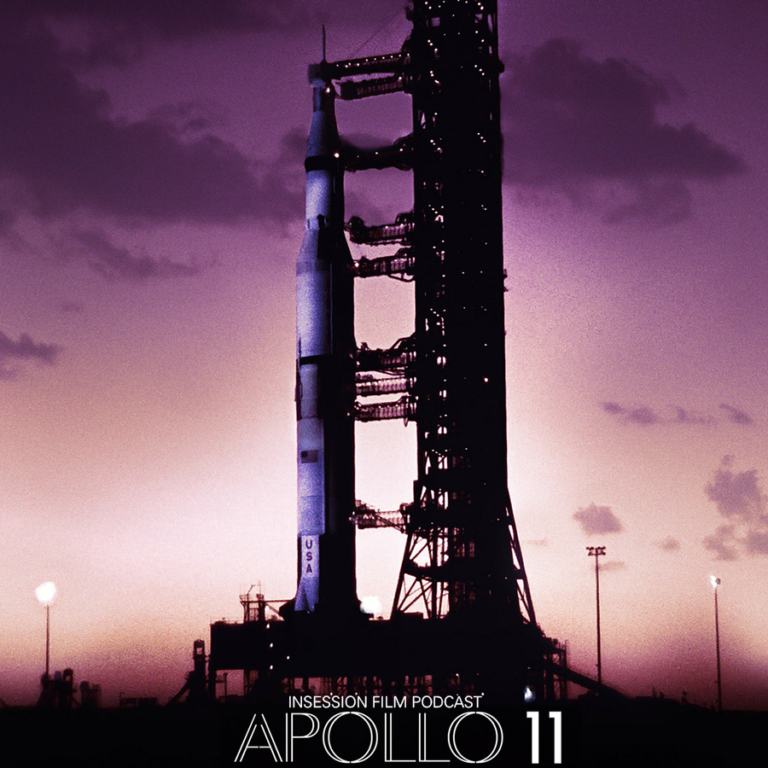
Jay is joined by JD on this week’s Extra Film to discuss a pair of documentaries with tons of buzz surrounding them: Apollo 11 and Leaving Neverland.
Apollo 11 has taken over Film Twitter in the last couple of weeks because of its mind-blowing visuals and science-centric construction. It is one of those good old fashioned “process movies” that Jay has been going on about all year and it gives JD a chance to gush about his favorite film of 2018, First Man. There’s something for everyone in the conversation.
After the Apollo 11 conversation, the talk turns much more serious when the focus shifts to the controversial Michael Jackson documentary, Leaving Neverland. JD and Jay talk about the technical merits of the film, as well as how we should think about pop culture icons and confronting our relationships with problematic content. The conversation is long, insightful, and heartfelt.
Let us know what you thought of these films on social media and enjoy the show! Thanks for listening!
– Movie Review: Apollo 11 (3:50) Director: Todd Douglas Miller
– Movie Review: Leaving Neverland (36:01) Director: Dan Reed
We try to make this the best movie podcast we possibly can and we hope you enjoy them. Subscribe today on iTunes, Spotfiy or Stitcher, and please leave us a review on iTunes. You can also find us on Soundcloud, PlayerFM and TuneIn Radio as well. We really appreciate all your support of the InSession Film Podcast.
To hear this Extra Film episode and everything else we do, download our apps on the Amazon Market for Android and the Podcast Box app on IOS devices. The mobile app covers all of our main shows, bonus podcast’s and everything else relating to the InSession Film Podcast. Thanks for your wonderful support and listening to our show. It means the world to us!
Horror does not always have to be a slasher type film. Horror does not always have to have nudity presented in a sexually attractive manner. Horror can feature a political bent to it and a style that forces the viewers to endure if they choose, the gratuitous and the indecent, the immoral and the deprivation a human can think of. For Marquis de Sade and his original transcript to The 120 Days of Sodom, his shocking, repulsive story of libertinism, power, and pleasure had the idea of one director, Pier Paolo Pasolini, to actually take it to the screen and not flinch on what is depicted. As noted, the notes below are not for the faintest of heart; it has produced anger and continuous condemnation for it being “art,” for the most graphic depictions of fetishism for sex and violence that makes A Clockwork Orange tame in comparison.
Salo Or The 120 Days of Sodom has a simple premise. Four wealthy fascist libertines in the ill-fated state in Northern Italy in 1944 – Mussolini’s last stand before his capture and execution – decide to engage in their ultimate fantasies of sadism and masochism by kidnapping 9 handsome young men and 9 beautiful young women, all mid to late teens (Marquis de Sade’s story had them younger), and force them to endure the humiliation of horrific practices before meeting a quite violent end. It is between the kidnapping and their killings that make Salo a different type of picture, making the boundaries almost limitless, especially with the aftermath of its production.
Between the extensive sexual abuse, the psychological manipulation, and acts of coprophilia, what is the purpose of enduring something that is not sexually arousing and more exploitive of human cruelty? For Pasolini, it is a message of the corruption of power and the punishment Italy received for bowing to fascism. It is self-flagellation for the sins of many, but it was the young that took the punishment. The four men and the four middle-aged prostitutes who tell graphic stories of depravity and then strip their prisoners naked are survivors who use their power to make the young metaphorically – and literally – eat the shit of the authoritarianism. They are degraded to be mere objects and never seen as a human being in their prison of horrors that is just too real to even think of.
There are four chapters to this parade of degradation: the Antiinferno, the Circle of Manias, the Circle of Shit, and the Circle of Blood. The first is mild and only the simple setup to what comes after, the prelude, if you may call it. They go to an isolated palace where the fun and horror takes place. Within this segment, Pasolini is critiquing the bourgeoise of then and now, condemning Italy’s return to a society of individual pleasure that is also taken in by corruption. As he said, “this new Fascism, armed with new means of communication and information . . . has not only scratched the soul of the Italian people but has lacerated, raped, and besmirched it forever.” Religion is not allowed, nor would it have helped.
The latter three stages is an examination of the socio-political power in which the four libertines use their sick minds over their middle-class slaves as, to put it mildly, a piece of meat. They are trophies who like to see how far they can go with them because the men have no limits. One of the men likes to anally rape his prisoners, but also likes to sodomized in return, disliking having regular intercourse with women. Another takes gratification in verbally abusing them and has his eye on two of them specifically. One prostitute says she enjoyed being molested as a child, another recounts bizarre instances with her tricks, and the four “studs,” four young men who guard the captured, are chosen only because they are well hung. Again, they are naked, unabashed top to bottom, but it is not of any pleasure to viewers. In the end, the four men don’t kill but watch from afar as the see their captured youth killed in horrific ways. I can’t even describe it; you just have to watch it to see it. None of this should be shown or done, yet Pasolini forces us to be the voyeurs to everything that goes on – and then see two studs dancing slowly to a waltz as if nothing else happened.
That leads us to Pasolini himself. He had built a reputation of shocking films and adding his Marxist beliefs within the confines of his stories. As a gay man, he was unafraid to have homoeroticism in his works, let nudity be free and attacked everyone who he felt was sending Italy to its violent climate. At the time, Italy’s “Years of Lead” was taking place between far-right and far-left organizations that the Italian government struggled to stop in the decade. Just before the film’s release, on November 2, 1975, Pasolini was beaten to death. A male prostitute was convicted for the killing, allegedly disturbed by Pasolini wanting to rape him with a stick, but many now believe it was a hit job, trying to silence Pasolini for opening a can of worms into the establishment’s past. In a sense, there was one more killing left to do in the story of Sodom and that was of the director himself.
So, why does this movie remain a piece of our collective thoughts when one sees it. Besides the shock value, Salo has a permission to be artistic while allowing the most depraved behavior to be committed on celluloid. Every time someone on Twitter says they are watching it for the first time, I warn them to be attentive for what is coming. This is a film not for the weak stomachs – it is thought to be a great date movie and I hope people are joking – and those who have not seen a Pasolini film would think of has the Ewe Boll of his time. Even with everything being seen, people still regard it in positive terms. Michael Haneke, Rainer Werner Fassbinder, and John Waters have ranked it among their favorites. “Salo is a beautiful film…it uses obscenity in an intelligent way…and it’s about the pornography of power,” said Waters. It is this dehumanization that does not leave us and its something that will not tear us away from the events.
All good things must come to an end and thus day 6 of South by Southwest was my last day covering the Austin based film festival. So being that it was my last day, I went all out and saw four films to complete a six day, twenty-one film journey that I consumed me and made me feel more inspired about film and filmmaking than any other week of my life.
The first film of the day landed me at the Zach Theater to catch Them That Follow, which premiered at Sundance, carried over to SXSW and is the debut film for directors Britt Poulton and Dan Madison Savage. The film follows Alice Englert’s Mara, who is the daughter of a preacher who runs a small community of people that are isolated from the outside world. When she becomes pregnant, it sets off a chain of events that could tear the fabric of the community apart and change their lives forever. The film has a ton of star power behind it that support Englert with Kaitlyn Dever, Walton Goggins, Thomas Mann, Jim Gaffigan and recent Oscar winner Olivia Colman. So with all of this talent, one would assume that the film they are in is worth their time but instead the film seems to waste most of their talent and feels like something we have seen before and can be slow in a lot of parts. The script, which is written by the directors, left a lot to be desired and left their actors out in the cold, leaving them to have to pick up a lot of the slack and thus the film became an exercise in patience and my biggest disappointment of the festival.
Once Them That Follow ended, I grabbed some lunch and then made my way over to the Paramount Theater for the documentary The Boy Band Con: The Lou Pearlman Story. The film, produced by former NSYNC member Lance Bass who also is in the film, is about Lou Pearlman, the man that built the two biggest boy bands in the history of music in NSYNC and the Backstreet Boys and conned not only those bands and many more bands out of millions but also conned investors into various other businesses he owned as well. Anyone that was born and grew up in the 1990’s to early 2000’s will be very interesting in seeing this film because it gives the true story behind all the music you love and the man that manipulated all it into existence. While the film doesn’t do anything to stylistically different than any average documentary, it is a good companion piece to Leaving Neverland because of its conversation about people in power and how they pray on the weak to do what they want them to do. The film will come out later this year on YouTube and I really think everyone should give it a watch because it is a nostalgic yet sad trip down memory lane.
Once the film was over, I jumped next door to the Stateside Theater for The Peanut Butter Falcon, which upon reflection, is one of my favorite films I saw while I was at the festival. The film, directed by Tyler Nilson and Mike Schwartz, follows Zak, a down syndrome kid who escapes from the nursing home that he lives in to go and find a wrestling academy and his favorite wrestler that runs it. While on the run, he encounters Tyler, a fisherman that has burned he last bridge and is on the run from the people that he has crossed. Tyler promises to help Zak out and they set out on an adventure that is extremely charming and moving. Nilson and Schwartz’s script and direction are top notch and you feel completely immersed into this world that they have created and makes you feel that every decision is real and authentic. The cast are on their A game, with what could be my favorite performance from Shia LaBeouf and Dakota Johnson. But the reason to see this film is for Zach Gottsagen’s lead performance, which is the biggest discovery I found at the festival. I don’t want to give too much of this film away but I challenge you to catch this film when it comes out later this year because it’s one that won me over on its charm and fairytale like storytelling that made me think this could be this year’s Mud or Beast of the Southern Wild.
As I left Stateside, I got back in line at the Paramount for my last screening of the festival for the new action-buddy comedy Stuber starring Dave Bautista and Kumail Nanjiani. The film, which is about a cop who hires an Uber driver to get him from point A to B to get solve a big case, was the perfect film to end the festival on. Though I’d love to get into the film more, the film was “a work-in progress” and thus we can’t fully review the film or talk about plot points or moments within the movies due to studio asking for us to wait for a full review till the film is one hundred percent ready. Though the film played all the way through, it was a director’s cut and it will be interesting to see what they keep in and what they cut out in the final theatrical cut. What I can tell you is that Bautista and Nanjiani are comic gold together and are having so much fun and the action in the film, directed by Goon director Michael Dowse, is some of the best that has appeared in a comedy in years. I look forward to seeing the film again and seeing if the next big buddy cop franchise like the 21 Jump Street films.
Thank you for following my SXSW recaps and I am so sad that the festival is over for me. But I had so much fun covering this festival for the website and can’t wait till next year to do it all over again! Continue to follow me on Twitter @ryanmcquade77 for more film coverage throughout the rest of the year.
Director: Vincent D’Onofrio Writers: Andrew Lanham Stars: Chris Pratt, Vincent D’Onofrio, Ethan Hawke, Dane DeHaan
Synopsis: The story of a young boy who witnesses Billy the Kid’s encounter with Sheriff Pat Garrett.
[/info]
The quintessential American genre, the western has sought to combine historical stories and cinematic fiction to deliver a rich, beautiful depiction of man’s conflict with untamed nature, man’s unchecked lawlessness, and the danger of the other. The western has always secured a place in the heart’s and minds of Americans and can seemingly transcend time and space to contour human emotions and efforts that define the humanity of our past, present, and future. Vincent D’Onofrio’s The Kid is the newest installment into the annals this fruitful genre. The Kid follows Sherriff Pat Garrett (Ethan Hawke) as he tracks down the outlaw Billy the Kid (Dane DeHaan). Along the way, Billy and Pat meet up with a runaway brother and sister (Jake Schur, Leila George) whose past is shrouded in guilt, fear, and revenge. As Garrett attempts to bring the Kid to justice, he grapples with mounting questions surrounding Billy and his newfound friends.
In the tradition of previous westerns, D’Onofrio’s The Kid has an exquisite beauty due to a combination of slick yet minimalistic cinematography and beautiful landscapes that define the American west. The believability of westerns often hinges on the harshness of the wilderness as men attempt to tame it and themselves. The Kid works well to manifest this aspect of the genre into a cinematic experience that dazzles. In that beauty of the wild, the actors are exquisite in their roles. Hawke and an almost unrecognizable Chris Pratt steal each of their scenes and bring a fierceness to their roles that seems right at home in the wild west. Dane DeHaan’s Billy the Kid seems rather one-sided in comparison and rarely, if ever, allows the audience to understand his inner thoughts and emotions. Whether this is conscious on the part of DeHaan (and/or D’Onofrio) or not, it acts as a roadblock that almost seems insurmountable. This is especially concerning due to his centralized role on which all other character’s stories revolve. However, this is an entry point into the lack of depth of characters and story.
Besides Hawke’s Garrett, other characters do not work well in the environment they are inhabiting. They seem to exist merely on the surface and never fully engage with their world. Unfortunately, this could be due to a plot that relies too much on a perceived knowledge of the historical events that led up to and include Garrett’s confrontation with the Kid. As I researched the actual story, I became aware of certain aspects of Garrett and the Kid’s history that would have given the story more tension, as well as upping the stakes. But without this knowledge, the film seems one-sided and unbalanced. It is unclear as to the character’s intentions because the narrative never allows the audience access. In this way, the viewer feels unattached and unconcerned with the fate of the characters. In a saving grace, the formula for a western grants the audience an understanding of where the story will end. This is where The Kid shines. The third act is taut and riddled with suspense. It feels like a reward for the previous two lackluster acts, but that begs the question: where was that effort throughout the film?
The Kid has its moments as the characters travel through a beautifully filmed landscape, however the endless speeches from one-dimensional characters bog down a story that has the potential to tell the story of two troubled and conflicted men. The Kid is serviceable as a western, but lacks the needed tension and stakes that keep the audience engaged. If you can stick with it long enough to enjoy the second act, you may leave the theater with some feeling of satisfaction. However, too many holes exist in this beautifully filmed tapestry of the American west.
Overall Grade: B-
[divider]
Hear our podcast review on Extra Film, coming soon.
The weather in Austin for Day 5 of my coverage at South by Southwest was muggy and damp but yet it was the perfect day to stay in the theater and catch up on titles that had already premiered at the festival. Film number one for the day found me back over at the Alamo Drafthouse watching the newest thriller Villains from directors Dan Berk and Robert Olsen. The film follows a couple who are on their way out of town after just robbing their last gas-station before they head to Florida. When the car they steal runs out of gas, they head to a house that is abandoned to look for gas or something to get them back out on the road. But once they enter the house, they realized they aren’t the only ones in the house, and must play a game of cat and mouse in order to leave. The film is a lot of fun and the cast are top notch with good performances from Maika Monroe, Bill Skarsgard and great performances from Jeffrey Donovan and Kyra Sedgwick, who steal the show the moment they come on the screen. I love the world that this film creates and it feels like a great companion piece to last year’s Bad Times at the El Royale, only I like this film more because the themes and overall approach to the story is better executed here by Berk and Olsen and will make for a highly enjoyable discovery for audiences later this year.
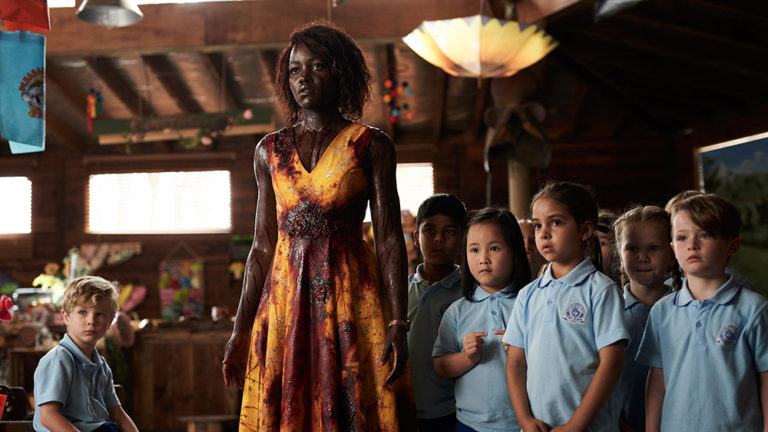
After getting out of Villains, I was able to get over to the Long Center, which is one of the premier theaters in Austin, to catch a screening of the Sundance breakout hit Little Monsters. The film follows Stephen Peacocke, who volunteers for his nephew’s field trip after seeing that Lupita Nyong’o is the teacher. But what turns into a regular field trip to a petting zoo turns into an all-out survival when a zombie breakout at the government lab to them goes on lockdown and the zombie outbreak reaches the zoo grounds. The film is a dark, hilarious action comedy in the vein of Shaun of the Dead with some very over the top language like something out of a Scorsese movie. It is a film that feels so real even though we have seen a lot of send ups to action-comedies over the last couple years and the direction of the action scenes are just a strong as the humor. I can feel this become a cult hit with it being a lot of fun to take your friends to a 9:30 screening at night and laughing a lot while also finding a lot of heart from these characters. Little Monsters might not be for everyone, and your enjoyment of the film could be judged by how much you like Josh Gad’s performance in the film. But for me this film was an absolute trip that I could see myself going on again and again like a lot of other films of its style.
My last stop of the day landed me back at the Drafthouse to see Christopher Morris’ The Day Shall Come. The film is about how a preacher of a small congregation starts to be investigated by the FBI, and their efforts to turn him into a home grown terrorists without him even knowing it. The film harkens to the ideas that Spike Lee brought up in Malcolm X along with the comedic timing of In the Loop or The Death of Stalin. It is a political film that talks about what someone will do to protect what they have while also being a film about what we will do to convict someone of something they didn’t even do. The films cast does a fine job, and it takes a while for the film to get going but by the end, the film is so heartbreaking and real that it makes you start to wonder how many of these incidents happen each day. Overall I would recommend the film, though I wish that it was tighter in the script but I liked it overall.
Check back here tomorrow for my day 5 recap and follow me on Twitter @ryanmcquade77 for more coverage of SXSW.
This week’s poll is inspired the new J.C. Chandor film, Triple Frontier, which hits Netflix today. Despite what you think about military or heist films, Chandor is a great filmmaker who should be taken seriously. Don’t let any of Netflix’s (bad) marketing fool you. The film may not be great, but Chandor has proven himself over and over again, so we are very excited for it. With that said, as seen in Triple Frontier, we are talking about Special Forces depicted in movies. Some have been great…others not so much. However, there are some good options listed here and we are eager to hear what you think.
For our Episode 316 Bonus Content, we continue our Patreon Series with a suggestion via Brian where we discuss the French film Amelie!
*Note: While this review originates from a Patreon subscriber, it is available to the public on our main show feeds.
[divider]
HELP SUPPORT THE SHOW
To hear our bonus content episodes early, subscribe now on Patreon. In many cases, though, we offer our bonus content for free after a certain period of time and we do encourage (and very much appreciate) a small donation of $0.99 as a way to help support the show if signing up on Patreon isn’t for you. Click on the PayPal button below to donate and thanks so much for your support. You can also hear much of our Bonus Content via our mobile apps. See the information at the bottom of the post for more details.
[divider]
Mobile Apps!
Listen to all of our bonus content on our apps for just a one-time fee! Whether you have an iPhone, Android or Windows phone, our apps are available in many different ways that is convenient for you. With our mobile app, not only can you listen to all of our bonus content, but our main shows and our Extra Film podcasts as well. Click here for more info!
If you don’t want to purchase our bonus content, but still want to support us, there are other you can help us out. Click here for more info.
Synopsis: A look at the Apollo 11 mission to land on the moon led by commander Neil Armstrong and pilots Buzz Aldrin and Michael Collins.
[/info]
I remember in the summer of last year, my father encouraged me to see Three Identical Strangers. I ended up seeing it with him, and being unmoved by the filmmaking on hand. From the boring interviews, to the real life tragedy played as a twist, Three Identical Strangers felt like a relic of older, poorer documentaries, especially in the year of docs like Minding the Gap and Hale County This Morning, This Evening. Luckily, the first big documentary of 2019 firmly bids au revoir to the boring, outdated talking head documentary form. Apollo 11 is a desperately needed shot in the arm of documentary filmmaking.
The original selling point of Apollo 11 was the new, unseen footage. It was the focus of the ads and promo, attempting to sell itself to tech fetishists, and NASA nerds, moments into the film, it presents itself as a new, necessary work to any documentary fans. It’s not like this style is necessarily new, but it’s so refreshingly used here that it feels unique. It’s not like this subject isn’t an underdone topic in film either – from First Man to For All Mankind, documentary and narrative film about the Apollo 11 mission isn’t scarce, but if you have any interest in the subject, or the documentary as an art form, this film is a must see.
The most striking thing about Apollo 11 is the grainy, 70mm footage. This footage, which was never released to the public until now, follows Cold War in being one of the most stunning things I’ve ever seen in theaters. There’s a surprising crispness to every shot here, which does wonders to adding to the audience’s perspective. Something is so unique and beautiful about the crowds of people watching the launch, and how wonderfully it’s captured. Those shots almost made me a patriot, which is a hard accomplishment.
Almost all of the credit can be given to director and editor Todd Douglas Miller, who’s vision of this narrative is refreshing and wonderful. The decision to place the audience right into the events unfolding on screen, with no narration or interviews feels like a deliberately brilliant choice. The editing of this superb footage, when combining it with the perfect audio, feels like the work of a new master. Someone to behold alongside our Errol Morris’, and Frederick Wiseman’s. The only real criticism is that the style here, while being fabulous, really carries the material. This is all information that’s central to culture, and there’s no new thesis here. Not that that is a bad thing, but the stylization does make the film, and towards the end the facts presented can feel like they aren’t anything new.
Even with that minor flaw, Apollo 11 is something astonishing to see in cinema. Every shot brims with beauty in the capturing of a decade, and the editing is what makes the film. While this may not be a new story, this incredible approach to the story makes it worth telling again, even if you know it already.
Overall Grade: B+
[divider]
Hear our podcast review on Extra Film, coming soon!
Day Four of my coverage at SXSW didn’t start the way that my other days began because I didn’t see a movie. I was invited to a roundtable discussion run by Leonard and Jessie Matlin to talk about film criticism and bounce off ideas about what makes a critic, how should someone write reviews for film, criticism in general and how to make the internet a more positive place to combat the everyday negativity we read. It was such an enlightening conversation and I got to talk to the Maltin’s after for about twenty minutes and they are truly some of the nicest people you will ever meet. Note to anyone out there going to their first film festival, go to panels or rounds tables because the information you can gather from those events are huge. Also don’t be afraid to talk to people, like the Maltin, because I’ve talked to a lot of people throughout the festival and they have all been so nice and open to speak if they have the time.
So once the roundtable concluded, I made my way back over to The Paramount to check out an “in progress” documentary from Morgan Neville, the Academy Award winning director who last directed the smash hit Won’t You Be My Neighbor. What I mean by “in progress” is that the project is not done by they should be finished with it soon. The project is called Shangri-La and, to my surprise and many in the audience, we weren’t going to be watching a film, we were going to be watching the first episode of a four-part documentary-television show. The show follows the life of one of the most influential music producers Rick Rubin and his one of a kind studio that has housed some of the biggest names in music, as well as some of the best album and songs to come out of all types of genres. The artists that were presents in the document included musicians of The Avett Brothers, Vampire Weekend, Flea from the Red Hot Chili Peppers and Lil Yachty as well as director David Lynch, producer Mark Ronson and magician David Blaine. To that this documentary doesn’t have big stars is an understatement but it’s not about the cameos, this film is about Rick and that studio that everyone comes from all around the world and based on the first episode, I can tell this is going to be Neville’s most experimental documentary yet. From what we get in the episode, he really takes a look into Rick’s life with such a visual style instead of words because Rick’s is such a private guy, thus making for some interesting choices. Overall, while I was disappointed it wasn’t a film, I will be checking out the rest of the series once Showtime releases it later this year, even though I know how they are going to end it.
Once the Q&A was over, I got in my car and drove to the AFS (Austin Film Society) theater to catch a screening of actor turned director Logan Marshall Green’s new film Adopt a Highway staring Ethan Hawke. The film follows a just release convict who has nothing to his name because he has been in prison for twenty years for committing his third strike, possession of a ounce of marijuana. One night, as he is taking the trash out at the fast food place he works at, he discovers a baby wrapped up in a bag, cry and coughing for her life. What then ensues is a story about how we should do the right thing and take care of each other regardless of the circumstance, while also being a film that is about second chances, not just for the baby but for Hawkes character too. This is a very good debut by Logan Marshal Green, who really gets the melancholy tone down that he is looking for, and thus leads to a very moving ending. Along with Green’s direction, the score by folk singer Jason Isbell is easily one of my favorites of the year so far and is used beautifully to tell this story and complements the characters. But the star of the movie is also the reason to go see it because just like last year’s First Reformed, Ethan Hawke gives another commanding performance in such a different film and with such a different character. With this performance, I can say with confidence that he is the best working actor on the planet and we are witnessing someone at the height of their acting talents.
Once I was done with Adopt a Highway, I decided to skip out on the headliner for the evening in Good Boys and went to the convention center to see a film that already premiered two nights before in Lynn Shelton’s Sword of Trust. The film follows a couple who comes home to find out what the grandfather of one has left them in his will. What they discover is that all that was left to them was a sword and nothing else. Without getting into spoilers, I will not tell you how the sword plays into the film and its backstory but what I can tell you is that it’s one of the funniest concepts I’ve seen here at this festival. So when the girls try to pawn off the sword, they, along with the pawn shop owner and his assistant, get wrapped in something that’s far over their heads and completely entertaining to watch. The movies script is downright perfect, with humor oozing all over the place and also real moments of sorrow for these characters, especially Mark Marin’s pawn shop owner Mel, who gives the best performance of his career while also bringing his same style of humor that goes so well with this story. It’s a film that also feels super timely considering how it ties in the major reveal of the film with our society and how we consume facts. The film starts off a little slow but once the reveal is made, the movie shines and becomes an unexpected delight and gives another show case as to why Shelton is one of the best comedic directors working today.
Check back here tomorrow for my day 5 recap and follow me on Twitter @ryanmcquade77 for more coverage of SXSW.
This week on Episode 316 of the InSession Film Podcast, inspired by Carol Danvers in Captain Marvel, we wanted to honor the female comic book movie characters that came before her. Despite it being obvious, it’s worth noting that “comic book” and “superhero” aren’t the be all end all when it comes to these characters. Superhero’s have dominated the film landscape when it comes to movies based off of comic books or graphic novels, but there are a lot more out there that made this list more expansive than what Marvel and DC have produced over the years. Either way, there are so many great female characters to consider here and we had fun talking about what makes them so memorable. That said, here are our lists:
(Note: Please keep in mind that we each had different criteria for our selections)
JD
1) Adele – Blue is the Warmest Color
2) Laura – Logan
3) Marjane Satrapi – Persepolis
Brendan
1) Enid – Ghost World
2) Selina Kyle – Batman Returns
3) Aunt May – Spider-Man 2
Honorable Mentions (Combined)
Emma – Blue is the Warmest Color
Rita – Edge of Tomorrow
Hit Girl – Kick-Ass
Selina Kyle – The Dark Knight Rises
Valkyrie – Thor: Ragnarok
Pepper Potts – Iron Man
Black Widow – The Avengers
Scarlet Witch – The Avengers
Gamora – Guardians of the Galaxy
Lady Sif – Thor
Shuri / Nakia / Okoye – Black Panther
Wasp – Ant-Man & the Wasp
Ghost – Ant-Man & the Wasp
Captain Marvel – Captain Marvel
Domino – Deadpool 2
Rogue – X-Men
Storm – X-Men
Gwen Stacy – The Amazing Spider-Man 2
Gwen Stacy – Spider-Man: Into the Spiderverse
Wonder Woman – Wonder Woman
Antiope – Wonder Woman
Doctor Poison – Wonder Woman
Barbarella – Barbarella
Ramona / Knives Chau / Kim Pine / Julie Powers – Scott Pilgrim vs. the World
Liz – Hellboy
Lorraine – Atomic Blonde
Mason – Snowpiercer
Cassandra Anderson – Dredd
Bobo / Klara – We are the Best!
Motoko Kusanagi – Ghost in the Shell
Minnie – The Diary of a Teenage Girl
Hopefully you guys enjoyed our lists and if you agree or disagree with us, let us know in the comment section below. There are, obviously, many more characters that we didn’t have time to mention that could possibly be on your list. That being said, what would be your Top 3? Leave a comment in the comment section or email us at [email protected].
This week’s episode is brought to you by the InSession Film Store. Get your IF gear today!
This week on the InSession Film Podcast, we discuss the latest film to hit the Marvel Cinematic Universe in Captain Marvel, starring the great Brie Larson. We also go over our Top 3 female comic book movie characters and JD offers a few thoughts on the Netflix films Paddleton and The Boy Who Harnessed the Wind.
We were supposed to be joined by the great Karen Peterson of Awards Circuit, but due to technical difficulties we unfortunately could not make it work. However, we urge you to go read her review, which is quite great and would have fit in well with JD and Brendan’s thoughts. We do hope to get her on the show soon though, so stay tuned for her appearance at a later date.
That said, check out this week’s show and let us know what you think in the comment section. Thanks for listening and for supporting the InSession Film Podcast!
– Movie Review: Captain Marvel (4:17) Director: Anna Boden, Ryan Fleck Writers: Anna Boden, Ryan Fleck, and Geneva Robertson-Dworet Stars: Brie Larson, Samuel L. Jackson, Jude Law, Ben Mendelsohn
– Notes / Paddleton / The Boy Who Harnessed the Wind (51:02)
As noted above, JD was able catch up with both Netflix films Paddleton and The Boy Who Harnessed the Wind, which were discussed on last week’s Extra Film. So he decided to offer some thoughts on those two films and what differed from what was said on Extra Film.
– Top 3 Comic Book Movie Characters (1:06:05)
Inspired by Carol Danvers in Captain Marvel, we wanted to honor the female comic book movie characters that came before her. Despite it being obvious, it’s worth noting that “comic book” and “superhero” aren’t the be all end all when it comes to these characters. Superhero’s have dominated the film landscape when it comes to movies based off of comic books or graphic novels, but there are a lot more out there that made this list more expansive than what Marvel and DC have produced over the years. Either way, there are so many great female characters to consider here and we had fun talking about what makes them so memorable. That said, what would be your Top 3?
If you want to help support us, there are several ways you can help us and we’d absolutely appreciate it. Every penny goes directly back into supporting the show and we are truly honored and grateful. Thanks for your support and for listening to the InSession Film Podcast!
For any of our readers that have covered a film festival, you know that by day three of any festival, you can start to feel yourself hitting the wall. But even with losing an hour of sleep and almost missing my alarm, I was still able to get out to this glorious festival for four films that were completely different, yet wholly original in every way.
The first screening, which I saw at one of the many Alamo Drafthouse theaters in town (which is hands down the best theaters in the country) was Emily Ting’s directorial debut, Go Back to China. The film follows Sasha, a spoiled rich girl that has just graduated college but has no work experience to get a job as a designer. She spends most of her time partying and spending her father’s money, till one day her card is declined and she receives a life changing call from her father. He tells her that in order to get her money back, she must come to China for one year and work at his toy factory to earn what she has taken for granite. The film has a lot of great ideas in bringing together both the American and Chinese culture and the family dynamics within Asian culture, ideas are explored in Crazy Rich Asians but are done way differently in this film. The lead performance from Anna Akana is impeccable and you can truly see that a star is being born in front of your eyes. The rest of the cast, especially Richard Ng and Lynn Chen, do a good job but it is Akana’s vehicle to shine. While I wish the screenplay was a little more focused and the editing was a bit sharper, I would say that Emily Ting gave us a very promising debut that could lead to something special down the road.
Once I got out of Back to China, I drove back to what is becoming my home away from home in The Paramount to see the karate dark comedy The Art of Self-Defense. The film follows Jesse Eisenberg as Casey, a guy who is beat up one night when he is walking home and he decides to learn how to defend himself by joining a local dojo run by Sensei played by Alessandro Nivola. This movie is one of the most muted, yet brilliant dark comedies I’ve seen in a while, with a perfect pace and every moment feels so real to the ultimate eeriness that the film presents. Eisenberg gives his best performance since The Social Network but it is Nivola, who is coming off the heels of his performance in last year’s Disobedience, who steals the show and plays such a layered, unpredictable human being. It won’t be for everyone but this film is a heck of a ride and leaves you with a fun gut punch for an ending.
Once that film’s credits rolled, I rushed next door at The Stateside Theater to catch the supernatural comedy Extra Ordinary. The film follows Rose, a part-time driving instructor that has supernatural powers and can communicate with the dead but after a tragic accident, she decided to quit her paranormal side of life. But one night she receives a call that forces her to break her rule and set back in to the ghost game. The film, directed by first time filmmakers Mike Ahern and Enda Loughman, is an enjoyable send up to films like Shawn of the Dead, Attack the Block and Ghostbusters, while still being its own thing. While a lot of the humor didn’t land for me and the audience I was seeing it with, there was a lot more going on to keep me interested and had some really good special effects for a small film of this size. Plus, anytime a film can have Will Forte playing a singing bad guy, I really can’t say I had a bad time.
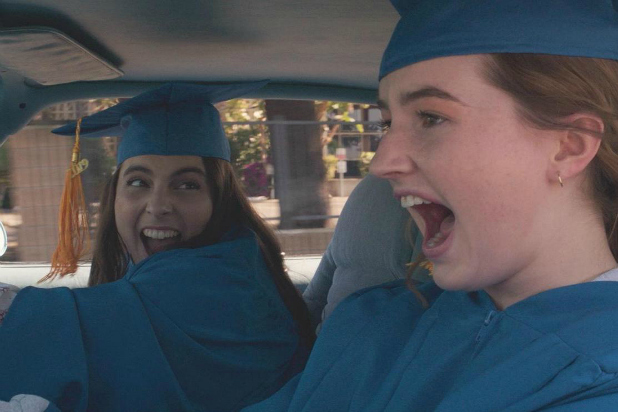
So after leaving The Stateside, and grabbing something to eat (which you can forget to do at these festivals), I made my way back over to The Paramount for the world premier for Olivia Wilde’s directorial debut Booksmart. Being that she was the big key note speaker for the film festival and being that Booksmart was the last big premier for the weekend, there were some high expectations mixed with questions as to what the final film was going to be. So it came as a complete surprise that by the end of Booksmart, I sat in my seat thinking that this is going to be the film that we all will be talking about by the end of the year, the film that #FilmTwitter will be all over with praise and love, and it deserves it. Think Lady Bird, Eighth Grade and Superbad all mixed together into this lovely progressive millennial coming of age comedy that felt so fresh and left the room in tears by the end but on the floor laughing the entire time. The ensemble cast is fantastic but its Kaitlyn Dever, Beanie Feldstein and Billie Lourd who steal the show and your hearts and give some of best performances of the festival and the year so far. I can be safe to say that much like Greta Gerwig, Olivia Wilde was born to be a director and her direction and script oozes with the confidence and mastery of someone that has been directing for ten plus years, its brilliant. I can’t wait for everyone to see this film so I can see it again, it’s that good.
Check back here tomorrow for my day 4 recap and follow me on Twitter @ryanmcquade77 for more coverage of SXSW.