


Director: Noah Baumbach
Writer: Noah Baumbach, Emily Mortimer
Stars: George Clooney, Adam Sandler, Laura Dern
Synopsis: Famous movie actor Jay Kelly embarks on a journey of self-discovery, confronting his past and present with his devoted manager Ron. Poignant and humor-filled, pitched at the intersection of regrets and glories.
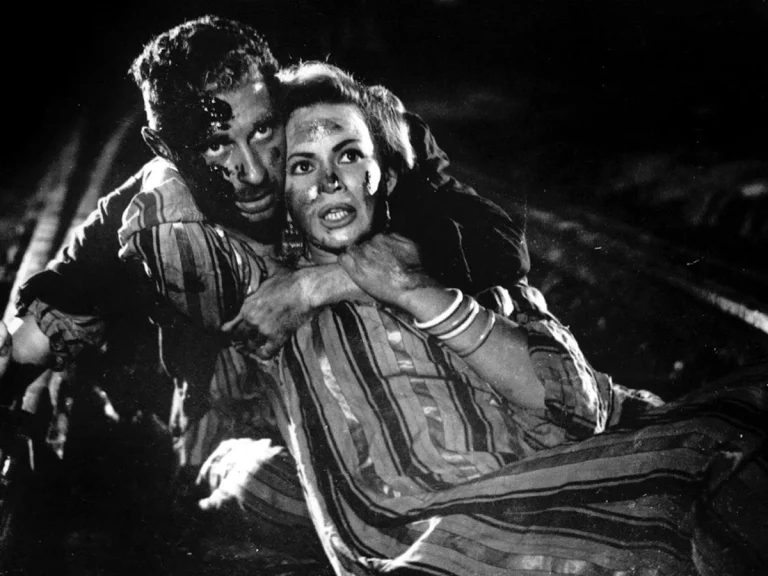
There have been many cinematic portraits of artists who have sacrificed a great deal to achieve the successful life they’ve attained through their work. These lives come with a significant amount of burdens that can drown the soul of the artist as they age. Yes, riches and fame are all there, but at what cost? A legacy for a heart. In Billy Wilder’s Sunset Boulevard, we witness the tragic fate of silent film star Norma Desmond (Gloria Swanson), whose career has faded due to the introduction of sound into motion pictures. She tries to exploit a young writer for a role that can revive her career–have the opportunity to shine in the medium’s evolution–but the Hollywood ruthless machine, obsessed with young faces, which serves as commodities until they are worthless, drives her to self-destruction and severe obsession.
Another example is All That Jazz, the semi-autobiographical musical by Bob Fosse, which utilizes the director’s own experiences to tell a story about the addictive nature of show business, mortality, and the struggle to cling to what’s slipping away – love, family, health, fame, and career. Through surrealist musical numbers and personal elements, Fosse uncovers his fears, motivations, and worries, culminating with a damning tune that’s memorable (and catchy) as it is haunting. What these films, and other noteworthy examples like Stardust Memories and Pain and Glory, have in common is the sincerity and honesty that lies beneath the fiction, taken from real emotions and experiences. You can’t have a story that chronicles a person’s late-stage grievances without that candor which arises from the sacrifices done for, or by, art in any sense. That key facet is missing from the latest legacy portrait, Noah Baumbach’s Jay Kelly (screening at the 2025 New York Film Festival in the Main Slate).
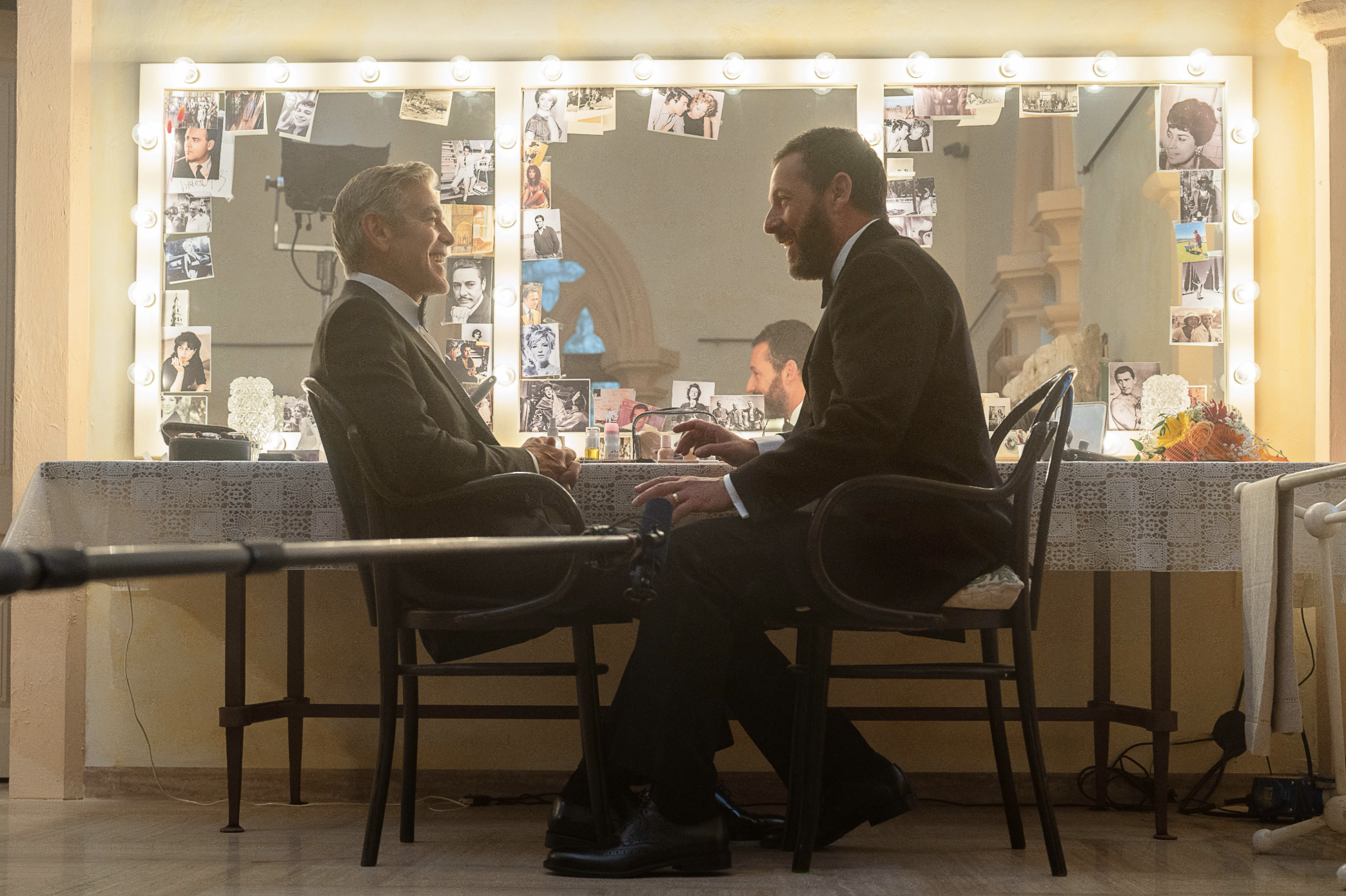
In the aforementioned film, Noah Baumbach attempts a similar approach. He uses George Clooney’s public image as an A-list movie star and storied career as a gateway for a reflection on the costs of stardom and the shadows cast by a life lived in front of the camera. At the same time, it wants to honor Clooney and all of his on-screen achievements, most evident in a tribute scene that features clips from Clooney’s films and cuts to the audience wiping away tears. This dishonest and manipulative move greatly irritates in its attempt to elicit an emotional response. However, unlike Fosse’s raw confrontation of his own demons or Wilder’s dissection of the delusions of grandeur and sharp critique of the Hollywood system, Baumbach’s film struggles to locate that same emotional truth beneath the surface of fiction. The established legacy of a class act and concept is there, but the heartbeat that makes such portraits resonate remains elusive, leaving an experience that often feels egotistical.
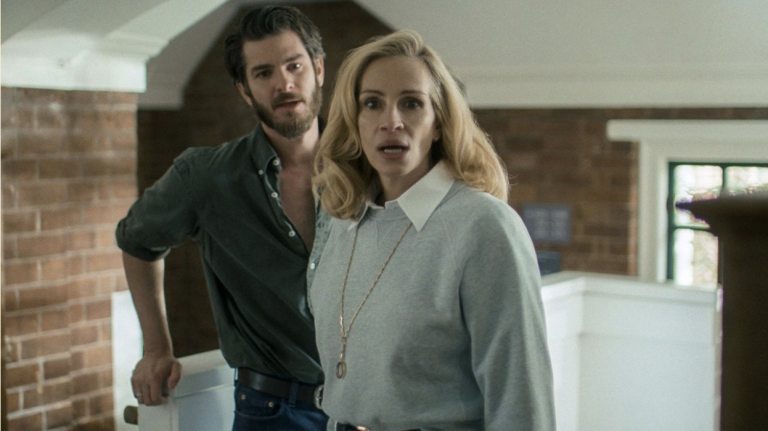
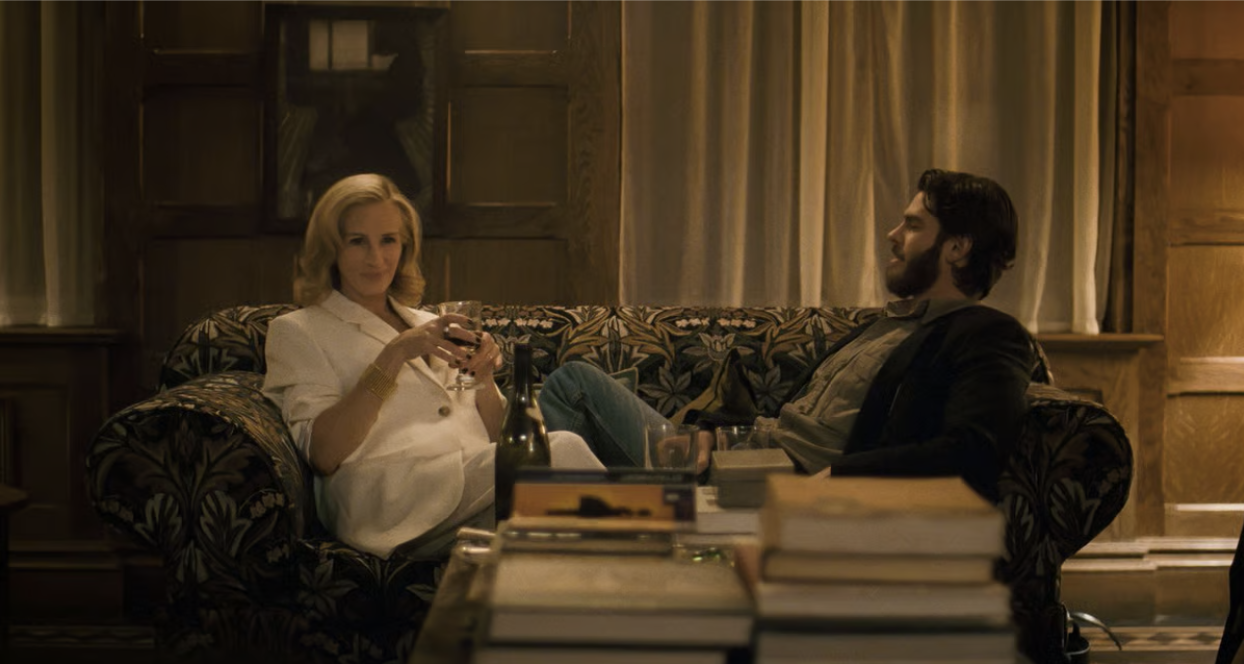
George Clooney is Jay Kelly, a renowned movie star who has graced the screen with numerous classics that audiences worldwide love and adore. He is, in the film’s universe, in the heights of James Stewart, Steve McQueen, and Marlon Brando–the stature of the greats, an actor who defines a generation. Kelly is about to film his next motion picture when he gets the notice that the director who gave him his first break has passed. Melancholy and nostalgia begin to consume the man as he looks back to a life long gone, or what could have been. At the funeral, Kelly comes across the thought that he must give more of his time to the people he loves before it’s too late. So, he packs his bags and rounds up his rag-tag team of associates–manager Ron (Adam Sandler), publicist Liz (Laura Dern), hairstylists, make-up artists, and other crew members–to find his estranged daughter, Daisy (Grace Edwards), who has been backpacking through Europe. He uses his career award ceremony at a film festival in Tuscany as an excuse for the encounter.
There are more than a handful of moments in Jay Kelly where we see the titular character trying to confront his reality, feeling burdened by the grievances of missed time and opportunities. Of course, he has everything he’s ever wished for; the thousand-dollar suits and watches provide a glimpse into the many riches he’s attained that none of us could ever afford. Yet, what has been taken from him comes from within. His soul is tainted and his heart broken. This multi-million-dollar life is just a facade, every gift matched by an equal loss. As Kelly tries to reach out for his daughter’s connection, Baumbach and co-writer Emily Mortimer avoid any real self-realization and reflection. When you think the film will finally give us a way into the broken man, it shies away from the darker and more confrontational, personal territories in exchange for overly dramatic and comedic dialogue, and no actual repercussions.
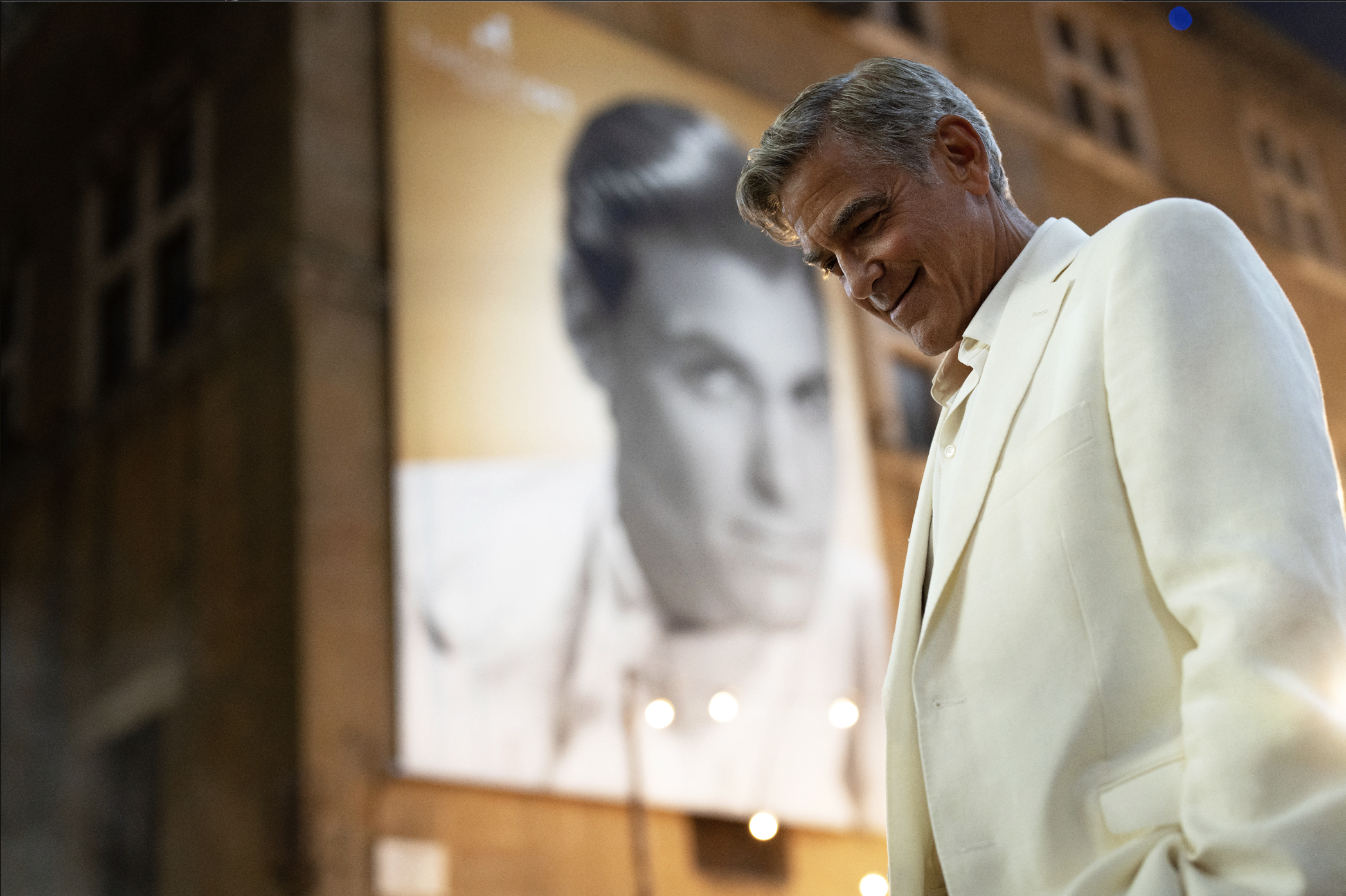
During the film’s runtime, I had one question in mind: Why should I care about Jay Kelly, the famed actor? I spent the entire duration of the film trying to come up with an answer, yet never could. After a few days, I finally have an answer: I shouldn’t–because it is a disingenuous and romanticized portrait of false grievances from the privileged one percent. The film insists on sympathy for a man cushioned by wealth and adoration. Baumbach and Mortimer never present Kelly with any deeply existential or reflective scenario that prompts him to reflect on his life decisions; it is all contemplative window shopping. Kelly isn’t painted as troubled or a bad guy. He is just confronted with a few tame foibles, which have already been explored in other (and better) pictures. The reunion with his estranged daughter. The hope that his father will finally see the worth of his acting career, which he was against him pursuing. A discussion with the man in which Kelly stole his breakout role keeps perturbing him.
These are troubling issues that, if properly dissected, could yield some interesting insights into the actor-father double role and Clooney’s own thoughts on the Hollywood non-stop treadmill. However, in Jay Kelly, they are seen through a glossy, advantaged lens that distances me from the story being told. On a few occasions, Baumbach makes a point of this detachment, as most of Kelly’s crew are somewhat annoyed by him and his uberrich demeanor. He creates debacles within the close circle through the characters of Adam Sandler and Laura Dern, the only two grounded characters in the bunch. The former is saddened that Kelly views him as a commodity, rather than a friend, even though they’ve spent decades together working to elevate the actor’s career to the top. This angle is the key to clawing into the griminess and arrogance of a person who has it all, except proper connection. Nevertheless, like the rest of the interesting ideas in the film, they are dismissed to honor Clooney’s career or ease up the tension by having moments of levity.
A few years ago, Alejandro González Iñárritu released Bardo, False Chronicle of a Handful of Truths, to a very hostile reception, to the point where the Mexican filmmaker had to re-edit the picture before its theatrical release. Personally, I’m not fond of Iñárritu. In fact, I despise most of his pictures, except his excellent feature debut, Amores Perros. But I adored Bardo, which caught me by surprise. The film is a self-portrait of the artist and documentary director Silverio Gama (Daniel Giménez Cacho), exploring his struggles with the balance between life and art. It explores his Mexican identity, with which he struggles the most to find his place in the world after many years away from his native country and living in America, where he has never dealt with the issues that have arisen during his absence, all of which are the subject of his work.
I felt that, for the first time, in a lengthy career filled with pretentious and disingenuous works, Iñárritu was being truthful. Iñárritu was speaking his mind, body, and soul out rather than preaching to the choir. It still had some pretentiousness as garnish, and it was narcissistic in some parts. Yet it was bracingly honest, even brutal. The issues tackled in Bardo are rooted in real-life grievances and things that truly hinder Iñárritu’s daily living. Many Spanish-speaking viewers connected with that film deeply. The opposite has happened to Baumbach. After many years of delivering sincere and emotional works, not all of which have been successful yet forthright, such as Marriage Story and Frances Ha, he responds to a career overview and dissection with a faux response.
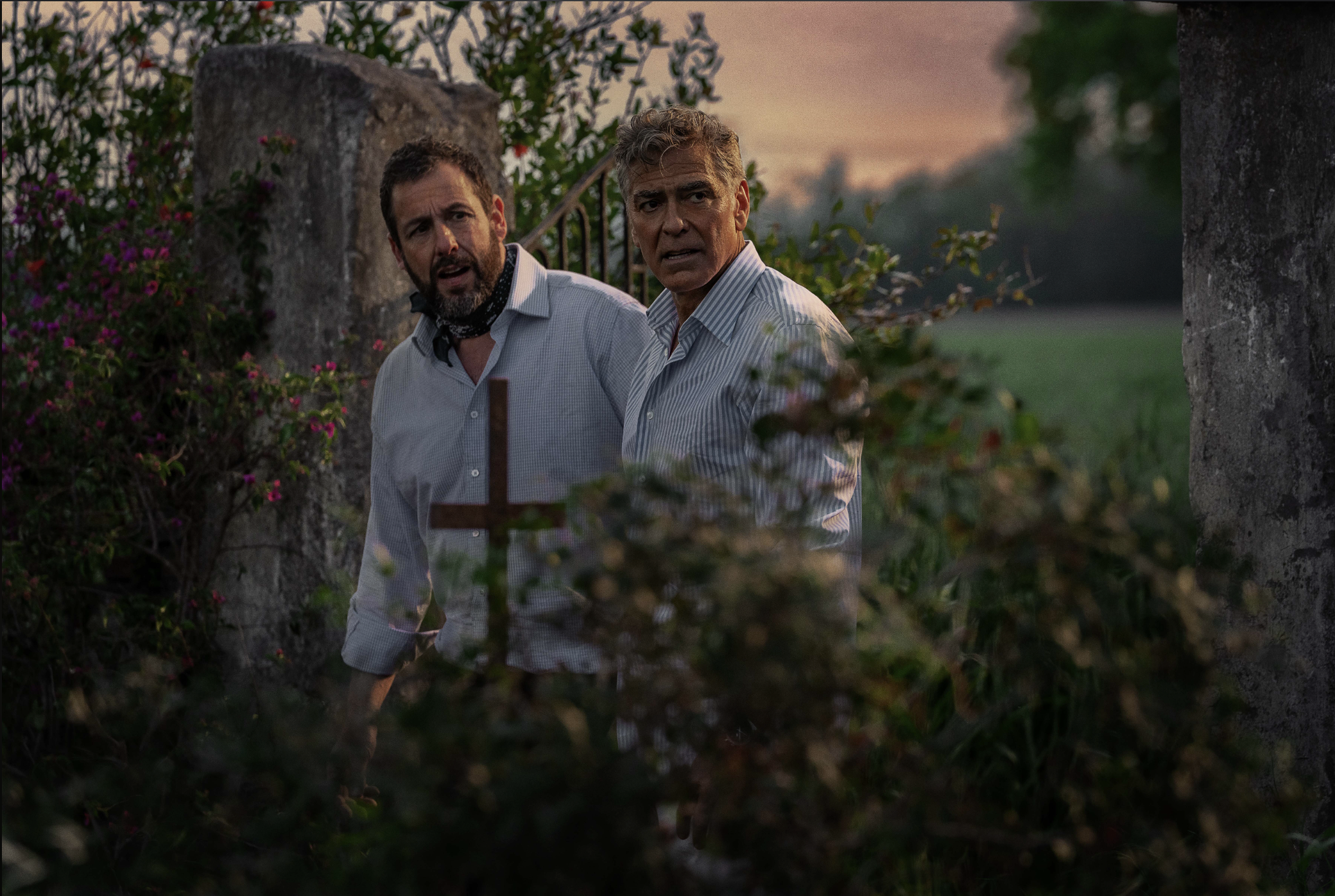
Baumbach wants to celebrate Clooney while exploring the wounds of Jay Kelly. In attempting to do both simultaneously and sporadically, when it is convenient, Baumbach creates a contradiction–half-tribute, half-confession–that collapses into shallow self-adoration. The goal with Jay Kelly was to be empathetic with character and understand how isolated, even through wealth, the life of a movie star can be. Jay Kelly fails miserably because Baumbach wants to graft the struggles of genuinely tormented artists onto someone like Kelly, who’s insulated by privilege. This undermines the authenticity of the portrait in every way possible, and no empathy is shown towards the subject at the center.