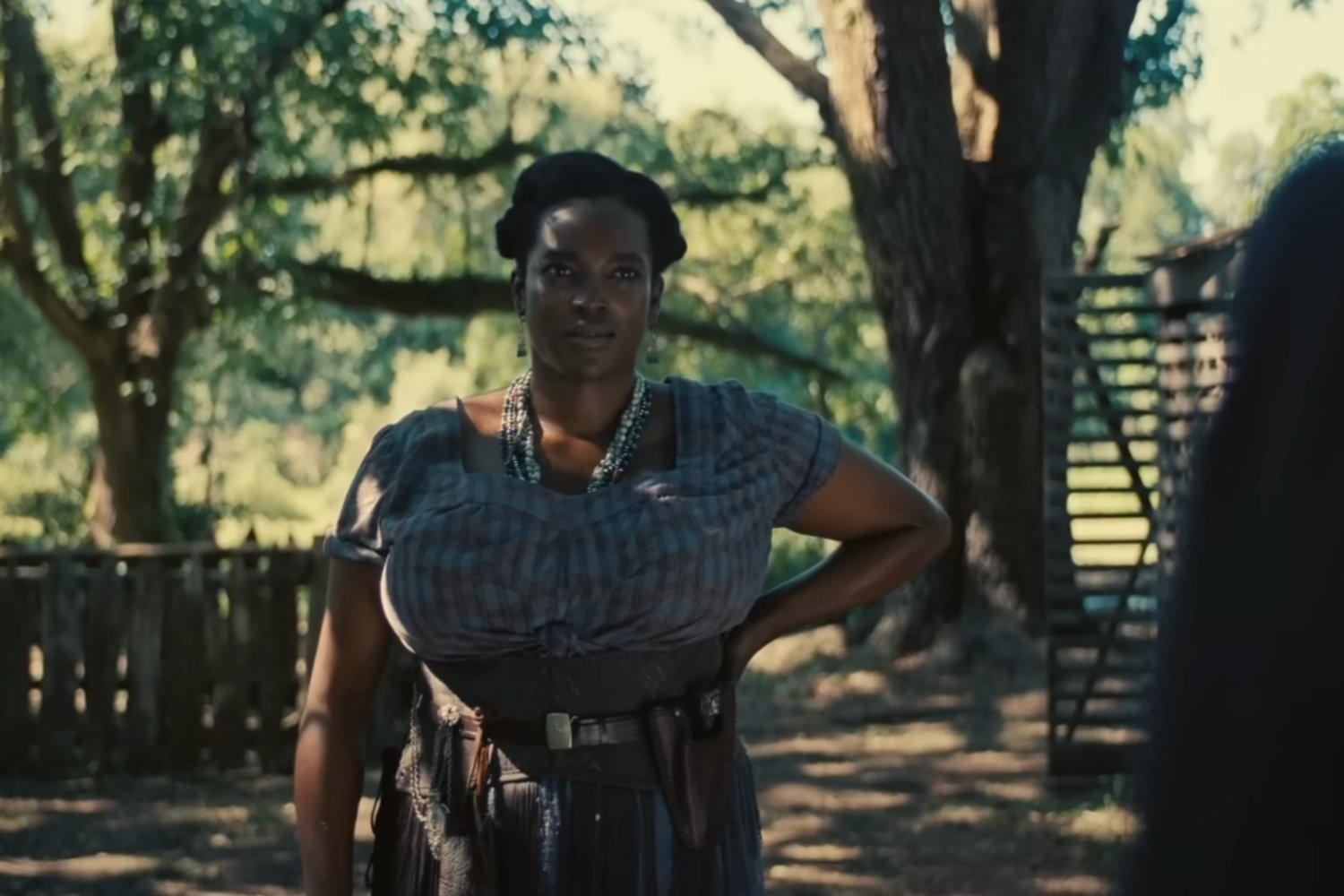
This week on the InSession Film Podcast, we discuss our most anticipated movies for the upcoming fall/winter season! Also, we have a laugh over our 1999 Retrospective blunder from last week and talk about Hamnet winning this year’s TIFF prize.
Check out this week’s show and let us know what you think in the comment section. Thanks for listening and for supporting the InSession Film Podcast!
– 1999 Retrospective Recap (4:35) Our yearly retrospectives are always a lot of fun, but our 1999 Retrospective last week will be one for the books. For the most part, everything went seamlessly, however when we got to our #1 films of 1999, things kind of went off the rails in the funniest way possible. So we had to talk about how it happened and why it’s a moment we’ll never forget.
– Hamnet Wins TIFF (20:53) This year’s Toronto International Film Festival just wrapped up with Chloé Zhao becoming the first filmmaker to win the People’s Choice Award twice as her latest film Hamnet took home the top prize. We wanted to talk about the electrifying buzz for the film coming out of TIFF and how it impacts our excitement for the film as we head into the fall season.
– 2025 Fall Preview (45:13) We structured our fall preview a little different this year. Instead of doing a conventional number ranking, or just a general conversation, we decided to do a tier ranking system. We grouped films by our most excited at the top, the movies we’re still quite excited for (even if not as much as Tier 1) in the middle, and those we’re curious about at the bottom. This allowed for us to categorize these movies while including a ton of titles that we might not have been able to otherwise. What are your most anticipated movies of the fall season?
If you want to help support us, there are several ways you can help us and we’d absolutely appreciate it. Every penny goes directly back into supporting the show and we are truly honored and grateful. Thanks for your support and for listening to the InSession Film Podcast!
Director:Paul Thomas Anderson Writer: Paul Thomas Anderson Stars: Leonardo DiCaprio, Sean Penn, Benicio del Toro, Regina Hall, Teyana Taylor, Chase Infiniti
Synopsis:Bob is a washed-up revolutionary who lives in a state of stoned paranoia, surviving off-grid with his spirited and self-reliant daughter, Willa. When his evil nemesis resurfaces and Willa goes missing, the former radical scrambles to find her as both father and daughter battle the consequences of their pasts.
Back in August, Leonardo DiCaprio gave an exceptionally long interview to Esquire… sort of. The cover story’s “writer” and photographer, insofar as conducting a free-flowing conversation in which questions play a prominent role makes someone the author of a magazine feature, was Paul Thomas Anderson, DiCaprio’s director in the then-upcoming collaboration between two of Hollywood’s foremost giants. Teasing their first-ever pairing, Anderson’s One Battle After Another, cinema’s greatest living auteur and his star spoke about regrets, aging, the role of cell phones in movies, how making a “political” film can be a bit like eating your vegetables, and more, but it’s the topic of destiny that circles the entire exchange more than any others. “No one can outrun what’s inevitable,” Anderson says. He’s talking about Bob Ferguson/“Ghetto Pat,” DiCaprio’s character in the film, but one could read it as though he’s talking about himself.
Anderson further describes DiCaprio’s character as “someone who starts out wanting to change the world on the far left but gets increasingly cranky and closed off as he gets older.” And while the specifics of that broad outline relate strictly to One Battle After Another’s principal figure and the attitude that fates him, swap “in cinema” for “on the far left” and you’re getting somewhere re: PTA. Perhaps it was always inevitable for the once-plucky upstart who made Boogie Nights and Magnolia before turning 30 – and has since seen his filmography go almost entirely unrecognized by awards bodies in terms of actually winning anything – to become a public figure who, like his Esquire discussion partner, “rarely give[s] interview[s].” When he does, it’s probably for good reason. When he does, it’s probably going to be about the script that has been sitting on his desk (and its many narrative strands, those of which have been percolating in his mind) for the better part of two decades. “In a way, none of them ever went out of style, because whatever seems to be happening politically seems to always be the same,” he told DiCaprio. “Same shit, different year.”
If that nugget of truth lands with a serious wallop in spite of its own self-evidence, then the punch packed by the film it applies to is more bruising and ferocious than any the writer-director has thrown before. With One Battle After Another, Anderson seems to have distilled decades of pent-up rage regarding societal decay; poignant ideas about the collective necessity to revolt and how oppositional forces aim to stunt a resistance’s growth by any means necessary; and the long-gestating blueprint for his ideal action blockbuster into a wise, exhilarating, and frequently hysterical epic that meets the moment head-on with one bash to the skull after another. Bracing and concussive, it’s a film that would be the defining work of most filmmakers’ careers, a notion that only warrants debate given how many masterpieces Anderson had made before this one – eight out of his nine features, for those keeping track at home. Wholly irrefutable is its relevance, a quality that only enhances its narrative brilliance and makes its depiction of a nightmare feel far more dreamlike as it is consumed.
(L-r) TEYANA TAYLOR as Perfidia and SEAN PENN as Col. Steven J. Lockjaw in “One Battle After Another.” A Warner Bros. Pictures Release. | Photo Courtesy Warner Bros. Pictures
Maybe that’s the VistaVision talking, or the percussive nature of Jonny Greenwood’s piano-dominant, career-best score, which retools the composer’s jittery tendencies in favor of controlled chaos. Or perhaps it’s the fact that its author, whose most “divisive” projects (Inherent Vice, Licorice Pizza) still tend to be far superior to any of the other movies released in their respective calendar years thanks to Anderson’s unique knack for making the most absurd subsets of humanity seem somewhat normal, has chosen to view this tale of renegades and revolutionaries through that same lens. One Battle After Another begins with the ever-exceptional DiCaprio’s “Ghetto Pat,” the first of the two names he goes by in the film, joining the intoxicating Perfidia Beverly Hills (Teyana Taylor) and a smattering of other recognizable anarchists – Regina Hall, Wood Harris, and Alana Haim among them – in their efforts to free a horde of imprisoned migrants from a detention center near the California-Mexico border.
“Make a show. Impress me,” Perfidia tells “Pat,” seemingly the squad’s explosives nut, not so much an expert but a fanatic with a set of reliable skills. Swarming the compound involves disarming and entrapping those guarding it, including Col. Steven J. Lockjaw (a twitchy, brilliant turn from Sean Penn), a task Perfidia claims with seductive glee, zip tying his wrists and sending him head over heels in love with her verve, white supremacist ideologies be damned. It’s on Pat to set off the fireworks that announce the so-called French 75 vigilante group’s “mothafuckin’ revolution,” and once his pyrotechnic handiwork reaches the midnight sky, One Battle After Another takes off with it.
LEONARDO DI CAPRIO as Bob Ferguson in “One Battle After Another.” A Warner Bros. Pictures Release. | Photo Courtesy Warner Bros. Pictures
In short order, we watch as Pat and Perfidia fall for one another, welcome a baby girl, and drift apart as the new mother grows jealous of her partner’s unflappable affection for their daughter, something that was once reserved for Perfidia and Perfidia alone. Sixteen years down the line, with his gal not-so-suddenly in the wind and his daughter, Willa (Chase Infiniti, deserving of the “revelatory” distinctions she’s sure to be showered with in the days and weeks to come) resenting him as he drinks and smokes his way into a perpetual fog, the man now known as Bob Ferguson – after a necessary change of residence and name for anonymity, in case the law went searching for clues to Perfidia’s whereabouts – is faced with a new challenge: Rescuing/reuniting with his daughter, who is taken to safety after news of Lockjaw’s resurfacing reaches the still-active French 75ers, the few of whom made it out from under his thumb back when their erstwhile leader first disappeared. To make matters more complex, he’s a lost and lonely soul who’s not quite searching for purpose, but a better way to pass the time. (He watches and quotes The Battle of Algiers at one point, which is a start.)
That’s quite a bit to gnaw on for a small bite out of this 162-minute picture, and had Anderson chosen to formally adapt Thomas Pynchon’s “Vineland” – a distinct and intricate tome that ran fewer than 400 pages but packed in enough plot to fill a book triple the size – for his 10th film, there would be even more to digest. For one, audiences would have to get used to Leonardo DiCaprio playing a dude named Zoyd Wheeler (which would’ve been a hoot, honestly); moreover, they would have been subjected to what in all likelihood would have still been a relentlessly entertaining film, but a denser, more rambly one, too, the sort that Warner Bros. would have struggled to market even more than they did with One Battle After Another in its present, perfectly-commercial state. Instead, Anderson permissibly lifted the bits he most urgently required from Pynchon’s brilliant prose and weaved his own modern tale of rebellion from the yarn it provided. If there is a world in which Thomas Pynchon frequents his local multiplex, one can only hope that he makes it out to see the stroke of genius that his fourth novel inspired, a prescient depiction of ultramodern sociopolitical duress as confronted by those who truly believe in freedom and justice for all.
CHASE INFINITI as Willa Ferguson in “One Battle After Another.” A Warner Bros. Pictures Release. | Photo Courtesy Warner Bros. Pictures
Like any review and/or summary of “Vineland,” there are certain details that this account of One Battle After Another wouldn’t dare to divulge, such as the name of the elite underground (and strictly “racially pure”) society that Penn’s Lockjaw, an insecure prick who would rather see a white world burn than a rainbowed one flourish, hopes to smarm his way into; or the answer to the coded question, “What time is it?” that Bob can’t seem to answer, as teased in the film’s teasers; or how Sensei Sergio (a hilarious Benicio del Toro) plays into it all apart from his urging that Bob jumps out of a moving car with reckless abandon, “just like Tom fucking Cruise.” Even saying this much about the performances within feels like a betrayal that would send one far outside of the French 75’s good graces, not necessarily into a world of hurt, but into one loaded with tripwires and lined with as many explosives as a trio of 70mm film canisters can carry. If one word of advice is permitted, it would be to see One Battle After Another in as large and loud an environment as possible, not only because it’s the way the filmmakers intended for it to be seen, but because it’s bound to loom in that capacity long after its note-perfect conclusion rolls around.
That “large and loud” distinction is often limited to “blockbusters,” a label that cinephiles (and Anderson himself) have never once prescribed to his films, and rightfully so. Yet to call him an “art-house director,” as DiCaprio noted the filmmaker is often considered midway through their Esquire chat, feels like calling the Russo Brothers “indie darlings.” Except that, in the case of PTA, the cinematic language he speaks is one of his own creation, the sort that vibrates like the purr emanating off of a satisfying drumroll and can be acquired by no one else. There’s no Duolingo for this parlance, just an understanding or a lack thereof, and an acceptance that its timelessness is a functioning pillar of its excellence. Speaking to DiCaprio, Anderson noted that he’s desperate “to hold on to any shred of the Olden Times that’s left,” a deliberate act of denial and a search for nostalgia. Thankfully, he also acknowledged the irony woven into his own philosophy: “The best part of life is the constant forward momentum. It only moves in one direction, so hop on and hold tight.” In other words, it’s a hilly ride not unlike One Battle After Another, though its valleys function as peaks regardless of the sudden change in altitude. One might compare such an experience to that of riding a rollercoaster. In this case, the word “masterpiece” works just as well.
One Battle After Another opens in theaters on Sept. 26.
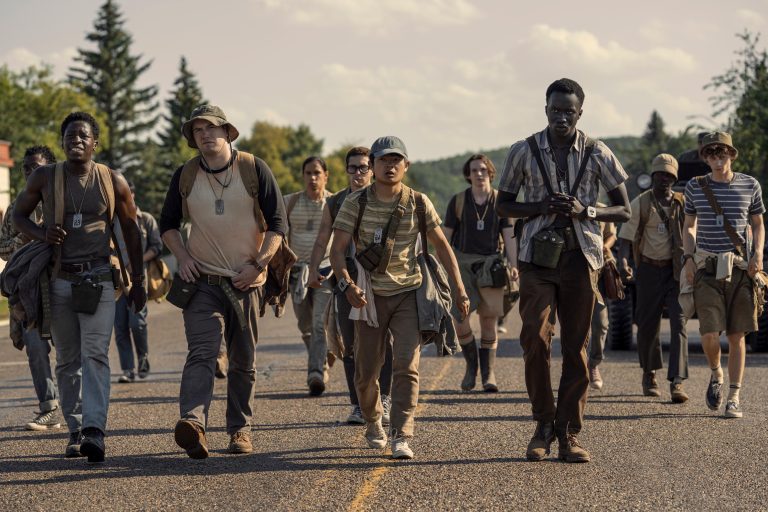
On this episode, JD and Brendan discuss Francis Lawrence’s new film The Long Walk, starring Cooper Hoffman and David Jonsson! It is kind of funny that in between Lawrence’s new Hunger Games movies he does a film like this that obviously has Hunger Games-like vibes to it. Lionsgate knew what they were doing when they hired him. But funny enough, this film mostly comes down the the brotherhood of Hoffman and Jonsson, who unequivocally steal the show.
Review: The Long Walk(4:00) Director: Francis Lawrence Writers: JT Mollner Stars: Cooper Hoffman, David Jonsson, Mark Hamill, Charlie Plummer
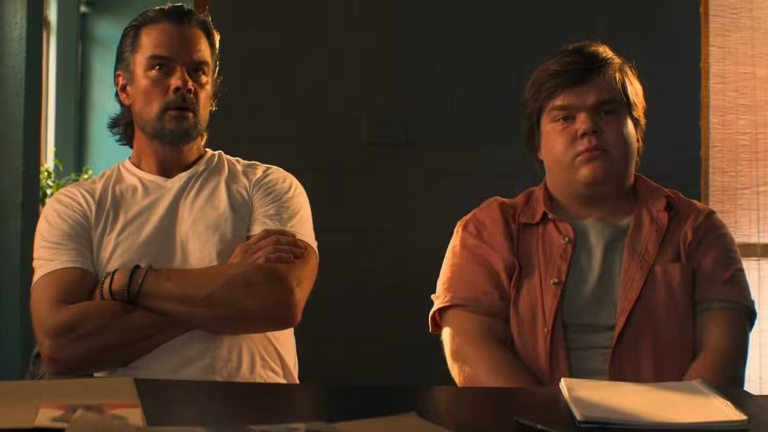
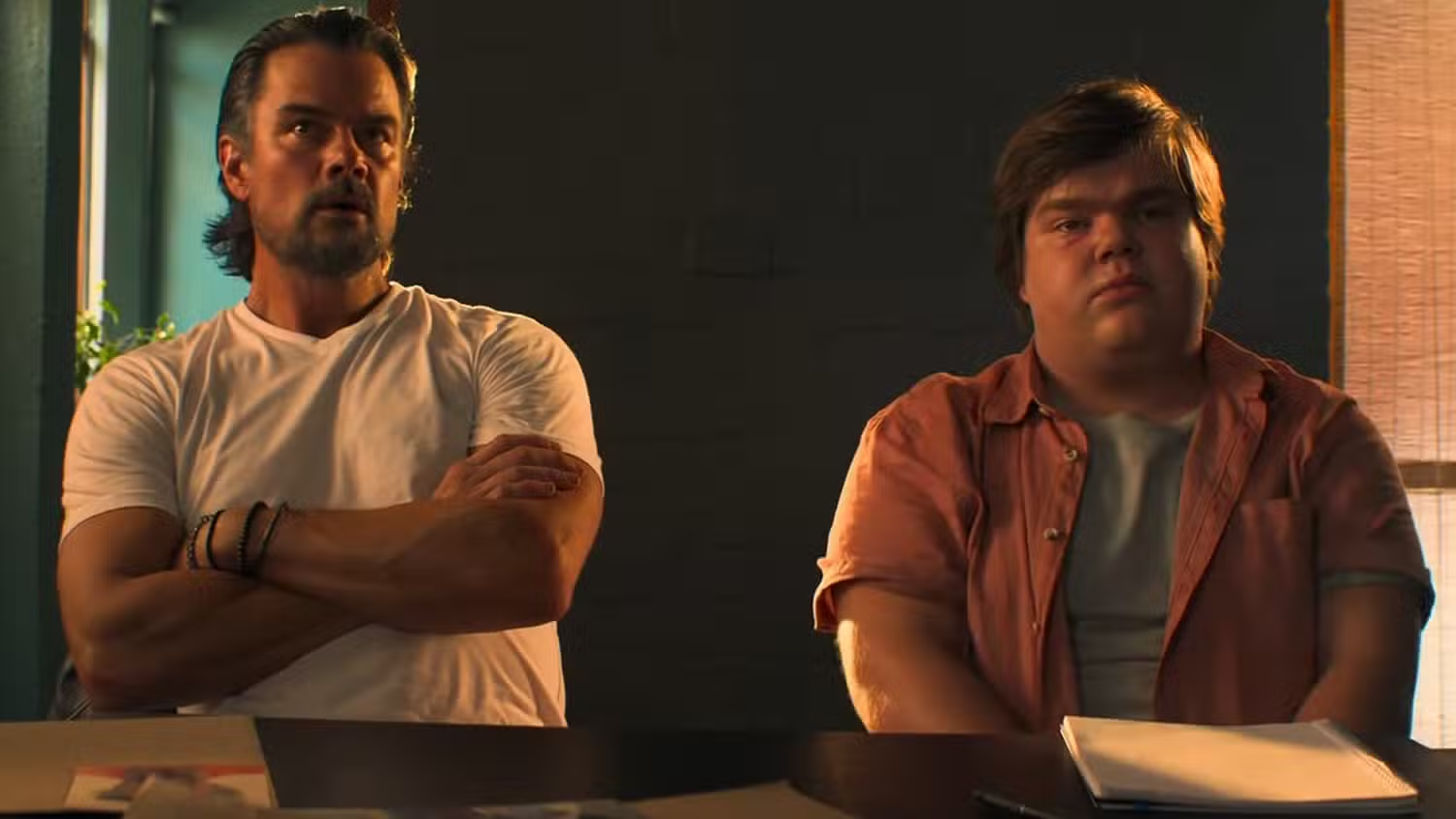
Director:Allan Ungar Writers: Omer Levin Menekse, Quinn Wolfe, Allan Ungar Stars: Josh Duhamel, Jeremy Ray Taylor, Rick Hoffman
Synopsis:After fleeing the UK from a job gone wrong, a down on his luck hitman is forced to babysit the son of his new crime boss and show him how to become a man.
The odd couple movie is a staple of the new action comedy. From 48 Hrs. to Ride Along, people have paired straight man, funny guy, and guns to great effect. It relies heavily on the chemistry of the leads, but it also has to make a certain amount of sense in whatever world it takes place in. London Calling upends this dynamic in a unique way even if it sometimes fails to make sense in the world it’s in.
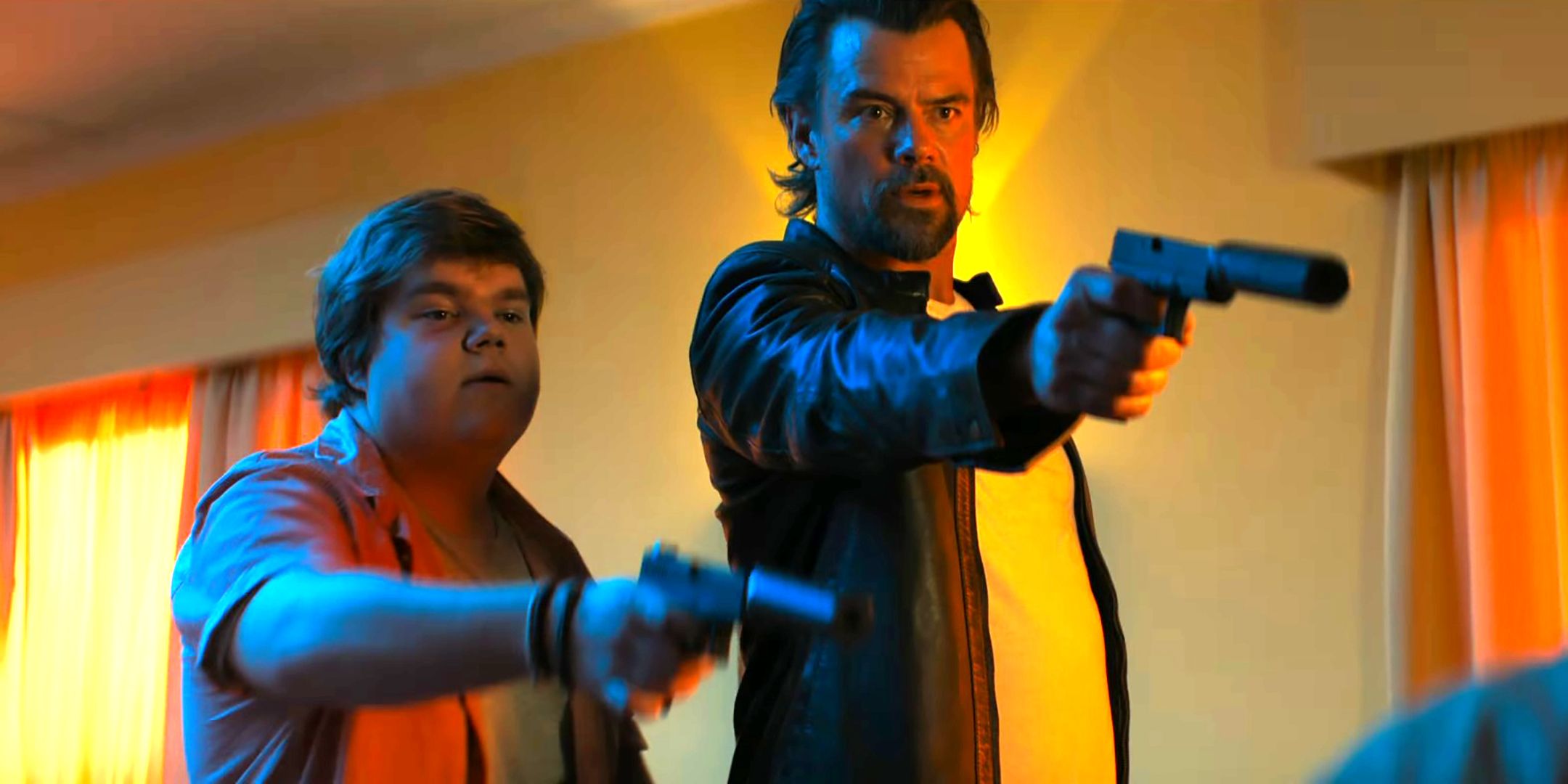
Instead of two people being thrust together when they’d rather not be. In London Calling, two people are thrust together who would rather not be in a sort of dark twist on a big brother type mentorship program. Instead of learning to be a good human, Tommy (Josh Duhamel) is teaching Julian (Jeremy Ray Taylor) to kill people.
It’s a silly premise that has a lot of fun pay offs. Yet, the story takes too much time to ramp up to this dynamic. We are given a great deal of background on each of the characters. They each have a fleshed out plot thread, but this is one instance where it’s wholly unnecessary for each of them to have so much backstory. It makes this into a co-lead situation when it’s obvious one of the storylines is much weaker than the other and drags down much of the rest of the story.
It doesn’t help that director Allan Ungar, who was likely working on a strict budget, didn’t opt for many action set pieces. Much of the action is pretty well worn territory. There is one gun fight that takes a turn toward classic John Woo as Tommy and his adversary take human shields and then proceed to shoot through their human shields and the other henchmen in the room in slow motion. One good shootout does not an action movie make, though.
The writers should have tried harder to focus more on the relationship of Tommy and Julian. In his own way, Tommy is a guy who has a lot to offer someone like Julian. He can teach Julian to defend himself and that this life of the underworld is not for him. The mentorship that turns into friendship is pretty wonderful. There’s twists and turns in the relationship, but when they see each other’s value it makes the story much more fulfilling.
The reason this works for the film is the chemistry between Josh Duhamel and Jeremy Ray Taylor. The tall, ruggedly handsome guy and the short, out of shape guy who lacks confidence is a great combination. The absolute funniest moments are when these two are interacting. Taylor’s mix of intelligence and naïveté with also a general air of wallflower, blending into the background energy makes him perfect for this role. Duhamel has the comedic chops as well as the look of a guy who has done some intense work. Their combination is terrific and it’s a shame the film spends so much time elsewhere.
London Calling is a film that wants to stretch itself beyond the one note plots it crams together into one story. It feels like the filmmakers wanted to elevate a so-so script, but couldn’t think of just the right thing and so added in everything. There are many genuinely funny lines and situations. It also features Rick Hoffman, an actor who has made a career of playing the most cretinous jerk in the room, at his smarmy best and his too farfetched worst. London Calling is not a film that will polarize the audience, but it hits a sweet spot in the solidly O.K. realm. It’s a good movie to put on to forget about the Sunday scaries and have a decent time.
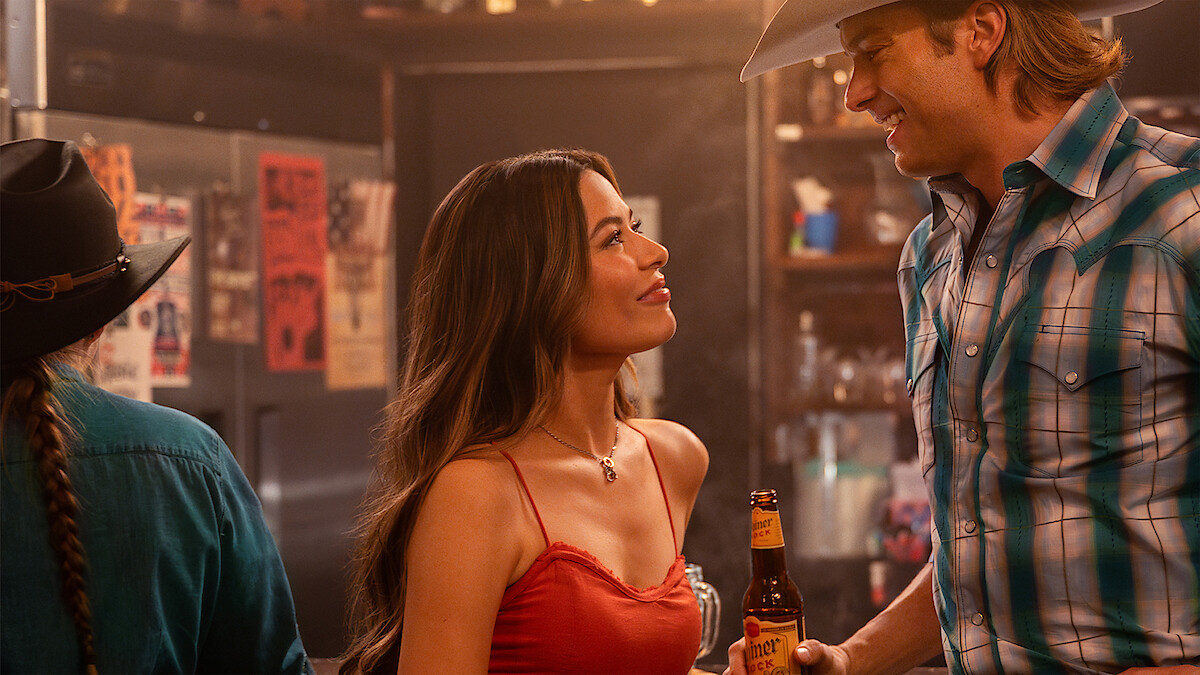
Director:Janeen Damian Writer: Nicole Henrich Stars: Miranda Cosgrove, Pierson Fodé, Madison Pettis
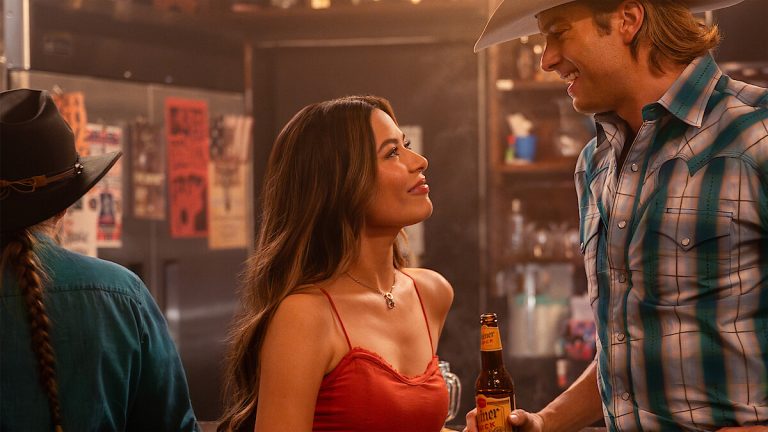
Synopsis:A woman joins a dating show thinking it’s in Paris, France for an art opportunity, but it’s actually in Paris, Texas. She tries to get eliminated until falling for the bachelor, complicating her plans.
In its heyday in the early 2000s we used to believe in reality TV competitions. The curtain has been drawn back and we’ve seen in fiction, and in actual reality, how manipulated these shows are by both contestants and producers. It’s strange to use this as a part of the premise for a traditional rom-com, but The Wrong Paris gives it a real shot.
It helps that the chemistry between Dawn (Miranda Cosgrove) and Trey (Pierson Fodé) is established before the in-movie show commences. If we were led to believe that either one of these two could fall in love during this really terrible sounding dating show it would ring false to even the most die hard of die hard rom-com fans. It really doesn’t help that Dawn has no competition.
Writer Nicole Henrich’s focus is obviously on the romance of the leads, but there are so many other characters that get time on screen that really shouldn’t. To say these characters are underdeveloped would be to say that there was anything beyond a one line description for most of them. They pop up with an unfunny line or bit of physical comedy and then disappear again into the background. Each one feels like a campfire skit character or a beginners improv class exercise.
Which is disappointing because the story takes a few good turns to get to its happily ever after. The two lead characters feel the most fleshed out, as they should. There is little Miranda Cosgrove does in most scenes, but she seems relaxed into who Dawn is when she’s opposite Pierson Fodé as Trey. Fodé, for his part, is built like Chris Hemsworth, but charming in his Matthew McConaughey swagger. The two of them are incredibly likeable together and you can imagine these two being a solid couple, if only the filmmakers could have stuck a little more closely to the two of them.
The filmmaking is likewise solid. Director Janeen Damian is a veteran of these types of simple, but effective rom-coms. She is able to blend the elements of the TV shoot with the elements of her story to good effect, creating some unique shots including one action scene where several actors are strapped to camera rigs and we get in on the action. Though, Damian’s and cinematographer Graham Robbins’ best scene, which is equal parts cheesy, sexy, and very funny, is a bit of fluff.
Dawn is attempting to evade the cameras and get a bit of exploring done on the ranch and she stops to snoop on Trey as he gets ready to give a horse a bath. In several sexy moments, Trey removed his shirt slowly, he squeezed a sponge lustily, sprayed a hose so it gets his seriously unbelievable abs to glisten, and he whips his wet hair back from his face while his incredible blue eyes bore deeply into us like we wish he would deeply bore into… other things. Dawn, as she watches, has to fan herself and then a wind that exists nowhere else on the property whips her hair to and fro with the magnitude of Trey’s sexuality. All the while there is a camera lens poking from the bushes. Dawn is caught, Trey teases her, which would be a good ending to the scene, but the cameraman pokes his head out of the bushes and praises himself on the great shots, which is the perfect note to end that staged scene on.
Rom-coms are a staple for a reason. They make love an attainable and accessible affair. We like them because of their familiarity. That’s not a detriment like with most film genres. Yet, even with the chemistry of a couple, the twists and turns in a story, and a great happily ever after, the details can sometimes ruin the fantasy. The Wrong Paris is a charming rom-com, but most of the pieces outside the couple, and especially the idea that a guy like Trey could ever think twice about a woman like Lexie (Madison Pettis), are just a step too far. If you’re looking to just sit down with a glass of something and unwind from the day, you can do a lot worse than The Wrong Paris, but if you want something with more to it than genre trappings in a new setting, pick a ’90s rom-com instead.
On this episode, ISF writers Megan Kearns and Lane Mills discuss the latest (and last?) entry in the in the Conjuring universe The Conjuring: Last Rites! Crazy to think this might be the end more than a decade after the first Conjuring, but it’s been a successful franchise with some good to great films on its resume. They said this was the last one, and if that is indeed the case, this franchise is going out on a sad whimper.
Review: The Conjuring: Last Rites(4:00) Director: Michael Chaves Writers: Ian Goldberg, Richard Naing, David Leslie Johnson-McGoldrick Stars: Vera Farmiga, Patrick Wilson, Mia Tomlinson, Ben Hardy
Director: Tim Mielants Writer: Max Porter Stars: Cillian Murphy, Tracey Ullman, Jay Lycurgo
Synopsis: Follows headteacher Steve battling for his reform college’s survival while managing his mental health. Concurrently, troubled student Shy navigates his violent tendencies and fragility, torn between his past and future prospects.
“We’re locked into this place for better or worse, and it’s nearly always worse.” — Amanda
Tim Mielants directs Cillian Murphy once more after the heartbreaking Small Things Like These. Steve is adapted from Max Porter’s novel “Shy” about an intelligent and self-lacerating young man who is at a “last chance” reform school in England. Mielants and Porter change the novel’s primary focus from the character of Shy (Jay Lycurgo) to Steve (Murphy), the headteacher of Stanton Wood Manor. Over 24 hours, the audience is immersed in the world of over-worked and underfunded teachers trying to connect with troubled seventeen-year-old boys and keep them from falling through the cracks and ending up in prison or dead.
Image: Courtesy of TIFF
Steve is driving on to the school grounds in the morning and spots Shy smoking a joint and listening to drum and bass. The two have what appears to be an excellent rapport but on this day they will each be facing the forces that threaten to drive them under. It’s 1996 and on this single day Steve and his staff will be interviewed for a documentary which is a tipping point for other long-standing issues to come to a head.
Steve is on an over-night shift which worries some of his co-workers including his deputy, Amanda (Tracey Ullman), as he is not only reaching physical burn-out due to an injury sustained in a car crash, but he’s also dropping the ball in other areas of his duties. A mouthy and potentially very dangerous student named Tyrone (Tut Nyot) has been sexually harassing the new teacher, Shola (Simbi Ajikowa AKA Little Simz). According to Jenny (Emily Watson), the psychologist who visits the students every week, if it were any other school, Tyrone would be expelled with no protection. Steve and his staff, including Shola, know it isn’t any other school, but it still constitutes a failure in duty of care. Duty of care is weighty at Stanton Wood as every student is at risk and a risk to others. Steve carries around a tape recorder he uses to remind himself to “act like an adult” and makes voice notes during the day to deal with specific issues. He’s also been using tapes to help orient Shola.
The documentary crew arrives headed by Geoff (Marcus Garvey), the director and presenter Kamila (Priyanga Burford). They are interested in capturing the school as either a successful “radical intervention” or a waste of taxpayer money with each student costing around 30-thousand pounds per year. Their goal is to interview the staff and students with a set of questions: how did you get here, describe yourself in three words, describe the school, and so on. Having heard about the documentary crew, the local Tory MP Sir Hugh Montague Powell (Roger Allam) also plans a visit to the school. On top of this, there is a meeting with the trust that owns the building and the grounds. Most urgently for Shy is that on a phone call with his mother, she cuts contact off with him for his abusive mood swings. Steve has been sneaking extra pain relief in the form of liquid morphine that he’s been hiding in the laundry. Stanton Wood is a tinderbox ready to flame.
The lads at the school are not easy to deal with. Jamie (Luke Ayers) is having a physical brawl with the twitchy Riley (Joshua J. Parker). Later, Jamie will brawl with Tyrone in the kitchen while the documentary crew are there. The only way these fights stop is for a teacher to place themselves in the vicinity of violence—risking their own safety. Arguments start constantly as the teens are always on tenterhooks. It’s “a roundabout of doom” according to Steve, but on the roundabout are places and possibilities where the students might thrive. Shy, Benny (Araloyin Oshunremi), and Nabeez (Ahmed Ismail) have their drum and bass/jungle beats music they want to move to London for to start a label. Another of the students is a talented artist. Mielants and Porter never let the audience forget that the young men are impossible but also worth investing in.
Steve generally can talk down a fight or talk through an issue with warmth and humour—as Shola says in her interview, “He is proper. He’s one of the good guys. He’s authentic.” But he’s also drowning, which Amanda notices as he begins drinking on duty. Shy, who describes himself as “depressed, angry, and bored, and more barbed wire than slippy” is also in crisis as he’s losing the ability to regulate and channel his destructiveness. As the day proceeds into night, Mielants shows how close Steve and Shy are in craving some manner of oblivion which will ease them of their guilt and mental health burdens. The metaphor is overplayed in places, which causes the film to drag where it need not. However, some of the overplaying results in beautifully shot scenes.
Steve is scattered on the whole. The frenetic pace of the school is supposed to be messy and anarchic—a space where every moment is charged. Mielants’ choice to mix formats and pace such as the video used by the documentary crew or launching into slow motion don’t really add anything to the narrative. One incredible sweeping shot that encompasses the grounds and the interior of the school is breathtaking but stands out as an extraneous flourish. The style sometimes overwhelms the character work which is the essential ingredient in the film. The stark contrast between the artificial sections and the subdued and powerful interplay between characters shows up where the film trips itself up.
However, the subdued sections which do concentrate on the characters, whether or not it is a screaming match or two students finding something to bond over are meaningful and keep the film anchored to what it should be. Tracey Ullman, Emily Watson, and Simbi Ajikowa each give profound performances supporting Cillian Murphy and Jay Lycurgo’s in extremis work— which when handled without bluster are thoughtfully and precisely acted.
Tim Mielants’ deliberate lack of restraint can make the characterization too scattershot. When Mielants is exercising restraint, the emotional tone shines through, and the buried excellence is in sight. Steve had the potential to be both beautifully heartbreaking and hopeful with a more focussed execution. That Mielants misses the mark is frustrating, but it doesn’t wholly condemn the work. Steve is a good film, but it could have been a great film.
Director:Kenji Tanigaki Writers:Lei Zhilong, Shum Kwan-Sin, Frank Hui, Mak Tin-Shu Stars: Xie Miao, Joe Taslim, Yayan Ruihan
Synopsis:A father fights fiercely against ruthless kidnappers to save his abducted daughter.
If you think that, while at the Toronto International Film Festival, I would not attend a screening of Kenji Tanigaki’s The Furious, you would be wrong. You didn’t need to tell me anything else, but “directed by the choreographer of Soi Cheang’s Twilight of the Warriors: Walled In.” Who cares if most of it is dubbed in ridiculously terrible English? As long as the action reaches just a fraction of Soi Cheang’s masterpiece, I would be a happy critic. And guess what? It not only reaches that fraction, but exceeds it. The Furious doesn’t possess the same action style as Twilight of the Warriors, nor does it need to. It still remains an exhilarating work of action art that pushes the genre forward in ways that few innovators of the form thought possible.
Image Credit: Courtesy of TIFF
Imagine some of the splashiness of a Soi Cheang picture, with the intricacies of Lau Kar-leung and Tsui Hark choreographies (with a dash of Corey Yuen in the mix), and you’ve got The Furious. It doesn’t have the same sense of heightened fantasy as Twilight of the Warriors, but it doesn’t matter. The action is more driven by the body’s relentless pursuit of justice than anything else, and the limits it attains as it fights against itself – and multiple subhuman individuals – to achieve its goals. In that regard, protagonist Wang Wei (Xie Miao) will not rest until he has found the people who have kidnapped his daughter, Rainy (Yang Enyou), even if his body has taken a massive toll.
The film explores how far a body can go before it reaches its breaking point. Some of it isn’t realistic, but who cares? It’s all about innovation, and Tanigaki is in the pantheon of the most incredible action artists working today. The movie has it all: bare-knuckled one-on-one fights of immense power versus Xie Miao and Joe Taslim, lengthy chases that can teeter from highly comedic to intensely dramatic, bloody brawls where hammers are the focal point of attention, and arrow-fu, involving The Raid’s Yayan Ruihan stealing the show in the film’s relentless climax.
Image Credit: Courtesy of TIFF
Many will say the action in The Furious is unlike anything they’d ever seen, and I wouldn’t oppose this viewpoint at all, but there are explicit references to what the landscape – past and present – has done before. One fight recalls a particular sequence from Corey Yuen’s Fong Sai Yuk, while others bear the imprints of Kensuke Sonomura all over them. And whaddaya know? Tanigaki handpicked the Baby Assassins genius to help him choreograph the bevy of set pieces you see in this frequently jaw-dropping movie. All of the comedic beats are decidedly his, while some of the more fantastical ones definitely feel more in line with Tanigaki’s sensibilities, especially as someone who has worked with prominent genre filmmakers such as Soi Cheang and Johnnie To.
There’s this incredible confrontation occurring at the midpoint of the picture between the protagonist, Navin (Joe Taslim), and a henchman (played by Brian Le, better known as the buttplug guy from Everything Everywhere All at Once) that feels like a true mélange of action styles that only the combined powers of Tanigaki and Sonomura can deliver. The body is a vehicle of motion, yes, but also a vessel of pure emotion. Action is, after all, the most potent form of emotional catharsis you can convey on the screen. The sequence shows just how far they will go in delivering on that promise in a frequently funny, but surprisingly poignant marriage of style and power, where motion becomes emotion. It’s tricky to do, but Sonomura can convey this so effortlessly through his choreographies that he’s essentially become this generation’s Lau Kar-leung.
It then becomes relatively simple to be hooked on the hypnotizing action of the picture, even if the English-language dubbing is, at times, baffling. But what if I told you this is part of the charm? After all, TIFF is known for presenting some of the most unique genre offerings you’ll ever see through their Midnight Madness catalogue. As far as I’m concerned, and in this exclusive case only, dubbing adds to the pleasure of seeing a genre film with a large audience. I’ll talk about the problems dubbing brings to films another time, but it seems to be the only way to enjoy the often cheesy fun of a movie like The Furious, which seems scientifically engineered to be experienced on the biggest possible screen with the rowdiest possible crowd.
Image Credit: Courtesy of TIFF
One didn’t even need to attend the screening at midnight to see precisely how rowdy a crowd would get, because the 2:45 pm press and industry screening was just as exhilarating as any midnight screening I attended in my life. And you know it’s about to be something special when journalists who usually try to keep their cool at press screenings react so loudly at the movie’s most surprising (and highly comedic) moments. It’s the sign that you’re watching a film bound to stand the test of time and find an audience when it eventually reaches cinemas or viewing platforms around the world, and if you’re not on the Kensuke Sonomura or Kenji Tanigaki train, get on it now before The Furious sweeps the world!
Synopsis:In the summer of 1930, the Crawleys grapple with the threat of social disgrace when Mary finds herself at the centre of a public scandal and the family faces financial trouble as they embrace change.
With two features to its name and another now welcoming guests with open arms, there’s no relief in Downton Abbey shutting its doors and shuddering its stained-glass windows. Anyone in their right mind would be happy with more offerings, like a hungry guest at a party stocked to the brim with biscuits and jam yet only serving a miniscule amount per attendee. (As if the hosts don’t have a servant’s quarters overflowing with dedicated housekeepers and cooks capable of stuffing all of England twice over.) There’s an element of hypocrisy to the pain experienced here when the same mouthpiece has criticized the relentless nature of the Fast & Furious franchise and certainly the assembly line nature of the MCU, but hell, the Crawleys and co. have yet to travel to space. Better yet, they’ve never seen a man land on the moon. And, as a matter of fact, they don’t even have a television set.
Perhaps too much of a good thing can never actually be all that good of a thing, an aspect of good filmmaking that series creator Julian Fellowes – who wrote all three of the Downton films in addition to all 52 of the show’s episodes – and director Simon Curtis understand more than any of Downton’s clamoring fans, most of whom would give up an honor equivalent to knighthood in exchange for the chance to hang around in this world for just a little longer. It’s fitting, then, that The Grand Finale cares far more for its characters and the time spent with them than anything too closely resembling plot mechanics, a feat unto itself given how much this franchise tends to pack into its runtimes, whether an hour and change in length or a shade over two for theatricality’s sake.
Focus Features
So jam packed with talented Brits (and a few Americans willing to don questionable accents or shed them altogether because they’re literally Paul Giamatti) that the opening credits refuse to leave a single member of its Avengers-like cast on the cutting room floor of its extended opening credits crawl, Downton Abbey: The Grand Finale is a bit more like Doomsday in name than in contents. One can assume the still-unfinished Marvel “that’s supposed to be nuts!” lacks a lovable butler (which is enough to reject it outright) but there’s probably some malfeasance occurring in the latter, and a dash of scandal is certainly present in the former from the onset, albeit subtly. As quickly as one character can say the words “And now, back to Downton!” at the conclusion of a theater performance enjoyed by all of the manor’s occupants — help included, because they are oh so loved — another, arguably the series’ main in Mary Crawley (Michele Dockery) is mired in disgrace following her surprise divorce from Henry Talbot (Matthew Goode; in this world, “divorce” and “death” are just other ways to say “scheduling conflicts.”) As is only fair for a divorcee, Mary is swiftly exiled from a ball being hosted by Lady Petersfield (Joely Richardson), one where the royal family is soon expected, and the rest of the Crawleys follow her home.
Once there, Cora (Elizabeth McGovern) is met by her brother, Harold Levinson (Giamatti) and his finance guru, Gus Sambrook (Alessandro Nivola), who is hot, and so is Mary, so they get it on. All the while, Harold reveals that he burnt his and Cora’s late mother’s fortune on poor investments that Gus definitely had something to do with and proposes selling the Grantham House (this place has a lot of nicknames) to repay their newfound debts. Before a single dinner bell rings, Mary, her father Robert (Hugh Bonneville), the house’s staff (including longtime series stalwarts Jim Carter, Phyllis Logan, Joanna Froggatt, Brendan Coyle, and many, many more) are ensconced in complications so regal that they surely — surely — shan’t all be resolved by movie’s end.
Forgive the sarcasm, but it’s this same sort of grandiosity that has fueled Downton since 2011, and it certainly isn’t going to stop in what appears, by all accounts, to be the cast and crew’s last hurrah. Unless, of course, they inevitably gross another few hundred million dollars at the box office and decide that a flash-forward to the family’s handling of Princess Diana’s tragic demise is worthy of their efforts. (I would personally kill to watch Lady Mary and Laura Carmichael’s Edith go to bat for Meghan Markle while donning old lady makeup and making Piers Morgan squirm at his newscasting desk as two progressive women set his political sentiments ablaze.) It wouldn’t be the first time the keepers of Downton intersected with the royals; nor would it be the first time the family produced a theatrical hit. 2019’s Downton Abbey grossed nearly $200 million worldwide — more than the second Lego and Angry Birds films, just a hair less than Rocketman — while the second film, A New Era, took home $92 million and change as COVID-19 continued to ravage theaters everywhere. Halloween Ends barely outgrossed that total, for crying out loud.
Focus Features
Whether the third time at the box office is as charming as the first two remains to be seen, but in terms of the film itself, there’s little question: The Downton Abbey machine churns primarily due to the force of its charm, with its plottiness acting as an ancillary figure that functions less as a pivotal point of understanding for an audience and more as a means for the film’s existence being justifiable. A third Downton movie is certainly not a necessity, but how else would longtime fans know how Mr. Carson (Carter) feels about his looming retirement, or how the lovely Mrs. Patmore (Lesley Nicol, receiving her flowers in the form of operatic bouquets befit for a send-off worthy of the series’ most underrated character) plan to set her protege, Daisy (Sophie McShera), up for success as she steps into the head chef role, or how the former footman’s career as a screenwriter is panning out? (Quite well, in fact.) After all, the love that this franchise’s uber-specific (and sizable) audience has maintained for its characters over the years is precisely what has warranted its subsistence.
If Downton is indeed dying, there will never be a world in which it is fully dead, merely one where it is cherished for its simple pleasures, regardless of the many deaths, divorces, and dramatics that occurred within its hallowed halls over the course of a decade and a half. Its pomp and circumstance has always been synonymous with silliness, just the way everyone who loves Downton has always liked it; that it concludes on that sort of note is only right. And so, as the Crawleys make their final exit, fading from view into the not-so-uncertain future, fans will likely cry because it’s over, yet their because-it-happened smiles will stretch wider than ever, a lingering reminder that they’ll never really be all that far from home. Not really.
Director:Oliver Hermanus Writers:Ben Shattuck Stars: Paul Mescal, Josh O’Connor, Chris Cooper
Synopsis:Two young men during World War I set out to record the lives, voices and music of their American countrymen.
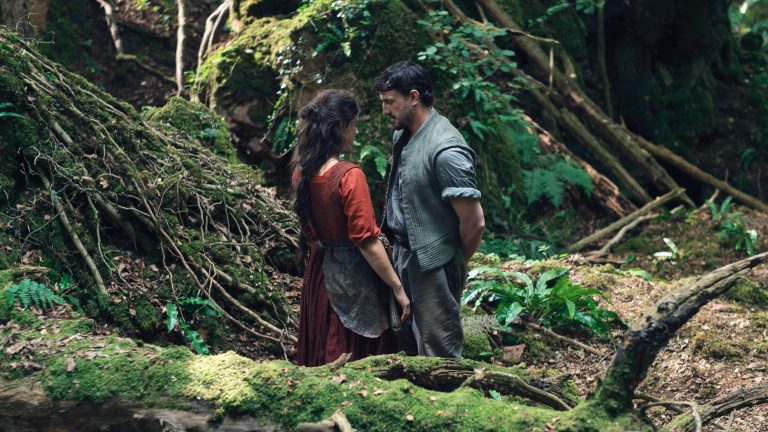
We are at the point in 2025’s cinematic calendar where the count has been lost on how many films have focused on the god-given musical genius a character possesses, and why it has the power to change the world. There’s K-Pop Demon Hunters, the animated Netflix smash that takes the meaning of that ability to strike a chord to the next level by positioning its titular pop stars as chart-toppers who moonlight as three sworn protectors of the living realm, those who not only make hits, but deal them out to supernatural entities. The forthcoming Springsteen: Deliver Me From Nowhere promises to handle its musicality in a more straightforward manner, chronicling a specific chapter of The Boss’ life as he changed the rock genre for good with his record “Nebraska” and his unique sound. In fairness, we can’t leave out any number of the many documentaries – Becoming Led Zeppelin; Miley Cyrus’ Something Beautiful; It’s Never Over, Jeff Buckley; etc. – that used the lives and fame(s) of its stars to propel a narrative about their trials and triumphs forward. Even The Weeknd’s Hurry Up Tomorrow made something of an effort to do that, though it also framed Abel Tesfaye as a sad-sack who Jenna Ortega hunts out of love and sport, so do with that what you will. (And, better yet, don’t watch it.)
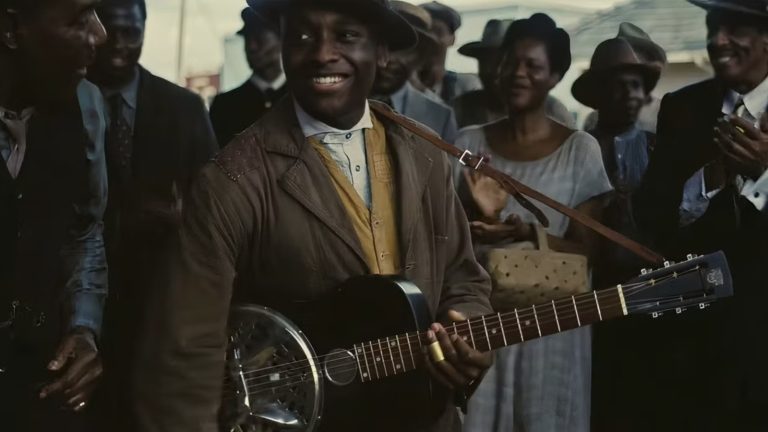
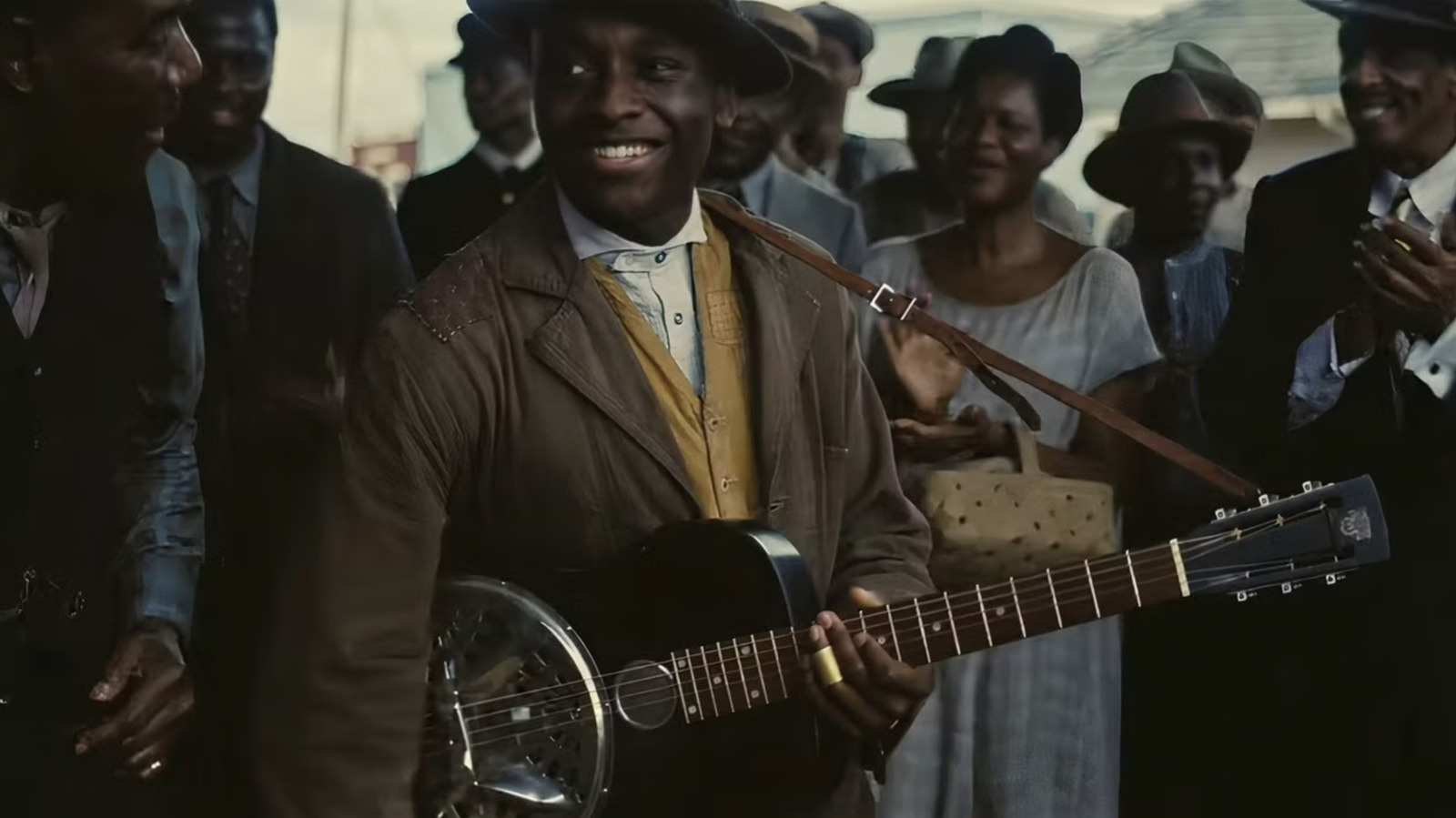
The film that surpasses them all, not merely in quality but in originality, is Ryan Coogler’s Sinners, a theme-laden vampire flick that positions a primary character’s musicality as a gift “so true it can pierce the veil between life and death.” The Blues-loving Sammie Moore (Miles Caton) has something transcendent, a voice so angelic that it calls the devil, too. So it’s no shade to Paul Mescal, who plays Lionel Worthing in Oliver Hermanus’ The History of Sound, that this critic was fairly dubious to hear his voice described in a similar fashion: “A gift from God,” an older Lionel (played by Chris Cooper) narrates at the beginning of the South African dramatist’s latest, noting what Lionel’s late father once called his lyrical abilities. It’s not just that he doesn’t sound like the kind of singer who can conjure spirits, but that his demeanor lacks the verve that the dead might seek to rekindle their long-lost spark for life.
Photo Credit: MUBI
That doesn’t matter too much at the onset of Hermanus’ drama – written by Ben Shattuck from his own book of short stories – when Mescal’s soulbearing singer draws the attention of a similarly tuneful fellow, David White (Josh O’Connor), and the two hit it off over song and sex. It’s wartime in America when these come into contact, so they’re soon sent in opposite directions, David to the battlefield and Lionel to his family’s farm. But as fate would have it, they come back together sooner rather than later, with the former offering an opportunity to help find a musical connection between life and potential death. He pitches a recording project focusing on the music that their countrymen create, specifically those categorized as American heritage songs sung by local Maine-ites and their families. Though they’ll part, reunite, part again, and so on before The History of Sound concludes, this expedition plays enough of a role in the film’s first act to warrant space not just in the film’s logline, but in its core, as it is called upon repeatedly as though the filmmakers were searching for an excuse both to have the men spend time forging an intense, complex bond, and to have an inciting connection to fondly gesture towards each time they reenter each other’s lives.
The History of Sound has already been too-frequently compared to Brokeback Mountainin what Mescal called a lazy and reductive reference that minimizes the impact of both, but it’s not too far off to cite this opening hour as Lionel and David’s own specific version of a summer atop a sheepherding field. It’s far from the only period of the film in which the two have sex – a plot detail that is remarkably restrained and far from the kind of coitus that regrettably attracts most modern audiences to material of this nature – but it’s certainly the foremost of those occasions, the one where each says the least about the true nature of their relationship, as if they ever say much of anything about it. That’s where Hermanus and Shattuck seek to reframe the expectations of this “genre,” as it were, having their film’s central attachment be one that lacks definition, even if it can be clearly read by anyone with sight sharp enough to see that its sexually-confused characters are played by two of the internet’s foremost onscreen boyfriends.
Photo Credit: Gwen Capistran
Mescal has more to do here than O’Connor – a shame, considering the cinematic strides he’s made of late, those that have him coming for his co-star’s leading heartthrob crown – but only by virtue of his character being present in the story for a longer chunk of the runtime. Mescal excels most when he’s paired with an equally compelling (and perhaps competitive) dramatic sparring partner – as he had in Normal People with Daisy Edgar-Jones, All Of Us Strangers with Andrew Scott, and Aftersun, despite Frankie Corio being 15 years his junior – and O’Connor provides that target, a luxury if not an absolute necessity. Hermanus and Shattuck attempt to provide him with a few capable replacements, namely Emma Canning’s Clarissa, Lionel’s girlfriend for a spell, but none compare to O’Connor’s David, a sentimental lad whose melodic charisma is a natural match for Mescal’s whispery tenderness; it’s a crying shame when they’re anywhere but together.
Not unlike its directors’ previous two films, 2019’s Moffie and 2022’s Living – the former a gay romance set against a wartime backdrop, the latter an adaptation of Ikiru that tracks a lonely Bill Nighy attempting to discover the meaning of life before his ends – The History of Sound is a work willing to live and die by its emotional heft, and few filmmakers today are as capable as Hermanus when it comes to striking as many varied chords as he strums here. That the whole affair is imbalanced has more to do with its refusal to fully embrace its softer nature as a quality that moves its own needle, not one that hampers its ambitions. It would be wise to follow the leads of its main characters, two ambitious men whose dreams differ from their desires in response to societal expectations, as opposed to misreading its own emotionality as flat, sharp, or muted altogether. The History of Sound is often plain and pitch-perfect; the notes it plays just tend to be staid when they could be stimulating.
Director:Gus Van Sant Writers:Austin Kolodney Stars: Al Pacino, Bill Skarsgård, Colman Domingo
Synopsis: On February 8, 1977, Tony Kiritsis entered the office of Richard Hall, president of the Meridian Mortgage Company, and took him hostage with a sawed-off shotgun wired with a “dead man’s wire” from the trigger to Tony’s own neck.
With his first film in seven years, Gus van Sant has revisited the topic of infamy he so thoroughly picked apart with 1995’s To Die For. In his late ‘70s-set thriller/character study, Dead Man’s Wire, Bill Skarsgård portrays a figure that history may have very likely forgotten. But this story couldn’t be more timely, as society at large has only continued to sour and grow bitter towards mortgage companies, loan providers, and the most parasitic examples of late-stage capitalism. Despite the events portrayed in the film feeling as if they’d been lost to time, such a volatile reaction towards corporate entities has proven to be far more than a one-off blip. Beyond that anger, van Sant and screenwriter Austin Kolodney mine this story in search of a human angle to thrive within. And it’s in Tony Kiritsis (Skarsgård) that this filmmaking team strikes gold.
Image Credit: Courtesy of TIFF
Upon first seeing Tony, Skarsgård plays him with the intensity he has become commonly associated with. The menacing scowl across his face is only broken by the yelp and subsequent sucking of his finger from injuring himself on his broken key. The image Skarsgård instantly built has been broken, and we instead see Tony’s demeanor for what it is: a bit bumbling. With his arm in a sling and an oversized package in tow, he struggles to get out of the car and through the revolving doors of a commercial building in downtown Indianapolis. His first impression with the new receptionist reeks of nervous chatter and confusion. It’s not until he’s escorted into the office of Richard Hall (Dacre Montgomery), president of Meridian Mortgage Company, that Skarsgård’s intense demeanor returns. It’s only in private that Tony reveals himself as a man on a mission. Once his plan is set in motion, Tony handles himself with a certain determined gravity; it’s quite intense. But even so, Dead Man’s Wire never falls into being too heavy a drama. It’s actually quite a light film which packs in equal thrills and human drama alongside its comedic edge.
All of these tones are balanced wonderfully by Skarsgård. Tony is a complete enigma based on what his behavior reveals to us. When setting up the dead man’s wire to hold Richard hostage, he’s laser-focused. He makes Richard acutely aware of the ins and outs of this mechanism. But as the two spend more time together, Tony reveals himself to be quite the quirky guy. And from what people who seem to know him from local bars and such can attest, he’s just a bit of an impassioned oddball and an occasional loudmouth. Despite all these eccentricities and humorous asides delivered by Skarsgård, Tony remains convicted in his mission. And we, as an audience, totally buy into the justification. It’s an essential element the film requires of us in order to empathize with the human dilemma at its core. It’s just another way Dead Man’s Wire succeeds in its mission at being an entertainment vehicle with something important on its mind.
Despite this film depicting a random blip of oddity in human history, it’s events like these that are ripe with emotional depth. It captures a fragment of the human experience in such startling fashion. In a brilliant stylistic stroke, van Sant utilizes archival footage from coverage of the actual event. Paired with the occasional recreation of imagery using still frames of the film’s actors, Dead Man’s Wire creates a modern iconography for an almost 50-year event. And modern audiences will easily align with this film in large part due to its timeless nature. The machine of capitalism is still preying on those desperately searching for a fair share of peace and something to call their own. Just as modern a touch is the way van Sant highlights a bevy of side characters all looking for a particular angle into the story. In doing so, they have their “five minutes of fame” solidified. We see a priest rush Tony and Richard as they walk down the street to try and have Tony atone for his sins. There’s hungry newscasters looking for their big break. The executives at local television stations are willing to show a man executed on live television for the sake of a ratings boost. Tony included, all of them are acting amidst a moment of opportunity. They are taking fate into their own hands and doing all they can to ensure their voices are heard. Some cases are just a bit more extreme than others.
It’s this extremity that Dead Man’s Wire uses to toy with the idea of infamy. It’s quite telling how easily this film can have its audience get behind Tony despite his erratic decision making. Equally telling is just how easily infuriating Hall, Sr. (Al Pacino) is upon hearing from him. Dead Man’s Wire makes it abundantly clear who it considers to be the true antagonistic force of this story. Richard sees it in Tony (and because of this, we’re delivered a nightmare sequence that provides Skarsgård the opportunity to actually showcase the maximum intensity he’s become beloved for). Richard and Tony’s relationship would benefit from a bit more exploration, as it’s likely an avenue for some of the more complex internal conflicts of the film to be grappled with. This unfortunately isn’t the only aspect of Dead Man’s Wire that feels frustratingly under explored. Local legend radio host, played by a smooth-talking Colman Domingo, is a focus of the film, though his character feels underutilized. One might hope the film delved further into the public perception of Tony beyond mere flashes of onlookers and audiences tuning into radio or TV. But this radio host is integral to the overall target Dead Man’s Wire aims to hit. The very opening of the film has him state that he “smiles at the cards he’s dealt.” Tony’s emotional distress at the unfair nature of predatory business models led him towards a different response. Captured in a way that makes us feel as if we, too, are onlookers on the street, Dead Man’s Wire asks us to empathize with Tony’s dilemma. This is ultimately Tony’s story, so it’s understandable why Kolodney and van Sant shift focus solely on him. All in all, it makes for a film that’s both very entertaining and unfortunately timely in its capturing of times never changing, despite these events mattering more than anything to a majority of people.
Dead Man’s Wire is celebrating its North American premiere in the Special Presentations category of the 2025 Toronto International Film Festival.
On this episode, Shadan Larki talks with Erica Richards about her experiences a TIFF 2025 and the on-the-ground vibes relating to this year’s crop of films!
Director:Francis Lawrence Writers:JT Mollner Stars: Cooper Hoffman, David Jonsson, Mark Hamill
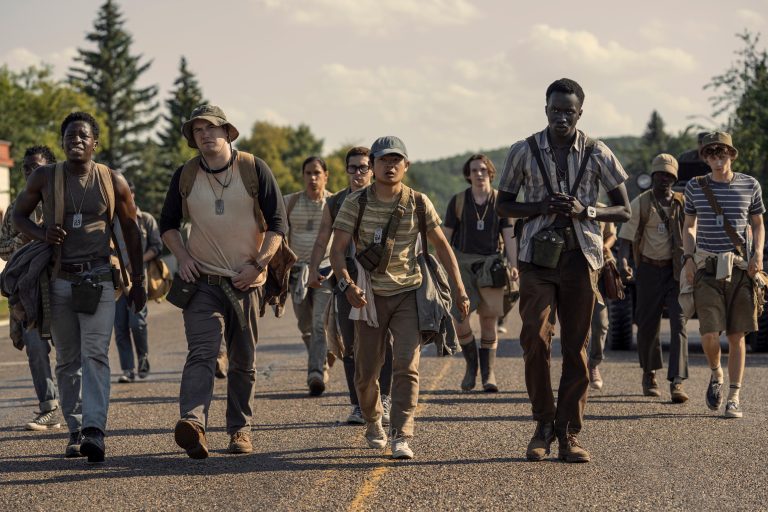
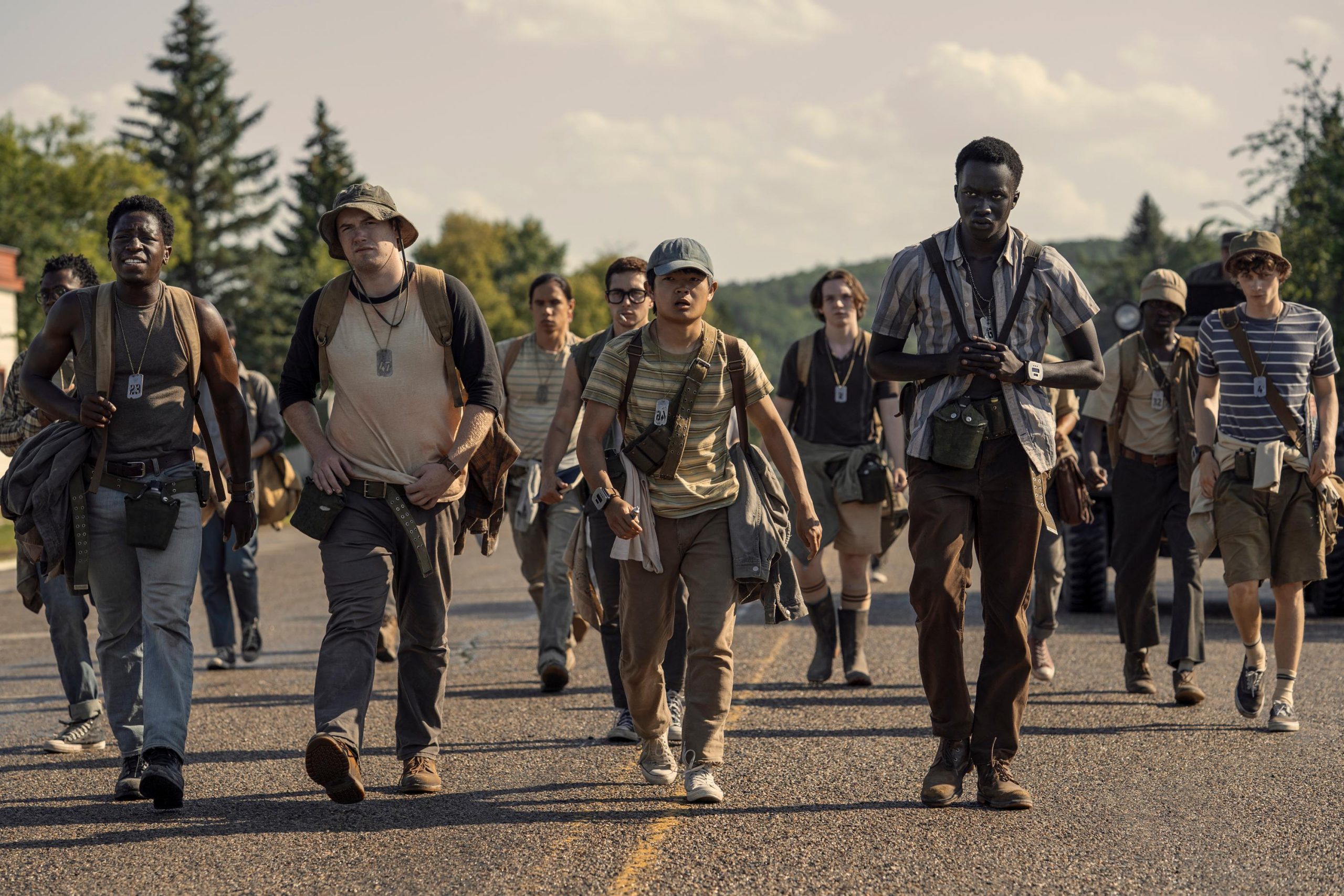
Synopsis:A group of teenage boys compete in an annual contest known as “The Long Walk,” where they must maintain a certain walking speed or get shot.
The idea with the kind of dystopian fiction The Long Walk is based upon is that we care about children. We even care about annoying, aggravating teenage boys. If it were a bunch of adults who were in this situation we’d still care, but with teenagers, it’s a way to see hope die. Teens have agency, but without much of the concrete life experience that comes with age. They are just aching with potential to do better, not make the same mistakes, but move humanity and people forward. We care about dreams big and small and we care about these teenage boys.
Director Francis Lawrence has been making us care about teenagers engaged in horrifying, televised slaughter since The Hunger Games: Catching Fire. He knows how to build scenes that are nail biting and could go either way. He gives us hope and we believe in that hope until he takes it away again. Lawrence and cinematographer Jo Willems, who has been with Lawrence for many of his biggest films, find a way to make these long scenes dynamic with background and foreground action. It gives the scenes a depth and the constant forward momentum that the story requires.
The other secret weapons are editors Peggy Eghbalian and Mark Yoshikawa. These two took these long takes of boys walking and boys being slaughtered and made them more compelling in the rapid way some scenes were cut or some left to linger. There are scenes where you don’t even see the cut because you feel like you’re one of these boys and are just turning your head or your body to see what’s happening.
All these pieces put together wouldn’t have worked if it weren’t for the script adapted by JT Mollner. The story and the world are just templates for Mollner to explore masculinity. For the most part, these boys go from peacocking macho bros into humans who express real vulnerability. Not all of it sings. Much of it is bogged down in the chop busting between boys and the underlying insecurity in nearly all teenagers. Yet, when there are passages of truth and an ideal of acceptance and friendship, this is a compelling human drama that makes the stakes of the film that much higher.
Even with those high stakes and the drama of the interpersonal relationships between the boys, The Long Walk is boring. It’s about teenage boys walking hundreds of miles and talking about dumb teenage boy stuff. There are moments, but it comes to a point that the named and dimensional characters have to be picked off as the rules of the contest and the world of the story insist, but to have multiple grand, dramatic send offs one after another makes you a bit numb after a while. They’re emotional and dramatic sendoffs, yes, but we’ve been fed these kinds of stories steadily for at least the past thirteen years since The Hunger Games was released. We know survival is only up to a point. So it’s painful to be slowed down even when we care about the characters holding us up.
The stand out among these young actors is David Jonsson. He plays Peter with a complexity and hopefulness that charms you wholly. Jonsson is able to balance Peter’s need to fit in with his need to lead and his need for connection. He’s at his most compelling in his quietest moments. There is a tremendous scene late in the film as Peter walks closely with Ray (Cooper Hoffman). At one point in their conversation, the two of them stop speaking, not walking, and look into each other’s eyes. Ray eventually looks away, but Peter keeps looking. Jonsson plays this scene with the mix of longing and strength Peter is feeling in the moment. He is able to use his face to give us everything and it is a scene that sticks with you because of it.
The Long Walk has moments of excellent filmmaking. It also has moments, long periods of them, where you just wish they would skip ahead a little. With every character having a moment in the spotlight, typically their death, it feels like The Long Walk is attempting to add more depth than it really has. We don’t know how the world got this way or where these boys really come from. It’s almost like they’re on a treadmill at low speed. Even as the story constantly moves, the amount of movement you would need to create a real, substantive effect is not going to happen in the time they have allotted. The Long Walk is worth seeing, it’s just not one that requires a run to go out and see it.
Director:Bizhan M. Tong Writers:Bizhan M. Tong, Selena Lee, Lok-Yung Lo, Stephen Belber Stars: Kenny Kwan, Selena Lee, Adam Pak
Synopsis:When three former classmates reunite after 15 years, a buried secret resurfaces forcing them to confront the past, each other, and the silence around accountability.
A good rule of thumb, apparently: If you describe your remake of a quarter-century old indie as a “bold reimagining” rather than the former term, you’re permitted to inflate its runtime by 30 minutes, at least. Based on Richard Linklater’s 2001 drama of the same name and similarly unfolding in a single location (save for its bookends, which unfold on a beach and add necessary context to what the secrets and lies that fly in between), Bizhan M. Tong’s Tape is a dizzyingly energetic reinterpretation of a small-scale classic while certainly feeling swollen, despite its best intentions to move at the pace of a cassette fast-forwarding through static. That’s half due to the fact that its source material is talky — Stephen Belber (who serves as an Executive Producer, along with Linklater) adapted his own play for the Austin auteur to direct, so it’s only natural to be a wordy piece reliant on its conversations to drive the story forward — and the discussions between its central characters are long-winded and full of revelations, and half due to the fact that the original might not have had any business being reworked.
Which begs the question: What does, in this day and age, warrant a remake, for lack of a better word? In a year where few have triumphed — Spike Lee’s Highest 2 Lowestand Akiva Schaffer’s The Naked Guncome to mind — and more, especially the shot-for-shot live-action wastes of Lilo & Stitch and How to Train Your Dragon, have failed to move the needle anywhere but the box office, a film like Tong’s is likely to get lost in the shuffle, and not least because its inspiration is one of the original director’s lesser-seen works. Where this iteration of Tape could have found its most unique sense of individuality is in its political relevance by utilizing the narrative prong of surveillance to not only fuel the drama, but to comment (albeit slightly) on Asia’s history of mass monitoring. This Hong Kong-set tale of friendships forged and bonds broken has the most in common not with any of its fellow reimaginings (as Lee also called his latest joint, a film based on Akira Kurosawa’s High and Low), but with Neo Sora’s Happyend, an excellent Japanese coming-of-ager that used visual scrutiny through the use of cameras and facial recognition to inspire change in the relationships between its teenage protagonists.
Yet where Sora’s feature reframed the concept of surveillance as a fascinating technological advancement that endangered the freedom of Japanese citizens, especially its youth, Tong positions it in the same light that Linklater and Belber’s film did: As a weapon, not merely a threat. Once we cut away from the beach on which Tape opens, we find Wing (Adam Pak) and Jon (Kenny Kwan), two old pals who have reunited after 15 years, with Jon hoping to reconnect and to revel in the glory of his new festival-bound film and Wing eager to open some old wounds, some that Jon isn’t even aware should be on his radar.
Which is where Amy (Selena Lee, who adapted her own part in the script, an unintentional nod to Linklater’s occasional creative style) comes into play as a third friend in this trio, one who has a complicated history with both men. As it turns out, Wing has invented them all there to entrap Jon in a confession for raping Amy when they were in school, and to prove his loyalty to Amy. As he attempts to (you guessed it) catch the whole situation on tape, more about each member of the dual-gender triumvirate is revealed, both through emotional conversations and their own behavioral missteps.
Tong and his team of co-writers go to great pains to make their extended war of the words transcend beyond that of a walk-and-talk, a goal partially aided by the fact that, like Linklater’s film, Tape unfolds entirely in a single location. The Airbnb where Wing stays – the new temporary home of an addict who repeatedly flies off the handle in his interrogation of the manipulative Jon and his attempts to win Amy’s trust (and heart, a more futile effort) – is employed like a boxing ring by way of a dance floor, one where the punches thrown are verbal and the steps taken are often faulty. But the intimacy that Linklater and Belber’s original picture dripped with feels sterilized here, if not entirely stale thanks to oversaturated cinematography and stilted dialogue, the likes of which truly make Tong’s Tape feel like a rehearsal, not a performance.
Blaming the trio of Kwan, Lee, and Pak is as unfair as the very act of saddling them with similar dramatic expectations to the likes of Ethan Hawke, Uma Thurman, and Robert Sean Leonard (the original film’s cast), and it’s not that any of this Tape’s players are incapable of rendering complex characters flailing with the confines of a flattened pressure cooker. It’s more that they fail to add any depth or originality to their non-original text, a principal requirement of any worthwhile “reimagining.” Otherwise, as is the case here, not only does the product fail to warrant the status of being rewarding, but to reimagine anything at all.
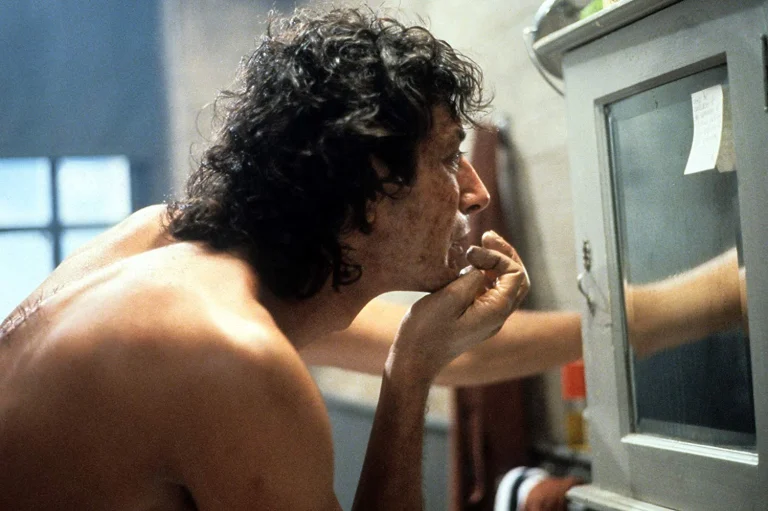
This week on Women InSession, we discuss the career and evolution of the great David Cronenberg, and why is films have aged extremely well over the years! As you’ll hear in the conversation, we are big fans of Cronenberg and his unique visual approach to filmmaking. Yes, the body horror is always fascinating, but there are…uh…other reasons we find him compelling too.
Panel: Kristin Battestella, Megan Kearns, Jaylan Salah
On that note, check out this week’s show and let us know what you think in the comment section. Thanks for listening and for supporting the InSession Film Podcast!
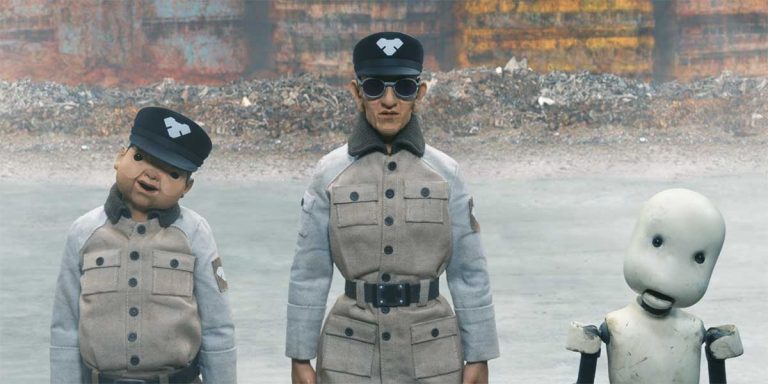
Synopsis:An ambush during a human-clone expedition triggers a dimension-spanning, time-travel story set 1000+ years before the stop-motion film Junk Head.
Takahide Hori’s Junk World has everything one might hope to see when throwing on a midnight film. Just to skim the surface of lunacy Hori’s film entails, you can expect to see a cannibalistic death cult draped in S&M gear, loads of sci-fi military tech and weaponry, bureaucratic incompetence, fart jokes, robots, humanoid clones, and a copious amount of mutated underground-dwelling creatures. And that’s failing to mention any of the thematic ideas present in the film! With Junk World, Hori and his small team of six (!!) dedicated stop-motion artisans have created a work of art that feels miraculous in its existence. One just needs to see the behind-the-scenes production footage shown while the credits roll to understand that declaration. At the very least, a film like this should excite any cinephile. It shows a true dedication to capturing a specific vision regardless of whether it will be beloved by countless audience members, or a cult crew of fans. Hori is clearly fully committed to the expansive universe of Junk World in a way that feels like it should be somewhat of a blueprint for studio heads in control of massive cinematic universes.
Image Credit: Courtesy of TIFF
This film is a prequel to Hori’s 2017 film, Junk Head, and is supposedly the middle chapter of a planned trilogy. If studios are marching forward with deadset plans on building out franchises wherever possible, perhaps a situation like this would be the more exciting version of it. It’s apparent that Hori is creating an entire universe in a sandbox of his own making. That freedom is felt in the introduction of every strange creature encountered or each new impressive set explored. It’s as if any idea that seemed gross, creepy, funny, or some combination of the three was placed into the film somewhere. Of course, any lack of oversight can have its own share of drawbacks in terms of overall quality. But purely from an artistic point-of-view, Junk World feels aspirational. To see a world literally being built second-by-second before your very eyes is a beauty to behold. It’s perhaps the biggest driving force in sustaining interest during the rest of the film.
Junk World is made up of countless fascinating ideas and themes. Unfortunately, in 100 minutes, it never completely feels like any of these ideas are meaningfully explored. The only exception to this is how Hori reckons with humanity. After a quick cold-open stinger of a robot, who will be familiar to fans of Hori’s earlier work, in disrepair proclaims, “I am God,” his latest film begins with an expository set-up. In this world, mulligans were created by mankind as a subservient workforce designed to be exploited. Over time, the mulligans were able to adapt, evolve, and ultimately, rebel. Violence ensued before ultimately finding some form of peace, but the hatred amongst both species remained. There’s a bitter tinge to how humanity here so brazenly created something in our own image, only to then mutate it into something designed to be controlled. Where beauty could have been fostered is instead lost to evil in the lust for power. And between two of his lead characters, a human and a mulligan, Hori examines this loss of experiential beauty across both parties.
For the mulligans, we see just some of the ways in which they have adapted in the years since winning their freedom. They appear to be quite talented in the culinary world, whereas humans exist solely on one form of nutrition: allegedly disgusting, non-descript sticks of nourishment. They also live quite long, and with such long life comes a sense of longing for varied experiences. The humans in this film have such a singular drive that usually revolves around some form of greed, gluttony, or selfish desire. They can’t even fathom why they’d venture from a singular path. It honestly feels like a disservice to the film as a whole that the mulligans aren’t explored even further. They represent a viewpoint about humanity that feels evergreen. In golf, a mulligan is an extra stroke allowed after a poor shot. It’s a literal do-over to make up for a mistake; another attempt for potential greatness. In humans naming their creations after this term, it’s as if we knew we were destined for a lifetime of refusing life’s greatest joys and experiences.
Overall, Junk World feels like a bit of a mixed bag. But its clever structure is one that ultimately allows for a fair amount of forgiveness. Without revealing anything specific, the plot weaponizes the irreverent sense of humor of its creator. Initial elements that may seem to be oddities, or even straight up flaws, become completely recontextualized over the course of the film. It’s a bold approach to telling a story, but very much feels reminiscent of how One Cut of the Dead approached its own story. It can feel like a great reward for an audience if handled correct;y. And purely from a narrative perspective, Junk World feels like it pulls this trick off well enough. Alongside some very fluidly-animated action sequences, the imaginative madness of its overall production design, and its admirable commitment to expanding the world of its creator, Junk World will justifiably have a midnight movie-loving cult of fans. Where it goes beyond that is anybody’s guess. But the knowledge that filmmakers like Hori are still actively willing their wildest dreams and ideas into existence by any means necessary is a thrilling experience to behold in its own right.
Junk World is celebrating its International premiere in the Midnight Madness category of the 2025 Toronto International Film Festival.
Director: Francesco Sossai Writers: Adriano Candiago, Francesco Sossai Stars: Filippo Scotti, Sergio Romano, Pierpaolo Capovilla
Synopsis: Two blustery 50-somethings, have an obsession: going for their last drink. One night, they run into Giulio, a shy architecture student, whose way of seeing the world and love will be transformed as the trio wander from bar to bar of Veneto.
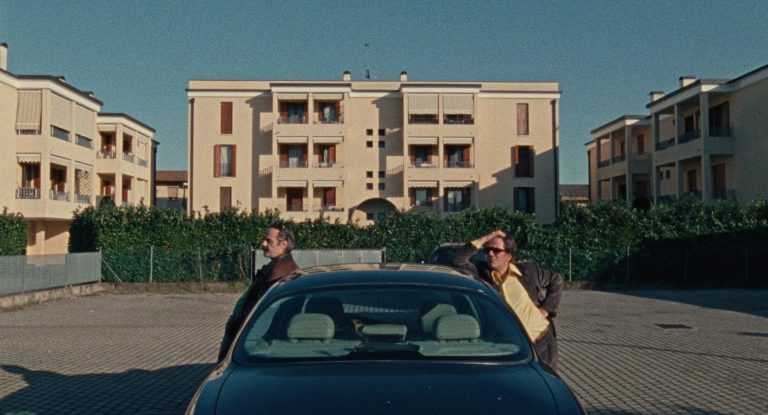
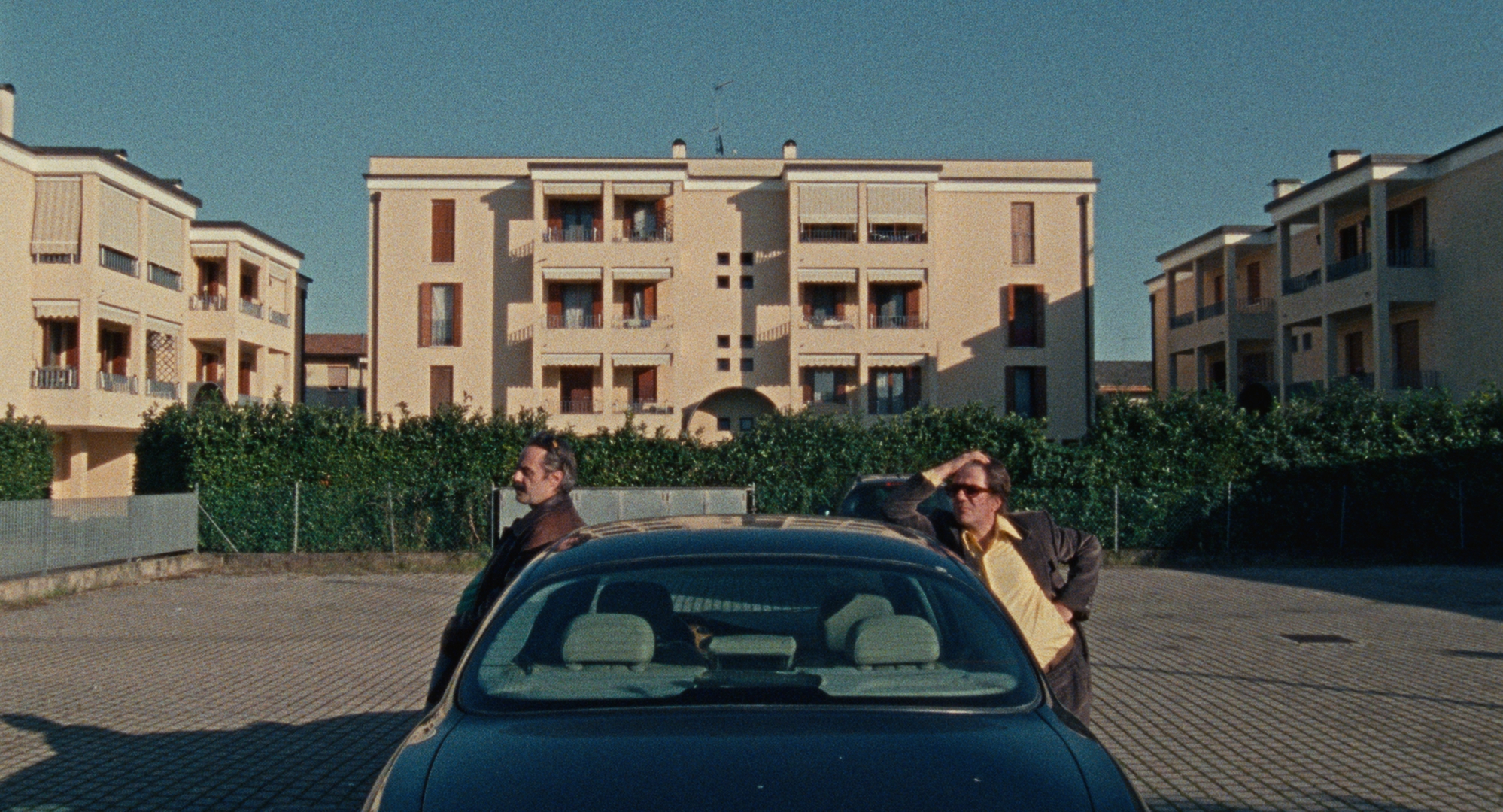
If you’re looking for a road-trip buddy comedy with arthouse sensibilities, Francesco Sossai has made the film for you. The Last One for the Road is one of the most charming films of the year. Yet for all its humor and the irreverent attitude of its two central characters, this is a quietly devastating film in several regards. Through Carlobianchi (Sergio Romano) and Doriano (Pierpaolo Capovilla), Sossai finds a way to channel his incredibly potent ideas into a deceptively wrapped package. A film about the time we’ve lost, the time that has been wasted, and the unrelenting forward momentum of life itself, The Last One for the Road is an often funny film. It will leave you smiling by the time its credits begin to roll, but you’ll also contemplate your own life long after exiting the theater. And so much of this film’s emotional impact rests on the shoulders of Carlobianchi and Doriano. They exhibit absolute hooligan behavior for so much of its runtime that the moments of genuine emotion and dramatic turns shock the viewer. Wasn’t this just supposed to be a fun movie about two old friends looking for that perfect final drink?
Of course, that very much is what the film is about. But that quest for the final drink of the evening is ultimately revealed to be quite the folly. How could it not be? These two don’t really operate on the typical day-and-night cycle the rest of us seem to follow. When we first meet them, they’re both asleep in the front seats of Carlobianchi’s beat-down Jaguar. One can only guess what time it might be, let alone the last time they actually had a peaceful enough moment to themselves to have a genuine night of rest. But there’s more important things in life to think about for these two. This includes, but is not limited to: where they’ll get “one last drink” while looking more sloshed than perhaps anybody ever has previously in cinema. The urban legend of their hometown is a brief topic, which Sossai plants as a kernel for what’s to come. This duo even drunkenly announces the through-line of the film, captured through startling close-ups which are uncomfortably intense. Anybody who’s been at a bar a bit too late and spoken to somebody who drank a bit too much will instantly recognize what Sossai and director of photography Massimiliano Kuveiller have perfectly captured here. Though the introduction of The Last One for the Road is a loose and rollicking good time at the movies, it’s only a matter of time before reality comes crashing back down for these two. Not that Carlobianchi or Dori are ever all that phased by it amongst others.
In this instance, it consists of a smash cut from comical interactions with random bar patrons to violently throwing up beneath a vast highway system. It’s here that Sossai provides the first of many wistful glimpses that make up the film. It takes the form of a quietly delivered statement: “The ‘90s were great.” This is immediately followed by a conversation shrouded in darkness. The two look out onto a neighborhood, and reckon with the change of their outlook over time. Where they once saw boundless opportunity and the chance for a life beyond their harmless, small-time criminal enterprise, they now see walls too high for them to mount. Life has passed these two by. No matter how much they seem to drink, it’s a seemingly inescapable truth that sneaks up on them in their rare moments of somber quietude. Lucky enough, they’re about to literally stumble into somebody that may perhaps change their lives.
While looking for that last drink, and this time, of course they actually mean the last, they find a group of students celebrating a graduation. One of them is Giulio (Filippo Scotti). It’s in his charming, reserved demeanor that this wild duo morphs into a wonderfully odd, but still riotous, trio. Giulio tells his crush that he won’t be joining them at the next bar. When he tries to appease her by rescheduling for another time, she simply states one of the most universal truths there is in this world: “There’s never another time.”
And what happens next essentially occurs without even a moment of thought on the part of Carlobianchi. He and Dori are two guys who have clearly lived a lifetime seizing every moment available to them until there was nothing left to grab onto anymore. In Giulio, whether they actively realize it or not, they see a project. It could even be perceived as a second chance. There’s still time for him to rectify the error of his ways before it’s too late. And so, the two middle-aged men head off to the bar with this group of graduates, Giulio reluctantly in tow. Eventually, he decides to double down on calling it quits and quietly exits. But Carlobianchi and Dori can’t be rid of that easily. They once again convince him to stay out for one more drink. Seriously, this time it’ll actually be their last one. It’s in this next bar that Sossai’s film begins soaring to new heights both beautiful and impressive.
Carlobianchi and Dori may seem easy to cast judgement upon at face value, but there is something inherently poetic about their lifestyle. They see an entire side of the world that few get to actually experience. And an even smaller amount of people within that group actually internalize everything around them. The Last One for the Road does an excellent job at capturing the quiet beauty to be found in these pockets of the world that are overlooked or cast to the side. In these tiny neighborhood haunts Carlobianchi and Dori clearly frequent, we see live musicians playing their hearts out to the point of tears falling from their eyes. The soft neon lighting beckons patrons to the dance floor, or to simply sit in contemplation amongst fellow strangers, friends, or perhaps nobody at all. It’s incredibly evocative, and the further down the rabbit hole Giulio is reluctantly dragged by his newfound partners in crime, the more Sossai’s film begins to open up these pockets of beauty hidden throughout the world in plain sight. But with that beauty, there can also be a profound sense of sadness and loss.
The whole reason Carlobianchi and Dori were on the road in the first place was to surprise their friend, Genio (Andrea Pennacchi), at the airport. He’s been in Argentina for several years now, and is finally making his return to Italy. They’re particularly excited to celebrate the grand reunion at a small café the three of them used to frequent, but can’t recall the exact location of. Luckily, Giulio finds it through context clues and the marvels of modern GPS, and off they go. It’s only upon arrival that they see it’s been boarded up. And by the looks of it, it has been for quite some time. It’s here, amongst the literal ruins of a life that has long since passed them, that we come to understand Carlobianchi and Dori better. This isn’t just as characters, but simply as people.
Any one of us can end up a victim of circumstance, and Sossai sneakily injects this truth into the very foundation of his film on more than one occasion from here on out. So who can blame these two for dealing with life the way they best see fit? Giulio, a student of architecture and a passionate art lover, teaches the two about what a capriccio is. In simple terms, it is a recognizable landscape that has been altered by a designer to include imaginary details pulled from fantasy. He describes it as “an imaginary landscape… one that doesn’t exist.” That’s The Last One for the Road in a nutshell. Sometimes, all we end up searching for is something that simply doesn’t exist. We can picture it so clearly, and can fully understand the steps needed to reach our destination. But time is uncaring, and by the time we actually get there, it may be completely unrecognizable. In that reality comes the duality of this film. Yes, it is a cautionary tale in some ways. But Sossai also imbues it with the infectious energy of capturing individuals who simply go out and take matters into their own hands. They undeniably feel the weight of everything throughout their day-to-day life, but that doesn’t stop Carlobianchi and Dori from imbuing plenty of their own airy personality and lightheartedness into it whenever possible. Maybe they’re not the most aspirational set of characters in cinema, but they certainly bring a valuable reminder to it. And it’s nevertheless an important idea to impart upon audiences in a clever, and wildly entertaining, manner.
The Last One for the Road is celebrating its North American premiere in the Centrepiece category of the 2025 Toronto International Film Festival.
It was strange to have multiple musical numbers performed at the Oscars ceremony earlier this year, but none of them having anything to do with the nominees in the Best Original Song category. This could have been a move to skirt controversy as embattled Best Actress nominee Karla Sofía Gascón was a performer of eventual winner “El Mal.” Yet, it could also be that the producers saw that the $400 million box office juggernaut Wicked, which also happens to be a musical, would feature no new original songs and they had to find a way to get its stars to sing on stage while also acknowledging the tragedy of the L.A. wildfires. Then there was the strange and ultimately bittersweet tribute to the James Bond franchise a week after the producers who had shepherded the franchise into the 21st century ceded creative control of the intellectual property to a package warehouse and delivery service.
Any way you slice it, a showcase for the nominees in Best Original Song is often what makes the show worth watching. Just last year, even though it wasn’t going to win, and slowed the awards down significantly, the raucous, joyous, pink-hued anthem of “I’m Just Ken” was a late show stunner. Even in 2019, the unique presentation of the actual chart topping hit “Shallow” was a weepy joy to watch and Robin Williams belting “Blame Canada” in 1999 was funny and ridiculous as only the Oscars can do. This coming season’s contenders can bring that kind of energy and fun back to the ceremony and actually make it about films being nominated that night.
Most prognosticators have already come to the conclusion that there are already five strong contenders. Though, it’s more like there are multiple songs from Sinners and KPop Demon Hunters that jockey for a position and two original songs from the upcoming Wicked: For Good whose titles haven’t been released that are solidly in the running. Then there’s Diane Warren.
Songwriter and composer Diane Warren has been nominated 16 times in the Best Original Song category. Her first nomination came in 1988 for her song “Nothing’s Gonna Stop Us Now” from the film Mannequin, her most famous nomination has to be for “I Don’t Want To Miss A Thing” from Armageddon, and she has been nominated every single year for the last 10 years. If you look at her body of work, she has impacted and influenced a wide array of music for the last 30 years and has created many daring and iconic songs. Should she be nominated again this season it would be for a documentary made about her, Diane Warren: Relentless. Should she be nominated again, based on the early buzz it will just go down as notch number 17.
However, with heavy hitters and Best Picture hopefuls in the category there is nothing at all chiseled into stone at this point. There are a couple of songs that could sneak in and, well, make some noise. These songs aren’t from the buzziest or well known of 2025 movies, but they’re still great songs.
A movie I’m rather tepid about that falls into this category is Opus. It’s a blink and you would have missed it in theaters A24 horror/social satire, Opus has a plot that revolves around a charismatic titan of pop music, Alfred Moretti (John Malkovich). Moretti’s songs featured in the film were created by composer and songwriter The-Dream and the legendary Nile Rogers of CHIC and performed by John Malkovich. Any one of the three Moretti songs would be worthy, but “Dina, Simone,” would be the most fun to watch live. It’s a funky, catchy, thirsty song that rattles around your head and finds that part of your brain that makes you want to move.
Spike Lee’s newest joint Highest 2 Lowest also features tremendous music as it is built around record label executive David King (Denzel Washington). The more Oscar friendly of its original songs would be the title track “Highest 2 Lowest” written by Aiyanna-Lee Anderson and Daciana-Nicole Anderson because it is a beautiful R&B ballad. It’s an uplifting and emotional song that brings the house down at the end of the film. Yet, before dismissing A$AP Rocky’s rap opus “Trunks” there is precedent for rap songs in this category, with one win for Three 6 Mafia for “It’s Hard Out Here for a Pimp,” in 2006. “Trunks” is confessional, stylish, and has a beat that hooks you in from the first moments.
Another film about a musician, The Ballad of Wallis Island, features some of the most beautiful folk songs written for the screen. Songwriter, composer, performer, and actor Tom Basden has weaved these lovely songs into a heart breaking and riotously funny story. There is an entire album’s worth of songs to choose from, but it would probably come down to the title track “The Ballad of Wallis Island” or my personal favorite “Our Love,” sung beautifully by Basden and Carey Mulligan. This one would be the one that could most rival Glen Hansard and Markéta Irglová’s tear jerking performance of “Falling Slowly” from Once at the 2007 ceremony or the wonderfully emotional song, “A Kiss at the End of the Rainbow,” from the very silly A Mighty Wind, in 2004, sung by Eugene Levy and Catherine O’Hara.
Whatever gets picked this will be an eclectic and electric year. In a year like this, the performances of these songs can’t be sidelined. Even if it’s just a medley, they need to be shown and honored. They should be front and center, loud and proud, and part of the magic and pageantry of the Oscars ceremony.
This week on Episode 653 of the InSession Film Podcast, we continued our year-by-year retrospective series by taking a look at 1999, a year that many consider to be among the best of all-time. Between The Matrix, Magnolia, The Sixth Sense, Eyes Wide Shut, The Straight Story, Election, Being John Malkovich, among many others, it’s easy to see why 1999 has the reputation it does. 1999 certainly has some all-timers on its hands and there’s no denying the severe influence they had on Hollywood for years and years to come. It was also an extraordinary year for foreign cinema. An excellent film like Rosetta wins the Palme d’Or while Pedro Almodóvar’sAll About My Mother is one of those defining films of 1999. There’s also the soulful gems of Abbas Kiarostami and Hirokazu Koreeda in The Wind Will Carry Us and After Life respectfully. 1999 also saw arguably the best animated film of all-time in Princess Mononoke. So yeah, it may not be the best year ever for cinema, but it’s absolutely in the conversation. That said, what would be your Top 10?
NOTE: We spend most of our time only discussing our Top 10 movies of 1999, however, as you’ll see below, we have listed our full Top 20 lists from that year.
JD
1) Princess Mononoke
2) Magnolia
3) After Life
4) The Matrix
5) The Straight Story
6) The Insider
7) Eyes Wide Shut
8) The Limey
9) The Sixth Sense
10) The Wind Will Carry Us
11) Being John Malkovich
12) All About My Mother
13) Bringing Out the Dead
14) The Iron Giant
15) Fight Club
16) American Movie
17) Topsy Turvy
18) Aimee & Jaguar
19) South Park: Bigger, Better & Uncut
20) Not One Less
Brendan
1) Princess Mononoke
2) The Straight Story
3) Magnolia
4) The Insider
5) Bringing Out the Dead
6) The Sixth Sense
7) Election
8) Not One Less
9) Run Lola Run
10) South Park: Bigger, Better & Uncut
11) The Limey
12) Toy Story 2
13) Being John Malkovich
14) eXistenZ
15) The Matrix
16) October Sky
17) Dick
18) American Movie
19) After Life
20) Rosetta
Hopefully you guys enjoyed our lists and if you agree or disagree with us, let us know in the comment section below. Clearly there are a lot of other contenders from 1999 that battled for our lists, that just missed the cut. That being said, what would be your Top 10? Leave a comment in the comment section or email us at [email protected].
Sinners is a multitude of universes contained within one another. Each and every one of them opens like a Russian doll to reveal the other. It’s a neo-Western. It’s a horror movie. It’s a Southern Gothic. It’s a dark fairytale from the twisted minds of the Grimm Brothers, not the sugar-coated Disneyland. But it’s also partly a music film, about the power of art and how religion vilifies it. In this horror flick, the costumes tell the story about culture, about race, but also about music. The color gradients in every character’s costume navigate the tale and intertwine some of the magic within it.
Everyone is haunted by a particular demon in Sinners. Mary’s (Hailee Steinfeld) mixed-race heritage. Delta Slim’s (Delroy Lindo) drinking. Sammie’s (Miles Caton) torn between religion and music. The Moore twins’ (Michael B. Jordan) need for power and land. But it’s the demon of music that cracks the gates between the past, present, and future, calling out to lost dark souls—those drawn to the world’s evil as much as to art. Aren’t art and darkness like two horses running side by side? Ryan Coogler weaves a dark, magical world where the lines between creativity and horror blur, as the true power of blues music calls to nasty, bloodsucking creatures of the dark, led by the enigmatic Remmick (Jack O’Connell).
Legendary costume designer Ruth E. Carter took over the daunting task, creating a 1930s Mississippi period-accurate ensemble of hats, sequins, workwear, watch chains, and fringes. She ensured the use of minimal color gradients. But she also had to create the sexiest set of costumes, which, when under the moonlight, or in the heat of the juke joint would glisten against people’s sweaty, frantic dancing bodies. It’s not just that the costumes are period accurate, and match the characters’ economic and racial backgrounds (Carter had a strict no purses or jewelry rule for the women) but they perfectly fit different body types but they also have the distinction of properly fitting the body or not. The worn out, aged, and battered looks of some of the outfits suits the characters who mostly come from working class backgrounds, and find that immediate relief in the juke joint where they can drink and dance their weariness away.
The beauty of Sinners is that it has women of all sizes, shapes, and forms. Wunmi Mosaku’s curvaceous, voluptuous body had to have clothes that anchored her to this ever-evolving world. Creating a constant in a whirlwind of a world. Carter dresses Mosaku’s Annie in her silk skirt with sequins and fringes, feathered headband, and her mojo bag. Despite being a vampire, she works with O’Connell to create Remmick’s sinister, decaying look. He doesn’t stand out in his costumes or his looks, and his workman outfit is not as worn out as the regular folks at the joint, but it carries this air of simplicity and blending in that makes him seep into the cracks of the other characters, as his vampiric manipulative self. Costumes couldn’t get in the way of the magnetism of the story’s main villain.
Carter contrasts Annie’s robustness and savviness with Mary’s fragility. She creates an ethereal haze for her, a sultry existence with her faded pink outfits. She is a tragic character, and that easily slip on dress makes her even more fragile and heartbreaking, drifting from one case of unbelonging to the other. Her contrast to Stack’s immaculate red hat, collar and tie bars, slanted pockets, cuff links, and bright burgundy shoes. He’s a smoke show and smug about it. She’s a smoke show of unbearable lightness of fragility. That’s why they click. Carter gives them that fire and ice contrast to make their dance scene at the juke joint even more impactful.
But the real scene stealer is the juke joint-montage scene, with years of black heritage and music culture blending into one, long sequence of past and present musical and dance influences shaking it side by side. Carter proves her mastery by orchestrating that scene, from custom Adidas Gazelles, to Zulu masks, and feathered headdresses. There are all kinds of influences from hip hop to blues, rock and roll to tribal music.It’s common knowledge that Sinners will lead the WB award campaigns. With its impeccable cinematography, innovative and masterful directing, solid acting especially from the supporting cast -Delroy Lindo we will manifest it for you!- and the best soundtrack of a film I’ve listened to this year. But costume design should be a solid nod (if not a win as far as one can see with the festival movies not making an entrance yet). What Carter has done with the universe of this film is create a cacophony of mismatched characters that strangely make total sense in the same mise-en-scène. Costumes stand out but are also drenched in blood and battered, so it’s not a period piece that celebrates its authentic style and beauty a la Crimson Peak and Co. but more of a slice of life in the 1930s Mississippi, told through a lamenting blues song. Coogler directs while Carter orchestrates the execution, adding the final touch to the characters. And boy does she succeed!