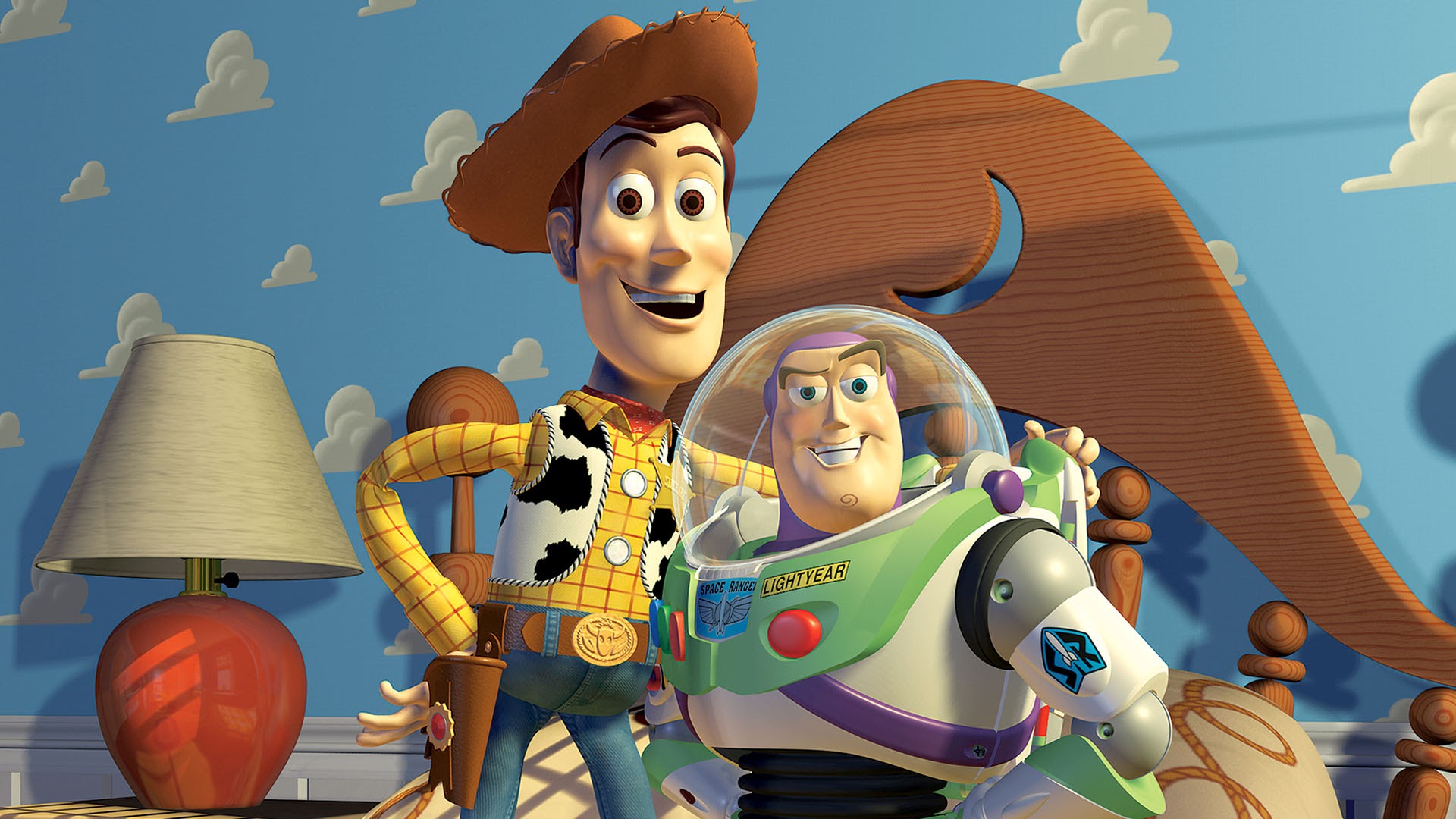



Director: John Lasseter
Writer: John Lasseter, Pete Docter, Andrew Stanton
Stars: Tom Hanks, Tim Allen, Don Rickles
Synopsis: A cowboy doll is profoundly jealous when a new spaceman action figure supplants him as the top toy in a boy’s bedroom. When circumstances separate them from their owner, the duo have to put aside their differences to return to him.
In recent years, it has become pointlessly popular to pick on Pixar’s Toy Story. Modern analysts have made a habit of circling back on the film’s obviously aged animation; they’ll poke fun at the dog, ask why Buzz acts like a toy around humans if he doesn’t believe that he is one, and then ultimately tap out upon any further discussion. Those folks’ next target is usually the fourth movie in the series, or some other innocent animated property that almost every member of the audience universally enjoyed.
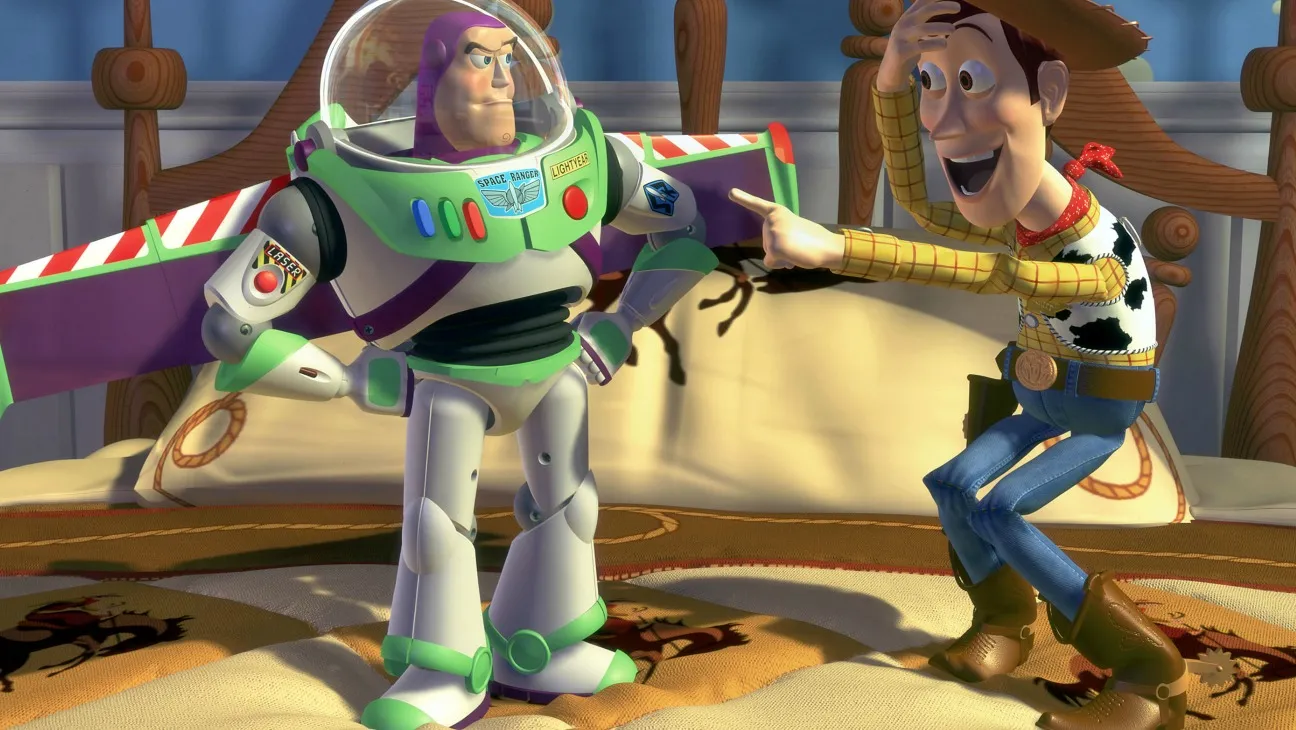
Those qualms aside, now 30 years aged, the original Toy Story is still one of the animation studio’s finest entries to this day. There exists an early innocence about the property that differentiated it then from other such similar efforts; even Pixar’s own follow-ups don’t quite hit the same mark of purity. Characters are simple, from their movements to their motivations. To that point, this earliest form of what would become a major franchise represents a dedication to a concept that is now almost wholly unfamiliar in the animated medium.
The basic, now run-down idea that these are just toys come to life drives the film at every corner. It’s just the most unassuming, easygoing, feel-good effort from the studio, perhaps ever. That could be a reason why some modern audiences are so ready to leave it behind, at least from a critical standpoint. In comparison to other uber-popular animated movies of the time – such as The Lion King or The Iron Giant – Toy Story lacks a demanding sense of self-preservation or immediate importance, and that’s a compliment.
All the same, the cast, and narrative that structures them, remains incredibly memorable while still preserving that sense of comfortable drowsiness that the movie emits in retrospect. For children then and now, each character carries a seemingly inherent sense of welcome that, for one kid or another, allows them to be their obvious favorite. Between the dozen or so toys that rotate in and out of the limelight here, including Woody and Buzz at the forefront, Toy Story works to the same tune that children picking and favoriting their own toys does; except, in this case, they talk. It’s the perfect concept-to-execution for this genre of movie.
The film’s eventual sequels, while as good and, at times, arguably better than their genesis, don’t quite capture the same plain magic of the 1995 release. Each of the three sequels has a clear villain – singular, pointed – while the first film, even given Sid’s manic scientisms, is more or less just a point-and-click, day in the life adventure for the toys. You go to the Pizza Planet, spend some time outside, journey through Sid’s lab and then, ultimately, end up behind the moving truck for the finale. It’s almost structured like an old Nintendo 64 story game, one that kids of the time would’ve been obsessed with had that been a reality. Unorthodox is the word, and yet, it still works so well and operates almost completely alone in the space.
It’s not hard to imagine that Toy Story may still be revered and rewatched another three decades down the line, if not much longer. Aged animation aside, it’s a perfectly contained, infinitely giving story that can be thrown on essentially anywhere to great, repeated effect. As old as it is, much like the franchise’s toys (aside from Wheezy, poor guy), it just doesn’t seem to age. It is, and always will be, a quintessential children’s movie.