


Director: Nobuhiro Yamashita
Writers: Kôsuke Mukai, Wakako Miyashita, Nobuhiro Yamashita
Stars: Bae Doona, Aki Maeda, Yû Kashii
Synopsis: A band has three days to come together as a unit and learn to play a song before the school festival, so they can leave high school with a bang.
The high school film is often a nostalgia trip for those long out of high school. We remember the angst, the torment, and the rejection, but we also remember the triumph. Even the worst high school experience has a high point. Even Carrie was having the night of her life in the few hours before, you know, pig’s blood and carnage. It’s exhilarating to live through another’s triumphant moment. Linda Linda Linda has the kind of moment we all dreamed about in high school, one great rock show.
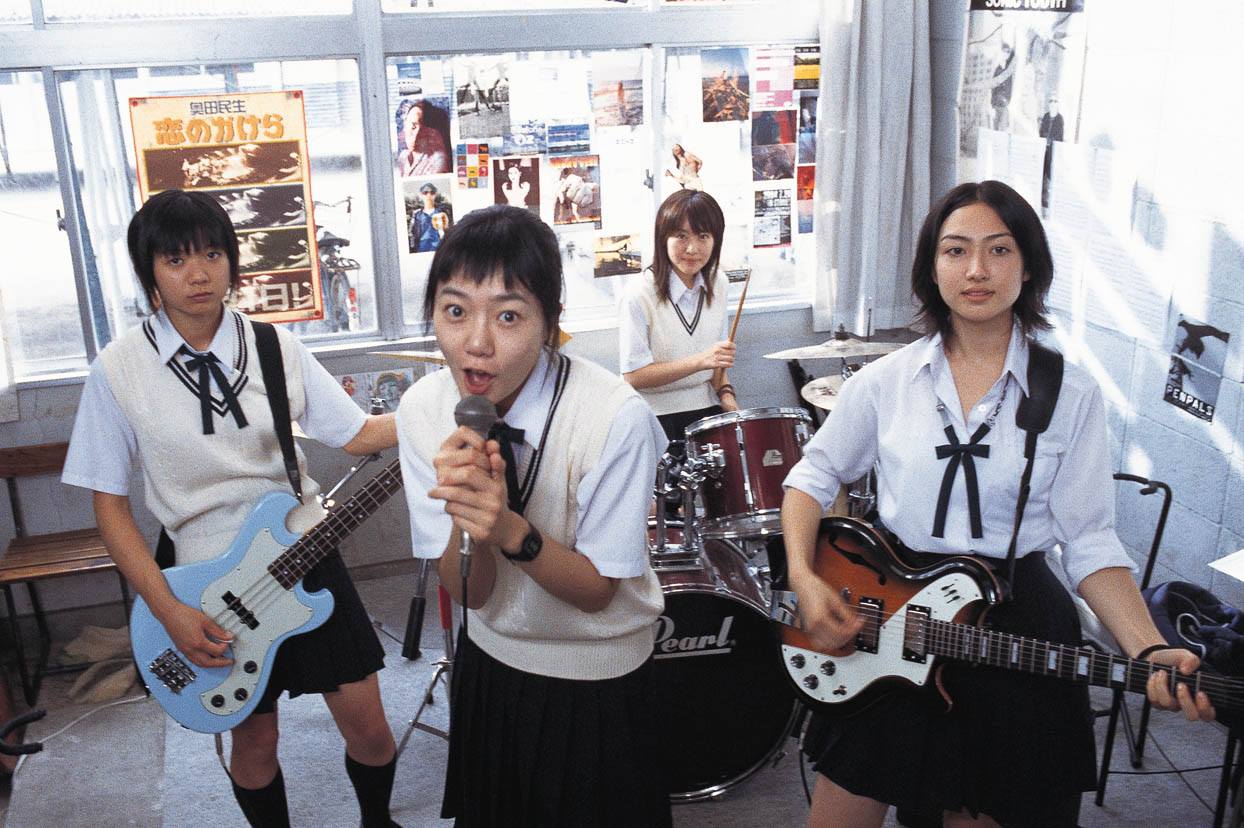
At the beginning of the film, there’s a bit of chaos and drama that perfectly captures the strange love/hate relationships that can only occur as you grow up with someone. We don’t know what happened between Kei (Yû Kashii) and Rinko (Takayo Mimura) or why the band broke up because of the rift, but that intense feeling is there. It almost shifts the genre from a coming-of-age into a sort of music biopic as we get the complications of starting from scratch learning new instruments, songs, and, for one member of the band, a new language in a short amount of time.
The script from Kôsuke Mukai, Wakako Miyashita, and Nobuhiro Yamashita is executed with multiple points of view without ever getting lost in any of the stories. The way the script weaves the story of the final days of the school term is methodical, sometimes slow, but always with a point to giving us a sense of place and time through characters. None of the characters make a bigger impact than Son (Bae Doona).
The way Son, a Korean exchange student, is written is that she’s kind of an audience surrogate. Being a person who is trying to grasp a new language, she asks the questions we want to know and acts as our conduit into this high school world. She knows enough Japanese to get by, she’s accommodating and polite, but in some ways that gets her into trouble. Being in the band is what finally gets her to be herself in all its weird and funny glory. Son wanted so much to belong and find people her own age to hang out with that this miscommunication in accidentally joining the band became the best thing she could ever hope for. Even as she struggles to follow all of a conversation, she’s able to get a lot from context and eventually gives a really good piece of advice. Son becomes the beating heart of the story.
It’s the beauty of Bae Doona’s performance that really cements Son into our hearts. Bae tackles Son with a wide eyed and enthusiastic glee. She has this languid way of being present in every scene she’s in. She’s always making a movement or motion that reminds us she’s there. The way that she’s able to grow Son from a quiet girl into a rockstar is profound. She builds the character before our eyes with precisely imprecise movements and moments of unique passion.

One of the best scenes, in a film of great scenes, is one adolescent awkwardness. This is where Nobuhiro Yamashita’s directing, Ryûji Miyajama’s editing, and Yoshihiro Ikeuchi’s cinematography really mesh. Son is asked if she will meet Maki (Ken’ichi Matsuyama) in an empty classroom. Son and her bandmates are intrigued because the note is written in Korean. What follows is so wonderfully, universally painful. Son and Maki are standing far too far apart as Maki does his best to say how he feels about Son in his stilted Korean. After Maki’s final confession of love, Son tells him she likes him as a friend, but really just wants to play music. The cuts between their faces, the faces of Son’s band mates and Maki’s friend, and the way too far distance between them adds so much to the scene. It’s perfectly staged and perfectly acted.
On top of everything, the music is spectacular. The songs, originally performed by Japanese punk band The Blue Hearts, are vibrant and catchy. The show the band puts on after all their hard work is utterly electric. All this rock music blends so well with the film score by James Iha, of The Smashing Pumpkins. The score builds a delicate indie folk sound that compliments the daily activities of the students and the punk sensibilities of the band.
Linda Linda Linda is full of joy and triumph. It’s a film that’s got a great universal appeal in its portrayal of high school and the fear, anxiety, and excitement of what comes next. Nothing about it fails to delight and if there is one flaw, the pregnant pauses can get a bit much and make you embarrassed for the characters by proxy, which in turn is how you’re supposed to feel about something that is left unsaid for that long. The 4K restoration is lush and Linda Linda Linda is a film that deserves more attention now that it’s been given this chance at finding a new audience.