



Director: Miguel Llansó
Writer: Miguel Llansó
Stars: Teele Kaljuvee-O’Brock, Johanna-Aurelia Rosin, Hannah Gross
Synopsis: Three young women’s week at the beach turns into a transhumanist mystery romp in one Estonian summer.
Growing from high school to college is a transition that is not only jarring with the newfound independence, but it can also be a lonely journey as well. Friends who were once close now have new friends, leaving those who float through life as introverts to find new ways to get themselves out there. Writer and director Miguel Llansó’s third film, Infinite Summer, blends the ever-growing dependence on artificial apps that prey on their users and their sense of worth. It is a sci-fi thriller that unsettles the mind, body, and spirit, leaving its mark on the viewer’s psyche long after its runtime.Summer is the best time to be young—no school, and in an idle world, it’s spent relaxing and enjoying the company of loved ones. For Mia (Teele Kaljuvee-O’Brock), she’s embarking on a new journey that finds her with newfound independence. Transitioning from high school to college, Mia takes a trip with her friend Grete (Johanna-Aurelia Rosin), who brings along Sarah (Hannah Gross). From the start, it’s clear that Grete and Sarah have different ideas about how they want to spend their holiday trip in Estonia. Their lake house is stocked with everything a young person away from adults could want—alochol and drugs aplenty. Mia finds herself alone, even left out during the first bits of her trip, and feels a distance between her and Grete.
That distance leads Mia to decide to partake in a game with her cabin mates that involves virtual dating, leading to Mia’s first encounter with Dr. Mindfulness, also known as Ivo. Through a hologram of Ivo that is projected into their room via their virtual reality headset, Mia and her cohorts begin a roller coaster of mindfulness. From the outside, Dr. Mindfulness appears harmless, even if he’s meant to come across as socially unaware, promising Mia an elevated reality, which, to a stressed-out young woman, is appealing. This is done through his new meditation app, which comes with a headpiece that looks like a torture device from SAW, with pretty lights added on.
Infinite Summer is an inventive sci-fi thriller that explores our willingness to find something to distract us from our current reality. Feeling stressed? There’s an app for that. Feeling depressed? There’s an app for that. And those who created these apps see dollar signs over the well-being of those who use them, with them geared to make us addicted by any means necessary and filled with ads to make us buy other useless items to escape—giving us a small shot of dopamine to keep us going. For Mia, she is as experimental as any young person is, and while using her new friend’s invention, she becomes enthralled by the ability to escape but finds something much darker beyond its smoke and mirrors. Keeping her in a somewhat psychedelic state, she shuts out reality, but her problems only worsen the more she uses the app.
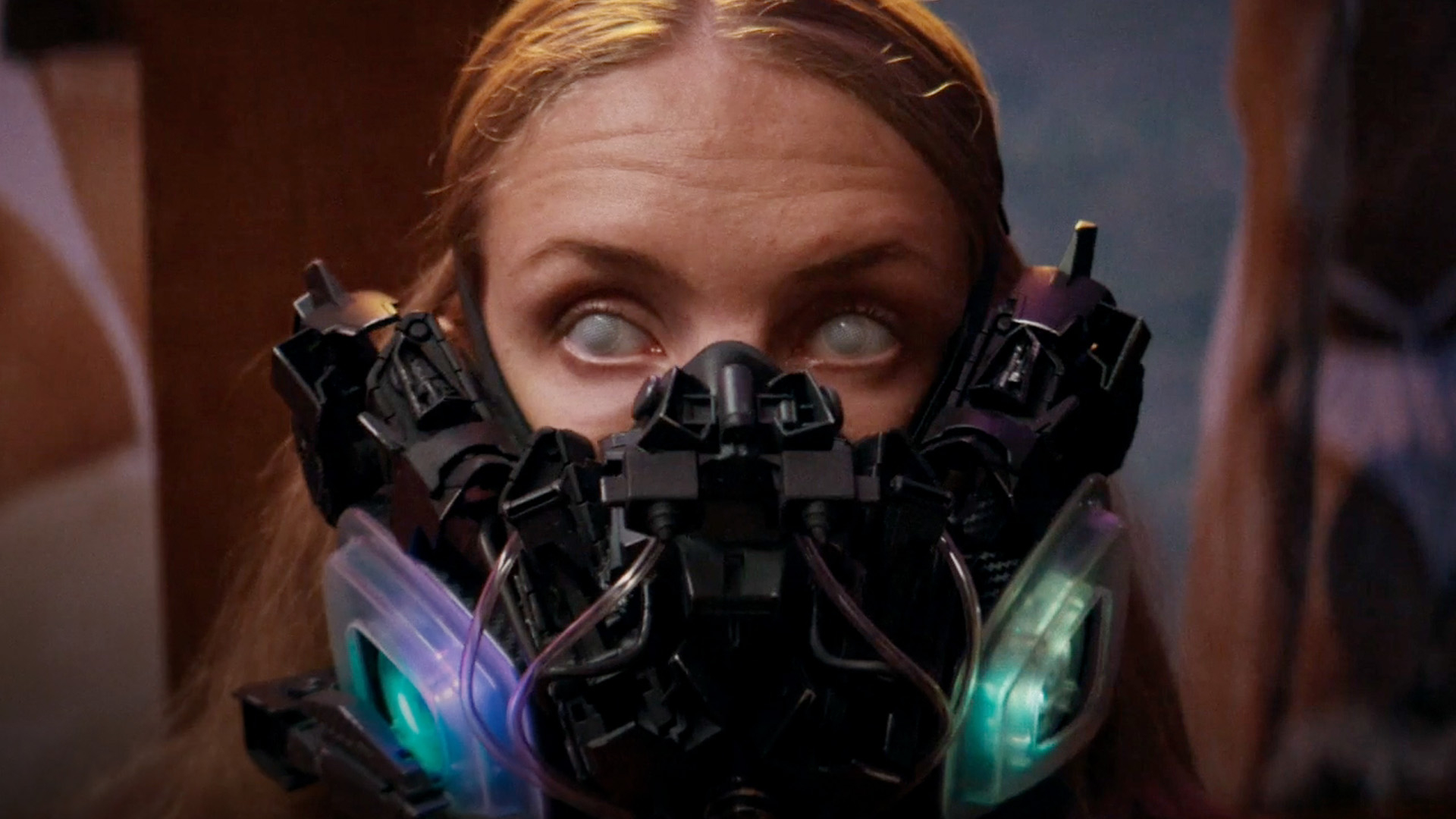
Beautifully, the film stands out with its unique use of color; hues of blue, pink, and even purple litter the screen while the trio is locked into their Mindfulness headgear, creating sights and sounds that only those tapped into their apps are able to see. The side effects are often shown in dingy colors like brown and grey smoke that pours out of the mouths of the girls after they log out. It blends in well with the environment around it, which alternates from a picturesque cabin hidden away on a lake to running through alleyways of old buildings. Israel Seoane’s cinematography captures the distinct differences in their realities compared to their mindful states, with precise framing when the headpieces are off and frantic frames making their escapism unsettling, to say the least.
From Llansó’s script, the film offers a wholly one-of-a-kind experience and explores our need for constant stimulation through our screens in such a strangely alluring way—which is to its benefit. Even as the film delves into an investigation into Dr. Mindfulness that loses some momentum, it’s a trip that is well worth taking. Saying the world is addicted to their gadgets is an understatement. Llansó reflects how inwardly these addictions can seem pleasant and even beautiful at times, inviting us to waste time and turn our brains off. Outwardly, they are gaudy and distract others from seeing our real selves. Llansó’s work as a writer and director in Infinite Summer guides the audience through the highs and lows of being lonely in a digital world. The content of the film is wild but worth experiencing.
Led by a quirky performance from Kaljuvee-O’Brock, her character Mia is easy to relate to. She starts out as a shy and reserved teenager looking for one last hangout with her best friend before they go off to college. As the film progresses, her shyness fades, leading the way for Kaljuvee-O’Brock to bring more to the table—shown best while she’s locked into her altered reality. Her youthfulness stands out as each situation becomes more bothersome than the last. Paired with Rosin and Gross, who play their roles as party girls perfectly, their characters all bounce well off each other. Gross plays a sultry and mature woman, more seasoned in all aspects of life than the others—charming and spontaneous. Rosin is the perfect blend of the two, and her performance showcases a self-conscious teenager looking for her spot to fit in, even if she has to fake it.
Masterfully, all of these elements blend together to create an unrepeatable experience. From its experimental script that questions the ethics of countless addictive apps to its fish-out-of-water relatability with its characterizations, Infinite Summer is as introspective as they get.