


Director: Scarlett Johansson
Writer: Tory Kamen
Stars: June Squibb, Erin Kellyman, Chiwetel Ejiofor
Synopsis: After a devastating loss, witty and proudly troublesome Eleanor Morgenstein, 94, tells a tale that takes on a dangerous life of its own.
Fear not, those born before 1990. Scarlett Johansson’s directorial debut, Eleanor the Great, is here to save you some hassle. The next time your parents or grandparents ask for a recommendation for something to watch, this is exactly the film to recommend.
We all know those movies you show your elders. They might not have the most complex themes, captivating storylines, or the most stellar of performances, but your loved one will definitely turn to you once the credits roll to exclaim, “That was really good!” While I’m pretty sure that wasn’t the intention with this film, it certainly fills a very specific cultural need. Keep this one in your back pocket when your grandma puts you on the spot.
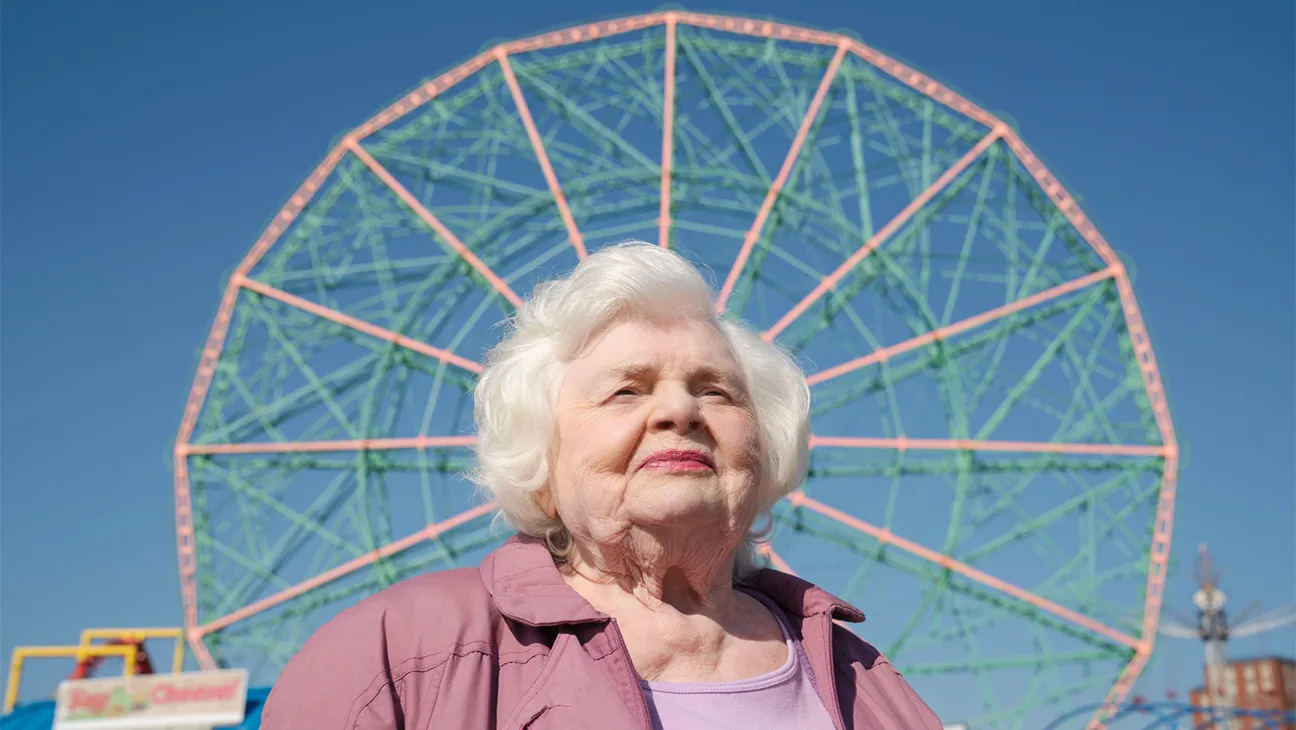
June Squibb stars as the eponymous character, a 94-year-old Floridian living a quiet life with her best friend and roommate, Bessie (Rita Zohar). When Bessie unexpectedly dies, Eleanor moves to New York with her daughter Lisa (Jessica Hecht), who encourages her to branch out and make friends. At the local Jewish community center, Eleanor stumbles into a Holocaust survivor’s support group. While not intending to deceive, she relays Bessie’s stories of survival on to the group as her own.
Inspired by her passion, college student Nina (Erin Kellyman) decides to profile Eleanor for a journalism course. Nina is dealing with the death of her mother and the silence she is receiving from her newscaster father, Roger (Chiwetel Ejiofor). Eleanor and Nina help each other with companionship and navigate their losses, as Eleanor seeks to have her bat mitzvah that she couldn’t complete in her youth.
Despite Johansson’s filmmaking ability, the whole film is a sitcom scenario. As soon as Eleanor innocently lies, you know exactly how the story beats will transpire. In fact, if you pause the film, there is a fair chance you can assume the remainder of the plot. Luckily, the narrative simplicity isn’t a deal breaker. There is a reason sitcom plots are successful. The viewer wants to see how the story ends with characters they have invested into. Eleanor is a sweet old lady who told a lie without benefit. There is no world where she deserves to be alone or overtly punished. It can only be too real.

That all being said, the film’s numerous discussions about Holocaust survival are all delivered by actual Holocaust survivors. Each of those accounts are performed with sadness and delicate precision. The levels of authenticity in these survival stories permeate the screen and provide a lasting impression. Those realities are a bit juxtaposed by Eleanor’s own recounting, in that it feels particularly wrong framing it with her own experience. A mid-film conversation between Eleanor and her rabbi gives the impression that maybe, just maybe, she could get away with it. Luckily, the filmmakers know better than to let that happen, though that would at least be a bit unconventional.
That expected conventionality only works if you have dynamic, likeable performers delivering the goods. Both Squibb and Kellyman have a gentle and believable chemistry. There is no mystery in the dynamic, but each performer is more than willing to accept the realities. Despite her age, Squibb’s delivery and ability is still young and quick. There is no suspension of disbelief, Squibb still has her full faculties and quick-witted charm. It’s not the most complex of performances, but it is one that she is uniquely adept at playing. Kellyman shares the screen nicely with Squibb, complimenting her quick wit with pensive understanding. Again, this is not the most complex of roles, but it is Kellyman branching out from her usual performances.
The rest of the cast fill out the edges as best they can, though they are almost all underwritten. Ejiofor, in particular, barely gets to do much of anything and even then isn’t much more than a talking head. Hecht does little more than complain about Eleanor at every corner, though the film does give her a bit more backstory than it could have. Zohar gets the signature supporting role, especially in a late-film story where she recounts her own survival story to Eleanor.
Despite staggering conventionality, Eleanor the Great will be a staple of the elder generations. Johansson has to start somewhere as a filmmaker, and there are much worse places to start than this.