

Home Blog Page 206

Op-ed: AFI’s 100 Years…100 Passions – ‘Witness’ (#82)

0
I will be watching and reviewing all of the films included on AFI’s 100 Years…100 Passions list. The list contains the 100 greatest love stories in American cinema and I plan to consider how our views on romance and social issues have changed over the years as well as judge whether the romances in these films actually made me swoon. As a fan of the romance genre, I expect to love each and every one of the nominees but I also don’t know if I would consider all of them romantic.

I know that the 1980s are looked at as one of the worst decades in cinema as the entertainment for adults that had thrived in the 1970s was replaced by franchise driven action and science fiction films that seemed to have contempt for their audiences. A lot of the trends that have caused mainstream cinema to seem formulaic and uninventive today originated in that era. For every Steven Spielberg, there were about a dozen Newt Arnolds who pushed out trashy action flicks that focused on poorly directed action set pieces and barely clothed B-list movie stars. Obviously, there were plenty of beloved classics that were released during this decade and it’s not like all of the trends in the 1980s were bad but I wouldn’t say that cinephiles look back fondly on a time in which Flashdance (1983) could be one of the biggest hits of the year.

Witness feels like a product of its era as it attempts to combine a generic crime thriller about corruption in the police force with a romantic drama about two very different people falling in love. It would be easy to mock it because it is incredibly earnest and it was made with the intention of winning awards in mind and yet I think it feels far more sophisticated than other 1980s films. It doesn’t completely work and I think that it fails as a crime drama because it deals with tropes from that genre in an unimaginative manner but as a romance, it is fairly successful. It is so achingly earnest and desperate to make the audience feel something that you are swept up in its rather silly story. It doesn’t try to defuse the soapy melodrama with humor or irony and for a film that was made to appeal to young men, it is shockingly sincere and pure in the way that it presents love and sexuality.

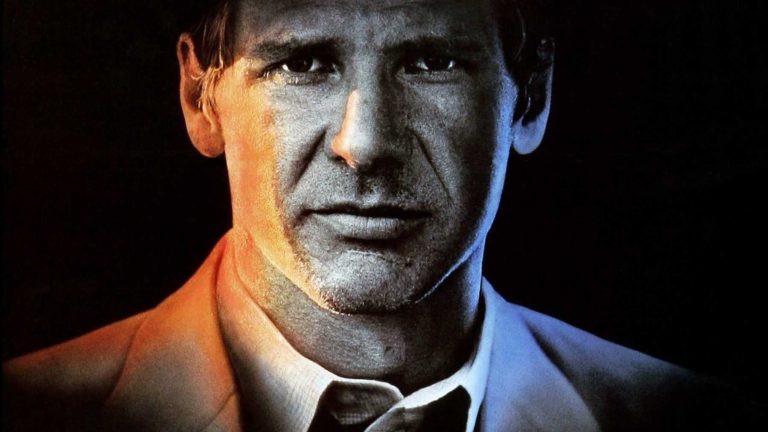
The film deals with widowed Amish woman Rachel Lapp, Kelly McGillis, takes her son Samuel, Lukas Haas, to the city to board a train to Baltimore where her relatives live. Their journey is cut short when Samuel witnesses a police officer being brutally murdered by two other men. Police Detective John Book, Harrison Ford, is assigned to the case and Samuel quickly identifies one of his fellow police officers as the man who committed the crime causing him to realize the corruption the surrounds him. Aware that the three of them will be killed if found he runs away with Lapp and Samuel to their Amish community in Lancaster, Pennsylvania where he struggles to fit in while dealing with a mutual attraction to Lapp.

The crime elements of this story just don’t impress today as there is something workmanlike about Peter Weir’s direction during the scenes in which men have to shoot at one another and children hide out in bathrooms. We feel like we have seen all of this stuff before in second-rate Mel Gibson vehicles and we wonder why this is such a highly regarded piece of work. I say all of this as somebody who usually isn’t interested in stories about heroic cops taking down the establishment but I do think that Witness fails to rise to the level of one of the brilliant Sidney Lumet productions that helped to boost the reputation of the genre. When you look at Serpico (1973) you see the ways in which Lumet is more preoccupied with understanding the bizarre double standards that existed within the corrupt police force in 1970s New York City rather than handing us scene after scene of criminals being violently murdered. I didn’t feel like Witness had anything knew to say about what it means to be a police officer and how it feels to be on the run. It steals from revolutionary crime dramas that were made in the 1930s but it ends up feeling like a tired re-tread instead of having the freshness of a James Cagney picture. I say all of this because I think that this is what stops Witness from being the thoroughly entertaining yarn that it wants to be. The central romance feels so lively and believable that we want the film to stop cutting away to scenes of action and focus on its greatest asset. I am mostly evaluating this as a romance so I will largely be talking about that aspect of the film but I wanted to explain why I don’t love Witness as a whole.

The romance does end up being the most effective part of the film and that is mostly due to McGillis’s remarkably warm, lived-in performance and some very well staged scenes that build sexual tension between the two characters. McGillis paints a portrait of a woman who is essentially happy living in an Amish community. She is not somebody who wants to step out of her comfort zone and even if she isn’t passionately in love with the Amish man who has expressed romantic interest in her she would willingly take on him on in order to provide her son with a father figure. So often we think of complex female heroines as people who are angry at the world as we expect them to loudly push back against the restrictions that society has placed upon them but McGillis suggests that this a woman who wants to engage in subtle subversion. She loves her male family members and trusts them but even at the beginning of the film you sense the fact that she is annoyed by their condescension and lack of faith in her. She builds up our expectations for this character and turns her into more than just a sweet, innocent girl who gets randy in the presence of an exceptionally virile police officer.
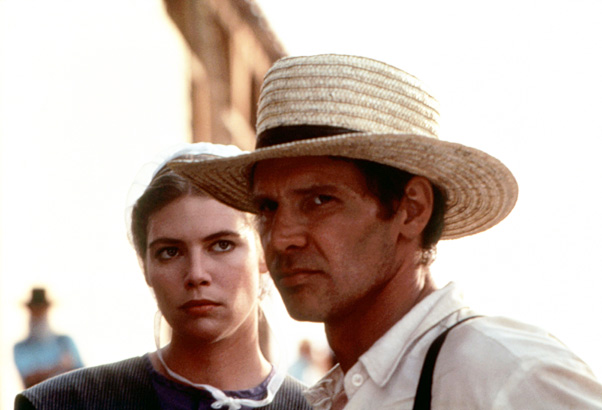
Harrison Ford as John Book in Witness (1985)

McGillis finds a way to elevate scenes that could have felt impossibly cheesy as she has an intense conviction in her eyes that convinces us that we should care about scenes that would traditionally appear in made for television productions funded by instant coffee manufacturers. At one point she has to nurse an injured Ford back to health and he happens to have his shirt off while he lies on the bed and moans. All of this occurs in candlelight and McGillis has to softly caress his skin while staring at him as though she is thinking impure thoughts. If anybody has read a paperback romance novel they will be familiar with scenes like this as it provides a way for the two characters bond as they have to get through a life-threatening situation together and it allows the woman to express sexual yearning as the man invariably reveals part of his body. McGillis handles this scene so beautifully as she makes it clear that Lapp is embarrassed by the feelings she is having and yet she doesn’t give us the girlish blushing that we are so used to seeing. Lapp is very much a woman and she adopts a stiff, patrician posture in order to mask the flashes of desire that she occasionally reveals. I also felt like she didn’t lean on the maternal quality that her character could have adopted too much. She wants to seem professional as she goes about treating this man and she really just wants to get him off her hands because she is afraid of the feelings that he inspires in her.

This scene also handles nudity and the revealing of skin in a tasteful but erotic manner that was rare in 1980s cinema. We tend to think of erotica when we think back to the 1980s as the controversial 9 ½ Weeks (1986) caused a stir for featuring graphic nudity and exploring the idea of kinky sex. Often these ‘erotic’ thrillers were not actually sexy and they ended up turning the audience off because people ended up looking like pieces of meat. They failed to tap into the emotions that people feel when they consider the idea of having sex with somebody who might not be around to form a committed relationship with them. There is something tacky about the way that Mimi Rogers has to bounce her breasts around for the camera in Someone to Watch Over Me (1987) and that scene just ends up seeming a little sad as the actress is clearly uncomfortable with the fact that she has to show off her body without being given the opportunity to act. The audience didn’t care about the characters and some of these films almost felt like nature documentaries as you were watching creatures manually having sex without understanding them on a human level. Witness overcomes these problems because of unusually sensitive direction from Weir as he seems to know that less is more when it comes to getting the audience worked up.

Ford is not one of those actors who is known for exposing his body in front of the camera and some have compared him to classical movie stars as his sex appeal is mostly derived from the fact that he seems to be fighting against his sexual urges. We don’t see much of his body in this film but in the nursing scene, we do get to see the skin of his back and McGillis presses against it softly. This adds an extra intimacy to the scene as McGillis is left to wonder about seeing the rest of his body and as her eyes follow the line of his body we are also left to wonder what he looks like. I sound awfully prurient as I say all off this but I did think that this was an effective attempt to get the audience to do most of the leg work in building Ford up as an object of desire. If he had been fully naked we might have been a bit unnerved as it would have felt like too much, too fast and there wouldn’t be the slow burn of eroticism that characterizes so much of the central relationship.

The later, more infamous scene in which nudity is put to use is even more miraculous in the way that it doesn’t gild the lily. It is fair to say that men are highly sexualized in erotica but the 1980s were full of sex comedies that demeaned women by presenting them as dumb sex objects who were forever walking around without clothes. In those films, the camera leers over the curves of their body but you also get the uneasy sense that the audience is being asked to resent the women for being good looking and many of these comedies featured scenes in which these sex objects were attacked by nerdy young men. Witness is not a sex comedy but it does feature a scene in which McGillis bathes in the nude before discovering the fact that Ford is watching her. The camerawork is simple and you don’t imagine the director licking his lips as McGillis turns around to reveal her breasts. An extra layer of tension is introduced to the scene because she is bathing and she expects to feel comfort because she is in a position where she doesn’t have to worry about how others feel about her. She feels shocked when she realizes that the man she likes has been watching her and he has seen her at her most vulnerable but then she decides to take charge of this moment and makes it clear that she wants him by presenting herself to him. This is something that is very difficult for her and we see the hurt in her eyes as he expresses doubt and doesn’t openly return her affections.
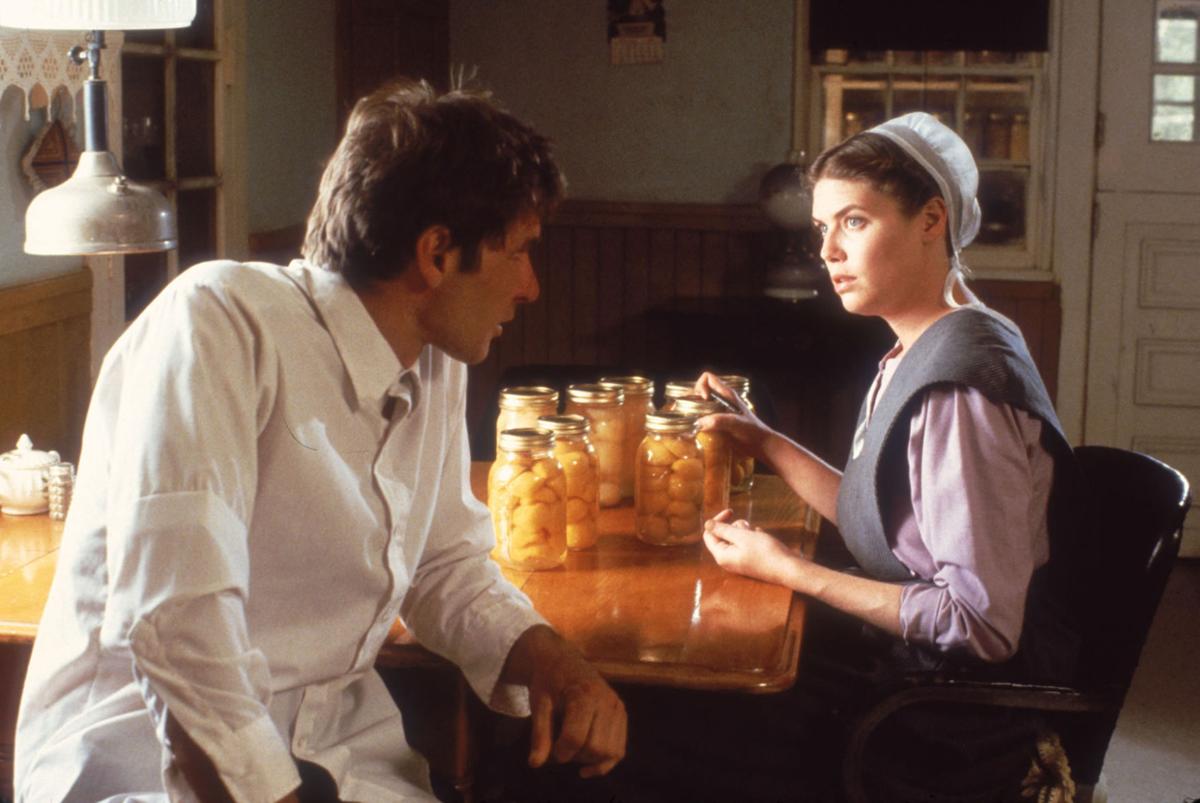
Throwback Thursday: 'Witness' premiered at Fulton 30 years ago | Food + Living | lancasteronline.com

Sexual tension has already been built up before this scene so we know that these people are physically attracted to one another but their emotions have also been considered. We know that Lapp is a woman who believes in what she has been taught within her community and she feels fearful when she chooses to express sexual interest in a man in such a scandalous way. We also know that he doesn’t want to hurt her because he knows that he will have to leave this community and can’t deal with the emotional baggage that would come with starting a relationship with her and then leaving her. They both have reasons not to act on their attraction and that is why there is concern in their eyes as they begin to confront their mutual desire. The shot of McGillis’s naked torso is matter of fact but Ford communicates the fact that he is threatened by her outrageous display and can’t handle the idea of engaging in sex with her. We are more engaged in the emotions that the characters feel in this scene than we are in the appearance of McGillis’s body. The term tasteful is usually seen as negative as some immediately connect it to the idea of stuffiness and pretension but I think it is the perfect way to describe what Weir does with this scene as he shows us just enough and then lets the actors and the audience do the rest of the work.

I also appreciate the fact that the awkward moment in which Ford has to tell McGillis that he is unwilling to ‘make love’ with her is short but painful. McGillis can’t even look at Ford as he expresses his thoughts in a cold, unemotional tone and we never really see her face in this scene but the disappointment on both ends is palpable and they are both emanating frustration.

After this, we get to the best scene in the entire film as the two leads finally kiss and some of their tension is resolved. It begins with McGillis noticing Ford standing outside and we watch her slowly deciding to go outside and kiss him. The camera rests on McGillis’s face for a few seconds and we see her shoring up the confidence to do something unusually bold and dangerous. She places her bonnet on the table to signify the fact that she is letting go of the conservative values of the Amish community for just a moment and then runs outside with excitement in her eyes. She and Ford walk towards one another and both appear of certain of the fact that the other person desires them. They then enter into a messy, unpractised kiss that is heavy on passion without feeling like it has been staged to look overly romantic. I just hate it when you can tell that the actors had to stand around for hours and practice kissing in a fake manner because this rehearsed quality usually translates to the kiss that ends up in the film and it lacks both spontaneity and an unexpected thrill.

The messiness of the kiss also endears you to the characters as they seem like two normal people rather than being untouchable movie stars. She is a single mother who hasn’t kissed a man in a long time and he has been more focused on his job than on romancing women so it makes sense that their first kiss wouldn’t be perfect. They laugh in between brief pecks as they know how awkward their movements seem but there is a strain on their faces when they do kiss as they know that they can only experience this for a brief period of time. You feel the regret that they feel as they have given into the passion and there is no way to go back to being romantically unattached but they also feel like they should have started kissing sooner and regret the fact that they have wasted so much time. They also appear to be hugging each other at certain points and this is a pleasant touch as this isn’t the sort of aggressive kiss that two sexual partners who don’t know one another might have. These are people who do feel something for one another and they want to take care of each other as they begin to explore each other’s bodies. They press their lips together firmly but this isn’t one of those sexless, angry kisses that appeared in films made during the era of the Motion Picture Production Code as McGillis and Hurt don’t seem to be pummelling their respective faces with their lips. I started to think about how insecure I would feel if I kissed a man who I wasn’t meant to kiss in full view of people who had known me my entire life but I feel like the film almost makes that sexy. McGillis wants Ford so much that she is willing to sacrifice her standing in this town and their kiss is an act of defiance against the unfairly restrictive rules that have been set.

Episode 27 – Witness (1985) – Bill and Ted Watch Movies

The score enhances the mood of this scene as it almost adds religious overtones to it. It is a very 1980s score as it is heavy with synth but I must admit to identifying 1980s film scores as one of my guilty pleasures. I will listen to “Love on a Real Train” by Tangerine Dream and hum along to it so clearly my tolerance for this sort of music is high. The scene is also shot in an unfussy style and Weir doesn’t take us out of the moment by using fancy camera angles that wouldn’t have added anything to the scene. He just lets the scene play out and takes his time in capturing this lovely kiss that they share. We also don’t have to see the two of them pulling apart and walking back to their rooms. Weir is happy to let the scene end with the two of them kissing and we don’t get to see how far their interaction progresses or where it ended. We might not have enjoyed watching them go through the walk of shame when they have to get some sleep and Weir is smart enough to give us the good stuff without punishing us by showing us the less romantic aspects of the two of them engaging in this kiss.

I have noted all of the things that I loved about Witness and you will notice that most of them were to do with unspoken interactions and beats in McGillis’s performance. This is a genuinely sexy film for adults that acknowledges the difficulties that come with wanting a person you can’t have. It does have certain deficiencies however as the script is not exceptional and I wouldn’t say that the dialogue is sparkling or finely observed. Often the lines that Ford delivers betray the fact that this film is based on an airport novel that was hardly high art and he ends up speaking like the sort of everyman who populated B-movies in the 1930s. McGillis tells us more about her character than the script does and Weir seems to understand the fact that the pivotal scenes need to rest on her silently reacting to certain developments. You get the feeling that the director and the actors were working around this script and they manage to craft some pretty strong scenes without the help of dialogue. Yes, the script might have vaguely described the actions that McGillis takes in certain scenes and the movements that she makes but all of the nuance was seemingly drawn out of her performance.

Some might take issue with the fact that the romance between Book and Lapp is not the love affair to end all love affairs but I appreciated the fact that this is more of a low key relationship. These are two people who wouldn’t have fallen in love or even lust if they had only known each other for a few days. Because they were thrown together it forced them to become close and because he was so different to all of the men that she had met he held a certain fascination for her. Their relationship likely wouldn’t have survived if one of them had tried to integrate into the society that the other occupied and in some ways their affair has to be brief. They are both practical enough to know that they must separate and the film doesn’t suggest that they will be miserable for the rest of their lives without each other. Lapp might settle down with an Amish man and become a pillar of her community while Book will rise through the ranks as a police officer but they will always cherish their memories of one another. The treatment of the end of their relationship was in keeping with the mature tone of the rest of the film and we are asked to see Lapp and Book as people who put the other priorities in their life first. If the characters had done something selfish like choosing to stay together it would have felt like the film had made a wild tonal shift but the poignant, subtle shot of McGillis watching her love leave town forever was the perfect shot to close out this love story.

Witness is one of the best films I have seen yet and while that isn’t saying much as I am only five films in I would say that this is a marked improvement over something like Love Story (1970). The quality of acting and direction in Witness was astonishing and while the film is held back by the fact that it also wants to be a formulaic action thriller it does include some scenes that leave a strong impression on the audience. I am rather surprised that it made its way onto the list as I feel like people don’t talk about it anymore. Maybe it was more culturally relevant in the early 2000s and everybody was talking about that kiss scene but it doesn’t enjoy the reputation of other entries on the list. I assume it was voted in because it was a financial and critical hit upon release and it received many awards nominations in 1985. I feel like this was one of the more idiosyncratic choices on the list and I think this was one of the few films that the voters had actually seen because people who hadn’t seen it might have assumed that it was just an action movie and not a romantic drama. So far, the 1980s are leaving me highly satisfied.


I worry that next week’s film, Random Harvest (1942), can’t compete with Witness when it comes to being erotic and dramatically compelling. I have never been the biggest Greer Garson fan so I have some trepidations when it comes to her performance but I do love romances with ridiculous plots and because Random Harvest involves both memory loss and incest I don’t see how it could possibly disappoint me. Ronald Colman’s mellifluous voice is usually incentive enough to watch something.

Movie Review: ‘Happiest Season’ Is a Familiar Gift In A New Package


Director: Clea DuVall
Writer: Clea DuVall, Mary Holland
Stars: Kristen Stewart, Mackenzie Davis, Alison Brie, Aubrey Plaza, Dan Levy, Mary Holland, Victor Garber, Mary Steenburgen

Synopsis: A young woman with a plan to propose to her girlfriend while at her family’s annual holiday party discovers her partner hasn’t yet come out to her conservative parents.

[/info]

The romantic comedy, over the years, has been much maligned. There are many reasons for this, ranging from simply misogyny (the “chick flick”, etc) to bending too far into its own cliches. But with streaming offering low risk and high reward for relatively low budget films, the romantic comedy has found a home outside of multiplex fare like Star Wars and comic book films. And one could argue that the holidays offer a perfect setting for this genre. After all, what better time of year to dive into pure sentiment and the idea of everlasting love? Yet another reason for the downfall of romantic comedies could be that the bigger budget versions have shied away from differing representation. Yes, there are many romantic comedies with leads that are people of color or LGBTQ, but how many have been given an actual push?  That is usually saved for terrible Matthew McConaughey vehicles, for some reason.

But this brings us to Happiest Season, an original LGBTQ romantic comedy set during the Christmas holiday, streaming on Hulu. Happiest Season follows a supposedly stable lesbian couple, Abby (Kristen Stewart) and Harper (Mackenzie Davis). They are so happy, in fact, that Abby plans to pop the big question after agreeing to spend Christmas with Harper’s family. All of this, despite hating Christmas after losing both of her parents during that holiday. Unfortunately, on the drive there, Abby learns that Harper never actually came out as a lesbian to her family. This, of course, sets everything in motion, forcing Abby to pretend she is simply a roommate, and awkward hilarity ensues.

Stewart and Davis have a comfortable, easy chemistry together, though it feels like it is lacking in passion. But that doesn’t hurt the film much, because as she proved in the criminally underseen Charlie’s Angels reboot, Stewart has a knack for comedy. This is a very different role, but her hesitant (but purposeful) choices absolutely ring true as a partner trying desperately to be adored by her hopefully soon to be in-laws. Davis is less charming in the partnership, which makes sense because her choices are the barrier to the couple truly connecting.

But the supporting players really make Happiest Season memorable. Abby’s best friend, John (Daniel Levy) provides the most laugh out loud moments, playing a very similar character to his role on Schitt’s Creek (and possibly in his real life?) Strikingly, he is tasked with a wordy speech about coming out that, if you have gone through it, or even know someone who has, will certainly touch your heart. Levy handles the emotional weight easily and allows the audience to root for a character that may be hard to reach after many mistakes. And the always wonderful Aubrey Plaza makes perhaps the most memorable impression as Riley, Harper’s high school ex-girlfriend. And interestingly, her part to play may be the most divisive. Her friendship and flirtation that builds with Abby may lead the audience to angle towards these two as a relationship. Both Plaza and Stewart lean into this without making it obvious, leaving people to wonder what could be at every turn.

Besides the romance, this is secondarily a family comedy. Harper’s mother (Mary Steenburgen), father (Victor Garber), and sisters Sloane (Alison Brie) and Jane (Mary Holland) all have ample opportunities to shine both dramatically and comedically. Steenburgen is clearly having a great time playing the passive aggressive mother, even if it quickly tips over into cruelty for very little reason. And honestly, I would watch an entire movie focusing on Daniel Levy and Steenburgen, who sadly only share one brief scene together. Brie and Holland, playing very different sisters make the most of their time on screen, nearly leaving Davis flailing from a performance perspective.

Happiest Season is certainly far from perfect. Writer and director Clea DuVall employs a pretty standard romantic comedy structure, but despite a 101-minute runtime, feels slightly rushed. The big mistake and breakup happens quite late, and frankly, goes too far. Many audience members will find it hard to forgive, despite the aforementioned Levy’s best efforts. That lateness also allows precious little time for a forgiveness arc, and that is the most rushed moment of all. It depends purely on believing in this relationship and Stewart’s physical performance. It half works, and whether that’s enough will likely depend on both your feelings about the genre and if you buy into the original relationship. In Happiest Season’s rush to bring exciting supporting characters, it places nearly all apparent faults squarely on one of the protagonists. 

Happiest Season delivers everything you should expect. It is romantic, awkward, full of beautiful people, and offers several moments that are genuinely funny enough to make the audience more than chuckle. It also features half of a couple that is difficult to like, but in this writer’s opinion, does just enough to explain away this problem. Love is hard. Coming out is harder. And both of these journeys are both incredibly important and different for every person on them. Happiest Season manages to pull at the heartstrings in these parallel stories and leave us the better for it.

Grade: B

Chasing the Gold FYC: Maria Bakalova, Best Actress – Borat Subsequent Moviefilm

2020 has been a helluva year for many reasons that I don’t even need to state here in this piece but at the end of this brown cloud of a year was a sequel to a huge breakout success of the year 2006, and that was Borat Subsequent Moviefilm or simply put, Borat 2, the surprise sequel that really no one expected nor knew what to expect from its sublimely talented creator Sacha Baron Cohen. Many questions were asked, mainly “How?”, “When?”, and “Why?” But when it was released on October 23rd of this year all those questions seemed to melt away with one solid response in all caps- YES! The best part of the film wasn’t even Baron Cohen or the hijinks that were created for the film, but for it’s break out leading lady star, Maria Bakalova. 

Her turn in Borat 2 was not only the standout of the film but it has turned the recently unknown actress into an “overnight” sensation as she recently signed with CAA and now is on the campaign trail for the golden statue that is the Academy Award, an award she richly deserves although something is really wrong with this. The studio that is Amazon has recently created a FOR YOUR CONSIDERATION page for the film and is campaigning her in the wrong category of Supporting and not Lead where she belongs, so I am here today to try and save her in any way I can for voters out there like myself who voted for some of these awards during Oscar season. 

Category fraud has been rampant in awards season since it’s very inception, supporting roles in lead categories, lead roles in supporting, this is nothing new. Being nominated for an Academy Award is a huge deal, despite the category and yes it’s a huge honor, however as a performer myself I wouldn’t ever want to be recognized for a role that wasn’t in the right category. Some examples over the years- Tatum O’Neal won for Paper Moon in Supporting Actress, she’s in the entire film, lead. Timothy Hutton won for Ordinary People in Supporting Actor, he’s in the entire movie, lead. Anthony Hopkins won for The Silence of the Lambs in Leading Actor, he’s in 24 minutes of the film, supporting. Viola Davis won for Fences in Supporting Actress, she’s in the entire movie, Lead. (You get the point) 

So it’s not a new concept. Now you may ask “what constitutes a leading role from a supporting role?” Great question. Two major factors play into this here- SCREEN TIME & RELEVANCE TO THE STORY. Lemme take two from the examples above and then I’m gonna move onto the main course here that is Maria in Borat 2. 


  • Viola Davis in Fences, let’s start with the fact that she already won a Leading Actress Tony for the same role on Broadway. Regarding screen time she has 53:22 of screen time in Fences, almost a solid hour of her on-screen, sure it’s a little less than half but here’s where it’s decided on really- her importance to the story. If you take her character out of Fences there is no story, she as Rose is telling one half of the story to Troy’s half. Take out Rose’s story and Fences becomes Gate. If she was actually the supporting actress of the film you could take Rose out and the story could continue, it can’t. There are many times throughout the film where the story is told through not only Rose’s POV, but she carries storylines. (Also, even Denzel said he didn’t understand why she was campaigning for Supporting but come on, it was obvious…)
  • Anthony Hopkins in The Silence of the Lambs, he’s in 24:52 seconds of the film, let’s start with that, those types of numbers for screen time equal pure supporting numbers. Regarding his importance to the story, I mean unlike the other novels and films about Dr. Hannibal Lecter, The Silence of the Lambs is about Clarice Starling, her story of working up the ranks in the FBI and catching Buffalo Bill. Lecter merely is a spice in the main dish that is the movie as a whole. I would argue that you could take out Lecter even and the movie would end the same, and THAT is what makes him supporting. He moves the story along but the story isn’t about him, nor is it told from his POV. 

Borat 2's Maria Bakalova on the Role & Working with Sacha Baron Cohen - Variety

Now let’s get to why Maria Bakalova is the LEAD of Borat 2.

Let’s start with how important she is to the film. She plays Tutar Sagdiyev the daughter of Borat, and in this film, while the story starts off being told through the lens of Baron Cohen it is specifically pointed out that Borat needs his daughter to be the main source of the hijinks and to be the sole reason to be on the good graces of Michael Pence and then Rudy Giuliani. There are many moments in the film where Baron Cohen obviously is telling the story and has his own pranks to ensue on people but there are solid chunks of the movie where Bakalova’s character is running the show, not only in her POV but is the literal focus. If you were to take her out of the film you wouldn’t have a full film, Borat 2 would be a short film with a jumbled plot that makes zero sense. That alone qualifies her as a lead, there is absolutely no way to tell the story of Borat 2 without Bakalova in it. So why is she being campaigned for Supporting? Why is a leading lady star in Diane Ladd’s category of Best Supporting? ( if you don’t get that joke, it’s not for you) Easy, because Oscar pundits and studios are so used to slopping around actors to fit into their dream lineups and allowing rampant category fraud when it comes to a “newbie” that they’ll give literally anything a pass. Literally. Anything. 

It needs to stop, and it needs to stop now, because not only are you not allowing actual supporting or leading roles the opportunities to be recognized in the correct categories thus slapping them in the face to make room for “something better” but you aren’t giving the Academy that opportunity to open up the categories to performances that are out of the box that you all battle cry for diversity and roles that aren’t usually in the wheelhouse of Academy styled movies, and if you balked at that reason, YOU ARE THE PROBLEM. You can’t have your cake and eat it too when you keep blocking these actors from getting their time in the sun and being honored for their craft when you allow blatant category fraud because your favorite can “at least be recognized”. Shut up. 

Don’t give the excuse either “the Academy can choose which category” cause it rarely happens. Outside of Kate Winslet and Jennifer Connelly can you name FIVE other times it’s happened? Four? Three? The Academy does what it’s told from FYC and pundits when it comes to nominating 99% of the time. Point. Blank. 

Borat was a huge Golden Globes hit of 2006 and could repeat itself again with the sequel, with Maria being campaigned in Supporting it’s like they are purposefully making it harder for her to get recognition as she can be put into the Leading Globe category of Comedy/Musical since the Globes only has one Supporting Actress category, but unlike the Academy, the Globes actually tends to put actors in their correct categories of Lead and Supporting. Getting the film recognized by the Academy is going to prove a bit harder since the Academy has a stick up their ass when it comes to comedies that aren’t made from easter egg palates of Wes Anderson. So strategically that’s why Maria is being placed into Supporting, it’s about the campaign and not the merit. 

Maria Bakalova is a comedic force in Borat 2, she’s on point, she’s perfect on her timing and delivery and she owns the movie to the point of she is the one you remember the most after watching the film. There’s a reason why she exploded like she did after the movie came out. 

She is lead, she deserves to be in lead, and you don’t have an argument that makes her supporting because if you did that means you could have Borat 2 without her character when you clearly can not.

So I leave you with how I began with you.

FOR YOUR CONSIDERATION: MARIA BAKALOVA- Borat Subsequent Moviefilm- BEST ACTRESS 2021 


List: Top 3 Movies About the American Dream

This week on Episode 406 of the InSession Film Podcast, inspired by our review of Minari, we discussed our Top 3 movies about the American Dream. The allure of the American Dream is powerful to many people who are looking for security and freedom. In full awareness of that notion, cinema has examined many times over how its both a great thing and how it can have a dark side at times. So, that left us with plenty of options for our lists this week as we considered all the perspectives that come with the American Dream. And in the end, we’re pretty happy with the films we decided to talk about regarding this topic. That said, here are our lists:

(Note: Please keep in mind that we each had different criteria for our selections)

JD
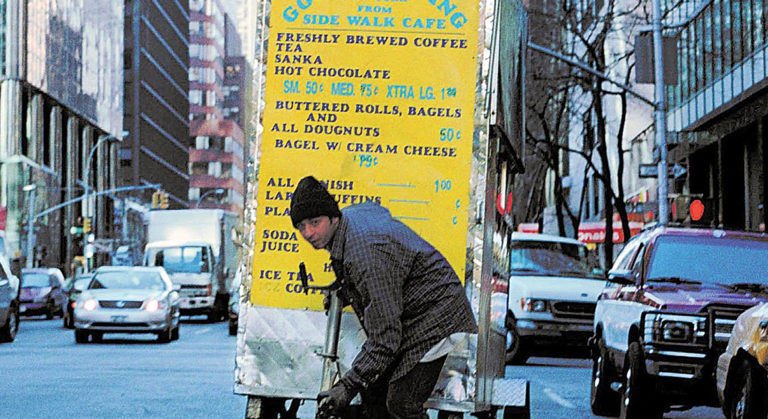
1) Man Push Cart
2) An American Tail
3) Brooklyn

Brendan
1) Easy Rider
2) American Psycho
3) Glengarry Glen Ross

Honorable Mentions (Combined)
The Gold Rush, Citizen Kane, The Social Network, There Will Be Blood, The Great Gatsby, Pain & Gain, The Big Short, Little Miss Sunshine, The Godfather, A Most Violent Year, American Splendor, They Live, Nightcrawler, Sunset Boulevard, Hidden Figures, Goodfellas, Sorry To Bother You, Pleasantville, Rocky, Mr. Smith Goes to Washington, The Wolf of Wall Street, Scarface, Revolutionary Road, Wall Street, Fear and Loathing in Las Vegas

Hopefully you guys enjoyed our lists and if you agree or disagree with us, let us know in the comment section below. A topic like this can be cumbersome given the vast amount of great movies and moments that fit the criteria. However, we did our best to lay those that stood out to us among the sea of options. And that means your list may not look like ours. So, what would be your Top 3? Leave a comment in the comment section or email us at [email protected].

For the entire podcast, click here or listen below.

For more lists done by the InSession Film crew and other guests, be sure see our Top 3 Movie Lists page.

Poll: What is the best movie about movies?

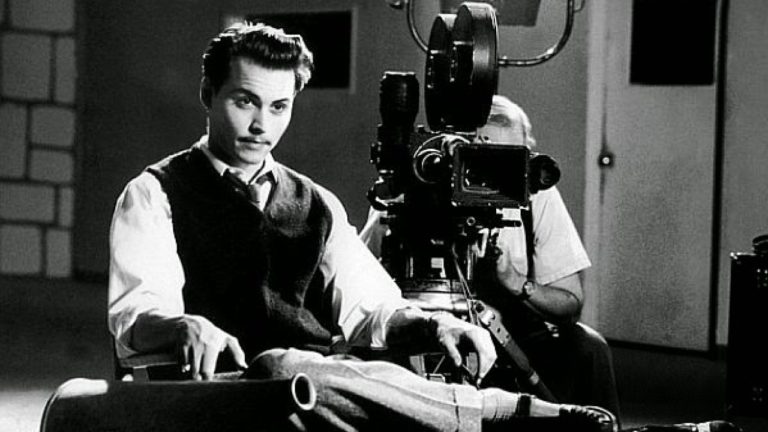
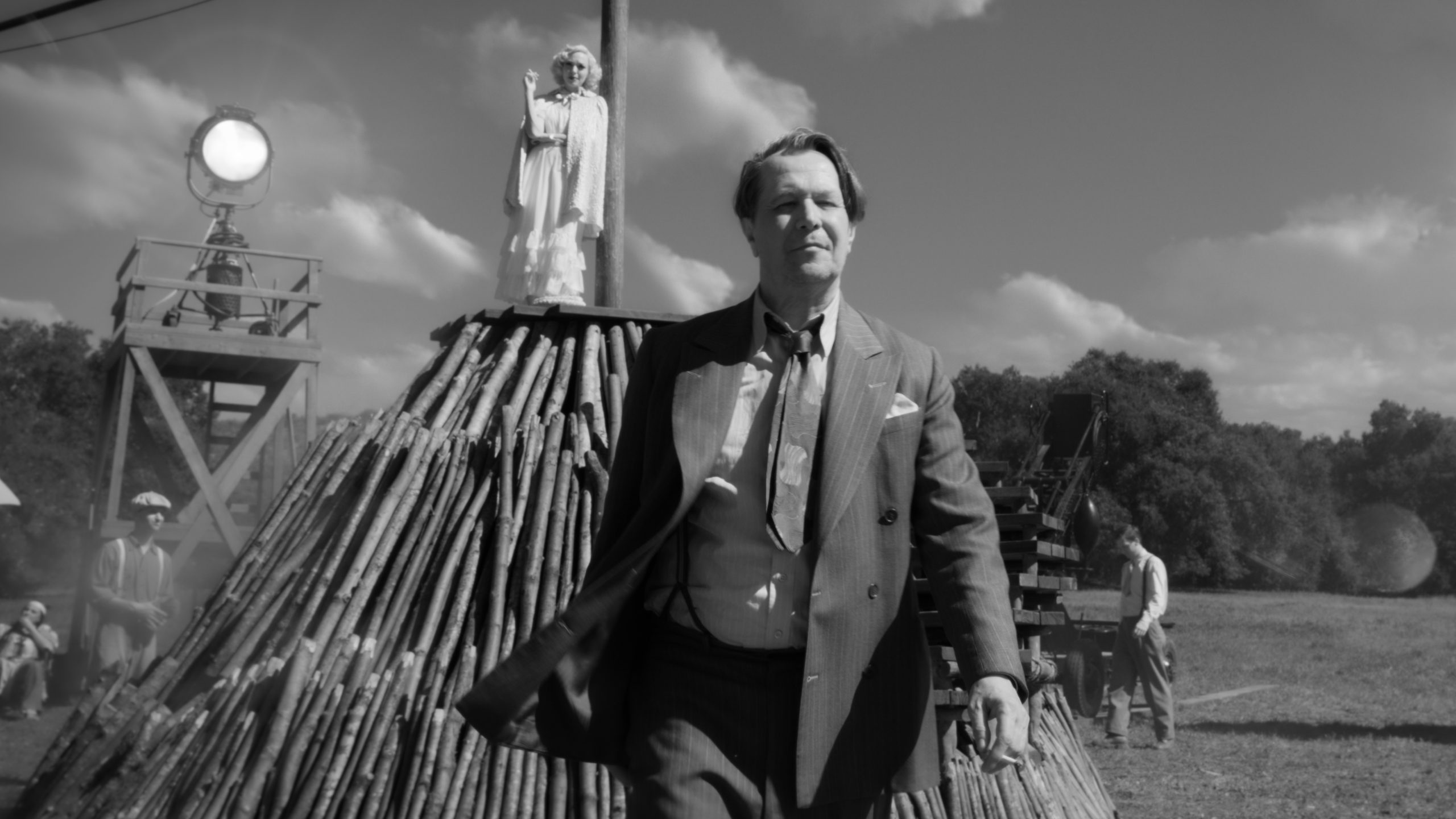
When you see as many movies as we do, you realize that making movies is a painstaking process, whether it be from the perspective of the writer, director, producer, actor, or Muppet just hoping to make it in Hollywood. This is what makes movies about movies so interesting; they aren’t just meta for the sake of it, they give us varying perspectives on the making of such great cinematic art, from the corporate to the creative. This conflict has been illustrated in many great films, and we felt prompted to celebrate them with the new release of David Fincher’s Mank, an old-fashioned epic depicting the making of Orson Welles’s classic Citizen Kane.

With that said, what do you think is the best movie about movies?


Podcast: Minari / Top 3 Movies About the American Dream – Episode 406

This week’s episode is brought to you by Patreon and our awesome listener’s like you. Sign up today and gets some awesome rewards in the process!

This week on the InSession Film Podcast, we discuss Lee Isaac Chung’s latest film Minari and our Top 3 movies about the American Dream! Both JD and Brendan also give their thoughts on The Nest, while JD gives his thoughts on Sound of Metal after missing last week.

We have finally hit December and that means awards season is ramping up. Minari is the first of several big hitters we’ll start tackling as the year begins to reach its climax. And as you’ll hear on the show, it’s a hell of a start to the end of the year. We had a great time talking about Minari and movies about the American Dream. Hopefully you enjoy the conversation as much as we did.

On that note, check out this week’s show and let us know what you think in the comment section. Thanks for listening and for supporting the InSession Film Podcast!

– Movie Review: Minari (5:58)
Director: Lee Isaac Chung
Writer: Lee Isaac Chung
Stars: Steven Yeun, Yeri Han, Yuh-jung Youn

– Notes / Sound of Metal / The Nest (47:35)
This week for our discussion segment, as noted above, we talked about a few films we recently caught up with. Specifically, JD gave this thoughts on Darius Marder’s Sound of Metal after missing out on the review last week. Also, both JD and Brendan caught up with Sean Durkin’s latest film in The Nest, a film that offers up two of the best performances of 2020 so far.

[divider]

RELATED: Listen to Episode 402 of the InSession Film Podcast where we discussed Wolfwalkers!

[divider]

Top 3 Movies About the American Dream (1:18:42)
The allure of the American Dream is powerful to many people who are looking for security and freedom. In full awareness of that notion, cinema has examined many times over how its both a great thing and how it can have a dark side at times. So, that left us with plenty of options for our lists this week as we considered all the perspectives that come with the American Dream. And in the end, we’re pretty happy with the films we decided to talk about regarding this topic. With that said, what would be your Top 3?

Show Sponsor: First Time Watchers Podcast

– Music

Alex and Temple – Emile Mosseri
Symphony Brew – Richard Reed Parry
Young and Beautiful – Lana Del Rey
The Return of the Eagle – Atli Örvarsson

Subscribe to our Podcasts RSS
Subscribe to our Podcasts on iTunes
Listen on Spotify
Listen on Stitcher
InSession Film Podcast – Episode 406

[divider]

Next week on the show:

Main Review: Mank
Top 3: N/A

[divider]

Help Support The InSession Film Podcast

If you want to help support us, there are several ways you can help us and we’d absolutely appreciate it. Every penny goes directly back into supporting the show and we are truly honored and grateful. Thanks for your support and for listening to the InSession Film Podcast!

VISIT OUR DONATE PAGE HERE

Criterion Releases: December 2020

We are at the end of a GUBU year: Grotesque, Unbelievable, Bizzare, and Unprecedented. With the political and social upheaval all around us, the holidays are in full swing and now we count the days to Hanukkah, Christmas, and the New Year. For December, we have four final movies from Criterion for your purchasing pleasure or as a surprising gift for that other cinephile friend you have. We have two already in the collection getting re-released and two more joining the list, an introduction to a major director and a shocking film on sex and violence coming together in an unusual way.

Mouchette (1967)

Robert Bresson, one of our great humanist directors with one of the most recognizable styles, follows the depths of loneliness in a teenage peasant girl, the titular character. In the countryside, she struggles with a mother who is ill, a father whose only love is alcohol, and a baby brother who she has to care for always. There are no friends; her poverty is worn and she is subject to constant ridicule from children and adults. Bresson sees in Mouchette (“little fly” in French) a tragic character who he described as someone, “Found everywhere: wars, concentration camps, tortures, assassinations.”

Symbiopsychotaxiplasm: Two Takes By William Greaves (1968 & 2005)

https://www.youtube.com/watch?v=atf3rqBuGUM

This is one of the most radical pieces of filmmaking in the latter half of the twentieth century. Avant-garde actor/writer/director William Greaves took the independent road in being a film director when black filmmakers were scarce. An experiment in conflict, the very long, hard-to-pronounce title (based on the word “Symbiotaxiplasm” by American philosopher Arthur Bentley, which meanings are another piece to explain) follows a film crew directing a drama about a woman confronting her husband about his alleged homosexuality. But the film is not about that about the conflict of directing people and the crew’s conflict of how the director is directing. Its metafiction and there are layers in the short film that has many sides to it. The film was a cult hit only documentary lovers saw as a masterpiece, and when it was reshown in Sundance 1992, director Steven Soderberg and actor Steve Buscemi helped Greaves to finance his sequel, which was released in 2005.

Crash (1996)

https://www.youtube.com/watch?v=J41WU08b2Ts

David Cronenberg already made films with quality shock value including Scanners, Videodrome, and Dead Ringers. Then came an erotic movie about symphorophilia, sexual arousal coming from watching violent car crashes, a film extremely divisive that the movie was temporarily banned in some places and feared there would be copycat events. David Spader plays a film producer who gets into a car accident and encounters a woman (Holly Hunter) who survives the crash but shows her arousal towards him. It’s a hidden world of a fantasy that is explained as, “reshaping of the human body by modern technology,” and Cronenberg displays this in his typical way that can either be embraced or be sickened by.

Amores Perros (2000)

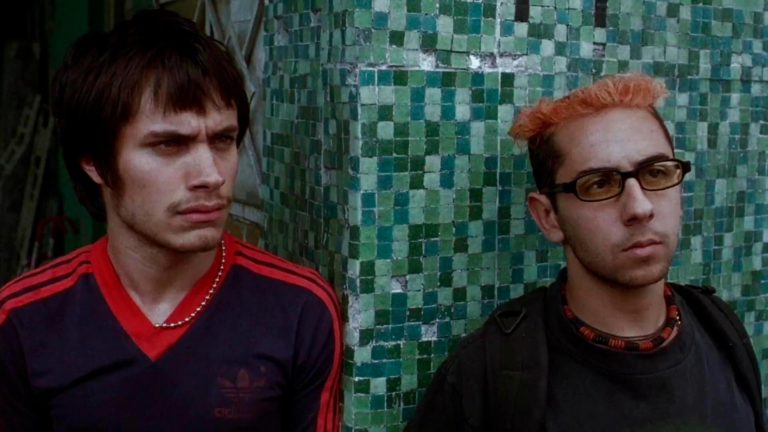
Alejandro G. Inarritu’s feature debut was a bombshell, receiving an Oscar nomination for Best International Film, and building a string of hyperlink cinema that Traffic, Syriana, Crash (the Paul Haggis one), and Inarritu’s Babel would build their narrative with in the 2000s. The first of his Trilogy of Death which was all written by Guillermo Arriaga follows three stories connected from a singular car crash the characters are connected to. They are stories of love, violence, loyalty, and cruel twists of fate for every one of them, all connected to man’s best friend (or is it with some of these people). It’s an incredible piece of work that deserves to be seen again and again.

Follow me on Twitter: @brian_cine (Cine-A-Man)

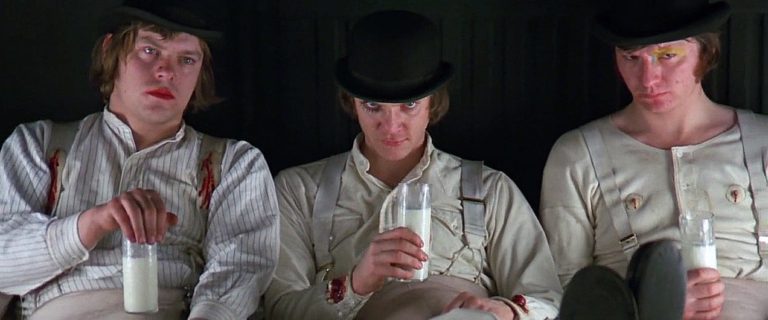
Second Chances: A Clockwork Orange (1971)

Where and when we watch movies are crucial to how much we enjoy them. By rewatching a film, our opinion on it can drastically change. We can appreciate things we never saw before, feel like we’re watching an entirely new film, or our estimations can plummet, and we question why we ever liked it in the first place.

In this column, I’m going to be revisiting some of my least favorite movies. I want to work out what I disliked about it in the first place, and whether I find those aspects still troubling. I want to reflect on what about me has changed since my last watch, and whether or not I appreciate it more. I want to give a fair and balanced assessment to films I could very easily, completely write off and never think about again because every film deserves a second chance.

Everyone knows that Lady in the Water isn’t very good, and the community of die-hard Moulin Rouge fanatics is small enough that I wasn’t going to anger too many people by airing my lukewarm opinion. This is the first edition of Second Chances where I might actually annoy a couple of people. 

Because I don’t like A Clockwork Orange.

I love Kubrick. He’s a genuine marvel. I was creeped out by The Shining, wowed by 2001, and I’m one of the rare few who ranks Spartacus amongst my favorites. I hadn’t seen a Kubrick film I didn’t enjoy until I saw A Clockwork Orange, and I’ve received a lot of flak from cinephiles when I make this viewpoint known.

It wasn’t that I was too young to appreciate it, or that I didn’t understand its richly layered satire. Kubrick’s 1971 adaptation of Anthony Burgess’ novel just did not work for me. The film shows a violent, criminal miscreant Alex (Malcolm McDowell) volunteers for experimental behavioral modification to escape his long prison sentence, but I thought the story was overly stretched, and the runtime of 136 minutes was not justified.

A common argument I hear is that the book is superior, and reading it bolsters your appreciation of the film. I wouldn’t be a very good former English Literature student if I said I wasn’t interested in seeing how the book executed the interesting themes, but an adaptation should first and foremost stand on its own as a piece of film, and I couldn’t say A Clockwork Orange had enough merits to interest me.

I’ve found that when you’re trying to argue that a film isn’t very good, the best point to make is that you were bored when watching it. There’s no real comeback to it, it stumps most arguments. Your opponent can’t disagree that you weren’t bored, and nothing they can say can make you retroactively engaged in the narrative. I was genuinely uninterested in watching A Clockwork Orange for the first time. It was a few years ago that I tried it, and the only real emotion I remember feeling was discomfort. This is of course expected, and it isn’t the reason I disliked the film, I know films don’t have to be enjoyable to be considered good. But a lot of unpleasant films have a really gripping story, and if they don’t then their portrayals of grisly violence and grim characters can feel gratuitous.

I was rooting for A Clockwork Orange when I rewatched it. I wanted to see what other people saw. Was I impressed this time around? Did I finally get what all the fuss was about when I gave it a second chance?

The answer to both questions is a disappointing ‘no’. My opinion remains largely the same, but now I’m a little bit more aware of what it is I dislike and appreciate.

The film is clearly broken into three acts, each with a different setting and narrative goal. First, we see Alex’s gang (or ‘droogies’) prancing around trying to find a solution to their constant ennui, namely in violence, sexual assault, and classical music. The second act has Alex incarcerated and undergoing the treatment program where ultraviolence is pumped into his eyes, and the third act sees him uncomfortably trying to rejoin society now that he has been reportedly cured, and the shortcomings of his treatment are made abundantly clear.

I’m laying out the story like this because I want to transmit that A Clockwork Orange does have a clear, well-defined structure. But also, I want to show that the narrative is not overly complex, and can be easily condensed in a short paragraph. If a half-hour was allotted to each act, my problems with the film would be sizably cut down. But as it stands, the 2-hour-plus runtime is way too long. The last thing I want to do is tell the master of cinema Stanley Kubrick how to edit his films, but when your film filled with spurts of shocking, explicit violence feels like it’s dragging its feet, you have a problem.

It’s worth tackling this last point about the shocking nature of the film. At nearly 50 years old, A Clockwork Orange hasn’t aged badly. The assaults, brawls, and home invasions Alex’s gang carry out are still genuinely shocking, and Kubrick’s masterful composition and framing are pivotal to making us feel trapped in these violent episodes, as if, like Alex, our eyeballs have been pinned open and we are forced to survey the carnage. But while the film does have great macro-structure, with each act clearly separated and character development well signposted, the micro-structure is not as strong. I know that Alex’s life pre-prison is defined by a languid, purposeless wallowing in decadent violence, but if every successive scene is just trying to shock you more and more, their impact eventually feels somewhat lacking.

Outside of being dull, the film has some choices that are downright annoying. The grim 70s-era dystopia of the film includes a lot of English slang and lingo, what author Burgess denotes as ‘nadsat’. To see becomes ‘to viddy’, money becomes ‘cutter’, and sex is ‘in and out’. It certainly adds a lot of idiosyncratic personality to the film, and together with the classical music and bowler hats it gives Alex’s gang this bizarre faux-classiness to their debauchery, but its overuse eventually becomes irritating.

In one of the worst mistakes you can make when adapting a book, Kubrick uses a lot of voiceover from Alex to guide us through the story. It certainly gives a good insight into the twisted brain of our protagonist, but often it pointlessly describes exactly what we’re seeing. These images gorgeously shot and frequently striking, would be much more impactful on their own. (Also, this is just a personal gripe, but I find a narrator referring to themselves as a narrator extremely annoying.)

The final act is where the best ideas come into play. In Alex, now a shell of his former self, we see the effects of arrogant scientists who misunderstand rehabilitation and a society completely out of touch with the root causes of criminality. Our former ultra-violent is now victimized by his friends and forced to face the consequences of his harmful actions. The government would rather revert Alex’s mind back to how it was at the start of the film rather than admit their policies were ineffectual and damaging, and it’s a prescient point that still feels truthful today. Ultimately though, A Clockwork Orange is the rare Kubrick film that feels like a misfire, and although the impeccable filmmaking techniques are still admirable, it’ll be tough appreciating the full effect of the shocking content when you’re checking your watch every five minutes.

Movie Review: ‘Alex Wheatle’ is a Tough Example of Endurance and Resilience


Director: Steve McQueen
Writer: Alastair Siddons, Steve McQueen
Stars: Sheyi Cole, Robbie Gee, Jonathan Jules

Synopsis: Part of Steve McQueen’s “Small Axe”, an anthology of decades-spanning films that presents various lives in London’s West Indian community, Alex Wheatle follows the true story of award-winning writer, Alex Wheatle, from a young boy through his early adult years.

[/info]

Steve McQueen has offered us a privileged view into the British Black experience during the 70s and 80s through his Small Axe anthology. His newest effort, Alex Wheatle – the fourth of five projects – continues with his crude vision, now focusing on the famous and revered British author, and exploring his early years that led him to become a successful author and recipient of an MBE for services to literature.

This movie examines the life of a Black man that is constantly affected and shaped by the public – and overwhelmingly white – institutions. This character is an example of the needs of the Black community that are analyzed in Red, White and Blue, another title of the anthology. People like Alex Wheatle were in dire need of public workers that understood their necessities and concerns, and more importantly, that offered empathy and care to those under their watch, things that Alex never received.

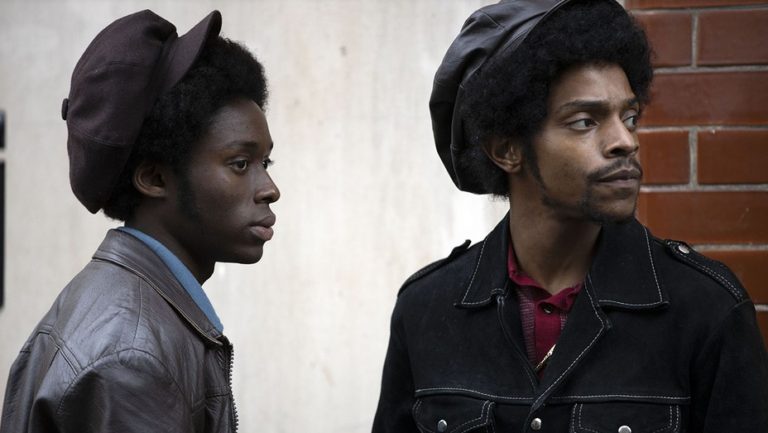
When we meet Alex Alfonso Wheatle (Sheyi Cole in his impressive debut), he is an illegitimate and scared child that lives under the shadow of an abusive caretaker in a public orphanage. Injustices, mistreatment, and racism shape his experience in this environment, only relieved by the African and Reggae music that he deeply adores.

Once he becomes a young adult, he moves to Brixton, London, where his life adapts to the local Caribbean community, propelled by his new friend Dennis (Jonathan Jules). Alex’s attitudes and thoughts contrast clearly with those around him. Whether it is the way he talks and walks, his out-of-fashion haircut, his complete ignorance of the current slang, or his naïveté regarding the relationship with policemen, it is evident that Alex has lived in a bubble that neglected his history and rendered him useless to the realities of life and the community issues.

Consequently, his perspective on life, love, and social justice go through a transformation, fed by his new-found liberty and the people that offer him a different way of living. He is introduced to the culture that celebrates its ancestors and origins, as well as the crude reality of institutionalized racism – although he experienced it before, he witnesses the way it affects the whole community, not just him – and race-profiling, similar to what we previously observed in Mangrove.

It is no surprise then, that after the Brixton Uprising of 1981 – influenced by a suspected arson that killed Black youths during a house party and that was poorly investigated by local police – Wheatle ends up in jail. Here, McQueen invites reflection on the unique moment of joy that we experienced in Lovers Rock and the feeble ecosystem in which the Black community developed themselves. How many lives have been profoundly wrecked by systemic racism in the United Kingdom? This question is ever present in this anthology.

During his time in jail, Alex’s perspective on life has a new and definitive transformation through the interactions with his prison mate, Simeon (Robbie Gee offering an intoxicating performance), who feels passionate about music, books, and education. This man is the final piece in the puzzle that will drive Alex into a conscious exploration of his past in order to define what he wants to be in his future.

As in previous efforts, Steve McQueen presents a memorable film through its technical achievements. The costume and production design, by Jacqueline Durran and Helen Scott, respectively, transport us back to the 70s and 80s. The music that played an iconic role in both Lovers Rock and Red, White and Blue is equally essential in this movie, highlighting the importance it had in Alex’s formative years.

Shabier Kirchner continues to offer memorable and haunting cinematography. Just as with the previous Small Axe entries, Alex Wheatle includes peculiar angles that convey it with McQueen’s particular style.

The script – written in collaboration with Alastair Siddons – is intimate and small-scaled. We explore a brief and vital moment in the life of a man that would become a great figure in British contemporary history. As with Red, Blue and White, we follow a man that is constantly judged by a system designed to bring him down. Instead of providing us with an optimistic story focused on success, McQueen and Siddons present the struggle that came before that.

With Alex Wheatle, Steve McQueen continues to prove that his Small Axe anthology is ground-breaking. Through the exploration of this real-life figure, McQueen provides an intimate story of self-discovery within a context that is overwhelmingly shaped by corrupt institutions. Less showy, but more intimate and empathetic than other entries, Alex Wheatle presents inspired reflections about the path we want to follow, notwithstanding our past or context.

Grade: B+

Podcast: Powell & Pressburger Movie Series

Selected by Jay, the Extra Film boys explore the filmography of one of cinemas most iconic duos in Michael Powell & Emeric Pressburger. With most of their films presented in dazzling technicolor, they explore worlds that feel so original yet so personal. There might not be another set of directors that not only define their era but transformed the medium of film for generations to come. Their run in the 1940s is peck cinema and has been celebrated by the Criterion Collection as important pieces of art. They’re known for also being highly influential to so many directors including Martin Scorsese. By the end of The Red Shoes episode, it will be clear that this movie series might just be the strongest Ryan and Jay have covered.

The Life and Death of Colonel Blimp, 1943

Listen to our review below as heard on Extra Film.

A Canterbury Tale, 1944

Listen to our review below as heard on Extra Film.

A Matter of Life and Death, 1946

Listen to our review below as heard on Extra Film.

Black Narcissus, 1947

Listen to our review below as heard on Extra Film.

The Red Shoes, 1948

Listen to our review below as heard on Extra Film.

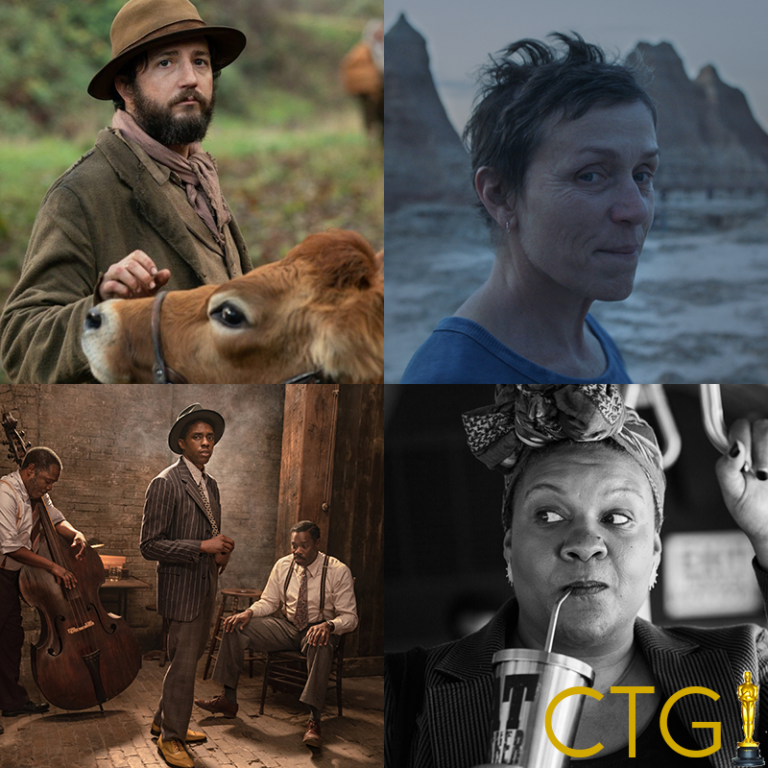
Podcast: 2021 Gotham Nominations Reactions – Chasing the Gold Ep. 26

On Episode 26 of Chasing the Gold, Ryan is joined by Will Mavity of Next Best Picture to break down the 2021 Gotham Nominations.

The Gotham Award Nominations signal the beginning of the Oscar season. Known for celebrating the smaller, independent films of the year, Oscar contenders can still emerge from the Gothams. And with this year being very unusual than any we have seen in a long time, Ryan brings Will on to talk about whether the Gothams can matter in the overall Oscar race. It’s a short but wonderful conversation on the first domino to fall in the Oscar season.

On that note, have fun with this week’s Chasing the Gold, and let us know what you think in the comment section below. Thanks for listening!

– Music
The Return of the Eagle – Atli Örvarsson

We try to make this the best movie podcast we possibly can and we hope you enjoy them. Subscribe today on iTunes, Spotify, or Stitcher, and please leave us a review on iTunes. You can also find us on Soundcloud, PlayerFM, and TuneIn Radio as well. We really appreciate all your support of the InSession Film Podcast.

Subscribe to our Podcasts RSS
Subscribe to our Podcasts on iTunes
Listen on Spotify
Listen on Stitcher
2021 Gotham Nominations Reactions – Chasing the Gold Ep. 26

[divider]

Mobile App

To hear this Extra Film episode and everything else we do, download our apps on the Amazon Market for Android and the Podcast Box app on IOS devices. The mobile app covers all of our main shows, bonus podcast’s and everything else relating to the InSession Film Podcast. Thanks for your wonderful support and listening to our show. It means the world to us!

[divider]

Help Support The InSession Film Podcast

If you want to help support us, we would greatly appreciate it! For more info, CLICK HERE.

Podcast: The Red Shoes / Black Swan – Extra Film

On this week’s Extra Film, Ryan and Jay conclude their Michael Powell / Emeric Pressburger Movie Series with The Red Shoes, and they also review Black Swan!

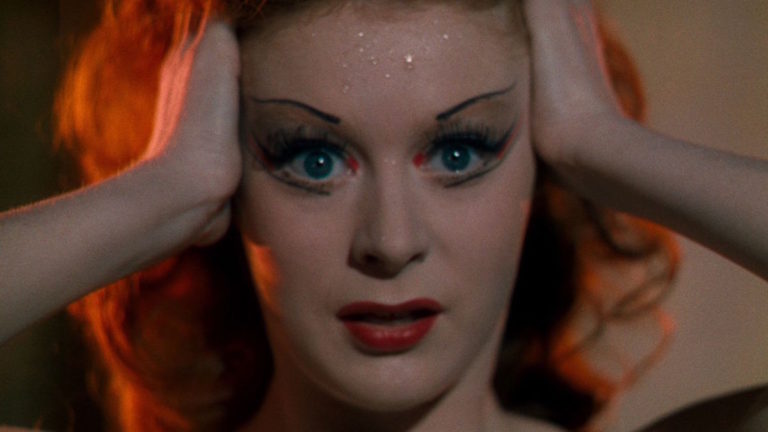
In the final review of their latest film series, Ryan and Jay gush over one of the greatest films of all time in The Red Shoes. Known for being ahead of its time, with ravishing direction and blistering performances, Powell and Pressburger pull it off again in proving that this film is a masterpiece. While Jay loved the film a lot, Ryan makes proclamations that surprised Jay and the audience when you hear it. A great review for a great movie, what more could you ask for?

In the back half of the episode, the boys take a look at Black Swan as it enters it’s ten year anniversary. While considered one of Darren Aronofsky’s better films, and one of the best films of the year 2010, upon a look back, both co-hosts seem to be down on a film they once loved. Is it a rip-off of The Red Shoes, or is it just a decent movie that got too much praise a decade ago? Find out during their interesting review.

Also, stay tuned for the end of the show to find out what the guys will be covering for the last month of 2020!

Thanks for listening!

– Movie Review: The Red Shoes (3:42)
Director: Michael Powell, Emeric Pressburger
Screenplay: Michael Powell, Emeric Pressburger, Keith Winter
Stars: Anton Walbrook, Marius Goring, Moira Shearer, Léonide Massine, Robert Helpmann

– Movie Review: Black Swan (55:36)
Directors: Darren Aronofsky
Screenplay: Mark Heyman, Andres Heinz, John McLaughlin
Stars: Natalie Portman, Vincent Cassel, Mila Kunis, Barbara Hershey, Winona Ryder

– Music
The Red Shoes- Score
Perfection – Clint Mansell
The Return of the Eagle – Atli Örvarsson

We try to make this the best movie podcast we possibly can and we hope you enjoy them. Subscribe today on iTunes, Spotify, or Stitcher, and please leave us a review on iTunes. You can also find us on Soundcloud, PlayerFM, and TuneIn Radio as well. We really appreciate all your support of the InSession Film Podcast.

Subscribe to our Podcasts RSS
Subscribe to our Podcasts on iTunes
Listen on Spotify
Listen on Stitcher
The Red Shoes / Black Swan – Extra Film

[divider]

To hear this Extra Film episode and everything else we do, download our apps on the Amazon Market for Android and the Podcast Source app on IOS devices. The mobile app covers all of our main shows, bonus podcast’s and everything else relating to the InSession Film Podcast. Thanks for your wonderful support and for listening to our show. It means the world to us

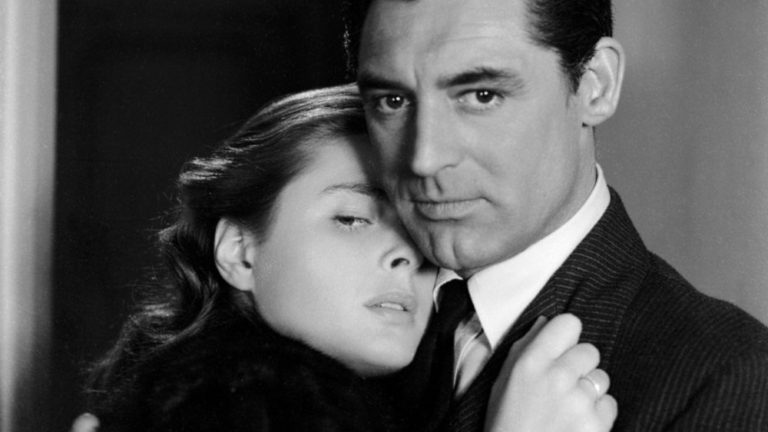
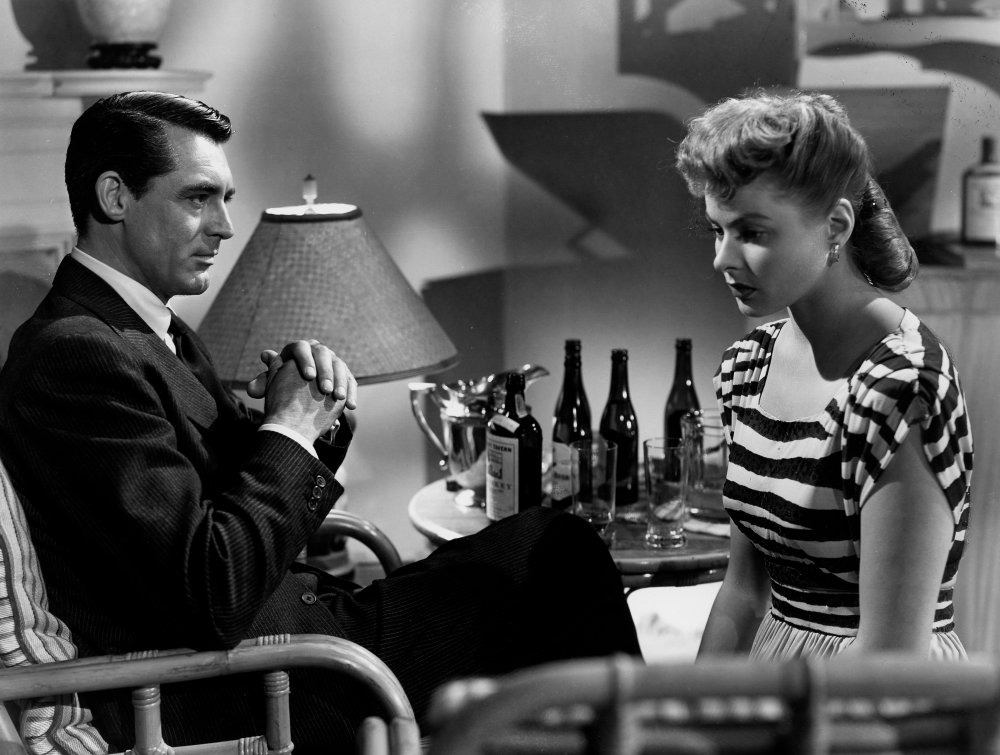
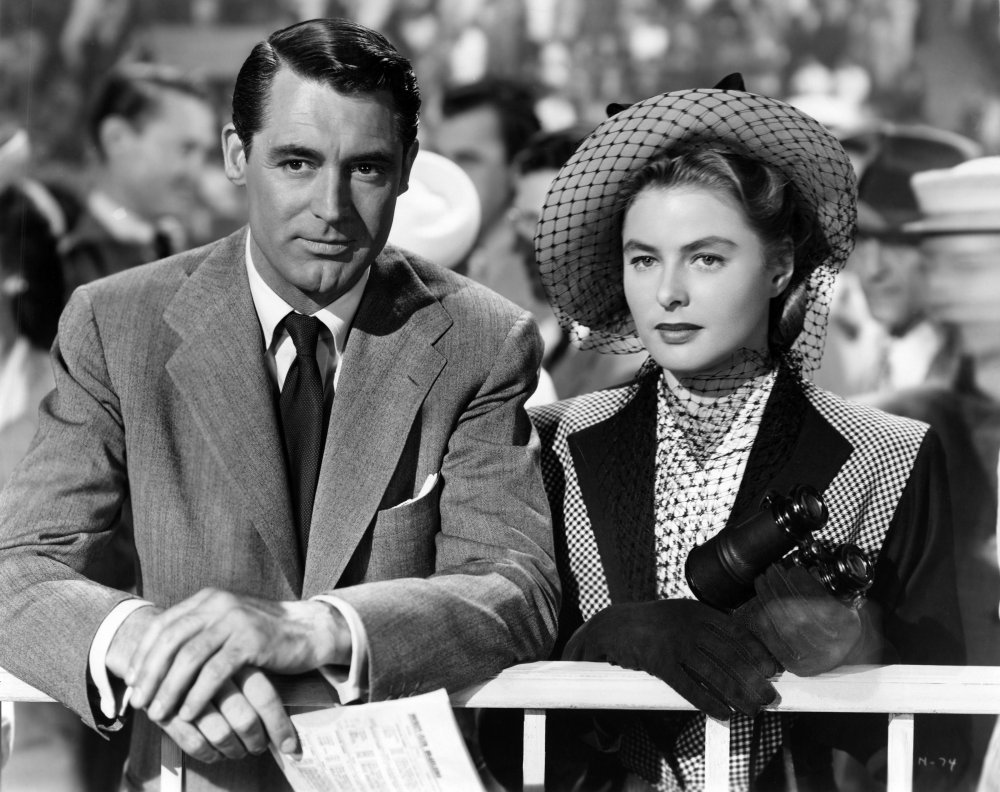
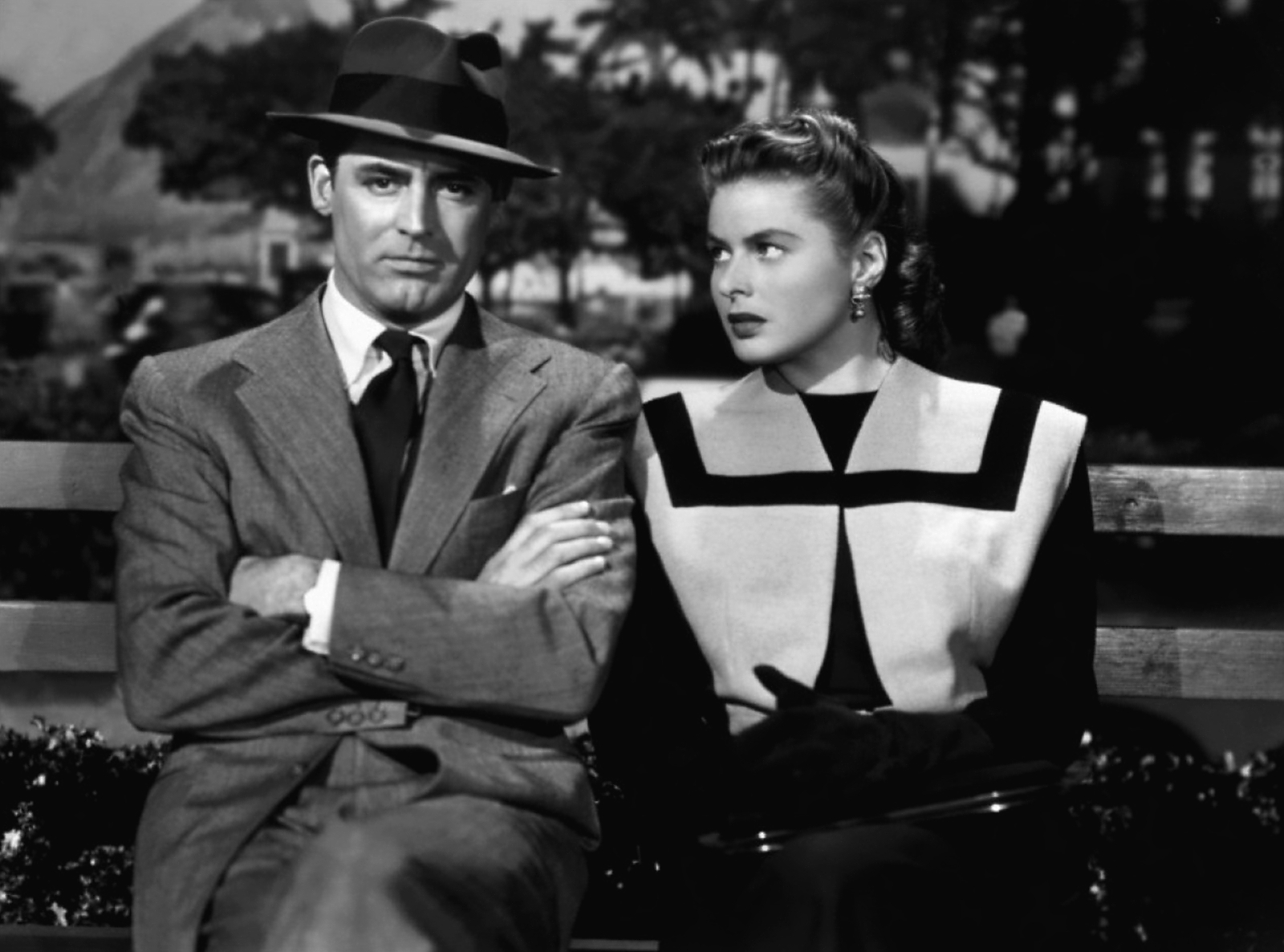
Op-ed: AFI’s 100 Years…100 Passions – ‘Notorious’ (#86)

0
I will be watching and reviewing all of the films included on AFI’s 100 Years…100 Passions list. The list contains the 100 greatest love stories in American cinema and I plan to consider how our views on romance and social issues have changed over the years as well as judge whether the romances in these films actually made me swoon. As a fan of the romance genre, I expect to love each and every one of the nominees but I also don’t know if I would consider all of them romantic.

Alfred Hitchcock is undoubtedly one of the greatest directors of all time as his influence is undeniable and it is hard not to admire the technical trickery that he employed to build up suspense and tension in the many classics he directed. I am often dazzled by the camerawork he employs and the imagery he produces is unforgettable and yet I often have reservations when it comes to his work. I tend to like films that are character-driven and I usually need to be invested in characters and their emotions in order to get fully swept up in its story. Hitchcock is a director who often prioritizes the plot and scenes in which he can show off his directorial abilities in a flashy manner over scenes that focus on dialogue, developing the characters or their relationships. Sometimes you can feel his boredom in scenes that deal with two people talking and it feels like he is trying to hurry through these scenes as quickly as possible so he can get to another tense scene in which somebody has to escape from a small room with a valuable object hidden in their hand. I am often frustrated by the fact that I end up admiring Hitchcock’s work more than I love it because I struggle to care about anything that happens in his films. Yes, there is impressive camerawork and masterfully staged scenes but when I don’t actually care about the people who are impacted by all of the tension it is hard to see the tension itself as something that is important.

This was not true when it came to some of his work as I am a great admirer of Shadow of a Doubt (1943), in which Joseph Cotten is allowed to bring depth and emotion to the murderous psychopath he plays. I also wouldn’t deny that Hitchcock wants to explore complex themes in his films as we all know that he loves to humiliate icy blondes, create discomfort in audiences by making them consider the ways in which they respond to violence, and likes portraying overbearing matriarchs on-screen who cow their weak and troubled sons. At the same time, I think the characters often turn into symbols rather than fully formed human beings and occasionally they feel a little one-dimensional as he tries to hit on a certain point without any subtlety. He famously compared actors to cattle and those who worked closely with him noted the fact that he liked to place actors in the frame as though they were objects to be admired and not living, breathing human beings who could be collaborated with. This comes across in his films as there were times when he brought out the worst in actors and they seemed wooden and stiff while also allowing for big, scenery-chewing turns that could have been reined in by a director who cared about acting more. All of these complaints do not apply to his entire filmography and he made several films that don’t have the flaws that I have spoken about but when it comes to Notorious I felt like I had to establish my issues with it right off the bat.

The film concerns Alicia Huberman, Ingrid Bergman, who is an American patriot who happens to be the child of a Nazi war criminal. American spy Devlin, Cary Grant, convinces her to seduce her father’s friend Alexander Sebastian, Claude Rains. She ends up marrying Sebastian which makes Devlin jealous as they were once lovers. When Sebastian realizes that she is a spy he begins poisoning her and she comes close to dying but Devlin rescues her and they are able to live together freely.

It feels like Hitchcock was an auteur when it came to this project as his fingerprints are all over it. He does seem obsessed with getting the plot to move forward at a breakneck pace here and you can almost feel him squealing with joy when he finally gets to stage scenes in which Bergman clutches at a key while Rains confronts her. All of his attention is turned towards the big set-piece scenes and while they are exceptionally well shot I couldn’t help but feel like they could have been even more powerful if he had put just as much effort into the other scenes. He sets the mechanics of the plot in motion in a remarkably small amount of time but we don’t get to know the characters and when they get involved in espionage and criminal activities they do just feel like chess pieces on Hitchcock’s board. Some people can tolerate this and will point to all of the technical virtues of the picture to support the idea that it is a flawless masterpiece but I wanted to care more and for a variety of reasons I couldn’t.

Notorious at 70: toasting Hitchcock's dark masterpiece | BFI

I suppose it all comes back to the infamous Bergman who continues to leave me cold. This is the second all-time classic of hers that I have reviewed and yet again I hoped that I would see the star quality that everybody else talks about. She plays a sexy, lovable, vulnerable, and brave woman in this film who enchants every man who meets her. This is the sort of role that asks for somebody with that intangible je ne sais quoi that makes everybody around them gaze at them with a certain fascination and awe. In the opening scenes, she has to go from being sad after learning that her father has been convicted of several crimes to trying to drink her problems away to trying to seduce a random man to being filled with patriotic pride. All of this has to happen in about twenty minutes and Bergman has to represent all of these emotions in scenes that are about four minutes long as well as sharing the screen with Grant for half of them. Hitchcock was asking a lot of her here and the script certainly doesn’t help her as she only gets to offer broad outlines of how she is feeling through dialogue.

I can’t say that she captured my interest during these opening scenes as I just couldn’t believe the dramatic shifts in character that she seems to go through. We find out that she has a promiscuous past and feels some self-hatred because of this but she doesn’t have much time to explore that idea. We see her getting drunk, driving poorly, and awkwardly asking a man to serve as her one night stand, in a way that wouldn’t offend censors, but I didn’t feel like we were getting a lot of introspection. It seems like she only has this dark past so the rather improbable plot makes sense and in the span of a few minutes, we get to see Grant guilting her into serving as a spy. All of these elements are meant to neatly click into place so the plot can finally get underway but during this time we are also meant to understand the fact that she is damaged and already has romantic feelings for Grant. In terms of her having a dark past, we don’t get to learn all that much, for obvious reasons, but I also felt like Bergman wasn’t getting across much inner turmoil or deep concern with her facial expressions. She likes to fall back on that impish grin that is meant to make her look cute before pursing her lips, furrowing her brow, and sucking in her cheeks so she can look like the sort of strict schoolmarm that Catholic audiences of the era could embrace. She can’t be too sexy because conservatives who loved her as a nun in The Bells of St. Mary’s (1945) would be outraged but she also has to be fairly saucy to make us believe that two men would be drawn into relationships with her after knowing her for all of five minutes.

We don’t really see when Grant and Bergman fall in love or in lust and become close enough that they are kissing and presumably getting intimate. It was an odd choice on Hitchcock’s part to not give us the moment in which the music soars, Bergman’s eyes go all soft and Grant starts to call her baby. I suppose he is trying to imply that this is not an affair that is driven by love but these two people have simply fallen into this relationship because of the circumstances they are in. That was my charitable interpretation of his decision not to show us how this relationship started as I think that he probably just wanted to cut down the amount of time that Bergman and Grant had to spend in that car. We are meant to think that this is a grand love affair in which these two have genuine feelings for one another even though they both feel like they can’t trust one another. Grant is meant to be completely enraptured by her even though she has spent a significant portion of her life seducing men she presumably did not care about and she is meant to want to give up everything she has just to be with him.

23 minutes in we get the most famous scene in the entire film as the two of them stay at a hotel together and kiss for three minutes on the verandah. We are hit with the fact that they are romantically involved and have been kissing like this for quite a long time as they both seem very comfortable doing it. This is the ultimate romantic fantasy for a lot of people as you have two famous movie stars staying at a luxurious hotel on a beach in Rio de Janeiro and they are able to kiss without becoming bored with one another. Hitchcock famously got around the three-second kiss rule that the Production Code administrators had put in place by having Bergman and Grant break apart for a few seconds in between kisses. They still nuzzle each other’s faces and remain intimate as well as discussing their feelings for one another and talking about what they will have for dinner. I admired the way this scene was handled as you feel like you are just watching a slice of life and Hitchcock finds a way to combine the mundane, ordering dinner, with the fantasy, kissing forever. It must have been hellish to get this scene filmed as the two actors had to remember all of the intricate steps in this lengthy kiss and the cameramen had to find a way to track Grant as he moved across the room while still allowing the audience to be aware of where Bergman stands in relation to him. This was one of many times when I wish that the work had been done to make me care about this couple as I could have swooned during this scene if I had seen why these two were kissing. Because I didn’t believe in either Bergman or Grant as the characters they were playing I didn’t care about them.

Notorious (1946) – The Movie Crash Course

The most common defense that I have heard of the remarkably quick period in which Bergman and Grant fall in love is that she is so beguiling that they can’t help but be together. Because I don’t love Bergman the way that some people do I don’t think that I could relate to the feeling of falling in love with her at first sight. I take issue with the first romance in the film but I think her second seduction is even more problematic. We find out that she knew Rains as a little girl when he was her father’s friend and he has lusted for her from afar for years but I still found it hard to believe that he would marry her based on what we see. They reunite when she chases after him on a horse and after a few dates, he decides to propose to her after seeing her talking to another man. He is set up as a cunning villain who is clever enough to outwit our heroes and yet he is putty in Bergman’s hands. We don’t get to see her being a brilliant spy and manipulating him into falling in love with her. Instead of getting to see that we just have to watch a flustered Bergman accepting all of Rains’s declarations of love and his eventual marriage proposal.

It seems like Hitchcock wants us to believe that Rains is into her simply because of what we learn about their shared past but there wasn’t a hint of lust or love in Rains’s eyes. Their marriage feels like yet another convenient plot function that gives Bergman access to his house and his resources. This was not the romance we were meant to care about so maybe we can give the film a pass for not investing as much time in developing this relationship but the love triangle would be more dramatically effective if we could see why both of these men love her. As it was, I didn’t see why either of them loved her. This was my big issue with it as a romance and that’s why I don’t think it should have been placed on a list of great love stories. You could put it on a list of great suspense thrillers but as a romance, it doesn’t work and it feels like people voted for this simply because of the people who were involved. Hitchcock, Grant, and Bergman are all big names, and even those dummies who haven’t seen their films know that they are all highly regarded. I do suspect that the people who voted for this list had not actually seen most of the nominated films and simply wrote down the titles they had heard of. They didn’t consider the fact that some of the nominees weren’t necessarily love stories and they couldn’t exactly evaluate the quality of their selections because they hadn’t actually seen the films. This led to some strange choices and the inclusion of Notorious is rather baffling.

As much as I praised the visuals in Notorious I do think that Hitchcock often composes ugly shots here and there are times when Bergman is made to look bovine. Edith Head was usually a master when it came to designing gowns that would flatter the starlets who wore them. Just think of Audrey Hepburn wearing that white ballgown with the blue embroidery in Sabrina (1954). She made Hepburn look adorable and the hair and makeup team was able to style Hepburn in a way that would draw attention to her best features. Poor Bergman is stuck wearing a bizarre black dress that does nothing to highlight her thin waist. It just sort of hangs on her and makes her look like she is one of the members of the mysterious sex cult in Eyes Wide Shut (1999). The sleeves are puffy so her arms look heavy and the pleated skirt gives it the feeling of a school uniform instead of seeming chic. The gold band that hangs around her waist only makes it worse as it appears gauche and clashes with everything else going on in her ensemble. Surely Head could have scrapped this design as soon as she started thinking about it as it does not suit the sophisticated object of affection at the center of the story. I could see one of Hitchcock’s villainous mothers wearing this sort of unflattering outfit but I don’t who decided to inflict this punishment on the leading lady.

It feels like Hitchcock got lazy in general when it came to Bergman’s appearance. Usually, you feel like he spent hours arranging the hairs on an actress’s head and get the sense that he looked through all of the costumes he wore but that sense of specificity is lacking here. If this was meant to be a sleek romantic fantasy then you would think that the characters were wearing the sort of outfits that you would only see in Vogue and they would always look like they were preparing to appear in a photoshoot. Nothing should be out of place and we should admire the enviable perfection of the people we are looking at. You don’t get that feeling in Notorious as Bergman often verges on looking scruffy and when she is meant to be looking glamorous she is sporting a hairstyle that makes you feel mild disgust. When she first meets Grant she is wearing a tacky animal print shirt that is loosely tucked into a chunky belt and her hair resembles cauliflower. It is all rather disconcerting and it would feel more at home in an independent production rather than a high budget thriller that is supposed to double as wealth porn.

21. Notorious (1946) | Wonders in the Dark

At this point, I must also admit that Grant is not one of my favorite leading men. I don’t really have a problem with him and when he shows up in a film I usually think he’s just fine but I’m also not excited by him and I do not fantasize about being with him. I am not attracted to him and I don’t see why he is viewed as the greatest guy in the world by a whole generation of women. Perhaps he just hasn’t aged well and his appeal was related to a variety of social mores that existed at the time. As a romantic partner, he always seemed a bit stiff to me and when I am being romanced by a man I don’t like to feel like he has studied seduction techniques while he is gazing into my eyes and playing with my hair. I always get that feeling with Grant and other than the fact that I am not physically attracted to him that is what turns me off. He also has a particularly unpleasant look that he pulls out regularly. If you have ever seen the poster for That Touch of Mink (1962) you will understand what I am saying as he often looks like he has a piece of blue cheese under his nose and he jams his lips together and flares his nostrils to indicate the fact that something smells bad. Is there anything more anxiety-inducing than feeling like your date doesn’t like the way you smell? I think not. Having said all that, I do think that he’s perfectly adequate in something like The Philadelphia Story (1940) and he doesn’t rub me the wrong way in the same way that Spencer Tracy does.

Grant plays a difficult man in this film but I don’t feel like he gets the opportunity to fully delve into Devlin’s inner life. As explained before, we never figure out why he is in love with Bergman and why he continues to chase after her even when she marries another man. He is meant to be tortured and we are supposed to sense that he distrusts all women even though he easily falls for Bergman’s charms and begins sleeping with her. He puts his job first but he finally realizes that he loves her so much that he will put himself in danger to save her. All of this happens so quickly that it is hard to keep track of what is going with his mental state. Grant is almost reduced to a Kuleshovian style of acting as he adopts a blank facial expression and waits for other people to tell him how feels. Maybe he was challenging himself with this role and he is often identified as the quintessential Hitchcock leading man but in this and Suspicion (1941) it feels like he doesn’t know what to do.

Now I find myself talking about the things that I did appreciate about Notorious and I do have to admit that I was amazed by Hitchcock’s skill at certain points. He finds a way to slowly but surely crank up the tension so the play of shadows against a wood paneled door will have you holding your breath. This isn’t something that is inherently scary and he doesn’t feel the need to have Rains making scary gestures as he putters around in the next room. If he had been performing Nazi salutes the scene would have drifted into mediocrity as it would have felt like a typical Nazisploitation film from this era that pretends to be educating its audience about the evils of Nazism while delighting in how dangerous and controversial it is. The fact that Rains’s movements are so innocuous makes the moment all the more terrifying. He moves around in the next room as Bergman tries to steal a key that will allow her to get into a room that houses items that she needs to investigate as part of her job. The editors try to make this scene move at a rollicking pacing so that we can feel as rushed and disoriented as Bergman does. She clutches at the key for half a second and then gazes at the door before finding herself flipping through the keys again. More emphasis is placed on Rains’s shadows than the task at hand and this feels like a deliberate decision as it mirrors Bergman’s viewpoint. She needs to take precautions in order to avoid being caught so she wastes time checking whether Rains will come close to catching her so that she can quickly put the key back in place if he catches her. You do feel stress during this scene as she finally wiggles the key off of its chain and hides it inside her clenched fist.

Rapid Response: Notorious (1946) - The Sanity Clause

This was just one of many exquisitely orchestrated scenes of suspense and Hitchcock also had a talent for organizing large groups of people as the big parties that are held at Rains’s mansion feature crowds of extras. Instead of standing around in small clusters that have clearly been organized, they are artfully spread out and they all seem to move fairly naturally. We don’t get the obligatory close-up shots that marked a lot of 1980s biopics and the extras don’t get to engage in mugging but the people turn this way and that in time with what Bergman and Rains do. One shot begins with a woman dressed in a black and white dress walking down a staircase and everybody in the room turns to look at her except for Bergman and Rains. They are in their own world and for once Hitchcock seems to be focused on the strain that her lying has put on their marriage. We start to think about what they are talking about and wonder why they aren’t engaging with the people around them. They are a wealthy couple who presumably move in the right social circles and yet Bergman isn’t walking around the room and regaling everybody with funny stories while Rains looks on proudly. Hitchcock illustrates their isolation here and it is hard not to marvel at the dazzling skill on display.

I also appreciated the fact that this doesn’t devolve into being a simple travelogue even though it is set in an exotic location. You get an establishing shot of Rio de Janeiro in which you admire the clear waters and the urban sprawl but Hitchcock is able to weave locations into scenes in which things actually happen. In the 1950s so many films featured five-minute-long montages in which audiences were bombarded with shots of landmarks in a certain city that had no relation to what was happening in the film’s plot and this can be frustrating when you watch them today. At the time audience members were delighted by this and it wasn’t easy to travel to these locations and buying Life magazine was expensive. Today you can easily look up images of these landmarks so you don’t feel the need to stare at them from different angles for a long period of time. Notorious doesn’t fall prey to this annoying trend and while this may have been because they didn’t shoot on location they still could have taken enough rear projection shots to put together one of those unbearable montages.

Next week I will be jumping forward about 49 years to watch and review Witness (1985). It might count as one of the more obscure entries on this list as it is not as famous as a classic like Casablanca (1942) but it still has its fans. I do see a lot of 1980s cinema as a guilty pleasure as I can identify all of the ways in which the decade produced negative trends and yet I can’t help but respond to some of the cheesy trash produced during this era. I haven’t seen Witness since 2018 and I think I might respond to it differently this time as I have seen more films and I now tend to react negatively to crime thrillers. I will be analyzing Witness as a romance however so I get to talk about lovely Kelly McGillis and the hackneyed/moving score.

Criterion Crunch Time: ‘Tomboy’

Well, we are set to close another month here at Criterion Crunch Time and with this week’s movies, we cover all of the areas I hoped to at the start of this column. We have a director whose movies are leaving the service all at once, and this director just happens to be a woman. The fact that she is one of my personal favorite directors certainly helps, too! Alright, enough pomp and circumstance, this weeks’ film is Tomboy directed by Céline Sciamma. Given that she directed one of the best movies of the past decade (and maybe ever) in Portrait of a Lady on Fire, it would be an understatement to say that my expectations were not tempered.

Sciamma has a true gift for capturing small moments of intimacy. In Tomboy these are best detailed by the way she films hands. In every important moment of connection, the camera focuses in on hands, specifically intertwining fingers. This is true regardless of the emotion of the scene. The film opens with Laure (Zoé Héran) sitting in her father’s (Mathieu Demy) lap driving the car on the way to their new home. The sense of discovery, fun, and awe is palpable as the opening credits roll. This will repeat through all of Tomboy, even as Laure discovers who they are.

The film follows Laure, a young person born a girl, and I chose those words carefully. There are two very different readings that can be made from Tomboy. This could easily be the story of a girl who is simply a tomboy and discovering who she is as a child. Or this could be the beginnings of a transgender journey. Either reading is intensely moving, as this time in a young person’s life is intensely confusing regardless of identification. My initial read was the trans journey, but your mileage may vary. 

Like all of Sciamma’s films, Tomboy is painfully intimate. One of the smartest decisions the film’s script makes (also written by Sciamma) is that Laure’s sister, Jeanne (Malonn Lévana) seems to have it so easy. She is a giggly, bubbly young girl. She plays the part of female without even knowing that is what she is doing. Laure, on the other hand, is actively performing the gender of male when they are with their friends, as Mickaël. Every moment of this young person’s life is thought through. Can I take off my shirt? Can I urinate outside? These are all things that boys who are born with male genitalia never have to think about. And yet, Laure is so much more comfortable there. 

Of course, Laure loves the time spent with family even when her sister annoys her, but we get the feeling that this is all so stilted and forced. Laure and Mickaël are almost two different people. Mickaël is confident, brash, and alluring to a female peer, Lisa (Jeanne Disson). On the other hand, Laure keeps almost completely to herself and has to be drawn into conversations with the people that love her. Tomboy hammers home the importance of being accepted and how truly empowering that moment will feel one day. But when you are young, the world is small. Laure and Jeanne’s mother (Sophie Cattani), pregnant for the majority of the film makes this clear. She has no issue with Laure “playing the boy” but after the summer break, Laure must return to school and the play must end.

But for Mickaël, this is not simply playacting. There is a reason that they choose male in a new neighborhood. This is a fresh start, without the insight to see into the future past the summer. Mickaël knows that they can pass as a boy and goes to relatively great lengths to do just that. The extended scene in which Mickaël makes a makeshift phallus to stuff in their shorts in order to attend a day at the lake is both comical and heartwrenching. We all, with that insight the child lacks, know that this will end, but we desperately hope that it will conclude without pain. 

But growth is painful, and Laure/Mickaël’s journey is no different in Tomboy. After a blissfully tender kiss with Lisa in which Mickaël is gently led by the hand with her right and has their eyes covered with her lift, everything slowly begins to unravel. In a cruel twist, Mickaël’s most masculine act, that of pinning another boy down and pummeling him, leads to the discovery that Mickaël is Laure. 

It seems that not only Jeanne, but everyone near Laure understands their gender and never feels the need to perform. Laure’s parents and friends seem to float through the summer, never needing a second thought in how they act or speak. And even a character introduced in nearly the last frame of the film, Laure’s baby brother seems at complete piece, the picture of comfort that Laure desires more than anything. 

Thankfully, there is one possible moment of acceptance. After being taunted by the boys for her “disgusting” kiss, Lisa returns after finding out Laure’s secret. They share a lovely moment in which Laure finally introduces themselves with their given name. This simple smile and line of dialogue, performed expertly by Héran imbues the film with a softness that sends the audience away with a sliver of hope.

So, is Tomboy a trans affirming story? Or is Tomboy a coming of age lesbian love story? Either answer leaves you with a loving, possibly accepting love story. That love story is either focused on the self or the other, but both of these leave a lasting impact on the viewer. Sciamma once again provides a love story that we rarely see on film. Tomboy is a phenomenal piece of efficient, generous filmmaking that deserves to be seen before it leaves The Criterion Channel.

Join us next month for four more movies leaving the Criterion Channel!

Poll: What is your favorite Thanksgiving movie?

Thanksgiving is often seen as a day of thanks, but more importantly it is a day of love, family, and friendship. It’s a day that allows us for familial intimacy, where we can actually talk with those we love most, and that’s what makes it a special day. Oh, and there’s football. And Black Friday. And the Macy’s Thanksgiving Day Parade. But sadly, this year will be a quite different; as the pandemic continues, that special time with family and friends will be limited for many of us (some won’t even get to see their loved ones this year), but that doesn’t mean we can’t celebrate in some way. A great way is to see how the holiday is reflected in cinema, and there are many movies (whether they be about Thanksgiving, take place over the holiday, or merely feature a scene from it) that do a great job honoring what the spirit of Thanksgiving is all about.

With that said, what is your favorite Thanksgiving movie?


Movie Review: “Collective” is a Must-See Documentary, No Matter Where You Are


Director: Alexander Nanau

Synopsis: A documentary that follows a team of journalists and whistle-blowers as they expose corruption in the Romanian national healthcare system.

[/info]

On October 30, 2015, 27 people died, and 180 were injured in a fire in the Colectiv club in Bucharest, Romania. This would create a turmoil in the national scenario that resulted in the establishment of a technocracy until the next general elections.

However, the nightmare was just starting. In the next four months, 37 of the 180 injured died in the hospital from infections acquired while being treated. This information bomb drops in the first 15 minutes of Collective, documentary by Romanian director and cinematographer Alexander Nanau, which creates a domino effect that exposes a massive corruption network in the Romanian national healthcare system.

The film follows journalists, victims, doctors, and politicians in real-time, as they try to deal with so much information about the rotten system. Even in one moment of the story, newly appointed Health Minister Vlad Voiculescu asks himself, “How can all of this be solved?” The corruption network is so profound and intertwined that practically everyone from the old government is involved.

Precisely the commitment to present the multiple crises that hit Romania as they are happening is what makes of Collective one of the most precious documentaries of the last years. The fact that it centers in the corruption issues within the health sector makes the story more powerful as we appreciate it under a lens of COVID-19 where many politicians have reacted wrongly – motivated by dishonest reasons – in response to the pandemic.

Considering that it exhibits the corruption of a system maintained by greed and power in which the citizens are the ones that pay the price, this story of inhumanity is too close to be perceived as foreign or fiction, whether you live in Romania, the United States of America, or Latin America. This reality is universal.

Nanau splits his camera in several fronts, each one of them offering damning truths and frustrating results. We witness the limbo in which the victims and their relatives live, months after the fire with no answers to the deaths of those with non-life-threatening injuries. We follow the Sports Gazette, the sole newspaper asking uncomfortable questions and exposing the corruption within the healthcare system. We meet the whistle-blowers exposing years of malpractice, politically motivated leaderships, illegal acquisitions and designations, and corruption. In this documentary, the negative surprises keep appearing.

However, some silver linings can be found in this ocean of depression. The journalists’ commitment, with special emphasis on Catalin Tolontan, leader of the Sports Gazette, is impressive and encouraging.

In one public debate in which Tolontan is questioned about his motives for presenting so many critical revelations he says: “There is no final goal, I think, in my profession. All I am trying to give people is more knowledge about the powers that shape our lives.” This kind of thinking is the one that propels his cause and that later puts him on harm’s way.

Health Minister Vlad, civilian and activist, quickly proves to be part of a new generation of leaders uninterested in continuing lying. An appointment that had the purpose of being the target of unrest, he turned out to be a reformer committed to right some wrongs.

However, these figures of change and dissent are probably the most tragic characters in the documentary. The people that drive Collective go against a machine of power and money with a shield of impunity. The story comes to an end with the general elections, which reflect the tremendous divide in the country and the way the citizens sabotage themselves and vote against reforms and progress, a scenario that is also too familiar to ignore.

The documentary does not finish with a hopeful eye. What changes will prevail of those forced by the brave whistle-blowers and journalists? How many of the reforms propelled by Vlad will survive once real politicians resume activities? The forecast in the documentary is not optimistic.

This is a documentary that questions the humanity of political leaders and doctors, two professional figures that are supposed to look after people. As such, it is excruciatingly fitting that one of the most powerful reflections in the story comes from one doctor/whistle-blower: “As my mother puts it, we’re no longer human. We only care about money.”

Collective is a worthy addition to the genre of investigative journalism, easily compared – but naturally superior – to the likes of fictional movies Spotlight (2015) and All the President’s Men (1976). Given that Collective happens in real-time as conspiracies are uncovered, Nanau’s film is essential viewing.

Grade: A

To Infinity and Beyond: The Magic of ‘Toy Story’ Lives on 25 Years Later

On November 22, 1995, the landscape of animated cinema changed forever. After decades of Disney’s beloved animated feature films, the era of computer-animated filmmaking was about to begin. After a successful premiere three days prior in the heart of Hollywood, the John Lasseter-directed project released across North America to rave reviews from critics and the public alike, rocketing its way to the top of the box office.

Disney had been at the top of the food chain in terms of animated films for the best part of a century, dating back to the early Walt Disney cartoons and the 1937 Snow White and the Seven Dwarves. Their hand-drawn classics such as The Lion King, Aladdin, and The Jungle Book remain staples of cinema today and are continuing to spawn live-action remake after live-action remake.

However, the arrival of Pixar and Toy Story changed everything. Sure, Disney’s traditional way of creating animation continued shortly after including the releases of Mulan and Hercules, however, it was clear that the landscape had now changed for good. Pixar had begun creating short films as early as the mid-1980s, but taking the next step to a fully fledged feature film was a monumental one.

The Academy, much like the public, welcomed Toy Story with open arms. They awarded it three Oscar nominations include Best Screenplay, a rare pickup for an animated film, and one that proved Toy Story was more than just a gimmick. What could’ve been a flop that marked both the beginning and the end of computer-animated programming, Toy Story instead set the benchmark so high that it can be argued nothing since has been able to touch it in its genre. But how did Pixar get it so right? The answer lies not because of its technological advancements and revolutionary filmmaking, but something much simpler – its story and its characters.

For those who have somehow missed the entire narrative of Toy Story over the last 25 years, it centers around a group of toys – belonging to a boy named Andy – that are able to come to life when nobody is around. In fact, the idea of the film’s imaginative universe is that every toy is able to come to life in some way. This includes cowboy Woody (voiced by Tom Hanks), a piggy bank named Hamm, Bo-Peep, a self-deprecating dinosaur named Rex, and a slinky dog to name a few. The dynamic of these toys drastically change when Andy receives the brand new Buzz Lightyear toy for his birthday, a gadget-ridden spaceman complete with iconic lines brought to life by the brilliant Tim Allen. A rivalry between Woody and Buzz ensues throughout the film, with raging jealousy and resentment on show. Eventually, the two put their differences aside to help each other against the evil Sid, and the pair form a brotherhood that spans the rest of the franchise.

It’s hard to pinpoint where to begin when discussing what a wonderful film it is, but the characters seem the best place to start. Sheriff Woody is brought to life wonderfully by Hanks, following up his back-to-back Academy Awards in style. While the toy itself has a pull string of generic quotes, Woody’s most memorable lines are when he’s ‘alive,’ including screaming “You are a toy!” at a baffled Buzz Lightyear. He’s the perfect protagonist, a Clint Eastwood-type cowboy that wouldn’t seem out of place in a John Wayne western (It’s also exciting to realize that the upcoming News of the World starring Hanks is the closest we will get to seeing Woody in a live-action feature.) Buzz is the opposite of Woody when we are first introduced, as he’s much less self-aware and enjoys his lone ranger persona. much of the film’s humor early stems from his lack of understanding that he’s just a toy, and thinking he is an actual spaceman. The other toys admire Buzz for his looks and gadgets, however, popularity is not something he particularly cares about, but merely stumbles into. The clash of personalities is the heart of the story, with the colorful ensemble there to react to the two while having their own string of memorable moments.

Toy Story' 20 years later - Business Insider

In many ways, the dynamic between Woody and Buzz represents the landscape of animation that was about to change forever. If Woody symbolizes the traditional beloved Disney classics, Buzz represents the film itself, Pixar, and the revolution that was about to pick up in the following years.

The four-person writing team of Joss Whedon, Andrew Stanton, Joel Cohen, and Alec Sokolow do an incredible job at creating such an original idea, which both entertains children while remaining intelligent enough for adults to fall in love with too. Pixar’s charm is that their films are for everybody, and it all begun here.

It’s a magical film strangely grounded in reality, with nothing out of the ordinary except of course for the talking toys. It creates a sense of familiarity that as a kid you feel could actually be happening in your own bedroom, and as an adult harbors back nostalgia and memories of a time when playing with action figures made them feel real anyway.

And of course, there’s the iconic “You’ve Got a Friend in Me” song from Randy Newman, which features in a spectacular montage. It’s a song that has defined the entire franchise, highlighting the focus on friendships and brotherhoods, and one that has a poignant tune to it the more time passes from this 1995 masterpiece.

Another testament to the film’s longevity is the length of time between sequels. While Toy Story 2 released shortly after in the late 90s (which featured the devastating montage involving Jessie), the third installment didn’t release until 2010, with the fourth almost 10 years after that. Only franchises at the level of Star Wars have been able to continue for as long or longer, and a big part of that is how the story has matured. As the original audience of the first Toy Story has gotten older, the themes of the films have adapted, with Toy Story 3, in particular, an emotional and poignant tale of letting go of childhood.

Pixar realized the key to success wasn’t just in the quality of animation but the quality of storytelling, which has unsurprisingly led to their films earning a variety of Screenplay nominations across major awards through the years. Pixar took the idea of young viewers being able to emphasize with non-human characters and ran with it. Monsters Inc. focuses on Monsters, Finding Nemo on fish, and Inside Out on characterized emotions, to name just a few. This level of creativity and imagination has captured the hearts of film audiences all around the world, and long may it continue.

The legacy of Pixar’s first outing can never be overstated. Disney purchased Pixar in the mid-2000s, taking things to the next level in terms of scale, popularity, and merchandise. It remains to be seen whether the story of Buzz and Woody is finished after their heart-breaking farewell in Toy Story 4, but there’s no denying the legacy will remain forever. It all started 25 years ago, and whatever direction animated films take in the next 25, you can be sure that Toy Story’s influence will be all over it.

Op-ed: A Brief Journey Through Italian Neorealism

0

Much like how French Poetic Realism captured the attitudes and experiences of a country just before World War II, Italian neorealism took a similar method towards the war and the immediate postwar period. Though it began during the midst of the war, the bulk of films that defined this movement were released from 1945 to the early 1950s. Neorealist films took a far different approach than the propaganda films that highlighted Italy’s film industry under the fascist rule of Benito Mussolini. Rather than glorify the country, these films exposed the cruel effects of the war on ordinary people. Most of the lead characters are those who experience poverty, and they were often played by non-professional actors. Films were usually shot in the streets of cities such as Rome, rather than in the studio. All of this mixed with a particular sense of social consciousness and critique created a highly realistic nature for these films. As always, this list is not meant to be a complete look at the movement (keeping it within reasonable length meant leaving out notable films such as Bitter Rice and Journey to Italy), but rather a look into six films that helped define Italian neorealism. 

I'm No Lady” and the Tramp: Luchino Visconti's Ossessione – Senses of Cinema

Obsession (1943, Luchino Visconti) 

Often considered the beginning of Italian neorealist filmmaking (though it is debated), this is the only film from this list that was actually released during World War II. It’s also the only one where the presence of the war isn’t distinctly felt. The film–one of multiple adaptations of the novel “The Postman Always Rings Twice”–is the story of a young, poor drifter named Gino (Massimo Girotti) who winds up working for the owner of a rural tavern and gas station, Giuseppe (Juan de Landa). The catch is that he falls in love with Giuseppe’s unhappy wife, Giovanna (Clara Calamai). Giovanna also loves Gino, but she fears leaving the financially stable marriage with Giuseppe. This leads to dire actions taken by the two lovers to make their relationship a reality. 

Here we have a battle of two men: the working class tramp and the man with money. Their situations are easily distinguishable, but the world around them is more reflective of Gino’s existence. We are exposed to an Italy that is not exactly clean or completely put together. All of the walls are stained, and many structures appear on the verge of collapse. The film is not heavily stylized, aside from a zoom-in shot of our lead character reminiscent of John Wayne in Stagecoach. And though the film could have given more time to the central relationship and the reasons behind the burgeoning love, it’s easy to understand the difficult situations our main characters face. In addition to these aspects, and the overall implications of economic considerations, the film also features a sorrowful and essentially hopeless ending. This would also become very common in the movement. 

Review: Rome, Open City - Slant Magazine

Rome, Open City (1945, Roberto Rossellini) 

Released five months after the Allied victory in Europe, perhaps no film portrayed the impact of the war on individuals in Italy as directly as Rome, Open City. Roberto Rossellini’s film is the story of a small group of people involved in an underground resistance movement against the Nazis and fascists in Italy. While they are led by Giorgio Manfredi (Marcello Pagliero), much of the film is focused on the efforts of a cooperative priest, played by Aldo Fabrizi. The film also features a wonderful performance from actress Anna Magnani, who is responsible for one of the most heartbreaking and iconic scenes to come out of the neorealist movement. 

While the film features perhaps the most cinematic plot of the movement, it never fails to treat the experiences of ordinary people as its basis. The strength of the film is in how effectively it portrays the sense of anxiety felt by citizens of Italy at that time, who could think of almost nothing other than the devastating war. For example, Magnani’s character states, “How will we ever forget all this suffering, anxiety, and fear?” Rossellini displays a realization that the effects of war will be felt long after it ends, even with the Allied victory. Though this does not keep the film from presenting the sheer brutality and violence of wartime Italy, taking an unflinching look at the treatment of individuals who dared to go against the fascist state. Such portrayals had an impact both at home and abroad, as the film was one of multiple neorealist pictures to receive a nomination for its screenplay at the Academy Awards. 

Paisan (1946, Roberto Rossellini) | Slices of Cake

Paisan (1946, Roberto Rossellini) 

A year after Rome, Open City, Rossellini took on World War II once again in a much different fashion. Rather than telling one direct story, this film tells six. As a way to provide a brief history of the Allied campaign in Italy, Rossellini delivers six segments which tell unique stories with interlocking themes. As is often the case for films like this, the level of achievement depends on each installment. While the film begins and ends with a bang, a few of the middle segments do not quite live up to the tier of excellence seen in many neorealist films. Overall, however, the film represents a fascinating way to present the war from varied perspectives. 

This film stands out from most other neorealist films by focusing heavily on the action of the war. It was shot on location and features some stunning cinematography that indicates the destruction of war. So much rubble appears in this film that it’s a wonder how any buildings are left standing. But what really allows the film work are its central themes that run through each segment of the film. Though the vignettes are not related in terms of character or plot, they all feature a sense of loss. This includes loss of love, loss of faith, and oftentimes loss of life. It’s also been noted that the film features many instances of miscommunication and misinterpretation, normally as a result of different languages and cultures. The film is unique in this way, as it features a number of non-Italian characters and actors. It was also distributed by MGM in the U.S., allowing the film to have a strong presence abroad. 

Shoeshine [1946] Review – De Sica's Somber Classic on Social Systems of  Prejudice and Oppression - High On Films

Shoeshine (1946, Vittorio De Sica)

While Shoeshine was not the first neorealist film from acclaimed director Vittorio De Sica, it had an impact that no other film before could claim. The film received an honorary Oscar, which would soon be adapted into the category now known as Best International Feature Film. But the film’s influence extends beyond its history within the Academy. It tells the story of two boys who shine shoes on the streets of Rome in hopes of raising money to buy a horse. While they eventually succeed with their goal, they unknowingly get involved in a scheme with conmen. This results in them being thrown in juvenile prison, where they face appalling conditions and the possible destruction of their friendship.

This is the first film on this list to explicitly situate itself in the period immediately after the end of World War II in Europe. But the presence of the war is still felt in numerous ways. For instance, the majority of the shoeshine customers are soldiers who roam the city. And both boys are absorbed by the poverty that became so common in the postwar era. While one must work to ensure the survival of his family, the other lost both of his parents and lives in an elevator. The level of fascism faced by Italians during and before the war is signalled by the treatment of the children in the prison, and such circumstances lead to the changing of attitudes before our two main characters, both of whom were played by non-professional actors at the time. Despite this, both give undeniable performances that allow us to connect with their characters before the gut punch of an ending. 

Bicycle Thieves

Bicycle Thieves (1948, Vittorio De Sica)

Often considered one of the greatest films of all time, De Sica’s Bicycle Thieves holds up completely as an emotional portrayal of the desperation that can arise with the difficulties of poverty and being without work. In the film, Antonio (Lamberto Maggiorani) is a poor man in Rome trying to provide for his family of four. While he does get a job putting up posters around the city, his bicycle is stolen on the first day. Unfortunately, the bicycle is not just a luxury to help him get around quicker; it’s an essential part of holding the position. Much of the film is the story of him setting out to find this mode of transportation, with his young son Bruno (Enzo Staiola, in one of the best child performances) at his side. 

While De Sica worked with a larger budget than normal and was able to construct some unique set pieces, the film maintains the hyper-realistic style of the movement and a focus on social issues. Once again, the phenomenal Maggiorani and Staiola were both non-professional actors when they were brought on, and the film is still shot on the streets of Rome, rubble and all. What the film does add is a pure sense of ardor and emotion, which helps explain why it connected with overseas audiences (and the Academy, as this film won the same award as Shoeshine before it). To help the viewer understand the situation of so many people in postwar Italy, De Sica centered the film on the necessity of an object that might seem so banal in other cases. What results is a fantastic film that captures the height of the movement and may leave the viewer in tears. 

Umberto D. – IFC Center

Umberto D. (1952, Vittorio De Sica)

I know, I know. It may seem strange to have one director make up half of the films on this list. But De Sica’s three great films within this period are so undeniable as part of the movement, and they do have their notable differences as unique portrayals of working-class characters. Here, he trades young boys and their fathers for a retired elderly man on a lousy pension. Carlo Battisti – yet another non-professional actor – plays the title character. He worked for the government for thirty years, but he now struggles to pay rent and survive. His only true companions are the maid (Maria Pia Casilio) who works for his wicked landlady and his wonderful little dog, Flike. Neither one of them can do anything to truly help Umberto. 

While all Italian neorealist films captured the ghastly experiences of impoverished citizens at the time, this one has a particularly pointed focus on the structural failures of the Italian government. Though Umberto put in years of service, his pension is so low that it’s nearly impossible for him to survive. This results in a film that is a true testament to the lack of empathy in such situations. While everybody is aware of Umberto’s struggles, they are often shrugged off. For many, this may be because their own particular struggles are too overwhelming. And though this was his only film appearance, Battisti gives one of the all-time great leading actor performances, allowing us to enter the life of this character and follow every step he takes. 


There are numerous indicators of Italian neorealist films that can be discovered just by viewing the six mentioned here. Though the subtext is just as important as the low-key visual style. While these films may first be identifiable by their portrayals of the working poor and the destruction of postwar Italy, they are also emphasized by their call for empathy. They represent not only a portrayal of individuals who were not typically portrayed in film but a necessity to understand them and their situations. Most films with strokes of realism owe something or another to Italian neorealism, and the era delivered a number of fantastic movies and filmmakers.

Op-ed: Legendary Estates Of Hollywood’s Greatests

It’s not just about living in a multimillion-dollar home. For A-listers, it’s about being in a big secure home that gives a statement to who lives there and how powerful they are. Many go for modern homes, others go for these historic houses, some of which are still in private use today. Going back to the 1920s, actors and moguls lived in these glamourous estates, putting their wealth on display and sometimes built to do bigger than other homes nearby. And with these houses comes the rich history that makes them widely known for its architecture and status in the industry. Here are a few of these legendary estates.

Falcon Lair

One noted Hollywood star built and resided in his own mansion, but it was a highly noted philanthropist that made the estate well-known. Rudolph Valentino, the Italian sex symbol of the 20s, bought it for $2.5 million in today’s money while married to his second wife at the time. Valentino decorated it with antiques from his global travels and had a stable for his own horses. After his sudden death in 1926, the home was sold to pay off Valentino’s debts. In 1952, Doris Duke, heir to major tobacco company head, bought the home as an LA residence along with homes in Hawaii, Rhode Island, and New Jersey. A jazz aficionado, she hosted jazz concerts for her Hollywood friends, including nearby neighbors Sharon Tate and husband Roman Polanski, and would remain a residence until her death in 1998.

Falcon Lair: Rudolph Valentino House for Sale + Baby Peggy Talks!

In 2005, the main house was demolished with a new mansion built on top of it, leaving only the stable, front gates, pool pavilion, and a large garage converted into a guest house. Also importantly kept was the concrete wall built by Valentino to keep out snoopy invaders, which made the house very valuable for those who want privacy. As of 2019, the home was up for sale for $4.95 million; for the extra four acres as part of the original property, buyers would need to pull out $29.5 million. One caveat to Falcon Lair: visitors have said Rudolph Valentino’s ghost still haunts the front gates.

Greenacres

With the massive fame and wealth from his silent comedies, star Harold Loyd bought a plot at Benedict Canyon and built his own fifteen-acre estate that dwarfed the homes of many other stars. Described as a “modern Eden of groves and gardens” from The Los Angeles Times, it featured 44 rooms, a private nine-hole golf course, a 900-foot canoe stream connected with a 100-foot waterfall, a four-room miniature old English house for kids (built for Lloyd’s daughter), and a lot more. It took five years to build at a cost of $2 million, or $30.3 million in 2020. When Lloyd retired, he stayed for the rest of his life at Greenacres with his three children, hosting athletic and social gatherings. Up-and-coming actors visited Lloyd for advice and film historians helped keep Lloyd relevant with publications about this life and work.

By the time of his death in 1971, Lloyd gave what was left of his estate to his surviving children while the property was bought for $1.6 million. While the mansion and five acres were saved, the golf course, canoe pond, large pool, and other features were demolished and divided into multiple separate lots. Millionaire film producer Ted Field later bought the mansion, renovated it extensively, and reinstalled a large pool. In 1998, the home was bought by its current owner, billionaire Ron Burkle, for $20 million, while the value of the mansion has tripled since then. In 1984, the mansion was listed on the U.S. National Register of Historic Places.

Jack Warner Estate

Jeff Bezos' $165M Home and Why New Moguls Love Old Hollywood Estates | Hollywood Reporter

Constructed in 1937, the home built in Jack Warner’s name at Benedict Canyon as well is a 13,600-square-foot Georgian mansion with large terraces, gardens, a guesthouse, tennis court, swimming pool, nine-hole golf course, and its own service garage. All the way until his death in 1978, Warner and his second wife (who rebuilt the facade without her husband’s permission) would stay to host large parties to important actors and politicians who Warner had an influence on. After falling into disrepair following the death of Warner’s widow, music producer David Geffen bought the home in 1990 for $47.5 million and renovated it from top to bottom, one of the area’s few large estates that did not get subdivided. In February 2020, Geffen sold the estate to Amazon’s Jeff Bezos for a record of $165 million, making a trio of powerful media figures to own the historic mansion.

Pickfair

Buyer Beware: The Haunted Homes of Hollywood The Hollywood Home

This estate is no longer standing because of either termites or ghosts. More on that later. When this was bought by Douglas Fairbanks and his future wife, Mary Pickford, it was a simple lodge that would be built extendedly to be a four-story, 25-room home complete with stables for horses, tennis courts, a guest wing, and an in-ground swimming pool. Inside, Pickfair chose to decorate and furnish with early 18th-century English and French period furniture and antiques, a large art collection, ceiling frescos, parquet floors, and wood-paneled hallways. Every major Hollywood star and noted celebrity attended their large parties and Life Magazine said Pickfair was, “a gathering place only slightly less important than the White House… and much more fun.” The parties ended in 1936 when Fairbanks and Pickford divorced and she kept the home when she remarried.

By then, her career had wained and Pickford chose to live in seclusion while raising her children. When she was presented with an Honorary Oscar in 1976, it was from her living room in Pickfair. After her death in 1979, the home was sold to actress Pia Zadora and her billionaire husband, Meshulam Riklis, who then demolished it all in 1990. The couple defended the decision, stating that the house was in a state beyond repair and that termites had infested the main structure. But in 2012, Zadora said the real reason was that they encountered ghosts of women who had affairs with Fairbanks. Whatever the reason, the house was gone, but a new Georgian-style manor was built with the original gates to the house, the pool, and remnants of the interior that was saved.

Samuel Goldwyn Estate

Located at 1200 Laurel Lane, the home, now owned by Taylor Swift, was built in 1934 for the famous producer. A 10,982-square-foot Georgian Revival mansion with seven bedrooms, Swift bought the place in 2015 and proceeded to restore it close to when it was first made including its original wooden fencing, pool cabana, and library. It also helps that she was aware of its historical heritage and got the Beverly Hills City Council to unanimously vote it as a historic landmark. Like Jack Warner, Goldwyn used his fancy place for major parties, as well as major business deals. Katherine Hepburn said having dinner at the Goldwyn estate, “You always knew where your career stood by your position at the Goldwyn table.” Goldwyn also received the Presidential Medal of Freedom at his home, presented by President Richard Nixon. After he died in 1976, his son moved in and lived there until his own death in 2015.

Follow me on Twitter: @brian_cine (Cine-A-Man)

Podcast: Sound of Metal / Run – Episode 405

This week’s episode is brought to you by Fatman. Follow us on social media for your chance to win a digital code!

This week on the InSession Film Podcast, Dan Bayer from Next Best Picture joins us to discuss Sound of Metal starring Riz Ahmed and the last film from Aneesh Chaganty in Run! JD and Brendan also give their thoughts on the documentary Time.

Big thanks to Dan for joining us once again! We talk about this on the show, but funny enough, the last time he guested with us JD wasn’t able to be on the first review as he wasn’t see the film. I guess old habits die hard because once again JD missed out on the opening discussing as he was not able to see Sound of Metal in time. Crazy coincidence, but certainly comical. It made for a fun show though and it’s one we hope you enjoy.

On that note, check out this week’s show and let us know what you think in the comment section. Thanks for listening and for supporting the InSession Film Podcast!

– Movie Review: Sound of Metal (5:46)
Director: Darius Marder
Writer: Darius Marder (screenplay by), Derek Cianfrance (story by)
Stars: Riz Ahmed, Olivia Cooke, Paul Raci

– Notes / Time / The Life (36:07)
This week for our discussion segment, as noted above, we talked about a few films we recently caught up with. Both JD and Brendan caught up with Garret Bradley’s stunning documentary Time, now out on Amazon Prime, and offered up their thoughts on the film. JD also caught up with The Life Ahead, starring legendary Best Actress winner Sophia Loren, and talked about why you should see that film before year’s end.

[divider]

RELATED: Listen to Episode 393 of the InSession Film Podcast where we discussed Batman and Batman Returns!

[divider]

– Movie Review: Run (1:00:50)
Director: Aneesh Chaganty
Writer: Aneesh Chaganty, Sev Ohanian
Stars: Sarah Paulson, Kiera Allen

Show Sponsor: First Time Watchers Podcast

– Music

A Storm – Abraham Marder
Empyrea – Jo Blankenburg
Run. – Torin Borrowdale
The Return of the Eagle – Atli Örvarsson

Subscribe to our Podcasts RSS
Subscribe to our Podcasts on iTunes
Listen on Spotify
Listen on Stitcher
InSession Film Podcast – Episode 405

[divider]

Next week on the show:

Main Review: Minari
Top 3: N/A

[divider]

Help Support The InSession Film Podcast

If you want to help support us, there are several ways you can help us and we’d absolutely appreciate it. Every penny goes directly back into supporting the show and we are truly honored and grateful. Thanks for your support and for listening to the InSession Film Podcast!

VISIT OUR DONATE PAGE HERE