Director: Todd Stephens Writers: Todd Stephens Stars: Udo Kier, Jennifer Coolidge, Linda Evans, Michael Urie
Synopsis: An aging hairdresser escapes his nursing home and embarks on an odyssey across his small town to style a dead woman’s hair for her funeral, rediscovering his sparkle along the way.
[/info]
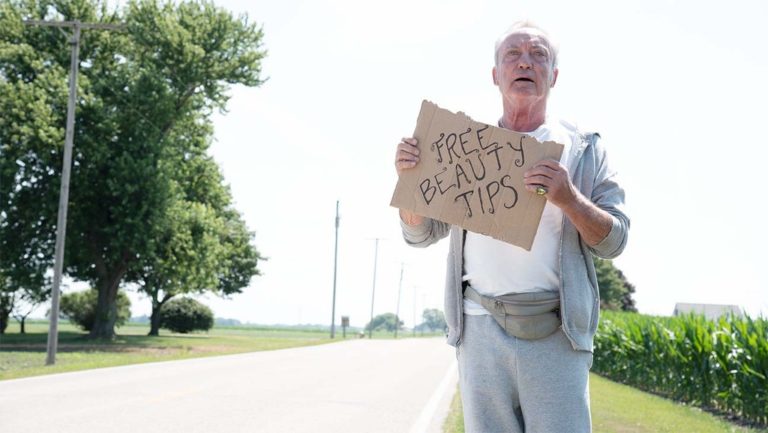
When we meet Pat Pitsenbarger (Udo Kier), the subject of Swan Song, he is living a boring existence in a nursing home. Wasting his time, secretly smoking, collecting napkins, and being sneaky with the staff, it seems as if Pat is ready to spend the remaining years of his life in utter uselessness and reminiscing about his younger years.
One day, unexpectedly, a new opportunity comes knocking on his unreceptive door: a former client has died, and she stipulated on her will that Pat should style her hair, the last hairstyle she will ever receive. Through feelings of resentment and conflict, Pat agrees to this mission that seems like an odyssey for the man that does not rely on anyone but himself. With this excuse, he will revisit the town that once was the source of so much happiness and heartbreak.
Uplifted by a charming and unapologetic performance by German actor Udo Kier, Swan Song is filled with a nostalgic atmosphere that is evident in Pat’s demeanor and the constant visions of his lost-love David. His latest outing to the real world seems like a way to make peace with the past while reconnecting with the city that meant so much to him but that now seems completely unrecognizable.
The movie, written and directed by Todd Stephens, works as a celebration of the gay culture of America, perfectly captured by the eccentric hairdresser that lives inside his memories and finds strength in his life-long grudges. Even though he has a blast while going across town, there are some unfinished businesses that propel his adventure.
First, he needs to confront his former apprentice and now archenemy Dee Dee Dale (Jennifer Coolidge), who dared to open her new parlor right in front of Pat’s famous place. Second, Pat has conflicting memories of Rita Parker Sloan (Linda Evans), the woman that summoned his abilities for the last time. As the movie progresses, we learn about their unbalanced relationship in which her power and arrogance created a cloudy barrier between client and employee. Were they friends or did they only have a professional relationship? Throughout the day, Pat will slowly learn the impression he left on others (both good and bad), and the unexpected ways in which he influenced those around him. Pat learns some redeeming qualities of his former client when she is no longer there to make amends.
Even though we see everything through Pat’s eyes, we still get an idea of his wild ways of the past. Still, there is so much joy in his current ways that we empathize with his nostalgic point of view. His grudges become our grudges too, just as his longing for the past, his love, and his days of success merge with our own longing feelings. Swan Song is both a fête and a melancholic journey.
While the movie presents memorable performances by its supporting cast, including the mean, but perfect Jennifer Coolidge, the soul of the movie is Udo Kier. The veteran and legendary actor offers a playful performance that is impossible to be indifferent to. Pat steals, lies, fails to keep promises, and yet, he has our interest and devotion.
Swan Song is an enjoyable overview of the last adventure of a fabulous man. Through his exploration of an almost deserted city, Pat goes through memory lane, thinking about the grandiosity of his former life, the love that brought so much happiness to his life, and the rivalries that could finally get closure. While deeply nostalgic, this film is, more importantly, a celebration of joy.
Director: Wes Hurley Writers: Wes Hurley Stars: Tyler Bocock, Hersh Powers, Sera Barbieri, Marya Sea Kaminski, Lea DeLaria, Dan Lauria, Jonathan Bennett, Rizo, Sophia Mitri Schloss
Synopsis: A true story about a gay boy growing up in the collapsing USSR, his courageous mother, and their adventurous escape to Seattle in the 90’s.
[/info]
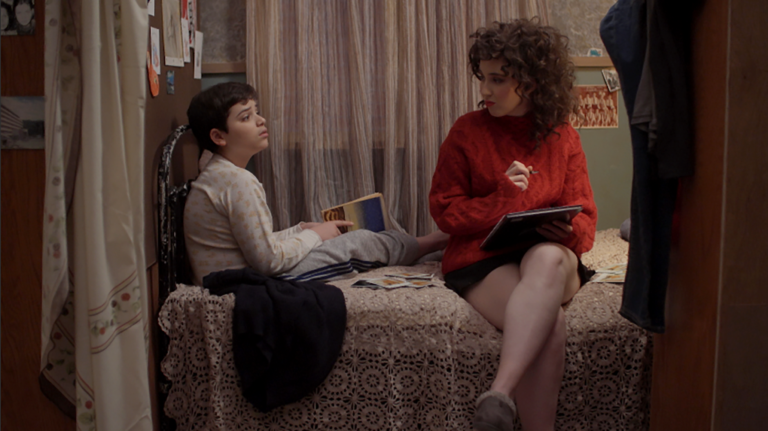
Potato Dreams of America, Wes Hurley’s autobiography, offers a warm coming-of-age story about a kid that is too sensible to live in a hostile environment and that daydreams of going somewhere else, in this case, the exotic and fantastical-looking United States of America. Based on his essay about his arrival to Seattle and his life as a homosexual man, Hurley presents his story in an effective and funny way, including an unbelievable twist that, if it weren’t because the movie is based on his life, it would be absolutely unbelievable.
Potato Dreams of America follows the life of Potato (Hersh Powers), a gay teenager that lives in the Soviet Union of the 1980s. His household is warm and loving, although a little precarious. His progressive mother Lena (Sera Barbieri) left his abusive husband and did not hesitate to raise a boy on her own. Just as Potato, she longs for a better life in a place that will not send his son to a homophobic army or where she does not have to cover up homicides in her workplace.
The movie can be clearly divided in two halves. The one that happens in the Soviet Union and the one set in Seattle, U.S.A. More than a change of setting, the movie goes through a total transformation of tone and style. While the first half is endearing and sharp, the second is a family drama about self-acceptance, sexual experimentation, and adaptation. Still, in both sections, the special bond between mother and son remains untouched and strong.
The first half is filled with clever humor and an eccentric tone that comes to life through astute dialogue, peculiar circumstances presented in a quirky manner, and the definition of this family’s personality through wit and defiance. For example, Lena thinks about getting remarried just so they can get a color TV, the grandmother (Lea DeLaria) gives terrible advice to Potato so he can stand up to his bullies, and the kid establishes a unique bond with the Jesus Christ (Jonathan Bennett) that lives in his head. This tale is equally endearing as strange.
In the bits that take place in the Soviet Union, Hurley makes use of a modest and simple production design. This creative decision enhances this section’s minimalistic tone, making us feel as if we were watching a play. Hurley invokes the work of Wes Anderson with his characters, pastel colors, and detailed sets.
After a long-distance courtship between Lena and John (Dan Lauria), an old American man, mother, and son go to Seattle. In this change of scenery, everything goes through a massive renovation: new actors for Lena and Potato (Marya Sea Kaminski and Tyler Bocock, respectively), new tone, new style, and even new accents (in the most unusual decision, the actors speak perfect English while in the USSR, but a thick-accented English when they are in America).
Now, they also face new challenges. Potato struggles with his sexuality and his foreign traits. For example, while others appreciate how thick his accent sounds, he finds it annoying. Meanwhile, Lena deals with John’s personality and intolerance. He seems to be a conservative fanatic that enforces his point of view on his new foreign family.
Once the story moves to America, Potato Dreams of America loses part of its magic and adapts itself to a conventional drama, at least in style and visuals. Hurley gets rid of the subdued cinematography and the modest sets to introduce bright colors and locations that are freer and more open. The ambition of the story grows as soon as they change countries. While the charm is lost, our characters seem to start living outside of the reclusive environment from before.
The representation of the Soviet Union and America is radical, shaped by the innocent overview of the young mind of Potato and the personal experiences of Hurley. While the Soviet Union is seen as a miserable, grey, and abusive place – which even in its transition to Russia remains the same –, the United States has a magical essence. Interestingly, their representation is the exact opposite: the storyline that takes place in the Soviet Union has an oneiric sensation, while the events in the U.S. are vivid and clear. It is admirable the bluntness of Hurley’s message, offering drastic and definitive judgments on communism and Russia.
Potato Dreams of America is a sweet and endearing story about a boy and his mother that go through a total transformation to get the life they always wanted. Hurley uses odd and captivating resources to make his story special and enjoyable. Through his personal experiences, he offers a sharp critique of his origins while celebrating the liberties he found on his new home. An ending that reminds of Pedro Almodóvar’s Pain and Glory is the perfect conclusion to his story that celebrates the bond between mother and son.
Director: Michael Parks Randa and Lauren Smitelli Writers: Will Halby, Terra Mackintosh, Michael Parks Randa, Andrew Pilkington, Lauren Smitelli Stars: Shannon DeVido, Rickey Wilson Jr., MuMu, Jacob Waltuck, Emily Kranking, Eileen Grubba, Holly Palmer
Synopsis: A fresh and exhilarating take on the beloved teen musical genre featuring eight original songs and a fully integrated cast and crew of people with and without disabilities.
[/info]
Have you seen Grease (1978)? Then you already understand the setup for the plot of Best Summer Ever. Two teenagers meet at summer camp, fall in love, and then they go their separate ways, unsure when they will see each other again. Sage (Shannon DeVido) gifts Tony (Rickey Wilson Jr.) flower seeds for him to plant and grow, and she will plant seeds, too. Their flowers will grow together even though they are apart. Quickly, though, their paths cross when they end up attending the same high school, unbeknownst to one another. Their true identities are revealed, especially when our leading man Tony is at a Pennsylvania school when he told Sage that he had a scholarship at a school in New York City.
Being that Tony is a football star in a small town, who is too afraid to open up about his passion for dance, and the camp he attended this summer was not a football camp, but a dance camp. Sage lives her life on the road because her two mothers prefer to travel around, growing and selling weed, as they claim—to help people with seizures and cancer. Their shared secret confesses deepen their bond and their relationship continues to grow.
An evil cheerleader, though, has set out to ruin their lives and relationship because of jealousy. Again—this film definitely plays to the tropes of the genre. She does her research and discovers Tony’s secret. She threatens to release images and videos of his dancing secret. She takes it even one step further and discovers Sage’s secret when she finds the weed plants growing in the woods. However, when the cops show up they find nothing because Tony has saved the day. He protects her with the flowers she gave him that he planted at his mother’s grave, digging them up and placing them in front of the weed plants, disguising their true identity to protect her and her mothers. Cue the “awwww” here.
For it being a musical, the sound and mixing truly lack quality. There are moments where the music overpowers the voice and honestly, most of the singing is just not good, unfortunately, and the original lyrics are so cheesy it is almost too cringe if it wasn’t so cute at the same time. It felt like watching a mediocre high school theatre performance, or a silly kids YouTube performance—all this being said, though, the cast is vibrant and upbeat which is exactly what is craved for a teenage musical genre film.
The diversity and inclusion are without a doubt the best parts of this film, and the fact that the cast is a mixture of people with and without disabilities, it totally goes unmentioned. These characters who are different and hardly showcased on screen, are naturally part of the story without it being the focus of the story. That was truly refreshing to see, and the normalization of this in future films is hopeful.
Director: Stacey Gregg Writers: Stacey Gregg Stars: Andrew Riseborough, Martin McCann, Jonjo O’Neill, Eileen O’Higgins, Lewis McAskie
Synopsis: After new neighbors move in next door, a bereaved mother begins to question her reality in this unsettling psychological thriller.
[/info]
We have all had that certain, distinct feeling. The one where you meet someone and you feel like you know them or you have met them before. Sometimes it can be startling and unsettling when the feeling cannot be placed or make the connection for why you feel this way. This is the premise of Here Before, a slow burn psychological thriller centered around two Irish families that live next door to each other. When Laura (Andrea Riseborough) meets the new neighbors, she is noticeably taken by the daughter of this new family, Megan. The two immediately form a unique connection. It seems as though the two gravitate toward each other, unintentionally finding reasons to speak, like Megan approaching Laura on their move-in day, or, Laura noticing Megan has yet to be picked up from school, so she drives her home and then the next time she sees her Laura invites her over for dinner.
Things grow complicated and tensions rise when Laura notices quirks about Megan. Laura and her husband Brendan (Jonjo O’Neill) have an older son, Tadhg (Lewis McAskie), who is vocal that he does not want Megan to come around because Laura continues to initiate Megan’s presence in their life, as a stand-in for her dead daughter, Josie. As she begins to piece together things Megan has said or done, she grows crazy imagining Megan is a reincarnation of Josie. Megan is around the same age as Josie, and reminds Laura of her and how she misses and craves the lost connection and relationship with a daughter. She is unable to shake these memories and feelings. When Laura confesses to Marie, Megan’s mom, that Megan has said things about going to school here before, or being at the cemetery they drive by on their way home. Marie brushes It off that Megan has made it up, she is lying and messing around.
Laura’s attempts to distance herself from Megan are unsuccessful, so when she needs a ride home again, Megan is able to convince her to stop at the park along the way. Megan pushes a button with Laura, referring to a previous time she has been to this park with her. Laura becomes quite bothered enraged by this, causing a confrontation with Marie. The camera catches shared moments between Marie and Brendan, a quick look or unexplained brief comment, that will all make sense in the third act when the mystery is revealed.
The writing, editing, and score accomplish the build of suspense, the story sets up all the complications, and then it explodes with an explanation when it reaches the peak. All of the elements work together perfectly to keep the audience intrigued and engaged while trying to understand how Megan knows so much about this previous life of Josie. The dark and creepy backdrop of Northern Ireland provides a cold landscape for this unnerving drama. Smart, anxiety-inducing, and shocking Here Before will leave you with the realization that everything you think you know should be questioned.
Director: Zack Snyder Writers: Chris Terrio Stars: Ben Affleck, Henry Cavill, Gal Gadot, Ray Fisher, Jason Momoa, Ezra Miller
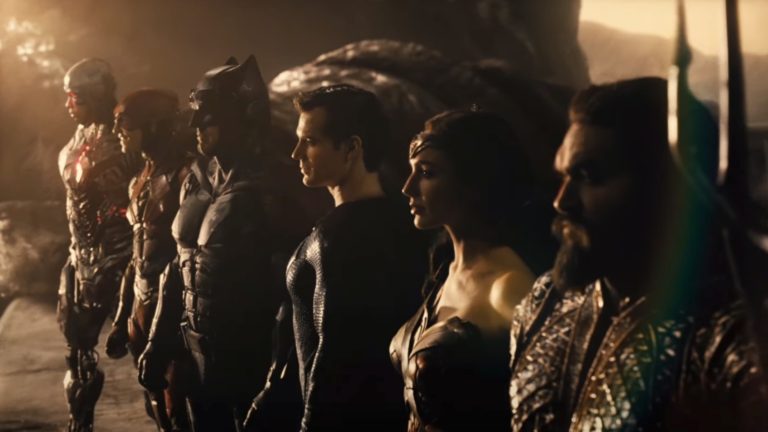
Synopsis: Fueled by his restored faith in humanity and inspired by Superman’s selfless act, Bruce Wayne enlists newfound ally Diana Prince to face an even greater threat. Together, Batman and Wonder Woman work quickly to recruit a team to stand against this newly awakened enemy. Despite the formation of an unprecedented league of heroes-Batman, Wonder Woman, Aquaman, Cyborg, and The Flash-it may be too late to save the planet from an assault of catastrophic proportions.
[/info]
In the fanboy fervor that will no doubt enshroud this release, it wouldn’t do to get ahead of ourselves. The Citizen Kane of superhero movies, this is not. Yes, Zack Snyder’s redux Justice League is better than the much maligned Joss Whedon release. Yes, this version is more comprehensive, more detailed. Yes, it makes more sense and won’t have you thinking “wait, what’s happening now?” every five minutes. And yes, it gives some much, much needed character development – especially to Cyborg, who becomes something of a centerpiece here.
But the issues that have plagued the DCEU since its inception are still here on full display. Convoluted plotlines, bone-achingly bad dialogue, tonal inconsistencies, about as subtle as a brick through a window, and necessitating a Ph.D. in comic book lore in order to fully understand the depth of what’s happening. In its rush to play catch up with Marvel, DC have thrown everything at the wall, hoping something will stick. Though they were late to the cinematic universe idea, they would be better served playing the long game, building up their world piece by piece before going for the big pay-off. The hope was that Zack Snyder’s Justice League might mark the end of this era of the DCEU and pave the way for a new, more consistent era – especially given that ending – but a recent comment by DC Films President Walter Hamada calling this movie “a storytelling cul-de-sac” indicates there is no purpose whatsoever in any of the breadcrumbs laid here, except fan service.
First, the good. Snyder has restructured the narrative, making it much clearer what’s happening. In place of the excruciating exposition overload of the original, Snyder creates a flow which allows both The Flash and Cyborg the space to develop their characters. Cyborg in particular benefits from a backstory which shows him as a college football hero whose life is forever altered in the wake of a car crash. This gives Ray Fisher the chance to display some of the depth of Cyborg in a way that didn’t make sense the first time around. It’s arguably the best change Snyder made. As well as this, the decision to cut the movie into six chapters was a good one, and helps create a sense of epic proportions which pays off well. It’s a much better build up, and accounts for the majority of the extra runtime as well as boasting an epilogue somewhere around the 30th-hour mark that feels a little Return of the King-esque. Finally, the score is an impressive addition (if a little too center-stage; it feels like it overshadows the action at times) and feels of a piece with this world, much more so than Danny Elfman’s did (though that is no slight on Elfman, one of the best in the business).
As well as this, vaunted major villain Darkseid finally makes an appearance, giving some character development to Steppenwolf and inducing the whole plot with a more sinister undertone. The graphics are updated and the villains are much better represented here, something which was sorely missing from the original.
The majority of what’s on display here, you’ve already seen. The narrative is the same, the story arcs the same, the ending virtually unchanged. When Snyder left the original Justice League movie due to a personal family tragedy, Whedon stepped in fresh off his success (or failure, depending on your view) of Avengers: Age of Ultron. He was tasked with lightening up the world, inserting a little of the trademark Whedon humor to stop everything from being so relentlessly grim. Snyder has no time for that; every extra piece of filming Whedon done is gone. Aquaman sitting on the Lasso of Truth? Gone. Flash accidentally falling onto Wonder Woman’s chest? Gone. It helps with the tone, of course, but it means things go back to that grimness which the DCEU feels awash with. Only Flash is presented as comic relief here (unless you count Jeremy Irons’ Alfred, who is not on screen long enough to claim that honor), and his particular brand of humor is very hit or miss. As well as Whedon’s humor, gone is Whedon’s snappy, sarcastic dialogue – which played so well in Avengers but felt a little out of place in the Justice League.
Unfortunately, Snyder’s recut can’t hide some of the major flaws. At a punishing 4 hours long, Justice League suffers from fatigue at times, unable to sustain the various threads it attempts at once. A little levity might have helped, but when every scene is doom and gloom, with little variation, it becomes difficult to stay focused; you find yourself rolling your eyes, wishing it wouldn’t take itself quite so seriously all the time. If the original was bloated – and it certainly was – adding an extra hour or so on top isn’t helping matters.
And so devoid of any humor, we get four hours of gruff, broody dialogue like “I will bathe in your fear” and “a strong man is stronger alone”. Each character fulfills their stereotype without any wryness – Ben Affleck will stare moodily into the middle distance, Jason Momoa will remove his top and show off his impressive torso, Ezra Miller will be awkward and overawed, and Henry Cavill will smile solemnly as he almost single-handedly saves the day. It all feels a little rote.
With the shaky foundation still, the same, Snyder can’t save the Justice League entirely. What he’s done is make a more coherent story, allowing his characters – heroes and villains – the opportunity to develop. This is a welcome addition. Unfortunately, Snyder has also brought an almost overwhelming doom and gloom back to the DCEU and his particular cinematic traits – an overreliance on CGI to the point where everything looks like it’s taking place on an artist’s canvas instead of the real world; brute-force storytelling in place of anything even remotely subtle – still mar the whole thing.
DC fanboys will find much to love here, though. Zack Snyder has essentially paid homage to the fans who willed this movie into existence based on a #ReleaseTheSnyderCut hashtag. There are plenty of Easter Eggs and much fan service, but for those of you who consider yourself a casual DC – or even just superhero – fan, it may be better sticking to the original.
I will be watching and reviewing all of the films included on AFI’s 100 Years…100 Passions list. The list contains the 100 greatest love stories in American cinema and I plan to consider how our views on romance and social issues have changed over the years as well as judge whether the romances in these films actually made me swoon. As a fan of the romance genre, I expect to love each and every one of the nominees but I also don’t know if I would consider all of them romantic.
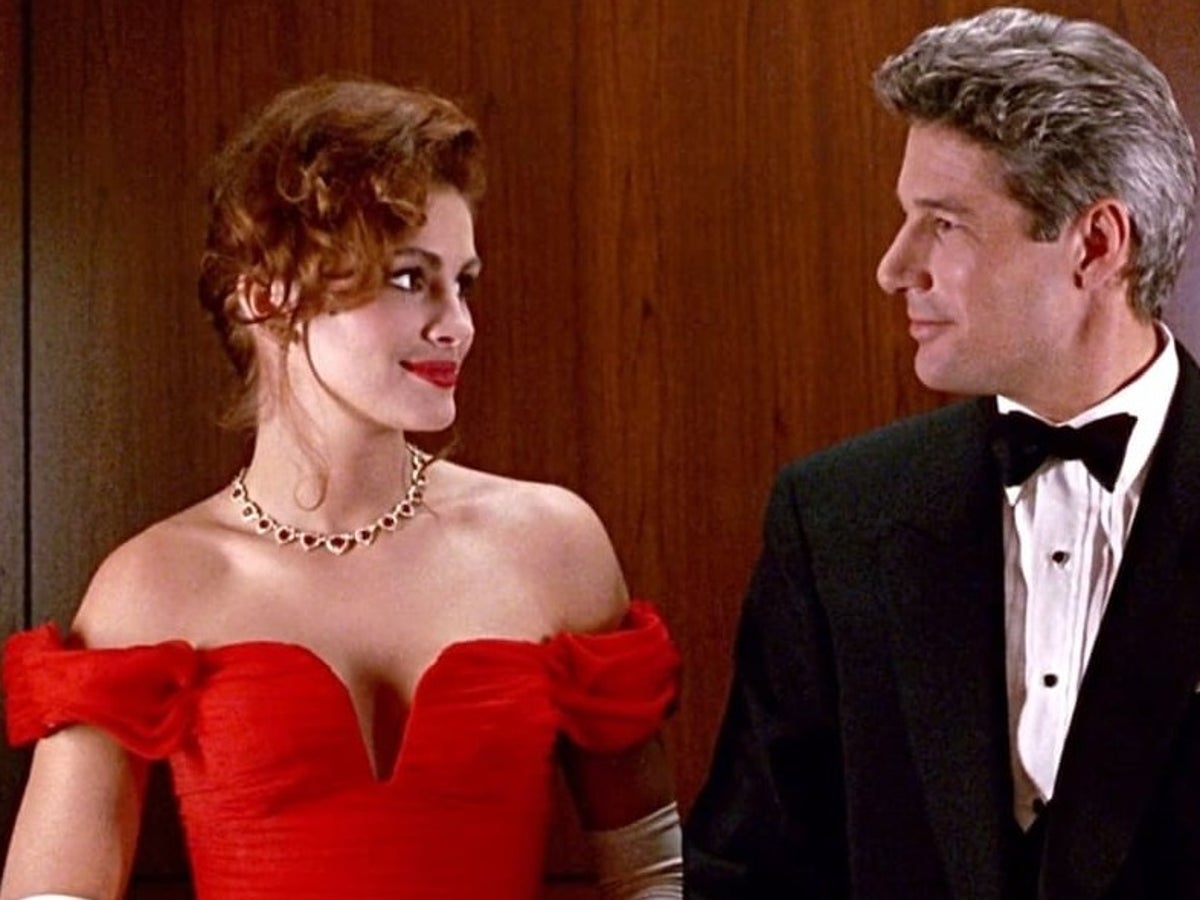
Do people talk about Pretty Woman (1990) today? Yes. It’s probably one of the most widely seen and discussed films that I will review for this website. Everybody has heard of the concept, they all derisively snort at the idea of a hooker with a heart of gold and they all fall over themselves to talk about how debonair Richard Gere is here. 31 years later, it retains its cultural cache and it has entered into the ranks of iconic romantic comedies that non-cinephiles gladly sit through. I’m one of those oddballs who has never been a fan of it. As part of this project, I had hoped that I would be able to gain a new appreciation for it. That didn’t exactly work out.
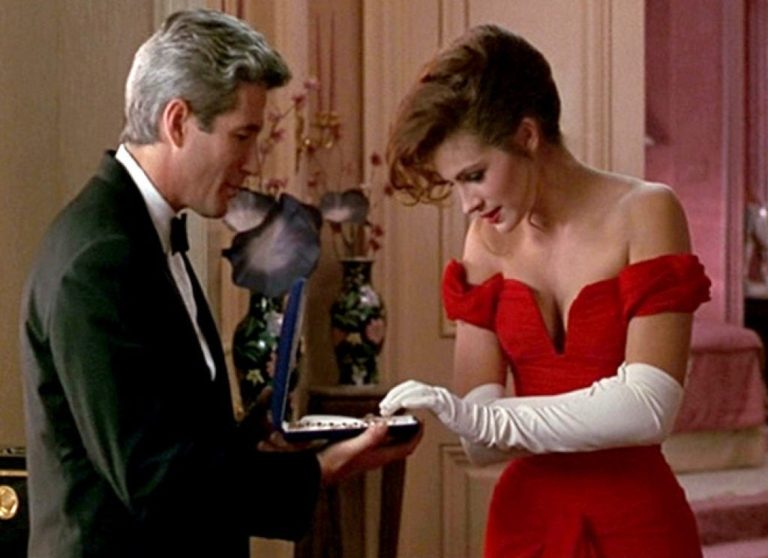
It concerns prostitute Vivian Ward (Julia Roberts) who helps corporate raider Edward Lewis (Richard Gere), drive his manual transmission car from Hollywood Boulevard to his upmarket hotel. He ends up agreeing to employ her as a prostitute for one week. She is paid $3000 and he gives her money to purchase an expensive new wardrobe so that she will be able to impress his clients. The two begin to fall in love, much to his chagrin, and she softens him as he struggles to dismantle the company of a man who wants to continue operating it. With her new outfits and relationship with Lewis, Ward begins to gain confidence. She is also able to charm Lewis’s associates with her straightforward style of speaking and beauty. They face challenges when Lewis is forced to reveal to others that Ward is a prostitute and they begin to question the nature of their relationship. After Ward departs for fear of simply being an object to Lewis, he realises that he loves her. He wins her back when he performs a routine in which he acts like one of the ‘knights in shining armor’ that she had dreamt of as a child.
Whenever you talk about star making roles, you inevitably end up talking about Julia Roberts in this film. The smile, the blend of blue collar charm and regal sophistication and the cute little eyebrow raises, are all referenced. She became America’s Sweetheart as a result of her appearance in this film and it remains a career defining role for her. As much as she won an Academy Award for Erin Brockovich (2000), she is still the ultimate hooker with a heart of gold in the minds of many. This film is most remembered for turning her into a star and, paradoxically, her performance is one of my biggest issues with the film.
This is a tale as old as time and the trope of the fallen woman who regains her dignity by falling in love with a respectable man can be seen in countless films. This is why it is essential that Roberts puts a new spin on the role. She has to make us forget about the memories of Shirley MacLaine, Greta Garbo, and Janet Gaynor; all of whom played similar roles. She is meant to swing between carefree sensuality and occasional touches of melancholy that attempt to add depth to her thinly written role. On the page, Ward feels like every other fallen woman that we’ve ever seen. She didn’t want to go into her profession but difficult circumstances forced her into it. She hasn’t become particularly tough and hardened because of the life that she has spent on the streets and she retains a childlike innocence. This means that she can magically re-introduce joy and happiness into the life of the depressed but wealthy and powerful man who falls in love with her. She does this by being whimsical and uncouth in social situations where other snooty women lack her free spirited air. I know that the term ‘Manic Pixie Dream Girl’ is overused but it definitely applies to Ward.
Roberts has to deal with all of the different contradictions that come with this character type and she fails to bring out the more disturbing undercurrents that lie beneath the irritating grin. She, and the script, fall back on the idea that Ward is all sunshine and rainbows. Most of the time, she’s just a small town girl who is dazzled by the opulent life that her new employer lives. We never skirt too close to considering whether she is attracted to Lewis because he can offer her a stable financial position rather than simply offering her love. There is also the rather offensive suggestion that Ward is ‘not like most prostitutes’ and they deserve to suffer in the streets and face abuse from clients while she spends the money of an immoral businessman. Her beauty and her cutesy behaviour are meant to serve as substitutes for a well developed personality and real character development.
She is adorable and quirky from the moment we meet her and regales our hero with stories of growing up in the Southern United States and having extensive knowledge of cars. This satisfies the fantasy that a lot of women seem to have about being seen as “Just one of the guys.” Ward is sexy, pretty, and traditionally feminine; but she’s also cooler than other chicks. Her exuberance as she exclaims “It corners like it’s on rails” is supposed to turn her into a touchingly naive figure. Unlike your average prostitute, she has time to chat to her client and isn’t solely focused on earning her living. It’s hard to say that she changes that much in the following 110 minutes. She retains all of the same Roberts-y tics and there are so many scenes in which Garry Marshall lovingly photographs her as she sticks her hand into a jewelry box or is visibly moved by the opera. Most of her transformation is superficial and she offers Lewis the sort of motivational proverbs that one would find in a greeting card.
We are assured that she has done something extraordinary for Lewis by having sex with him, acting like a five year old, and lecturing him for engaging in practices that are common for most businessmen. The film wants us to ignore the fact that she is using all of the money that he has earned from destroying businesses in the past to pay for her new wardrobe. She’s hardly stealing from the rich in order to help the poor. She spends money recklessly and becomes excessively materialistic but all of this is seen as empowering. When she hands over chunks of Lewis’s cash to the owners of stores on Rodeo Drive, we’re supposed to view this as a victory over snobbery. This is because she has embarrassed the shop assistants who could have worked with her, but she’s still buying into a system that disadvantages poor, uneducated people like her. This really is a Capitalist romance as two people fall in love because of their financial arrangement and it operates on the myth that some people are just more deserving of being wealthy.
The ‘bad’ prostitute that we are presented with, is Kit De Luca (Laura San Giacomo). She’s a drug addict and she’s less conventionally attractive than Roberts which naturally means that she deserves to fail in life. The virtuous Ward leaves her rent money, but De Luca spends it on drugs and attracts Ward’s ire. I was angered by the fact that De Luca, who displays some signs of being traumatized by the horrible treatment that she might have faced in her profession, is seen as trash for possessing more humanity than Ward. Our female lead is so unrealistically pure that she uses dental floss instead of taking drugs and is cultured enough to take an interest in opera. It seems like De Luca exists to bolster Ward’s image as the ideal hooker, who deserves to be saved from a difficult life. This only furthers the extremely conservative message that the film tries to send. Only a few people deserve to make it to the top and those who are weak and vulnerable don’t deserve any additional support if they make a few mistakes. They deserve to get screwed over by a system which benefits people like Lewis.
Speaking of Lewis, his character arc also seems strange. He’s written as an emotionally cold, ruthless businessman whose father issues have driven him to serve as a corporate raider. According to the screenwriter, corporate raiders are all immoral and we are meant to pity some elderly businessman when he learns that his business will be broken up. It is telling that more sympathy is offered to the privileged, elderly WASP who has lived a life of comfort, as opposed to the disadvantaged prostitute who is struggling with addiction. Ward’s great contribution to his life is convincing him to form a partnership with the old man so that he will be allowed to have some control over his business. None of the details in this exchange of power are ever very specific and, if Lewis can make the same amount of money by being less aggressive, why does he use aggressive tactics in the first place? The world of business in this film, is one in which there are clear divisions between what is good and what is bad. Businessmen are evil for no reason and could very easily adopt practices that make them more ethical without cutting down the amount of money that they have to spend on their mistresses. I wonder how she would react if he told her that she had to return all of those pretty dresses that he bought her?
Lewis is also painted as a knight in shining armor when he saves Ward from being sexually assaulted before choosing to have sex with her minutes later. Sexual assault is used purely as a plot device to make Lewis look heroic. It is supposed to establish the fact that, while he is paying Ward to have sex with him, he is chivalrous in the way he treats her. My disgust only increased when they decide to have sex in a semi-public area and shoo away employees who clearly know what’s about to happen. Maybe some interpreted this as a fun of example of the two of them having an exhibitionist streak? I found it difficult to enjoy this moment of intimacy because it followed so closely after a moment in which there was the potential for Ward to be seriously hurt. It also felt terribly contrived and I just couldn’t forgive the clumsy emotional manipulation that Marshall was trying to pull off.
All of this completely turned me against Pretty Woman and everybody involved in its production. The cheesy, unimaginative finale was salt in the wound as it only made a lot of the tropes seem more toxic. They finally agree to get together after a silly, improbable breakup in which she decides to leave him because she wants to live in a fairy tale. She reemphasizes the fact that she is a hypocrite because she has already happily accepted payment for serving as an escort and a sex partner. It seems a bit rich for her to turn around and act holier than thou about the concept of serving as Lewis’s permanent mistress. If the film had treated this like a business move and presented Ward as a shrewd negotiator, I might have been more engaged. Instead of taking a cynical angle on her decision, it acts as though she is a youthful, inexperienced ingenue who still has the naïveté to entertain frivolous romantic notions.
His grand romantic gesture to get her back ends up seeming pathetic and you despise these two fools for being so self satisfied. He asks her “So what happens after he climbs and rescues her?” and she smugly responds with “She rescues him right back.” Firstly, this feels like the filmmakers trying to cover their bases by arguing that they have put a feminist spin on the traditional Cinderella story. Even though Ward is bought by Lewis and does almost nothing beyond having sex with him and buying fancy clothes, she briefly claims that she has played an equal role in supporting him and changing his life. They don’t bother to show her actually doing anything of importance for him and that had me throwing my hands up in the air. It also feels like an attempt to make the ladies in the audience believe that it is enough to be attractive. You don’t have to contribute anything to a relationship and your partner will lavish money, gifts, and affection on you for doing almost nothing. This isn’t true and it tells women that men have no interest in them beyond the way that they look.
I also bristle against the idea that this is a comedy because it didn’t elicit any laughs. Most of the humour is meant to come from Roberts raising her eyebrows in an exaggerated manner. We’re supposed to laugh as she shocks high society with her gaucheness and disregard for manners, but it all feels like a retread of Pygmalion (1938). That was a biting satire about how ridiculous the class structure is and how pompous and hypocritical members of the upper class can be. This wants to have it both ways as we are meant to look down our noses at the elderly women who sneer at Ward but also fetishise the idea of powerful Daddy Warbucks figure who can make all of her problems go away with money. None of the jokes are sophisticated deconstructions of societal norms and it isn’t enough to have Roberts nervously glancing at rich people in order to make some larger point about this issue. It backs away from saying anything that could be interpreted as controversial and I can just imagine George Bernard Shaw rolling in his grave.
For all of these reasons, it should not have been on this list. It fits into the romance genre but it has some disgusting ideas to impart about what you can get out of a relationship and how men and women view each other. It’s misogynistic in its treatment of female characters who are not Ward and I can’t believe that it has been embraced as a classic by so many young women. It made it onto the list because of people like that, those who were willing to look past the horrible values that the makers of the film were espousing. In their minds this was just an opportunity to see Roberts at the height of their beauty. I assume this was a film that some of them had actually seen. I’m not surprised by its placement on the list as it is not seen as a respectable piece of cinema. They sheepishly placed it at 21 and hoped that the populists would cheer them on for picking something accessible while the true cinephiles wouldn’t get too incensed over it making the list. Their attention would be diverted by the presence of a sapfest like Ghost (1990). Personally, I am turned off by the fact that it made this list and I question the sanity of the people who voted for it.
Directors: Kelley Kali and Angelique Molina Writers: Kelley Kali and Roma Kong Stars: Kelley Kali and Wesley Moss
Synopsis: When a recently widowed mother becomes houseless, she convinces her 8-year-old daughter they are only camping for fun while working to get them off the streets.
[/info]
Motherhood is a theme that is explored often in films in order to look at the strength of women and how they can or cannot care for their family. I’m Fine (Thanks For Asking) makes a mark with this theme, but ultimately cuts itself short on where it could have gone. The story is just too simple and it never explores the emotional weight it set itself up to look into with any depth. The film opens with a mother and daughter on what appears to be a camping trip. The camera dances over their campsite, showing us what they have, which is everything, because they are living here and hiding it from the world. Through a conversation between the mother, Danny (played by Kelley Kali, who also co-directed the film) and 8-year old daughter, Wes (Wesley Moss) it is revealed that Danny is widowed, her husband Sam, Wes’s father, is dead. Danny promises Wes that she will get them out of this tent and into a home soon.
The remainder of the narrative follows Danny as she skates around town, literally, trying to make ends meet to get them off the streets and into an actual home. When Danny drops off her daughter at daycare, she faces the babysitter who she is unable to pay because she is so close to having enough money for a down payment on an apartment. Before Danny leaves, though, she takes away the dirty teddy bear from her daughter, claiming it is too dirty for her to have to play with today and she ends up carrying the teddy bear in her fanny pack all day. Danny carries this weight of motherhood visibly with this stuffed animal, metaphorically in the same way she carried her child, like a kangaroo carries its young.
The struggle to find work during a pandemic is all too real for people across America, and frankly, the world, over the past year. However, COVID is not front facing in this narrative other than noticing the characters wearing masks on and off. Honestly, the story could have completely done without the masks and any connection to the pandemic. This is a story that is timeless and can always be told about being a single mother in America. Danny braids hair for women and is devastated when they are unable to pay after the work is done. She skates around town delivering food to people’s doorsteps, she attempts to sell her jewelry—but not the expensive jewelry of her and her husband’s wedding rings, trying to find any way to add up the dollars for the apartment the landlord is reserving for her only for one night.
Danny carries the story fully, facing conflict and infuriating moments along the way. She runs into a friend who gets her too high, she also connects with a friend who thinks can help get her back on her feet, offering a place for her and Wes to stay. Moments later, he tries to force himself on her. She is almost killed by an intruder to her camp, which honestly completely comes out of nowhere but doesn’t quite stretch credulity.
Unfortunately, you leave the film feeling that you want more. For instance, we never learn about the father or what happened to him, because every time anyone brings him up, Danny awkwardly avoids talking about him or his death. While this is a believable reaction that could happen, and surely does happen, in real life—this story could have benefited by going there, exploring his death and the trauma that Danny and Wes now deal with because of it. By the end, though, Danny has fulfilled her mission to be a good mother to Wes, though. This simple, sweet story will leave you feeling warm but it is too forgettable to go anywhere past that.
Synopsis: A deeply intimate and raw portrait of Selma Blair after she is diagnosed with Multiple Sclerosis and tries to slow the progression of her disease.
[/info]
A rollercoaster of a journey through a debilitating illness Introducing, Selma Blair navigates the movie star coming to terms with her Multiple Sclerosis (MS) diagnosis, and then the grueling attempt to overcome it. Multiple Sclerosis is a rare auto-immune disease that attacks the nerves and brain, often causing pain, fatigue, vision loss, and loss of coordination. Selma Blair announced her diagnosis in 2018. She is most recognizable as the supporting star in popular films like Cruel Intentions (1999) and Legally Blonde (2001), but she is the lead here, telling her own story almost completely in her voice. Through cell phone diary videos, we see her most personal and vulnerable moments, otherwise, the camera acts as a spectator to her life and sometimes as a friend—she addresses the camera often, either explaining what is happening or using it as an ear to vent her struggles. This documentary captures the build up to her procedure of a stem cell transplant while along the way exploring her life, her relationship with herself, her son, and her mother.
Often times this is a very emotional watch, however, Selma’s charm and comedy offer many light moments. The film opens with her playing dress up, portraying the unforgettable Norma Desmond from Sunset Boulevard (1950), we witness her realization that she unknowingly bought a vibrator for her neck and face because she is often in pain in those areas, in addition to many other quick one-line laughable moments. In contrast, the devastating moments hit extremely hard. We witness her in real time go from having a normal conversation to completely unable to form a sentence, leaving her head in her hands from the overwhelming feelings and stress. We witness her break down emotionally at the realization of possible death, which brings out her concerns about her son, or who she will leave her horse to, or financial issues. At one point, Selma asks her son what he is most worried about with her procedure. He tells her he is scared about her losing her hair (from the chemo treatments) so her solution is to have him cut all her hair off, to lessen the shock. Selma just wants to be a good mom to her son. She recalls a bizarre panic attack she had on an airplane after drinking too much which catapulted her into sobriety.
Throughout the entirety of the story, the complicated relationship with her mother is weaved into explaining who Selma is and why she is this way. Selma remarks often about the negativity her mother imposed on her from childhood and throughout her career. We never physically see her mother in current times, though there are many flashbacks and photos of her—but we hear Selma on the phone with her. She admits to having a different understanding of her mother, now 81-years old and ill, often struggling to find her words. Selma admits her sisters cannot understand this, but because of Selma’s shared experience with this due to her MS, she has a new understanding of her mother.
The most moving moments are complete opposites. There was a moment after Selma’s announced diagnosis where she attends a red-carpet event. The overwhelming stimulation of the attention and cameras, caused her to break down. At this same moment, the cameras lowered. The photographers let her have her moment to collect herself instead of taking advantage of her, they were empathetic and understanding. The second moment happens after she has completed her treatment and is going to ride her horse for the first time in months. She is the happiest we have ever seen her. She looks healthy and incredibly joyful.
The documentary keeps its even pace by following the multiple-day treatment that Selma undergoes for this stem cell transplant, which she hopes will stall her symptoms and lessen the creation of new symptoms or lesions. There is a lot of appreciation for this part of the film, not only because we see real, raw moments of Selma where she is unrecognizable and in the worst pain, but because this is where you learn a lot about MS and this treatment from doctors and experts. This provides information and education for the audience, serving the genre for its intentions while still being entertaining and thought-provoking.
By the end of Selma’s story, we are at the start of COVID times. Selma’s mother has passed and she never got to say goodbye or give her mother the burial she would have wanted. Just as we saw in the open of the film, Selma begins to play dress up—not as a famous character, but as her mother, wearing a dress of hers that she always wanted but could never have, until now. Everything comes full circle for Selma and she understands that all of this is about facing reality and understanding that life is not about achieving certain things or obtaining happiness by chasing what thing you think will fulfill you. Humbling, vulnerable, tragic, and sometimes funny Introducing, Selma Blair will leave you in awe of what strength and maintaining positivity can do for overcoming an incurable illness.
Director: Lázaro Ramos Writers: Lusa Silvestre, Lázaro Ramos, Aldri Anunciação, Elísio Lopes Jr Stars: Alfred Enoch, Taís Araújo, Seu Jorge, Adriana Esteves, Renata Sorrah, Mariana Xavier, Pablo Sanábio
Synopsis: In a dystopian near future in Brazil, an authoritarian government orders all citizens of African descent to move to Africa – creating chaos, protests, and an underground resistance movement that inspires the nation.
[/info]
Brazil’s history of racial injustice is harrowing. In 1888, it became the last country in America to abolish slavery without promoting any formal policy of inclusion. Later on, in the XX century, while they embraced the arrival of Europeans to “whiten” the Brazilian population, they also promoted the idea that Brazil was a “racial democracy” where racial discrimination was minimal.
Today, while around 56% of the population identifies as Black, their representation in the government is insignificant. Things became more worrisome with the arrival of President Jair Bolsonero in 2018, and just last year multiple cases of police brutality against Black people sparked social protests.
Taking this into consideration, the release of movies that exhibit this racism and social injustice – such as Executive Order – should be widely celebrated. For a country that is so racist – even though official sources constantly deny it – a time of reckoning is urgent. And while this film is deeply flawed, the conversation that inspires is important and worthy of attention.
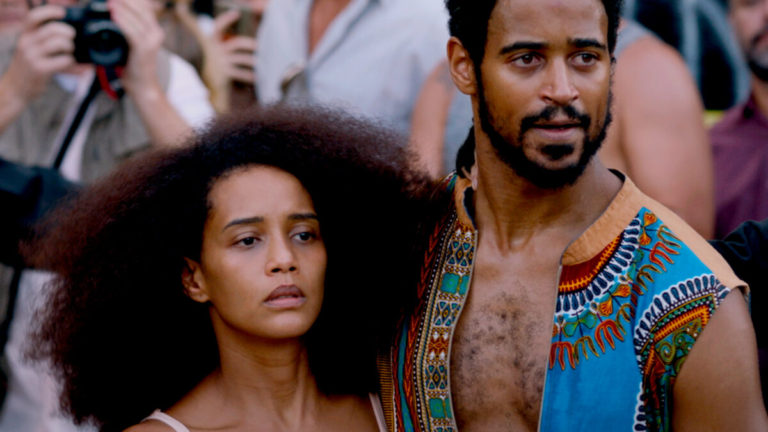
Executive Order takes place in Brazil, in a future where an authoritarian government orders that all citizens of African descent move to Africa. While at the beginning it is promoted as a way of compensation for the years of slavery, the order quickly evolves into a mandate that provokes the persecution of Black people inside the country.
The story is presented through the eyes of Antônio (British-Brazilian Alfred Enoch), a lawyer deeply involved in the racial justice cause, and his wife, Capitu (Taís Araujo), a doctor in the local hospital. They are joined by Antônio’s cousin André (Seu Jorge), a short-tempered journalist that constantly questions the government without any regard for his safety. Inadvertently, they will become the face of the resistance once things become (more) critical.
It would seem that the ambitions of the story are too potent for the way they are presented on screen. Its shaky script with a basic development of its characters does not help either. Director Lázaro Ramos and his team of writers seem more interested in proving a point and exhibiting the vices of the society and government than on creating a cohesive story that is strong enough to carry its message. While the intentions are on the right place, and the plot of the movie is intriguing, its execution is defective. Even by its end, a definitive conclusion is completely lost in its political message.
Whether it is because of the presentation of the vague idea of forced migration to Africa – perpetuating the underestimation of that continent and its independent countries, as well as omitting the geopolitical issues that would arise –, or the excessive sentimentality that invades the second half of the movie, or the awkward inclusion of social media as a tool of change, Executive Order feels clumsy at best and poorly executed at worst.
In addition, the development of its characters is deeply shallow, leaving them in simple stereotypical profiles. While the actors are committed to their roles, their characters quickly become human outlines. This is more evident with the “bad guys”, who are so racist, determined, and callous that they do not seem to have any trait of humanity in them.
Executive Order could easily be included in the new wave of films that denounce the social injustices that shape our society. We had the Korean Parasite in 2019 and the Mexican New Order in 2020. This new Brazilian offer seems to be closer in quality to the latter rather than the former, which is a shame because it had the potential of being an impactful story with its awareness of racism, systemic discrimination, and police brutality in a country that makes massive efforts to minimize these problems.
#ReleaseTheSnyderCut. That powerful hashtag was not only proof of what the voice of the public is capable of, it is a demonstration of the power of a devoted fanbase. Zack Snyder has never been one to curry favor with film critics, but his fans are among the loudest and most passionate for any filmmaker working today. That could be annoying, but in the case of Snyder, who initially left 2017’s Justice League due to a personal tragedy, there is something genuinely heartwarming about the fans allowing Snyder to finish what he always wanted to finish. As such, Zack Snyder’s Justice League has become a form of coping for him, and this weekend we finally get to see what he claims is his vision. However, that does not mean it’ll be a good movie, as many of Snyder’s films haven’t been the most well-received. But he does have his fans, and they bleed passion for all his films.
Let’s see how passionate things get when we pose this question: What is your favorite Zack Snyder film? We are also including ONLY Zack Snyder’s Justice League, as many would now say the 2017 film belongs to Joss Whedon.
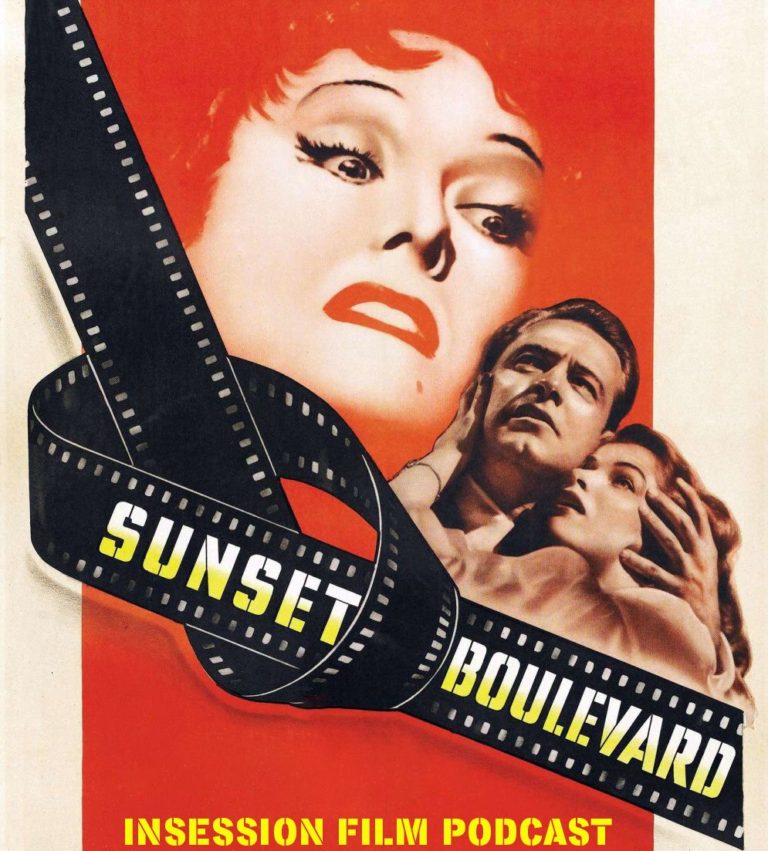
This week on the InSession Film Podcast, we discuss the Russo brothers’ latest film in Cherry and continue our Terrence Malick Movie Series with his 2005 film The New World! Plus, a few thoughts on this year’s crop of Oscar nominations.
There has been some interesting(?) discourse on the Russo’s in recent years, but regardless of their previous works, we did our best to stay open-minded to Cherry and talk about the film on its own terms. No matter how you feel about it, we hope you enjoy the conversation. On the other hand, we go full bore into Malick once again as we lose our minds over another masterpiece.
On that note, check out this week’s show and let us know what you think in the comment section. Thanks for listening and for supporting the InSession Film Podcast!
– Movie Review: Cherry (4:44) Director: Joe Russo, Anthony Russo Writers: Angela Russo-Otstot, Jessica Goldberg Stars: Tom Holland, Ciara Bravo, Jack Reynor
– Notes / 2021 Oscar Nominations (48:36)
The 2021 Oscar nominations were announced earlier this week, and while many of them were expected, The Academy offered a few major surprises. There’s always the snubs that we’ve become accustomed to (looking at you Documentary Branch), but overall it wasn’t a terrible crop of nominations. We, of course, had to talk about it and the specific categories we liked the most.
– Terrence Malick Movie Series: The New World (1:19:01) Director: Terrence Malick Writers: Terrence Malick Stars: Colin Farrell, Q’orianka Kilcher, Christian Bale
Review: Zack Snyder’s Justice League
Top 3: N/A
Terrence Malick Movie Series: N/A
[divider]
Help Support The InSession Film Podcast
If you want to help support us, there are several ways you can help us and we’d absolutely appreciate it. Every penny goes directly back into supporting the show and we are truly honored and grateful. Thanks for your support and for listening to the InSession Film Podcast!
Director: Martin Edralin Writers: Martin Edralin Stars: Rogelio Balagtas, Sheila Lotuaco, Esteban Comilang, Vangie Alcasid, Pablo Quiogue, Isys Szuky, Maximus Szuky
Synopsis: Joshua, a shy middle-aged Filipino immigrant, has lived in the comfort of his parents’ home his entire life. As their health declines he longs for a partner, terrified of being alone after they pass.
[/info]
Martin Edralin has his feature directorial debut with Islands, a sensible movie about the painful process of growing up (even if the main character is a middle-aged man) and the confrontation with death and solitude. Although set in the United States, the film is focused on a Filipino family with its dialogue mostly spoken in that language (something that will hopefully happen more often now that Minari has opened the door for the presentation of this kind of American reality).
While the latter focuses on the American dream, the former addresses another sympathetic and humanistic topic: the difficult process of seeing your parents grow old and realizing that the safety net they provide will soon be gone forever. How do you deal with the imminent solitude that awaits you?
We experience this emotional journey through the eyes of Joshua (Rogelio Balagtas), a deeply shy man that lives in the comfort of his parents’ house, without any real interaction with anyone outside of his family. Although loving and peaceful, it is evident that his parents are old and weary, now practically in the last portion of their lives.
Joshua works as a janitor in the local university and leads a lonely life, constantly rejecting the timid approaches of peers and having limited interactions with others through dance lessons he attends with his mom. His personal reflections allow us to understand that this timidity is something that pains him and that he longs for someone to be with him. The frustration of wanting something terribly and not being able to do anything about it because of mental stress is palpable in Balagtas’s performance.
Unfortunately, his fears come to life when his mother unexpectedly dies. Now, Joshua must deal with his depression and the needs of his sick and old father. While others would be hesitant to modify their lives, Joshua does not think about it twice and decides to quit his job so he can take care of his dad, therefore losing the only connection he had with the outside world.
Edralin allows us to feel Joshua’s despair and solitude through a discreet and taciturn filmmaking. There is no excitement in Joshua’s life, and consequently, there is no music or embellishment in the narration. Everything is quiet and unremarkable. Every now and then, though, music can be heard, providing the only relief that sporadically colors Joshua’s life.
Everything gradually changes when Marisol (Sheila Lotuaco) appears. A cousin that came to America to attend his mother’s funeral, Marisol represents the first female figure that has exciting interactions with Joshua, which gradually intensifies once she moves in with father and son to take care of the elder. The tone and mood of the film change, just as the man’s countenance becomes optimistic. With her presence, it seems as if he were an adolescent just discovering the tribulations, norms, and expectations of social life, finally woken up by this new excitement.
Islands does not escape from awkward moments of longing and realizations that may seem too evident to those with more practiced societal interactions, but that in the reality of the movie, seem like discoveries. In a world that keeps proving that the establishment of meaningful connections with strangers is harder and harder, Joshua’s story can feel disconcerting and empathetic (and more considering that we have not had social interactions for more than a year). Still, the story offers an optimistic view on the tribulations of opening and accepting the uncertainty of life.
On Episode 33 of Chasing the Gold, Ryan is joined by Erik Anderson of AwardsWatch and Nathaniel Rogers of The Film Experience to breakdown the 2021 Oscar Nominations.
They are finally here, the 2021 Oscar nominations were announced yesterday. While the season has been very chaotic to say the least, the nominations brought everyone back to reality and showed us who the real front runners are in the race. Ryan, Erik, and Nathaniel all give great insight into what all of these nominations mean for the winners in late April. This episode was truly one of the best we’ve ever done.
On that note, have fun with this week’s Chasing the Gold, and let us know what you think in the comment section below. Thanks for listening!
We try to make this the best movie podcast we possibly can and we hope you enjoy them. Subscribe today on iTunes, Spotify, or Stitcher, and please leave us a review on iTunes. You can also find us on Soundcloud, PlayerFM, and TuneIn Radio as well. We really appreciate all your support of the InSession Film Podcast.
To hear this Extra Film episode and everything else we do, download our apps on the Amazon Market for Android and the Podcast Box app on IOS devices. The mobile app covers all of our main shows, bonus podcast’s and everything else relating to the InSession Film Podcast. Thanks for your wonderful support and listening to our show. It means the world to us!
[divider]
Help Support The InSession Film Podcast
If you want to help support us, we would greatly appreciate it! For more info, CLICK HERE.
Canada is a fascinating place for Americans. The government is different, the culture is different, the laws are different (universal healthcare!), and the talent that comes from there seems neverending. What makes it interesting for Americans compared to Britain and Australia is that Canada is right there! Same accent, yet different sensibilities than us. For the major imports of the last fifty years – Seth Rogan, Ryan Reynolds, Eugene & Dan Levy, Jim Carrey, Dan Ackroyd, Ivan Reitman, John Candy, Donald & Keifer Sutherland, Sarah Polley, James Cameron, Michael J. Fox, Martin Short, Mike Meyers – the path was laid out for them thanks to these legendary Canadians that proceeded them. But we’re not looking at mid-20th century; Canadians played a major role in the establishment of Hollywood at the turn of the century.
Alfred Christie
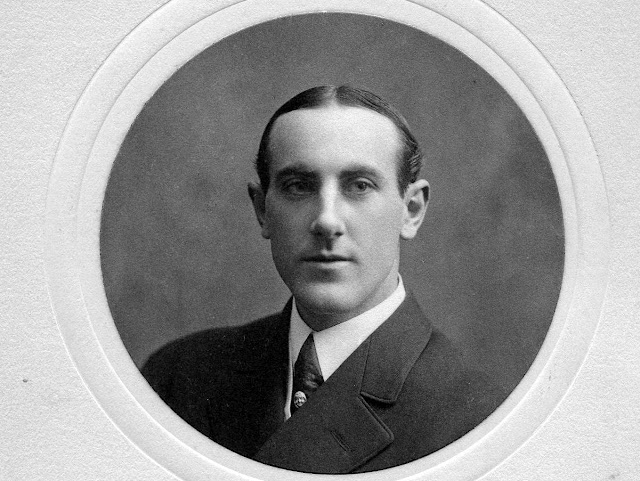
He was born and raised in London, Ontario, Canada, before moving to New York to start in the fledgling picture business. In 1910, his first job was with the Centaur Film Company where he made one-reel shorts based on the Mutt and Jeff comic strips. The following year, he switched to the Nestor Film Company and went to Hollywood with the rest of the studios seeking warmth and inexpensiveness. Christie was Nestor’s first general manager as they became the first company to build a permanent movie studio, located at Sunset and Gower where currently the abandoned former studios for CBS stand. Christie and his brother, Charles, then formed their own production company that specialized in comedies, signing up stars like Mack Sennett (another noted Canadian) and Bobby Vernon, who would later write for W.C. Fields and Bing Crosby. Christie would maintain a directing career through the 1930s and he died in 1951.
Walter Huston
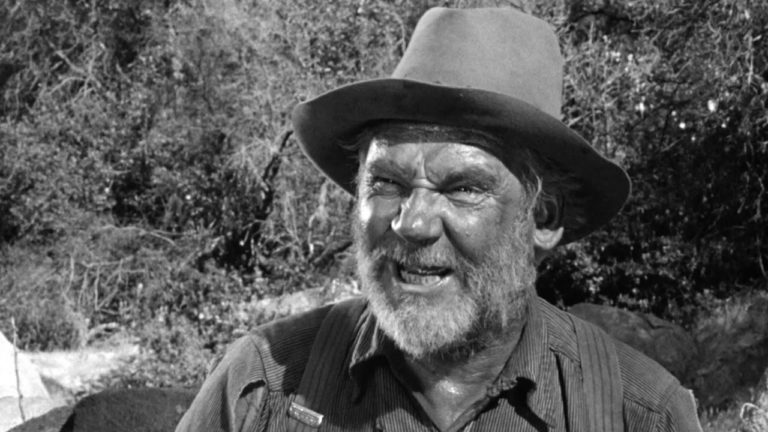
The patriarch of generations with actors and directors of the same last name, Walter was born on April 5, 1883, in Toronto. Growing up in the town of Orangeville, Walter worked as a farmer and in construction and attended acting school on his days off. After starting in stage plays in 1902, he was recruited to tour in the United States, as well as acting vaudeville, but upon marrying his first wife, he quit acting and returned to labor work in Missouri. Several years later, his marriage failed (but had a child, John Huston) and Walter went to New York to act again where he met his second wife, also an actress. Soon, Walter was acting on Broadway and was recognized by talent scouts looking to get actors over to Hollywood.
As talkies became the norm in pictures, Huston thrived as the lead in Abraham Lincoln (directed by D.W. Griffith), Dodsworth (directed by William Wyler, and his first Oscar nomination), and The Devil And Daniel Webster (his second Oscar nomination). John, meanwhile, quickly rose up the ranks as a writer and would get his shot at directing with The Maltese Falcon, which Walter had an uncredited cameo in. But for father & son, it was 1948’s The Treasure of Sierra Madre that both would simultaneously win Oscars, Walter for Supporting Actor, John for Adapted Screenplay, and Best Director. Walter died in 1950, but the spawning of other Hustons has kept the acting descendency alive.
Mary Pickford
Born Gladys Louise Smith on April 8, 1892, in Toronto, “America’s Sweetheart,” as she was known, started acting when they met a theatrical stage manager who suggests Gladys and her two young siblings be cast in plays. As the oldest, Gladys got more substantial roles and acting became a family business. They toured the rest of Eastern Canada and the Northeast of the U.S., making it all the way to Broadway where all of them were cast in The Warrens of Virginia. It was there when the 15-year-old Smith was suggested by the producer, David Belasco, to adopt the more recognizable stage name, Mary Pickford. In 1909, she made her first movies with director D.W. Griffith, who took her with him to California the following year.
For the next 20 years, Pickford would be one of the first great movie stars, receiving formal billing in movies and became known recognized for her curly hair. Her stature allowed her to be more open and seek independence, especially when it came to being a businesswoman who wanted control of her own ideas. She, Griffith, her husband, Douglas Fairbanks, and Charlie Chaplin got together to form United Artists in 1919, the first company independent from the studios for distribution. Compared to other Hollywood emigrates, Pickford never sought American citizenship, preferring to, “die as a Canadian”. The Hospital for Sick Children in Toronto features a bust of Pickford, memorializing her as a native of the city and the country.
Mack Sennett
Born in Richmond, Quebec, in 1880, Michael Sinnott, as he was born, moved to the U.S. when he was 17. Living in Massachusetts, Sennett saw a passing vaudeville and was inspired to get into acting, singing, and dancing, which took him to New York City and was hired by the Biograph Company. Taking on the business side of moviemaking, Sennett founded Keystone Studios in 1912 and built the first enclosed film studio in town. The sound stage is still standing, located at 1712 Glendale Blvd, but now as a storage facility for movie equipment. Under his direction, the Keystone Cops and Bathing Beauties became very popular in short films. Slapstick humor and promotional bathing suits aside, Charlie Chaplin embarked on his legendary career in Hollywood courtesy of Bennett in 1915. Others including Fatty Arbuckle, Gloria Swanson, Harold Lloyd, Marie Dressler (from Canada), and Harry Langdon also got their start at Keystone.
https://www.youtube.com/watch?v=bpxArDrXByQ
But Sennett left his own company in 1917 to form Mack Sennett Comedies Corporation, which was independent of the studios. He had success throughout the 1920s and made short talkies into the 30s, even winning an Oscar for what is now Live Action – Short Film for Wrestling Swordfish. His decline was sharp because of the Great Depression which cost Sennett his studio and his style of filmmaking with made his works outdated. There was some success with comic shorts alongside W.C. Fields, but by 1935, his career was over after 1,000+ silent films and few dozen talkies. In 1938, Sennett was awarded an Honorary Oscar, “for his lasting contribution to the comedy technique of the screen, the basic principles of which are as important today as when they were first put into practice.”
Norma Shearer
A native of Montreal, Shearer was born in 1902 and raised in an affluent home and decided to pursue acting at age 9, something her mother feared because of Shearer’s imperfect looks. Aware of it, she persisted, especially when her father’s business went bankrupt and the family was forced to move into a more modest home with her older sister, Athole, and brother, Douglas. Eventually, the Shearer mom of three decided to risk what they had left to go to New York City in 1920 to seek out a professional acting career for the daughters. While Athole never got off the ground due to her struggle with bipolar disorder (she was married to director Howard Hawks from 1928 to 1940), Norma would make it through.
Louis B. Mayer would invite Shearer to Hollywood and began her film career – as well as introduce her to her future husband, producer Irving Thalberg. Now in contract with MGM, Shearer would make a string of hits that continued into the 30s, where she became the first actress to receive five acting Oscar nominations, winning one for The Divorcee. (Brother Douglas would win 7 Oscars for Sound and Visual Effects.) Her performances were praised, portraying women liberated sexually instead of good girl roles that were common in the 20s. Marrying Thalberg made her the “First Lady of MGM” and remained so after Thalberg’s sudden death in 1936. Shearer retired in 1942, remarried, and lived the rest of her life out of the public spotlight.
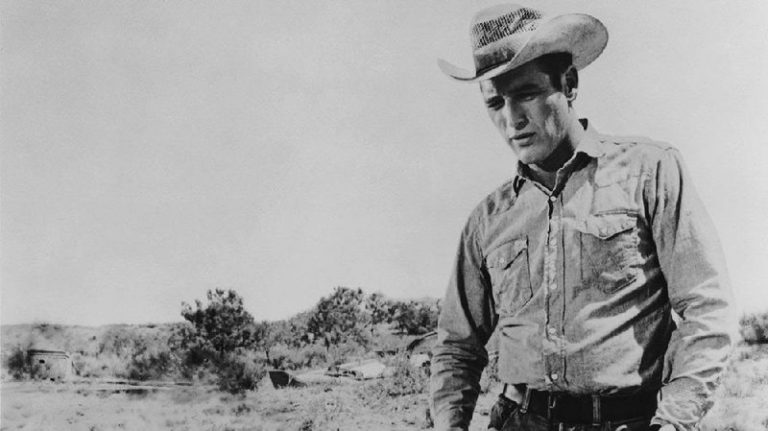
Paul Newman is the titular star of frequent collaborator and Best Director nominee Martin Ritt’s (The Spy Who Came in from the Cold)Hud, a bleak contemporary western based on the novel by Larry McMurty. Young nephew Lonnie (Brandon deWilde) both looks up to and has to clean up after his wayward uncle, but Hud’s elderly father Homer Bannon (Melvyn Douglas) must reel in his son and see to the sick cattle on their Texas ranch. Womanizing Hud teases their housekeeper Alma Brown (Patricia Neal) rather than see to their quarantine for foot-and-mouth disease, leading to eye opening pain and bitter truths for the whole family.
After a night of brawls and broken glass, the pink Cadillac is parked by the open white picket fence at 6 a.m. so viewers immediately know Hud pushes the 1963 envelope with seedy innuendo, squealing tires, and recklessness. Vultures are circling over dead cows, too, but Hud doesn’t want to involve a government veterinarian in their business. Family history comes out casually in conversation, feeling more like drunken loose lips than exposition thanks to the incredible script from Irving Ravetch and Harriet Frank Jr. (Norma Rae). Superb dynamics and interplay pepper the rocking on the porch pace while scandalous tension and hog contests distract from the seriousness at hand and parallel Hud’s blasé deflection. Problems also arise mostly at night in private at home, creating a claustrophobic house with incompetent arguments and takeover confrontations. Today the carelessness and drunken assaults may not show much, yet they remain uncomfortable, rough, and disturbing. The vet warns their entire herd is at risk, but Hud only sees scams to be had like cashing his stake in the ranch, passing off sick stock, or selling their land for oil leases. He ignores his family’s animosity while calling foul over their little epidemic in a new re-watch layer of generational divides then and now, social commentary, and Trumpian despicable. According to Hud, this country runs on epidemics, crooked television shows, and income tax finagling because there hasn’t been a saint since Abraham Lincoln. Unfortunately, Hud’s big talk, shady action, and ruinous touch are no comfort as the bittersweet round ups, wire fences, and quarantine requirements leave the hard working ranchers waiting for the worst. Our characters are well aware that death doesn’t take long, easily plowed over and sprinkled with lime compared to the lifelong effort it takes to grow something of meaning with your bare hands.
We want to justify all the terrible behaviors of our smooth cad because Hud is played by Paul Newman, and Paul Newman would never, really play the bad guy, right? Hud doesn’t like being disturbed when he’s tip toeing through the tulips and blames his nephew when the husband of his latest indiscretion comes home. He hates his old man asking his opinion if he won’t take his advice, and the law is only a lenient guide to whatever angle he has up his sleeve. Hud rides off at every chance, drinking and ditching Lonnie to do the work. Sure, he’ll roll in the mud for the rodeo, but not when it comes to the actual ranching. Hud won’t wait for the quarantine results or any subsequent government handout, blaming the vet for his diagnosis and his weak father for letting it all happen. You have to look out for yourself first, and Hud will use a legalese if he can depose of his father. Though unfazed by death since it happens to everyone, dogs, horses, people, Hud takes out how he really feels on Alma, leaving viewers to wonder how low he’ll go. We want him to learn the err of his ways right up until the final door slam, but Hud shows no interest in redemption. Unfortunately, Best Actress winner Patricia Neal’s (Breakfast at Tiffany’s) divorced housekeeper Alma Brown must juggle an old man, a teen boy, and the cowboy who can make you drop your dish towel. She plays poker with the ranch hands and yells when Hud parks in her flower bed, but Alma can’t get the lipstick out of his shirts. He suggests they try her cheap lipstick instead and scratch her itch, but Alma insists she sleeps alone with the door locked. In town, Alma has to chase Hud to make him stop for her, and he won’t open the door or help with the groceries even if she has his two six packs. Alma says his car smells of Chanel No. 5 and she’s heard all the town gossip, so he wants to know what she’s saving herself for because she isn’t getting any younger. Alma scoffs at his drunken, lacking in finesse advances, but he lays on her bead and wonders what else she’s good at besides cooking and cleaning – ruining the simmering subtext with his brutishness.
Hardworking but old and hanging on Best Supporting Actor Melvyn Douglas (Ninotchka) knows what one sick cow could mean for his entire ranch. Homer doesn’t like disrespecting buzzards because even they have their purpose, and he doesn’t see suspicion everywhere like the unprincipled Hud, who he knows is always trying to pass the buck. Homer’s worn out, tired, and ill after a long day’s ride tending his spread. His old long horns once meant everything to their way of life, and it breaks his heart to bring them in, but Hud can’t be trusted so he’ll do what has to be done himself. Homer wonders where he went wrong with Hud, what he could have done to change him, but it’s Hud’s not giving a damn about anything that makes him ashamed that he’s his son. It’s fascinating to compare Brandon deWilde as the little boy unaware of what’s what in Shane to the rose colored glasses coming off for Lonnie in Hud. Initially, he idolizes Hud and wants to join his nightly adventures, but Hud always leaves him with his lonely little radio. Lonnie eats a lot, always wants dessert, and gets his mouth around a huge burger, but he’s also read the steamy From Here to Eternity twice and doesn’t like Alma knowing what he hides in his sock drawer. At seventeen, Lonnie starts to sleep naked and wonders what Alma wears to bed but Hud encourages him to go for the babes. He thinks Lonnie’s need to really like the girl first makes him an idealist so he gets them in a bar fight. Fortunately, Lonnie prefers going to the movies with his grandpa for the sing a long cartoons, and Lonnie won’t think about his grandfather’s old age. Hud, however, works Lonnie until he passes out after getting kicked by a cow and won’t let him throw up on his good shirt or waste five dollars on a doctor. Lonnie thinks Homer may be too harsh on Hud, but his grandfather lets him come to his own conclusions, and eventually, Lonnie realizes he just can’t stomach Hud.
Perhaps Hud could have been in color, but the crisp black and white silver screen invokes an older, past gritty. The backwoods dusty and dirty has its last hurrah, and even in daylight, the ranch is grim, hot, poor, and shabby. Old trucks, broken fences, empty highways, and tumbleweeds set off the bitter while bleak guitar notes mirror the beautiful but behind the times landscapes, horses, and longhorns. Lighter country music is still sad, and though a happening place at night, Main Street is also quaint – everyone knows each other and a dime on the cafe counter gets you breakfast. Oscar winning black and white cinematography captures the despondent vistas, cattle roundups, and disturbing but necessary slaughter. Danger signs, diegetic radios, and wind fill silent scenes while the upsetting animal sequence is orchestrated with bulldozers and rifles – machinery ending the rural way of life. Editing cuts match the gunfire, creating a harrowing, visceral scene that feels longer than the minute odd it is, a terrible schism amid the otherwise still land. Hud gets me every time, and I knew a pandemic viewing would leave me sobbing like a baby as usual, as great films with excellent, bitter performances are supposed to make you do. Hud’s ne’er do well finale slaps The Hays Code hard, leaving nothing tidy and everyone worse off then when the film started. There’s more to discuss – the racist undertones and recasting of the Alma character, ironic counter culture audiences viewing Hud as a hero, and the seemingly underrated perception of Hud compared to The Hustler. However, this is my favorite Paul Newman film, nay in my mind his best performance, and an opinion of excellence has grown around Hud, a heavy, cathartic viewing experience for any fan of nuanced film.
The 93rd Oscar nominations have been revealed, with the Academy choosing a diverse set of nominees, including an impressive Best Director line-up. Emerald Fennell and Chloe Zhao’s inclusion makes it the first year where two women have been up for the award, after years of criticism toward the Academy for the category’s lack of diversity.
The director category also saw a huge surprise as Aaron Sorkin was snubbed in favor of Danish filmmaker Thomas Vinterberg, who followed up on his BAFTA nomination with a huge Oscar nod for Another Round.
Another surprising but hugely deserving nomination came in the Best Supporting Actor line-up, where LaKeith Stanfield joined Judas and the Black Messiah co-star Daniel Kaluuya in receiving a nod. They joined Leslie Odom, Jr, Paul Raci, and Sacha Baron Cohen.
Cohen had a huge day, not only receiving his first Oscar acting nomination but also picking up a nod for screenplay for his Borat sequel, just as he did in 2006 with the first. The adapted screenplay category also saw The White Tiger nominated in favor of Ma Rainey’s Black Bottom.
The White Tiger star Priyanka Chopra Jonas presented the nominations from London, along with her husband Nick Jonas.
David Fincher’s Mank leads the nominations with ten, including a nod in Best Director, Best Actor for Gary Oldman, and Best Supporting Actress for Amanda Seyfried. Nomadland, Minari, and Promising Young Woman also had strong showings.
Steven Yeun picked up his first ever Oscar nomination, with his stellar post-The Walking Dead career finally getting the recognition he deserves. His Minari co-star Youn Yuh-jung also picked up her first nomination for Best Supporting Actress.
The Supporting Actress category also sees the renewed battle between Olivia Colman and Glenn Close, as the latter continues to seek her first Oscar win after an incredible career filled with nods. Perhaps the favorite in that category though is Borat’s Maria Bakalova, who’s been a strong contender all season.
Both Chadwick Boseman and Viola Davis were nominated in the leading categories for Ma Rainey’s Black Bottom, although the film itself was unexpectedly snubbed in Best Picture. The night’s biggest award is comprised of eight nominees, one less than last years.
Nomadland’s strong performance all season makes it a huge favorite to win Best Picture this year, and it feels more like a certainty now that its closest competitor – The Trial of the Chicago 7 – was snubbed for Best Director. Both male acting categories feel locked for both Boseman and Kaluuya, however the actress categories can still go a number of ways.
The COVID-19 pandemic has still made details of the ceremony uncertain, but what we do know is that a new set of Oscar winners will be crowned April 25.
Below is the list of nominees in the above-the-line categories for the 93rd Oscars. Click here to see the full list, including the craft nominees and short contenders.
Synopsis: Two Chinese Uyghur children and their families’ joys, struggles, predicaments and separations as they make tough decisions to better their life.
Echoing the global society’s growing humanitarian concerns towards Chinese Uyghurs’ living conditions, Chinese director Wang Lina’s Uyghur language film A First Farewell is a realistic and respectful representation of the Muslim ethnic minority in China’s westernmost province Xinjiang. Dedicated to her own hometown county Shaya, where the film’s narratives take place, Wang applies a verité docudrama approach of recording and retelling regional Chinese Uyghurs’ authentic personal stories.
A First Farewell constructs a linear timeline of two Chinese Uyghur children Isa (Isa Yasan) and Kalbinar (Kalbinar Rahmati)’s friendship and separation – throughout one year of seasonal changes that sweep through Shaya’s vast, varying landscapes of poplar woods, gritty deserts and reed beds. Wang and the film’s cinematographer Li Yong rhythmically pace themselves in switching back and forth between wide shots where the children are dotted amidst the lands and horizons – and panning shots and close-ups that foreground their layered emotions of happiness, grievances, and helplessness.
While Isa takes on strenuous family responsibilities at too young an age, as his deaf mother’s primary caretaker and his overworked father’s sole farmhand, Kalbinar is able to preserve the integrity of her childish naivete and vivacious personality. Their complementary bonding supports them to navigate around their family struggles and stringent schoolworks, but their sense of immobility towards an uncertain future keeps looming over them and their rural community.
Wang experiments with her genre-subverting concept of “hometown realism” by using non-professional child actors such as Isa and Kalbinar to play themselves, whose visceral, naturalistic performances bring out their real-life coming-of-age stories – mirroring the director’s own childhood at the film’s auteuristic and autobiographical core. Wang’s deep love for the land and people of Shaya resides within her location shootings – which personify the natural sceneries by rendering an intimate, nurturing dynamic between the children and their motherland.
But what constantly compels the children’s parents to leave their beloved motherland is Xinjiang’s unstoppable urbanization progress: they believe that they will be guaranteed a better material life if they move to the province’s Mandarin-dominated cities, while their children will have a brighter future if they can speak Mandarin fluently – which eventually leads to Isa and Kalbinar’s separation. Wang builds up two contrasting settings: the native lands where the children are carefree, enjoying their unfiltered adolescence; and their Mandarin-mandatory school that suppresses and humiliates them whenever they have trouble learning China’s official national language.
Although Wang opts for a de-politicized stance in this film via a humane and anthropological lens of direct cinema, her conscious narrative and audiovisual juxtaposition – of the children’s freedom in nature and their constraint at school – manifests the nation state’s topdown economic and educational policy in homogenizing regional Uyghur cultures.
Within the static, monotonous setting of Kalbinar’s classroom full of Uyghur schoolchildren, they are together loudly reciting a traditional Chinese poem in Mandarin – without understanding its actual meaning. Then the film immediately cuts to the open, breezy cotton field where Kalbinar and her family are singing a Uyghur love song together – which is the real poetry that celebrates the beauty of Uyghur people’s everyday life. This juxtaposition solidifies the intrinsic connection between the Uyghur people and their mother tongue while lamenting this native language in peril under China’s institutional Mandarin homogenization.
From the children’s innocent perspectives of their separation from a dear friend, this film is an essential and emotional viewing experience of looking into Chinese Uyghurs’ daily struggles of economic predicaments and identity crises. In the film’s end, Isa and Kalbinar bid farewell to each other. But it leaves us ponder on the more profound “farewells” between the Uyghur people and their hometowns, languages, and cultures.
Streaming on Vimeo on Demand: https://vimeo.com/ondemand/affcinecina
This week on Extra Film, Ryan and Jay continue their Billy Wilder Movie Series with his Oscar-winning film Sunset Boulevard, and they also discuss the comedy Coming 2 America.
After talking about The Lost Weekend, the boys return with arguably the most known and celebrated films that Wilder ever did. Sunset Boulevard is considered one of the greatest films ever made and an absolute masterpiece, so the boys had a tall task on their hands. But this review is one of their best to date because their passion behind Sunset Boulevard is fully on display.
In the back half of the episode, the boys talk about the comedy sequel, Coming 2 America A couple of years ago, Ryan and Jay reviewed Dolemite Is My Name and gave it a pretty solid review. Now, the same team comes back together to bring back the characters Murphy and company debuted 30 years ago. Though Dolemite was great, this sequel is uninspired and the boys go into why it just isn’t good.
Thanks for listening!
– Movie Review: Sunset Boulevard (5:46) Director: Billy Wilder Screenplay: Billy Wilder, Charles Brackett Stars: William Holden, Gloria Swanson, Erich von Stroheim, Nancy Olson
– Movie Review: Coming 2 America (1:11:46) Director: Craig Brewer Screenplay: Kenya Barris, Barry W. Blaustein, David Sheffield Stars: Eddie Murphy, Arsenio Hall, Jermaine Fowler, Leslie Jones, KiKi Layne, Wesley Snipes
We try to make this the best movie podcast we possibly can and we hope you enjoy them. Subscribe today on iTunes, Spotify, or Stitcher, and please leave us a review on iTunes. You can also find us on Soundcloud, PlayerFM, and TuneIn Radio as well. We really appreciate all your support of the InSession Film Podcast.
To hear this Extra Film episode and everything else we do, download our apps on the Amazon Market for Android and the Podcast Source app on IOS devices. The mobile app covers all of our main shows, bonus podcasts and everything else relating to the InSession Film Podcast. Thanks for your wonderful support and for listening to our show. It means the world to us.
Da 5 Bloods explores the friendship between four army vets who meet up after several years to honor their friend who died in the Vietnam War. Directed by Spike Lee, Da 5 Bloods opens with shocking real-life footage of Vietnamese people being murdered, children running in the streets during the infamous napalm bombings, and Black activists, such as Angela Davis, protesting against police brutality. This isn’t the first time Spike Lee has utilized real-life footage to hammer home his film’s message. BlackKklansman also featured footage from the Charlottesville protest with then-president Donald Trump’s hateful rhetoric narrating the violence that ensued.
The argument that every man is born equal under the American flag and all good Americans should be patriots rings hollow during those first few scenes. One cannot help but feel uncomfortable knowing the impending sacrifice Black soldiers will make as they embark upon a military career for a nation that has only treated them with disdain. In just three minutes, Spike Lee has given the audience a rapid history lesson, and you go into Da 5 Bloods having a strong sense of the inner conflict our protagonists have wrestled with and the controversy that cloaked the war effort.
The use of real-life footage is incredibly powerful and it sets the tone of the film and gives the viewer a snippet of what it was like for soldiers fighting in Vietnam. But Da 5 Bloods isn’t just about the Vietnam War; it’s a film that aims to celebrate the friendship and life-long bond made between our four protagonists: Eddie (Norm Lewis), Paul (Delroy Lindo), Otis (Clarke Peters), and Melvin (Isiah Whitlock Jr.).
Delroy Lindo gives a visceral performance as Paul, the proud veteran in denial about his PTSD. When a young Vietnamese boy, physically impaired, begs for money as the Bloods drink and converse in the bar, this scene is the first hint of such an affliction, and as an audience, we realize that despite the seemingly happy-go-lucky nature of the Bloods, the effects on their mental health are considerable.
It’s the hard work and commitment by Lindo that deserves to be celebrated as in a recent virtual interview with Bounce Cinema, he discussed the methodical approach he took to portraying his character, which involved interviewing real-life veterans extensively, his cousin, who is a veteran and re-reading texts on the war. There is an unmissable scene with the Bloods on a river, which was completely improvised, and it’s this scene that truly cements Lindo’s talent at characterizing the harsh mental effects of war. His dedication to the role is unquestionable and the result is a performance of outstanding authenticity and zeal. While Lindo was not nominated for a Golden Globe, the Oscars would be remiss not to recognize his work in this film.
Through flashbacks, we see the Bloods fight with their deceased friend, Norm. Norm acts as the calming and rational friend of the group and his absence is palpable even though we only meet him in retrospect. He reminds his friends: ‘’We bloods. Will let nobody use our rage against us. We control our rage’’ Anyone familiar with James Baldwin’s work will know of the rage that Norm speaks. Spike Lee is telling his audience that it is ok to be angry and we have a lot to be angry about. However, we must be careful to keep our emotions in check despite the injustice and political unrest we endure. Furthermore, if one is not careful, our anger and need for acceptance can leave us vulnerable to manipulation, and one cannot help but wonder if that is the message here, regarding Black people serving in the military.
Spike Lee wants to honor the sacrifice of Black soldiers in the Vietnam War who are largely forgotten. The film is interspersed with the memoriam of Black soldiers who died saving their military brothers. Spike Lee is saying that the Vietnam War owes a debt to Black Americans.
‘’Gold does strange things to people’’
Da 5 Bloods runs at 2 hours and 35 minutes, and during this time, we see the Bloods each have their demon to contend with: issues with drugs, familial relationships, money, and mental health all crop up as they embark upon their journey in the jungle to pay honor to their friend. Reparations are a frequent discussion and a worthy one but the ‘’anchor around my neck’’ that Paul refers to cannot be dispelled with gold bars. On a larger scale, this argument that Da 5 Bloods illustrates is a bitter pill to swallow for the Black population, as no amount of money can undo the horrors inflicted during the Slave Trade.
Da 5 Bloods deserves a nomination for Best Picture because of how it skillfully treats the subjects of war, patriotism, and race. It has strong performances from its cast and the onscreen chemistry between the actors is evident. The social commentary on the effects of war will force the audience to question their beliefs. Spike Lee is fearless with his direction, and some scenes are so graphic that you want to look away, but you cannot. The Bloods truly love each other and it’s this love that relieves them. To survive trauma, one needs the love and understanding of those close to them, and Da 5 Bloods shows that this love need not come from familial ties but from a friend who sticks closer than a brother.
I will be watching and reviewing all of the films included on AFI’s 100 Years…100 Passions list. The list contains the 100 greatest love stories in American cinema and I plan to consider how our views on romance and social issues have changed over the years as well as judge whether the romances in these films actually made me swoon. As a fan of the romance genre, I expect to love each and every one of the nominees but I also don’t know if I would consider all of them romantic.
Reds (1981) is a film about members of the radical chic, people who possess the fashionable affectation of left wing views, and Warren Beatty gets away with criticising their approach to philosophy while also romanticising an era in which public intellectuals could flourish. He ends up with too much on his plate as he tries to turn this into a romantic epic, the tale of an idealist having his views crushed, the story of the internal conflicts within a tight knit group of Communists and the saga of a woman going through a journey of self discovery.
The film really succeeds at focusing on some of these topics but falls short in others and that turns Reds into an uneven film. There were times when I was thoroughly engrossed and admired Beatty’s gutsiness in including lengthy scenes in which different characters simply engage in debates on a variety subjects. There were other times when I felt as though he was aiming for undeserved narrative sweep and over-stretching this story when it would have functioned better as a small scale study of a specific community.
The film concerns Communist journalist John “Jack” Reed, Warren Beatty, falls in love with uptight housewife Louise Bryant, Diane Keaton, who pursues her aspiration of becoming a feminist writer after leaving her husband for him. Bryant struggles to establish herself in Reed’s circles and becomes frustrated by his constant absences as he travels overseas to visit other communists and tries to establish a stronger movement in the United States. Her efforts to ingratiate herself with figures like Emma Goldman, Maureen Stapleton, are not successful. She has a passionate affair with playwright Eugene O’Neill, Jack Nicholson, when Reed is gone for a long period of time. When he returns the two reaffirm their love for one another and are married. When Russia becomes a Communist nation the two travel to the country full of optimism and hope but Bryant is disillusioned by the horrors she witnesses. Reed becomes a fervent supporter of the regime and becomes trapped in Russia, being imprisoned before being let go in order to unsuccessfully lobby for American interest in communism. Bryant journeys to Russia and reunites with Reed but he tragically dies a short time afterward.
This film flourishes when it is focusing on the supporting characters. Reed and Bryant are viewed through rose tinted glasses and Beatty seems to feel too much affection for the characters to really pick away at them. It almost feels like Beatty has crafted his own persona onto the character and can’t separate the two things. The parallels are clear as Reed is a gregarious womanizer with a successful career and a serious interest in liberal politics. Perhaps more importantly, Beatty was also an idealistic dreamer who wanted to mount massive productions that most mainstream studios didn’t want to touch. There were times when his skill did not match his ambition and he was unable to overcome obstacles that caused a film like Ishtar (1987) to fail. I don’t necessarily think that it was bad that Beatty was trying to comment on his own personality while also considering Reed’s life but he doesn’t provide us with enough self reflexivity. He turns Reed into a tragic hero with a few flaws that make him loveable and we always feel as though we are looking at him through glass.
Bryant gets slightly more room to breathe and isn’t placed on a pedestal in the same way that Reed is and yet Beatty cast the wrong actress in this role.
Whenever I realize that Keaton is appearing in a film, I begin to feel uneasy. This is because she has appeared in a lot of truly dreadful fare, such as Looking for Mr. Goodbar (1977) and Town & Country (2001). I do not like her when she is playing a quirky, airy fairy ditz who just has to sing in one long, self indulgent scene (see: Annie Hall (1977) and this is the character that she seems to play most of the time. I find it terribly annoying when she gazes into the camera and expects me to find her adorable as she tilts her head to the side or says something like “La-Di-Da” but I can’t help but feel intense annoyance whenever she does something like this. I am especially irritated because I do think that Keaton has been marvelous on a select few occasions and I find it mind-boggling that she has committed herself to essentially playing one character when she appears to have range. Why can’t she bring out the fiery pugnacity that she possessed in Shoot the Moon (1982), more often? It seems like she has been stuck in a groove for almost four decades and it drives me crazy.
I say all of this because I don’t think that Keaton is on good form in this film. She herself has admitted that she didn’t feel that she had a firm handle on the character and her uncertainty is obvious throughout. She falters in moments that are pivotal in Bryant’s development and we feel as though her character arc has been truncated in some ways. She seems eager to hit emotional highs and in the moments in between she relaxes into the pose of the type of cool, detached cynic who might have appeared in the pages of Vogue magazine. There is always the feeling that she is playing dress up and is not at home in this time period. You always feel as though she’s about to talk about the release of the latest Ingmar Bergman film or head to some dingy bar in order to pick up a sexual partner. Shirley Ann Russell could only do so much when it came to costuming and Keaton never quite adapts to the surroundings that she is working with. It feels like she is trying to play one of the celebrity radicals of the 1970s, Jane Fonda or Vanessa Redgrave, for example, instead of trying to evoke the memory of a forward thinking woman in the late 1910s. I could never shake the feeling that she was entirely out of place and this prevented me from fully investing in Bryant’s dramatic growth over the course of 195 minutes.
For these reasons, I was never all that swept up in Bryant and Reed’s love story, even though it is meant to serve as the center of this story. It finds a far more compelling focus of attention in the form of the arguments that the friends of the main characters have. Individual supporting characters don’t get that much screen time but together, they do leave quite an impression.
One of these supporting characters is O’Neill. He is played by an insanely charismatic Nicholson, who plays O’Neill as an aloof but undeniably talented playwright. This is a successful example of somebody deconstructing their own persona. Nicholson suggests that his gruffness and standoffish attitude is just a front to cover up the fact that he is self conscious and afraid of people who have an interest in getting under his skin. Nicholson is as raffish as ever and his trademark charm is on display but it rings hollow in a way. There is always the sense that O’Neill is not passionately invested in the Communist cause and lives a life separate from this social circle. We are never fully allowed to understand O’Neill and Nicholson is willing to play him as somebody who is enigmatic but impossible to truly get close to.
His catlike grin makes an occasional appearance and we see him gruffly ordering people around but there is always something threatening about him. All of the Communists are so earnest about their beliefs and genuinely think that they would be willing to lay down their lives for the cause. They lack self awareness and imagine themselves as glorious freedom fighters who have a lot of knowledge about what is happening in the newly formed Soviet Union. In reality, they are all sheltered and prefer having pie in the sky discussions about hypothetical situations rather than confronting reality. They live in a bubble where they can argue with their friends without facing real consequences but they convince themselves that they are as important to the movement as somebody who is actually creating change in the Soviet Union. This blinkered worldview does limit their effectiveness but it is fascinating to see them reacting to somebody who is self aware.
O’Neill doesn’t seem to have as many pretensions as they do, about his work having an impact on audiences and shifting the political views of the masses. He stages plays that are about the issues that the common faces but we don’t hear him giving grand speeches about his influence. This is not to say that the film entirely lets him off the hook for being so standoffish and detached. The other Communists are pompous, think too highly of themselves, and look down on the people that they claim to want to help but they have the confidence to be honest about their beliefs. Even if they are living in an echo chamber, they have a willingness to debate and put themselves in vulnerable positions in a way that he doesn’t. He is more honest in his self-assessment but he also uses his self deprecating manner to avoid going out on a limb when discussing his beliefs or the themes in his works.
Beatty is aiming to mythologize these people but he is also comfortable with satirizing them and recognizing their limitations as people and public intellectuals. He has more distance from them and Goldman is a fierce wit as well as b being a shameless self promoter. We cheer as she needles Reed about his habit of picking up attractive young women, introducing them to radical beliefs, and then dropping them. It’s nice to see somebody putting up some resistance to him and who better than the acid tongued Stapleton to knock him down a few pegs? We see her chewing her way through dialogue that asks her to tie the opium trade to political elections in the East Coast and Goldman does it all with the assuredness of somebody who sees themselves as a brilliant sage. You can always tell that she is conscious of the manner in which she lectures the people around her, the upturned nose and pursed lips suggest a fearsome belligerence. She is seen urging one of her comrades to publicize her exploits and tell all of the newspapers about her achievements and this could have easily been a moment in which she turned into a villain. Fortunately, she is not punished for being an attention whore. It becomes clear that she isn’t the idealized version of a freedom fighter that Reed is but we can also mourn the era in which exceptional thinkers could flourish.
Back in 1981, the quality of public intellectualism had significantly declined and people were being exposed to talkback radio and trash television in a way that they hadn’t been before. It became easier to consume infotainment and people were able to watch fluff pieces and tell themselves that they were being educated. Daytime talk shows would aim to spark outrage in audiences by bringing on guests that held controversial views. Unfortunately, these guests were often uneducated and so obviously idiotic that it made it easy for people to yell at the screen instead of really listening to what they were saying and considering a different perspective. People like Goldman were abrasive but they did have an ability to write with passion and real interest in the subjects that they were exploring. We can tell that she is serious about this topic as she moves through her points about Anarchism. You would never have heard somebody like L. Brent Bozell Jr., a speechwriter for Joseph McCarthy and pro-life political commentator, thoughtfully expressing his beliefs rather than ramming them down people’s throats without evidence to support his arguments.
We are also provided with a nuanced view of the break between American liberals and the leaders of the Soviet Union. We see them entering into the country with stars in their eyes as they believe that this is going to be the magical utopia that they have all imagined together. There is a long stretch where they are trying to ignore the harsh realities that they are constantly faced with. Part of this is their own pride as they don’t want to admit that they backed the wrong horse or that they had very little real understanding of the situation in the Soviet Union before visiting Russia. Most of them have publicly spoken out about their belief that being in the Soviet Union will be preferable to being in the United States and to return home and admit that they were wrong, would be humiliating.
This slow realization is painful for them and this was one of the times when I was happy that this was an epic. We do get to spend a lot of time with these characters as they marinate in the fact that their illusions have been shattered. They have to practice what they preach, for once, and this is an eye-opening experience for a lot of them. After spending years and years preaching about the nobility of the common man whilst living like upper middle-class academics themselves, they come to understand that there is nothing that romantic about being poor and working long hours to earn low wages. That sense of them being slowly but surely broken down, could not have been achieved in a 90-minute feature that was working with a more limited scope.
The cinematography is the other major virtue that this film has behind it. Vittorio Storaro is a legend for a reason and he keeps the audience from fully disconnecting in scenes where they could be overwhelmed by the sheer size of this production. There do have to be massive crowd scenes in which the main characters blend in with other passionate Communists but Storaro is able to use depth of field to make us feel a sense of intimacy with the protagonists in these scenes. Beatty will hit us with a sweeping wide shot but Storaro will help us find common ground by returning us to the people that we are familiar with. He is able to make it appear as though they aren’t just engulfed in this giant gathering and they appear to stand out from the crowd. We also get all of the beauty and the spectacle that we expect from this sort of epic. The imagery of Reed making his way through the snow on his pushcart was dizzyingly romantic and you see why people chased the dreams that people like Reed had.
At the end of the day, despite all of its virtues, I am meant to be dealing with this film as a romance and I do not believe that it succeeds in that regard. Reed and Bryant remain the two least interesting characters in this film and whenever we are pummelled with beatific close-ups of Keaton, I began to yawn a little bit. Even though they were romantically involved in real life, it isn’t like the chemistry explodes off the screen. Too often, Beatty has that vacant facial expression in scenes in which he should be convincing us that he feels some great yearning for his love interest. As for Keaton, she seems so concerned with appearing like she has some idea of what she is doing, that she almost seems to be separated from Beatty when they are on screen together. They might as well have been in different rooms when they delivered all of their dialogue as there is very little warmth and camaraderie between them at the best of times.
I would never recommend this to somebody based on the romance that is supposedly at its center. I’d rave about Nicholson, the extraordinary color palette, and some of the thorny ideas that it tangles with. It is a shame that I have to end on a negative note with this article because there is so much to appreciate here. I wouldn’t dissuade you from watching it and yet I just can’t see how voters thought it was appropriate to put the film on this specific list.