Home Blog Page 192

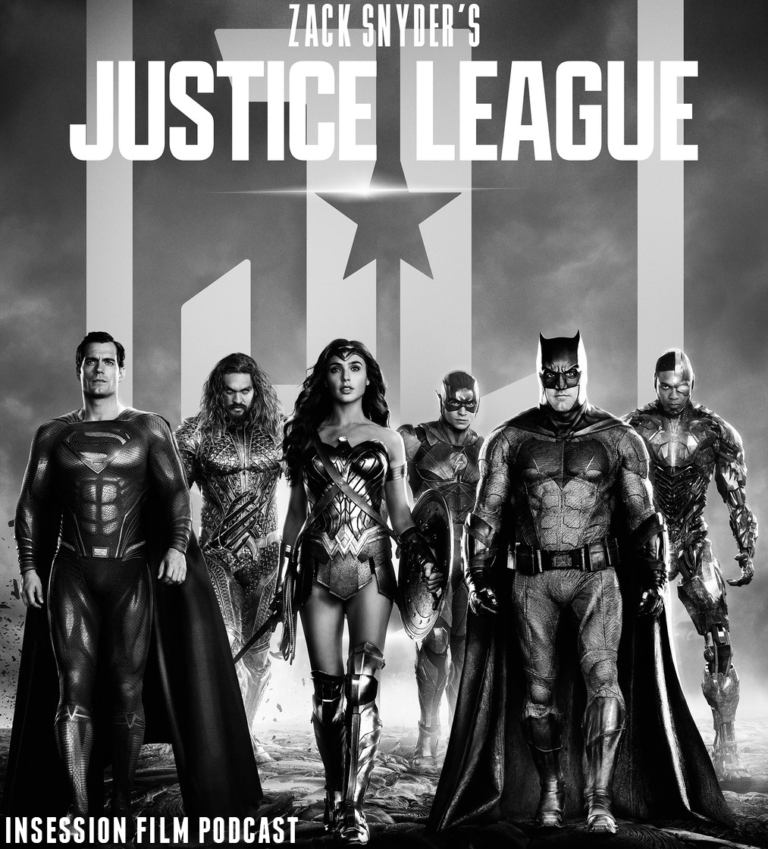
Poll: Are you #TeamGodzilla or #TeamKong?

This weekend, Legendary Entertainment’s “MonsterVerse” is finally delivering the big brawl they have been teasing for over 5 years. In one corner stands the ancient alpha predator Godzilla, and in the other stands the might Kong. Will Godzilla deliver the “kiss of death”, or will Kong punch his way to victory? Or is this whole fight just a charade for Godzilla and Kong’s ultimate monster romance? While many of us are secretly hoping for the latter (myself included), it hasn’t stopped us from already picking a side, and the monster hashtags are already flowing.

So whose side are you on? Are you #TeamGodzilla, or are you #TeamKong?


Podcast: The Tree of Life / Top 3 Terrence Malick Scenes – Episode 423

This week’s episode is brought to you by the film The Vault. Follow us on social media for a chance to win a free digitial copy of the film!

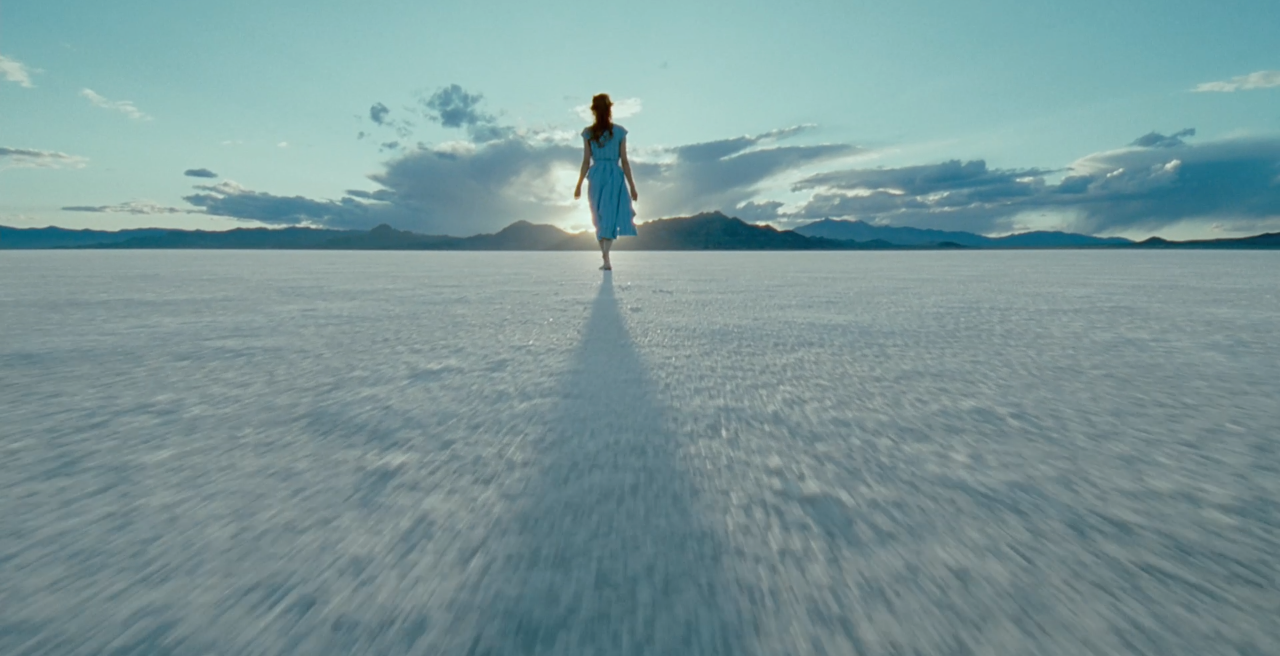
This week on the InSession Film Podcast, we conclude our Terrence Malick Movie Series with his 2011 masterpiece The Tree of Life and we discuss our Top 3 Malick scenes!

This is it. The best show we will ever record. Obviously we say that facetiously, but we’d like to think that it truly is one of the best shows we’ve ever done. The Tree of Life is not only one of the very best films of last decade (was in both JD and Brendan’s Top 10), but it’s among our favorite films of all-time and we spared no detail in our review. So, forgive the length of the show, we felt it was necessary to go as in-depth on it as we could. We love it deeply and hopefully that comes through in the conversation.

On that note, check out this week’s show and let us know what you think in the comment section. Thanks for listening and for supporting the InSession Film Podcast!

Terrence Malick Movie Series: The Tree of Life (10:28)
Director: Terrence Malick
Writers: Terrence Malick
Stars: Brad Pitt, Jessica Chastain, Sean Penn

– Notes / The Mauritanian / Nobody (1:20:47)
In the last week or so, JD was able to see the awards contender The Mauritanian, starring Jodie Foster and Tahar Rahim, and gave his thoughts on the film and why it was a tragedy that Rahim wasn’t talked more for the Oscars. He also saw the Bob Odenkirk action film Nobody, a nice little delight early on in 2021.

[divider]

RELATED: Listen to Episode 363 of the InSession Film Podcast where we discussed our Top 10 Movies of the Decade (2010’s)!

[divider]

Top 3 Terrence Malick Scenes (1:43:35)
All the way back on Episode 161, we discussed our favorite Terrence Malick moments after the release of Knight of Cups. However, JD was gone that week and missed out on that particular exercise. And after re-watching all of Malick’s films for this Movie Series, it made sense for us to revisit that Top 3 and see how things shaped up this time around. Understandably, Malick’s poetic wandering won’t be for everyone, but you can’t deny the beauty in his imagery and how he’s created a singular cinematic experience. From Badlands to most recently A Hidden Life, Malick has created some profound and unforgettable moments that makes this exercise both exhilarating and challenging. That said, what would be your top 3?

Show Sponsor: First Time Watchers Podcast

– Music

Fatherhood – Alexandre Desplat
Motherhood – Alexandre Desplat
Lacrimosa – Zbigniew Preisner
The Return of the Eagle – Atli Örvarsson

Subscribe to our Podcasts RSS
Subscribe to our Podcasts on iTunes
Listen on Spotify
Listen on Stitcher
InSession Film Podcast – Episode 423

[divider]

Next week on the show:

Review: Godzilla vs Kong
Top 3: N/A

[divider]

Help Support The InSession Film Podcast

If you want to help support us, there are several ways you can help us and we’d absolutely appreciate it. Every penny goes directly back into supporting the show and we are truly honored and grateful. Thanks for your support and for listening to the InSession Film Podcast!

VISIT OUR DONATE PAGE HERE

Chasing The Gold: Best Director Nominees Analysis (2021 Oscars)

As we finally take on the final month of this long awards season, one of the clearest categories to this point is Best Director. Still, even though Chloé Zhao has been the favorite since even the earliest points of the season, there is always the chance of a shocker on Oscar night. Let us not forget how Sam Mendes walked into last year’s ceremony with everything he needed – including DGA – and still lost to Bong Joon Ho. Though the chances of that happening again this year seem very slim at the moment, the Academy nominated a solid group of directors for this year’s awards. This includes multiple women, as well as two Asian directors in the same year, for the first time ever. With this historic group of nominees, let’s take a look at who has the best shot of taking home the gold. 

The Nominees:

Lee Isaac Chung Recalls Growing Up in the Fields of Minari: New family  drama speaks to a different kind of immigration story - Screens - The  Austin Chronicle

Lee Isaac Chung (Minari) – Chung was a popular pick to pick up a nomination here after Minari gained so much steam from SAG and Critics Choice nominations (including a nod for Chung there as well). His spot in this lineup was basically confirmed when he landed at DGA. Though the work is adored and Chung has shown a talent for giving acceptance speeches, he’s unlikely to be one of the top two (or even three) contenders here. His best shot will be if Minari pulls the upset in Original Screenplay, on its way to a Best Picture win. Both are big hills to climb, but his nomination here is a truly inspired choice for his touching and grounded work. 

Emerald Fennell Hadn't Seen a True Female Revenge Film—So She Made Promising  Young Woman | Glamour

Emerald Fennell (Promising Young Woman) – Fennell could be the dark horse in this category. It was a surprise when she was first nominated for Best Director at the Golden Globes, but she followed that up by landing nominations from almost every major televised precursor, including DGA. Her film has also overperformed this season, and it’s one of only two films – alongside Nomadland – to receive important nominations in Picture, Director, Screenplay, Film Editing, and an acting category. A few months ago, it would’ve been a slightly shocking joy just to see Fennell nominated here. Now, she’s a top-three contender in the category. 

David Fincher on 'Mank': ' I Don't Want Sympathy, I Want Empathy' - Variety

David Fincher (Mank) – It already feels like so long ago that Fincher was a potential favorite here, even though some (including myself) picked him to win the Golden Globe just last month. It looks like Fincher fans will have to wait yet again to see him finally win that Oscar. Much of the narrative about Mank is centered on how it missed in a few major categories, notably Original Screenplay and Film Editing. Still, the film received at least four more nominations than any other film, and Fincher has arguably the flashiest direction of the group. If we do see an upset on Oscar night, he could be the one to do it (though that’s highly unlikely). 

Oscars: 'Another Round's Thomas Vinterberg On Surprise Director Nomination  – Deadline

Thomas Vinterberg (Another Round) – The Academy seems to be slowly but surely moving in a more international direction, which is both great and long overdue. Just two years after Paweł Pawlikowski landed one of the most surprising Best Director nominations in years, Vinterberg pulled off something similar this year. In fact, Vinterberg’s maybe even more impressive, considering Another Round did not land in any other categories aside from International Feature (Cold War also got a nod for Cinematography). With that in mind, getting a nomination is a win in itself for Vinterberg. 

Chloé Zhao becomes 2nd woman to win the Golden Globe for best director as ' Nomadland' makes history | KTLA

Chloé Zhao (Nomadland) – To say that Zhao has dominated the Best Director category this season would be an understatement. If awards season is like a long-distance track race, she’s already lapped the competition. After racking up awards from numerous critics’ organizations, she carried the momentum into the televised awards season by winning the Golden Globe and the Critics Choice Award. She’s nominated at all of the major televised precursors, which is not the case for any other nominee here. Her biggest test still remains, with the DGA announcing their winners on April 10th. But there is zero indication that she won’t win there or at the Oscars. Her stunning, masterful work in Nomadland looks to be rewarded as one of the most unique and inspired choices by the Academy in this category. 

2021 Oscars: 'Nomadland' leads director, cinematography races - Los Angeles  Times

Who Will Win? 

Let’s just cut to the chase: this is Chloé Zhao’s Oscar unless something truly miraculous happens for one of the other nominees. She is on a historic run that includes nominations in Picture, Adapted Screenplay, and Film Editing. Of course, we could see a shakeup if someone else wins the DGA Award. For now, let’s assume that Zhao maintains her frontrunner status and takes that honor. In the era of the expanded Best Picture lineup, only two out of eleven DGA winners have not gone on to win the Oscar. Though stats should be taken with a grain of salt this year, it feels very safe to say that the trend will not be broken in consecutive years. That’s an exciting feeling, as it means we could see just the second woman, and the first woman of color, to win the award. 

Promising Young Woman' vs. Patriarchal Violence - SF Weekly

Who Should Win? 

In my humble opinion, there is not a bad nominee here. Chung and Vinterberg delivered strongly impactful character-based work, and Chung’s film is a dark horse contender for Best Picture. While Mank was not the film that many wanted it to be, it’s clear that the film is quite personal for Fincher, and he makes some intriguing choices with his direction. But with all due respect to those three, the women rule this category. While Fennell’s film is polarizing, what she does is bold and elicits a reaction from viewers. She’s responsible for the best directorial debut of the year, in a year full of excellent debuts. Zhao proved once again that she has a deep understanding of middle and western America and the people who reside there, like no one else in the industry. Her film resonates with many people, which is proven by its success in Best Picture categories. 

When it comes down to these two, I have to diverge a bit from my personal preference. Promising Young Woman is my favorite film of the year, and Fennell is my personal choice for Best Director. To come out of the gates with a debut film that takes the risks Promising Young Woman does is stellar. But it’s also impossible to set aside the impact of Zhao’s work and her film. It represents a culmination of a three-film body of work that most directors can only dream of, and it captures our current moment in a way that is both subtle and damning. The Oscars have actually done a really nice job of awarding deserving individuals in this category in recent years. That trend will continue with Chloé Zhao.

New Criterion Collection Releases: April 2021

As we move into the Spring, it is time for a fresh new set of films from the Criterion Collection. For the month of April, two movies from Jean-Luc Godard and Anthony Mann have been given a fresh new release of previously installed films, while Bong Joon-ho and Olivier Assayas get another movie of theirs added. Plus, a hidden tale from Hollywood Golden Age is plucked out of obscurity for public recognition. Here’s the rundown on the April class from Criterion.

History Is Made At Night (1937)

Frank Borzage’s romantic dramedy follows a married woman (Jean Arthur) who flees from her terrible husband (Colin Clive) and runs into a charming French headwaiter (Charles Boyer), who becomes unwittingly entangled in a cross-continent menage a trois with the woman’s husband, a millionaire. With the backdrop of a cruise liner that becomes the story’s motif, it is a passionate affair that, in justifiable fashion like the Titanic, it can be broken apart by an iceberg. It is one of Hollywood’s hidden unknowns despite a recognizable cast that can flip easily in tone but maintains its integrity in the fleeting moments of danger.

The Furies (1950)

Anthony Mann’s Western was not successful financially upon its release, but its reputation has grown over time because it was not a traditional Western. Barbara Stanwyck plays the daughter of a cattle baron, played tyrannically well by Walter Huston in his final performance, who locks horns with her father for her right to own a piece of the estate, as well as her right to choose her husband. It’s a family drama that takes on symptoms of Shakespeare, Freud, and Dostoevsky as Stanwyck engineered to be hard-headed as her father, has to rebel from his iron-fisted ways to seek what is hers.

Masculin Feminin (1966)

https://www.youtube.com/watch?v=M_PfEij43E8

Godard mixed politics and comic frolic with this ode to revolutionary youth he describes as, “the children of Marx and Coca-Cola.” Starring Jean-Pierre Léaud and pop star Chantal Goya (from the yé-yé genre of the 60s), in the middle of a decade where the counterculture started to rise, a group of free-spirited people forming a ménage à quatre go around exploring the best of life in music, pop culture, sex, and political views being more radical at the time. Godard takes another experimental view of his own movie, inserting documentary, outside sub-plots, and sudden intertitles that break the rules of storytelling, but because it’s Godard, we’re not surprised and is still very watchable.

Irma Vep (1996)

In one of his first movies, Olivier Assayas made his own behind-the-scenes calamity where the director (Jean-Pierre Léaud) doesn’t know what he wants and the egos of the crew make production hell. Meanwhile, the film’s leading lady (Maggie Cheung) is stuck wearing a latex catsuit while hiding and wondering about as a stranger in a foreign film industry that seems to make it worse on themselves. The disastrous production is Assayas’ way of self-reflection to what France’s film history has become without the notable figures being referenced who built the industry from scratch and now how it has all turned to crap.

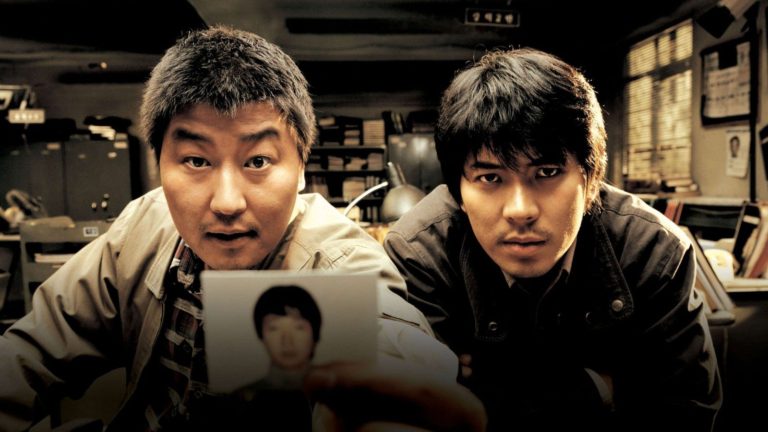
Memories Of Murder (2003)

Bong Joon-ho’s second film gave him noted recognition around the world with this brilliant crime drama lead by recurring collaborator Song Kang-ho as a police detective who struggles to solve a group of murders from one serial killer. The story is loosely based on a real-life serial killer who at the time hadn’t been captured and would only be arrested in 2019. But in its timeframe, the late-80s/early-90s, it is a masterful neo-noir that puts 2021s early dud The Little Things in the gutter. It is here that viewers who want to check out Bong’s early work can go with and pick up on that mastery, on how he tells the story scene-by-scene and how just remarkable Song Kang-ho is as an everyman in different films.

Follow me on Twitter: @brian_cine (Cine-A-Man)

Movie Review (SXSW): ‘Tom Petty, Somewhere You Feel Free’ is a loving picture of a music genius creating his masterpiece


Director: Mary Wharton

Synopsis: Drawn from a newly discovered archive of 16mm film showing Tom Petty at work on his 1994 record Wildflowers, considered by many to be his greatest album ever, Somewhere You Feel Free is an intimate view of a musical icon.

[/info]

In 1994, legendary artist Tom Petty recorded Wildflowers, an album considered by many as his masterpiece. Tom Petty, Somewhere You Feel Free is the documentary that follows Petty and his collaborators through the recording process. Sometime in 2020, a collection of 16mm film – shot by Martyn Atkins between 1993 and 1995 – was recovered from the Tom Petty archive. This footage included the Wildflowers recording and the subsequent tour. Directed by filmmaker Mary Wharton, the feature presents unseen footage that works more as a love letter for the rock star and less as a comprehensive picture of the man behind the guitar and the harmonica.

The film merges old material with contemporary interviews, all tailored in the same 16mm style. We see the artists collaborating in the studio, while some of these people are presented almost thirty years later talking about their experience and about Petty himself. Rick Rubin (Wildflowers’ producer), as well as the Heartbreakers members that joined Petty in his solo effort – Mike Campbell, Ron Blair, Benmont Tench, and Steve Ferrone – reunite to reminiscence.

In this regard, it is hilarious that Petty wanted to create something separately from his band and finished recruiting three of the original Heartbreakers. For a little bit of drama, the documentary also presents a special interview with Stan Lynch, original Heartbreakers drummer, who exited the band right in the middle of these sessions because of clashes of personality with Petty.

This relationship is worthy of attention if only because it represents the exact opposite of what Petty seemed to treasure during the recording of Wildflowers. No fighting. No negotiating. Just a good environment in which artists came together and enjoyed playing and recording Petty’s songs. The film exposes over and over the positivity of the experience.

This is probably why the documentary is so enjoyable: it is a celebration of positive feelings and a loving peek into Petty’s creative process. Through the album’s lyricism and Petty’s enjoyment, Tom Petty, Somewhere You Feel Free inspires nostalgia (it hurts that he is no longer around) and stirs adoration for an artist that was a genius songwriter, bringing to life his intimate vision, while battling the pressures of fame, the lack of creative freedom with his former record company and the dissolution of his marriage.

The footage presented is casually insightful. Through jamming sessions, conversations, and scarce narrations by Petty, the audience can get a sense of the mood in the room and the creative process of those involved, with Petty in sole charge. The interviews turn out to be an important resource, although a subjectively adoring one. Nevertheless, these commentaries allow us to understand Petty’s mindset and mood.

The documentary offers a spotlight on each of the songs that made the final album (in one of the most frustrating extracts, Petty has to decide which songs will be left out because the studio refused to release a double album). We get to learn some special trivia about the songs and personal reasonings and experiences. Paper in the Wind and Wildflowers, for example, represent Petty’s feelings and personal quest for happiness and self-satisfaction as his marriage fell apart (“You belong among the wildflowers, You belong in a boat out at sea, You belong with your love on your arm, You belong somewhere you feel free”).

The documentary is not a fulfilling inspection of Petty’s life and career that spanned almost 50 years. It is specific and small in its scope. It is exclusively interested in inspecting a definitive project in a genius’s career, aided by the insights of those that knew him better and that were there during that pivotal time.

While we do not discover or understand Petty’s personality – he continues to be a mystery when the documentary is over – it awakens our curiosity and adoration for a man that seems to be going through an introspective moment, aided by a peaceful environment and a positive creative process.

This project turned out to be special because it found Petty trying to create something on his own and away from the “democratic process” that implied being part of Tom Petty and the Heartbreakers. Wildflowers would become one of the most successful Petty albums, and, according to him, the best record he ever made. The documentary reflects Tom Petty’s adoration for this time in his life consequently, transmitting a happy atmosphere through the screen. Wharton’s delicacy and sensibility allow the audience to testify a moment of creative bliss.

Grade: B

Podcast: Ace in the Hole / Nobody – Extra Film

This week on Extra Film, Ryan and Jay continue their Billy Wilder Movie Series with his Ace in the Hole, and they also discuss the action film Nobody.

After talking about Sunset Boulevard, the boys return with the darkest, most cynical film in Billy Wilder’s filmography. In Ace in the Hole, we follow the dangers of journalism and how far people will go to stretch the truth. With an all time performance from Kirk Douglas, Wilder takes aim at his former profession and how people in this country treat the news. It’s a movie that is a relevant today as when it was released, making it a perfect film for the guys to cover.

In the back half of the episode, the boys talk about the action thriller, Nobody. In an attempt to capitalize on the John Wick franchise, Nobody is from the writer of that series but with a little bit of a twist in this world, and Bob Odenkirk in the lead role. With a couple of great cameos and set pieces, Nobody is a fun time, though a step down from the Wick series.

Thanks for listening!

– Movie Review: Ace in the Hole (4:32)
Director: Billy Wilder
Screenplay: Billy Wilder, Walter Newman, Lesser Samuels
Stars: Kirk Douglas

– Movie Review: Nobody (56:02)
Director: Ilya Naishuller
Screenplay: Derek Kolstad
Stars: Bob Odenkirk, Connie Nielsen, RZA, Christopher Lloyd

– Music

Hugo Friedhofer – Ace in the Hole
Just A Gigolo – Louis Prima
The Return of the Eagle – Atli Örvarsson

We try to make this the best movie podcast we possibly can and we hope you enjoy them. Subscribe today on iTunes, Spotify, or Stitcher, and please leave us a review on iTunes. You can also find us on Soundcloud, PlayerFM, and TuneIn Radio as well. We really appreciate all your support of the InSession Film Podcast.

Subscribe to our Podcasts RSS
Subscribe to our Podcasts on iTunes
Listen on Spotify
Listen on Stitcher
Ace in the Hole / Nobody – Extra Film

[divider]

To hear this Extra Film episode and everything else we do, download our apps on the Amazon Market for Android and the Podcast Source app on IOS devices. The mobile app covers all of our main shows, bonus podcasts and everything else relating to the InSession Film Podcast. Thanks for your wonderful support and for listening to our show. It means the world to us.

Op-Ed: AFI’s 100 Years…100 Passions – ‘Jezebel’ (#79)

I will be watching and reviewing all of the films included on AFI’s 100 Years…100 Passions list. The list contains the 100 greatest love stories in American cinema and I plan to consider how our views on romance and social issues have changed over the years as well as judge whether the romances in these films actually made me swoon. As a fan of the romance genre, I expect to love each and every one of the nominees but I also don’t know if I would consider all of them romantic.

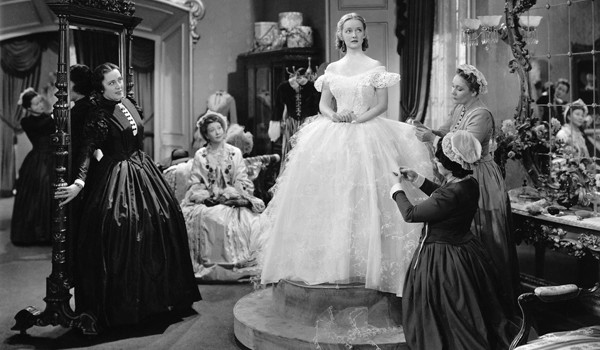
Has it really been 31 years since Bette Davis died? It feels like she’s as big as ever today because she has such a passionate, loyal fanbase. They still feel a connection to the tough, strong willed heroines that she played and admire the woman herself for breaking the mould when it came to what a female movie star could be. Despite her extraordinary eyes and clear, unblemished skin, she was never defined by the way she looked and she suggested that her characters could be appreciated for their spirit and intelligence. She could be a divine bitch who was completely divorced from the laws of reality or a sympathetic diva who was struggling against sexism within the entertainment industry. Her star power allowed her to be equally compelling when playing all of these different roles and audiences flocked to see her films for several decades. Unlike other stars from the Golden Age of Hollywood, she has retained her fanbase and new generations continue to be taken by the image of an uninhibited, troubled woman who brought all of her personal demons into her portrayals of complex women. All of this has been said before but I feel that Davis is the primary talking point when it comes to Jezebel (1938) and you have to scrupulously consider the glory of Davis at the height of her powers.

Jezebel was an important stepping stone in her career and it was meant to serve as a consolation prize for having not secured the role of Scarlett O’Hara in Gone with the Wind (1939). She had already fought with Warner Brothers over the quality of the material that she was receiving and the amount of films that she had to make each year and her eyes had been on the biggest literary adaptation of all time. Every actress in Tinseltown was vying for the role of O’Hara but Davis came closer than a lot of the contenders. Jezebel ended up being treated like a second rate version of the grand epic that was still to come. By most accounts, this was a crushing disappointment for Davis. Despite the anguish that she experienced, her career didn’t really suffer as a result of Jezebel’s release as she won an Academy Award for her performance and bolstered her reputation as a reliable box office draw.

You can’t help but draw parallels between Jezebel and Gone with the Wind and the plots of the two films even seem very similar.

Bette Davis' Louisiana-set 'Jezebel' kicks off Historic New Orleans  Collection screening series; plus more movie events | Movies/TV | nola.com

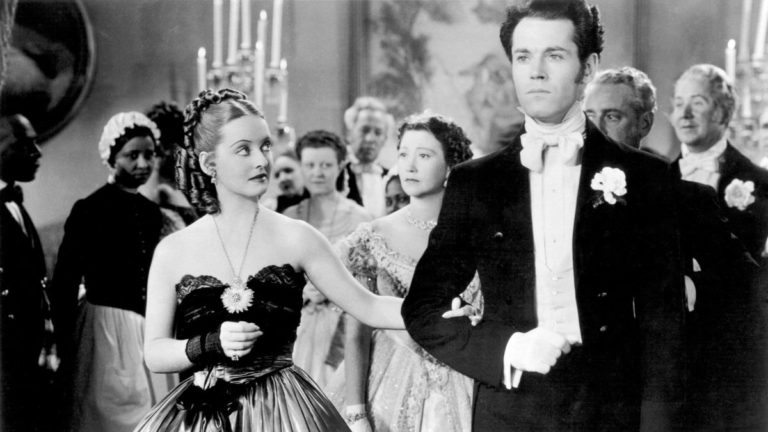
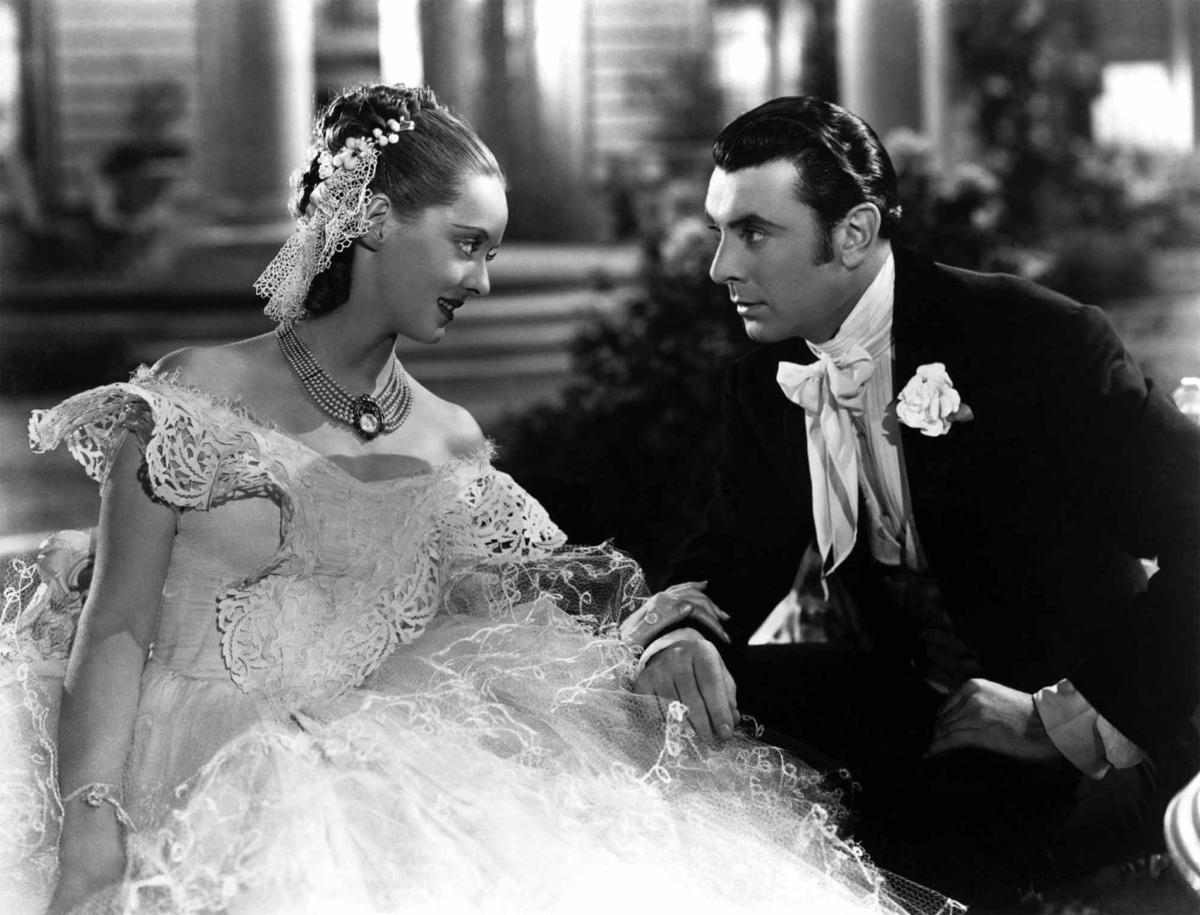
Jezebel concerns arrogant, naughty Southern belle Julie Marsden, Bette Davis, who hurts her public reputation and relationship with banker Pres Dillard, Henry Fonda, when she insists that she be able to wear a scandalous red dress to a ball. This happens after she has been stood up by Pres, who was at an important meeting. She believes that he will return to her soon but instead, he leaves town for an entire year. During this time, Julie accepts that she made mistakes in the past and prepares to apologize to Pres for her actions and ask him to continue their relationship. To her surprise, he has married Amy Bradford, Margaret Lindsay, and this knowledge spurs her to turn the besotted Buck Cantrell, George Brent, against him. Her plan goes awry with disastrous consequences and she ultimately ends up accepting that Pres does not love her even as she sacrifices her health to stay with him.

Gone with the Wind is about Scarlett O’Hara, Vivien Leigh, a sheltered Southern Belle who is secretly tough-as-nails. When the American Civil War occurs she loses everything and is forced use her inner strength to rebuild her beloved Tara. She is married three times, twice to men she doesn’t love, and her passionate affair with Rhett Butler, Clark Gable, ends in tragedy as she is unable to admit she loves him until it is too late. The man that she believes she loves is Ashley Hamilton, Leslie Howard, but he is married to his sweet cousin Melanie Wilkes, Olivia de Havilland, therefore she must scheme to have time alone with him. She opens a lumber mill, has multiple children, and loses both of her parents against the backdrop of the Civil War. Butler ends up leaving her even after she admits that she truly loves him.

Marsden and O’Hara are cut from the same cloth as they are both petulant, manipulative young ladies who mature into women during the American Civil War. They both go through tragedies in their love lives and push the men they love away before desperately trying to get them back. It’s difficult to understand what was so appealing about these characters as audiences during this time tended to want to see virtuous, polite girls on screen. These women were appealing because they defied societal conventions and endured great hardship in order to come of age and blossom into adults. Of course, some may have interpreted both of these stories as cautionary tales about the dangers of acting like one of these women. In their eyes, the only priority that women should have was finding a man to take care of them and both Marsden and O’Hara end up losing the men they love. I think that both characters deserve deeper analysis and you would need to have a narrow viewpoint in order to reduce their character arcs to their relationships with the men in their lives.

Leigh gives one of the best performances of all time in Gone with the Wind and Davis can’t really compete with her but she’s still excellent during the first half of this film. She has to adopt a Southern accent, haughtily declare that she will do whatever she pleases, and express occasional shock and embarrassment when her plans go awry. I love the fact that almost all of our attention is supposed to be focused on Davis during this first half. So often she was plopped into romantic dramas which did not suit her talents. She was giving bravura performances that could overshadow anything occurring around her and that meant that vanilla leading men like George Brent simply failed to register. The narratives of those films didn’t hold water because we never saw why Davis would be attracted to such lightweights and didn’t understand why we couldn’t just watch her cruelly taking advantage of her friends. Sure, Pres is briefly present in Jezebel but William Wyler understands that we’re really here to watch Davis. She maliciously chooses to don that red dress and causes everybody in town to gasp, it’s delicious and our pleasure is uninterrupted by some lousy supporting character.

TBT: Jezebel (1938) –

Fonda is my favorite male actor but he is just set dressing here. We’re more captivated by Davis’s responses to his soft-spoken protestations against her behavior, than the behavior itself. Pres is a wallflower who is able to stay within the upper class because he so willingly tows the line. Marsden stands out and enjoys testing people by being alternately infuriating and seductive. She’s constantly tempting fate and she gets the most enjoyment out of life by dancing on the edge. This means that there is something poignant about the fact that we are seeing her being forced into getting married and leaving her childhood behind. She isn’t even fully cognizant of the fact that she is reaching the end of her salad days and will start to be seriously judged for the scandalous decisions that she makes.

I praise the fact that the film suggests that she is coming to the end of her childhood but the first act abruptly ends and we are plunged into a shoddily put together second act. Marsden is a divine bitch in the first act and Dillard’s rejection of her is meant to set her on the road to changing her ways. The duel that she sets into motion and the spread of yellow fever are meant to compound the feeling that she is responsible for everything bad that has ever occurred within this community. Suddenly she is contrite, regretful, and desperate to become one of the good Christian girls who seem terribly dull. This should have been the first step on a long road to change but instead, we are hit with an abrupt cut and then greeted with a version of Marsden who has completely transformed. Davis just doesn’t get enough time to depict the changes that Marsden is going through and it feels like she is playing completely different characters within the same film.

This is still Davis’s show and I am incredibly thankful for that. I feel like we don’t talk about this film that much anymore when we consider the path of her career and that’s criminal. She’s at the height of her loveliness and really gets to steward the first half of this production. The concept of the actor as an auteur is not often considered but I did feel as though Davis had total influence and control over aspects of this film. I say that in a good way and she turns this into an excellent vanity project. Every low angle shot which highlights her sharp, well-defined cheekbones is perfectly placed and I wasn’t objected when she did everything but slyly wink at the camera. Other performers have tried to dominate productions with detrimental results but you don’t sense that there was a rivalry between Davis and Wyler when they were on set. They work in harmony but she is firmly in the driver’s seat and it’s a joy to see her when she’s absolutely unleashed.

The Ace Black Movie Blog: Movie Review: Jezebel (1938)

It’s also nice to realize that Wyler didn’t slack off when it came to craftsmanship. I would argue that this film has a problem in terms of not having a great sense of place but the interiors are all well decorated and Wyler lingers on the luxuriousness of all of this without making it seem gauche or tacky. He is a director who knows how to make things look expensive and this doesn’t just look like a pokey little production that has been put together on the cheap. He has a fundamental understanding of what people want out of this sort of film but the script just isn’t strong enough to back him up. I only wish that more resources had been handed to him so that he could raise this up to the level of something as brilliant as Dodsworth (1936).

With all that said, Jezebel is still too flawed to really be considered a classic. Davis fans have likely already seen it multiple times and for those who aren’t initiated, it probably won’t be a great introduction to her work. Something more consistent in terms of quality would be preferable. Perhaps you could present them with something like Now, Voyager (1942) first and then ease them into the messier entries in her filmography. I don’t really understand why it had to make this list. They already included another superior Davis vehicle and I don’t feel like Jezebel has had that much-staying power. People still view it with derision because of its status as an ersatz Gone with the Wind and it doesn’t have much to differentiate it from that film. I have to assume that it did make the list because of the love that AFI voters have for Davis. It didn’t rank very highly and it may have just been a filler but it still seems like an unnecessary choice in hindsight.

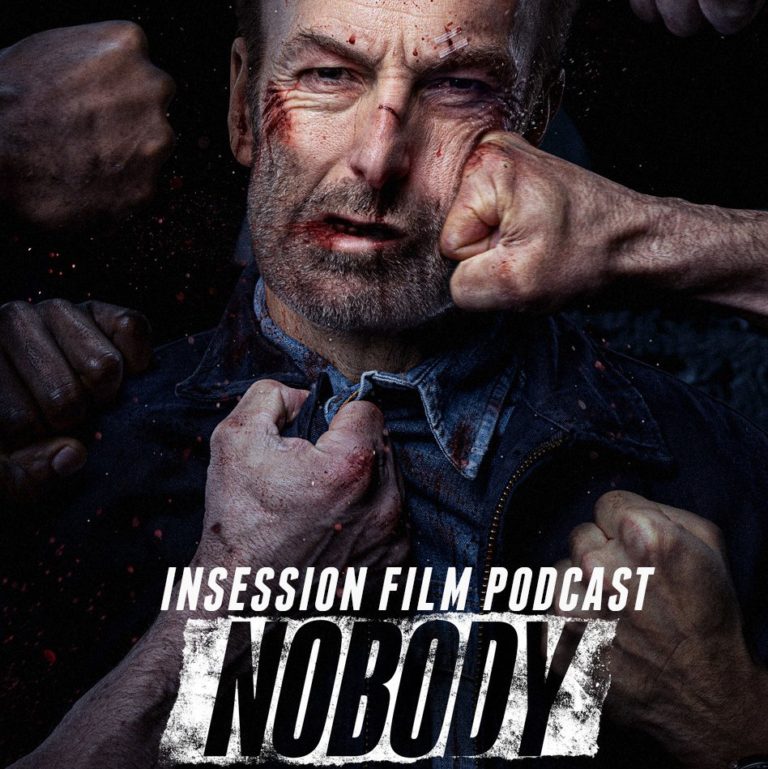
Movie Review: ‘Nobody’ Taps into Bob Odenkirk’s Darkness to Perfection


Director: Ilya Naishuller
Writers: Derek Kolstad
Stars: Bob Odenkirk, Connie Nielsen, RZA, Aleksei Serebryakov, Christopher Lloyd

Synopsis: In a barrage of fists, gunfire, and squealing tires, an enraged man must save his wife and son from a dangerous adversary — and ensure that he will never be underestimated again.

[/info]

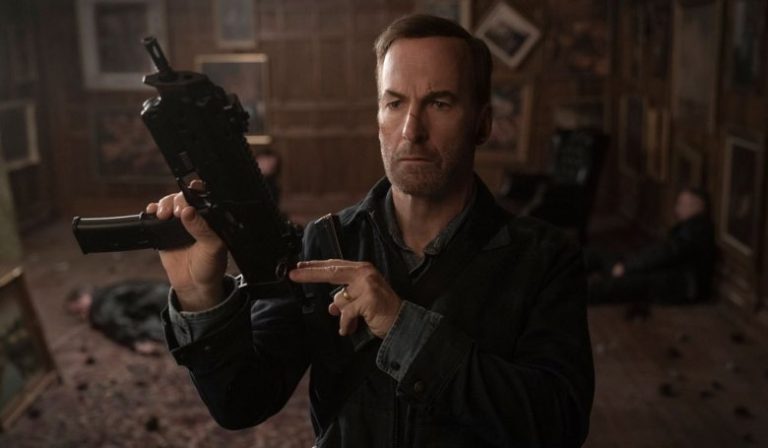
There are few films more viscerally satisfying than hard genre pictures. Leaning into the tropes and stereotypes of a can be every bit as fulfilling as breaking new ground, especially within action. Drawing on decades of “the old guy’s still got it” flicks, the tried and tested genre seemed done after Liam Neeson’s emergence as the preeminent star. Yet Keanu Reeves and Denzel made the genre popular once again thanks to John Wick and The Equalizer earning box office success. Sure enough, copycat films would follow the mold. Still, I would be lying if I thought Nobody, directed by Ilya Naishuller and starring Bob Odenkirk, would be joyously fun.

Hutch Mansell (Odenkirk) lives out a repetitive life in the suburbs at a seemingly dead-end job. Aside from his daughter (Paisley Cadorath), his family (Connie Nielsen & Gage Munroe) have little respect for him. Hutch’s boss and in-law (Michael Ironside) hesitates handing over the family business after a break-in makes Hutch appear weak. After visiting his father (Christopher Lloyd) and seeking out the people who staged the robbery, Hutch finds himself embroiled in a battle with the Russian mafia. Too bad the mob stumbled into the wrong guy.

Odenkirk’s career as both comedian and character actor makes him an unusual choice for Hutch at first glance. However, anyone familiar with his work on Better Call Saul knows of Odenkirk’s volcanic side awaiting any interaction. Few actors can balance a PTSD-riddled killer with the suburban dad aesthetic. Odenkirk excels at depicting duality, and the role of Hutch highlights his strengths. Nobody allows him to spit quippy dialogue, utilize a million-mile stare, and gruesomely murder anyone who stands in his way. Despite the controlled chaos, you never want to root against him.

Naishuller reigns in their exaggerated tendencies that were on display in Hardcore Henry from 2015. That film certainly had the action set pieces but that film is more experimental fancy than a gauge of Naishuller’s talents. If Nobody becomes his norm, you can expect a long career of films that trigger Antoine Fuqua’s ambitions, but execute at a slightly higher ceiling. He world builds with ease, creating a compelling alternate reality to our own. Very fast editing sets the pace, but it’s hard to argue the film is well-paced. After its first great set-piece on a bus, Nobody becomes a freight train. Until then, it’s a bit lackadaisical.

The cast varies in its usage and often focuses on Odenkirk’s strengths. He gets the clear top billing, and we rarely leave his side as a result. Nielsen finds herself relegated to the “wife is surprised” role, which feels disingenuous at times. After all, there are multiple moments throughout the film where she’s keyed into his business dealings with her family. It seems odd she did not pry into Odenkirk’s background. It’s a thankless role, especially given her presence as an Amazonian Queen in the Wonder Woman films.

Aleksey Serebryakov plays a fairly stereotypical Russian gangster. Yet he adds some flare to the role, due in part to his role as a nightclub owner/lounge lizard. He inhabits the physicality of a man who believes he can go legit before he backslides into his murderous nature. Perhaps the best roles, which amount to slightly elongated cameos, go to Lloyd and RZA. Both seem to relish silly line of dialogue while bringing much-needed zaniness to the party. Genre favorite Colin Salmon captures our attention for a few minutes as well, expanding the world of the film for potential sequels.

The action itself makes Nobody a strong rewatch candidate, even as you’re completing the first viewing. Without an A+ cast that often bails out lesser action flicks, Nobody sets itself apart with creative, if not familiar, set pieces. You love a movie that owns its genre trappings, and Nobody gives its characters highlight after highlight. It’s never a question of if, but a question of when the one-liner is going to come. Some visual flourishes are premised on violence. Like John Wick or Edge of Tomorrow, part of the fun is simply jumping on the ridiculous parts of the ride. As a film that is destined for the “HBO Rotation,” this one could become a cult classic quickly.

Despite all the genre fun, the atmosphere that Nobody releases into is impossible to ignore. As many action films before, you can argue that Nobody overly fetishes gunfights. There’s even a shot where the camera is attached to the barrel of a slow-motion handgun as it spins across the room. Nobody never pretends to be something it’s not, and that means there is a lot of blood on screen. More often than not, the film demonizes the actions of its characters. Yet those not in the mood for a shoot ‘em up should pass. When you are craving an adrenaline rush, please come back to this one.

Nobody will not reinvent the wheel. Yet the delivery of a fine-tuned, enjoyable action film can be hard to come by these days. Leaning into many tropes of the genre, it will feel familiar. Yet the warm blanket hug that Nobody gives you should win you over. Well shot, and featuring a surprisingly fun turn from Odenkirk, Nobody is an easy recommendation for anyone craving an action journey.

Grade: B

Classic Film Review: ‘The Garden of the Finzi-Continis’ Was Too Muted For My Taste

Has anybody ever met one of the blonde ice queens who seem to populate every film ever made by a sexually frustrated auteur? They seem to exist as figments of their imagination. They are beautiful in an ethereal, untouchable way and sport the same blank, unfriendly expression in every scene. Beyond their obvious beauty, it is hard to see why people are drawn to them. They have no apparent personality, are disgusted by the idea of sex, and can’t even begin to comprehend what being in love would feel like. Alfred Hitchock loved to humiliate and abuse the blondes who stood at the center of his films. Vittorio De Sica takes a different approach to handle this archetypal figure and tries to get us to empathize with a woman who makes nonsensical decisions. I think that he is let down by the fact that his approach to telling this story is terribly cold. There is a frostiness that hangs over everything and you wonder why you should care about the human story that he is trying to tell. 

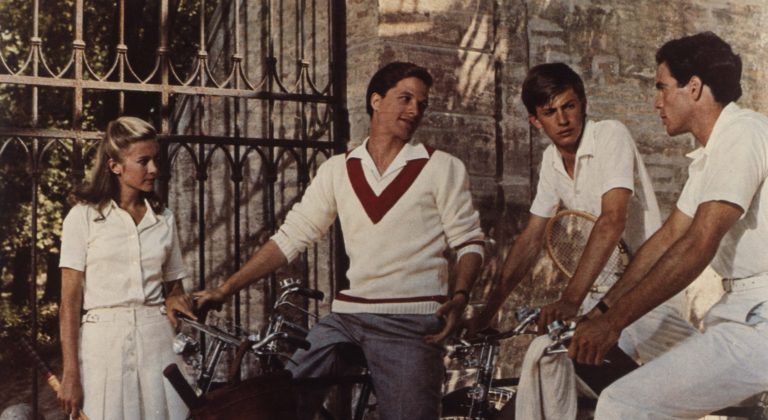
The film is set during the late 1930s and is about the impact of the Holocaust on several Jewish families in Ferrara, Italy. Giorgio, Lino Cappolichio, has been besotted with Micól, Dominique Sanda, from a young age. He simply hasn’t been able to work up the nerve to pursue her. This is because he knows that she is a member of the Finzi-Contini family and this means that she is in a different social class to him. The members of her family are extraordinarily wealthy and the other townsfolk envy them. To his surprise, he and Micól appear to be getting close, but she pulls away from him when he makes his intentions clear. He is heartbroken at the thought of not being with her and ignores the rise of Fascism in Italy, in order to focus on problems he faces in his personal life. The Nazis force Italian Jews to travel to Concentration Camps, where the vast majority of them die. The members of the Finzi-Contini family remain confident in the fact that this will not impact them in the same way that it does the other Jews in Ferrara. Others look on in horror as they remain ignorant to the fate that awaits them.

I understand that there is meant to be some irony in the fact that Giorgio’s agony seems so insignificant in comparison to the historical conflict occurring around him. He, and most of the other Jewish characters in the film, are so wrapped up in their own little worlds. The Finzi-Continis believe that they can insulate themselves from the rising tide of fascism by remaining behind the walls of their mansion. This has always worked for them and they have always existed in rarefied air because of their wealth. They don’t seem to comprehend that the Fascists are overturning the fragile social order that has been set up in their town and they will be wiped out along with the rest of the Jews. Giorgio thinks that his determination and youthful excitement will allow him to circumvent the rules that the government has set out for him. His freedom becomes more and more restricted as time goes on but this seems like a minor complication to him. He has his head in the clouds and Micól is the only person on his mind. We’re meant to stand by and be unsettled by the fact that these people couldn’t possibly anticipate the horrors that were to come. I know that the film does gesture at all of these ideas and it is certainly convinced of its own importance but it left me cold.

It is not so much that the characters are unsympathetic; it’s just that they’re uninteresting. They all feel as though they represent ideas rather than being flesh and blood humans with emotions that are driven by the politics of the parable that this story is meant to serve as. All of the actors play their characters like shallow sociopaths and yet their conflicts are played as though they are pure melodrama. There are love triangles, long running disputes between different overbearing patriarchs, and a scene where Giorgio throws himself at Micól in a moment of passion. All of this is handled with curiously muted emotion and everybody seems to be going through the motions instead of being emotionally engaged in what they are doing. De Sica’s camerawork also had an impersonal style as I was reminded of a clinical, objective Frederick Wiseman documentary when I watched dialogue scenes. You watch the characters through glass and more attention is paid to the lining on Micól’s tennis dress than what she is saying or what Sanda’s facial expressions are meant to convey. I think that this was the wrong approach to handling this material.

There are still sumptuous production values and the greenery and foliage serve as a feast for your eyes. The town does not feel like a character in itself but you still feel some sadness over the fact that such a serene, quiet place has been destroyed by outside forces. The peace that has been steadily maintained in this area, cannot remain forever and we look at the ancient buildings and shady lanes with wistfulness. These are all nice touches that you would expect from a master craftsman but one is encouraged to expect something more out of the man who made Bicycle Thieves (1949). There is still a chilliness that hangs over the town but maybe that was a part of De Sica’s vision. Perhaps I just don’t understand why he chose to make this an actively distancing. Understanding the mind of a European auteur can be challenging.

This is not one of those worthless, ponderous pieces of arthouse twaddle but I would never enthusiastically recommend it to anybody. There are far better European dramas about the Holocaust that are emotionally involving as well as being solidly crafted. 

Grade: C

Criterion Crunch Time: Bluebeard (2007)

Here is one of the many glories of watching movies completely blind, especially those that are streaming on a service like The Criterion Channel. It is not that every movie you watch there will be a phenomenal, life changing, work of art.  I’m exhausted just thinking about that. No, it is that, and I dare you to prove me wrong, you will not find a film on this service that is wholly bad. You will always find something that the film does masterfully. And Bluebeard, directed by Catherine Breillat, is no different. Bluebeard is not a movie that I will likely revisit, but there is at least one thing therein that I will literally never forget.

Whether you like the film or not, and I am somewhere in the middle, Breillat makes truly interesting choices. The story of Bluebeard, told through sisters reading the actual story to each other is well done, but, in my opinion, wholly unnecessary. Those scenes, while wildly endearing, at least until the end, did not seem to serve much of an actual purpose, aside from extending the runtime to a respectable length. But, those scenes are certainly not the focus of the film, so they are mostly harmless.

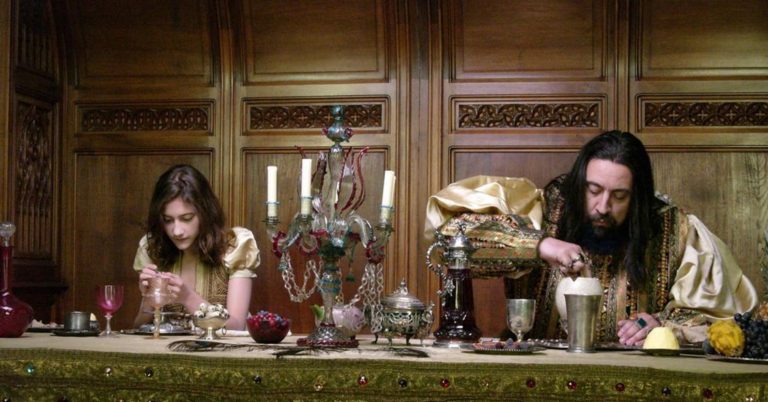
For the uninitiated, the story of Bluebeard (and the story they tell of Bluebeard), is relatively straightforward. Two sisters have recently lost their father and are basically destitute. Luckily, a nearby lord, Bluebeard (Dominique Thomas) is looking for a wife and is wildly wealthy. The only catch is the rumors. Supposedly, no one can find his previous wives and everyone in the area believes that he killed them and hid the bodies. Kind of a buzzkill, but despite that, the two sisters attend his party. The older sister, Anne (Daphné Baiwir), is more stereotypically pretty, but clearly has no interest in marrying this man. On the other hand, the younger sister, Marie-Catherine (Lola Créton) is quieter and more introspective.

Bluebeard is a mountain of a man and describes himself as a monster and a beast. And yet, he does not wield his mass as a weapon. If anything, he seems meek, cowing to everyone’s needs. In quick course, he and the younger sister are married and she moves into his castle. And this is where Breillat’s brilliance as a director enters the equation. She does two things in equal measure. First, she never lets you forget just how large this man is, especially in comparison to this tiny, young girl. And sure, some of this is simple casting, but not the majority. She takes special care to allow the actor (and sometimes merely his head) to completely fill the frame. This is true whether he is kindly finding just the right space for her bed (and respecting her desire to wait to consummate their relationship) or when they are eating. Even his meals are larger. If they are eating eggs, hers are from a chicken and his are from an ostrich. These are all specific, pointed choices that Breillat makes. But, at the same time, Bluebeard is not a threatening force. He is kind and patient at just about every turn. 

But when Bluebeard flips the switch from romance to horror, Breillat’s ability to maintain the scale of her lead characters makes all the difference. Bluebeard leaves the home on two occasions and Marie Catherine is left in charge of his many valuables.  The first time, she is given a set of keys and the freedom to do basically whatever she pleases. On the second trip, she is given the same keys, plus one more that she is not allowed to use. The temptation, of course, proves too strong and she enters the room, finding Bluebeard’s slaughtered wives hanging above a pool of blood. It is a truly horrific and slow scene that leaves you clenching, hoping she will leave no trace.

Sadly, Bluebeard is not that kind of movie and she leaves many clues that she was there. She admits as much to him when he returns, likely knowing it will cost her everything. And this is where that scale matters. Now, he towers over her, threatening. The film reminds you of the terrifying position that she is in, and that this was always a risk.

Bluebeard is a stark reminder of patriarchy and its weight, how it drags women down, even as they climb. Marie-Catherine was rich beyond her wildest dreams, a success in that limited world. And as she succeeded, she was given more responsibility from Bluebeard. But in the end, he sets her up. He shows her that you can only have so much, that he will truly be the one in control, no matter how gentle of a figure he purports himself to be. Marie Catherine is shown what she cannot achieve, like a glass ceiling, but much more personally dangerous. Nothing changes after she enters that room, except for her lack of obedience. A world of men simply cannot handle the idea of a woman they cannot control. In a subversive twist, what saves Marie Catherine? Technically, other men kill Bluebeard, but they arrive with the help of another woman, her sister Anne, absent for the majority of the narrative.

Bluebeard is yet more proof that even the most frightening, misogynistic tales can be improved with subversive feminism. Breillat takes the story of an evil man murdering unsuspecting young women and transforms it into violent men finally getting their comeuppance. But none of this makes a dent if Breillat does not foster both the sense of size differential, as well as the tenderness of the possibility of love. Luckily, she deftly balances both and keeps us on the edge of our seats. 

 

Movie Review (SXSW): ‘Demi Lavato: Dancing with the Devil’ Continuously Hits You with the Devastating Reality of Addiction


Director: Michael D. Ratner

Synopsis: “Demi Lavato: Dancing with the Devil” is a powerful YouTube Originals documentary event, exploring every aspect that led to Lavato’s nearly fatal overdose in 2018, and her awakenings in the aftermath.

[/info]

*MAJOR TRIGGER WARNINGS*

There is a reason this documentary is presented as a 4-part mini-series of episodes, at a 22-minute runtime, simply put: it is a lot to consume.  Extremely heavy content is covered, leaving nothing undiscussed or off the table to deep dive into every grueling detail leading up to Demi Lavato’s overdose in 2018 and everything after to the current day. Throughout this documentary you hear from everyone, Demi herself, her family, her best friends, assistants, and even the doctor who treated her and had no idea who she was. The film opens strong—a fast-paced showing off of Demi’s level of fame, a mash-up of the behind-the-scenes of rock star life. We see Demi running costume changes backstage at her concert, asleep on a private jet, getting her makeup done, typical celebrity stuff. It’s flashy and glamorous. Then it goes quiet and still, and we see Demi on the phone and hear her mother, Dianna De La Garza, over speakerphone tell her about how amazing her concert was, and how positive things are, then text on the screen tells us this moment is one month prior to her overdose. This is the last calm moment before the chaos ensues.

When the overdose happened on July 23rd, 2018 Demi was in the middle of filming a documentary—so there is previously unseen footage sprinkled throughout these episodes to help tell the story and set the stage for where Demi was at during that time over her relapse and eventual overdose. Quickly though, the story takes us back to a rundown of her childhood and understanding where her roots stem from—growing up with a father who struggled with addictions and was abusive toward her mother which resulted in a complicated relationship with her and his eventual death. In addition to this, she reminisces about struggling with body image and eating disorders as a child from participating in beauty pageants at a young age and the competitiveness that comes with it, creating a toxic outlook on your body and mental health. This led to every aspect of Demi’s life being completely controlled and decided for her; the people she was around, the food she was consuming, even the food the people around her were consuming. Her life centered around trying to be well in a way that was obsessive and everyone was making decisions for her, she was making no decisions for herself. It isolated her and made her the poster child for sobriety and mental health, which harbored major guilt and let down for Demi. Sobriety is ultimately a choice you have to make for yourself, solely, and for so long, she could not make any decision, related to sobriety or not, for her own self.

Demi decided she wanted to try drinking to see what she could handle, and this is what sparked her habitual drug use. She says within 30-minutes of drinking red wine she was calling someone who she knew could provide her with drugs. The film gives a respectable look at exploring what this means for people with addictions and asking the question: what does it mean to not be completely clean and sober? Legend Elton John, who is featured says no—you’re either sober or you’re not. Plain and simple. But, is that realistic for all people? Can someone who has addictions and/or alcoholism ever just have a casual drink with dinner, ever again?

This documentary offers a safe space for open conversations about Demi’s life, but she was also adamant on this being a space where the people she affected can tell their truths. This is extremely important and admirable—because addiction does not only impact the life of the person but the people around them, too. This was especially relevant for Dani Vitale, friend and Demi’s former choreographer, who received harsh blame and backlash for causing Demi’s overdose because it was her birthday celebration that night it happened. Demi wanted her to be able to clear her name without sparing Demi’s name at all. Dani had received unthinkable death threats and lost numerous job opportunities because of this false claim.

This review barely scratches the surface of the intense content featured throughout Demi Lavato: Dancing with the Devil, so I urge people to take this on with major caution and to be aware of the significant amount triggers this could bring to a viewer. Along with drug and alcohol abuse, this deals with sexual assault and violence, and all of the aftermaths that accompanies these tragic things. The braveness that it took everyone involved to tell this story is commendable and it will change the way people look at and think of addiction.

Grade: B+

Movie Review: ‘Silk Road’ is a Run-of-the-Mill Thriller


Director: Tiller Russell
Writers: Tiller Russell
Stars: Jason Clarke, Nick Robinson, Katie Aselton, Jimmi Simpson, Daniel David Stewart

Synopsis: Young, idealistic, and driven to succeed, Ross Ulbricht creates Silk Road, the internet’s first unregulated marketplace. When the site becomes a multimillion-dollar pipeline for illicit drugs, Ulbricht draws the attention of Rick Bowden, a dangerously unpredictable DEA agent who uses any means necessary to take him down.

[/info]

If nothing else, Tiller Russell’s Silk Road is a decent argument for why you shouldn’t spend time with libertarians. This insipid retelling of Ross Ulbricht’s revolutionary project The Silk Road – think Amazon but for illegal drugs – clearly supports the Penn State alum’s ideals, but doesn’t do quite enough to make them appealing for anyone else.

Played by Nick Robinson (who gives a lackluster performance and looks like he was perma-stoned throughout the whole shoot, but perhaps that’s the point), Ross Ulbricht is your typical dotcom Silicon Valley type (he is never out of a pair of flip flops) who looks down on everyone he sees as being significantly dumber than he is. As many in his generation do, he bounces around trying to find his niche in life: day trading, a video game start up company, a used bookseller. All ventures fail, until The Silk Road.

Ulbricht developed economic libertarian ideals at University and frequent voice-overs throughout Silk Road expound on the virtues of freedom from government influence. These voice-overs were taken directly from his blog on The Silk Road site and highlight just how arrogant he really was. It was these ideals that led him to create The Silk Road, a dark-web marketplace where anyone can purchase drugs using cryptocurrency which is then paid into an escrow. It is an overnight success story: earning articles in Gawker and Rolling Stone, the latter of which provides the basis for the screenplay here. It also makes him rich.

Unfortunately for Ulbricht it also puts him in the sights of FBI agent Rick Bowden (played with gruff stoicism by Jason Clarke). Bowden represents the old guard, a breed of detective used to getting their hands dirty in order to catch bad guys. Practically a Luddite, he stares dead-eyed at his young colleagues who catch villains using computers instead of knocking on doors. He is introduced here just fresh from rehab. His superiors don’t want him on the streets – where they consider him a liability – so to run down the clock until his retirement they stick him in cybercrimes. Furious about this, Bowden decides to prove he’s still got what it takes; he enlists the help of computer-savvy CI Rayford (an amusing turn from Darrell Britt-Gibson) and sets about taking down Ulbricht’s criminal empire.

You would be forgiven for hearing this story and drawing conclusions about its similarities to The Social Network. After all, they share a type of DNA: arrogant but genius loner creates website which becomes much bigger than he anticipated. Law enforcement gets involved to deal with an unprecedented issue. Complex moral conundrums arise around the existence of an entity which no one has the ability to regulate. All the ingredients are there. Unfortunately, whereas The Social Network benefitted from masterclass direction and screenwriting, Silk Road lacks both of these and feels like a fairly middle-of-the-road thriller without too much to say.

The main thrust is Ulbricht’s attempts to keep up with the monster of his own creation, sacrificing his relationship with his girlfriend Julia (Alexandria Shipp, given little to do) and his best friend Max (Daniel David Stewart, the same) in the process. He becomes more and more invested in The Silk Road as it spirals out of control and clearly needs more than one person running it. Meanwhile, Bowden is close on his trail, integrating his way into Ulbricht’s inner circle through The Silk Road, leading to a scene stealing turn from Paul Walter Hauser (who is making a habit of this now) as Ulbricht’s right hand man Curtis.

Part of the problem with Silk Road is that no character is instantly compelling, least of all Ulbricht who is self-absorbed from the offset and often a chore to spend time with. Jason Clarke’s Bowden is arguably the most interesting character in that he has more of an arc: the dinosaur-in-a-new-age narrative has been done to death by now, but Clarke is charismatic and likable enough to keep your attention throughout. As he deals with a boss half his age (“I was locking up bad guys before you were shaving your balls” Bowden snarls to him at one point) and a crime he doesn’t fully understand (“I need someone to show me how to buy dope on YouTube” he says to Rayford) your sympathies lie much closer with him than it ever could with someone like Ulbricht.

And yet you feel Russell is trying to make a point about the necessity of something like The Silk Road. Spending as much time as we do with Ulbricht – and having access to his blogs – means there’s a suggestion of complicity which is difficult to swallow. Perhaps if there was more time spent dissecting the wider ramifications of The Silk Road – there is the implicit idea that it could end the war on drugs and potentially save lives, but also there is the potential for other, more sinister, sales in a completely unregulated marketplace such as child pornography or sex slaves – then we could gain a better understanding of the stakes involved. As it is, Silk Road plays more like a run-of-the-mill thriller than anything else. It is a decent watch, but you feel there was potential in this story for much more.

Grade: C

https://www.youtube.com/watch?v=r8zlJcKygbU

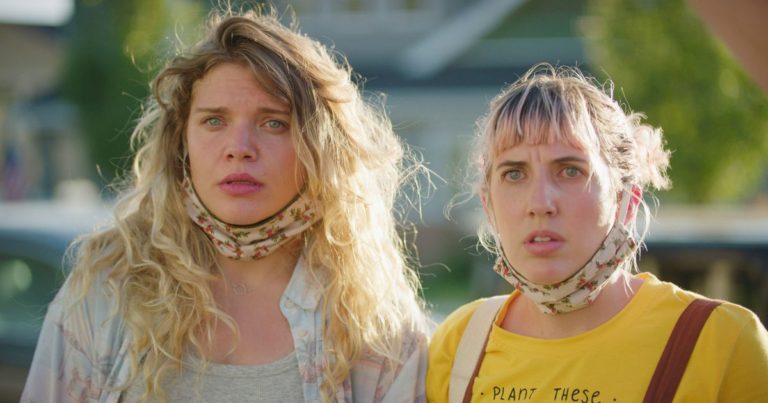
Movie Review (SXSW): ‘Recovery’ is a Hilarious Sibling Road Trip Story with Just Enough Adventure


Director: Mallory Everton and Stephen Meek
Stars: Whitney Call, Mallory Everton, Anne Sward Hansen, Julia Jolley

Synopsis: Two directionless sisters brave a cross-country road trip to rescue their grandmother from a COVID outbreak at her nursing home.

[/info]

Although it is important to remember to be open-minded, the only appropriate approach to a COVID centered film is to be skeptical. Recovery perfectly showcases COVID with comedy and an easily consumable watch that will actually have you laughing out loud instead of forcing anxiety induced relatable chuckles. The opening scene takes the audience back to pre-pandemic times, throwing us into a crowded birthday party full of actions that would make us shudder today: shared bowls of food, invasions personal space, and blowing on cake candles. For the record: no one should ever blow their spit all over a cake again.

An abrupt cut to two weeks later and sisters, roommates, and best friends Jamie (Whitney Call) and Blake (Mallory Everton) worlds are officially turned upside down with the rest of humankind. The news plays in the background over a sad montage of clips informing us of 50k plus positive cases in America, and how unknown the disease still is to experts and average people alike. When Jamie and Blake get an old school piece of snail-mail about their grandmother’s nursing home experiencing an outbreak. First, they try to contact their crazy, obnoxious COVID-denier sister, Erin (Julia Jolley), who lives closer to Nana than they do, but she is on a cruise with her family instead. The writing certainly plays up the ridiculousness of Erin’s attitude toward COVID, giving her characteristics of that person we all have unfortunately come to know during the past year of the pandemic. She is too privileged to think she could ever be affected or infected by a silly, deadly disease. Jamie and Blake know they have no other choice than to brave a road trip to save their Nana as fast they can get to her. The film becomes a race against the COVID clock, but also a race against getting to their Nana before Erin.

Just like any good road trip movie, the sisters face obstacles and diversions along the way. This is where their comedy and chemistry continue to shine bright. They two leads are quick, witty, and energized, feeding off of their connection to continue to bring genuine relatable laughs. The narrative could have benefited more from moments outside of the vehicle, but it does not lessen the strength of their consistent delivery, never getting too serious or far from the focus. They navigate pumping gas, unexpectedly getting their period, going to a stranger’s house to retrieve their Nana’s dog, dealing with car troubles, a motorcyclist spitting in their mouth, and a pre-COVID first date follow-up that goes horribly wrong and completely hilarious. There are a couple over-the-top moments that serve as a punchline of a joke, but you are so charmed and in love with these sisters it is easy to look past because it is still good hearted. Recovery provides just enough adventure that when the resolution is reached at the end, it feels right on time instead of overstaying its welcome. Any film that can pull off not only one good Tom Hanks joke but two, should get its credit where it is due. Add this film to your list of must-see fun, hilarious women friendship adventure films like the under appreciated Unpregnant (2020) or the acclaimed Booksmart (2019), and check out Recovery as soon as it becomes available.

Grade: A-

Poll: What is your favorite Terrence Malick film?

To some, he is a filmmaking god. To others, he is a beautiful and pretentious bore. But to all, he is a complete mystery of a man. Aside from the films he has directed over the span of nearly 50 years (with one 20-year hiatus in between), Terrence Malick has rejected the notion of celebrity so heavily that he essentially became one anyway. Known for his privacy, we can only rely on two things when getting a sense of who Terrence Malick is; the words from those who have worked with him, and from the films he has made, which indicate a man of faith, cultural curiosity, and most of all, nature. His films, and their fluttery style, have their fair share of detractors, but this week’s poll (as we round out our Malick Movie Series) is not for them; like the subjects of his films, it’s for the culturally curious and open-minded.

With that said, what is your favorite Terrence Malick film?


Movie Review (SXSW): ‘Fruits of Labor’ Offers an Empathetic View to the Life of a Mexican-American teen


Director: Emily Cohen Ibañez

Synopsis: A Mexican-American teenage farmworker dreams of graduating high school when ICE raids in her community threaten to separate her family and force her to become her family’s breadwinner.

[/info]

When we meet Ashley, a Mexican-American teenager, she is working in a strawberries field in the Californian coastline. Since she was 15, she has been the economic support of her family consisting of her mom – who works seven days a week as a cleaner – and her three younger siblings. She also tries to fulfill her school obligations with the objective of graduating high school and going to college.

Fruits of Labor, the latest documentary by Latinx filmmaker Emily Cohen Ibañez, offers a coming-of-age story of a young woman dealing with very grown-up issues that are related to her heritage and ethnicity. Ashley’s story is one that reflects the reality of thousands of immigrants in the United States that face a hostile environment, economic tribulation, and, in her case, the expected obstacles of being a teenager.

Cohen Ibañez follows Ashley as she starts her routine early in the morning, goes to school, takes care of her siblings, meets with her boyfriend, and goes to work at a strawberries factory from evening to dawn. The next day her routine starts all over again. With so much under her responsibility, Ashley still finds the time and energy to get excited about her coming graduation.

Through everything, including a conscious realization of Ashley’s responsibilities, her mood and optimism for the future always prevail. She is aware of the multiple challenges she has to face – that not everyone her age has to deal with – and faces every single one of them with determination and poise.

In addition to her daily-life obligations, Ashley has to confront a new threat: the presence of ICE in their neighborhood and workplace, and the possibility that her mother Beatriz will be unexpectedly deported back to Mexico. Consequently, Ashley and Beatriz start making legal preparations in case Ashley needs to become her siblings’ legal guardian.

Fruits of Labor presents a romantic point of view on Ashley’s life and those around her. Focusing on their dreams and interests, Cohen Ibañez creates dignified portraits of her subjects, illustrated by the family’s beliefs and connections to nature. They are deeply interrelated with the local community and their legacy. Even though they do not have much, they are committed to giving something back to their neighborhood.

Ibañez also provides a dignified and empathetic view of the Mexican-American community in California. The documentary works as a coming-of-age story with Ashley facing basic and petty problems (as any teenager), while navigating intense issues. We get to see her life at home, at school, and as a girlfriend. We learn about her feelings of fear and exhaustion, as well as her dreams of going to school. We also see her as an excited teenager when she goes through the traditional American ritual of going to prom, while everything around her underlines her Latin American legacy. This story is valuable because we see the reality of a young woman that is not typically presented on screen.

In addition, the documentary does not shy away from ugly truths that are deeply rooted in Mexican culture. Male chauvinism continues to exist in Mexican families, and as with Ashley’s family, it is supported and promoted by the same women that are affected by it. With three siblings younger than her, Ashley has the sole responsibility of taking care of them. While two of them are quite young (13 and 11), her younger brother (16) is protected by their mother because he is “the man of the house” and “he needs to rest”. When we learn that the boy’s girlfriend is pregnant, their financial support also falls on Ashley’s shoulders.

Still, her life perspective is always positive. Although her schedule is hectic and exhausting, she never complains about her circumstances, although she is well aware of them.

Whether presenting the local laws that do not protect children from working on agricultural labor or the shadow of ICE’s threat, Fruits of Labor works as both a glaring condemnation of the living conditions of minorities in the United States, as a celebration of their determination to improve their lives. Ashley is an empathetic and resilient example that shows us tough lessons on family love, duty, and progress.

Grade: B+

Movie Review (SXSW): ‘The Hunt for Planet B’ is a Humanistic Approach to the Exploration of the Universe


Director: Nathaniel Kahn

Synopsis: The Hunt for Planet B follows a pioneering group of scientists on their quest to find another Earth among the stars with NASA’s high-stakes James Webb Space Telescope.

[/info]

In The Hunt for Planet B, the latest documentary by Oscar-nominated director Nathaniel Kahn, we are offered a privileged view of the most ambitious mission by NASA to date: the construction and future launch of the James Webb Space Telescope, which will allow humans to see the earliest stars and galaxies of the Universe and to study the planets of the Trappist-1 system. Simply put, this project will change our relationship with the Universe. Nevertheless, Kahn’s humanistic approach also makes us feel invested in the lives of the scientists in charge of this revolutionary project.

As the documentary progresses, it is evident that the director is more interested in creating connections with the engineers, astrophysicists, and astronomers than in only offering data and progress. This way, he explores attentively their thoughts, hobbies, illusions, and expectations regarding the mission. As a good storyteller, Kahn makes us feel invested in the main characters as well as in their conflict.

In an ambitious approach, The Hunt for Planet B disseminates its interest in multiple leaders – mostly women –and shows their personal and professional stories. How does an astrophysicist feel about the possibility of finding alien life in the Universe? This documentary constantly explores this question. Kahn allows us to get a peek into the lives and philosophies of some of the most intelligent and capable minds of the planet, while showing us that they are just like us – with illusions, needs and heartbreaks – but with wonderful brains and transcendental goals.

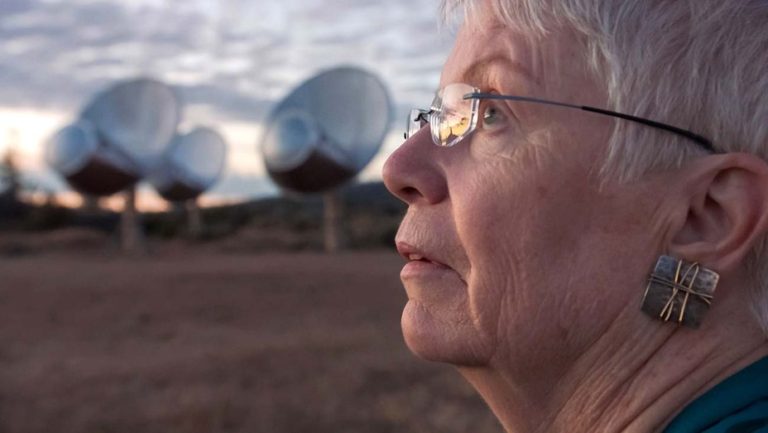
The documentary makes a significant emphasis on the fact that the teams of the James Webb Space Telescope mission are formed and led by women. Through clear and immersing interviews, we meet those who became pioneers in the field of extraterrestrial life and exoplanets – Jill Tarter and Sara Seagar, respectively – as they narrate their involvement in the field, the advance on the search of that planet with specific characteristics that would allow for extraterrestrial life, and their point of view on this subject on a personal level.

These conversations are presented in a casual and enjoyable way. Kahn converses with his subjects while driving around, rowing in local lakes, practicing beekeeping, or racing cars. We get to see their facets as scientists and humans. The documentary invests time interviewing pivotal figures such as Natalie Batalha, Amy Lo, Clara Sousa-Silva, and Maggie Turnbull, who offer enthusiastic views on their projects, as well as friendly explanations on the technical and scientific sides of the mission.

It is a tribute to Kahn’s capable hands, as well as to the scientists who are shattering the glass ceiling in their field, that we are as interested in their achievements, struggles, and philosophies, as well as in the advances of the mission. Their personal views on the matter are exciting and interesting because they do not offer easy answers, but mostly more mysteries about the enigmas of the Universe.

The experience of watching The Hunt for Planet B is enhanced by the technical decisions by Kahn and his team. Paul Leonard-Morgan’s score is playful, inspiring, and meaningful. It makes us feel as if we were watching a Hollywood space movie, only that this is much better because it is real life.

The cinematography by Robert Richman and the concept art developed for the illustration of Trappist-1 System are colorful and captivating. The rendered images help us understand the mission while imagining the possibilities of discoveries on those distant places. Sabine Krayenbühl’s editing creates urgency and interrelation between the subjects, the mission, and the issues on Earth. As we learn about the project, we also see what is threatening the future of this planet. Kahn makes us care for what is happening on our home planet while making us turn our eyes to the stars.

The Hunt for Planet B is an exciting peek into a massive project that will allow us to learn more about space, and consequently, more about ourselves as a species. The commentaries and insights presented by the scientists are so groundbreaking and mystical that they inspire more questions and interest on the subject. The launching of the James Webb Space Telescope is scheduled for October 2021, and with this documentary, hopefully, more people will get as invested and passionate on the matter as those in charge of such an awe-inspiring mission.

Grade: A

Yakuza Man: The Counterculture Career Of Seijun Suzuki

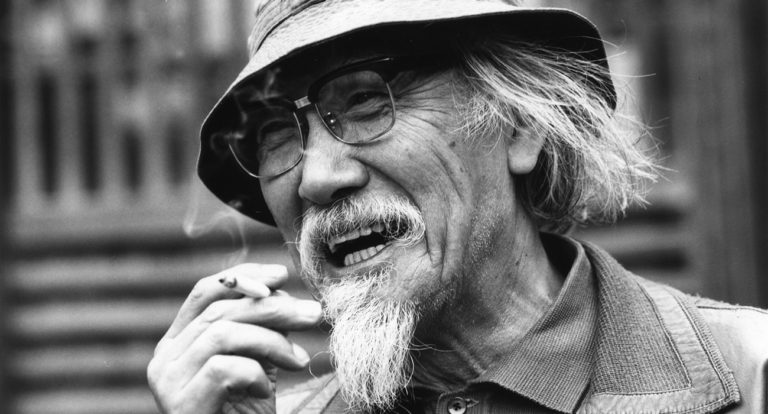
Akira Kurosawa and Yasujirō Ozu are the two names synonymous with Japanese cinema. They are representative of the country’s post-war entertainment with the media, providing the world beautiful scenes of humanity and grace that have become glued with historical pop culture. Even other directors like Kon Ichikawa and Nagisa Oshima have their own place in Japanese cinema that is well recognized. However, the studios blocked a man who dared challenge the entire system with the support of the general public. Seijun Suzuki was like a sore thumb for the industry, but his work spoke to a young generation of moviegoers in the mid-60s the establishment didn’t understand or really appreciate for a long time. 

Born in 1923, Suzuki was conscripted into the Japanese military during World War II and survived two separate sinkings caused by American torpedos; he would describe in time there as farcical. After the war, he was invited by a friend to get a job as an assistant at the Shochiku Company and began to work with different film directors. To his acknowledgment, Suzuki said he wasn’t the best assistant because he was half-drunk all the time, but quickly learned tricks of the trade. In 1953, Nikkatsu Studios reestablished itself after being closed throughout the war, hiring assistant directors from other companies, including Suzuki.

With a bigger salary and more time used as an assistant, Suzuki was given the chance to write a script that was produced (Duel at Sunset) and was promoted to be a full-time lead director. His first movie, 1956’s Victory Is Mine, was a B-film with relative success and Nikkatsu would continue to hire Suzuki on a regular basis. In his first years, Suzuki would make 3 films a year on a small budget in very tight schedules; Underworld Beauty (1958), Take Aim At The Police Van (1960), and Detective Bureau 2-3: Go to Hell Bastards (1963) were notable works in the first half of Suzuki’s career. They were all B-movies, but it started to bring in a cult following, leading up to a short period of movies that would make Suzuki an important director for the 1960s.

Youth Of The Beast (1963)

By the time Suzuka made what was his breakthrough picture, he had made a stunning 30 features. Beast follows a detective who goes undercover in the Yakuza and begins to plan the bosses to fight amongst each other to oust their criminal activities. His main leading actor, Joe Shishido, is a cool cat who embeds himself with the underground world but starts a dangerous game, providing Suzuki to express in a surrealist manner that would follow in his next few features. It is a noir that is not black-and-white, but a rapidly colorful take like Roger Corman’s style of directing.

Tokyo Drifter (1966)

https://www.youtube.com/watch?v=rRHdjWS48Jw

Nikkatsu cut the budget for this film prior because they were not happy with Suzuki’s growing bizarre style that was not part of the studio. However, Suzuki became even more creative to get the images he initially wanted, bothering the heads when it was released. Tetsuya Watari plays a former hitman who wants to live free from the organized crime he once worked in but is harassed by other gangs who want him to join or else he will be killed. For this style, Suzuki looked at pop music and graphic art of the period to create some memorable shots, things that certainly were seen in homage to other samurai and yakuza-style films later on. Again, not a dark noir, but of hip fixtures of Japan’s youthful culture.

Branded To Kill (1967)

Some consider this Suzuki’s magnum opus. Joe Shishido reunited with Suzuki to play a yakuza assassin who is hired for a dangerous assignment and then is hunted by what is seemingly a phantom killer who plays mind games with its target. Suzuki was hired to rewrite the script, which the studio hated, and the day before shooting he changed the tone of the film from a hard-boiled noir to a more comical, anarchistic, absurdist blend with a style that more Godard and Bunuel than traditional Suzuki films. It was also the first time he shot a film with sex scenes – shocking for the time – as the nudity was explicit and demanding. The film was outlandish and theatres were virtually empty when it opened up and confused about every movie critic in Japan. It was the final straw for his bosses at Nikkatsu.

A Blacklisting Victory 

His relationship with Nikkatsu Studios was rocky from the start of his tenure there. Conflicts with the figureheads over his type of work with studio boss Kyusaku Hori came ahead in 1968 when Hori, who saw Suzuki’s films as bringing a terrible reputation to the studio, fired him after watching Branded To Kill and considered it reprehensible. To Hori, Suzuki had for years made, “movies that make no sense and no money,” and only to a selective clique of filmgoers who backed Suzuki. In return, Suzuki sued Nikkatsu for wrongful termination, bringing out massive support from his fans and other members of the film community which shocked the tightknit establishment. Hori stated the following on Suzuki as a director:

Suzuki makes incomprehensible films. Suzuki does not follow the company’s orders. Suzuki’s films are unprofitable and it costs 60 million yen to make one. Suzuki can no longer make films anywhere. He should quit. Suzuki should open a noodle shop or something instead.

After a lengthy trial with massive support from fans and other directors, in 1971, the studio and Suzuki settled out of court, publically apologized for its defaming remarks against the director, and both Fighting Elegy and Branded to Kill were donated by the studio to what is now the National Film Archive of Japan. Nikkatsu lost more when the company lost so much money that it had to liquidate its most valuable assets and had to rebuild the studio by producing “pink films;” otherwise, softcore porn that was also sex comedies and not so subtle in its content. But for Suzuki, his win came at a cost as all major film production companies in Japan blacklisted him for a decade. During the time, he wrote books and directed TV and commercials while also speaking to different film clubs that would show his films at midnight screenings.

A Legacy Of Cool

His return to directing was a triumph, making the Taishō trilogy outside the studio system and receiving acclaim at international film festivals and even the Japanese Academy Awards. A retrospective of his career brought him more global recognition and respect from current directors including Quentin Tarantino, Jim Jarmusch, and Wong Kar-wai. His recognition brought him a new legion of fans endeared to the style Suzuki chose to follow instead of what was expected.  Until his death in 2017, he spoke proudly of his career and idealism that challenged the status quo and has a legacy that carries on sixty years later.

Follow me on Twitter: @brian_cine (Cine-A-Man)

Podcast: Zack Snyder’s Justice League – Episode 422

This week’s episode is brought to you by Patreon and our awesome listener’s like you. Sign up today for early access to bonus content and other great rewards!

This week on the InSession Film Podcast, Ryan fills in for Brendan and we are joined by Nicholas Haskins of Nikoli’s Kitchen to talk Zack Snyder’s Justice League! What a ride it’s been in getting to this point. At four hours, there is plenty to discuss and we do so in non-spoilers and full spoilers.

Big thanks to Nick for joining us once again. It’s been a few years, but it’s always great to hear his voice and passion for the characters that he loves. You’ll have to forgive us, the episode does run long, but we had to get into all of the nuances and details that Zack Snyder brought to the table. #ReleaseTheSnyderCut is considered to be the most talked about film hashtag in recent years, and it somehow transformed an idea into a fully realized product. You don’t see it often, so we pause Malick this week to talk everything that was Zack Snyder’s Justice League.

On that note, check out this week’s show and let us know what you think in the comment section. Thanks for listening and for supporting the InSession Film Podcast!

– Movie Review: Zack Snyder’s Justice League (6:52)
Director: Zack Snyder
Writers: Chris Terrio
Stars: Ben Affleck, Henry Cavill, Gal Gadot, Ray Fisher, Ezra Miller, Jason Momoa

– Notes / Discussion (1:10:17)

As mentioned above, given the length of Zack Snyder’s Justice League and how long we converse over it, there wasn’t too much involved for our break segment this week. A few notes and a few jokes before we get back into the main course.

[divider]

RELATED: Listen to Episode 413 of the InSession Film Podcast where we discussed our Top 10 Movies of 2020!

[divider]

Zack Snyder’s Justice League SPOILERS (1:23:25)
In lieu of a Top 3, we decided it was best to continue our review with some fun, nerdy spoilers. Between the epilogue, some of the film’s plotting, and the vast amount of characterization, we desperately needed to get into all of the gritty details. We are assuming you’ve seen the film by now, but in case you haven’t, fair warning for this portion of the show. If there are aspects of the film we didn’t cover that you’d like our thoughts on, let us know and perhaps we can do some bonus content for that for you.

Show Sponsor: First Time Watchers Podcast

– Music

The Crew at Warpower – Tom Holkenborg
Wonder Woman Defending & What Rough Beast – Tom Holkenborg
At the Speed of Force – Tom Holkenborg
The Return of the Eagle – Atli Örvarsson

Subscribe to our Podcasts RSS
Subscribe to our Podcasts on iTunes
Listen on Spotify
Listen on Stitcher
InSession Film Podcast – Episode 422

[divider]

Next week on the show:

Review: The Tree of Life
Top 3: N/A

[divider]

Help Support The InSession Film Podcast

If you want to help support us, there are several ways you can help us and we’d absolutely appreciate it. Every penny goes directly back into supporting the show and we are truly honored and grateful. Thanks for your support and for listening to the InSession Film Podcast!

VISIT OUR DONATE PAGE HERE

Movie Review (SXSW): ‘United States vs. Reality Winner’ Portrays the Complicated Relationship between the U.S.A and its Whistleblowers


Director: Sonia Kennebeck

Synopsis: The story of a 25-year-old Reality Winner who disclosed a document about Russian election interference to the media and became the number one leak target of the Trump administration.

[/info]

United States vs. Reality Winner presents the real story of an American whistleblower that as of today is behind bars for leaking an NSA classified document related to the Russian interference in the 2016 political elections. Reality Winner, an NSA contractor, was 25 years old when she decided to do this reckless – but in her mind, necessary – thing, resulting in the longest prison sentence for a whistleblower in the history of the United States.

The documentary by filmmaker Sonia Kennebeck offers a close look into Winner’s life before this decision, tracking her patriotic mindset, her time as a military, and her disillusionment with her country once Donald Trump was elected. It also shows the way the FBI violated her rights, set her up, and wearied her down in an unfair and advantageous trial that resulted in her current incarceration.

The exhibited information can easily be divided in two: the one related to the legal case that surrounds her leak and the context of her decision, and her personal history that led her to this irreparable action. The cameras follow her mother, stepfather, and sister as they explain some of the personal conversations and social media posts that became part of the investigation. Given that the director does not have access to Reality, her family become her representatives in the trial of public opinion.

While the presentation of Winner’s background is necessary for the audience to understand her actions and determination in the exposition of what is at one point described as “one of the most important documents ever leaked”, the documentary explores too much into her past. Her mindset, way of living and values are important. However, Kennebeck goes a little too far – and too late in the feature –, resulting in that much of the information presented feels unnecessary and sentimental.

The documentary attempts to make the audience create a bond of interest and concern for Reality by the presentation of her background and ideals. In this regard, United States vs Reality Winner is not neutral. Instead, it has the purpose of clearing up Winner’s name and help her cause. Through the exposition of the case, including the FBI’s early interrogation and intimidation techniques, the careless way in which the prosecution handled the case, or the tricky way she was portrayed in the media, it is easy to feel sympathy for Winner.

United States vs Reality Winner is more valuable when it shows the multiple procedural violations during Winner’s process and less of Winner’s past. For example, alone and unprotected, she was at the mercy of FBI agents that questioned her without reading her her rights. This detail was later disregarded by the court. It also exhibits the contradictory messages the American government promotes regarding duty and patriotism, or compliance and “the right thing to do”. While her actions were vital for the events that would unfold in the matter of the political elections of 2016, her role in history has been defined by a damning treatment by the same country she was trying to protect.

The involvement of The Intercept in Winner’s story is also interesting and infuriating. Distinguished as the news organization selected by Winner to break the story, its journalists played a pivotal, albeit stupid, role in her arrest. The reckless handling of the information provided by this whistleblower shines a light on the sacred bond between informant and journalist, as well as the need for extensive protection of the former by the latter (and that should have existed in this case).

To provide an overview of the current relation between the government and American whistleblowers, famous figures such as Thomas Drake and Edward Snowden offer personal views and their experience on the matter. While their contributions are enriching and eye-opening, it is evident that they talk more about themselves than Reality Winner, especially Snowden.

United States vs Reality Winner is a valuable piece of journalism about American whistleblowers and the complicated role they play in the United States’ political scenario. In the case of Reality Winner, she turned out to be a vital pawn in one the most high-profiled issues of America’s contemporary history. And still, while the country confronted an attack to its democratic system with Winner’s help, she continues to be perceived as a villain going against the very things she tried to protect.

Grade: C+

MOVIE REVIEW (SXSW): ‘The Drover’s Wife The Legend of Molly Johnson’ Offers a Feminist Twist on a Classic Western Tale


Director: Leah Purcell
Writers: Leah Purcell
Stars: Leah Purcell, Rob Collins, Sam Reid, Jessica De Gouw, Malachi Dower-Roberts

Synopsis: A lonely bushwoman struggles to raise her children and run the family farm while her husband is away.

[/info]

Leah Purcell pulls the best type of power move by writing, directing, and starring in this feminist-based western story, set in the Australian outback in the late 1800s. Purcell flips the script for this film, telling it from the perspective of the main character, Molly Johnson, and reclaiming it to make it her story, when the original story, its source material is from the 1892 Henry Lawson short story “The Drover’s Wife”. Purcell confidently takes on issues of gender, race, and abuse in what starts out promising, it unfortunately just falls to being quite depressing watch.

Molly Johnson (Leah Purcell) proves to be an independent badass from the first scene of the film. There is no time wasted to make that happen; a huge bull approaches her tiny shack of a home, and she kills it before it can get her to many children. It is apparent that she is very pregnant, but there is no man or husband to be seen yet. The stage is set very early on that she is a woman who is solely focused on protecting her family and her home, especially while her husband is gone for long stretches of time. A couple stumbles upon Molly and her home, she is skeptical but invites them in, learning their identities as Sergeant Nate Clintoff (Sam Reid) and his wife, Louisa (Jessica De Gouw), a London-born strong-willed feminist. When Sgt. Nate makes it to town and working in law enforcement, he is saddled with solving a multiple murder cases. Molly unknowingly becomes connected to the murderer, when she finds him at her home, she intends to take on her protective mode but ends up going into labor. The fugitive, Yadaka (Rob Collins) assists her with the childbirth, and inevitably the two form a bond and complexities ensue from here until the end of the film, increasing with intensity.

The score was incredible, but honestly, sometimes it just did not fit properly. There were super twangy moments, fitting the western genre appropriately, but there were heavy rock tones in other moments and sometimes it just felt misplaced and unsure. Like many westerns often do, the landscape provides a visually stimulating look and overall enjoyment of the cinematography. These two production elements are the best part of the film, aside from Purcell’s strong performance, fully capturing the spirit of Molly Johnson and making it her own. There are moments throughout that should have been more suspenseful than they actually played out to be, this really fell short when it could have and should have benefited from it overall.

Overall this was an intriguing watch, one of those films that leaves you feeling a mixture of, wow a lot happened, but did a lot actually happen? It seems action packed but in reality, it was pretty straightforward in serving the story. Nothing actually good happens in this narrative, other than women standing up for one another. Otherwise, this is a sad and desolate story that will leave you with no desire to ever revisit it.

Grade: C