Home Blog Page 144

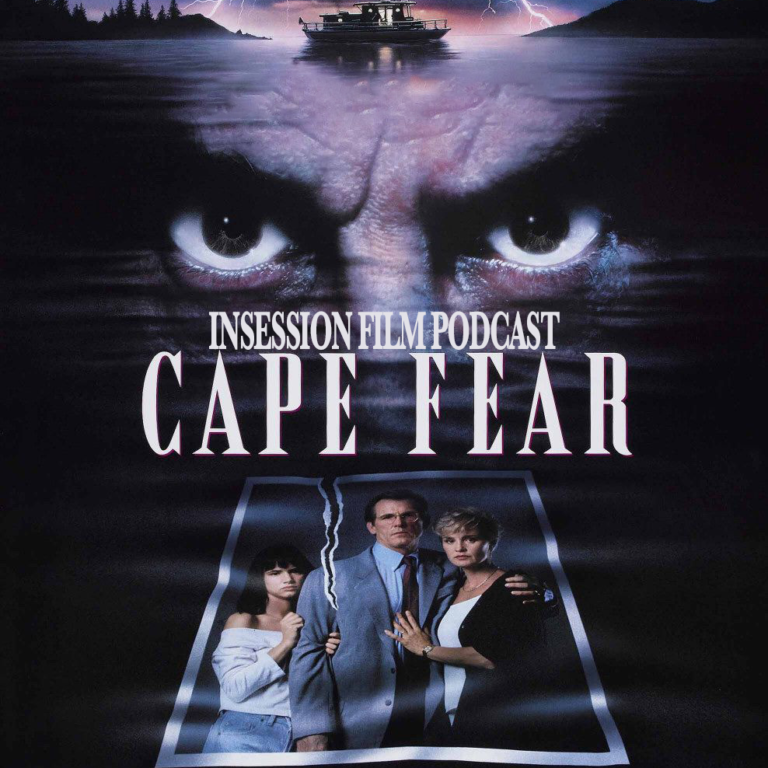
Podcast: Cape Fear / The Greatest Beer Run Ever – Extra Film

This week on the Extra Film Podcast, Ryan and Sophia continue their Martin Scorsese Movie Series with Cape Fear and they also review Peter Farrelly’s new film The Greatest Beer Run Ever!

Cape Fear may not be top tier Scorsese for most people, but it’s still a very good movie that has plenty to offer within the ethos of Scorsese. We had a lot of fun dissecting it and talking about why its nuances resonate as well as they do. The Greatest Beer Run Ever, however, is just not very good. And so we do our best to have fun with that review.

On that note, check out this week’s show and let us know what you think in the comment section. Thanks for listening and for supporting the InSession Film Podcast!

– Movie Review: Cape Fear (6:29)
Director: Martin Scorsese
Writers: Wesley Strick
Stars: Robert De Niro, Nick Nolte, Jessica Lange

– Movie Review: The Greatest Beer Run Ever (58:21)
Director: Peter Farrelly
Writers: Peter Farrelly, Brian Currie, Pete Jones
Stars: Ana de Armas, Adrien Brody, Bobby Cannavale

– Music

Cape Fear – Dave Palmer
That’s Alright – Steve Smith and the Nakeds
The Return of the Eagle – Atli Örvarsson

Subscribe to our Podcasts RSS
Subscribe to our Podcasts on iTunes
Listen on Spotify
Listen on Stitcher
Extra Film – Cape Fear / The Greatest Beer Run Ever

[divider]

To hear this Extra Film episode and everything else we do, download our apps on the Amazon Market for Android and the Podcast Source app on IOS devices. The mobile app covers all of our main shows, bonus podcasts and everything else relating to the InSession Film Podcast. Thanks for your wonderful support and for listening to our show. It means the world to us.

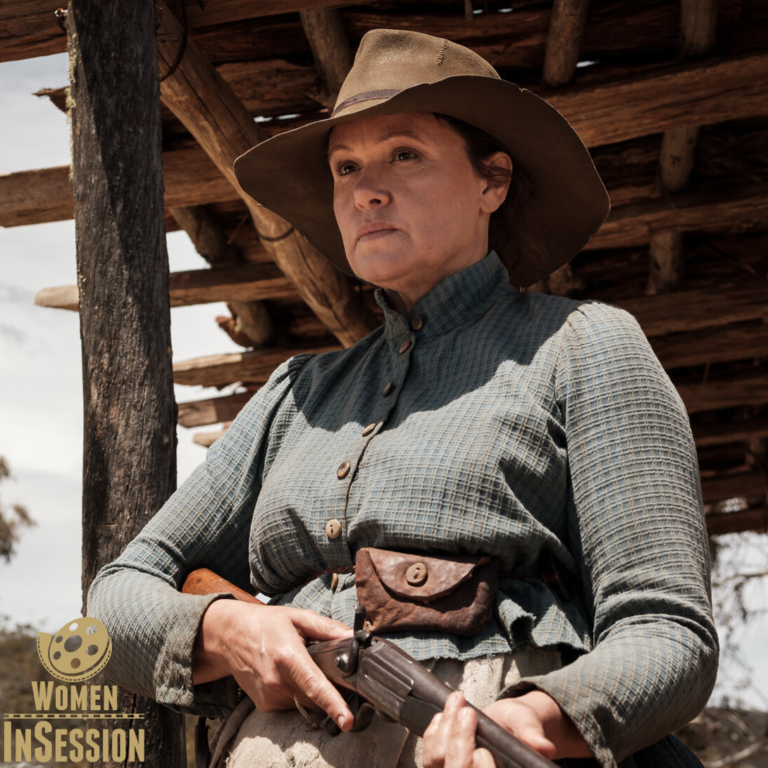
Women InSession: Indies, Shorts & Westerns – Episode 11

This week on Women InSession Podcast, we talk everything from short films, to the state of independent cinema and horror westerns! In other words, the conversation is a little bit of a movie buffet. We bounce around to various subjects and talk about the films we’ve been consuming lately. It was fun, join us!

Panel: Kristin Battestella, Zita Short, Erica Richards

On that note, check out this week’s show and let us know what you think in the comment section. Thanks for listening and for supporting the InSession Film Podcast!

– Guy Pearce Discussion

– Music

The Return of the Eagle – Atli Örvarsson

Subscribe to our Podcasts RSS
Subscribe to our Podcasts on iTunes
Listen on Spotify
Listen on Stitcher
Women InSession – Indies, Shorts & Westerns

[divider]

To hear this Extra Film episode and everything else we do, download our apps on the Amazon Market for Android and the Podcast Source app on IOS devices. The mobile app covers all of our main shows, bonus podcasts and everything else relating to the InSession Film Podcast. Thanks for your wonderful support and for listening to our show. It means the world to us.

Movie Review: ‘The Greatest Beer Run Ever” is a Film as Flat as the Beer Being Served


Director: Peter Farrelly

Writers: Peter Farrelly, Brian Hayes Currie, Pete Jones

Stars: Zac Efron, Russell Crowe, Jake Picking

Synopsis: A man’s story of leaving New York in 1967 to bring beer to his childhood buddies in the Army while they are fighting in Vietnam.


With the release of The Greatest Beer Run Ever, it means we have officially seen every single type of Vietnam war film imaginable – it’s pretty much all been covered now, and this is perhaps the most underwhelming of them all. In recent years, Peter Farrelly has ventured down a very different path with his films, known for crass and quirky comedies either on his own or when partnering with his brother Bobby, Farrelly’s filmmaking career has definitely shifted. This latest offering actually shares a relationship with his previous film, the controversial Oscar winner Green Book: a middle-of-the-road “feel good” film featuring a naïve American who ventures on a journey that changes his views and preconceptions. And even though The Greatest Beer Run Ever tastes as flat as warm, three-day-old beer affected by the Vietnamese humidity, its heart at least tries to be in the right place.

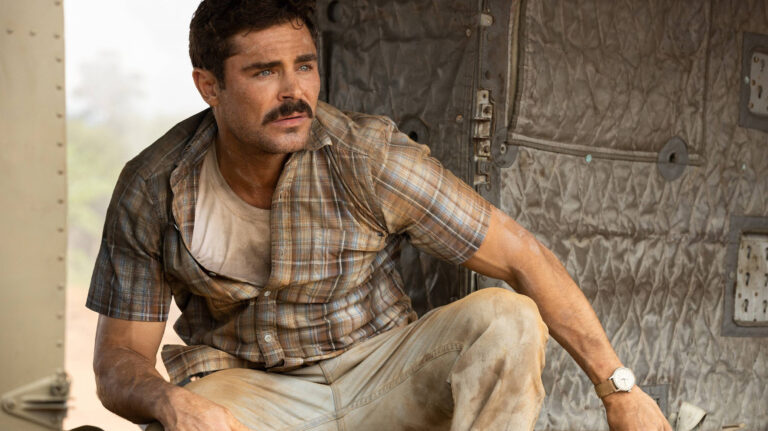
The story itself is a brilliant one, and regardless of how unbelievable it may sound, it did happen to some extent. Based on the life of New York local John “Chickie” Donohue (Zac Efron), and his decision to travel to Vietnam in 1968 so he can show support to his army buddies by gifting them some delightful beers. Chickie is soon confronted with the horrors of the war and the mountainous task he has taken on though, which forces his patriotic faith to the brink. A story as quirky as this, one with so much warmth and hope should be represented with great excitement, something that really illuminates your soul with its powerful message. But instead, it turns into something very predictable and incredibly formulaic, with enough Vietnam war film cliches to send you in a spin.

What Peter Farrelly has done here is make an already hard-to-believe story even more unbelievable, everything just falls so perfectly into place; Chickie finds himself in the exact place that he needs to be at the perfect time – this guy gets in where air can’t. And although it tries (and you’d better believe it really does try) it just doesn’t have that Farrelly brother’s comedic charm and likeability that so many previous films have. It also suffers from not having a strong comedic actor to anchor the film and support it through the low points, especially when it really needs one to call upon. Zac Efron tries his best but he’s just not as enigmatic enough and he seems to lack a certain something – a little bit of magic – from the character. And it’s not like you can call upon Bill Murray to drag you out of the trenches either because he plays such a bit-part role that he’s almost pointless, contrary to what his billing might say.

What it does a good job of though (because it’s not all bad, you know) is to show how the impact of war can affect a blue-collared, average joe. It feels like your typical patriot film that many Americans might want to watch on a chilled-out Sunday afternoon while sipping on a few cold ones. There’s even a change in the wind as well, where it slowly moves away from the” feel-good comedy” aspect and attempts to move through the gears and deliver something more heartfelt – it’s just a shame that it happens 30 minutes from the end, but it is what it is. The key moment for this is the reintroduction of Arthur Coates (Russell Crowe) who partakes in an actual adult discussion with Chickie before they then traverse through the burning buildings, the explosions, and the death, you know, all the war stuff. It offers a stark realization of the circumstances, away from all the fun and games, and the beer, of course.

This is far from a terrible film even if it is slightly mistaken about what it actually wants to be. It desperately tries to live up to the quirky and uplifting story that it is based on, with a touch of Farrelly humor sprinkled over the top, but none of the humor really sticks, and for a film that is dubbed as a “comedy” it’s severely lacking the crucial ingredient you need to become a success. The Greatest Beer Run Ever is ultimately a very simple film, but a film that does have a very crucial message, nonetheless. The message it successfully relays is that, regardless of how you viewed the Vietnam War or any war in its stead, every soldier needs the support of their friends and family, whether it be spiritually, morally, or in this case, through a brazen but big-hearted neighbor and a sack full of warm beers.

Grade – C


Film at 25: “In and Out” Still an Appealing Gay Comedy Despite Cringeworthy Moments

0


Director: Frank Oz

Writer: Paul Rudnick

Starring: Kevin Kline, Joan Cusack, Tom Selleck, Matt Dillon

Synopsis: A midwestern teacher questions his sexuality after a former student outs him at the Academy Awards. 


Gay films in the 1990s were few and far between, especially when it came to wider audiences. The comedy genre in particular was mostly a wasteland for LGBTQ+ content, but three films in the middle part of the decade opened up lots of possibilities—The Adventures of Priscilla, Queen of the Desert, which won the Oscar for Best Costume Design; To Wong Foo, Thanks for Everything, Julie Newmar, which was rated PG-13 and developed a large cult audience; and The Birdcage, which was a smash hit upon its release in early 1996. Mike Nichols’ crowd-pleasing comedy remake especially showed there was a massive audience for gay comedies, and so in 1997 along came In and Out, which at the time felt like the first LGBTQ+ movie advertised to all audiences, not only adults. It had a great cast, a seasoned comedy director, and just the right tone with its subject matter to reach almost everyone. 

The set-up to the film is famously inspired by Tom Hanks’ acceptance speech when he won Best Actor at the 1994 Academy Awards for his performance in the LGBTQ drama Philadelphia. Near the end of his speech, Hanks called his high school drama coach Rawley Farnsworth and his former classmate John Gilkerson “two of the finest gay Americans, two wonderful men that I had the good fortune to be associated with.” Screenwriter Paul Rudnick listened to that moment and wondered, what if Hanks had just accidentally outed one or both of those men? And what if he was about to be married to a woman? Howard Brackett is that man in In and Out, a drama teacher engaged to his dear Emily, shocked when his former student Cameron Drake says his name on the Oscars telecast and then tells the world he’s gay. 

It’s a premise that wouldn’t fly so well these days, but in 1997, this was high-concept hilarity that was destined to bring in people who flocked to see The Birdcage the year before, and even some new viewers who might not otherwise take a chance on a gay comedy. Kevin Kline has always been a greatly respected actor, but he was especially so in the 1990s after successful comedies like Soapdish and Dave and acclaimed dramas like Grand Canyon and The Ice Storm, the latter of which also opened in September 1997. His presence brought in curious audience members, along with a stellar supporting cast including Debbie Reynolds, Tom Selleck, Wilford Brimley, Matt Dillon, and the fantastic Joan Cusack, who achieved the film’s sole Oscar nomination. 

In and Out is still a delight to watch, more for its cast than the now somewhat dated screenplay. Moments still give plenty of laughs, like the presentation of the Academy Awards in which presenter Glenn Close announces extremely seriously one of the five Best Actor nominees as, “Steven Seagal for Snowball From Hell.” Dillon has fun playing a rich, egotistical actor trying to make amends, and Reynolds and Brimley have great comic timing as Howard’s parents.

But it’s the divine Cusack performance as Emily that has aged the best by far, her character’s sweetness early in the narrative turning to disbelief and rage by the time Howard tells her “I’m gay” when they’re saying their vows at the altar. She’s been solid in the movie up until this point, but when she goes on her emotional rampage, eventually ending up at a bar in full wedding dress, her reaction to finding out the sexuality of Tom Selleck’s character Peter Malloy is an all-time classic: “Is everybody gay?” 

What has aged the worst are all the stereotypical gay jokes about Howard’s clothes and mannerisms, his students commenting on his every movement, his parents trying to find answers to their many questions, Howard’s unstoppable desire to dance around the room like a crazy person to “I Will Survive.” Moments like these were perfectly amusing in 1997, but they’re cringeworthy now, probably nothing worse than the school principal unable to say the word “homosexual” out loud in its entirety. 

But In and Out broke some barriers, too, and that shouldn’t go unnoticed. Director Frank Oz, who’s made so many comedic gems in his long career like Bowfinger and Little Shop of Horrors, and openly gay screenwriter Paul Rudnick, who also penned the 1995 gay comedy Jeffrey as well as the brilliant 1993 sequel Addams Family Values co-starring Joan Cusack, did a hell of a lot right in In and Out, starting with making Howard three-dimensional, passionate, interesting—and Oscar-winner Kevin Kline always takes the character’s journey seriously. The ending doesn’t cop out, and that long kiss shared between Kline and Tom Selleck is a particularly important moment in the history of gay mainstream cinema.

It’s not anywhere near perfect, but there’s still a lot to like about In and Out all these years later, despite LGBTQ+ cinema having transformed monumentally throughout the last couple decades, every year the amount and quality of the content growing more and more. How fitting that the new movie Bros, the first ever R-rated gay romantic comedy from a major studio, is hitting theaters exactly twenty-five years to the month that In and Out, one of the first mainstream gay comedies released by a major studio, first appeared before audiences. We’ve come a long way, and although Frank Oz’s hit comedy might have aged poorly in some respects, it was ultimately a step in the right direction.  

Subtle Fifties Hitchcock

Though not To Catch a Thief, Rear Window, Vertigo, or North by Northwest, this trio of perhaps quieter, subtle Alfred Hitchcock fifties films remains top tier suspense.


Dial M for Murder

Stereotypical bliss gives way to scandalous red dresses, blackmail, and stolen love letters in this 1954 treatise. The pip pip cheerio exposition is laden and meticulous, but the eponymous request drops so casually during devious, who’s pulling the wool two-handers. Elaborately orchestrated, fatally timed phone calls tell viewers the who, when, where, and why. Unfortunately, the victim isn’t where she’s supposed to be – leading to suspenseful slip ups, roughness over the desk, risque strangulation, and penetrating scissors. Seemingly doting but obsessive husband Ray Milland (The Lost Weekend) lets another man enter the home and do to sophisticated but adulterous wife Grace Kelly (The Country Girl) what he cannot in a disturbing, intimate attack brimming with sexual, cuckold, and homoerotic subtext. Jolly good men pour drinks and ponder detective novel meta what ifs, trying to outwit the police with fake knee injuries, planted evidence, tea, and debonair tall tales. Our Mrs. is numb, overwhelmed at remembering his horrible eyes as suspicious stockings escalate to lawyers and nightmarish trials. Keys and staircases play their usual Hitchcockian part amid rotary phones, fedoras, and cigarettes. The original then vogue 3-D design is also evident with exaggerated foreground objects. However, the filming through doorways is more about the Hitchcock voyeurism, and panning cameras, overhead angles, and killer point of view invoke giallo mood. Exceptional lighting schemes spotlight the claustrophobic two room action, and frenetic notes match the hoodwinking performances and reverse whodunit.


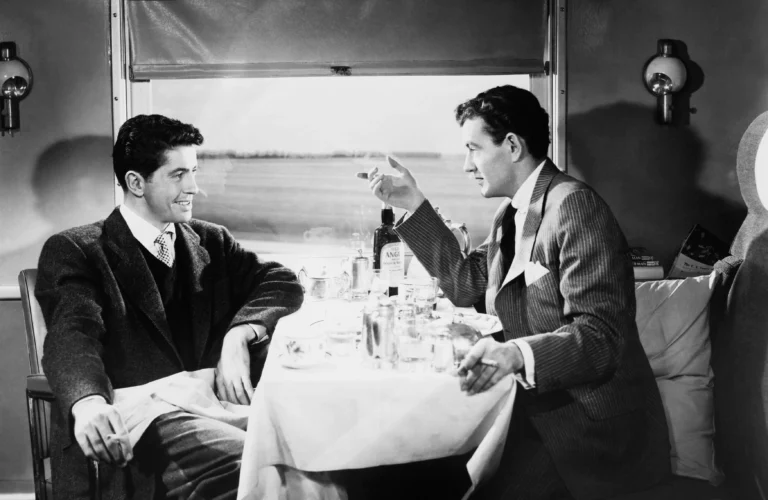
Strangers on a Train

Robert Walker (Since You Went Away) plots to switch murders with Farley Granger (Rope) in this duplicitous 1951 Patricia Highsmith adaptation. Swanky shoes, railroad tracks, double scotch, and tennis metaphors lead to pairs, bigamy, and divorce as our men sit side by side and tell their infidelities – or who they hate enough to kill. The flirtatious banter gets right to the premise, for there’s no motive if a stranger kills your pregnant by another man, two-timing wife. Filming through windows or fences, private conversations in glass listening booths, repeated criss cross double cross phrases, parallel scene transitions, and hushed phone calls layer the read between the lines of Walker’s flashy sociopath. Hot dog cravings, suggestive ice cream licks, and two boats in the tunnel of love escalate to dual shadows, double meaning dialogue, silent violence, and reflections of the crime in broken glasses. The killer expects his fellow passenger to reciprocate, and camera angles above or below accent the light versus dark reversals. Split screen framing and visual positioning imply homosexual dominance or submission amid black and white contrasts, lookalikes, and mistaken identity. The lengthy tennis game, however, is dry, uneven and intercut with ominous travel and lost lighters. A lack of proper procedures is hair pulling to modern viewers, and our strangers sure harass each other a lot before a preposterous high speed carousel finale with happy winks and no consequences. Fortunately, the duality, technique, and subtext here combine for fascinating repeat study.


The Wrong Man

Real life accusations of a crime he didn’t commit are ripped from the headlines in this 1956 thriller starring the slightly miscast Henry Fonda (Grapes of Wrath). The initial wholesome is dated with kitchen domestics and twee kids, but wife Vera Miles (Psycho) needs dental work and it’s the $300 cost that hurts. They borrow against their insurance policy and make payments but there’s always something assuring you never get ahead. Ninny old ladies mistake our innocent as the man who held them up – melodramatic profiling matching today’s bigotry as harsh detectives claim he “fits the description.” The interrogating police are more like heavies insinuating gambling debts and using his generic first name “Chris” rather than his preferred, more ethnic “Manny” as he’s paraded to the crime scenes for victims to identify in a polluted investigation of contaminated line ups and circumstantial penmanship. The textbook framework is unnecessary, laden like the legalese when the factual locations, fingerprinting, and fleeting glances of the family in the courtroom capture the unease. Spotlights, cell shadows, pacing, and the dizzying camera invoke the night in jail delirium. Viewers feel the xenophobic persecution thanks to paddy wagons, auctioneer-esque arraignments, and a hefty $7500 bail. It’s on the accused to confirm his vacation and injury on the hold up dates as fractured mirrors and pointing fingers ruin the saccharin family life. Though frustratingly realistic, the drawn out scope between procedure and personal is uneven. The hyperbolic prosecutor and smug witnesses grow bored amid courtroom yawns and mistrials while the defendant prays. Fonda anchors the harrowing experience as they chew him up and spit him out, and the bitter, unsettling resolution remains disturbing.


Getting Low At Highgate Cemetery

Yup, I’m at it again with the cemeteries. 

Not that I would romanticize death or think that far ahead, but these aren’t just random places. Highgate, one of London’s “Magnificent Seven” cemeteries, is the same as Père Lachaise. A large space where thousands upon thousands are buried, it is both a preserved park with sprawling trees and plants around the memorials as well as a piece of Victorian-era architecture. It opened in 1839 outside of central London to take in more of the deceased and is split East and West. It’s 37 acres and has more than 170,000 internments which have made Highgate the most well-known of the Magnificent Seven.

The most famous permanent resident of Highgate is Karl Marx, who attracts thousands of his political followers to pay tribute to him. His grave, like Oscar Wilde’s, is noteworthy because of the large sculpture of his head with his famous phrase engraved, “Workers of all lands, unite!” Others buried here include singer George Michael, alongside his sister and mother, Hitchikers Guide To The Galaxy author Douglas Adams, and artist/talent manager Malcolm McLaren, whose most famous act was the punk band The Sex Pistols. Of course, many more British figures from the last two hundred years are here, plus notable figures from the world of film.


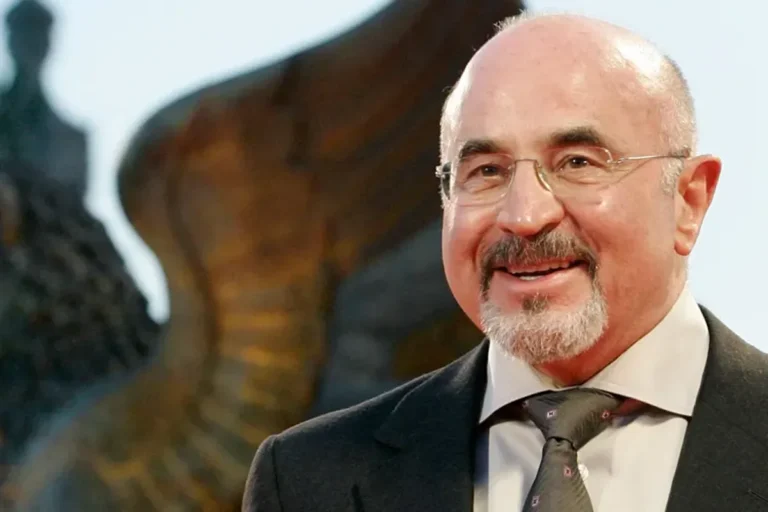
Bob Hoskins (1942-2014)

Hoskins was one of those actors that could be menacing while also someone who has a soft side. Actors who worked with him used the word “gentleman” to describe Hoskins’ persona, being able to extend the range of characters he could fit into. In The Long Good Friday, he was a gangster who tried to put on a business face; his best performance by far was in Neil Jordan’s Mona Lisa, playing a released convict who serves as a chauffeur for a prostitute he starts to fall in love with. Most famously, Hoskins played a private investigator mixed within the world of real humans and living cartoons breathing the same space in Who Framed Roger Rabbit? A Londonite all of his life, it was fitting to be buried in the city.


Carl Mayer (1894-1944)

Mayer does not seem like a significant figure in movies, but he played a role during the 1920s in Germany’s expressionism era of film, which carried over into Hollywood. He co-wrote The Cabinet of Dr. Caligari, one of the greatest films of the era and what Roger Ebert called, “the first true horror film.” Later, Mayer would start a working collaboration with F.W. Murnau; first with the acclaimed The Last Laugh in 1924 and again three years later when Murnau went to Hollywood. That film was Sunrise: A Song Of Two Humans in 1927 which gave Fox Films (prior to merging with 20th Century studios) a breakthrough using their sound-on-film system and won not Best Picture – which went to Wings – but Unique and Artistic Picture, the only time that has been awarded. After his death, Mayer’s friends paid for his headstone which reads, Pioneer in the art of the cinema.”


Ralph Richardson (1902-1983)

Among the legendary trio of actors in the twentieth century that graced the British stage the most (alongside Laurence Olivier and John Gielgud), Sir Ralph Richardson was a leader of the Old Vic as one of the best Shakespeare actors of the time. This includes over 60 film roles, and while he never won an acting Oscar compared to Olivier and Gielgud, his performances on screen were still spectacular. This includes The Heiress opposite Olivia de Haviland, the 30s sci-fi classic Things To Come, Long Day’s Journey Into Night opposite Katherine Hepburn, and Doctor Zhivago. He was posthumously nominated for an Oscar for his role in Greystoke, The Legend of Tarzan. 


Anthony (1926-2001) & Peter Schaffer (1926-2016)

The twin brothers would have equal success on stage and screen as writers. Anthony won a Tony Award with his play Sleuth which was later adapted for the screen twice; the more noted adaptation was in 1972 starring Laurence Olivier and Michael Caine. He would write Frenzy for director Alfred Hitchcock and the original version of the horror classic The Wicker Man. Peter would top that with two Tony Award-winning plays, Equus and Amadeus. For the latter, he would also win the Oscar for Best Adapted Screenplay while the film, directed by Milos Forman, would win Best Picture. The brothers are buried separately with Peter buried alongside his longtime partner who predeceased him.


Follow me on Twitter: @brian_cine (Cine-A-Man)

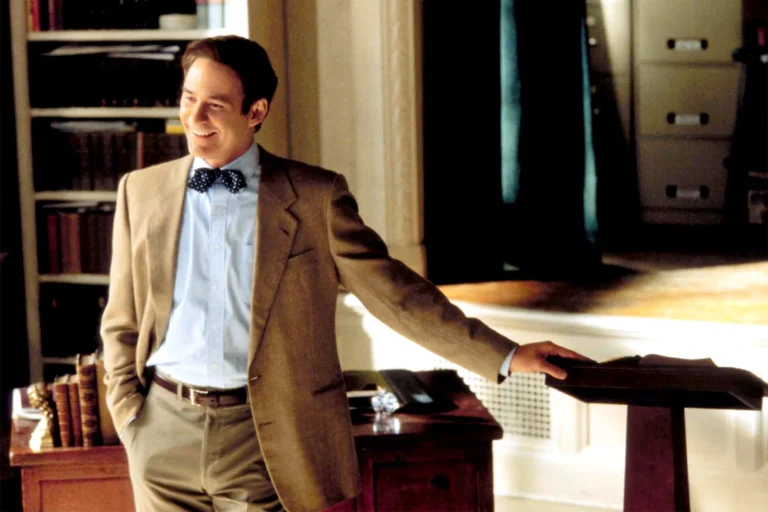
Movie Review: ‘The Good House’ Leads Lifts It Above Its Limitations


Directors: Maya Forbes and Wally Wolodarsky

Writers: Thomas Bezucha, Maya Forbes and Wally Wolodarksy

Stars: Sigourney Weaver, Kevin Kline, Morena Baccarin, Rob Delaney, and Beverly D’Angelo

Synopsis: Life for New England realtor Hildy Good begins to unravel when she hooks up with an old flame of hers from New York. 

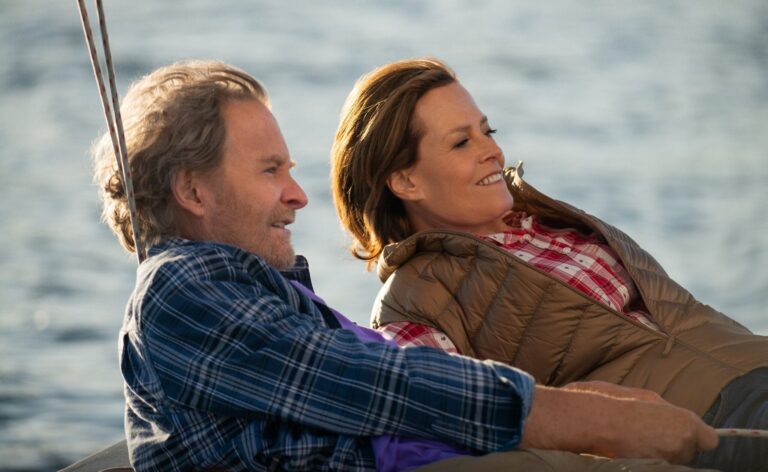
The Good House, based on Ann Leary’s book of the same name, won’t impress viewers who are looking for something complex or, dare I say, cinematic. But if you just want to curl up in front of a giant screen and enjoy something not too complicated and not too terrible either, then it may do the trick. There are far more egregious rom-coms out there that are either overtly sentimental or don’t work. This one works, simply because of its lead performances from Sigourney Weaver and Kevin Kline, but it’s not without its flaws. 

One of its main problems is how it treats the subject of alcoholism. Our main protagonist, Hildy Good (Weaver), is an alcoholic. She drowns her sorrows with wine (to which she justifies herself by saying it’s “not really drinking” by consistently breaking the fourth wall to the audience) in the evenings and doesn’t remember what occurred the following day. Alcoholism is a difficult subject to talk about in film, and the movie doesn’t treat it in a thoughtful, or emotionally poignant, light. Good’s problem with alcoholism is riddled with cliché after cliché, and becomes, at some point, quite silly to watch, because it doesn’t have anything to do with the main plot!

It’s almost as if this was one of the main themes in the book the filmmakers tacked on as an afterthought instead of making the audience understand Hildy and her family’s perspective. The next problem is how none of the supporting cast has anything remotely interesting to do, which is a shame, because look at the talent on display! Morena Baccarin, Rob Delaney, Beverly D’Angelo, Rebecca Henderson, Paul Guilfoyle, and the list goes on. But none of these actors add anything to the story, or have a purpose to what Hildy is looking for. There are a lot of great names attached to the project, and yet they could’ve been played by throwaway actors. 

It’s especially sad to see Rob Delaney wasted like this—he’s really funny in everything he does, but has also shown great emotional depth with some of the roles he’s played. And yet the movie doesn’t exploit any of his talents as a versatile actor, playing a character with little emotional depth, when he’s one of the bigger players in the movie. Aside from Hildy and Frank (Kline), none of the characters are developed. 

Thankfully, Weaver and Kline nearly save the movie from being a predictable, and surface-level bore. Like most rom-coms, you see everything coming a mile away. You know that the not-so-perfect couple will eventually end up together, and live happily ever after. But the journey is the most interesting part, and Kline and Weaver make up for its predictable platitudes with two heartwarming performances. They’re both very funny when they’re together, and their natural chemistry fires off all cylinders. Without them, the movie wouldn’t have worked, but they make it watchable. 

The movie tries to be original by having Weaver break the fourth wall multiple times. It doesn’t always work, but it adds an interesting layer to her character that wouldn’t have been possible would it have stayed in formulaic territory. Because of these elements, The Good House ultimately won me over. Weaver and Kline are incredibly charming together, and the fourth wall breaks added a light layer of comedy that helped me sit through a packed screening full of grannies (I was the youngest one, it felt a tad weird). Though if you crave something deeper, and more meaningful, this will not be the movie for you. However, I can think of a thousand worse movies than this one for you to spend the weekend over with, so it really isn’t a terrible choice to see at the movies this weekend. 


Grade: C+

Poll: What is Margot Robbie’s best performance?

When we first saw The Wolf of Wall Street, we were all obviously confused by Scorsese’s frantic direction and DiCaprio’s manic performance. And yet, we still took notice of Margot Robbie. The Australian born actress first made her presence known on the show Pan Am in 2011, and in less than a decade has had one of the most wildly versatile careers any actor could ask for, playing Harley Quinn (3 times!), Tonya Harding, Queen Elizabeth I, Sharon Tate, an animated bunny, and herself in a bathtub teaching us about mortgage bonds. Her career is just getting started.

With that said, what do you think is Margot Robbie’s best performance?


Podcast: Bros / Princess Mononoke – Episode 502

This week’s episode is brought to you by the film The Infernal Machine. Follow us on social media for your chance to win a free digital code!

This week on the InSession Film Podcast, Erik Anderson of Awards Watch joins us to discuss the rom-com Bros and we continue our Studio Ghibli Movie Series with the 1997 film Princess Mononoke!

A huge thanks to Erik for joining us once again. He’s always a great guest, but his insights for Bros was especially insightful and fun to hear. As for Princess Mononoke, it’s one of our most thorough conversations we’ve had yet in our Studio Ghibli series. It’s one of our favorites animated movies ever made, and boy did we have some passionate thoughts about the film.

On that note, check out this week’s show and let us know what you think in the comment section. Thanks for listening and for supporting the InSession Film Podcast!

– Movie Review: Bros (3:43)
Director: Nicholas Stoller
Writers: Billy Eichner, Nicholas Stoller
Stars: Billy Eichner, Luke Macfarlane

– Notes / Discussion (51:1)

This week for our break segment, we briefly give some thoughts on the haunting Phil Tippett film Mad God. If you’re a fan of stop-motion and weird visual aesthetics, it’s a big recommendation. We also had fun plugging Extra Film’s record-setting Goodfellas conversation and Sophia’s beautiful final thoughts during their Blonde discussion.

[divider]

RELATED: Listen to Episode 484 of the InSession Film Podcast where we discussed Top Gun: Maverick!

[divider]

– Studio Ghibli Movie Series: Princess Mononoke (1:14:17)
Director: Hayao Miyazaki
Writers: Hayao Miyazaki
Stars: Yōji Matsuda, Yuriko Ishida, Yūko Tanaka

Show Sponsor: First Time Watchers Podcast

– Music

She’s Like The Wind – Patrick Swayze
Princess Mononoke – Joe Hisaishi
The Return of the Eagle – Atli Örvarsson

Subscribe to our Podcasts RSS
Subscribe to our Podcasts on iTunes
Listen on Spotify
Listen on Stitcher
InSession Film Podcast – Episode 502

[divider]

Next week on the show:

Review: Amsterdam
Top 3: N/A
Studio Ghibli Movie Series: Howl’s Moving Castle

[divider]

Help Support The InSession Film Podcast

If you want to help support us, there are several ways you can help us and we’d absolutely appreciate it. Every penny goes directly back into supporting the show and we are truly honored and grateful. Thanks for your support and for listening to the InSession Film Podcast!

VISIT OUR DONATE PAGE HERE

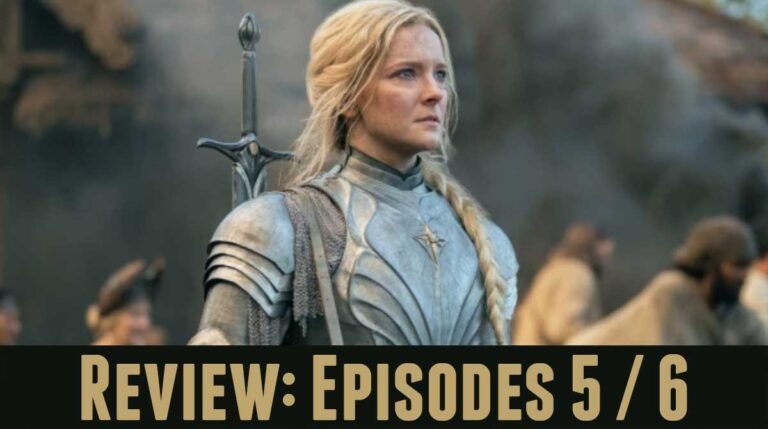
Podcast: The Rings of Power (Episodes 5 / 6) – Patreon Bonus Content

Listen!

For this week’s Patreon Bonus Content, Christian Eulienberg and JD review Episodes 5 and 6 of the new Amazon series The Lord of the Rings: The Rings of Power!

If you’re already a Patreon supporter, you can listen to this episode NOW on Patreon by clicking here.

Sign up today to get early access and hear the entire episode!

[divider]

HELP SUPPORT THE SHOW

To hear our bonus content episodes early, subscribe now on Patreon. In many cases, though, we offer our bonus content for free after a certain period of time and we do encourage (and very much appreciate) a small donation of $0.99 as a way to help support the show if signing up on Patreon isn’t for you. Click on the PayPal button below to donate and thanks so much for your support. You can also hear much of our Bonus Content via our mobile apps. See the information at the bottom of the post for more details.


One-Time Donation


[divider]

Mobile Apps!

Listen to all of our bonus content on our apps for just a one-time fee! Whether you have an iPhone, Android or Windows phone, our apps are available in many different ways that is convenient for you. With our mobile app, not only can you listen to all of our bonus content, but our main shows and our Extra Film podcasts as well. Click here for more info!

If you don’t want to purchase our bonus content, but still want to support us, there are other you can help us out. Click here for more info.

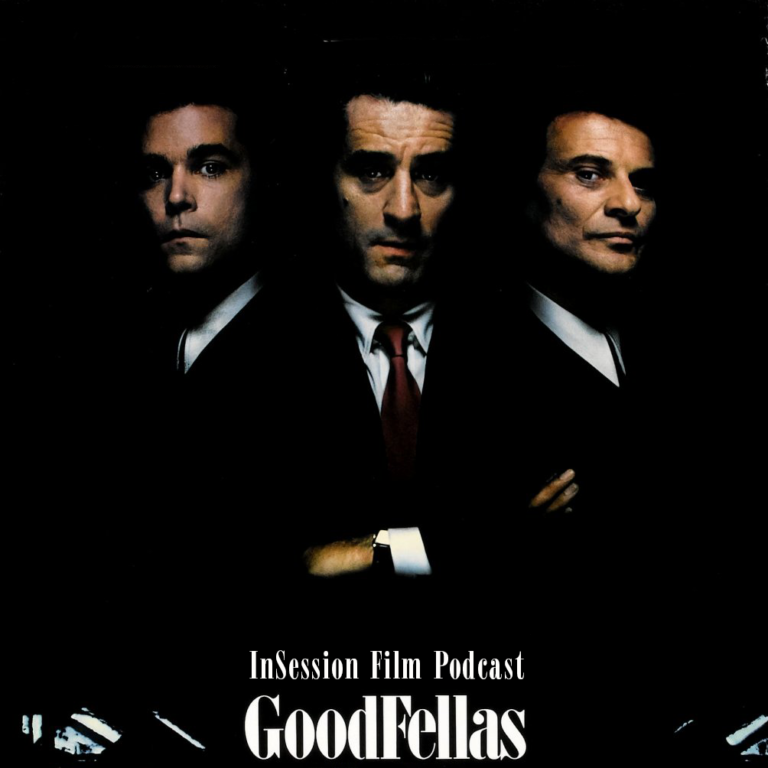
Podcast: Goodfellas / Blonde – Extra Film

This week on the Extra Film Podcast, Ryan and Sophia continue their Martin Scorsese Movie Series with his iconic 1990 film Goodfellas and they also discuss the controversial Netflix film Blonde!

This entire Scorsese series has been building to this point, and we did our very best to give Goodfellas the justice it deserves. You’ll have to forgive the length of this week’s episode as our Goodfellas conversation alone was a show-wide record of 90 minutes. Yes, you read that correctly. We spent an hour and half talking about why it’s such an iconic film and one of the best movies ever made. And with Blonde, we didn’t want to come in guns blazing like some sort of hit piece. We did not like the film, but we did our best to be thoughtful and articulate as to why it doesn’t work.

On that note, check out this week’s show and let us know what you think in the comment section. Thanks for listening and for supporting the InSession Film Podcast!

– Movie Review: Goodfellas (5:56)
Director: Martin Scorsese
Writers: Nicholas Pileggi, Martin Scorsese
Stars: Robert De Niro, Ray Liotta, Joe Pesci

– Movie Review: Blonde (1:41:40)
Director: Andrew Dominik
Writers: Andrew Dominik
Stars: Ana de Armas, Adrien Brody, Bobby Cannavale

– Music

Rags to Riches – Tony Bennett
Pearly – Nick Cave, Warren Ellis
The Return of the Eagle – Atli Örvarsson

Subscribe to our Podcasts RSS
Subscribe to our Podcasts on iTunes
Listen on Spotify
Listen on Stitcher
Extra Film – Goodfellas / Blonde

[divider]

To hear this Extra Film episode and everything else we do, download our apps on the Amazon Market for Android and the Podcast Source app on IOS devices. The mobile app covers all of our main shows, bonus podcasts and everything else relating to the InSession Film Podcast. Thanks for your wonderful support and for listening to our show. It means the world to us.

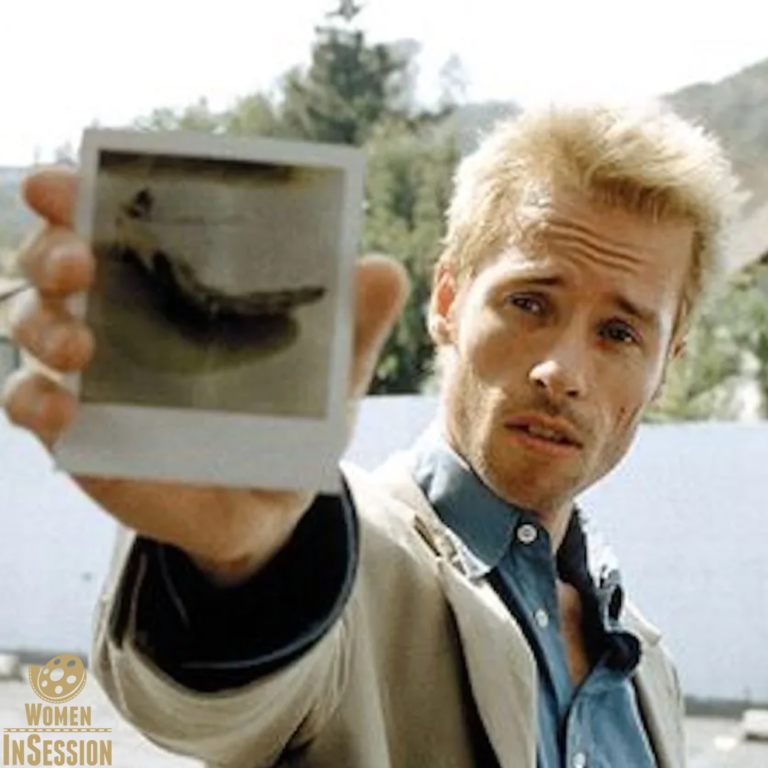
Women InSession: Guy Pearce Spectacular – Episode 10

This week on Women InSession Podcast, Kristin Battestella and Zita Short talk about the weird, but awesome career of the wonderful Guy Pearce!

We discuss everything from L.A. Confidential to Momento to The Kings Speech to The Rover, and everything in between. Peace has been in many great films and he’s always a magnetic presensce on screen. So this was a lot of fun for us.

On that note, check out this week’s show and let us know what you think in the comment section. Thanks for listening and for supporting the InSession Film Podcast!

– Guy Pearce Discussion

– Music

The Return of the Eagle – Atli Örvarsson

Subscribe to our Podcasts RSS
Subscribe to our Podcasts on iTunes
Listen on Spotify
Listen on Stitcher
Women InSession – Alfred Hitchcock in the 30’s & 40’s

[divider]

To hear this Extra Film episode and everything else we do, download our apps on the Amazon Market for Android and the Podcast Source app on IOS devices. The mobile app covers all of our main shows, bonus podcasts and everything else relating to the InSession Film Podcast. Thanks for your wonderful support and for listening to our show. It means the world to us.

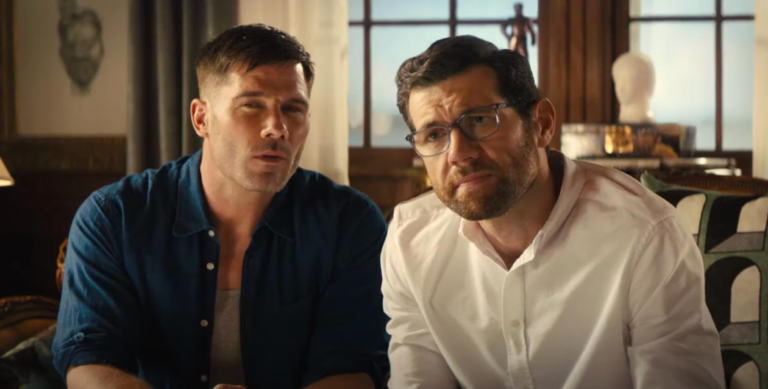
Movie Review: ‘Bros’ is The Best Comedy of the Year


Director: Nicholas Stoller
Writer: Billy Eichner, Nicholas Stoller
Stars: Billy Eichner, Luke Macfarlane, Guy Branum

Synopsis: Two men with commitment problems attempt a relationship.


You’ve all heard the expression, “if you’ve seen one, you’ve seen them all.” A common phrase used to describe something that has been done to death, therefore, isn’t original and has lost its place in the world. For the last twenty or so years, this has been the romantic comedy, which has turned into a relic of an idea for studios to capitalize on, leading to cheap, bland romance films coming to a streaming service near you. But with Bros, written by and starring comedian Billy Eichner, the rom-com seems to have a pulse for the first time in years as it is one of the most romantic, hilarious movies of not just this year, but in a long time.

Bobby (Eichner) is a single, out, and proud gay man living in New York City. He hosts a famous podcast, as well as is a curator of a new museum that will be the first LGBTQ+ history museum in the world. When he is not working, he spends time with his friends, going to dinner parties, and hooking up with guys off of Grindr. Bobby is not into the whole relationship thing and prefers his independence over being tied down to someone or labels. But this starts to change one night when he meets Aaron (Luke Macfarlane), a hunky lawyer who seems to be the opposite of Bobby in every way. But they are drawn to each other due to each other’s honesty, which is the most refreshing thing about Eichner and co-writer and director Nicholas Stoller’s screenplay. As they go on their first date, Bobby and Aaron call out just about every frustration that goes on within not just gay culture, but within modern relationships in general. In doing this, they connect and start to realize how much time they like to spend with one another. 

Conflict arises mostly from Aaron’s side of things, who isn’t as confident within himself as Bobby is. While Bobby is outspoken, even brass to a certain level, Aaron is more reserved, repressing who he is, what he wants to do in his life, and who he wants to be with. From who he thinks he needs to sleep with, to how his parents see Bobby when they first meet, to even a former crush surfacing, Aaron is lost, ultimately needing Bobby to show him just who he really needs to be. As for Bobby, his closed-off mind is slowly opened by a guy who would rather watch football, lift weights, and listen to country music. While this isn’t ideal for him, he learns to embrace Aaron because he opens his eyes to beyond the labels and just looks at the person you love. In moments of real intimacy and connection, Eichner and Macfarlane shine the brightest, leaning on their characters to provide the audience enough of a runway to fall in love with each of them, much like we have with straight pairings in rom-coms that have come before.

Beyond the central romance being an essential touchpoint for audiences to see, Bros offers an inclusive look into many members of the LGBTQ+ community to have a moment to shine throughout the film. Whether it is through the comedy or the open dialogue of the characters, this is a major studio film opening its doors to everyone that has not been seen on a scale like this. It is not pandering or prestigious, and it is an important and a huge step forward in allowing every voice and face to see be seen and heard. Even to take it to another level, Eicher and Macfarlane show that not everyone has to look a certain way in order to be with the person of their dreams. The film rightfully goes out of its way of showing that you can be who you are and be with whoever you want based on the person on the inside more important than the person everyone sees on the outside. Therefore, the film provides an organic worldly experience we should all strive to live in.

Bros is also downright hilarious in not only how it shows the struggles that everyone goes through in dating but in the challenges of creating this inclusive world. Between Bobby’s interactions with other men before Aaron, to his compromising work with a panel of curators to make sure the museum encompasses everyone, there are so many specific jokes that make this a unique yet relatable experience. Beyond this, Eichner and Macfarlane’s comedic timing bring everything perfectly together to balance out the traditional raunchy humor found in Stoller’s other work, as well as the films produced by Judd Apatow. But found in this film is the heart that is missing from a lot of those kind of comedies that are set with straight protagonists. Having all the great jokes in these comedies means nothing if there isn’t something emotionally relevant and impactful to the story and Eichner and Stoller deliver that and then some.

Bros is the best comedy of the year and should be the model going forward for studios to embrace the rom-com again and allow new stories to be told by artists of all colors or sexual orientations that haven’t had the chance to yet. 

Grade: B+

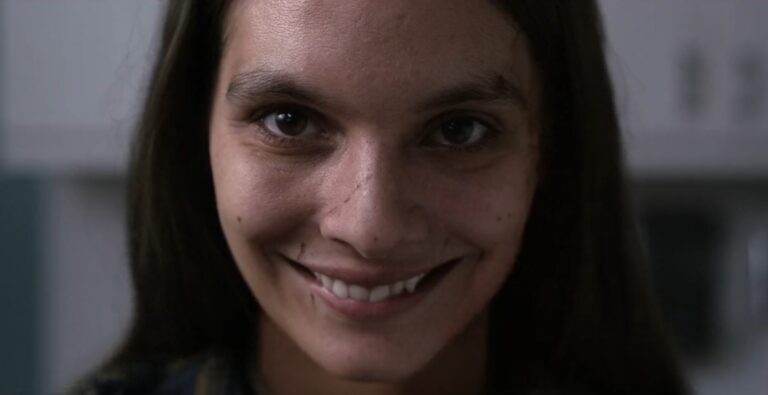
Movie Review: ‘Smile’ Harkens Back to A Meaner Age of Horror


Director: Parker Finn

Writer: Parker Finn

Stars: Sosie Bacon, Jessie T. Usher, Kyle Gallner

Synopsis: After witnessing a bizarre, traumatic incident involving a patient, Dr. Rose Cotter starts experiencing frightening occurrences that she can’t explain. Rose must confront her troubling past in order to survive and escape her horrifying new reality.


While horror continues to evolve, there was nothing quite like the horror movies of the 2000s. Driving on pulp imagery and mean spirits, there was something kin

d of romantic that horror movies of today don’t seem to have. Which isn’t to say the horror movies of today are lacking, but when a movie like Smile comes around – one that leaves you with barely any room to breathe – it’s quite refreshing. Not to say it’s not without its problems, but Smile is a horror fan’s horror movie.

Smile follows emergency psychologist Dr. Rose Cotter (Sosie Bacon), after witnessing a tragic event. Following it, Rose’s life upends on her as bizarre, unexplainable visions begin to overcome her life causing her to descend into madness. This forces her to accept her past trauma and cope with her new trauma.

While there is a lot of good in this, there are a couple negatives to get out of the way. We’re introduced to the central conflict really early on in the film. In some movies that’s a major plus so we can get moving right away. With Smile however, they never found how to pad out the 115 minute runtime in a meaningful way. The pacing just kind of stops and goes like a teenager learning how to pop a clutch for the first time. There’s a better 90 minute or so movie lying in that unrendered 115 minute runtime.

Furthermore, the performances are just not that great. Sosie Bacon? The only slam dunk in this movie. After that? It’s kind of a Where’s Waldo of something to latch onto. Jessie T. Usher was kind of there, Kyle Gallner delivered the performance of a “Lifetime”, and Gillian Kisner was just yelling for most of her screen time. I didn’t come into Smile thinking “man, this supporting cast is gonna tear this UP,” but I kind of wish there was something there.

Moving past that though, Smile has some of the best jump scares and horrific imagery I’ve seen all year. In coordination with some of the best sound design in a horror film in recent memory, the jump scares really pop. Additionally, the set up for these is superb. One moment you’re really locked in to what is happening on screen, then BAM – the brown note of scares. The things that they show you are gory and bloody in the most delicious way imaginable.

To add on about the sound design, the creators of this movie created a soundscape that really lures you in like a siren’s song. All making for an anxious environment that brings the viewer closer to the experience that Rose is going through. The few moments of solace the viewers have are relaxed. Even in moments where vibrant crowds are present, when the horror isn’t in the driver’s seat, the sound is brought down to give the audience some time to collect themselves. Then, when it’s time to strike, the jump scares are given a heavy sforzando, breaking any solace you had found previously.

There are a lot of horror elements that Smile directly rips from. You can see inspiration from media such as PT, It Follows, and The Ring. These elements are woven together into one spooky narrative while maintaining its own sense of identity. It does however tread on tropes that are mainstays in horror (such as the ever present menacing figure, or limited time left alive). But Smile isn’t looking to reinvent the wheel – it does a damn good job sticking to what’s known and it doesn’t need to be anything else.

Smile has an oppressive atmosphere dichotomized by the backdrop of upper middle class suburbia. Horror in suburbia isn’t an uncommon trope, but this movie doubles down on the horrors that derive from it. Using the “smile” as the embodiment of the trauma we hide is an interesting idea. Whether it fully lands could be debated, but I still appreciate the set up and environment for what it is.

What’s most bizarre is when you’re not focusing on the conflict at hand, Smile is extremely goofy. Here’s an example, halfway through the movie an argument ensues where a character says “It’s genetic isn’t it? Mental illness”. Like hold the phone, did I hear that right? This moment just knocks the wind out of you. And it’s pretty much like this any moment where the scare factor isn’t dialed up. But miraculously, even with this goofiness on display, Smile can somehow bring it back and become scary again in a matter of seconds.

Much like the horror movies of the 2000s, this movie just feels mean. For most of the horror movies released this year you were given some reprieve at the end. Whether the incident was some sort of misunderstanding or the final person makes it out, 2022 had very few horror movies that ended like Smile did. As the credits roll, you feel cold as the entirety of the experience tolls on you. A feeling that absolutely rules and owns.

Smile is definitely not for the faint of heart. There are some brutal scenes and a decent handful of jumpscares that’ll make any moviegoer’s skin crawl. For those who are on the fence about Smile, this movie is a great time and is best experienced with a big, rowdy crowd. While I don’t think it’s the best horror movie released this year, I do think it’s the meanest and exhilarating of the bunch. It is a horrifyingly good time from start to finish.

Grade: B

Criterion Collection: October 2022

Here in the last three months is another slate of films by Criterion. These releases all have a dark theme for the month, matching the horror tales that create Halloween on the 31st. One is a classic horror film getting a reedition, while the other five are first-timers. One goes back to 1944 and is a hidden Frank Capra classic, the most recent being from just 2019 and a reflection of a Central American tragedy. Three films are from the same year, 1997, in which an auteur, an independent debut, and a Japanese horror hit all step into the ring to get their honor under the Criterion Collection. 


Arsenic And Old Lace (1944)

Cary Grant, Peter Lorre, and Raymond Massey star in a film adapted from the stage, a screwball comedy full of gallows humor. Or, should I say, poisonous? Two old women who live together give a ghastly surprise to their returning nephew who has just gotten married on Halloween. Bodies are found in the cellar, victims of the aunts’ Black Widow scheme, and there are others who live in the house who may be next. It is full of wicked humor that keeps the macabre tone throughout the movie and was yet another notch on Frank Capra’s belt of hit comedies. 


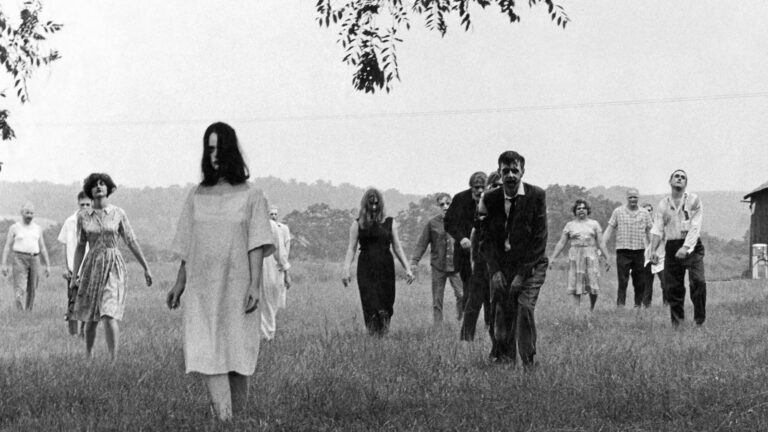
Night Of The Living Dead (1968)

The only re-issue of the month, George Romero’s independent horror classic lives on continuously 54 years later and has influenced an entire genre that followed. Made for almost nothing, the timing of the release certainly helped its release as it seemed to be an allegory for what was happening in America at the time. With only $100,000 to spend, Romero and his crew made history. They sowed the seeds for future horror films with his bloody violence, which added to the controversy, being released as a matinee film rather than a midnight screening. This was done right before the MPAA Rating System was unveiled, but the toothpaste was out of the tube on what horror would become. 


Cure (1997)

Director Kiyoshi Kurosawa mixed horror and noir in this shocking tale of a detective (Koji Yakuso) who tries to find out why a different murder with a different killer uses the same methodical approach to its victims. The more he looks deeper, the closer he gets to the central figure who runs these series of mind games that the detective can’t shake loose. It is such a demented take on the psychological thriller and one of the creepiest films in the last 25 years that it is worth a blind buy.


Eve’s Bayou (1997)

Kasi Lemmons, who directed the upcoming Whitney Houston biopic I Wanna Dance With Somebody, made her directorial debut with this Southern gothic drama following a young girl who witnesses her father’s infidelity. Thus, begins a string of events that leads to tragedy as Eve learns the harsh reality of life. Mixing in Creole voodoo adds karma and revelation to dark secrets beyond infidelity, making such a stirring film with Samuel L. Jackson as the father, Debbi Morgan as “The Black Widow” practitioner, and a young Jurnee Smollett as the young daughter who witnesses the family’s house of cards falling upon them. 


Lost Highway (1997)

David Lynch created this cult classic which preceded Mulholland Drive with its open interpretations and surrealism that breaks from a narrative story. Bill Pullman is a musician who is accused of murder, and while on death row, he suddenly disappears and becomes another man who is freed from jail. Lynch, always in style, pushes the boundaries of what is unexpected and what really is down the road. Patricia Arquette, Robert Blake, and Balthazar Getty also star in this postmodern noir.


La Llorona (2019)

Using his home country’s tragic history as a backdrop, Guatemalan director Jayro Bustamante’s horror story is filled with political commentary and indigenous folk. A former dictator has just been acquitted of crimes against humanity during his rule and while people protest outside his home, a series of disturbances take place that brings back his heinous crimes to him that will haunt his family. The film has a similar feel to Guillermo del Toro’s The Devil’s Backbone, in which a country’s civil war is the setting and a haunting presence comes in after its villain. Bustamante uses Guatemala’s horrendous war crimes against the indigenous to go after the establishment who’ve evaded justice; but in his realm, justice comes from an unlikely source.


Follow me on Twitter: @brian_cine (Cine-A-Man)

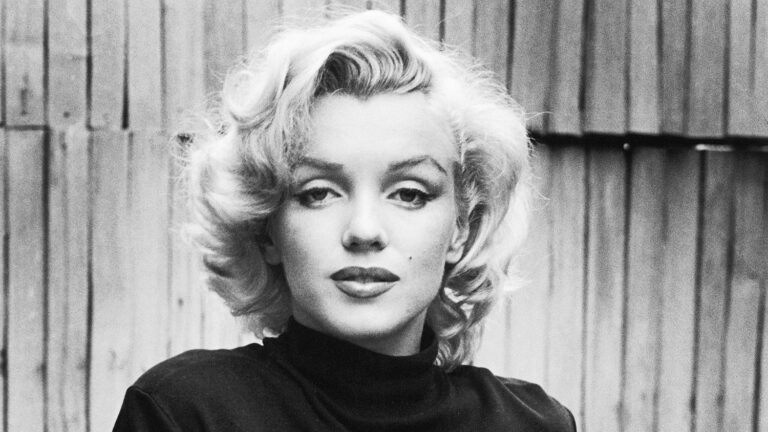
Poll: What is your favorite Marilyn Monroe movie?

It’s no secret that Marilyn Monroe was one of Hollywood’s most tragic figures. This notion, alongside Andrew Dominik’s latest “biopic” Blonde, are already subject to much negativity and controversy that we instead wanted to use this time to celebrate the talent of Marilyn Monroe, as it was her comedic and overall acting chops that made her one of the greatest actresses who ever lived.

With that said, what is your favorite film starring or co-starring Marilyn Monroe? We only included her most prominent films, and not those classics she only briefly appeared in (i.e. All About Eve or The Asphalt Jungle).


Podcast: Don’t Worry Darling / Whisper of the Heart – Episode 501

This week’s episode is brought to you by Athletic Greens. Get a FREE one year supply of Vitamin D and 5 travel packs today!

This week on the InSession Film Podcast, we discuss Olivia Wilde’s controversial film Don’t Worry Darling and continue our Studio Ghibli Movie Series with the 1995 film Whisper of the Heart!

Don’t Worry Darling wasn’t initially on our schedule, but with all of its controversy we decided to give it a go, and it was such a weird experience that we had to talk about it. On the other hand, Whisper of the Heart is one of those hidden Ghibli gems and man did we have a great time discussing that film. The tragic history behind it makes the experience all the more poignant as well.

On that note, check out this week’s show and let us know what you think in the comment section. Thanks for listening and for supporting the InSession Film Podcast!

– Movie Review: Don’t Worry Darling (7:36)
Director: Olivia Wilde
Writers: Katie Silberman
Stars: Florence Pugh, Harry Styles, Chris Pine

– Notes / Discussion (1:04:04)

This week for our break segment, we talk briefly about why The Last Temptation of Christ is a fascinating Scorsese film. We also go over Episode 500 and why the ending to last week’s episode was one of the best moments we’ve ever had as a podcast. And finally, JD gives us his brief thoughts on The Woman King and the very entertaining See How They Run.

[divider]

RELATED: Listen to Episode 484 of the InSession Film Podcast where we discussed Top Gun: Maverick!

[divider]

– Studio Ghibli Movie Series: Whisper of the Heart (1:30:18)
Director: Yoshifumi Kondō
Writers: Hayao Miyazaki
Stars: Yōko Honna, Issei Takahashi, Takashi Tachibana

Show Sponsor: First Time Watchers Podcast

– Music

Advanced Ballet Class – John Powell
Country Roads – Yuji Nomi
The Return of the Eagle – Atli Örvarsson

Subscribe to our Podcasts RSS
Subscribe to our Podcasts on iTunes
Listen on Spotify
Listen on Stitcher
InSession Film Podcast – Episode 501

[divider]

Next week on the show:

Review: Bros
Top 3: N/A
Studio Ghibli Movie Series: Princess Mononoke

[divider]

Help Support The InSession Film Podcast

If you want to help support us, there are several ways you can help us and we’d absolutely appreciate it. Every penny goes directly back into supporting the show and we are truly honored and grateful. Thanks for your support and for listening to the InSession Film Podcast!

VISIT OUR DONATE PAGE HERE

Movie Review: ‘Athena’ Makes Up For Its Flaws With Stunning Visuals


Director: Romain Gavras

Writers: Elias Belkeddar, Romain Gavras, and Ladj Ly

Stars: Dali Benssalah, Sami Sliman, Anthony Bajon

Synopsis: Hours after the tragic death of their youngest brother in unexplained circumstances, three siblings have their lives thrown into chaos.


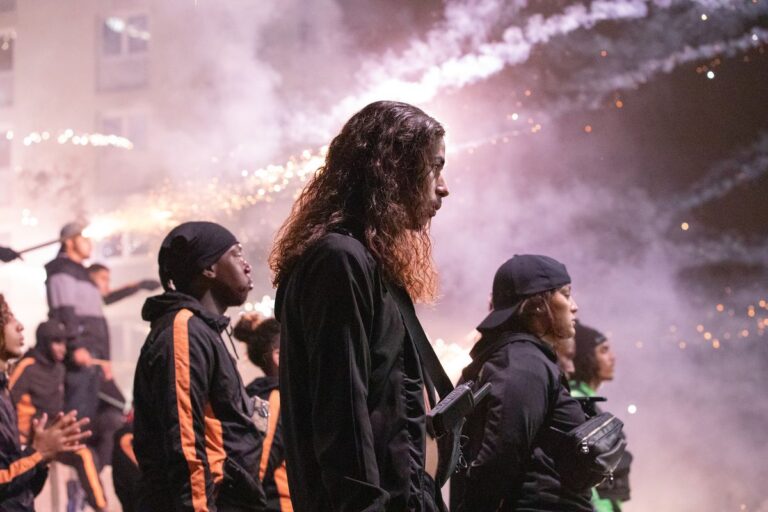
The opening ten minutes of Romain Gavras’ Athena is a staggering, kinetic tour-de-force. A single, unbroken shot – which will have you pausing the action at random intervals trying to find the invisible joins – begins with an assault at a police station, which then spills out onto the Parisian streets, before evolving into a highway chase, and then finally into the eponymous Parisian projects called Athena where its inhabitants band together for one last stand. All of it is handled with stunning technical acumen and confidence. It is a breathtaking achievement and a sign of the visual rapture which awaits.

If the name Romain Gavras sounds familiar to you, it may be his father you’re thinking of. The Greco-French director Costas-Gavras is a Palme d’Or and Academy Award winner known for his political thrillers such as Z and Missing (the former of which received an Academy Award for Best Foreign Film, the latter the Academy Award for Best Adapted Screenplay). While the apple doesn’t fall from the tree in terms of subject matter, the delivery itself couldn’t be more different.

Gavras the younger has made his career from commercials and music videos, and it shows. His style is flashy and bombastic, bearing little of the subtlety his father employs. For Athena, his third feature, he has shown no interest in changing that methodology. While his narrative lacks any nuance, it can’t be denied that his cinematography skills are alive and well: aside from that opening tracking shot are genuinely jaw-dropping visuals such as a roof of riot shields protecting police from firebombs; a violent crowd silhouetted against the night sky; smoke-filled partitions backdropped to dozens of fleeing citizens – all soundtracked to a haunting Grecian chorus. It is a virtuoso effort, pure visual poetry. Whatever else Athena lacks, it certainly does not lack style.

Athena follows in the illustrious footsteps of the likes of La Haine, Danish movie Shorta, and Les Miserables (the director of which, Ladj Ly, is credited as a writer for Athena) in examining the subject of police brutality through the lens of urban violence amid destitute estates. Its script is not as tight or in-depth as either Shorta or Les Mis, however, and if you’ve come for the political commentary, you might well be disappointed.

After the death of 13 year old Idir at the hands of a brutal police force, his three brothers Abdel (Dali Benssalah), Karim (Sami Slimane), and Moktar (Ouassini Embarek) all react in different ways. Adbel, the middle brother, is stoic and proud. A soldier in the French army, he believes justice will come through legal means and encourages his siblings to have faith in the system. Moktar, the eldest, is a selfcentered drug dealer worried that the death of his youngest brother will invite police scrutiny into his business and so becomes obsessed with covering his tracks before he’s caught. Karim, the youngest, is a messianic revolutionary. Not content with Abdel’s patience, he galvanizes the downtrodden of Paris to come together in revenge against the justice system which overlooks ethnic minorities and the poverty stricken – “it’s about proving to them that we’re not the victims” he orates to a room full of angry young men and women, ready to take up arms for him, “every time they kill, we kill”.

Karim and his cohort assault a police station, steal a cache of weapons, and lead a police chase back to Athena, where they intend to hold police officers hostage until the ones who killed Idir are identified and arrested. This triggers Moktar into fleeing with the drugs and weapons he carries, but finds that Karim has barricaded them in. With no way out, Moktar decides to bury his drugs before the police eventually break through. Abdel is horrified at Karim’s actions and steals into Athena in order to talk sense into his brother before it’s too late. Meanwhile, Jerome (Anthony Bajon) is a riot cop about to break into Athena and bring its citizens to justice. The fates of all four men will converge in ways that will change them all forever.

Athena is laid out in quarters; the four men at the center of the story each get their own narratives and Gavras’ idea is to employ tracking shots for each man as they run across the sprawling estate of Athena. The blocking in these scenes is mind-boggling: both Adbel and Karim find themselves as leaders and, as such, their scenes involve them striding from set-piece to set-piece, helping out their comrades and neighbours in a wide array of situations. The camerawork for these moments is gritty and flawless; you really feel you’re there in the moment as Abdel flies down a busy stairwell, camera trailing behind, as he’s forced into helping carry an obese lady halfway down so that he can pass and assist other neighbors in fleeing before the police break through. Meanwhile Karim is a commander passing out orders to his soldiers, moving from room to room with authority, battling relentless requests for his attention. Elsewhere, Moktar begins to have a meltdown as he orders his own underlings to search for his hidden drugs so that they can be stored somewhere safer. Everything is frantic and harried, and Gavras pits his camera in the midst of all of it.

Where Athena begins to falter is in its purpose. Choosing a hot button topic such as police brutality and racism (something which is endemic in France) means treating the subject matter with the nuance and delicacy that such a topic demands. However, Gavras never really gives us any insights into the wider political arena which has caused this moment. There are no smaller interactions which shed light on the brothers’ lives, or what might have driven them to this. Why has Adbel become so loyal and obedient to the French state? Why has Karim’s fury (understandable as it is) led him to such devastating choices? Why does Moktar care nothing for his siblings and only for his investments? In creating one big chaotic moment, Gavras has had to sacrifice any character development and it undermines his message. 

Athena is a dark, gritty, utterly breathtaking piece of filmmaking. It is gorgeously expansive and daring, and its cinematography a thing of wonder. A shame that it has debuted on Netflix, when something like this deserves to be seen on the biggest screen possible. While it may not have much in the way of narrative heft, and its characters are mostly two dimensional (especially the caricaturish Moktar), the visual style and relentless pacing may be enough to carry you through, if that’s your kind of thing.

Grade – B+


Try Harder: An Overview of Modern Movie Posters

0

Everyday, movie studios worth a few billion dollars release promotional material for their upcoming slate of film releases. Given the importance of marketing, one would think that the design of a film’s theatrical release poster, that is, the 2D package through which a film is first introduced to the world, would be carefully considered to create something unique, cohesive, and attractive to the eye. However, time and time again, that has proven to be far from the truth. Instead, what we, the audience, have been given over the past few years is a parade of thoughtless, repetitive, aesthetically offensive designs with no personality or attention to detail.

While of course, anything involved with aesthetic and design is subjective, I do not believe I am alone in my outrage. Earlier this year, Film Twitter came together to agree on one thing, that the poster for the Brad Pitt-led action thriller Bullet Train is outrageously ugly:
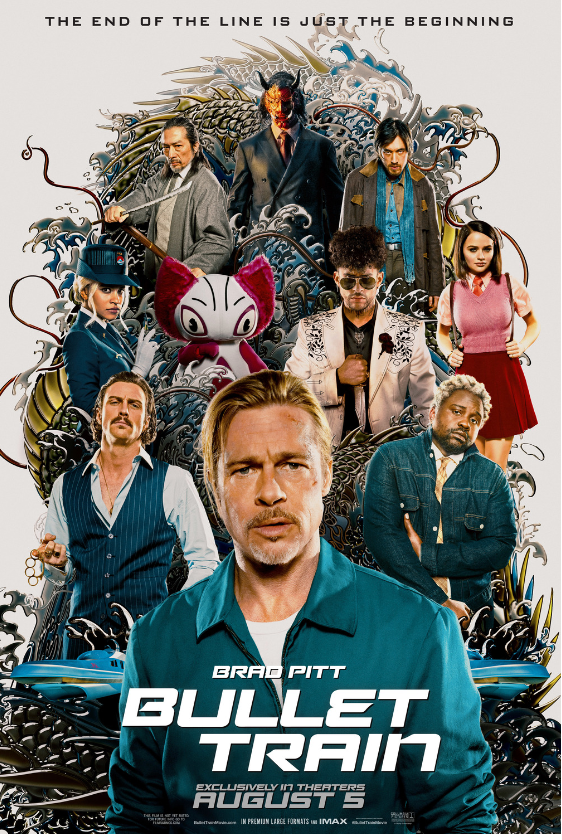
There are many places I could start with this one. I’ll start with the most obvious, that is, the incredibly awkward and unflattering image of Pitt smack-dab in the middle of the poster. He and the rest of the cast have been arbitrarily dragged-and-dropped onto the page with totally incoherent light sources and wrapped in a messy dragon/water illustration with no beginning or end. If I was any of these actors (except for Aaron Taylor Johnson who couldn’t look bad if he tried) I would be calling my agent. Considering that the trailer for this film was so well done, with quippy dialogue and actions scenes set against a Japanese rendition of The Bee Gees “Stayin’ Alive”, this poster seems extremely last-minute and first-draft, as if the marketing team forgot that it was necessary and slapped it together without a second thought. 

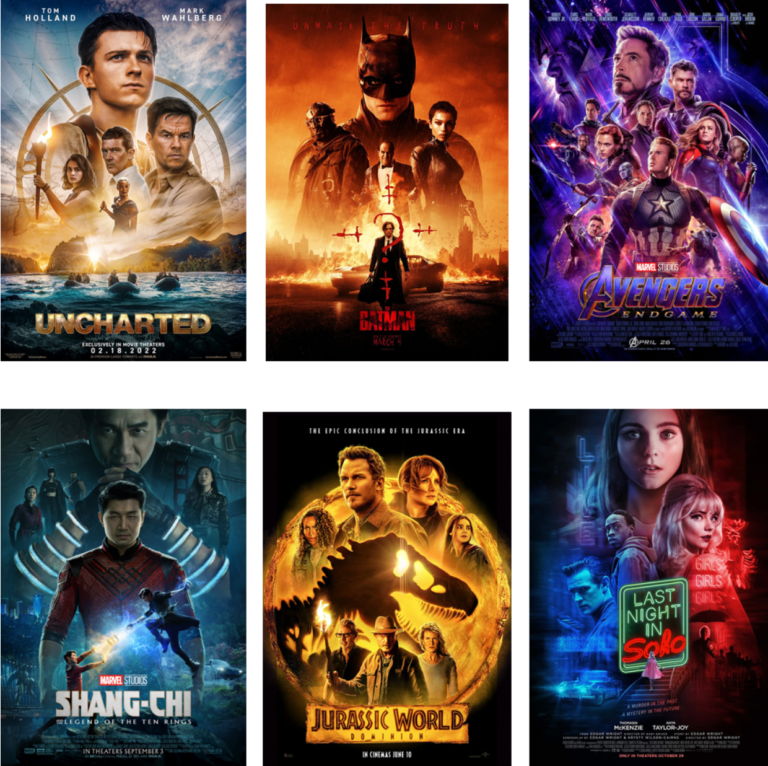
This particular poster brings us to perhaps the most egregious type of offender: the floating heads. This type of film poster is typically seen in conjunction with blockbuster/action movies with stacked casts. Think: The Avengers, Star Wars, etc. While this sort of style isn’t new, modern design technology has been detrimental in this case, making characters look as if they were thrown together in a matter of minutes (because they were) and thus giving us something as dreadful as this: 
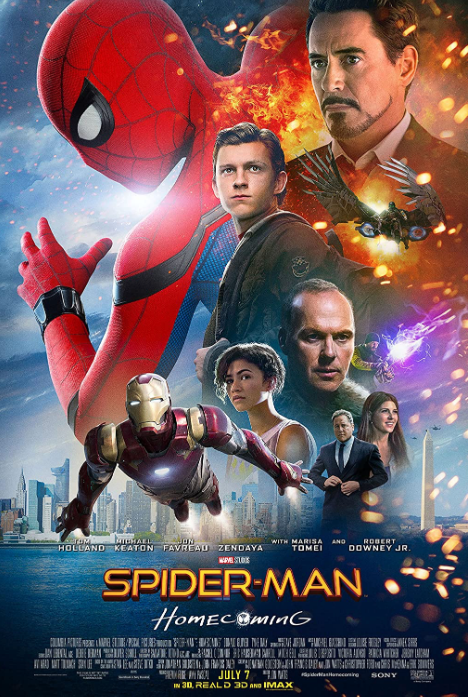
I think this one speaks for itself.

Prior to release, both Dune and The Northman (which both tell the story of a young prince in love with a mysterious girl while in a psycho-sexual relationship with his mother and determined to avenge his father) were initially given dynamic, original posters:  
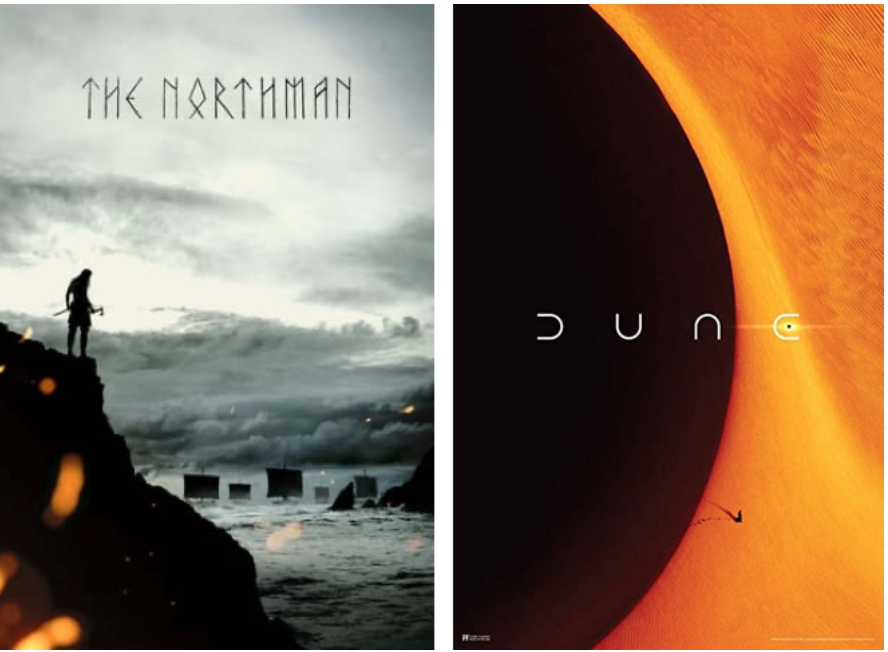
Both these posters set the tone for their respective films (a viking-thriller and a science-fiction epic) without relying too much on known-faces or conventional artistic designs. Then, closer to the films’ releases, both came out with new posters that looked like this:
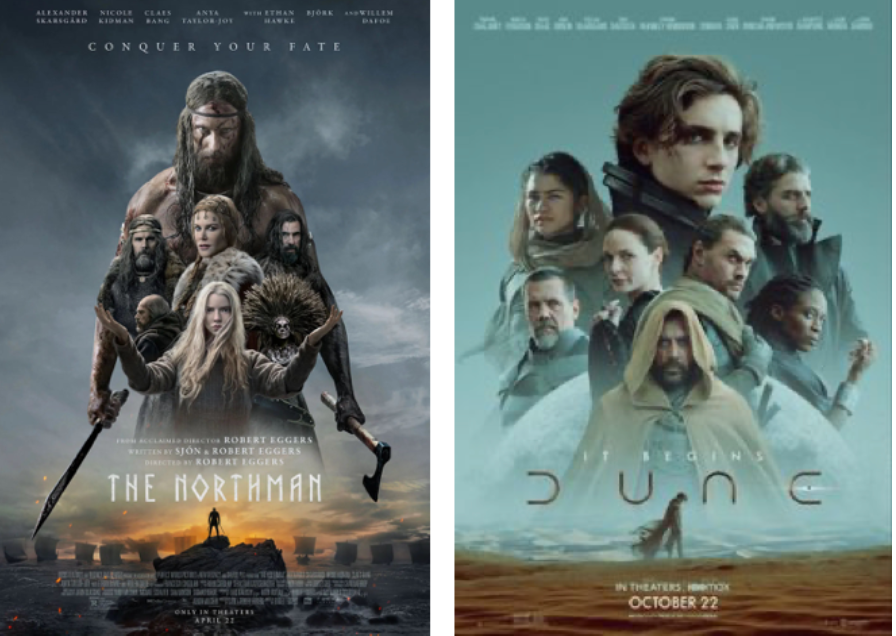
Not only have both films resorted to the easily marketable, oft-repeated floating head in a structureless formation style, but both posters are remarkably similar, even featuring a second version of the lead character in silhouette in the poster’s lower area just in case you needed a reminder. 
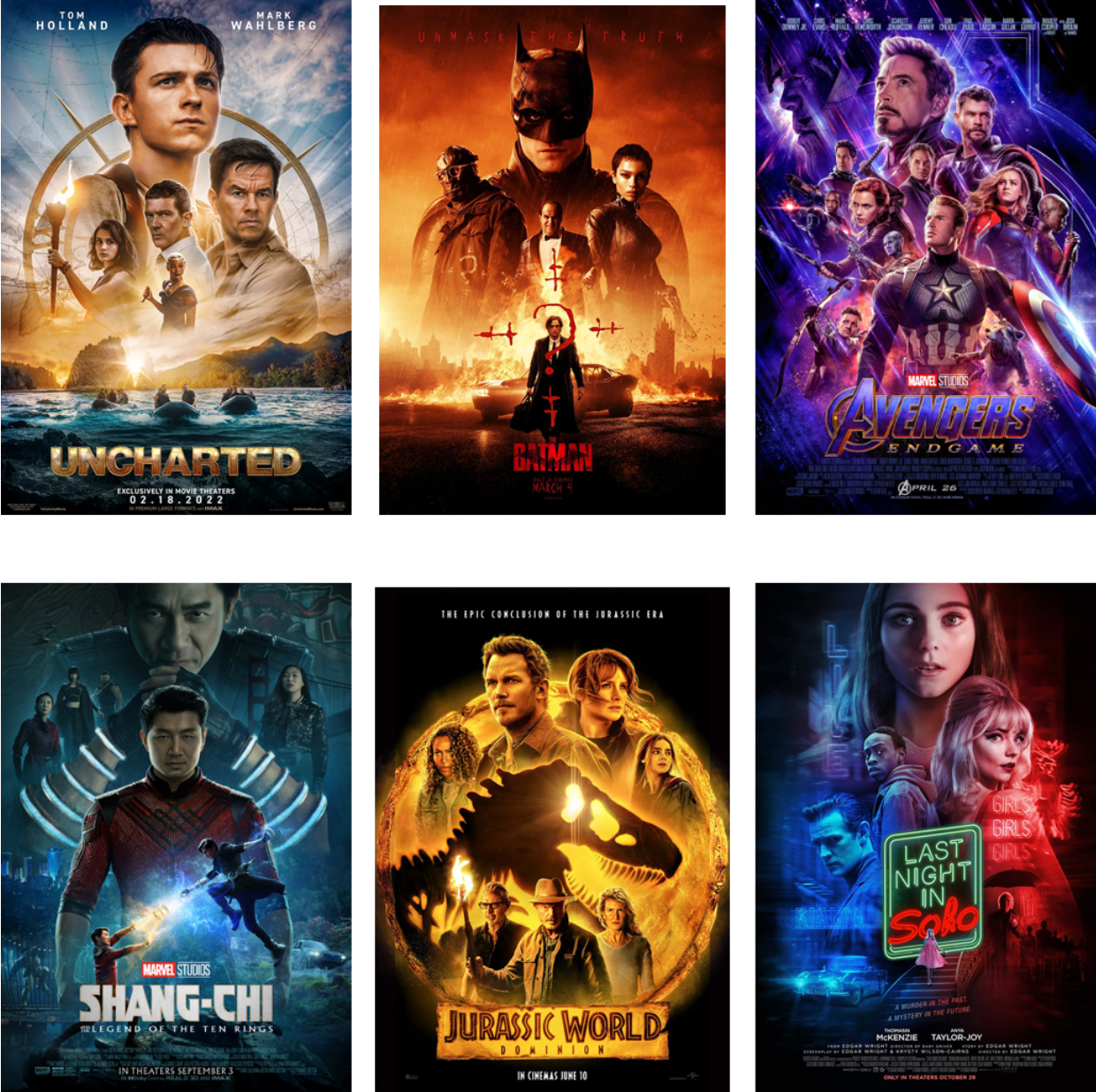
Dune and The Northman, along with a number of other big-budget, ensemble-led movies, participated in a marketing technique (and our second category of offender) that lends itself easily to parody and ridicule: that of the character poster.

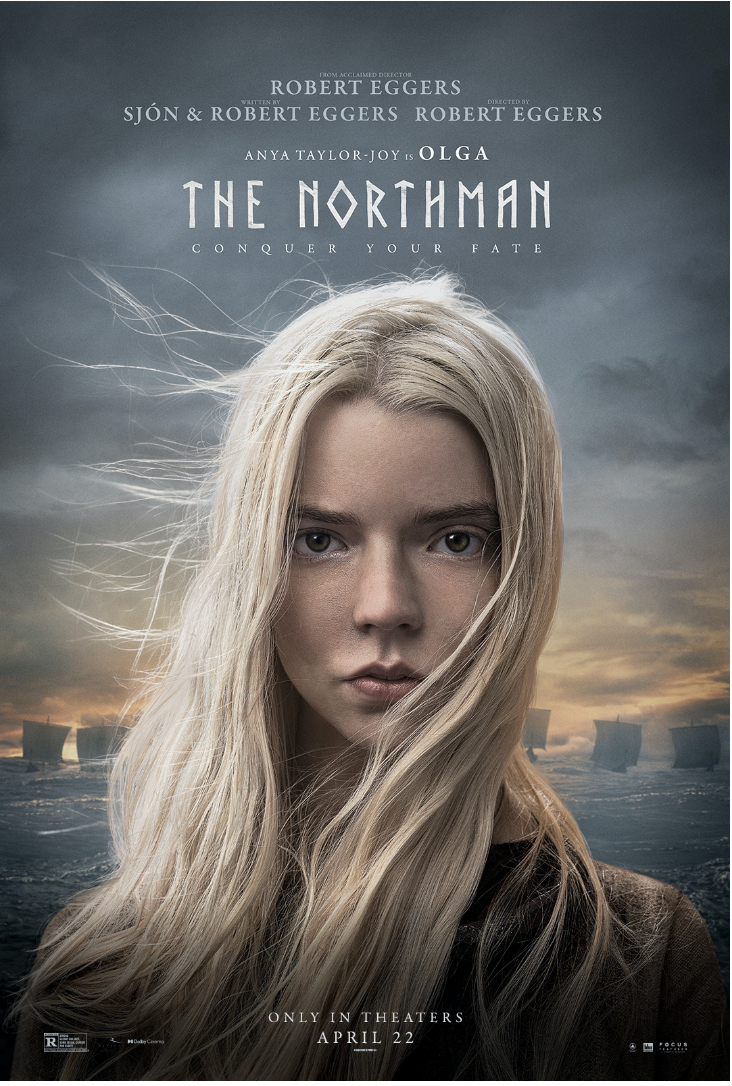
The Northman is based on the Nordic legend of Prince Amleth, which while the basis of William Shakespeare’s Hamlet, is a tale unfamiliar to most American audiences. With this in mind, the studio decided to capitalize on their A-List cast with a series of posters introducing audiences to its actors and their characters free of any context. In case you were wondering, Anya Taylor-Joy is Olga. 
 

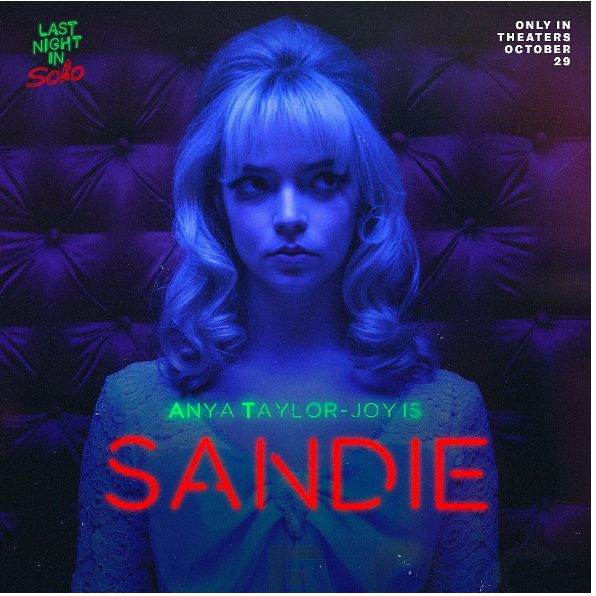
Not to be confused with the time that Taylor-Joy was Sandie. 
I’d be remiss if I did not share a recent, absolutely gut-busting rendition of this trend. Marvel Studio’s latest TV project, She-Hulk, has been riddled with marketing hiccups since the release of its first trailer that displayed uncanny-valley levels of CGI and a script that raised more than a few eyebrows. Recently, the show that reminds me of an SNL parody of a Marvel show released their own slate of terribly made character posters. It begs the question: Who the hell is Nikki?
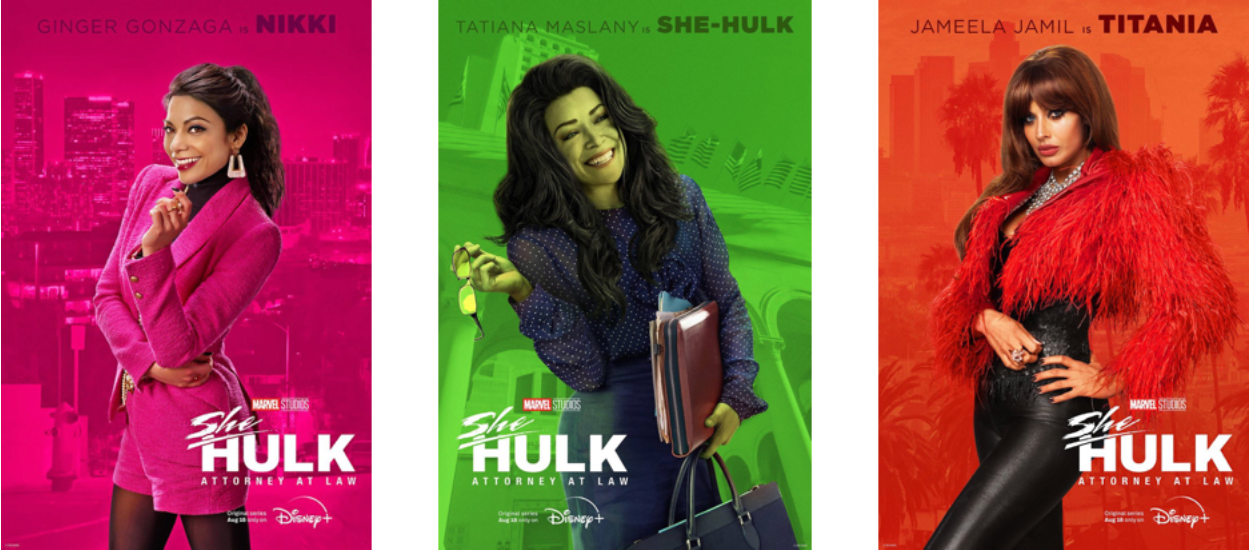
These three posters, beyond the ridiculousness of their mere existence, are also prime examples of the total lack of artistic effort that can be seen in too many of today’s tv and movie posters. Simply copy and paste an unflattering image of an actor onto a glaringly generic background and you’ve successfully done the bare minimum to draw an over-stimulated media consumer’s eyeballs. These posters give absolutely no indication of a film’s personal style or genre, nor do they promote any anticipation of what is to come. This is the third category of poster offense that I have deemed “sins of graphic design”.
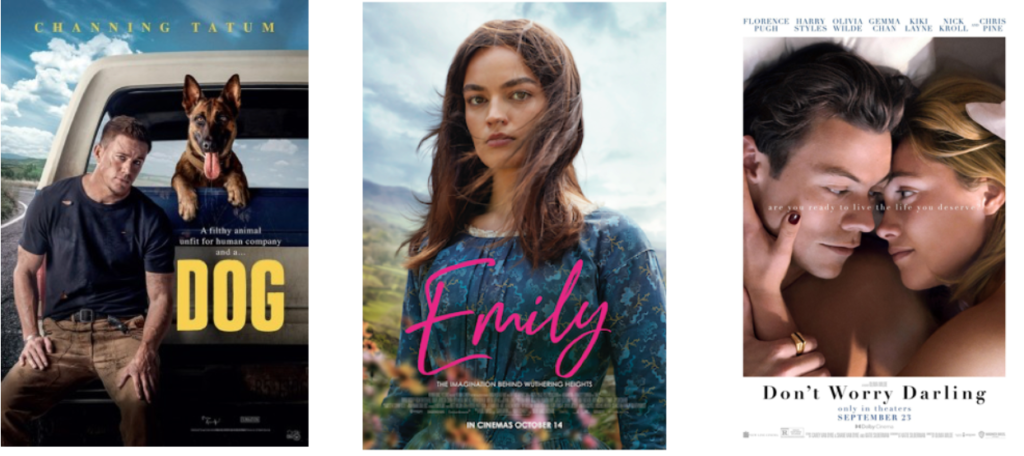
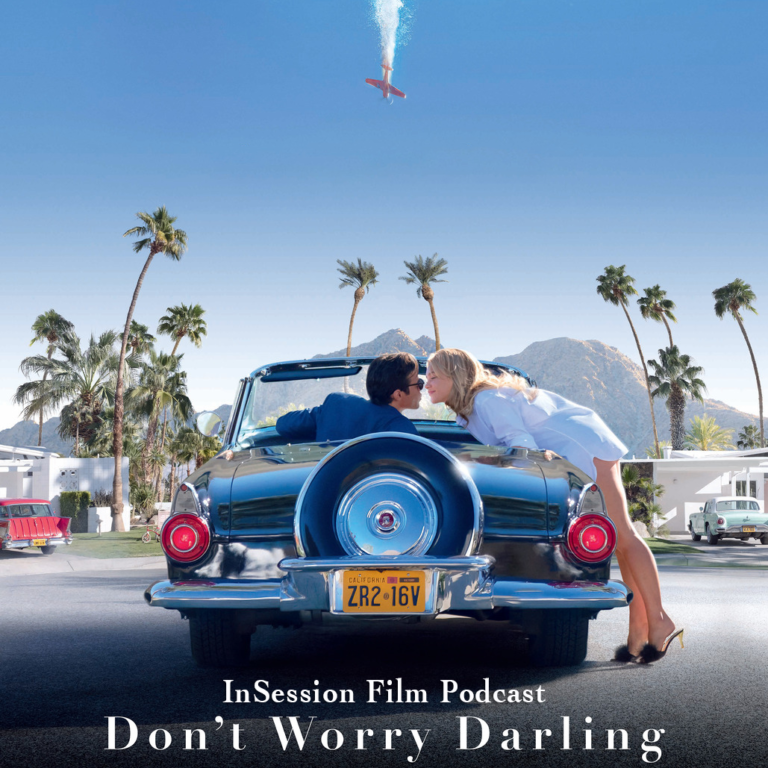
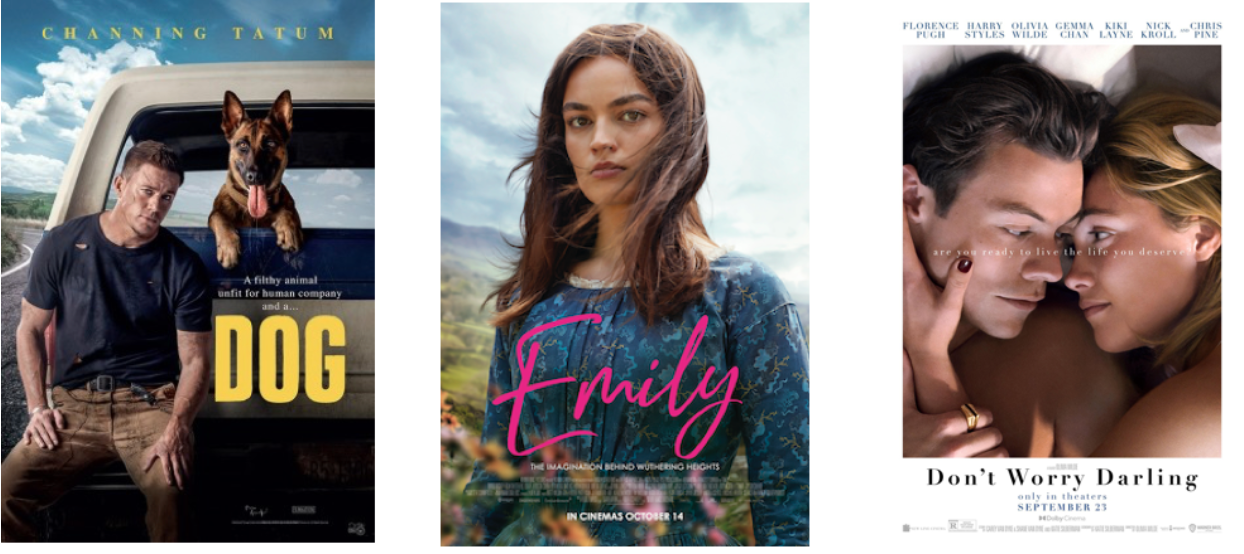
I include the poster from Olivia Wilde’s Don’t Worry Darling, not because it is so egregiously awful, but because of how stunning the promotional material for this dystopian atomic-age parable could have been. I’m picturing home appliance advertisements from the early 1960s, or vintage Palm Springs travel ads, or nationalistic cold war propaganda that attempted to mold the average American into a model citizen. Instead, we get another generic poster that tells us absolutely nothing about the intentions of the film or its themes.

Posters do so much more than hang outside of a door to tell audiences which theater to enter. They serve as a film’s entry onto the cinematic stage, and if done well, as an encapsulation of a wonderful work of art. I hope that in the near future, there will be enough posters with thoughtful and unique designs to line the bedroom walls of a new generation of film lovers. Of course, I don’t have all the answers as to how this can be done. All I’m asking, from the bottom of my heart, is to do better.


 

Podcast: The Last Temptation of Christ / The Woman King – Extra Film

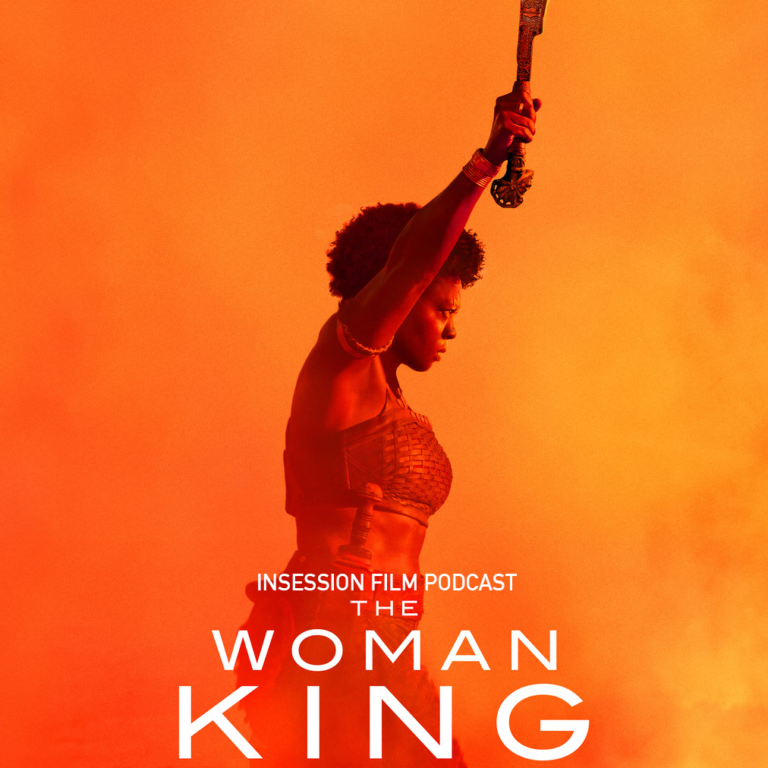
This week on the Extra Film Podcast, Ryan and Sophia continue their Martin Scorsese Movie Series with his controversial film The Last Temptation of Christ and also review the historical epic The Woman King!

A very interesting mix of films to say the least this week. The Last Temptation of Christ is a weird movie, for sure, but it’s also one of Scorsese’s most fascinating and really only something he could do. The Woman King similarly takes liberties to tell its own story, and while that’s been controversial as well, we talk about why that was a good thing for the film.

On that note, check out this week’s show and let us know what you think in the comment section. Thanks for listening and for supporting the InSession Film Podcast!

– Movie Review: The Last Temptation of Christ (5:05)
Director: Martin Scorsese
Writers: Paul Schrader
Stars: Willem Dafoe, Harvey Keitel, Barbara Hershey, Harry Dean Stanton

– Movie Review: Resurrection (1:00:18)
Director: Gina Prince-Bythewood
Writers: Dana Stevens
Stars: Viola Davis, Thuso Mbedu, Lashana Lynch

– Music

The Feeling Begins – Peter Gabriel
The Woman King – Terrence Blanchard
The Return of the Eagle – Atli Örvarsson

Subscribe to our Podcasts RSS
Subscribe to our Podcasts on iTunes
Listen on Spotify
Listen on Stitcher
Extra Film – The Last Temptation of Christ / The Woman King

[divider]

To hear this Extra Film episode and everything else we do, download our apps on the Amazon Market for Android and the Podcast Source app on IOS devices. The mobile app covers all of our main shows, bonus podcasts and everything else relating to the InSession Film Podcast. Thanks for your wonderful support and for listening to our show. It means the world to us.