Home Blog Page 145

Women InSession: Alfred Hitchcock in the late 50’s & 60’s – Episode 9

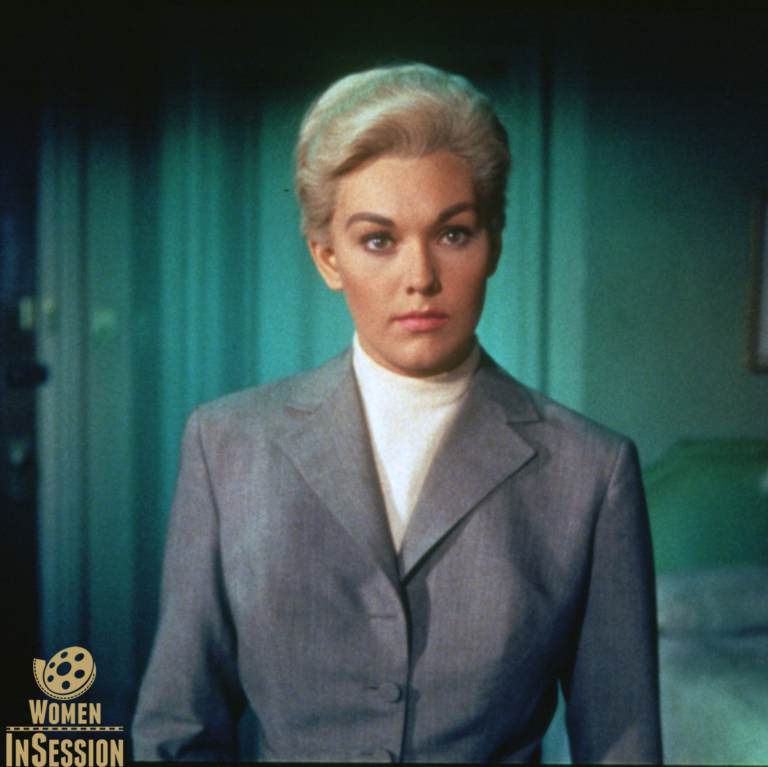
This week on Women InSession Podcast, Kristin Battestella, Zita Short and Amy Thomasson conclude our Alfred Hitchcock discussion by talking about his late 1950’s output, including Vertigo, and his 1960’s efforts!

Hitchcock famously finishes out the 1950s with Vertigo and North by Northwest, two of his more famous films, before kickstarting the 60’s with Psycho and The Birds. Just an incredible stretch of filmmaking. However, it’s what makes the rest of the 60’s baffling as his later output is much more dubious. We, of course, have a lot of fun talking about that duality.

On that note, check out this week’s show and let us know what you think in the comment section. Thanks for listening and for supporting the InSession Film Podcast!

– Alfred Hitchcock Discussion

– Music

The Return of the Eagle – Atli Örvarsson

Subscribe to our Podcasts RSS
Subscribe to our Podcasts on iTunes
Listen on Spotify
Listen on Stitcher
Women InSession – Alfred Hitchcock in the 30’s & 40’s

[divider]

To hear this Extra Film episode and everything else we do, download our apps on the Amazon Market for Android and the Podcast Source app on IOS devices. The mobile app covers all of our main shows, bonus podcasts and everything else relating to the InSession Film Podcast. Thanks for your wonderful support and for listening to our show. It means the world to us.

Movie Review: ‘Blonde’ is Uneven, But Ana de Armas Stuns


Director: Andrew Dominik

Writer: Andrew Dominik

Stars: Ana de Armas, Lucy DeVito, Garret Dillahunt

Synopsis: A fictionalized chronicle of the inner life of Marilyn Monroe.


At one point in Andrew Dominik’s Blonde, audiences hear a voice separated from their body reveal what can be understood as the core of this film: “The soul does not always show in the face”. As Ana de Armas embodies Marilyn Monroe in this film, depicting her tortured soul, it’s here in this statement of juxtaposition that Dominik aims to get his point across to the very society he has critiqued across his career. Looking back at the “Golden Age of Hollywood”, Dominik begins by showing camera bulbs explode through flashes of smoke and light in awe of Monroe. As she flashes into the frame, surrounded by the screaming public that adored her persona, the glitz and glamour of 1940s Hollywood presents itself. de Armas stunningly embodies Monroe to a jaw-dropping degree, adorned in the beautiful dresses and jewelry the star herself once wore. It’s a breathtaking sight to behold for the first time, so in a very distinct fashion, Dominik travels back to the childhood of Monroe, withholding the lead performance so many assuredly tuned in to witness. This is the first of many deliberate choices that turn Blonde into something truly special, transcending beyond the typical biopic fare. 

Living alone with her mother, we see a young child holding her stuffed animal tight as she wonders where her father might be. While her mother continues to spin stories to the child, even going so far as bringing the young girl into a blazing forest fire raging through the night, the first inkling of tragedy begins to unfold. With Hollywood on fire, Dominik follows his subject matter into an ethereal nightmare covered in ash. Even from a young child, the filmmaker makes it abundantly clear that Monroe deserved far more than the hand she was dealt in life. Yet in another juxtaposing manner, Dominik captures a reflective Monroe looking back on her childhood, and specifically her mother, fondly. The whole time, there are glimpses of the blatant abuse she endured under the hand of her mother, yet de Armas pulls off a feat of magic within this scene. Her eyes and smile are able to hide the pain of the memories literally bursting onto the screen, yet there is just enough to see through the facade and have the audience absorb that raw vulnerability. It’s in moments like these where Blonde elevates itself to new heights, even if at times it may feel unnecessarily cruel.

The question will be brought up in discussion on whether or not a film such as this is exploitative. Sure, Dominik is pointing a finger at the system that built, and subsequently broke, Monroe. But if he’s doing it though that same system, what’s the difference? Based on the novel of the same name by Joyce Carol Oates, both Oates and Dominik describe their work as fiction rather than a work of biography. And while creative license is something that is certainly understandable within any form of storytelling, it’s difficult to separate some of the more troubling aspects of the film from its director. When discussing the nature of Blonde, Dominik stated, “People may find it provocative, but that’s not what I’m trying to do. I’m trying to relate to someone else’s life experiences in an authentic way.” Putting intentions aside, at a few points in this film, it would appear that Dominik may have let his own creative contemplations and beliefs run a bit wilder than necessary. What begins and ends as a film highlighting the injustices and cruel treatment of Monroe hits a stagnant point around midway, and even brings into question whether or not Dominik was the right choice to helm the film. 

Within his career, his past two narrative films are known for their criticisms surrounding America and the fascination society has with building up icons. For somebody who made such a contemplative film as The Assassination Of Jesse James By The Coward Robert Ford, it’s incredibly difficult to grapple with just how oversimplified Dominik portrays Monroe during the second act of Blonde. One can’t help but think that even if this has been a passion project for the filmmaker and was created with the best of intentions, he does not have the necessary perspective to make this film; or at the very least, fill a solid 35 minutes of the runtime with the decisions he made. While Oates described this film as a “feminist interpretation… of a painfully honest being, an exposed soul”, it feels inherently messy and dangerous in how the film goes about this exposure to the world.

By the end of the film, Blonde descends into a fully surrealist nightmare. Warped faces are sped up into oblivion, as Nick Cave and Warren Ellis’ score transport the viewer to what feels like damnation, or at the very least, purgatory. The stark black-and-white imagery begins collapsing in on itself as Monroe becomes more weary and carted from movie sets to presidential suites, and everywhere in between. Director of Photography Chayse Irvin described the vast amount of stylistic approaches as “being produced quite chaotic intentionally.” It’s a literal descent through madness, brought on by a system and society that builds up individuals only to spit them out the other side.

Grade: B-

Movie Review: ‘Pearl’ is a Love Letter to the Golden Age of Hollywood


Director: Ti West

Writer: Ti West

Stars: Mia Goth, David Corenset, Emma Jenkins-Purro

Synopsis: Backstory on how Pearl became the person she was


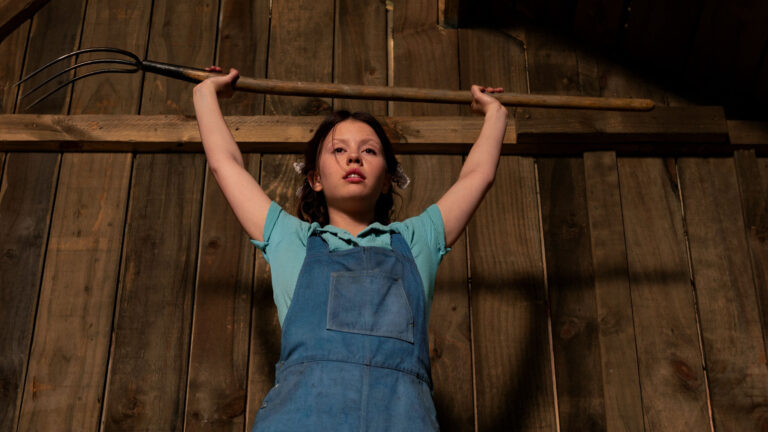
The second film released by Ti West starring Mia Goth this year, Pearl, is the prequel to X, and tells the story of Pearl, a young country girl who would do anything to leave her life on the farm behind. With a groundbreaking performance from Mia Goth, and a passion for the genre that comes through in every frame, West’s latest is a fantastic genre film that will inspire filmmakers to come.

From its opening moments, Pearl reveals itself to be a love letter to the Hollywood films of old. Its setting, Southern accents, opening credits font, and long shots are evocative of films likeThe Wizard of Oz. Even Pearl’s own character motivations mirror that of Dorothy, as she talks to animals about how she can’t wait to leave the farm. These moments are immediately juxtaposed by the horror spin of Pearl, with violence seeming to lurk around every corner.

It’s West’s complete commitment to the setting of Pearl that enables it to stand out as one of the great horror flicks of the year. It’s not just Tom Hammock’s production design and Ben Milsom’s art direction that transport this film back to the 1930s era of Hollywood filmmaking. The screenplay by Ti West furthers this narrative, and all the performers speak in the cadence typically associated with 30s films. Eliot Rockett’s cinematography furthers this style of filmmaking, through the wide panoramic shots, and the usage of deep focus cinematography. Shots are blocked in such a way as to keep the camera from moving as much as possible, to further the illusion that Pearl truly is a golden age, technicolor film. West’s understanding of cinematic language is on full display, and it works in perfect tandem with his horror aesthetics. When the language changes even slightly, it signals to the audience that something isn’t right. And that shines through in the outbursts of violence, which utilize camera movements, image superimposition, and cross-cutting. It’s stylized to the max, sincerely leaning into the artifice of its story completely to make an engaging experience.

This is to say nothing of Mia Goths’ performance in the role of Pearl. Goth truly has cemented herself as the horror actress of a generation, through her complete dedication to the unsettling titular character. Her ability to switch from a hopeful, naive farm girl to a terrifying horror monster is unlike anyone else. She compartmentalizes the opposing sides of Pearl’s life, and gives each half a powerful portrayal that enhances the film tremendously. The supporting cast all play off of Goth wonderfully too, adding in their own shock, terror, and anxiety as they become aware of who Pearl has become. Tandy Wright’s role as Pearl’s mother is particularly memorable, due to her jaded performance. The emotions are kept to a minimum until it all breaks apart, and that change in tempo propels the story forward in a horrifying way.

The story, however, falls into its own pitfalls as a standalone film. Pearl may be a prequel to X, but its own ideas may rely too heavily on what was already said in X. There are a great many themes that come out of telling a story of rejection, especially when it regards filmmaking and show business. The character of Pearl wrestles with her own identity and desires, and the feeling of being trapped throughout the film. These are the basics of Golden Age storytelling. And the horror twist adds a tragic element to this tried and true story that has been told for generations. Yet it doesn’t completely work. This film’s structure, and its golden age tropes, establish Pearl as a sympathetic character, and it leads viewers not familiar with X to see her as a main character that has a journey of discovery ahead of her. While these ideas are refuted by the film’s ending, its harsh and abrupt nature leaves a confusion in its wake. It’s shocking and horrific, and for those unfamiliar with X, souring. Pearl is a masterclass of horror filmmaking with a powerful ending, but it relies on a familiarity with the franchise that holds it back.


Grade: B


In Memoriam: Breast Cancer Awareness Month

This October, there will be constant statistics coming up to raise awareness for this killer disease which accounts for 25% of all types of cancer in women. As of 2020, there are 2.2 million people who suffer from breast cancer with the number of deaths from it around 685,000. Breast cancer screenings are highly encouraged and the pink ribbon is its symbol. There are those who have survived breast cancer including Maggie Smith, Edie Falco, Cynthia Nixon, Kathy Bates, and Richard Roundtree, a survivor of male breast cancer which accounts for 20,000 new cases every year. Sadly, there are others who have fought and lost the battle; here are notables who we have lost to the disease. 


Ingrid Bergman (1915-1982)

The continental legend who performed in multiple languages won three Academy Awards, worked with some of the best directors in history, and endured an international scandal. Bergman made her name known with the Swedish film Intermezzo and was hired to Hollywood where films like Casablanca, Gaslight, Notorious, and Anastasia cemented her place amongst legends. Then, her famous affair and marriage with Roberto Rossellini led to Stromboli and Journey To Italy among several films abroad, topped off by one last Oscar nomination in Ingmar Bergman’s Autumn Sonata. She was diagnosed with breast cancer in 1974 and would continue to work and receive treatment until her death on her 67th birthday. 


Bette Davis (1908-1989)

“The First Lady of the American Screen” is an icon of cinema and one of the early thespians of the medium. Her strong-headed nature with studio heads and directors promoted Davis to a diva status, but it is one out of respect because of the high-quality performances she always brought. Of Human Bondage, Jezabel, The Letter, All About Eve, and What Ever Happened To Baby Jane are amongst her finest roles, and fans and historians are consistently revisiting those. In the last decade, she was diagnosed with cancer and other ailments but continued to work until her death, aged 81. 


Greta Garbo (1905 -1990)

The second Swedish noted victim of the disease retired in 1941 and went into seclusion for the rest of her life. Like Bergman, she was invited to Hollywood where she flourished in silent films and made the successful crossover to talkies with her darkened, blue accent. A Woman of Affairs, Anne Christie, Romance, Grand Hotel, and Ninotchka were among her most outstanding screen performances where MGM advertised her with “Greta Talks!”, then finished with “Garbo Laughs!” Living in a New York apartment and keeping close-knit friends, Garbo beat breast cancer in the early 80s but dealt with numerous complications afterward in the last years of her life.


Kelly Preston (1962-2020)

Preston’s death was a total surprise to the world when her husband, John Travolta, broke the news on Instagram that she had been battling breast cancer privately for two years. Preston made a name for herself thanks to roles in comedies including Twins, Jerry McGuire, Nothing To Lose, and View From The Top, but also acted in the noted dramas For The Love Of The Game and Gotti, which co-starred her husband in the infamous crime story. The two met while shooting The Experts after Preston’s first marriage ended and the couple married in 1991.


Lynn Redgrave (1943-2010)

Coming from a prestigious acting family, which included her Oscar-winning sister (Vanessa), her niece (Natasha), and her father (Sir Michael), Lynn Redgrave fit in naturally on stage with the National Theatre and on screen. Her most notable performances include Georgy Girl, The Deadly Affair, a TV adaptation of What Ever Happened To Baby Jane with sister Vanessa, and Gods And Monsters. In contrast to her relatives, Lynn kept a steady stream of work but would remain localized in her adopted home of Connecticut. Diagnosed with breast cancer in 2002, Lynn openly talked about her battle until her death in 2010, aged 67. Three years later, the Off-Broadway Bleecker Street Theatre was renamed after Redgrave.


Olivia Newton-John (1948-2022)

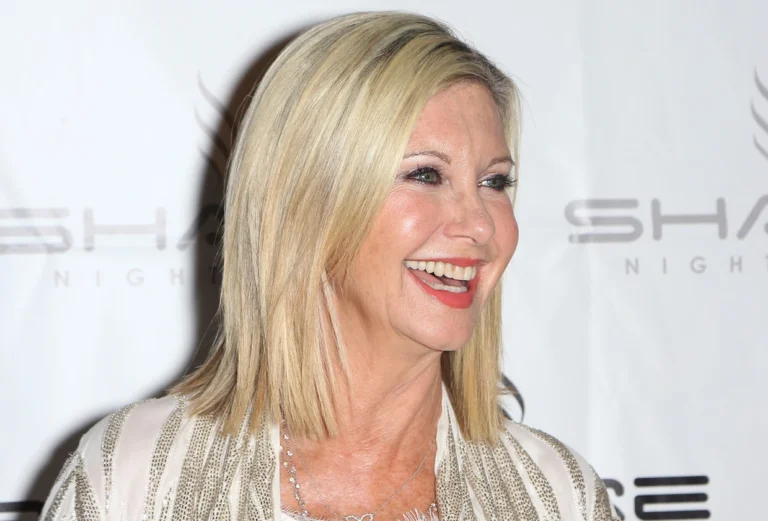
This piece was written and submitted before the Grease superstar passed away, but it was well-known that she had been diagnosed with breast cancer for decades. She was diagnosed in 1992 and became an advocate for cancer awareness by establishing the Olivia Newton-John Foundation Fund. She was already an established singer when she got the immortal role of Sandy opposite John Travolta in 1978. “You’re The One That I Want” and “Hopelessly Devoted To You” remain part of the musical staple that came out of Grease and its legacy. Even when her cancer returned in 2017, Newton-John remained active and defiant in the face of this mortal illness.


Follow me on Twitter: @brian_cine (Cine-A-Man)

Poll: What is Viola Davis’s best performance?

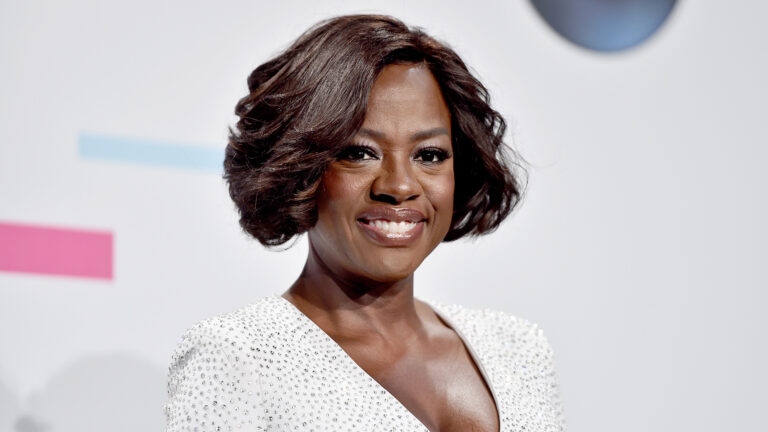
In 2008, she received her first Oscar nomination in Doubt. She only had eight minutes of screen time. That is the prowess of Viola Davis, who had been making her acting rounds ever since the late nineties. In just under twenty years, she became the first black actress to have won an Oscar, a Tony (Fences), and an Emmy (How to Get Away with Murder), and has even found the time to write a memoir earlier this year, entitled “Finding Me”. This begs the question, what CAN’T Viola do? Here’s a hint – the answer is nothing.

Let’s celebrate her powerful filmography. What do you think is Viola Davis’s best performance?


List: Top 10 Movies of All-Time

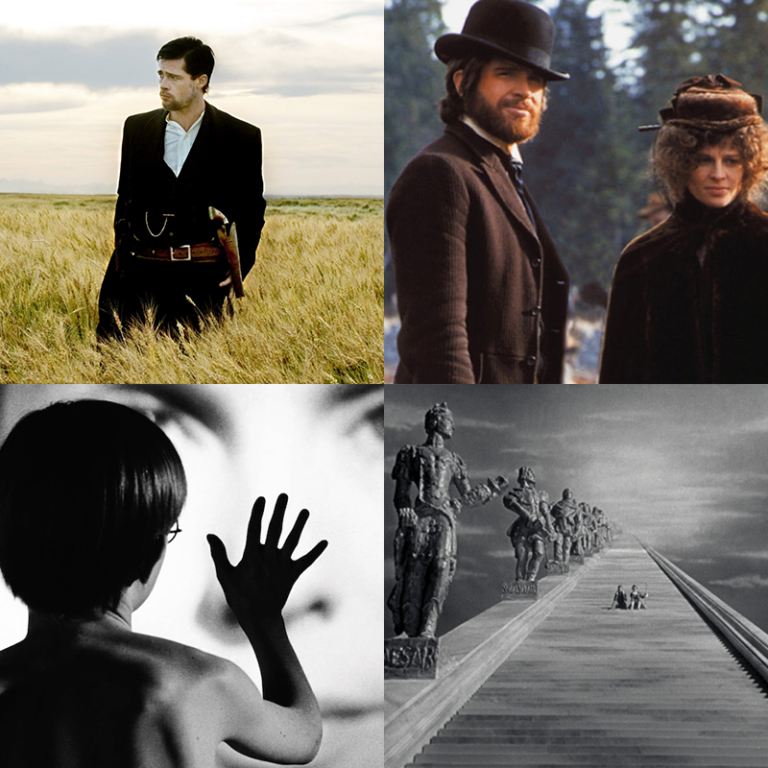
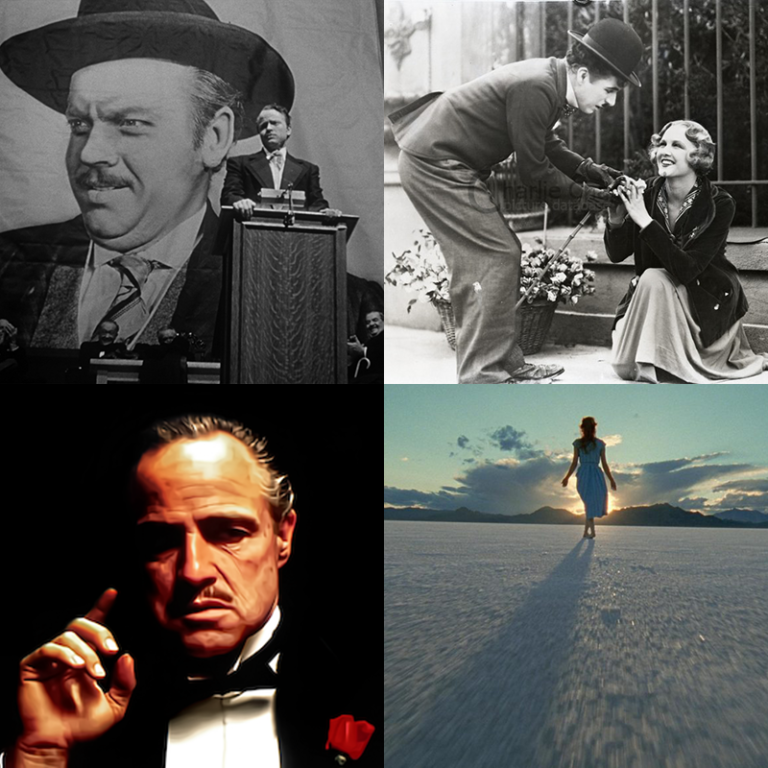
This week on Episode 500 of the InSession Film Podcast, we celebrate the milestone by talking about our Top 10 Movies of All-Time! So, no pressure here. Where does one begin when sifting through all of the great movies we’ve seen over the years to narrow them down to just a handful? An exercise like this is obviously daunting, but we thought it would be really fun to talk about those movies that have shaped us the most as cinephiles/critics. Not only was it a really fun time discussing these films, but it surprisingly got really emotional in the end when talking about our favorite films ever made. That said, what would be your Top 10?

NOTE: We spend most of our time only discussing our Top 10 movies of all-time, however, as you’ll see below, we have listed our full Top 20 lists.

JD

1) Citizen Kane
2) The Tree of Life
3) The 400 Blows
4) Modern Times
5) Grave of the Fireflies
6) The Godfather
7) Vertigo
8)
9) Persona
10) Close Encounters of the Third Kind

11) Bicycle Thieves
12) Ikiru
13) 2001: A Space Odyssey
14) Alien
15) Dr. Strangelove or: How I Learned to Stop Worrying and Love the Bomb
16) Brief Encounter
17) The King of Comedy
18) Singin’ in the Rain
19) Do the Right Thing
20) Inside Llewyn Davis

Brendan

1) City Lights
2) A.I. Artificial Intellgence
3) Princess Mononoke
4) Ikiru
5) 2001: A Space Odyssey
6) Brief Encounter
7) The Assassination of Jesse James by the Coward Robert Ford
8) Alien
9) Where the Wild Things Are
10) Ratatouille

11) Before Sunrise / Before Sunset
12) E.T. the Extra-Terrestrial
13) The Exorcist
14) Jackie Brown
15) The King of Comedy
16) A Matter of Life and Death
17) My Neighbor Totoro
18) Petite Maman
19) Punch-Drunk Love
20) The Thin Red Line

Ryan

1) The Godfather
2) Singin’ in the Rain
3) There Will Be Blood
4) The Red Shoes
5) The Lord of the Rings
6) Goodfellas
7) Malcom X
8) McCabe and Mrs. Miller
9) All the Presidents Men
10) Inside Llewyn Davis

11) Moonlight
12) Casablanca
13) Kiki’s Delivery Service
14) Zodiac
15) Lawrence of Arabia
16) Raiders of the Lost Ark
17) Amadeus
18) Mulholland Driver
19) The Insider
20) Oceans Eleven

Jay

1) The Tree of Life
2) Barry Lyndon
3) Heat
4) Mulholland Drive
5) Short Cuts
6) A Matter of Life and Death
7) Mishima: A Life in Four Chapters
8) The Thin Red Line
9) Apocalypse Now
10) All That Jazz

11) Lawrence of Arabia
12) Once Upon a Time in the West
13) Blade Runner
14) There Will Be Blood
15) Bring Me the Head of Alfredo Garcia
16) Raiders of the Lost Aark
17) No Country for Old Men
18) The Long Goodbye
19) True Stories
20) Chinatown

Hopefully you guys enjoyed our lists and if you agree or disagree with us, let us know in the comment section below. Clearly there are many, many, many other films that battled for our lists that just missed the cut. That being said, what would be your Top 10? Leave a comment in the comment section or email us at [email protected].

For the entire podcast, click here or listen below.

For more lists done by the InSession Film crew and other guests, be sure see our Top 3 Movie Lists page.

Movie Review: ‘The Woman King’ is Maximum Impact Filmmaking


Director: Gina Prince-Bythewood

Writers: Dana Stevens, Maria Bello

Stars: Viola Davis, Lashana Lynch, Thuso, Mbedu

Synopis: A historical epic inspired by true events that took place in The Kingdom of Dahomey, one of the most powerful states of Africa in the 18th and 19th centuries.


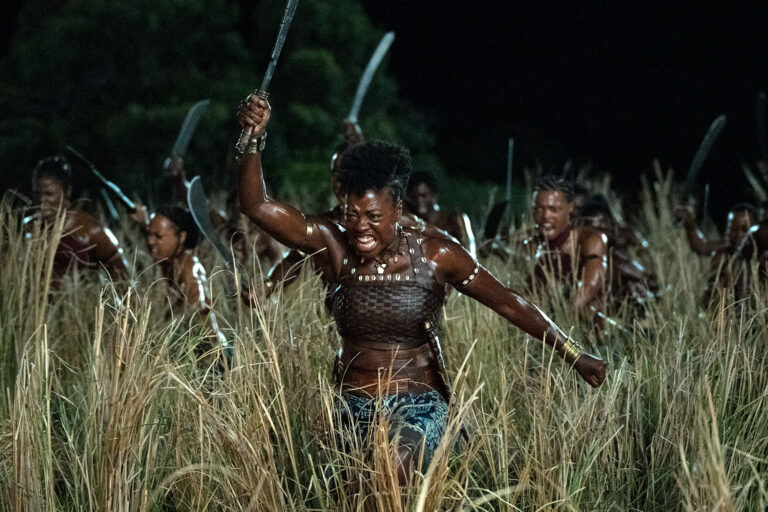
Gina Prince-Bythewood’s historical-African epic is another 2022 blockbuster that deserves to be seen on the big screen. With impeccable costume design from Gersha Phillips, intense action sequences, and yet another powerhouse performance from Viola Davis. Set in the 18th century kingdom of Dahomey, The Woman King tells the story of the Kingsgaurd, an elite set of women soldiers who protect the kingdom from the warring Oyo Empire and the colonizers enabling their military might. Through the actions of General Nanisca (Davis), Izogie (Lashana Lynch), and the up and coming trainee Nawi (Thuso Mbedu), the Dahomey Kingdom may be able to break away from the slave trade and establish a stronger empire built on protecting all of its people.

Regardless of the historical accuracy of this film, its depiction of the Dahomey Kingdom is empowering in every way possible. The costuming, choreography, and cinematography highlight the scale of the Dahomeypeople and the importance of its culture. The Woman King is a vibrant film, with costumes that show off the wealth of African culture. Whether it is the Kingsgaurd’s uniforms or the royal garb, Phillips ’costume design is undeniably brilliant. Polly Morgan’s cinematography captures everything beautifully, with high contrast lighting that makes the dark scenes intimate, and the bright scenes gorgeous. The large dancing/chanting sequences come to life thanks to the cinematography that holds on to the action; the friendly challenges of strength are shot with an intensity that gives weight to the non-fatal stunts. Morgan’s camera work catches it all, the majesty of this large kingdom and the people who are within it flawlessly. That contrast is what propels this blockbuster story forward, and the aim to tell this alternative history with sincerity and care for its people rings throughout.

Empathy is clearly Gina Prince-Bythewood’s guiding philosophy for The Woman King, as she infuses each element of the film with said empathy. Whether it’s the showstopping performances of Viola Davis, Lashana Lynch, Thuso Mbedu, or the stellar editing which doesn’t glorify violence against Africans, or the depiction of an entire culture, Prince-Bythewood uses each element to empower these characters in their own fight against systemic racism. As mentioned, Davis is stellar in the role of the titular Woman King, Nanisca. She leans into the stalwart nature of this warrior general, and uses small facial changes to allow a glance into the inner turmoil of Nanisca. It’s powerful to watch, and firmly places her as a co-lead in this film. Alongside Davis is Mbedu, who captures the youthful fire of Nawi perfectly. Her dedication to the stunt work perfectly accompanies her more inquisitive performance, and it’s truly captivating. Lynch continues to amaze, in a supporting role that further shows her power as both an action star and a sincere individual. This trio of powerhouse performances is supported by an entire ensemble committed to depicting the amazing kingdom of Dahomey, and it’s a testament to the vision of Prince-Bythwood. 

That vision also includes some of the best hand to hand combat sequences of the year. The editing is frenetic, and the geography can often fall away, but the fight is never not in perfect focus. Every strike, every musket blast, every jump, and every parry ring through the sound mix and leaves a mark on the audience. It’s maximum impact filmmaking in every sequence. But the empathy never leaves, the violence isn’t glorified, and every victory is a reminder of the losses sustained to reach that point. Terilyn A. Shropshire’s editing gives each battle a relentless tempo, and keeps you on the edge of your seat. The fight choreography is equally intense, and we witness each actress perform the choreography themselves for a majority of the film. It’s powerful and memorable.

The story by Dana Stevens and Maria Bello is compelling throughout, hitting the traditional beats of a historical action epic. Adding complexity to this is the film’s dual focus, as it tells the stories of Nanisca and Nawi in tandem. Nawi’s story of finding acceptance and becoming a fierce warrior is given added depth through her relationship to Nanisca, whose own past has come to haunt her. As these women take their place in the kingdom of Dahomey and assert their power, The Woman King truly takes on new meaning, and finds relevance in the modern era. That said, the romantic subplot of The Woman King leaves a lot to be desired. For a film that places emphasis on the Kingsguard not taking husbands, this subplot has a lot of potential to offer the film. And, at a few points, it leads to Nawi challenging this part of the Dahomey Culture. But it’s a subplot that is largely unresolved, leaving its potential unused, and creating a murky sub-set of themes that can weigh down the film’s greater discussion of female and African empowerment. 

Grade: A-

Podcast: Top 10 Movies of All-Time – Episode 500

This week’s episode is brought to you by Confess, Fletch. Follow us on social media for your chance to win a FREE digital code!

This week on the InSession Film Podcast, Ryan and Jay join from Extra Film join us as we celebrate 500 episodes by talking about our Top 10 movies of all-time!

It’s hard to believe we made it to 500 episodes. This has been a really fun journey so far and we cannot think you all enough for your support and tuning in over the years. We figured one of the best ways to celebrate would be to talk about our favorite films and how they’ve shaped us as critics/cinephiles over the years. It was a really fun time, however it got surprisingly emotional in the end and it made for a pretty special moment for the show.

On that note, check out this week’s show and let us know what you think in the comment section. Thanks for listening and for supporting the InSession Film Podcast!

– Top 10 Movies of All-Time: 10-6 (Part 1)

– Top 10 Movies of All-Time: 5-1 (Part 2)

Show Sponsor: First Time Watchers Podcast

– Music

Mishima – Philip Glass
Má Vlast: Vltava – Bedřich Smetana
The Return of the Eagle – Atli Örvarsson

Subscribe to our Podcasts RSS
Subscribe to our Podcasts on iTunes
Listen on Spotify
Listen on Stitcher
InSession Film Podcast – Episode 500

[divider]

Next week on the show:

Studio Ghibli Movie Series: Princess Mononoke
Studio Ghibli Movie Series: Whisperer of the Heart

[divider]

Help Support The InSession Film Podcast

If you want to help support us, there are several ways you can help us and we’d absolutely appreciate it. Every penny goes directly back into supporting the show and we are truly honored and grateful. Thanks for your support and for listening to the InSession Film Podcast!

VISIT OUR DONATE PAGE HERE

Movie Review: ‘See How They Run’ Keeps You Guessing, But Breaks No New Ground


Director: Tom George

Writer: Mark Chappell

Stars: Sam Rockwell, Saoirse Ronan, Adrien Brody

Synopsis: In the West End of 1950s London, plans for a movie version of a smash-hit play come to an abrupt halt after a pivotal member of the crew is murdered.


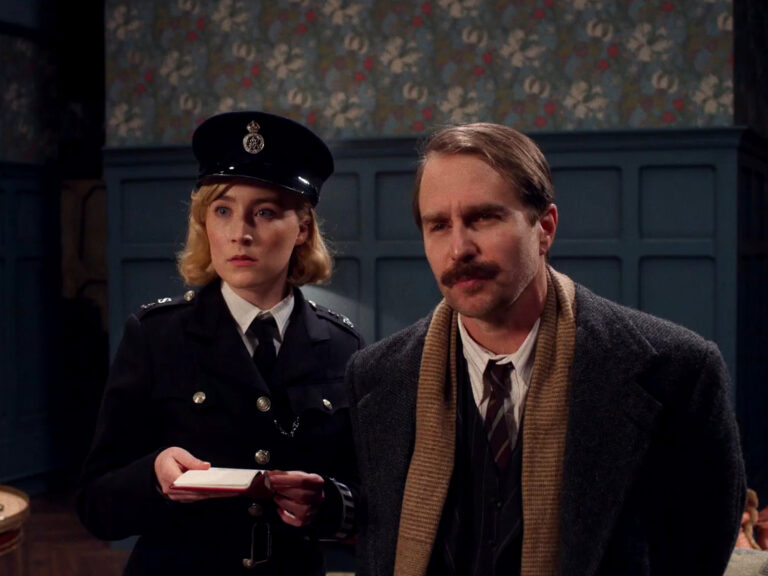
To reference the queen of the genre in your whodunnit is a bold move. To aim some gentle criticism at her longest running play is only advisable if your whodunit is truly something new and different. While director Tom George and his players give it a shot, See How They Run isn’t a spectacular masterpiece of the craft. It is a witty farce, though.

Writer Mark Chappell’s script is whip smart. It crackles with incredible puns, one liners, asides, and banter. There are layers of depth to every character and an engaging plot. There are times it gives a red herring where there didn’t need to be one, like the idea that while Stoppard (Sam Rockwell) and Stalker (Saoirse Ronan) are chasing their murderer, there’s a serial killer on the loose. Even the red herrings for the case can be explained away far too easily so that when they make a reappearance, it’s a bit of an eye roll. But the script especially sings when featuring the relationship between Stoppard and Stalker.

That is due in large part to the incomparable talents of Saoirse Ronan and Sam Rockwell. Ronan especially has an incredible command of timing in her scenes. She imbues Stalker with a wide-eyed, but not completely naïve, presence and a willingness to jump into a situation despite not being entirely sure of the outcome. It’s a great compliment to Rockwell’s world weary detective who is very good at what he does, but can’t stand the idea of living with it any longer. Rockwell’s accent goes in and out, but his grace of movement in his character’s drunkenness is superb and charming.

That’s really what See How They Run is. It’s a charming film. Director Tom George and editors Gary Dollner and Peter Lambert even create some intriguing split screen actions. They employ this in order to move a piece of story along, to show two sides of the same conversation, or to show a simultaneous action that may be matched if it is a similar situation. It’s a great technique to employ in a movie like this.

The cinematography by Jamie Ramsay is also top notch. He em

ploys a lot of different tricks to keep us guessing like high angles, dolly shots, and a bit of tilt shift for the car scenes. One of the best shots, though, is one of the simplest. Because it is late in the film, the plot points discussed will be limited. The shot is a medium one of two people on a couch. One person is distracting the other so that another of the group can sneak closer and get the gun away from that person. While the two people talk, a hand slowly emerges from screen left. It doesn’t stop or slow, but just agonizingly creeps forward. It’s a terrifically funny scene and a brilliant use of space within the frame.

It’s hard to pull off a great whodunit. While See How They Run doesn’t quite accomplish this,, it’s at least a very fun whodunit that also plays with the style of the form and adds in elements to stay engaging as the investigators attempt to solve the case. See How They Run doesn’t have the bite or the beautifully complicated nature of a Knives Out, but it will certainly do until the next installment of that series gets here.


Grade: B


Movie Review: ‘Moonage Daydream’ Somehow Captures Bowie by Bowie


Director: Brett Morgen

Writer: Brett Morgen

Stars: David Bowie

Synopsis: A cinematic odyssey exploring David Bowie’s creative and musical journey. From visionary filmmaker Brett Morgen, and sanctioned by the Bowie estate.


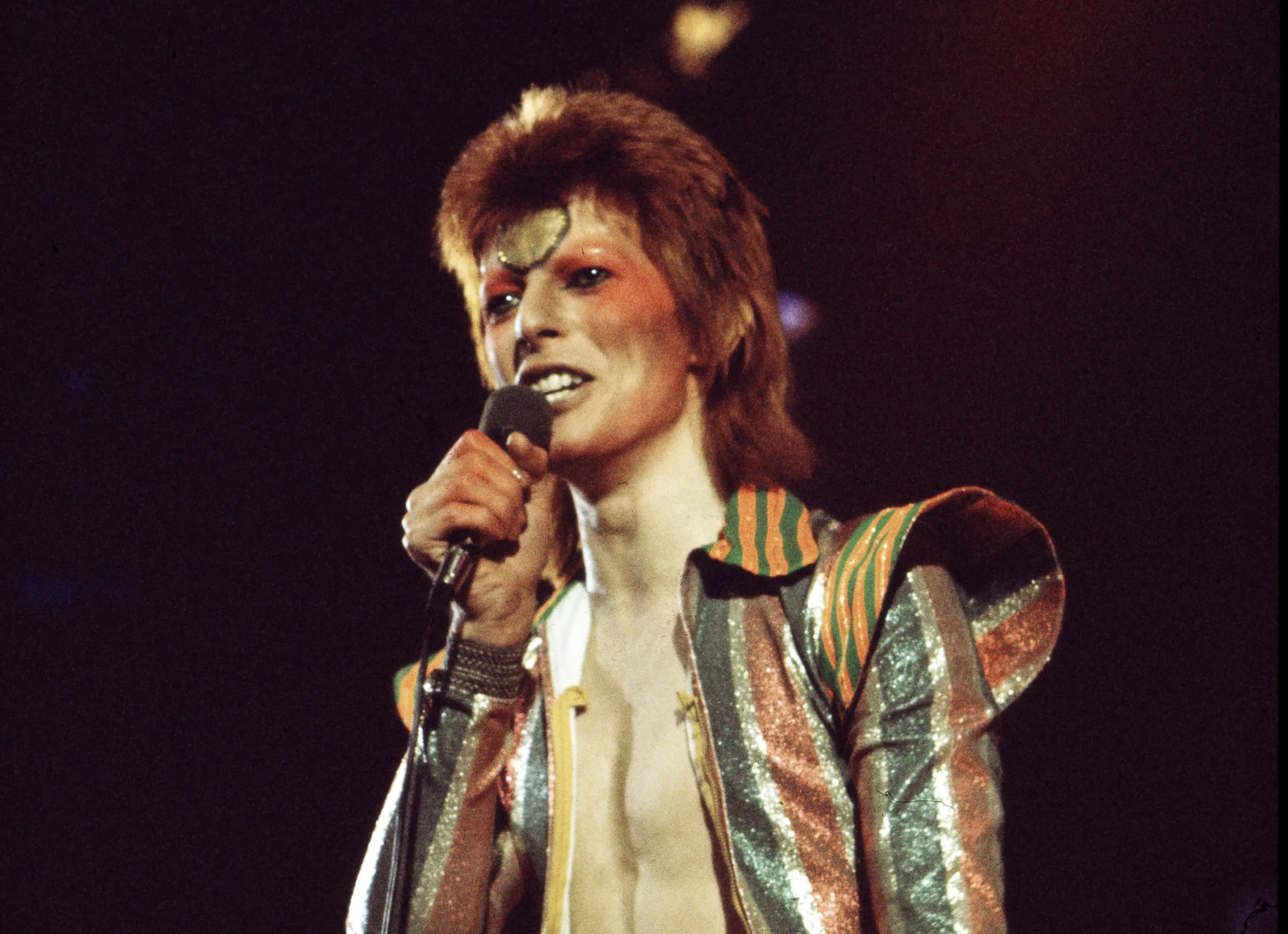
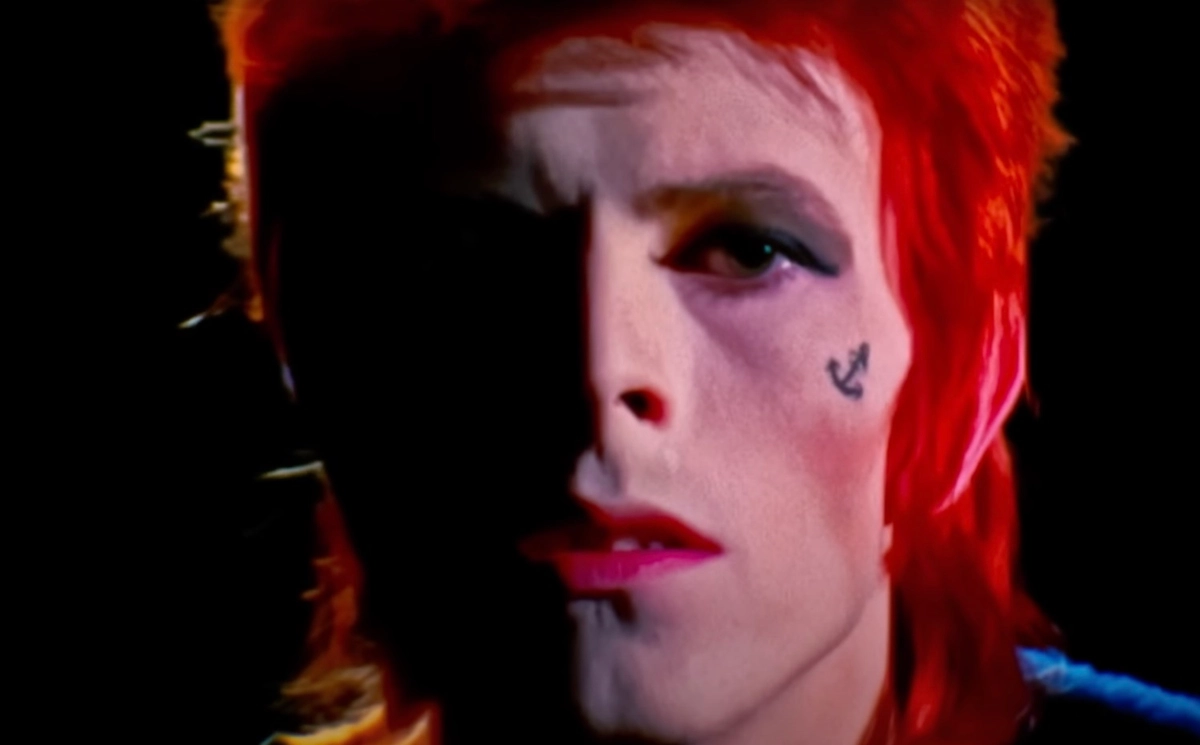
There’s no proper way to describe Brett Morgen’s Moonage Daydream. For those who are looking for a conventional musical documentary involving talking heads recollecting about the life of the artist du jour, alternating between archival footage recapping the person’s life, this is not the movie for you. In fact, someone sitting next to me was complaining about how “loud” and “disjointed” it was when the credits rolled. But this is not a film where you’ll learn about Bowie. Plenty of documents have recollected Bowie’s life in a didactic fashion (books, movies, tv specials, the works). So it feels refreshing to have a movie that is the complete polar opposite of that. 

Morgen’s film doesn’t care about conformity or didactism—it’s instead the perfect encapsulation of who Bowie was as an artist, and as a person: it’s as excessive, torturous, ebullient, conflicted, and loud as the man ever was. It never tries to answer questions on Bowie that guided his artistic vision, but instead peers into his ever-conflicted and growing mind to attempt to give audiences an idea of what his soul was. That type of music documentary is far more interesting than the traditional “talking heads” drivel that have been plaguing the artform for decades. 

Here’s a movie that openly wants you to feel Bowie, instead of learning bits of information about him. And in that regard, it’s the most complete document of his life ever put on film, and a far more accomplished portrait of the person than any other type of documentary that would’ve been made in his place. It’s a must-see in IMAX: the colors overwhelm your eyes, while its 12.0 sound mix (!) will literally blow the roof off the place. This type of in-your-face filmmaking, once again, will not be for everyone. However, Morgen signals to the audience early on that they should let themselves melt away and follow the movie’s pace, which is no pace. 

Like Bowie’s life, it’s all over the place. Fragments of his late life intertwine his early days as a performer, while clips of Nosferatu, The Cabinet of Dr. Caligari, Metropolis, among many movies are peppered throughout. At the same time, alternate versions of Bowie’s greatest songs are blasted through speakers while explosion sounds are also heard. It’s overwhelming, perhaps too overwhelming. But amidst all the visual and aural noise thrown at the viewer, there’s something so pure about seeing Bowie at his prime on an IMAX screen, doing what he loves to do best—entertain. 

One leaves Moonage Daydream with their eyes and ears bursting with excitement. It’s not your typical documentary, and the lesssaid about the movie, the better. It’s a rapturous experience to witness in IMAX, a festival of colors and sound that ultimately amalgamates itself as the perfect time capsule of Bowie’s messy but always moving life. The film ultimately becomes a purely cathartic and life-affirming experience that every eye and ear needs to experience on the most giant screen possible. Treat yourself, for Bowie’s sake, and dance. 


Grade: A+


Podcast: The Rings of Power (Episodes 3 / 4) – Patreon Bonus Content

Listen!

For this week’s Patreon Bonus Content, Christian Eulienberg and JD review Episodes 3 and 4 of the new Amazon series The Lord of the Rings: The Rings of Power! Between Númenor, the Harfoots, and the mines of Khazad-dûm, there is plenty to discuss in these two episodes.

If you’re already a Patreon supporter, you can listen to this episode NOW on Patreon by clicking here.

Sign up today to get early access and hear the entire episode!

[divider]

HELP SUPPORT THE SHOW

To hear our bonus content episodes early, subscribe now on Patreon. In many cases, though, we offer our bonus content for free after a certain period of time and we do encourage (and very much appreciate) a small donation of $0.99 as a way to help support the show if signing up on Patreon isn’t for you. Click on the PayPal button below to donate and thanks so much for your support. You can also hear much of our Bonus Content via our mobile apps. See the information at the bottom of the post for more details.


One-Time Donation


[divider]

Mobile Apps!

Listen to all of our bonus content on our apps for just a one-time fee! Whether you have an iPhone, Android or Windows phone, our apps are available in many different ways that is convenient for you. With our mobile app, not only can you listen to all of our bonus content, but our main shows and our Extra Film podcasts as well. Click here for more info!

If you don’t want to purchase our bonus content, but still want to support us, there are other you can help us out. Click here for more info.

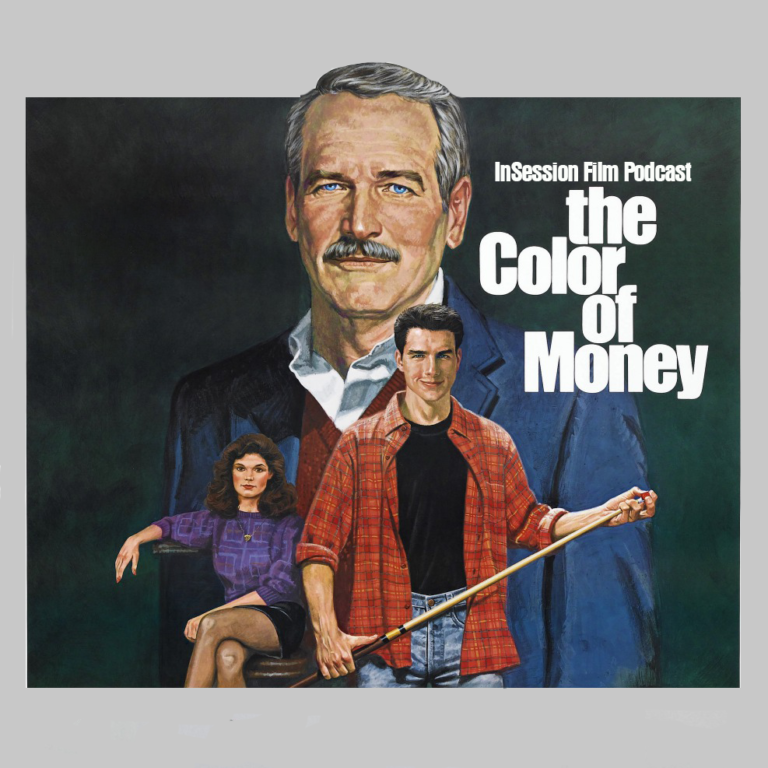
Podcast: The Color of Money / Resurrection – Extra Film

This week on the Extra Film Podcast, Ryan and Sophia continue their Martin Scorsese Movie Series with The Color of Money and also review the psychological thriller starring Rebecca Hall in Resurrection!

The Color of Money is one of those Scorsese films that isn’t talked about as much as his legacy films are, but as you’ll hear in the conversation, we make a case for its greatness and why it should maybe be in the Scorsese discourse more. We also had fun talking about Rebecca Hall, whose performance in Resurrection is one of the best of 2022 so far.

On that note, check out this week’s show and let us know what you think in the comment section. Thanks for listening and for supporting the InSession Film Podcast!

– Movie Review: The King of Comedy (5:05)
Director: Martin Scorsese
Writers: Richard Price
Stars: Paul Newman, Tom Cruise, Mary Elizabeth

– Movie Review: Resurrection (1:00:18)
Director: Andrew Semans
Writers: Andrew Semans
Stars: Rebecca Hall, Grace Kaufman, Tim Roth

– Music

Werewolves of London – Warren Zevon
Resurrection – Gank
The Return of the Eagle – Atli Örvarsson

Subscribe to our Podcasts RSS
Subscribe to our Podcasts on iTunes
Listen on Spotify
Listen on Stitcher
Extra Film – The Color of Money / Resurrection

[divider]

To hear this Extra Film episode and everything else we do, download our apps on the Amazon Market for Android and the Podcast Source app on IOS devices. The mobile app covers all of our main shows, bonus podcasts and everything else relating to the InSession Film Podcast. Thanks for your wonderful support and for listening to our show. It means the world to us.

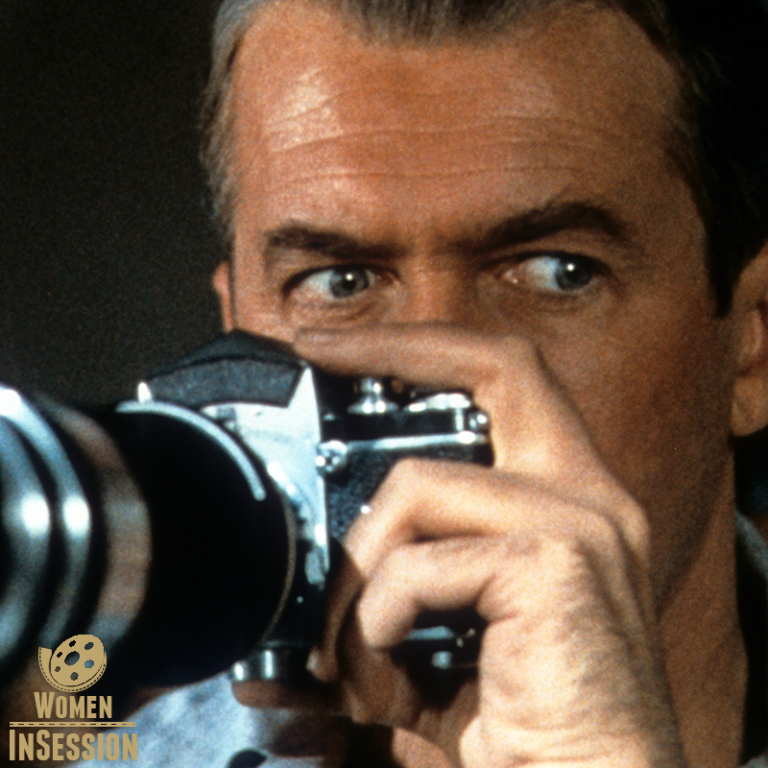
Women InSession: Alfred Hitchcock in the 50’s – Episode 8

This week on Women InSession Podcast, Kristin Battestella, Zita Short and Erica Richards continue the Alfred Hitchcock discussion by talking about his 1950’s output, including Rear Window and Dial M for Murder!

This week we get to Hitchcock’s more prominent work of the 1950’s (excluding Vertigo, which we’ll get to next week) as we dissect some of his more well known films. Erica also gives us her thoughts on Rope since she missed last week, and she gives a passionate argument for it being one of Hitchcock’s very best movies.

On that note, check out this week’s show and let us know what you think in the comment section. Thanks for listening and for supporting the InSession Film Podcast!

– Alfred Hitchcock Discussion

– Music

The Return of the Eagle – Atli Örvarsson

Subscribe to our Podcasts RSS
Subscribe to our Podcasts on iTunes
Listen on Spotify
Listen on Stitcher
Women InSession – Alfred Hitchcock in the 30’s & 40’s

[divider]

To hear this Extra Film episode and everything else we do, download our apps on the Amazon Market for Android and the Podcast Source app on IOS devices. The mobile app covers all of our main shows, bonus podcasts and everything else relating to the InSession Film Podcast. Thanks for your wonderful support and for listening to our show. It means the world to us.

Movie Review (TIFF 2022): ‘Triangle of Sadness’ Drenches The Rich in Raw Sewage

[info]

Director: Ruben Östlund

Writer: Ruben Östlund

Stars: Thobias Thorwid, Harris Dickinson, Charlbi Dean

Synopsis: A cruise for the super-rich sinks thus leaving survivors, including a fashion model celebrity couple, trapped on an island.


Ruben Östlund’s Palme d’Or-winning and laughing-gas-covered Triangle of Sadness might not have the sharpness and insight that his previous features contained, but it entertainingly tackles economic disparity and the “entitlement” of the super-rich by dwelling on poisonous folly and drenching their prerogative in raw sewage.

Swedish filmmaker and curator of darkly comedic mischief cinema, Östlund has always found ways to play with satire and the themes of privilege amidst the super-rich. His cinematic canvas is ambitious, and it has earned him not only critical acclaim but also top festival awards, such as the Un Certain Regard Jury Prize in 2014 for Force Majeure (his best feature to date, in my opinion) and a Palme d’Or win in 2017 for The Square. Östlund exposes human frailty in its many guises, like cowardliness, emasculation, hypocrisy, insincerity, and privilege, by constructing various well-timed and executed comedic setpieces. Sometimes it feels as if his films contain too much fat and feel bloated, but, for the most part, the excess adds an element of surprise and restless folly. He doesn’t want to let his audience rest or feel relaxed as his film is running, upping the comedic ante while exposing people’s weaknesses and idiosyncratic impolitic behavior. 

His directorial antics are crafted by the fact that he thinks, as said during his Cannes 2022 press conference, that the “arthouse cinema” being made during his stay in film school was boring. So, he wanted to put the important topics occurring during our day and age into a context that we, the viewers and audience, like to click on. Although one might disagree with his sentiment that the arthouse films being made are monotonous (as there have been plenty of brilliant films that have been made in recent years), his statement towards bringing to a setting in which they would want to spend some time and forcing them within that exquisite (ski resort, art museum, mall, etc) setting to discuss important subject matters. Now, to follow his Cannes top-prize-winning film, the art world satire The Square, Östlund arrives with Triangle of Sadness, which provided him his second straight Palme d’Or, having its North American premiere at this year’s TIFF. 

If you’d thought that his previous 2017 feature lacked any sense of subtlety and had the fitting division between brilliant and baggy, then in his latest, Östlund takes the emergency break altogether – delivering a takedown of the 1% by combining the savvy oddities of Luis Buñuel with slapstick-like comedic set-pieces, gross-out humor, and a not-so-rich yet vastly entertaining subtext. With an almost three-hour runtime, Triangle of Sadness, named after the fashion industry’s expression of the wrinkles between a person’s eyebrows, is divided into three parts: the young lovers in the fashion world, the multi-million-dollar luxury yacht, and the deserted island – all of which end in catastrophic ways, escalating its comedic and narrative absurdity by the minute. For the entirety of the film, you spend time with an array of successful and outlandish rich people, which might seem like an irritable experience. Instead, the film develops into a crude, ostentatious, and sidesplitting rinsing of wealth, self-importance, vanity, and those same human beings who think they are the last coca-cola in the desert, ending as an uproarious jet-black comedic farce that knocks the rich down into their lowest levels imaginable. 

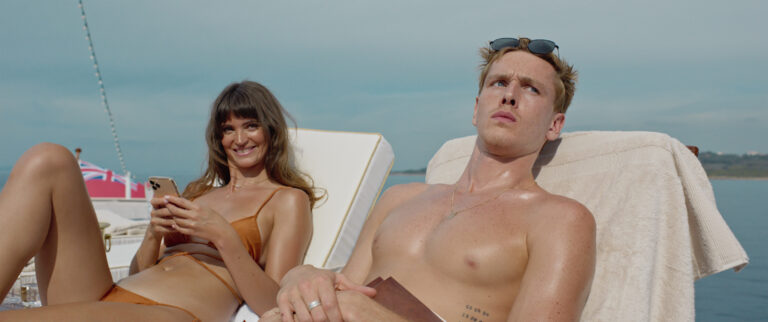
Triangle of Sadness begins as a story of romance, showered in satire (of course), where a young model, Carl (Harris Dickinson), and his influencer girlfriend, Yaya (Charlbi Dean), are in a money-orientated relationship. Yaya may be in it for the likes on the various social media platforms. Still, Carl is genuinely in love, or so he asserts – as he’s petty, jealous, and dishonest with himself and the newly developing fashion world around him. Yaya’s social media fame lands the couple two tickets on a 250-million dollar luxury yacht, where we meet an array of immensely wealthy characters and crew members that feel as if they came from a malicious version of an Agathe Christie novel. Some of these characters are a Russian capitalist who sells shit (stated multiple times), Dimitry (Zlatko Burić), a Marxist captain and drunk, Thomas Smith (Woody Harrelson), and an elderly couple who made their wealth from the arms trade (grenades included). 

During this point, the tables are turned for the first time of many in the narrative. Although the film begins concentrating on Carl and Yaya, its focus shifts to the wealthier people on the yacht. This puts the young couple in the middle of a privileged sandwich, as they are the representation of the “middle-class” amidst the luxurious bunch, even if they are also wealthy themselves. They are outcasts one way or another but still have the gold-plated fortune attached to their backbone. The rest of what happens in Triangle of Sadness shouldn’t be spoiled, as it might ruin the experience for you. All you need to know is what started as a funny kickback (to some point) transforms into a poisonous mad-house of outrageous delights with a laughing gas haze. It takes its time before it reaches its crudeness, but it is sure worth the wait. Like The Square, multiple occasions are a tad uneven due to Östlund’s bloated nature of unpacking the material. 

As he keeps concocting one film after the other, Ruben feels as if he shouldn’t hold back; his gut says to keep pushing forward to see how far he can disorientate (or break) the audience. You begin to question whether it has more to say since some of its ideas aren’t explored to their fullest extent and subtlety doesn’t exist at all, to the point where you’d think that a Vera Lynn’s ‘We’ll Meet Again’ needle drop will arrive sooner rather than later once the turmoil begins in the style of Stanley Kubrick’s Dr. Strangelove. Actually, there are a lot of Vera Lynn songs that fit within the confines of Triangle of Sadness’ comedic trajectory: “Remember, Remember”, “Again”, “Each Moment I Live”, amongst other of her classic and beautiful tracks. You’d think it would reach a high level of scripted aggravation or pretentiousness, but it never actually does. Everything is in your face, and Östlund won’t restrain himself once he has his gears rolling. This is both a good and bad thing. 

It lacks the insight and sharpened-teeth comedic brilliance of Force Majeure and doesn’t dwell enough on the themes it covers; it feels like its targets are low-hanging fruit. On the other hand, this maximalist and over-the-top approach does present these concepts of wealthy hierarchies being broken down to their lowest degrees in a vastly entertaining fashion. There are instances in which you might feel as if this will become an exasperating experience. Still, your worries are torn down seconds after due to Östlund’s knack for blending the provocative with the hysterical and intelligent. The perfect word to describe the “key” situations that happen in Triangle of Sadness is schadenfreude, which is German for experiencing pleasure or joy from learning of or witnessing the imperilments, failures, or humiliation of another – in this case, the rich and wealthy. There is a large amount of sympathy towards them, as they just want to be free of misery. As the story develops, we all know that this is their turn to pay their comeuppance. 

The Swedish director wants to outdo what he did previously in The Square with an uncomfortable and lengthy comedic scene. He’s putting himself to the test since it is hard to do so after he has Terry Notary’s impeccable scene to square off with. Although none of the comedic set pieces reach that status, most of them are well-constructed and timed – becoming some of the most memorable scenes of the year, comedy-wise. One specific scene almost reaches this point: the seafood dinner scene. This is where the gross-out humor arrives; bodily fluids are all over the pristine yacht floors, and the wealthy are rolling down with it. I’m not a fan of said gross-out humor, which in this case, relies on the coarseness of bodily fluids. Initially, I thought that the use of such comedy was a tad lazy when I first saw the trailer and read reactions. However, as I kept thinking, I came across a thought about the juxtaposition between luxury and vulgarity, which had been slightly remarked upon during that specific scene’s buildup. 

Even though that bit goes on for far too long (and the film takes its time to reach that point), it adds to the theme of breaking down the hierarchies and putting the highly arrogant super-rich in their rightful place by dunking their prerogative in raw sewage.  They are experiencing the worst time imaginable while they are rotting in their own filth, and what a disgusting joy it is to see it. Although the performances throughout each of the comedic sequences or conversational set-pieces are what make them essentially tick, due to the physicality of their work and trusting Östlund’s wicked mind, these scenes are elevated by the excellent cinematography of Fredrik Wenzel. He captures every piece of shine and glamor, as well as the atrocities and excrement, in sheer clarity to portray the wealthy’s ignorance – with a swaying from left to right when things are going under, both literally and figuratively. There is no disguise for what Östlund wants to say; the social reversal allegory leads a predictable, albeit diverting, path. 

Triangle of Sadness is not as sophisticated as its contemporaries (although it doesn’t want to be), nor is his best work (not nearly a masterpiece, as I have heard some people say). Still, this satirical late capitalist parable about the rich’s intolerant food chain and gender roles is never detained by the sledgehammer procedure of its creator. So what holds it back from being a magisterial work of modern satirical mockery? It is a little too long, and more insight would have added a more significant pull than it has. The reason why Triangle of Sadness ultimately succeeds is due to the panache of Östlund’s writing, the excellent work by the cast (especially Dolly De Leon, Charlbi Dean, Zlatko Burić, and Woody Harrelson), and the laughing gas-perfumed atmosphere. This movie will have audiences howling like hyenas from its comedic quips and refrains, as well as baffled at the absurdity of it all while later pondering on the aftermath of these prosperous people’s lives. In the end, the character’s decisions and philosophies are what lead them to their tragic fate. 

It is not a revelation of the satirical arts, a didactic story of the rich paying their dues, or a crown jewel of risible compositions, but Triangle of Sadness is just amusing enough to deal with the issues that arise from the somewhat-lacking philosophies of  Ruben Östlund’s starving mad mind. It takes its time to get into the madness, yet it is all worth it in the end because Östlund’s latest is so much fun. Should it have won the Palme d’Or? In my opinion, no. There were far more better choices to pick from (Pacifiction, Decision to Leave, or even R.M.N.). Regardless, it made me cackle more times than I would have anticipated since the trailer didn’t do much for me, and I enjoyed it extensively, even with its faults, lack of thematic weight, and little perspicuity. With the news of his next feature being about passengers being stuck on a ten-hour flight with any technological distractions, and Harrelson returning as a possible captain again, titled The Entertainment System is Down, I’m excited about Ruben Östlund’s future as he keeps polishing his directorial hand and creating ridiculous scenarios.


Grade: B+

Movie Review (TIFF 2022): ‘Aftersun’ is a Recollection of a Fragmented Past


Director: Charlotte Wells

Writer: Charlotte Wells

Stars: Paul Mescal, Frankie Corio, Celia Rowlson-Hall

Synopsis: Sophie reflects on the shared joy and private melancholy of a holiday she took with her father twenty years earlier. Memories real and imagined fill the gaps between as she tries to reconcile the father she knew with the man she didn’t.


Charlotte Wells’ debut feature, Aftersun, is the festival season’s talk of the town, and it deserves to be. With enigmatic performances from its leading duo of Mescal and Corio, as well as a personal and sincere script, the film strives as it reflects on past experiences while filling their gaps in the future – a reflection of childhood and a celebration of fatherhood.

Plenty of writers begin the process of their following script with a story in their head, no matter the genre. However, ultimately, they tend to lean toward a more personal side to the script – managing to write about themselves as they continue. And although sometimes that can backfire, turning into a pretentious slope, great and touching stories can arise from those personal anecdotes. This is what happened during Charlotte Wells’ process of scripting her debut feature, Aftersun; over the course of writing, she wrote herself more and more into the characters.. You get the sensation of attachment as each line is delivered, which is one of the multiple aspects that makes this film a heartbreaking and vibrant experience. Aftersun deserves numerous rounds of applause, not only because of the mature portrayal of its contents (family dynamics; specifically, it is young and fragmented), but also the way it is crafted, humanistically and with elegance. 

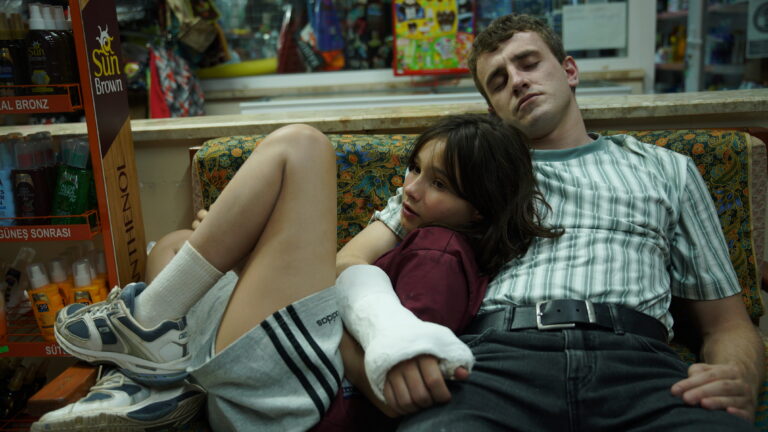
With a simple yet multilayered story set in the 90s, Wells takes us on a journey of reflection and exploring the possibilities of reconciliation between trauma and bliss. As an adult, Sophie (played by newcomer and standout Francesca Corio when young) reminisces on a summer holiday at a Turkish seaside resort that her father, Calum (Paul Mescal, tied with Normal People for the best performance in his young career),  took her twenty years earlier. There’s sadness and happiness intertwined with one another at all turns; holidays are moments where either one feels their most alone or accompanied – a time of both introductions and farewells. A saddened sensation is felt during Aftersun’s entirety, but it is hard to pinpoint where it comes from since it arrives on various ends. However, there are moments of pure love, as seen in a scene where Sophie questions why Calum says “I love you” to his ex, her mom. He replies by saying even if they aren’t together, she is family, breaking millions of hearts with a response so humanistic and hard to accept for many. 

In addition, the screenplay is filled with funny and endearing moments, which helps the film not to tend to melodramatic tendencies or highly sentimental indulgences; it is purely humanistic, honest, and pensive – straight from an old VHS with recordings of the past. It feels like a foggy haze covers the film, where two distant yet different emotions (joy and sorrow) fight with each other because of the nostalgia and longing juxtaposed with youth and innocence from both versions of Sophie (as an adult and child). Aftersun begins with Sophie filming Calum on a handheld video recorder. This frequent motif happens throughout the film, asking him about what he would like to be when he grows up. The response and reaction showcase that something is wrong, and the premonition for something worse is amidst. And when Calum misses the mark on his parental duties, his apologies feel as if he’s apologizing for something more than just screwing up with simple tasks – adding to that element of not being able to pinpoint the longing sadness that breaks our hearts slowly. 

Aftersun is, on paper, a coming-of-age story that reflects on Wells’ childhood and the events that transpired during it; however, there’s more than that. It is about those memories replayed in your mind from time to time, which bring a sense of nostalgia and sentimentality. It also makes you ponder about your preadolescence and the decisions you or your parents made through it. The duality of Sophie, in two different stages of her life, is presented through quick reflections on the past. She remembers that her father was going through a melancholic phase at that time caused by a divorce, a recent injury, and flashes of his drug-pierced youth. But, of course, she was a youngling and didn’t understand the reasonings for her father’s occasional gloomy behavior or the masking of such. So, as it runs its course, Sophie fills in the missing pieces to complete the whole picture of the trip that remains stuck in her head. It may sound like the afterburn of a troubling decision, but it culminates as a story that celebrates fatherhood amidst the issues that arise through it. 

All of these thematic elements are elevated for plenty of reasons, which vary from the sincere script by Wells and Blair McClendon’s acute precision in the editing to the excellent performances by its leading duo of Mescal and Corio, whose impressive (and stands out completely) given that she wasn’t an actress before this. Paul Mescal keeps impressing us as he crafts an excellent repertoire for his young career; only years in between each of the projects, Mescal convinced us that he was a teenager, and now with Aftersun, he is a young father. Mescal presents the convictions of Calum’s past and the reflections of the future with ease through “embarrassing dad” moments and lingering scenes that portray his saddened yearning. The cinematography helps to elevate the body language of Mescal’s performance, even if his facial expressions are also crucial. One aspect that might pass through people’s minds is Wells’ framing and use of the 90s setting. 

The two fit into the texture of the picture, where it is limited to a point, but captures the decade precisely amidst those limitations by showing pay-phones, including MiniDV footage, and its excellent jukebox soundtrack (which includes REM’s ‘Losing My Religion’, Catatonia’s ‘Road Rage’, and even some tracks by Blur and Alanis Morissette – as well as the Macarena, which was brought back to life by Julia Ducounau in Titane). Charlotte Wells’ directorial debut may not be autobiographical, but there are intricate emotions that feel near and dear to her heart, resounding and pulsating from beyond the frame. Aftersun contains unease, but not in a horror picture way; it uses this to get a grip on themes of pondering about memories – rethinking them and seeing new layers years later. It is about the creation of memories that our parents help forge, hence us getting a nostalgic sensation when thinking about it or being in the presence of something similar. In addition, there’s a dark side to all of this; you begin to remember the darkest of memories – the ones you try to avoid. 

There is no such thing as a perfect childhood,, so the memories we keep when young are the highlights; yet, as time passes, you re-evaluate them and learn more about the sacrifices your parents made for you to be where you are. The light and dark of remembrance are intertwined in Aftersun, which helps it excel. As you grow older, your view of what happened in the past changes. You start to notice the details, the things you were too young to understand. As it unfolds, the more it hurts. Yet, at the same time, it helps us heal by reevaluating our own past experiences as the adult version of Sophie did. I cannot wait for what Charlotte Wells has to offer on her next piece of work; the hype around this feature was legitimate, and more so.


Grade: A

Movie Review (TIFF 2022): ‘The Eternal Daughter’ is a Contemplative Ghost Story


Director: Joanna Hogg

Writer: Joanna Hogg

Stars: Carly-Sophia Davies, Zinnia Davies-Cooke, August Joshi

Synopsis: In this ghost story from acclaimed filmmaker Joanna Hogg, a middle-aged daughter and her elderly mother must confront long-buried secrets when they return to their former family home, a once-grand manor that has become a nearly vacant hotel brimming with mystery.


I consider Joanna Hogg to be one of the best current British acts to pierce the screen, as her craft gets better and better with each movie. What makes her pictures so tantalizing and magnificent is the tactility and gracefulness of her pen intertwined with the distinctive and acute style of her directorial hand; both of which leave several wistful markings on the viewer. Although the features that came before it are great pieces of work (Unrelated, Archipelago, Exhibition), her name was brought into the spotlight via her duology of personal films that retell her past experiences while adding bits and pieces of fiction, The Souvenir Pt. I and Pt. II, the latter being her best work to date. However, for her latest feature, Hogg remains with the grounded fashion of presenting her meta-textual semi-introspective narratives. Yet, this time around, it has a more haunting tone, though still equally personal and touching. 

Joanna Hogg’s latest is a ghost story titled The Eternal Daughter – which could also be named “The Souvenir Pt. III” in essence, which was quite a surprise to me since I didn’t expect her to continue that tale. However, this isn’t a direct sequel; it is more of an extended side story of what the film’s lead character would be like decades later, which, coincidentally, is a version of the director. It contains the aspect that’s repeated across her latter work of being haunted by her recollections. Yet, that doesn’t mean she isn’t reinventing herself. This time around, it brings a further melancholic hew to the mix instead of the dreamy haze of her previous film. Much like David Lowery’s A Ghost Story, the purpose of Hogg’s latest isn’t to scare you (this isn’t a horror picture). It is all about reflection rather than atrocities (contemplation over torment). The Eternal Daughter is all about the mystery of our parents’ lives – the secrecy kept hidden during the times that we are with them and the ones without them – and the reflection of how time passes slowly during pained moments and quickly during instants of happiness. 

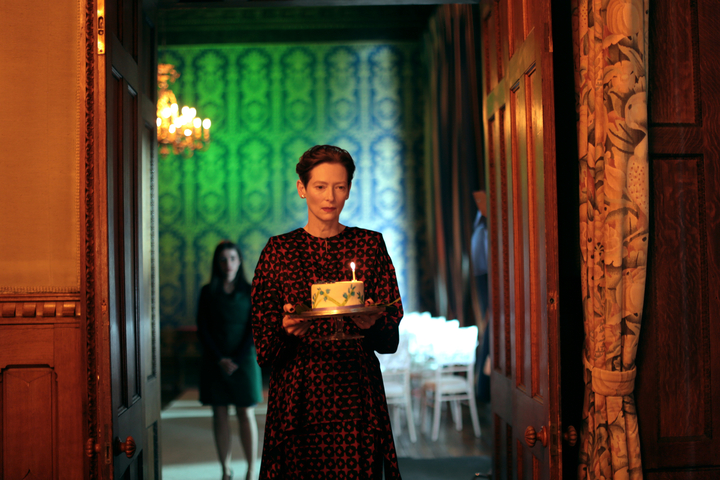
Childhood nostalgia is a factor that’s at play here, but, at the same time, it makes us think about the lives our mother or father had before we were born. Although Honor Swinton-Byrne isn’t in this feature, that doesn’t mean that the character of Julie Hart (Hogg’s surrogate in The Souvenir films) can’t be in the movie. Her own mother, Tilda Swinton, not only plays the part of Julie but also reprises her own role as Rosalind (Julie’s mother). In a dual role, Swinton breathes new life into both characters and adds self-referential layers to Hogg’s semi-autobiographical stories. The Eternal Daughter follows her journey decades later and in a different phase of her life. She’s a childless filmmaker that’s still dealing with feelings of remorse. Julie has brought her elderly mother, Rosalind, to a country house hotel in North Wales, which her Aunt Jocelyn once owned, for her birthday. Ross reminisces about her time at the country house as a child. 

There weren’t many happy memories; they mostly revolved around her family’s evacuation from London during the Second World War and the dread that transpired as she looked at the catastrophes from afar. Rosalind keeps the pain all bottled up inside, and Julie is immensely angered that, even to this day, she isn’t telling her how she feels. Meanwhile, Ross is saddened that she won’t have a granddaughter and that Julie will remain eternally her daughter and nothing else – hence the title. As Rosalind remembers the day they told her that her older brother Peter was killed, Julie contemplates whether she’s trespassing on her mother’s life retellings as she writes them down in hopes of making a film about it. The ghost story elements arrive through two different means. One of them is the duality of the character that Swinton plays, which adds reflective details to the film’s backbone. The other arrives from its setting: the hotel. 

Problems arise as soon as they arrive; issues with their booking (even though they are the only guests staying there), banging noises caused by the other rooms are keeping Julie awake at night, and the attendant’s attitudes vary – the receptionist (Carly-Sophia Davies) is rude, while the concierge is quite welcoming and hears Julie’s pains. It almost does turn into a horror picture with these elements. Still, its slowly flowing self-reflection ravishes the viewer with themes like the connection between mothers and daughters, as well as the separation that comes while aging. This could be described as Joanna Hogg’s rendition of The Shining, with its semi-haunted rooms, empty hallways, and somber atmosphere. With The Eternal Daughter, Hogg experiments with her ambition to explore how memories affect a person, both in assuring and destructive ways, especially if it ties to a close one – a family member or a mother. Heartbreaking and transient with its themes of secretiveness in relative bonds and the emotional wrath of remembrances when confronted in nostalgic settings, this film delivers playfulness in its keen attention to detail, from the posture and movements to how they express themselves in its key moments. 

By looking into Julie Hart’s soul, Hogg is actually writing about her own pains and potential frustrations. The Eternal Daughter is about Hogg reflecting on her present and what may arise in the future, either with her family or career. Hogg writes her characters in a humanistically elegant way and poised while leaving the right amount of ambiguity so that the audience can relate to them. It’s a thing of beauty how Hogg concocts her scenes of emotive dialogue due to her intricate footing in delivering dramatic efforts. Seeing her changing her style by applying horror-esque elements as if the characters are always in the presence of a ghost from the past via dim lights, creaking sounds, and Ed Rutherford’s hazy cinematography just makes me love her more because Hogg’s interpretation of this story about haunting memories is utterly remarkable. She has plenty of tricks up her sleeve that give The Eternal Daughter a mysterious, eerie atmosphere that’s equal parts haunting, hallucinogenic, and heart-rending. 

Although all of the cinematic aspects are thriving, the film wouldn’t work without the majestic talents of Tilda Swinton aka Hogg’s long-time muse, whose dual-performance is hefty enough that you feel as if you aren’t watching a film in which she plays two characters. The nuance in her two performances makes the characters feel separate. This cinematic element would have been a gimmick in the hands of another director and actress, but you can trust Hogg and Swinton to sell this transient experience. The Eternal Daughter is a lovely and cathartic ghost story in grounded measures, which helps it not sway into illogical directions. What could have been an artistic experiment turns out to be yet another ravishing addition to the English director’s astonishing filmography. 


Grade: A


Père Lachaise: The Final Home For France’s Best

So, I have a thing for making notes on Google Earth for the places where the famous are laid to rest. Judge me, please do. It’s a weird fascination of mine. I have other odd fascinations, but that’s for another article. Some graves are shrines to fans who love the work of the deceased; many will flock to them, even if it’s out of the way, to pay their respects. All of the cemeteries in Hollywood are full of the famous, but not one has the history to it that is equal to the legendary Père Lachaise Cemetery in eastern Paris.

Opened in 1804 by Napoleon, he sought to establish a secular place for anyone of any stature to be buried. Being considered too far out from the center of the city, Napoleon had several famous French figures buried in the cemetery, which was intentionally designed to be an open garden with lined trees and designed memorials to honor the dead. It quickly became popular for tourists to visit, and, with many Parisians planning ahead to be buried, more than 1 million people have been laid to rest with another 3.5 million people visiting annually.

Among the most famous graves in Pere Lachaise are composer Frederic Chapin, stage actress Sarah Bernhardt, rock singer Jim Morrison, and author Oscar Wilde. Wilde’s grave is the most visited of them all with people writing notes and giving kisses on the barrier that surrounds the stone sculpture. Others were cremated and set in the columbarium, which opened in 1889. A chunk of France’s history is within the necropolis and many figures from French cinema are also buried here.


Chantal Akerman (1950-2015)


Akerman’s most famous film is 1975’s Jeanne Dielman, a three-hour, real-time drama in three parts about a single mother who follows a strict regime throughout the day at home while also discreetly prostituting herself on the side. It is one of the best films on feminism, a slice-of-life modernist tale told so radically for its time during the feminist movement. Her previous film, Je Tu Il Elle, is also considered one of the best lesbian-themed films with Akerman in the leading role, portraying an uncompromising character who is comfortable with her sexuality. Among her fans are Gus Van Sant and Sofia Coppola. 


Georges Méliès (1861-1938)


Marie-Georges-Jean Méliès, as was his whole name, took the invention of cinema and knew that it could be used to tell a story. He was present for the Lumiere Brothers’ presentation of their film camera and the first moving images to be publicly presented. Méliès bought his own film camera and would go on to shoot 500 films from 1896 to 1913, shooting in his own film studio, inventing new special effects, and pushing the limits of what a movie could be in its infancy. Immortalized in Martin Scorsese’s Hugo, Méliès lost most of his films to bankruptcy, public use of his materials for World War I, and urban development. However, the 200 films that do survive cement his legacy as a pioneer in cinema.


Yves Montand (1917-1991) / Simone Signoret (1921-1985)


Montand was one of France’s best-known actors following World War II, starting with his singing skills that attracted singer Edith Piaf, another famous celebrity buried at Pere Lachaise. Due to his singing abilities, Montand was cast in several musicals and films in France, but he made himself a major name globally with his performance in Henri-Georges Clouzot’s The Wages Of Fear, which won the Palme d’Or. Montand would also become a star in the United States performing on Broadway and star in several Hollywood productions but maintained his home in France with his wife, actress Simone Signoret.

The German-born Signoret made her breakthrough in 1950s La Ronde and followed it up with acclaimed performances in Casque d’Or and Les Diaboliques. This grabbed the attention of British director Jack Clayton and cast Signoret in her first English-speaking role in 1959’s Room At The Top opposite Laurence Harvey. It received critical acclaim, gathered six Academy Award nominations, and won Signoret the Oscar for Best Actress, the first French actress to win an acting Oscar. She married Montand in 1951 and the two would remain together until Signoret’s death from cancer in 1985. Montand was buried alongside her after his death six years later. 


Max Ophüls (1902-1957)


Ophüls was a successful theater director in Vienna, Austria, and moved to be a director of films with Germany’s UFA in the early 1930s. After Hitler and the Nazis came to power,  Ophüls, a Jew, moved with his wife and became a French citizen, only to become a refugee in the United States during World War II. He would continue to make movies in Hollywood with films such as Letter From An Unknown Woman and Caught before returning to France where he would make his most notable works. Le Ronde, The Earrings of Madame de…, and Lola Montes, allow him to go back to the types of stories he wished to focus on: from a woman’s point-of-view, high-class set designs, and two men fighting for the same woman. 


Follow me on Twitter: @brian_cine (Cine-A-Man)

List: Top 10 Movies of 2002

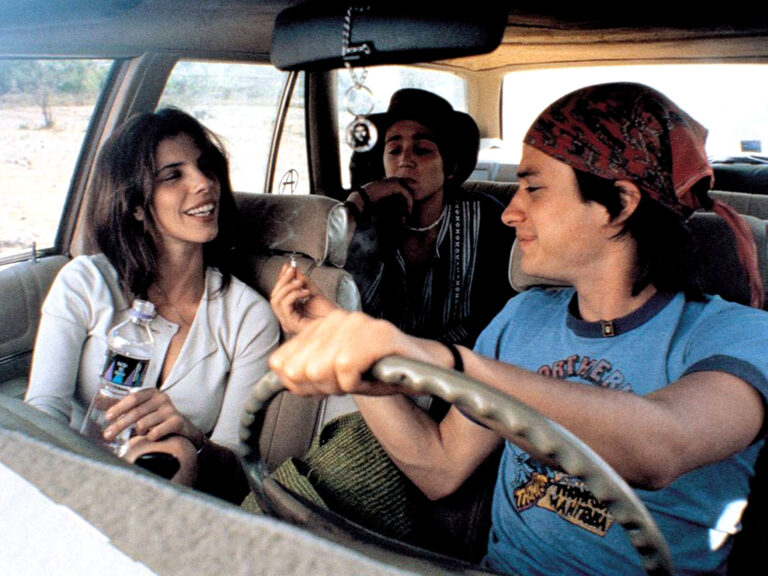
This week on Episode 499 of the InSession Film Podcast, we continued our year-by-year retrospective series by taking a look at 2002, a pretty strong year on the whole. It may have been slightly top heavy with titles such as The Lord of the Rings: The Two Towers, Adaptation, Y tu mamá también, 25th Hour, Spirited Away, Signs, Far From Heaven and Catch Me If You Can, among others, but that’s not everything 2002 had to offer. It was a great year for foreign language movies and it wasn’t too bad for mainstream action with The Bourne Identity, Minority Report, Blade II, and Spider-Man. All in all, there was plenty to consider and we had a great time talking about the films that stood out to us. That said, what would be your Top 10?

NOTE: We spend most of our time only discussing our Top 5 movies of 2002, however, as you’ll see below, we have listed our full Top 20 lists from that year.

JD

1) Y tu mamá también
2) Adaptation.
3) Punch-Drunk Love
4) Solaris
5) Signs
6) The Lord of the Rings: The Two Towers
7) 25th Hour
8) Far From Heaven
9) The Pianist
10) The Hours

11) Road to Perdition
12) Spirited Away
13) Catch Me If You Can
14) Talk to Her
15) Morvern Callar
16) Infernal Affairs
17) Sympathy for Mr. Vengeance
18) 24-Hour Party People
19) About Schmidt
20) Spider-Man

Brendan

1) Punch-Drunk Love
2) Y tu mamá también
3) 25th Hour
4) The Pianist
5) Catch Me If You Can
6) Minority Report
7) Adaptation.
8) Talk to Her
9) Signs
10) Infernal Affairs

11) The Lord of the Rings: The Two Towers
12) Road to Perdition
13) Far From Heaven
14) Spirited Away
15) All or Nothing
16) Spider-Man
17) About Schmidt
18) Confessions of a Dangerous Mind
19) Solaris
20) 8-Mile

Hopefully you guys enjoyed our lists and if you agree or disagree with us, let us know in the comment section below. Clearly there are a lot of other contenders from 2002 that battled for our lists, that just missed the cut. That being said, what would be your Top 10? Leave a comment in the comment section or email us at [email protected].

For the entire podcast, click here or listen below.

For more lists done by the InSession Film crew and other guests, be sure see our Top 3 Movie Lists page.

Podcast: Spirited Away / Top 5 Movies of 2002 – Episode 499

This week’s episode is brought to you by Athletic Greens. Get a FREE one year supply of Vitamin D and 5 travel packs today!

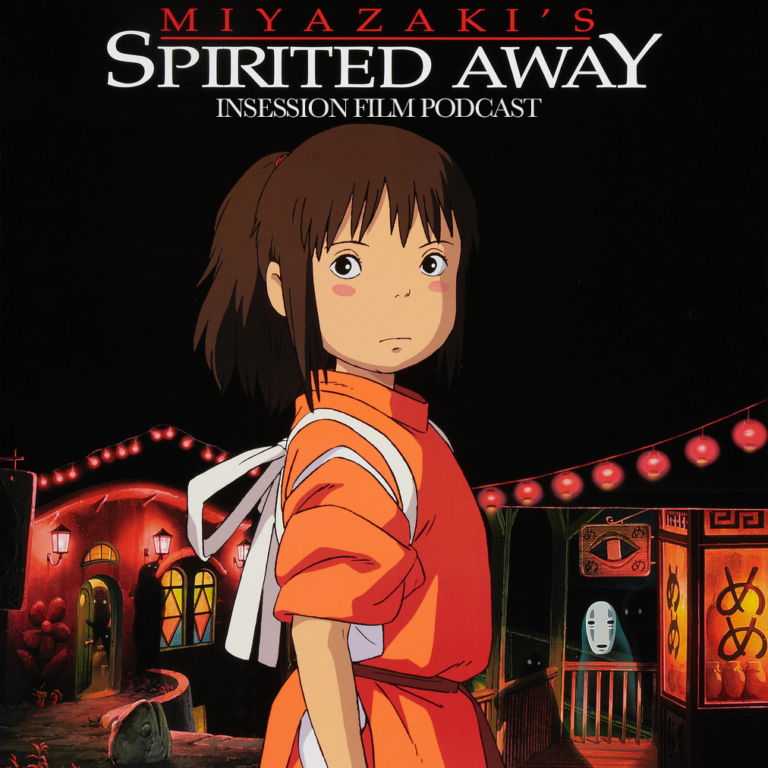
This week on the InSession Film Podcast, we dive into our 2002 Retrospective by discussing Studio Ghibli’s Spirited Away and our Top 5 Movies of 2002!

These retrospective episodes are some of the most fun we have each year on the show. 2002 was a pretty good year for movies, especially its crème of the crop. It’s perhaps a top heavy year in that regard, but some of those at the top are heavy contenders for Best of the Decade. It was a really great year for forign films with the likes of Y tu mama tambien, Talk to Her, Infernal Affairs, the aforementioned Oscar winner Spirited Away, Time Out, What Time Is It There, and several other. It was also a pretty good year for prolific directors/writers as well. The year had plenty of variety and we had a great time breaking it all down.

On that note, check out this week’s show and let us know what you think in the comment section. Thanks for listening and for supporting the InSession Film Podcast!

Studio Ghibli Movie Series: Spirited Away (5:19)
Director: Hayao Miyazaki
Writers: Hayao Miyazaki
Stars: Rumi Hiiragi, Miyu Irino, Mari Natsuki, Takeshi Naito

– Notes / Discussion (1:54:08)

This week for our break segment, we plug away at our most recent episodes of Extra Film, Women InSession and Patreon Bonus Content. No extra discussion this time as we tried to be concise in order to get to the meat of the retrospective!

[divider]

RELATED: Listen to Episode 444 of the InSession Film Podcast where we discussed Annette!

[divider]

Top 5 Movies of 2002 (2:03:30)
As noted above, 2002 was a good year for film, even if its slightly top heavy. But with titles such as The Lord of the Rings: The Two Towers, Adaptation, Y tu mama tambien, 25th Hour, Spirited Away, Signs, Far From Heaven and Catch Me If You Can, among others, you know you’re doing pretty well. In addition to the great foreign language movies of 2002, it wasn’t too bad for mainstream action either with The Bourne Identity, Minority Report, Blade II, and Spider-Man. There was also Attack of the Clones if that Star Wars film works for you. Awards season came with some hefty hitters as well that you can’t ignore. All in all, there was plenty to consider and we had a great time talking about the films that stood out to us.

Show Sponsor: First Time Watchers Podcast

– Music

One Summer’s Day – Joe Hisaishi
Overture – Chicago Cast
The Return of the Eagle – Atli Örvarsson

Subscribe to our Podcasts RSS
Subscribe to our Podcasts on iTunes
Listen on Spotify
Listen on Stitcher
InSession Film Podcast – Episode 499

[divider]

Next week on the show:

Episode 500 Celebration

Top 10 Movies of All-Time

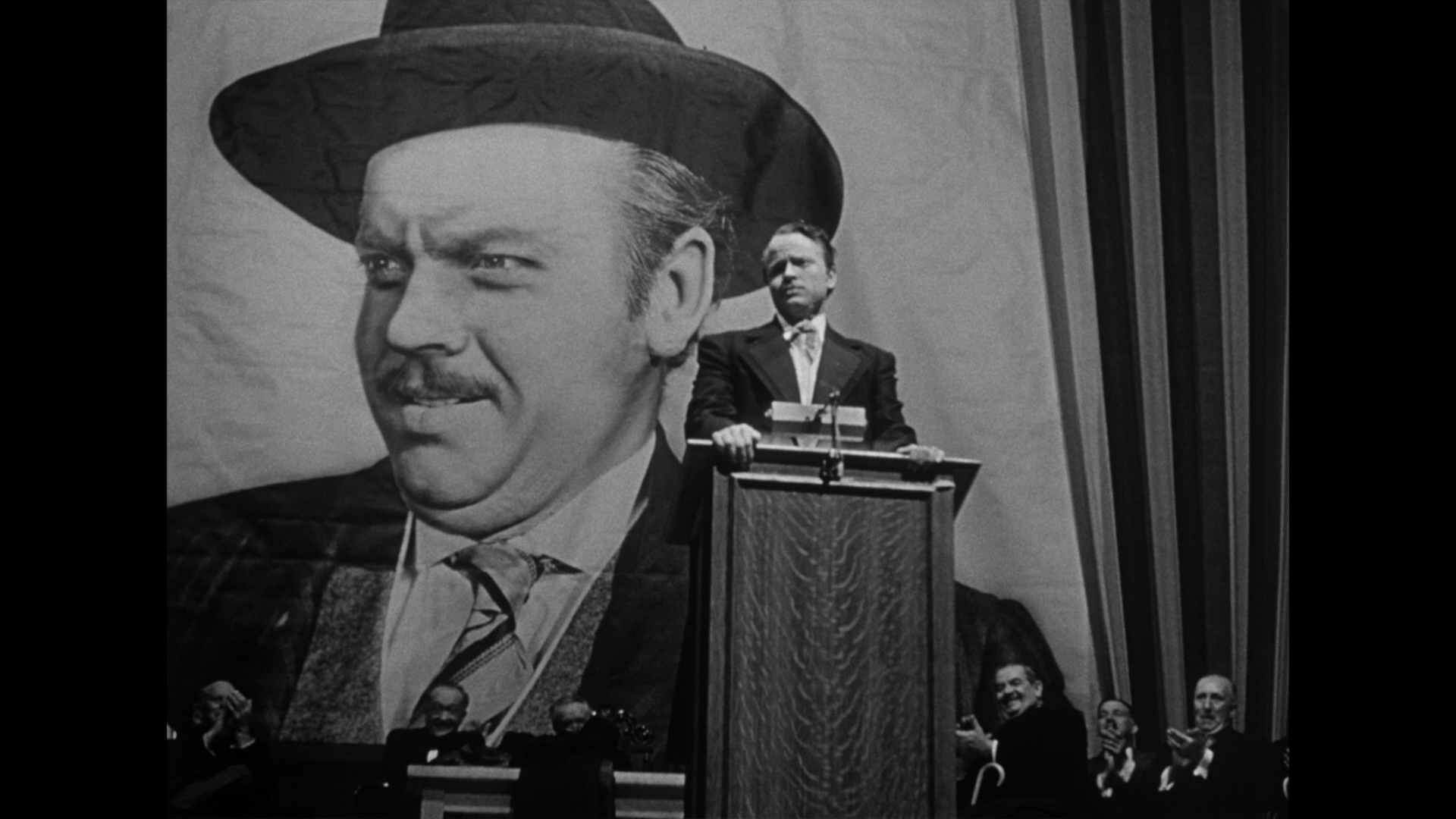
Citizen Kane movie

[divider]

Help Support The InSession Film Podcast

If you want to help support us, there are several ways you can help us and we’d absolutely appreciate it. Every penny goes directly back into supporting the show and we are truly honored and grateful. Thanks for your support and for listening to the InSession Film Podcast!

VISIT OUR DONATE PAGE HERE

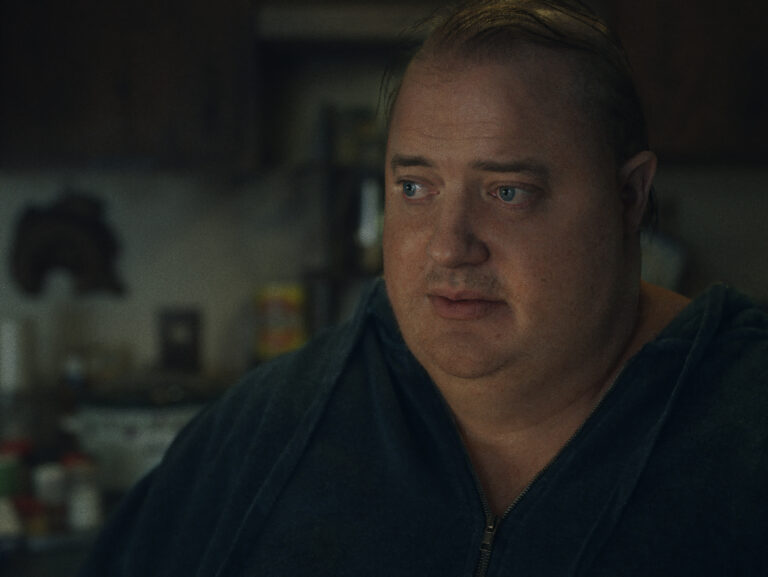
Movie Review (TIFF 2022): ‘The Whale’ Shows the Repercussions of Translating a Play to the Big Screen


Director: Darren Aronofsky

Writer: Samuel D. Hunter

Stars: Brendan Fraser, Sadie Sink, Hong Chau

Synopsis:  A reclusive English teacher living with severe obesity attempts to reconnect with his estranged teenage daughter for one last chance at redemption.


If you could describe the films of Darren Aronofsky in two words, it would be polarizing and agonistic, in a good way. His features have a rough and self-destructive demeanor that makes it a harrowing experience but primarily worth it once it reaches its climax. This somewhat belligerent behavior creates an atmosphere of sheer tension, no matter the theme being tackled. You get the sensation that his films are reaching the end once it all comes crashing down for the main character, a cataclysmic ending that stays on your mind for a long time. However, he doesn’t stick with the same shticks or techniques. One way or another, Aronofsky finds ways to reinvent himself, whether it is a parable of the bible and mother earth or the tales of broken humans trying to reach their goal, no matter the cost. Although he has received critical acclaim and various nods from the awards circuit, primarily in his dramatic ventures, Aronofsky has had his array of pans from critics, like The Fountain, Noah, and mother! – the latter doesn’t deserve such hate, as I think it is his best feature to date. 

Six years have passed since delivering his best work, and now Darren Aronofsky is back with a film that feels different from the rest of his filmography; a more restrained and less aggressive piece of work than his other features. Of course, it still contains the sensations of despair, paranoia, and self-destruction that we are used to seeing from the acclaimed director. Still, this time around, it is a more theatrical experience than a cinematic voyage – a choice that hurts the overall project. The reason is because his latest is an adaptation of Samuel D. Hunter’s 2012 stage play, “The Whale”. This movie marks not only the return of Aronofsky to the big screen but is also being recognized as Brendan Fraser’s comeback, and everyone is ecstatic for him (the movement is named the Brendanaissance). If one director could concoct a project that would be a challenge worth taking for Fraser to show us his acting chops, it would be Aronofsky, as he did in the past with Mickey Rourke in The Wrestler – which should have won him an Oscar. However, unlike the aforementioned film, The Whale feels lacking and poorly translated onto the big screen from its stage play origins. 

The Whale, as a whole, is not the total riveting success that plenty of people expect it to be, but it does demonstrate Fraser’s acting capabilities. And it is evident since his performance is the backbone of this project. Unfortunately, it can’t elevate the derivative aspects that its director orchestrates. Fraser plays Charlie, an English teacher running an online college study course via Zoom. There’s darkness amidst his subtle voice filled with empathy. He is mourning the death of his departed lover, whom he left his wife and young daughter for, by slowly eating himself to death. He’s stricken with guilt, indulging in excessive amounts of food to fill the gap in his broken heart, which, for him, seems unrepairable by the point that we see him. Although inconsolable to the point of self-destruction, Charlie is gentle with the people in his life. He sees the light in people, hence trying to help people in the ways he can, in the closedness of his claustrophobic apartment. As Fraser often described his character: “his superpower is to see the good in people”. 

The Whale begins by presenting a form of darkness, as Charlie doesn’t want to show his face to the class by stating that his camera doesn’t work – creating a blank for his visage. As soon as the course ends, we get our first glimpse; the first view of Charlie is of him masturbating, which causes a heart attack that almost kills him. His only friend, Liz (the consistently excellent Hong Chau, who delivers acute fierceness to balance out Charlie’s self-disdaining yet caring demeanor), points out that he has incredibly high blood pressure and should go to the hospital. Instead, Charlie refuses, creating this anguish of misery and self-disgust that is hard for the audience to watch, especially in the scenes in which he eats large amounts of food (fried chicken, take-out pizza, candy). Other than Liz, who both share a tragic connection, there is a trio of characters in his life: his ex-wife Mary (Samantha Morton, who kills her brief scene – the best in the film by a mile wide), his daughter Ellie (Sadie Sink), and a young missionary named Thomas (Ty Simpkins). 

Death is looming, but there’s no specific time frame for when it will arrive. So, before he passes, Charlie wants to reconcile with his daughter sooner rather than later. This creates dynamic scenarios which balance an array of emotions. On the one hand, the aggressive bashing that Ellie delivers toward her father comes so that she can express her inner pains of abandonment and the emotional unavailability of her mother. Conversely, Charlie counter-balances with gentleness and understanding because he regrets the choices he made in the past. If something can hold Charlie’s heart together, it would be the faith in his daughter to change her ways. He sees the good in people, even in his state of self-disgust. Although these characters hold their hearts together by the thinnest cover, The Whale is a story about a man providing the tools so that they can be saved, even if he is in a worse situation. Charlie is the vessel to help the people in his life get a chance at redemption. 

He knows that he is on his last leg; body and soul are separated. Yet, Charlie remains optimistic that his words might impact Liz, Ellie, or Mary to the point of personal metamorphosis, not forgiveness. This is a more dialogue-driven feature from Aronofsky, centering on broader, albeit thematically narrow, conversational set-pieces. It doesn’t contain his chaotically stylistic sequences since he has chosen a more closed-down approach to filmmaking. The main problems with The Whale don’t come from this stylistic departure. The issues arise from the fact that outside of Brendan Fraser’s performance (and two supporting players, Chau and Morton), which is tremendous (no other words can describe this transformative portrayal), there’s nothing else to be in awe or impressed about; even Matthew Libatique’s cinematography leaves a bit more to be desired. At least Brendan Fraser delivers. In scenes of self-loathing, you just can’t escape the fact that Fraser plays Charlie in the other parts of the feature, full of soul and belief in others. Much like The Wrestler was a redemption arc for Mickey Rourke, this is clearly the comeback tour for Fraser, and he deserves much love and praise for his excellent work here and his entire career. 

Even the weakest Aronofsky features have uniqueness and creativity in their showcasing. In The Whale, he decides to contain his creativity visually and aesthetically, to pursue a melodramatic pulse. Forget the overly-edited psychedelic montages of Requiem for a Dream, the cataclysmic approach to mother!, or the disorienting nature of his debut feature, Pi. Instead, there’s claustrophobia galore but shot in a way that isn’t narratively pleasing. The single location The Whale is set in doesn’t allow much space for inventiveness; its translation from stage to the big screen falters because no cinematic tricks are being pulled, and most of its lines aren’t rendered as well as writer Samuel D. Hunter might have thought it would. This is unlike Florian Zeller’s The Father, which played with the production design, costumes, and editing to make us feel like we were inside the head of its lead character. There’s no outside world. People just come and go in Charlie’s apartment, which isn’t a bad thing. The issue comes from the fact that they are only declaring wants and needs repeatedly, feeling unrealistic and non-humanistic. The Whale tackles the pet themes of Aronofsky with his usual small amount of “shock factor”. 

Still, one wishes that he would expand them further since this is almost exactly like The Wrestler, but with a narrower complexity in its narrative presentation. The backgrounds of every single character are revealed in a messy way that takes you out of the potential melancholic rollercoaster because you start thinking about the winding plot. Like its cinematographic frame, everything feels cramped, both thematically and narratively. If one thing could preserve it, it would be the performances; they are the key, not the salvation. The rest needs to work in order to be a total success. Aronofsky faces an unpredictable twist of bland and lacking character portrayals. The actors helming those roles are the ones doing the heavy lifting (with no help of the screenplay or direction), which rarely happens in the projects he’s involved in. It is intellectual to a fault and lacks the visceral strengths that Aronofsky offers in his previous features. There are horrific scenes and others that break your heart, but it doesn’t lead to much in the grand scheme of things. It is a person’s journey to sheer cataclysm and obliteration with a beating heart in Fraser, which somewhat helps elevate the lackluster elements in the film’s infrastructure. I just wished that the film overall was as strong as Brendan Fraser’s acting comeback.


Grade: C