Home Blog Page 143

The Hidden Tragedy of Tony Scott’s ‘The Hunger’

0

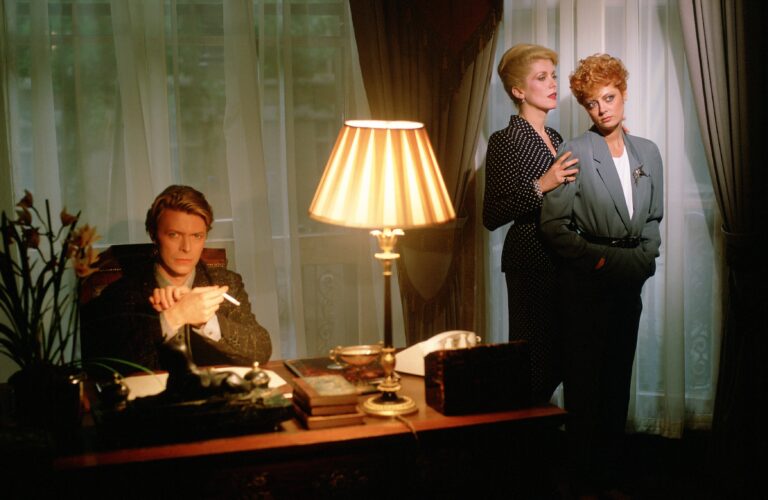
Tony Scott’s vampires in The Hunger are not bound to the typical rules of vampirism established in late 1800s fiction. There is no garlic or a crucifix in sight, they can see their reflection in mirrors, go out during the day, sleep in a king-sized bed rather than coffins, and rather than plunging their fangs into victim’s bare necks, they use ankh-shaped pendants to slash their throats and lick up the blood up at their leisure. That is the one thing that ties these beings, playing by Catherine Deneuve and David Bowie, to their mythic lore: a never-ending thirst for human blood.

The film is set in modern times, 1983 to be exact, beginning in an effortlessly cool nightclub populated by a clientele made up of new-wave punks. Peter Murphy, of the English rock-band Bauhaus, croons “Bela Lugosi’s dead…” as Miriam (Deneuve) and John (Bowie) stalk their young, hip prey. Their carnivorous conquest, as is the case in almost all modern vampire fiction, is linked directly to sex. Suddenly, things begin to change, and fast. John wakes up with gray hair and lines under his eyes that hadn’t been there the night before. 300 years after his transformation at the hands of Miriam, who hails from Ancient Egypt, John learns that his promise of eternal youth was in fact, a mere promise of eternal life. He begins to age years in hours, and the pair desperately seek out a solution. Enter Dr. Sarah Roberts (Susan Sarandon), a gerontologist aiming to decelerate the aging process through the study of primates. After a few days, John has become a wrinkled shell of what he once was, begging Miriam to kill him, which she can’t (or won’t). She lays him to rest in a coffin in the attic of their lavish New York home, among a dozen other of Miriam’s past lovers who live as skeletons trapped inside wooden boxes for all eternity.

When Sarah and Miriam meet, their relationship, with little need for persuasion, becomes sexual. Queerness and vampires are not a novel association, with Sheridan Le Fanu’s Carmilla (which predates Dracula by 26 years), portraying a young woman becoming hopeless entranced by a beautiful female vampire. Presumably, Miriam does not discriminate with the gender of her lovers, while the act takes Sarah by some surprise. The impetus of their encounter is admittedly comical, as Miriam plays Leo Delibes’ “Flower Duet” on the piano and Sarah “accidentally” spills a drop of brandy on her white t-shirt and casually undresses in front of a total stranger. Originally, Sarah was meant to be drunk during this scene to explain away her sudden sexual fluidity, but Sarandon insisted “you wouldn’t have to get drunk to bed Catherine Deneuve, I don’t care what your sexual history to that point had been.” 

During this moment, when the two women are in bed together, Miriam bites Sarah’s arm and begins her transformation, claiming her as her new lover. We soon learn of just how important human blood is for the vampire (a word never actually uttered throughout the film’s runtime), as Sarah begins to suffer immensely due to her hunger. Her symptoms are clearly reminiscent of those of a drug addict. She becomes feverish, disoriented, irritable, and unable to function until her thirst is quenched. Sarandon, later discussing the film, noted that the film asks: “would you want to live forever if you were an addict?”. Aside from the frequent link between vampirism and sexuality (queer or otherwise), vampire films typically link the creatures to some other cause celèbre. While the explicit metaphor for vampirism in The Hunger may be drug addiction, there is another latent, likely unintentional meaning I can’t help but see hidden within the film’s tragedy.

The novel on which The Hunger is based was released in 1981 by Whitley Streiber, the year the CDC first published a written report on what would later be known as AIDS. Over the next two years, significant action was taken among medical researchers and gay rights activists to determine a cause of the illnesses plaguing queer communities. At this time, it was known among those affected, but remained largely unspoken among the general public. Realistically, I don’t believe this would have been on the minds of the makers of The Hunger, including its director Tony Scott. However, one can easily watch this film and notice eerie, devastating parallels between its story and what was happening in those tight-knit communities across the country. 

The AIDS crisis started in confusion. Doctors and nurses were seeing previously healthy young men with symptoms more typical of men three times their age. Purple lesions, pneumonia, and rapid weight loss soon led to death at alarming rates. Photographs of that era show men one would never guess to be in the early decades of their life, as skeletal shells of themselves lying motionless in their hospital beds, surrounded by mourning family, or all too often, utterly alone. This was the image that came to mind as John began to fall apart. “I’m a young man. Do you understand?” he pleads to Dr. Roberts as his hands show rapidly developing liver spots. Adding to the tragedy is that we, that is the real life audience, never saw Bowie get to this point in real life. His death at 69 was a shock, and considered rather young for a man whose legacy seems to define time and space. Miriam, like so many family members and partners of AIDS victims in the 1980s, watches her loved-one age right in front of her eyes, and she can do nothing to help him. Even after John is (for all intents and purposes) dead, he lingers in her mind, and she holds onto what little she has of him and her past lovers. She is constantly surrounded by the memory of death, as became all too familiar amongst the gay community at this time. While the film is considered to exist within the queer cinematic canon due to the relationship between Miriam and Sarah, it could easily gain such distinction as a portrait of a woman devastated over the untimely loss of her lover concurrent with the AIDS epidemic. 

The Hunger is undeniably stylish and sexy. From a chic shadowy night-club, to Miriam’s massive brown-stone somewhere in the Upper East Side, to the effortless Parisian fashion worn by Deneuve, to Sarandon’s cropped haircut, to Bowie just being Bowie. It even shares some stylistic cues with Scott’s brother Ridley’s sci-fi masterpiece Blade Runner, portraying a city in an almost purgatorial state. The plot, unfortunately, loses some of its elegance in its final act as Miriam’s reign comes to an end in a storm of walking skeletons. The ending, which Sarandon has disavowed, is intentionally ambiguous as to leave room for a (nonexistent) sequel, but ultimately leads to weak character and plot resolution. Still, it is a worthy watch for this haunted time of year, especially for lovers of gothic horror, new-wave music, and above all, sexy, queer, piano-playing vampires.
 

Movie Review: ‘Ticket to Paradise’ is Like a Nice Note from Some Old Friends


Directors: Ol Parker
Writers: Ol Parker, Daniel Pipski
Stars: George Clooney, Julia Roberts, Kaitlyn Dever

Synopsis: A divorced couple teams up and travels to Bali to stop their daughter from making the same mistake they think they made 25 years ago.


It was genuinely refreshing when the trailer for Ticket to Paradise appeared. For several years, we have been inundated with features of daunting intellectual properties clogging, fighting, and scratching for our attention. With The Lost City earlier this year, and now Ticket to Paradise, suddenly there are wide release films in which the selling point is the two lead performers and not what company logo appears on the poster. It nearly brings a tear to your eye. Sure, the theater experience will never go back to what it was, but what a concept to look at a poster and realize that this will be a self contained 90+ minute movie which expects you to know nothing about its characters, concepts, or history before you go in. It chokes you up to realize there will be movies we can go and see on a Wednesday afternoon when you call out sick because you just can’t with all the emails. Now, truly, cinema is back.

Ticket to Paradise really feels like when you run into some old friends and actually follow through on the plans you say you want to make. Those friends are a little different, their references are a little more current, they look a little older, wear their hair differently, but they’re familiar and comforting. They’re not trying something revolutionary, but they have evolved beyond their premise. They may even have a few more tricks up their sleeve than they used to.

Director Ol Parker and cinematographer Ole Bratt Birkeland have embraced the drone shot. Is a silly romantic comedy the best place to employ the drastic, dramatic zooms that a drone allows? Not really. It kind of looks silly. It also looks more than anything like they’re using drones to show the beaches, resorts, and tourist destinations of Bali. It’s like they got a special tax credit for their efforts at boosting the tourist traffic. It also might raise an eyebrow when many characters voice that the island is the most beautiful place on Earth.

The script by Parker and writer Daniel Pipski also struggles with anything but its main focus on the two couples. There is the opening sequence in which David (George Clooney) and Georgia (Julia Roberts) are in separate cities, talking with colleagues. We never see or hear of these colleagues again. In fact, Georgia might as well have been talking at a piece of wood for all that her colleague is there to do. In an egregious misuse of potential, Wren (Billie Lourd), the best friend of Lily (Kaitlyn Dever), has few scenes that actually land. She, like the two colleagues, is mostly a sounding board for more major characters to exposit at. In her other scenes she’s the extra dash of comedy that suddenly makes the scene over funny and you don’t laugh, just weakly smile until the uncomfortableness is over.

What Parker and Pipski’s script does well with, though, is that the Indonesian side of the wedding is never the butt of the joke. These characters, played by Indonesian actors, are in on the joke and funny in their own right. These kinds of comedies have often focused so much on the differences between cultures and how weird some traditions are. Ticket to Paradise skips all that and brings the parents and families together for some common ground.

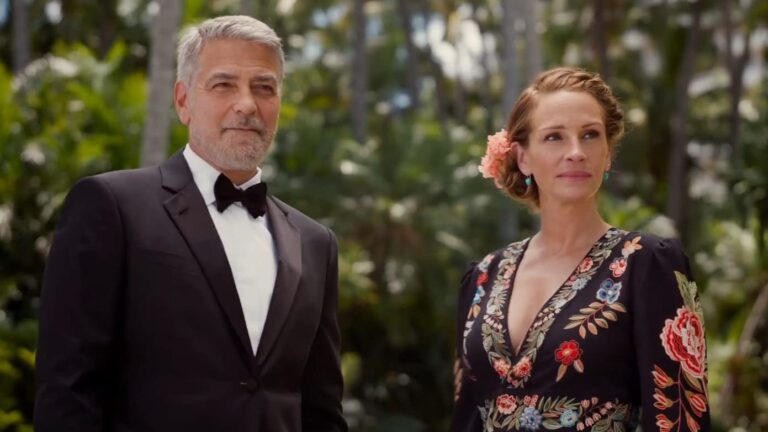
What we can all agree on is that romantic comedies like this can live or die on the strengths of their leads. If the two leads aren’t already good actors, they can have a hard time selling all the emotional ups and downs a film like this requires. George Clooney and Julia Roberts are good actors. They absolutely sell every moment and emotional beat. The two of them are effortlessly charming on their own. Together they are a force that helps you push past any misgivings about the situation presented and just watch two great actors who also happen to be movie stars, who look like they’re having a lot of fun. Even the end credits bloopers, that can be insufferable in other contexts, are made all the more delightful by these two because they clearly like each other and enjoy being able to play with one another.

Ticket to Paradise is a shock of normalcy in a sea of lycra and CGI magic. It’s two of your old friends showing up with new stories and the same engrossing charm. It’s by no means perfect, but it is perfect counter programming between the capital C cinema vying for awards contention and the capital C cash grabs by the IP factories desperate for your dollars.

Grade: C

Op-ed: Phantoms of the Operas!

Interpretations of Gaston Leroux’s 1910 novel are certainly plentiful, yet each adaptation adds its own musical morose to the opera underbelly. Though listed chronologically, ironically this countdown also ends up from best to…WTF.

The Phantom of the Opera (1925)

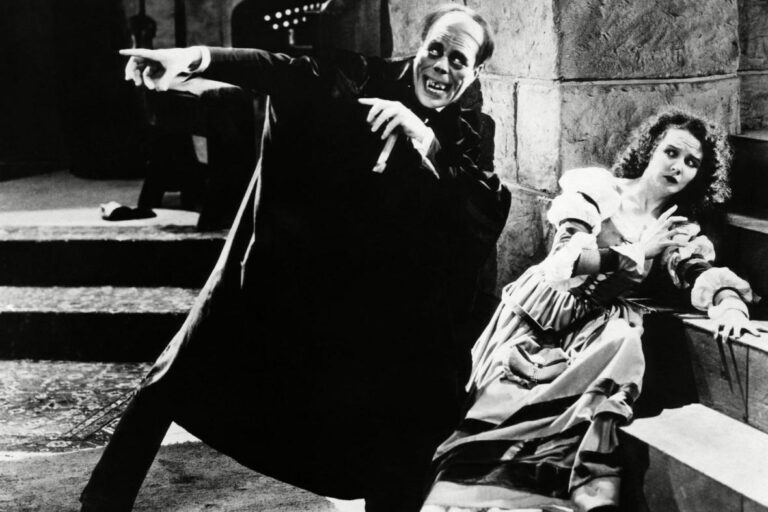
The Show must go on as Lon Chaney (The Hunchback of Notre Dame) abducts lovely understudy Mary Philbin (Merry Go Round) in this haunting, silent ode to music and mayhem. Of course, we never hear anything operatic and some naysayers may balk at the over the top silent film acting style. However, the ballets and behind the curtain scenes invoke a chillingly subdued Old World charm. The restored color plates of red, gold, and purple hues between the title cards add more muted ambiance while humorous notes accentuate the wit onscreen and booming crescendos set off the horror. Period costumes, gothic capes, and the freaky makeup designed by Chaney set the old school spooky mood for his sad, possessive portrayal. We fear The Phantom’s deadly orchestrations and maniacal kidnapping scares yet weep for the affections he cannot have. Dressed as the skeletal, ironic The Masque of the Red Death itself; The Phantom mocks the opera parties above before his famous disfigured revelation – which is still shocking, frightening, horrifying, and tragic. Every attempt should be made to see this wonderfully deadly chain of love, revenge, and unmasking.

Phantom of the Opera (1943)

Dismissed, disfigured, and misunderstood Paris Opera composer Claude Rains (Notorious) terrorizes patrons until the beautiful Susanna Foster (Star Spangled Rhythm) is allowed to sing in this slightly shrill and dated; but nonetheless delightful Universal spectacle. Oscar winning Technicolor designs, costumes, candlelight, and flashy capes embody the sweeping melodrama. The action, tragedy, and suspense from director Arthur Lubin (The Incredible Mr. Limpet) and Oscar nominated screenwriter Samuel Hoffenstein (Laura) are well paced, balancing the dark implications with full stage numbers and layered love triangles. Though the suave rivals enamored with the would-be diva Christine are one dimensional and underdeveloped, obsessed Erique wishes to protect her charming innocence. She pities him, thus we too empathize with his multi-faceted, pathetic goals even to the murderous extremes. Suspenseful crescendos accent the witty subtext and understudy competition as the climatic action escalates toward an entertaining mask reveal and a whopper chandelier drop.

The Phantom of the Opera (1962)

This 1962 Hammer production directed by Terence Fisher (The Curse of Frankenstein) moves the Toccata and Fugue to the creepy bowels of London, and turn of the century décor, top hats, gas lamps, velvet, and lace provide flavor. Michael Gough (Batman Returns) as Lord Ambrose is a surprisingly slick and snotty opera director, too. However, the presentation isn’t as dynamic or colorful as it should be with uninspired Phantom designs and an inferior, dubbed ensemble. Though meant to mirror The Phantom’s viewpoint, herky jerky angles and zooms make for a choppy, unpolished feeling. The macabre, carnival atmosphere is stagnant with slow pacing and few stage numbers despite a short runtime. Quality scares and frightful moments are rare, and what should be the perfect match of studio and spectacle erroneously strays from the usual Hammer flair. One has to wonder what this could have been with the likes of symphonic bass Christopher Lee and the rest of Hammer’s top tier stars. Hammer completists and the Phantom obsessed can find merit here even if this unique, dark interpretation is flawed and never quite gets off the ground.

The Phantom of the Opera (1989)

Robert Englund’s Opera Ghost uses the flesh of his victims to mask his horrendous wounds after a pact with the devil in this macabre 1989 rendition. Contemporary New York opera auditions and bloody Don Juan Triumphant manuscripts begat Victorian London transitions, but the convoluted bookends and muddled point of view create time travel or reincarnation confusion. The murderous opera mishaps move fast with sinister brutality and head rolling gore. Peeping tom stagehands, prostitution, or would-be rapaciousness address the sexual subtext while fiendish make up designs and bloody slice and dice help viewers overlook the laden plot holes. Erik’s interest in Christine is secondary to his Faustian upkeep, and although a lengthy skin peeling cashes in on A Nightmare on Elm Street, Englund isn’t given enough to deliver a multi-dimensional, menacing villain. Ineffective opera owner Billy Nighy (Underworld) is also wasted amid other nondescript secondary players, and capable eighties scream queen Jill Schoelen (There Goes My Baby) is out of place in the back and forth period piece slow motion battles and unnecessary endings. Atmospheric blue lighting, red reflections, and askew one eye close ups accent the moody score and serviceable Victorian style. However, generic costumes and low budget mistakes deflate any grandiose – both proving a horror update of Leroux is possible yet lacking a cohesive identity as an adaptation. Fortunately, Englund fans can have a gruesome good time if you accept the late night lark.

Il Fantasma dell’Opera (1998)

Dario Argento (Tenebrae) directs Julian Sands in this loose 1998 Italian adaptation opening with our infant Phantom raised by rats in the gilded opera house’s dark catacombs. He’s telepathic, not disfigured and disemboweling workers below when not immediately caressing Asia Argento (XXX) as the provocative Christine. Preposterous patrons and pointless stagehands dressed like medieval peasants detract from any underworld build, and the gory rat storyline is jarring amid the back and forth romantic creepy. Sands does the erotic predator better in Boxing Helena, and ambiguous romance turned violent sex scenes are uncomfortable to watch because our director is our ingenue’s father. Leaving the audience to ponder a love/hate consummation would have been better than The Phantom unbuckling his pants and fondling his rats while candy offering pedophiles chase little ballerinas. Humorous rocket riding rat catchers inappropriately contrast the abuse, and diva violence that starts as fine slow burn suspense is also erroneously made funny. The embarrassingly poor chandelier destruction is likewise played for laughs before Christine inexplicably performs on that same undamaged stage. The costumes are plain, the dubbed dialogue hokey, and while I’m all for full front nudity of all genders and sizes, the Turkish bath house scene is totally unnecessary. I would have liked a horror story with Julian Sands biting the tongues of busty babes who dare venture into his domain, but the mockbuster, nonsensical changes here aren’t The Phantom of the Opera. This never decides if it is serious horror or camp parody, and the operatic lip-synching…LOL.

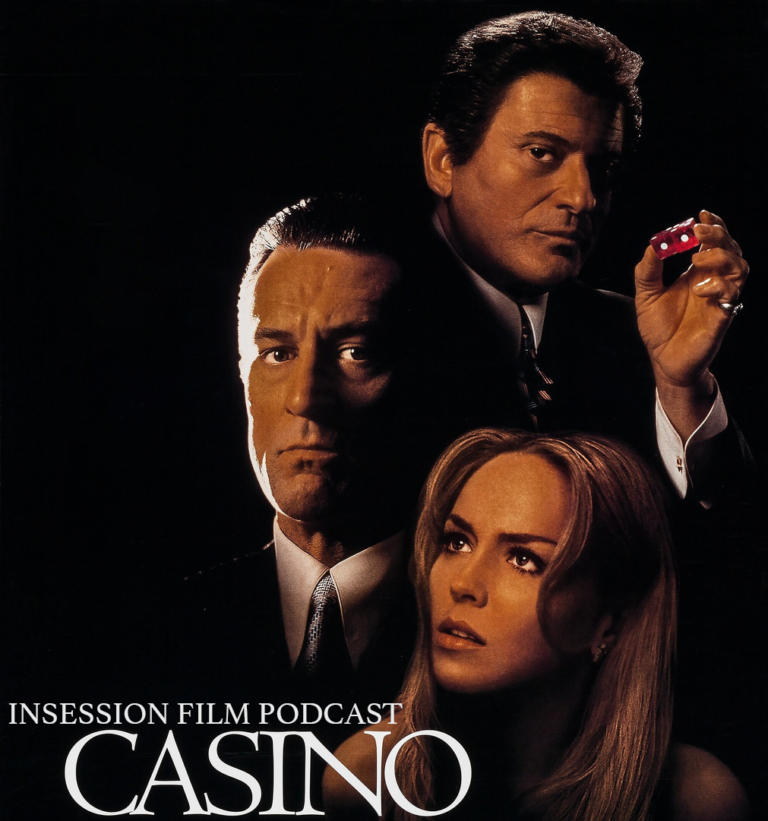
Podcast: Casino / Decision to Leave – Extra Film

This week on the Extra Film Podcast, Ryan and Sophia are joined by the one and only Jay Ledbetter as they continue their Martin Scorsese Movie Series with Casino, and they also review the Park Chan-wook film Decision to Leave!

What a week with these two movies. Casino might not be the cultural hit that Goodfellas was, but it’s still one of the more defining Scorsese films given its style and substance. So there was a lot to dissect with that movie and how it holds up as one of his better movies. And then there’s the brilliance of Park Chan-wook and Decision to Leave. It’s considered to be one of the best movies of 2022, and spoiler alert, there’s a lot of truth to that notion.

On that note, check out this week’s show and let us know what you think in the comment section. Thanks for listening and for supporting the InSession Film Podcast!

– Movie Review: Casino (6:15)
Director: Martin Scorsese
Writers: Nicholas Pileggi, Martin Scorsese
Stars: Robert De Niro, Sharon Stone, Joe Pesci

– Movie Review: Decision to Leave (1:08:21)
Director: Park Chan-wook
Writers: Jeong Seo-kyeong, Park Chan-wook
Stars: Tang Wei, Park Hae-il

– Music

Gimme Shelter – The Rolling Stones
Decision to Leave – Jo Yeong-wook
The Return of the Eagle – Atli Örvarsson

Subscribe to our Podcasts RSS
Subscribe to our Podcasts on iTunes
Listen on Spotify
Listen on Stitcher
Extra Film – Casino / Decision to Leave

[divider]

To hear this Extra Film episode and everything else we do, download our apps on the Amazon Market for Android and the Podcast Source app on IOS devices. The mobile app covers all of our main shows, bonus podcasts and everything else relating to the InSession Film Podcast. Thanks for your wonderful support and for listening to our show. It means the world to us.

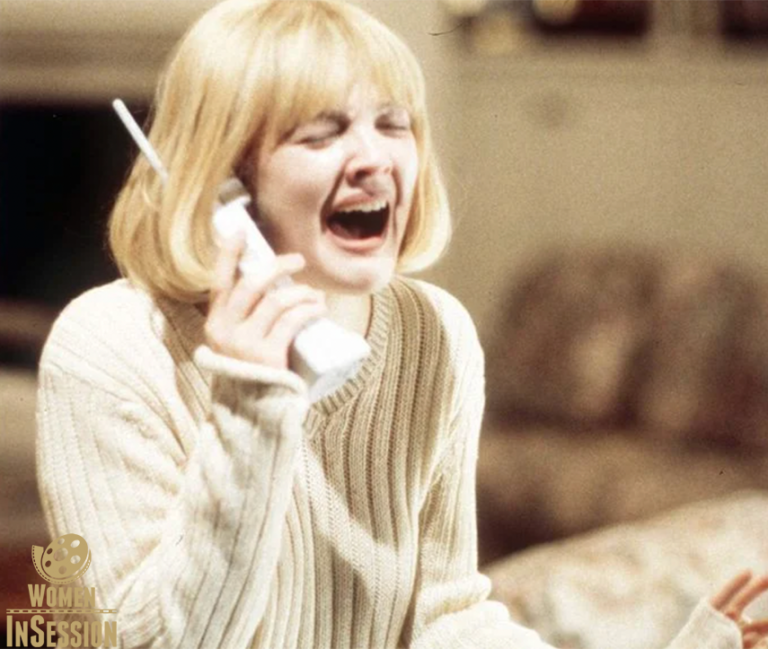
Women InSession: 1990s Horror – Episode 13

This week on Women InSession Podcast, we talk about our favorite 1990s horror movies! The decade, without question, saw a big change from the slashers of the 80’s to expand beyond the tropes that had developed into something that was more aware and full of variance. So, it was an interesting crop of films to talk about.

Panel: Kristin Battestella, Zita Short, Erica Richards

On that note, check out this week’s show and let us know what you think in the comment section. Thanks for listening and for supporting the InSession Film Podcast!

– Music

The Return of the Eagle – Atli Örvarsson

Subscribe to our Podcasts RSS
Subscribe to our Podcasts on iTunes
Listen on Spotify
Listen on Stitcher
Women InSession – 1990s Horror Movies

[divider]

To hear this Extra Film episode and everything else we do, download our apps on the Amazon Market for Android and the Podcast Source app on IOS devices. The mobile app covers all of our main shows, bonus podcasts and everything else relating to the InSession Film Podcast. Thanks for your wonderful support and for listening to our show. It means the world to us.

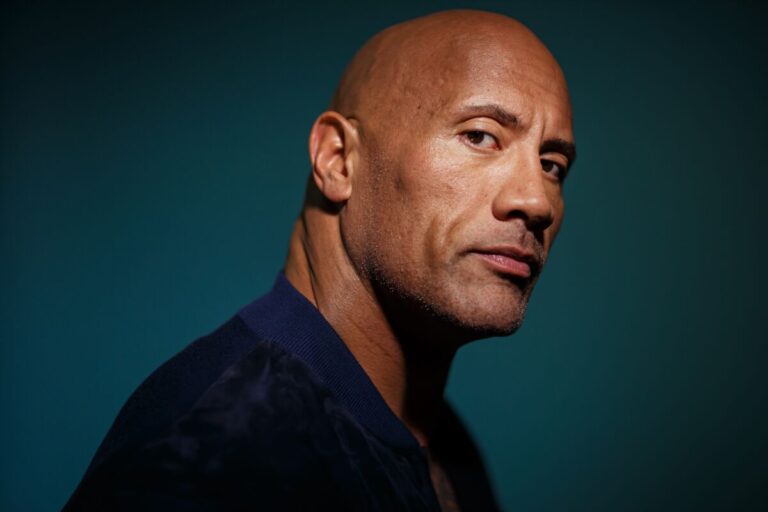
Poll: What is Dwayne Johnson’s best performance?

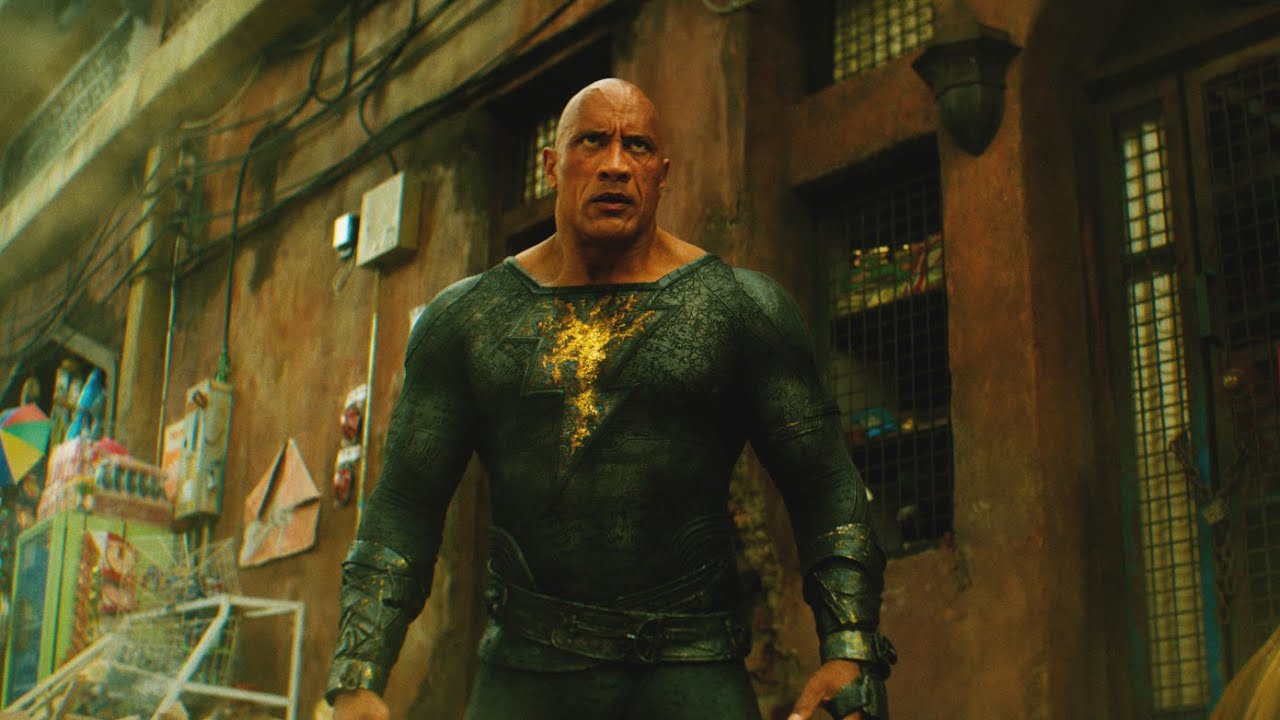
Since starting his career in the WWE, Dywane ‘The Rock’ Johnson has always been an entertainer. Since his time in professional wrestling, he has become one of the biggest movie stars on the planet, with versatility in the roles he takes on, whether laugh-out-loud comedies or big-budget action films, to now his latest role, superhero. In Black Adam, Johnson brings the DC anti-hero to life in the only way he knows how to do it, on an epic scale for all to see on the big screen. It is another check mark in the career of one of the biggest names in Hollywood.

With that said, what do you think is Dwayne Johnson’s best performance?


‘Carnival Of Souls’: A Nightmare Underneath The Big Top

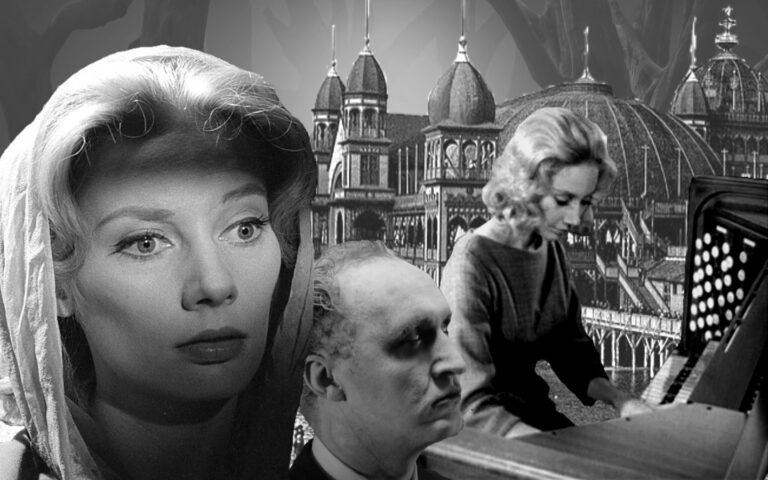
This year marks the sixtieth anniversary of a film many people will certainly never hear of unless they somehow came across it in midnight screenings. Or, if you’re like me, you heard of it through Criterion and you wonder what the heck is this film with no names to it. Who is Herk Harvey? What type of film is this? Why did this film influence David Lynch and George A. Romero? Carnival of Souls did not get much of a reception at the time of its release, but only in later years did the movie establish itself as a cult classic and carry characteristics that have been seen in later horror and surrealist films.


A Woman In Trouble

The film follows a young woman (Candace Hilligoss) who somehow survives a car crash and moves to Utah to restart her life. After starting her new job as a church organist, the woman finds herself interested in a large, abandoned building on the salt flats. However, she is constantly haunted by the following ghost ( Harvey) and cannot get herself acclimated to her new surroundings. Even in another place, her past threatens to engulf her through strange hypnosis of what lies in the tent.

The atmosphere throughout the movie is a steady tremble following the woman’s path post-accident. She is innocent in the opening seconds until the car falls into the muddy river; emerging from it, she is a completely new person with no memory of what happened. The mysterious ghoul symbolizes the death that somehow she has escaped from. Throw in the never-ending organ score, played by a local organist named Gene Moore, which implants a carousel of horror that sticks in her mind as she tries to rediscover who she is.  


Building A Haunted House

Carnival of Souls was the only feature directed by Herk Harvey, who worked for the educational film company Centron. Based in Lawrence, Kansas, where Harvey was studying at the University of Kansas, Centron produced many short films on low budgets that were mostly aimed at students on various subjects. One of its documentary shorts, Leo Beuerman, would get nominated for an Oscar in 1970. Through his time at Centron, Harvey learned how to shoot films on tight budgets with good quality, giving him the creativity he would need to shoot Carnival. 

Driving back from California after shooting a film, Harvey passed through Utah and saw the abandoned Saltair Pavilion, which had been built in the late 19th century. It was a resort to attract Mormon church members that had closed in 1958 and the Great Salt Lake it was built on had drastically receded underneath the building. This inspired Harvey to make his own film and called his co-worker, John Clifford, to write a script around the abandoned pavilion. Candace Hilligoss, a new actress who studied at the Actors Studio in New York, was cast in the lead role. The shooting took three weeks on a budget of $33,000, roughly $314,000 in 2022 today.


Unleashing The Ghouls

The film was released in September of 1962 in Lawrence and was forgotten overnight. Worse for Harvey, while he obtained the television rights, he did not copyright the movie for distribution, and it would become available in the public domain later on. When a small distributor took the film, Harvey would not see any money from them as it was sold by bootleg and the distributor fled to Europe. However, it was those who saw the film on TV and through bootleg versions that would keep Carnival relevant until the late 1980s when it was reconstructed and shown in horror film festivals to build a bigger cult following.

When it was broadcast for TV, the film was slightly cut from 80 to 78 minutes; later, the film was restored as Harvey initially intended it to be at 84 minutes. Thanks to VHS, LaserDisc, and now DVD/Blu-Ray, the distribution is much bigger than what Harvey imagined, who got a second chance at fame when the film was resurrected. He never made another movie after Carnival but was happy to spend the rest of his life visiting various cities where the film was shown. Along with Lynch and Romero, directors James Wan and Lucrecia Martel also cited the film as influential to their movies. In 2008, a loose remake was made in Germany, Yella, written and directed by Christian Petzold.

For Souls, it remains a cult film for those who appreciate the genre of forgotten films and the hidden qualities they retain. It is very much like the films of Ed Wood, which played a role in Tim Burton’s upbringing. This is a taste outside of art and mainstream films that only a few can really look at and find the hidden power it has. Horror is a genre with the power of metamorphosis, changing its appearance all the time and approaching stories in all new directions. Carnival of Souls is no different than any major studio and its sense of direction.


Follow me on Twitter: @brian_cine (Cine-A-Man)

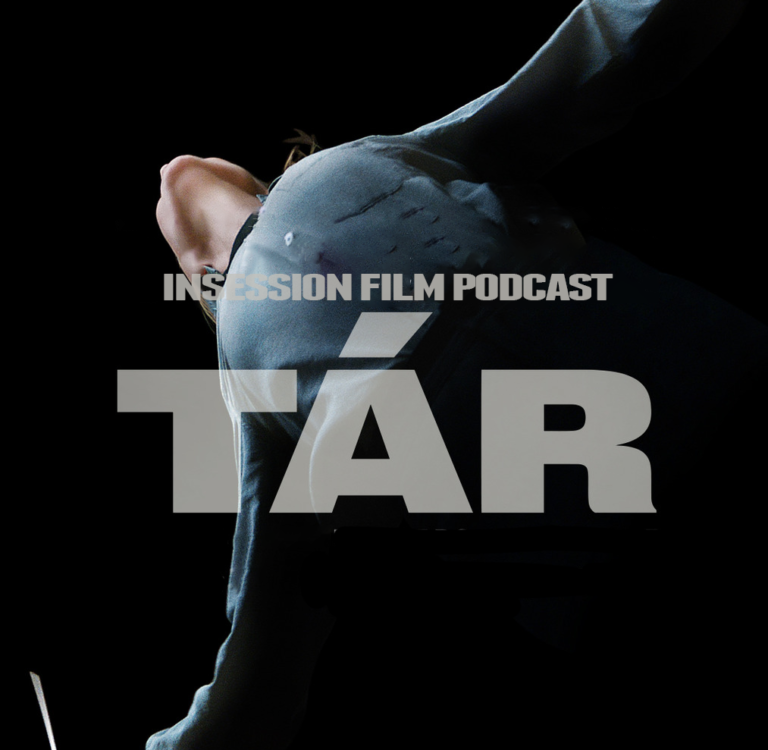
Podcast: Tár / Ponyo – Episode 504

This week’s episode is brought to you by the Libsyn. Start your podcast today and get your first two months free when you use the code “ISF” at checkout!

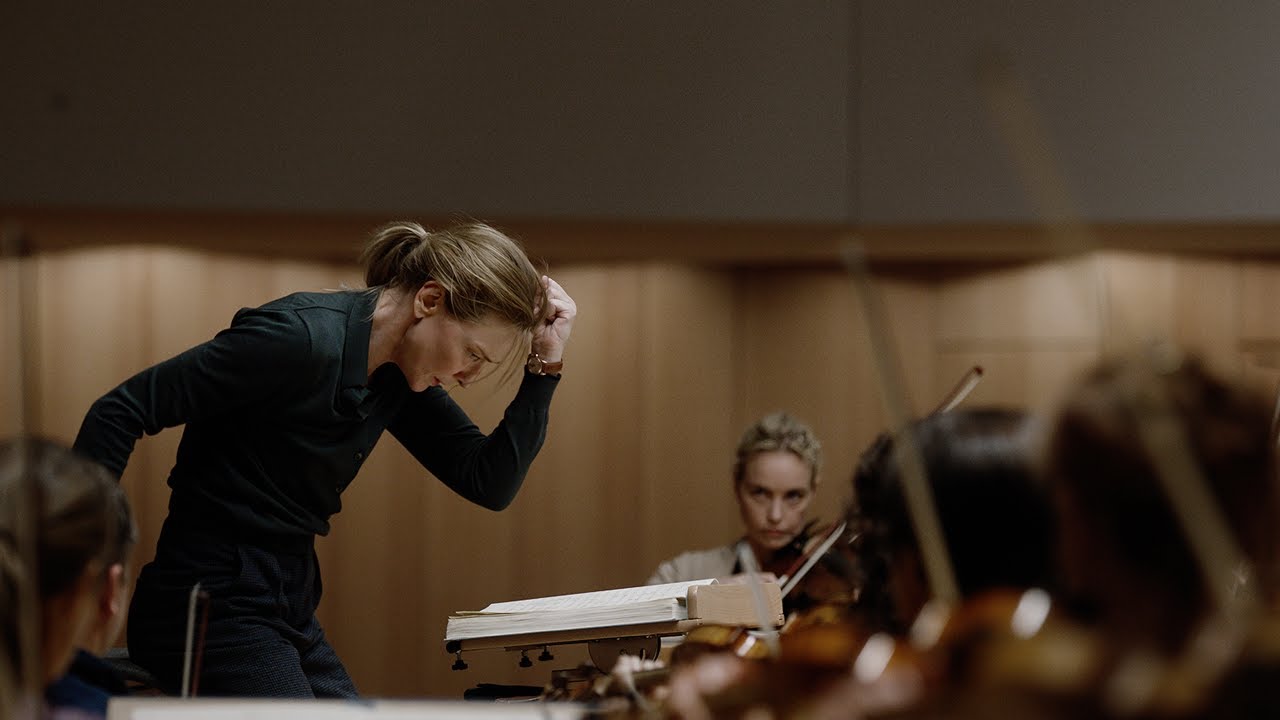
This week on the InSession Film Podcast, we review Todd Field’s new film Tár and continue our Studio Ghibli Movie Series with Hayao Miyazaki’s 2009 film Ponyo! Plus, a few brief thoughts on Triangle of Sadness, Catherine Called Birdy and Moonage Daydream.

A big thanks to Ryan McQuade for filling in for JD during the Tár conversation. Coming off the heels of the Middlesburg Film Festival, Ryan was very busy but still made time to fill and we are always grateful. His passion for the film was very welcomed and it made for a great conversation. Ponyo, on the other hand, we had a very interesting response to that we may not have expected.

On that note, check out this week’s show and let us know what you think in the comment section. Thanks for listening and for supporting the InSession Film Podcast!

– Movie Review: Tár (7:07)
Director: Todd Field
Writers: Todd Field
Stars: Cate Blanchett, Noémie Merlant, Nina Hoss

– Notes / Discussion (1:00:34)

This week for our break segment, JD gives us his brief thoughts on the Ruben Östlund film Triangle of Sadness and the new comedy Catherine Called Birdy. Meanwhile, Brendan gives us some surprising thoughts on the documentary Moonage Daydream, which may be contender for him at the end of the year.

[divider]

RELATED: Listen to Episode 484 of the InSession Film Podcast where we discussed Top Gun: Maverick!

[divider]

– Studio Ghibli Movie Series: Ponyo (1:33:05)
Director: Hayao Miyazaki
Writers: Hayao Miyazaki
Stars: Tomoko Yamaguchi, Kazushige Nagashima, Yūki Amami

Show Sponsor: First Time Watchers Podcast

– Music

Symphony No. 5 in C-Sharp Minor: IV. Adagietto – Daniel Barenboim
Ponyo on the Cliff by the Sea – Joe Hisaishi
The Return of the Eagle – Atli Örvarsson

Subscribe to our Podcasts RSS
Subscribe to our Podcasts on iTunes
Listen on Spotify
Listen on Stitcher
InSession Film Podcast – Episode 504

[divider]

Next week on the show:

Review: Black Adam
Top 3: N/A
Studio Ghibli Movie Series: The Secret World of Arrietty

[divider]

Help Support The InSession Film Podcast

If you want to help support us, there are several ways you can help us and we’d absolutely appreciate it. Every penny goes directly back into supporting the show and we are truly honored and grateful. Thanks for your support and for listening to the InSession Film Podcast!

VISIT OUR DONATE PAGE HERE

Movie Review: ‘Lyle, Lyle, Crocodile’ Is Wild, Wild, Wild


Directors: Will Speck & Josh Gordon

Writers: William Davies

Stars: Javier Bardem, Shawn Mendes, Constance Wu, Scoot McNairy, Winslow Fegley, and Brett Gelman. 

Synopsis: Feature film based on the children’s book about a crocodile that lives in New York City.


After months of anticipation, Lyle, Lyle, Crocodile is finally here, and it is a wild ride. There’s actually no way to properly describe it without you flocking to the theater and seeing it for yourself, but it feels like an amalgamation of last year’s dreadful Clifford the Big Red Dog live-action film, Tom Hooper’s Cats, and The Greatest Showman. These are all movies I don’t like, so I’m surprised to say I found Lyle, Lyle, Crocodile weirdly charming, mainly because of how committed the cast is to the material. 

Within minutes, Javier Bardem and Shawn Mendes are dancing their way to a montage number, in which we see Hector P. Valenti (Bardem) training Lyle (Mendes) on how to perform, through the excessive music of Benj Pasek and Justin Paul. Yes, they wrote La La Land, but they also did Dear Evan Hansen. I’m mixed on them as songwriters, but most of the numbers here are incredibly catchy, especially its opening number “Take A Look At Us Now,” which honestly could end up with an Oscar nomination. I’ll say it’s better than every song in Dear Evan Hansen and “This Is Me” from The Greatest Showman

And Bardem’s performance as Valenti is a real trip, because it’s completely against everything he’s played in his career. Bardem is usually known for playing dark and brooding villains, such as Anton Chigurh in No Country for Old Men and Raoul Silva in Skyfall. But his portrayal of Valenti is filled with such exuberance and earnest charm that I couldn’t help but fall for him every single time he would be on screen. It’s funny how most people watched the trailer and were confused at his presence, but he’s truly the best part of the movie. It’s another great part for Bardem to showcase his versatility and range as an actor, and prove to the world that he can play more expressive characters than antagonists, or brooding protagonists like his approach to Stilgar in Denis Villeneuve’s Dune

It’s also impressive to see how devoted to the movie Constance Wu and Scoot McNairy are as Katie and Joseph Primm, parents to Josh Primm (a wonderful Winslow Fegley), especially when they have to interact with CGI Lyle. One scene in particular, featuring Katie and Lyle baking and dancing through another catchy song, had me cackling so hard that I couldn’t believe Constance Wu would ever do the things she does in this movie. It was even funnier to see it with a rapturous audience, who got excited at the sight of Lyle on screen and were in an utter state of disbelief every time the crocodile would do something so preposterous that you have to ask yourself how on earth did this movie get greenlit. 

I’m not going to spoil anything, but Lyle is at times immensely charming (Mendes’ vocals are terrific) and very funny, but downright unsettling and just plain weird during other sections of the movie. It’s an amalgamation of weird and wonderful that doesn’t always work but is always a compelling watch. Its performances are too good to be in a movie like this, especially with a CGI crocodile accomplishing the weirdest things imaginable, such as convincing Josh to dumpster dive with him, among one of the many hijinks our protagonist gets into throughout the film. 

The rest I won’t reveal, you’re going to have to see for yourself just what adventures Lyle has with Josh, but it’s wilder than I ever thought possible. And while the core of the movie remains a highly-spirited theatrical experience, it’s a shame how most of the plot is highly unimaginative and predictable. The main antagonist, Mr. Grumps (Brett Gelman), represents every single trait of the “Bad Neighbor,” who hates any ounce of disturbance and will do everything in his power to kick the Primms out of their home. While Gelman is fun (he also wears a Cats shirt at some point which made the older person in the theater howl with laughter), the character itself is boring to watch. 

And the plot itself is amazingly clichéd. Lyle has stage fright and can’t perform in front of an audience, even if he sings extremely well when he’s with Hector, Josh, or Katie. From this sentence, you can already guess how it’ll end. I won’t even say it, but yeah. It’s what you think.

Because of this, Lyle, Lyle, Crocodile won’t be remembered as a great film, even if I had the time of my life watching it. When the film aptly ended to the sweet sounds of Elton John’s Crocodile Rock (of course), the audience cheered at this magnificent achievement in the history of cinema. And it truly was momentous–Javier Bardem showed the world he is more than just a brooding actor, which bodes well for his performance as King Triton in the live-action remake of The Little Mermaid next year. That alone was worth the price of admission. 


Grade: C


Movie Review: ‘Halloween Ends’ On The Worst Note


Director: David Gordon Green
Writer: Paul Brad Logan
Stars: Jamie Lee Curtis, Andi Matichak, James Jude Courtney

Synopsis: The saga of Michael Myers and Laurie Strode comes to a spine-chilling climax in this final installment of this trilogy.


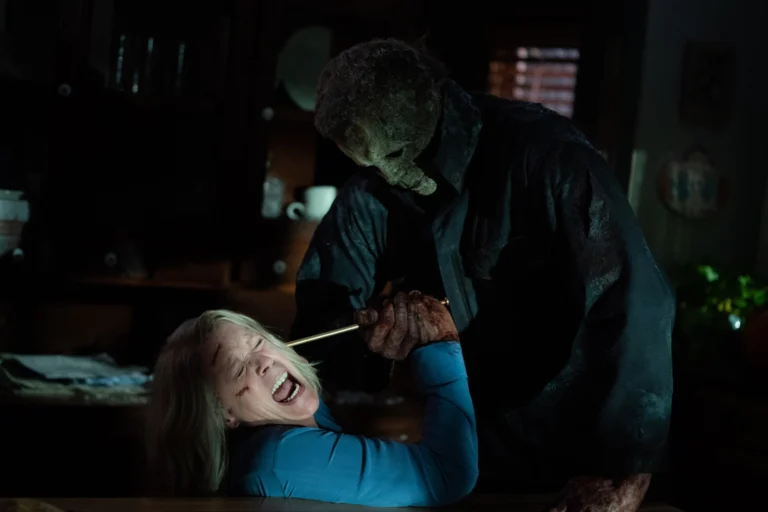
I am a Halloween fanatic, not just the film but the season, the holiday, the weather, everything. October, and all of its belongings, is by far the best time of the year. The weather is cooler (on the east coast at least. Sorry west coast, you fail here) the leaves have fallen, they crunch under your feet, and it’s time for all things scary. A go to for the season is obviously scary movies and the holy grail has been, since 1978, Halloween. With many ups and downs in the series and after a series high of Halloween Kills, this new film to bring in the spooky season is not only a low, but a new low in the series, and this is a series that includes Halloween 6 and Halloween Resurrection.

SPOILERS GOING FORWARD. 

The Halloween franchise is a true “choose your own adventure” as there are now 5 separate timelines happening. There’s the Rob Zombie timeline, the Jamie Lloyd timeline, the Halloween 3: Season of the Witch Standalone timeline, the siblings timeline, and now the Laurie Strode timeline. It can be exhausting if you go into these the first time and you’re not aware. In 2017, the unthinkable happened, something none of us ever thought would happen again, the announcement of the long awaited return of Jamie Lee Curtis to the franchise. This time in the hands of Blumhouse, hope filled the air and then in 2018, when released, I was overwhelmed with “meh”. The 2018 version was a let down and I was left wanting an actual Halloween film. This was a convoluted script that had more plot holes than answers and was just not what was being advertised. Then in 2020, my sources on the set sent me the shooting script and I was READY! This was the best Halloween on paper in a long time, brutal Michael Myers just oozed from the page, and it was as a lifelong fan what I had been craving and missing from the 2018 film, then COVID hit and I was sitting on this script for over a year, impatiently waiting to see the final product on the screen and I was not disappointed, finally the Halloween franchise was back and on top with a series high film. I was pumped for the final chapter a year later, and then I saw the film last night and it all came crashing down.

Halloween Ends is not a Halloween film at all, in fact it barely registers as a part of this Laurie Strode saga at all. Okay, let me  put it this way- whoever is in charge of marketing is smart as hell because they have been lying to you the entire time. This film is not about Laurie Strode, it’s not even about Michael Myers. In a fourth film in a saga about Laurie and Michael they are secondary characters, in fact they’re barely in the film. This was a swing and a huge miss that actually feels like a slap in the face and super disrespectful to not only these characters, but also the fans who have invested their hard earned money and time into this, and I cannot fathom how this story was allowed to be made. This is the type of swing they should’ve tried for the 2018 version to see if it worked, not to end this timeline on. Once they realize this doesn’t work, you have to earn the trust back from the fans and correct it in the sequel, an impossibility now. This film isn’t a Halloween film, it’s 10% Halloween, 10% Batman and Robin,and 80% Romeo and Juliet, I’m not kidding….

The movie is about a character named Corey Cunningham who becomes the town pariah after accidentally killing the kid he’s babysitting on Halloween night, 2019; one year after the events of the last two films. The film jumps to 2022 and we find Corey the outcast being the new stain on the town of Haddonfield. We see Laurie, who is now embracing the Halloween spirit living with her granddaughter in a new home in town. We see her sporadically but she’s got nothing to do with the story until the end. In the meantime, Corey meets Allyson, Laurie’s granddaughter and the two begin a romantic relationship. We see the return of Lindsay Wallace wasted as a bartender cameo, “Hey Linds-” oh nevermind she’s gone… Now we’re stuck watching Corey fight his personal feelings of hatred with the town and falling for Allyson, all while getting beat up by high schoolers (I wish I was joking). They throw him off a bridge and when he lands with a thud he’s then dragged into the sewers by Pennywise the clown, it has to be, it’s- oh no, it’s Michael Myers who apparently has been living in a sewer for the last four years. But wait, Corey wakes up and Michael begins to choke him out until- MICHAEL LOOKS INTO HIS EYES AND HAS A THAT’S SO RAVEN VISION AND SEES HIMSELF IN COREY….. I wish I was making this up. Michael lets Corey go, which makes Corey wonder why and then I KID YOU NOT- Corey becomes Michael’s sidekick…. BRO WHAT?!?! But I lied actually, Michael becomes COREY’S sidekick, yes you read that right. Corey begins killing people who have wronged him, and Michael tags along. At one point in the movie, Corey beats up Michael and steals his mask, puts it on, and on Halloween night IS A COPYCAT KILLER. 

WHO ALLOWED THIS TO BE GREEN LIT!?!?!?! How does this at all, introducing this new character in a FOURTH MOVIE of this saga, to end the story of Michael and Laurie have anything to do with what’s been set up to be finished? It’s truly like the writers said “ we don’t know what else to do. Here, let’s try this, and just make Laurie and her story the secondary back burner plot”. It’s awful, but wait- guess who shows up at the Strode house? Michael? No. Corey in the mask, who is instantly shot by Laurie, but who’s here now? Michael to retrieve his mask and okay, sure now you can fight to the death…

This was bad, this shouldn’t have been the final chapter, this is genuinely the worst Halloween film ever made because it’s not a Halloween, Michael Myers film. I cannot fathom how Jamie Lee Curtis read this script and said “ yes, this is how it should go down”. It makes no sense. It is a slap in the face to the fans, and we deserve better. Please for the love of God, hire someone who actually understands this series to write a script for a future film because this ain’t it. 

So long, goodbye. Will never watch this again. 

Grade – F

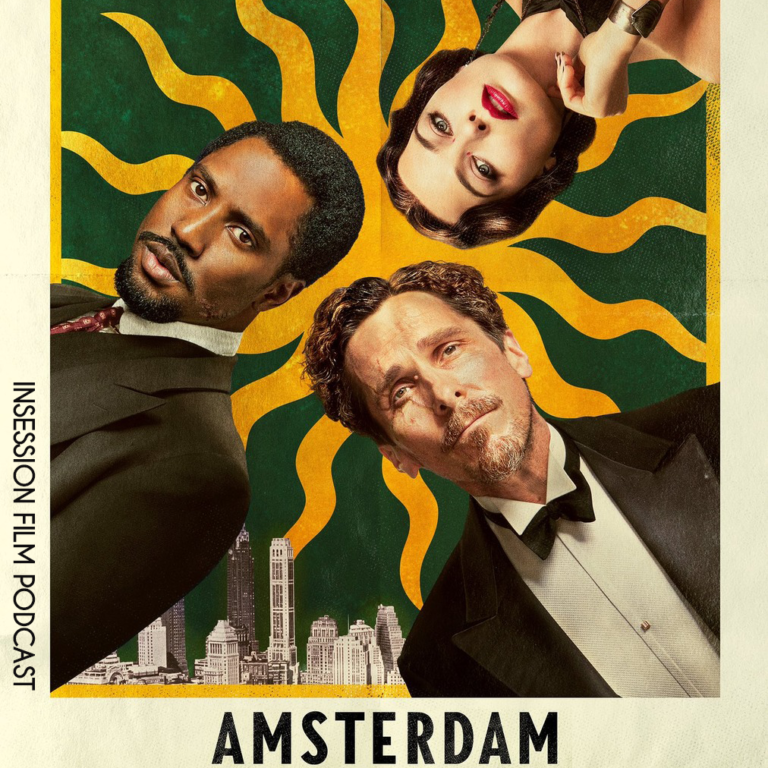
Movie Review: ‘Amsterdam’ is Less a Mystery Than a Mess


Director: David O. Russell

Writer: David O. Russell

Stars: Christian Bale, John David Washington, Margot Robbie

Synopsis: In the 1930s, three friends witness a murder, are framed for it, and uncover one of the most outrageous plots in American history.


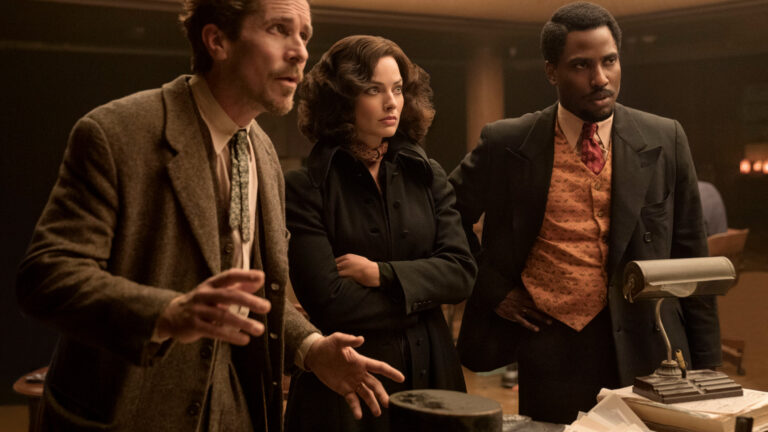
There is a point in the first several minutes of Amsterdam where you realize that the characters are never going to stop talking. It goes from fade in to fade out without a breath. Even when all the characters in the scene have their mouths closed, there is narration. Sometimes the narration is lengthy, unnecessary, invasive exposition and other times it’s one or more character’s solipsistic, navel gazing observations. It’s so suffocating not only to us but to the story.

There is so much dialogue that nothing else lands. None of the action actually has impact because as soon as something happens, they are off on another tangent or doing something else adjacent. There is so much conversation that some conversations are complete and utter nonsense and not in a fun way. To give an example, the two police detectives hounding Bert (Christian Bale) and Harold (John David Washingon) have come to Bert’s office. Bert moves from one part of his office where he was rehearsing a song, to the middle part of his office where he talks to the detectives, to a more private portion of his office where he talks with the autopsy nurse, Irma (Zoe Saldaña). While Bert talks to Irma and the two of them are having a quiet moment, the two detectives suddenly start a conversation. The two scenes are intercut, confusing and end with a slap from Bert’s wife Beatrice (Andrea Riseborough), which wasn’t stopped by and didn’t interrupt the two detectives somehow.

That “somehow” sums up a lot of Amsterdam. The plot is so convoluted that even when something breaks through the constant drone of voices, it takes several beats to realize that this was the important thing amongst the cacophony. Somehow, things just come together for these characters. After the third half-formed soliloquy about love and friendship, one wonders if David O. Russell combined several different drafts and went off to shoot without any regards as to how it all really works in concert. He certainly didn’t seem to allow for the artistry of one of his partners.

Cinematographer Emmanuel Lubezki has a style that’s easy to recognize. He favors a long take and an extreme close up with natural lighting. None of this meshed with Russell’s frenetic, constantly moving script. It looks as if Lubezki may have attempted some of his most well known tricks, but the shots have been hacked to pieces by Russell and editor Jay Cassidy. It’s so cut apart that there are focused shots on innocuous items that must have meant something and pans that should have connected a speaker with what they were seeing, but was cut so the camera arrives a moment too late for it to land. It’s as if Russell didn’t trust Lubezki’s techniques to let his script live in the moment. Even the moments that are meant to be frivolous and joyous dreamscapes are cut into pale imitations of Lubezki’s previous works with directors like Terrence Malick and Alejandro G. Iñárritu.

About the only thing in the film that does work is the makeup. The scars, the glass eyes, and the prosthetics people wear are incredibly done and give each character a unique and grizzled look. The most made up of course is the chameleonic Christian Bale. Bale does the most with what little he is given with his character. He transforms himself so wholly that you wish that the performance belonged to a much better feature that allowed it much more depth.

It’s possible that David O. Russell has always been this sophomoric filmmaker and we indulged in his run of films in the 2010s because we were blinded by the acting of his leads. It may be time to reassess those films to see if the cracks were there all along. Amsterdam certainly won’t be a comeback. It won’t be a film people mention when they mention Russell’s body of work and the title certainly won’t be mentioned as much as the characters in this film say it over and over and over again. Amsterdam is noise and nothing more.


Grade: D


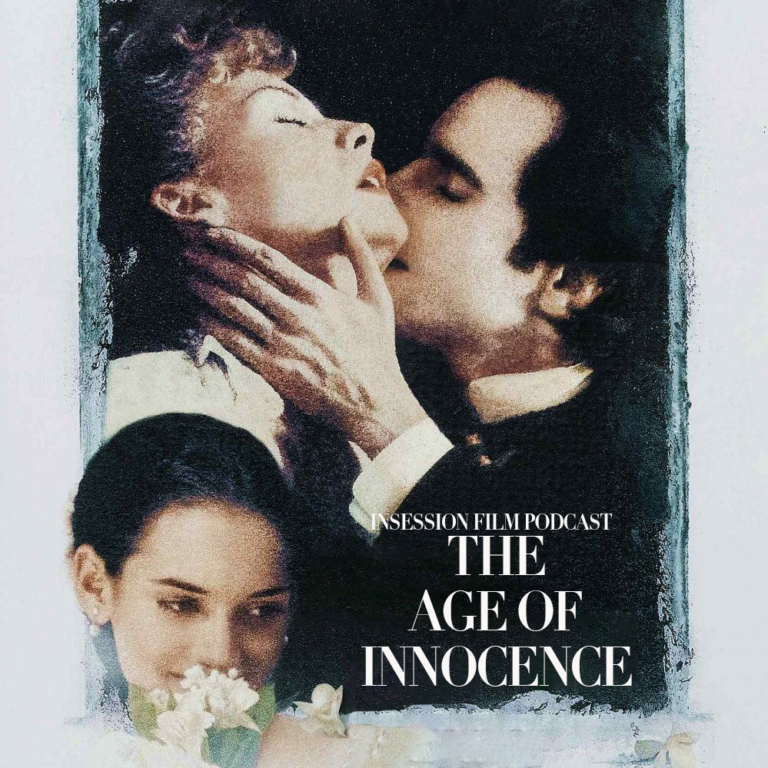
Podcast: The Age of Innocence / Triangle of Sadness – Extra Film

This week on the Extra Film Podcast, Nicole Ackman joins Ryan and Sophia as they continue their Martin Scorsese Movie Series with The Age of Innocence and they also review Ruben Östlund’s latest in Triangle of Sadness!

A big thanks to Nicole for joining us once again. She’s always great, but her passion for The Age of Innocence was palpable. Sophia promised a similar passion and boy did she deliver. It may not be Scorsese’s most popular film, but it’s much better than perhaps what its reputation may be. We also had fun talking Triangle of Sadness and all of bold oddities.

On that note, check out this week’s show and let us know what you think in the comment section. Thanks for listening and for supporting the InSession Film Podcast!

– Movie Review: The Age of Innocence (5:55)
Director: Martin Scorsese
Writers: Jay Cocks, Martin Scorsese
Stars: Daniel Day-Lewis, Michelle Pfeiffer, Winona Ryder

– Movie Review: Triangle of Sadness (1:18:10)
Director: Ruben Östlund
Writers: Ruben Östlund
Stars: Harris Dickinson, Charlbi Dean, Dolly de Leon

– Music

The Age of Innocence – Elmer Bernstein
Marea (We’ve Lost Dancing) – Fred Again, Madonna
The Return of the Eagle – Atli Örvarsson

Subscribe to our Podcasts RSS
Subscribe to our Podcasts on iTunes
Listen on Spotify
Listen on Stitcher
Extra Film – The Age of Innocence / Triangle of Sadness

[divider]

To hear this Extra Film episode and everything else we do, download our apps on the Amazon Market for Android and the Podcast Source app on IOS devices. The mobile app covers all of our main shows, bonus podcasts and everything else relating to the InSession Film Podcast. Thanks for your wonderful support and for listening to our show. It means the world to us.

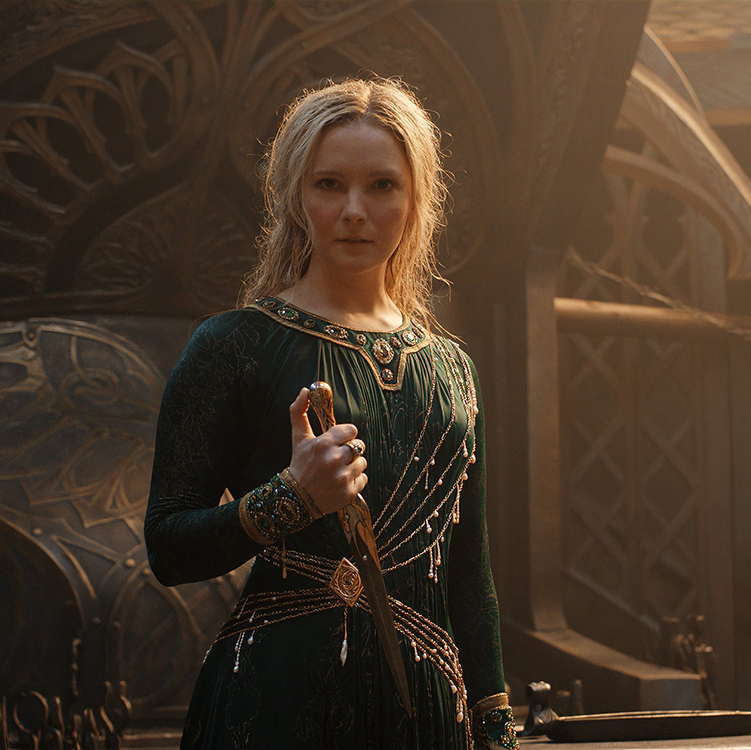
Podcast: The Rings of Power (Episodes 7 / 8) – Patreon Bonus Content

Listen!

For this week’s Patreon Bonus Content, Christian Eulienberg and JD review Episodes 7 and 8 of the new Amazon series The Lord of the Rings: The Rings of Power! It was an uneven Season 1 for us, but these last two episodes stuck the landing and we had a lot of fun breaking it down.

If you’re already a Patreon supporter, you can listen to this episode NOW on Patreon by clicking here.

Sign up today to get early access and hear the entire episode!

[divider]

HELP SUPPORT THE SHOW

To hear our bonus content episodes early, subscribe now on Patreon. In many cases, though, we offer our bonus content for free after a certain period of time and we do encourage (and very much appreciate) a small donation of $0.99 as a way to help support the show if signing up on Patreon isn’t for you. Click on the PayPal button below to donate and thanks so much for your support. You can also hear much of our Bonus Content via our mobile apps. See the information at the bottom of the post for more details.


One-Time Donation


[divider]

Mobile Apps!

Listen to all of our bonus content on our apps for just a one-time fee! Whether you have an iPhone, Android or Windows phone, our apps are available in many different ways that is convenient for you. With our mobile app, not only can you listen to all of our bonus content, but our main shows and our Extra Film podcasts as well. Click here for more info!

If you don’t want to purchase our bonus content, but still want to support us, there are other you can help us out. Click here for more info.

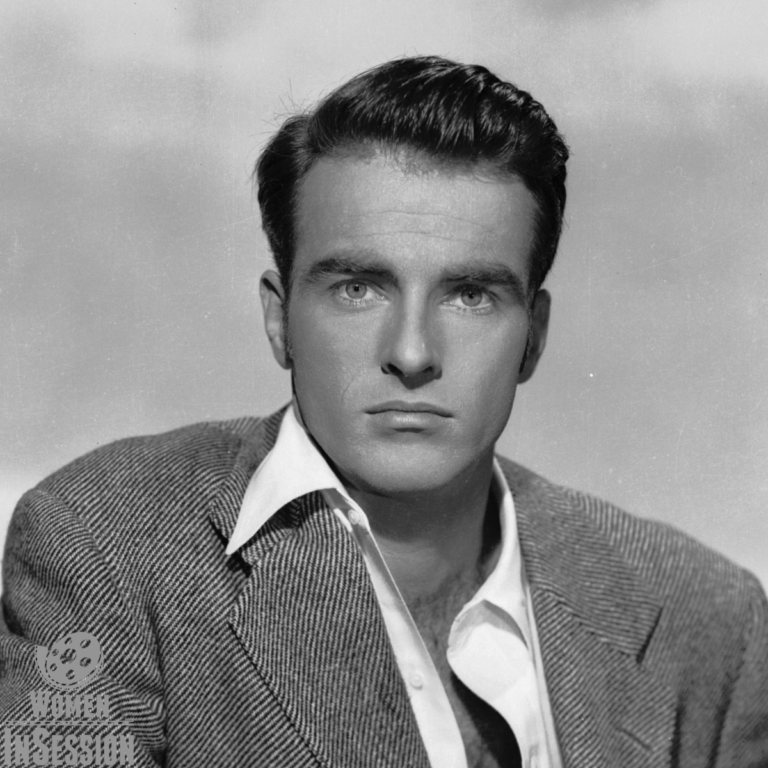
Women InSession: Montgomery Clift Special – Episode 12

This week on Women InSession Podcast, we look back at the life and career of troubled, yet incredible actor Montgomery Clift! He may have had his issues off screen, but there’s no denying the impact he had on camera. Whether you’re talking about his performances in the films themselves or the influence they had afterward, his legacy is undeniable.

Panel: Kristin Battestella, Zita Short, Amy Thomasson

On that note, check out this week’s show and let us know what you think in the comment section. Thanks for listening and for supporting the InSession Film Podcast!

– Music

The Return of the Eagle – Atli Örvarsson

Subscribe to our Podcasts RSS
Subscribe to our Podcasts on iTunes
Listen on Spotify
Listen on Stitcher
Women InSession – Montgomery Clift Special

[divider]

To hear this Extra Film episode and everything else we do, download our apps on the Amazon Market for Android and the Podcast Source app on IOS devices. The mobile app covers all of our main shows, bonus podcasts and everything else relating to the InSession Film Podcast. Thanks for your wonderful support and for listening to our show. It means the world to us.

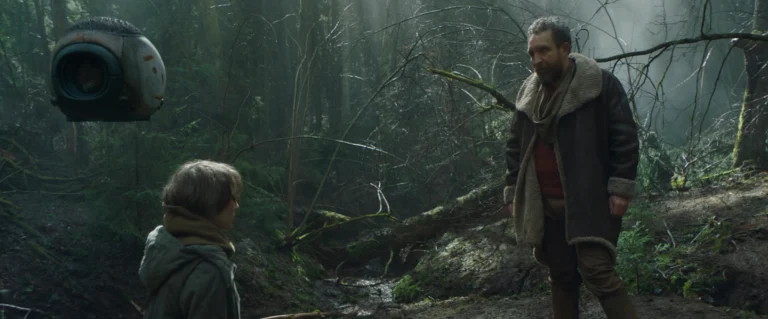
Movie Review: ‘Vesper’ is a Beautiful Blend of Fantasy and Science Fiction


Director: Kristina Buožytė, Bruno Samper

Writers: Kristina Buožytė, Bruno Samper, Brian Clark

Stars: Raffiella Chapman, Eddie Marsan, Rosy McEwen, Richard Brake

Synopsis: Struggling to survive with her father after the collapse of Earth’s ecosystem, 13-year-old Vesper must use her wits, strength, and bio-hacking abilities to fight for the future.


You’ve got to love sci-fi films with interesting concepts, and Vesper is certainly in that category. European cinema has so much to offer the genre with its horror-like approach and fantasy-like setting, and this recent film by the Lithuanian/French duo of Kristina Buožytė and Bruno Samper is one that snuggles nicely into a wide mix of genres. Vesper shows shades of Children of Men and even The Road; a post-apocalyptic world in which mankind has been the master of its own downfall. But this mystical film is more than just a grim vision into a dark future due to the atmospheric European forest and the acting from two of its stars that enhances everything to a high level of bleak brilliance.

Kristina’s earlier films, like 2012’s Vanishing Waves, tend to focus on women and the exploration of their inner worlds while depicting them with the help of fantasy elements – it is a very powerful and effective motif that occurs in her films, and this is more of the same. Vesper tells the tale of how genetically modified technology has failed, which then led to engineered viruses and organisms escaping into the wild and wiping out edible plants, animals, and a huge population of humans. A hierarchy of people living in “citadels” rule this world as small communities of survivors struggle to make ends meet. Here’s where the motif comes in because one of the people struggling to survive is a 13-year-old girl called Vesper (Raffiella Chapman) who must use her wits, strength, and talent for biology in the hopes she can save her and her paralyzed father Darius (Richard Brake).

There is a father-daughter relationship that bubbles up from within and becomes a very prominent aspect of the film; it highlights the power and the importance of having that support system, and the guidance needed to be successful. What makes the pairing interesting is that her father has manifested himself into a flying scout robot with a painted-on smile for good measure added, you know, to make her feel at ease in this trying time. Each actor brings something authentic to the film as well, and for a small cast, that’s mightily impressive. Raffiella Chapman gives a commanding and wonderfully mature performance as Vesper, whereas the calming influence of Rosy McEwen as the mysterious Camellia becomes a great aspect of this parent-child theme. But one man who steals the show every time he appears on the screen – and many screens for that matter –  Eddie Marsan as Jonas, the brutal leader of a nearby survivor settlement and Vesper’s uncle.

Marsan has become one of the most intriguing villainous actors in recent years; always adding an aspect of insanity with him as well as a touch of gentleness – he just has a welcoming and unsuspecting face, but it is this calm demeanor that lulls you into a false sense of security before he commits a heinous act. We should have become aware of this trick by now. The film is told like a fable, and in true fantasy-like fashion, where would the story be without a ruthless villain who wouldn’t think twice about sticking one in you as soon as your back is turned? But there is more to it than that: this mystical tale transcends into a very immersive film that is assisted by a creatively eerie score and some delectable cinematography that enhances this thick European forest and shrouds it with eerie darkness.

But I’m getting ahead of myself with the praise slightly because this film is far from perfect. It still has some way to go before it can be considered a top-tier entry in the genre. It is a little rough around the edges, and if you’re not paying close attention to the plot, you could find your mind wandering slightly. It’s the pacing that’s the issue because it’s awfully slow at times; there’s a lot of ambling dialogue and moments of nothing; with scenes often feeling stretched out to fill an empty void. And due to the film being developed on a smaller budget than most, it often feels a little repetitive, seeing as they just keep moving back and forth from one house to another.

This is a film with no over-the-top frills or fancies though; it is a gritty sci-fi that carries as much excitement as any of those Hollywood blockbusters would, and on a fraction of the budget. The fact that this world feels so dark and dingy, and yet has a multitude of technical sophistication; with brilliantly subtle special effects that dazzle with magic as much as they would in the next film. Vesper is a success story for European cinema providing us with enjoyable science fiction films, one that ventures down a notably different path, but one that is intelligently thought-provoking, violent, and full of so much mysticism.

Grade – B-

Podcast: X / Pearl – Patreon Bonus Content

Listen!

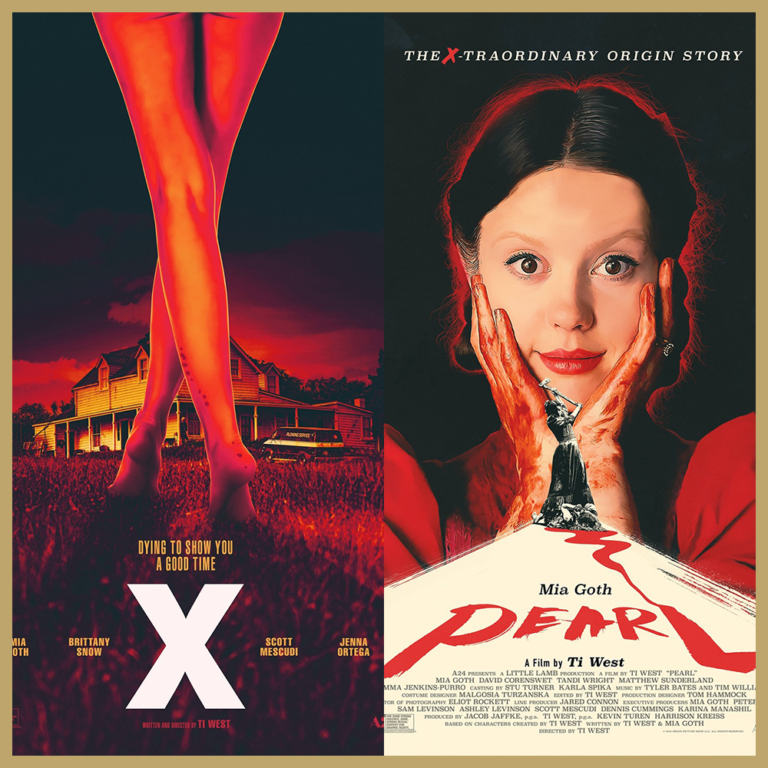
For this week’s Patreon Bonus Content, JD and Brendan discuss (finally) the Ti West films X and Pearl! In the spirit of Spooky SZN, as well as catching up on these horror films, we felt now was a good time to dive into these beloved 2022 films. Spoiler alert, we had a ton of fun.

If you’re already a Patreon supporter, you can listen to this episode NOW on Patreon by clicking here.

Sign up today to get early access and hear the entire episode!

[divider]

HELP SUPPORT THE SHOW

To hear our bonus content episodes early, subscribe now on Patreon. In many cases, though, we offer our bonus content for free after a certain period of time and we do encourage (and very much appreciate) a small donation of $0.99 as a way to help support the show if signing up on Patreon isn’t for you. Click on the PayPal button below to donate and thanks so much for your support. You can also hear much of our Bonus Content via our mobile apps. See the information at the bottom of the post for more details.


One-Time Donation


[divider]

Mobile Apps!

Listen to all of our bonus content on our apps for just a one-time fee! Whether you have an iPhone, Android or Windows phone, our apps are available in many different ways that is convenient for you. With our mobile app, not only can you listen to all of our bonus content, but our main shows and our Extra Film podcasts as well. Click here for more info!

If you don’t want to purchase our bonus content, but still want to support us, there are other you can help us out. Click here for more info.


JD DuranKoffee KultDigital Marketing Director

Highlights From The Criterion Collection, Part 3

Going down the stretch of this year, more films come and go from the Criterion Channel which means more opportunities to watch and rewatch classics. Movies that just were released by Criterion sometimes also get screened on the Channel, allowing me to watch Rouge, Mississippi Masala, and Shaft with all of the special features from the DVD right there. Two-hundred titles watched this year so far, here are five more films that caught my eye recently. 


The Thin Man (1934)

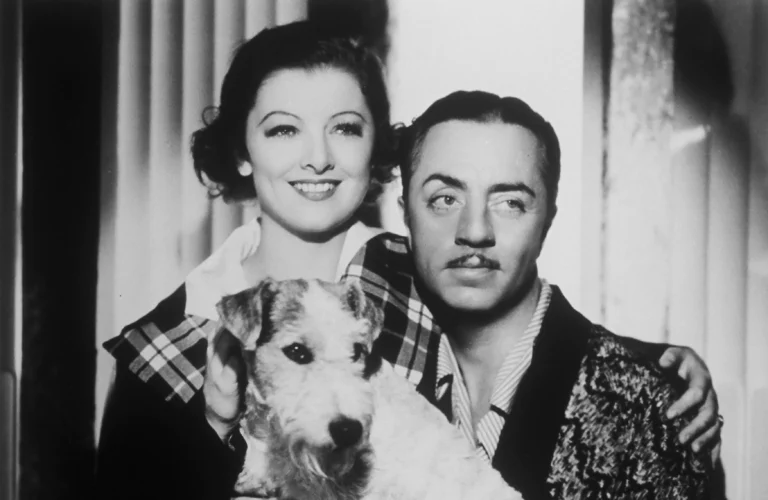
Actress Myrna Loy was one of the biggest comedy stars of the 1930s and 40s. She was never nominated for an Academy Award (only an Honorary Oscar in 1991) but was a significant star in screwball comedies. In The Thin Man, arguably the best movie in her career, she and William Powell play a couple, Nora and Nick Charles, who investigate a murder as private detectives. The first of six Thin Man films, is a whodunit where the couple is effective in untying the web of backstabbing and also remain loving to each other, not faulting their chemistry which carries on throughout the whole series. 


Woman In The Dunes (1962)

From the Japanese New Wave is a jarring story amidst the neverending sand reminiscent of Lawrence of Arabia and Dune. Instead of an action/adventure story, Kobo Abe adapted his existentialist novel about an entomologist who is unwittingly trapped in a sand pit by villagers who pair him with a woman who lives below. He cannot get out as much as he tries and is forced to be the woman’s love for the pleasure of the villagers. Hiroshi Teshigahara directed his sophomore effort with a storm that continues to choke viewers with its desolate landscape and allegory of existence, which earned him an Oscar nomination for Best Director, plus another nomination for Best International Feature. 


Fists In The Pocket (1965)

Considered a game changer in Italian cinema, writer/director Marco Bellocchio’s debut is a disturbing satire on the family. The mother is blind and three of her children have epilepsy while a fourth is the main provider as he does not have it. One of the brothers decides to kill himself and his epilepsy-suffering relatives to free his epilepsy-free brother from this burden. It was despised by conservatives and the Catholic Church for its attack on family values. Still, Fists hit a nerve with Italian youth who were ready to protest against the establishment. Even today, its rawness shows how it became a sleeper hit and a precursor to Italian modernist cinema.


Midnight Run (1988)

I had never seen this film before but I was very aware of how highly regarded this road comedy starring Robert DeNiro and the late Charles Grodin was. DeNiro is an ex-cop-turned bounty hunter who goes to New York to arrest a mob-connected accountant (Grodin) who skipped bail in Los Angeles. By multiple means, the two go across the country back to LA while being hounded by FBI Agents, a rival bounty hunter, and the crime boss’ capos. They are a funny pair  who have to look over their shoulders for the shadowy people who have a piece at stake. It is less of a run and more of a duck-and-cover from all the bullets being fired. 


My Name Is Gulpilil (2021)

Shot four years before his death from cancer; the life and career of David Gulpilil told by the man himself is astounding for those who never heard of him. Gulpilil was an Aboriginal Australian who made his breakthrough performance in Nicholas Roeg’s Walkabout and subsequently starred in several other major Australian films including The Last Wave, Crocodile Dundee, The Tracker, Rabbit-Proof Fence, and Charlie’s Country. Gulpilil was a noted hunter and ceremonial dancer, which was seen in several films, making him one of the most famous figures in Australian entertainment. He goes through every key moment in his life while we watch him bravely fight cancer and cement down what the real man was like in his own words.


Follow me on Twitter: @brian_cine (Cine-A-Man)

Poll: What is Cate Blanchett’s best performance?

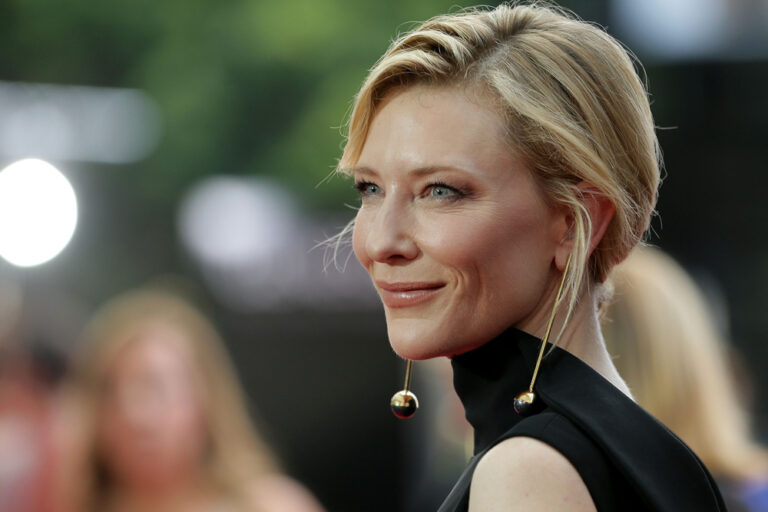
Cate Blanchett is one of the GOAT’s, it’s that simple. The Australian born actress began her career on the stage, but garnered worldwide attention when she starred in 1998’s Elizabeth when she was only 29 years old. She currently holds two Academy Awards, one for her supporting role as Katharine Hepburn in The Aviator and the other for Woody Allen’s Blue Jasmine. If she wins yet again for Todd Field’s latest maestro TÁR, she’ll join the actors club of most Oscar wins in acting categories, a record ironically still held by the legend Cate portrayed in The Aviator – Katharine Hepburn. She’s in good company.

With that said, what do you think is Cate Blanchett’s best performance?


The Profound Sleight of Hand of ‘First Man’

0

As you’re probably aware, the space community is very excited at the moment as both NASA and Space-X have confirmed plans to get people back to the moon in the next few years. The last time men stepped on the moon was on the Apollo 17 mission in 1972. It’s been a whopping 50(!) years since we’ve been that far out in space. Regardless of the reasoning for this new inspiration, there’s an invigorated spirit in the air around space exploration and how modern technology can augment what the Apollo missions accomplished.

This new era of manned space missions to the moon is exhilarating on its on own, but it also has me reflecting on my favorite film of 2018 – Damien Chazelle’s masterwork First Man. Specifically, I’ve been reminiscing about that first watch and how it left me flabbergasted. Leading up to its release, the marketing for the film (rightly) sold it as a story about Neil Armstrong going to the moon and achieving a feat that seemed impossible. A man walking on the moon. A milestone in humanity that’s easily at the top of the “holy shit, can you believe we did that?” pyramid. Additionally, as we all know by now, the process in getting Neil and Buzz Aldrin to the moon was arduous. The crew was constantly working long hours, putting a strain on relationships and families. Technology needed to be developed, which didn’t always go according to plan. There were even casualties along the way, sadly. However, those deaths and the extreme stress put on the crew was not in vein. In July of 1969, Apollo 11 went to the moon and Neil Armstrong made history by being the first person to ever step foot on the moon. What a movie, right?

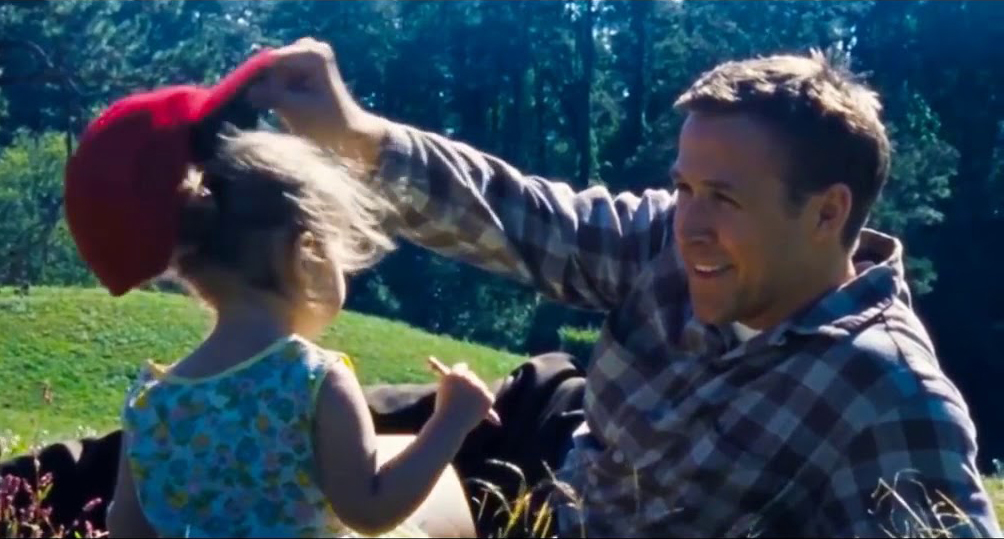
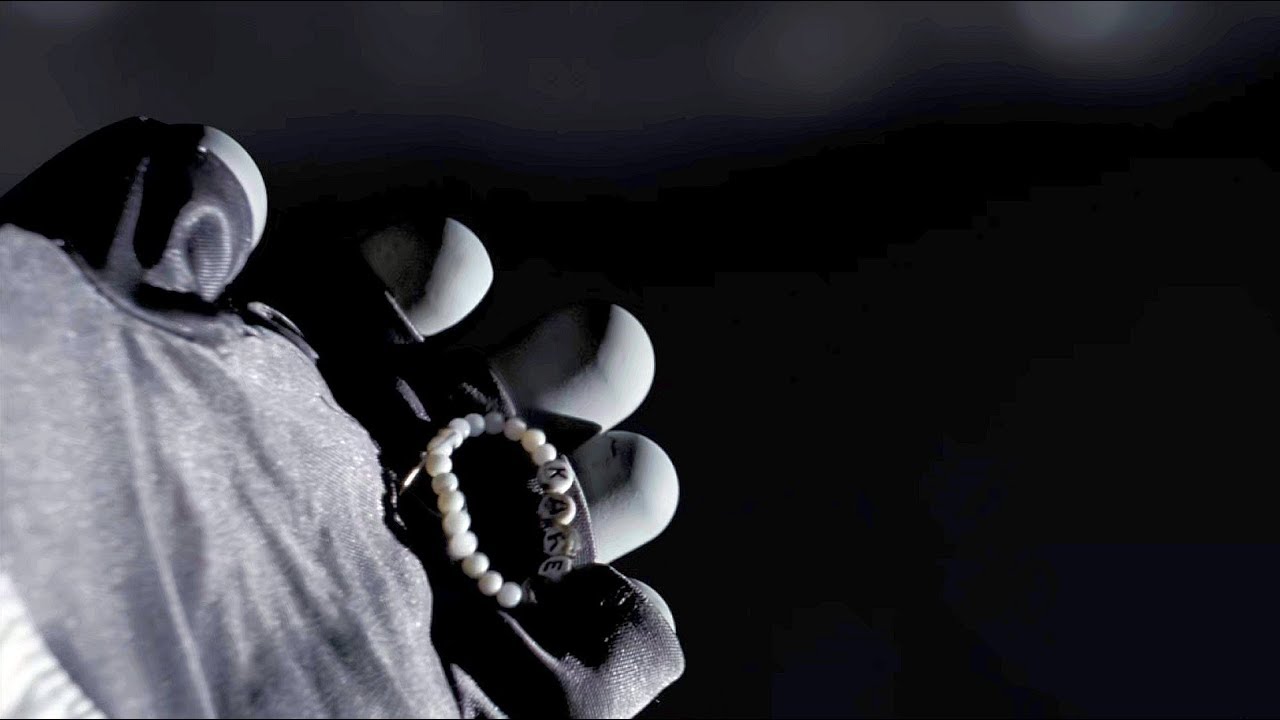
Except that’s not at all what First Man is about. The opening shot of the film is Neil playing with his young daughter, Karen, whom we’ve come to find out is dying as a result of cancer. It was an emotional wallop that I never expected. As that opening sequence comes to an end, there’s a blistering shot of Neil putting his daughter’s bracelet in a drawer, which is phenomenal symbolism of Neil doing the same thing with his emotions. He locks them away and becomes a shell of himself. It’s at that point where we come to realize that First Man isn’t about Neil going to the moon at all.

Throughout the film, we see Neil bury himself in his work. He’s wholly committed to the Apollo project. He’s one of NASA’s very best pilots. He’s smart and intuitive. There’s never a second that goes by where we question his devotion to the cause. In fact, he’s almost exclusively steadfast in his mission. As a result, much of what is sold in the marketing comes to fruition. We see the challenges that NASA experienced in getting Apollo to the moon. We see how taxing it is on everyone. This level of math and science has never been attempted before. In one of the film’s most thrilling scenes, we see Neil orbit the earth and nearly lose his life in the process. If not for his ingenuity and elite piloting skills, it may have ended there for him. Regardless of the hurdles though, he remains deeply focused on what’s in front of him. Some might argue that this is to his detriment as his relationships with his wife and sons are becoming strained. And not just because he’s away from home often, but because he’s incessantly stoic.

The truth about First Man, and the brilliance of its sleight of hand, is that at its core it’s about a father attempting to grieve. Losing a child is unfathomable, and there’s no telling how someone will respond, but for Neil it made him distant. He struggled in his day-to-day (as many of us probably would). Again, he had locked his emotions away with the bracelet. He stayed busy to keep his mind off of his grief, which evidently worked because there are a few scenes in the middle of the film in which we see Neil at home and he envisions Karen in their lives still. It’s a great reminder to the audience that he’s still thinking of her, still grieving for her. We quickly realize that his work and grief are intimately linked, and, in that way, First Man gets to have its cake and eat it too. As a framing device, the Apollo 11 mission itself is compelling and there’s lots of drama to be had. However, from Neil’s perspective, his experience inside the mission is coming from a place of anguish and personal suffering.

Getting to the moon wasn’t about beating the Russians. It wasn’t about politics or science. It wasn’t about achieving some sort of historical legacy. For Neil, it was his way of getting closure. For Neil it was about healing and saying goodbye. Neil went all the way to moon…to grieve. Which is exactly why, as Neil and Buzz get to the moon, there’s no tension or drama. Chazelle doesn’t emphasize, in any way, the specifics of the mission and what they are supposed to be doing. No, most of the sequence involves close-ups on Neil looking into the distance. Reflecting. Grieving. Saying his goodbyes. In a very tangible way. We see Neil approach the crater and pull something out of his pocket. It’s his daughter’s bracelet. Once again leaving me gobsmacked. But it makes complete sense. After locking away his emotions all this time, along with the bracelet, this is the first moment where he’s dealing with his pain. A simple gesture flooded me with emotions that’s hard to articulate. An incredible moment heightened by Justin Hurwitz’ incredibly underrated score (his best work to date) and extraordinary in its emotional currency.

There’s something truly profound about the idea that sometimes we have to go to extreme lengths for healing and closure. For mankind, going to the moon is literally as far as one has gone. It’s an achievement that will forever go down in the history books. And Neil was desperate to get there. It meant everything to him. Every choice Neil makes throughout the film compliments its drama and overarching story, but allegorically it’s astoundingly potent and personal.

It’s also what renders the final shot of the film between Neil and Janet equally beautiful. There was a distinctive gap in their relationship as Neil buried himself in his work. He worked long hours, the missions were always dangerous, and even when he was home he was emotionally closed off. Yet, after his moment on the moon and getting the closure he needed, he was able to finally connect with her in some small way. Separated by glass, but another gesture comes into play as he reaches out to her. She reaches back. Perhaps symbolically there may be something in between them still, but for the first time in the film there’s hope.

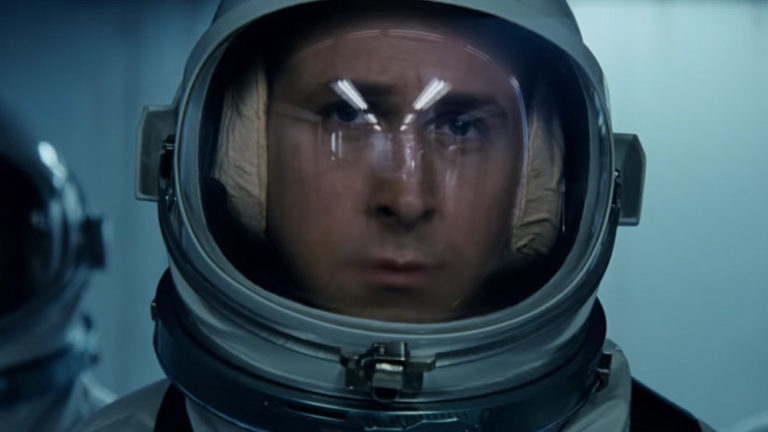
There is a lot to love about First Man in terms of its direction and cinematography. Its set designs and overall aesthetic is immersive to the time period. Its score and sound design is phenomenal. And Ryan Gosling gives arguably the best performance of his career. The stoicism and quiet emotion he brings to Neil is truly magical. Along with Chazelle and writer Josh Singer, he is one of the major reasons as to why the film’s sleight of hand is so affecting. The craft on display in this film is masterful, and given the talent involved that wasn’t too shocking, but to frame mankind’s largest accomplishment as a smaller, intimate portrayal of humanity? I did not see that coming at all. Perhaps part of it is timing. In October of 2018, my son was three (about to turn four), which is about the same age we see Karen in the film. It was really difficult to separate myself from the movie. So maybe I’m biased, but First Man‘s sleight of hand hit me like a sledgehammer. Going to the moon to grieve. It’s an experience I’ll soon not forget.

Podcast: Amsterdam / Howl’s Moving Castle – Episode 503

This week’s episode is brought to you by the film Easter Sunday. Follow us on social media for your chance to win a free digital code!

This week on the InSession Film Podcast, we discuss David O. Russell’s new film Amsterdam and continue our Studio Ghibli Movie Series with Hayao Miyazaki’s Howl’s Moving Castle!

This week’s episode is an interesting one given the conversation that it rendered on these films. Amsterdam was always up against a wall given the discourse around O. Russell, but as the reviews for the film suggest, it leaves a plethora to be desired. On the other hand, while many seem to love Howl’s Moving Castle, we don’t exactly share the same sentiment. And we do our best to articulate why that’s the case.

On that note, check out this week’s show and let us know what you think in the comment section. Thanks for listening and for supporting the InSession Film Podcast!

– Movie Review: Amsterdam (5:03)
Director: David O. Russell
Writers: David O. Russell
Stars: Christian Bale, Margot Robbie, John David Washington, Chris Rock, Anya Taylor-Joy

– Notes / Discussion (43:36)

This week for our break segment, JD gives us his thoughts on Peter Farrelly’s new film The Greatest Beer Run Ever, and weirdly it has the exact same problems as Amsterdam. So it was appropriate to bring up on this show. Also, both JD and Brendan got a chance to see Marvel’s Werewolves By Night, and we had a lot of fun discussing how different and unique it is for the MCU.

[divider]

RELATED: Listen to Episode 484 of the InSession Film Podcast where we discussed Top Gun: Maverick!

[divider]

– Studio Ghibli Movie Series: Howl’s Moving Castle (1:14:08)
Director: Hayao Miyazaki
Writers: Hayao Miyazaki
Stars: Chieko Baisho, Takuya Kimura, Akihiro Miwa

Show Sponsor: First Time Watchers Podcast

– Music

Time – Giveon
Merry-Go-Round of Life – Joe Hisaishi
The Return of the Eagle – Atli Örvarsson

Subscribe to our Podcasts RSS
Subscribe to our Podcasts on iTunes
Listen on Spotify
Listen on Stitcher
InSession Film Podcast – Episode 503

[divider]

Next week on the show:

Review: TÁR
Top 3: N/A
Studio Ghibli Movie Series: Ponyo

[divider]

Help Support The InSession Film Podcast

If you want to help support us, there are several ways you can help us and we’d absolutely appreciate it. Every penny goes directly back into supporting the show and we are truly honored and grateful. Thanks for your support and for listening to the InSession Film Podcast!

VISIT OUR DONATE PAGE HERE