This week on the InSession Film Podcast, we discuss some 2024 films we’ve recently caught up on and haven’t had a chance to review on the show! We also talk about the Gladiator II trailer and JD shares a Midnight Special story.
Check out this week’s show and let us know what you think in the comment section. Thanks for listening and for supporting the InSession Film Podcast!
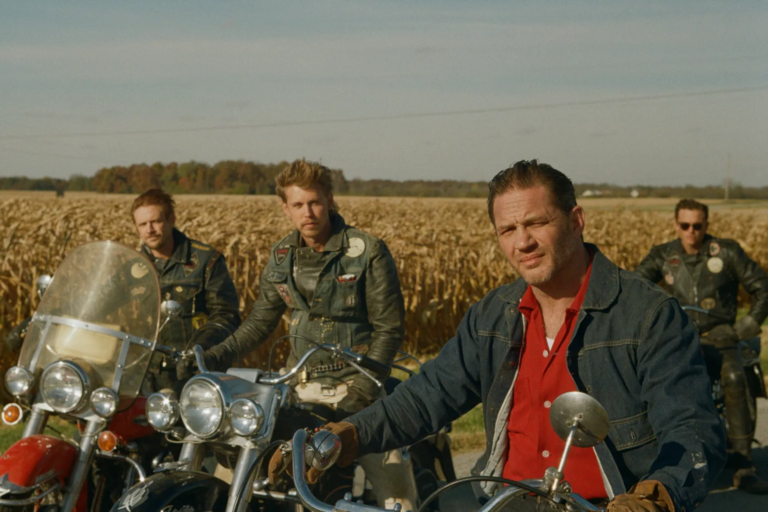
– Midnight Special (1:27) To start off this week’s show, JD tells us the story of his recent rewatch of Jeff Nichol’s 2016 masterpiece Midnight Special. Long time listeners of the show will know that it’s one of his favorite films of the 2010s, and as a result it wasn’t too shocking to hear how this viewing affected him.
– Gladiator II and Captain America: Brave New World Trailers (12:52) Given our love for Ridley Scott, we had to talk about the new trailer for Gladiator II and its epic potential. It looks really great, especially when you consider the turnaround time from Napoleon to something as bold as doing a sequel to a beloved Best Picture winner. We also talk about the new trailer for Captain America: Brave New World, a film that could potentially swing the MCU’s favor back to being positive.
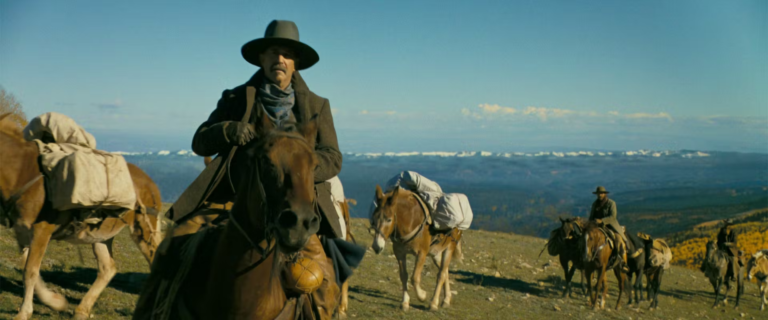
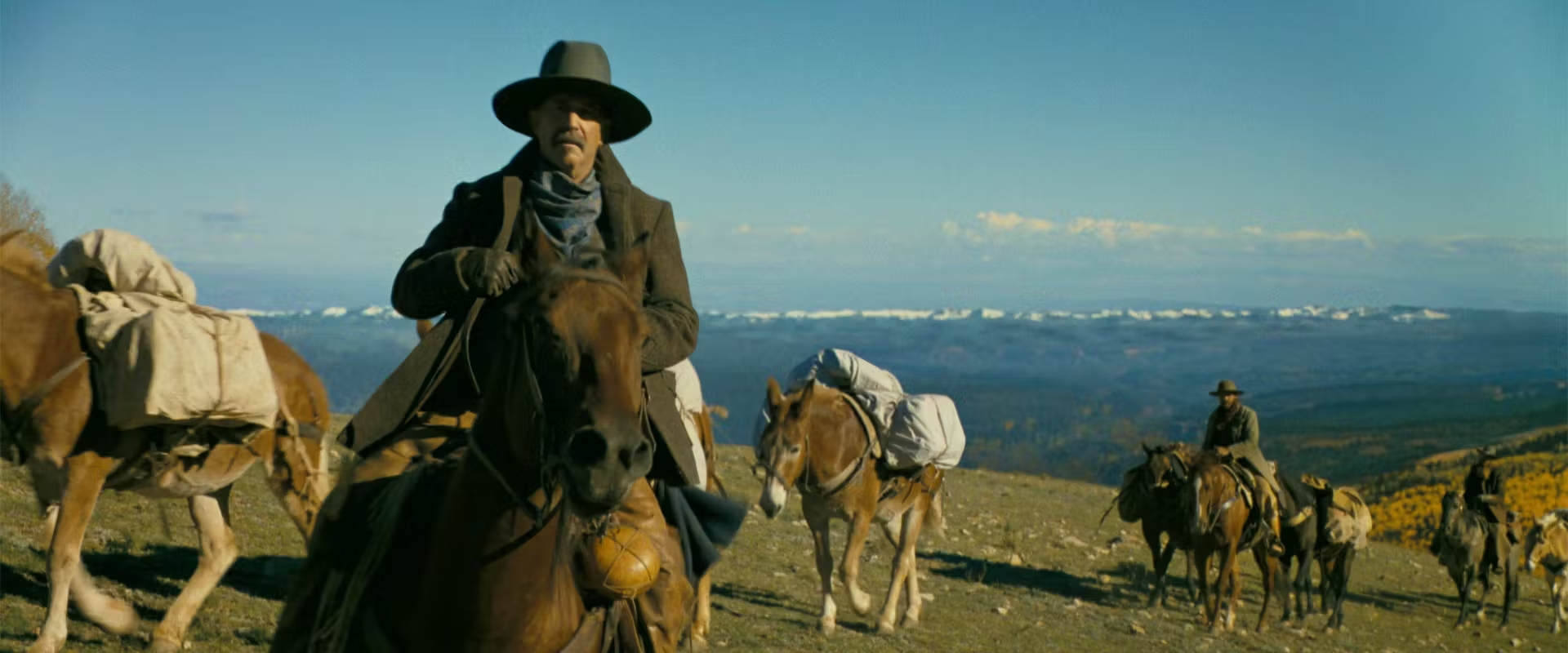
– Box Office / Horizon: Chapter 2 Pulled (30:14) In this segment, we talk about the continuing momentum of the box office after Neon’s huge weekend with Longlegs. Say what you will about the film, but it was Neon’s biggest opening by far and things have shifted mightily since May. One disappointment, however, is that we will not seeing Horizon: An American Saga – Chapter 2 hit theaters after all. At least for now. It appears they want to see how Chapter 1 fares on VOD before making a decision on Chapter 2.
– 2024 Catch-Up (50:59) For our main segment this week, we wanted to talk about some films we’ve caught up with over the last few weeks and months that we haven’t had a chance to talk about yet. We, of course, can’t review everything, so we wanted to save some space to talk about those movies we’ve seen and where we land on them.
We have a really fun surprise on the next Main Show
Help Support The InSession Film Podcast
If you want to help support us, there are several ways you can help us and we’d absolutely appreciate it. Every penny goes directly back into supporting the show and we are truly honored and grateful. Thanks for your support and for listening to the InSession Film Podcast!
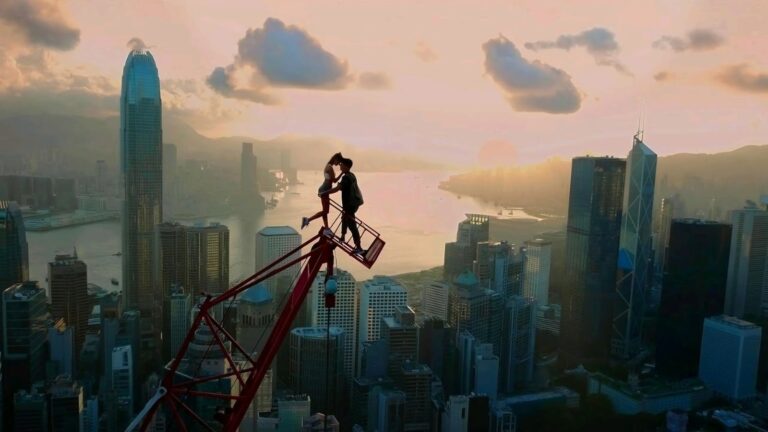
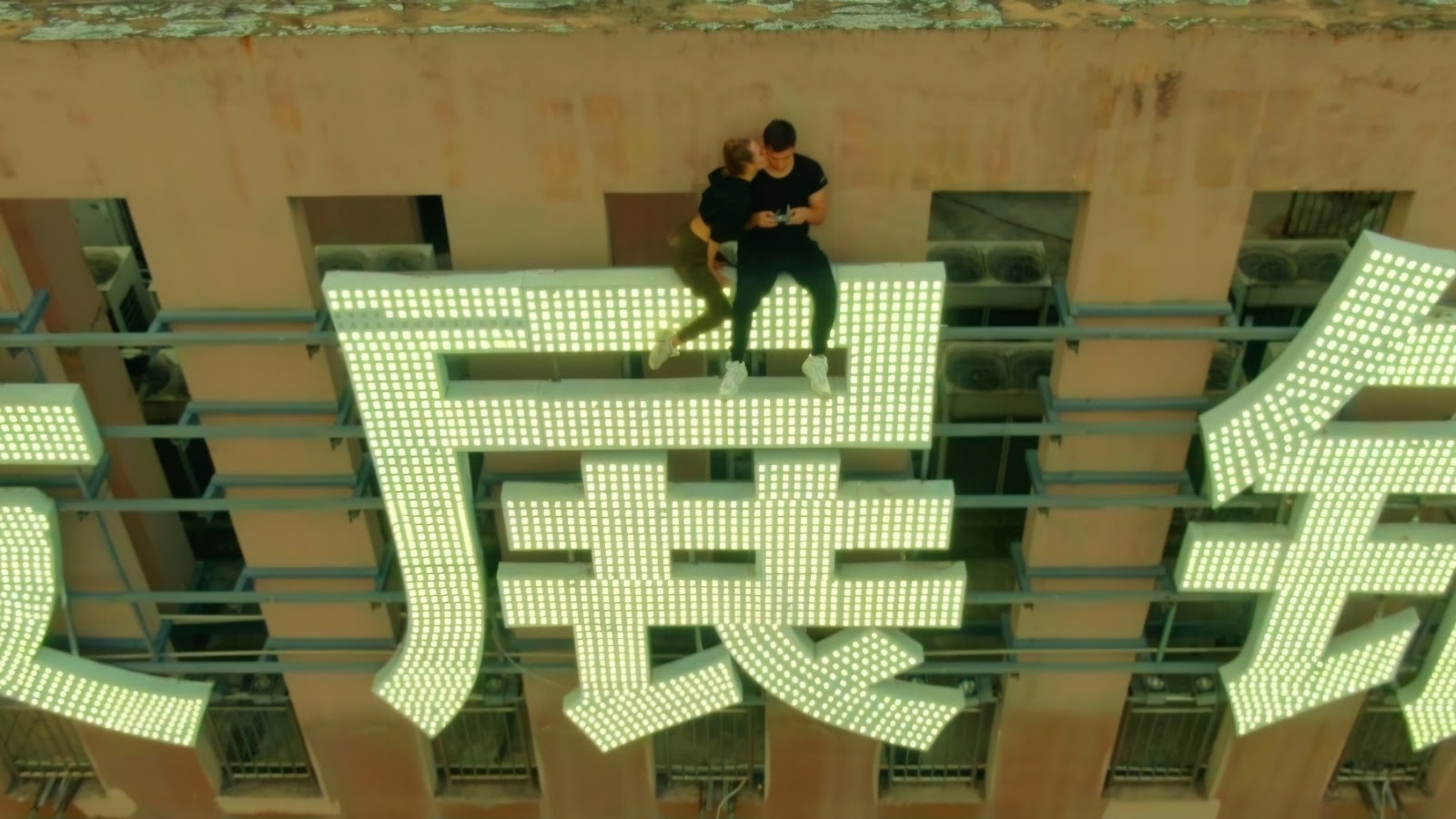
Directors: Jeff Zimbalist, Maria Bukhonina Writer: Jeff Zimbalist Stars: Angela Nikolau, Ivan Beerkus
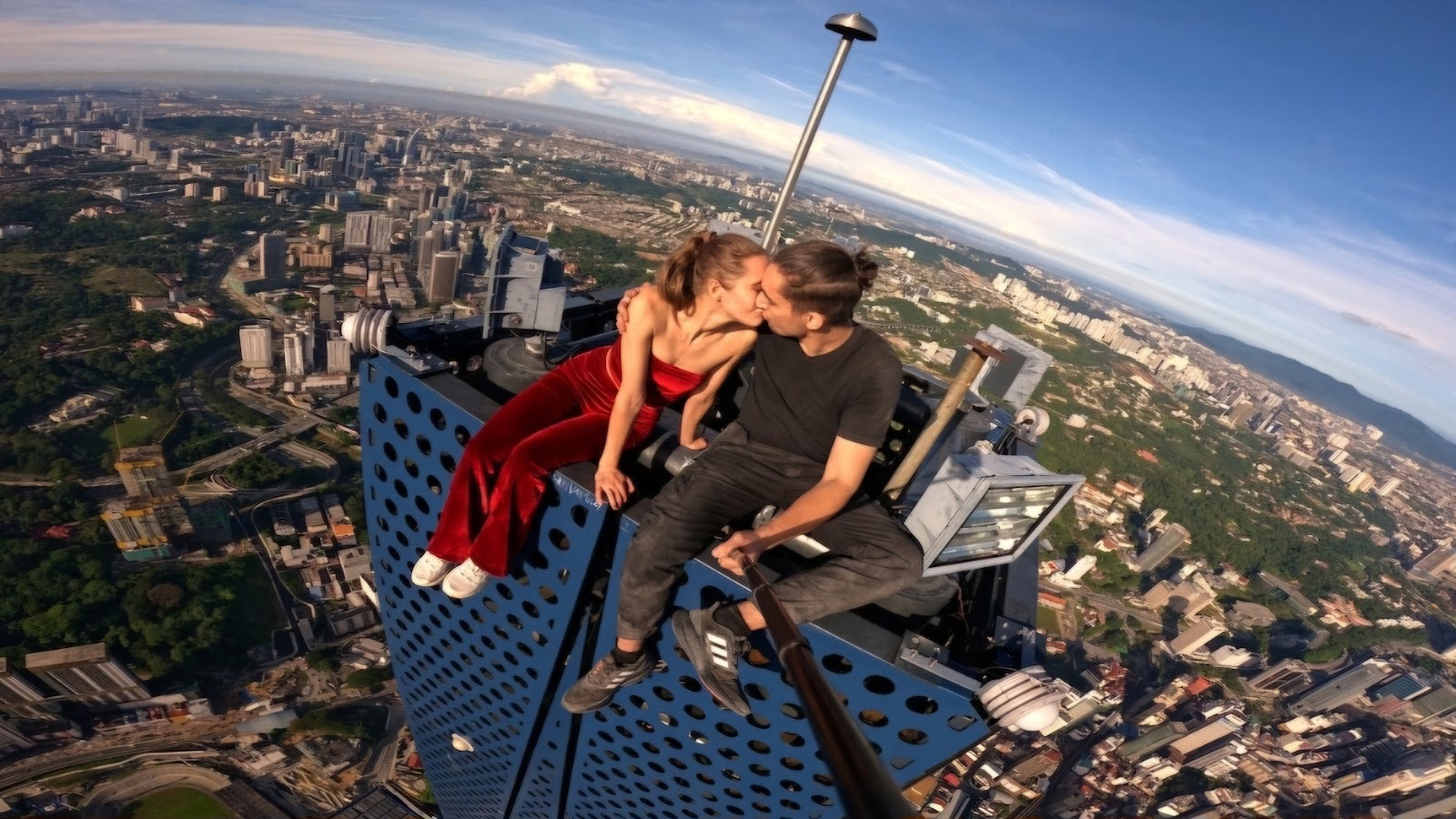
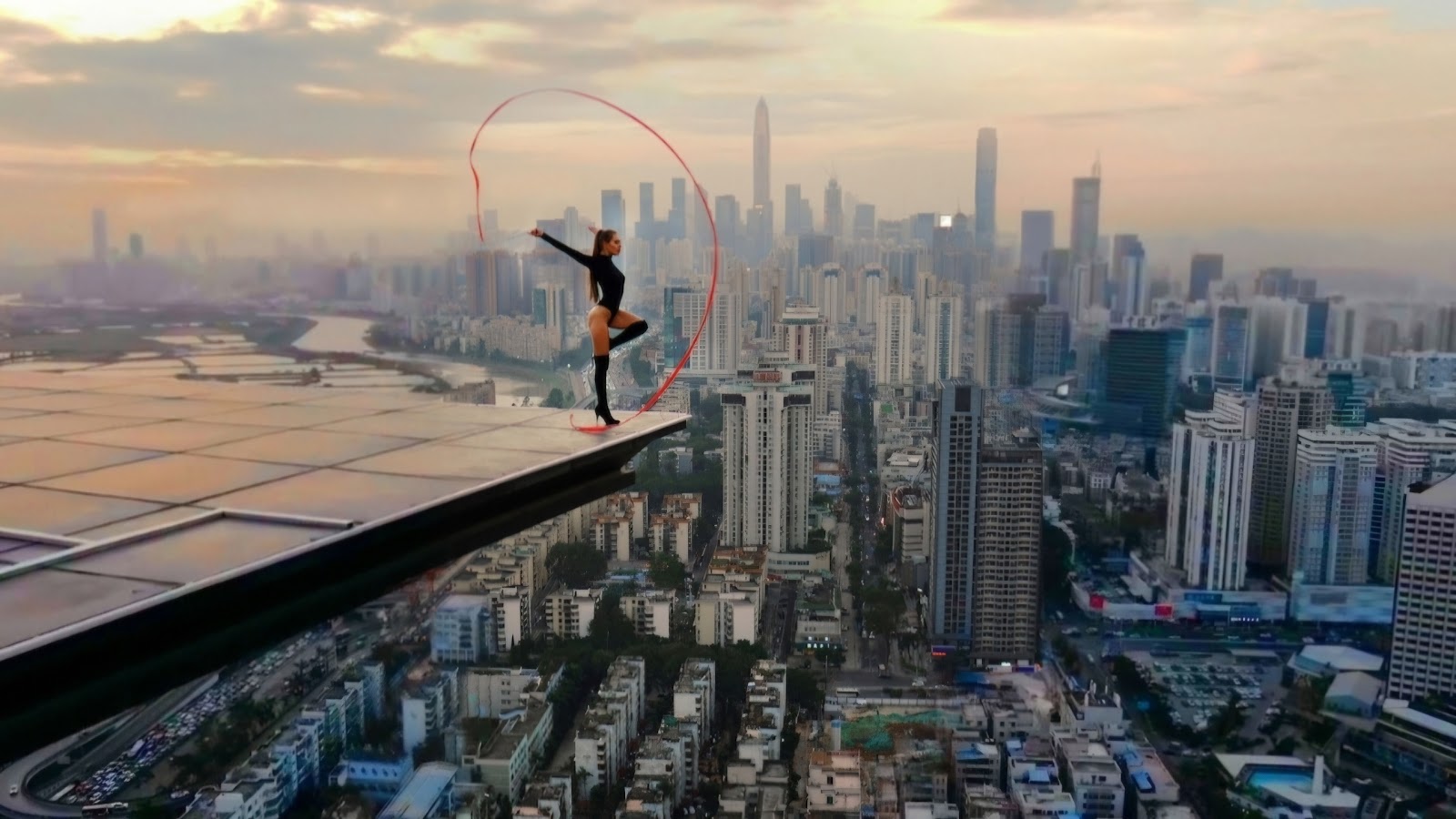
Synopsis: A daring couple travels worldwide to climb the 118-story megatall skyscraper, Merdeka 118, in Kuala Lumpur, Malaysia, attempting a bold acrobatic stunt on the spire to salvage both their career and relationship.
We have reached a point in the cinema timeline where documentary films have become akin to scripted reality television. At the very least, that is what Skywalkers: A Love Story feels like, to the extent that almost every non-sky-scraper image seems staged. I couldn’t shake this feeling as the camera continued to capture random shots of the subjects walking through airports and parks and gazing out of windows as if caught in thought.
As one of the subjects of the Netflix Documentary Skywalkers: A Love Story states, everyone keeps their eyes on the flyer, not the catcher. In this equation, directors Jeff Zimbalist and Maria Bukhonina want us to keep our eyes on their daredevil stunts’ highly stylized lyrical artistry. However, the overproduced and overwritten subplots in between make for a forced drama by the catcher that has less authenticity than you’d expect.
In short, how can such a dangerous subject of a film play it so safe?
For instance, the two subjects of the documentary, Angela Nikolau and Ivan Beerkus, consistently film scenes where they hide in a secured building from construction workers or security. Despite being in hiding, they film and keep bright lights on, even when we are led to believe people are just a few feet away. It’s implausible that no one would notice the bright lights that shouldn’t be there, just around the corner.
Additionally, there are several scenes where they are running away through stairwells and tripping, making it difficult to discern their location. This lack of context does not help the viewer understand the situation or build the necessary trust to create suspense. In scenes meant to generate excitement, the filmmakers have the stars explicitly tell us what they will do before they do it, which undermines the suspense.
The approach feels scripted even in the more personal moments, such as discussing their relationship struggles and showing a disagreement during a high-rise stunt. Let us, the audience, experience the journey with them rather than feeling like we are reading a script in a read-through.
That being said, Skywalkers: A Love Storyhas its moments, and some are truly exquisite. The awe-inspiring and breathtaking cinematography is breathtaking, and the director of photography team—Renato Serrano, Pablo Rojas, Beerkus, and Nikolau—deserves plenty of credit for their work here. It may be the best from a documentary since the Academy Award-winning Free Solo.
There will undoubtedly be those who take exception to how the filmmakers, using Zimbalist’s reality-television treatment of a script, glorify highly dangerous and exceedingly unlawful acts. While I don’t necessarily have a massive issue with this, the film lacks a disclaimer. Additionally, and probably my main complaint, the documentary does not do a good enough job portraying anything beyond superficial reasons for the stunts.
However, the depth and themes of directors Jeff Zimbalist and Maria Bukhonina’s film are nothing more than a social media reel or post that Nikolau and Beerkus do daily.
That’s not to say Skywalkers: A Love Story may not be worth your time because, at the very least, the film is entertaining. However, you might hesitate to recommend it, given the filmmakers’ higher expectations. Ironically, the film’s love story feels flat and contains the same clichés found in any romance depicted on screen. This includes the predictable resolution of their differences by the end of the second act, allowing them to continue their goal. I wish documentaries like this one hadn’t become reality dating shows. Yet, we know films usually evolve with the times. We can still admire the sheer art and ambition of Skywalkers: A Love Story while being honest about its faults.
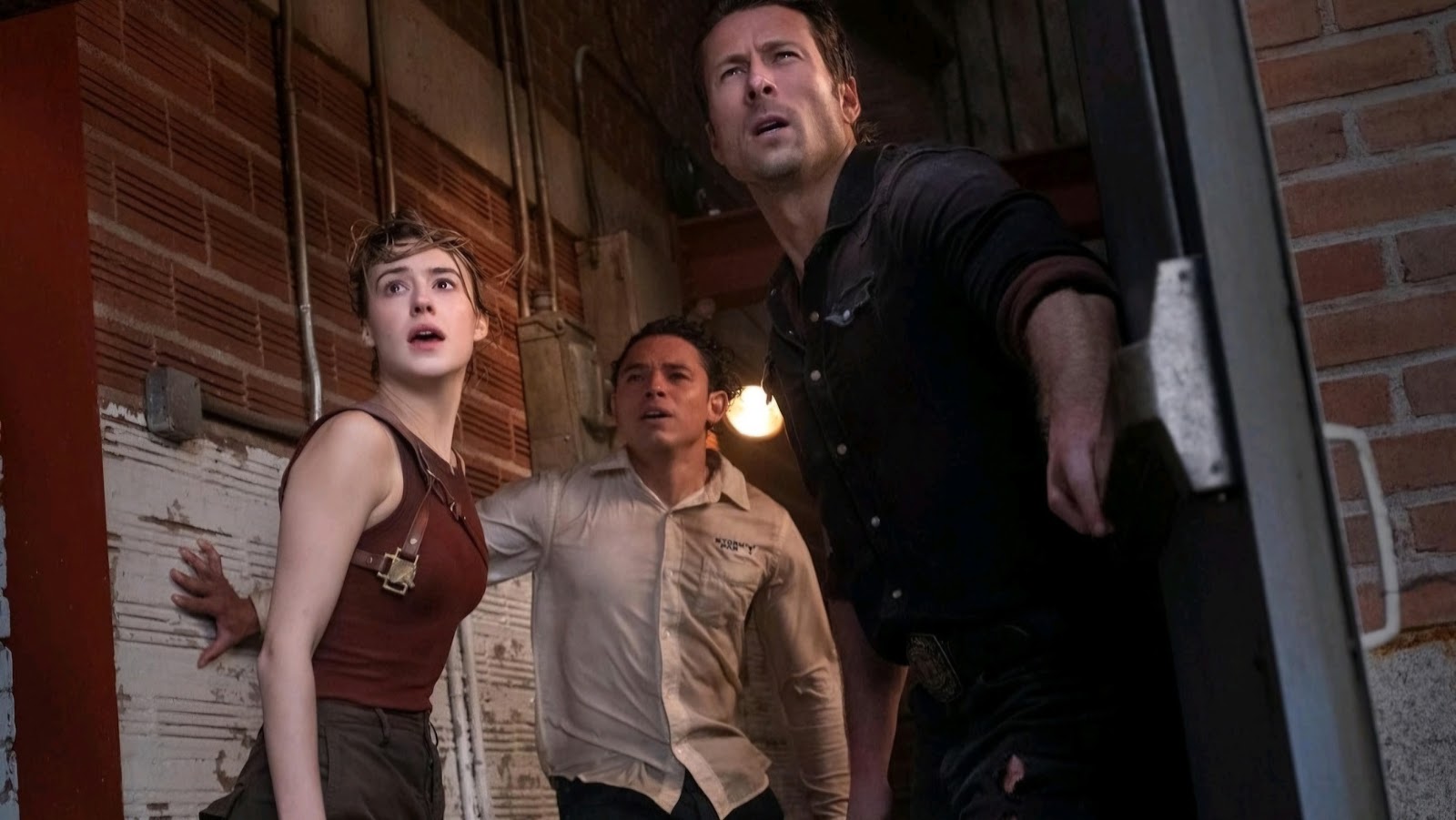
Director: Lee Isaac Chung Writer: Mark L. Smith, Joseph Kosinski, Michael Crichton Stars: Daisy Edgar-Jones, Glen Powell, Anthony Ramos
Synopsis: A retired tornado-chaser and meteorologist is persuaded to return to Oklahoma to work with a new team and new technologies.
While watching Twisters, I found it funny that people have such reverence for films decades later. The original Twister, which many enjoyed, was praised for its special effects and panned for its story. (My favorite quote to describe the Jan de Bont film is by Roger Ebert when commenting on all the tornadoes in the movie, “It was a real good day.”) Yes, Twister was a movie that made a huge chunk of money because they decided to digitize a cow caught up in a tornado.
You see, Twister has had a resurgence in critical praise, with nearly half the reviews on Rotten Tomatoes coming since 2020, giving a remarkable positive resurgence to the Bill Paxton and Helen Hunt vehicle. That’s because the audience, not the critics, always decides a movie’s place in history. So, imagine my surprise at the complaints about the dumb Twisters story.
My question is, what exactly did you expect going in? They’re chasing tornadoes, people. Let your mind go, and just enjoy the ride.
The story follows Kate Cooper (Where the Crawdads Sing’s Daisy Edgar-Jones), who grew up in the Great Plains and has a haunting past from a devastating encounter in college. She works at the National Weather Center and is approached by her old friend, Javi (In the Heights’ Anthony Ramos), who has been developing state-of-the-art storm-tracking technology that will forever change tornado safety precautions in Oklahoma.
Kate returns for a week only of storm chasing. She is a straight-arrow character, and she is about to meet her wise-guy counterpart in Tyler Owens (Top Gun: Maverick’s Glen Powell), a charming social media superstar who chases storms and shares them with the world. (I half expected Powell’s character to tell Kate, “You don’t chase the storm; the storm chases you.”) Of course, Kate’s team of eggheads and Tyler’s cowboy crew clash, but they soon realize they must work together to prevent a weather phenomenon the world has never seen.
But don’t worry—they are all equipped with pickup trucks, charisma, belt buckles, and their wits to survive, or it wouldn’t be as much fun to watch.
Directed by Minari’s Lee Isaac Chung, working from a screenplay by The Revenant’sMark L. Smith, Twisters is more of a remake than a sequel, with significantly superior (and more common, as will be explained later) special effects and better-looking actors. I’m not sure if Edgar-Jones and Powell have chemistry or it’s the fact Powell can have chemistry with anyone on screen.
Frankly, Smith has had a declining trajectory in his scripts since the Academy Award-winning film mentioned above. Besides the enjoyable Overlord, his filmography is littered with disasters such as The Marsh King’s Daughter, The Midnight Sky, and The Boys in the Boat, all of which were box office and streaming failures. The characters are paper-thin and wooden, akin to beautiful mannequins, and the film is rife with action-film clichés.
I will say that many characters and scenarios are not carbon copied, but reproduced from the first. You have the opening tragic situation. One of the supporting characters is just like Philip Seymour Hoffman’s Dusty Davies. You have an incredible amount of scenes where people are going out to public events during the tornado storm of the century, so common sense would think that softball, movies, and bull riding would be off limits.
However, the thing is, Twisters is so much damn fun! Yes, movies can be a transformative, artistic experience, but there is a reason people look back at films like Speed, True Lies, and The Rock. These films have compelling stories, well-executed action sequences, and engaging characters. (Yes, they are retreads, but characters like Kate and Tyler give the older audiences the nostalgia factor, and younger ones won’t know any better.) Where else can you get a “firenado,” twin twisters, and a movie screen being ripped from the wall so the character can watch a real disaster flick for the ultimate disaster experience?
Yes, I will admit that Twisters is exactly what you think it’s going to be. However, Man (or woman) versus nature movies can be water cooler films if done the right way. Twisterswill elicit that type of talk in droves with its thrilling whirlwind of nonstop action and jaw-dropping special effects. Then, with its charismatic cast, let’s face it, Glen Powell is the new Tom Cruise and made to entertain the masses.
For God’s sake, power your brain off, and just enjoy the ride.
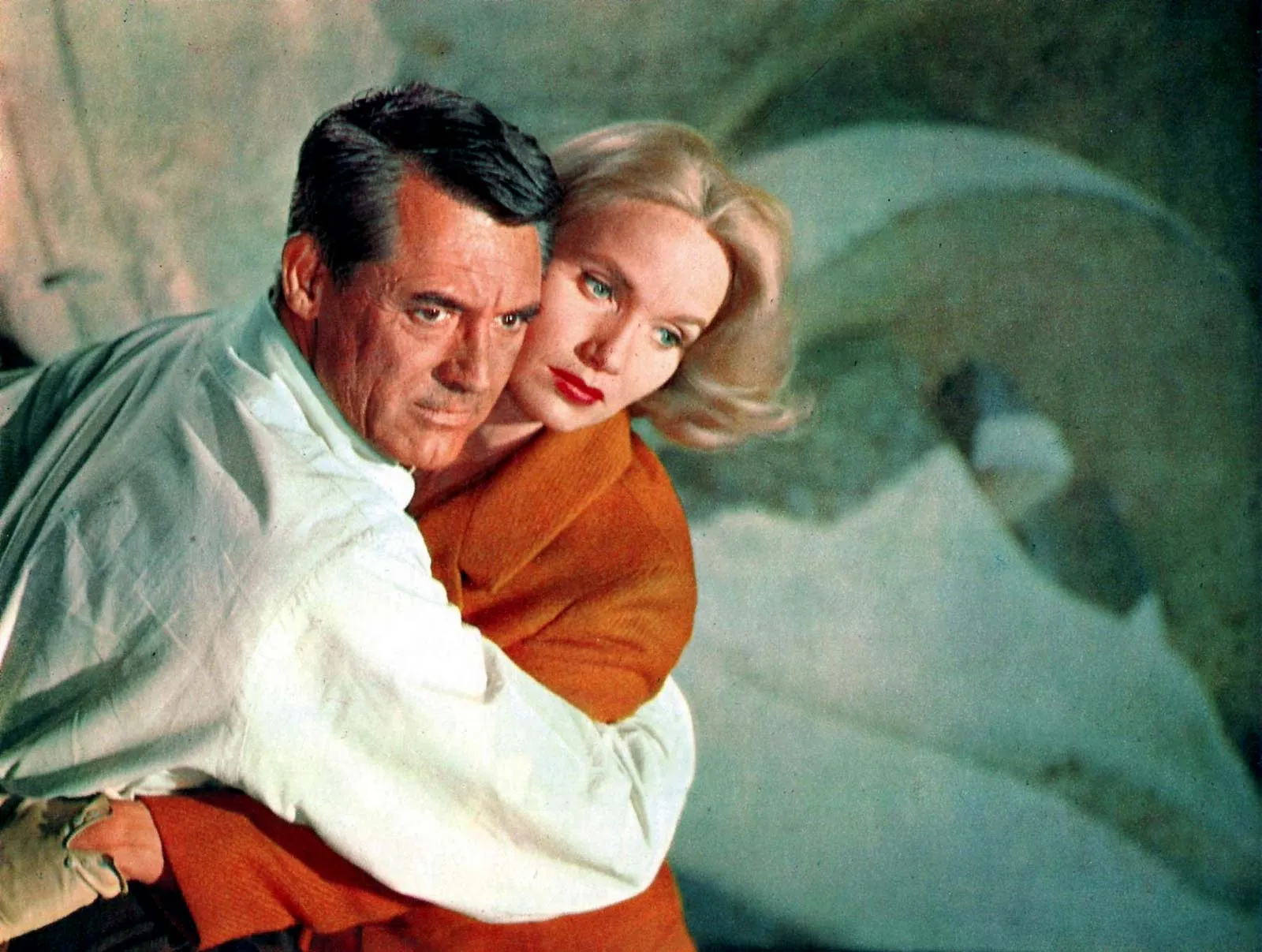
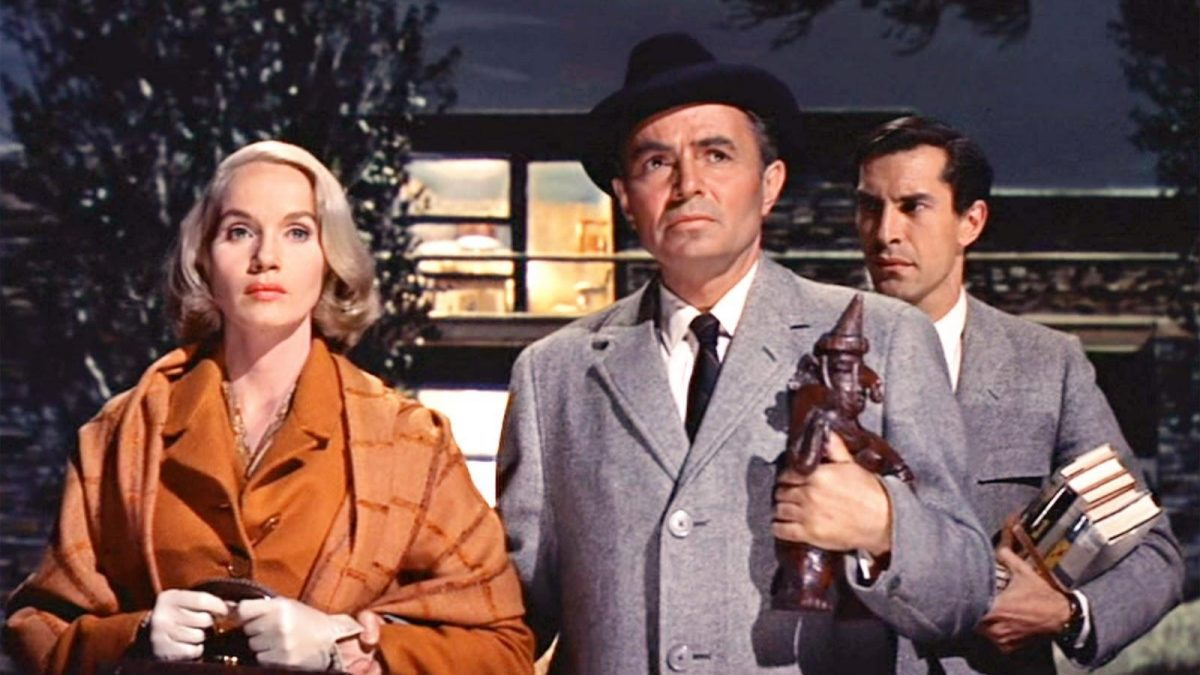
Director: Alfred Hitchcock Writer: Ernest Lehman Stars: Cary Grant, Eva Marie Saint, James Mason
Synopsis: A New York City advertising executive goes on the run after being mistaken for a government agent by a group of foreign spies, and falls for a woman whose loyalties he begins to doubt.
We’re used to seeing cramped, claustrophobic tension in Alfred Hitchcock films with a handful of people around in any given scene. North by Northwest, from the first build of Bernard Hermann’s tremendously frenetic score, shows us New York City as a place absolutely covered in people. Every inch of sidewalk is a flowing river of humanity, the bumper to bumper cars never seem to get anywhere, but are always in a constant block of motion; buildings spew and consume people in a near constant flow giving us a startling grip of our own anonymity in the grand scheme of humanity. That awareness turns into anxiety as we watch a man’s very persona called into question.
Ernest Lehman’s script hums with the fear of this scenario. We’ve all had a situation in which we were perceived or accused of being someone or doing something we didn’t do, but the extreme to which North by Northwest takes this brings the fear to an entirely new level. Our entire life and being could be completely undone by a hand gesture seen across a room. No matter what Roger Thornhill (Cary Grant) says or does, he will be persecuted. Even when he thinks he’s safely out, when he decides he’s going to do a bit of digging on his own, he just falls ever deeper into the morass of geopolitical espionage. The script adds layer upon layer to the subterfuge, threading each needle carefully and stitching it all together in a sinister quilt. It’s an utterly terrifying concept and may be the most devious plot Hitchcock has ever taken on.
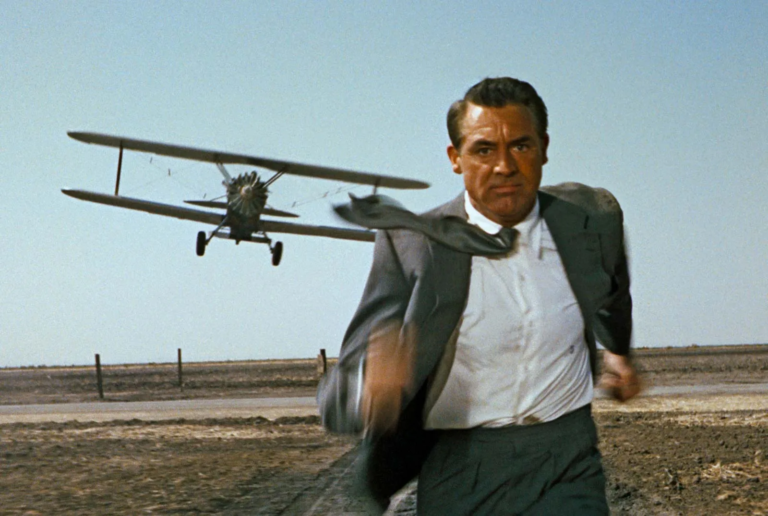
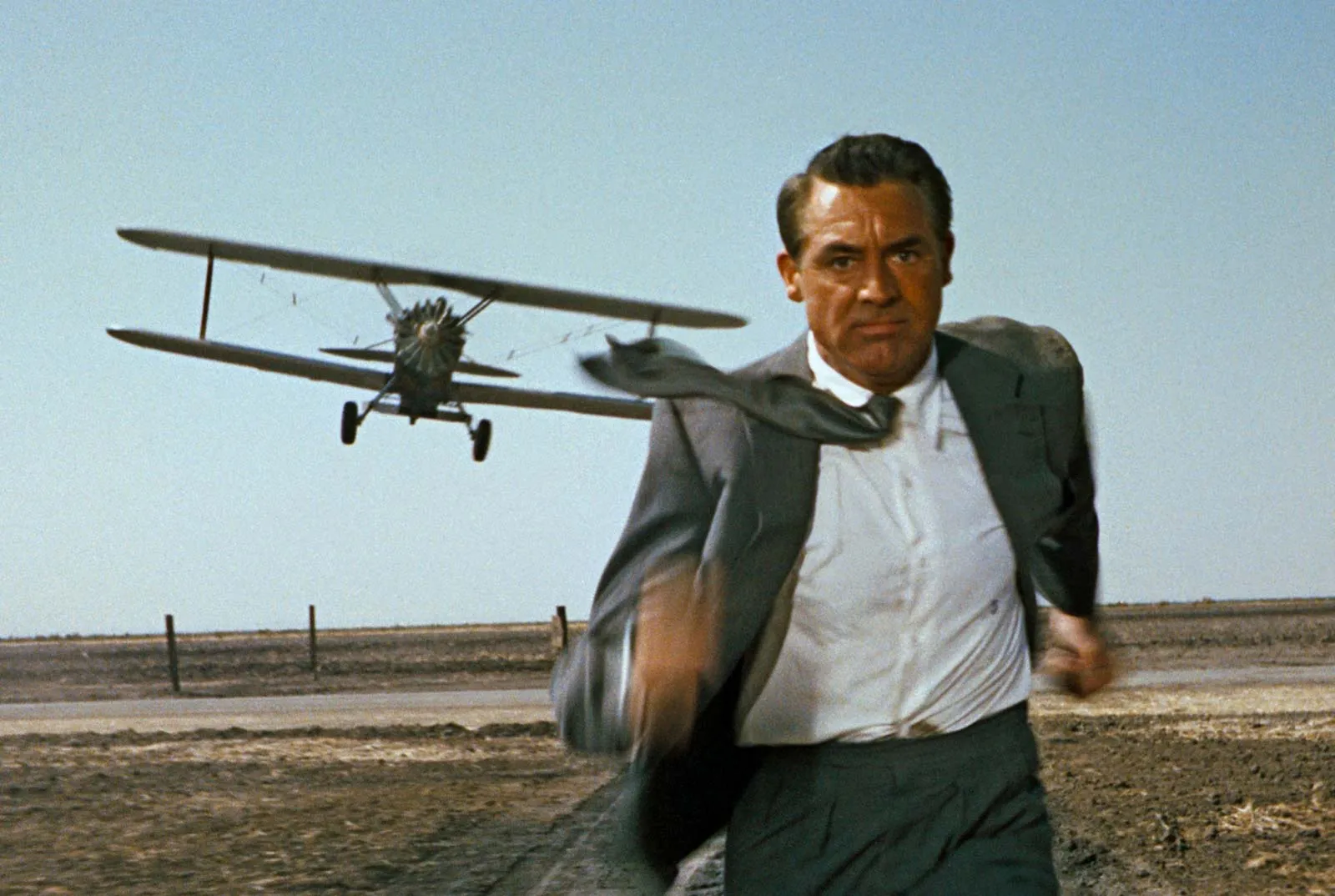
The complicated plot doesn’t lack the Hitchcock visual flair either. From wide shots of the cavernous U.N. building lobby, to a bird’s eye view of Roger exiting the building like an ant on a toy model, Hitchcock and frequent collaborator, cinematographer Robert Burks, build a visual language that is unparalleled. Their crowning achievement as collaborators has to be North by Northwest‘s most indelible and incomparable scene, the crop duster chase.
As Roger stands in the almost literal middle of nowhere, chasing a lead from Eve’s (Eva Marie Saint) supposed conversation with the real George Kaplan, he starts to suspect he’s been led astray. It’s not until he speaks with a man who he assumes is Kaplan that he realizes he has been set up. The man points out that the crop dusting plane that has been in the background of the scene the whole time isn’t actually dusting any crops. It’s then that the plane turns and makes its true purpose known. There are a couple of strafes by the plane before Hitchcock sets up a shot that will thrill people long into the future. Roger sees the plane as it makes its diving run. He turns and rather than a cut or a pan, Roger runs forward as the camera dollies backward as if the plane chases Roger and Roger chases the camera. The plane and Roger are captured in the same shot, the plane growing closer, until Roger falls in order to avoid the bullets coming at him from the plane’s gun.
That’s only a piece of the truly thrilling and brilliant sequence, capped by Roger running into the road to stop a fuel tanker. Editor George Tomasini struts his incredible skill as he cuts between shots of Roger in the road with the truck coming for him, then the truck hitting the brakes, and finally Roger falling backward landing somewhat safely under the truck. All of Tomasini’s edits show the power of the position and how well the skill can craft a beautiful work of art.
As inventive and mind blowing as that crop duster sequence is, it does highlight that the two major set pieces of North by Northwest, the other being the climax on Mt. Rushmore are utter nonsense in terms of plot. Why would a traitorous spy leave the assassination of his rival to such incomprehensible means? Why would someone launch their international escape from landlocked South Dakota? The only answers that could be are that these sequences make for exciting and excellent set pieces. Otherwise they’re fluff, unfortunately like much of the plot involving Eve Kendall (Eva Marie Saint).
It’s obvious that without the strictures placed on films under the Hays Code that Eve would have been a much more interesting and nuanced character. She definitely starts off that way, but slowly peters out to another of Hitchcock’s blonde damsels in distress by the end. Eve’s introduction is bold. She manipulates the situation so that Roger ends up sitting at her table and she proceeds to bluntly and very effectively seduce him. She takes him back to her private car and gently guides and switches their positions against the wall, so she’s pinning him with her kiss in a dominant position. This bold sexuality is exciting to see in a film like this where, previously, the man is always the aggressor. It’s a pity then that this character could only have so much confidence for one subterfuge at a time. Her true motivations or feelings are too muddy and the grand romance we are to believe she’s experiencing rings so false. It serves the plot to keep Roger in her orbit, but one wonders what could have been if she were allowed to have taken the reins more fully.
In spite of a few flaws, North by Northwest remains an unqualified triumph. It’s got some of the best humor, dark and otherwise, in any Hitchcock film and it never lags for a second of its run time. North by Northwest is a top notch thriller that demands repeat viewings if only to try and piece the plot together again for what feels like the first time, every time.
Another month, another great opportunity to check in on the Best Sound awards race as it stands about halfway through the year.
What We’ve Seen
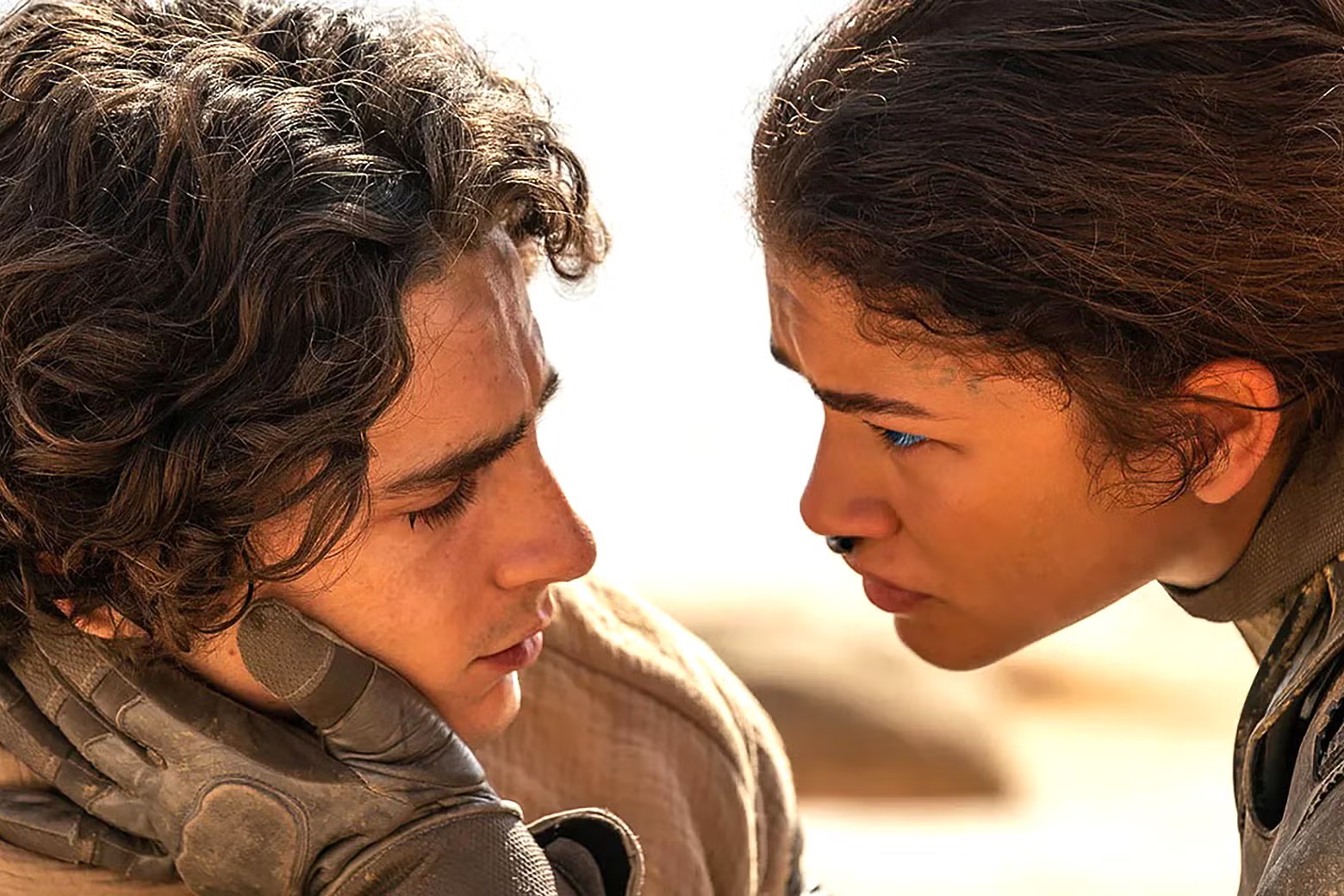
Our two biggest contenders that have been discussed already are Denis Villeneuve’s Dune: Part Two and Alex Garland’s Civil War. Dune has precedent, the first installment winning Best Sound in 2022. The team has only built on their achievements this time around. The craft on display here covers the sweeping, overwhelming sound that pulls people in. In the case of Civil War, Garland and his team play around with huge, booming sounds and silent moments, all captured on camera by the war journalists at the center of the film. Admittedly, it’s likely that voters will only remember the heights of Dune: Part Two as it racks up nominations in all the technical categories, leaving Civil War by the wayside as other contenders emerge later this year.
An Emerging Contender
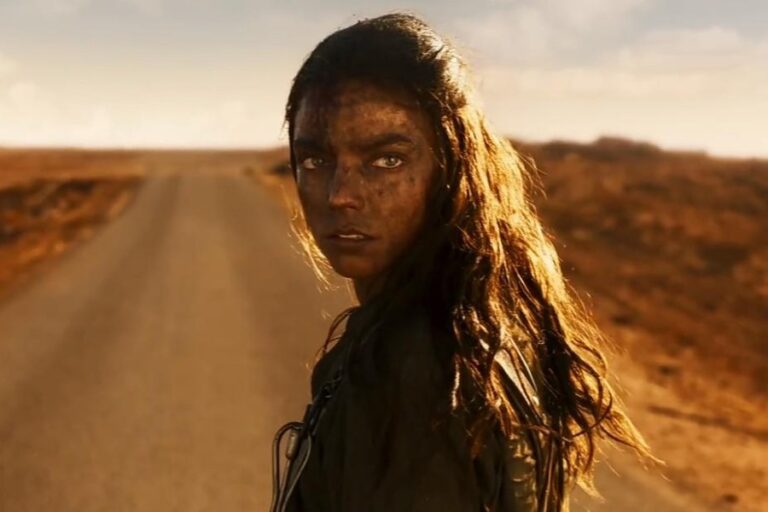
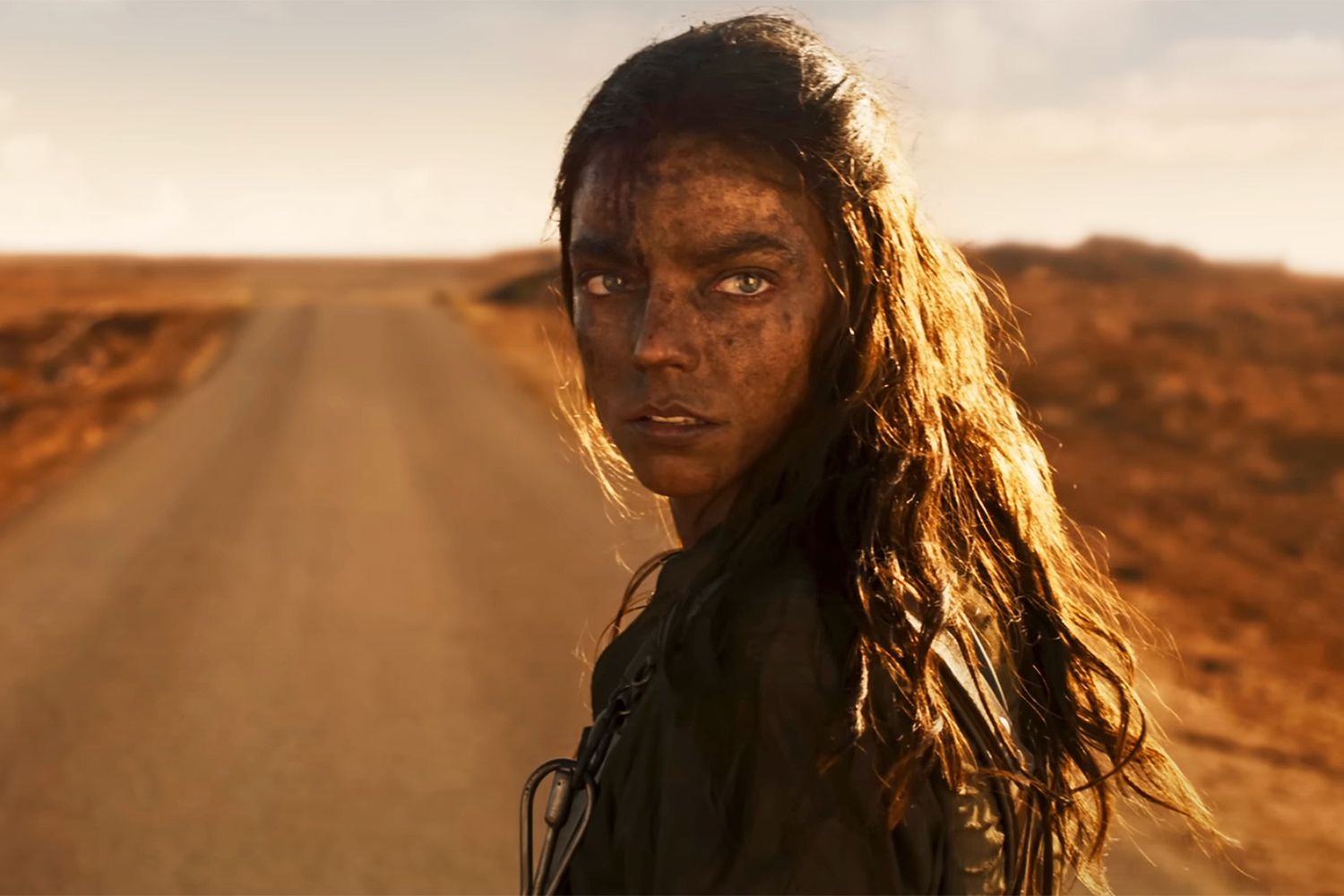
The release of George Miller’s fifth installment in the Mad Max franchise, Furiosa: A Mad Max Saga, has thrown another major contender into the mix. The previous film in the saga, Fury Road, won the prize for sound in 2016, so the precedent is there for this kind of work. Granted, it did not have quite as stiff competition in the form of another science fiction franchise sequel with a Sound victory under its belt, but that prior result still carries weight. The sound design team for this film has so much to work with, really showing off their skills in a couple of chase sequences along Fury Road that replicate the heights achieved in 2016.
A couple of things are going against Furiosa, not just the Sound race but most technical categories as well. The first hurdle the team will have to clear is the box office performance and the public’s interpretation. Furiosa has only managed to collect just under $68 million domestically on a $168 million budget, which prematurely sent the filmgoing community into an existential crisis at the end of May. Of course, these numbers speak nothing to the quality of work being done in the filmmaking and technical realm, and that is where the other hang-up is. 30 years separate the release of Mad Max: Beyond Thunderdome and Mad Max: Fury Road, which allowed for unprecedented technological advancement that made the latter a phenomenon in the mid-2010s. Only 8 years separate the most recent installments, and there hasn’t been enough technological progression for Furiosa to stand out. The combination of these factors could make its stock fall in the eyes of voters and may even knock it out of the category entirely.
Looking Ahead
At the midway point of the year, there have only been two surefire contenders in the form of Dune 2 and Furiosa, with Civil War likely not having enough goodwill to make it to the awards season conversations at the tail end of this year. Assuming these two films are taking two of the five nominations right now, most of the category remains to be filled out. Something the Academy seems very willing to recognize is a successful musical, and we have a couple of possibilities to look forward to later this year. Joker: Folie A Deux, the much-anticipated follow-up to Todd Phillips’ 2019 critical and commercial success, has added Lady Gaga joining Joaquin Phoenix as he reprises the role that won him Best Actor just a few years ago. And apparently, it’s a musical? It remains to be seen what kind of musical it will be and just how much this will involve, but if they can replicate their success it could receive a nomination in many technical categories like the original. Another highly anticipated musical is the film adaptation of Wicked, the stage musical that has taken the world by storm for the better part of the 21st century. This type of film could either be incredibly successful and celebrated or get widely panned if not done well, and there’s no result in between.
Some other contenders include Steve McQueen’s WWII drama Blitz starring Saoirse Ronan, Ridley Scott’s Gladiator II, and Lee Isaac Chung’s Twisters. All three have the potential to showcase some truly awesome sound effects and designs, with big action set pieces leading the charge to cement them in the running for technical awards aplenty. Twisters is the only one we will get to see relatively soon, with the other two coming in the last couple of months of 2024.
This race is proving to be one that could take all year to make a definitive call for, but at this point, it seems to be Dune: Part Two’s to lose. The quality, scale, and widespread appeal of the work done in this film are simply head and shoulders above anything else released thus far, and it would take some major momentum to catch up to it. The long awards season offers ample time for this to happen, but films released in November and December will be competing with Dune when all is said and done.
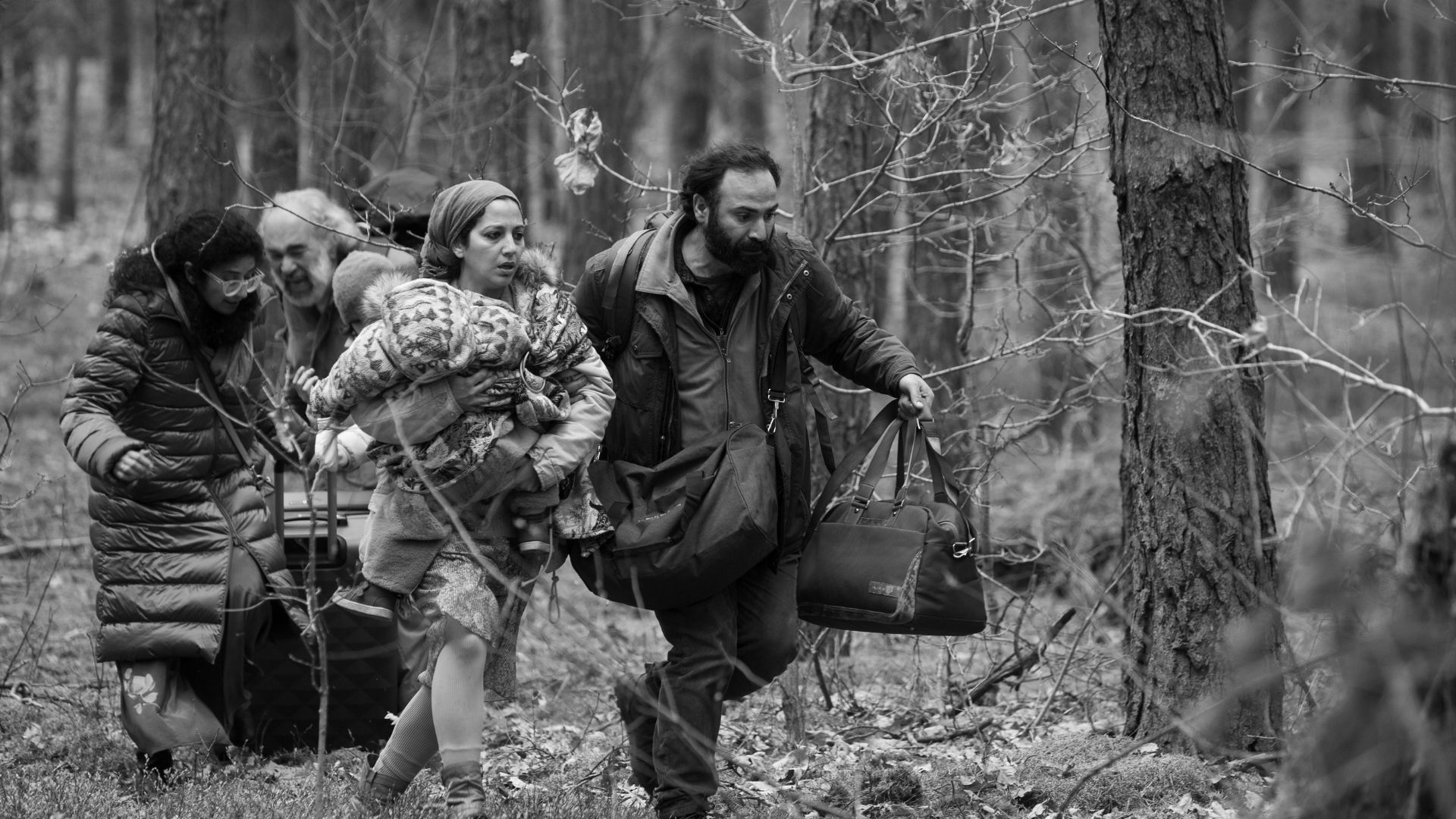
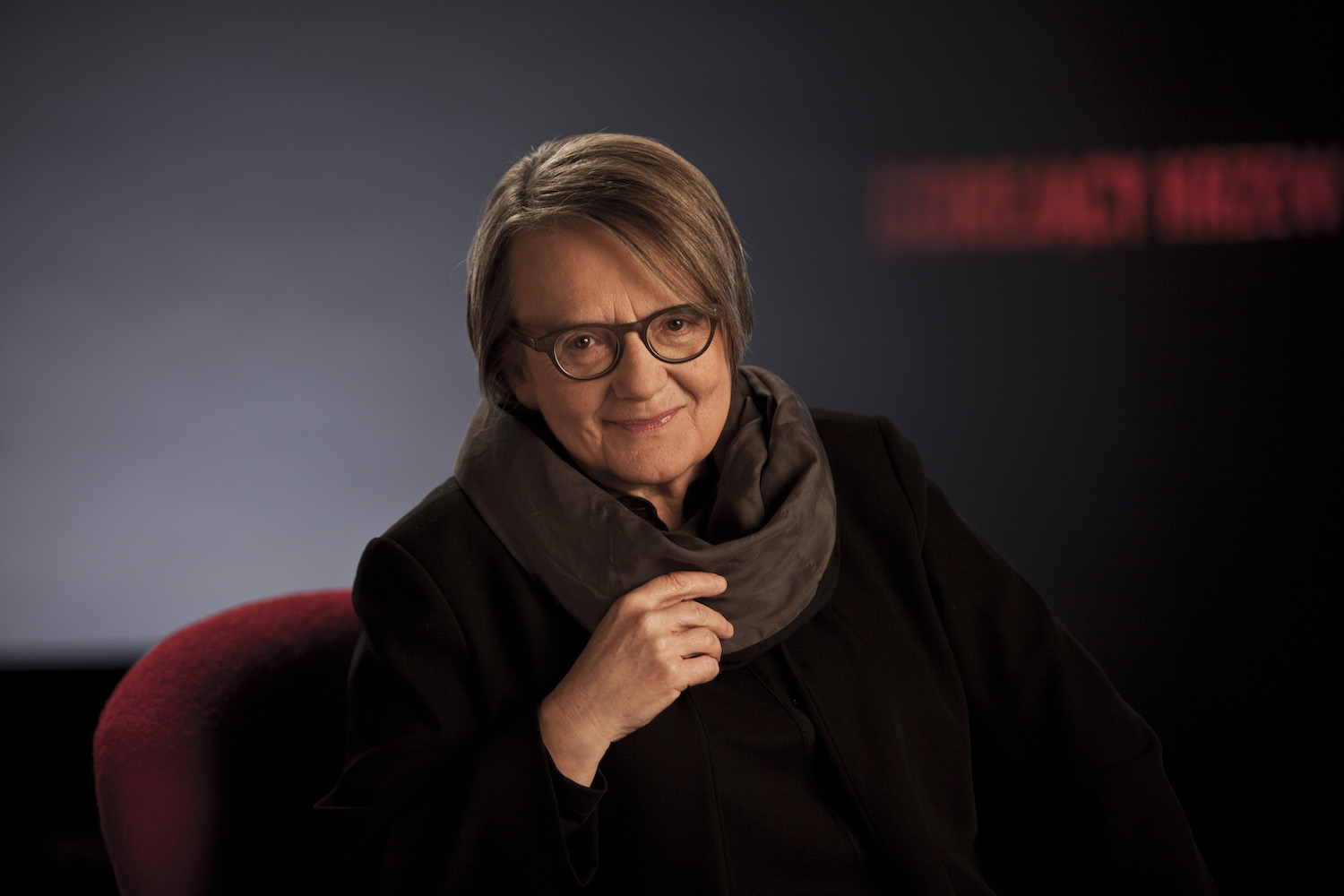
Polish filmmaker Agnieszka Holland has made a career out of confronting the biggest taboos within Polish society. Her own personal history, as the daughter of a Holocaust survivor who was deeply embedded within leftist intellectual circles, has informed much of her art and imbued her with a deep feeling for the highly specific social milieus that are brought to the screen in her films. In the past, she has dared to address subjects as complex and wide-ranging as the German invasion of Poland, false imprisonment in the Polish People’s Republic and domestic abuse. Her career has also been marked by struggles against censorship and sweeping criticisms from members of the ruling class.
Her latest film, Green Border (2023), has inspired particularly harsh rebukes from right-wing Polish government officials – who have gone so far as to compare her to a Nazi propagandist. With its focus on the Belarus-European Union border crisis and the treatment of refugees in modern-day Poland, the film pushes back against many of the xenophobic, highly reactionary narratives that have been constructed by the right-wing political establishment in Poland. In spite of all this, the film continues to open in theatres across the world and find an audience.
Zita Short had the opportunity to speak with Ms. Holland about the political and social significance of Green Border.
Zita Short: This film places a heavy emphasis upon the role that bureaucratic procedures can play in complicating the process that refugees are asked to go through in order to legally gain certain rights and privileges. As with many of your other films, it casts a weary eye upon the dominant narratives that surround this practice. What value do you think there is in questioning these narratives?
Agnieszka Holland: I hope that it can open some people’s hearts and minds because the issue of migration is such a huge issue – politically, socially, culturally, economically. It has become one of the most important issues in the modern world. More and more, the people in wealthier parts of the world see refugees as being part of this anonymous wave of aggressive arrival that endangers their peace, security, and comfort. We don’t see the people behind the narratives and reduce them down to aggressors…we come to accept very easily the violence that is used to respond to waves of immigration. Refugees and migrants arrive from war-torn countries, especially in Poland, and it is very easy to use terms like ‘hybrid war’ to discuss immigration. Immigrants are dehumanized and the richness of their humanity is lost. You have the educated and the illiterate, you have Muslims, you have Christians, you have Buddhists, you have atheists, you have children…
You also have young men who are delegated by their entire family or entire village to go to Europe and prepare for the arrival of the rest of the family. You have people who are escaping war, you have people who are escaping persecution, famine. You also have people who simply want a better life and hope that their children can grow up in a secure location. I wanted to give voices and faces to these people and show that this issue is not only about them. It is important for our humanity. It is also for people who have been blessed to be born with the right passport and grow up in a country that offers security and prosperity.
ZS: The film has sparked an intense backlash in Poland, where it has been condemned by several government officials; with some even invoking Nazi propaganda in an attempted smear campaign against the film. What methods do you think Polish artists can use to limit the impacts of this form of censorship?
AH: I think that the main duty of the artist is to go against censorship and not be influenced by the political agendas of the ruling class. You have to see behind the momentary interests of politicians. Societies are so polarized nowadays that when you touch on the subject of immigration, which is used by politicians to further their own agendas, it becomes very controversial. Many people cannot accept it. For many people, it is the opposite. They are grateful to see human faces instead of political propaganda. I am experienced enough to know what I am touching on. It was a deliberate decision to tell the story of people who have to make these important choices. I think we are delegating our free will and our conscience to these parties. We are also encouraged to conform to the general public opinion. I think that artists should be able to create spaces in which they are free and do not have to feel afraid. They should be able to touch subjects and artistic languages which are controversial and not palatable to everybody.
ZS: In the past, you have noted that, somewhat paradoxically, you felt that you were working with a relatively high degree of artistic freedom in Communist Poland. How has your view of this turbulent period in your country’s history evolved and changed over the years?
AH: I hated the Communist regime and I was the happiest person when it fell apart and when democracy arrived. However, democracy is fragile. We can change the victims to the perpetrators if we are not careful. I think that what is necessary is to be aware of oncoming problems. I think an artist needs to be free to do their work. I can vouch for different political options and when I am making my film I have some kind of duty to another side of the creative process.
ZS: Your film also comments upon the fact that the dehumanization of refugees and migrants has unfortunately become normalized. Why do you think it’s important to address such controversial issues in your art?
AH: I made several films about the Second World War and the Holocaust. I spent about ten years researching that period of history and preparing, writing and shooting those films. When I first started working on these projects and speaking to people with first-hand experience as part of my research process, people weren’t talking about these things. I feel very strongly that if it happened, it can happen again. It is not over. We have to be very careful to see the warning signs before we start heading down a dark path.
We are living in a time when fascism is starting to take hold and we know this because they are successfully dehumanizing a vulnerable group of people. They have also inflicted acts of violence upon this group and subjected them to humiliation. There is also the risk of them being killed, imprisoned or pushed out of the country altogether. Sadly, we are at a very bad stage. You can feel it in America, with the situation in Mexico, and you can feel it in Poland. You can also feel it in Tunisia, where people don’t have the money of the European Union and are left to die in the desert. In Ethiopia the refugees are killed in their thousands. My father was a Holocaust survivor and I made films about those crimes because I understand that humanity is capable of the worst atrocities.
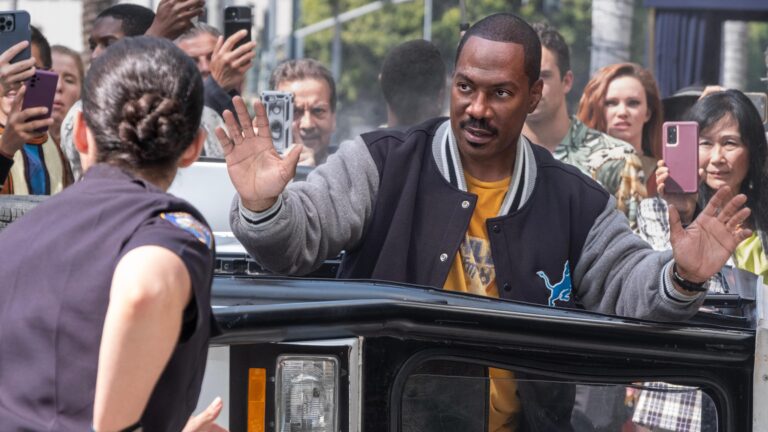
Director: S. Shankar Writers: S. Shankar, B. Jeyamohan, Kabilan Vairamuthu, Lakshmi Saravana Kumar Stars: Kamal Haasan, Siddharth, Bobby Simha
Synopsis: Senapathy, an ex-freedom fighter turned vigilante who fights against corruption, returns to India to aid a young man who has been exposing corrupt politicians in the country through videos on the internet.
“Corruption causes cancer to the nation. Corruption kills.”
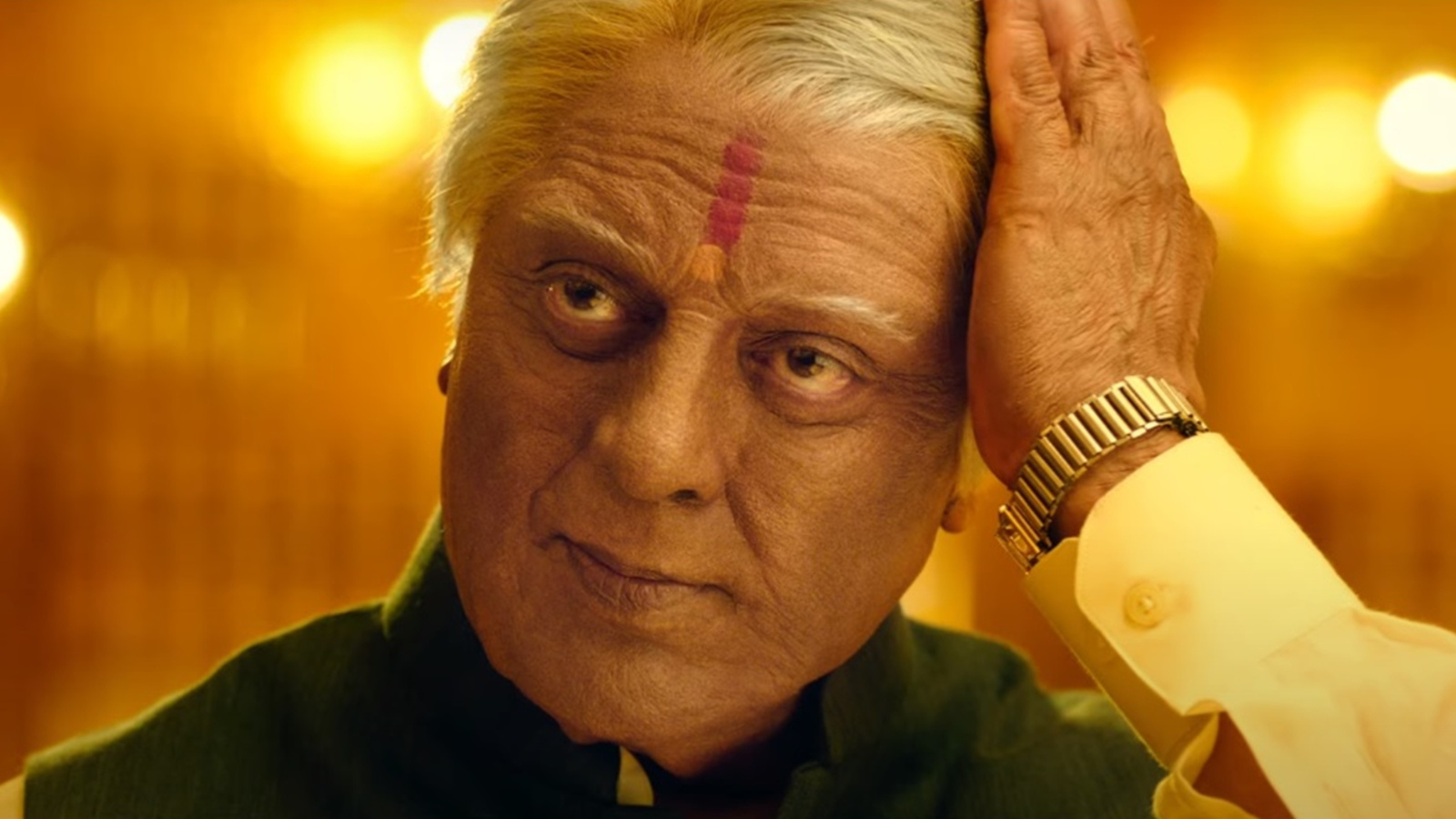
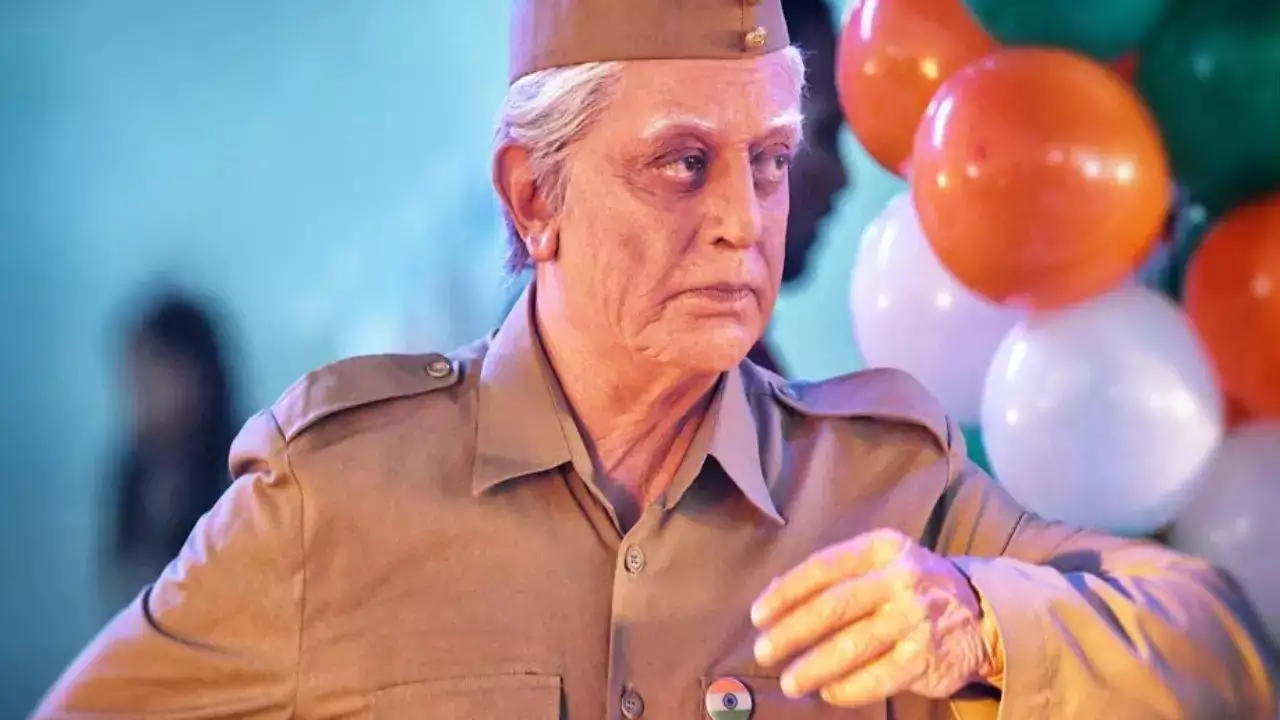
These words are spoken at the top of S. Shankar’s Indian 2 before any image is shown, setting the stage for Senapathy’s (Kamal Haasan) grand return to the screen twenty-eight years after the original Indian, which solidified Haasan’s star prowess within Tamil cinema. The film had a troubled production that lasted five years due to multiple delays attributed to the COVID-19 pandemic (two main actors passed away from COVID-related complications during filming), an accident that caused the death of three crew members, and Shankar taking on new directing responsibilities through his Telugu-language debut, Game Changer, starring RRR’s Ram Charan after Haasan signed on to star in Lokesh Kanagaraj’s Vikram while waiting for production on Indian 2 to resume.
The first Indian tackled the subject through Haasan’s dual performance as Chandrabose (“Chandru”), who has to face his father, Senapathy, after bribing his way to become a brake inspector, giving a safety certificate to a bus with defective brakes, which leads to the death of over 40 schoolchildren during a tragic accident. Chandru attempts to redeem himself, but Senapathy has been on a vengeance-fueled path of getting rid of Tamil Nadu’s corruption problem, with many high-ranking officials taking bribes from people who barely have anything to live by. This confrontation leads to a shocking climax, in which Senapathy kills Chandru for having bribed his way into not facing justice for his corruption before the vigilante perishes in a massive explosion.
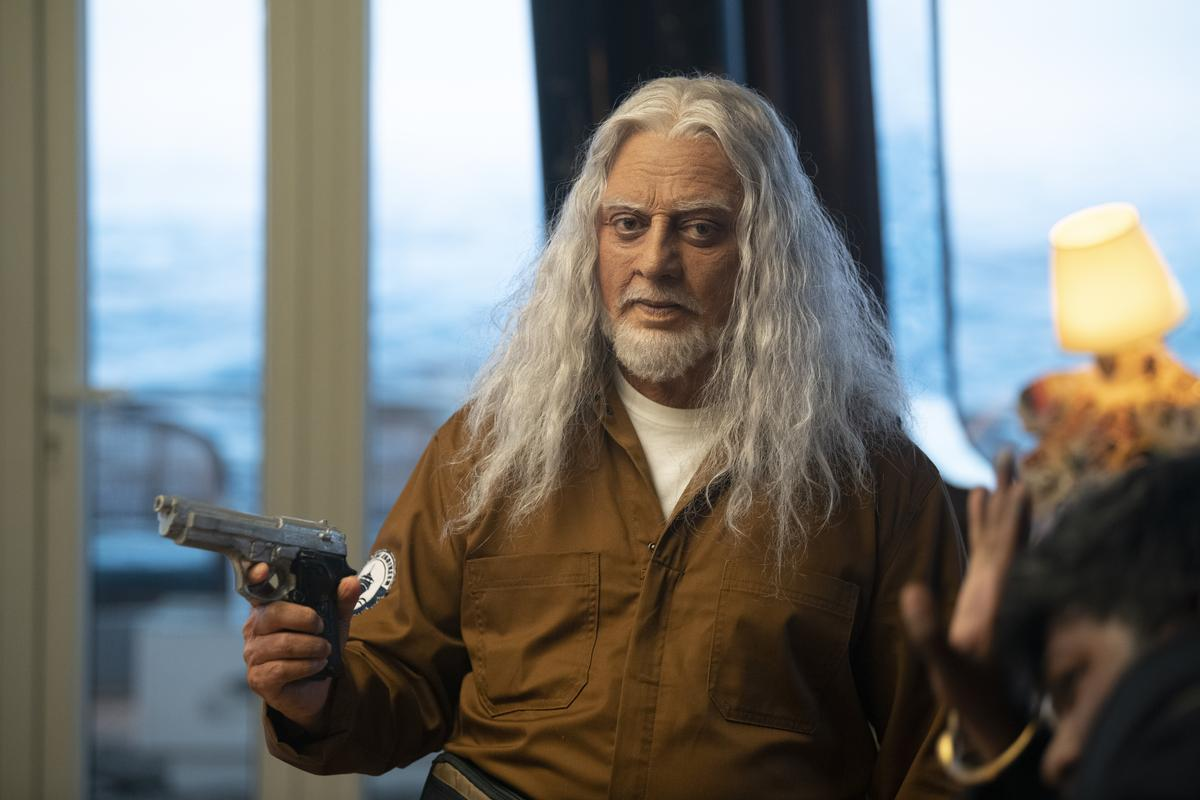
Senapathy survived, mind you, and has been in exile ever since. Theoretically, he should be dead, with the first film set in 1996 and extended flashbacks in the second half revealing that he was a freedom fighter who upheld the ideologies of Subhas Chandra Bose during World War II. That means that, in Indian 2, he should be over 100 years old. The fact that he is not only in top physical form and can ride a Unibike without any problems at such an age will require you to suspend your disbelief. However, it’s the least of the film’s problems, which, in all honesty, doesn’t much matter since the prosthetics on Haasan’s face have always been hokey and look just as bad in this film as in Shankar’s Indian.
Senapathy is also a practitioner of the Tamil martial art Varma Kalai, which is real but has been stretched to inexplicable magic powers in the sequel. That could explain why he doesn’t look a day over 75, since many martial arts practitioners believe a daily routine slows down the aging process (especially when focusing on the meridian lines designed to heal the body). In the first film, Senapathy used these techniques to paralyze – and ultimately kill – his victims. By crossing his index and middle finger, Senapathy knew which points to hit on the body so their heart (or brain) would stop functioning. Shankar may be stretching the limitations of Varma Kalai a bit, but it’s nowhere near as far-fetched as in the second film, in which he presses a point to block a person’s blood from flowing and transforming them into…a girl…and a horse.
Yes, in the pre-intermission scene, one of Senapathy’s victims becomes a horse and rides off into the sunset until his body can’t take it anymore, collapses, and dies. Unlike many viewers who nitpick at everything when movies represent a romanticized world in which anything is possible, I can easily suspend my disbelief when a 100-year-old character rides a Unicycle and does perfect jumps with it. Shankar’s movies also require you to suspend your disbelief. It’s impossible to watch Enthiran – and its sequel, 2.0 – without distancing yourself from reality, as his visionary lens throws everything humanly possible to capture with eyes on the screen. That being said, I had a very difficult time doing so while watching someone become a horse in Indian 2, especially during a scene in which Senapathy confronts a horde of villains and transforms all of them into horses.
But the movie’s problems continued to add up, especially when Shankar returns to his anti-corruption cinema roots after a brief stint in the world of science fiction (with the Enthiran series), a remake of Rajkumar Hirani’s 3 Idiots, and a cross between The Hunchback of Notre Dame and Beauty and the Beast with 2015’s I. When you open your film with “Corruption causes cancer to the nation. Corruption kills.” (in replacement of the usual “Smoking kills” advert placed in front of every Indian movie with tobacco use involved), you’re forcing the picture to be unabashedly bold with its presentation of how corruption is not only a cancer to ourselves and the people we affect but the world. When it is riddled with corruption, the world becomes further diseased when opportunistic individuals take advantage of people in dire need of help.
The film’s thesis is worth exploring—and recontextualizing—in the era of social media, especially since Shankar hasn’t made an anti-corruption picture since his masterpiece, 2007’s Sivaji: The Boss, way before Facebook, X, and Instagram became a part of our everyday lives. And it’s from that framing device that a group of content creators, known as “The Barking Dogs,” who expose corruption through a series of satirical videos, demand Senapathy’s return after a young woman killed herself when a corrupt official framed her for fraud. With the hashtag #COMEBACKINDIAN, they created a worldwide movement for Senapathy to resume his vigilante activities in Tamil Nadu, as corruption has metastasized to even more dangerous heights.
Senapathy has been on his own quest for anti-corruption while in exile and disguises himself to avoid being caught by the Tamil Nadu Commando Force and its officer, Pramod Krishnaswamy (Bobby Simha), the son of the inspector (Nedumedi Venu), who was on Senapathy’s tail in the first film. When his presence is demanded back in India so he can end the rampant corruption plaguing the country, he returns and is lauded as a hero as he makes a Facebook livestream to instruct his followers on how to eliminate this fast-growing cancer, once and for all. But The Barking Dogs soon realize there is a price to pay on going after corrupt individuals, especially if they are members of your own family, and that’s when Shankar takes a rather emotionally manipulative direction with his story.
The film’s first half isn’t very interesting. Visually, it looks as grandiose as every Shankar film (with particular attention to detail given to a gold-laden safe where a corrupt individual likes to do his business on a gold-painted toilet), and there are a few sequences where Haasan goes all out in riveting monologues that rival the television studio scene in the first Indian. It also has a deeply problematic scene in which, to fool the cops at the airport, Senapathy disguises himself as a Chinese martial artist. Yes, Kamal Haasan in yellowface.
And I’ve just learned, through film critic Pramit Chatterjee, that the actor did the same thing in K.S. Ravikumar’s Dasavathaaram. Upon further research, and in the same film, he also donned blackface and played George W. Bush??? I’ve said this in previous reviews: I wouldn’t call myself the foremost expert in Indian cinema – I always have blindspots, even after seeing plenty of Kamal sir’s films. This does put the disguise in Indian 2 in a bit more context, but it is still deeply offensive and unacceptable, especially when so much progress has been made in our culture to confront the racist stereotypes of the past by positively representing different cultures through their artistic lens.
This disguise acts as a bad omen for the rest of the film, which becomes essentially a parallel montage between The Barking Dogs, who catch family members in the act of committing corruption, and Senapathy continuing his mission to kill as many high-ranking (corrupt) officials as possible. The movie then reaches an inflection point in its post-interval scene, in which the dogs’ leader, Chitra Aravindan (Siddharth), learns a drastic piece of news about one of his family members, and makes their life even harder by doing what he thinks is right. This is where the movie becomes downright cruel, and its exploration of how vigilante justice may also corrupt the soul never goes deep enough to mean anything, especially when this moment (and somewhat poignant exchange) between Chitra and Senapathy isn’t resolved.
Oh yeah, did I forget to mention that the sequel has been split into two parts after the rough cut assembled by editor A. Sreekar Prasad was over SIX HOURS LONG??? That’s crazy – even for Shankar. As a result, the 180-minute-long film has a dragged-out first half that sets up the return of Senapathy in a not-so-thrilling fashion and a second half that begins to ask questions on the relevance of ‘Indian’ coming back, only to abruptly end when the dramatic tension is at a maximum with an “I’ll be back” moment that’s more reminiscent of Skeletor’s post-credit scene in Gary Goddard’s Masters of the Universe instead of the T-800 in James Cameron’s The Terminator.
Before that, though, Shankar culminates his picture with a bravura chase sequence involving Senapathy riding a Unicycle as he tries to escape the commandos and the villagers who now want him to return to where he came from. The use of FPV drones, in particular, is a real show-stopper to witness in IMAX, especially when cinematographer Ravi Varman dizzyingly moves his camera to sync with the Unicycle zigzagging inside a train, a construction field, and a small marketplace. It proves that, no matter how shoddy his screenplays might have gotten, Shankar still has the juice to dazzle with his camera and create larger-than-life sequences that are indescribable in words but so eye-widening to soak in on a large canvas. His direction of musical numbers has also improved, with Anirudh Ravichander creating a soundtrack that celebrates the legacy of AR Rahman’s compositions with his modern spin on the material. “ZagaZaga” is a bop, and “Calendar Song” is also pretty damn great. It doesn’t reach the same heights as Anirudh’s previous works, Jawan and Lokesh Kanagaraj’s Leo, but it comes close to topping Rahman’s music in the first. Fight me.
Like Kevin Costner’s Horizon: An American Saga, Chapter 1 ended with a sizzle reel of Chapter 2, Shankar gives audiences a glimpse of what’s to come with Indian 3. Haasaneven admitted in the press tour that he signed up to do Indian 2 only because he loved what he read for Indian 3. As soon as I saw an immaculately cathartic shot of two British soldiers decimated by an elephant with a pole, I didn’t need to see anything else. I’m in, no matter how dull this one was. The intense bursts of action give me hope that Shankar will create a mass spectacle that rivals some of his greatest productions.
But when he directly cites Sivaji: The Boss on multiple occasions in Indian 2, while never matching (or further modernizing) the potent anti-corruption study he drew in his 2007 masterpiece, it only makes me want to leave the cinema and spend three hours with Rajinikanth instead.
Movies based on video games have been a common occurrence as early as the 80s, with a big
screen rendition of Nintendo hit Super Mario Bros. — pre-Chris Pratt’s voice acting endeavors
— released in 1986. Since then, thanks to the powers of CGI and developments, video game-
based movies have continued to grow in scale and frequency. Live-action films based on video
games also rose to popularity in the 90s and 2000s, when gamers and viewers witnessed iconic
video game characters like Lara Croft grace the big screen.
However, not all gaming-themed films are created and enjoyed equally. Unfortunately, some
video game-based movies tend to miss the mark or have trouble translating video game
narratives and lore to feature-length standards. In our Boy Kills World review, we highlighted the
movie’s promising premise and how it falls short of reaching that perfect blend between the
ultraviolence of 90s action flicks and elements from the video game world. Boy Kills World also
highlights a common problem of video game movies casting good actors in worlds that tend to
need a little more fleshing out.
Still, this doesn’t mean that all video game-based films are bad. In this post, we’ll take a closer
look at some gaming-themed films that simply get gaming right while not overwhelming their plot or script with pacing or world-building issues. While these may seem debatable to film
aficionados, the movies listed in this post are more love letters to gamers than anything:
Wreck-It Ralph
While not technically based on a real video game, Wreck-It Ralph excels in its world-building
while still paying homage to the world of gaming and arcades. Namely, the film focuses on the
bad guys we tend to meet in video games and even features a cheeky cameo from Nintendo’s
household villain Bowser. In building the weird and colorful world of Wreck-It Ralph, the film
aims to answer the very Toy Story-like question: What do video game characters do when we’re
not gaming?
Despite its seemingly simplistic concept and premise, Wreck-It Ralph has a lot of heart. The film
centering on video game villains also automatically creates that ragtag dynamic between its
characters, which the film’s equally loved sequel further explores later. More than anything,
Wreck-It Ralph succeeds in being a well-balanced video game film, even if the games it’s based
on are fictional.
The Family Plan
By no means a critically acclaimed film, The Family Plan is a Mark Wahlberg-led action comedy
film that heavily features the real-life first-person shooter game Valorant. Aside from being
central to the plot, the film’s use of Valorant is a crucial step forward in the history of video
game-based movie in that it features the esports side of gaming.
Esports is a rapidly growing segment of the video game industry and has quickly become its
own form of entertainment. As a result, the film was welcomed by the continually growing Valorant player count — over 19.1 million monthly active players as of May 2024 — 70% of
whom belong to Gen Z. By heavily featuring esports as part of the film’s story, the movie is a
shoutout to the modern gamer’s spirit and strays away from the usual bleak depiction of the
Cheetos-infused, basement-dwelling gamer (see: Thor in Avengers: Endgame). To ensure the
movie got esports right, they even cast real-life Valorant gamers and content creators.
Free Guy
Much like Wreck-It Ralph, Free Guy‘s success as a gaming-themed movie follows a similar
premise. Instead of focusing on the bad guys in video games, Free Guy explores the inner
workings of a video game’s non-playable character (NPC) and what happens when one goes
rogue.
In talking about Free Guy‘s world design, filmmaker Shawn Levy named real video games like Grand Theft Auto and Call of Duty as inspirations for developing the film’s video game world,
balancing the animated feel of video games with cartoony and outlandish gameplay. At the
center of it all, though, is an absurd love story between the NPC and a real player’s in-game
character, as well as the triumphant message that we can all become the main characters of our
story by taking control.
Scott Pilgrim vs The World
Finally, instead of taking you into a fictional video game world, Edgar Wright’s Scott Pilgrim
stands out by establishing that the movie’s world is a video game — completely subverting the
subgenre. At the same time, Scott Pilgrim is also an homage to comicbooks, drawing on comic
visuals throughout its runtime. This resulted in a wacky, colorful, and quick-witted film led by a
star-studded ensemble, including entertaining performances from pre-MCU Chris Evans and
Brie Larson.
More than a decade after the film’s release, many still applaud the movie’s many moments of
mischief, like a supervillain ex-boyfriend exploding into coins after his defeat, as well as the film
— and source material — treating its villains like video games treat final bosses. Later, Scott Pilgrim would re-enter pop culture through a Netflix animated series, in which the original cast
returned to voice their cartoon characters, along with a significant twist in how Scott Pilgrim‘s
story is told.
Director: Marco Petry Writers: Claudius Pläging, Andrej Sorin Stars: Dennis Mojen, Janina Uhse, Anna Maria Mühe
Synopsis: A young man meets his new girlfriend’s friends for the first time at their regular game night, putting him under pressure to make a good impression. But then suddenly, her ex shows up as well.
We can all relate to the all-encompassing nature of new romance depicted in the German Netflix comedy Blame the Game (Spieleabend). That desire for connection is now fulfilled by all the positive attention. The novelty of a new relationship is exciting and brings an intense focus. Soon, hormones like dopamine and adrenaline begin to release.
All the intense, all-consuming affection makes everything around you fade away. Oh, and you also feel that instant connection when each of your best friends, two adorable pooches, meet each other in a park and begin to hump each other with no shame at your favorite local dog park. At least, that’s what the filmmakers of Blame the Game want us to think.
This makes it one of the more disingenuous comedies in recent streaming memory.
Written by Claudius Pläging (It’s Your Turn, Honey), the film is somewhat of a rip-off of one of the more overrated comedies of the past decade, Game Night. Here, after those delightful pups get together in the park, a local bike shop owner, Jan (Dennis Mojen), and a local canine photographer, Pia (Janine Uhse), reach that point in their blossoming romance where it’s time to meet her friends.
And what better way to do that than during the annual game night? Pia has an eclectic group of friends, to say the least. Her best friend, who lives with her, Karo (Anna Maria Mühe), is wealthy and owns a business that brings in over six figures annually. She and her husband, Oliver (Axel Stein), an emasculated man who loves to cosplay, hit on their maid, Gabriela (Alfonsina Bencosme).
Rounding out the group is Sheila (Taneshia Abt), who cannot get over a breakup with her ex-girlfriend. The same goes for Mathias (Stephan Luca), who is still in love with Pia and wants her back. Sheila’s brother, Kurt (Maximilian Bretschneider), playing the role akin to Jesse Plemons’s Gary, is a freeloader who continuously makes Jan uncomfortable. I will say that Bretschneider is by far the most amusing of the bunch, but the script needed more of him.
Directed by Marco Petry (How to Be Really Bad), Blame the Game is a cheap imitation of better ensemble comedies because the film lacks proper structure and moves the plot along with dozens of filler scenes that add nothing to the experience and just waste time. This means there was plenty of time to take bigger swings and risks. The experience feels cheap and forced when comedy should feel natural.
Then, when Netflix’sBlame the Game does take a big swing, the film doesn’t track or make sense. For example, the film takes a big jump by having two rivals play ping pong naked with little promotion and no explanation. There is simply nothing modern or new about the film or even the dating experience that the movie tries to portray.
Then, you have the ridiculous scene where Jan brings a game that is used to antagonize and torment characters and create tension within the group. That would all be fine and even acceptable, if Blame the Game’s script is funny, which it is not. The humor is south of average, even mediocre, and while the characters are likable, Mojen and Ushe do have a flirty energy, that’s not enough to recommend a stale comedy that feels too long at a sparse 90 minutes.
Director: William Wages Writers: Phillip Bellury, William Wages Stars: Beau Bridges, Rob Mayes, Sam Hennings
Synopsis: Wayne, a singer, meets washed-up legend Claude Allen. Together they go to Nashville to pitch a song, but the industry rejects them. Wayne figures out how to release the song publicly, not for himself but for Claude.
The real star of the film The Neon Highway, finally finding a home on the streaming giant Netflix after debuting with a minimal release on video on demand and a theatrical release in Nashville last spring, is the country music and the performance of Beau Bridges, who makes the most of his supporting screen time.
The film plays like an unintentional sequel to Beau’s older and more successful brother Jeff Bridges’s film, Crazy Heart, where Bad Blake now mentors a younger generation after no one else will have him and finds happiness in mentoring. The final product is like a classic country song, filled with haunting memories, a few dashes of nostalgia, and, most importantly, a few honest moments of reflection.
Though, The Neon Highway cannot help itself from tripping into country cliches more than most.
Directed by William Wages, who wrote the script along with Phillip Rob Bellury, The Neon Highway stars real-life country music star and actor Rob Mayes (John Dies at the End, Thor: Ragnarok), who plays Wayne Collins, a down-on-his-luck, nine-to-five family man struggling to make ends meet for his family. Desperate to buy his family a new washer and dryer, he asks for an overtime shift.
However, Wayne’s boss politely reminds him that if he stopped playing around on his guitar, he would take him more seriously. Wayne was an up-and-coming country music star in Nashville who was about to be offered a solo deal from a major label, which would mean leaving his brother, Lloyd (Eat Pray Love’s T.J. Power), behind. However, all of that changes when Lloyd is killed in a tragic accident on a highway, altering Wayne’s life forever.
Fast forward two decades later, while on a job, he meets a weathered country legend, Claude Allen (Dreamin’ Wilds’s Beau Bridges), living in his deceased parents’ home. He may explode if he stands too close to an open flame, considering he looks like he has been soaking in some backwoods moonshine. As they talk, they realize they need each other. Claude needs Wayne for his songwriting ability, and Wayne needs Claude for his star potential to earn a big payday.
If you think you have heard this plot before, it’s not just from that very special episode of the Saturday morning Saved by the Bell wannabe, California Dreams, or any time Kris Kristofferson holds a guitar to scream. The one where the crusty, grizzled old timer works with a younger version of himself, trying to right the wrongs of their pasts.
Bridges’ performance is good, even funny at times, especially when young people come up to him and tell him how much their grandmothers adored him. Still, the script never lives up to the authentic and refreshing performance of the aging actor, who comes from a legendary acting family.
However, if you are a fan of the genre and country music in general, the film takes some chances with its script. It is not perfect and sometimes misses its mark, but it is refreshing enough to separate itself from the usual country drama fare. Not to mention, the film’s core from Cuban-American Jazz musician Arturo Sandoval and the soundtrack performed by Lee Brice, sets the tone for the film that works harmoniously with the setting.
While I appreciate the thought and authenticity put into The Neon Highway, the whole could be better than the sum of its parts. The story feels stale and old. A country retread if there ever was one. Besides Bridges and a slightly above-average performance from Mayes, the film struggles to find its footing in a narrow genre with about the same broad appeal as a Kevin Costner western. For a much better film about a real country music star, seek out Ethan Hawke’sBlaze on Tubi. Otherwise, The Neon Highway is for diehards of the genre and the music it tries to lose itself in.
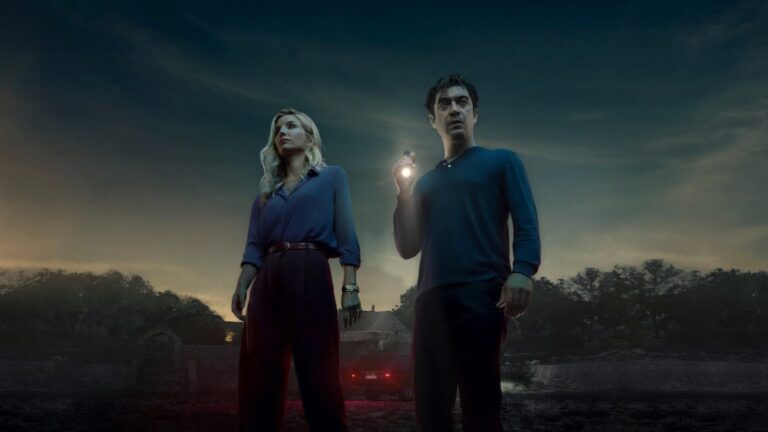
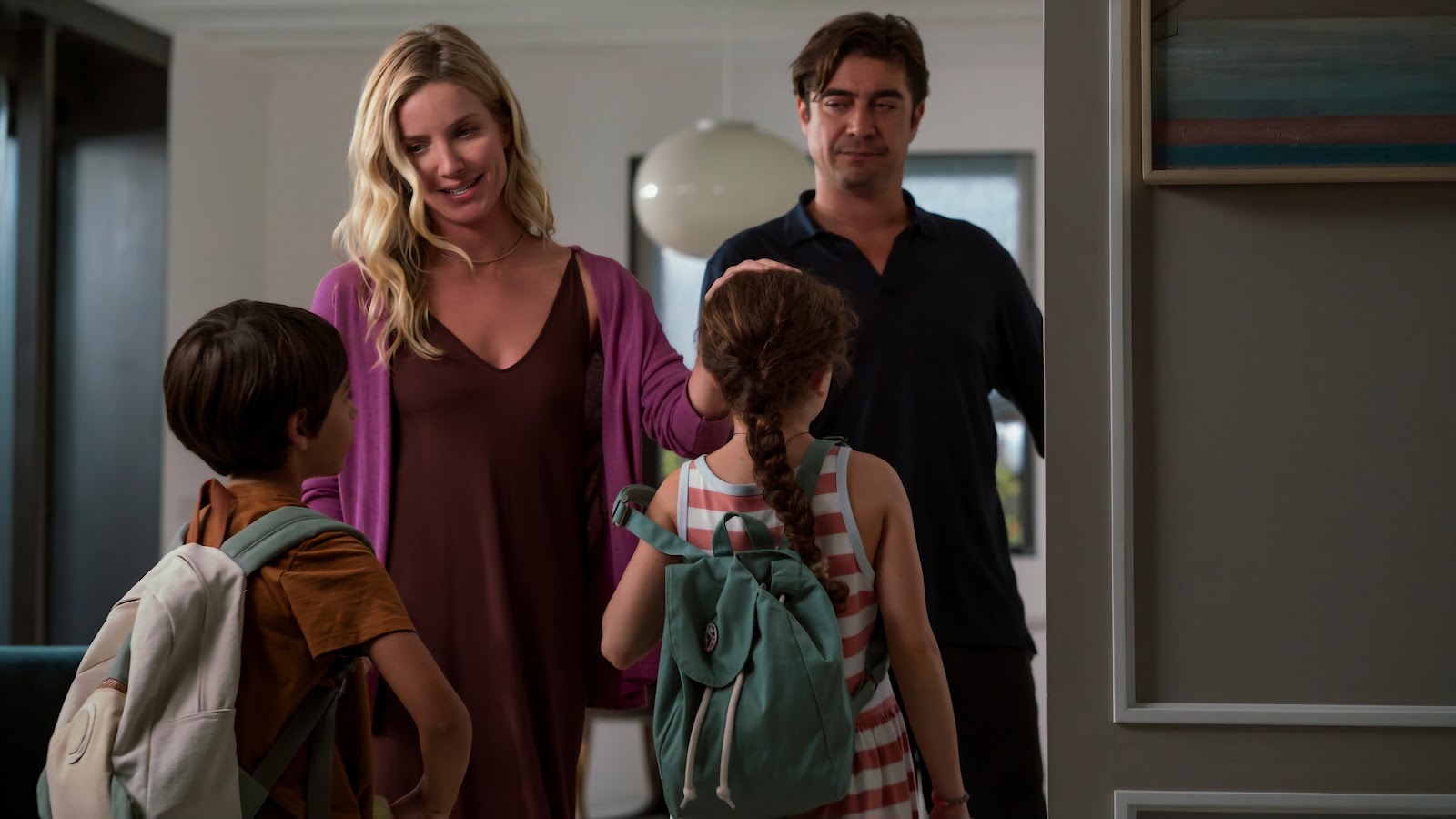
Director: Renato De Maria Writers: Patxi Amezcua, Alejo Flah, Luca Infascelli Stars: Annabelle Wallis, Riccardo Scamarcio, Massimiiano Gallo
Synopsis: A father, immersed in a difficult divorce process, embarks on a dangerous mission when his children disappear from their isolated country house.
Vanished Into the Night is the equivalent of a bad Lifetime movie with better packaging. The film is visually stunning, set in Italian villas, villages, and seaside towns. The actors are strikingly handsome and beautiful, and it’s easy to get lost in the eyes of each lead. However, the plot is paper-thin, and the script is as shallow as the Trevi Fountain.
Too bad no one made a wish to make a more competent film experience.
There is no depth to the story or themes, zero subtext, and the film needs a second act. Netflix’s Vanished Into the Night is the cinematic streaming equivalent of a storyboard put to digital cinema. I cannot believe anyone would recommend it, and if they did, they should never review the medium again. They are not just wasting your time but stealing it, not to mention your sanity.
The Italian Netflix thriller has some decent stars for such a poorly executed endeavor, and you have to feel bad for them landing in this lazy, contrived film. John Wick: Chapter 2’s Riccardo Scamarcio and Malignant’s Annabelle Wallis star in the Renato De Maria (Robbing Mussolini) film. Working from a script written by Francesca Marciano and Luca Infascelli with a thin plot, it’s hard to believe anyone would want their name attached to it.
Wallis plays Elena, an American psychotherapist who left her practice to help her husband Pietro (Scamarcio) follow his dream of opening a bed and breakfast in a sunny seaside town in Italy. However, the home they invested in, mainly with Elena’s investment, is a money pit.
To make matters worse, Pietro has accumulated over 250,000 euros in gambling debts.
Elena is not perfect either; as Pietro’s lawyer brings up, she was addicted to opioids for years, making Pietro the primary caretaker of their children. Yes, it’s sufficient to say this marriage seems beyond recovery.
However, after a tense divorce mediation, Pietro has custody of the kids for the week while Elena returns to the States. His son, Giovanni, wakes up with bad dreams and mistakes the shadows of tree branches for monsters. Pietro soothes him back to sleep, where his adolescent daughter Bianca rests.
He closes the door, sips his drink, and watches a football game, only to discover that his children are missing from their room hours later. When Elena returns, she blames Pietro, and they receive a call from the kidnappers demanding 150,000 euros for their children’s safe return. This means he must consort with an old friend, Nicola (Massimiliano Gallo), in his shady dealings to find the means to get them back.
De Maria wants the audience to feel tension and suspense because of how far these characters, in particular Pietro, will go to ensure their children will come back safely and unharmed. The problem is that there is little suspense derived because it’s rather obvious who the villain is from the beginning and that he is the only one with true motivation.
The handful of red herrings, like the shady childhood friends and mobsters looking for their money, are nothing but fodder. The character decisions need to be more explicit, such as not calling the police for hours when your children go missing from home. Not to mention this lack of clarity persists when another character asks why this wasn’t done, and their response is, ‘You told me to stay and not do anything.’
Then, there is the issue of the second act—there is none. There is one compilation, and as soon as you become aware of it, you know who the real villain is. Pietro experiences no tension, plot complications, conflict development, or turning point. Frankly, it’s an extended version of the first-act setup that doesn’t work and gives away the plot immediately because it is so painfully transparent.
When the movie reaches the big reveal in Vanished into the Night, the resolution is so matter-of-fact and clean that it insults the audience. The twist here is disappointingly conventional and expected, lacking the unsettling and bizarre nature the genre thrives on and fans crave. Regrettably, the story lacks the visceral impact and tense elements needed to create a truly memorable and gripping audience experience.
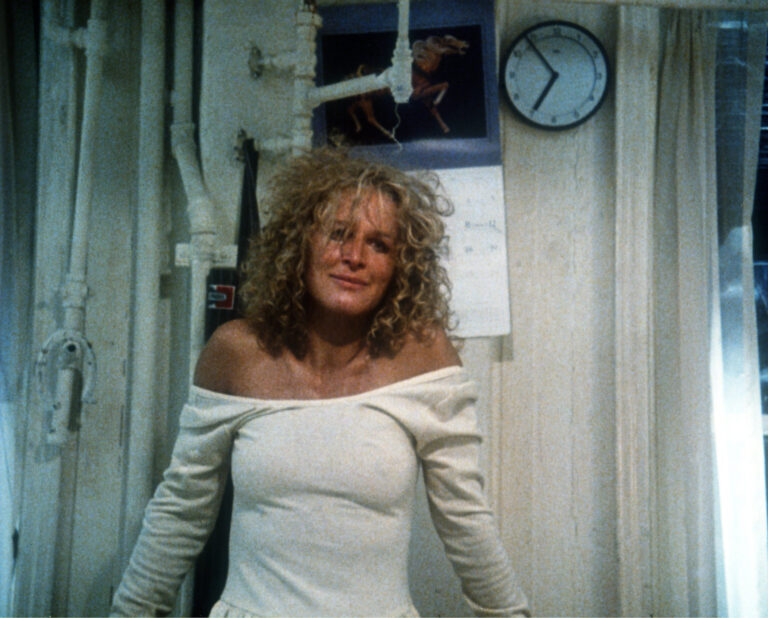
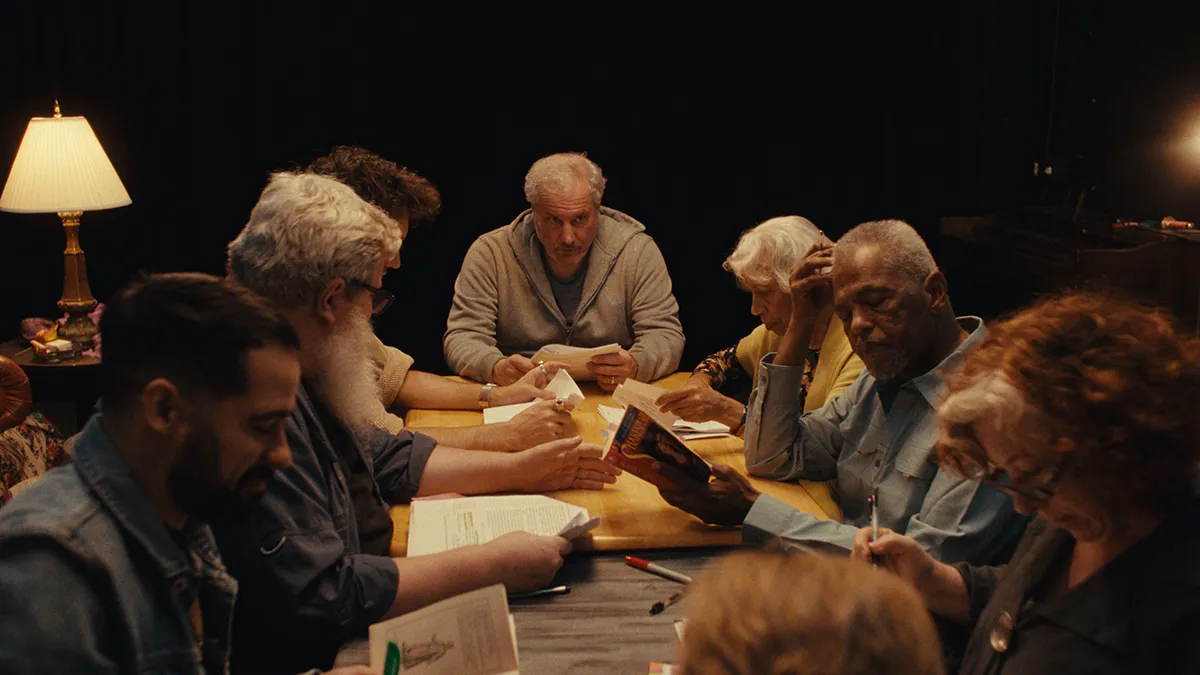
This week on Women InSession, we discuss the titillating, erotic films of Adrian Lyne! we discuss everything from Flashdance to Fatal Attraction to Unfaithful, and everything in between!
On that note, check out this week’s show and let us know what you think in the comment section. Thanks for listening and for supporting the InSession Film Podcast!
Director: Niclas Larsson Writer: Niclas Larsson Stars: Ewan McGregor, Rhys Ifans, Taylor Russell
Synopsis: Three children are brought together when their mother refuses to move from a couch in a furniture store.
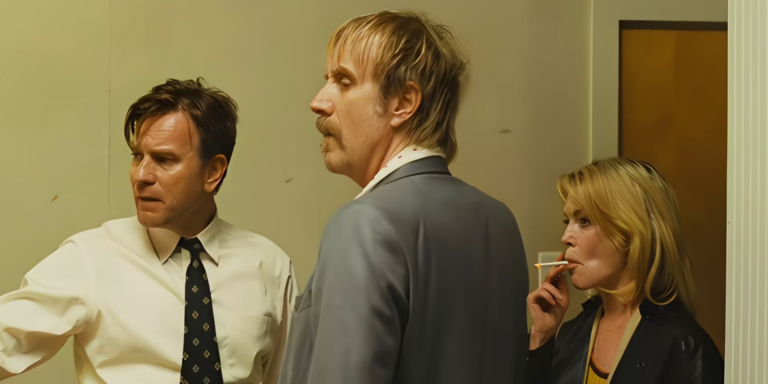
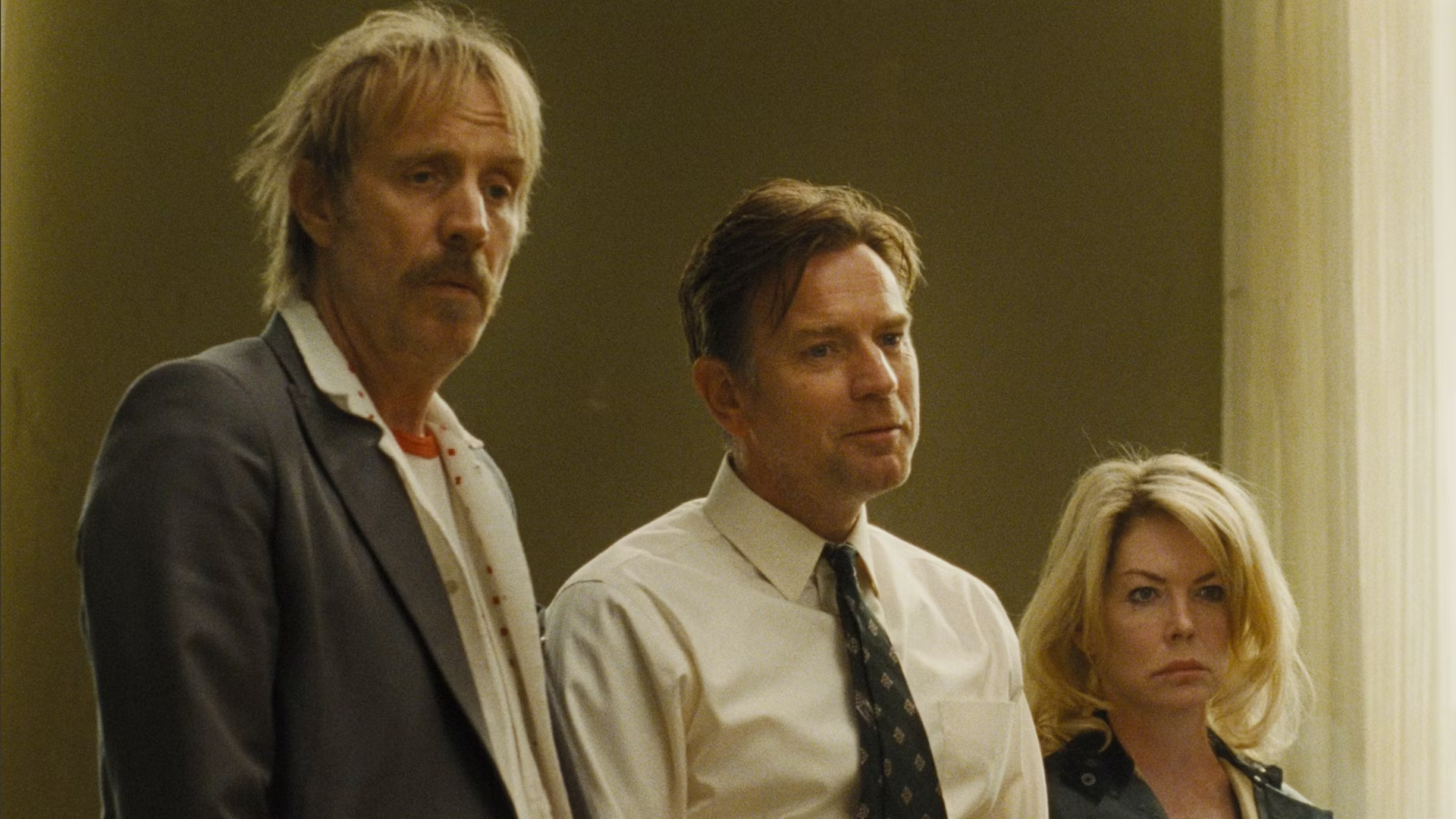
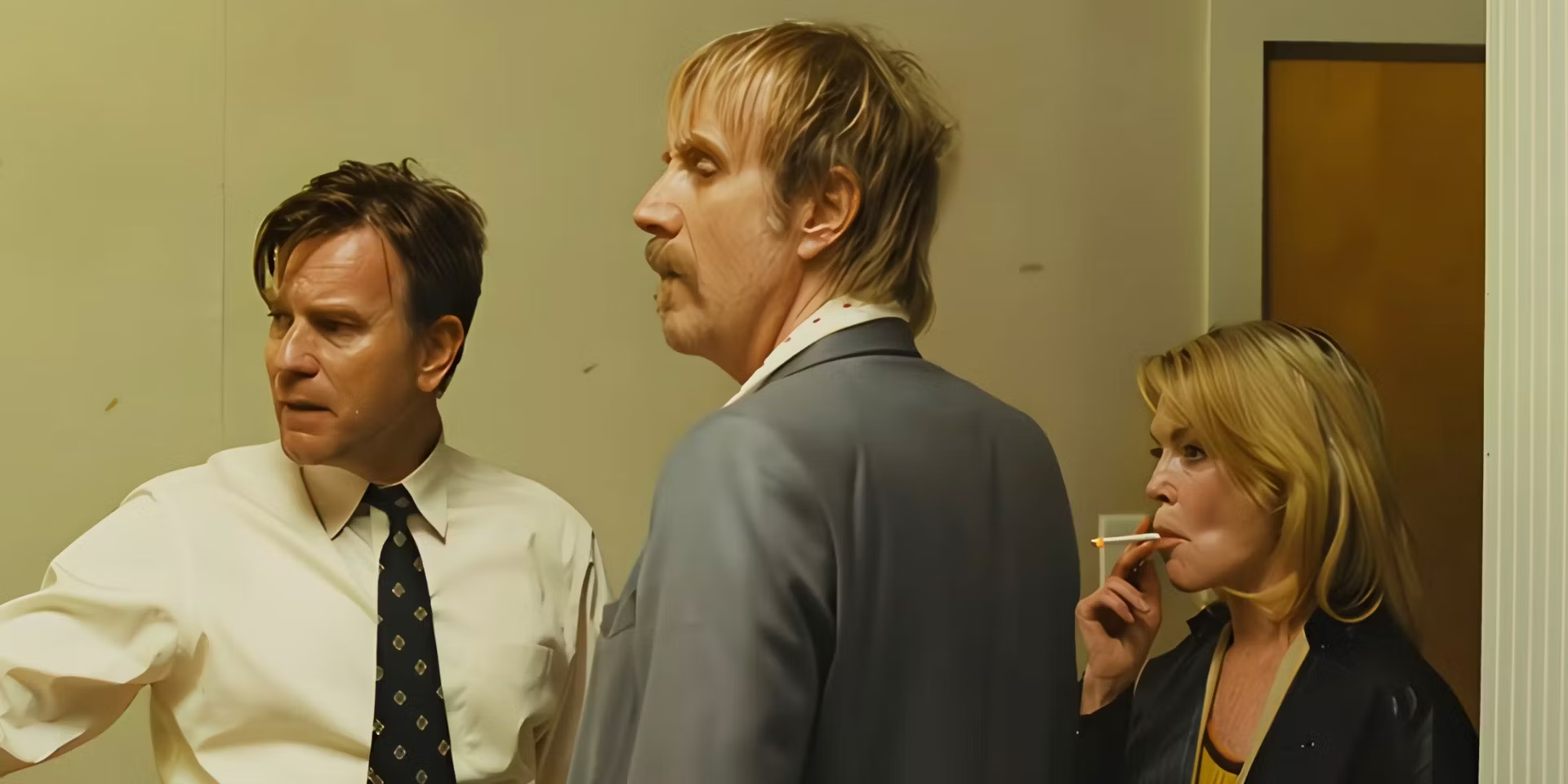
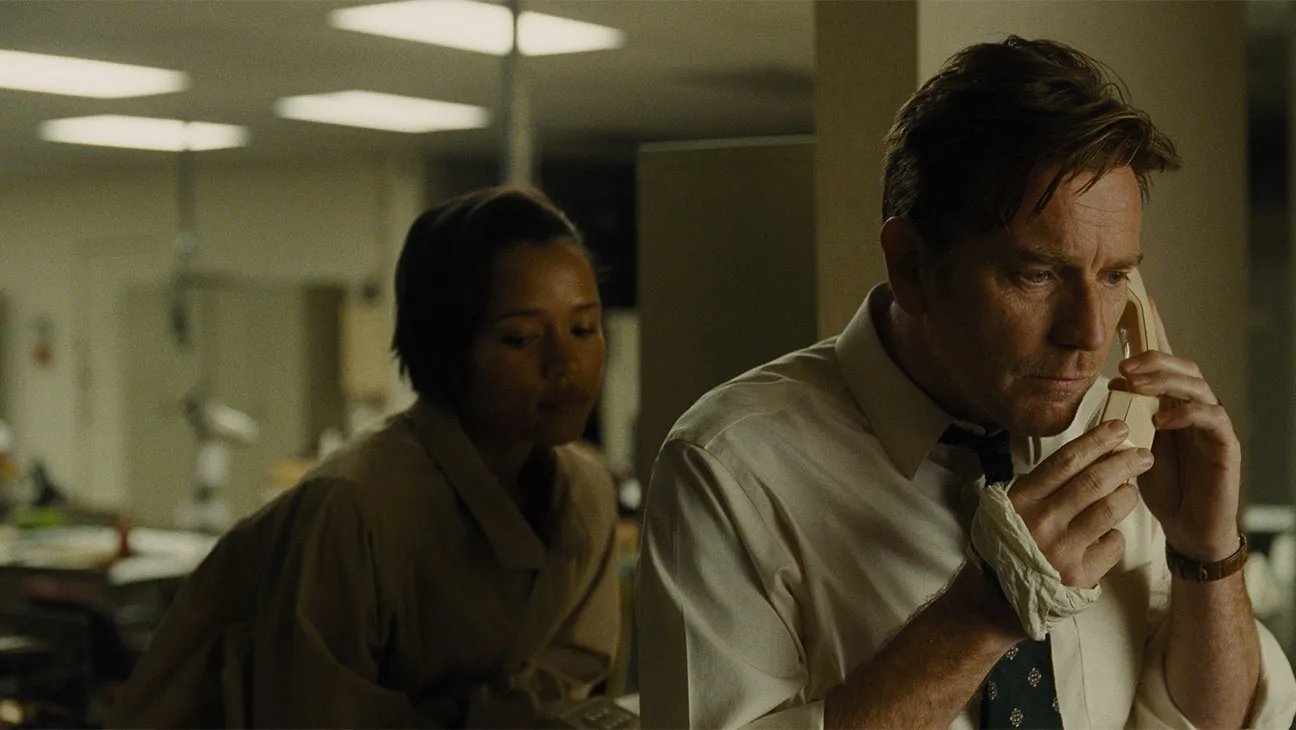
Family dynamics tend to be messy. It’s essentially a group of people you have no choice but to love unconditionally. It’s a difficult circumstance; if there is any faltering, it could turn into something you can’t let go of. These themes in films have been discussed for years, but more recently, thanks to filmmakers like Ari Aster, a new approach has been taken, highlighting the weirdness and absurdities of the entire situation. In his feature debut, Mother, Couch, Niclas Larsson attempts to find the weirdness in family struggles and relationships. While some moments stand out, he ultimately comes up short with little characterization, a lack of focus, and a genuine emptiness.
Mother, Couch starts with David (Ewan McGregor) walking towards a furniture store across an empty parking lot. The emptiness here is palpable and can be seen as a look into the psyche of David, but as the film continues, it becomes a significant issue for the film as a whole. In the store, he finds Bella (Taylor Russell), who works the store, and his brother Gruffudd (Rhys Ifans) as they are looking for a dresser for their elderly mother. However, their mother (Ellyn Burstyn) is upstairs on a couch, refusing to move. David attempts to remove her from the couch and the store while also dealing with issues in his family and the struggle of holding onto his mom, who is slowly fading away, all while discovering his childhood relationships might not have been what he thought.
As mentioned, this is Niclas Larsson’s first feature film. A director with only a few shorts under his belt took on a project with a hefty subject and a loaded cast. The ambition of Mother, Couch was there as the similarities to Beau is Afraid are apparent, and the influences of directors such as Ari Aster and Charlie Kaufmann are all over this film. Larsson attempts to tell this story with the same zany, confusing, and sometimes horrifying style that the previous directors have spent so much time perfecting over their careers. The issue is that those other directors have made a career on confusing and wacky styles while always keeping the focus clear and concise. Even in their most eccentric work, there is an understanding and a journey; where Mother, Couch falters the most is in telling that journey. Most of the film felt odd for the sake of being weird; there wasn’t much to grasp, and even the film’s main character, David, wasn’t provided enough depth to stick out.
Not sticking out seemed impossible when you look at the cast’s star power, including Ewan McGregor, Rhys Ifans, Ellyn Burstyn, Taylor Russell, and F. Murray Abraham (playing two roles). All these performers have proven how much of a presence they can be on screen over their long or short careers. However, aside from brief moments from Ewan McGregor in this film, all actors seemingly give one-note performances. I don’t think it is the actors themselves, but the script does not allow any of them the chance to bring any sort of emotional depth. One of the significant throughlines of the film is the lack of relationship between the siblings, and the significant emotional payoff in the end comes from that lack of relationship. However, this theme is only referenced throughout and, like most of the performances, is never given the time to flesh it out into a real thought-provoking idea.
In the third act, Mother, Couch finally shines, and Larsson’s script and directing feel most comfortable in its weirdness. The moments make sense, and the performance given by Ewan McGregor becomes highly emotional and deep. The film’s themes are realized and explored in highly original and thought-provoking ways. David’s relationship with his mother has been a strain on him for his entire life and is now affecting the relationship he has with his wife and children. This sense of letting go that he must endure is nuanced, and the subtle choices that Larsson makes might be on the nose, but they finally work within the film. There is a good film from this director, maybe great, but it would be better if he continues to learn from the highs of Mother, Couch, as they just sadly came too late in the film.
Ewan McGregor’s performance and Christopher Bear’s score highlight what could have been original and worthwhile. I appreciate Niclas Larsson’s ambition in his debut feature, while Mother, Couch falls just short due to its lack of focus and emptiness in terms of themes. The solid third act saved this film from being an utter mess. This potential for greatness in Larsson’s work excites me and leaves me hopeful and optimistic for what’s to come.
Director: Matt Reeves Writer: Mark Bomback, Rick Jaffa, Amanda Silver Stars: Gary Oldman, Keri Russell, Andy Serkis
Synopsis: The fragile peace between apes and humans is threatened as mistrust and betrayal threaten to plunge both tribes into a war for dominance over the Earth.
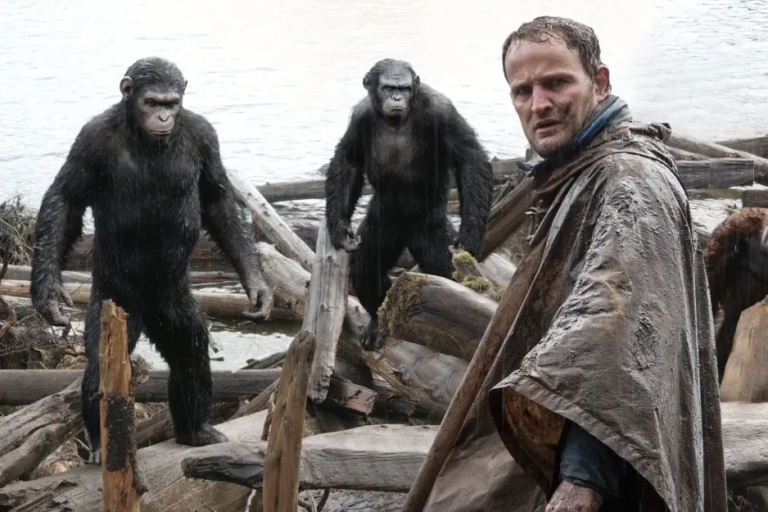
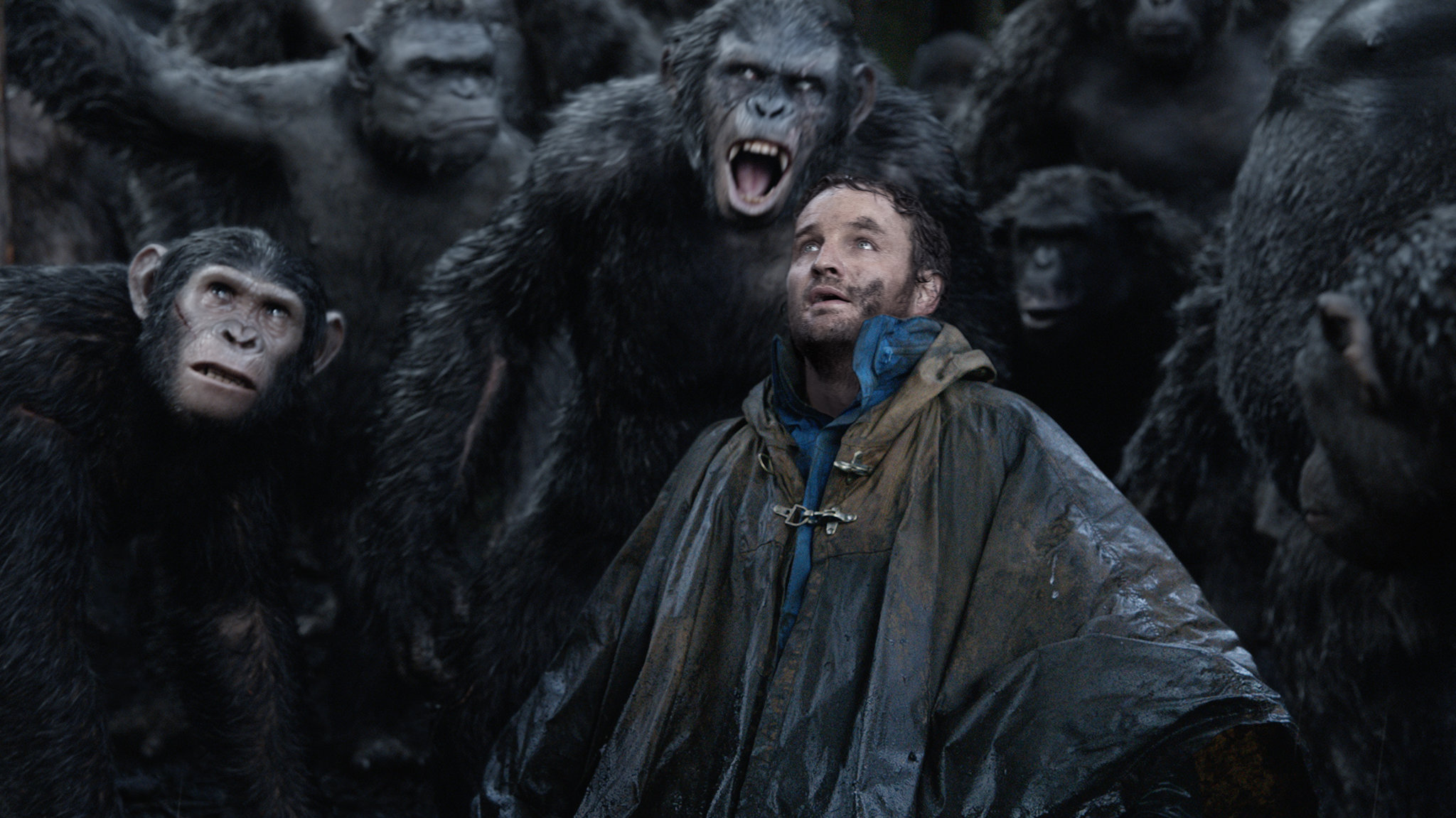
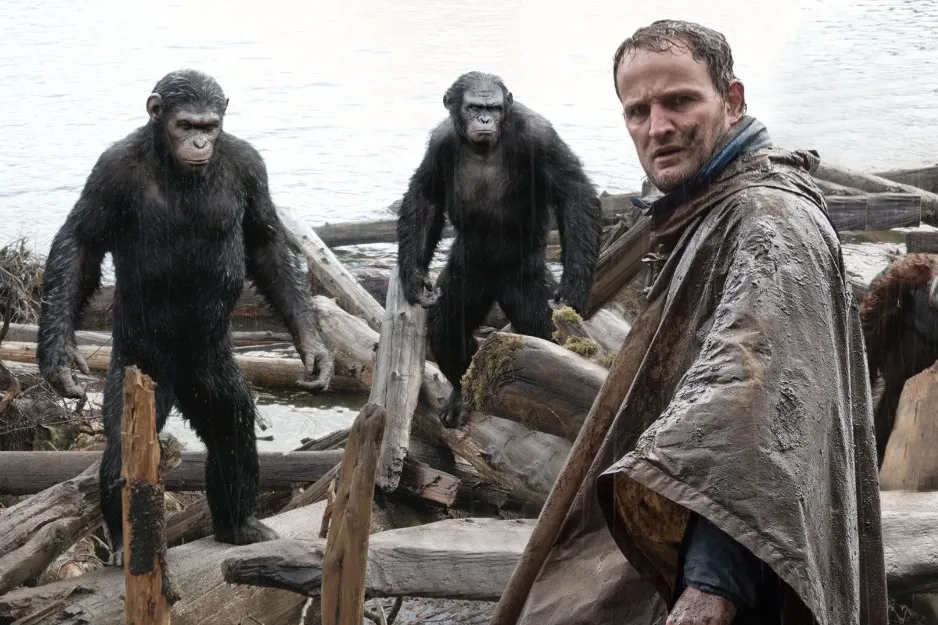
It’s been ten years since Dawn of the Planet of the Apes was released in theaters. The follow up to Rupert Wyatt’s Rise of the Planet of the Apes, and its relevance has only increased in the years since its release. Dawn of the Planet of the Apes opens with an epidemic driving the human race to extinction – a piece of science fiction in 2014, that felt all too real in 2024. Directed by Matt Reeves, Dawn of the Planet of the Apes is the second installment in the rebooted Planet of the Apes trilogy, which extends the story of Caesars’ rule over the apes in San Francisco as the threat of humans return.
There are many elements of Dawn of the Planet of the Apes that I could talk about. The motion capture, the environment & set design, the internal politics of the humans and apes… Dawn of the Planet of the Apes is a cinematic achievement in all of these categories. Nevermind the unforgettable performance of Andy Serkis’ in the role of Caesar, which deserves praise and study by actors of all ages. While all of these elements are worthy of discussion, there is one element of Dawn of the Planet of the Apes that I can’t stop thinking about: It’s use of sign language, subtitles, and speaking for dramatic purposes.
Every piece of media technically uses speaking for dramatic purposes. The vocal inflection in a performers’ voice is indicative of meaning beyond the words in isolation. Some films will use subtitles for comedic effect; Monty Python and the Quest for the Holy Grail is an example of the inherent comedy that can be mined in our latin based languages. These forms of drama often revolve around communicating an idea to the audience, along with a mood. These are micro-moments that inform an audience member about how characters feel, and are essential components of performance. What makes Dawn of the Planet of the Apes different is how it manages to critique the act of speaking through its parallel villages – and how it uses speaking to create drama in the story, rather than reacting to it.
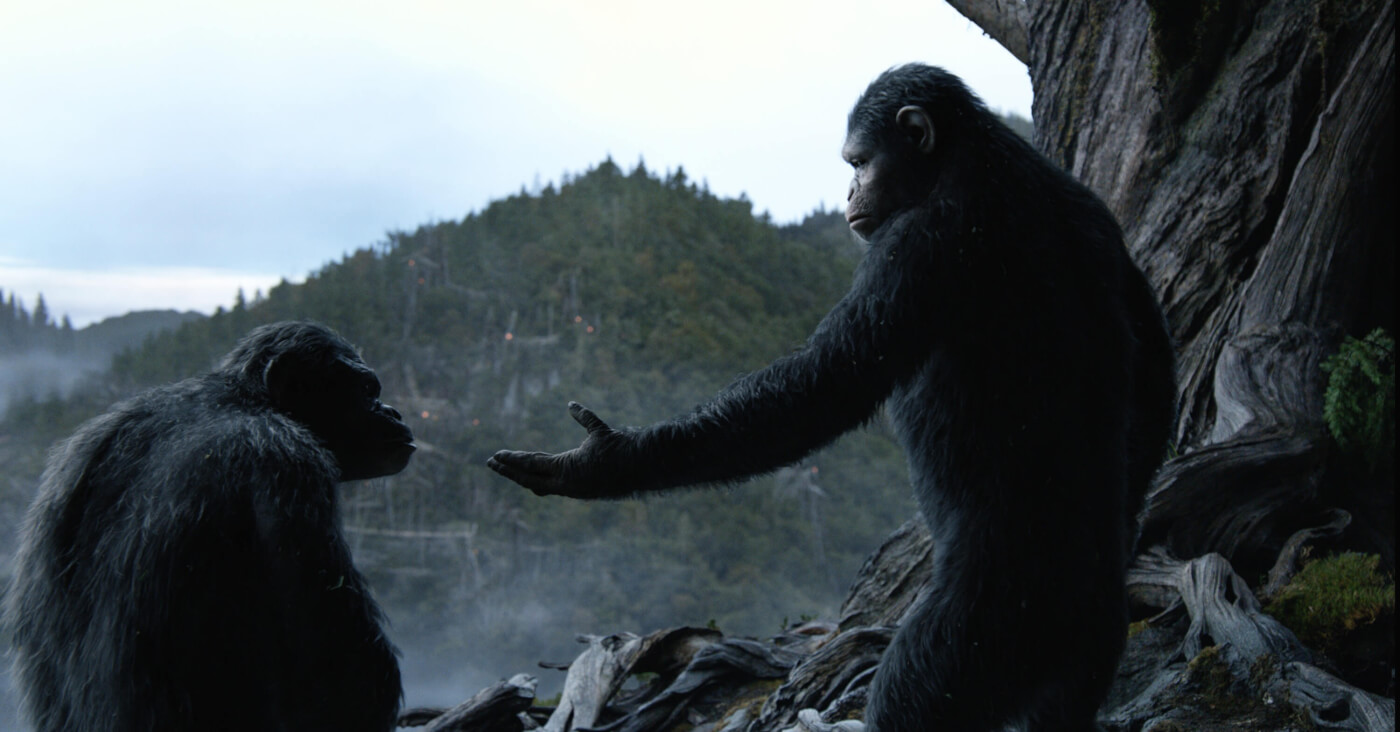
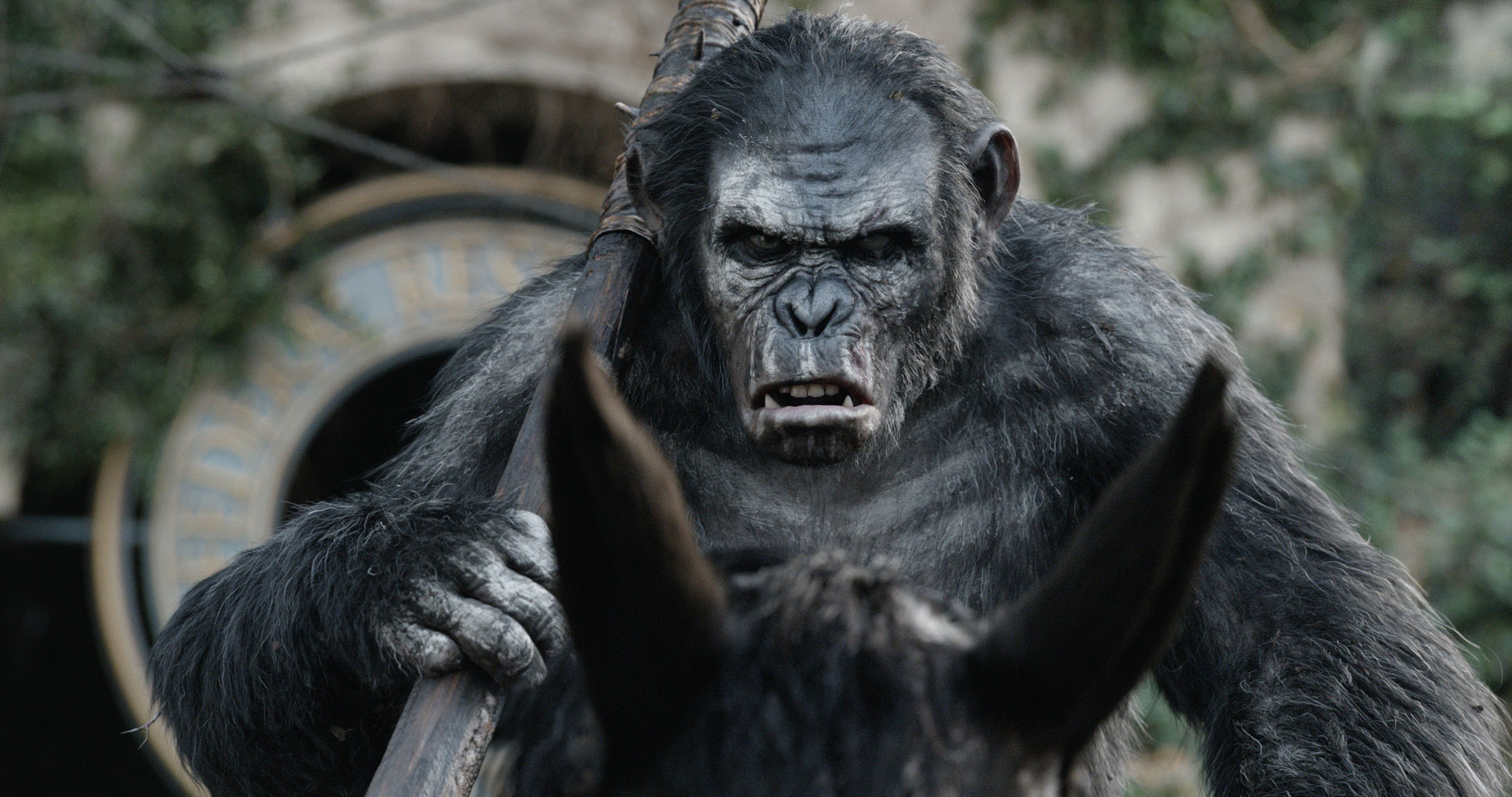
Dawn of the Planet of the Apes revolves around the conflict between the surviving humans of San Francisco – led by Dreyfus (Gary Oldman) and Malcolm (Jason Clarke) – and the ape village established by Caesar (Serkis) in the first film. Early in the film, there are two scenes which parallel one another: each side is trying to find out how to live with the other nearby. While these scenes highlight the tension rising between the two factions, and seem to narratively do the same thing – both sides don’t want war, but will fight for their survival – there is an interesting difference between the two cultures that I adore. In Caesar’s village, when the apes are discussing what to do, the ‘council’ all communicate in sign language. Everyone has an opportunity to speak and to listen – and as Koba (Toby Kebbell) attempts to rile up the other apes in the village towards war, Caesar is called to finally speak – and Caesar ends the cacophony of laughter and monkey noises with a stern no, before returning to sign to his council. Spoken word, in the village of apes, is framed as a near violent act of controlling one another. This is in direct contrast to the human village – who are all shouting for answers while attending an assembly in the courtyard while Dreyfus attempts to calm them down. Dreyfus can’t get a word in over the assembly, and has to resort to using a megaphone to get everyone’s attention and ‘buy time’ for Malcolms team to get the hydroelectric generator online.
These two scenes become drastically different because of the role of speech, and the dramatic weight offered to the one who speaks in each scene. In the human city, Dreyfus is barely clinging onto any political control over the humans – the only thing preventing mass panic to lead to internal violence. And for the apes, we see how Caesar is treated with complete reverence, and how Caesar chooses to allow all apes to communicate their ideas through quiet, engaged listening. Dawn of the Planet of the Apes is impactful to me because of how it depicts culture, and the culture of speaking.
The third act of Dawn of The Planet of the Apes goes one step further in solidifying this theme of speaking as violence. I will be discussing brief spoilers in this paragraph. In the third act, Koba violently enacts a coup, and instills himself as leader of the apes, before leading the apes into war. To solidify these actions, Koba always speaks to the colony of apes – whether it’s in a one-on-one discussion or to the entire group. Sign language is rejected by Koba – and Koba uses the reverence to Caesar to turn the conflict into a war of zealotry – not hurting humans is dishonoring Caesar. Even after Caesar returns, Koba still elects to speak against Caesar – using his voice as a platform to gain a following among apes.
The consistency of these interactions creates a theme of speaking as control – and leadership as the choice to listen, not speak. Dawn of the Planet of the Apes is a powerful film about culture, and what it means to lead and to follow. Koba chooses violence intentionally as a leader and is led to control by hate, which Koba enacts through speech and fear. Malcolm is a leader within the smaller group in charge of fixing the dam, and chooses to lead with curiosity and trust – key factors which allow the group to interact with Caesar successfully. Dreyfus is a leader who attempts to shepherd people through creating promises of safety, but ultimately is unable to gain the reverence of his people outside of these promises. And lastly, Caesar is a leader who chooses non-violence and peace above all else. “Ape don’t kill Ape” is the motto of Caesar’s village, and Caesar’s determination to not use violence creates an environment where all voices must be heard.
There are few blockbusters which manage to communicate so much through the use of languages, and Dawn of the Planet of the Apes manages to tell a much larger story outside of this one stylistic choice. In an election year where the leadership of the United States is once again in question, I appreciate how one stylistic choice can inform an audience of what strong leadership is and looks like. Film is a magical medium because of each of these tiny decisions that forms something larger. I don’t know who was responsible for this decision – it could have been Matt Reeves as a director, it may have been Andy Serkis as an actor coming in from the previous film, it may have been the writers, Mark Bomback, Rick Jaffa, and Amanda Silver. But what I do know is the impact of this decision on the film, which is positive, nuanced, and brilliant.
Amidst the stilted strangeness of each piece of the triptych that makes up Kinds of Kindness, there’s a point when the audience’s confused, uncomfortable laughter turns into genuine gasps of surprise. Even if the audience is paying attention to the film, they may not truly grasp the lens through which writers Yorgos Lanthimos and Efthimus Filippou view humanity. Their script for Kinds of Kindness, as well as their other English-language collaborations (The Lobster, The Killing of a Sacred Deer), have a nihilistic view of humanity.
Their film is about the way in which humans force control on one another and how those controlled humans crave that power over their lives. The controlled see it as a form of love. They’ve tricked themselves into believing these controllers to be benign and benevolent dictators. The way Lanthimos and Filippou have written these characters, we see no sympathy for them. We see only disgust that they can’t find the strength to overcome this strange indoctrination they’ve undergone. This script defiles the human spirit, and it is absolutely, intriguingly excellent.
Kinds of Kindness has an intelligence that takes a moment to think through. The script gets deep into the bowels of humanity and shows us a metaphor for the systems we let govern us. This oppression is one we allow in our lives because it’s all we’ve ever known. The few will always retain power over the many because we let them tell us they love us and falsely believe they mean it. Kinds of Kindness not only points out human foibles but takes us a step further in understanding how far our blind faith may take us down a dark, soulless path. It joins past Best Original Screenplay winners like Get Out, written by Jordan Peele, and Promising Young Woman, written by Emerald Fennell, that hold up something deeply disturbing that we rarely confront in our society.
On the other end of the spectrum are, well, many movies this year, really, but the best example, the best written of them, I think, is Ghostlight. The film is written by its co-director Kelly O’Sullivan, whose previous feature, Saint Francis, is a criminally underseen gem. O’Sullivan posits that we can’t all do it on our own, any of the great “its” of our lives. Humans, as flawed as we are, need community because a community can heal with empathy.
The brilliance of O’Sullivan’s script is that there are no instant or easy answers. The main character, Dan (Keith Kupferer), doesn’t pick up a copy of a play and suddenly realize how much he now understands his own grief. The script builds up to it as Dan learns to put his trust in his community and he finds a way to understand his anger and grief through art. Not only are you weeping through Dan’s understanding, but you are laughing along with a perfect balance of humor and heart.
Theater, film, and all the arts can bring out a wellspring of human empathy. The audience may never have gone through what Dan has gone through, seen what he’s seen, but through Kelly O’Sullivan’s terrific words, we can find that place inside us that understands and feels. We bring our own pain and wants and needs into the experience of watching the film, and its ending gives us hope. Ghostlight doesn’t shy away from that pain, but it shows us that all isn’t lost when we lose something we love because we still have love to give and people to give love to us, freely and without reservations. It joins past Best Original Screenplay winners like Milk, written by Dustin Lance Black, and Everything Everywhere All at Once, written by Daniel Kwan and Daniel Scheinert, that tap into something deeper and communal in our shared human experience.
This year, like many before it, could come down to a clash of philosophies. It could come down to whether you’re a glass half full or a glass half empty. Each point of view is valid, but either could show where people’s hearts and minds are just now.
***
Here is where I see the Best Original Screenplay race as of now.
Challengers – Justin Kuritzkes
Civil War – Alex Garland
Ghostlight – Kelly O’Sullivan
I Saw the TV Glow – Jane Schoenbrun
Kinds of Kindness – Yorgos Lanthimos, Efthimus Filippou
Synopsis: When FBI Agent Lee Harker is assigned to an unsolved serial killer case that takes an unexpected turn, revealing evidence of the occult, Harker discovers a personal connection to the killer and must stop him before he strikes again.
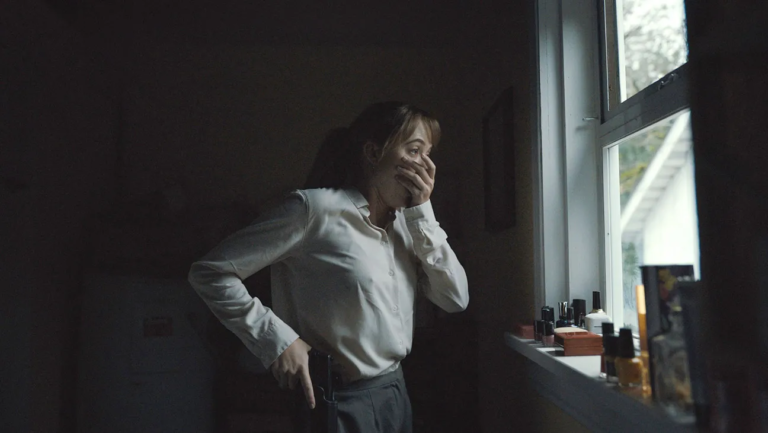
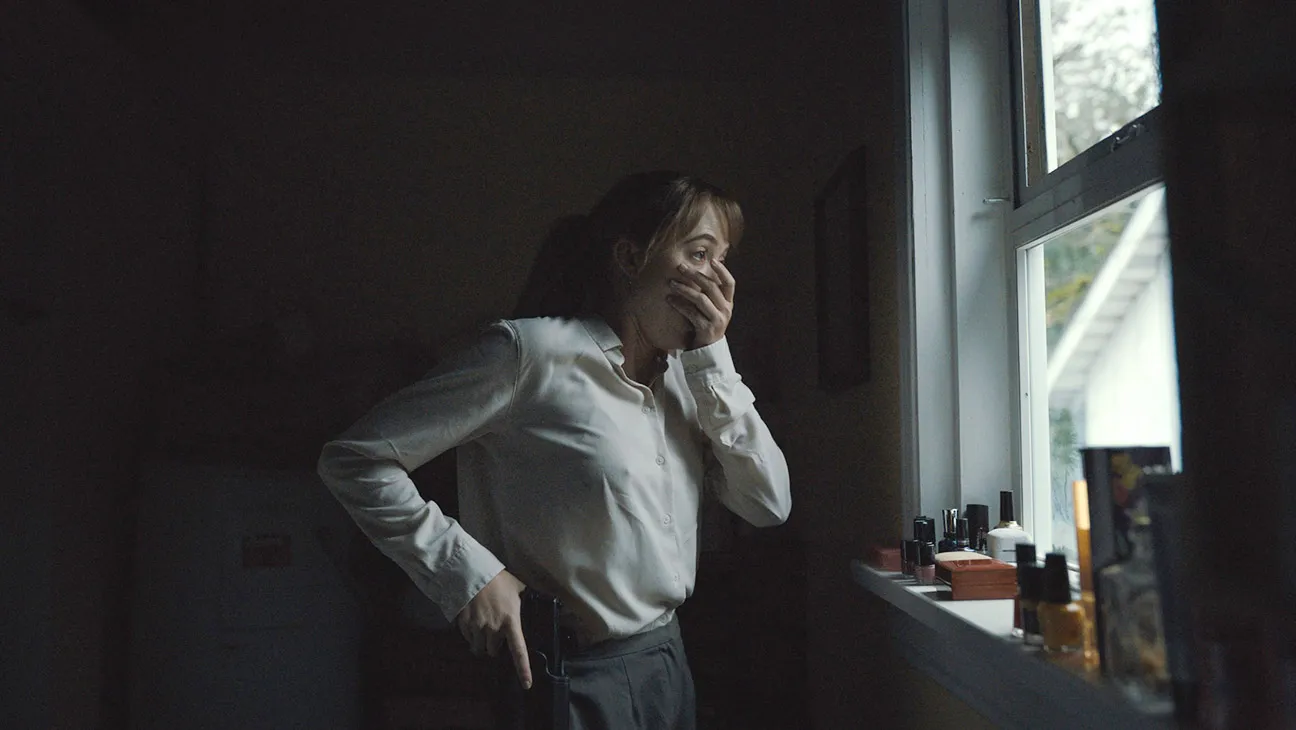
Lee Harker (Maika Monroe) struggles with eye contact. Fresh out of the academy, the green, stoic, “semi psychic” FBI prodigy tends to glue her peepers to the ground as opposed to resting them on her fellow agents, let alone the killers she spends her long days and nights hunting. The only time she seems capable of staring straight ahead is when she’s peering down the barrel of a gun, aiming it towards an unarmed suspect whose propensity for unimaginable violence is more dangerous than they are in the moment. She’s troubled and muted, but brilliant, able to determine that a vicious murderer is hiding in house no. 3525 based on nothing but a feeling she describes as a tap on her shoulder telling her to look there.
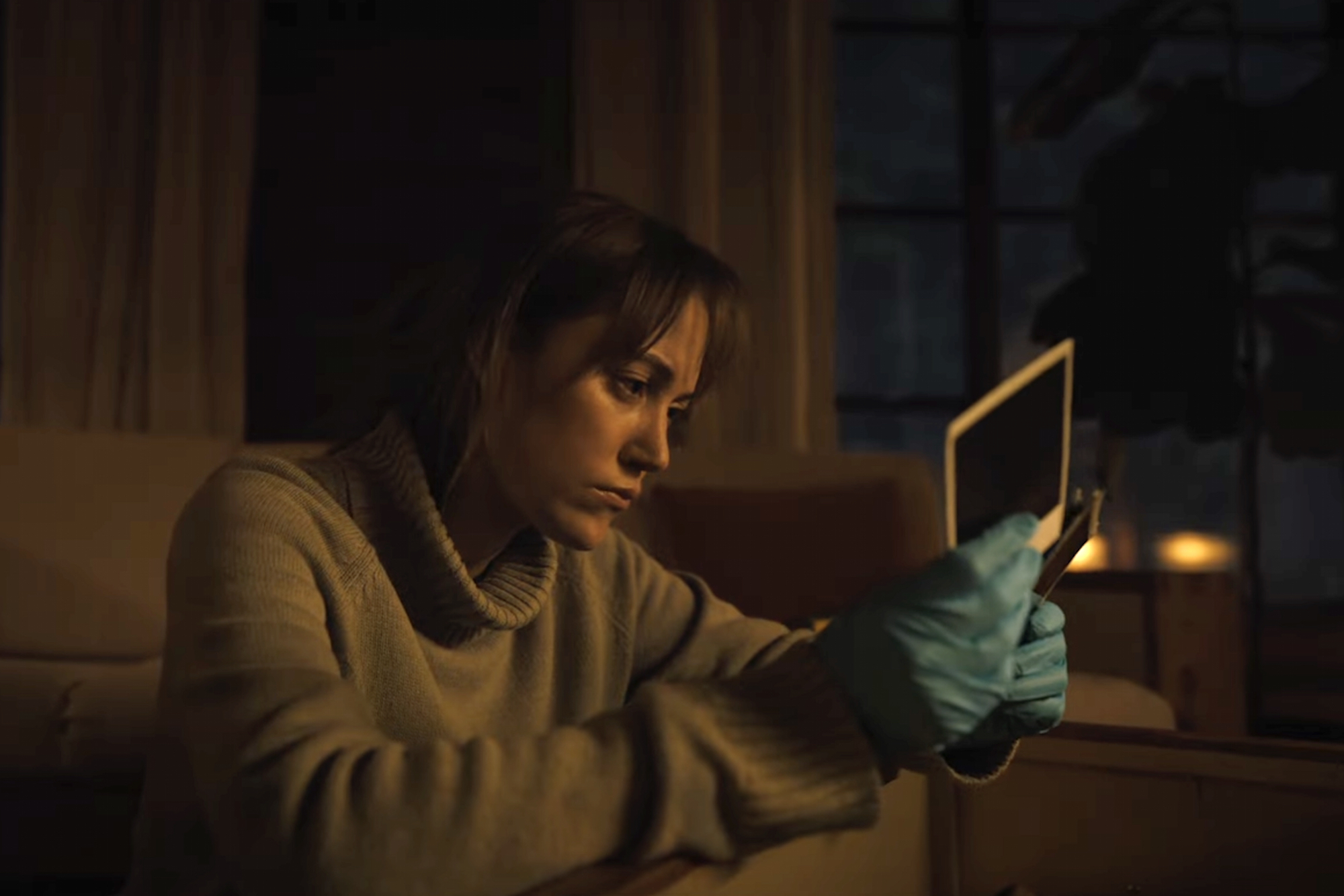
If only solving the crimes of a serial killer known only to the FBI as “Longlegs” were so simple. Over three decades, he has murdered close to 40 people in the Pacific Northwest, somehow managing to make each crime look like a murder-suicide in which a church-going father goes on a sudden rampage, viciously killing his wife and children before turning the gun on himself. This “Longlegs” leaves behind but one thing at each crime scene, a birthday card with a coded message delicately jotted out above his signature. And by one thing, I mean one thing: Each crime scene is barren of forensic evidence pointing toward the presence of an outsider at any time while the murders took place. Apart from general demographic similarities, these cards are the sole thing connecting each crime scene to the next. How he’s delivering them and disappearing without a trace is one mystery; how he’s convincing these fathers to kill, given that he isn’t physically present for the deaths, is another.
So goes the general set-up for Osgood Perkins’ Longlegs, a nightmarish flick about an elusive, menacing madman with a reputation that feels in lockstep with the film’s own renown, one that has long-preceded its release, let alone the first audiences who set eyes on it. Thanks almost entirely to a brilliant, cagey marketing campaign, Neon’s latest horror offering became number one with a bullet on “most anticipated” lists aplenty, with prospective viewers itching to know what the face of the creepy, high-pitched voice that accompanied its increasingly reticent trailers and promotional voicemail recordings looked like, despite knowing full-well that Nicolas Cage was set to appear in the titular role. Adding fuel to the fire, there is thebirthdaymurders.net, the film’s unofficial website that documents the history of this “Satan-worshiping psycho’s” crimes with a warning for visitors to “buckle up and hold on tight.” Finally, came the lofty praise from those who saw the film in advanced screenings, calling it the best serial killer film since masterpieces including The Silence of the Lambs, Se7en, and Zodiac. The opportunity to temper expectations was rendered hopeless; aloft they were, aloft they would stay.
These advertising stunts, if you will, are almost impossible to avoid when talking about Longlegs itself because of how well done they all were, and how disappointing the film initially felt in comparison to the work its studio had done to prop it up as this generation’s answer to a horrifying hypothetical Make-A-Wish in which Jeffrey Dahmer comes to your home for dinner. But in retrospect, that Longlegs fails to live up to its hype doesn’t make it a lesser film, but perhaps a more interesting one to discuss. A film is to its marketing campaign as a team is to its trash talk; you can make threats all you want, but what matters is whether or not they can deliver. Neon and, less so, Perkins pledged to provide revelations in horror cinema. But, as Lee corrects a fellow agent when referencing the New Testament chapter of the same name, it’s actually just “Revelation.” Not many, just one. That still counts for something, if not the exact feat that was promised.
Split into three chapters – “His Letters,” “All Your Little Things,” and “Birthday Girls” – Perkins’ fourth directorial effort unfolds like a police procedural in that we begin with a conundrum, follow it up with a slew of questions, and ultimately arrive at a solution, a frustrating structure for a movie that otherwise operates as a perfect enigma in and of itself. It’s clear from the moment we meet Lee that she’s different, a mind that sees cases through a different lens than her counterparts, making her methods and deductions complex in execution and explanation alike. It’s also evident that she has some sort of connection to Longlegs in relation to her complicated upbringing – a freakish, frantic Alicia Witt turns in the film’s best performance as Lee’s twisted mother – and it’s hinted at for much of the film’s runtime, until its startling conclusion rips the Band-Aid off with the brute force of an axe to the collarbone.
Because Perkins is adeptly unwilling to reveal too much of his hand until the perfect moment presents itself, he keeps Longlegs at an arm’s length, not just from Lee, but from the audience. Rest assured, you do get to see Cage in all his pale-faced, spine-chilling glory, but his presence comes in fits and starts; he only ever comes face-to-face with Lee once – fittingly, it’s in the film’s best scene – leaving a certain level of ambiguity to the horror he represents, much like the murderous maze he lays out for the FBI with every passing kill. Lee and her boss, Agent Carter (Blair Underwood), steadily uncover his clues, all of which he intentionally leads them to, and with every answer comes another puzzle. Longlegs (and Longlegs) loves its friendly game of cat-and-mouse, but who’s who in this particular duel lies in your interpretation of which party is in control.
Whether or not you’re patient enough to mull that over could spell your fate in regards to appreciating Longlegs for what it is, or clamoring for it to be what you wanted it to be. Frankly, that internal battle could apply to any of its many tricks and scares, or lack thereof. Which is not to say it isn’t scary, just that it doesn’t quite crawl under your skin and chew on your tendons the way many have implied it will. But perhaps that lies in the eye and stomach of the beholder just as much as the importance of the riddles Longlegs leaves in those terrifying birthday cards depends on your ability to decipher their meaning, not to mention whether you believe they have a meaning at all.
Sound designer Eugenio Battaglia and composer Zilgi supply a haunting, methodical atmosphere to the film, taking scenes that feel as though they could be bright in an alternate world and clouding them with an incomparable darkness, the sort that not even a night light could alleviate. Visually, everything feels a bit distant, with Andrés Arochi’s camera capturing an abundance of wide shots that provide viewers with a setting’s full scope. The distance feels comforting at times, until suddenly, you’re wrenched from the hallway to the heart of the living room, a brutal discovery suddenly lying inches from our gaze. While it all feels a bit literal, there is narrative and thematic depth throughout the film these shots and sounds surround, two attributes that allow for a bit of breathing room in a work that is hell-bent on being claustrophobic, if not suffocating.
Such an achievement in technicality and tension deserves a far better ending than what Perkins provides in the film’s final act, an exposition dump that threatens to undo everything that made Longlegs so cryptic from the start. When Longlegs himself refers to “the man downstairs” and/or “a friend of a friend of a friend,” it’s not all that difficult to deduce who (or what) he’s referring to, making his perplexing cryptograms feel like red herrings rather than pivotal devices in his devious game. But not every mysterious fright needs to be all that intricate in order to be considered a success, even if it’s a milder one than advertised. Longlegs is, indeed, a tale in which terror is ever-present. It just doesn’t manage to lurk in the shadows as long nor as subtly as we convinced ourselves it would.
On this episode, Brendan is joined by ISF writer Benjamin Wiebe to discuss Kevin Costner’s ambitious new project Horizon: American Saga – Chapter 1! Paying for much of it himself, you have to admire Costner’s longing for a type of movie we rarely get these days. Oh, and the fact he wants to make this into a 4-part saga. Insane! But that’s why we love him, and we had a great time talking about Chapter 1 of Horizon.
Review: Horizon: American Saga – Chapter 1(4:00) Director: Kevin Costner Writers: Kevin Costner, Jon Baird Stars: Kevin Costner, Sienna Miller, Sam Worthington
The Western is an ever-evolving genre. It’s a genre that built the myths of Manifest Destiny into sacrosanct lore. It’s a genre that lends itself to people taming and settling in a chaotic, lawless land. It’s a genre that celebrates the outlaw but reveres the lawman. It’s a genre that celebrates the camaraderie found on the trail or in the keeping of a community. This traditional Western is all but gone. Modern Westerns and Neo-Westerns tend to let the lines blur between black hats and white hats, creating chaos. The Neo-Westerns completely remove the 19th-century period, supplanting the conventional genre’s ideas, metaphors, and trappings to build new mythos in a more contemporary and post-World War I setting.
The last 25 years of Best Picture nominees have included a smattering of these Neo-Westerns, including Brokeback Mountain, No Country for Old Men, There Will Be Blood, Winter’s Bone, Django Unchained, The Revenant, Hell or High Water, The Power of the Dog, and Killers of the Flower Moon. Bridging the divide is the Coen brothers’ adaptation of True Grit, which has the more stark violence and wandering spirit of the Neo-Western mixed with the traditional trappings of the earlier genre films.
Jeff Nichols’ The Bikeriders fits that Neo-Western bill. These outlaw bikers flaunt the authority of the society in which they live. They do as they please and own the open road ahead of them. They’ve formed a community of outsiders and enthusiasts who care about each other and each other’s lives. They have their justice and laws, and they let no one stand in the way of them. Yes, it takes place far from the plains of the true west, but it’s about the yearning for a life free from someone else’s foot on their neck.
Kevin Costner’s Horizon: An American Saga bucks the trend of the Neo-Western and embraces all that the traditional Western has been. It’s a sprawling epic in story, character, and geography. There are the lawless, the lawful, and those caught in between just trying to survive. Costner knows this genre well and builds an intriguing, if languishing, world, as it is billed, so far, as a two-part epic. The vistas are breathtaking, and the balance between the predominantly White settlers and the Indigenous peoples is not tipped to favor one over the other. It evokes that classic style of filmmaking that many Academy members still yearn for, and it’s a return to form from one of their old favorites.
These two Westerns could easily duke it out come Oscar night, but some things may hold them back from triumphing. The Bikeriders is full of excellent performances, gorgeous technical details, and a fabulous script by an American auteur who the Academy has largely ignored. Jeff Nichols came close with Loving in 2016, but only Ruth Negga’s powerful performance in the Best Actress category broke through. Nichols is long overdue for some recognition of the fabulous work he’s done. Still, a more international voting body may not see Nichols’ brand of Americana as representative of the best in a larger field of nominees.
The same goes for Horizon: An American Saga. Kevin Costner is well-liked in the United States, but the fact that his film is, so far, two separate parts, the Academy may be less likely to embrace his vision. The film also doesn’t have strong critical support or striking or outstanding performances. It may not get enough support with only the beautiful work Costner and his team have put behind the camera.
***
Here’s where I see the Best Picture field at this point.
Director: Lee Jong-pil Writers: Kwon Seong-hwi, Kim Woo-geun Stars: Lee Je-hoon, Koo Kyo-hwan, Hong Xa-bin
Synopsis: Follows the struggles of a North Korean sergeant who is chased by a ruthless major after he defects.
Lee Jong-pil’s Escape contains a premise that should be treated with the utmost seriousness, focusing on a North Korean sergeant who longs for a better life and attempts to flee the country to move to the South. In the North, their militarized future is already predetermined, no matter if they will be discharged soon. Sergeant Lim Gyu-nam (Lee Je-hoon) knows he can attain a better life if he crosses the border and, as a result, has planned his escape meticulously.
However, when Kim Dong-hyuk (Hong Xa-bin), a low-ranking soldier, finds Lim’s escape plans and decides to flee, he threatens to expose the sergeant’s intentions. The two are quickly apprehended and imprisoned. Lim is freed after Kim confesses to drawing the map, and the sergeant is awarded a distinction for apprehending the defector. On the day of his discharge, however, security officer Lee Hyun-sang (Koo Kyo-hwan) promotes him, thereby preventing his chance of another life away from North Korea.
There, he sets his plan of escape in motion, freeing Kim and setting a course to the South. Of course, none of it goes as planned, and he soon makes it onto Lee’s radar. A cat-and-mouse game ensues between the two as Lee closes in on Lim, who, in turn, closes in on the border between the North and South, hopefully setting a course for freedom.
The tension between the sergeant who wakes up from the radicalization of living in such a repressive country and understands that the only way he can live a fulfilling life is by escaping and the radicalized security officer who will stop at nothing to capture and kill his friend should be at the front and center of the picture. Unfortunately, Jong-pil frequently distracts himself with sub-arcs that go virtually nowhere and attempts to add comedy to the situation when Lim’s path to freedom is a literal matter of life and death.
Yes, there’s a slapstick sequence in which Lim steals the car of a drunk general, whom he pretends to carry home, only for him to leave the general stranded. Or when he has his ‘Tom Cruise’ moment, putting on Ray Ban sunglasses to convince another general he’s on a classified mission. Perhaps adding levity to the proceedings would be appropriate if we weren’t talking about North Korea and treated the story in a fictionalized country. But the comedy here feels misplaced and dilutes the emotional impact of Lim’s plea for freedom.
Then there’s the attempt to add more depth to the protagonists through fragmented flashback scenes that serve very little to feed into the internal conflict boiling into Lim or a past relationship between Lee and Seon Woo-min (Song Kang) when the two were in Russia. While this piece of information adds a layer to our understanding of Lee’s repressed emotions (as he tries to keep his sexual orientation a secret), it belongs in a completely different movie since this flashback isn’t about the two friends, whose arc seems far more queer-coded than the actual queer relationship between Lee and another male character who only appears in three brief scenes, never to be seen again beyond a not-so-subtle hint to confirm something going on within Lee’s psyche.
These two distractions undermine the story’s seriousness. Still, it isn’t helped when the film contains underwritten and underdeveloped protagonists (whether leading or supporting the film) and antagonists. At some point, Lim and Kim meet a group of nomads looking for a prisoner. A massive action set piece ensues, which looks great but is nowhere near as impressive as it should be, and the characters who help them out disappear from the picture almost as soon as they are introduced, with little to no resolution in their arc.
It should be worth mentioning that the film’s cinematography loves to play with light and subdued colors, which gives it a striking palette during its action sequences. However, the cat-and-mouse scenario quickly becomes mind-numbing since Jong-pil never fills in the gaps on the characters beyond fragmented flashbacks that feel misplaced and add unneeded layers to the protagonists instead of focusing on Lim’s quest for freedom and Lee furthering down the rabbit hole of radicalization to repress his innate feelings. This should be at the film’s heart, especially when Je-hoon and Kyo-hwan give gripping turns, even if their characters aren’t fully realized on screen.
As a result, Escape can’t impress, even if Jong-pil tries to visually dazzle with a fast-paced and almost relentless barrage of action. However, barely anything works since the characters are poorly written and severely misguided. Attempts at making its story serious fall flat when Jong-pil adds comedy to the mix, even if its ending leaves room for a more hopeful and free future. Perhaps it could’ve been worthwhile if it cared about its protagonists beyond the limited flashbacks it gave them and would begin to develop their arc in the present moment. Unfortunately, Escape fails their characters and, in turn, the audience into investing their time into a thrilling game of cat-and-mouse that is truthfully hollow and tiresome.