The dog days of summer continue with a slew of new films being added to the list and one film getting a re-release. A female director victim to Soviet censorship has two of her films being brought out into the light finally. She joins Albert Brooks with two movies of his own getting their Criterion release. Then, an independent breakthrough that spoke on a painful subject that resonates today is also being rescued from obscurity while one of the biggest sweeps in Oscars history continues to be celebrated with a 4K-UHD release.
Brief Encounters / The Long Farewell: Two Films by Kira Muratova (1967, 1971)
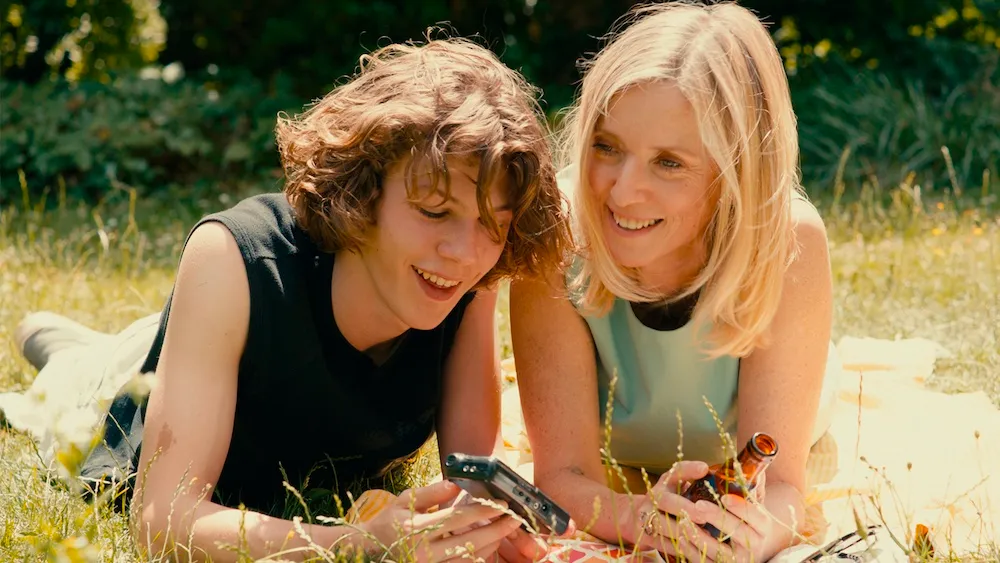
Ukrainian director Kira Muratova dared to make movies to enrage Soviet censors but when faced with pushback, Muratova just pushed back more. Her debut feature, Brief Encounters, is a romantic drama which was banned for twenty years, yet still became a highly watched piece of entertainment. It follows a romantic triangle featuring two women told in ways that contradicted the socialist realist line. Her follow up, The Long Farewell, resulted in her suspension from directing for years due to her habitual defiance of Soviet guidelines. It follows a mother and her rebellious son and his wish to move out to be with his father. The mother’s reaction is hostile, just like the censors who took issue with Murtatova’s avant-garde style that was more Western and insulting to social norms in the Soviet Union. While also banned for a time, both films would be released at the end of the country’s existence and bring Muratova into foreign recognition years after making her features.
Not A Pretty Picture (1975)Director Martha Coolidge made her debut with a docudrama story of her own personal experience of sexual assault by casting an actor to play a younger version of Coolidge. It goes into the circumstances and the aftermath of the act and discusses self-blame and traumatization that follows long after it has happened. A film barely seen at the time of its release (one of the few viewers was Francis Ford Coppola, who loved the movie), it was brought back to life in recent years and remains a living testament that the difference between then and now is almost none when discussing such a subject.
Real Life (1979)
The first of two new Albert Brooks’ films is a satire of a family through the lens of a documentarian (a fictional Albert Brooks) who spends a year with them. Going off the successful An American Family series, considered the first reality TV show, Brooks dips into the fray of dysfunction with a “perfect” family who let out their personal displeasures openly. Charles Grodin and Frances Lee McCain star as the married couple while Brooks shows off the gadgetry of his cameras with silliness and gets handsy with the actual story itself.
The Last Emperor (1987)
The only re-edition this month, Bernardo Bertolucci’s Oscar-winning epic on the life of Puyi, China’s last monarch, is an astounding triumph. With every technical skill being perfected, especially shooting inside The Forbidden City, Bertolucci’s vision carries an emotional impact that makes a perfect biographical film. Peter O’Toole may be the only recognizable star, but John Loan (as adult Puyi), Joan Chen, Victor Wong, and Ryuichi Sakamoto – who co-composed the Oscar-winning score with David Byrne and Cong Su – all are remarkable in playing their part of bringing back to life an era and a transformative life almost nearly forgotten.
Mother (1996)
The second release by Albert Brooks this month co-stars him and Debbie Reynolds, who had not been in a film role in decades and was offered the part after Doris Day and Nancy Reagan passed. After his second divorce, a writer moves back home with his mother to regroup, even though her passive-aggressive behavior seems to get under his skin because her favorite son, his younger brother, has been more successful. The complex power-dynamic between mother and son is explored with charming effect and some consider this Brooks’ best film he’s made so far.
On this episode, JD and Brendan have a fun conversation discussing Marvel’s latest entry in Deadpool & Wolverine! While the film has been polarizing (understandably), we try to find a middle ground and discuss all of the good and the bad that comes with it. Deadpool & Wolverine has its blemishes, but there are good things here too and we did our best to be open-minded about all of its ideas and execution.
Review: Deadpool & Wolverine(4:00) Director: Shawn Levy Writers: Ryan Reynolds, Rhett Reese, Paul Wernick, Zeb Wells, Shawn Levy Stars: Ryan Reynolds, Hugh Jackman, Emma Corrin, Matthew Macfadyen
The 81st Venice International Film Festival is around the corner and the whole lineup has been released. With Telluride and Toronto, the beginning of Oscar season kicks off as past winners (Poor Things, Roma, The Shape of Water) have gone on to Oscar success. Isabelle Huppert is this year’s Jury President with James Grey (Armageddon Time), Andrew Haigh (All Of Us Strangers), and Giuseppe Tornatore (Cinema Paradiso) also on the jury. Alfonso Cuaron is back to showcase his upcoming miniseries Disclaimer starring Cate Blanchett while Brady Corbett (Vox Lux) has his 3.5 hour Holocaust drama, The Brutalist. Here are other films to look for at La Biennale di Venezia.
Beetlejuice Beetlejuice
The opening film of the festival, Tim Burton finally has his sequel to his beloved 1988 film about the titular bio-exorcist (Michael Keaton) who runs afoul when called upon. This time, the Deetz family is back home in Winter River as the now-adult Lydia (Winona Ryder) is married and with her daughter, Astrid (Jenna Ortega), who has her own encounter with Betelgeuse. Justin Theroux, Monica Bellucci, and Willem Dafoe join Ryder and Catherine O’Hara returning for the long-awaited followup, and hopefully we don’t have to wait another 36 years for a third film, if made.
Joker: Folie a Deux
After its shocking win of the Golden Lion five years ago, Todd Phillips brings the sequel back to Venice with Joaquin Phoenix as the titular character again and Lady Gaga playing Harley Quinn, going on their mad love affair to create havoc again in Gotham. This time, Phillips incorporates the musical genre with mostly existing songs but also including Hildur Guonadottir and her Oscar-winning score in the background. It will be a very different experience watching this film, but with the massive success of Philips’ previous film, Folie a Deux will still be a highly anticipated event.
Maria
After biopics on Jackie Kennedy and Princess Diana, director Pablo Larrain comes with the biopic of an opera legend, Maria Callas. Angelina Jolie plays Callas in her last years during retirement alone in her Paris apartment with only memories of her past glory, including her love affair with shipping tycoon Aristotle Onassis. Steven Knight (Spencer, Peaky Blinders) re-teams with Larrain on picking out a chapter of a life filled with adoration and sadness at the end of what was a fairly short life.
Queer
Not long after his titilating tennis threesome Challengers, Luca Guadagnino has his followup about a drifter (Daniel Craig) who comes into town and becomes obsessed with another man (Drew Starkey). Set in 1940s Mexico, it’s a forbidden love tainted with drug use but fueled with sexual tension as with Challengers, with this film also being scripted by Justin Kuritzkes based on the novel by William S. Burroughs. Guadagnino has called Queer the most personal film he has ever done – and has soaked it up with “quite scandalous” sex scenes, which makes the anticipation spicier.
The Room Next Door
Pedro Almodovar comes with his long-awaited first English-speaking film (discounting short films) with Julianne Moore and Tilda Swinton. It follows a similar story from past Almodovar films; a mother and her daughter have a distant relationship, in part because of the daughter’s relationship with another woman. It deals with two types of war: actual war in which the mother is a war correspondent, and the war of wills on the reality of love. John Turturro and Alessandro Nivola co-star in Almodovar’s latest melodrama about estranged links.
Director: Chris Skotchdopole Writers: Chris Skotchdopole, Larry Fessenden, Rigo Garay Stars: Rigo Garay, Ella Rae Peck, Lorraine Farris, and John Speredakos
Synopsis: A newlywed couple is held captive in a remote lake house by a maniacally optimistic inventor and his sour wife who are desperate to finance his dream project with a half-baked blackmail plot.
Shane Castillo (Rigo Garay) and Leah (Ella Rae Peck) are posing for their wedding photographs. The photographer is asking them questions to get them into the mood for romantic shots. “How did you meet?” “What do you do?” Leah says proudly of Shane that he’s an author. She’s a publisher. “She works for me,” he jokes. “What do you write?” Nothing has been published yet, but Shane has written a “father and son” story. “It’s a bit more than that,” Leah exclaims and begins to tell the photographer about an author who wrote a bestseller called ‘Undocumented.’ She keeps talking to the photographer about literature and an upcoming article in the American Literature Critique. Shane’s eyes wander away from his bride to the bar. He’s looking for an escape route. One that becomes more pressing for him when his mother-in-law steps in asking for some “respectable” photographs of the couple (read more WASP friendly).
Whatever happened overnight at the Crystal Views hotel and wedding venue, one thing is certain – it didn’t involve a romantic night for the couple. Shane wakes up still in his wedding suit and immensely hung over. Leah is trying to just get them out of there and on their way to their actual honeymoon in a remote upstate cabin. Something which is delayed by the arrival of John Spinelli (John Speredakos), one of the cater waiters from the function room knocking on the window of Shane’s 1978 Cutlass. John’s apologizing for losing the couple’s cake topper and handing them champagne. He’s also making distinctly racist and sexist comments which Shane politely takes in while Leah, who was cornered by him before, cuts off as quickly as she can. It’s the kind of interaction no one particularly wants – not just because it comes from a middle-aged waiter sweating a certain desperate discontent, but more because extricating oneself from the situation requires polite dismissal at best, and rudeness being more effective.
On the road to the cabin, Shane and Leah go through what seems to be how their five-year-relationship has settled into. They love each other but there is a certain level of resentment rearing its head. “I can’t believe my mother talked me into the wedding!” Leah sighs after dealing with her not so savory relations. “We should have eloped,” Shane replies. Generally, that would be a couple on the same page, but something is off between them. They want to be married but they don’t want it that way. Leah capitulating to her family’s wishes annoys Shane. Shane not acknowledging the effort put in by her family annoys Leah. A deeper level of discontent surfaces when Shane’s father calls him, and Leah flashes a look of disdain at the number.
Shane’s father, an inveterate alcoholic, is the subject of his soon to be published book. Everything that Shane is now is based on his decision to turn his past into literary fodder for people he believes want stories from ‘street level’ without ever having to interact with ‘the street.’ His father wasn’t invited to the wedding, but his life is the meal ticket making his name. The cabin they are headed to belongs to Leah’s boss. Shane’s shiny new life with Leah comes with him exploiting and negating his Latino identity. Any feelings of guilt he has about that he’s projecting on to Leah. He’s also projecting his own anxiety about being only interesting because he has, or had, a gangsta swagger.
While Leah is trying to support Shane and is legitimately excited about the work he has done, he is becoming less sure that it belongs to him. When Leah says that it is something they have worked on together (which as his publishing agent is true) he snaps back that she doesn’t own any of the story. The book is the symbolic object which is dividing them more than it is bringing them together.
Leah and Shane get precious little time to tear strips off each other as soon they get an unexpected visit from John Spinelli who has driven hours to deliver their cake topper. Leah rightly wants to know how he knew where they were. He was added to the family Facebook group. He comes with his exhausted wife, Rose (Lorraine Farris) and an offer for the ‘rich people’ to help an entrepreneur out. Leah simply wants John and Rose to leave and is confused as to why Shane is being welcoming with the couple. Shane has his reasons – reasons which reveal him to be far less upstanding than he would like to believe.
Chris Skotchdopole switches from believable relationship drama into a dark hurdy-gurdy of black comedy theatrics which gets more desperate as each moment passes. The uninvited guests ensure they get their foot in the door and once there, they’re not going to leave without something. Why is John Spinelli there? Because he has an investment opportunity and a product pitch he’s going to deliver whether anyone likes it or not (and it’s clear even Rose doesn’t like it). Ladies and Gentlemen – please be seated while Spinelli Enterprises presents the Crumb Catcher.
The Crumb Catcher is an object of no conceivable worth to anyone except John Spinelli. What is it? In effect it doesn’t matter what it is because it is an auratic gesture to a time which never really existed. The Crumb Catcher is a lovingly designed mid-century modern table broom. Tired of waiters interrupting your romantic dinner by cleaning crumbs off your table? The solution is here! You can clean the crumbs off yourself and not have to interact with the lowly servers. It’s about to revolutionize fine dining and Leah and Shane have a chance to be in on the ground floor with an investment of 25 thousand dollars.
The Crumb Catcher is, of course, absurd. However, John Spinelli is deadly serious. Years of chasing the American dream and failing have left him on the edge of madness. “What happened to the middle class?” he opines. When did America stop rewarding innovation and invention? When did America stop caring about the guy who is ready to pull himself up by his bootstraps with hard work and a dream? John Spinelli is a man trying to provide for his wife and her kid. He’s the good guy! It’s elites like Leah who have overlooked him for years who should pay attention, but worse, it’s “thugs” like Shane who have leapfrogged him on the social scale.
Chris Skotchdopole, in conjunction with Larry Fessenden and Rigo Garay on script duties, uses an absurd and increasingly odd situation to ask some pertinent questions about American anxieties. Both Shane and John have fraught and dysfunctional pasts (what John hints at is extremely dark) and while one is questioning the validity of his upward social mobility and acting to sabotage it, the other is questioning why social mobility is on a downwards slope for him (assuming there was ever an upwards slope).
Joe Spinelli prefers the 1950s – a time where life was better. Better for whom? The picket fencers? Even John Spinelli’s delusions can’t go so far to think he’d ever have been one of them. It’s a familiar cry from those who feel disenfranchised to believe that there was some magical version of the past where they would have flourished. John Spinelli wants the apple pie America where his manhood is never questioned. Where he doesn’t have to stew in the reality that he’s married to a woman who doesn’t love him nor respect him and is tethered to him only because of her own desperation.
Shane has been waiting for the moment when someone points at him and shouts, “Fraud!” The fact that it comes from such an anomic and sweaty lifetime loser like Spinelli compounds his tragedy. The horror trappings are used skilfully – a home invasion, an increasingly dangerous man whose disappointments become sadistic, the inexorable defeat, and the knowledge at the end that if somehow these men had managed to rein in their insecurities, they wouldn’t have become destroyers.
Crumb Catcher is incredible. Tense, bitterly funny, cruel, and humane. Chris Skotchdopole gathers his people – Garay, Peck, Speredakos, and Farris onscreen and a wealth of indie legends behind it and makes a movie that is brutal and bizarre. Skotchdopole’s bleak carnival ride of failure is an American nightmare and panic attack. You’ll never forget Crumb Catcher.
The 49th Toronto International Film Festival (TIFF) is upon us, which means the start of Oscar predictions and seeing who is a player and who is a pretender. A lot of answers and speculation will come out about debuts and films that started at Cannes coming over to North America finally. Sean Baker’s Palme d’Or-winning Anora, Andrea Arnold’s Bird, and Jacques Audiard’s Emilia Perez all finally make their appearance fresh off their success at Cannes. Mike Leigh returns after six years away with Hard Truths, Walter Salles is back after a decade with I’m Still Here, and local legend David Cronenberg comes with his latest horror film, The Shrouds. Here are a few others to keep an eye on.
Conclave
Edward Berger follows up his Oscar-winning All Quiet On The Western Front with a thriller that follows a Cardinal (Ralph Fiennes) who has to find the successor to the deceased Pope. In the process, a shocking secret is found, threatening the establishment and the whole church. Stanley Tucci, John Lithgow, and Isabella Rossellini co-star in this thriller from novelist Robert Harris, who also wrote The Ghost Writer (2010) and An Officer And A Spy (2018) with director Roman Polanski.
Nightbitch
Writer/director Marielle Heller goes from the kindness of Mr. Rogers’ A Beautiful Day In The Neighborhood to the comedy horror with a not-so-kind title. The story follows a domestic wife and mother (Amy Adams) who suddenly has a radical change of behavior that may or may not show she is becoming a canine. Dark, funny, and a total change of style from Heller, this Amy Adams vehicle is set to be in theaters after it was initially planned to be released straight to Hulu, but was bought by Searchlight for a December release.
Nutcrackers
The opening film of TIFF this year is David Gordon Green’s return to indie comedy-dramas with Ben Stiller back in acting since his tremendous flop, Zoolander 2. (Never again, Ben. Please.) Stiller plays a workaholic who is forced to go to Ohio after his four nephews are orphaned suddenly, making the city slicker into a guardian on the farm far from his job life. It feels much like a return to his debut, George Washington, and far from his streak of major studio films; The Exorcist: Believer being a complete waste of time and talent is probably what convinced Green to go back to simple stories.
The Piano Lesson
The next play of August Wilson to be adapted for the screen is his Pulitzer Prize-winning drama set in the Great Depression about the Charles family and their prized heirloom. John David Washington, Samuel L. Jackson, Danielle Deadwyler, and Ray Fisher star in the directorial debut of Malcolm Washington, John David’s brother and the son of Denzel, who is producing. A Netflix release, this follows Ma Rainey’s Black Bottom and the Denzel-directed Fences,which was the first of August Wilson adaptations.
The Wild Robot
A robot (voiced by Lupita Nyong’o) is stuck on an island and becomes part of an environment with its inhabitants, including a fox (Pedro Pascal) and a goose (Kit Connor) for whom the robot acts as its mother. Writer/director Chris Sanders (Lilo & Stitch, How To Train Your Dragon) brings in a mix of classic Disney and Hayao Miyazaki to this adventure story for DreamWorks, immediately positioning itself as a player for Best Animated Feature against its Disney competitors. Catherine O’Hara, Bill Nighy, Stephanie Hsu, Mark Hamill, and Ving Rhames also lend their voices to this animated film.
On this episode, JD and Brendan discuss the Bertrand Bonello film The Beast! Hailed as one of the best films by many critics when it first came out, it certainly got our attention, so while we’re a little late to the party, we had to give this one a go and talk about all of it’s fascinating and weird complexities.
Review: The Beast(4:00) Director: Bertrand Bonello Writers: Bertrand Bonello Stars: Léa Seydoux, George MacKay
Director: Warren Fischer Stars: Dylan Brown, Renata Friedman, Ellen Mah
Synopsis: A young violin prodigy is manipulated and pushed to her psychological breaking point by the composer she adores.
As a neurodivergent person, it always matters to me how the different individuals and manifestations of the spectrum are portrayed on screen. When I received The Serena Variations, I didn’t know what to expect, but what I watched, certainly exceeded any expectations I could have had.
The Serena Variations is director Warren Fischer’s short debut. It is a tale of undiagnosed neurodivergence, brilliance, and talent. It is also the director’s homage to his mother and his relationship with the violin. This is a difficult film to watch if anyone is a neurodivergent artist and has struggled with their diagnosis. But it’s worth it. In one of its strongest moments, it elevates the feelings and focuses on one woman’s sanity and her grip on her art, as she goes on a hallucinogenic-induced trip. The sequence is stunning, visually appealing, and tremendously thought-provoking.
Undiagnosed neurodivergence is a serious issue, one that has to be handled with great care in terms of dramatic adaptation and artistic expression. But our modern society carries the burden of lifting the stigma associated with it so that more people find it in them to see proper diagnosis and acceptance. After such a diagnosis, coming to terms with oneself is never easy. However, when done correctly, it is a moment of freedom.
This film is all about the danger of music. Art is never an easy route nor is a plane on autopilot navigation. Artists are usually lost sailors adrift in an unpredictable sea. Fischer’s film captures that sensation perfectly through a psychedelic palette and spectacular camerawork that enhances the senses. Through his direction, the audience is allowed inside the protagonist’s mind, within the corners of her heightened sensory reception. In a way, it feels like a portal into a magical world that only Serena can access.
Dylan Brown as Serena steals the show. The director hasn’t only cast a neurodivergent actor, but he excelled in the casting process. Brown is not simply a representation of the role, but a true-to-the-bone artist, her eyes tell a million stories, and her portrayal of Serena is both chilling and exciting.
How Serena interacts with fellow musicians is another major theme, how artists evolve around each other, using one another for leverage, an anchor, or to bring each other down. Artists revel in their self-possessed state of existence, even if it comes at the expense of everything they meet in their wake; loved ones, careers, even their sanity.
The film carefully builds a world that otherwise seems foreign to neurotypicals. In Fischer’s hands, the otherwise mysterious neurodivergent experience appears familiar and inviting. It features a Requiem for a Dream-ish augmented reality that works because it comes from a place of truth and honesty. It’s rare to find a film that captures what goes on in a mind constantly in conversation with itself. However, in this short, the director succeeds to a great extent in creating a livable alternate universe where delirium and brains coexist, at odds but cohesively creating a violin solo piece that pulls on the strings too hard.
The Serena Variations is all about the call of the artistic sirens, how a love for the arts can be the road to perdition, to losing grip on the creative process itself. But it’s also about how painful and beautiful the act of losing oneself to the art is, how self-obsessed artists are, and how rewarding their selfishness can be.
Director: Shawn Levy Writers: Shawn Levy, Rhett Reese, Ryan Reynolds, Zeb Wells, Paul Wernick Stars: Ryan Reynolds, Hugh Jackman, Emma Corrin
Synopsis: Wolverine is recovering from his injuries when he crosses paths with the loudmouth Deadpool. They team up to defeat a common enemy.
There has been a lot of social media hype and even some backlash over another post-Avengers: Endgame entry into the Marvel Cinematic Universe with Deadpool & Wolverine. Part of this is due to the abysmal run of Phase Five films, including Ant-Man and the Wasp: Quantumania and the atrocious The Marvels, which has left me still trying to get the bad taste out of my mouth.
So, sometimes, a world, or in this case, a studio, needs a hero. The type of hero that Bonnie Tyler would hold out for and wax poetic about. One that is going to be strong, going to be fast, and, goddamn it, one that is going to be fresh from the fight. That man is Ryan Reynolds, now free from the shackles of 20th Century Fox, to bring his endlessly creative, exceptionally clever, impossibly meta, and whip-smart comedic mind to save the MCU and bring back an old friend for the ride.
Forget the “Firenado” in Twisters, the war rig chase scene in Furiosa: A Mad Max Saga, those lovable minions in Despicable Me 4, or those falling Death Angels filling the New York City timeline in A Quiet Place: Day One. No, just give me Deadpool and Wolverine walking in slow motion a handful of times to the Goo Goo Dolls’ “Name” or Madonna’s “Like a Prayer,” along with an adorable makeout session with the world’s ugliest pooch to make you forget life’s problems and giggle with (girlish or masculine) glee.
That’s the brilliance of Ryan Reynolds—a man who found a role that requires no shame and taps into the endlessly charming, self-deprecating humor that has made him a star. Trust me, Deadpool & Wolverine is the kind of injection of ballsy Canadian bravado that Marvel needs right now. It’s easily the funniest film of the year, and I’m not sure you’ll find a more entertaining one. At the very least, it aims to give you your money’s worth.
Do you not believe in the power of the comedic Canadian and Australian union? Well, I would love to tell you, but to avoid spoilers, here at InSession Film, we cannot reveal much (nor would I want to spoil the fun). What we can tell you is that Reynolds returns as Wade Wilson, AKA Deadpool, and the story picks up six years after the regenerating degenerate retired to live a quiet life in 2018’s Deadpool 2. However, that is all about to change when the Time Variance Authority (TVA) pays him a visit.
Led by Paradox (Succession’s Matthew Macfadyen), he calls upon Deadpool to meet his destiny. Paradox is overseeing a secret project, attempting to speed up the death of the Earth-10005 universe by using a “Time Ripper,” a deadly device that kills off timelines. Suddenly, Wade finds himself fulfilling his destiny to save his friends. Yet, how does Hugh Jackman’s Wolverine fit into the equation? You’ll have to watch to find out, but the first act, a 30-minute exposition sequence, is a wild ride.
Directed by Shawn Levy, with a script from himself, Reynolds, original Deadpool scribe Rhett Reese, Zeb Wells (Robot Chicken), and Paul Wernick (making up for his hand in the atrocious Ghosted), Deadpool & Wolverine offers smart, dirty, irreverent fun. It is hard to believe how effortlessly the script integrates so many inside jokes, gags, and fourth-wall-breaking moments without feeling overstuffed. This is remarkable because having five names on a script usually means the film will be chaotic.
However, beneath all the bloodshed, variant Deadpools, dark and sarcastic wit, lack of conventional morality, and ethical ambiguity, the film knows what it’s doing and finds some unexpected heart behind one of the world’s greatest anti-heroes. Additionally, the reverence for the history of Marvel comics that Reynolds infuses into the script pairs naturally with his wry and dry sense of humor, which is delightfully mischievous.
For heaven’s sake, the humor is even incorporated in the film’s soundtrack, one of the year’s best, that’s utterly fantastic from start to finish.
This makes Deadpool & Wolverine the best Phase Five film and a savior in the post-pandemic Marvel era. In other words, praise Marvel Jesus. Ryan Reynolds has found the fun again and saved the comic book summer blockbuster with nostalgic fueled euphoria in the form of larger than life heroes.
It’s not until midway through Horizon: An American Saga – Chapter 1 that we’re finally introduced to Kevin Costner’s character. As one would expect, his presence is immediately felt on the screen. Doubling as director, his entrance is framed with both intrigue and potential. We only have any sort of read on him as an audience because, of course, he’s Kevin Costner. And it’s only a few short scenes before we see his Hayes Ellison spring into action. But those expecting to see the traditionally cinematic Western-style duel may be shocked at how Costner and cinematographer J. Michael Muro frame this action sequence. Beyond its stark violence and quick dispelling of general Western iconography, there’s a single moment that practically encapsulates everything this film, and presumably, the entire saga, is setting out to achieve.
Costner’s Hayes spends the majority of this initial confrontation listening to a stranger we know to be volatile. Yet Costner, in an ever so gruff manner, brushes him off. We witness the shot highlighted in this article only upon escalation from this stranger. Moments after quelling the immediate threat, Hayes begins walking towards his enemy to ensure he stays down. He’s hiding behind a trough of water, and Muro points the camera at the back of this enemy, so we see his gun being raised over the trough. We don’t see Costner, but we know he’s in the direction of the weapon. The film then cuts to a close overhead of the trough, where we only see the reflection of Hayes’ face and raised weapon. The shots are fired, captured at a wide angle, and Hayes is safe. But then, Muro again treats us to the overhead shot. And we see Costner’s reflection lower his weapon and begin walking toward the now lifeless body. As his reflection gets closer to the edge of the trough, his face becomes nearly impossible to make out. The murky water takes a reflection that once resembled the legendary screen presence and now resembles nothing but a shadow. We can no longer make anything out. The shot lasts only a handful of seconds, but it speaks volumes. Through the violence depicted here and throughout the film, we all come upon an inevitable loss of self. And yet, is this not a film about the bedrock of the country we know today? This film certainly romanticizes large swaths of Western American iconography at times. However, this particular reflection shot is just one of many ways in which Muro takes cinematic iconography and paints a much darker light on America’s past than older Western films typically care to depict.
So much of Horizon: An American Saga – Chapter 1 is fragmented. Of course, this is partially due to the design of Costner’s grand storytelling idea. This first film is only a quarter of the story. However, the fragmentation also feels like the entire crux of the film in the first place. Take the example of standard establishing shots. Muro, in typical Western fashion, captures a range of incredible vistas. We see wide open land as far as the camera can capture. It’s miles upon miles of emptiness. There’s beauty likely to be found as audiences take in the splendor of true wilderness before contemporary society sets in. But there is also plenty of opportunity for loss to drag some down. Secondly, capturing such wide-open plains only makes claustrophobic scenes all the more frightening. An early scene in the film takes place in an incredibly small tunnel. Muro shoots the sequence primarily in tight close-ups. The width of the frame practically takes up the entirety of the tunnel. The tunnel is a means of escape from the destruction of a sprawling town. How Muro shoots it confirms that by no means is this an escape. No matter how wide open the land may seem, characters are forced into frightening situations. Throughout the American West, violence begot violence. Costner seems to have understood this, and Muro, in turn, captures traditional imagery with this in mind. For as much beauty and serenity as there is in this 180-minute film, there’s often a counterpart of bigoted uneasiness and environmental hardship captured as well. The massive ensemble of characters we see all have personal motivations influencing their actions. However, the characters Costner’s film follows the most are mainly ones that allow a sense of hate and anger to propel them forward.
It’s these wide-ranging vistas and open expanses that make it easy for characters to get lost in personal turmoils and prejudices. Inevitably, these hateful feelings lead to ruinous violence. The violence in Horizon: An American Saga – Chapter 1 is another element at which Muro’s cinematography excels. As written earlier, it’s captured shockingly quickly and with an almost unjust eye. After all, this is a harsh world, and Muro captures the imagery with equal ambivalence. These events are merely happening, and there’s nothing Muro or the viewer can do to stop them. Mind you, there is still some spectacle to it all. At his core, Costner seems to be a filmmaker who wants to entertain and engage his audience first and foremost.
But what’s most interesting about Horizon: An American Saga – Chapter 1 to me is all that is bubbling below the surface. We catch glimpses of that undercurrent through Muro’s cinematography, which pulls from traditional imagery of the genre and twists it into something new—something riding the line between critical and disappointment. As beautiful as these landscapes may be, it’s a reminder that the history of this country was built atop hatred, prejudice, and a consistent attempt to stoke violence before peace.
Shockingly enough, if Muro were to get recognized by the Academy, it would be the first Western feature film to show up on Hollywood’s biggest night in quite some time. While the early years of Hollywood found countless Western films being produced, it’s a genre that barely sees the big screen anymore. In the instance that they do, they’re usually neo-Westerns or pulling from the genre to take tropes in a new direction. There’s nothing wrong with that, but genre representation at the Oscars is always a pleasure. Plus, Costner shined a massive spotlight on the Western once before with his award-winning Dances with Wolves. To have his latest massive film do the same would be a poetic addition to an undeniable legacy. With all that’s occurred surrounding the release strategy of Horizon: An American Saga, such a celebration of it would be both exciting and rightfully deserved. Muro’s cinematography depicts characters venturing into uncharted territory, and with this film released in such a cinematic landscape, Costner has done the same.
Director: Jay Song Writer: Kim Hae-gon Stars: Oh Dal-su, Jang Young-nam, Kim Hong-pa
Synopsis: A suspense thriller depicting a peaceful couple’s daily life slowly turning into a nightmare due to a neighbor who visits every day at 4pm.
Premiering at the Fantasia International Film Festival as part of its main Cheval Noir competition, Jay Song’s 4PM starts out incredibly strong. Based on Amélie Nothomb’s The Stranger Next Door, the film’s conceit is laid out in its first act, where professor Jung-in (Oh Dal-su) takes a sabbatical from work and moves to the countryside with his wife, Hyun-sook (Jang Young-nam). The house and its setting seem peaceful enough, until they get a knock at the door at precisely 4pm by their neighbor, Doctor Park Yook-nam (Kim Hong-pa), who sits in the living room, without saying much, and leaves at exactly 6pm.
Of course, the couple wanted to pay a visit to their neighbor, and him showing up unannounced on the first day in which they settled into their new home seemed like the perfect opportunity for them to get to know each other. However, the doctor isn’t too open-minded and instead comes back every day at 4pm to sit, drink some tea, and leave at 6pm. This begins to interfere with the lives of the couple, who attempt to, at first, get rid of him. Nothing works, and the movie then takes a sharp turn, both aesthetically and thematically.
At first, it’s engrossing. The movie, which starts with simple, yet refined photography to represent the idyll of the couple’s lives, becomes far more erratic as their lives get disturbed daily at 4pm. The camera begins to shake (with Song going so far as to use a GoPro when the professor runs chaotically towards the doctor) and distort (fisheye is notably used in one key moment), with Steve M. Choe’s editing growing more precise and exacting. The match cuts are sharp and effective, with a strong montage representing exactly how much the doctor’s unexplained visits take a toll on the married couple. In that regard, Song terrifically pulls us in for a good forty or so minutes until a Parasite-like reveal begins to change the rather simple story 4PM initially sets up.
And that’s where the movie begins to lose itself, because it becomes immediately clear that Song is going virtually nowhere with neither his story nor the character work he strongly laid out before changing the scene. It will be difficult to give anything away, and since the film isn’t out in the public eye, there will be no spoilers here. However, one should know that a story like this should be keen on slowly revealing its details as the film progresses, which Song doesn’t do. Of course, there’s much subversion going down here, but it needs to be executed, from a storytelling and thematic perspective, in a smart and cogent way.
However, Song seems to forget all about his characters in the film’s second half, and instead takes far too many drastic turns with them that undermine how they were established in the beginning. The professor is far too unrecognizable at the end from the calm demeanor he usually conveys for most of the runtime and resorts to methods that feel improbable, even if the annoyance of the doctor grows as he never takes no for an answer. Perhaps Song wants to make a character study on how humans, even the most stable, can resort to violence or extreme acts if their sanity feels threatened. Unfortunately, I never registered with the protagonist as he makes decisions that make no shred of sense, even during its tense, but underwhelmingly surreal climax.
As a result, 4PM can never exceed the wild expectations it sets for itself in its first half. While I appreciate a movie that dazzles visually and experiments with all types of cameras (and camera angles) to exacerbate its sense of tension, alongside some pretty solid performances from its cast, there’s very little to hold onto as the movie reaches its finish line. I will say that the final shot will stick with me long after I’m done watching it, but at what cost?
This week on Women InSession, we take a look at the great Tom Cruise and his dramatic roles that make him more than just the impressive action star that he’s defined by today! We discuss Risky Business, Born on the Fourth of July, A Few Good Men, Jerry Maguire, Eyes Wide Shut, and many more!
Panel: Kristin Battestella, Zita Short, Amy Thomasson, Jaylan Salah
On that note, check out this week’s show and let us know what you think in the comment section. Thanks for listening and for supporting the InSession Film Podcast!
Director: Rob Reiner Writer: Nora Ephron Stars: Meg Ryan, Billy Crystal, Bruno Kirby, Carrie Fisher
Synopsis: Harry and Sally have known each other for years, and are very good friends, but they fear sex would ruin the friendship.
There has been much debate over the past few decades regarding Meg Ryan’s greatest work in the romantic comedy sector of cinema. The answer is definitive. It is, and always has been, When Harry Met Sally. Not only is it Meg Ryan’s best romantic comedy, but it’s the greatest work in the genre of all time. It’s the perfect storm of cast and crew finding each other at the right time and establishing chemistry and rhythm that has since been unmatched.
There’s no better place to start with this film than the script, the backbone of the movie that keeps things moving. This is only the third script of Nora Ephron’s that crossed the finish line of being released, with the prior two being directed by Mike Nichols. This script is funny and witty, and every scene has a purpose. Nothing should be cut out and it makes the most of every second. When Harry Met Sally doesn’t fall into the trap of other similar films, particularly modern romantic comedies, that overload their story with extraneous scenes that increase the runtime way past what is necessary. Something especially notable about Ephron’s work here is that even though there are a plethora of amazingly quotable one-liners, they are all part of the dialogue between the characters and not just used to get a laugh at the end of a scene. Both Harry and Sally are written well and fleshed out to where just a couple of interactions with them tell us exactly who they are. It takes massive writing chops to pull that off so quickly.
While Nora Ephron went on to direct her work for most of the rest of her career, it took six scripts to get there. After consecutive collaborations with Mike Nichols, Ephron hands the reins of When Harry Met Sally over to Rob Reiner amid a historic stretch. Between 1986 and 1992, Reiner directed Stand By Me, The Princess Bride, When Harry Met Sally, Misery, and A Few Good Men. Talk about an all-time run. Reiner is at the top of his game here, allowing his straightforward style to let the script work its magic and the actors run with it. In addition to Reiner’s direction, future director Barry Sonnenfeld is behind the camera here offering his cinematic eye. The two of them capture the beauty of New York City in fall and winter in their unique way, letting the colors and sights speak for themselves without extra flare and flash. Every time Harry and Sally are walking through parts of the city I can’t help but think this era was the best time to ever live in the Big Apple and anyone there now is just chasing a life that will never exist again.
The behind-the-camera work sets the stage for the real stars of the show, Billy Crystal and Meg Ryan. Both Harry Burns and Sally Albright are played and written so perfectly that films have been chasing variations of their characters for decades since the film’s release. Each of them has their ways of living that they stick to, Harry with his rules of relationships and Sally with knowing specifically what she wants and how things should be done. Their chemistry together is truly singular in the genre, as it’s more than just pure physical attraction. There’s a deep connection between them, once they each let the other one in a little bit. For a while in the film, they exhibit what true friendship can be like, regardless of gender. Of course, the story must take them to the romantic pit, but their relationship still exhibits a level of closeness that is hard to achieve in any relationship. With no disrespect to one Tom Hanks, Billy Crystal has unquestionably the best chemistry and is the greatest scene partner that Meg Ryan has ever had. Their dialogue flows and bounces off one another so naturally. Carrie Fisher and Bruno Kirby also turn in great performances as Harry and Sally’s best friends, and the four of them engage in the most electric landline telephone conversation ever committed to film. It’s well known now that they had to actually all be on the phone together to pull this off, and the scene is so much better for it.
The impact of When Harry Met Sally is impossible to understate. The writing, direction, and acting are unimpeachable and the combined efforts of all involved helped bring the world into the modern era of the romantic comedy. Individually, great things come for almost everyone after this film but the greatness found here will never be replicated. Try as you might, it can’t be done. It’s a perfect movie, the pinnacle of Meg Ryan’s career, and the only thing I think about when thinking about Billy Crystal.
94-year-old June Squibb is the star of the summer! The Oscar nominee plays the titular Thelma, a grandma who gets conned while trying to help her grandson (Fred Hechinger).
Thelma, available now on VOD, is hysterical and sweet in equal measure. A movie that left me grinning in delight—a must-see, pure and simple.
Producers ZoëWorth and Chris Kaye join InSession Film to discuss championing the indie comedy from the earliest stages of production and helping director Josh Margolin deliver a confident, finely executed film debut.
Shadan Larki: First of all, thank you so much for being here.
Zoë Worth: Are you kidding? Thank you for having us.
Larki: I’m afraid this interview will just be 20 minutes of me gushing about this movie.
Chris Kaye: Terrible interview! [Laughs]. That sounds great.
Larki: I smiled from beginning to end watching Thelma. There were moments when I went, “Aww,” and then went right back to smiling again. That was my viewing experience.
Worth: That’s great to hear. We feel like we’ve watched it hundreds, if not thousands, of times, and we feel the same way.
Kaye: Yeah, it’s amazing that we can still smile and laugh at the movie.
Larki: Have you been able to watch Thelma with a crowd and get that reaction and feedback?
Worth: Oh yeah, it’s been great. The first time we experienced that was at Sundance. Then, we went around with [director] Josh Margolin to some regional festivals and got a glimpse into different age groups and cities. Now that it’s out, we find ourselves lurking around Los Angeles, watching different crowds take it in because we can’t get enough of it.
Larki: So, given that you guys have watched Thelma quite a few times [laughs], are there moments or little things that you picked up on after the fact?
Kaye: You know, I think what’s been so lovely and heartening is that the movie is a comedy. We think about it that way. But the drama and emotions seem to play well and affect people, especially the ending. When we’re lurking in the shadows at the theater and hearing people sniffling, it’s very heartening. It feels like the movie is succeeding and connecting with people.
Worth: It’s also fun to hear people applaud, especially at the end.
Larki: Given that you had Josh Margolin, a writer and director with a clear vision and inspired by his relationship with his grandma, how do you, as producers, come in, aid that, and shape it?
Worth: We certainly are creative producers. I’m a screenwriter; that’s how I met Chris. He was developing a project we’re still working on together. I’ve been involved in artistic groups with Josh for 10 or 15 years. He brought Thelma into our Thursday night writing group, where we read it aloud for the first time and fell in love with it. You said it in your question—how do you protect and amplify that vision? Chris and I focused on keeping the heart and the complicated tonal balance, not tipping too far into parody or melodrama, and ensuring the stakes were on track. Josh had the vision from the start. Chris and I did a lot of “yes and” to flesh out details and amplify character, like with Harvey or Richard Roundtree as Ben.
Kaye: This is such a deeply personal movie to Josh. It’s about his family. It’s about his real grandma, Thelma. And I think the word ‘protect’ is a really great word that Zoë just said in that, I think we are always trying to protect Josh’s vision and help him make the best version of his movie possible and to keep supporting that through every step of the production process.
Larki: Chris, this is your first credited project as a producer. What was that like? It’s one hell of a great way to kick off this chapter of your career.
Kaye: [Laughs]. Yes, we’re feeling grateful that this is the first film of this scale for either of us.
I have been working for producers for such a long time. I was an assistant to producers. I was a creative executive to producers. I’ve talked about producing intangibly for a long time, so to actually take that first step onto a set and discover that everything I’ve been talking about, I can actually put into action was so thrilling.
And I’m so happy that it got to be this movie with my friends, with Zoë, who I’ve known for years. And with Josh, who I’ve known not as long, but who’s become a really close friend of mine. I couldn’t really ask for anything better than this.
Larki: Let’s talk about the June Squibb of it all. I’m just so happy that she has this vehicle, literally and figuratively, for her star power and her ability.
When did she come into the project relative to when you guys became involved?
Worth: Around the same time, super early. That was something that Josh had put into the script, his mind, and his hopes and dreams for Thelma.
But that was being played out parallel to Chris and my involvement. His friend, Beanie Feldstein, the wonderful actress, is a longtime friend of the Margolin family and knows the real Thelma. She said when Josh told her that he was planning on making a debut that was about Grandma, she calls Thelma Grandma. And when she learned that Josh had written this, she said, ‘Well, I hope you’re planning on bringing it to June.’ And Josh said, ‘Yes, that would be my dream.’
That played out while Chris and I were getting serious about trying to make this happen. Within a couple of weeks, we learned June was in the cart with us, and we were able to make things very real from that point forward.
Larki: What I loved about Thelma is it’s a movie you don’t see anymore. There’s no CGI or big explosions. It’s about human beings and this family going through a complicated life transition. I’m so happy Thelma had a theatrical release. Can you talk about championing this movie in today’s cinematic landscape and what it means to see it come to fruition this way?
Kaye: Zoë and I talk a lot about how this is the kind of movie that we’d be attracted to as moviegoers. It’s the kind of movie we grew up watching. We talk about how there is a space in the independent landscape for these artful comedies that can be about the human experience but still be funny.
Finding a partner like Magnolia Pictures, who also believed that Thelma could be a theatrical experience because seeing it with a crowd makes you realize that this is a communal experience. It’s been such a hard couple of years that a comedy that also packs an emotional punch is a bit like an antidote to many of the more difficult things we’ve been going through.
Worth: I’d underscore the idea that there’s the whole business side. There’s also the creative side and the belief and insistence that comedies can have depth, that comedies can be artfully made, that they can translate, and that they don’t have to be dumb or the lowest common denominator.
That’s something that Chris and I believe. And Josh, I mean, he’s one of the funniest, but also the deepest writers, you know, that we know. And that’s a big headline for us, trying to put forward comedies that can mean something and be artfully made.
Larki: Do either of you have your grandmas or grandma-like figures that you can connect to the story?
Worth: I don’t have my grandparents with me anymore, but I often think about them through this. I just spoke this morning with one of my grandmother’s best friends who is so proud of this and has been sharing it with her friends and our family. It’s been kind of the next best thing. Also, one cool thing about this movie is that we shot a lot of it at the MPTF, which is the Motion Picture Television Fund. They have an amazing residential living campus out here in Woodland Hills, just outside of L.A. So, we have this amazing connection to our entertainment elders through their residence. We shot a good portion of the movie there and also did some volunteer work and fun stuff with the residents. We’ve gotten to know them, and the screening there went over really, really well. We were able to tap into our Hollywood elders in that way and get their fun comments and questions and watch them take the ride.
Larki: That’s amazing! Thank you for sharing that.
Kaye: I didn’t really grow up with my grandparents. So, in a way, the process of making this movie has allowed me to live vicariously through everybody else’s grandparents. The MPTF was such a sweet way to start building a connection with a generation that I’ve never had much experience with, honestly.
Larki: Thelma has so many great running gags and recurring bits of comedy. Do you have any favorites? Mine would have to be Thelma’s insistence that she knows random people.
Worth: That’s a good one! There are a lot. I love the ‘I think I know her.’ I love the use of the hearing aids.
Kaye: Starey Gary (David Giuliani)!
Worth: You might not recognize me, but I actually played the theater director of Annie at the end of the movie! Josh is so good at payoffs. I commend his ability to have payoffs for as many runners as there are in a movie that isn’t chock-full of ridiculousness.
Kaye: Also, musically, Nick Chuba’s score, I would say that the flute is one of my favorite runners, what it does for the character of Thelma, and just how playful it can be.
Larki: I thought the score and sound work was really interesting, too, because it mirrors the feedback you would get in your hearing aid. I thought that was cool. You mentioned that you guys would be working together more in the future. Can you tell me a little bit about what might be cooking?
Worth: I would say that this team is actively working on multiple projects together, particularly in the comedy space. Some are in a similar scope as Thelma, and some are a little bit bigger.
Kaye: We went into it as friends and came out of it as even closer friends. We have a great relationship with Thelma’s financiers. So, we’re figuring a few things out.
Larki: Zoë as you mentioned the tonal balance, Thelma does have so many different things and pulls them off so brilliantly. Can you guys talk a little bit about that and what it was like? Were you guys able to be on set a lot?
Worth: Oh yeah! Thank you. That was the main thing here. If you look at everything kind of in its parts, the story’s really clear, the characters are clear, the emotional depth is resonant, but how can you weave one ride fluidly between the stakes, the action genre, the comedy, and make it all feel of a piece?
Josh talks a lot about getting performances and shooting it in a very straight way, often shooting the action from Thelma’s point of view. That’s a score thing as well. Nick scored the action from Thelma’s point of view. Thelma’s never the butt of a joke. We’re in it with her, and it’s like Tom Cruise’s long-running shot, but it’s her walking to the post office. It’s all very much coming from her POV.
June talks about authenticity all the time, being real. But part of that is also owning the laughs, leaning into what’s funny or ridiculous or silly and owning that side of it, too. It was really this calibration thing—never losing the fun, but not tipping into a place where you lose the authenticity of the characters and their journey.
David Bolen, the DP, Nick Chuba, the composer, and all of our department heads were working with Josh in a way that made the movie feel lived in. And then the things that happen that are a bit ridiculous can still feel like life. I think that was a really important tonal tightrope walk.
Kaye: I think that’s a great point. Every department did buy into this tone and how to sell it. Having that level of buy-in from top to bottom made our jobs easier. We could always point everyone towards that tone we talked about, and they could always be like, ‘Right, I can’t go too far this way or too far that way. It was so helpful to have that buy-in.
Larki: I think it’s really hard to make a good movie because if it were easier, there’d be more of them. And I just think this is a really, really good movie. I can’t wait to watch it again.
Worth: Right! Thelma is a really fun movie for an intergenerational conversation. We’ve heard a lot of feedback from audiences that someone can be 20 or 80 and really get a lot out of the movie, even if those are slightly different things. Sometimes they’re the same thing. That’s been a beautiful, cool, unique thing about this movie. I would say, see it with someone you love. And it’s the Summer of Squibb!
Director: Joel Schumacher Writers: John Grisham, Akiva Goldsman, Robert Getchell Stars: Susan Sarandon, Tommy Lee Jones, Brand Renfro
Synopsis: A young boy who witnessed the suicide of a mafia lawyer hires an attorney to protect him when the District Attorney tries to use him to take down a mob family.
I still remember the first time I saw The Client. It was a Friday, one of my two days off from school. My dad had rented the VHS as usual. It was in 1995, I was 7. As a wide-eyed and very imaginative neurodivergent kid, films to me were portals to a faraway world, where kids got in danger and adults treated them with wisdom and kindness…sometimes.
Everyone’s reason for watching this film was different back then. My dad was, and always will be, a big Tommy Lee Jones fan. My mom was bored and preferred a Jean Claude Van Damme or a Tom Cruise film. I would devour whatever film my dad rented, and my little sister tagged along, clinging to her big sister for guidance. “Is that a good movie?” “I believe so,” I’d shrug, hiding my overt enthusiasm over something as silly as movie night, since every night in my family was movie night.
As a former bookworm, I read all of John Grisham novels as a teen. I loved his style of legal thrillers, but also his characters. I loved how there was always a Don Quixote trope to flirt with, a David and Goliath theme. This feature is one of those opportunities to see Grisham’s themes and style fully fleshed out.
The first thing I remember about The Client is Susan Sarandon. As a kid, I loved Sarandon. To me, she was a strange-looking lady, all red hair and so many F-bombs. She always smoked or drank -hadn’t seen Dead Man Walking thankfully till later in life when she played a nun- and took no BS from anyone. The fact that the whole film universe revolved around her and a little kid was exhilarating to me.
I love serious films where kids get to interact with adults. Those were the happy days before we grimly realized what most of these child actors went through behind the scenes and in the dark recesses of big Hollywood studios. But as a young girl, a child among the adults always made the movie feel better for me. Especially if the child actor was exceptionally gifted. The late Brad Renfro. who played Mark, was brilliant.
Mark was everything I wanted to be as a kid; street-smart, snarky, cute, and unafraid of adults. He was a protective older brother and a good son. Now that I watch the film with adult eyes, I can see how terrified he was of them, but how he tried to play it cool to survive. Another thing that I noticed as I grew up was how the system harshly treats poor kids. Being poor is always an anomaly, but being a poor child is a bigger disability than most people think. It exposes kids to unimaginable injustice, cruelty, and predatory behavior. Children are vulnerable and voiceless, and if their parents cannot be the voice they rightfully deserve, they will get lost between the crushing feet of adults, organized systems, and governmental inadequacies in meeting their needs and protecting them. The film makes an excellent point of showing the effect of poverty, physical abuse, and an unstable family structure on children, along with the consequences they face because of that.
But a film like that means nothing without its main protagonist and no, that’s not Jones as a sleaze-ball, slick-style, pompous, Bible-quoting US attorney named Reverend Roy Foltrigg. It’s Sarandon as the down-on-her-luck hero of this journey. The first moment we see Reggie Love, the red-haired lawyer with a mouth on her, and compassion she hides behind her calm exterior, she’s trying to open a window, and she’s on her desk, wearing a cute skirt and a sleeveless blouse. She turns and it’s Sarandon in her ‘90s rizz and glory. She’s spectacular and I instantly remember falling in love with her all over again.
The misogyny and sexism that a female lawyer is treated with in this film, strikes me as scary because it is handled as the norm, as if it is truly expected of people to dismiss her and call her honey and darling. Even her client, a poor eleven-year-old boy, doesn’t respect her initially. Not to mention her state as a former mental health patient, and how she is shamed for having gone down a rocky road of inebriety and drug addiction. As a woman, all of these scenes are tough to watch, back then nothing hit a nerve. I didn’t experience the pain I felt right now -as someone constantly struggling with mental health issues- as I watched people humiliating and belittling a woman who finally got her wits together and decided to rise from the ashes.
What I find amusing are all the Elvis Presley references in this film. Those were the least of my concerns when I watched it in 1995, something I never would have noticed or paid attention to. Joel Schumacher brilliantly captures the Memphis spirit and heightens the tension in the climactic confession scene, when Mark sits down with his lawyer and bares his soul, admitting for the first time in front of an adult that he is afraid.It’s difficult now to watch the film without remembering Renfro’s tragic death at the young age of 25. As millennials, we are doomed with our teenage crushes from him to River Phoenix, Jonathan Brandis, and even Heath Ledger. It’s strange how you can rarely take the context out of the film, how it can both hurt and elevate the performance or the memory of watching it. Regardless of all the narrative surrounding it, The Client is a compelling legal thriller that cannot be made today, not even straight to streaming because what kind of audience reception would they analyze for content starring a fresh-faced child actor and a not-your-typical leading lady?
It’s an understatement that Disney’s reign over the Star Wars empire has been contentious. The Force Awakens went from well liked reboot to symbol of corporate cynicism within a couple of years of its release. The Last Jedi defines the term divisive. The Rise of Skywalker was disliked by just about everyone. The Mandalorian started out beloved before slipping into cultural irrelevancy. Andor is adored by most who watched it, but not that many watched it. Rogue One and Solo have their fans (the former more than the latter), but nobody is holding them up as a patch on what George Lucas did in the ‘70s and ‘80s. And that’s not even touching on the overblown controversies surrounding The Acolyte or Obi-Wan Kenobi.
The great promise of a Star Wars renaissance that everyone bought into around 2015 has largely turned out to be a mirage. The new, post-prequels era that literally opened with the line ‘this will begin to make things right’ has, in the eyes of many, done the exact opposite. And while Disney’s products have floundered, the films that they were originally positioned as a corrective to have experienced a renaissance. The once dominant opinion that the Star Wars prequels were a childhood ruining disaster stopped being the cultural consensus some time ago.
This is down to several factors. The kids who grew up with the prequels came of age and got more comfortable admitting how much they loved those movies. The Clone Wars TV show gave new context to the characters and plotlines. Meme culture turned flaws into fondly remembered foibles. As opinions warmed, a broader reappraisal started to happen, celebrating the ambition and inventiveness rather than mocking the awkward comedy and stilted dialogue.
Which begs the question; could the same thing happen to other, similarly derided prequels? See, what isn’t remarked on or discussed as frequently as you might think is that both The Lord of the Rings and Harry Potter, two of the only franchises that could rival Star Wars for popular success, followed in its footsteps with their very own underwhelming prequel trilogies.
It’s not a one-to-one comparison. The Hobbit films started as a mooted adaptation of J.R.R. Tolkien’s children’s book prelude, ballooned to two films in development and then had a third unceremoniously tacked on during production. The Fantastic Beasts films, meanwhile, were conceived as a five-part series that ended up providing a conclusion after three due to declining box office, a growing pile of controversies surrounding key creatives, and obvious audience apathy.
Neither trilogy lacks for ambition. Peter Jackson tried to expand the story of The Hobbit beyond the relatively childlike fairy tale constraints of the novel into a more epic set up for his Rings films, while the Fantastic Beasts movies built on the tonal and thematic darkness of the latter Potters, with which they shared director David Yates.
But there’s a strong argument that this very ambition accounts for much of how these films were received. The Hobbit trilogy is overflowing with videogame-style action scenes (think the mind-numbing barrel sequence or Legolas running up falling rocks), dwarves breaking into spontaneous songs about somebody they only just met, and plenty of broad, silly humor. All of which might have rankled fans of the darker, grittier Lord of the Rings movies, but was either present in the source material, or was at least largely true to its tone. However, it becomes harder to accept this stuff when we’re also subjected to Lake Town politics, the bureaucratic struggles of the White Council and, in the Extended Editions, graphic scenes of orc heads being turned to pulp by bladed chariot wheels.
The Beasts movies are even less consistent. For every charming venture into Newt’s creature packed suitcase or jauntily scored scene of magical monster hijinks, there’s Grindelwald ordering the murder of a child, or a convoluted reflection on the rise of wizard fascism. It begs the question of who exactly the films are meant for; older fans who grew up with the originals and might crave something meatier, or a new generation of kids. While you might argue that no ten-year-old is going to be engaged by Grindelwald’s attempts to hoodwink the magic UN by infiltrating the German ministry, critics said the exact same thing about all the senate scenes in the Star Wars prequels and it’s precisely the generation who grew up with them that has spearheaded the reappraisal.
All three trilogies share a creative tension, a sense that what those telling these stories want to do isn’t what the stories themselves more naturally are. Maybe this was part of the problem – returning filmmakers craving the chance to do new things in an old playground.
The lack of risk in modern blockbuster filmmaking has been detrimental to the landscape, so it can sometimes feel counterintuitive to be overly critical to big budget movies that do take wild swings. The relative redemption of the Star Wars prequels proves that it can take time for those risks to pay off. But similarities in foibles don’t guarantee similarities in outcome. Without equivalent time having passed, it’s difficult to judge whether the Hobbit or Fantastic Beasts movies could be met with their own reappraisals, but the early signs don’t point to yes.
If it took a disappointing franchise return to stoke audience fondness towards the Star Wars prequels, then The Lord of the Rings has already had that. It’s rare to find anyone enormously enthusiastic about Amazon’s The Rings of Power, but while that series was met with its fair share of dislike it never felt like anyone was using it as a chance to announce that the Hobbit movies were secretly good all along. It’s true that The Rings of Power is not technically part of Jackson’s franchise, but with Amazon doing everything legally in its power to evoke his movies, your average viewer won’t be aware of that. Plus, the delineation hasn’t remotely halted the angry YouTube comparisons – although interestingly, more to the Rings films than the Hobbit ones.
The Potter franchise, meanwhile, is allegedly rebooting with a multi-season television adaptation of the books, but there aren’t any prominent voices proclaiming this as either the fix that Potter needs or an injustice to the unfinished saga of Newt Scamander. We can’t gauge what effect the series might have on the Beasts films’ legacy until it emerges, but it doesn’t seem like there are strong enough feelings on those movies for general audiences to much care either way.
And that, possibly, is the biggest tell when it comes to how these various trilogies might be evaluated in the future. The Star Wars prequels prompted rage and debate and spitting fury. Did anyone adopt such a hardline position on The Hobbit or Fantastic Beasts? Passion pointed in either direction means there’s been an impact. An impact means something will be remembered and discussed and as long as that remains true there’s always the chance of a different perspective.
Neither of the two newer prequel series has a Jar Jar Binks or a Palpatine, a Duel of the Fates or an ‘I don’t like sand’. The Star Wars prequels are loaded with moments that are iconic and memorable for both the right and wrong reasons. It’s hard to think of anything in the Hobbit or Beasts movies that might endure in the same way.
This isn’t to suggest that those films aren’t worth discussing. Neither trilogy is quite the cynical brand extension that Disney now specialises in, but nor are they the result of a singular, unfettered creative vision. The Star Wars prequels represented a popular auteur operating without oversight or restriction in his own invented universe. The only real comparison is James Cameron’s ongoing Avatar projects, but those films have never swung as wildly, never hit quite the same dizzying heights or confounding lows of Lucas’ second trilogy.
It’s also worth touching on Ridley Scott’s unfinished Alien prequel series, despite it being a) not a trilogy and b) aimed at a more explicitly adult audience than any of the above franchises. Both Prometheus and Covenant grapple with heady, interesting ideas in often half-baked ways, but the fact that the grapple at all has earned them a burgeoning fan respect. With the upcoming Romulus seemingly promising a ‘back-to-basics’ approach, it could well be that audiences find themselves missing the bolder choices of Scott’s newer films in ways that invite renewed mainstream appreciation.
It’s impossible to argue a case based on something that hasn’t happened yet, but one thing that makes the Star Wars prequels so unique is that what followed them promised a return to what audiences claimed to want but ultimately provided an unflattering comparison between bold-but-flawed filmmaking and a surface-level facsimile of old favorites. Only time – and further franchise entries – can really answer the question of whether a previously derided cycle of movies can find a new appreciation. But it’s fascinating to speculate and in doing so, to question why something might or might not achieve it.
No comparative works really mirror the extremely specific circumstances ofThe Phantom Menace, Attack of the Clones and Revenge of the Sith. It’s unlikely any will ever have the same tortured and tangled journey through popular perception or prompt the same impassioned and divided discussion years after their release. More’s the pity.
When a frantic call to rescue her grandson turns out to be a con, 93-year-old Thelma embarks on a revenge mission. June Squibb, armed with her stolen electric scooter fanny pack and life alert button, isn’t saving the world, but in her own ever-shrinking sphere, righting this wrong is a Herculean task.
Thelma’s stunt coordinator, Ryan Sturz, relished the opportunity to tackle authentic small-scale action, allowing him creative control and more involvement on set. The result is a collaborative experience Sturz adored, and a finished product he speaks of with great pride.
Thelma is now available on all VOD platforms. Read InSession Film’s complete interview with stunt coordinator Ryan Sturz below:
Shadan Larki: Ryan, welcome to InSession Film! Stunt coordinators and stunt workers are having a moment of long-overdue appreciation. There’s been much conversation about what you all do and how you contribute to cinema. Tell me about yourself and your journey to where you are today.
Ryan Sturz: I grew up in the Caribbean in South America and Germany on a steady diet of American movies. John Wayne Westerns, John Ford movies, you name it. And I think just growing up as a boy, I always wanted to break stuff, and the idea of getting paid to break things, crash cars, and all that seems really appealing.
I moved to the U. S. in the, in 1999. I went to film school at USC. I studied film. I learned about camera angles and editing and all that. I learned how to put an action scene together. And that’s been my genesis. I was road racing motorcycles right out of film school. And I thought that I was interested in motorsports. And so I got into the stunt driving aspect of it. I like cowboy work and horses. So, I worked on Westerns and did a lot of horse horseback stuff, but because I had that film school background. I got into the stunt coordinating thing early on.
Pretty early in my stunt career, producers and directors realized I could put a scene together, bringing me on to coordinate. So, other folks might have a performer career for 15 to 20 years before they start to choreograph. For me, it was kind of simultaneous. I started performing and then choreographing almost at the same time.
SL: How do you approach your role as a stunt coordinator and your collaboration with your director?
RS: I like to serve the story first. Somebody will send me a script, and I’ll read it. And I’ll have a pretty good idea of what the action should look like.
For example, a script might say there’s a car crash. But the car crash can be a big flaming ball of fire or just a car in neutral coasting down the road and hitting a tree. If the story calls for the one, I can’t start to set up the other. So, I start to do my stunt breakdown upon first reading. Then, I might even read the story a second time before I talk to the director. I take my notes and know how I would approach things.
When I come up with ideas for how to approach things, I look at them from a creative perspective and also from a financial perspective. How much would I spend on this if I had an unlimited budget, and how could I make this work creatively if we don’t have an unlimited budget? Then I talked to the director and said, ‘Okay, what is your vision for all this?’
The director might agree with me in some scenes and, in other scenes, might say, ‘No, I see this differently.’ And ultimately, he or she is the captain of the ship. So, I will defer to them. There may be a bit of back and forth and a little creative discussion, but typically, the director has an idea of what they want. So, I’ll try to give that to them. Then I have to talk to the assistant directors, and the ADs will give me a schedule. based on that schedule and the discussion I had with the director, I will create a budget, which will go to a producer who will say, ‘Okay, that’s approved.’ Or they’ll say, ‘You don’t have the money.’
Then I have to go back to the director and say, ‘Okay, we can’t do this because of such and such, but here’s an alternative solution. What do you think?’ So, how do I see my role as a stunt coordinator? I’m the liaison between the creatives and the money people, and I just try to make everything work the best possible. I tried to give the director what they wanted within our budget and make it safe at the same time.
SL: What I loved about Thelma is that this is her Mission Impossible, but it’s Mission Impossible without the explosions and hanging off of buildings. I think, unfortunately, many audiences, when they think of stunts, they think of big action, they think of those crazy sequences, but many times it’s not. Can you talk about doing stunt coordination in a way that’s still creative and interesting but on a smaller scale?
RS: I like the smaller-scale stuff. I’ve done quite a few of them. I did some Disney shows, and Rescue Rangers comes to mind. When you think of Rescue Rangers, you don’t think of action.
But if you look at it closely, there is quite a bit of action, but nobody dies, which I’ve come to like; I’m a little older now. I have children. I have young daughters, and I have to stop and think about how much time in my career I have spent thinking about killing people. It’s a little worrisome, and I want to escape that. I want to do fun action. I want to do the Smokey and the Bandit action of the 1970s, which is a more innocent action. Maybe you might have a car chase and even have a fistfight here and there, but it’s all innocent. Nobody gets hurt. It’s all good fun. I like that.
I told you I grew up in South America and Germany, and as a young boy, I remember watching these movies. I understood the concept of play-acting. I understood the concept that it’s theater on a screen. And the thing that intrigued me most was the magic of it all. The illusion. They were crashing cars for real, but nobody was dying. It was a sleight of hand, a magic trick. And that’s what I liked. And that’s what I like about something like Thelma.
I pitched a shot that Josh Margolin, the director, ended up using: We see Thelma (Squibb) go up the stairs.
And then she rounds the corner. She leaves the frame for just a second. We switch her out with a stunt double. When she enters the frame again, we see her feet walking up the stairs. We’re on a close-up of the feet, and it’s a stunt double, and the stunt double trips on the stairs, right? But it’s that sleight of hand, and we pulled it off to make it look like the actress June Squibb is walking up the stairs and tripping. That’s what I’m interested in. I take great joy in that. And so, it doesn’t matter how big the stunt is. I take joy in things like the little things. How can we make the audience think that we have a 94-year-old character falling down a flight of stairs? And make it look real.
SL: What other sort of movie magic tricks were you able to pull off that you’re excited about?
RS: Well, Thelma is riding her scooter through traffic. That’s more dangerous than you’d think, especially in Los Angeles, because people don’t pay attention. We put stunt drivers in cars around her to keep her safe, so the stunt drivers created a buffer between June, and live traffic.
In the retirement home we had a little bit of a scooter chase and crashes, and that was fun. And we could pull it off to where June got to crash a scooter a little bit, you know? So, the stunt double did a big crash, and then June did a little crash, but she was really into it.
She wanted to hit Richard. She was excited about it. I think Richard Roundtree was excited to return to his action roots. We all had a good time.
SL: One of my favorite sequences is when Thelma goes to visit her friend. She’s trying to get something from her house, and she’s having to climb on the bed to reach the thing, and then the gun goes off accidentally. Can you talk about how you make these scenes playful, yet grounded in reality?
RS: You know, that was all Josh. I was there, for sure. But I was there primarily because the bed was squishy, and we were worried about June having to stand on it and maybe falling off. The stunt double did quite a bit, having to jump on and off the bed and all that stuff. The gun was a non-firing replica, so we didn’t have to worry about that.
So, that was all Josh. That’s to his credit; that was his direction to June, and his selection of camera angles, and the feeling for that sequence came off from him. I was simply there. We call that babysitting in the stunt world. I was there simply to babysit and ensure that June didn’t bump her head or get too tired from jumping up and off the bed. That was the extent of what I did on that. Josh did everything else. So, if you liked that scene, that’s for Josh’s credit.
SL: You mentioned the back and forth with a director and the discussions of how things work. Can you discuss a scene where you and Josh worked together to reach a consensus and how that impacted what we ended up seeing?
RS: A scene did not end up making the movie. It was for cost reasons, but there was a big car sequence where Ben (Roundtree) gets into a car and peels out, and skids turn into traffic. That was supposed to be a big drift, a peel-out, and tire smoke. At an intersection, cars were supposed to skid to a halt and maybe even crash into each other. You can see how, on our budget scale, that was just not conceivable. When I first read that, I went to Josh and said, ‘So, how do you see this particular sequence?’
You could play it for comedy, or you could play it straight. And I think we should play it straight because I like straight action comedies. I think it’s funnier. And Josh and I agreed on that. And then we just had to talk about the logistics of how we would do that inside our budget scope.
Producers Chris Kaye and Zoë Worth got involved. And they were all very, very supportive. And we, we tried for a couple of weeks, I think, to make this work. And I kept coming back with different solutions, different combinations of stunt drivers and background drivers and actors. And in the end, it just wasn’t feasible. But that scene was, even though it never made the movie, a great example of a collaboration between the creative Josh and the technician, myself and the producers and trying to make something work that ultimately didn’t work.
But I had good fun working with all of them: Josh, Zoë, and Chris. It was a super collaborative effort.
SL: The film ends with a big climactic sequence with Thelma and the villain of the film, a surprise of sorts. How did you coordinate that?
RS: We cast a stunt double to double the actor. The double ended up being a really good match. I talked a lot to the art department. It was a conversation between [production designer] Brielle Hubert, Josh, and me about how the location should look. Brielle and I recommended where we should hang lights that we could break into. Brielle had an idea of how many she could provide and how many lights we could break.
I recommended where we should place him and the camera to have the biggest impact. Then, we just walked the path with the stunt double a few times. Josh had some ideas for making it a bit more dynamic, and I had some ideas for cutting it. We rehearsed it for half a day and then shot it. And then, if I remember correctly, we had a stunt double for Richard, but in the end, I believe Richard did the hip check part. He wanted to do that himself, and it worked out well. And that’s why having a good stunt double is important: one can play off another actor and keep the actor safe. Sometimes, suppose two actors are fighting or bumping into each other. In that case, they get into character and get a little bit too aggressive with each other, inadvertently, and they’ll end up hurting each other. So, it’s nice to have a stunt guy who will keep the actor safe.
SL: What’s struck me in our conversation is the level of creativity that’s involved in stunt coordination, not just in obviously the planning, but then having to think on the fly and having to come up with multiple options to fit the budget or how things change day to day. Can you talk a little bit more about that? The average moviegoer might not grasp all of those intricacies because you do your job so well, right?
RS: Yeah, you’re exactly right. I think it’s really interesting that you picked up on that. We try to plan, right? But a lot of times, we don’t have the money to plan. Thelma ran very, very well. Chris and Zoë were very supportive from the beginning. They brought me on early. They said, what do you need? I told them what I needed, and they did their best to give it to me. Sometimes, unfortunately, stunts are brought in too late. We are looked at as the technicians, the guy that crashed cars, you know, they think, ‘Oh, some guy’s going to come in and crash a car and walk away.’
Well, if you bring us in early. We can get creatively involved. If you give us the leeway, we can tell you a better way to do it. We can have creative input. We can say that if you put the camera over here, you get this result, and we can help—if we’re asked or brought in early enough. I cannot stress the importance of rehearsals, even for little things and small scenes, because, as you observed, once you get on set, everything changes—time constraints, the actor has a different idea, or the director has changed their mind, or there’s a camera limitation, light, or whatever the case may be. Something will change every time, and the better prepared you are, the more easily you can roll with the punches and come up with a solution on the fly. So yeah, you’re exactly right. I think a lot of creativity goes into making a movie, and it’s not just on my part. It’s a collaborative effort, which is another reason why I like to work on these smaller films: because you create that family atmosphere.
You know, sometimes, if you work on these 200-300 million dollar superhero movies, you’re just a cog in the corporate machine. They just look at you as a number. But if you work on a smaller movie, you’re part of a family. You’re all pulling towards this common goal, and then you can go to your buddy, the art director, and say, ‘Hey, I messed up; I forgot something. Can you help me out?’ Or you can tell the lighting technician, ‘Hey, I have an idea here for a lighting gag. What do you think? Should we pitch that to Josh?’ You know, so that’s why I want to be in this business. I like that collaborative and creative environment. I like to be able to solve problems on the fly, on the day. There’s nothing better, especially when it all comes together.
And you wind up with a movie like Thelma, where you feel, ‘Okay, this was worth it. This is something that I can show to my kids and be proud of.’
SL: The big reason why I wanted to do this interview is because I love this movie, and also, I just want more movies like this. I want more movies that are just delightful and on a smaller scale and show somebody’s life. I don’t think we get enough of those, and I think that’s a shame.
RS: I feel the same way. I’m a stuntman, so people think I’m going to want to watch action movies, but I’m so tired of action for action’s sake, you know, I’d much rather see action that comes out of a real character moment. Like Thelma jumping on or off the bed or riding her scooter through town. That’s what I’d like to see.
SL: Did you get an opportunity to meet the real Thelma?
RS: I have not. I’ve been to her house. We filmed in Thelma Post’s house. But I never got to meet her in person. I, I regret that. I will talk to Josh about it and maybe meet her for coffee someday.
SL: We have to figure that out! Ryan, as I let you go, is there anything we haven’t talked about that we should touch on briefly?
RS: I had a blast working on this. I enjoyed the process. Josh, Chris, and Zoë were amazing to work with. Those are the kinds of people that you want on your team. I hope to do it again soon. I hope to work with them again, and I can’t wait to see what the future holds for all of them. I think we made something cool here. This is special. As you said, we want to see more movies like this.
On this episode, Brendan is joined by the great Ryan McQuade to discuss Lee Isaac Chung’s latest film Twisters! We’ve been looking forward to this one for some time now, but sadly it may end up as one of the year’s biggest disappointments. There’s some good things from Chung and Powell is magnetic as always. On the whole, though, it’s a bit of a mixed bag.
Review: Twisters(4:00) Director: Lee Isaac Chung Writers: Mark L. Smith Stars: Daisy Edgar-Jones, Glen Powell, Anthony Ramos
Director: Lee Tamahori Writers: Michael Bennett, Shane Danielsen, Lee Tamahori Stars: Guy Pearce, Tioreore Ngatai-Melbourne, Antonio Te Maioha
Synopsis: A lay preacher arrives at a British settlement in 1830s. His violent past is soon drawn into question and his faith put to the test, as he finds himself caught in the middle of a bloody war between Maori tribes.
Lee Tamahori’s historical epic The Convert is the story of Thomas Munro (Guy Pearce) – a lay preacher who, in 1830, arrives in Aotearoa to take up a position in the new colony town of Epworth. The Convert is a much larger story, one of the pernicious effects of colonization, but Tamahori cuts his canvas down to it coming from the point of view of Munro, the stoic heroic type who has seen too much of the darkness in the hearts of men.
Kedgley (Dean O’Gorman) a trader and ship captain points to a shore and says to Munro, “Never has perdition been so pretty to the eyes.” For the white colonist, the idea that the land they are on is either paradise or hell is spoken of often. “If you have come here to bring souls to Jesus, you’ll be very busy,” Kedgley laughs. He’s not only referring to the Māori iwi who are in the midst of the Musket Wars, but also of the unsurprisingly racist and vicious townspeople of Epworth, for most of whom being termed ‘civilized’ is laden with hypocrisy.
Before Munro even reached Epworth (an area which would later expand into Auckland), he witnessed the slaughter of a group of Māori warriors by Akatarewa (Lawrence Makoare). Munro intervenes and narrowly avoids being killed himself because Kedgley steps in and Uenuku (Ariki Salvation-Turner) Akatarewa’s son has been sailing with him.
Munro’s intervention saves the life of Rangimai (Tioreore Ngatai-Melbourne), who later becomes his charge in Epworth where her chieftain father Maianui (Antonio Te Maioha) leaves her to become the Māori voice among the Pākehā. Along with the gentle young Pahirua (Duane Evans Jr.), Rangimai becomes embedded in the settlement, much to the open disgust of most there. Munro finds himself becoming an outsider within the township along with Charlotte (Jacqueline McKenzie), a woman already positioned as a pariah because of her association with the Māori people and her ability to speak their language.
The ‘good Christian people’ of Epworth reveal their true colors soon enough and Munro, Charlotte, and Rangimai enter Maianui’s Pā. Charlotte and Munro are tolerated by Maianui for their role in caring for his family. However, Maianui is not willing to hear of the ways of the Pākehā God; nor does he seek to be told that his hapu must give up their belief in utu – the balancing of retribution and payment.
There is a pat familiarity to The Convert which borders on cliché. Munro is a man seeking redemption through peace and finds himself in a world of war – to ensure some manner of peace for the Māori people he will need to go to war. The full weight of the Musket Wars is never properly conveyed because it skips too quickly to resolution.
Tamahori’s commitment to showing authentic Māori culture on the screen is where The Convent finds its footing. Thus, it is a shame that so much of the film is devoted to Munro’s spiritual and emotional journey instead of hewing to the people who are being devoured by the influence of Europe. Seeing more of Uenuku and his relationship with his father, Akatarewa could have stopped the movie being almost always under the auspices of Munro’s experience and perspective. Contemporary audiences are canny enough they don’t require a constant ‘inroad’ character. Even if they did, there is an equally good one in Charlotte – an Irish convict whose understanding is built on experiences Munro could only imagine.
As good as Guy Pearce is – and he is good, he doesn’t hold a candle to Tioreore Ngatai-Melbourne who blazes with bravery and intelligence. The performances are across the board solid, but Ngatai-Melbourne, Te Maioha, Evans Jr., and Marris Collins as a Kapu elder are magnetic.
The Convert is incredibly shot by Gin Loane bringing a vivid sense of place and time. The attention to detail of the artistry and specificity of a way of life struggling on multiple fronts is excellent. What the film lacks is the firm commitment to digging into that way of life on its own terms instead of through the arc of an outsider character.
The Convert comes close to being a vital and visceral historical epic but pulls itself back a little too often by not knowing where the focus should rest. Even with its flaws, the film is a glimpse into a moment in time rarely seen. It is not Tamahori’s crowning achievement – that still being the brutal Once Were Warriors, but it is good to see the director working in his own country once more.
When I think about a given year in film – at the end of it, at its midway point, or on a Tuesday in October – I tend to return to something the film critic Eric Kohn used to write during his days at IndieWire as an enduring principle: “Anyone who thinks this was a bad year for movies hasn’t seen enough of them.” But 2024… Well, let’s just say it’s had its pitfalls, the biggest of which it can blame on 2023. Last year’s SAG-AFTRA and WGA strikes, having unfolded in tandem, created a natural cavity in this year’s cinematic calendar. Films halted production, were temporarily shelved, pushed back their release dates, or went undated altogether. Some 2023 titles moved to 2024, while some that had initially targeted a 2024 release entered development hell. (Sure, most of those are Marvel movies, but we were never going to see Blade anyway.)
The films that have graced screens so far in 2024 aren’t all of the same caliber as early-2023 films like Knock at the Cabin, Showing Up, How to Blow Up a Pipeline, Beau Is Afraid, Spider-Man: Across the Spider-Verse, Past Lives, Asteroid City, and/or Mission: Impossible – Dead Reckoning Part One, it would be silly to consider 2024 a “down” year thus far. I’m not sure any year is a down year for film, just that some years are better than others. But that’s the case with everything, isn’t it? Films themselves, included. And, as ever, anyone who feels they’ve struggled to find a great one so far in 2024 hasn’t seen enough of them.
To be included, films must have been released in theaters in New York or Los Angeles – or on VOD/streaming – on or before July 12. Festival premieres that have yet to receive a theatrical release are ineligible.
Honorable Mentions (in alphabetical order):The Animal Kingdom (Thomas Cailey); The First Omen(Arkasha Stevenson); Gasoline Rainbow(Turner Ross, Bill Ross IV); Hundreds of Beavers (Mike Cheslik); Kinds of Kindness(Yorgos Lanthimos); Music (Angela Schanelec); Robot Dreams(Pablo Berger); Snack Shack (Adam Rehmeier); This Closeness(Kit Zauhar); We Grown Now (Minhal Baig)
24. The Shadowless Tower
Will Bjarnar: The manner with which Zhang Lu’s poignant 14th feature unfolds has been described in a myriad of ways – as scenes “spilling into each other”; with a delicate touch; as a “melancholic spell.” But perhaps nothing is more accurate than Jessica Kiang’s wording: “in ellipses.” For this simple tale of a food critic (Xin Baiqing) looking to rebuild a relationship with his long-distant father (Tian Zhuangzhuang) while navigating a potentially-romantic one with his younger photographer (Huang Yao) doesn’t formally end as much as it allows for its revelations on healing and love to continue on without completion, as those experiences tend to require time in order to reach resolution. It’s a film about feelings, one that is wholly in touch with what it takes to have them, let alone to wrestle with what they mean.
23. Here
WB: The act of living life on life’s terms is front of mind in Bas Devos’ Here, and while its exploration of that idea is not exactly vast, it’s also far from diminutive. Instead, it’s individualized, both for the characters under Devos’ microscope and every unique viewer. Emotions are subtly conveyed in this film about a Romanian man working on construction sites in Brussels coming into contact with a doctoral student of moss just before he leaves the country for summer break. But those emotions are immensely felt; that’s what really matters. A lesser work might trigger an emotional outburst of some kind in an effort to prove to audiences that the characters they have invested time in are capable of feeling as deeply as they are. Here, however, is a film that values its characters’ interests and desires almost as much as they do, and thus commands the audience to do the same. If you’ve never cared about moss before, you’ll almost certainly never look at it the same way.
Alex Papaioannou: With her debut feature film, Janet Planet, playwright Annie Baker writes and directs one of the most delightful films you’re likely to see all year. There are many factors that contribute to the warmth that basically pours off the screen, but the most apparent is immediately clear. It’s Zoe Ziegler’s performance as Lacy, the young girl around which this film is structured. … [For] Lacy, being away from her home and her mother appears to have been the breaking point. I too have called home from a sleepaway camp and begged to be picked up, and what should be exciting and refreshing becomes something far worse. It’s a clear-cut indication, at least in my mind as a child, that the universe was telling me I wasn’t supposed to be there. I was supposed to be back home, watching television or making up games to play in the backyard. We are all looking for some semblance of familiarity at that age to calm us, rather than venture out into the unknown journey of growing up and growing apart. And Janet Planet is interested in what it means to slowly lose that sense of familiarity. Whether or not it’s for better or for worse, is left to us to be decided.
Dave Giannini: Importantly, the [film’s three lead] performances are stunning, and all in different ways. Hardy continues to be at the top of his game, especially in the space between lines of dialogue. His use of silence, facial expressions, and head movement to change the perspective of powerful moments puts him in a league of his own. Comer is the steadying force in this film, a challenge she more than meets, along with keeping a difficult accent with copious amounts of speech. And Austin Butler. I wasn’t convinced of his movie stardom quite yet, but count me in now. It is not just his introduction, which is a masterclass in gazing at a leading man from cinematographer Adam Stone. The forced lack of emotion in Butler is deeply important to the narrative structure and the character arcs of The Bikeriders, and he never wavers.
WB: If Dev Patel did indeed break several toes and his hand over the course of Monkey Man’s production, one can only imagine how many injuries the punch-happy ensemble of Kill procured throughout filming. The 40-plus fighters on writer-director Nikhil Nagesh Bhat’s train ride from (and, perhaps, to) hell spend the majority of the action-thriller’s runtime taking hit after hit, stab upon stab, and every wound that could possibly be inflicted in between. Best of all: It’s all done in the name of our entertainment. Cinema is alive and well; sometimes, the more alive a movie is, the harder those within the film in question are trying to murder each other.
M.N. Miller:AlexGarland’s Civil War is a truly visceral experience that shows how to play both sides of the fence by allowing the viewer to tap into the film’s meticulous ambiguity, allowing the viewer to interpret which side you gravitate towards. Is the President a version of Donald Trump because he wears a red tie and he’s a White man in power? Are the good guys the ones fighting and brutally and ruthlessly killing soldiers in camo? Then why are the prisoners of war being executed with a ferocious machine gun by people wearing the same clothes? … That’s what makes the film experience of the Civil War so provocative, inflammatory, and dangerous. Anyone left in a dark room watching Garland’s film can be left on their own devices to come to their own conclusions. His tenacious, riveting, and staggering vision isn’t the American dream. It’s an American nightmare.
18. Do Not Expect Too Much from the End of the World
Hector A. Gonzalez:After delivering what I consider his worst work to date with the Golden Bear-winning Bad Luck Banging or Looney Porn, Radu Jude corrects his wrongs with an ambitious, complex, and experimental (even somewhat moving in its latter half) picture in Do Not Expect Too Much From the End of the World, which might be one of his best works to date. It is playful and testing in its satirical nature while implementing some metatextual passages that comment on capitalism, the 2020s influencer era, and Romania’s history (both past and present) without feeling self-righteous or overly pretentious.
WB: When presenting Green Border at 2023’s 61st edition of the New York Film Festival, director Agnieszka Holland made a habit of quasi-warning the audience before each screening. “I’d tell you to enjoy the movie, but that would be inappropriate,” she said, and it’s a fitting assessment. Green Border, a two-and-a-half-hour epic that tackles the European refugee crisis head-on as it actively unfolds internationally, is not a film to be enjoyed, but a film to be studied. Its unforgettable images and its heartbreaking story of four different groups of people, each navigating the uncertain realities of their respective situations, make for a tense must-see that is as pivotal a work you’ll see this year. Enjoyment might be a stretch, but to not admire it is impossible.
16. Love Lies Bleeding
AP: Rose Glass introduces the principal characters of Love Lies Bleeding to her audience in the most telling way imaginable. When meeting Lou (Kristen Stewart), she is elbow deep into a toilet that’s beyond clogged. Jackie (Katy M. O’Brian) is drowned out by a constant barrage of gunfire as she is brought around the local shooting range. Immediately, she proves her mettle in the sense that she mocks the use of guns, as her preference lies more in the realm of up-close-and-personal. JJ (Dave Franco) is unfathomably repulsive, and would remain as a simply irritating man-child if he wasn’t a serial abuser to his wife, Beth (Jena Malone), who is also Lou’s sister. And finally, we meet Lou Sr. (an unhinged and wild-looking Ed Harris) who is caring for his oversized bug collection. The visual language of Love Lies Bleeding not only looks beautiful, but delivers expressive meaning with each new scene. And if this film is anything, it’s expressive. … But if one were forced to sum up the film in a single word, I believe the best term would be sultry.
WB: With sincere apologies to Robot Dreams and not-so-cordial condolences to Inside Out 2 and Despicable Me 4, the best animated film of the year so far is about an eight-year-old girl who really, really wants her mother to make chicken with peppers for dinner. Yes, that’s what Chicken for Linda! is ostensibly about, but in full, it is a far more intricate story about loss and youth, all of which is animated with a gorgeous paintbrush-esque style and vibrant colors, the likes of which we have yet to see this year. Not to mention: It fits perfectly in the Pixar mold of playing well for both kids and adults, the former of which will laugh while the latter weeps. Plenty of fun (and feelings) for the whole family.
14. Made in England: The Films of Powell and Pressburger
WB: It’s fitting that the two men Scorsese has championed the most over the years, Michael Powell and Emeric Pressburger, are the first to receive such treatment from the man himself in the form of David Hinton’s Made in England: The Films of Powell & Pressburger. Scorsese narrates a sprawling history of the duo’s collaboration as he viewed it: with enthusiasm and adoration. His singular connection to Powell & Pressburger’s work turns what might otherwise serve as a by-the-numbers documentary about a legendary filmography into a far more personal tour through an inimitable yet influential body of work. And sure, it helps that Scorsese just so happens to be one of the seminal filmmakers of his generation, if not le grand fromage; all the more reason to enjoy the journey.
Matt St. Clair: When I saw the short film Femme at the 2021 SXSW Film Festival, I remember being shaken both by its striking filmmaking and its story involving a drag queen experiencing discrimination that plays into the struggles drag queens face in real life, whether it’s in the form of attempted anti-drag club legislation or physical altercations. The newest feature-length film of the same name, by directors Sam H. Freeman and Ng Choon Ping, adapting their own short, is a more heightened experience in terms of tension. … Similarly lush in visual aesthetic as the short of the same name, Femme enriches the source material by offering a deeper exploration of gender identity and putting a queer spin on the heteronormative noir genre as its central lead engages in sensual double-crossing. Sexy, discomforting, and visually sumptuous, Femme makes its case as one of the year’s best movies.
HG: How to Have Sex is much more than an exceptional directorial debut from London-based cinematographer-turned-filmmaker Molly Manning Walker and a showcase of Mia McKenna-Bruce’s acting talents. This is predominantly an evocative conversation starter. It is occasionally difficult to watch due to the unsentimental glimpse at the female experience, but it is so rewarding once it reaches its closing moments. … How to Have Sex has a strong identity and sense of importance that might cause audiences from various age groups to gather around and start a conversation about similar events, whether you have gone on a similar holiday or not.
Zach Youngs:Ghostlight is a film about many things, but it’s very much a film about developing empathy through acting. From the perspective of Dan (Keith Kupferer) we’re transported into a community of actors. Actors who see and feel in a completely different way than Dan is used to. Being with those people, giving himself to the process brings out what Dan hasn’t been willing to say, or think, or feel as he deals with his grief. Writer Kelly O’Sullivan has built a deeply layered film. She slowly, beautifully creates the narrative in stages, calling our attention to details, feeding our brains pieces of a puzzle that our heart begins to work out through context. This isn’t a film of grand exposition, preamble, or aside. Ghostlight is a film that gives us everything we need when we need it and not a second sooner. You can see the ghosts, the small ideas written into the script, on the screen in a way that’s magical. It’s a story that will unfold in your head for hours after watching it as your brain stitches together the brilliance of the nuance in every scene and every word spoken. Not enough can be written or said about it. It’s a film that goes beyond what you think a film like it can be. It’s perfectly paced, superbly acted, and it is one of the best written films of the decade. There is nothing else like it on screens now and it must be seen.
AP: Last Summer [marks] Catherine Breillat’s return to filmmaking after a decade. The auteur filmmaker has been away from cinema for a while, but one thing is apparent: the provocative nature of her films has not lessened during this hiatus. With her latest, Breillat confronts her audience with a taboo subject, but is also able to interject a palpable sense of youthfulness and beauty into a story that will have many doing all they can to block the on-screen images from their minds. The film is centered around Anne (Léa Drucker) and Pierre (Olivier Raboudin), and the seemingly calm and affluent life they live with their young daughters. Her stepson, Théo (Samuel Kircher), moves into their home after getting in trouble at school, and the lens of the film immediately shifts. Breillat composes nearly every frame with Anne firmly rooted in the center of it all. In the hands of Drucker, this performance soars into a realm of intrigue. … [And] with Last Summer, Breillat, after four decades of filmmaking, proves that a compelling secret being withheld is always a lively cinematic experience; even if the lie in this case is meant to repulse and shock us on some level.
WB: If you had a Japanese NFT as being one of 2024’s best films on your bingo card, I suggest you check your lottery numbers; you might just be a whole lot richer than you were yesterday. As is anyone who indulges in the sadistic pleasure of Kiyoshi Kurosawa’s cinema, Japan’s foremost filmmaker in the horror genre. And while his 45-minute film Chime – which you can rent (or non-funge?) exclusively on Roadstead – may not be as rewarding nor as purely terrifying as Cure and Pulse, Kurosawa’s masterworks, it is just as unsettling, if not more so. As the titular noise begins to urge the film’s characters to commit unseemly acts in rapid succession, we as viewers begin to wonder if we’re going insane ourselves; if we can’t hear this chime, what does that make us? Innocent bystanders, or complicit onlookers? Sometimes, nothing is as terrifying as a film that refuses to answer a crucial question, precisely what Kurosawa tends to go for when he grants us the chance to delve into his increasingly-dark worlds.
8. I Saw the TV Glow
AP: After the major buzz of their last film, We’re All Going to the World’s Fair, filmmaker Jane Schoenbrun became quite the genre filmmaker star. Any possible doubt regarding their talent will be instantly quelled with I Saw The TV Glow. Prior to the world premiere of the film, the director stated their vision for the film prior to the first day of shooting. With I Saw The TV Glow, they “tried to make a movie that would play at midnight screenings at the IFC Center for 20–30 years to come.” It only takes a few minutes to realize that their vision is basically set in stone, but furthermore, it shows that Schoenbrun has absolutely no thoughts of slowing down their complete commitment of bringing bold filmic visions to audiences.
WB: Startlingly prescient and wholly original, The Beast — which Bertrand Bonello loosely adapted from Henry James’ 1903 novella, “The Beast in the Jungle” — could feasibly be reduced to a drama about star-crossed lovers, but its complications make it a significantly more curious piece to gnaw on. Indeed, Gabrielle (Léa Seydoux, having quite the year) and Louis (George MacKay; him, too) appear to have known each other for some time, but the early revelation that they seem to have been in one another’s orbit for centuries, across timelines and in different forms of themselves, elucidates the notion that not only are these beautiful, curious figures entangled in more ways than one, but that their lives will never not be entwined. Whether that’s for worse or for better isn’t much of a question by the time Bonello’s latest mindfuck concludes on a perfect, volatile note, but the other questions it posits linger with a level of intensity most auteurs would kill to achieve. It’s not just about fear and love, but the fear of love; it’s a depiction of the terrors of possibility, and the inevitably of terror, a masterful one at that.
WB: How do you follow-up your own masterpiece, not to mention the best action movie ever made? If you’re George Miller, you go back to the same well that made Mad Max: Fury Road so epic to tell the curiously-heartfelt yet still wholly maniacal origin story of Furiosa (Anya Taylor-Joy). As it unfolds in five parts, spanning from a young Furiosa’s (Alyla Browne) kidnapping by the big-nosed, brash Dementus (Chris Hemsworth) to her rendezvous with the noble Praetorian Jack (Thom Burke) to her eventual independence in the film’s closing moments, Furiosa never fails to make good on its challenging task. It may not live up to Fury Road in terms of narrative depth nor action-packed prowess, but it’s a worthy companion piece that sees a 79-year-old madman remaining consistent with his uproarious worldbuilding and elevating further beyond what we believed to be the peak of his powers with his War Rig-centric scene of the year. Furiosa is still playing in a number of theaters, if you have any interest in helping a near-masterpiece’s box office prospects.
Maxane Vincent: Hit Man shows exactly how modern-day romantic comedies should be: incredibly funny (with a keen eye on society’s warped priorities, through sharp jokes on cancel culture and America’s f–ed up obsession with the Second Amendment) and impeccably sexy, with two impossibly beautiful leads giving the romantic tension needed for us to keep wanting to spend time with them. Yes, it helps that Powell and Arjona know how to act and modulate emotions, which makes their characters feel far more alive in the hands of Linklater than in some of his previous (failed) efforts. As a result, Hit Man is Linklater’s best movie since School of Rock, his greatest achievement.
AP: It took Ryûsuke Hamaguchi around 40 minutes before he dropped the title card in his 2021 Oscar-winning film Drive My Car. A magnificent film regardless of that type of specific heat check, the renowned Japanese director seems particularly aware of how his next film might be perceived. In that case, he sheds any notion of playfulness by opening the film with the title card at frame one: Evil Does Not Exist. And as soon as that’s out of the way, Hamaguchi offers his hand to his audience to guide them somewhat aimlessly through a forest. Lush trees slowly creep in and out of the frame as we look skyward, unsure of where we are, how we got there, where we’re going; but it’s soothing, especially when treated to the rich score of Eiko Ishibashi, which will most certainly be a talking point for audiences after the film. But over time, as the credits interject themselves into the serene images of greenery, the leaves are replaced with empty branches and decay. Now, this could be due in part to the time of year, but if there’s anything about Hamaguchi’s films that become immediately clear, it’s that every image is clearly calculated to invoke a thought or emotion in the viewer. And within mere minutes, the standard act of letting credits roll becomes a thesis statement in its own right. There’s nature, there’s the people that inhabit nature, and there’s the people who invade it.
Nadine Whitney:Luca Guadagnino’s Challengers is sweaty, sizzling, and so sexy – it’s also a masterpiece of hyperbole. It’s hilarious, deliberately over the top, and forces people to get into its deliciously perverse groove. The soundtrack by Trent Reznor and Atticus Ross is employed to amp up the crowd, but also to camp up the film. Sticky short shorts, wet designer tennis shirts being discarded to reveal the male [Mike Faist, in this case] form, banana eating in one bite. Slow motion, tennis ball camera, Josh O’Connor in ruffled beast mode, psychosexual tension in spades and the final “money” shot [featuring a primal scream from Zendaya’s Tashi Duncan] bring Challengers to its orgasmic ending. Love is a blood sport and Guadagnino’s titillating tennis is game-set-match. Juicy, sticky, and horny as hell – Challengers is dynamite. It’s the love triangle film of the year and possibly one of best films about carnal and professional drive, ever.
WB: “To be, or not to be: That is the question,” reads Clarence “Divine Eye” Maclin for a group of his fellow inmates during their allotted rehearsal time at Sing Sing Correctional Facility. Though he’s performing the iconic speech from William Shakespeare’s “Hamlet,” this rendition comes at a pivotal point in “Breakin’ the Mummy’s Code,” an original production being put on by the prisoners at Sing Sing, specifically their Rehabilitation Through the Arts program. This play, written by the theater company’s director, Brent (Paul Raci), not only includes Hamlet and an assortment of mummies, but gladiators, time travel, and whatever else a man with only his imagination as solace could dream up. In “Breakin’ the Mummy’s Code,” the question isn’t “to be, or not to be” so much as it is “who or what else can we be?”
Directed by Greg Kwedar from a script by Kweder and Clint Bentley, Sing Sing is as gentle, special, and wholly alive as any film I’ve seen so far in 2024, a feat aided by career-best work from Colman Domingo as John “Divine G” Whitfield, but far more captivating thanks to a supporting cast that almost entirely features formerly incarcerated actors that participated in Sing Sing’s RTA program while in prison. Their performances lend a unique authenticity to a film that is already overflowing with it, a beautiful and humane work that highlights the creative process actors of all kinds and stations go through just as brilliantly as it depicts how vital that process can be when practiced by those in need of an escape the most. I tend to agree with our own Benjamin Miller’s review: “Sing Sing is not the type of film you expect, and certainly not one you will ever forget. Not only is it a one-of-a-kind prison movie, it’s one of the best films of the year.” I’d go so far as to say it’s nearly perfect.
WB: In terms of scale, no 2024 film can come close to Denis Villeneuve’s second cinematic installment in Frank Herbert’s Dune universe. But there’s more to a movie than how massive it can be, a call that Dune: Part Two answers in every sense. Picking up exactly where Villeneuve’s Dune left off in 2021, Part Two is a sneaky tale of fate and deception that accomplishes its goals at an astonishing level. Its very existence is astonishing, the unadaptable having been adapted as meticulously as anyone can get to the source material without veering the worm off the side of the sand dune. Not only does it take the path laid out by Part One and elevate it, but it does something few sequels have ever been capable of doing: it elevates its genre to unprecedented heights that all sci-fi films in its wake will be chasing. As M.N. Miller wrote in his review, “It’s the science-fiction epic that will blow you away and is the one we have been waiting for.” Now, all we have to do is wait for the next one. If it’s anything close to Part Two – by far the best film of 2024 thus far – said wait will have been worth its weight in spice.
On this episode, JD and Brendan discuss Nicole Riegel’s latest film Dandelion, starring the great KiKi Layne! We are suckers for a great music film, with the likes of Once, Blaze and Inside Llewyn Davis, for example, being some of our favorite movies. So we were excited to check out Dandelion and how it fits within the music film canon.