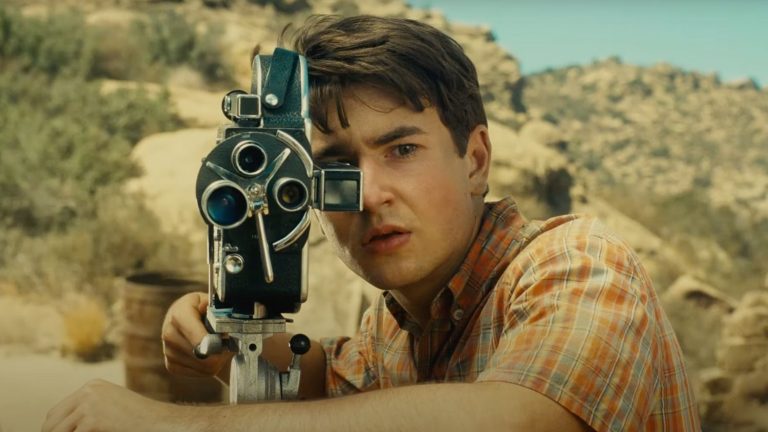
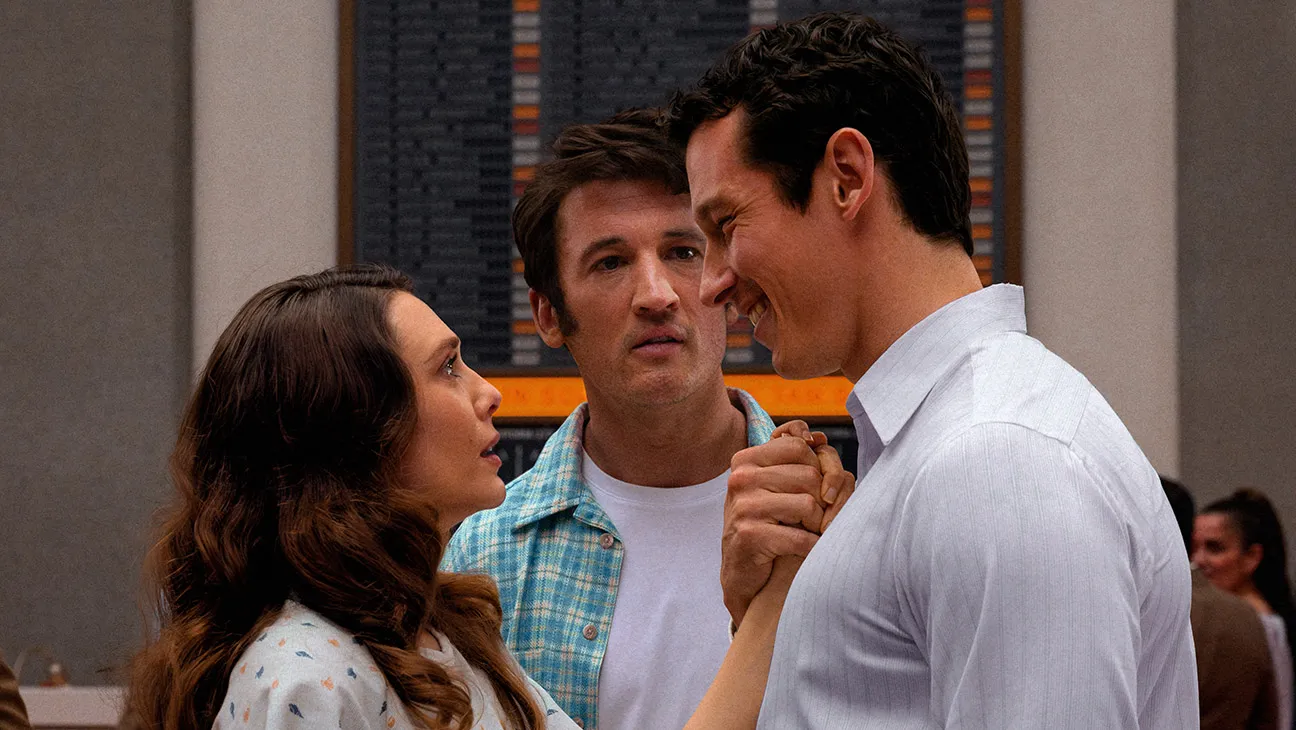
On this episode of Chasing the Gold, Shadan and Erica talk about the 2025 awards race and how it’s shaping up now that festival season is over and most of the “big” releases have already been seen! We have a pretty good idea as to who the major players are likely to be, and we have a fun time breaking that down as we near the homestretch.
Check out this week’s show and let us know what you think in the comment section. Thanks for listening and for supporting the InSession Film Podcast!
Director:Alex Woo Writers:Alex Woo, Erik Benson Stars: Jolie Hoang-Rappaport, Elias Jenssen, Craig Robinson
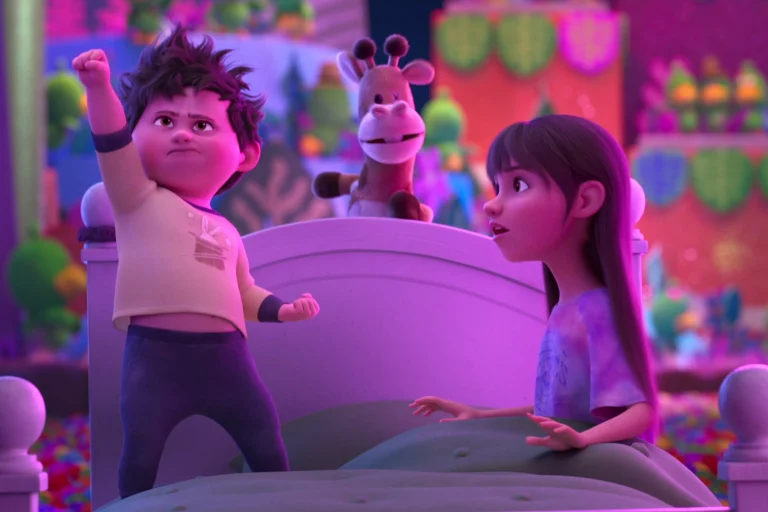
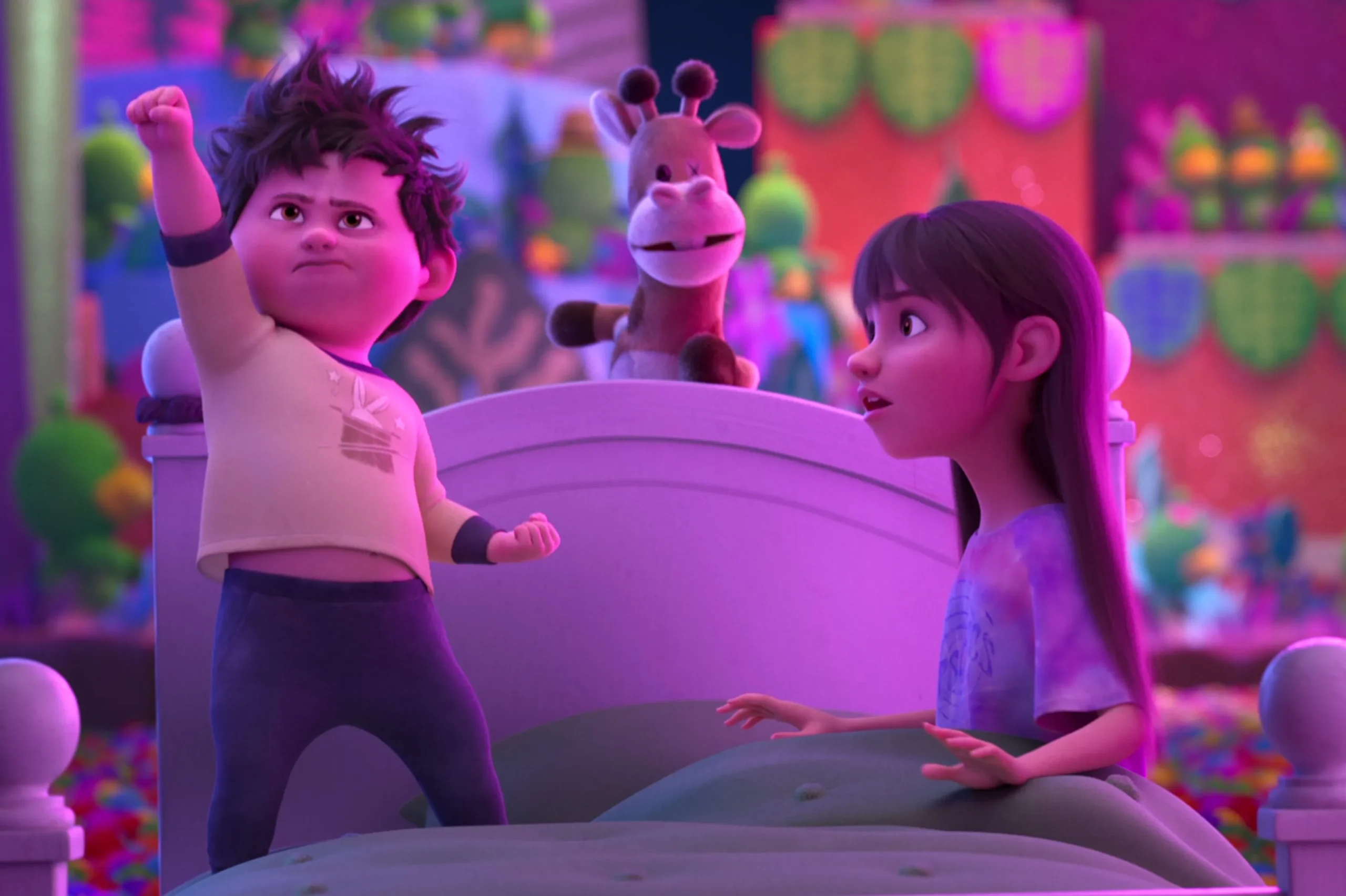
Synopsis:In Your Dreams is a comedy adventure about Stevie and her brother Elliot, who journey into the absurd landscape of their own dreams. If the siblings can withstand a snarky stuffed giraffe, zombie breakfast foods, and the queen of nightmares, the Sandman will grant them their ultimate dream come true…the perfect family.
The opening scene of Alex Woo’sIn Your Dreamsimmediately grabbed my attention only by a smart employment of Outkast’s “Hey Ya!” as a family prepares breakfast in a relatively fast-paced fashion. If you want to ensure your audience is locked in from the minute it begins, the song is perfect, especially as it punctuates a rather chaotic family dynamic between Stevie (Jolie Hoang-Rappaport), her brother Elliot (Elias Janssen), and her parents (voiced by Simu Liu and Cristin Milioti). The familial relationship seems joyful and loving, until, we realize, this occurred many years ago, and their current bond has been fractured for some time.
Before we even get a sense of the gist of the story, it becomes clear that, by the end of the film, every “uncertainty” plaguing Stevie’s life, whether in her mother potentially accepting a new job at a city far away from their home or their parents likely eyeing a separation as the opportunity of a new professional endeavor tears the family from the inside, would be resolved satisfactorily. Woo and co-writer Erik Benson tread on incredibly familiar territories, and don’t do much to reinvent what’s already been treated in way better movies than this one. That said, this isn’t inherently a problem, because most family films tend to repeat the same storylines, through different thematic and visual variations, for kids to grasp complex subjects they will understand more deeply later in life. Yet, the execution from Woo in his story feels incredibly lazy, and that’s the biggest issue plaguing the core of In Your Dreams.
Take, for instance, a sequence where Stevie and Elliot go to a pizzeria that has absolutely no correlation whatsoever to Freddy Fazbear’s. No, sir, where are you getting this idea from? Instead of creating an animated world that feels distinct and is far removed from known IPs and other familiar designs, Woo’s movie consistently reappropriates stuff we know from popular culture and tries to pass it off as its own. At some point, Stevie and Elliot are in a dream where their bed rides an attraction with a visual palette similar to Disney’s “It’s a Small World,” while Not Freddy Fazbear haunts them by singing a “creepy” version of The Pussycat Dolls’ “Don’t Cha,” a song that was already dated when it released to the world.
Even sequences of great creativity, such as a chase scene in the protagonists’ own dreams with their bed acting as a horse of sorts, have obvious callbacks to classic films that don’t feel earned, such as the most famous image from Steven Spielberg’s E.T. the Extraterrestrial. Credit where credit is due, though, the setpiece builds to that moment, and Woo does slightly get away with it, since E.T. is also about larger-than-life dreams for a child who discovered a world he didn’t even know existed before meeting the alien that will change his life. Still, it indicates a larger problem that the movie can’t effectively transcend – everything looks and feels like reheated nachos.
Even Elliot’s favorite plush toy, Tony Baloney (Craig Robinson), who comes to life in their dreams, is totally not Donkey, and Robinson is absolutely not in any way imitating the same vocal patterns as Eddie Murphy’s portrayal of his most iconic animated character. Again, there isn’t a single original idea in Woo’s film, whether in its micro details in tracking a divided family who will eventually bond through their subconscious, or in its macro world as the siblings must plow through Nightmara (Gia Carides), the figure representing all of their deepest, darkest, nightmares before reaching the Sandman (Omid Djalili), who promises to make all of their biggest dreams come true.
I don’t even need to describe anything else, because you probably know that the Sandman is not what he seems, and the same can also be said for Nightmara. There is a deeper moral to appreciate when both mythical figures are stripped down to their most human characteristics. However, Woo doesn’t delve as deeply as he can in making these characters feel as textured and three-dimensional as the telegraphed relationship between Stevie and Elliot. Yes, both are familiar, but their dynamic is at least entertaining enough to make us want to see their journey through, regardless of whether it’s (too) easy to figure out where it’s heading.
With all that being said, In Your Dreams is neatly animated in its attempt to replicate the same “quest for realism” as Pixar does, until it surprises through a staggering maximalist shift when the characters dream of “dynamite fists.” What that entails won’t be spoiled in this review, but this is where Woo frees itself from its conventional shackles and, on some occasions, gets surprisingly invigorating and creative. One wishes the entire movie were like this, because In Your Dreams rarely attempts to surpass its conventional narrative and character beats, instead preferring to stay within the limited imagination and references it wants to bathe in. Kids will undoubtedly enjoy it as a mild distraction. As a result, the movie will likely achieve massive success on Netflix. But will it have the same unexpected cultural longevity as KPop Demon Hunters, which became a worldwide phenomenon in the weeks after its initial release on the streamer and is now positioned to be a major awards contender? That is the question of the hour, and there’s only one way to find out…
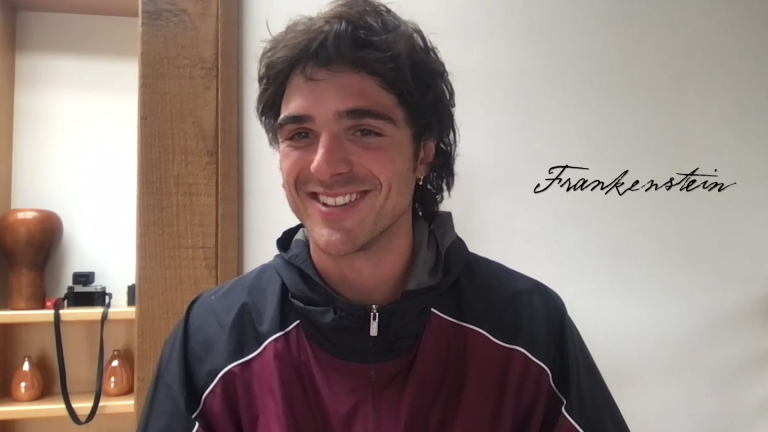
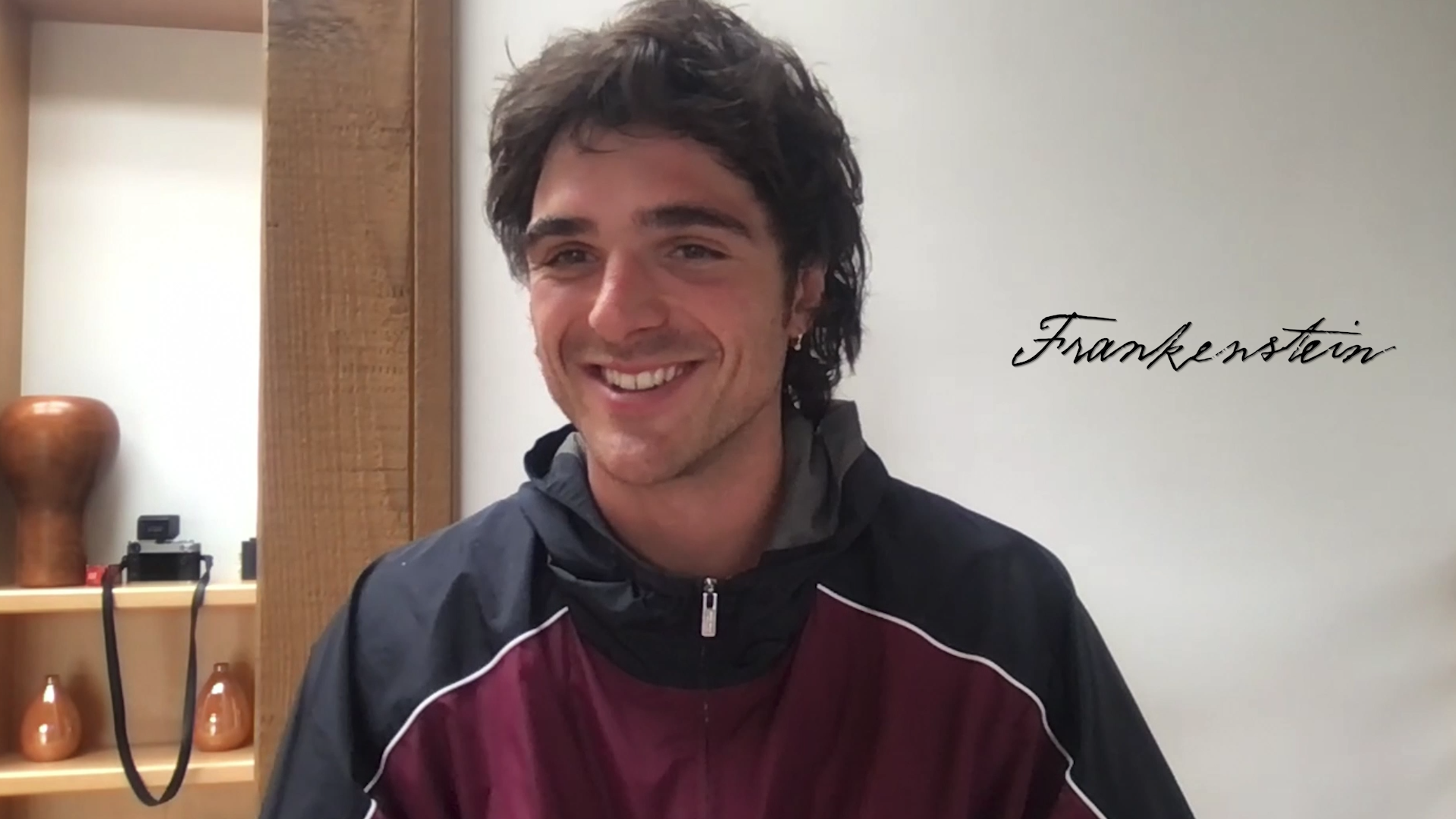
Australian actor Jacob Elordi gives a magnificent performance as Frankenstein’s creature in Guillermo Del Toro’s Frankenstein. Elordi is towering and touching as a new man whose creator, Victor Frankenstein (Oscar Isaac), despises, but later finds those who treat him with kindness in an unforgiving world.
Nadine Whitney had the opportunity to speak with Jacob about his process and what the creature has taught him.
Nadine Whitney: Jacob, your physicality as the creature, and I like to call you the creation in this because I don’t think you’re even a creature. You’re too lovely to be called a monster of any kind. Your innate physicality and your way of moving is incredibly convincing as somebody who is new to this world but also has the remnants of a past world. Can you tell me about building up that physicality?
Jacob Elordi: Yeah. I only had about four weeks when I found out I was doing the movie. So, everything was condensed in this sort of pressure cooker. So, I don’t have the most tangible descriptive answer. It’s always gonna sound hoity toity, but it really felt like I was engaged in an artistic process that I’ve been cultivating since I first saw Pan’sLabyrinth when I was 14.
It felt like just opening. The idea of putting a mask on and going behind it gave me the freedom to sort of open myself up, really, and put my whole sort of life experience on screen. And because he’s the first man, his preconsciousness, the character itself gave me so much space to explore myself.
And so, Guillermo said this wonderful thing throughout this where he said the film is a fusion of his biography and Mary Shelley’s biography. And I do think that I bought into the physicality the idea of suffering, the question of why am I here? All of these things. I tried to say something physically when he’s pre-vocal, before he speaks. Like Guillermo says, with a great deal of thought and then there is like a tightrope act to it, because you can go too far into a caricature or something. So, it was balancing it and monitoring it and makings sure that it was deliberate.
Every jerk of each individual finger had a reason behind it. It wasn’t just a movement, as there’s a thought that’s not quite going through, or not quite delivering the way it needs to deliver. You know? All the little things and bits and pieces.
You don’t have to look too far into the world or into yourself, I think, to find great pain. I think we exist in cahoots with pain.
So, for me, it was just about the film and the role. And Guillermo’s approach to it gave me the opportunity to be as curious as I wanted to be about that pain and about suffering. And it allowed me to have the Milton Paradise Lost question. Why? Why am I here? Why did you make me? And I was given the opportunity to actually ask this kind of father. I got to explore that in Guillermo’s art.
The more I talk about it, the more I look back on it, the more beautiful the experience is. I’m understanding more and more things the more I answer these questions [about the creature]. It has been interesting for me.
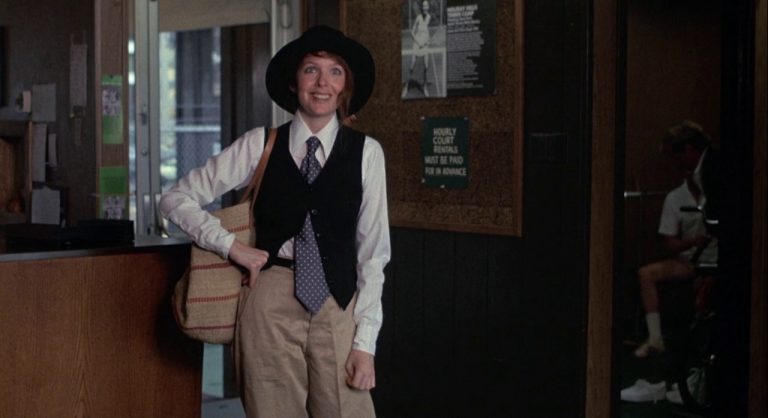
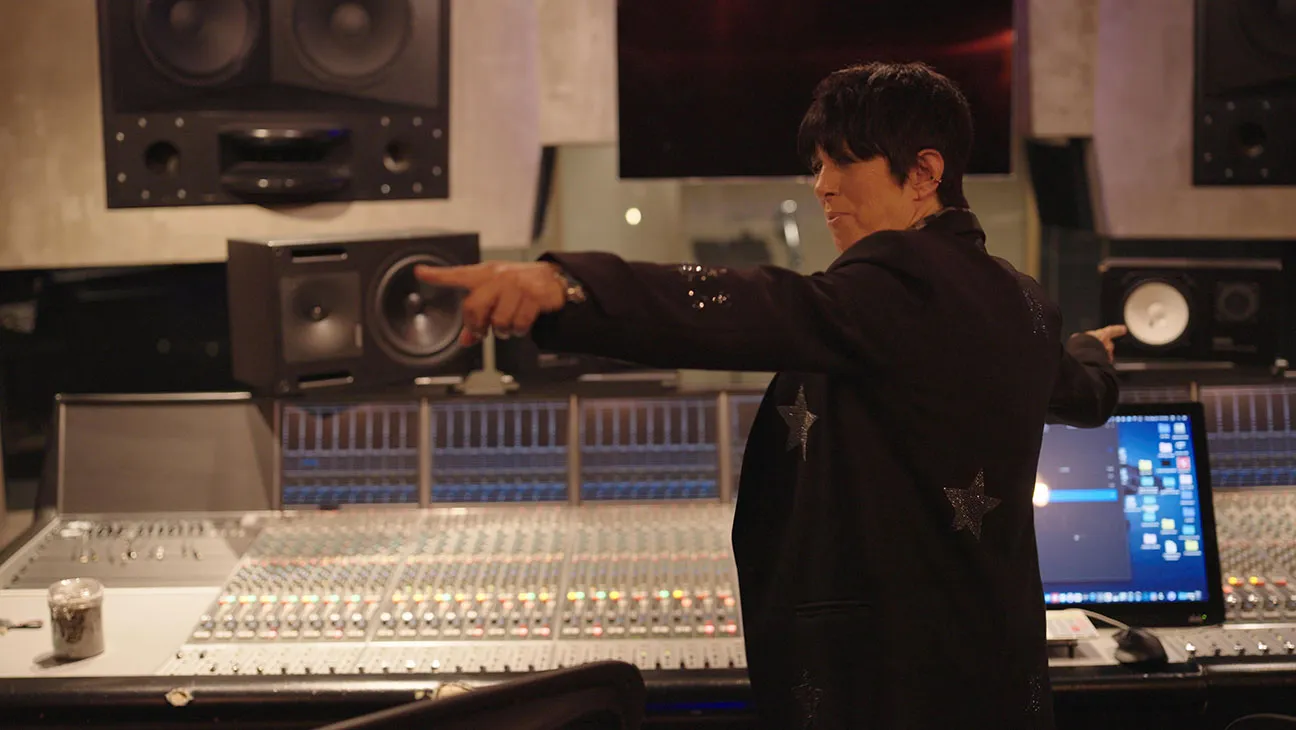
This week on Women InSession, we talk about the legendary Diane Keaton and the best movies that made her such an iconic star! She is going to be missed deeply, but her work is full of magnetic charm and diverting complexity, and we were lucky to have her in cinema. So, we wanted to celebrate her and talk about our Keaton movies and performances.
Panel: Kristin Battestella, Amy Thomasson
On that note, check out this week’s show and let us know what you think in the comment section. Thanks for listening and for supporting the InSession Film Podcast!
Director:Ryan White Stars: Andrea Gibson, Megan Falley
Synopsis:Facing an incurable diagnosis, two poet lovers embark on a poignant yet unexpectedly humorous exploration of love, mortality, and life’s moments.
Anyone who has found themselves surprisingly weeping through a song or in the audience of a musical knows an unassailable fact. Music has the power to move us when normal words fail. There is something in our brains that connects with this, even at a young age. Andrea Gibson, one of the main subjects of Come See Me In The Good Light is not a musician, at least not in the common sense. But, as a spoken word poet, there is a lyricism in both their voice and their published work that triggers that same point in our brains.
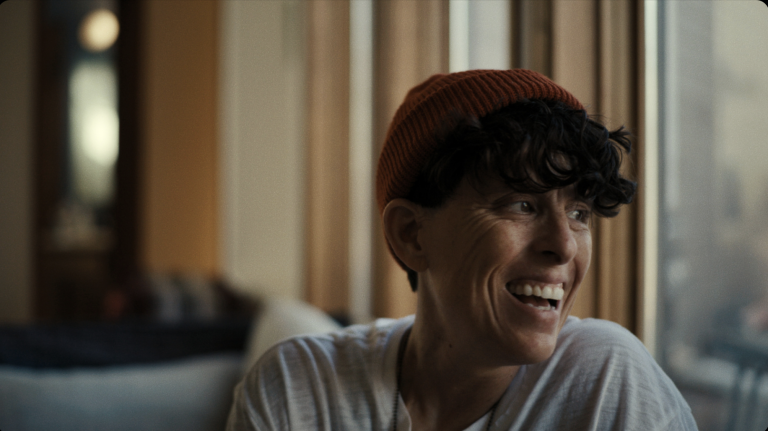
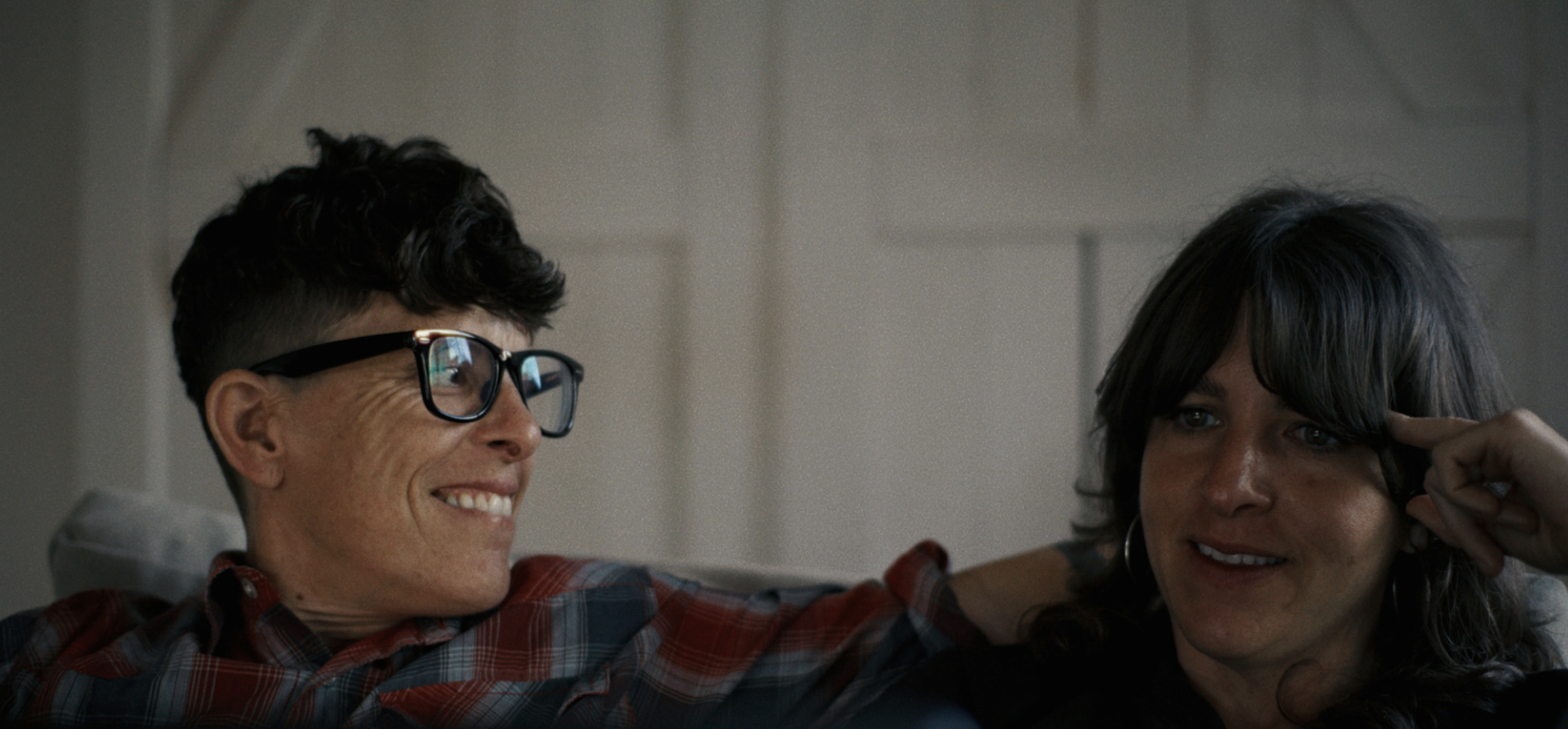
Andrea Gibson in “Come See Me in the Good Light,” premiering November 14, 2025 on Apple TV+.
Of course, the film is not only about their work, but also about their relationship and their diagnosis of and living with ovarian cancer. As the film opens, they have already been living with the diagnosis for quite some time. But this film is absolutely not what you may think. There have been many stories of people struggling with cancer and dying from it. Come See Me In the Good Light is something different and singular. Finding not only a peek into Andrea’s mind but also into their relationship with poet Megan Falley is insightful, life-affirming, and deeply moving.
It is impossible to watch this film without a sense of awe and wonder at the way Andrea looks at the world. This is the attraction to artists in general, as they tend to think deeper and differently about the world around us and our very existence. To have the gift of two artists as the focus of this film truly fills the audience with wonder. The film nearly forces you to wonder about how you might react to having your life possibly cut short by this horrendous disease. What would I do? How would I react? Would I, like Andrea, want to hold on to whatever life might have to offer? Or would we rather be comfortable and end it sooner? These are impossible questions to answer if we are not at this point, but Andrea knows, seemingly without much doubt.
Even when the cancer threatens to take their instrument, their voice, there never seems to be a loss of passion and faith. Faith in their existence propels them, even when emotion threatens to overwhelm every thought. The relationship on display is truly one of deep connection and one to aspire towards. Watching the two of them navigate their emotions and the ups and downs of living with a disease manages to be both entertaining and a real look at the sadness of possible impending loss. Director Ryan White manages to balance all of these emotions (with the help of his subjects) and the absolute stunning joy of life, regardless of our struggles.
Andrea Gibson and Megan Falley in “Come See Me in the Good Light,” premiering November 14, 2025 on Apple TV+.
The film seems blessed with the turns that Andrea’s life takes. The fact that they are able to perform one last time allows the story to not only focus on Gibson’s past but also the present. Additionally, it gives an opportunity to instill their moving performances in front of an adoring crowd. That audience, along with those of us watching, realize that we are seeing something important. A chance for Andrea Gibson to process this struggle, pain, and triumph on their own terms. And this is really where the musicality of the film comes to the forefront.
Previously, we were given drops of their talent in reviewing their history, complete with a frank discussion of difficulties with sexuality and gender. But now, as the event begins (complete with an appearance from producer Tig Notaro), it feels a bit like when a sports movie gets to the big game or fight. It has all led to this. And to say that it does not disappoint is the understatement of the century. Andrea Gibson’s final performance, aided by their words superimposed on the screen, creates a perfect storm of pure emotion. The audience will feel not only Gibson’s history of struggle, but our own, as well. There is little to no chance of dry eyes as they succeed in not only getting on stage, but performing to the hilt (helped by a deeply adoring crowd).
Andrea Gibson and Megan Falley in “Come See Me in the Good Light,” premiering globally on Apple TV+ November 14, 2025.
You cannot speak about Come See Me In the Good Light without being awestruck by the power of love and connection. This is not simply a reflection of Andrea and Megan’s relationship, but how they both see the world. Yes, there is pain and struggle, but all that means is that we are still alive and fighting. Even if Andrea can never perform again, their spirit and work endures and urges us to be grateful for the limited time we have on this beautiful planet, surrounded by others who fight their own fights.
This week on the InSession Film Podcast, inspired by Richard Linklater’s new film Nouvelle Vague, we discuss our favorite movies about movies! Plus, a discussion on the state of the biopic and a few thoughts on Toy Story 5.
Check out this week’s show and let us know what you think in the comment section. Thanks for listening and for supporting the InSession Film Podcast!
– Opening Banter / JD’s Story Update (10:07) After some opening banter, we begin the show this week with an update to JD’s story about Stingray last week on the show. There were a few developments that continues to make this journey interesting a lot of fun.
– State of the Biopic / Toy Story 5 (17:43) With the release of the trailer for Michael, a film that looks unsurprisingly mundane (sadly), we wanted to talk about the state of the biopic. Hollywood still churns these out like hot butter, but the strikeout rate is extremely high. Yes, the genre has seen a few homeruns over the last few years, so there’s still some viability to it. However, there are have been a lot more than have left much to be desired. We then end the segment by talking about the Toy Story 5 teaser and why we’re curious for it, even if our interest in the franchise at this point is teetering.
– Top 5 Movies About Movies (1:05:03) As noted above, with Nouvelle Vague coming out on Netflix this weekend, we thought it would be fun to talk about our favorite movies about movies. Generally speaking, we love this type of movie. They’re often very much and the best of them take advantage of the form to say something about art and life. And perhaps surprisingly, this is a really rich topic. There are a ton of great films to choose from here, which means we may revisit this some time later. With that said, what would be your Top 5 movies about movies?
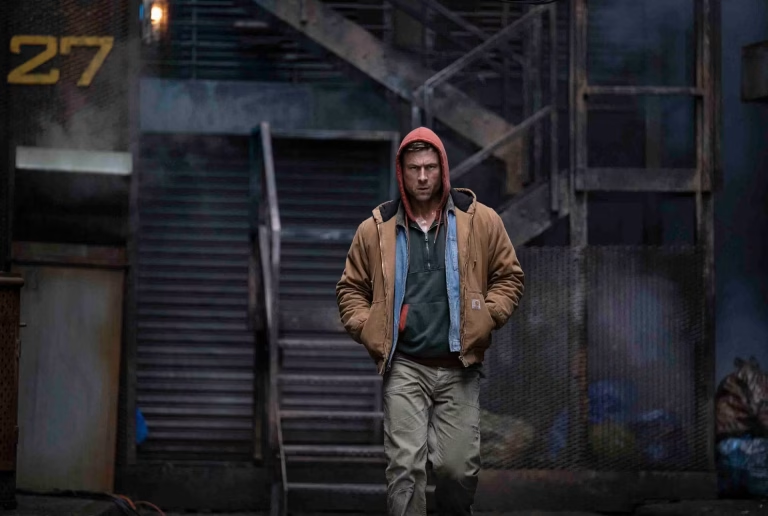
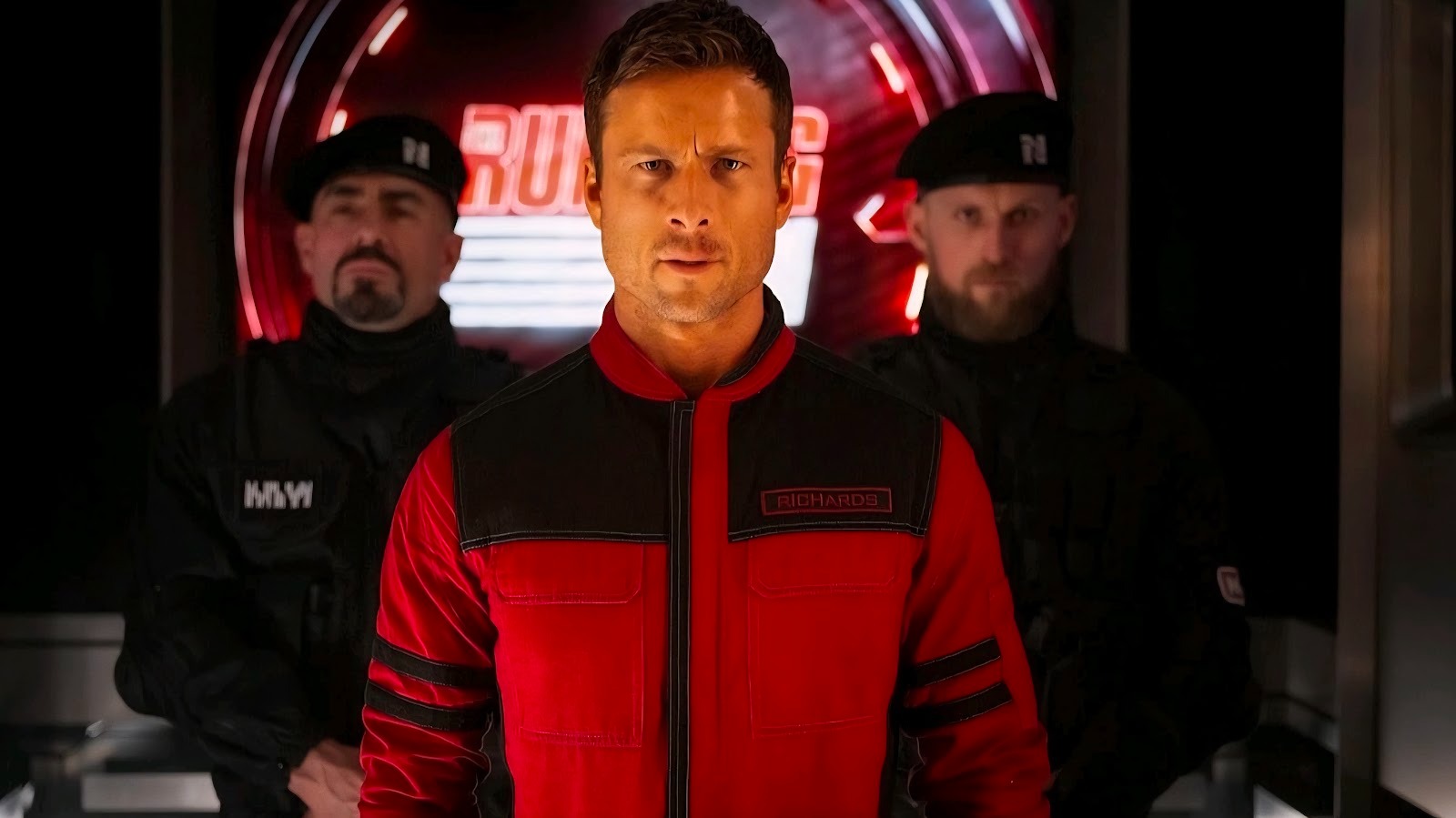
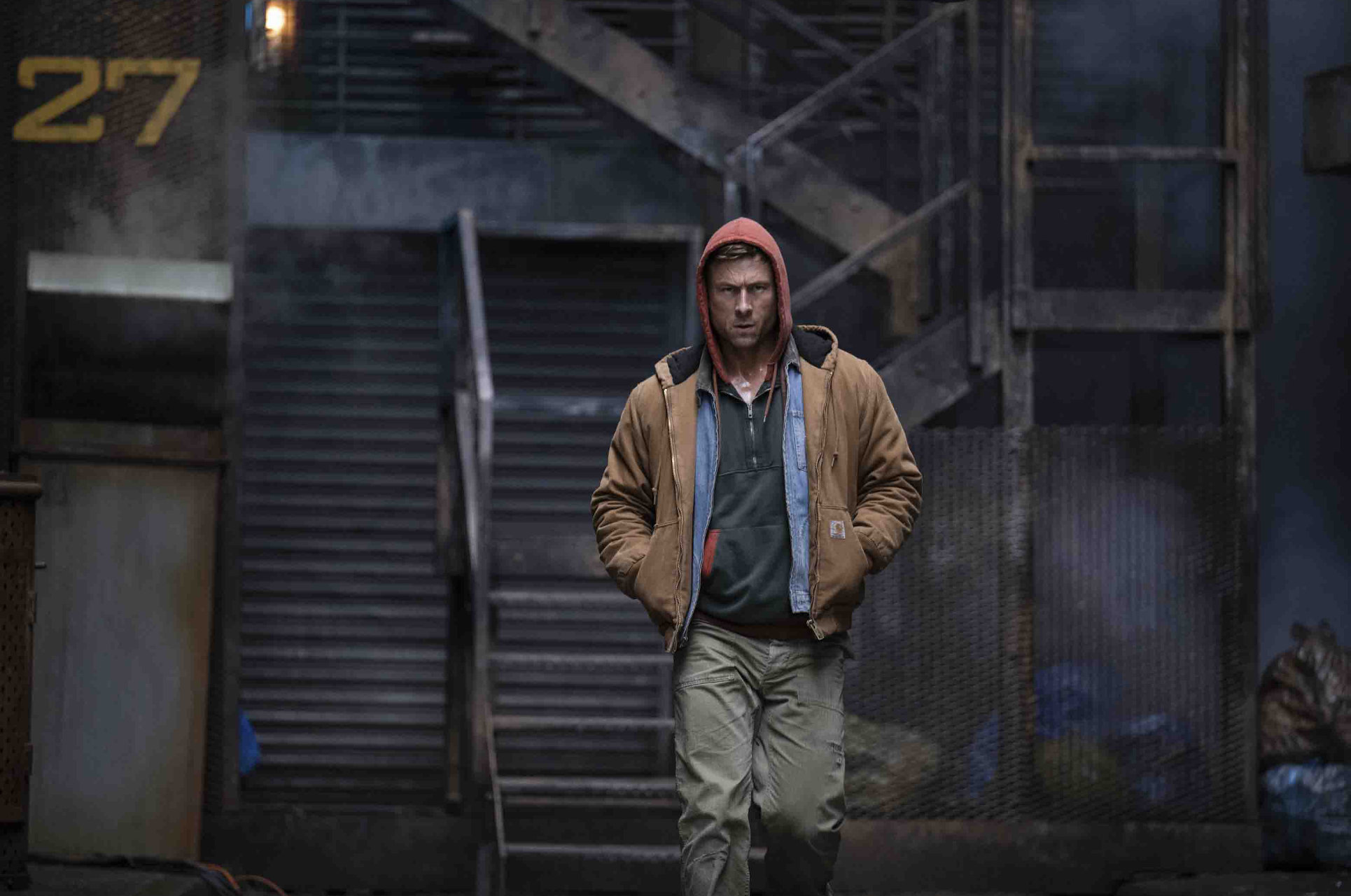
Glen Powell stars in Paramount Pictures’ “THE RUNNING MAN.”
Help Support The InSession Film Podcast
If you want to help support us, there are several ways you can help us and we’d absolutely appreciate it. Every penny goes directly back into supporting the show and we are truly honored and grateful. Thanks for your support and for listening to the InSession Film Podcast!
Synopsis: Family hiding in Roman Egypt. Son known as ‘the Boy’ doubts guardian ‘the Carpenter’, rebelling with mysterious powers. As he uses abilities, they face natural and divine horrors.
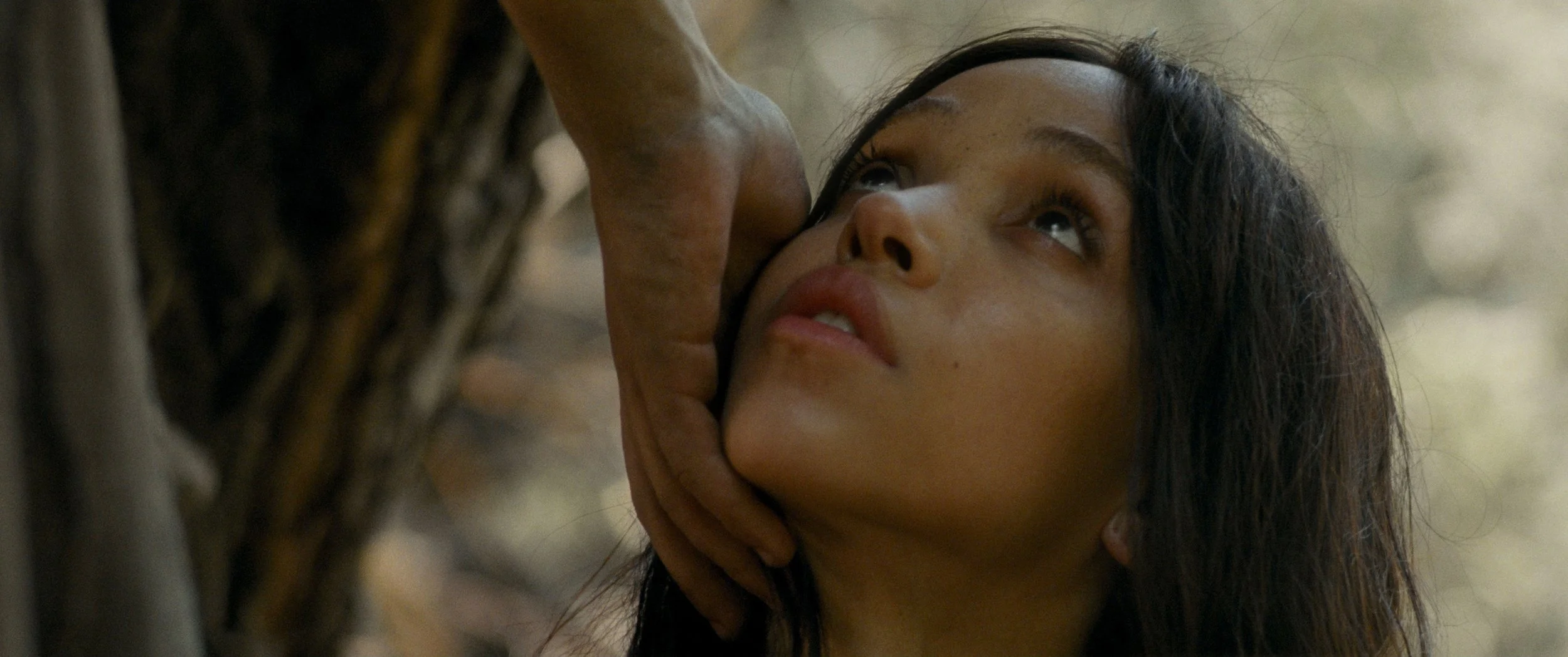
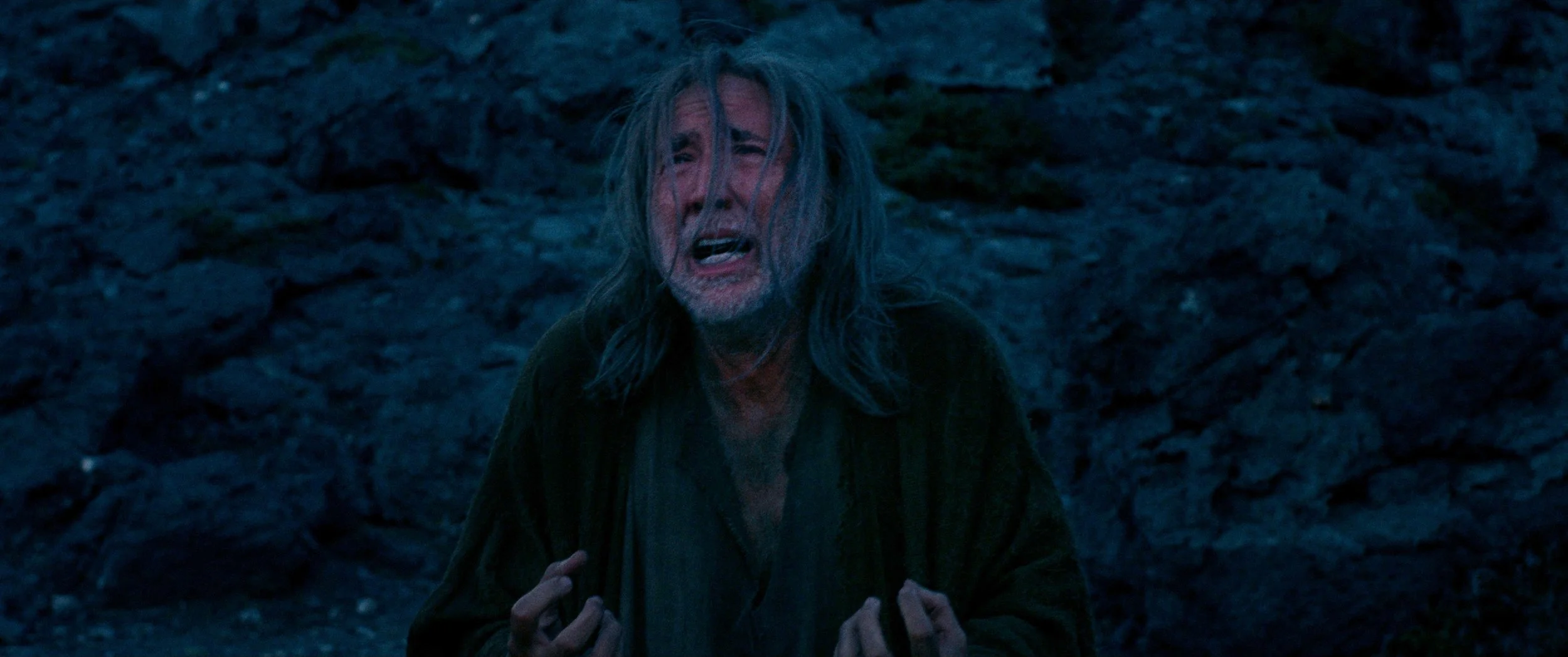
If you’ve ever been curious about the upbringing and youthful life of Jesus — yes, Jesus Christ — then writer and director Lotfy Nathan has just the film for you. A mixture of psychological horror and hysterical scripture shouting, The Carpenter’s Son is filled with spiritual violence and completely committed performances. Based on “The Infancy Gospel of Thomas (an apocryphal gospel about Christ’s childhood), a devout Nicolas Cage bellows prayers while raising the Son of God. Bathed in its serious tone, which helps bolster tense moments, makes this non-biblical peek into Jesus’s life fascinating to behold.
FKA twigs in THE CARPENTER’S SON, a Magnolia Pictures release. Photo courtesy of Magnolia Pictures.
Genre filmmaking is at its best when it’s telling stories that challenge its audiences, and Nathan does just that with The Carpenter’s Son. While it has its fair share of issues, it’s refreshing to see a view of the life of Jesus that is complicated, especially during his formative years. As the film begins, The Mother (FKA Twigs) screams in pain from birthing The Boy (Noah Jupe) in secret, with The Father (Nicolas Cage) keeping guard and assisting when possible. As The Boy takes his first breaths into the world, The Father knows that his son is different and deeply fears for his family’s safety. Quickly taking them on the road to seek shelter and lay low, The Boy’s powers are unable to be hidden as he grows.
The more whispers of the healing powers of The Boy make their way through the village, the more complicated this life becomes. While The Mother remains adamant that her son is special beyond what words can describe, the family’s faith is tested in numerous ways. The Father is undoubtedly abusive, mostly seen through the relationship between The Father and The Mother. Nathan frames the story with her in the background, and it’s one of the flaws The Carpenter’s Son has — cutting off her thoughts and feelings on her son’s well-being while being completely controlled by The Father. Their relationship is a point of confusion, with The Father seeming more like her handler than her partner.
Noah Jupe in THE CARPENTER’S SON, a Magnolia Pictures release. Photo courtesy of Magnolia Pictures.
The relationship between The Father and The Boy rarely feels attached to one another; throughout the film, The Father chastises his son, and while his fears for their safety are admirable, it poses interesting questions to the audience. If there’s an ability to help and heal those less fortunate, why shouldn’t it be shared? The Boy doesn’t completely understand his healing hands at first, and his young age leaves him susceptible to those who seek to take advantage. While being pranked by The Stranger (Isla Johnston), he unknowingly heals a leper. The more The Boy comes into his own and stands up to his overbearing father, the more powerful he becomes. The Father is a man who deeply wants the best for his child, but his faith in his son’s powers isn’t as deep as The Mother’s.
As any teenager, The Boy is tempted at every turn — showing interest in a beautiful young woman, being distracted from his studies, and listening to those who don’t have the best intentions for him. He is barely able to recite scripture and questions the practices of his teacher. These temptations make him relatable, and Nathan doesn’t shy away from showing the teen who will become Jesus as a flawed character. Jupe is easily the glue that holds the film together; his impassioned performance as a young Jesus shows a side of his life believers and nonbelievers alike rarely see. His conflicts with The Father are intense, and Jupe is able to hold his own against a talent like Cage, even outdoing him during their on-screen disagreements.
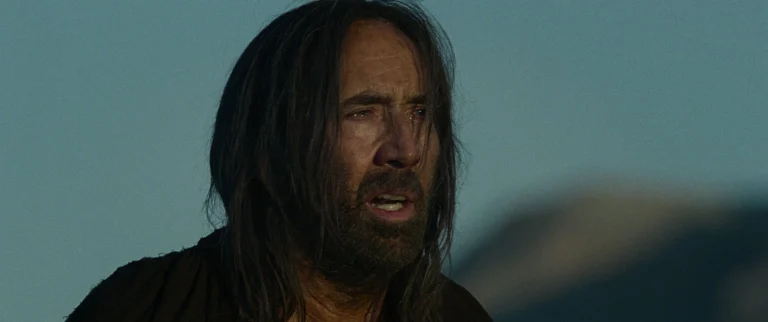
Nicholas Cage in THE CARPENTER’S SON, a Magnolia Pictures release. Photo courtesy of Magnolia Pictures.
The biggest disappointment with The Carpenter’s Son is how underutilized FKA Twigs is, and while the camera undoubtedly loves her, it rarely is on her. She gets a few satisfactory minutes of screen time that make it worth her being in the film, but her soft-spoken nature is sorely missed. Her chemistry with Cage is abrasive and highlights the hardships women went through during these times — showing women as basically cattle rather than those who are allowed a say in their lives. It’s a shame that Nathan doesn’t highlight Twigs more in the film, but when she’s on screen with Jupe, their age gap doesn’t lend any favors to the believability that this is her son. She feels no doubt about how special her son is and always believes in his abilities, but Nathan doesn’t give the two enough to work with to make their relationship compelling. Twigs has a bright spark of becoming a unique actress, but The Carpenter’s Son doesn’t allow her to ignite.
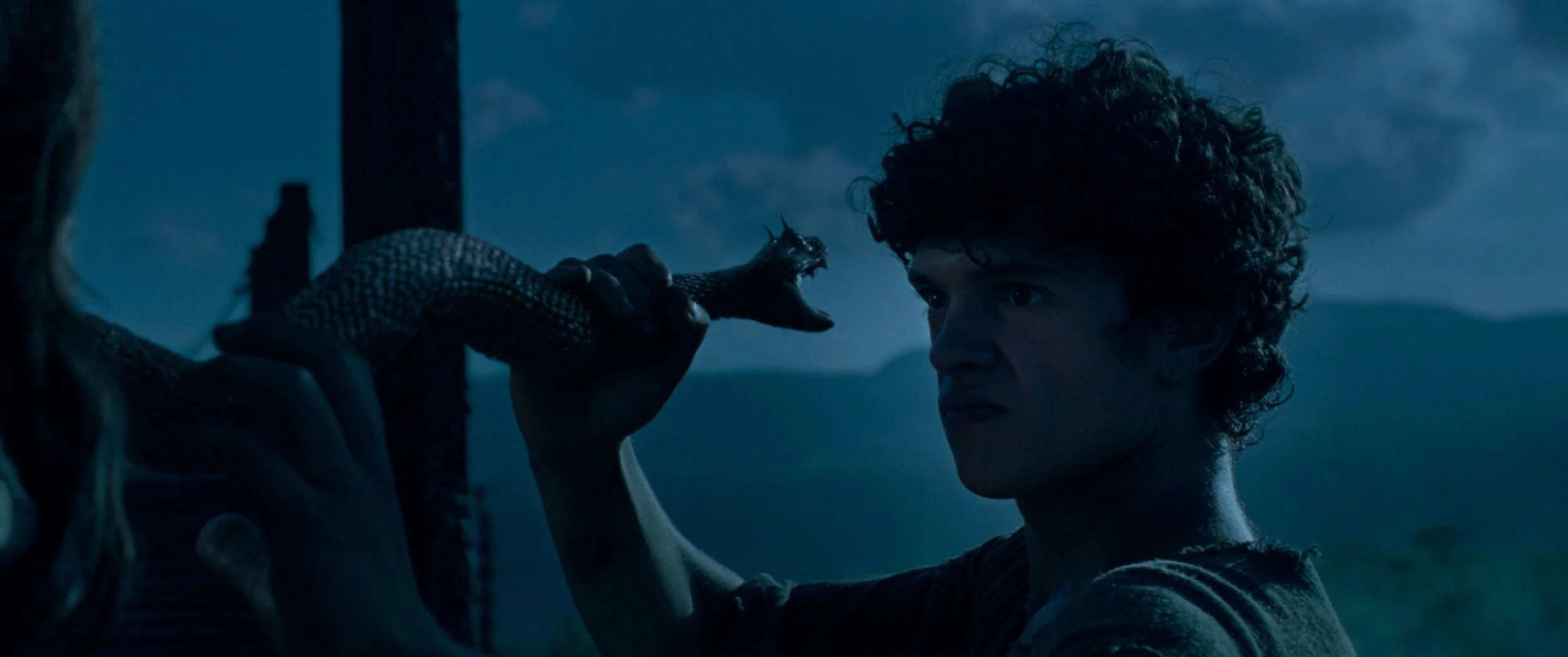
Adapting from non-biblical stories makes each of the miracles The Boy creates seem less holy and more disturbing. Nathan making this a horror film was the correct decision, and it’s gnarly to witness. Snakes being pulled from throats, ears being bitten off, and unsettling nightmares — it’s easy to see how one would confuse it with witchcraft. Although there’s room for more gore, a film about Jesus showing this amount of blood and violence leaves a mark far beyond its runtime. Stunningly captured by Simon Beaufils, he creates a world that instantly transports us into their world; it’s dark, bleak, but oddly uplifting. Paired with the grimy aesthetic, with characters covered in a mixture of dirt and blood, The Carpenter’s Son is atmospherically divine. While The Carpenter’s Son could use more of a feminine presence, it shows how dynamic Jupe is and gives audiences a fresh new perspective on Jesus. Visually blessed and blood-soaked, Nathan’s newest film will be sure to spark conversation from those devout and those not.
Director:John Swab Writer: John Swab Stars: James Badge Dale, Ben Foster, Michael Mando
Synopsis: Based upon extensive research with law enforcement, gangs, inmates, migrants, and addicts, an exposé on fentanyl trafficking, and its effect on all walks of life.
When viewing a cops and robbers action film, there is an ever-present expectation of the next story beats. We’ve all seen many action thrillers before and each has genre presumptions for the film to follow. The beauty of John Swab’s King Ivory is the push against those presumptions to deliver something unexpected and calculated instead of the expectations of conventional storytelling.
That’s not to say the film is actively pushing against those conventions simply to be performative. Instead, the filmmakers take those genre elements and manipulate them ever so slightly, and they feel revolutionary. If the cops make a big case, they have a metric ton of paperwork to do. A massive action set piece ends with no death and no dialogue. All the action takes place in Tulsa, Oklahoma. That doesn’t sound like much, but when these films begin to feel interchangeable, little updates make all the difference.
James Badge Dale, Ben Foster, and Michael Mando co-star as the headliners in each of their separate stories, which combine as a Traffic-esque whole. Dale plays Layne West, a Tulsa drug cop looking to shut down fentanyl distribution in the city. Foster plays George “Smiley” Greene, an Irish enforcer fresh out of jail. Mando plays Ramon Garza, the Mexican cartel’s local rep who works with the Indian Brotherhood head Holt Lightfeather (Graham Greene) to distribute drugs as well as working as a coyote, ferrying Mexicans over the border into the US.
West works closely with his partner Ty (George Carroll), but has to deal with the rebellion from his teenage son, Jack (Jasper Jones), which leads to Jack’s addiction to fentanyl. Smiley navigates the ins-and-outs of the drug trade, while dealing with his unpredictable uncle, Mickey (Richie Coster), and his protective mother, Ginger (Melissa Leo). Garza tries to redeem a deadly mistake by allowing immigrant Lago (David Bacrena) to work for him, while attempting to get medicine for his daughter.
This film could have easily gone down as a “message movie” covering the dangers of fentanyl, the failings of government, and society as a whole. There is a distinct opportunity for the film to take that moral stance, but it instead decides there are no good solutions. In fact, it makes the argument the drug distributors have as much at stake as anyone else. A shocking amount of empathy and understanding is given to people who would otherwise be viewed as the criminal contingent. No act is viewed as criminal for the sake of evil. Even an act of cold-blooded murder (by more than one character) is seen as necessary, or in a specific case, completely justified.
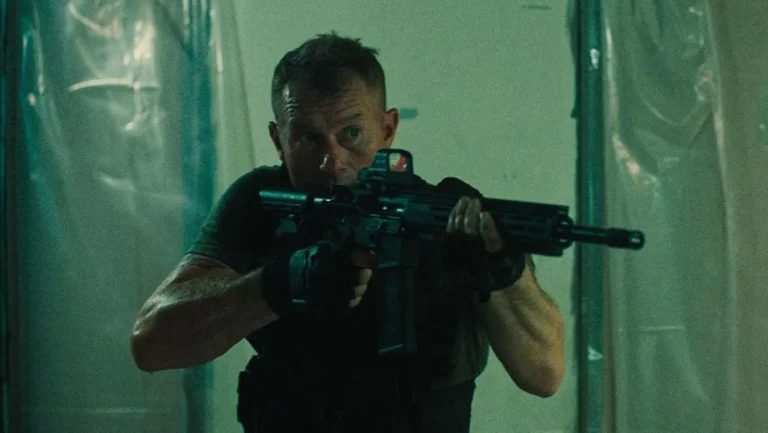
But it’s not all just subversion. When the action ramps up, Swab knows how to stage a solid action scene. A late film hotel shootout circumvents the usual “you shoot, I shoot” standard and adds extra wrinkles, like shooting through hotel walls, or bystanders viewing all the action. Despite a fair amount of shootings, stabbings, and death, the film has very little interest in carnage or gore. Death is a part of the story, but it’s not anything it wants to dwell on, unless that’s the precise point. A scene with a fentanyl overdose and the incredibly human response is a particular highlight.
While each character might not have the most development, the actors portraying them are dynamic enough to give bits of color where there otherwise would be none. Mando specializes in playing a character of deceiving sensitivity, and this film is no different. Luckily, Mando is really good at it. Foster underplays almost every moment, but he makes it work. Equipped with a tracheostomy, he barely talks, and when he does, hardly speaks above a whisper (all of his lines are subtitled). Dale might be one of the most underrated, consistently working actors, able to embody both police officer machismo, and parental sensitivity from moment to moment. Each actor carries his segment wholeheartedly.
Of the supporting players, Coster has the most to do, and adds more to it than any other. Leo has one scene of any substance, and tears into it, but has little to do otherwise. The recently departed Greene is always a welcome on-screen presence, if only for a few minutes of screentime. If the film has an issue, it’s Jones, unable to rise to the occasion of the more seasoned actors around him. His character should be the corrupted innocent, but he is far too annoying of a character to connect to. That’s not only Jones’ fault, as the screenplay doesn’t do his characters any favors either. King Ivory subverts as many expectations as possible, while still maintaining the ability to entertain as an action thriller. That fact alone is worth the price of admission.
On this episode, JD and Brendan discuss Lynne Ramsay’s incredible new film Die My Love, starring a never-been-better Jennifer Lawrence! This was one of our very most anticipated movies of the year and it did not disappoint at all. Ramsay is one of the best working today and now you’re giving her JLaw and the great Robert Pattinson? Yeah, that was a recipe that was always going to work for us.
Review:Die My Love
Director: Lynne Ramsay Writers: Enda Walsh, Lynne Ramsay, Alice Birch Stars: Jennifer Lawrence, Robert Pattinson, Sissy Spacek
On this episode, JD and Brendan discuss Guillermo del Toro’s new film Frankenstein, starring a phenomenal Jacob Elordi! We are big fans of del Toro and have been looking forward to this all year. Especially because it’s a film that has been decades in the making considering the clear inspirations that have been prevalent in his previous work. It might not be a perfect movie, but on the whole del Toro did not disappoint and it features one of the very best performances of 2025 so far.
Review:Frankenstein
Director: Guillermo del Toro Writers: Guillermo del Toro Stars: Oscar Isaac, Jacob Elordi, Mia Goth, Christoph Waltz
Director:Edgar Wright Writers: Stephen King, Michael Bacall, Edgar Wright Stars: Glen Powell, Emilia Jones, Josh Brolin
Synopsis: A man joins a game show in which contestants, allowed to go anywhere in the world, are pursued by “hunters” hired to kill them.
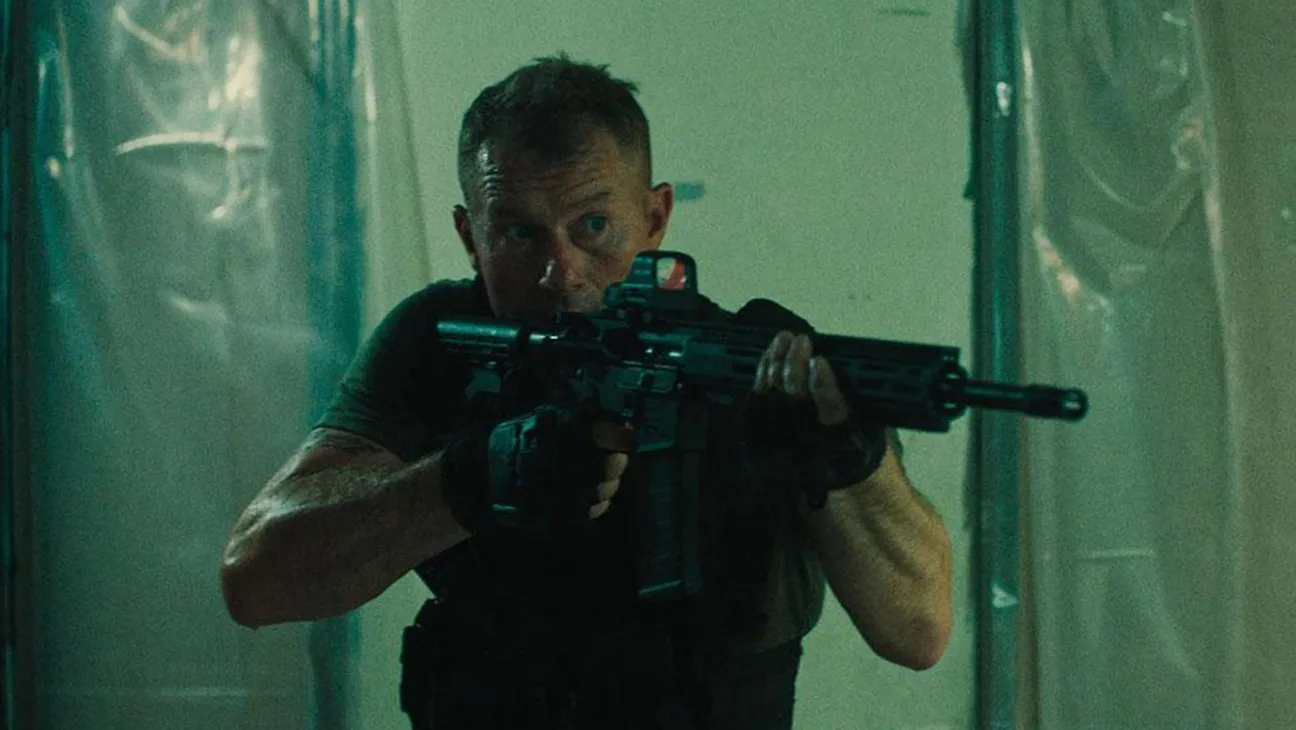
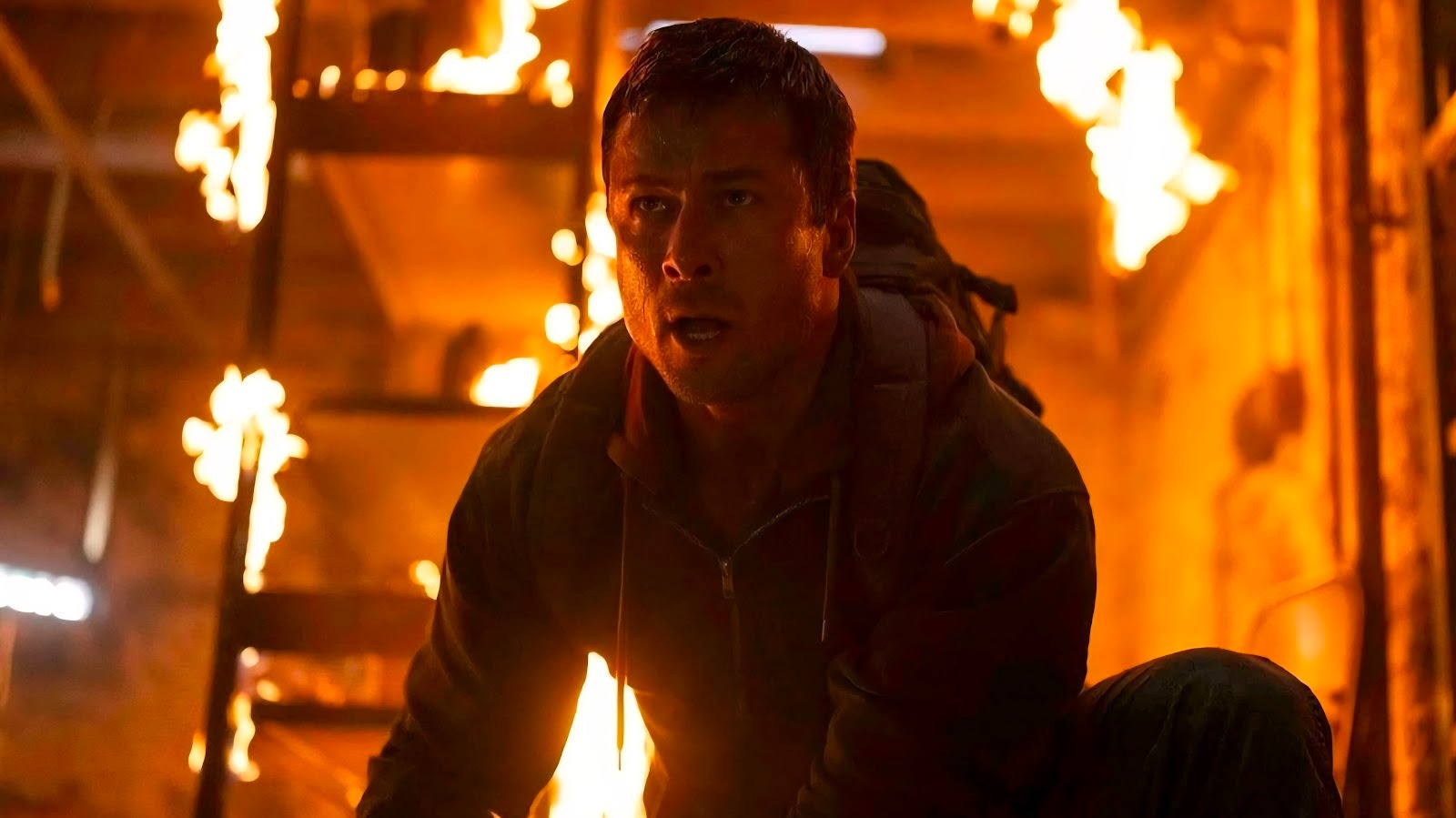
Watching the remake of Edgar Wright’s freakishly exciting and relentlessly propulsive The Running Man, if you didn’t know it before, you’ll know it now: Glen Powell is the next great movie star. You’ve known since the man burst onto the scene with Everybody Wants Some!! that he was destined for cinematic greatness. When he was passed over for the role of Goose’s son inTop Gun: Maverick, he licked his wounds and turned “Hangman” into a magnetic creation all his own. He even survived the media-engineered off-screen romance rumors with Sydney Sweeney, but before you knew it, reviving the rom-com at the box office with Anyone But You.
Now, with the resurrection of the character of Ben Richards, a role originated by Arnold Schwarzenegger, he cuts through the chauvinistic bullsh*t for a performance that straight rips and slaps and f*cks, or whatever the kids are saying nowadays. Powell is angry, wanting to grab the audience by their vengeful throats—a turn for one who knows how it feels to be impoverished, starving, and downtrodden. In almost every scene, this can be felt viscerally.
The remake of The Running Man is an action thriller packed with glorious carnage, humor, and a message about socioeconomic status that captures the reason Stephen King created the source material in the first place: don’t mind the fact that corporate media is entertaining you, but consider what it is preparing us for.
If you’ve seen the 1987 original, you’re familiar with the story. Powell stars as Ben Richards, a laborer who makes being fired for insubordination a national pastime. When we meet Ben, he’s holding his sick child, who is dying of the flu, and pleading with his boss for his job back. Richards is denied, bringing his baby girl only to stop himself from burying the arrogant supervisor’s face in his metal desk and leaving an indentation like Han Solo’s face in carbonite.
Ben has one big, furious chip on his shoulder. He is out of money, which he needs for his daughter’s medication. He is enraged that his wife, Sheila (Sinners’ Jayme Lawson), has to work for tips at a sleazy club to help make ends meet. His ego is bruised. His manhood is shaken. And the man is so prideful that it shields him from showing any humility. So, what does he do? Ben decides to try out for a series of game shows that will test his mental toughness and physical capacity to earn the cash his family needs.
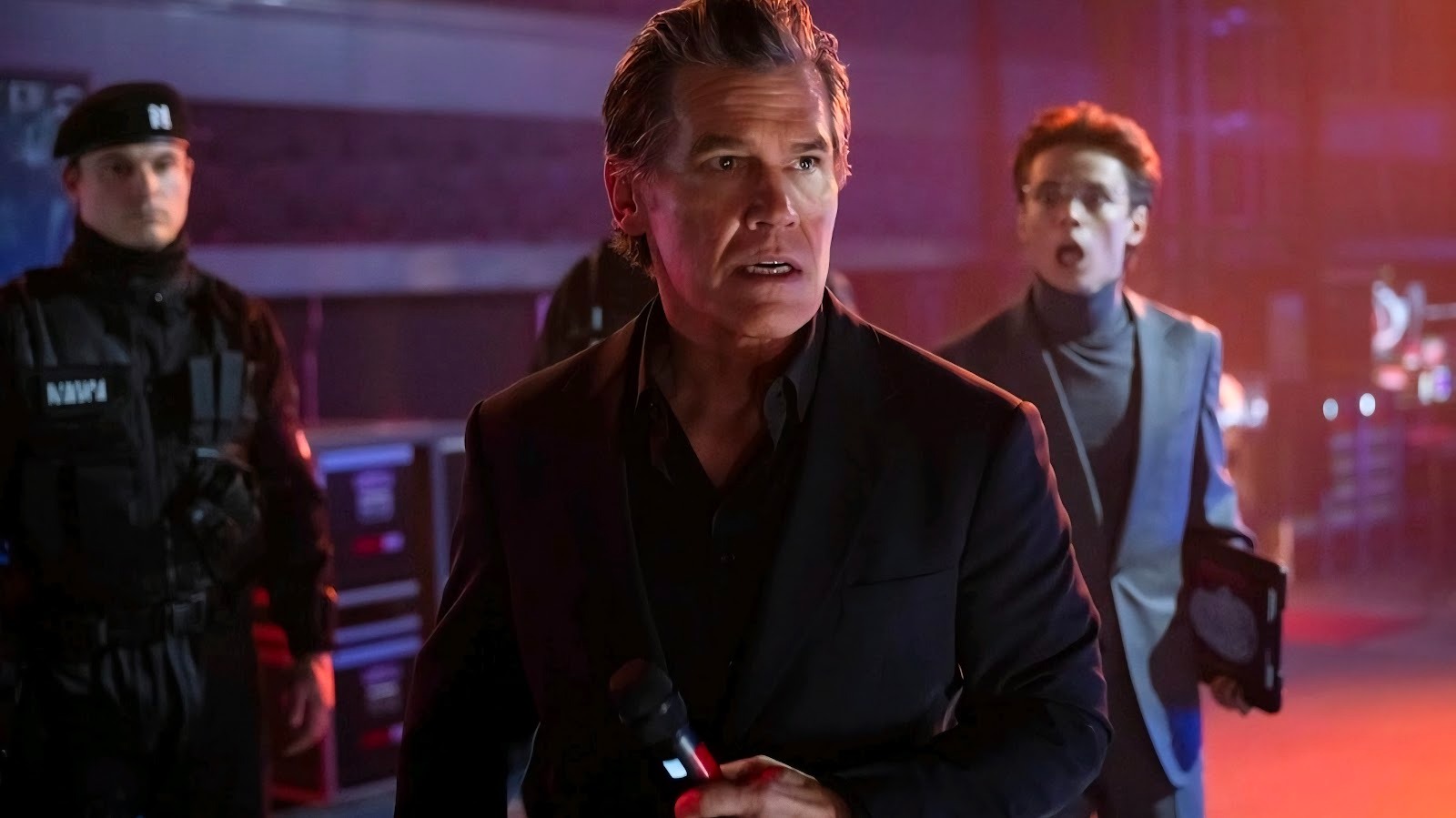
However, in today’s dystopian society, nearly all of them injure, cripple, and maim their contestants. There is just one game show he will never try: the worldwide sensation The Running Man. What is it? Well, it is a killer network reality game show that promises to give a worthy player one billion dollars if they survive 30 days without being killed by five of the world’s finest hunters. Of course, the show’s producer, Dan Killian (Josh Brolin at his seedy best), sees Ben as an instant star. Not to mention a man who may change the game forever.
Edgar Wright helms the remake of The Running Man, deconstructing the genre by treating the audience to an enthralling thriller that highlights the absurdity of corporate media while also conveying an emotional core that keeps viewers engaged. Wright also brings the same qualities he’s known for in his previous works, like Baby Driver, Scott Pilgrim vs. the World, and Hot Fuzz: he infuses a kinetic energy that is unmatched. His lens has rhythmic transitions that convey musicality and rhythm.
Wright’s beats are unmistakable, along with comic precision brought out by a few notable supporting turns. There is Michael Cera, an underground dissident from Maine who wants to help Powell’s character bring down the Network with pamphlets, squirt guns, and, I don’t know, gumption. Then there is the great Colman Domingo, whose loquacious, morally corrupt ringmaster hosts the series that has taken the world by storm. The Academy Award-nominated actor brings a commanding, morally complex presence that perfectly embodies the themes.
Is the movie perfect? No. For instance, the ending is too abrupt, fixated on an influencer gimmick that can detract from the immersive experience. There is a sleight of hand that is a bit too convenient and neat, where it feels like a compromise between studio demands and an artist’s self-indulgence. Some may quibble that Powell’s turn becomes a little unhinged when speaking directly into the camera, which may be perceived as a tad pandering.
Yet, at the same time, the cherry-on-top-of-sorts ending does encapsulate the revolt against authoritarianism that the movie holds up with a giant middle finger to the establishment. The script, written by Wright and Michael Bacall, also smartly utilizes modern technology to keep the viewer guessing where the story is headed. This is where Brolin’s villain is so compelling, always one step ahead of our hero, but as the ending reveals, never able to predict a cultural shift in society.
The Running Man is worth watching for its well-earned self-awareness. Yes, this is an adrenaline-fueled, action-packed, and amped-up satire. Yet, it feels apt considering we are living in a time when politicians are controlling the media and holding up food subsidies for needy families. At the same time, the oligarchy, fat cats, and corporate overlords are throwing costume balls as people experiencing poverty suffer.
Wright has crafted a big studio remake that keeps a pulse on what is happening today, on our digital screens, and right before our eyes.
You can watch The Running Man only in theaters starting November 14th!
Director: Bess Kargman Stars: Diane Warren, Cher, Common
Synopsis: The untold story of a legendary songwriter. Featuring Cher, Common, Jennifer Hudson, Gloria Estefan, Kesha, LeAnn Rimes, and more.
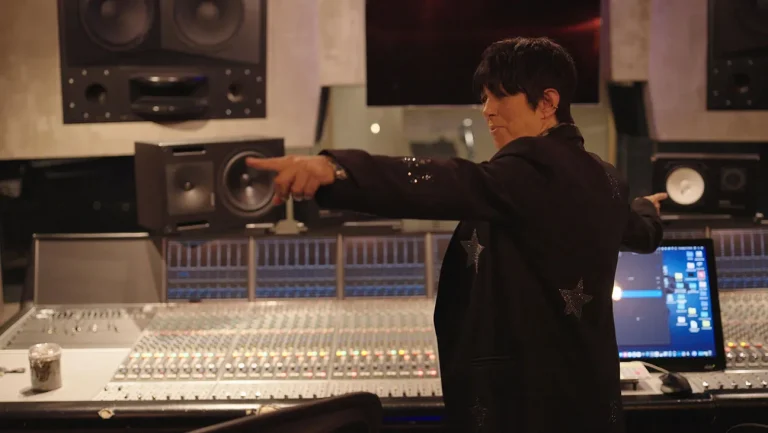
In the beginning of the film, Cher says about her ‘If I Can Turn Back Time’ songwriter, “Diane is nuts.” Just about everyone in the documentary says the word that is part of the movie title: relentless. Diane Warren herself has it on a bracelet she wears, “Relentless as fuck.” At the end of the documentary, it says that Warren has no plans to retire. Aged sixty-nine, why would she? For the last forty-years, hit after hit after hit has been written by one single person and movie after movie after movie has a song written by this same one person who keeps getting nominated for Oscars – and not winning. But director Bess Kargman goes through her life in a breeze, delving into the ins and outs of her upbringing, career decisions, and the enigma of how a Van Nuys girl became songwriting royalty.
Warren, who has Asberger’s and says her neurodivergency has played a massive role in her creativity, explains the massive drive that pushes her. Her childhood wasn’t totally happy and Diane developed a hot streak of rebellion being a teen in the 1970s and ran away multiple times to where her own parents put her in juvenile detention after catching her with marijuana. It also didn’t help that when she sought out a music career, Diane’s own mother continued to doubt her, trying to steer her into being a secretary, like she was. Only Diane’s father recognized the drive and bought her first guitar; she would give tribute to him in ‘Because You Loved Me’ by Celine Dion for the movie, Up Close and Personal.
With every bump along the road and people challenging her and doubting her, Diane’s thought is, “Fuck you. I’ll prove you wrong.” It is this drive that the documentary puts out her continuous need for validation in her songwork, going back to when she sued out of her original contract because of how she was being financially used, leading her to create her own publishing company. It is a catalog worth over half a billion dollars today, but while every artist is cashing in, Diane has no interest in selling hers. Diane says music has saved her life and it’s not about fame and fortune. She also was never interested in marriage; there’s a coaster that says, ‘Relationship Status,’ and of the options, it is checkmarked by a word I won’t write here, but it rhymes with ‘hunt.’
The most obvious thing in the documentary is that Diane is both A) a demanding figure who has alienated some people from performing with her again, and B) not shy to talk about herself, yet finds it awkward to talk about herself and her creative process. Simply put, there is no process, and everything in one room is a massive clutter. She’s not vain about herself. There are also the more serious feelings underlying her, such as revealing of being assaulted as a child in making ‘Til It Happens To You’ with Lady Gaga and the pain of losing that Oscar especially compared to other nominated songs. Kiss lead Paul Stanley only has one clip in the documentary, but as he noted in talking about Diane, “it’s easier to write about heartache when you don’t have to live it…but you do fear it.”Diane Warren: Relentless isn’t a wowing documentary, but pulls the curtain back to show off a woman who has played to every massive artist and producer and is widely beloved. It remains staggering that one person just showered us with glorious songs – ‘I Don’t Want To Miss A Thing,’ ‘Unbreak My Heart,’ and ‘How Do I Live’ to name how many hit singles written by her? Bess Kargman brings out Warren as candid as she can be comfortably from her personal life to her love of animals, energetically showing us that someone who will never stop working and never stop succeeding.
Director:Shane Black Writers: Brett Halliday, Shane Black Stars: Robert Downey Jr., Val Kilmer, Michelle Monaghan
Synopsis: After being mistaken for an actor, a New York thief is sent to Hollywood to train under a private eye for a potential movie role, but the duo are thrown together with a struggling actress into a murder mystery.
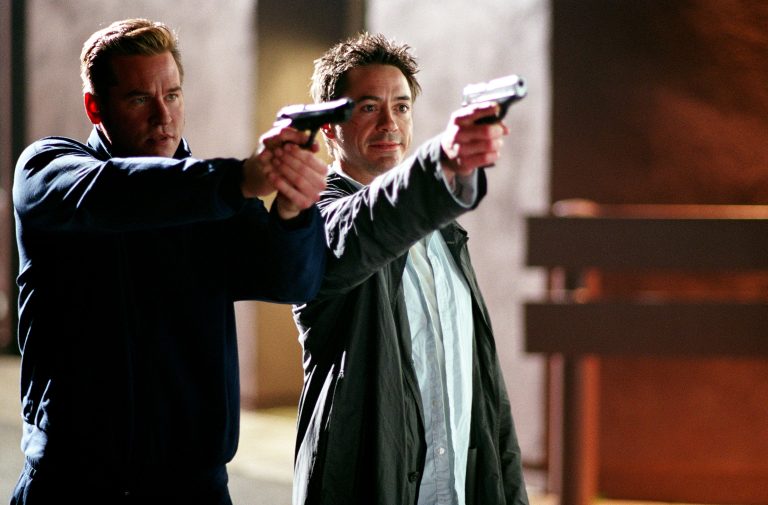
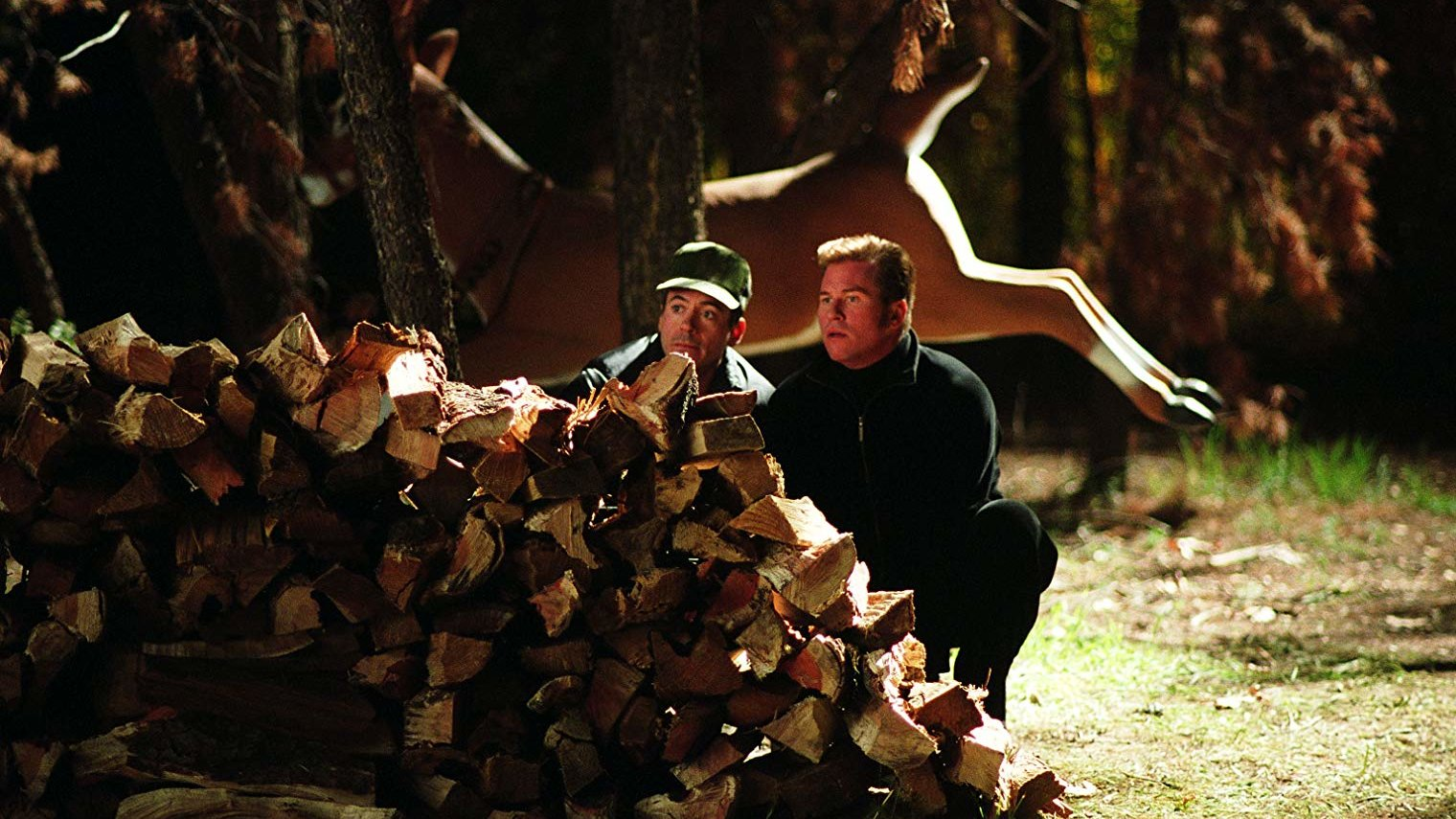
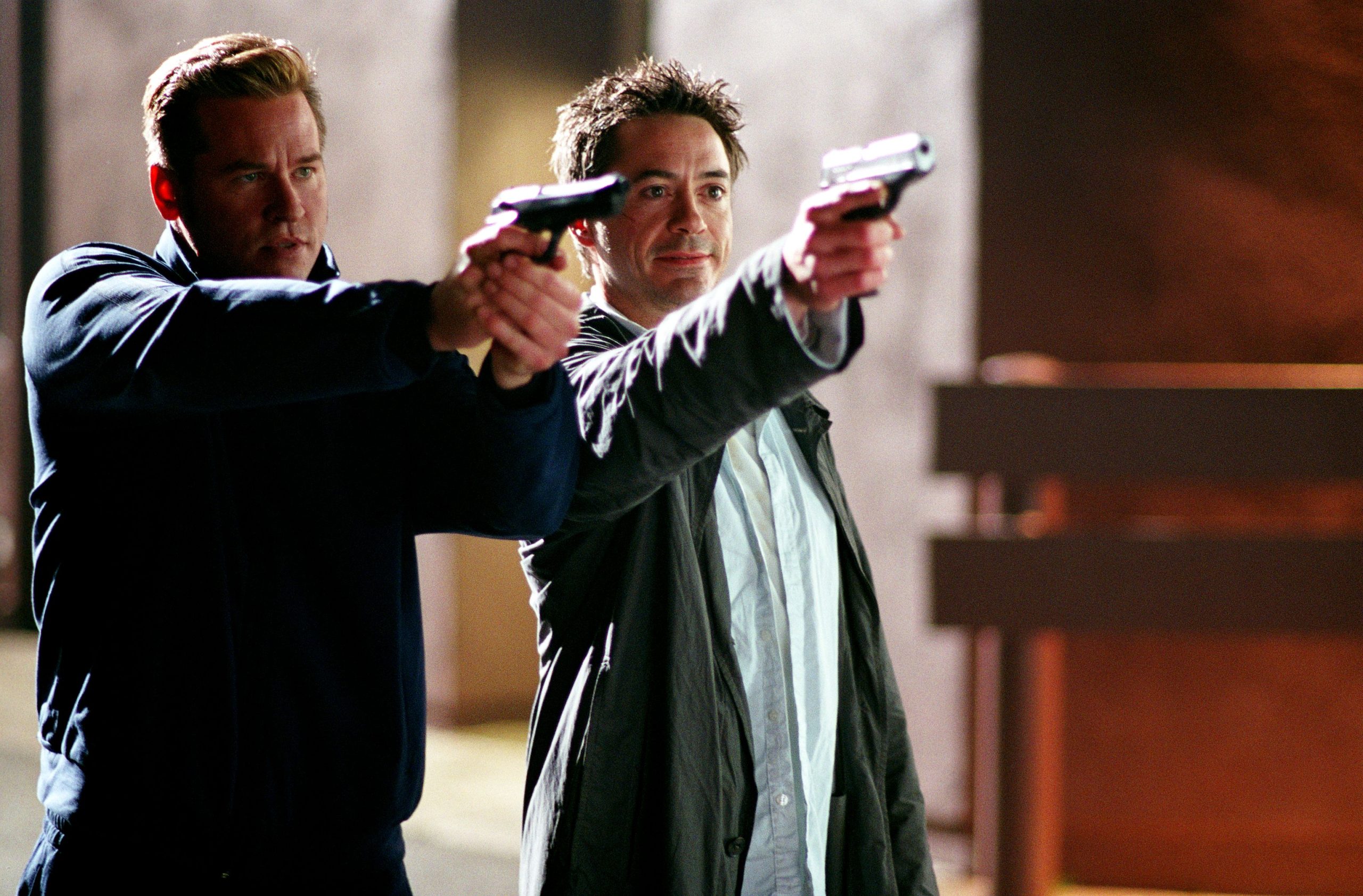
I enjoy a good action comedy as much as the next person. The best action comedies take advantage of the comedic timing of its actors, bombastic action sequences, strong character dynamics, real stakes, and most importantly, a good soundtrack. Since 2005, we’ve gotten plenty of action comedies with these elements such as Hot Fuzz, Tropic Thunder, the Jump Street franchise, and the Rush Hour franchise. These movies stuck with me and are super rewatchable but most of the others that come to mind don’t compare to Shane Black’s 2005 black comedy action film, Kiss Kiss Bang Bang. The film is about a petty thief named Harry Lockhart (Robert Downey Jr.) that gets caught up in a store robbery. While evading the cops, he runs in on a screen test. The casting director of the movie, Dabney Shaw (Larry Drake), loves his “audition” and flies him out to LA for another screen test. Harry meets P.I. (Gay) Perry Van Shrike (Val Kilmer) and he’s given on-the-job experience for his next screen test. Harry is led down a crazy path of mystery, murder, and even romance during his time in LA. This was all a lot more than what he bargained for as a petty thief posing as an actor.
I remember renting this movie from Blockbuster or Hollywood Video. I was excited because I was a huge fan of Shane Black and the other action comedies that he wrote and or directed. The witty dialogue and exciting action sequences in his films have always wowed me and left me smiling after watching. This movie was one of Robert Downey Jr.’s comeback films after his time in rehab for drugs and alcohol abuse. All eyes were on him and everyone wanted to see if he still had that dog in him as an actor or if he had lost his fast talking and charming ways. Luckily, Downey Jr. rose to the occasion and gave audiences one of the best performances of his career. He plays Harry Lockhart like a fast talking, witty, hapless romantic with a need to be the hero in many situations. It’s easy to like Harry because he’s an overall good guy. When we meet him he’s empathetic about a robbery with a friend that went horribly but as the movie goes on you see that he just wanted to do something more with his life that was meaningful. The opportunity arose and he took the plunge.
We meet a lot of characters in this movie that are very influential to Harry and the shenanigans that he gets into in LA. First we meet (Gay) Perry played by the stoic and handsome Val Kilmer. Perry is a private investigator that’s intelligent, funny, and really about his business. Kilmer brings his stoic and no nonsense personality to the role. In a lot of noir and mystery films you’re introduced to antagonists that have different personalities but their common goal is to solve a case and stay alive while doing it. Kilmer bounces off of Downey Jr. very well and it feels truly authentic. These veteran actors aren’t phoning it in and giving us half assed performances. They bring Black’s words off of the page in a way that only talented actors can.. Kilmer playing a gay detective was out of the norm because there hadn’t been a lot of gay characters that were law enforcement in movies and tv shows. He wasn’t a soft character that let things just happen to him. He took charge of the situations that he and Harry got into. He’d bust doors down, start shooting when needed, played very comedic good cop bad cop routines, and more.
What would a mystery action thriller be without a love interest? Harry’s one that got away is Harmony Faith Lane (Michelle Monaghan). We get flashback scenes of her and Harry growing up together. First as kids and then as teenagers, they are shown to be caring for one another and always empathetic towards each other even when there’s some messiness going on in their lives. Harmony’s an avid reader of mystery books. She’s obsessed with the Jonny Gossamer fictional mystery novels that she read as a child. This is one of the best plot points in the movie because the story is broken down into chapters. She’s seen reading these books at a place where she and Harry eventually cross paths. As the movie goes along, Harry and she compare their case to details from Gossamer’s books. Throughout the movie, we get different sides of Harmony. She’s fast talking, she’s a free spirit, and she’s very spunky. I think that this was my first time seeing Monaghan in a movie, so her performance really sent me down a path of continual viewings of her work. This is a role that I don’t think a lot of actresses could’ve played because the character is so damaged but she still keeps her heart in the right place and she continues to be that free spirit even after all of her hardship and strife.
The score from composer John Ottman really sticks with you and it’s very pleasing to your ears. It’s like a character in the film that is along for the ride. You don’t see this character in the physical form but you can hear it in the background. Pairing this music with what the actors are doing on the screen is a real treat. Black’s years of writing and directing really helped with his directing skills for this movie. He worked with a very diverse cast on this production and he rose to the occasion as a true master of his craft. Unfortunately, this movie didn’t do well at the box office. Reading articles about these movies can be disheartening but it’s how a lot of movies become cult classics. They’re cherished by a group of people around the world and then they’re introduced to this movie by people that love it. This movie is one of the few noir black comedies with action that we have from the early aughts that had its own voice. Without this movie we don’t get Black’s other unappreciated dark comedy action movie The Nice Guys. I’ll go even further, we don’t get Downey Jr. as Tony Stark without this movie. Crazy right? Well that’s what a lot of cult classics do. They’re catalysts for other movies that come after them and have influence on those movies in different ways.
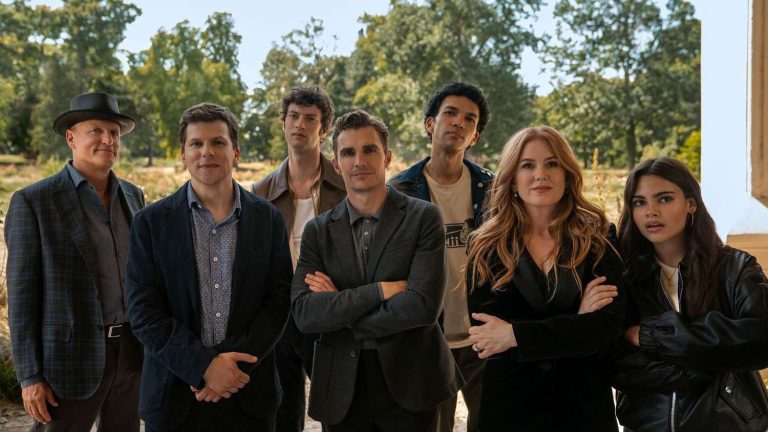
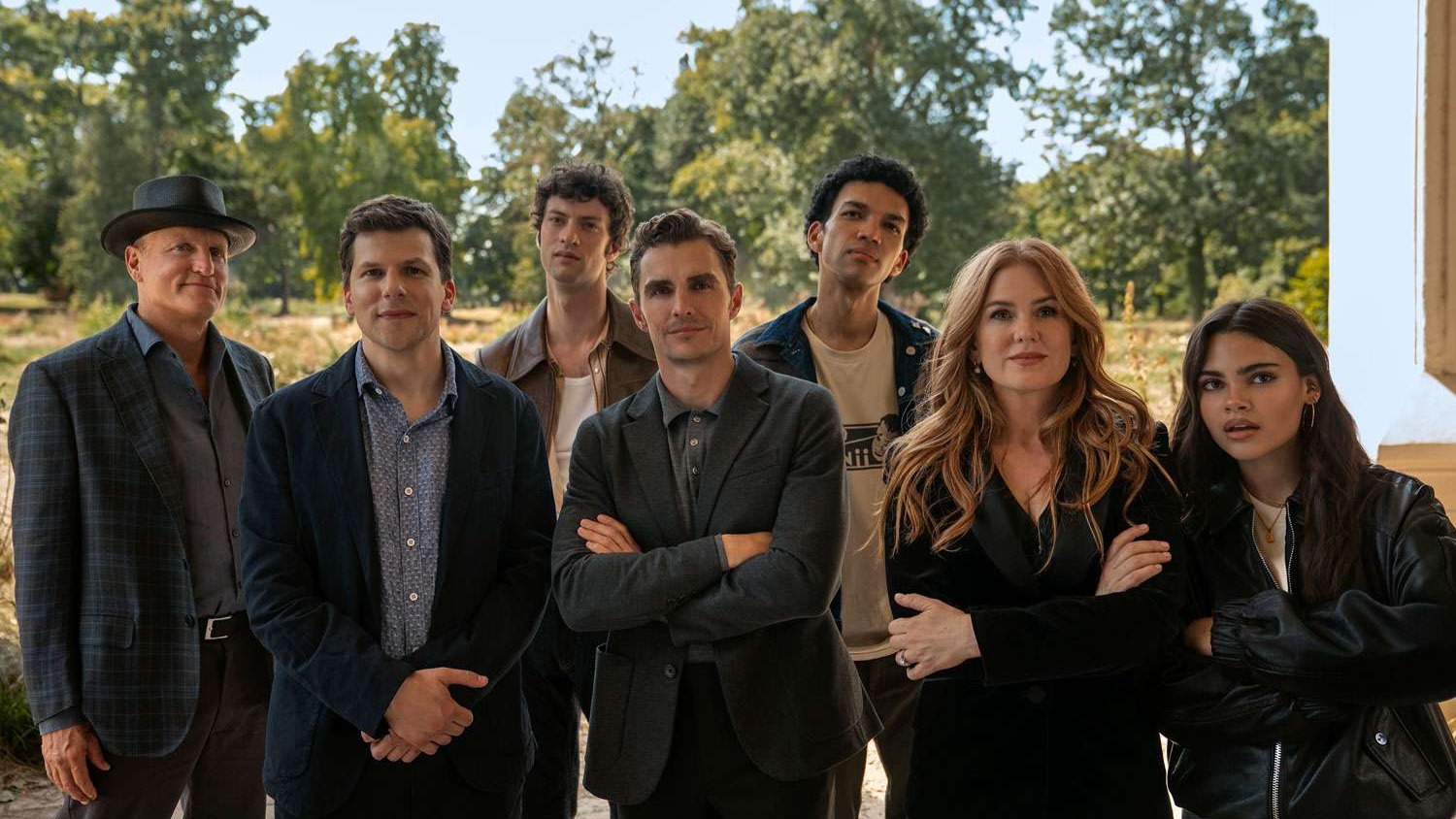
Director:Ruben Fleischer Writers: Seth Grahame-Smith, Michael Lesslie, Rhett Reese Stars: Jesse Eisenberg, Woody Harrelson, Dave Franco
Synopsis: A diamond heist reunites retired Horsemen illusionists with new performers Greenblatt, Smith and Sessa as they target dangerous criminals.
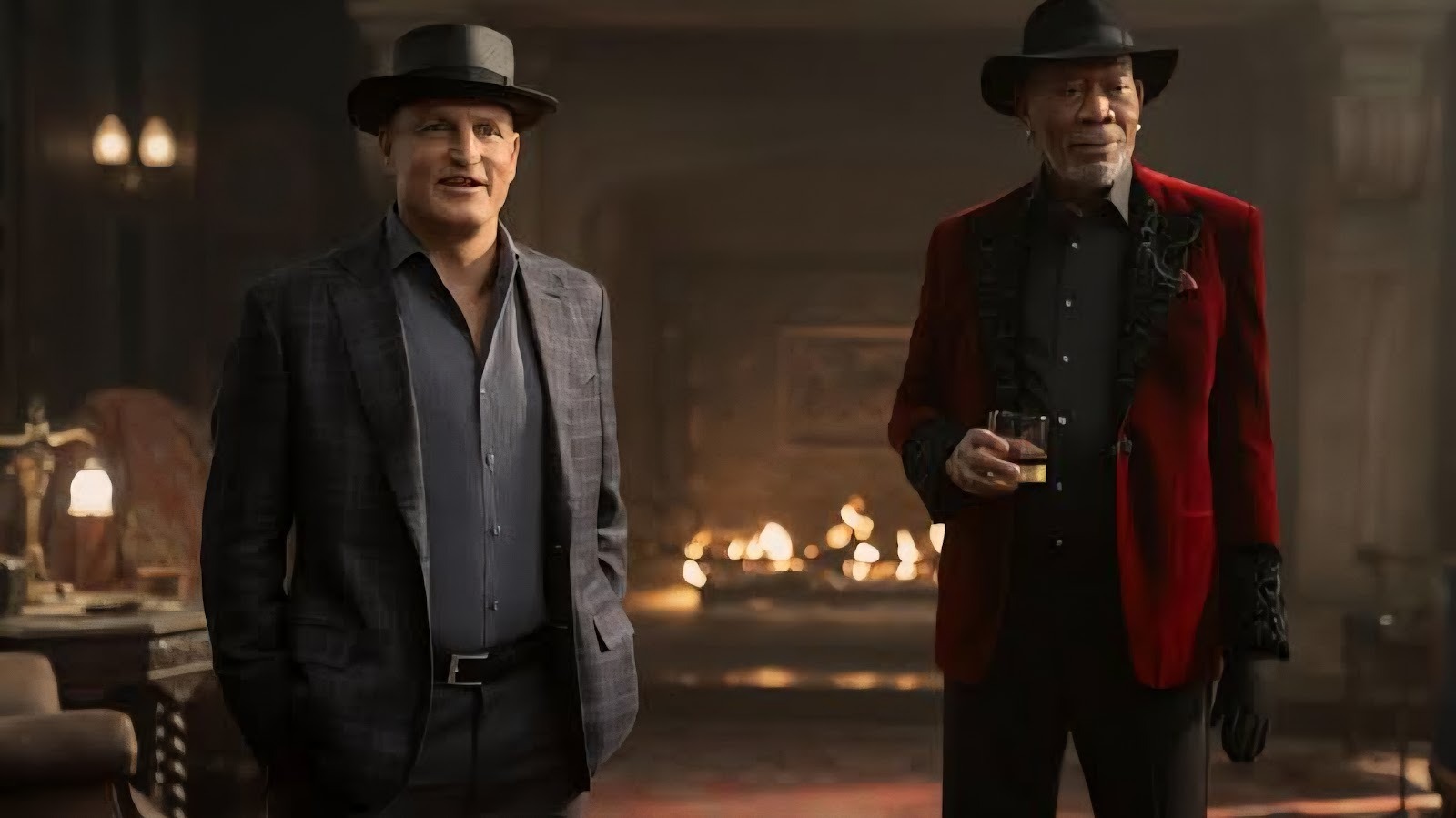
The tagline for Now You See Me: Now You Don’t feels like an inside joke aimed at the audience. Yes, there’s a third installment of the Lionsgate franchise that no one wanted and no one asked for. The tagline—delivered as Morgan Freeman sits in a chair cashing a paycheck, reads, “The closer you look, the less you see.” It’s oddly fitting because there’s simply nothing here, new or old, that might hold an audience’s interest.
That’s because the film is all spectacle and no magic, an elaborate distraction to hide how little substance the franchise actually has, yet somehow still manages to maintain a stranglehold over.
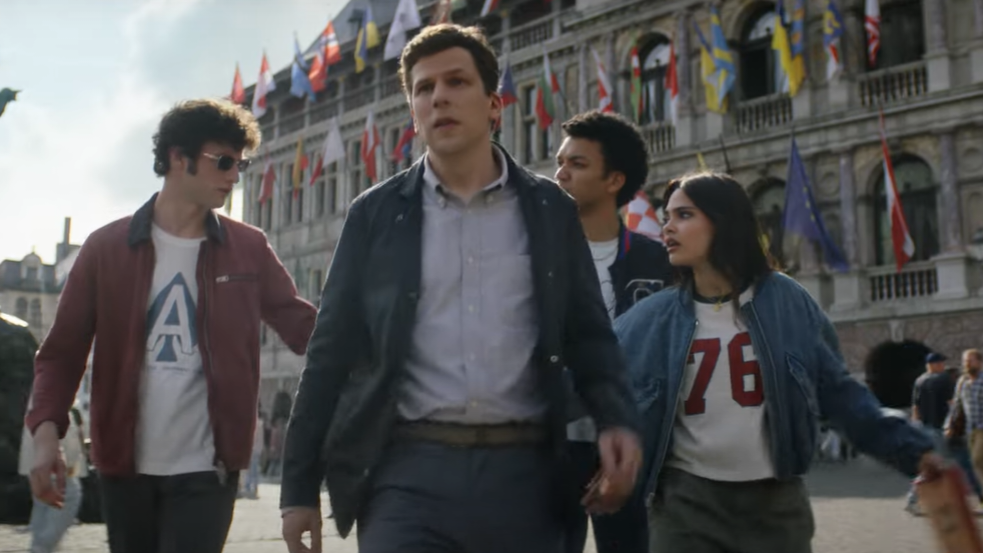
The story follows three new magicians, thieves, and con artists who set out to disrupt the alchemy that controls the global economy. That includes Charlie (I Saw the TV Glow’s Justice Smith), the brains behind the operation, who works comfortably in the background. Then there’s June (Avengers: Infinity War’sAriana Greenblatt), one of the best young pickpockets in the world, who’s never found an object she couldn’t steal with her expert sleight of hand.
Finally, there’s the “face” of the group, every team has one, Bosco (The Holdovers’ Dominic Sessa), a former Juilliard student who dropped out and now gets his kicks playing a wide variety of characters, making him invaluable in the con-game. Bosco is the charismatic antihero of the group, where being the hero is thrust upon him. At least, that is how he comes across when Atlas (Jesse Eisenberg) confronts their team after their latest theft from the corrupt and gives back to the people.
See, the young bucks used a hologram of the Four Horsemen as a beard. Utterly impressed, Atlas now wants to recruit these young illusionists into their world. That would be stealing the world’s largest diamond from Veronika (Golden Globe nominee Rosamund Pike), the leader of a worldwide crime syndicate. (I mean, is there any other kind?) When the operation goes haywire, the rest of the Horsemen reunite, including Merritt (Woody Harrelson), Jack (Dave Franco), and Henley (Jay Kelly’s Isla Fisher), whom they haven’t seen since the Pont des Arts in Paris.
Now You See Me: Now You Don’t was directed by Ruben Fleischer, which is almost shocking. The filmmaker—known for his distinct, crowd-pleasing genre films with an edge, including Zombieland, 30 Minutes or Less, Venom, and the gut-busting Zombieland: Double Tap—somehow loses the comic bite, irreverent humor, and genre-blending energy that defined his earlier work. Qualities, I think we can all agree, the franchise could have used an injection of.
It probably doesn’t help that the script, watered down by multiple rewrites from the likes of Michael Lesslie, Paul Wernick, Rhett Reese, and Seth Grahame-Smith, treats the movie like a superhero film, where anything can happen thanks to the so-called “magic” of illusion. Trust me, if Joe Pesci’s Vincent “Vinny” Gambini were around, he’d be calling out everyone for their transparent escapes.
The main issue with the Now You See Me franchise is that it relies too heavily on CGI and over-the-top spectacle, stripping away the imagination and suspense the film should be building for its audience. At its core, and at its best, it’s essentially a heist movie, a con game that should bring the same joy as classics like The Sting or contemporary crowd pleasers like Catch Me If You Can, The Thomas Crown Affair, or even Dirty Rotten Scoundrels.
When real illusion is replaced with comic-book spectacle (there’s even an eye-rolling scene where each magician tries to out-trick the other), the CGI sleight of hand leaves the film with no tension, no awe, and no sense of risk. Not to mention, the real magic of any movie, the plot, is so convoluted that we aren’t even sure how they got there. I would call it fraud. Then there’s the issue of movies like this setting up sequels or resurrecting beloved characters solely to manufacture an emotional moment that’s hardly earned.
This is the equivalent of pulling a rabbit out of the wrong hat. The ridiculous twist at the end doesn’t hold up under scrutiny, especially when it results in the Horsemen losing one of their own because of it. Mistakes like these—despite all the money and time invested—leave a good story vanishing in a puff of smoke the moment Eisenberg appears on screen. For those reasons, Now You See Me: Now You Don’t fails to live up to its potential as good, campy fun.
You can watch Now You See Me: Now You Don’t only in theaters starting November 14th!
Synopsis:Naples faces dual volcanic threats from Vesuvius and Campi Flegrei. Amid increasing tremors, archaeologists work as residents live anxiously, haunted by Pompeii’s fate while emergency services strain.
“You’ve never seen death?” the French multihyphenate Jean Cocteau once asked, rhetorically. “Look in the mirror every day and you will see it like bees working in a glass hive.” It’s plenty fair to assume that the Italian documentarian Gianfranco Rosi is aware of this quote, though when it came to beginning his new film, Below the Clouds, with one of Cocteau’s wisdom-filled nuggets, a note about being swarmed to death was likely never on his radar. Instead, he went a more direct route: “Vesuvius makes all the clouds in the world.” The latter statement gets right at the heart (and appears at the beginning) of Rosi’s eighth documentary, both referencing the volcano that looms over its actual subject, the city of Naples, and the film’s title itself. Mount Vesuvius is, of course, famous for burying the Roman cities of Pompeii and Herculaneum with an eruption almost 2,000 years ago, and still sits close enough to roughly three million people that could feasibly be impacted by another explosion. These are the people that, to use Rosi’s parlance, reside below the clouds Vesuvius manufactures and live in a practically religious fear of the volcano’s destructive capabilities. Any and all tremors, whether felt or imagined, are reported to an emergency line that can’t do anything but quell concerns with factual evidence that everything is going to be fine.
The “below” that Rosi focuses his gaze on (at least when he’s not capturing Naples from far above in stunning black-and-white photography) owes plenty to the roads paved in the past and present by documentarians like Frederick Wiseman and Wang Bing, who prefer focusing on communities through the eyes and testimonies of their inhabitants. The latter’s Youth trilogy, in all its 10-hour glory, could work as a particularly strong companion piece; it follows Chinese migrant workers navigating life in a professional and personal capacity with intense scrutiny. It’s not done critically, but intimately. Below the Clouds has a similar feel to it – aside from the fact that its foreboding elements are closely related to the volcano looming in the background rather than job insecurity and uncertain futures – with its curiosities primarily related to the people living in the city. Rosi descends into underground tunnels with a group of investigators seeking evidence that tomb-robbers have been at work; he spends time in a tutor’s makeshift classroom, where an elder shopkeeper teaches students how to read and write with a critical mind; he descends again into the basement archives of a local museum, chatting with the clerk who says the artifacts on display have been “her friends” for years.
Courtesy of The Match Factory
Frequent visits with the aforementioned call center works provide an occasional reprieve for the audience, but exhibit an undercurrent of dread existing within the community they communicate with. Some are curious to know the time; in one devastating scene, a domestic-abuse call is heard in its entirety; most callers are curious as to whether or not there has been an earthquake. They’re sure they felt a tremor, and are wondering whether or not they should evacuate the area. Earthquakes aren’t uncommon in Naples – roughly 2,700 are reported annually – but they are infrequently related to Vesuvius’ activity, if ever. That doesn’t stop the concerns from flowing in at a rate that would be sure to overwhelm any operator, let alone the few on staff at the center Rosi captures.
Not a great deal happens over Below the Clouds’ two-hour runtime, though it’s both stunning and naturally fascinating enough to hold viewers at attention, if only because they’re witnessing something unfamiliar. The municipality that sits beneath Rosi’s longingly-filmed clouds is quiet and still more than it is ever bustling (at least on camera), a quality that juxtaposes almost too perfectly with the constant concern radiating throughout the film; imagine watching a scared sloth attempting to outrun a predator and you’re halfway there. Yet the beauty of it all is so undeniable that you almost need no other reason to take it in aside from its existence. Rosi forgoes sound as much as he does color, a sensation that takes some getting used to without ever feeling wholly discomfiting, especially for those familiar with the directors past works.
Below the Clouds is somehow more compelling than 2020’s Notturno, though the two might make for an even better double bill than the work of Bing or Wiseman. A documentary that was shot from 2017 to 2019 and centered on people from Middle Eastern areas with proximity to war zones, Notturno was similarly methodical and interested in the lives of people whose safety constantly existed under duress. One might not jump to connect a volcano to a war zone, but the former is certainly more threatening than the latter insofar as scope of tragedy. (Should the proverbial bomb detonate, that is.) That Rosi manages to consistently highlight the threat of a community’s surroundings while still prioritizing its citizens remains his hallmark as a documentarian, and an infatigable one at that. He regularly spends years filming his movies on location in order to capture the whole story. The only problem with that approach is one that solely plagues his audience: The waiting game for one of his muted, minor stunners is always a far more brutal test of endurance than the films he makes.
Below the Clouds screened at the 63rd New York Film Festival and will have its awards-qualifying release this fall. Mubi will release the film in early 2026,
Synopsis: Ann Lee, the founding leader of the Shaker Movement, proclaimed as the female Christ by her followers. Depicts her establishment of a utopian society and the Shakers’ worship through song and dance, based on real events.
Musical biopics are all the rage these days, even though I’m not quite sure who is asking for them, outside of studio execs seeing the box office and awards success of movies about well-known artists like Bohemian Rhapsody. Just last year, we had Back to Black, A Complete Unknown, Bob Marley: One Love, and Better Man. Springsteen: Deliver Me From Nowhere just had its release in late October. All of these vary in terms of both critical and commercial success, but the message is clear: studios will keep churning these out whether we like it or not.
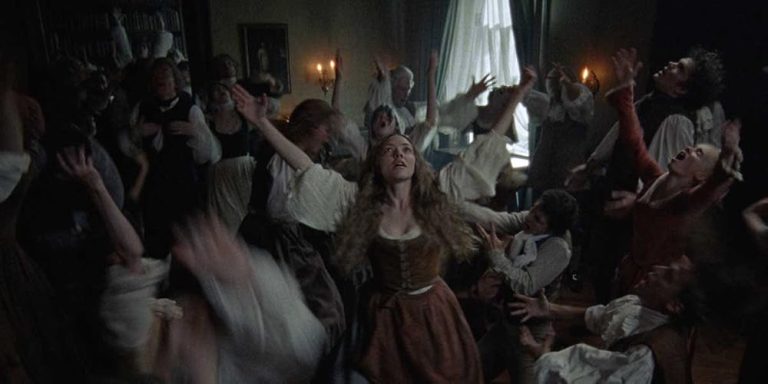
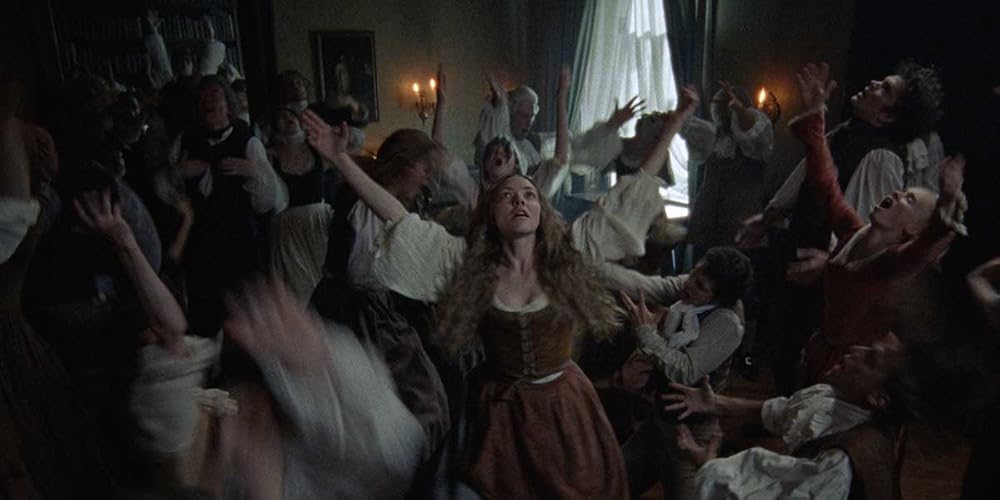
Enter Mona Fastvold with The Testament of Ann Lee, a musical unlike any that I’ve ever seen. It follows Ann Lee (Amanda Seyfried), the leader of the Shaker Movement, a charismatic Christian sect born out of the more reserved Quaker communities in England and America. The Shakers were known for their erratic and expressive movement during worship, more akin to what you might see in a Pentecostal church in the modern United States. All of the music featured in Ann Lee is taken from traditional Shaker hymns, not necessarily written by Mother Ann herself, but certainly influenced by her leadership and teachings.
Fastvold, alongside Brady Corbet and much of the team behind The Brutalist, crafts the most beautiful and enthralling choreography committed to film this century. Almost every musical moment comes from a worship setting rather than the spontaneous singing found in most other musicals. The dancing, combined with immaculate production and costume design, is truly dazzling and pulls you in with each song.
The heart of the film, as with the heart of the Shaker movement itself, is Seyfried as Ann Lee in a breathtaking performance. Lee is one of the few prominent women to lead a religious movement like this, which provides this community with a unique vision and perspective. Many portrayals of religious leaders show them grasping at power for power’s sake, looking out for themselves and no one else. Seyfried’s Mother Ann channels her suffering as a child and young woman into powerful worship and leadership amongst a group of Christian believers yearning for direction and reform. Her singing and emotional range are on full display, marking my favorite performance of the year.
A fascinating aspect of the film is the team’s approach to the “cradle-to-grave” story most audiences are all too familiar with. Many films about religious leaders try to tap into their psyche and get intimately close, whether looking for empathy for them or uncovering evil within them. The Testament of Ann Lee takes a surprisingly removed look at the life of Ann and her community. We see intimately painful moments, but are often not privy to her innermost thoughts. It’s only when these come out as religious expression that we are let in on her motivations and ideology.
Seyfried leads the charge, but Lewis Pullman, as her brother William, rallies the troops. A lesser movie would find the William character as an undermining and begrudging servant to his sister Ann, but he is nothing but supportive of the movement and the reverence that others feel for Mother Ann. This is by far Pullman’s best performance to date, using his charm and vulnerability uniquely. It’s Pullman’s part of the story where the cinematography really shines, leading us into the fields and forests of the coastal northeast, bringing out a contrast in color to the dark and dreary indoor settings of England and the Shaker’s first few months in America.
Between this and The Brutalist, Fastvold and Corbet have to be the most confident filmmaking team working right now. This is a huge swing for all involved, and it’s amazing that a movie like this got made. The Testament of Ann Lee subverts expectations on all fronts, throwing many tropes of musicals, biopics, and the ever-popular combo of the two out the window. There’s not a film this year that combines period craft, performance, and cinematography as well as Ann Lee. It’s utterly mesmerizing, and the more I think about it, the more I’m convinced it’s the movie of the year.
This week on Women InSession, we talk about the great Cameron Crowe and what makes his story of becoming a filmmaker one of the most fascinating! If you’ve seen Almost Famous, you already know that his childhood is incredibly unique, and not only did it inspire one of the best movies of the 2000s, but it helped shape one of the most distinctive voices of the 80s and 90s. Really hope that guy comes back some day.
Panel: Kristin Battestella, Amy Thomasson
On that note, check out this week’s show and let us know what you think in the comment section. Thanks for listening and for supporting the InSession Film Podcast!
Director:Michelle Garza Cervera Writer:Micah Bloomberg Stars: Mary Elizabeth Winstead, Maika Monroe, Martin Starr
Synopsis:An upscale suburban mom brings a new nanny, Polly Murphy, into her home, only to discover she is not the person she claims to be
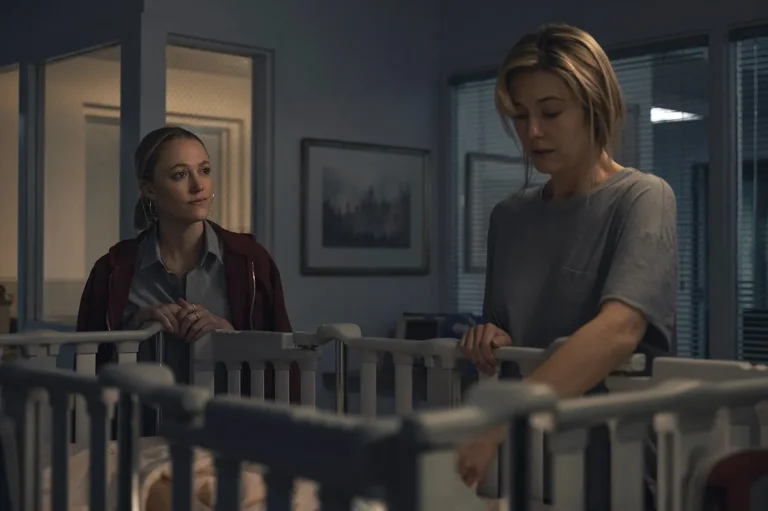
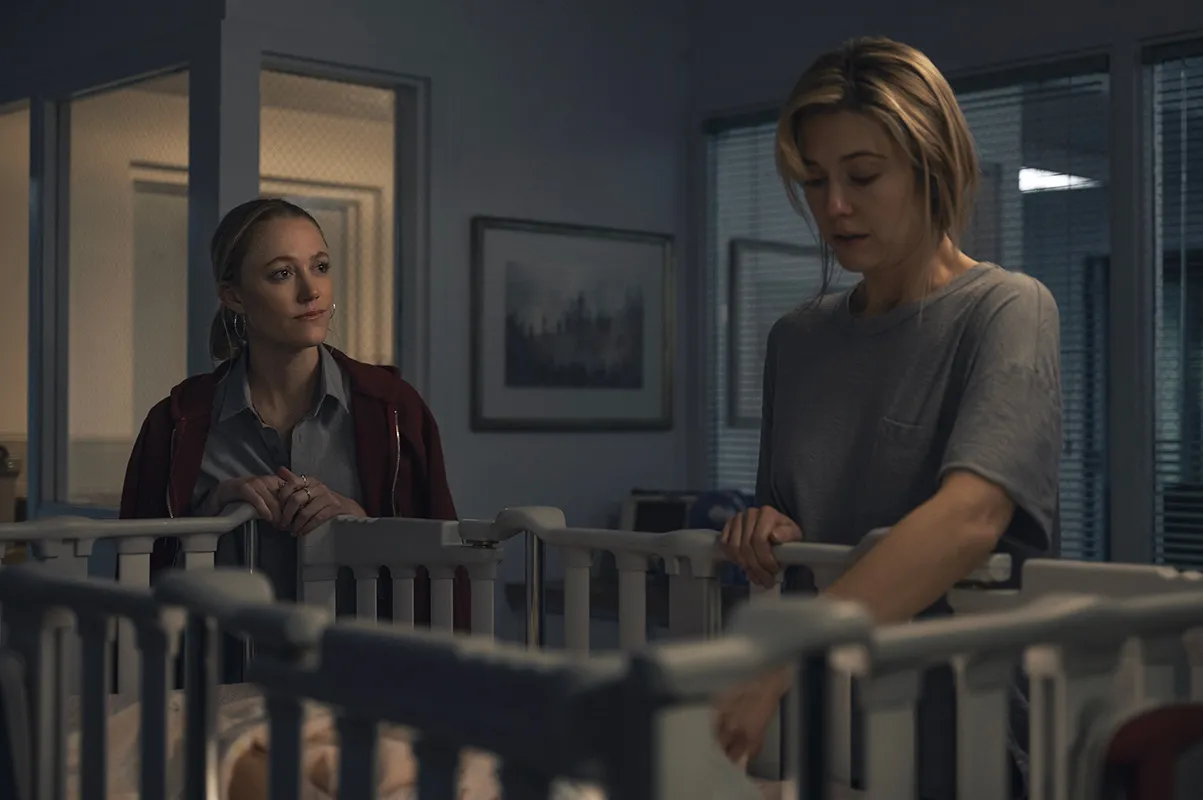
The rare case of a remake surpassing the original, The Hand That Rocks the Cradle is an assured sophomore effort from Mexican filmmaker Michelle Garza Cervera after her (incredible) debut feature Huesera: The Bone Woman. As interesting a movie as it is, I can’t think of one that has aged this poorly as Curtis Hanson’s properly insane, but incredibly problematic 1992 original, which was already fairly perplexing when it was released, and is even more so today. With the story being readapted (for Hulu, sigh), there was a real chance for Cervera to not only flex her genre filmmaking muscles further in the remake, but repurpose Amanda Silver’s screenplay to fit more progressive times, where representations of assault are treated less exploitatively and with no Ernie Hudson playing what is essentially Simple Jack.
Removing some of the insanity from the original does dilute some of the pulpier, trashier sections of Hanson’s film. However, there’s much enjoyment to be had in how, this time around, we don’t know the antagonist’s motivations when she infiltrates the family of an upscale mother with far too much on her plate. The original film’s introductory half took a lot of time to set up the revenge plot of Rebecca De Mornay’s Mrs. Mott, wife of Dr. Mott, who committed suicide after he was accused of sexual assault by Claire Bartel (Annabella Sciorra) during a routine exam, with each narrative beat becoming more preposterous as it progressed and Mrs. Mott’s motivations began to clear themselves up.
The remake takes a different direction and immediately opens with Polly (Maika Monroe) making friendly contact with Caitlyn (Mary Elizabeth Winstead), who will represent her in a trial in which she faces eviction from her landlord. We don’t know the details of what happened, since Cervera cuts to several months later, after Caitlyn has given birth to her latest child, Josie (Nora Contreras & Lola Contreras). It’s also there that she reunites with Polly, who tells Caitlyn she is looking for a job as a nanny but is struggling even to get hired.
There’s a lot of suspension of disbelief involved (much like the original film, since Claire hires Mrs. Mott without even seeing a resume and believes everything she says as the absolute truth). Still, this conversation gives Caitlyn the idea that perhaps she should give Polly a shot. After all, she is barely juggling her personal and professional tasks, and it would give her some peace of mind, especially as she comes highly recommended. In this case, there was a resume and referral! Fixing the mistakes of the past seems to be Cervera’s motto this go-around. The rest of the movie follows the same narrative as Hanson’s original (with Martin Starr acting as a stand-in for the Julianne Moore character). However, the mystery of Polly’s identity unfurls rather compellingly. We barely know who she is when the movie starts (although astute viewers who have seen the prior work have a sense of what’s coming) and, most importantly, do not understand her motivations outright.
They slowly develop as her actions get more dangerous (from giving the family food poisoning to storing and lighting fireworks in the house) and threaten the safety of Caitlyn’s family, and, most importantly, herself. Micah Bloomberg’s screenplay smartly plays a gamble in changing the backstory of Caitlyn and Polly into less problematic territories, where the reasons for the latter’s “revenge” against Caitlyn have nothing to do with assault but something far more sinister. It’s definitely a big swing, but it works reasonably well, even if Cervera’s execution hampers ever so slightly during its perversely violent climax, where the filmmaker wants to bathe in the trashy impulses of Hanson’s movie (sansthe greatest punch in cinema history) but refuses to delve deep into sleazy territory.
Monroe’s performance suffers as a result, because her Polly isn’t as devilishly psychotic (or deliriously unhinged, whatever you prefer) as De Mornay’s legendary career-best turn. She’s the reason why most audiences forgave Hanson and screenwriter Amanda Silver’s dated depictions of disabled individuals and an exploitative molestation scene that occurred at the beginning of the film. Monroe never holds a candle to De Mornay, even just a smidge, while Winstead recognizes that she probably won’t be able to top Sciorra’s performance and does something completely different. The sense of alchemy between the two actresses is there, but Winstead triumphs over literally everyone.
Her performance is controlled and downright terrifying, especially as Cervera, through the aid of ace cinematographer Jo Willems, intensifies the sense of dread she feels through a more erratic and blurry visual language than the polished work of Robert Elswit in the original film. It perfectly complements Ariel Marx’s guttural music, an absolute stunner during sequences of intense confrontations, giving note-perfect rhythm to editor Julie Monroe’s cutting. There’s actual thought in how each major setpiece is staged, which doesn’t happen often in this moviegoing economy.
It’s a shame that Cervera’s vision begins to fizzle out as the story gets clearer, but The Hand that Rocks the Cradle still manages to give Hanson’s version a run for its money. It effectively builds the mystery surrounding Polly, rather than spoon-feeding the audience with her motivations in the opening section. It also explores different themes than the original, freshening up the bare bones of the story for more contemporary sensibilities. It’s one of Disney’s better remakes in recent memory, and it genuinely feels criminal that it was unable to get a theatrical release. Cervera’s sense of aesthetics and vision alone are enough to warrant the big screen treatment. And if you’ve seen Huesera, you know what I’m talking about.
This week on the InSession Film Podcast, we catch up with movies we missed earlier in the year, including Kpop Demon Hunters, Splitsville, The Ballad of Wallis Island, The Perfect Neighbor and more! Plus, JD talks about an incredible new development in his life and we talk about the Call of Duty news.
Check out this week’s show and let us know what you think in the comment section. Thanks for listening and for supporting the InSession Film Podcast!
– Opening Banter / JD’s Story (5:50) After some opening banter, we begin the show this week with an unexpected but really fun story. There’s been a new development in JD’s life that is full of some incredible irony and coincidences. It might sound unbelievable in a few places, but we promise it’s all true. If you have a Samsung TV, you absolutely have to check it out.
– Call of Duty / The Mummy 4 (32:00) We then talk about the new Call of Duty news with Taylor Sheridan and Peter Berg being attached as writer and director. While this may sound like it’s coming too late, and to a degree it is, but the game series is as popular as ever still. The Modern Warfare storyline, which we assume is what they’ll be adapting, just rebooted itself in recent years. So there’s lots of story to choose from and it could be interesting. We’re also very excited over the news that The Mummy 4 is on the way. We would watch a dozen of those movies.
– 2025 Movie Catch-Up (38:09) There are always those movies that fall through the cracks or that we just don’t have time to review in some formal capacity. So from time-to-time, we love to have these segments where we talk about the movies that we’ve recently caught up with. This week we talk about Kpop Demon Hunters, Splitsville, The Ballad of Wallis Island, The Perfect Neighbor, Steve and a few other small films.
Glen Powell stars in Paramount Pictures’ “THE RUNNING MAN.”
Help Support The InSession Film Podcast
If you want to help support us, there are several ways you can help us and we’d absolutely appreciate it. Every penny goes directly back into supporting the show and we are truly honored and grateful. Thanks for your support and for listening to the InSession Film Podcast!
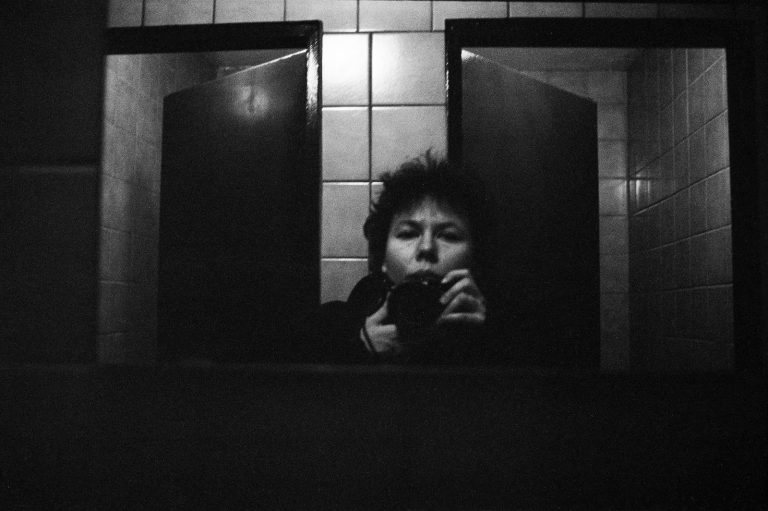
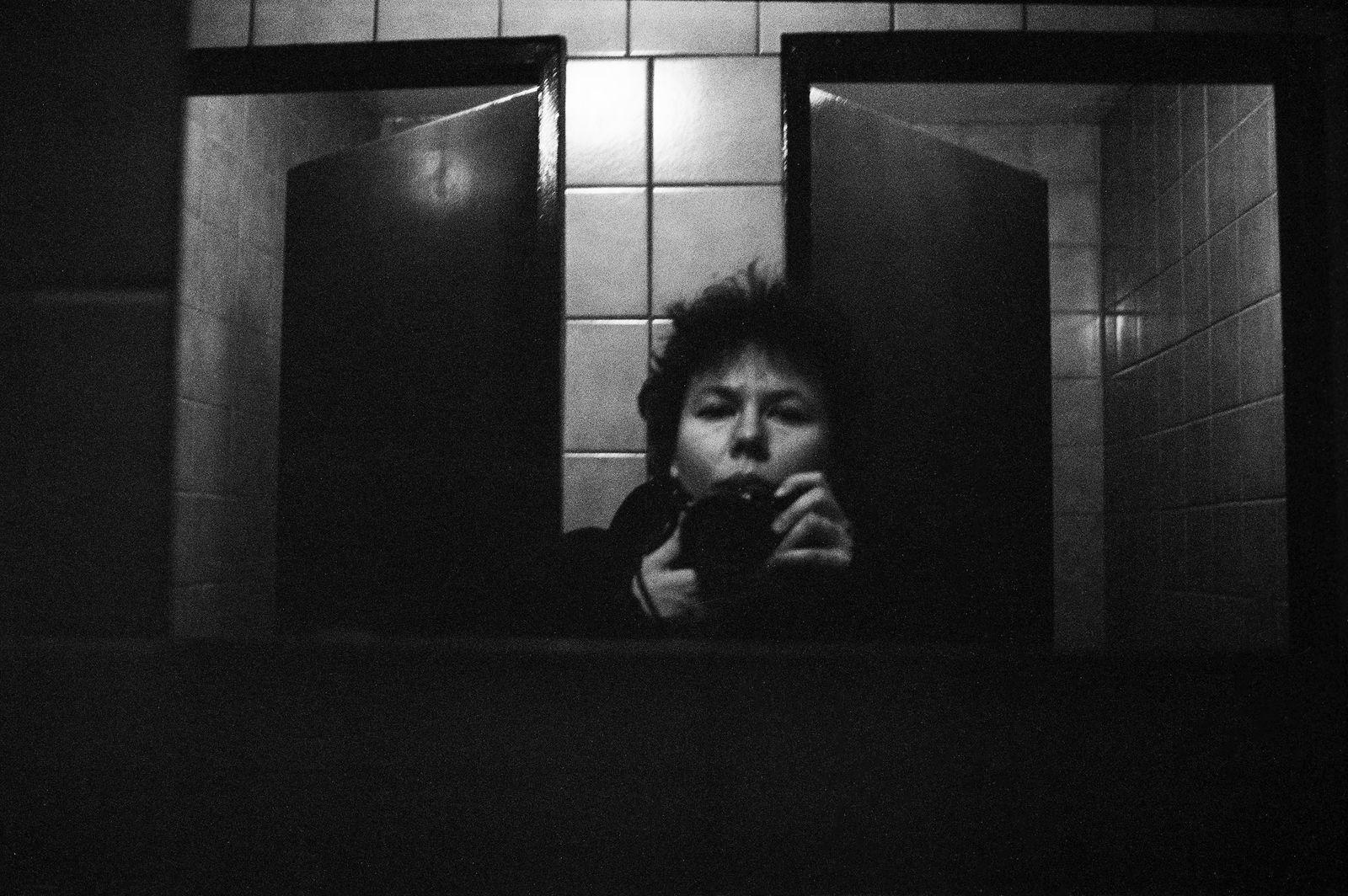
Synopsis:Czech photographer seeks freedom after 1968 Prague Spring suppression and undertakes long journey to break from repressive regime’s constraints.
It is rare when, within a well understood genre, we see something that simply feels new. There are few examples, but they exist: Mad Max: Fury Road as an action film, Oppenheimer as a biopic, Flow as an animated film. Whatever you think these movies should be rated, it seems inarguable that they are, in one way or another, breaking new ground. Documentaries can be a bit of harder nut to crack, but one that comes to mind is Soundtrack To A Coup D’etat from 2024. Because the form is so focused on truth and sometimes overreliant on the talking head style, there can be a lack of boundary pushing. But that cannot be said of I’m Not Everything I Want To Be.
This film follows an artist whom I knew nothing about going in. Libuše Jarcovjáková is a photographer from what used to be termed The Czech Republic. But this is not your standard biopic showing a rise and fall of a great artist. Instead, it is a journey of self-discovery. Honestly, it shows us a journey that is ongoing for all of us and will be until our dying day, or longer depending on your belief systems. Aided by her photographs and words from her detailed diaries, we are treated to the portrait of an artist who is constantly unsure and sometimes completely disconnected, even from her artform.
Director Klára Tasovská has an absolute treasure trove to work from, as Jarcovjáková seems to have documented nearly her entire life, both public and private. She and editor Alexander Kashcheev have created a minor miracle by creating movement from still images. Kascheev is also the sound designer, which is what brings I’m Not Everything I Want To Be to another level entirely. As the film travels through her life, due to movement of photo to photo, combined with the impeccable sound design, we feel like we are not only in the room with her, but in her head, as well.
Being in Jarcovjáková’s head is another advantage that the material gives the film. Constantly, and in different ways, we feel her struggle to become herself. To be the person she is meant to be and, more importantly, live the life that she wants to live. We find this through her thoughts as a young person, through an abortion, through sexual relationships, and through her travels. As she travels to Japan, her world finally begins to open up. It is important to remember that she experienced the Soviet invasion of Prague, which led to constant restrictions and a contained life. We feel her desperate to break out, even to the level of traveling without governmental permission.
Unsurprisingly, she feels not in control of her life. And further, not in control of her body or her self. As we are shown images of her body, there is a sense of disconnection, as if she is confused by who she is and where she fits. This is one of her many foci and, even without her words, there is a sense of unease and worry. Despite this concern, there is also a sense of exploration in her visual work and her diaries. She often puts things plainly, but without providing excessive detail. What we are seeing is her process, her gift, almost as if she had no plans to show this to the public. We throw the word “brave” around a lot. But to open your deepest, most private thoughts, along with your actual produced work takes a sense of openness that we can all learn from.
Every great once in a while, a film within a genre breaks out of its structures. As much as I enjoyed learning about Libuše Jarcovjáková and her beautiful work, it was almost more impressive to engage in the power of movement and sound from Klára Tasovská and Alexander Kashcheev. Through their direction and editing, we have been able to see the inside of a powerful journey of the self.