Director:Hasan Hadi Writer: Hasan Hadi Stars: Baneen Ahmad Nayyef, Waheed Thabet Khreibat, Sajad Mohamad Qasem
Synopsis: In 1990s Iraq, 9-year-old Lamia must bake the President’s birthday cake. She scrambles to find ingredients for this compulsory task while facing potential punishment if she fails.
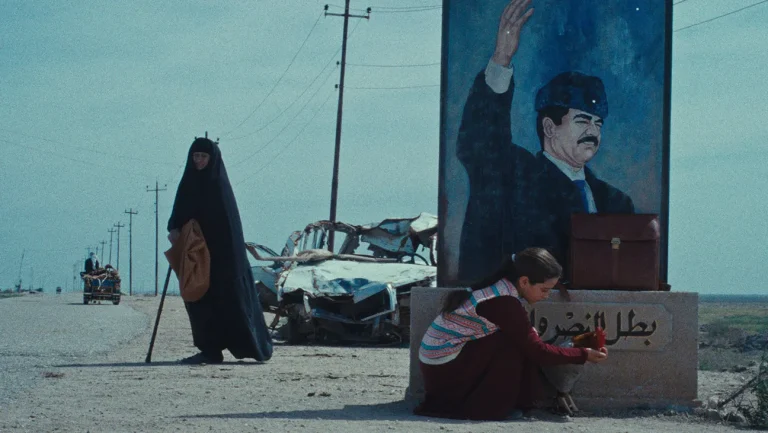
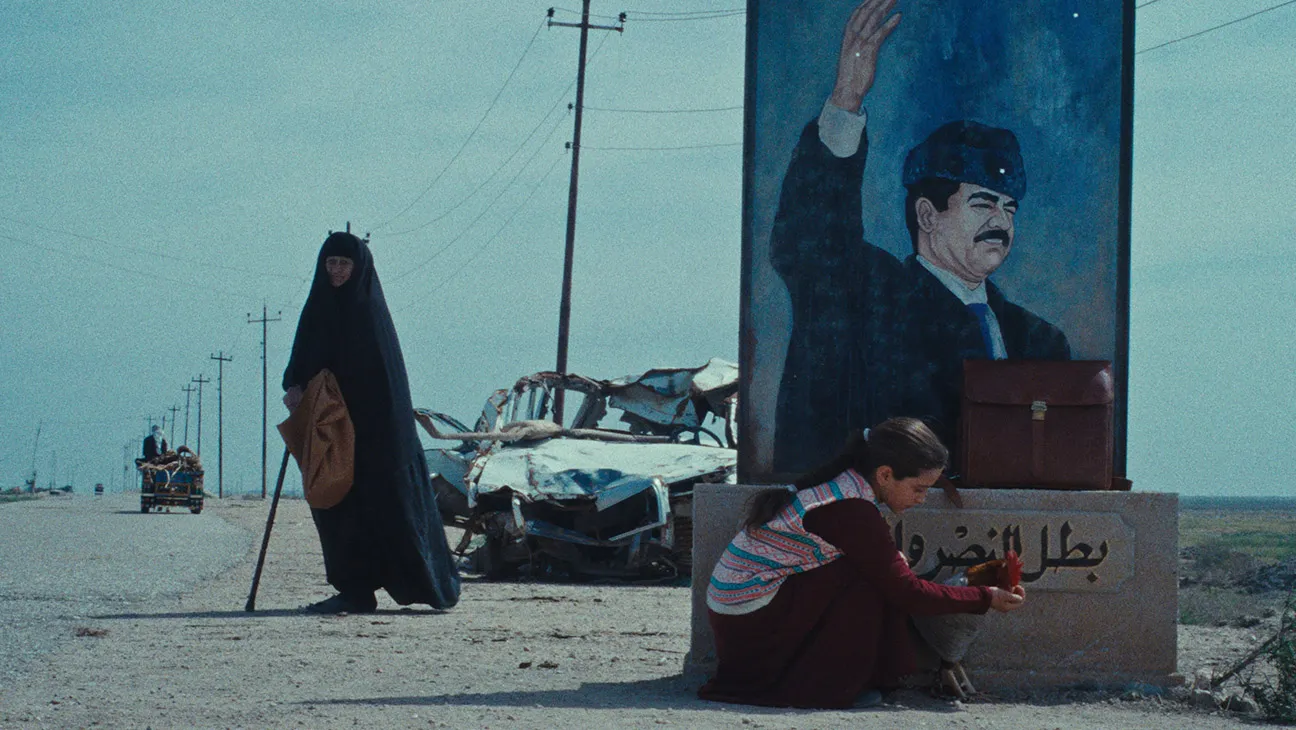
Set over a weekend in Iraq in 1990, with international sanctions against its brutal dictator, Saddam Hussein, the citizens are encouraged to be ready for combat (this is a few months before the invasion of Kuwait, followed by the Gulf War) against foreign aggressors. However, the poverty is quite obvious, and citizens in the cities are scrambling to get as many supplies as they need, not because they are stacking supplies during the harsh sanction period, but because it is Hussein’s birthday. To honor him, people must make a cake, including a school where strict rules are enforced in defense of Saddam, and Lamia (Banin Ahmad Nayef) has the unenviable task of getting those ingredients.
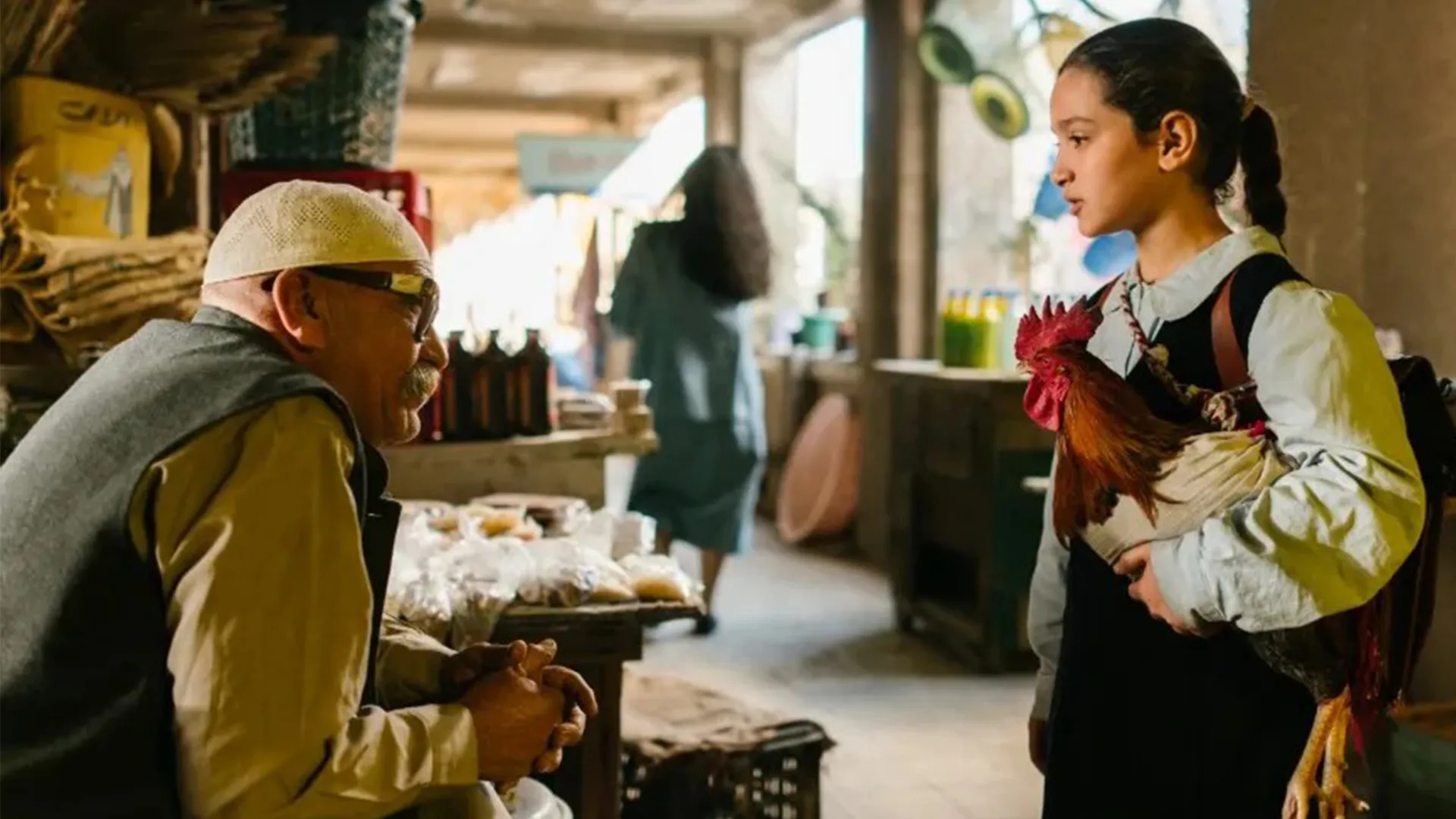
Lamia lives with her grandmother Bibi (Waheed Thabet Khreibat) and her pet rooster in a village along the marshes. Bibi has diabetes and is no longer fit to work in the fields, but they barely have money. While people line up to receive fresh water courtesy of the President, other essentials like flour and sugar will not be easy to obtain or even find. There’s the threat of punishment if she fails to get it, and Lamia’s teacher tells the class, “I’m just a soldier and I must report anyone who refuses to obey.” He even mentions the parents of another student when detailing what happens if they defy orders; while he doesn’t say what happened, we can assume imprisonment and probably death. For Lamia, she must succeed by any means necessary.
However, going into the city with Bibi, Lamia learns the trip is not for looking for those ingredients, and Lamia flees. She runs into classmate Saeed (Sajad Mohamad Qasem), who also has the equally unenviable task of finding fruit as part of the collection, and they go on their quest to hustle, barter, and, unfortunately, steal their way into getting what they need from different places. Bibi, meanwhile, finds no help from the police as they are too busy with other things to go look for a peasant girl. The story focuses on the two children going on a trek similar to Abbas Kiarostami’s Where’s The Friend’s Home?, and Francois Truffaut’s The 400 Blows.
These kids, about nine years old, are thrust into a world that demands full obedience and hardship for their dear leader, a man who doesn’t mind killing his own people while also living the decadent lifestyle of a secular Westerner. Everyone is dressed up, holding guns, and playing soldier for a bloodthirsty man who wouldn’t be toppled until 2003. In the middle of this, while he maintains his popularity, Lamia, Saeed, Bibi, and the rest of the people are moving around trying to survive the harshest of economic conditions. Corruption lies everywhere they go, yet they encounter those small moments of humanity and humor that give hope to these children.
In his directorial debut, writer/director Hasan Hadi brings us back into his childhood and makes a tragicomedy from such horrid circumstances. It’s a film that clearly made a strong impression; it debuted at the Cannes Film Festival, where it won the Camera d’Or (best first feature) at the Directors’ Fortnight portion, and was chosen by Iraq for their Best International Feature nominee for the Oscars. And, when your executive producers include screenwriter Eric Roth (Killers of the Flower Moon), writer/director Marielle Heller (A Beautiful Day In The Neighborhood), and director Chris Columbus (Home Alone), that’s a pretty strong support group that loved Hadi’s coming-of-age story, one he had to grow up in.
More impressively, The President’s Cake is a modern neorealist piece where Hadi got non-actors to play these roles on location and encounter some nefarious situations. This is right from the school of Roberto Rossellini and Vittorio de Sica, masters of the style, who did the same thing in post-war Italy. This is a wonderful period piece about an era that is foreign to us, outside of who Saddam Hussein was, but Hadi does a great job in allowing us to follow the sad folly of working for pride and being paid back in fear. “The walls have ears,” the teacher says in one scene. All of this, as the final moment of the film shows, for a man who liked cake but was hungrier for other things.
On this episode, JD and Brendan discuss Joachim Trier’s new film Sentimental Value, starring Stellan Skarsgård and Renate Reinsve!Trier came onto the scene in a big way with The Worst Person in the World, but he’s always been a fascinating filmmaker. And now with Sentimental Value, he’s cemented himself as one of the best today. There’s so much to love about this film and we did our best to really dig into all of its glorious nuances.
Review:Sentimental Value
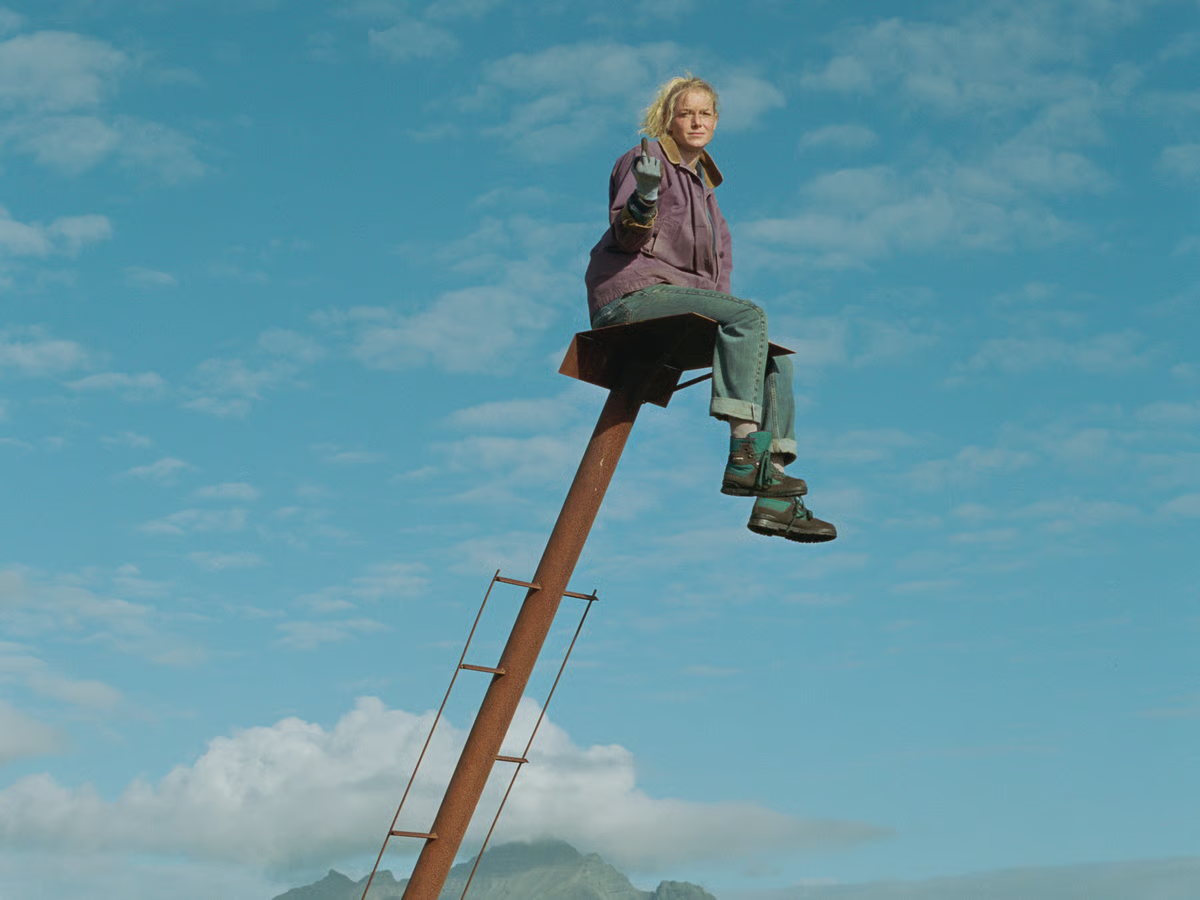
Director: Joachim Trier Writers: Joachim Trier, Eskil Vogt Stars: Stellan Skarsgård, Renate Reinsve, Inga Ibsdotter Lilleaas, Elle Fanning
Synopsis:Captures a year in the life of a family as the parents navigate their separation. Through intimate vignettes and strange occurrences, the film explores the complexities of family, love, and the impact of shared memories.
Some Icelandic history off the top, to whet your appetites: Every proper Icelandic surname ends with one of two distinctions, “son” or “dottir,” and is preceded by the patriarch’s first name. If your father’s first name was, say, “Bjarna,” your last name would ultimately be “Bjarnason.” That was my grandfather’s name before he moved West and Americanized it, tossing an “r” at the end to make it somewhat simpler for folks with pronunciation troubles. That’s it’s my father has always been Jon Bjarnar, not Jon Vilhjálmurson; his father was Vilhjálmur Thorsteinn Bjarnar, a linguistics lecturer and a historian with a focus on Old Icelandic Literature at Cornell University for the back half of his life before he passed in 1993. I never met him, but it’s from him that I got my name. Well, him and my mom, who agreed with my dad that honoring his late father was an appropriate thing to do with their first born, but as a longtime educator herself, refused to put a “Vilhjálmur Thorsteinn Bjarnar II” into the throes of Upstate New York’s public school system. I thank her and Jon for reaching such a compromise every single day.
A touch of extraneous lore there, but I hardly ever get to talk about it. Most people just ask me how it’s pronounced, or whether I know Thor, or why the “j” isn’t hard, or why I’m not Norwegian. (I never know how to answer that one. I’m just… not.) But Icelandic names have always intrigued me. I find it fascinating that since the country’s first genealogical records, which were written in Old Norse between the 9th and 11th centuries and are called “The Sagas of Icelanders,” this is how Icelanders have been named. Had my mom and dad grown up in Iceland, I likely would have been a Bjarnason – and also a Vilhjálmur. (Note: Will isn’t short for anything. Mom also didn’t want a “Billy.”)
It’s fitting, then, that I was knocked upside down, frontwards, and back around again by Hlynur Pálmason’s The Love That Remains, not merely because its cast members all have “son” or “dottir” in their names, but because it’s the best Icelandic film since Fridrik Thor Fridriksson’s Academy Award-nominated Children of Nature that I can remember predominantly dealing with “sons” and “dottirs” in an intimate, grounded fashion. It’s astonishing and familiar, even if the family at its center and the place they live aren’t necessarily ones that I recognize, last names aside.
The Love That Remains. Courtesy of Janus Films.
This might be due to its central narrative pillar, the separation of Anna (Saga Garðarsdóttir) and Magnús (Sverrir Gudnason), one that obviously impacts them individually while having a less definitive yet potentially more pivotal effect on their three children. (We see them coparent and struggle to communicate over the course of four seasons.) It could also have something to do with the intrinsic existence that names, sons, daughters, and families at large owe to their home land, especially one that continues to carry on ancient tradition that places an emphasis on blood relations. It’s not that most countries don’t, but there’s evidence in Pálmason’s impressionistic dramedy that the nation prioritizes connection more than most.
That’s best exemplified by the moments that are most closely rooted to that movement, one that relies far more on feelings than on fact. The family is a close-knit one, further complicating the nature of Anna and Magnús’s separation, though not necessarily in the expected manner. Their kids – who are all played by Pálmason’s own children, Ída Mekkin Hlyndsdóttir and twins þorgils and Grímur Hlynsson – speak frankly and, on occasion, inappropriately, suggesting if not ensuring that this household has a penchant for the intrusive. Of course, it makes for a film that highlights hilarity, one that views dark humor as one of its most powerful assets. (Keep an eye on the arrows that the youthful trio fire at a scarecrow donning knight’s armor, as one may or may not skewer your funny bone.)
But their familial rapport is much more of a distraction from their shared daily lives in the rural landscape they call home than a few mere cuss words and questions about why the chickens “let the rooster fuck them like that.” The joys they experience are genuine – and often aided by Panda the dog, who won Cannes’ top prize for canines in May and deservedly gets her own credit text – but their willingness to find anything that pulls their attention away from the marital dissolution occurring before them is just as concrete. It’s as if we’re watching routine after routine unfold through the reflection from a mirror with a crack through its center, though the split in the glass just seems to separate the picture into halves without warping the image.
The Love That Remains. Courtesy of Janus Films.
Pálmason’s filmmaking so often deals with “what surrounds us or where we come from,” as he told Variety about making this movie in particular, but it’s more evident here than ever. The performances – particularly from Garðarsdóttir, whose work with art in the film feels like free admission to a museum exhibit that has yet to be unveiled to the public – play with the sort of freedom typically reserved for less composed features than The Love That Remains, which is unmistakably and meticulously framed by Pálmason (who also serves as his own DP, shooting on gorgeous 35mm) but remains uninhibited by plot. It’s spontaneous, not unscripted; the former is often more difficult to capture, but is pure magic here in moments both imbued by the light and the dark.
Iceland’s fastest-rising filmmaker has been almost severely intrigued by melancholy since coming onto the scene with his 2017 debut Winter Brothers – a film that was similarly interested in the bonds siblings share – and has continued through his career, from 2019’s A White, White Day to 2022’s Godland. All are tremendous explorations of how displacement leads to discovery, and all wade through heartbreak like the world’s most resilient, picturesque canoe handling choppy white waters. The Love That Remains, however, pulls back the scope that those films had on one or two characters to capture a familial unit whose commanders are on the brink. The situation is knotty, and multiple parties are attempting to pull on separate ends believing that it will help loosen the tether; naturally, it only tightens the more they tug.
Better yet: It’s the struggle of a fisherman, like Magnús, battling with an unyielding cod, the hooked foe refusing to be lined and sinkered. It’s more compelling to watch spurned lovers grapple with the future of their relationship as opposed to giving up hope on it altogether, even if their disunion has occurred prior to the film’s prologue, but it’s heartbreaking, too, especially for a trio of preteens still in the primes of their youth. Then again, the parents are young enough to be considered well within their more seasoned salad days as well. Elation and dejection, as hand in hand as “sons” and “dottirs.” No matter what wins out, love remains.
The Love That Remains screened at the 63rd New York Film Festival and will be released in 2026 by Janus Films following its 2025 awards-qualifying run. It is Iceland’s official submission for Best International Feature Film at the 98th Academy Awards.
When it comes to underrepresented genres at the Oscars, the horror genre has the most history. This lack of acknowledgement could stem from many factors, such as horror’s relatively low budget, its at-times grotesque imagery, or the fact that one of the driving forces is to scare an audience. The technical aspects have broken through, earning below-the-line Oscar nominations and wins. Still, even this supernatural genre of ghouls and spirits has managed to find ways into the Oscars Best Picture race with seven horror films including The Exorcist, Jaws, The Silence of the Lambs, The Sixth Sense, Black Swan, Get Out, and most recently, last year’s body horror film The Substance all being nominated in the Best Picture category with The Silence of the Lambs winning the award in 1992. 2025 has been a strong year for the horror genre, not only at the box office but also in terms of awards success, with multiple films not only pushed for Oscars but also regarded as potential frontrunners. With Halloween recently passing, I wanted to take a look at the horror films vying for recognition at next year’s Academy Awards and take a look at which films have a legitimate shot at breaking through some of the above-the-line categories.
This year, three films are looking to make a splash in the Oscar race: Frankenstein, Sinners, and Weapons. Each film was released by a major distributor and will receive an awards push in hopes that the academy will appreciate not just the films themselves, but also one of cinema’s oldest genres.
Frankenstein
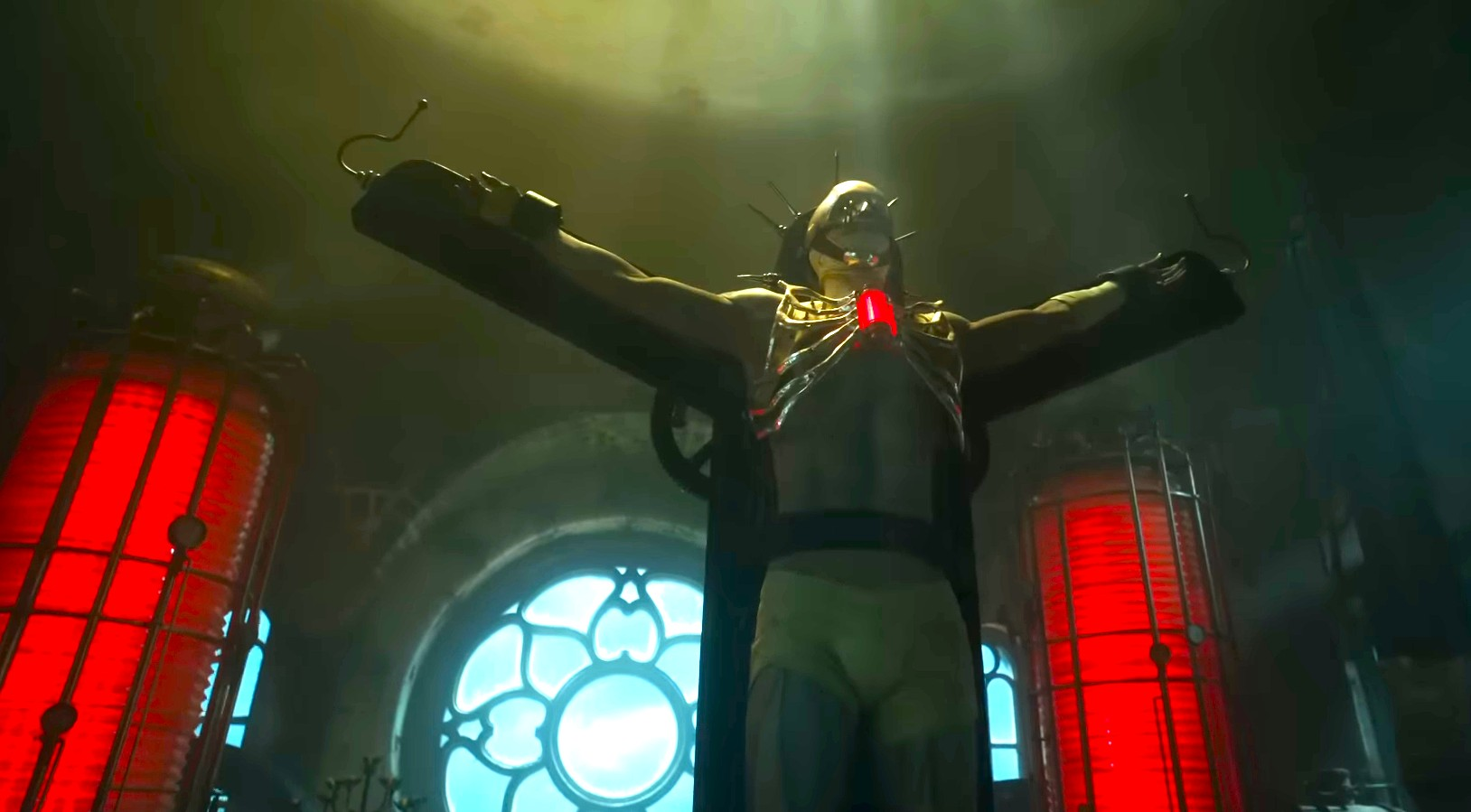
Guillermo del Toro is in a small group of people you just know, when they take on a project like Frankenstein, that the material couldn’t be in better hands. Del Toro’s attention to detail is not only noticed by viewers, but also by academy voters who have consistently shown his films love at the Oscars. Of his previous three films pre-Frankenstein, one won Best Picture (The Shape of Water), another was nominated (Nightmare Alley), and he also swept the race for Best Animated Feature with Guillermo del Toro’s Pinocchio in 2023. His version of Pinocchio, a story told in myriad ways, was so wholly his own that his name will be forever attached to it, which is exactly the kind of attention that del Toro brings to his movies. However, while Guillermo del Toro’s Pinocchio brought new life to the story including a Gepetto backstory of how he lost his son, Carlo, and bringing in real world events such as the World Wars and the rise of fascism in Italy, his version of Frankenstein seems to be more in line with the source material, which is considered one of, if not, the best science-fiction/horror novels ever made.
His vision and attention are exactly what make Frankenstein a strong Best Picture candidate. While I think it will compete for a nomination in many above-the-line categories, including Best Director, Best Adapted Screenplay, and Best Supporting Actor for Jacob Elordi’s performance as the monster, below the line is where this film will make its best run. Frankenstein is an early frontrunner for Best Makeup & Hairstyling, Best Costume Design, Best Production Design, and will be competitive in the Best Original Score, Best Visual Effects, and Best Cinematography categories as well. On its best morning, Frankenstein manages to pick up double-digit nominations, cementing itself as a Best Picture contender.
Likely Nominations: Best Picture, Best Adapted Screenplay, Best Cinematography, Best Costume Design, Best Makeup & Hair, Best Production Design, Best Visual Effects
Possible Nominations: Best Director, Best Supporting Actor (Jacob Elordi), Best Original Score
Sinners
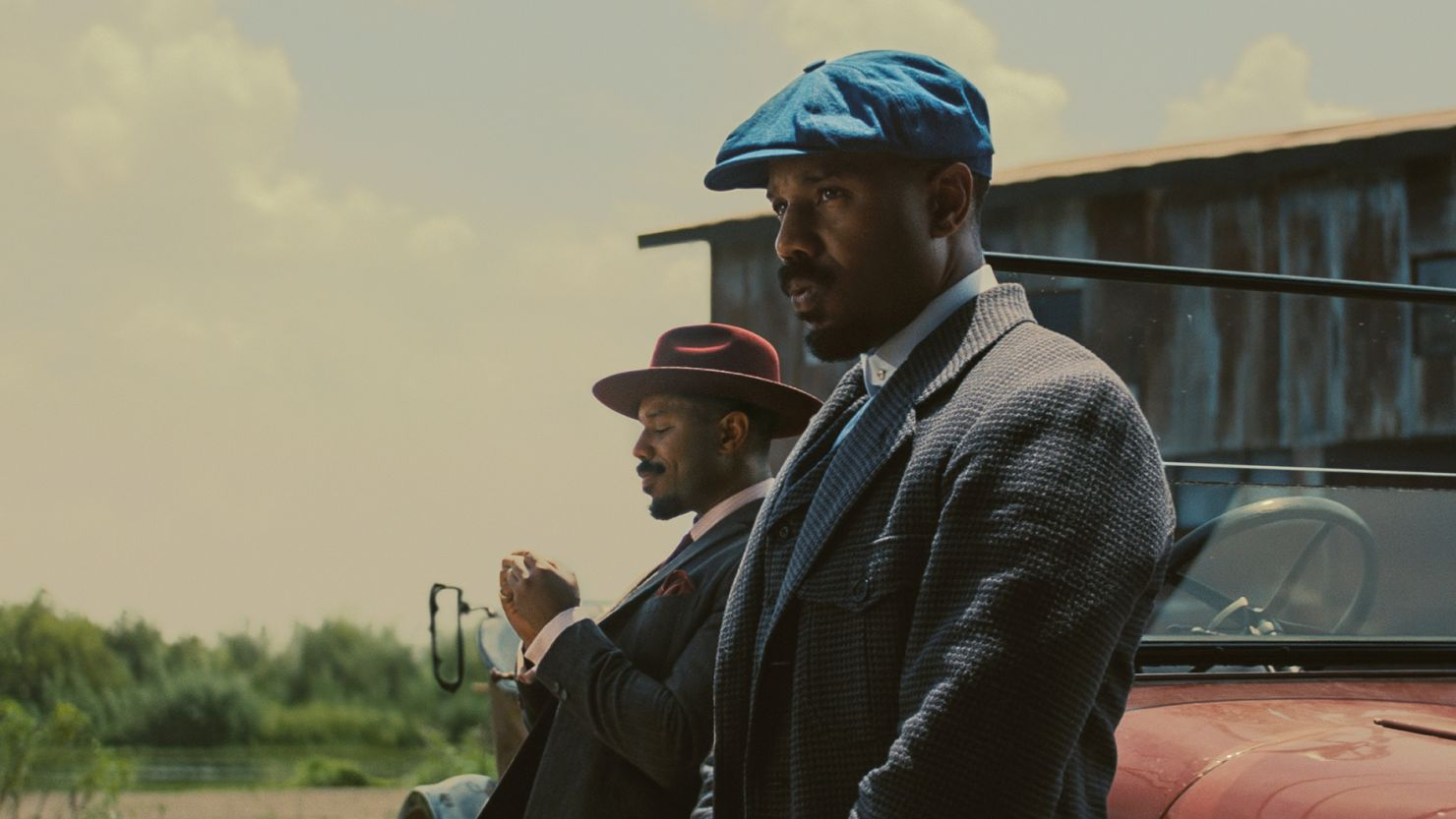
The duo of Ryan Coogler and Michael B. Jordan is a match made in heaven. Many great directors have a star or two they continue to work with because of their shared bond (Martin Scorsese and Robert De Niro, for example), and Coogler found his muse in Jordan. In each of the five feature-length projects that Coogler has directed, Jordan has made an appearance, whether as a protagonist, antagonist, or in a short cameo role. Both the actor and the director burst onto the scene at the same time with the release of Fruitvale Station, Coogler’s feature-length debut, and Jordan’s first major role since the ending of NBC’s Friday Night Lights. Sinners proved just how much Coogler loves working with Jordan, as he gave him two roles in the film. Sinners being a good movie was an easy call, as Coogler has yet to make a dud. Even his worst movie’s rating as a director was (Wakanda Forever), and it still received a fresh 84% on Rotten Tomatoes. However, Sinners being heralded not just as one of the best of the year but as the early Best Picture favorite was something no one could see coming.
While the title of early Best Picture favorite might have been shocking, it didn’t take long watching the film to understand why the title was being thrown around. Coogler takes his directing up a notch, blending the action and drama for which his career has been known so far and adding an element of horror, delivering a fully realized product. I would expect him to make a push for his first Best Director nomination, but even more so, I expect him to compete for a win in the Best Original Screenplay category. Michael B. Jordan could also find a way into the Best Actor category with a strong showing from critics and industry awards, although he will have to fight off a large number of former winners and nominees to earn a spot in the top 5. On Sinners’ best day, he’s there too.
You can also expect Sinners to show up in a large number of below-the-line categories; like Frankenstein, the volume of below-the-line nominations will make this film an inevitable Best Picture nominee. Right now, I am expecting Sinners to be competing for a win in categories such as Best Song for the climactic “I Lied to You,” two-time winner Ludwig Göransson is back in the race for Best Original Score, and if it looks to compete in the Best Picture race, then look for it to be a strong contender in Best Editing as well. Also look for it to show up in Best Costume Design, Best Makeup & Hairstyling, Best Sound, and the Oscars’ brand-new Best Casting award.
Likely Nominations: Best Picture, Best Original Screenplay, Best Casting, Best Editing, Best Production Design, Best Costume Design, Best Makeup & Hair, Best Sound, Best Score, Best Original Song
Possible Nominations: Best Director, Best Actor, Best Cinematography
Weapons
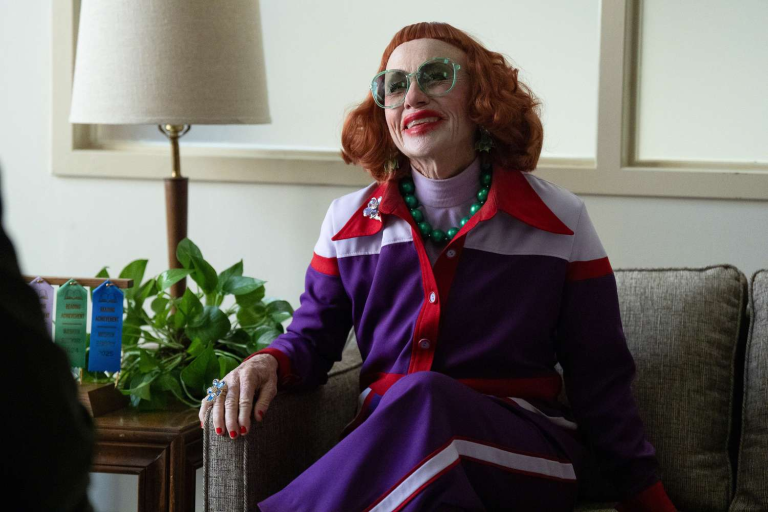
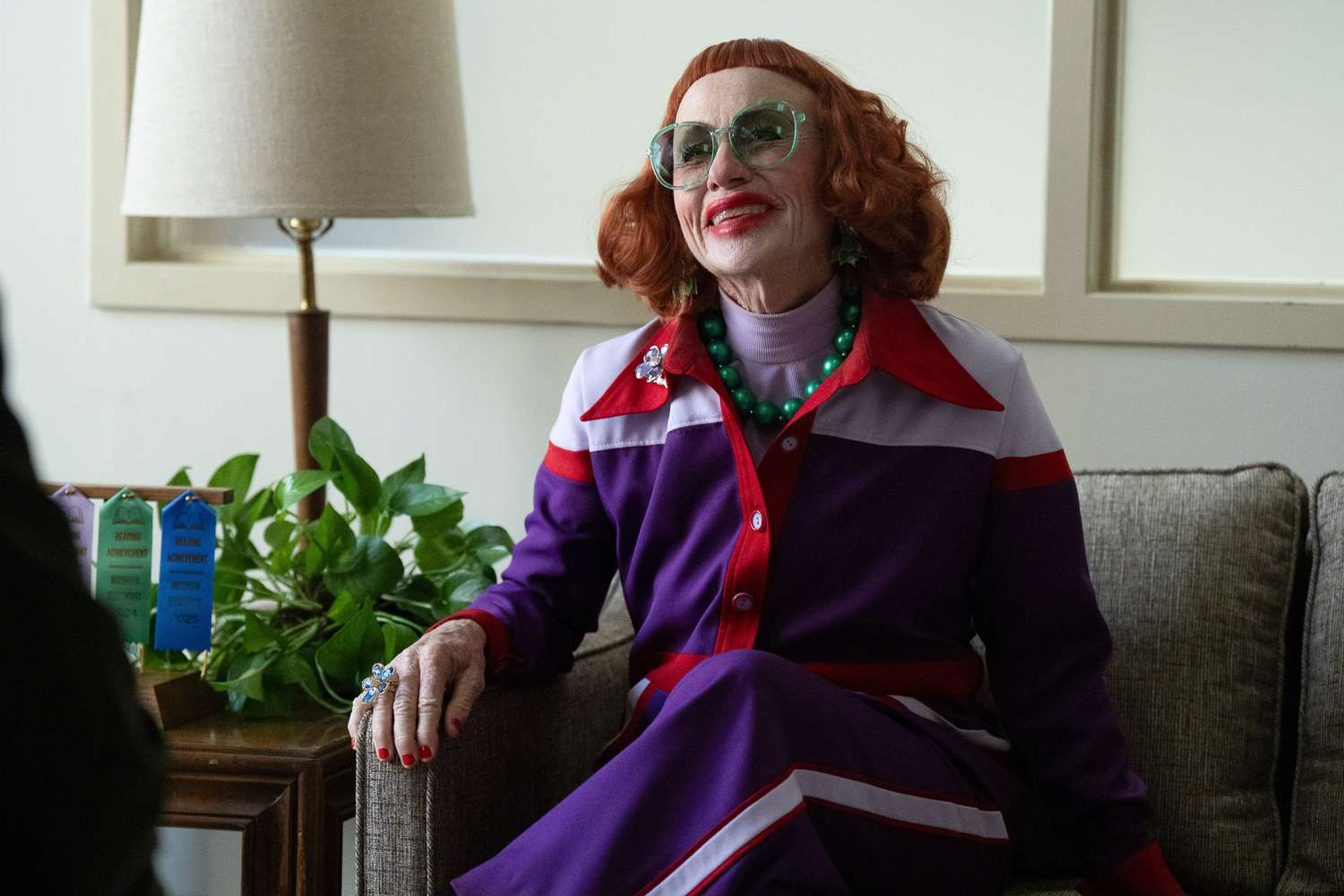
Weapons was one of the more surprising hits of 2025. Zach Cregger’s previous film, Barbarian, showcased his talents as an exciting new face in the horror genre, but few could have seen just how big this film ended up becoming. Earning over $100 million both domestically and internationally, this film grossed more internationally than Sinners and totaled over $267 million worldwide. Much of that can be attributed to Zach Cregger’s masterful direction and a screenplay that weaves in and out of the lives of the local residents, all culminating in a scary, gruesome, dark, and somewhat hilarious ending. Weapons quickly became a film that many people theorized about and questioned, and it was no surprise that it took off on the internet so seamlessly. It didn’t have to wait to earn cult status; people quickly took to it, and they loved not just the film itself but also the main antagonist, Aunt Gladys. Played by Amy Madigan, Aunt Gladys took off like a rocket, becoming one of the hottest Halloween costumes of the year. Amy Madigan brought the character to life in equal parts hilarious and terrifying, molding one of the best horror antagonists in quite some time. Her performance was so strong that, before the film had even left the theater, an Aunt Gladys origin film was already being pushed at Warner Bros.
Of the three major horror contenders, Weapons is the least likely to earn a Best Picture nomination, but it isn’t out of the running entirely. Even if it doesn’t land the Best Picture nomination, that doesn’t mean it will show up empty-handed come nomination morning. Amy Madigan has a genuine shot at breaking into the Best Supporting Actress race with her performance as Aunt Gladys, and the originality, intricacies, and depth of the script could land Zach Cregger his first nomination in Best Original Screenplay, given that it is a somewhat weaker year in the category. In the below-the-line categories, Weapons could also make a push in Best Makeup & Hair, delivering not only the iconic look of Aunt Gladys but also the horrifying look of the weaponized figures in the film. While it is still unlikely, it looks like they’re gonna give it a shot.
Likely Nominations: Best Supporting Actress (Amy Madigan)
Possible Nominations: Best Picture, Best Original Screenplay, Best Makeup & Hair, As I mentioned earlier, only seven horror films have ever made it all the way to a Best Picture nomination. I’m not sure if any of these can follow in the footsteps of The Silence of the Lambs’ famous horror win for best picture, but in a year where horror films have reigned supreme, look for some of these to make a real shot at Oscars gold.
Synopsis: A provocative thriller about a very close-knit family that is torn apart as a new movement, “The Change,” envelops the country.
It’s funny until it isn’t. It’s a “fringe theory” until it becomes law. People are allowed to criticize the institutions in power until they mysteriously disappear. “Free speech” becomes “controlled speech” and is no longer what its “absolutists” have advertised freedom of expression as. The “United States” is far less “united” than it ever was. But were they ever truly? This question is at the heart of Jan Komasa’s Anniversary, which begins as a satire of “political speak” at family functions, until the Polish filmmaker, making his Hollywood debut, flips the story on its head and transforms it into a reflection of what’s currently ongoing in the country.
Is Komasa a prophet? Not really. Like Paul Thomas Anderson, who shot One Battle After Another when Donald Trump was not in the White House for the second time, Anniversary was made in 2023. The fact that it’s being released now doesn’t seem like a coincidence, though. Then again, if you’re familiar with Komasa’s oeuvre, from the morbidly funny Corpus Christi to his social media excavation The Hater, he has always been at the forefront of confronting his audience with the harsh realities of an era veering further into enshittification through the prism of a society that has become more polarizing by the day. He’s also fluent in the history of Poland as a country, which was occupied by both the Soviet Union and Nazi Germany during the Second World War. Having directed both WarsawUprising and Warsaw ‘44, films that reckon with the country’s troubled past as totalitarian regimes invaded it, Komasa brings a deep understanding of the subject to this mirror of modern-day America.
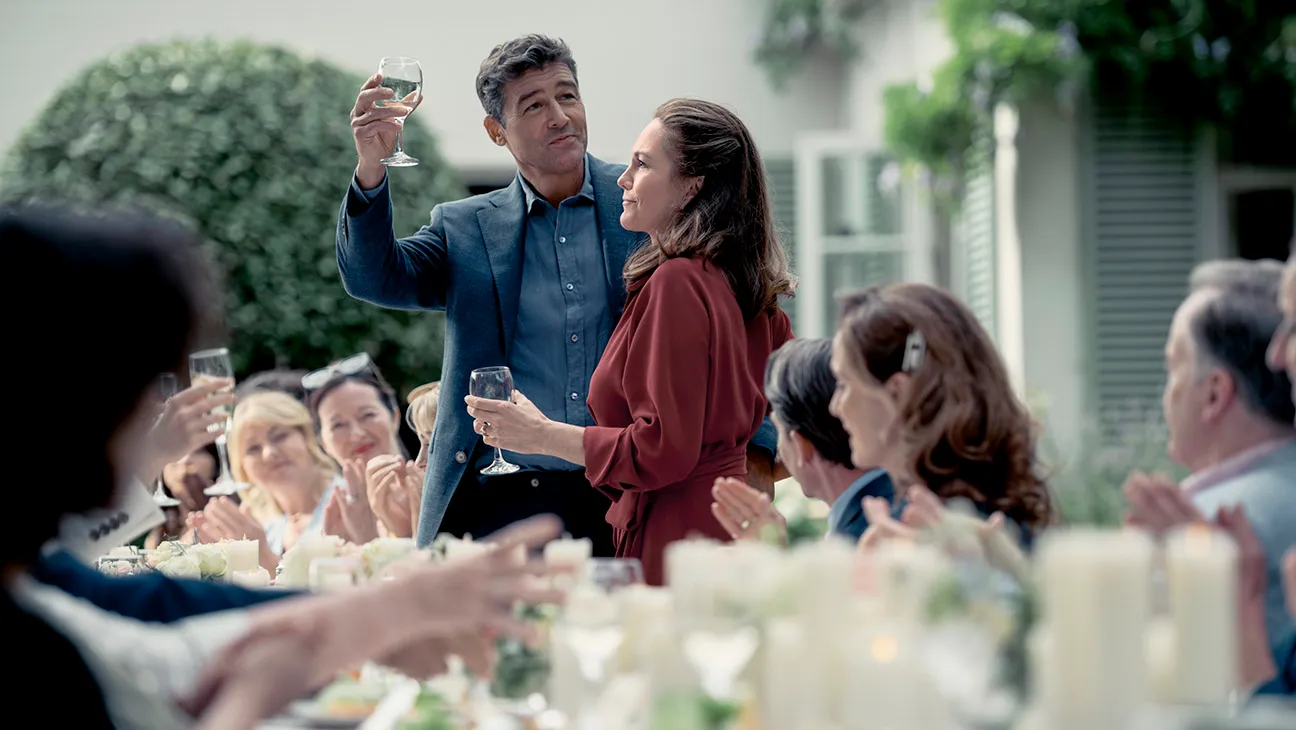
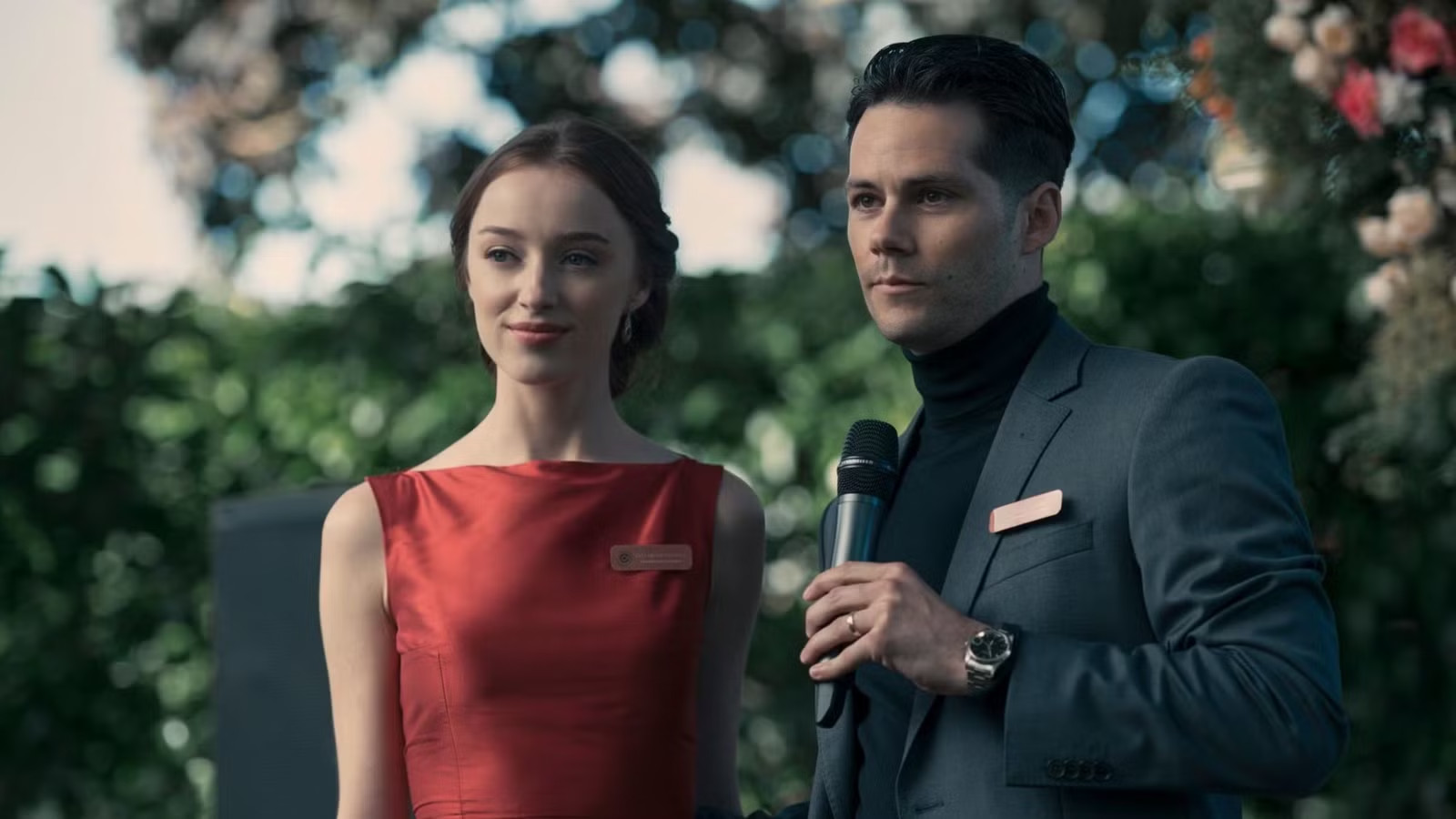
What’s most impressive about Anniversary is how Komasa is in complete control of how Lori Rosene-Gambino’s screenplay evolves, which, again, is (very) funny for a while until it isn’t. I was genuinely surprised at how hilarious this thing is, from perfectly calibrated sight gags to timed responses that act as if a bomb has gone off inside a family that has grown more fractured with the arrival of Elizabeth Nettles (Phoebe Dynevor). She is the new girlfriend of Joosh (Dylan O’Brien) and, coincidentally, a former student of his mother, Ellen (Diane Lane).
Not recognizing who she is at first, Ellen immediately unmasks Liz during her 25th wedding anniversary with her husband, Paul (Kyle Chandler), and warns her to back off. Liz’s intentions, she says, are benevolent, and don’t illustrate the person she was as a teenager in her class, but Ellen isn’t entirely convinced she has changed one bit and believes it’s best if this relationship (we realize this has happened many times with Josh) ends as quickly as it has begun.
We don’t exactly know what prompts Ellen to react this way towards Liz, until we find out that her thesis, while in University, titled “The Change: Birth of a New Nation” (big yikes all around), advocated for a one-party system ruling over America. This thesis, which was rightfully derided and rejected by Ellen, is now on the cusp of becoming a major bestselling book, published through a conservative thinktank/organization with similar beats as PragerU, Turning Point USA, or The Heritage Foundation, with the latter having outlined “Project 2025” as the steps Donald Trump should follow when he would eventually return to the White House last year.
There’s discomfort in Ellen finding out that this anti-democratic sentiment eventually becomes an ideology that millions of people around the world gravitate towards, and it isn’t long before America follows the ideals Liz illustrated in her book and becomes the totalitarian country that is now unfolding before our very eyes. Perhaps it’s a little too on-the-nose, and the parallels between Komasa’s film and modern-day America will certainly prove divisive, because it doesn’t have much to say beyond pointing out things that are happening right now. Yet, that’s also not the point of Anniversary.
It’s a much more intelligent film than it has any right to be, because it’s not so much a warning of what America will look like in two, or perhaps a year from now, since it’s already happening. Komasa understands that, in 2023, this was the trajectory the country was heading towards. Why patronize the public when there’s no point in doing so? Rather, it focuses on the contemptuous, often gullible nature of individuals who refuse to think for themselves and would rather blindly follow fringe theories because they make them somewhat comfortable. Anyone can be sold gobbledygook (read: snake oil) by people who can effectively convey their message in an approachable way. Why did so many young Americans resonate with Charlie Kirk? It’s a pretty easy question to answer when you examine how the late polemicist engaged with people around his age and debated with them.
It’s thus easy to understand why so many Americans (and non-Americans) resonate towards “The Change,” without Komasa having to show the book’s contents. Liz is a skillful manipulator, as illustrated during the film’s opening scene, where she practices her facial expressions and the delivery of lines she will eventually say to Ellen and Paul upon meeting them during their anniversary. The family then becomes further divided as “The Change” becomes the doctrine guiding America, a few years after the book’s publication. It is at this point that Komasa stops the comedy dead in its tracks to unravel the harsh reality the country is facing and will face for decades to come.
Komasa is not treading on new ground, but the way he progresses the movie to its bone-chilling conclusion is honestly more than commendable. It doesn’t need to say anything, but it illustrates how easy it is for articulate individuals to topple a society controlled by democracy into autocracy. After all, “if you repeat a lie often enough, people will believe it. And you will come to believe it yourself!” Fascists know what they’re doing, and Ellen catches Liz red-handed before she even realizes that Josh’s fiancée is one step ahead of everyone else.
And when her daughters, Cynthia (Zoey Deutch), Birdie (Mckenna Grace), and Anna (Madeline Brewer) are in danger, what will happen when they are forced to believe in the lies of “The Change” to protect themselves and the people they love most? Komasa gives no answers to this predicament. He instead builds upon the layers of unease and discomfort of his opening section to turn it into a terrifying meditation on a country that has openly embraced totalitarianism and doesn’t realize the consequential impact this will have across the globe, and, most importantly, at a profoundly individual level.
He examines how politics corrupts and transforms even the best of us, the ones who will theoretically “resist” until their last breath, but eventually kowtow to the fascist regime because they have theoretically no way out. This is what happens with every totalitarian regime – people are forced to submit to the ideology in power if they (and their family) want to survive. It doesn’t happen all of a sudden, as the change (get it?) happens progressively. There are a lot more complex questions raised than answers in Anniversary, but that’s precisely what Komasa wants you to think about as it reaches a denouement that will undoubtedly divide, but linger deep in your memory.
In that regard, Diane Lane delivers her most compelling on-screen performance since her Oscar-nominated turn in Adrian Lyne’s Unfaithful, as a woman who wants to keep fighting on, as the times move in darker directions than she ever thought possible, but is forced to make harsh decisions to protect the people she loves the most. With the movie being as funny as it is, Lane is often quite mordant in her line delivery and has an insatiably palpable alchemy with Chandler, who acts as the “apolitical” high ground of the family, until, once again, he is forced to reckon with his ideologies in a frightening confrontation that puts the couple in a precarious position they never imagined would happen in their lifetimes. Dynevor also gets under your skin as the fascist who knows exactly how to articulate her message so her eventual husband gets roped into the film’s version of The Heritage Foundation and becomes more powerful than the author herself.
At that point, Komasa begins to question if Liz’s line of thinking predates her downfall, but the movie doesn’t seem as interested in parsing this throughline as its most pressing subjects. That said, there’s no denying Anniversary crawls under your skin in ways that few films that dare speak truth to power against the fascists currently running the United States will. Komasa’s experience with his Warsaw diptych might have been the reason why the film feels so alive and accurately depicts the authoritarian turn in America that many conservative pundits and politicians will try to justify as necessary, when they will eventually walk back on everything they’ve said, or ignore it ever happened decades after Trump has bit the dust. But we’ll remember who supported – and uplifted – this, long after the dust has settled and a semblance of normalcy has returned to this failed nation.
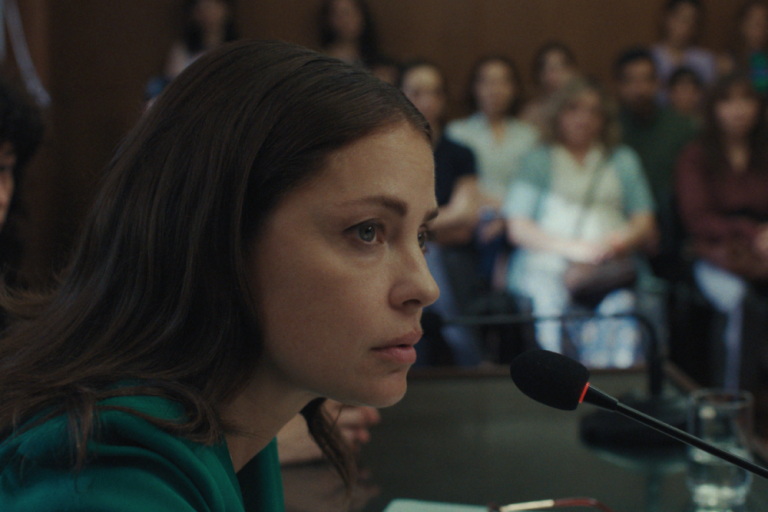
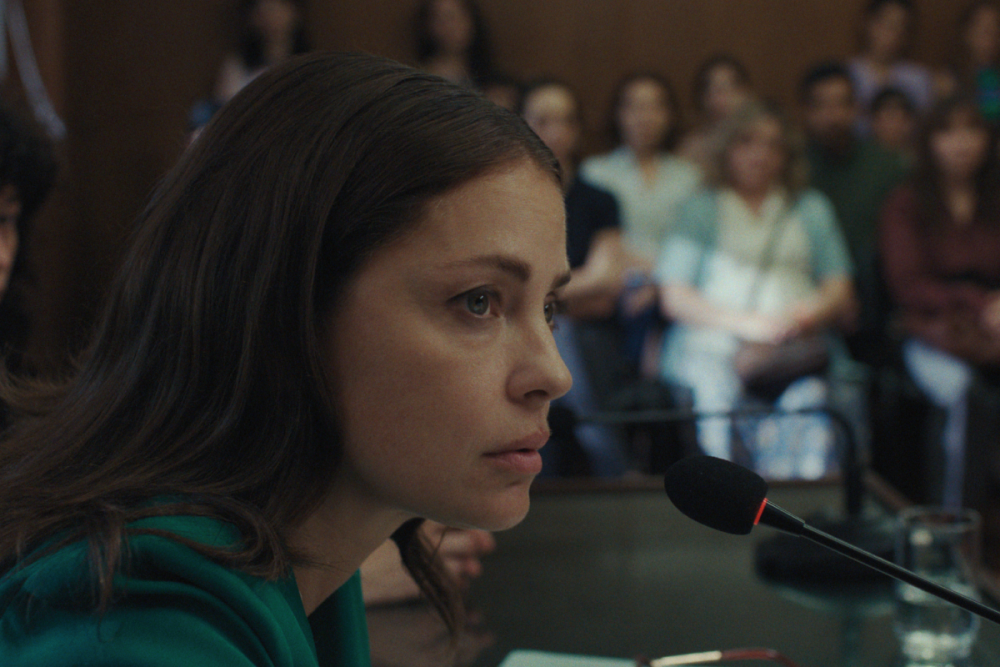
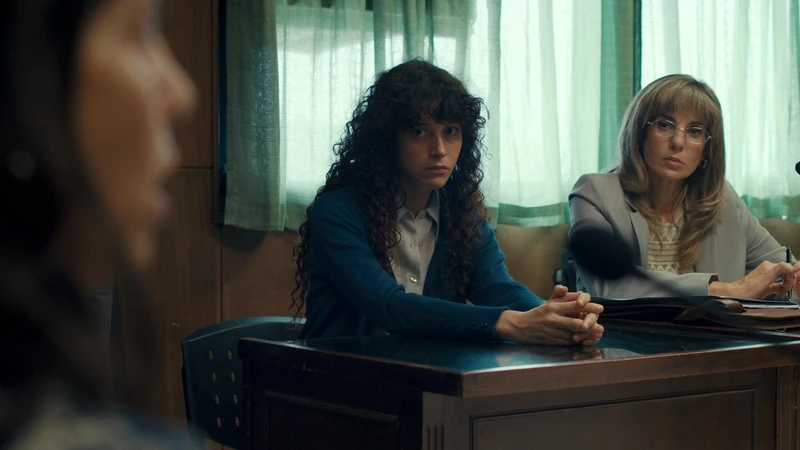
Director:Dolores Fonzi Writer:Laura Paredes, Dolores Fonzi, Agustina San Martin Stars: Dolores Fonzi, Julieta Cardinali, Gaia Garabaldi
Synopsis: A woman hospitalized for pain discovers she’s pregnant. After a medical emergency, she faces criminal charges. With support from her attorney and women’s rights advocates, she fights for justice in a landmark case that could change lives.
Abortion is as sensitive a subject as an individual topic could get. The emotional reactions and feelings are passionate to either side and, unfortunately, to moments where violence against doctors, patients, and locatiosn where abortion is provided as happened. Of course, this country (the U.S.) has now been engulfed in this debate in recent years, but going to Latin America, it’s a whole different story. A region heavily influenced by the church, conservative values, even among those who are liberal, will maintain the pro-life position and heavily restrict access. Argentina is one of the very few countries in the region which has liberalized abortion laws and the true story of Belén is the catalyst as to why.
In the 2010s, a young woman named Julietta (Camila Pláate) enters the hospital complaining of abdominal pains and says she isn’t pregnant. Physically speaking, she doesn’t look so, but to the shock of the doctors and herself, she has miscarried and the fetus is left on the bathroom floor where Julietta goes into. She is in the operating room when police come in to arrest her on charges of having an illegal abortion, intentionally inducing it herself before going to seek help. Two years later, Julietta is convicted and sentenced to eight years in prison. Soledad Deza (Dolores Fonzi), an attorney specializing in cases against women, hears about Julietta’s story and decides to seek out to clear Julietta’s name.
Illegal in most cases at the time, it immediately becomes obvious the system is built against them because Julietta is immediately presumed to be guilty despite no evidence presented against her. They are not going to be flexible, and socially, people are vehemently against them for even trying to defend this. A sensationalized press that calls Julietta an outright killer, a legal process that makes it hard for Soledad to get the files on the case, and open intimidation against them and Soledad’s family indicates how much people want them to fail. Remember, this is the 2010s, not the 1980s like in Argentina, 1985, where the country is decades past the military junta, and even with a left-leaning government in power (and the President at that time was female), abortion laws effectively doom pregnant women if something goes wrong.
Fonzi is a triple threat here as beside the lead role, she also is co-writer and director. In a story that is part-Vera Drake, part-Just Mercy, Fonzi plays her real-life hero as defiant and fearless like Atticus Finch, knowing she’s putting her safety on the line for something unpopular. Yet, it is a just cause because of the barriers that a society, while growing progressive in some ways, still maintains the patriarchal status quo on women’s rights. However, it started up a growing movement that helped women speak out boldly on something that was never discussed and addressed the systemic misogyny on women’s rights.
Belén, however, doesn’t come close to rising the real-life drama and the strain put on everyone, especially Julietta. The depth of some characters, such as Soledad’s assistants who are passionate in fighting for Julietta and other women, feel one-dimensional and the script staggers on like a TV melodrama. It could’ve used some of the same juice that Argentina, 1985 got from being a true story itself and keep us closer to the action. It’s a really powerful story and the performances of Fonzi and Pláate keep the film afloat despite its shortcomings and give hope to those who feel empathetic to this real story.
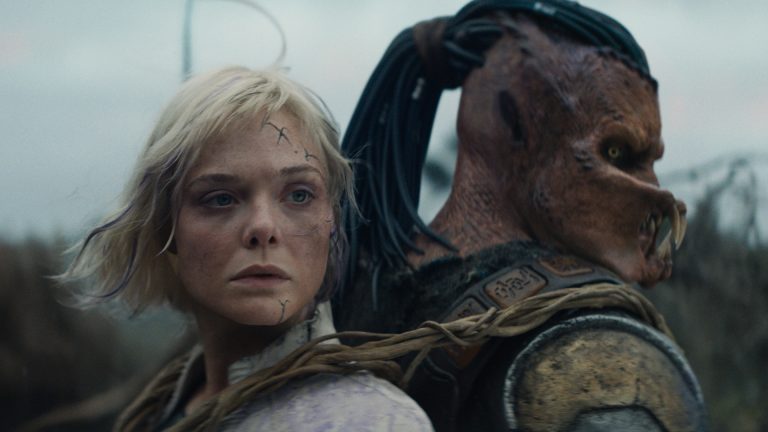
Director:Dan Trachtenberg Writer:Patrick Aison Stars: Elle Fanning, Dimitrius Schuster-Koloamatangi, Reuben De Jong
Synopsis:Cast out from his clan, a young Predator finds an unlikely ally in a damaged android and embarks on a treacherous journey in search of the ultimate adversary.
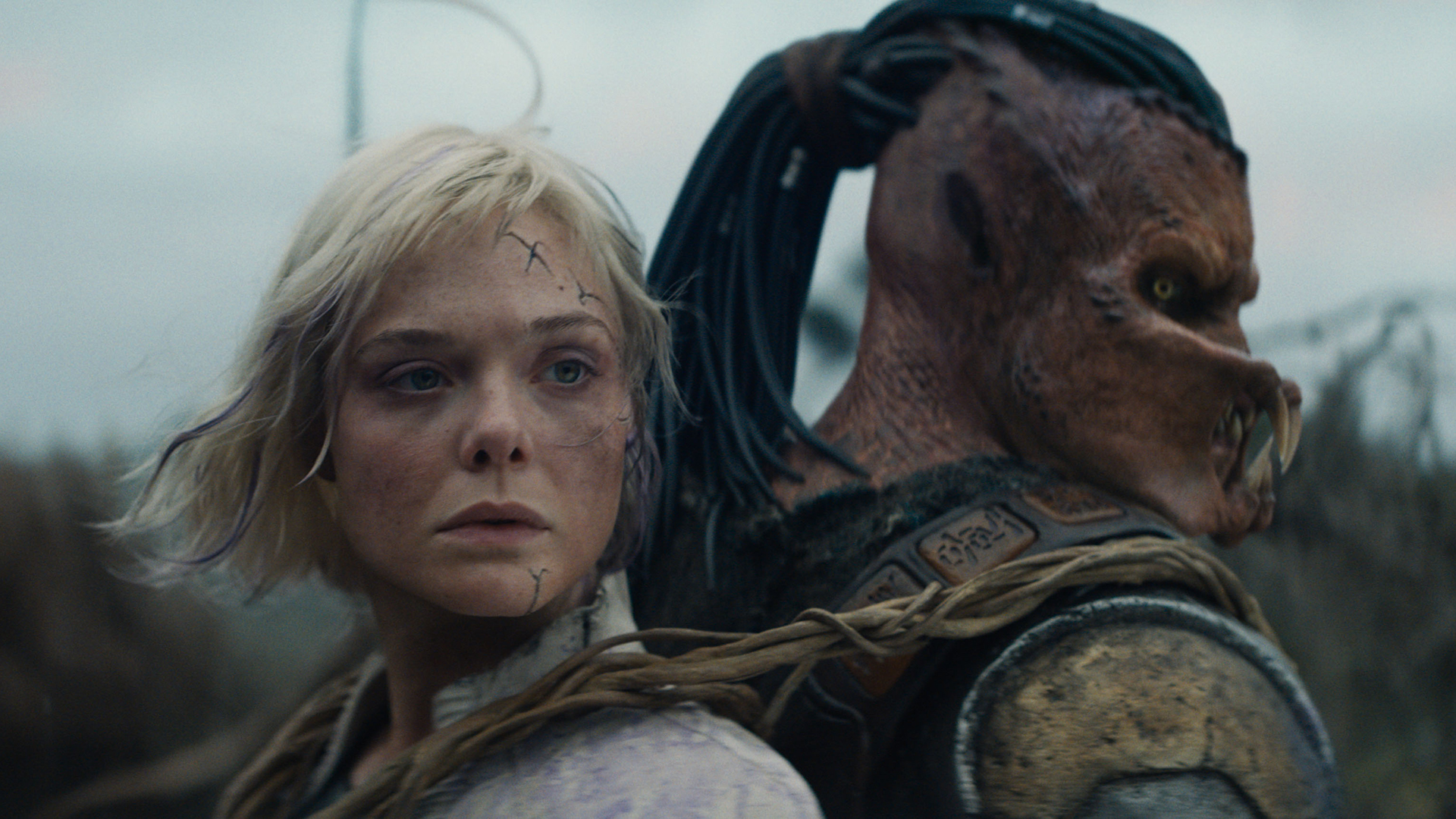
After the financial and critical disappointment of The Predator, the Predator franchise lay dormant with seemingly no new directions to turn in and always being under the shadow of its older brother, Alien. However, nearly everything turned around when director Dan Trachtenberg entered the picture to helm two new projects that went straight to Hulu with Prey and this year’s Predator: Killer of Killers. Both were praised for their reinvigoration of the central premise of these films, toying with gadgetry and action setups in the most effective manner in the franchise since the original 1987 film, and luckily, Predator: Badlands continues Trachtenberg’s winning streak. Badlands acts as Trachtenberg and screenwriter Patrick Aison’s most risky venture with the Yautja (the actual name of the Predator species) yet by not only making a predator our main protagonist for the first time but also tackling a relatively new tonal space for the franchise, blending in more comedy and surprising emotional resonance than ever before. It’s bound to be jarring for the most hardcore of fans, and the film’s occasional tonal struggles keep it from reaching the heights of the previous two entries, but Badlands is still a great and refreshing perspective change into this new era of Predator films, showing Trachtenberg’s firm handling of the reins.
Badlands begins from the central perspective of Dek (Dimitrius Schuster-Koloamatangi), a young Yautja who is looking to prove himself to his brother Kwei (Michael Homack), who is training him in the ways of The Predator, and his father, who thinks he is weak and doesn’t have what it takes to truly become a Yautja. After another brutal cruelty from his father, Dek travels to the remote planet of Genna on his first hunt to take the head of the ultimate adversary, known as the Kalisk, to prove his value to his home clan. It isn’t long before Dek finds a damaged Weyland-Yutani synthetic named Thia (Elle Fanning) and the two embark on a journey to discover the harsh truths of what they both search for together. From its opening moments, the strongest elements of Badlands give way to more unique scenarios that we’ve never seen from the franchise. One of the most appreciated aspects here is how contained the story is overall, as the film centers only on Dek and Thia. It’s so invigorating to not only be rooting for a predator but also to see more perspectives within the lore of the Yautja.
Dek is already a younger predator, but it’s also interesting to see him struggle and come into his own as a Yautja who has been cast out by his own. Seeing him learn his own ways of hunting and finding real strength alongside his new allies is a great central theme for the film, but also an opposing spin on the view the Yautja were seen as before this film, solo macho hunters who see most as nothing but meek prey. After its opening, the film acts as a dual adventure between Dek and Thia, and there’s plenty of great fun to be had, but I love the parallels between each of them being from a family or culture where they don’t quite belong. As the bond between the two of them grows, it’s hard not to be won over by the strong development between them, which holds the entire film together.
Badlands’ biggest departure from the usual beats of the franchise would have to be in the tone of the film itself. Yes, the other films have plenty of Sci-Fi adventuring and gun blasting in them, but Badlands explores a lot more of the globetrotting and comedic aspects. There’s a lot more humor and a more lighthearted nature to the film than most would expect out of the franchise, almost in a similar vein to Star Wars, and purists of these films are more likely to see this as more of a bug than a feature, but I was surprised at how well it was executed. Of course, it doesn’t always completely work, and the tonal clashes of cutesy humor and brutal dismemberment of synthetics and creatures are sometimes jarring, but it helps when a large portion of the humor is actually funny!
Elle Fanning provides a good portion of the film’s heart and humor, but she actually plays two characters here, with Thia and her much colder synthetic copy, Tessa. Tessa acts as the complete character flip of Thia, who wants to do nothing except the orders of capturing the Kalisk and Dek for the Weyland-Yutani corporations, and Fanning plays both characters with great distinction. She’s always been a welcome presence in the numerous films she’s been a part of, but this film acts as one of her strongest showcases yet, and she sells moments of silliness and badassery in equal measure. Dimitrius Schuster-Koloamatangi is also a standout as Dek, as he has the task of bringing the most emotion out of a Yautja we have yet to see from the franchise. The matching of the great combo of VFXs and practical effects with Schuster-Koloamatangi’s immense physicality makes Dek yet another strong instance of the impact of the Yautja.
It goes without saying that Trachtenberg more than delivers on the action front across the board. Many were worried the film’s PG-13 rating would hamper the impact of the violence in this franchise, but the slicing, dicing, and head-ripping of all sorts of beings is more satisfying than ever, especially in the film’s climax. In his previous two entries, Trachtenberg made great use of Yautja gadgetry and the creative ways it can be used to advantage and disadvantage in battles, and that trend continues in the most satisfying of ways here.
Predator: Badlands is another strong outing for Trachtenberg, not only delivering the fun ingenuity and gripping action that we’ve come to expect, but also giving a fair amount of heart that is a surprise, but a welcome one. Badlands offers the grandiose scale and adrenaline-filled spectacle many wanted, but expands on the lore that shows Trachtenberg is more than capable of taking the keys to the franchise.
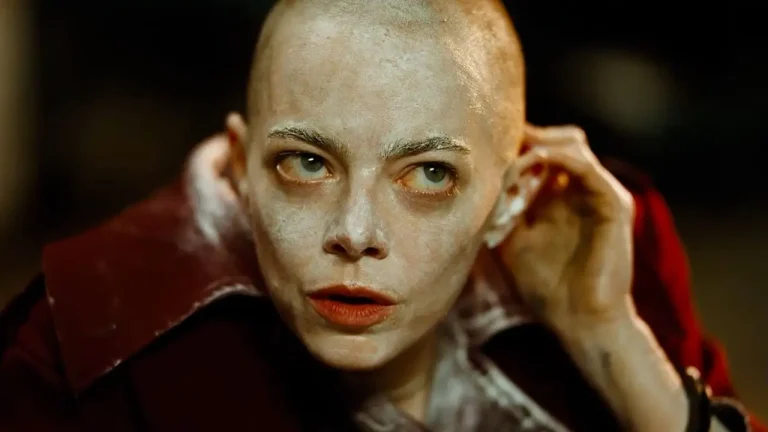
On this episode, Brendan and Megan discuss Yorgos Lanthimos’ new film Bugonia, starring Emma Stone and Jesse Plemons! Lanthimos has always been a polarizing filmmaker, and it seems even so in recent years, but overall we are big fans of his work. His latest is peculiar and strange in ways that’s complimentary to his directorial ethos, however we’re not entirely sure if it all comes together.
Review:Bugonia
Director: Yorgos Lanthimos Writers: Will Tracy Stars: Emma Stone, Jesse Plemons, Alicia Silverstone
Synopsis:An Irish immigrant lands in 1950s Brooklyn, where she quickly falls into a romance with a local. When her past catches up with her, however, she must choose between two countries and the lives that exist within.
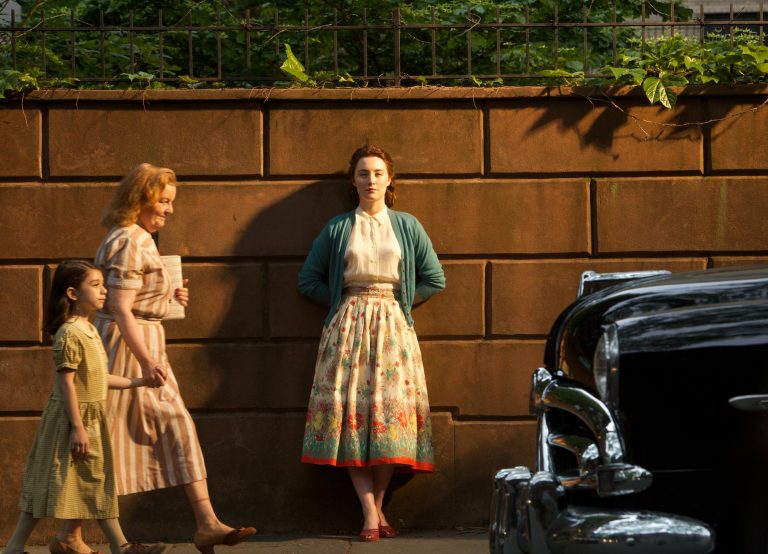
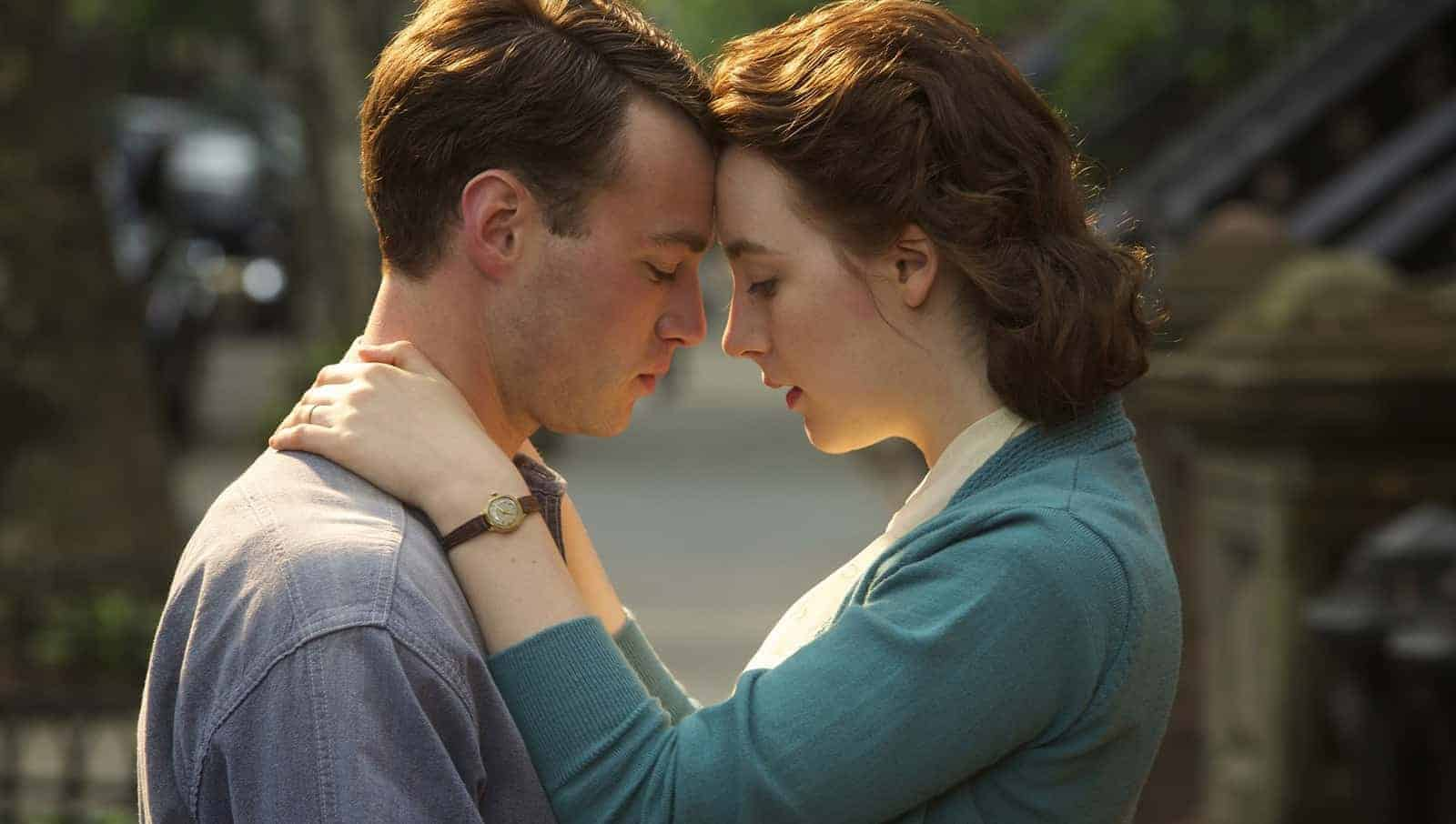
It has been ten years since the release of Brooklyn, so it feels like the perfect time to look back. But then, this got me thinking about exactly that, looking back. There are many films that look backwards, with rose-colored glasses, at our country’s past. And frankly, this has led our country to a precarious position. There is definitely a romanticism that makes it tempting to only look at the past as positive, especially if you are white. But, there are some stories that do not look with this simplistic view, but instead understand the importance of both the comfortableness of the past and the risky nature of the future. Brooklyn is one of those movies, and one that has received a few simplistic readings because it is so lovely (which it is).
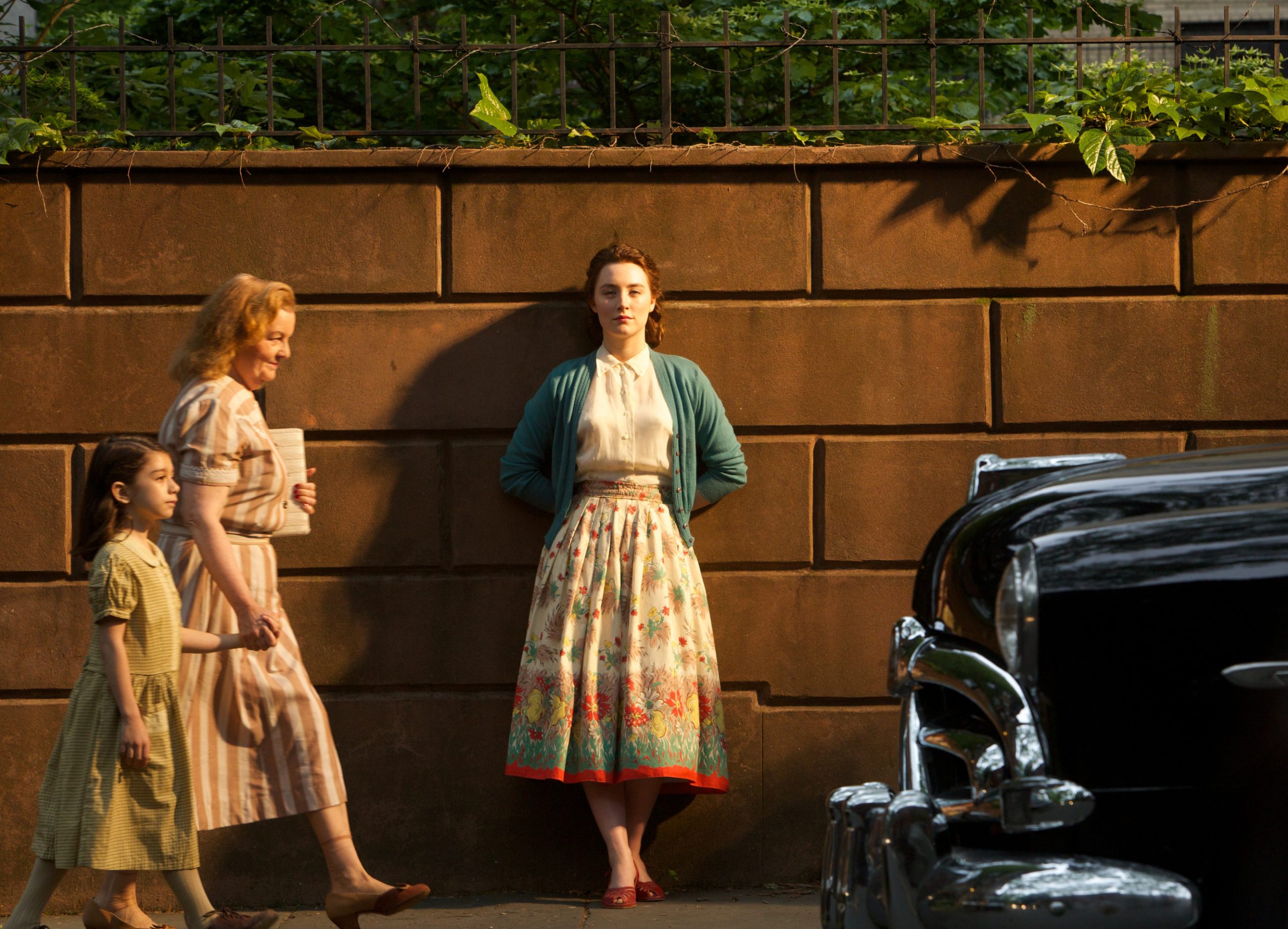
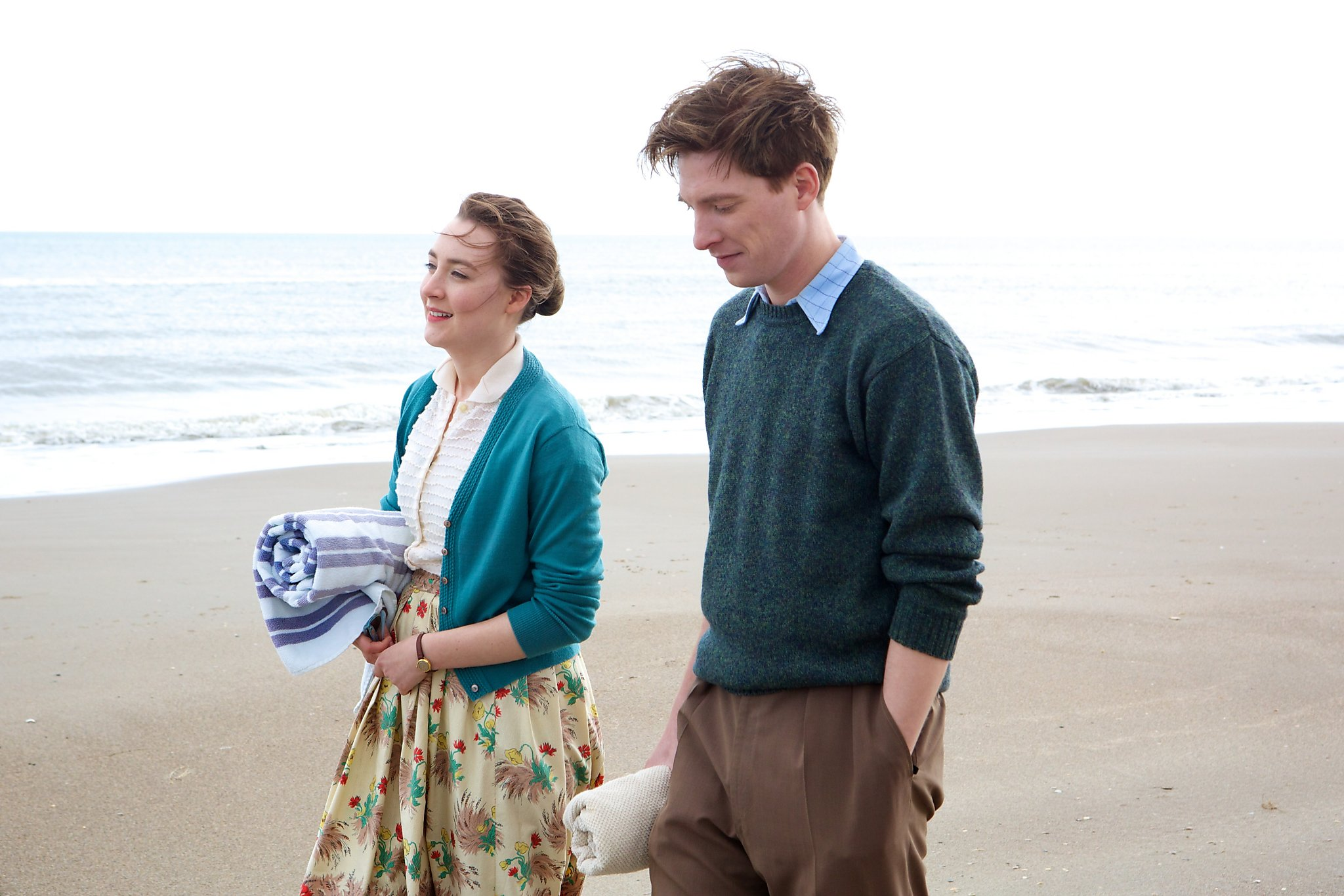
For the uninitiated, Brooklyn follows Eilis (a note-perfect Saoirse Ronan) as a young Irish woman who has been given the opportunity to leave Ireland for the opportunities of the United States. As the film begins, director John Crowley lovingly films Ireland (along with cinematographer Yves Bélanger) which we will find out later is drastically important for the film to work as well as it does. There is a beautiful push-and-pull inherent in Eilis. She must desire to leave her country as well as feel the painful loss when she begins her new life. And, of course, that country includes her mother (Jane Brennan) and her sister, Rose (Fiona Glascott). The film also manages this by engaging in the Irish community in New York. In one particular scene, an Irish immigrant sings at a dinner, and one cannot help but feel the pull to go back home. This scene, paired with one of the most beautiful onscreen sibling relationships in cinema history, will make you truly ache for your family.
Eilis, fighting her homesickness and trying to make a life, eventually is given opportunities to learn new skills and, connected to this, ends up meeting an Italian boy, Tony (Emory Cohen). Due to the two kind and empathetic performances, we have almost no choice but to root for them. As their relationship blooms, we and Eilis both start, just for a moment, to forget Ireland. And this film could have been that simple. Just a nice love story of two immigrants and their ups and downs. But luckily, Brooklyn is so much more than that. Eilis is a woman caught between two things constantly: Two men, two countries, two lives.
When Eilis is called back to Ireland, everything changes. When she was far away in the United States, choice seemed like a mere illusion. Everything takes a long time: travel, letters, day-to-day life. But now, with her being home with her family and old friends, that intoxicating allure of home and comfort is in her face constantly. Yes, her life in America is exciting and different, but can anything really replace home?
As she meets Jim Farrell (Domhnall Gleeson), life alters again. Although it would be easy to call this a love triangle between Eilis, Jim, and Tony, that would denigrate what is happening on screen. This is purely Eilis’ story and it is refreshing that she is not being pressured to make decisions. We get the honor of watching Ronan process loss, pain, excitement, and responsibility, sometimes all at once. It is understood now that she is one of our best working actresses, but this is pre-Lady Bird, Little Women,and The Outrun. Of course, anyone seeing her as a child actor knew she had talent, but Brooklyn is the moment that she removed all doubt that she would make the transition as an adult. Crowley constantly lets the camera linger, both on the Irish countryside and on Ronan’s face. The slow zoom outs from her eyes tell us more than words ever could.
Eilis, of course, makes her choices, but they are, in terms of Hollywood style, lacking in high amounts of drama. We understand why she makes the choices that she does, and it feels like there really were no options. Things end as they are supposed to and Eilis becomes the woman that she was always meant to be. Brooklyn is not simply a lovely story (though it is that). It is an exploration of growth, love, connection, and some of the things that actually make the world great. Not wild success, riches, or intense passion. Instead, we see a woman finding love, improving herself, and looking out for people who need it. In short, Brooklyn is one of the very best films of the past decade and worth looking back on.
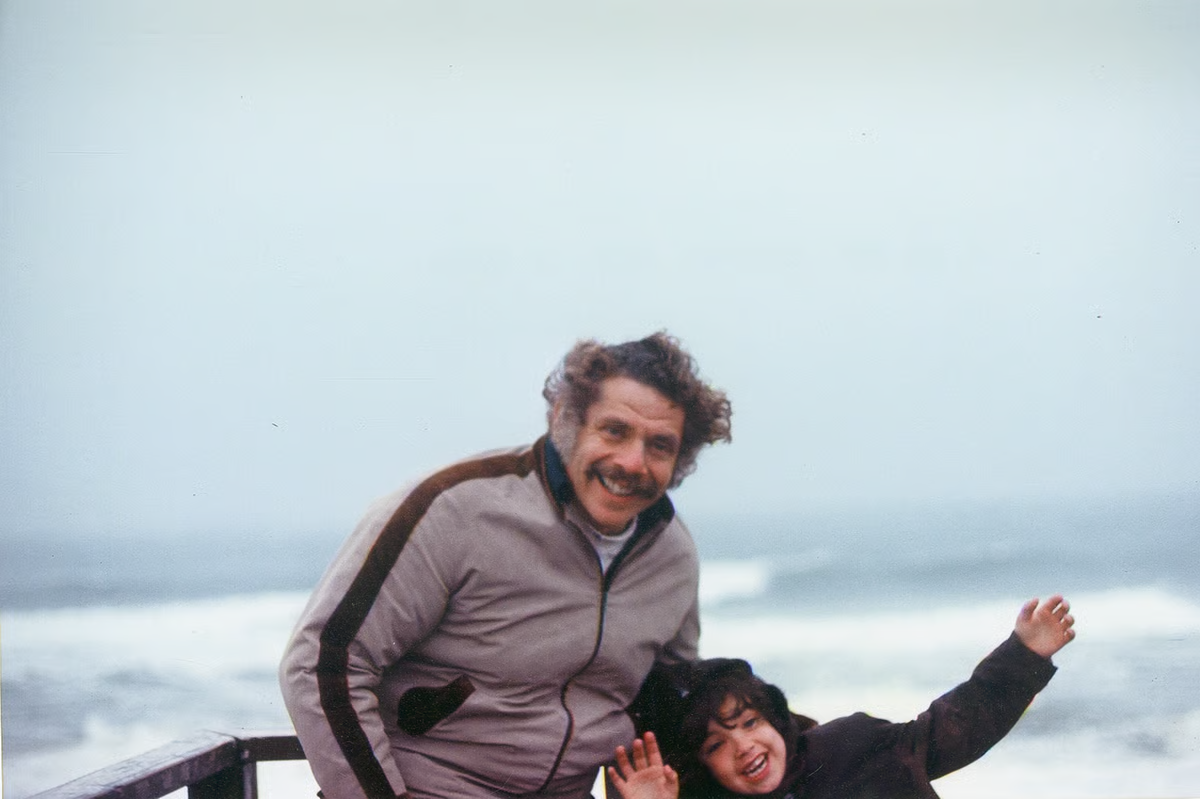
Director:Ben Stiller Stars: Jerry Stiller, Anne Meara, Ben Stiller, Amy Stiller
Synopsis:Ben Stiller tells the story of his parents—comedy icons Jerry Stiller and Anne Meara—exploring their impact on popular culture and at home, where the lines between creativity, family, life, and art often blurred.
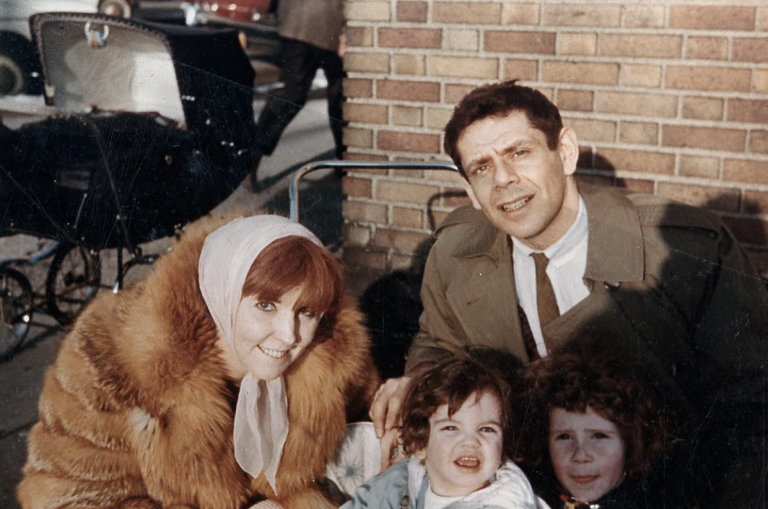
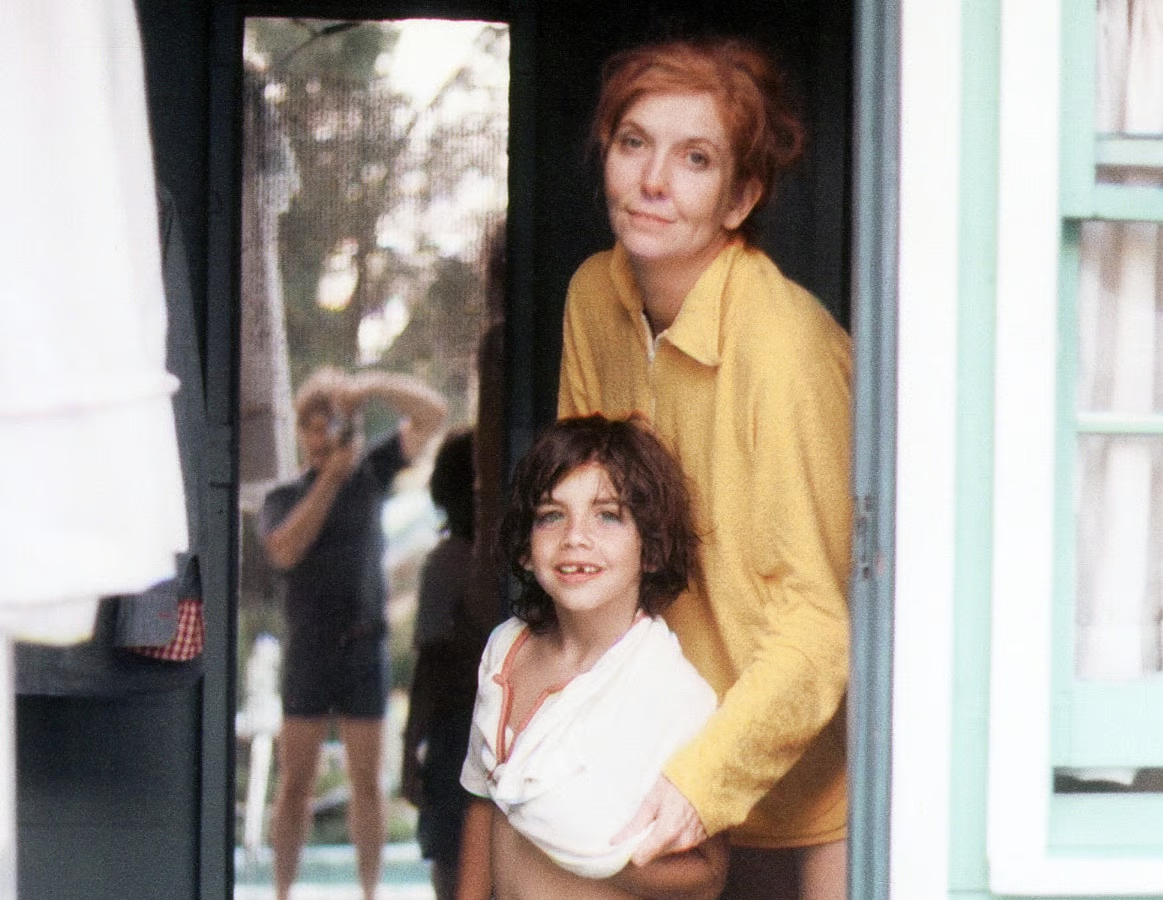
There is a version – and there have been versions – of a documentary like Stiller & Meara: Nothing Is Lost that is so painfully saccharine and twee to a point where the fact that it is a loving work of memoriam from a child to a parent doesn’t forgive its syrupy qualities. We’re told to never judge a book by its cover, but that was this critic’s unfortunate instinct regarding Ben Stiller’s documentary (now streaming on Apple TV+ in the aftermath of its world premiere at the New York Film Festival) about his parents, the comics Jerry Stiller and Anne Meara. Its logline is a fine one: As described by its festival page, which are understandably and often glowing representations of its programmed films, “the most personal film of [Ben Stiller’s] career” is a “funny, moving documentary” in which “he tells the story of his parents… who were a beloved mainstay of 1960s and ’70s American culture.” All true enough, and perhaps a 27-year-old writer whose familiarity with Anne lacked entirely and knowledge of Jerry was limited to his work on sitcoms like Seinfeld and The King of Queens was never the “target” audience for a work like this one. Yet it quickly proves that loglines are frequently as useless and inconsistently revealing as trailers, for Stiller & Meara is not merely the depiction of parents by a son donning rose-colored glasses nor is it merely “funny” and moving” enough to get by on charm. It gets by on those qualities, to be sure, but Stiller’s direction and intimate involvement in the documentary’s schema itself provides significant depth, yes, to the relationship he had with both of his parents, but more importantly the partnership they shared for six decades and change.
And why shouldn’t it be both? It’s a film about family, and a film about a professional partnership between funny people that was regularly elevated by the romance between the duo and sometimes hindered because of the differing individual philosophies Anne and Jerry clashed on, and not always in private (or not always successfully behind closed doors). The film lays out the pair’s field-specific qualifications, achievements, and general history as it is supposed to, of course: Both had high aspirations as public figures, and though most of their success came from their years as the titular twosome, Jerry wanted that work to be his hallmark, while Anne had hopes of being a dramatic actress revered across multiple forms. Jerry wanted his work to be synonymous with Anne; she lobbied for independence that allowed her to be “Anne Meara,” not the name next to “Stiller.” This was the 1960s, mind you, so her calling to a different part of the cultural world was given less respect than the work she did alongside her husband.
Courtesy of NYFF
Stiller details this conflict with generosity for both of his parents, acknowledging how their respective complexities as human beings – not just as celebrities – influenced their handlings of separate and shared anxieties about their future as a brace and as a couple. Jerry needed the public to love him; Anne drank. Both are reasonable, familiar responses to depressive states, and neither are particularly productive. Given the intimacy between filmmaker and subjects, it’s no surprise that Stiller paints both with a delicate brush, but what’s most refreshing is how he is sure to place an emphasis on his mother’s troubles, not deeming her a societal boil for her “behavior,” but as a woman who needed more than what was being offered to her. A lesser documentary – or this one, if directed by a director with some distance – might have used interviews with their son and daughter (Amy Stiller, a key presence throughout the film) to humanize the subjects. That Stiller never veers off his humanization-directed course as the core principle of this project is perhaps a given, but it’s how he does it that stands out beyond the junky portraits that are far more common in film today.
Not only does he give himself and his sister an opportunity to reminisce about their parents and consider their lives through the lenses of their careers both mutual and respective, but it includes testimony and discussion from/between the likes of Christine Taylor, Stiller’s partner since 2000, with whom he offers a sort of parallel example to the relationship between Jerry and Anne. Stiller and Taylor separated in 2017, but reunited in 2022 and talk openly about the difficulties of marriage and of parenting with prolific careers such as theirs. Their children, son Quinn and daughter Ella, are included here, too, and it’s fascinating to watch kids speak so transparently about how difficult it intermittently was to have Ben Stiller as their father. He was often away, acting or doing press or directing or writing or all of the above; the same goes for Taylor, which she and Stiller acknowledge, but there’s an understanding that it’s different when Dad is Zoolander and the Night at the Museum guy and Mom simply works less. Rarely before has a documentary managed to work in so many familial layers to the point where the whole experience feels more like peering in on family therapy than a documentary on streaming, but it works emotional wonders, all while staying rooted to the Jerry and Anne of it all.
Courtesy of NYFF
Anne died in 2015 and Jerry in 2020, leading Ben and Amy to the Upper West Side apartment in which they grew up to uncover the trove of memories and narrative substance that became Stiller & Meara’s driving force; Jerry insisted on recording everything they did as a family, leading to a vast array of home videos that dance across the screen like mementos playing out in real time. He and Anne also regularly wrote each other letters, and the siblings read a few. (Bring your tissues, if only from one room to the living room couch.) The non-name portion of the title is a perfect encapsulation of not only these elements, but of the relationship that the names enjoyed from 1954 until their respective deaths, just five years apart. Nothing is Lost ensures that everything was at one point in time or another gathered and meticulously stored in order for the proper person to find it when the time came. There’s something almost too perfect about that, the sort of parental presence that feels ripped out of something closer to This Is Us than real life, but that’s only because it might not reflect our experience, and Stiller & Meara is specifically about one man’s experience, and that of his loved ones by relationships of their own, with Mom and Dad. It shouldn’t have ever been anyone else’s; it couldn’t have been.
Stiller & Meara celebrated its world premiere at the 63rd New York Film Festival. The film is now streaming on Apple TV+.
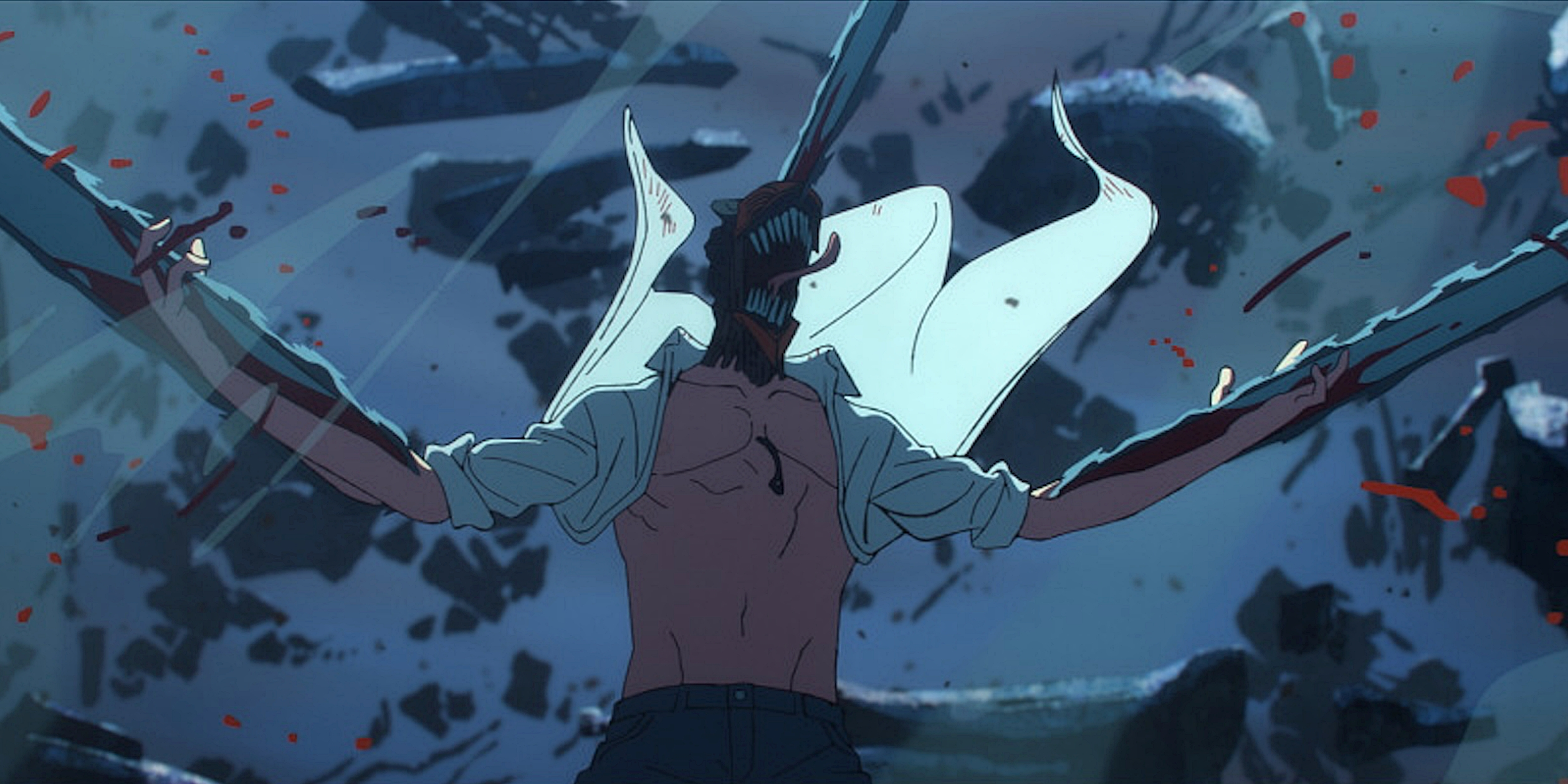
Director:Tatsuya Yoshihara Writer:Hiroshi Seko Stars: Kikinosuke Toya, Reina Ueda, Fairouz Ai
Synopsis:In a brutal war between devils, hunters, and secret enemies, a mysterious girl named Reze has stepped into Denji’s world, and he faces his deadliest battle yet, fueled by love in a world where survival knows no rules.
During the opening half of Chainsaw Man: The Movie – Reze Arc, a continuation of MAPPA’s hit 2022 anime series, protagonist Denji (Kikinosuke Toya) goes on his first date with his biggest crush, Makima (Tomori Kusinoki). Instead of doing something rather traditional, Makima takes Denji on a cinema-hopping trip, where, by journeying through different cinemas in the city, they watch (read: criticize) several popular movies until their final film – an obscure, auteur-driven work – inside an empty venue, blows them away. The two cry and wonder why a seemingly irrelevant segment in an otherwise esoteric film brought them to tears, while the populist works they had viewed beforehand did not affect them.
Answering this question, Makima then says to Denji, “I only find one good movie for every ten movies I watch, too. But one of those was a movie that changed my life.” That line cuts especially deep because, in an era where movies have lost their artistic value and are turned into mindless pieces of “content” with little cultural relevance, a film like Chainsaw Man: The Movie – Reze Arc feels like that life-changing work of art Makima is talking about. It’s not only the year’s best animated film, but completely redefines anime storytelling for the big screen, pushing the artform into completely new emotional – and artistic – horizons that I’m not even sure MAPPA knew they were capable of doing until they made it.
Unlike another popular anime film based on a preexisting IP, with Demon Slayer: Kimetsu no Yaiba – Infinity Castle, one does not need to have seen MAPPA’s Chainsaw Man to understand the story being told here. However, the character dynamics – specifically, Denji’s attraction to Makima and the relationship he had with Pochita, the Chainsaw Devil, who transfers his power to the protagonist after sacrificing himself – might not be cleared up if you don’t make the effort to view what is, in my humble opinion, the best anime of this decade. It’s an often complex and surprisingly emotional fantasy actioner that, yes, dazzles with its array of impressive, squirm-inducing setpieces, but never loses sight of deepening what matters most on a show like this one.
At the end of Chainsaw Man, tears – in the most unexpected ways – may flow down your face, whether through fleeting, innocuous gestures (such as the act of smoking cigarettes) or in sitting with the protagonists as they realize the decisions they make will inevitably lead them further into loneliness. Reze Arc doesn’t shy away from doing the same thing, although it primarily focuses on a “love triangle” of sorts between Denji, Makima, and the “new girl” on the block, Reze (Reina Ueda). She begins to hang out with the Chainsaw Man after the two meet cute in a phone booth, and progressively fall in love. Denji wants to devote his entire romantic impulses to Makima, yet he can’t help feeling the same affection Reze has towards him, until, predictably, she is not what she initially says she is.
I’ll leave it at that, as the plot is best experienced with knowing as little as possible. Still, it’s pretty apparent to anyone familiar with the source material (Tatsuki Fujimoto’s manga) that Reze is not of the human kind. When this is revealed, the next hour of Tatsuya Yoshihara’s feature-length “episode” is an endless action sequence that astounds both emotionally and kinetically. The “cinematic” language of MAPPA’s anime series is stretched to grander heights on an IMAX screen, perfectly demonstrating the animation studio’s malleability in transitioning from the small-scale confines of television to the large canvas of a gargantuan screen. The film also shifts from a quasi-realistic “slice of life” picture (the burgeoning romance between Denji and Reze, which is deliberately paced) to an all-out explosion of artful colors and images that are as jaw-dropping as they nourish and stun the soul.
Fragments of a future life will be shown through different animation styles (one seemingly adopts watercolor-like movements), or sections of a fight scene will slowly shift tone and color to exacerbate the punishing ordeal Denji is currently feeling. One specific sequence is entirely in black and white, but the punches, which are lit with a bright orange, turn each hit into the fire of a thousand flames. It’s maximalist and hyperviolent, sure, but Yoshihara never forgets that, within the action, especially in anime, the characters grow and have profound experiences that change their perception of the world they live in forever.
I don’t want to compare apples to oranges (or, in this case, MAPPA vs. Ufotable), but last month’s Demon Slayer film was a perfect demonstration of this. Director Haruo Sotozaki would frequently halt the momentum of a present-day action sequence to fill out his lengthy runtime with as many flashbacks as possible, contextualizing the significance of the challenges Tanjiro (and the other antagonists) must endure. In Reze Arc, Yoshihara always captures each major action beat through the characters first, before distancing his camera to explode the screen with images of great intensity, only when the connection between the audience and the protagonists is made.
There’s also a real sense of humanism in the storytelling that is sorely lacking in most Hollywood animated offerings. The movie never talks down to the audience. It offers fully-fledged, mature characters they can latch onto, who, no matter how insane a given situation may become, especially in how humans and demons essentially coexist in this world, are fundamentally flawed. For instance, Aki Hayakawa (Shogo Sakata) wants to die, and he makes it clear to his colleagues that this world has offered him nothing in return ever since Himeno’s death. Yet, he finds a new purpose when Reze upends the stability of his – and everyone else’s – life. I won’t spoil what happens, but the sheer heroism he enacts during one key sequence instills in him that perhaps this life is worth something before he’ll eventually rejoin Himeno in the great beyond.
Yoshihara is also unafraid of confronting audiences with the grim moviegoing landscape we’re in, both in terms of the quality of motion pictures and the decline of cinema-going as a whole (cinema-hopping sounds fun, though). He does this before showing them what movies can – and should – look like in the last hour, so bracingly exhilarating it may very well make you emotional based on the sheer artistry on display, and then wreck you with how it ultimately wraps up. It remembers to stay as human as it can before moving on to the next phase of the series, which will be much darker than this film.
That could be why Reze Arc may be defined as a watershed moment for animation as a whole, and not just anime, as Hollywood continues to figure out if this medium should be taken seriously or be strictly reserved “for kids.” Japan and China have beaten them at this game already, and will continue to do so until they get the message. Thankfully, audiences will soon realize that, like Makima, this film will stay with them for the rest of their existence, as they continue to plow one mediocre motion picture after another to find the next title that will inevitably change their lives…
Synopsis: An ode to the Florida Everglades past and present, told through the prescient writings of Marjory Stoneman Douglas, and those who today call the region home.
We all know that documentarians strive for truth. There is an investigative nature of the work that, in the best cases, feels exhaustive. But all journeys must begin with a single step. They tend to put the rest of us to shame, as we are more likely to simply accept “known truths,” which are not actually known, but only accepted. If we travel with them, and continue to be curious, it may reward us with knowledge that has been known and passed down for generations without our awareness. That awareness will lead to actual change and growth, if we allow it.
An alligator swims through a blue-green algae bloom Courtesy of Sasha Wortzel and Walking Productions
River of Grass takes its title from a travel book written by Marjory Stoneman Douglas in 1947, titled “The Everglades: River of Grass”. Well, at least it appears to on its surface. Quickly, we are given more information. And, it should come as no surprise to anyone with a vague interest in history, that it leads to indigenous people and connection with nature. Even the most well-meaning white people in history, like Douglas, have stolen from indigenous people, regardless of their intent. And this is exactly why it is important to dig deeper. Director Sasha Wortzel crafts a stunning look at the past, present, and hopefully the future of the Florida Everglades. The Everglades are a perfect example of something we just accept, and this will never change. But, terrifyingly so, human beings have power to shift and change the landscape, whether or not we should.
In exploring the past, we find quickly that the desire to alter the land is what leads us to both great and terrifying changes. Wortzel interweaves her film with recordings, writings, and images of Douglas to its great advantage. Even if she did steal the term “River of Grass” from the local indigenous people, it does not mean that she did not create great works for the conservation of the area. She is also aided by the combination of the beauty of Florida and her cinematographer, J. Bennett. Particularly in the sections detailing the importance of Lake Okeechobee, there is a spiritual connection felt as the river flows in front of the camera.
These visuals, along with an expertly written piece about the effects of the lake truly house the importance of the film. The voiceover details that this is the first time that she has ever seen these waters personally. Yet, basically every person in Florida has felt the effects of this body of water. And this is the major problem of our times, as well as the heart of conservation. We are desperate to build bigger and better (and for more people) without ever truly realizing the cost. As the film importantly states, nature will always win. We are not destroying the planet exactly, we are destroying the habitable nature of this planet for us. Human beings should always be on the side of nature, as it is our spiritual mother. But we have become so far removed from the source of life that ignorance seems easier.
Prayer walkers carrying a Miccosukee flag Courtesy of Sasha Wortzel and Walking Productions
River of Grass is both a travelogue and a call to action. Especially given our current political climate (one in which our planet is taking a terrifying back seat), its message could not be more important. Although it likely contains well known information to those that live in Florida, it is a message to all of us to take a closer look. No matter where you live (especially in the United States), there is a hidden fight taking place on our land. It may not involve toxic waters, animals seemingly magically returning to their place of birth or tree islands (with their own deep history), but all it takes is a little work to become closer to our earth.The nature that we speed by on our way to our next appointment is calling out to us, ready to be saved for our next generation. Asking why and how is the important first question that River of Grass begs us to ask.
As a Seattlelite and a lifetime Washington State resident, any time the Mariners get national attention, or look like they may make it into the playoffs, I take it with a grain of salt. This time felt different, though. There was an undeniable magic in the air, the city seemed to be holding its collective breath. Even as other life long residents would say, as we always say around the beloved, beleaguered, and baffling Ms, that they’ll lose, that they’ll choke, that they’ll make a crucial mistake, there was a glimmer in their eyes this time. It was a spark of hope as if the legendary Seattle Freeze had begun to thaw. We all suddenly thought about where we were during the last magical season, 24 years before.
Baseball can do that to us. Unlike any other game, there is deep superstition and romance to the sport. It’s about numbers, percentages, angles, yards, hang time, pitch speed, and body rotation, but also rally caps, eating the same meal, sitting in the same seat, and wearing the same socks. So much happens during one inning of baseball that it feels like full seasons between batters. Time slows and the infinite possibilities that come from a pitch are all simultaneously likely. It’s why baseball inspires such great movies.
From The Natural to Field of Dreams, baseball is the quintessential element in a sports movie about hope. Lately, there haven’t been many baseball films and fewer sports films that give the kind of hope and inspiration that baseball films always have. It’s possible that because sports films have shifted heavily toward biopics and period pieces that they lose this appeal of the underdog that an original film can evoke. If we see the trailer for a film based on a true story, we can just look it up. They won or they lost. It’s not got the same feel to it that an original story does. Even if we don’t know the story right away or choose not to look up the details beforehand, sports films based on real events and athletes lack a sense of tension after a while.
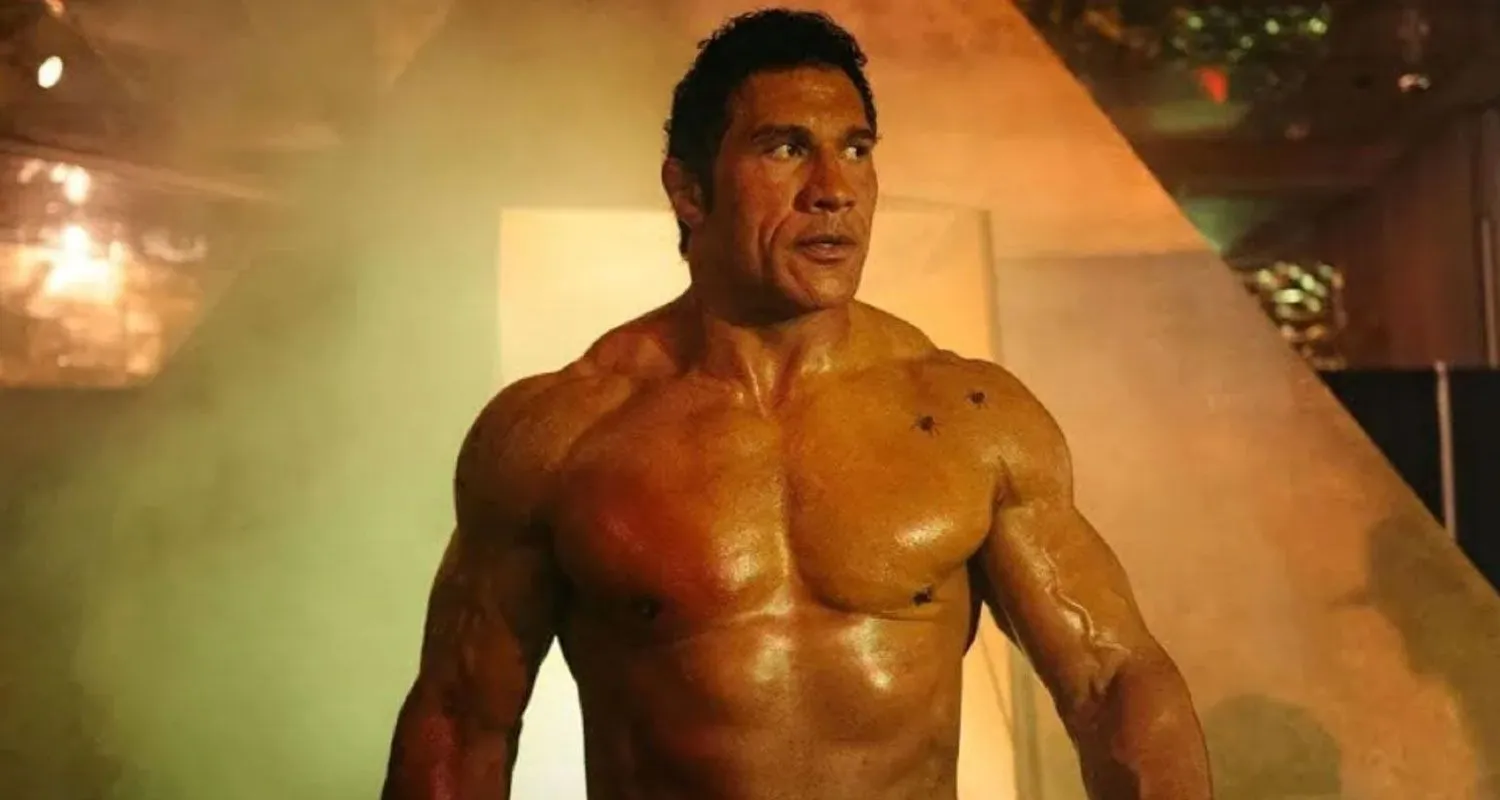
Take The Smashing Machine for example. It’s about a significantly lesser known mixed martial arts fighter, Mark Kerr (Dwayne Johnson), who is both literally and metaphorically big in Japan. He isn’t a down on his luck fighter, necessarily. He isn’t an old war horse ready for retirement. He isn’t trying to get enough money to support his large family at home. He isn’t going into the ring with a major disadvantage. He’s a good fighter who, because he’s in constant pain from all his brutal fights, gets addicted to pain medication, which is what drives much of the conflict of the film.
If it had been handled differently, The Smashing Machine could have been the kind of uplifting, inspirational story that resonates. Though, it is a vision of a filmmaker who may not have really understood the material. The actors’ strange, robotic choices, the uneven direction, and the overall blandness of the film account for much of The Smashing Machine‘s ineffectiveness. Yet, it has the formula for a comeback sports movie. It’s just that we have no reason to care about this fighter’s journey other than the fact that he’s a fellow human being attempting to make better choices for the future.
When we talk about Oscars and sports films, it’s films like The Smashing Machine that often get louder than average buzz. Their pedigree and the promise of an actor taking on something more challenging often push these films to the detriment of something better from earlier in the year. It’s a shame when a much better sports movie that is inspirational, but also a meticulously and beautifully crafted film, won’t get all the recognition it deserves as people will continue to debate films like The Smashing Machine.
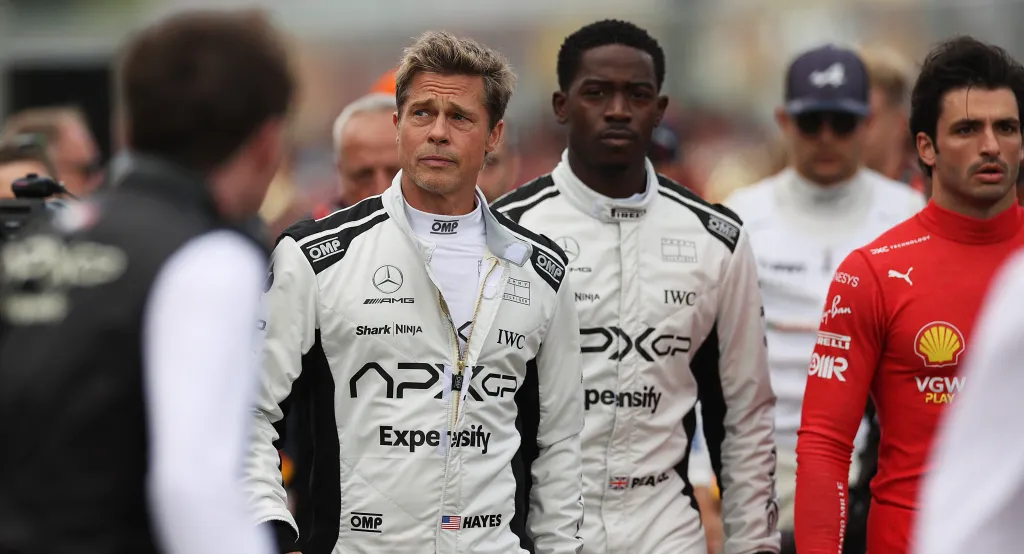
With a dumb title like F1:The Movie, it’s easy to overlook the original story that, in many ways, functions like an advertisement to get more Americans to care about Formula 1 racing. Yet, this film is very good and an original that doesn’t lend itself to people coming into it with preconceived notions, except where the genre tropes apply. Its story brings a Steve McQueen like cool guy, Sonny Hayes (Brad Pitt), onto a failing F1 team. Through talent, intelligence, and charm, Sonny guides the different personalities at odds with each other and helps inspire a cohesive unit. APX, the racing team at the heart of the film, are underdogs in every sense of the word. They are scrappy and work the system that’s always against them. The movie looks cool, sounds cool, feels cool, and might bring a tear or two to your eyes by the end.
F1 is a film that would have been past Oscars catnip. It’s showy and it made a worldwide impact at the box office that most original films can only dream of. It also made a box office impact that is nearly unheard of for a film that was co-distributed by a streaming service. Like the film’s success, the story is about the thin line between skill and luck, between pushing yourself to the limits and trusting your teammates and your guts. It’s what sports movies have always aspired to be and what we really want from our sports movies. It’s an underdog to root for.
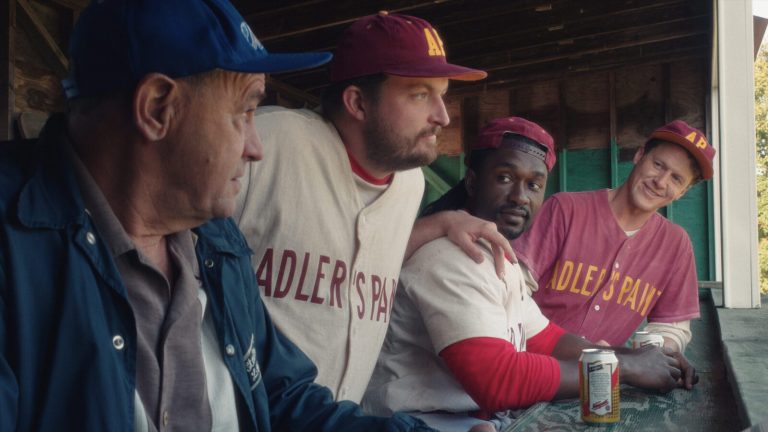
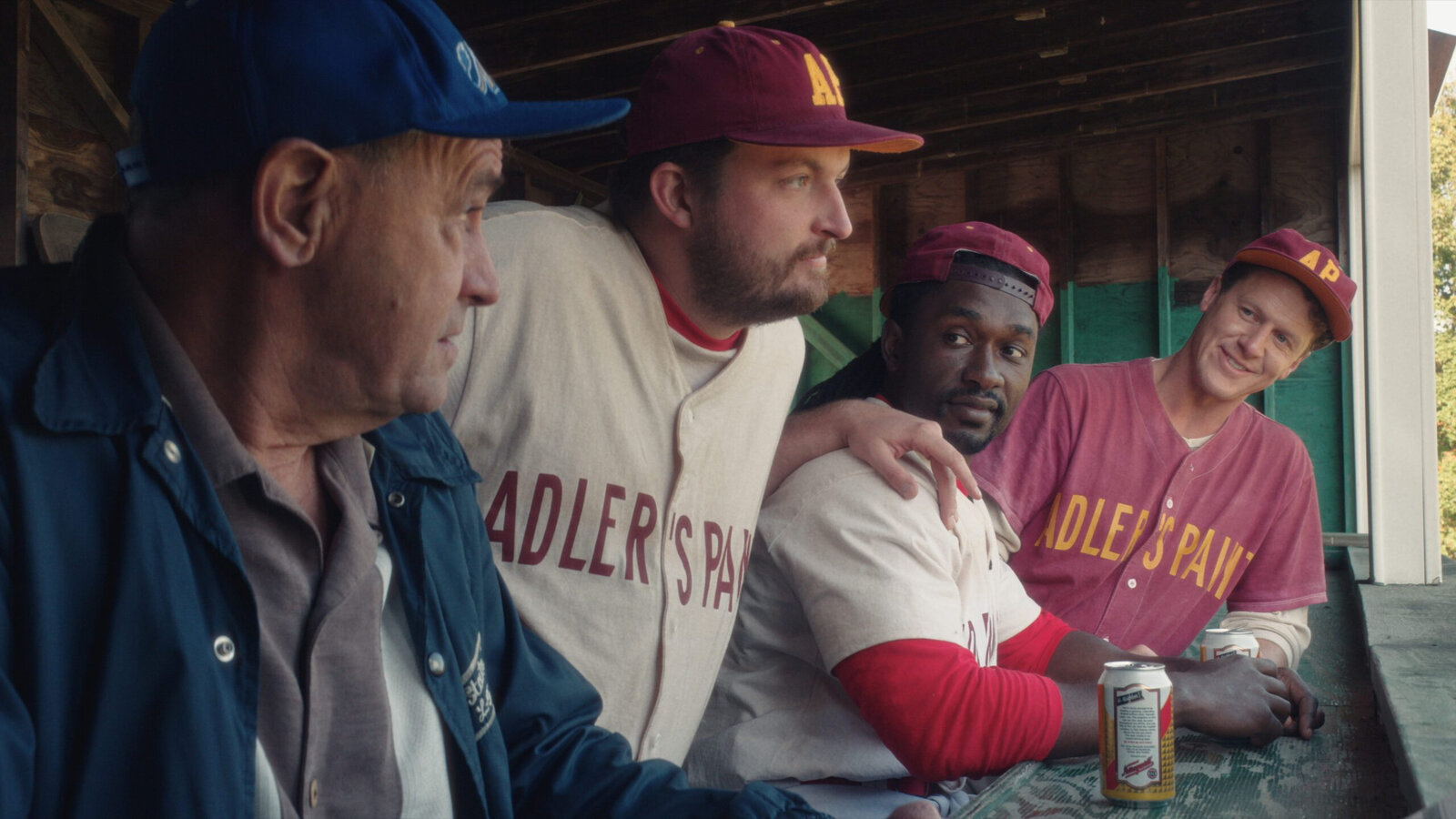
This is why Eephus is one of the best baseball movies ever made. All the players, and all the characters, really, are underdogs. Each side is full of men past their prime, or who never really achieved a prime. They play this game, not because it’s important to their respective teams, or because it’s their league championship, but because their league is disbanding and their field is being razed to make way for something new. They won’t give up even when their umpires leave or when it’s too dark to play. They just keep going because they know this is it. They know that the moment they stop it will all be over and their time on the field will be complete. It’s simultaneously heartbreaking and uplifting as you see that the point of it all wasn’t the people or the place, it’s the game and how it makes you feel to do what you love.
Sports can be reduced to winning and losing. The statisticians record the minutiae, but only film can capture the deeper resonances of an athlete. It can bring forward the psychology of sport and how the mind and the body create something that narrates those statistics. Sports films don’t have to be happy and hopeful affairs all the time, but there is something magical when they are. It evokes in us a sense of wonder about the nature of chance. No matter what, no matter the reports from spring training, there’s always a chance and that’s what keeps us coming back, that’s what makes our hearts race, our stomach flutters, and tears of either joy or disappointment run down our cheeks.
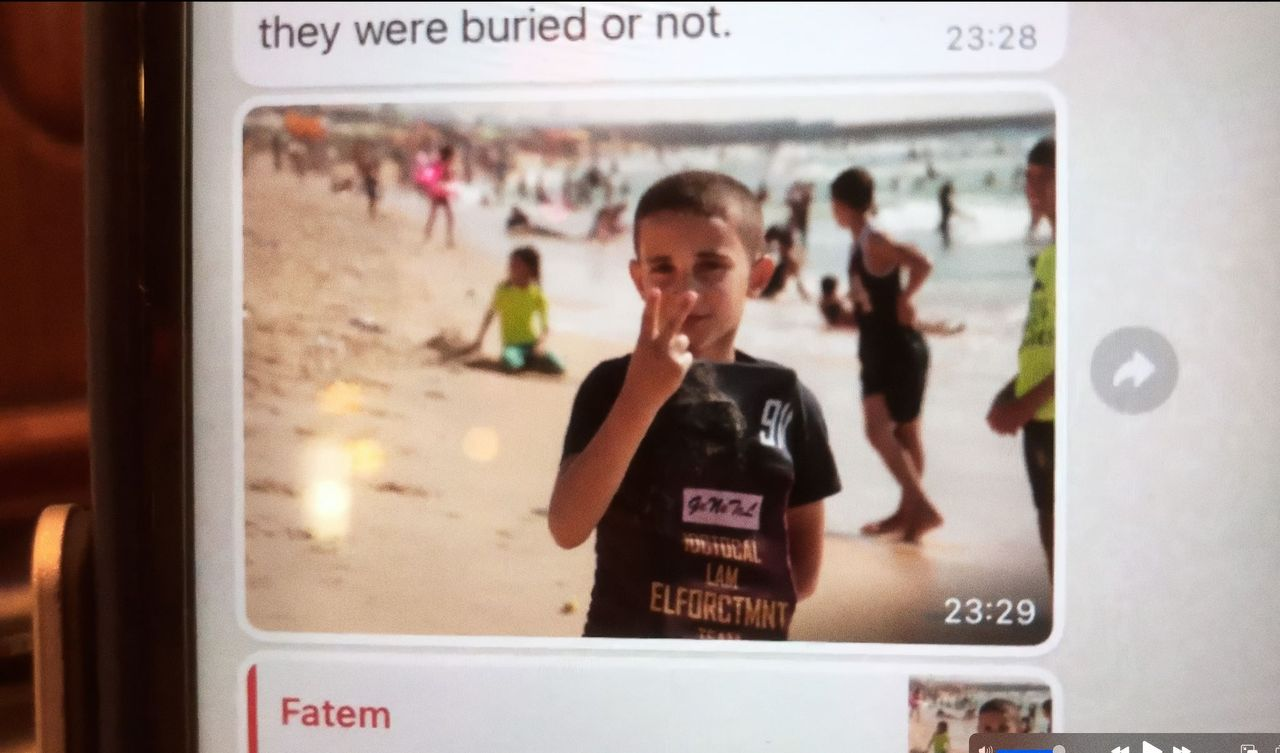
Synopsis:Director Sepideh Farsi chronicles Israel’s ongoing military campaign in Gaza through a series of FaceTime calls with Palestinian photojournalist Fatima Hassona, as she and her family continue to search for hope in an increasingly hopeless environment.
Some films are difficult to discuss without revealing the ending, specifically those detailing real-life events. Danny Boyle’s 127 Hours is a tour-de-force of filmmaking, acting as a one-man show for James Franco’s portrayal of avid mountaineer Aron Ralston, whose hike into Utah’s Canyonlands National Park turns dire after an 800-pound boulder crushes his arm, trapping him in an isolated canyon for five days. Those unfamiliar with Ralston’s brush with death going into the film as a true story will be moved by his journey, but the film itself was sold on how Ralston got himself out of the canyon, thus “spoiling” the reveal and reason the film was made. However, like any film based on true events, the purpose of their existence is less the destination and more about the journey surrounding its characters overcoming insurmountable odds.
However, some true stories force us to come to grips with devastating reality, none more relevant than Sepideh Farsi’s astonishing documentary Put Your Soul on Your Hand and Walk, chronicling Israel’s ongoing genocide in Gaza over the course of a year, following the events of October 7. In the wake of No Other Land, the brilliant Oscar-winning documentary cataloging four years of the Israel army’s aggressive demolition of Palestinian homes ultimately ending with the events of October 7, Farsi has crafted a disheartening, but necessary companion piece. As a real-time exposé of Israel’s destruction of Gaza, Farsi succeeds in cataloging both the continuous suffering of Palestinians as well as the disillusionment of those helpless to end it. However, the film is even better as a testament to the power of the human spirit in terrifying times, as seen through the eyes of photojournalist Fatima Hassona’s testimonial.
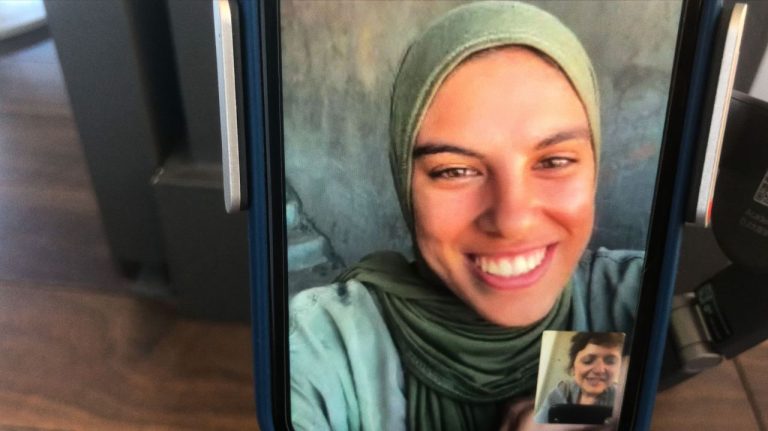
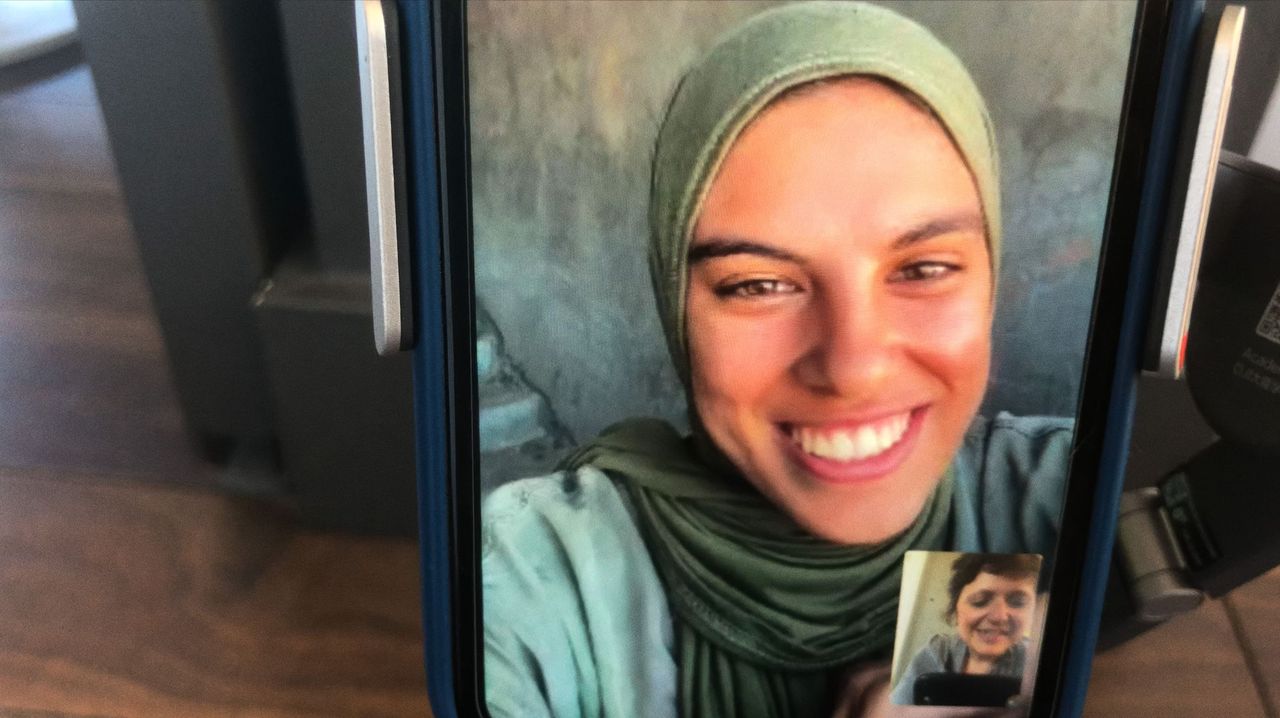
Farsi’s approach to crafting Put Your Soul on Your Hand and Walk, while simple and often experimental, is gripping to behold. Most of the film is constructed through a first-person perspective as Farsi films her FaceTime conversations with Hassona, checking in for regular updates on how she and her family are navigating Israel’s increased military presence. However, Houssana’s demeanor on the calls, in the midst of increasingly bleak circumstances, is nothing short of joyous. She often laments the hardships her family and the rest of Gaza’s residents are experiencing, being cut off from essential food staples with bombs being dropped on buildings from all angles, yet she persists. She describes her position and insistence on staying in Gaza amidst Israel’s occupation as a point of pride, her infectious optimism shining through with an ear-to-ear smile. As unceremonious as times are, all that she can do is continue to survive, describing the film’s title as an act that the people of Gaza are forced to live through every day.
Farsi stitches her discussions with Houssana using cornerstone events after October 7th, 2023, providing context for each of their conversations. The perspectives of both facets of Put Your Soul on Your Hand and Walk helps cut through the red tape of much of western media’s centrist coverage of Israel’s treatment of Palestine. Admittedly, there are sequences when the experimental style that Farsi employs doesn’t fully support the film. While some details embedded into the conversations between Farsi and Houssouna help to amplify the latter’s circumstances such as frequent dropped calls caused by shoddy reception, some details were better left on the cutting room floor, such as Farsi taking breaks to let her cats inside her home. However, it’s not that these details don’t add character, because Put Your Soul on Your Hand and Walk exudes character from every frame, just from its frank depiction of what it’s like to live through an atrocity. Through communication and empathy, Farsi has opened the world of documentary filmmaking with an execution all her own, showing how a series of conversations can enlighten new audiences. While the ending of Put Your Soul on Your Hand and Walk may be permanent, her conversations and spirit are etched into eternity as a defining moment in Palestinian cinema.
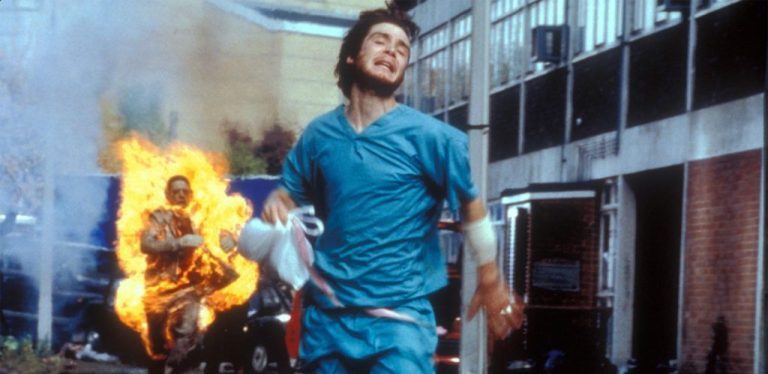
This week on Women InSession, continuing the spirit of spooky season, we discuss our favorite zombie movies and why they have remarkable staying power! For decades now, this subgenre has continued to be a mainstay of popular culture, giving us some of the most compelling horror film we’ve seen over the decades. It was really fun to dissect our favorites and talk about why they continue to resonate.
Panel: Kristin Battestella, Megan Kearns
On that note, check out this week’s show and let us know what you think in the comment section. Thanks for listening and for supporting the InSession Film Podcast!
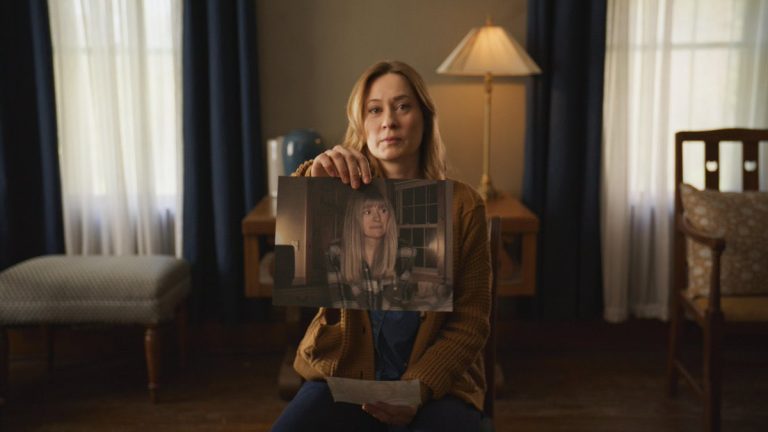
On this episode, Megan is joined by Maxance Vincent to discuss Chris Stuckmann’s debut film Shelby Oaks! Most of us have followed Stuckmann for years, or have at the very least been aware of his influence, so it’s wild (complimentary) that he’s pivoted to filmmaking. His debut feature may not be entirely seamless, but you have to appreciate the ambition.
Review:Shelby Oaks
Director: Chris Stuckmann Writers: Chris Stuckmann Stars: Camille Sullivan, Brendan Sexton III, Keith David
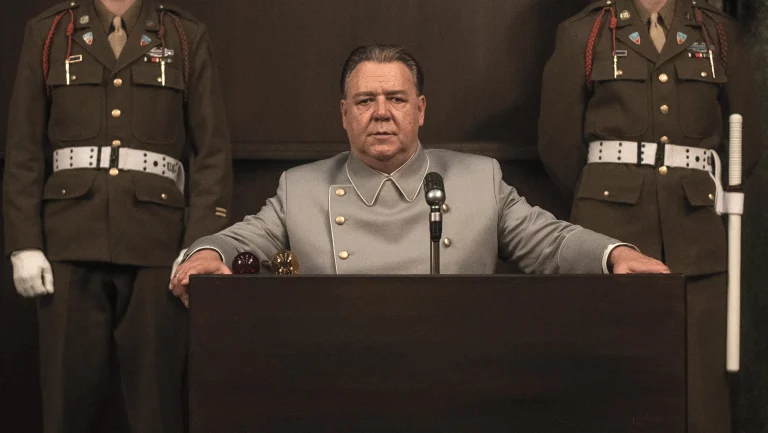
Director: James Vanderbilt Writer:Jack El-Hai, James Vanderbilt Stars: Russell Crowe, Rami Malek, Michael Shannon
Synopsis: A WWII psychiatrist evaluates Nazi leaders before the Nuremberg trials, growing increasingly obsessed with understanding evil as he forms a disturbing bond with Hermann Göring.
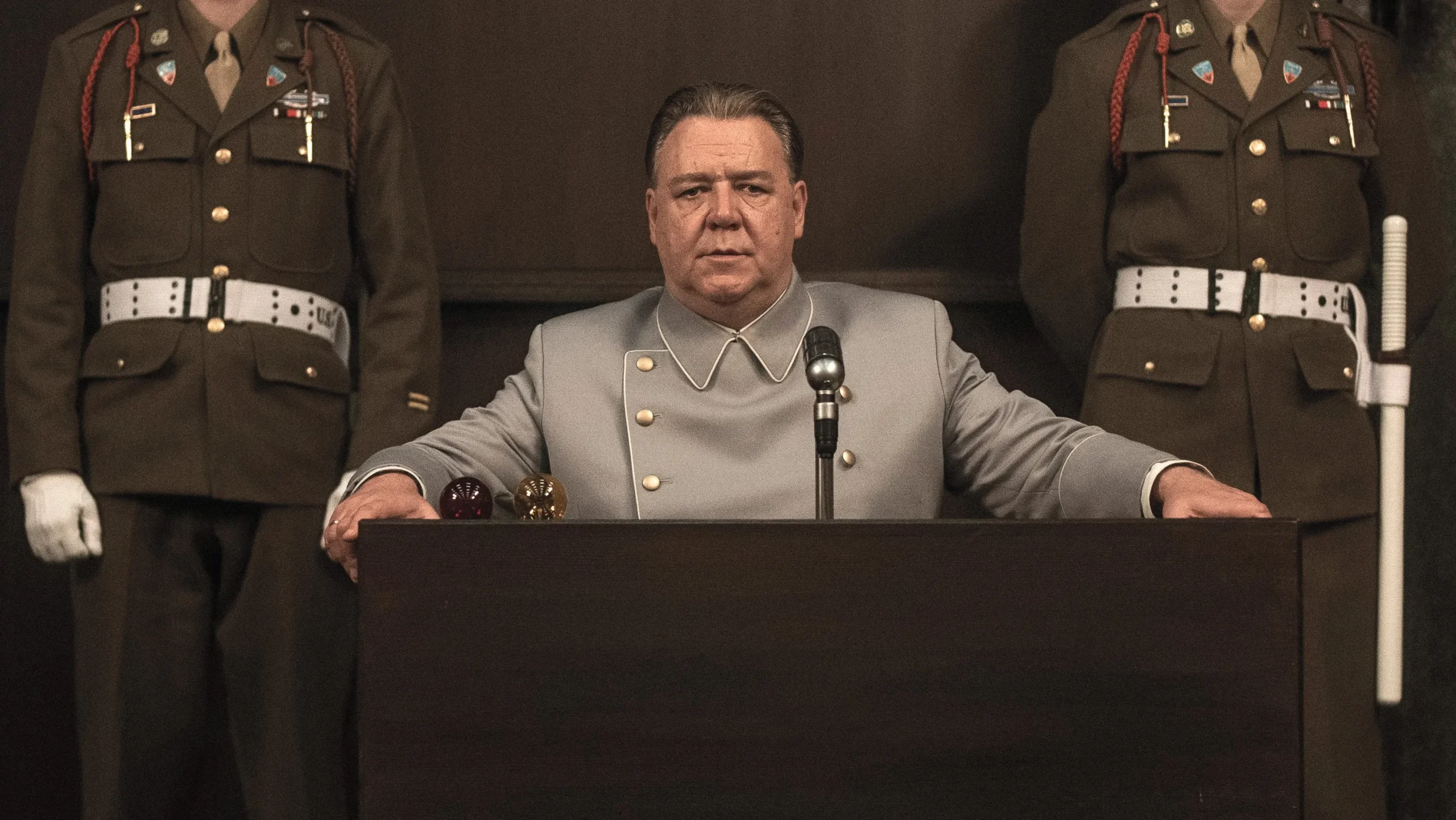
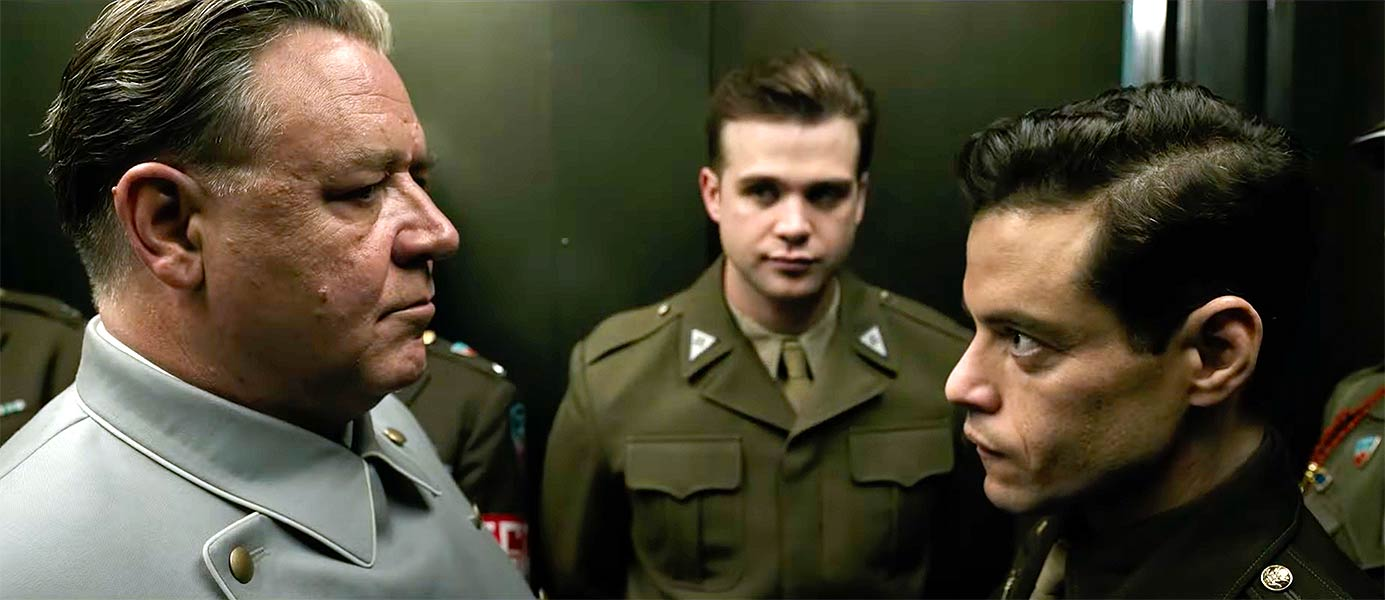
James Vanderbilt’s Nuremberg has all the elements of success on paper: first-class crafts, an enticing and dramatic historical premise, and a bevy of overqualified actors giving good-to-great performances. It’s too bad the filmmakers couldn’t be bothered to try a little harder (or have the aptitude) to make the film worthwhile.
If you are looking for empty, dramatized platitudes like, “People need to know!” or “We can’t let this happen again!” then this is the film for you. The stakes of the Nuremberg Trials are much more inflated in this film than they were in real life. And that’s the problem. When the actual trial that the entire film is anticipating takes a total screentime of 20 minutes for a 148-minute film, you have to squeeze every possible consequence into that 20 minutes. One character even implies Nazis will rise back to power if the trials don’t go the right way. Obviously, I was not there in 1945-46, but these grandiose proclamations are obviously inserted for narrative heft, rather than any concrete reality.
Despite ample opportunities to dive into the literal psychology of Nazi leaders, the film doesn’t dare understand their reasoning or hatred. It puts a mask of respectability on Goering, while fully and cartoonishly demonizing the others. While I’m not advocating to show the humanity of the worst surviving members of the Nazi party, there has to be some dramatic push-pull outside of Hitler’s number two, Hermann Goering (Russell Crowe, trying his best). There has to be some potential for these people to be released out into the world, but these men are shown to be the monsters under the bed as they are portrayed in this film and their war actions.
Even when the film has a morsel of something interesting, it’s little more than a passing fancy. Much of the screentime is devoted to Army psychologist Douglas Kelly (Rami Malek, who can’t figure out a good role since his Oscar win) and his interactions with Goering. Initially, Kelly is sent in to gauge the mental competency of the prisoners, but he quickly pivots to understand the mind of Goering in order to eventually write a book on the subject. While it’s refreshing to have such clear ulterior motives laid bare, Kelly quickly grows close to Goering, even reaching out and forming a friendly relationship with Goering’s wife and child.
Of course, there is a courtroom scene where video evidence of the atrocities of the Holocaust are presented to the court (using actual footage). While the footage is undoubtedly captivating and horrifying, it’s used merely as a plot swing for Kelly to change his friendly tune on Goering. That’s continually the most frustrating aspect. Actual historical facts are used in order to tell the story the film wants to tell, instead of the entire reason the film exists in the first place. Of course, the script shoehorns a bit of invented intrigue and light mutiny for Kelly, just because his superior (John Slattery, barely breaking a sweat) doesn’t like him. It’s not enough for Kelly to work against a Nazi perpetrator, it also has to be in defiance of authority because he was inspired by the war story of an interpreter (Leo Woodall, doing really nice work). The film ties itself in knots to explain asinine actions.
Meanwhile, Michael Shannon anchors the other half of the film as Supreme Court Justice Robert H. Jackson, who is in charge of the prosecution. There are a half-dozen roadblocks the film feels the need to overexplain, just to make it more dramatic. A side plot involving Jackson’s potential appointment as Chief Justice is added in for no other reason than to give Jackson more subtext. Shannon takes everything as seriously as he needs to, and provides the film with the energy it needs when Crowe isn’t on-screen.
Crowe, who has lately been toiling away in more anonymous films, proves his raw talent as an actor once again. He is not afraid to make Goering likeable, but more importantly, completely in control. He is smooth, charismatic, and calculating in his interactions with Kelly, as well as his interactions in court. The Oscar-winner hasn’t had many chances to stretch himself in a role, and it’s nice to see he still has it. Richard E. Grant gets a nice few moments to shine as British prosecutor David Maxwell Fyfe, with Mark O’Brien, Wrenn Schmidt, and Andreas Pietschmann add to the ensemble. Colin Hanks pointlessly shows up for only a few minutes, just to leave as quickly as he arrived.Nuremberg has all the looks of a courtroom epic and all the thrills of a term paper. At least Crowe and Shannon get to ramp up their acting abilities.
This week on the InSession Film Podcast, with spooky season upon us, we discuss our Top 5 movies for Halloween! We also discuss the latest Star Wars/Soderbergh update, Spike Jonze possibly coming back and Netflix sending David Fincher’s new movie into theaters next year.
Big thanks to ISF writer James Williams for filling in for Brendan on this episode!
Check out this week’s show and let us know what you think in the comment section. Thanks for listening and for supporting the InSession Film Podcast!
– Opening Banter / Star Wars & Steven Soderbergh UPDATE (10:50) After some opening banter, we begin the show this week by once again talking about the unmade Steven Soderbergh Star Wars movie because it turns out it’s much worse than we thought. In a recent report, not only was the film greenlit, it was in production and had a fully purchased treatment. We were so, so close to actually having the film realized. It wasn’t just a pitch that sounded cool.
– Spike Jonze / David Fincher / Best Supporting Actor (13:51) We then close out the first half of the show by talking about the amazing news that Spike Jonze is working with Charlie Kaufman on a new film. It’s the news we’ve been waiting for! We also talk about Netflix giving David Fincher’s new Cliff Booth film a “robust” theatrical rollout next year, paving the way for perhaps a new era with Netflix. And finally, James wanted to give some thoughts on this year’s Best Supporting Actor race.
– Top 5 Movies for Halloween (38:09) To be clear, we are not talking about “Halloween movies” per se, or even movies “about Halloween,” as much as the movies that invoke the spirit of Halloween for us personally. These are the movies we vibe with the most for the holiday. When you bring spooky season, what are go-to films that make you want to get out the orange lights, your favorite costume and jack-o-lanterns. That’s what we were mostly going for with this list. With that said, what would be your top 5 movies for Halloween?
If you want to help support us, there are several ways you can help us and we’d absolutely appreciate it. Every penny goes directly back into supporting the show and we are truly honored and grateful. Thanks for your support and for listening to the InSession Film Podcast!
Synopsis:In 1892 California, a Victorian woman contemplating adultery is forced to take refuge from a storm at the home of her first husband and his unstable wife, who claims to be haunted by their dead child.
Many horror films have misnomers. What the film is about is actually something else entirely. The Wicker Man is not actually about that gigantic figure, but rather about belief and the dangerous lengths people can travel. The Silence of the Lambs takes its name from one scene that, yes, tells us a lot about the characters, but is not completely integral to the plot. The list goes on and on. And the list continues with Vivian Kerr’s second feature length film, Séance. Given the title, you might think that this film is purely about contacting someone from beyond the grave. And while that may be a plot point, focusing on this misses the point entirely.
In Séance, we are first introduced to important characters, though we do not know it yet. The stylized introduction shows the drowning of a young girl, while being watched by her mother at the beach. As it slowly transitions, we are shown new characters at the same beach. Emma Strand (Scottie Thompson) is seated on a blanket with her husband, Albert (Connor Paolo). Thanks to a winning script from Kerr, a great deal of information is transmitted in a simple scene. Emma is a published (and popular novelist) and her husband is a struggling artist. He is a bit meek and timid, and she wants intimacy, closeness, and clearly, a child. There is an awkwardness in this interchange played by both Thompson and Paulo that is almost painful to watch for anyone who has been in a mismatched relationship. The couple soon encounters George Ford (Jilon Vanover) and his wife, Lillian (Vivian Kerr). The twist here is that George is Emma’s first husband and Lillian is the woman featured at the beginning who lost her child. And despite her best efforts, the sparks definitely fly between Emma and George. Quickly, they travel to George and Lillian’s home and almost immediately get trapped in a storm.
At this point, despite the titular séance not occurring yet, it becomes clear what the film is actually about: marriage. And if you have ever experienced a bad one (or seen your parents go through it), it is completely understandable as to why. Now sure, in older times, marriage was directly tied to land acquisition and downright ownership of women, so that’s already terrifying. This is why, from a writing perspective, it is so important that Emma is a more modern woman who clearly has desires and a lucrative career. Thompson’s performance is really the lynchpin of the entire film and she never disappoints. You feel her struggles, her temptations, and her desires without it ever seeming overwrought.
As we are reintroduced to Lillian, despite her odd and sometimes overtly aggressive behavior, there is an empathy engendered (partially from the script and partially from Thompson) that leads us to go along with whatever comes next. And what comes next are the horror stylings from Kerr and her truly gifted cinematographer, Johanna Coelho. Once the film moves from the bright, sunny beach to a mansion on a dark and stormy night, Séance truly opens up in incredible ways. For those of us that were raised on old horror movies, this is like catnip. Nearly the rest of the film feels filmed solely by candlelight, with shadows and surprises hiding around every corner. Even if the surprises and jump scares are slightly derivative for fans of horror, they are nonetheless effective. The mood that Séance creates is impeccable and pushes the story forward as much as creepy dolls, sounds you can’t quite tell are real, and possible evil spirits called by, you guessed it, a séance.
But again, this movie focuses on the horrors of binding yourself to one person for life. Are they right for you? And even if they are, is it worth it? What terrifying truths await you after you walk down the aisle? But maybe the most important issue it dissects is finding out if love is enough. The choice that Emma has between a well-meaning kind man and one she still has lingering passion for is a difficult one. Vivian Kerr, paired with her lead actress, Scottie Thompson, manage to craft a portrait of imperfection that seems to beg for analysis. All of the horror elements work well enough, but her examination of the difficulties of true commitment is perhaps the scariest of all.
Director:Robert Zemeckis Writers:Robert Zemeckis and Bob Gale Stars: Michael J. Fox, Christopher Lloyd, Lea Thompson
Synopsis: Marty McFly, a 17-year-old high school student, is accidentally sent 30 years into the past in a time-traveling DeLorean invented by his close friend, the maverick scientist Doc Brown.
When I was growing up, I didn’t quite get the hype with Back to the Future. It seemed forever destined to be one of those films that I liked and labeled a hallmark of cinema, but never fully loved. There are so many iconic moments that it’s hard not to at least appreciate what Robert Zemeckis and company were able to create with the backing of Steven Spielberg, Amblin Entertainment, and Universal Pictures.
I’ve had an urge to revisit the film for quite some time and figured there was no time like the present considering Back to the Future is celebrating its 40th anniversary in 2025. If there had been a camera in the room with me, everyone would’ve witnessed my lightbulb moment as soon as Huey Lewis & The News began to play, but in lieu of that, I’ll try to articulate why I have a new all-time favorite film.
Marty McFly (Michael J. Fox) is so easy to root for because he reminds viewers of themselves. We’ve all dreamed of going back in time and seeing what different decades were like. Even if Marty time travels by accident, it gives us a point of connection right off the bat. He also represents the coolest, nerdiest teenager for an entire generation of people because of Fox’s charming, yet goofy performance. His outfit is so cool, but Marty’s corny one liners and voice cracks allow the audience to think they could be him. Opposite Marty, you have wacky Doctor Emmett “Doc” Brown (Christopher Lloyd) whose inventions never seem too far fetched despite Lloyd portraying him with such frantic, hilarious energy. They make an excellent pair and provide plenty of laughs.
Crispin Glover and Lea Thompson’s performances as George and Lorraine Baines McFly also add to Marty’s character and arc. The teen really is the perfect combination of his parents, having George’s geekiness and Lorraine’s charming allure. Watching Marty learn this is not only fun but it reminds audiences that our parents had lives before we came along and maybe they aren’t as different as they seem in our eyes. Glover’s performance is rather fascinating due to the fact he gives you a reason to root against him due to his creeping on Lorraine, but eventually endures himself to us with Marty’s help. He starts off as this meek weirdo but once he gains confidence, Glover makes you support him by believably shifting his attitude. As a result, you’re left saying it makes perfect sense that Lorraine fell for George. Speaking of, Thompson had me in stitches as the younger version of her character. It’s such a contrast to how serious Lorraine is as an adult, playing into that idea that we don’t fully know our parents.
Then there’s the ultimate representation of a bully in Biff Tannen (Thomas F. Wilson), who couldn’t be a more perfect obstacle to both Marty and his father George taking control of their destinies if he tried. Biff encapsulates both the physical and mental obstacles of bettering yourself. In the minds of Marty and George, his brute strength makes Biff an immovable force, so why should they even try to stand up for themselves? As Doc says though, “If you put your mind to it, you can accomplish anything” which inspires the father and son to put their heads together and they ultimately realize that Biff is in fact, an idiot who can be toppled. All it takes to change your life is belief in yourself and your abilities. Oh, and maybe a little bit of manure too. Watching Marty and George discover that really warmed my heart.
Robert Zemeckis and Bob Gale created a perfect script. Each character fulfills their purpose with regards to the film’s main theme of taking control of and being responsible for your own destiny. There are funny, heartfelt, and cheer-worthy moments throughout Marty’s journey which help ensure that Back to the Future is never as dull as I had somehow convinced myself it was originally. Zemeckis and Gale capture the spirit of the ‘50s and ‘80s while also pointing out how much things have and haven’t changed. This gives the film a sort of timeless feel as the reflections and commentary they offer will always be relevant in some way or another. One of my favorite examples is how both 1985 Mayor Goldie Wilson (Donald Fullilove) and his 1955 counterpart Red Thomas (Hal Gausman) utilize the same campaign message, showcasing that the more things change, the more they stay the same.
The pacing is superb, with not a single moment feeling unearned. We spend enough time with Marty and those around him to understand not only who they are but also their decision making. That’s part of what makes moments like George standing up for himself so satisfying because we’ve watched him grow as a character before reaching his high point.
So many of the shots put together by Zemeckis and cinematographer Dean Cundey are epic. If you try to tell me you don’t get chills when the DeLorean reaches 88 miles per hour before disappearing and leaving behind a spinning “Outatime” license plate and trail of fire, I’m inclined to call you a liar, with all due respect. This duo even makes Marty getting chased by Biff on a skateboard look cool, but Alan Silvestri’s amazing score definitely helps elevate that sequence. Thanks to an excellent cast and hilarious script, Back to the Future continues to be one of the greatest films ever made, 40 years after its original release. Michael J. Fox and Christopher Lloyd deliver iconic performances as Marty McFly and Doc Brown, making this story centered around believing in yourself and taking control of your own destiny even better. Thomas F. Wilson gives our heroes a legendary but dumb bully in Biff Tannen to overcome and Crispin Glover and Lea Thompson steal scenes as George and Lorraine Baines McFly. When you combine the cast and script with technical and musical excellence, you get something that is a blast to watch. Honestly, I have no clue what has been wrong with me all these years because this film rocks in every possible way.