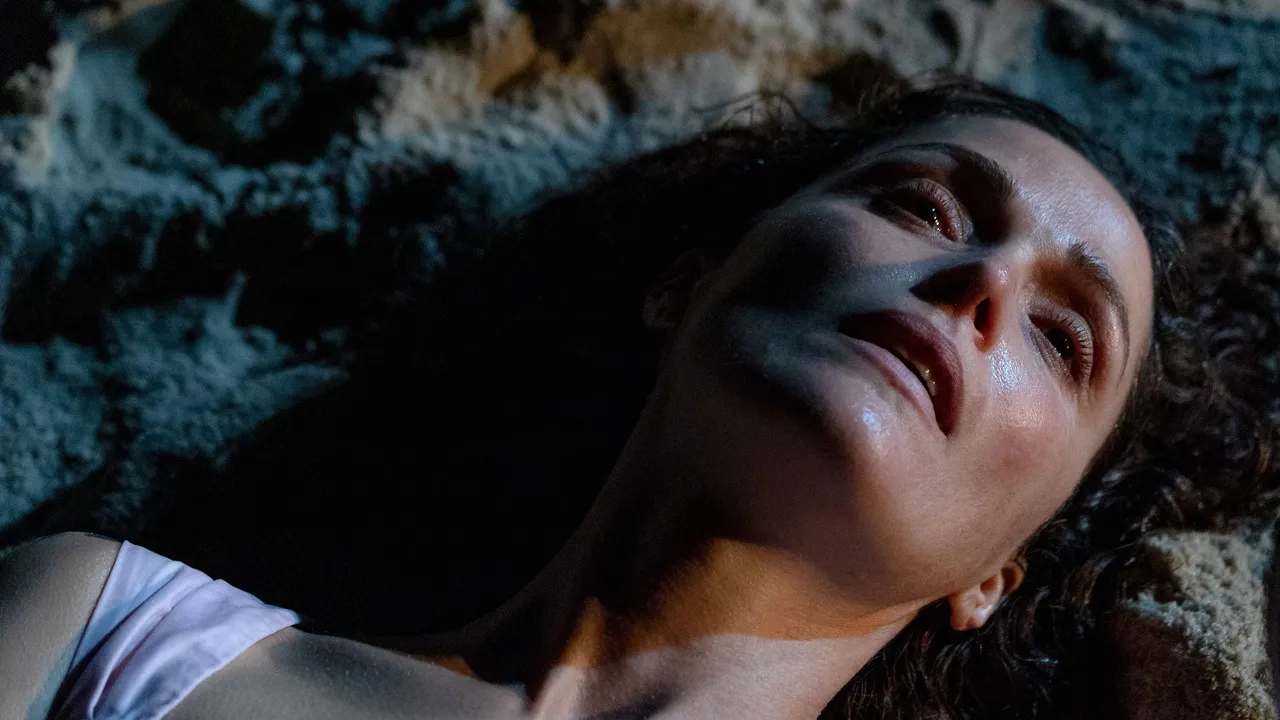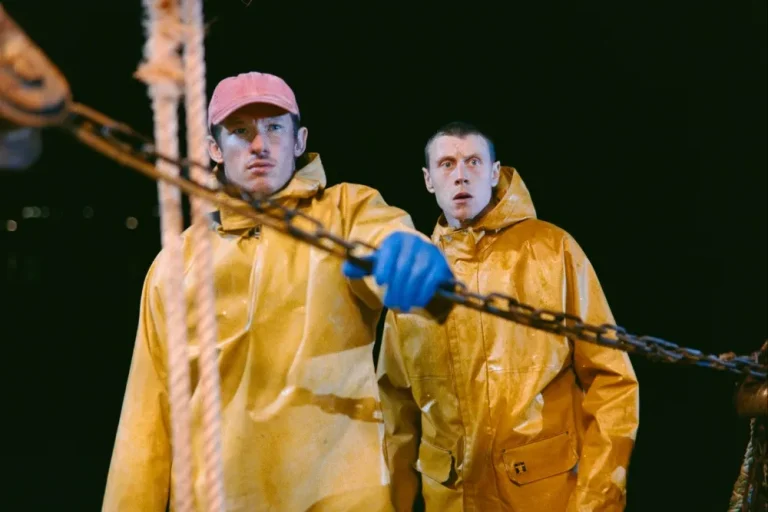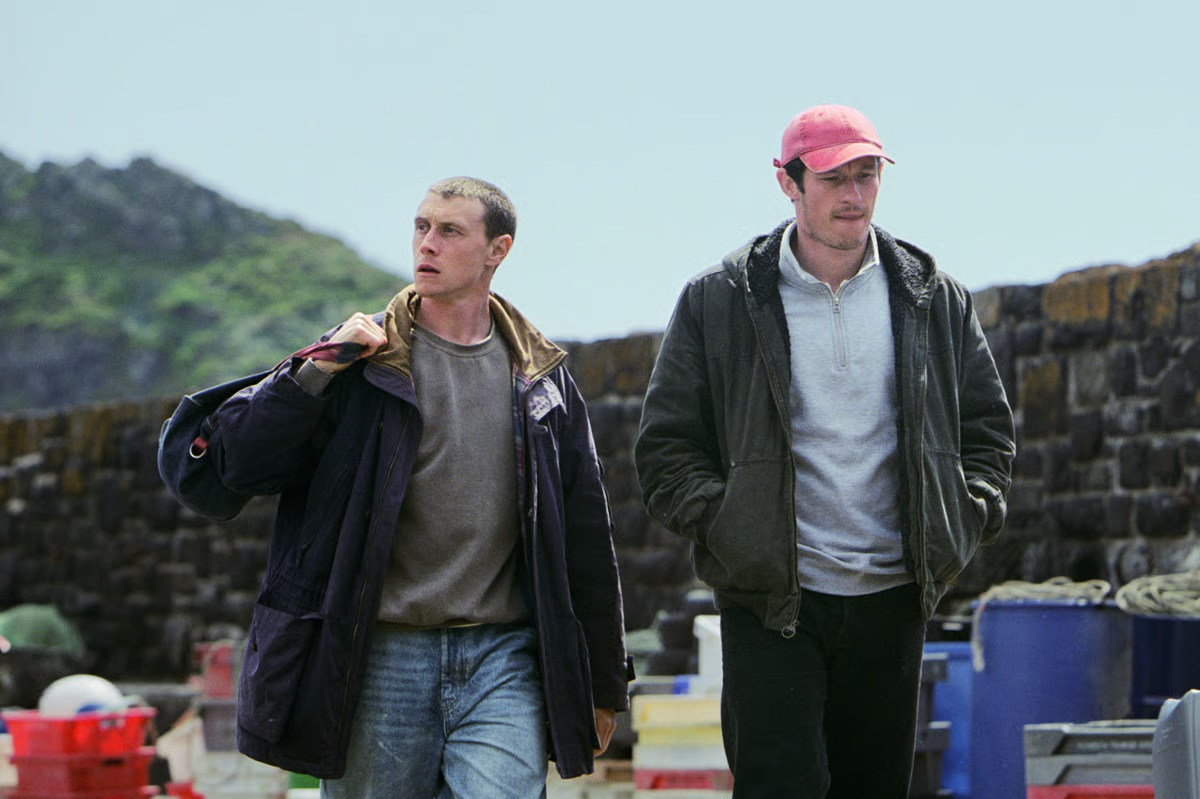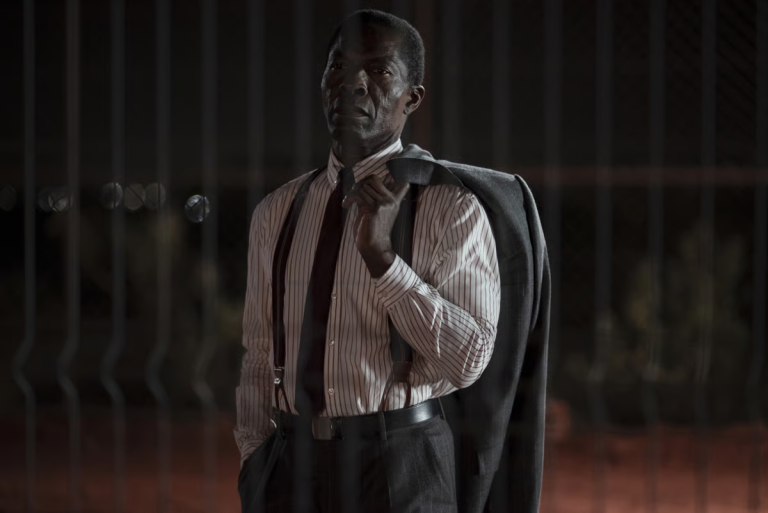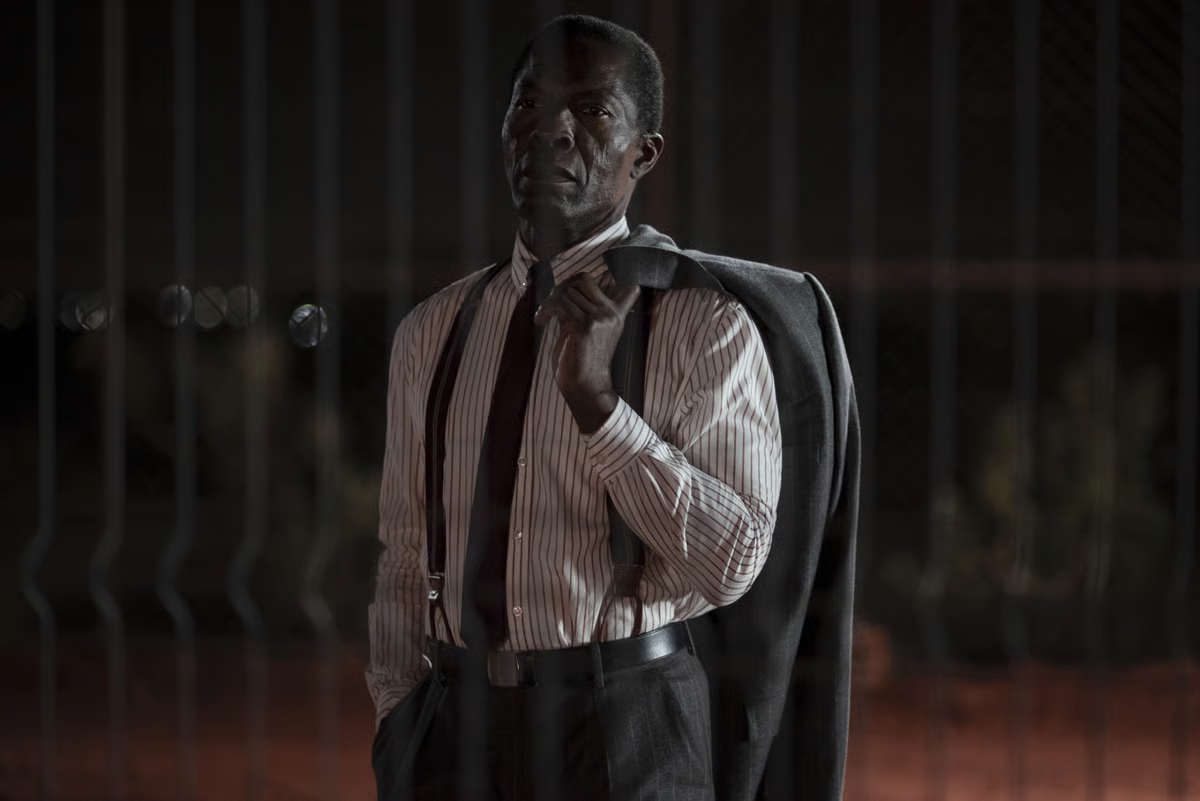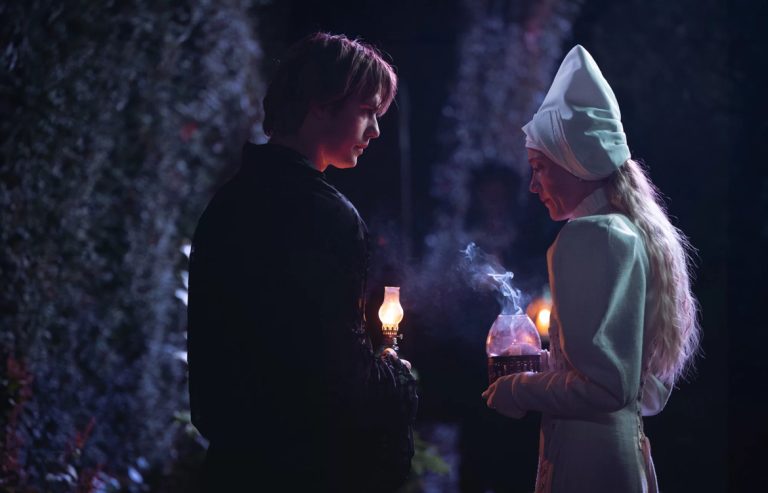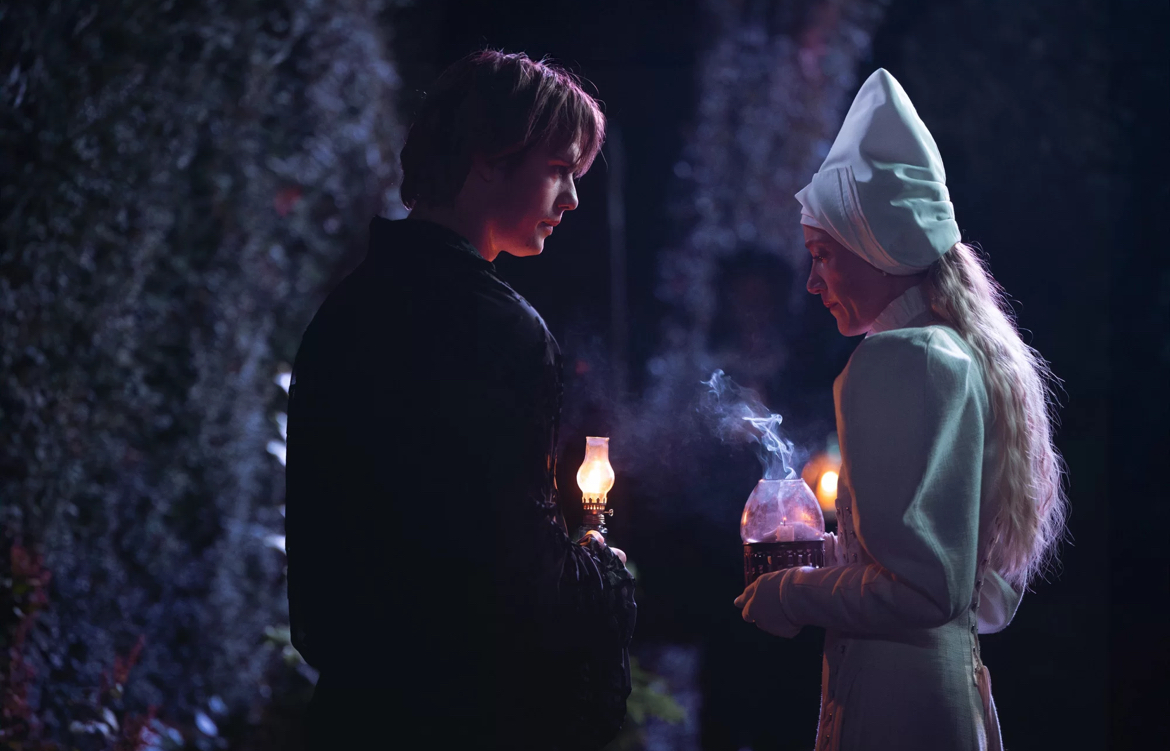


Director:Ben Leonberg Writers: Alex Cannon, Ben Leonberg Stars: Indy (The Dog), Shane Jensen, Larry Fessenden
Synopsis:A loyal dog moves to a rural family home with his owner Todd, only to discover supernatural forces lurking in the shadows. As dark entities threaten his human companion, the brave pup must fight to protect the one he loves most.
After taking the internet by storm with its first trailer, Ben Leonbergโs Good Boy presents an intriguing concept: a haunted house horror film from the point of view of a dog. Itโs funny with such a creative idea that it still, to a certain extent, isnโt completely new, whether it’s the escapades of a cartoon like Courage the Cowardly Dog or even another unique spooky pov film from this year with Stephen Soderbergh’s Presence, but Leonberg brings something unique to this change of pace. Good Boy is a short and moving genre picture that has just as much well-crafted horror as it does messages about the loving connection that many of us have with our animal companions. The Dogโs perspective never ends up as a gimmick throughout the filmโs runtime, and it helps when you have a pup as lovable and captivating to root for as Indy at the movieโs center. Sometimes the film can be a bit messy within the screenplay department, leading to a confusing plot beat or two, but Leonberg largely succeeds at giving us a fresh 4-legged experience thatโs exceedingly rare for the genre.
Good Boyโs setup revolves around Todd (Shane Jensen), who is suffering from cancer and really only spends time with his best bud, Indy the dog, whenever his sister, Vera (Arielle Friedman), isnโt calling to check up on him. After a recent flare-up in his symptoms, Todd decides to move into his late grandfather’s house, which Vera strongly disapproves of, fearing for his safety. After spending a long while there, Indy immediately senses an evil presence within the home that’s not only worsening Toddโs sickness, but threatening to take over his body completely. With his ownerโs life at stake, it’s up to this faithful pup to save his friend from danger. Good Boy isn’t just simple in concept; it also just flies by with only a 73-minute runtime, but Leonberg is able to make the most out of the concept’s limitations. There are occasional instances where the movie is stretched thin or repetitive within its set pieces, but the Dogโs point-of-view is never a cheap shtick thanks to the creative avenues the horror itself takes.ย
The film often takes us to areas that are only places a pet would stay laser-focused on, or through nooks and crannies only adds to the immersion of this perspective. The filmโs clear, limited resources honestly also work in its favor, as some of the most well-executed jump scares of the year can be found here. I love how sparingly loud shocks and bangs are used specifically in the filmโs first half, where the camera often just sits with Indy as he stares at walls or explores more creepy corners of the house that only a dog would feel the need to be high alert on. Often, there’s often only a soft shadow or a foreboding presence of thinking you saw something that wasnโt really there and it only makes the filmโs full lean into more peril in the back half all the more thrilling; whether its through tacking shots at Indyโs level or the simple quirks of doggie habits the film always is at one with its perspective.ย ย
All of these elements, however, would not mesh nearly as well if it werenโt for the amazing performance from Indy the dog himself. Never has it felt so easy to root for an animal in a film as the ingenuity of the way his actions are filmed adds to the emotion of Indy. There are often many close-ups of Indyโs eyes, specifically showcasing real terror and cuteness that will only make the average viewer fully invested in the dogโs perilous journey to be the best boy.ย
The only area that keeps Good Boy from being a Great Boy is small touches of its story and the reveals it offers down the line. The film has a firm enough core between this owner and pet, but at a certain point in the narrative, when a key story point of the past is revealed, the mystery behind these spirits and what’s really going on with Todd becomes a lot murkier. The ties between Todd and his grandpa are never given as much time to marinate as the film thinks they are. This is the point in the movie where its concept starts to wear a bit thin, but never enough to detract from the overall innovative experience.
Even with small qualms holding it back from something greater, Good Boy remains a solid venture into a fresh horror concept that has a strong message of our bond with pets at its center. With a fantastic lead mammal performance and delightful eerie atmosphere to boot, Good Boy is worthy of your doggie treat for this Halloween season.
Synopsis: When a single, unattributed missile is launched at the United States, a race begins to determine who is responsible and how to respond.
There is no way to describe the immense disappointment of watching Kathryn BigelowโsA House of Dynamite. The film is loaded with talent, making it feel like yet another Netflix streaming Ponzi schemeโwhere a legendary filmmaker like Bigelow signs on and the rest follow, mindlessly assuming the project must be on the verge of something spectacular.ย I mean, why wouldnโt a global political thriller on the brink of domestic collapse from the director of The Hurt Locker andZero Dark Thirtypossibly go wrong?
Image Courtesy of Netflix
And for the first act of A House of Dynamite, the film is a suspenseful thriller with rare white-knuckle tension. A real armrest grabber, featuring Rebecca Ferguson, who plays Olivia Walker, leading a group of duty workers and National Security Council (NSC) staffers trying to prevent the destruction of a major city in the United States. She runs point for the military brass, including her boss, Mark Miller (Jason Clarke). It appears to be a typical day when Major Danile Gonzalez (Twistersโ Anthony Ramos) and his team at a military base detect an incoming warhead.ย
They oversee the ground-based interceptor (GBI) missiles designed to neutralize nuclear threatsโan idea that sounds great on paper but, in reality, is like trying to hit a bullet with a bullet. Oliviaโs job is to connect communications with prominent political figureheads: the president (Heads of Stateโs Idris Elba), the secretary of defense (Mad Menโs Jared Harris), a general with a colossal ego and a penchant for hubris (Saturday Nightโs Tracy Letts), and the deputy national security adviser (The Night Agentโs Gabriel Basso).
Image Courtesy of Netflix
One criticism making its way around A House of Dynamite is that it serves as propaganda for humanizing government officials. However, once you watch, that feels misguided, like any thriller where lives hang in the balance, such as any episode of 24. The film utilizes public figures with high-profile families and personal stakes to heighten the drama. The film was written by Noah Oppenheim (NetflixโsZero Day), former president of NBC News and executive producer of The Today Show. Oppenheim is a proven talent, with a strong rรฉsumรฉ that includes an Academy Award nomination for his screenplay for Jackie.
The issue is the downward spiral of Oppenheimโs career since hitting awards paydirt, riding on the coattails of Natalie Portman and Pablo Larraรญnโs decadence. Here, Oppenheim has written a film told through the perspectives of three or four characters involved in a dangerous incident that morning. The movie, in fact, employs the Rashomon effect, replaying a twenty- to thirty-minute sequence from multiple viewpoints. This should be an intriguing storytelling device, elevating a gripping thriller into genuine human drama. Ideally, the structure would highlight perceptions, competing truths, and biasesโrevealing the hidden shades of gray, like the heart of an artichoke, with each layer peeled back to uncover the complexities of deception and morally ambiguous choices.
Image Courtesy of Netflix
However, as compelling as the filmโs first section is, the rest fizzles out like a faulty fuse. Each subsequent segment rehashes the same events without revelation โ mostly watching protagonists break protocol to call loved ones and warn of an impending attack. Even the most intriguing third-act moment, Kaitlyn Deverโs arrival as the secretary of defenseโs daughter, carries no weight. The finale is so lackluster that it feels like a scrapped streaming series hastily repackaged as a movie, reminiscent of the long-running rumor that David Lynchโs Mulholland Drive began life as an unpicked ABC TV pilot.
A House of Dynamite is a remarkable disappointment and one of the most overrated films in recent memory. While the opening ignites the hairs on your arms, the rest of the film wallows in self-plagiarism, as if Oppenheim simply cuts and pastes each act into an endless political Groundhog Day that no viewer can escape. Frankly, I found myself wishing the bomb would bring the whole experience to an early, merciful end.ย
Image Courtesy of Netflix
Bigelow and Oppenheimโs film is pure political fluff that leads to and ends with absolutely no payoff, being predictable and contrived because it chooses to be.ย
You can watch A House of Dynamite in select theaters on October 10th before streaming exclusively on Netflix on October 24th!
Director:Scott Cooper Writer: Scott Cooper Stars: Jeremy Allen White, Jeremy Strong, Paul Walter Hauser, Stephen Graham, Odessa Young
Synopsis:Bruce Springsteen, a young musician on the cusp of global superstardom, struggles to reconcile the pressures of success with the ghosts of his past.
For a rock star with ideas, morals, and politics as relatively straightforward as those beholden by Bruce Springsteen, his songs and lyrics never fail to be misrepresented by hordes of fans, especially young white men, always eager to pretend that the star is something heโs not. The New Jersey native โ breaking news โ has written dozens of songs related to and/or about his home state, and though most of them are socio-politically charged poems about disillusioned soldiers, nuclear power plant disasters, and organized crime, millions of pork roll/Taylor Ham-loving folk might as well be listening to different tracks as they don the red, white, and blue and wax poetic about how their homegrown boy is one hell of a Patriot. Just last week, hundreds of golf enthusiasts stormed Bethpage Black Golf Course to cheer on Americaโs top golfers as they battled Europe in the biennial Ryder Cup, doing so to the tune of โBorn in the U.S.A.โ blasting from someoneโs speaker. Most people know that The Bossโ rock anthem is really about a Vietnam veteran whose economic hardships upon returning home find him questioning a country he no longer recognizes; many others, however, still believe it to be a celebration of nationalism, and apparently a proper rallying cry for Scottie Scheffler and Bryson DeChambeau.
An understanding of that rudimentary fact would require Springsteen-ites to listen to the artistโs lyrics as opposed to just hearing the grunts and guitar strums that overshadow the depth โhiddenโ in many of his most profound tunes, many of which are found on his 1982 album โNebraska.โ Itโs celebrated now โ time heals all wounds, or โsome,โ if they were garnered in the line of duty โ but the rockerโs sixth studio offering had its critics, including those involved in its making. Columbia Records executives may have been focused on sales and radio-ready hits, and they also feared a rejection of their next Great White Hope, a singer on the verge of superstardom who they believed would be throwing away the goodwill heโd accumulated on the heels of his three previous records, 1975โs Born to Run, 1978โs Darkness on the Edge of Town, and 1980โs four-sided The River. At the time, Musician magazine called it โmurderously monotonous;โ The Washington Post said it โmay be the most undynamic album of 1982.โ
Springsteen Deliver Me from Nowhere. Courtesy of 20th Century Studios.
But the songs on Nebraska werenโt meant to replicate those that preceded it. Rather, they fueled a personal exorcism for Springsteen, a process that helped him reckon with his troubled childhood in Freehold, NJ and solemnly belt through a debilitating depression that rendered his love life moot and his already-distant connection to the world outside of his lakefront rental home. At least, thatโs the story Scott Cooper (Crazy Heart) chose to tell in Springsteen: Deliver Me From Nowhere โ the 63rd New York Film Festivalโs Spotlight Gala selection โ which stars an ever-committed Jeremy Allen White as its titular man and details the โNebraskaโ process in full, from its songโs modest recordings on a four-track cassette tape to its rickety rollout. โThey didnโt understand it,โ says the now-memed, devastating scene from Lady Bird, a sentiment that Bruce couldnโt get across enough during the production process of his most personal, intimate album, a cry for help disguised as a collection of memories ranging from an upbringing in the middle of nowhere New Jersey to a night where his channel surfing led to a revelatory viewing of Terrence Malickโs Badlands. If only the white-collared professionals with the most decision-making power in the room had taken the time to listen to the words rather than the music.
Even if they had, though, it stands to reason that the 10 tracks on Nebraska would have baffled anyone to have ever been within earshot of Springsteenโs hitmaking abilities, especially on the heels of The Riverโs hit single, โHungry Heart.โ From what we see in Deliver Me From Nowhere, Bruceโs longtime friend and manager Jon Landau (Jeremy Strong) is the lone confidant whoโs willing to hear him out. Al Teller (David Krumholtz) wants a follow-up to The River, and quickly, one that strikes the iron while itโs still hot and rakes in more dough than the previous albums and accompanying tours combined. In other words, he wants more of the same, and Springsteen isnโt willing to compromise despite the increasingly-compromised position he finds himself in. His psychological state is corroding; memories of his abusive father and tormented mother (Stephen Graham and Gaby Hoffman, initially introduced in flashback sequences shot in black and white, as only a biopic could) come flooding back as if the Jersey Shore has been engulfed by a tsunami, one that Bruce only imagines a few ditties can quell. And so he locks himself in his bedroom โ with Paul Walter Hauserโs Mike Batlan, The Bossโ old assistant, at his side through the experiment in the interest of comic relief โ to sing his feelings into oblivion, writing and recording songs about (and sometimes called) Atlantic City, a mansion out of a dream that his father used to take him to look at when he was little, and two brothers on different sides of the law.ย
Whether heโs running from the past, rejecting the present, or attempting to ease the pain he imagines lies in his future, the exercise is trying and at least rooted in truth, a lot like the film it anchors. Written and directed by Cooper, and thus colored by the filmmakerโs stable inclination to go melodramatic when he should have stayed grounded, Deliver Me From Nowhere isnโt a mangled (nor is it a Mangold) biopic, per se, but one that feels stuck in place as it trudges forward through the bad times its subject endures over the course the vital albumโs process. Perhaps thatโs due to its attempt to reduce its inspiration, a 352-page biography by Warren Zanes that was inspired by the brevity of the Nebraska chapter in Springsteenโs 2017 memoir, to a two-hour cinematic experience. (It quickly becomes clear why Bruce rejected proposals of films about his life for the better part of 30 years, and why heโs been so reluctant to talk about the Nebraska of it all.) Perhaps itโs more due to its awkward structural decisions, like jumping from a defining moment in Bruceโs youth (where his father stomps toward his bedroom with the force of Godzilla) to the triumphant closing night of his River tour, and the inclusion of a composite girlfriend (Odessa Young) in the filmโs defining effort to have its genre cake and eat it, too.ย
Better yet, maybe itโs the fact that Youngโs Faye summarizes the whole project in a matter of seconds: โThis is about you running away from what scares you.โ Over the course of Deliver Me From Nowhere, its protagonist rubbernecks his way through a lot, and bolts to conquer plenty more. Mending his relationship with the estranged dad who beat him and his mother is on the menu; so, too, are a shit ton of diner breakfasts, which Bruce enjoys from Colts Neck to Los Angeles, likely to varying levels of bowel discomfort. Insofar as Cooperโs picture is about self-discovery and the ongoing battle with demons, it mainly captures its hero as a man who was, indeed, born to run. From the terrifying prospect of global fame; from love; from discomfort. As he tells a car salesman who admits that he knows who his latest client is, Bruce cheesily (if authentically) replies, โThat makes one of us.โ
The only thing Whiteโs Springsteen doesnโt run in the clear opposite direction of is his depression, and The Bear beau manages to inject the same fervor into his mental breakdowns as he does many of his musical performances. (His E-Street Band-accompanied runthrough of โBorn in the U.S.Aโ will steal your breath.) Itโs Cooperโs script, based in fact as it is, that seems determined to trip up the excellent performance it had a hand in inspiring with the movie-making of it all. To his credit, as he noted in a post-screening Q&A at the filmโs second festival screening, the writer-director had no interest in making a conventional biopic about Bruce Springsteen; he wanted to make a film abouta particularly weighty period in a legendary life chock-full of special moments, and in making his point, noted that were he to make a film about Elvis Presley, heโd want it to take place on the last day of The Kingโs life.ย
Springsteen Deliver Me from Nowhere. Courtesy of 20th Century Studios.
Elvis fans would probably be as furious about that approach as they were when Austin Butler wouldnโt stop talking like the guy well after filming had concluded, just as Springsteen fans who enter Deliver Me From Nowhere with the blind assumption that it will be the cinematic equivalent to one of the artistโs notoriously-lengthy concerts will leave wondering, โWait, why didnโt he play โDancing in the Darkโ?โ A cursory amount of research will help assuage those grievances, and the very fact that Bruce is finally receiving an on-screen memorialization (no matter its scope) will scratch whatever itch still plagues those fans, regardless of what their Spotify histories tell you about their listening habits. Whether or not Deliver Me From Nowhere addresses any other needs is a more curious gambit, akin to delving into Flannery OโConnorโs religious fascinations. The writer comes up twice in the film. In the first act, Springsteen fusses with an externally-weathered copy of her tome of short stories, but save for a single dog ear, the pages within are in pristine condition. Later on, Strongโs Landau quotes the author: โWhere you come from is gone, where you thought you were going to never was there, and where you are is no good unless you can get away from it.โ
Cooper theoretically tangles with those ideas, but the explicit nature of Landauโs wisdom drop is more befitting of Deliver Me From Nowhere than the film realizes. We started with Bruceโs humble, tortured beginnings as a young boy, and in a flash, those greyed-out images are ancillary; his megastar future was all but certain, but he mapped the journey on his own terms, not in the fashion that Columbiaโs button-pushers expected; and where we are โ watching Springsteen fiddle with his next steps โ is a perfectly fine place to be, as long as what follows is a more pleasant existence than the current one. To a point, Deliver Me From Nowhere understands those ideas, but itโs more prone to sit with them than to explore them with the depth they deserve. Like the film, and the many people who confusedly stare at Bruce as he silently processes his emotions throughout, the answers to the questions asked are known if not vocalized. Perhaps the masses will have more courage to say them out loud in its place.
Springsteen: Deliver Me From Nowhere screened as the Spotlight Gala selection at the 63rd New York Film Festival. 20th Century Studios will release it in theaters on Oct. 24.
Director:Brian Kirk Writers: Nicholas Jacobson-Larsen, Dalton Leeb Stars: Emma Thompson, Judy Greer, Marc Menchaca
Synopsis: A woman, travelling alone through snowbound northern Minnesota, interrupts the kidnapping of a teenage girl. Hours from the nearest town and with no phone service, she realizes that she is the young girl’s only hope.
For those who have ever wanted to see Emma Thompson get her shot at playing a wintry, frost-bitten Rambo, Dead of Winter is just that. A widowed fisherwoman roaming the frozen tundra falls into the wrong crosshairs, all set in northern Minnesota. Director Brian Kirk blends unrelenting action with a love story that tugs at the coldest of hearts. While the film captures chilly isolation well, its story goes overboard, losing its most tender moments to an over-the-top kidnapping plot that ends too abruptlyโmaking Dead of Winter an enthralling story that doesn’t live up to its potential.
Barb (Thompson) lives in a remote trailer home that she once shared with her husband Karl (Cรบรกn Hosty-Blaney). As she is packing up her aged pickup truck with all the essentials for ice fishing, there’s an overwhelming sense of gloom. She speaks to herself as she loads up, often looking at a photo of Karl, even making sure to tell the picture that she will be safe. Instantly, their connection is felt, even when Karl isn’t there, and their shared love of wilderness is captured in the beauty of their home. As Barb embarks on her journey, the roads are covered with ice and snow, but even the treacherous roads aren’t the worst that she will encounter.
Dead of Winter gives Judy Greer a rare opportunity to be completely unhinged with her character, Purple Lady. When Barb ends up in the front lawn of Purple Lady and her husband Camo Jacket (Marc Menchaca), little did she know she wouldnโt make it out unscathed. What starts out as a friendly interaction with Camo Jacket ends with Barb discovering fresh blood in the snow. After getting directions for her husbandโs favorite lake, Barb sets up her ice shanty, and after seeing a young woman fleeing on the ice, her inner hero kicks in, and she knows that she must make some tough decisions: help save a stranger or flee with her life intact.
Dead of Winter works best when showing the love story that shaped Barb into the woman she is. Kirk and writers Nicholas Jacobson-Larson and Dalton Leeb explore this in flashbacks that show a young Barb (Gaia Wise) and Karl as young lovers before they decide to get hitchedโfeaturing their first date, Barb’s pregnancy, and how their home was their sanctuary. Learning about Barb in this way, juxtaposed with her current life, answers many questions that pop up, especially with how Barb is able to evade danger for so longโstitching up her own wounds, creating icy booby traps, and her ability to use anything as a weapon. Glimpses of her life indicate a life full of love, making her choices in the present that much more compelling.
The filmโs main villain is Purple Lady, who is holding a young woman, Leah (Laurel Marsden), hostage in hopes that Leah can help cure health ailments that are debilitating her. While the premise seems intriguing, and where the filmโs best action scenes come from, the plot itself is hard to connect toโespecially when mixed with Barb’s journey. Purple Lady and Camo Jacket only ever have interactions where sheโs berating him, even when situations are out of his control. With her being severely ill, she often takes the lead, guns blazing. Their relationship and motivations aren’t fleshed out enough to connect with, especially when Barb’s story is done as well as it isโmaking the moments with them, outside of the action, feel like filler instead of pushing the story forward.
Each performance in Dead of Winter elevates the film beyond a run-of-the-mill action thriller, especially with Thompson leading the cast. She gives Barb a touching duality: on one hand, she’s a grieving wife who has lost the only person in her life, while also a woman with incredible survival instincts. Greer is intense, and unlike her previous roles, she’s weapon-toting and not afraid to pull the trigger. She taps into Purple Ladyโs desperation well, especially through crazed looks and declarations of her plans. Both women play off each other well, and their encounters are fierce, giving audiences the best action pieces of the film.
What really shines in Dead of Winter are the stunning visuals that capture the beauty of winter, with frozen lakes under a blanket of snow and the clothing that keeps its residents warm. Christopher Rossโs cinematography uses the bright whiteness of the snow to showcase the blinding conditions these characters face. Filmed in Koli, Finland, the vast and almost never-ending landscape shows just how desolate and isolated Barb is. Frozen lakes with ice beginning to crack with each step remind viewers of the unforgiving nature of these conditions. The costuming in Dead of Winter is any Midwesternerโs dream: oversized jackets that can hold any tool needed, and when characters are put in compromising positions, their clothing is often what saves their lives.
Overall, Dead of Winter is worth a watch for Thompsonโs performanceโa rare role that older women are offeredโand she excels. Her love story and, ultimately, her heroic deeds are admirable and give her character unique motivations. But its main conflict is rushed and out of place.
Synopsis: A widowed British businessman takes the job as a butler of a manor house in France to keep memories of his late French wife. His life takes a turn as he navigates the eccentric behavior of the lady of the manor and the household staff.
There are films that feel like a breath of fresh air on a hot summer day or a cozy blanket around oneโs shoulders in winter. Mr. Blake at Your Service is that kind of movie, the one that audiences long for during dark times. Itโs a simple film about daily routines. Simple people, even if they live in grand estates.
The film takes us on a journey with Mr. Andrew Blake (John Malkovich), a widowed English businessman who canโt process his wifeโs passing. To make peace with his grief and his sudden loneliness without the partner of a lifetime, he decides to take a nostalgic trip down a French manor where he first met his wife. He accidentally gets hired as a butler by a tight-lipped, warm-hearted cook (รmilie Dequenne) who enjoys bossing him around and getting him to do exactly what she says. He makes friends with the eccentric characters on the estate, including the cookโs cat Mephisto, the crazy neighbor/handyman Philippe (Philippe Bas), and the stunning Nathalie Beauvillier (Fanny Ardant), the owner of the place whose vulnerability and regal energy create a halo of the tragic princess trope. Sheโs both beautiful and proud, too distant to merge with regular people but also too shaken and broken to belong to her world.
Another highlight of this feature is how unclichรฉ -in a movie that is filled with a ton of them- it treats the growing relationship between Mr. Blake and Madame Beauvillier. Ardant and Malkovich play it cool, while endearingly growing into their respective characters. Despite all the French vs. British wars, the grumpy sensitive guy, and the zip-tight cook who hides a world of warmth and passion underneath, the Mr. Blake and Madame Beauvillier relationship is treated like camaraderie rather than a potential romance. It helps that two spectacular actors are at the helm of it, with not just talent but aura that makes what couldโve been a modest attempt at a feel-good movie feel vibrant, fresh and colorful.
Dequenneโs last role as Odile is bittersweet, as her vibrant energy brings back to mind her iconic role as the eponymous Rosetta in the Dardenne brothersโ masterpiece. Her scenes with Malkovich are hilarious and charming, showing her knack for comedy. Malkovich himself is a celebration. Itโs exciting and refreshing to see him in a lead role. His career spans a multitude of roles and eccentricities that place him in the same league as Sam Rockwell, Gary Oldman, Christian Bale, Joaquin Phoenix, and Willem Dafoe. A bunch of weirdos who are chameleonic and cool, Malkovich here embodies their collective energy of excelling at playing both the psycho and the simple man. He exudes charisma and humility, and he portrays Mr.. Blake from a reserved place that often puts him at odds with the other characters, all while remaining composed.
The world is complicated enough, riddled with uncertainty, fear, and discouragement. Sometimes, the best a person can do is watch a lighthearted comedy where nothing bad happens. Mr. Blake at Your Service is about the lost moments in life, the warmth of company, and losing oneself in a foreign land without footing. Itโs a heartwarmer, maybe it targets a senior citizen audience more than the average moviegoer, but itโs still a unique slice of life indie film about healing.
P.S. I couldnโt be more grateful for the new trend of movie cats on the rise. Whether Tonic playing Bud in Caught Stealing or Novehka playing Mephisto, thereโs something refreshing about seeing more feline heroes on the big screen, stealing cameras from veteran actors and movie stars alike.
Director:Henry Jaglom Writer: Henry Jaglom Stars: Michael Emil, Karen Black, Michael Margotta
Synopsis: Zee (Karen Black) is walking up and down Manhattan streets, talking to herself and to the husband who just left her. At a sidewalk cafรฉ she runs into Eli (Michael Emil). A very unlikely, funny, and touching relationship develops between two lost souls in the big city, which is the third major character in this film.
Henry Jaglomโs Can She Bake A Cherry Pie? is a wonderful jaunt through the Upper West Side of New York City in the early โ80s. Equally delightful is this filmโs new 4K restoration, celebrating its world premiere at the 63rd New York Film Festival; it could be argued that there is literally no better place in the world for such an event. Taylor Purdee of Hope Runs High Films made note while introducing the film that it was filmed primarily within a 20-block radius of the festival. Itโs indicative of an experience thatโs quite surreal: to step into a theater in a neighborhood so familiar, only to see a completely different version of those same surroundings on screen. And upon finishing the film, one canโt help but feel a strange sort of double exposure while passing the varied buildings and landmarks. Yet in a strange way, thereโs something comforting in recognizing that stories such as the one in Jaglomโs film are still occurring among these same streets, being endlessly walked by individuals living their lives and figuring it out as they go along. Because despite Can She Bake A Cherry Pie? very much feeling like a time capsule, itโs an equally timeless story about people coming to terms with life not often going the way theyโd initially planned.
Itโs the humorous ways Jaglomโs central characters cope with this fact of life that makes up the majority of this brisk film. Can She Bake A Cherry Pie? opens with a playful credits sequence introducing the random delights New York City has always had to offer its residents. It then pivots to two unfortunately relatable situations. It would appear both instances will remain relatable for the rest of time. The first focuses on Zee (Karen Black) being broken up with by her husband rather unexpectedly. She wakes up to him packing his bags, and how their interaction plays out is both silly and heartbreaking. Meanwhile, somewhere else in the city, Mort (Martin Harvey Friedberg) is getting chewed out by an uptight boss. Itโs a sequence which instantly endears the viewer to Mort. But in a fun subversion of expectation, we come to learn that Mort isnโt even our central character! Itโs in fact the uptight boss himself, Eli (Michael Emil). Jaglom capturing these realities of life, and rather stylishly to boot, is something that remains omni-present throughout the film. And itโs the structure of Jaglomโs film going about capturing these realities which works quite well.
Can She Bake A Cherry Pie? operates as a quasi-romcom, but it could be argued that itโs far more interested in simply hanging out with the characters that inhabit the Upper West Side. If the quick pivot from Mort to Eli as the central male character wasnโt indicative enough, one neednโt look further than the elliptical nature of the film. One of the central ideas of Jaglomโs script is the idea that many of our plans in life will inevitably shift in some way. And that shift is captured through Jaglomโs wandering camera. He can introduce a slew of characters which may or may not ever come back into the picture. Despite that possibility, each character feels lived-in, and weโd have no problem following them on a quick journey to the corner store or for a drink at a nearby cafe. This loose focus present in Can She Bake A Cherry Pie? is a great strength of the film, especially considering many of the characters in it feel as if theyโre falling apart at the seams in some way.ย Just look at how Jaglomโs camera casually follows Zee on her (comically despised) walk through the neighborhood. And despite it being a quite funny sequence, itโs all rooted in the pain she is going through. Black plays this breakdown with a vulnerable honesty, and it makes for a delightful lead performance. Immediately after her husband up and leaves, Zee feels completely lost in these streets she likely knows quite well. Sheโs constantly shifting in place, often muttering to herself or letting her gaze bounce all across the block. Itโs as if the floor has fallen out from under her, and in the loud, unbothered streets of Manhattan, thereโs unfortunately little sympathy to be found amongst passers-by. Itโs not until she just so happens to sit at the table next to Eli and Mort that the plot of Can She Bake A Cherry Pie? kicks off. Itโs out of this casual interaction which kicks off Eli and Zeeโs strange pairing that makes up the bulk of the comedy present.
To be blunt, Eli is borderline insufferable; but itโs what makes him such a deeply human (and very amusing) character. He is full of eccentricities and absurd fun-facts that, were this to take place in 2025, are the sorts of statements made by men often beginning with โI heard this on a podcast.โ His quirks and behavior are never overbearing, but Emil plays him so naturally that it makes for a fun push-and-pull, especially in the third act or whenever heโs the butt of a joke. In the end, there is a hope that he’ll ultimately remain quiet enough to actually listen to Zee and allow them to find a lovely middle-ground as a couple to flourish within. The romantic angle of the film works because they view the world on such fundamentally different levels. Can She Bake A Cherry Pie? is a film in love with the idea that stranger things than this pairing can and will happen in the city, if not the world. And the two examples which show off such a belief are deeply touching.
ย
Around halfway through Can She Bake A Cherry Pie?, Eli and Zee are watching the New York Philharmonic perform in a park. As Zee insists they close their eyes and feel the beauty of the music, Eli simply cannot pause his mind for a single moment. And so Jaglom chooses to pull away from this specific date. The camera pans up into the sky, looking at the beauty of the stars. But this is New York City! So instead of seeking out constellations, a cut brings us to a panning shot of the street before moving up and across various windows. It feels like Jaglom may feel so inclined as to take us into any one of these random apartments, fully acknowledging the fact that within any of them, the potential for a completely different, or even eerily identical story, is playing out. Jaglomโs free-wheeling camera and search to find a story audiences can engage with is quite touching. The larger, unquantifiable forces of life may have different plans than the ones we form in our minds. So when things inevitably donโt go our way, we can either remain distraught, or simply laugh it off and adapt. Can She Bake A Cherry Pie? ultimately examines how Eli and Zee operate within those two manners of going about their lives, and in doing so, it makes for a sweet and enjoyable film. And as a bonus, Larry David has a scene where he reveals what he believes to be the key to happiness. With that bonus, Jaglom, Hope Runs High Films, and Cinรฉmatographe gives audiences two truths of life for the sweet price of one lovely restoration.
The new 4K restoration of Can She Bake A Cherry Pie? is celebrating its world premiere at the 63rd New York Film Festival as part of the Revivals section.
Synopsis: In a decaying city, a little girl takes care of a large egg which she believes was laid by an angel, and crosses paths with a gun-toting young man searching for a bird he saw in a dream.
Angelโs Egg is quite simply one of the most mesmerizing films you could ever hope to see. To fully engage with Mamoru Oshiiโs 1985 film is to completely lose oneself in the expansive world he and co-creator Yoshitaka Amano conjured up for their 73-minute film. Yet there is a contradictory element that arises when calling this film expansive and focusing on its short runtime. And as far as the authorial intent of Angelโs Egg goes, thatโs sort of the point. To elaborate on this is to dive into some of the many possible feelings this film evokes. And while this film can be interpreted in a variety of ways and operates within a fairly loose plot structure, this review will be addressing certain story developments. To view this film with fresh eyes is a true treat, so beware of possible spoilers to follow.
The world depicted in Angelโs Egg initially overwhelms with its sense of scale. Everything feels frighteningly massive. And thereโs very little to look at to properly allow for a baseline understanding of what the rules of this world are. With no context or scale provided, everything seen seems as if it stretches on for miles and miles. But the more time spent in this vast world, the more we realize how frighteningly empty it is. Thereโs so much nothingness, yet among the empty streets and seemingly abandoned spaces are items and spaces which provoke curiosity and dread. Oshii effortlessly drops his audience into a world ready to be discovered. The hope is that we will walk away with our own understanding of it however best we can. Itโs perhaps the greatest strength of this film. Angelโs Egg is a film thatโs deeply evocative, making great use of every second of its 73 minute runtime.ย
The contemplative nature of the introductory sequence to Angelโs Egg is a perfect distillation of the rest of the filmโs tone and pacing. It never provides an easy answer, but thatโs why we showed up to a film like this in the first place. Oshii is begging his audience to seek out these answers amongst the ruins of his seemingly broken world. And we as viewers should have no issue obliging him. This is an absolutely gorgeous-looking restoration in every sense of the word. With so much of its visual imagery focusing on the interplay between shadows and the movements of objects or characters within and around them, the new life breathed into this 40-year-old film encourages a wandering gaze. We constantly scan the frame as the nameless Girl wanders around the world in search of who knows what.
As the Girl traverses this world with her egg preciously hidden away, thereโs an unnerving loneliness about her. More accurately, there’s a tragedy to this character. Nothing is ever explicitly revealed nor directly addressed, but how sheโs drawn and animated speaks volumes within the confines of this borderline dialogue-free film. One look at her eyes as she curiously explores the world and you can see a tired sadness within them. Whatever is driving her motivations, even if itโs nothing but a wandering curiosity, has left her worn down yet remaining ever guarded. The only thing she seems to value more than her own peace of mind and innate curiosity is the safety of her precious egg. So when she comes across the nameless Boy, seemingly the only other living being within miles, sheโs understandably cautious.
Despite having the same lost and tired look behind his eyes, this Boy is a bit more open with the thoughts floating around in his mind. Heโs more forthcoming, even going so far as to warn the Girl of the necessity of keeping her greatest treasure held close at all times. In telling the Girl to essentially trust nobody with what matters most to her while returning the egg to her protection, he gains somewhat of a sympathetic view in the eyes of both the Girl and the audience. It only makes the third act of this film that much more of a tragic and shocking betrayal.
The world of filmmaking is often referred to as the Dream Factory. It seems fairly obvious as to why. Through the medium of cinema, we see countless examples of artists taking dreams of all sorts and bringing them to life before our very eyes. And itโs also quite common to see films, especially ones in the vein of Angelโs Egg, be referred to as dream-like. To watch any random minute of this film is to understand exactly why. But Iโd argue Oshiiโs film takes this descriptor a step further, in a way so few films actually pull off. One hypnotizing sequence in particular causes Angelโs Egg to feel like a genuine dream. This comes in the form of an extended sequence where the Girl sleeps with her egg as the Boy guards her ever so vigilantly. The camera remains still as the campfire slowly loses its glow and the darkness of this world begins to creep in ever so menacingly. And there comes a point during this sequence where the camera seems to be fading to black around the edges of the frame before being reawoken to continue our watch. The Boy may be a competent guardian, but the thought of leaving the Girl alone rattles us to attention. Despite Angelโs Egg beckoning for your unfazed attention, it’s also attempting to lull you into a sense of calm serenity. Itโs all in service of Oshiiโs upcoming attack designed to be gut-wrenching. It makes for perhaps one of the most horrifying and purely cruel moments in cinema.
In just over an hour, Angelโs Egg provides its viewer so much by doing so little. This isnโt a dig at the film in any way. Itโs actually one of the most successful examples of the โless is moreโ mentality. The sad loneliness which permeates throughout Angelโs Egg is immensely potent. Aside from the Girl and the Boy, what little proof we see of possible โlifeโ inhabiting this film is cold and unmoving. Itโs only upon the possibility of destroying something beautiful that life seems to take shape in its own perplexing and compelling way. Amidst so much nothingness, we only hope for some form of company. But Oshiiโs film seems intent on cautioning its viewer with regards to opening ourselves up to others. Perhaps it will always lead to a vicious conclusion stemming from emotional betrayal. There might be a shred of hope present at the heartbreaking finale of Angelโs Egg, but itโs undeniably a film which will leave its audience shaken upon the arrival of the credits. Despite being just one of many possible readings into Angelโs Egg, that any possible signifier can remain so potent and impactful speaks to the immaculate ideas presented within this film. That this new 4K restoration will be widely available for waves of filmgoers to be both haunted and enamored by is one of the most exciting cinematic prospects of the year.
The new 4K restoration of Angelโs Egg is celebrating its New York premiere at the 63rd New York Film Festival as part of the Revivals section.
On this episode, JD and Brendan discuss this year’s Sundance Audience Award winner Twinless! This is a film that is somewhat flying under the radar despite its big win earlier in the year, and as a result it’s a major contender for Best Overlooked Movie of the year. Not only that, Dylan O’Brien’s performance needs to be taken more seriously. Damn the awards campaign, it’s one of the best lead actor performances of 2025 to this point.
Review: Twinless(4:00) Director: James Sweeney Writers: James Sweeney Stars: James Sweeney, Dylan O’Brien, Aisling Franciosi
Director:Justin Tipping Writer: Justin Tipping, Skip Bronkie, Zak Akers Stars: Marlon Wayans, Tyriq Withers, Julia Fox
Synopsis: A young athlete descends into a world of terror when he’s invited to train with a legendary champion whose charisma curdles into something darker.
Marlon Wayans is good in Himโvery good. Known for his hyper-animated style in films like the Scary Movie franchise, White Chicks, Little Man, and Donโt Be a Menace to South Central While Drinking Your Juice in the Hood, his quick banter and outrageous antics have earned him a devoted fan base. Yet Wayans is also a performer who can excel in drama, choosing roles in films like Requiem for a Dream and Respect that reveal a range from heartbreaking to menacing.
Him is a horror film from executive producer Jordan Peele that seamlessly incorporates Wayansโ manic style into something magnetic and gripping, underscoring the thin line between comedy and horror. His superb comic timing shapes a decisive supporting turn, heightened by the uncertainty and surprise his characters bring, as well as the visceral reactions both genres provoke. Yet itโs a shame, because the film itself is strikingly bad, a hollow mess of style over substance that even the best intentions cannot save.
At least the comedies we listed above from Wayans know they are big, dumb movies. With Him, however, director Justin Tipping seems unaware of just how profoundly empty his third feature actually is. A scattershot fever dream about toxic masculinity and community trauma that fails to make an impact beyond a visually provocative lens.ย
The story follows Cameron Cade (I Know What You Did Last Summerโs Tyriq Withers), a rising star on the verge of an exciting professional football career: the money, the women, the fame. Cade has been built for this moment. Unfortunately, the night before the scouting combine, he is attacked by a crazed, obsessed fan and left with potential brain trauma that puts his career in doubt. Thankfully, Cade has an admirer who is willing to take him under his wing to give him the second chance he so rightfully deserves.ย
That would be Isaiah White (Wayans), a Tom Brady-like legendary figure of professional football. White has eight rings and a culture touchstone that changed the game forever. So, in other words, heโs โHim.โ Isaiah flies Cameron out to his home, more like a stronghold of isolation, where he lives with his social media darling wife, Elsie (Uncut Gemsโ Julia Fox). As his training progresses, Cadeโs transformation extends far beyond his body; he is plunged into madness, proving that the game is just as much psychological as it is physical.
Him was written by Tipping, Skip Bronkie, and Zak Akers, and the movie is free of subtextโor at the very least does such a poor job of communicating its ambitious themes, so the screenplay carries as much weight as a balloon filled with hot air. Thatโs because the first two acts are filled with overt exposition, trying to cover it with an overwrought cinematic style that is almost morbidly self-indulgent. The film is edited in a way that makes the audience disoriented, with an almost appallingly disjointed narrative, and an obnoxious sound design that seems to lack a point beyond highlighting style.
Yes, film is a visual medium. But the visual structure and supporting audio must lead to something more substantial. Imagine a film that truly explored a professional athleteโs drive, desire, and obsession with winningโyet at what cost? Instead, Tipping and company have written a film that plays like an Instagram reel, devoid of substance, reducing the game of professional football to little more than a film staged for the algorithm, turning the brutality of the gridiron into mere social media vanity.
Even the filmโs imagery is pretentious and over-the-top. From an attacker dressed in a โgoatโ costume to a football team named the โSaviors,โ you feel as if youโre being hand-held against your will through the story so you wonโt get lost in its muddled sensory mess. Then, when Him finally gets to the third act that has so little payoff, the script begins to wallow in over-explaining the final twist of toxic masculinity that is the cinematic equivalent of mansplaining.ย
Justin Tippingโs Him had potential, and if youโll allow me to throw out a handful of puns, almost every critic has surely done with this film, fumbles, throws away, and steps out of bounds long before the filmmakers can score.
Director:Kleber Mendonรงa Filho Writer: Kleber Mendonรงa Filho Stars: Wagner Moura, Maria Fernanda Cรขndido, Gabriel Leone
Synopsis: In 1977, a technology expert flees from a mysterious past and returns to his hometown of Recife in search of peace. He soon realizes that the city is far from being the refuge he seeks.
There may come a point in the first act of Kleber Mendonรงa Filhoโs The Secret Agent, celebrating its New York premiere at the 63rd New York Film Festival, where the viewer will question what is going on. Itโs honestly quite the confounding experience. Going into this film knowing nothing might lead one to believe it will be 160 minutes of Marcelo (Wagner Moura) meandering through the streets of Recife. In many ways, thatโs exactly what the film is. But with an undeniably cinematic verve, Mendonรงa Filho crafts one of the most flat-out exciting filmgoing experiences of the year. The Secret Agent is full of countless quirks throughout its runtime. But these distinct traits slowly reveal themselves to be integral features of the film. Itโs indicative of the immaculately stylized and boldly confident film Mendonรงa Filho has pulled together. The multitides within The Secret Agent represent such exciting possibilities for everything that cinema can contain. This is a film wrought with tragedy and evil, yet at its core, one could argue that it presents countless reasons why life can be seen as beautiful and worth fighting for despite the existence of such forces trying to snuff out joy and beauty.
We first meet Marcelo as heโs pulling into a gas station in the middle of nowhere. Mendonรงa Filho drops a context card letting the viewer know the film takes place in Brazil, 1977, or as its also put, โa period of great mischief.โ We come to fully grasp what the filmmaker means within the context of the story, but itโs also quite an apt description for a film so playfully constructed. Despite the immediately off-putting and tragic situation Marcelo finds himself in, thereโs a freeform element immediately present from the opening scene of The Secret Agent. Thereโs a spontaneousquality to Mendonรงa Filhoโs direction that keeps us, as viewers, consistently on our toes. We are never fully aware of the exact path Mendonรงa Filho is planning to take his audience down. This makes for an inherent excitement baked into the foundation of the film. Admittedly, there may be a fair amount of time necessary for the film to find its footing because of these stylistic sensibilities. But in retrospect, Mendonรงa Filhoโs commitment to such varied tones and styles is both deeply commendable and wildly exciting. It perfectly paves the way for what The Secret Agent is hoping to achieve by the time its credits begin rolling.
As Marcelo makes his way towards the northern city of Recife, he canโt help but chuckle at the various catchphrases he notices on passing vehicles. His eye wanders while driving, and itโs here that the wondrous editing (from Matheus Farias and Eduardo Serrano) of The Secret Agent first begins to rear its head. Thereโs a kineticism to the edit of this film which feels as if itโs placing the viewer within Marceloโs actively working thought process. As he sees a reminder of something from the past, it flashes back into the frame with an often startling jolt. Nightmare sequences take on a heavy weight to them. Moura is incredible in moments such as these, working in tandem with a post-production process which makes for a more enriching and three-dimensional character all around. His eyes can be read with such distinct clarity, whether they need to convey a haunted look or an adoring gaze. Itโs one of the many reasons Moura will hopefully be in the awards conversation for Best Actor. But this editing, and Mouraโs interplay with it, also allow for the other half of The Secret Agent to shine brightly. So much of this film is wrestling with the notion that evil not only exists, but isnโt worried about shying away from the light. Yet Mendonรงa Filho still captures such beauty in between the moments of tension and evil. Marcelo is retelling a story at one point, and the dynamic edit makes it feel as if he is actively recalling the proper order of events in real time. This proves the runway for a line reading so tenderly delivered by Carlos Francisco which perfectly sums up the balance Mendonรงa Filho keeps illustrating through all the script decisions he is making in this film: thereโs an unflinching focus on the moments in life we must cherish.
Upon arriving in Recife, Marcelo is taken around his temporary lodging while being introduced to various neighbors. Itโs such an extended sequence, and is only the first of many. Mendonรงa Filho clearly has no worries about runtime and the film is all the better for it. This embrace of slowing everything way down and allowing the period elements and these characters to speak for themselves is part of the beauty pouring off the screen. It creates a real sense of community within this apartment complex; in turn, this not only highlights the stakes of the film, but shines a light on the real-world implications of what a military dictatorship so cruelly wanted to remove from history. It makes each moment of character-building integral to the emotional core of The Secret Agent. The villainous forces of this film are all portrayed as disrespectful, disgusting, and unashamed of their depravities. Shapeshifting for the sake of appearing normal is clearly a posturing act. There is so much dehumanizing in this film at the hands of those benefitting from dictatorship. Mendonรงa Filho rarely shies away from the cruelties doled out. But by that same token, he also fills this film with an undeniable humanity amongst his cast of characters. It serves as a reminder to protect what we still have. Perhaps thatโs what matters most.
Itโs this sort of delicate tonal balance which displays a willingness to look evil in the eyes and live fully in spite of its existence. As Dona Sebastiana (a wonderful Tรขnia Maria) outright states in the film, โLife has bad things but also good things!โ Itโs a perfect distillation as to why Mendonรงa Filho spends so much of this film focusing on the minute human experiences which can become forgotten or overlooked when looking back through history. We tend to see history through the largest contextual scope. But itโs in the images and stories and lives that exist in between the lines of large moments in history that matter just as much. The Secret Agent implores its audience to recognize the essential nature of honoring and remembering parts of the past we may not even be aware of. History is constantly being written, and itโs important to not let it unfold in a way that removes the countless individual voices that filled a time before our own. And whatโs so ridiculously impressive about The Secret Agent is simply how much movie there is to be found in it. Yet for all its cinematic vigor, shifting from drama to B-movie slasher to pulsing thriller with little warning, The Secret Agent never allows a voice or a character to fall to the wayside. Each one matters to Mendonรงa Filho, and itโs as touching as it is cinematically fulfilling.
The Secret Agent is celebrating its New York premiere at the 63rd New York Film Festival as part of the Main Slate section.
Getting into October and the time to go to Spirit Halloween for a quick costume, Criterion has another full month of movies that all fit the bill for the upcoming time to enjoy the scary, the macabre, and the outright silliness of adults wearing ridiculous costumes. Two films get re-editions, while Canadian master David Cronenberg gets two films out in the same month. Another of Guillermo del Toroโs more recent films, plus work by the iconoclast Ken Russell and an introduction to a Mexican master not familiar to American audiences, adds to a full list this upcoming by Criterion.
Eyes Without A Face (1960)
The first re-edition is director Georges Franjuโs brilliant, ghastly horror drama about a doctor (Pierre Brasseur) whose daughter Christiane (Edith Scob) has a badly disfigured face from an accident. He seeks a way to create a new face for her, but how he goes about it is repulsive, kidnapping girls with the help of his devoted assistant (Alida Valli) to give a facial transplant onto Christianeโs face. Itโs both terrifying and beautiful at the same time, with Maurice Jarreโs score bringing in a haunting tone to this chilling story.
Altered States (1980)
Director Ken Russell made his first foray into the Hollywood system with this adaptation of Paddy Chayefsky’s acid trip, one of the most renowned writers, but it was a challenging ride to get the movie made. Chayefsky wrote the original novel, followed by the screenplay, but disowned the film after Russell made changes against Chayefskyโs will, crediting the screenplay to โSidney Aaron,โ Chayefskyโs real-life first and middle name. In his film debut, William Hurt plays a researcher who decides to test himself on his drugs while in a sensory deprivation tank and suddenly finds himself on a horror trip that deconstructs his entire body. Divisive at first, the film has gotten a proper reexamination that makes this sci-fi story a radically innovative tale that stands out.
Twin Peaks: Fire Walk With Me (1992)
The second re-edition is David Lynchโs prequel to his acclaimed TV series, following Laura Palmer (Sheryl Lee), his murdered victim, going into the underworld and being followed by a shadowy figure. Itโs these critical days that lead up to Lauraโs death and the ultimate start to Dale Cooperโs (Kyle MacLachlan) investigation. It filled in the missing holes from the rushed second season and the show’s cancellation, but upon release, it was panned. In retrospect, however, it has been seen as one of Lynchโs most underrated works and part of a perfect picture of the entire Twin Peaks saga.
Deep Crimson (1996)
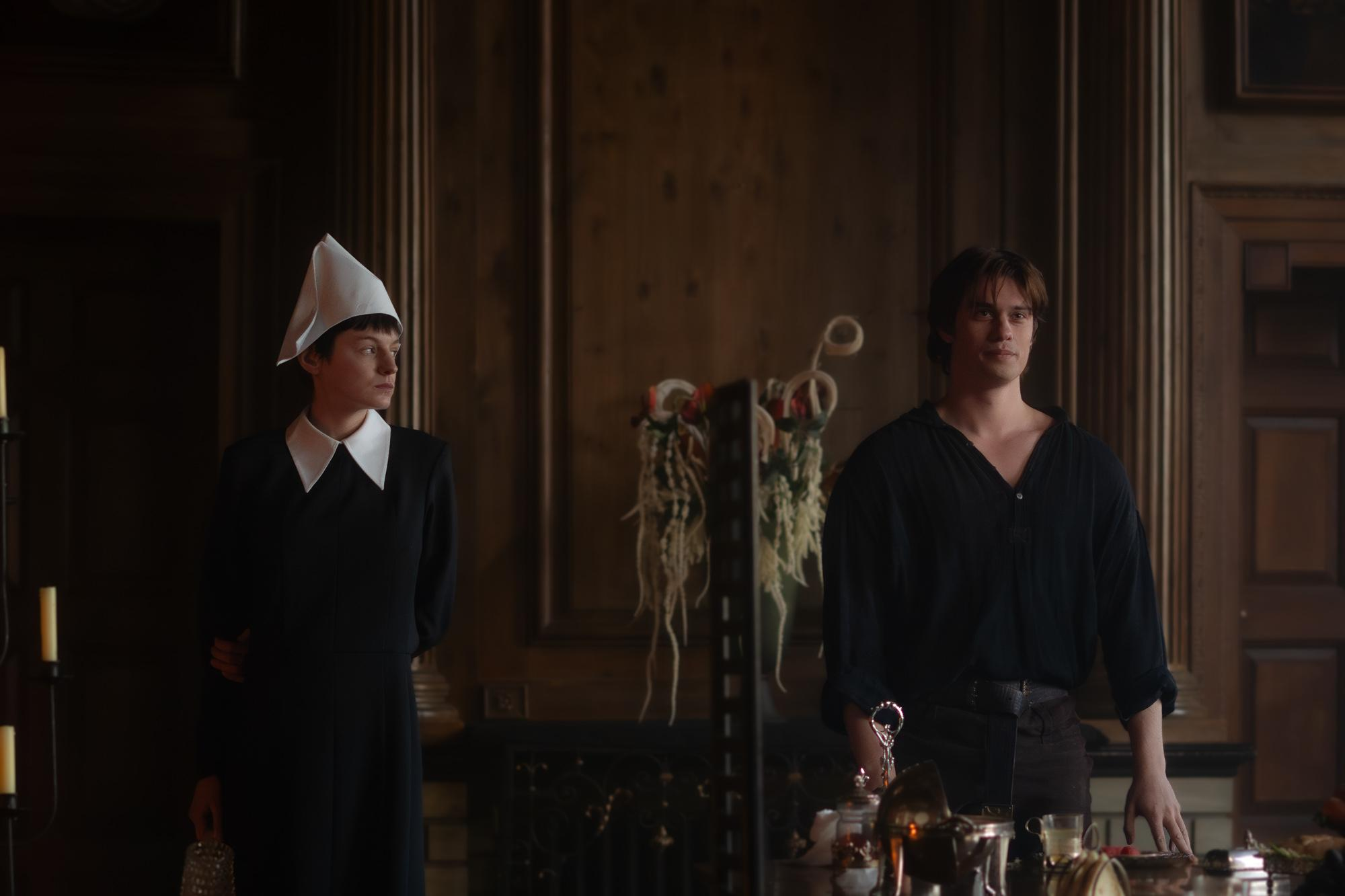
In a retelling of the real-life โLonely Hearts Killers,โ director Arturo Ripstein, the Godfather of Mexican independent cinema, brings in the twisted relationship of a con man and his new lover who go across 1949 Mexico to commit their dastardly crimes against innocent women. Like a traditional telenovela, Ripstein gives way to what love can do, even in the name of evil, and presents his usual macabre style. With a script written by his wife, Deep Crimson plunges into the dark side of passion with blood lust.
A History Of Violence (2005)
The first of two films by David Cronenberg is this stunning crime drama that pulls the rug out from under Middle America. After quiet family man Tom Stall (Viggo Mortensen) kills two robbers in his cafe, his past slowly creeps back to him when his former associate (Ed Harris) drives into town. Now, forced to protect his family, Tom must meet the crime boss (William Hurt) he once worked for to get any chance for permanent peace. Itโs not a body horror or a sci-fi original that Cronenberg has been known for, but Violence still possessed the physical brutality that Cronenberg never looked away from.
Nightmare Alley (2021)
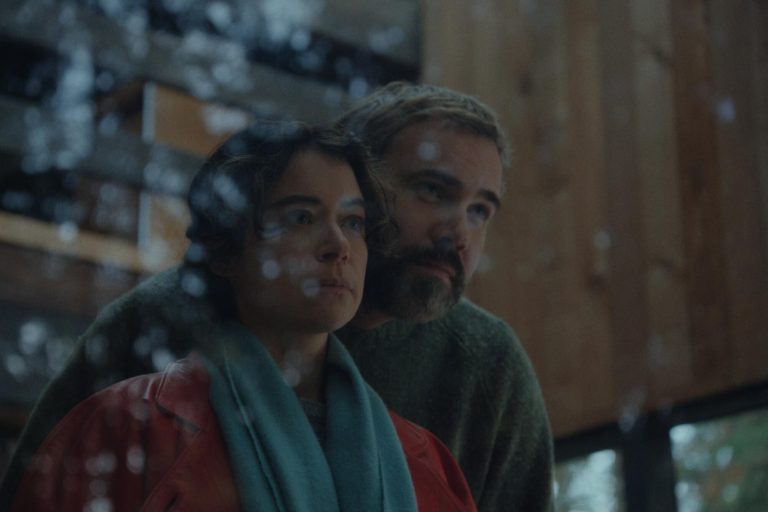
In remaking the classic noir, Guillermo del Toro went into the world of carnivals in pre-WWII America and a traveler (Bradley Cooper) who slips in and charades as a mentalist. Going after the big money that falls for his tricks, the traveller finds himself in a rabbit hole of soul selling that sends him to the bottom. Remaking the classic 1947 film, also available on Criterion, del Toro utilizes his aesthetic to bring color to a deeply dark world, featuring a cast including Cate Blanchett, Toni Collette, Willem Dafoe, Richard Jenkins, and Rooney Mara.
The Shrouds (2024)
The second film by Cronenberg is also his most personal, as it is a reflection of his grief following the passing of his wife. Vincent Cassel plays a tech millionaire who develops the technology where loved ones can watch the slow decomposition of their beloved deceased. But when his work is threatened by a rival hacker, the truth of his wifeโs recent death comes to haunt him. Diane Kruger and Guy Pearce also star in Cronenbergโs exploration of grief mixed in with his interest in the decaying body and the threat of what the future has for humankind.
Synopsis:A man investigates the truth behind his long-lost mother’s death.
A few months after Yeon Sang-ho released his best-ever movie,Revelations, itโs only natural that he follows it up with his worst-ever movie. Why natural, you say? Well, to put it simply: an auteur has to miss eventually to reveal, like us, their most human nature. Rian Johnson delivered his first miss โ in the form of a contractual obligation โ at TIFF with Wake Up Dead Man: A Knives Out Mystery, and now Sang-ho gives us The Ugly, an investigative thriller that is, as the title suggests, ugly in form and spirit.
Ugly not in its subject matter, although it treats many difficult themes in the time periods it depicts within South Korea, but in the manner in which theyโre treated. This is a deeply distasteful, contemptuous piece of work that barely contains anything of note in a cyclical story that never justifies its framing device, if only to build up to a reveal that most will already see coming by the time all the pieces are laid out in the movieโs first ten minutes. Instead of smartly subverting expectations, as he has done so many times in his career, or bathing in genre pleasures like Revelations, Psychokinesis, or his most well-known and acclaimed work, Train to Busan, Sang-ho stays in minimalist platitudes that make his follow-up to the most outstanding and aesthetically exciting movie of his career devoid of any genuine interest.ย
The movie immediately grabs our attention with a crash-zoom on a stamp, the only aesthetic flourish weโll see from a staunch formalist who decides to focus all his attention on characters and dialogue instead of showcasing his most treasured hallmarks. That said, this feels like a refreshing change of pace for Sang-ho, who, after TraintoBusan, has expanded his aesthetic sensibilities and given us many psychologically twisted and profoundly nihilistic works, both in film and television (notably, all of his collaborations with Netflix). On paper, stripping a film down to its primal elements and crafting a chamber piece where the truth slowly unfolds through โinterviewsโ that essentially act as interrogations regarding the protagonistโs mother, feels compelling. However, unlike one of his previous misfires, JUNG_E, which held our attention with staggering visual effects and a dreamlike sense of aesthetics worthy of The Wachowskisโ most cerebral pictures, The Ugly never justifies this minimalist framing device, nor its โinterviews,โ in which the movie is broken into.
The interviews themselves arenโt bad and progressively provide the audience with enough information to understand precisely what happened to Limโs mother, Jung Young-hee (Shin Hyun-been), who, we learn, was consistently objectified and demeaned due to her appearance (hence the title of the film). The problem lies in how this information is treated, and then repeated through extended flashbacks that attempt to posit the movie as a groundbreaking denunciation of the absurd body standards women had to face in South Korea in the past, but end up being profoundly ill-conceived in its depiction of heavy-handed material, such as objectification, and eventually, assault.ย
In those segments, The Ugly feels more like torture porn than a drama that wants to uncover the secrets that caused the death of Limโs mother, who sadly lived a life of misery until the very end. Astute audience members know exactly how a story like this will end, no matter the multiple twists and turns Sang-ho throws at us. As much as it tries to destabilize and overthrow all pre-conceived storytelling norms, anyone who pays attention knows precisely how the filmmaker will wrap it up. Itโs almost laughable that he thinks such a reveal will repurpose the movie and blow audiences away. Anyone who pays a modicum of attention to the film quickly realizes that the bulk of The Uglyโs story is not about Lim trying to obtain more information about his mother, but actively tracking the sole photo that proves her existence.ย
At the time, there were no photos of her mother, because she allegedly โlooked like a monster,โ and the only one she took was in her job recruitment file to ensure she was who she said she was. Without me saying anything else, and the title priming you to think one way, what do you think is in the picture? Yeah, itโs exactly what you think. Thereโs no mystery,ย suspense, or thrills to be had in a drama that takes itself far more seriously than other bleak Sang-ho projects, which almost always have points of dark humor inside their dark stories to alleviate the tension slightly. Moreover, Sang-ho always had fun with how he would shoot multiple sequences and found different ways to blow us away, visualizing some of his most ambitious stories.ย
Sang-ho wanted to experiment with making a low-budget film, which is commendable. It can usually examine the director at his most open and vulnerable. No flashy aesthetics will distract him. All he can do is shoot his actors with only the camera acting as the artifice between the audience and the filmโs diegesis. However, a low budget doesnโt mean โno creativity,โ and this dour affair is so devoid of anything that made him a household name within South Korean cinema and genre aficionados as a whole that it feels relatively weightless. The characters arenโt interesting, the film is lethargically paced, and it offers nothing visually to set it apart. Worse yet, the staging of sequences involving extreme abuse is repugnant. Of course, feeling uncomfortable and disturbed at the sight of these sections is the point. However, there is a difference between trying to raise awareness of a real and urgent issue and exploitation, which The Ugly falls into the latter.ย
It is a profoundly unpleasant movie that has no idea what it wants to say about the treatment of women in South Korea, other than shocking audiences with a bevy of disturbing sequences, both physical and psychological. And the twist, which should theoretically surprise you, doesnโt shock, nor make us realize exactly what went down the way the filmmaker hoped. The movie, however, does deliver on its title, but not in its intended effect. The Ugly possesses ugly intentions, and the resulting 102 minutes that follow are some of the most ill-advised cinema of the year.
On this episode, JD and Brendan JD and Brendan are joined by Matthew Anderson of The Lone Screenplay Nominee Podcast to discuss Paul Thomas Anderson’s new film One Battle After Another! This was, of course, one of our most anticipated movies of the year, and PTA once again did not disappoint. One Battle After Another is masterful in every way. The performances. The score from Jonny Greenwood. The cinematography. The editing(!!). Anderson crafts what is easily one of the very best of 2025 so far.
Review: One Battle After Another(4:00) Director: Paul Thomas Anderson Writers: Paul Thomas Anderson Stars: Leonardo DiCaprio, Sean Penn, Benicio del Toro, Chase Infiniti
Director:Ronan Day-Lewis Writers: Daniel Day-Lewis, Ronan Day-Lewis Stars: Daniel Day-Lewis, Sean Bean, Samuel Bottomley
Synopsis: In Northern England, a man heads out on a journey into the woods to reconnect with the estranged hermit brother with whom he shared a complicated past that was altered by life-changing events decades ago.
When screen legend Daniel Day-Lewis wasnโt going viral on Film Twitter for getting immaculate workwear fits off, many wondered whether or not he would ever grace the big screen again with his presence. One of the greatest to ever do it, with 3 Best Actor Oscars under his belt, Day-Lewis has earned enough acclaim for several lifetimes over. So upon the announcement of Anemone, cinephiles everywhere burst out with excitement at the return of the king. But could anybody be blamed for accepting the news with a tinge of curiosity as well? Excluding Anemone, Day-Lewis has turned in six performances this century: four of which were at the hands of some of the greats; Martin Scorsese, Steven Spielberg, and Paul Thomas Anderson twice. For co-writer/debut feature director Ronan Day-Lewis, that company surely must have felt incredibly daunting. Anemone is additionally celebrating its world premiere at the 63rd New York Film Festival. This is all to say that the weight of Anemone had proven itself quite lofty before ever screening for audiences. And the result of this feature debut is a story riddled with emotion, and indicative of a sweet creative partnership between father and son. For all that baggage it carried, Anemone remains pared-back and seemingly free of its contextual weight. Itโs quite telling as to how both Day-Lewis men seem to consider the essential nature of small-scale stories.
Courtesy of Focus Features
The actual story of Anemone may be fairly surface-level; but the way the film goes about portraying this story links itself to the emotional depths it hopes to have mined by the time the credits roll. Many of the most emotional sequences are operating in a capacity that sees emotional outbursts and resonance captured as larger-than-life. Itโs a film which can often entrance or leave its viewer mesmerized. Take, for example, the opening sequence of the film. The camera slowly pans across the drawings of a child. As the music builds louder and louder, the crayon images become more disturbing and intriguing. We then see Jem (Sean Bean) sadly informing his son, Brian (Samuel Bottomley), that he must take an unexpected trip. Thereโs little warning of his sudden departure, and even less explanation as to why Brian is so distraught. And after an isolating road trip through Northern England via motorcycle, Jem finds himself on foot and all but vanishes amongst the thick greenery of a beautifully captured woodscape. Thereโs little to no dialogue throughout the first act, and we’ve only caught flashes of Ray (Day-Lewis) thus far, with the film opting to hold back its biggest hand for as long as possible. Anemone revels in this sort of evocative, drip-fed storytelling. By the time we see Ray in side-profile, still having not said a word and fully shying away from the camera, a radiant light shines into the secluded cabin he appears to be living in, heralding the on-screen return of the legend himself.
Yet this blinding light is also one that speaks to the subtextual elements present in the film. In some ways based on body language, it’s as if Ray is being taunted by the shining beauty. Despite being devoid of any context whatsoever, Ray has clearly been in these woods long enough to form a routine. Itโs also been long enough for him that, upon hearing the slightest hint of company, he grabs an axe and prepares to strike without hesitation. Before we know it, Jem and Ray are face-to-face, making way for a reunion devoid of emotion, perhaps with the exception of bewilderment at the otherโs presence. Jemโs arrival at Rayโs cabin signifies a shift in Anemone. Whereas the first act borders on a silent mystery, the second act shifts into a chamber-piece drama with comedic elements. Its dry humor is exemplified in the deeply uncomfortable sibling sleepover occurring. Ray has space for one: thereโs no extra bed, no extra table setting, nor even an extra seat. Despite that, Ray extends a quiet kindness to Jem that comes across as rather touching. It also raises so many additional questions about what could have possibly happened between the two. Thereโs the obviously massive elephant in the room as to why Ray is in a seemingly self-imposed exile where he finds himself actively haunted at night. Itโs in these sequences, where Ronan tinkers with some genre elements and more fantastical imagery, that Anemone extends itself beyond its grounded narrative. This is a film rooted in realism, but that doesnโt mean it canโt toy with depicting ideas through dream-like visuals. Itโs in choices like these that find evoking emotion more important than highlighting literal reality. These moments arguably allow the most emotionally bare sequences to work so effectively in the filmโs favor.ย
Two pivotal moments surrounding emotional breakthroughs come in the form of elite Daniel Day-Lewis monologues. The first of two is almost maddening in how well it works; to reveal its substance would feel criminal. But the fact that Day-Lewis can take its ridiculousness and instantly morph it into something which acutely conveys Rayโs barely-contained pain and simmering rage is nothing short of brilliant. Thereโs simply nobody else who has it figured out quite like Daniel Day-Lewis has. Itโs so easy to get lost in Rayโs eyes, in which Ronan sometimes captures literal fire within. But of course, thereโs the flip side to everything and everyone. Itโs something highlighted in the second monologue Day-Lewis delivers as Ray. Much like an earlier juxtaposed smash-cut from beautiful, frigid ocean waves to that of an all-consuming, blazing hot fire, wildly opposing emotions can be equally conveyed with a mesmerizing quality by Daniel. The duality of man is present throughout Rayโs expressions of pain. Having kept it all in for so long, how he unravels his character from within is deeply heartbreaking. The dual relationships between pain and sadness and anger and loneliness is what fuels so much of both this performance and this film. Itโs no surprise Anemone is operating at its very peak when Daniel Day-Lewis is allowed to do what he does best. But thatโs not to say Ronantakes the easy way out with his film by relying on his powerhouse father.
On the contrary, thereโs a handful of elements which stand out in Anemone that speak to a potentially exciting career from Ronan. First and foremost, directing Bean against Day-Lewis is a wondrous thing to see play out. It is a deeply quiet performance, but works very well against the brashness of Danielโs Ray. Jem silently absorbs everything occurring around him, and you can see him actively reckoning with accepting his brother for who he has become in the years which have passed since last seeing him. Despite its scale, Anemone is a film which understands the vast burden emotional weight can place onto an individual. For the family at the center of this film, thereโs much more at stake than the story as it reads plainly on paper. This is shown by Ronan through the more fantastical elements of the script. Anemone has no problem allowing itself some rather bold liberties in the face of its grounded reality. It makes viewing the film that much more compelling, allowing us to imbue our own ideas onto its often beautiful, ethereal imagery and strange occurrences. Anemone may be indicative of a filmmaker actively finding his footing, but the bold liberties it takes in telling such a grounded story speaks to the possibility of another exciting Day-Lewis family member entering the world of cinema.
Anemone is celebrating its world premiere at the 63rd New York Film Festival as part of the Spotlight section.
Director:Carmen Emmi Writer: Carmen Emmi Stars: Tom Blyth, Russell Tovey, Maria Dizzia
Synopsis: A promising undercover agent assigned to lure and arrest gay men defies professional orders when he falls in love with a target.
Plainclothes isnโt a film that leans on some grand, sweeping twist. Instead, Carmen Emmiโs โ90s-set drama settles into you like a slow, steady ache. It peels back the layers of shame, repression, and quiet yearning in a way that feels both heartbreakingly personal and chillingly universal. Rooted in a specific time and place โ New York, 1997 โ it asks questions about identity, desire, and living truthfully that still feel uncomfortably relevant today.
Tom Blyth plays Lucas, a young undercover police officer whose job is to lure gay men into exposing themselves in public restrooms so they can be arrested for indecency. His weapon isnโt a badge or a gun, but his own body โ a well-placed look, a subtle smile, the silent promise of connection. For the department, Lucas is perfect bait. For Lucas himself, the role is far more dangerous.
The film opens with the hum of mall chatter, the crackle of a pager, and OMCโs โHow Bizarreโ drifting through tinny loudspeakers. Emmi nails the texture of the late โ90s โ the muted colors, the VHS fuzz, the grainy surveillance footage that cuts in like an uninvited observer. This lo-fi aesthetic isnโt just nostalgia; itโs a visual metaphor for scrutiny, for the suffocating feeling of always being watched. And for Lucas, who is hiding his own attraction to men, the feeling of surveillance isnโt just professional โ itโs deeply personal.
Blythโs performance is extraordinary, and itโs no exaggeration to call him a revelation here. He plays Lucas like a tightly wound coil, every movement calculated, every glance carrying the weight of whatโs unspoken. The brilliance of his work is in whatโs held back โ the longing flickering in his eyes during a gym locker room scene, the way his jaw clenches when heโs forced to participate in new โoperationsโ that push his moral boundaries even further. He communicates volumes without needing to say much at all, letting silence become its own kind of confession.
Everything shifts when Lucas meets Andrew (Russell Tovey), an older man he initially approaches as just another target. But their encounter doesnโt go as planned, and instead of an arrest, it sparks something far more complicated. The two men begin seeing each other, though Lucas hides his real name and the truth about their first meeting. Andrew, kind and measured, becomes a guide in Lucasโs tentative exploration of his sexuality. But Andrew also carries his own compromises โ a life built on secrecy, a quiet resignation to staying in the shadows.
Their relationship is tender, but itโs not romanticized. Emmi frames their intimacy with honesty โ not exploitative, but unapologetically physical, underscoring how human connection becomes both salvation and risk for these characters. In Lucasโs world, love isnโt just vulnerable; itโs dangerous.
The film is haunted by the political and social reality of its setting. In the 1990s, LGBTQ rights were still under constant attack, and entrapment operations like the one Lucas works werenโt just plausible โ they were actively happening. Emmi captures the cruelty of these tactics without sensationalizing them, showing how humiliation and fear were used as tools of control. The police force here is less an institution of justice and more a machine for enforcing conformity, its gaze as invasive as any hidden camera.
Thereโs a subtle but persistent tension running through the film โ a thrillerโs pulse beneath the quiet drama. Part of this comes from Emmiโs choice to occasionally flash forward to a future New Yearโs Eve gathering, where Lucas is surrounded by family pressure and internalized panic. These moments feel like emotional checkpoints, hinting at where his choices might lead, but never fully revealing the outcome until the filmโs end.
Russell Toveyโs Andrew is a perfect counterbalance to Blythโs Lucas โ softer on the surface, yet carrying a weight thatโs just as heavy. His Andrew is warm, patient, and gently encouraging, but also resigned in a way thatโs heartbreaking. Heโs a man who has learned to survive within the limits the world has given him, even if it means denying parts of himself. Seeing him and Lucas together is like watching two different timelines of queer existence brush up against each other โ one still deciding if itโs safe to step into the light, the other unsure if that light even exists.
Plainclothes works so well because it refuses to flatten its story into easy lessons. Itโs not a sermon on repression, nor is it a tidy romance about self-discovery. Itโs messier than that. Itโs about the slow erosion of the self when you canโt live honestly, about the compromises made to stay safe, and about the brief, luminous moments when desire is stronger than fear.
Cinematographer Ethan Palmerโs visualsโespecially the shifts into VHSโdeepen this sense of unease. Those distorted frames suggest that no moment is truly private, that even in intimacy, thereโs an eye watching, waiting. Composer Emily Wellsโ score amplifies this moodโsparse, moody, with a lingering sadness that seems to seep into every corner of the frame.
By the time the film reaches its conclusion, the air feels heavy with the weight of everything unsaid. Emmi resists the urge to tie things up neatly, instead letting the final scenes breathe in their complexity. Thereโs no triumphant declaration, no tidy resolutionโjust the quiet truth that living authentically can be both liberating and terrifying.
Plainclothes isnโt an easy watch, but itโs an essential one. Itโs a reminder of how much has changedโand how much hasnโtโfor queer people navigating visibility and safety. And at its center is Tom Blyth, delivering a performance so raw, so finely tuned, that it feels like a breakthrough moment in his career. In Lucas, he captures the ache of wanting more from life while fearing the cost of reaching for it. Itโs a portrayal that will stay with youโjust like the film itself.
Director:Renny Harlin Writers: Alan Freedland, Alan R. Cohen, Amber Loutfi Stars: Madelaine Petsch, Richard Brake, Rachel Shenton
Synopsis:After learning that one of their victims, Maya, is still alive, the three masked maniacs return to finish the job. With nowhere to run and no one to trust, Maya soon finds herself in a brutal fight for survival against psychopaths who are more than willing to kill anyone who stands in their way.
When describing a film as totally worthless, it really just needs to be devoid of any meaning, a movie that simultaneously manages to be completely baffling with how haphazard it is, while simultaneously ending up completely monotonous to sit through, no matter the runtime. Think of what worthlessness means in film; aside from a few other instances, I canโt think of any better example than the recent 2 of 3 planned chapters in the new Strangers trilogy. The Strangers: Chapter 1 was already a shoddy copy-and-paste job of the original 2008 film, but somehow, despite finally veering into a different direction, The Strangers: Chapter 2 is an even more pathetic attempt at a fresh take on the franchise. The entirety of the film is straight up the most โnothingโ experience Iโve had with any movie this year, plagued with creatively bankrupt chase sequences, meaningless flashbacks that couldn’t feel more disconnected, and an ending tease so laughable youโll roll your eyes into the back of your skull. Anything meaningful in the film has been executed infinitely better within this franchise, let alone the horror genre, as the film just plods around padding out runtime until it reaches 90 minutes; The Strangers: Chapter 2 truly is the definition of a prodigiously empty experience.
Madelaine Petsch as Maya in The Strangers โ Chapter 2. Photo Credit: Courtesy of Lionsgate
After a series of recap flashbacks, Chapter 2 starts with Maya (Madelaine Petsch), the sole survivor of the attack from the first chapter. Sheโs hospitalized and still reeling over the loss of her fiancรฉ at the hands of the three masked individuals known as The Strangers. As Maya comes to her bearings and Sheriff Rotter (Richard Brake) begins the hunt for these masked killers, The Strangers, of course, come back to finish what they started and kill Maya. What follows is essentially a 90-minute-long chase sequence through hospitals, roads, and even the forest, as Maya begins a battle of survival against these masked figures. Conceptually, a movie fully acting as an entire chase scene full of suspenseful setups isn’t a bad concept, especially when you have a performer as committed as Petsch is within the film as really the movieโs singular positive element; the problem, however, lies in the lack of anything innovative or remotely scary on every front. Every jumpscare, move with the camera, or kill couldn’t be more lacking. For something that’s R-rated, there is absolutely no teeth to be found in any kills the film more than anything cuts away from the violence weโd like to see rather than opting for any stylistic flare.ย ย
While the film is in this mode, more often than not, absolutely nothing of substance is happening on the screen. The movie just repeats these tired beats of absolutely contrived nothingness until we reach an apex of it within a scene so incredibly baffling that it will leave most watching in unintended laughter. Director Renny Harlin isn’t completely void of talent, so the absolute lifelessness happening every minute on screen is completely bewildering.ย
Madelaine Petsch as Maya in The Strangers โ Chapter 2. Photo Credit: Courtesy of Lionsgate
Even with all these issues, the defining death knell for this second chapter is their attempt at a backstory for The Strangers. Almost anyone who enjoyed those first two films, back in 2008 and 2018, respectively, could tell you that the reason why The Strangers felt so eerie was because we knew very little about them. These three masked individuals murder just because they want to make so much more of a terrifying presence, even if the films they reside in are not groundbreaking, so trying to give them a motive or origin story isn’t just unnecessary, but it quite literally misses the entire point of the existence of this franchise. On top of it all, the backstory itself is the most stupid explanation for things like โIs Tamara Here?โ or The Stranger’s little creepy smiley-faced art imaginable; it’s all completely useless.
I haven’t walked out of a movie theater as fast as I did with The Strangers: Chapter 2 in a long while. Itโs an absolutely airless film that serves no useful function as an addition to the franchise or the horror genre in general. This second chapter doesn’t even feel like a movie, just 90 minutes of predictable chases and random occurrences that go nowhere, leading to an unsatisfying experience that ultimately results in the most โnothingโ you will have with a film this year.
Director:Kelly Reichardt Writer: Kelly Reichardt Stars: Josh O’Connor, Sterling Thompson, Alana Haim
Synopsis: In 1970, Mooney and two cohorts wander into a museum in broad daylight and steal four paintings. When holding onto the art proves more difficult than stealing them, Mooney is relegated to a life on the run.
Kelly Reichardt often tells stories about outsidersโpeople at different points in time and across various states in Americaโwho live on the fringes of society. The characters she writes are lonely, facing emotional and psychological hardships that hinder their lives from further displacement. As the world moves around them, they remain adrift, disconnected from reality. In most cases, it isnโt their fault. The injustices of the world around them construct their circumstances. Reichardt finds a way for the viewer to understand and dissect the characters and their respective situations through her usual quiet observation and breathing spacesโallowing room for empathy and compassion during their struggles. Her last two features, First Cow and Showing Up, feature outsiders in an artistic and commercial context, with Reichardt also exploring the value of the creative process and those who shape the person you are.
The Mastermind (screening at the 2025 New York Film Festival in the Main Slate) is another entry into that dissection of art and life intertwined, yet without the sympathetic note that accompanied the aforementioned. It is colder and with a character that is hard to root for, as Josh OโConnorโs James Blaine, or J.B., is a schemy and selfish fellow. But his worries and anguish, alongside the root cause of his egocentrism, strike a chord with the viewer. This is her version of a heist picture, rid of flashโbut with a jazzy score by Rob Mazurekโand less talky, although tricky and with moments of tension. Amidst this โslightโ change of genre, Reichardt remains her contemplative and acute self with many notions about the feeling of unfulfillment in life and the hunger for change in a crumbling society post-Vietnam war.ย
James Blaine is a father of two sons (Sterling and Jasper Thompson) and husband to Terri (Alana Haim, finally in a film after her excellent turn in Paul Thomas Andersonโs Licorice Pizza). In their family gatherings and outings, Blaine wanders about without aim, while the rest of them enjoy their time together. Heโs quite a mysterious person, who thinks plenty but does not express his mind as often as he could. OโConnor is no stranger to playing characters who are adrift, seen primarily in Alice Rohrwacherโs excellent La Chimera. The difference between his character there and in Reichardtโs film is that in the former, he has a goal in mind, a person he seeks out to reach any means possible. Meanwhile, in the latter, there is little vision.ย
Blaine does not know where heโs headed and is not bothered by it at all. This aligns with Reichardtโs array of lonely souls traversing Americaโs outskirts, yet Blaine has a look in his eyes that expels an internal wounding that doesnโt seem to heal. In one outing to the Framingham Museum of Art, Blaine steps away from his family for a while, and something drives him to steal an ancient totem from an installation and place it in his glasses case. The petty thief does not stop there. When he notices that it was too easy, and security wasnโt tight, he hatches a plan to steal a couple of paintings by Arthur Dove, with a team forged by loaned money from his mother (Hope Davis).ย
Reichardt gives you some of the heist movie sensibilities during the first section of The Mastermind, not to get it out of the way, but because it isnโt her focus or goal to delve into these conventions in any regard. She wants to explore more about what happens after these events, the mental states and consequences that occur once the deed is done. Blaine sacrifices everythingโhis livelihood, loving family, and freedomโfor his selfish, vague reasons that he canโt seem to come up with an answer for. The few people in his life often ask him about why he did what he did, some more sympathetic than others. However, Blaine does not offer insight; it remains internal.ย
OโConnor bolsters that internal struggle to give the goalless character he portrays some life, even in the moments where it seems that he is a completely lost soul. That is Reichardtโs trademark in her characters: lonely souls scavenging the world for meaning and connection. However, Blaine differs from the rest because he isnโt given a resolution, or at least the one the audience expects. Blaine believes he is meant for greater things, but he feels stuck in an endless cycle of something impeding his progress, which is one reason for his behavior. It does not justify him, but desolation has stripped away the love and joy he once knewโthe years that precede the events of The Mastermind. The early 1970s saw a social upheaval, marked by disillusionment and trauma for many Americans.ย
Distrust in the government created even greater helplessness, making it difficult to adjust to this new world and succumbing to collective sorrow. That is where Blaineโs mental state lies, right in the middle of it all, feeling the weight of that piercing feebleness economically and psychologically. In a single glance, you see Blaineโs shallow vessel of a soul; there is no drive, no desires in the manโs heart. Even when you see him interacting with people, you canโt seem to sense Blaine, almost as if he were turning into a shadow of his own self. And in todayโs society, with everything seemingly going downhill one year after the next, you recognize that personโman, woman, parent, teacher, student, etc.โall wondering what is next and if it will get worse for all of us.ย
This drives them to self-interested propositions and inquiries, where ideals must serve one’s own interests; if not, they can be compromised. It is tragic; Blaine is one of the most sorrowful characters that Reichardt has ever created. You donโt want to be near Blaine and his selfishness, yet you feel that you have seen that person before. Reichardt does not offer him clarity, but instead leaves us with the haunting reminder that his emptiness is not unique. It is a reflection of a broader despair that continues to echo in our own time. The Mastermind begins as a distinct take on the heist picture, and evolves into an exploration of a collective mentality from the past that makes its way into the present.
Director:Hong Sang-soo Writer: Hong Sang-soo Stars: Kwon Hae-hyo, Park Mi-so, Ha Seong-guk
Synopsis: A young poet drops his girlfriend off at her parents’ house and is amazed by its size. He bumps into her father, meets her mother and sister, and they all end up spending a long day together; fueled by conversation, food and libations.
Hong Sang-soo, one of the hardest-working directors today, has spent the past decade delivering one film after anotherโsometimes even presenting two pictures at festivals in the same yearโwithout the quality diminishing in the slightest. How does he do it? Iโm not sure, but I am glad that he continues to bring us these gems year after year. Look at his work from afar. You might think that his storytelling method is minimalist and straightforward, relying on many scenes where characters converse in cafes, apartments, restaurants, or bars. However, upon closer examination, you see all the details and intricacies that Sang-soo incorporates into his stories and characters, resulting in rich experiments that depict domestic life in South Korea from various angles. Each time around, thereโs something different lingering in his stylistic approach.ย
In a way, he is this generationโs Eric Rohmer, a director who ventures into realism through the mundanity of life and a series of conveniences, yet with beautiful and truthful touches in the dialogue, which makes the stories have their magical spark. Much like Rohmer, Sang-soo is thematically consistent and has a set storytelling structure, yet remains non-repetitive. As the years have gone by, Sang-sooโs work has become more personal, implementing real-life happenings into his stories: an actress and a film director meeting by chance in The Novelistโs Film, the reflection of what it means to create art in By the Stream, or the blurry lens of In Water, meant to reflect the South Korean directorโs slowly declining vision. His most recent work, What Does That Nature Say to You (screening at the 2025 New York Film Festival in the Main Slate), is no departure from his late-career self-reflection and autobiographical storytelling.ย
What Does That Nature Say to You is about acceptance, with a comedic tone in some moments and tense in others, from the discomfort of Sang-sooโs blunt honesty. The tonal balance might take you off guard at first, but Sang-soo smooths it out nicely to create a touching examination of the family dynamic. We follow a young couple, Ha Dong-hwa (Ha Seong-guk) and Kim Jun-hee (Kang So-yi), who have been dating for a couple of months and live a simple life. Even though they have been together for quite a while, Dong-hwa has never met Jun-heeโs parents. The story begins on the day of his first encounter, where Dong-hwa converses with and later confronts her family. The first family member he meets is her father, Kim O-ryeong (Kwon Hae-hyo), whom he unexpectedly encounters while driving Jun-hee back home.ย
Kim invites Dong-hwa to dinner, which he accepts, albeit with a hint of reluctance in his tone. This begins a series of scenarios that will force Dong-hwa to face up to the secrets behind his wealthy family, ideals, and life decisions. As Dong-hwa meets the rest of Jun-heeโs family, her mother Choi Sun-hee (Cho Sun-hee) and sister Kim Neung-hee (Park Mi-so), between cigarettes and drinks, Hong Sang-sooโs usual conversation starters, things shift from smooth sailing to contentious, awry waters, with a bottle of bourbon being the catalyst for the mood changes at dinner. The conversations that arise are intended for Jun-heeโs family to learn more about Dong-hwa. Mostly, it comes across as scrutiny and judgment. This gives way to tension with each word spoken, with light touches of comedy interspersed here and there. Sangโsooโs expertise in balancing seriousness with occasional breeziness shines through.
As the drinks flow, it becomes clear that Dong-hwaโs comfortable life is less idyllic than he first claimed. Some of his expressions contain a hint of fallacy, amounting to small white lies that subtly alter how others perceive him. The slightness of Sang-sooโs previous pictures dwindles upon the confrontations by Jun-heeโs family, which are, as it goes, for the means of finding an identity for Dong-hwa. Is it the one he wants or the one that Jun-heeโs family envisions for him? Not only is his mental state explored in these talks about famous fathers, art, and poetry (with a recital of one of Dong-hwaโs many unpublished works), ways of life, and acceptance of a personโs decisions, but the rest of the family has themselves tied up in this tricky web rooted in dialogue and understanding, or the lack thereof.ย
They put their own perspective on his situation and lifestyle, responding first with skepticism and later sympathy, with a closing segment that is superbly crafted and carefully observed. It becomes clear that these characters are all, in some way, inspired by Sang-sooโs own experiencesโthe talk circles around a singular topic for a long time, like a recurring memory the director canโt shake. On a personal level, What Does That Nature Say to You also employs the low-res, blurry lens that In Water contained. While the 2023 film utilized it to depict the world as Sang-soo sees it, this latest one has the South Korean director showing you how he sees the character of Dong-hwa, an adrift soul whose ignorance and creativity take him through the woes of adulthood. The hazy aesthetic only mirrors its thematic weight. Sang-soo refuses to provide clarity where life itself does not. Identity is never fixed, but constantly shifts. Our desires might shape it, but those around us do forge a significant part of it. It is in this understanding at the finale that Sang-soo offers his touching way into the complexities of understanding those around us.
Director: Noah Baumbach Writer: Noah Baumbach, Emily Mortimer Stars:ย George Clooney, Adam Sandler, Laura Dern
Synopsis: Famous movie actor Jay Kelly embarks on a journey of self-discovery, confronting his past and present with his devoted manager Ron. Poignant and humor-filled, pitched at the intersection of regrets and glories.
There have been many cinematic portraits of artists who have sacrificed a great deal to achieve the successful life theyโve attained through their work. These lives come with a significant amount of burdens that can drown the soul of the artist as they age. Yes, riches and fame are all there, but at what cost? A legacy for a heart. In Billy Wilderโs Sunset Boulevard, we witness the tragic fate of silent film star Norma Desmond (Gloria Swanson), whose career has faded due to the introduction of sound into motion pictures. She tries to exploit a young writer for a role that can revive her careerโhave the opportunity to shine in the mediumโs evolutionโbut the Hollywood ruthless machine, obsessed with young faces, which serves as commodities until they are worthless, drives her to self-destruction and severe obsession.
Another example is All That Jazz, the semi-autobiographical musical by Bob Fosse, which utilizes the directorโs own experiences to tell a story about the addictive nature of show business, mortality, and the struggle to cling to whatโs slipping away โ love, family, health, fame, and career. Through surrealist musical numbers and personal elements, Fosse uncovers his fears, motivations, and worries, culminating with a damning tune thatโs memorable (and catchy) as it is haunting. What these films, and other noteworthy examples like Stardust Memories and Pain and Glory, have in common is the sincerity and honesty that lies beneath the fiction, taken from real emotions and experiences. You canโt have a story that chronicles a personโs late-stage grievances without that candor which arises from the sacrifices done for, or by, art in any sense. That key facet is missing from the latest legacy portrait, Noah Baumbachโs Jay Kelly (screening at the 2025 New York Film Festival in the Main Slate).ย
In the aforementioned film, Noah Baumbach attempts a similar approach. He uses George Clooneyโs public image as an A-list movie star and storied career as a gateway for a reflection on the costs of stardom and the shadows cast by a life lived in front of the camera. At the same time, it wants to honor Clooney and all of his on-screen achievements, most evident in a tribute scene that features clips from Clooneyโs films and cuts to the audience wiping away tears. This dishonest and manipulative move greatly irritates in its attempt to elicit an emotional response. However, unlike Fosseโs raw confrontation of his own demons or Wilderโs dissection of the delusions of grandeur and sharp critique of the Hollywood system, Baumbachโs film struggles to locate that same emotional truth beneath the surface of fiction. The established legacy of a class act and concept is there, but the heartbeat that makes such portraits resonate remains elusive, leaving an experience that often feels egotistical.ย
George Clooney is Jay Kelly, a renowned movie star who has graced the screen with numerous classics that audiences worldwide love and adore. He is, in the filmโs universe, in the heights of James Stewart, Steve McQueen, and Marlon Brandoโthe stature of the greats, an actor who defines a generation. Kelly is about to film his next motion picture when he gets the notice that the director who gave him his first break has passed. Melancholy and nostalgia begin to consume the man as he looks back to a life long gone, or what could have been. At the funeral, Kelly comes across the thought that he must give more of his time to the people he loves before itโs too late. So, he packs his bags and rounds up his rag-tag team of associatesโmanager Ron (Adam Sandler), publicist Liz (Laura Dern), hairstylists, make-up artists, and other crew membersโto find his estranged daughter, Daisy (Grace Edwards), who has been backpacking through Europe. He uses his career award ceremony at a film festival in Tuscany as an excuse for the encounter.ย
There are more than a handful of moments in Jay Kelly where we see the titular character trying to confront his reality, feeling burdened by the grievances of missed time and opportunities. Of course, he has everything heโs ever wished for; the thousand-dollar suits and watches provide a glimpse into the many riches heโs attained that none of us could ever afford. Yet, what has been taken from him comes from within. His soul is tainted and his heart broken. This multi-million-dollar life is just a facade, every gift matched by an equal loss. As Kelly tries to reach out for his daughterโs connection, Baumbach and co-writer Emily Mortimer avoid any real self-realization and reflection. When you think the film will finally give us a way into the broken man, it shies away from the darker and more confrontational, personal territories in exchange for overly dramatic and comedic dialogue, and no actual repercussions.ย
During the filmโs runtime, I had one question in mind: Why should I care about Jay Kelly, the famed actor? I spent the entire duration of the film trying to come up with an answer, yet never could. After a few days, I finally have an answer: I shouldnโtโbecause it is a disingenuous and romanticized portrait of false grievances from the privileged one percent. The film insists on sympathy for a man cushioned by wealth and adoration. Baumbach and Mortimer never present Kelly with any deeply existential or reflective scenario that prompts him to reflect on his life decisions; it is all contemplative window shopping. Kelly isnโt painted as troubled or a bad guy. He is just confronted with a few tame foibles, which have already been explored in other (and better) pictures. The reunion with his estranged daughter. The hope that his father will finally see the worth of his acting career, which he was against him pursuing. A discussion with the man in which Kelly stole his breakout role keeps perturbing him.ย
These are troubling issues that, if properly dissected, could yield some interesting insights into the actor-father double role and Clooneyโs own thoughts on the Hollywood non-stop treadmill. However, in Jay Kelly, they are seen through a glossy, advantaged lens that distances me from the story being told. On a few occasions, Baumbach makes a point of this detachment, as most of Kellyโs crew are somewhat annoyed by him and his uberrich demeanor. He creates debacles within the close circle through the characters of Adam Sandler and Laura Dern, the only two grounded characters in the bunch. The former is saddened that Kelly views him as a commodity, rather than a friend, even though theyโve spent decades together working to elevate the actorโs career to the top. This angle is the key to clawing into the griminess and arrogance of a person who has it all, except proper connection. Nevertheless, like the rest of the interesting ideas in the film, they are dismissed to honor Clooneyโs career or ease up the tension by having moments of levity.ย
A few years ago, Alejandro Gonzรกlez Iรฑรกrritu released Bardo, False Chronicle of a Handful of Truths, to a very hostile reception, to the point where the Mexican filmmaker had to re-edit the picture before its theatrical release. Personally, Iโm not fond of Iรฑรกrritu. In fact, I despise most of his pictures, except his excellent feature debut, Amores Perros. But I adored Bardo, which caught me by surprise. The film is a self-portrait of the artist and documentary director Silverio Gama (Daniel Gimรฉnez Cacho), exploring his struggles with the balance between life and art. It explores his Mexican identity, with which he struggles the most to find his place in the world after many years away from his native country and living in America, where he has never dealt with the issues that have arisen during his absence, all of which are the subject of his work.ย
I felt that, for the first time, in a lengthy career filled with pretentious and disingenuous works, Iรฑรกrritu was being truthful. Iรฑรกrritu was speaking his mind, body, and soul out rather than preaching to the choir. It still had some pretentiousness as garnish, and it was narcissistic in some parts. Yet it was bracingly honest, even brutal. The issues tackled in Bardo are rooted in real-life grievances and things that truly hinder Iรฑรกrrituโs daily living. Many Spanish-speaking viewers connected with that film deeply. The opposite has happened to Baumbach. After many years of delivering sincere and emotional works, not all of which have been successful yet forthright, such as Marriage Story and Frances Ha, he responds to a career overview and dissection with a faux response.ย
Baumbach wants to celebrate Clooney while exploring the wounds of Jay Kelly. In attempting to do both simultaneously and sporadically, when it is convenient, Baumbach creates a contradictionโhalf-tribute, half-confessionโthat collapses into shallow self-adoration. The goal with Jay Kelly was to be empathetic with character and understand how isolated, even through wealth, the life of a movie star can be. Jay Kelly fails miserably because Baumbach wants to graft the struggles of genuinely tormented artists onto someone like Kelly, whoโs insulated by privilege. This undermines the authenticity of the portrait in every way possible, and no empathy is shown towards the subject at the center.
Director:Luca Guadagnino Writer: Nora Garrett Stars: Julia Roberts, Ayo Edibiri, Andrew Garfield, Michael Stuhlbarg, Chloรซ Sevigny
Synopsis:A college professor finds herself at a personal and professional crossroad when a star student levels an accusation against one of her colleagues, threatening to expose a dark secret from her own past.
Post-screening press conferences tend to be a mixed bag โ a mishigas, if you will, to steal a term that Andrew Garfield used to describe the many conversational aspects about the films of Luca Guadagnino, particularly the one he co-stars in and is speaking about on this particular afternoon on Manhattanโs Upper West Side. Gathered in Film at Lincoln Centerโs Walter Reade Theater, the home for Fridayโs press and industry screening of the 63rd New York Film Festivalโs Opening Night selection, After the Hunt, are Guadagnino, his screenwriter, Nora Garrett, and the principal players in his new filmโs cast. Garfield is just one of the few; to Guadagninoโs left is Julia Roberts, and to Garfieldโs sits Ayo Edibiri, and to hers, Michael Stuhlbarg. Somehow or some way, this press conference keeps coming back to the idea of provocation. Theoretically, itโs a fitting topic when it comes to After the Hunt, a glossy drama that centers on the fallout over a campus scandal involving a high-profile PhD candidate (Edibiriโs Maggie Resnick) and one of the philosophy departmentโs most beloved professors, Garfieldโs Hank Gibson. โit happened at Yale,โ lowercase โitโ and all, reads the filmโs opening text, though the โhappenedโ isnโt solely referring to the sexual assault that Maggie has accused Hank of committing. As the audience came to learn as the film unfolded, what โhappenedโ also points at the effects these allegations have had on Maggieโs relationship with her mentor, Alma Imhoff (Roberts), a revered member of the philosophy faculty who is up for tenure; the impact the incident has had on Almaโs marriage to Frederik (Stuhlbarg) and her friendship with Dr. Kim Sayers (Chloรซ Sevigny), the universityโs psychiatrist; and Almaโs status at the school overall.ย
After the Hunt. Courtesy of Amazon MGM Studios.
Everything here, it stands to reason, is cause for provocation, and the cast and crew are willing to talk. โHeโs a provocateur in a lot of ways, and I think heโs very conscious of what heโs doing a lot of the time, and deeply unconscious of what heโs doing a lot of the time as well,โ Garfield shared. โ[Guadagnino] wants all of your nuance, all of your humanity, no matter how dignified or undignified it is.โ A bit later in the discussion, after this idea has been raised again, the filmmaker felt the need, albeit jokingly, to defend himself: โI think Iโm a kind guy,โ he mumbled, receiving a healthy supply of laughs that only a beloved filmmaker could receive, and are a part of the typical standard operating procedure at festival Q&As. โI donโt like to scandalize for the sake of it,โ he noted. โI think thatโs a little bit childish and I hope Iโm notโฆ Before Iโm anything else, I am a spectator. Film, for me, is obviously an experience that transformed me, that changed me. That made me want to become something else, that maybe changed my mind on things that could have also provoked me in a way that made me uncomfortable, and then Iโd ask myself, โWhy was I uncomfortable?โโ
After the Huntโs inherent discomfort isnโt much of a โneedle in a haystackโ situation; this heap is all needles, and thereโs no way to avoid being pricked, no matter how careful you are as you reach for the quill of your choosing. Itโs a film about sexual assault that is wearing #MeToo-colored glasses, those with a prescription to fit viewers of all qualities of vision โ no matter how hard the pictureโs preeminent voices try to tell us itโs not. (It would be cheap to shove the film under a โCancel Culture Cinemaโ umbrella, but to insist that that isnโt one of its few hats would be a wardrobe violation.) Itโs a film about campus politics, the sociopolitical gamut of race and gender and sexuality and privilege, the kind of movie in which the starring faculty hold lavish parties at their ridiculous and garish private residence, a movie in which โTART!โ is yelled at to the entire soiree in an attempt to distract from the debate at hand, as if the presence of a strudel the size of a Scrabble board is a regularity at these post-work convocations. Maggie is a queer Black girl who comes from money; her partner (Lรญo Mehiel) is a nonbinary transgender person studying to become a lawyer, and offers โprofessionalโ counsel whenever possible. Hank is a celebrated educator who came from nothing; Alma and Frederik are intellectuals who have everything. This isnโt a melting pot as much as it is a meticulous and obvious gumbo of personified tropes who have been created explicitly with the aim of making a point.ย
After the Hunt. Courtesy of Amazon MGM Studios.
But is the point in the room with us now? And, better yet, is it worth searching for a point when the characters lobbing it back and forth like a hot potato are, for the most part, unlikable ingredients in a modern serving of duck soup? The answer to the latter question is simple: Yes, and when Stuhlbarg was asked about these rather detestable additives, he put it plainly: โThey are all so focused, and so busy, so preoccupied, and so brilliant individually that I donโt think they have time for likability and, frankly, I donโt think they think about it either,โ he said. โAnd I think how theyโre judged says as much about the people judging as it does about the individuals being judged.โ The crux here, though, is a thinner, mishandled, uninvasive probe that postures as though it is provoking but barely manages to poke. If the needle does, in fact, make contact with the skin, it sure as hell doesnโt produce any blood.
Perhaps thatโs the cause of a script that is attractive on its surface but not promotable, and though the two tend to be mutually exclusive, Guadagnino seems intensely interested in doing both at once. The director brings his singular panache here, much of which is a credit to his trust in his collaborators, specifically those below the line, including He Got Game cinematographer Malik Hassan Sayeed and his now-regular composers, Trent Reznor and Atticus Ross. Sayeedโs photography, when paired with a fine-toothed edit from Marco Costa, who has now cut five Guadagnino projects, including Challengers,Queer, and Bones and All), doesnโt so much resemble Sayombhu Mukdeepromโs work on Challengers and Queer in 2024 โ what could? โ as it finds the director adhering to an individual visual sensibility, one that has been remarkably refined from 2017โs Call Me By Your Name on. Thus it seems to be the pages heโs been handed by first-time screenwriter Nora Garrett that lack in real verve, instead opting to revel in the idea of mimicking it. This material is punching the air, believing itโs knocked out a heavyweight, and strutting about the ring in triumph, knowing not that its opponent has yet to exit the tunnel.ย
Everything about After the Hunt feels like cosplay, to the point where itโs even difficult to believe that Roberts, Edibiri, and co. would ever dress the way they do throughout the proceedings. One recurring nugget that works is Maggieโs evident reverence for Alma, to the point where she dons similar blazers, pants, and even lengthy necklaces with a single ornament on the end to those her object of professional (?) adoration sports like a second layer of skin. The rest of the theatrics feel as dull as the lamp-lit yet still greyed-out surroundings of the filmโs Ivy League setting, a location that feels utilized for the sake of emphasizing its populaceโs privilege, or at least the sense of the quality that they posit like a badge of honor. In reality, itโs barely armor. Roberts (predictably terrific) and her castmates have been saddled with nothing but a baseline prompt that watching them squirm to create something real and radical is akin to watching a baby deer take its first steps. Only this calf has no footing to find. Itโs been doled out under the assumption that it should be easy to locate and master, but the necessary guidance is nowhere to be found.ย
After the Hunt. Courtesy of Amazon MGM Studios.
Is that Garrettโs doing? A blasรฉ direction of performances by Guadagnino, who routinely pulls revelatory turns out of his stars, no matter their preexisting reputations? Perhaps itโs both, as aside from Roberts, only Stuhlbarg and Sevigny have anything particularly captivating to conjure, and theyโre sixth men here. Stuhlbargโs clever schtick as an unofficially-cuckolded husband (thanks to Roberts and Garfieldโs chemistry, and the unsubtle hinting at an unspoken amorous connection between their characters) betweenย persists throughout the film and provides a necessary humor that is otherwise dry โ not in style, but to the touch and taste โ but this criticโs opinion will not be a universal one. His spell, like that of the filmโs dramatics, cannot possibly have the same impact on every single audience member. In fact, thereโs bound to be an interpretation of his performance as an obvious curveball in a movie that aspires to a fastball-like fervor, but carries the ferocity of a meatball. Just watch Hank deny the claims levied against him only to swiftly rip off his knit sweater (youโll never guess what colorโฆ itโs grey) in agitation and attempt to wrangle with another viewer over its subtext. Youโll end up muddy, exhausted, and wondering why you ever bothered.
Therein lies the true tragedy of After the Hunt, such a rare misfire from the otherwise-steady Guadagnino that its lone cause for optimism is, in fact, its failure: That it warrants little to no discussion regarding its substance, its goals, even its slightly recommendable qualities, of which there are precious few. โEvery time Iโve left the cinema [after one of Guadagninoโs films], I need somebody to talk to,โ Edibiri told a packed theater on Friday, likely full of patrons aplenty whose opinions coincide with hers. โI canโt see one of your movies alone. If I do, I feel crazy. I need somebody to talk to about this thing that Iโve seen, or this image that Iโve somehow never seen but feels so familiar. Or if I am upset or frustrated, I need somebody to talk to about it.โ After the Hunt inspires no such feelings, to the point where itโs not two-plus hours wasted, but time spent thinking about what went wrong. For all of its on-paper promise and its talk of a pursuit, thereโs a giant, red X marking not just one spot, but hundreds of them, each hiding not red herrings, but no buried treasure either. It makes you wonder what the hunt was ever for. To a blunter point: Is the โhuntโ in the room with us now?
After the Hunt opened the 63rd edition of the New York Film Festival. Amazon MGM Studios will release it in theaters on October 10.