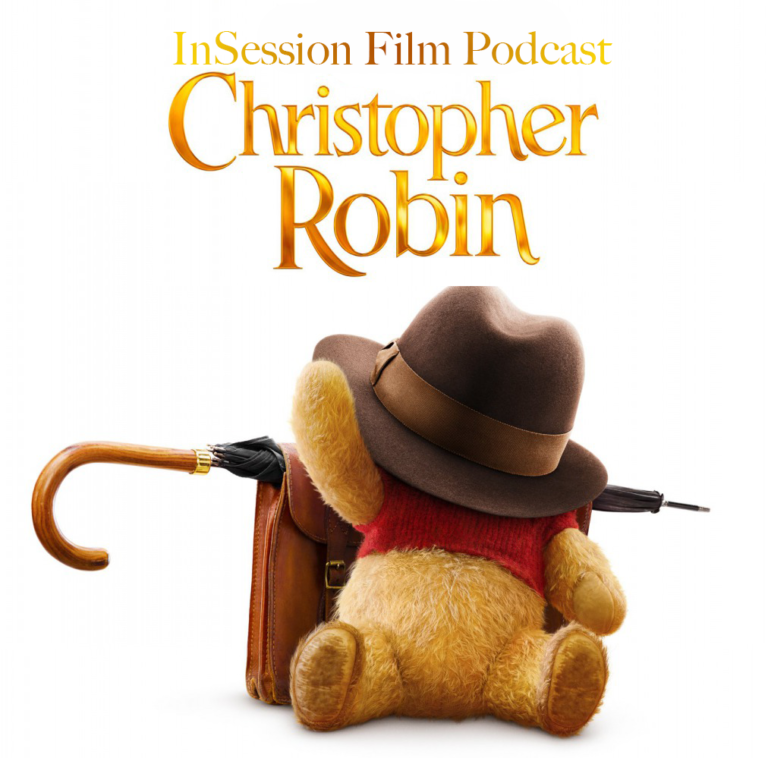
This week on the InSession Film Podcast: Extra Film segment, Jay Ledbetter and Ryan McQuade join us to discuss Disney’s latest live-action remake in Christopher Robin and also the Argentine film Zama!
No JD this week, but big thanks to Jay and Ryan who were great in filling in as co-hosts. These two films could not be more different from one another, which made for some interesting banter on the show this week. Whether you’re into Disney live-action remakes or arthouse foreign language films, we hope to have something to offer.
Have fun with this week’s Extra Film segment and as always let us know what you think in the comment section below. Thanks for listening!
– Movie Review: Christopher Robin (7:25) Director: Marc Forster Writer: Alex Ross Perry, Tom McCarthy Stars: Ewan McGregor, Hayley Atwell, Bronte Carmichael
– Movie Review: Zama (38:55) Director: Lucrecia Martel Writer: Antonio Di Benedetto (based on the novel by), Lucrecia Martel Stars: Daniel Giménez Cacho, Lola Dueñas, Matheus Nachtergaele
We try to make this the best movie podcast we possibly can and we hope you enjoy them. Subscribe today on iTunes and Stitcher and please leave us a review on iTunes. You can also find us on Soundcloud, PlayerFM and TuneIn Radio as well. We really appreciate all your support of the InSession Film Podcast.
To hear this Extra Film episode and everything else we do, download our apps on the Amazon Market for Android and the Podcast Box app on IOS devices. The mobile app covers all of our main shows, bonus podcast’s and everything else relating to the InSession Film Podcast. Thanks for your wonderful support and listening to our show. It means the world to us!
[divider]
Help Support The InSession Film Podcast
If you want to help support us, we would greatly appreciate it! For more info, CLICK HERE.
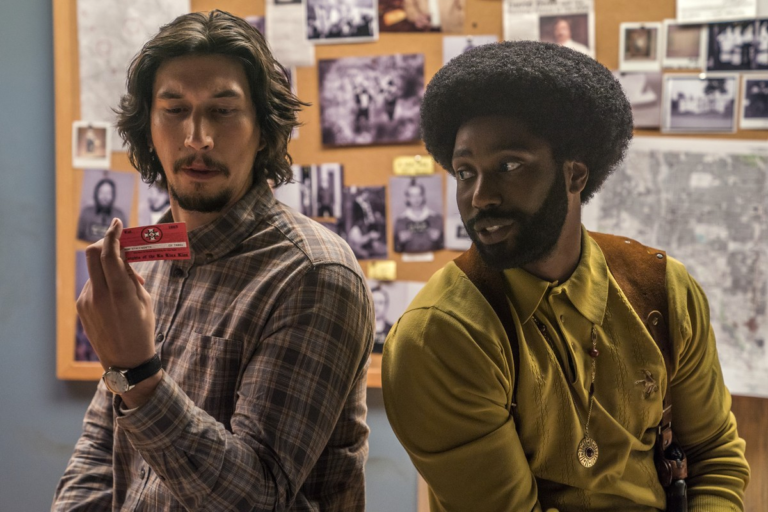
Director: Spike Lee Writers: Charlie Wachtel, David Rabinowitz Stars: John David Washington, Adam Driver, Laura Harrier
Synopsis: Ron Stallworth, an African-American police officer from Colorado, successfully managed to infiltrate the local Ku Klux Klan and became the head of the local chapter.
[/info]
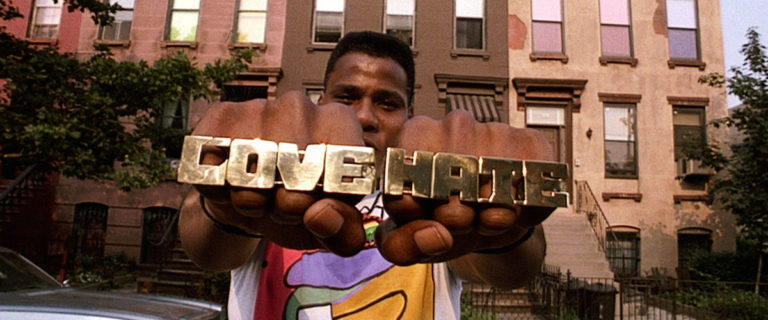
Spike Lee first sent major shockwaves in to the Hollywood scene with his wickedly entrancing 1989 outing, Do the Right Thing — which happens to be just as invigorating as it is riveting and thought-provoking. This only led Lee on to a career that included most notably films like Malcolm X, and 25th Hour. Both of which are considered some of his best material to date. But where Spike Lee has solidified himself as one of, if not the greatest filmmaker of our generation is the consistently ambitious commentary and social awareness he’s inscribed in to his projects. As well as the bold political relevance and poignancy that are infused to further extend parallels that reflect back to the current state of our real world. Which is exactly what BlacKkKlansman does, by exploring a traditional quest for racial equality and balance, and examining the ideology that sprouts from everyone’s personal motives.
Ron Stallworth (Washington) is an eager, somewhat angsty young adult who’s just joined the Colorado Springs police force. Although he thinks to a certain degree very highly of himself, he’s dismissed by his captain and sheriff quite early in the film’s slow-burning exposition. After setting up a meeting with one of the higher-ups of the local Ku Klux Klan to infiltrate and prevent a race war he sees as inevitable, they send in Flip Zimmerman (Driver) as an undercover Klan member to expose any hostile actions they might be planning. Tensions are already heating up between local African-American empowerment groups and of course the KKK. But once Driver is sent in to the battlefield, the entire spectacle of the issue is fully revitalized and displayed impeccably. Stallworth also strikes up a bond and relationship with Patrice Dumas (Harrier), who happens to be a lead president for one of those groups thats pleading for and exhibiting the idea of black power and liberation. Between both of our main protagonists, we’re able to see what’s going on from both sides of the social spectrum, as opposed to just usually being a third-party.
John David Washington, who hasn’t really been in a massive amount of projects up to this point in his career, hammers the nail on the head as our main character, Ron Stallworth. He’s an extremely talented rookie actor who portrays our stubborn and restless rookie detective. Adam Driver, our other main protagonist, is of course, just as solid as always. Yet another performance he can add to his filmography that is just as admirable as the next. What I find the most rejuvenating about this duo however, is that there’s always some kind of obstacle being hurdled at them. Whether it be Stallworth or Zimmerman. Physically or mentally, they’re constantly being beat down and challenged throughout the film, giving them hardly any time or room for error. They’re always on their feet and always have to be prepared for any last minute switch of plans. Which as you can imagine, makes it hugely investing.
Even though it’s only been about roughly three years since Lee’s last full-feature length film, Chi-Raq, a project of this scale sustaining subject matter Lee absolutely dominates in is what propels this movie forward to being the quality it deserves. As Lee puts it at the beginning, this was based upon “some fo’ real, fo’ real sh*t”, which is the basis for the exceptional screenplay penned by Lee and a few others. There’s little pockets of humor sprinkled throughout the movie that can both be dark, and even kind of satirical. The few gags I’m talking about in particular take subtle shots at referencing today’s political climate, which is something alternatively hilarious I didn’t see coming. Despite this, Lee and his group of writers nearly explore the conflict between both races to its fullest extent. The supporters from each race and organization aren’t lopsided in their beliefs. It feels as though they’re both equal in terms of their passion for power through their race. Which I think is the most accomplished aspect through that observation. In a way showing that even through all of the hatred, they’re humans, just like each other. Ron Stallworth’s character development is also one of the premier things to come from this film. He’s obviously attempting to do what’s right while simultaneously bettering the lives of not just his race, but all races. But becomes tested in a situation of what’s really right. It’s all based upon perception, and through himself he needs to figure out what he has to do. Not what he needs to do, but what he has to do. Which is just an utterly brilliant character study to me.
As intuitive as BlacKkKlansman eventually ends up being as a final product, it would be difficult to truly believe that early on in the film, I wasn’t completely on board with the inclusion of everything being presented. It feels as though for the first hour or so, Lee didn’t quite establish the film that he was so passionate on curating. There hardly ever feels like there was ever any zealous or stable sense of a focus or direction pertained towards the project, and you begin to question about which path the film is going to proceed down. It left me a bit unsatisfied with the first act, since I wasn’t completely able to immerse myself in the story. However, once the agenda begins to heat up with Driver being undercover, things immediately get better. Whether it be from the perfectly executed tension, or the immensely witty yet insightful interactions between each character.
Something else that did quite bother me also takes place in that first hour or so too. Stallworth as a character, while quite enigmatic and well-received toward audiences, receives hardly any true background in to his own motivations behind the investigation he’s conducting. Early on he confronts a somewhat self-conflict undercover, but shelves those feelings to further focus on the case. While it’s showed that he doesn’t completely agree with both races philosophies, he doesn’t want his reluctance and personal biases to ruin the case. However, had this layer of Ron Stallworth been peeled back much more extensively from when it was first introduced to throughout the rest of the film, the already potent remainder of the movie could’ve contained such a bigger fulfilling conclusion. This can go for nearly every other character too. They wait so long to be dissected and fleshed out, that by the time you want to analyze their decision-making, it’s too late. Between both of our protagonists, their motivations aren’t unraveled full circle until nearly the halfway point of the film, as we see them stop dragging their feet and accept what they need, and what they’re going to do.
This issue definitely holds the least significance out of my nitpicks, but a handful of the technical aspects attached to this film aren’t exactly up to par when compared to the standards that have been set in the industry today. The component that caught my eye the most was it’s very unpolished editing. It’s a lot easier to catch as you’re watching the film, but it’s a really unbalanced put together film. The cinematography is also another really bizarre case to me. It doesn’t tread upon being awful, but there are shots here and there that’ll cut off the top of character’s heads, or even during a non-action scene the cam is noticeably shaking. I’m not sure what the decision making was behind these aspects, but I assure you I was not the biggest fan of them.
While I ultimately did have a few minor problems with BlacKkKlansman as a whole, once the halfway point of the movie kicks in, there’s no turning back. The performances are superb, as well as the remarkable screenplay. We’re fully able to get behind our protagonists personal issues and motives they have towards everyone around them as well. It’s portrayal of a time not so long ago where the abundance of loathing and potential bloodshed amongst races is both fervent and insightful. The commentary from Lee is also gripped with a damaging call to action. Let’s just say, it’s socially applicable to the real world we live in now more than you think.
Overall Grade: B+
[divider]
Hear our podcast review on Episode 286, coming soon.
Director: Marc Forster Writers: Alex Ross Perry, Tom McCarthy, Allison Schroeder Stars: Ewan McGregor, Hayley Atwell, Bronte Carmichael
Synopsis: A working-class family man, Christopher Robin, encounters his childhood friend Winnie-the-Pooh, who helps him to rediscover the joys of life.
[/info]
Christopher Robin is a sweeter, more coherent, less exhausting version of Steven Spielberg’s Hook. Instead of Peter Pan, the protagonist here is, you guessed it, Christopher Robin (Ewan McGregor). Young Christopher enjoyed years of fun and frivolity with his famous friends from the Hundred Acre Wood. However, that is all coming to and end, as his father is sending him to boarding school. Christopher will no longer be able to climb in and out of the Wood as he pleases. The film opens with a legitimately touching picnic between friends. There is an immediate understanding of the love that Winnie the Pooh, Piglet, Eeyore, Tigger, Owl, Rabbit, Kanga, and Roo have for Christopher Robin. In front of a beautiful sunset, there are fond speeches and an indulgent meal. Immediately, you can tell that Christopher Robin is going to be far more understated than any other Pooh story put on film. The early, and perhaps best, part of the film feels inspired far more by David Lowery’s subdued Pete’s Dragon than overblown Disney live-action adaptations like Alice and Wonderland or Beauty and the Beast. This is surely due, at least in part, to the influence of indie darling Alex Ross Perry, who wrote the film’s first draft.
There is an intimacy to the early scenes that define a world that is, at times, abandoned as the film goes on. After a montage showing us that Christopher Robin has grown up to be an uptight, work-obsessed man without his furry friends, the film loses a bit of steam. When we deal exclusively with human characters, the drama feels forced and contrived. Christopher has completely forgotten how to have fun and thinks every moment of the day should be used to better oneself. When his daughter (Bronte Carmichael) asks him to read her a story, he pulls out a textbook. When his wife (a wasted Haley Atwell) breaks out in dance, he shuts his office door in her face. Christopher works for a luggage company, focusing on company efficiency. Nearly all of the scenes showing the trials and tribulations of his job counteract the genuinely sweet moments experienced when Pooh and co. are on screen. Christopher’s work life is portrayed in a way that feels too silly to be relatable for older viewers and too mundane to be interesting for younger ones. His boss is controlling in the least-interesting ways imaginable and the objective of “cut costs by twenty percent in one weekend or your department will be terminated” is so broad that it takes away much of the narrative weight.
Christopher’s overwhelming work life forces him to skip out on a family trip to the countryside, much to the dismay of his wife and daughter. When he arrives home one day, he runs into a nearby courtyard to hide from his pesky neighbor to find his old friend, Winnie the Pooh, on the hunt for his friends, who he cannot find in the foggy Hundred Acre Wood. Unsurprisingly, this is when the story picks up steam. Pooh speaks in funny, Yoda-esque phrases (“People say nothing is impossible, but I do nothing everyday”) and waddles around in a constant state of honey withdrawal. Pooh is well-meaning and sincere, but his undying thirst for honey and curiosity when it comes to the new world around him provide for sweet comedy and an overall warm, fuzzy feeling.
Christopher Robin decides that he has to make sure that Pooh returns to the Wood, which means a trip to the portal by the house in the countryside where his family is staying (it makes absolutely no sense that Christopher’s character would, according to everything we have seen of him thus far, would lose basically an entire day of work for this, but sometimes it is best not to question the logic of a film starring a talking teddy bear). After a cute train ride with Pooh, Christopher returns to the Wood and helps his crop top-wearing, honey-loving friend find his friends. The design of the characters in the Wood is something that the makers of this film can hang their hat on. Without even having spoken a word, there is an attraction to them based on sheer cuteness. These versions of the characters are, no doubt, based on the characters popularized in the cartoons of the late 1980’s, which established a style that survived through the most recent Pooh theatrical film, 2011’s Winnie the Pooh.
This is driven home by the fact that Jim Cummings, who has been with the franchise since the creation of The New Adventures of Winnie Pooh in 1988, is still the voice of both Pooh and Tigger in Christopher Robin. This is in line with the vision of these live-action adaptations that have proven to be very lucrative for Disney. They are, at their best, heavily-inspired by but not completely tied down to their cartoon source material and, at their worst, insufferable nostalgia porn for 90’s kids (*cough cough* Beauty and the Beast *cough cough*). Cummings provides a sense of home for 20-to 30-somethings like me who grew up on his rendition of the two most iconic characters in the series. There was no need to make sure there was continuity when it came to the other characters, but the exclusion of Cummings would have been too much for many to handle, even if 99% of the audience wouldn’t be able to pick him out of a lineup. His Pooh is tender and sweet, his Tigger rambunctious and brazen. Cummings makes the film work as much as anyone else.
After an utterly charming and delightful period in the Hundred Acre Wood where we are more properly introduced to the likes of Eeyore, Piglet, and Tigger (including a truly touching moment between Pooh and Christopher that brought tears to the eyes of both the viewers to my left and my right), Christopher returns home for a presentation to the board of his company that will decide the fate of his department. But, luckily, there is allot device that makes sure we get the motley crew of Pooh, Tigger, Piglet, and Eeyore sent chasing after Christopher Robin in London with the help of Christopher’s daughter. This scenario brings about the pretty great set pieces of the film that are silly, funny, and at least a little bit thrilling. Director Marc Forster presents the city as a flat, dull landscape where Pooh and his friends strikingly stand out, even with their slightly worn stitching. It is an unfortunate coincidence that the only stand out moments of the film occur when those characters are involved. The ending of the film is schmaltzy and leaves much to be desired, thematically, but at least we get a little more Pooh.
On a technical level, Christopher Robin is mostly unremarkable. Some of the visuals in the Hundred Acre are beautiful in their simplicity, but everything aside from that often feels flat. However, one cannot discount the sense of wonder that Forster is able to capture when we are exposed to Pooh’s curiosity, Eeyore’s charming melancholy, or Tigger’s fiery proclamations. The Pooh stuff really works! If only the rest of the film could have matched half the energy or inventiveness of those moments. The Hundred Acre Wood is a place of gentle wonder. The rest of the film leaves you wondering why you didn’t leave to get a refill of popcorn. It is a movie that will play better when you can skip the bad scenes and get to the “silly old bear”. You will laugh, you may cry, and then you will see yourself looking at your watch. See it for the number of great moments it has, but be prepared for the moments when you may find yourself dozing off like Pooh after one of his jars of honey.
Spike Lee has been a seminal filmmaker over the last 30 years, and his voice is as important today as it’s ever been. His new film BlackKklansman hits theaters this weekend, and by all accounts, its one of his best films in recent years. So with that as inspiration for our poll this week, we simply want to know, what is your favorite Spike Lee joint? Do the Right Thing is an all-timer, but maybe there’s another film that you love?
It has been 60 years since the release of one of his more divisive films, the hypnotic Vertigo with James Stewart and Kim Novak. I’m on the side of it being perfect, but it took me some time to warm up to it, and Psycho is still personally my favorite Hitchcock film. It was part of the golden age of his career that stitched up the title “Master of Suspense” and made him a formal auteur in Andrew Harris’ theory. But what is sometimes overlooked is his career in his native Britain. With the now-defunct Gainsborough Pictures and Gaumont-British, Hitchcock made 26 silent and sound pictures in the 1920s and 30s before his departure to the U.S. It was these pictures that started the trend of work we would see in Hollywood. Here are some of the best of early Hitchcock.
The Lodger: A Story Of London Fog (1927)
This was Hitchcock’s third film, but Hitchcock himself called it, “the first true Hitchcock movie,” because of the suspense and foreshadowing elements that would follow the rest of his career. With a Ripper-like killer on the loose, a mysterious man takes up residence in a vacant room and has some resemblance to the killer. Soon, the man becomes a suspect of interest for various reasons. The thriller showed the technical smarts Hitchcock possessed such as the “glass ceiling” shot, visual symbolism, and crafty editing that reduced the number of title cards needed for the silent picture. Scholar Donald Spoto wrote that The Lodger, ” revealed his psychological attraction to the association between sex and murder, between ecstasy and death.” Most notable of all, it was the first time he started making cameos; a shortage of extras forced him to take up a shot as an editor in a newspaper office.
The Man Who Knew Too Much (1934)
Before it was remade by Hitchcock in 1956 to the expanded 2-hour dash from Morrocco to London (which the director said was the better version of the story), it was a simple 75-minute thriller that starts from the ski lodges of Switzerland and introduced the English debut of Peter Lorre three years after his chilling performance in M. The story’s narrative is quick zig-zag of pursuits, questions, a kidnapping, and successful and unsuccessful killings. A major difference compared to the 1956 version is the shootout at the end of the film which recalls the film’s opening sequence. While some say there are flaws in the story and that it does not give enough exposition within key scenes, I see it as a straight-up convincing story that does need to get as tense as the later version did.
The 39 Steps (1935)
The following year, Hitchcock went to a common scene that would be repeated afterward: the train. It would not be the main setting, but it plays a part in the common “wrong man” plot he would continue with also. Here, a man is mistakenly accused of killing a British secret agent and has to flee to find out who did it while also trying to figure out from the dead agent what the 39 steps are. Running into a beautiful woman, he has to take her along for the journey to the Scotland Highlands and back to London where the first scene of the film also becomes the climax and answer to the man’s questions. The famous MacGuffin is utilized, a plot device which is important to the story, but irrelevant to the audience; in this case, it’s what the 39 steps are, but the main point here is what can the man do to clear his name.
Sabotage (1936)
This espionage story is loosely based on a Joseph Conrad novel about a woman who discovers that her husband works for an organization that plans on bombing London. Another 75-minute feature, it utilizes cinema has a key feature within the deepening suspense, a scene that people were not happy with when released because it features a young boy holding a can of film that has a bomb inside of it. Hitchcock acknowledged that to have a child harmed in such a manner was not a wise thing for the story and learned from that. Regardless, it was another hit for Hitchcock.
The Lady Vanishes (1938)
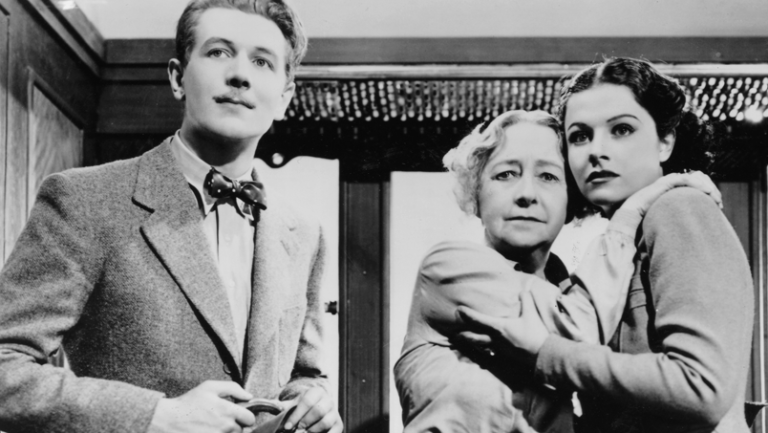
After The 39 Steps but before North by Northwest, Hitchcock put two individuals, a beautiful young woman, and handsome young man, on a moving locomotive where a young woman meets an older woman before boarding. When the older woman goes missing and the rest of the passengers claimed to have never seen her, she only can get help from a traveling musician and they uncover a conspiracy. Within the mystery, there is also the romantic chemistry between the two, mixing it with the international intrigue that fit the bill for the time in Britain. It was so liked that French New Wave pioneers Francois Truffaut and Eric Rohmer could not try to study the film because they were absorbed into the plot.
In 1939, David O. Selznick, who recognized the masterpieces of Hitchcock’s work, contacted him and offered a job to work in the United States, several months before the outbreak of World War II. The first two pictures he made in Hollywood would both be nominated for Best Picture, Foreign Correspondent and Rebecca, the latter ended up winning Best Picture. He would return back to his home country just once to film Frenzy in 1972. Many will remember him for his incredulous films in decades after his tenure in Britain ended, but early Hitchcock works laid the groundwork to how we remember his legacy and contribution to films.
The month of July started to bring some sunlight to the 2018 Oscar race. For this month’s Chasing the Gold, I will be looking back on the month of July, as well as the first week of August, and looking at the films, trailers, festivals and buzz surrounding this year’s Oscar race. While there were some films that could make hay in some smaller categories, it was news from the festivals and trailers galore that brought the intrigue level to where it is at today, showing us what’s going to be in play for those gold statues at the beginning of next year.
Films:
The month of July didn’t really bring the Oscar race any Best Picture contenders but it did bring a lot of candidates for Original Screenplay into the fold. There is Boot’s Riley’s wildly zany social satire Sorry to Bother You, that has a premise and a twist that makes it one of the most original and crazy screenplay’s of the year, very much making it 2018’s The Lobster, a film that didn’t get a lot of love in other categories other than original screenplay. Then there is the screenplay for Blindspotting, a film very similar in its message like Sorry to Bother You, but handles it way better in my opinion and tells it a little subtle, and with actors Daveed Digss and Rafael Casal writing the film and already doing a lot of good press for the film, they will make an interesting duo if they hang around at the end of the year. And the last original screenplay contender is Eighth Grade from first time director Bo Burnham, which is one of the more realistic screenplays written in recent memory about adolescence and what it truly means to grow up in this modern generation. Burnham could easily ride the coattails of Lady Bird from last year and land himself his first Oscar nomination. But rest assure, if these three films don’t get nominated at the Oscars, I have a feeling they will be on a lot of critics lists at the end of the year and most likely the Independent Spirit Awards as well.
The only other film of mention from this month is for Mission Impossible: Fallout, which is the sixth film in arguable the best spy series going on within the genre currently. Looks through the history of the Oscars, it is amazing that with all of the great special effects and action set pieces these films have put together, it’s really strange that the series has not been nominated for any Oscars. But with the amazing achievement Fallout is, I wouldn’t be surprised if for the first time in the series, we finally see a very well deserved Best Visual Effects nomination for the film and Ethan Hunt and the gang break into the Oscar conversation. But while there weren’t a lot of films that sparked Oscar talk, there were plenty of trailers from the fall that came out that showed extreme promise.
Trailers:
Towards the middle of the month, we were given our first looks at a couple of films starting with The Favourite (Yorgos Lanthimos). The Favourite is Lanthimos’s follow up to The Killing of a Sacred Deer and The Lobster, and tells the story of Queen Anne (Olivia Coleman) and her friendships with two women played by Rachel Weisz and Emma Stone. Lanthimos’s films are considered to be out there for a lot of people, but I quite enjoy his films, and The Favourite is supposed to be his most accessible film to a mass audience to date with powerhouse performances from all three ladies mentioned above. Think The Lobster meets Stanley Kubrick’s Barry Lyndon and that is the kind of film we will get in the fall.
Mary Queen of Scots is another film about Queens from England only in a much different vine and tone than the previous film that was discussed. The film follows Mary (Saoirse Ronan), Queen of Scots and her cousin Queen Elizabeth I (Margo Robbie) and their rivalry turned war between the two of them for control of the thrown. With both actress coming off their best performances of their young careers in Lady Bird and I, Tonya, Ronan and Robbie could be looking for Oscar gold this time around after walking away last year empty handed. But the film could be more than just the two lead actresses, it’s also being written from a screenplay by Beau Willimon, who is the creator of House of Cards and wrote the play that he later adapted into the movie The Ides of March, which landed him an Oscar nominated back in 2011. The production design of the film looks incredible as well as the make-up and costumes, which easily look like contenders even if the film is subpar. The only cause for alarm for this films is that it is being directed by a first time director Josie Rourke, but with a lot of first time director having great outings over the last couple of years at the Oscars, Rourke will get the benefit of the doubt from me till the film comes out.
Shortly after these two trailers were released, we were given another first look trailer, this one being Joel Edgerton’s coming of age drama Boy Erased. The film, which is based on a true story, follows the life of Jared Eamons (Lucas Hedges) that comes out to his very conservative, religious parents (Nicole Kidman and Russell Crowe) and is send to a gay conversion camp to avoid being shunned by everyone he knows. Edgerton, who is also in the film as the leader of the camp, adapted the screenplay, so he pulls triple duty and based on the trailer, this is a big step up from his last film The Gift. This feels like one of those films of the Oscar season that could play well considering its based on a true story and has a very timely message about the treatment of members of the gay community within our modern political era. It could very well be this year’s Lion, only much better.
And though this trailer didn’t appear in the month of July, by the time this piece comes out, we would have seen the first looks at Barry Jenkins Moonlight follow up, If Beale Street Could Talk. The film is adapted from a novel by author, civil rights activist James Baldwin and is about a woman who scrambles to prove her fiancé innocence of a crime he didn’t commit while also carrying their first child. While early buzz has been questionable about the film, I tend to not believe most of that noise and trust that Jenkins will be giving us a good if not great follow up to Moonlight. Based on the trailer, Jenkins isn’t missing a beat in terms of direction and the cinematography looks absolutely amazing. The film is leaning on a cast of mostly unknowns in the leads, with Kiki Layne playing the lead role, but her mother is being played by Regina King, who could be just like Naomie Harris and Mahershala Ali, who were supporting actors in Moonlight and end up with Oscar nominations and a win for Ali. If there is anything you can learn from the last time people underestimated a Barry Jenkins film, don’t count it out in the awards race and that’s why I expect it to be a front runner across a lot of the major categories.
Fall Film Festivals:
Within the next two to three months, we will be seeing the films above plus a plethora of others that will premiere at film festivals around the world, starting in Venice, Italy at the end of August. We know most of the slate that will be playing their, films like Paul Greengrass’ 22 July, The Coen Brothers The Ballad of Buster Scruggs, Damien Chazelle’s First Man, Alfonso Cuaron’s Netflix film Roma. Other films that are being included are The Favourite, Luca Guadagino’s Susipria, Mike Leigh’s Peterloo, Jacques Audiard’s The Sisters Brothers, and our every ones first real look at Bradley Cooper’s A Star is Born.
Telluride comes next with a slate that includes Jason Reitman’s The Front Runner, Marielle Heller’s Can You Ever Forgive Me? and David Lowery’s The Old Man & the Gun. Though most of the lineup hasn’t been announced, it’s not going to be a secret if most of the films from Venice and the next festival, Toronto, go to Telluride. In Toronto, we will get to see If Beale Street Could Talk for the first time along with Felix van Groeningen’s Beautiful Boy, Steve McQueen’s Widows, Dan Fogelman’s Life Itself, along with many more because not all the films have been announced yet. By this time next month, we are going to start getting a clear look at what’s going to be our nominees once we start getting toward the end of the year.
What’s Coming Next:
So with many trailers coming out, premiers at film festivals on the horizon, and films coming up with August that will be coming to theaters like Spike Lee’s BlackkKlansman, Oscar Watch is going to be getting really busy quick. That is why before the festivals come out, you can come back and read my early Oscar predictions article here on InSession Film and see how wrong and right I am once the dust settles at the end of the year. Look for that within the next two weeks and keep track of the Oscars and the films above because most of them are going to be around and talked about a lot at the end of the year.
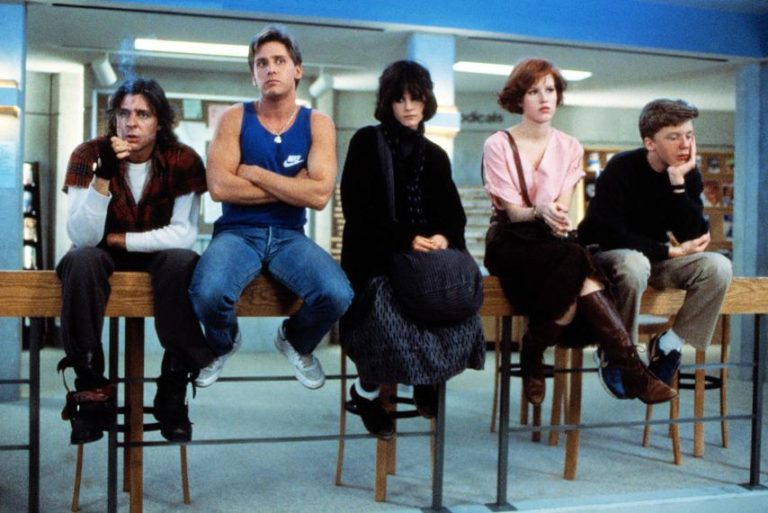
This week on Episode 285 of the InSession Film Podcast, inspired by Bo Burnham’s Eighth Grade, we decided to talk about our favorite grade school movies. Why are many of us are so drawn to movies about middle and high school? Is it nostalgia? Is it for reliving the painful truths they depict? Is it the humor? Or simply all of the above? Dating even further back than the era of John Hughes, this genre continues to age (much like these films’ respective characters). For our Top 3 this week, we celebrate the best this genre has had to offer over the many years. On that note, what movies would make your list? Here are the one’s that made ours:
(Note: Please keep in mind that we each had different criteria for our selections)
JD:
1) The Breakfast Club
2) The Edge of Seventeen
3) Back to the Future
Brendan:
1) Election
2) Back to the Future
3) Superbad
Honorable Mentions (Combined) The Last Picture Show, The 400 Blows, Dead Poets Society, Sixteen Candles, Say Anything, Carrie, Rushmore, Welcome to the Dollhouse, Juno, School of Rock, Brick, Easy A, Mr. Holland’s Opus, Grease, Mean Girls, Clueless, Billy Madison, Back to School, American Pie, American Graffiti, Lady Bird, Sing Street, Harry Potter, The Perks of Being a Wallflower, The Spectacular Now, 21 Jump Street, Me and Earl and the Dying Girl, Hoop Dreams, Hoosiers, Friday Night Lights, Remember the Titans
Hopefully you guys enjoyed our lists and if you agree or disagree with us, let us know in the comment section below. There are many great grade school movies that have been made over the years and maybe your list looks very different than ours. That being said, what would be your Top 3? Leave a comment in the comment section or email us at [email protected].
This week on the InSession Film Podcast, things finally get so gucci as we time travel back to middle school with Bo Burnham’s directorial debut Eighth Grade, starring Elsie Fisher and Josh Hamilton. We also use that as inspiration to discuss our Top 3 Grade School Movies!
Eighth Grade has already been garnering critical acclaim from the masses, as perhaps a new classic among grade school coming-of-age flicks; hopefully our conversation doesn’t come off as white noise then (spoiler alert). And what better way to celebrate this genre by looking back on the best films where middle/high school served a prominent place in those narratives. But that’s not all; how about we top things off by finally tackling one of our Patreon donations? Mr. Tim Costa from the First Time Watchers Podcast has asked for a review of Geostorm (aka The Greatest Movie of All Time), and we have obliged!
Let us know what you think in the comment section and thanks for listening to the InSession Film Podcast!
– Movie Review: Eighth Grade (3:17) Director: Bo Burnham Writer: Bo Burnham Stars: Elsie Fisher, Josh Hamilton, Emily Robinson
– Notes / Next Week (41:40)
After teasing it a few weeks ago, we are finally going to get to Eighth Grade next week on the show, so we had to have some fun with that. We also note that we are going to be doing our 2006 Retrospective on Episode 288, coming soon.
– Top 3 Grade School Movies (50:00)
Why are many of us are so drawn to movies about middle and high school? Is it nostalgia? Is it for reliving the painful truths they depict? Is it the humor? Or simply all of the above? Dating even further back than the era of John Hughes, this genre continues to age (much like these films’ respective characters). For our Top 3 this week, we celebrate the best this genre has had to offer over the many years. That said, what would be your Top 3?
– Patreon Review: Geostorm (1:29:25) Director: Dean Devlin Writer: Dean Devlin, Paul Guyot Stars: Gerald Butler, Jim Sturgess, Abbie Cornish, Daniel Wu, Alexandra Maria Lara, Zazie Beets, Andy Garcia, Ed Harris
If you want to help support us, there are several ways you can help us and we’d absolutely appreciate it. Every penny goes directly back into supporting the show and we are truly honored and grateful. Thanks for your support and for listening to the InSession Film Podcast!
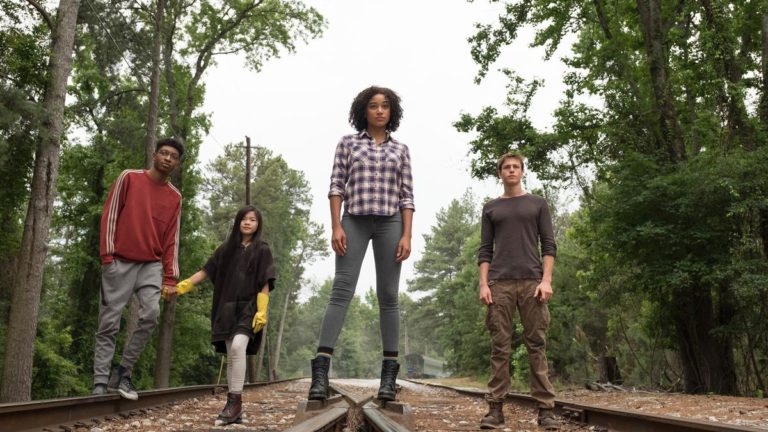
Director: Jennifer Yuh Nelson Writers: Chad Hodge (screenplay by), Alexandra Bracken (based upon the novel by) Stars: Bradley Whitford, Mandy Moore, Amandla Stenberg
Synopsis: Imprisoned by an adult world that now fears everyone under 18, a group of teens form a resistance group to fight back and reclaim control of their future.
[/info]
For a movie with “adults are scared of children” built into the premise, The Darkest Minds sure had a lot of different directions it could go regarding a social commentary, especially as members of Generation Z are in the midst of turning 18. Instead, it chose to go the predictable “rebellious teenagers find love in a hopeless place” route and totally missed the mark. That’s not to say it’s all bad, but it really could have been so much more.
I should probably admit that I have not read The Darkest Minds books by Alexandra Bracken. That said, this definitely felt like a case of the screenwriter (and likely the studio execs) trying to replicate the plot beat for beat without stopping to think what actually makes the books work. The pace is so breakneck with such an overemphasis on plot that you never really get a chance to breathe and figure out why any of it matters to the characters and, ultimately, the audience. The characters have little to no depth or arcs, the obligatory love story is shoehorned in with no genuine emotion behind it, and some of the most interesting exposition is unfortunately delivered through voiceover or, worse, awkward dialogue.
I’m not sure if the books hone in on the themes of generational divides and the youths of a nation changing the world in more precise and interesting ways (I’m betting they do), but the movie seems to completely lose its obvious message. Even worse, it manages to find a place for every bad teen movie cliche, from the forced love story to a shopping mall montage to the extravagant teenage party. If the script simply replaced some of those tropey scenes with character or theme explorations, this movie would have been infinitely stronger overall. But instead of a nuanced, socially relevant movie about teenagers overcoming adversity and changing the world, we end up with a hot mess of action set pieces, awkward teenage love, and stilted dialogue, including the most forced conversation about Harry Potter ever spoken aloud.
For all of these negatives, I have to admit that this movie was still mostly enjoyable, overall. It’s nowhere near as good as it’s obvious inspirations, like the X-Men or Hunger Games franchises, but the characters, despite the tropes and overemphasis on plot, are extremely likeable. This movie is also just visually appealing, from the stellar cinematography to the attention to detail of the set designs and props to the incredible special effects throughout. And while the acting is a bit of a mixed bag, this is easily the most diverse cast I’ve seen on screen in a long time. Despite the fact that the movie loses a lot of its message in the plot, there is something powerful about a story about a bunch of kids who all look different from each other and come from different backgrounds coming together to embrace their differences, discover their power, and take control of their own futures and, in turn, the future of the world.
The Darkest Minds is a movie I likely won’t recommend to many people. I enjoyed it but mainly because I’m a sucker for dystopian young adult fiction, and if you are, too, you might like this movie. I would also probably recommend it to most teenagers, but only if those teenagers have already seen movies like The Hunger Games quadrilogy, the X-Men franchise, or even the less well-received Ender’s Game. The Darkest Minds is not as bad as the current 19 percent Rotten Tomatoes score would lead you to believe (and I think the 80 percent audience score will attest to that), but there’s still a pecking order and when it comes to dystopian young adult fiction, this one just simply isn’t at the top.
This week on the InSession Film Podcast: Extra Film segment, Jay Ledbetter joins JD to discuss Blindspotting and the fascinating documentary Three Identical Strangers!
July has been a great month for film in 2018, and what a pair films to cap off the month. Blindspotting and Three Identical Strangers are both very good and we had a great time discussing what makes them so unique and captivating. Big thanks to Jay for joining us on the show as well, he was absolutely terrific and we look forward to having him back soon.
We hope you have fun with this week’s Extra Film segment, and as always let us know what you think in the comment section below. Thanks for listening!
– Movie Review: Blindspotting (5:31) Director: Carlos López Estrada Writer: Rafael Casal, Daveed Diggs Stars: Rafael Casal, Daveed Diggs
– Movie Review: Three Identical Strangers (57:49) Director: Tim Wardle
We try to make this the best movie podcast we possibly can and we hope you enjoy them. Subscribe today on iTunes and Stitcher and please leave us a review on iTunes. You can also find us on Soundcloud, PlayerFM and TuneIn Radio as well. We really appreciate all your support of the InSession Film Podcast.
To hear this Extra Film episode and everything else we do, download our apps on the Amazon Market for Android and the Podcast Box app on IOS devices. The mobile app covers all of our main shows, bonus podcast’s and everything else relating to the InSession Film Podcast. Thanks for your wonderful support and listening to our show. It means the world to us!
[divider]
Help Support The InSession Film Podcast
If you want to help support us, we would greatly appreciate it! For more info, CLICK HERE.
Synopsis: A boy comes of age during a summer he spends in Cape Cod.
[/info]
Hot Summer Nights is the first film that I was aware of being released through DirectTV Cinema (Although it was later re-released through A24). In fact up until this point I was unaware a film could go direct to DirectTV although the naming convention might suggest otherwise. Nonetheless taking this into consideration may have you assuming it would be just a mediocre piece of cinema otherwise it would release to theaters to a wider audience. But don’t be fooled by old stereotypes, Hot Summer Nights is not your typical film and Elijah Bynum is not your typical first time director.
Hot Summer Nights starts off solemn introducing its main character Daniel Middleton (Timothée Chalamet) with a quick back story revolving around his father’s death. This is meant to help catch the audience up to his current circumstances and also to develop his characters direction a bit. A quick note, the film uses an interesting method of storytelling by having an un-introduced character narrate over the action on-screen. Not knowing who this character is and their connection to the story might seem odd for some; early on I was a bit puzzled and dwelled a little on the connection but as the film continued on the narration faded into background noise. In a way the narrator acts as a surrogate for the audience while at the same time providing us important and sometimes intimate details. Using this narration Writer/Director Elijah Bynum takes his time illustrating a setting for the story providing some background on Cape Cod and its occupants during the early 90’s. This sets a good tone and pacing for the film and, along with the soundtrack, does an impressive job of immersing you in that 90’s vibe. Try as you may to resist but you WILL reminisce.
The film follows Daniel as he spends his summer as a new kid in Cape Cod adjusting to his new life. The meat of the story focuses on his involvement with a brother and sister, Hunter (Alex Roe) and McKayla (Maika Monroe), with a turbulent past and seemingly damaged relationship. Daniel first meets Hunter through a risky and awkward encounter (Ironically I just realized this describes how he and McKayla meet as well) that leads to them becoming friends and eventually business partners. It is not a spoiler to mention that their business was selling narcotics, specifically marijuana, to town folk. It’s a business Hunter has been managing well but Daniel coming on board leads to some increase in profits as well as an increase in risks and as these kind of stories always go this combination eventually comes to a head with Daniel and Hunter both having to question where their priorities stand. As their partnerships develops we are introduced to McKayla and after some pushing and pulling they eventually form a connection. The film handles both of these relationships well, they are believable and you can see how each has its place in Daniel’s world and actually pose as separators between the two different lives he is living.
In regards to Hunter and McKayla’s strained relationship the film hints at some squabble that caused this rift between them but doesn’t dig much deeper. It’s very apparent to the audience that the two siblings prefer keeping their distance and this is used as a mechanism for drama as neither Hunter nor McKayla are aware that Daniel knows of and spends time with the other. This deception of course plays out later in the films final act in predictable fashion. Bynum juggles this all well but if you start to analyze a bit it can be hard to fathom how both relationships are kept secret. The film does a pretty good job of establishing both Hunter and McKayla as popular figures around Cape Cod, especially Hunter who has a reputation for being that typical rebel bad boy as well as a notorious drug dealer. Knowing this its difficult to believe that Daniel could be spending hours of his day with each without anyone in town noticing or it somehow getting back to other. Not something to dwell on, it did make me pause but I was capable of shrugging it off for the sake of just enjoying the story.
Overall Hot Summer Nights does a good job of keeping the story moving and Bynum’s particular style keeps things fresh and engaging. This is a huge strength of the film, Bynum’s directing style may seem similar in execution and tone to others but he adds his own touch. He manages to take the composition of a scene and have it directly relate to how its cut. If a scene involves a lot of energy or action he uses quick cuts and clever ways of transitioning between takes. Or if the scene is heavy with romance or sentiment he will slow it down and let the audience sit in the moment while using shots pulled away or flowing along side a moving subject letting us absorb the beauty and emotion being conveyed. His vision isn’t innovative or anything we have not seen but it is striking and something that really grabbed my attention and drew me into the story. I was surprised to see Bynum currently had no other work under his belt or in development but I hope we get to see more from him. Along with Bynum’s visual flair the soundtrack also drives the story and is a significant part of the experience. If you have seen Baby Driver than you will have an idea of what I mean. The musical choices to frame each scene are excellent and I found myself looking up old artists and tracks to earmark for later listening pleasure. How important the music is to the film becomes apparent right from the start with some steady Linda Ronstandt in the intro and when the film is ready to kick into gear it goes full on Roxette. It is all meant to add to the nostalgia and to provide an authentic 90’s experience but it is done very well and keeps the tunes pumping throughout.
Hot Summer Nights is mostly a fun time with a great cast and captivating story but it is by no means perfect. My biggest complaint is as the film starts drawing to a close you begin to feel it losing its legs. The story drags on a bit too long and more disappointing is that the conclusion is just not satisfying. It eventually treads down a common path laid by numerous other films of similar narrative. Because of this it quickly becomes tiresome and mundane, there is a very distinct contrast between the final act and the rest of the film which can be jarring. It is disappointing because up until this point the film had my full attention and if Bynum would have provided a more compelling conclusion this film would have easily made my top ten maybe even top five for the year.
Even with the final act being so anticlimactic when the credits began rolling I still found myself looking back on the film overall in a positive light. For everything Bynum gets wrong in the final act he makes up for in fun and inventive storytelling in the first half. Hot Summer Nights will not likely not make many critics top tens for 2018 and because of Bynum’s directing style I could see how many won’t find this film all that fascinating, especially if they aren’t a fan of the 90’s. For me the film captured a lot of the qualities and ideas that I enjoy in a cinematic experience and I would definitely consider it worth a watch. Also considering this is Bynum’s directorial debut I am looking forward to seeing more of his vision in the future.
In 1959, when the Conservative Party, nicknamed the Tories, won the General Election, then Prime Minister Harold Macmillan proclaimed, “You’ve never had it so good!” This was if you have seen The Crown, a time where conservative values triumphed and things like abortion and homosexuality was illegal, divorce laws made it hard to obtain one, and issues like teenage disillusionment, unwed mothers, and adultery were swept under the carpet. But in the late 1950s and early 60s, the times were starting to change. Under a new generation and a new type of genre, the British working class and their cut of life were depicted in brutal terms. For the establishment, it was a shock, but it was real life in the UK. On stage and on screen, they brought a sense of truth to cut the rubbish from the fantasy others would prefer to keep quiet.
Through the works of John Osbourne, Tony Richardson, and Karol Reisz, new actors came about and groundbreaking shots entered the conscience that crossed the ocean into the States. It is a time that has been tapped and depicted and re-examined, brave to talk about taboo subjects artistically and with power. Consider the following themes and its impact on British (and American) society:
The Disaffected Generation
Look Back In Anger first appeared as a play before being adapted to the screen in 1959. Starring Richard Harris, it tells the story of an educated but discontented blue-collar worker in Wales who has a hostile marriage living in a cramped one-room flat. The wife is from upper-middle-class origins and the story plays upon the difference in background between the two figures. Harris was a virtuoso actor and his performance shows this in the dysfunction between the couple and attempts by their friends to keep the piece. It was also one of the first films directed by Richardson, who would make several more in this category.
Another blue-collar film is the Albert Finney-leading Saturday Night And Sunday Morning (1960), in which a young factory worker named Arthur likes to spend his weekends drinking with his friends while having an affair with a married woman, played by Rachel Roberts, even as he starts to follow a young woman his age for a true stable relationship. He has no support from his parents, which Arthur describes as being, “dead from the neck up.” Soon, he faces trouble when the married woman becomes pregnant through him and she wants an abortion, something illegal until the late 60s. It is set in the town of Nottingham, far from London’s clean-cut ways. With both films, they are men stuck in a rut frustrated at having a life on the lower income of the bracket.
Taboo Games
Victim was released in 1961, 6 years before homosexuality was decriminalized. Yet, the film portrays homosexuality as sympathetic when a respected lawyer is blackmailed for having an illicit affair with another man. Dirk Bogarde, a gay man in real life, struggles to tell his wife and the police about the blackmail because it is still an offense. When he is found out, his home vandalized with, “Farr Is Queer.” To put it in perspective with this subject, you can look at Oscar Wilde and Alan Turing as men punished by Victorian laws, as well as Sir John Gielgud, but did not suffer a vicious end as the latter two. Being outed as a gay man meant permanent ostracization. Its frankness about the subject in such a time was groundbreaking.
A Taste of Honey was, like Look Back, a play then adapted by Richardson. Written by Shelagh Delaney when she was only 19, a 17-year-old rebellious girl named Jo decides to move out on her own. After an affair with a young black sailor, she becomes pregnant and finds friendship through a young, gay man, who does not say he is gay but is strongly implied. Meanwhile, Jo’s mother, selfish and cruel, has no really no interest in her daughter’s well-being. It is another story of class and sexual orientation but mixes in interracial relationships and a positive look at gays at a time where integration and sexual scandals were public and no longer a secret. The performances and dynamics of two people who are alone and have to rely on each other are reflected in the young man’s comment to Jo: “You need somebody to love you while you’re looking for somebody to love.”
Sport Off The Field
This Sporting Life brings back Richard Harris and directed by Lindsay Anderson about a professional rugby player who is successful and popular but cannot get his romantic life in order with a widow played by Rachel Roberts right after her performance on Saturday Night. With the same power he brought in Look Back, Harris shows the roughness of his character with roughness in the center of the pitch and in the direct relationship with the woman. If rugby is about tackling, the physical ravages are equated by the emotional bleakness of the two. It does not look like any relationship, not so lovey-dovey, because of the equation as to what a struggling relationship in an isolated setting feels like. Here, it is not about the examination of social classes, but all strictly in the coal mine towns around Yorkshire where happy endings are just a pipe dream.
The Loneliness Of The Long Distance Runner centers around a young, talented man, but it is an attack against conformist views. Here, Colin, a teenager who was caught for theft is sent to a juvenile center (or an Approved School) and gains special rights because of his talent in running. It is a story of “them” vs “us.” Michael Redgrave, the father of Vanessa Redgrave, plays the center’s overseer who is a believer that these juveniles can become good members of society through hard labor and reestablished discipline. Colin’s running is virtually his get-out-of-jail-free card, stating, “Running has always been a big thing in our family. Especially from the police.” With no one who understands him, Colin must either conform to society or refuse to be another stiff in the establishment.
Indulgence
Billy Liar is about the combination of frustration and loneliness that is covered up through the fantasy of a better world. In a more upbeat film, Billy dreams of being a writer and getting out of his hellhole setting of Yorkshire and constantly daydreams, balancing realism and escapism. Although he wants out, Billy is also indecisive about how he wants to go and which girl – one of them played by Julie Christie – he wants to take with him. Like how Tony Richardson makes multiple appearances, this is the second one by Tom Courtenay, who was also the lead in Lonely Runner. Based on the novel and play by Keith Waterhouse, it was directed by John Schlesinger, who later won an Oscar for Midnight Cowboy (a recent Criterion release).
Alfie was the formal introduction of Michael Caine, playing the womanizer who breaks the fourth wall and talks about his sexual escapes for his own pleasure. He doesn’t see women as a love attachment, but “it,” and he finds himself lonely, making him reexamine his life. It is a comedy but does play up to the social engagement of the man who is a libertine and self-serving and not aware of the consequences of his behavior. This was released towards the back end of the British New Wave in 1966 and its content forced the Motion Picture Association of America to adopt a PG rating when they began two years later. Still, even with promiscuity in a comic context, the film was a hit.
With the addition of the darkly comical plays by Joe Orton, the era of the mods and rockers (check out Quadrophenia, The Who’s 1979 rock opera film), and the counterculture movement the lay ahead, kitchen sink realism took the audience out of their comfort zone and into their own backyard. It is not the backyard that was always seen or what many dreamed of, but the lives of others who, even after the war, felt left out of the debate and could only do cheap jobs and have their pints. All of the writers and actors came from middle-class backgrounds who burst onto the scene and would make their mark for the rest of the 20th century. This type of filmmaking, coinciding with the French New Wave, produced a power that radicalized the following generation of actors, writers, and directors like Gary Oldman, Helen Mirren, Roddy Doyle, Emma Thompson, Stephen Frears, and Daniel Day-Lewis.
For our poll this week, inspired by the new film Christopher Robin, we wanted to talk about Disney’s live-action remakes. While it’s easy to think about their most recent efforts, let’s remember that they tested the “live-action” waters far before Maleficent and Cinderella. In 1996 we saw Glenn Close play the deliciously evil Cruella DeVil in 101 Dalmatians. And there’s of course the one and only Johnny Depp in Alice in Wonderland. We’d like to think that Disney has improved on these remakes since then, but we’ll leave that up to you all to decide.
Cast your vote now! What is your favorite Disney live-action remake?
Director: Aaron Horvath, Peter Rida Michail Writers: Michael Jelenic, Aaron Horvath Stars: Scott Menville, Khary Payton, Tara Strong, Greg Cipes, Will Arnett, Kristen Bell
Synopsis: The Teen Titans search for an arch nemesis to defeat so they can prove they are worthy of getting their own big Hollywood movie.
[/info]
Teen Titans Go! has been a staple on Cartoon Network since 2013. It’s a spin-off of Teen Titans (2003-2006) that’s aimed towards a younger audience. Teen Titans Go! To the Movies stays true to the television show, now with an hour and a half for more cartoon shenanigans and musical numbers.
The story focuses on Robin who, after seeing all major superheroes are starring in their own movies, is determined to get one for the Teen Titans. He and the rest of the group spend most of the film trying to convince big time movie director Jade (Kristen Bell) that they are not just sidekicks and deserve a spot on the big screen. She rejects them, saying they don’t even have their own nemesis and she wouldn’t hire them unless they were the last superheroes on earth. After experimenting with time travel, the Teen Titans discover that having no other superheroes is a bad idea and decide to go out in search of an arch nemesis. The Teen Titans find Slade and decide he’s the man for the job – mostly because his name is fun to say in a dramatic way and he looks just like Deadpool.
This movie is goofy – the Teen Titans break out into song any chance they can, and one song is even accompanied by a keytar playing white tiger in space (Michael Bolton). It’s full of famous actors: Nicolas Cage as Superman, Nicolas Cage’s son Kal-el Cage (yes he’s named after Superman) as young Bruce Wayne, Patton Oswalt as Atom, Jimmy Kimmel as Batman, and there’s even a very confused animated cameo by Stan Lee. There are DC comic book and movie references everywhere, including a jab at the Green Lantern movie “There was a Green Lantern movie… but we don’t talk about that.”
While I don’t personally believe Teen Titans Go! To the Movies competes with the other animated films released so far this year, it’s fun to watch and I think fans of the show will definitely get a kick out of this movie.
This week on Episode 284 of the InSession Film Podcast, inspired by Mission: Impossible Fallout, we decided to talk about our favorite scenes in the Mission: Impossible scenes. There are already several legendary sequences in these films and Fallout does everything it can to add to the conversation. Regardless of what you think about the films, you have to admit that there are some truly breathtaking filmmaking going on at times. So this wasn’t an easy list to narrow down to three, but we accepted the mission and hopefully accomplished it with success. On that note, what scenes would make your list? Here are the one’s that made ours:
(Note: Please keep in mind that we each had different criteria for our selections)
JD:
1) Opening / Call back in Third Act – Mission: Impossible III
2) Vault Scene in CIA Headquarters – Mission: Impossible
3) Burj Khalifa in DubaiMission: Impossible – Ghost Protocol
Brendan:
1) Vault Scene in CIA Headquarters – Mission: Impossible
2) Bomb / Battle of Wits – Mission: Impossible – Rogue Nation
3) Burj Khalifa in DubaiMission: Impossible – Ghost Protocol
Honorable Mentions (Combined)
Helicopter Battle – Mission: Impossible – Fallout
Bathroom Fight – Mission: Impossible – Fallout
Ethan Cornered By Police – Mission: Impossible – Fallout
Luther / Ilsa Conversation – Mission: Impossible – Fallout
Ethan / Julia Conversation – Mission: Impossible – Fallout
Opening – Mission: Impossible – Rogue Nation
Opera Sequence – Mission: Impossible – Rogue Nation
Opening Plane Sequence – Mission: Impossible – Rogue Nation
Underwater Sequence – Mission: Impossible – Rogue Nation
Motorcycle Chase – Mission: Impossible – Rogue Nation
Hotel Swap – Mission: Impossible – Ghost Protocol
Prison Break – Mission: Impossible – Ghost Protocol
Brand / Ethan Conversation at End – Mission: Impossible – Ghost Protocol
Vatican Sequence – Mission: Impossible III
Bridge Sequence – Mission: Impossible III
Building in China – Mission: Impossible III
Ethan Frantically Looking for Julia at Hospital – Mission: Impossible III
McCloy Hospital Scene – Mission: Impossible 2
Mask Reveal – Mission: Impossible 2
Entirety of Last Action Sequence – Mission: Impossible 2
The Secretary (Anthony Hopkins) – Mission: Impossible 2
Opening Tragedy – Mission: Impossible
Interrogation at IMF – Mission: Impossible
Ending Reveals – Mission: Impossible
Hopefully you guys enjoyed our lists and if you agree or disagree with us, let us know in the comment section below. As noted above, there are many great scenes in the Mission: Impossible franchise, and maybe your list looks very different than ours. That being said, what would be your Top 3? Leave a comment in the comment section or email us at [email protected].
This week on the InSession Film Podcast, our own Ryan McQuade joins us once again as we discuss the 6th installment in the franchise, Mission: Impossible – Fallout, and our Top 3 M:I scenes!
After having so much fun with Ryan last week, we thought we would have him back for some fun Mission: Impossible discussion, and once again he did not disappoint. Related note – please forgive the length of the show, we just can’t help ourselves, but we believe it will be worth your time.
Let us know what you think in the comment section and thanks for listening to the InSession Film Podcast!
– Movie Review: Mission: Impossible – Fallout (3:27) Director: Christopher McQuarrie Writer: Christopher McQuarrie Stars: Tom Cruise, Henry Cavill, Ving Rhames, Simon Pegg, Rebecca Ferguson, Sean Harris
– Notes / Next Week (58:05)
After teasing it a few weeks ago, we are finally going to get to Eighth Grade next week on the show, so we had to have some fun with that. We also note that we are going to be doing our 2006 Retrospective on Episode 288, coming soon.
– Top 3 Mission: Impossible Scenes (1:09:15)
The Mission: Impossible franchise already features several legendary sequences and Fallout does everything it can to add to the conversation. Regardless of what you think about the films, you have to admit that there are some truly breathtaking filmmaking going on at times. So this wasn’t an easy list to narrow down to three, but we accepted the mission and hopefully accomplished it with success. That said, what would be your Top 3?
If you want to help support us, there are several ways you can help us and we’d absolutely appreciate it. Every penny goes directly back into supporting the show and we are truly honored and grateful. Thanks for your support and for listening to the InSession Film Podcast!
Director: Stephen Susco Writers: Stephen Susco Stars: Colin Woodell, Andrew Lees, Betty Gabriel, Stephanie Nogueras
Synopsis: After taking a laptop from the lost and found, Matias discovers he is being digitally stalked by its previous owner who will do anything to get it back.
[/info]
The horror genre is usually one of the first to try new, weird things in film. They can cause controversies over gore and other questionable content, and love to make us have an irrational fear of everyday things. Horror itself is broken down in many subgenres like action-horror, slasher, psychological, zombie, etc. Relatively recent additions to these are “found footage” and now “cyber horror.” These styles first started in 1980 with Ruggero Deodato’s Cannibal Holocaust (1980) but didn’t gain major traction until The Blair Witch Project (1999). With social media being such a huge part of the majority of people’s lives, it was only a matter of time before it became a staple in the horror world. Movies like Unfriended and Searching (coming August 2018) seem to be examples of what’s up and coming in this subgenre.
Unfriended: Dark Web is the directorial debut of horror writer Stephen Susco. It’s presented in a similar format as its predecessor – mostly Skype and Facebook text and video chats. The film focuses on Matias (Colin Woodell) who thought it would be a great idea to take a laptop from the lost and found at a cyber cafe. After trying to install an app he’s created that allows him to video chat with his deaf girlfriend (Stephanie Nogueras), he discovers the hard drive is full and digs around to see what’s there. With the help of his computer savvy friend Damon (Andrew Lees) he unlocks hidden files and discovers the previous owner of the laptop was involved in some very shady things.
During his computer snooping, Matias is also in a Skype video call having a virtual game night with five of his friends. After discovering the creepy files (and sharing them with his friends) he is contacted by the owner of the laptop who wants it returned or else. Without giving away spoilers, this movie makes you immediately want to cover every webcam, disable your location on all your mobile devices, and google “how to live off the grid”. The story convinces you that if someone is motivated and technologically savvy, they can find you. The nerd in me was so annoyed that every website and program used had usernames and passwords saved, meaning one click and anyone can log in. If bad guy hadn’t had done this, this whole movie could have been avoided. The moral to this story is clear your browsing history, create hard to guess passwords, and don’t steal random laptops. Another thing that bothered me about this film is it felt like they had a “technology buzzwords” checklist to get through so they could validate the “Dark Web” in the title. They go into bitcoin, darknet, wardriving, swatting, etc.
I like that horror movies are incorporating social media as a scare tactic. It seems like a logical progression of the genre that will hopefully traumatize some of the younger generations into being smarter on the internet. Also, there are apparently two different endings to this movie. I did not know this going in, but according to other reviewers I saw ending A which is similar to the first movie and not as well liked as ending B. I read what happens in ending B, and it does seem to resolve the story better, so if you are given the choice of endings (my theater didn’t have it posted anywhere) I suggest ending B.
Overall, Unfriended: Dark Web is much better than the first movie. It’s not great, but it’s an improvement. I liked that the antagonist was not supernatural because it made the film more realistic. To be honest, the scariest thing about this film was the trailer for The Nun shown in the previews, but Unfriended did a decent job convincing me not to antagonize strangers on the internet and leave things from the lost and found alone. I’m not sure this latest film, of the “found footage/cyber” genre is perfected yet, but I like that people are experimenting with it, and I am very interested in seeing what comes next.
Director: Carlos López Estrada Writers: Rafael Casal, Daveed Diggs Stars: Rafael Casal, Daveed Diggs, Janina Gavankar, Jasmine Cephas Jone
Synopsis: While on probation, a black man begins to re-evaluate his relationship with his volatile best friend.
[/info]
There is that old saying that goes “Before you judge someone, imagine walking a mile in their shoes.” I believe if we did that, we would understand the concerns that face so many within our communities and start to find solutions to these issues, whether its poverty, crime, race or issues with the police. I also believe another way to learn about these issues is to see them on the big screen and listen to different voices bring those concerns to life so we can find solutions. In the new film Blindspotting, director Carlos Lopez Estrada and actors, Rafael Casal and Daveed Diggs (who also wrote the script) bring together a film that is the most focused, revolutionary film to look at social issues facing modern day America since Spike Lee’s Do the Right Thing.
The film follows Collin (Diggs), a convicted felon that has three days left on his year-long parole sentence. Collin lives in Oakland and works with his lifelong best friend Miles (Casal) as movers for a moving truck company run by Collin’s ex-girlfriend Val (Janina Gavankar). While Collin is trying to say low key and wants his last three days of probation to go smoothly, it’s hard for him to do that because while Miles is his best friend, he has the potential to bring out the worst in both of them. One night after Collin drops off Miles at his house, Collin witnesses a police officer shoot an unarmed African American male literally next to the van while Collin is waiting for the light to turn green. From there on, the film tackles the impact that event can shake someone like Collin as well as the ramifications and toll it takes on the others in his life.
Blindspotting is very much a personal story for Casal and Diggs, not just because they wrote the film but because they are from the Oakland area. The city of Oakland feels just as much like a character in this film as the two leads do or like New York City does in Do the Right Thing. The reason why I mention that Spike Lee masterpiece in the same vein of this film is because they feel like two films cut from the same cloth. Both films focus on an African American male living in a world surrounded by people that he loves yet one event changes the fabric of who they are and what that community is. While Mookie’s event towards the end of the film was a singular event that brought the neighborhood to its knees and enraged, it feels that event, Radio Raheem’s death, is a precursor to what Collin sees in front of his very own eyes in this film, and what the other characters in Blindspotting talk about throughout the film. For Collin, this shooting is just one of many that have happened, becoming the new normal in his community and around the country, and all he can do is hope that it doesn’t happen to him, bringing a sense of daily fear that he carries within his daily life. There is a moment towards the end of the film, where Collin is going on his daily morning run, and his route, he passes by a cemetery, where he sees a flash of the man that he was gunned. But he doesn’t just see the man that was shoot, he sees dozens of other men and women that have killed too by police officers, standing in front of their graves, hundreds of lost souls. This makes the viewer look at those faces and think about the calamities our communities have had to face because of what could be just small things escalating to places they never should have gone to, and how it happens way to often that the numbers are rising and we haven’t done anything to stop it.
Diggs, who is known mostly for his role scene stealing role from the musical Hamilton, gets to show off that he is more than the fastest rapping actor on Broadway. Though there are elements of hip hop within the film, but I won’t get into those too much to avoid spoilers. He gets to show his real acting chops, both comedic and extremely dramatic, vast range that I never knew he had. And alongside Casal, whose performance as Miles is one of the best of the year so far and will for sure be one of the best new comers of the year for me at the end of the year, they have become my favorite on screen duo of the year so far.
While the two main leads of the film are driving force to see this film, it is also the directorial debut for Carlos Lopez Estrada, whose eye behind the camera is what brings his all together very nicely. His subtle style and detailed vision of making you feel like you are a part of this community makes you, the audience, feel like you are hanging out with a third, unseen friend of Collin and Miles. It’s a very confident directorial debut that know exactly what it wants to say and is focused on getting the audience where it needs to go without beating you over the head with its messages. In a lot of ways, Estrada’s Blindspotting is a quieter, better version of Boots Riley’s loud, bombastic film Sorry to Bother You. While Riley’s film is the one making the most noise around the internet, mostly because of its crazy third act, I would argue Blindspotting is the film Riley only wishes he could make. Blindspotting is a film that can be entertaining as well an immensely thought provoking and left me wanting to see more from Collin and Miles by the time the credits are rolling.
Overall Grade: A-
[divider]
Check out our podcast review on Extra Film, coming soon!
Director: Bo Burnham Writers: Bo Burnham Stars: Elsie Fisher, Josh Hamilton, Emily Robinson
Synopsis: An introverted teenage girl tries to survive the last week of her disastrous eighth grade year before leaving to start high school.
[/info]
By the end of his most recent (and brilliant) comedy special, 2016’s Make Happy, it is clear that Bo Burnham has grown tired of his stage persona. While the “Bo Burnham” character is boisterous, confident, and relatively worry-free, the real Bo has been overcome by anxiety and self-doubt. He questions whether what he is doing is fulfilling and enriching the lives of his audience. As the show ends, Burnham proclaims, “I hope you’re happy,” drops the microphone, and walks into the darkness. That was the last time we saw Burnham’s talents at the forefront of any project. He had a small part as a comedian in The Big Sick and directed Jarrod Carmichael’s standup special, 8, but he had basically retreated from the limelight.
Watching his debut scripted film, it is clear that Burnham’s mindset has changed drastically since his beginnings as a vulgar, post-modern musical comedian. His comedy became increasingly personal and he became very focused on disingenuousness in marketing and media. As far as he is concerned, there is basically no difference. His reaction to this? One of the most sincere, heartfelt films I have ever seen. Eighth Grade is a film that made me feel like crying for pretty much its entire 94-minute running time. That’s not because it is always sad (it can be) or because it is always touching (it often is) but because it is at once so personal and so universal. The depiction of middle school transported me back to memories I wasn’t sure I had anymore.
The character’s main character, Makayla, is one week away from graduating the eighth grade and moving on to high school. She is extremely quiet at school and doesn’t really have a reliable group of friends. The only thing that makes her feel connected to the world is social media and her YouTube channel. She posts awkward, meandering motivational videos that have no chance of garnering any attention in the saturated genre of teenagers sitting in front of their computers and talking about their lives. Sadly, it is the only way she feels her voice can be heard, even if she is actually speaking into a void.
Burnham could have easily turned the film into a bitter putdown of young people’s increasing reliance on technology and obsession with social media but his viewpoint is far too empathetic for that. Instagram is not a complete tool of evil in Makayla’s life. Without it, she may feel even more anxious and alone than she already does. If it weren’t for the catharsis of letting her soul bleed out through her YouTube videos, she might feel unbearably repressed. Technology has made relationships unlike those at any other point in history. We should absolutely pushback against the distance thats brings to many of us, but we should not dismiss the self-medication that people like Makayla are able to get from it.
Eighth Grade is a film about a young, lonely girl. As such, she spends the large majority of the film by herself. Casting a real-life eighth grader as a lead in a movie is a dangerous task. Fortunately, Burnham found the perfect actress for the role. I cannot overstate how remarkable Elsie Fisher is in the role. In Eighth Grade, Makayala is all of us. We feel her awkward, terrifying highs and the infinite joy she gets from feeling like she has just one friend in the world. I can’t imagine there are many young people as willing as Fisher to be filmed at the most awkward biological period of her life in the often unflattering way she is shot in Eighth Grade.
Actors and actresses often get credit for doing things like not wearing makeup or “ugly-ing themselves up”. Fisher’s performance in Eighth Grade is one of the only times where a glamour-free performance actually deserves celebration. Her acne is omni-present, her makeup looks it was done by a young girl raised almost exclusively by her father (which she was), and her ability to show deeply rooted insecurity in a scene where she is in a bathing suit is enough to make your heart ache. Her “ums” and “likes” are perfectly timed and are used just enough to make you feel her difficulty communicating but also feel like she is in a world you are familiar with. Without Fisher’s spectacular performance, this film does not run at nearly the same efficiency and with the same power that it does with her at the forefront. Combine her performance with an equally charming and compelling performance from Hollywood “that guy” Josh Hamilton (whose final speech in this film rivals that of Michael Stuhlbarg in last year’s Call Me By Your Name) and the character dynamics in Eighth Grade absolutely dynamite.
The script and performances are phenomenal but the most impressive part of Eighth Grade, perhaps, is Bo Burnham’s direction. The technical aspects of this film are truly a step above nearly every freshman filmmaker you will find. Based on what I have seen in his interviews, Burnham is a self-taught student of cinema. The filmmakers he cites as influences are not ones that the average moviegoer would even recognize. Maybe that is why much of this film feels so unique. It is not just intense sincerity that sets Eighth Grade apart. The film’s score is unlike any you will find in a movie of this ilk. Composer Anne Meredith put together a score whose combination of heavy synth and drum machine makes it feel incredibly modern. A culture obsessed with technology should be surrounded by magic just as artificial as many of the relationships in Eighth Grade. But just like how Burnham treats Makayala’s relationship with a degree of understanding, the score using the electro score in a snappy way that gives great momentum to the film.
Burnham uses a large variety of shot types in the film to add to the dynamism of Eighth Grade. There are steady tracking shots that make Makayla’s anxiety and desire for acceptance come to the forefront of the film. Makayla’s happiest moment in the film is portrayed with a handheld closeup of her pacing back and forth in her bedroom that perfectly portrays the chaotic unfamiliarity with the feeling. It all sounds very serious, but Burnham’s comedic tendencies shine throughout the film. His ability to cover the gamut of human emotion without resorting to melodrama separates Eighth Grade from the pack. The imagery is striking and his world is vibrant. Bo Burnham is absolutely a young filmmaker to be reckoned with.
Eighth Grade is one of the best films of the year and it is almost certainly the best at relating to a mass audience on an intense emotional level. I was enraptured by the film. I felt like I was a part of the film because I used to be part of that world. Every child wonders what their value is and how that value comes to fruition. Heck, we all still wonder that today. It is much harder to deal with that question, though, when your face is covered in whiteheads and a guy is asking you to send him naked pictures on Snapchat. Bo Burnham somehow manages to make us all contemplate what it means to happy and how we validate ourselves through an eighth grade girl. It is an achievement and I thank him for it. I am better off because of it.
Overall Grade: A
[divider]
Check out our podcast review on Episode 285, coming soon!
This week on the InSession Film Podcast: Extra Film segment, we discuss Mission: Impossible, M:I 2, M:I III, M:I – Ghost Protocol and we slightly talk a little bit about M:I – Rogue Nation as well. That is to say, we had a ton of fun conversing about one of the better action franchises around today.
We’ll of course be discussing M:I – Fallout this weekend on Episode 284, so be on the lookout for that. As you’ll hear on the show, we are big fans of this franchise and we’re excited to see where it goes next. Out of all the retrospectives we’ve done, this is one of our favorites.
On that note, have fun listening to this week’s Extra Film segment and let us know what you think in the comment section below. Thanks for listening!
– Mission: Impossible Retrospective Movie Review (5:15)
We try to make this the best movie podcast we possibly can and we hope you enjoy them. Subscribe today on iTunes and Stitcher and please leave us a review on iTunes. You can also find us on Spotify, Soundcloud, PlayerFM and TuneIn Radio as well. We really appreciate all your support of the InSession Film Podcast.
To hear this Extra Film episode and everything else we do, download our apps on the Amazon Market for Android and the Podcast Box app on IOS devices. The mobile app covers all of our main shows, bonus podcast’s and everything else relating to the InSession Film Podcast. Thanks for your wonderful support and listening to our show. It means the world to us!
[divider]
Help Support The InSession Film Podcast
If you want to help support us, we would greatly appreciate it! For more info, CLICK HERE.