



Director: Anthony Maras
Writers: David Haig, Anthony Maras
Stars: Andrew Scott, Brendan Fraser, Kerry Condon
Synopsis: In the tense 72 hours before D-Day, General Dwight D. Eisenhower and Captain James Stagg face an impossible choice, launch the most dangerous seaborne invasion in history or risk losing the war altogether.
Our lives revolve around weather. We are beholden to the strange, unpredictable, and changeable patterns that swirl above our heads and are entirely out of our control. Humans have attempted to predict the weather for thousands of years and it’s rarely more than an approximation. We have technology now that maps, moves, and gets ahead of weather systems, but we still have to run inside if black clouds roll in during our picnic because things change in fractions of degrees that no computer can calculate fast enough. We never think about how the weather can affect war, though. Humans have fought in every kind of weather there is, but something so precise as a seaborne invasion cannot be left to just looking up at the sky. Pressure puts the credit for the success for the landing of the Allied Expeditionary Force on D-Day to the meteorologists who found a lucky break in the weather.
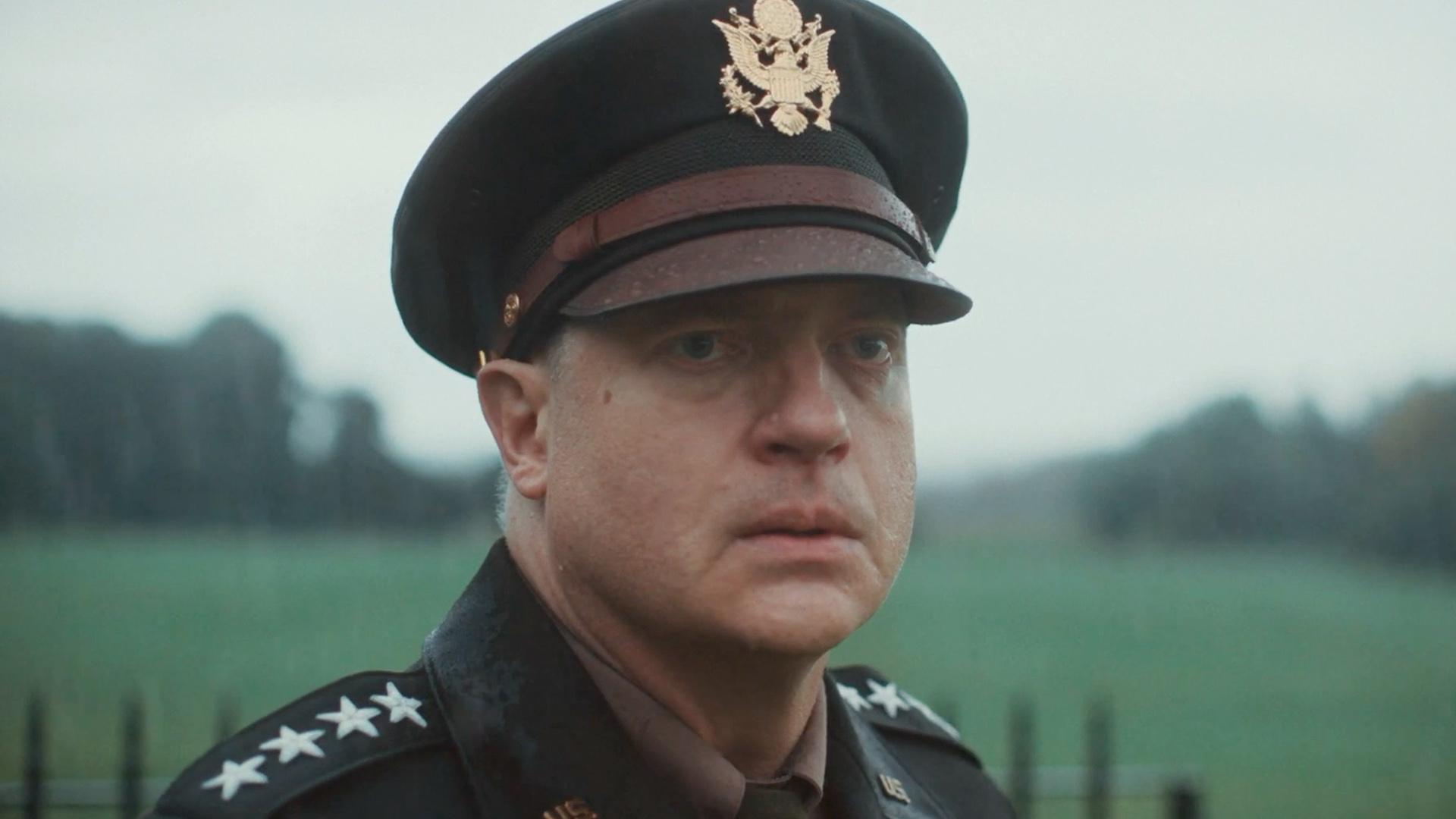
As fascinating as the weather is, meteorologists are often not fascinating people. There’s a reason why when people have run out of small talk, they often remark on the weather as a last resort. Though, writers Anthony Maras and David Haig, whose play is the basis for the screenplay, do find many ways to amp up the drama. These ways are hit and miss at some points. Often it ends up with sniping, bloviating, and shouting, which feel a bit forced at times. Though, Damian Lewis’ delightfully smarmy turn as General Montgomery is all those things and the film is better for it every time he’s on screen. We lose much of the tension as we know the historical fact that this invasion was a success.
What keeps the tension from disappearing entirely is the way in which human empathy comes into the decision making. Often when war films focus on the higher ups, they lose touch with the actual fighting men or even civilians in harm’s way. Maras and Haig have built in small scenes to keep this kind of pressure on those in charge. There are interspersed scenes of the enlisted men camped at the headquarters, mixed with colorized footage of soldiers from the time of the actual invasion that bring into focus that this undertaking will cost the lives of some of these men.
That’s where the excellence of Maras’ direction comes in as well. He and cinematographer Jamie Ramsay start the film with the face of a young soldier wounded during a disastrous training exercise. Slowly, they pull back so we see the blood washing up with the surf and the dozens of bodies of dead and wounded soldiers. We never forget the faces of these men as Maras’ camera never lets us.
It even shows up in the edit as well. Editing was done by Maras and he was able to make the final scenes that depict the invasion as well as the reaction of the top brass in the bunker really resonate. That’s hard to do when history tells us what happened on June 6, 1944 and when Steven Spielberg gave us a gruesome, if realistic depiction of what it was like on the beach at D-Day. Yet, Maras finds the faces again. A man or two we saw in camp are followed as they struggle up the beach. We see their reactions to the battle around them mixed with the hectic shouting into phones and radios at the command bunker. Then the weather breaks just as hoped and the men find their way to taking out the machine gun nests that have been killing their comrades. It’s an excellent piece of intercutting action that achieves an exciting and emotional forward momentum.
Pressure is a well acted, tense, and emotionally powerful film about one of the greatest achievements in military history. You can forgive it for being a bit slow in places and for being a bit high and mighty in others because the pros far outweigh the cons. It’s a film you know the historical ending of, but it hits far differently when the human effects of the war take center stage.