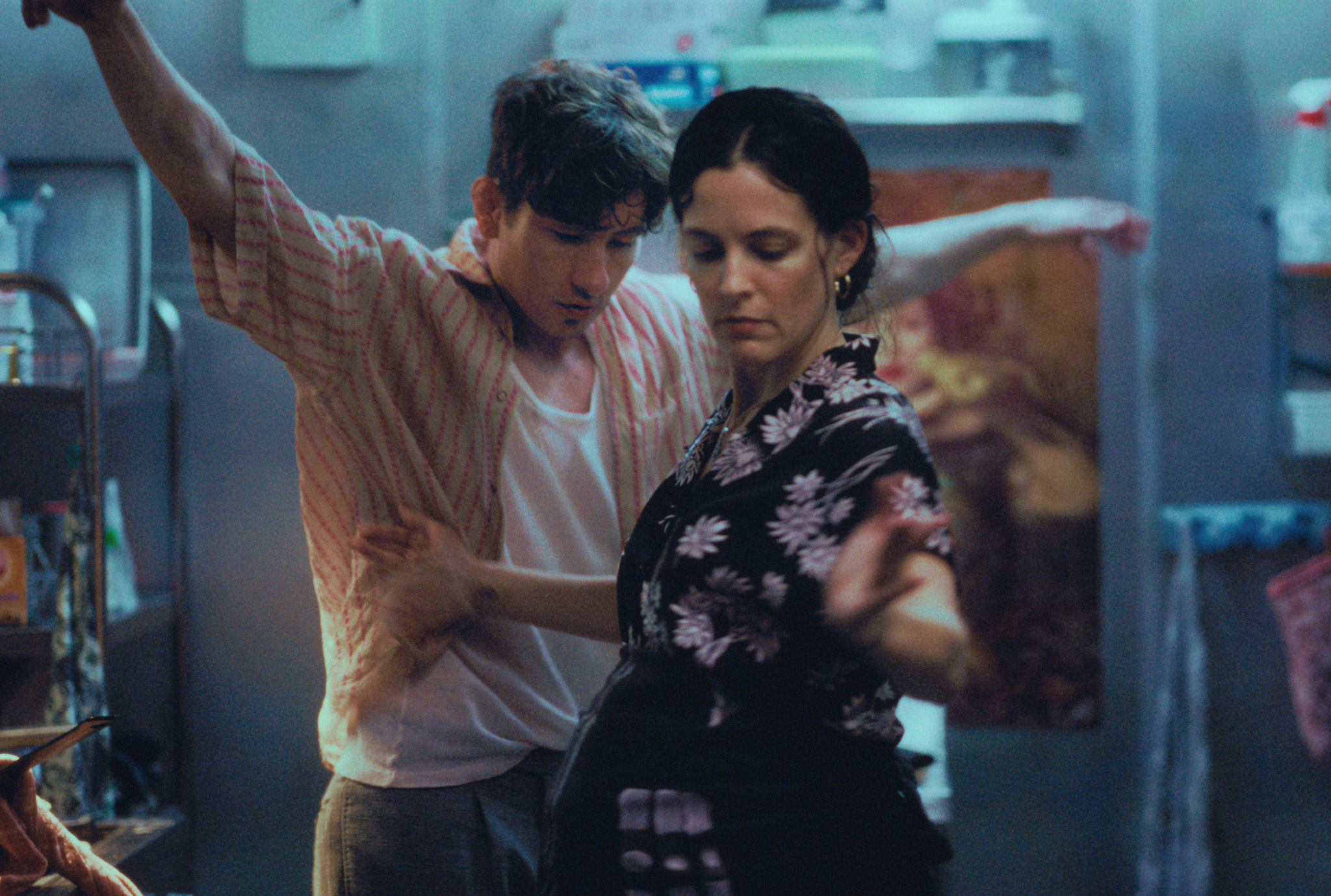
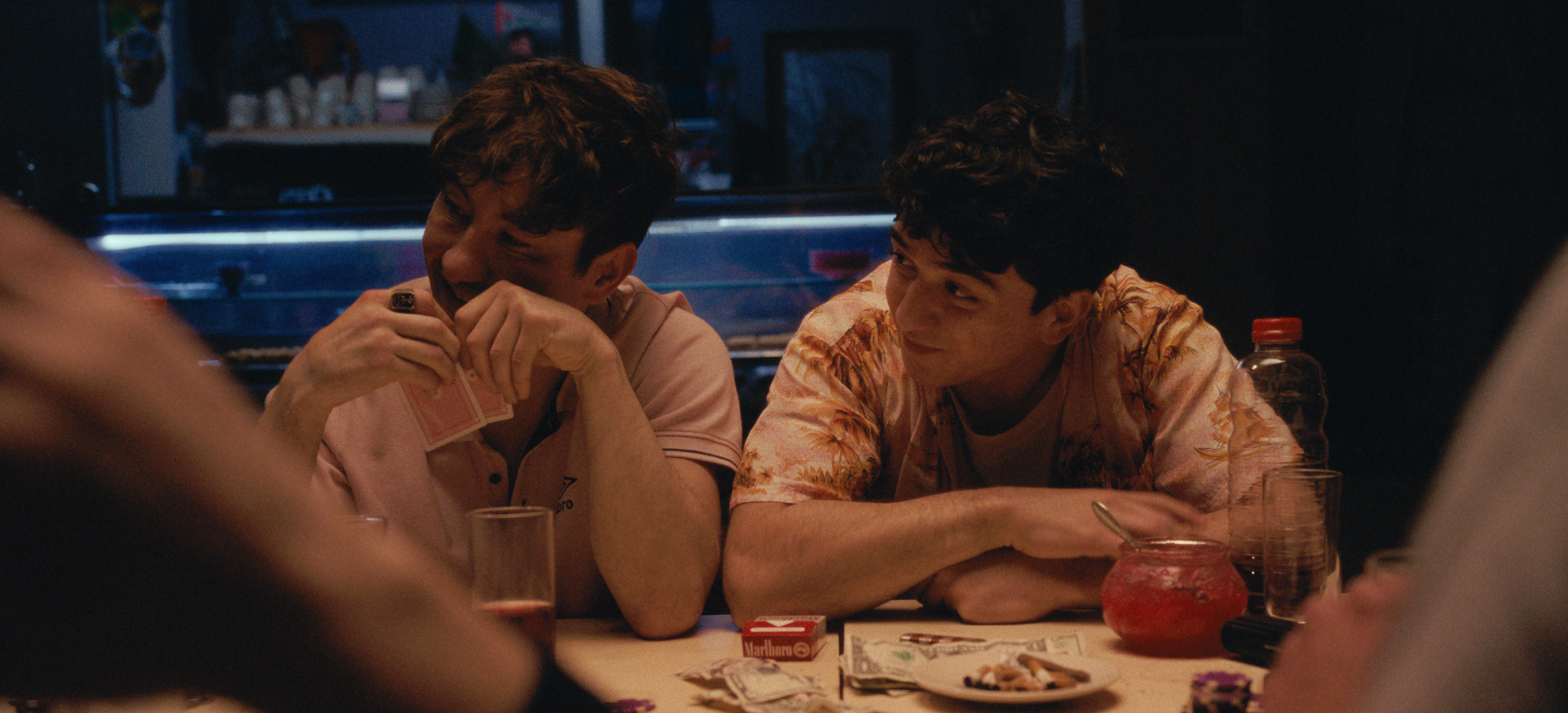
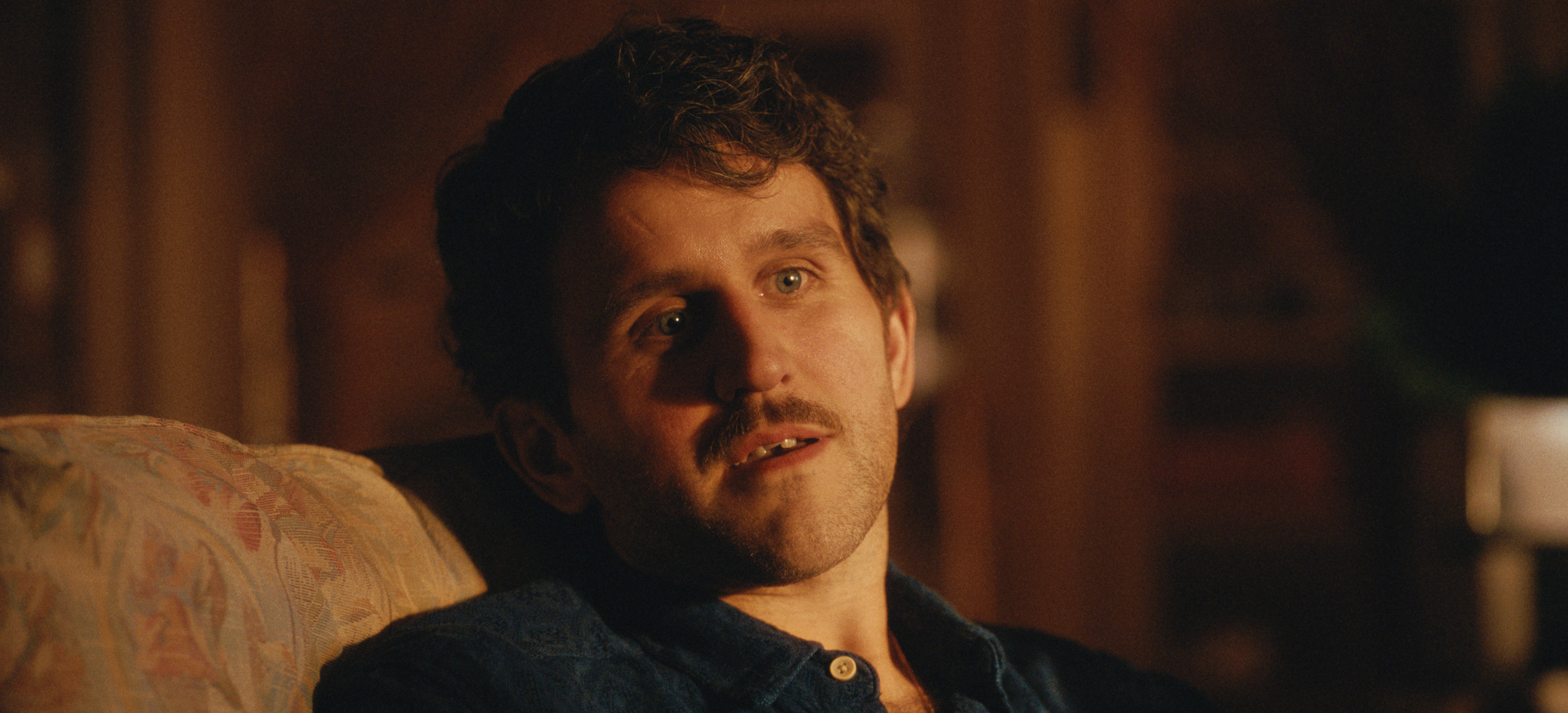
This week on Episode 688 of the InSession Film Podcast, we discussed our Top 5 A24 movies! A24 came onto the scenes in the 2010s in a big way. Their second movie ever was Spring Breakers, a film we’ve talked about a lot over the years. It didn’t take long for cinephiles to take notice of the great movies they were distributing. They even have a best picture winner on their hands, and it’s arguably the best Oscar winner of that particular decade. Which is to say, they have no shortage of amazing movies and it was extremely difficult to narrow this down to a five. That said, here are our lists:
(Note: Please keep in mind that we each had different criteria for our selections)
JD
1) Aftersun
2) Lady Bird
3) Spring Breakers
4) The Zone of Interest
5) The Florida Project
Megan
1) Moonlight
2) Past Lives
3) Sorry, Baby
4) I Saw the TV Glow
5) American Honey
Honorable Mentions (Combined) First Cow, Ex Machina, Under the Skin, Krisha, After Yang, A Different Man, Saint Maude, The Witch, The Green Knight, All Dirt Roads Taste of Salt, A Ghost Story, The Brutalist, Priscilla, Causeway, Marty Supreme, Sing Sing, If I Had Legs I’d Kick You, Locke, The Last Black Man in San Francisco, First Reformed, The Lobster, Janet Planet, The Farewell, Eighth Grade, High Life, Queer, A Most Violent Year, C’mon C’mon, Mother Mary, On Becoming A Guinea Fowl, Lean on Pete, Obvious Child and so many more
Hopefully you guys enjoyed our lists, and if you agree or disagree with us, let us know in the comment section below. There are obviously many more A24 movies that we didn’t have time to mention. That is to say, your list could look very different than ours given the great films and memorable sequences we saw over the last year. That being said, what would be your Top 5? Leave a comment in the comment section or email us at [email protected].
For more lists done by the InSession Film crew and other guests, be sure see our Movie Lists page.
Synopsis: An unexploded WWII bomb is discovered on a busy construction site in the centre of London. Chaos ensues as the military and police begin a mass evacuation against a ticking clock.
Action films have always thrived on controlled chaos. Whether it’s the gritty paranoia of Heat, the brutal momentum of John Wick, or the psychological tension buried beneath the violence in Sicario, the genre works best when it balances spectacle with suspense. Fuze is lean, tense, and constantly simmering with unease. Even when the destination feels somewhat predictable, the journey remains tense, stylish, and entertaining enough to keep audiences fully invested.
It certainly helps that the film is anchored by two incredibly watchable leads in Theo James and Aaron Taylor-Johnson. James has quietly built a strong reputation for morally slippery characters through projects like The White Lotus and The Gentlemen, while Taylor-Johnson continues to bring an unpredictable intensity ever since films like Nocturnal Animals, Bullet Train, and Kick-Ass. Both actors are particularly good at playing men who seem calm on the surface while quietly radiating danger underneath, making them ideal choices for a film built around distrust, shifting loyalties, and buried motivations.
At the center of Fuze is a deceptively simple plot that gradually spirals into something more layered and dangerous. What begins as a tense criminal operation quickly evolves into a web of shifting loyalties, hidden motivations, and personal betrayals. The narrative slowly unravels through a series of confrontations and escalating violence, allowing audiences to piece things together as the story unfolds. Yes, many viewers will likely predict where certain revelations are heading fairly early on, but that doesn’t necessarily hurt the experience. In fact, part of the enjoyment comes from mentally working ahead of the script, trying to connect the dots before the film catches up.
The action sequences are also impressively staged. The violence is genuinely shocking in places because the film uses it sparingly enough that each moment has real impact. There’s one particularly sudden act of violence midway through the film that completely shifts the tone, giving the story an extra layer of gravitas and reminding viewers that nobody here is operating safely within genre conventions.
The acting across the board is solid, minus some cheesy pouts, eye contact, and occasionally wobbly accents. Theo James and Aaron Taylor-Johnson both bring the intensity and screen presence needed to carry the material. They supply enough charisma and unpredictability to lift scenes that could otherwise have felt familiar. And we are treated to some topless moments. Are they needed? No. Does it matter? Also no.
But where Fuze stumbles is in its final act. Not because the twist itself is bad, it actually works reasonably well, but because the film suddenly loses confidence in the audience’s ability to understand what’s happening. After spending most of its runtime trusting viewers to engage with subtext and character dynamics, the ending arrives and begins explaining itself far too explicitly. The relationship dynamics among the three lead characters were already clear enough from their performances and context. We didn’t need lengthy dialogue clarifying every emotional connection or hidden truth. Trust your audience – it wasn’t hard to figure out.
It’s an increasingly common problem in modern films. So many now seem terrified of ambiguity or audience interpretation, worried that viewers will miss emotional beats unless every detail is verbally confirmed. But audiences are smarter than many scripts give them credit for. In Fuze, the over-explaining actively weakens what had previously been working so well. It’s frustrating because Fuze spends so much of its runtime behaving like a mature, intelligent thriller before slightly undermining itself in the final stretch.
Still, despite those occasional issues and an ending that over-explains itself, Fuze remains an entertaining and genuinely suspenseful thriller. The action sequences are sharp, the violence carries real impact, and the film maintains a strong sense of tension throughout. Fuze delivers exactly what a modern action thriller should: strong performances, nerve-shredding tension, and enough grit to leave a lasting impression.
Synopsis:During a business trip to Geneva, Lina’s impulsive decision leads to perilous consequences. Back in Buenos Aires, she tries to bury her secret, but the dark past she left behind resurfaces to threaten her current life.
It can be hard to depict a character’s inner life and thoughts visually. Sometimes a running monologue or a voiceover narration will help the audience along, but these devices, if used poorly, can be more of a hindrance to the flow of a film than helping with our understanding of a character. A silent, action oriented sequence can, if done well, give us everything we need without hand feeding us too much detail too early. The Currents is a film that is heavily reliant on a visual language to help us understand Lina’s (Isabel Amie Gonzalez-Sola) thoughts and choices.
The film presents a difficult and ethereal concept to understand before we are given something concrete to grasp on. Much of the silent first sequence feels impenetrable. That veil over the audience’s eyes keeps us at arms length through much of the film. It feels frustrating at times when you think you have an answer and then the motivations of the characters seem to shift within a blink and seemingly without a reason why. It’s hard to understand why writer and director Milagros Mumenthaler wrote the film this way. Until the end, that is.
The intelligence of Mumenthaler’s storytelling is in her ability to confound. Nothing in The Currents is ever obvious or quite like anything else. It’s a story and plot that reveals itself slowly, sometimes painfully slowly. Taken as a whole, though, when the veil of the mystery is fully lifted, the film has a grand design that, if revealed earlier, wouldn’t have had the same impact. Mumenthaler is strategic with her slow burn. She gets us to the end precisely when she means to and not a second sooner.
This comes through in her direction as well. What we see and how we see it is as controlled as the clues in dialogue. It feels like we see our clues about two scenes before we know they’re clues. Lina sits in her car outside a shop, watching a woman struggle with her security gate. Just a few scenes later, we meet the woman, Amalia (Jazmin Carballo), who knows much more than we do about Lina and her past. Lina’s daydreams about Julia (Ernestina Gatti) and Ines (Claudia Sanchez) reveal different aspects of Lina’s psyche and current confusion. All of this to express and not fully explain Lina’s burden.
There is not only a veil on the film, but a weight to it. We are feeling through what we see that Lina is struggling with the gravity of something. Something about her life has gone awry and she can’t seem to pull herself out of a tailspin. This comes through not only visually, but auditorily. The sound of The Currents, interpreted by Mumenthaler and sound editor Federico Esquerro, is invasive. It cuts in giving us the sounds of rain, running water, or an annoying tablet app, taking our attention as well as Lina’s. It’s a great touch on the mystery and becomes the greatest “aha moment” when much of the mystery is revealed. The sound is almost as good as the lead performance.
As Lina, Isabel Amie Gonzalez-Sola is captivating. She does so much with so little dialogue. You can see the tension in her body language, the thoughtfulness in her eyes, and the internal ache along each part of her face. Gonzalez-Sola is able to deftly convey Lina’s internal struggles and guides us to answers through her choices. She is brilliant and makes the film richer with her presence.
The Currents is a struggle to get into. The slow burn of the script will turn many off. Yet, the answers to the questions and the revelation of the mystery is well worth the struggle. This is a movie you stick with so you can have the experience of it sticking with you. It’s hard to want to stay, but hard to look away once it has you.
On this episode, JD and Megan discuss Ildikó Enyedi’s gorgeous new film Silent Friend, starring Tony Leung and Léa Seydoux! It perhaps won’t be for everyone given its methodical nature, but it’s a beautiful movie with evocative imagery and we had an incredible time breaking down its themes and structure.
Review:Silent Friend
Director: Ildikó Enyedi Writers: Ildikó Enyedi Stars: Tony Leung, Luna Wedler, Léa Seydoux
Director: Lucía Aleñar Iglesias Writer: Lucía Aleñar Iglesias Stars: Zoe Stein, Lluís Homar, Núria Prims, Nonni Ardal, Martina García
Synopsis: During her Mallorca summer, Antonia recognizes similarities with her late grandma. She develops an influence over her mourning grandpa through dress-up, blurring who inhabits who.
Grief does strange things to the people experiencing it, especially when that grief comes on in sudden and shockingly confusing ways. When you’re young, the impacts of losing a loved one are amplified by seeing the adults in your life in a new light. So when the person who kept it all together is gone, how are you supposed to move on? Forastera is Lucía Aleñar Iglesias’s debut feature, which explores the many ways life changes when death occurs.
The world is cruel in many ways to young girls, and there are few things worse than losing a grandma. The ones who taught family recipes, passed down their vintage fashion, or had their personalities rub off on their grandkids. Cata (Zoe Stein) is spending the summer with her sister Eva (Martina García), grandmother Catalina (Marta Angelat), and grandfather Tomeu (Lluís Homar) at their home in Mallorca, Spain. Their days are filled with good food, laughs, and an endless amount of love. Though all those memories make the loss of Catalina that much harder for this family to deal with.
Iglesias paints a beautiful portrait of this family in the small amount of time that they are together in their happiness. A matriarch of the family that, even into her elderly years, is still the head of the home. Cooking each meal with care and passing those traits to the girls who will someday lead their own families, if they choose. Both Cata and Eva see how a healthy relationship is supposed to be through seeing their grandparents together. It’s a poetic circle of life that is captured in such an intimate and real way that makes audiences idealize this tight-knit family. When they then have to suddenly live their lives without Catalina, that warmth is gone. Smiles have faded, and rooms, even when they are filled, don’t hold the same joy.
Cata and Eva are both in their early teenage years and still take immense happiness in being close to their grandma. It’s clear that they see her as the glue that keeps the house together, and they take in each moment and lesson she gives. Ultimately, when Cata finds her grandma dead outside on the stairs leading to her home, it’s a life-altering moment for her. Being the person to find a lifeless body is hard enough to deal with, let alone it being someone you love. It changes the entire dynamic of the family, but Cata has a hard time grieving. Telling her mother Pepa (Núria Prims) that she hasn’t cried about the loss, even when the sadness is overwhelming.
What Forastera does well that sets it apart from other coming-of-age films that deal with loss is that it shows the psychological changes that occur in strangely wholesome ways. Cata develops a coping mechanism that helps her deal with these complicated thoughts she’s having. It first appears when she is going through old clothing of her grandmother’s. This allows her to get to know her in ways that she didn’t know before. It might not be a conventional way of healing, especially when it delves into how Cata carries herself. Causing blurred lines between who she was before her grandmother passed and after.
There are numerous characters in Forastera that are dealing with this major loss other than Cata. Iglesias shows the loss of a partner and how it takes the light from Tomeu that once was blindingly bright. Mostly spending his days enjoying the company of friends and family as they play games or eat food cooked with Catalina’s love. After her death, he is shown looking distracted during conversations and gazing off into space. A once carefree man now gets irritated at the thought of selling his home. Both Cata and Tomeu are drawn to one another through their grief, and this is the most thoughtful portion of Iglesias’s film.
Visually, Forastera has a great sense of escapism through the lens of cinematographer Agnès Piqué Corbera. The film takes place on an island that I’ve only seen in postcards. Sunny rays peer in from the windows as Catalina and her granddaughters prepare sweet treats. And waves crash against one another on a patio with one chair empty next to Tomeu. Corbera uses reflections in water and mirrors to show the faces of grief that the family tries to hide from one another. Her work makes audiences feel like they are seeing moments that weren’t meant for our eyes, and paired with the intimate script, it makes Forastera one of the most tender films of the year.
As much as the film has strong emotional depth, there are parts of Cata that aren’t completely fleshed out. The coming-of-age aspect that starts strong through her blossoming freedom and new crush is stunted when her grandmother dies. There’s not much that audiences learn about Cata, or even Eva for that matter, outside of the grief they are experiencing that doesn’t allow them to feel like fully written characters. Stein has a star-making performance within Forastera that lets audiences get lost in her mind as she wanders through life.
For those seeking a sweetly unusual take on navigating grief, Iglesias’s debut is more than worth the watch. Its heartfelt approach to life’s most difficult aspects doesn’t judge how people grieve. Rather, it accepts the many ways grief shapes those who experience it with captivating performances and warm summer rays.
Director: Kane Parsons Writers: Will Soodik, Kane Parsons Stars: Chiwetel Ejiofor, Renata Reinsve, Mark Duplass
Synopsis:After a therapist’s patient disappears into a dimension beyond reality, she must venture into the unknown to save him.
Horror can be found in the most unexpected of places, sometimes in locations that are incredibly familiar to us. In May 2019, an anonymous user on 4chan found the horror in his post about “the backrooms,” an endless space of bare walls and no exits, with yellow fluorescent overhead lighting that buzzed loudly as you walked through it, a musty and moist scent following you as you realize you are forever trapped. The post went viral quickly, with many beginning to speculate and wonder what the backrooms were and where they led. Many theories and stories were shared. From “entities” inhabiting the “liminal space” who moved towards you, to various “levels” that expanded the backrooms, the background around the purpose of the backrooms began to take shape. In January 2022, the rooms were brought to life through a 10-minute short made with Blender and After Effects that explores an endless space that is constantly transforming. The director, Kane Parsons, captured the hopelessness and fear found in the backrooms in horrifying fashion, leading the protagonist through the endless space with his camcorder documenting everything.
The short was its own viral sensation, racking up 78 million views at the time of writing this piece, and over the last few years, Parsons built extensively on the lore of the backrooms (or as it is named later, “The Complex”), along with the addition of different kinds of “entities” and “levels,” an organization looking into how the Complex functions, entrances to the backrooms appearing in the most random of places, and people wanting to understand how the space operated more. Throughout it all, however, answers were seldom given to fully explain the Complex, leaving many of its mysteries ambiguous, even as the more devastating incidents of people going missing began to escalate.
22 shorts later, Parsons brings the mysteries of The Complex to the big screen with the feature film Backrooms. The plot is simple: Clark (Chiwetel Ejiofor) runs a flailing furniture store based in Santa Clara Valley, California. Life, as of late, has not been going well for Clark, both personally and professionally, and is even seeing a therapist, Mary (Renate Reinsve), to try and figure out what to do next. However, one day, he discovers an anomaly within the walls of the store, as a blank spot leads into a space that is filled with endless rooms lit with yellow fluorescent panels above and random bits of furniture just lying around in bizarre ways. As he begins to look around, however, this space begins to take on a more sinister form.
Much like the shorts, Backrooms is an incredibly atmospheric watch, with many extended moments of the movie built around characters moving through The Complex often confused and perplexed by what they are seeing. Whereas the YouTube shorts were “filmed” in first person (animated primarily in Blender) and presented as found footage case studies that were interspersed with presentations, the film provides a third-person perspective in a real built set sprawling 30,000 square feet, which amplifies the scale and emptiness of the Complex more, though it does also have moments captured through a camcorder in a character’s hands, as well. The cinematography here from Jeremy Cox is eerily effective, with every corner of the space and startling object captured with intense precision. The production design from Danny Vermette is some of the year’s best so far, particularly when the lower and more bizarre levels of the Complex begin to unravel in all their musty, dirty, yellowed glory. Beyond just the backrooms, however, the look and feel of 1990s Santa Clara Valley is also showcased in an effective manner, as advertisements on TV and neighborhood layouts in the town evoke the moment of time well, the attention to detail ever present once again.
From its opening sequence to its final act, what also really shines is the direction from Kane Parsons. At the age of 20 making his feature film debut, he brings to life chilling sequences with horrifying imagery as if he has been directing for the better part of a decade (which in a way, with the shorts, he has). In this bigger jump in scale, however, Parsons is effective in still keeping events contained and providing a claustrophobic feeling to the proceedings, and even capturing that eerie atmosphere which prevails throughout in an unsettling manner. This includes everything from moments where Clark and Mary are discussing what is going on to quieter moments where characters reflect or react to something. Once the backrooms are discovered and the movie begins to venture further in, with something potentially chasing him at times, the moments with extended blank spaces purposefully feel much smaller and less expansive, even as the sets become more complex. When more violent events begin to happen, those are often unnerving to watch, and make for some effective jumpscares as well. All of this is further backed by Parsons and Edo van Breemen’s ominous score, adapting themes from the shorts and adding an extra layer of dread to them for this feature.
Chiwetel Ejiofor and Renate Reinsve, both Academy Award nominees, are expectedly great here, particularly in the latter half of the movie as both bear witness to aspects of The Complex. Both get ample opportunities to shine and work with the material. However, it is with their characterization that the movie does suffer a bit. While more often an audiovisual experience where the main character is really the liminal space Clark and Mary are in, Backrooms does also aim to give its leads a more emotional breakthrough at times, albeit with not much development past their initial scenes. As a result, some of the moments of catharsis the script aims for at a later point of the movie don’t fully land. These moments, however, are still more than some of its supporting actors, as characters like Bobby (Finn Bennett) and Kat (Lukita Maxwell) get next to nothing, despite doing a fine job in the movie. Mark Duplass also stars as someone who becomes involved in everything, and gets to shine in his limited screen time, despite also not knowing much about him.
Perhaps the most fascinating aspect of Backrooms, however, is that while it continues to maintain a sense of mystery in regards to how everything in The Complex works, it does attempt to give some amount of legitimacy to a few of the concepts introduced in the shorts. The ideas introduced help provide some form of thematic connection to Clark and Mary as well. As a result, there is a slight loss of ambiguity to some of it, particularly when revisiting the shorts after the movie. On the other hand, it makes said few concepts in the series far more interesting to look back on, while also continuing to maintain that not everything has answers.
Backrooms will likely prove to be a treat for fans of the original material and its most eagle-eyed viewers. While Parsons directs the movie in a manner that would allow audiences unfamiliar with the original material to watch it, there is an enhanced experience to be had with more contextual backing, especially as the narrative and characterization is a bit thin. By the end, however, what Backrooms does succeed at, is being a really solid horror experience that continues to showcase the talents of young filmmakers in the industry and pave the way for even more impressive works in the future. Time will tell where Parsons’ career goes, but if Backrooms is any indication, he will go a long, long way.
This week on the InSession Film Podcast, inspired by the release of Backrooms this weekend, we discussed our Top 5 A24 movies! We also talk a little Star Wars box office, Fjord winning this year’s Palme d’Or at the Cannes Film Festival and JD gives us his thoughts on Michael.
– Open / The Mandalorian Box Office (1:57) We open this week by talking about the box office for The Mandalorian and Grogu, which didn’t exactly light things up in the ways that LucasFilm probably wanted. But it is as TV movie after all, so perhaps they weren’t exactly expecting a billion dollar hit? The whole thing has been kind of strange and we wanted to discuss it further.
– Cannes Film Festival / Michael (20:23) We then move on to the Cannes Film Festival and this year’s Palme d’Or winner Fjord. As per usual lately, the online discourse went absolutely banana’s despite the fact that most people haven’t seen the film yet. Just the idea of a filmmaker winning the award more than once sent people into a frenzy. As noted above, we round out this segment with JD talking about his experience of seeing Michael in the theater, which ended up being one of the most bipolar trips to the cinema he’s ever had.
– Top 5 A24 Movies (35:38) A24 came onto the scenes in the 2010s in a big way. Their second movie ever was Spring Breakers, a film we’ve talked about a lot over the years. It didn’t take long for cinephiles to take notice of the great movies they were distributing. They even have a best picture winner on their hands, and it’s arguably the best Oscar winner of that particular decade. Which is to say, they have no shortage of amazing movies and it was extremely difficult to narrow this down to a five. With that said, what would be your Top 5 A24 movies?
If you want to help support us, there are several ways you can help us and we’d absolutely appreciate it. Every penny goes directly back into supporting the show and we are truly honored and grateful. Thanks for your support and for listening to the InSession Film Podcast!
Director:Aaron Fisher Writer: Aaron Fisher, Kerri Lee Romeo Stars: Odeya Rush, Alan Ruck, Ashton Sanders
Synopsis:Corporate executives on a team-building retreat face a deadly struggle when their leader turns violently against them.
The “eat the rich,” horror satire is a bit played out. Watching one percenters flatline in gruesome and poetic ways was intriguing the first few times. Then, when the originality of the concept wore off and filmmakers tried to salvage their piece of it with a new gimmick or a different kind of hot take on a theme, it felt hollow. The key to a good horror satire is to get the awkwardness of jumping on the bandwagon out of the way and to show off why your vision and your message is worth the overfamiliarity the audience has with the concept. The film Corporate Retreat is a hollow void of tortuous gore with little understanding of the concept of comedy or satire and has no new or unique take on any message whatsoever.
The story moves fast. The story moves so fast that the first kill is entirely meaningless because the character who dies has had absolutely no development beyond a couple meaningless lines along with a name and company title. By the second kill you begin to wonder about what the point of this exercise, both the film’s plot and the act of us watching it, could possibly be. Though, the plot or the point doesn’t seem to matter to the filmmakers at all.
That’s a bold claim, true, but if writers Aaron Fisher and Kerri Lee Romeo did care about their screenplay and subsequent film, they would have taken this concept beyond the first draft. Every piece of dialogue is uninspired. Every “joke” is flat and lifeless. There aren’t any characters at all. There are archetypical positions and none of these archetypes moves an inch further than the boundaries of their mandate allow. All of the details, all of the answers to why, are not even nonsensical, they’re just lazy interpretations of how a psychopath would interpret chakras. So what is this all in service of?
Gore is all that these filmmakers seem to want to create. Gruesome, bloody scenes of mutilation are what these filmmakers took their time on, what they made look the best. It’s more torturous to the viewer that as rushed as absolutely everything else is, we have to sit through some of the most disgusting scenes because these filmmakers have decided to take their time. It makes you long for the ridiculous angles director Aaron Fisher and cinematographer Josh Fisher choose to imbue with meaning, that still have absolutely no meaning whatsoever. We also crave the unwatchable action scenes that are so poorly done with the steadicam that you can’t actually see what’s happening in some aspects like the camera operator wasn’t given a focus and had to try to find, and fail at finding, action as it happened.
Watching self-mutilation, even when you know it’s fake, is a grim affair. It’s absolute sadism to make an audience watch as five people gouge their own eyes out. There’s no speeding up the sequence. The only cuts are to a close up of the eye in various stages of being out of the person’s head. It’s horrifying, nauseating, frustrating, and then comes around to boring. The slower pace on these scenes is deliberate, but they take it beyond what would have made it interesting. It’s the very definition of beating a dead horse.
Corporate Retreat is not horror and is nowhere near satire. Corporate Retreat is a snuff film that’s a bit toned down. Not only is it torturous in its gore, but it’s torturously bad as a film. There is nothing remotely good about it even if the actors are able to sell the inane dialogue and situations. This film feels like it’s something that could have been a Tubi Original. It can’t even be classified as a film; it’s content. Avoid Corporate Retreat like you would if you were invited to an actual corporate retreat.
Director: Thea Sharrock Writer: Natalie Krinsky, Cinco Paul, Katie Silberman Stars: Sacha Baron Cohen, Rosamund Pike, Tom Davis
Synopsis: A male chauvinist is transported to a matriarchal society, facing challenges from a formidable female version of himself.
For a film diving into the prospects of a female-dominated society, Thea Sharrock’s Ladies First takes the most basic approach to the concept. Filled with lazy sight gags, zero thematic insight, and no performance worth remembering, it’s an impressively terrible film.
The general conceit of the film revolves around male chauvinist Damien Sachs (Sacha Baron Cohen) who hits his head and wakes up in a society where women are the dominant gender. Is the world in any way different besides women being in charge everywhere and an obvious female gaze everywhere? Nope. Everything else is exactly the same. Women in positions of power use sex and manipulation in order to get what they want. Men are ignored while their abilities are overlooked, valued only for their appearance and sex appeal.
When I watch a film directed by a woman, there are often obvious differences you can see through the filmmaking process. Women generally are not objectified, gender norms are pushed beyond expectations, and different perspectives are explored. Ladies First is one of the first films seen with a female director and a mostly female writing team where it felt like it was created by a man…an untalented man.
Instead of having anything interesting to say, the film defaults to: “What if we kept everything men do awful, but with women” as the premise. Beer ads feature scantily-clad men, women are in the workforce while men stay at home, and women dress more covered while men dress more revealing. There’s nothing interesting in that approach. It’s just a one-for-one substitution of a pre-existing idea. It’s like someone wanted to remake Jaws, but it’s one human attacking a quiet beach town of sharks. The idea doesn’t explain or expand ideas, it’s just plain lazy.
The few attempts at broad humor land on Cohen to be as broad as humanly possible. For a performer who has made a career of taking big chances in spontaneous situations, his performance is antithetical to what he does well. He is measured, attempting to be suave, all the while unwilling to be seen as too preposterous. He’ll go along with the joke, but there is no commitment to the bit. He is a turd at the beginning of the film, and you just know he will eventually see the error of his ways.
On the opposite end of Damien is Alex (Rosamund Pike), a talented but unheralded underling in the standard world, and the CEO in-waiting in the female-dominant one. We barely get to see what Alex is like to give her any sort of rooting interest. Instead, Alex is just as unlikeable as Damien, while Damien himself doesn’t really change for the first hour of the film. Instead of giving anyone for the audience to cling to, you get two highly unlikeable and unpleasant characters front and center in your movie.
There is a version of Ladies First where you could actually say something interesting about a female-dominated world. The possibilities are endless. Instead of landing on anything thematically interesting, or even zeroing in on a specific male shortfall, the film just keeps hammering the same one-note joke of “sexism is bad” over and over again. Once you realize there is no insight coming, your brain shuts down and settles in for the inevitable conclusion. It feels like the filmmakers didn’t want to put in the effort to make a grander statement.
The entire cast is wasted in preposterous situations or underwhelming roles. Cohen is grossly miscast, unable to do anything he does well. Pike is fun as the sexist boss, but it quickly devolves into petty shouting matches and insults. Talented performers like Fiona Shaw, Kathryn Hunter, Charles Dance, and Emily Mortimer equally have little substance to their characters and are unable to transcend the script’s limitations. Only Richard E. Grant seems to elevate his character, but he’s a homeless man covered in pigeons, so that says a lot. Ladies First is one of the lazier streaming films to come out in some time, with nothing to say and with no interesting way to say it. It would be a disaster if it was worth remembering.
Director: Clio Barnard Writers: Clio Barnard, Keiran Goddard, Enda Walsh Stars: Moe Bilal, Anthony Boyle, Millie Brady
Synopsis: Five childhood friends face adult struggles: Patrick and Shiv’s relationship strains over a secret, Oli parties destructively, Conor awaits fatherhood with business dreams, and wealthy Rian can’t escape his past despite moving away.
Every country has had a housing and job crisis, with each year, politicians promising to fix the problems of the past to give way to a brighter future–better living wages, job opportunities, affordable housing, and better social and healthcare services. But year after year, it seems these are just empty promises, with a focus on privatization and on selling the majority of buildings and residences to the one-percenters or “investors” taking over. For example, what is currently happening in my island of Puerto Rico, where there is a huge case of displacement and loss of local income due to laws that only help millionaires, granting them full exemptions on capital gains, while leaving the residents cast aside and struggling with the crashing tides of monetary greed and political corruption by the government.
The privatization and the ceding of the island’s resources and privileges have made the cost of living so high that it has become hard to get yourself up from your current position. And those who want to make a life on their own–the current generation, the recently graduated–can’t do so and are positioned never to do so, trapped in conditions that threaten to make independence and stability increasingly unattainable. The majority of politicians worldwide don’t seem to want to help fix this severe issue. And the more time passes, the worse things will become. For many of us, the future no longer feels like something to look forward to. There are now many projects in development that continue to sell the island’s residences and beaches in exchange for lavish hotels and Airbnbs for tourists.
At this rate, it is an endurance test. A basic milestone of adulthood became a fragile, distant fantasy. Now, at the perfect time, comes a film by British filmmaker Clio Barnard that understands this issue and wants to confront it, via the perspective of a group of friends from the working class slowly realizing that their dreams and visions for their life are becoming out of reach, the aptly titled and quite brilliant I See Buildings Fall Like Lightning (screening in the Quinzaine des cinéastes at the 2026 Cannes Film Festival). Adapted from the novel of the same name by Keiran Goddard, the film is a charming and somber portrait of the current generation’s struggles in a world in decline, showing the discontent and disillusionment crawling up their spines until it reaches their souls.
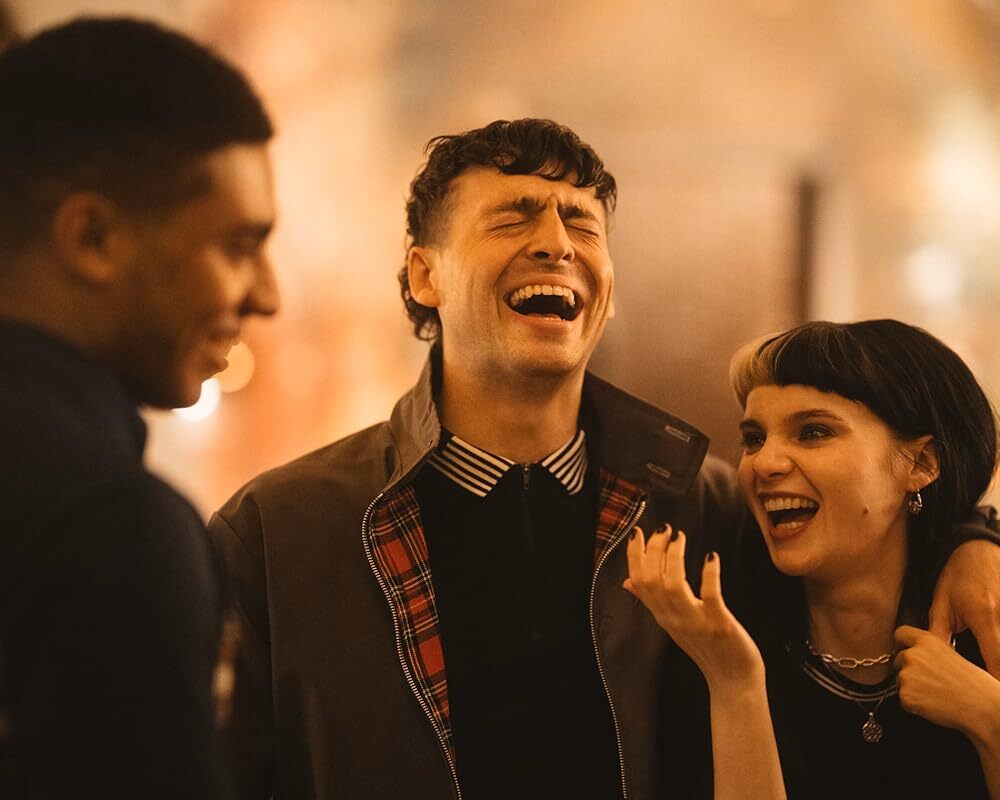
They come to understand that the systems surrounding them were never designed to sustain their aspirations. The current landscape only keeps them surviving from one day to the next. I See Buildings Fall Like Lightning is set in Birmingham and follows a group of five around the age of thirty, all of whom you will know and meet as if they were your own friends: Patrick (Anthony Boyle), Rian (Joe Cole), Oli (Jay Lycurgo), Conor (Daryl McCormick), and Shiv (Lola Petticrew). These fab five have known each other since they were kids, maintaining their friendship even through university and as they pursued separate life paths. They all have plenty of responsibilities–married with children, about to be a father, leaving behind the drugs and alcohol, or having important projects on the line.
The issue lies in that they can’t seem to let go of their youth, partying until the sun comes up and drinking like a merry band of pirates. Each time they are together, it seems like a special event, and they cherish each other to an exaggerated extent, to the point where they must celebrate their presence amid the time-consuming responsibilities. But growing pains and late realizations have taken a toll on them. Cracks begin to appear as the party dies down; from breakups and miscalculated business loans to revealed secrets and relapses, the idealized world the group had on their mind turns upside down. Reality hits harder and harder with each turmoil.
Barnard takes the time to develop each of these characters and their respective problems, revealing the roots of their frustrations and disappointments. Their struggles emerge not only from economic instability and broken systems that affect the working class, but from the quiet fear that they may have already drifted too far from the people they once hoped to become. With great chemistry from the cast and an apt screenplay that understands the situations occurring in the story, to the point where it feels like a plea to help this generation (and future ones) to get out of the hole in which the system has put them, Barnard demonstrates how governments create facades that leave people emotionally and financially stranded. But Barnard does not want I See Buildings Fall Like Lightning to be a completely melancholy-driven picture.
That is why she gives us many moments of joy, highlighting how important it is to have special people you can count on in moments of uncertainty. Even in their sticky situations, their bond is difficult to tear apart; it might seem that what they have built could fall on occasion because of frustrations and despair, but nothing can erase the love and history they share. In collapsing times, one of the few things you can hold onto is companionship–a necessary refuge against the alienation surrounding them. In these instances, between camaraderie and gloom, Clio Barnard offers glimpses of Danny Boyle’s Trainspotting, as the 1996 film has the working class depicted through the lens of post-industrial despair.
That era in the ’90s had drastic economic restructurings and displacement, creating a spike in alcoholism and drug epidemics, induced by the harsh, brutal policies of Margaret Thatcher that robbed that generation of a chance for growth. Heroin became the escape for the lads from the rigged society, much like the crew in I See Buildings Fall Like Lightning, who use partying and alcohol as their own. It numbs the pain, yet it never resolves the emptiness that consumes them. Barnard draws a parallel between the two generations, the ’90s and the 2020s, who are damaged by political neglect. The cycles of hopelessness evolve rather than disappear; self-destruction is used to forget an unforgiving reality. Both of these groups were pushed to the margins, with little to do and a slight prospect for the future.
Traditional labor was lost during and post-Thatcher; economic and social abandonment was the result. Housing through the years priced out entire generations. And now, the current youth, the guys and gals in Barnard’s film, pay a price for policies established before them, ones the Trainspotting lads had the initial toll of. As for companionship, Boyle refuses to portray his characters’ bond purely as malicious, showing scenes of joy and profound empathy even in their darkest hours. There is indeed manipulative violence between them, but, at the end of the day, it is friends who truly understand those struggles they are going through. Barnard does not go to the lengths of high substance abuse or violence to showcase her characters’ trials and tribulations, although the emotional damage inflicted is just as devastating.
What I specifically love about I See Buildings Fall Like Lightning is how real things feel in the film. The characters, setting, dilemmas… everything feels grounded and, ultimately, human. And the respect and care Barnard has for the subject matter and the people addressing these issues worldwide is evident in every frame. She does not want to sensationalize the struggles or pain her characters endure. The approach is full of empathy and honesty–attuned to today’s anxieties, while recognizing the dignity and complexity of those attempting to survive through these tough times. I relate to these characters because not only am I nearing their age, but also the situation in Puerto Rico and its privatization is only getting worse. The world may suck, but we’ll get by with a little help from our friends.
Synopsis: A middle-aged woman living alone on a Chilean island finds an abandoned puppy, naming it Yuri – her chosen name for a daughter she never had. Through bonding with the dog, she seeks healing from her past.
Dominga Sotomayor is known for autobiographical work about her life in Chile and the political quandaries that have troubled the country for many years. For example, in De Jueves a Domingo (Thursday Till Sunday), Sotomayor expels about her childhood, when her parents were going through a divorce, the Chilean filmmaker at the time being at an age where she would notice that something was wrong between them–the detachment and isolation growing bigger and bigger–but being unable to do something about it. But her latest film departs from that autobiographical feel and veers into a more experimental route, yet is equally personal and intimate, as her works tend to be.
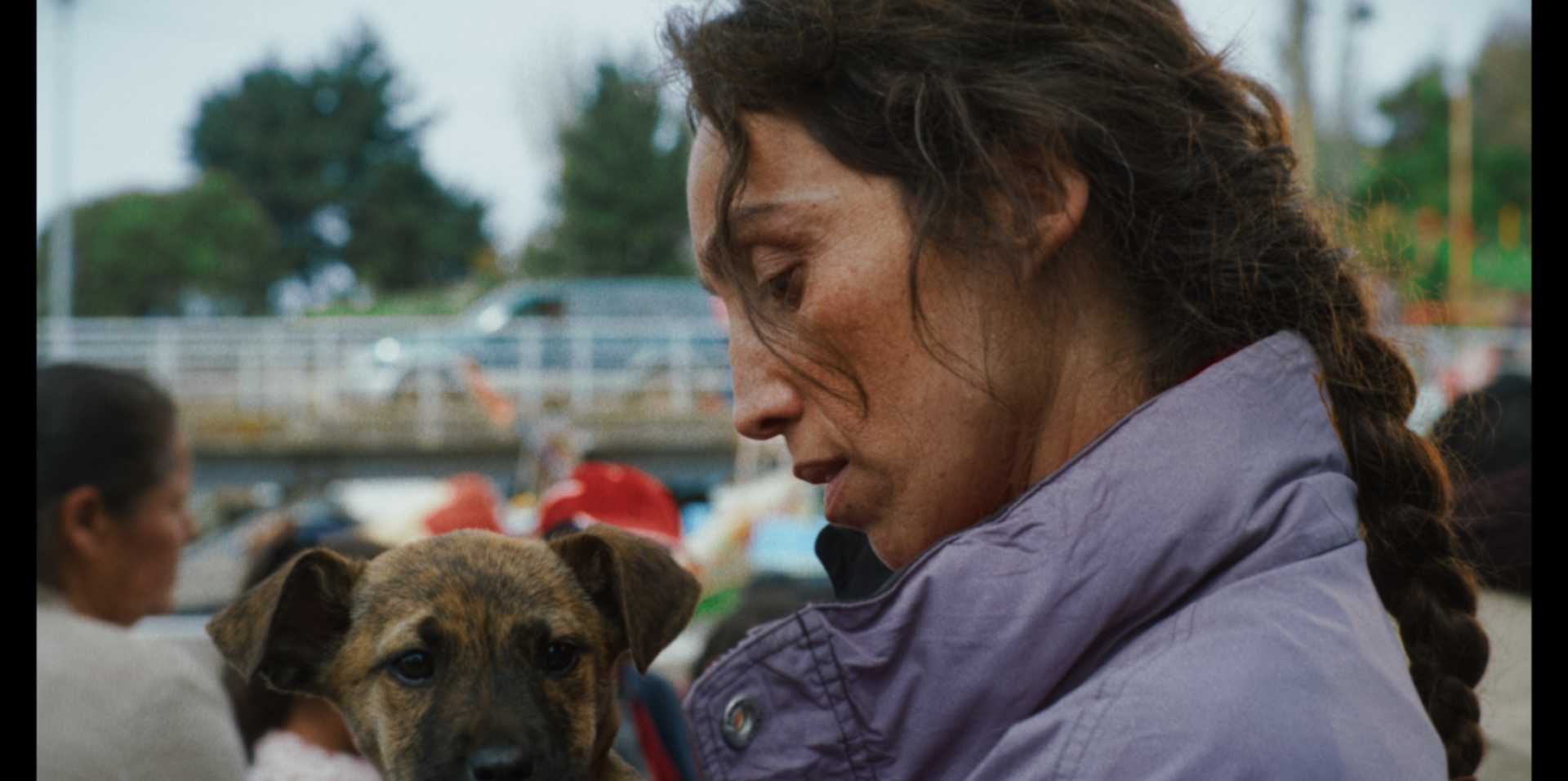
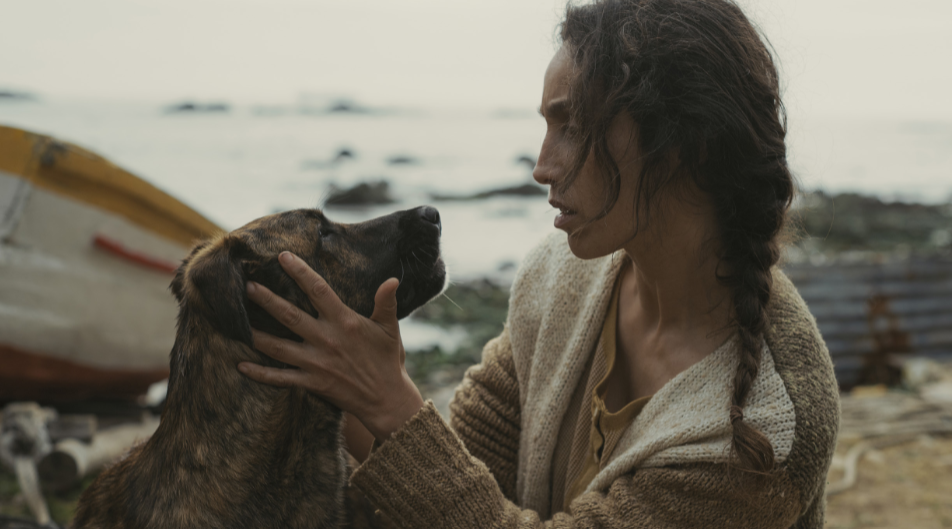
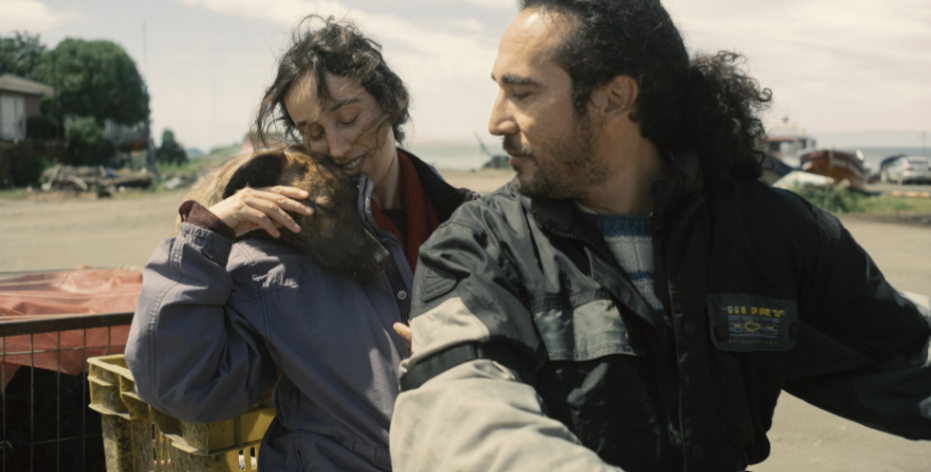
In La Perra (The Bitch, screening in the Quinzaine des cinéastes at the 2026 Cannes Film Festival), Sotomayor paints a portrait of guilt and grief in the mold of a dog movie, free of the tropes and clichés associated with that genre. Instead of focusing solely on how a woman’s relationship with her newly adopted pup changes as affection grows, Sotomayor develops the connection between people and their landscapes. This memory lingers in certain places, sceneries, and interactions with locals. Adapted from Pilar Quintana’s novel of the same name, La Perra follows Silvia (Manuela Oyarzún), a lonely woman who lives on a remote island off the coast of Chile, harvesting seaweed and shellfish alongside her partner Mario (David Gaete).
Silvia lives a modest life, working the same traditional jobs as the people in that small coastal community, and living in a shack that is nearly breaking apart. The days there are standard, with few changes outside of a local debacle; everyone just goes about their own business alongside their loved ones, since there isn’t much to do. But that monotony is about to change for Silvia. As she drops off some of her goods to the locals, Silvia sees a pick-up truck surrounded by children carrying a bunch of puppies. Everyone is overjoyed with the young pups, including Silvia. And it doesn’t take much time to unite one with Silvia–a magical attachment drew them together. She names the dog Yuri, and the pup immediately brightens Silvia’s day.
Sotomayor makes sure to include some charming scenes of the two growing affectionate towards each other through Silvia’s mother-like nurture. The sweetness of seeing Yuri playing and running through the wilderness is a lovely sight, although things hit a melancholic turn when the pup goes missing after a New Year’s celebration. It is then and there where Sotomayor breaks the idyllic mold of the dog movie and flips La Perra into something thematically stronger and moving. As Silvia searches for the missing Yuri, she encounters faces and places that remind her of a traumatic past, one we get glimpses of throughout the film’s runtime, and give way to the hypnotic emotional drift that slowly consumes the film. The tender story of companionship becomes a haunting meditation on memory and the scars left in the soil.
From an abandoned, hunted home to a coastal cave where a young boy once disappeared, never to return, Sotomayor offers us bits and pieces of why Silvia is traumatized by certain terrains on her native island. Secrecy covers the initial passages, but their unravelings carry a devastating weight. In the flashbacks, we learn why Silvia is so keen on finding Yuri, which relates to the young boy who disappeared during her childhood. We get notions about motherhood. Not only do we see it through Silvia’s concern, but also through her quandaries with a pregnant family member. La Perra reveals how grief and unresolved guilt linger within landscapes long after the events themselves have faded from public memory. Sotomayor does not sugarcoat the emotional turmoil and trauma from Silvia’s memories.
She wants the melancholy to drench each frame, making the audience feel trapped in Silvia’s state of mind. It is disquieting, rapidly drifting away from the sweetness of the initial passages. Every corner of the island carries echoes of loss; cinematographer Simone D’Arcangelo coats the frame in a ghostly tint, casting a mournful haze over the coast’s natural beauty. Yet, beneath the sorrow, Sotomayor finds tenderness in the act of confronting the wounds of the past rather than escaping them. It becomes a quietly devastating reflection of the memories that haunt and give life to a place forever. Each patch of grass, mountain, or coastline in the world has the recollections of everyone who has inhabited it. Places remember, and faces fade through time, but the emotional mossy residue is left behind and will continue to shape the land.
Director: Lisandro Alonso Writer:Lisandro Alonso Stars: Catalina Saavedra, Misael Saavedra, Adrián Fondari
Synopsis: Misael lives as an independent logger in the woods, enjoying his solitary freedom. When he must care for his older sister, his peaceful existence is upended and the foundations of his carefully constructed life begin to fall apart.
In 2001, Argentine filmmaker Lisandro Alonso made a still underseen yet vastly influential–in the docu-film hybrid indie-cinema landscape–film titled La Libertad (Freedom). In said film, we follow Misael Saavedra, a woodcutter in the Argentine pampas, as he goes through his daily routine–refining the wood he cuts down, talking with traders, and prepping meals with the wildlife he hunts. It takes a minimalist approach, placing the camera on a non-actor and letting us see the world through his eyes. The documentary-esque lens Alonso adopts offers the viewer a closer, more personal view of Misael and those around him. Through Misael’s chronicles, Alonso explores what it means to be free, asking the audience whether his isolated lifestyle, free of societal pressures yet confined to a demanding environment, is truly a state of freedom or merely a form of subsistence.
The Argentine’s introspection, full of unbroken takes that immerse the viewer and limited dialogue that focuses on the subject’s expressions and mannerisms, offers a glimpse into a lifestyle few people adopt. It showcases it in all its humanity, with respect and intrigue. Twenty-five years later, Alonso has decided to revisit Misael and the material that made him a household name in independent cinema with La Libertad Doble (Doble Freedom, screening in the Quinzaine des cinéastes at the 2026 Cannes Film Festival). The first question that popped into my mind before watching this film was: What is Lisandro Alonso looking for in this material on his decades-later revisit? I was curious about the root cause of his going on an already-traveled journey once more.
Many filmmakers have made projects deemed spiritual sequels to films that made their mark or served as stepping stones to a new era or style. And these projects tend to tackle themes and conceptualizations from before but in a modern frame, with new tangibilities–learn through experience–and reflections of a very distant past. In Libertad Doble, the Argentine looks back on his work with a mixture of melancholy and clarity. A familiar obsession is seen through older eyes. The anger and urgency that once defined his earlier films remain present, but are now filtered through memory and the exhaustion of time. Alonso interrogates the spirit of his previous work, in which his ideals and convictions are called into question within an old frame.
We are back on the Argentine pampas, with Misael still, decades later, living a cyclical, lonely life in his tin shack. He is content with this life in that pastoral landscape, having grown accustomed to the trials and tribulations that accompany it. Whether he’s working on some wood or cooking a recently-hunted armadillo, we see Misael never feeling enclaved to his way of life. Alonso makes sure that his portrait is not tainted by engraving it to poverty porn or something of the sort. The trajectory of Libertad Doble parallels that of its 2001 counterpart until a family emergency arises. The local physician’s office is offloading all of its patients because of budget cuts, which leaves his mentally ill sister, Micaela (Catalina Saavedra), without someone to take care of her except Misael.
Now, Misael must assume guardianship, causing shifts in his idyllic home. This is where Libertad Doble separates itself from Alonso’s prior work, by having Misael’s idyll challenged by family and an extra mouth to feed. He’s finally with some company, but he’s never been attached to anyone during his time on these grounds. While all of this may sound quite tedious and unexciting, the film is the opposite: transfixing and powerful, driven by Alonso’s observational imagery, which makes each scene feel poetic. Alonso recounts a new tale of Misael; he reflects on the passage of time and whether the meaning of freedom has changed over these twenty-five years. However, with the addition of Micaela into the mix, there’s a new perspective of freedom to explore.
Are their respective visions of a life rid of constraints compatible, or will their freedom be halved to contain one another? It makes the title a slight contradiction; there’s no double amount of freedom, but a dispersed kind of freedom induced by a continuing economic and social burden that is not only striking Argentina currently, but the entire world. How Misael will cope with this new change is a question that haunts the film and his next twenty-five years. What will we find if we get to see him again in two decades? If what Alonso projects is a precedent relative to the two features of Libertad, then it is a worrying prospect. The landscapes have changed; Misael succumbs to the crumbling political tides of modern Argentina.
What once resembled freedom for him now carries the weight of survival and resignation. Times may have grown wrongly in these past few years, with an unprecedented decline in the midst, but Alonso also offers guidance towards hope. Even amid exhaustion and uncertainty, La Libertad Doble recognizes the persistence of human connection and the possibility of adapting without surrendering oneself. The freedom Misael and Alonso seek may no longer exist, but the film suggests that fragments survive through companionship and memory.
On this episode, JD and Megan discuss the latest Star Wars movie in The Mandalorian and Grogu! We are also joined by JD’s son Sam to get his thoughts on the film and why he had fun with it. This new era of Star Wars has been all over the place, as evidenced further by this movie, but there’s good and bad to discuss. And we do our best to dissect both sides of the coin.
Review:The Mandalorian and Grogu
Director: Jon Favreau Writers: Jon Favreau, Dave Filoni, Noah Kloor Stars: Pedro Pascal, Jeremy Allen White, Sigourney Weaver
Synopsis:In 1987 Tokyo, a quirky and sensitive 11-year-old girl copes with a terminally ill father and stressed-out working mother while encountering various adults dealing with their own struggles.
“I know how you feel.”
These are words that should immediately make us feel seen, heard, and understood. But the person it comes from matters, and the context matters even more. One of the ways that we wish we could be understood is through our grief. Unfortunately, there is almost no way anyone can know exactly how we feel through loss, regardless of the type. Our age, our place, our feelings, these all have an impact on how we process, or plan to process these losses. This is especially true of anticipatory grief, the pain we feel before the loss that we know is coming.
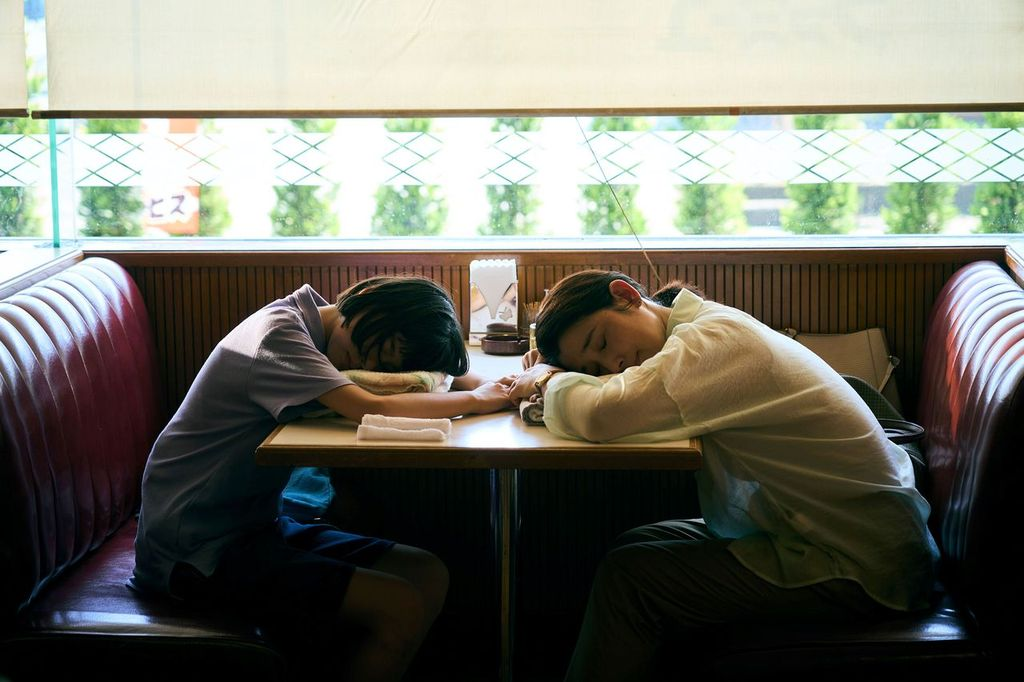
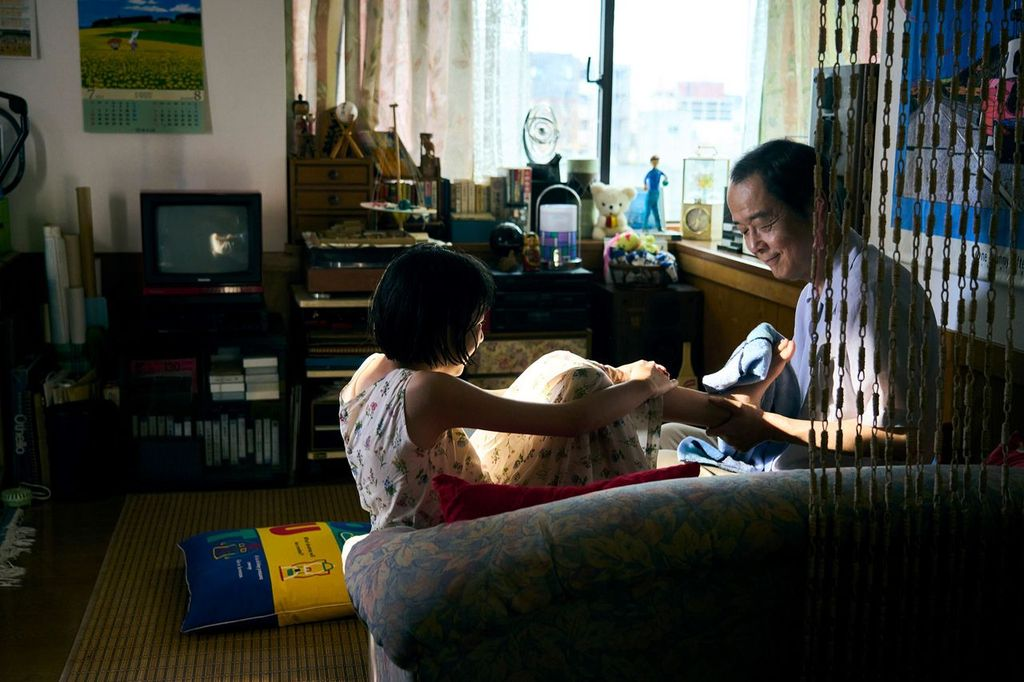
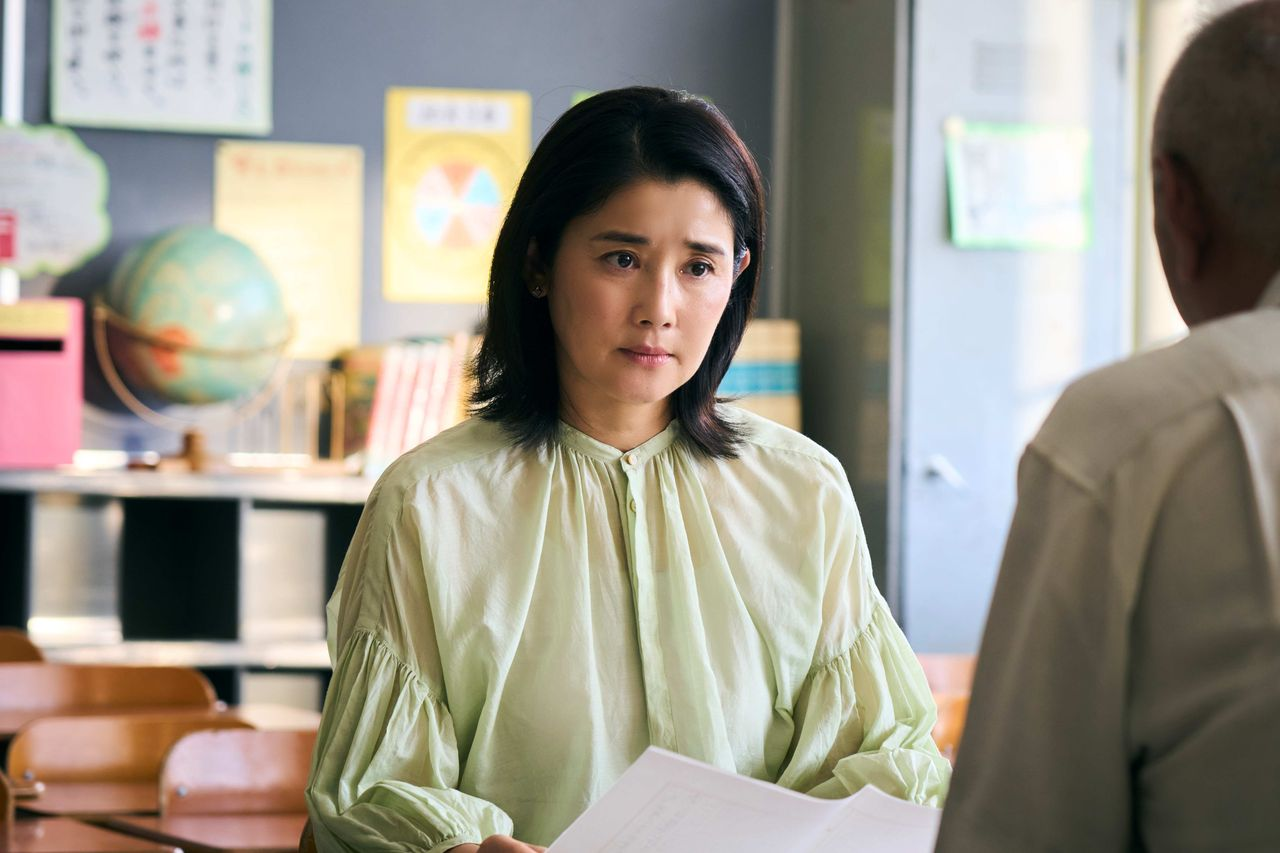
In Chie Hayakawa’s second feature film, Renoir, she interestingly switches nearly 180 degrees from her debut feature, Plan 75. While her first film is a dystopian look at euthanizing the elderly, this film is from the point-of-view of a young girl, being forced to come to grips with mortality. Featuring a stunning child performance from Yui Suzuki, the film throws us into the world of this young girl who is attempting to balance adolescence, new friendships, a difficult relationship with her mother (Hikari Ishida), and a terminally ill father (Lily Franky). Fuki (Suzuki) is an entrancing character, vacillating between analyzing the world around her and taking risks, both with other adolescents and adults.
Due to this very specific point-of-view, there are moments in which the film stagnates and feels disconnected. Now, some of that is a feature, as we are brought along on Fuki’s journey. However, the disconnection is so strong between certain key scenes that it takes a moment to catch up and reconnect. Luckily, there are individual interactions, especially between Fuki and her father that are so strong that the struggles start to matter less once you give in to Hayakawa’s style. Much like the life of a child, the audience feels little control or understanding over the pacing and flow of Renoir. This both helps and hinders the film; we feel both drawn to Fuki and frustrated that we do not know where things are headed, or even where they came from.
From an aesthetic perspective, Renoir is a stunningly detailed visual centerpiece. Cinematographer Hideho Urata and production designer Keiko Mitsumatsu combine to create a lived-in, focused world. As Fuki wanders from her school to her home, nothing feels out of place or unnatural. The same is true when visiting her friend Kaoru’s (Ryôta Bandô) house after bonding through a simple song. This home, more ordered and of higher class, shows a divide between the families, but not between these two girls. Hawakawa’s comfort and confidence behind the camera shows through here, trusting the audience to understand the seemingly innocuous bonds of childhood that seem stronger than even those with our parents.
Fuki’s clear obsession with death and occult practices, through both her creative endeavors and hobbies, becomes noticeable to both the audience and her parents, which cause two very different reactions. Given her father’s cancer diagnosis, we see it as understandable. But to her mother, who is simply trying to survive daily life, this is both frustrating and perplexing. This is again an advantage to the film’s almost sole focus on Fuki. In these small moments, we have a beat to understand that, as a parent, this would be worrisome. For better or worse, Hayakawa refuses to hold the audience’s hand, moralize about what is the right way to parent a child, or deal with impending trauma. There are no answers, and this is to the great benefit of the film. While we enjoy Fuki spending time with her father, thanks to yet another beautiful, gentle performance from Lily Franky, there are still consequences and costs. Fuki cannot see this, but her mother can. This is yet another way the director holds back the lessons of childhood. As young people, we were never particularly good at seeing what could happen, only what is.
As Renoir moves forward in time, in connection with Fuki’s English lessons, we see an understanding in her eyes. An understanding of death, life, love, and even her parent’s experience. Through quite impressionistic strokes, as the title implies, Hayakawa finds a way to provide a path through the darkness and into the light. Even if the film feels slightly disjointed, the ideas behind Hayakawa’s script have enough depth to pull us along on the journey. No one can truly understand how we feel, but when we feel together, we are stronger for it.
On this episode of Chasing the Gold, Shadan is joined by Charlie Bright to discuss the Governors Awards, why it’s a great ceremony and who should win Honorary Oscars in the upcoming years! We also talk some TV shows that we’ve been watching and the ongoing Emmy races.
Check out this week’s show and let us know what you think in the comment section. Thanks for listening and for supporting the InSession Film Podcast!
Director: Natalie Erika James Writers:Natalie Erika James Stars: Midori Francis, Madaleine Madden, Danielle Macdonald
Synopsis: Hana, a lovelorn medical student, becomes terrorized by a sinister force after taking part in an obscure weight loss craze: eating human ashes.
For as long as I have been conscious of myself, I have been insecure about my image. Being too fat, too tall, crooked teeth, you name it, I had an insecurity for it. Being a child of the 90s, I have seen just about every diet fad come and go, but the issue always remained: fatness still existed no matter what. Today is no different, with a new diet craze on the rise and the early 2000s thinness making a comeback; it’s hard not to feel pressured to partake in a culture that feeds off insecurities. So when a film like Saccharine comes along, it’s frustrating when it turns out to be hurtful rather than accepting.
Films involving beauty standards have seen an influx lately, with The Substance, Skincare, and The Ugly Stepsister all falling into the same category. As someone who watched all those films, I never felt completely seen because rarely do those films depict body types outside of acceptable levels of thinness. What piqued my interest in Saccharine was its examination of weight loss and diet culture. Anyone who has gone to the grocery store has seen that diet foods have gone overboard, with protein being baked into everything, even popcorn. Needless to say, the potential that Saccharine possesses in material is endless.
Writer and director Natalie Erika James opens her newest film with a montage of a fit woman working out with footage being interrupted with someone stuffing their face with various foods. Quickly, audiences are introduced to Hana (Midori Francis), a medical student working with a group on a cadaver. She’s a shy woman, and instantly her awkwardness is felt, especially when she is around a beautiful woman. A recent encounter with an old friend has captured her attention when a miracle weight loss supplement is introduced to her. But this isn’t a normal supplement; it’s made from human remains.
James goes to great lengths to show the extremes that deeply insecure people will go to just to become what society decides is an acceptable size. As Hana takes her first dose, the side effects, at least in the beginning, are worth it. She can eat whatever she wants, and it doesn’t impact her appearance. It even gives her the confidence to take a 12-week fitness course by Alanya (Madeleine Madden), a fit gym employee at the gym she frequents. As the pounds fell off, the insecurity remained, with James choosing to have a fat woman haunt Hana that only she can see. Understandably, this makes her increasingly unhinged around those around her to escape this woman
Saccharine is a film filled with potential, but it squanders a lot of what it has going for it by its own harsh view of fatness. Francis is a great lead and gives a heartfelt performance, but this film feels like it was made for a plus-size actress to shine. As an example, the film has Hana wear what appears to be a prosthetic double chin in the beginning to evoke some kind of overweight look, with baggy clothes. This is truly a shame because these cultures don’t just target larger bodies, they target all age groups and sizes. One can’t help but wonder why they couldn’t leave the actress as is, instead of adding a double chin as if it’s a flaw needing to be removed?
Hana has a complicated view of food and bigness, coming from a family where her mother is incredibly small, and her father is overweight, suffering from many health issues. She loves sweets and carbs, but also fears becoming the size that her father is. Her family life isn’t established in a particularly meaningful way; even when James shows her around them, their issues with one another remain largely ambiguous. It comes across that this portion of the film is meant to explain why Hana feels the way she does about herself, but it doesn’t move the story forward much at all.
The horror aspects of Saccharine are mainly during Hana sneaking into her lab to remove various portions of her cadaver’s body to make more of her pills or jump scares when an unclothed being appears in the reflection of Hana’s spoon. James does well with these, making up for the lack of coherent ideas with a great sense of tension. Seeing Hana emotionally eat through the stress of being attacked by someone, she can only see and highlight some of the more disturbing moments of the film.
The film clocks in at nearly 2 hours and definitely has its repetitive moments. A majority of the film is Hana working out and trying to out-eat this hungry ghost hanging around her. And it’s hard to keep track of what moments happened in this stretch of runtime. With constant back and forth between her apartment, the lab, and the gym, it all gets muddled together. Throw on top of that, James focusing more on the being that has attached itself to Hana rather than making an impactful commentary on the predator habits of dieting fads, Saccharine overstays its welcome by the final act.
At the end of it all, Saccharine is well made, with disturbing visuals, and uncomfortable food noises galore. It can be enjoyed for those aspects alone, even when the rest falls short. Coloring is a major aspect of Saccharine, and the use of close-up shots brings us directly into Hana’s view. Even the gym that Hana attends is viewed through a bright and colorful lens as opposed to the gloom of the rest of her life. When we watch her binge on all the food she can find, it doesn’t look appetizing; it looks painful as she chews and chews. Anyone with an ASMR queasiness should steer clear. While Saccharine is a let-down in many aspects, it shows James as a confident filmmaker tackling topics that need to be pushed to the forefront. It’s just an utter shame that it chooses to blame a woman for her insecurities rather than the companies that make money off of women all around the world.
This week on Episode 688 of the InSession Film Podcast, we discussed our Top 5 Star Wars Scenes! This is a list we did back in 2015 with the release of The Force Awakens, but since it’s been over a decade and we’ve had so many new films/shows since then, we thought it was appropriate to revisit this list and talk about all the great scenes that Star Wars has to offer. The franchise may be divided, but most of us can agree that the franchise has some iconic moments. There are so many great scenes to choose from and we had the best time talking about the scenes that really hit home with us. That said, here are our lists:
(Note: Please keep in mind that we each had different criteria for our selections)
JD
1) “I’m A Jedi Like My Father Before Me” – Return of the Jedi
2) “I’m No Jedi” – Star Wars Rebels
3) Mon Mothma’s Speech – Andor
4) Han Solo’s Death – The Force Awakens
5) Yoda Explains the Force – The Empire Strikes Back
Megan
1) Ahsoka Buries Her Fallen Clones – Clone Wars
2) Luthen Rael’s Sacrifices – Andor
3) “I’m No Jedi” – Star Wars Rebels
4) Mon Mothma’s Speech – Andor
5) Leia’s Reaction to Han Being Frozen – The Empire Strikes Back
Honorable Mentions (Combined)
Kleya in Hospital, Kanan’s Sacrifice, “Rebellions are Built on Hope” Jyn Speech, Prison Break in Andor, Mon Mothma Party Dance, Maul vs Obi-Wan, Space Whales, Mando Taking Off Mask To Say Goodbye, Trash Compactor Scene, Hando Maneuver, Binary Sunset, “I Know” Han Solo Response, “I Am Your Father” Reveal, Battle of Hoth, Luke and Leia Sibling Reveal, Duel of the Fates, Obi-Wan vs Jango, “You Were the Chosen One” Obi-Wan, “This is How Liberty Dies” by Padmé, Ahsoka Leaving the Order, Ahsoka Training Rebels, Han and Leia Searching for Ben, Kylo and Rey Fight in Throne Room and many more in Star Wars
Hopefully you guys enjoyed our lists, and if you agree or disagree with us, let us know in the comment section below. There are obviously many more scenes from the franchise that we didn’t have time to mention. That is to say, your list could look very different than ours given the great films and memorable sequences we saw over the last year. That being said, what would be your Top 5? Leave a comment in the comment section or email us at [email protected].
For more lists done by the InSession Film crew and other guests, be sure see our Movie Lists page.
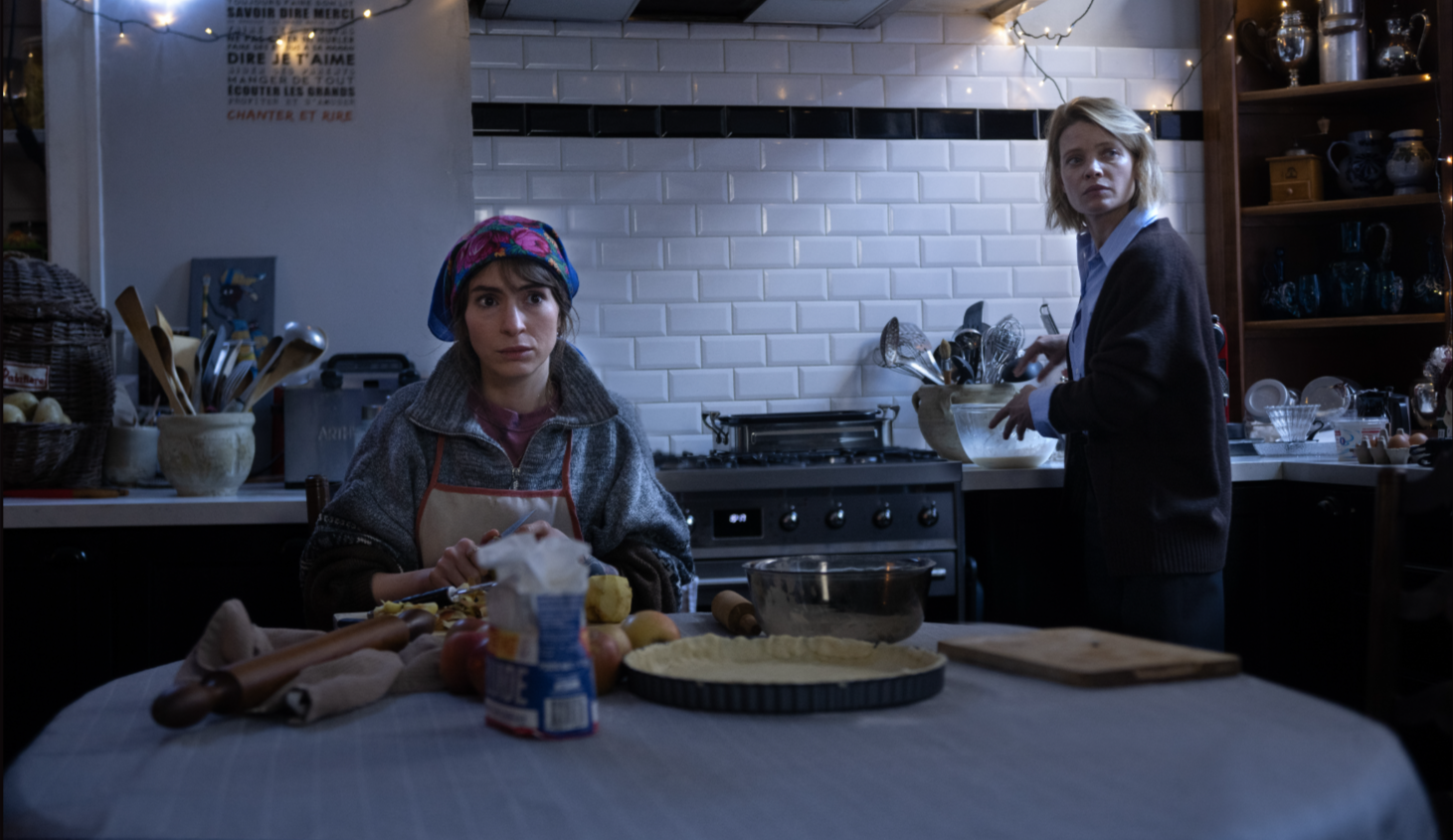
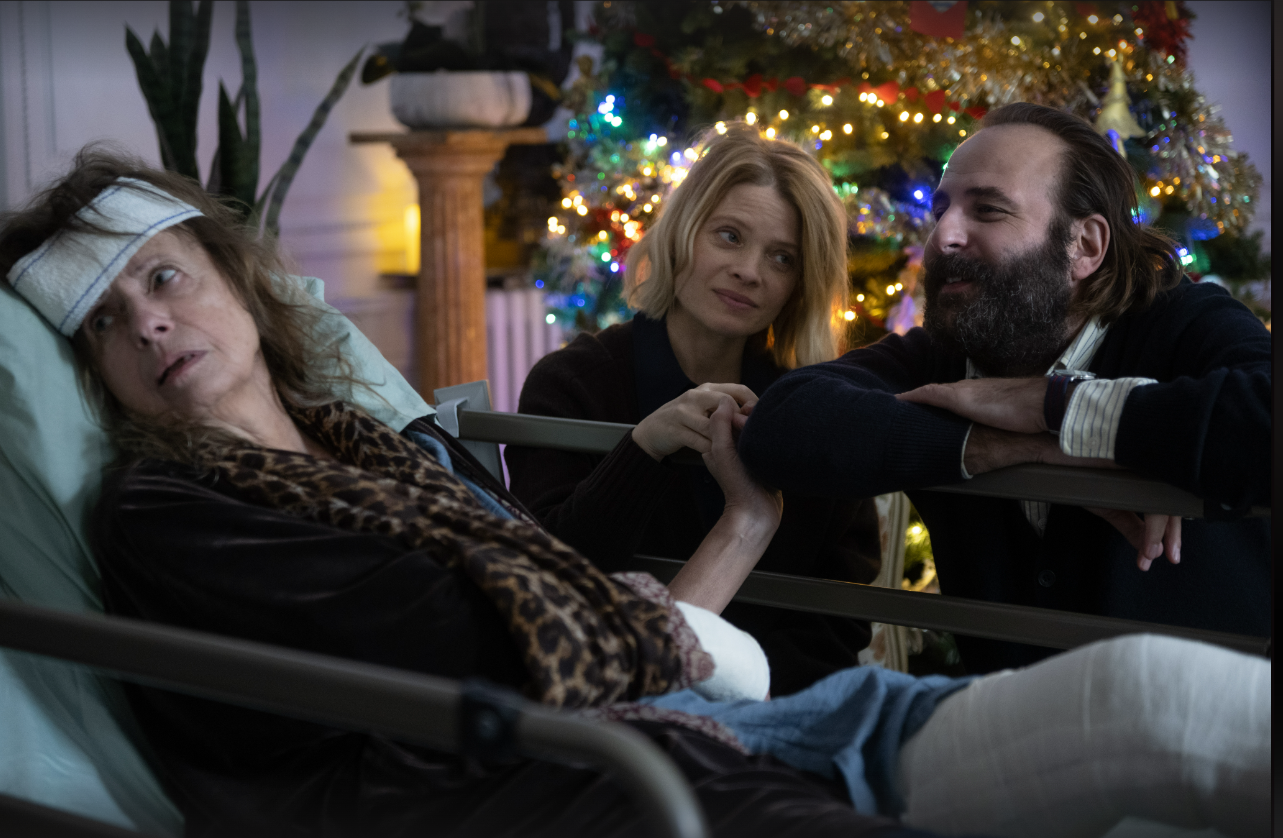
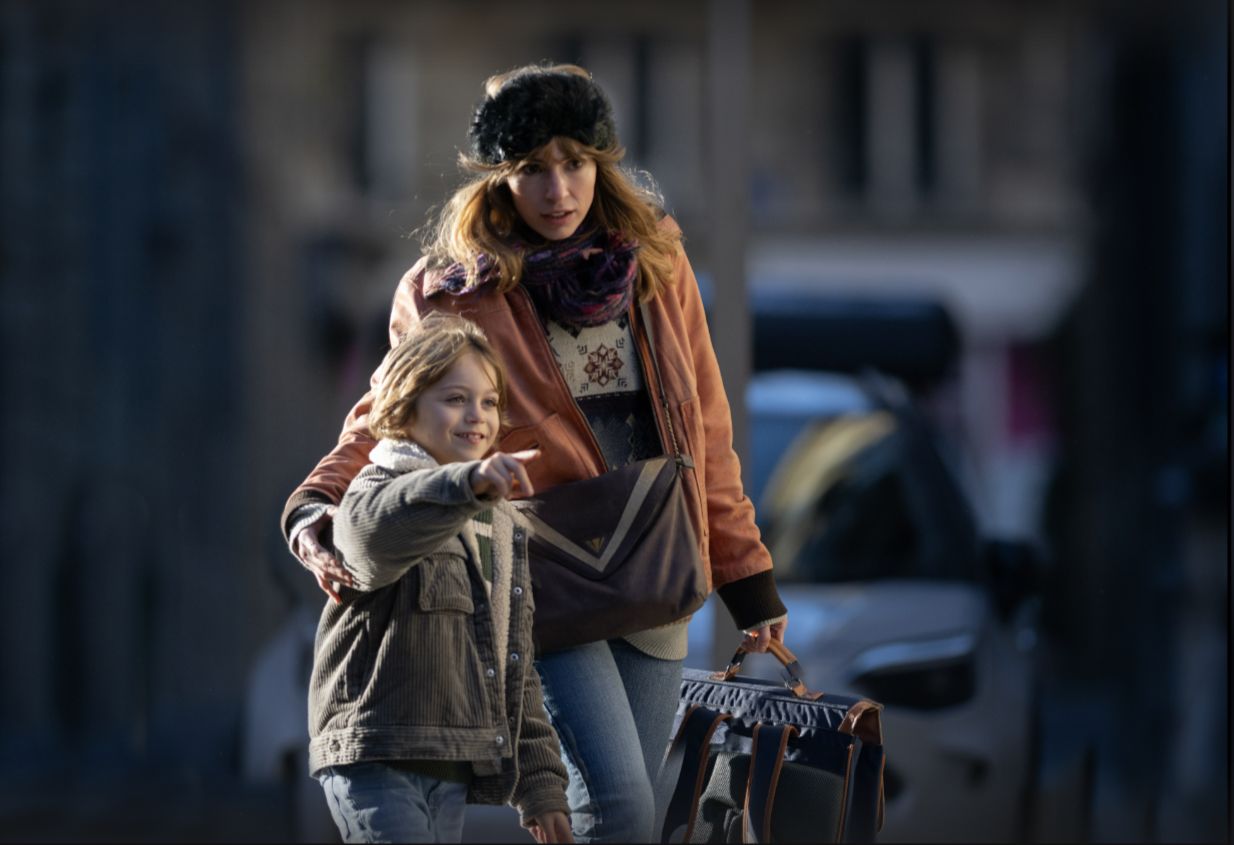
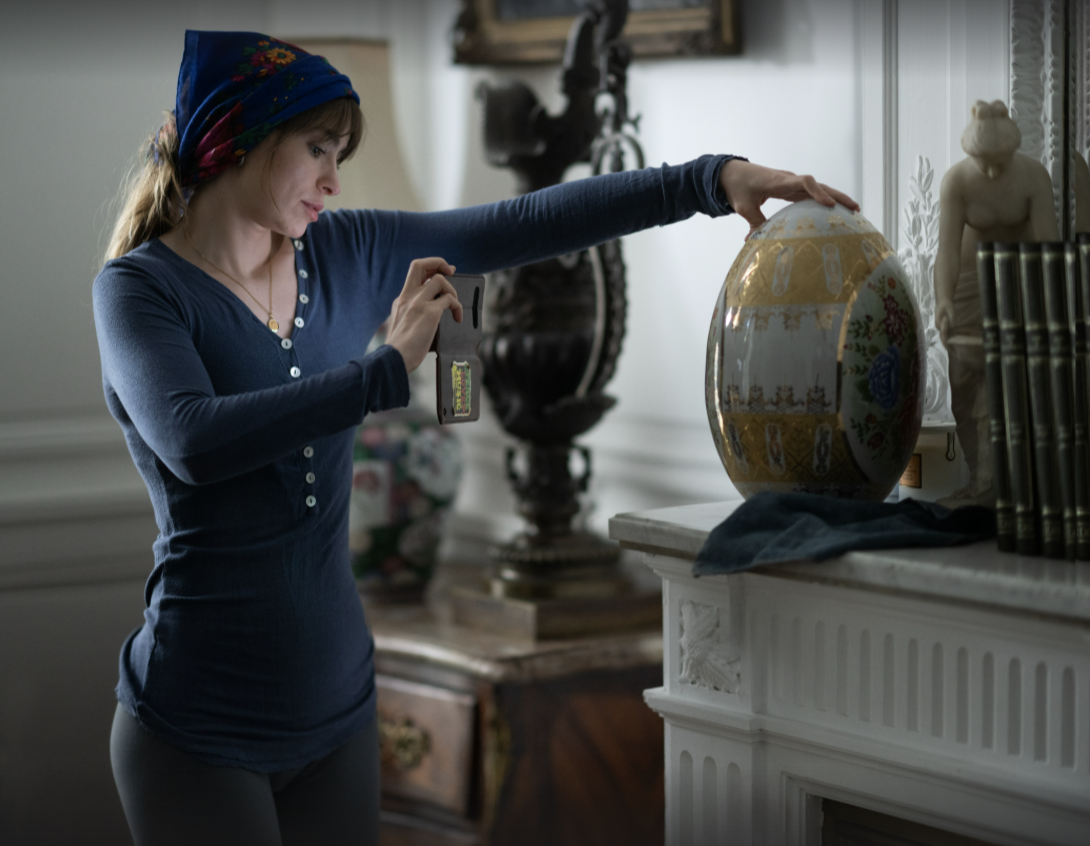
Director: Radu Jude Writers: Radu Jude, Octave Mirbeau Stars: Ana Dumitrascu, Mélanie Thierry, Vincent Macaigne
Synopsis: A young Romanian woman living in France works for a French family and joins a theatre company who are adapting Octave Mirbeau’s “The Diary of a Chambermaid.”
Modern provocateur and one of the most fascinating directors working today, Radu Jude has used his latest films as conversational pieces with acclaimed novels and international films about European society and its enduring turmoil over time. Do Not Expect Too Much From the End of the World creates a parallel portrait with the 1980s Romanian picture Angela Moves On on how the world, particularly Romania, has changed as politicians strip people of their human rights and the means by which technology and social media have overruled our daily lives, becoming a parasitical entity that eliminates tradition and erases history. It is a tale of two films, both connected in the roots of a country that holds its citizens in a chokehold.
Tricky as it may sound, Radu Jude manages to construct a picture that is not only intelligent and witty but also incredibly thought-provoking, showing that things aren’t that different from forty years ago. Then there’s Kontinental ‘25, where Jude references Roberto Rossellini’s Europa ‘51. In the 1951 film, the Italian filmmaker explored how we can make the world a better place by sticking together and helping people who are rejected by society. Now Jude uses it to show us how our decisions have a less humanitarian sensibility–our inclination to help doesn’t overrule our own ignorance and selfishness. Then there is Dracula, in which he delivered a three-hour dissertation on generative AI and the vampirism of capitalist societies through the lens of Bram Stoker’s classic novel and its ties to Romania.
The film is outlandish and provocative in ways only Jude’s cinema can, creating manic scenarios through the vampiric figure that leave you both drained and entertained. Jude has recently announced a new film, titled Love Diptych, which is “in dialogue” with another Roberto Rossellini picture, L’amour, continuing this fascinating trajectory that breaks the mold of the original piece to construct something new and original. But before we get that, Jude has offered yet another discussion with a literary piece in The Diary of a Chambermaid (screening in the Quinzaine des cinéastes at the 2026 Cannes Film Festival). Here, Jude utilizes Octave Mirbeau’s novel to take more jabs at European social and political hypocrisies.
Like his previous works, this isn’t an adaptation or a remake of some sort. Jude simply uses the text to highlight his grievances and to showcase the contradictions of modern-day Europe, distancing himself from the various adaptations made by Jean Renoir, Luis Buñuel, and Benoît Jacquot. In Do Not Expect Too Much From the End of the World there were two women named Angela: the one in Jude’s film (Ilinca Manolache) and the one in Angela Moves On (Dorina Lazar). Now, the Romanian filmmaker once again opts for the duality between different versions of the same role. He uses the same woman (Ana Dumitrașcu) to play a chambermaid both in real life and in a theater production of the novel.
Her name is Gianina, a young Romanian immigrant who lives in Bordeaux and works as a housekeeper and nanny for a bourgeois family, the Donnadieus (Mélanie Thierry and Vincent Macaigne). Gianina has many duties in the house, but her main priority is taking care of the Donnadieus’ kid, while her own daughter lives back in Romania. Of course, Gianina is hurt plenty by the fact that she can’t be with her daughter, taking care of someone else’s, as she misses years of her life. She works days and nights just to settle down in France alongside her daughter, dealing with the rich family’s snobbish temperament. They treat Gianina well, but their superiority complex irks her vastly.
For example, when the Donnadieus have their lavish, wine-drowned dinners, she is brought up to comment on how her life was back home–using her struggles and her country’s predicaments as a sort of amusement–or social topics like the ongoing wars. The Donnadieus have a stereotypical view of Eastern Europeans and use Gianina as the token symbol of that mentality. As an “escape” from those predicaments, Gianina takes part in an amateur theater production of “The Diary of a Chambermaid,” playing a maid both on stage and in real life–fiction and reality once again in Jude’s cinema, creating parallels that blur performance and lived experience. This casting becomes an extension of the social position imposed on her.
Labor and identity have collapsed under the gaze of those who employ her. Class hierarchy has scripted her existence to the point where self-expression becomes part of her servitude to the Donnadieus or to her acting troupe. Everything fractures for Gianina when her chances of going home for Christmas deteriorate. Her wish is denied, and what follows are the chronicles of Gianina’s surroundings, full of ignorance and deceit, all conveyed through Jude’s honest, satirical remarks in his hilarious, smart script. The film is structured like a diary reading, chronicling Gianina’s life via vignettes dated from September to Christmas Day. Her life consists of many uneventful days, highlighted by FaceTime calls with her vulgar daughter and rehearsals for the stage play helmed by Jude alum Ilinca Manolache.
In each of these scenarios, Jude prompts acidic commentary on the progressive Europeans who talk about change in the anti-immigrant systems surrounding the world and vow that they see no differences between them and the Eastern Europeans. Still, their actions say something different, contradictory in essence. Their language becomes a shield for the same prejudices they claim to reject. It is all repackaged through politeness and intellectual posturing. Jude exposes the way solidarity collapses when class is threatened. But he also doesn’t leave the Romanians out of it either. He criticizes the lack of knowledge of their native country with a coldness that cuts through nostalgia and national pride.
The detachment from their own history mirrors the indifference of those who exploit them abroad. In Jude’s view, displacement begins long before migration. It begins when people lose their grasp of the realities that shaped them. The Diary of a Chambermaid comes packed with cruel, hilarious jokes from Jude and his dedicated cast of stars on the rise. As with most satire, beneath the humor and hilarious quips lies a pointed anger and preoccupation. Every laugh Jude draws from you has a truthful sting, prompting the audience to confront the harsh reality embedded in each joke or quip. In Jude’s hands, comedy can’t be separated from discomfort, for which he exposes civility in the present day in manners that no other filmmaker has done in the past couple of years.
Even if he is churning out projects at a rapid pace, much like Hong Sang-soo, who tends to present one film a year (or more) at film festivals, the quality of Jude’s films doesn’t diminish in the least. He is acting fast and thinking smart, making each feature not only a timely response to the present-day political climate but also a sharp extension of his ongoing interrogation of history–whether cinematic and literary or cultural and societal–and of national identity. Each project has an urgency to it, without ever feeling rushed, carried by the precision of a filmmaker who knows when the right time is to tackle a specific subject. Radu Jude is already one of the most fascinating directors working today, but if he continues this high-caliber streak, can we begin to consider him one of the most important filmmakers of the modern era?
Synopsis:A fearless crew of inventive young women turn shoplifting into a radical act of defiance.
Satire is a genre within the film world that can be frankly tough to truly have a firm grasp on. Sometimes they can be too on the nose in a way that never reflects a creative parallel, or maybe just never capitalizes on any meaningful commentary that brings something new to the table. In a world where many satires, in particular, and movies, in general, lack true ingenuity, it’s a true-blue miracle we have an artist like Boots Riley pushing the envelope of true bursts of never-ending imagination amidst a sea of redundancy. Riley’s debut feature, Sorry to Bother You, was merely a glimpse of the filmmaker’s willingness to delve into touchstones of clever satirization of relatable real-world struggles. I Love Boosters is a true evolution of Riley’s most unique traits. It sounds easy to say we’ve never seen satire to this degree but Riley’s ingenuity is next level, whether it’s the way he fleshes out his colorful heightened realities of slanted buildings or implementation of hallmarks like full stop-motion animation blended in with live action set pieces with so many moving cogs, I Love Boosters is a nonstop train of gleeful absurdism. He accomplishes this all while taking a proper beat down to the continuous rot plaguing our world that is capitalism. Sure, sometimes the ambition can outweigh the tools at hand, and there’s enough constantly moving plot pieces within the film’s back half that would leave most a bit confused, but I Love Boosters is more than enough proof that Boots Riley is a voice in filmmaking that is utterly transfixing in his delightful chaos, flaws in all.
I Love Boosters follows the plights of Corvette (Keke Palmer), a woman struggling to get by in a world that’s beating her down so hard she has to live in an old chicken restaurant with a literal snowball of debts and overdue bills following her everywhere she goes. Corvette leads a group of boosters known as “The Velvet Gang” that includes her, Sade (Naomi Ackie), and Mariah (Taylour Paige), who steal from big brand stores and sell their insanely expensive clothes at a discount price.
Their heists are meticulously planned out, often using exaggerated distractions like fake sicknesses and fights to often take from a top designer brand, Metro, owned by stuck-up billionaire designer Christie Smith (Demi Moore). Corvette has a complicated relationship with Christie; she wants to have a similar outsized influence, but also wants to focus on how fashion can operate as an art form, rather than just simply lifeless corporate marketing. Corvette even lands a job at one of Metro’s stores and sends in one of her personal designs but she soon realizes if she wants to make change within a deeply broken fashion industry, she must do it from the inside out. She attempts to do so through various means, including more escalating heists with a dash of Sci-Fi teleportation technology (yes, you read that right).
Even after the full off-kilter tilt within the back half of Sorry To Bother You, Riley’s full veer into doubling down on the absurdist surrealist is just as shocking. Despite similar themes, due to the new perspective of the fashion industry, there is no redundancy to be found in I Love Boosters.
Corvette is a fascinating lead character in that she is constantly mesmerized by the inner workings of the capitalist industry that surrounds the art she loves, while quite literally and physically being against everything it stands for within society. Corvette’s struggles to balance the realities of being a cog in the corporate machine vs keeping the spirit alive of what truly being an artist means in the fashion world, which takes similar themes Riley toyed with in his first feature and dials it up to an 11, and it always helps when you have a performer as spirited as Palmer to roll perfectly with the absurdities of Riley’s wavelength.
The rights of workers and solidarity amidst corporate pressure are naturally all over Riley’s latest, and it’s just so refreshing to see a film essentially scream from the rooftops for us to come together against workers’ rights being constantly exploited. If anything, Riley hits the nail on the head here even harder than he did in his dissection of these themes in Sorry To Bother You, fully exploring the abuse of workers within Chinese sweatshops under the Metro brand and how they work long hours for increasingly poor pay and labor in an environment that constantly puts them in danger of illness due to its unkempt conditions.
This perspective is delved into from the perspective of Jianhu (Poppy Liu), whose teleportation device, which was used to get to where the boosters reside in Oakland, becomes far more important in the back half of the narrative. Riley’s ultimate message is simple, yes, but powerful nonetheless. Whether it’s Violeta’s (Eiza Gonzalez) search to unionize against Metro rather than steal from them, Jianhu’s sweatshop struggles, or the Corvette’s crew’s never-ending boosting, we are all fighting the same fight against the corporate exploitation and artistic theft Christie Smith stands for that plagues both our real world and Boots Riley’s heightened dystopias. An obvious takeaway, but it’s more than clear by now that Riley is anything but subtle in the best of ways.
The technical wizardry on display throughout I Love Boosters from Riley and his team essentially feels like anything Riley couldn’t accomplish in the confines of his first feature was crammed in here. The world of the film tends to operate on a cross between fairy tale and Looney Tunes logic. Characters are often running as if they could be placed in a Wile E. Coyote and Roadrunner cartoon, buildings are slanted to insane degrees, and the camera often zooms in and out like you’re on a next-level acid trip.
The gonzo nature of Riley’s sensibilities never tries too hard to get you to be reactive, though, fully embracing the silliness sometimes, using simple, well-told jokes or situational comedy surrounding its colorful cast of characters. In the film’s third act we even straight up move into the car and foot chases that implement miniatures, and stop-motion characters fully interacting with our main cast. The practicality of nearly every crevice of the film’s craft and production design makes for a truly delightful viewing experience even when the movie gets a bit too high on its own supply surrounding the Sci-Fi mumbo jumbo of its teleportation device and outlandish side characters considering its stretched runtime.
Whether you’re tapped into his deranged wavelength or not, there’s simply no one executing the perfect surrealist dystopian satire like Boots Riley, and I Love Boosters is the most uniform project of all of his best quirks, combining sugar rush heightened absurdity with powerfully implemented social commentary. Sometimes things get a bit too crazy for the film’s own good, but anytime the movie feels lost within its own mess, Riley dumps another bucket of paint on the canvas to create the type of delightful, distinctive experience that will always be more intoxicating than it is exhausting, and props to him for his continued ingenuity within a world of so many unique creators.
Synopsis: A Circassian-American teen in New Jersey balances working at his family’s struggling ethnic diner with his wrestling aspirations, until his father’s risky decision forces him to face harsh realities and grow up quickly.
You can’t shape men who perform strength to conceal fragility. They use strength as a form of suppression; it is something they learn from their environments, which reward them for callousness and punish uncertainty. Through assimilation and vicious cycles of rigor in their lineage, they begin to inhabit these roles, inheriting a masculine persona so brittle that any challenge towards it, their response is to attack–showing the fractures of trauma and time. In Kantemir Balagov’s long-awaited third film, Butterfly Jam (screening in the Quinzaine des cinéastes at the 2026 Cannes Film Festival), the immense pressure placed on men to discard emotional vulnerability and see it as weakness is explored via a father-son dynamic in a Circassian-American community. Their cultural dislocation intersects with the pursuit of manhood, creating a toxicity that may disrupt their daily lives if left unaddressed.
The topic of fragile masculinity has long been present in cinema history, dating back to The Treasure of Sierra Madre (1948) and Rebel Without a Cause (1955). Filmmakers have always been fascinated with deconstructing the role of an alpha male and peeling its layers until a new person blooms from within. And Balagov wants to do the same with those from his home country, searching within a little-known community in southern Russia. This helps steer the story into a specific territory with a new perspective that has never been tackled before. Unfortunately, his anticipated return lacks the Russian filmmaker’s penchant for naturalism and delivers an offbeat, muddled story that loses direction and emotion as each dramatic thread unravels.
Butterfly Jam is about a young family chasing the American dream, the promise society embodies in people’s minds about prosperity, which is a facade due to systemic barriers. And these barriers are demonstrated by Balagov through the struggles of this Circassian family who moved to New Jersey. The patriarch is Azik (Barry Keoghan), who runs a failing Circassian diner alongside his pregnant sister, Valya (Riley Keough), and schemes with his close friend, Merat (Harry Melling), most of which ultimately do not benefit them. Like most struggling to make ends meet, the two go ahead and try to create “projects” for a chance to receive some cash at the end. Yet they remain stuck in the same positions, with memories of home but little success in their new abode.
Azik has a teenage son, Temir (Talha Akdogan, the film’s standout), who hopes his professional wrestling training will pay off with a fruitful career. He is the gateway to end the family’s troubles, with Azik pushing Temir to go beyond his limit. A week of good news hits the household upon Temir winning his first match and a businessman being enamored by one of the diner’s dishes, although, as we might assume, that string of good luck won’t be for long. Through griminess and eccentricity, Balagov explores the constricting forces and codes of male pride, ones that demand dominance while punishing vulnerability. The male characters in Butterfly Jam are trapped by the forced constraints of inherited masculinity, in which tenderness signals weakness.
Balagov looks at these characters with some sort of recollection, reminding him of his own experiences in his native country. He treats them with an intimacy that feels both personal and observational, as if he were revisiting fragments of a past that still lingers. That exploration is reminiscent of Andrea Arnold’s approach, with some plot developments and character traits in Butterfly Jam feeling quite similar to those of her latest work, Bird. Not only does Keoghan play a young father with a teenage kid in both films, but there are also the clear animal metaphors. Arnold uses these metaphors extensively in her features to showcase her characters’ imprisonment, whether societal or psychological.
These analogies blend seamlessly into the setting with a sense of brevity, creating a subtle yet evocative portrait of confinement that mirrors the characters’ emotional paralysis. Balagov uses such to express Temir’s desire to escape the mentality his father and his best friend impose upon him about masculinity, one that he doesn’t want to adopt or confront. However, much like the aforementioned Bird, these metaphors come off as rather too in your face and without the subtlety that each director, Arnold and Balagov, could have done and have done previously. For Balagov, these are new terrain; his films don’t tend to use fantastical elements or veer from reality. His work previously was more restrained and grounded.
I am fascinated by the idea of him going out of his comfort zone for Butterfly Jam to find new ways to dissect his experiences. But the problem in this film goes beyond those metaphors not clicking properly. The film’s primordial issue lies in the characters’ dilemmas, where their unevenness and dubiousness severely hinder their arcs, to the point of breaking the story almost entirely. Their development catches your interest, with the thematic backbone of inherited trauma of forced toxic masculinity being present and well-elaborated. When the time comes to wrap up their arcs to make way for the climax, Balagov rushes to the finish line, instead of tying it with a gentle bow.
When violence comes into play later on, rather than being an emotional moment, it feels unjustified, even though the film alludes to tragedy at the beginning. The characters haven’t been explored thoroughly enough for that scene to have an impact. Chaos emerges from the script into the frame, and no one can seem to grab hold of the film, not even the talented cast. It seems odd that it ended up like this. Balagov’s filmography tends to be calm and slow-paced, with a careful, observational look at its characters, as seen in his previous two features, Beanpole and Closeness. Here, the sensitivity he is known for feels interrupted by a script that mistakes escalation for emotional depth. This is why his latest is a rather unfortunate disappointment.