



Megan Loucks wrote in her review of Lucía Aleñar Iglesias debut feature, Forastera that it is:
“For those seeking a sweetly unusual take on navigating grief, Iglesias’s debut is more than worth the watch. Its heartfelt approach to life’s most difficult aspects doesn’t judge how people grieve. Rather, it accepts the many ways grief shapes those who experience it with captivating performances and warm summer rays.”
Nadine Whitney was lucky to speak with Lucía Aleñar Iglesias about the moods she creates around grief and growing up during a Mallorca summer.
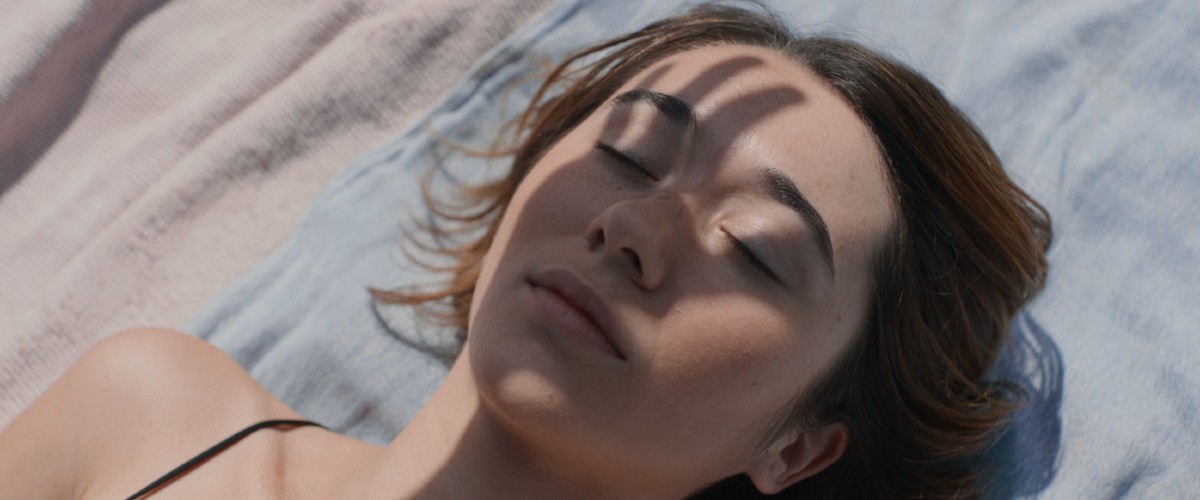
Nadine Whitney: Hi Lucía. The first thing I’d like to talk to you about is the title, because for people who are not Spanish speakers it is confusing, Forastera translates to ‘outsider’ or ‘stranger.’ Is that correct?
Lucía Aleñar Iglesias: I think that the direct translation is outsider, foreigner. But in Mallorca, the island where the film is set, the term has like a very specific connotation. The locals use it to refer to the Spaniards from the peninsula who traveled to Mallorca to to visit, and even the Spaniards that are not from the island that even live there are still forasteros; they’re still foreigners, which I always found interesting. My father’s side of the family is from there, so I spent most summers of my childhood visiting family there, and that term was one of those like first words that I learned. It stuck with me. I found it very interesting and it gave me lot to think about.
NW: Your answer leads into something I was going to ask you because the setting feels very lived in, very inhabited, like you personally spent a lot of time in that area. How much of this of the comes from your experience of being in Mallorca?
LAI: Well, the story is fiction, but I definitely felt very inspired by my years as a kid spending summers there. I think there was something like having the privilege of having this kind of relationship with a place that is constant but not permanent. A place that you go to for a couple months out of the year makes it kind of like a bubble of sorts; like sort of a parallel world for you or for me as a kid. It certainly was very inspiring too; in that it is one of the most idyllic places I’ve ever visited. I felt drawn to the idea of setting the very heavy or you know, dark subject matter in a place that is so breathtaking. How could you feel sad, overlooking the ocean? But sad things happen everywhere and all the time. So, it was like an interesting contrast visually that I was also really drawn to playing with in the film.
NW: I also felt the emotional resonance of staying with a grandparent or grandparents, because that’s something that I did throughout my childhood as well. That also creates a parallel world where you’re not so much being parented by them, just cared for by them. It’s a very different dynamic from the one you have with your parents. Is that something you’ve experienced with your own grandparents and relatives?
LAU: Totally, I think I think that exactly what you said. There’s a supervision element with grandparents, but there’s also a great freedom, and they’re there to sort of take care of you, and there’s less of direct parenting. Yes, the relationship and the dynamic are quite interesting. I was very interested in introducing Cata (Zoe Stein) before all of what happens in the film. Even in those first moments, like there’s an insolence to her. She’s got an attitude that maybe she wouldn’t have if her parents were around. As the movie progresses, and as she’s allowing herself to step into this character (a version of Catalina), to wear these clothes, and the like. I think it is the fact that this intergenerational relationship is a lot looser and freer is what gives her, and gives Tomeu, her grandfather, the permission to treat each other in a different way.
NW: There is yet very much a sense that Cata feels that she can step into being Catalina because she’s having similar experiences to her grandmother, for example, the parallel with octopus. Also, because her mother Pepa has a fraught relationship with her own father, Tomeu, she can a buffer between them. Cata is also avoiding grief because she stepped into caring for everyone else in family unit.
LAI: For Cata, there’s an element that I was very interested in by hinting towards that there’s a little bit of guilt for her too: in terms of not having spent enough time with this person, and not really knowing who they were, and not being the grandchild that you know would cook with her, and would spend time with her like her little sister Eva would. The apparent connection that she chases and is very curious about is to become empowered and becomes that sort of glue that you speak of. The middle person between the adults who are grieving very differently.
She gives herself a new responsibility, or a chance to like step into a different role, and I think at that age (17), particularly as a teenager, you’re sort of trying many hats on and like figuring yourself out. And although it seems quite strange, that’s the point. Although it’s quite strange, it’s still enticing for her.
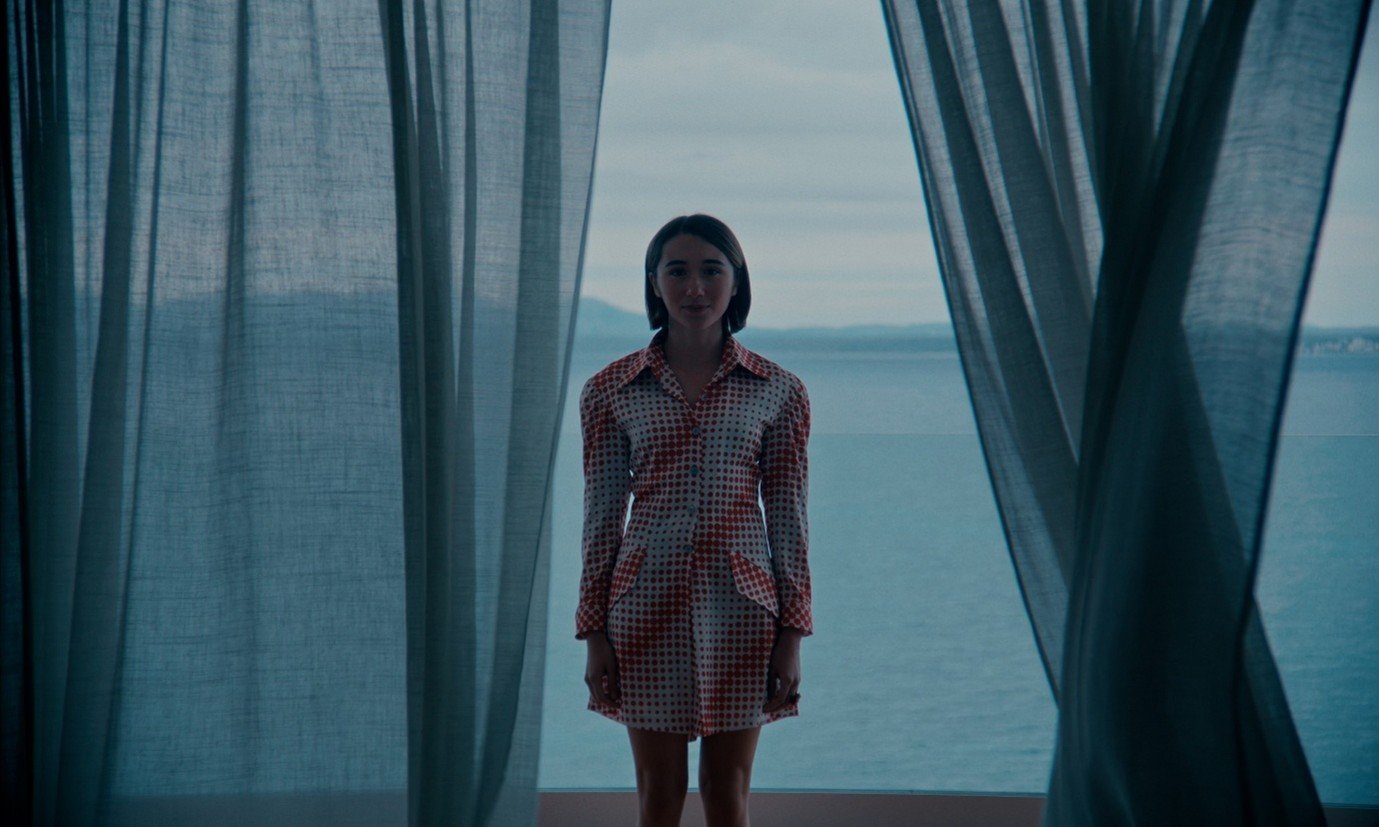
NW: At the heart of the story is coming-of-age. Cata’s got a holiday boyfriend, Max, she’s sneaking off, and enjoying being an older teenager with. She does experience quite a lot of freedom up until the point where she loses Catalina. The film twins both the rituals of coming of age with the rituals of grieving,
LAI: I think something that happens too, through this, this particular way of grieving is that the grief and the “play pretend” is more stimulating for her imagination, and for her growth. She’s able to create space emotionally for herself that she can’t create with Max. Their romance is not as profound as what she’s able to, to kind of explore and foster the sort of tenderness that she’s encountering with her grandfather.
NW: Cata is becoming an adult, but an adult who already has defined roles in a family is a slippage into growing up immediately but it’s also pretend.
LAI: This sort of coming into a role is really interesting to me. Cata finds that in playing her grandmother there’s sort of a strict place for her. It’s a nice tension for the character, who is presented as this teenager with an attitude who’s a little bit insolent, definitely opaque in her emotions, and is able through playing this character that was more or less contained, let’s say, as her grandmother, opens up the family structure.
NW: It gives her the ability to mother her mother. Pepa is very, very stressed in general, and coming to deal with the death of her mother, she’s not sure what to do with herself
LAI: It’s very hard to synchronize those emotions with your entire family, for because grief is such a personal journey, right? It’s hard to kind of meet each other in the same place, and so it makes for a lot of conflict, but also, I think an opportunity for compassion. Both of which I was exploring in the film.
NW: I think you’ve done a wonderful job. Forastera is haunting piece, but it’s a warm piece. So, you have the darkness and the light: and you have Zoe Stein, who I have to say is extraordinary. I see that she was in the short film that became the feature. I was blown away by her work. It’s such a complex role, and her performance is astonishing.
LAI: She’s astoundingly good, and I feel very lucky to be able to make a first feature, but also to make it with someone that I’ve worked with before and that I have a shorthand with. And I don’t know, I feel very lucky to have that relationship with and to be exploring this character together once again.
Zoe’s just so good at expressing to the camera without giving anything away. She has just a magnetism and a presence that’s really, really wonderful. It’s just a talent that you either have or don’t. She’s a very hard worker. She led the film so, so well.
We worked very hard. I had an amazing team of talented artists that were able to help me get that haunted quality that we were trying to achieve. But the haunted quality is still very luminous, and I feel very lucky that the team understood that or was able to interpret that with me in this way. We were able to build this visual world with that in mind; there’s like an eeriness that is unsettling, but it’s also beautiful, I hope.
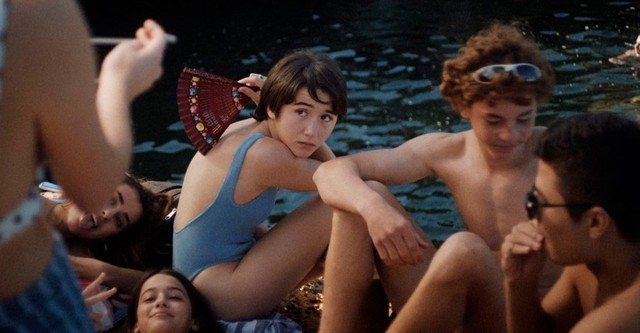
NW: If you were to be able to like to speak to any audience and say, “Here’s what I would like for you to take from the film.” What would you most like to have them concentrate on?
LAI: I think that this is a journey through grief that is at times haunted, but also playful, and that it’s hopefully full of empathy for the people in the film, and that it transmits that empathy to the people watching.