


Director: Geeta Gandbhir
Stars: Susan Lorincz, Ajike Owens, Franklin Baez-Colon
Synopsis: A minor disagreement between neighbors in Florida takes a lethal turn, with police body camera footage and interviews probing the aftermath of the state’s controversial “stand your ground” laws.
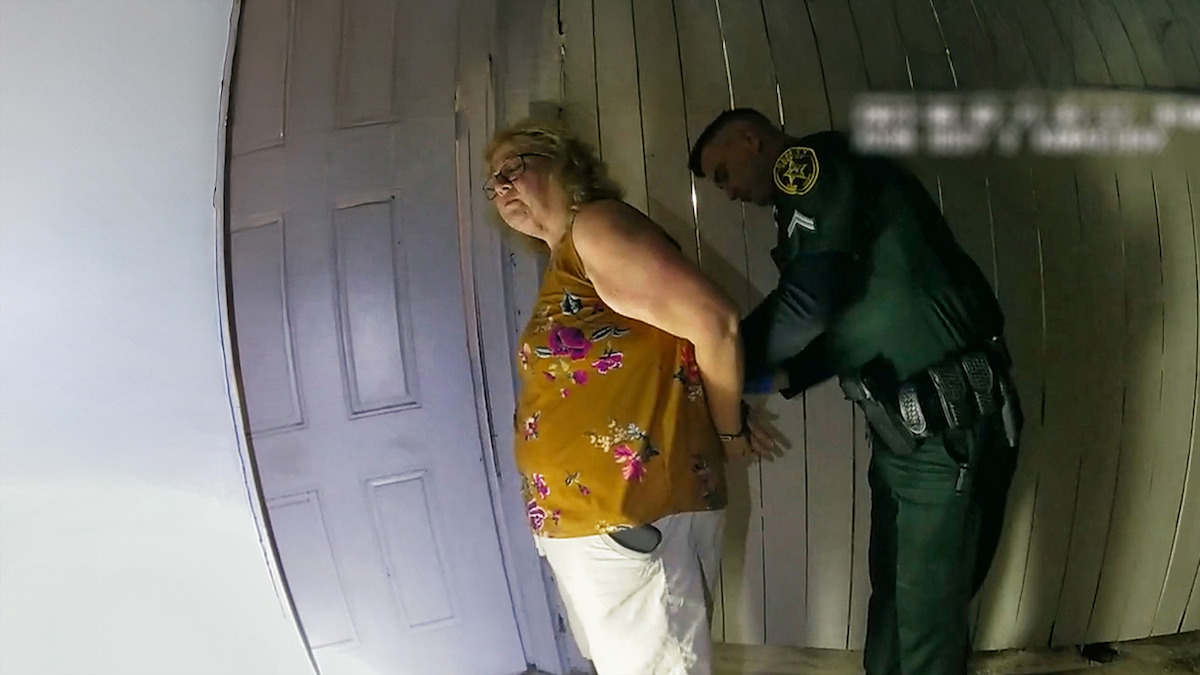
Netflix’s The Perfect Neighbor is bound to ruffle a few feathers, considering the political climate. The film takes raw footage from police body-worn cameras and dash cams. Director Geeta Gandbhir uses them to draw a heartbreaking portrait of systemic and intergenerational racism—a toxic combination of socially inherited issues that is built into state (and soon, probably federal) law. In this case, the suspect, a woman named Susan Lorincz, an older adult Caucasian woman, used the police to enforce control over a friendly neighborhood community, swinging a hammer of fear.
Or, in this case, a pair of scratched-up rollerblades and a sharp, umbrella-like stick. Unfortunately, she pictured a handgun and bullets as the carrots.
The Netflix documentary film covers the case, showing Lorincz calling the police a dozen or so times because neighborhood children are yelling and screaming in the streets. Sometimes she claims they are on her property and tells the responding officers, “I’m the perfect neighbor.” She claims she is threatened almost every time, yet never thinks about putting up a surveillance camera to capture the supposed adolescent criminals. Nor does she seem to understand that her landlord has permitted the kids to play on the lot of land adjacent to her rental.
Yet somehow, Lorincz is not cited or arrested by the police for repeated accusations without proof, which is a misdemeanor involving the misuse of emergency services, false reporting, or even harassment. Though the officers do not have a problem calling her “psycho” under their breath as they walk away. Lorincz was almost arrested for trespassing and attempting to break down a gate on private property (the reasons for her presence were never fully explained). Even though she lied on camera and was about to be arrested, she avoided handcuffs with a sob story, appearing as though an officer went over to, we can only assume, work out an arrangement to avoid jail time.
The events that transpire afterward are ripped from the headlines, powerful and vital, making the hairs on your skin stand on end and anger rise from your heart. A crime documentary that plays out like a profound thriller, raw and heartbreaking, that is just as much about racial dynamics as it is about the deep fractures in a justice system that too often protects power over truth. Since the birth of the term “Karen” in that Central Park case, the weaponizing of the police by citizens in power has shone a light on macro-racism that can no longer be ignored.
There is no one playing for the camera in this documentary film, except for the suspect when lying to police about harmless or innocuous activities. In this case, Lorincz invokes the “Stand Your Ground” law, which has acquitted 17% of white defendants in deadly crimes and only 1% of those with a biological condition of higher melanin production due to genetic adaptation. Gandbhir’s documentary is a stunning, jaw-dropping example of biased exploitation and does what only the best narrative films do—not show a glimpse of an America you don’t want to see, but rather our reflection in the mirror.
The viewer may wonder if what transpired would have even made the papers without social media, cell phone recordings, or those pesky body-worn cameras. All of this is magnified almost viscerally through Alfredo De Lara’s cinematography, Viridiana Lieberman’s virtuosic editing, and Laura Heiniger’s haunting score. The Perfect Neighbor places you in the middle of an impossible-to-escape nightmare, using emotional manipulation to drop the viewer into the case and allow them to make their own judgments.
Which, I bet, will expose more racist attitudes lurking in the shadows than we could possibly know.
You can stream The Perfect Neighbor exclusively on Netflix!