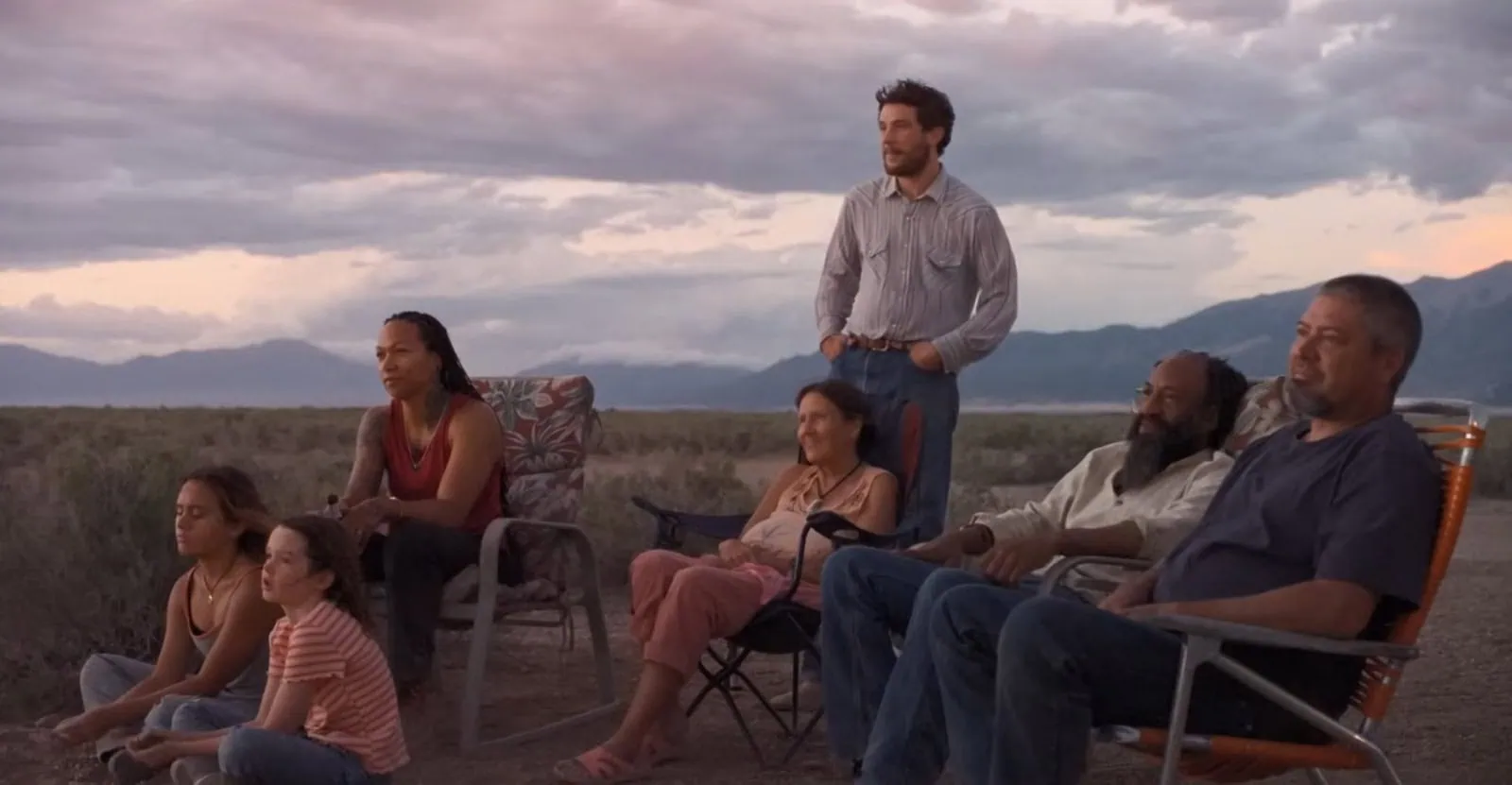
This week on the InSession Film Podcast, we remember the late-great Rob Reiner and the all-time classics he made early in his career. We also give our thoughts on the Oscar shortlists and then dive into the Warner Bros. debacle as they look to settle with their bid with Netflix.
Check out this week’s show and let us know what you think in the comment section. Thanks for listening and for supporting the InSession Film Podcast!
– Remembering Rob Reiner (2:07) We begin the show this week by talking about the late-great Rob Reiner and his incredible career behind-the-camera and his memorable performances on-screen. His early career as a filmmaking is nothing short of astounding. His output from the early 80s through the early 90s is simply an hall-of-fame run. Some all-time classics in that crop of films. What happened to Reiner is absolutely tragic and heartbreaking, but we wanted to celebrate his remarkable legacy.
– Clooney Draft Results / Stingray / Oscar Shortlists (20:11) After a hard right turn, we then give the results of our George Clooney draft, and it was quite funny how it turned out. JD provides us with another Stingray Movie Music update, and it’s one of the most passionate turn of events that we’ve seen yet. And finally we dig into the Oscar shortlists and talk about some of the most baffling titles/names to be considered. There’s a lot to love in some categories, but we especially talk about how uneven the music categories are this year.
– Warner Bros/Netflix (1:15:15) We’ve waited awhile to dive into this topic, but now that it seems like Netflix has won the bid, we decided now is a great time to talk about the Hollywood Devil (it’s Episode 666 after all). No matter how you spin, or whoever won the bid, this is a bad thing for movies. Netflix says they’re going to keep Warner Bros separated and still put their movies in theaters. We’ll see if they hold to their word, but it’s easy to be dubious.
If you want to help support us, there are several ways you can help us and we’d absolutely appreciate it. Every penny goes directly back into supporting the show and we are truly honored and grateful. Thanks for your support and for listening to the InSession Film Podcast!
The Star Wars sequel trilogy is a weird subject to tackle. It has become a toxic battlefield amongst the fanbase, never failing to spark outrage and debate. Of course, much of that is rooted in Rian Johnson’s The Last Jedi, but JJ Abram’s The Force Awakens is far from being impervious to criticism and the discourse. It often gets maligned for narratively regurgitating familiar plot beats from A New Hope, and is mostly talked about as a middling Star Wars movie. And, personally, I just can’t fathom that when you look past its superficial veneer. In fact, as we celebrate its 10th anniversary, I would argue that it’s the best of the three.
I know I’m going to lose some of you with that previous statement, but if you follow me for a moment, there’s a lot more going on with The Force Awakens beyond simple plot mechanics. It might not be J.J. Abrams’ modus operandi, like it is for Rian Johnson, so I understand why it gets lost in translation. However, The Force Awakens is way more subversive than it gets credit for, particularly with how Abrams taps into lore to question mythos and memory. It’s a film that goes out of its way to completely flip the coin with familiar ideas and tropes, while embracing the fundamental nature of what makes it so appealing. So, yeah, on the surface is a story that harkens back to the original. A purposeful move that allows the film’s subversions to glisten all the more as it upends what we know about our characters and the idea of the Force.
For example, Han Solo is no longer the scoundrel we knew and loved. When we are first re-introduced to Han, gangs are seeking to settle debts with him, highlighting the facade that he is the same ole trouble maker who’s up to no good. But it doesn’t take long for that facade to dissipate. His belief in the Force has altered. “The Jedi were real!?” Rey questions and exclaims simultaneously at one point (much more on this later). To which Han replies, with “I used to wonder about that myself, thought it was much of mumbo jumbo, a magical power holding together good and evil, the dark and the light.” An astonishing moment that ends with him saying “the crazy thing is, it’s true. The Force. The Jedi. All of it. It’s all true.” None of this is Han from the original trilogy. But that makes sense. He’s thirty years older after all. And people change over time (I will forever argue that The Force Awakens and The Last Jedi are way more closely linked than people think because that sounds a bit familiar eh? Anyway, I digress). It’s not just his views on the Force, though. It’s, of course, much more personal and emotional. We come to find out later in the film that the real reason Han appears to be a scoundrel when we first meet him is because he’s running from something. Much like his friend Luke. The reality, however, is that Han is less so a scoundrel and more so a grieving father. Ben has fallen to the Dark Side, and after some encouragement from his wife (oh, you know, the great General Leia), he becomes a desperate father trying to save his son throughout the rest of the movie. A nice juxtaposition from the Luke/Vader dynamic, and once again, a very different Han Solo. Not a single person on this planet ever saw that coming. If they claim they did, you’re being lied to. Han might still have the same scowl and rugged exterior, but underneath is a completely subverted character from previous installments.
Speaking of Ben, and earlier I had mentioned Rey, let’s talk about the new characters (at the time, obviously) and how The Force Awakens uses them as a cipher for lore and to question mythos and memory. We see it throughout the trilogy, and it’s well established in this film, that Kylo Ren and Rey are operating in parallel to each other. They’re on a similar trajectory, operating from the same plane, but from opposite sides of the Force. They have been molded by myth and the stories that have been told over the years. Kylo has come to worship Darth Vader (the symbolism behind this is quite scary in 2025) and wants to be a mirror image of him. All the way down to his mask/outfit. Rey isn’t beholden to one person, but she clearly loves the stories. “This is the millennium falcon, and you’re Han Solo” is her reaction to seeing Han for the first time. She knows all about the legends (even if she says 14 parsecs instead of 12). As I noted earlier, she is enamored to learn that the Jedi were real. This context is key to her survival later on in the film when she tries the mind trick. The film doesn’t hold your hand or explain overtly how Rey would know that. She doesn’t. But she’s heard all the stories. She’s heard the legends; the Jedi mind trick being one of those legends that are passed down.
This also explains why Kylo and Rey are raw in the Force. Rey clearly has no idea what she’s doing, but she’s very smart and intuitive. This allows for her to put the pieces together when she realizes that Jedi lore is real. That it isn’t all just fantasy stories you hear as a kid. Kylo has had some training, but as evidenced in the film, he is no Vader. His attire is just a facade. Scene after scene, The Force Awakens intentionally takes the familiar to flip the coin to the other side, demonstrating the deep effects of memory and legend.
This is what makes J.J.’s script so remarkably underrated. It’s easy to dismiss something because of nostalgia, but J.J. uses the familiar to subvert mythos and legend to recontextualize who these new characters are at this place in the timeline and why they make the choices they do. The idea that war heroes and legends only exist in stories, almost in a fantastical kind of way. But what happens when myth and reality merge?
I find that filmmaking ethos as clever and thought-provoking as anything we’ve seen in Star Wars. We’ve all played with lightsabers and pretended to use the Force when walking into grocery stores. But what if we wake up tomorrow, stumble onto the Millenium Falcon and find out that the Jedi do exist and it wasn’t just a series of movies about them? I love what J.J. does here with that thematic nucleus.
Of course, that’s just one piece of the pie. As if that’s not enough, The Force Awakens is the most emotionally affecting of the trilogy for me. Granted, in 2015, I was a brand new father and I’m willing to admit that perhaps adds a bias. But on its own terms, the emotional underbelly of a father desperately trying to save his son is affecting. And the fact that it’s Han Solo makes it even more engrossing to me. Han and Leia’s conversations in this film shatter me every time I hear them. The way Han approaches Ben on the platform. His plea to his son. Kylo’s betrayal. Slays me. And again, I love how it’s the inverse to Return of the Jedi. As much as we all love Luke’s final moment with Anakin and saving his father, a moment that invokes an emotional high, Han’s death at the hands of his own son is just gut-wrenching.
I haven’t talked about them as much here, but Poe Damron and Finn are also great additions to the franchise. There’s been a lot of talk/meme’ing with those two characters, and perhaps that dynamic is a missed opportunity later on in the trilogy, but The Force Awakens establishes those characters wonderfully. They’re really fun together, and there’s no denying the chemistry between Oscar Isaac and John Boyega. One scene that geeks me out, and admittedly this is very much a “me” thing, is the moment of Finn losing his mind as Poe dogfights in the sky above and just obliterating the enemy. The camera circles around as Finn as he looks in wonder, never cutting and we all witness as Poe becomes his own legend. I love it deeply, especially as someone who grew up wanting to be a fighter pilot. But it also works because of how the film navigates those characters and that particular friendship.
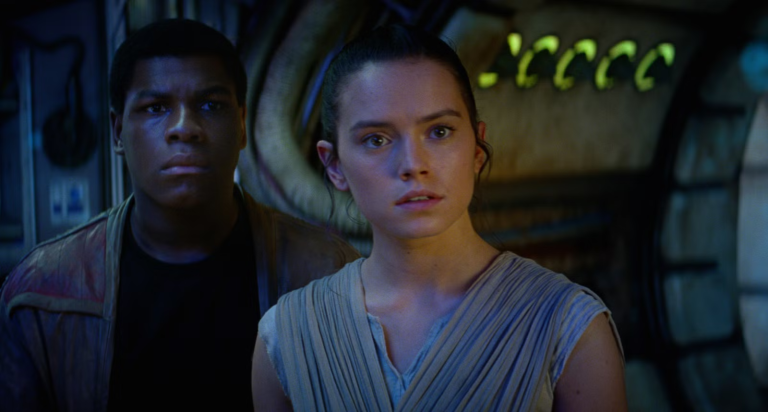
Then there’s Finn and Rey. Again, say what you will about how the rest of the trilogy (namely The Rise of Skywalker) treats this relationship, but similarly there’s a great rapport established in The Force Awakens, complementing the film’s emotional underbelly as they cement a bond through mutual survival and shared experiences. In the spirit of the film’s narrative approach, it also avoids conventional romanticizing. The platonic, yet lovable duo, mirror each other’s longing for identity and acceptance, giving their relationship an intimacy despite its subversions. Something that gives credence to Finn’s fierce determination to rescue Rey from Starkiller base and their cathartic farewell in the final scenes. The connection between the two feels earned and deeply human, tapping into the franchises’ overarching theme of hope and togetherness as they now forge a new path against a new empire.
Which is to say, I really don’t care how familiar the superficial plot beats are to A New Hope. It’s a lazy criticism. The evidence of Abrams purposefully utilizing certain tropes to actively undermine them (in all of these various ways) is overwhelming. Whether it be emotionally speaking, thematically, or relationally. Or even blurring the lines between mythos, legend, and reality. There is a lot happening here aside from how the moves from point A to Point B, weaponizing nostalgia to do something incredibly poignant and thematically riveting. Simply, I think Abrams set the foundation perfectly for the new trilogy (something that, at least in my opinion, Rian Johnson *complements* in The Last Jedi).
A lot of words and I have yet to utter the name John Williams. For as iconic as his Star Wars score has become, it’s astounding to me that he would render new themes for The Force Awakens, and they’re as captivating as anything else he’s scored for this franchise. The Rey theme is just absurd. The Kylo cue is brilliant. Like the film itself, it’s an impeccable concoction of the old and the new. He’s the GOAT for a reason.
Disney has (rightfully) taken a fair amount of abuse for what they’ve done with Star Wars. The reaction to The Last Jedi has derailed everything completely. They’ve announced, and then cancelled, no less than a dozen projects (that we know of). LucasFilm has mostly focused on the TV side of things, and that’s been extremely hit or miss. And the sad thing is, it didn’t have to become this. It’s clear that the Kathleen Kennedy/LucasFilm/Disney group did not have a streamlined plan from the beginning. They let Abrams do his thing. They let Johnson do his thing. And I will forever die on the hill that both The Force Awakens and The Last Jedi are excellent companion pieces. All they had to do was continue the trajectory. The Rise of Skywalker is the only film in that trilogy that missed the mark (and boy did it miss).
At any rate, happy 10 years to The Force Awakens. A film that I love rewatching and get more out of each time I see it.
On this episode of Chasing the Gold, Shadan is joined by Luis A. Mendez to discuss their reactions to the 2026 Oscar shortlists that were recently released! Most of what we got this year was expected, but there were a few significant misses and some eyebrow raising surprises. We have a lot of fun breaking it all down and talking about the categories we’re most excited about.
Check out this week’s show and let us know what you think in the comment section. Thanks for listening and for supporting the InSession Film Podcast!
The Academy announced shortlists for 12 categories. The 98th Oscars will take place on March 15, 2026.
See the full list below and visit our Oscar Predictions page for the most up-to-date rankings.
ANIMATED SHORT FILM Autokar Butterfly Cardboard Éiru Forevergreen The Girl Who Cried Pearls Hurikán I Died in Irpin The Night Boots Playing God The Quinta’s Ghost Retirement Plan The Shyness of Trees Snow Bear The Three Sisters
CASTING Frankenstein Hamnet Marty Supreme One Battle after Another The Secret Agent Sentimental Value Sinners Sirât Weapons Wicked: For Good
CINEMATOGRAPHY Ballad of a Small Player Bugonia Die My Love F1 Frankenstein Hamnet Marty Supreme Nouvelle Vague One Battle after Another Sentimental Value Sinners Sirât Song Sung Blue Sound of Falling Train Dreams Wicked: For Good
DOCUMENTARY FEATURE FILM The Alabama Solution Apocalypse in the Tropics Coexistence, My Ass! Come See Me in the Good Light Cover-Up Cutting through Rocks Folktales Holding Liat Mr. Nobody against Putin Mistress Dispeller My Undesirable Friends: Part 1 – Last Air in Moscow The Perfect Neighbor Seeds 2000 Meters to Andriivka Yanuni
DOCUMENTARY SHORT FILM All the Empty Rooms All the Walls Came Down Armed Only with a Camera: The Life and Death of Brent Renaud Bad Hostage Cashing Out Chasing Time Children No More: Were and Are Gone Classroom 4 The Devil Is Busy Heartbeat Last Days on Lake Trinity On Healing Land, Birds Perch Perfectly a Strangeness Rovina’s Choice We Were the Scenery
INTERNATIONAL FEATURE FILM Argentina, Belén Brazil, The Secret Agent France, It Was Just an Accident Germany, Sound of Falling India, Homebound Iraq, The President’s Cake Japan, Kokuho Jordan, All That’s Left of You Norway, Sentimental Value Palestine, Palestine 36 South Korea, No Other Choice Spain, Sirât Switzerland, Late Shift Taiwan, Left-Handed Girl Tunisia, The Voice of Hind Rajab
LIVE ACTION SHORT FILM Ado Amarela Beyond Silence The Boy with White Skin Butcher’s Stain Butterfly on a Wheel Dad’s Not Home Extremist A Friend of Dorothy Jane Austen’s Period Drama Pantyhose The Pearl Comb Rock, Paper, Scissors The Singers Two People Exchanging Saliva
MAKEUP AND HAIRSTYLING The Alto Knights Frankenstein Kokuho Marty Supreme Nuremberg One Battle after Another Sinners The Smashing Machine The Ugly Stepsister Wicked: For Good
MUSIC (ORIGINAL SCORE) Avatar: Fire and Ash Bugonia Captain America: Brave New World Diane Warren: Relentless F1 Frankenstein Hamnet Hedda A House of Dynamite Jay Kelly Marty Supreme Nuremberg One Battle after Another Sinners Sirât Train Dreams Tron: Ares Truth and Treason Wake Up Dead Man: A Knives Out Mystery Wicked: For Good
MUSIC (ORIGINAL SONG) As Alive As You Need Me To Be from Tron: Ares Dear Me from Diane Warren: Relentless Dream As One from Avatar: Fire and Ash Drive from F1 Dying To Live from Billy Idol Should Be Dead The Girl In The Bubble from Wicked: For Good Golden from KPop Demon Hunters Highest 2 Lowest from Highest 2 Lowest I Lied To You from Sinners Last Time (I Seen The Sun) from Sinners No Place Like Home from Wicked: For Good Our Love from The Ballad of Wallis Island Salt Then Sour Then Sweet from Come See Me in the Good Light Sweet Dreams Of Joy from Viva Verdi! Train Dreams from Train Dreams
SOUND Avatar: Fire and Ash F1 Frankenstein Mission: Impossible – The Final Reckoning One Battle after Another Sinners Sirât Springsteen: Deliver Me from Nowhere Superman Wicked: For Good
VISUAL EFFECTS Avatar: Fire and Ash The Electric State F1 Frankenstein Jurassic World Rebirth The Lost Bus Sinners Superman Tron: Ares Wicked: For Good
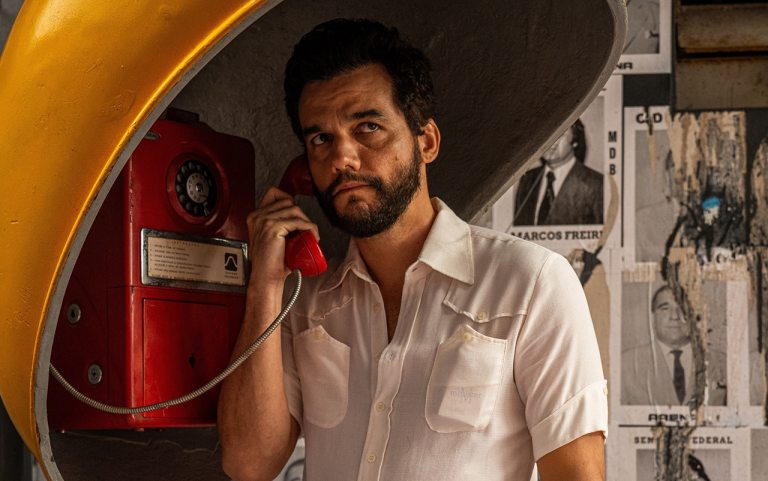
On this episode, JD and Brendan discuss Kleber Mendonça Filho’s latest film The Secret Agent, starring a sensational Wagner Moura! There’s so much to love about this film, but maybe most notably is its subversive approach given the material and the kind of tone you would expect. For a film that’s bubbling with politics, espionage and violence, you’d think there would be more overt tension. But its quiet, humanistic characteristics lead to one of the year’s best endings.
Review:The Secret Agent
Director: Kleber Mendonça Filho Writers: Kleber Mendonça Filho Stars: Wagner Moura, Tânia Maria, Carlos Francisco
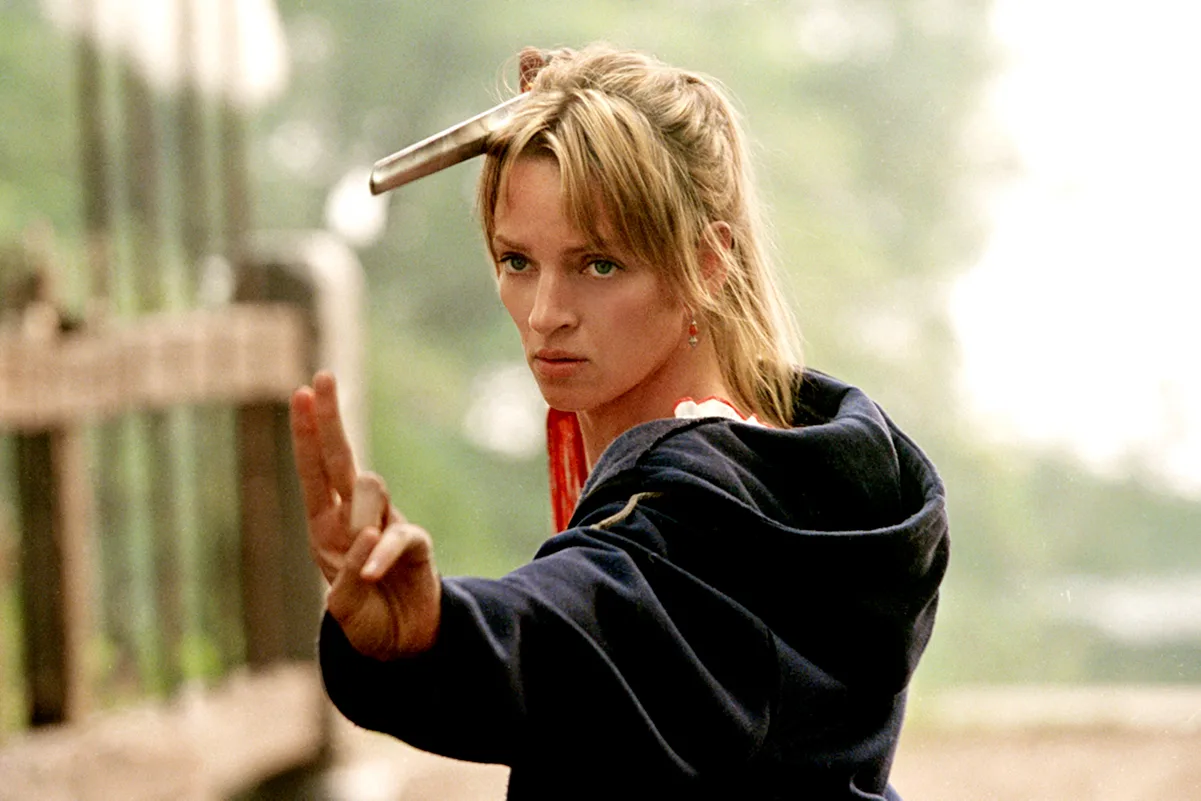
Director: Quentin Tarantino Writers:Quentin Tarantino, Uma Thurman Stars: Uma Thurman, Lucy Liu, Vivica A. Fox
Synopsis: The Bride must kill her ex-boss and lover Bill who betrayed her at her wedding rehearsal, shot her in the head and took away her unborn daughter. But first, she must make the other four members of the Deadly Viper Assassination Squad suffer.
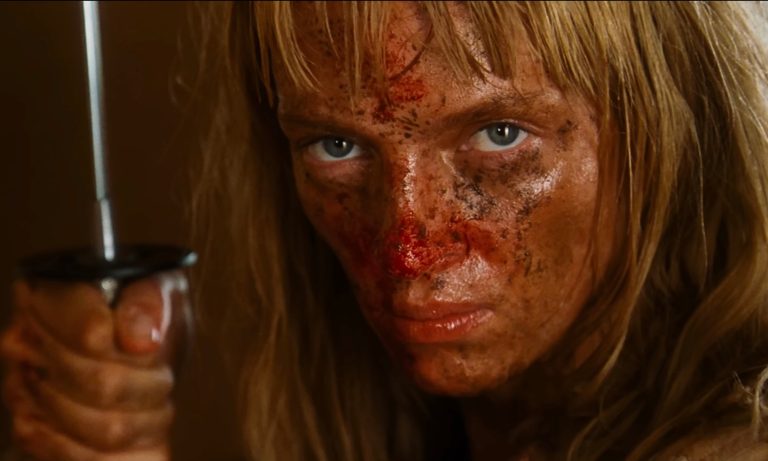
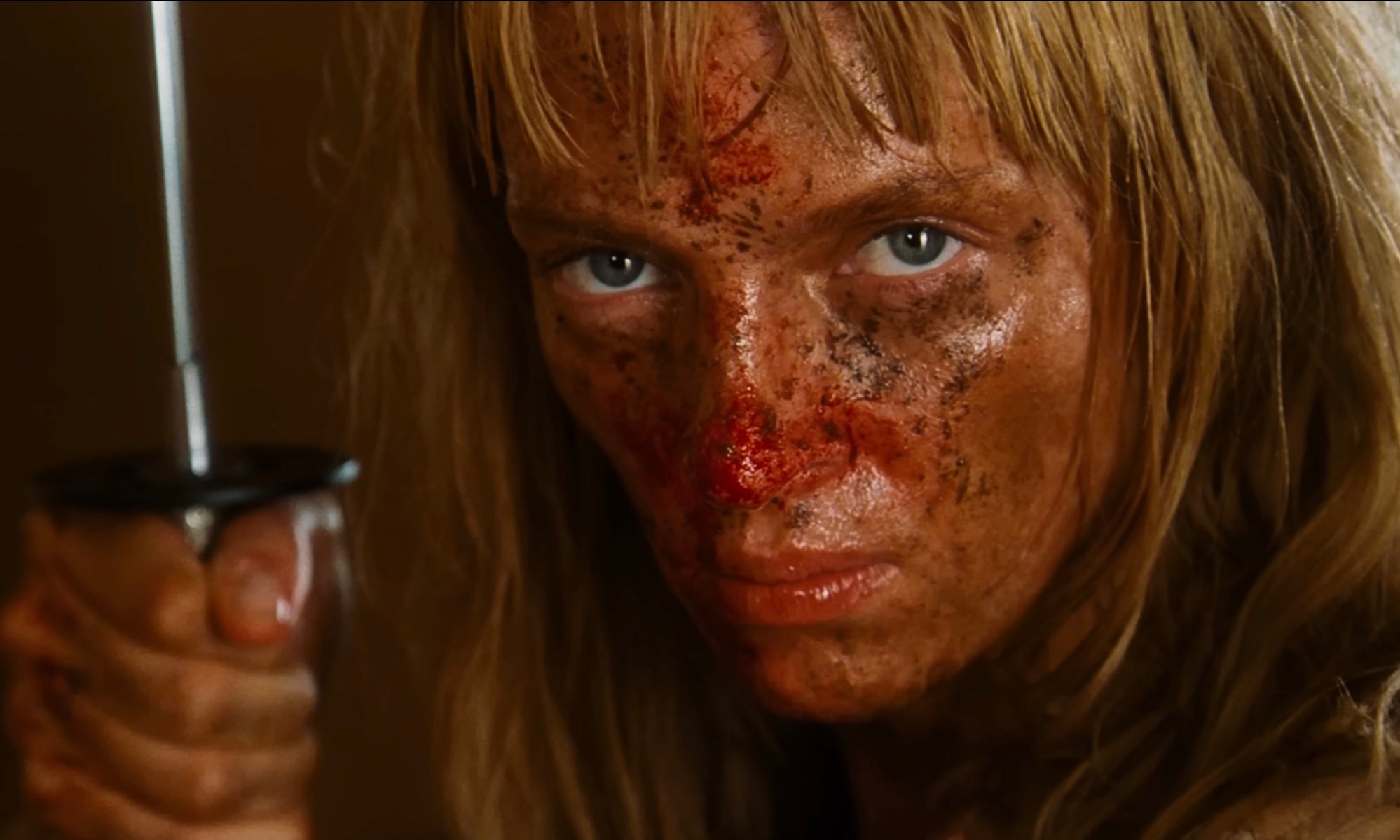
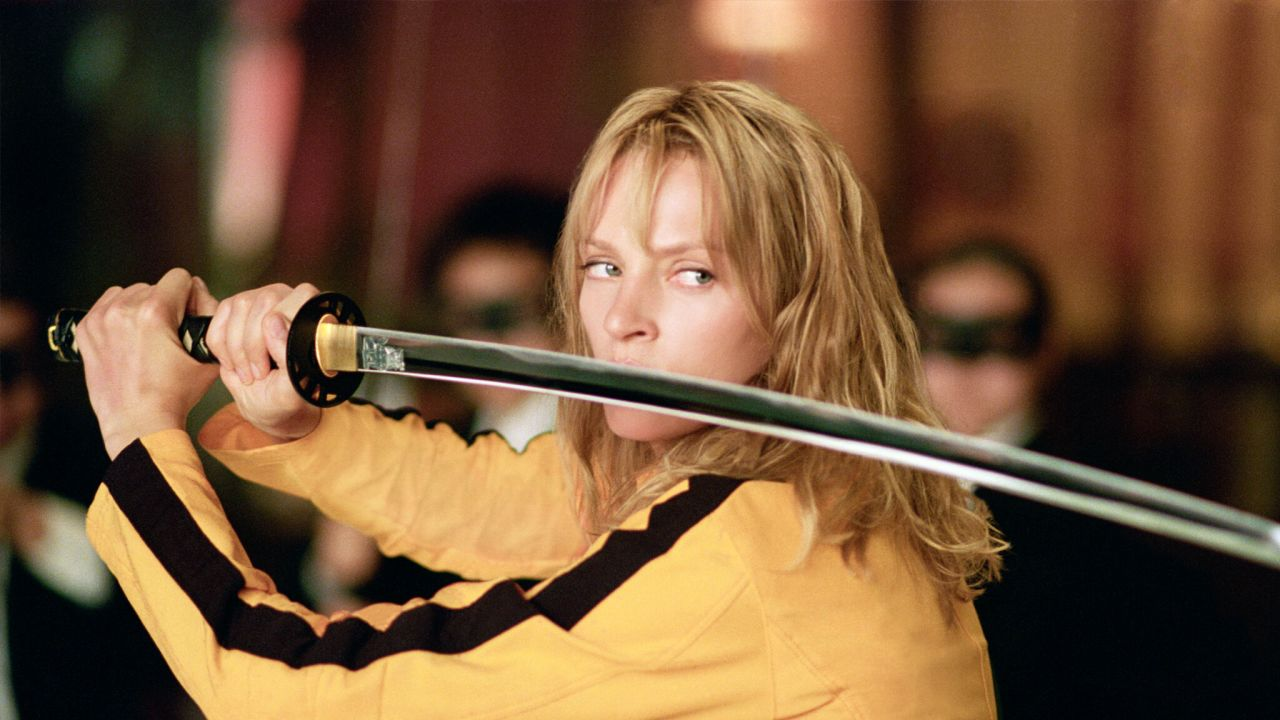
Movie lovers experienced quite the shocking bit of news as it was announced that Netflix is set to purchase legendary movie studio, Warner Brothers. There’s a lot of doom surrounding the purchase, and it has cinephiles everywhere a bit worried about the future of cinema, particularly with regards to movie theaters. But in theaters at this very moment is an opportunity that has been nearly 20 years in the making. Quentin Tarantino’s Kill Bill: The Whole Bloody Affair has finally been released to the larger public after premiering in 2006 at Cannes, and screening only a handful of times in the two decades since. Its differences are largely minor, and primarily affect certain aesthetics of the film which were hampered due to MPAA restrictions and runtime worries. And that’s not to say Tarantino has ever been a filmmaker audiences commonly associate with restraint, especially as both parts of Kill Bill scream nothing but excess. But viewing The Whole Bloody Affair should, and does, feel totemic. Tarantino’s tale of revenge has never felt more emotionally powerful than it has in its gloriously whopping 247 minute runtime.
The changes have been whispered about for some time, but it’s still a treat to see certain sequences in an entirely new light. In the case of the iconic Crazy 88 fight, that can be taken quite literally. The bloody battle is in full color, including some additional cut-ins of even more katana mayhem. More of Uma Thurman’s (and stunt-woman Zoe Bell’s) fully committed martial arts performance could never be considered anything but a blessing for cinephiles. O-Ren Ishii’s (a supremely kickass Lucy Liu) anime origin sequence has finally been revealed in its full glory. There’s practically an entire second scene tacked onto what we’ve always known as the already-legendary anime cutaway. Is it necessary? Not particularly. Is it a thrill? Absolutely. Once again, Kill Bill represents many fundamental elements and sensibilities within Tarantino’s oeuvre. But excess is right up there at the top of its characteristics. In that capacity, any additions bolstering its entertainment value are welcome. It’s perhaps the version’s biggest narrative change that becomes its most deeply rewarding.
In the split-up release of Kill Bill, Tarantino capped off Part 1 with one of the great cliffhangers in cinema. An off-screen Bill (David Carradine) looms over Sophie (Julie Dreyfus), who has now been revealed to have lost both her arms to The Bride’s fury, and inquires as to whether or not The Bride is aware her daughter is still alive. After all the thrills and shock of its final fight, Tarantino initially provided his audience with a profound and immediate blow to the chest. The wait between films must have been excruciating; and it’s nevertheless a moment that still excites as the credits start to roll. But having the instant capability for a double feature (of which this writer has done on several occasions), takes an ever so slight bit of impact out of the reveal. So in The Whole Bloody Affair, that moment of dialogue is excised entirely. And how the remainder of the film’s narrative plays out strikes a deep chord with regards to its thematic implications and ramifications.
In both versions of Kill Bill, the second half plays out like a fundamentally different beast. Despite retaining its ‘70s martial arts sensibilities and stylistic flourishes, it also felt like a Western in equal measure. At times, it can be a much more subdued film. This striking tonal shake-up has never been more felt, especially once Tarantino whisks his heroine into the extended finale. The Whole Bloody Affair holds the reveal of BB (Perla Haney-Jardine), The Bride’s daughter, back from the audience until the moment The Bride herself makes the discovery. It’s an overwhelming moment in a film that has done all it can to desensitize the viewer through bloody, action-packed revenge. With a simple cut (this time from legendary editor Sally Menke), Kill Bill completely shifts its identity. Where we once showed up demanding excessive violence towards those that have wronged The Bride, both she and the audience can only fathom escaping the situation for the sake of the adorable BB. We see Thurman’s eyes convey such conflict in real time. Where there was one deep pain has been replaced by the shocking revelation that new priorities must take hold; Not only that, they must shift at this very moment. The immediacy, and almost blunt nature, with which Tarantino delivers this moment is totally in line with his filmmaking sensibilities. But it also speaks to an emotional filmmaking maturity that is deeply apparent in his previous film, the masterful Jackie Brown, and would rear its head even more so in his (penultimate?) film, Once Upon a Time in Hollywood.
There’s been much talk of Tarantino being a hack for most of his career. Critics will claim he has pulled his greatest iconography from that of his favorite films. But one might argue that such fervor for cinema and his success as a filmmaker have opened up audiences to a wide range of films they might have never heard of otherwise. And isn’t that ultimately what us cinephiles all hope to see? We have an unbridled hunger for film from all around the world. There’s a sincerity to that desire which can often be deflated in a world bathed in irony. It’s a sentiment which has plagued contemporary cinema; But Kill Bill: The Whole Bloody Affair is a film devoid of that frustrating irony. It’s an epic which embodies all the style and sensibilities that shapes Tarantino’s taste. It’s a passion for filmmaking, and cinema in general, that we could use more of on screen. As thrilling as it is to see some of the coolest action ever committed to film, it’s just as refreshing to see a film so full of passion and sincerity be released in 2025. If you’d prefer to walk out on the highest of emotional notes and being wildly entertained, exit the theater upon the credits rolling. To sit through them all is to experience the Tarantino-directed Fortnite short Yuki’s Revenge. Based off a previously written, but unfilmed section of Kill Bill, the short is a miserable experience that feels longer than The Whole Bloody Affair. It’s a glorified Fortnite commercial that remains baffling on so many levels. The animation style is interesting and looks quite good, but it is just an incredibly sour note to exit the theater on. Yuki’s Revenge is less of a curio and more an indication of how dire the state of pop culture is at this moment. When everything can be tossed into a blender and this is what gets turned out, we all lose a bit in the end.
Director: Mike P. Nelson Writers:Mike P. Nelson, Michael Hickey, Paul Caimi Stars: Rohan Campbell, Ruby Modine, March Acheson
Synopsis: A child witnesses his parents’ murder by a man in a Santa suit. Years later, as an adult, he dons a Santa costume himself and embarks on a violent quest for retribution against those responsible for the traumatic event from his childhood.
“Chug-a chug-a chug-a choo choo!” There goes the sound of the train of remakes continuing to roll on in Hollywood. Most remakes are a mixed bag of things to like and dislike. Audiences aren’t always satisfied with them because they don’t have familiar scenes from the originals or they are shot-by-shot recreations of your favorite movies. You’re damned if you do, damned if you don’t if you’re a filmmaker that’s hired to work on a remake. The 2025 remake of the cult classic Silent Night Deadly Night goes leaps and bounds over its predecessor. I watched the 1984 original movie last week in preparation for it and I can say that it left me wanting more. Luckily, the new movie has more of a plot, better kills, and a surprising warmness from its two leads.
We’re introduced to young Billy Chapman (Logan Sawyer) on a road trip with his parents. The three visit Billy’s grandpa at a nursing home before they celebrate Christmas. Billy peeks in at his grandfather to see how he’s doing. They crack jokes and Grandpa gives Billy the run down on Santa Claus. Grandpa chokes on something and Billy tries to help but he’s traumatized by what happens next. Billy and his parents leave soon after the incident. The back of their car is run into by a man in a Santa suit. Without warning, Santa Claus kills both of his parents. Billy tries to get away and that’s when we’re dropped into the present day with adult Billy (Rohan Campbell).
The new version of Billy that we have is still traumatized by the events of his past. After all, that kind of thing happening to someone wouldn’t just leave their mind and go away. Billy continues to have nightmares about the incident and he can’t shake this from constantly eating at his brain. Campbell has played multiple characters that endure being bullied and mistreated (The Monkey, Halloween Ends). This time, he’s a leading character with way more screen time and he puts on a performance that puts him in the spotlight. Billy is a wanderer, a drifter if you will. He doesn’t stay in one place for long. Working odd jobs and being mysterious has worked for him and it’s how he’s stayed alive. Weirdly, he’s not alone. He has a voice in his head that talks to him, tells him how to do things, warns him of trouble and how to handle it. This voice is a person named Charlie. There are definitely signs that Billy has mental health issues due to what he’s gone through in his life. The movie doesn’t touch on this being a thing and it chalks it up to him having this voice in his head from THE PERSON THAT KILLED HIS FAMILY. Freaky stuff huh? It only gets weirder from here.
Hackett, Minnesota is a quiet town. They’re very big on celebrating Christmas and spreading holiday cheer throughout the season. Billy lands here after fleeing the scene from a victim of his own doing. He sees a local girl named Pam (Ruby Modine) and takes a liking to her. Billy gets a job at a Christmas-themed store owned by Pam’s dad. The two spend a lot of time with each other. The more that they talk the more that they realize that trauma and pain is something that they share. Pam has a mean streak of her own and she’s violent when she needs to be. As they continue to hang out, Charlie is trying to keep Billy’s eye on the prize. This means no distractions until he’s finished his business. What’s his business you ask? It’s killing people that are deemed to be naughty by Charlie. In the original movie, Billy killed random people. Some of them deserved it, some of them didn’t. This change is one of the best changes from the original to the remake that I really appreciated.
The movie is a Cineverse, Bloody Disgusting, and Screambox production so you know that they’re going to give audiences super bloody and extravagant kills. They’re the companies that gave us the Terrifier franchise with Art the Clown. The practical effects and action sequences are fun and entertaining. There’s a big action sequence in the second act of the film that rivals the Santa fight scene in the ‘96 family comedy movie Jingle All The Way. Billy’s weapon of choice is an axe and he uses it very well, like it’s a Katana sword. He thinks that an axe is a more practical weapon and that “guns are for pussies.”
Fun and extravagant kills, a tight 95 minute runtime, necessary changes to its story and even warm moments between the two leads are reasons why this movie is one to see. We’re teased with a potential sequel at the end of the movie and I say that it should happen as long as it makes sense. The longer that some horror franchises go on, they focus on providing the audience with kills that we love and they don’t feature plots with story details that make sense. I would hate for this potential franchise to suffer the same fate and fall apart on its second or third film. Wait, now that I think of it, the original franchise already fell down that rabbit hole. This time around, avoid that at all costs.
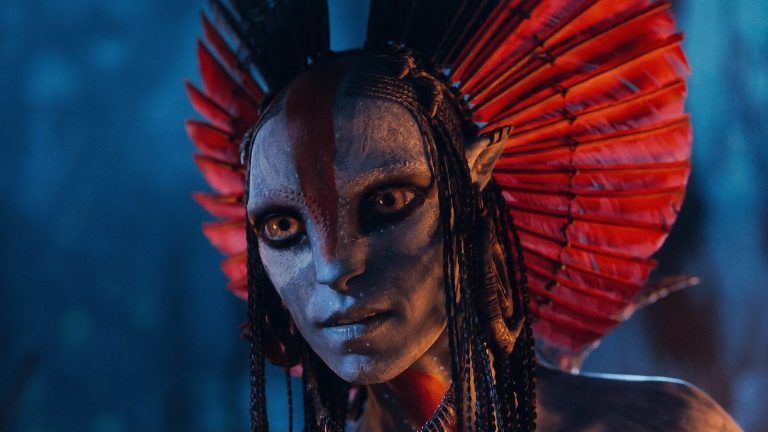
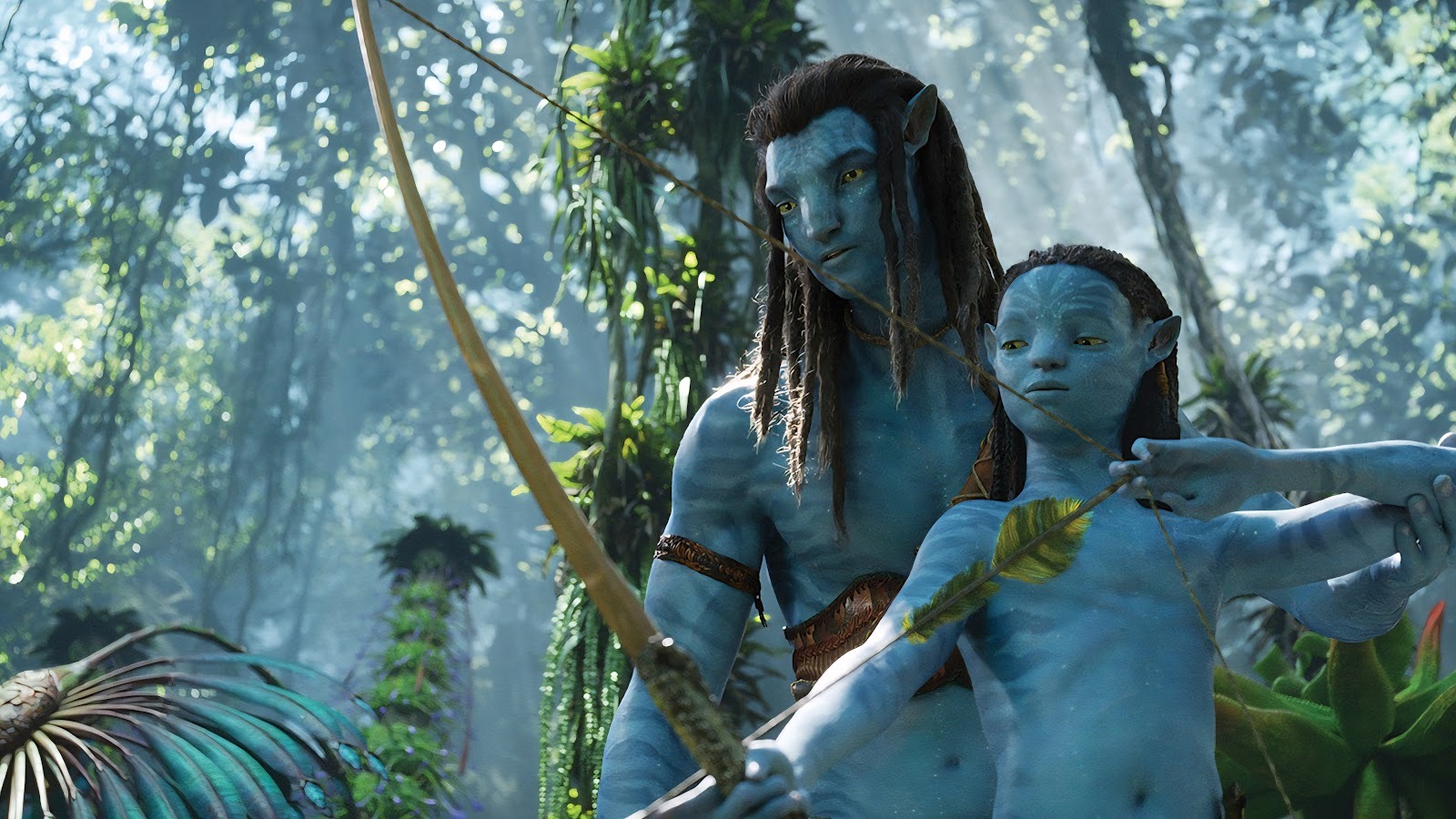
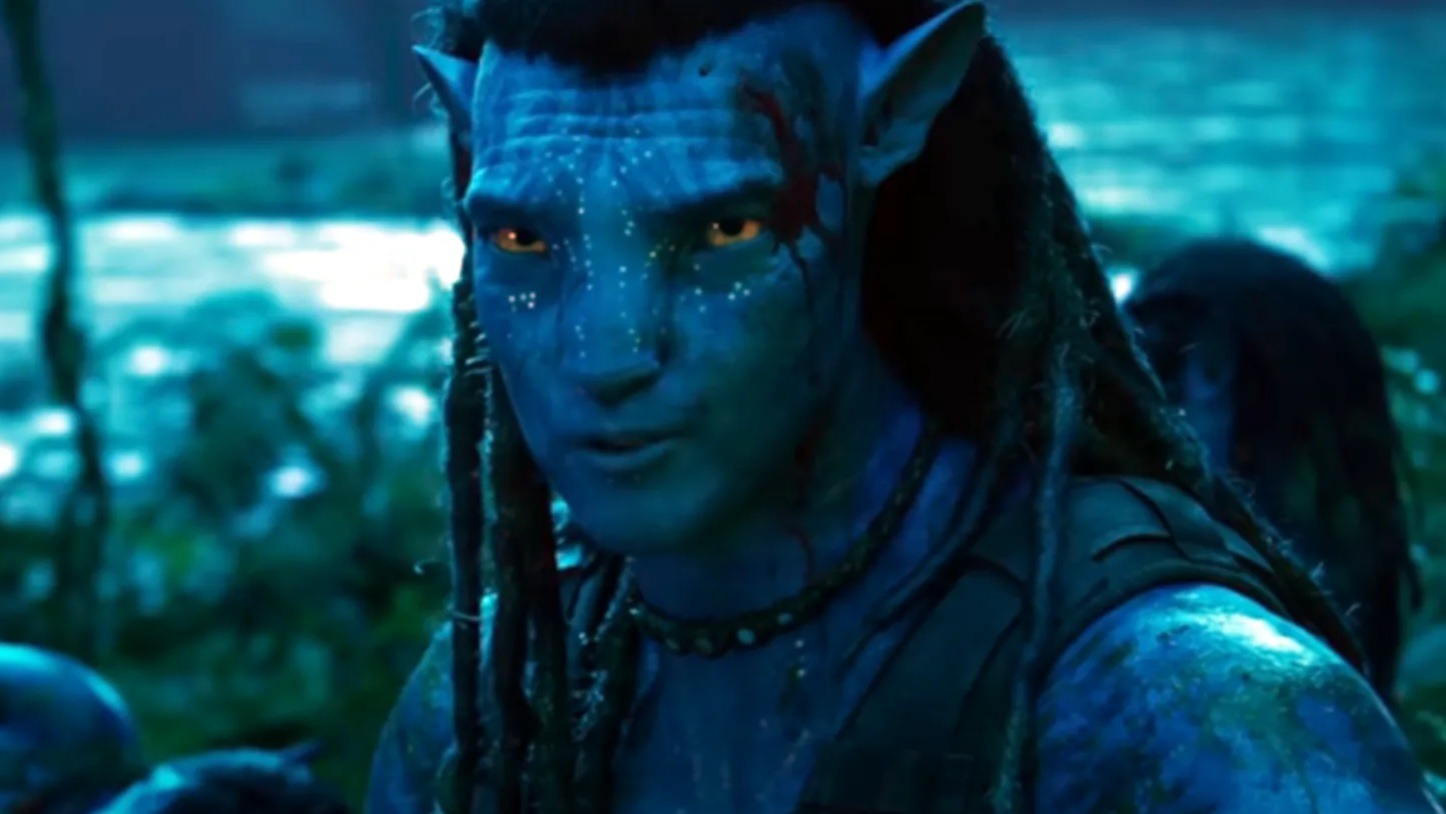
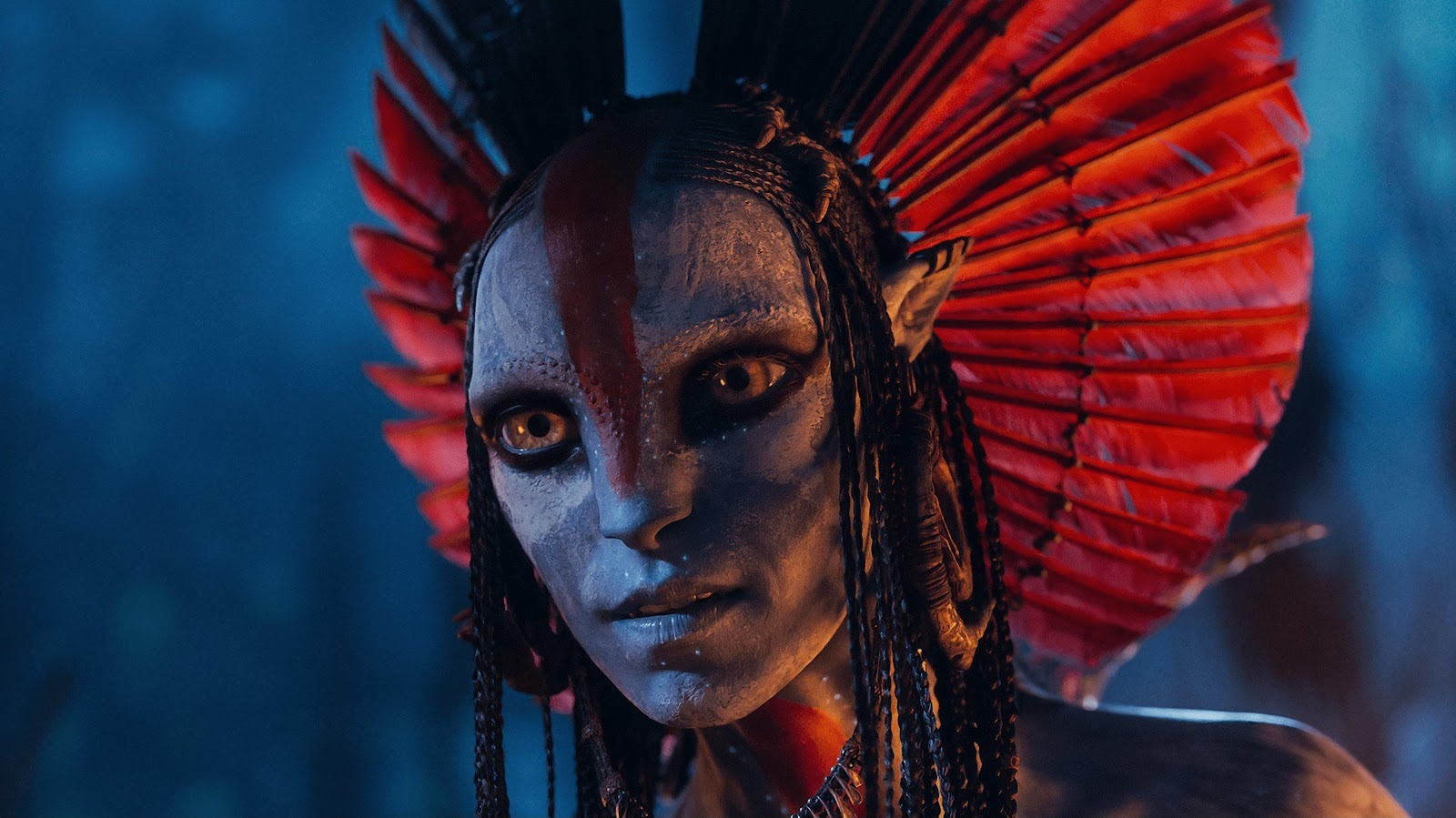
Director:James Cameron Writers:James Cameron, Rick Jaffa, Amanda Silver Stars: Sam Worthington, Zoe Saldaña, Sigourney Weaver
Synopsis: Jake and Neytiri’s family grapples with grief after Neteyam’s death, encountering a new, aggressive Na’vi tribe, the Ash People, who are led by the fiery Varang, as the conflict on Pandora escalates and a new moral focus emerges.
While watching Avatar: Fire and Ash, you cannot argue that you get more for your dollar, technically speaking, when it comes to buying a movie ticket for the James Cameron experience. The latest chapter, unfortunately, the hump-day version, being the third of five installments in the trials and tribulations of the blue, lush alien moon known as Pandora, has jaw-dropping visuals and stunning special effects, and is a wholly immersive cinematic experience.
However, from that standpoint, when it comes to the wooden dialogue, story, and plot points, James Cameron’sAvatar: Fire and Ash is a beautiful snoozefest. Yes, the famed filmmaker’s computer-generated imagery (CGI), along with a few action scenes, are gorgeous and transformative. However, the storylines are recycled, the plot is predictable, and the dialogue is cringeworthy. However, Cameron does breathe new life into the Avatar villain universe.
Sure, if you love the Avatar franchise or crave some big popcorn bucket of cinematic showmanship, I won’t stand in your way, but prepare yourself to be massively disappointed.
The story continues to follow the Metkayina clan after the tragic events of Avatar: The Way of Water. Since the death of their son, Neteyam (Jamie Flatters), Jake (Sam Worthington) and Neytiri (Zoë Saldaña) are trying their best to keep their family together. It doesn’t help that the constant reminder of his death is walking around. That would be Spider (Trap House’s Jack Champion), whom they adopted and who Neytiri sees as the catalyst for Neteyam’s demise.
The death has caused a rift between Jake and Neytiri, as she abandons the guiding life force known as Eywa. For reasons of his safety, due to the lack of functioning oxygen equipment, which honestly feels more like a contrived plot point to move the story along, Jake decides that, despite Spider’s relationship with the rest of his children, most notably Kiri (Sigourney Weaver), he will need to move Spider for his own protection.
Of course, instead of just sending Spider on his way by pulling a Jack Conroy, Jake has the brilliant idea of making it a family trip. So, he arranges for everyone to come along, convincing the captain of the merchant ship that they may need extra reinforcements for what are Pandorian pirates. Let that sink in: Jake wants to put his family in danger? I suspect Pandora will have social workers as a profession in the next film.
Of course, if they just send Spider on his way, there is no real story to tell. If they keep Spider, it could turn into a heart-warming family drama with grief counselors. But no, the contrived plot in Cameron, Rick Jaffa, and Amanda Silver’s script assumed no one questioned Will Robinson before he found his family floating off the coast of New Guinea, so why should they? And to their credit, this creates the movie’s best scene, a breathtaking aerial battle led by Varang (Treason’s Oona Chaplin), leader of the volcano-dwelling Mangkwan clan.
The entire family is scattered across the region. Then, we add Stephen Lang’s classic over-enunciating, exaggerated, and cartoonish Quaritch, seeking revenge against Jake and his family, especially that troublemaker, Spider. Of course, without the addition of Varang, the story would remain redundant, repeating the same plot points since the first Avatar. This leaves the film with less emotional impact than you would expect, and frankly, demand. No matter how vibrant the visuals are, it is only a beard for the money grab.
Avatar: Fire and Ash is too long and self-indulgent, merely using tribal, social, and animism as a backdrop, the first time I have felt that way when it comes to the first two installments’ world-building. I make that point because the most interesting part of the film, the Mangkwan clan, is given no depth or substance to learn about their own true origins. Why not embrace the new clan instead of just rehashing the old ones?
Instead, you get a long, endless journey that is beautiful but never ends, doesn’t know when to stop, goes off in too many directions, and offers familiar endings. Yes, Avatar: Fire and Ash offers more bang for your buck, but that doesn’t mean you shouldn’t demand more for your dollar and your time.
You can watch Avatar: Fire and Ash only in theaters starting December 19th!
InSession Film Awards editor Shadan Larki is joined by Bitesize Breakdown’s Adriano Caporusso to predict the Oscar shortlists. They also discuss potential Best Picture surprises and why Amy Madigan is a major contender in Best Supporting Actress. Shortlists for the 98th Oscars will be announced on Tuesday, December 16th.
Below are predictions for nine categories— Casting, Cinematography, Documentary Feature, International Feature, Makeup and Hairstyling, Original Score, Original Song, Sound, and Visual Effects. All films are listed in alphabetical order. Visit our Oscar Predictions page for the most up-to-date rankings.
Casting:
Bugonia Frankenstein Hamnet Jay Kelly Marty Supreme One Battle After Another Sinners Wake Up Dead Man Weapons Wicked: For Good
Cinematography:
Avatar: Fire and Ash Ballad of a Small Player Bugonia F1: The Movie Frankenstein Hamnet Jay Kelly Marty Supreme No Other Choice Nouvelle Vague One Battle After Another Sinners Sirāt The Testament of Ann Lee Train Dreams
Makeup and Hairstyling:
28 Years Later Blue Moon Bugonia Frankenstein Kiss of the Spider Woman One Battle After Another Sinners The Smashing Machine Weapons Wicked: For Good
Sound:
Avatar: Fire and Ash F1: The Movie Frankenstein Marty Supreme Mission:Impossible — The Final Reckoning One Battle After Another Sinners Springsteen:Deliver Me From Nowhere Warfare Wicked: For Good
Visual Effects:
Avatar: Fire and Ash F1:The Movie Frankenstein Jurassic World: Rebirth Mission: Impossible – The Final Reckoning Predator: Badlands Sinners Superman The Fantastic Four: First Steps Tron: Ares Wicked: For Good
Original Score:
Avatar: Fire and Ash (Simon Franglen) Ballad of a Small Player (Volker Bertelmann) Bugonia (Jerskin Fendrix) F1: The Movie (Hans Zimmer) Frankenstein (Alexandre Desplat) Hamnet (Max Richter) Hedda (Hildur Gudnadottir) Jay Kelly (Nicholas Britell) Marty Supreme (Daniel Lopatin) One Battle After Another (Jonny Greenwood) Sentimental Value (Hania Rani) Sinners (Ludwig Goransson) Sirât (KangdingRay) The Fantastic Four: First Steps (Michael Giacchino) The Smashing Machine (Nala Sinephro) The Testament of Ann Lee&nbbsp;(Daniel Blumberg) Train Dreams (Bryce Dessner) Tron:Ares (Trent Reznor and Atticus Ross) Wake Up Dead Man (Nathan Johnson) Wicked: For Good (John Powell and Stephen Schwartz
Original Song:
Avatar: Fire and Ash — “Dream as One” (Performed by Miley Cyrus) Come See Me in the Good Light — “Salt Then Sour Then Sweet” (Performed by Sara Bareilles& Brandi Carlile) Diane Warren: Relentless — “Dear Me” (Performed by Kesha) F1 — “Drive” (Performed by Ed Sheeran) F1 — “Just Keep Watching” (Performed by Tate McRae) Highest 2 Lowest — “Highest 2 Lowest” (Performed by Aiyana-Lee) KPop Demon Hunters — “Golden” (Performed by HUNTR/X, Ejae, Audrey Nuna, Rei Ami) Sinners — “I Lied to You” (Performed by Miles Caton) Sinners — “Last Time (I Seen the Sun)” (Performed by Alice Smith & Miles Caton) The Ballad of Wallis Island – “Our Love” (Tom Basden and Carey Mulligan The Testament of Ann Lee – “Clothed by the Sun” (Performed by Daniel Blumberg & Amanda Seyfried Train Dreams – “Train Dreams” (Performed by Nick Cave) Wicked: for Good – “No Place Like Home” (Performed by Cynthia Erivo Wicked: For Good – “the Girl in the Bubble” (Performed by Ariane Grande) Zootopia 2 – “Zoo” (Performed by Shakira)
Documentary Feature:
2000 Meters to Andriivka Afternoons of Solitude Apocalypse in the Tropics Come See Me in the Good Light Cover-Up Endless Cookie It’s Never Over, Jeff Buckley Mr. Nobody Against Putin Orwell: 2+2=5 Put Your Soul On Your Hand and Walk Seeds The Alabama Solution The Librarians The Perfect Neighbor The Tale of Silyan
International Feature
A Poet (Columbia) All That’s Left of You (Jordan) Belén (Argentina) It Was Just an Accident (France) Kokuho (Japan) Left-Handed Girl (Taiwan) My Father’s Shadow (United Kingdom) No Other Choice (South Korea) Palestine 36 (Palestine) Sentimental Value (Norway) Sirāt (Spain) Sound of Falling (Germany) The President’s Cake (Iraq) The Secret Agent (Brazil) The Voice of Hind Rajab (Tunisia)
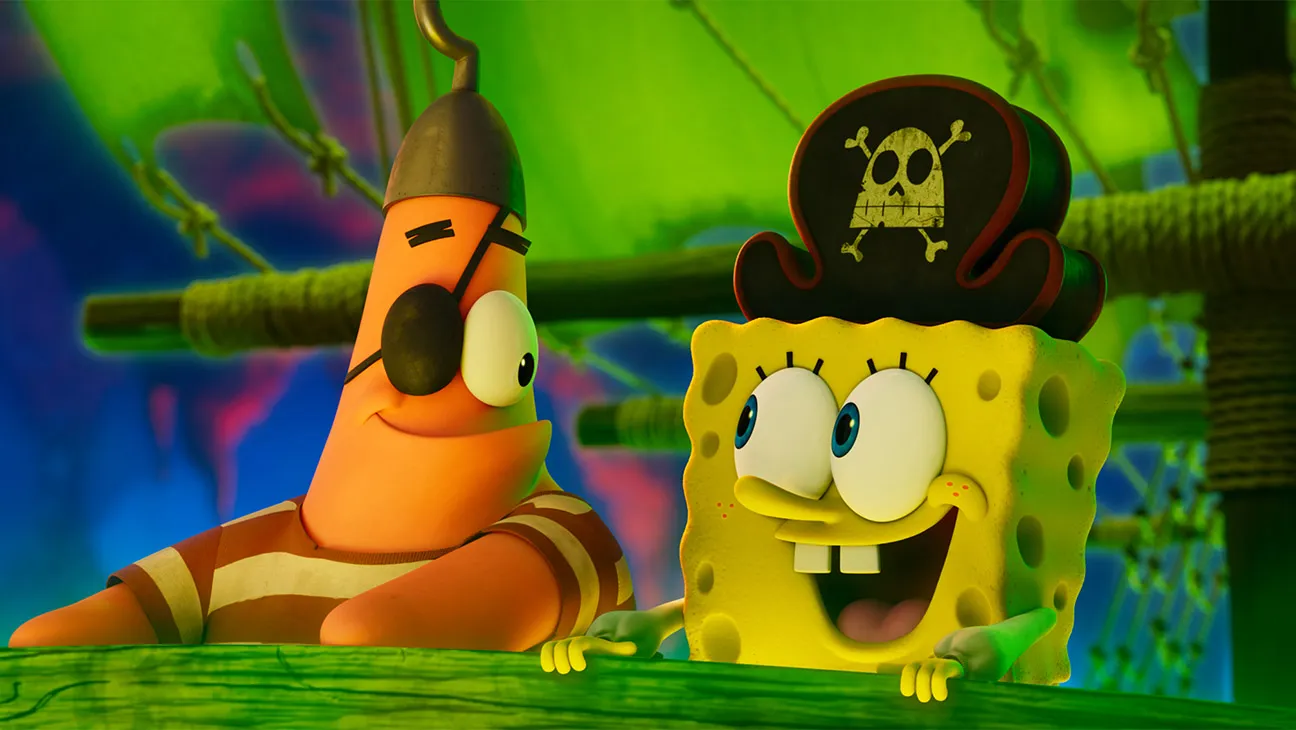
Director:Derek Drymon Writers:Pam Brady, Matt Lieberman Stars: Tom Kenny, Clancy Brown, Bill Fagerbakke
Synopsis:Desperate to be a big guy, SpongeBob sets out to prove his bravery to Mr. Krabs by following The Flying Dutchman – a mysterious swashbuckling ghost pirate – on a seafaring adventure that takes him to the deepest depths of the deep sea, where no Sponge has gone before.
With 2020’s Sponge On The Run acting as a pandemic/streaming release of sorts, it’s hard to believe that The SpongeBob Movie: Search for SquarePants marks the yellow square’s return to the big screen after 10 years. It’s hard to continue innovating the Stephen Hillenburg-created show when it’s been on air for over 25 years, and even more so when you’re the 4th film in the franchise. But Search for SquarePants attempts to bring back many of the hallmarks of the SpongeBob of old. Cartoony expressions galore, and the abstract absurdity many have come to love are present, but unfortunately, Search for SquarePants doesn’t quite reach the thresholds of what the franchise once was. I can appreciate the more episodic nature of Search for SquarePants’ plotting, but its attempts at creating the same cartoonish energy as the show fall flat due to its odd 3D animation implementation and a greater number of misses than hits in the comedy department. There’s a laugh to be had every once in a while, and this is certainly better than the laziness present in Sponge on the Run, but Search for SquarePants struggles to be much else besides an aggressively average adventure for the famous sea sponge.
Search for SquarePants starts as most episodes of the show would, with an energetic SpongeBob (Tom Kenny) eager to seize the day. After discovering he’s now 36 clams (instead of inches) tall, SpongeBob is now eager to finally become a big guy, but his boss and mentor, Mr Krabs (Clancy Brown), thinks he’ll be nothing more than a bubble-blowing baby. After hearing Mr Krabs’ tale of becoming an epic sailor and earning a swashbuckler certificate, SpongeBob sets out with his best friend Patrick (Bill Fagerbakke) to get his own by journeying with The Flying Dutchman (Mark Hamill) in the underworld to complete every skill of courage listed on the certificate. Little does SpongeBob know, the Dutchman has his own motive on this journey to use SpongeBob’s innocence to break the curse that has been inflicted on him for hundreds of years, so he can transform into a human again. Feeling at fault for SpongeBob’s situation, it’s up to Mr. Krabs and the always jaded Squidward (Rodger Bumpass) to warn SpongeBob before it’s too late.
Even within predictable plot beats that have been used countless times in other children’s films, there are still hallmarks of SpongeBob that keep Search for SquarePants somewhat afloat. The implementation of silly live action and hybrid animation footage has been present in episodes of the show and all four of the films for multiple years now, and its abundance throughout the third act is still creative here. What’s even more appreciated is the specific focus on SpongeBob and Mr. Krabs’ friendship in this entry, which makes for a nice character dynamic that was never present in other SpongeBob films. None of the film’s messaging or cartoony elements are that groundbreaking for the franchise on the whole, but it does represent a solid entry point for someone completely new to the world of this series.
Where Search for SquarePants tends to fizzle is through its recycled plot beats and humor in general. It’s quite apparent that the main plotline of SpongeBob yearning to be respected amongst others and not seen as a baby is the exact main story that was present in the original 2004 film. This wouldn’t really matter as much if the film were funnier, as SpongeBob is centered on its comedy after all, but most of the jokes here fall short. The jokes work best when they’re more verbally based or homed in on the absurdity of some of the series’ best cartoonish expressions, but much of it is repetitive and centered on a lot of the same butt based gags that are somewhat funny at first and pretty grating after the tenth time.
Then there’s the visuals, which are a mixed bag of not ever bad looking, per se, but their presentation in comparison to the usual animation of the show is off. There are plenty of goofy faces and pleasant visuals for the eyes to see, but the animation so clearly wants to emulate the 2D look of the mainline show, through full 3D models instead. Sometimes the film succeeds at this, other times it feels very awkward. It’s all still very competently helmed, but the plastic look of the 3D models of these distinct characters just feels off; even Sponge On The Run was a more creative implementation of SpongeBob in 3D than something that looks more in the vein of a slightly higher budget TV special.
SpongeBob still remains his plucky, bright yellow, and absorbent self, and younger audiences and their parents alike will be satisfied with Search for SquarePants, but the cartoon sponge’s latest film outing couldn’t be more forgettable on the whole. The film is nowhere near the level of bottom-of-the-barrel children’s entertainment we’ve seen in the past, but “It could’ve been much worse!” isn’t exactly the highest of compliments, especially with the previous highs these films have reached comedically.
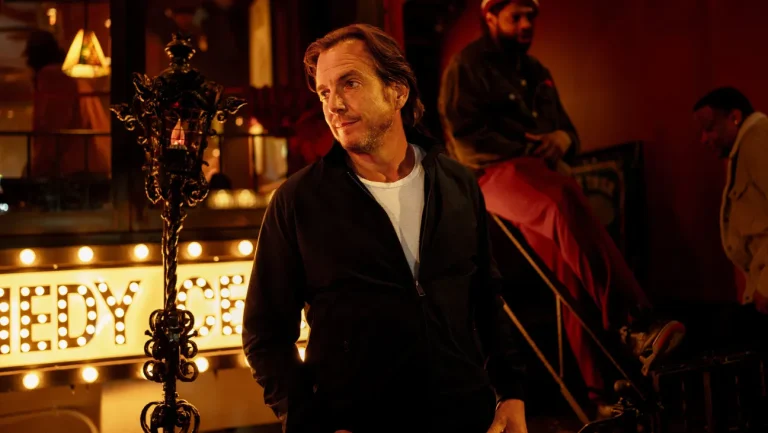
On this episode, JD and Brendan discuss Bradley Cooper’s latest film Is This Thing On?, starring a really great Will Arnett and Laura Dern! It’s kind of weird how this film isn’t making the same kind of splash that Cooper’s last two films made, especially given how you could argue it’s his best to date. It may not be as flashy, but there’s a lot to love about this film and it should be more on the awards radar.
Review:Is This Thing On?
Director: Bradley Cooper Writers: Bradley Cooper, Will Arnett, Mark Chappell Stars: Will Arnett, Laura Dern, Andra Day, Bradley Cooper
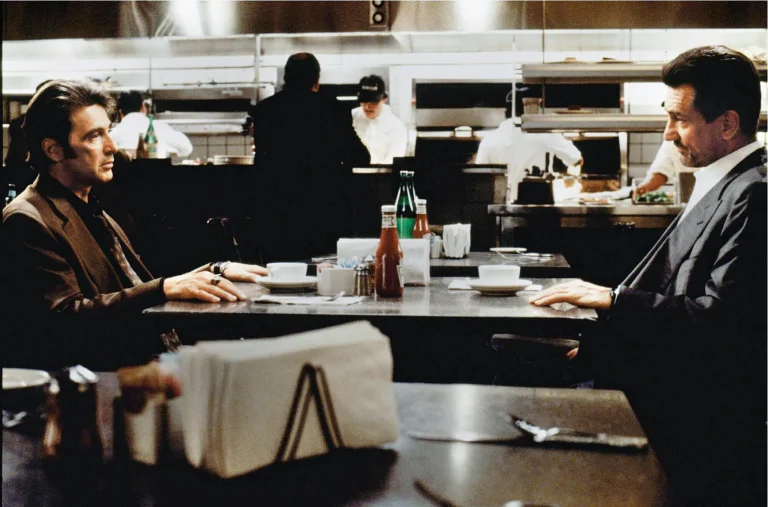
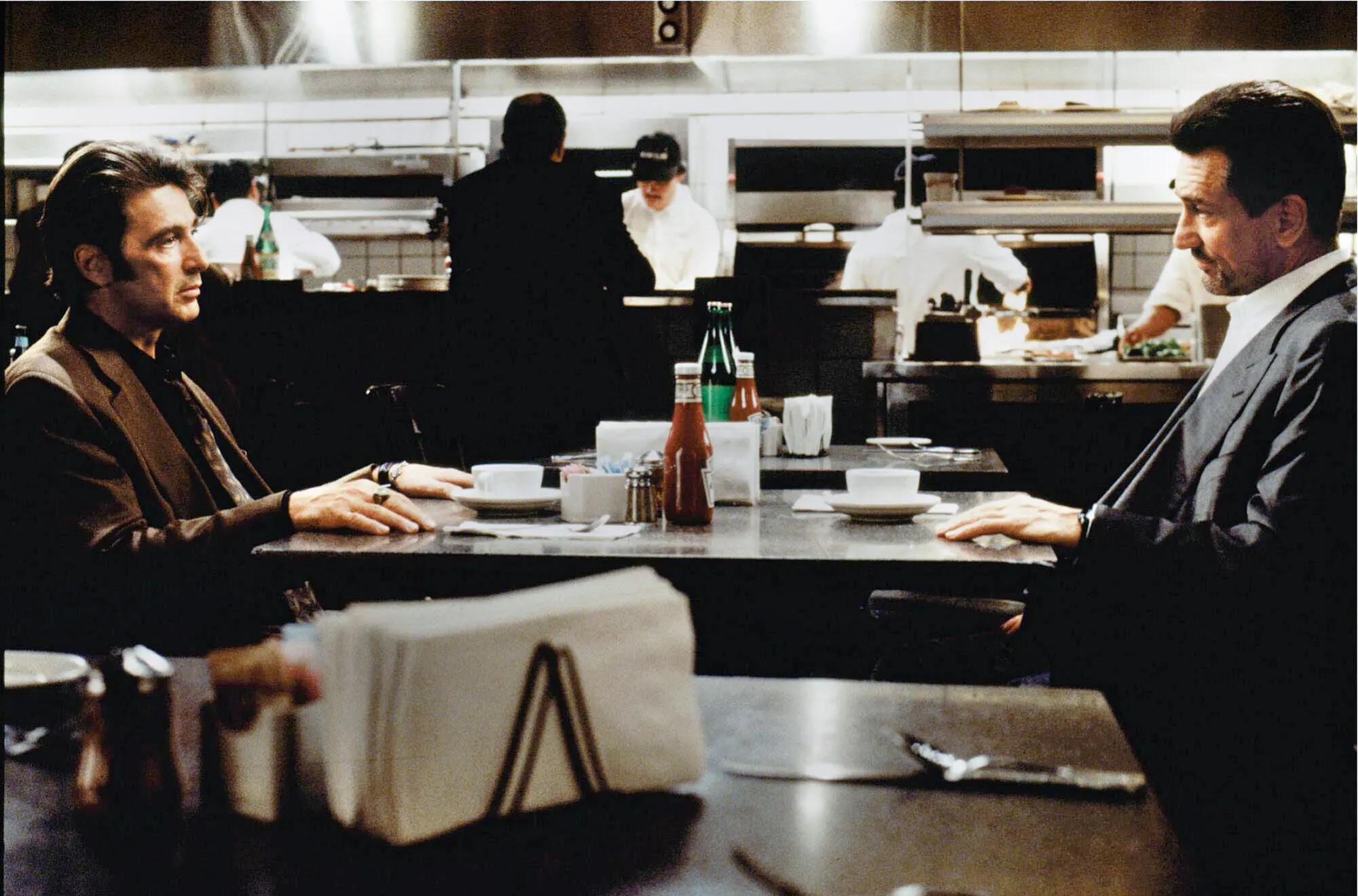
Director: Michael Mann Writer: Michael Mann Stars: Al Pacino, Robert De Niro, Val Kilmer
Synopsis: A group of high-end professional thieves start to feel the heat from the LAPD when they unknowingly leave a verbal clue at their latest heist.
There are movies that are instant hits, become cult classics, or just fall flat on their face. In my opinion, Michael Mann’s Heat is in that sweet spot of being an instant hit and a cult classic at the same time. Mann is a tactical and precise filmmaker. His filmography is stuffed full of action set pieces, tension from crimes being committed, and cinematography that brings you into the story like you’re a character in the film. One of the huge positives about this movie is that it’s not Michael Mann just playing the hits. He’s not recreating scenes from his older films with new actors. Even though this movie is a remake of Mann’s short lived television series L.A. Takedown, he managed to change significant plot points in the story, change character names, and more.
Our two main characters, Vincent Hanna (Al Pacino) and Neil McCauley (Robert De Niro), are on opposite sides of the law. Hanna is a robbery and homicide lieutenant in the LAPD and McCauley is a professional thief and the leader of his crew. Even though these two are complete opposites of one another they have more in common than they think. Their professions consume so much of their lives that they aren’t able to have any real relationships outside of them. Hanna and McCauley are so focused on their objectives that their worlds outside of work are crumbling and crumbling down, day by day. Seeing these two actors finally come together on the big screen was really exhilarating. Luckily, they have an even better supporting cast that are just as important to the movie as they are.
The other members of Neil’s crew are Mike (Tom Sizemore), Gil (Danny Trejo), and the legendary, handsome, and nonchalant Val Kilmer as Chris Shiherlis, Neil’s second in command. Chris is a quiet guy but he’s very knowledgeable in just about every aspect of thievery. He’s married to a beautiful woman named Charlene (Ashley Judd) with whom he has a son named Dominick. Chris can be good at keeping business and family life separate but unfortunately he’s a man that has a dangerous vice. He’s a gambling addict, so he is constantly taking his earnings from robberies and paying off his bookies. This brings strife to he and Charlene’s relationship that is hanging on by a thread. She’s unhappy with him still being a gambler and he feels unappreciated for the risks that he takes day in and day out as a professional thief. Chris continues to stick it out with Charlene but Neil feels like she is just another distraction. Neil lives by a saying that he heard from a guy in the joint, “Don’t let yourself get attached to anything you are not willing to walk out on in 30 seconds flat if you feel the heat around the corner.” This is a very strong saying to live by but even Neil starts to get lonely and wants to have someone to be with.
As the film goes on we’re engrossed with the story between Vincent and Neil. The cat and mouse game between their crews/fellow officers is the meat and potatoes of the film. Whenever one crew is lacking the other crew is one upping them. At times, the dialogue between said characters can be dry but the chemistry that they all have together makes up for it. All of this comes to a head in the third act at Neil’s final score with his crew at a local bank. High speed car chases, bullets flying, and emotions are high in this scene. After the final score we’re driven down a road full of double crossing, jealousy, revenge, and comeuppance. Oh how would I have loved to have seen this in the theater. If they ever rerelease this movie in IMAX or Dolby Digital, I am going on the first weekend.
Mann’s style of filming his action scenes with realistic sounding gun shots and the complex dialogue between his characters are the reason why he’s the big man of crime dramas. His sandbox is one that people want to play in because they’re going to be pushed to the best of their abilities. His style of directing and the writing brings out the best in just about every actor on his call sheet. A lot of filmmakers have tried to duplicate what he’s done and they haven’t had the all around success rate that he’s had. This movie is a crown jewel in the crime drama hall of fame. Luckily next on Mann’s list we have Heat II, an adaptation of his novel that will serve as a sequel/prequel to this movie. There are little details available as of right now, but I know that I will continue to look at the movie news for more updates.
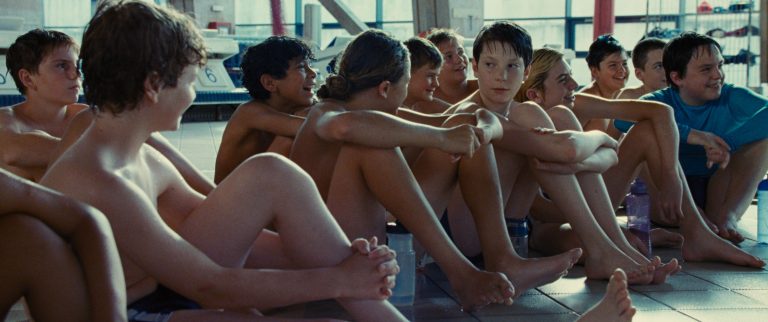
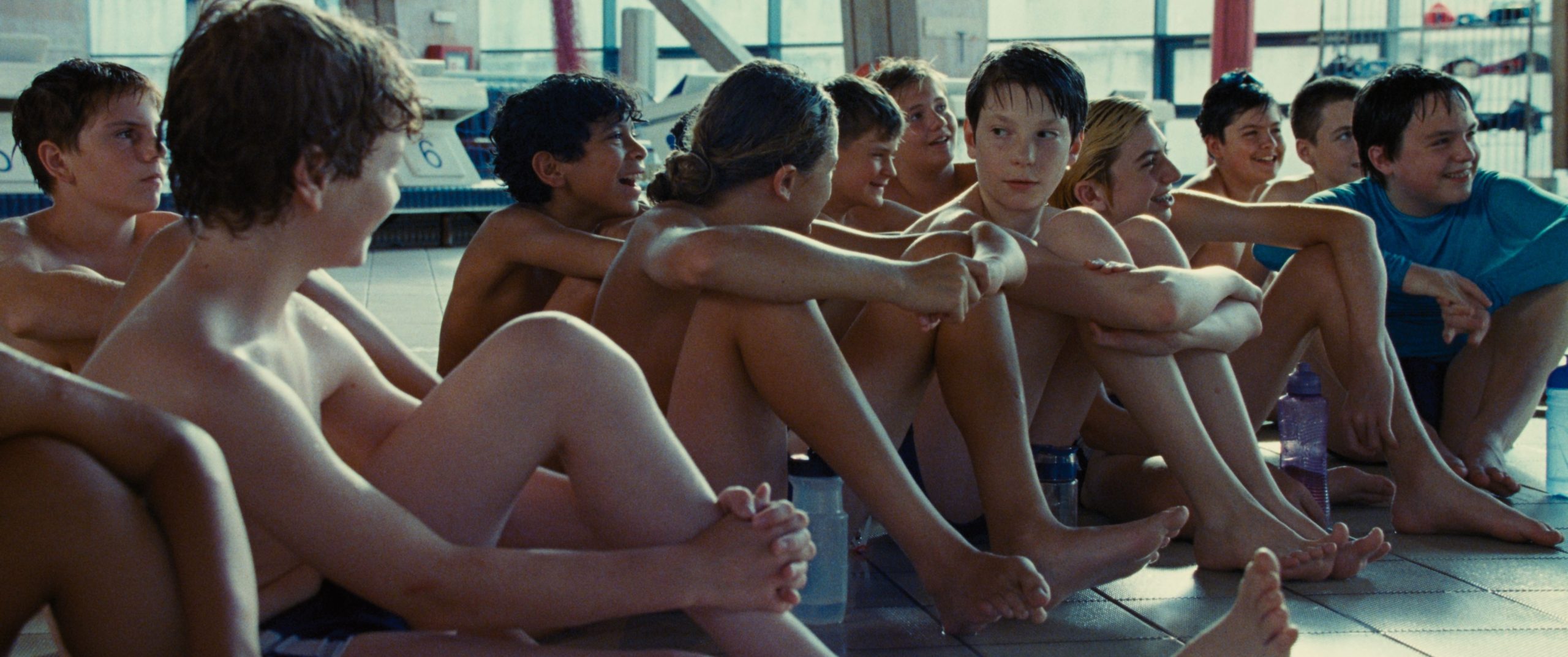
Synopsis:A socially awkward tween endures the ruthless hierarchy at a water polo camp, causing his anxiety to spiral into psychological turmoil over the summer.
As someone who’s statistically about a third of the way through his life (if I’m lucky), I can honestly say that I’d happily pass on the opportunity to revisit my youth. That’s not to say there weren’t great memories sprinkled along the way and friendships I’m incredibly thankful for. However, I’ve never been the kind of person to reminisce about the past with rose-colored glasses – not just because it’s not healthy to think about the past too often, but because it’s difficult to think back to the process of socialization itself. It’s difficult to think back on times when you tried so hard to be accepted by people who you wouldn’t give a second glance at anymore. It’s uncomfortable sitting in moments where you thought you were making a good impression, only to be given weird looks or made the butt of ridicule. As someone who struggled fitting in or feeling accepted, revisiting youth can be a terrible ordeal. Despite eventually figuring it out and going on to be on Homecoming Court, youth remains a tumultuous subject.
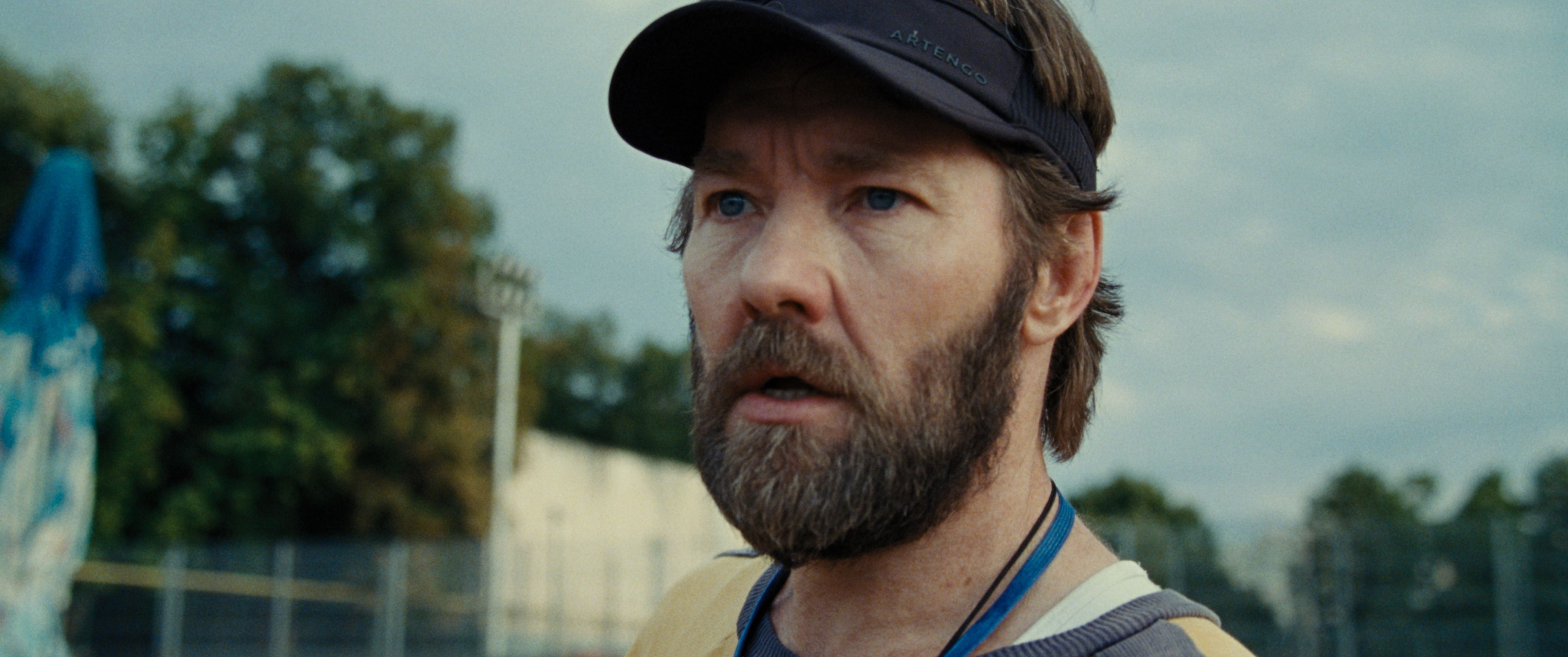
Charlie Polinger’s The Plague understands the hierarchical social structure that exists in middle school and dissects its toxicity with a tone that amplifies its internal pressures at every turn. Whether it’s the duress of attempting to gain the approval of the head of an established group, or simply doing everything in one’s power to avoid ostracism, the conflicts in The Plague radiate authenticity. Polinger recognizes that being the monkey in the middle between the top and bottom of the food chain is an experience shared by most, and the collective harbored resentment boiling under the surface of his audience makes for a perfect setting for a coming of age thriller. Between its stellar cast of kids composed primarily of first-time actors, excellent understanding of tone, and a terrific Joel Edgerton at the center of the film to anchor its drama, The Plague is a surprisingly in-depth and timeless dissection of youth’s inner-workings.
In a setup that could take place at any training camp in the world, The Plague follows a group of middle school-aged boys spending the summer at an all-boys water polo camp. While the film’s setting is unspecific, the film takes place in 2003, presumably to remove many of the technological advancements out of the equation to focus on the development of the characters themselves. Ben (Everett Blunck) is the latest to join the camp, a socially anxious newbie who doesn’t quite know how to fit into the group’s established dynamics. At the top of the pecking order is Jake (Kayo Martin), who controls the room no matter who’s nearby with effortless confidence and a cynical sense of humor. At first, Ben begins to earn the respect of Jake (and the rest of the group in succession), adapting to the unspoken rules of how to behave and interact with his fellow polo teammates under the supervision of their coach “Daddy” Wags (Joel Edgerton). However, Eli (Kenny Rasmussen), the awkward black sheep of the group, struggles to fit in amongst his peers, though he really couldn’t care less. He’s perfectly comfortable with who he is, even if he doesn’t meet the standards of everyone around him. Despite his awkward qualities, the biggest reason for his exclusion is a skin-condition all over his body, causing large, red rashes that the rest of the team refers to as the titular ‘plague’. As the camp progresses over the summer and dynamics shift, Ben realizes that some hierarchies can’t be changed.
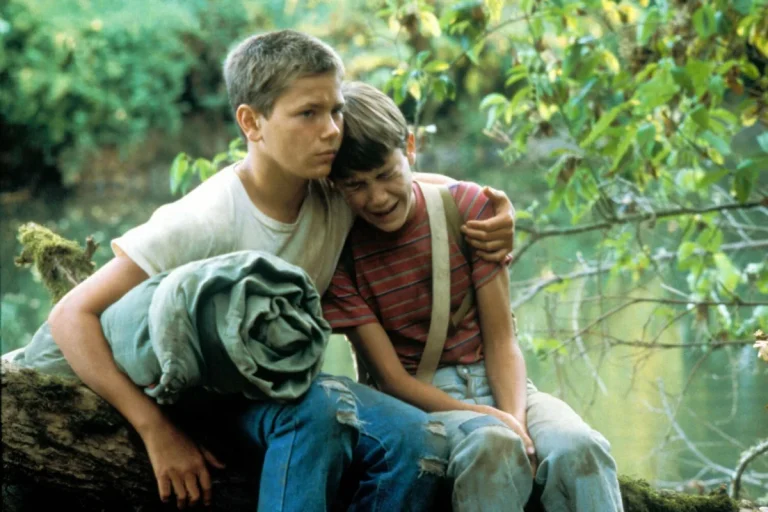
The Plague is often at its best when it plays with the duality of its character relationships and discomforting thriller overtones. It’s one thing to hire a cast of young actors who actually are the ages they’re portraying, but for the actors to have believable chemistry and camaraderie is another aspect entirely, which the cast delivers effortlessly. Huge props are due to Polinger for writing and directing a film with a clear vision and admiration for portraying pre-teens with no-holds-barred honesty. The archetypes, while familiar, work in The Plague because they’re directly reflective of the personalities we’ve collectively experienced in our own adolescence. As much as we’d hate to admit it, we either knew these kids or were these kids ourselves, and the film’s admitted empathy and frustration for their plights is incredibly admirable in its execution. Additionally, the film is very memorable in tone, with a visual presentation and brooding color palate that suits it quite nicely. The comparisons to Full Metal Jacket and Stand by Me are inescapable, but somehow Polinger is able to assemble an atmosphere that’s well-connected with the vulnerability of youth. Whether or not someone directly relates to conflicts present in The Plague is irrelevant to appreciating the film’s execution. When Polinger relies on his audience’s sense of empathy and engagement with each characters’ turmoil, The Plague is about as successful as it gets.
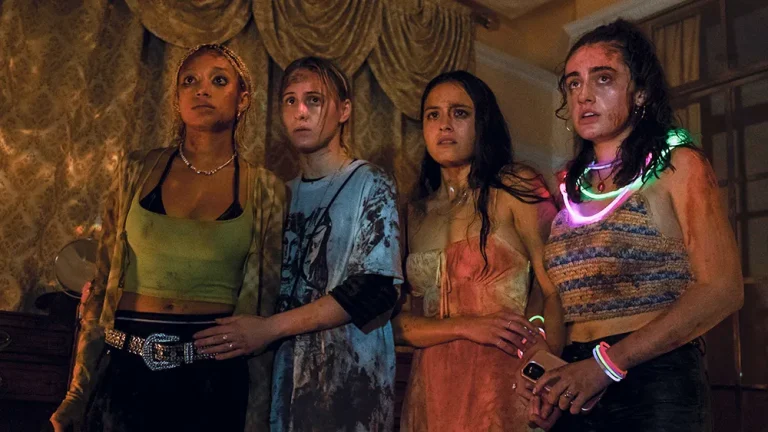
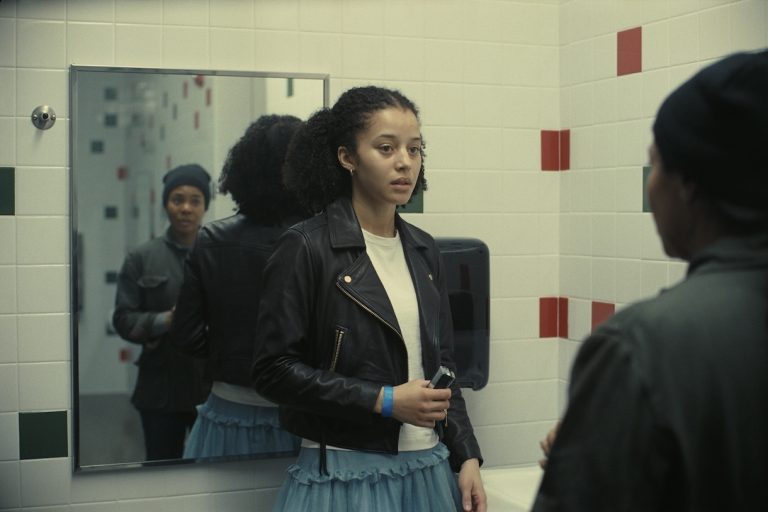
This week on Women InSession, we discuss the great Dutch filmmaker Halina Reijn and her recent rise as a visionary filmmaker in the last few years! In particular, we discuss her 2022 horror-comedy Bodies Bodies Bodies and why it’s one of the more clever comedy-horror films of the decade so far.
Panel: Kristin Battestella, Megan Kearns, Julia Sirmons
On that note, check out this week’s show and let us know what you think in the comment section. Thanks for listening and for supporting the InSession Film Podcast!
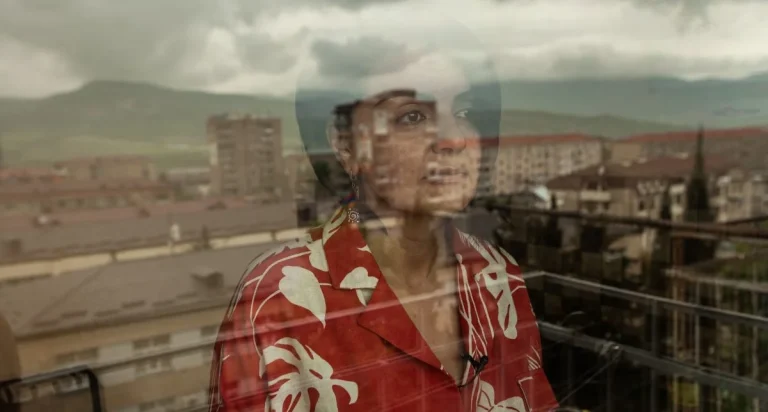
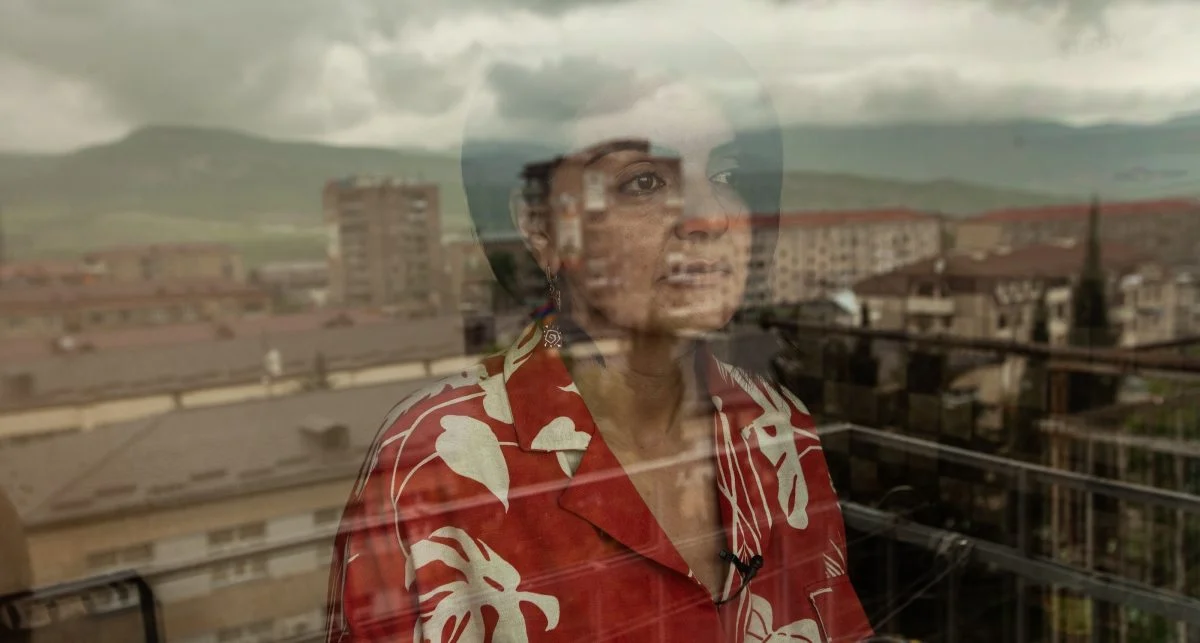
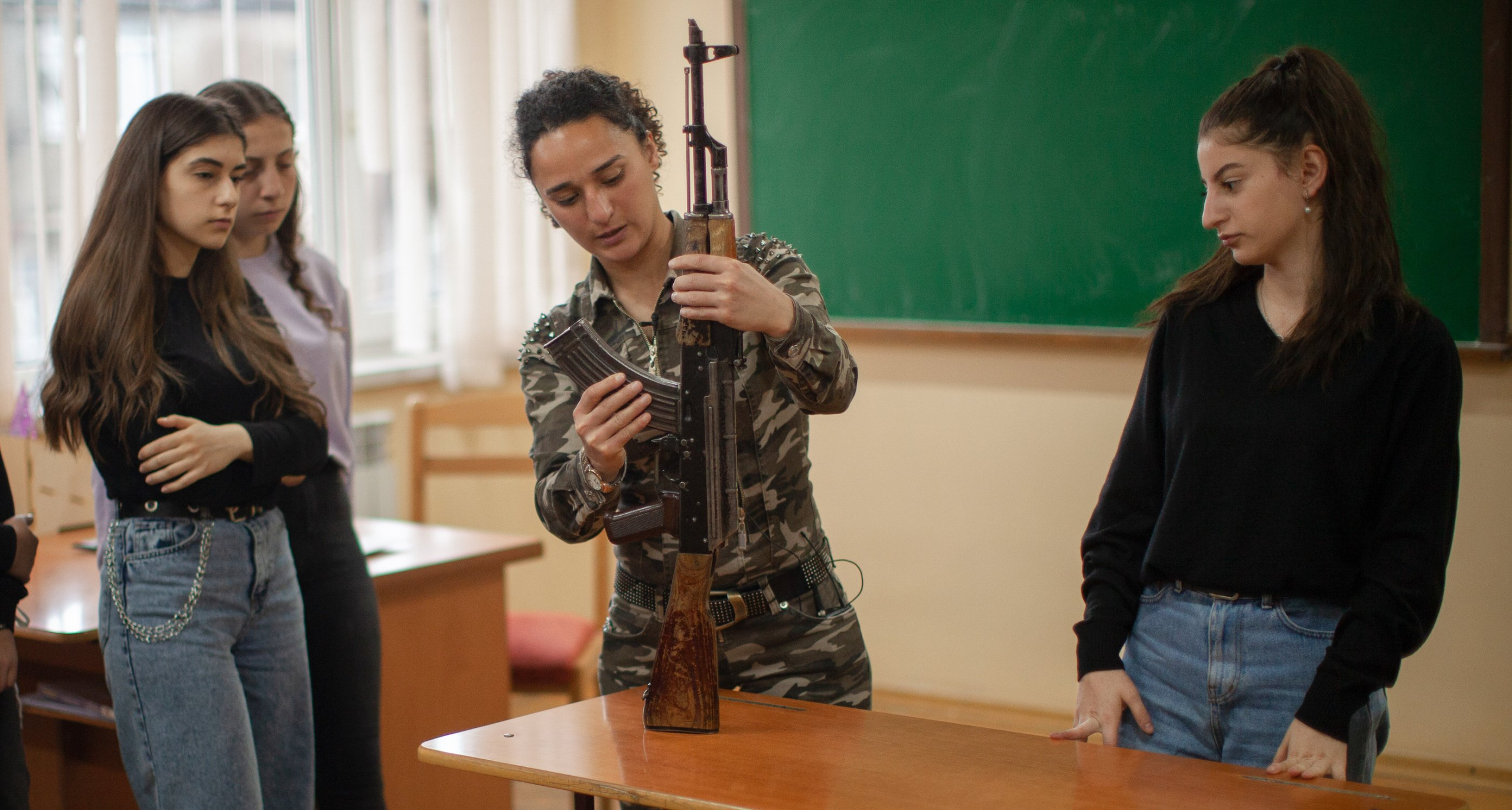
Synopsis: Four women of Artsakh face war’s aftermath, build lives amid uncertainty until another war interrupts; some take arms, others flee as homeland faces ethnic cleansing and erasure.
This is, unquestionably, the year of documentaries. It features multiple emerging voices of documentarians, tackling various topics from wars to sexual identity and, more importantly, accounts of humans as they mess up their lives, make art, love, procreate, and die.
There Was, There Was Not is a story about land and women. But women are lands in their own right, fertile, giving, nurturing, but also requiring care. The problem with “land” is that people tend to overlook the fact that it needs care and nurture to survive and sustain its giver nature. So when war strikes land, and when women are displaced and lose their sense of safety and belonging during wars, the core trait of what makes a land “land” and a woman “woman” is lost.
Director Emily Mkrtichian paints a picture of a world destroyed, a painful concept that is not typically understood in the “modern” Western mindset. It is the idea of nations erased from the earth, their homes and memories obliterated. The mere thought of their homeland existing only in storytelling, where they immerse themselves in a perfect image of what their countries could have been.
The documentary showcases four Armenian women forced to live in a manufactured country called Artsakh, a country that lies in the Soviet Republic of Azerbaijan, even though it has an all-Armenian population. After a few wars, Armenia regained control of Artsakh, and it became an independent republic of the Armenian people. However, this temporary heaven vanishes after Azerbaijan starts another war on the make-belief republic, wanting to claim it as its own. Soon the façade of peace that these women thought they have lived in is shattered, and they find themselves a term “women of war”. They no longer have their separate identities but collectively a single entity. The director excels in recording live footage of the war, and it looks scary from a personal angle up close. It gives the documentary a harrowing tone, especially with how late it comes in the film (after approximately 40 minutes of runtime).
Mkrtichian takes us on a magical journey with her through the lives of the women. Her choices are very niche and unique in that they are all strong, influential women who leave their mark on the Artsakh society, but it’s a great way to highlight the contrast of the tragedy and how it affects how these women contribute to their community. War is usually the elephant in the room, those women have moved on with their lives and considered Artsakh home, but the mention of “war” sneaks into their conversations in the slightest of ways.
The director captures the smallest details that make these women seem less like heroes and more like familiar faces you might pass on the street. She removes the burden of having to be seen solely as subjects; a title that feels lifeless and based in hostility. We see Sosé Balasanyan, the gold medal-winning judoka, holding her favorite plushie, activist Gayane Hambardzumyan preparing meals for her family after organizing meetings for battered women, and the politician Siranush Sargsyan dancing and chilling in a pub. Through these subtle details, Mkrtichian gradually draws us into a larger Armenian folk story, without neglecting her focus on the harsh realities of war. Instead, she weaves a patchwork of conglomerate truths that together reveal the lives of women in wartime.
There Was, There Was Not perfectly humanizes the stories of people who went to war and came back alive. It creates a realistic, if all-too-painful way to look at those wartorn nations, but through a microscopic lens that zooms in on individuals, rather than complete identities. The women of Artsakh are not simply a fairytale told at night before bed, or around the fire, but they are a saga of perseverance.
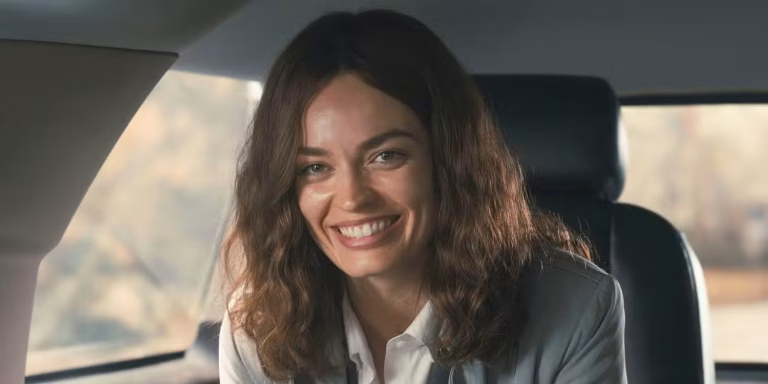
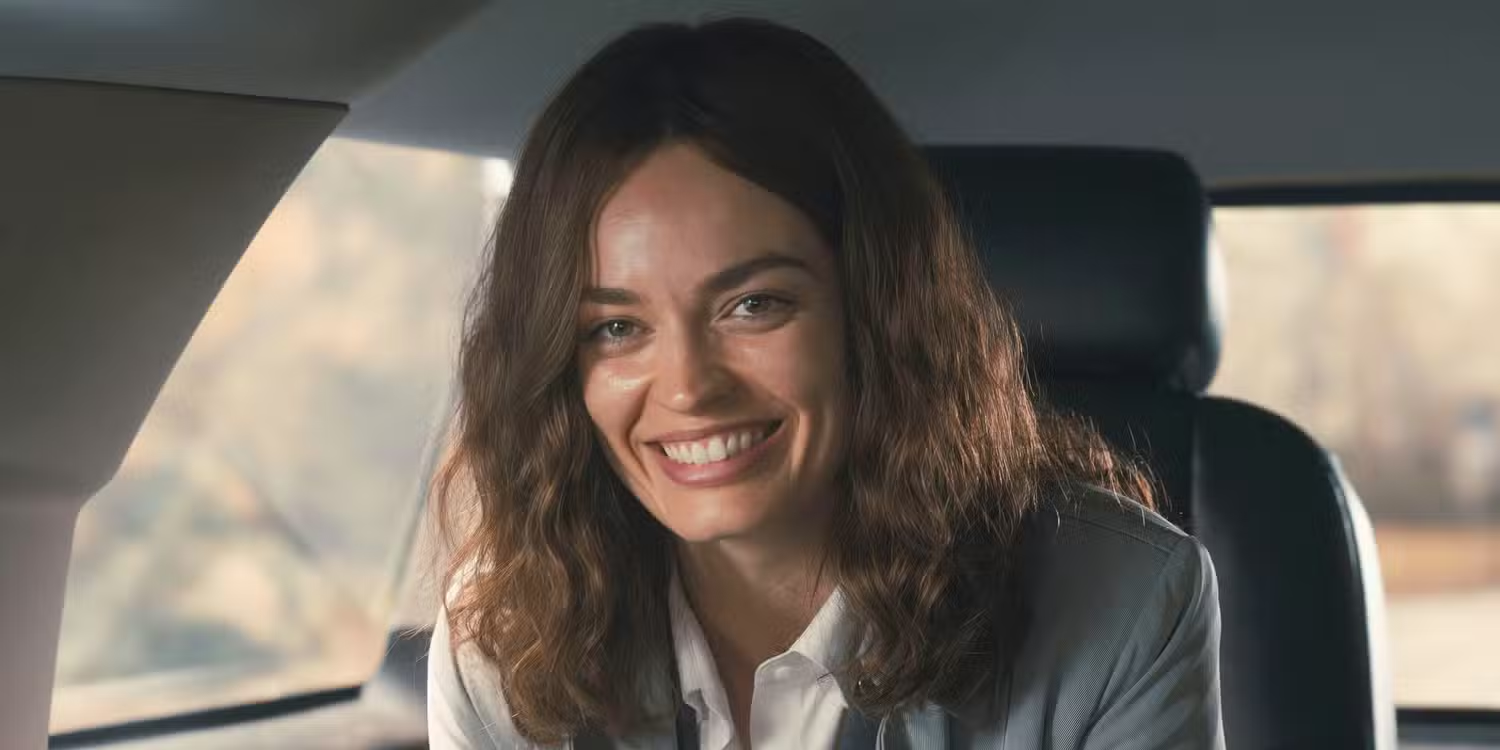
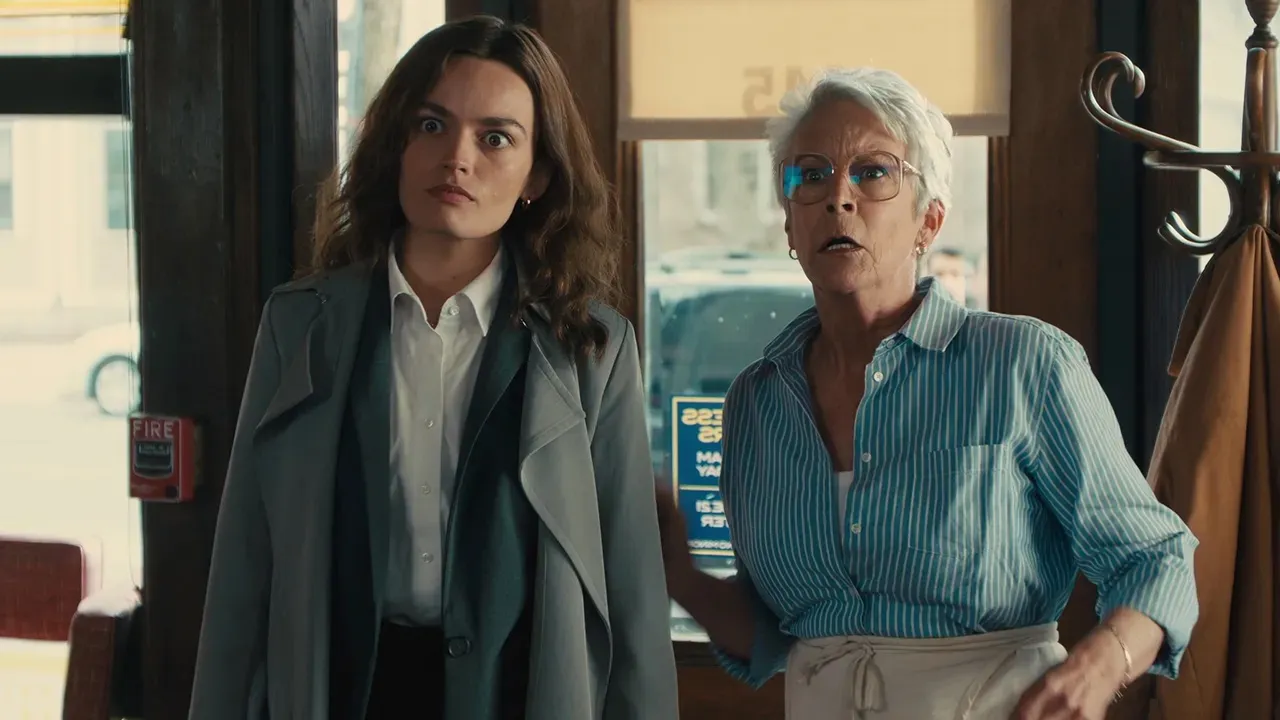
Director:James L. Brooks Writer:James L. Brooks Stars: Emma Mackey, Jamie Lee Curtis, Jack Lowden
Synopsis:An idealistic young woman juggles her family and work life in a comedy about the people you love and how to survive them.
The most fascinating aspect of James L. Brooks’ Ella McCay is how its style, from cinematographer Robert Elswit, plunges us into an era of comedies we no longer see, both on the big and small screen. Through a soft, but effective score by Hans Zimmer giving light notes to a movie that, on paper, doesn’t want to take itself seriously too much, Elswit’s photography reminds us of a time where all movies looked like…movies, and not the digitized grey sludge we’re all too used to seeing on any screen nowadays. There’s actual depth of field, the colors are warm and inviting, and every actor in this star-studded ensemble looks like they are capital S movie stars.
It’s a type of filmmaking that has sadly been glossed over for reasons I don’t understand, and there was hope that Brooks’ return to moviemaking, after 2010’s How Yo Dou Know, would make audiences yearn for more smaller-scale comedies that look and feel like something you can’t miss on the big screen. Sadly, Zimmer’s score and Elswit’s images are the only elements of note in what is otherwise one of the most disastrously conceived studio films I’ve seen to come out in my lifetime, one that gives ammunition to the “comedy on the big screen is dead” crowd more than any other film released in the 2020s. Many will probably tell you thatBrooks’ writing is dated. Yet, even in the period Ella McCay is depicting (the Great Recession, specifically 2008), the movie somehow feels like it’s been released 30 or so years too late and would’ve done gangbusters at the box office in 1987.
With such an amazingly-mounted cast and an effervescent Emma Mackey in complete control of the camera as the film’s titular character, you would think that the movie would somehow be palpable enough to be at least watchable. Yet, Brooks genuinely has no idea what he wants to talk about, through alien dialogue exchanges that feel so caricatured that no actor, as talented as they may be, can perform with the texture and humanity of his previous directorial efforts. There’s a moment or two where some characters will perform light gestures and movements that recall Brooks in his heyday, which are charming in their own right. Still, they’re sandwiched between overlong and drawn-out nonsense that one wonders if the guy who brought us Terms of Endearment, Broadcast News, and As Good As It Gets is truly behind the camera.
And thank God he has Elswit cooking with gas, because his directing (alongside Tracey Wardmore-Smith’s nonsensical cutting) is on autopilot. Brooks’ writing is no longer sharp and incisive; it’s cartoonishly dated and inert. The jokes never land, and always feel like they overstay their welcome when they weren’t even funny the first time a character uttered them. It’s the cinematic equivalent of punching at dead air for two uninterrupted hours. In fact, one could rename this film Dead Air: The Movie because Brooks never devotes his focus to Ella’s journey of self-actualization. The premise of the movie sees the titular character become the Governor of an unnamed state and has to juggle the responsibilities of being married to a devoted husband (Jack Lowden), repairing the fractured relationship she has with her father (Woody Harrelson) ever since the death of her mother (Rebecca Hall, completely wasted), while also dealing with the pressures of becoming a female Governor who must get to work and actively enact laws that will benefit her state.
All of that is great, but the movie spends far too much time not making it the sole aspect of the picture and devoting its time to interminable sequences where characters throw punchlines at one another, without ever meaningfully developing who any of these people are. One such sequence sees Ella’s brother, Casey (Spike Fearn), ask his ex-girlfriend, Susan (Ayo Edebiri), for another shot, and it seemingly goes on much longer than you think. Brooks no longer possesses any sense of timing (which was his bread and butter, back in the day), nor does he know when the film’s lightly funny sections stop being so, because sections where the audience chuckles are immediately hampered by the same joke that gets repeatedly beaten to the point where we feel bad for having laughed the first time we heard it. Worse yet, none of the multiple storylines, which take up the bulk of the runtime, actively pay off or mean anything in the grander scheme of the film, nor do we learn anything about its protagonist. She’s a governor who has to deal with a lot. By the end of the film, she screams with her Aunt Helen (Jamie Lee Curtis), but still has to deal with the same problems. There’s no evolution. No cogent message. Just tedium.
The problems Brooks creates are trivial and uninteresting, and they bloat the story to the point where we have no idea why we should care about anyone on screen, even Aunt Helen, who is a constant source of affection and support for Ella after her mother passed away. There are sequences in which one thinks Brooks will do something to flesh out these familial relationships, but he always settles for comedic platitudes rather than making comedy an integral part of Ella’s development as a fully-fledged, three-dimensional human being. Each scene reads as silly; there’s no tangible examination of who these characters are beyond the jokes they tell each other, and it all gets increasingly tiresome as we begin to realize this movie is going literally nowhere.
Thankfully, Emma Mackey seems incredibly committed to the role and clearly enjoys being in a James L. Brooks film, but the rest of the cast doesn’t fare as well. When Ella McCay’s structure makes itself apparent, one yearns for the movie to end as soon as possible instead of meandering inside a cyclical screenplay that will never amount to anything by the time it reaches a footnote of a final scene with nothing, and I mean nothing, to hold onto. If this disastrously unfunny comedy is touted as the “grand return” of a moviegoing era we’ve sorely missed in cinemas, then I’m afraid it’s better for all of us that this era stays dead and buried forever.
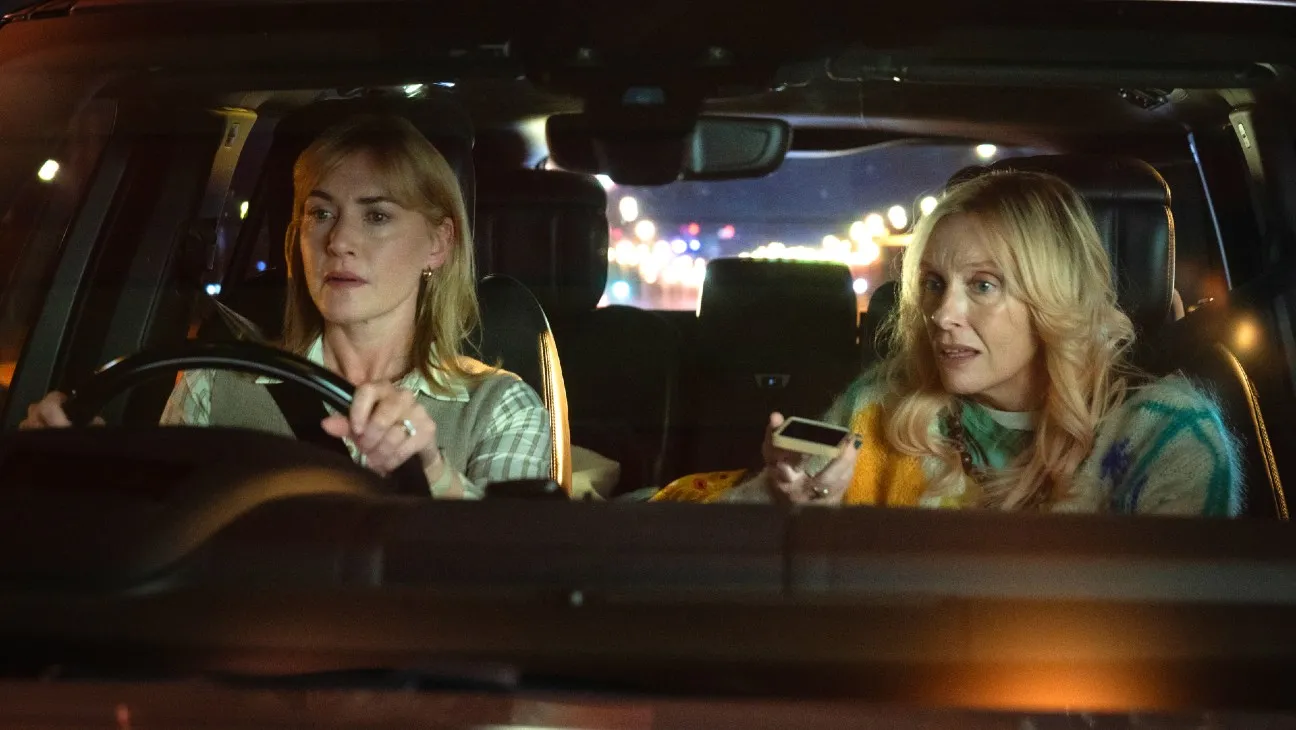
Kate Winslet’s debut directorial film Goodbye June, written by her son Joe Anders, tells the story of an indomitable matriarch played by Helen Mirren whose cancer has progressed to the point of palliative care. June’s husband, Bernie (Timothy Spall), seems completely at a loss to express himself. June’s chaotic family is made up of three sisters, played by Toni Colette, Kate Winslet, and Andrea Riseborough, and a son played by Johnny Flynn. With grandchildren, in-laws, and unexpected surprises, June’s large and often argumentative brood gather around her in December to come to terms with what not having June in their lives will mean.
Nadine Whitney had the opportunity to speak with Kate about why she felt ready to direct and how she created a supportive environment for her ensemble cast.
Nadine Whitney: Kate, I’ve kind of grown up with you. I remember seeing Heavenly Creatures in the cinema and I have been following your career. I always thought you were such a brave and but also precise actor that I imagine she’d make a great director. I felt too with Lee that that you know your role extended beyond producer and actor. I felt that that there must have been moments when you were directing that film as well because it was so close to you. Now you are a director. How does it feel to have finally done it with the title attached.
Kate Winslet: Thank you for saying all those very, very generous things. I have to say I’m just not the kind of person who does anything by half. I don’t do anything unless I know how to do it. Because the risk of failure is so huge and also I don’t want to panic, I didn’t want to feel that technically I didn’t know what I was talking about and I have learned so much over the years, and increasingly, certainly in the last decade.
I realize I’ve become quite a technical actress. My own understanding of what the director is doing to craft a scene narratively based on where they put cameras and so on. I have now an innate understanding and appreciation of what that is and why that is and how those choices can really dictate the flow of a story and can generally make or break a narrative. Because you can’t just film a bunch of stuff and then go into the edit and figure it out. First of all, you have to listen to the actors, because great actors will always show you. The most comfortable experiences I’ve ever had as an actress is when a director says to me, “What do you think? Show me. Let’s try, let’s see.”
Making an environment open and supportive enough that the actors feel that they are the most important thing on that set and in that moment. It’s only when the actors reveal the real emotion of a scene for you, it doesn’t matter how you imagine it might be, but is only when they reveal that that you can truly understand exactly how to cover it.
I did actually have to do quite a lot of holding my nerve in the way I wanted to tell this story in the first part of our film. So, this is a family of disparate siblings. It’s messy, it’s chaotic, it’s tense. There are two sisters who haven’t spoken in years there who are physically keeping a distance from each other. In order to experience that feeling of distance you really have to actually see it. You have to see the spaces between them.
I sometimes really had to say to myself, “Come on Kate, be unafraid to just stand back and let them create it.” I had to be firm with myself about that. Our cinematographer, Alwin H. Küchler, we have a fantastic relationship. I’m really lucky to have worked with him three times as an actress before then doing Goodbye June with him as the director and actress. We had really mapped out that that visual journey of the film and the actors would never have been aware of it, but it was so important never to really go in close into the eyeballs until that moment when Connor (Johnny Flynn) is reading June a poem. It’s the first time then that you truly see what June is feeling and knows what she is also leaving behind. We see her own sadness at that despite her strength, despite the fact that she has total agency over what’s happening. June doesn’t let on until much later in the story. It was so important to see her love for her son, and through that we then go into her and then we’re allowed to see the backs of hands and those transparent elements of her face that are utterly heartbreaking.
I’ve just really always loved film, I love being on film sets, I love the process of being with everybody the cast and crew together. I wanted to create an environment on this film that perhaps felt a little bit different for our actors, because often sets are really chaotic—there’s a lot going on you have to sometimes tune out the noise in order to be able to concentrate. I was able to keep that noise as limited as possible it would only ever mean that the actors felt they could really breathe and be very free in the space. Our crew, lots of whom I have known for decades, were really understanding and supportive of that. During our seven-week pre-production preparation, myself with the key camera team, we really established with the actors how they felt each scene might unfold so that they could be ready with whatever equipment they needed.
I also wanted to give the actors the opportunity to sometimes be in front of the camera but with no one else in the room. I actually never had it as an actress, locking off with cameras rolling and everyone just quietly walking away truly walking away from behind the camera and just leaving the actors in a room with a closed door and cameras rolling on them and letting them just play the scene. It really did have an impact actually on how they felt in terms of how real they could be and the smallness of things and how intimate they could be. They were given permission to be, because they were in charge of the space. I loved being able to offer them that and it really it really made a difference to how they felt. I was so pleased for them that they were able to really feel that.
Nadine Whitney: You’ve also known the screenwriter Joe Anders for quite a long time (since birth). The film is based partially on your own mother’s passing and my mother passed in a very similar manner. How difficult was it to block off the memories of the feelings that would have come with making the film?
Kate Winslet: You know, it was impossible Nadine. But I do have to say it really isn’t our true story, it isn’t, it is a completely fictional story with a with a fictional family, and a fictional version of events. Joe, when he got a place in screen writing school, he was encouraged by this fantastic female tutor to the write from the heart, just write what you know. In his young life and at the time actually he was only 19 when he started writing it, he’d gone through COVID, which was as dramatic for him as any other teenager around the world; but the biggest thing that happened was the loss of his grandmother when he was a teenager and how we all came together and really gave her this great and very beautiful passing.
He was so struck at the time by how we’re all there because we came from this one woman. He took that as his emotional backdrop and created his fictional story from there. But it was impossible for me to tune out my own experiences not least because while my character Julia was very different to me. I myself, I never witnessed any of the private conversations between my parents, they were private. I don’t know what my siblings were saying to one another or to my mother, or how they were dealing with things because those were their experiences of loss. So, actually there were moments when I really did feel as though a part of my own life was playing out before my very eyes but the bits that I’d never gotten to see. Especially in the scenes with Helen Mirren and Timothy Spall with June and Bernie. It was so, so, hard directing those scenes and I would just find myself trying to retreat into the quietest possible corner that I could, almost behind our focus puller Max who I’m very close with anyway. Max and I would just sit there together and quietly cry through it and then have to step out and tenderly help the actors whenever they needed it. Keeping it together myself, yes there were moments that were very challenging, but they were challenging for all of us for a variety of our own different personal reasons.
Nadine Whitney: Kate, thank you for your honesty, your bravery, the dignity you gave June. It means a lot to me.
Kate Winslet: My God, you’re right the dignity, I wanted to make sure she had her dignity. That mattered enormously to me.
This week on the InSession Film Podcast, the great Ryan McQuade joins us to discuss the 2025 awards season! We talk about the Golden Globes nominations, the acting categories and what to expect from Best Casting. We also lament the annual, and always ironic, discourse around film awards.
Check out this week’s show and let us know what you think in the comment section. Thanks for listening and for supporting the InSession Film Podcast!
– Awards Discourse (4:33) We begin the show this week by diving once again into awards discourse and what makes it so immensely frustrating at times. There’s nothing wrong inherently with the Oscars and wanting to celebrate movies (that’s a great thing!), but when we veer away from recognizing the year’s best films and treat it as sports, we devalue the whole reason for doing it. Art isn’t sports. Yet every year this becomes a major part of the conversation and we lament it as we always do.
– 2025 Awards Update (38:08) As we dive into this year’s awards races with Ryan, we begin by talking about the possibility of NEON getting four movies into Best Picture and the history that would make. We also talk about Best Actor and Best Actress, two categories that are actually quite full and competitive this year. We also give Ryan some space to talk about Best Casting and what he expects from that category given that there’s no precedent for it with The Academy. What do you think about this year’s awards races? Do you have a favorite category?
If you want to help support us, there are several ways you can help us and we’d absolutely appreciate it. Every penny goes directly back into supporting the show and we are truly honored and grateful. Thanks for your support and for listening to the InSession Film Podcast!
Director:Rachel Feldman Writers:Rachel Feldman, Adam Prince Stars: Patricia Clarkson, Thomas Sadoski, John Benjamin Hickey
Synopsis:About a courageous factory worker who fights for justice when cheated and mistreated by her company. Based on the life of Lilly Ledbetter.
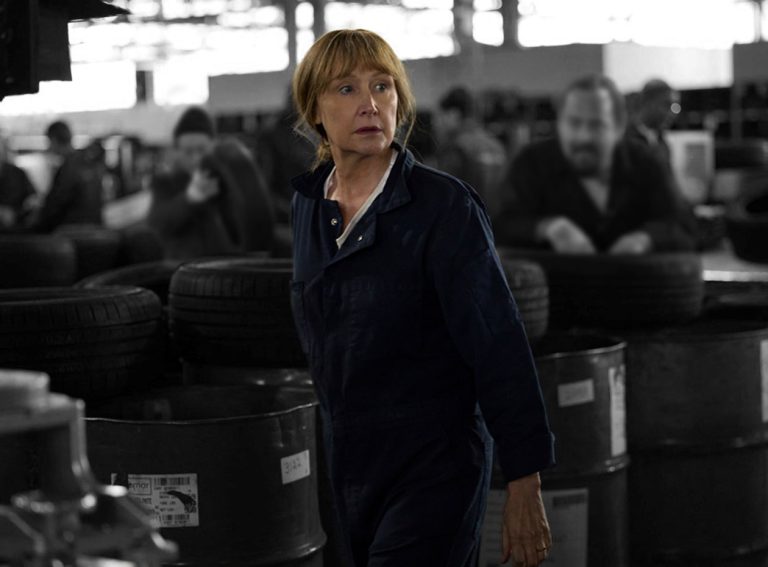
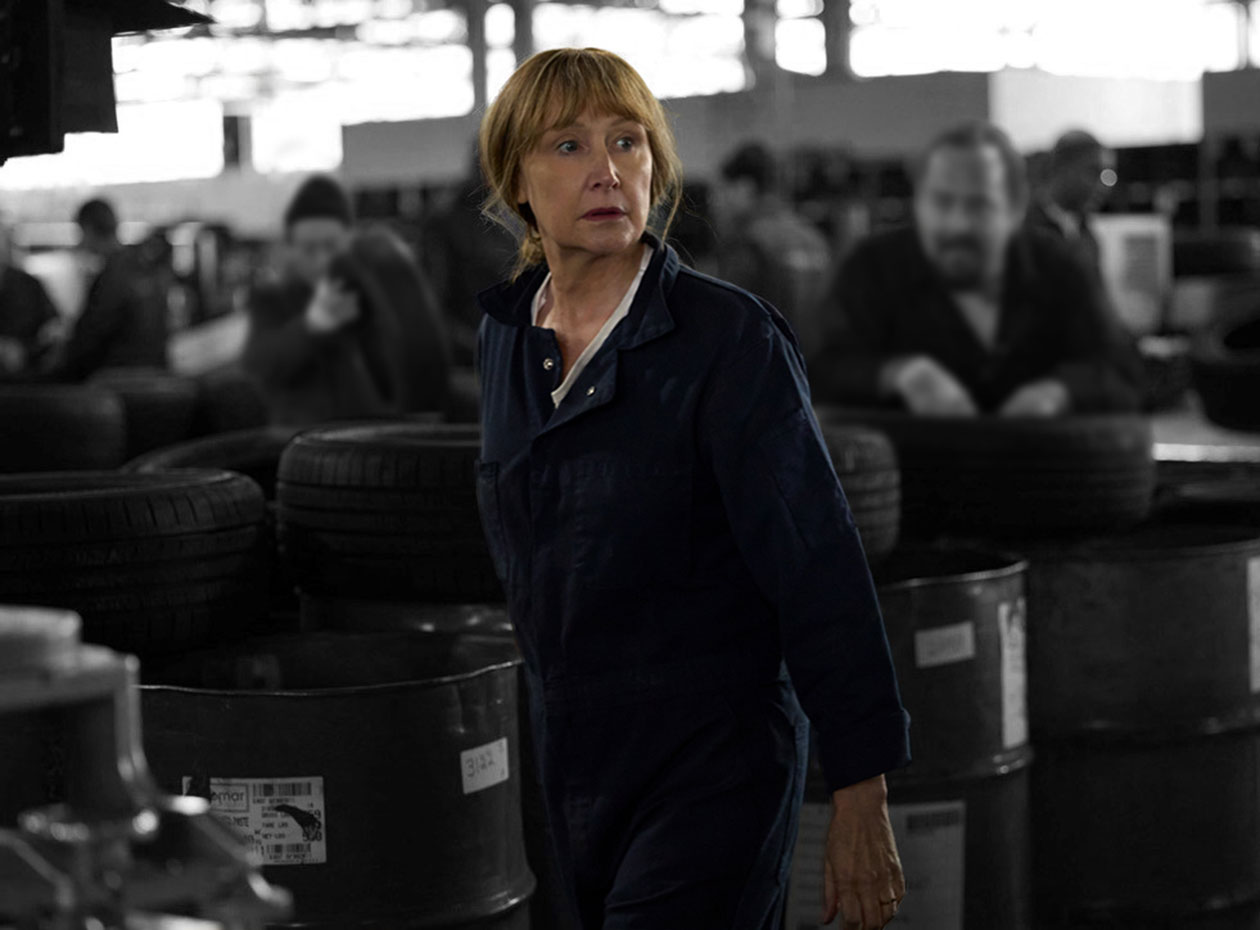
Rachel Feldman’s Lilly enters the arena of biographical dramas with a sense of purpose, telling the story of Lilly Ledbetter, an Alabama factory worker whose fight for equal pay became a turning point in American labor rights. Unlike many biopics that inflate their subjects into mythic figures, this film chooses a softer, more intimate approach. It locates its power not in grand speeches but in the slow, painful accumulation of everyday injustice, and in the woman who finally decides she has had enough.
Lilly follows its protagonist through the years she spent working at a tire plant, where she was underpaid, undervalued, and systematically overlooked. Patricia Clarkson has always excelled at characters with emotional steel hidden beneath quiet exteriors, and here she builds a woman not born a crusader but who becomes one through sheer necessity. Her performance is compelling, thoughtful, and shaped by a life of factory shifts, family obligations, and the exhausting bureaucracy of seeking justice. Clarkson’s subtle performance elevates every beat, giving Lilly a quiet emotional potency that many viewers should be able to identify and resonate with.
The film and Clarkson acknowledge that Ledbetter is neither fearless nor flawless; she is simply someone who refuses to be dismissed one more time. This grounding keeps the story accessible even to viewers unfamiliar with the real-life court battle that eventually led to the Lilly Ledbetter Fair Pay Act of 2009.
John Benjamin Hickey, playing Lilly’s husband, plays a role of unwavering support. Sometimes frustrated, sometimes quietly heroic in its ordinariness. Their chemistry as a couple is warm and feels real. Thomas Sadoski, as the corporate figure representing the company’s more hostile indifference, provides a chilling reminder that discrimination is often behind the scenes and not confrontational: found in paperwork, whispered judgments, and closed-door decisions.
The cinematography is lovely, as the film opts for darker palettes and keeps Lilly in some color rather than black and white to showcase the past, which is clever and a way to avoid using the generic tool that all other films do. The music is expressive, from the first song “The Daughters,” viewers are thrown into this feminist, expressive film. There is also the use of archive photos and footage of Ruth Bader Ginsburg speaking about Lilly’s job, life, and the wider issues surrounding discrimination against women in the workplace. It’s subtle, not overbearing, and gives the film an edge. This documentary aspect helps viewers understand the realism and truth behind this film’s story. There is also footage from presidents such as Obama and other political powerhouses like Hillary Clinton, arguing for the rights of women. The footage of the bill passing is quietly powerful.
The screenplay, co-written by Feldman and Adam Prince, walks a delicate line between education and character study. It certainly wants to inform about wage discrimination, legal barriers, and the systemic disadvantages faced by women in male-dominated jobs. The film filters political urgency through personal stakes. Lilly’s fight is not abstract; it is about her mortgage, her children, her dignity. Lilly makes clear that she doesn’t want to be a symbol; she just wants the company to acknowledge her worth. And while there are moments of empowerment, there are many more stumbling blocks and setbacks than you’d expect.
Lilly tends towards overly neat dialogue at moments when messiness might have felt more truthful. There are scenes where emotional revelations arrive a bit too tidily, smoothing over the jagged complexities of a year-long struggle. Some viewers may also crave more exploration of the broader workplace culture that enabled Lilly’s mistreatment, rather than focusing so tightly on her individual perspective.
Still, Lilly remains compelling because it understands that change often begins not with dramatic movements but with one person’s refusal to stay silent. Feldman’s commitment to authenticity has created a biographical drama that is both timely and timeless.
In a world where 148 economic countries have gender pay gaps, and women earn less for doing the same job as a man (for every dollar earned by a man in the USA, a woman makes 78 cents), this film is an important reminder to not be complacent and to stand up for what you deserve.
Synopsis:After wildfires take his ranch, a cowboy named Dusty winds up in a FEMA camp, finding community with others who lost homes, including his daughter and ex-wife.
The West has always held a mythic place in our culture. There are wide open spaces with farms, trails, and quiet stoicism. The West, though, is being burned at an alarming rate. It’s going through a period of dry weather unlike anything on record. The people of the West are, on top of fears of money issues and bad seasons, more aware and more alert that a fire could sweep through and take it all away regardless of anything human looming on the horizon. Rebuilding isn’t about the drama of the fire, but about what happens after it goes out.
Rebuilding is a film that catches you by surprise in its universality. For a lot of us in this situation we would be thinking about getting back to normal. We would be like Dusty (Josh O’Connor) with big dreams about how he’s going to rebuild once he’s back on his feet. Even in our reality when the world had to manage the crisis of COVID-19, many kept repeating what they would do when we got back to normal. Those folks and Dusty have to realize that back to normal is gone and the new normal is what they must get used to.
That’s what works well about Max Walker-Silverman’s script. His drama, as much as it isn’t about the fire, it also isn’t wholly about a person struggling against an unfeeling system. There are scenes of dejection on the part of Dusty about the bank and FEMA woes, but they aren’t his whole conflict. Dusty has to realize how much he needs other people. Walker-Silverman builds the bare bones of attempting to recover from losing almost everything into a story about starting over with a new understanding of one’s self and community.
Dusty is a character who believes and wants for self sufficiency. He strives to go it alone, to be alone. It’s in the quiet moments of recovery we see the people Dusty has only let in sparingly. We see the community he’s had but ignored in order to do as he’s always felt he’s been meant to do. It takes something catastrophic for him to realize how much he’s missed while trying to be everything he’s always wanted to be.
Josh O’Connor plays this very well. He has an open face that shows the weight of the burden Dusty faces without giving away too much of what Dusty holds inside. O’Connor is a calming presence on screen and his Dusty lopes and moves with the speed of a person lost deep in thought. His performance isn’t showy or deeply emotive, but with his physicality and thousand yard stare he gives us all we need to know about Dusty.
What you want from Rebuilding more than anything is the community Dusty finds. Dusty’s journey is mostly of the self, but his driving back and forth and staring off into the distance isn’t always compelling viewing. The trailer park crew is as fascinating as Dusty’s family who he’s become estranged from. Dusty’s a good introduction, but the film suffers when we don’t learn more about the fascinating characters in his orbit and why they’re drawn to this new place. Rebuilding is a slow and methodical film that will keep your attention and reward you with small beauties if you stick with it. It’s a kind of love poem to a way of life and a sense of place. The performances are good and the scenery shot by director of photography Alfonso Herrera Salcedo is stunning. It’s a film of quiet that speaks volumes about the need for community.