

Home Blog Page 32

Movie Review: ‘She Walks In Darkness’ is Intriguing Historical Fiction


Director: Agustin Diaz Yanes
Writer: Agustin Diaz Yanes
Stars: Susana Abaitua, Andres Gertrudix, Iraia Elias

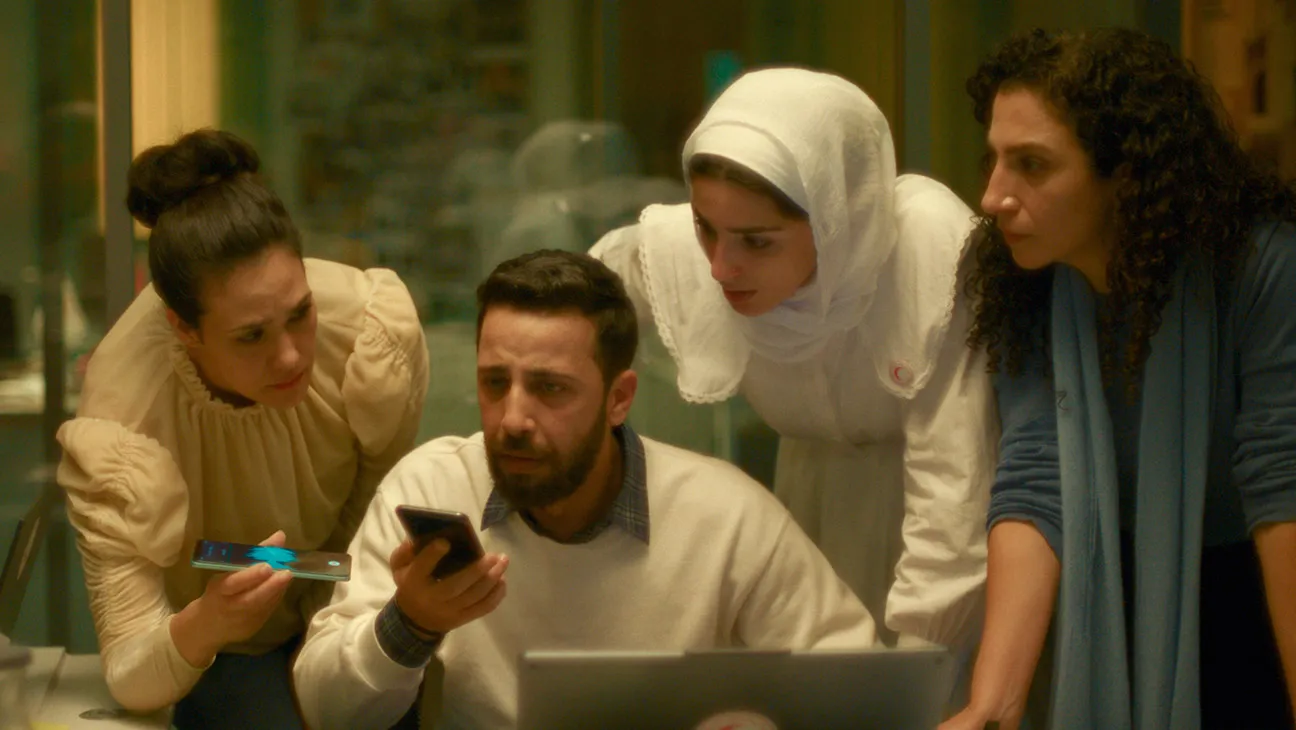
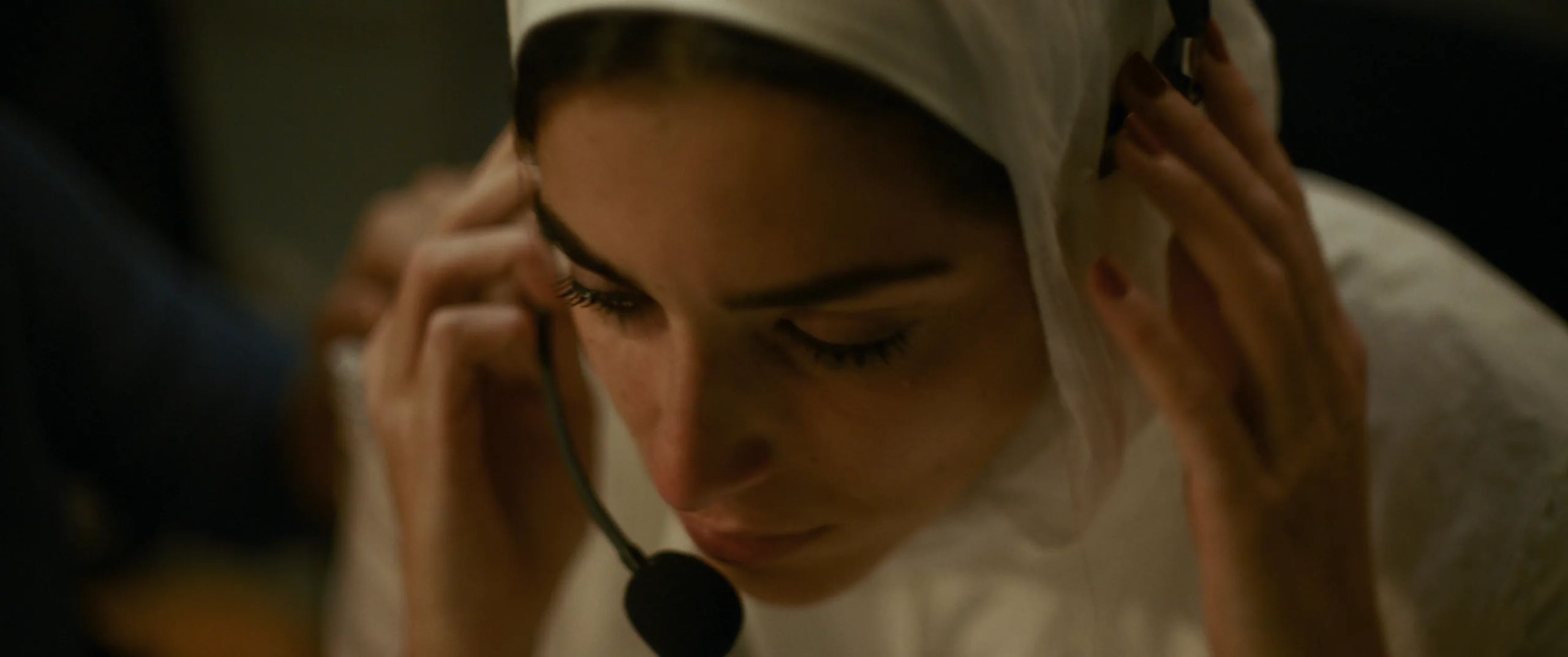
Synopsis: A young Spanish civil guard goes undercover within ETA, the Basque separatist group, spending over a decade locating their hideouts in the South of France.


Europe is a patchwork group of countries that fought for centuries in order to draw the maps that exist today. In the second half of the 20th century, Europe saw a great deal of upheaval brought about by political movements of ethnic or cultural minorities that saw their chance to take back their ancestral lands in order to self govern. The Balkan nations after the fall of communism fought and redrew their corner of Europe to better reflect the cultural makeup of the region. Northern Irish peoples have wished for a long time to not be a part of the United Kingdom and to join with the rest of their island, the Republic of Ireland. For centuries Chechnya has attempted to buck the rule of Russia and establish their own autonomy. The same goes for the Basque people whose ancestral home is a patch of land that is encompassed by four provinces of Northern Spain and three provinces of Southern France.

She Walks in Darkness is a film that uses historical cases of violence perpetrated by the Basque separatist group ETA against the government of Spain. The film uses history as a basis for the story and not the true story of any one person within the Civil Guard, a national police force, or ETA. Instead of “based on a true story,” the filmmakers opted for a phrase like, this could be one of the many stories.

It’s a bold choice not to base the film on any one account. It’s kind of like a lot of films set during World War II. There are people present at historical events, but those people may be a fabrication or amalgam of people who existed. It gives the filmmakers more room to play with the tension and the suspense of the story. In many ways it also prevents someone from calling out falsities. The assassins who reenact real killings are never named, so that it’s less about the people who perpetrated the killings than the fact that they happened in that way.

Though, for a story about a sting of this magnitude and dedicated work, the film feels a bit dull. The tension is too thin in many scenes where it’s supposed to be overwhelming. There are some tense scenes, which include the opening. Before we even meet Amaia (Susana Abaitua), we watch her as she silently hands over the keys to a car to two men. The men drive away and Amaia goes on with her day as a teacher, which is intercut with scenes of a politician leaving city hall to get a meal. It’s kids singing and then the death song of bullets as the assassin does his duty and gets away.

It’s probably a problem with the period that the film encompasses. The main sting operation takes over a decade to come to fruition. There is a lot of waiting and investigative police work that goes into the operation. It feels as if we could have seen a couple of flashbacks, but stayed in the moments where Amaia closes in on the locations of the zulos, secret caches of weapons and materials, to give us more dramatic tension. Itโ€™s almost as if Amaia has no conflict or tension with her. Even with Amaia’s fiance’s all too subtle attempts to get her back to their real world, the job feels like there’s no great questions for Amaia. She’s a true believer from the beginning and rarely wavers. All of the characters are very black and white in that way. Their motivations are gray, but their actions are on those two poles.


She Walks in Darkness is an intriguing piece of historical fiction. There is enough to it that it will keep your attention. It’s a film that does the procedural and archival footage elements well. It just feels like we are kept at an emotional arms length most of the time. We never really have a deep affection for characters on either side. It feels like the film could be much tighter and have had a smaller scope and could have been something to behold. It is worth the watch, though, if you have a curiosity about this piece of Spanish history.
Grade: C

Movie Review (Middleburg Film Festival 2025): ‘Train Dreams’ Is a Lyrical Wonder In The Greenest of Valleys


Director: Clint Bentley
Writers: Clint Bentley, Denis Johnson, Greg Kwedar
Stars: Joel Edgerton, Clifton Collins, Jr., Felicity Jones

Synopsis: Based on Denis Johnson’s beloved novella, Train Dreams is the moving portrait of Robert Grainier, a logger and railroad worker who leads a life of unexpected depth and beauty in the rapidly-changing America of the early 20th Century.


Robert (Joel Edgerton) is a rugged man who comes from no family and goes to work as a logger in the early 20th century, a job full of beauty and danger. He cuts down tree after tree to help clear a path for a new train that will cut through and cross rivers. Itโ€™s a deep blue-collar job that doesnโ€™t pay much, but the people he meets are veterans of the trade and know the serious dangers, such as trees suddenly falling and striking workers. Robert sees some of that, and after a brief period of remembrance, they just go back to work. Itโ€™s a life of solitude he accepts until he falls in love with Gladys (Felicity Jones) and has a child with her.

Living in their cabin built by Robert, life is mixed because he has to work but it means being away from his family from time to time. Itโ€™s something neither he nor Gladys like, as she wants him to settle down and start a farm on the fertile land they live on. They are surrounded by nature with beautiful scenery that only Washington State and Idaho could bring, but there are other violent tendencies that take place. Besides falling trees, Robert watches others act murderously onto others, and more horrifyingly, what mother nature can do to its more scenic areas. 

It is man-versus-nature throughout the story, even as the movie goes decade by decade following Robert into old age. He talks about the heavy labor needed to build a bridge for trains, only to see a concrete and steel bridge for cars built thirty years later, making their wooden bridge obsolete. At some point, Robert gets himself into the city which has rapidly changed, especially when he sees a television and live satellite shot of astronaut John Glenn in his ship orbiting the moon. A woman tells Robert this and he doesnโ€™t believe it, showing how far isolated he has been and refuses to leave the wild where he was born. 

The supporting cast in their short roles all manage their time perfectly. William H. Macy is a standout as an explosive expert loved by the crew, while Kerry Condon plays a solitary woman working in the park service where Robert lives, having her own set of hidden grief. The smaller roles, other loggers, the storekeeper, and even a red dog that suddenly appears to accompany Robert all fill in the holes on Robertโ€™s life path. It feels like a trance at times meeting these figures and rolling along the years filled with nightmares Robert has about what he has seen and the lack of closure with certain events. 

Based on Denis Johnsonโ€™s novella with Will Pattonโ€™s stone-voiced narration, director Clint Bentley and his co-writer, Greg Kwedar, turn to a more poetic story that is set in the past rather than the now. Moving from prison in New York state to the Pacific Northwest, the humanism they bring falls heavily on our consciousness with every scene moving time-to-time through Robertโ€™s prism. Heavy doses of Terrence Malick can be seen through Adolpho Vessoโ€™s lush cinematography, capturing that continuous โ€œmagic hourโ€ lighting, the fierceness of fire, and snow being clear as the sky. Bryce Dressnerโ€™s score uses various instruments to create this country-like melancholy backdrop to accompany the whole life of a singular man.ย 


Train Dreams manages to float through the feelings of Robert as he goes on with his life, holding the pain he feels and rarely expresses it. Itโ€™s about the regrets of not acting upon things he couldโ€™ve stopped, and the reflection of how back he has held himself from going forward with the times. The capsule of this period from 100 years ago is something long gone, yet Bentley is able to put out a subtle drama based on visions and meditation on what life can bring, even to someone who is left alone and yet makes valuable connections to others.

Follow me on X: @brian_cine (Cine-A-Man)

Grade: A-

Movie Review: ‘The Twits’ is Disgusting and Surprisingly Emotional


Directors: Todd Demong, Phil Johnston, Katie Shanahan
Writers: Phil Johnston, Meg Favreau
Stars: Margo Martindale, Johnny Vegas, Emilia Clarke

Synopsis: Two orphans join forces with a family of magical animals to save their city from the powerful Mr. and Mrs. Twit, the meanest, smelliest, nastiest people in the world.

Author Roald Dahl’s fictional worlds value comeuppance for characters deemed rude. He created many stories and characters where truly horrific fates befell people. The thing is, the fates stuck. The baddest of the bad didn’t learn their lessons, they were smote by the righteous. The most despicable of Dahl’s creations, the Twits, were so awful that the people who knew them cheered their deaths. The film, The Twits, attempts to take this story in a different direction.

Much of Phil Johnston and Meg Favreau’s script focuses on empathy. A large plot device is that Beesha (Maitreyi Ramakrishnan) and Bubsy (Ryan Anderson Lopez) can speak to the imprisoned Muggle-Wumps, creatures needed by the Twits to produce an energy source from their tears, because of their capacity for empathy. These two, the other orphans at the orphanage, and Mr. Napkin (Phil Johnston), their caretaker, seem to be the only people in town with the capacity for any empathy, though.

This story gets existentially bleak when we see the politics at play in the town. The Twits run for mayor of Triperot on a platform that these “others,” orphans and the current city administration, have stolen wealth right out from under everyone by not allowing Twitlandia, the Twits dream amusement park, to open. They use the same straw man tactics that have swayed voters to elect populist candidates the world over. Just like in our lives, it works and the Twits gain the power they need to do as they please. Even with the moral of the story to choose empathy over selfishness, you kind of wish these kids didn’t and let the Twits be taken down by the “Dreaded Shrinks.”

The story’s focus on bringing moral complexity is also given a boost at the details of what family can mean. In a scene that feels like Pixar in its heyday, Beesha is getting a pep talk from Mary Muggle-Wump (Natalie Portman) about accepting the family she’s got. Mary works up to getting Beesha to admit that she deserves love. You almost get whiplash as the gross-out humor is so rampant that you feel like there isn’t any substance to the film besides Twits=bad, orphans=good, but this little tidbit hits you in the chest. There are a few moments like this weaved in and out of the story, it just always feels a little out of place, if affecting.

The animation effects are the real thrill to the film. Each character has a unique design and you can almost smell the stench of the environment through your television. There are several scenes where it looks like a camera rig was attached to a running character, used to greatest effect when Mrs. Twit is in hot pursuit. The other animated effect that brings aย  strange and wonderful joy to the film are the dance moves of several characters. Mr. Napkin had his dance cut off way too soon, but the shoulder shimmy made it seem like it was going to be something truly special. The same with an unnamed townswoman present when several people bail the Twits out of jail. She dances like no one’s watching to the strange beat of a homemade marimba and you won’t be able to take your eyes off her.


The Twits is filled with disgusting humor and visuals to match. Yet, it tries to have its ickiness with a bit of emotional heft. A scene where there’s confusion between the words diarrhea and diorama is a bit nauseating, if clever in its wordplay. In many ways this is pale in comparison to many other animated films, but in a strange way it also works. The Twits is an able adaptation of its source adding some much needed empathy to a story that lacks much of it.

Grade: C

Podcast Review: After the Hunt

On this episode, JD and Brendan discuss Luca Guadagnino’s new film After the Hunt, starring Julia Roberts and Ayo Edebiri! Last year was a capstone year for Guadagnino with Challengers and Queer, two films that we (among many other critics) championed all year. This year he’s back with After the Hunt and it’s one of his most polarizing films to date. The reviews haven’t been very good and the debate on social media is very back and forth. So where do we stand? You guessed it…

Review: After the Hunt (4:00)
Director: Luca Guadagnino
Writers: Nora Garrett
Stars: Julia Roberts, Ayo Edebiri, Andrew Garfield

Subscribe to our Podcasts RSS
Subscribe to our Podcasts on iTunes
Listen on Spotify
Listen on Stitcher
InSession Film Podcast – After the Hunt

Movie Review (NYFF 2025): Pietro Marcelloโ€™s โ€˜Duseโ€™ is a Flawed Portrait of a Theatrical Icon


Director: Pietro Marcello
Writers: Letizia Russo, Guido Selei, Pietro Marcello
Stars: Valeria Bruni Tedeschi, Fausto Russo Alesi, Fanni Wrochna

Synopsis: After retiring from her legendary stage career, actress Eleonora Duse feels an irresistible call to return to the theater during Italy’s turbulent period between WWI and the rise of fascism.


Eleonora Duse, or better known as Duse, is an Italian actress deemed by many as one of the greatest of her time, making her name with the works of Gabriel Dโ€™Annunzio and Henrik Ibsen, both respected playwrights whose works were elevated by the actressโ€™ presence in their plays. She changed theatrical performance completely in Italy, becoming a legendary silhouette for future generations to follow. Even to this day, her work is celebrated by modern actresses working the stage. Outside of Europe, her name may not be known as much, yet her impact is felt. Italian filmmaker Pietro Marcello wants to celebrate Duseโ€™s career, influence, and prowess in a biopicโ€”Duse (screening at the 2025 New York Film Festival in the Main Slate)โ€”that captures her later years post-WWI. Throughout Duse, you feel Marcelloโ€™s admiration for the theater legend, with a focus on Valeria Bruni Tedeschi, who plays the stage legend. However, the picture is quite contrived in its approach to tell this part of Duseโ€™s life, being both hollow and confused concurrently.

Duse begins with the glimpse of a fallen star, the image of its central subject (played by Bruni Tedeschi) trying to hold her head high amidst the tolls of WWI and an ailment slowly killing herโ€“the tuberculosis makes her frail. The people still revere her and shower her with praise, although she hasnโ€™t performed in nearly a decade. However, Duse knows very well that the image the people have of her from before is one she canโ€™t seem to deliver nowadays. After a near-death experience, Duse decides to re-enter the world of theater, even if she is still ill and burned by the traumatic experiences that cast her aside from the arts. She ventures forth with hopes to reignite her fire and inflame the hearts of the people who want to traverse the theater stage of grace and damnation. 

Her daughter, Enrichetta Checchi (Noรฉmie Merlant), opposes this grand return to protect Duse. She begs that her mother bow out of this new stage play and focus on resting. But Duseโ€™s mindset is difficult to change. Pietro Marcello uncovers this late stage of Duseโ€™s career through her declining health and the rise of fascism in Italy. However, there is no insight into the political, cultural, and psychological changes, with the focus instead on the importance of performance. It is pretty disappointing that this is the road Marcello went for, as her story is so deeply embedded in the protest through the performance of the time that not including a proper deep dive into such limits the filmโ€™s vision. 

The first half of Duse adapts the contrived biopic format, where characters yell and loudly exclaim at each other so loudly that it becomes farcical and unintentionally hilarious. One canโ€™t help but laugh at the dramatic excessiveness in each dialogue; regardless of the conversation, it feels like a life-and-death situation, leading to disbelief from the viewer. Marcello has always been great at directing his actors to great performances, like Juliette Jouanโ€™s revelatory role in Scarlet or Luca Marinelliโ€™s in Martin Eden. Here, everyone, even Tedeschi on some occasions, seems lost, either overly performing even the most simple gestures or toning things down for a second, so that later they can shout their hearts outโ€“a tonal disbalance that becomes an unbearable experience. 

In the second half, things shift a bit, and Marcello begins to properly dissect the figure of Duse, exploring her vulnerability and thirst for independence, as well as her worsening sickness and elevated figure. The political angle of using art as a means for resistance, the only thing Duse has left to give to the world, is expanded upon through the Italian directorโ€™s silent, restrained direction. He has reined it in and, almost immediately, Duse, both the character and the film, become more vivid and engaging, which begs the question of why Marcello opted for a louder and over-dramatized synthesis on the meaning of Duse, not only as an actress, but as a revolutionary figure, in the first half of the film. It reminds me of Bradley Cooperโ€™s approach to his Leonard Bernstein biopic, Maestro.ย 


The film is loud and expressive for most of its runtime, focusing on performance and flash rather than nuance or a dissection of a career. Like Duse, Maestro lands in between celebration, homage, and absurdityโ€“coming primarily from Cooperโ€™s inability to contain his performance. Yet, when Cooper tones down the film and lets it breathe, you begin to see some honest, fascinating ideas about the subject of his film. Duse has more of these moments than Maestro, and Marcello is more prone to explore the Italian actressโ€™ impact, yet both are true misfires due to mishandling in tone and breadth. It lacks the poetic nature of Marcelloโ€™s previous works and the urgency found in telling Duseโ€™s story. In the end, Duse is too cautious to capture the fire that once made the actress immortal.

Grade: C

Chasing The Gold: Is 2025 the Year of Double Digit Nominations?

The 2025 Oscar year is starting to shape up to a year filled with nomination behemoths.With the festival season wrapping up and the awards calendar beginning in earnest, letโ€™s take a look at the prospects of three or more films receiving ten or more Oscar nominations, and the historical precedence of such a feat.

The History of 10+ Oscar Nominations

While 10+ Oscar nominations in a single year is much more prevalent these days (thanks in large part to an expanded Best Picture lineup and additional categories), it first happened back in 1937 with Best Picture winner The Life of Emile Zola.  Since then, a total of 105 films have managed to do so.

But what about the same year?  Two films have earned ten or more nominations in the same year 28 times, beginning in 1939 with Gone with the Wind and Mr. Smith Goes to Washington, and most recently in 2021 with Dune and Power of the Dog.  Three films in the same year is much more rare, happening only four times in total (1964, 1977, 2023, and 2024).

The all-time record is four films with 10+ nominations in the same year, which belongs to 2019.  Once Upon a Timeโ€ฆin Hollywood, The Irishman, 1917, and Joker all ended up with double-digit totals, but still managed to not win Best Picture.  In fact, when two or more films have more than 10+ nominations, only nine times (1967, 1977, 1981, 2012, 2013, 2015, 2018, 2019, 2021, and 2024) has none of those films won Best Picture.

2025 Contenders

One Battle After Another
Low-end nominations: 9 (Picture, Director, Actor, Supporting Actress, Supporting Actor, Adapted Screenplay, Casting, Film Editing, Original Score)

High-end nominations: 15 (Actress, Supporting Actor, Supporting Actress, Cinematography, Costume Design, Production Design)

There is a world where this could be the most nominated film in the history of the Academy.  While that is certainly a stretch, itโ€™s not out of the realm of possibility if the Oscar voters really take to it.  It has a chance for not only 15 nominations, but six acting nominations, which would also be a record.  Even conservatively, it might get to double-digit nominations without breaking a sweat.

Sinners
Low-end nominations: 9 (Picture, Director, Original Screenplay, Casting, Cinematography, Film Editing, Original Score, Original Song, Sound)

High-end nominations:13 (Actor, Supporting Actor, Production Design, Makeup and Hairstyling, Costume Design)

A low-end of nine nominations is one thing, but to do it without an acting nomination is another. Only ten of the 105 films with 10+ nominations have done so without a nominated actor (most recently, 2021โ€™s Dune).  The crafts are really where Sinners will get a chance to shine, as the musicians and technicians are expected to make the biggest nomination impact.

Marty Supreme
Low-end nominations: 6 (Picture, Director, Actor, Supporting Actress, Original Screenplay, Film Editing)
High-end nominations: 12 (Supporting Actress, Original Score, Production Design, Costume Design, Cinematography, Casting)

With a strong showing at the New York Film Festival, Josh Safdieโ€™s period piece probably needs more eyes on it to truly gauge its validity, but the response has still been overwhelmingly positive.  This is the film with the lowest floor of nominations, but period crafts will always have a chance when it comes to the Oscars.  The Academy has a tendency to go for โ€œmostโ€ when it comes to things like Production Design and Costumes, so it might not have the flash to get all the way to 10+.

Hamnet
Low-end nominations: 8 (Picture, Director, Actress, Supporting Actor, Adapted Screenplay, Cinematography, Costume Design, Production Design)
High-end nominations: 11 (Film Editing, Original Score, Casting)

While Chloe Zhaoโ€™s adaptation might be in-contention for Best Picture, there isnโ€™t a ton of wiggle room to get to ten.  The artisans Zhao has assembled are not exactly the most well-known, so people like Max Richter might be side-stepped for someone like Alexander Desplat or Trent Reznor.  Regardless, ten is well within reach for this film.

Wicked: For Good

Low-end nominations: 9 (Picture, Actress, Supporting Actress, Casting, Costume Design, Makeup and Hairstyling, Production Design, Original Song, Sound, Visual Effects)

High-end nominations: 13 (Director, Supporting Actor, Adapted Screenplay, Film Editing)

I almost didnโ€™t include this film, because no one has actually seen it.  While Iโ€™m not expecting it to be awful, I am personally not overestimating its chances.  Even without Picture or Acting, there are plenty of below-the-line nominations for the film to receive.  If the acclaim for the first film is matched here, more than 10 nods should be done with relative ease.

My Prediction

One Battle After Another, Sinners, and Hamnet all end up with 10+ nominations, but Marty Supreme and Wicked: For Good fall a bit short.  And yes, one of those will end up as the Best Picture of the year.

Movie Review (Middleburg Film Festival 2025): ‘Rental Family’ Is a Surprisingly Touching Dramedy About Human Connections


Director: Hikari
Writers: Hikari, Stephen Blahut
Stars: Brendan Fraser, Takehiro Hira, Mari Yamamoto

Synopsis: An American actor in Tokyo struggling to find purpose lands an unusual gig: working for a Japanese “rental family” agency, playing stand-in roles for strangers. He rediscovers purpose, belonging, and the beauty of human connection.


Our excursions into Asia from an American point-of-view always play out the vast differences between the West and the Pacific Rim. Itโ€™s sometimes comical, such as human size and social norms that could be a little bit baffling to those who know nothing. Even for those who have lived in Asia for years, there are always those blind spots and things they discover. In Rental Family, director Hikari (37 Seconds) takes us through the sentiment business that is unique to Japan and foreign to others: the selling of sentimentalism through another figure who is not a member of your family.

Brendan Fraser stars as an American actor named Phillip who has been living in Tokyo for the last seven years doing all sorts of gigs from a toothpaste commercial to being a pirate in a TV movie, all speaking Japanese. Itโ€™s not the role or pay Bill Murrayโ€™s character in Lost in Translation would get, but Phillip gets by fine. Then, he gets an unusual offer which Phillip isnโ€™t aware of, but is common in Japan. Heโ€™s at a funeral of someone he doesnโ€™t know, but is there paid as an extra, even though itโ€™s not a movie. Philip meets Shinji (Takehiro Hita), the man who hired Phillip and runs the rental family agency; there are people who hire actors as stand-ins to be a friend or a family member in various social events, such as that funeral, and the next gig for Phillip, a wedding.

Itโ€™s something Westerners canโ€™t comprehend, but this is an actual thing. Japan has created a sub-industry in acting where someone is rented out to play a role in something and has been a thing for decades. Since the end of the COVID pandemic, however, business is booming as it helps people who are lonely and need to fill this void in whatever they need someone to do. Even in his time in Japan, Phillip learns this and shows that his cultural values still clash with Japanese culture, forcing him to adapt to this other side as a professional actor. Two key roles test him and how he goes along with this job, including playing the abandoned father of a young girl whose mother needs him to help get his daughter into a top school.

Overall, Phillip finds this unexpected joy in giving people some happiness in their life, even though heโ€™s acting the part. The other job Phillip does is impersonating a journalist who interviews an aged actor (Akira Emoto) who hopes heโ€™s not forgotten when he dies as his memory fades away. Phillip is not supposed to get too close to the clients, but it becomes very difficult when heโ€™s intervening in their lives that is fraudulent, yet Phillip has to help. These perils are also seen on the side of Aiko (Mari Yamamoto), another rental family actor who plays the role of mistress of a married man and has to take a slap in the face – literally – as part of the job.


Rental Family is a comedy-drama that is surprisingly heartwarming as it is touching on the artificials that could cause more harm than good, which concerns Phillip in the beginning. But, this is something common in Japan, and Phillip, who is semi-proficient in speaking the language, just has to do something to plug the gap in peopleโ€™s lives. They are there to sell emotions, mixing a clientโ€™s fantasy with their own reality for whatever reason. It is something that Hikari and her co-writer, Stephen Blahuther, bring to light in a neat way with the performances tender and charming and very easy to love.

Follow me on X: @brian_cine (Cine-A-Man)

Grade: A

Podcast Review: It Was Just An Accident

On this episode, JD and Brendan discuss the Palme d’Or winning film from Jafar Panahi It Was Just An Accident! Panahi is one of the most captivating filmmakers working today given that most of his films have been made illegally due to his arrests in Iran. So, it’s quite evident how personal It Was Just An Accident is for him, but it’s also stunning in how well it translates globally, despite the cultural specificities at play.

Review: It Was Just An Accident (4:00)
Director: Jafar Panahi
Writers: Jafar Panahi
Stars: Channing Tatum, Kirsten Dunst, Ben Mendelsohn, Peter Dinklage

Subscribe to our Podcasts RSS
Subscribe to our Podcasts on iTunes
Listen on Spotify
Listen on Stitcher
InSession Film Podcast – It Was Just An Accident

Movie Review: ‘Black Phone 2’ Falls Short Of Its Predecessor


Director: Scott Derrickson
Writer: Scott Derrickson, C. Robert Cargill
Stars: Mason Thames, Madeleine McGraw, Ethan Hawke

Synopsis: As Finn, now 17, struggles with life after his captivity, his sister begins receiving calls in her dreams from the black phone and seeing disturbing visions of three boys being stalked at a winter camp known as Alpine Lake.


Blumhouse is on yet another attempt at making a new horror franchise stick beyond its first film with Black Phone 2. The sequel to a rather successful start with 2021’s Black Phone brings audiences to 1982. Helmed again by director Scott Derrickson, The Grabber (Ethan Hawke) is back and doing his best to evoke Freddy Krueger. With its welcome use of Super 8 footage to nail the dreamlike world the film takes audiences into, there’s not enough within the film itself to warrant a sequel. Its repetitive story points and on-the-nose ’80s slang prevent Black Phone 2 from reaching the level of unease of its first installment.

For those wondering how The Grabber is still around to justify a sequel, he now exists in a world like something out of A Nightmare on Elm Street 3: Dream Warriors. His grasp on his victims is still strong, even impacting a now-teenaged Finney (Mason Thames) and his younger sister Gwen (Madeleine McGraw). From the start, it’s apparent just how deeply Finney is scarred from his previous encounter with The Grabberโ€”getting in bloody fistfights at school and secretly smoking joints while his family sleeps. But it didn’t just alter his life; Gwen has been experiencing nightmares that feel all too real to her. And given her interest in spirits and ghouls, she’s labeled as a weird kid, similarly to how her brother is treated.

These nightmares of Gwen’s get worse and worse as nights blend together. She finds herself unsure of what is real and what is fake, with the only person understanding the torment being her brother, who would rather forget everything he has gone through than face it. When both begin to hear phones ringing in the distance, Gwen seeks out whatever information is being relayed to her, while Finney answers with a simple, “I can’t help you.” Derrickson explores both Finney and Gwen well, while making Black Phone 2 more centered on Gwen’s story as she explores these psychic powers she’s developing, leading her to uncover information about unsolved disappearances at a Christian youth camp that holds a connection to Finney and Gwen in tragic ways.

While Derrickson is exploring Gwen’s nightmares is when Black Phone 2 is at its most engaging, creating unsettling, blood-soaked moments giving audiences a peek into the past of not only the camp but specifically The Grabber. Using grainy footage to put Gwen in the past allows the audience to feel as helpless as Gwen is to what she’s being put through. These nightmare moments are disturbing, but as the film goes on, they become one too many. While the film’s final act is where Gwen’s two worlds combine, it’s such a step away from what made the first effectiveโ€”a realistic and terrifying child abduction that mostly works in the realm of tangible fears. Finney often gets his trauma pushed aside to explore more victims of The Grabber, not allowing his character to wrap his head around his experiences.

Where Black Phone 2 excels is in its performance from McGraw, but it’s not enough to keep this film from being flat-out boring. While The Black Phone had its own issues, the story felt engaging because it’s a human fear every childโ€”and even adultโ€”has experienced: being abducted so close to home by a man with a scary van, and being held in an unknown location with no way of reaching your loved ones. The choice to take this film into a new realm with supernatural elements takes away from how truly horrifying The Grabber was established to be, and how ambiguous his life was to a point. And while the film ramps up the supernatural aspects, the stakes don’t rise to the film’s potential, coming across as Freddy Krueger with an identity crisis. Hawke barely is given enough screen time within this sequel to match his performance in his first outing, often feeling like he wasn’t even on set to film.

While McGraw is the film’s shining star with her spunky comebacks and take-charge attitude, the film’s script leaves more than you’d want to be desired. Written by Derrickson and C. Robert Cargill, the dialogue tends to come off as cringey attempts to establish the film’s time period more than anything, with Gwen offering an overdose of ’80s slang that doesn’t fit the film’s uneasy tone. Outside of the nightmares, the writing is at its worstโ€”especially with new additions to the franchise’s roster, with camp workers and diehard religious couple Barbara (Maev Beaty) and Kenneth (Graham Abbey), and Gwen’s love interest Ernesto Arellano (Miguel Mora), who had a brother also killed by The Grabber. Their inclusion in the film adds more comedic moments that don’t fit within a film about children being brutalized.

Derrickson’s utilization of Super 8 footage mixed with blizzard conditions is what pulls this film across the finish line. While Gwen, Finney, and Ernesto embark on their drive to this camp in the chilly mountains of Colorado, there’s stunning camerawork while the trio is inside the car, showing emergency workers saving lives during an unprecedented snowfall, while also showing the teenagers pushing through and driving toward danger. When the nightmares begin in Gwen’s cabin, she’s completely isolatedโ€”being the only person staying in the female bunksโ€”and while the Super 8 footage kicks in, it creates an atmosphere that allows dangers to hide in the shadows and an overwhelming helplessness.

While there are plenty of aspects of Black Phone 2 that fall short of being as impactful as the first, the snowy nightmaresโ€”led by McGraw’s strong performanceโ€”allow the film to hold your attention long enough to skate to the film’s credits.

Grade: C

Movie Review: ‘Bugonia’ Is Flawed, But Once Again Demonstrates Lanthimos’ Directing Prowess


Director: Yorgos Lanthimos
Writer: Will Tracy
Stars: Emma Stone, Jesse Plemons, Aidan Delbis

Synopsis: Two conspiracy-obsessed young men kidnap the high-powered CEO of a major company, convinced that she is an alien intent on destroying planet Earth.


It brings this Greek film critic a particular joy to see just how far Yorgos Lanthimosโ€™ career has come. Both his skillset and singular voice have always been clear, but itโ€™s tough to imagine anybody seeing 2009โ€™s Dogtooth (his arguable breakout film) being able to predict his rise to becoming an Oscar darling. Perhaps most exciting about this transitional journey packed with excellent films is that heโ€™s never lost the elements of the cinematic Greek Weird Wave. In fact, Lanthimosโ€™ ability to alienate his audiences while simultaneously crafting undeniable entertainment vehicles for the masses is deeply impressive.

Any cinephile should be thrilled that such a distinct filmmaking voice is so present in modern cinema. That he and the incredible Emma Stone are honing this voice together is more than just the cherry on top of an exciting cinematic sundae. It instead feels akin to a complimentary dessert dish in its own right. Since her Oscar-nominated role in Lanthimosโ€™ The Favourite, she has starred in every film of his moving forward. She even starred in his silent short film, Bleat, made in Greece, which has screened less than a handful of times worldwide due to its stringent presentation requirements. This creative partnership clearly enriches both Lanthimos and Stone, allowing each party to take bolder swings and innately convey the absurdity present in any particular filmic scenario. Bugonia, Lanthimosโ€™ latest film and third this decade, reaffirms this notion of playfulness among them and their understanding of what the other brings to the big screen. And while it may not reach the heights of any of their previous collaborations, Bugonia presents a fascinating worldview grappling with several ideas.

Despite still remaining widely accessible, Lanthimosโ€™ films post-The Favourite have been brushing up against the audiences he has amassed. His feature films have often reckoned with the state of the world in some way. But the subtext feels as if itโ€™s becoming more and more textual with each new entry into the Lanthimos oeuvre. Importantly, each film takes an interest in how an individual, or select group of individuals, handle their current place within their respective society. For Bella Baxter in Poor Things, she takes on the harsh realities and injustices of the world with a hope that things can become better. It may be partially fueled by naรฏvetรฉ considering her origins, but itโ€™s a noble (and excellent) film exploring such endeavors.

Kinds of Kindness is a particularly alienating triptych of stories depicting people that are breaking down as the systems they rely on begin to fail. Itโ€™s a film which actively feels like Lanthimos wants to toy with his Oscar audiences. And despite not being written by Lanthimos, Bugonia feels like quite the extension of this overarching idea of failing systems found in his previous film. Furthermore, Bugonia feels distinctly interested in alienating its audience considering thatโ€™s the entire conceit of the film to begin with. Bugonia is ultimately a film which is reckoning with the devastating, and ultimately tragic, ways we have alienated ourselves from one another.

Bugonia follows the 3-day aftermath of CEO Michelle Fullerโ€™s (Stone) kidnapping at the hands of Teddy (Jesse Plemons) and Don (Aidan Delbis). The ticking clock structure which breaks this film into chapters exists due to Teddyโ€™s vehement belief that Fuller is an alien. He believes the only time to contact her off-world leaders is during an upcoming eclipse. If that seems a bit silly on paper, thatโ€™s because it is; but Lanthimos has always been able to balance disparate tones across his filmography. Of course Teddyโ€™s conspiracy-riddled theories and overall scheme is ridiculous. But the comedic edges of Bugonia never dull its most shocking moments. Though thatโ€™s not to say every emotional beat of this film works without a hitch. Despite Will Tracyโ€™s script intentionally keeping the audience, and Fuller, at armโ€™s length, the emotional resonance of Bugonia feels a bit sparse as its many ideas bounce around a packed runtime which also feels a bit too long. Itโ€™s a strange disconnect between narrative and pacing, but it still manages to make way for a propulsive and absurd third act. But Bugonia has much to work through before getting to its bound-to-be spoken about finale.

The intent of this film, like many of Lanthimosโ€™ works, is to discomfort his audience as he addresses realistic issues through absurdist means. And in these uncomfortable realities comes a series of emotions which are fully understandable. In the case of Bugonia, itโ€™s that of several tragedies. While exploring corporate greed and the ways in which the upper class belittle and look through through the working class, Bugonia allows Lanthimos to depict the evils of society warping those at its center. Teddy is an antagonistic force of this film in some ways. But due to Plemonsโ€™ incredible performance, he comes across as a man who has simply broken. The film certainly doesnโ€™t forgive him at any point. Nor does it excuse his actions.

But it’s interesting the ways in which Lanthimos and Tracy attempt to convey some sympathy for Tracy. One could argue heโ€™s a sort of tragic figure, if only in the sense that cases like his seem avoidable if massive companies, such as the veiled pharmaceutical one at the center of this film, actually cared about the people they purport to serve. While it may not always work for the film, Bugonia is full-blown tragedy in the classical Greek sort of way. Thereโ€™s a dark humor present in Teddyโ€™s hair-brained conspiracy, but that never belittles the harrowing, deeply sad reality of the situation. If this film is to serve as a mirror for its audience, the reflection reveals a damned image for its audience and humanity at large.

To think of how deep a hole Teddy has fallen into is frightening. And itโ€™s within those depths that Teddyโ€™s actions and behavior, however tragic, are never justified. One just needs to see how Lanthimosโ€™ direction and Tracyโ€™s script focus on Teddyโ€™s manipulation of his sweet cousin, Don. Through such unnecessary collateral damage, Bugonia sees the filmmakers painfully questioning how we could let something like this ever happen in the first place. Perhaps itโ€™s not something somebody just stumbles into. Itโ€™s only through a series of emotionally heightened circumstances and a refusal to engage with them in meaningful, therapeutic ways that people such as Teddy can find themselves in such a dangerous echo chamber. But the culpability doesnโ€™t solely rest with any one person.

Bugonia makes it clear as day that the upper class and corporate greed have caused irreparable damage to a wide majority of the population. Having been allowed to run rampant for so long, the consequences of such actions now have roots running deep in the very fabric of modern society. Itโ€™s through these roots that Bugonia finds its strongest angle into the avoidable tragedy of this story. This is more than just a kidnapping being presented by Lanthimos. Itโ€™s a damning indictment on humanity at large.

Given, Bugonia may not feel like the most fully thought-out indictment of upsetting societal truths like conspiracy-fueled lunatics or corporate greed due to occasionally flat characterization and a somewhat stalled pace. But a bonkers narrative development (which remains admirable despite its own thematic flaws) and excellent performances allows Bugonia the space to feel like another example of why Lanthimos is one of our most exciting contemporary filmmakers.

Grade: C+

Movie Review: โ€˜Shelby Oaksโ€™ is a Promising but Deeply Flawed Debut Feature


Director: Chris Stuckmann
Writer: Chris Stuckmann
Stars: Camille Sullivan, Michael Beach, Sarah Durn

Synopsis: A womanโ€™s obsessive search for her missing sister leads her into a terrifying mystery at the hands of an unknown evil.


The landscape of the YouTuber or content creator to filmmaking pipeline has been a fascinating one to witness over the past few decades. From shameless quick cash-ins like the Fred movies to more successful ventures in quality, like the recent surge of the Philippou brothers with Talk to Me and Bring Her Back. What I find most interesting about it, however, is the variation of creators; people like Philippou just got their start making silly short-form skits on their channel, which acts as a completely different voice of experience compared to Chris Stuckmann and his very first feature film, Shelby Oaks; which went from a Kickstarter lead project to a now Mike Flanagan-produced movie being distributed by Neon.

Stuckmann has always adored film, and before his channel also got its start making home movies of his own, the influence of his love for film and love for all things horror specifically oozes all over Shelby Oaks. From its creative blend of documentary and found footage filmmaking to the great use of creating tension through dark spaces and restraint from typical jump scares, it’s clear that Stuckmann has an eye for direction and knows how to craft a compelling image even with limited resources. However, the clear inspirations Stuckmann has as a fan of the horror genre also hamper its effectiveness as the film goes on. What starts relatively fresh slowly forms into a culmination of horror conventions and messiness that leads to a final feeling of dissatisfaction within its final reveals. It leads to Shelby Oaks being a fine but frustrating debut feature; one that has more than enough promise to prevent it from being a totally empty experience, but also a film that struggles under the weight of all itโ€™s clearly influenced by. 

Shelby Oaks starts within a documentary-like format, following the story of Mia (Camille Sullivan) and her search for her now long-lost sister Riley (Sarah Dunn). Before her disappearance, Riley made a channel of her own with three of her friends entitled โ€œThe Paranormal Paranoids,โ€ and they were famed for their exploration of the paranormal and whether their encounters with the supernatural were real or not. Things took a turn for the worse when, after exploring the abandoned town of the titular Shelby Oaks in 2008, all three of Rileyโ€™s friends were brutally murdered, and Riley herself is seen in video footage going into a room and seemingly disappearing out of thin air. With her faith in law enforcement low and her husband, Robert (Brendan Sexton III), doubtful of her ideas, Mia puts it on herself to find her missing sister and learn of the evil secrets that have been circulating around them both since her youth. 

The clearest appeal of Shelby Oaks from the get-go is its loving mesh of found footage and documentary-style horror filmmaking, and it’s a creative way for Stuckmann to make use of limited resources, while also adding to the film’s terror. The Blair Witch Project inspirations lurk all over the camera work, with a constant sense of always feeling like something is there that you arenโ€™t seeing, or a relentless ambiance of scrappy camera movements and cracked windows that matches well with the filmโ€™s entire tone. It isnโ€™t just the presentation that keeps Shelby Oaks initially creative at first, but Stuckmannโ€™s direction behind the camera always keeps things from being completely boring within more familiar territory. He particularly has an understanding of when to use restraint during a scare, but also how to use the quiet stillness of the dark to a horror film’s advantage when it comes to the placement of the camera while setting up tension.

Where Shelby Oaks starts to unravel is when it consistently falls into becoming a mesh of overused horror film beats from its inspirations, rather than the more inspired and unique sensibilities it initially possessed. A lot of the reveals near the movie’s climax are often more satisfying not only because of its similarities to other recent genre fare, but also because of its loss of any creative builds of tension that it initially started with. Even for the fair amount of scenes that are genuinely well done throughout the film, others are more silly than scary when the film decides to play with the more demonic forces in the narrative. 

This messiness continues to reside within the screenplay as well, with over-explanations of certain supernatural plot points. Even the main characters themselves are a bit underwritten here. While there’s obviously a fair amount to be learned about them from the documentary portion of the film, there was never a moment when I could feel like I knew them, and rather, the movie was just telling me what I should know about them. This issue mainly resides in the character of Mia, specifically here, where, despite Sullivanโ€™s solid performance, she is only ever defined by her looking for her sister.ย 

Shelby Oaks has so much passion at its core, and you can see its director bursting at the seams with his love for horror and found footage, but the film struggles to carry the weight of its ambitions under genre conventions that can leave it more stale than fresh. However, even if it is an imperfect debut at its center, it shows promise of more inventive fare yet to come from Stuckman rather than middling genre fare.

Grade: C+

Op-Ed: ‘Mallrats’ 30 Years Later

Looking at the scope of comedies from 1995 to 2025, things are really bleak. The comedy genre is in disarray due to the world constantly changing. People canโ€™t say a lot of things that were said 30 years ago. Good writers and directors can make their way through these transformative times. Bad writers and directors will complain and say that, โ€œeveryone is soft and people are offended by too much.โ€ Kevin Smith is a writer and director that can give you a mix of raunchy comedy and comedy with a good heart. And thatโ€™s exactly what his second film, Mallrats, delivered to audiences in 1995.

Kevin Smith was riding high off of his debut feature film Clerks which debuted at Sundance Film Festival in 1994. It was picked up by Miramax Pictures soon after its debut. Smith and his producing partner Scott Mosier couldnโ€™t imagine their little black and white comedy making the impact that it did. The movie made four million dollars at the box office on a $24,000 budget. Surprisingly, a Universal Studios rep attended a Clerks screening and spoke to Smith and Mosier to see if they wanted to make their next movie at Universal. They accepted the offer and started pre-production on Mallrats

Mallrats was a bigger production than Clerks in every way. They hired a full camera crew, sound technicians, and more. Smith and Mosier were intimidated by the bells and whistles of a full production crew but the actors that were hired and the script narrowed their focus. Unlike his first film, Smith wrote in more than two locations for the film, and supporting characters of Clerks (Jay and Silent Bob) were also back for this new installment in what would become known as the View Askewniverse. Producers wanted to find another actor to portray Jason Mewesโ€™s Jay but Kevin Smith told them that thereโ€™s no way that he would recast that role. They didnโ€™t want to lose the film, so Jason Mewes was kept on as Jay. The chemistry of the actors in the movie is obviously very strong. But there are many reasons why itโ€™s beloved and turned into a cult classic many years later. I mean this movie is the very first movie to feature a cameo from the legend Stan Lee!

Iโ€™ve been watching Kevin Smithโ€™s movies since I was in middle school. His humor has always been a great source of entertainment for me. The dialogue in Mallrats is definitely similar to Clerks but itโ€™s more refined. He has more characters and locations to work with. The topics in Mallrats range from being dissatisfied with your job, frustration with parents, following your heart and doing whatโ€™s best for you, comic books, and music. Kevinโ€™s writing is like if Tarantino wrote pure comedies. His characters have interesting conversations, theyโ€™re witty, and he has multiple landmarks that appear in various movies in the View Askewniverse. Itโ€™s a good thing to have characters and places that intertwine with each other in your own work. The character of Brodie Bruce (Jason Lee) is the Randall of this movie. He collects comic books, has trouble fully committing to his girlfriend Rene (Shannen Doherty), and he has the gift of gab. While T.S. (Jeremy London) is the lead in this film, itโ€™s Jason Leeโ€™s performance as Brodie that is the absolute stand out. His charisma and his big smile are two things that set him apart from Clerksโ€™ Randall. 

The first week box office numbers for Mallrats werenโ€™t what they expected at all. Critics dragged the movie through the mud. According to Erection of an Epid: The Making of Mallrats, Kevin was extremely bummed out that this happened. He wanted a follow up to his debut smash hit to be as successful as the first. Kevin even contemplated giving up writing and directing all together, until the home video numbers came in. You wouldโ€™ve thought there were joints attached to the Mallrats VHS box with the way that fans were buying them. Teens told  producer Mosier that they loved the movie and that they didnโ€™t know that it was in theaters. A lot of the audience for this movie was too young to go see rated R movies. Ironically, for the rest of Kevin Smithโ€™s directing and writing career, the home video market would be the thing that kept View Askew productions lights on. 

In my opinion, this movie is one of the defining comedies of the โ€˜90s. It features characters that are yearning for love, causing chaos, and seeking knowledge and refuge at their local shopping mall. Malls used to be a safe haven for kids and young adults in the past. You could go to work there, see a movie, shop at your favorite store, meet a person youโ€™d take a liking to, kick it with your friends. We could spend a whole day at the mall and go back home with stories that your parents would play like they donโ€™t understand. Nowadays, the youth donโ€™t have a lot of places to go. Malls are dying due to online shopping and community centers are closing. I try to have hope that things can turn around for our youth. They need positivity in their lives. I know that by providing them with new and entertaining places to go that maybe one of these kids will want to make their own movies with their friends. Every filmmaker starts out by experimenting and doing it for the love of cinema.

Women InSession: Women in Horror

This week on Women InSession, we discuss our favorite mothers in horror film and why there’s a rich history of exploring the various aspects of motherhood in the genre! From Aliens to Rosemary’s Baby to The Babadook, and dozens of other great horror films, there was so much to discuss here that we barely scratched the surface. But we had a lot of fun with this one.

Panel: Kristin Battestella, Jaylan Salah, Megan Kearns

On that note, check out this week’s show and let us know what you think in the comment section. Thanks for listening and for supporting the InSession Film Podcast!

Subscribe to our Podcasts RSS
Subscribe to our Podcasts on iTunes
Listen on Spotify
Listen on Stitcher
Women InSession – Women in Horror

Podcast VIP: Ocean’s Fourteen / Is Ripley Coming Back?

On this episode, we talk about the possibility of an Ocean’s Fourteen without Steven Soderbergh at the helm, Sigourney Weaver meeting with Disney to consider reprising Ripley in a new Alien film, the new trailer for Sam Raimi’s Send Help and Warner Bros. rejecting Paramount (for now)!

Listen on Patreon
Listen with Apple Podcast Subscription
Watch with YouTube Membership

Movie Review: ‘John Candy: I Like Me’ is a Revealing and Intimate Portrait


Director: Colin Hanks
Stars: John Candy, Bill Murray, Chris Candy

Synopsis: Explores the life and legacy of the iconic funnyman John Candy, who died of a heart attack in 1994, at the age of 43.


Iโ€™ll break the third wall of film criticism before referring to myselfโ€”self-involved as I already amโ€”because watching Prime Videoโ€™s John Candy: I Like Me brought back a flood of nostalgia. My father was a huge Candy fan, growing up in Buffalo just outside the Canadian border, watching that lovable comedian with the thousand-watt smile dance across the screen like a sun-kissed, blonde bear. Candy brought joy to millions, with zany comedic characters, full of warmth and heart, that made a lasting impression on everyone who came in contact with him. 

From producer Ryan Reynolds and director Colin Hanks, John Candy: I Like Me pulls back the curtain on a man who lived his life to the fullest; smoking, drinking, and eating, always trying to live up to the expectations of those around him, especially for the ones, his fans, who hardly know him. Candy never turned down a role, primarily to help a friend, nor would he ever turn down a meal, trying to fill the void of his father dying of a heart attack on his fifth birthday. 

Not to mention, he was always too afraid to trim the excess baggageโ€”lest he lose a career built on the foundation of the most boyishly funny and joyous double chin that could light up a room. It was an unmistakable blend of comedy and kindness, the signature of a performer whose waggish warmth made him an icon of his era.

Yet Hanks does an excellent job of capturing the emotion of those who loved him. This isnโ€™t a puff piece where everyone simply goes through the motions of telling funny stories, like at a eulogy. Noโ€”Martin Short, Steve Martin, Dave Thomas, Tom Hanks, Andrea Martin, and Catherine Oโ€™Hara all beam with pride for Candy, both as a talent and as a human being, while also being overwhelmed with sadness over his passing. Their voices crack, eyes well up, and memories spill outโ€”three decades after Candyโ€™s fatal heart attack on the set of Wagons East.

John Candy: I Like Meโ€”its title referencing the famous moment when Candyโ€™s Del Griffith tells Steve Martinโ€™s Neal Page, โ€œI like me,โ€ after being cruelly berated in the comedy classic Planes, Trains and Automobilesโ€”draws a striking parallel between Candy and the media. There are countless interviews where reporters use praise as a beard for fat-shaming, framing his weight as his very identity. Candy would politely nod, brush it off, and never take offense on camera. Yet these interviews reveal a man crippled with anxiety, haunted by the fear that he was traveling the same road to an early death as his father. 

Thatโ€™s the power of Hanksโ€™s framingโ€”through interviews with Candyโ€™s grown children, his widow, and his friends, it becomes a heartbreaking portrait of the human condition. In particular, it highlights his capacity for love, such as when Macaulay Culkin recalls Candy stepping in after witnessing the younger actorโ€™s fatherโ€™s behavior on Uncle Buck. His insecurities, hope, and joy, all channeled through humor, reflect a man searching for a connection to fill a void he could never quite satisfy.

The final cut, John Candy: I Like Me, is a funny, moving, and enlightening portrait of the cost of fame, of living up to the preconceived notions and labels imposed by others. So the next time you watch Del tell Neal his hand is between two pillows, see Barf the Mog proudly declare heโ€™s his own best friend, or hear the cop trying to buy his fellow officers an โ€œorange whip,โ€ appreciate the man who lived to make others laugh while leading a life of kindnessโ€”though it came at a cost.


You can stream John Candy: I Like Me exclusively on Prime Video now!

Grade: B+

Movie Review (TIFF 2025): ‘Ballad of a Small Player’ is Nearly a Bust


Director: Edward Berger
Writers: Rowan Joffe, Lawrence Osborne
Stars: Colin Farrell, Chik-Ka Lai, Alan K. Chang

Synopsis: When his past and his debts start to catch up with him, a high-stakes gambler laying low in Macau encounters a kindred spirit who might just hold the key to his salvation.


The gambling life isnโ€™t for everyone. When thereโ€™s a win, itโ€™s a moment to celebrate a die being rolled in just the direction you want or a card being pulled that leads to a pair of aces instead of just one. On the flip side, when thereโ€™s a loss, itโ€™s a moment of desperation that is dialed up more and more knowing money is just within reach and yet unattainable. It can sometimes spiral into an addiction and belief that sooner or later, there will be a win later. Hopefully. Such is the premise for Ballad of a Small Player, director Edward Bergerโ€™s latest effort after All Quiet on the Western Front and Conclave

Lord Doyle (Colin Farrell) is a gambler living large in Macau, though only in appearance. The cards have not been in his favor as of late, and he is beginning to pile on more and more debts. As the days progress, his only shot at making it out being the hope that he might win big again soon. As his past decisions and mistakes begin to catch up with him, from the lack of bills paid and money borrowed being owed, to the appearance of a private investigator (Tilda Swinton) looking into his past dealings and demanding restitution, Doyleโ€™s situation becomes more and more desperate, and he hopes for that miracle that may not happen.

From the get-go, Ballad of a Small Player establishes Macau as the dazzling, vibrant gambling playground it appears to be, with James Friendโ€™s outstanding cinematography and Bergerโ€™s frequent collaborator Volker Bertelmannโ€™s thunderous score booming over one hand played after another on the casino floors. Lord Doyle moves from one place to another, trying to play wherever he can, even when his reputation increasingly begins to come into question with the successive losses he begins to take. Farrell is fantastic in the role, playing a deteriorating man whose facade is beginning to crack in more ways than one, his powerful persona becoming more fragile with every conversation and every hand lost. Things shift a little when he meets Dao Ming (Fala Chen), a woman working at the casino, whose own life seems to be on the fringes while also connected in many ways to what is unfolding with Doyle. Chen is solid in the role, adding a few emotional anecdotes through the runtime, and Tilda Swinton as the investigator Cynthia Blythe is both bizarre and even funny in moments, while making sure sheโ€™s right on Doyleโ€™s heels.

Friendโ€™s cinematography also helps in those gambling sequences, provoking an immense level of anxiety as each hand is played by the other players at the table, in a manner that evokes the tension in movies like Uncut Gems, a comparison that might be made by many given both movies deal with someone who keeps wanting to bet big and raise the stakes especially if it making some more money in the short term. That anxiety also results in a fast-paced movie that moves at a relentless paceโ€ฆuntil it doesnโ€™t. Unfortunately, the movie runs aground in its second half, bringing the momentum to a grinding halt and, beyond its established characteristics, doesnโ€™t develop its story any further. As a result, Ballad of a Small Player ends up being an exercise in style over substance more often than not, mainly relying on those gorgeous visuals and its terrific lead performance to carry it through to the end.

Many moments in the movie showcase the glitz and glamor of Macau and its casinos quite often, but the narrative also hints at its darker underbelly, with much of what Doyle is doing amplifying many of those negative tendencies and even affecting him later, but it never quite goes as in-depth as it can. This is further personified by Dao Ming, whose story also showcases similar moments of desperation, but then takes a far more predictable turn that takes away from the impact of the movie that preceded it, particularly with Doyleโ€™s arc. By the end of the movie, Tilda Swintonโ€™s private investigator also doesnโ€™t end up contributing much to the story, despite her incredibly fun performance.


The thudding lack of momentum in that back half also drastically affects the movieโ€™s pacing, which begins to drag despite only a 101-minute runtime (including credits) and making the movie feel considerably longer in the process, and robs it of much of its initial tense set-up. By the end, Ballad of a Small Player feels less like the operatic saga of a gambler that it initially sets out to be, and instead results in a movie that may be a visual spectacle through and through, but has with very little to look back on as far as a poignant, thrilling story about addiction and gambling goes. The movie just about manages to stay afloat still thanks to Farrellโ€™s fantastic work, who elevates it even in its lowest moments, and creates an experience that makes the ride worth taking, even when it runs out of gas by the finishing line.

Grade: C+

Episode 658: Best Performances By Comedians

This weekโ€™s episode is brought to you by Mission: Impossible – The Final Reckoning. Follow us on social media for your chance to win a FREE blu-ray!

This week on the InSession Film Podcast, in anticipation of Good Fortune, we discuss our Top 5 performances by comedians! We also discuss the box office for Tron: Ares, talk about why Indy deserves an Oscar nomination and pay tribute to the late-great Diane Keaton.

Check out this weekโ€™s show and let us know what you think in the comment section. Thanks for listening and for supporting the InSession Film Podcast!

– Opening Banter / Tron: Ares Box Office (0:31)
We begin this week by discussing the box office to Tron: Ares and why it’s disappointing, even if we aren’t the biggest fans of the film itself. Ares was probably always an uphill battle, but it’s underwhelming results was likely preventable if they had consider Tron: Legacy more given its cult following.ย 

– Indy & the Oscars / Diane Keaton (27:14)
We have a deep love/hate relationship with the Oscars. While we recognize its importance to culture and those who win, the whole affair is kind of absurd. It’s especially crazy when the best actors can’t even be considered. Which is the rant this week because we want Indy to be nominated for Good Boy. We then close the segment by honoring the late-great Diane Keaton and her remarkable legacy.


RELATED: Listen to Episode 610 of the InSession Film Podcast where we discussed our Top 10 Movies of 2024!


– Top 5 Performances by Comedians (53:53)
This is an incredibly rich topic. There are many great performances by comedians over the decades that have surprised and thrilled us in some way. Sifting through all of these great performances to narrow down a list was quite challenging, but a ton of fun. Many of these are quintessentially why we have Best Surprise Performance at the InSession Film Awards each year. With that said, what would be your top 5 performances by comedians?

Subscribe to our Podcasts RSS
Subscribe to our Podcasts on iTunes
Listen on Spotify
Listen on Stitcher
InSession Film Podcast – Episode 658

Next week on the show:

Springsteen: Deliver Me From Nowhere

Springsteen Deliver Me from Nowhere. Courtesy of 20th Century Studios.

Help Support The InSession Film Podcast

If you want to help support us, there are several ways you can help us and we’d absolutely appreciate it. Every penny goes directly back into supporting the show and we are truly honored and grateful. Thanks for your support and for listening to the InSession Film Podcast!

VISIT OUR DONATE PAGE HERE

Movie Review: ‘Bone Lake’ is a Diamond in the Rough


Director: Mercedes Bryce Morgan
Writer: Joshua Friedlander
Stars: Alex Roe, Maddie Hasson, Marco Pigossi

Synopsis: A couple’s vacation at a secluded estate is upended when they’re forced to share the mansion with a mysterious couple. A dream getaway spirals into a nightmarish maze of sex, lies, and manipulation, triggering a battle for survival.


Rarely has there been a film whose title is more on the nose than that of Mercedes Bryce Morganโ€™s Bone Lake. All of its marketing material is suggestive, leading you to believe it’s just a horny, unserious horror movie being dumped at the outset of spooky season. Hell, even the poster puts the R rating logo right next to the titleโ€™s first word. Some may say it was an accident, but they knew what they were doing. Itโ€™s a smart tactic. You know what they say, โ€œSex sells!โ€ 

The marketing is stellar, and it is the perfect way to get butts in seats. Unfortunately for them, a certain speed-themed pop star decided to release her โ€œfilmโ€ on the same weekend, taking up damn near every screen at many cinemas across the country. 

Bone Lake follows Sage (Maddie Hasson) and Diego (Marco Pigossi) as a couple on a romantic getaway at the titular lake. Soon after they arrive, another couple, Will (Alex Roe) and Cin (Andra Nechita), show up claiming to be booked for the same house. After some back-and-forth, they decide to all stay there together, knowing a refund is in their future. It doesnโ€™t take long for Will and Cin to start acting strangely and causing rifts between the other couple as the weekend chugs along. 

The movieโ€™s marketing signals a sleazier, sexier movie than the one we actually get. For some, that may be a bummer, but for many, this wrongfooting is likely to be a pleasant surprise. The story contains a lot more depth and innovative action than youโ€™d expect based on the trailer. Thereโ€™s also significantly less โ€œspicy contentโ€ than advertised, but thatโ€™s not necessarily a bad thing. This gives more time for the characters to interact and develop rather than forcing in a sex scene every 15-20 minutes.

Roe and Nechita certainly have the meatier roles, but they absolutely devour every scene theyโ€™re involved in. Their chemistry together is almost too much, bordering on insufferable. Itโ€™s the nature of their characters, but they are too good at leaning into Will and Cinโ€™s unendurable qualities. Despite their grating personalities, they are quite captivating characters, and it makes sense why they suck Diego and Sage into their orbit so quickly. 

Morgan, in tandem with cinematographer Nick Matthews, displays some impressive filmmaking, particularly incredible camera tricks and movements that elevate what could be a boring-looking horror film. The camera doesnโ€™t just sit still in several key scenes that lead to some dazzling images. 

The lighting and production design are also highlights of Bone Lake. The mansionโ€™s setup and layout are used expertly to both distance the couples at times, while also finding ways to keep them in close quarters at others. The setting turns the โ€œcabin in the woodsโ€ horror trope on its head while maintaining its best qualities. When will people learn that itโ€™s not always the safest thing to go hang out in a secluded area, no matter how nice the house is?

Bone Lakeโ€™s weaker points come through in overwritten dialogue and early scenes telegraphing where the story is going. For couples that have been together for years and years, they sure do a lot of expositional monologues to each other. Thereโ€™s no shorthand or level of understanding that youโ€™d expect of people who know each other so well. The cold open reveals too much, making it seem like the team behind the movie thought the audience wouldnโ€™t understand whatโ€™s happening later on without its inclusion. Itโ€™s an exciting scene, but a little on the nose given how things end up.ย 


Mercedes Bryce Morgan has crafted a small diamond in the rough in Bone Lake, taking well-known horror tropes and sexy marketing and subverting those expectations. Sadly for the team, this diamond is being buried so deeply that it may be hard for people to find. After positive reviews out of 2024โ€™s Fantastic Fest, Bone Lake looks like it will need to find a second life on streaming to find its audience after a crowded few weeks at the theater.

Grade: B

Podcast Review: Roofman

On this episode, JD and Brendan discuss the latest film from Derek Cianfrance in Roofman, starring the great Channing Tatum! It’s been awhile since the last feature from Cianfrance, but we are big fans of his previous work, in particular Blue Valentine and The Place Beyond the Pines. Roofman is quite the departure from those aforementioned films tonally, however what’s fascinating about the film is how he threads the needle between humor and the tender complexities that he brings to his characters.

Review: Roofman (4:00)
Director: Derek Cianfrance
Writers: Derek Cianfrance, Kirt Gunn
Stars: Channing Tatum, Kirsten Dunst, Ben Mendelsohn, Peter Dinklage

Subscribe to our Podcasts RSS
Subscribe to our Podcasts on iTunes
Listen on Spotify
Listen on Stitcher
InSession Film Podcast – Roofman

Movie Review: ‘Fairyland’ Grows Into Itself


Director: Andrew Durham
Writer: Andrew Durham
Stars: Emilia Jones, Scoot McNairy, Geena Davis

Synopsis: A young girl recounts growing up in San Francisco in the ’70s and ’80s with her gay dad.


Humans make parenting complicated. Weโ€™ve figured out all of these different methods, styles, and mantras to try and bring up a child to be better than ourselves, or to at least do better than what we could. A single parent has it the worst because all the people that may challenge the way they would do something are entirely outside of the situation. The child might notice something off, but to articulate it would be to cause chaos. Itโ€™s even stranger to be the child of a single parent when that parent has the opportunity to finally live the life they had always hoped for themselves.

Fairyland is based on a memoir of the same name by Alysia Abbott. It’s about her growing up and learning that while her father loved her mother, he was also keeping his sexuality a secret. As a film we only see what the filmmakers adapt. We donโ€™t always get the nuances that adult Alysia Abbott looking back on her life can imbue onto the page. Andrew Durhamโ€™s script does a good job of parsing through the memories, though. The scriptโ€™s focus first on young Alysiaโ€™s (Nessa Dougherty) innocent curiosity and then on teens and twenties Alysiaโ€™s (Emilia Jones) angsty frustrations evolves our understanding of how her relationship with her father shaped her sense of self.

The sharp focus on Alysia is also what makes the film drag a little. It isn’t obvious at first that this is the intention of the filmmakers and if you hadn’t read the source material, it may take a few scenes to really catch on. It’s easy to see Steve (Scoot McNairy) is attracted to men, but it takes a while before we understand what the deeper situation is. It’s easier to understand this with a narrator, but there isn’t one until the very end. As much as it is frustrating, not knowing everything up front makes the full emotional journey more fulfilling.

Director Andrew Durham puts this personal story into a larger context of LGBTQ+ history in San Francisco. Durham and editors Peter Canada Hagen and Lawrence Klein weave in footage of what was first Gay Freedom Day and became Gay Pride. It brings the film into the past without the need for a larger budget to transform city streets or hire thousands of period appropriate background actors. Set decorators Kiowa Le Clec’h and Mariana Urban also populated the sets with the perfect accoutrements including campaign signs for pioneering gay San Francisco politician Harvey Milk.

Fairyland also acknowledges that it’s hard to understand the larger context of the events around one’s life while you live it. There’s this scene in the film where Alysia comes home for winter break and she sees a note from Steve to meet him at an address. She has a pleasant conversation with Sue (Atim Udoffia) on the porch and the word hospice is casually thrown in, but it’s obvious this word doesn’t penetrate Alysia’s psyche. She finds Steve at the bedside of JD (Cabe Thompson) and it’s obvious to those of us who are putting some things together based on hospice and the time period that JD is suffering from AIDS. It takes Steve outright telling Alysia what a hospice is in order for her to understand the volunteering Steve is doing and why he feels he must do it.

As much as Steve comes across as the bad parent, it’s thanks to Scoot McNairy’s honest portrayal that we forgive him. McNairy is a fierce powder keg of emotion, but he understands how to reign it in. His big scenes at the end aren’t played with crazy tears and emotion, but with a tremendous restraint. He’s an actor that rarely gets to be as expressive or emotive with his face and it’s intriguing to see him do so. In a nearly wordless scene as Steve begins to fall for Eddie (Cody Fern) we see him gesture and look in a way that conveys beautifully how Steve is feeling. It’s a very good performance.


Fairyland is a film that grows into itself. It’s a coming of age story that we see evolve as Alysia grows into it. Her adolescent angst and Steve’s constant reinvention develop side by side. It’s a good story if a bit slow paced at times. It’s a film that examines the single parent and child relationship in a very unique circumstance, but can speak to all of us that have had to reassess our parents as adults.

Grade: B