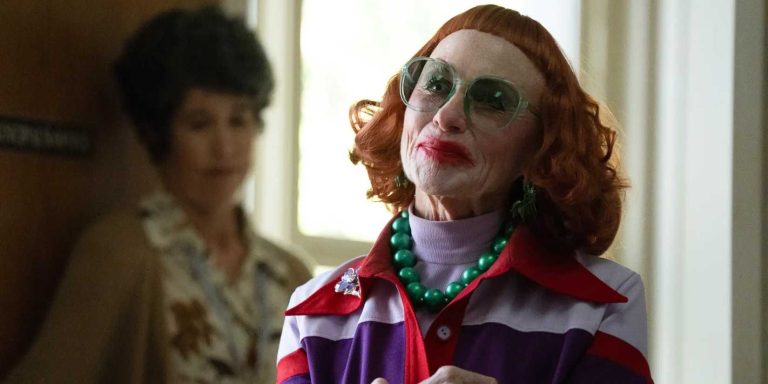
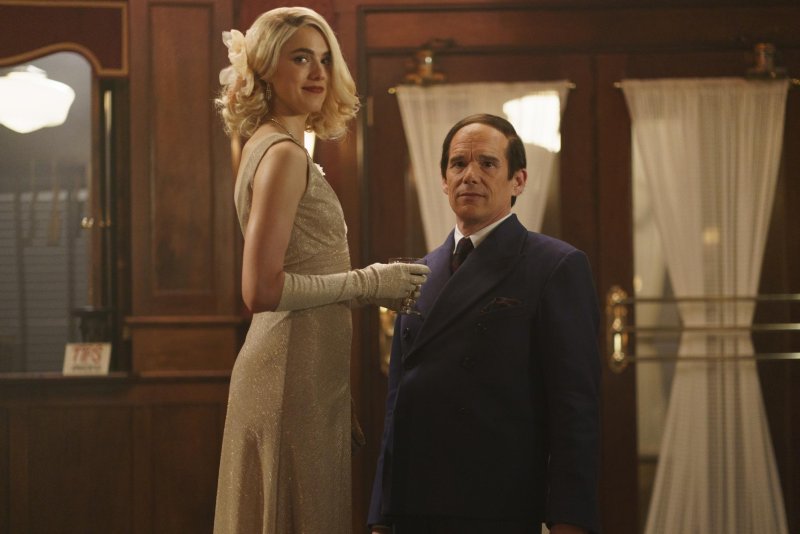
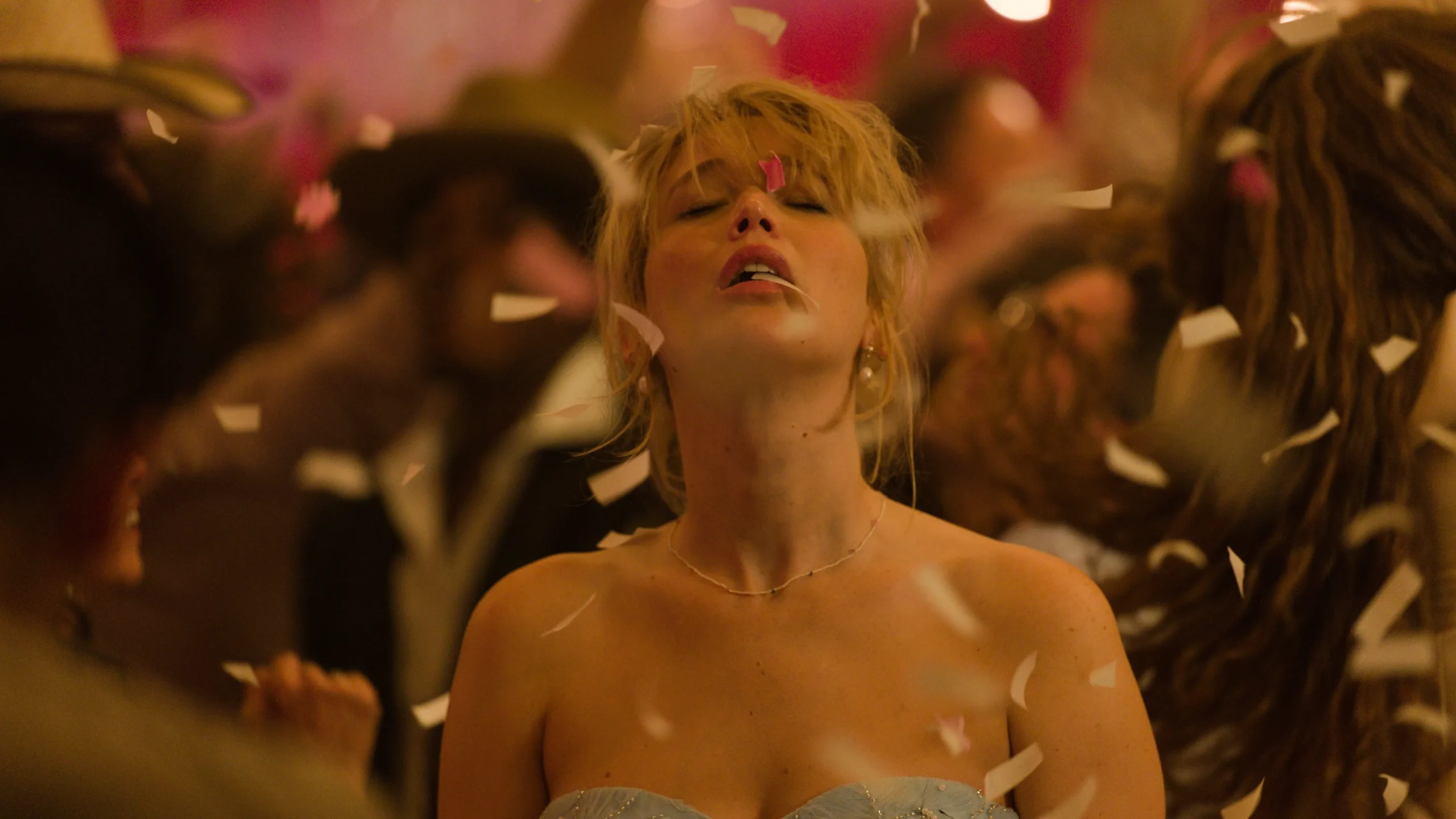
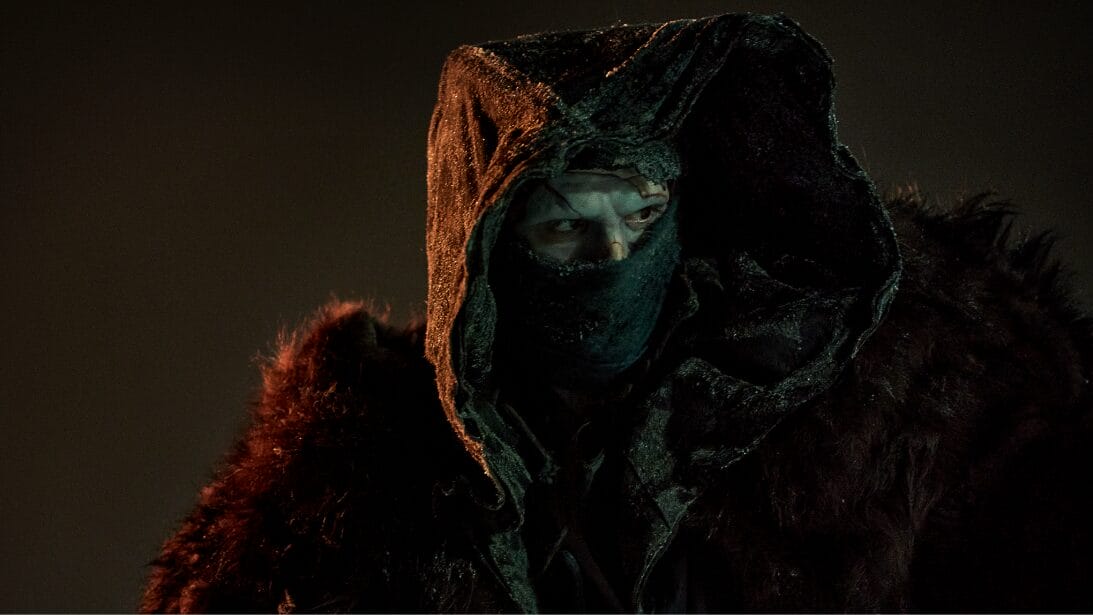
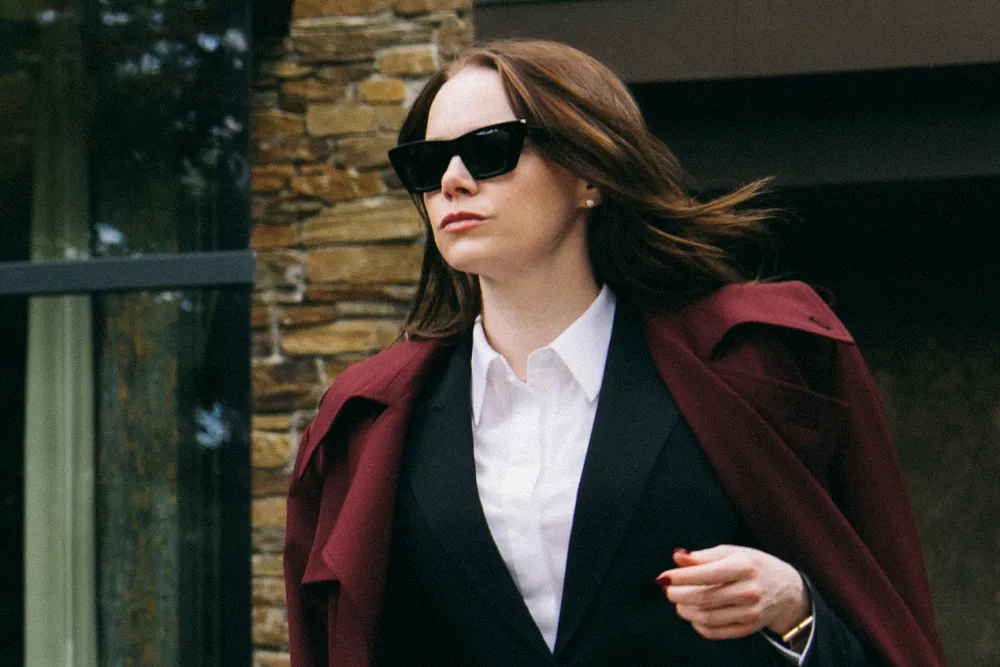
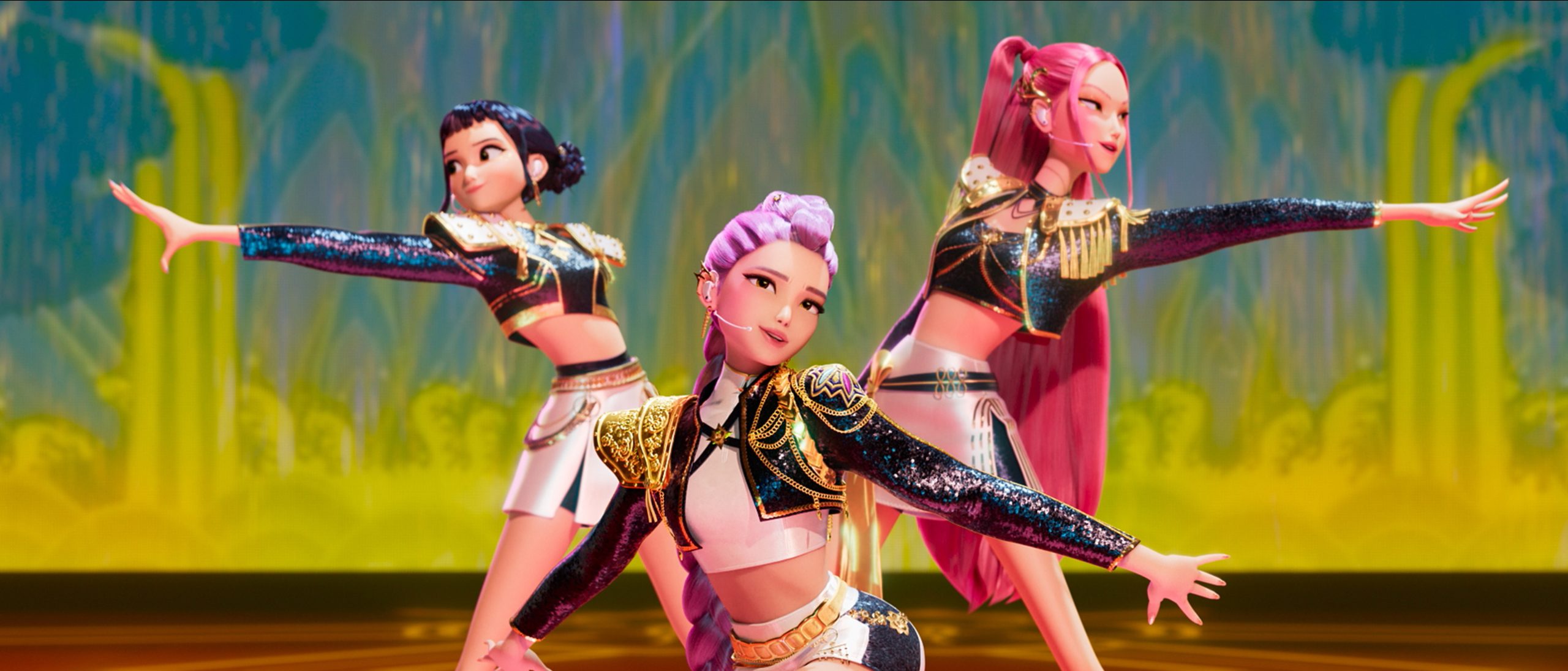
On this episode of Chasing the Gold, Shadan is joined by Amanda Spears to discuss the Oscar nominations for the 98th Academy Awards! Sinners broke records. Some films surprised. Others were snubbed. We break it all down in this conversation.
Check out this week’s show and let us know what you think in the comment section. Thanks for listening and for supporting the InSession Film Podcast!
Director: Timur Bekmambetov Writer:Marco van Belle Stars: Chris Pratt, Rebecca Ferguson, Kali Reis
Synopsis: In the near future, a detective stands on trial accused of murdering his wife. He has 90 minutes to prove his innocence to the advanced A.I. Judge he once championed, before it determines his fate.
It pains me to give a thumbs down to Mercy, a film from Timur Bekmambetov, the man behind the misunderstood historical-fiction “classic” (I’m putting the word in quotes so my editor won’t cut off my access to the InSession Film Slack account), Abraham Lincoln: Vampire Hunter. A pioneer of the “screenlife” genre, Bekmambetov helped usher in films like Searching, Missing, Unfriended, and, yes, the infamous 2025 Ice Cube entry, War of the Worlds.
So yes, Bekmambetov’s career has taken a downturn since that pre-Civil War horror epic. Unfortunately, while he has continued to excel as a producer, his directorial efforts feel less inspired, like a young Lincoln wildly swinging an axe, missing the mark, and somehow still managing to give cinema a bad name.
Those are the thoughts I had with Mercy, a perfectly serviceable film because it is a watered down rip off of Steven Spielberg’s Minority Report, until it begins to turn a corner that feel like plot points were dropped (or ignored) as if Bekmambetov was treating the medium of cinema as an exercise in logistics, losing nuance, emotional beats, and rushing transitions that make the story too clean, too predictable, and too conventional.
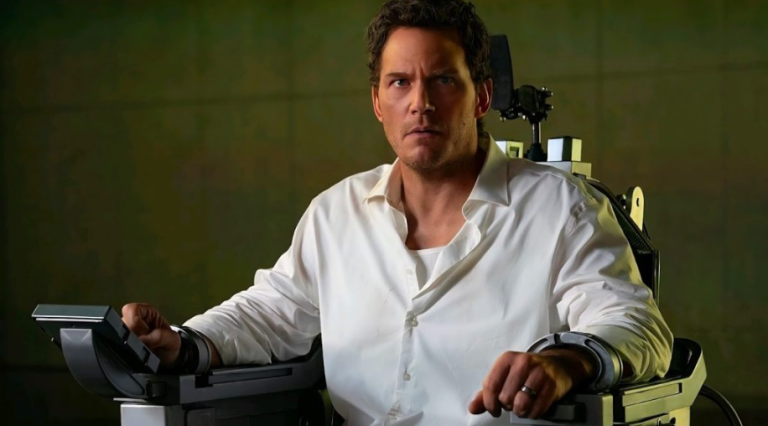
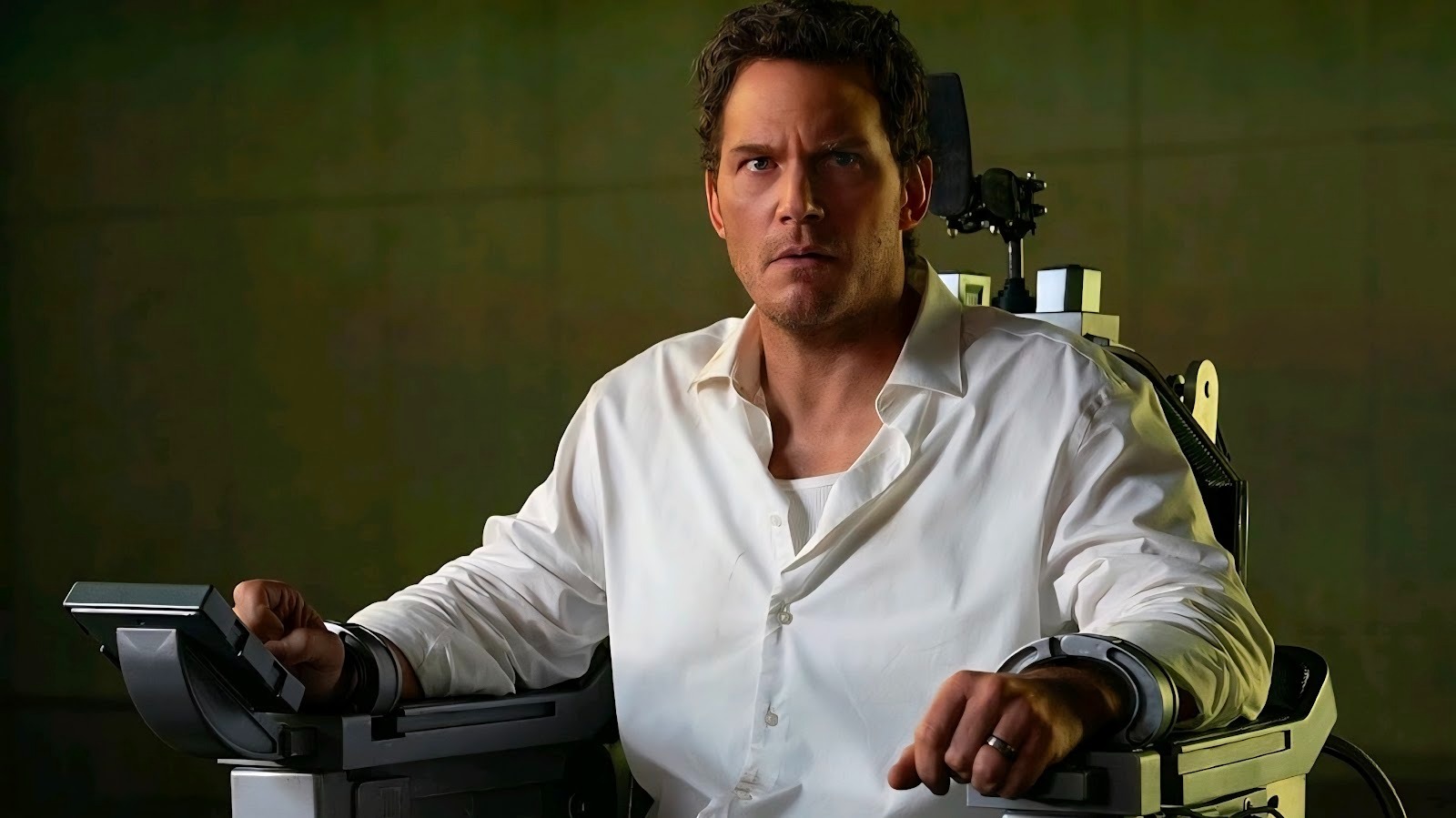
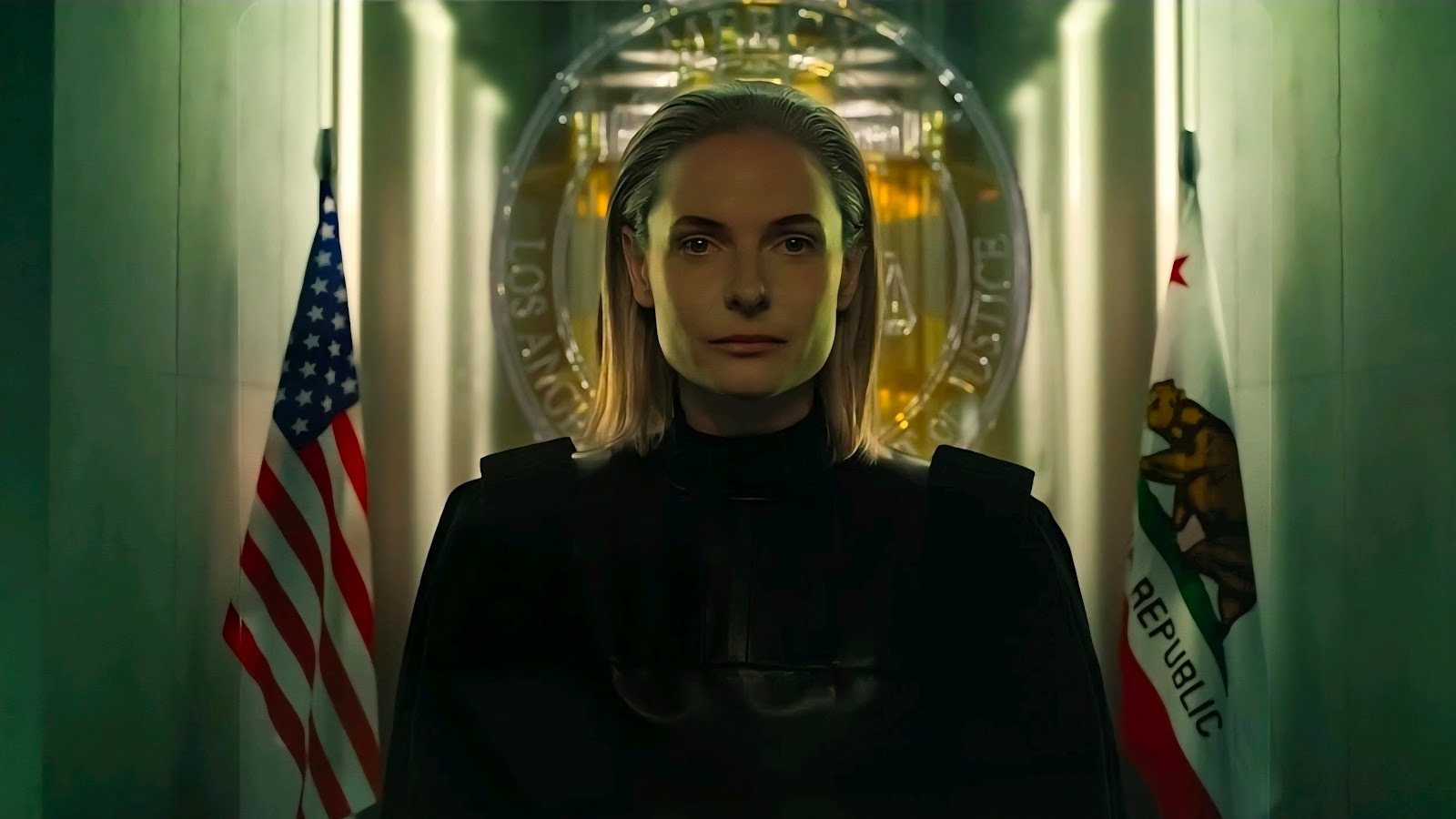
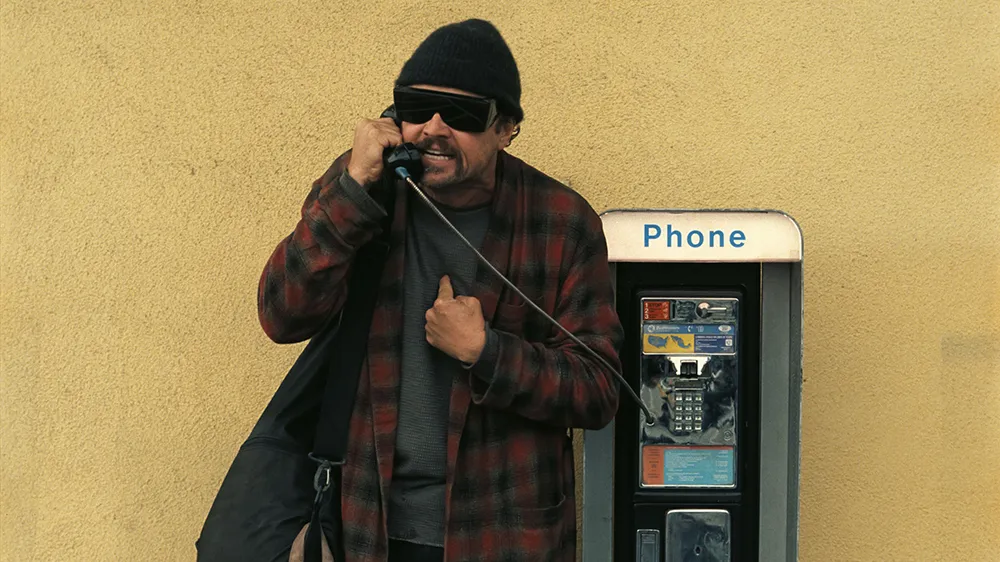
The story begins with Detective Christopher “Chris” Raven (Chris Pratt), an officer in the LAPD, who wakes up on trial for the murder of his wife, Nicole (Annabelle Wallis). Chris is not in a normal courtroom. He is awakened by Judge Maddox (Rebecca Ferguson), who is an artificial intelligence adjudicator of the Mercy program, a piece of software that Chris helped create, to cut all the red tape and lawyer tricks in the name of justice.
The gist of the trial is simple: he has 90 minutes to prove his innocence, or he will be convicted of murder, with Maddox serving as judge, jury, and executioner. As a screenlife film, Maddox allows Detective Raven to comb through the private digital accounts of his wife, his daughter, and the suspects. Along the way, we learn that Chris has had a rough stretch in recent years, including a struggle with alcohol following the on-the-job death of his former partner (Kenneth Choi).
To piece things together, he must rely on his inner circle, a group of people who may suspect that Chris did it, or may be suspects themselves. This includes his new partner, Jaq (True Detective: Night Country’s Kali Reis), whom Raven asks to track down leads. Also among the last people to see his estranged wife alive is Rob (This Is Us’s Chris Sullivan), his AA sponsor, who has become part of the family. There is also his daughter, Britt (Beau Is Afraid’s Kylie Rogers), whose unresolved grief leads her to question her father’s innocence.
Mercy starts serviceable, like a digital puzzle-box screenlife thriller with an intriguing setup, dropping the viewer into an unfamiliar world. However, Pratt’s performance ultimately falls short, failing to generate the sustained, believable anxiety essential to a film like this, especially one that functions as a tricked-up, single-location exercise. Frankly, watching Pratt trying to cry and look scared is like watching a narcissist with crocodile tears.
Then there’s the bigger issue: Bekmambetov’s plotting, which is among the most convoluted I’ve seen in a thriller in recent memory. That shouldn’t be a surprise coming from an accomplished producer, screenlife films are built to save on costs, often delivering the most basic, paint-by-numbers version of the genre while dutifully following the plot-point playbook step by step. Here, the film piles on red herrings that exist only to distract.
There is no payoff or logic, gleefully teasing that the wife is involved in something shady or that the “real” villain abducts someone for reasons the story never earns or even explains. This is the kind of movie where you can narrow the outcome down to one or two endings and twists within the first 15 minutes. Compounding the problem is a script with all the backbone of a perimysium, suggesting that Ferguson’s AI Judge can suddenly make rational judgments and display human emotion simply because Pratt’s character orders her to do so.
Yup, if that wasn’t proof the software was created by a man as a flight of cinematic fancy, nothing will.
Mercy is simply not worth watching, in the theater or on demand. The experience quickly collapses into a convoluted, paint-by-numbers screenlife picture, packed with bad performances, yawn-inducing plot points, and a few empty red herrings. So, instead of paying over fifty-dollars for tickets and snacks, stay home, pay just under four bucks (or watch for free on HBO), Abraham Lincoln: Vampire Hunter, and thank me later.
You can watch Mercy only in theaters starting January 23rd!
This week on Episode 671 of the InSession Film Podcast, we discussed our Top 5 most anticipated films of 2026. It’s a new year and that means new movies to look forward to as we turn the page. 2026 will be interesting as the summer season looks pretty abysmal outside of a few exceptions. There’s hope for Spider-Man: Brand New Day and Supergirl, but there’s a lot of questions otherwise. The fall season looks way more compelling with the likes of Dune: Messiah, Avengers: Doomsday, Sunrise on the Reaping and Narnia. Mostly, 2026 will be defined by great filmmakers taking bold risks as we’re getting potential bangers from Steven Spielberg, Christopher Nolan, Robert Eggers, Joel Coen, David Lowery, Pedro Almodovar, James Gray and two movies from our boy Hirokazu Kore-eda. Not to mention more from Jane Schoenbrun, Annie Baker, Nicolas Winding Refin, Kogonada, Tom Ford, M. Night Shyamalan and many more that we’re excited about. Should be a great year!
For the sake of this post, we are going to list our true Top 10 most anticipated films of 2025, even thought we mostly just discussed our top five on the show.
JD
1) Sheep in the Box / Look Back
2) The Odyssey
3) All of a Sudden
4) I Want Your Sex
5) Disclosure Day
6) Jack of Spades
7) Teenage Sex and Death at Camp Miasma
8) Werwulf
9) Ancient History
10) The Death of Robin Hood
Brendan
1) Wildwood
2) Look Back
3) Her Private Hell
4) Hope
5) Resident Evil
6) Werwulf
7) Disclosure Day / The Odyssey
8) Remain
9) Ray Gunn
10) Behemoth!
Honorable Mentions (Combined) The Way of the Wind, Mother Mary, Dune: Messiah, Bitter Christmas, Paper Tiger, The Bone Temple, The Bride!, Possible Love, Hoppers, Narnia, At the Sea, Project Hail Mary, Ink, Cry to Heaven, October, Primetime, Saturn Return, Whitney Springs, Parallel Tales, The Unknown, Flowervale Street, American Nails, The Adventures of Cliff Booth, A Long Winter, The Diary of a Chambermaid, Dracula, Fjord, Godzilla Minus Zero, The Hunger Games: Sunrise on the Reaping, The Devil Wears Prada 2, Artificial, The Land of Nod, 1949, Wild Horse Nine, Power Ballad, Send Help, Tony, A Place in Hell, Digger, Ghostwriter, The Dog Stars, Here Comes the Flood, Cutoff, Chasing Summer, The Death of a Salesman, The Drama, Racoon, Alpha Gang, Let Love In, Burning Rainbow Farm, Bucking Fastard, The Man I Love, System of Colors, Crime 101, The Moment, Toy Story 5, Spider-Man: Brand New Day, Avengers: Doomsday, Masters of the Universe, Supergirl, Jackass 5, Cliffhanger, Coyote vs ACME
Hopefully you guys enjoyed our lists and if you agree or disagree with us, let us know in the comment section below. There are obviously many more films coming out this year that we didn’t have time to mention. Which is to say, your list could look very different than ours given the amount of great potential that we could see in 2026. That being said, what would be your Top 5? Leave a comment in the comment section or email us at [email protected].
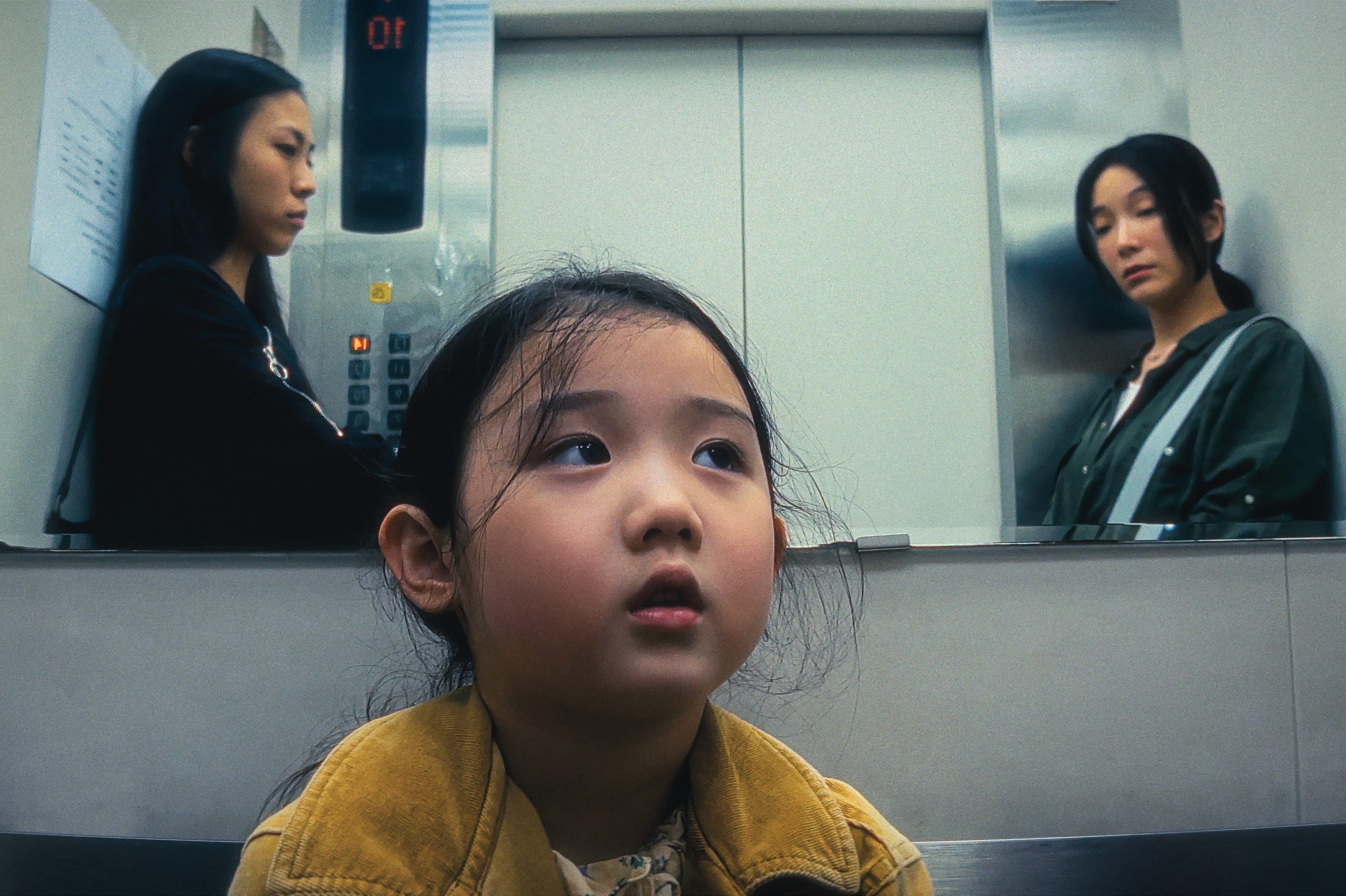
Shih-Ching Tsou’s Oscar longlisted film Left-Handed Girl is a vibrant tale of contemporary Taiwan through the eyes of generations of women. From the perspectives of a five-year-old child, I-Jing (Nina Ye), a young woman, I-Ann (Shih-Yuan Ma), and Shu-Fen (Janel Tsai), a deserted mother scrambling to pay off debts accrued by her dying husband and raise her family in Taipei, and Shu-Fen’s mother (Xin-Yan Chao) who is working in a less-than-legal business to pay for her son’s entrepreneurial ventures in China.
Left-Handed Girl. (L-R) Shih-Yuan Ma as I-Ann, Nina Ye as I-Jing and Janel Tsai as Shu-Fen in Left-Handed Girl.
Tradition and contemporary life clash in Tsou and Baker’s screenplay which uses a metaphor, “The Devil’s Hand” of left-handedness to speak to how superstition and saving face can cost more than people bargain for. Left-Handed Girl is the kind of film that can nestle comedy and the exhausting stresses of keeping a struggling family from going under. It’s a remarkable piece of cinema and one that has been many years in the planning. Shih-Ching Tsou and Sean Baker have a long working relationship that has seen Tsou and Baker sharing co-director credits on Take Out (2004) and Tsou acting as a producer on Starlet, Tangerine, The Florida Project, and Red Rocket. The zip and zest of the night markets in Taipei act as a background character and one I-Jing immerses herself in as Shu-Fen attempts to keep a noodle stand afloat, while her daughter I-Ann scowls and “rebels” against the restraints stemming from poverty and shame.
Nadine Whitney spoke with Shi-Ching Tsou and Sean Baker about the subtle subversion in Left-Handed Girl.
NADINE WHITNEY: Hi, Sean and Shih-Ching. I’d like to talk to you about how the film works as an anti-traditionalist narrative discussing ingrained sexism in Taiwan. It’s about women but still men have a level of control and higher position in society. Can you tell me a little about writing generations of women’s perspectives?
SHIH-CHING TSOU: Especially in traditional families to this day, it’s [favoring the male child] still there. People have that same attitude. Especially when they’re talking about progeny. For example, my mother would say, “Oh, your cousins, they’re all having boys this time.” I didn’t understand. I asked her, “Why is that something you need to mention?” I can hear in her voice she was happy about it. So, even a little thing like that. I think it’s still in the culture and underneath it. People don’t even notice anymore.
I really wanted to emphasize that, and I think in a lot of ways Taiwanese culture creates this inequality between men and women. But it’s almost unconsciously, they don’t even realize they are focusing on that inequality
SEAN BAKER: I’ll just add that I’m very impressed with Shih-Ching’s approach to the issue. Because for me it was about listening to Shih-Ching and her stories and her examples that she was bringing to the table.
You know, because obviously she experienced this as a woman, and I did not. So, I’m really impressed with the way that she tackled the subject matter without hitting the audience over the head with it. You know, there is obviously preferential treatment towards males in society, and I think she showed it in a subtle way, which showed a lot of maturity as a filmmaker.
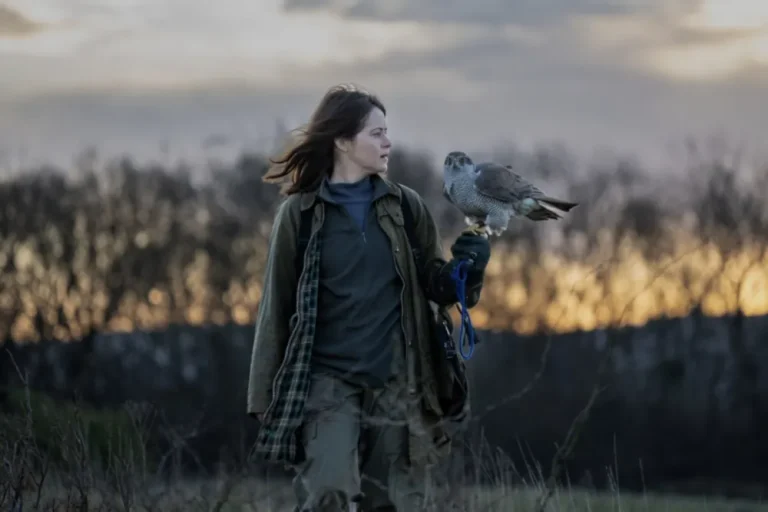
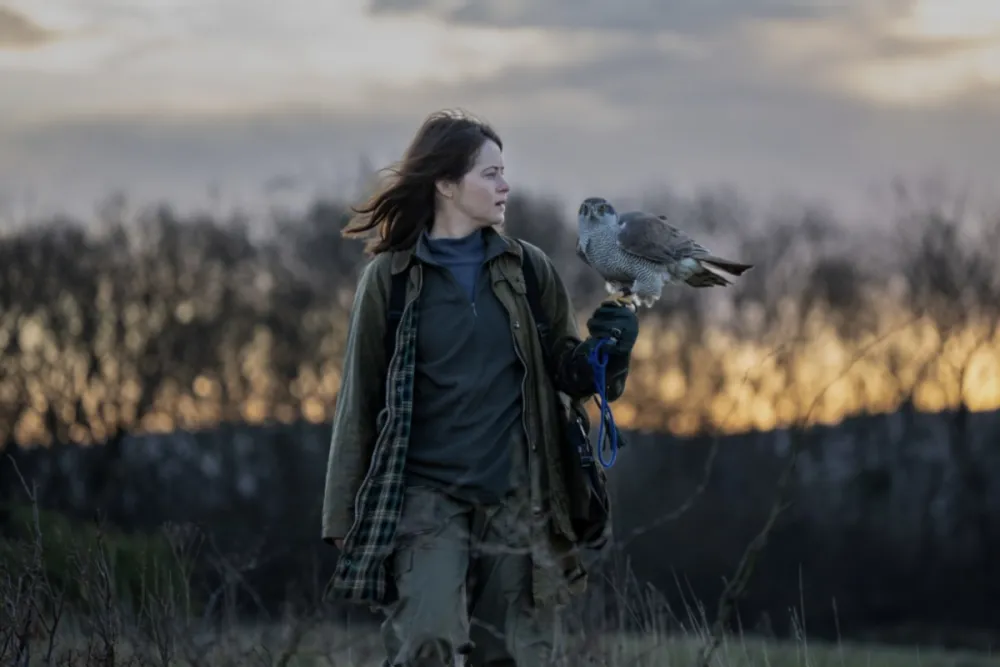
Director Philippa Lowthorpe and writer Emma Donoghue adapt Helen Macdonald’s 2014 award-winning genre-crossing memoir, H is for Hawk, for the screen with Claire Foy starring as Helen who comes undone after the death of her* beloved father, photojournalist Alisdair Macdonald (Brendan Gleeson) in 2007. H is for Hawk charts a year of Helen’s life where she gradually abandons academia and her fellowship at Jesus College, Cambridge University and becomes obsessed with her former profession, falconry, after buying a goshawk to train and hunt with.
Lowthorpe and Donoghue place their faith in Foy to give the audience a Helen they can understand without the lyrical language and authorial voice of Macdonald’s extraordinary book; instead relying on her performance and her interactions with “Mabel” the goshawk (played by two goshawks) which takes her out of the “human” sphere and into days of being wild.
Nadine Whitney spoke to Claire about her performance, trusting Helen’s vision, and how mental health and grief remain hidden topics too often.
Nadine Whitney: Claire, your depiction of clinical depression felt extremely raw in the film. How important is it to you to have honesty about mental health shown in the arts? Also, what did it take to feel like you were inhabiting Helen’s world?
Claire Foy: I think there should be honesty about it. I feel like we have an obligation and a kind of responsibility to be showing all different aspects of our lives in the most truthful way possible, and whilst also making wonderful bits of escapism and joy. I feel like we’ve got both kind of things. My feeling is if you’re going to show mental health struggles you’ve got to do it well and accurately because otherwise it diminishes the experience of millions and millions and millions of people.
It’s a very difficult thing to approach depicting mental health, because so often the struggle is internal and so often that the pain is internal. And that’s sort of a problem with clinical depression and anxiety and any sort of disorder is that from the outside, other people are often not able to see what turmoil people are in. It would be great if people had a little bit more awareness of that. And also, the awareness of it can seem like you’re doing quite well and you’re continuing and “Everything’s fine” because you’ve got a family and a house and a car and what is there to be worried about and all those sorts of things. I felt a huge weight of responsibility for that. Just also, because the way that Helen writes it is to me to be very, very accurate.
I was concerned that that’s not a particularly cinematic experience to watch. And so, it was a bit of a battle to figure out how to portray that. I think Helen’s an incredibly brave person. I don’t think they would admit that about themselves or think that they were. But I think it takes a huge amount of bravery to do things in such extremes. At such extreme levels.
I think that the love that Helen experienced for their father was indicative in the descent towards Mabel and how far they were able to kind of absorb themself into this wild creature. There’s a capacity to that which you think was quite self-harming. But I sort of find it really inspiring in a way to watch people go to the extremes of the human experience. And, and I really, I really felt such an admiration for her/them in the story that ability to totally absorb the self in that way. I don’t think there’s any cowardice. Because there’s no right or wrong way of doing it (grieving and dealing with mental health issues). I just felt such an affinity with that character for that reason. Helen’s kind of courage and bravery. It was an intimate experience that I hope could in any way help people to recognize whether someone around them, or they themselves, are going through the very acute experience of grief and to maybe be a little bit more aware that people are suffering all the time. It could be a day; it could be six months. It could be 12 years. Sometimes it never goes.
I think that we could just ask each other more about their mental wellbeing: “How are you? How did you deal with that?” And the answer might be, “Not very well, or I’m still not.” To ensure it is not a silent journey for people. It would be much better if it was one that we were all able to, like, take part in.
I think the relationship that Helen has with the goshawk is so unique. And Helen talks about it a lot in the book that. That we live lives as human beings with an absence of wildness. You know, we insulate ourselves from the reality of the world that we live in. And, you know, and suddenly you have this prehistoric wild animal in your house. There’s no real way of protecting. You know, you’re. That becomes your main focus and your main. Not obsession, but kind of like drive.
Reading Helen’s memoir, I had such huge admiration for what their father gave her. You know, the love of nature and the feeling of teaching them how to live in the world and how to engage in the world in such a special way because their father had so many vast interests and really took them along with them on the journey and, And a really close relationship. And that’s what I think the film’s really beautiful at, is. Is showing a positive parental relationship, which I don’t think you see often.
Helen addresses in the film and also in the memoir that the relationship with Mabel is very much about trying to remove her own humanity. Because being a human is what’s hurting her. Having feelings and connections and love is what’s damaging her. Because if she was a hawk who could soar up in the sky and look at it from a distance and have no emotional connection to anything that’s on the ground beneath them, she wouldn’t have to suffer and feel pain.
It’s a cerebral way of thinking about grief. But I do also think that’s indicative of Helen’s approach to it, which was to focus on something so totally and for it to overwhelm her.
Helen didn’t want to feel it and she didn’t want to have to. So, I think that that’s not dealing with the trauma at all, and that’s not helping you work through trauma either. And I think that really, you know, in my performance or in my mind, I think that the doing the eulogy at her father’s funeral becomes a moment of knowing you have to begin again, like, you have to start again. And I think that’s the beginning of a very, very long journey. But I don’t think you necessarily watch that journey in the film. I think you watch the descent, but I don’t think you necessarily watch the rebuilding.
I think it was a unique challenge. It was both really emotionally demanding and in a very, very specific way. It’s a very particular story of grief which isn’t necessarily what you know: which isn’t a cliche and also is quite raw. I found that to be quite terrifying but a really interesting kind of thing for me just purely as an actor to try and technically trying to get my head around and just the like the magnetic quality that Helen’s memoir has and Helen as a person has. I think, the sort of vulnerability and honesty that they showed in writing is very rare. I have huge respect for anybody who’s able to do that. And so, I knew it would take vulnerability of me to be able to portray it. I’d have to be that honest and open and not really try and hide from it.
*Helen Macdonald is non-binary and uses they/them pronouns, but in the film feminine pronouns are used.
Director:Adam Bhala Lough Stars:Adam Bhala Lough, Heidy Khlaaf, Divtendra Singh Jadoun
Synopsis:A filmmaker’s humorous journey into artificial intelligence leads to unexpected questions about humanity’s future and our relationship with emerging technology.
In Deepfaking Sam Altman, filmmaker Adam Bhala Lough turns a roadblock into a revelation. What begins as a straightforward attempt to interview one of the most influential figures in artificial intelligence becomes something far stranger, funnier, and ultimately more revealing. Unable to gain access to Sam Altman himself, Lough builds an AI stand-in from Altman’s public words, interviews, and appearances. The result is a documentary that feels less like a profile and more like a conversation with the cultural moment we’re currently trying to understand and navigate.
Premiering at SXSW 2025 and winning Best Documentary at the Chelsea Film Festival, Deepfaking Sam Altman positions itself at the intersection of verité filmmaking and speculative play. Produced in collaboration with Hartbeat and Vox Media Studios and inspired in part by reporting from New York Magazine, the film combines investigative curiosity with a distinctly self-aware sense of absurdity.
If you’re new to AI, Sam Altman is the face of it. Altman is the head of OpenAI, the company behind your online best friend, ChatGPT. Lough, previously known for HBO’s Telemarketers, brings his familiar blend of persistence and vulnerability to the project. His initial goal to understand the rapidly evolving AI landscape by speaking directly to one of its central architects is logical and in line with audiences wanting to learn more about AI and the people behind it. Every access attempt is rebuffed and becomes part of the film’s thesis: power in the AI age is often opaque, carefully managed, and frustratingly out of reach. Rather than stall, Lough reframes the question. If the human source won’t speak, what happens when the machine does? As well as trying to address all our natural fears around AI, especially when it comes to our careers.
Enter Sam Bot. Constructed from Altman’s public-facing digital footprint, the AI version is glitchy, oddly charming, and, at times, disconcertingly articulate. Through these exchanges, Deepfaking Sam Altman explores not just what AI can say, but what we are willing to hear from it. It verges on parody and a dystopian warning; it’s clever in allowing audiences to come to that conclusion themselves.
The tone is sharp and often very funny, but never flippant. The music is over-the-top, there’s plenty of footage from interviews, the news, protests, and online conversations to keep you invested and provoke conversation around your experiences and opinions of AI.
What I did enjoy was that throughout this investigation into OpenAI, they’re constantly using AI tools that have been available for years. Such as asking Siri when his last call was (he could easily look himself) and using a maps service in the car (we have road signs and physical maps available), showcasing how maybe our fears are a little irrational since we’re already using so many. Or, it’s highlighting how quickly AI tools become part of your everyday life.
What gives Deepfaking Sam Altman its emotional resonance is its focus on connection. Lough’s conversations with Sam Bot gradually shift from information-seeking to something more personal, even philosophical. The film begins to interrogate why we crave answers from singular figures in the first place, and what it means when those figures are replaced by simulations. In a world where public personas are increasingly curated and inaccessible, the artificial stand-in becomes, paradoxically, more available than the real thing. The SamBot showing a will to live was very unnerving as a viewer and heightened fears of what AI can grow into.
There is a nice balance between AI and seeing Lough’s personal life, from his children’s hamster being unwell to visiting his family in India. The contrast is showing why human connection is incredibly important and how our desires and natural ability to make connections are why we feel connected to AI.
Rather than offering definitive conclusions about the ethics or future of artificial intelligence, Deepfaking Sam Altman embraces uncertainty. It acknowledges the chaos of the current moment, where innovation outpaces understanding and authority often speaks through abstraction. In the end, Deepfaking Sam Altman is less about Sam Altman than it is about us; our desire for guidance, our comfort with proxies, and our willingness to engage with synthetic voices when human ones fall silent. It is a film that thinks in real time, asking not just where AI is taking us, but who we’re talking to along the way. Through a jokey, comfortable tone and real footage, this documentary makes for a very interesting and fun watch. Definitely for fans of documentaries, AI, and ethical dilemmas.
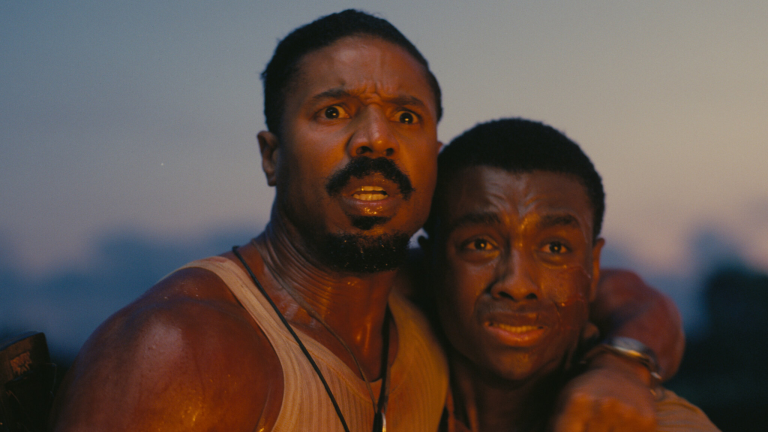
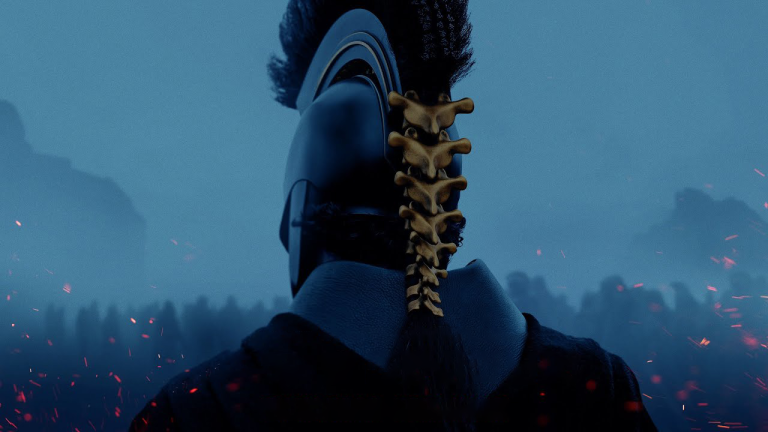
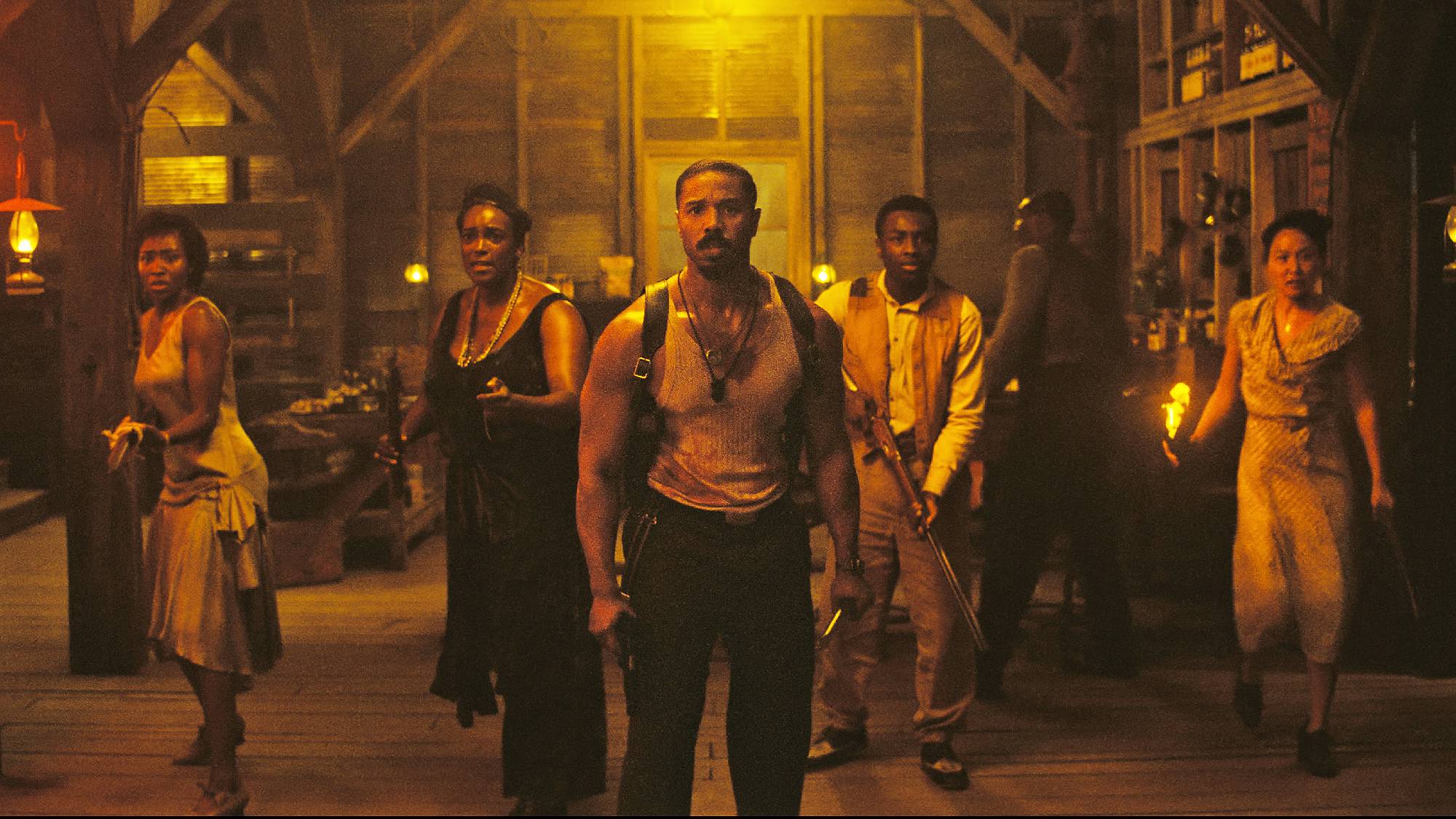
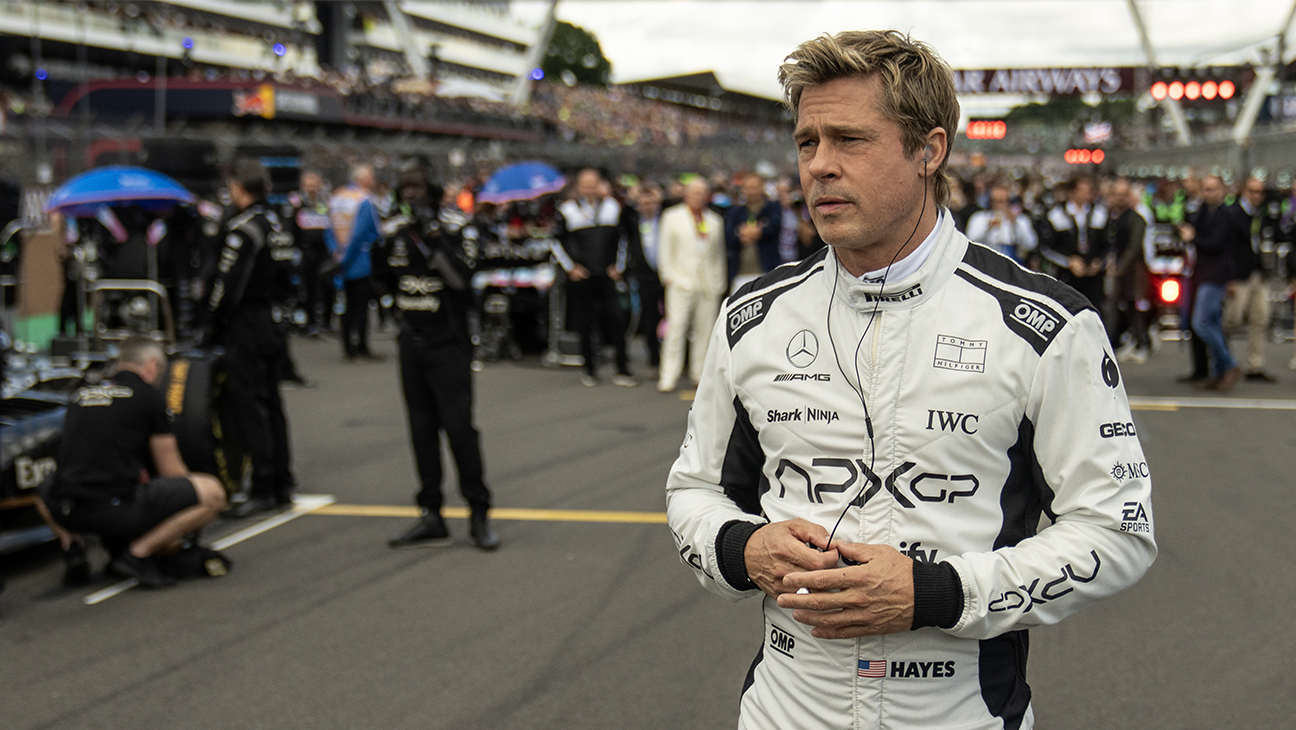
With 16 nominations, Ryan Coogler’s Sinners makes history as the most nominated film of all time. Notable surprises includeF1: The Movie in Best Picture, a snub for Paul Mescal in Supporting Actor, and zero nominations for Wicked: For Good.
See the full list of nominees below, courtesy of The Academy’s website.
ACTOR IN A LEADING ROLE
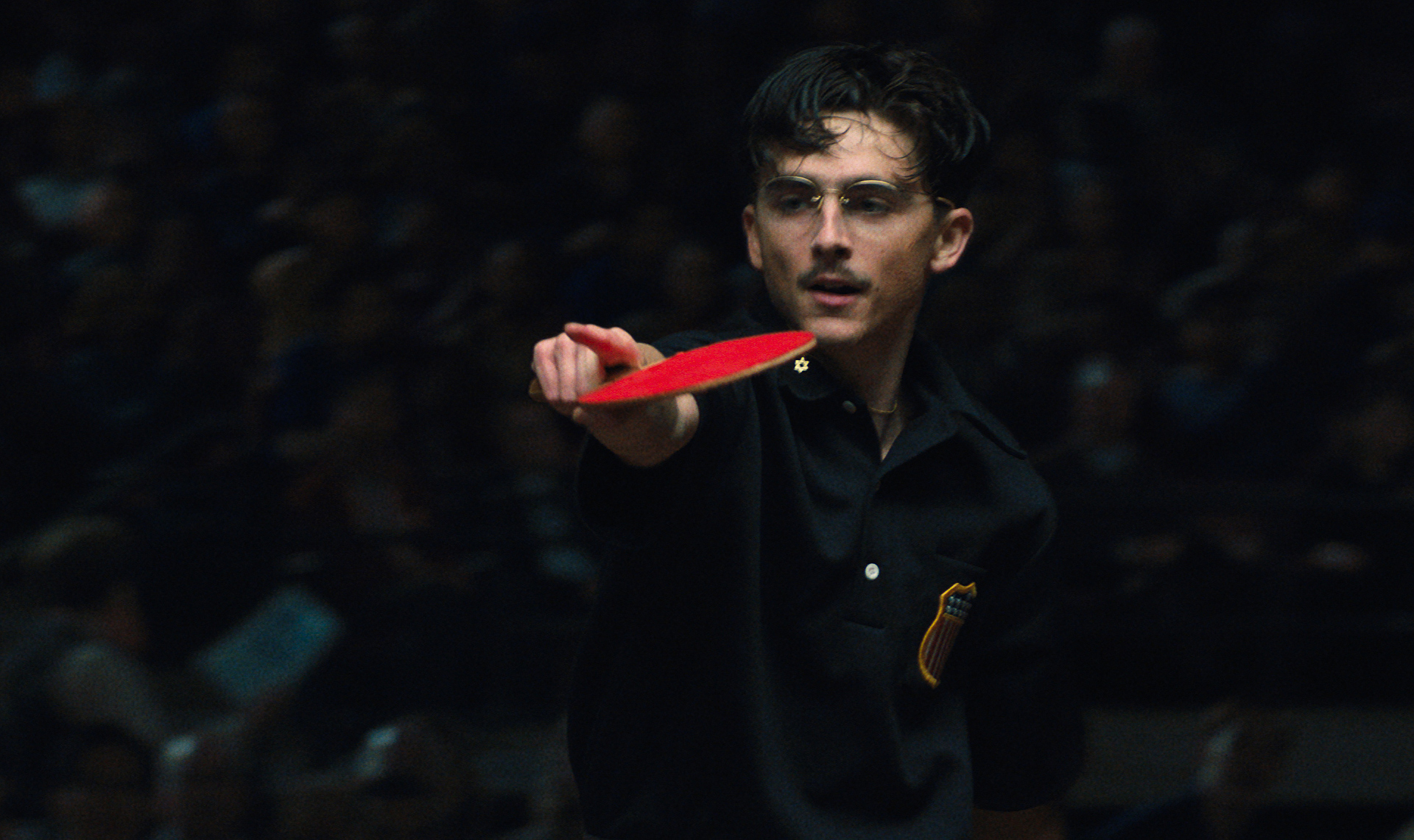
TIMOTHÉE CHALAMET – Marty Supreme
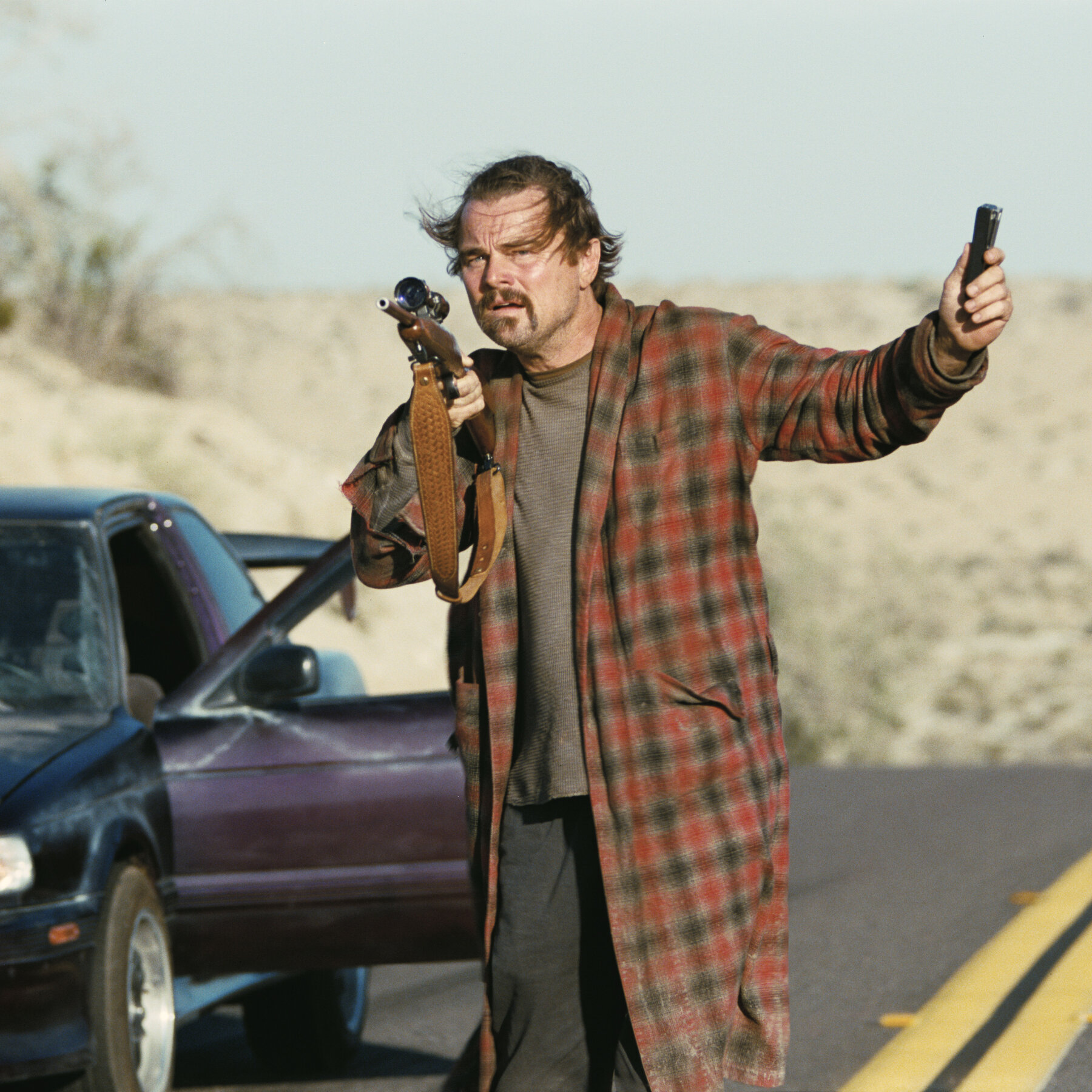
LEONARDO DICAPRIO – One Battle after Another
ETHAN HAWKE – Blue Moon
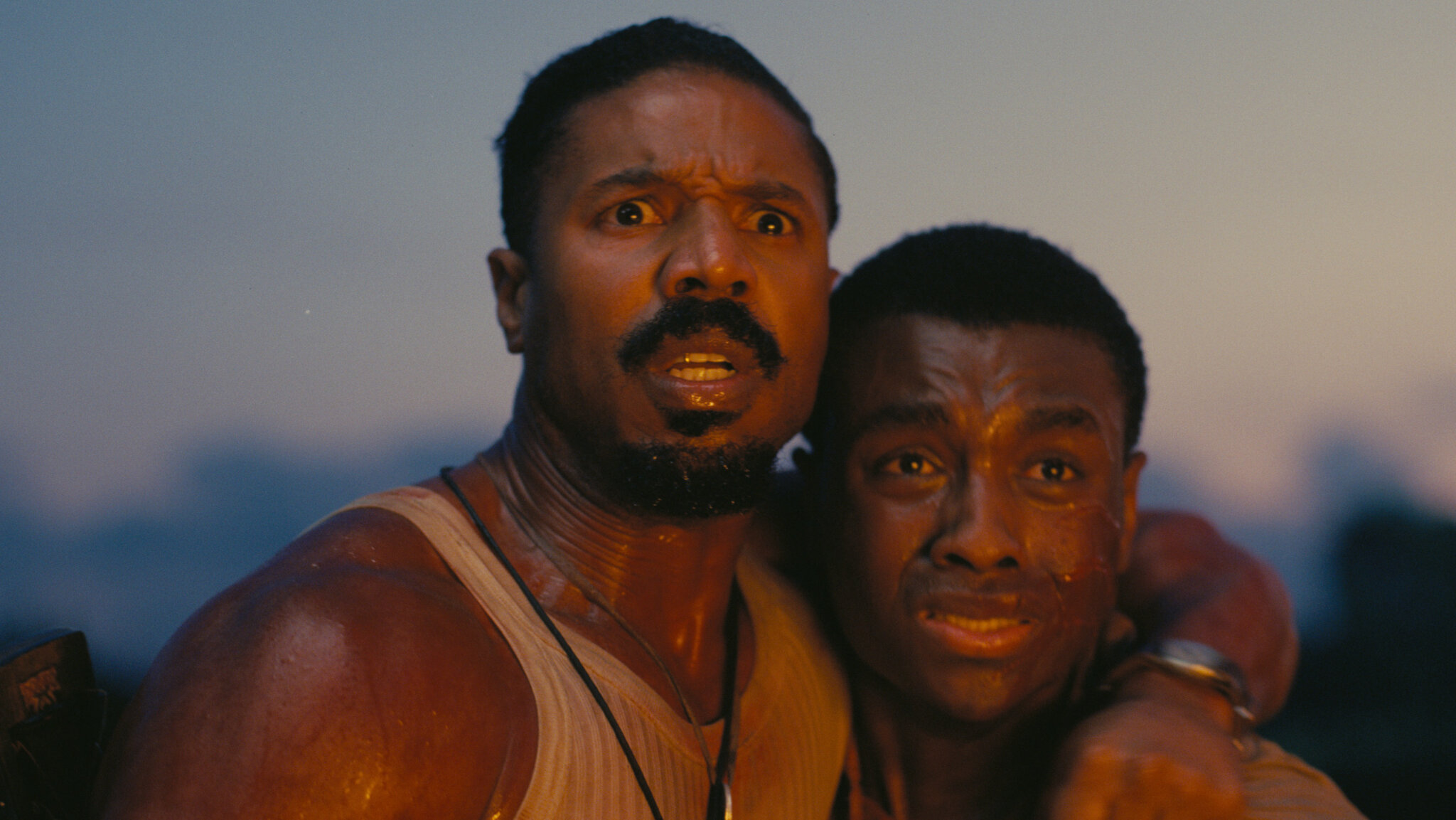
MICHAEL B. JORDAN – Sinners
WAGNER MOURA – The Secret Agent
ACTOR IN A SUPPORTING ROLE
BENICIO DEL TORO – One Battle After Another
JACOB ELORDI – Frankenstein
DELROY LINDO – Sinners
SEAN PENN – One Battle After Another
STELLAN SKARSGÅRD – Sentimental Value
ACTRESS IN A LEADING ROLE
JESSIE BUCKLEY -Hamnet
ROSE BYRNE – If I Had Legs I’d Kick You
KATE HUDSON -Song Sung Blue
RENATE REINSVE -Sentimental Value
EMMA STONE -Bugonia
ACTRESS IN A SUPPORTING ROLE
ELLE FANNING -Sentimental Value
INGA IBSDOTTER LILLEAAS -Sentimental Value
AMY MADIGAN -Weapons
WUNMI MOSAKU -Sinners
TEYANA TAYLOR – One Battle after Another
ANIMATED FEATURE FILM
ARCO -Ugo Bienvenu, Félix de Givry, Sophie Mas and Natalie Portman
ELIO – Madeline Sharafian, Domee Shi, Adrian Molina and Mary Alice Drumm
KPOP DEMON HUNTERS – Maggie Kang, Chris Appelhans and Michelle L.M. Wong
LITTLE AMÉLIE OR THE CHARACTER OF RAIN – Maïlys Vallade, Liane-Cho Han, Nidia Santiago and Henri Magalon
ZOOTOPIA 2 – Jared Bush, Byron Howard and Yvett Merino
ANIMATED SHORT FILM
BUTTERFLY – Florence Miailhe and Ron Dyens
FOREVERGREEN – Nathan Engelhardt and Jeremy Spears
THE GIRL WHO CRIED PEARLS – Chris Lavis and Maciek Szczerbowski
RETIREMENT PLAN – John Kelly and Andrew Freedman
THE THREE SISTERS – Konstantin Bronzit
CASTING
HAMNET – Nina Gold
MARTY SUPREME – Jennifer Venditti
ONE BATTLE AFTER ANOTHER – Cassandra Kulukundis
THE SECRET AGENT – Gabriel Domingues
SINNERS – Francine Maisler
CINEMATOGRAPHY
FRANKENSTEIN – Dan Laustsen
MARTY SUPREME – Darius Khondji
ONE BATTLE AFTER ANOTHER – Michael Bauman
SINNERS – Autumn Durald Arkapaw
TRAIN DREAMS – Adolpho Veloso
COSTUME DESIGN
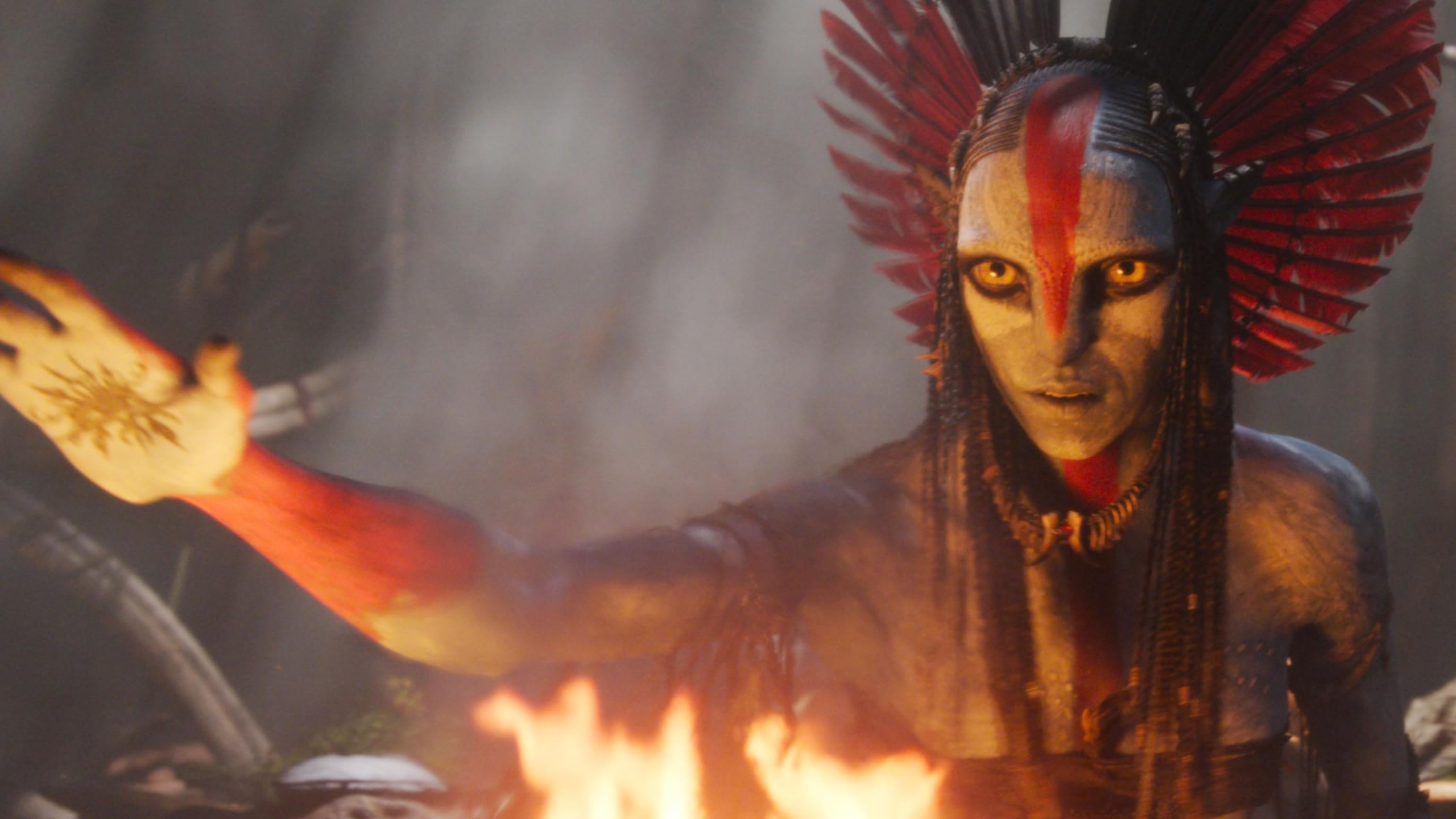
AVATAR: FIRE AND ASH – Deborah L. Scott
FRANKENSTEIN – Kate Hawley
HAMNET – Malgosia Turzanska
MARTY SUPREME – Miyako Bellizzi
SINNERS – Ruth E. Carter
DIRECTING
HAMNET – Chloé Zhao
MARTY SUPREME – Josh Safdie
ONE BATTLE AFTER ANOTHER – Paul Thomas Anderson
SENTIMENTAL VALUE – Joachim Trier
SINNERS – Ryan Coogler
DOCUMENTARY FEATURE FILM
THE ALABAMA SOLUTION – Andrew Jarecki and Charlotte Kaufman
COME SEE ME IN THE GOOD LIGHT – Ryan White, Jessica Hargrave, Tig Notaro and Stef Willen
CUTTING THROUGH ROCKS -Sara Khaki and Mohammadreza Eyni
MR. NOBODY AGAINST PUTIN – Nominees to be determined
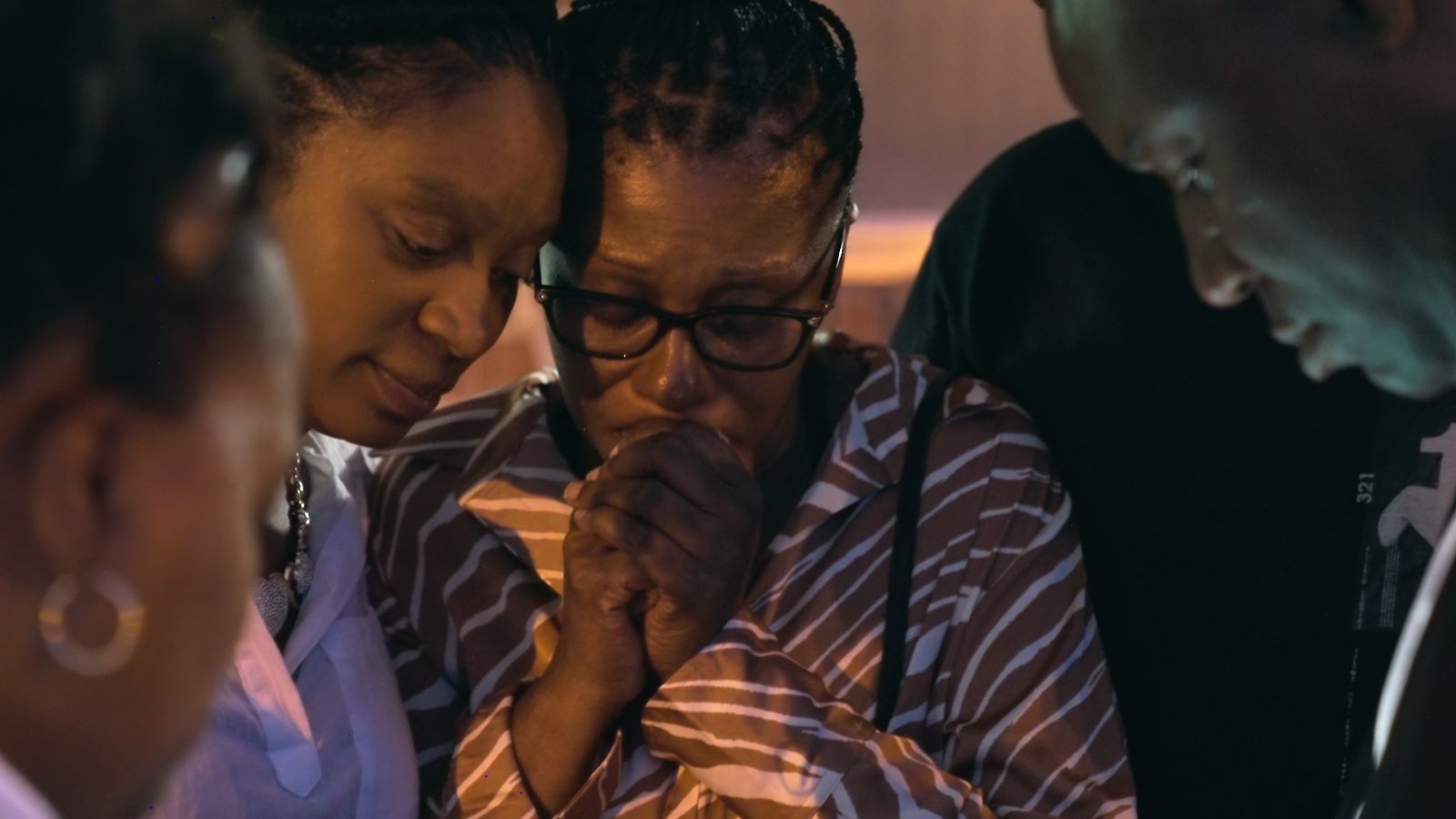
THE PERFECT NEIGHBOR – Geeta Gandbhir, Alisa Payne, Nikon Kwantu and Sam Bisbee
DOCUMENTARY SHORT FILM
ALL THE EMPTY ROOMS – Joshua Seftel and Conall Jones
ARMED ONLY WITH A CAMERA: THE LIFE AND DEATH OF BRENT RENAUD – Craig Renaud and Juan Arredondo
CHILDREN NO MORE: “WERE AND ARE GONE” – Hilla Medalia and Sheila Nevins
THE DEVIL IS BUSY – Christalyn Hampton and Geeta Gandbhir
PERFECTLY A STRANGENESS – Alison McAlpine
FILM EDITING
F1 – Stephen Mirrione
MARTY SUPREME – Ronald Bronstein and Josh Safdie
ONE BATTLE AFTER ANOTHER – Andy Jurgensen
SENTIMENTAL VALUE – Olivier Bugge Coutté
SINNERS – Michael P. Shawver
INTERNATIONAL FEATURE FILM
BRAZIL -The Secret Agent
FRANCE – It Was Just an Accident
NORWAY – Sentimental Value
SPAIN – Sirāt
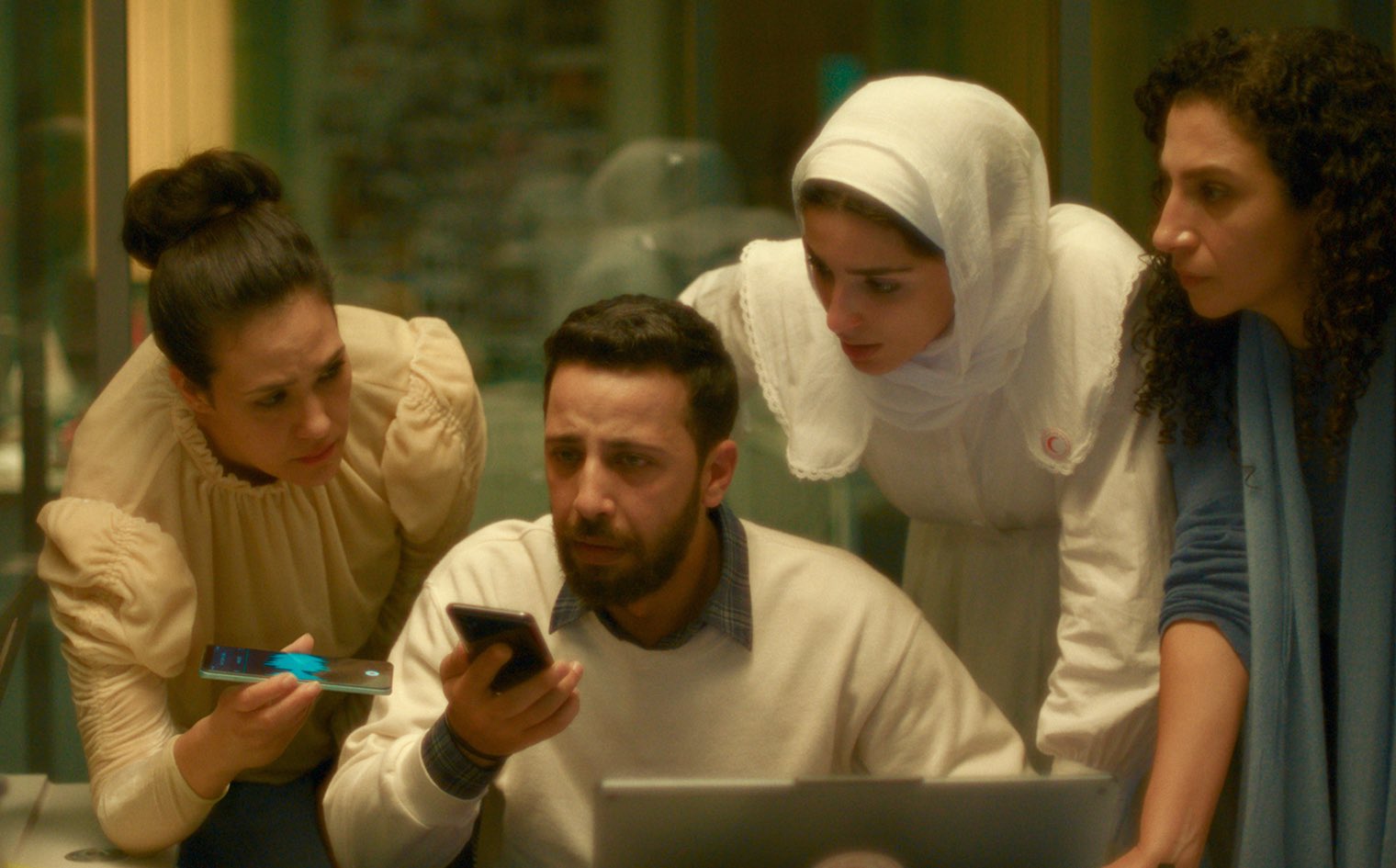
TUNISIA – The Voice of Hind Rajab
LIVE ACTION SHORT FILM
BUTCHER’S STAIN – Meyer Levinson-Blount and Oron Caspi
A FRIEND OF DOROTHY – Lee Knight and James Dean
JANE AUSTEN’S PERIOD DRAMA – Julia Aks and Steve Pinder
THE SINGERS – Sam A. Davis and Jack Piatt
TWO PEOPLE EXCHANGING SALIVA – Alexandre Singh and Natalie Musteata
MAKEUP AND HAIRSTYLING
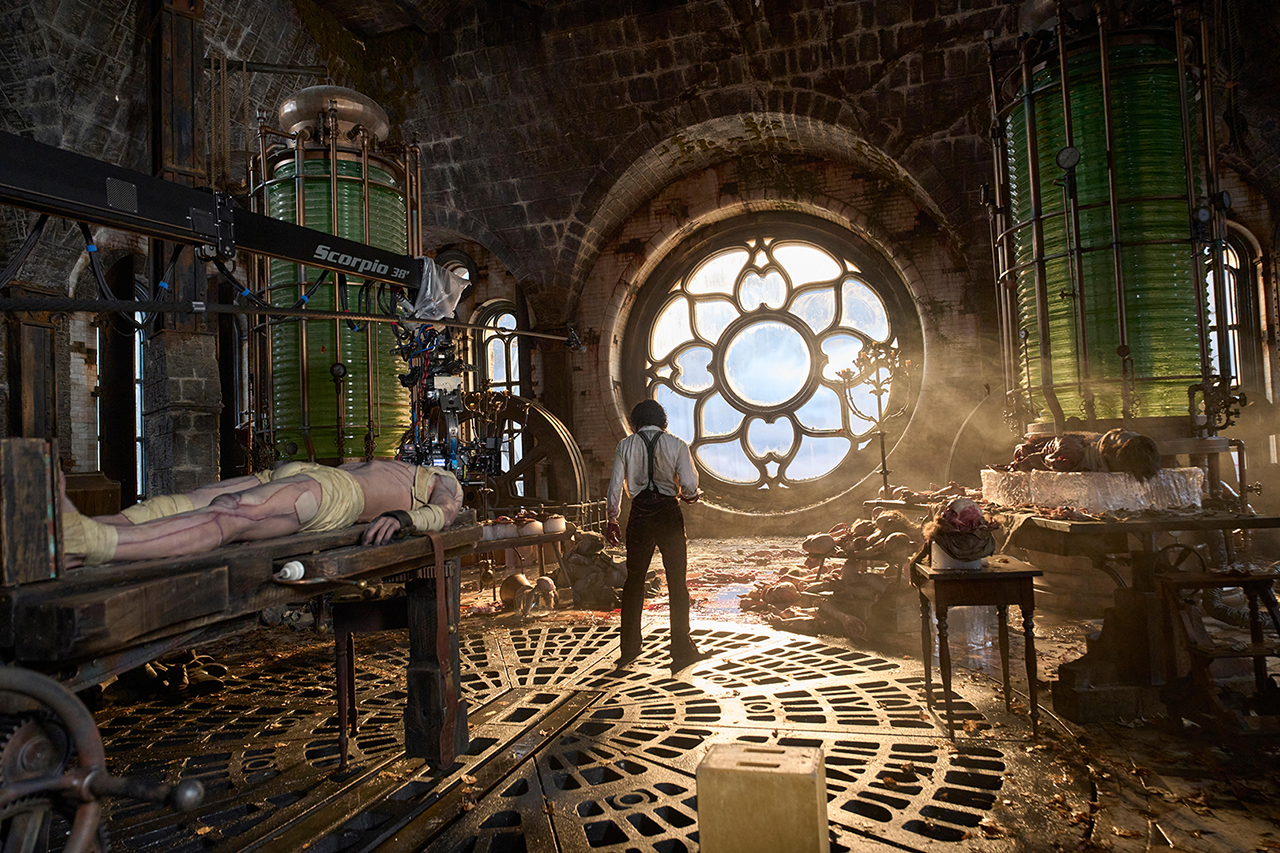
FRANKENSTEIN – Mike Hill, Jordan Samuel and Cliona Furey
KOKUHO – Kyoko Toyokawa, Naomi Hibino and Tadashi Nishimatsu
SINNERS – Ken Diaz, Mike Fontaine and Shunika Terry
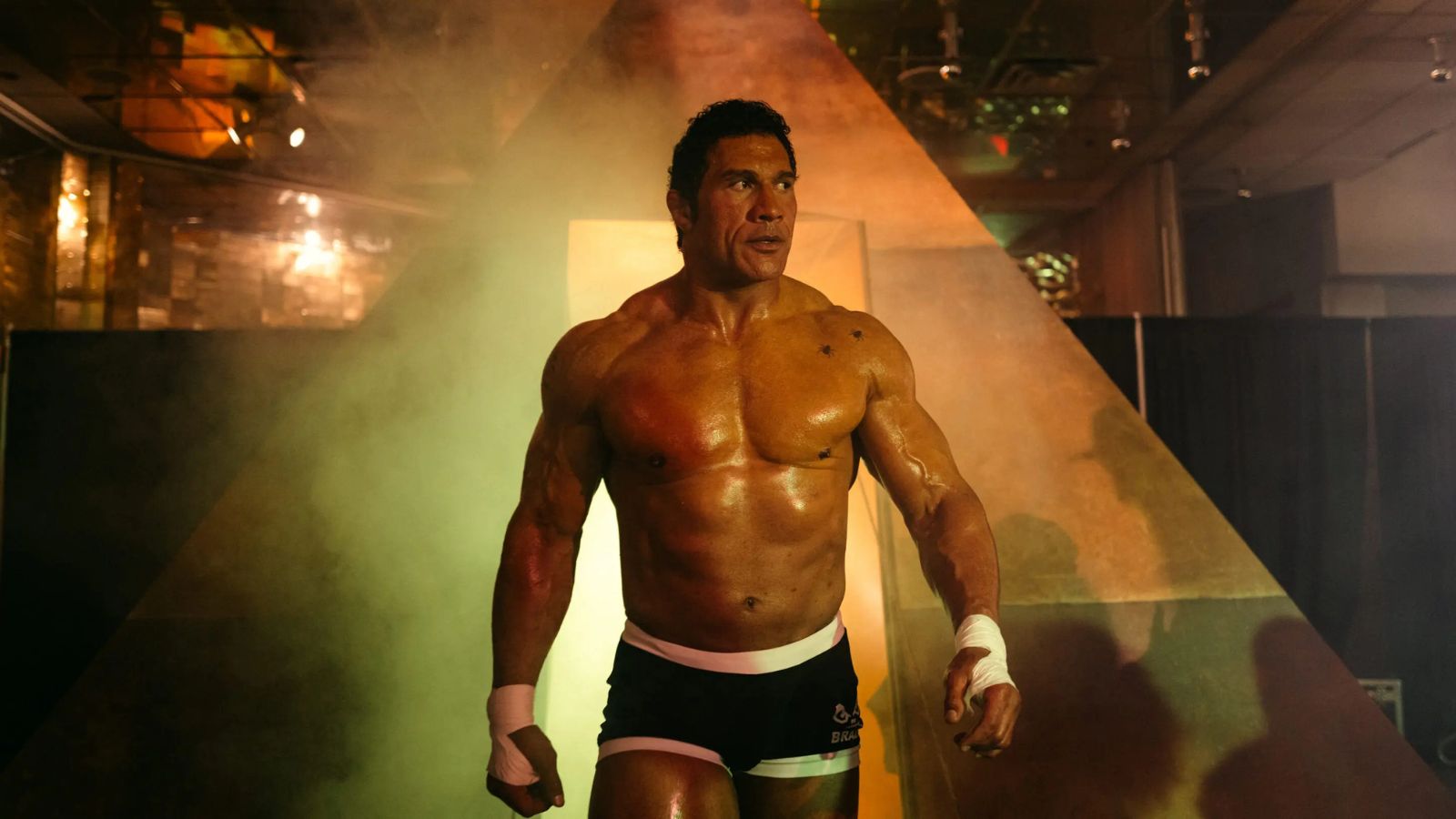
THE SMASHING MACHINE – Kazu Hiro, Glen Griffin and Bjoern Rehbein
THE UGLY STEPSISTER -Thomas Foldberg and Anne Cathrine Sauerberg
MUSIC (ORIGINAL SCORE)
BUGONIA – Jerskin Fendrix
FRANKENSTEIN – Alexandre Desplat
HAMNET – Max Richter
ONE BATTLE AFTER ANOTHER – Jonny Greenwood
SINNERS – Ludwig Goransson
MUSIC (ORIGINAL SONG)
DEAR ME from Diane Warren: Relentless; Music and Lyric by Diane Warren
GOLDEN from KPop Demon Hunters; Music and Lyric by EJAE, Mark Sonnenblick, Joong Gyu Kwak, Yu Han Lee, Hee Dong Nam, Jeong Hoon Seon and Teddy Park
I LIED TO YOU from Sinners; Music and Lyric by Raphael Saadiq and Ludwig Goransson
SWEET DREAMS OF JOY from Viva Verdi!; Music and Lyric by Nicholas Pike
TRAIN DREAMS from Train Dreams; Music by Nick Cave and Bryce Dessner; Lyric by Nick Cave
BEST PICTURE
BUGONIA – Ed Guiney & Andrew Lowe, Yorgos Lanthimos, Emma Stone and Lars Knudsen, Producers
F1 – Chad Oman, Brad Pitt, Dede Gardner, Jeremy Kleiner, Joseph Kosinski and Jerry Bruckheimer, Producers
FRANKENSTEIN – Guillermo del Toro, J. Miles Dale and Scott Stuber, Producers
HAMNET – Liza Marshall, Pippa Harris, Nicolas Gonda, Steven Spielberg and Sam Mendes, Producers
MARTY SUPREME – Eli Bush, Ronald Bronstein, Josh Safdie, Anthony Katagas and Timothée Chalamet, Producers
ONE BATTLE AFTER ANOTHER – Adam Somner, Sara Murphy and Paul Thomas Anderson, Producers
THE SECRET AGENT – Emilie Lesclaux, Producer
SENTIMENTAL VALUE – Maria Ekerhovd and Andrea Berentsen Ottmar, Producers
SINNERS – Zinzi Coogler, Sev Ohanian and Ryan Coogler, Producers
TRAIN DREAMS – Marissa McMahon, Teddy Schwarzman, Will Janowitz, Ashley Schlaifer and Michael Heimler, Producers
PRODUCTION DESIGN
FRANKENSTEIN – Production Design: Tamara Deverell; Set Decoration: Shane Vieau
HAMNET – Production Design: Fiona Crombie; Set Decoration: Alice Felton
MARTY SUPREME – Production Design: Jack Fisk; Set Decoration: Adam Willis
ONE BATTLE AFTER ANOTHER – Production Design: Florencia Martin; Set Decoration: Anthony Carlino
SINNERS – Production Design: Hannah Beachler; Set Decoration: Monique Champagne
SOUND
F1 – Gareth John, Al Nelson, Gwendolyn Yates Whittle, Gary A. Rizzo and Juan Peralta
FRANKENSTEIN – Greg Chapman, Nathan Robitaille, Nelson Ferreira, Christian Cooke and Brad Zoern
ONE BATTLE AFTER ANOTHER – José Antonio García, Christopher Scarabosio and Tony Villaflor
SINNERS – Chris Welcker, Benjamin A. Burtt, Felipe Pacheco, Brandon Proctor and Steve Boeddeker
SIRĀT – Amanda Villavieja, Laia Casanovas and Yasmina Praderas
VISUAL EFFECTS
AVATAR: FIRE AND ASH – Joe Letteri, Richard Baneham, Eric Saindon and Daniel Barrett
F1 – Ryan Tudhope, Nicolas Chevallier, Robert Harrington and Keith Dawson
JURASSIC WORLD REBIRTH – David Vickery, Stephen Aplin, Charmaine Chan and Neil Corbould
THE LOST BUS – Charlie Noble, David Zaretti, Russell Bowen and Brandon K. McLaughlin
SINNERS – Michael Ralla, Espen Nordahl, Guido Wolter and Donnie Dean
WRITING (ADAPTED SCREENPLAY)
BUGONIA – Screenplay by Will Tracy
FRANKENSTEIN – Written for the Screen by Guillermo del Toro
HAMNET – Screenplay by Chloé Zhao & Maggie O’Farrell
ONE BATTLE AFTER ANOTHER – Written by Paul Thomas Anderson
TRAIN DREAMS – Screenplay by Clint Bentley & Greg Kwedar
WRITING (ORIGINAL SCREENPLAY)
BLUE MOON – Written by Robert Kaplow
IT WAS JUST AN ACCIDENT – Written by Jafar Panahi; Script collaborators – Nader Saïvar, Shadmehr Rastin, Mehdi Mahmoudian
MARTY SUPREME – Written by Ronald Bronstein & Josh Safdie
SENTIMENTAL VALUE – Written by Eskil Vogt, Joachim Trier
This week on the InSession Film Podcast, we discuss our most anticipated movies of 2026! JD also provides a new Stingray update and we dive into a few of our expectations for this year’s Oscar nominations.
– Stingray Update (8:30) After some opening banter, we open the show this week with another Stingray update. It had been a month since our last discussion as we were busy with our 2025 year-end homework, so JD had quite a few new additions to add to the mix. Once again, there are some unexpected surprises and a few really fun variations on scores we really love.
– Oscar Nomination Expectations (25:44) This year’s Oscar nominations will be announced later this week, and we wanted to dive into a few expectations we are looking out for as we gear up for the 98th Academy Awards in March. There are some hopedictions that we also reveal even if we’re not all that hopeful. Either way, we are very curious for Thursdays announcements, and at the very least, we expect there to be some interesting first-time additions to Oscars lore.
– Most Anticipated Movies of 2026 (1:09:49) The InSession Film Awards is one of our favorite shows each year, but it’s a new year and that means new movies to look forward to as we turn the page. 2026 will be interesting as the summer season looks pretty abysmal outside of a few exceptions. There’s hope for Spider-Man: Brand New Day and Supergirl, but there’s a lot of questions otherwise. The fall season looks way more compelling with the likes of Dune: Messiah, Avengers: Doomsday, Sunrise on the Reaping and Narnia. Mostly, 2026 will be defined by great filmmakers taking bold risks as we’re getting potential bangers from Steven Spielberg, Christopher Nolan, Robert Eggers, Joel Coen, David Lowery, Pedro Almodovar, James Gray and two movies from our boy Hirokazu Kore-eda. Not to mention more from Jane Schoenbrun, Annie Baker, Nicolas Winding Refin, Kogonada, Tom Ford, M. Night Shyamalan and many more that we’re excited about. That said, what would be your top 5 most anticipated movies of the year?
If you want to help support us, there are several ways you can help us and we’d absolutely appreciate it. Every penny goes directly back into supporting the show and we are truly honored and grateful. Thanks for your support and for listening to the InSession Film Podcast!
Despite a slower start, 2025 was nothing short of a rather wonderful year for movies, from some standout blockbuster releases to prominent independent releases that found fascinating ways to forward the medium and bring newer voices to the forefront. Here is my top 10 of the year, highlighting some of those great movies.
10. Frankenstein
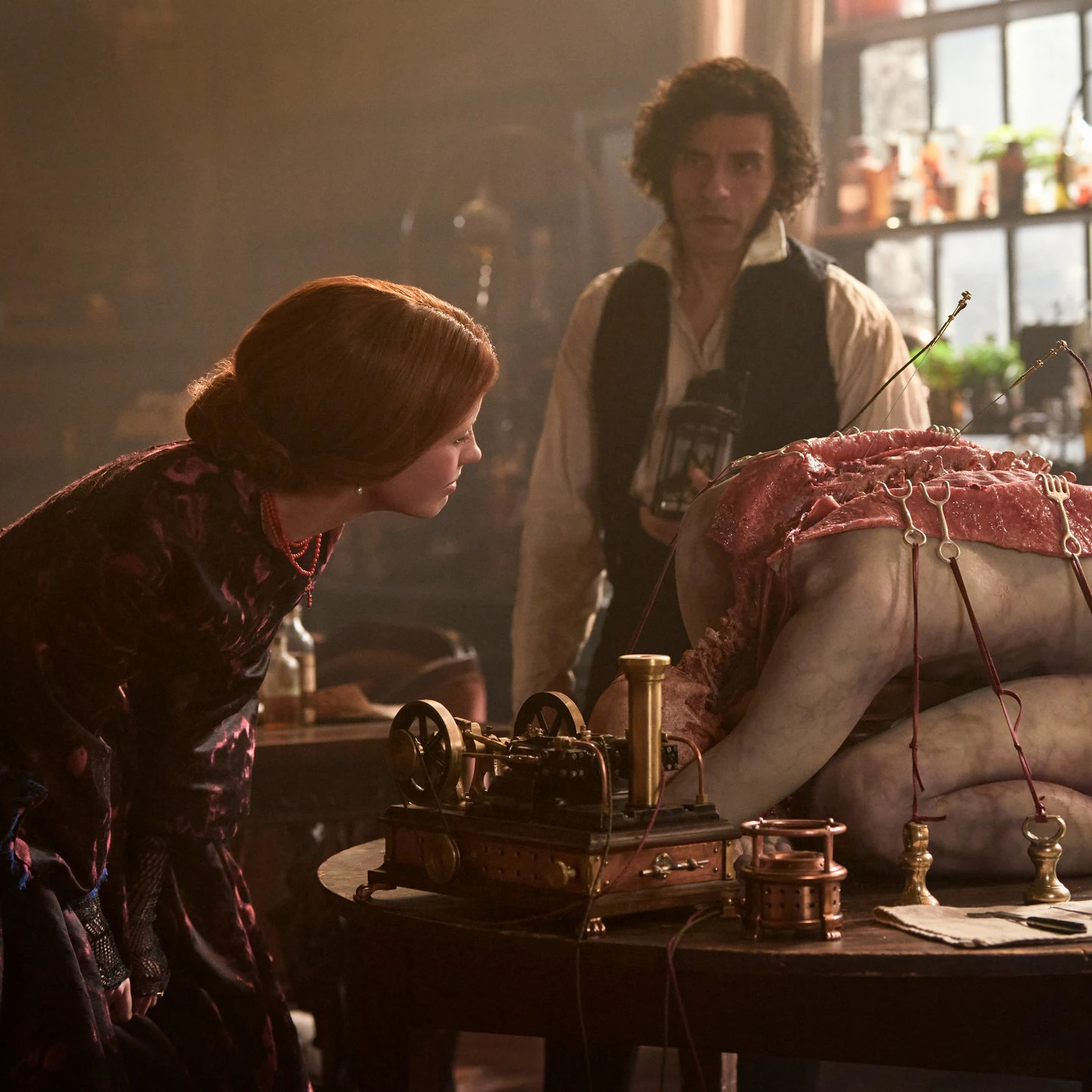
Guillermo del Toro is no stranger to creature features, and with his take on Mary Shelley’s iconic novel, he continues to bring a sense of humanity and beauty to the horrors we see, and highlight the tragedies of both Dr. Victor Frankenstein and especially his creation. Filled with terrific performances, particularly from Oscar Isaac and Jacob Elordi, spectacular production design, and visuals and a gorgeous score from Alexandre Desplat, Frankenstein may not be del Toro’s finest work, but it is one that improves with every viewing.
9. 28 Years Later
Perhaps the greatest miracle of the third installment in the 28 Days Later series is not its unique handling of zombies and visual style, but its more emotionally powerful storyline about a son wanting to help his mother being its central angle and finding the beauty in the world after everything has been laid to waste. Danny Boyle and Alex Garland craft something beautiful with 28 Years Later, building on the legacy of Days and Weeks in effective ways, and paving the path for more compelling stories to come. Remember you must love.
8. Wake Up Dead Man: A Knives Out Mystery
After three movies, Rian Johnson is nowhere near stopping with Benoit Blanc’s adventures, and neither is Daniel Craig, and with Wake Up Dead Man, audiences are all the better for it. The darkest, most thematically dense movie of the three, Johnson’s deft handling of religion and faith and the darkly humorous proceedings makes for an incredibly effective thriller, once again loaded with an outstanding ensemble cast and terrific dialogue that keeps things moving at a mile a minute. Bring on the fourth mystery!
7. Hamnet
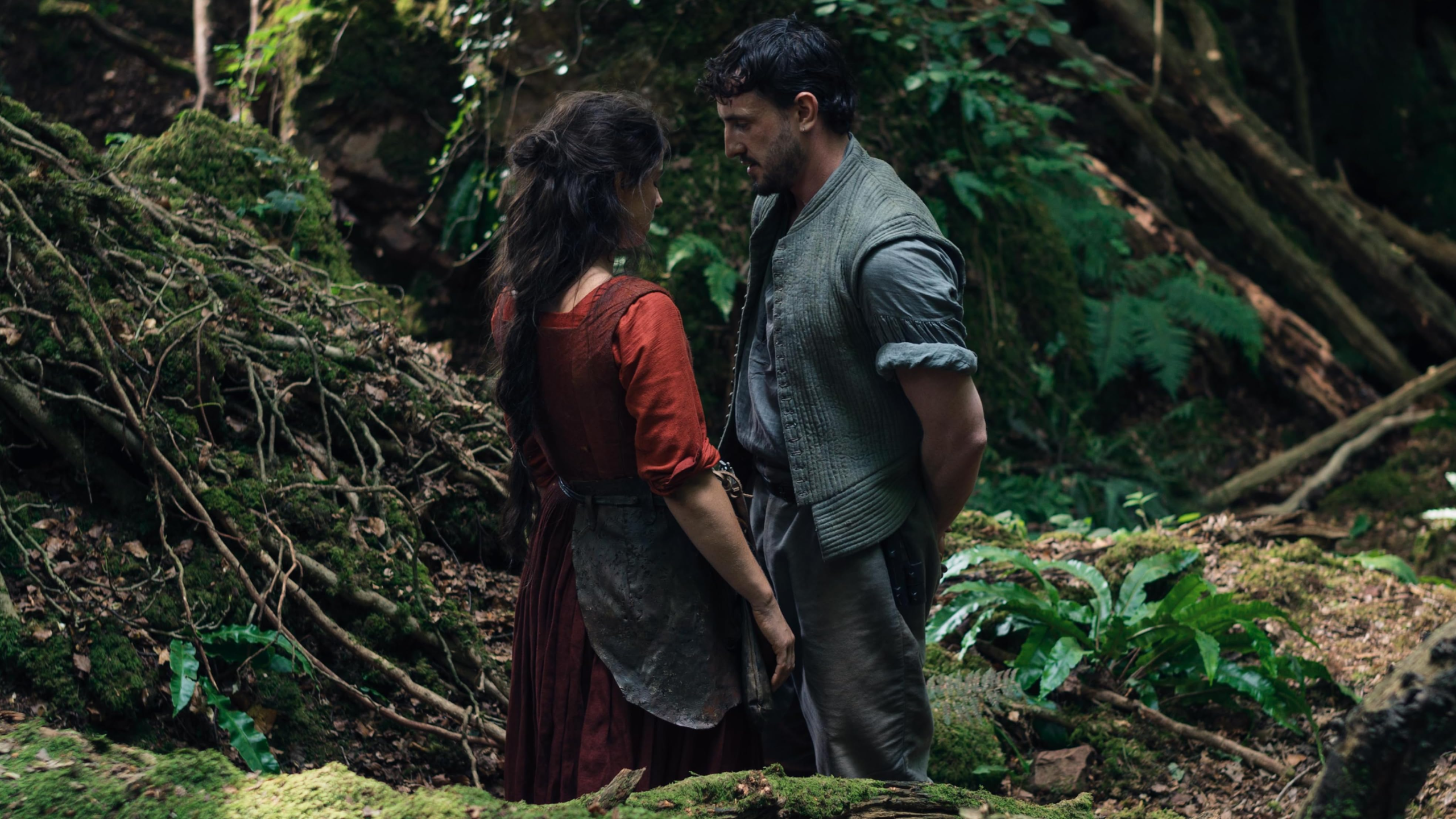
While many a debate can be had over the sequence of events that led to William Shakespeare penning one of the most celebrated works in the history of mankind, Chloé Zhao’s emotionally gut-wrenching story of Agnes and William Shakespeare and the loss of their son Hamnet makes as compelling and powerful a case for the story as can be made. Gorgeously shot and scored with a slew of outstanding performances from Jessie Buckley, Paul Mescal, and Jacobi Jupe as the titular character, Hamnet is a tearjerker that culminates in one of the best final scenes of the year. A masterful effort from Zhao.
6. Avatar: Fire and Ash
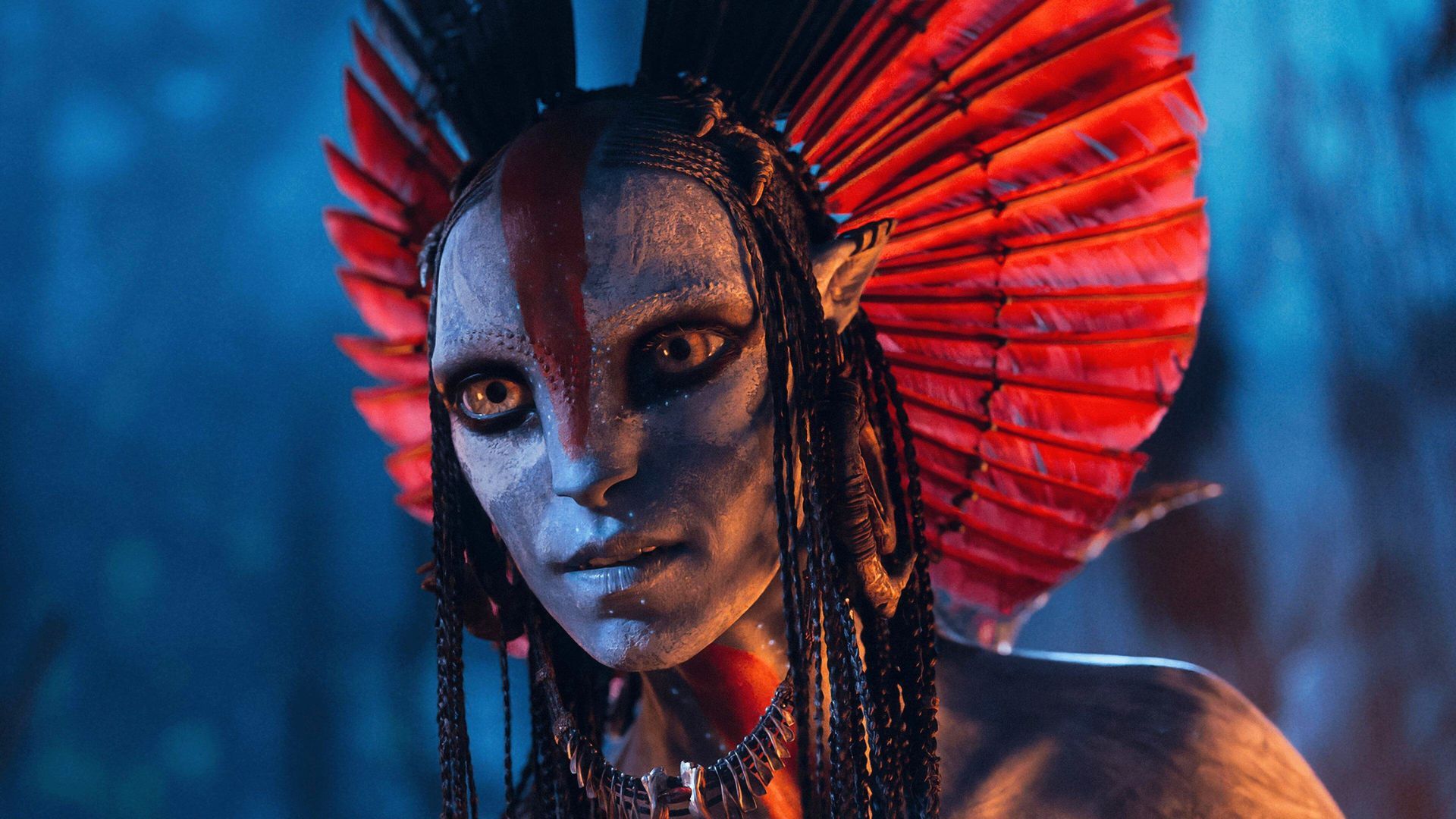
Perhaps the most divisive entry in this list, James Cameron’s third trip to Pandora is the darkest and most intense yet, challenging the franchise’s religious and faith-based bedrock with enemies like Varang (Oona Chaplin) who renounce all of it, a more egregious display of military imperialism and propaganda–arming insurgents included–and yet delivering an incredibly effective character drama which brings around elements from the first two movies in highly satisfying ways, along with some of the finest visual effects and sequences ever put to film.
5. No Other Choice
Park Chan-wook continues to surprise audiences with an unexpected, thematically rich, fast-paced, spectacularly shot, and subservice dark comedy thriller that pushes a man wanting to provide for his family and rebuild his own status as a working member of society to take desperate measures if necessary, anchored by some career-best work from Lee Byung-hun, crackling dialogue and direction, and some of the best cinematography of the year that results in some of the most memorable sequences of 2025, particularly one involving oven mitts and a lot of music. Go in blind.
4. It Was Just An Accident
Jafar Panahi’s Palme d’Or-winning return to filmmaking is a perfectly constructed tale built on past unresolved trauma, pain, the effects of authoritarianism in Iran, trying to find a way to move on, and the resulting monsters that can arise within us that mirror the real monsters when wanting peace. Terrifically acted, written with pitch-perfect precision, and hosting one of the finest endings to any 2025 release, It Was Just an Accident is a movie I haven’t stopped thinking about for months. A masterwork.
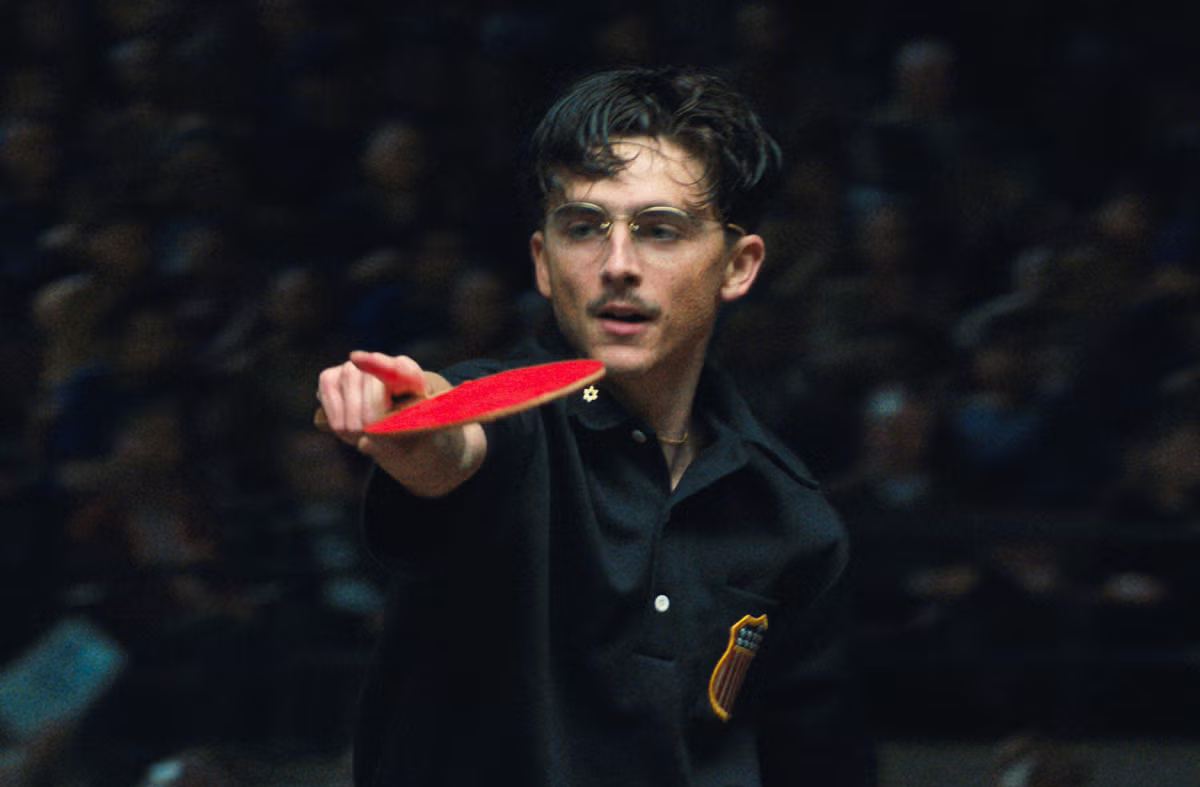
3. Marty Supreme
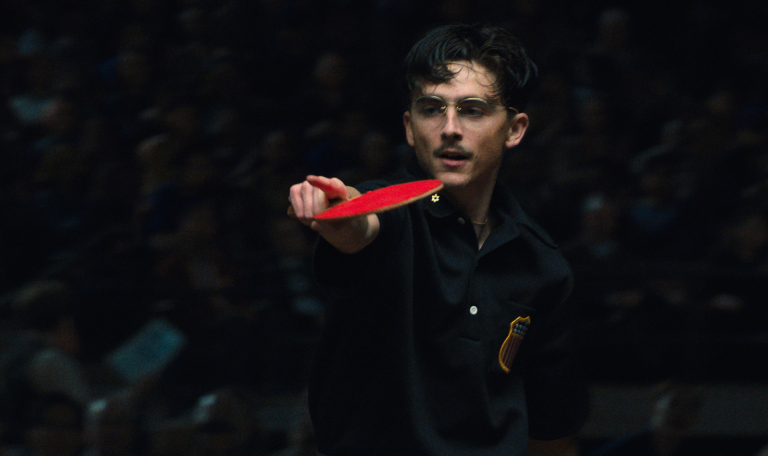
Dreaming big will get you far. In the case of Marty Mouser, it also means having one bizarre, life-threatening situation after another and making every possible mistake in the process. And yet, I was swept away by every single moment of Marty Supreme. Moving at a pace that feels injected by an adrenaline shot, infused with Josh Safdie’s frenetic direction and visuals (courtesy of Darius Khondji’s impeccable cinematography), Daniel Lopatin’s magnificent score, and anchored by an outstanding cast led by a career-best Timothee Chalamet, every creative and narrative decision made works perfectly, and even makes ping pong feel more intense than usual.
2. Sinners
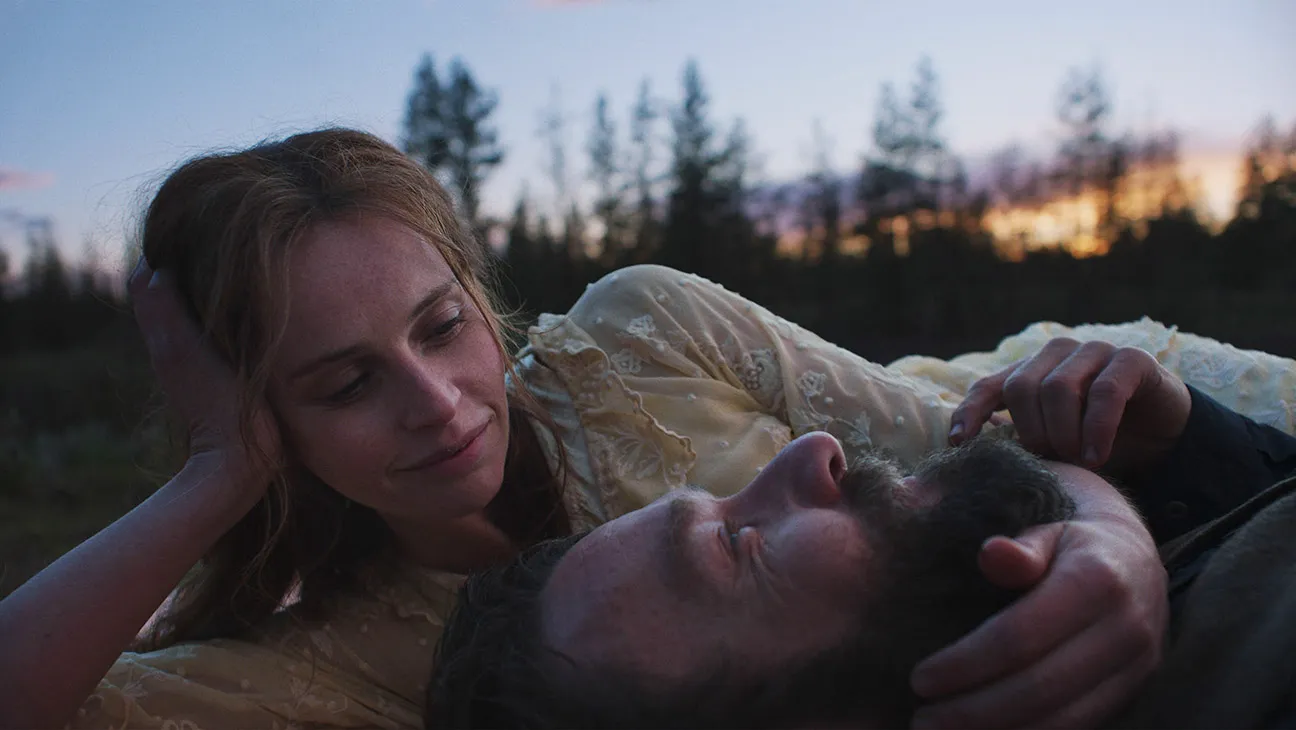
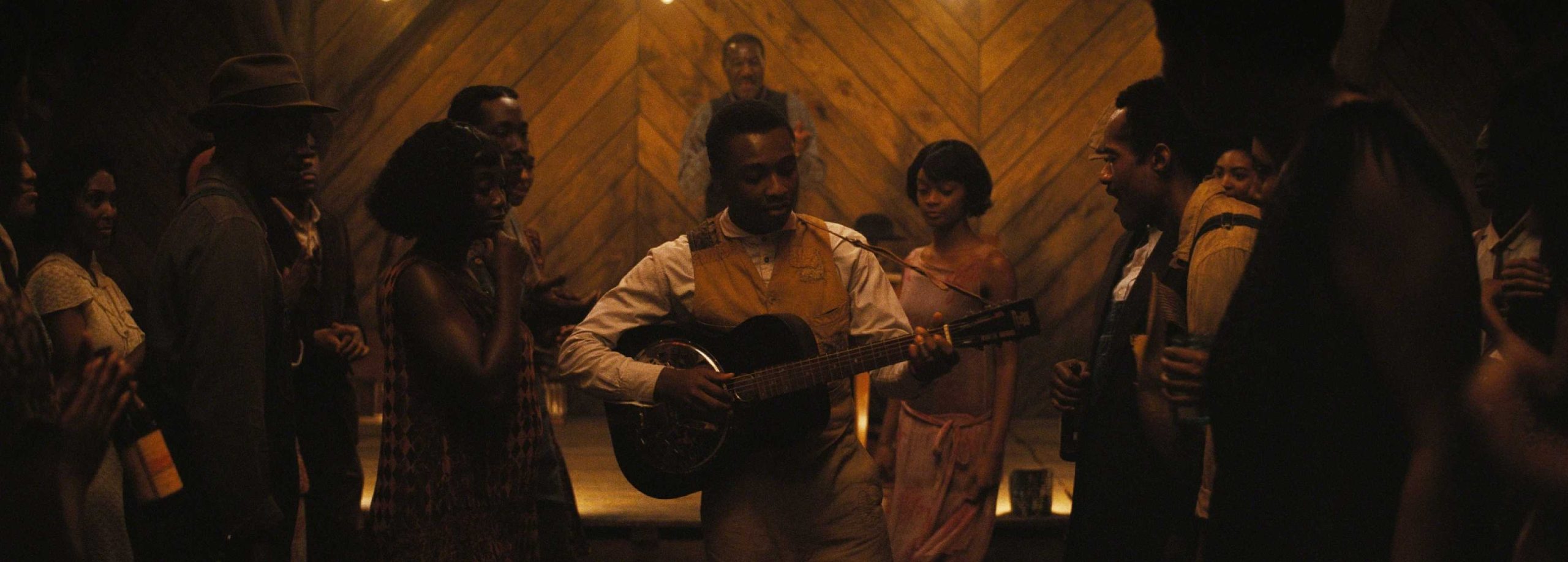
In many ways, it’s a miracle that Sinners even exists. A wildly original, genre-spanning vampire horror thriller that also doubles as a profound musical epic, Ryan Coogler’s opus is nothing short of a masterwork, combining some extraordinary storytelling and characterization with some of the best performances, visuals, and music of the year, and all the while tapping into deeper themes about racism, segregation, identity and community, and never missing a beat while executing all of it. Shot with IMAX film cameras, Autumn Durald Arkapaw’s cinematography makes for a stunning experience and some of the best use of the format, and Ludwig Goransson’s score is sublime throughout. On rewatch, it only gets better.
1. One Battle After Another
A snapshot of our current society and also a powerfully told story about taking on the established powers that seek to oppress others and a father trying to protect his daughter and know a better world, Paul Thomas Anderson’s latest in a lot of ways becomes the most poignant movie of 2025 and in other ways,its most important. Impeccably crafted with outstanding performances from its entire cast, terrific dialogue and direction, spectacular cinematography captured on Vistavision (watch out for that “River of Hills” sequence), and a tremendous score from Jonny Greenwood, this is a dark comedy thriller that doesn’t falter for even a moment and makes for the best movie of the year.
Honorable Mentions: The Voice of Hind Rajab, Sorry, Baby, If I Had Legs I’d Kick You, The Secret Agent, Sentimental Value, Weapons, F1: The Movie, Chainsaw Man: Reze Arc, Train Dreams, Bugonia, Superman, The Testament of Ann Lee
Synopsis: In 1930s Algeria, the daily life of an indifferent Frenchman is shaken by the death of his mother and a fateful encounter on a beach.
This year (in Québec, at least), we will have the privilege of seeing two adaptations of literary masterpieces that not only continue to be taught in schools worldwide but also stand the test of time within contemporary society. You can always discover something new while re-reading Emily Brontë’s Wuthering Heights (which looks to be desecrated by Emerald Fennell in her upcoming 50 Shades of Grey-esque adaptation, though none can fully judge the work without having seen it), and the same can be said with Albert Camus’ The Stranger (L’étranger).
This might be a controversial opinion, but since Wuthering Heights has been adapted to film time and again (to middling results), transposing The Stranger to the screen seems like a more daunting task, especially because the few that dared (Luchino Visconti, most notably) failed miserably. Camus’ book asks its readers to put themselves in the shoes of a man with little to no emotions, feeling indifferent (or bored) about his mother’s death, and the eventual killing he will commit under the sun.
The first-person narrative, which creates a discordant connection between the protagonist and the book’s readers, is the most essential element of Camus’ masterpiece, but does it seem fully suited to filmic proportions? This is the question François Ozon asks himself as he transposes the novel to the screen, and while many creative liberties are taken to deepen the sociopolitical context of Meursault’s (Benjamin Voisin) killing and change the perspectives of the story, the end result still ends up being nothing short of masterful, which feels like a miracle given how someone who, like me, had a profound epiphany while reading Camus’ book in school, doesn’t feel one ounce of anger towards the changes made in his version of the text.
In fact, many of Ozon’s permutations broaden our conception of the character, without employing a first-person device to put us in Meursault’s shoes. The political context – in particular, French-occupied Algiers – imbues the atmosphere with a disquieting tension that never really leaves the audience or the protagonist, who wanders through an environment he feels a stranger in. Meursault has never really “fit in” with the places he has lived, but feels more uncomfortable being in a country that isn’t his, which is occupied by colonizers from his birth country. Camus never really deepened this context in the book, nor does he give the Arab Meursault killed during The Stranger’s midpoint a name, while the context is the text of Ozon’s film.
The first hour or so of Ozon’s 122-minute psychological drama puts us in the middle of Algiers’ disquieting atmosphere. It’s often a silent introductory half, as the protagonist barely speaks. When he does, it’s usually to say variations of the sentence, “I don’t know.” Manu Dacosse’s (one of the best cinematographers working today) visual language completely absorbs us in the internal and external tension that lies within Meursault’s very being, rendered in a stark, almost classical black-and-white.
We sit with Meursault as he contemplates not only what his mother’s death means for him, but what it means to live in an occupied state as an occupier. He’s a stranger in a land that doesn’t belong to him, and, in fact, doesn’t even know if returning to Paris would ease him of the internal suffering he clearly feels (without showing an ounce of exterior emotion), attempting to fabricate a life in Algiers with his girlfriend, Marie Cardona (Rebecca Marder), without fully having a connection with her, or anyone around him.
It’s a miserable existence, sadly worsened when he kills an Arab who pointed a knife at him and his friend Raymond Sintès (Pierre Lottin), and is condemned to a trial not on what he did, but on who he is. This is also the second part of the novel, but it is far more psychologically active in Ozon’s hands than when Camus wrote it in the first person. The French filmmaker attempts to excavate the very nature (more aptly, Camus’ conception) of Meursault within the confines of a thrilling courtroom drama that rarely questions his actions (when it should be the heart of the trial), but examines his lack of human emotions as the heart driving the murder he committed.
Of course, like in Camus’ book, we don’t have an answer that lies at the heart of his quiet nature, but Meursault seemingly feels more three-dimensional in the hands of Ozon and Voisin, whose second collaboration with the director is an even bigger winner than Summer of ‘85. In fact, The Stranger might be Ozon’s most artistically and thematically compelling work, whose modifications he makes to the source material enhance our understanding of who the character might be (since Camus leaves much to interpretation), much further than how he was written (the millisecond of homoeroticism, for example, seems insignificant, but it may provide a broader key to Meursault’s complex inner feelings).
The black-and-white looks utterly spectacular on the biggest possible screen, and the atmospheric sounds envelop the bleak environment that has been stripped of its color ever since France colonized it, creating a landscape that feels somehow more textured than how Camus described the Algiers Meursault lived in. Then comes the final scene, which sees the protagonist reckon his (lack of) spiritual beliefs with a priest, played by Anatomy of a Fall’s Swann Arlaud. It might run a little too long, but the way in which Ozon wrestles with theology and the great mystery – and certainty – at the heart of being human (death) could be the best thing he’s ever written. When one knows they are going to die, the most profound spiritual experiences usually occur, even in people who consistently want to reject them.
Meursault is faced with a push-pull that says more about his character than anything Camus wrote in The Stranger, transcending it from mere literature to a text that allows us to understand what lies at the very heart of being human. Not only does Ozon do the work justice with his adaptation ofThe Stranger, but he may even surpass it by cogently interpreting what was initially written as the smaller part of a big sociopolitical problem. And by giving the person Meursault killed a name at the tail end of the film, the context (and the protagonist’s place within it) becomes the most important element of the character study at the heart of the source material.
The Stranger is currently playing in several Québec cinemas, but should Ozon’s film ever be released in other parts of the world, it’s one that demands your attention.
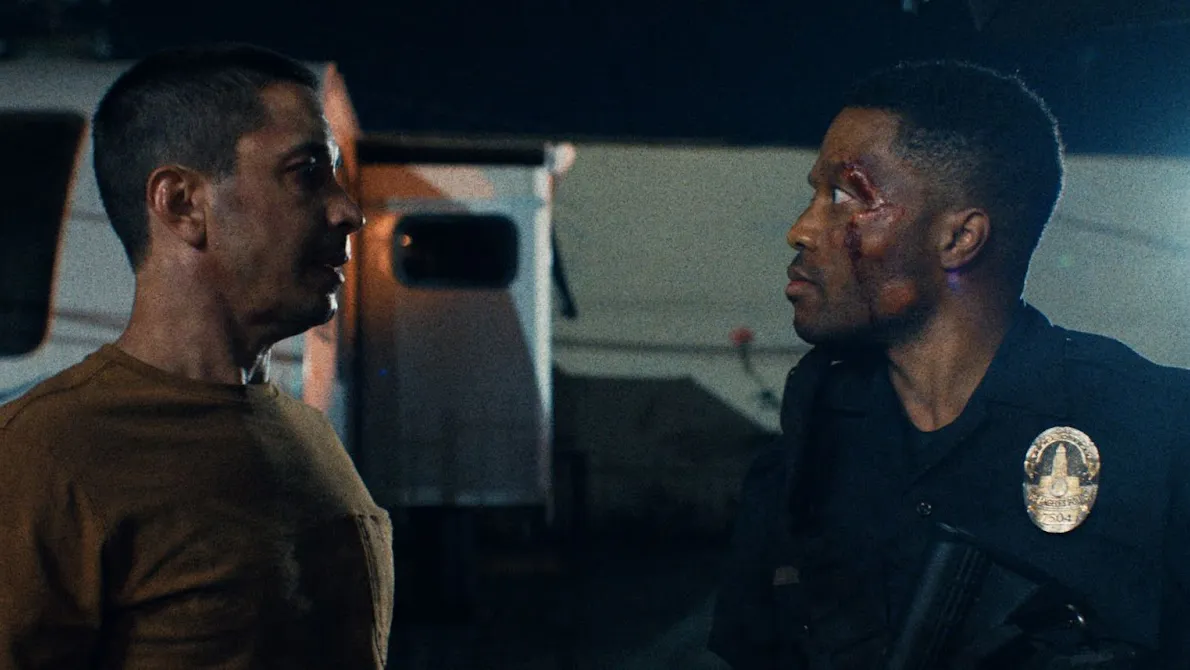
Director: Ryan Prows Writers: Tim Cairo, Jake Gibson, Shaye Ogbonna, Ryan Prows Stars: Dermot Mulroney, Justin Long, CM Punk
Synopsis: An L.A. cop discovers a local task force is hiding a secret that puts the residents of his childhood neighborhood in danger.
It’s no secret that my favorite genre of movies is Horror. I love most of the subgenres that came from it, the stories that are being told and being on the edge of my seat with what goes on onscreen. It’s a new year and that means there are going to be a lot of ways for filmmakers to challenge us as audiences and see how far they can go with their stories. Unfortunately, I wasn’t challenged by this new horror/action/fantasy film Night Patrol. You know when people say, “January movie releases are trash” and you want to ignore them because a specific movie looks really cool? Going in with only seeing the teaser trailer took away a little bit of the pain of not really enjoying it that much.
The movie begins with Wazi (RJ Cyler) in an interrogation room. He’s badly wounded on his stomach. The captain enters the room and he gives Wazi documents to sign. The documents are basically telling them that he was responsible for something that recently happened. The movie takes a time jump to just a few days ago. Wazi goes to meet up with his girl, Primo (Zuri Reed). They converse in her car until the red and blue lights begin to shine in their rear view. For no reason whatsoever, they ask Primo to step out of the car. We’re introduced to Officer Hawkins (Justin Long). He walks up to said car and shoots Primo, execution style. Wazi flees the scene and evades the cops. Soon after, he’s approached by one of the cops that they were stopped by. A ring on Wazi’s finger starts to glow green, the cop’s bewildered by what he’s seen and he runs away. The beginning of this movie really showed promise and I was anticipating what the rest of the movie was going to be like.
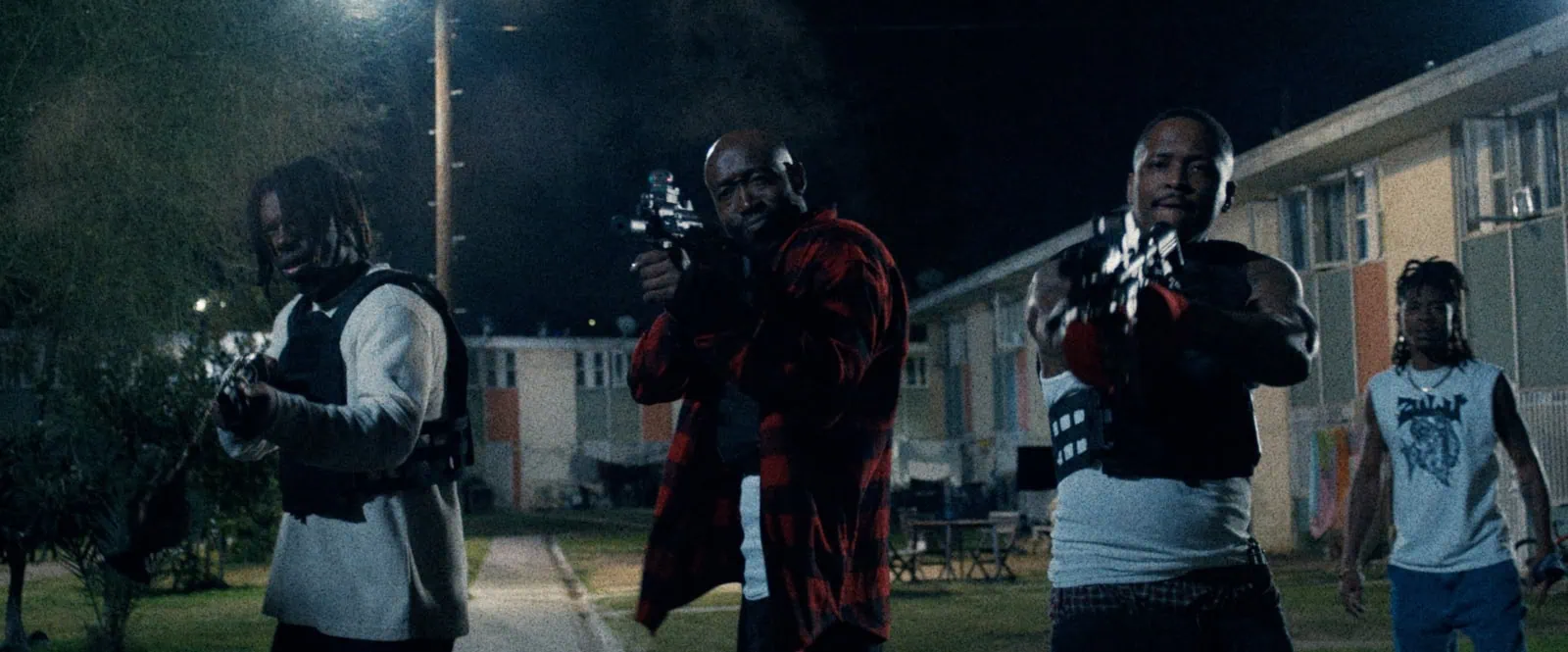
In a lot of movies today, we’re given the privilege to have them broken into different chapters. Our three groups of characters are the Zulu Crips, the Piru Bloods, and, of course, the LAPD. Not too long after our intro we’re taken on a ride along with officer Hawkins and officer Carr (Jermaine Fowler). Carr used to be a member of the Crips as a youth but he decided to really make a difference in his community and join the force. The trope of a former hood nut turned authority figure isn’t given any new elements from the writers. They try to give the audience an End of Watch kind of vibe but the two actors are let down because of the underdeveloped script. They’re supposed to have been partners for a while but it feels like they were just put together a week ago. We get drops of details about the officers that include info about their dead fathers, life in the service, etc.
We’re introduced to some members of the Bloods such as Bornelius (Freddie Gibbs), Tripp (YG), and Three Deuce (Flying Lotus). We only see them for about 25 minutes of the movie because they’re only there to press Wazi for information about Bornelius’ sister, joining the Crips in a battle against the members of the Night Patrol, and trying to make sense of the absurd things that are going on. Carr has issues with his mother, Ayanda (Nicki Micheaux), over how his father died. Ayanda is the head of the Crips and the neighborhood wacko to everyone in the neighborhood. She’s also the only person that knows anything about their Zulu roots, the vampires, and she’s given the honor of being head in charge of exposition as well. Hawkins tries to destroy the Night Patrol from the inside but he’s welcomed by his father who’s supposed to be dead. He’s revealed to be the actual head of the vampires and that he needs his son to join them in battle. He gives Hawkins his blood and he begins his transformation into a vampire.
Director Ryan Prows takes us on a journey that is underdeveloped and doesn’t live up to its premise. It was good to see this cast of Black actors, but I wish it was in a better movie. At times, the action was so cartoonish that I had to shake my head. In the pre battle montage, the Zulu Crips put up their crosses and artifacts around their housing complex. There was no reason for them to do that when the vampires burst in there with no hesitation. I had so many questions such as, “What have the vampires been up to before the battle with the Crips and Bloods began?” and “Why don’t the vampires have regular fangs instead of corny grills in their mouths?” Topics like police brutality, gang culture, and why cops act the way they are are touched on but are never fully explored. It’s like the writers said, “This is the way things are in this movie. Come to your own conclusions.” It’s very ambitious but the four writers couldn’t really make sense of it all. I enjoyed some of the camera techniques and the story between the Zulu Crips and the vampires. At the end we’re left with decent performances from the actors, ok effects, cartoonishly funny action, and an underdeveloped script. Not too bad for a Shudder January release, don’t you think?
Below are Oscar predictions in all 24 categories from members of the InSession Film team. Given that our crew could only find consensus in one category, you will definitely want to check back in for more analysis when Oscar nominations are announced on Thursday, January, 22nd.
You’ll be able to watch the nominations live via a livestream on The Academy’s website. Listen to the latest episode of Chasing the Gold for even more predictions. And watch our in-depth breakdown of the short film categories. Awards Editor Shadan Larki’s Oscar Predictions page is also always up-to-date with the latest standings.
InSession Film Staff: Shaurya Chawla, Dave Giannini, Joey Gentile, JD Duran, Shadan Larki, Ben Miller, Joshua Mbonu, Romey Norton, Cameron Ritter, Jaylan Salah, Jacob Throneberry, James D. Williams, and Zach Youngs.
🏆 Best Picture
One Battle After Another (Shaurya Chawla) (Dave Giannini) (Joey Gentile) (JD Duran) (Shadan Larki) (Ben Miller) (Joshua Mbonu) (Romey Norton) (Cameron Ritter) (Jaylan Salah) (Jacob Throneberry) (James D. Williams) (Zach Youngs)
F1: The Movie (Shaurya Chawla) (Romey Norton) (Jaylan Salah) (Zach Youngs)
Song Sung Blue (Romey Norton)
How to Train Your Dragon (Romey Norton)
Sorry, Baby (JD Duran) (Zach Youngs)
Avatar: Fire and Ash (Zach Youngs)
Blue Moon (Zach Youngs)
🎥 Best Director
Paul Thomas Anderson — One Battle After Another (Shaurya Chawla) (JD Duran) (Dave Giannini) (Shadan Larki) (Ben Miller) (Joshua Mbonu) (Romey Norton) (Cameron Ritter) (Jaylan Salah) (Jacob Throneberry) (James D. Williams)
Sorry, Baby — Eva Victor (Shaurya Chawla) (JD Duran) (Dave Giannini) (Shadan Larki) (Ben Miller) (Joshua Mbonu) (Romey Norton) (Cameron Ritter) (Jaylan Salah) (James D. Williams) (Zach Youngs)
Weapons — Zach Cregger (Jacob Throneberry)
Black Bag — David Koepp (Zach Youngs)
Blue Moon — Robert Kaplow (Zach Youngs)
📖 Best Adapted Screenplay
One Battle After Another — Paul Thomas Anderson (Shaurya Chawla) (JD Duran) (Shadan Larki) (Ben Miller) (Joshua Mbonu) (Cameron Ritter) (Jaylan Salah) (Jacob Throneberry)
“The Girl in the Bubble” — Wicked: For Good (Shaurya Chawla) (Dave Giannini) (Joshua Mbonu) (Jacob Throneberry) (Cameron Ritter) (Romey Norton) (Zach Youngs)
“Last Time (I Seen the Sun)” — Sinners (Shadan Larki) (Romey Norton)
“Salt Then Sour Then Sweet” — Come See Me in the Good Light (Ben Miller) (JD Duran)
InSession Film Awards Editor Shadan Larki is joined by The Contending’s Joey Moser joins to make final Oscar predictions for Best Animated Short, Best Live-Action Short, and Best Documentary Short. Joey also shares more tips and tricks for predicting Oscar’s toughest categories and discusses his favorite short films of the year.
For more insight into all 45 short film’s shortlisted at the 2026 Academy Awards, watch Joey Moser (The Contending), Abe Friedtanzer (Awards Buzz), and Daniel Howat (Next Best Picture)’s epic shorts breakdown here.
You can also see Shadan’s final Oscar predictions in all 24 categories, check out our Oscar Predictions page.
Nominations for the 98th Academy Awards are finally announced on Thursday, January 22nd. Check back in with InSession Film for more coverage.
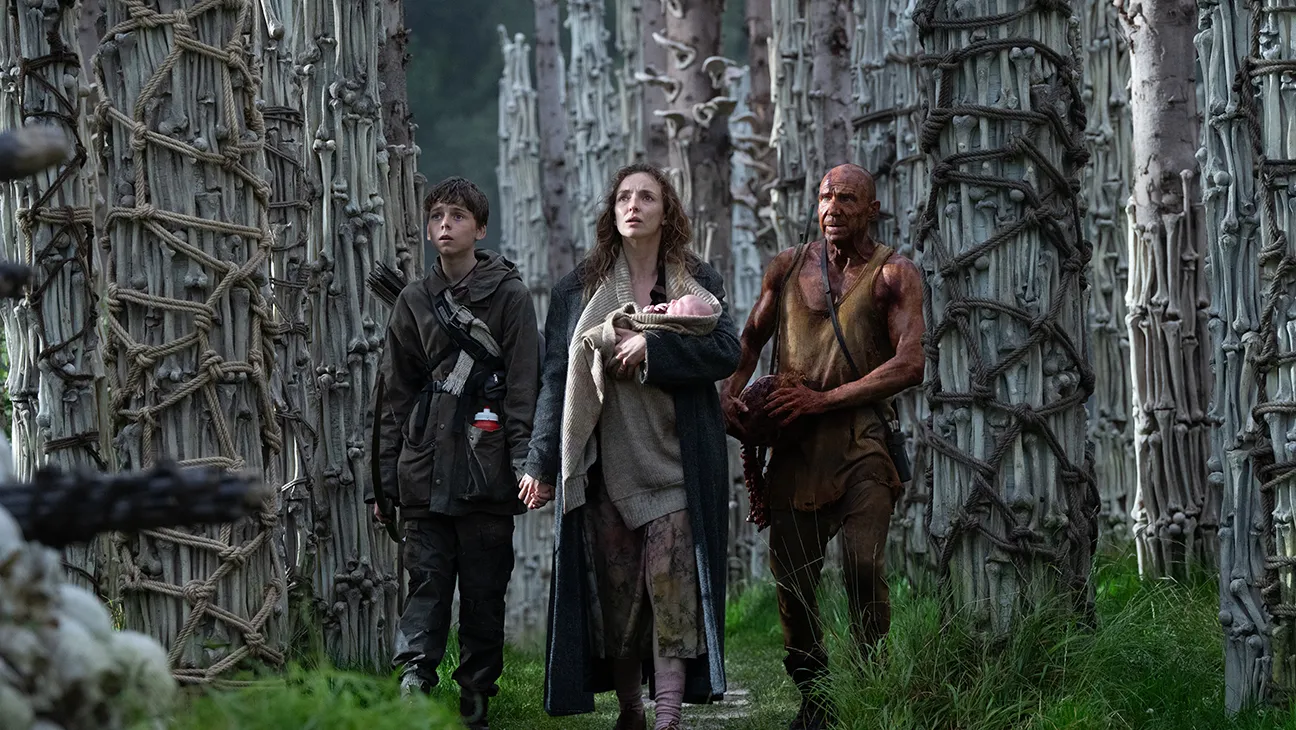
On this episode, JD and Megan discuss Nia DaCosta’s incredible new film 28 Years Later: The Bone Temple! After Danny Boyle’s masterful 28 Years Later last year (JD’s #2 movie of 2025), we were very excited for this one and it did not disappoint. It has its own energy and purpose, building further upon the 28 lore, and delivering some sequences that will be remembered at the end of the year.
Review:28 Years Later: The Bone Temple
Director: Nia DaCosta Writers: Alex Garland Stars: Ralph Fiennes, Jack O’Connell, Alfie Williams
Synopsis: Three people navigate a dangerous treatment industry rife with insurance fraud.
Winner of the SXSW Jury Award for Best Documentary and opening at DCTV Firehouse Cinema in New York on January 16, 2026, Shuffle hits audiences with strong urgency and quiet force. Directed by Benjamin Flaherty, the film is an unflinching examination of the billion-dollar addiction treatment industry. The film exposes how care, insurance, and profit have become dangerously entangled. What distinguishes Shuffle from many investigative documentaries is how personal it feels.
Flaherty tells this story through the lens of his recovery from addiction, grounding the film’s investigation in lived experience rather than detached inquiry. Shuffle is not sensationalist or accusatory; it is measured, patient, and deeply attentive to the human cost of systemic failure.
The film begins at street level, examining a seemingly small-time scam in which people struggling with addiction are effectively bought and sold for their insurance policies. These individuals are “shuffled” between treatment centers, sober homes, and relapse-triggering environments, not to heal, but to keep insurance money flowing. As Flaherty follows the money, Shuffle exposes a network of collusion involving private operators and public policy failures that have created ideal conditions for exploitation.
Shot over the course of three years, the documentary follows three individuals caught in this insurance-fueled cycle of fraud. In this world, survival hinges not on access to treatment, but on escaping it. Their journeys are harrowing, marked by instability, manipulation, and constant risk. Each person is allowed complexity, contradiction, and dignity. Their interviews feel intimate, and the documentary supports sections with childlike animations, drawings, and scribbles to help the audience imagine the scenes the interviewees are describing and support the voiceover. Shuffle isn’t afraid to show the harsh reality of addiction and recovery, which includes relapsing and overdosing. Nicole and her partner’s suffering will pull at your heartstrings. Daniel’s story is gut-wrenching – your hopes will be high, and then it’ll come crashing down. To say this documentary is an emotional rollercoaster is an understatement.
The film’s investigative reach is equally impressive. It’s incredibly eye-opening and shocking to see how lucrative, unhelpful, and at times, fake, this industry is. The documentary has access to whistleblowers exposing fraud from within the system, alongside experts who trace how well-intentioned reforms opened the door to abuse. In the wake of the opioid epidemic, insurance companies were required to cover addiction and mental health treatment at parity with other medical conditions. Shuffle makes clear how this gap became a profit engine, preying on more than 40 million Americans struggling with addiction.
All interviews feel fresh rather than rehearsed. There is no reliance on flashy editing or heavy-handed scoring. The film trusts its material and its audience, allowing testimonies and evidence to accumulate with devastating clarity. This quiet approach makes its conclusions all the more searing.
What is most saddening to learn and understand is that these false promises are deceptive but not illegal. Taking advantage of people at their most vulnerable is promoted for profit, and humans are seen as money makers rather than for who they are. This documentary isn’t offering a solution, but offers a warning. A warning that you’ll be recruited on social media sites such as Facebook, and those recruiters get a finder’s fee. The shiny websites will lure you in, and a lot of the real-life establishments are old hotels. The rehab facilities then use addictive medications to treat addiction (the irony is outstanding!) and will put drugs back into bodies and keep them addicted for a lifetime.
But there is a little light at the end of the tunnel – not all hope is lost. You will finish this documentary willing for people to be sober, willing for them to succeed, and it might just increase your empathy and humility. Ultimately, Shuffle is a sharply reported exposé and a deeply personal reckoning. It asks difficult questions about how society treats addiction, who benefits from recovery, and what happens when care becomes commerce. By intertwining investigation with empathy, Flaherty has made a documentary that informs, implicates, and resonates. With a respectable runtime of one hour and twenty-three minutes, this documentary is a must-watch for fans of real, hard-hitting stories and investigative drama.
In modern American cinema, Todd Haynes and David Lynch stand out as unique figures. Their styles are so distinct we’ve turned their names into adjectives. “Haynesian” brings to mind meticulous period detail, high-stakes emotion, and the rigid rules of classic Hollywood melodrama. “Lynchian” means the grotesque bursting into everyday life, a surreal dream logic that makes reality feel unstable. This ‘adjectivication’ serves both directors poorly, chiefly by flattening their work and points of view into ‘styles’; but Lynch in particular suffers for it, with the term ‘Lynchian’ often erroneously being used to describe anything avant gard or simply just a bit weird.
But beneath these different styles lies a deep and similar critical project. Both directors have spent their careers taking apart foundational American myths, especially the “American Dream.” Their work suggests the dream isn’t just a failed promise of success, but a kind of sick or broken creative idea at its core. Both Haynes and Lynch use their films to diagnose this sickness in the American psyche.
Haynes, a kind of “elegant anthropologist of human desire,” critiques the dream from within its own historical forms. He uses pastiche (a form of imitation) as a critical tool, borrowing the look of 1950s “women’s pictures” to expose the racial, sexual, and gender anxieties hidden inside them. Lynch, on the other hand, acts like a cinematic psychoanalyst, the “master of the surreal” who digs up “America’s shadow self.” His critique comes from the subconscious, the darkness lurking just beneath the calm suburban surface.
Together, their films challenge the “idealized depictions… associated with the American Dream.” They both argue that a “realistic” style is the wrong tool for the job. You can’t capture a culture founded on a fantasy by pretending to be realistic. The “real” America, in their films, isn’t a place of facts but a place that feels like a melodrama or a nightmare.
The Politics of Pastiche: Todd Haynes and the Sirkian Melodrama
Todd Haynes’s cinema is a kind of careful, critical archeology. His main strategy is taking and reusing past cinematic forms, especially the 1950s “women’s picture” and the lush, social-commentary-filled melodramas of director Douglas Sirk. This isn’t just empty nostalgia. For Haynes, imitation is a powerful political tool. By perfectly recreating the look and feel of a repressive film era, he builds a framework to say all the things that, because of the strict Production Code, a director like Sirk could only hint at.
Haynes’s focus on form is a political act. He uses the very language of a conformist, old-fashioned cinema to tell the subversive stories it was designed to silence. He treats melodrama as a serious tool for social critique, proving that its “lush seductiveness” can be used to expose the very repressions it once had to hide.
Haynes’s work acts as a critical bridge. It connects the high melodrama of Douglas Sirk, the queer art of Andy Warhol, and the European films of Rainer Werner Fassbinder. At the center of this is a deep understanding of melodrama not as a negative term for “over-acting,” but as a unique style with critical power. In this view, melodrama is a “competing logic” in film. It favors the characters on the margins, finds meaning in the set design and colors (the mise-en-scène), and focuses on emotion over “rational” action. This is the logic Haynes uses.
Haynes has spoken of his and Fassbinder’s “critical discovery” of Douglas Sirk. They both saw the “political and critical potential” in a genre often dismissed as the “maternal melodrama.” Fassbinder, and later Haynes, realized that the power struggles in a family “re-echo historical and political structures.” By choosing to work in this “degraded” genre, Haynes is arguing that the home isn’t a retreat from politics—it’s the most intimate and intense stage for politics.
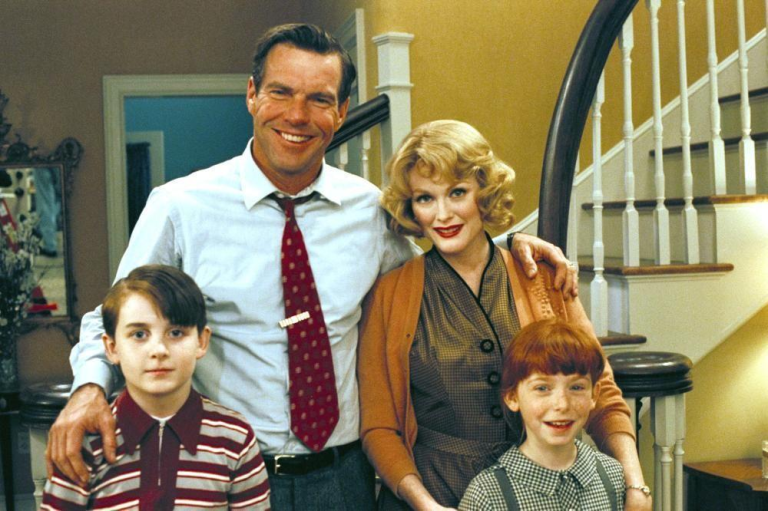
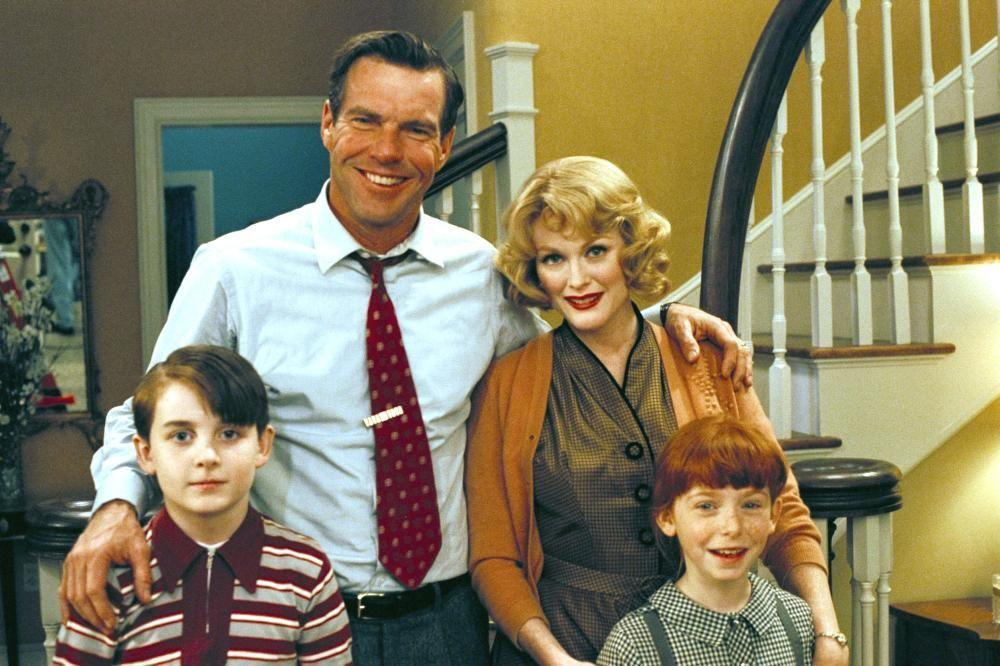
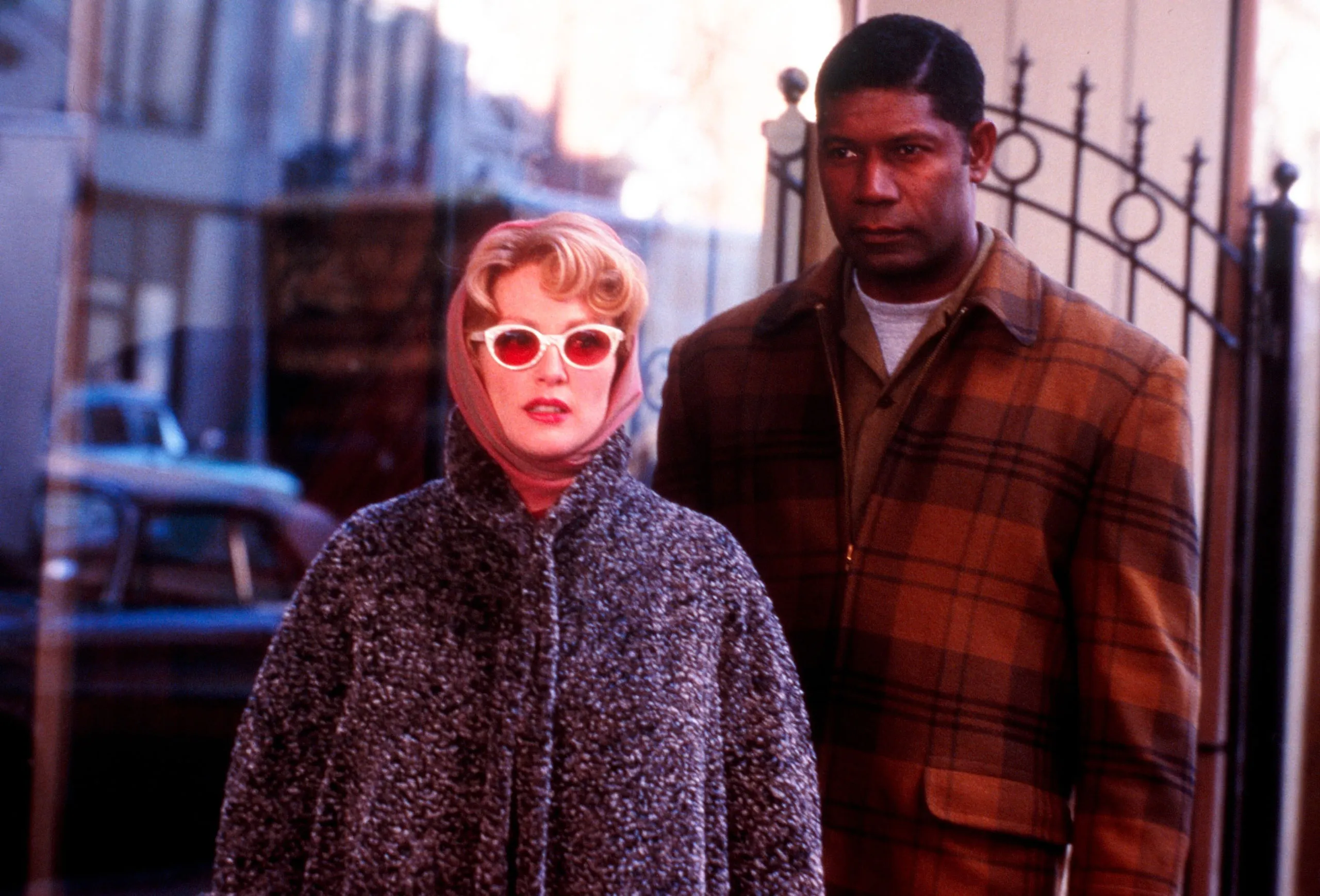
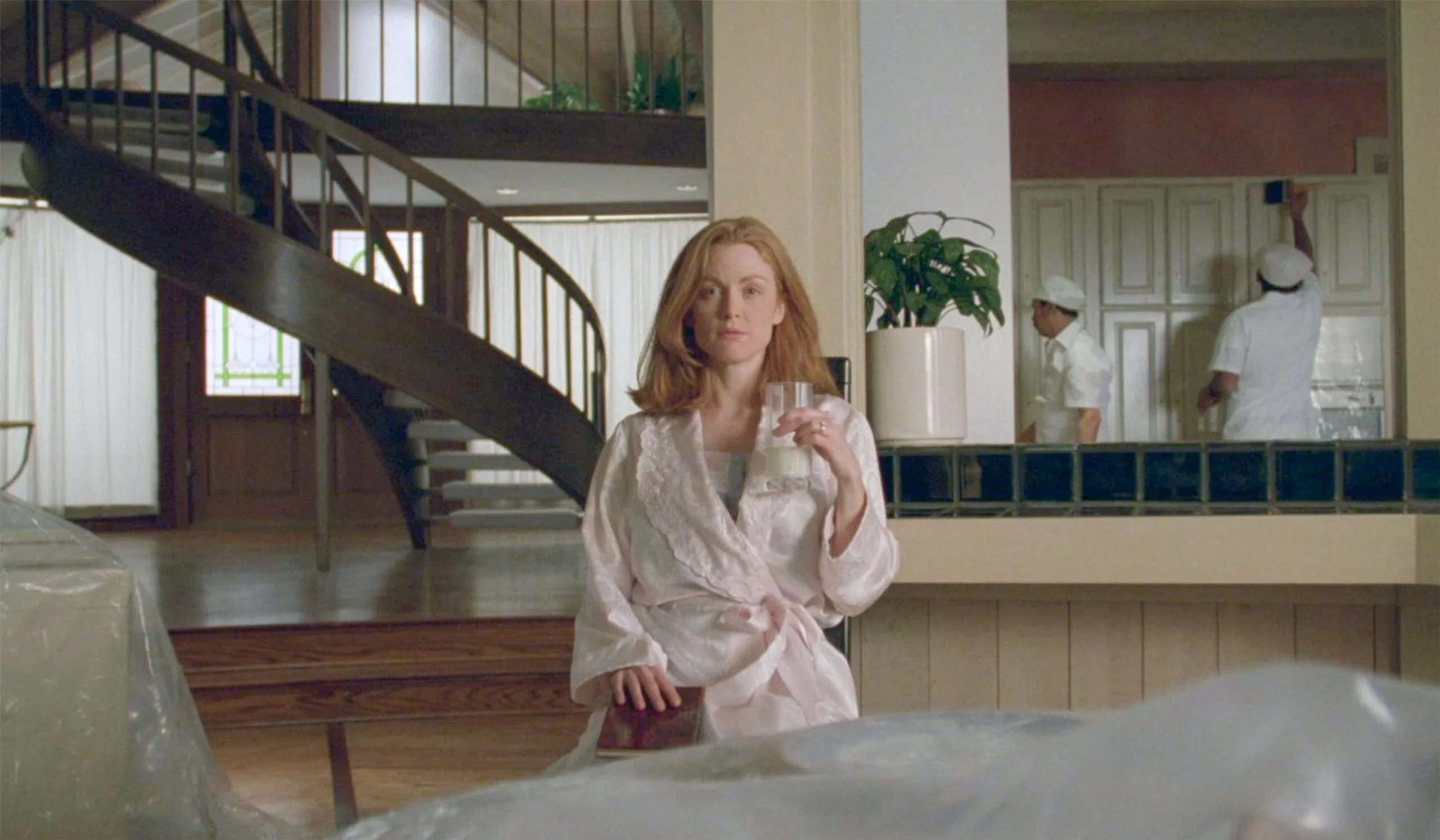
His 2002 masterpiece, Far from Heaven, is the clearest example of this project. The film is obviously in direct conversation with Sirk’s All That Heaven Allows (1955). But Haynes’s film is more than a remake; it’s a critical expansion. It uses Sirk’s template to confront 1950s taboos with a modern frankness. Where Sirk’s film was about a scandalous romance between an older widow and her younger, working-class gardener, Haynes introduces the previously taboo subjects of race and sexuality.
In Far from Heaven, the seemingly perfect husband, Frank Whitaker (Dennis Quaid), is a closeted gay man. This is a direct comment on the life of Rock Hudson, the star of All That Heaven Allows, who had to hide his own homosexuality. At the same time, the film changes the original’s class-based romance into an interracial one. The heroine, Cathy Whitaker (Julianne Moore), finds comfort with her Black gardener, Raymond Deagan (Dennis Haysbert). This introduces a racial conflict that 1950s Hollywood could never have shown so openly.
This bold theme is backed up by an incredibly strict visual style. Cinematographer Edward Lachman has described the painstaking process of recreating the look of 1950s Technicolor, using period-appropriate lighting and old-fashioned lenses. The goal, Lachman said, was to test Haynes’s core idea: could the social critique hidden in Sirk’s style—where the “beauty that surrounds the characters’ lives becomes their repression”—still connect with a modern audience? The answer was yes. The result is a film in which every saturated color, every perfect camera angle, and every soaring musical note carries the heavy weight of social meaning.
The film’s obvious artificiality begs to be seen through a postmodern lens. Some theorists, like Fredric Jameson, have called this kind of imitation a “blank parody,” an “empty” and “ahistorical” style. But Haynes’s work is far more complex. It creates what scholar Amelia DeFalco calls a “double-edged longing that realizes and embraces the illusion of its own object.” The film isn’t nostalgic for the real 1950s; it’s nostalgic for the movies about the 1950s.
As theorist Linda Hutcheon argues, this kind of irony puts its source in “inverted commas.” It both uses and subverts the old-fashioned style. The hyper-stylization doesn’t hide history; it reveals ideology. The “obvious artificiality of the sets, costumes, facial expressions… points to the constructedness of the underlying social structure.” By showing that the “perfect” suburban world is a movie-made fantasy, Haynes suggests that the social rules of racism, sexism, and homophobia are also just social constructions made by humans, systems of power that can be questioned and taken apart.
The American Uncanny: David Lynch and the Surrealist Subconscious
If Todd Haynes digs up the American Dream through its film history, David Lynch tunnels into its psychological roots. His film universe is defined by a unique style we call “Lynchian.” This term describes a specific strategy: making the familiar feel deeply strange. This is close to Sigmund Freud’s concept of the “uncanny,” or das Unheimliche, literally, the “unhomely.” Lynch peels back the “mask of this idyllic Americana” to reveal a churning, irrational subconscious where desire, violence, and the grotesque burst into the everyday world.
The “Lynchian” style is a powerful mix, a blend of the “incredibly grotesque” with the “incredibly mundane” that creates “a constant feeling of unease.” This is a uniquely American kind of surrealism. It’s not abstract; it’s built “entirely from American materials and archetypes.” His films are soaked in 1950s imagery: James Dean haircuts, Roy Orbison songs, and the clean surfaces of new suburbs. Lynch has said he loves the work of Norman Rockwell and Edward Hopper, artists who “see a certain thing, and they catch it.” Lynch’s genius is finding the surreal inside this all-American imagery, not outside it.
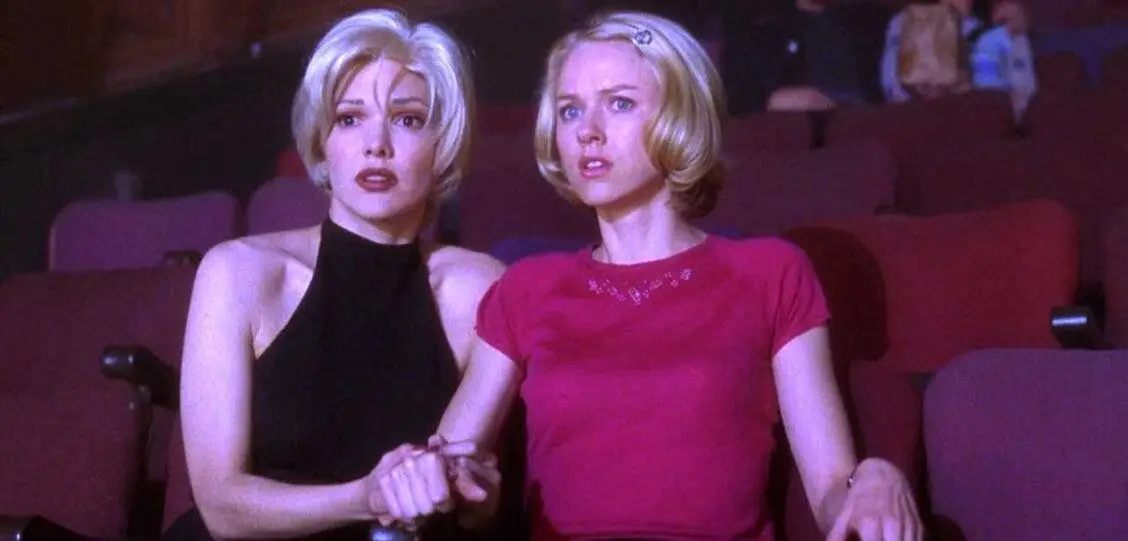
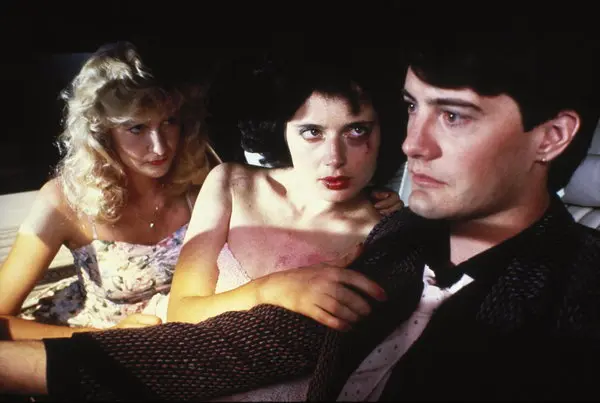
He filters this project through the rules of film noir. Noir gives Lynch a basic “sensibility: You look under the surface… and there’s this corruption.” Many of his films, like Blue Velvet and Mulholland Drive, are built around a mystery. But Lynch turns these plots into journeys of the mind. The detective isn’t just investigating a crime; he’s investigating the dark corners of himself and our collective unconscious. This mix of noir and surrealism creates the uncanny effect. The familiar world is just a thin layer over a chaotic, dream-like reality.
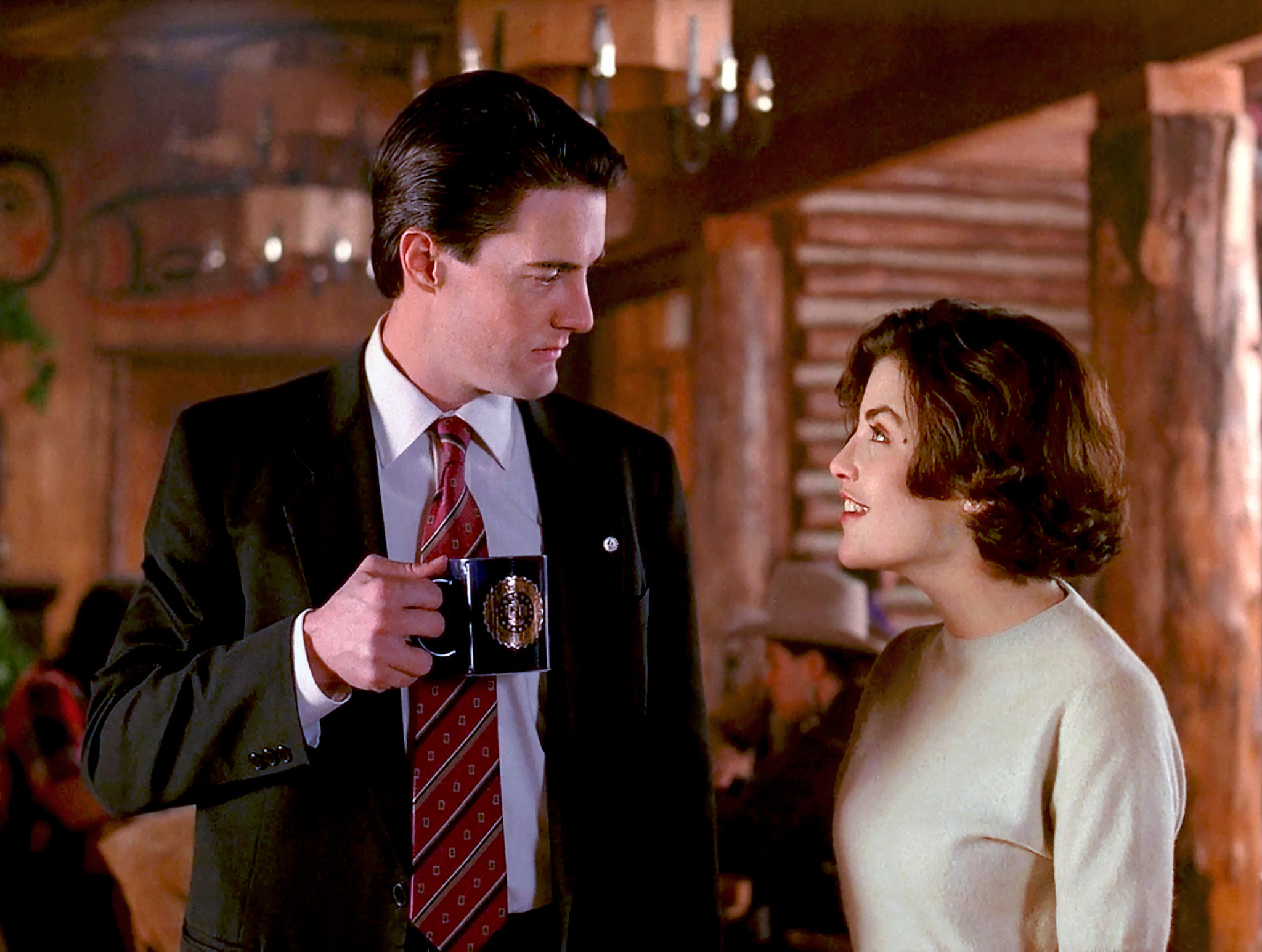
Blue Velvet (1986) and the TV series Twin Peaks (1990-91, 2017) are perfect examples. The opening of Blue Velvet is a visual mission statement for his entire career. It starts with perfect, Rockwell-esque images: white picket fences, bright red roses, a friendly fireman. This perfection is suddenly broken when a man watering his lawn has a stroke. The camera then pushes past the surface, diving deep into the green grass to show a chaotic, writhing mass of insects; a clear metaphor for the violent, primal world just beneath the calm surface.
Twin Peaks applies this critique to a whole town. The town, with its charming diners and “damn fine coffee,” seems like a wholesome American archetype. But this quaint exterior is a parasitic host for a list of horrors: rape and murder, incest, kidnapping, and arson. The show’s structure, both murder-mystery and soap opera, is key. Lynch uses the familiar, even silly, tropes of a soap opera as a vehicle to explore deep and disturbing themes of trauma, grief, and supernatural evil. The critique is psychological: the “evil comes from within.”
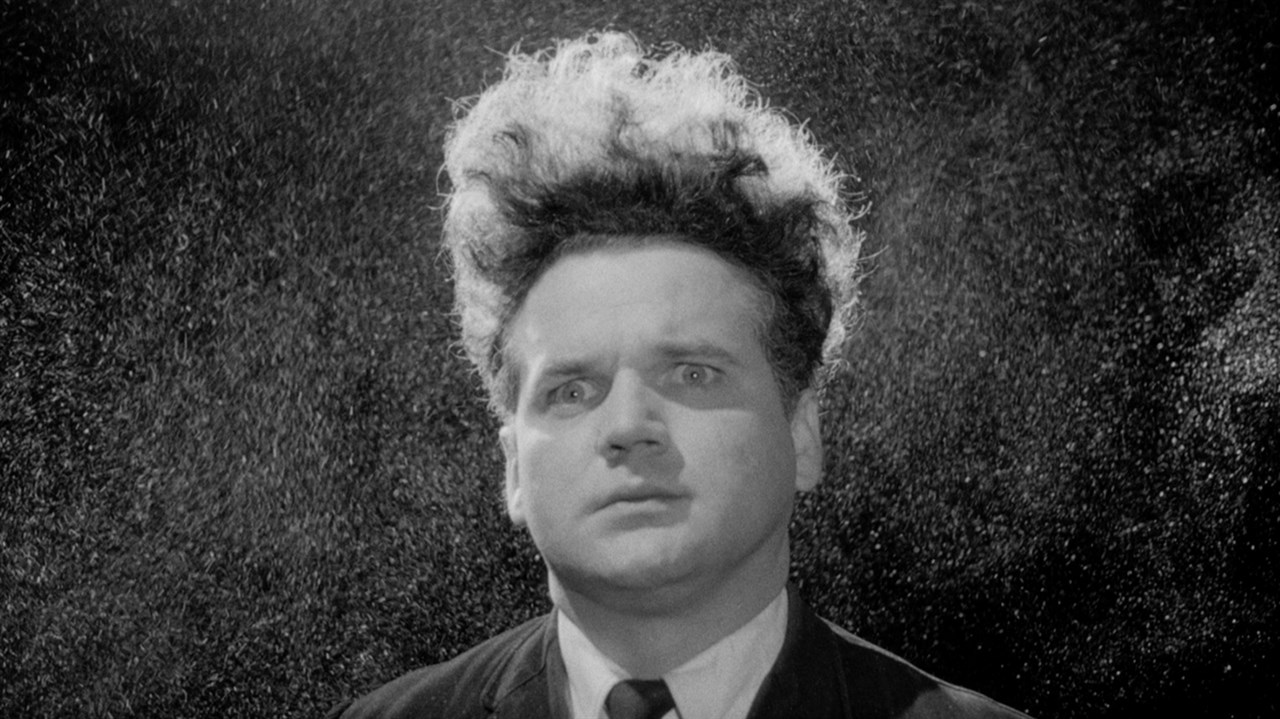
Central to this style is Lynch’s fascination with the grotesque, especially the human body. His first feature, Eraserhead (1977), is a landmark of “body horror” and explores what scholar Mikhail Bakhtin called “grotesque realism.” Lynch’s camera focuses on the “deformed and ‘monstrous’ body,” ignoring its “closed, smooth… surface” and instead showing its “orifices” and “inner features… blood, bowels, heart.” This isn’t just for shock. It’s part of his worldview, which swings between the horrific and the sublime, merging “the grotesque with the beautiful.”
This all leads to a powerful critique of the idea of “home.” The very spaces that should be the most comforting – the suburban house, the nuclear family – are, in Lynch’s films, the source of the deepest horror. The uncanny isn’t an intruder. It is the repressed truth of the domestic sphere, the “unhomely” reality at the very heart of the American home.
The Corrupted Garden: A Comparative Critique of the Suburb
The American suburb, that powerful symbol of post-war prosperity, is a shared battleground for Haynes and Lynch. In Far from Heaven and Blue Velvet, both directors use the 1950s suburb as a hotbed for trauma. They turn what Douglas Sirk called a “storybook-pretty but socially arid prison of conformity” into a place of deep crisis. Both films agree that the “American dream contains within it the American nightmare,” but they reach this conclusion from different directions. Haynes finds the sickness in the rigid social codes (racism, homophobia) that crush people from the outside in. Lynch finds it in the primal, violent urges that burst up from the subconscious, from the inside out.
Haynes’s suburb is a world of surfaces you can’t ignore. Filmed in the oversaturated Technicolor of a Sirk melodrama, his Hartford, Connecticut, is almost impossibly beautiful. The horror is the oppressive perfection of the image. The flawless homes and vibrant colors are the tools of a “profound social sickness,” the crushing weight of social expectation.
Lynch’s suburb, by contrast, is a lie. His Lumberton, North Carolina, is shot like a film noir, where deep shadows are always threatening to swallow the sunny surfaces. The horror isn’t what you see; it’s what’s hidden. For Haynes, the surface is the prison. For Lynch, the surface hides the prison.
This points to a key difference: Haynes’s critique is sociological, while Lynch’s is psychoanalytic. In Far from Heaven, the trauma is social. The characters suffer because they crash into the “mores of the era.” The evil is systemic, collective, and enforced by the community. In Blue Velvet, the trauma is psychological and primal. The hero’s journey is a dark initiation into a world of sexual violence and sadism. The “evil” is an eruption of the id.
Their main characters show this difference clearly. Cathy Whitaker in Far from Heaven is a classic victim-heroine, a figure of pity. Jeffrey Beaumont in Blue Velvet is a voyeur, an active explorer who is both repulsed and drawn to the darkness he finds.
Aesthetic Bleed: The Uncanny in Haynes, The Melodramatic in Lynch
While these labels are useful, just calling Haynes “social” and Lynch “psychological” doesn’t tell the whole story. A closer look shows a significant bleed or crossover between them. There are moments when Haynes explores the uncanny, and moments where Lynch relies heavily on melodrama.
Todd Haynes’s 1995 film Safe is a great example. It’s a “tale of suburban body horror” that feels closer to Lynch or David Cronenberg. The film follows Carol White (Julianne Moore), a wealthy housewife who develops a mysterious “environmental illness.” Haynes films her sterile world with a clinical distance, using wide shots that make her look tiny and lost in her own home.
The film’s power is in its ambiguity. Carol’s illness, which causes violent physical reactions to everyday chemicals, is a deeply unsettling affliction. It blurs the line between her body and her environment. It’s as if her toxic suburban life is literally poisoning her. The film never gives a clear diagnosis, leaving us to wonder if the sickness is physical, mental, or both. As one analysis notes, Safe understands that the “most oppressive horrors are the ones that we generate from within.” Here, Haynes shows that the repressive social environment doesn’t just cause emotional pain, it can physically manifest as a terrifying, uncanny sickness.
On the reverse side, Lynch’s Twin Peaks is built on the foundations of melodrama and the soap opera. The show is “equal parts murder mystery and soap opera,” filled with classic melodramatic tropes: dark family secrets, forbidden loves, and the suffering of its female characters. The over-the-top emotional outbursts from its characters create a constant tension between absurdity and real, gut-wrenching pain, a core feature of melodrama.
Lynch’s genius is using these “low culture” forms as a Trojan horse. The familiar, comforting structure of a soap opera grounds the show’s most bizarre, surreal, and horrifying moments. This makes their intrusion even more disturbing. By hiding his supernatural horror inside a primetime soap, Lynch suggests that the extreme passions and hidden traumas of melodrama aren’t a distortion of reality, they are a more accurate map of the psychic turmoil bubbling just beneath the surface of American life.
This crossover is a key point. The unifying element for both directors is the human body as the ultimate site of critique. In Safe, the social environment becomes a pathogen that sickens Carol’s body. In Twin Peaks, deep psychological trauma results in the brutal destruction of Laura Palmer’s body. For both filmmakers, the abstract critique is made real and physical through the suffering of the human body.
A Shared Lineage: The Subversive Inheritance of Sirk and Fassbinder
The parallel critiques of Haynes and Lynch aren’t a coincidence. They are part of a shared artistic family tree. Their work is built on a line of subversive filmmaking that runs from mainstream Hollywood to radical European art cinema, starting with Douglas Sirk.
Sirk’s 1950s melodramas are a core inspiration for both. A leftist German intellectual who fled the Nazis, Sirk directed Technicolor “weepies” for American studios. From within this system, he developed a deeply sardonic style, offering an “ironic and at times surreal refraction of the American self image.” He turned the idealized suburb into a “prison of conformity,” using “exaggerated sets… painted in unreal hues” to show his characters’ inner turmoil.
The influence on Haynes is direct. Lynch’s debt is less direct, but just as deep. Lynch inherits Sirk’s profound sense of irony and his use of “kitsch.” Sirk himself said his beautiful, flower-filled sets were “tombs, mausoleums filled with the corpses of plants,” symbolizing the spiritual death of the middle class. This use of glossy surfaces to signal inner rot is a core principle of the Lynchian style.
If Sirk provided the source code, the German director Rainer Werner Fassbinder was the revolutionary programmer who unlocked its most radical power. Fassbinder is a central influence on Haynes. He showed that the power dynamics in domestic relationships were direct reflections of “historical and political structures.”
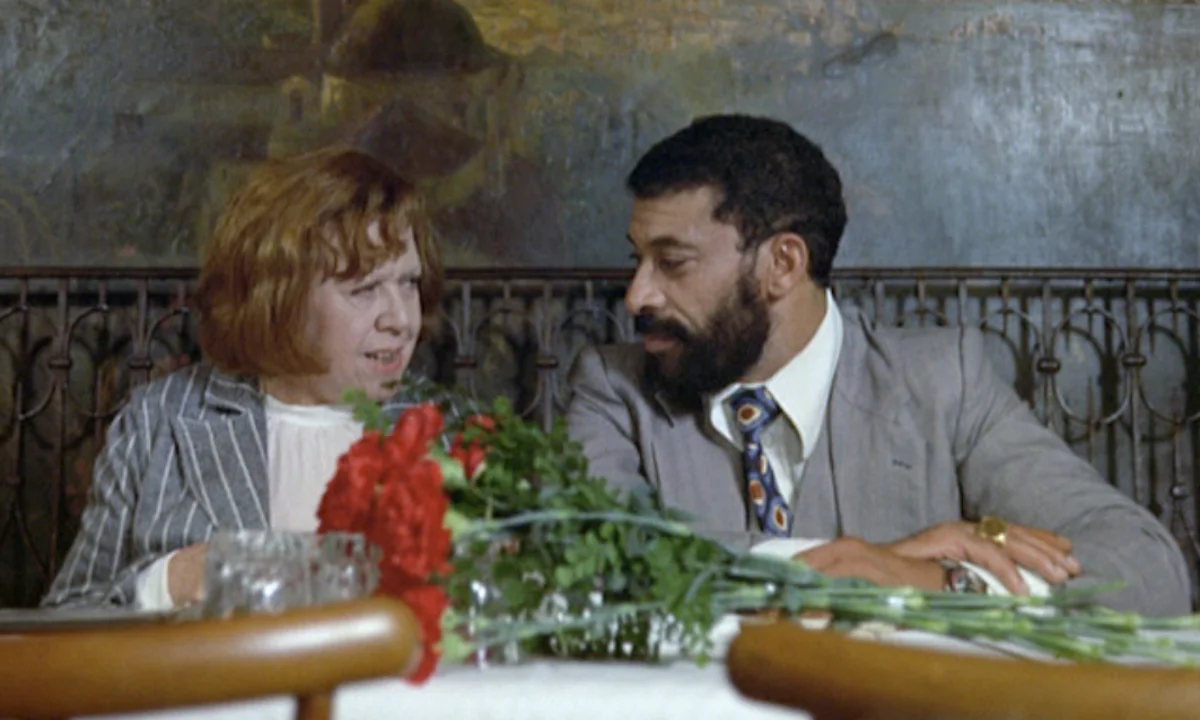
Fassbinder’s 1974 film Ali: Fear Eats the Soul is a key film in this chain. It’s a direct remake of Sirk’s All That Heaven Allows, but Fassbinder’s version is about a romance between an elderly German woman and a younger Moroccan immigrant worker. This film was the direct model for Haynes’s own Far from Heaven.
The connection between Fassbinder and Lynch is more about similar themes and feelings. Critics have noted their shared fascination with mystery and the “nightmarish” qualities of human relationships. Fassbinder, influenced by the playwright Bertolt Brecht, often used techniques to create a critical distance. This idea of using form to make the audience think, rather than just feel, provides a useful link between Haynes’s self-aware imitations and Lynch’s unsettling irony.
Sirk’s critique had to be hidden. Fassbinder took that hidden critique and made it loud, radical, and political. He legitimized the use of degraded popular genres (like melodrama) for serious artistic and political work. He paved the way for filmmakers like Haynes and validated the strange, complex experiments of an auteur like Lynch.
Filming the Dream’s Collapse
The cinematic worlds of Todd Haynes and David Lynch, though they look different, arrive at the same powerful conclusion: the American Dream is not a reality to be filmed, but a fantasy to be taken apart. Their work argues that the sicknesses of American life can’t be captured with realism. Instead, they turn to styles often dismissed as “too much”; melodrama’s high emotions and surrealism’s irrational logic. They show that these are actually the most precise and truthful ways to articulate the nation’s deepest anxieties. They expose the American Dream as a fragile story, a postmodern simulation built on a cracked foundation of social and psychological repression.
Their critiques are postmodern. They reject a single grand narrative of truth. Instead, they focus on how our idea of America is a mediated reality, built from all the other images and films we’ve ever seen. Haynes’s Far from Heaven is not a film about the 1950s so much as it is a film about films about the 1950s. Lynch’s work does the same, blurring the lines between dream, memory, and media to suggest a “hyperreality” where the copy has become more real than the original.
Haynes’s melodramatic mirror reflects the elegant, cruel surfaces of American society. Lynch’s surrealist nightmare gives shape to the darkness that this polished society tries to bury. But these are not opposing visions. They are two reflections of the same truth. The crossover between their work– Haynes’s body horror in Safe, Lynch’s soap opera in Twin Peaks– proves their shared belief that the social and the psychological are one and the same.In the end, the most powerful critique Haynes and Lynch offer is that the dream and the nightmare are not opposites. The nightmare is the dream’s subconscious. The melodrama is the emotional truth of the dream’s spectacular failure. Their films don’t just show the death of the American Dream; they perform an autopsy on it, revealing its true, terrifying, and often tragically beautiful nature.
Synopsis:A spirit possesses a vacuum cleaner, causing many consequences.
If you’ve seen Josh Safdie’s Marty Supreme, you probably remember the line, “When you see this woman act, you’ll feel like you got your c*ck sucked by a vacuum cleaner!” If you ever wondered what that felt like, you should watch Ratchapoom Boonbunchachoke’s directorial debut ,A Useful Ghost, in which the spirit of a dead wife possesses a vacuum cleaner and, yes, does what the aforementioned quote says. If you think I’m spoiling something from this certifiably insane movie, don’t worry – I’ve barely scratched the surface. This is one of those audacious productions where you’re either fully on board with it or will check out as soon as you see the spirit of a dead person being reincarnated inside a household appliance.
For me, I had a relatively mixed experience watching Boonbunchachoke’s Fierté Montréal-award winning ghost comedy, which starts out as a purely pleasurable, almost mad genre film with such mordantly-timed humor it’s almost impossible to resist falling in love with what the Thai filmmaker proposes. The first half of the movie is a total laugh riot, where this writer almost fell off his chair multiple times because he was laughing so hard. It is bizarre, sure, but the profound humanity at the heart of this otherworldly story felt incredibly tangible, and the core relationship the film tracks, between March (Witsarut Himmarat) and ghost Nat (Davika Hoorne) is so textured that it’s not hard to fall in love between the two characters.
There’s a study of grief at the middle of Boonbunchachoke’s screenplay that’s profoundly affecting, especially as one contrasts March’s relationship with his vacuum as a sort of memento with “sentimental value” that carries the soul of her deceased wife. Many who cope with the loss of a loved one will sometimes keep frivolous objects, with no monetary value, for themselves because it carries a personal history to them and reminds them of the people that were a part of their lives before they moved on to another plane of existence. March does things with the vacuum that may put him in jail, but who can blame him when the spirit of his wife is intrinsically attached to the object and just won’t disappear?
These questions that lie within A Useful Ghost are intriguing and sets the stage for a movie that explores what it means to be a human in a world that feels less grounded in reality by the day. Plus the comedy is very funny – calm, peaceful monks swearing at the sight of the ghost? C’mon, this is typical fantasy slapstick, and it works to brilliant effect in Boonbunchachoke’s genre hybrid.
The relationship between March and Nat is also well-developed, with the pair giving performances of great sensitivity, especially in the film’s latter half, where they ruminate on their own existence – and mortality – as they face a planet they don’t understand. The back half of the movie is also where A Useful Ghost began to lose me, turning the impeccably-timed (and often caustic) comedy into a rightfully angry political satire that, unfortunately, undoes a lot of the strong character work of the first half in favor of a wild ending that will certainly have lots of people talking, but whose emotional impact is stunted by blunt provocation.
Boonbunchachoke has a lot (perhaps too much) on his mind, and I doubt many will disagree with what he says. However, the approach chosen feels like a massive departure from what its former half had acclimated the audience to, especially as the story moves into more comedic territory. Ditching this halfway through and extending the runtime to near interminable lengths doesn’t seem like the right move when A Useful Ghost has already built so much momentum before losing most of it altogether. There are scenes in the second part of the film that will undoubtedly get people talking (one, in particular, is so wild it makes everything in Jerry Zucker’s Ghost look like small potatoes in comparison), but is it only because of how provocative they are?
There is some wild stuff in this that is too good to be kept secret, but after the effect of being bemused by what’s on screen wears off, you’re left with the odd sense that this project feels incomplete and that the screwball ghost comedy was a far more intriguing aspect than the political satire. It is still an admirable effort and sets Ratchapoom Boonbunchachoke as a filmmaker to watch as he makes his next move. However, the overall result of a film with such an insane premise should be far better (and more memorable) than what it sadly ends up being. Though if you wanted to see someone getting his private parts sucked by a vacuum cleaner, boy, do I have the movie for you…
On this episode of Chasing the Gold, Shadan is joined by Robert Licuria to discuss their final Oscar nomination predictions for the 2026 Academy Awards! It’s that time of the year where things are getting hectic with lots of discussion of who makes and who doesn’t, and what will be the next Best Picture winner? Well, later this week we get one step closer to Oscar glory as we hear this year’s Oscar nominations. So here are our final predictions and what we expect to see!
Check out this week’s show and let us know what you think in the comment section. Thanks for listening and for supporting the InSession Film Podcast!
Director: Joe Carnahan Writers: Joe Carnahan, Michael McGrale Stars: Matt Damon, Ben Affleck, Steven Yeun
Synopsis: A group of Miami cops discovers a stash of millions in cash, leading to distrust as outsiders learn about the huge seizure, making them question who to rely on.
The Rip takes the action film, a genre that will always be classic Americana and gleefully overloads it with antiheroes, leaving you to question who’s good, who’s bad, and whether that line between hero and villain even exists anymore. Especially in today’s world, where we are begging for heroes, actively seeking them out, and craving genuine conviction, we are, as Aaron Sorkin would say, so thirsty for it that we’ll crawl through the desert toward a mirage and drink the sand.
Yes, the world needs heroes, and Netflix’s The Rip delivers them.
The story follows Matt Damon as Lieutenant Dane Dumars (Matt Damon), who leads a team in Miami’s Narcotics Unit. Their division is being put under the microscope when a rumor makes the rounds of “inside heist teams,” where cops play robbers and steal money from illegal drug stash houses across the city. While talking to the Major (Néstor Carbonell), Dane’s team is interviewed, including his hothead second in command, JD (Ben Affleck).
The team is under professional and personal stress, and after the film’s opening scene, we learn why. A member of their team, Jackie (Lina Esco), is murdered in cold blood on Magic City’s humid, rainy night, and they have no clue why. JD, who has a hush-hush relationship with Jackie, is masking his pain. Numa (A Thousand and One’s Teyana Taylor) and Lola (Maria Full of Grace’s Catalina Sandino Moreno) are having trouble making ends meet. Mike (Minari’s Steven Yeun) is constantly in his lieutenant’s ear about unpaid overtime.
It also doesn’t help that Matty (Kyle Chandler), a local DEA agent, is always flaunting the uncapped pay the Feds allow, while Dane’s team works for free, beyond the normal nine-to-five. That’s the carrot the audience is given, so here comes the stick: Dane gets a tip from Crime Stoppers that there’s a couple of hundred thousand dollars in a downtown stash house. He gathers his troops, and they charm their way into Desi’s (The Flash’s Sasha Calle) home, where they discover over twenty million dollars—and supervision in sight.
The Rip is from Joe Carnahan (The Grey), who rose to prominence with the 2002 Jason Patric and Ray Liotta crime classic Narc. It may have taken some years, but Carnahan has found his way back to what he does best: telling crime stories through interesting lenses and making conventional plot devices feel new again. (Do yourself a favor and book a double feature with this and his 2022 pulpy homage to ’70s crime films, Copshop, an honorable mention on our esteemed Editor-in-Chief David Giannini’s Best Films of 2021 list.)
For one, Carnahan uses tension, tone, and pace as creative weapons. Now, yes, The Rip is much more of a straight genre picture than he has made in a while. However, there is a velocity to the scenes that zip by in a way you can’t quite put your finger on. Watching it back, even moments where the FBI is interrogating Damon’s Dane’s team carry an organic urgency that feels infectious. That’s because his script rarely gives way to exposition that overstays its welcome.
Scenes with Damon and Affleck at each other’s throats feel dangerous, fast, and unstable. While the third act comes together a bit too cleanly, the familiar crime clichés are played with a clever wink and nod to the audience, showing an awareness of plot holes the rest of us would normally question. Yes, seasoned cinephiles will likely spot the main villain a mile away. Yet the tension and tone built through clever plotting will keep most genre fans on the edge of their seats for most of the film.
There are a few details that drag down the picture, like communication with drug cartels, which I found laughable. In addition, when they reveal Jackie’s killer in the third act, they do it in a flashback. The criminal takes off their mask and walks away, as if there were no cameras on every street corner or in the parking lot filled with cars. I mean, have Damon, Affleck, and Carnahan never watched an episode of true crime where CCTV solves more murders than Columbo?
Yes, The Rip is worth watching because it is a smart, popcorn-style streaming film that takes a thoughtful approach to a standard story. (The real-life story it is based on, the real-life Miami River Cops scandal, is bonkers and begging to be made into a feature.) An excellent cast does lift the material, but the story, the devices, and the tension make the picture gripping enough to recommend… and to be thankful for cinematic heroes, since we lack so many at the moment.
You can stream The Rip exclusively on Netflix starting January 16th!
Director:Benedict Sanderson Stars: Elizabeth Smart, John Stable
Synopsis: Elizabeth Smart recounts her kidnapping at age 14 from her Utah home through personal testimony and exclusive footage.
Netflix’s Kidnapped: Elizabeth Smart approaches one of the most widely reported abduction cases of the early 2000s with power and poise. The documentary doesn’t just retell what viewers may already know, but interrogates how such stories are remembered.
Elizabeth Smart was fourteen years old when she was taken from her home in Salt Lake City in 2002, a crime that sparked a nationwide search and months of intense media coverage. Her eventual recovery was widely framed as a miracle, a narrative that offered closure for the public even as it simplified the reality of what survival actually entails. Kidnapped: Elizabeth Smart pushes back against that simplification. Due to the victim being alive, this documentary can shift its perspective on the psychological and emotional aftermath rather than focus solely on the investigation and trial.
Where many true-crime films rely on escalating tension and procedural suspense, Kidnapped adopts a quieter, more reflective rhythm. Never-before-seen archival news footage, family recordings, and present-day interviews are woven together, allowing the weight of events to surface gradually. There’s a look into the Mormon community (being so tight-knit), and how this affected them, as, in most kidnapping cases, the perpetrator is someone the victim knows. There were suspicions that the kidnapping was staged, and the documentary talks you through the investigation, carefully and clearly.
There are first-class interviews with police, investigators, family members (including her father, who was a suspect and they explain why – especially when he’s describing the experience as ‘wonderful’ in a way), and media experts, all of which give detailed accounts and their experiences through this investigation. Mary-Katherine, Elizabeth’s sister, is central to the documentary by recalling what she remembered that night her sister went missing.
Elizabeth Smart’s presence anchors the documentary in perspective. Her reflections are thoughtful and often analytical. Her story is a reminder that lived experience rarely conforms to the emotional arcs imposed by media storytelling. She recalls her kidnapping, gently and with purpose. What happened is chilling; kidnapped and forced to be married, raped, and chained up by a man she describes as looking like ‘Rasputin,’ who claimed to be a ‘man of God.’ God apparently told this man he needed to kidnap and marry seven girls, and he threatened to take her sister and cousin. Changing her looks, keeping her quiet by threats, it took months for the police to find Elizabeth Smart.
In later sections, the documentary explores Smart’s efforts to rebuild her life and advocate for others. The court case took over ten years, and certain institutional failures and systemic oversights are acknowledged but not fully interrogated, leaving the critique more implicit than confrontational. A deeper examination of accountability could have sharpened the documentary’s broader social impact. Still, this limitation does not undermine the integrity of its central focus.
The filmmakers are also attentive to the role of media in shaping public perception. The media response to this kidnapping was massive, and news broadcasts from the early 2000s are revisited with a critical eye, revealing how quickly speculation and certainty can outpace understanding. The documentary is eye-opening by showing the perspective of survivors who must contend with a version of their story that no longer belongs to them. So it is heartwarming to see Elizabeth Smart being able to build a life for herself and not be defined by this awful period in her life. To quote Elizabeth from an interview with Tudum, “I also hope it brings comfort that there are happy endings, and that even after terrible things happen, you can still have a wonderful life.”
Kidnapped: Elizabeth Smart is not an easy watch, nor is it meant to be. In shifting attention away from the crime and toward the person who survived it, Kidnapped: Elizabeth Smart challenges the conventions of true-crime storytelling and, in doing so, sets a higher standard for how stories of trauma are told. Netflix is off to a strong start this year, with this must-watch true-crime doc.