Director: Adam Bhala Lough
Stars: Adam Bhala Lough, Heidy Khlaaf, Divtendra Singh Jadoun
Synopsis: A filmmaker’s humorous journey into artificial intelligence leads to unexpected questions about humanity’s future and our relationship with emerging technology.
In Deepfaking Sam Altman, filmmaker Adam Bhala Lough turns a roadblock into a revelation. What begins as a straightforward attempt to interview one of the most influential figures in artificial intelligence becomes something far stranger, funnier, and ultimately more revealing. Unable to gain access to Sam Altman himself, Lough builds an AI stand-in from Altman’s public words, interviews, and appearances. The result is a documentary that feels less like a profile and more like a conversation with the cultural moment we’re currently trying to understand and navigate.
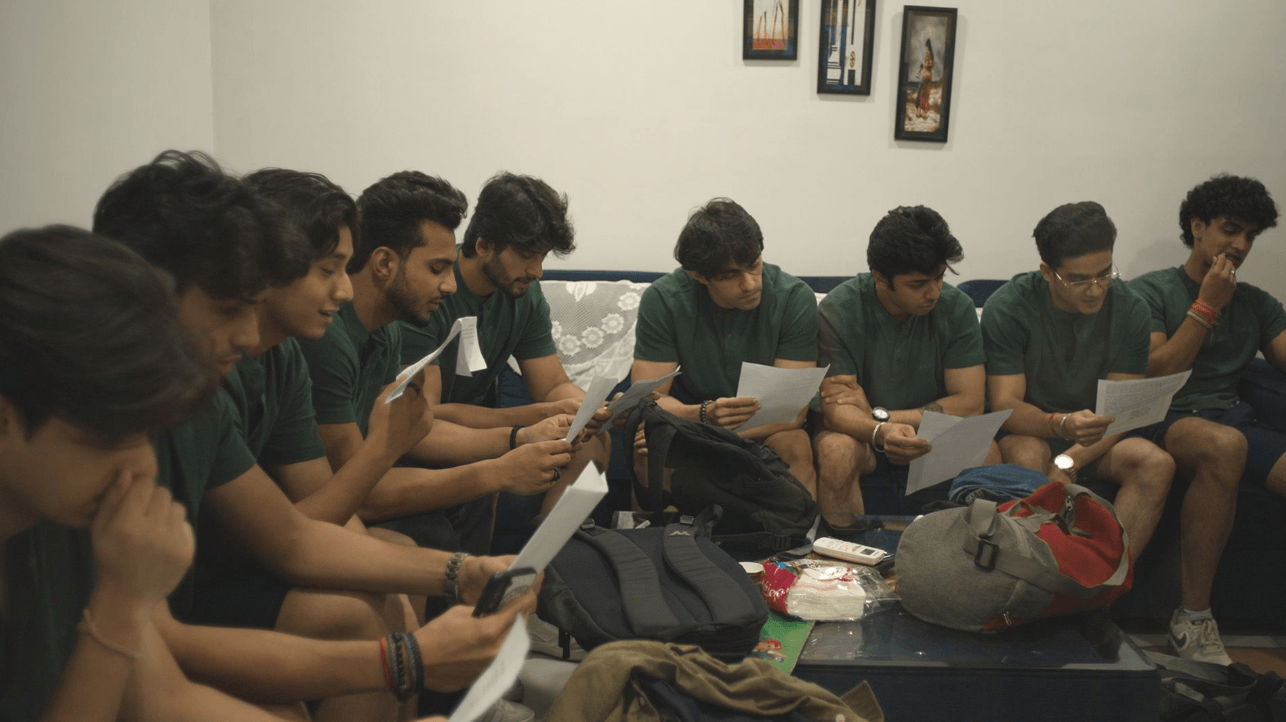
Premiering at SXSW 2025 and winning Best Documentary at the Chelsea Film Festival, Deepfaking Sam Altman positions itself at the intersection of verité filmmaking and speculative play. Produced in collaboration with Hartbeat and Vox Media Studios and inspired in part by reporting from New York Magazine, the film combines investigative curiosity with a distinctly self-aware sense of absurdity.
If you’re new to AI, Sam Altman is the face of it. Altman is the head of OpenAI, the company behind your online best friend, ChatGPT. Lough, previously known for HBO’s Telemarketers, brings his familiar blend of persistence and vulnerability to the project. His initial goal to understand the rapidly evolving AI landscape by speaking directly to one of its central architects is logical and in line with audiences wanting to learn more about AI and the people behind it. Every access attempt is rebuffed and becomes part of the film’s thesis: power in the AI age is often opaque, carefully managed, and frustratingly out of reach. Rather than stall, Lough reframes the question. If the human source won’t speak, what happens when the machine does? As well as trying to address all our natural fears around AI, especially when it comes to our careers.
Enter Sam Bot. Constructed from Altman’s public-facing digital footprint, the AI version is glitchy, oddly charming, and, at times, disconcertingly articulate. Through these exchanges, Deepfaking Sam Altman explores not just what AI can say, but what we are willing to hear from it. It verges on parody and a dystopian warning; it’s clever in allowing audiences to come to that conclusion themselves.
The tone is sharp and often very funny, but never flippant. The music is over-the-top, there’s plenty of footage from interviews, the news, protests, and online conversations to keep you invested and provoke conversation around your experiences and opinions of AI.
What I did enjoy was that throughout this investigation into OpenAI, they’re constantly using AI tools that have been available for years. Such as asking Siri when his last call was (he could easily look himself) and using a maps service in the car (we have road signs and physical maps available), showcasing how maybe our fears are a little irrational since we’re already using so many. Or, it’s highlighting how quickly AI tools become part of your everyday life.
What gives Deepfaking Sam Altman its emotional resonance is its focus on connection. Lough’s conversations with Sam Bot gradually shift from information-seeking to something more personal, even philosophical. The film begins to interrogate why we crave answers from singular figures in the first place, and what it means when those figures are replaced by simulations. In a world where public personas are increasingly curated and inaccessible, the artificial stand-in becomes, paradoxically, more available than the real thing. The SamBot showing a will to live was very unnerving as a viewer and heightened fears of what AI can grow into.
There is a nice balance between AI and seeing Lough’s personal life, from his children’s hamster being unwell to visiting his family in India. The contrast is showing why human connection is incredibly important and how our desires and natural ability to make connections are why we feel connected to AI.
Rather than offering definitive conclusions about the ethics or future of artificial intelligence, Deepfaking Sam Altman embraces uncertainty. It acknowledges the chaos of the current moment, where innovation outpaces understanding and authority often speaks through abstraction. In the end, Deepfaking Sam Altman is less about Sam Altman than it is about us; our desire for guidance, our comfort with proxies, and our willingness to engage with synthetic voices when human ones fall silent. It is a film that thinks in real time, asking not just where AI is taking us, but who we’re talking to along the way. Through a jokey, comfortable tone and real footage, this documentary makes for a very interesting and fun watch. Definitely for fans of documentaries, AI, and ethical dilemmas.