Home Blog Page 26

Classic Film Review: ‘Heat’ is the Ultimate Face-Off


Director: Michael Mann
Writer: Michael Mann
Stars: Al Pacino, Robert De Niro, Val Kilmer

Synopsis: A group of high-end professional thieves start to feel the heat from the LAPD when they unknowingly leave a verbal clue at their latest heist.


There are movies that are instant hits, become cult classics, or just fall flat on their face. In my opinion, Michael Mannโ€™s Heat is in that sweet spot of being an instant hit and a cult classic at the same time. Mann is a tactical and precise filmmaker. His filmography is stuffed full of action set pieces, tension from crimes being committed, and cinematography that brings you into the story like youโ€™re a character in the film. One of the huge positives about this movie is that itโ€™s not Michael Mann just playing the hits. Heโ€™s not recreating scenes from his older films with new actors. Even though this movie is a remake of Mannโ€™s short lived television series L.A. Takedown, he managed to change significant plot points in the story, change character names, and more. 

Our two main characters, Vincent Hanna (Al Pacino) and Neil McCauley (Robert De Niro), are on opposite sides of the law. Hanna is a robbery and homicide lieutenant in the LAPD and McCauley is a professional thief and the leader of his crew. Even though these two are complete opposites of one another they have more in common than they think. Their professions consume so much of their lives that they arenโ€™t able to have any real relationships outside of them. Hanna and McCauley are so focused on their objectives that their worlds outside of work are crumbling and crumbling down, day by day. Seeing these two actors finally come together on the big screen was really exhilarating. Luckily, they have an even better supporting cast that are just as important to the movie as they are. 

The other members of Neilโ€™s crew are Mike (Tom Sizemore), Gil (Danny Trejo), and the legendary, handsome, and nonchalant Val Kilmer as Chris Shiherlis, Neilโ€™s second in command. Chris is a quiet guy but heโ€™s very knowledgeable in just about every aspect of thievery. Heโ€™s married to a beautiful woman named Charlene (Ashley Judd) with whom he has a son named Dominick. Chris can be good at keeping business and family life separate but unfortunately heโ€™s a man that has a dangerous vice. Heโ€™s a gambling addict, so he is constantly taking his earnings from robberies and paying off his bookies. This brings strife to he and Charleneโ€™s relationship that is hanging on by a thread. Sheโ€™s unhappy with him still being a gambler and he feels unappreciated for the risks that he takes day in and day out as a professional thief. Chris continues to stick it out with Charlene but Neil feels like she is just another distraction. Neil lives by a saying that he heard from a guy in the joint, โ€œDon’t let yourself get attached to anything you are not willing to walk out on in 30 seconds flat if you feel the heat around the corner.” This is a very strong saying to live by but even Neil starts to get lonely and wants to have someone to be with. 

As the film goes on weโ€™re engrossed with the story between Vincent and Neil. The cat and mouse game between their crews/fellow officers is the meat and potatoes of the film. Whenever one crew is lacking the other crew is one upping them. At times, the dialogue between said characters can be dry but the chemistry that they all have together makes up for it. All of this comes to a head in the third act at Neilโ€™s final score with his crew at a local bank. High speed car chases, bullets flying, and emotions are high in this scene. After the final score weโ€™re driven down a road full of double crossing, jealousy, revenge, and comeuppance. Oh how would I have loved to have seen this in the theater. If they ever rerelease this movie in IMAX or Dolby Digital, I am going on the first weekend. 

Mannโ€™s style of filming his action scenes with realistic sounding gun shots and the complex dialogue between his characters are the reason why heโ€™s the big man of crime dramas. His sandbox is one that people want to play in because theyโ€™re going to be pushed to the best of their abilities. His style of directing and the writing brings out the best in just about every actor on his call sheet.  A lot of filmmakers have tried to duplicate what heโ€™s done and they havenโ€™t had the all around success rate that heโ€™s had. This movie is a crown jewel in the crime drama hall of fame. Luckily next on Mannโ€™s list we have Heat II, an adaptation of his novel that will serve as a sequel/prequel to this movie. There are little details available as of right now, but I know that I will continue to look at the movie news for more updates.

Grade: A

Movie Review (CIFF 2025): ‘The Plague’ Makes Us Reflect On the Horrors of Growing Up


Director: Charlie Polinger
Writer: Charlie Polinger
Stars: Joel Edgerton, Everett Blunck, Kayo Martin, Kenny Rasmussen

Synopsis: A socially awkward tween endures the ruthless hierarchy at a water polo camp, causing his anxiety to spiral into psychological turmoil over the summer.


As someone whoโ€™s statistically about a third of the way through his life (if Iโ€™m lucky), I can honestly say that Iโ€™d happily pass on the opportunity to revisit my youth. Thatโ€™s not to say there werenโ€™t great memories sprinkled along the way and friendships Iโ€™m incredibly thankful for. However, Iโ€™ve never been the kind of person to reminisce about the past with rose-colored glasses – not just because itโ€™s not healthy to think about the past too often, but because itโ€™s difficult to think back to the process of socialization itself. Itโ€™s difficult to think back on times when you tried so hard to be accepted by people who you wouldnโ€™t give a second glance at anymore. Itโ€™s uncomfortable sitting in moments where you thought you were making a good impression, only to be given weird looks or made the butt of ridicule. As someone who struggled fitting in or feeling accepted, revisiting youth can be a terrible ordeal. Despite eventually figuring it out and going on to be on Homecoming Court, youth remains a tumultuous subject.

Charlie Polingerโ€™s The Plague understands the hierarchical social structure that exists in middle school and dissects its toxicity with a tone that amplifies its internal pressures at every turn. Whether itโ€™s the duress of attempting to gain the approval of the head of an established group, or simply doing everything in oneโ€™s power to avoid ostracism, the conflicts in The Plague radiate authenticity. Polinger recognizes that being the monkey in the middle between the top and bottom of the food chain is an experience shared by most, and the collective harbored resentment boiling under the surface of his audience makes for a perfect setting for a coming of age thriller. Between its stellar cast of kids composed primarily of first-time actors, excellent understanding of tone, and a terrific Joel Edgerton at the center of the film to anchor its drama, The Plague is a surprisingly in-depth and timeless dissection of youthโ€™s inner-workings.


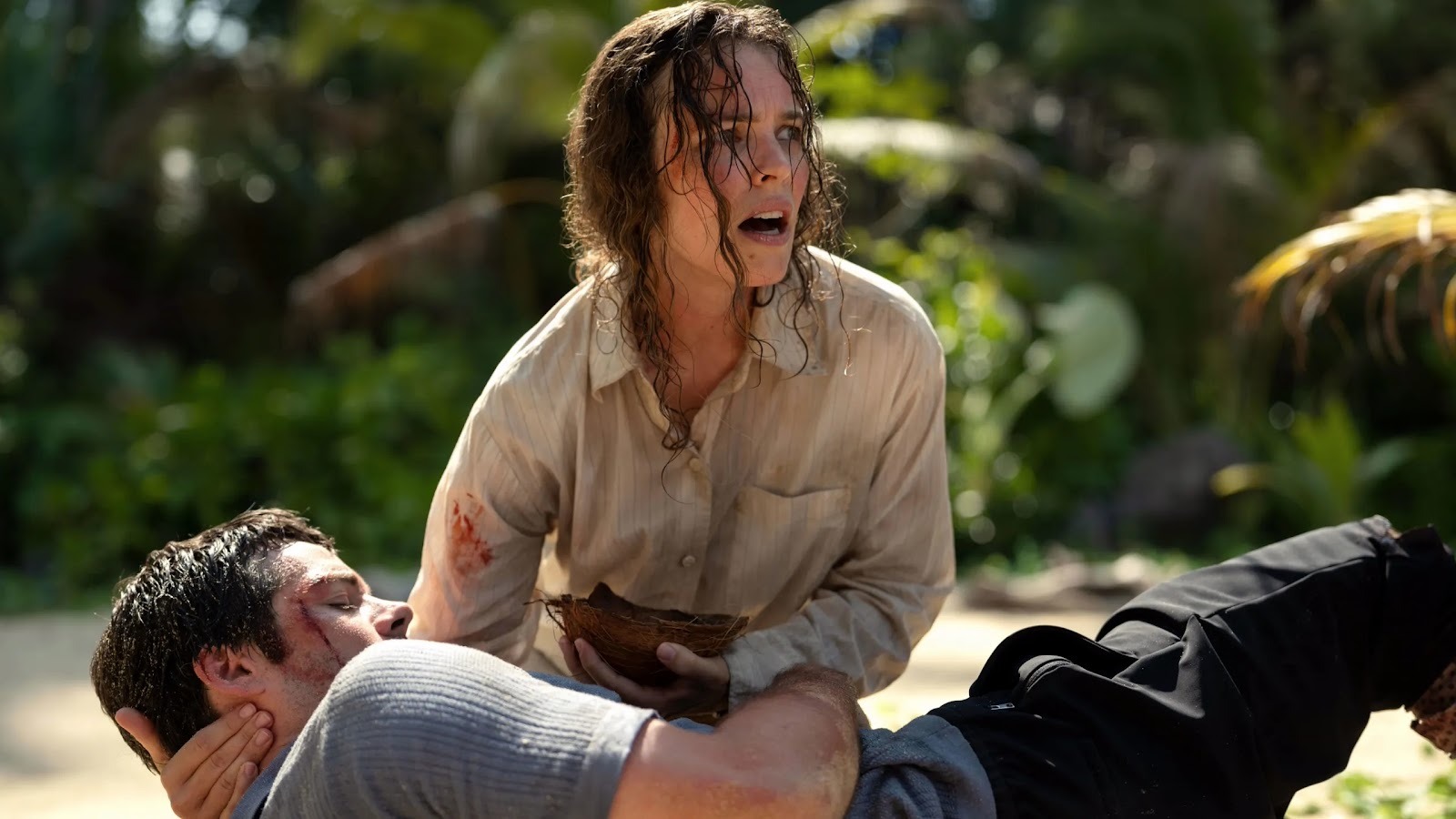
In a setup that could take place at any training camp in the world, The Plague follows a group of middle school-aged boys spending the summer at an all-boys water polo camp. While the filmโ€™s setting is unspecific, the film takes place in 2003, presumably to remove many of the technological advancements out of the equation to focus on the development of the characters themselves. Ben (Everett Blunck) is the latest to join the camp, a socially anxious newbie who doesnโ€™t quite know how to fit into the groupโ€™s established dynamics. At the top of the pecking order is Jake (Kayo Martin), who controls the room no matter whoโ€™s nearby with effortless confidence and a cynical sense of humor. At first, Ben begins to earn the respect of Jake (and the rest of the group in succession), adapting to the unspoken rules of how to behave and interact with his fellow polo teammates under the supervision of their coach โ€œDaddyโ€ Wags (Joel Edgerton). However, Eli (Kenny Rasmussen), the awkward black sheep of the group, struggles to fit in amongst his peers, though he really couldnโ€™t care less. Heโ€™s perfectly comfortable with who he is, even if he doesnโ€™t meet the standards of everyone around him. Despite his awkward qualities, the biggest reason for his exclusion is a skin-condition all over his body, causing large, red rashes that the rest of the team refers to as the titular โ€˜plagueโ€™. As the camp progresses over the summer and dynamics shift, Ben realizes that some hierarchies canโ€™t be changed.

The Plague is often at its best when it plays with the duality of its character relationships and discomforting thriller overtones. Itโ€™s one thing to hire a cast of young actors who actually are the ages theyโ€™re portraying, but for the actors to have believable chemistry and camaraderie is another aspect entirely, which the cast delivers effortlessly. Huge props are due to Polinger for writing and directing a film with a clear vision and admiration for portraying pre-teens with no-holds-barred honesty. The archetypes, while familiar, work in The Plague because theyโ€™re directly reflective of the personalities weโ€™ve collectively experienced in our own adolescence. As much as weโ€™d hate to admit it, we either knew these kids or were these kids ourselves, and the filmโ€™s admitted empathy and frustration for their plights is incredibly admirable in its execution. Additionally, the film is very memorable in tone, with a visual presentation and brooding color palate that suits it quite nicely. The comparisons to Full Metal Jacket and Stand by Me are inescapable, but somehow Polinger is able to assemble an atmosphere thatโ€™s well-connected with the vulnerability of youth. Whether or not someone directly relates to conflicts present in The Plague is irrelevant to appreciating the filmโ€™s execution. When Polinger relies on his audienceโ€™s sense of empathy and engagement with each charactersโ€™ turmoil, The Plague is about as successful as it gets.

Grade: B+

Women InSession: Halina Reijn & Bodies Bodies Bodies

This week on Women InSession, we discuss the great Dutch filmmaker Halina Reijn and her recent rise as a visionary filmmaker in the last few years! In particular, we discuss her 2022 horror-comedy Bodies Bodies Bodies and why it’s one of the more clever comedy-horror films of the decade so far.

Panel: Kristin Battestella, Megan Kearns, Julia Sirmons

On that note, check out this week’s show and let us know what you think in the comment section. Thanks for listening and for supporting the InSession Film Podcast!

Subscribe to our Podcasts RSS
Subscribe to our Podcasts on iTunes
Listen on Spotify
Listen on Stitcher
Women InSession – Halina Reijn & Bodies Bodies Bodies

Movie Review: ‘There Was, There Was Not’ Humanizes Women in War


Director: Emily Mkrtichian
Writer: Emily Mkrtichian
Stars: Sose Balasanyan, Gayane Hambardzumyan, Svetlana Harutunyan

Synopsis: Four women of Artsakh face war’s aftermath, build lives amid uncertainty until another war interrupts; some take arms, others flee as homeland faces ethnic cleansing and erasure.


This is, unquestionably, the year of documentaries. It features multiple emerging voices of documentarians, tackling various topics from wars to sexual identity and, more importantly, accounts of humans as they mess up their lives, make art, love, procreate, and die.

There Was, There Was Not is a story about land and women. But women are lands in their own right, fertile, giving, nurturing, but also requiring care. The problem with โ€œlandโ€ is that people tend to overlook the fact that it needs care and nurture to survive and sustain its giver nature. So when war strikes land, and when women are displaced and lose their sense of safety and belonging during wars, the core trait of what makes a land โ€œlandโ€ and a woman โ€œwomanโ€ is lost. 

Director Emily Mkrtichian paints a picture of a world destroyed, a painful concept that is not typically understood in the โ€œmodernโ€ Western mindset. It is the idea of nations erased from the earth, their homes and memories obliterated. The mere thought of their homeland existing only in storytelling, where they immerse themselves in a perfect image of what their countries could have been. 

The documentary showcases four Armenian women forced to live in a manufactured country called Artsakh, a country that lies in the Soviet Republic of Azerbaijan, even though it has an all-Armenian population. After a few wars, Armenia regained control of Artsakh, and it became an independent republic of the Armenian people. However, this temporary heaven vanishes after Azerbaijan starts another war on the make-belief republic, wanting to claim it as its own. Soon the faรงade of peace that these women thought they have lived in is shattered, and they find themselves a term โ€œwomen of warโ€. They no longer have their separate identities but collectively a single entity. The director excels in recording live footage of the war, and it looks scary from a personal angle up close. It gives the documentary a harrowing tone, especially with how late it comes in the film (after approximately 40 minutes of runtime).

Mkrtichian takes us on a magical journey with her through the lives of the women. Her choices are very niche and unique in that they are all strong, influential women who leave their mark on the Artsakh society, but itโ€™s a great way to highlight the contrast of the tragedy and how it affects how these women contribute to their community. War is usually the elephant in the room, those women have moved on with their lives and considered Artsakh home, but the mention of โ€œwarโ€ sneaks into their conversations in the slightest of ways. 

The director captures the smallest details that make these women seem less like heroes and more like familiar faces you might pass on the street. She removes the burden of having to be seen solely as subjects; a title that feels lifeless and based in hostility. We see Sosรฉ Balasanyan, the gold medal-winning judoka, holding her favorite plushie, activist Gayane Hambardzumyan preparing meals for her family after organizing meetings for battered women, and the politician Siranush Sargsyan dancing and chilling in a pub. Through these subtle details, Mkrtichian gradually draws us into a larger Armenian folk story, without neglecting her focus on the harsh realities of war. Instead, she weaves a patchwork of conglomerate truths that together reveal the lives of women in wartime.

There Was, There Was Not perfectly humanizes the stories of people who went to war and came back alive. It creates a realistic, if all-too-painful way to look at those wartorn nations, but through a microscopic lens that zooms in on individuals, rather than complete identities. The women of Artsakh are not simply a fairytale told at night before bed, or around the fire, but they are a saga of perseverance.

Grade: A

Movie Review: โ€˜Ella McCayโ€™ is a Disaster on Almost Every Level


Director: James L. Brooks
Writer: James L. Brooks
Stars: Emma Mackey, Jamie Lee Curtis, Jack Lowden

Synopsis: An idealistic young woman juggles her family and work life in a comedy about the people you love and how to survive them.


The most fascinating aspect of James L. Brooksโ€™ Ella McCay is how its style, from cinematographer Robert Elswit, plunges us into an era of comedies we no longer see, both on the big and small screen. Through a soft, but effective score by Hans Zimmer giving light notes to a movie that, on paper, doesnโ€™t want to take itself seriously too much, Elswitโ€™s photography reminds us of a time where all movies looked likeโ€ฆmovies, and not the digitized grey sludge weโ€™re all too used to seeing on any screen nowadays. Thereโ€™s actual depth of field, the colors are warm and inviting, and every actor in this star-studded ensemble looks like they are capital S movie stars. 

Itโ€™s a type of filmmaking that has sadly been glossed over for reasons I donโ€™t understand, and there was hope that Brooksโ€™ return to moviemaking, after 2010โ€™s How Yo Dou Know, would make audiences yearn for more smaller-scale comedies that look and feel like something you canโ€™t miss on the big screen. Sadly, Zimmerโ€™s score and Elswitโ€™s images are the only elements of note in what is otherwise one of the most disastrously conceived studio films Iโ€™ve seen to come out in my lifetime, one that gives ammunition to the โ€œcomedy on the big screen is deadโ€ crowd more than any other film released in the 2020s. Many will probably tell you that Brooksโ€™ writing is dated. Yet, even in the period Ella McCay is depicting (the Great Recession, specifically 2008), the movie somehow feels like itโ€™s been released 30 or so years too late and wouldโ€™ve done gangbusters at the box office in 1987.

With such an amazingly-mounted cast and an effervescent Emma Mackey in complete control of the camera as the filmโ€™s titular character, you would think that the movie would somehow be palpable enough to be at least watchable. Yet, Brooks genuinely has no idea what he wants to talk about, through alien dialogue exchanges that feel so caricatured that no actor, as talented as they may be, can perform with the texture and humanity of his previous directorial efforts. Thereโ€™s a moment or two where some characters will perform light gestures and movements that recall Brooks in his heyday, which are charming in their own right. Still, theyโ€™re sandwiched between overlong and drawn-out nonsense that one wonders if the guy who brought us Terms of Endearment, Broadcast News, and As Good As It Gets is truly behind the camera. 

And thank God he has Elswit cooking with gas, because his directing (alongside Tracey Wardmore-Smithโ€™s nonsensical cutting) is on autopilot. Brooksโ€™ writing is no longer sharp and incisive; itโ€™s cartoonishly dated and inert. The jokes never land, and always feel like they overstay their welcome when they werenโ€™t even funny the first time a character uttered them. Itโ€™s the cinematic equivalent of punching at dead air for two uninterrupted hours. In fact, one could rename this film Dead Air: The Movie because Brooks never devotes his focus to Ellaโ€™s journey of self-actualization. The premise of the movie sees the titular character become the Governor of an unnamed state and has to juggle the responsibilities of being married to a devoted husband (Jack Lowden), repairing the fractured relationship she has with her father (Woody Harrelson) ever since the death of her mother (Rebecca Hall, completely wasted), while also dealing with the pressures of becoming a female Governor who must get to work and actively enact laws that will benefit her state.

All of that is great, but the movie spends far too much time not making it the sole aspect of the picture and devoting its time to interminable sequences where characters throw punchlines at one another, without ever meaningfully developing who any of these people are. One such sequence sees Ellaโ€™s brother, Casey (Spike Fearn), ask his ex-girlfriend, Susan (Ayo Edebiri), for another shot, and it seemingly goes on much longer than you think. Brooks no longer possesses any sense of timing (which was his bread and butter, back in the day), nor does he know when the filmโ€™s lightly funny sections stop being so, because sections where the audience chuckles are immediately hampered by the same joke that gets repeatedly beaten to the point where we feel bad for having laughed the first time we heard it. Worse yet, none of the multiple storylines, which take up the bulk of the runtime, actively pay off or mean anything in the grander scheme of the film, nor do we learn anything about its protagonist. Sheโ€™s a governor who has to deal with a lot. By the end of the film, she screams with her Aunt Helen (Jamie Lee Curtis), but still has to deal with the same problems. Thereโ€™s no evolution. No cogent message. Just tedium.

The problems Brooks creates are trivial and uninteresting, and they bloat the story to the point where we have no idea why we should care about anyone on screen, even Aunt Helen, who is a constant source of affection and support for Ella after her mother passed away. There are sequences in which one thinks Brooks will do something to flesh out these familial relationships, but he always settles for comedic platitudes rather than making comedy an integral part of Ella’s development as a fully-fledged, three-dimensional human being. Each scene reads as silly; thereโ€™s no tangible examination of who these characters are beyond the jokes they tell each other, and it all gets increasingly tiresome as we begin to realize this movie is going literally nowhere. 

Thankfully, Emma Mackey seems incredibly committed to the role and clearly enjoys being in a James L. Brooks film, but the rest of the cast doesnโ€™t fare as well. When Ella McCayโ€™s structure makes itself apparent, one yearns for the movie to end as soon as possible instead of meandering inside a cyclical screenplay that will never amount to anything by the time it reaches a footnote of a final scene with nothing, and I mean nothing, to hold onto. If this disastrously unfunny comedy is touted as the โ€œgrand returnโ€ of a moviegoing era weโ€™ve sorely missed in cinemas, then Iโ€™m afraid itโ€™s better for all of us that this era stays dead and buried forever.

Grade: D-

Interview: Kate Winslet On the Dignity of Death and Feeling Through Family in ‘Goodbye June’

0

Kate Winsletโ€™s debut directorial film Goodbye June, written by her son Joe Anders, tells the story of an indomitable matriarch played by Helen Mirren whose cancer has progressed to the point of palliative care. Juneโ€™s husband, Bernie (Timothy Spall), seems completely at a loss to express himself. Juneโ€™s chaotic family is made up of three sisters, played by Toni Colette, Kate Winslet, and Andrea Riseborough, and a son played by Johnny Flynn. With grandchildren, in-laws, and unexpected surprises, Juneโ€™s large and often argumentative brood gather around her in December to come to terms with what not having June in their lives will mean.

Nadine Whitney had the opportunity to speak with Kate about why she felt ready to direct and how she created a supportive environment for her ensemble cast.

Nadine Whitney: Kate, I’ve kind of grown up with you. I remember seeing Heavenly Creatures in the cinema and I have been following your career. I always thought you were such a brave and but also precise actor that I imagine she’d make a great director. I felt too with Lee that that you know your role extended beyond producer and actor. I felt that that there must have been moments when you were directing that film as well because it was so close to you. Now you are a director. How does it feel to have finally done it with the title attached.

Kate Winslet: Thank you for saying all those very, very generous things. I have to say I’m just not the kind of person who does anything by half. I don’t do anything unless I know how to do it. Because the risk of failure is so huge and also I don’t want to panic, I didn’t want to feel that technically I didn’t know what I was talking about and I have learned so much over the years, and increasingly, certainly in the last decade.ย 

I realize I’ve become quite a technical actress. My own understanding of what the director is doing to craft a scene narratively based on where they put cameras and so on. I have now an innate understanding and appreciation of what that is and why that is and how those choices can really dictate the flow of a story and can generally make or break a narrative. Because you can’t just film a bunch of stuff and then go into the edit and figure it out. First of all, you have to listen to the actors, because great actors will always show you. The most comfortable experiences I’ve ever had as an actress is when a director says to me, โ€œWhat do you think? Show me. Let’s try, let’s see.โ€

Making an environment open and supportive enough that the actors feel that they are the most important thing on that set and in that moment. Itโ€™s only when the actors reveal the real emotion of a scene for you, it doesn’t matter how you imagine it might be, but is only when they reveal that that you can truly understand exactly how to cover it.

I did actually have to do quite a lot of holding my nerve in the way I wanted to tell this story in the first part of our film. So, this is a family of disparate siblings. It’s messy, it’s chaotic, it’s tense. There are two sisters who haven’t spoken in years there who are physically keeping a distance from each other. In order to experience that feeling of distance you really have to actually see it. You have to see the spaces between them.

I sometimes really had to say to myself, โ€œCome on Kate, be unafraid to just stand back and let them create it.โ€ I had to be firm with myself about that. Our cinematographer, Alwin H. Kรผchler, we have a fantastic relationship. I’m really lucky to have worked with him three times as an actress before then doing Goodbye June with him as the director and actress. We had really mapped out that that visual journey of the film and the actors would never have been aware of it, but it was so important never to really go in close into the eyeballs until that moment when Connor (Johnny Flynn) is reading June a poem. It’s the first time then that you truly see what June is feeling and knows what she is also leaving behind. We see her own sadness at that despite her strength, despite the fact that she has total agency over what’s happening. June doesn’t let on until much later in the story. It was so important to see her love for her son, and through that we then go into her and then we’re allowed to see the backs of hands and those transparent elements of her face that are utterly heartbreaking.

I’ve just really always loved film, I love being on film sets, I love the process of being with everybody the cast and crew together. I wanted to create an environment on this film that perhaps felt a little bit different for our actors, because often sets are really chaoticโ€”there’s a lot going on you have to sometimes tune out the noise in order to be able to concentrate. I was able to keep that noise as limited as possible it would only ever mean that the actors felt they could really breathe and be very free in the space. Our crew, lots of whom I have known for decades, were really understanding and supportive of that. During our seven-week pre-production preparation, myself with the key camera team, we really established with the actors how they felt each scene might unfold so that they could be ready with whatever equipment they needed.ย 

I also wanted to give the actors the opportunity to sometimes be in front of the camera but with no one else in the room. I actually never had it as an actress, locking off with cameras rolling and everyone just quietly walking away truly walking away from behind the camera and just leaving the actors in a room with a closed door and cameras rolling on them and letting them just play the scene. It really did have an impact actually on how they felt in terms of how real they could be and the smallness of things and how intimate they could be. They were given permission to be, because they were in charge of the space. I loved being able to offer them that and it really it really made a difference to how they felt. I was so pleased for them that they were able to really feel that.

Nadine Whitney: Youโ€™ve also known the screenwriter Joe Anders for quite a long time (since birth). The film is based partially on your own mother’s passing and my mother passed in a very similar manner. How difficult was it to block off the memories of the feelings that would have come with making the film?

Kate Winslet: You know, it was impossible Nadine. But I do have to say it really isn’t our true story, it isn’t, it is a completely fictional story with a with a fictional family, and a fictional version of events. Joe, when he got a place in screen writing school, he was encouraged by this fantastic female tutor to the write from the heart, just write what you know. In his young life and at the time actually he was only 19 when he started writing it, he’d gone through COVID, which was as dramatic for him as any other teenager around the world; but the biggest thing that happened was the loss of his grandmother when he was a teenager and how we all came together and really gave her this great and very beautiful passing.

He was so struck at the time by how we’re all there because we came from this one woman. He took that as his emotional backdrop and created his fictional story from there. But it was impossible for me to tune out my own experiences not least because while my character Julia was very different to me. I myself, I never witnessed any of the private conversations between my parents, they were private. I don’t know what my siblings were saying to one another or to my mother, or how they were dealing with things because those were their experiences of loss. So, actually there were moments when I really did feel as though a part of my own life was playing out before my very eyes but the bits that I’d never gotten to see. Especially in the scenes with Helen Mirren and Timothy Spall with June and Bernie. It was so, so, hard directing those scenes and I would just find myself trying to retreat into the quietest possible corner that I could, almost behind our focus puller Max who I’m very close with anyway. Max and I would just sit there together and quietly cry through it and then have to step out and tenderly help the actors whenever they needed it. Keeping it together myself, yes there were moments that were very challenging, but they were challenging for all of us for a variety of our own different personal reasons.

Nadine Whitney: Kate, thank you for your honesty, your bravery, the dignity you gave June. It means a lot to me.

Kate Winslet: My God, you’re right the dignity, I wanted to make sure she had her dignity. That mattered enormously to me.

Episode 665: Awards Season (2025)

This weekโ€™s episode is brought to you by Koffee Kult. Get 15% OFF with the code: ISF25

This week on the InSession Film Podcast, the great Ryan McQuade joins us to discuss the 2025 awards season! We talk about the Golden Globes nominations, the acting categories and what to expect from Best Casting. We also lament the annual, and always ironic, discourse around film awards.

Check out this weekโ€™s show and let us know what you think in the comment section. Thanks for listening and for supporting the InSession Film Podcast!

– Awards Discourse (4:33)
We begin the show this week by diving once again into awards discourse and what makes it so immensely frustrating at times. There’s nothing wrong inherently with the Oscars and wanting to celebrate movies (that’s a great thing!), but when we veer away from recognizing the year’s best films and treat it as sports, we devalue the whole reason for doing it. Art isn’t sports. Yet every year this becomes a major part of the conversation and we lament it as we always do.


RELATED: Listen to Episode 610 of the InSession Film Podcast where we discussed our Top 10 Movies of 2024!


– 2025 Awards Update (38:08)
As we dive into this year’s awards races with Ryan, we begin by talking about the possibility of NEON getting four movies into Best Picture and the history that would make. We also talk about Best Actor and Best Actress, two categories that are actually quite full and competitive this year. We also give Ryan some space to talk about Best Casting and what he expects from that category given that there’s no precedent for it with The Academy. What do you think about this year’s awards races? Do you have a favorite category?

Subscribe to our Podcasts RSS
Subscribe to our Podcasts on iTunes
Listen on Spotify
Listen on Stitcher
InSession Film Podcast – Episode 665

Next week on the show:

2025 Movie Catch-Up

Via Searchlight Pictures

Help Support The InSession Film Podcast

If you want to help support us, there are several ways you can help us and we’d absolutely appreciate it. Every penny goes directly back into supporting the show and we are truly honored and grateful. Thanks for your support and for listening to the InSession Film Podcast!

VISIT OUR DONATE PAGE HERE

Movie Review: ‘Lilly” is An Important Biographical Drama About Quiet Defiance


Director: Rachel Feldman
Writers: Rachel Feldman, Adam Prince
Stars: Patricia Clarkson, Thomas Sadoski, John Benjamin Hickey

Synopsis: About a courageous factory worker who fights for justice when cheated and mistreated by her company. Based on the life of Lilly Ledbetter.


Rachel Feldmanโ€™s Lilly enters the arena of biographical dramas with a sense of purpose, telling the story of Lilly Ledbetter, an Alabama factory worker whose fight for equal pay became a turning point in American labor rights. Unlike many biopics that inflate their subjects into mythic figures, this film chooses a softer, more intimate approach. It locates its power not in grand speeches but in the slow, painful accumulation of everyday injustice, and in the woman who finally decides she has had enough.

Lilly follows its protagonist through the years she spent working at a tire plant, where she was underpaid, undervalued, and systematically overlooked. Patricia Clarkson has always excelled at characters with emotional steel hidden beneath quiet exteriors, and here she builds a woman not born a crusader but who becomes one through sheer necessity. Her performance is compelling, thoughtful, and shaped by a life of factory shifts, family obligations, and the exhausting bureaucracy of seeking justice. Clarksonโ€™s subtle performance elevates every beat, giving Lilly a quiet emotional potency that many viewers should be able to identify and resonate with. 

The film and Clarkson acknowledge that Ledbetter is neither fearless nor flawless; she is simply someone who refuses to be dismissed one more time. This grounding keeps the story accessible even to viewers unfamiliar with the real-life court battle that eventually led to the Lilly Ledbetter Fair Pay Act of 2009.

John Benjamin Hickey, playing Lillyโ€™s husband, plays a role of unwavering support. Sometimes frustrated, sometimes quietly heroic in its ordinariness. Their chemistry as a couple is warm and feels real. Thomas Sadoski, as the corporate figure representing the companyโ€™s more hostile indifference, provides a chilling reminder that discrimination is often behind the scenes and not confrontational: found in paperwork, whispered judgments, and closed-door decisions.

The cinematography is lovely, as the film opts for darker palettes and keeps Lilly in some color rather than black and white to showcase the past, which is clever and a way to avoid using the generic tool that all other films do. The music is expressive, from the first song โ€œThe Daughters,โ€ viewers are thrown into this feminist, expressive film. There is also the use of archive photos and footage of Ruth Bader Ginsburg speaking about Lillyโ€™s job, life, and the wider issues surrounding discrimination against women in the workplace. Itโ€™s subtle, not overbearing, and gives the film an edge. This documentary aspect helps viewers understand the realism and truth behind this filmโ€™s story. There is also footage from presidents such as Obama and other political powerhouses like Hillary Clinton, arguing for the rights of women. The footage of the bill passing is quietly powerful. 

The screenplay, co-written by Feldman and Adam Prince, walks a delicate line between education and character study. It certainly wants to inform about wage discrimination, legal barriers, and the systemic disadvantages faced by women in male-dominated jobs. The film filters political urgency through personal stakes. Lillyโ€™s fight is not abstract; it is about her mortgage, her children, her dignity. Lilly makes clear that she doesnโ€™t want to be a symbol; she just wants the company to acknowledge her worth. And while there are moments of empowerment, there are many more stumbling blocks and setbacks than youโ€™d expect. 

Lilly tends towards overly neat dialogue at moments when messiness might have felt more truthful. There are scenes where emotional revelations arrive a bit too tidily, smoothing over the jagged complexities of a year-long struggle. Some viewers may also crave more exploration of the broader workplace culture that enabled Lillyโ€™s mistreatment, rather than focusing so tightly on her individual perspective. 

Still, Lilly remains compelling because it understands that change often begins not with dramatic movements but with one personโ€™s refusal to stay silent. Feldmanโ€™s commitment to authenticity has created a biographical drama that is both timely and timeless.


In a world where 148 economic countries have gender pay gaps, and women earn less for doing the same job as a man (for every dollar earned by a man in the USA, a woman makes 78 cents), this film is an important reminder to not be complacent and to stand up for what you deserve.

Grade: B+

Movie Review: ‘Rebuilding’ is Quiet, But Speaks Volumes


Director: Max Walker-Silverman
Writer: Max Walker-Silverman
Stars: Josh O’Connor, Lily LaTorre, Meghann Fahy

Synopsis: After wildfires take his ranch, a cowboy named Dusty winds up in a FEMA camp, finding community with others who lost homes, including his daughter and ex-wife.


The West has always held a mythic place in our culture. There are wide open spaces with farms, trails, and quiet stoicism. The West, though, is being burned at an alarming rate. It’s going through a period of dry weather unlike anything on record. The people of the West are, on top of fears of money issues and bad seasons, more aware and more alert that a fire could sweep through and take it all away regardless of anything human looming on the horizon. Rebuilding isn’t about the drama of the fire, but about what happens after it goes out.

Rebuilding is a film that catches you by surprise in its universality. For a lot of us in this situation we would be thinking about getting back to normal. We would be like Dusty (Josh O’Connor) with big dreams about how he’s going to rebuild once he’s back on his feet. Even in our reality when the world had to manage the crisis of COVID-19, many kept repeating what they would do when we got back to normal. Those folks and Dusty have to realize that back to normal is gone and the new normal is what they must get used to.

That’s what works well about Max Walker-Silverman’s script. His drama, as much as it isn’t about the fire, it also isn’t wholly about a person struggling against an unfeeling system. There are scenes of dejection on the part of Dusty about the bank and FEMA woes, but they aren’t his whole conflict. Dusty has to realize how much he needs other people. Walker-Silverman builds the bare bones of attempting to recover from losing almost everything into a story about starting over with a new understanding of one’s self and community.

Dusty is a character who believes and wants for self sufficiency. He strives to go it alone, to be alone. It’s in the quiet moments of recovery we see the people Dusty has only let in sparingly. We see the community he’s had but ignored in order to do as he’s always felt he’s been meant to do. It takes something catastrophic for him to realize how much he’s missed while trying to be everything he’s always wanted to be.

Josh O’Connor plays this very well. He has an open face that shows the weight of the burden Dusty faces without giving away too much of what Dusty holds inside. O’Connor is a calming presence on screen and his Dusty lopes and moves with the speed of a person lost deep in thought. His performance isn’t showy or deeply emotive, but with his physicality and thousand yard stare he gives us all we need to know about Dusty.

What you want from Rebuilding more than anything is the community Dusty finds. Dusty’s journey is mostly of the self, but his driving back and forth and staring off into the distance isn’t always compelling viewing. The trailer park crew is as fascinating as Dusty’s family who he’s become estranged from. Dusty’s a good introduction, but the film suffers when we don’t learn more about the fascinating characters in his orbit and why they’re drawn to this new place.
Rebuilding is a slow and methodical film that will keep your attention and reward you with small beauties if you stick with it. It’s a kind of love poem to a way of life and a sense of place. The performances are good and the scenery shot by director of photography Alfonso Herrera Salcedo is stunning. It’s a film of quiet that speaks volumes about the need for community.

Grade: B

Chasing The Gold: The Death of the Oscar Movie

For a long time we have held onto the concept of the “Oscar Movie.” It’s a film that checks off boxes that previous successful Oscar films have had. Most often the phrase is used as a way to hedge the chances of other films that might not fit this mold. These are the films you see on lists on nomination day as the ones we think should have been nominated, but weren’t. This narrative of what is and isn’t an “Oscar Movie” plays out in prognosticators’ columns for months, but it’s completely useless in today’s discussions of what films can and will be nominated for Oscars.

It’s not just since the upheavals in the makeup of the Oscar voting body within the last several years, but it goes back to the rule change for the 2010 ceremony, which allowed ten Best Picture nominees. If you were to call District 9 an “Oscar Movie,” even just the year before, people would have looked at you strangely. The same could be said of Avatar, a genre film through and through, or Up, which was then only the second animated film to be nominated in Best Picture.

For a decade and a half, the Academy has been redefining itself and yet we cling to this idea that only certain types of movies can make an impact. This idea of an “Oscar Movie” is still prevalent, but it seems to make little difference. If you look at the most talked about films this year, these are unconventional and very few could truly be considered an “Oscar Movie.”

On paper, Hamnet is the perfect “Oscar Movie.” It’s a period piece, includes Shakespeare, focuses on actors honing their craft, has showy performances by past nominees, and has a pedigreed director who made history last time she won. It fits the bill. The same goes for Jay Kelly, which is about Oscar’s favorite subjects, movie stars and how they’re misunderstood. Wicked: For Good is an adaptation of a smash Broadway hit.

Yet, with the past several precursor awards nominations and critics circle wins this year already, it’s clear that the “Oscar Movie” no longer has the sway it used to. Genre films like Frankenstein, Weapons, and especially Sinners are breaking through. Not only that, but films not in English have become not merely outside chances, but true players. After the announcement of the Golden Globes, whose voting body changed their rules to allow films not in the English language into their Best Motion Picture categories, the tides have thoroughly shifted. Five of the twelve (3 in Drama, 2in Comedy) Best Picture nominees are largely in languages other than English, which pushed out early season heavy favorites like Jay Kelly and Wicked: For Good.

So what’s to be done with prognosticators, taste makers, and armchair pundits who continue to ignore the wider variety of films in their early predictions? What will it take to shift focus from the old guard to the new wave? Is it possible to change our thinking and effect a better understanding of the cultural shift that the Oscars has undergone?

I think writer and critic Mark Harris’ book โ€œPictures at a Revolutionโ€ is a good blueprint for how we move on from our stodgy old ideas of what “can” win an Oscar. Harris posits that the youthful cultural shift of the late 1960s and the evolving nature of film ratings, brought an eye to different forms of artistic expression and injected a new perspective on film into the Oscars voting body. The boom of American independent cinema of the late 1980s and early 1990s, detailed in Peter Biskind’s book โ€œDown and Dirty Pictures,โ€ shifted the needle again to make it more of a challenge for studios to come up with a slate that could compete while the Academy invited in this new class of filmmakers. In the 2010s it was the streaming revolution that pushed back against the traditional models of production and acquisition scooping up filmmakers tired of the oversight. In the 2020s it’s clear that younger people who are more diverse in culture and nationality are shifting these, as filmmaker Bong Joon-ho put it, “very local” film awards into the wider world of cinema.

The “Oscar Movie” as it was is now moot. Films that we see that harken back to that era are often dismissed as bait. People and voters are more savvy and more wanting of substance over sheen. Whatever is nominated for the Academy Awards this year, those films will look nothing like the films of twenty years ago, so we should stop trying to compare and start looking for and championing the unique and special over the same old same old.

Podcast Review: The Mastermind

On this episode, JD and Brendan discuss Kelly Reichardt’s new film The Mastermind, starring an incredible Josh O’Connor! We are massive fans of Reichardt with her films often filling up our Best Of lists each time she has a new one come out. And spoiler alert, we had some *really* good things to say about The Mastermind. It’s a film straight out of the 1970s and a beautiful homage to the likes of Robert Altman, John Cassavetes and the like of the New Hollywood Era.

Review:The Mastermind

Director: Kelly Reichardt
Writers: Kelly Reichardt
Stars: Josh O’Connor, Alana Haim, John Magaro

Subscribe to our Podcasts RSS
Subscribe to our Podcasts on iTunes
Listen on Spotify
Listen on Stitcher
InSession Film Podcast – The Mastermind

Movie Review (CIFF 2025): ‘The Voice of Hind Rajab’ is a Necessary Plea For Humanity


Director: Kaouther Ben Hania
Writer: Kaouther Ben Hania
Stars: Motaz Malhees, Saja Kilani, Amer Hlehel, Clara Khoury, Nesbat Serhan

Synopsis: On January 29, 2024, Red Crescent volunteers in West Bank, Palestine receive an emergency call that a 6-year old girl is trapped in a car under fire, pleading to be rescued. While trying to keep her on the line, they do everything they can to get an ambulance to her.


Cinema has the power to elicit strong emotional reactions from its audience. Some filmgoing experiences are remembered forever for the immeasurable joy they bring to their audience, while others are defined by collective discomfort, for better or worse. The gamut of emotions runs deep when watching a film, and all of my favorite films that Iโ€™ve seen in theaters have the same thing in common: they gave me an experience unlike anything Iโ€™ve seen before. Kaouther Ben Haniaโ€™s The Voice of Hind Rajab deserves to be in a class all its own when it comes to unforgettable theater-going experiences. The reaction the film elicited to its sold out crowd during the opening weekend of the Chicago International Film Festival was one of stunned silence by the time the credits rolled. The Voice of Hind Rajab was the only film of the 15 I saw that weekend to not receive applause after it was over – not due to the filmโ€™s lack of quality, but out of respect for the craft, consideration, and representation of such a bleak reality. Compared to the 23 minute standing ovation the film received at its premiere at the Venice International Film Festival, the reactions have elicited a wide array of responses.

The Voice of Hind Rajab, Kaouther Ben Haniaโ€™s dramatization of a group of Red Crescent volunteers and their efforts to rescue the titular 6-year old girl from a car under fire in Palestine is another harrowing installment in the recent series of films attempting to streamline the impact of Israelโ€™s ongoing genocide of Gaza. Unlike No Other Land and Put Your Soul on Your Hand and Walk, two documentaries whose efforts precede and actively capture Israelโ€™s occupation prior to October 7, The Voice of Hind Rajab uses a docufictional lens to tell its story. The filmโ€™s white hot intensity in simultaneously displaying the frustration of organizational red tape, along with the indomitable spirit in believing their efforts will make a small difference, helps propel the film along its furious 90-minute runtime. Even without the true story attached to its production credits, The Voice of Hind Rajab still captivates as a thriller on its own merits, allowing its audience a glimpse into the helpless environment that frontline volunteers are placed in, yet holding out hope that their efforts will enact some iota of change.

The story centers on four volunteers in particular, two of whom have direct contact with Rajab as she pleads to be rescued. Though all volunteers want nothing more than for her rescue, the four clash on how to best handle the situation. The most pertinent of disagreements occur between Omar (Motaz Malhees) and Mahdi (Amer Hlehel). Omar has difficulty separating his emotions from the situation, wanting to immediately secure her rescue, while Mahdiโ€™s role as a supervisor forbids him from dispatching an ambulance until theyโ€™ve received proper clearance to ensure the protection of emergency workers. The pairโ€™s constant disagreement increases the tension within the room as the team spends hours doing their best to keep Rajab calm, with fellow volunteers Rana (Saja Kilani) and Nisreen (Clara Khoury) keeping in contact and assessing the situation behind the scenes. As escalatory as the situation becomes, Haniaโ€™s script and direction does an excellent job of balancing the tension by allowing both perspectives to have a voice in the room. The claustrophobic environment, all taking place in a single-location setting, amplifies the feeling of isolation and hopelessness of feeling so close to the situation, yet so far from providing relief. Haniaโ€™s instincts as a filmmaker in being forthright and immediate serve The Voice of Hind Rajab incredibly well, even as the unfortunate reality sets in.
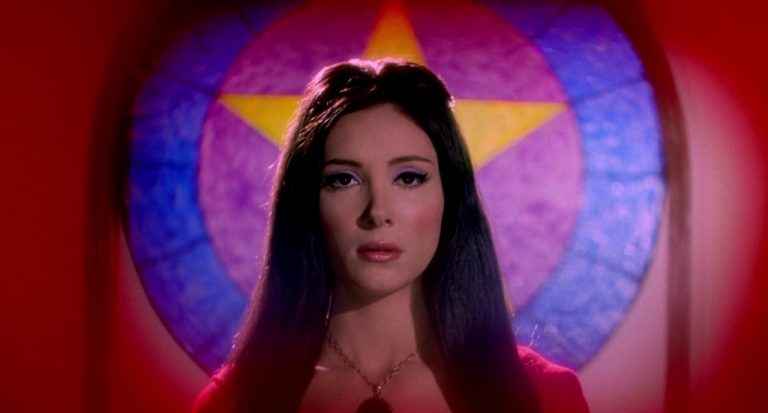

Among the most worthwhile of production additions is the use of Rajabโ€™s audio recording from her 911 call, used with the permission of her family. Such a small detail provides a layer of authenticity that could easily be seen as exploitative if used improperly. However, Hania never missteps in honoring Rajabโ€™s legacy and, by proxy, the 70,000 Palestinians murdered in the ongoing Israeli offensive. Just six weeks ago, when I reviewed Put Your Soul on Your Hand and Walk, I calculated that if every Palestinian who was killed in Israelโ€™s genocide had a 90-minute movie made about them, it would take over 10 straight years to watch them all. Fast forward to mid-December, and it would now take nearly 12 years. In its mission to increase visibility of an ongoing atrocity, The Voice of Hind Rajab succeeds as a plea for humanity in increasingly dark times.

Grade: A-

Movie Review: ‘Drink and Be Merry’ is a Bruised but Warm-Hearted Christmas Film


Director: Adam Volerich
Writer: Leo Winters
Stars: Jefferson White, Shawn Christensen, Siobhan Fallon Hogan

Synopsis: At a struggling New York dive bar in the days leading up to Christmas 2019, Chet, a beleaguered bartender in a state of extended arrested development, must balance caring for his misanthropic, aging regulars – who have nowhere else to go, and rely on him for far more than pouring drinks – with his naive desires to muster some Christmas spirit.


Drink and Be Merry arrives just in time for the season when sentimentality flows as freely as cheap mulled wine. The film roots itself in a dingy New York dive bar, a place where the tinsel looks a bit tired, the lights flicker, and it lacks holiday cheer. So Drink and Be Merry is one for those more cynical Christmas viewers, wanting a little more true grit on their festive screens. 

Drink and Be Merry sets its story in the final days before Christmas 2019, and follows Chet, a bartender who seems to be living in a holding pattern he canโ€™t quite name. Played by Jefferson White (Yellowstone), Chet is earnest, well-meaning, and perpetually exhausted, and White brings warmth to the role and is the reason to keep watching.

Chetโ€™s bar is populated by an assortment of aging, misanthropic regulars who treat the place as something between a sanctuary and a personal dumping ground. These are not the lovable eccentrics of a traditional holiday comedy; theyโ€™re cranky and occasionally intolerable, but thereโ€™s something you like about them. Very early on, there is a section where some women come into the bar, and the men all look confused, and thereโ€™s a pause. Chet then doesnโ€™t have the ingredients for a cocktail, so Vodka Sodas it is. Reaffirming this is a bog-standard dive bar. Subtle and great storytelling. This is where you get a glimpse into the subtle humor throughout. 

The characters are naturally funny in the way everyday people often are: unintentionally, or simply out of sheer human absurdity. Chetโ€™s attempts to summon even a flicker of Christmas spirit are met with blank stares, insults, and plain refusals. The regulars arenโ€™t interested in transformation; theyโ€™re just trying to get through the season in one piece. Siobhan Fallon Hogan, Delaney Williams, Brian Anthony Wilson, and Shawn Christensen round out the ensemble with performances that lean into the charactersโ€™ abrasiveness while revealing small, surprising wells of vulnerability. Everyone has believable chemistry; youโ€™ll feel as if these men have been at this bar for years, basically part of the crappy furniture. 

The filmโ€™s central tension lies in Chetโ€™s growing awareness that his bar is on the brink of closing, and to his punters, heโ€™s not just their bartender. Heโ€™s their sounding board, caretaker, reluctant therapist, and in some cases, their only consistent point of human contact. The weight of that responsibility presses on him as Christmas approaches, and there seems to be no way out. Jefferson White delivers a fantastic performance, blending vulnerability and strength and soaking up every moment on screen. 

Visually, Drink and Be Merry embraces the cramped intimacy of the bar. The entire film takes place mainly in this one setting, which is pretty impressive. The only other setting is a small bedroom/apartment. The claustrophobic settings keep the focus on the characters, who are constantly bumping up against each other both physically and emotionally. Despite the cold dispositions of everyone in the bar, the bright lights and Christmas music build a festive vibe. The colors have a very warm tone to them – itโ€™s a bar thatโ€™s inviting, despite only one or two customers being in it at one time. 

If the film falters anywhere, itโ€™s in its occasional hesitance to push deeper into the messiest corners of its charactersโ€™ lives. There are hints at darker histories and unresolved grief that sometimes feel skimmed over. And itโ€™s a simple story, easy to follow, and keeps a solid pace throughout. Viewers might find the film slow, lacking in action, and needing more conflict for a memorable and meaningful resolution.

Drink and Be Merry lands somewhere between melancholy and hope. After Christmas, in his bar, Chet sees a future going back to acting classes and a world beyond the responsibilities heโ€™s burdened himself with. But a regular in the bar isnโ€™t in his usual spot. Looking around an empty bar, still covered in Christmas lights, Chetโ€™s reflective on what is next for him and his life. In its modest way, the film captures something true about the season: that sometimes the best we can do is gather in a place that feels familiar, raise a glass, and make it through together.

Grade: C

Movie Review: ‘Dust Bunny’ is a Visual Stunner


Director: Bryan Fuller
Writer: Bryan Fuller
Stars: Mads Mikkelsen, Sigourney Weaver, David Dastmalchian

Synopsis: An eight-year-old girl asks her scheming neighbor for help in killing the monster under her bed that she thinks ate her family.


The biggest fear most children have at a young age is wondering if there is a monster under the bed. More often than not, we would ask our parents to check there or in the closet, in case something was ready to pop out and either give us nightmares for life or eat us up. But what if there was indeed a monster under the bed and it actually did want to eat everything in its path? Thisโ€“among other thingsโ€“is the question posed by Dust Bunny, the directorial debut from Bryan Fuller (Hannibal).

The plot is simple: Aurora (Sophie Sloan) is a 10-year-old girl living in New York City who is fully convinced that her home is haunted by a monster under the bed that comes out at night to try and eat her. This thought is escalated by the sudden death of her parents, who she believes was killed by the monster in the middle of the night. She eventually has to move around the house in a rowing hippo, afraid that she will be eaten if she steps foot on the floor. Taking matters into her own hands, Aurora decides to enlist the help of her neighbor (Mads Mikkelsen), who she sees fight monsters as a skilled hitman and believes could kill her own monster.

Dust Bunny often feels like the moments in Bill Wattersonโ€™s Calvin and Hobbes strips where Calvin checks if thereโ€™s a monster under the bed and hears or sees no one, but then they make a noise or move something on the bed to give themselves away. Given how vibrant Calvinโ€™s imagination is, readers can flip a coin on whether or not the monsters are in fact real, or if Calvinโ€™s tiger Hobbes is even real, and much of that plays into the ongoings of Dust Bunny as well. Aurora believes it without question, and wants to convince others of the fact, but often to no avail. Her neighborโ€“referred only to as Resident 5Bโ€“is still fascinated by the notion however, and does decide to look into it, leading to an incredibly entertaining flick thatโ€™s as charming and funny as it is often intense and unsettling.

Where Dust Bunny succeeds a lot is in its clever and inventive visuals. Fuller fills the movie with tons of visual gags and surreal props to make Auroraโ€™s reality even more fantastical (watch out for the chicken lamp), while built over something that is definitely much darker and sinister beneath, and very much tapping into the childlike wonder of the situation, which increasingly becomes more sinister as the movie progresses, and the line between what is real and what might not be becomes more blurred, albeit in some incredibly unexpected ways. The movie is incredibly colorful, with some vibrant cinematography from Nicole Hirsch Whitaker and stylized violence where blood is either confetti, and the often wacky production design with maze-like homes and restaurants shown throughout, amplified by Auroraโ€™s perspective of everything. Adding to that is Isabella Summersโ€™ score that also brings the emotional beats and the bizarre New York City to life in truly fantastical ways.

Sophie Sloan conveys all those feelings wonderfully, giving a great performance and holding her own terrifically next to Mads Mikkelsen, who plays the assassin next door in a cold and calculated manner, but one who cannot help but be charmed and curious about what Aurora claims exists while helping her. The two have hilarious chemistry throughout as they navigate different facets of the underworld trying to find answers, even when the people they interact with become increasingly more evil, including a very fun turn from Sigourney Weaver who plays a mob boss trying her best to keep up with everything and get Resident 5B away from this situation.

When the action does go down, Fuller directs it in the most amusing ways, with everything given a more kid-friendly approach so Aurora doesn’t have to witness something too intense, with not a single drop of blood spilled (at least, not that she can see) and everything looking more like a comic panel than often. The more creepy moments as Aurora wakes up at night to the monster under her bed becoming bigger and angrier are also incredibly well done, with a very effective blend of practical effects and CGI throughout. Towards the third act, these hit exhilarating highs and lead to some lovely use of said practical effects and even solid puppetry, and even more clever use of the malleable sets present in the movie.


Could Dust Bunny delve a bit more into what led to everything with Aurora and her family? Perhaps, as the movie does allude often to a shadier past with her parents and what may have really gone down with them, and the story doesn’t look into that aspect as much as it hints at past a certain point, or what else is going on with Resident 5B and his line of work, but by the end, Dust Bunny is so much fun and so charming in its execution that it is able to overcome those minor flaws and result in an entertaining experience that is definitely worth a watch. Make sure to look under the bed after seeing it though, just in case.

Grade: A-

Interview: Chasing The Gold: Joachim Trier On What a House Holds in โ€˜Sentimental Valueโ€™

Nadine Whitney: Hi Joachim. Iโ€™ve read articles where you use the term polyphonic to describe Sentimental Value would it also be considered “polyvocity” (or “polyvocality”) as it refers to the affirmation of a plurality and multiplicity of voices, experiences, and subjectivities โ€“ the many voices within the home.

Joachim Trier: Thatโ€™s a great statement because you probably know polyphonic as musical terminology, but I’ll start to shake it up from now on and call it polyvocality as it means many voices that also were spread out through time. Many moments of the same place, many voices in the same timeline, many voices in the same place but a different timeline. Itโ€™s a bit scattered in a way I think. I like the idea of music. I think compositionally around films, and they are really energy beats through time

Nadine Whitney: Voices and actions through time are the echoes. The echoes that the house watches and reacts to (cracks in the walls). The house is a space of joy, trauma, loss and love. I feel it knows its inhabitants better sometimes than its inhabitants know themselves.

Joachim Trier: I agree and it’s interesting in family life how one could ask the question, โ€œdo we really know our story?โ€ All of us having individual experiences and stories that we are negotiating continually to kind of live or to create a sense of identity together, but I imagine that the house would see a bigger picture, a bigger structure to what is transferred through generations that maybe the people were incapable of speaking up. I think that the void of the unspoken in the family is really what we’re trying to trace. 

Using the house almost as an entity or character or something like that was kind of an interesting method because it ties into something the cinematic language does regardless of our intention: which is the structuring of spatial treatment. Like in any film if you have a family house and you film people come back into it at different times that takes on meaning. The repetition of scenes in the same rooms will mean something. It’s always a play whether you deal with it consciously or not.

Like in life you know when you need a staging for memories and experiences, and we thought that was kind of then cinematically funny. A challenge was how do we use this house to create a repetition of movements that mirror each other in some ways or complement each other. Psychologically complement each other.

Nadine Whitney: For example, the depression Nora is dealing with, without necessarily knowing about her grandmother. Yet, these are echoes that are passed down through familial ties.

Joachim Trier: I try to avoid, and you know I’m sure I’m completely blind to this, but I try my best to not create an ideologically limited film. I believe, for example, a lot in psychodynamic and psychoanalytic theory. I’ve read my Freud and the post-Freudian thinkers like Lacan and am deeply fascinated. Many of them are dealing tremendously with almost what also could be seen as ghost stories, or in a religious context as inherited sin. I don’t want to limit the audienceโ€™s interpretation, but I try to make film behaviourally rich and textured so that different people can hopefully take different things away from. 

Hopefully then the truth of the experience of inherited grief is present. Some people even now are researching the genetic possibility of trauma so maybe in ten years from now or I hope or in twenty or fifty years my film could still make sense because we experience these things. Thatโ€™s where I build from for the characters.

Podcast Review: Jay Kelly

On this episode, JD and Brendan are joined by Isaiah Washington to discuss Noah Baumbach’s new film Jay Kelly! Maybe somewhat polarizing, but overall we are pretty big fans of Baumbach and we’re curious for this one given its cast and premise. We debated this one a little and talk about how its meta qualities give it a fascinating little texture given these performances.

Review:Jay Kelly

Director: Noah Baumbach
Writers: Noah Baumbach, Emily Mortimer
Stars: George Clooney, Adam Sandler, Laura Dern, Billy Crudup

Subscribe to our Podcasts RSS
Subscribe to our Podcasts on iTunes
Listen on Spotify
Listen on Stitcher
InSession Film Podcast – Jay Kelly

Chasing the Gold: Golden Globes Nominations Reaction

On this episode of Chasing the Gold, Shadan and Erica discuss this year’s Golden Globes nominations! There were some big surprises, a few snubs and much to talk about with how it impacts awards season. The Globes Foundation really liked Frankenstein and Linklater. They didn’t go for Wicked: For Goodย or Avatar: Fire and Ash. What did you think of this year’s crop of nominations?

Check out this week’s show and let us know what you think in the comment section. Thanks for listening and for supporting the InSession Film Podcast!

Subscribe to our Podcasts RSS
Subscribe to our Podcasts on iTunes
Listen on Spotify
Listen on Stitcher
Chasing the Gold – Golden Globes Nominations Reaction

Movie Review: โ€˜Diary of a Wimpy Kid: The Last Strawโ€™ is More of the Same


Director: Matt Danner
Writer: Jeff Kinney
Stars: Aaron D. Harris, Chris Diamantopoulos, Bashir Salahuddin

Synopsis: Greg continually finds himself at odds with his dadโ€™s outsized expectations. As pressure builds to turn his act around after a series of hilarious near disasters, Gregโ€™s dad presents him with an ultimatumโ€”and a trip to wilderness campโ€”that just might challenge Gregโ€™s wimpy ways for good.


While watching Diary of a Wimpy Kid: Christmas Cabin Fever in 2023, a feeling of dread slowly started creeping into me, as I suddenly realized, โ€œDisney canโ€™t be making these flimsy animated movies forever, can they?โ€ Because the animated transpositions of Jeff Kinneyโ€™s popular book series took a one-year hiatus in 2024, I had foolishly thought The Mouse had put an end to what couldโ€™ve been a promising way to adapt Kinneyโ€™s work, without having to recast live-action actors as they grow old consistently, but it was ultimately disappointing endeavor that served to only mindlessly adapt the books, without trying anything different outside of its surface. The prior live-action works (minus The Long Haul) had a massive cultural imprint, as they were released a few years after the books took off. The animated franchise has never been able to recapture the same feeling, preferring to illustrate its bevy of humorous stories with the laziest, second-rate designs possible, without meaningfully expanding upon Kinneyโ€™s text.

Thereโ€™s very little creativity in these movies, and the task of watching these admittedly short installments seems more like a chore than something you look forward to every holiday season. This latest effort, a semi-adaptation of The Last Straw, is just as boring as the other three entries in Disneyโ€™s most unimpressive modern-day animated works. That said, credit needs to be given to director Matt Danner (who previously helmed the unwatchable Night at the Museum: Kahmunrah Rises Again for the streamer) for at least trying to make Greg Heffleyโ€™s (Aaron D. Harris) latest adventure more expressive in its stretching and squashing than the desire to be animated but never do anything with the medium of the first three movies of this โ€œreboot.โ€ 

The animation flows much better โ€“ and is more vivid โ€“ in sequences where Gregโ€™s โ€œwimpyโ€ antics blow out of proportion, which makes this entry more serviceable than the last films we got out of this series, meant to promote Kinneyโ€™s books but did nothing genuinely interesting with them. Kinney once again takes screenwriting duties, and his words arenโ€™t as sharp (or resonant) as they are in his books, because the film lacks any form of verve, even if Danner is more interested in making this animated entry feel likeโ€ฆ*checks notes*…an animated movie than the previous filmmakers who were tapped to helm these forgettable titles and did nothing with the prospect of an animated adaptation of these highly imaginative books. 

It still doesnโ€™t change the fact that these movies arenโ€™t remotely good, and this latest installment isnโ€™t either, although it has a more concise story than the previous three movies, deciding to focus on Gregโ€™s relationship with his father, Frank (Chris Diamantopoulos), rather than other characters from the books. For example, Gregโ€™s friendship with Rowley (Jude Zarzuar) falls by the wayside, while Danner and Kinney further flesh out how Greg and Frank feel towards each other. Frank wants to send his son to military school so he can be whipped into shape, while Greg gives his father an ultimatum: if he reaches the badge of Woodchipper Elite at his Scouting club, heโ€™s off the hook. If not, heโ€™ll accept his Fatherโ€™s choice to send him to Spag Union, the military academy.

Of course, several antics ensue, but theyโ€™re all indifferently bland, even if Dannerโ€™s semi-piquant style is more energetic than the previous three entries of this franchise. For once, thereโ€™s movement and attempts at expressivity. That said, itโ€™s completely far removed from Disneyโ€™s current big-screen animated effort, Zootopia 2, which stimulates the senses for both young and old moviegoers alike in frequently jaw-dropping ways. There isnโ€™t a single image in the animated Diary of a Wimpy Kid franchise, apart from Kinneyโ€™s hand-drawn drawings transposed to the screen, that stays with us. Itโ€™s a series of mindlessly forgettable motion pictures that undoubtedly serve as โ€œsecond screenโ€ entertainment, where the primary goal is to distract children for an hour and 15 minutes or so, rather than giving them something substantial to be transported by. 

Story-wise, itโ€™s as โ€œbeen there, done thatโ€ as you think, unable to bring its message home more effectively than simple morals that will leave your head as soon as they enter. Thereโ€™s rarely anything of note in this, other than a light chuckle or two when Danner (or Kinney) reference more popular IPs, making you yearn to watch these titles instead of wasting your time with movies that havenโ€™t improved, four entries in, and likely wonโ€™t, since they keep churning them out rapidly, as if audiences are clamoring for them when less and less of them are tuning in with each passing installment.ย 


Kids deserve so much better than this. The fact that parents will put them in front of a television to show them anything destined for children, as if their minds canโ€™t comprehend what theyโ€™re seeing, is honestly contemptuous. Theyโ€™re much smarter than you think and more averse to the world theyโ€™re living in than adults who were once in their shoes but have seemingly forgotten the magic of discovering life before it dawned upon them that this world is actually much harsher than they think. A film like Zootopia 2 will remind them of the joys of rediscovering cinema, as kids learn the true power of image-making and are consistently dazzled by what directors Byron Howard and Jared Bush put on the screen. A movie like Diary of a Wimpy Kid: The Last Straw will do the exact opposite. Theyโ€™ll be momentarily distracted, sure, but will they like what theyโ€™re seeing? Will it have any lasting impact? Letโ€™s talk in two weeks from nowโ€ฆ

Grade: D-

Movie Review: ‘Reflection in a Dead Diamond’ is a Disorienting but Enjoyable Vibe


Directors: Hรฉlรจne Cattet, Bruno Forzani
Writers: Hรฉlรจne Cattet, Bruno Forzani
Stars: Fabio Testi, Manon Beuchot, Yannick Renier

Synopsis: A retired spy suspects his former adversaries have resurfaced when his intriguing neighbor vanishes.


I would be lying if I said I understood everything about Hรฉlรจne Cattet and Bruno Forzani’s Reflection in a Dead Diamond. In fact, everyone outside of the filmmakers probably would be. As confusing the narrative may be, it doesn’t take away from the style and substance the film delivers.

Fabio Testi stars as John Diman, a retired spy living in luxury on the French Riviera. Seeing his beautiful neighbor, John’s memories of his spy life in the โ€˜60s are rekindled. Young John (Yannick Renier) is tasked with protecting Markus Strand (Koen De Bouw) from a killer alongside his partner, Cantatrice (Kรฉzia Quental). When Cantatrice disappears, John must piece together what happened while evading a killer named Serpentik.

Without giving too much away, there is much more to it than that. The story begins as a Bond tribute of a man looking back on the failings of his past, only for shocking bits of ultraviolence and reveals to twist the narrative into something completely different. At one point, you aren’t even sure John was a spy, but maybe was actually a movie star in a Bond-like franchise. Then again, maybe he was and this is the work of a more nefarious agent. When the film ends, there are certainly no definitive answers.

Instead, the film disorients while entertaining. Flashes of madmen in madness, memory-infused sequin dresses, layers upon layers of rubber masks, and dozens of other memorable images assault the senses. Even the action scenes invoke a sense of misunderstandings and bait-and-switches, mixed with an occasionally shocking amount of ultraviolence. At times, the audience is unaware what is a memory, a film scene, a hallucination, a dream, or a fantasy.

But understanding isn’t as important as experiencing. It’s completely possible (though, I believe unlikely), the filmmakers don’t actually care to present a coherent throughline and story and want to keep you guessing. This is certainly the type of film to become a candidate for cult classic status, only to be dissected and analyzed for years to come. But, don’t let the confusion turn you away. The Bond reference (and reverence) is enough to set you on the path to enjoying yourself. While the film does not have direct correlation to any spy genre, it pays homage and parodies all of those films.

While not playing the character in the present, Renier is the runaway star of the film. Balancing the debonair spy attitude with dashing good looks, but also a streak of insanity, the Belgian actor looks, acts, and lives the role. As a testament to his devotion, Renier never blinks at the insanity the filmmakers ask of him. This film marks his highest profile film in the United States, he stands a good chance of becoming the next international breakout star. In a supporting role, De Bouw paints a devilish picture as the erstwhile villain while Quental paints an indelible picture of the doomed female spy equivalent to John.

Testi does a fine job as the elder John, languishing in memories and possible psychosis in his modern-day luxury. Maria de Medeiros is the most famous face to American audiences, showing up to deliver a scene-stealing late-film performance. Every actor is equally committed to their roles and each excel. Reflection in a Dead Diamond might be confusing and alienating, but if you let the iconography and intrigue take you in, you might find yourself overwhelmed and enhanced by the experience.

Grade: B

Movie Review: ‘Fackham Hall’ is as Stale as Its Concept


Director: Jim Oโ€™Hanlon
Writers: Jimmy Carr, Patrick Carr, Andrew Dawson, Steve Dawson, Tim Inman
Stars: Damian Lewis, Tom Felton, Thomasin McKenzie

Synopsis: A new porter forms an odd bond with the youngest daughter of a well-known UK family. As the Davenport family, headed by Lord and Lady Davenport, deals with the epic disaster of the wedding of their eldest daughter to her caddish cousin.


Parody can be subtle like a hint of something in the background. It can also be blunt and sit on your chest like an overly large dog who instead of woofing, shouts, “Did you get it?” over and over again. Movie parodies are especially difficult to maneuver. In the ’80s heyday of the genre, they rarely referenced the films they were skewering directly, but built a story around the concept of the original with gags that were simultaneously clever, stupid, and crass. In more recent outings like the “[Blank] Movie” movies of the ’00s the parody is overt, often putting direct analogs from the films they’re skewering into a very heavy gag and non-existent story structure. Fackham Hall attempts to straddle these types of parody with varying degrees of success.

The film has genuine moments of humor. There are several funny gags or line readings that will make you chuckle, but it often relies heavily on crass gags. If you’re a person who likes your silly comedies with more wit, you’ll find with Fackham Hall you get moreโ€ฆ toilet humor. It would be one thing if the film relied so much on the low brow, that has its merits as well, but these aren’t new lowbrow jokes, they’re stale and boring. Most of these gags feel cribbed from much better and far more interesting films. Fackham Hall feels very lazy in that way.

The actors, who can pull off some funny bits, also seem to forget to deliver their lines with a bit more sincerity because their characters shouldn’t know they’re in a comedy. Most of them deliver the lines with a bit of a goofy look on their faces, so the gag falls flat. While most of the principal cast have been in comedies before, they aren’t used to this type of comedy or delivery. They rush to get the lines out and when they pause behind it, it’s awkwardly long because they’re hoping for a laugh in that space. But that space becomes a place where our brain catches up with an, “Oh, right, that’s funny,” while it waits for the next gag.

The filmmaking itself, directed by Jim O’Hanlon, is very close to its source material. He and cinematographer Philipp Blaubach have the sweeping vistas of the great manor and the crowded party scenes well in hand. There’s one incredible special effects gag in the film that these two pull off very well. Eric (Ben Radcliffe) is wanting to show up the boorish Archie (Tom Felton) and so he takes the rifle Archie claims is defective and aims it at a beer bottle. It looks as though Eric has missed, but then we’re given the POV of the bullet as it lights a cigarette, ricochets off the dome of a serving tray, back the way it came to open a bottle of champagne, break the original bottle and land in the gun’s chamber with a smug Eric smiling down at Archie. It’s one of the best gags in the film and it feels fresh because of how they shot the scene.

That’s Fackham Hall‘s biggest problem. It feels so stale to parody Downton Abbey, Gosford Park, and other between the wars, class struggle stories. The prime of these stories was about twenty years ago. We’re well past when this parody would have been relevant. Sure the “final” Downton Abbey film was just in theaters a few months ago, but even then, the cultural moment has long passed it by. The concept is as stale as the comedy within.


It’s difficult to judge a film like this as comedy is a very subjective medium. There are going to be many people who laugh heartily at this film. There will be people who believe this film is a terrific time. If you like purely dumb comedy and just want to laugh at something silly, then more power to you. For those of us who have seen Airplane and other classic parodies, this film will feel too much like those. Worse, it feels like the used gum you step in on the street the day you wear your new sneakers. It’s gross and annoying.

Grade: D