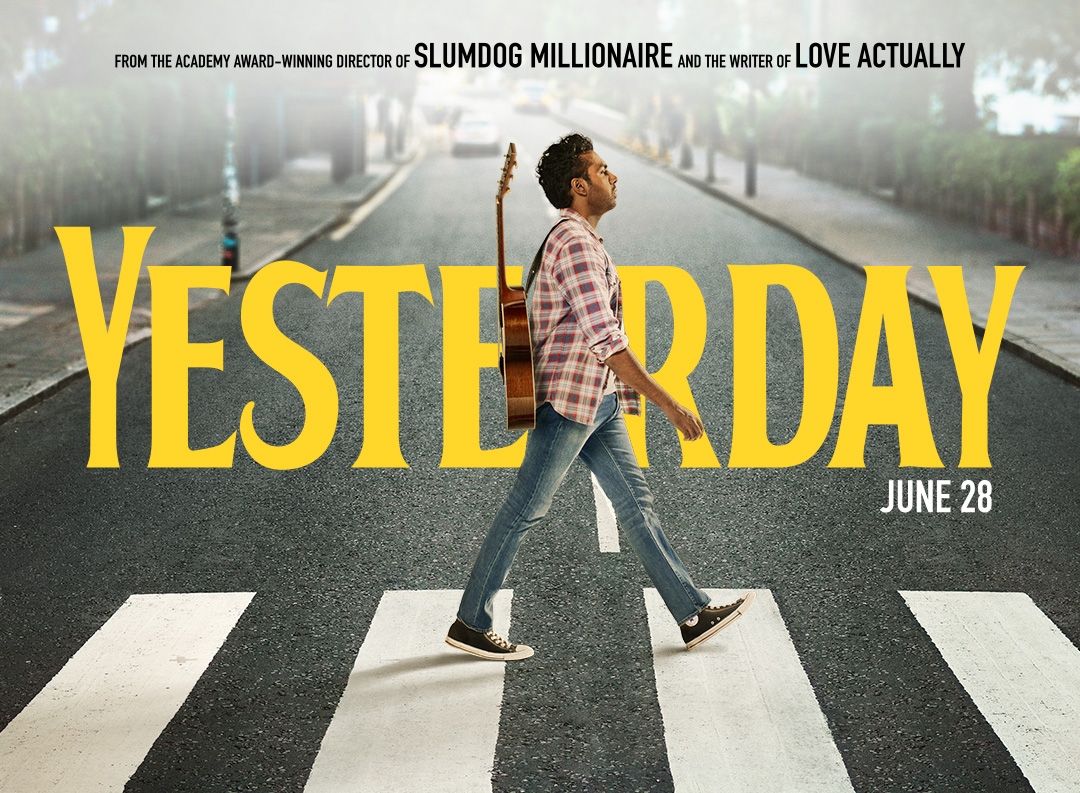
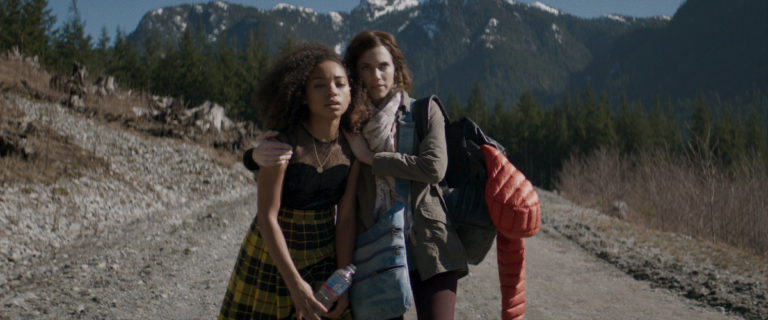
This weekend we will be reviewing the latest Danny Boyle film Yesterday, written by Richard Curtis, depicting a world where only one lone singer-songwriter remembers who The Beatles were. Musical fantasies like this, especially high concept ones, are always intriguing, and Yesterday has a concept that is subjectively up our respective alleys here on InSession Film (those of us who are fans of The Beatles and just rock music in general). But as critics, perhaps that makes us a little cynical as well, because without The Beatles, wouldn’t that change the entire trajectory of musical influence? Shouldn’t artists like Coldplay or Ed Sheeran not even exist in this world without The Beatles? Will Yesterday even bother to address this at all?
We’d rather not think about that now, and are instead focusing this poll on the joys of the music itself. There have been MANY movies out there based on popular songs, in the same way that Yesterday earns its title. With that said, we want to hear from you; what is your favorite movie whose titled is inspired by a song? To note, we are only including movies whose titles are based on pre-existing songs, and not ones that were written for their respective films.
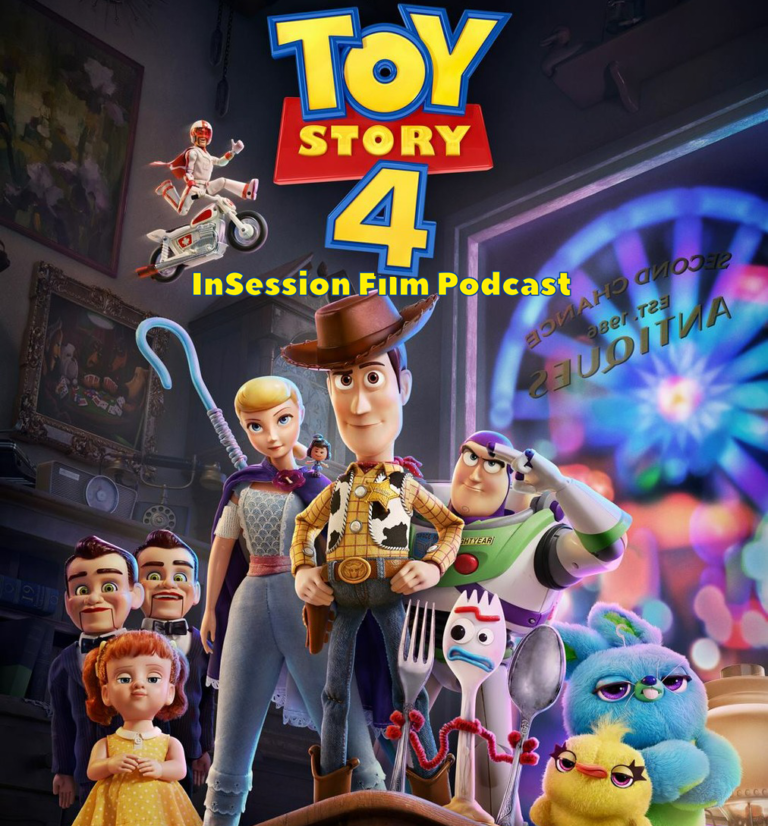
This week on the InSession Film Podcast, Chris Braaten, formerly of the More Gooder Than Podcast, joins Brendan and Ryan to review the much anticipated Toy Story 4 (well, only anticipated by some people), as well as our Top 3 Pixar Characters. Many of us were quite cynical about the mere existence of this fourth outing, and we discuss whether this installment was in fact necessary. Ryan also gives some brief thoughts on Wild Rose, while Brendan shares his feelings toward the Elton John musical fantasy Rocketman.
Big thanks to Chris for joining us this week, as we have been big fans of his work on the More Gooder Than Podcast and his leadership over the Podfix Network; hopefully his cleanse from social media proves therapeutic for him! And big thanks to Extra Film cohost Ryan McQuade for filling in while JD Duran is on vacation!
That said, check out this week’s show and let us know what you think in the comment section. Thanks for listening and for supporting the InSession Film Podcast!
– Movie Review: Toy Story 4 (5:46) Director: Josh Cooley Writers: Stephany Folsom, Andrew Stanton Stars: Tom Hanks, Tim Allen, Annie Potts, Tony Hale, Christina Hendricks, Keanu Reeves, Keegan-Michael Key, Jordan Peele
– Notes / Wild Rose / Rocketman (53:01)
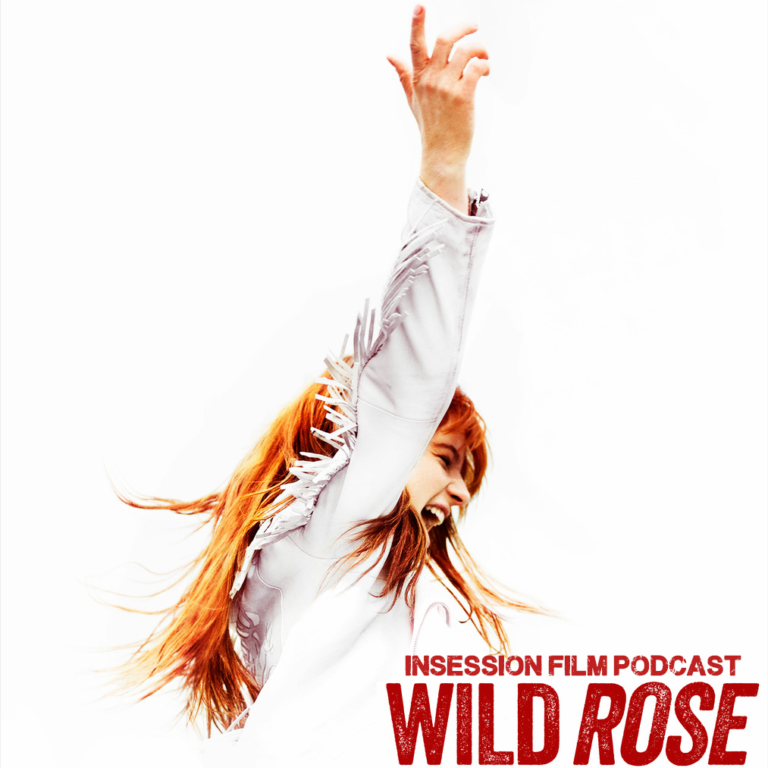
This week for InSession Film Catch-Up (unofficial term), Ryan offers up his thoughts on the Jessie Buckley outing Wild Rose, which was discussed on Episode 330; thankfully, Ryan takes the opportunity to share that episode’s enthusiasm. Keeping to the music-based theme, Brendan shares his thoughts on the Elton John “biopic”/musical fantasy Rocketman, and briefly discussed whether that film was a breath of fresh air for the tired music biopic genre or just another Bohemian Rhapsody.
– Top 3 Pixar Characters (1:17:31)
We’ve talked about Pixar Moments as a Top 3 topic before (back when we reviewed Inside Out); that was already emotionally daunting task, and somehow talking about all of these characters made this even harder. Whether they be lead or supporting, human or creature, robot or toy, Pixar has stayed with us primarily because of their wildly inventive and diverse string of characters, and we hope we did some justice with our picks (along with some ugly crying). That said, what would be your Top 3?
If you want to help support us, there are several ways you can help us and we’d absolutely appreciate it. Every penny goes directly back into supporting the show and we are truly honored and grateful. Thanks for your support and for listening to the InSession Film Podcast!
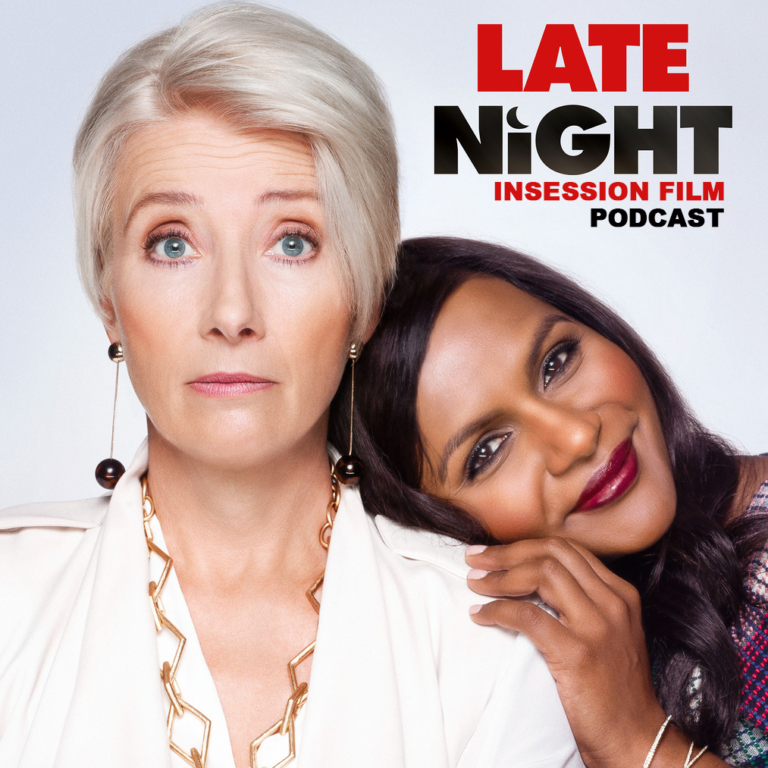
This week on the InSession Film Podcast: Extra Film segment, Ryan and Jay get together to review the newest comedy, Late Night, and in the back half of the episode, they review the newest film from director Jim Jarmusch, The Dead Don’t Die.
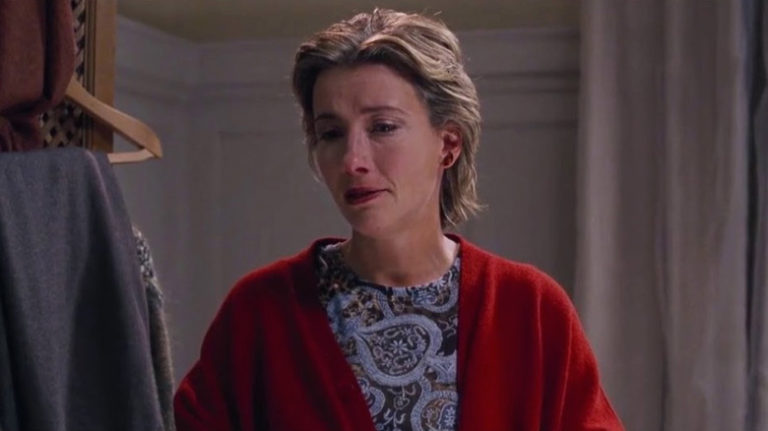
Widely considered one of the biggest, crowd pleasing hits coming out of Sundance, the guys were eager to watch this film. Lead by a original screenplay written by Mindy Kaling and a lead performance from the great Emma Thompson, many were calling this film this years The Big Sick, leading the guys to intrigued and wondering if the film lives up to all the hype.
Then, the guys take a look into the world of indie director Jim Jarmusch, whose last two films, Only Lovers Left Alive and Patterson were real critical hits and left many anticipated to see how Jarmusch would follow them up. But with less than stellar reviews coming out of the Cannes film festival, the guys were interested in seeing the film and giving their opinions and seeing if they match up with everyone else or if Jarmusch is still on a roll.
On that note, have fun with this week’s Extra Film segment and let us know what you think in the comment section below. Thanks for listening!
– Movie Review: Late Night (5:42) Director: Nisha Ganatra Writer: Mindy Kaling Stars: Emma Thompson, Mindy Kaling, John Lithgow
– Movie Review: The Dead Don’t Die (44:00) Director: Jim Jarmusch Writer: Jim Jarmusch Stars: Bill Murray, Adam Driver, Tilda Swinton
We try to make this the best movie podcast we possibly can and we hope you enjoy them. Subscribe today on iTunes, Spotfiy or Stitcher, and please leave us a review on iTunes. You can also find us on Soundcloud, PlayerFM and TuneIn Radio as well. We really appreciate all your support of the InSession Film Podcast.
To hear this Extra Film episode and everything else we do, download our apps on the Amazon Market for Android and the Podcast Box app on IOS devices. The mobile app covers all of our main shows, bonus podcast’s and everything else relating to the InSession Film Podcast. Thanks for your wonderful support and listening to our show. It means the world to us!
The Criterion Collection is not just old films or foreign films. They are also about preserving the new ones, films that don’t get the extensive exposure right after its release. They are hidden indie films that need to be appreciated with the artists still with us to tell their story of their journey and of the current creative mindset in a place we don’t know about and is a blind spot to our appreciation of these works. Here some of the contemporary films which I define as within the last four years since release; my apologies to fans of 2013’s Blue Is The Warmest Color and 2014’s Boyhood.
Heart Of A Dog (2015)
Musician/visual artist Laurie Anderson, who was the long-time partner of the late Lou Reed, reflects the meanings of life and aftermath of death centered around her beloved dog and the aftermath of 9/11 in New York within the themes in Buddhism. She narrates it in such a calm tone with the various images that it becomes a dream, even with the infusion of the tragic events in Manhattan, but comes up with a gorgeous, lyrical sound as if it were one of her concerts with the help of her furry friends she is a lover of.
The Lure (2015)
It’s an odd mix of music and horror, but it’s not like Sweeny Todd. Two sister mermaids come to the surface where their beauty and soothing singing voices make them a perfect fit for a rock band. However, in its adaptation of Hans Christian Andersen’s “The Little Mermaid,” and unlike the Disney version, the bond between the sisters and their overall survival is challenged when one of them falls for another human. The music is catchy, the girls are beautiful and only come to an awakening of their sexual power, and the imagery is hypnotic with its moments of magic and bloody horror towards the end.
Certain Women (2016)
Laura Dern, Kristen Stewart, Michelle Williams, and Lily Gladstone live in an isolated town in Montana as different women who have various struggles. It is flat and wide, but the women face disappointment within this cocoon that still does not allow them to meet each other directly. Kelly Reichardt is an underrated director who has not gotten the full recognition she deserves, especially with her way of directing the performances in her past work (Wendy And Lucy, Meek’s Cutoff) that just feel natural along with each scene of composition that engulfs the events taking place.
Graduation (2016)
Romanian maestro Cristian Mungiu gives outsiders a look at what the modern state is almost twenty years after the fall of communism. The father is competitive in seeing his daughter get a scholarship to a major university in England, but the aftermath of a sexual assault compromises her final exam, leading the father to go to lengths, including cutting across moral standards to make sure she gets in anyway. The realism of Romania is seen where nothing affluent is working in the pro-EU society and people still have to go behind people’s back to make it through. Even the father, an upstanding citizen, is not immune to it all.
Personal Shopper (2016)
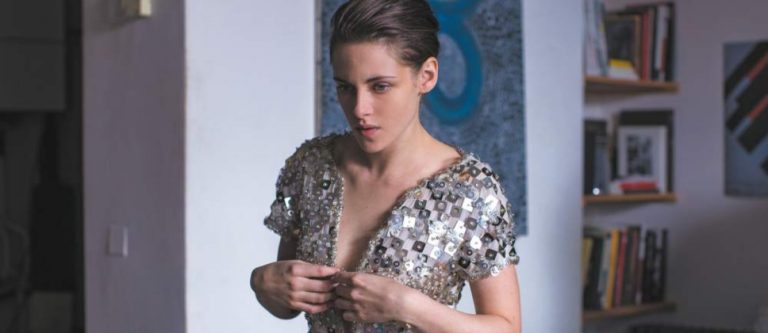
Kristen Stewart has been an indie darling after the Twilight series and her second performance with Olivier Assayas (after 2014’s Clouds Of Sils Maria) shows a more delicate version of herself as the American assistant of an actress. It is also a supernatural tale infused with celebrity – like Sils Maria – and it does not get way ahead of itself by making a heavy-handed thriller as any ghost story would do. Stewart’s character is rarely even out of shot and she becomes personal with the fact that it may be her dead twin who is trying to communicate. It is very subtle and spiritual, but not in a religious way. Communication is a key life, and for this instance, possibly death.
I, Daniel Blake (2016)
Ken Loach returned to form with his protest against Britain’s cruel austerity and the failing health care system about a 59-year-old who survives a heart attack and is ruled unfit to work again by his doctor. However, a government test says he can work and thus is denied disability pension, but when he tries to file an appeal, a complicated, backlogged process makes his struggle even harder. During his fight, the man befriends a single mother who struggles to find a home. As a lifelong socialist, Loach has been a director about social realism tackling many issues and a continuing crisis in Britain’s welfare system makes a perfect strike at the country’s failures helping the citizens it strives to protect. Loach, who initially retired before agreeing to do the project, won his second Palme d’Or.
The Other Side Of Hope (2017)
Finnish director Aki Kaurismäki’s swan song – he stated that this was his last movie in a notable 35-year-career – is heartfelt about a Finnish man in a mid-life crisis and a Syrian refugee is not granted asylum. Their lives change when they meet one day and the Finish man hires the refugee for his restaurant while also promising to go and find his hiding sister. At a time where people have become ignorant and cruel, here’s a story of warmth and humanity where only a small thing can make up a long way. Even with its melancholy ending where the fate of the refugee is left unresolved, Hope is a nostalgic reminder of what the continent was once and can be again in the face of intolerance.
24 Frames (2017) / Let The Sunshine In (2017)
This was the final film by Iranian film legend Abbas Kiarostami, who died in 2016. His son edited the final cut and it debuted at the Cannes Film Festival. Here, Kiarostami mixes animation and still-frame photography using twenty-four images to show a before and after as it happened live to his eye with digital animation, each frame showing four minutes each. His goodbye was a touching one, making us realize that wherever we are and wherever we take a snapshot of, it hands us a moment of beauty held forever.
Let The Sunshine In, a film that is a blind spot to me, unfortunately, director Claire Denis (WhiteMaterial) directs this story of a painter in Paris who lives a highly independent life but lacks romance she really wants. Juliette Binoche plays Isabelle, who begins a series of flings and affairs with different men as she goes on her personal exploration to fulfill the last thing that is missing in her successful life. Criterion will continue to go for history but will put out its more contemporary works that reflect the growing art from all over the world.
Director: Josh Cooley
Writers: Rashida Jones, Andrew Stanton, Will McCormack, Stephany Folsom Stars: Tom Hanks, Tim Allen, Annie Potts, Tony Hale, Keegan-Michael Key, Jordan Peele, Christina Hendricks, Keanu Reeves
Synopsis: When a new toy called “Forky” joins Woody and the gang, a road trip alongside old and new friends reveals how big the world can be for a toy.
[/info]
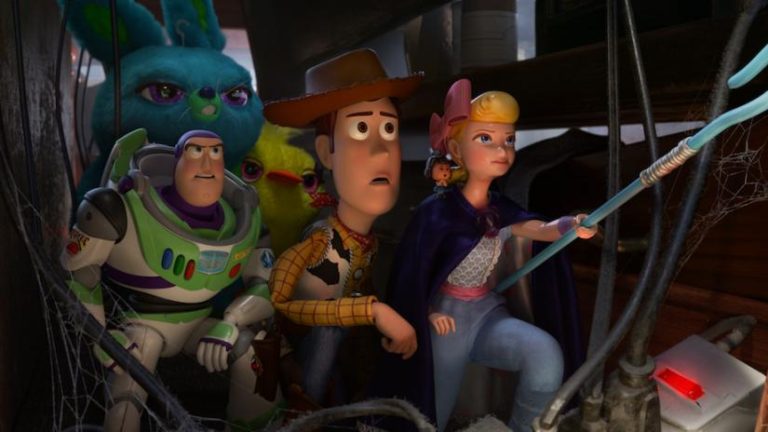
Nine years ago, Toy Story 3 wrapped up the 15-year saga of sentient playthings in a perfect bow. At least, that’s what we thought. The lifespan of the franchise now sits at 24 years, much to the chagrin of myself and many others. We live in an age of cheap sequels in the face of guaranteed profits. There are few more sure things than the profitability of a Toy Story film. The original film revolutionized the world of film (whether it was, overall, for better or worse might be up for debate, but the Toy Story franchise is undeniably a landmark in the history of cinema) and the sequels somehow managed to feel just as fresh. Maintaining their hot streak nine years after a beloved threequel seemed a risky proposition. I am happy to report that the risk was worthwhile. Never again will I doubt a Toy Story movie. Make 10. Make 20. Let’s see how long this can go on. Against all odds, Toy Story 4 not only justifies its existence, but it is one of the better films of 2019.
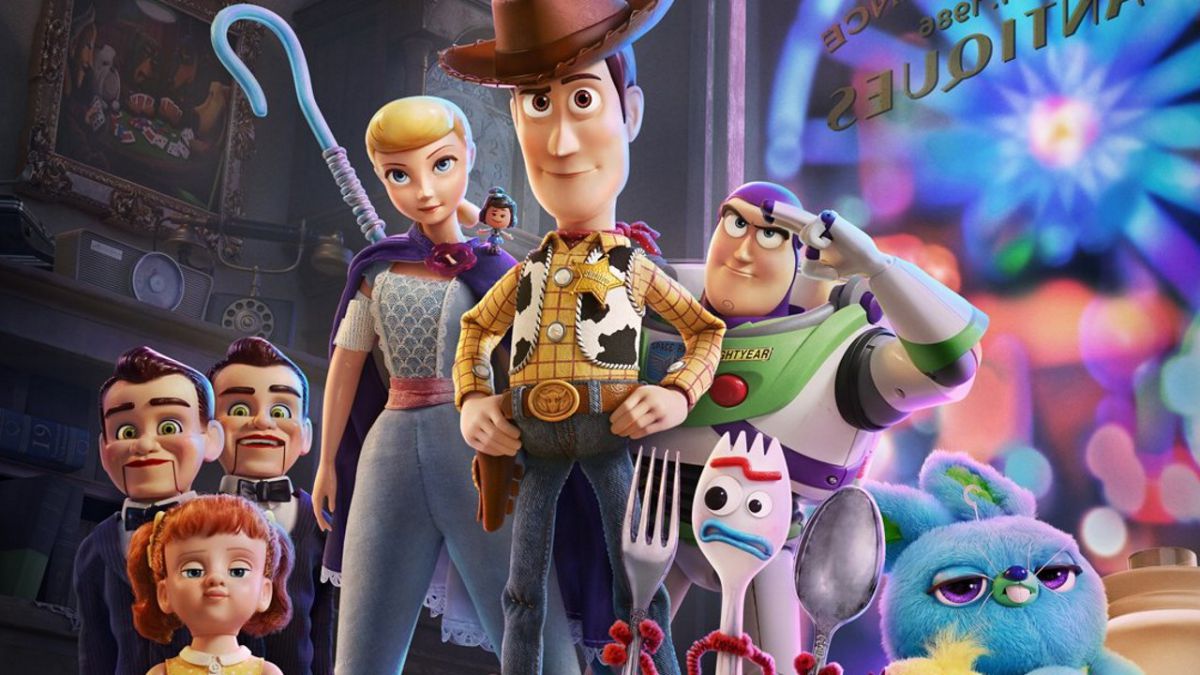
The Toy Story films have always addressed ideas of mortality and legacy, with each approaching the ideas from a unique angle. Toy Story 4 continues this pattern, while adding in quandaries regarding free will and the shifting priorities that come with aging. As I’m sure you have seen from the film’s marketing, the film revolves around a sentient spork-turned-toy, named Forky, who is brought to life by Bonnie, the new owner of our old toy friends, when she glues googly eyes on him, smacks on popsicle stick feet, and wraps around a set of pipe cleaner arms, for good measure, in a kindergarten arts and crafts class. Bonnie’s new “toy” immediately becomes her favorite, and Woody takes it upon himself to protect Forky at all costs. Through various circumstances, Woody and Forky end up separated from the rest of the gang (who are travelling with Bonnie’s family on a road trip.) The pair end up at a carnival with the long-lost Little Bo Peep, last seen 24 years ago as Woody’s love interest in the original Toy Story. On paper, the idea feels forced and out of touch with the evolution of the series. In practice, Bo Peep is a perfect vessel to add another layer to the exploration of purpose that we have gotten used to in the series.
Seeing the woman (female toy? Porcelain princess?) he thought was gone forever makes him reconsider his entire purpose. Bo Peep lives a life untethered. She has no owner whose happiness she feels obligated to nurture. This is the first time the idea of foregoing the defined purpose of these walking, talking toys has been explored. Prior to Toy Story4, Woody’s motivations have been on tracks. With the introduction of Forky, whose entire purpose was redefined by the Frankenstein-ian attachment of googly eyes, Woody questions what his life is (and should) be about. The existential crisis goes far beyond valuing ourselves through our work, questioning the very idea of what drives us. Forky becomes an agent of chaos in the Toy Story universe, causing the biggest shake-up in the history of the series.
It should be noted, however, that the crisis is frequently brushed aside for more straightforward comedy. This is the most comedically-focused film of the series, driven by new characters like Key and Peele’s carnival prize stuffed animals and the breakaway star of the film, Duke Caboom, the Canadian toy world’s answer to Evil Knievel, perfectly voiced by Keanu Reeves. The frequent comedic asides make Toy Story 4 an utter crowd-pleaser, but the sidestepping around the existential dread of Forky prevents it from reaching the heights of its predecessors. That has much more to do with the transcendent greatness of the first three installments than the still very good Toy Story 4; the bar is insanely high. There is a more meditative quality to the original trilogy. Toy Story 4 grapples with many intensely thought-provoking themes but doesn’t dig nearly as deep. The shallow analysis creates a degree of ambiguity through which you can project your own interpretations, but it would be nice if the film tried to explore everything a little more thoroughly.
Back to the humor, though- this movie is FUNNY. As a pure comedy, it is as effective as they come, using a diverse arsenal of jokes that range from meta-commentary, to threaded gags, to drawn-out, timing reliant bits that got huge reactions from the audience. The emphasis on humor is a bit of a tonal curveball, as the prior films, while certainly funny, were more a bit more focused on characterization and world-building. It makes Toy Story 4 a bit less memorable, overall, but it certainly accomplishes its goals. Throw in some surprising horror flairs (if you want to scare people, mannequins are always a good choice), and you have a movie that feels unfamiliar in the best way. You can feel the care that went into the revival of this beloved property.
Having just watched the prior three films, it is remarkable how far animation has come in the near-decade since the previous Toy Story film. The photorealistic environments in Toy Story 4 ground the film in ways that no previous entry was able to. The world feels far less heightened, bringing these characters closer to our reality than ever before. You can feel the felt and stitching making up the exoskeletons of the toys. This is especially an asset in a few sequences of body horror involving the removal of a voice box- chilling stuff. Light reflects off the plastic and porcelain beautifully, making for an aesthetic marvel. It’s truly a highwater mark for Pixar, visually. Their IP might be recycled, but there is no denying that the studio continues to revolutionize the art of digital animation, year after year.
It might be letting the film off easy to say that merely making me feel like Toy Story 4 needed to exist, at all, would have been enough. One of the most accomplished studios of the century should be aiming for something far higher, but I was honestly expected it to feel like a complete waste of everyone’s time. I saw very few scenarios where it would end up feeling like an endeavor worth taking on. I am beyond pleased to say that not only did they meet my expectations, they successfully changed the way that I will view delayed sequels to lucrative properties, in general. While it’s not perfect (and maybe doesn’t live up to its predecessors), it is kind of a miracle of modern filmmaking that a movie that seemed to be far beyond its expiration date managed to stay fresh after all these years. The film ends on a beautiful note and is a reminder that after 24 years, all it takes is a panning shot of these wonderful Toy Story characters and some swelling music to make me well up. It’s a testament to what might just be the greatest quadrilogy in the history of film.
This weekend will see the release of the long-awaited Toy Story 4 (well, maybe not long-awaited for everyone). Many critics and general fans of the Toy Story trilogy have been quite vocal about the needs of a fourth installment, especially when Toy Story 3 concluded Andy’s arc with such poignant inevitability. But thankfully, early buzz (tehe) suggests that Toy Story 4 may have been a necessary film after all. We could easily use this as inspiration to talk about the best fourth films in franchises, but we wanted to get a little more creative. Instead, looking at the magical concept behind Toy Story, we want to know what your favorite movie is where toys come to life?
*Note: We are not including Toy Story for this poll.
Synopsis: A lonely woman befriends a group of teenagers and decides to let them party at her house. Just when the kids think their luck couldn’t get any better, things start happening that make them question the intention of their host.
[/info]
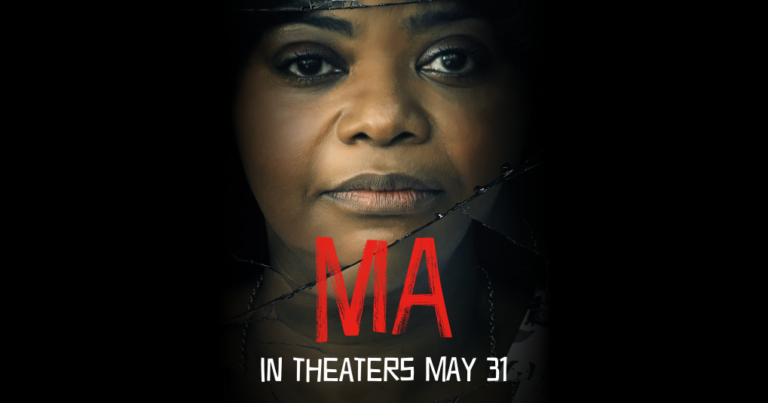
I ended up catching the new thriller Ma in theaters despite my inner voice telling me otherwise. Octavia Spencer is amazing as usual and director Tate Taylor can tell a good tale. Overall it turned out to be a good movie-going experience but the film still felt stale in certain areas. Taylor offers up a spin on revenge and bullying but, with the exception of Spencer’s Sue Ann, I found the characters to be lacking depth and not enough care given to parts of the story, specifically the final act. It is not a film that’s going to turn heads but Ma makes for a good at home popcorn flick.
Ma actually surprised me in that it turned out to be more entertaining than what I went in expecting. The trailer didn’t do much in grabbing my attention and I had planned to catch it during its online streaming rounds. And although not a film I would recommend catching in theaters it is worth catching at home as it is a decent viewing experience. Don’t expect any jump scares or anything of that sort but there are some good “What the…” moments and Taylor does a good job with giving us just enough bits and pieces of the whole story to keep your interest. The films main problems are the lack of character development, a disappointing final act and just not enough overall suspense or emotion. Its one of those films that you find yourself continuing to watch mainly to finally get some answers to the questions the story generates. As I mentioned before with the exception of Sue Ann, and to a degree Maggie (Diana Silvers), most of the characters and their relationships feel superficial, almost like bots in a video game there simply to fill a void and keep things somewhat interesting. This also makes for an unsatisfying final act in that some of the consequences for the side characters don’t really hit home. I imagine Taylor meant for there to be some significance in their treatment but because we don’t get enough substantial time with the characters it never really lands.
When talking about performances in Ma, Octavia Spencer is doing all the heavy lifting here. Although not her best performance she still delivers as Sue Ann both in creepiness and wounded-soul. There are moments in the film where I genuinely felt for Sue Ann despite her character flaws and emotionally abusive relationship with her daughter, Genie (Tanyell Waivers). This is all due to Spencer’s delivery. The remainder of the cast’s performance is fine but unfortunately, nothing noteworthy. Juliette Lewis as Erica, Maggie’s mother, isn’t really given much to do but she still pulls out a fair performance. Fairly recently I mentioned to a friend that I have always been impressed with Luke Evans work and that goes for Ma as well but his screen time is minimal. The batch of young faces that rounded out the small clique of high school friends were all new to me and each held their own on-screen. I didn’t care so much for some of the interaction between them but that has more to do with the script than their performance.
Ma is an interesting take on the consequences of high school bullying. It is great at allowing the viewers to see it through the eyes of the victim, Sue Ann, and even understand how it deeply affected her growth into an adult and mother. However, the film doesn’t bring anything fresh and its conclusion didn’t feel like a worthy reward for the build up. Although entertaining there is not enough suspense, the story simply unravels layer by layer with very few surprises. What will keep your interest is just the story itself which is heartbreaking, there are numerous victims and each is being mistreated for no real reason other than their existence. Ma is a worthy film for a lazy evening at home to relax and kill time, it actually would have been a perfect film for a Netflix or Amazon Prime release. If you haven’t had a chance to catch it yet definitely wait for streaming.
Director: Grant Sputore Writers: Michael Lloyd Green (screenplay by), Grant Sputore (story by) Stars: Luke Hawker, Rose Byrne, Maddie Lenton, Hilary Swank
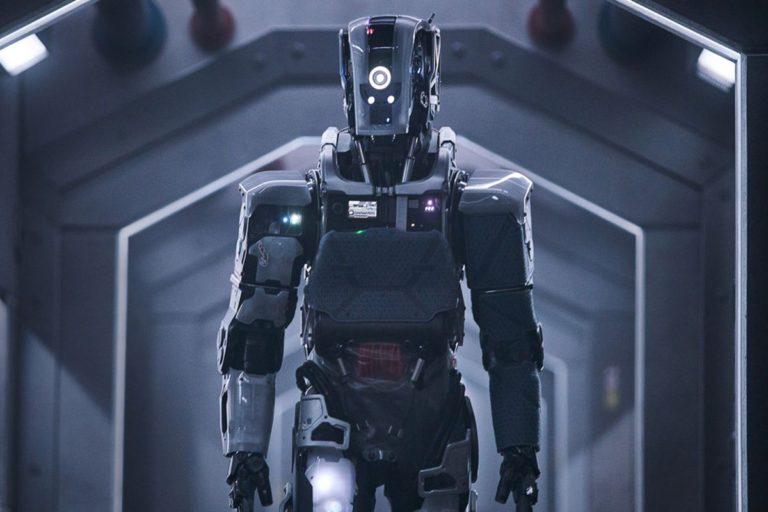
Synopsis: A teenage girl is raised underground by a kindly robot “Mother” — designed to repopulate the earth following the extinction of mankind. But their unique bond is threatened when an inexplicable stranger arrives with alarming news.
[/info]
We don’t know what happened. At their heart, all post-apocalyptic stories share this common point of interest. We want to know what happened to the world we live in. How did it get to this tragic point?
The new Netflix film I Am Mother leans into what we as the audience do not know. At the same time, it holds a clear appreciation for the major works of cinema in science fiction that cause us to guess at what is coming next. It uses this to its advantage as, just as we begin to jump to conclusions, it takes a few turns.
One of those conclusions is that machines are not to be trusted. At the beginning of the film, we learn that the story takes place in some sort of containment shelter where human embryos are being cultivated. We see the first child being born. We only ever know her as “Daughter” (played by Maddie Lenton, Summer Lenton, Hazel Sandery, and Tahlia Sturzaker at various stages of life; for most of the film, the character is played by Clara Rugaard) and, here in the early stages, we watch as her “Mother” cares for her. Mother is a robot (played by Luke Hawker and voiced by Rose Byrne). She is caring, far more caring than we might expect. We have no reason to doubt her sincerity, other than what we know from past science fiction. We watch as the machine attempts to soothe the crying infant, and we empathize with the fact that even a robot can’t get a baby to stop crying right away.
Is there any character in cinema history that looms larger over an entire plot device than HAL-9000 does over artificial intelligence? Director Grant Sputore clearly wants us to make that connection, but even without the similar look, we cannot help but think of the computer from 2001: A Space Odyssey whenever AI is a part of the story. I think at the beginning of this film I wanted to believe that this robot was caring for this child. But everything within me doubted that.
This is one of the great components of this story by Sputore and screenplay by Michael Lloyd Green. Even though Mother gives us no reason to doubt her at the beginning of the film, we automatically resonate with the girl over a machine. Early in the film, the girl finds a rat in a hallway. She has been told that there is no life outside their walls due to the contagion in the atmosphere. But now, she begins to doubt that. When the girl disobeys her Mother, and opens the airlock that seals their home from the outside, we realize the trick this story has begun to play on us. If it were a human mother/daughter relationship, we’d expect there to be consequences. But, since the Mother is a robot, we root for the girl to disobey orders.
We see the Mother killing animals dispassionately early in the film. It gives the girl pause, but based on everything she’s been told about the inhabitable conditions outside, it makes sense. It doesn’t make sense when she finally does open the airlock to find a woman (Hilary Swank) outside.
This causes us to doubt all the answers we’ve been given. Since the girl is our audience stand-in, she doubts as well. Is the Mother hiding something? Is this new woman telling the truth when she says that there are other robots like the Mother that harmed her? We have our guesses, but we honestly do not know.
The girl is given tests by the Mother repeatedly during the film. The girl asks what the tests are for, and the Mother responds that their results reflect more on her as a mother rather than on the daughter. But who is grading the Mother? What’s the point?
From a story perspective, one of the points is to give room for the film to open up a discussion about philosophy. One of the girl’s tests involves the writings of Comte and Kant. What’s good for the most amount of people is the path that should be taken. What if that means sacrificing yourself to save others? The girl posits – what if you are a life-saving doctor and one of the others is a murderer? Wouldn’t it be prudent to save yourself instead? These questions of conformity vs. independence continue to live inside the girl’s mind.
The woman brings all these questions to the forefront, as her version of what is happening outside bears no resemblance to what the girl has been told by the Mother. The film uses these competing narratives to powerful effect. We don’t know who to trust. Every time we think we can trust one story over the other, something happens to cause us to doubt once more.
In terms of themes, the film gets us to a point where we consider how those under totalitarian rule are blinded to the atrocities of their leaders. At multiple points when the girl is confronted with the woman’s version of events, she says that her Mother has treated her nicely and couldn’t possibly be like the other robots (the woman refers to them as Dozers) the woman describes. I think it also attempts to wrestle with themes of free will and faith, though that seemed a bit more muddled to me.
Eventually, we see the outer world, and this is where the film’s best visuals are deployed. The cinematography is good throughout, but especially in these scenes. The girl thought she would find the answers she needed out there, but does she?
It is this ability to always present us with new questions that makes this such a strong film. Even the ending opens up new lines of thought. For a film that is treading in stories (sci-fi, post-apocalyptic) that have been used often before, finding new ground is an achievement unto itself.
The acting is well-done, which is mainly Rugaard and Swank. We know the kind of talent that Swank has, and she gives this role what it needs. But I was most impressed with Rugaard. There’s a lot of ground to cover in this role. She has to be able to play the naiveté of a child while also underscoring the fact that this particular child has been uncommonly trained and is quite knowledgeable and resourceful. She handles it well, and I look forward to the rest of her career as an actress.
I look forward to watching this film again, which is always a great sign. There are a lot of questions here that I’m sure a second watch would make more meaningful. I was impressed with the ways it honored its influences (2001, the Blade Runner series, Ex Machina) but also forged new territory. At the end, we still don’t know what happens.
This week on Episode 330 of the InSession Film Podcast, inspired by Wild Rose, we thought it would be fun to talk about our favorite performances in music films. We’ve talked about movie musicals, musical numbers, music biopics and even performances of songs in film, but we’ve talked about acting performances in music films before. Whether the characters are based off of real-life figures or they’re fictional, we remember them because of the great performances behind them, and we wanted to honor that with our lists this week. There are so many to choose from here and hopefully we did some justice with our picks That said, here are our lists:
(Note: Please keep in mind that we each had different criteria for our selections)
JD
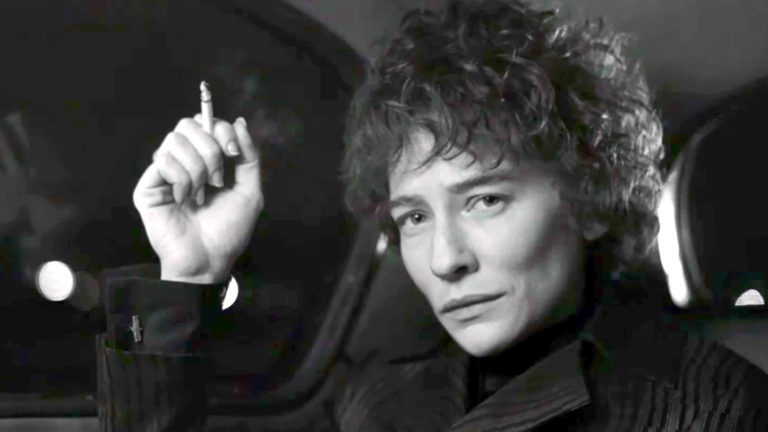
1) Cate Blanchett – I’m Not There
2) Glen Hansard, Markéta Irglová – Once
3) Michael Fassbender – Frank
Brendan
1) F. Murray Abraham – Amadeus
2) Paul Dano – Love and Mercy
3) Kate Hudson – Almost Famous
Lucy
1) Ferdia Walsh-Peelo – Sing Street
2) Miles Teller – Whiplash
3) Michael Fassbender – Frank
Honorable Mentions (Combined)
Oscar Isaac – Inside Llewyn Davis
J.K Simmons – Whiplash
Marion Cotillard – La Vie en rose
Jack Black – School of Rock
Entire Cast – Straight Outta Compton
Jeff Bridges – Crazy Heart
Joaquin Phoenix – Walk the Line
Resse Witherspoon – Walk the Line
Val Kilmer – The Doors
Terrance Howard – Hustle and Flow
George Clooney – O Brother, Where Art Thou?
John Turturro – O Brother, Where Art Thou?
Tim Blake Nelson – O Brother, Where Art Thou?
Freddie Highmore- August Rush
Ethan Hawk – Born to be Blue
Don Cheadle – Miles Ahead
Marshall Mathers – 8 Mile
Patrick Fugit – Almost Famous
Chadwick Boseman – Get On Up
Zoe Lister-Jones – Band Aid
Kiersey Clemons – Hearts Beat Loud
Nick Offerman – Hearts Beat Loud
Tom Hiddleston – Only Lovers Left Alive
Jamie Foxx – Ray
Keira Knightley – Begin Again
Anna Kendrick – Pitch Perfect
Rebel Wilson – Pitch Perfect
Bradley Cooper – A Star is Born
Lady Gaga – A Star is Born
Entire Cast – This is Spinal Tap
Elizabeth Moss – Her Smell
Jessie Buckley – Wild Rose
Michael Pitt – Last Days
Sissy Spacek – Coal Miner’s Daughter
Robert Arkins – The Commitments
Ben Dickey – Blaze
Hopefully you guys enjoyed our lists and if you agree or disagree with us, let us know in the comment section below. As mentioned above, there are so many great performances in music films, and we clearly missed many other options here, especially from films prior to the early 90’s (something we speak to on the show). That being said, what would be your Top 3? Leave a comment in the comment section or email us at [email protected].
This week on the InSession Film Podcast, Lucy Buglass from LucyGoesToHollywood.com joins us to discuss Wild Rose, starring the great up-and-comer Jessie Buckley, and our Top 3 performances in music based films. The fellas also give their thoughts on Netflix’s latest rom-com Always Be My Maybe as well as the little indies Diane and All is True.
Big thanks to Lucy for joining us this week. We are big fans of her work and it was a pleasure to finally get her on the show. Her enthusiasm for Wild Rose and the Top 3 was contagious, and it made for some really fun banter. There was a general overall excitement for Wild Rose from all of us though, and we hope that you all enjoy it as we did when it comes out.
That said, check out this week’s show and let us know what you think in the comment section. Thanks for listening and for supporting the InSession Film Podcast!
– Movie Review: Wild Rose (5:10) Director: Tom Harper Writers: Nicole Taylor Stars: Jessie Buckley, Julie Walters, Sophie Okonedo
– Notes / Always Be My Maybe / Diane / All is True (46:23)
This week for InSession Film Catch-Up (unofficial term), both JD and Brendan offer up their thoughts on the Netflix rom-com Always Be My Maybe after Jay and Ryan talked about it on a recent Extra Film. Brendan finally caught up with the Kent Jones film Diane while JD saw Kenneth Branagh’s All is True, so both films were briefly talked about as well.
– Top 3 Performances in Music Films (1:12:32)
We’ve talked about movie musicals, musical numbers, music biopics and even performances of songs in film, but we’ve talked about acting performances in music films before. Whether the characters are based off of real-life figures or they’re fictional, we remember them because of the great performances behind them, and we wanted to honor that with our lists this week. There are so many to choose from here and hopefully we did some justice with our picks. That said, what would be your Top 3?
If you want to help support us, there are several ways you can help us and we’d absolutely appreciate it. Every penny goes directly back into supporting the show and we are truly honored and grateful. Thanks for your support and for listening to the InSession Film Podcast!
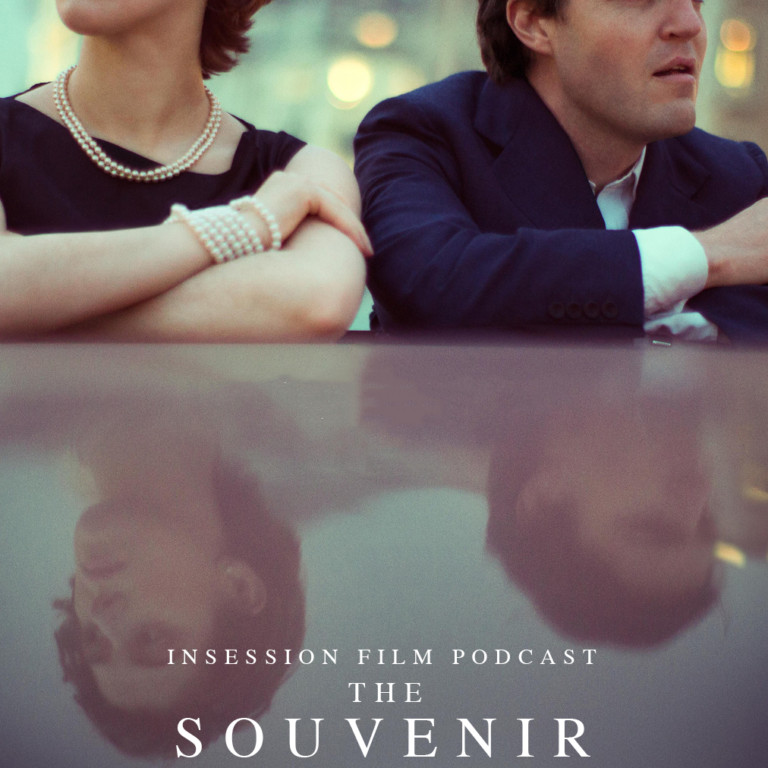
This week on the InSession Film Podcast: Extra Film segment, Ryan and Jay get together to review the Joanna Hogg film, The Souvenir, which some critics are claiming to be one of the best films of 2019 so far. In the back half of the episode, JD, who subs in for Jay, and Ryan talk about the new film from Olivier Assayas, Non-Fiction.
Coming out of all the buzz from Sundance earlier this year, Joanna Hogg’s new film has carried a lot of expectations and praise by the time it got to Extra Film. With a personal story that is semi-autobiographical of Hogg’s life and the anticipation to see how Honor Swinton Byrne, daughter of Tilda Swinton, would do in the lead role, The Souvenir led to an shocking discussion, one that both Ryan and Jay didn’t see coming.
Then, Jay steps aside to let JD come on with Ryan to review Olivier Assayas’s follow up to the great Personal Shopper from 2017. Assayas has slowly become one of the best directors of this decades, with stories and visuals that truly leave you thinking long after the final frame roles off the screen. While taking a step back from the dramas of his last two outings, he turns to comedy, with a lot to say and a lot for the guys to discuss during the review.
On that note, have fun with this week’s Extra Film segment and let us know what you think in the comment section below. Thanks for listening!
– Movie Review: Non-Fiction (8:20) Director: Olivier Assayas Writer: Olivier Assayas Stars: Guillaume Canet, Juliette Binoche, Vincent Macaigne
– Movie Review: The Souvenir (40:40) Director: Joanna Hogg Writer: Joanna Hogg Stars: Honor Swinton Byrne, Tom Burke, Tilda Swinton
We try to make this the best movie podcast we possibly can and we hope you enjoy them. Subscribe today on iTunes, Spotfiy or Stitcher, and please leave us a review on iTunes. You can also find us on Soundcloud, PlayerFM and TuneIn Radio as well. We really appreciate all your support of the InSession Film Podcast.
To hear this Extra Film episode and everything else we do, download our apps on the Amazon Market for Android and the Podcast Box app on IOS devices. The mobile app covers all of our main shows, bonus podcast’s and everything else relating to the InSession Film Podcast. Thanks for your wonderful support and listening to our show. It means the world to us!
Friendship is everything in life, especially when we are young. In every country, the young learn the easy and hard ways of maturing into adults or rebelling. But those already adults don’t mature at all and have their funny ways of getting by. Love is fleeting and ideas come and go, generations live in eras that are defining, and youth is still misunderstood because of the hopes and desires (or lack thereof) by the figures in question. These are the themes of the works I refer to as frolic films because that is what the characters do and scenes portray and happy and experimenting generation of people. Here are some of my favorite “frolicking” movies.
I Vitelloni (1953)
Federico Fellini’s story (the title has multiple interpretations; it was released in the U.S. as The Young and the Passionate) follows five young friends at major points in their lives who are portrayed in an Italy that was now free from their fascist past but are now immature, lazy, and have no idea what they want to do. They are all past the age of twenty, unemployed or doing odd jobs, and spend most of their time going to bars and walking along the beach talking it up. No one is necessary happy there but there is nowhere to go because they are still dependent. But the journey follows them through their own transgressions and ways to move forward – if they can prevent themselves from going two steps.
Jules And Jim (1962)
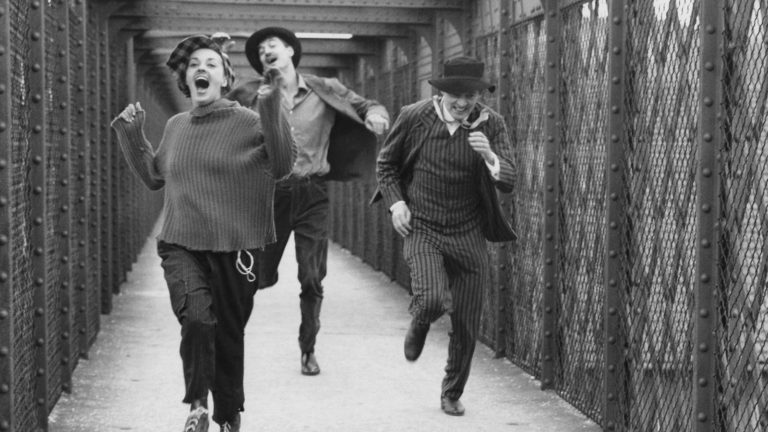
Francois Truffaut’s love triangle that endures before, during, and after World War I is a free-spirited tale told from the shy point-of-view of the Austrian Jules who befriends the outgoing Frenchman Jim and later run into the happy Catherine, who affected both men by their interest in her. The three of them remain close, even as Catherine marries one and seduces the other. It is a very tight relationship as seen with the noted chase across the bridge and is completely characterized in the performance by the late Jeanne Moreau. She is a whirlwind in this entire film that keeps the two men close regardless of nationality and tests their loyalty.
Band Of Outsiders (1964)
Godard had his own love triangle in the contemporary and radical style he was always known for. Two friends, Arthur and Franz, learn from a pretty girl, Odile (played charmful by Anna Karina, Godard’s then-wife), about money in her aunt’s home outside of Paris. Franz, Arthur, and Odile decide to rob the home; before they move ahead, the three have fun dancing the Madison, run through the Louvre, and saying nothing to each other for thirty-six seconds. More jump cuts plus long takes and an insert of various pop culture references and code language adds to this heist-style film about young friendships and taking the fun too far.
Quadrophenia (1979)
The rock opera musical from The Who sends us back to the era of mods and rockers and follows a sixteen-year-old mod named Jimmy who escapes his dead-end life for one of taking amphetamines, motorcycle riding, and fighting. He joins the gang who get into a street war with the rockers in Brighton (Sting plays an idol mod of Jimmy’s) but soon learns that not everything is what it actually is in the mod life and pays an emotional price for it. The rockin’ music accompanying it with the mood of liberty in a changing time – 1964 – elevates the entire social piece that follows Jimmy all over. It is about social growth with the post-war generation gets involved deep into things never seen before at the time. Mod or rocker, they don’t care; they just want to have fun.
Dazed And Confused (1993)
Boyhood and the Before trilogy are part of Richard Linklater’s lengthy success, but nothing spells fun amongst ourselves than his second feature with a bunch of young, upcoming actors including Ben Affleck, Jason London, Parker Posey, Anthony Rapp, Adam Goldberg, and – maybe the greatest of all – Mr. Matthew McConaughey. (This clip above of his audition is a doozy.) In less than 24 hours, the last day of school and the night party that follows all ages, we bounce from place to place reliving a day in the like of 1976 Texas. These interacting stories make it so relatable because its the same type of behavior teenagers are doing today and it helps to have a killer soundtrack; I’m a classic rock fan, so I am biased to what was playing in 1976.
Young people like to frolic before reality really kicks and the traditional way of life – full-time job, wife, children – starts. Some people just don’t want to grow up and want to remain attached to the other young friends. They want to go out party, find random love and do childish things before 30. Matthew McConaughey’s character is in his twenties but he still hangs around teenage girls and the five 20-something on the Italian coastline find themselves at a crossroads. The “white heat” of the 60s let the British youth shag everything left and right while twenty years and opposing sides of a wat does not split up a trio in their own kind of romance. And young people have no respect for manners and run through museums chasing made up record times. 1920, 1964, or 2018, everything is the same.
Director: David Yarovesky Writers: Brian Gunn, Mark Gunn Stars: Elizabeth Banks, David Denman, Jackson A. Dunn
Synopsis: What if a child from another world crash-landed on Earth, but instead of becoming a hero to mankind, he proved to be something far more sinister?
[/info]
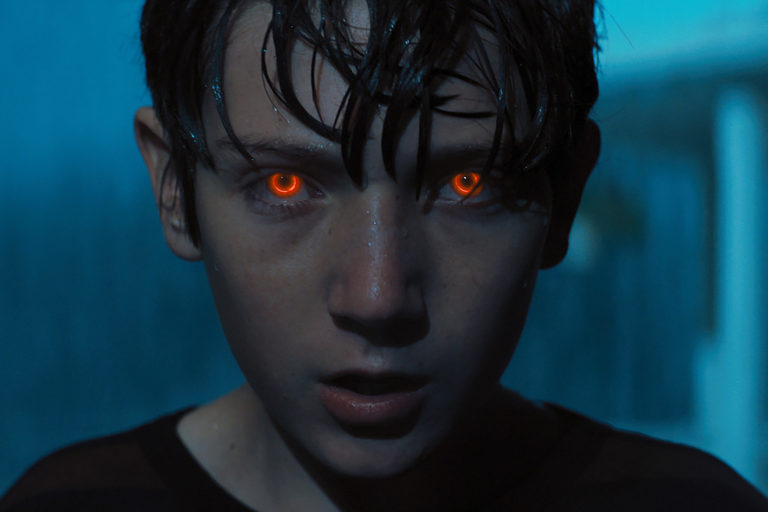
There’s no other way to describe Brightburn than an “evil teenage Superman” movie. Instead of Clark and the Kent family of Smallville, Kansas, we have Brandon and the Breyer family of Brightburn, Kansas. Both families discover an infant in a crash-landed alien ship near their home and decide to raise it as their own. Instead of growing up to be one of the world’s most powerful and good superheroes, Brandon has a more sinister destiny in mind.
I’m still torn about this movie. I definitely enjoyed it more than I thought I would, but it wasn’t as good as I wanted it to be. I wanted more Superman parallels, more references, or inside jokes that comic fans would get. The concept of “evil Superman” is not a new one, but I don’t believe that story has been told in this manner before. I felt like they could have gone a lot deeper with the background, developed Brandon’s alien heritage and personality more. The film definitely suffered from pacing problems and character development. You learn virtually nothing about him other than he’s evil. The story felt a bit rushed. You’re barely introduced to the characters before bad things start happening. It’s also one of those movies where everything interesting was given away in the trailer. I’m extremely annoyed at this trend. I enjoy cheesy action movies, summer blockbusters, and films like that, but they are 100% less fun if you have already seen all the cool bits in the trailer. There must be someone left in Hollywood who can create a decent trailer without giving away the entire movie? There was also heavy advertising around “Visionary director of Guardians of the Galaxy James Gunn’s” involvement in this film, but it looks like the extant of that involvement was to produce, get his brother and cousin to write it, and give a bunch of people who were Ravagers bit parts. I expected more of his style to come through due to his name be plastered on all the advertising, but without the cameos and the name “Gunn” showing up in the credits, I wouldn’t have guessed he was involved.
Even though I had some issues with Brightburn, I actually kind of liked it and look forward to watching it again. Jackson A. Dunn, who plays Brandon, did a pretty good job in his first lead role. I think his performance is my current favorite “creepy kid” role of 2019 (I’ve seen 3 or 4 of these movies so far?). I also liked Elizabeth Banks in this, she plays Brandon’s adoptive mother Tori. I believe this is the first time I’ve seen her in a non-comedic role (I’m not counting Hunger Games as a dramatic role) and she does a good job as the faithful mom, who doesn’t want to believe the worst of her son. Another thing I liked (but others may not) was the profanity ridden dialogue. It seemed natural or like something that I would say if I ran into a preteen evil Superman. There was also an interesting use of color in this movie- especially red whenever Brandon was doing something evil. There is also a hilarious cameo at the very end of the movie, that I took as a jab at the DCEU films. It was a great pick-me-up at the end of a tense and gory movie.
Overall, Brightburn is better than expected, but still flawed. I don’t think it deserves all the negativity it’s getting, and I think it will gain more fans on home release. I wish they had developed Brandon’s character more, but Jackson A. Dunn does a decent job with what he was given to work with. It may be a bit gory and filled with bad language for some, but if you are interested in a take on “evil teenage superman” I suggest giving Brightburn a try.
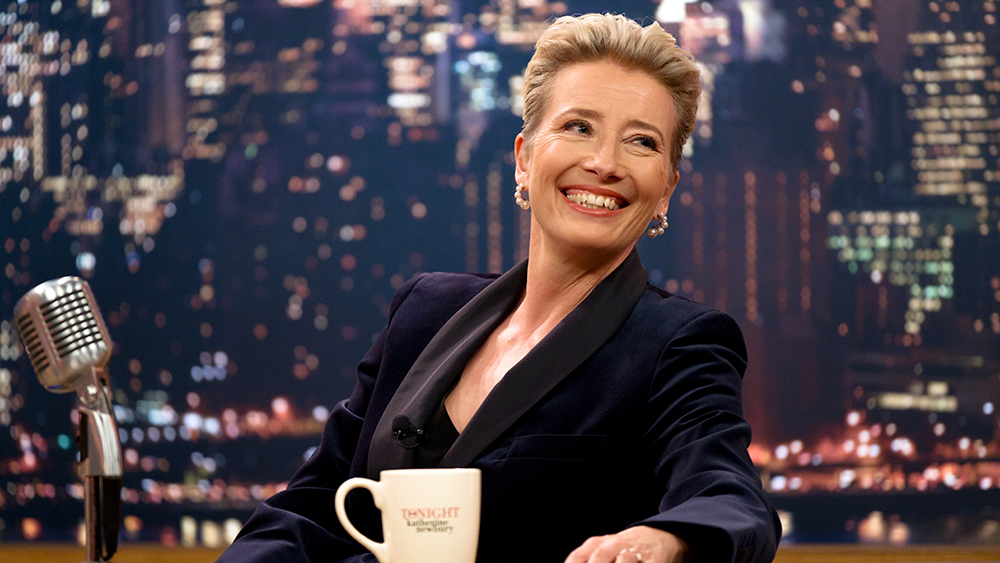
This weekend will see the releases of both Late Night and Men in Black: International, two films that will feature the great Emma Thompson. Presumably she has a bigger role in Late Night, but we are still very excited to see her in Men in Black: International as well. Either way, Thompson is a great actress and we are always excited to see her in a new film. With that as our inspiration for our poll this week, what is your favorite Emma Thompson role?
This week on Episode 329 of the InSession Film Podcast, inspired by Dark Phoenix and this era of the X-Men franchise coming to an end, we decided to talk about our favorite scenes from the X-Men films. The X-Men franchise has had its ups and downs, but the one thing we can all (hopefully) agree on, is that it’s had many great scenes that work very well on their own terms. Whether it be the memorable and exciting moments of action, the bursts of emotion we get at times, or the great performances of these films, there are plenty of great scenes to choose from. And hopefully we did the franchise justice with our picks this week. That said, here are our lists:
(Note: Please keep in mind that we each had different criteria for our selections. Also there are some spoilers below for some picks.)
JD
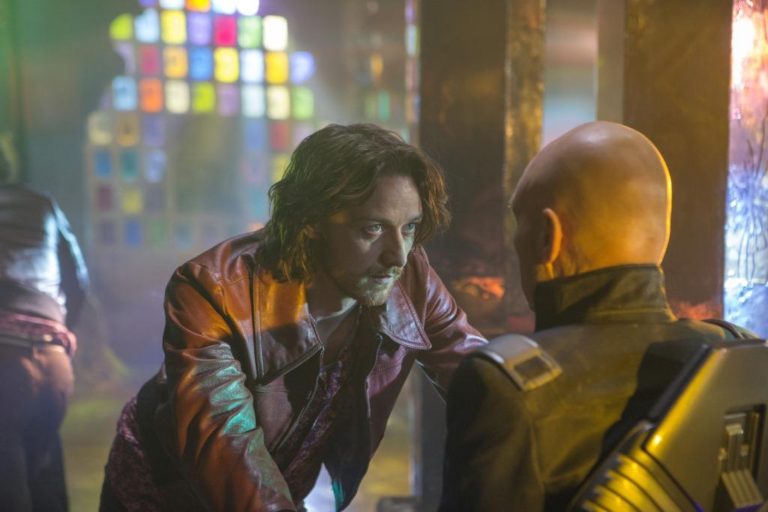
1) Xavier Scene – X-Men: Days of Future Past
2) Logan’s Death – Logan
3) Erik Loses Family – X-Men: Apocalypse
Jay
1) Mutant and Proud Beach Scene – X-Men: First Class
2) Nightcrawler Attack on White House – X2
3) Quicksilver Saves X-Men – X-Men: Days of Future Past
Honorable Mentions (Combined)
Opening Auschwitz Scene – X-Men
Chess – X-Men
Wolverine / Rogue Train Scene – X-Men
Statue of Liberty Sequence – X-Men
Prison Escape – X2
“Coming Out” – X2
Assault on Xavieir’s School – X2
Wolverine / Lady Deathstrike – X2
Angel Sawing Wings – The Last Stand
Beast Sees Normal Hand – The Last Stand
Magneto Kills Shaw – First Class
Training Montage – First Class
Magneto Bar Scene – First Class
Lifting Sub – First Class
Sentinel Climax – Days of Future Past
Opening Action – Days of Future Past
Plane Scene – Days of Future Past
Magneto Destroys Auschwitz – Apocalypse
Quicksilver Moment – Apocalypse
Wolverine Sequence – Apocalypse
Xavier’s Death – Logan
Dinner Scene – Logan
Freeway Chase – Deadpool
Opening Credits – Deadpool 2
Prison Sequence – Deadpool 2
Final Action Scenes – Deadpool / Deadpool 2
Any Scene Between Deadpool / Colossus – Deadpool / Deadpool 2
Any Scene Between Xavier / Magneto – Both Iterations
Hopefully you guys enjoyed our lists and if you agree or disagree with us, let us know in the comment section below. As mentioned above, there are so many great scenes from this franchise despite the uneven quality of the films themselves. Meaning, there could be several other scenes that we forgot to mention. That being said, what would be your Top 3? Leave a comment in the comment section or email us at [email protected].
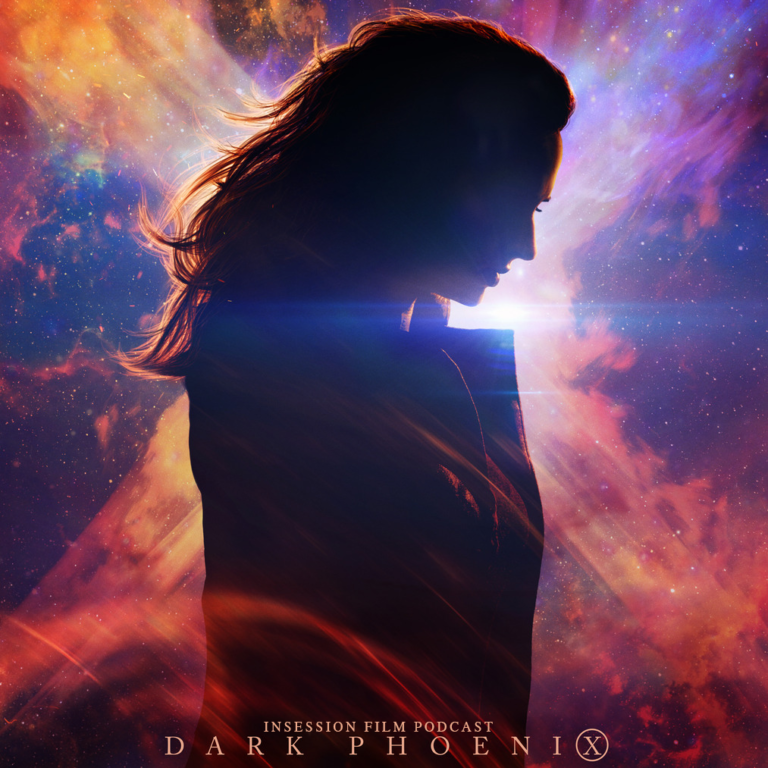
This week on the InSession Film Podcast, Jay Ledbetter fills in for Brendan as we talk Dark Phoenix and our Top 3 X-Men scenes! JD also gives his thoughts on Rocketman, while Jay updates us on his reaction to John Wick: Parabellum and Her Smell.
If you’re a fan of civil and firm debate, then you are going to enjoy this show. Jay and JD did not see eye to eye on Dark Phoenix and it made for some really fun conversation. Regardless of how you feel about the film, though, we did our best to honor this franchise as an era comes to an end. The original X-Men film did so much in changing Hollywood perspective on superhero films, and almost 20 years later, this iteration is over with the characters now entering the MCU (presumably). So, join us as we not only debate Dark Phoenix, but talk about the best X-Men moments and our favorite characters with our poll.
That said, check out this week’s show and let us know what you think in the comment section. Thanks for listening and for supporting the InSession Film Podcast!
– Movie Review: Dark Phoenix (4:38) Director: Simon Kinberg Writers: Simon Kinberg Stars: James McAvoy, Michael Fassbender, Jennifer Lawrence, Sophie Turner
– Notes / Rocketman / John Wick: Parabellum / Her Smell (1:03:05)
If you listened to our latest Extra Film podcast, you would have heard Jay’s thoughts on the film, but JD was finally able to see Rocketman and offered up his thoughts as well. Jay also caught up with John Wick: Parabellum and Her Smell, so it was fun to revisit those once again to see where he landed on them.
– Top 3 X-Men Scenes (1:21:36)
The X-Men franchise has had its ups and downs, but the one thing we can all (hopefully) agree on, is that it’s had many great scenes that work very well on their own terms. Whether it be the memorable and exciting moments of action, the bursts of emotion we get at times, or the great performances of these films, there are plenty of great scenes to choose from. And hopefully we did the franchise justice with our picks this week. That said, what would be your Top 3?
Main Review: MIB: International or Late Night
Top 3: TBD
[divider]
Help Support The InSession Film Podcast
If you want to help support us, there are several ways you can help us and we’d absolutely appreciate it. Every penny goes directly back into supporting the show and we are truly honored and grateful. Thanks for your support and for listening to the InSession Film Podcast!
This week on the InSession Film Podcast: Extra Film segment, Ryan and Jay discuss the musical bio-pic Rocketman and the Netflix Rom-Com, Always Be My Maybe.
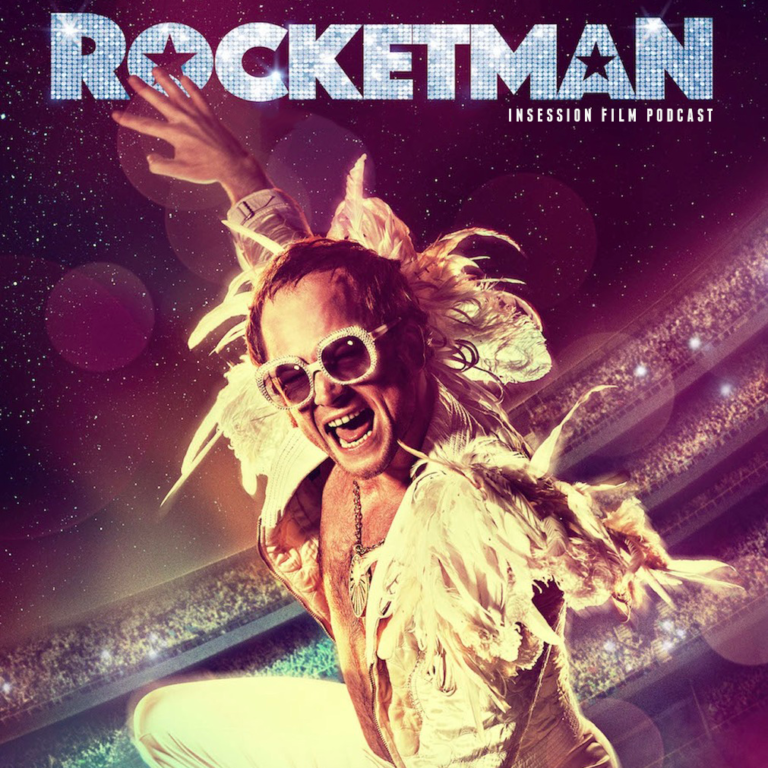
Off of the success of last year’s Bohemian Rhapsody, the musical bio-pic seems to be having a resurgence in the film world. While that film was met with a lot of criticism, Rocketman has been met with a lot of praise coming out of France from the Cannes Film Festival. On top of that, Ryan is a huge Elton John fan so it made for a really fun discussion over the life of Elton John.
Then, Ryan and Jay review Always Be My Maybe, a Netflix romantic comedy that has garnered a lot of buzz. While the genre of romantic comedies has seem to become very scarce over the last couple of years, the guys were interested in seeing this film based on the stars behind the film in Ali Wong and Randall Park. And with it being almost a year since the Extra Film guys first came on the podcast, it only seemed fitting that they review this film, considering one of the first films that was released and reviewed on the show when they came on was Set It Up, another romantic comedy from Netflix.
On that note, have fun with this week’s Extra Film segment and let us know what you think in the comment section below. Thanks for listening!
– Movie Review: Rocketman (7:35) Director: Dexter Fletcher Writer: Lee Hall Stars: Taron Egerton, Jamie Bell, Richard Madden
– Movie Review: Always Be My Maybe (42:49) Director: Nahnatchka Khan Writer: Ali Wong, Randall Park, Michael Golamco Stars: Ali Wong, Randall Park, Michelle Buteau
We try to make this the best movie podcast we possibly can and we hope you enjoy them. Subscribe today on iTunes, Spotfiy or Stitcher, and please leave us a review on iTunes. You can also find us on Soundcloud, PlayerFM and TuneIn Radio as well. We really appreciate all your support of the InSession Film Podcast.
To hear this Extra Film episode and everything else we do, download our apps on the Amazon Market for Android and the Podcast Box app on IOS devices. The mobile app covers all of our main shows, bonus podcast’s and everything else relating to the InSession Film Podcast. Thanks for your wonderful support and listening to our show. It means the world to us!
First of all, happy Pride month to all of our LGBTQ friends and followers. Be you, screw the haters, and spread the love around. It is all common now to have openly gay characters in film and TV, although there are a few more boundaries to break through. Yet, as documented in Vito Russo’s book The Celluloid Closet, homosexuality in the US film industry has been an open secret and discreetly seen in movies. For all the negative stereotypes openly seen, there were others who had no issue of sticking them in with a wink in their eye. Many cite the obvious as among the best in this genre: Brokeback Mountain, Milk, Call Me By Your Name, Philadelphia, and Love, Simon. But it goes beyond the mainstream and the highly awarded. Here are five other LGBT films that need to be recognized.
Parting Glances (1986)
One of the first films to directly address the AIDS epidemic, writer/director Bill Sherwood, who died of AIDS before he ever made another film, created a positive image of gay people, even with the tragedy surrounding their community. It’s set in a one-day period surrounding a gay couple having a party for one of them going abroad for work. It features plenty of wits and positive moments in a loving relationship that contrasts the idea that it is dysfunctional or abnormal; the straight married couple in the party is actually the one unconventional. The reality is centered on a former lover who is HIV-positive, reflecting on the 1970s as an era of decadence and freedom before the disease surfaced and President Reagan was elected. As important was the breakthrough performance of Steve Buscemi as the dying man before he became a major actor in the years afterward.
Maurice (1987)
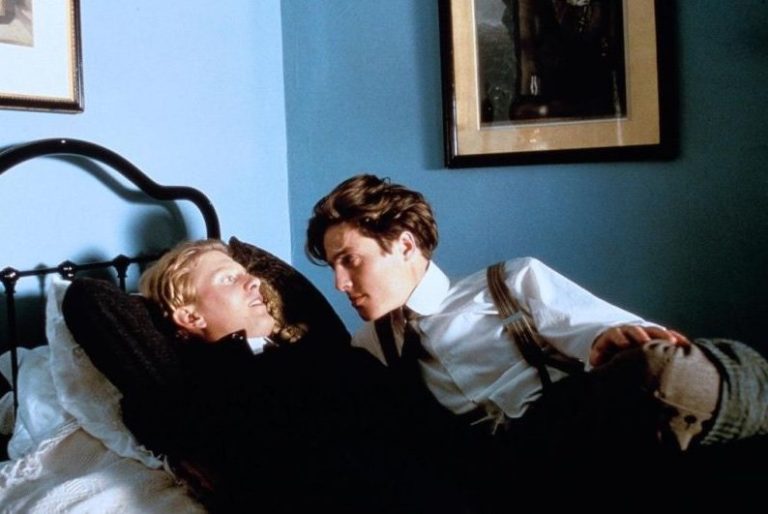
Author E.M. Foster was the source of other James Ivory-Ismail Merchant films, namely A Room With A View and Howard’s End. Foster’s novel, which was published after his death because of the subject matter was taboo and illegal at the time he wrote it, is a personal story also for the aforementioned director-producer duo who were romantically together until Merchant’s passing in 2005. In Edwardian England, the title character meets and falls for another man who has the same feelings but is all too aware that, in their aristocratic world, homosexuality is seen as disgusting and revolting against traditional morals. Hugh Grant in a major supporting role was his second film before becoming a superstar and also featured Rupert Graves, Denholm Elliot, Ben Kingsley, and James Wilby (Gosford Park) in the title role. Like Parting Glances, in the midst of the AIDS crisis, a positive gay love story came about.
The Watermelon Woman (1996)
Cheryl Dunne wrote, starred, and directed in this romantic comedy about a black lesbian working in a video store who decides to make a documentary about the identity of an actress who plays the title character in a film from the 1930s. Along the way, she meets a white woman and begins to have a physical relationship which, in turn, affects the relationship with a co-worker, who finds the interracial element insulting. It tells the themes of stereotypes, historical and past, and the romantic dynamics with interracial couples, plus the variety of lesbianism and gender roles. The film was an achievement as it was the first movie made by a black lesbian and produced with just a $300,000 budget, partially funding by the National Endowment for the Arts, winning the Berlin Film Festival’s Teddy Award, later won by The Kids Are All Right (2010) and A Fantastic Woman (2017).
C.R.A.Z.Y. (2005)
Jean-Marc Vallée (Dallas Buyers Club, Big Little Lies – Season 1) was already a noted director when he made one of the most critically and commercially-acclaimed Canadian films of all time. In a coming-of-age story in the 60s and 70s Quebec, teenage Zachary struggles with the fact he’s gay in a household that is conservative and very masculine with his older brothers. Its funny moments reflect the pop culture timebomb with a killer soundtrack – the title is from Patsy Cline’s famous song but also plays Pink Floyd, The Rolling Stones, and Charles Aznavour – and the main relationship between father and son during the turbulent era is emphasized as “war” that boils down in the end to full acceptance. Besides sweeping Quebec’s own Oscars, it was listed in Canada’s Top 10 Greatest Films of All Time in 2015.
120 BPM (2017)
How this piece of Hi-NRG cinema did not just lose the Palme d’Or (to a bad movie, The Square) and missed out on an Oscar nomination (to The Square again) is cinema criminality. Compared to Larry Kramer’s The Normal Heart, director Robin Campillo shows France’s ACT UP squad in the middle of a guerilla war against the government’s lack of action against the disease in the early 90s. A group of activists, those who have the disease and those who are clean, are vocal as we go inside their meetings and outside where, in the face of death, they celebrate and have their romantic lives, namely between an infected ACT UP who has been around for years and an HIV-negative new member who is still a little introverted.
June is Pride Month, but really people should be proud year-round and the number of movies about various tales with LGBT characters reflects how the subject is mainstream. The history of direct cinema with LGBT themes and characters goes deep in the past with Satyricon (1969), Sunday Bloody Sunday (1971), Fox And His Friends (1975), and Making Love (1982). They were trailblazing films, some from big-name directors, that pushed the tolerance of homosexuality into the open, where it was okay to be out of the closet and into the streets. Now, it is no big deal.
Director: Richard Shepard Writers: Eric C. Charmelo, Richard Shepard Stars: Allison Williams, Logan Browning, Alaina Huffman
Synopsis: When troubled musical prodigy Charlotte (Allison Williams) seeks out Elizabeth (Logan Browning), the new star pupil of her former school, the encounter sends both musicians down a sinister path with shocking consequences.
[/info]
“It’s what’s expected of us.”
This is the mantra of the characters in The Perfection, a new Netflix film from director Richard Shepard. The two leads – Charlotte (Allison Williams) and Lizzie (Logan Browning) – are students of an elite school for cellists, and this is what they are taught. Do what is expected of you, and what is expected of you is perfection.
Lizzie is the new star, and Charlotte is the former one. We meet Charlotte in the film’s first scene as her mother is dying. From whispered dialogue by her family members, we learn that she has nothing left to fall back on other than the music career that she left to care for her sick mother. She makes a call to her former teacher, Anton (Steven Weber), and his wife, Paloma (Alaina Huffman). She meets them in Shanghai at a contest to choose the next student at the Bachoff Academy of Music. It is here that Charlotte meets Lizzie.
Good stories are able to hide the fact that they are made up of plot points chosen to move the narrative along. Bad stories leave the contrived nature of their parts open for the audience to see.
The Perfection is a bad story.
Repeatedly throughout the film, the story will bring us to a place where something completely out of the blue happens that was not adequately set up. Then, the film will reverse to show us plot points that we hadn’t seen before which retroactively make the story tie together.
But that is, on its face, poor storytelling.
There have been great films with large twists that completely shift the narrative that came before it. I recently re-watched Mulholland Drive, which is such a film. But there, we are given all the pieces we need, we just don’t have the context for what those pieces might mean until the end of the film. Then, when everything is reframed, seemingly small moments from earlier in the film take on new meaning.
An example of where The Perfection mishandles this is a scene after Charlotte and Lizzie meet. After the contest, Lizzie is ready to take a vacation. She and Charlotte have a fling, and they decide to travel together. On this trip, Lizzie becomes sick – to the point where we believe she may have contracted a unique virus (the handling of the introduction to this plot point is quite ham-fisted as well). When Lizzie is at her wit’s end, Charlotte all-of-a-sudden pulls out a butcher knife and tells Lizzie to cut off her infected hand. The rules of storytelling would tell us that such an important plot device should have been introduced, however slightly, earlier in the film. The film “fixes” this by pulling one of its rewinds and showing us how Charlotte got the knife. But audiences are smarter than that. We can already tell that this film has no care for craft.
The character details are also way off. Lizzie is supposed to be a one-of-a-kind musician. To reach that level, you need an incredible attention to detail. We find later in the film that Lizzie’s “sickness” came from a mixture of drugs she was given by someone else. But the fact that she would even allow someone else to do that to her seems completely outside the realm of possibility for her character. All films deserve a certain level of suspension of disbelief, but films like this show us through their lack of storytelling craft that it isn’t worth the effort.
There are other moments that leave us dumbfounded. The film repeatedly introduces characters and ideas and then fails to pay them off. The opening scene, in fact, (which shows us the death of Charlotte’s mother) doesn’t seem to have much bearing on what comes after it. Charlotte rarely mentions the death of her mother throughout the rest of the film, signifying that its place in the opening held little to no meaning.
Maybe there’s something here about the insanity of genius, but the film doesn’t want to reach for anything that insightful. All it wants is to provide a few scares and let its flashy camerawork attempt to prop up a subpar story. Unfortunately, it can’t.
Having said that, the camerawork is flashy. Early in the film, split diopter shots are used to show the similarities between Charlotte and Lizzie but also the clear rift between them. There is also a moment when Lizzie reaches a point of decision when the camera makes a full 360-degree rotation. Were it not for the utterly-lacking storytelling effort, the camerawork and visuals could have made this at least an average film.
The film’s final act displays Tarantino-esque levels of violence and gore, while it simultaneously strives for a revenge story one might also find in a Tarantino film. But I won’t mention that famous director anymore, because the film doesn’t really deserve the comparison. Setting up a revenge plot and putting in puke-inducing levels of violence are not enough to reach those lofty heights. You have to back it up with craft, too.
On the revenge tale, this film’s story must have seemed timely to its creators what with the rise of the #MeToo movement. However, I think it’s okay for filmmakers to consider that they don’t necessarily have to make every female have a backstory that includes sexual abuse. Certainly sexual abuse is a reason to be angry, and I can completely understand that it would drive characters towards revenge. But this film takes the added step of driving its female characters into violence against each other. I just wonder if that is the best handling of this material.
I must give credit to the film’s closing shot, which was impressive. But I also must be honest – when I saw it, I was more thankful that it signified the end of the film than for its visual power. That alone should tell you enough about my feelings about this one.
This film is not at all what you’d expect. Sometimes that’s a good thing. In this case, it just means that, unless you were expecting a terrible film, you’ll be sorely disappointed.
Director: Simon Kinberg Writers: Simon Kinberg, John Byrne (story “The Dark Phoenix Saga”), Chris Claremont (story “The Dark Phoenix Saga”), Dave Cockrum (story “The Dark Phoenix Saga”), Jack Kirby (comic book created by), Stan Lee (comic book created by) Stars: James McAvoy, Michael Fassbender, Jennifer Lawrence, Jessica Chastain, Nicholas Hoult, Sophie Turner
Synopsis: Jean Grey begins to develop incredible powers that corrupt and turn her into a Dark Phoenix. Now the X-Men will have to decide if the life of a team member is worth more than all the people living in the world.
[/info]
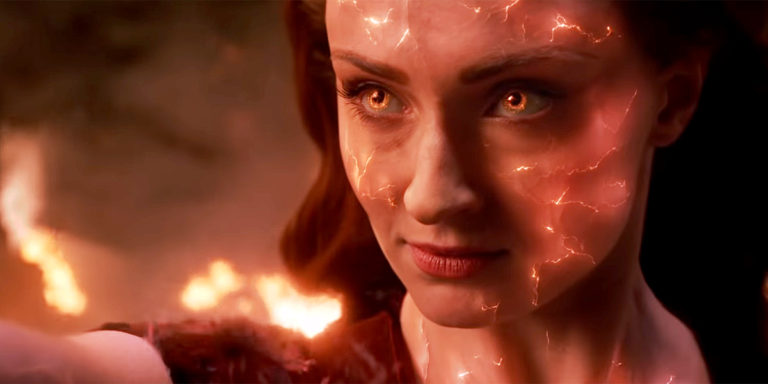
It feels like the X-Men franchise has been hanging on by a thread for a few years now. The series’ most popular character, Hugh Jackman’s Wolverine, took his final bow with 2017’s beloved Logan and X-Men: Apocalypse was met with critical jeers and a disappointing domestic box office haul. This iteration of the franchise’s fate was basically decided when Disney scooped up Fox and, with it, the X-Men. Dark Phoenix always felt like a bit of an afterthought in the eyes of the public. I never would have guessed that it would have felt like just as much an afterthought to the studio, filmmakers, and performers. Dark Phoenix is a shell of a film, full of half-baked ruminations, stilted characters and dialogue, muddled motivations, and frustrating directorial shortcomings. Like the mythical phoenix, the X-Men have been reduced to ash. Unfortunately for these heroes, there is no hope for them to rise from the debris.
Dark Phoenix takes place, primarily, in 1992, 30 years after the events of X-Men: First Class, when we were first introduced to the James McAcvoy and Michael Fassbender versions of Professor Xavier and Magneto. One could point out that it makes no sense that these characters look essentially the same as they did 30 years ago and are supposed to look like 60-year-old Patrick Stewart and Ian McKellan in 8 years, but the X-Men franchise has made it abundantly clear that continuity is the last thing on anyone’s mind when it comes to this series, and that’s mostly fine. It is important to look at these films, at least partly, in a vacuum. After a miraculous survival from a dangerous accident in outer space, Jean Grey (AKA the titular Dark Phoenix) returns to Earth with her powers extremely amplified. The remainder of the surprisingly thinly-plotted film is spent following two factions searching for Jean as she struggles to cope with her new, almost limitless power.
The crux of the X-Men has always been the treatment of mutants by non-mutants (especially the government), with Professor X and Magneto originally conceived as proxies for Martin Luther King and Malcolm X. Dark Phoenix immediately establishes that 1992 is a period of peace between Professor X’s colleagues and the government. In fact, Xavier’s office has a direct line to the office of the President. This is a story about individuals coping with past and future choices, not about a marginalized group looking for equality. The idea of a more personal, small-scale conflict seems good on paper, but this rehash of the much-maligned X-Men: The Last Stand manages to not only fumble the story, once again, but it reaches depths that even Brett Ratner’s film couldn’t.
There is a sense of apathy looming over nearly every part of Dark Phoenix, with no one more apathetic than Jennifer Lawrence, a terrific actress who checked out of this franchise long ago. There are still some performers really going for it (especially Michael Fassbender, who has been the standout since his introduction), but there have been no truly refreshing changes in the foundation of the series (outside of Logan, perhaps, a film that operates better when you don’t consider it a part of the connected universe of films) in almost a decade. The series has been handed off to a younger cast far too quickly with an expectation that we understand the characters because of the actors that played older versions of the same characters in Bryan Singer’s X-Films. We know little of Jean Grey, the film’s main character played by Sophie Turner. She was the deus ex machina of Apocalypse and has had little done to develop her narrative or thematic thread. Dark Phoenix does a bit of this, early on, with a flashback to her childhood, but her story is rote and tired.
With her motivations and trials halfheartedly established, we understand that Jean is easily corruptible, looking for guidance and desperate for someone who truly has her best interests at heart. Attempting to steal her new powers and destroy the world is Jessica Chastain’s character, credited as Vuk. Vuk is an alien creature who has taken over the body of a human and whose motivation and backstory is apparently not important to writer/director Simon Kinberg. We are to understand that she is bad and that is supposed to be enough, apparently. She is merely a disruptive force, trying to push Jean away from the teachings of Professor X, who has raised her since she was a child but whose motivations Jean now seems weary of. This is another example of the movie trying to operate as a meditative one, focusing primarily of Jean’s psyche, not nearly as interested in one-off villains. And that would all be great if we weren’t also treated to monotonous set pieces set on city streets and sometimes excruciating dialogue (Kinberg continues to try to beat his own record for the least effective, most cringeworthy use of an expletive in a PG-13 movie. Sadly, I don’t know that he can ever beat, “I’m the Juggernaut, bitch!” from The Last Stand). Every time the film gets any sort of momentum, something drags it back down into the muck. I know the greatest antagonist of the film is supposed to be Jean Grey’s own psyche, but can we at least give two-time Academy Award nominee Jessica Chastain something to do? Anything at all?
In traditional superhero movie fashion, the film wraps up with its biggest set piece, this one set on a train. The action here is genuinely clever and has character, something that the rest of the film is lacking. When the final battle is the best part of your movie (it is usually the worst part of a big blockbuster like this), something has probably gone wrong. Perhaps the infamous reshoot of the film’s ending forced the scale of the grand finale to shrink a bit, but that can be good, and it is in line with what the rest of the film seems to be striving for. Is it a great finale? No, but it feels as close to successfully capturing a vision as the film gets.
Overall, Dark Phoenix is probably the worst entry into the X-Men franchise since the abysmal X-Men Origins: Wolverine. It has been a downhill ride for the last decade of X-Men team-up films, with everything from performances, to make-up, to production design, to direction gradually getting worse. It is abundantly clear that this series has run out of steam, even if there was a whiff of a unique type of storytelling. After nearly two decades, the X-Men will finally be out of the grasp of Bryan Singer. You can’t convince me that isn’t a good thing. So, take a few years off, Professor X, and we’ll see you when Mickey decides that the stench of Apocalypse and Dark Phoenix has worn off.
Overall Grade: D+
[divider]
Hear our podcast review on Episode 329, coming soon.