Home Blog Page 234

Poll: What is your favorite Bong Joon-ho film?

This weekend on Episode 350, we are going to be discussing the best reviewed film of 2019 so far in Bong Joon-ho’s latest film, Parasite. At every turn, no matter who you hear from, it’s been receiving nothing but masterful praise. A notion that isn’t too surprising given its director Bong Joon-ho, a filmmaker that we quite adore. He’s had one hell of a decade between Mother, Snopiercer, Okja and now Parasite. Last decade he had one of the best mystery-crime-thrillers in Memories of Murder. So, with that in mind, we thought we’d use him as inspiration for our poll this week.

What is your favorite film from director Bong Joon-ho? Vote now!


Movie Review: Between brownface and preachiness, ‘The Laundromat’ is a low point for Soderbergh


Director: Steven Soderbergh
Writers: Jake Bernstein (book), Scott Z. Burns (screenplay)
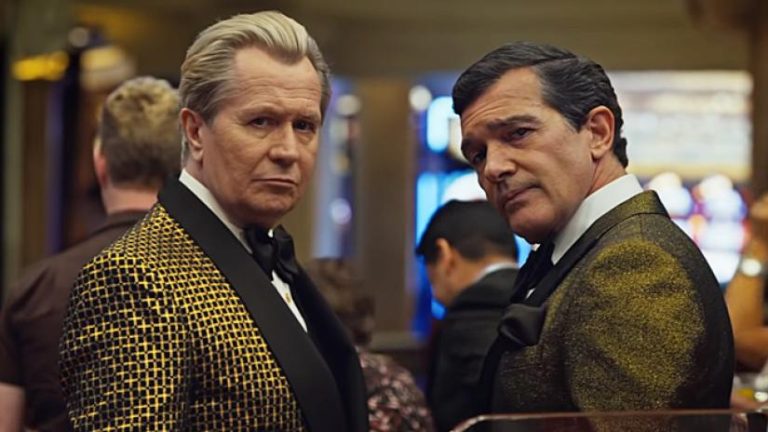
Stars: Gary Oldman, Antonio Banderas, Meryl Streep

Synopsis: In this The Big Short (2015)-esque dramedy based on the Mossack Fonseca scandal, a cast of characters investigate an insurance fraud, chasing leads to a pair of a flamboyant Panama City law partners exploiting the world’s financial system.

[/info]

I’ve never seen a Steven Soderbergh film that wasn’t fun. When I see his name attached to a film, “fun” is the first word that comes to mind. Whether it’s the story, the pacing, or the memorable characters, his films always have an energetic quality to them.

While that streak didn’t end for me when I watched The Laundromat, Soderbergh’s latest film on Netflix, this was by far the least amount of fun I’ve ever had watching one of his films.

This film tells the nefarious story of shell companies – the fake business entities used by the wealthy to dodge taxes and legal ramifications for their greedy dealings. It stars Gary Oldman and Antonio Banderas as Jurgen Mossack and Ramon Fonseca – the lawyers behind what was once the world’s fourth largest provider of offshore financial services. This is the true story of the scandal uncovered by the Panama Papers, though Soderbergh certainly takes his liberties.

Meryl Streep plays the other lead role, as Ellen Martin. The film begins with her and her husband, Joe (James Cromwell), on vacation. Joe dies in a boating accident, and the difficulty with the insurance company is what sets off the uncovering of all the seedy financial dealings. Along the way, there is a third story about one of the wealthy men who is connected to Mossack Fonseca. He cheats on his wife with his daughter’s roommate.

If it all sounds a little disjointed, that’s because it is. I forgot to mention that Mossack and Fonseca narrate much of the film, breaking into whatever narrative is currently at play. The film’s early scenes work much better than its later ones – when Soderbergh completely gives the story over to a preachy cautionary tale.

People will compare this to the recent films of Adam McKay, especially Vice. While there are similarities, at least McKay keeps most of the focus on the narrative. Soderbergh just can’t help himself – he knows something that we don’t and he’s going to tell us whether it comes off as preachy or not.

Then you have the major controversy around Meryl Streep in brownface. Yes, in 2019, this really happened. The film’s closing scene makes an attempt to show the move as one of being part of the film’s artifice, but I’m not buying that and neither should you. Along with her role as Ellen Martin, Streep also plays a Latina secretary at Mossack Fonseca. It’s offensive, and completely unnecessary.

From the names I’ve already mentioned, you can clearly see that the film has an incredible cast. It also contains Sharon Stone, Jeffrey Wright, and David Schwimmer among others. They, along with Soderbergh’s usual technical skill, keep the film from being a total disaster.

Having said all that, I must admit that some of that old Soderbergh fun does seep through. The man is a living legend, and for good reason. He brings some of his technical mastery and visual flair to this film as well. Especially in the early scenes, I was along for the ride. The problem is that the ride comes to a screeching halt as the film progresses.

If you’re looking for a high-quality Soderbergh film released by Netflix in 2019, you’re better off with High Flying Bird. In that film, Soderbergh had an equally-fascinating story to work with but he let his characters do the talking. Here, the direct-to-camera narration just gets old by the end of the film.

Preachy is a bad look for most artists. I enjoyed Vice more than most, but even I had to admit that McKay’s thirst to tell everyone how stupid they were while Dick Cheney ruled the world detracted a bit from the experience of watching the film. Here, the preachiness sours the entire experience and squanders the fun Soderbergh narrative I thought I was getting when I began watching.

Overall Grade: C

[divider]

Hear our podcast review on Episode 347:

[divider]

Movie Review: The aches of memories and success in Almodovar’s ‘Pain & Glory’


Director: Pedro Almodóvar
Writers: Pedro Almodóvar
Stars: Antonio Banderas, Penélope Cruz, Asier Etxeandia, Leonardo Sbaraglia

Synopsis: A film director reflects on the choices he’s made in life as past and present come crashing down around him.

[/info]

Pedro Almodovar has had a solid 2010s, but a step less than his hot streak in the 2000s. His thriller, The Skin I Live In, reunited him with Antonio Bandaras in over 20 years. I’m So Excited was a throwback to the straight-up comedy, very lighthearted that hadn’t been seen since Women On The Verge Of A Nervous Breakdown. Julieta, his last work, brought on the emotional bonds of mother and daughter, much like in Volver. But until this point, he didn’t really have a defining movie, for the decade. With what has to be the most directly personal picture in his career, Pain & Glory (Dolor y Gloria) gives Almodovar that movie that can signal his best of the decade.

Antonio Banderas plays Salvador Mallo, an aging director who is dealing with physical ailments while lamenting on his past. He continues to think about his childhood when he was raised in a village with his mother (Penelope Cruz) while also preparing for one his of movies being remastered and re-released 32 years after. In the process, Salvador ends up having to reconnect with the film’s lead, Alberto (Asier Etxeandia), who he hasn’t spoken with since then because of the latter’s drug use during the shoot, as well as confront the depression and loneliness he is dealing with at his age.

The life of Salvador Mallo plays out to us in what has led him to this point, aging out with bodily pains and the personal heartbreak that nags him. It is also the life of Pedro Almodovar in a nutshell; like Salvador, Almodovar grew up in a small village raised by women starting with his mother, is gay, and intellectually stimulated in reading, writing, and the love of movies. And most importantly, the pain is fended off through creative writing that becomes a movie. It is a labor of love to himself and to those he lived with and loved.

For Antonio Bandaras, only he could put these feelings on the screen and, as advertised, is brilliantly moving as Mallo. He doesn’t have to speak a lot to express it all because most of it is on his face with the haggard look and grey hairs that show a man weakening in the face of father time and with mostly the past on his mind. Bandaras’ Mallo struggles to grasp what went wrong in his life and the key moments of his childhood. Add in Alberto Iglesias’ score and José Luis Alcaine’s gorgeous visuals, you have a piece of art as equal as Van Gogh’s painting, Sorrowing Old Man (At Eternity’s Gate).

It is Almodovar’s best work certainly since Volver and his own version of 8 1/2 but without the music or the celebratory feel around a fictional director. It is a melancholy piece of work that those of a certain age can relate to what they have regrets about, regardless of occupation and sexual orientation. But this is from Almodovar and his path to glory along with his pain is unlike anyone else.

Overall Grade: A-

[divider]

Podcast: The Lighthouse / Persona – Episode 349

This week’s episode is brought to you by the Patreon and our awesome listener’s like you. Sign up today and get some awesome rewards!

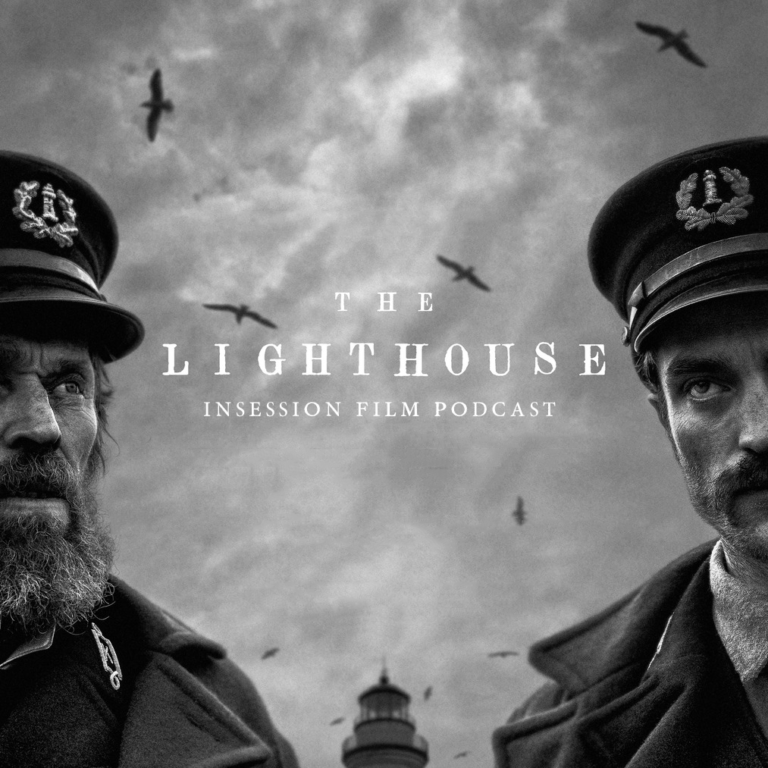
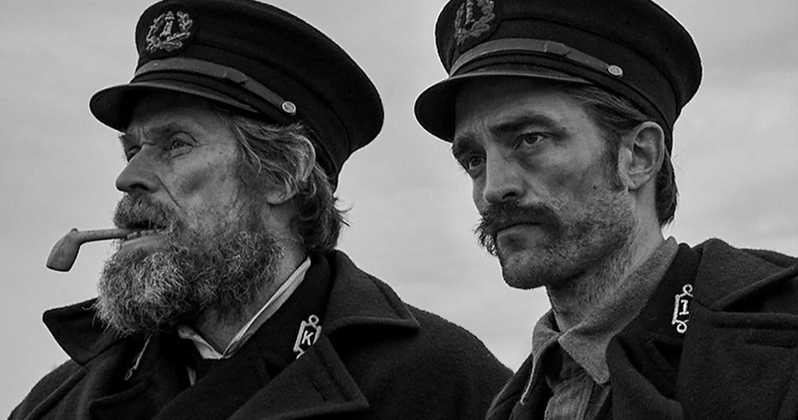
This week on the InSession Film Podcast, we discuss Robert Eggers’ latest film The Lighthouse and continue our Ingmar Bergman Movie Series by discussing his 1966 film Persona! JD also gives his thoughts on Little Monsters, Zombieland: Double Tap and Crawl.

No guest this week, but wow, what a fun show. We didn’t plan this intentionally, but The Lighthouse and Persona are the most thematically apt pairing we’ve ever had on the podcast. We even joked about how Persona is essentially a prequel to The Lighthouse. Sometimes the stars align in the right ways and the universe comes together, and that was certainly the case on this episode. So, that is to say, we really enjoyed digging into these two films and what it all means.

On that note, check out this week’s show and let us know what you think in the comment section. Thanks for listening and for supporting the InSession Film Podcast!

– Movie Review: The Lighthouse (4:53)
Director: Robert Eggers
Writer: Max Eggers, Robert Eggers
Stars: Willem Dafoe, Robert Pattinson, Valeriia Karaman

– Notes / Little Monsters / Zombieland: Double Tap / Crawl (47:33)
As noted above, JD finally caught up with the zombie comedies Little Monsters and Zombieland: Double Tap, as well as the hurricane-alligator disaster film Crawl. Sometimes you just need to kick back, grab a bag of popcorn and enjoy yourself. That’s pretty much what these films have to offer.

[divider]

RELATED: Listen to Episode 344 of the InSession Film Podcast where we discussed Ad Astra!

[divider]

– Ingmar Bergman Movie Series: Persona (1:12:36)
Director: Ingmar Bergman
Writer: Ingmar Bergman
Stars: Bibi Andersson, Liv Ullmann, Gunnar Björnstrand

InSession Film Sponsor: First Time Watchers Podcast

– Music

Stranded – Mark Korven
Sweet Caroline – Neil Diamond
Abbildung – Lars Johan Werle
The Return of the Eagle – Atli Ãrvarsson

Subscribe to our Podcasts RSS
Subscribe to our Podcasts on iTunes
Listen on Spotify
Listen on iHeartRadio
Listen on Stitcher
InSession Film Podcast – Episode 349

[divider]

Next week on the show:

Main Review: Parasite / Terminator: Dark Fate
Top 3: N/A
Ingmar Bergman Movie Series: N/A

[divider]

Help Support The InSession Film Podcast

If you want to help support us, there are several ways you can help us and we’d absolutely appreciate it. Every penny goes directly back into supporting the show and we are truly honored and grateful. Thanks for your support and for listening to the InSession Film Podcast!

VISIT OUR DONATE PAGE HERE

Movie Review: ‘El Camino’ doesn’t have the bite of its predecessor


Director: Vince Gilligan
Writers: Vince Gilligan, Vince Gilligan (based on “Breaking Bad” by)
Stars: Aaron Paul, Jonathan Banks, Matt Jones, Charles Baker

Synopsis: A sequel, of sorts, to Breaking Bad following Jesse Pinkman after the events captured in the finale of Breaking Bad. Jesse is now on the run, as a massive police manhunt for him is in operation.

[/info]

Let’s begin by dispensing with the elephant in the room – you can watch El Camino: A Breaking Bad Movie without having seen Breaking Bad. The new Netflix film from writer/director Vince Gilligan certainly is a worthy follow-up to the groundbreaking TV show, but the story is its own. And, in any case, there is an intro to the film that gives you all the catch-up info you might need from the TV series. I myself only made it through season 2 of Breaking Bad and never finished. Do I regret it? Sure, but we all have regrets. Maybe someday I can make it right.

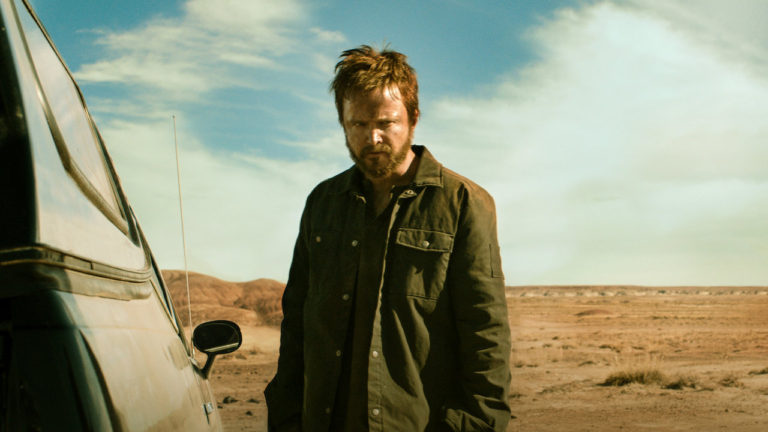
Ok, with that out of the way, on to the story at hand. This time the focus is on Jesse Pinkman (Aaron Paul) This is the role that made Paul a household name. But can Jesse Pinkman really carry his own film, or is he just a sidekick?

He’s no sidekick in this film, that’s for sure. This is his story. Pinkman gets himself in and out of trouble as the film continually flashes back to show us how he got here. Working in a massive meth operation is bound to get you some enemies, and Pinkman has his own. He’s constantly on the run and looking for money that will keep him going. Where, you ask? The answer for most of the film simply seems to be – away.

The main reason for that is, as you might imagine, that Pinkman is being chased by every police officer in a large radius. His face is on the news. Even his parents are being interviewed and pleading for him to turn himself in. What I found most compelling, though, is that it always seems that there is something else that Pinkman is more worried about than everyone chasing him. He’s constantly trying to come to grips with his own past and the criminal history that haunts him. Can there be any hope for him to shake everything and start new?

Though this is Pinkman’s story, that doesn’t mean there aren’t other interesting characters. Jesse Plemons and the late Robert Forster both show up as scene stealers – Plemons as Todd, one of Pinkman’s captors, and Forster as Ed, an enigmatic vacuum store owner. Seeing Forster’s face on screen brought a tinge of sadness, as his loss is still fresh for movie lovers of all stripes. He made each one of the many, many films he appeared in over the years better just by his presence, and this film is no different. Plemons, too, makes an impact. Paul is locked in to a role he has long since sunk his teeth into, but Plemons and Forster gave my favorite performances of the film.

Vince Gilligan can write tension, and he does it again here. “The Past” looms large over this story, and it is that overall tension that really drives the film. Can Pinkman shake his past to get himself into a new future? This makes for an interesting film, but this story doesn’t have the bite that Breaking Bad did. They are different pieces, but one cannot help but compare them. For one thing, there’s no Walter White here – though he does make a small cameo appearance through flashback. White is one of the great characters of recent memory. He dominates the story of Breaking Bad like few characters. Pinkman doesn’t carry this story in quite the same way.

That’s not to say that this is a poor film. It’s not. You will be intrigued and even captivated at times by the repeated setups and payoffs that Gilligan is able to execute here. But I couldn’t shake the feeling that this was a sequel in search of a story. There wasn’t an overly-compelling undercurrent here. For Breaking Bad fans, it will surely give a semblance of closure. Maybe that’s enough purpose for this film. But while those of us who haven’t watched the show completely can still watch this film and find it enjoyable, in the end, there’s just not a whole lot to it.

Overall Grade: C

[divider]

Hear our podcast review on Extra Film:

[divider]

Podcast: Zombieland: Double Tap / Little Monsters – Extra Film

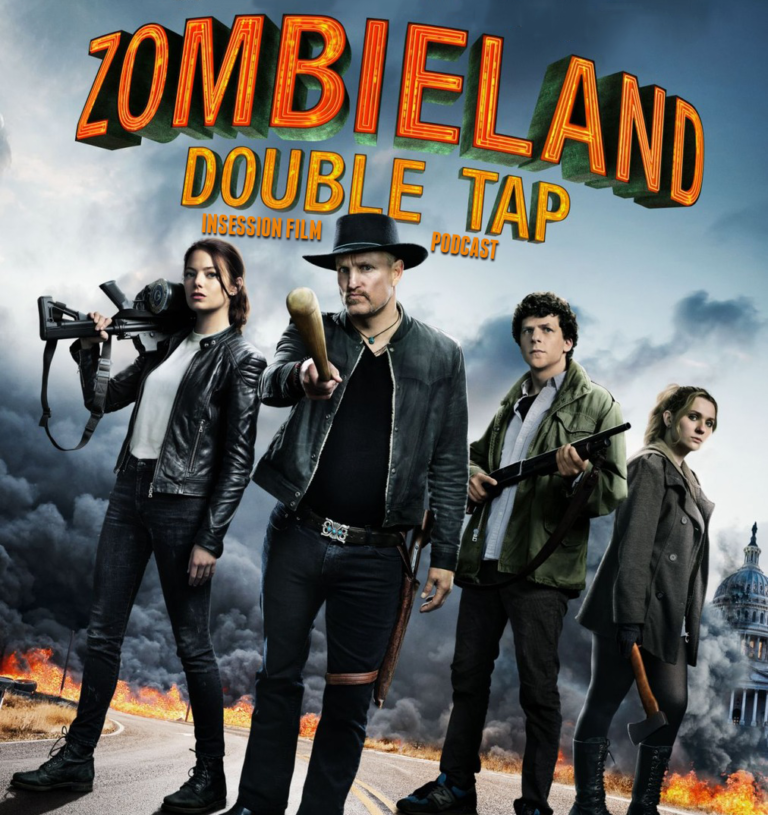
This week on the InSession Film Podcast: Extra Film segment, it’s a zombie spook-tecular episode as Jay and Brendan review long-awaited sequel Zombieland: Double Tap and the indie zombie comedy Little Monsters!

No Ryan this week as he’s out on his honeymoon vacation, and in his place is the lovely Brendan Cassidy. It’s October and that means an array of horror films are hitting theaters and streaming services. Thus is the case this week with these zombie comedies, so it made sense to pair them together and give them a discussion.

On that note, have fun with this week’s Extra Film segment and let us know what you think in the comment section below. Thanks for listening!

– Movie Review: Zombieland: Double Tap (6:30)
Director: Ruben Fleischer
Screenplay: Dave Callaham (screenplay), Rhett Reese (screenplay)
Stars: Woody Harrelson, Jesse Eisenberg, Emma Stone

– Movie Review: Little Monsters (32:57)
Director: Abe Forsythe
Screenplay: Abe Forsythe
Stars: Lupita Nyong’o, Josh Gad, Alexander England

– Music

Master of Puppets – Metallica
Shake It Off – Taylor Swift
The Return of the Eagle – Atli Örvarsson

We try to make this the best movie podcast we possibly can and we hope you enjoy them. Subscribe today on iTunes, Spotfiy or Stitcher, and please leave us a review on iTunes. You can also find us on Soundcloud, PlayerFM and TuneIn Radio as well. We really appreciate all your support of the InSession Film Podcast.

Subscribe to our Podcasts RSS
Subscribe to our Podcasts on iTunes
Listen on Spotify
Listen on Stitcher
Zombieland: Double Tap / Little Monsters – Extra Film

[divider]

Mobile App

To hear this Extra Film episode and everything else we do, download our apps on the Amazon Market for Android and the Podcast Box app on IOS devices. The mobile app covers all of our main shows, bonus podcast’s and everything else relating to the InSession Film Podcast. Thanks for your wonderful support and listening to our show. It means the world to us!

Featured: New Criterion Releases – November 2019 Edition

I’m starting something new this month where I’ll be previewing the upcoming releases by Criterion. It is always a treat to await the listings for the new releases to their collection. They always diversify the selections, even reissuing older editions, and some of them go to the Criterion Channel where people can view it there easily. The movies may change, but the excitement for every new film remains the same. So with that, he’s a rundown of what Criterion has in store for November.

The Daytrippers (1996)

https://www.dailymotion.com/video/x54bnm9

Greg Mottola’s debut is a fun joy ride about a family who goes over to confront the father of an apparent affair with another woman. With the likes of Stanley Tucci, Hope Davis, Parker Posey, and Liev Schrieber, the trip becomes a one-day confessional from everyone that defines the family unity regardless of their dysfunctional state. Steven Soderbergh, who co-produced it, joins Mottola and gives commentary to the film, plus a showing of Mottola’s short film, The Hatbox.

Cold War (2018)

This had Criterion written all over it. One of the best films of 2018, Pawel Pawlikowski’s romance across two decades between communist Poland and France is an emotional ride where a singer and a musician seek love that is interrupted by state politics and conflicting careers. Gorgeous cinematography and the ravishing pace where it does not linger on, going from to scene as time flies by, Pawiklowski would’ve won his second Oscar if it weren’t Alfonso Cuaron and Roma. Yet, it is a must-have when it is out November 19.

Betty Blue (1986)

Jean-Jacques Beineix’s three-hour love story (it was released as two-hours, but Beineix got his director’s cut made) follows the crazy romance between an aspiring writer and his quick-tempered girlfriend, whose violent acts escalate as time goes on. Yet, they remain together for what is a hot, steamy affair in the pursuit of total freedom. An Oscar nominee for Best International Film, the release features an hour-long documentary on the making of the film that dives deep into the movie’s push for the carnal desires the lovers seek.

Now, Voyager (1942)

Bette Davis plays a young woman who remains living under the iron grip of her mother who feels unhappy and unloved. When she’s given the confidence to go out on her own for once, she takes a cruise and begins a romance with a man (Paul Henreid) stuck in a loveless marriage. It’s a wonderful melodrama that added to the legacy of Davis as the best actress of her day – and this before she was in the next movie below – and the release features historical commentary on the movie’s making and Oscar-winning score, plus a clip of Davis being interviewed by Dick Cavett.

All About Eve (1950)

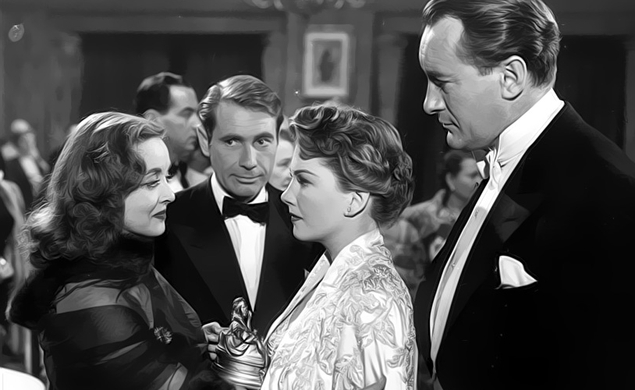
Joseph L. Mankiewicz’s masterpiece on the backstabbing behind the scenes between two actresses (Bette Davis and Anne Baxter) should’ve gotten the treatment years ago. But now, admirers can get it and then some more with plenty of special features about the making of and legacy of the picture, plus about the career of Joseph L. Mankiewicz, one of the most successful filmmakers Hollywood has ever produced. With its sharp scenes on the rivalry that goes down, there won’t be a bumpy ride watching everything from this release.

Stay tuned for more Criterion updates, viewings, and wishes for the rest of the year and beyond!

Follow me on Twitter: @brian_cine (Cine-A-Man)

Podcast: Middleburg Film Festival Recap – Ep. 348 Bonus Content

Listen!

This week for our Episode 348 InSession Film Podcast: Bonus Content, Ryan McQuade sits down with Daniel Brilliant to discuss his experience at the Middleburg Film Festival and where he sees the Awards Season going for 2019. Check it out!

Patreon supporters can also listen to this episode by clicking here!

Listen to Episode 348 by clicking here.

[divider]

HELP SUPPORT THE SHOW

We offer our bonus content for free, but we do encourage and appreciate a small donation of $0.99 as a way to help support the show. Click on the PayPal button below to donate and thanks so much for your support. You can also hear all of our Bonus Content via our mobile apps. See the information at the bottom of the post for more details.


One-Time Donation


[divider]

Mobile Apps!

Listen to all of our bonus content on our apps for just a one-time fee! Whether you have an iPhone, Android or Windows phone, our apps are available in many different ways that is convenient for you. With our mobile app, not only can you listen to all of our bonus content, but our main shows and our Extra Film podcasts as well. Click here for more info!

If you don’t want to purchase our bonus content, but still want to support us, there are other you can help us out. Click here for more info.

Poll: What is your favorite horror film of the decade?

This weekend on Episode 349 we’ll be talking about Robert Eggers’ latest film The Lighthouse, one of our most anticipated films of the year. If you’ve seen Eggers last film The Witch, or depending on spelling The VVitch, you’ll know why so many people were eager to see what The Lighthouse could be because The Witch was a masterful horror film. For many, including us, it’s one of the best horror films of the decade. So, with that as our inspiration for our poll, what is your favorite horror film of the decade thus far?

Vote now!


Podcast: Jojo Rabbit / Wild Strawberries – Episode 348

This week’s episode is brought to you by the InSession Film Store. Get your IF gear today!

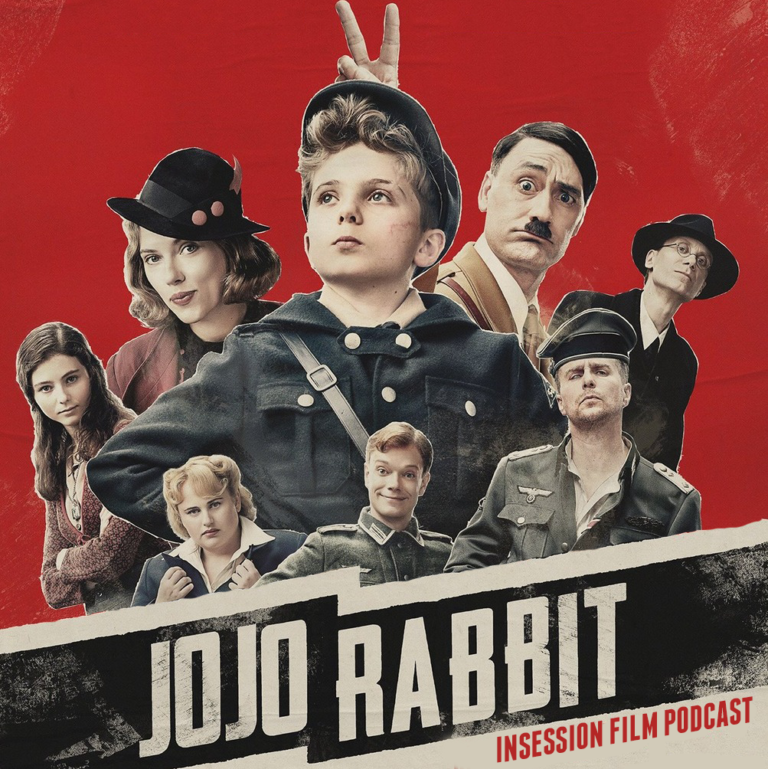
This week on the InSession Film Podcast, Dan Bayer from Next Best Picture joins Brendan to discuss Taika Waititi’s Jojo Rabbit and we continue our Ingmar Bergman Movie Series by reviewing his 1957 film Wild Strawberries! JD also gives some thoughts on Pain and Glory, while Brendan gives his review of El Camino.

So, as you’ll hear in the intro, there’s a funny story behind JD’s absence from the main review. We are always grateful to our guests, but we are especially thankful to Dan for joining us on such short notice. And not only was he willing, he brought great energy and had wonderful things to say about Jojo Rabbit. Despite JD’s big goof, we thought the episode turned out quite well and had a great time breaking down Bergman’s Wild Strawberries.

On that note, check out this week’s show and let us know what you think in the comment section. Thanks for listening and for supporting the InSession Film Podcast!

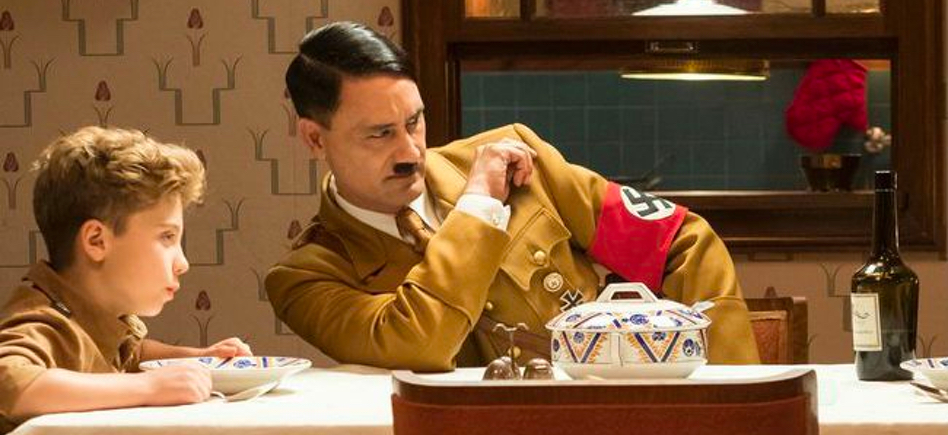
– Movie Review: Jojo Rabbit (8:07)
Director: Taika Waititi
Writer: Christine Leunens (novel), Taika Waititi (screenplay)
Stars: Roman Griffin Davis, Thomasin McKenzie, Scarlett Johansson

– Notes / Pain and Glory / El Camino (37:28)
As noted above, JD caught up Pedro Almodóvar’s Pain and Glory, starring the great Antonio Banderas, and boy did he have some great things to say about that film. On the contrary though, Brendan’s thoughts on El Camino were less positive.

[divider]

RELATED: Listen to Episode 344 of the InSession Film Podcast where we discussed Ad Astra!

[divider]

– Ingmar Bergman Movie Series: Wild Strawberries (1:03:57)
Director: Ingmar Bergman
Writer: Ingmar Bergman
Stars: Victor Sjöström, Bibi Andersson, Ingrid Thulin

InSession Film Sponsor: First Time Watchers Podcast

– Music

Heroes – David Bowie
Claqueta Final – Alberto Iglesias
Memories – Erik Nordgren
The Return of the Eagle – Atli Ãrvarsson

Subscribe to our Podcasts RSS
Subscribe to our Podcasts on iTunes
Listen on Spotify
Listen on iHeartRadio
Listen on Stitcher
InSession Film Podcast – Episode 348

[divider]

Next week on the show:

Main Review: The Lighthouse
Top 3: N/A
Ingmar Bergman Movie Series: Persona

[divider]

Help Support The InSession Film Podcast

If you want to help support us, there are several ways you can help us and we’d absolutely appreciate it. Every penny goes directly back into supporting the show and we are truly honored and grateful. Thanks for your support and for listening to the InSession Film Podcast!

VISIT OUR DONATE PAGE HERE

Movie Review: ‘The Death of Dick Long’ gets a little too weird


Director: Daniel Scheinert
Writers: Billy Chew
Stars: Michael Abbott Jr., Virginia Newcomb, Andre Hyland

Synopsis: Dick died last night, and Zeke and Earl don’t want anybody finding out how. That’s too bad though, cause news travels fast in small-town Alabama.

[/info]

“Wanna get weird?”

When Earl Wyeth (Andre Hyland) poses this question to his best friend, Zeke Olsen (Michael Abbott Jr.), during the film’s opening scene, we don’t really think much of it. That opening scene shows them in their garage band together and then partaking in some stupid but harmless carousing. These are guys you might have known in high school. They haven’t grown up, and they don’t plan to. They’re just having a good time.

That good time gets shaken pretty quickly as the movie jolts into the inciting action of which its title speaks – the death of Dick Long (played by director Daniel Scheinert). Dick is another member in their band. We watch as Earl and Zeke drive frantically with Dick in the backseat. He is clearly maimed in some way. Their “plan” is to leave him outside the door of the local hospital. They do so, but not before dropping their already injured friend on the hard concrete. Still, they get away, and Dick is discovered by a doctor leaving his shift (played by the always wonderful Roy Wood Jr.). The remainder of the film will basically cover Earl and Zeke’s attempts to cover up exactly what happened that night.

For much of the film, we don’t even know what happened that night. We quickly learn that Dick has, in fact, died. It’s clear that Earl and Zeke know how Dick died, but they aren’t telling anyone. Much of the film’s humor comes from their ludicrous attempts to keep the lie going. There are even callbacks to Pulp Fiction (which gets namedropped) and Psycho, as the duo attempts to clean the backseat of Zeke’s blood-stained car and finally try to drive the car into a lake.

There are two other films that linger over this one. The first is Fargo, however the similarities to that Coen Brothers classic are only skin deep here. We do meet members of the local police department – Sheriff Spenser (Janelle Cochrane) and Officer Dudley (Sarah Baker). Baker, in particular, gives a fine performance as the initially bumbling officer who comes into her own on the biggest case this small town has seen in some time.

The second film I’d mention is Scheinert’s collaboration with Daniel Kwan, Swiss Army Man. That film shares the wild, zany, and sometimes off-putting sensibilities of this one. However, I much preferred that film for its heart and the “friendship” at its center.

This film decides to just go all-in on its weirdness. It’s the kind of decision that – I guess – should be recognized in a “Good for you for getting this film made” kind of way. The most daring decision here is to play the weirdness straight. I am referring most specifically to the moment where we find out exactly how Dick Long really died. This happens about halfway through the film. I’m not going to give away any spoilers, but Scheinert certainly follows Earl’s advice. Things get weird, but Scheinert just goes with it for the remainder of the film.

I want to go back to Fargo for a second. That film is one of the all-time greats precisely because it was able to successfully handle the balancing act between its homespun setting and characters and the pitch-black story it told. Scheinert tries to do a similar thing here, but the characters are not well-drawn enough to support the story, and the story itself isn’t really worth supporting.

On the characters, Earl was the more interesting of the two leads to me. He offers up some of the best laughs in the film. His pure stupidity is boundless, and Hyland plays it well. But as the film goes on, he has a much smaller portion of the screen time. We mostly watch as the storyline plays out in Zeke’s home with his wife, Lydia (Virginia Newcomb), and his daughter, Cythia (Poppy Cunningham). As I said before, Baker as Officer Dudley gives the best supporting performance in the film, too.

Maybe my biggest regret with this film is that there is an interesting theme to explore in this outlandishly weird story. Late in the film, the song “The Weight of Lies” by The Avett Brothers plays in the background. The chorus from that song is key to the story.

The weight of lies will bring you down
And follow you to every town, cause
Nothing happens here that doesn’t happen there
So when you run, make sure you run
To something and not away from, cause
Lies don’t need an aeroplane to chase you anywhere

But then the music that the film ends on is “How You Remind Me” by Nickelback. I definitely think the choice to end on Nickelback is an intentional one, and I think it’s emblematic of the film’s main issue – it is too enamored with the lesser parts of its story.

Because here you do have characters who have done something reprehensible (again, not giving away spoilers). It is so shame-inducing as to be almost unbelievable. At multiple points, they consider leaving town. They lie to cover it up. But the heart of the story is that “lies don’t need an aeroplane to chase you anywhere.”

I’m glad that an artist like Scheinert is able to get his work produced. There surely must be an audience for every story. I was a fan of his work on Swiss Army Man, and that film was certainly not without its own weirdness. But The Death of Dick Long takes the weirdness to another level, and I just simply wasn’t ready to get that weird.

Overall Grade: D-

[divider]

Hear our podcast review on Extra Film:

[divider]

Interview: ‘A Beautiful Day In The Neighborhood’ Screenwriters Noah Harpster & Micah Fitzerman-Blue

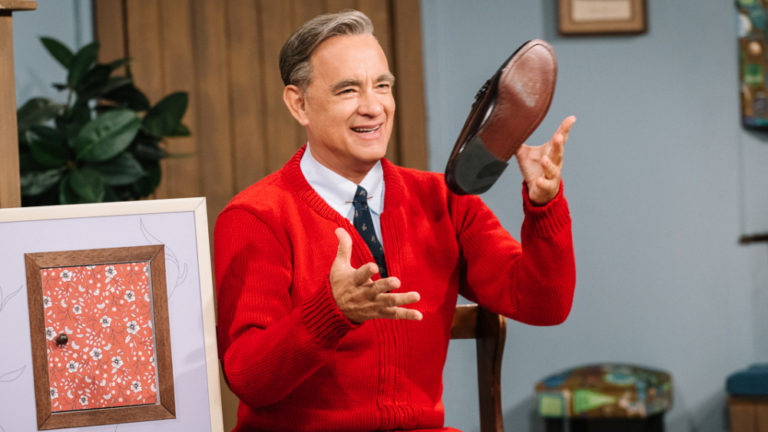
A Beautiful Day in the Neighborhood is one of the most anticipated films of the fall season and it’s expected to be a major awards player. Directed by Marielle Heller, who helmed last year’s Can You Ever Forgive Me?, and starring Tom Hanks, the film will no doubt get the attention of awards voters and fans alike. However, screenwriters Noah Harpster & Micah Fitzerman-Blue are also getting some well deserved attention for their screenplay. Many early reviews are praising its nuance and characterization. InSession Film writer Daniel Brilliant sat down with them to talk about their inspirations and what drew them to the story of Fred Rogers.

[divider]

Help Support the Show

Subscribe to our Podcasts RSS
Subscribe to our Podcasts on iTunes
Listen on Spotify
Listen on Stitcher
Direct Download

If you want to help support us financially, please support us on Patreon for as low as $1 per month or you can donate via PayPal here.

Podcast: Gemini Man / El Camino: A Breaking Bad Movie – Extra Film

This week on the InSession Film Podcast: Extra Film segment, Ryan and Jay discuss Ang Lee’s Gemini Man and the Netflix Breaking Bad epilogue, El Camino: A Breaking Bad Movie.

Gemini Man sees lauded filmmaker Ang Lee continuing to attempt to revolutionize the world of film with high frame rate presentation. Will Smith stars alongside… Will Smith in a globetrotting sci-fi story of cloning, espionage, and assassins. After an initial flurry of buzz after it premiered, critics ended up coming down hard on the film, and the box office performance showed that audiences took notice. Is it a movie more interesting to talk about for its tech, or is there substance to go with the style?

Then the guys review El Camino: A Breaking Bad Movie, which sees the Breaking Bad story carried forward after the events of the series finale. Some have claimed it is inessential and unnecessary, while others say it stands shoulder to shoulder with the all-time television classic. Aaron Paul returns as Jesse Pinkman in the film and is in pretty much every scene. it is a showcase for a great actor who hasn’t found the momentum fans of Breaking Bad would have hoped for since the show ended. There is a bit of disagreement in this section, which makes for compelling discourse!

On that note, have fun with this week’s Extra Film segment and let us know what you think in the comment section below. Thanks for listening!

– Movie Review: Gemini Man (4:03)
Director: Ang Lee
Screenplay: David Benioff, Billy Ray, Darren Lemke
Stars: Will Smith, Mary Elizabeth Winstead, Clive Owen, Benedict Wong

– Movie Review: El Camino: A Breaking Bad Movie (49:11)
Director: Vince Gilligan
Screenplay: Vince Gilligan
Stars: Aaron Paul, Robert Forster

– Music 

Photograph- Nickelback
Argentine National Anthem
The Return of the Eagle – Atli Örvarsson

We try to make this the best movie podcast we possibly can and we hope you enjoy them. Subscribe today on iTunes, Spotfiy or Stitcher, and please leave us a review on iTunes. You can also find us on Soundcloud, PlayerFM and TuneIn Radio as well. We really appreciate all your support of the InSession Film Podcast.

Subscribe to our Podcasts RSS
Subscribe to our Podcasts on iTunes
Listen on Spotify
Listen on Stitcher
Gemini Man / El Camino: A Breaking Bad Movie – Extra Film

[divider]

Mobile App

To hear this Extra Film episode and everything else we do, download our apps on the Amazon Market for Android and the Podcast Box app on IOS devices. The mobile app covers all of our main shows, bonus podcast’s and everything else relating to the InSession Film Podcast. Thanks for your wonderful support and listening to our show. It means the world to us!

Featured: Criterion Channel’s Hard Eighth Edition

This is the eighth edition of some of the best works I have seen on the Criterion Channel and by now, if you have read them, you must understandably be tired of me praising it. But there is always something new to pick on and some of these films are worthy of your interest. I and TV don’t go well together because, well, there’s too much of it and it goes on for many seasons. But with the movies, it’s only a short fraction of your day to see and reflect or enjoy. And with this next batch of movies, I hope you enjoy them as much as I did.

America, America (1963)

Elia Kazan’s most personal film was influenced by his Greek uncle who survived discrimination in the old Ottoman Empire (now Turkey) to make a successful emigration to the United States. First written as a novel, he then took it upon himself to write, produce, and direct (and serve as narrator) the film, even with financial issues and on-location hostilities in both Turkey and Greece, who still are rivals over the long history of ethnic conflicts going back as far as Greece’s independence from the Turks almost 200 years ago. But Kazan, with the strong performances of mostly unknown actors led by Stathis Giallelis in the main role and in almost every scene, creates a stirring portrait of what it must have been like to witness repression, live underground, and scavage the streets for a chance to sail past the Statue of Liberty for a new life.

Monterrey Pop (1967)

This was put on the site right after the news that rockumentary master D.A. Pennebaker had died, aged 94. Personally, I was in love with Bob Dylan Don’t Look Back, so it made sense to see how he covered an entire concert, three days of the Summer of Love counterculture that defined the rest of the decade. Pennebaker captures Janis Joplin, the Who, Simon & Garfunkel, and Jimi Hendrix, who gave one his all-time great performances by humping his guitar, broke it into pieces, set it on fire, fell on his knees to let it rise, and then threw the neck of his guitar in the roaring crowd. A separate short documentary called Jimi Plays Monterey and Shake! Otis at Monterrey was later released but could be watched in conjunction with the original Monterrey film.

Female Trouble (1974)

John Waters’ follow up to the ultimate trash film Pink Flamingos is something a little more mainstream but is still completely absurd and made with the satire of what fame is about. This time, Divine plays a woman, impregnated at 18 and giving birth to a girl she neglects and hates, getting close with a couple who believes that “crime and beauty are the same” and is encouraged to commit crimes to make her famous. You see Divine play the man who impregnates the teen – in other words, he’s having sex with himself – and a scene in which the baby is born was from a newborn baby four days old. Only John Waters would do such a thing. One of the most famous reviews for any film and one John Waters loves to tail to the picture came from Rex Reed: “Where do these people come from? Where do they go when the sun goes down? Isn’t there a law or something??”

The Magic Flute (1975)

A blind spot in my Ingmar Bergman filmography, it is his own version of the famous opera by Mozart. A TV movie converted into a full-length feature, it was a smash hit in Sweden and around the world. It did not his usual actors like Liv Ullman, Bibi Anderson, or Max von Sydow, but his trusted cameraman Sven Nykvist was present in giving the opera something different, something not as if he made the movie right off the stage and witty to include insert shots of a singular audience member amongst a montage of different ages, backgrounds, and races entering the theater and even behind-the-scenes such a the smoking gag under a sign that says “Do Not Smoke.” Elements you wouldn’t see in a theatrical production come in and integrate the story with a formal movie style.

¡Alambrista! (1976)

If someone told you about this movie today, you would’ve thought it was made recently as the immigration situation has become a humanitarian crisis. When you watch it, you will know that it wasn’t made today, but it was made more than 30 years ago for PBS. And yet, it is super relevant because it gives the undocumented immigrant experience from their point of view and the struggle they have to survive. The writer/director, Robert Young, is not Hispanic, but his experience with documentaries capturing various stories on civil rights led his full-length feature in the same vein on Italian Neorealism – non-professional actors, on location, using simple camera shots on the ground to capture the feel of what was – and is still – happening along the Mexican border with workers during hand-picked labor to sending money to their families to survive. Edward James Olmos played a supporting role and would work with Young for multiple films later on.

Desert Hearts (1985)

One of the first wide-release films featuring a positive portrayal of a lesbian relationship, the story tells a woman in the middle of divorce goes to a ranch to get away and meets a younger woman that she falls for. Robert Elswit was the film’s DP and some of the beautiful shots show what he is highly regarded today. On the screen, Helen Shaver and Patricia Charbonneau both are gentle and give performances that Gene Siskel praised as accomplishing what society hasn’t done before, “the de-sensationalizing of lesbianism.” The film is based on a novel by famed Canadian writer Jane Rule, who published it in 1964 at a time when homosexuality was considered a mental illness and Rule could face prosecution for censorship violations. Instead, the famous novel and the movie itself has proven to be a landmark in positive lesbian depictions.

True Stories (1986)

David Bryne of The Talking Heads went off to make his directorial debut is a musical satire through a series of vignettes in a Texas town celebrating the state’s independence from Mexico before statehood. Byrne plays a visitor who meets with the eccentric town’s citizens, which include John Goodman, Spalding Gray, and Pops Staples. Not surprisingly, The Talking Heads did the whole score and the songs, including their hit single Wild Wild Life. There’s some Coen Bros humor to it with certain descriptions and the look of the town, including Byrne playing the wondering narrator in a cowboy hat. Byrne was influenced to direct by Johnathan Demme, who directed The Talking Heads’ concert film Stop Making Sense and Byrne would later win an Oscar for the collaborative score to The Last Emperor.

Find me on Twitter: @brian_cine (Cine-A-Man)

Featured: The Singular Boldness of One Mae West

“You only live once, but if you do it right, once is enough.” So said Mae West, and so lived Mae West. Though her Hollywood reign ended decades ago, echoes of her life are still rippling through the universe. You’d likely recognize her swagger even if you did not recognize her face.

West is most well-known today for her string of Hollywood movies which saved Paramount from bankruptcy in the 1930s while simultaneously outraging those who claimed to want to preserve the moral fortitude of the United States of America. She typically played “women who accepted their lives of dubious virtue with flippant good humour” (Encyclopædia Britannica) which did not always sit well with the men who ruled the country – and the airwaves. But before she outraged America, she outraged New York City.

In 1926, West wrote, produced, directed, and starred in a Broadway play. The play featured prostitution, bribery, murder, rape, and drunkenness, to name just a few plot points. The protagonist, played by West, was described in a Variety review as “the Babe Ruth of stage prosties” (Rich). The title of the play? Simply, Sex.

The politics of the Roaring 20s quickly turned Sex into a cultural phenomenon. After ten months on Broadway with mixed reviews but huge box office success, the theater was raided and the actors were hauled to jail. The charges: “unlawfully preparing, advertising, giving, presenting, and participating in an obscene, immoral and impure drama, play, exhibition, show and entertainment” (Carlson). West bailed the actors out of jail and had the opportunity to avoid all charges if she shut the show down, but she knew how to play the game and opted to face her judgement in court instead.

In true Mae West fashion, she arrived at the courthouse in a limo wearing garlands of roses. She then accepted her ten-day prison sentence with stone cold swagger: she applied rouge to her lips as she stood before sauntering out of the courthouse, cool-y telling reporters, “Give my regards to Broadway” like the badass babe she was. (Carlson). She then served eight days in jail, eating dinner with the warden and his wife and ultimately getting two days off for good behavior.

Near the end of her life, Mae West asked a reporter if he knew that she once spent time in jail. He responded that he did, and added that she was not an “ordinary prisoner.” She responded, “I was never an ordinary anything,” (Carlson) and no truer words have ever been spoken. If West was bothered at all by her stint in jail, she hid it well behind her wicked wit. She said that the other inmates provided her with material for more shows and admitted that she “enjoyed the courtroom as just another stage” (Carlson). Truly, for Mae West, all the world was a stage, and she had a captive audience waiting for more. From this tabloid scandal, a sex icon and American superstar was created.

West continued to write and star in Broadway plays in the years following the Sex publicity. All featured her trademark humor, and several added additional controversy by featuring homosexuals and drag queens. However, not content with her Broadway career, West moved to Hollywood in 1932 and signed a deal with Paramount when she was nearly 40 years old. This was no small feat in 1930s Hollywood, which considered 30 to be a woman’s “advanced years” (biography.com). Regardless, West signed the deal with Paramount in 1933 and, by 1935, she was the second highest paid person in the United States. The only person in the country receiving a higher paycheck was none other than William Randolph Hurst (Burns). The censors, however, were not fond of her overt sexuality and famous innuendos. She soon became a target of the Motion Picture Production Code (biography.com).

West’s publicist, Emily Wortis Ledier, once said of West, “She loved big cities, form-fitting clothes, lipstick, jazz, sex in taxis, intrigue, gun-toting bootleggers, boxers lathered in sweat, and cops who read her the riot act” (Carlson). But there was more to Mae West than a wild and sexual spirit. Underneath the humor and the scandal and intrigue, West was fighting against ignorance.

West maintained her sultry, bawdy humor throughout her career and fought against the censors every chance she could, believing that the plays and movies that she wrote and the characters that she played served the direct purpose of educating a nation. In 1929, West wrote, “Because of narrow-minded censors and silly taboos the people are unable to learn truths they are starving for…They know nothing about sex at all, for the subject is hidden from children, kept out of our of books and schools and education” (Louvish, xiv). She went on to say: “I realized the problem and I devoted my career in the theater to the education of the masses. I shall boldly continue to do so, in spite of criticism, insults, and narrow-minded bigots” (xv).

Mae West was a sex icon and a comedian, but these statuses were mere byproducts of her bold, uninhibited desire to be herself in a world that tried to tell her that she was unacceptable and should hide what she had to say. She was an inspiration within her lifetime, but continues to be one today. She may have only lived once, but her legacy cannot be contained to one generation. She was bold. She was fearless. She was wild. She was Mae West.


Poll: What is the best Holocaust film?

The Holocaust isn’t an easy subject to tackle, but many films have honored its victims over the years by exploring what happened and bringing to light the injustices they experienced. Some of them even went on to win awards and garnered “all-time” statuses. Even if Jojo Rabbit is tonally going to be a very different experience, we thought it would still make great inspiration to talk about the best Holocaust films we’ve seen.

That said, what do you think is the best Holocaust film?


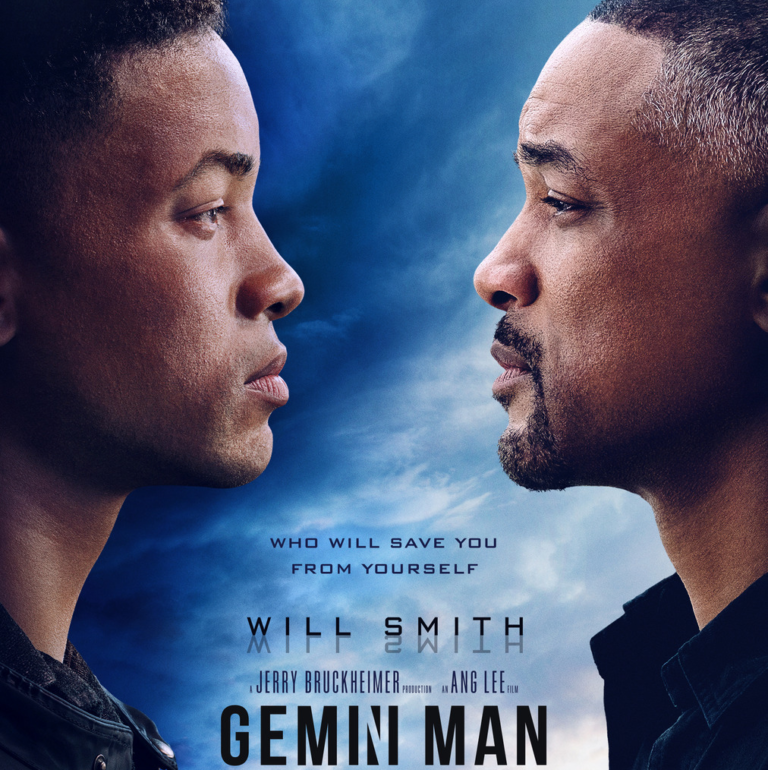
Movie Review: ‘Gemini Man’ is basic and underwhelming


Director: Ang Lee
Writers: David Benioff, Billy Ray, Darren Lemke
Stars: Will Smith, Mary Elizabeth Winstead, Clive Own, Benedict Wong

Synopsis: An over-the-hill hitman faces off against a younger clone of himself.

[/info]

When I heard an action-sci-fi movie was being made by the amazing Ang Lee, written by Game of Thrones writer David Benioff, produced by Jerry Bruckheimer, starring Will Smith, and Clive Owen as the antagonist, I was onboard immediately. How could it possibly be bad? But then the trailers came out and the negative comments started and I tried to not get my hopes up. After seeing the film, I’m left confused. It wasn’t a bad movie, but it wasn’t spectacular either. How could a film have that many things going for it and still come off as a decent made-for-TV (or Netflix) movie?

Gemini Man is about soon-to-be retired hitman Henry Brogan (Will Smith). After he completes his last job, men (including a suspiciously familiar hitman) are sent to kill him and his friends. Brogan, along with his companions Danny (Mary Elizabeth Winstead) and Baron (Benedict Wong), go on the run to find out why people are trying to kill them and where this mysterious assassin clone came from.

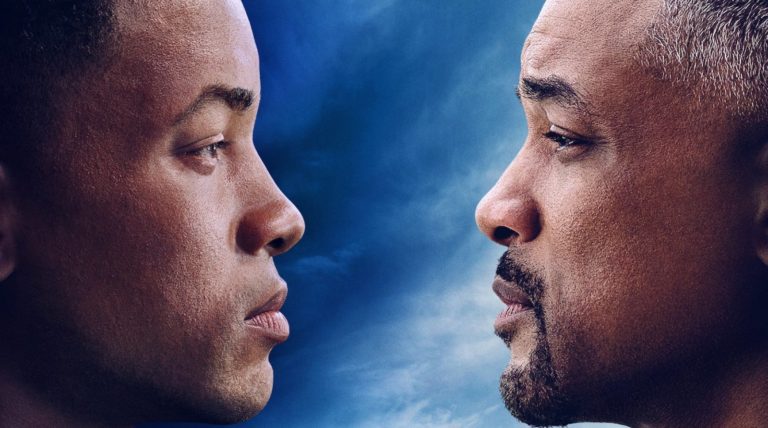
Even though the overall movie isn’t great, Gemini Man does have a lot of decent elements. The special effects are better than expected (after seeing the cringeworthy trailers for the past year), especially the fight scenes. Fight scenes with massive amounts of CGI are usually messy or hard to watch (see Venom…), but the sequences in this film were interesting, weren’t blurry, and they were easy to follow. This is Ang Lee’s second film released in 4K 3D at 120fps, after Billy Lynn’s Long Halftime Walk (2016). Unfortunately, my local theaters weren’t offering a showing in the 120fps, but honestly, I don’t think it would have changed my opinion of the film. If you have the opportunity to see it in its 4K 3D 120fps glory, then I recommend you do so. The double Will Smith scenes aren’t bad either, the effects turned out okay, but I spent the entire time thinking “why didn’t they just use Jaden Smith?” They look incredibly similar, save for their voices, it seems like a waste to spend all that money on tons of CG. Maybe Jaden was busy doing other things or didn’t want to be in another movie with his dad.

The true hero of this film is Benedict Wong. He is the comedic relief, Brogan’s oldest friend from work. He instantly improves every scene he’s in and makes the whole movie more enjoyable. Will Smith basically plays “action hero Will Smith”. Not bad, but nothing we haven’t seen before from him. Mary Elizabeth Winstead was mediocre. I don’t think it was entirely her fault, I think that she did the best with what she was given. My biggest complaint from the cast was Clive Owen as bad guy Clay Verris. Owen had such great bad guy potential, I thought this would be a good role for him, but he was bland and unconvincing. It was extremely disappointing, especially since this is one of my pet peeves with action movies (especially recently)- actors who have massive villain potential, but end up boring or awful. It’s not always their fault, but it’s a trend I’d like to see go away.

Overall, Gemini Man is an okay film. It’s not awful, but it’s not spectacular either. It feels very much like an expensive made for TV or streaming movie. If you leave your high expectations at the door and go in looking for a pretty, but basic sci-fi action flick, then Gemini Man is worth seeing (especially if your theater has the 4K 120fps option). It doesn’t bring anything new and exciting to the genre, but it was fun to watch.

Overall Grade: C

[divider]

Podcast: The Laundromat / The Seventh Seal – Episode 347

This week’s episode is brought to you by GoDaddy. Get 30% off your order today!

This week on the InSession Film Podcast, we discuss Steven Soderbergh’s latest in The Laundromat and we begin our Ingmar Bergman Movie Series with his 1957 film The Seventh Seal! JD also gives his thoughts on Yesterday and Official Secrets.

As we get deeper into Awards season, we’ll see more and more films from prominent filmmakers as they make their way into the conversation. Unfortunately, things will come to a stand still with Soderbergh and The Laundromat, which is ironic since High Flying Bird is still one of the better underseen films of the year. Despite that, though, we had a lot of fun talking about Soderbergh as he’s one of our favorite filmmakers out there right now. The highlight of this week has to be the start of our Ingmar Bergman Movie Series. We’ve been itching for this for quite some time and it’s finally here.

On that note, check out this week’s show and let us know what you think in the comment section. Thanks for listening and for supporting the InSession Film Podcast!

– Movie Review: The Laundromat (4:41)
Director: Steven Soderbergh
Writer: Jake Bernstein (book), Scott Z. Burns (screenplay)
Stars: Gary Oldman, Antonio Banderas, Sharon Stone, Meryl Streep

– Notes / Yesterday / Official Secrets (32:12)

As noted above, JD was finally able to catch up with Danny Boyle’s Yesterday and Gavin Hood’s Official Secrets, and decided to give his thoughts on both of those films. He also gave some brief thoughts on Werner Herzog’s latest documentary Meeting Gorbachev. To round out this segment, we honored the late-great Robert Forster, who sadly passed away over the weekend at the age of 78.

[divider]

RELATED: Listen to Episode 344 of the InSession Film Podcast where we discussed Ad Astra!

[divider]

– Ingmar Bergman Movie Series: The Seventh Seal (54:22)
Director: Ingmar Bergman
Writer: Ingmar Bergman (play), Ingmar Bergman (screenplay)
Stars: Max von Sydow, Gunnar Björnstrand, Nils Poppe

InSession Film Sponsor: First Time Watchers Podcast

– Music

Dirty Laundry – Don Henley
Yesterday – The Beatles
The Seventh Seal – Erik Nordgren
The Return of the Eagle – Atli Ãrvarsson

Subscribe to our Podcasts RSS
Subscribe to our Podcasts on iTunes
Listen on Spotify
Listen on iHeartRadio
Listen on Stitcher
InSession Film Podcast – Episode 347

[divider]

Next week on the show:

Main Review: Jojo Rabbit
Top 3: N/A
Ingmar Bergman Movie Series: Wild Strawberries

[divider]

Help Support The InSession Film Podcast

If you want to help support us, there are several ways you can help us and we’d absolutely appreciate it. Every penny goes directly back into supporting the show and we are truly honored and grateful. Thanks for your support and for listening to the InSession Film Podcast!

VISIT OUR DONATE PAGE HERE

Podcast: The Death of Dick Long / Diego Maradona – Extra Film

This week on the InSession Film Podcast: Extra Film segment, Ryan and Jay discuss The Death of Dick Long and Diego Maradona

With Jay returning to the show, the Extra Film boys decided to do another good old fashioned odd pairing for this week’s show. Following its premiere at Sundance, The Death of Dick Long has received a lot of praise for how insane it is. Backed by Daniel Scheinert, who co-directed Swiss Army Man, this darkly hilarious film will keep you wondering what secrets its hiding and will also keep you laughing till the film ends.

Then the guys reviewed the HBO documentary Diego Maradona from director Asif Kapadia, who made Senna and Amy. The film is considered one of the best reviewed documentaries of the year and an interesting looking into an athletes rise and fall within their professional career. Being that the guys are big sports fans and have had a good run at reviewing some documentaries lately, this lead to a very good discussion.

On that note, have fun with this week’s Extra Film segment and let us know what you think in the comment section below. Thanks for listening!

– Movie Review (WITH SPOILERS): The Death of Dick Long (6:21)
Director: Daniel Scheinert
Screenplay: Billy Chew
Stars: Michael Abbott Jr., Virginia Newcomb, Andre Hyland

– Movie Review: Diego Maradona (46:05)
Director: Asif Kapadia

– Music
Photograph- Nickelback
Argentine National Anthem
The Return of the Eagle – Atli Örvarsson

We try to make this the best movie podcast we possibly can and we hope you enjoy them. Subscribe today on iTunes, Spotfiy or Stitcher, and please leave us a review on iTunes. You can also find us on Soundcloud, PlayerFM and TuneIn Radio as well. We really appreciate all your support of the InSession Film Podcast.

Subscribe to our Podcasts RSS
Subscribe to our Podcasts on iTunes
Listen on Spotify
Listen on Stitcher
The Death of Dick Long / Diego Maradona – Extra Film

[divider]

Mobile App

To hear this Extra Film episode and everything else we do, download our apps on the Amazon Market for Android and the Podcast Box app on IOS devices. The mobile app covers all of our main shows, bonus podcast’s and everything else relating to the InSession Film Podcast. Thanks for your wonderful support and listening to our show. It means the world to us!

Movie Review: ‘Joker’ lacks thematic coherence but features a stunning Joaquin Phoenix


Director: Todd Phillips
Writers: Todd Phillips, Scott Silver
Stars: Joaquin Phoenix, Robert De Niro, Zazie Beetz

Synopsis: In Gotham City, mentally-troubled comedian Arthur Fleck is disregarded and mistreated by society. He then embarks on a downward spiral of revolution and bloody crime. This path brings him face-to-face with his alter-ego: “The Joker”.
[/info]

Joaquin Phoenix has slowly grown a reputation for playing characters that are bugging out at all times, either so internally or externally that their chaos is noticeable immediately. From his hazy, wrenching performance in Paul Thomas Anderon’s The Master or his explosive work in Ridley Scott’s Gladiator, to the repressed hitman in Lynne Ramsey’s You Were Never Really Here, you can always notice how off they seem from the first scene. All of this makes him ideal to play a villain, and it makes him almost perfect to play the iconic Joker, an agent of chaos and destruction. The only problem with Joker, the movie that makes this a reality, is he’s paired with Todd Phillips, a connoisseur of dudebro comedies and mediocrity. Phillips’ script leads Phoenix to have to fill in the blanks, giving us a movie that feels like one and a half hours of a first act, and then an operatic final to wrap it all up.

One of the biggest problems with the entire experience is that it feels like we’re treading water. As you watch Arthur Fleck (Phoenix), Mr. Soon-To-Be-Joker, continuously get beat down by life, it nears misery porn without any sort of plot to carry it. Fleck stumbles from his miserable clown job (where he gets fired), to his creepy crush on his neighbor (who rejects him), to his aging and frustrating mother, who cares far too much about Thomas Wayne. Political turmoil rages in the background, as “super rats” roam the streets, and a garbage strike leaves Gotham City looking like a wasteland. A co-worker gives Arthur a gun to keep safe, but after being attacked by three drunk finances bros on the subway, he uses the gun and kills them in self-defense.

On paper, Joker could be great. From the ugly 1970s Scorsese look of the production design, to the cast which includes Brian Tyrell Henry and Zazie Beetz, there’s enough here to satisfy everyone hoping for *supposedly* deep character study of the world’s most famous chaotic evil. In fact, Joker pantomimes a great movie, ripping the look of Taxi Driver and some plot points of The King of Comedy. The problem is that Phillips doesn’t understand really what makes those movies work. There’s no deeper understanding to The Joker to be gained either, as what makes him famous is that he’s simply crazy. Phillips convinced Phoenix by saying they’d be sneaking in a “real movie” under the guise of a superhero film. The problem is there’s nothing “real” here, it’s a shallow vehicle for Phoenix to act his hardest, and for Phillips to play dress up, wearing classic movies to try to elevate mediocrity.

Still, the entire thing isn’t a waste. The movie’s ugliness is its best selling point, because even if it’s playing dress up, there’s still more grittiness in a fake Taxi Driver than your average MCU film. Phoenix is Acting with a capital A here, drawing attention to his intense weight loss and his scary maneuvers, and he tries his hardest to really give a one note character a soul. He flails around, humorously dancing down a giant set of stairs to Gary Glitter’s “Rock n Roll Part 2” in a scene that’s been used in all of the marketing materials (the song being another provocation within itself), but it just exemplifies how hard he’s working to pull this off. There’s nothing insightful about his performance unless you want to see a great actor freak out on screen.

Joker is a frustrating experience, because it’s a dull exercise in generating shock and disgust while lacking any sort of thematic coherence. Spurts of extreme violence hope to remind the audience of how intense this film is supposed to be, but it feels like it’s either not enough or gratuitous. There’s one scene where everything finally comes together, as Joker makes his way onto a talk show, and there’s a palpable sense of tension there. Too bad it ends with Phoenix’s character shouting the muddled themes into the camera. Phillips’ script poorly attempts to explore poverty, abuse, trauma, violence, income inequality, and a handful of other relevant political moments, but it’s summarized best by the Joker when asked about his makeup. When asked if it’s a political thing, he simply responds “I don’t believe in anything, I just thought it’d be good for my act.”

Overall Grade: C

[divider]

Hear our podcast review on Episode 346:

[divider]