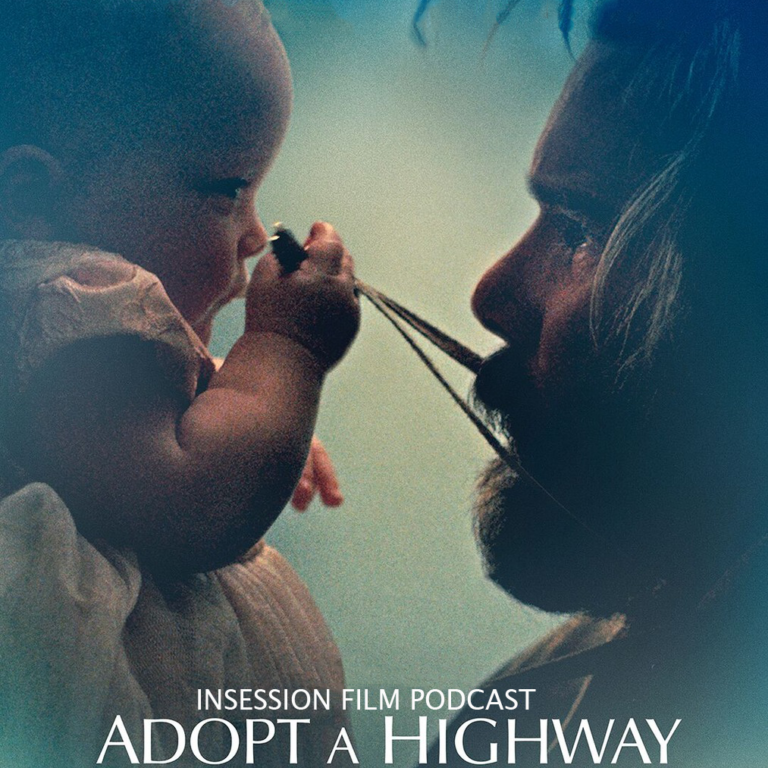
Another interesting pair of films from the Extra Film guys. Adopt a Highway is the directorial debut from actor Logan Marshall Green starring one of the best actors working today, Ethan Hawke. Following up his wonderful 2018 year, Hawke gives another wonderful performance the guys have fallen in love with. But while agreeing on Hawke, the guys have an thought-provoking discussion over on the movie and argue a little over the film’s overall themes. Then in the back half of the episode, the guys review their second Chinese film of the year in Long Day’s Journey Into Night. While the film has been highly reviewed, it has been divisive, with one of the Extra Film gentlemen not like it at all. This lead to a respectful, deep debate over the visually stunning international film.
On that note, have fun with this week’s Extra Film segment and let us know what you think in the comment section below. Thanks for listening!
– Movie Review: Adopt a Highway (3:01) Director: Logan Marshall Green Screenplay: Logan Marshall Green Stars: Ethan Hawke, Elaine Hendrix, Betty Gabriel
– Movie Review: Long Day’s Journey Into Night (36:02) Director: Bi Gan Screenplay: Bi Gan Stars: Tang Wei, Huang Jue
We try to make this the best movie podcast we possibly can and we hope you enjoy them. Subscribe today on iTunes, Spotfiy or Stitcher, and please leave us a review on iTunes. You can also find us on Soundcloud, PlayerFM and TuneIn Radio as well. We really appreciate all your support of the InSession Film Podcast.
To hear this Extra Film episode and everything else we do, download our apps on the Amazon Market for Android and the Podcast Box app on IOS devices. The mobile app covers all of our main shows, bonus podcast’s and everything else relating to the InSession Film Podcast. Thanks for your wonderful support and listening to our show. It means the world to us!
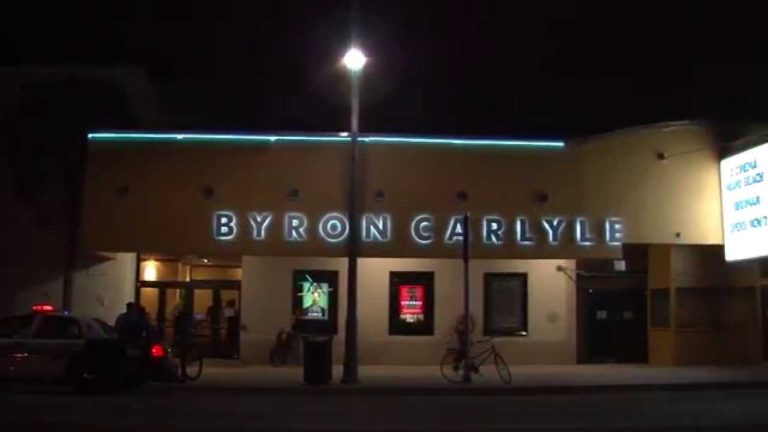
In Miami Beach, two blocks from where I live, a small theatre with a long history and art deco design recently shut down on 71st Street. It was owned by O Cinema but its original name is still on the facade, the Byron Carlyle. It opened in the late 60s, shut down in the 90s, and was revitalized in 2014. Only two years ago did I finally walk into it after passing by it so many times. I first captured 120 BPM, one of two people inside, me sitting in the balcony (as it is known) with a central view of the screen. Later, it was with my friend Timothy that we saw Call Me By Your Name. A few months after, The Death of Stalin. My last film was Pain & Glory. At 50 years old, there is a fight to make it a local monument or it will fall to the wrekcing ball for a new slate of condos. This theatre was my second entry into a surviving independent cinema from decades ago.
The first was in London, another two years prior, to see Xavier Dolan’s Mommy. I didn’t know until I had gotten into the theatre that this building, The Ritzy, was from 1911. The exterior looked it, the sidebar & cafe where I had a drink before going in didn’t show it. And the screening room – there were 5 of them – was for no more than 50 people. No previews in between and turnaround were no more than 15 minutes. This is England, after all, and the former movie house where Charlie Chaplin once watched his first nickelodeon as a child was still up as a museum to British film and Chaplin’s career. The British take pride and good care of their old cinemas, even when they are converted into shops or flats. A lot of America’s old-time theatres – Minnesota’s Oak Street Cinema and Revival House in Rhode Island are gone – but there’s a few still around we need to save.
For example, the famous Texas Theatre, a building that got worldwide attention on November 22, 1963, when Lee Harvey Oswald tried to hide from police after killing an officer and an hour after President Kennedy was shot and killed. A chair inside is stamped with his name and where he was when police found him that afternoon. In opened in the 1930s, but in the 1990s, it was closed and faced demolition multiple times before the Oak Cliff Foundation bought it, began renovations, and successfully listed it among the National Register of Historic Places in 2003. Today, it shows classic films and avant-garde productions and even plays.
In Missoula, Montana, it is the cultural center of the state with the University located there plus its progressive-leaning style of life. Not one, but two film festivals are hosted, the Montana Film Festival and the International Wildlife Film Festival. Once certain of note: the Roxy Theatreopened 80 years ago and was in business until a fire damaged it in 1994. Years later with donations and painstaking restoration to its original look, it opened and was even featured in a Criterion Channel short about working art theatres.
Back in the big city of Seattle, the Grand Illusion (which I assume is based on Jean Renoir’s famous feature) opened in 1968, nearly fell in line as part of a chain, and became a surviving independent place in the 1990s. Thanks to a group of enthusiasts, it still lives on within the “charming confines” introduced by its retro hand-painted sign and, as listed by Film Independent, among the 5 Art House Theaters Worth Leaving the House For alongside LA’s Laemmel Theatre, even though there’s apparently several of them, but with the purpose of sticking to indies and classics.
And what about abroad? Instead of accepting only multiplexes, lone-screen cinemas survive in the artiest places. Toronto’s Hot Docs Ted Rogers Cinemafrom the 40s has survived name changes, various owners, and the usual threat of the wrecking ball. Besides London’s few dozen independent theatres, in Bristol, The Cube is, in their words, an “art venue, adult crèche, and progressive social wellbeing enterprise.” Local refreshments, 108 seats, and movies of a retrospective, documentary, and a setting to raise money for various causes. Paris’ oldest surviving movie theater, Cinéma du Panthéon, opened in 1907 and played a role in showing the French New Wave the international films neglected to them for decades. Stockholm has Sweden’s oldest running cinema in Zita, Italy has, according to the Guinness Book of World Records, the smallest cinema in the world with Cinema dei Piccoli, and Cape Town, South Africa has the Labia Theatre, open since 1949.
We have all spoken about the box office-jacking by Disney through their stream of Marvel releases and remakes of Disney animation works. They own five of the top-grossing films in 2019 with one breaking the all-time record, a sixth film through their subsidiary 20th Century Fox, and a lot more other competition by Sony, Universal, and Warner Brothers. A24, Annapurna, Amazon, and Netflix play second fiddle, even though they dominate in quality. Where do we see these works? In the large, fancy, reclining chair-filled multiplex where you can now bring alcohol in and call a waiter in the VIP section. It’s the only way to see these big movies, which drowns out the indies we cherish and push hard for recognition. There are small theaters that thankfully still exist and serve the unseen ones, obsolete, and tucked away under the movie rug as if they are second-rate. But, as someone who admires history and cinema combined, we have a sense of duty to keep these places running.
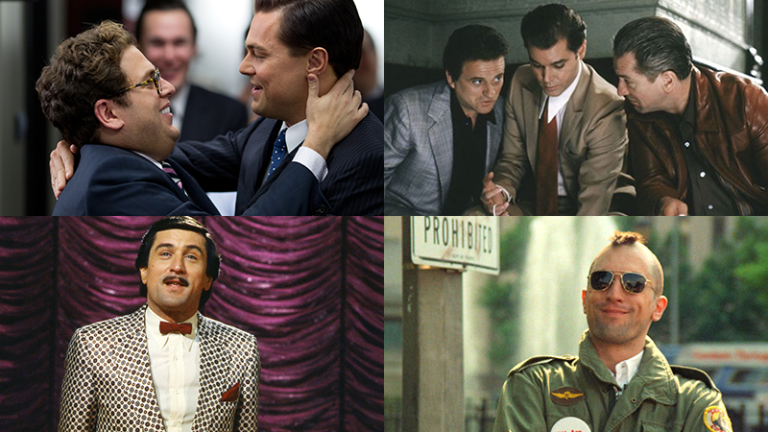
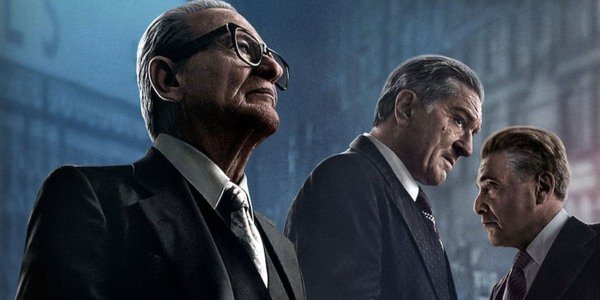
It’s hard to believe it’s finally here. The world has been eagerly anticipating The Irishman all year and we’re finally going to get to see it this weekend. Martin Scorsese is notorious for his crime/mob films, and not only is he dabbling into that genre once again, but he’s reuniting with Robert De Niro, Al Pacino and he even brought back Joe Pesci. Everything about this is exciting. So, with that as our inspiration, we are asking you for your favorite “crime” film from Scorsese. There are so many great films to choose from for this poll and we are excited to see what the results end up being.
With that said, what is your favorite Scorsese “crime” film? Vote now!
Director: Tim Miller Writer: James Cameron, Charles H. Eglee, Josh Friedman, David S. Goyer, Justin Rhodes, Billy Ray Stars: Linda Hamilton, Arnold Schwarzenegger, Mackenzie Davis
Synopsis: Sarah Connor and a hybrid cyborg human must protect a young girl from a newly modified liquid Terminator from the future.
[/info]
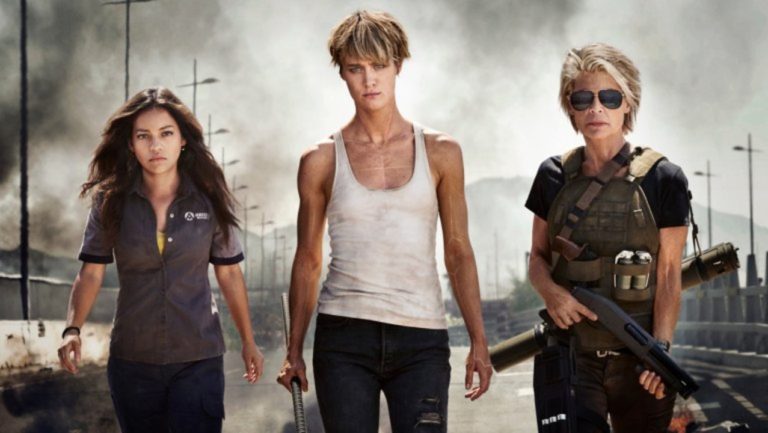
Another installment of The Terminator franchise hit theaters this month. Terminator: Dark Fate trailers have been running for some time and the big selling point on this release has been the return of Linda Hamilton as Sarah Connor as well as Arnold Schwarzenegger as an aged T-800 named Carl…thats right. If I am being honest after the letdowns of Rise of the Machines, Salvation and Gensisys my fatigue over the Terminator series just would not let me get that excited over Dark Fate, even with these names attached. In fact, internally I was mentally preparing for disappointment. Even with Tim Miller, who actually surprised me with Deadpool (I absolutely hated the trailer), helming I had very little faith in what this film could achieve and wasn’t even certain if I planned on catching it in theaters. But one uneventful day with very little to do a buddy convinced me to give it a go. And roughly 2 hours later I was able to say with certainty that Terminator: Dark Fate had finally breathed some long-awaited life back into the franchise.
Warning: There will be spoilers in this review.
Let us get things straight, Terminator: Dark Fate is by no means a slam dunk. It has many of the same flaws one might expect from a sequel to a badly aging franchise, but it does manage to get the basics right and deliver an entertaining film. For starters the film immediately separates itself from the prior installments by means of an alternate timeline, something I usually find cheap and tiresome but in this circumstance, I will take it. The film picks up after Terminator: Judgement Day and creates a new story arc where years later John Connor, the future savior of all mankind, dies at the hands of a T-800. This is obviously big considering up until this point every single film in the franchise dealt in someway around Skynet sending machines to stop John Connor from becoming their ruin and mankind’s champion. Instead, an artificial intelligence called Legion, Skynet no longer exists in this timeline, has sent back a new model of Terminator, the REV-9, to hunt and kill a seemingly insignificant civilian named Dani Ramos (Natalia Reyes). Of course, as always, we find there is nothing insignificant about Dani at all and we learn that in this future she leads a rebellion to rise up and fight against the machines. In essence, she has replaced John Connor as the central figure to humanity’s survival. Much like the original film humanity’s response is to send back a soldier to protect Dani and mankind’s future. But in this installment the soldier, Grace, played by Mackenzie Davis, has an advantage: she is part machine with enhanced strength, reflexes and conditioning. Overall Dark Fate‘s storyline is very much a mirror of the original 1984 film which sounds bad but may be exactly what the franchise needed, a fresh start. It also makes for easy viewing being that most people watching will already be familiar with the original film. Leaving the story less complex allows viewers to settle into the film and just enjoy the action and excitement without having to overthink the storyline.
Speaking of action, Dark Fate has plenty and it is all done well. The film eases in with some brief character introductions but it wastes no time getting to the explosions and car chases and once it starts it never really stops. The story and everyone’s place in it you learn along the way in-between chase sequences, plenty of shooting and lots of machine on machine brawling. Miller really brings it here and the truth is this is what most viewers will have come to watch. The dust-ups between Grace, the T-800, reprised by Arnold Schwarzenegger, and the REV-9 (Gabriel Luna) bring loads of hard-hitting action and are just fun to watch. Like previous films, each iteration of Terminator seems to have some new trick and the REV-9 is no exception. Like the T-1000 it has a liquid metal form but this sits on top of a metal endoskeleton, very much like the T-800’s. This is clever but the real trick is that the endoskeleton and liquid form can function separately and apart, so at times Grace and team are dealing with two terminators. The REV-9 makes for a formidable opponent even with the T-800 and Grace’s combined force. They are truly no match for it and the fight sequences keep reminding you of this. It adds a layer of suspense to the film and most encounters are them simply trying to slow the REV-9 down and put distance between them and it. Conceptually it is a great homage to that classic line from the original, “It can’t be bargained with. It can’t be reasoned with. It doesn’t feel pity, or remorse, or fear. And it absolutely will not stop, ever, until you are dead.” This is really what The Terminator was about and yet most of the sequels failed to capture it.
Terminator: Dark Fate will not by any means blow you away but what it will do is rekindle some of that lost enthusiasm you had when you first watched The Terminator and Judgement Day. Seeing Hamilton and Schwarzenegger on-screen together again definitely helps but the story is good as well. Everyone delivers performance-wise and the action will keep you awake so you won’t find yourself bored and staring at the exits wondering when it is all going to end. My main complaint really has nothing to do with the film’s execution but more to do with its existence. Even though I enjoyed Dark Fate I definitely question whether it really needed to have been written and this is more emphasized after recently learning that this may be the first in a trilogy. After enduring the horrendous sequels after Terminator: Judgement Day I really want to root for the series but at the same time I also feel like it should come to its timely end and I was hoping this would be that. In a time where theaters are full of sequels, prequels and remakes there is a huge lack of creativity and inspiration lingering and all of this can at times feel more like cash grabs instead of true art and storytelling. And more importantly, these films often cheapen the classic that many cinephiles hold dearly. Where Dark Fate stands in all of this is hard to say however I what I can say is that I can definitely recommend a viewing. As an action film it delivers and fans of the franchise won’t be disappointed and also seeing Sarah Connor team up with a T-800 is a treat. However, that being said I still worry about the future of the series and it is likely dead in the water.
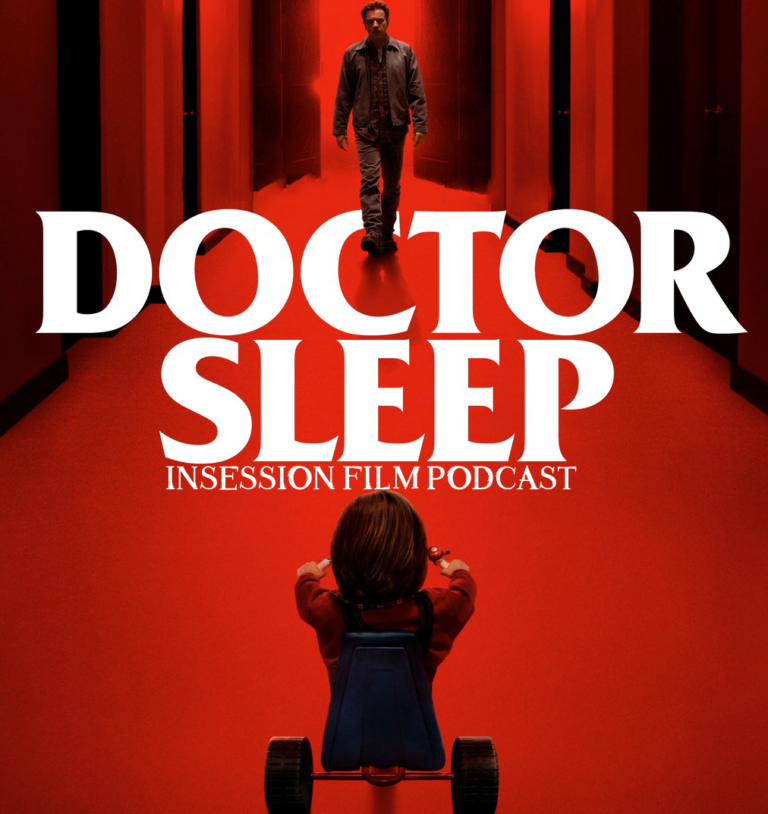
This week on the InSession Film Podcast, we discuss Mike Flanagan’s sequel to The Shining in Doctor Sleep and we continue our Ingmar Bergman Movie Series by discussing his 1972 film Cries and Whispers! JD also gives his thoughts on The King, while Brendan offers up his reviews of Parasite, Pain and Glory and Dolemite is My Name.
No guest again this week, but it was great to get Brendan back after his little hiatus last week. We had a really fun discussion of Doctor Sleep that is reminiscent of our Dark Fate review from last week. And, of course, any time we get to talk Bergman, things are going well. A little long this week, but we are hopeful you’ll enjoy the show!
On that note, check out this week’s show and let us know what you think in the comment section. Thanks for listening and for supporting the InSession Film Podcast!
– Movie Review: Doctor Sleep (5:10) Director: Mike Flanagan Writer: Stephen King (based on the novel by), Mike Flanagan (screenplay) Stars: Ewan McGregor, Rebecca Ferguson, Kyliegh Curran
– Notes / The King / Parasite / Pain and Glory / Dolemite is My Name (42:39)
We were busy catching up with some films this week. As noted above, JD was able to catch up with David Michôd’s The King, currently up on Netflix, and offered up a few thoughts on the film. Brendan on the other hand, offered up his sentiments on Bong Joon-ho’s Parasite, Pedro Almodóvar’s Pain and Glory and Craig Brewer’s Dolemite is My Name.
Main Review: The Irishman / Ford v Ferrari
Top 3: N/A
Ingmar Bergman Movie Series: N/A
[divider]
Help Support The InSession Film Podcast
If you want to help support us, there are several ways you can help us and we’d absolutely appreciate it. Every penny goes directly back into supporting the show and we are truly honored and grateful. Thanks for your support and for listening to the InSession Film Podcast!
This week on the InSession Film Podcast: Extra Film segment, Ryan and Jay discuss the Netflix original, The King, and Spanish master Pedro Almodóvar’s latest, Pain and Glory.
Director David Michôd started his career of with a bang when he directed Animal Kingdom, a family crime drama from 2010 that has sustained in the culture with an American television adaptation, now its in fourth season. Since his feature debut, Michôd has directed the post-apocalyptic Robert Pattinson vehicle, The Rover, and the maligned Netflix “satire”, War Machine. With his career wobbling a bit, the director turned to the most famous storyteller in history for inspiration: William Shakespeare. Shakespeare’s “Henry V” has been adapted time after time, but Michôd comes at it with a bit of a slant, playing with the well-known ideas and making it grittier than ever. The film stars internet darlings Timothee Chalamet and Robert Pattinson, among a slew of other recognizable faces. The film has polarized critics and viewers, alike, and that remains true with the boys on Extra Film.
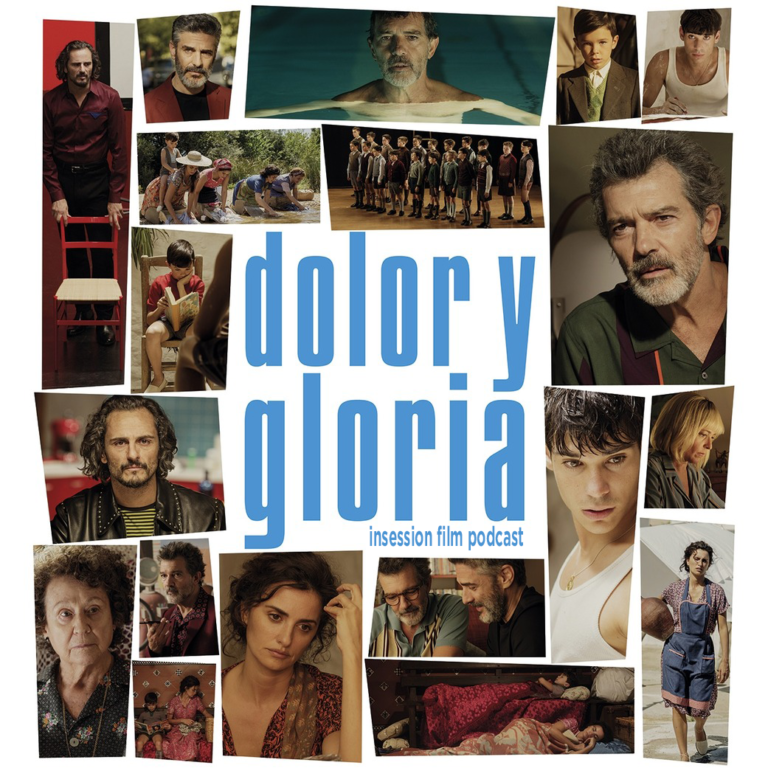
After discussing The King, Ryan and Jay dig into a very different kind of film in Pedro Almodóvar’s Pain and Glory. Antonio Banderas has been getting Oscar buzz for his performance as an on-screen representation of Almodóvar in this piece of auto-fiction. Pain and Glory explores themes of addiction, aging, lost love, redemption, and more. It uses sequences of animation, movies within movies, and breaks the fourth wall. No doubt, it is unlike any film you will see this year. Listen to find out where it ranks against other foreign film of the year for Jay and Ryan.
On that note, have fun with this week’s Extra Film segment and let us know what you think in the comment section below. Thanks for listening!
– Movie Review: The King (4:33) Director: David Michôd Screenplay: David Michôd, Joel Edgerton Stars: Timothée Chalamet, Joel Edgerton, Sean Harris, Lily-Rose Depp, Robert Pattinson, Ben Mendelsohn
– Movie Review: Pain and Glory (40:00) Director: Pedro Almodóvar Screenplay: Pedro Almodóvar Stars: Antonio Banderas, Asier Etxeandia, Leonardo Sbaraglia, Penélope Cruz
We try to make this the best movie podcast we possibly can and we hope you enjoy them. Subscribe today on iTunes, Spotfiy or Stitcher, and please leave us a review on iTunes. You can also find us on Soundcloud, PlayerFM and TuneIn Radio as well. We really appreciate all your support of the InSession Film Podcast.
To hear this Extra Film episode and everything else we do, download our apps on the Amazon Market for Android and the Podcast Box app on IOS devices. The mobile app covers all of our main shows, bonus podcast’s and everything else relating to the InSession Film Podcast. Thanks for your wonderful support and listening to our show. It means the world to us!
Director: Mike Flanagan Writers: Steven King (novel), Mike Flanagan (screenplay) Stars: Ewan McGregor, Kyleigh Curran, Rebecca Ferguson
Synopsis: Years following the events of The Shining, a now-adult Dan Torrance meets a young girl with similar powers as he tries to protect her from a cult known as The True Knot who prey on children with powers to remain immortal.
[/info]
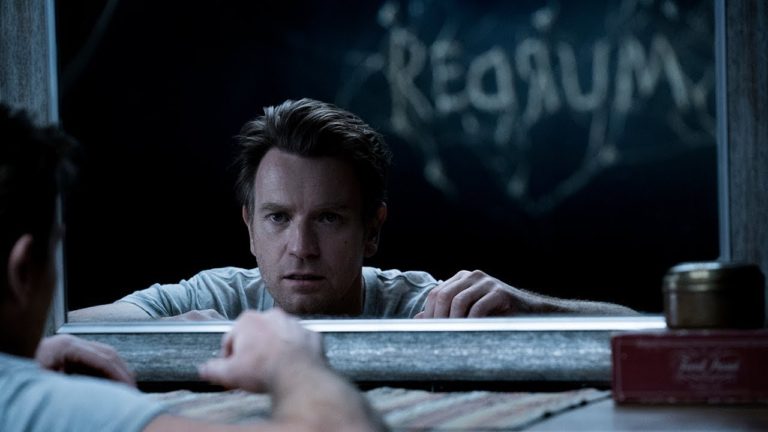
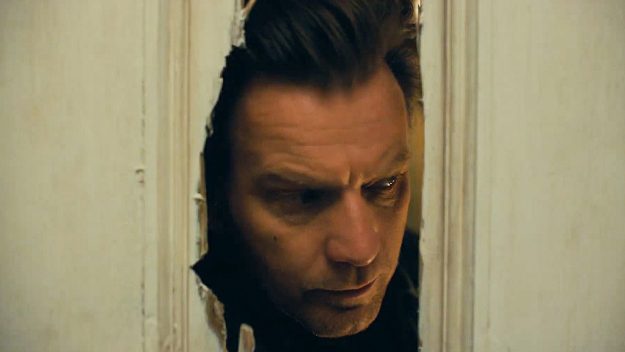
“Dare to go back.” It’s the tag line to director Mike Flanagan’s Doctor Sleep, the sequel to Stephen King’s The Shining But while Doctor Sleep is a sequel to the classic novel, it is also a continuation of the feature film directed by Stanley Kubrick that premiered in 1980. While it is a good line to put on a poster, the line feels more like a challenge to the creative minds around this sequel. The task of making a follow-up to one of the greatest horror properties of all time could drive many crazy. But Flanagan balances everything perfectly, making something fans of the book and the film will be extremely happy. By doing this, he has made one of the biggest surprises of the year while continuing to bring his own gloomy, naturalistic style to the work he is involved with.
Doctor Sleep picks up 30 years after the events at the Overlook Hotel. Danny Torrance (Ewan McGregor), who now goes by Dan, is an alcoholic trying to escape the pain plaguing his life. With flashbacks to Dan’s childhood showing the evolution of his gifts, he’s able to lock up most of demons haunting him. But while he can file those haunting figures away, he still can’t shake his personal fears, including his damaged relationship with his father.
Finally hitting rock bottom, Dan seeks help to turn his life around while living quietly in a small northeastern town. He joins AA, coming to terms with his drinking and how it connected to his shortcomings as well as his father’s sinister fate. He becomes the town’s night orderly at the local hospital, where he helps people who are about to die transition to a peaceful slumber. This is where Dan gets to serve some form of purpose with his gifts by using them as a comforting device for the suffering. By doing this, Dan can find peace within his life and understand his shine is a meaningful blessing. These moments are when Doctor Sleep works the best, where Flanagan slows everything down and amps up the emotion. Through this, Dan is such an interesting complex main character you can root for due to the beautiful humanity and relatability conveyed in McGregor’s performances.
But just as everything is going well, a young girl named Abra (Kyleigh Curran) reaches out to him seeking his help. Abra is just like Dan, she shines and is extremely powerful like him. They communicate a lot throughout the film, friendly conversations before Abra goes to school. But when she gets in trouble, she has no one else to turn to. She comes to him searching for a way to stop Rose (Rebecca Ferguson) and the True Knot, a cult who feeds off other children’s shine. Abra witnessed one of the True Knot’s acts through her shine, thus when Rose feels her presence, Abra knows it won’t be long till she must face off against the cult. Hesitant at first, Dan realizes that he can’t hide his gifts anymore and he joins Abra in the fight to stop the True Knot, leading them to a familiar place full of dark memories.
Doctor Sleep is a dense dance of nostalgic supernatural horror mixed with a deep psychological examination of how we can rise from the sins of the past. Flanagan knows the audience is coming to see something scary, and there are parts that will make you jump, especially in the third act. But this director isn’t interested in those expectations. Instead he’s interested in the trauma and the tole someone’s burdens can have on those around them. By looking at these issues, Dan evolves and inspires Abra to be what he could never be, which is someone that embraces who they are and shines bright for all to see.
Thanks to the interest of actress Barbara Stanwyck and her Pre-Code movies, some consider Baby Face a reason the Code was installed because of its flagrant sexuality with her character. After her father’s death, Lily gets out of the blue-collar setting and moves to the big city where she basically sleeps her way towards the top. But she starts to have feelings for a playboy who in turns shows he loves her, putting into question the desire to suck out wealth and power with his strong sexuality. Daryl F. Zanuck, working then with Warner Bros, created the story and sold it for a dollar to get it made for cheap because of the difficulties in the Depression. But it made a lasting effect in that era of open sex and violence before the curtain finally closed down on such “filth,” as they referred to it.
The Bad Sleep Well (1960)
Akira Kurosawa shifts from the samurai genre to the modern-day corruption of the country’s embrace of corporation capitalism and how the men at the top always cover their tracks. But for the son-in-law of the company’s Vice President, who persuaded his father to commit suicide, it is personal and seeks vengeance to expose the whole game. It’s loosely influenced on Hamlet but features multiple paths and all dead ends. Some say the ending is too depressing, but it’s a game of life people see that the big dogs guilty of corruption can put their minds at rest when they know their wrongdoings are no longer out in the open.
Stolen Kisses (1968)
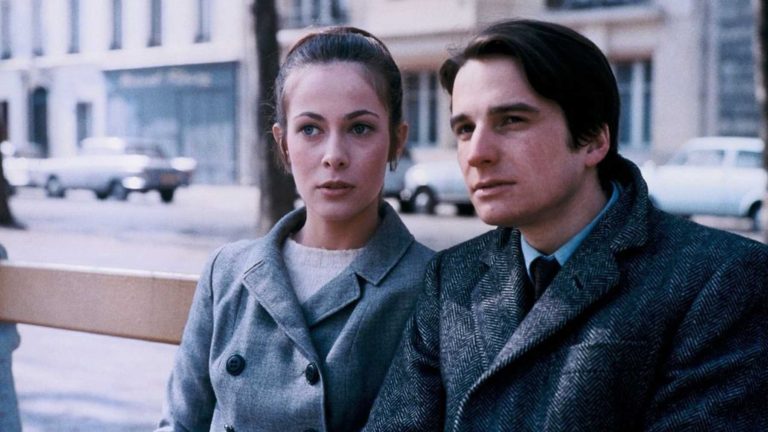
This was the third of Francois Truffaut’s Antoine Donel story. Now as an adult, the character is discharged from the military as he is unfit and continues his struggle to fit in with society. Antoine keeps chasing girls and losing his job, but seems to have something down when he works out with a private eye agency, only to get caught up in his own misadventures. Converting to color, Truffaut made the film at the same time France was about to get caught up on their own little revolution, starting with the firing (then rehiring) of the head of the Cinémathèque Française, Henri Langois. The film’s opening shot of the cinematheque’s temporary closure featured a dedication to Langois.
Amarcord (1973)
Federico Fellini’s autobiographical film about his growing up in Rimini is full of eccentric characters, humor that slaps in the face of fascism, and actions that would have sent the boys as children to Hell under the watchful eye of the Catholic Church. They are episodes rather than a plot as the title is the Romagnol dialect translation for, “I Remember.” The characters are based on people he knew and even his parents and put out a circus act that completes a circle in Fellini’s life. It won Fellini his fourth Oscar for Best Foreign Film was the last commercial success he would really have in his career.
The Tin Drum (1979)
https://www.youtube.com/watch?v=ULls1uMwzEE
German New Wave player Volker Schlöndorff adapted the famed magic realist novel from Günter Grass and co-shared with Francis Ford Coppola’s Apocalypse Now the Palme d’Or at Cannes. The protagonist, three-year-old Oskar, decides to stop growing by throwing himself down the stairs and lives his early adulthood as a child in the shadows of Nazi Germany and the war. His toy drum is a motif to his forever status as a child. Widely acclaimed and nominated for Best International Film at the Oscars, it was among the mainstream German New Wave hits that was a commercial success, even with a controversial sex scene that was subjected to legal censorship in both Canada and the United States.
Police Story (1985)
https://www.youtube.com/watch?v=BSOJyWQxk8g
Jackie Chan before his American breakout has been a major blind spot, so luckily his widely popular Police Story series got a piece of Criterion’s blessing. And it is super easy to see why. Chan co-wrote and directed the film. He and his stunt ensemble really put their bodies on the line in this thrilling whydunit about a cop trying to protect a witness from the harm of gangsters being sought for drug trafficking. The car/bus chase sequence to start the film and the mall fights with the motif of broken glass is so natural for Chan to do, even if it meant second-degree burns on his hands when sliding down a four-story pole with hot lights wrapped around them. The sequel is also as brilliant and the special features from them on Chan’s career is massive.
La Haine (1995)
From its Cannes debut, this film came out like a rocket. Meaning “hate” in French, Mathieu Kassovitz’s black-and-white struggle about three young friends – a Jew, a Muslim, a Black – and how they cope in the aftermath of a riot over police brutality towards the black community. It is Do The Right Thing in French, exploring the realities of inner-city Paris and how they are seen by the police as troublemakers. The film even uses documentary footage of an actual riot that inspired the film. The French critics saw it as an eye-opening statement, earning Kassovitz acclaim and a couple of movies to make in Hollywood.
Synopsis: A young boy in Hitler’s army finds out his mother is hiding a Jewish girl in their home.
[/info]
Taika Waitit is currently my favorite director and his 2016 movie Hunt for the Wilderpeople is one of my favorite movies of all time. When I first heard about Jojo Rabbit, I was beyond excited. Unfortunately, I don’t live in an “indie film” friendly area and had to wait two weeks longer than many of my movie reviewing colleagues to see it. Luckily, I was able to avoid any major spoilers, and Jojo Rabbit was well worth the wait.
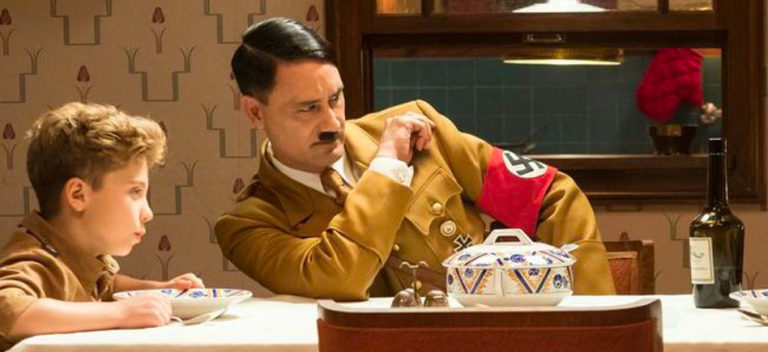
Jojo Rabbit is the story of a 10-year-old boy actively participating in the Hitler Youth, whose imaginary friend is Adolf Hitler. Jojo (Roman Griffin Davis) is innocent and is eager to be accepted by his peers. He wholeheartedly believes the propaganda of Nazi Germany. His single-mother (Scarlett Johansson) tries to teach him to be a good person and not immediately believe everything he is being told in her own subtle way. One day while his mother is out, Jojo discovers Elsa, a Jewish girl (Thomasin McKenzie) living in his walls. He is torn between his blind loyalty to his country’s regime and wanting to learn more about her.
I loved this film. It’s the perfect blend of a “coming of age” movie, a drama, and a comedy. It’s officially the only movie about Nazis I want to watch more than once. I enjoy stories that take a familiar angle and twist it. We’ve seen hundreds of WWII films from the American soldier or Jewish family perspective. What isn’t done often, is a German child’s perspective. Children are innocent; they don’t hate. They do as they are told and often mimic what they see from the adults in their lives. I loved Jojo’s innocence – all he wants is to fit in with the other kids. When his views on what he’s been told is “correct” are challenged, he handles the issues in an interesting way. Propaganda tells him Jews are bad – they sleep upside down like bats and can read his mind. When Jojo meets Elsa, he becomes confused and questions what he’s been taught. He works through this conflict by arguing with himself and his weird imaginary friend, Hitler (Taika Waititi). The conversations between Jojo and imaginary Hitler are some of my favorite scenes. Waititi’s portrayal of the infamous dictator is a hilarious parody with a child-like immaturity. Their conversations are what you would expect an internal struggle of a 10-year-old to sound like. The film is a much-needed satire of hate and bigotry and its message is as relevant in today’s world as it would have been during WWII. Taika Waititi was able to direct an amazing film showing how ridiculous and absurd it is to hate people for being different, make us laugh at the idea that this behavior is/was considered normal, all while prancing around, dressed as one of the worst people in history. If that doesn’t earn him an Oscar nomination, I don’t know what will.
Jojo Rabbit is extraordinary in many ways. The cast is phenomenal, every role in the film was well executed. Sam Rockwell, Rebel Wilson, Alfie Allen, and Stephen Merchant all have supporting roles as Nazis with odd personalities and they all work well on screen. I don’t think I’ve seen another film recently that has that many outrageous characters that coexist harmoniously in one film. (Maybe the 1985 movie Clue?) This was Roman Griffin Davis’ first professional acting job and he carries the movie well. He holds his own while sharing the screen with award winning actors. The movie is beautifully shot, even if something is ridiculous (like Hitler leaping through gracefully through the air) is happening on screen, it still looks amazing. I would love to see Jojo Rabbit get some Oscar nominations, hopefully wins. I can see at least nominations in Best Adaptive Screenplay, Best Picture, Best Director, and possibly Best Supporting Actress (Thomasin McKenzie).
I have almost no criticism for this film. My only complaint is the lack of information about two characters who don’t actually appear in the film. Not much is said about Jojo’s sister and father and I wanted to know more about them. I’m sure if I read the book this film is based on (Caging Skies by Christine Leunens), I would learn more. The only other thing I could find wrong with this movie was that there was one instance where the incorrect version of the American flag was used. The first American flag shown in the film was a 50-star flag which wasn’t adopted until 1960, the second time we see the flag it is the historically accurate 48-star version. Other than those small things, I couldn’t think of any negative criticisms.
Jojo Rabbit has earned a place at the top of my “Best Movies of 2019” list. It’s a wonderful story, told from a new angle I think would appeal to many audiences. It brilliantly shows us how ridiculous it is to hate one another through the eyes of a child brainwashed by one of the worst regimes in recent history. Comedy is a great tool to cover uncomfortable subjects and Taika Waititi excels here. I’m interested to see how it does come awards season and encourage everyone to see it if you have the chance.
Director: Ruben Fleischer Writers: Dave Callaham, Rhett Reese Stars: Woody Harrelson, Jesse Eisenberg, Emma Stone
Synopsis: Columbus, Tallahassee, Wichita, and Little Rock move to the American heartland as they face off against evolved zombies, fellow survivors, and the growing pains of the snarky makeshift family.
[/info]
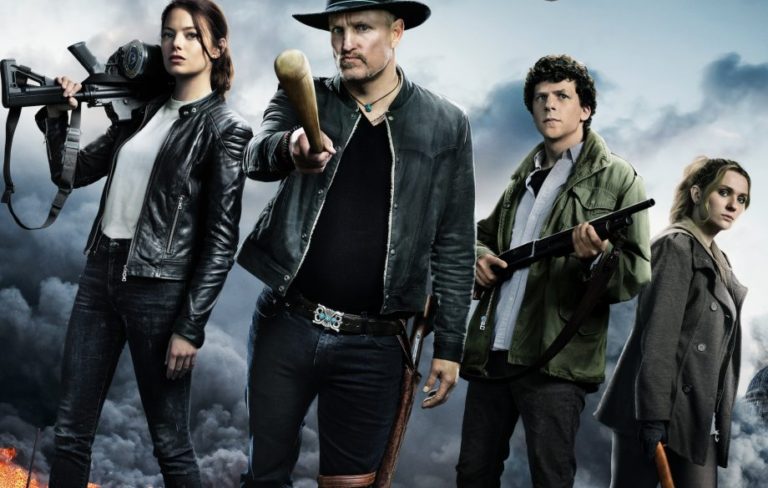
Ruben Fleischer’s Zombieland: Double Tap is the follow up to 2009’s Zombieland. Where Zombieland succeeded in its genre-flipping action, sharp wit, and unusual characters, Double Tap fails due to the staleness of the subject. The original Zombieland felt like a breath of fresh air, turning the zombie genre on its head, combining it with a buddy comedy and an action film. However, Double Tap feels like all that originality is spent and the filmmakers are coasting on the fumes of its cult-followed predecessor.
Since the last film, Tallahassee (Woody Harrelson), Columbus (Jesse Eisenberg), Wichita (Emma Stone), and Little Rock (Abigail Breslin) have stuck together while living in a dystopian world inhabited by zombies. Once they take up residence in the White House, domestic doldrums eventually set in and the gang becomes restless. Soon, one of the group leaves, sparking a rescue attempt that drives the narrative to new characters, new obstacles, and new zombie types.
Unfortunately, the plot of this film is extremely bare-bones. There is very little to drive this film forward. Instead, Fleischer relies on his characters to push the film, and in many ways this fails. First, these characters are not well-developed and deep. Second, the relationships in the film feel hollow and forced. When you hang the whole film on character interactions and purpose, it helps to make them seem human and not flimsy stereotypes. Third, building from the first film, these characters somehow feel like caricatures of themselves. There is even a moment in the film when Tallahassee and Columbus come across a pair of virtual doppelgangers. Albuquerque (Luke Wilson) and Flagstaff (Thomas Middleditch) are carbon copies of the two protagonists and mimic Tallahassee and Columbus’s personalities in almost every way. This would seem clever and funny if Tallahassee and Columbus were worthy of homage, but they aren’t and it feels exhaustive having two versions of these bland characters side by side. This sequence is dreary and derivative, but fortunately leads to one of the better action sequences of the film.
Herein lies the one saving grace of Zombieland: Double Tap. The frenetic action sequences backed by heavy metal music invigorated the boredom of the rest of this film. In these moments, the characters and zombies feel at home while the choreography and camerawork feel effortless. The action is crisp with moments of altering film speed to emphasize and explore. Comedy sight gags are riddled throughout these sequences which adds levity to the gory and bloody action. A Zombieland fan will enjoy how these scenes play out as they are familiar, but with an added amount of adrenaline.
These comedic action moments that made the first Zombieland so fresh, are few and far between. Instead, the film focuses on one-sided characters, little to no story, and cognate stereotypes to fill screen time. Zombieland should have been a lone film, secured in its cult status. With Zombieland: Double Tap it is almost as if no one wondered what these characters were doing and the filmmakers answered with a sigh and a response of “nothing much.”
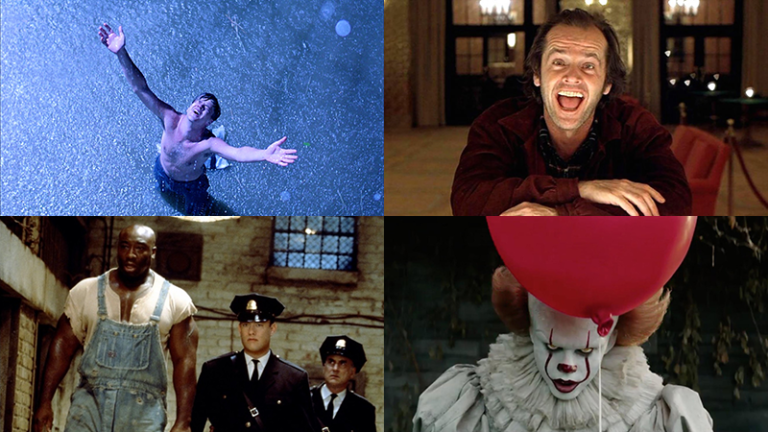
This weekend on Episode 351 we’ll be discussing the latest Stephen King adaption in Doctor Sleep. We are big fans of The Shining (I mean, who isn’t, right?) and while sequels to classic films haven’t always gone well, early word on the street is that Doctor Sleep is quite good. We’ll see if that’s the case soon enough, but in the meantime, it’s inspiration for our poll this week. There’s been some great King adaptations over the years, and we want to know which one you think is the best.
So, with that said, what is the best Stephen King film adaptation? Vote now!
Director: Alfonso Gomez-Rejon Writers: Michael Mitnick Stars: Benedict Cumberbatch, Michael Shannon, Tom Holland, Nicholas Hoult
Synopsis: The dramatic story of the cutthroat race between electricity titans Thomas Edison and George Westinghouse to determine whose electrical system would power the modern world.
[/info]
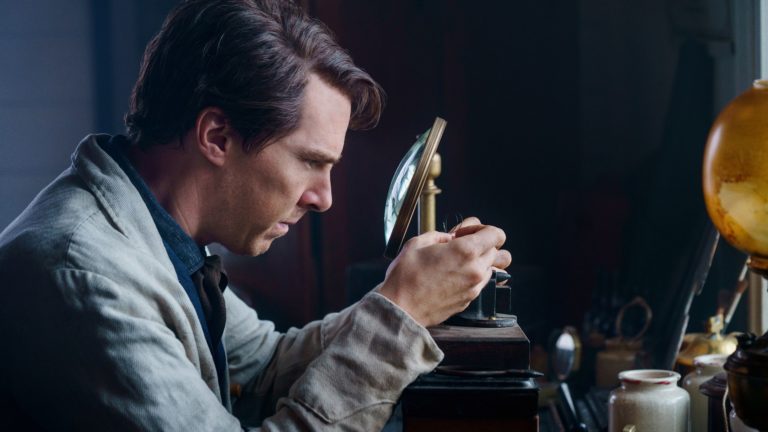
The Current War is a historical drama, telling the story of the rivalry between Thomas Edison (Benedict Cumberbatch) and George Westinghouse (Michael Shannon). It covers the years soon after Edison patents the incandescent lightbulb around 1880, up to the Chicago World’s Fair of 1893. This film does come with some drama and feelings of negativity. It was originally released at TIFF in September 2017 and made its way around the festivals. This film was originally produced by Harvey Weinstein but after the numerous allegations against him started to come out he “left” the project and remains uncredited. The film went into limbo, was sold and reedited, then finally received its theatrical release two years later. I read a lot of rumors about the festival release of this film being “so bad no one would take it”. I have not seen that version of the film, only the director’s cut so this review will be based solely on that.
On paper, The Current War sounds like it will be a decent movie; it has an amazing cast and interesting story. But, like many biopics, it seems to fall flat in its storytelling. Just because a historical figure did something amazing doesn’t mean it will translate that way on the big screen. I find the rivalry between Edison and Westinghouse interesting, I learned things I didn’t know before I saw the movie, but it doesn’t make for a thrilling, “need to know what happens” movie. It’s not a bad movie, it definitely doesn’t deserve all the hate it’s getting, but it isn’t anything spectacular either. Another complaint I have is very common when real historical figures appear in film- the actors didn’t look anything like the real people they were portraying. Cumberbatch is around the same age as Edison was during this time, but Edison went grey in his late 20s/early 30s. He was often nicknamed “The Old Man” due to his appearance and demeanor. There are many photographs of Edison so I don’t know why they didn’t attempt to make Cumberbatch look similar. Michael Shannon looks a little better as Westinghouse, he has his signature facial hair and they are also around the same age. The best casting is Nicolas Hoult as Nikola Tesla. They’re around the same age, same height, and very similar in appearance. Even though Tesla isn’t a major character in the film, I appreciate that they took the time to make him accurate.
There are a few standout things in this film, it’s not all bad. It’s a pretty movie, lots of interesting shots and tricks with lighting. I also enjoyed Benedict Cumberbatch’s performance. He didn’t look like Edison, but he did a decent job portraying the genius workaholic. My favorite cast member was Katherine Waterston as George Westinghouse’s wife Marguerite. She’s supportive, outspoken, and strong and even though she has a minor role, she has the best line in the entire film. There is a scene where the Westinghouse’s are waiting to meet with a committee about the World’s Fair. They’re expecting to see Edison to walk in, but Samuel Insull (Edison’s secretary portrayed by Tom Holland) appears instead. Marguerite looks to her husband and says (not quietly) “He looks 12…” The whole theater laughed and the movie was instantly worth the ticket price. I was unable to find any real information on Marguerite, so I can’t confirm if her portrayal was historically accurate, but she was definitely a positive addition to the film.
The Current War is your standard, run-of-the-mill biopic, nothing special, but certainly watchable and enjoyable. While not perfect, it does not deserve the cloud of negativity surrounding it. I recommend giving it a change, especially if you’re interested in the subject matter.
Director: Robert Eggers Writers: Max Eggers, Robert Eggers Stars: Willem Dafoe, Robert Pattinson, Valeriia Karaman
Synopsis: The hypnotic and hallucinatory tale of two lighthouse keepers on a remote and mysterious New England island in the 1890s.
[/info]
“Dwellers by the sea are generally superstitious; sailors always are. There is something in the illimitable expanse of sky and water that dilates the imagination.” – Thomas Bailey Aldrich
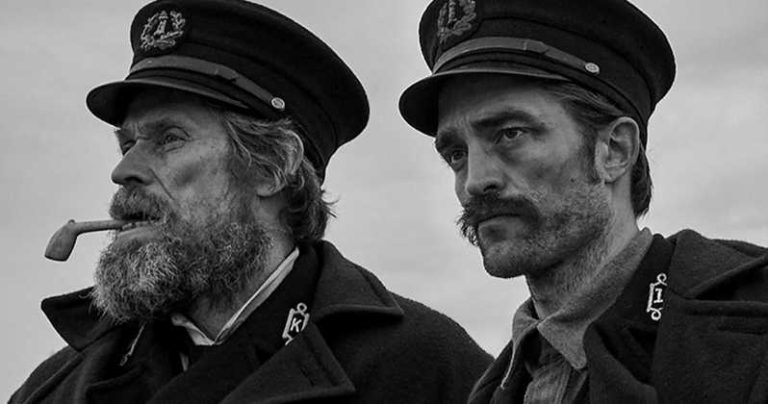
Robert Patterson and Willem Dafoe play two sailors, Ephraim and Thomas, who go to an island off the coast of New England to be wickies, or lightkeepers, in the 1890s. Ephraim is the young rookie who reveals that he used to be a logger in Northern Canada and Thomas is the veteran boss with his scruffy accent and hard-nosed attitude towards Ephraim in doing basic work around the island. The job requires them to spend four weeks there, but as time goes on and a storm leaves them stranded them longer, it becomes a game of wits and attrition towards each other and towards the mystery of the waves and lighthouse itself.
Ephraim is young and detests Thomas’ demanding work, which clears shows in his struggle to do upkeep such as emptying chamber pots and refueling the light. He doesn’t understand the superstitions of Thomas, including one that foreshadows the events, and dismisses the warnings of Thomas about what desolation on an island can do to a man so easily. Slowly, it grips Ephraim and Thomas as they divulge their secrets and run amok through the amounts of liquor that fuels them in the worst of the storms.
Robert Eggers’ (The Witch) sophomore effort is one that has to sink in a bit before you make a judgment about the film. It is one that has you more to think of when going through the slow decline of each character’s sanity and what it may mean. This isn’t a pure horror film to scare you out of your wits. It is an art film, shot in black-and-white and formatted in the 1.19:1 aspect ratio like a box. For the viewer, you have no choice but to look directly at the two characters and their maniac fall to when they come face-to-face, and that’s for the better because Patterson and Dafoe are like two boxers slowly jabbing and then raining blows in the later rounds of a fight.
Patterson continues to go as far away as he can from the Twilight era with his bold turn while Dafoe continues his streak of chances in characters that are soul-sucking creatures, trying to balance reality and the imaginary. Dafoe oozes the ecstasy Thomas has working hard on Ephraim, albeit short of masochistic. His accent can be heavy at some times, but it makes you feel like you are looking up at a giant. Their emotions pour out as they try to tower one another and fight to be the last man alive, let alone standing. It can get a bit rough down the stretch heading to the climax, but in its Theater of the Absurd manner, with all the subtle dark humor (and flatulence), Eggers has it all out for us to fly over like a flock of seagulls.
This week’s episode is brought to you by the Official Secrets, starring Keira Knightley and Ralph Fiennes. For a free digital code, be one of the first ten to email us at [email protected]!
This week on the InSession Film Podcast, we discuss Bong Joon-ho’s latest film Parasite and the latest film in the Terminator franchise Terminator: Dark Fate! We also offer up some quick reviews of Jojo Rabbit, Dolemite Is My Name, The Laundromat and more.
Brendan is out this week and filling in his place is our great friend Ryan McQuade. As always, Ryan was a wonderful co-host and we thank him for his flexibility. Because both Ryan and JD have the ability to be long-winded, this episode is slightly longer than usual, but we are confident that you’ll love the content. There’s so much to discuss with Parasite that we couldn’t limit the length of the conversation.
On that note, check out this week’s show and let us know what you think in the comment section. Thanks for listening and for supporting the InSession Film Podcast!
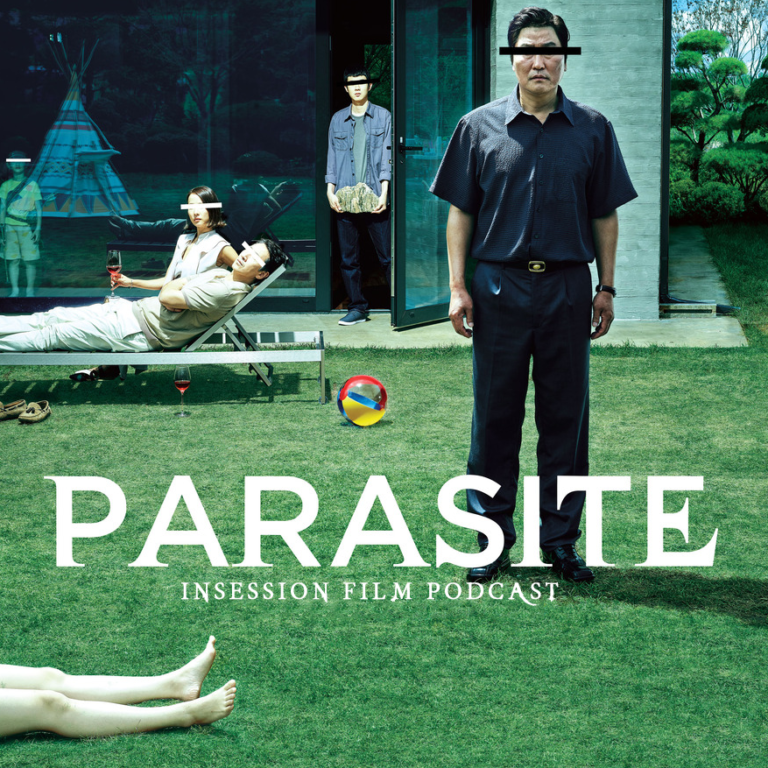
– Movie Review: Parasite (4:53) Director: Bong Joon-ho Writer: Jin Won Han, Bong Joon-ho Stars: Kang-ho Song, Yeo-jeong Jo, So-dam Park
– Notes / Jojo Rabbit / Dolemite Is My Name / The Laundromat / All is True (1:09:20)
As noted above, JD was finally able to see Jojo Rabbit after having his goof a few weeks ago. Ryan was also able to see the film, so the both of them offered up their thoughts on Taika Waititi’s latest outing. JD also saw Craig Brewer’s Dolemite Is My Name, starring a great Eddie Murphy, and gave his thoughts on that film. Lastly, Ryan rendered a few mini reviews of The Laundromat, All is True and The Biggest Little Farm.
– Movie Review: Terminator: Dark Fate (4:41:14) Director: Tim Miller Writer: James Cameron, Charles H. Eglee, Josh Friedman, David S. Goyer, Justin Rhodes, Billy Ray Stars: Linda Hamilton, Arnold Schwarzenegger, Mackenzie Davis
Main Review: Doctor Sleep
Top 3: N/A
Ingmar Bergman Movie Series: Cries & Whispers
[divider]
Help Support The InSession Film Podcast
If you want to help support us, there are several ways you can help us and we’d absolutely appreciate it. Every penny goes directly back into supporting the show and we are truly honored and grateful. Thanks for your support and for listening to the InSession Film Podcast!
Director: David Michôd Writers: David Michôd, Joel Edgerton Stars: Timothée Chalamet, Joel Edgerton, Sean Harris, Ben Mendelsohn, Robert Pattinson, Lily-Rose Depp, Thomasin McKenzie
Synopsis: Hal, wayward prince and heir to the English throne, is crowned King Henry V after his tyrannical father dies. Now the young king must navigate palace politics, the war his father left behind, and the emotional strings of his past life.
[/info]
Honestly, one of Netflix’s production formulae must be “add one royal figure to a blossoming filmmaker and generate a sizeable LARP session (with two-thirds of the budget spent on mud).” This was put into effect for the first time last year, when Robert the Bruce headlined David Mackenzie’s Outlaw King. While the results were entertaining, they weren’t satisfying since the fighting component received more care than the theatrical one. Also, it was clear that using Chris Pine’s eggplant as a promo peg was only effective to some degree.
In this The King, in this case, is no doubt the streaming giant giving the maybe-formula a second go: This time handing Henry V to Animal Kingdom’s David Michôd, plus a footnote saying to hype up its lead actor’s bowl cut. Upon seeing how everything plays out, one can declare, with confidence, that this round surpasses the last, yet still not scott-free from stumbles. Well, since it’s all humans behind the production, to err is OK?
Netflix’s take on Shakespeare’s Henriad series — loose, since contemporary is the descriptor for the speeches and sensibilities — is powered by this palpable magnetism, most of which comes from Michôd’s direction. Serenity is ample on the surface, but that makes us more alert and receptive to all other, and usually chaotic, visual-storytelling elements. As with The Rover, the world comes to you. As with Animal Kingdom, the characters have great visibility. These are perfect boons for The King, whose setting is a disjointed kingdom pressured by France’s need for war and whose populace we’ll mingle with the most are working out how the young Hal (Timothée Chalamet) can rule mightily as Henry V after his father (Ben Mendelsohn) fell ill. It might become difficult to think that you’re not watching a successor to Justin Kurzel’s Macbeth at times — Shakespearean source, Sean Harris (playing Chief Justice William), smoky-but-savory lensing from Adam Arkapaw, to name a few parallels — but, even then, is there harm in that? Michôd’s craftsmanship builds a direct line between the audience and the frame, guaranteeing you to a place among the weary citizenry (all well-costumed by Jane Petrie from Outlaw King), the battles that matter most (the gravity comes through Nicholas Brittell’s score) and the palace politics keeping the king of The King on constant alert.
But by being able to absorb everything you’ll find that there’s a missing piece: an understanding of the characters despite the aforementioned visibility. Though its main man is the focal point, the script from Michôd and Joel Edgerton seems to spend more resources on the happenings surrounding him, sometimes more blatant than others. When there is a window to learn more about the gears that move Hal, it will be avoided, leaving us no other means to appreciate Hal beyond the surface level. And as Falstaff, a skilled warrior who is also Hal’s best friend, Edgerton was supposed to be an ally! No matter, though — much like the young king he is embodying Chalamet never loses himself, through thick and thin evoking a kind of dignity that makes him irresistible to watch. Those “kid wearing a crown” remarks? Nothing. The assaultive French-accented English from the slimy Dauphin (Robert Pattinson)? Unregistered. Imagine how much more the actor could bring had the writing allowed psychology to leave a firmer footprint. Still, even when The King misses out the chance to let us share the uneasiness — and the heaviness — of the crown on Henry V’s head, the spectacle characterizing the rest of the works are far from lowliness.
We shall see if the third attempt will be a complete run being a complete fun. There are no shortage of royalties in Asia, last time one checked…
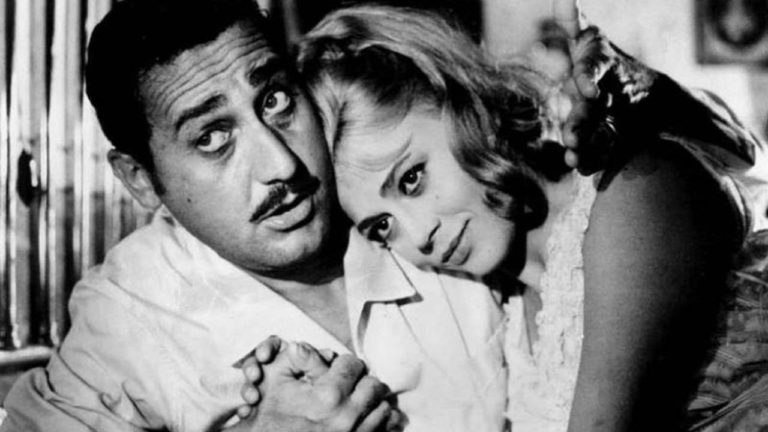
Commedia all’italiana, or as translated as “Comedy in the Italian way,” was the new genre Italian cinema developed following the Neorealism period in the years right after the war. From the late 50s to the end of the 70s, Italian directors used their new freedom to tap into areas once forbidden by the dictatorship and the Catholic Church that was under the iron grip. Federico Fellini used elements of the Commedia in his works during the period, but the real handlers were Mario Monicelli, Dino Risi, Pietro Germi, and legendary neorealist Vittorio De Seca. These are reflective in Italian culture, set around the disillusioned and poor in dire circumstances, characters who are cheap, can be easily deceived, or just plain stupid, and with a finale where the characters are back to where they started, or are in a false sense of hope. The slate of films touch upon contemporary and historical matters where nothing is immune to getting prodded at.
Juggling Lovers
Divorce was not legalized in Italy until 1970, but with the subject of mistresses and finding love outside of marriage, it was a topic full of conceptions and loopholes. Divorce, Italian Style is a masterpiece of the genre, mocking the act of one who finds their spouse in the act of committing adultery and kills them in a crime of passion, which would be a lesser jail sentence because it was the killer reclaiming their honor. Here, Marcello Mastroianni plays a man who falls in love with his young, attractive cousin but is married to an ugly woman, and fantasizes about how to kill her. He decides to get find someone who can seduce his wife so he can actually kill her in retaliation, freeing him to marry his cousin. Director Germi won an Oscar for his screenplay, one of the few for a foreign film, and would follow it with Seduced And Abandoned. In a small Sicilian town, a woman sleeps with her sister’s fiancé and feels bad for doing so. When her parents find out, she is forced to marry the fiancee in an act of matrimonio riparatore, marriage rehabilitation, something part of Sicilian customs.
Vittorio De Secca would win another Oscar, shifting from the streets of rebuilding Rome in the 40s to the comedies about love in the 60s with Yesterday, Today, and Tomorrow. Mastroianni and the legendary Sophia Loren played three different couples in three different scenarios as working-class, wealthy, and prostitute & client. It explores the connections and the fallacies people in each scenario have to face to what defines as love. Later on, director Lina Wertmüller explored love under isolation from the world in Swept Away, a story about a wealthy woman and a Communist boatman on a desert island, totally different in every category, falling in love and discovering the parts missing in their lives. Yes, that is the Madonna-Guy Ritchie movie that also remade the film, but part of that film’s failure is the style of comedy that could not be translated from its original form.
Third-Rate Gangsters And Thieves
Italy is known for the Mafia. There is also an underworld of criminality untied to organized crime, but criminals know each other well. A film that kicked off the Commedia all’italiana era was 1958’s Big Deal on Madonna Street, featuring Mastroianni (note the roles and directors he worked with), Vittorio Gassman, Carlo Pisacane, and arguably the most famous comedian from Italian entertainment, Antonio De Curtis, or known by his stage name Toto. Here, a gang of crooks, all who have served time for petty crimes, plan a jewelry heist which breaks apart slowly by ineptness and unplanned challenges. It was remade twice in Hollywood as Crackers (by Louis Malle) and Welcome To Colinwood (by the Russo brothers).
1962’s Mafioso is another crime comedy about a naive factory manager who visits his home in Sicily only to be drawn in to do a hit for the local Mafia. Like a comedy of errors and to sneak into the United States, this poor guy is asked to do it as a favor and because no one will suspect him, even though he’s never held a gun in his life. Vittorio Gassman also played Il mattatore, “The Showman,” as an actor who goes to jail for fraud – the only one to go out of a group who took part in it – and is introduced to prison life.
Satire On Politics
While Francesco Rosi took direct aim at the establishment over corruption and lies in dramatic fashion, others followed the path of Charlie Chaplin’s The Great Dictator. In March on Rome, director Dino Risi follows two members of the Blackshirts following Il Duce to the capital. Recently joined the fascists, one is a believer, the other is an opportunist, but both see and comment on the odd behavior by fasicst officials while also trying to get away from them. The Boom by De Secca satirizes the economic growth Italy experienced in the 50s and 60s that does not take everyone under its wing and one person is caught up in it in debt while living a very high standard of life. To mock the planned coup led by a fascist in 1970, We Want the Colonels, directed by Monicelli and starring the notable Ugo Tognazzi, who also starred in March on Rome, poked fun at the fanatics who still admired Il Duce and the stupidity that led to the coup getting uncovered by the press, not the police.
Commedia Sexy
https://www.youtube.com/watch?v=ouUMr8w3SpA
Italian cinema also dove into sex comedies that were not afraid to show nudity and slapstick. As censorship dwindled and color film became the norm in the 1970s, these films were released to expose the really sexual anti-morals of the time, such as in ll merlo maschio, Secret Fantasy in the U.S. It presented voyuerism and exhibisionism in a positive light, differing from pornography as using nudity not for pleasure, but for entertainment. Pier Paolo Passolini’s “Trilogy of Life” all had scenes of nudity and sex-related plots, including the emphasis of eroticism in his adaptation of Arabian Nights. French actress Edwige Fenech became widely known for several sex comedies which Quentin Tarantino became a fan of (a character in Inglourious Basterds is named Lt. Ed Fenech); Anna Maria Rizzoli was a glamour model who starred in several films in the late 70s and early 80s, and many male comedians including Lino Banfi and Pippo Franco played a role in establishing the Italian sex comedy. If you can understand Italian or don’t mind not understanding it, you can watch above ll merlo maschio.
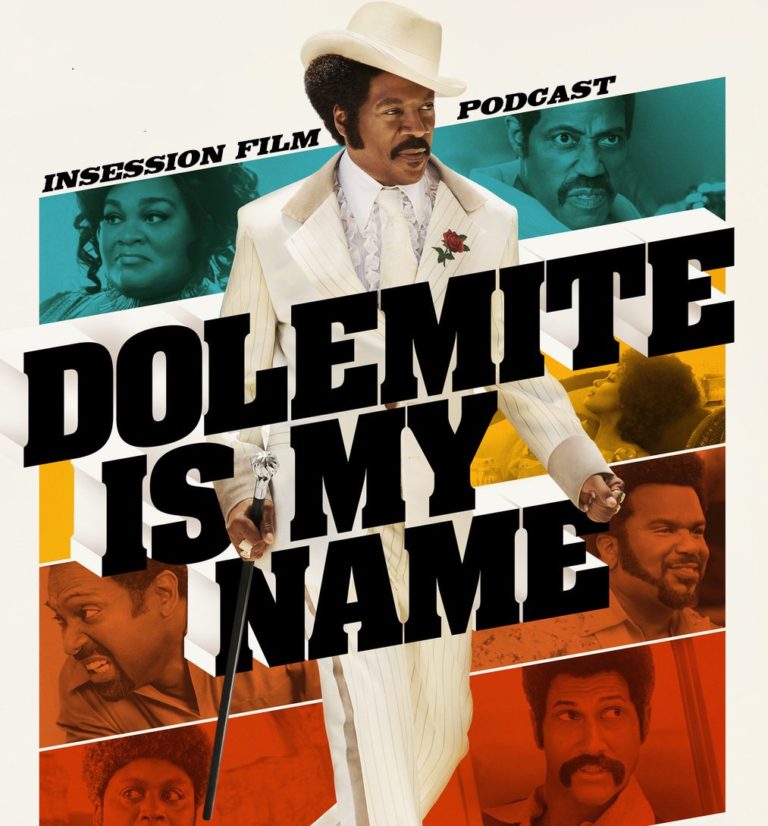
With Ryan returning to the show from is vacation, the guys decide to take a look at two comedies that are available to stream on Netflix and rent on VOD. With Dolemite is My Name, the film sees the return of the Eddie Murphy that audiences have grown to love. With a great supporting cast and solid direction, Dolemite looks to be a contender in the Oscar race but whether the guys think those chances are possible lead to an interesting discussion. They also talked about Dolemite’s influences and the film’s overall message that has sparked the great praise for Murphy and all who is involved.
And in the back half of the episode, the guys reviewed Greener Grass, which lead to one of the most divisive reviews in InSession Film history. The film is a comedy that can work for some and not for others, and that is on full display in this review. Even if you haven’t seen the film, its a great debate to listen to.
On that note, have fun with this week’s Extra Film segment and let us know what you think in the comment section below. Thanks for listening!
– Movie Review: Dolemite is My Name (3:46) Director: Craig Brewer Screenplay: Scott Alexander, Larry Karaszewski Stars: Eddie Murphy, Da’Vine Joy Randolph, Wesley Snipes
– Movie Review: Greener Grass (40:57) Director: Jocelyn DeBoer, Dawn Luebbe Screenplay: Jocelyn DeBoer, Dawn Luebbe Stars: Jocelyn DeBoer, Dawn Luebbe, Beck Bennett
We try to make this the best movie podcast we possibly can and we hope you enjoy them. Subscribe today on iTunes, Spotfiy or Stitcher, and please leave us a review on iTunes. You can also find us on Soundcloud, PlayerFM and TuneIn Radio as well. We really appreciate all your support of the InSession Film Podcast.
To hear this Extra Film episode and everything else we do, download our apps on the Amazon Market for Android and the Podcast Box app on IOS devices. The mobile app covers all of our main shows, bonus podcast’s and everything else relating to the InSession Film Podcast. Thanks for your wonderful support and listening to our show. It means the world to us!
Director: Abe Forsythe Writers: Abe Forsythe Stars: Lupita Nyong’o, Josh Gad, Alexander England
Synopsis: A washed-up musician teams up with a teacher and a kids show personality to protect young children from a sudden outbreak of zombies.
[/info]
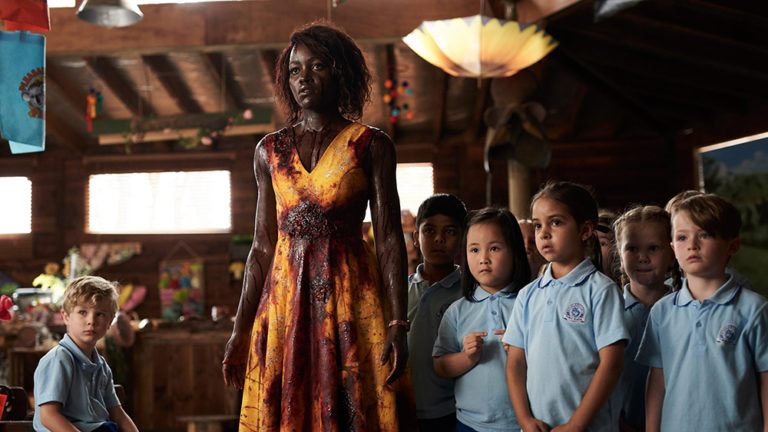
In the last few years, Lupita Nyong’o has been one of the most dynamic actors of our generation. Switching easily from a glorified cameo in the recent Star Wars trilogy to her enjoyable presence in Marvel’s huge Black Panther, she can work wonderfully in the background of a great cast or help deliver some new exposition for one of the biggest film series of all time. But her shining moments have been in intense performances that could threaten self-seriousness and melodramatic tendencies. Luckily with her Oscar-winning part in 12 Years a Slave and her flawless double role in Us, she’s proven to be more than capable of anything thrown her way. It makes sense that she would sign onto a movie like Little Monsters, a seemingly lighthearted zom-com that would help her flesh out her more comedic abilities. Little Monsters waits quite a bit before showing off it’s strongest tool, but Lupita’s bright and shining performance is the glue of a film that’s never less than funny, but never more than chuckle worthy.
For some reason, writer and director Abe Forsythe decided that the best choice for a Lupita Nyong’o vehicle is for her to be a side character to a generic tale of Arrested development: meet Dave (Alexander English), a rock n’ roll star. Well, an ex-member of a mediocre hard rock group, whose girlfriend just broke up with him. After an embarrassing stunt where he uses his nephew Max in an attempt to propose to his ex-girlfriend, he decides to start spending time with the kid and see where that brings him. It brings him to a new crush when he meets Miss Caroline (Nyong’o), a ukelele wielding, Hanson-obsessed, kindergarten teacher. Dave decides to figure out how to make a move while chaperoning a field trip to a farm, but a nearby U.S. testing facility has a different idea in mind. As zombies make their way towards the farm, Miss Caroline distracts the kids with the help of Dave.
And yet, the juxtaposition of cute kids, Miss Caroline’s incessant cheerfulness, and the occasional musical number against the darker aspects doesn’t quite work. From the unexpected gore to a character who exists to yell curse words at the kids, Forsythe as a director doesn’t quite know how to handle the tonal balance here which leads to some plainly unfunny parts. Case in point: Josh Gad’s Teddy McGigggles, an alcoholic, egotistical, sex addicted children’s show star. His character is deeply unpleasant, and his screen time is way too high for a character that leaves without a trace. Forsythe handles the zombie carnage with a deft touch, but he never seems to have much in the way of visual gags or set pieces, leaving you waiting until Nyong’o’s Miss Caroline starts another song. By the time the film resolves with a twee touch, you’re stuck wishing you had watched Shaun of the Dead.
Director: Trey Edward Shults Writers: Trey Edward Shults Stars: Sterling K. Brown, Kelvin Harrison Jr., Taylor Russell, Renée Elise Goldsberry
Synopsis: Traces the journey of a suburban African-American family – led by a well-intentioned but domineering father – as they navigate love, forgiveness, and coming together in the aftermath of a loss.
[/info]
There isn’t a film that’s come out this year (so far) that has caught up to the standards Waves solicits, stylistically and thematically. Trey Edward Shults set the bar too high, and that should be taken in the best possible connotation. Shults, who peaked his head out of the 2016/2017 Oscar and indie-revolution era, seemed to bubble up out of nowhere; earning this presence from the couple of notable hybrid melodramas under his belt. With Waves he steers even once farther into this void of familial tension and intrigue, which even I thought would eventually run out of gas to fuel the fire. But alas, it doesn’t.
In hindsight it makes perfect sense. While not traditionally the most accessible piece of dramatic filmmaking that sets up this portrait of a family at large, there’s plenty of self-indulgent freedoms that Shults manipulates into the scope of everything that feels worth it in the end. Frequent aspect ratio changes, visceral flashing/strobe lights of colors, the pulsating soundtrack—there’s so many elements thrown into this melting pot that brews together the chaotic and hyperactive sensibilities present in the film—eloquently spilling from every frame. Not to mention the wonders and masterwork that DP Drew Daniels engages in against the backdrop of the South Floridian coastal region and suburbia. It’s transcendent, hypnotic, if you will. Hypnotic in instances I never even knew movies could be. Perhaps all of the stunning imagery is what dials up the impact of the film. By painting the initial idyll connectivity of the movie’s community, the subsequent demise of the ensuing on-screen events leaves one in a state of shock. Almost feeling as if you were a victim of blunt-force trauma.
Ultimately I think a handful of people are going to walk out of Waves as semi-skeptics. While a definitive argument can be construed about how there’s two different movies going on, that’s exactly what’s so poetic about it. Everything unravels in this deliberately episodic nature. Compartmentalizing the different actions and effects on every character that’s relevant to the arc of the story at that time. With the family playing this role of both catalyst and inhibitor in mutual lengths. When introduced to everyone, they’re all (virtually) content with their lives at the moment. In reality contentment can be just as chaotic as can an unsatisfactory life. The screenplay does an astonishing job at tackling the mundanity and inner-complacency felt by Tyler (played to his superb capacity by Kelvin Harrison Jr.) that’s being pushed on to him from his father (who’s also played by the incredibly talented Sterling K. Brown). It all begins to shift once things transition into this deeply melancholic underbelly, arising from all of the repercussions of the film’s climax.
It raises lots of questions about life, moreso the aspect of growing up. Despite this, it feels the furthest thing from a coming-of-age movie (at least in my eyes). The sudden pacing and synergistic movement of camera angles along with Shults’ needle drop choices, bombards the viewer. Providing this somewhat extended metaphor, dare I say, for how rapid in which our lives can move at times. Yet even at this rate we’re still receiving everything. We’re feeling and registering all of these emotions, maybe not processing them in the healthiest of ways, but still registering them nonetheless. In this case it precedes and secedes the aftermath of a certain event—which is as much as I’ll say about that.
Rounding out some of the best performances of the year, the four main cast members making up the family are nothing short of a marvel, respectively. It’s all dubbed so real. When everything or even nothing is inflicted upon these characters, you feel it. The establishment of empathy so adolescent in the film’s exposition leans back on to its rawness to enhance so many feelings. Everything about this movie between each department is unequivocally flawless. Everything down to the way people text, to the way people dress, even to how well-utilized and saturated music is incorporated into frame, calibrates you in to the center of this family. All of their psyches and insecurities. Even having a mutual awareness of how greatly each person is suffering from their own problems, not just in the family. It sits on this wavelength throughout the film, perfectly intact, ready to make your heart pound or your eyes water.
It baffles me that Trey Edward Shults was able to achieve such a monstrous feat. As previously said, this movie made me feel something. Something that I didn’t even know I had felt yet. It’s very rare that a movie, let alone a new movie, can stumble along and do that. Imagine sitting down with a notepad in front of you and jotting down every emotion you’ve ever felt or could recollect from your life. That’s Waves.
Director: Joachim Rønning Writers: Linda Woolverton Stars: Angelina Jolie, Elle Fanning, Harris Dickinson, Michelle Pfeiffer
Synopsis: Maleficent and her goddaughter Aurora begin to question the complex family ties that bind them as they are pulled in different directions by impending nuptials, unexpected allies, and dark new forces at play.
[/info]
I am not a fan of the first Maleficent movie. It wasn’t a bad film, I’m just a purist when it comes to Disney movies and the 1959 animated Maleficent is one of my favorite villains of all time. I felt Maleficent (2014) strayed too far from the original character and I didn’t find the story interesting. When they announced a sequel, I was unsure why they needed a second film or what it would even be about. Surprisingly, I loved the sequel. It’s a huge departure from the original story, but I think that’s why I enjoyed it. I had no expectations and nothing to compare it to.
Maleficent: Mistress of Evil picks up a little while after the end of the first film and after the all the events of the traditional Sleeping Beauty story. Princess Aurora is newly engaged to Prince Phillip and is invited (along with Maleficent) to meet his parents. Things go awry and chaos ensues; Aurora is torn between Maleficent and her home in the moors and her fiancé and her soon-to-be in-laws.
Honestly, I don’t think the first film is required viewing if you want to enjoy this one, but I would recommend seeing either the first film or the original Sleeping Beauty (1959) first. As long as you are vaguely aware of who Sleeping Beauty and Maleficent are, you should be okay. This film definitely takes more of a “high fantasy” route versus traditional “fairy tale” like its predecessor. It’s one of the things I liked about the movie. A downside to that is they tried to pack a lot of backstory and different fantasy creatures into a story that wasn’t intended to do so. At times it seems a little messy or overstuffed with information. It was also very violent, scary, and dark at times for a kid’s movie. There is a large battle with casualties- it’s not gory, but it’s still distressing.
Other than the slightly messy plot, Maleficent had a lot going for it. It’s a beautiful movie, some of the best effects in a Disney film this year and definitely an improvement from the first film. Prince Phillip’s castle is gorgeous and exactly like a proper Disney Castle should be. The addition of Michelle Pfeiffer to the cast was a smart move. The tension and snide banter between Angelia Jolie and Pfeiffer’s characters was glorious. It was the showdown I didn’t know I needed. I also liked the new fantasy creatures included in this film. I can’t go into too much detail without spoilers, but they did a great job creating a diverse group of non-human characters. Another big positive for me was the subtle messages about accepting people for who they are, no matter how different they seem. They enforced this with Aurora’s character wanting to be more of a free spirit than traditional princess, and they addressed it with humans versus magical creatures. I thought it was a lovely message to weave into a children’s movie.
Maleficent: Mistress of Evil was a huge surprise for me, I found it vastly more enjoyable than the first film. It’s subtle messages, quality of effects and production design make this a wonderful fantasy movie for both kids and adults. I like the “high fantasy” route they took and what they did with Maleficent’s character. Angelina Jolie was a perfect casting choice and obviously enjoyed portraying the iconic Disney villain.