

Home Blog Page 202

Movie Review: ‘The Mauritanian’ Tries to Confront America’s Accountability but is Outweighed by Patriotism


Director: Kevin Macdonald
Writer: Michael Bronner, Rory Haines, Sohrab Noshirvani
Stars: Tahar Rahim, Shailene Woodley, Benedict Cumberbatch, Zachari Levi, Jodie Foster, Alaa Safi, Corey Johnson

Synopsis: A defense attorney, her associate, and a military prosecutor uncover a conspiracy while investigating the case of a suspected 9/11 terrorist imprisoned at Guantanamo Bay, Cuba.

[/info]

The War on Terror has proven to be one of the most controversial policies of the United States in modern history. In international law, the actions taken by the U.S. government after 9/11 have created a legal mess with zero accountability for multiple human rights and international humanitarian law violations on suspected combatants with alleged links to Al-Qaeda.

One of the biggest question marks is the status of Guantanamo Bay, a military prison located in Cuba that has been used since the Bush administration to detain terrorist suspects. It is not under American jurisdiction and the conditions in which its prisoners are held are inhumane and deplorable, violating multiple sources of international law and existing in a legal loophole.

These two issues – the War on Terror and the human rights violations in Guantanamo – are explored in The Mauritanian, the latest movie by Kevin Macdonald (The Last King of Scotland, State of Play). It examines the real story of Mohamedou Ould Salahi (Tahar Rahim), a man who would spend fourteen years in Guantanamo under unsubstantiated accusations of being an Al-Qaeda combatant and recruiter of one of the plane hijackers of the 9/11 attacks.

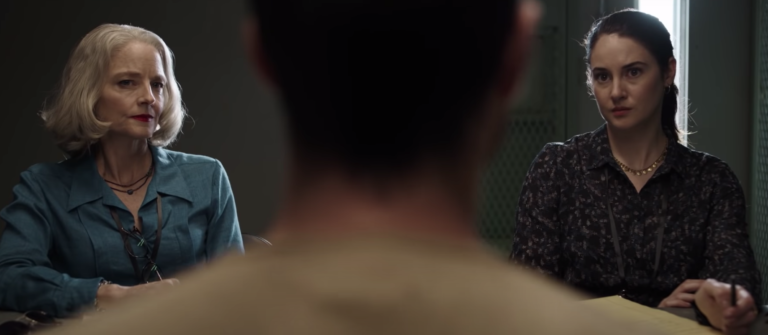
The story is presented through three fronts. First, we meet Salahi in 2001. He is in Mauritania celebrating a relative’s wedding when American soldiers “request” his help to locate his cousin, an Osama Bin Laden aid, and resulting on his detention. The story jumps to 2005 when human rights lawyer Nancy Hollander (Jodie Foster) stumbles upon his case and decides to represent him. By now, Salahi has been in Guantanamo for four years. Lastly, at the same time, Lt. Colonel Stuart Couch (Benedict Cumberbatch) is assigned as the military prosecutor with the mission of getting Salahi the death penalty.

Although the movie constantly forgets its main character, Tahar Rahim remains committed to his role and gives a memorable performance. He responds to the script and plays his character with ambiguity and charm. While his mysterious characterization is unfair to the real person, Rahim is effective on the role. The same can be said about Jodie Foster and Shailene Woodley as Hollander’s associates. They offer much more than what the script gives them. Benedict Cumberbatch, unfortunately, is one of the weakest links. He is distracting and uses an uneven accent.

The movie would be more satisfying if it focused more on the issues of human rights violations and lack of accountability in Guantanamo and less in the thriller tropes that make us question Salahi’s innocence. The movie toys with our assumptions about his character. Is he innocent or is he really a terrorist? Is his imprisonment in Guantanamo justifiable because of his unavoidable link with Osama Bin Laden? It is unfair that the real-life victim needs to earn our sympathy, and more considering the vast information, we have regarding the treatment of alleged combatants in this internment center.

With more than two hours of running time, The Mauritanian is a rollercoaster of accomplishments and failures. It is remarkable when it exhibits the obstacles that the U.S. government puts in the acquisition of information regarding the War on Terror, as well as the multiple challenges Hollander faces in her defense of Salahi, including the lack of access to his case files, the censorship of crucial information in official reports, and the impossibility of using vital evidence in court. In this regard, the movie shares a direct link with the superior The Report (2019).

The movie accurately portrays the hypocrisy and mind games of American officials regarding the U.S. involvement in foreign issues. The way they try to deny their involvement in the Soviet-Afghan War and the rise of Al-Qaeda is astounding and infuriating. It also exposes the way U.S. officials use discourse, passion, and patriotism, instead of reason and proof, to imprison innocent people and propel their agendas. It is not a matter of culpability, but rather of having someone to blame.

In this regard, it is commendable that the movie does not shy away from showing scenes of torture. Through an experimental and nightmarish lens, Macdonald presents the multiple violations of international law by the United States through Salahi’s case, including the imprisonment of suspects without charge, their detention in different places of the world in undisclosed locations, the torture techniques through a long and almost unbearable sequence (some of the takes and close-ups in the movie are questionable and unrefined), and the illegal and baseless internment of suspects in Guantanamo.

The Mauritanian’s biggest hindrance, however, is not what it exposes, but how it does it. The story is more about the American people surrounding Salahi that stand for justice and legality – even against their compatriots – and not about Salahi himself. It turns out that Lt. Couch and Hollander are two of the most righteous people in the United States, focused on uncovering the truth, getting outraged once they find it, and going against the system to right some of the wrongs that multiple people within several administrations have allowed. The story celebrates these characters through their resilience of finding the truth about their country and being patriotic enough to do something about it. Consequently, Salahi’s case becomes a means to celebrate their sense of justice.

This detriment in the story also reflects in Salahi himself. In one of the most frustrating scenes, he praises the United States – the country that has kept him illegally imprisoned for years – in an impassioned speech. Considering that the real-life figure is known for having optimistic and non-resentful feelings towards his captors, it makes sense that this story was brought to the big screen. This story is a celebration of America and what Americans think they are, and not who they really are.

It is impossible not to think about the current issues that surround the United States regarding accountability and patriotism while watching The Mauritanian. The movie does not offer a true reckoning regarding the acts of the United States under international law. It works more as a simple lesson of morality and indignation. Its mere existence feels shallow when we remember that the legal status of Guantanamo Bay, the constant human rights violations, and the lack of accountability and reparation continue to exist in a limbo because of a refusal to offer satisfying solutions.

The movie’s patriotism and self-congratulatory tone are too loud to ignore. Should we be content with films that address the lack of American accountability only as a moral lesson instead of recognizing the profound impact it continues to have on thousands of people? Or should we start to expect real answers?

It is a triumph that The Mauritanian exposes such a delicate issue. However, by offering a sentimental and manipulative look – and always through the eyes of American people – on the War on Terror, it praises the American point of view, degrading the humanity of those that are directly affected by it.
Grade: C+

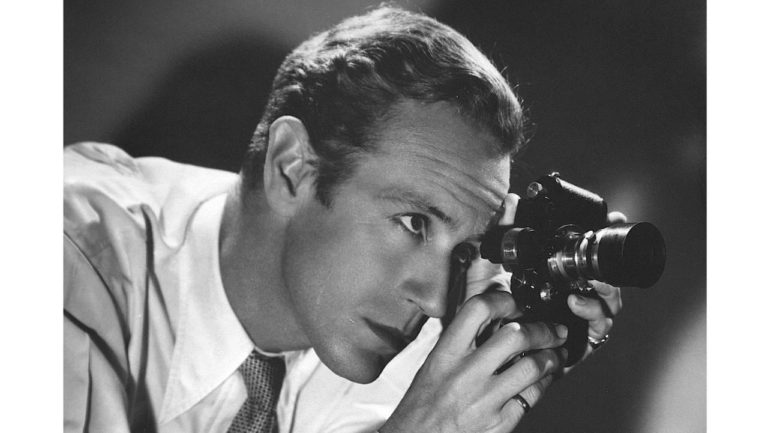
Leslie Howard: Actor, Director…Spy?

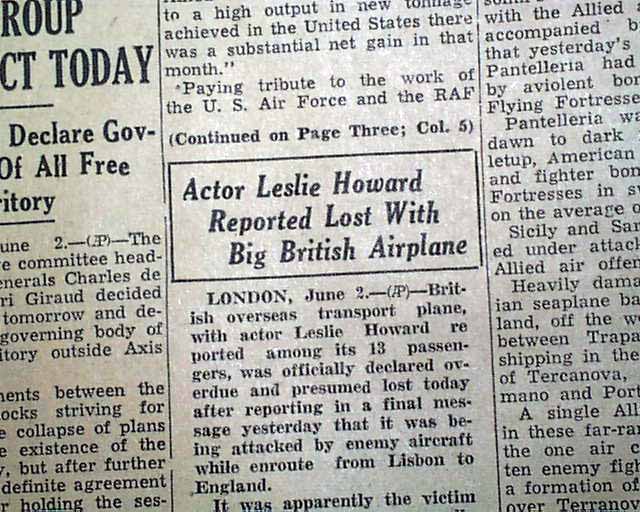
Like any top-billing actor in Britain, Leslie Howard served his country in the Second World War by being a leading voice in anti-German propaganda and supporting the Allies. He wrote, starred, and directed his documentaries championing the British cause and followed them victory by victory. Howard also sought to bring support from neutral nations, such as Portugal. In May of 1943, Howard flew there multiple times to bring in money from sympathetic donors who were willing to condemn Germany publically. On June 1st, Howard boarded BOAC Flight 777 to return to London. As the plane flew over the Bay of Biscay, sitting in between Spain and France, a Luftwaffe plane came upon it and shot it down. No one survived.

Leslie Howard in 1943.... - RareNewspapers.com

As an actor, Howard was among the most bankable leads in the 1930s and had a long career going back thirty years. He was formally educated, becoming a voracious reader and writing plays and poems, and began his professional career in the mid-1910s, starring in short films and plays that traveled across the country before beginning to star in West End plays. Howard was invited to star on Broadway in the early 20s and became a star with performances in Outward Bound, Her Cardboard Lover, and Berkley Square. First, Howard focused on comedies but shifted to dramatic roles by the late 20s. Two other plays, The Animal Kingdom and The Petrified Forest would be adapted for the screen and Howard reprised his roles.

Simultaneously, Howard was working on stage and screen, even getting ambitious to co-found a film production company that had the backing of H.G. Welles and A.A. Milne, famous for creating Winnie-the-Pooh. After it collapsed, Howard moved to Hollywood and continued his rise in movies by starring alongside Mary Pickford in Secrets, Bette Davis in Of Human Bondage, Norma Shearer in Romeo & Juliet, and Wendy Hiller in Pygmalion. His most notable performance was in Gone With The Wind, playing Ashley Wilkes, the other suitor for Scarlett O’Hara besides Rhett Butler. Tired of Hollywood, Howard returned to Britain where the war had started. In his time in Hollywood, Howard received two Oscar nominations for Best Actor, got his first co-director credit with Pygmalion, and also had a flourishing radio career in multiple radios plays.

Howard became arguably the most outspoken actor in supporting the war, directly attacking Nazi Germany. He joined the all-star cast of 49th Parallel and directed the thriller “Pimpernel” Smith, a direct attack on the Nazis which was later called a highly valuable piece of British propaganda. His next work, The First Of The Few, featured David Niven as an RAF Squadron Leader who works with a noted engineer in creating the famous Spitfire plane the British used to counter the Luftwaffe. While he was a major propaganda leader in the public, his son, Ronald, entered the Navy and his daughter married a Canadian Army officer. Because he made a reputation of being an effective vocal supporter of the war against Nazi Germany, as well as his trips to Allied and neutral countries, the belief is that his doomed flight was an intentional shootdown by the Germans to assassinate him.

Multiple books about Howard’s war activities and the investigation over the plane crash conclude that he was certainly targeted by the Germans, a view supported by Ronald Howard. In his own books about his father’s death, Ronald states that Joseph Goebbels, Minister of Propaganda in Germany, wanted him dead because of Howard’s vicious attacks on Goebbels himself and that the Nazis celebrated the shootdown and taunted at Howard’s demise. While many theorists believe that the shootdown was because the Germans were convinced that Prime Minister Winston Churchill was on the flight, circumstantial evidence uncovered found that Howard had gathered intelligence while making his flights all over. Another theory is that Howard was sent multiple times to convince Spain not to join the Axis powers, as they were on friendly terms with them. All of that being said, the German pilots who shot down the civilian aircraft said they mistakened it for an Allied bomber, unaware of who was inside the airplane.

Regardless of the circumstances, the death of Howard was a shock to Great Britain and the entertainment world. The British Government considered the attack a war crime and the public considered Howard a hero for his contributions to the war effort. One of the biggest British stars in the first half of the Twentieth century, Howard is still remembered as one of the most versatile actors of his time. In 2011, a documentary based on the memoirs by his children and from other sources of his life was first released, Leslie Howard: The Man Who Gave a Damn. The stylish charmer from an era long bygone finally got his due.

Follow me on Twitter: @brian_cine (Cine-A-Man)

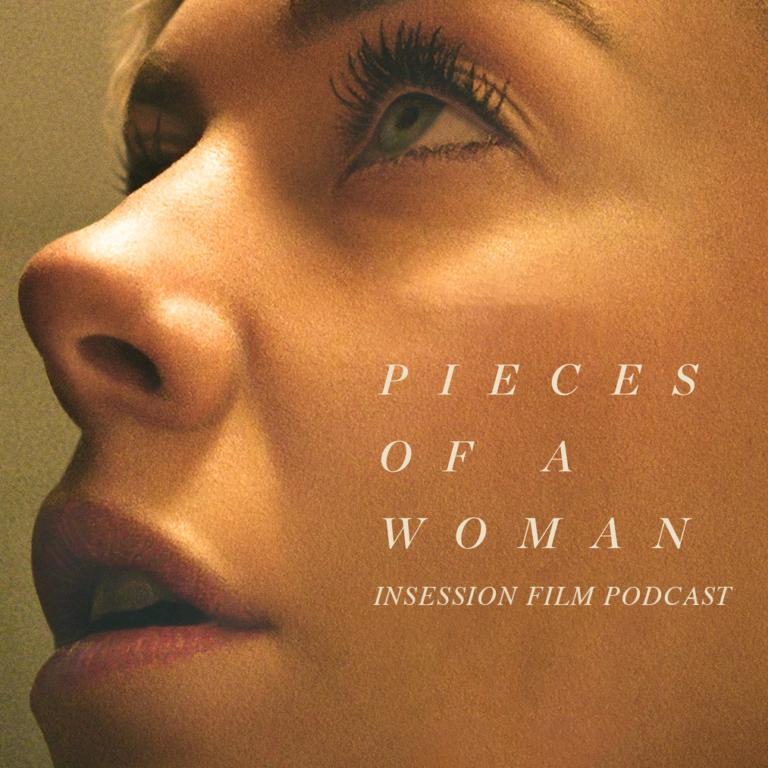
Podcast: Pieces of a Woman / Top 5 Scenes of 2020 – Episode 412

This week’s episode is brought to you by the Warby Parker. Sign up today and get a 5 day Home Try-On, complete with 5 pairs of glasses to choose!

This week on the InSession Film Podcast, we discuss Kornél Mundruczó’s Pieces of a Woman and our Top 5 Scenes of 2020! Plus, a few thoughts on the indie gem Driveways and the beautiful documentary The Truffle Hunters.

Well, this is it, the end of our 2020 campaign. What a strange year it was for film. It didn’t go as anticipated, but it still ended up being a decent little year for film. Things especially ramped up nicely in the last few months as awards contenders came to us rather consistently, and we saw some great films that we’ll no doubt talk about more next week on the show. However, this week’s episode works as a great appetizer as we end the year on a high note talking Pieces of a Woman, aka #JDTears The Movie. Our best scenes conversation may not have been as emotionally involved, but it was indeed a ton of fun as always as we look back at the very best of 2020.

On that note, check out this week’s show and let us know what you think in the comment section. Thanks for listening and for supporting the InSession Film Podcast!

– Movie Review: Pieces of a Woman (6:17)
Director: Kornél Mundruczó
Writer: Kata Wéber
Stars: Vanessa Kirby, Shia LaBeouf, Ellen Burstyn

– Notes / Driveways / The Truffle Hunters / French Exit (56:48)
This week for our discussion segment, as noted above, Brendan and JD both give their thoughts on the indie gem Driveways, starring the late-great Brian Dennehy. They also talk about the documentary The Truffle Hunters, which is not only a contender for Best Documentary, it’s a heavy contender for Best Cinematography. Finally, JD also gives some brief thoughts on the Azazel Jacobs film French Exit. We also tease next week’s show which will be our 2020 InSession Film Awards!

[divider]

RELATED: Listen to Episode 409 of the InSession Film Podcast where we discussed Promising Young Woman!

[divider]

Top 5 Scenes of 2020 (1:27:17)
Of all the year end lists we do, aside from our Top 10 of the year, this one is always the most difficult to conjure. But it’s also the most rewarding in many ways as well, as these are the moments that moved us the most, they were the most thought-provoking and they will come to define 2020 in film. Despite the unconventionality of the last year, there are countless individual scenes that could qualify for this list, but that’s what makes this list exciting in the end. Given that there are so many to choose from, the scenes that do make our list carry a lot of weight with us. That said, what would be your Top 5?

Show Sponsor: First Time Watchers Podcast

– Music

Pieces of a Woman – Howard Shore
On The Road – Jay Wadley
Silly Games – Janet Kay
The Return of the Eagle – Atli Örvarsson

Subscribe to our Podcasts RSS
Subscribe to our Podcasts on iTunes
Listen on Spotify
Listen on Stitcher
InSession Film Podcast – Episode 412

[divider]

Next week on the show:

2020 InSession Film Awards

Top 10 Movies of 2020

Best Movies of 2020

[divider]

Help Support The InSession Film Podcast

If you want to help support us, there are several ways you can help us and we’d absolutely appreciate it. Every penny goes directly back into supporting the show and we are truly honored and grateful. Thanks for your support and for listening to the InSession Film Podcast!

VISIT OUR DONATE PAGE HERE

List: Karim Ahmed’s Top Ten Films of 2020

It’s not a statement to say that 2020 has been a weird year for everybody, and I won’t pretend that 2020 has been terrible to me as it has to so many others, and I feel privileged to have continued to watch movies and talk about them through 2020. It has also been a very bizarre year for the movie industry, with everyone watching movies at home, but that doesn’t mean that there aren’t good films released this year. There was a ton of good movies that I’ve seen in 2020 that made me miss being in a cinema theatre and had an impact on me, and at the end of the year, I thought my top ten should reflect that; and mention those films that took me through 2020.

Movie Review: Aubrey Plaza finds inspiration in “Black Bear” | Movie Nation

10. Black Bear

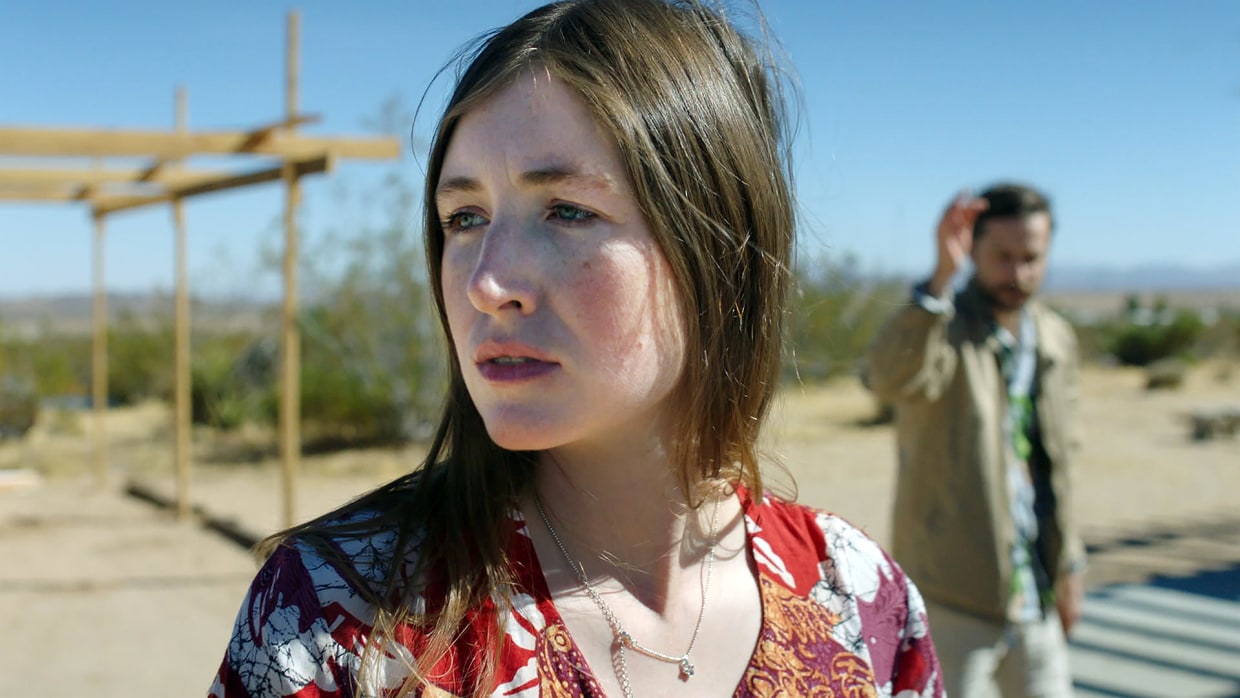
Easily one of the weirdest movies I’ve seen this year, but that doesn’t necessarily mean that it’s a bad film. Lawrence Levine’s use of a completely different two-part structure doesn’t do the movie any favors on the scale of weirdness, but it does make it more interesting to think and talk about afterward. The film enjoys plenty of great acting performances from Aubrey Plaza, Christopher Abbott, and Sarah Gadon. Black Bear explores the two main themes of toxic relationships and abusive artist power in an environment soaked with dark comedy, which isn’t something you can say about many movies released in 2020.

Sound Of Metal review: Riz Ahmed is terrific in Darius Marder film |  Entertainment News,The Indian Express

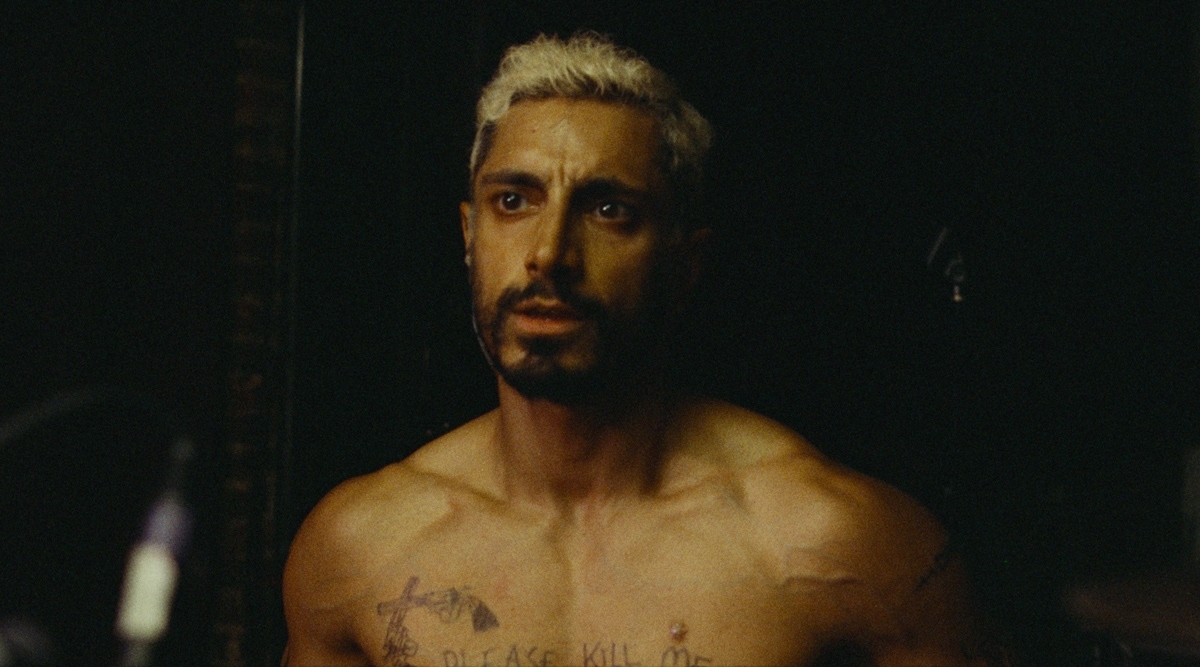
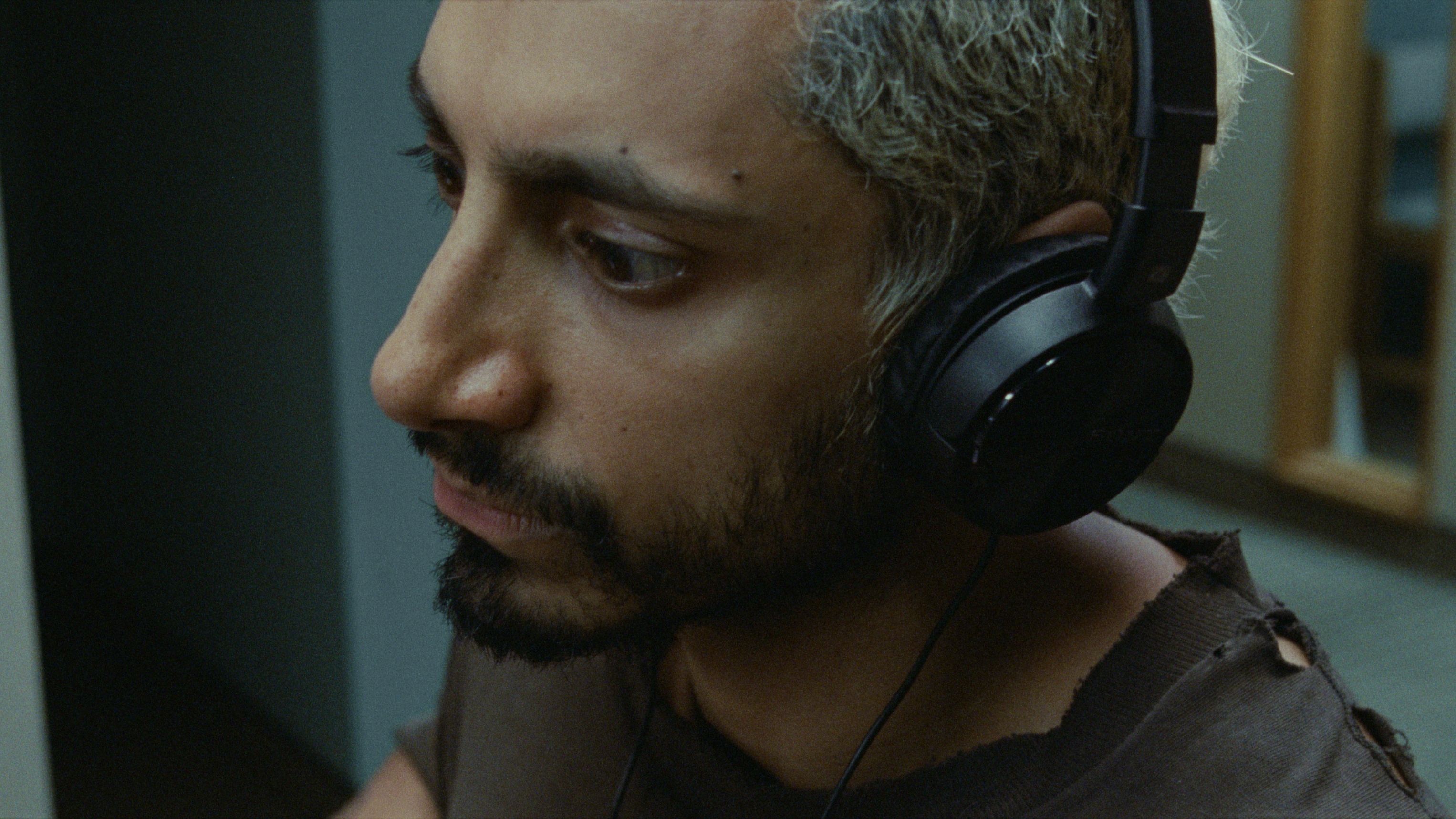
9. Sound of Metal

Featuring two of the best performances of the year From Riz Ahmed and Paul Raci, Darius Marder’s directorial debut doesn’t stop there and; presents an emotional and gripping story about the struggles of the deaf community while also being a complete character study. On a technical level, the film has many triumphs. But none of them come close to its otherworldly sound design, which is one of the best I have heard in years.

Hand-Crafted Animation Makes Wolfwalkers Irish Folklore Tour de Force |  IndieWire

8. Wolfwalkers

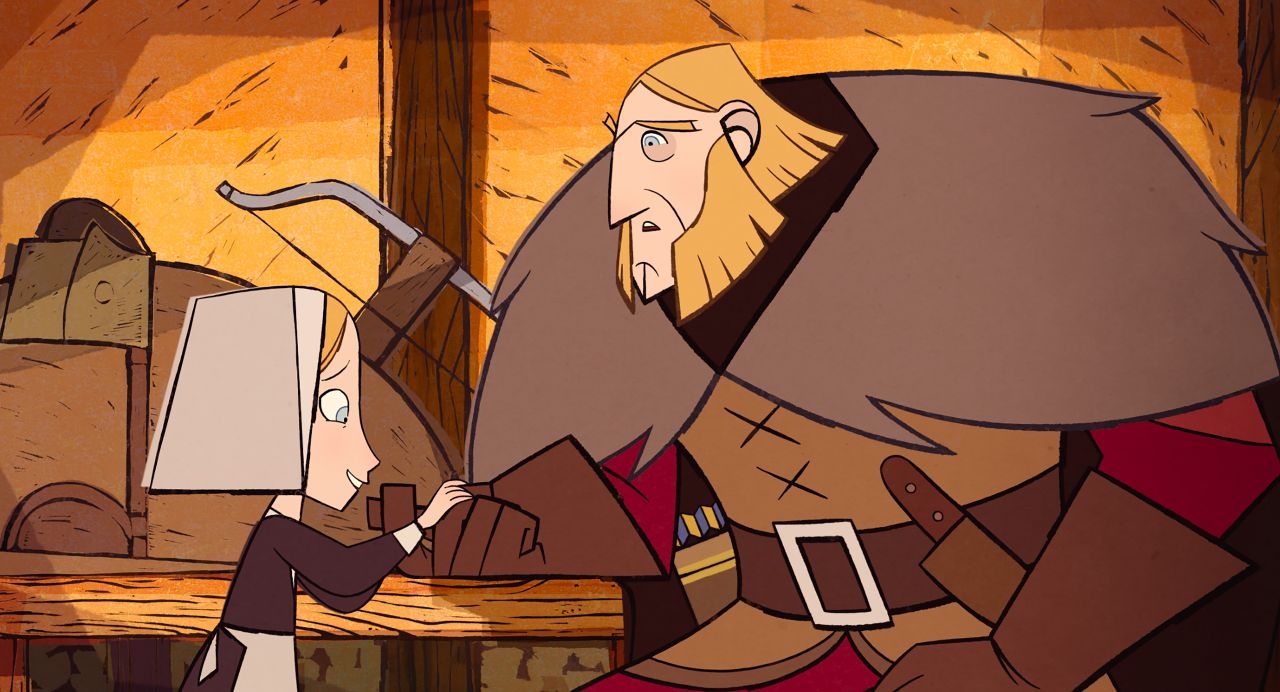
A beautiful animation about love and friendship that stole my heart from scene one and never let go. This year no other film had me giggling with excitement while watching other than Wolfwalkers, and a big part of that falls on its story and how it keeps evolving from the beginning to the end. Wolfwalkers balances so many subjects and themes effectively while also being extremely entreating, which makes you set in front of it in AAH and wonder how did they pull it off?

Under the Skin: Brandon Cronenberg on Possessor Uncut: Behind the flesh of  the bodyswap hitman horror - Screens - The Austin Chronicle

7. Possessor

If your David Cronenberg body horror obsession is itching, don’t worry cause this year, his son has got you covered. Filled with aesthetic gore and violence, Brandon Cronenberg’s Possessor is not an easy watch and not for everyone, but it kept me on the edge of my seat the entire run time. The film captures a futuristic world where assassins can upload their consciousness to innocent people’s bodies and use it to carry their assassinations, and then get out covering their tracks. Possessor utilizes this premise to explore identity, inhumanity, losing control, and so much more. The film has beautiful cinematography and production design, and it does benefit from repeat viewing. So if you can set throw it the first time, you definitely will go back and watch it again, and you won’t be disappointed in both.

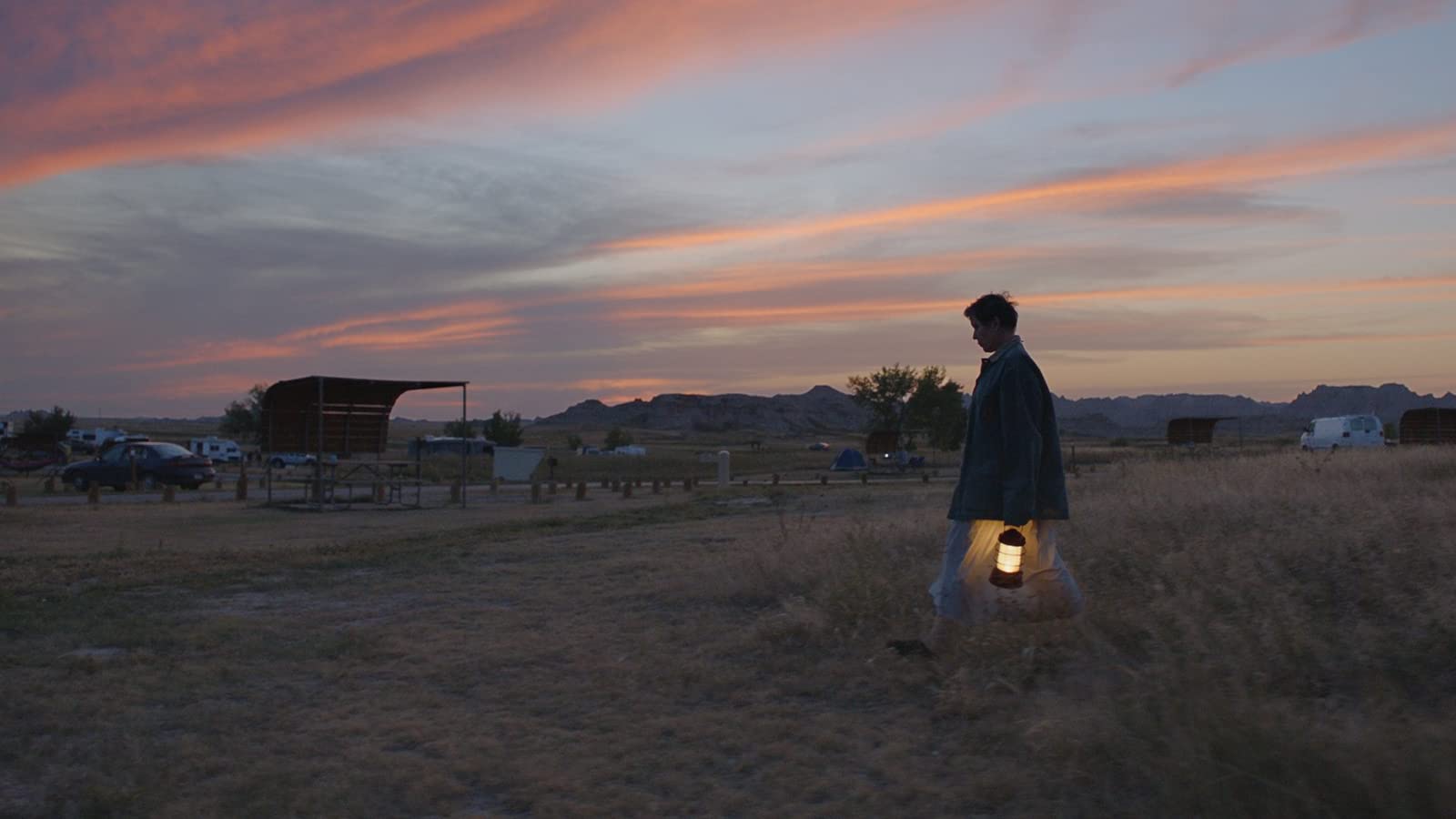
Nomadland (2020) - IMDb

6. Nomadland

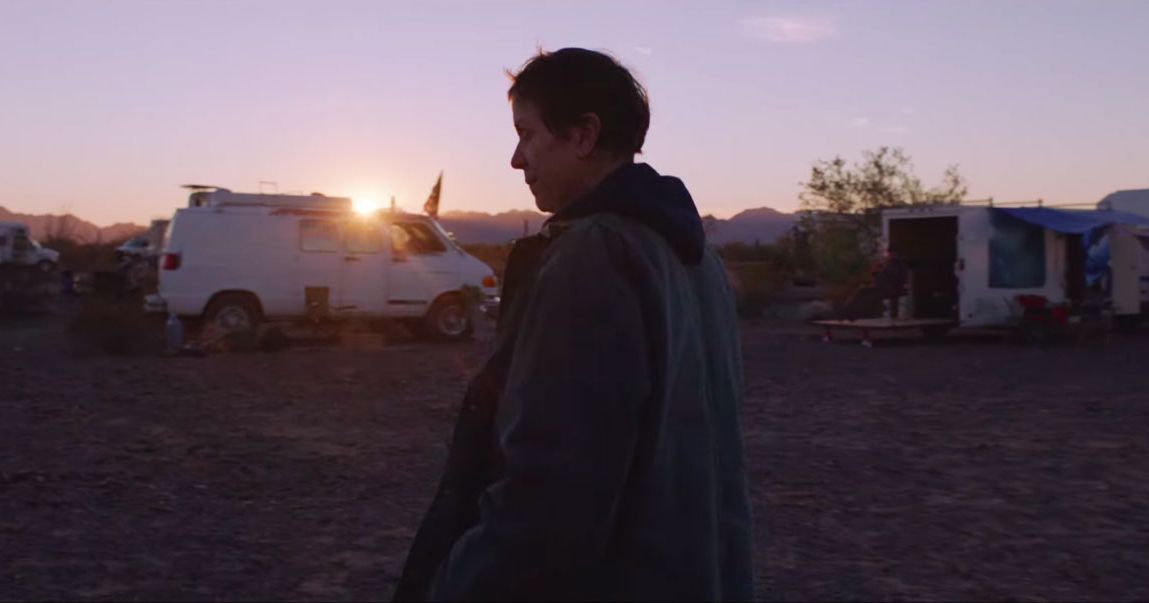
I have been waiting patiently to watch Chloé Zhao’s Nomadland since its festivals run earlier this year, and my expectations were so high that I thought when the time comes, the film couldn’t deliver. But I’ve never been happier to report that I was wrong. Nomadland follows the story of Fern, who loses her home after her husband dies and the factory that he used to work in closes, so she becomes a nomad living in her van and moving across America. Zhao’s film isn’t concerned with conventional story structures or the limitations of telling a story on film brings. On the contrary, it feels like an advertisement for freedom, asking you to go out there and never look back. Zhao is also aware of the challenges this quest could demand, mainly for Fern the extreme loneliness her world is soaked in, which seems to have become her only lasting companion. There is no doubt in my mind that Zhao with her cinematographer Joshua Richards has created the most beautiful film of the year, and it breaks my heart that I could not see it on the big screen, so if you have the chance, see it on the largest screen you can find.

Small Axe Steve McQueen Interview: Why He Made Five Films at Once |  IndieWire

5. Small Axe

There is a bit of a cheat here, but I could not exclude any of the five-films that form Steve McQueen’s Anthology from my top ten. The Anthology focuses on the lives of a group of people in London’s West Indian community from the late 1960s to the early 80s, mainly the amount of injustice and oppression they were subjected to and how they resisted and fought back. McQueen’s masterful work in The Anthology shows how he captures every aspect of life in the West Indian community. Although the five films cover different topics, they are connected with a thin thematic line passing through them. Any filmmaker would be proud to have made only one part of the Anthology, but McQueen gave us five incredible pieces of cinema and history in one year, so how can it not be in my top ten?

Another Round review: An exhilarating, existentialist film about day  drinking - Vox

4. Another Round

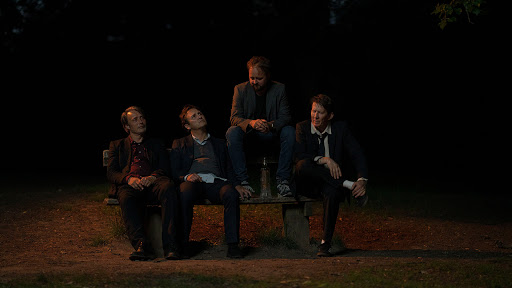
The film follows the story of four high school teachers trying to test a drinking theory by sustaining a constant low level of intoxication. Thomas Vinterberg returns, with Mads Mikkelsen in the lead after The Hunt back in 2012. Another Round was a delight to watch, even though it’s a movie about the slow decline into alcoholism. Mads performance and the chemistry between the four lead characters are so good that it nearly brought me to tears in the film’s perfect ending.

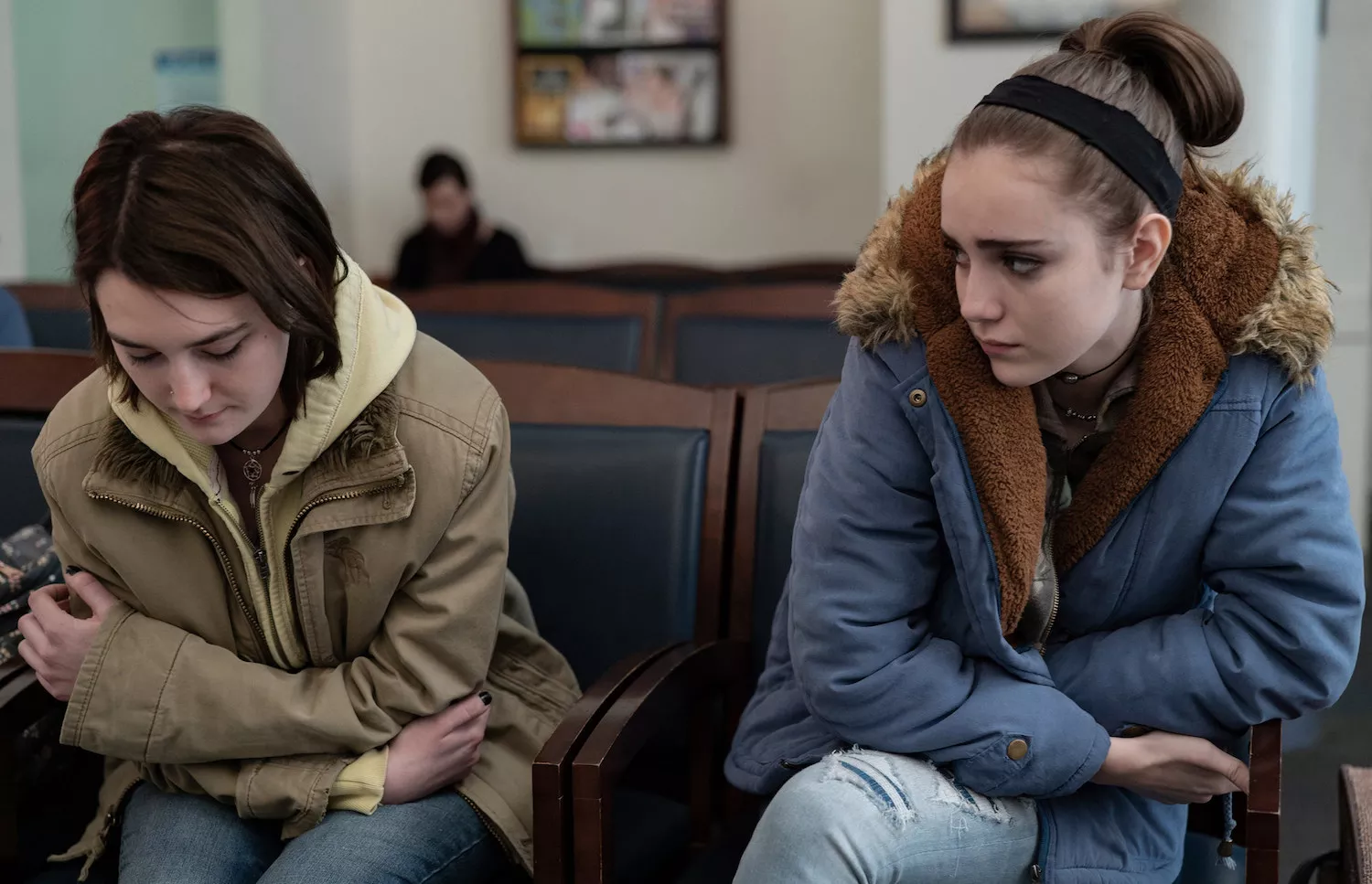
Never Rarely Sometimes Always' is the best film of 2020. That's it | Movie  Reviews & Stories | Orlando | Orlando Weekly

3. Never Rarely Sometimes Always

I knew that Eliza Hittman’s Never Rarely Sometimes Always would end up in my top ten the moment I saw it back in April. I just had no idea that it would be this high. The film floored me, and I couldn’t stop thinking about it. Sidney Flanigan and Talia Ryder own the screen with their presence, which I didn’t expect from newcomer actors. Hittman took a risk on this film from writing to casting and directing, and I’m happy to report that it definitely worked.

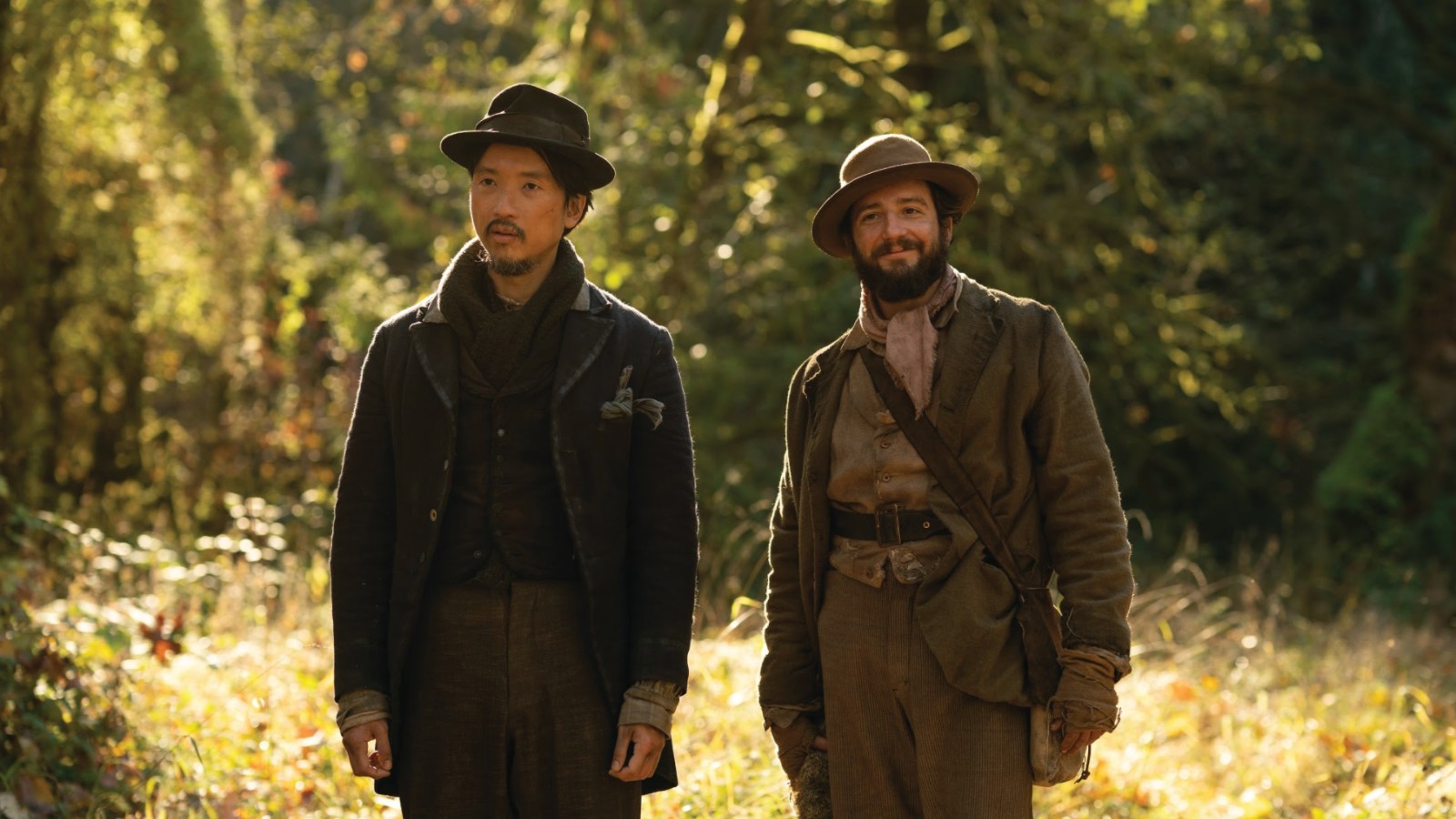
First Cow

2. First Cow

Kelly Reichardt’s First cow is one of the slowest paced films I’ve seen this year, but it’s far from being boring. The tale of growing friendship and high ambitions set to the backdrop of early American capitalism completely took over me. Reichardt’s directing and editing skills saved the film from becoming a repetitive mess, and it does help to have great actors like John Magaro and Orion Lee on the screen for most of your movie. First Cow is Reichardt’s 2020 addition to a select few films that I regarded as modern classics, and that’s not an exaggeration.

Dick Johnson Is Dead Reviews - Metacritic

1. Dick Johnson Is Dead

No other film has touched me emotionally this year like; Kirsten Johnson’s Dick Johnson Is Dead; it broke me down to pieces and left me as an emotional mess. Kirsten made a documentary about her 86-year-old father, who is suffering from Alzheimer’s. And as the doom of him forgetting his life comes closer, Kirsten sets out to make his life remembered forever. Dick Johnson Is Dead made me laugh and cry; it made me feel joyful, sad, and upset, but most of all, it made me appreciate the life I have and those closest to me; I don’t think I can say that about any film else I saw this year, and I think I needed that the most in 2020.

Podcast: Bound / Collective – Extra Film

On this week’s Extra Film, Ryan and Jay begin their Wachowski Sisters Movie Series with Bound, and they also review the documentary Collective!

Admired as two of the leading pioneers in big-budget spectacles, Lana and Lilly Wachowski started small with a lesbian neo-noir classic from the 1990s. Small in scale but provocative and entertaining as all get out, the sisters put a spell on the audience from the moment the film begins. With a trio of stellar performances, it’s no secret why this cult classic might be one of the best directorial debuts of all time.

In the back half of the episode, the boys take a look at Collective, a documentary set halfway across the world yet feels too close to home. In a story that covers the Romanian health care system, we see the political corruption that surrounds the well being of all who live there. The film shows how the media, the people, and the politicians who care can try to fix things, even though it might not be fixable. It’s one of the best films of 2020.

Thanks for listening!

– Movie Review: Bound (3:50)
Director: Lana Wachowski, Lilly Wachowski
Screenplay: Lana Wachowski, Lilly Wachowski
Stars: Jennifer Tilly, Gina Gershon, Joe Pantoliano, John Ryan

– Movie Review: Collective (56:47)
Directors: Kleber Mendonça Filho, Juliano Dornelles
Screenplay: Alexander Nanau, Antoaneta Opriș

– Music

Bound Soundtrack – Don Davis
Ballad Of A Politician – What We Saw from the Cheap Seats- Regina Spektor
The Return of the Eagle – Atli Örvarsson

We try to make this the best movie podcast we possibly can and we hope you enjoy them. Subscribe today on iTunes, Spotify, or Stitcher, and please leave us a review on iTunes. You can also find us on Soundcloud, PlayerFM, and TuneIn Radio as well. We really appreciate all your support of the InSession Film Podcast.

Subscribe to our Podcasts RSS
Subscribe to our Podcasts on iTunes
Listen on Spotify
Listen on Stitcher
Bound / Collective – Extra Film

[divider]

To hear this Extra Film episode and everything else we do, download our apps on the Amazon Market for Android and the Podcast Source app on IOS devices. The mobile app covers all of our main shows, bonus podcasts and everything else relating to the InSession Film Podcast. Thanks for your wonderful support and for listening to our show. It means the world to us.

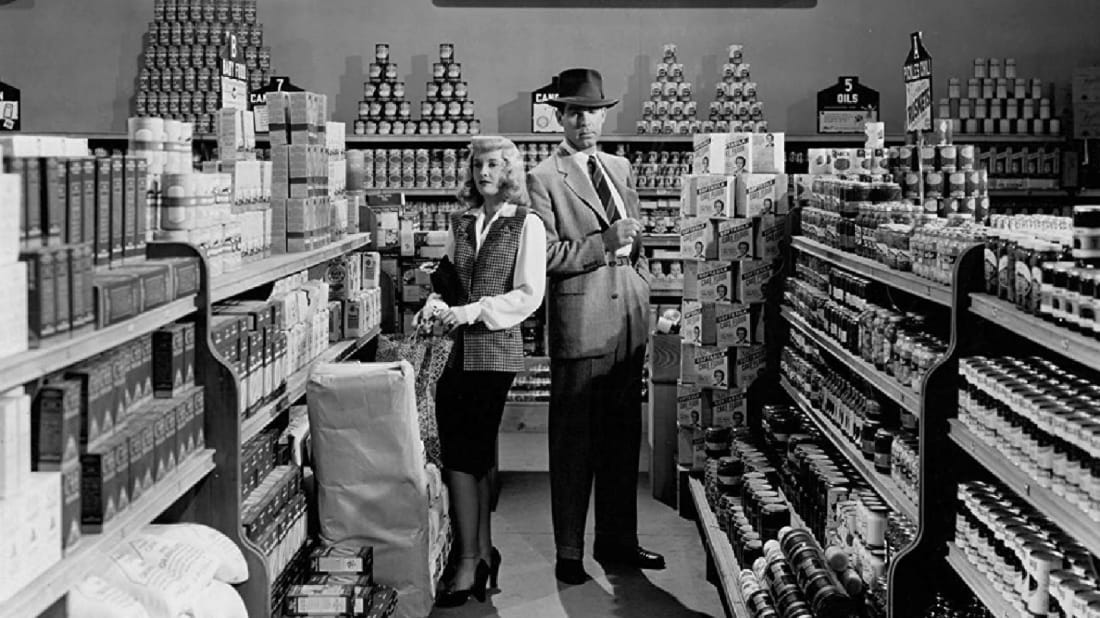
Op-ed: AFI’s 100 Years…100 Passions – ‘Double Indemnity’ (#84)

I will be watching and reviewing all of the films included on AFI’s 100 Years…100 Passions list. The list contains the 100 greatest love stories in American cinema and I plan to consider how our views on romance and social issues have changed over the years as well as judge whether the romances in these films actually made me swoon. As a fan of the romance genre, I expect to love each and every one of the nominees but I also don’t know if I would consider all of them romantic.


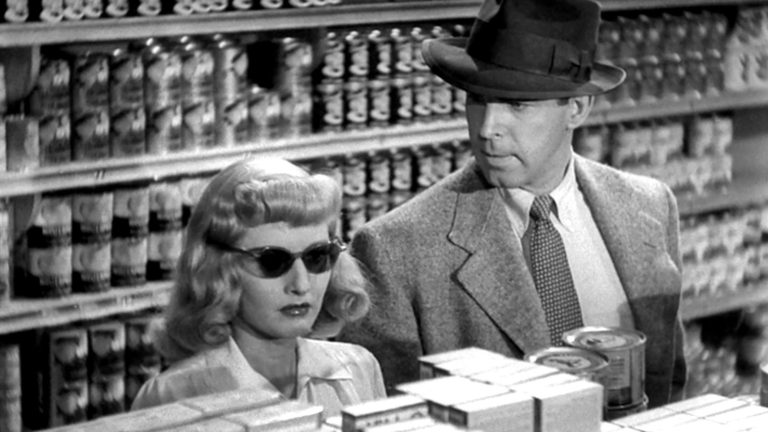
Can you be in love with somebody if you are aiming to use them to kill your husband before having them sent to prison so that you can be wealthy and independent? According to AFI, Phyllis Dietrichson can be all of these things while still being in love with the weak, easily corruptible Walter Neff. She is one of the classic femme fatales and they aren’t usually driven by their desire for money and power rather than being motivated by their love for the men they are exploiting. This is a common trope in the film noir genre but Double Indemnity is different from other entries in the genre because Neff is different from the venal, fairly dumb marks that inevitably make bad decisions. I don’t think that he loves Dietrichson either and she thrills him because she is so cruel and morally unscrupulous rather than living by the book as he has. He is excited by the idea of taking a walk on the wild side and her harebrained ideas allow him to carry out bad deeds. This could have been a story that was rotten to the core as the two central ‘lovers’ don’t truly care for one another but there is real compassion and tenderness between Neff and his friend and father figure, Barton Keyes, and that is what keeps us in agony as Neff’s life falls apart before our eyes.

The film is about bored insurance salesman Walter Neff, Fred MacMurray, who falls under the spell of the seductive Phyllis Dietrichson, Barbara Stanwyck, when he arrives at her house to sell automobile insurance to her husband, Tom Powers. Dietrichson eventually convinces Neff to murder her husband so that they can be together and collect a large payout as a result of the double indemnity clause that they have written into his life insurance policy without his knowledge. Although they initially believe that they have pulled off the perfect murder by killing Dietrichson and then placing him on the train tracks to make it appear that he commit suicide while Neff impersonates Dietrichson in the train the case is investigated by Neff’s scrupulous co-worker Barton Keyes, Edward G. Robinson. Flaws in their plan are quickly brought to light and the two begin to fight as Neff takes measures to protect them while Dietrichson tries to drag a man into disposing of Neff. The latter figures out what is going on and he and Dietrichson end up having a showdown in which they shoot one another. Neff talks to Keyes as he dies without expressing hope for the future.

Love or infatuation is often a part of the noir genre as any Burt Lancaster film from this era featured him falling hopelessly in love with a stunning minx like Ava Gardner or Lizabeth Scott. He played sensitive but not too bright types who were earnest enough to think that these shifty-eyed ladies were being honest when they said that they felt threatened by the man they were with. It was painful to watch something like Criss Cross (1949) because we saw a nice guy who only ever wanted to satisfy the desires of his girlfriend being driven to commit increasingly vicious acts in order to keep the dream of being in love, alive. We felt bad for the men he played and we could shed a tear because he was destroyed by a cruel world but Neff isn’t a clean cut man who only wants to be in love and he is very much of the cruel world that he inhabits. He pretends to be a Lancaster type but he is as vicious as everybody around him and is only held back by the fact that he is not intelligent enough to get ahead.

He admires Dietrichson when they first meet as she stands above him in her towel and holds a cigarette between her fingers. He is clever enough to know that she is trying to seduce him but he isn’t strong enough to outwit her and can only submit to her demands. The two of them set up their little plan quite quickly and Neff’s smarmy grin becomes repulsive as he preens every time he comes up with an idea that will further complicate their plan. He looks like a proud peacock and we take some pleasure in seeing him through Dietrichson’s eyes as she sees him for the dummy he is and smiles with a hint of reproachful whenever he actively seeks her approval. Billy Wilder invites us to view him as a stooge while seeing her as a cruel sociopath who can easily get her way and when you realize this you wonder why you care about either of these people. I think we can all relate to Neff because he acts on all of the dark desires that we are able to successfully repress and his efforts to break away from the mundanity of his office job allow us to live vicariously through him. We are all fascinated by what would happen if we made a split-second decision that could ruin our lives and watching Neff dig himself into a hole makes us queasy while also allowing us to affirm the fact that we have made the right choices in life by not deviating from the usual path and choosing not to break any of the rules set out by society.

The casting of MacMurray is key to making us respond to Neff in the right way as MacMurray was famous for appearing in family-friendly comedies and romantic dramas. He was Katharine Hepburn’s kind suitor in Alice Adams (1935) who accepted her when she lied about her family’s background and this meant that audiences appreciated him as the ultimate square-jawed, lovable young man. When he played a deeply unlikeable loser who chose to murder an innocent man it changed his image and I can’t imagine how much this casting must have shocked audiences in 1944. The film might have even been more effective for them as they could believe in Neff as a nice guy before he revealed his true nature. MacMurray is so good at separating the persona he adopts when he nervously tries to convince people that he is trustworthy and had no involvement in the killing and the persona that comes out when he is indulging himself and beaming from ear to ear when he imagines killing a man. All of this is wonderful as we take delight in seeing the mercurial qualities in his personality but when he becomes a man on the run in the second act he is hypnotic. MacMurray looks like a sad little boy who wants to avoid being slapped on the wrist by his mother and he still doesn’t seem to fully understand the gravity of the situation he is in.

10 Fascinating Facts About Double Indemnity | Mental Floss

His eyes are full of fear but there is still the sense that he is a sheepish schoolboy who thinks he can worm his way out of this situation through charm and resourcefulness. We start to feel protective over him as he doesn’t know what is coming for him and regresses back to acting like a child when he begins romancing Lola, Dietrichson’s stepdaughter. MacMurray sells the moment when everything fully sets in for Neff so effectively. When he is shot by Dietrichson he starts to understand that he can and will die and there are forces in the world that are stronger than him. He doesn’t oversell it and he refuses to go broad as he gapes at the woman who had been his accomplice. Everything clicks into place for him and it is like he has resurfaced from some bizarre drug trip as he begins to desperately crave the safe, boring life that he had been trying to escape from. Something shifts and you find yourself feeling a deep and unexpected sadness at the thought of this dense insurance salesman messing everything up for no reason.

As stated above we also end up caring about Neff because of the bond he has with Keyes. Robinson doesn’t have the face of a sweet patriarch who supports you when you are feeling down and in most of his scenes he glances at his friend suspiciously by narrowing his eyes but he does exude a certain warmth. He and MacMurray seem very comfortable in each other’s presence and the unspoken platonic love between them lurks beneath every professional conversation that they have. These are two men who see open declarations of love as a sign of weakness and they respect people who are good at their jobs so they try to remain as impersonal as possible in their conversations. It is through their acting that you see Keyes turning on his friend and putting two and two together. Neff also wakes up to the fact that this is the only person who matters to him and in his final moments he opens up to Keyes. They reach a level of emotional intimacy that they had not reached before and Keyes goes from being a disappointed wreck to helping his friend regain some level of dignity in his final moments. They continue with their tradition of not opening up to one another but they both look towards the future with a certain dread and try to soften the blow of Neff’s inevitable death.

This relationship was what made Double Indemnity successful and it gives it a different flavor to its many imitators who don’t seem to realize the fact that there are cerebral emotions hiding behind the hard-bitten cynicism represented by Dietrichson. This has been a highly influential picture but most people seem to steal the visual style and then write purple prose in an effort to echo Raymond Chandler. There is something fake about wannabes like The Black Dahlia (2006) as everything looks a little too clean and polished to make us believe that Los Angeles could be Hell on earth. You can just imagine the art director walking into each location and ordering five flower pots whilst talking about budgetary constraints with their assistant and making references to Robert Siodmark. I am not against filmmakers trying to evoke memories of these 1940s classics but they need to get the right rough, unvarnished feel. When I look at the Dietrichson’s living room I just accept it as a place that she has lounged around in for days on end. I can imagine her stiffly sitting on the edge of the couch with a cigarette in hand and a cunning expression on her face as she stares at her husband. She isn’t a great housewife so it makes sense that dust clings to everything and barely any light seeps into the room. You don’t get the sense that somebody walked onto set and meticulously arranged everything before the cameras started rolling and Stanwyck’s movements are natural and fluid. This is what people still haven’t figured out and it dawned on me that there was something special about this production. Billy Wilder himself commented on the fact that it was remarkably easy to get this film made and there were fewer bumps in the road than usual so maybe that is why it turned out so well.

DOUBLE INDEMNITY: THE FILM NOIR CLASSIC – Silver Screen Modes by Christian Esquevin

As much as the set design looks natural, there are also shots that are deliberately otherworldly as Wilder represents Neff’s tortured mindset through images that would be more at home in German Expressionist cinema. In Neff’s apartment building the light is filtered through the room in a strange way as there are triangles of light that will illuminate parts of character’s body but leave others in the dark. When Dietrichson gets out from behind a door and into his apartment in one scene, she stands in the shadows for a few seconds and regards Neff, who is fully exposed to the light. This could be representative of a whole lot of different things as Neff is the one who actually committed the murder so he is exposed to more scrutiny and will end up being seen as the perpetrator of the crime so he is more exposed to the world around him. Dietrichson lurks around in the dark and gets away with her crimes as those who are looking for suspects in the possible murder have ruled her out as an option. The darkness also makes her look like a witch as she emerges from the shadow and claws at Neff as though he is her prey and her animalistic movements tell us to be very afraid of her. All of this imagery tells us something about the characters and their relation to one another rather than just existing to dazzle us. This is not an exercise in style over substance but it manages to have a lot of style anyway.

Finally, I feel like I have an obligation to talk about femme fatales and the way they are employed. Typically they are women who use men to get what they want by leading them into danger while trying to avoid getting in trouble themselves. Because noirs were most successful during a period in which the Motion Picture Production Code determined what could and couldn’t be displayed on films, most femme fatales were brutally punished for their actions. Occasionally they are allowed to show some vulnerability as they will occasionally fall in love with the dopes who have agreed to work with them or they are genuinely in a relationship with a man who is abusing them. Most of the time they are cold-hearted killers who would use anything to get ahead and Dietrichson falls into this category. Stanwyck doesn’t soften her and we are sure that this is one heartless bitch right up until she gets killed. The story wouldn’t work as well if she had as much depth as Neff and she needs to be evil incarnate if we are going to relate to him. It is almost difficult to appreciate Dietrichson for what she is as Stanwyck’s performance has been imitated and parodied by dozens of actresses with less talent who hope to seduce the audience by donning a cheap blonde wig and gnashing their teeth together. Stanwyck was a singular presence and there hasn’t been anybody since who has hit the same notes that she was hitting in the 1930s and 1940s. That raspy voice gives each line she delivers very odd inflections and her face could only have come out of a Lois White painting. I can only imagine how inadequate other actresses playing femme fatales feel when they have to live up to Stanwyck’s legend.

Now we get back to a discussion of whether Double Indemnity should have made this list at all. It really shouldn’t have because it does not feature a romantic love story between Neff and Dietrichson. This is yet another situation where voters picked a great film but put it on the wrong list as they displayed a blatant disregard for genre placement. This did make the list of the top 100 movies and that is acceptable because it may very well be one of the best films made in America. I hate the fact that I have been put in this position as Double Indemnity left me thrilled and I was on cloud nine as endorphins ran through my veins at the thought that I had just consumed a great piece of cinema. When I get around to ranking all of the entries on this list I will face a conundrum as I don’t know how I will rank the entries that should not have qualified for the list in the first place. I want to base my ranking on how romantic something is as well as considering overall quality so I can’t say that Double Indemnity will end up ranking very highly.

Next week I will be reviewing polarizing Best Picture winner Shakespeare in Love (1998) which will forever be linked to producer Harvey Weinstein. Its legacy has been tarnished by allegations about Weinstein aggressively campaigning for awards and sexual harassing leading lady Gwyneth Paltrow but it remains a favorite of many because of the way it blended clever in-jokes about Shakespeare’s private life with a fictional romance. I hope that I will be won over by Tom Stoppard’s clever screenplay and Paltrow’s acclaimed performance but I fear that it might be a little too pleased with itself for me.

List: Rory Doherty’s Top 10 of 2020

On New Year’s Eve, while we were counting down the few remaining minutes of the turgid year, a friend mentioned that no good movies came out in 2020. More than anything, this made me a little sad, especially since it had been a particularly strong year for individual, personal stories. This might be to do with all the studio films being delayed, so the conversation wasn’t focused on tentpole blockbusters and instead on smaller dramas. But on a more personal note, this was the first year I was welcomed into the film critic community, the first time I covered festivals, and has been the most encouraging and supportive year for writing I’ve had. I’m very glad you’ve enjoyed my writing, so let’s get down to this top 10.

Crip Camp' Review: After Those Summers, Nothing Was the Same - The New York  Times

10. Crip Camp: A Disability Revolution

I love documentaries with incredible recovered footage, and the handheld filmmaking that makes up Crip Camp is next-level. The documentary follows a summer camp for disabled kids, explores how safe and welcome they were made to feel, before charging ahead straight into the disabled rights movement of the 60s. It’s a film about empathy and solidarity and feels suitably empowering and moving.

Bloody Nose, Empty Pockets' Review: Over Drinks, a Blurry Line Between  Truth and Fiction - The New York Times

9. Bloody Nose, Empty Pockets

When I reviewed it for InSession, I was slightly aware that this ‘documentary’ about the last day of a Las Vegas dive bar was completely staged with unprofessional actors, but I didn’t know enough to work that angle properly into my review. I’d be interested in a rewatch with that in mind because the film so convincingly argues for its own veracity that its artificiality may pass a lot of viewers by. It’s exhausting, heartwarming, and bitter – everything a good night out should be.

Lovers Rock (2020) directed by Steve McQueen • Reviews, film + cast •  Letterboxd

8. Small Axe: Lover’s Rock

The arguments about what a film is have already begun. Why include Small Axe, which aired on television, but not Hamilton, or American Utopia? I honestly don’t have a dog in this fight, I think challenging and questioning the definitions of how we classify art is super important, and I’m more than happy to include Steve McQueen’s wondrous anthology series on race in Britain. Lover’s Rock was the more experimental of the 5 films, a sprawling, atmospheric portrayal of a reggae house party in 80s West London. It was moving, hypnotic, and made me miss parties more than anything.

Tomm Moore and Ross Stewart Talk 'Wolfwalkers' | Animation World Network

7. Wolfwalkers

I haven’t been following Irish animation studio Cartoon Saloon as closely as some of my peers, so their new fantasy adventure Wolfwalkers almost completely passed me by. I’m so glad I caught it though. A young English hunter gets whisked away into a fantastical world of transfiguration and magic in Cromwell-era Ireland. It’s charming, gorgeously realized, and packed with heart. 

Mangrove (2020) directed by Steve McQueen • Reviews, film + cast •  Letterboxd

6. Small Axe: Mangrove

We honestly don’t deserve Steve McQueen. Getting either Mangrove or Lover’s Rock in one year would be a fantastic gift, but we not only got both but three other stirring films. It’s impossible to deny Mangrove’s strengths – a courtroom drama that never for a moment drops its focus on the suffering the West Indian community faced by London police. Based on the trial that had the first judicial acknowledgment of racial prejudice in the Metropolitan Police, McQueen’s keen ability for capturing blistering emotions is on fine display here.

Never Rarely Sometimes Always Review | Movie - Empire

5. Never Rarely Sometimes Always

There’s something incredible about how Eliza Hittman frames characters. The camera is so un-invasive and lacking in judgment as it gently follows them around, and this realist drama about a teenager traveling with her cousin to New York to get an abortion is no exception. The film is soft but quietly devastating, and the hand-holding shot is probably the most beautiful of the year.

Amy Seimetz's 'She Dies Tomorrow' captures this moment of knowing our time  is short

4. She Dies Tomorrow

This film has stuck with me like an infection. When Amy is struck with the unshakable fear that she will die tomorrow, it soon starts spreading through the night until everyone is taken by it. The dread of awaiting some unknown apocalypse is palpable. It’s slow, undramatic, but you’ll be thinking it over for a long time after the credits roll.

Boys State,” Reviewed: A Frustratingly Hermetic View of Texas Teen  Politicos | The New Yorker

3. Boys State

There are officially too many streaming platforms, but it does mean I can go back to my age-old practice of getting a free trial, watching the 3 things I want to watch, and then canceling it again. Between Wolfwalkers and Boys State, I heartily recommend doing this with Apple TV+. This Sundance doc follows a handful of teenagers who participate in Texas’ ‘Boys State’, a mock-government program helping youngsters get inducted into the political system. It’s one of the most brilliantly entertaining films of the year, and you’ll find yourself ridiculously invested in its central gubernatorial campaign.

Nomadland' Movie Trailer and Release Date: WATCH

2. Nomadland

There were about 5 moments I started crying while watching Nomadland. It was at the end of an exhausting festival where I had definitely burned out, but the delicacy of Chloe Zhao’s drama soothed me to the point of tears. We see lone figures potter about the stunning landscapes of the American West in search of connection and purpose following the 2008 financial crash. Frances McDormand gives a knockout performance that’s predicated with the odd idiosyncrasies of human behavior, resulting in a moving, funny, and tender film.

Shirley (2020)

1. Shirley

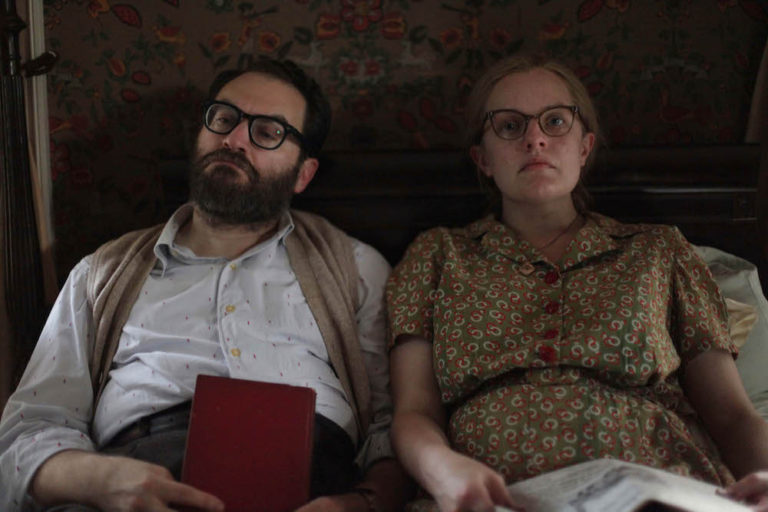
I was going into Shirley kind of knowing how high it would rank on my list. Shirley Jackson is my favorite writer, and Elizabeth Moss plays the celebrated Gothic writer in such a transfixing, eclectic way that confirmed my incredibly high hopes of the film. It’s an anxiety-inducing relationship drama that dives headfirst into the responsibilities and ethics of creative writing, and I can’t wait to revisit it again and again.

I hope you’re all well, and you have a safe, happy 2021.

List: Daryl MacDonald’s Top 10 of 2020

Lists are a difficult thing to compile, especially given how subjective movies are, and how likely/unlikely it is to have seen all the ones which would ordinarily sit atop most people’s Top 10 list for the year. In the following list, you’re likely to encounter movies you would disagree with being on your own personal list, or find yourself puzzled at the omission of a movie or two that you think really should have been on here. There could be a number of reasons for that, but please bear in mind that it is entirely possible I haven’t had the opportunity to see some of the more anticipated releases of this year, or that my tastes just vary. With that advisory done, below is the list of the Top 10 Movies of the Year for 2020.

In Case You Missed It: 'Birds of Prey (and the Fantabulous Emancipation of  One Harley Quinn)' | Substream Magazine

10. Birds of Prey

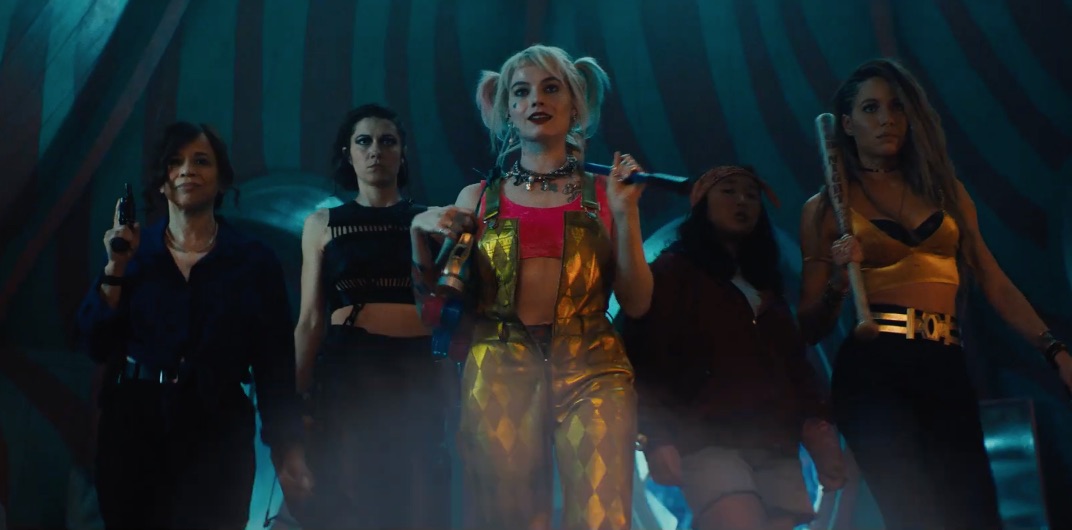
It is difficult to believe Cathy Yan’s Suicide Squad spin-off Birds of Prey came out this year. Released in those hallowed days before lockdowns and vaccinations, when the year was new and none of us had a clue what was ahead of us, the Margot Robbie starring adventures of Harley Quinn provided a much needed shot in the arm for the DC world. After a series of turgid releases including the much-maligned Suicide Squad and the woeful Justice League, DC really needed to hit the ground running. Wonder Woman proved they could make a truly great tent pole movie, and Aquaman showed that they even know how to make a decent one, but with James Gunn’s Suicide Squad soft reboot/stand-alone sequel/please-don’t-mention-the-first-one coming out, DC really needed to take advantage of its incredible rogues’ gallery and with Birds of Prey they finally hit the mark.

With the trademark stylish format and its neo-noir overtones, Birds of Prey leans into what makes DC great and bolsters it with a game performance from Robbie, an often hilarious script, and some dazzling cinematography. It reminded fans that DC still had a lot to offer and gave some hope for the upcoming slate of films due out in the next few years.

The Vast of Night Is the First Must-Watch Movie of the Coronavirus Era –  Reason.com

9. The Vast of Night

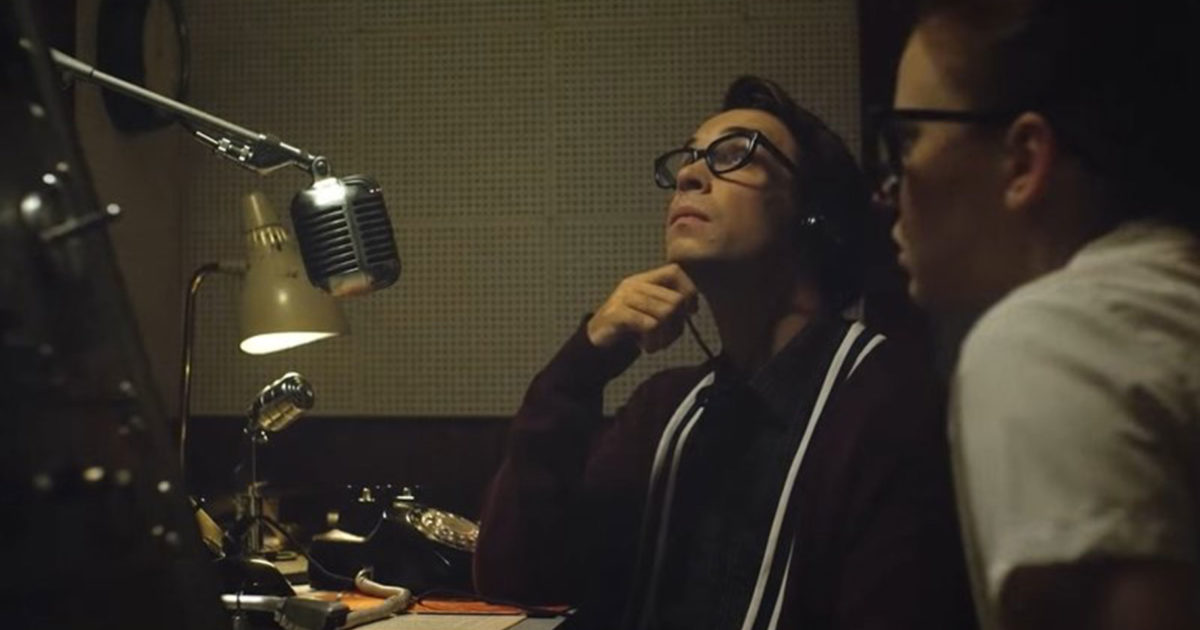
The Vast of Night is truly a cinephile’s dream. Jaw-dropping set pieces include a 5+ minute tracking shot that snakes around a small town, into a gym auditorium full of people, and right back around again. It doesn’t sound like much, but to witness it being pulled off so seamlessly is to be captivated by its ambition. Andrew Patterson’s shoe-string budget indie feels much grander and much more cinematic than it really has any right to, and that is the best compliment that can be paid to it.

Ostensibly an homage to Spielbergian 60s sci-fi trends, The Vast of Night finds two friends teaming up to investigate a potential alien invasion; you’ll have seen movies like this before, and truly Patterson does nothing new with regards to plotting here, but for his sheer ability to notch up tension and create a truly tremendous cinematic experience, The Vast of Night deserves to be on this list.

Boys State reveals a microcosm of modern political theatre

8. Boys State

For anyone who has spent the last four years wondering how we got into this mess, Boys State may be able to provide some answers. Directed and produced by Jesse Moss and Amanda McBaine, Boys State follows over a thousand teenage boys as they enter Boys State in Texas, an organization whose objective is to build a working government from the ground up, teaching young men about politics. What starts as a curious insight into the machinations of government quickly devolves into astonishingly prescient and timely expose into human nature and whether governance can truly be democratic.

It is difficult not to watch moments with clenched hands or gritted teeth; teenage boys scream and holler about the need to sustain the patriarchy, others ramble on about the need for Texas to secede from the United States. One person stands up and gives a speech that might one day form the manifesto which is found lying next to his body in an isolated cabin in the woods. It’s scary stuff at times and eye-opening, to say the least. Moss and McBaine are fearless with the stuff they capture and pick excellent subjects to follow in pursuit of their aims.

The Lovebirds Movie Review: Netflix Rom-Com Streaming Now

7. The Lovebirds

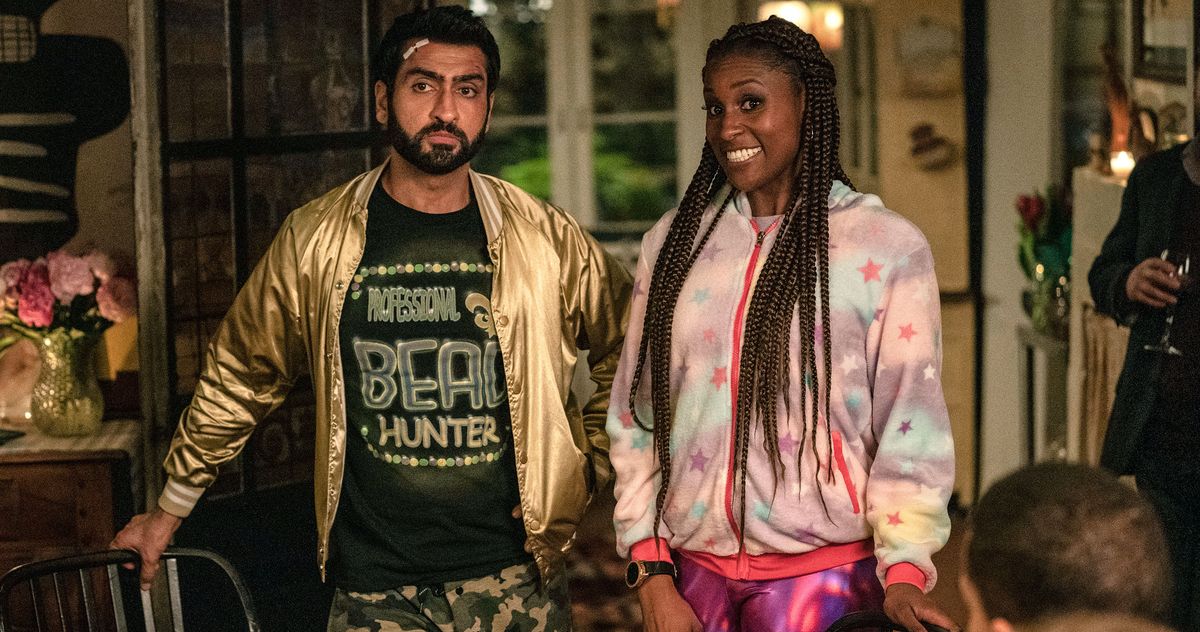
In the year we’ve just had, sometimes the best thing was to engage with something fun, lively, and not too taxing. This is where The Lovebirds was absolutely perfect. Starring the ever likeable Kumail Nanjiani and the hilarious Issa Rae (who will surely soon to go on to bigger things) The Lovebirds is a movie light on plot, which allows its leads to meander about, riffing off each other to great comic effect. Nanjiani and Rae have great chemistry and clear comedic chops. They lift this movie from what might’ve been an ordinary ho-hum affair to something much more fun.

It’s strange – or perhaps understandable – to think that there hasn’t been many top-tier comedies this year (at least none that you’ll find on this list), but that in itself makes The Lovebirds one of the best movies of the year. It makes you smile, as difficult as that was in 2020.

New Documentary 'Finding Yingying' Shares Intimate Details About Murdered  Scholar | Chicago News | WTTW

6. Finding Yingying

The sad story of Yingying Zhang is captured here partly in real-time, as one of her fellow students at the University of Illinois follows the story of her disappearance to its dark, tragic end. Jenny Shi had never met Yingying Zhang but felt they shared much in common, as Asian women studying abroad. Shi’s determination to follow the story is admirable and leads to some truly shocking moments, but at its heart, this is about one family’s desperation to find the daughter they love amid a turbulent time in US history which hasn’t been the kindest to immigrants.

Although she makes some missteps, Shi deserves plaudits for what she was able to create and the insight she was able to gleam from the Zhang family. It may be a tough watch, but Finding Yingying is nothing less than utterly compelling from first to last.

Netflix Celebrates 'Enola Holmes' Release With Statues Of Sisters  Overshadowed By Famous Brothers

5. Enola Holmes

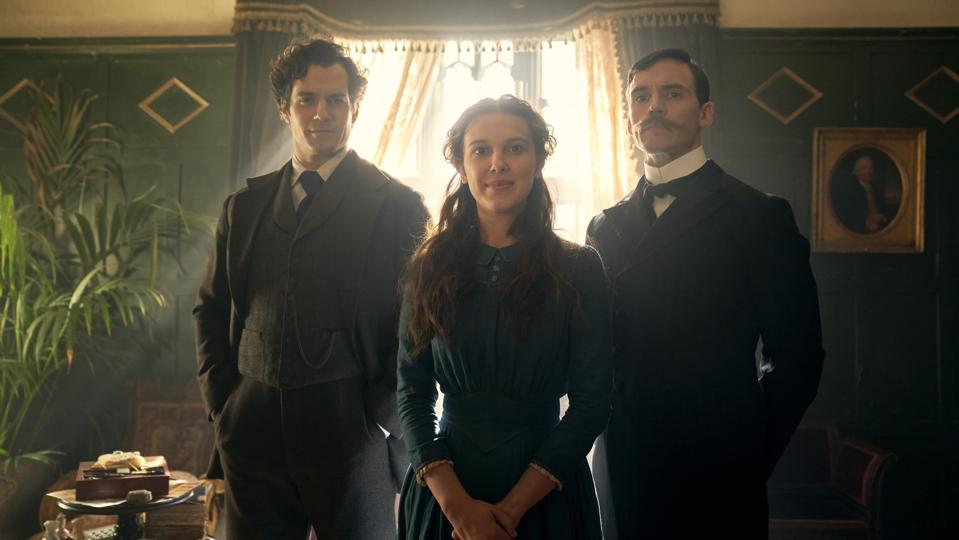
Two things might immediately turn a viewer off of Enola Holmes: the first is that Sherlock Holmes stories have been done to death, and the success of them varies from the hit BBC show Sherlock to the Guy Ritchie movie and its sequel, the less said of which the better. The second is that Enola Holmes is an entirely new character, non-existent within the Sherlock canon. She was created as part of a series of young adult books written by Nancy Springer and so the more ardent of Sherlock fans (including yours truly) may come at this with noses held.

That would be a mistake, for Enola Holmes is truly a wonderful, joyful story featuring the best performance from Millie Bobby Brown ever given on-screen. The titular character demands a witty, playful, charismatic nature and Brown is more than up to the task, winningly temperate in the face of the patriarchal society she must endure yet winkingly hilarious when she is clearly smarter than everyone else in the room. It’s a light-hearted affair and so well done it deserves to be held in the higher ranks of Sherlock entries, which is saying something!

Feels Good Man | Independent Lens | WKAR

4. Feels Good Man

Feels Good Man is something that truly needs to be seen to be believed. Taking its cue from Pepe, the infamous frog of alt-right fame, Feels Good Man is a deep dive into the murky waters of internet forums and meme culture, viewed through the lens of Matt Furie, who’s creation of Pepe the Frog was co-opted by political extremists to the point where it was labeled a hate symbol by the Anti-Defamation League.

Feels Good Man was directed by fellow cartoonist and friend of Furie, Arthur Jones. This friendship gives Jones enviable access to Furie as they discuss his feelings on the loss of his character and what it all means in the wider scale of things. It is a thought-provoking, downright incredible story which doesn’t flinch from its subject and asks some very pertinent questions. Future historians will look to the rise of Pepe the Frog as an indicator of the alt-right movement and Feels Good Man explains exactly why.

TIFF 2020: 'Nomadland' Review – 812filmReviews

3. Nomadland

There are few movies quite like Nomadland. Apart from its plot, which we’ll get to in a moment, it features a surreal docu-drama hybrid that seamlessly blends fact and fiction, much like its director Chloe Zhao’s previous movie The Rider. The result is that the world you’re shown feels incredibly real. It is an inspiring, moving, soulful, compassionate, harrowing movie heightened by the superb performance of Frances McDormand.

American nomads are, sadly, real. Economic migrants, they travel the length and breadth of America taking jobs where they can find them and living out of their RVs. Their futures crushed by the 2008 financial crash, these Boomers are now grey-haired and wistful, their places about to be taken by a future generation equally as doomed as they are. Into this life steps Fern, a widow whose town in Nevada was devastated by the closure of a factory and now literally no longer exists. Fern now lives the life of a nomad, stalking the roads and countryside of America as she builds a new life for herself in the rubble of devastation caused by bankers and plutocrats. It is an homage to the American soul, a John Steinbeck novel come to life, and it is truly captivating.

Wolfwalkers' Review: Cartoon Saloon Hits New Artistic Heights In Return To  Irish Folklore

2. Wolfwalkers

It would be understandable if you’ve slept on Cartoon Saloon until now. The Irish animation house have been quietly trucking away for years, establishing themselves as the spiritual successors to the cultural giant Studio Ghibli, but now they’ve finally come into their own and deservedly so. Wolfwalkers is the third part of a Celtic folklore triptych directed by Cartoon Saloon head honcho Tomm Moore. It is a story about the friendship between two young girls as well as the battle between mankind and nature, set during the English occupation of Ireland in the 15th Century.

The animation is absolutely flawless and deeply satisfying, especially during key segments such as a wonderful montage featuring the girls traversing the wild forest of Kilkenny. It is utterly moving and will have you in tears come the final moments. Alongside their previous works Song of the Sea and Secret of the Kells, Cartoon Saloon have crafted another masterpiece and announced themselves as serious contenders for the animation crown.

Watch “Another Round” [2020] | FULL HD | Another Round 2020 Watch

1. Another Round

This simply astonishing entry from Danish director Thomas Vinterberg benefits from the low key style of its Dogme ’95 trappings. Unexpectedly moving and unabashedly riotous, Vinterberg’s first team-up with Mads Mikkelsen since 2012’s The Hunt finds four teachers depressed with their lives and in desperate need of change. They decide the best idea is to follow the advice of a Norwegian philosopher and get just drunk enough to get through each day.

What follows is an absolutely hilarious story of flawed friends, and a soulful examination of what it means to live. What makes Another Round truly stand out is that it offers no answers, does not proselytize or attempt to grandstand. It simply provides a slice of life and allows the audience to make up their own minds. It will leave you feeling utterly jubilant and floating through the air. And if all of that fails, then stick around for the ends credits; Mikkelsen’s dancing skills are worth the top entry alone!

Movie Review: ‘Pieces of a Woman’ Tackles the Complexity of Grief


Director: Kornél Mundruczó
Writer: Kata Wéber
Stars: Vanessa Kirby, Shia LaBeouf, Ellen Burstyn

Synopsis: When a young mother’s home birth ends in unfathomable tragedy, she begins a year-long odyssey of mourning that fractures relationships with loved ones in this deeply personal story of a woman learning to live alongside her loss.

[/info]

Kornél Mundruczó’s Pieces of a Woman is among the most heartbreaking films in recent memory. Its opening sequence in particular is going to be difficult for many viewers to stomach. The loss of a loved one is profound and deeply personal, often affecting all areas of your life as we reflect on our grief. This notion is always on the minds of Mundruczó and writer Kata Wéber, a couple who bears the same deep scars as the film’s characters.

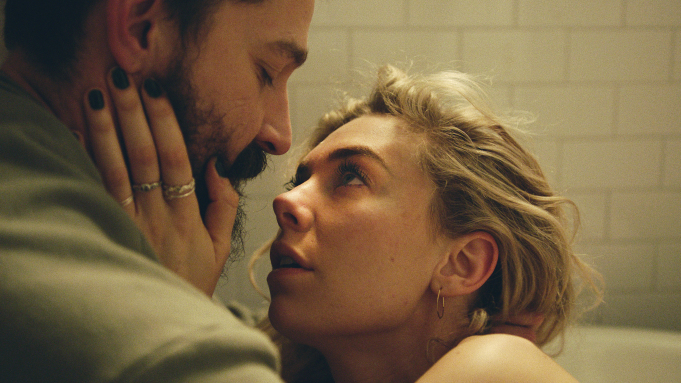
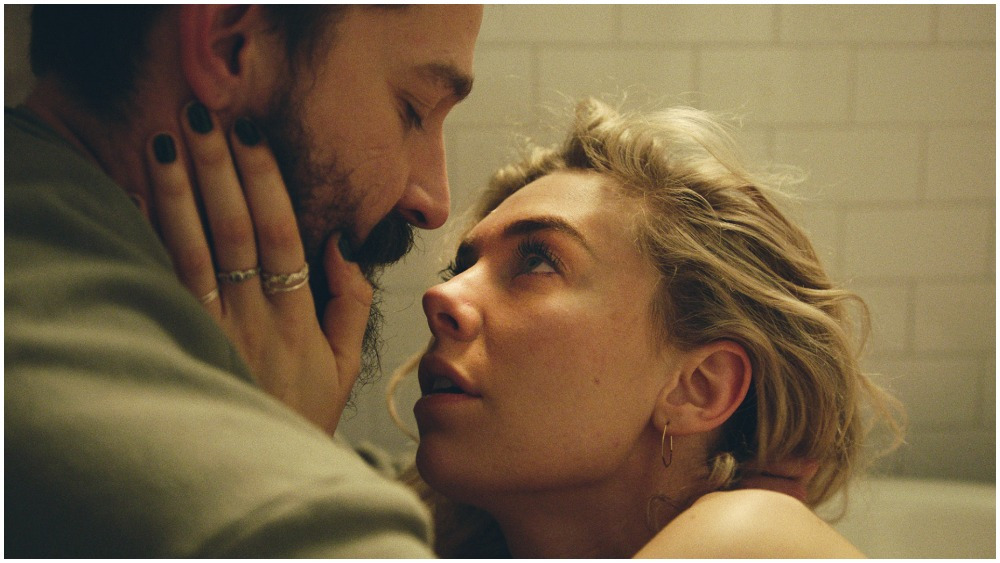
Based off a stage play by Wéber, Pieces of a Woman examines the fallout of a mother, Martha (Vanessa Kirby), whose infant daughter dies shortly after childbirth. Her husband Sean (Shia LaBeouf) equally struggles to accept the reality of what happened to their baby girl. As grief becomes their mistress, they become cold and isolate, both toward each other and the world around them. In an attempt to find some sort of justice, Martha’s mother (played excellently by Ellen Burstyn) sues the couple’s midwife (Molly Parker) for criminal negligence.

While most of the film’s drama is fictionalized, its emotions are palpably real as Mundruczó and Wéber channel their own experiences of losing their child. Articulating the sting associated with parental loss is assuredly impossible, so Pieces of a Woman takes aim at showing us instead. This starts with an opening sequence that demonstrates the anxiousness of both Martha and Sean as the birthing process begins. Shot mostly in a one-take sequence, the camera follows Martha around their home as her physical pain and breathing intensifies. Unexpectedly, their midwife is unavailable and a new one is assigned. Sean, doing everything to comfort his wife, is vividly nervous but excited for this new change in their lives. As the baby gets closer, there’s a great moment between Martha and Shawn, embracing each other in love and support. Mundruczó not pulling any punches, amplifies the moment with not just great cinematography, but blistering sound design that includes heartbeats and silences. Things escalate. A brief moment of joy. Then devastation. It’s a series of events that floored this critic. It’s visceral. It’s poignant. It’s hard to watch, but excellent in setting the table dramatically.

The ramifications of grief can be different from person to person. Both Martha and Sean are heavily affected, but not in the same ways. Sean is looking to Martha for healing. A way to stay connected to their family. Martha, however, now sees Sean as a reminder of her pain. As the two become more distanced from each other, the narrative may be derivative, but it does a wonderful job of establishing perspective. We come to understand where each of them stand emotionally and why they make the choices they do. Mundruczó is deliberate in his pacing, which could render the film too methodical for some, but that choice allows the film to meditatively study the various reactions to tragedy. So, as the sizzling heats up more, and the boiling point becomes too much for all parties involved, everything comes to light and we see just how diverse the grief has become.

In what will no doubt be Burstyn’s Oscar moment, as Martha and Elizabeth’s relationship comes to a head, Elizabeth goes on a rant about her upbringing and the difficulties of her own childhood. While her points are valid, she fails to see what’s driving Martha’s brooding insulation. It’s a great moment, full of sublime acting, that eventually reaches the film’s thesis; sometimes parents don’t want to move on from grief. Whether it be through a genuine cry for help, offering advice, or in the case of Elizabeth, wanting justice for Martha, people may not realize that those gestures only offer more pain and separation. That is the beating heart of Pieces of a Woman.

As a result, the inclusion of Ava is important. Inspired by a Hungarian trial of a home birth advocate in 2010, she becomes a catalyst for Martha in the final act, as she is able to revel in this idea of never moving past her grief. Without getting into too many details, Martha is able to experience things she never would have other wise. A red room, I’ll say vaguely, becomes one of the film’s most potent moments. A confession later also hits the heart in heavy ways which leads to a symbolic shot at the very end of the film that can be as emotional as the opening sequence (at least for this critic it was).

In the spirit of transparency, perhaps my own parenthood blinds me from seeing the flaws that many other critics have noted. If you’ve listened to the InSession Film Podcast at all, you may know how I wear my emotions on my sleeve. So take any of this for what it’s worth, but Martha’s reaction is undoubtedly how I would react if (god forbid) I ever found myself in this situation. However, Sean’s reaction also resonates with me. The turmoil they face in Pieces of a Woman is, of course, arduous, but the film doesn’t wallow in emotion simply for drama’s sake. There is truth to how things play out that will linger with me for a long time.

Grade: A

Op-Ed: 2020, the Year of Anya Taylor-Joy

Whilst 2020 was a year that many actors seemed to appear in so little, there was one actress that seemed to work harder than anyone else. It was easy to see who was my most-watched actress across new releases of the year, and that is Anya Taylor-Joy. She is someone that continued to prove to be a strong actress after her debut in Robert Eggers’ The VVitch (2015) but has only improved upon her craft since then.

Even when excluding her television work in what has become one of the biggest shows of the year, The Queen’s Gambit, there were three completely different films that were first shown this year that had her heavily featured. Not only that, but she delivered fantastic performances in every film that she starred in this year and gave her all to each character she was cast in.

Emma. (2020) | Emma movie, Emma jane austen movie, Jane austen movies

Emma.

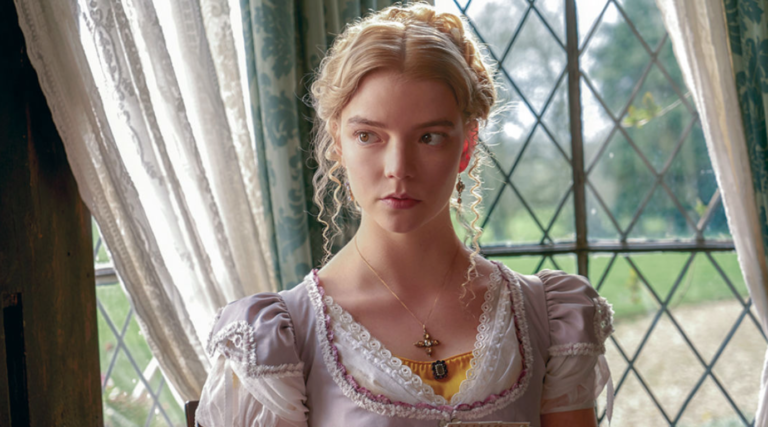
Back at the start of 2020, Anya Taylor-Joy played the famous Emma Woodhouse in an adaptation of Jane Austen’s 1815 novel of the same name. Taylor-Joy vanishes into the quirky role easily, and whilst I was not in love with the film, she was the best part of it. This is a role that, if done badly, makes the character completely unrelatable and there for comedic effect, and yet Taylor-Joy gives some heart and emotion to this version of Emma Woodhouse. If there is someone that could be transported back to the early 1800s and sell this character within that world, it is Anya Taylor-Joy.

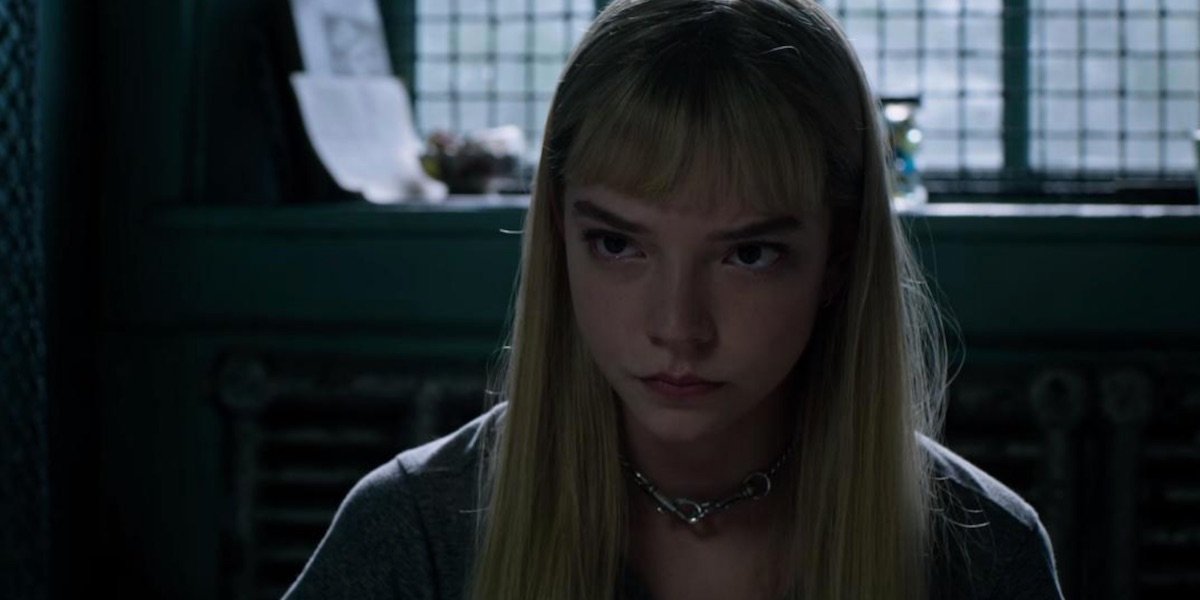
The New Mutants Image Teases Epic Battle For Anya Taylor-Joy's Magik -  CINEMABLEND

The New Mutants

This project may have been cursed for numerous years now, but that does not mean that everything within The New Mutants was as bad as we expected. Once again, Anya Taylor-Joy is the best part of this film as Illyana Rasputin, a young mutant who seems tough on the outside, but is tortured on the inside with the abuse she suffered through in the past. It is not just the writing of Illyana that is the strongest character in the film, but also the performance given by Taylor-Joy. She sells the role and has to perform a balancing act between being the tough girl at the start, whilst also having these intense scenes encountering some terrifying creatures linked to her past. If I had to give a reason for people to watch The New Mutants (a film that, once again, I did not fully love), I would still tell people that there is a strong performance from Anya Taylor-Joy.

Here Are the Young Men

Here Are the Young Men

This will be a film that I suspect not many people are aware of, but it is one that I covered on this website after watching it at the 2020 Raindance festival. Here Are the Young Men is an Irish independent film starring Taylor-Joy alongside 1917’s Dean-Charles Chapman and Sing Street’s Ferdia Walsh-Peelo about a particular incident that shapes the actions and beliefs of these young teenagers in the 1980s. With many strong performances within this film, Taylor-Joy fit in incredibly well within this cast and is given some of the toughest moments within the film. It is one that has not had its full release yet, so I do encourage everyone to check out Here Are the Young Men when it does release.

What the Future Has in Store

2020 was not only a good year for Anya Taylor-Joy because of the films (and TV series) that she starred in. She also made a big signing to be part of the Mad Max franchising, playing Charlize Theron’s Imperator Furiosa in a prequel movie focusing on that character. This was a character that many people were upset was getting recast, but hearing that Taylor-Joy was the person cast in the role made many people relax a little and have hope that this new project will be a success.

With the major success coming off the end of the year with The Queen’s Gambit in particular and with the general release of Here Are the Young Men to come, here’s hoping that 2021 will also be a great year for what is one of the most exciting actresses on the scene right now.

Chasing the Gold: 2021 Oscar Predictions – New Year, Same Oscar Race

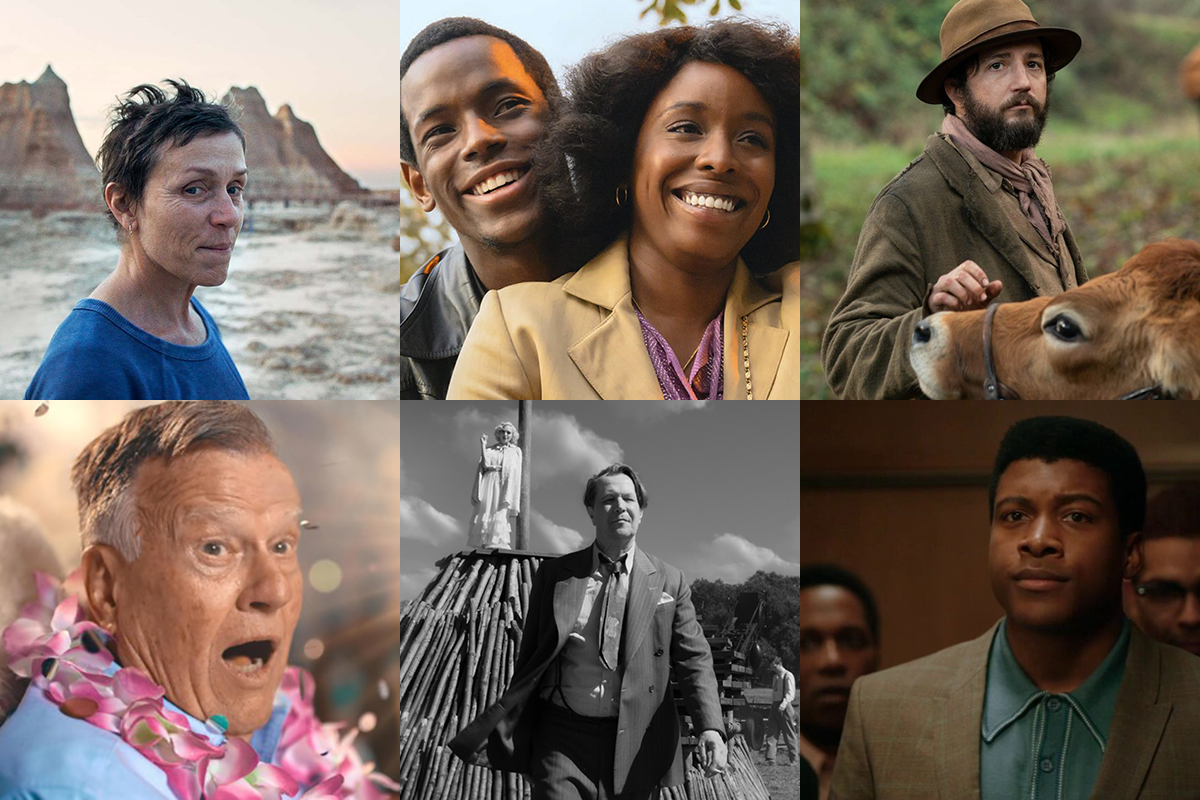
2020 is gone. We rang in a new year this time last week and with that, we look to the new possibilities 2021 can provide everyone around the world. One thing the calendar change does provide is the realistic pathway to the creeping Oscar submission deadline on February 28th, 2021. With this in mind, I wanted to give my updated predictions in many of the major categories as of the start of this year. Not that much has changed in the race, but it’s fair to give a perspective for those curious to see where we are at right now before many of the major industry and critics groups announce more winners over the following two months. Considering all this, here is what I have as of January 7, 2021.

Streaming movie picks: 'Chicago 7' is Aaron Sorkin magic

Best Picture

  1. The Trial of the Chicago 7
  2. One Night in Miami
  3. Mank
  4. Nomadland
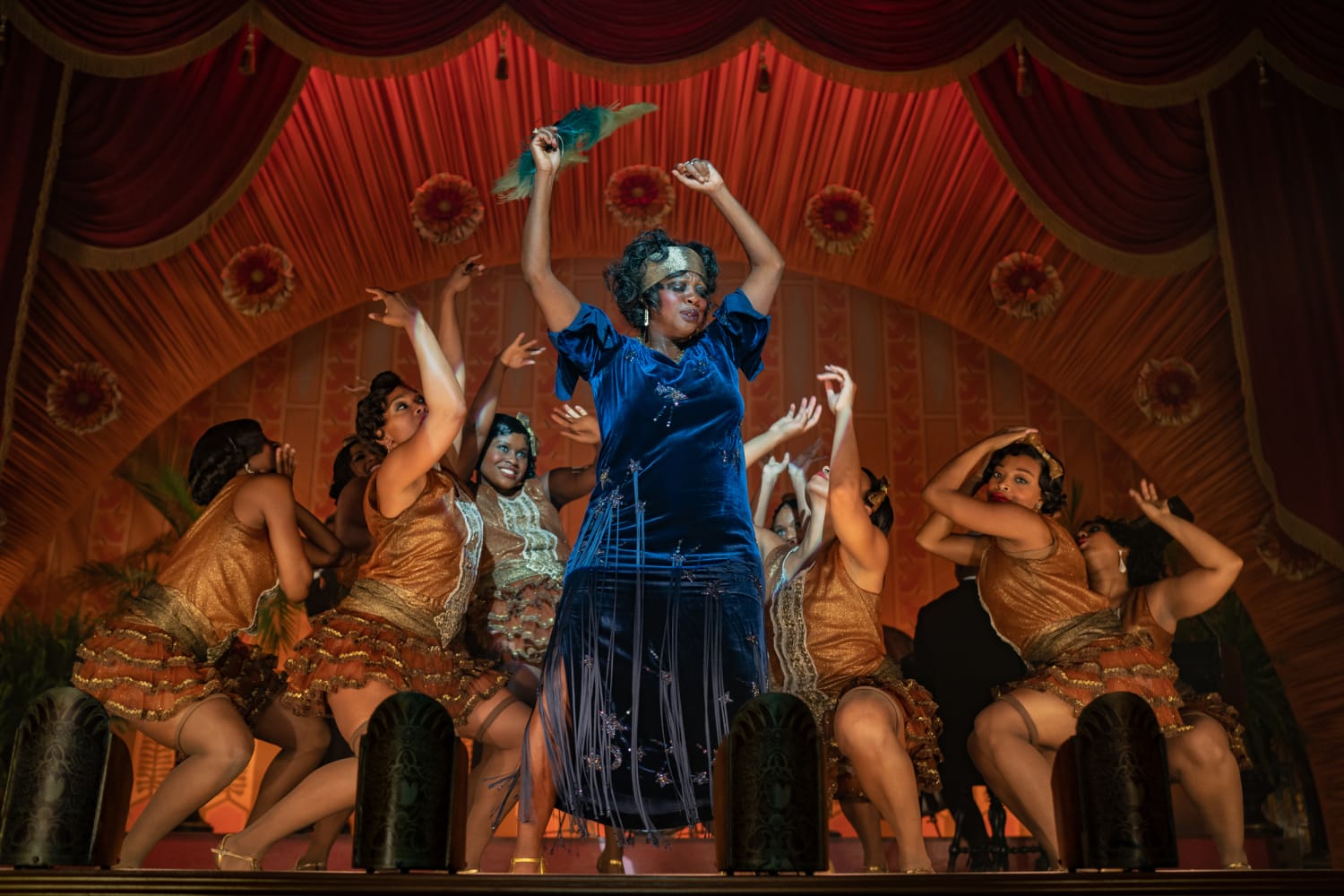
  5. Ma Rainey’s Black Bottom
  6. Da 5 Bloods
  7. The Father
  8. Judas and the Black Messiah
  9. Promising Young Woman
  10. Minari

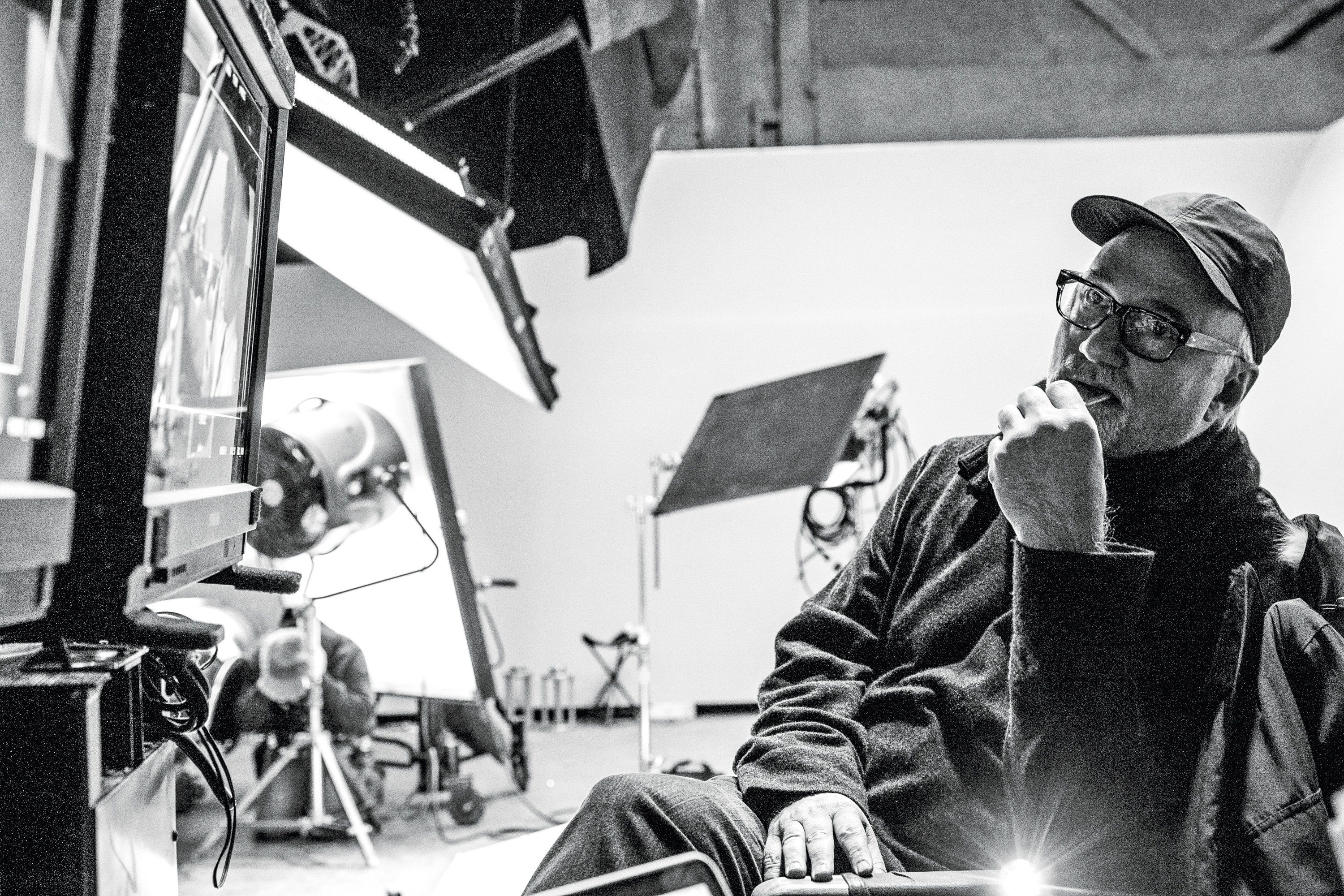
David Fincher Talks Mindhunter Netflix Series - David Fincher Is Still Fascinated By Serial Killers

Best Director

  1. David Fincher – Mank
  2. Chloe Zhao – Nomadland
  3. Spike Lee – Da 5 Bloods
  4. Regina King – One Night in Miami
  5. Florian Zeller – The Father

Netflix Releases Trailer for Chadwick Boseman's Final Film Role in Ma Rainey's Black Bottom: Watch | Consequence of Sound

Best Actor

  1. Chadwick Boseman – Ma Rainey’s Black Bottom
  2. Anthony Hopkins – The Father
  3. Delroy Lindo – Da 5 Bloods
  4. Gary Oldman – Mank
  5. Kingsley Ben-Adir – One Night in Miami

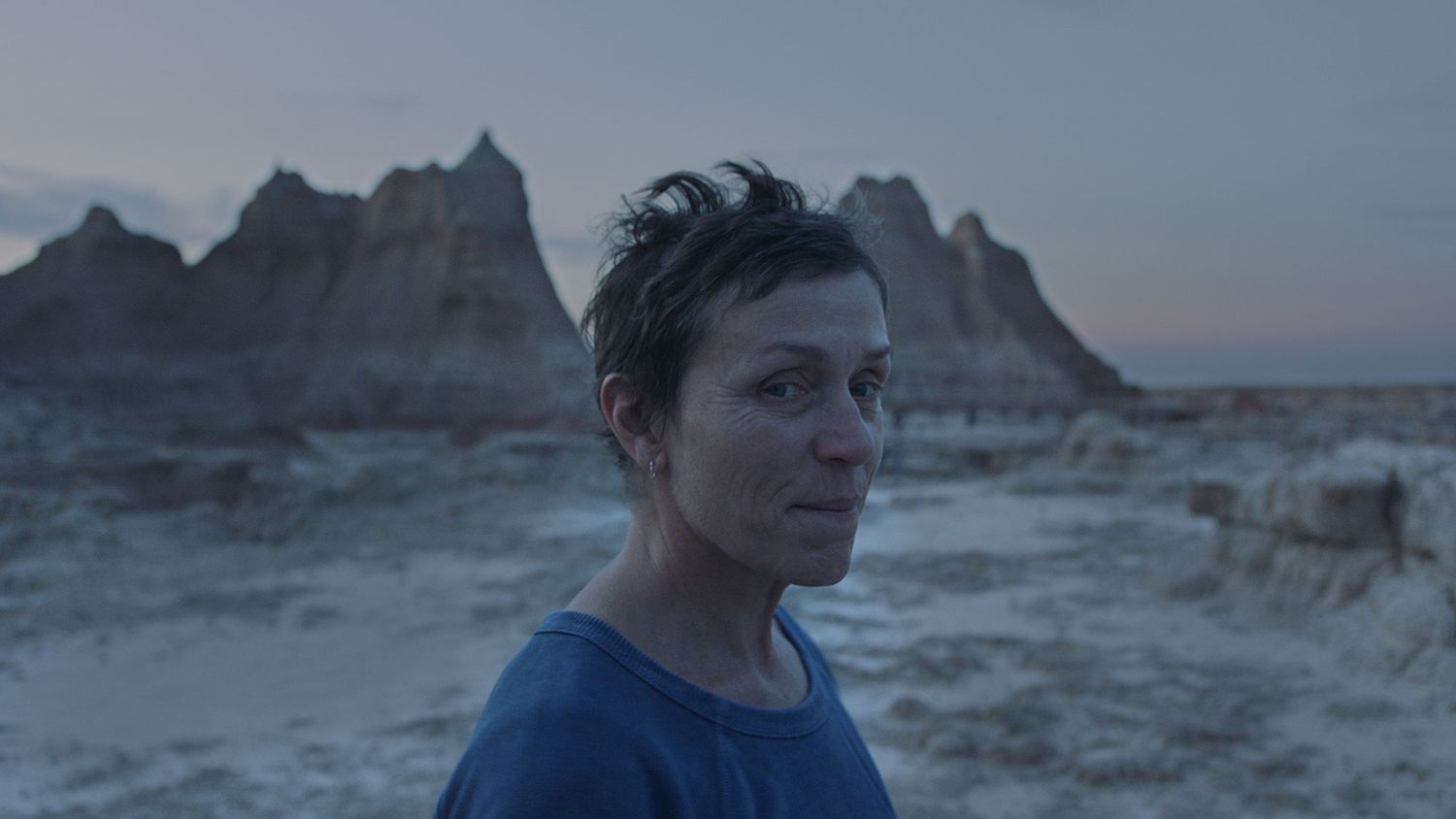
Frances McDormand offered job at Target while shooting Nomadland | EW.com

Best Actress

  1. Frances McDormand – Nomadland
  2. Viola Davis –  Ma Rainey’s Black Bottom
  3. Carey Mulligan –  Promising Young Woman
  4. Vanessa Kirby – Pieces of a Woman
  5. Andra Day – The United States vs. Billie Holiday

Judas and the Black Messiah' New 2021 Release Date - Variety

Best Supporting Actor

  1. Daniel Kaluuya – Judas and the Black Messiah
  2. Sacha Baron Cohen – The Trial of the Chicago 7
  3. Bill Murray – On the Rocks
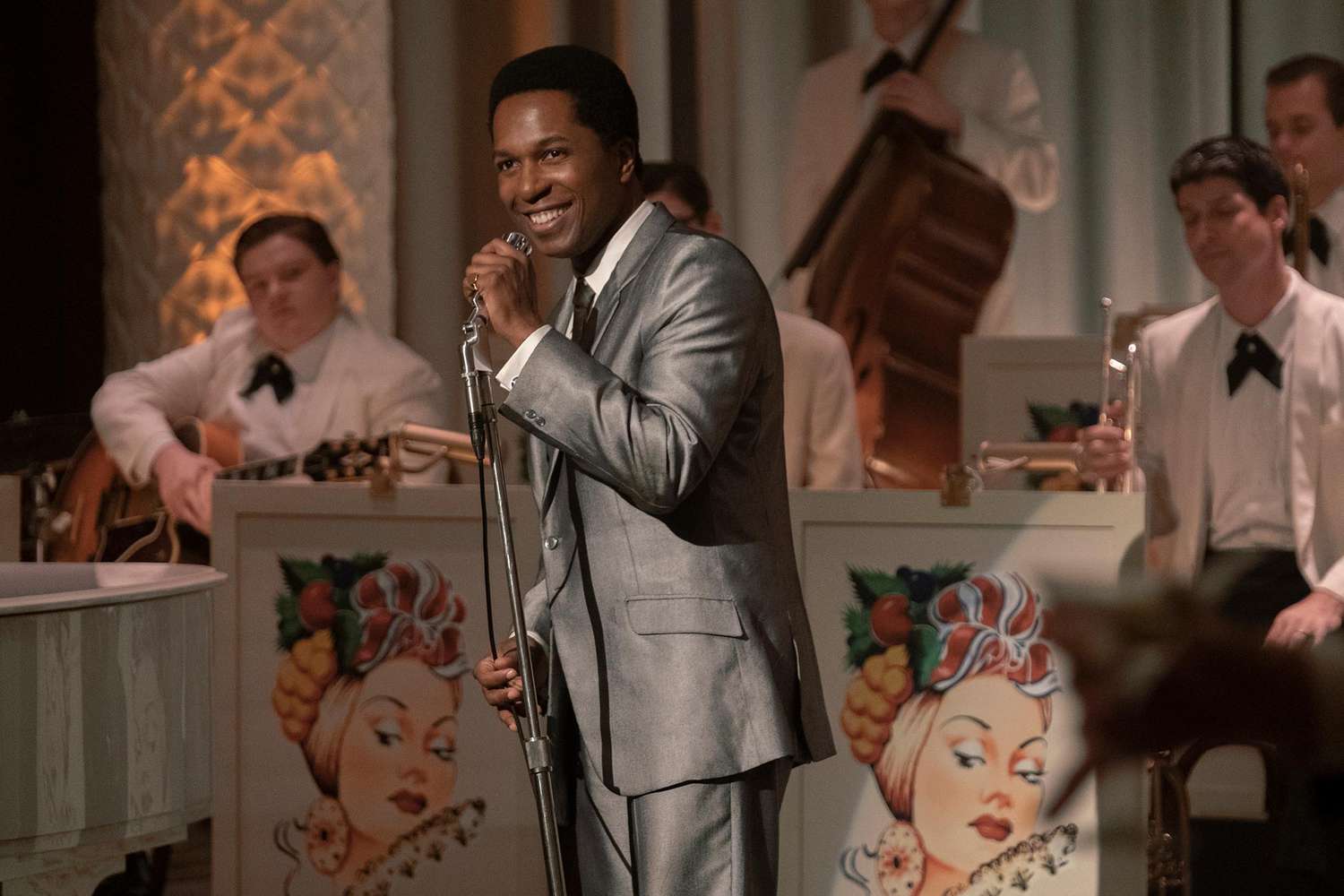
  4. Leslie Odom Jr.- One Night in Miami
  5. Chadwick Boseman – Da 5 Bloods

Maria Bakalova Tells All About 'Borat 2' and Rudy Giuliani Scaring Her | IndieWire

Best Supporting Actress

  1. Maria Bakalova – Borat Subsequent Moviefilm
  2. Olivia Colman – The Father
  3. Glenn Close – Hillbilly Elegy
  4. Ellen Burstyn – Pieces of a Woman
  5. Amanda Seyfried – Mank

First Look at Aaron Sorkin's 'The Trial of the Chicago 7' | Vanity Fair

Best Original Screenplay

  1. The Trial of the Chicago 7
  2. Mank
  3. Promising Young Woman
  4. Judas and the Black Messiah
  5. Minari

Kemp Powers 'One Night in Miami' explores the Civil Rights movement - Variety

Best Adapted Screenplay

  1. One Night in Miami
  2. The Father
  3. Nomadland
  4. Ma Rainey’s Black Bottom
  5. Borat Subsequent Moviefilm

WolfWalkers Review | Movie - Empire

Best Animated Film

  1. Wolfwalkers
  2. Soul
  3. Onward
  4. Over the Moon
  5. The Croods: A New Age

Totally Under Control' Documentary Streams for Free - Variety

Best Documentary

  1. Totally Under Control
  2. Collective
  3. Boys State
  4. Dick Johnson is Dead
  5. Time

Another Round review: An exhilarating, existentialist film about day drinking - Vox

Best International Feature

  1. Another Round
  2. Night of the Kings
  3. Collective
  4. Quo Vadis, Aida?
  5. A Sun

David Fincher's 'Mank' Trailer Debuts

Best Cinematography

  1. Mank
  2. Nomadland
  3. Da 5 Bloods
  4. Tenet
  5. Judas and the Black Messiah

Aaron Sorkin's Trial of the Chicago 7 drops first look at '60s-set Netflix film | EW.com

Best Film Editing

  1. The Trial of the Chicago 7
  2. Mank
  3. The Father
  4. One Night in Miami
  5. Tenet

Listen to the 'Mank' Score While Viewing 200 BTS Photos on Netflix's 'Secret Website'

Best Production Design

  1. Mank
  2. Emma.
  3. Mulan
  4. News of the World
  5. The Trial of the Chicago 7

Ma Rainey's Black Bottom' showcases the triumphs of Black people, not just our burdens

Best Costume Design

  1. Ma Rainey’s Black Bottom
  2. Mank
  3. Emma
  4. The United States vs. Billie Holiday
  5. Borat Subsequent Moviefilm

Netflix Just Released the Trailer for Hillbilly Elegy and It's Rightfully Getting Skewered: Watch | Consequence of Sound

Best Makeup & Hairstyling

  1. Hillbilly Elegy
  2. Ma Rainey’s Black Bottom
  3. Borat Subsequent Moviefilm
  4. Mank
  5. Birds of Prey

Review: 'Sound Of Metal' Delivers A Searing Riz Ahmed Performance : NPR

Best Sound

  1. Sound of Metal
  2. Mank
  3. Tenet
  4. Ma Rainey’s Black Bottom
  5. News of the World

Tenet: Christopher Nolan Didn't Show Films That Inspired Him to Cast | IndieWire

Best Visual Effects

  1. Tenet
  2. The Invisible Man
  3. The Midnight Sky
  4. Wonder Woman 1984
  5. Mank

Soul movie review & film summary (2020) | Roger Ebert

Best Original Score

  1. Soul
  2. Mank
  3. Tenet
  4. News of the World
  5. The Trial of the Chicago 7

Leslie Odom Jr. on playing Sam Cooke in 'One Night in Miami' | EW.com

Best Original Song

  1. “Speak Now” – One Night in Miami
  2. “Seen” – The Life Ahead
  3. “Hear My Voice” – The Trial of the Chicago 7
  4. “Rocket to the Moon” – Over the Moon
  5. “Wuhan Flu” – Borat Subsequent Moviefilm

Check back next month for more updated predictions and look out for more Chasing the Gold Oscar coverage coming soon!

Movie Review: ‘iHUMAN’ is a Terrifying Glimpse into the Future


Director: Tonje Hessen Schei

Synopsis: Filmmaker Tonje Hessen Schei examines how artificial intelligence impacts technology and human lives.

[/info]

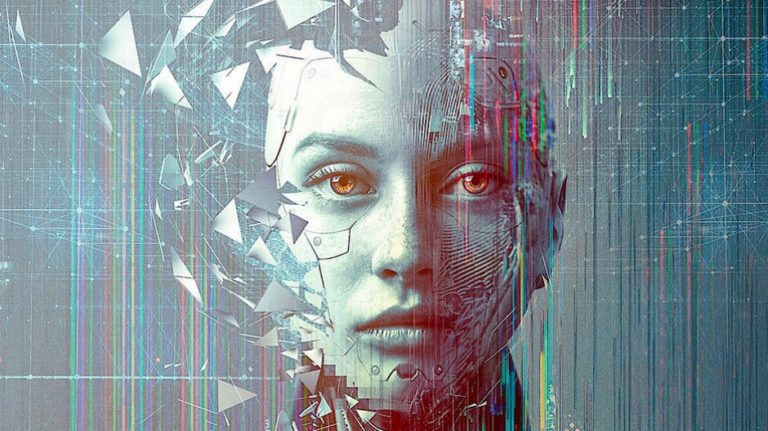
Just in case your anxiety levels aren’t through the roof after the year we’ve all had, watching Tonje Hessen Schei’s documentary iHUMAN should do the trick. This socio-political documentary explores how the advent and rise of AI technology could affect the course of human history, and it’s not a spoiler to say there is nothing good about the answers we’re given. In the deep breadth and width of Hessen Schei’s excellent investigation, we’re introduced to a number of tech experts on the frontlines of AI advancements, from the Elon Muskites in Silicon Valley to the venture capitalists funding the whole operation, to the human rights activists trying desperately to ensure humanity isn’t swept under the tide of progress. It’s a fascinating, illuminating glimpse into a truly terrifying future and that makes it all the more necessary in these strange times.

You may have read that opening paragraph and decided you’ve heard all this before. After all, this is hardly a new idea. Even the movie’s title borrows from the Isaac Asimov novel I, Robot – written over 50 years ago and turned into a popular movie starring Will Smith 15 years ago. So it would be understandable if many found themselves turned off, but this would be a mistake. Where iHUMAN‘s strength lies is in its subverting of the myths many of us believe about AI. This is not sentient robots rising up to enslave the human race. In fact, the scariest thing confronting humans is humans themselves. A fascinating segment shows Cambridge Analytica’s involvement in the rise of Donald Trump and Brexit; it is frightening to see the level of subterfuge that goes into global decision-making. Another astonishing moment shows how a computer algorithm can determine someone’s sexual orientation using only the curvature of their jawline. From there it’s a short distance to determining someone’s religious and political beliefs using nothing more than a screenshot, and then imagine what an authoritarian government could do with that information.

The likelihood is that, on the surface, none of this will necessarily be breaking news to anyone who is clued into this world already; a segment featuring a computer algorithm that can ‘predict’ crime by pooling statistics of crime-ridden areas so that police officers can be stationed in those areas to prevent crime smacks of Minority Report and is unlikely to shock anyone. But then you consider that the information going into those algorithms is already biased towards black and Hispanic minorities, and suddenly the situation becomes much scarier.

The real draw of iHUMAN lies in its interview subjects. As mentioned earlier, Hessen Schie has collated an excellent cast of experts who give amazing insight into this world. Perhaps the most entertaining is Jürgen Schmidhuber, a laidback German sporting a white goatee, who works out of the Swiss Alps and expounds gleefully on the virtues of AI. Schmidhuber gives off some serious Hank Scorpio vibes and is never less than compelling. The most interesting, however, is Ilya Sutskever, a research director at OpenAI who was headhunted by Elon Musk himself. Sutskever is the most clear-eyed about the future of technology. It is not that AI is going to actively hate humans and want to harm us, he calmly explains, it’s just that AI will grow too powerful and so its wants will supersede our own. For instance, humans love animals. We are naturally very fond of them. But we will build highways and tear down forests for our own ends, regardless. Because it is the best thing for us. That will one day be our relationship with AI, Sutskever explains. Only this time we will be the animals.

Hessen Schie takes us through just about every possible scenario that could befall humanity in the two hours plus runtime of iHUMAN and yet not once does the pace let up. It is well-paced and deftly balanced from one moment to the next. If you’re already tuned into the world of technology then nothing here will be news to you, but regardless this is a well-made documentary that deserves your attention.

Grade: B

Poll: What is your favorite female directed film of 2020?

As we close out 2020, in comes the hard work for us critics to begin revealing the best that the cinematic year had to offer. For most critics, that isn’t just what the best movies or even best performances of the year were, but where representation behind the camera showed the most promising growth, and 2020 had an update for us. According to a new study by San Diego State University, 2020 saw a record-breaking number of women directed films, with 16% making up the 100 highest-grossing films of the year. While that news is incredibly exciting, it’s easy to see how this was the case; not only were there a bountiful number of female directed films this year, but they all varied from small indies to big budget blockbusters, with many ranking as some of the best of the year (the list below could seriously pass off as a genuine best-of-the-year list for any year).

So let’s celebrate this plethora of greatness; what is your favorite female directed film of 2020?


Create with All Your Heart: The Stories of Studio Ghibli – ‘Nausicaä of the Valley of the Wind’

Few studios in the world have earned more critical acclaim than Studio Ghibli. Founded by the legendary filmmakers Hayao Miyazaki, Isao Takahata, and Toshio Suzuki, the Japanese animation studio developed a cult fandom throughout the 1990s, making the studio into event releases for animation fanatics. When you hear the word Ghibli, it’s likely you conjure up images of the fluffy, gray forest spirit Totoro. Yet their iconic caricatures extend far beyond Totoro and his spirit world friends. Niche American audiences know these characters, but 2021 offers us a true chance to engage with the studio’s incredible output.

When HBOMax launched in 2020, the presence of the Studio Ghibli collection was heralded as a watershed moment. For the first time, the studio’s massive output was accessible through a streaming platform. Millions of people across the country have unprecedented access to the Ghibli catalog, including your friends and family. Additionally, Hayao Miyazaki celebrates his 80th birthday today. The outpouring of love from fans and critics from around the world is no surprise. To celebrate Miyazaki’s landmark birthday and the incredible output from the studio where he created his great works, I’m looking back through the entire Ghibli filmography, watching each film in its order of release. Yet to get us started, it’s impossible to ignore the film that directly led to the creation of the studio, Nausicaä of the Valley of the Wind.

Often misattributed as Studio Ghibli and Miyazaki’s first film, Nausicaä remains an integral moment in the creation of the studio. Miyazaki had directed Lupin III: Castle of the Cagliostro in 1979, a critical success that lacked the robust box office associated with the property. The director was hired by Animage, an anime magazine, to develop his own manga released exclusively for the periodical. It did not take long for animation studios to see the potential of his story about a young girl surviving in a world ravaged by toxins in the soil and jungles of her world. The original Nausicaä manga ran in the magazine from 1982 through 1984, providing the storyboards for a future adaptation. Miyazaki would continue releasing new chapters until the mid-1990s, but the success of these initial issues provided him the clout to craft his second feature. Takahata, a successful director in his own right, joined the film as an executive producer. This collaboration provided the seeds of what would become the most successful non-English animation studio in the world.

Insects At The Movies: Nausicaä of the Valley of the Wind | The Endless Swarm

Nausicaä of the Valley of the Wind takes place in a post-apocalyptic vision of Earth after the Giant Warriors destroyed civilization. Culture struggles to survive in this wasteland as the Toxic Jungle expands, swallowing towns and cities. Giant insects, known as Ohms, run wild in the jungles. Despite the environmental concerns, humans wage war on each other. In the Valley of the Wind, a young princess named Nausicaä rides the wind on her glider and makes scientific breakthroughs about the ecology of the planet. When the Valley of the Wind becomes overrun by the militaristic Tolmekia, Nausicaä must combat the elements, toxins, and humankind to save her people.

Adapting one’s own work is never easy. Yet Miyazaki’s fantastical tale was a work that drew from every source of art the director found worthwhile. In the director’s typical fashion, the kernel of the story was based on folklore. Despite the importance of gender roles within 1980s culture, Miyazaki drew from “The Lady who Loved Insects,” which follows an aristocratic lady breaking many of the norms of medieval culture. Yet Miyazaki’s worldly inspirations allowed him to borrow from universal studios from around the globe. The works of Asimov, Tolkien, Herbert, and more live in every frame.

These inspirations allowed Miyazaki to dream big, and Nausicaä stuns with its use of worldbuilding. Miyazaki developed his eye for scale and wonder early in the film, and the massive landscapes and vistas add high fantasy to the world. Ohms are stories tall, the biggest of which tower above the jungles. Nausicaä looks puny, even as she rides her glider in circles around warships and creatures. The visual disparity between Nausicaä, the creatures who destroyed society, and the kaiju-like creates that roam the Earth creates the underdog narrative that allows us to connect to our heroine. The forest and jungles bear a striking resemblance to Mirkwood and Lothlórien. The Ohms should be considered the first, and best, exploration of bringing Dune’s Sand Worms to life. Miyazaki and Takahata invent a new visual language in front of our eyes, an aesthetic that would inform the house-style of Ghibli for decades.

REVIEW: Nausicaä of the Valley of the Wind – [art]seen

Miyazaki’s story pushes gender boundaries at every turn as well. He directly confronts narratives of prophecy, especially those that assumed heroes could only be men. Despite the presence of antagonistic women in the story, he avoids directly pitting the women against each other. On one hand, we have Nausicaä searching for answers to why the world is broken, even putting herself in danger from the jungle. She lives in peace with the seemingly violent world around her. In addition to her scientific observations about the world, she dresses and acts like a scrapper, tossing off her royal position in image alone. Yet her actions are always meant to save and serve her people. In that way, she’s not too different than the “antagonist” Kushana, who believes herself to be the savior of the world. She has trained her whole life to defeat the Toxic Jungle and the creatures that inhabit it. In many stories, her win-at-all-costs approach is greeted as heroic, even if it hurts people in the process. She provides a wonderful foil to the empathetic Nausicaä, yet Miyazaki develops her in a way that it’s easy to identify with her actions.

Beyond the visual splendor of Nausicaä lies a basic human ethos that is impossible to ignore. Nausicaä remains one of the most humanistic characters ever put to screen. Beyond all else, she believes in the power of humanity to conquer any challenge we face. The message of a world destroyed by the humans that poisoned it, only for those humans to fight each other can feel overwhelming prophetic at times. Yet Miyazaki offers us a way out. By prioritizing empathy for others, whether they are your neighbor, enemy, bug monster, or fox-squirrel, Nausicaä builds relationships. The connections we make can change the world and provide hope for our future. It’s a message that remains as timely in 2021 as it was nearly forty years ago.

Miyazaki lays out many tenets of what it means to be a good person in this second feature. The deeply emotional tales he will go on to tell seemingly stem from this concept. Despite his remarkable visual storytelling, he never loses sight of the importance of heart and humanity in the face of adversity. Takahata will take this idea and run with it, resulting in some of the most heartbreaking films ever made. After the instant success of Nausicaä in 1984, Miyazaki and Takahata would gain the support to found Studio Ghibli in 1985. The two masters at the center of the company would provide an artistic center for Ghibli to thrive. The resulting studio would change cinema, gender politics, and the world of animation for decades.

List: Top 3 Against the Grain Movies of 2020

This week on Episode 411 of the InSession Film Podcast, we discussed our top 3 “against the grain” movies of 2020, or in other words, the movies we liked that most didn’t care for much. The feedback to this week’s Top 3 should be fun since the nature of this topic means that we’ll be in the minority opinion regarding these films. But, that’s also what makes it a lot of fun at the same time. That said, here are our lists:

(Note: Please keep in mind that we each had different criteria for our selections)

JD
1) The Midnight Sky
2) Wendy
3) Mulan

Brendan
1) Wonder Woman 1984
2) Wendy
3) Alex Wheatle

Honorable Mentions (Combined)
Let Them All Talk, Education, News of the World, Tesla, Pieces of a Woman, Kajillionaire, Extraction, Emma, Bad Boys for Life, Personal History of David Copperfield, Buffaloed, Disclosure, The Truth, The Trip to Greece, Bacurau, Soul, Sorry We Missed You, News of the World, Mangrove

Hopefully you guys enjoyed our lists and if you agree or disagree with us, let us know in the comment section below. As mentioned above, there’s a good chance that you will disagree with us, so let us know why and which films you were against the grain on in 2020. That being said, what would be your Top 3? Leave a comment in the comment section or email us at [email protected].

For the entire podcast, click here or listen below.

For more lists done by the InSession Film crew and other guests, be sure see our Top 3 Movie Lists page.

Criterion Crunch Time – ‘Yentl’

If any genre of film is an acquired taste, it is the musical. Musicals have a lot of specific expectations that can rub the general audience the wrong way. If you are a fan of musicals and have had to hear from people who are not, you will recognize the complaints. “It just doesn’t make sense!” “Who sings and dances their way through their life?!” This month, we are taking a look at a musical that may be slightly more palatable to the uninitiated. Yentl (1983), along with The Prince of Tides and The Mirror Has Two Faces, all directed by Barbra Streisand, is leaving the service at the end of the month, and honestly, that is a tremendous triple feature.

As a fan of musicals, upon sitting down to watch a movie starring Streisand and Mandy Patinkin, I immediately assumed I would love it. I was right, but not in the way I first thought. To ruin the surprise here, Mandy Patinkin, an accomplished musical theatre actor (as well as screen) does not sing in this movie. Because of my expectations, I kept waiting for his musical moment, and it never comes. This is not an indictment of the film, just a note. However, the musicality of the film is handled brilliantly, especially when you consider how measured the choices are for a directorial debut from Streisand.

The both great and terrible thing about songs in musicals is that they can be a shortcut to pure, intense emotion. When handled poorly, this emotion can ring hollow or feel forced. But when it works, there is nothing better. Streisand chooses to handle this by limiting the musical number to moments of introspection. Without fail, whenever Yentl/Anshel is overcome by emotion, whether it be grief, anxiety, or love, she retreats into herself and we are treated to the incomparable voice of Barbra Streisand.

Given that this is a gender-bending story, it should come as no surprise that Yentl’s relationship with important men in her life are at the forefront of the film. At the outset, the one relationship we are aware of is between Yentl and her father, Rebbe Mendel (Nehemiah Persoff). Although these interactions are quite literally short-lived, the script, penned by Streisand and Jack Rosenthal, allows us to see a multi-faceted relationship form. Her father’s concurrent worry for her future and pride in her knowledge and abilities come through via good natured humor, paired with fatherly frustrations.

After his death, Yentl’s male affections turn to Avigdor (Patinkin) after chopping off her hair and posing as a man in order to study the Torah, her original love. It is important to note that there are certainly striking similarities between Yentl’s father and Avigdor. Despite his explosion late in the film, both Avigdor and her father are remarkably gentle, even through their frustrations. Her father realizes that she is strong-willed and not prepared for the life of a woman at this time (a wife and a mother), but he is also aware that after the death of her mother, he was not able to teach and guide her in this way, only in the ways of knowledge. Avigdor, on the other hand, is not consciously aware of her identity. However, he does seem to notice literally everything else. This all comes to a head when she shows herself to him. Before this moment, there are times when he lets his excitement get the best of him, including epistemological discussions and skinny dipping, of all things. At first, he tries to drag her into the lake but eventually realizes that her protestations are real and panicked. When he has this knowledge, he stops and simply says “I won’t force you.” This is a simple moment, and also the moment in which she is falling for him against her own wishes. This gentleness, echoing her other important male relationship, has a tremendous impact on Yentl as she makes the questionable choice to marry Avigdor’s love so they can hopefully be together.

Avigdor is more than a love interest for Yentl, he is a test, a discovery, a symbol of what is missing. As we get to know Yentl, it becomes crystal clear that although she has a great deal of knowledge, in many ways she has used this learning as a shield against living life. When she joins his yeshiva, the rabbi both asks and answers questions. The meaning of this scene, when combined with her growing affections towards Avigdor could not be more obvious. Yes, knowledge and wisdom are important to our lives. But they are nothing if we do not truly live our lives. And love is a huge part of that life. If we constantly protect ourselves from the pain and loss inherent in romance, all of that wisdom and knowledge is all for naught.

The explosion from Avigdor, although coming late in the film, is really where Yentl’s story hinges. She finally tells him the truth and exposes herself to prove her femaleness to him and he is, understandably, confused, and upset. But as he shakes her physically and the gentleness seems to disappear, And just as it gets to an intensity that seems unsafe, she professes her love and he falters into her. And here is where the movie could go in two different directions. It would be easy to have Yentl and Avigdor run away together, it is what we expect out of a romance. But this work chooses reality and finds an even more uplifting ending. Avigdor ends up with the woman that he swears that he loves and Yentl is given the opportunity to have both of her passions. Should she stay with him, she would have to study in secret, much as she did with her father. The film instead, gives her freedom in a new place to both study and truly live.

Yentl would be an impressive achievement at any point in a director’s career. The fact that this was Streisand’s debut makes it even more notable. Yentl’s example of gentle, yet strong masculinity feels decades ahead of its time, and having a woman behind the camera (even more a rarity then than now) is partially responsible for this. Despite being a musical directed by and starring a celebrity of the highest order, Yentl is an exercise in subtlety and restraint rarely seen in popular films. 

50 More Greats From The Criterion Channel (Jan. – June)

These last few months have cleared my schedule to go on a binge in watching movie after movie after movie after movie where I already have watched more than 400 movies right off the Channel. 400!!! The constant movies they bring in and out keeps me entertained and you can check out my Letterboxd to see what I mean. At the end of 2019, I unveiled by Top 50 I had seen that year. Now, more than a year after the opening of the Channel, I have made a Top 100 for the year 2020 in two parts, and thanks to our current circumstances, everyone has gone streaming a lot more. So, here are the best films I have seen this past year on the CC so far and for each of the bold names.

  1. L’Argent (1982; dir. Robert Bresson)
  2. The Red Balloon (1956; dir. Albert Lamorisse)
  3. The Cabinet Of Dr. Caligari (1920; dir. Robert Wiene)
  4. Europa Europa (1990; dir. Agnieszka Holland)
  5. The Merchant Of Four Seasons (1972; dir. Rainer Werner Fassbinder)
  6. Salvatore Giuliano (1962; dir. Francesco Rosi)
  7. The Defiant Ones (1956; dir. Stanley Kramer)
  8. Invention For Destruction [alt. The Fabulous World of Jules Verne] (1958; dir. Karel Zeman)
  9. The Gold Rush (1925; dir. Charles Chaplin)
  10. Paper Moon (1973; dir. Peter Bogdonovich)
  11. La Poison (1951; dir. Sacha Guitry)
  12. Here Comes Mr. Jordan (1941; dir. Alexander Hall)
  13. The Big Heat (1953; dir. Fritz Lang)
  14. Zero de Conduite (1933; dir. Jean Vigo)
  15. Pygmalion (1938; dir. Lesley Howard & Anthony Asquith)
  16. Investigation Of A Citizen Above Suspicion (1970; dir. Elio Petri)
  17. Berlin Alexanderplatz (1980; dir. Rainer Werner Fassbinder)
  18. This Is Not A Film (2011; dir. Jafar Panahi & Mojtaba Mirtahmasb)
  19. Mr. Deeds Goes To Town (1936; dir. Frank Capra)
  20. In A Year Of 13 Moons (1978; dir. Rainer Werner Fassbinder)
  21. The Exterminating Angel (1962; dir. Luis Buñuel)
  22. Metropolis (1927; dir. Fritz Lang)
  23. The Black Stallion (1979; dir. Carroll Ballard)
  24. Under The Sun Of Satan (1987; dir. Maurice Pilat)
  25. House of Games (1987; dir. David Mamet)
  26. The Great Beauty (2013; dir. Paolo Sorrentino)
  27. Close-Up (1990; dir. Abbas Kiarostami)
  28. Until The End Of The World (1991; dir. Wim Wenders)
  29. Cache (2005; dir. Michael Haneke)
  30. Bay of Angels (1963; dir. Jacques Demy)
  31. Claire’s Knee (1970; dir. Eric Rohmer)
  32. Contempt (1963; dir. Jean-Luc Godard)
  33. The Two Of Us (1967; dir. Claude Berri)
  34. Vernon, Florida (1981; dir. Errol Morris)
  35. Charulata (1964; dir. Satyajit Ray)
  36. A propos de Nice (1930; dir. Jean Vigo)
  37. I Knew Her Well (1965; dir. Antonio Pietrangeli)
  38. Mishima: A Life In Four Chapters (1985; dir. Paul Schrader)
  39. Of Time And The City (2008; dir. Terence Davies)
  40. Old Joy (2006; dir. Kelly Reinhardt)
  41. Mamma Roma (1962; dir. Pier Paolo Pasolini)
  42. Fail-Safe (1964; dir. Sidney Lumet)
  43. Victim (1961; dir. Basil Dearden)
  44. Weekend (1967; dir. Jean-Luc Godard)
  45. The Decameron (1971; dir. Pier Paolo Pasolini)
  46. Chimes At Midnight (1965; dir. Orson Welles)
  47. Elmer Gantry (1960; dir. Richard Brooks)
  48. Wild Strawberries (1957; dir. Ingmar Bergman)
  49. A Farewell To Arms (1932; dir. Frank Borzage)
  50. Juliet Of The Spirits (1965; dir. Federico Fellini)

L’Argent (“Money”)

It is my favorite so far in 2020 and a movie I had seen earlier when it was first released by Criterion. Robert Bresson’s final film is a string of events beginning with the need of needing some extra money and ends with tragedy. Money and the need for it is a motive for so many things, to keep a business going, to pay off debts, and to have a basic living. For others, it is a piece of paper that becomes a nuisance and a reason why humans go off to do irrational things, like robbery and murder. In a span of 84 minutes, Bresson presents, loosely from Tolstoy’s The Forged Coupon, a line about a common basic characteristic that has the power to get the worst of us.

Zero de Conduite (Zero For Conduct)

I had written a piece awhile back about the short life of Jean Vigo, and then I was finished with his works until recently. Coming back to his works and digging in more into his life, I’ve gotten a better understanding of Vigo’s vision and where he got the inspiration to be inventive with his camera. First, he met up with cinematographer Boris Kaufman, who would have a successful career in Hollywood, and second, his father was an anarchist, influencing Vigo’s opposition to order and hierarchy. In Zero de Conduite, it’s an ode to Vigo’s time in boarding schools and the way headmasters and teachers were tough on students.

Metropolis

https://www.youtube.com/watch?v=AvtWDIZtrAE

Fritz Lang raised the German Expressionism game to its peak with his epic futuristic vision of a city where classes are kept separate, but the working class makes their charge to take down the wealthy that control everything. Filming lasted 17 months in 1925–26 at a cost of more than five million Reichmarks – that’s €35 million in 2009 inflation – when the initial budget was three times less than that. Lang’s perfectionism and hefty costs in set design, something very much not accounted for, played a role in the ballooning of the budget, a story later seen in the making of Apocalypse Now and Heaven’s Gate. However, with its memorable sets and special effects courtesy of Eugen Schüfftan, the film remains a landmark of global cinema nearly 100 years later.

Vernon, Florida

One of Errol Morris’ first documentaries, it was not intended to be a portrait of a small town with quirky figures there. Morris had read about the town being nicknamed “Nub City” because of a gruesome reputation in the past. Using a certain clause in life insurance, people would intentionally shoot off their own arm and leg to receive the full value of their policy. Of course, being an open case of fraud, the townspeople refuse to recognize it so much, that when Morris came down to do a documentary about it, he received death threats. But he was fascinated by the citizens of Vernon, Florida, and produced an insight into a piece of hidden America.

Wild Strawberries

After his major breakthrough in The Seventh Seal, Ingmar Bergman’s next project was a philosophical outlook on life from the eyes of a professor, played by Victor Sjöström, as he makes his way to a special award for him in his tenure. But along the way, he has memories and dreams about the life he has lived including the troubles that still fill him up. That could also be said of Bergman, whose marriage and the extra-marital affair was about to end, and he still had a distant relationship with his elderly parents. What comes out is an evaluation of the human conscious and of the regrets and why one feels the way they do.

Part II will be released later this month.

Follow me on Twitter: @brian_cine (Cine-A-Man)

Podcast: Indiana Jones Movie Series

In the last film series of the 2020 calendar year, the boys on Extra Film take a look at one of the most beloved film characters and film franchises of all time with Indiana Jones. At the start of the year, the boys talked about a childhood favorite franchise for Ryan with the James Bond Movie Series. This time, we go down one of Jay’s childhood favorites and see if all these films hold up or not, as well as talk about director Steven Speilberg for the first time. Cue John William’s score as the boys go on a podcasting adventure.

Raiders of the Lost Ark, 1981

Listen to our review below as heard on Extra Film.

Indiana Jones and the Temple of Doom, 1984

Listen to our review below as heard on Extra Film.

Indiana Jones and the Last Crusade, 1989

Listen to our review below as heard on Extra Film.

Indiana Jones and the Kingdom of the Crystal Skull, 2008

Listen to our review below as heard on Extra Film.

Podcast: The Midnight Sky / Top 3 Against the Grain Movies of 2020 – Episode 411

This week’s episode is brought to you by the ExpressVPN. Sign up today and get 3 months FREE with a 1-year package!

This week on the InSession Film Podcast, we discuss George Clooney’s latest directorial effort with The Midnight Sky and our Top 3 against the grain movies of 2020! We also talk She Dies Tomorrow and Bloody Nose, Empty Pockets.

JD is back in the co-host chair this week and what a time to come back given his thoughts on The Midnight Sky and how that ties to our Top 3. It was serendipitous indeed. These are some of our favorite episodes we get to do each year as we begin to wind down our yearly campaign. Our “against the grain” movies may not end up in our Top 10, but it’s always fun to reflect back on those experiences that we enjoyed, even if most others did not share that experience. It certainly made for an impassioned show.

On that note, check out this week’s show and let us know what you think in the comment section. Thanks for listening and for supporting the InSession Film Podcast!

– Movie Review: The Midnight Sky (6:15)
Director: George Clooney
Writer: Lily Brooks-Dalton (based on the book ‘Good Morning, Midnight’ by), Mark L. Smith (screenplay by)
Stars: George Clooney, Felicity Jones, David Oyelowo

– Notes / She Dies Tomorrow / Bloody Nose, Empty Pockets / Saint Frances (54:05)
This week for our discussion segment, as noted above, Brendan and JD both give their thoughts on Amy Seimetz’s She Dies Tomorrow, one of the more entrancing horror films of 2020. Brendan also gives his thoughts on the documentary Blood Nose, Empty Pockets after JD talked about it a few weeks ago. And finally we briefly talk a little bit about the indie-comedy Saint Frances.

[divider]

RELATED: Listen to Episode 402 of the InSession Film Podcast where we discussed Wolfwalkers!

[divider]

Top 3 Against the Grain Movies of 2020 (1:27:17)
For clarity, as we’ve done in the past with this topic, these are the movies we liked more than most people, which should make the feedback interesting since the nature of this topic means that we’ll be in the minority opinion regarding these films. But, that’s also what makes it a lot of fun at the same time. That said, what would be your Top 3?

Show Sponsor: First Time Watchers Podcast

– Music

The Midnight Sky – Alexandre Desplat
Iris In The Stars – Alexandre Desplat
The Story of Wendy – Benh Zeilin, Dan Romer
The Return of the Eagle – Atli Örvarsson

Subscribe to our Podcasts RSS
Subscribe to our Podcasts on iTunes
Listen on Spotify
Listen on Stitcher
InSession Film Podcast – Episode 411

[divider]

Next week on the show:

Main Review: Pieces of a Woman
Top 3: Scenes of 2020

[divider]

Help Support The InSession Film Podcast

If you want to help support us, there are several ways you can help us and we’d absolutely appreciate it. Every penny goes directly back into supporting the show and we are truly honored and grateful. Thanks for your support and for listening to the InSession Film Podcast!

VISIT OUR DONATE PAGE HERE

List: Amy Smith’s Top 10 Films of 2020

It has been a strange year for film releases, but it has certainly been one that has been filled with quality. This has been a strong film year with me, not only being able to access more films than I have done previously through writing with screeners and festivals but in terms of the films that I watched. Whilst I have made my voice heard about my top ten films of the year on Twitter and my own site, I am glad that I have the space at InSession Film to write about the films in the awards season that aren’t yet released in the UK and use that as a basis for this top ten list.

Note: Due to being a critic in the UK, I have been unable to access screeners for films that would potentially otherwise be in my top ten, such as Nomadland, Sound of Metal, and The Father. I am also not considering any of the Small Axe series or the recorded production of Hamilton: The Musical for this top ten list.

Here is my list of the top ten films of 2020.

The Devil All the Time Review: Southern Gothic with a Powerhouse Cast | Den  of Geek

10. The Devil All The Time

This is a film that was quite polarising when it first released, with many debating whether it would have made for a better mini-series. However, I love the final product we got and with the incredible cast performances, compelling story, and the dark tone that lingered throughout the long-yet-warranted screen time, this is a film that has stuck with me since I first saw it.

The Broken Hearts Gallery,” Reviewed: A Rom-Com Showcase for the Great  Geraldine Viswanathan | The New Yorker

9. The Broken Hearts Gallery

Having reviewed this for InSession Film, it is clear that I am in love with this film. Is it the strongest film in terms of technical achievement? No, it’s not. In the heart of the story, it is a rom-com that follows a few of the clichés we’ve grown accustomed to with the genre. However, it was the feel-good burst of fun that I needed during this year and I will proudly voice my love for the film.

Minari' Review: Growing Up Korean Outside Little Rock, Arkansas - Variety

8. Minari

The last film I watched that made this list, but what a film it is. Lee Isaac Chung lays his heart to this project as he shares some of his personal memories through this family, and the narrative is just so compelling. I challenge anyone not to fall in love with young David, played by Alan S. Kim.

In 'Dick Johnson Is Dead,' Kirsten Johnson Stages Her Father's 'Death' : NPR

7. Dick Johnson is Dead

In what is easily the best documentary of 2020, Kirsten Johnson is able to approach a subject matter such as the inevitable death of her father, Dick Johnson, and have fun creating these fake death and heaven sequences both as a visual medium for the documentary and for her own journey of accepting what will one day happen. Out of every film on this top ten list, this is the must-watch for everyone.

Palm Springs (2020) - IMDb

6. Palm Springs

As a huge Andy Samberg fan, it pained me that people in the US got this film in July whilst UK fans still haven’t had the film released here. This is one film I was desperate to see, and I am so glad I loved it as much as I thought I would. Samberg and Cristin Milioti’s partnership alone may be the best on-screen in 2020 and this is a film I know I will continue to go back to and love over and over again.

WolfWalkers Review | Movie - Empire

5. Wolfwalkers

Getting to see this film at the London Film Festival, this was the biggest surprise of the festival for me. Not only that, but it remains the biggest surprise of the entire year. I will admit to not having seen any of Cartoon Saloon’s previous films, but the animation, story, and world has everything within it to suck you up and fall in love with it. Even when Disney and Pixar put out great-quality films (as you’ll see later on in my list), support other animation studios whenever you can.

Streaming movie picks: 'Chicago 7' is Aaron Sorkin magic

4. The Trial of the Chicago 7

This is when the top-scoring films come into play, and I know not everyone loves The Trials of the Chicago 7 as much as I do. Maybe it is because I saw this film for the first time on the big screen, but when Aaron Sorkin writes a screenplay, he writes some of the best dialogue of the year. With such a compelling story and quick, sharp editing to match the screenplay, this is a worthy film for my top ten of the year.

Another Round' Review: Mad Mikkelsen in a Drama of Drinking - Variety

3. Another Round

Watching a film about alcohol at 9 in the morning on your tenth straight day of festival coverage may not sound pleasant, but it becomes a joy when it is a film as strong as Another Round. I did a piece on InSession Film about my FYC push for Mads Mikkelsen, and I will stand by that decision and continue to encourage anyone to check out this film that could have pushed a dangerous narrative, but instead handles the subject matter with grace and a bit of humor throughout. Also, Mads Mikkelsen dancing, nothing else needs to be said.

Soul' Review: Another Masterpiece From the Minds Behind 'Inside Out' -  Variety

2. Soul

In Pete Docter we trust. After his incredible work in Inside Out, Docter (along with co-director Kemp Powers) gives us another beautiful animation that makes us question ourselves in the best ways. It is incredibly easy to connect to Joe Gardner and where he is in life, and there is no sugar-coating his emotions or story. There are speeches within this film that I will take away for the rest of my life, that is how impactful this film is.

Promising Young Woman' will keep you talking

1. Promising Young Woman

All Twitter has done for the past few months (and even longer from certain people, particularly Matt Neglia of Next Best Picture) has been hyping up this little film that came from Sundance. Well, what a film this is. From the moment the credits rolled, I immediately wanted to go back to the start and press play again. It is now the soundtrack I listen to on repeat, the film I want to talk about at any moment, and the film I simply have to put at the top of this list.