Director: JT Mollner Writers: JT Mollner Stars: Willa Fitzgerald, Kyle Gallner, Barbara Hershey
Synopsis: Nothing is what it seems when a twisted one-night stand spirals into a serial killer’s vicious murder spree.
There are a few rules before watching Strange Darling. First, avoid trailers, reviews (except this spoiler-free one), and all talk of the year’s best thriller. Second, I implore you to avoid all fluid intake one to two hours before showtime because you want to avoid taking unnecessary bathroom breaks and missing a moment of the year’s most inventive script.
And finally, after watching JT Mollner’s instant classic, you must talk to everyone about Strange Darling (while avoiding spoilers, you filthy cinephiles). Put it out there, tell family, friends, strangers, and even your local clergy because this movie is that good.
Mollner, best known for his first feature film, Outlaws and Angels, which was a remarkable sobering vision of the American West, borrows his love of 70s thrillers to create a taut horror thriller that is as ingenious as it is terrifying. Mollner brings an almost romantic appreciation of 70s horror thrillers, with 90s nonlinear storytelling through a feminist lens that will turn heads as a filmmaker to watch.
To avoid spoilers, I won’t go much into the film. However, his sophomore feature film effort is described as “a cat-and-mouse thriller described as a dramatization of the last known months of a serial killer,” the experience is arresting, a real armrest grabber that won’t let go. Strange Darling masterfully blends classic horror thriller filmmaking’s gritty realism and psychological depth with modern visual techniques.
The film starts with a gripping opening scene. Reacher’s Willa Fitzgerald plays “The Lady,” a terrified young woman being chased down a backwoods interstate by “The Demon” (Smile’s Kyle Gallner). In a scene that pays homage to Steven Spielberg’s classic television film Duel(1971), Gallner’s demon bears down on Fitzgerald’s character in her tiny red Pinto with his gigantic dark pickup truck.
As the stoic villain chases the understandably frightened victim down the road, you’ll notice the homage mentioned earlier. The real-time predator-and-prey chase scenes use soft, romantic lighting with an almost nebulous quality to create an unsettlingly beautiful atmosphere, reminiscent of the decade that produced such horror thrillers as Halloween, The Texas Chainsaw Massacre, Dawn of the Dead, even Jaws, and certainly Carrie.
The scene immerses the viewer in an unfamiliar world and demands close attention to details that will eventually sneak up on you. This is the brilliance of Mollner’s script, which creates a nearly perfect atmosphere—a “chillscape,” if you will—that draws the viewer in. In contrast, cinematographer Giovanni Ribisi develops a sharp, high-contrast look during flashbacks, which explains how we arrived on that desolate road that provides a contemporary look and feel.
This approach grounds the narrative, enhances the storytelling shifts, and adds emotional complexity, incorporating modern themes about feminism and control. This is where you begin to appreciate Strange Darling’s well-earned “creative” praise. The script is one of the most innovative horror tales in recent memory. Told in five chapters, with an additional epilogue, Mollner keeps the viewer on edge by quickly cutting back and forth between chapters to subvert the audience’s expectations.
However, none of this would be possible without a wickedly good—and at times jaw-dropping—performance from Willa Fitzgerald. Her turn is electric, transforming a one-note character into an awe-inspiring complex characterization because of internal pain you cannot see coming. One that drives the story with a closing sequence that offers a devastating emotional impact.
We are currently living in the golden age of modern horror storytelling. From this year’s Longlegsand Trap to recent classics like Barbarian, Heredity, and Midsommar to real innovators like It Follows, Strange Darling is as good as, or better than, those films, offering a chilling escape from the year’s searing hot summer heatwave.
On this episode, JD and Brendan discuss Vera Drew’s incredibly creative new film The People’s Joker! It’s kind of crazy that Drew was able to get away with it, but that’s what makes it so compelling. Especially because it’s one of the most inventive films of the year as it takes full advantage of Batman lore.
Review: The People’s Joker(4:00) Director: Vera Drew Writers: Vera Drew, Bri LeRose Stars: Vera Drew, Lynn Downey, Christian Calloway
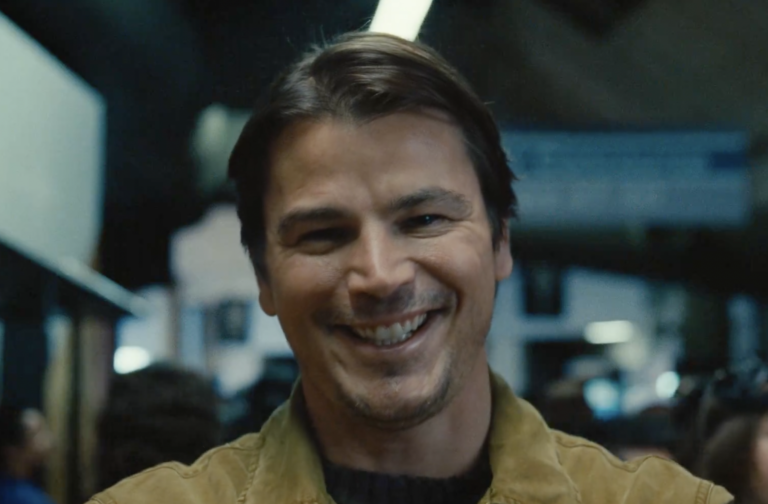
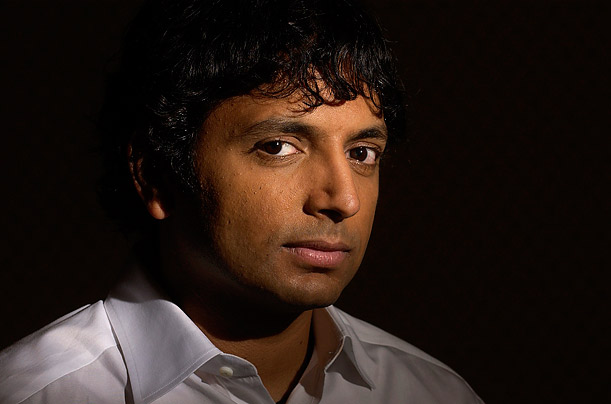
On this episode, JD and Brendan discuss M. Night Shyamalan’s new film Trap, starring the great Josh Hartnett! We’ve been looking forward to this film all year, and as big M. Night fans, we were thrilled with how Trap lived up to our expectations.
Review: Trap(4:00) Director: M. Night Shyamalan Writers: M. Night Shyamalan Stars: Josh Hartnett, Ariel Donoghue, Saleka Night Shyamalan
Humans generally think of time in a linear fashion. We move forward and we think back. Our existence on this plane is a slow crawl toward both our individual selves and our species’ oblivion. We can see clearly what has come before as if we walk backwards on this timeline. It’s as if our consciousness is strapped into a baby’s car seat and it can only perceive things after they happen. We’re children looking out the car window to see a tree or power pole as the car speeds past. While we mortals are content with continuing to exist this way, writer-director Christopher Nolan chooses to turn any which way he pleases and even leaps off the linear path to skate figure eights among the stars with other fourth dimensional beings.
There is a constant sense of being off balance when watching a Christopher Nolan film. It’s because he’s taking us along with him, through his thoughts and the vast universes they contain. His films based in the past look to the future and his films based in the future look to the past as they reach out in conversation with each other. Those conversations revolve around deeply human ideas and themes. He has his characters love, fight for survival, hope for the best, and be ambitious in going for something they want.
The Prestige is about corporate espionage. Though, its corporations, its brands, are the fame and fortunes of two Gilded Age magicians. Alfred Borden (Christian Bale) is driven by a need to be the smartest person in the room. Robert Angier (Hugh Jackman) is driven by his need to be adored. Their rivalry is bitter and violent as they try to get inside the other’s head. They push the boundaries of their craft beyond the limits of their very humanity leaving friends, assistants, and family in their wake.
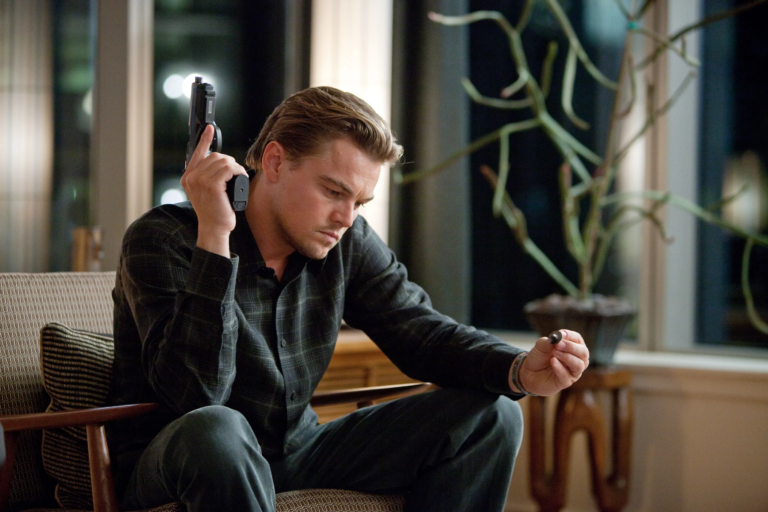
Inception is about corporate espionage. Its corporations are the traditional kinds with multinational holdings, diversified portfolios, stocks, and deep secrets. Dom Cobb (Leonardo DiCaprio) and his crew are the best at extracting those secrets. They enter their mark’s unconscious mind through dreams, making the person feel safe, threatened, confused, or anything else in order to push them to reveal their secrets. The dream world provides a way to connect them to a deeper part of themselves, which could potentially change how they see the ones they love and bring a little humanity back to the corporate entity.
The Prestige and Inception are intertwined in this way, making a circle with two points. At one end is love and at the other is ambition. Borden and Angier start as men who love. They love the life of illusions and fantasy. They love people who are engaged by their passion and their drive, but it isn’t enough for the two of them to have one person, one family who see them as brilliant. There must be more people to impress, more adulation, more awestruck faces. Their curve bends toward ambition. Their talents demand more. They must be better. They need something more than who they are. The secrets they keep of the illusions they perform drive each man to his final fate, each alone in his own way, still hoping to have the final boast.
This is where Inception begins its journey in the arc. The characters of Robert (Cillian Murphy) and Saito (Ken Watanabe) are titans of industry. The two of them head rival companies that have reached a plateau in their growth. Cobb is the man in the middle. He isn’t vastly wealthy or an executive, but he is the best at what he does even if what he does won’t let him forget how he got his reputation. These men meet in a space devoid of their stations in life. It’s a playing field with only a small semblance of control, built to manipulate and implant an idea. They play with emotions, change relationships, and find a way to understand what is actually important in life. Regardless of the impetus for the catharsis Robert experiences, it’s still real as he put his real memories into it. Regardless of the malevolent creature Mal (Marion Cotillard) has morphed into in Cobb’s memories, his own catharsis and forgiveness is real even if she isn’t. Regardless of why he wanted to tag along on a trip of corporate espionage, Saito finds his lifetime trapped in a dream to be a chance at a do over, to maybe do things differently. Their ambitions curve, through their own volition or though a simple coercion, toward the love they’ve always needed in their lives.
Can ambition and love coexist? It’s a tough question, but it’s probable that if you only look toward the future, you will forget the past. It’s also probable that remembering the past can benefit the future. Yet the future, as much as we strive toward it, isn’t a fixed point. It isn’t certain, even with credible foresight. One little detail or idea will throw any trajectory off course.
Oppenheimer tells a story of a man who sees into the future. Robert Oppenheimer (Cillian Murphy) stands at the precipice of human discovery and he leaps off of it. He takes theoretical physics into the realm of the real and gives humanity the most grim and terrible possible fate of nuclear annihilation. Whatever his intentions in successfully building and testing an atomic bomb, his spark sets the world on edge with volatile fingers hovering on buttons. In his hour of realization, Oppenheimer strives to put the terror back in the box. He sees the devastation his invention will cause. He tries in vain to rally against its proliferation. He foresaw the cataclysm of a flawed humanity with the power to wipe itself from the universe. Oppenheimer sinks into the dire depths of a quote he often repeats from the Bhagavad Gita, “Now I am become Death, the Destroyer of Worlds.”
Interstellar tells a story of a man who only sees the past. Coop (Matthew McConaughey) has never given up the stars he wanted to explore as a pilot for NASA. Even as Earth’s population dwindles and her resources dwindle even faster, Coop wants people to remember who they were. When he stumbles upon a reconstituted NASA he barely hesitates after hearing their pitch for a last ditch effort at saving humanity from extinction. Though, on the mission he can’t see the survival of the human race for the people he and his fellow astronauts Brand (Anne Hathaway), Romilly (David Gyasi), and Doyle (Wes Bentley) left behind. As the years slip by, Coop feels farther from his goal, farther from the spirit of the oft quoted poem “Do not go gentle into that good night,” by Dylan Thomas.
Both Oppenheimer and Interstellar offer visions on what it takes to survive. Oppenheimer attempts to delve into the psyche of a man who comes to regret his creation and sees the hubris of the leaders that will exploit it. Theory is one thing, but practicality is an entire beast on its own. They’re two sides of the survival coin. On the one hand, the Nazi war machine, fueled by hate and misguided belief, is a decimating force that must be stopped. On the other hand, this bomb, if proliferated and used, could destroy the entirety of the world for something so petty as lines on a map and a difference in ideology. Both coexist within Oppenheimer. He sees the need to end the suffering of millions with the deaths of thousands, but there will be a hunger for this weapon and for the destruction of enemies.
Interstellar has posited that man’s other hubris of exploiting our natural world will lead to devastation. Coop sees humanity’s future as one unbound by this world. He seeks survival in the ideas of generations of humans before him that to seek, explore, and journey is the only way to find something more palatable. He seeks, explores, and journeys with the purpose of the perpetuation of his own family, though. It’s what sets him apart from the scientists he travels with, this need not for humanity to continue, but for the people still on Earth to have a chance at the life taken from them by their forebears. A life without the need for scraping in the dirt for a hope of survival.
Is survival about knowing how to affect the future or caring about what we had in the past? If there was a way for humans to travel both forward and backward on our timeline, a new theory is broached because the past is knowable and the future is unknowable. It’s when we start to think of the repercussions of a simple change that theory splits itself. One theory dictates that if one with foreknowledge traveled to the past, their presence would then completely change the timeline. A branch would develop at that point and a new structure would form even as our person remembers their timeline. Events beyond that point would be different from where time branched. Another theory is that the timeline is fate, that whatever happened, happened. That person with foreknowledge was always meant to arrive and whatever they do cannot change what is meant to happen.
Dunkirk is a film about hope for the future. The film splits into three different timelines, which change our perception of the situation at hand as they progress. The men stuck on the beach waiting for rescue try every scheme and ploy they can think of to get off the beach and into a ship heading back to England. The small craft coming across the English Channel seek to help any and all they can find. The Royal Air Force (RAF) pilots hope they’re not too late and do all they can to make that true. The fate of one man affects another, affects another. Yet, even as the odds pile up, none of them gives up hope in the horizon in front of them.
Tenet is a film about hope lying somewhere in the past. The Protagonist (John David Washington) is kept on his toes by a shadowy organization. The organization’s aim is to stop a future power from sending an incredibly powerful weapon back in time. Sort of. In a macro way the temporal logistics of Tenet are confounding, but in the micro world of the characters it is about how changing fate for one’s self can have an impact on changing fate for the world as a whole. There is hope in the changing of one’s past circumstances. Or at least in the attempt to change it.
Dunkirk and Tenet offer different ways of time travel as a vehicle for hope. Dunkirk isn’t specifically about time travel, but obtusely it uses the ideas of a branching timeline. We see events from different angles. Their drama is heightened even if we know the outcome presented in one of the other timelines because something could change, or not change, but our fundamental knowledge of the outcome of events is skewed. When Mr. Dawson (Mark Rylance) and crew encounter the shivering soldier (Cillian Murphy), he’s atop the nearly sunk hull of a warship hit by a torpedo from a U-boat. It’s not until Tommy (Fionn Whitehead), Gibson (Aneurin Barnard), and Alex (Harry Styles) are rescued from the second shipwreck they’re a part of that we see the shivering soldier in the past, commanding men in a row boat. Suddenly our perception of the timeline shifts with our hopes for these men. As they progress, they get farther from that fate, as if our seeing the future changed what happened to them in the past. The opposite is true when Farrier (Tom Hardy) takes the wave of his partner Collins (Jack Lowden) as a sign of safety, when in a different timeline, his wave is one of desperation as the water begins to fill his cockpit. The timelines shift our perspective and change the future as they eventually merge and then split again. They fill us with hope and dread simultaneously as they change our perception.
Tenet is the opposite in terms of its fatalism. Everything that happens within their timeline is because someone put the pieces into place and they will always be in those places no matter who inverts themselves or why. That’s where the hope of the film lies even if the audience and the characters don’t know it. It takes The Protagonist seeing the moves as they happen, and understanding that they are moves he can reverse engineer, which helps him grasp his place in the greater conflict. His analytical mind interprets and then weaves the narrative as he remembers it, which gives him hope in a favorable outcome even if his being two moves ahead means he has to take sixteen moves back to get back to his two moves ahead in the right way and at the right time. His knowledge of the past informs how he hopes to conquer the future.
Could it be possible for hope to exist if the future is known? There aren’t forgone conclusions within the branching of timelines and even a past and future bound by the shared fate of an omniscient being isn’t a completely solid foundation. Human interference will always put the future in doubt. People will always learn to love and even more unpredictably they will learn to want. The future is shaped by what has happened and what people want to happen. Force of will turns the wheels of our existence.
Christopher Nolan’s films exist outside of a linear scope. Even his films that are ostensibly set in the present exist like a fractured mirror of time. He uses the filmmaker’s art to restructure how we perceive stories. We’re shown exactly what we’re meant to be shown when we’re ready to see it. Nolan puts his characters’ lives into a blender and shows us their capacity for love and hope as well as their dark and light ambitions toward survival. He weaves these themes throughout his films to take us beyond our sense of acceptance about linear time. Nolan shows us how the past and the future are in conversation with one another. He shows us that the true power of cinema is in how the time is used and how a film we’ve seen takes on a new meaning the second time because we remember its future in order to interpret its past.
The Academy Awards have a long prestigious history that has become the nucleus of the film industry in many ways. However, for a variety of reasons, the nominations and winners we get each year are always going to be debatable. Some of them do not hold up while others are legendary all-timers. Through this series, we hope to gain some insight into The Academy and how they see themselves reflecting on the history around them. Or the industry itself and how it evolves over the years. This will be a long series that will likely last a few years. So buckle up, settle in and enjoy the ride as we look back at every Best Picture winner at the Oscars.
We will be doing this series by the decade. After we scour through the films of each one, we will take a break and come back at a dedicated time later on in the year.
Well, that’s it for now. Be sure to subscribe to the podcast and follow us on social media for new information as it arrives. We hope you’re enjoying the series as much as we are, and we can’t wait to dive into the next decade soon.
This week on the InSession Film Podcast, with the release of Trap, we thought it would be fun to do a consensus ranking of M. Night Shyamalan! We also catch up with the recent box office receipts and guess as to what Marvel will reveal at this year’s D23.
Check out this week’s show and let us know what you think in the comment section. Thanks for listening and for supporting the InSession Film Podcast!
– Opening Banter / Box Office (0:45) We open the show this week with some random banter and a reminder that our 2000 Retrospective is on the horizon. We also talk about the box office success of Deadpool & Wolverine since we missed it last week, and how things have changed drastically since May. The industry might not be dead after all.
– A Quiet Place: Day One (26:26) JD missed the film when it was in theaters due to illness, but he finally caught up with it last week and wanted to give his thoughts on what is one of the most surprising experiences of the summer. It is wild that Michael Sarnoski convinced a major studio to make a $67 million movie about finding a slice of pizza as aliens attack earth.
– Marvel & D23 (47:30) Last week we spent some time talking about Marvel’s big splash at this year’s San Diego Comic-con with Robert Downey Jr. coming back to the MCU, and as a result, we are very intrigued by what they could reveal at D23. Are they going to announce an X-Men movie? Perhaps another Spider-Man? If they’re going to do Secret Wars, there needs to be more than what’s currently on the docket and that’s what has us curious.
– Ranking M. Night (1:10:23) As we’ve done previously, we thought it would be fun to do a consensus ranking of M. Night. He has one of the most fascinating careers in Hollywood and we’ve grown quite fond of him over the years. There’s no one like him. He has very distinct phases that are really fun to talk about, and we had a great time coming up with a list that we’re very happy with regarding Shyamalan’s films.
If you want to help support us, there are several ways you can help us and we’d absolutely appreciate it. Every penny goes directly back into supporting the show and we are truly honored and grateful. Thanks for your support and for listening to the InSession Film Podcast!
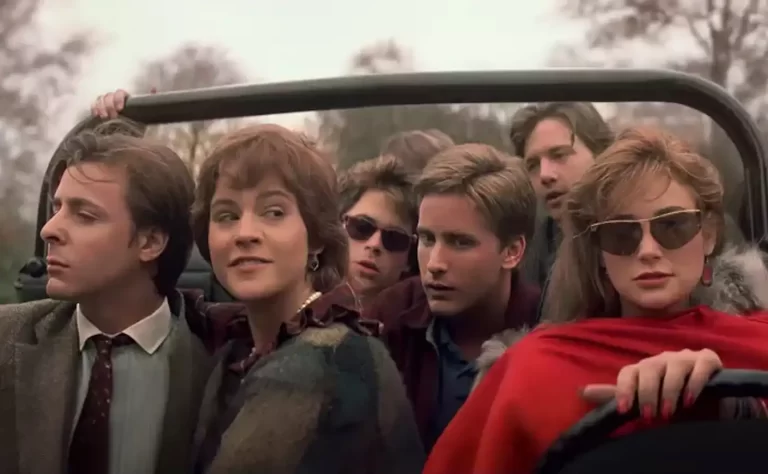
This week on Women InSession, we discuss Andrew McCarthy’s new documentary Brats and how it attempts to examine the story of The Brat Pack! It doesn’t always work as a movie, but it’s a fascinating story to talk about and we had a great time delving into the history of it all and where the Brat Pack is today.
Panel: Kristin Battestella, Zita Short, Amy Thomasson, Jaylan Salah
On that note, check out this week’s show and let us know what you think in the comment section. Thanks for listening and for supporting the InSession Film Podcast!
This summer has been massive in the world of film. At the box office, Longlegs, Twisters, Despicable Me 4, Deadpool & Wolverine, and more have kept audiences returning to the theater; if they show up early enough, they might also get a chance to see how stacked the fall releases will be. From action to drama and big budget to indies, these trailers showcased a vast array of films, and almost all of them also displayed just how tight this year’s Supporting Actor race could be.
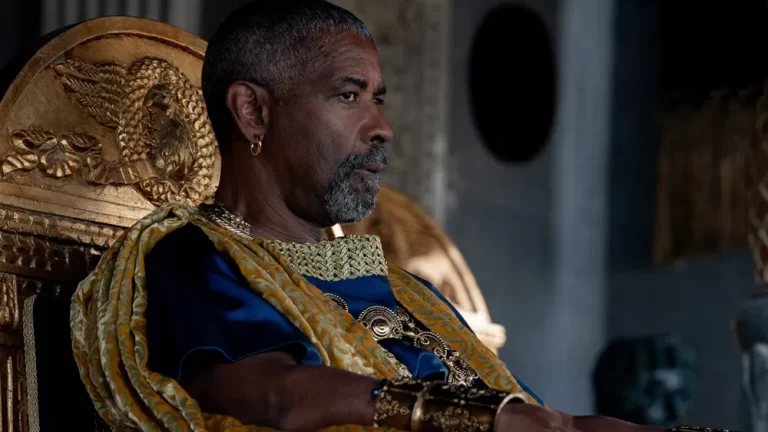
First, we got our first look at Gladiator II, which will be released this November. Leading man Paul Mescal was given the most screentime, but the legendary Denzel Washington was close behind him. In my first update, I noted that Washington would be an ex-Gladiator searching for power, and this trailer did his character wonders by displaying him as a puppetmaster leading the show. Washington looks better than ever, oozing charisma with a maniacal laugh.
Another trailer that showed men yearning for power came from Conclave. Ralph Fiennes is the film’s apparent lead, bringing the primary supporting duties to the duo of John Lithgow and Stanley Tucci. From the trailer, Lithgow’s performance is quiet and cautious, while Tucci is active and abrasive. Both performances could be Oscar-worthy, but which one will stand above the other in such a loaded category?
The trailer for Sean Baker’s Anora gave us our first look at Mark Eydelshteyn. While the trailer did seem convincing that Anora will be a major Oscar player, Eydelshteyn’s involvement has been kept relatively low to avoid spoiling too much about the film and allow star Mikey Madison her time to shine.
A trailer that didn’t hold its Supporting Actor in the shadow was A Different Man, in which The Hollywood Reporter singled out Adam Pearsonfor “stealing the show.” There is a chance this movie could earn recognition from the awards branches for their makeup work and Sebastian Stan’s leading performance; with a good push, Pearson could be along for the ride.
Kieran Culkin was also given ample time to shine in the trailer for A Real Pain from director Jesse Eisenberg. Culkin gets almost all of the speaking lines in the trailer, and his performance is quoted as well, but the scenes highlight the full range of emotions he endured during the film, from joy to sadness and everything in between. He has a chance in this race, but one surprise trailer made an alright close fight that much closer.
James Mangold’s Bob Dylan biopic A Complete Unknown dropped a surprise first look at Timothee Chalamet. The film, which wrapped in mid-June, not only had a trailer released within a month but is also eyeing a December release. Suppose A Complete Unknown does make a significant play this season— which might still be a big if— Edward Norton, who plays fellow folk singer Pete Seeger, could upend this Supporting Actor competition and even compete for the win. The film is set around the Newport Folk Festival of 1965 and the electric changes Dylan would make to the folk scene. Seeger served as Dylan’s mentor and friend, but this festival proved to be the start of their downfall professionally and personally, with Seeger furious about the changes Dylan made to folk music. Mangold handled biopics before directing the highly acclaimed Walk the Line and Ford v.Ferrari, the performances being the standout elements of both films. Joaquin Phoenix was nominated for playing Johnny Cash in Walk the Line, and Reese Witherspoon won the Best Actress Oscar for portraying June Carter. While no actors from Ford v. Ferrari were nominated, the film won the Best Film Editing Best Sound Oscars in 2020, with Christian Bale possibly on the cusp of a Best Actor nomination.
Mangold knows how to direct solid biopic performances and how to get recognition from his actors. While Timothee Chalamet will get most of the love from this film, I suspect Norton, a three-time nominee who has yet to win an Oscar, will be right there with him and in the running for his first-ever win.
Who’s Out?
Since my last column, I removed Chris Hemsworth, Jesse Plemons, Paul Raci, Jeremy Strong, and Mark Eydelshteyn from my list of top contenders. Furiosa just doesn’t seem to have the staying power that I thought it would have and not near the staying power that Fury Road had. It’s the same with Jesse Plemons for Kinds of Kindness, a movie that came and went from the public eye, and with the summer release, it might not have the legs to make it throughout the entire season. Sing Sing will likely still have a significant return to the scene as the indie movie of the year, but Clarence Maclin will be getting all of the love, and Raci will likely be left behind. Jeremy Strong is an interesting one. I removed him from my top ten list because no one knows if The Apprentice will be released this year; even if it is released, who knows what movie it will be? If the film is released in its entirety, I will put him back in, but I will keep him out for now. Finally, with Mark Eydelshteyn, as noted, the trailer was much more Mikey Madison-focused, not displaying his role in the film all that much. He could come back, but for now, he’s out.
Who’s In?
With only trailers to dissect, I see no point in removing Samuel L. Jackson from the top of my list. The Piano Lesson is a fictional universe in which Jackson has played two characters—he originated the role of Boy in a 1987 play at the Yale Repertory Theatre. He was nominated for a Tony for portraying Doaker on Broadway in 2022, the same role he will play in the movie. However, behind him are actors who look more challenging by the second. Denzel Washington moves up to my second spot because of how he was used in the Gladiator II trailer and his larger-than-anticipated presence in the early footage. Behind him is Edward Norton, who, even just a week ago, I would’ve assumed would be competing for this award in 2026, not 2025. Clarence Maclin holds firm at four, while Stanley Tucci rounds out my current five since he is, at least for now, the most likely nominee from the Conclave supporting cast.
Behind them, Kieran Culkin remains at six while Drew Starkey shows up for his role opposite Daniel Craig in Luca Guadagnino’s Queer, which will have a Venice release. The second of the primary two Conclave supporting performances, John Lithgow, is at eight. At the same time, Brian Tyree Henry remains in the top ten at 9, with The Fire Inside, which will receive a Toronto International Film Festival (TIFF) premiere, and Adam Pearson’s singled-out performance in A Different Man rounds out my current top ten.
Director: Doug Liman Writers: Casey Affleck, Chuck MacLean Stars: Matt Damon, Casey Affleck, Hong Chau
Synopsis: Rory and Cobby are unlikely partners thrown together for a heist. When it goes awry, they team up to outrun police, Boston’s crooked mayor, and a vengeful crime boss.
What do Ocean’s Eleven, The Town, Logan Lucky, Widows, and practically every other great post-2000s heist movie have in common? Two things. Firstly, most (if not all) of them master the art of the reveal; the how, when, why, and what of the given caper is cleverly crafted and executed not solely with priority placed on realism, but on the audience’s entertainment, too. Whether it’s Danny Ocean and Linus agreeing to get the “95-pound Chinese man with $160 million” out from behind the door of Terry Benedict’s vault, or Doug MacRay and James Coughlin debating whose “cah” they’re gonna take; these moments tend to make or break the build-up that has been leading to the scale finally tilting in favor of the criminals rather than the establishment.
The second thing doesn’t get nearly enough credit, yet should always be considered of equal importance: The team’s introduction. Think about the moment the key players come together in films like The Italian Job, Ambulance, 60 percent of Guy Ritchie’s filmography, or Triple Frontier. These sequences are not just seminal, they also serve as adrenaline-fueled joy rides that always prove pivotal and can stand the test of time on their own. Consider The Perfect Score: It’s no good, but it features a solid scheme and a cast that is up to the task of stealing SAT answers, by any means necessary. When they join forces, it’s impossible not to smile, even if the rest of the film falters as it attempts to bang every previously-beaten drum to death as its central heist unfolds.
That Doug Liman’s The Instigator fails to check the latter box is strike one by default, because it comes first. Within a few minutes, the film attempts to speak the partnership between Rory (Matt Damon) and Cobby (Casey Affleck) into existence despite neither having any sort of motivational pull to the operation they’ve been roped into. Rory is a depressed and in-debt divorcee whose “kill self” deadline is rapidly approaching, while Cobby is an asinine, alcoholic ex-con. The only common ground between the two is a presumed fandom for the New England Patriots, a crime against humanity in and of itself. There’s no desire for revenge, or for power, or even for glory. Just an urge to pull in some dough to pay off some debts before returning to their ho-hum lives. Rory needs $32,480 exactly; Cobby just happens to be perpetually available. It’s a conceit that might just work if it weren’t for the fact that Damon and Affleck couldn’t look less enthused to be here, a far-cry from the charisma they shared as chummy pals who aimlessly drove around Southie in search of trouble back in 1997.
Strike two: The crime itself, both in design and execution. Hired by Mr. Besegia and Richie Dechico (Michael Stuhlbarg and Alfred Molina, respectively, who appear to have worked with their dialect coaches for a combined 14 minutes in an effort to pull off a Boston accent), Rory and Cobby are given instructions to rob the city’s mayor (Ron Perlman) of millions in donations. He’s a crooked politician who has been pocketing money for years since becoming Boston’s top dog, and shows no sign of stopping. The newest batch of donations, Besegia knows for a fact, will be held in a safe at the venue for Mayor Micceli’s victory party; not only will the celebration’s guests be wealthy and generous to begin with, but a bribe is required to even get in the door. More money, less problems for everyone involved in the hit. (Foul tip: Jack Harlow intermittently manages to be funny as the third member of this thieving trio, unlike his wretched work in 2023’s White Men Can’t Jump remake.)
That is, there will be more money as long as Micceli is re-elected, something no one but first-time criminal Rory suggests as a potential outcome. The sitting mayor’s opposition, Mark Choi (Ronnie Cho), may be an underdog, but he’s a likable candidate who promises to give Boston a new direction that its citizens seem fond of. When Choi does, in fact, win the election, the stickup is compromised, and The Instigators takes a left turn into a series of car chases and cat-and-mouse minigames between the film’s two unlikely criminals and the feds, the mob-ish duo of Besegia and Dechico, and Micceli’s personal bruiser, Frank Toomey (Ving Rhames, the best part of most movies, this one included). That Rory and Cobby didn’t know each other before becoming partners should have given the film plenty of runway to shapeshift from a comedic crime saga to a male-bonding road trip movie, but both men are so frustratingly one-note that their odd-couple pairing never grows beyond Cobby trying to get Rory to crack a smile with endless crude quips, the likes of which seem to be a coping mechanism for a drunk dude who doesn’t know how to reduce the tension without being obnoxious.
Rory and Cobby, in the spirit of a road movie, do an awful lot of driving in this junker, a fitting way for Liman – the director behind this year’s lackluster Road House remake, making this his year to date a flop – to spin them around the bends of his own personal roundabout, in which every exit is a different narrative. One leads them to André de Shields’ beach house, where they face off with Paul Walter Hauser for a forgettable five minutes that mean next to nothing to the rest of the film’s events. Another almost takes them to Montreal, where they feel they could escape the cops. The route Liman dedicates the most attention to is the one where Hong Chau receives much of her completely thankless screen time as the second-best therapist Matt Damon has ever had on screen. (Note: He’s only had two).
What could’ve been a nice Downsizingreunion for Damon and Chau is – you guessed it – reduced to a flattened reenactment of the relationship between a therapist and her patient, or at least what those who worked on this movie believe is the dynamic between shrink and shrinkee. The most emotionally resonant scene between the two functions more as an ad for how to use Apple Car Play during a high-speed chase than as a moment capable of adding more depth to any of the characters. In other words, there’s a lot of “And how does that make you feel?” going on, even as Rory and Cobby drag Dr. Rivera along while inching closer to their final criminal goal, which is ultimately just an extension of their initial one, albeit not at the behest of Besegia and Dechico. Once again, this scheme fails to entertain, try as Toby Jones might in his role as Micceli’s ragdoll of a number two.
Your instinct in the aftermath of The Instigators might be to say that Damon, Affleck, and everyone else deserved a better movie than the one they got, but one cursory glance at the film’s core team should dispel any shred of sympathy. Affleck co-wrote the film; Damon co-produced it with Ben Affleck. Chau, the best performer of the top-billed three, is the only non-Ving Rhames performer that is potentially worth apologizing to, if only because it’s abundantly clear that the material she’s been given to work with here is approximately seven layers of Hell beneath that of her recent turns in projects like Driveways, The Menu, and Kinds of Kindness. It’s not an actor’s fault if the part they’re playing sounds like ChatGPT’s best attempt at writing a last-minute essay for a psychology student who forgot one was due at the end of the week.
On the whole, The Instigators is brainless enough to be worth giving a shot for 100 minutes on a slow Thursday night in. Let’s make sure that much is clear. But when there’s already so much low-quality streaming fare at an audience’s disposal these days, it’s hard to root for something as full of talent yet devoid of life as this is, a massive misfire in a genre that tends to make missing rather difficult. Even “bad” heist films somehow find ways to be entertaining, if not good. Tower Heist comes to mind; I’ll even offer up the same 60 percent of Guy Ritchie’s filmography that I did before. That The Instigators fails to reach even those meager expectations is as big of a whiff as they come. Strike three; game over.
This week on Chasing the Gold, Shadan and guest preview this year’s TIFF and Venice Film Festivals! It’s going to be a very exciting fall and there are many movies we are looking forward to as they debut at these great festivals.
On that note, check out this week’s show and let us know what you think in the comment section. Thanks for listening and for supporting the InSession Film Podcast!
Being nominated for an Oscar is often a once-in-a-career achievement. It’s about the right performer in the right role at the right time. For many performers, this is the pinnacle of their careers. For others, it’s another step toward immortality. An Oscar nomination is a way for performers to cement their names among the greatest to have graced the screen. Even more challenging than being nominated is to win. To win is to be at the top of the heap.
Few performers have won even one Oscar. Yet, the race to win again is an even more difficult feat to pull off. With that second win, they cement themselves in an elite club, the upper echelons of acting. Thirty-eight performers have won two acting Oscars. Six performers, Walter Brennan, Frances McDormand, Daniel Day-Lewis, Ingrid Bergman, Jack Nicholson, and Meryl Streep, have gone further and won three Oscars. Only Katharine Hepburn has won four. She is also the second most nominated actor with 12 mentions (Meryl Streep has her beat with 21). Within those 12 nominations and four wins, Hepburn also has the distinction of being one of four performers to win consecutive prizes. Spencer Tracy, Jason Robards, and Tom Hanks are the other performers with that distinction.
Emma Stone could accomplish that feat this awards season with her performance in Yorgos Lanthimos’ Kinds of Kindness. In a fierce battle against Lily Gladstone, a heavy favorite last season, Stone came out on top to win her second Best Actress award for Poor Things. In Kinds of Kindness, she plays a trio of complicated women in three distinct segments. Each one of these characters presents its own acting challenge, which has put Stone in the running for her fifth career acting nomination and third win.
Emma Stone won her second Best Actress Oscar for 2023’s Poor Things.
Why Stone could win:
Two of her four acting nominations come from films directed by Yorgos Lanthimos, who directed Kinds of Kindness.
She has an excellent win percentage with the Academy, winning two of the four times she’s been nominated.
She gives unselfconscious and daring performances in each of the film’s three segments.
Why Stone could lose:
A Best Actress nomination for Kinds of Kindness would likely be category fraud as her part in the first segment is minuscule, and her role in the middle chapter is much more of a supporting turn.
Kinds of Kindness is polarizing and will alienate some awards voters.
It’s harder to build up a narrative for a third win, especially if the second was the year prior.
This year’s performance isn’t as strong despite being the same caliber.
It’s so rare to see a performer win consecutive Oscars because it becomes difficult to judge two of their performances on equal footing. It’s even rarer for a performer to have two distinct performances lined up back to back. Katharine Hepburn’s performances from her consecutive wins could not have been more unique. She played a mother concerned with her daughter’s romantic choice in Guess Who’s Coming to Dinner and a prisoner queen who schemes to get her favorite son on the throne in The Lion in Winter.
Emma Stone won her first Best Actress Oscar for 2016’s La La Land.
Emma Stone’s performances between Poor Things and each of her roles in Kinds of Kindness are distinct from one another, but as a whole, Kinds of Kindness doesn’t highlight how strong of a performer she is. The first segment Stone’s in is little more than a cameo-type role. It is a lynchpin, but it has very little substance to it. The second segment is more of a psychological study, with Stone portraying an internal struggle, which she does quite well, but the story doesn’t linger on her long enough. If anything, her lead performance in the third segment shows she is worthy of recognition. She is devious, vulnerable, unstoppable, and furious in equal measure as a woman out to prove she will be the one to find her cult’s messiah.
If given enough time, Stone may be the next actress to pull off repeat wins. Though many may still see her as the big-eyed ingénue and haven’t come along for the mature turn, her career has taken over the last decade if Katharine Hepburn accomplished the consecutive Oscar feat in her sixties, who’s to say Emma Stone can’t win two in a row in her forties?
Director: Carlos Saldanha Writers: David Guion, Michael Handelman Stars: Zachary Levi, Lil Rel Howery, Jemaine Clement
Synopsis: Inside of his book, adventurous Harold can make anything come to life simply by drawing it. After he grows up and draws himself off the book’s pages and into the physical world, Harold finds he has a lot to learn about real life.
The adaptation of Harold and the Purple Crayon has finally made its way to a cinema near you. Adapting a beloved children’s book always comes with high expectations, especially in a genre that often struggles to think outside the box. Creating a movie for children, let alone one that appeals to the entire family, is a challenging task.
Typically, films in this genre play it safe, incorporating some bathroom humor for good measure. They often rely on bright, flashy special effects and G-rated antics, with just enough of a story to engage the adults. So, when it was announced that Sony was developing a live-action adaptation of Harold and the Purple Crayon, I hoped it might break free from the standard studio formula.
Unfortunately, the film leans too heavily on the simplicity of the children’s classic and misses the original work’s creativity. Instead, we’re bombarded with endless filler scenes featuring prominent product placements—think Coca-Cola, Chick-fil-A, Sabrett Hot Dogs, and more.
However, while I highly recommend washing down a great chicken sandwich and beefy hot dog with some great American company’s cola goodness (feel free to reach out to InSession Film so we can fulfill any Fortune 500 companies’ product placement needs), the overzealousness detracts from an already bland and predictable experience.
The story is intended not as a direct adaptation but as a sequel to the book series. Zachary Levi plays the titular character, Harold, who draws himself out of the pages and into the real world in search of “the old man,” his creator and father. Accompanied by his friends Moose (Lil Rel Howery) and Porcupine (Tanya Reynolds), Harold meets Terri (Zooey Deschanel) and her young son, Mel (Benjamin Bottani). Their relationship is hard to fathom and never feels earned throughout the film.
Directed by Carlos Saldanha, known for the successfulanimated Ice Age and Rio franchises, and scripted by David Guion and Michael Handelman (the team behind Slumberland, Night at the Museum: Secret of the Tomb, and Dinner for Schmucks), the film struggles with creativity. The script spends too much time avoiding meaningful connections between the live-action characters and the real world.
The big moment the movie builds towards, where Levi’s character is eager to meet “the old man,” feels more like an infomercial for Crockett Johnson’s classic children’s series. Every interaction remains as thin and two-dimensional as the characters themselves. While Levi channels his “adorkable” persona and a youthful Tom Hanks charm effectively, the role doesn’t allow him to connect with the heart of the matter that comes with knowing who you are and what you want to be.
That’s where Harold and the Purple Crayon misses the mark. The opportunity to explore themes of growth, learning, and identity is nowhere to be found. Family entertainment should thrive on these themes, addressing real existential issues and the consequences of actions. Unlike films like Elf, Enchanted, and even Bruce Almighty, which combine comedy and heart to teach thoughtful lessons, This adaptation fails to use Harold’s magic crayon to impart lessons about individuality, reality, or social norms.
Moreover, the “real world” characters teach counterproductive lessons to children, such as using cell phones while driving and picking up hitchhikers without concern. Even though it’s a children’s movie, responsibility in storytelling is crucial, especially when the adaptation strays from the essence of the source material. For instance, should we allow two strange men to live in our home with the young child you just met who is acting as if they need help from a mental health professional?
The script even fails to make a flimsy excuse for allowing such an action, like almost hitting them with their car, which would be comedically plausible. It’s unfortunate, as Harold and the Purple Crayon had the potential to be a film about limitless possibilities. Some of the special effects can be fun but don’t seem to add a purpose other than to catch the eye. They are hollow. They lack engagement.
To strengthen my point, at the screening I attended, you tend to pay attention to when children laugh and are engaged. However, most of the young audience members were talking and playing in the row or on the stairs because the movie was tepid and lacked real humor, heart, and engagement.
Harold and the Purple Crayon is nothing more than buying a piece of intellectual property as if you are buying a brand-name label and putting it on a cheap imitation.
Director: M. Night Shyamalan Writers: M. Night Shyamalan Stars: Josh Hartnett, Ariel Donoghue, Saleka Shyamalan
Synopsis: A father and his teen daughter attend a pop concert only to realize they’ve entered the center of a dark and sinister event.
M. Night Shyamalan is one of American cinema’s most divisive and fascinating directors. Bursting onto the scene with 1999’s The Sixth Sense, a mid-career downfall, and now a career resurgence, his films often explore similar themes and have a consistent pace and narrative arc. His latest film, Trap, starring Josh Hartnett as Cooper Adams, gives Shyamalan a different enough playing field that makes it distinguishable from many of his other films. The movie follows Cooper and his daughter Riley (Ariel Donoghue) at a Taylor Swift-esque arena concert in Philadelphia. Cooper is revealed within the film’s first few minutes to be a serial killer known as The Butcher, and the concert itself was set up as a trap to catch him. He tries to simultaneously evade the heightened security and law enforcement presence and ensure his daughter has a great time at the concert.
Trap features several classical Shyamalan tropes, including a wildly original premise, somewhat robotic dialogue, attempts at interpersonal relational drama, and unwavering support of the city of Philadelphia. These seem to be aspects of his filmmaking style that don’t show any signs of changing or going away despite more than two decades of vocal criticism. It’s pretty clear at this point that Shyamalan simply doesn’t care that his dialogue and his characters are often seen as inhuman, or emotionless. In recent films, he seems to be leaning into that even more. Whether you think this is a feature or a bug of his style, Shyamalan is going to continue to lean into his instincts and make choices that he finds interesting.
Oh, and we can’t forget about the nepotism! It’s been a big year to have M. Night Shyamalan as your father, with daughter Ishana’s debut feature The Watchers releasing earlier this summer. He seemingly made Trap to boost Saleka Shyamalan’s music career, who plays the film’s pop superstar, Lady Raven. Since his debut film Praying With Anger, it’s been difficult for Shyamalan to resist casting himself in his own films, and this is now trickling down to his children. This isn’t necessarily a bad thing, but, notably, both Trap and The Watchers were released within a couple of months of each other, perhaps a wishful thought that his family would be the talk of the town all summer. Saleka wrote and performed all of the songs featured in the concert sequences in Trap and played a pretty prominent acting role. If you compare screen time, her fictional popstar Lady Raven is the third lead of the film.
Josh Hartnett is unequivocally incredible throughout the movie, constantly switching back and forth between a cold-blooded killer and a loving, supportive father. His over-the-top enthusiasm and line delivery when interacting with Riely and any host of strangers at the concert contrasts perfectly with his quick, unsettling facial expressions as he turns into the meticulous Butcher. He plays both parts believably, equally investing the audience in his role as a father and a killer trying to escape. At many points, we are left worried more about his relationship with Riley than his ability to escape the arena without being caught. It takes a special performance to balance both sides so well in a character that is blatantly the antagonist of the story. He brings the perfect energy to pull this story off and is incredibly fun to watch in nearly every frame.
Hartnett’s performance is the physical embodiment of what really works for Shyamalan in Trap. A murderous psychopath is unable to exhibit realistic human dialogue. Go figure. This is abundantly purposeful and signals the early chinks in Cooper’s armor. Additionally, many of Shyamalan’s films are slow pressure cookers, gradually building the tension until it finally blows up. There are more methodical family dramas that are often hidden in the thriller genre, and most people forget that these stories are at the heart of almost all his films. This latest film makes itself distinct by being a more fun, thrilling version of the same story. The family drama is there for Cooper and Riley, but the first half of Trap zips along quickly, leaving less room for you to think about many of the filmmaking decisions. This forces Shyamalan to rely more on the thrills than the fancy camera tricks he was well known for in his early career, and the cinematography from Sayombhu Mukdeeprom speaks for itself without a ton of flash. Shot on 35mm, Mukdeeprom’s framing works incredibly well with the claustrophobic nature of being contained. It also gives us many wonderfully beautiful shots of Hartnett against the colorful backdrop of a concert light show. Mukdeeprom is having a great year, with Trap as a double dose of Luca Guadagnino with spring hit Challengers and fall’s Queer on the horizon.
Ultimately, Trap’s quicker nature helps mask the typical problems people associate with Shyamalan’s films and produces the most fun and exciting release of his career. Josh Hartnett’s charming and menacing performance is backed up by serviceable turns from Ariel Donoghue and Saleka Shyamalan and blends with the craftsmanship and style remarkably well. Love him or hate him, M. Night Shyamalan is here to stay and will continue making unique thrillers like this for years to come.
On this episode, JD and Brendan discuss Josh Margolin charming new film Thelma, starring the wonderful June Squibb! In what is going to be the most endearing film of the year, Thelma is a treat and we hope Squibb is everywhere this awards season.
Review: Thelma(4:00) Director: Josh Margolin Writers: Josh Margolin Stars: June Squibb, Fred Hechinger, Richard Roundtree
With July behind us, many are beginning to look toward festival season, especially as many big festivals like Toronto, Venice, and New York have announced some or all of their slates. It’s been a relatively thin film year so far in terms of above-the-line awards contenders with sustained buzz.
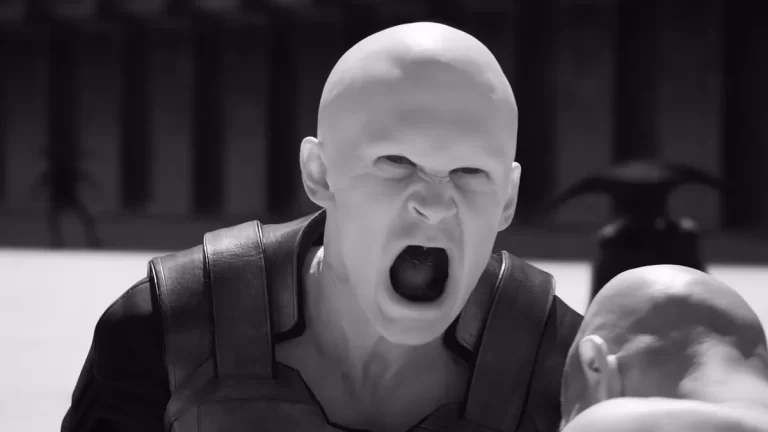
Dune: Part Two has been the only legitimate contender from the first half of 2024 likely to garner double-digit nominations. So, it makes sense that the fall festivals bring more anticipation, with every awards category seemingly wide open.
Let’s hop back in time to last year’s Toronto International Film Festival to examine a major contender set for wide release on August 2, the brilliant, emotional, and powerful film Sing Sing, particularly looking at the direction of Greg Kwedar.
Working primarily as a producer over the last few years, Sing Sing marks Kwedar’s second feature film behind the camera, his follow-up to 2016’s Transpecos. The film stars recent Best Actor Nominee Colman Domingo (Rustin), Best Supporting Actor Nominee Paul Raci (The Sound of Metal), and a host of formerly incarcerated men who participated in the real Rehabilitation Through the Arts (RTA) program at the Sing Sing facility in New York, playing versions of themselves. The film follows these men throughout the production of a new play they will put on for their fellow inmates later in the year.
It would be easy for a film like this to simply be a star vehicle to propel someone like Colman Domingo to another Oscar nomination and perhaps a win, but Sing Sing is so much more than an acting spotlight for Domingo. The film is shot on 35mm film with a 1.66:1 aspect ratio, and these deliberate choices help Kwedar and crew display the surprising beauty that lives within and around the Sing Sing prison as well as honing in on the isolation and claustrophobic nature of being incarcerated. Kwedar uses these tight shots of our actors to remind us of their plight and the hopeless feeling that can come from years behind bars. This bleak, realistic look at the life of these prisoners doesn’t take away from the incredible shots Kwedar gets of the exterior and surrounding areas, particularly the view of the river that can be seen from one of the courtyards. Even in a desolate place, there are spots where these men can have a peaceful moment looking out into beautiful pieces of nature.
Greg Kwedar’s subtle direction in Sing Sing is just another of the film’s strong points. His ability to allow each scene to breathe and let the actors take over is something truly special in this film. In someone else’s hands, they could have chosen to be more indulgent with filmmaking decisions. Kwedar’s deliberate restraint and trust in others bring life into the film in a way that is rare to experience.
Oftentimes, directors are praised for achievements on the screen, but something to highlight with Kwedar’s work on Sing Sing is very much behind the scenes. The film was made collaboratively, even more so than the average film. It takes a lot of people to make any picture come together, but Kwedar made some incredibly equitable changes to allow each cast member and crew to have a legitimate stake in the production. They each owned a bit of the film and thus could take more ownership over decisions being made. It’s not just a job but a partnership between people above and below the line. It took a lot more work to make the film this way, as Kwedar and the team had to acquire independent financing instead of taking this story directly to a studio from the outset.
While the on-screen product may be attributed to the acting talent more than anything behind the camera, make no mistake that Greg Kwedar’s impact on this film is likely unable to be calculated. His willingness to trust a new model of filmmaking and bring in so many unknown actors is revolutionary in the industry and should be recognized by voting bodies of all kinds. Hopefully, Sing Sing will continue to find an audience and resonate with people as it opens to wider audiences. Greg Kwedar is given his flowers for steering the ship that led to such an emotionally and visually effective film.
Synopsis: Follows the misadventures of a sexless couple, as their relationship falls into shambles in the early part of the pandemic.
Writer/director Eugene Kotlyarenko blew away the Fantasia scene after his 2020 film Spree both shocked and enthralled (virtual) festivalgoers, eventually becoming one of the year’s most talked-about films when it was released. With his latest movie, The Code, the filmmaker attempts to represent the chaos of the COVID-19 pandemic through the lens of aspiring documentarian Celine (Dasha Nekrasova) and her boyfriend Jay (Peter Vack) as they make a movie on the effects of the pandemic.
This premise seems rife for a potent exploration of how our culture’s reaction to the COVID crisis led to online chaos, especially regarding people who don’t necessarily think the virus is that big of a threat to themselves. The film certainly presents Celine and Jay’s views on COVID-19 this way, mocking people who wear masks in their cars, unafraid of shaking a stranger’s hand, and taking absolutely zero precautions on attempting to avoid catching the virus. Of course, this film is set in the earlier days of the pandemic and with much of the knowledge on COVID still unknown, this self-centered behavior is a topic that hasn’t been explored in any movie that dealt with the reality of the pandemic so far.
Like Spree, Kotlyarenko uses the digital world to represent the alienation of Celine and Jay’s relationship during COVID, creating a wholly unique texture through hidden cameras, Zoom, FaceTime, GoPros, drones, 360 cameras, text screenshots, and, of course, plain ol’ Sony XDCams. The language constantly refines itself and keeps trying to find new ways to showcase how the couple’s sexless relationship is driving them apart during the pandemic. I especially love how Kotlyarenko constantly reminds us that the film we’re watching is a meta-narrative even in its more sweeping moments.
He always points the cameras in obvious directions and continuously shows us how a scene is pulled off. This, in turn, makes its meta-narrative far more involving than if it was purely shown to us inside Celine’s diegesis. But we keep seeing the creative process in front of us, which, in turn, gives us more reason to be immersed in the film the ‘creators’ are making. However, Kotlyarenko makes the cardinal mistake of replacing a potent commentary on how façades are created within Celine’s digitized world with hollow provocation that is deeply offensive, trite, and unfunny.
Kotlyarenko did the same thing with Spree, but he at least had something to say on how online culture encourages exploitation. In the case of The Code, he expands upon Spree’s thesis by stating that online culture encourages exploitation, artificiality, and alienation. Yet, he never tries to explore this thesis with a culturally-averse lens, even if he utilizes TikTok filters, and rapid editing techniques worthy of influencer culture to showcase how low culture has become. Yes, our culture is at an all-time low: scientific literacy is being scoffed by people who believe online gurus, either from the anti-vaccine or the Zero COVID crowd, influencers have now a bigger control over their fanbase and can make them do whatever they want, and egotism is now at the center of most people’s belief systems.
Kotlyarenko showcases how truly clueless these chronically online people are, and he did get a chuckle out of me when one of Celine’s friends says that “COVID’s the big thing. I’m sure it’s gonna be a big hit.” Of course, Celine’s goal isn’t to make movie on COVID, per se, but to capitalize on the human tragedy of the crisis for her personal gain. In one scene, she interviews a woman whose father is about to pass away from the disease. Rather than sympathize with her and feel compassion, Celine and Jay film her until she breaks down so hard she is hitting herself on the glass. It’s all about exploitation and artificiality, never about compassion.
And yet, with such a powerful commentary on how online culture alienates and distorts, Kotlyarenko never delves deep enough for us to care about anything he’s saying because, beyond the provocative scenes of Jay attempting to get Celine to say the N-word (as he wants to show how problematic of a person she is) or one where they visit an escape room, he has nothing of interest to say about any of the themes and characters he presents. How does Celine perceive the COVID crisis beyond the façade she wants to create for her documentary? How does Jay perceive the crisis and his relationship with Celine? Kotlyarenko explores these questions at a surface but never gives us the keys to interpret his answers since his characters are stuck in a cyclical rut of underdevelopment at every turn.
It also doesn’t help that Dasha’s performance is truly risible and never in tune with the self-ironic tone Kotlyarenko adopts through his aesthetic (and silly music). She’s nowhere near the level of emotional complexity Ilinca Manolache brought to the screen as Bobita in Radu Jude’s Do Not Expect Too Much from the End of The World, a satire with a biting edge that had something to say, not only on COVID, but on how online culture is a deeply artificial façade that is never indicative of the real-life alienation Angela experienced beyond her Bobita avatar.
We don’t get the same personal detachment in The Code, because it’s all artificial. Perhaps this was the point, but it gets rather trite and irritating quite fast. Instead of having the opportunity of saying something, anything, about how online culture has made discussions on COVID completely impossible to assimilate, Kotlyarenko fills his movie with as many vapid provocations as possible in the hopes to get strong reactions out of the audience.
Perhaps it did play well at Fantasia, but the lack of interest in exploring anything it presents completely killed the momentum its opening scene built up. Even with a reverse Radu Jude handwritten credits from Do Not Expect Too Much from the End of the World (end credits inside the digital environment Celine and Jay created as opposed to going back to the traditional, primal roots of cinema), Kotlyarenko’s movie will never hold weight to the impeccable satire Jude drew on how society’s enshittification will lead all of us to our doom.
This week on Women InSession, we discuss some of our favorites movies of 2024 so far! But we also look back at 2023 and talk about some of our favorites of last year too. There’s been some great films to come out this year, and last, and while we’re late to the party we still had to talk about the movies we’ve loved lately.
Panel: Kristin Battestella, Jaylan Salah, Will Bjarnar
On that note, check out this week’s show and let us know what you think in the comment section. Thanks for listening and for supporting the InSession Film Podcast!
Dandelion, directed by Nicole Riegel, is the story of a young singer-songwriter struggling to be heard. The luminous KiKi Layne plays the titular Dandelion.
Nadine Whitney sat down with Layne to discuss defining oneself through art and passion and avoiding being typecast.
Nadine Whitney: Hi KiKi. First off, when will you release an album?
KiKi Layne: I don’t know when, but I know it will happen. After doing Dandelion, I intend to release some music on my own.
Nadine Whitney: I think you have to. And in that last scene, was that you shredding it up on the guitar?
KiKi Layne: Absolutely not, but I had a great time pretending. That was one of the highlights of Dandelion for me. I was just up there like I was playing Guitar Hero, living my best life.
Nadine Whitney: I wanted to discuss how Dandelion showed how many women creatives, specifically Black women creatives, don’t have the same choices and chances as men.
KiKi Layne: That’s one of the things that stood out to me during my initial conversations with [director] Nicole [Riegel]. She poured a lot of her experiences as a woman in this industry and pursued directing, which is so male-dominated. Nicole created a vulnerable environment for me to pour more of my experiences as a woman and a Black woman pursuing this industry. While there’s more space for us now, it still isn’t what it should be, and there still are things that we have to fight for that can feel very frustrating when it seems [those opportunities] are getting handed to other people so easily.
Digging into that and how it affects an artist was really meaningful for me—seeing Dandelion trying to take ownership of her gift, her voice, and the type of space she wants in this genre. I think she’s not what’s expected of a Black woman because she’s a singer-songwriter. She’s expected to be something quite different even though, throughout history, we have had to define Black women artists. For example, many people are just now learning about Tracy Chapman.
Nadine Whitney: Yes, it took a white, male country singer for Chapman to get a number one song. In some ways, the same thing could have happened to Dandelion, with Casey (Thomas Doherty) using her as the spark to reignite his interest in music.
One song Dandelion doesn’t share with Casey is ‘Over-the-Rhine.’ Can you tell me about the process of bringing the Black experience to the recording?
KiKi Layne: When I first became attached to the film Nicole, and I had conversations around the music in that there needed to be some adjustments made to reflect the fact that the instrument that Dandelion is now coming out of is a 30-year-old Black woman. The Dessners are amazing and fantastic songwriters, but they are two white men in their mid-40s. [We worked] to find where the talent and skill of the Dessners meet with the truth of the instrument used to sing those songs. I had many conversations with her when it came time to perform in the film.
I just told her, “This song is about Over-the-Rhine, and that area in Cincinnati has been so gentrified over these past years. How can Dandelion, in this body, write a song about the place and not acknowledge that the area doesn’t hold the same space for the people that look like her as it once did?”
Thankfully, Nicole and the Dessner brothers were receptive to me pouring more of my personal experience into the song. I went to school in Over-the-Rhine when it wasn’t a great place to be, and I’ve seen it change over the years. Having Nicole create that type of space for me to put that much of myself into the music was wonderfully collaborative. Also, Noah Harmon, our guitar teacher, was instrumental in helping me find these songs and bring more of myself to them.
Nadine Whitney: I did notice in the lyrics that you were singing, ‘This place I love it, but do I exist?’ That is something that I think Dandelion is constantly saying. In her hotel lounge singing job, she might as well be furniture for everyone paying attention to. Also, in her mother’s house, everything is so crowded that there’s barely room for Teresa, let alone Dandelion, the artist. Casey is the person who says to Dandelion, “I see you.”
KiKi Layne: I think that’s part of what made the connection between Dandelion and Casey so special is that they both love music so much, and I think Casey is at a point in his journey he knows so much of what Dandelion is wrestling with. The tug of, ‘How much of yourself do you give to your passion? How much of yourself do you give to the music, how much can you give to the music you know based off the factual circumstances that you are now forced to live with?’
Dandelion did make a massive sacrifice for her family. You know, she had this opportunity to go on tour and passed on it so she could take care of her mom. She is now wrestling with the fear that all her life will be. I think when Casey says I see you, it’s because he has also wrestled with those things, and Dandelion can feel someone gets what’s happening inside of her.
Nadine Whitney: As an actor, do you have people trying to pre-define where you go and what you do? I’ve looked at your filmography, and you’re not sticking with any one genre: you are in Oscar-nominated roles, action films, and animated comedies. Have you fought the pigeonholing of who KiKi is going to be?
KiKi Layne: Absolutely, and you know it has to be a fight because it is incredible to me the lack of imagination that exists in this industry. How quickly it’s like if you do one thing really well, it’s almost like the industry treats you like, “Oh, that’s all that you can do.”
Indeed, you see actors playing very similar roles to other things they have done. As soon as I got into this industry, I made it clear to all of my reps that I didn’t want to be stuck doing just drama or romance. I’m interested in moving beyond a single genre.
I’m super grateful that I have had a bit more versatility in my career so far, and I’m fighting for even more of that. I love to tell stories, and this wouldn’t be as fun as I want my career to be if I’m repeatedly playing the same thing.
Nadine Whitney: What do you hope people get out of Dandelion?
KiKi Layne: I want people to come see Dandelion cause I love this film. I just love it. I love what Thomas brought to it and what Nicole brought to it.
I think that any member of the audience, if you have a dream, if you have something that you are passionate about, if you have something in your life that you’re fighting for that maybe not everyone in your life understands, then you’re going to connect with this film. Even if it’s not necessarily in the arts, it is just about your passion and something that drives you in something that you love that may not make sense to everyone around you. It may not fill your bank account, but it means everything to you.
If you have something like that in your life, the journey Dandelion takes will resonate with you and, I hope, encourage you to keep fighting for what you are actually passionate about.
You can listen to the InSession Film Podcast’s review of Dandelion here. And be sure to read Nadine Whitney’s full review of the film.
Director: Kathryn Bigelow Writer: Mark Boal Stars: Jeremy Renner, Anthony Mackie, Brian Geraghty
Synopsis: During the Iraq War, a Sergeant recently assigned to an army bomb squad is put at odds with his squad mates due to his maverick way of handling his work.
The term hurt locker first came about during the Vietnam War. It means a place of deep pain and discomfort. Whose pain and discomfort is determined by the context in which it’s used. In the case of the film The Hurt Locker that can be a complicated answer. Yes, it’s obvious that our protagonists feel the intensity of their explosive ordnance disposal (EOD) prerogative. Yet, it’s also obvious that the people they came to fight for, with, and against, are in it as well. The Iraq War and the War on Terror as a whole was/is an endeavor that costs so much more than it gains. The authenticity of that endlessness, exhaustion, and pain is palpable in every frame of The Hurt Locker.
Screenwriter Mark Boal began his career as a journalist and spent some time embedded with EOD units fighting the War on Terror. His script, while dramatic and affecting, never falls into the patterns that many fictionalized accounts of real conflicts do. He never builds an overarching mastermind, but keeps the terror as anonymous as it is for his characters. He also doesn’t give us one large standoff with an improvised explosive device (IED), but keeps the relentless pace that his characters would have experienced had they actually been there, finding devices day after day after day after day.
There is an utterly brilliant sequence that encapsulates how even as this EOD crew have a job that is constant, there’s an extreme tension in every IED they come across. It starts as the crew gets to their scene without a clue as to where they’re supposed to be working. A squad in an alcove directs their attention down the street. James (Jeremy Renner) immediately gears up in spite of the protestations of Sanborn (Anthony Mackie). As he walks toward the danger, James tosses out a smoke bomb, frustrating Sanborn even more. Then James gets to a point in the road where a taxi breaks through the barrier. James points a pistol at the driver, there’s a stand off with warning shots fired until the driver backs off. Then James finds the IED and disarms it, but as he does he sees another wire. He follows the wire to its middle, which is a web of other wires that he lifts to reveal five more explosives buried there. He quickly dispatches them all while we see the supposed bomber as he runs down the stairs toward where he can make his connection to the detonators via a battery. James shows him the futility of trying and the man drops the battery and runs away.
This sequence is so intense that you might think it would be spread out, but it is one after another after another. It’s so successful in the tension it brings to the film because of the people who put it all together. Editors Bob Murawski and Chris Innis are masters of timing. Especially as the bomber makes his descent. The cuts between him and James are quick and feel like they’re happening as they would be simultaneously and side by side. Those shots are also thanks to cinematographer Barry Ackroyd who is one of the main forces of the cinema vérité style of camera work that was very popular at that time in cinema. Though here, Ackroyd’s camera never feels like a camera, but another set of eyes of the dozens of eyes in every scene, constantly watching. The scene is perfectly concocted and in addition to these creators, has much to do with director Kathryn Bigelow’s sensibilities as well.
Kathryn Bigelow sees masculinity in a way that many male directors can’t. To her it’s from an outsider’s perspective or a behavioral study. Her men are manly and tough, yes, but they also feel far more real than if they had been directed by a man. The Hurt Locker would have been a far different film if not in her hands. James, for all his hot shot bravado, has deep pain inside. Sanborn, for all his desire to be recognized for his capabilities, hates how much he fears this task he has. Eldridge (Brian Geraghty), for all his insecurities, is a more than capable soldier when he’s given a leader who respects him. Bigelow found the depth in Mark Boal’s script and enhanced it as she lingered on a certain shot, or pushed for an emotional bent to a scene. She’s more than adept at showing us a depth to men that many others aren’t attuned to finding. The Hurt Locker is a tense thriller for its subject matter, but also for its emotional heft. The toll this job puts on soldiers and their personal lives is immense. There is never a moment when the human element is missing from these men and the people they save/thwart. That’s why the film has endured and garnered so much acclaim. Other films like it have never cracked the emotional core of these stories in this way; they’re much shallower dives into stories we feel we know already. The Hurt Locker will stand up as a war film that will define a period for movie watching generations to come.
This week on the InSession Film Podcast, we bring back great friend of the show Jay Ledbetter for a surprise topic and it did not disappoint! We also talk about Marvel’s big Comic-con reveal and JD gives his thoughts on Twisters.
Check out this week’s show and let us know what you think in the comment section. Thanks for listening and for supporting the InSession Film Podcast!
– Jay’s Surprise (3:17) We, of course, admire Jay (and his lovely partner-in-crime Ryan McQuade) a great deal, even if he and JD have had a few fun scuffles in the past. Recently JD watched a movie that he knew would raise Jay’s eyebrow, so he invited Jay onto the show without telling him what it was they were going to discuss. It ended up being quite the surprise indeed for Jay, but it led to a great redemption story that we had a lot of fun indulging in as we talked about said movie.
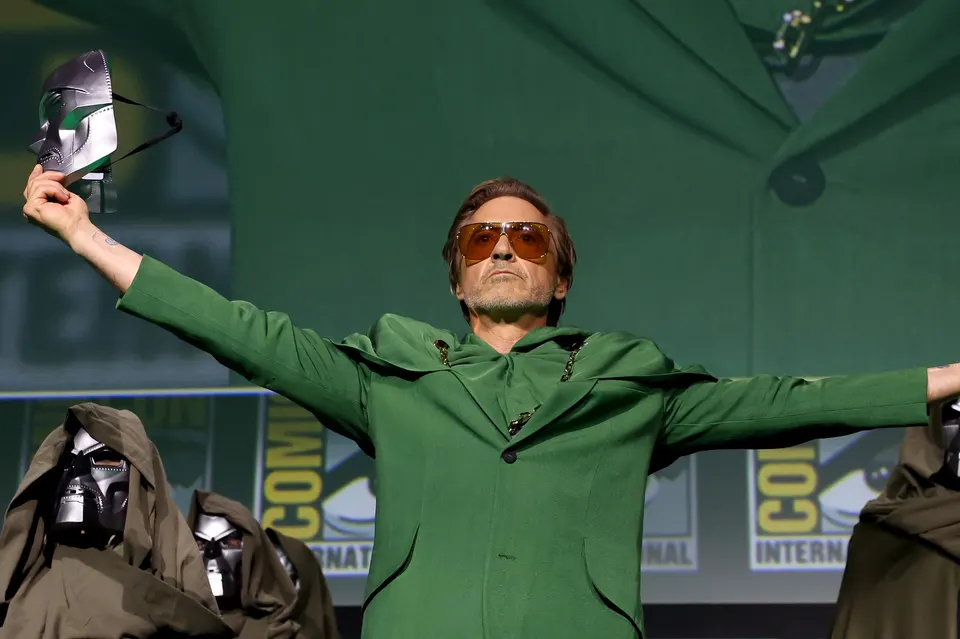
– RDJ as Doctor Doom (56:47) Marvel made a huge splash this last weekend at San Diego Comic-con with the announcement that Robert Downey Jr. would be returning to the MCU. This time, however, he will be playing the role of Doctor Doom. It’s a strange move for both parties and something we don’t see as a great fit at all. We love RDJ, but this is disappointing news that will likely sour many on his and the MCU’s legacy.
– Twisters (1:31:30) As a result of JD going on vacation last week, he missed the Twisters review and wanted to give a few thoughts on the film. It’s a movie he’s been looking forward to all year long and was saddened to come out mixed on it overall.
– Announcement (1:37:21) We round out the show this week with an announcement regarding Episode’s 599 and 600. For those who enjoy our yearly retrospectives, the next few weeks are going to be a lot of fun. We are celebrating 600 in a big way in about a month’s time.
If you want to help support us, there are several ways you can help us and we’d absolutely appreciate it. Every penny goes directly back into supporting the show and we are truly honored and grateful. Thanks for your support and for listening to the InSession Film Podcast!