

Home Blog Page 95

Op-Ed: The Experience of Watching ‘It Ends With Us’ as a Survivor of Domestic Abuse

***This Op-Ed Contains Both Spoilers and a Frank Discussion of Domestic Abuse***

As a domestic abuse survivor, I often ponder the impact of on-screen portrayals of domestic abuse. Media helps shape and reflect how we see ourselves and the world around us; depictions of abuse can perpetuate or challenge myths and stereotypes. Watching It Ends with Us, the film adaptation of the best-selling novel, I couldn’t help but think about my own experiences.

I’ve had three abusive relationships over the years. I felt (and sometimes still feel) a tremendous amount of shame about my abuse for a long time, despite logically knowing that I didn’t do anything wrong. I suffer from PTSD and what I endured still haunts me to this day. I have talked and written about my abuse for many years now, as a way to process what happened to me and as a way to (hopefully) eventually heal. For years, I’ve undergone therapy, including trauma-focused therapy. I feel fairly comfortable opening up about my past and I do so as I know many people who aren’t comfortable talking about their own experiences. I share my own story in part so others know they’re not alone.

I’m drawn to narratives about abuse. Watching depictions of abuse catalyzes a multitude of reactions: feeling triggered, fury, exploitation, numbness, dissociation, validation, catharsis. Sometimes, I simultaneously feel a combination of seemingly contradictory emotions.

No guarantee exists that movies will depict abusive scenes with sensitivity and a trauma-informed lens. And even when done well, seeing scenes of abuse is still often extremely triggering. Although, it should be noted that each person’s experiences are unique. Watching Leigh Whannell’s fantastic horror film The Invisible Man, for instance, was a visceral nightmare for me. It conjured many violent memories and feelings of terror that I endured in abusive romantic relationships. After it ended, I ran to the theater bathroom and suffered a panic attack. Watching It Ends with Us, I felt anxiety and apprehension throughout because I knew it involved a narrative including abuse. While I enjoyed the first half of the film, I got that jaw-dropping pit in my stomach, a wave of panic, a few times throughout.

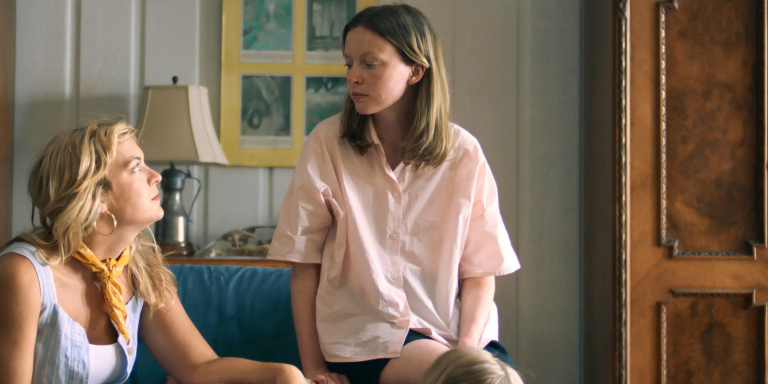
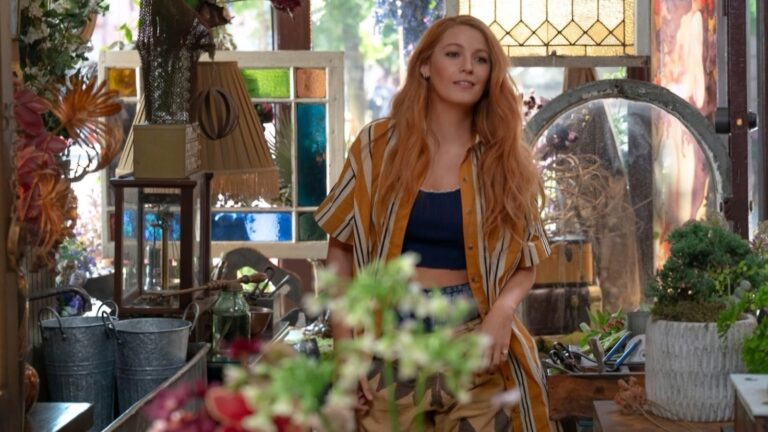
Based on the novel by Colleen Hoover, It Ends with Us is a melodrama romance starring Blake Lively as protagonist, Lily. Directed by Justin Baldoni, who also stars as Ryle, the film shifts back and forth in time. In the present, Lily fulfills her dream of opening a flower shop in Boston and embarks on an exciting romance with Ryle; in the past, we see Lily’s tender teenage romance with Atlas (Brandon Sklenar) and her controlling father abuse her mother.

When Lily meets Ryle, an attentive neurosurgeon, the beginning of their relationship feels romantic and sexy. They meet on a rooftop, the city lights romantically glittering behind them. I like how the film uses long takes with no musical score to let moments breathe, rather than relying on maudlin musical cues. It’s a choice that also reifies how only Lily and Ryle exist in this moment.

I kept watching thinking maybe this movie isn’t quite about what I think it’s about. I exhaled, letting my guard down a little. When the abuse does eventually occur, it could feel frustrating or like a betrayal in another film (one that doesn’t have a best-selling source material with a plot to google). But it also made emotional and thematic sense to me, since many abusers are initially extremely captivating and charming. However, there are clues right from the start that Ryle is toxic, a harbinger of his abuse. We witness his explosive temper, as he violently kicks a chair in his introduction to Lily and the audience.

For a while, Lily spurs Ryle’s advances, as he admits he’s not a relationship guy. But they keep running into each other, facilitated by Lily inadvertently becoming best friends with his sister (Jenny Slate). Their palpable chemistry is undeniable and they eventually become a happy couple.

At a restaurant, Lily and Atlas, who owns the restaurant, run into each other. They haven’t seen each other for many years and they’re both delighted to discover each has pursued their dream career. 

Later into their relationship, when Ryle burns his hand taking a pan out of the oven, he hits Lily. She’s convinced it’s just an accident, merely a reaction to pain, but it’s a violent act that should not be ignored. When Lily and Ryle return to Atlas’s restaurant, he sees her concealed bruised eye. Atlas follows Lily into the bathroom and tells her to leave him.

After finding out about Lily and Atlas talking (something she should be able to divulge without being worried), a furious Ryle runs out of their apartment. When Lily follows, Ryle pushes her down the stairs. After losing consciousness, Lily awakens and Ryle tends to her wounds. Even though he’s a doctor, it’s gross he doesn’t take her to a hospital. He vilely lies and gaslights her into believing it was an accident. Abuse plays tricks with your memory. It’s not uncommon to question your own sanity: Did I really see and experience that?

Ryle’s jealousy over Atlas fits into romance tropes, which often normalize the toxic side of jealousy. His behaviors โ€” telling Lily that she can’t talk to him โ€” speak to his need for control, power, and dominance, which can fuel abuse. Even his initial relentless pursuit of Lily is unsettling as he should respect her boundaries. But the film subtly denounces these insidious toxic tropes. It also conveys how seductive and charming abusers and these tropes can be.

Lily eventually opens up to Ryle and shares her painful childhood of how her father abused her mother. Ryle is incredibly sensitive and supportive, a lovely reaction. Unfortunately, he can’t admit or see his own abusive behavior. But it speaks to the dialectical complexity in people, that contradictory things can simultaneously occur.

I’m not thrilled that the film (and book) includes a tragic backstory for Ryle: He accidentally killed his brother as a child with a handgun. While it’s a tragedy that occurs in real life, it feels like an explanation of his abuse. Sometimes there is no rationale or certainly not one that can be traced so clearly.

Two of the film’s most harrowing scenes continue to haunt me. As a teenager, Lily’s abusive father beats Atlas so badly that he almost dies and goes to the hospital. It’s visceral and brutal. The other triggering scene is the attempted rape scene. After Lily’s flower shop is featured in a Boston magazine’s best-of-list, Ryle sees Atlas’s restaurant is also featured. In an interview, Atlas alludes to his love for Lily, which enrages Ryle. Lily begs Ryle to stop, desperately pleading with him. She tries de-escalating the terrifying situation and to ground him, telling him to look at her. The scene cuts and we see Lily going to Atlas for consolation. He accompanies her to a hospital. Lily talks to a doctor who wants to do a rape kit, but she insists it isn’t necessary. During the examination, the camera focuses on a bite wound over her heart tattoo, which she got years earlier to commemorate Atlas. Vile and sickening, Ryle inflicted brutal pain, a controlling and territorial violation and desecration of her body.

We also learn that Lily is pregnant. After this, she leaves Ryle, which I’m glad the film included. Many narratives about intimate partner violence erroneously act as if once a woman leaves an abusive relationship, that’s it, it’s over. Leaving is the most dangerous time, when abusive partners often kill women. Films like The Invisible Man, Enough, and Sleeping with the Enemy show that abuse and stalking continue even after someone leaves. One of my abusive exes stalked me after I ended the relationship and moved out of our apartment.

We don’t know much about Lily besides the things that happen to her. We know things about her: Her dream of opening a flower shop, her abusive childhood, eclectic fashion (ahem, or rather Blake Lively’s bold style). We learn about her generosity as a teen through Atlas: She brings him food when he was homeless and she defends him from taunting by kissing him on the school bus. But I still don’t feel that I have much of a sense of Lily as a character as an adult. Perhaps that’s due to the limitations of the writing or Blake Lively’s limitations as an actor. Don’t get me wrong, I like her inย Gossip Girlย andย A Simple Favorย and she’s likable here. But a character who is a domestic abuse survivor needs an actor who can imbue their role with more interiority.

I appreciate how Lily has supportive women in her life: her best friend (although she’s also Ryle’s sister) and her mother. But we don’t see many other people in her life. Isolation is something many abusers do in order to more easily gaslight and control their partner. Unfortunately, Atlas feels somewhat like a male savior. Although, it is so helpful to leave an abusive partner when you have support.

Once an abuser is out of your life, you’re not automatically healed. Flashbacks, triggers, and nightmares can linger long afterwards. While everyone is different, it can be a long road to recovery. Not enough films depict or explore the ramifications of abuse.

The ending conflicted me. It feels a bit too tidy, as Lily effortlessly convinces Ryle that he’s abusive after the birth of their daughter. Confronting Ryle about his abuse could have gone horribly wrong, as he could have violently lashed out. Lily asks him what he would do if their daughter came to him and shared that her partner was hitting her. Ryle tearfully says he would tell her to leave. In that crystalline moment, he finally realizes why Lily wants a divorce, why she refuses to stay. But something missing here is that abusive people don’t always just abuse their spouse or romantic partner; they can go on to physically or emotionally abuse their children too, or at the very least have toxic and controlling behaviors, something visible with Lily’s father. While having children is life-altering, this scene also reminds me of how some men talk about realizing the value of women’s rights after they have a daughter. But what about all the other women in their lives?

But including Ryle’s charm with his compassion and empathy โ€” alongside his toxicity, controlling behavior, and explosively violent temper โ€” paints not only a complex character portrait, but a realistic example of an abuser. People are complicated and contradictory. This thorny combination contributes to why it’s so difficult to leave an abusive partner. Many reasons exist and asking someone why they stay is never the right question. Instead, the onus should be placed on abusers. Yet Lily gently asks her mother why she stayed with her father, who is now deceased. To the film’s credit, this scene feels organic and somewhat understandable, considering Lily just left her own abusive relationship, realizing the cycle of abuse and the parallels between herself and her mother.

But the ending also provides a moment of relief; when Lily says she wants a divorce, the audience at my screening clapped and cheered.

While numerous films confront misogyny, the objectification of women’s bodies, and violence against women, not enough films tackle the complex power dynamics of abuse in a nuanced way from the perspective of abuse victims and survivors.

Some criticize the novel “It Ends with Us” for romanticizing domestic violence. While I haven’t read the book, author Colleen Hoover based the novel on her parents. Looking at the press tour for the film, some writers and those on social media have observed the different perspectives in discussing the film between Blake Lively, who took a more lighthearted approach, and director/actor Justin Baldoni, who talked sensitively and passionately about the film’s intense portrayal of abuse and the responsibility of men. To me, the film tried to be sensitive and thoughtful in its approach.

Roger Ebert famously called movies the “empathy machine,” for their ability to foster empathy and understanding, enabling audiences to get a better sense of other people’s lives, experiences you may never have lived before. I hope people watching depictions of abuse will have a better understanding of abuse survivors, which might help facilitate vital conversations. I hope those watching who are in or have been in abusive relationships might feel some catharsis.

So why do I continually subject myself to watching depictions of abuse? I yearn for validation of the horrors I endured. These scenes make me feel seen, that I didn’t imagine, exaggerate, or hallucinate my abuse. They make me feel that I’m not alone. Simultaneously, it breaks my heart that myriad others have undergone the same pain. Perhaps in watching these films and viscerally feeling the protagonists’ trauma while reliving my own, I’m seeking recovery. I’m seeking my own salvation.

Movie Review: ‘Alien: Romulus’ is a Welcome Franchise Refresh


Director: Fede Alvarez
Writers: Fede Alvarez, Rodo Sayagues
Stars: Cailee Spaeny, David Jonsson, Archie Renaux

Synopsis: While scavenging the deep ends of a derelict space station, a group of young space colonizers come face to face with the most terrifying life form in the universe.


When a 45-year-old franchise gets a new chapter, there’s a bit of a, “here we go again,” mentality. The films in the Alien franchise are spread out enough that their takes on the perfect, homicidal xenomorphs can feel fresh. Yet, as the franchise has continued, the films have gotten farther away from the gobsmackingly brilliant first entry. They have sprawling casts, bigger, badder aliens and yet another piece of new mythology added to the dystopia of humans owned by corporations. That’s where Alien: Romulus takes a sharp turn, as it brings the franchise back to its minimalist roots.

The beauty in the grime of this retro-futurist vision is awe-inspiring. Like Blade Runner 2049, Alien: Romulus doesn’t evolve its technology by leaps and bounds, but keeps the ideas of what the future would look like from the late ’70s perspective. Production designer Naaman Marshall designed a world populated by tubes and wires, pipes and physical buttons. This gives the setting the feel that this film does actually take place in the same universe as the Nostromo and her ill fated crew. It’s wonderfully gritty and grim.

This is where the stunning visual effects compliment the physical environment. As much as it is so incredible to see those practical sets, there are alsoterrific things done with CGI. The opening scene is haunting, especially when supported by Benjamin Wallfisch’s tremendous score. It takes place in near silence letting the eerie choir build our tension as well as stun us with the audacity of what we see on screen. The light from a spaceship bouncing off floating debris and then an accurate laser cutting tool bisecting an unknown substance are jaw-dropping in execution. These effects coupled with an incredible sound design that ruptures silence with metallic groans, breaking glass, and alien screeches are a feast for the senses.

Thanks to the solid script by Fede Alvarez and Rodo Sayagues, these visual elements put the horror back in this franchise. There is plenty of dialogue to go around, but these films work best when everyone just shuts up and Alvarez and Sayagues deliver that tension. Seeing the thoughts come across these character’s faces is so much better than if they blabbed absolutely everything they were feeling or thinking. It’s a refreshing change from where the series was before this.

However, the plot within the script is weak. That’s what comes with 45 years worth of entries. After a moment or two, it’s very easy to see where the story  is going. With the addition of a tacky and obvious cameo, it’s even easier to predict what will happen next. It hits the beats of an Alien film with little digression. Even the central relationship of the film seems far too familiar at times, but there is a hitch in this dynamic that makes it unique and compelling.

The characters, while archetypes, do feel different because of the unique nature of Rain (Cailee Spaeny) and Andy’s (David Jonsson) relationship. The franchise has a complicated dynamic between its heroine and the synthezoid, or artificial person as these artificially intelligent androids prefer to be called. Rain and Andy have an opposite relationship with the synthezoids as compared to Ripley (Sigourney Weaver, Alien, Aliens, Alien3, Alien Resurrection), Shaw (Noomi Rapace, Prometheus), or Daniels (Katherine Waterston, Alien: Covenant). Their synthezoids were knowing, condescending, and in control. Rain and Andy function as an older sister taking care of a younger brother as Andy is a machine repurposed from his original programming. It isn’t until the fundamental nature of Andy has to be changed that his being becomes more franchise recognizable. It’s in this emotional arc that the film’s script shines. These two are complicated and intriguing. It helps that Cailee Spaeny and David Jonsson are actors who can really sell this aspect of the story and inject a little pathos into the carnage.

Alien: Romulus is a familiar, but refreshing and ultimately invigorating entry to the Alien franchise. It thrills with complex and beautiful visuals, chills with the horrifying xenomorphs, and amps up the themes of capitalist corporations being the downfall of humanity. Fede Alvarez brings his trapped in one place brand of horror to outer space and it works very well. They may not be able to hear you scream in space, but we can definitely hear you as you gasp in the theater.

Grade: B

Movie Review: ‘Sugarcane’ is a Harrowing, Vital Work of Documentary Filmmaking


Directors: Julian Brave NoiseCat and Emily Kassie
Stars: Julian Brave NoiseCat, Willie Sellars, Charlene Belleau, Ed Archie Noisecat, and Chief Willie Sellars

Synopsis: An investigation into abuse and missing children at an Indian residential school sparks a reckoning on the nearby Sugarcane Reserve.


Julian Brave NoiseCat and Emily Kassieโ€™s masterful Sugarcane could ostensibly be (and has been) called a true crime documentary, but that feels far too trite a distinguisher for a film as deep and considerate as it is. Of course, it does focus on and exist because of crimes committed, specifically by the Catholic Church with Indigenous families as their victims. But the film focuses its attention on the granular details, the shared pain by those living in a community that has been violated and ravaged by figures that they should have been able to trust, both because they were instructed to and because of the symbolic expectations of religious figures.

Sugarcane lacks the presence of well-tailored investigators and historically-trained talking heads; it eschews the case-to-investigation-to-truth structure that so many lesser documentaries tend to follow blindly, almost as though there is only one formula that allows a mystery to be solved on film. Perhaps thatโ€™s because the mystery here isnโ€™t so much โ€œWho killed who?โ€ or โ€œWhy?โ€, but โ€œHow do we move forward knowing what was done to us in the past?โ€

That question isnโ€™t answered in Sugarcane, at least not outright. No one, not even Canadian prime minister Justin Trudeau, manages to approach a podium with concrete conclusions as to how old, deep wounds can be healed. But a documentary like the one that NoiseCat โ€“ who also serves as one of the filmโ€™s main subjects โ€“ and Kassie have made is a start. Surely youโ€™ve heard something similar before, that โ€œFilm Aโ€ or โ€œDocumentary Bโ€ is the first step toward achieving justice for a people. But one thing is certain: Youโ€™ve never heard this type of message be told with such certainty as Sugarcane manages to achieve.

NoiseCat and Kassieโ€™s work began when hundreds of unmarked graves were found on the grounds of St. Josephโ€™s Mission, a residential Catholic school near the Sugarcane reserve โ€“ part of the Williams Lake First Nation (commonly referred to as โ€œSugarcaneโ€) of the Secwรฉpemc Nation โ€“ that Indigenous children were once forced to attend by the Canadian government. Their placement began in 1894, when the government moved to โ€œsolve [its] Indian problem.โ€ For what was almost a century, reports of missing students were ignored, as were allegations of abuse, rape, and torture made by children from the school and their families. Among the schoolโ€™s survivors are NoiseCatโ€™s father, Ed, and his grandmother; and NoiseCat spends part of the documentary attempting to learn the truth about their experiences, a journey that is evidently marred with anguish. During one of their early conversations, NoiseCatโ€™s grandmother tells him that the school tried to pull the studentโ€™s native language out of them in favor of English. When he presses for more, she chokes up, unable to continue.

Furthermore, NoiseCat and his father, Ed, share a complicated history. While they are now in contact, Ed abandoned his son at a young age due to intense addiction and depression. Near the end of the film, as father and son recount the ups and downs of their relationship through tears, Ed shouts, โ€œI didnโ€™t leave you, son,โ€ almost as though heโ€™s trying to convince Julian that there was no other way to escape the darkness and the trauma of his then-present; Julian was merely abandoned in the process, not directly. Itโ€™s a crushing moment in a film chock-full of them, yet itโ€™s also another profound example of how the tribulations of oneโ€™s past can help pave the way for anotherโ€™s future. 

Sugarcaneโ€™s other crucial narrative threads follow Rick Gilbert, a former chief of the Williams Lake First Nation who struggles to grapple with the crimes committed within his community, particularly due to his devout Catholicism; Charlene Belleau and Whitney Spearing, two investigators who work with the nationโ€™s people to uncover the truth about what happened at St. Josephโ€™s, only without a forceful hand that might otherwise come from an outside, governmental operation; and the Nationโ€™s current Chief, Willie Sellars, whose work with the aforementioned prime minister helped to institute the National Day for Truth and Reconciliation, an annual Canadian holiday that recognizes those affected by the actions of the Church, the government, and the schools they built. While these subjects hardly get short shrift from the filmmakers, itโ€™s fair to note that all three likely could have been explored more deeply. The intimacy dedicated to everyone whose face appears on screen never falters, though thereโ€™s a furious, nagging feeling that an expansive docuseries may have served their stories more effectively. Heck, a slightly longer film couldโ€™ve done the trick.ย 


And yet, this being a film is the most important thing, as the story within is neither something to be binged through, nor something worthy of endless detours, reliance on archival footage, et al. Sugarcane is more urgent than any other work to hit screens so far this year, and impressively, itโ€™s not one that feels the need to over-bang its principle drums in order to make note of the filmโ€™s import. It is so sophisticated, so beautiful despite its darkness โ€“ thanks in part to Kassie and Christopher LaMarcaโ€™s cinematography, as well as Mali Obomsawinโ€™s stunning score โ€“ that itโ€™s fair to assume its co-directors would be far from invasive no matter how involved they were in the community on which theyโ€™re focused. โ€œPoeticโ€ might be the best descriptor, actually, as long as youโ€™re willing to acknowledge tragedy as poetry. And you should, for often what is looming on the other side of the most tragic tales is a glimmer of hope, something the members of the Williams Lake First Nation are becoming more familiar with as time goes by. If nothing else, thatโ€™s a start.

Grade: A-

Movie Review (Locarno 2024): ‘A Woman is a Woman’ Revisited and Restored


Director: Jean-Luc Godard
Writers: Geneviรจve Cluny, Jean-Luc Godard
Stars: Anna Karina, Jean-Claude Brialy, Jean-Paul Belmondo

Synopsis: An exotic dancer is desperate to become a mother and accepts her reluctant boyfriend’s suggestion that she be impregnated by his best friend.


What else can be said of Jean-Luc Godard, the influential French-Swiss cinema legend and pioneer of one of the most significant film movements of all time in the French New Wave? He is more than a recognizable figure in the medium. The man has sculpted pieces that will stand the test of time in ways that few filmmakers would. Thousands have discussed his work on podcasts and think pieces. Hundreds have written books about his importance and contributions to cinema. And millions have ventured into his eclectic, occasionally cryptic filmography, basking in his ingenuity and knack for breaking the mold of narrative cinema as we know it. Innovation is a certain compulsion for Godard, who drives himself mad to give audiences vastly different cinematic experiences, both intellectually and artistically. 

After introducing himself to the film world with the revolutionary work that many hold in high regard in 1960, Breathless, he decided to do his spin on American musicals, but with his usual dry wit and societal commentary in his third feature, A Woman is a Woman (Une Fumme est une Femme)โ€“and a new 4K restoration is having its world premiere in the Piazza Grande at this yearโ€™s Locarno Film Festival. Made from the negative 35mm original copy, a new life is breathed into the 1961 film. It looks better and sounds crisper than before. But the most important aspect of A Woman is a Woman receiving a restoration is how modern audiences can now have a proper glimpse and think about its notions of gender roles and relationships across the ages presented in the film, which is, in my books, one of Godardโ€™s best. 

Jean-Luc Godardโ€™s neorealist musical centers around an exotic dancer named Angela (Anna Karina, at the height of her career) who yearns to have a child sooner rather than later. But her partner, Emile (Jean-Claude Brialy), does not want to settle down with her just yet. Emile wants to live free of any burden or hassle while young and without many preoccupations. Angela has tried many times to convince him to give her a child. She grows piqued that the man she loves is not making any sacrifices in their relationship. Even though the two share many charming, joyous moments, that dark cloud is still above their heads.

In her performance, Anna Karina offers a mixture of emotions as the events of A Woman is a Woman unfold. But during the initial strand, she uses the blend of joy and anguishโ€“both a mask and the genuine feeling in her soul. You can see both easily as Godard places her at the forefront of each frame, swallowing the canvas in her lonely wallows and the audienceโ€™s empathy for the young woman. Each argument the lead characters have about their reasonings behind having a child or not at that particular time has the French-Swiss director exploring, in his own unique way, how all of us are emotionally foolish and irrational, with love being the anchor to our various woes, bliss, and everything in-between. 

They are unable to rationalize with one another. It isnโ€™t until the very end of the film that Angela and Emile come to some sort of understanding. And still, the two clash due to their nature and naivety. We see them call each other names, forcing one to subject themselves to their sexesโ€™ stereotypes, and question their reasonableness on not just love but the sacrifice that comes with having an intimate relationship with a person. All of this escalates upon the arrival of a third member to the party, Emileโ€™s best friend and neighbor, Alfred (Jean-Paul Belmondo). He is one of the many men vastly in love with Angela. The difference is that he sees more in her than the others, at least in comparison. Alfred is still a man with many flaws and unreasonable deductions concerning love. 

With the three leading players now in the mix, Godard plays his trump card in A Woman is a Woman. He raises questions about women’s social roles (specifically seen through the lens of sex work), the difference between men and women in society, and how love blinds. What differentiates Godard from other filmmakers is that he never intends to answer the questions he raises nor provides his thoughts on them. He is known for his pretentiousness, which annoys me from time to time. But I admire his tenacity in making the audience thinkโ€“they ponder about similar situations in their societies and compare them to the one being depicted. In this case, Godard covers early โ€˜60s France via three lovebirds trying to understand each other and come to a prosperous resolution, failing to communicate in each standing moment. 

No matter the time or place, the dynamics between Angela, Alfred, and Emile are translated into each generation and society, yet with a change in their political backbone and philosophies. Ultimately, this story is replicated, whether it happened to someone else or yourself. Not many works in his filmography contain those elements of empathetic, universal comprehension. Later in his career, during the โ€˜80s and beyond, he started drifting into a more portentous territory. But in the โ€˜60s, Godard created many rich, detailed stories that were universal to them. Godard may have added his touch to this commonly seen tale. However, many moments and anecdotes in A Woman is a Woman are relevant and relatable. 

Arguments that lead nowhere, such as the couple not opening up with one another, foolishness when making brash decisions, and thinking without understanding the otherโ€™s situationโ€”these are the sort of irrationalities that make up relationships over the decades. Godardโ€™s exploration of gender roles and love contains many other details that can be relevant to our current day. He even provides moments of awkward silence upon cutting the dazzling score by Michael Legrand (known for his work with Jacques Demy) at sporadic, random moments, which serve as contemplative pauses that take the characters and viewer out of the magic that musicals are meant to provide.

Upon restorations and reassessments, you begin to notice more minute details that might have flown by, which add something new to your experience. It leaves a lasting impression on you, particularly some lines that revolve around why we lean towards love even though it hurts. And like the ingenious magician he is, Jean-Luc Godard does so with much cinematic flair and uniqueness. I hope this restoration helps cinema lovers worldwide access this film and reflect on past, present, and future relationshipsโ€“encountering and perhaps embracing the foolishness that arises when deeply in love. This isnโ€™t close to being the definitive film about relationships. But it has plenty of emotional potency.

Grade: A

Podcast Review: Cuckoo

On this episode, JD and Brendan discuss the Tilman Singer horror film Cuckoo! And also donuts. Because we’re cuckoo for…donuts. All joking aside (although we talk about donuts and cereal for real), we had some interesting reactions to Cuckoo and some of its strange choices.

Review: Cuckoo (4:00)
Director: Tilman Singer
Writers: Tilman Singer
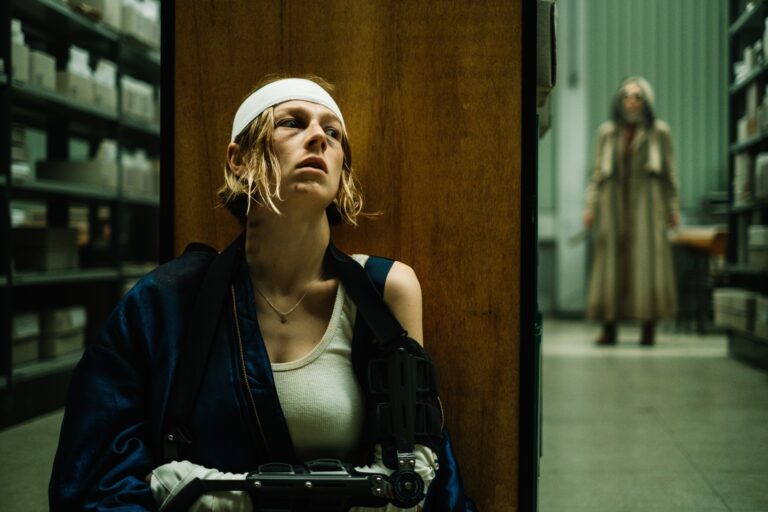
Stars: Hunter Schafer, Dan Stevens, Jan Bluthardt

Subscribe to our Podcasts RSS
Subscribe to our Podcasts on iTunes
Listen on Spotify
Listen on Stitcher
InSession Film Podcast – Cuckoo

Chasing the Gold: Cinematographer Sayombhu Mukdeeprom Sets (Another) Clever ‘Trap’ in 2024

It would appear that this is the year of Thai cinematographer Sayombhu Mukdeeprom!

Having previously written a piece for Chasing the Gold on his stellar work in Challengers, itโ€™s no secret heโ€™s quickly becoming a favorite DP of mine. I was introduced to his work in Call Me By Your Name and Memoria. Both serve as beautifully patient and naturalistic films that capture the world around them in as touching a manner as the characters they focus on. The same can be said about his work on Suspiria, a film that arguably roots itself in the chosen setting of the film more than anything else via visual excellence. But to me, Challengers was unlike anything else I had seen from him up to that point. And as if I couldnโ€™t have gotten any more excited for a new M. Night Shyamalan film, seeing Mukdeeprom attached to Trap sent me into high gear. And even better, it was being shot on 35mm! I would have been there opening night regardless, but my giddiness as I took my seat was palpable. With Mukdeepromโ€™s inventive ideas about capturing the link between character, setting, and the incredible visual storyteller that Shyamalan isโ€” this film was always bound for greatness. And dear reader/fellow Lady Raven (Shyamalan’s real-life daughter, Saleka Shyamalan) fan,ย this article and this film are certainly not traps: you will not be disappointed by the concert this fearsome director/cinematographer duo brought to the big screen.

As briefly touched upon earlier, several films Mukdeeprom has worked on revolve around nature. And I donโ€™t think thatโ€™s an accident. Take Apichatpong Weerasethakulโ€™s Memoria, for example. So many extended sequences simply focus on the earth around Tilda Swintonโ€™s character. Mukdeeprom forces us to scan the frame, not looking for anything but embracing the crystal-clear earth instead. The grass sways under Swintonโ€™s body as she sleeps, with the water in a nearby stream ever so slightly flowing by. In very simple ways, Mukdeeprom captures beauty with his curious and reverential lens. Itโ€™s a touching way to capture the world around us and around the characters within the film. So how exactly does he capture the world of Trap? In the complete opposite manner of the film I just detailed. Wherein Memoriaโ€™s visuals seem interested in slowing down to realize the inherent beauty and mystique around us all, Trap feels more interested in viewing the entire environment as a playground designed to encase or allow for an escape by any means necessary. If the environment, or those who inhabit it, suffer during the course of the film, so be it. The reason for such hostile aggression? Shyamalan and Mukdeeprom center everything in the film around and through Josh Hartnettโ€™s Cooper (also known as the Butcher).

So much of Trap plays out through the lens of the Butcher, a psychopathic serial killer. And with that, Mukdeeprom practically shoves his camera into the brain of the sociopath. Frankly, much of the movie feels like itโ€™s framed with contempt in mind. Shyamalan has played with point-of-view a lot throughout his career, but his later films almost hinge on them in a few ways. 

Thereโ€™s The Visit, which plays out as found footage. We see what the characters are experiencing through the lens of their handheld cameras. With Glass, Shyamalan positions us to see through the lens of all three principal characters (heroes and villains, alike). At one point in that film, canted angles are even used to depict Elijah Glass’ (Samuel L. Jackson) POV as his head slinks off to the side. So itโ€™s no surprise that Trap, being touted as a โ€œnew M. Night Shyamalan experience, is playing with the same cinematic ideas. After all, itโ€™s there in the tagline: this is an experience. And weโ€™re experiencing each moment, not as an audience member removed from the film, but as an onlooker stuck in the mind of a madman. Think Inside Out, but way more messed up and ripe for mayhem.

We see everything that Shyamalan and Muldeeprom want us to see. Weโ€™re at the whim of the script and the images, and more than anything, weโ€™re at the whim of the Butcher. So much of the thrill of Trap lies in the unknowable lengths to which Cooper will go to escape capture. As his eyes wander more and more frantically, we, too, begin to feel the unease. We may not sympathize with him in the slightest, but weโ€™re stuck with him as onlookers. If he gets caught, there, too, goes the thrilling cinematic experience. Itโ€™s a brilliant way of inextricably linking the visual language of the film with the audienceโ€™s emotions. We donโ€™t want this to end. Let the stakes build and build and build, and take us along for the rideโ€”reprehensible actions of the Butcher be damned.

Looking at the film through this POV lens, one canโ€™t help but focus on the close-ups Shyamalan has also used throughout his career. Weโ€™ve seen countless examples of Shyamalan shooting dialogue exchanges in some of the most visually exciting manners possible. Think of the opening scene in Unbreakable, an unsettling, claustrophobic, handheld long take that uses a mirror and simple camera movements to capture the fright of a baby delivery having gone awry. Hell, we could even use the very next scene in the same film, where Shyamalan employs another long take that simply shifts between two sides of a train seat to highlight shifting perspectives as the conversation continues. But in Trap, much of the dialogue is captured in a simple shot/reverse-shot setup. And thatโ€™s exactly what it sounds like. One person speaks with the camera pointed at them, and then another speaks, and so on and so forth. Itโ€™s used quite literally all the time in film and television. The reason being? Itโ€™s simple. But Shyamalan and Mukdeeprom arenโ€™t merely taking the easy way out. Thereโ€™s purpose behind this decision, and it again lends credence to the notion that Mukdeepromโ€™s camera is taking the place of the Butcherโ€™s wandering, yet laser-focused, gaze.

Thereโ€™s this sense that every single character that isnโ€™t Riley (Ariel Donoghue), the Butcherโ€™s daughter, angers him to no end. Perhaps anger isnโ€™t even the right word. Itโ€™s as if everybody around him is just an NPC (non-playable character) in a video game. This film has been compared to the Hitman game franchise, and it couldnโ€™t feel more true. Anyone around Cooper, aside from his loved ones, is merely framed as cannon fodder to aid, interrupt, or distract. Theyโ€™re captured in centered, isolated close-ups or teetering at the edge of the frame in complete focus. Thereโ€™s even a split diopter shot employed at one point, and thatโ€™s cause enough for parades through the streets in celebration of Trap. 

In the centered close-ups, Mukdeeprom captures the subjects as if theyโ€™re under intense scrutiny. Through the eyes of Cooper, as written earlier, you can practically feel his contempt in speaking to somebody he feels is lesser. He loves Riley and hopes she is happy. But speaking to Marnie McPhailโ€™s unnamed character, the mother of a girl who has been giving Riley a hard time, itโ€™s as if he wants to snap and drop any notion of being a well-adjusted human. Thereโ€™s a slight tilt to the camera, where Mukdeeprom utilizes the very efficient trick of having the viewer, in turn, looking down at this mother as well. The same goes for when Cooper is in the frame. We are looking up at him. Heโ€™s in a position of power, and we canโ€™t help but gaze at his ability to quickly lie his way through any scenario. He just wants to move on to more engaging and essential interactions. In conjunction with the editing, Mukdeepromโ€™s imagery intentionally feels rushed. Trap is moving rapidly because Cooper is desperately trying to find the escape path of least resistance. And just when we get used to such scenes, Mukdeeprom and Shyamalan throw a curveball. When being ambushed by the same mother, she is way off to the far right of the frame. Thereโ€™s an altercation between police and a suspect so, of course, thatโ€™s all Cooper can think to focus on. If the film is partially about the balance between work and family, Mukdeeprom shows it play out in real-time. Cooperโ€™s ability to focus on both is impressive, as he rapidly escapes both the attention of the police and the wrath of this mother. And this literal split in interests comes to a crescendo when Mukdeeprom finally whips out the split diopter.

Spoiler Warning: For those worried about blatant plot developments, perhaps skip to the next paragraph, but youโ€™ll miss an exciting and quick lesson on split diopter shots!

Cooper and Riley find themselves backstage at one point. Itโ€™s an exciting moment for both father/killer and daughter! Her dreams of dancing with Lady Raven in the spotlight are coming true, and for Cooper, his escape seems to be laid out in front of him. Only then do we see the FBI profiler who set the entire trap in motion. And Mukdeeprom literally shows this divide to us. A quick rundown on split diopters for those who are curious: If youโ€™ve seen basically any movie of Brian De Palmaโ€™s, youโ€™ve seen a split diopter shot. There are far more technical definitions and explanations available, but itโ€™s essentially when a piece of convex glass is placed on the main lens of a camera, usually centered. When this is done, the image captured is split in half. One half of the image will appear in the background and the other in the foreground. What makes it so exciting, though, is that both halves of the image will be in complete focus. A great way to tell if a split diopter is authentic is to look in the center of the frame; it will appear to be a bit distorted (The piece of convex glass). Next time youโ€™re watching practically any movie from the ’70s, keep your eye out for the technique. It was used incredibly often and to beautiful effect. Anyways, back to the Lady Raven concert/trap. Mukdeeprom has Riley and Cooper on stage in the background and the FBI profiler patrolling nearby in the foreground. The two sides of Cooperโ€™s brain are at work here, and itโ€™s the first time we really see the two at direct odds with one another. Up until this point in Trap, Cooper and in turn, Mukdeeprom have done all they can to keep the two sides of this man separated. Itโ€™s only here when his being a father and his being a crazed serial killer collapse in on themselves to give us one of the most striking images of the film. One of the highlights of Rileyโ€™s life will now be forever tainted with this wedge between them. And Mukdeeprom conveys it literally!

Another simple reason for the visuals of Trap deserving acclaim? It was shot on beautiful 35mm film! The images look gorgeous and bring a real vibrancy to the entire film. Aside from Christopher Nolan, Quentin Tarantino, and Paul Thomas Anderson, we so rarely see other filmmakers celebrated for shooting on film. Those three are massively responsible for the resurgence of shooting on film, but Shyamalan has continued to shoot on film throughout his career with the rare digital exception. Shyamalan has also worked with some of the greatest living cinematographers, from Roger Deakins on The Village to Tak Fujimoto on Signs. Mukdeeprom, rightfully so, now has a spot in such esteemed company, and his accolades should reflect that! That’s not to say awards inherently add more value to an artist, but it would be a justifiable thrill to see him nominated for any of his stellar work this year. 

All in all, Trap is indeed an experience from Shyamalan. Very few filmmakers continuously astound with their grasp on visual language in such distinct ways. When paired with undeniable talent, his vision takes us on unforgettably cinematic thrill rides. Itโ€™s also abundantly clear at this point that Mukdeeprom can alter his approach to cinematography in ways that necessitate the vision of the director, and the film as a whole. Where his work on Challengers revels in digital chaos and almost a sense of experimentation, his work on Trap exists in the analog and very much in the physical moment. Thatโ€™s fitting for a film about a man doing all he can to remove himself from such a moment. Itโ€™s a sight to see, making the notion of revisiting Trap all the more exciting.

Trap is currently playing in theaters.

Podcast VIP: Unlikable Characters in Movies

On this episode, JD and Brendan discuss the nuances of unlikable characters in movies! Depending on context and execution, some work gloriously and others are more hollow, but either way they’re a fun part of the movie experience.

Listen on Patreon
Watch with YouTube Membership

Movie Review: ‘Jackpot!’ is Unfunny and Predictable


Director: Paul Feig
Writer: Rob Yescombe
Stars: John Cena, Awkwafina, Simu Liu

Synopsis: In the near future, a ‘Grand Lottery’ has been newly established in California – the catch: kill the winner before sundown to legally claim their multi-billion dollar jackpot.


Hello everyone, itโ€™s time. Yes, we need to talk about John Cena. The last ten films in his filmography are a cry for help. And no, I refuse to credit him for the cameos in Barbie and Teenage Mutant Ninja Turtles: Mutant Mayhem. Mr. Cenaโ€™s last nine films are so bad I havenโ€™t seen a career this mismanaged and sabotaged since Ben Falcone ruined Melissa McCarthyโ€™s once-stellar comic career.

Just look at some of the jaw-droppingly bad films that John Cena has led since playing Peacemaker in the well-received The Suicide Squad. His โ€œmovie starโ€ roles include Vacation Friends, The Independent, Fast X, Hidden Strike, Vacation Friends 2, Freelance, Argyle, Ricky Stanicky, Die Hart 2: Die Harter (yes, I threw that in), and now Jackpot!โ€”another misfire and what may be the final nail in the coffin of Cenaโ€™s once-promising action/comedy career.

Remember John Cenaโ€™s lovable, sweet, funny, and endearing turn in Blockers? Or his charisma and appeal in Bumblebee? The willingness to take comedic risks in cameos, like in Trainwreck? Or just picking good roles in good movies, like the gripping Doug Liman film The Wall? No? Thatโ€™s okay. Most people have short memories. This brings me to my point: If Mr. Cena doesnโ€™t start to pick his projects more carefully, he will have no one to blame but himselfโ€”and certainly not Ben Falcone.

And thatโ€™s not to say Cena is bad in Jackpot!โ€”almost everyone isโ€”but he is undoubtedly the best part of this poorly conceived streaming comedic spin on The Purge. He plays Noel, a warm-hearted former mercenary with a heart of gold, helping out Katie (Awkwafina), a former child star picked for the โ€œGrand Lottery,โ€ a new California cash grab where you can win billions. The only catch?

Katie has to survive the night until sundown. Whatโ€™s that, you say? Anyone who kills herโ€”using anything allowed besides a bullet from a firearmโ€”will receive the multi-billion dollar cash prize. If she survives, the money will be hers, and she can live out her dreams. All Katie has to do is hand over 10% of her winnings to Cenaโ€™s Noel, an amateur lottery protection agent, who agrees to keep her alive until they can become richer beyond their wildest imaginations. 

You know how they say another manโ€™s trash is another manโ€™s treasure? Well, director Paul Feig (Bridesmaids), working from a script from Rob Yescombe (Netflixโ€™s Outside the Wire), proves the oneโ€™s treasure is the audienceโ€™s crumpled up fast food wrappers. Jackpot! is the sort of interesting film premise that turns into a gutless comedy with no conviction. As soon as the word is out Katie is the target, her โ€œfans,โ€ as the film describes them, immediately begin to attack her. The action is stagnantly staged wire-fu, there hardly is one time someone is kicked where it doesnโ€™t defy physics and a villain is sent flying 40 feet and spinning around a dozen times, where you can tell the wires were removed with post-CGI.

Jackpot!โ€™s script is utterly predictable. The comedy is forced, mostly due to cringeworthy dialogue that even Awkwafina cannot save. There is a scene at the end when Cenaโ€™s character yells at Katie to stay away from the story’s main villain, which will make anyone want to passive-aggressively yell at the screen, just as Captain Obvious would. The movie is filled with such tedious and grating moments of nothingness.


Along with bad acting, almost everyone in the filmโ€”except for two good cameos by Sean William Scott and Triangle of Sadness star Dolly de Leonโ€”is subpar, which is putting it politely. The film is unfunny, wooden, hackneyed, and completely predictable, with virtually nothing new to say on subjects like greed, conformity, community, and violence (Shirley Jackson will surely be rolling over in her grave). Jackpot! continues the downward trend in John Cenaโ€™s once-promising film career.

Grade: D+

Op-Ed: A Tribute to Adrian Lyne, the Director Who Makes Us Swoon

You donโ€™t hear Adrian Lyneโ€™s name being mentioned when it comes time for AFIโ€™s Lifetime Achievement Award. Or Honorary Oscars. Or in articles written by fans about how criminal it is that this person doesnโ€™t have an Oscar. He is not mentioned alongside the likes of Spielberg, Scorsese, Altman, Coppola, and Jewison as directors of โ€œthatโ€ generation. Itโ€™s possible that many people couldnโ€™t tell you the name of one of his films based on his name alone. Yet- say the line โ€œI wonโ€™t be IGNORED, Danโ€ or mention bunny rabbits, and people stop and shudder. Why? Because Fatal Attraction is part of our American iconography. And while critics and film historians may not have found his work groundbreaking, thought provoking, or intellectual; his films did indeed define the eras from which they came. They may not have broken new ground, but they entertained us, and  made us sigh and swoon. Adrian Lyne is a wildly underrated film director.

The year is 1983. If you are a teen or a child in the US, you are most likely wearing a sweatshirt with the neck cut open so it falls flirtatiously off one shoulder. Why? Because youโ€™ve seen Flashdance, Adrian Lyneโ€™s classic about a female welder by day/ dancer by night. This movie had everything: a beautiful young new actress (Jennifer Beals) playing an underdog named Alex, great dancing, and a killer soundtrack. Itโ€™s so charming one forgets that sheโ€™s only 19 years old, and itโ€™s creepy that her boss keeps following her around and hitting on her. Andโ€ฆ is it possible to get accepted into a Ballet Conservatory if youโ€™ve never taken actual ballet lessons? HAS she taken ballet lessons? Who cares! Alex is cool! She looks awesome, she lives in this huge warehouse, and dances to great music. Now- the dancing. No, it was not, in fact, done by Jennifer Beals. And, when youโ€™ve watched this classic as much as I have, you can pick out at least 3 different performers (both male and female), doing that dance at the end. Again, letโ€™s forget about that. Who among us still doesnโ€™t gasp when Beals does her first dance, pulls that chain, and has water dump all over her bodyโ€ฆTWICE.  Incredible. In 1983, I was much too young to see this film in theaters, but we did own the record. Remember those? And I remember my sister and I dancing around to โ€œManiacโ€ and, of course, the anthem of 1983, โ€œFlashdance (What a Feeling)โ€ by the Queen of 1980s films about performance, Irene Cara. The  impact that song had on popular culture in the 1980s cannot be overstated. To look at some facts, this movie cost 7 million to make, and made 200 million dollars, according to Forbes magazine. I still get chills when I hear that opening song.

In 1987, America became a dangerous place for married men who wanted to cheat on their wives, and pet bunnies. I am talking, of course, about one of the greatest movies of the 1980s, Fatal Attraction. Dan (Michael Douglas) spends two hot nights cheating on his wife, Beth (Anne Archer) with a sexy woman he has just met, Alex (Glenn Close). While he thinks he has gotten away with a hot weekend while his wife is away, Alex shows him nothing is ever that simple. Mayhem ensues. This movie easily could have been a simple low budget revenge film. Lyne, however, elevates the material to make it an enduring classic. Glenn Close shed the โ€œmotherโ€ image she created in The World According To Garp and The Big Chill to play the unhinged Alex.With her untamed blonde curls, and her husky voice, she toys with Dan over dinner while his wife is away. Douglas is a seemingly dutiful husband who seems to fall into bed with another woman. It has always been my feeling that this is not the first time Dan has cheated on Beth, as he lies about it too easily, and tries to move forward. This is not what occurs this time. What elevates this film is that Alex does not start as a monster. Honestly, I felt for her and understood her anger at Dan. What kind of a man cheats on his wife? Alex points out to him that he is not, in fact, thinking of HER, he is thinking of himself. That Dan is not an innocent victim adds a depth to what could have been a shallow film. While Archer and Close both received Oscar nominations, Iโ€™m still annoyed that Douglas wasnโ€™t nominated for his masterful performance of a man who cannot shake a weekend fling, no matter how desperately he tries. Fatal Attraction is a masterful film.

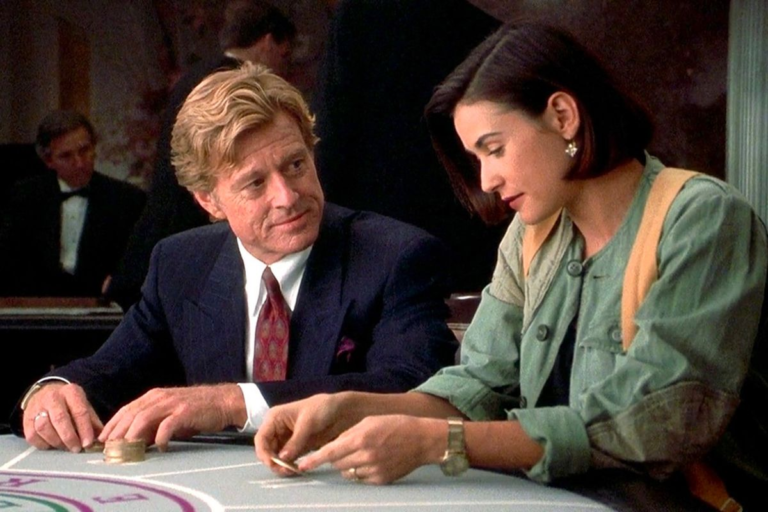
Lyne was still making a cultural impact in the 1990s. In 1993, Demi Moore received an Indecent Proposal from Robert Redford, and the entire country was talking. In this film, a downtrodden and very much in love couple, Woody Harrelson and Moore, go to Las Vegas to try to change their luck. While in a dress shop, she runs into a stranger who happens to be a billionaire. And ALSO happens to be Robert Redford. After Moore proves to be a good luck charm to Redford at a craps table, Redford invites the couple to a party. During this party, he proposes to Harrelson that he will give the couple 1 million dollars for a night with his wife. The concept seems silly. Yet, it works. Moore and Harrelson have real chemistry. We feel the passion in this young couple. Moore has never looked more stunning, especially in that iconic black gown. Redford is as charming as ever as the Knight in Shining Armor who wants to sweep Moore off her feet. Is the plot contrived? Sure!  Did I get swept up in the magic? Absolutely. And I wasnโ€™t the only one who felt this way. The film cost 38 million dollars to make, and made 260 million dollars world wide, making it the 6th highest grossing film of the year. 

So where is the acclaim Adrian Lyne deserves? He gave us so many great, iconic films that were wildly entertaining. His films are not โ€œguilty pleasureโ€ films, they are excellent! He makes us explore our dark, naughty sides in ways so many other filmmakers do not. Like Alex from Fatal Attraction, his films shouldnโ€™t be ignored.

Podcast Review: Dรฌdi

On this episode, JD and Brendan discuss Sean Wang’s incredible coming-of-age film Dรฌdi! After winning two awards at the Sundance Film Festival earlier this year, Dรฌdi has been heavily on our radar since then. We were very excited to finally catch up with it, and the film did not disappoint at all.

Review: Dรฌdiย (4:00)
Director: Sean Wang
Writers: Sean Wang
Stars: Izaac Wang, Joan Chen, Shirley Chen

Subscribe to our Podcasts RSS
Subscribe to our Podcasts on iTunes
Listen on Spotify
Listen on Stitcher
InSession Film Podcast – Dรฌdi

Episode 597: Reevaluating Movies

This weekโ€™s episode is brought to you by Koffee Kult. Get 15% OFF with the code: ISF24

This week on the InSession Film Podcast, we look the movies that have recently been reevaluated and talk about our favorite movies that are getting a different treatment these days! We also talk about D23 and everything Disney has in store for audiences.

Check out this weekโ€™s show and let us know what you think in the comment section. Thanks for listening and for supporting the InSession Film Podcast!

– Box Office (11:01)
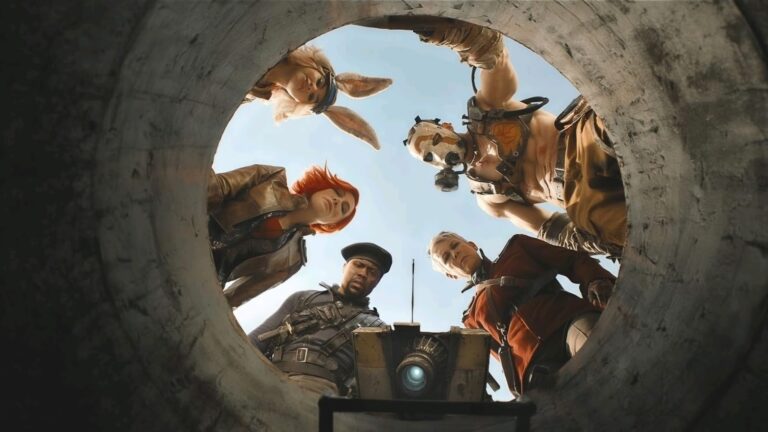
After some opening banter, we once again dive into our recurring segment of “Is the Parade On or Off?” talking about the box office. As Deadpool & Wolverine continues to dominate, it was Ryan Reynolds’ better half in Blake Lively’s new film It Ends With Us that took the box office by storm. Was it the film though or the drama behind the scenes? We discuss that and the major flop that was Borderlands.

– D23 (27:24)
After discussing San Diego Comic-con a few weeks ago, we were anticipating that Marvel would announce something new/big at this year’s D23 as it appears there are gaps in the current MCU timeline. That, however, did not happen. We discuss why that may be the case, among all the other stuff Disney announced at the event. There was plenty of Star Wars, Pixar and Disney Animation news as well that we briefly get into as well.


RELATED: Listen to Episode 516 of the InSession Film Podcast where we discussed our Top 10 Movies of 2023!


– Joaquin Phoenix (1:11:02)
While we are fans of Joaquin Phoenix’s body of work, it was very disappointing to hear what he did last week pulling out at the last minute of Todd Haynes’ new film. Leaving the crew jobless and stranded like that wasn’t great, but hopefully he makes it up to them in some way in the near future.

– Reevaluating Movies (1:20:27)
Time always offers up great perspective in our lives and it’s no different with art. Sometimes it takes years, or even decades, for audiences to come around on a work of art. It’s fascinating to see what films are reevaluated years after its release, especially when those movies either bombed or were critical failures – often times both. So, we wanted to talk about our favorite movies that have been reevaluated over the years and have seen a new light since their original release.

– Music
Newsreel – Michael Giacchino
Captain America – Alan Silvestri

Subscribe to our Podcasts RSS
Subscribe to our Podcasts on iTunes
Listen on Spotify
Listen on Stitcher
InSession Film Podcast – Episode 597

Next week on the show:

Marvel and D23

Help Support The InSession Film Podcast

If you want to help support us, there are several ways you can help us and we’d absolutely appreciate it. Every penny goes directly back into supporting the show and we are truly honored and grateful. Thanks for your support and for listening to the InSession Film Podcast!

VISIT OUR DONATE PAGE HERE

List: 90s Erotic Thrillers, Oh My!

Accept the titillating cheekiness; for these steamy, mature, and surprisingly high brow thrillers still deserve your time and attention.

Bound  

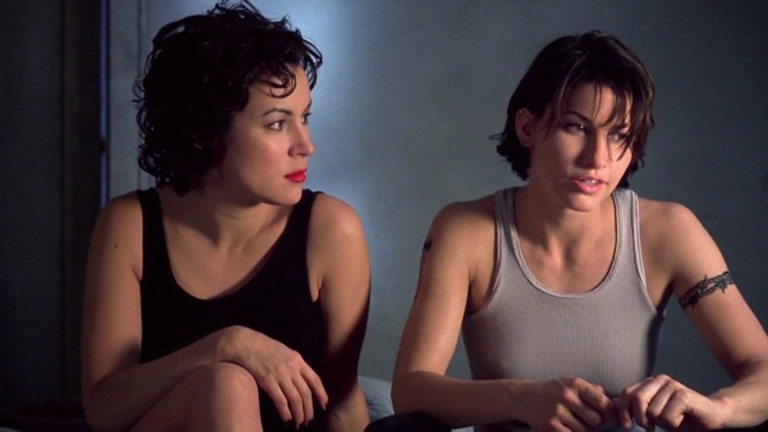
Art Deco designs, leather jackets, lingerie, and two cups of coffee that go both ways set the tongue in cheek, vintage mood for this 1996 Wachowskis’ (The Matrix) saucy starring Jennifer Tilly (High Spirits), Gina Gershon (Showgirls), and Joe Pantoliano (Memento). Attention to detail between lookalike women and flirtatious camera blocking upend the male gaze with a lesbian point of view. Dirty white tank tops versus black lace lead to plumbing, tattoo titillation, wet fingers, and pillow talk. Up close lips distract viewers โ€“ we think we see more than we actually do amid the nipples, nibbles, wrapped legs, and tawdry flexing. Seductive heist montages hinge on the 50s wife dressed for her man with his drink at the ready โ€“ speaking in that Marilyn breathlessness when telling him what he wants to hear. Men with feminine names are camp stereotypes in colorful suits playing mobster big alongside symbolic pick up trucks and red nail polish. It’s our man doing the domestic duty of literally laundering, drying, and ironing the bloody money. Retro lighting, choice zooms, and swanky overhead angles accentuate character realizations while reminding us how feminine film noir can be. The men go off half-cocked, hysterical with hammy colloquialisms when coppers knock on the door, and it’s the women who fix the betrayals and double crosses. Tom Jones cues punctuate the elevators, staircases, and minimal location claustrophobia before gunshots and white paint culminate in a preposterous noir satire.

The Hand That Rocks The Cradle

Curtis Hanson (L.A. Confidential) directs Rebecca De Mornay (Risky Business), Annabella Sciorra (The Sopranos), and more familiar faces in this 1992 potboiler. Medical assaults, miscarriages, and consequences disrupt the idyllic home, and our vengeful nanny is initially a saving grace. They never check her letter of reference, and it’s easy for De Mornay to enter and exploit, deliciously feigning a softer voice as private rage and disgusted threats reveal Peyton’s true instability. Intercut tension and pain parallel our mothers, however blonde versus brunette women ascend or descend the staircase, interchangeable as their powers shift in the congested house. There’s even a certain intimacy as domestic duties are shared and the women talk about sex. Ineffectual men admire the supple see-through nightgown and wet clothes in the rain before Peyton secretly nurses the son that she thinks is hers. Handyman accusations show how easy it is to insinuate, make innocent meetings appear deceitful, and sow suspicion. Real filming locations and bright bay windows mean everything happens in broad daylight under our nose. The camera zoom lingers, leering where it shouldn’t before fists, shovels, knives, shattering glass, and domestic destruction. Greenhouse dangers, empty asthma inhalers, and attic confrontations make for memorable vignettes and alluring, scene chewing performances.

Knight Moves

Chess and murder collide for then-couple Christopher Lambert (Highlander) and Diane Lane (Unfaithful) in this clever 1992 thriller opening with a very creepy black and white 70s chess match. The clock ticking pressure leads to violence at the loss before our current winner Lambert puts his daughter to bed. He then gets right to the juicy โ€œI Put a Spell on Youโ€ black garter belt montage but denies the casual dalliance when she ends up dead. Testy interrogations with no nonsense cops Tom Skerritt (Alien) and Daniel Baldwin (Homicide: Life on the Street) mean everyone is ridiculously macho amid crime scene graffiti, squad room chalkboards, and a killer always one step ahead of the phone trace. Psychologist Lane is steamy in the sauna indeed with drinks, cigarettes, slow motion saucy, and suspicions on who is playing whom. Real estate connections, big old computer details, and mad lib ransom notes lead to well paced bait and switch police stakeouts. Certainly there are preposterous contrivances, but this takes some unexpected turns before children in peril demands our over the top chess masters fight mano y mano. The grainy feel, shadowed lighting, and cigarette smoke may be too low budget eighties for some viewers and there may not be much repeat value, however the hammy, self-aware performances embrace the clichรฉs. Who knew chess was so dangerous and provocative?

The Passion of Darkly Noon 

Injured Brendan Fraser (The Whale) intrudes upon the tempting Ashley Judd (Kiss the Girls) and her mute boyfriend Viggo Mortensen (Lord of the Rings) in a surreal, quaint wood for this 1995 psychological thriller. The idyllic springs, pretty outdoors, and hidden grotto are no match for tight tops, tiny dresses, and sweaty mellow. We don’t see the titular trauma but immediately sense the disturbed attraction and late blooming Oedipal complex. Despite the backwoods colloquialisms, kooky characters, and buttoned up repression of the perceived sinful, the naughty atmosphere rises with obsession and mea culpa harm. Religious stewing, evil bewitchment, fear mongering and slow burn symbolism add to the secrets, punishment, and bizarre visions. The brooding drama becomes increasingly unreliable as this purgatory cycle repeats with hellish flames and howling. Granted some attempted tender or scary scenes are dated and infantile. However, this character study on passion and sacrifice makes for an interesting, trippy morality play.

Interview: Warren Fischer, Director of ‘The Serena Variations’

Jaylan Salah, after reviewing The Serena Variations, sat down with director Warren Fischer.

Jaylan Salah: What compelled you to write this story?

Warren Fischer: The Serena Variationsย emerged from a personal exploration of the intersections between fine art, music, and the human psycheโ€”areas Iโ€™ve long been fascinated by. My background in projects like Fischerspooner has always been about pushing boundaries, and this film felt like a natural extension of that journey. Drawing on my own experiences with music and the challenges that come with creative pursuits, I wanted to delve into the psychological impact of striving for perfection, particularly for a neurodiverse protagonist. The story reflects a very personal side of my life, and itโ€™s my hope that it resonates with others who have walked similar paths.

JS: How do you think horror as a medium can be used by filmmakers for social commentary?

WF: Horror is a genre that has always intrigued me because of its ability to tap into our deepest fears and societal anxieties. When used thoughtfully, it can be a powerful vehicle for social commentary, allowing filmmakers to explore issues that are often left in the shadows. Inย The Serena Variations, horror helps to illustrate not just the protagonistโ€™s internal struggles but also the external pressures that come with being neurodiverse. I was inspired by the way experimental cinema often uses unconventional methods to challenge viewersโ€™ perceptions, and I tried to bring some of that energy into this film to evoke a deeper understanding of the characterโ€™s experience.

JS: Dylan Brown was amazing as Serena, how did the casting process go and was she your first choice?

WF: Dylan Brown was our first choice for Serena, and I feel incredibly fortunate that she agreed to take on the role. From the beginning, it was clear that her unique perspective and experience would bring an authenticity to the character that was crucial for the story we wanted to tell. The casting process felt more like finding the right partner for this journey than simply filling a role. Dylan brought a depth and sensitivity to the character that aligned perfectly with the filmโ€™s exploration of neurodiversity. Her commitment to the project was deeply inspiring and played a significant role in bringing Serena to life.

JS: How difficult was it to visit childhood memories for inspiration in creating The Serena Variations?

WF: Revisiting childhood memories was certainly a challenging process, but it was also essential to the authenticity of the story. These memories are woven into the fabric of the film, and they helped ground the narrative in something real and personal. Including actual recordings and images of my mother, as suggested by my editor, John Walter, was a way to bring a piece of my past into the present. It was emotional, yes, but it also felt necessary to connect with those experiences in order to tell this story with the honesty and depth it required.

JS: How do you think the film succeeded in showcasing the thin line between brilliance and madness?

WF: I believeย The Serena Variationsย succeeds in exploring the thin line between brilliance and madness by immersing the audience in Serenaโ€™s internal world. The filmโ€™s structure and sound design were crafted to reflect her psychological state, creating an experience that mirrors the disorientation she feels. I drew inspiration from the experimental cinema tradition, where narrative boundaries are often blurred to reveal deeper truths. However, my approach was not to present this as a definitive statement but rather as an invitation for the audience to engage with the material in a personal and introspective way. Itโ€™s a complex subject, and I hope the film offers a nuanced exploration of it.

JS: As a storyteller, what is the most important theme that you want audiences to take from your film?

WF: The most important theme I hope audiences take fromย The Serena Variationsย is the resilience of the human spirit, particularly in the face of adversity and the pressures of artistic ambition. The film is a reflection on the cost of obsession, the sacrifices made in pursuit of perfection, and the challenges that come with being different in a world that often demands conformity. I wanted to create a narrative that respects the complexity of these experiences, and I hope viewers find something in Serenaโ€™s journey that resonates with their own lives. Itโ€™s not about offering easy answers but rather about opening a dialogue on these important themes.

JS: Which were the most difficult scenes to shoot?

WF: The scenes that required the most emotional intensity, particularly those involving the psychedelic experience, were among the most challenging to shoot. These moments were crucial to the narrative, serving as a turning point for Serenaโ€™s character. Capturing the balance between enlightenment and disorientation was essential, and it required a lot of trust and collaboration between the cast and crew. I was inspired by the experimental cinema tradition of using altered states of consciousness to explore deeper psychological themes, and I wanted to approach these scenes with a sensitivity that honored the complexity of those experiences.

JS: When you are overwhelmed as an artist and creative person, where do you find your footing?

WF: When I feel overwhelmed, I find grounding in the simple, everyday aspects of lifeโ€”music, nature, and spending time with loved ones. These moments allow me to step back from the intensity of the creative process and reconnect with the core of who I am. Itโ€™s a practice rooted in mindfulness, something Iโ€™ve learned to value over the years. In the tradition of experimental cinema, where the artistโ€™s process is often as important as the final work, these moments of reflection are crucial. They help me return to the project with renewed clarity and purpose, ensuring that my work remains true to my vision.

JS: In such an intense shoot, how do you as a director ensure the safety of your film set so that your actors would be able to become fully vulnerable while feeling completely safe?

WF: Creating a safe and supportive environment on set is something I take very seriously, especially when working on a project as emotionally intense asย The Serena Variations. Itโ€™s important to me that everyone involved feels respected and supported, which is why I prioritize open communication and collaboration from the very beginning. Working with a neurodiverse cast and crew, including our lead actor Dylan Brown and editor John Walter, required particular attention to creating an inclusive and understanding atmosphere. The presence of intimacy coordinators and mental health professionals was invaluable in ensuring that the set remained a safe space for everyone. My goal was to foster an environment where the actors could explore their characters fully, knowing that they were protected and cared for throughout the process.

JS: What are you working on after The Serena Variations?

WF: Afterย The Serena Variations, Iโ€™m excited to delve deeper into Serenaโ€™s story with a feature-length version that will explore her journey to process childhood trauma in more detail. This project will allow for a more expansive exploration of the themes that were central to the original film, particularly the intersections of identity, memory, and neurodiversity. Iโ€™m also beginning to explore a new project that examines the influence of technology on our sense of self, which feels like a natural progression from the themes Iโ€™ve been working with. Both projects are opportunities to continue pushing boundaries and exploring new ideas, always with the hope of creating work that resonates on a deep, personal level with audiences.

Movie Review: ‘Family Portrait’ is Timeless and Pure


Director: Lucy Kerr
Writers: Lucy Kerr, Rob Rice, Karlis Bergs
Stars: Rachel Alig, Deragh Campbell, Katie Folger

Synopsis: A sprawling family’s futile attempts at capturing a family photo take a dreamlike turn when the matriarch vanishes and one daughter becomes desperate to find her.


One naturally expects that a film with a title like Family Portrait (2023) will function as an incisive dissection of the suffocating impact that bourgeois conventions can have on familial relations and social bonds. Thereโ€™s simply no chance that it wonโ€™t come freighted with a tone of semi-ironic detachment and a slightly disaffected worldview. In-the-know cinephiles who have already caught up with the acclaimed short films that Lucy Kerr has been churning out in recent years will already have a sense of her very specific stylistic and thematic preoccupations going into the film. The same cannot be said for individuals who might be expecting something even more elliptical or even, as is the trend nowadays, meta-textual. Kerrโ€™s work feels oddly timeless in its freshness and simplicity. There is a purity to the images that she crafts that stays with you long after a first viewing of any of her output.ย 

With this, her first feature film, she looks to break into the festival circuit and extend her reach beyond short-form storytelling. In loose terms, the film chronicles a day in the lives of the members of a large, wealthy extended family. They gather frequently to show off their individual accomplishments and boost their social status within the familial structure but appear incapable of feeling or displaying completely unselfish love. Their desire to take a family photo together is complicated by the disappearance of the familyโ€™s matriarch. As the day goes on, a harried young daughter, Katy (Deragh Campbell), becomes increasingly fixated on her motherโ€™s sudden, unexpected absence. Her desperate attempts to track her down take on a dreamlike, unnerving quality as it becomes clear that these efforts may not yield tangible results. 

The filmโ€™s rigid and precise, yet associative, editing style seemingly calls back to the early days of the Berlin School movement. Kerrโ€™s touch is less delicate than that of, say, Angela Schanelec but she nevertheless finds a way to put her own spin on aesthetics that have traditionally been deeply rooted in a German cultural context. In spite of its European arthouse trappings, Family Portrait is the unmistakable product of an American artist hoping to capture something of the enigmatic nature of โ€œThe Southโ€ as a concept. The affluent Texan milieu that these characters inhabit is regarded with a cool objectivity by Kerr, who steadfastly refuses to condemn or pass judgment on the figures at the center of this tale. Her efforts to weave distancing effects into her storytelling repertoire could have felt like the reductive, highly imitative work of a recent film school graduate, but her point of view has been developed and refined enough to ensure that these techniques are employed with great rigor. This is more than just a proof-of-concept piece that allows Kerr to prove that she has sophisticated taste in contemporary arthouse cinema (although, to be fair, it does seem to indicate that fact).ย 


Kerrโ€™s willingness to allow Family Portrait cling to its American identity while still dipping its toe in the pool of European affectations robs it of the tension that dominates most attempts to craft โ€œAmerican arthouse cinemaโ€ but also frees it from certain expectations. This playful, totally unfettered quality extends to Kerrโ€™s morally ambiguous, occasionally discomfiting consideration of the natural landscape that surrounds the family and the effect that it has on their behavior. Far from taking the easy way out and drawing obvious contrasts between the stilted, artificial narrative of strained family dynamics and the wild, untamed beauty of nature – Kerr hints at the idea that human beings, and their egos, can only be contained by the overwhelming force of the natural environment. To be in awe of the clear, impenetrable surfaces of the lakes that surround you is to know how small and insignificant you really are in the grand scheme of things. None of the members of this family can come to terms with the fact that their place in the universe is not as grandiose as they would have hoped it could have been. It is only when forced into a position of submission in the face of the overwhelming force and cruelty of the natural environment that we can actually gain a sense of perspective on our lives.

Grade: B+

Women InSession: Top 3 Montgomery Clift Films

This week on Women InSession, we once again talk about the great Montgomery Clift as we discuss our Top 3 Clift films! We’ve talked about him before, but we now have new voices in our lineup who wanted to add their thoughts on the great Montgomery Clift and what made him so special.

Panel: Kristin Battestella, Jaylan Salah

On that note, check out this week’s show and let us know what you think in the comment section. Thanks for listening and for supporting the InSession Film Podcast!

Subscribe to our Podcasts RSS
Subscribe to our Podcasts on iTunes
Listen on Spotify
Listen on Stitcher
Women InSession – Episode 97

The Raw Kind: Glauber Rocha And His Passions

Upon the Criterion release of Black God, White Devil, I was introduced to the center of Brazilโ€™s โ€œCinema Novo,โ€ or new cinema, their new wave of filmmaking. Where past Brazilian films were musicals and Hollywood-like epics, the Cinema Novo era focused more on the countryโ€™s growing political strife. It aimed to address the countryโ€™s problems, which has kept Brazil feeling like a third-world nation. Prominent directors included Nelson Pereira dos Santos, Leon Hirszman, Joaquim Pedro de Andrade, and the man who is considered the leader of this movement, Glauber Rocha. Rocha directed Black God, White Devil, whose life was cut short, but his legacy lives on in Brazilโ€™s film industry.

“Black God, White Devil” (1964)

Rocha was active in the arts since his early teens, following the same trend as other future filmmakers did in that period. He attended many movie screenings and plays, later becoming a film critic at 16-years-old. At the same time, he delved into radical leftist politics, which influenced his career. After considering law school, Rocha pursued a filmmaking career. He released his first short film, Pรกtio (1959) at the age of 20. From there, his political works and numerous essays about the state of cinema would be a constant stream of ideas and critiques that received the backing of his fellow countrymen but scorn from outsiders.

His debut feature, Barravento (1962), was the first taste of Rochaโ€™s messages with his countryโ€™s socio-political problems as a democratically elected government, favorable to Rochaโ€™s views, faced threats of a military coup. Black God, White Devil (1964) was his follow-up and played at the Cannes Film Festival, where the film received critical praise for his scathing critique of religious fervor and wealthy landowners. To Brazilian historians, Rochaโ€™s Western tale is arguably the greatest film in the countryโ€™s history. The timing of its release, however, was inconvenient. That same year, the military coup took place, and Brazil fell under a right-wing military dictatorship until 1985, after Rocha died. The coup made his content particularly regressive in the eyes of the new officialsโ€”who planned on killing himโ€” and endangered Rochaโ€™s ability to make movies.

“Barravento” (1962)

Regardless, he followed it up with two more movies that were seen as allegories to the state of the country, Entranced Earth (1967) and Antonio des Mortes (1969), completing his trilogy that was supercharged with politics, folkism, and realism he called to attention about Brazil. Like his contemporary Jean Luc-Godard, he was influenced by Marxist ideas to construct abstract shots, which sometimes got in his way of reaching a mainstream audience. A common criticism of Rochaโ€™s work is how a movie can sometimes alienate viewers as being too intelligent, and Rocha made his feelings known publicly on various controversial trends. 

“I am Cinema Novo,โ€ said Rocha. “My Brazilian films belong to a period when my generation was full of wild dreams and hopes. They are full of enthusiasm, faith, and militancy and were inspired by my great love of Brazil.” However,  other left-wing intellectuals found some of his messaging was seen as too apocalyptic and messy for viewers to understand, aggravating the military dictatorship. Thus, he became marginalized within the film industry at home and felt that there was no future for it. Following the release of The Lion Has Seven Heads, another politically charged film that explicitly stated its plot of overthrowing the government, Rocha went into exile in Europe and settled in Portugal.

“The Age of the Earth” (1980)

In 1980, he made the last film, The Age of the Earth. A Biblical metaphor about the state of the world and the ideas of destroying it and rebuilding for a new revolution, the fact that Brazilโ€™s state-run production company partly financed it caused many to boycott it as it was hypocritical of Rocha to accept money from them. Then, it was vilified by critics who walked out during its screening at the Venice Film Festival, where Louis Malleโ€™s Atlantic City and John Cassavettesโ€™ Gloria won the Golden Lion. Believing the win for Malle was pre-selected, Rocha called the Frenchman “second rate,โ€ and that it was a fascist film because it was co-produced by Gaumont, a โ€œmultinational imperialist,โ€ according to Rocha. In front of journalists, Rocha derided those who supported Malleโ€™s win as โ€œsigning their cultural death sentenceโ€ and a scandal that such commercial films were playing in these festivals and winning. 

In 1981, Rocha unexpectedly fell ill with bronchopneumonia while preparing for his next feature. Knowing he would die soon, Rocha flew back to Brazil and died shortly after returning home at the age of 43. The story of Cinema Novo can only start with Glauber Rocha, who was in his early twenties when he started and remained a fire starter in every film he made. Rocha was a director with no limits and no filter who kept daring to push the limits of his ideas, whether they were popular or not. He laid the foundation for a more open relationship where nothing was off-limits, especially when the country returned to democracy. The gritty realism of Pixote (1981), Four Days In September (1997), and City of God (2002) is connected back to Cinema Novo and the sociopolitical themes that still infect Brazil, cementing Rochaโ€™s legacy as a truth-teller and influencer for political cinema. 

Chasing the Gold: Could โ€˜Kneecapโ€™ or โ€˜The Devilโ€™s Bathโ€™ Shake Up the International Feature Film Race?

Who says August is too early to start submitting films โ€“ and thus campaigning โ€“ for Oscar contention? On Friday, both Austria and Ireland announced their countryโ€™s representatives in the International Feature Film category, with Austria choosing Veronika Franz and Severin Fialaโ€™s gruesome and terrifying horror film, The Devilโ€™s Bath, and Ireland putting forth Kneecap from writer-director Rich Peppiatt. The news unofficially marks the beginning of awards season, as it were, as the countries are the first to present their Oscar hopefuls, perhaps giving other nations a sense of what to nominate as the lead-up to Marchโ€™s ceremony continues. 

Based on historical records from 17th and 18th century Austria, The Devilโ€™s Bath follows a woman called Agnes, who doesnโ€™t feel at home in her husbandโ€™s world and thus becomes enveloped by evil thoughts, the most shocking and violent of which leads her to believe she can escape. In fact, it may be her only hope at breaking free of the binds her betrothedโ€™s community has on her. The film is a deeply dark tragedy, or at least it appears that itโ€™s venturing down that road, yet itโ€™s never afraid to swiftly uproot your expectations without upending its own logic. Itโ€™s as brutal and brilliant a film that the duo behind Goodnight Mommy and The Lodge have yet to make โ€“ and yes, that includes the still-shocking Goodnight Mommy, a film that will never leave my head, yet I never wish to revisit. The same might just go for The Devilโ€™s Bath, which is currently streaming on Shudder.

InSession Filmโ€™s Jaylan Salah wrote about The Devilโ€™s Bath from the Tribeca Festival for Geek Vibes Nation: 

โ€œThe Devilโ€™s Bath is a journey of a woman spiraling into madness, but is it delirium or the unraveling of a burdened mind ravaged by the monotony of married life in 1750 Austria and the never-ending chores? This is Jeanne Dielman of the occult; all thanks to Veronika Franz and Severin Fiala for creating this domestic loop of Hell, replacing potatoes with fish heads.โ€

Those in the mood for some lighter, nonetheless exciting, should find Kneecap to be the ideal cup of tea. The Irish feature โ€“ which was chosen as the countryโ€™s International Feature representative on August 2, the same day as its theatrical release in the U.S. โ€“ tells the semi-autobiographical story of the titular band, a group made up of a drug-dealing duo (Mรณglaรญ Bap and Mo Chara) and a schoolteacher (DJ Provaรญ) who rap about topics from Irish republican politics to drugs and sex, in both English and authentic Irish Gaelic. The film follows the trioโ€™s journey from small-town rappers to national sensations whose music serves as a means to preserve their native language. The rappers all play semi-fictional versions of themselves in their first acting gigs, with Michael Fassbender appearing as one of their fathers.

โ€œFor a culture that was so brutally oppressed for so long โ€” the language was almost driven to extinction โ€” now itโ€™s on the biggest stage of the world, and itโ€™s an absolute privilege,โ€ Chara said of the honor. Bap added that Kneecap is โ€œan international story and makes people reflect on their own culture and language, and to consider the relationship they have with their indigenous or native language.โ€ Prรณvaรญโ€™s response comes in appropriate fashion for the film: โ€œIs mรณr an onรณir dรบinn gur roghnaigh IFTA Kneecap mar a roghnaรญseachรบ don Oscar โ€“ tรก muid fรญor bhuรญoch astuโ€ฆ agus go raibh maith agat as ucht an Oscar!โ€ Translation: โ€œWe are honored that IFTA has chosen Kneecap as its Oscar shortlist โ€” we are truly gratefulโ€ฆ and thank you for the Oscar!โ€ 

In his InSession Film review of Kneecap from Januaryโ€™s Sundance Film Festival, Alex Papaioannou wrote: 

โ€œWith a massive rise in younger individuals wanting to stand up and make their voices heard, Kneecap feels as if all that pent-up anxiety and desire has become personified. This is due to the authenticity felt through the very DNA of this film, from the rappers portraying themselves to the way in which Peppiatt captures Belfast; the culture feels represented in a beneficial manner. This will likely be a favorite of the fest to most fans of cinema that remains consistently exciting without sacrificing a ton of substance.โ€

Austrian submissions have received Academy Award nominations just four times since 1961 (1986: ’38 โ€“ Vienna Before the Fall; 2007: The Counterfeiters; 2008: Revanche; and 2012: Amour), with the country taking home statuettes for both The Counterfeiters and Amour. Two of its three most recent selections, 2021โ€™s Franz Rogowski vehicle Great Freedom and 2022โ€™s Corsage, starring Vicky Krieps, were shortlisted but not nominated. Ireland, meanwhile, has only been sending films to the Oscars since 2007, and scored its only nomination for 2022โ€™s The Quiet Girl. (Irelandโ€™s Spanish-language film Viva was shortlisted in 2016.)

As for how these selections could impact the International Feature Film Award race, The Devilโ€™s Bath likely faces the tougher road to a nomination solely due to the Academyโ€™s reluctant history of honoring horror films. Aside from Jordan Peeleโ€™s Get Out โ€“ which nabbed Peele a Best Original Screenplay Oscar at the 2018 ceremony โ€“ nominations for horror films only tend to come in technical categories. And depending on your opinion of Jonathan Glazerโ€™s The Zone of Interest, which took home the honor last year, a true horror film hasnโ€™t been nominated in the category since 2006, when Guillermo del Toroโ€™s Panโ€™s Labyrinth made the final five. 

Kneecapโ€™s prospects are more realistic. For starters, itโ€™s based on a true story, a genre the Academy tends to appreciate simply for existing. Yet the ever-changing Academy, namely its newest members, are likely to appreciate its bold storytelling choices and the fact that, while the film is a work โ€œnon-fiction,โ€ it doesnโ€™t adhere to the tropes films of its nature tend to blindly follow. Tonally, itโ€™s musical, humorous, and vulgar, and jam-packed with visual flourishes that remind this viewer of the vibrant colors that populate the Spider-Verse films. Lyrics and lines alike splash onto the screen as characters converse and rap, almost as though these artistsโ€™ tales are a personalized comic strip coming to life in real-time. 
While not an automatic greenlight to the Dolby Theatre, Peppiattโ€™s film does seem to have caught GoldDerby’s attention. Currently, the awards site has it on the outside looking in when it comes to top contenders, but Kneecap does appear in the โ€œStrong Contendersโ€ category in the siteโ€™s latest International Feature Film temperature check. Having made history this year when it became the first Irish-language film to have its world premiere at the Sundance Film Festival, perhaps Kneecap could serve as another big swing for the Academy at a time when it seems to be more willing to take them. And not just in terms of fresh-faced, unique nominees: It would likely be the first time that nominees will wear tracksuits to the March 2025 celebration instead of tuxedos. Letโ€™s hope the Academy feels itโ€™s time to forgo its typical dress code requirements, even if itโ€™s just this once.

Movie Review: ‘Borderlands’ is a Cheap Imitation


Director: Eli Roth
Writers: Eli Roth, Joe Abercrombie
Stars: Cate Blanchett, Kevin Hart, Edgar Ramirez

Synopsis: Based on the best-selling videogame, this all-star action-adventure follows a ragtag team of misfits on a mission to save a missing girl who holds the key to unimaginable power.


Pick a volume, any volume: Borderlands is a generic rip-off of Guardians of the Galaxy. This is a consensus we can all agree on. However, itโ€™s not just the source material; the action role-playing first-person shooter space Western video game by Gearbox Software shows that writer and director Eli Roth didn’t merely pay homage to the Marvel franchise but stole from it blatantly.

The game is so heavily drenched in CGI, exposition, and generally poor dialogue that it feels like Eli Rothโ€™s Borderlands is attempting to create an interactive video game for the cinema, relying heavily on repetitive scenes and narrowly linear storytelling.

This brings us to the most interesting question โ€“ what is Cate Blanchett doing in a movie like this? I almost hope this film was done pre-Tรกr as research, where a renowned figure’s downfall leads them to conduct a video game soundtrack or, in this case, starring in one of the worst video game adaptations in recent memory.

The story follows Lillith (Blanchett), a bounty hunter who is as cutthroat as they come โ€“ in this first scene, she blows away a victim without mercy. Lillith then receives a phone call from one of her reliable clients, a galactic corporate tycoon named Atlas (Edgar Ramรญrez). He wants Lillith to return to her home planet of Pandora to rescue his daughter, Tina (Ariana Greenblatt), 

Tina was abducted by Roland (Kevin Hart, doing his usual Kevin Hart things), a former soldier turned mercenary. With the help of his former institutionalized friend, Krieg (Creedโ€™s Florian Munteanu), Roland takes Tina, but not for the reasons you might think. When Lilith arrives, she is met by Claptrap (voiced by Jack Black), a robot programmed with an agenda by Atlas.

From there, the script by Roth and Joe Abercrombieโ€”surprising, given that the latter is the writer behind one of the most original series to come out in the past decade, Love, Death + Robotsโ€”devolves into a generic chase picture, albeit with some bells and whistles that quickly become tedious.

These include a private army created by Atlas, known as the Eridians, engineered from the genetic material of an alien race that once inhabited Pandora. This is a modern spin on colonization from their script. The idea here is that Atlas believes Tina can unlock the ancient civilization’s advanced technology.

Well, as if creating a killer demented army from genetic material wasnโ€™t advanced enough in the first place.

I found it strange that Lionsgate has done everything in its power to avoid not only marketing Borderlands, which they heavily promoted with the announcement last winter, but also keeping Eli Rothโ€™s name off of it, even excluding it from the marquee. A beloved slasher-porn director seems to be trying to straighten out his heavily R-rated career with this tepid, candy-colored, PG-13 fare.

Why wouldnโ€™t the studio allow Roth to bring his own hard edge to a popcorn picture that desperately needed it? You have to wonder if the stellar cast, which also includes Academy Award winner Jamie Lee Curtis and Haley Bennett, signed up for something original and out of their comfort zones. (Okay, probably for the money.) 

The scenes have all the spark of a read-through, as if the cast is figuring out how to cash their checks and spend their money before the first take.

The filmโ€™s tone is a mess, seeming as if Roth doesnโ€™t know how to helm a sci-fi picture without relying on graphic slasher-style encounters, instead opting to heavily โ€œborrowโ€ from the likes of George Miller and Luc Besson, but without Miller’s visceral quality or Bessonโ€™s cinematic action style.
Borderlands is simply a cheap imitation.

Grade: D+

Chasing the Gold: Summer Catch-Up

This week on Chasing the Gold, Erica and Shadan do some summer catch-up and talk about their favorite movies and books they’ve experienced the last few months! We’ve had some guests on the show recently to talk about all the categories we’ll be covering this fall season, so it’s been awhile since we’ve talked about the movies we’ve seen and it was fun to just have a fun little chat about them.

On that note, check out this week’s show and let us know what you think in the comment section. Thanks for listening and for supporting the InSession Film Podcast!

Subscribe to our Podcasts RSS
Subscribe to our Podcasts on iTunes
Listen on Spotify
Listen on Stitcher
Chasing the Gold – Summer Catch-Up

Help Support The InSession Film Podcast

If you want to help support us, we would greatly appreciate it! For more info, CLICK HERE.

Movie Review: ‘It Ends With Us’ Tries To Find Closure


Director: Justin Baldoni
Writers: Christy Hall, Colleen Hoover
Stars: Blake Lively, Justin Baldoni, Jenny Slate

Synopsis: Adapted from the Colleen Hoover novel, Lily overcomes a traumatic childhood to embark on a new life. A chance meeting with a neurosurgeon sparks a connection but Lily begins to see sides of him that remind her of her parents’ relationship.


This review of It Ends with Us will contain spoilers.

There will be a lot of talk about the adaptation of It Ends with Usโ€”negative from critics and positive from fans of the source material. That was bound to happen. For one, the romance novel by Colleen Hoover is, incredibly, the second-highest-grossing book of all time, behind, you guessed it, the Bible.

It Ends with Us is beloved, so there is a built-in audience. However, many critics will likely take issue with romanticizing a story that deals with the serious theme of domestic abuse. This mainstream spin on such a weighty subject may lead some to argue that the film doesnโ€™t take the issue seriously, perhaps even trivializing it to the point of being almost flippant.

However, after watching the film, the truth lies somewhere in between.

Based on the best-selling novel of the same name, the story follows Lily Bloom (Blake Lively), a woman who abruptly leaves her fatherโ€™s (Kevin McKidd) funeral in the middle of her eulogy, much to the disappointment of her mother (Up in the Airโ€™s Amy Morton). Lily travels back to Boston, where she sneaks onto the roof of an upscale high-rise, deep in thought, where she meets a man stamped with an eternal five-o’clock shadow, Ryle (Five Feet Apartโ€™s Justin Baldoni).

Ryle is so angry that when he gets to the roof, he kicks over a chair, something Lily immediately picks up on.

Yet, in a twist familiar to most cinematic popcorn romances, she sees beyond his temper and finds a man who has a sweetness underneath that dangerous exterior despite having a bad day. Ryle is a neurosurgeon (yes, itโ€™s one of those movies, though the movie does have some fun with these cliches) who has just lost a child on the operating table. Beneath all that charm, his chiseled jawline, and a body virtually free of a body fat percentage, is a bluntly honest man who comes on strong, openly expressing his attraction to her.

The storyline is very effective for this entry in the genre. Baldoni, who also directed the film, has undeniable chemistry with Lively; however, when two people are this good-looking, they could have chemistry with a dumpster on fire, if needed. The narrative is a classic romantic chase, with a rich, handsome man pursuing a woman with a damaged past full of dark secrets.

The scenes can be steamy and engaging, with Lively adding an entertaining mix of eccentricities, along with some humor and heat, that serve the story well.

You also have Jenny Slate playing Ryleโ€™s sister and Lilyโ€™s best friend, Allysa. Slate is the filmโ€™s secret weapon, bringing a healthy dose of comic relief that balances the romance and the heavy subject of domestic violence. Hasan Minhaj, who plays Allysaโ€™s husband, Marshall, has his moments but is relatively underused, primarily serving as a straight man to Slateโ€™s offbeat character.

It Ends with Us then begins to hit the romance genre’s erogenous zones by tying the past with the present, introducing the return of Bloomโ€™s first love from high school, Atlas (1923โ€™s Brandon Sklenar, a movie star in the making), who just happens to have opened a restaurant that pays homage to their young adult romance. And yes, once again, their chemistry is undeniableโ€”the kind that only, yada yada yada, two beautiful people can have on the silver screen. 

Now we have another classic Hollywood genre trope: who will Lily chooseโ€”Ryle, Atlas, or possibly a character with a less pretentious and silly or stupid name?

The script by Daddioโ€™s Christy Hall is clever, and I fully expect to be brutalized for this opinion. For some reason, I feel the need to justify the statement, which I will do in a moment, but I think it is important to note that I am looking at this film through a socially conscious lens. Also, if you are worried about spoilers, you will want to skip the rest of the review (and bookmark). The main criticism of It Ends with Us is that it normalizes domestic abuse. This is a fair point, to a degree, especially for anyone who is triggered by the subject and has experienced such atrocities. 

As someone with a professional background in clinical mental health, I find that Hall’s approach to the source material essentially puts a “beard” on the domestic violence experienced by the main character. In the novel, the reader immediately knows that Ryle is abusing Lily. However, in the film, each incident is depicted as an accident. Hall and Baldoni allow the viewer to experience the abuse through the victim’s perspective of normalization, stemming from her observation of her parents’ abusive relationship.

When the filmmakers eventually reveal the extent of the abuse, it may not be surprising and could feel somewhat contrived. Still, it provides an emotional impact for a genre that usually falls flat, creating unsettling moments that engage the viewer. At this point, the divisiveness may either spark reactions from viewers as well-intentioned or lead others to argue that the filmโ€™s portrayal is overly benevolent. 

However, Hoover has commented that the book is based on her own experiences with her family’s intimate partner violence, suggesting that the ending, which closely mirrors the novel, represents the author’s way of finding closure for herself, which is understandable. Nor will I judge Hoover for spinning her book into romance to put the subject on a larger platform for awareness. 

From that standpoint, who are we to judge?

It Ends with Us never asks you to normalize abuse or even agree with the author, the filmmakers, or the character’s interpretation. Even the filmโ€™s eye-opening ending scene, where Lily breaks the news to her husband that she wants a divorce while he is holding their child, might seem ill-advised, but it represents an effort to break the cycle of abuseโ€”not for herself, but for their daughter.

Yes, It Ends with Us is a film about generational domestic abuse that may be seen as overly idealistic. While it might be far from the art we expect from such weighty subject matter, and the gesture may feel artificial, it is nonetheless meaningful in portraying the power of healing and moving forward because of the main character’s dormant and suddenly active power of resilience.

Albeit, in a way where a paid spokesperson would call a Flintstone vitamin medicine, but well-intentioned nonetheless.

Grade: C+