This week on the InSession Film Podcast: Extra Film segment, Ryan and Jay discuss Gloria Bell starring Julianne Moore and the Mötley Crüe biopic on Netflix The Dirt!
Gloria Bell may be a remake of a foreign language film that came out in 2013, but it’s arguably one of the better remakes of that sort from the last five years or so. It helps that it was made by the same director in Sebastián Lelio. The Dirt on the other hand, as Ryan and Jay get into, continues to showcase the downfall of the music biopic.
On that note, have fun with this week’s Extra Film segment and let us know what you think in the comment section below. Thanks for listening!
– Movie Review: Gloria Bell (12:22) Director: Sebastián Lelio Writer: Alice Johnson Boher (adapted screenplay), Sebastián Lelio Stars: Julianne Moore, John Turturro, Michael Cera
– Movie Review: The Dirt (46:12) Director: Jeff Tremaine Writer: Amanda Adelson (screenplay), Tommy Lee (book) Stars: Douglas Booth, Iwan Rheon, Daniel Webber
We try to make this the best movie podcast we possibly can and we hope you enjoy them. Subscribe today on iTunes, Spotfiy or Stitcher, and please leave us a review on iTunes. You can also find us on Soundcloud, PlayerFM and TuneIn Radio as well. We really appreciate all your support of the InSession Film Podcast.
To hear this Extra Film episode and everything else we do, download our apps on the Amazon Market for Android and the Podcast Box app on IOS devices. The mobile app covers all of our main shows, bonus podcast’s and everything else relating to the InSession Film Podcast. Thanks for your wonderful support and listening to our show. It means the world to us!
Synopsis: A pair of teenagers with life-threatening illnesses meet in a hospital and fall in love.
[/info]
I have to admit, I went into Five Feet Apart expecting to roll my eyes at the usual sick-lit teen romance tropes. And, for the most part, this is a pretty standard entry in the genre. But, what I appreciated about this take was the believability of the premise, the likeability of the characters, and the way it was able to subvert expectations, at least at times, without seeming too self-aware of the tropes or winking at the audience too much.
There is certainly a suspension of disbelief that comes, at times, with this movie. I often found myself wondering how certain hospital staff members retained their employment when they constantly lost track of their pediatric patients, for example. But the basic premise – two teenagers, both with cystic fibrosis, fall in love despite not being able to touch – gives a unique and realistic Romeo and Juliet twist to the genre. I also thought the script handled the exposition behind the illness extremely well. The main character, Stella, has a YouTube channel in which she shares information about cystic fibrosis and her experiences with the illness, and the script’s use of these videos to share information the characters otherwise wouldn’t need to explain felt extremely organic.
My biggest complaints about this movie come with the dialogue and the pace. The dialogue was a bit stiff, at times, and both the first and last acts felt loose and rushed in a way that made it obvious that it was adapted from a novel. However, both Haley Lu Richardson as Stella and Cole Sprouse as Will have the charisma and the acting chops to carry the story despite these weaker elements of the script. By the second act break, I was totally sold on their relationship and genuinely liked both characters despite their more awkward, tropey interactions in the first act.
When it comes to the sick-lit genre, it is very easy to come across as either exploitative of the illness in question or romanticizing dying teenagers, neither of which are particularly awesome approaches. But Five Feet Apart, like other more recent entries in the genre, felt like a teen romance that happened to involve terminal illness rather than a movie about terminal illness that happened to involve teenage romance. This focus on character over premise allowed the script to divert some of the more obvious tropes of the genre while exploring other tropes from a slightly different angle (in the interest of remaining spoiler-free, I’ll leave it at that).
I didn’t expect much from Five Feet Apart, but I can say that I walked out of the theater glad I watched it. The script, though rushed and sloppy at times, was engaging, and I found myself invested in these characters and their story in a way I didn’t expect based on the trailers alone. If you have even the slightest interest in seeing this movie, I recommend that you do. But you pretty much know what you’re getting into – if you’re not interested for reasons other than fearing it’s a blatant The Fault in Our Stars knockoff, don’t waste your time.
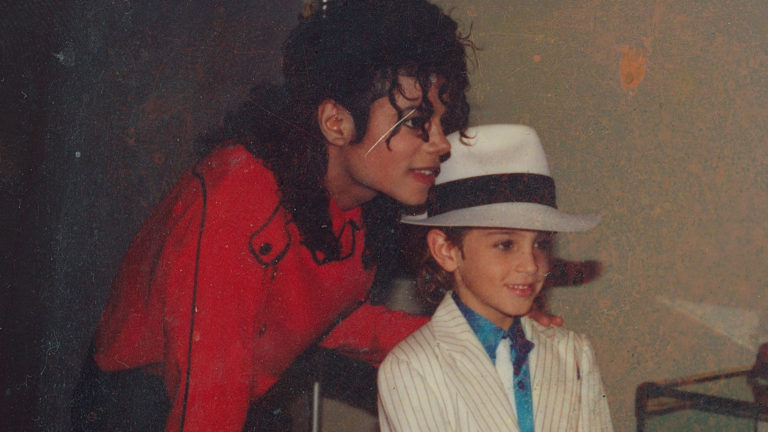
Director: Dan Reed Stars: Michael Jackson, Wade Robson, James Safechuck
Synopsis: At the height of his stardom, the world’s biggest pop star, Michael Jackson, began long-running relationships with two boys, aged seven and ten, and their families. They now allege that he sexually abused them.
[/info]
Off the Wall, released in 1979, paved the way for Michael Jackson to officially BECOME Michael Jackson. It is perhaps the greatest disco album of all time, and arguably the disco album to end all disco albums; without it there would never have been world’s greatest-selling Thriller (1982), the synth-driven maturity of Bad (1987), or the New Jack Swing of Dangerous (1991). It is also one of my top 5 favorite albums of all time, a musical nerd-ism I used to take pride in saying. Now, I may need to take a step back and consider that response; but should I even half to?
We all should not only be aware of Michael Jackson the artist, but Michael Jackson the man, and his most arduous lifestyle. Michael was nicknamed “Wacko Jacko” by no mere coincidence, as his lifestyle straddled the line between the bizarre and, according to the new documentary Leaving Neverland, the downright unforgivable. Accusations of child sexual abuse against Michael have been going on since 1993, but it’s Wade Robson and James Safechuck who have now come along to recontextualize what we as fans have been wrestling with for over two decades; was it all true?
Leaving Neverland focuses on Wade and James’ respective stories, strictly from their points of view; this much I expected. What I did not expect was a documentary that questions (and sometimes even contradicts) itself. It’s a movie that begins and ends with both love and hate for Michael, viewing the accused with some sense of open-mindedness, from a man who did the worst of things but also never had a proper childhood of his own, something that Wade and James, as well as their families, emphasize throughout the documentary. And in the case of Michael Jackson, this perhaps inadvertently tackles the notion we as critics and fans of art (and even sports) continue to grapple with all the time; is it possible to separate the man from the art? Leaving Neverland seems to make both arguments simultaneously.
Perhaps this is a contributing factor as to why the film has garnered so much controversy, as director Dan Reed still retains some pity for a man that abused his power as a celebrity. There’s no arguing the cruelty in Michael’s actions, if we choose to believe in Wade and James’ stories (and for the record, I do believe them), and Reed does not shy away from the gratuitousness in what Michael did to Wade and James (forewarning, this film is a tough watch for those who cannot handle such graphic testimonials). The film also does not include statements from those closer to Michael (such as his family), and with Michael Jackson now dead, he is no longer here to defend himself. Many fans and friends of Michael have already voiced their frustrations, but these are all deliberate choices from Dan Reed, as it is clear from the onset that he is making a film that serves as both a warning and an awakening for all victims of child abuse, no matter the ramifications. It may be from a one-sided perspective, but it is not one-dimensional.
Despite Michael no longer being around, Reed hopes to grant us the ability to open up about past traumas regardless of the potential backlash, emphasizing how it is psychologically beneficial to do so. A common defense, and key thematic notion here, is blame; blame toward others or against yourself. This is depicted by Wade and James’ mothers, who constantly question what they themselves could and should have done differently, something we as viewers question do too, given the fact that these parents openly let their children stay in the same bed as an older man without considering the awful consequences. But Reed isn’t interested in pointing fingers, and wants us as viewers to be mindful of that. Leaving Neverland is a story about admittance and opening up, and how poignantly ironic it is that Wade and James choose to open up after becoming fathers themselves, when each of their respective father figures were barely in the picture (just as it was for Michael Jackson himself). While its focus is on the Robson’s and the Safechuck’s, Leaving Neverland is a calling to all of those speaking out about their abusive pasts. But it extends even further than that, as it is also an invitation for us as fans of Michael Jackson and his music.
Perhaps this is where I need to get a little musically selfish, because I cannot talk about Leaving Neverland without looking at it through a pop culture window as well, especially when the very notion of artistic integrity is put under the celebrity microscope. As viewers, we are left with lingering questions regarding Michael as both a man and the King of Pop. Is it possible to still enjoy his music, given his actions as a man? Were his actions deliberately manipulative or rooted in childhood innocence? Or both? To take it a step further, is it possible that the success of his music was fueled by his inappropriate behavior, and his cruel actions served as his form of artistic inspiration?
Whether it be intentional or not, Leaving Neverland urges us as fans of art to consider the grey areas around the integrity of the artist versus the integrity of the man; can they be separated, or are they mutually exclusive? Dan Reed has a lot on his mind; he believes in Wade and James’ story enough to emphasize the damaging effects of sexual abuse on children and their families, hoping to help others in the process. But he’s not out to convince you of Michael’s villainy, and is instead asking you to consider the ambiguities; even Wade and James themselves, willing to admit that Michael was not a good person, still cannot help but acknowledge the love they had for him, and the influence Michael had on their respective careers (Wade especially, who would go on to become *NSYNC and Britney Spears’ choreographer). Reed wants us as fans of Michael Jackson to consider the relationship we have with the artist; we should not let our fandom cloud our judgment, nor should we simply brush these issues aside because it’s easier to ignore or refuse to believe. Reed never discredits Michael Jackson as an artist, suggesting that being able to continue separating the art from the man is just human nature. Just like the documentary, we too should keep an open mind, and despite the coincidental name of a classic Michael Jackson song, sometimes these situations aren’t so “black or white”.
I have chosen to keep that open mind as well. Having spent four hours with Wade and James, I do believe in their story. And as a big Michael Jackson fan it pains me to admit that, and yet I still choose to remain a fan of his music; as a musician, my playing and writing style will always be influenced by Michael, and that will never change. Just as much as Dan Reed is emphasizing the humanity in this story and the power of opening up, he is also arguing in support of artistic perspective. Perhaps the integrity of the artist has been compromised, but maybe the art itself doesn’t have to be; I like knowing that that’s up to us as fans of art to decide. In the middle of this story is one of innocence lost, even when it comes at the cost of musical and artistic discovery. Having now left Neverland, hopefully Wade and James can finally grow up.
Director: Sebastián Lelio Writers: Alice Johnson Boher (adapted screenplay), Sebastián Lelio Stars: Julianne Moore, John Turturro, Alanna Ubach, Michael Cera
Synopsis: A free-spirited woman in her 50s seeks out love at L.A. dance clubs.
[/info]
Humans are not meant to be alone, that’s at least what I believe. Whether it is a pet or another person, I think that we need something to keep us from going to a downward spiral of sadness. So while I was watching the events of Sebastián Lelio’s Gloria Bell, I couldn’t help but feel true sorrow for the title character of the film as she is going through so much bad luck in her life, trying to find her happiness when everyone else in her life seems to be in a pretty even space.
The film follows Gloria (Julianne Moore), a divorced real estate agent with two grown up kids and has been living on her own for more than a decade. Her life is pretty easy going. She goes to work, then sees one of her kids, hangs out with her friends, and then when she is free, she goes dancing at a singles bar in downtown Los Angeles. Some nights she goes home with someone, some nights she goes home alone to her home with a cat that keeps breaking into her home and sleeping in her kitchen. One night at the bar, while dancing with another man, she locks eyes with Arnold (John Turturro), and the romance between the two begins. Gloria and Arnold’s chemistry is instant and the relationship blossoms over the course of a couple of months. But just like in any relationship, there are hurdles and obstacles that shape and test the relationship, leading to Gloria having to come to some harsh decisions about her life.
While the story of Gloria Bell sounds good on paper and when describing it within this review, it was a really hard film to attach to considering the pacing that Lelio brings within his direction and script, which is an American remake of his own film Gloria from 2013. He takes his time slowly setting up Gloria, with character moments that show you her life and how the people in her life treat her. The strangers in the bars that she dances with treat her better than her own kids, who treat her like garbage when she has done nothing wrong. The film meanders through the first twenty minutes of this movie till Arnold shows up and gives Gloria someone that actually likes her and treats her with the amount of love and respect that she deserves.
Then the next twenty minutes of the film play off like something out of Richard Linklater’s Boyhood. We get snap shots of Gloria and Arnold’s relationship, leaving us as an audience wanting more out of those scenes because they are the best parts of the movie because it is the right amount of joy and mystery within a first time relationship. While there is joy in the scenes because the actors are so good together in the film, they are incomplete for me. Thus when the big turn in the middle of the films comes, it kind of felt weird and out of place for me and then remaining hour of the film, I felt like I was on a roller-coaster trying to connect back to Gloria and by the end, I just couldn’t get back into her story one hundred percent.
The performances by Moore and Turturro are pretty solid for two actors that I would love to see work together in another film that uses them better. The supporting cast of Michael Cera, Brad Garrett, Caren Pistorius and Sean Astin are mostly nothing but mean characters that felt like they should have been in another movie hating on someone that is a bad character instead of Moore’s Gloria who is generally a nice person. The only person that gives a good performance from the supporting cast, and isn’t written out of spite, is Holland Taylor, who plays Gloria’s mother and takes care of her through all the rough things going on to Gloria through the run time of the film.
The production design, editing and cinematography feel like they are made for a much happier film. You must think that I don’t think romantic films can be sad, that’s not true, they can be sad, they just don’t have to be mean. From viewing this trailer in front of every film I saw for the last four months, I thought this movie would be a delight and departure for Lelio, who gave us Disobedience last year and A Fantastic Woman in 2017. I thought the lighter side of him would come out, and it does for twenty to thirty minutes, but the rest of the film feels out of touch with those bits and thus why I was disappointed by the end result. Humans shouldn’t be alone and deserve all the happiness in the world, and Gloria Bell deserved much more happiness behind the camera and on the page to make this something truly worth dancing for.
Overall Grade: C-
[divider]
Hear our podcast review on Extra Film, coming soon!
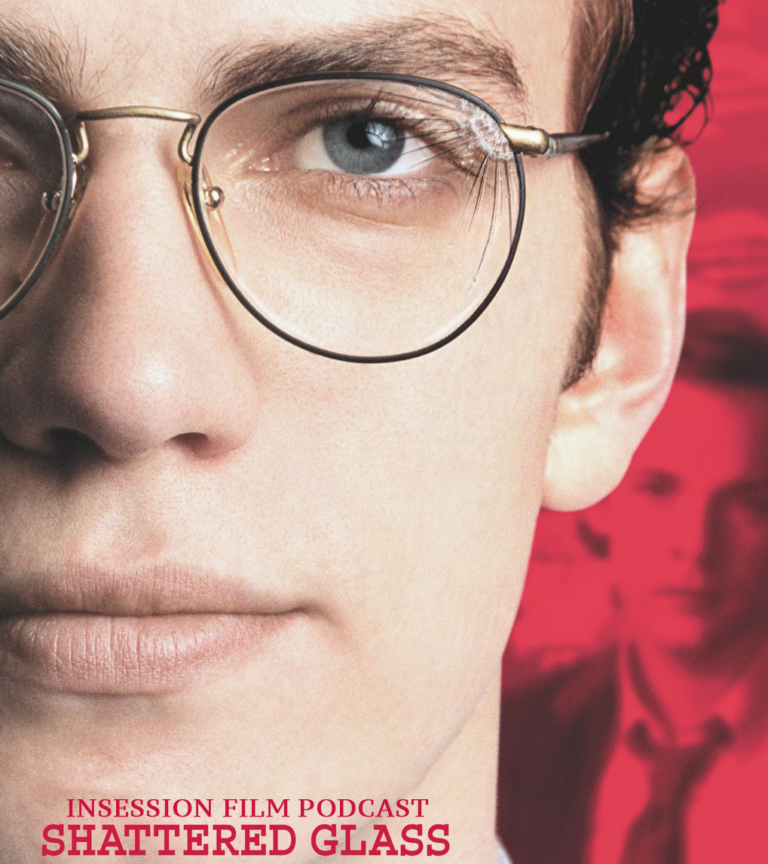
For our Episode 318 Bonus Content, we continue our Patreon Series with a suggestion via Jacob Neff where we discuss the 2003 Billy Ray film, Shattered Glass!
*Note: While this review originates from a Patreon subscriber, it is available to the public on our main show feeds.
[divider]
HELP SUPPORT THE SHOW
To hear our bonus content episodes early, subscribe now on Patreon. In many cases, though, we offer our bonus content for free after a certain period of time and we do encourage (and very much appreciate) a small donation of $0.99 as a way to help support the show if signing up on Patreon isn’t for you. Click on the PayPal button below to donate and thanks so much for your support. You can also hear much of our Bonus Content via our mobile apps. See the information at the bottom of the post for more details.
[divider]
Mobile Apps!
Listen to all of our bonus content on our apps for just a one-time fee! Whether you have an iPhone, Android or Windows phone, our apps are available in many different ways that is convenient for you. With our mobile app, not only can you listen to all of our bonus content, but our main shows and our Extra Film podcasts as well. Click here for more info!
If you don’t want to purchase our bonus content, but still want to support us, there are other you can help us out. Click here for more info.
With the release of Dumbo in theaters this weekend, we thought it would be appropriate to feature a poll about its director, Tim Burton. Burton’s career has had its up and downs, but there’s no denying that he’s capable of making some really interesting films. Perhaps his best work came earlier in his career, but a film such as Big Eyes maybe deserves more credit than it received. Regardless of which era of his you prefer, there is no doubt a few great options here.
That said, what is your favorite Time Burton film?
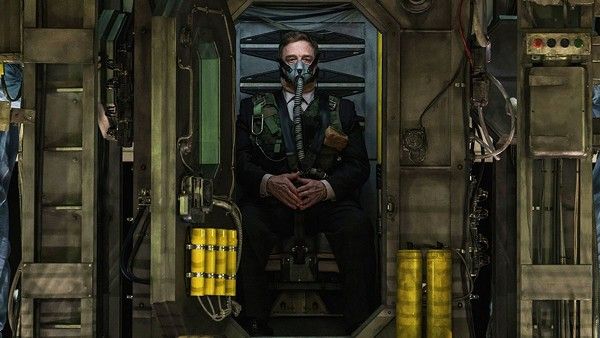
Director: Rupert Wyatt Writers: Erica Beeney, Rupert Wyatt Stars: John Goodman, Ashton Sanders, Jonathan Majors
Synopsis: Set in a Chicago neighborhood nearly a decade after an occupation by an extra-terrestrial force, Captive State explores the lives on both sides of the conflict – the collaborators and dissidents.
[/info]
What you won’t find in Rupert Wyatt’s new Sci-fi thriller is intergalactic land to air combat with an alien presence and you won’t find large-scale gunfights in deserted cities. Take everything you’ve learned about alien invasion and toss it, Captive State isn’t and doesn’t want to be Independence Day. It isn’t concerned with humanity taking a closer look at ourselves collectively and seeing what we can accomplish if we disregard our differences and recognize our similarities. It isn’t about us versus them. Captive State is about defiance and believing in the greater good. It is about the lengths people will go and sacrifices they will make to ensure a future that contains hope and possibility. It is a masterfully woven story that plays out more like an espionage or spy thriller as opposed to an action sci-fi romp and is surprisingly clever in its execution. However, it will also likely be a film that will be slept on which is unfortunate considering Captive State truly caught me off-guard and that hasn’t happened to me for some time.
First off anyone familiar with Arthur C. Clarks 1953 science fiction novel “Childhood’s End” will find some similarities in this film. They are overall different stories with different messages but some parts of the relationship between humanity and the invading intelligence and how they rule over us are comparable. I found it easy to accept and settle in mentally to this new world due to having read the book. The film places us years after the invasion. Humanity has lost the war leaving Earth now under alien governance. The film narrows its focus down to the city of Chicago where our leaders and law enforcement now act as administrators policing and enforcing the new laws under indirect alien supervision. In this way the aliens in the film are rarely viewed, I would estimate they are on-screen less than 10 minutes of the 109-minute run-time. Their influence, however, is felt very clearly with humanity kept in check by means of technology and social order and this is the films main theme, the means by which people are collectively kept in order. Whether it be through fear, duty or greed it all serves as a way to pacify and control. This is what makes Captive State such an interesting film, it strays far from what we are used to seeing from this genre. If I had to draw comparisons it wouldn’t be Battlefield Los Angeles or Skyline, it would be 2008’s Valkyrie or Chūshingura. Unfortunately, this may draw some viewers away who were looking for action and excitement which the film isn’t totally lacking. But it is a much more cerebral production meant to play out more like a game of chess versus Call of Duty.
While not one particular performance really stands out the overall delivery from the cast is magnificent. Standout roles from John Goodman (William Mulligart), Jonathan Majors (Rafe Drummond) and Vera Farmiga (Jane Doe) give the film life and authenticity and they make it is very easy to imagine each individuals journey that led them to their new roles in this drastically altered society. The only exception would be Ashton Sanders, as Rafe’s younger brother Gabriel Drummond, who I have only seen in one other film, Equalizer 2. His delivery is very similar in both roles which aren’t an issue however I do worry about Sanders being typecast, something I hope he avoids. My concern is in Captive State, Gabriel’s disposition sometimes lacks consistency. In some scenes Gabriel is a defiant kid but still submissive in his body language; avoiding eye contact, slumped head and shoulders and holding his tongue when told to. But other moments in the film he is more outspoken and bold, almost confident. This would make sense if it was showing his progression and growth but soon after one of these moments he reverts right back to the timid kid, unsure and yielding. His performance isn’t bad but more confusing and had me questioning some of Gabriel’s actions. And this is even more evident when placed in contrast to the performance of a veteran actor like Goodman who is steady on-screen and wears Mulligart like a well-tailored suit.
The film’s pacing is its main shortcoming, if I am being honest there were moment’s early on where I found my thoughts drifting off. Not so much because the film is boring but it feeds you bits and pieces of the overall story slowly, sometimes painfully slow. Additionally, Captive State treats its audience with respect, it isn’t too forthcoming or obvious with certain details and world building. It offers pieces of the puzzle but forces you to find out where they fit. For some, this might be frustrating but I found it intriguing and satisfying especially during “Aha!” moments. About 20 minutes in I realized the type of film Captive State is and I stopped waiting around for the action and became more absorbed in the intrigue. Once you get past your own expectations and accept the film for what it is, it’s easy to become engrossed in the plot. The film may at times feel all over the place but there is a method to the madness and the end result is satisfying.
This new take on alien invasion took a moment for me to accept but in the end, Captive State is a brilliant film. It left me speechless and when I left the theater I wasn’t exactly sure what I thought but I definitely knew I enjoyed it. It is a film that may require an additional viewing to fully digest and I intend on catching it another time before it leaves theaters and would recommend the film for anyone wanting a fresh take on a story that has been told many times. Just remember to give the film some time to settle and don’t rush to judgment. If you sit back and let the film take you where it will, you’ll find a terrific story that will surprise you and maybe even leave you a bit inspired.
This week on Episode 318 of the InSession Film Podcast, inspired by Jordan Peele’s Us, we thought it would be fun to dive into our favorite doppelganger or dual performances in film. Whether you’re talking about doppelganger’s explicitly or twins or clones or doubles, there are many examples of one actor playing dual characters in film. It can be tricky, but cinematically it’s usually a treat to see how distinct these varying characters can be despite the visual symmetry. So, it was fun to dive into this topic and talk about these great performances. That said, here are our lists:
(Note: Please keep in mind that we each had different criteria for our selections)
JD
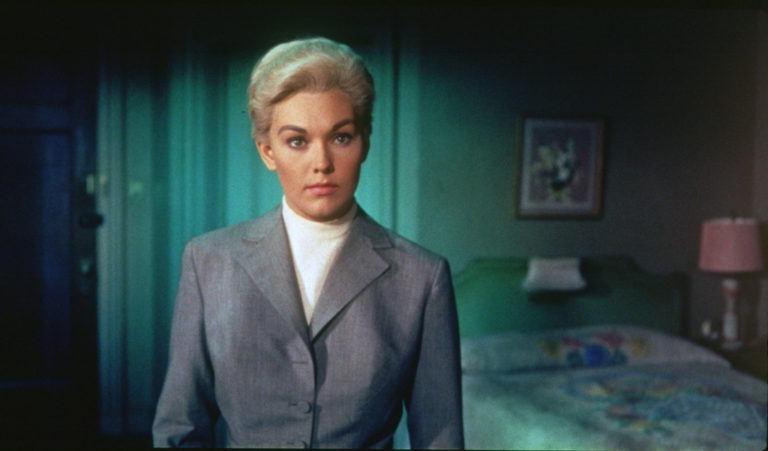
1) Kim Novak – Vertigo
2) Jake Gyllenhaal – Enemy
3) Sam Rockwell – Moon
Brendan
1) Sam Rockwell – Moon
2) Jeremy Irons – Dead Ringers
3) Lindsay Lohan – The Parent Trap
Richard
1) Jeremy Irons – Dead Ringers
2) Natalie Portman / Mila Kunis – Black Swan
3) Kim Novak – Vertigo
Honorable Mentions (Combined)
Performances in Us, Adaptation, The Prestige, The Double Life of Veronique, The Social Network, The Double, The Great Dictator, Invasion of the Body Snatchers, Solaris, Kagemusha, Dr. Strangelove, Spider-Man, Face/Off, The One I Love, Legend, Logan, Split, Glass, Cam, Being John Malkovich
Hopefully you guys enjoyed our lists and if you agree or disagree with us, let us know in the comment section below. As noted above, there are a many great options for this list and there’s a good chance that we didn’t get to mention a film that you like. That being said, what would be your Top 3? Leave a comment in the comment section or email us at [email protected].
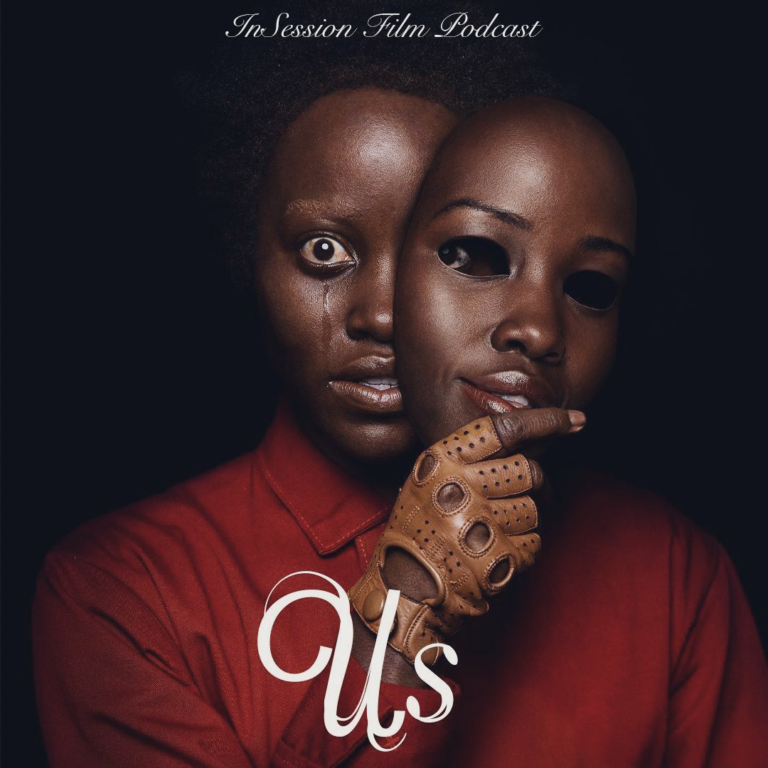
This week on the InSession Film Podcast, Richard Newby from The Hollywood Reporter joins us to discuss Jordan Peele’s Us and our Top 3 doppelgänger or dual performances in film. Fair warning, our review for for Us goes deep and into heavy spoiler territory. Hopefully, though, you enjoy dissecting it as we do.
Big thanks to Richard for joining us once again. Every time he’s on the show, the conversation gets richer and richer, and it was no different this time around. Part of that is because there is so much to talk about when it comes to Us, but also because Richard’s analysis helped amplify the conversation. Regardless of how you feel about the film, we do hope that you enjoy the lengthy review and the interpretations we bring inside of it.
That said, check out this week’s show and let us know what you think in the comment section. Thanks for listening and for supporting the InSession Film Podcast!
– Movie Review: Us (6:01) Director: Jordan Peele Writers: Jordan Peele Stars: Lupita Nyong’o, Winston Duke, Elisabeth Moss
– Top 3 Dual Performances (1:11:36)
Using Us as inspiration, we thought it would be fun to dive into our favorite doppelganger or dual performances in film. Whether you’re talking about doppelganger’s explicitly or twins or clones or doubles, there are many examples of one actor playing dual characters in film. It can be tricky, but cinematically it’s usually a treat to see how distinct these varying characters can be despite the visual symmetry. So, it was fun to dive into this topic and talk about these great performances. That said, what would be your Top 3?
– Notes (1:48:26)
Not many notes this week due to the length of our Us review and Top 3 segment. Keep Episode 322 on your radar as we’ll be doing a 2014 Retrospective and re-visiting our Top 20 movies from that year. We have some major regrets that we feel we need to remedy.
If you want to help support us, there are several ways you can help us and we’d absolutely appreciate it. Every penny goes directly back into supporting the show and we are truly honored and grateful. Thanks for your support and for listening to the InSession Film Podcast!
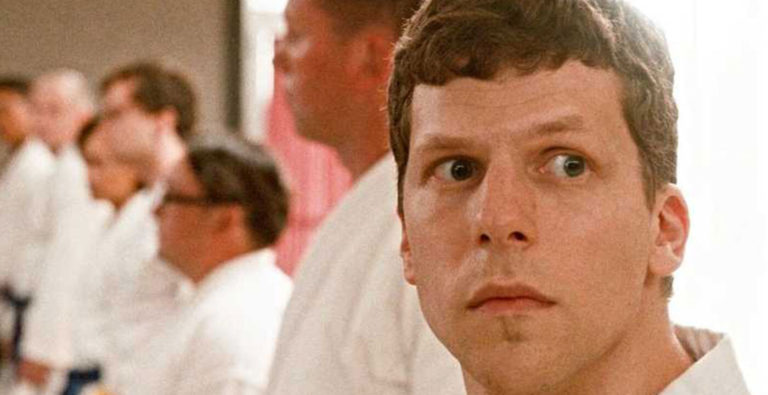
Synopsis: After he’s attacked on the street at night by a roving motorcycle gang, Casey joins a neighborhood karate studio to learn how to protect himself.
[/info]
If you would’ve told me the The Art of Self-Defense came out in the mid 2000s, I wouldn’t argue with you. The result of that statement refers back to the commodity of dry humor that Riley Stearns is so reliant on in his sophomore outing. It’s a kind of venture that’s wickedly humorous yet even a bit light-hearted in its outlandish integrants; but ultimately it makes for a darker, melancholic social tale of human change. It broadly ties into the ideology of a person having to dive into their head to unlock their full potential, even if that means having to be their own worst enemy.
Jesse Eisenberg plays the high-strung Casey, someone in which Alessandro Nivola’s character refers to as “awkwardly feminine”. We’re used to seeing Eisenberg portray similar characters with an offbeat sense of logic along with varying dispositions through each role. Here he commands our protagonist with an extravagant level of timidity. It provides him more of an empathetic arc and is even at times a strangely relatable character. He depicts the nature of his conflicts and current predicaments with dispassionate humor yet also through tendencies and circumstances that are mildly heartbreaking. As an ensemble everyone prevails in the dominant portions of comedy during the film. Alessandro Nivola is with ease the biggest standout. His sociopathic character contains a persona so unintentionally amusing but also imprudently grim and cynical. He openly lacks sensibility and lives his life unapologetically, with not a shred of care of who or what he harms along the way. The rest of cast is compiled of a lot of lesser-known talent but are all mutually capable and skilled in the creation of their characters select idiosyncrasies. They’re all purposefully blended carefully and effectively with each other, which evidently was a superior preference. Especially since Eisenberg’s character remains as the epicenter throughout everything, with occasional supporting character inclusions and backgrounds.
Although I was unfamiliar with Stearns’ prior debut, I can only imagine how it must be with the aftermath of watching this. The film rides a fine line of dramedy which sprouts from a hypnotic script from Stearns. The whole movie almost transpires inside this inconsequential universe where our protagonists and antagonists face no other ample threat besides one another. It allows for an eclectic variety of our characters tendencies and the events they later partake in. A project that’s so subtly amusing balances a contrast of some of the most depressing motifs and imagery thus far in 2019–which is largely ironic. It revolves around the societal (yet in this case more communal) ideology of acceptance. Not just with one’s self but with the authoritative presence of Nivola’s character and his karate dogma. It pins an emotional weight on everyone’s shoulders and paints his character as this corrupt-like figure that others shouldn’t look up to, but woefully do.
Not just applicable to his screenplay but also to his direction, Stearns achieves great heights at not only directing the story progression but also with each character’s direction. It’s inherently organic and feels sharply cohesive in its attempt at a newfangled approach. It’s warmly reminiscent of old 2000s sleeper hits with the impassive segments of humor and something I can see developing a cult following as the years go by. Stearns is surely one of the more adept and fresh faces in this growing list of individualistic filmmakers.
While the audacity of The Art of Self-Defense is commendable with its rather unflinching style, personally the periodic episodes of erratic character motives makes it harder to stay in to. That certain extent of unconventionality that advances you in, could quite possibly be a determining factor to drive you away. It’s not even on behalf of the footing of the film’s inaccessibility per se, just the irregularity of the circumstances that it constantly continues to outdo each time. A couple of the story decisions towards the unraveling of the third act remain insipid in their subsequent connection to the plot. It’s nothing that’s attempting to be obnoxiously esoteric and in the grand scheme of it all, it’s never anything unbearable or massively distracting.
The Art of Self-Defense is surprisingly bold. It serves as a sedated, unorthodox comedy that maintains a brilliant perception of itself while assimilating undertones of personal standards and self-esteem. It makes for a tragic piece of storytelling and an ingenious alternative route of filmmaking. It’s quite unusual, so what? For a movie like this the weirder it is, the better.
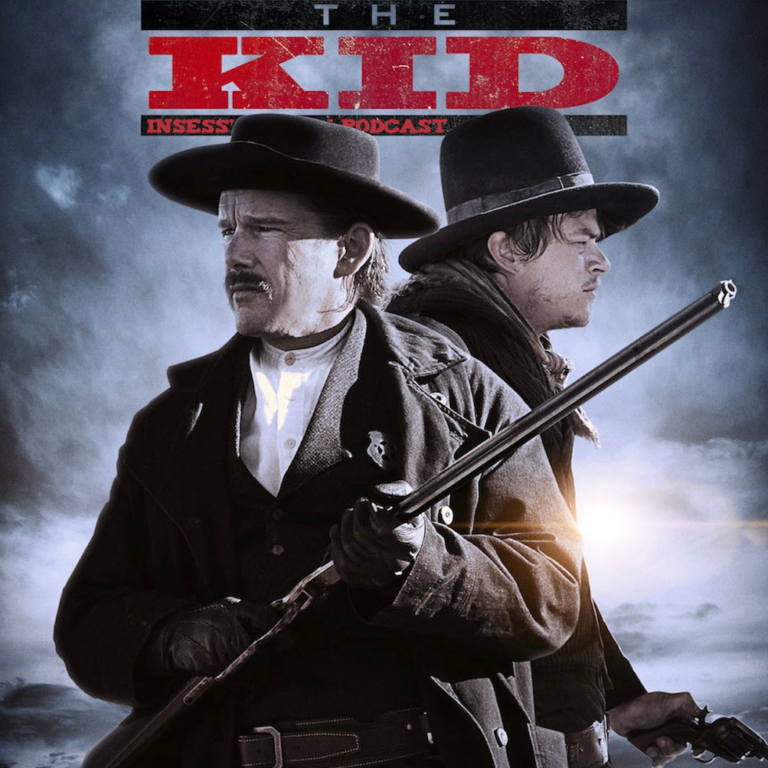
This week on the InSession Film Podcast: Extra Film segment, Ryan returns from South by Southwest to discuss the newest western The Kid with JD and then in the back half of the episode with Jay, they review the latest from Gaspar Noé, Climax.
This week’s show was a tale of two fascinating, entertaining reviews this week. With The Kid review was a classic one on one discussion that lead to a very interesting conversation considering that Ryan and JD had very different opinions on the film. While they could agree on a couple of smaller aspects of the film, the two get into a lively back and forth over a lot of the overall themes of the film. While the review was longer than they thought it would be, the passion from each side shines in this review.
Then there is the review of Climax, which will go down as one of the most memorable moments in not just Extra Film history but the history of InSession Film. While Ryan didn’t like the film either, the passionate disdain that Jay shows for this film leads to an outright thrashing of the film that is hilarious at times while also bringing up so many legitimate criticism. You are not going to want to miss this review!
Let us know what you thought of these films on social media and enjoy the show! Thanks for listening!
– Movie Review: The Kid (6:43) Director: Vincent D’Onofrio Writer: Andrew Lanham Stars: Chris Pratt, Dane DeHaan, Ethan Hawke
– Movie Review: Climax (48:41) Director: Gaspar Noé Writer: Gaspar Noé Stars: Sofia Boutella, Romain Guillermic, Souheila Yacoub
We try to make this the best movie podcast we possibly can and we hope you enjoy them. Subscribe today on iTunes, Spotfiy or Stitcher, and please leave us a review on iTunes. You can also find us on Soundcloud, PlayerFM and TuneIn Radio as well. We really appreciate all your support of the InSession Film Podcast.
To hear this Extra Film episode and everything else we do, download our apps on the Amazon Market for Android and the Podcast Box app on IOS devices. The mobile app covers all of our main shows, bonus podcast’s and everything else relating to the InSession Film Podcast. Thanks for your wonderful support and listening to our show. It means the world to us!
The great Stanley Kubrick would’ve turned 90 years old this year. He was 70 when he died during post-production of Eyes Wide Shut, ending the forty-odd year career of a man who emerged from New York City to throw us into a new dimension with a haunted hotel, the depths of space, the madness of war, and our obsession with sex and violence. He was only a photographer with a magazine at 17 when it turned into a career with motion pictures, starting from the bottom in the early 50s before Kirk Douglas called him in as an emergency director for the 1960 epic, Spartacus. This would be the full introductory in large productions we would know Kubrick for.
But like other major directors, the base of their portfolio are pieces homemade and on-the-go, especially when he didn’t come from film school or was connected to any film studio at the time in his native New York. Kubrick made short films for his magazine that was picked up for theatrical release, and with enough confidence and financial support, he decided to forge ahead with making full-length features. Here’s a rundown of his 50s catalog before he became the international director we have come to know and admire.
Fear And Desire (1953)
His first film was an hour long and only had fifteen people in the entire production, including writer Harry Sackler, a friend of Kubrick who would win the Pulitzer for his play The Great White Hope, and a young Paul Mazursky, who would go on to make Harry And Tonto and An Unmarried Woman. Set during an unspecified war featuring two unnamed countries, four soldiers behind enemy lines struggle with their conscience when they capture a young girl who does not know their language and planning a daring attempt to infiltrate the enemy base and kill the opposing general before escaping back. It is a prelude to the making of Paths of Glory in regards to what war is about and an example of low budget shooting; the money came from Kubrick’s family, namely his wealthy uncle. Years later, Kubrick said did not like the overall film, calling it, “a bumbling amateur film exercise.” It is a really good film exercise and in the public domain today.
Killer’s Kiss (1955)/The Killing (1956)
A boxer helps a dancer after she is beaten by her employer gangster and decides to help her get out of town. When they try to get the last of their money owed before fleeing, the gangster sends two of his men to rough up the boxer for interfering with his relationship, but end up killing the boxer’s manager instead. The boxer now has to find the dancer while fending off the gangster and his men from hunting him down. It is only sixty-seven minutes long, but Kubrick nails down the basics of noir and minimalizes the expansion of action with incredible You may find it for free on YouTube, but if you get the Criterion edition of Kubrick’s follow-up, you will also see it in a gorgeous restored high-definition version. Speaking of his follow-up with the same word in it…
Sterling Hayden plays the ringleader of a group of robbers planning a major heist at a racetrack during the main race. Like the template laid before with The Asphalt Jungle and Rififi and after with Ocean’s Eleven and Reservoir Dogs, one person has one thing else in mind and the plan, while executed, soon falls apart in the end through greed and backstabbing. This would be Kubrick’s way of getting into Hollywood through producer James B. Harris, who later directed The Bedford Incident (1965) and Cop (1988). Kubrick’s noir fell into the hands of United Artists who did the rest, but the critics ate up the hard-boiled, pulp, electric, sharp thriller that is considered Kubrick’s first mature film, synchronized and exciting.
Paths Of Glory (1958)
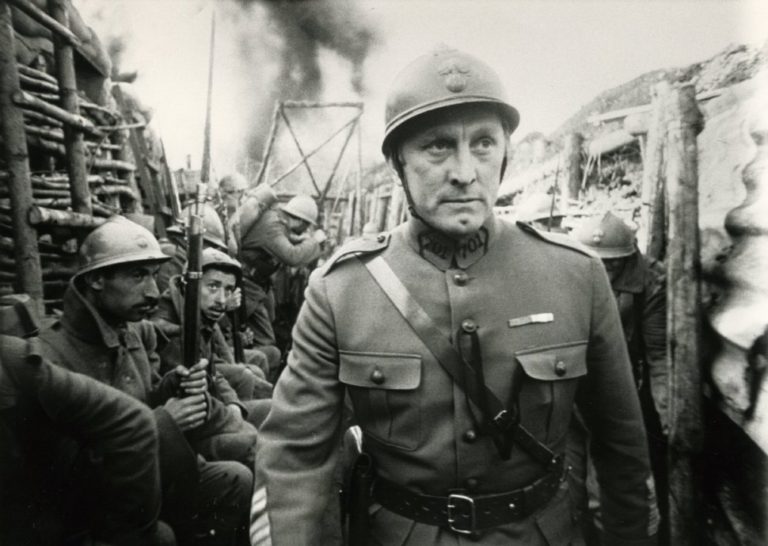
Set in World War I amongst the vicious trenches, Kirk Douglas, in the first of two collaborations with Kubrick, plays a colonel who fights with the army’s leaders when his men are accused of cowardice after failing to accomplish a mission that was impossible and unrealistic. Three men of the ground are randomly picked out for trial and execution in what is a kangaroo court, but Douglas argues tooth and nail in a stirring courtroom drama of war as so cruel that is so absurd in what the military can do to shield its own interests and save face. It also played out as much in real life when the French government successfully pressured the Berlin Film Festival to drop it and then ban it from France for twenty years.
The long takes going through every inch of the trench and coming face-to-face with a soldier clearly a victim of “shell shock,” of a large room full of memorabilia that labels everything in the empire, and the whole wide angle of the aim and fire of the soldiers’ execution would be the first of multiple shots of a kind in future movies. The last scene in which Kubrick’s future wife, Christine, sings the sentimental “Faithful Hussar,” capping of the anti-war, anti-militant mood which infuriated those who took part. The “talented shit,” Kirk Douglas once described Kubrick as for making the film is what got Kubrick his last-second gig in Spartacus.
Kubrick is among the greatest ever and in my personal Top 5 all-time greats behind the camera with Scorsese, Hitchcock, Kieslowski, and Truffaut. (Discuss among yourselves of your Top 5 filmmakers worldwide.) I always like to look at the start of a career to pick up the genius of a legend because it constructs the growing craft of a director and how they expand their grip on the art years later. We don’t get his colored epics without creating the characters and the expanded wide shots from this time. Besides shooting in LA and finding the place distasteful, he experienced European locations and found England fitting for his style. Like Scorsese’s Mean Streets, Hitchcock’s The Lodger, and Fellini’s Variety Lights, these early works laid the foundation of our admiration all these decades later.
Director: Harmony Korine Writers: Harmony Korine Stars: Matthew McConaughey, Isla Fisher, Snoop Dogg, Martin Lawrence, Stefania LaVie Owen
Synopsis: A rebellious stoner named Moondog lives life by his own rules.
[/info]
As Harmony Korine stumbled on to the stage to introduce his first feature film in nearly 7 years, I couldn’t help but observe the manner in which he presented himself. He was so deliberately nonchalant—or more likely under the influence of alcohol or marijuana(something he’s been known to publicly do). He didn’t have any substantial foreword to delight the audience with for the curation of the film and often found himself tripping over his unrehearsed selection of words. What struck a chord was the finality of his preface, in which he emphasized the basis for this project was sparked upon the idea that the current world has been so subjected to increasing principles of hostility in society. Through this outing he felt inspired to display a creative experience stimulated by utter pleasure, women, boat captains, rastas, poetry, and a whole lot of Mary Jane as a buoyant distraction from all of the world’s present-day shortcomings. The Beach Bum does that with flying colors.
Korine has always been somewhat of a polarizing figure in the spectacle of underground directors through modern day entertainment and film. Breaking onto the scene penning the 1995 feature Kids, he followed up with his critically-loathed directorial debut Gummo two years later. It seemed as though Korine’s films were only getting more obscure and obscene as the years progressed. With each future release of a new project, the term “you either love it or you hate it” was being thrown around more abundantly and distinctly. Blending genres that resembled mumblecore yet also incorporating the fear of a grounded sense of dystopia in to a variety of his depictions and movies is where he found his filmmaking niche. The biggest contradictory to that statement is perhaps The Beach Bum itself, Korine’s most light-hearted film ever.
If there’s any conclusive achievement to be crowned to Korine for this brash experience of a movie is just how gratifying it felt to be apart of. The steadily suggestive and extreme humor grapples laughter from the viewer throughout each scenario. Especially the more unorthodox they begin to get. The only exception being one scene utilized as plot escalation and is in no way glorified or blatantly extended. Nevertheless, it’s nonstop in every meaning of the word and even manages to sustain the audience’s undivided attention. Credit to the insanely stacked and talented cast for another subdued victory as this on-screen, unequivocal, multifaceted entourage. Matthew McConaughey playing the vulgar Moondog, who hasn’t but one care in the world, is an irreverent stoner and poet who’ll have a stamp in this year’s pop culture and perhaps even years to come. Despite McConaughey’s exuberance as this character, the rest of the supporting cast lineup initiates a lot more of the films worth while occasions. Snoop Dogg, Isla Fisher, Stefania LaVie Owen, Zac Efron, Jonah Hill, Martin Lawrence, and Jimmy Buffett are all marvelously hilarious and crude in their own definitive ways. All of their on-screen interactions with Moondog and with one another feed off of their prowess as actors in reality. They don’t quite have the most ept screen-time but are portrayed with such an air of eccentricity that you reminisce on them once they make a momentary departure, hoping for a subsequent return.
It’s hard to believe something like The Beach Bum was so methodical from the jump of the gun. A film that spends the majority of its time loitering around and highlighting the quirks of the environment amongst the often facetious and amplified versions of its natives, emanates a feeling of improvisation. It’s through the sheer rowdiness of the plot advancement that leads to this assumption, yet everything is delicately scripted to a baked (quite literally) excellence. Throughout the day’s striking golden haze and the nightly effervescent skyline, the schemes of these wild-mannered citizens preserved in this carefree atmosphere are so accurately embellished that it seems as though they could be factual people. There’s more than likely people somewhere in the world that reflect the conduct of each of these characters. In other words, they’re all produced with such specificity that’s it easy to believe there’s a high probability of people that mirror this type of reasoning and lifestyle.
For a film that’s so self-indulgent in the outrageous bravado of having a good time, the film blossoms like a byproduct of Korine’s personal attitude. He’s even said it himself, he’s not exactly the most productive in the assembly of film’s compared to his fellow counterparts. The character of Moondog is so negligent through the work ethic of his poetry, that he only feels obligated to write during or after his episodes of intoxication. I’d like to believe that persona is a culmination of an over-exaggerated offspring of Korine. Not the excessive partying and drinking, but for a corresponding reality that links to him only wanting to direct a film if he really feels it. It’s definitely a subconscious identification that may or may not pin Moondog to himself. Or maybe I’ve just read too much in to it.
Those who despise Korine’s former endeavors or even those unfamiliar with his peculiar style will have complaints equipped as soon as the floodgates open. Even though it’ll be labeled as a shocking and pointless “thing” of repetitious muck with inexcusable stakes, I can understandably see where that point of reference stems from. Through all of the nihilistic amusement, the bubbly imagery of a Floridian haven, and the clouds of weed smoke, it does tend to linger around possibly longer than it should. Not to say I didn’t enjoy those extra occurrences of a poetically induced paradise, but it raises the question of how long you can continue an arc without changing directions and losing previously invested viewers. For that aspect I can discern it’s incoming criticisms, but in relation to the lack of substance; what did you expect? A deeper commentary (something like Spring Breakers) disguised in party soaked euphoria? The Beach Bum has no ulterior connotation other than what’s portrayed. And even then there’s no denying it’s grimy elegance.
As stated, one can already perceive the slew of insults and flack heading this films direction in a few weeks, yet it shouldn’t necessarily be accounted for. The Beach Bum is something so vile and provocative. You could use virtually any word from the English language to categorize this film based on perspective. It’s ignorant bliss that I applaud for it’s effort of never failing to boost a smile on my face—especially as I exited the auditorium. It’ll be unruly received by people far too extensively. However, it’s refreshing for anyone who’s down for an hour and a half of sinful debauchery and wholehearted stoner antics. Also always remember, sometimes you gotta go low to get high.
Overall Grade: A
[divider]
Hear our podcast review on Extra Film, coming soon!
For our Episode 317 Bonus Content, Ryan McQuade joins us to recap his experience at the 2019 SXSW Film Festival and the films we should look forward to the rest of the year!
[divider]
HELP SUPPORT THE SHOW
To hear our bonus content episodes early, subscribe now on Patreon. In many cases, though, we offer our bonus content for free after a certain period of time and we do encourage (and very much appreciate) a small donation of $0.99 as a way to help support the show if signing up on Patreon isn’t for you. Click on the PayPal button below to donate and thanks so much for your support. You can also hear much of our Bonus Content via our mobile apps. See the information at the bottom of the post for more details.
[divider]
Mobile Apps!
Listen to all of our bonus content on our apps for just a one-time fee! Whether you have an iPhone, Android or Windows phone, our apps are available in many different ways that is convenient for you. With our mobile app, not only can you listen to all of our bonus content, but our main shows and our Extra Film podcasts as well. Click here for more info!
If you don’t want to purchase our bonus content, but still want to support us, there are other you can help us out. Click here for more info.
This weekend on Episode 318, we’ll be diving into Jordan’s Peele’s sophomore effort in Us. By all accounts, it’s a viscerally thought-provoking experience that will leave you wrestling with the questions it evokes. We’ll discuss more on the show this weekend, but for now we’re more focusing on its title. Us. Two letters. Two letters that actually carries a lot of weight – or at least I presume so based of its trailers.
With that as inspiration, what is your favorite film with a two-letter title?
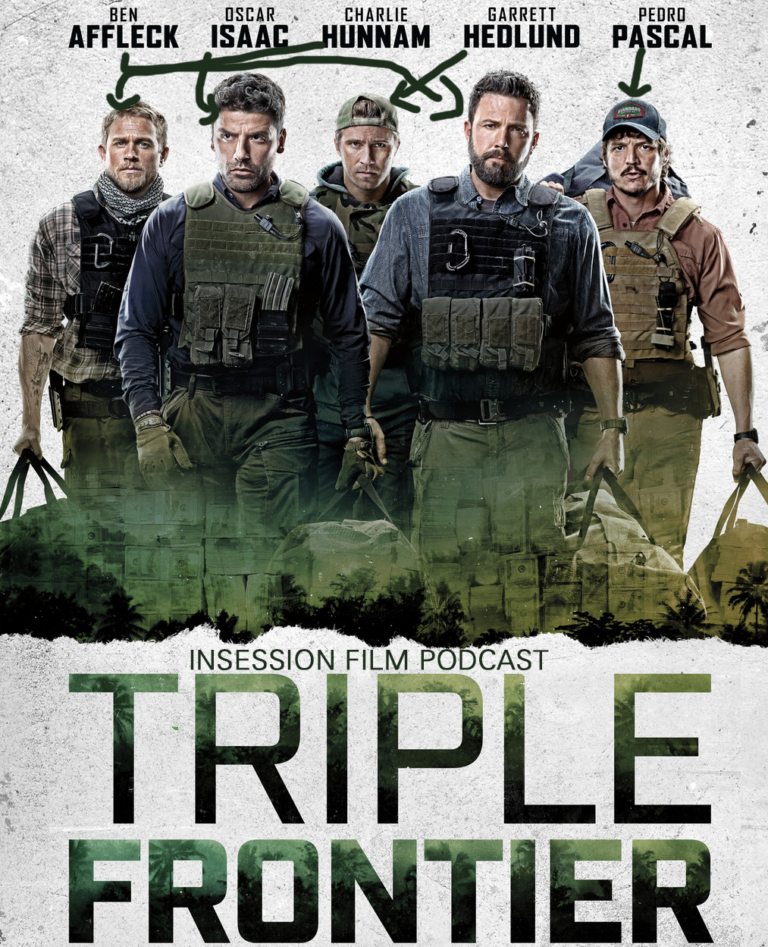
Director: J.C. Chandor Writers: Mark Boal, J.C. Chandor Stars: Ben Affleck, Oscar Isaac, Charlie Hunnam, Garret Hedlund
Synopsis: Loyalties are tested when five former special forces operatives reunite to steal a drug lord’s fortune, unleashing a chain of unintended consequences.
[/info]
Netflix’s new film Triple Frontier had me intrigued before I saw a single frame. Any film with Oscar Isaac in it already has my interest, and say what you will about Ben Affleck, but it’s clear that he is a talented actor and filmmaker. And this film is only getting started with those two. The film is produced by Kathryn Bigelow and Mark Boal, and Boal provided the story of the film as well as co-writing the screenplay with director J.C. Chandor. Then the cast is filled out nicely by Garrett Hedlund, Charlie Hunnam (those two have always seemed to be twins to me), and Pedro Pascal among others. It’s a star-studded lineup of talent both in front of and behind the camera. I wonder if that is why the film bites off more than it can chew.
You may think that this is going to be a war film. It is that, in some ways. But early in the film, when William “Ironhead” Miller (Hunnam) is giving one of his many motivational speeches to a group of reservists, he talks about the biological and psychological impacts of going to war. He says that taking out that level of violence against other human beings sticks with you. At that point, you realize that this film is going to go in different ways than you might expect.
After that speech, Miller is approached by Santiago “Pope” Garcia (Isaac) about a possible job. Garcia has been working in South America to apprehend drug lord Gabriel Martin Lorea (Reynaldo Gallegos). He has a contact named Yovanna (Adria Arjona) who has infiltrated Lorea’s operation, providing a window for a possible takedown. He needs a team that can go in on a reconnaissance mission to confirm. For this, he goes to his old friends.
Ironhead says he’s in only if “Redfly” is in. That would Tom “Redfly” Davis (Affleck). He is now working as a real estate salesman. He is recently-divorced and, though he attempts to hide it, the situation is taking its toll on his life. He seems reticent at first, but after Benny Miller (Hedlund) and Francisco “Catfish” Morales, Redfly finally gives in.
All of the main members of the cast give fine performances, except for Affleck. As I said before, he is certainly talented, but he seems to be phoning it in here. I thought Isaac was good, as usual, but Hedlund gives the film’s best performance. They do have a certain team chemistry that is necessary in a film like this, and what success the film has certainly comes from their performances.
I think I preferred these early scenes because they were narratively-focused. Here the film is all about setting up its characters and the notion that the country these men fought for has taken advantage of them. The way our country treats its veterans is deplorable in many ways, but this film goes deeper to showcase the ways this impacts the psyche of a person. These men served voluntarily, and they were proud to do so. Yet, the fact remains that the prime years of their life have been spent, and they don’t have much to show for it. One character makes a comment that, in another profession, their service and skill set would have set them up for life. As it stands, they all struggle to make ends meet.
Part of the draw of the reconnaissance mission is that it will pay well – $17,000 for a week’s work. They mention that the skills they learned in the military are what they have. They might as well get paid for using them. These are the notions that really interested me – the psychological aftereffects of war and how one might go about managing them. But from there, the film gets pulled in other ways.
Once they get to South America, they quickly begin to realize that Garcia did not give them the full story. The reconnaissance mission unearths that his real plan was to rob and kill Lorea using their small team. It may sound preposterous at first, but these men have this work in their blood now. War has done that to them. They decide to move forward. Here, the film that Triple Frontier could have been reaches out one last time for a more psychologically-focused narrative. But it does not win out.
From this point on, the film becomes a tactical mission tale and a step-by-step showing of how you attempt to move millions of dollars through the Andes Mountains. I won’t deny that it is interesting and action-packed, it just pulls the film in too many directions to be successful.
While they are carrying out their mission at Lorea’s compound, they find his incredible fortune in a place they hadn’t planned on. They also find more money than they were expecting. They came in with a plan for how much time they had to carry out the mission. The end time is a “hard out.” Redfly makes a crucial mistake by attempting to get every last bit of cash that they can. This has drastic consequences for the rest of the film. It reminded me of the scene from Heat when Vincent Hanna is describing the team of criminals led by Neil McCauley. As they survey the crime scene, Hanna points out that the criminals left some cash. He says they knew how much time they had, and they didn’t waste it. Redfly makes the opposite decision, and it costs everyone.
There is a story of the cost of greed somewhere in here, in the vein of The Treasure of the Sierra Madre. While the film reaches for those lofty heights, it does not achieve them. Again, this is where I felt that Triple Frontier suffered from narrative overload. It’s trying to tell stories about the way America forsakes its veterans and how it fights imperialistic battles in other lands. It’s also trying to tell a cautionary tale about greed. And it’s also trying to portray the action-packed tactical missions of America’s trained military professionals. Finally, we get the admittedly fascinating story of how you would go about moving massive amounts of cash through mountainous South America. Now, I am *not* saying that a film must stick to one story or narrative. I love many films that combine lots of threads and tell multiple stories. But those stories must be earned. And while saying a film hasn’t “earned” its narrative is becoming #FilmTwitter cliché, I think it fits here. I felt that the psychological elements of the film’s early scenes were abandoned too early, and the threads the film follows from there were not set up adequately.
However, the remainder of the film is still quite exciting, even if somewhat hollow. The acting performances are enough to keep you intrigued, and the story finds interesting moments of action and suspense. But I couldn’t shake the feeling that Triple Frontier itself makes the same mistake as Redfly – going for more when it already had a fortune.
This week on Episode 317 of the InSession Film Podcast, inspired by Triple Frontier, we decided to talk about our favorite nicknames for characters in film. It seems to be a trend of late, but this was one of the more challenging Top 3 lists we’ve ever done. There are so many to choose from that it’s impossible to narrow down, but it’s also difficult to recall all of them since most of these characters have real names that could be as memorable. At any rate, there are a ton of great nicknames out there for characters in film, and we did our best to conjure the great one’s that stand out to us. That said, here are our lists:
(Note: Please keep in mind that we each had different criteria for our selections)
JD
1) The Little Tramp – Modern Times / City Lights / The Gold Rush
2) Jeff Lebowski, The Dude – The Big Lebowski
3) Katniss Everdeen, The Mockingjay – The Hunger Games
Brendan
1) Beatrix Kiddo, The Bride, Black Mamba – Kill Bill
2) Jeff Lebowski, The Dude – The Big Lebowski
3) Short Round – Indiana Jones and the Temple of Doom
Nick
1) Leonard Lawrence, Gomer Pyle – Full Metal Jacket
2) Jeff Lebowski, The Dude – The Big Lebowski
3) Beatrix Kiddo, The Bride, Black Mamba – Kill Bill
Honorable Mentions (Combined)
Maverick / Goose – Top Gun
Radio Raheem – Do the Right Thing
Snake Plissken – Escape from New York
Darth Vader – Star Wars
Chewie / Fuzzball – Star Wars
Mad Max – Mad Max
Rocky Balboa – Rocky
Dirty Harry – Dirty Harry
Baby Driver – Baby Driver
Imperator Furiousa – Mad Max: Fury Road
Jimmy Popeye Doyle – French Connection
Amazing Amy – Gone Girl
Ratso Rizzo – Midnight Cowboy
McLovin – Superbad
Buffalo Bill – Silence of the Lambs
Hannibal The Cannibal – Silence of the Lambs
Indiana Jones / Junior – Indiana Jones
Red – The Shawshank Redemption
Wild Thing – Major League
Mr. Pink / Mr. Blonde / Mr. Blue / Mr. Brown / Mr. Orange / Mr. White – Reservoir Dogs
The Boogeyman – John Wick
Blondie – The Man with No Name
Fat Amy – Pitch Perfect
Private Joker / Private Cowboy – Full Metal Jacket
The Bear Jew – Inglourious Basterds
Scrap – Million Dollar Baby
Johnny 5 – Short Circuit
The Jet – The Sandlot
Ducky – Pretty in Pink
Mouth / Chunk / Sloth / Data – The Goonies
Hopefully you guys enjoyed our lists and if you agree or disagree with us, let us know in the comment section below. As noted above, there are a slew of other nicknames that we failed to mention for one reason or another. That being said, what would be your Top 3? Leave a comment in the comment section or email us at [email protected].
This week on the InSession Film Podcast, Nick from the Epic Film Guys podcast joins us to review Triple Frontier and discuss our Top 3 character nicknames in film. Brendan also offers his thoughts on Apollo 11 and Leaving Neverland.
Huge thanks to Nick for joining us once again. It’s always a pleasure to have him on the show and he was a lot of fun. Despite what some of our thoughts on Triple Frontier may indicate, it was nice to be talking about J.C. Chandor once again as well. His last film, A Most Violent Year, was five years ago and we needed to bring him back into the discourse. Let’s just hope his next outing is, well, back to what we love about Chandor.
That said, check out this week’s show and let us know what you think in the comment section. Thanks for listening and for supporting the InSession Film Podcast!
– Movie Review: Triple Frontier (4:09) Director: J.C. Chandor Writers: Mark Boak, J.C. Chandor Stars: Oscar Isaac, Ben Affleck, Charlie Hunnam, Garret Hedlund
– Notes / Apollo 11 / Leaving Neverland (44:56)
As noted above, Brendan was able to catch both Apollo 11 and Leaving Neverland, both of which were discussed on our most recent Extra Film episode. However, Brendan wasn’t able to be on for those reviews, so he offered his thoughts here. We also give some brief thoughts on the most recent trailer for Avengers: Endgame, which hits theaters at the end of next month.
– Top 3 Character Nicknames (1:13:58)
This was one of the more challenging Top 3 lists we’ve ever done. There are so many to choose from that it’s impossible to narrow down, but it’s also difficult to recall all of them since most of these characters have real names that could be as memorable. At any rate, there are a ton of great nicknames out there for characters in film, and we did our best to conjure the great one’s that stand out to us. That said, what would be your Top 3?
If you want to help support us, there are several ways you can help us and we’d absolutely appreciate it. Every penny goes directly back into supporting the show and we are truly honored and grateful. Thanks for your support and for listening to the InSession Film Podcast!
Jay is joined by JD on this week’s Extra Film to discuss a pair of documentaries with tons of buzz surrounding them: Apollo 11 and Leaving Neverland.
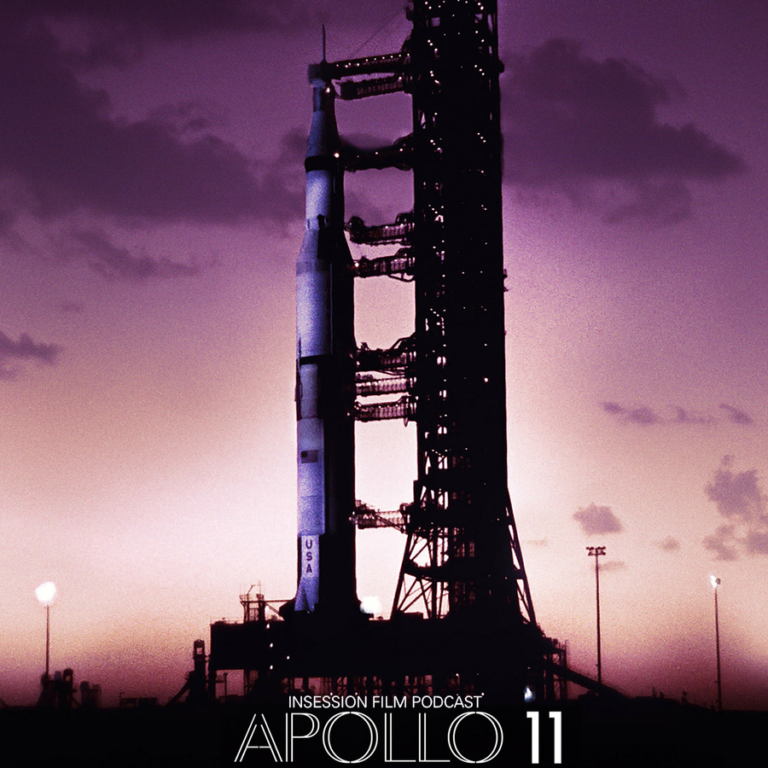
Apollo 11 has taken over Film Twitter in the last couple of weeks because of its mind-blowing visuals and science-centric construction. It is one of those good old fashioned “process movies” that Jay has been going on about all year and it gives JD a chance to gush about his favorite film of 2018, First Man. There’s something for everyone in the conversation.
After the Apollo 11 conversation, the talk turns much more serious when the focus shifts to the controversial Michael Jackson documentary, Leaving Neverland. JD and Jay talk about the technical merits of the film, as well as how we should think about pop culture icons and confronting our relationships with problematic content. The conversation is long, insightful, and heartfelt.
Let us know what you thought of these films on social media and enjoy the show! Thanks for listening!
– Movie Review: Apollo 11 (3:50) Director: Todd Douglas Miller
– Movie Review: Leaving Neverland (36:01) Director: Dan Reed
We try to make this the best movie podcast we possibly can and we hope you enjoy them. Subscribe today on iTunes, Spotfiy or Stitcher, and please leave us a review on iTunes. You can also find us on Soundcloud, PlayerFM and TuneIn Radio as well. We really appreciate all your support of the InSession Film Podcast.
To hear this Extra Film episode and everything else we do, download our apps on the Amazon Market for Android and the Podcast Box app on IOS devices. The mobile app covers all of our main shows, bonus podcast’s and everything else relating to the InSession Film Podcast. Thanks for your wonderful support and listening to our show. It means the world to us!
Horror does not always have to be a slasher type film. Horror does not always have to have nudity presented in a sexually attractive manner. Horror can feature a political bent to it and a style that forces the viewers to endure if they choose, the gratuitous and the indecent, the immoral and the deprivation a human can think of. For Marquis de Sade and his original transcript to The 120 Days of Sodom, his shocking, repulsive story of libertinism, power, and pleasure had the idea of one director, Pier Paolo Pasolini, to actually take it to the screen and not flinch on what is depicted. As noted, the notes below are not for the faintest of heart; it has produced anger and continuous condemnation for it being “art,” for the most graphic depictions of fetishism for sex and violence that makes A Clockwork Orange tame in comparison.
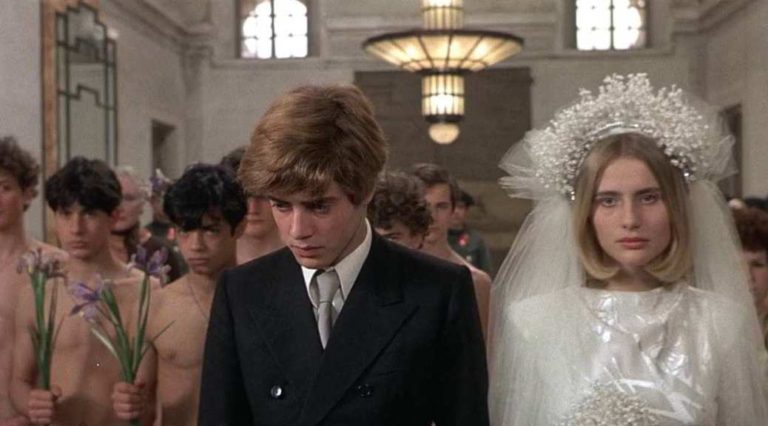
Salo Or The 120 Days of Sodom has a simple premise. Four wealthy fascist libertines in the ill-fated state in Northern Italy in 1944 – Mussolini’s last stand before his capture and execution – decide to engage in their ultimate fantasies of sadism and masochism by kidnapping 9 handsome young men and 9 beautiful young women, all mid to late teens (Marquis de Sade’s story had them younger), and force them to endure the humiliation of horrific practices before meeting a quite violent end. It is between the kidnapping and their killings that make Salo a different type of picture, making the boundaries almost limitless, especially with the aftermath of its production.
Between the extensive sexual abuse, the psychological manipulation, and acts of coprophilia, what is the purpose of enduring something that is not sexually arousing and more exploitive of human cruelty? For Pasolini, it is a message of the corruption of power and the punishment Italy received for bowing to fascism. It is self-flagellation for the sins of many, but it was the young that took the punishment. The four men and the four middle-aged prostitutes who tell graphic stories of depravity and then strip their prisoners naked are survivors who use their power to make the young metaphorically – and literally – eat the shit of the authoritarianism. They are degraded to be mere objects and never seen as a human being in their prison of horrors that is just too real to even think of.
There are four chapters to this parade of degradation: the Antiinferno, the Circle of Manias, the Circle of Shit, and the Circle of Blood. The first is mild and only the simple setup to what comes after, the prelude, if you may call it. They go to an isolated palace where the fun and horror takes place. Within this segment, Pasolini is critiquing the bourgeoise of then and now, condemning Italy’s return to a society of individual pleasure that is also taken in by corruption. As he said, “this new Fascism, armed with new means of communication and information . . . has not only scratched the soul of the Italian people but has lacerated, raped, and besmirched it forever.” Religion is not allowed, nor would it have helped.
The latter three stages is an examination of the socio-political power in which the four libertines use their sick minds over their middle-class slaves as, to put it mildly, a piece of meat. They are trophies who like to see how far they can go with them because the men have no limits. One of the men likes to anally rape his prisoners, but also likes to sodomized in return, disliking having regular intercourse with women. Another takes gratification in verbally abusing them and has his eye on two of them specifically. One prostitute says she enjoyed being molested as a child, another recounts bizarre instances with her tricks, and the four “studs,” four young men who guard the captured, are chosen only because they are well hung. Again, they are naked, unabashed top to bottom, but it is not of any pleasure to viewers. In the end, the four men don’t kill but watch from afar as the see their captured youth killed in horrific ways. I can’t even describe it; you just have to watch it to see it. None of this should be shown or done, yet Pasolini forces us to be the voyeurs to everything that goes on – and then see two studs dancing slowly to a waltz as if nothing else happened.
That leads us to Pasolini himself. He had built a reputation of shocking films and adding his Marxist beliefs within the confines of his stories. As a gay man, he was unafraid to have homoeroticism in his works, let nudity be free and attacked everyone who he felt was sending Italy to its violent climate. At the time, Italy’s “Years of Lead” was taking place between far-right and far-left organizations that the Italian government struggled to stop in the decade. Just before the film’s release, on November 2, 1975, Pasolini was beaten to death. A male prostitute was convicted for the killing, allegedly disturbed by Pasolini wanting to rape him with a stick, but many now believe it was a hit job, trying to silence Pasolini for opening a can of worms into the establishment’s past. In a sense, there was one more killing left to do in the story of Sodom and that was of the director himself.
So, why does this movie remain a piece of our collective thoughts when one sees it. Besides the shock value, Salo has a permission to be artistic while allowing the most depraved behavior to be committed on celluloid. Every time someone on Twitter says they are watching it for the first time, I warn them to be attentive for what is coming. This is a film not for the weak stomachs – it is thought to be a great date movie and I hope people are joking – and those who have not seen a Pasolini film would think of has the Ewe Boll of his time. Even with everything being seen, people still regard it in positive terms. Michael Haneke, Rainer Werner Fassbinder, and John Waters have ranked it among their favorites. “Salo is a beautiful film…it uses obscenity in an intelligent way…and it’s about the pornography of power,” said Waters. It is this dehumanization that does not leave us and its something that will not tear us away from the events.