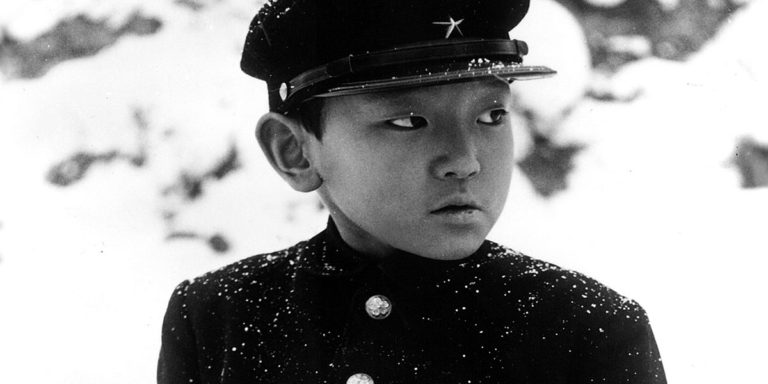
Directors are meant to break walls and tackle social norms, especially in a country like Japan where certain areas are no-go to the public. Death, nudity, Japan’s conduct in the war is all avoided to keep attached the pride of Japan, a country still full of nationalism and tradition that melts with the country’s rapid industrialization and modernity after 1945. Not to Oshima, who saw it fit to go right at the problem. In a country that is mainly conservative and votes that way, Oshima was a leftist who was influenced by the French New Wave. Unafraid of freedom of expression, Oshima sought to shock the audience and critique everything he felt was wrong with the country, backward to some extent and not being able to accept certain things that went on in people’s private lives.
Political Extremes
https://www.youtube.com/watch?v=a5cUsaaO6mo
He released his two first films in 1960, but it was his second film that put him on the map. Night And Fog In Japan is about political memory between the Stalinist communists (which Oshima opposed) and the Zengakuren, a student-based group of anarchists and communists who are critical of the American presence in the area. It lasted for three days in the cinema when the leader of the Socialist Party was assassinated by a far-right protester and the film was pulled in fear of more violence forming. Oshima then made his own independent company to prevent any more studio interference. While sex is center, In The Realm Of The Senses is set the 1930s during Japan’s military buildup entering the Second World War. The government is cementing control on what people should believe and behave in private as the male lover is a businessman all about making money. And in Merry Christmas, Mr. Lawrence, Oshima grades on the Japanese officers conduct while running a POW camp.
Society As A Failure
Death by Hanging was a shot across the lake on the country’s use of capital punishment. A man is at the gallows for murder, but when the noose drops, he does not die and has no memory of his crime. The officials don’t want to do the hanging again unless he confesses for his actions, which proves to be a lot harder. Oshima utilizes the theatre of the absurd from the German author Bertolt Brecht to study guilt and consciousness, as well as Japan’s past history of violence against the Koreans durian the war. Before the action begins, a narration provides how the process goes for the condemned before the hanging until the person, simply known as R, comes out of it alive.
In 1969’s Boy, it is a true story about a family who resorts to crime by forcing the son to intentionally throw himself in front of a car and make the drivers pay the family. While they are criminals engaging in fraud and child abuse, something similar in Shoplifters, Oshima gives a humanist touch, feeling bad for the family who are that desperate rather than condemning them. His followup, The Ceremony, critiques those who desire to keep on what they have left in tradition in the face of a rapidly changing world. To keep the family pure of such outside material, they go to shocking lengths.
Sexual Desires
Nudity is something not meant to be seen, which is why In The Realm Of The Senses is his most direct explicit challenge of Japan’s social conservative norms with explicit sex. Yup, what you find on PornHub (above is the actual trailer from the Sydney Film Festival) can also be seen in Oshima’s portrayal of a true story infamous crime involving a prostitute, her lover, and a shocking climax that stunned the country in 1936. Their passion even rubs off on their other women and are unafraid to bare all on camera, something only Oshima could have the confidence in. Homosexuality is portrayed in both Merry Christmas, Mr. Lawrence and Oshima’s final film, Taboo. The first film is his most mainstream movie, shot in Japanese and English with David Bowie as a British POW who has an unlikely friendship. Taboo takes place in the mid-19th century with a young and handsome newcomer to the country’s special police force whose talent is matched by others’ attraction to him in the all-male group.
Oshima died in 2013, aged 80. His work lives on because of the notoriety he put on the screen and people were impressed by his messaging. In the Realm of the Senses was his biggest commercial hit, but found himself in legal trouble for obscenity, which he got away from. “Nothing that is expressed is obscene. What is obscene is what is hidden,” Oshima told the court. He had, what The Guardian wrote as, “a deeply ambivalent attitude to Japanese society,” as well as to commercialism which the country embraced. It was this political and cultural critique Oshima spoke of in his 40-year career which defines him today.
Director: Tom Harper Writer: Tom Harper, Jack Thorne Stars: Felicity Jones, Eddie Redmayne, Himesh Patel
Synopsis: Pilot Amelia Rennes (Felicity Jones) and scientist James Glaisher (Eddie Redmayne) find themselves in an epic fight for survival while attempting to make discoveries in a gas balloon.
[/info]
Ever since their breakthrough with Manchester by the Sea, the best film of 2016, Amazon Studios has been struggling and attempting to find their footing as a hot indie studio. They failed with making their big Sundance acquisitions of 2019 splash, as Brittany Runs a Marathon made seven million at the box office, and The Report barely got a theatrical release. While Honey Boy is flailing in an attempt to eek out critics’ awards, Amazon Studios’ last bet for awards consideration is The Aeronauts, and if you’re wondering why I’m talking about the studio’s attempt at winning Oscars instead of the the movie itself, well, The Aeronauts feels and acts like a desperate ploy for awards consideration, not really a movie The Aeronauts is a generically stuffy, overall meh drama from Tom Harper (even though it might as well be Tom Hooper), one of the most promising directors of the year. This is his second film this year after Wild Rose, and it’s easily the lesser of the two. It’s a costume drama/period piece/Oscar play with two previous Academy award nominees about air balloons. Hey, at least it’s 90 million dollar budget is on Jeff Bezos’ coin.
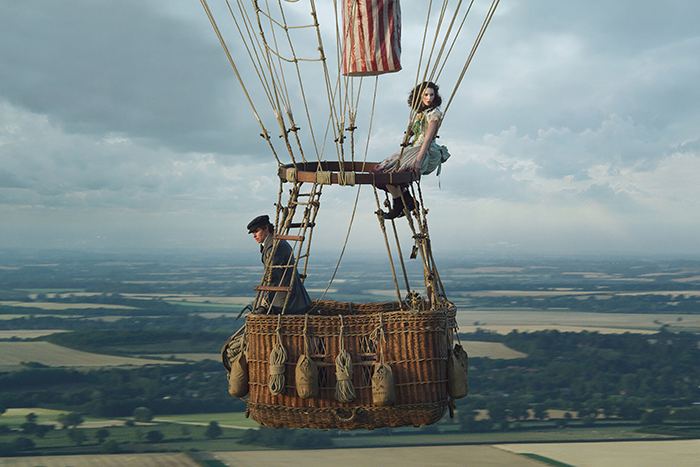
We’re saddled with two of the most “eh?” actors of the 21st century, Eddie Redmayne and Felicity Jones. The two have played against each other before in 2014’s Best Actor winner, The Theory of Everything, but with this new film, Jones is the standout this time. She’s playing the sadly fictional pilot Amelia Wren, a daredevil who is stuck with Redmayne’s uptight scientist James Glashier (a real historical figure). The two attempt to take an air balloon higher than ever before to prove Glashier’s theories about weather. As they spent time in the balloon together, laborious background and exposition occurs via flashbacks. Suddenly, the weather changes. Hijinks ensue.
What’s great about The Aeronauts is Harper’s direction and visuals. There’s a beautiful, almost painted look to George Steel’s cinematography, and the period detail is solid, if unnecessarily prominent. For a movie that takes place mostly in the air, it’s stunning to look at. While this is a great visual film, there’s not much of a narrative to speak of here. Redmayne (casually annoying) and Jones are forced to create real people off of vague characterizations, and both attempt their hardest. The biggest issue is how the flashbacks slow down the excitement to be found here. Every time Harper cuts to a scene of old white men yelling about how Glashier can’t prove his theories, the building anxiety is stopped and has to be restarted with Jones’ character having to climb onto the ropes to fix something. If this film were a seventy minute, close quarters thriller set in an air balloon, maybe it would be something exciting. As is, it’s more of a halfhearted attempt at winning awards.
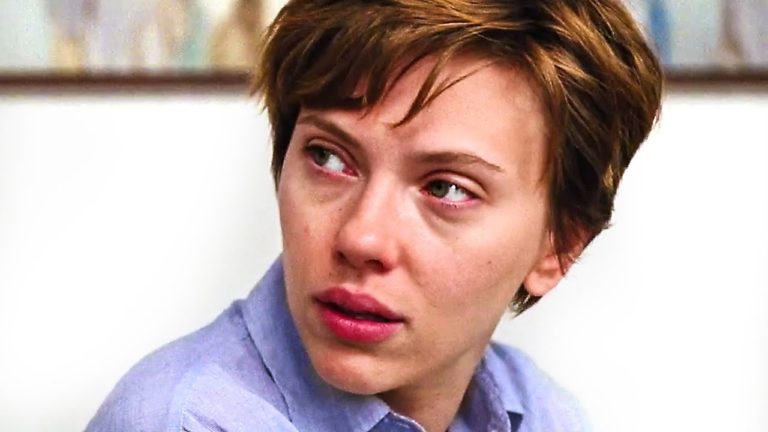
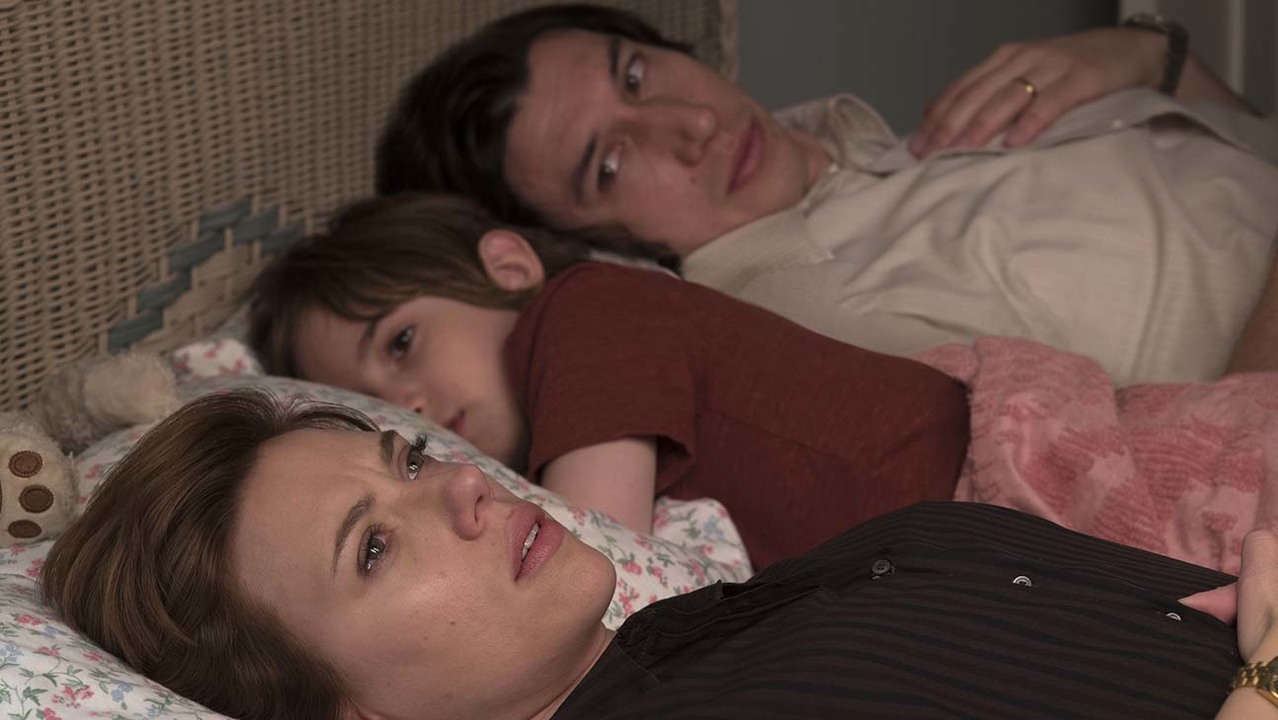
This weekend on Episode 355 we are finally going to be diving into Noah Baumbach’s Marriage Story, one of our most anticipated films of the year. It of course stars Scarlett Johansson and Adam Driver as a couple going through a divorce. Both performances are being hailed as maybe the best of their respective careers. So, we thought that would be great inspiration for our poll this week. Specifically that of Johansson, who has had a varied career with many great performances along the way.
With that said, what is your favorite Scarlett Johansson performance? Vote now!
Director: Elizabeth Banks Writer: Elizabeth Banks, Evan Spiliotopoulos Stars: Kristen Stewart, Naomi Scott, Ella Balinska
Synopsis: When a young systems engineer blows the whistle on a dangerous technology, Charlie’s Angels are called into action, putting their lives on the line to protect us all.
[/info]
Charlie’s Angels has been one of the staples in campy action since 1976. There’s been several TV shows, a handful of movies, and even a video game. The newest addition to the franchise comes from writer/director Elizabeth Banks. This is Banks’s second feature film after Pitch Perfect 2 (2015) as a director and her first as a writer. The film does a great job bringing the Charlie’s Angels style action back to the big screen, but fails in its storytelling and messages.
The film follows “Angels” Sabina (Kristen Stewart) and Jane (Ella Balinska) as they try to protect systems engineer, Elena (Naomi Scott) from an assassin after she exposes her employer’s new revolutionary technology as dangerous. They are assisted by their handler and mentor Bosley (Elizabeth Banks) as they try to track down the bad guys and save the day.
The main characters are, keeping with tradition, written as stereotyped personalities (something they’ve done since the original tv show). There’s Sabina, the heiress / dumb blonde. Jane the former operative, highly trained weapons expert devoid of emotion. And finally, Elena, the smart one who’s good with computers. I understand that this has been the standard when it comes to action movie characters – they feel like they have to include those stereotypes to make a “successful” movie (especially one starring women) but it feels old and tired. Another problem I had with the film was its overcomplicated plot. There were too many shocking reveals of potential bad guys and attempted plot twists for something that’s supposed to be a fun action movie. It didn’t work, it felt weird, and I didn’t like it. My biggest problem with the film was it didn’t know what kind of movie it wanted to be. It bounced between serious action movie, campy action flick, and girl power movie but didn’t deliver as any of those. I think the only way a Charlie’s Angels movie could work is if they took the campy route. There is too much history with the franchise to try and make it any more than it’s been in the past (which was mostly horrible stereotypes, objectifying women, and excessive innuendo…) They could have taken that questionable history and made it fun and campy, yet still appropriate, and less cringe worthy for a modern audience.
Even with all my complaints, Charlie’s Angels did have some things going for it. I loved Kristen Stewart in this film. It’s been a while since I’ve seen her in a comedy and I think she was one of the highlights of the movie. She was funny and she seemed to have embraced the ridiculousness of it all. She has some of the best lines and costumes in the movie. The other Angels were okay, they worked well as a group and had good chemistry. This film has some clever action sequences, missions, and fight scenes. So even though the story is a bit wonky, it keeps you entertained. One of my favorite things they included in the movie were the nods to prior Charlie’s Angels material. You can see cameos from people who’ve starred in the franchise as well as costumes and other odds and ends if you’re paying attention. The end credits are also great and full of fun cameos.
Charlie’s Angels falls into the grey area of not good, but also not bad. I didn’t like the story and its failure to overcome the franchise’s history with objectifying and stereotyping women. I know I shouldn’t have gone into the film with high expectations, but I wanted more from Banks as a filmmaker. Overall, the film has plenty of fun action sequences and moments of comedy to keep audiences entertained. It certainly doesn’t deserve the heaps of negative criticism it’s received since its release. I wish I could say I liked it more, it definitely had the potential.
This week’s episode is brought to you by the InSession Film Store. Get your IF gear today!
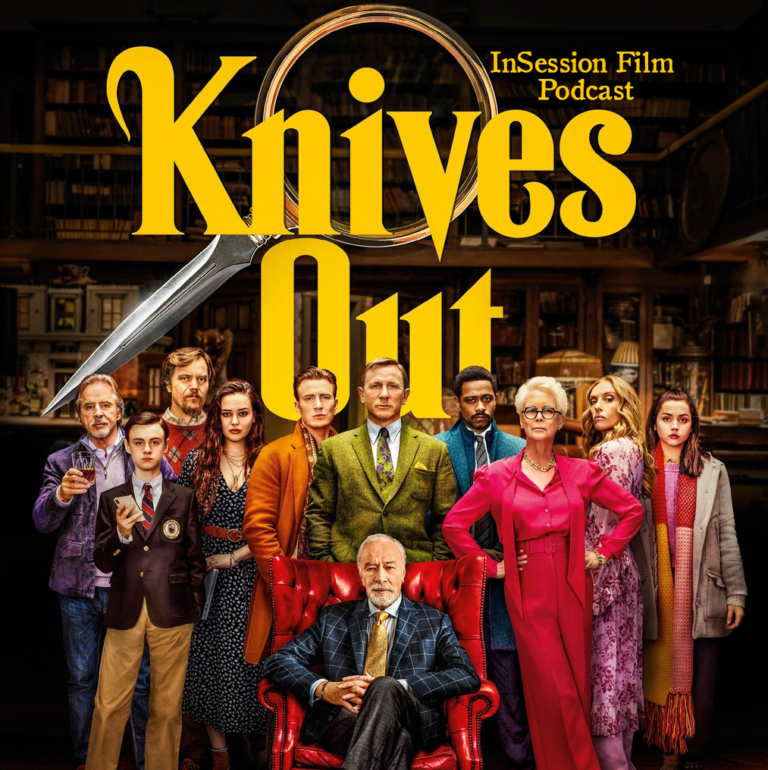
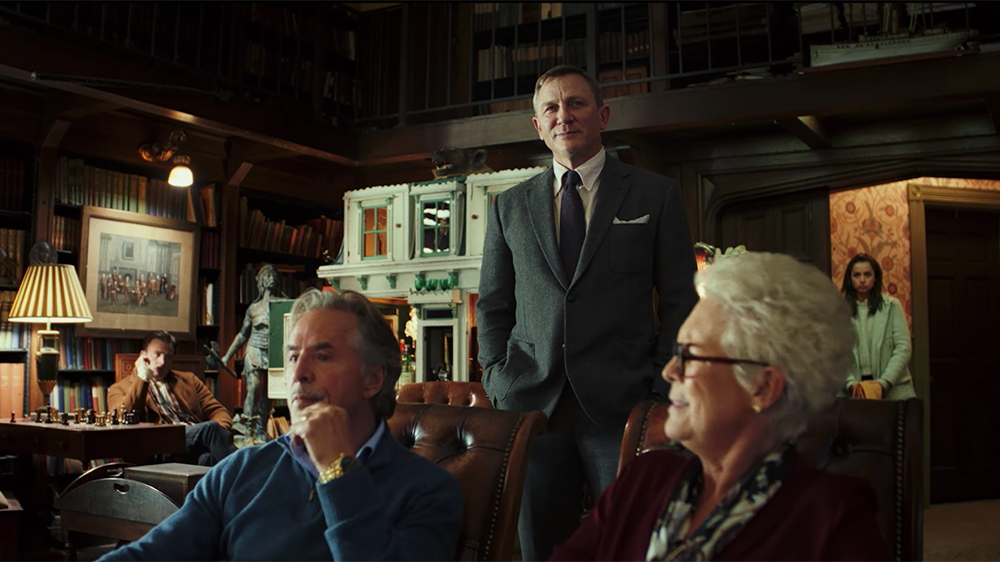
This week on the InSession Film Podcast, Matt St. Claire joins us to discuss Rian Johnson’s latest, Knives Out. We also continue our Ingmar Bergman Movie Series by reviewing his 1982 film Fanny and Alexander and JD sits down with director Trey Edward Shults to talk about his latest film Waves. Plus, brief thoughts on Frozen II, Dark Waters and Honey Boy.
A big thanks to Matt for joining us once again. He’s always a lovely guest and this time was no different. We had a fun conversation on Knives Out and we hope you enjoy as we did. Also, a huge thanks to Trey Edward Shults as well for sitting down with JD to talk Waves. It was a lively discussion and we hope it provokes you to go and see the film. We apologize in advance for the show being a little long this week, but we’re confident you’re going to like what it has to offer.
On that note, check out this week’s show and let us know what you think in the comment section. Thanks for listening and for supporting the InSession Film Podcast!
– Movie Review: Knives Out (5:15) Director: Rian Johnson Writer: Rian Johnson Stars: Daniel Craig, Chris Evans, Ana de Armas
– Notes / Frozen II / Dark Waters / Honey Boy (51:31)
As noted above, JD caught up with Disney’s Frozen II and Todd Haynes’ Dark Waters, and decided to give his thoughts on both of those films. Brendan also gave his thoughts on the Shia LaBeouf written film Honey Boy.
– Trey Edward Shults Interview (1:23:53)
JD and Trey talk about the cast of Waves, its themes on love and hate, the film’s cinematography and much more!
– Ingmar Bergman Movie Series: Fanny and Alexander (1:38:28) Director: Ingmar Bergman Writer: Ingmar Bergman Stars: Bertil Guve, Pernilla Allwin, Kristina Adolphson
Main Review: Marriage Story
Top 3: N/A
Ingmar Bergman Movie Series: Scenes From a Marriage
[divider]
Help Support The InSession Film Podcast
If you want to help support us, there are several ways you can help us and we’d absolutely appreciate it. Every penny goes directly back into supporting the show and we are truly honored and grateful. Thanks for your support and for listening to the InSession Film Podcast!
Synopsis: Parent and child journey through the outskirts of society a decade after a pandemic has wiped out half the world’s population. As a father struggles to protect his child, their bond, and the character of humanity, is tested.
[/info]
2019 has clearly been a year where we’ve had to grapple with some films from both the artistic perspective, but also a business point of view as well. Whether it’s Amazing Grace and the questionable timing of its release, or Leaving Neverland and how damaging it is to Michael Jackson if you choose to believe the subjects of that film, or the new Nate Parker film coming out later this year that Venice embraced for one reason or another, there’s been some films we’ve had to grapple with on those terms. And in a similar vein many may have to do the same with Casey Affleck and his latest directorial effort Light of My Life.
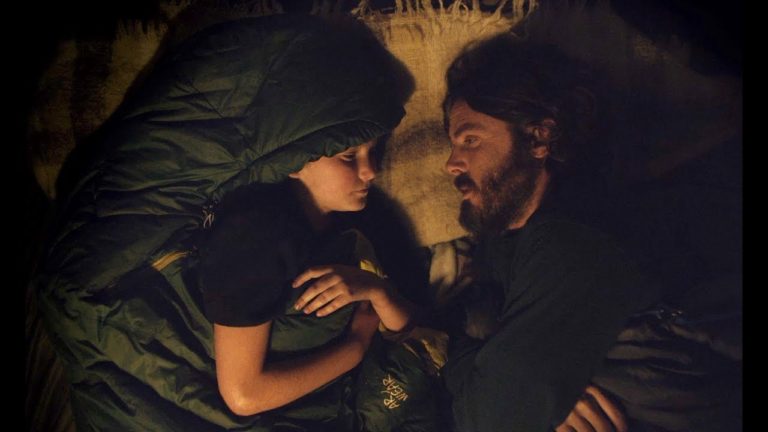
Light of My Life is set in some sort of dystopian future where a pandemic has wiped out all of the female population. However, Caleb (Casey Affleck) has a daughter Rag (Anna Pniowsky) who survived the plague and is now posing a young boy in public in an attempt to stay safe. They mostly live in the woods, though, which comes with its own hardships and adversity. As they travel north to what they hope is safe lodging, things are becoming testier and more troublesome for the both of them.
My first thought after seeing Light of My Life was actually Manchester By the Sea, a film that must have took a lot out of Affleck because here he once again plays a father, but this time one that is desperate to save his child at all costs. Quite the reversal there for him. That probably wasn’t his inpsiration, but I couldn’t help but think about the polarity between the two in terms of how deeply thorough and vigilant Caleb is in making sure that Rag is safe at every turn. Of course, what happened to Lee in Manchester By the Sea was just an accident, but Caleb wants to avoid that in any way he can, and actively prepares himself accordingly. And what Light of My Life suggests as it relates to the foundational love that exists between parent and child is thought-provoking and poignant.
The film’s pathos especially resonates thanks to Affleck’s David Lowery inspired direction. There are sprinkles of dramatic tension throughout, and I do love how and when Affleck decides to incorporate them, but the film mostly concerns itself with mood and meditation on its moral and ethical conflicts when it comes to its themes on parental responsibility, love, and what it means for a young woman to have her childhood stripped from her. It’s certainly reminiscent of last year’s Leave No Trace in that regard, but it’s also comparable to The Road and A Quiet Place given Light of My Life post-apocalyptic setting. Affleck also succeeds because of his approach to visual storytelling. There isn’t any conventional exposition, however, there are more than enough visual cues or organic lines of dialogue that it’s clear what’s going on in this world. Affleck doesn’t care to indulge in the details of what created it, instead it’s merely a backdrop that allows for the intimacy between Rag and Caleb to linger and marinate. The right move in this critic’s opinion. But simultaneously, Affleck takes advantage of all of that dramatically to enhance the emotional growth between Rag and Caleb. So, despite mostly (and rightfully) underplaying its post-apoocalypitic nature, there’s enough of it to serve this story and its themes.
None of this matters though without these central performances. Affleck may be a divisive figure, but as an actor, he knows what he’s doing and he’s great here. Anna Pniowsky is going to go down as one of the best discoveries of the year for many people. She’s terrific and in many ways the beating heart of the film. Their dynamic is felt, it’s genuine and elevates the emotion between them.
Light of My Life may not be for everybody given its tonal and methodical approach, but its evocative themes and engaging characters worked for me.
This week on the InSession Film Podcast: Extra Film segment, JD joins Jay to discuss the latest from Trey Edward Shults in Waves, while Ryan and Jay review the Amazon documentary One Child Nation!
So, this one is a doozy. We’ve joked all year about how Jay and JD have become friends after being mortal enemies last year. Well, the rivalry is back baby! All joking aside, the conversation was quite inspired and delightfully teetering as the guys talked about Waves. At the very least, we hope you enjoy it as much we did.
On that note, have fun with this week’s Extra Film segment and let us know what you think in the comment section below. Thanks for listening!
– Movie Review: Waves (4:51) Director: Trey Edward Shults Screenplay: Trey Edward Shults Stars: Taylor Russell, Kelvin Harrison Jr., Alexa Demie, Sterling K. Brown
– Movie Review: One Child Nation (1:00:22) Directors: Nanfu Wang, Jialing Zhang
We try to make this the best movie podcast we possibly can and we hope you enjoy them. Subscribe today on iTunes, Spotfiy or Stitcher, and please leave us a review on iTunes. You can also find us on Soundcloud, PlayerFM and TuneIn Radio as well. We really appreciate all your support of the InSession Film Podcast.
To hear this Extra Film episode and everything else we do, download our apps on the Amazon Market for Android and the Podcast Box app on IOS devices. The mobile app covers all of our main shows, bonus podcast’s and everything else relating to the InSession Film Podcast. Thanks for your wonderful support and listening to our show. It means the world to us!
Now, as we enter the last 31 days of 2019, as well as the last of the 2010s, Criterion has in store four new works, harking back to 1933 and through to 2006. A woman brought into the darkness of society, a thriller on the Scottish Highlands, a sci-fi epic, and a road trip complete Criterion’s releases of the collection.
The Story Of Temple Drake (1933)
https://www.youtube.com/watch?v=lmB43rldVm8
It is one of those pre-Hays Code films that is cited as to why there were restrictions on what movies could show because of the portrayal of a fallen woman. In this case, the titular character comes from a noble family, gets involved with the wrong man, and is pimped into prostitution. The climax at the end, compared to William Faulkner’s actual depiction in the novel it is based on, angered conservatives, Christian organizations, and temperance groups that it is among the first rape & revenge films of its kind, forcing movie studios to follows the new strict guidelines which wrapped Hollywood from the 30s to the 60s.
Tunes Of Glory (1960)
Alec Guinness plays the commander of a Scottish battalion in post-war Britain, one who the soldiers respect for being a lot like them, only to butt heads with an incoming, by-the-book, and bullish replacement played by John Mills. The battle of wits plays out in the barracks until the shocking end, but the bagpipes play on with every moment the regiment does. It is one of British cinema’s underrated films in the era; outside of an Oscar nomination for Screenplay and multiple BAFTA nods, Tunes of Glory is overlooked as a working examination of the military class system than in society.
Until The End Of The World (1991)
Following his highly successful Wings of Desire, Wenders finally got to make this project he had conceived back in the seventies as the ultimate road movie. His sci-fi film, presented in Wenders’ 287-minute Director’s Cut (you thought The Irishman was long), follows a woman who seeks out someone who has the power to make art into real life and cure the blind. With William Hurt, Sam Neill, Max von Sydow, and Jeanne Moreau, Wender’s epic, poorly received upon release, has been reevaluated as an underrated masterpiece getting its dues finally.
Old Joy (2006)
https://www.youtube.com/watch?v=KkdJV1X4fwI
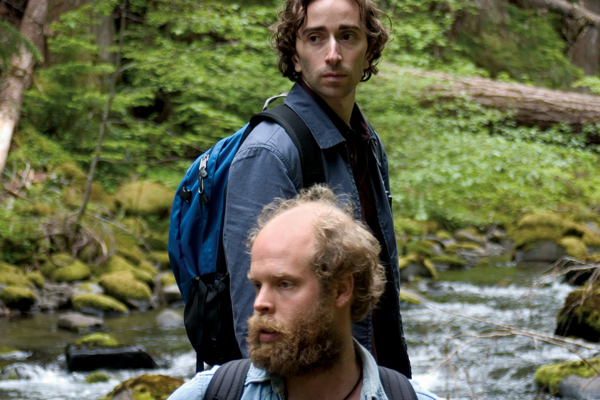
Kelly Reichardt has been a major indie film player and one of the most notable female directors in the last twenty years. Her second film follows two friends on a camping trip as they find out how much they have changed as one remains a nomad and the other has gotten married and a father-to-be. Made for $30,000, Reichardt’s sophomore effort continued to show her tight-knit ways of exploring the friendship dynamic away from the city and followed it up with more brilliant, low-key works that have defined her career.
Next up, the first films of the 2020s in January – also my 30th birthday. But first, a final word…for the 2010s, that is, not of this wonderful blogging thing we all love to do.
The first thing is to thank JD Duran for being gracious in letting me go old school with the promotion of movies and not follow the current line of new releases. He was happy to get me because he wanted to diverse InSession Film’s content and I am glad to do so. The same extends to Brendan Cassidy, Ryan McQuade, Aaron Charles, Kate Boyle, Daniel Brilliant, and everyone else who I probably have missed. Then, there’s the rest of the Film Twitter family who likes to link up with us and share my stuff and others; the list is too long there. It amazes me that I started doing this a year and a half ago. I’ve made more friends on Twitter just through movies than complaining about the political scene where I used to languish in for a headache about Trump, Brexit, and every small policy. I wish I started getting in years earlier to have longer connections than now. But it has been an amazing ride that I hope lasts longer as we enter the 2020s!
Director: Alma Har’el Writers: Shia LaBeouf Stars: Shia LaBeouf, Noah Jupe, Lucas Hedges
Synopsis: A young actor’s stormy childhood and early adult years as he struggles to reconcile with his father and deal with his mental health.
[/info]
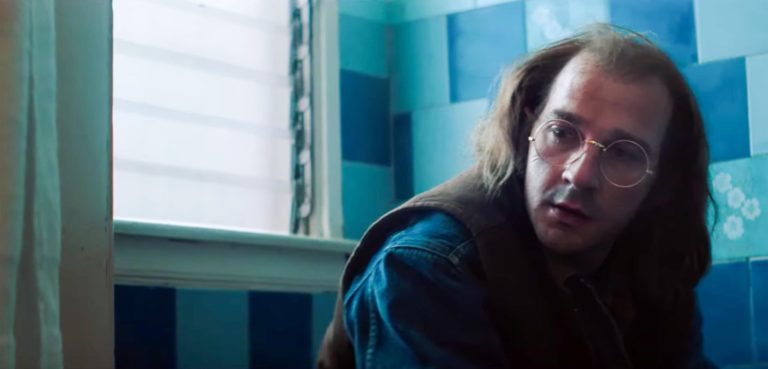
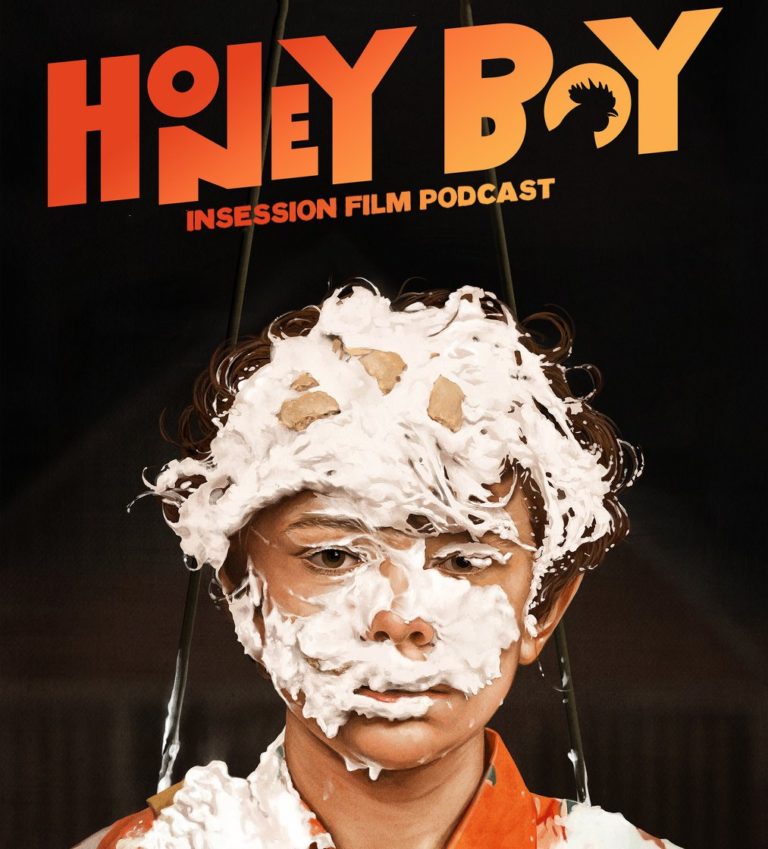
Shia LeBeouf is one of the most fascinating actors working right now, and Honey Boy is a love letter to a time in his life that helped shaped him into the artist he is today. That meta element alone in LaBeauf’s screenplay is intriguing, but beyond that, Honey Boy is a beautiful film about generational addictions and the fallout that comes in the aftermath. Elevated by great performances and Alma Har’el’s stunning direction, the emotion that comes with those ideas is quite powerful here.
Honey Boy bounces between two different timelines. One where Otis (the Shia Labeouf stand in) is a twenty-something (Lucas Hedges) and is in therapy for wreckless behavior, and another where Otis is a young teenager and actor (Noah Jupe). Young Otis lives in a small apartment with his father James (Shia LaBeouf) who is unreliable and too busy dealing with his own problems to be the kind of parent Otis needs. This results in Otis coping in ways his father doesn’t approve of, slowly building friction between the two until it all collides in the end. All of this is coupled with older Otis in therapy realizing that his father is the root of his emotional unraveling at that time.
It would have been easy for LaBeouf, as a screenwriter, to simply lay out all of his fathers demons and call that out as an excuse for how that made him bitter and volatile. But that’s not what he does. Instead, LaBeouf puts himself into his father’s shoes (somewhat literally as he does play his father in the film) and attempts to examine how his own personal experiences shaped him into who he was. And what we find out is that James’ mother (LaBeouf’s grandmother) was an abusive alcoholic who had severe problems of her own, thus having a massive effect on his father. The film doesn’t dive any deeper than that regarding LaBeouf’s lineage, but we can infer that if it went down the line we would probably find more addiction and emotional fallout. This gives James a compelling duality that makes sense of his behavor and abrasiveness. At the same time, though, Honey Boy doesn’t excuse the troublesome behavior. It simply demonstrates that it’s not black and white, that there are two sides to the coid and why James struggled to defeat his demons.
All of this makes Honey Boy a poignant experience. Watching young Otis yearn for his father’s attention is heartbreaking as we see James continuing to fail as a parent. It’s especially effecting because LaBeauf’s screenplay, heightened in Har’el’s mesmerizing direction, reverberates that all Otis wanted was his dad’s love. He didn’t need Hollywood elegance or anything outlandish, he just wanted James to be around.
It’s in that where Shia LaBeouf should be considered for an Oscar next February. He gives a career performance, slipping effortlessly between someone who loves his son, but as I’ve noted, a victim to generational addiction. He’s endlessly magnetic. Noah Jupe is equally as stunning in his performance, especially in the latter parts of the film where Otis is longing for fatherly comfort.
Honey Boy may disappoint those who are eager to see a conventional biopic as this is not one of those experiences. It’s artfully crafted and purposful with how it tells its story. Perhaps some of its meta qualities at the end will be too cute for some, but mostly it’s a great film that has a ton of earned emotion. The last shot of this film with linger with me for a long time to come and I cannot wait to see what LaBeouf has up his sleeve next.
On Episode 15 of Chasing the Gold, Ryan is joined by Casey Lee Clark and Lauren LaManga of Next Best Picture to discuss the 2020 Best Picture Race! As the 2019 is winding down, the Oscar season is coming. In the last episode, Ryan discussed the films in the Best Picture race and this week he, along with his guests, take a deep dive into the acting categories. So many wonderful performances to talk about but there are only so many spots for nominations. They go through all the options in the 4 races, including some performances they would love to see make it on Oscar night.
On that note, have fun with this week’s Chasing the Gold and let us know what you think in the comment section below. Thanks for listening!
We try to make this the best movie podcast we possibly can and we hope you enjoy them. Subscribe today on iTunes, Spotfiy or Stitcher, and please leave us a review on iTunes. You can also find us on Soundcloud, PlayerFM and TuneIn Radio as well. We really appreciate all your support of the InSession Film Podcast.
To hear this Extra Film episode and everything else we do, download our apps on the Amazon Market for Android and the Podcast Box app on IOS devices. The mobile app covers all of our main shows, bonus podcast’s and everything else relating to the InSession Film Podcast. Thanks for your wonderful support and listening to our show. It means the world to us!
[divider]
Help Support The InSession Film Podcast
If you want to help support us, we would greatly appreciate it! For more info, CLICK HERE.
This weekend sees the release of Knives Out, the latest from director Rian Johnson, and boy is it a wild ride. Johnson may have a divided fan base when it comes to Star Wars: The Last Jedi, but mostly he’s a director that people love, and for good reason. His films are clever, unique and endlessly entertaining. So, we thought that would be great inspiration for our poll this week.
What is your favorite Rian Johnson film? Vote now!
Director: Chris Buck, Jennifer Lee Writer: Chris Buck, Jennifer Lee Stars: Kristen Bell, Idina Menzel, Josh Gad
Synopsis: Anna, Elsa, Kristoff, Olaf and Sven leave Arendelle to travel to an ancient, autumn-bound forest of an enchanted land. They set out to find the origin of Elsa’s powers in order to save their kingdom.
[/info]
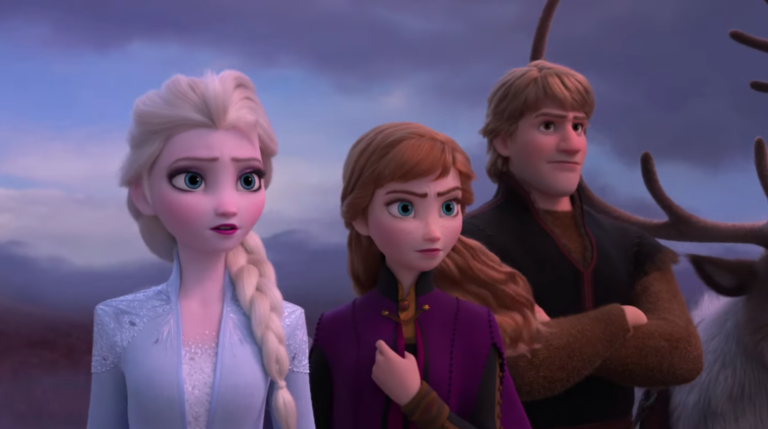
The first Frozen film (2013) was a worldwide phenomenon from which most adults still haven’t recovered. Its most popular song, “Let it Go,” is still heard entirely too often, from people of all ages. Frozen II doesn’t quite live up to the hype and standards of its predecessor. I enjoyed the first film – it’s entertaining and fun, while the sequel seems to be made entirely of recycled ideas and multiple obvious “made for 3D” moments.
Frozen II takes place soon after the events of the first film. We get a little more information about Anna and Elsa’s parents and background of the areas surrounding the kingdom of Arendelle. Elsa is settling in as queen when she starts to hear a voice calling to her from the North. Elsa sets off in search of whoever is calling out to her with the original team in tow – Anna, Olaf, Kristoff, and Sven.
I was surprisingly disappointed with this film. I’m normally a huge fan of animated films, especially ones involving Disney princesses. I don’t think I was allowed to watch anything but Disney animated movies until I was about 10. Usually these films succeed with adult audiences on their nostalgia factor alone. Unfortunately, Frozen II was a letdown. I don’t think it lived up to the hype and expectations set by the first film. The story felt recycled; there was absolutely nothing original or anything I hadn’t read in a mythology book or seen from Disney before. The film didn’t have a new or strong message like the original – anything different they tried to sneak in felt forced. The songs were just okay, but not as catchy as anything from Frozen. It felt just a smidge better than Disney’s straight-to-DVD sequels. Another complaint I had was that there were obvious “made for 3D” moments. That’s my biggest pet peeve when it comes to new movies. I understand many films are released in both 3D and 2D, but there shouldn’t be any scenes that look weird or awkward in 2D because they are trying to make something special for the for 3D version. I’m sure not everyone will feel this way, but the movie just didn’t sit well with me.
Frozen II wasn’t all bad. The animation alone is worth a trip to see it on the big screen. I was amazed at the detail they included. The texture of character’s hair and clothing were amazing, and the landscapes were also gorgeous. There are a few Disney “Easter eggs” hidden around if you keep an eye out for them. For example, you can spot a miniature Baymax and Dumbo made of snow. One of my favorite elements of the movie was Olaf. I know a lot of people have said he’s annoying, but I love his comedic relief and awkward questions. At one point he is retelling (and acting out) the events of the first film to new characters and it’s hilarious. My other favorite part of the film was Kristoff’s song “Lost in the Woods”. It’s the best blend of 80’s power ballad and 90’s boy band song, and Jonathon Groff is perfection. Even the Weezer cover is great.
Frozen II has affable intentions, but overall it fails to meet the expectations set by its predecessor, and it lacked real substance. It has some great elements, such as the animation and the humor, but sadly I did not enjoy the film. Kids will most likely enjoy it as they did with the first, and maybe die hard Disney lovers as well, but re-setting expectations is recommended.
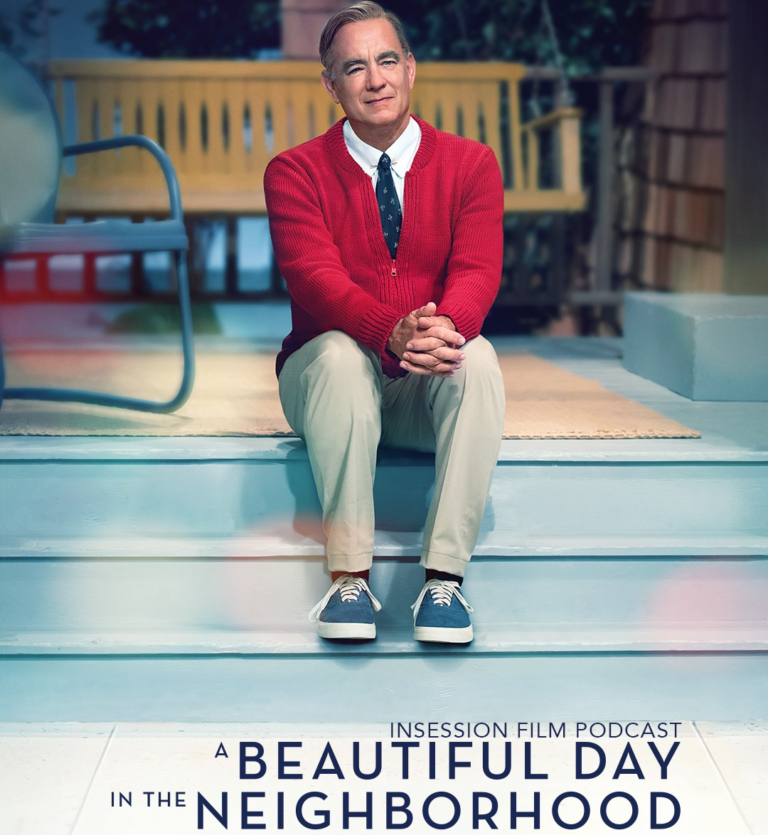
This week on the InSession Film Podcast, we discuss Marielle Heller’s A Beautiful Day in the Neighborhood and continue our Ingmar Bergman Movie Series with his 1978 film Autumn Sonata! JD also gives his brief thoughts on One Child Nation and Last Christmas.
While we are actively planning for Marriage Story and Scenes From a Marriage in a few weeks, it’s uncanny how we have accidentally paired up our Bergman Series films with 2019 films that are eerily similar in their themes and ideas. This was the case a few weeks ago when we discussed The Lighthouse and Peronsa on Episode 349, but it’s also at play this week with A Beautiful Day in the Neighborhood and Autumn Sonata. We even joke about how their the same films, which in many ways they are, despite them being tonally very different experiences. So, that is to say, we had a lot of fun with this episode.
On that note, check out this week’s show and let us know what you think in the comment section. Thanks for listening and for supporting the InSession Film Podcast!
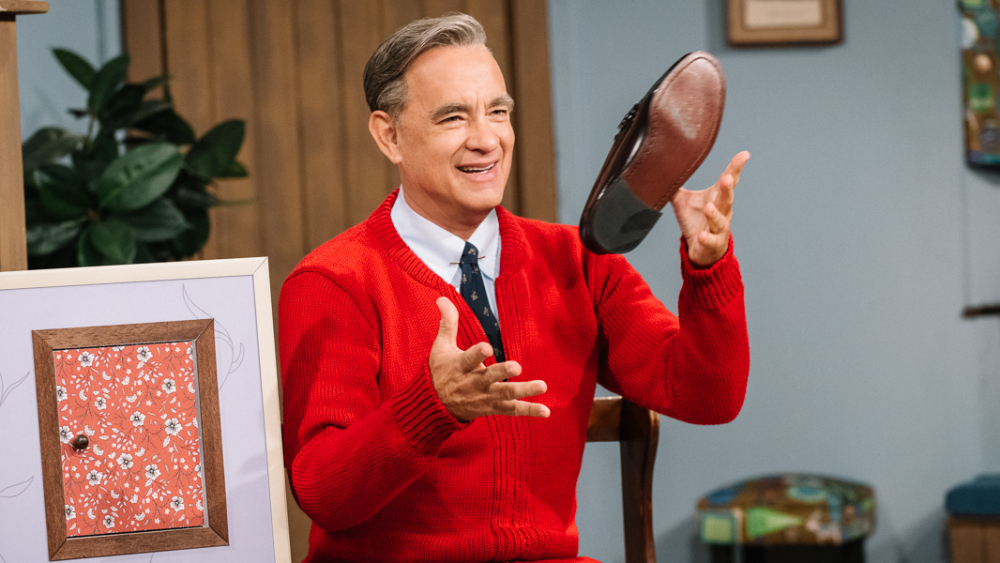
– Movie Review: A Beautiful Day in the Neighborhood (5:06) Director: Marielle Heller Writer: Micah Fitzerman-Blue, Noah Harpster Stars: Tom Hanks, Matthew Rhys, Susan Kelechi Watson, Chris Cooper
– Notes / One Child Nation / Last Christmas (41:49)
As noted above, JD was able to catch up with a few films this last week. One being the documentary One Child Nation, arguably the most heartbreaking film you’ll see in 2019. He also caught up with Paul Feig’s Last Christmas, and gave his thoughts on that film and its twist that so many people are talking about
Main Review: Knives Out
Top 3: N/A
Ingmar Bergman Movie Series: Fanny & Alexander
[divider]
Help Support The InSession Film Podcast
If you want to help support us, there are several ways you can help us and we’d absolutely appreciate it. Every penny goes directly back into supporting the show and we are truly honored and grateful. Thanks for your support and for listening to the InSession Film Podcast!
With Jay out, JD steps in his place and joins Ryan to review two of the most anticipated films of the fall. First up is Honey Boy, the semi-autobiographical account of Shia LaBeouf’s childhood. With a screenplay written by LaBeouf, he goes back and forth through events leading to his current placement in life. Noah Jupe and Lucas Hedges play versions of him while he commits to the role of his dangerous father. Beautiful direction by Alma Har’el mixed with the raW performanceS and personal script led to one of the best discussion Ryan and JD have had together all year.
Then, in the back half of the episode, the guys discussed the newest political thriller,The Report. Based on the United States Torture report, Scott Z. Burns captures the perfect balance of making an entertaining film while also exposing the truth. With wonderful performances from Adam Driver and Annette Bening, The Report is a film not to miss, leading the guys to agree on both films this week in terms of quality.
On that note, have fun with this week’s Extra Film segment and let us know what you think in the comment section below. Thanks for listening!
– Movie Review: Honey Boy (3:01) Director: Alma Har’el Screenplay: Shia LaBeouf Stars: Noah Jupe, Lucas Hedges, Shia LaBeouf
– Movie Review: The Report (54:11) Director: Scott Z. Burns Screenplay: Scott Z. Burns Stars: Adam Driver, Annette Bening, Jon Hamm
We try to make this the best movie podcast we possibly can and we hope you enjoy them. Subscribe today on iTunes, Spotfiy or Stitcher, and please leave us a review on iTunes. You can also find us on Soundcloud, PlayerFM and TuneIn Radio as well. We really appreciate all your support of the InSession Film Podcast.
To hear this Extra Film episode and everything else we do, download our apps on the Amazon Market for Android and the Podcast Box app on IOS devices. The mobile app covers all of our main shows, bonus podcast’s and everything else relating to the InSession Film Podcast. Thanks for your wonderful support and listening to our show. It means the world to us!
Director: Roland Emmerich Writer: Wes Tooke Stars: Ed Skrein, Patrick Wilson, Woody Harrelson
Synopsis: The story of the Battle of Midway, told by the leaders and the sailors who fought it.
[/info]
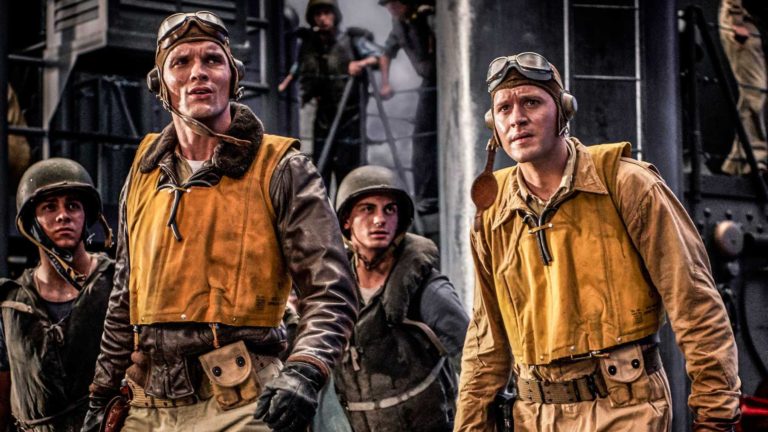
Roland Emmerich’s newest film, Midway, is a synthesis of mediocre CGI war effects, a cacophonous sound mix, lackluster dialogue, and a script that never seems to catch a gear. For those seeking an epic war film, Midway may hit the right notes. However, some filmgoers may have difficulty keeping up with the film due to its pacing problems, paper-thin characters, and lack of purpose.
Midway begins with the attack on Pearl Harbor on December 7, 1941 and chronicles the events that led to the pivotal Battle of Midway in June of 1942. In a large-scale war film like Midway, the number of characters can grow exponentially. Emmerich finds a way to combat this by allowing his audience to follow a handful of characters as they progress steadily toward Midway. Arguably, the main character is dive bomber pilot Dick Best (Ed Skrein), a cocky yet capable pilot who may or may not fight like he doesn’t mind dying. Others that fill the mix are an unassuming intelligence officer, Edwin Layton (Patrick Wilson), a robust leader in Wade McClusky (Luke Evans), and a swath of famous Admirals, William Halsey (Dennis Quaid), Jimmy Doolittle (Aaron Eckhart), and Chester W. Nimitz (Woody Harrelson). As the Battle of Midway inches closer through smaller battles and skirmishes, Emmerich introduces us to both sides of the war. In an attempt to tell a rounded story, Emmerich includes the Japanese strategies and expectations for these battles at sea. Admittedly, this paints a clearer picture of the events that lead to the Battle of Midway, but clearer does not necessarily translate to richer story.
The battle scenes in Midway are adequate and serve the story well. However, the camera is either too close or too far from the action for any discernable connection. At some points, there is too much action on screen, which works as a cloudy distraction from the effects. It’s almost as if the filmmakers knew the effects weren’t working well, so their only solution was to add more. Aside from the visuals, the sound mix is regularly muddled and incoherent. Dialogue is lost in the barrage of bullet ricochets, explosions, and propeller noise. This wouldn’t be a problem, because war movies are supposed to be loud, but at times characters are speaking directly to the actions of the film and a viewer can easily miss beats that move the story. The effect is a confusing story made even worse by the incoherent, yet important dialogue.
The plot of Midway is all over the place. A viewer could get whiplash from all the locations that Midway visits in its 138 minute run time. The characters do their best to elude to the next location, but after a while it becomes very difficult to keep up. New characters are introduced and killed, plotlines are rarely concluded, and even though the story has a known climax and dénouement, it travels in circles in order to reach that established finishing point. The clunkiness of script is detrimental to the film as a whole. If it were simplified and focused more on characters, Midway might actually be a worthwhile endeavor.
The characters and the actors portraying them are a shining glory in an otherwise muddled film. Skrien, Evans, and Wilson embody their namesakes and drive what little emotion there is in the film. The cast of Midway is borderline stellar. However, the lines they are given and the hoops they must jump through diminish any grandeur their presence purportedly elicits. In moments of hearth and home, moments that are supposed to give the war meaning, feel hollow and lost. This makes the battle scenes and action meaningless, and worse, often gives the action a certain glorification as if the action is paramount. Emmerich never properly sets up why they fight and what they fight for; instead, he emphasizes the wonder of war and the exhalation of death. The bravery of these soldiers is never questioned in the film, but at times Midway makes their sacrifices feel futile, which is sorrowful.
Overall, Midway is a loud, booming explosion of a film. An epic that spans the globe and places a spotlight on the men and women who fought bravely in World War II. Often sputtering and always demanding, Midway does not do an adequate job of setting up the stakes of the film, and therefore the characters, try as they might, cannot suture this film back together. The focus of a war film should be on the men and women who fight and for what they are fighting. Without that setup, Midway is just a spectacle of violence.
It’s always great when the day comes for Criterion’s monthly announcement of new releases and re-releases. The films I’ve never heard of, the films the surprised me in what they got the rights to, and the ones I especially requested from them – send them an email at [email protected] to give recommendations – is always a massive fist pump to see a beauty get the royal treatment. And, I have nagged them a few times with suggestions; a few have actually been given the release while others I wait. This Christmas, here’s a list of those movies I desire to see get the Criterion release.
Aguirre, Wrath Of God (1972)
Werner Herzog’s portrayal of the Spanish conquistadores in 16th Century South America follows Klaus Kinski, his closest acting companion, as the leading man who leads a voyage of hell. It is unforgiving, yet the madness that befalls on Kinski’s character, climaxing on him on a raft down the river with a bunch of monkeys surrounding him, is a perfect reflection of the entire production. Herzog wrote the script in a frenzy, shot on location, and Kinski, who suffered from antisocial personality disorder, was notorious for his violent outbursts towards everybody and Herzog allegedly pulled a gun on Kinski when he tried to leave the set. Movie wise, it is still a shocking piece of theater and would have a ton of special effects if Criterion released it.
Mona Lisa (1986)
Here’s one wish for a re-release: Neil Jordan’s brilliant crime drama about a gangster parolee (Bob Hoskins) whose first job out is to be a driver to a call girl he finds himself in love with. It’s an unusual romance but with danger everywhere in the gangster underworld, protecting her is a dangerous endeavor, especially when she has a certain agenda herself. This was really a barebones release with a short essay on how the story came about, through a newspaper clipping about an anonymous ex-con and his job for an escort service. Bring it back for those who truly admire Bob Hoskins in an Oscar-nominated role.
The Piano (1993)
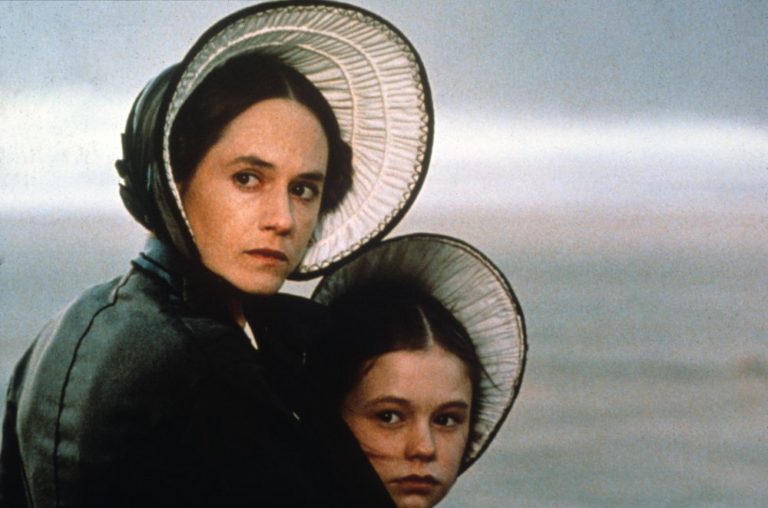
Criterion has released Jane Campion’s Sweetie (1989) and An Angel At My Table (1990). But it’s her Oscar-winning romance in colonial New Zealand that really fits the bill. It’s such a haunting piece of cinema, from Holly Hunter’s voiceover to the scenery that surrounds the passions between Ada and a Maori native (Harvey Keitel). Michael Nyman’s piano score adds to the sweeping madness filled in from Sam Neill’s jealousy as the man who is supposed to marry Ada and Anna Paquin, ten-years-old when she performed – later won an Oscar for her performance – as the daughter who serves as an interpreter and witness to the intense love triangle taking place.
Amelie (2001)
Let’s get going, Criterion! How can’t you get the rights from Miramax (when was the last time they released a film?) to do your stuff on this magical whirlwind romance story with Audrey Tatou’s charm and smile as a matchmaker, justice server, and lonely romantic trying to find her own Prince charming? It is an amazing film, one full of hope, and desirable. It has the feel of French New Wave characteristics with many short scenes, montages, narration, and shots on location. But this movie is colorful, rich, and bubbly, just sweeping me off my feet.
Vera Drake (2004)
Mike Leigh’s 80s and 90s work has been getting picked up on, from Life Is Sweet to Topsy-Turvy. If they are seeking something from the 2000s, then his abortion story with Imelda Staunton as the titular character, a middle-class housewife who secretly performs abortions on women while it was illegal at the time, is highly worth the acquisition. This is a subject perfect for the kitchen sink realism era in the 50s and 60s, up there with A Taste of Honey and Saturday Night And Sunday Morning. Leigh always gives a humanist touch to characters through the way he works, improvisation and surprising his actors with moments that catch their characters off guard and the climatic and emotional arrest of Vera Drake is such a gripping moment.
It got a whole lot more of recommending to them, like bringing back The Grand Illusion and Ran, and acquiring more of Frank Capra and David Fincher works. They have already tapped into major works from big-time directors, so why stop now? And for everyone else, what movies would you love to see come out on Criterion?
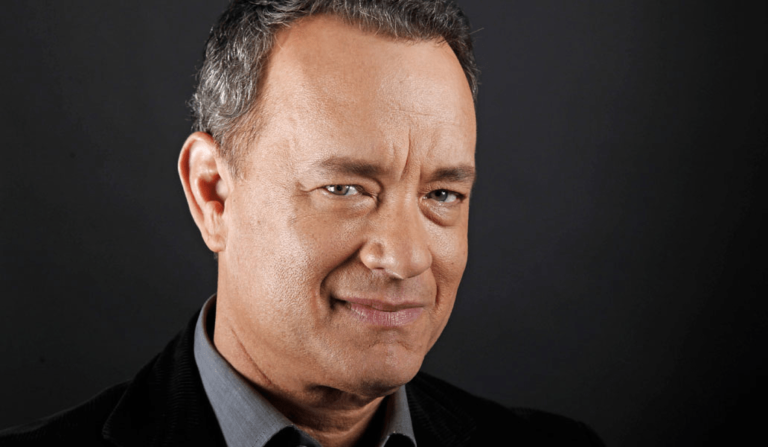
This weekend on Episode 353 we’ll be diving into the latest film to star Tom Hanks in A Beautiful Day in the Neighborhood. As we all know, Hanks is no stranger to play characters based on real-life people, and Beautiful Day is no different. This time he’s playing the iconic Fred Rogers in what could be his most memorable role in recent years. We’ll, of course, discuss this weekend on the show, but in the meantime it’s the inspiration for our latest poll. Simply asking; what is your favorite Tom Hanks performance?
This week on the InSession Film Podcast, Adnan Virk from Cinephile joins us as we discuss Martin Scorsese’s latest crime epic in The Irishman, and James Mangold’s racing drama Ford v Ferrari! JD also offers up some brief thoughts on The Aeronauts and Adopt a Highway, while Brendan reviews The Nightingale. And finally, we both give some brief thoughts on Bi Gan’s Long Day’s Journey into Night.
Big thanks to Adnan for joining us this week! We’ve been planning this for over a year, so it’s crazy to us that it’s finally here, and we are super grateful to Adnan for sticking with us over that time. He was a great guest and we loved having him on the show. As you can imagine with all of the film listed above, this week’s episode went a little long, so we ask for some forgiveness up front. But we are confident you’ll enjoy the conversation, at least we hope so!
On that note, check out this week’s show and let us know what you think in the comment section. Thanks for listening and for supporting the InSession Film Podcast!
– Movie Review: The Irishman (4:52) Director: Martin Scorsese Writer: Charles Brandt (book), Steven Zaillian (screenplay) Stars: Robert De Niro, Al Pacino, Joe Pesci, Anna Paquin
– Notes / Long Day’s Journey into Night / The Nightingale / Adopt a Highway / The Aeronauts (1:03:29)
In addition to our reviews of The Irishman and Ford v Ferrari, as noted above, we had a few other films we wanted to discuss briefly as well. Both of us were able to see Bi Gan’s surreal noir Long Day’s Journey into Night, and while difficult to discuss, we had fun trying to figure it out. Brendan also caught up with Jennifer Kent’s The Nightingale, and JD offered up a few sentiments on Adopt a Highway and The Aeronauts.
– Movie Review: Ford v Ferrari (4:52) Director: James Mangold Writer: Jez Butterworth, John-Henry Butterworth, Jason Keller Stars: Matt Damon, Christian Bale, Noah Jupe, Tracy Letts
Main Review: A Beautiful Day in the Neighborhood
Top 3: N/A
Ingmar Bergman Movie Series: Autumn Sonata
[divider]
Help Support The InSession Film Podcast
If you want to help support us, there are several ways you can help us and we’d absolutely appreciate it. Every penny goes directly back into supporting the show and we are truly honored and grateful. Thanks for your support and for listening to the InSession Film Podcast!
Director: Wash Westmoreland Writer: Wash Westmoreland; Susanna Jones (novel) Stars: Alicia Vikander, Riley Keough, Naoki Kobayashi, Jack Huston, Kiki Sukezane, Ken Yamamura, Kazuhiro Muroyama, Akiko Iwase
Synopsis: An enigmatic translator with a dark past is brought in for questioning after an ex-pat friend, who came between her and her photographer boyfriend, ends up missing and presumed dead.
[/info]
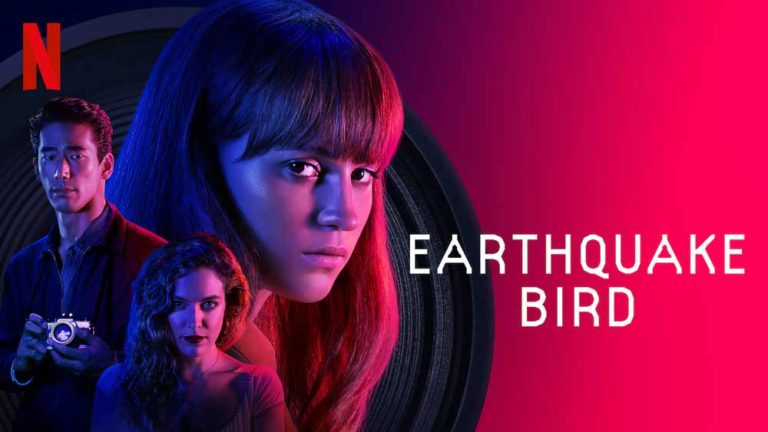
Going off of Netflix’s descriptions alone, the level of danger in the adaptation of Susanna Jones novel seems supernaturally high. But don’t worry if you’re not in the mood for horror; the subject matter here is strictly on a love triangle in 1989 Japan that ends up with a girl gone (the pulsing score from Atticus and Leopold Ross & Claudia Sarne will remind you) and not a yūrei out for souls. Still, there remains a dilemma: The danger suggested? It’s mostly absent, the result of a direction that lets passivity prevails. And for something classifiable as a psychosexual whodunnit, this is the gust that tailspins the bird.
There are a few things that Wash Westmoreland does right. On the character front, the writer-director understands what is the factor that makes his three main players an irresistible mystery to each other and all others — as an expat and working translator, Lucy Fly (Alicia Vikander) is able to access any conversation; as a newcomer, Lily Bridges (Riley Keough, fleeting but impactful) can play up her gaijin traits to reach her goals; as a local, Teiji (Naoki Kobayashi, fittingly sultry) knows how to have the subjects caught in his lens reveal everything willingly — and play them up at the right moments. On the drama front — with all that in mind — Lucy, Lily and Teiji are each rendered as a weapon you can’t see coming; it almost becomes a game to pinpoint where they have fused a dose of deception into a particular interaction. That said, Westmoreland keeps an exclusive access to these interpretations, allowing us to deem the overall mood as sedated instead of somber. There needn’t be (and Westmoreland is wise to do this) any sort of in-your-face fireworks to realize the narrative’s psychological tendrils, but if the job to do so is dependent on the performers — all of which are game — there should have been something from them that will jolt, surprise, upset, subvert, and the like. A slightly out-of-place movement. A subtle glance. A micro-reaction that makes their souls vulnerable. Anything to suggest depth, something else but the current “what you see is what you get”-ness, which at times would reach its peak via a summary line from either Lucy’s also-expat friend Bob (Jack Huston in a throwaway role) or the older detective Kameyama (Kazuhiro Muroyama) who’s questioning her about Lily’s disappearance.
Since there is a failure to fully join the players in the love triangle, the only guaranteed source of enjoyment left is to step back and observe the shape. Visually, Earthquake Bird is a hoot, as expected when Ridley Scott is listed as a producer or because photography is a central plot element. Be it a shot the tourism board would love to obtain or something in tighter quarters, Chung Chung-hoon’s lensing greatly enlivens the space with angles or colors showing both Japan’s inimitable gorgeousness and how that can be a means to shield impulses best left unspoken. The sights along with the performances (especially Vikander’s, which is a canny rendition of someone with a hunger for recognition) are why the film stays intriguing despite nothing is happening when we’re constantly yearning for something or when something is happening but it’s too muted to discern.
Makes it all the more ironic for a film bearing a title about unstable grounds and the noises that follow. If the frames are converted into data for a seismograph to read, be ready to see mainly flat lines.
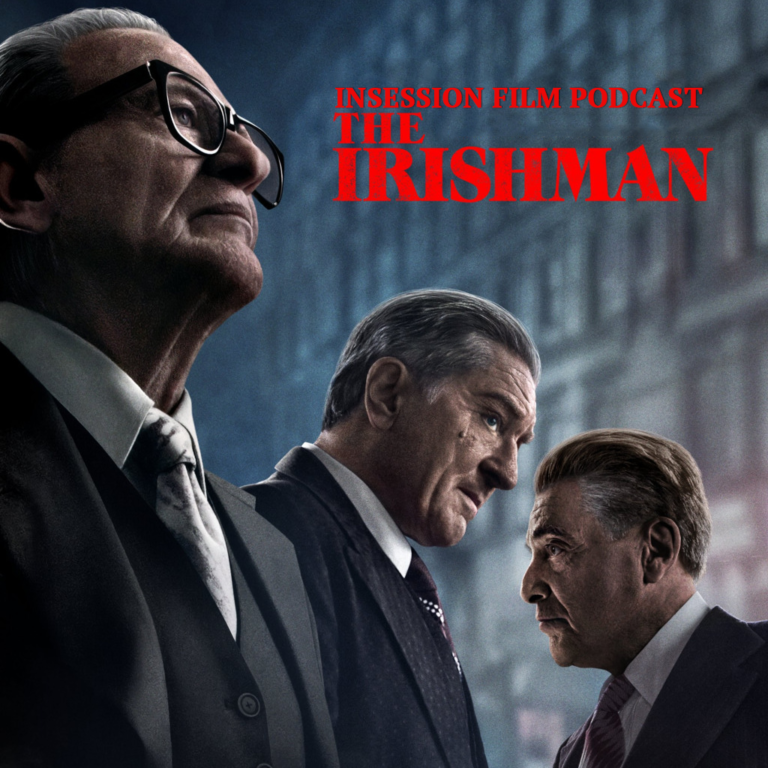
Director: Martin Scorsese Writer: Charles Brandt (book), Steven Zaillian (screenplay) Stars: Robert De Niro, Al Pacino, Joe Pesci, Anna Paquin
Synopsis: A mob hitman recalls his possible involvement with the slaying of Jimmy Hoffa.
[/info]
You’ll often hear the refrain that some movies simply must be seen in a theater. I tend to agree with this sentiment though, after watching The Irishman in a theater, I think there a differing reasons as to why that sentiment may be true.
My wife and I drove almost two hours to see Martin Scorsese’s new film at a Landmark Theater in Chicago. We walked in just before the previews began to play, and the theater was packed. Minutes later, we saw the Netflix logo flash across the screen. That was a first for me, but what came next was an even better “first” – my first time seeing a Martin Scorsese film in a theater during its original theatrical run.
Scorsese is known as one of the great directors, and for good reason. His incredible career has given us classic after classic, and he has been arguably the greatest ambassador for cinema, film restoration, and the theatrical experience the world over. With The Irishman, he returns to a genre for which he is particularly well-known – the gangster film.
Scorsese grew up around gangsters in New York’s Little Italy neighborhood. Those memories had great effect on films like Goodfellas and Casino. While his youthful experiences surely find their way into this film as well, The Irishman is a creation of the elder Scorsese – a fact that only becomes clearer as the film progresses.
If I’ve taken my time with the intro to this review, that’s because Scorsese’s film takes its time to set up context, theme, and feeling. This is a 3 hour and 28 minute film, and Scorsese uses every second to his advantage.
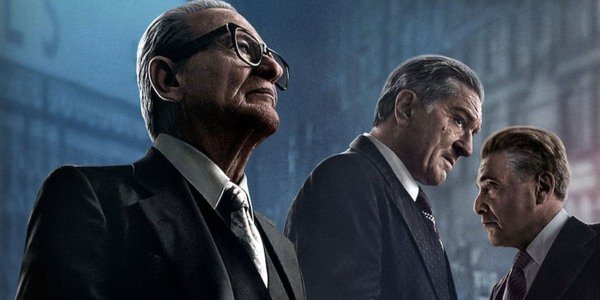
The film follows the life of Frank Sheeran (Robert DeNiro), who was a mob hitman. However, the film begins in a place you wouldn’t normally associate with a mob hitman – a nursing home. Most mob hitmen don’t make it to a nursing home, and therein lies a nugget of one of the themes Scorsese focuses on throughout the film. Sheeran recalls his life of crime, and those memories take us back into the story with him.
Sheeran begins as a lowly truck driver, but he quickly finds his way into the employ of Russell Bufalino (Joe Pesci), one of the most powerful mob bosses of his day. As an aside, for this movie fan seeing Joe Pesci back on the big screen was a unique joy. He is fantastic in this film, as is the entire cast.
But the film goes quite a while without introducing us to its most famous character. That’s because Sheeran has to prove himself as being a man who will follow through on what is asked of him before he is called upon to be the personal bodyguard for the most powerful union leader who ever lived – Jimmy Hoffa (Al Pacino).
Here I must stop and praise this cast. The headline is that you get to see DeNiro, Pacino, Pesci, and Harvey Keitel (who plays another mob boss, Angelo Bruno) together in the same film. However, the supporting cast of Jesse Plemons, Anna Paquin, Bobby Cannavale, and Ray Ramano all acquit themselves very nicely. But this film is mainly carried by its triumvirate of acting royalty. Throughout much of the film, it is DeNiro, Pacino, and Pesci who bring this story to life. It’s an incredible sight to see.
Yes, this story has some of the same genre storytelling tropes of other gangster films – starting from the bottom, a meteoric rise to power, then the aftermath of that power. But where this film differs from the gangster films that came before it is that it comes to that story from a place of old-age reflection and a ponderous nature. To achieve this, Scorsese utilizes key actors in old age themselves (Pesci came out of retirement to film it). However, the film also requires flashback scenes to various moments in each man’s life. This is where Netflix came in.
Scorsese knew that he wanted to make this film a certain way. That meant using older actors and having them digitally de-aged for the flashback scenes rather than simply having younger actors play those scenes. This process is extremely expensive, and Netflix was the only studio willing to pay for it.
On the de-aging technique, I was quite skeptical going in. I kept thinking about how, had this technology been available in the 70s, we wouldn’t have gotten DeNiro in his unforgettable role as young Vito in The Godfather Part II. I still wonder what young actors might have been able to take on the roles in this film, but I must also give credit where it is due. Scorsese and his team did an incredible job with the de-aging. I was expecting it to be awkward, but once you settle into the way the film uses this technique, it just becomes part of the film.
On the technical side, the person who deserves the most credit, in my opinion, is Thelma Schoonmaker – the editor with whom Scorsese has worked for years. Though the film’s runtime is long, it never feels that way. Moments that need to breathe are allowed to breathe, which is a refreshing change of pace from so many films that choose to assault the senses with quick cuts. If the story calls for that technique, so be it. But this film certainly calls for a more thoughtful approach, and Schoonmaker knocks it out of the park.
I don’t think it constitutes a spoiler to say that Jimmy Hoffa doesn’t make it through the whole film. His death is one of the most notorious unsolved cases in American history. I Heard You Paint Houses – the book by Charles Brandt from which this film is adapted – gives its own version of how Jimmy Hoffa died. It is that notion of death that hangs over this entire film.
But for the scenes in which Hoffa is alive, we get a part that seems to have been made specifically for Pacino. Here he gets a larger-than-life character to embody. Some have accused Pacino of being an over-actor in his later years, but I completely disagree. His acting style has its own rhythm, and it fits perfectly here.
Pesci brings the context of the combustible characters he’s played in other Scorsese films to this role as well. It always seems as if there’s something simmering just below the surface whenever Bufalino is on screen.
And then there’s DeNiro – arguably the greatest actor of his generation. He does more with a silent close-up than most can do with an entire monologue. The film uses this skill of his to great effect. There are multiple moments where we just watch Sheeran’s face as he considers the situation with which he’s presented.
The final note I’ll make about this cast is that, amid all these legendary acting icons, Anna Paquin more than measures up. Some have bemoaned her seeming lack of dialogue in the film. I always get frustrated when these types of discussions pop up. It’s an affront to great actors to say that they can’t perform without dialogue. Great actors are able to convey so much through just a simple look. Paquin is a great actress, and she has some of the best reaction shots in the film. She plays Sheeran’s daughter, Peggy, and she is – in many ways – our eyes. No, she doesn’t have much dialogue in the film, but that doesn’t keep her from being a vital presence amid all these titans of the screen. It is Peggy who realizes the lengths her father will go, and it is Peggy who surmises when he has gone farther than even he imagined possible.
Scorsese’s eye is trained firmly inward here. In many ways, The Irishman is a comment on Scorsese’s own work within the gangster genre. Whereas Goodfellas was made with the flash and flair of a younger man, this film is steeped in the considerations of old age. The film is told through flashback, but it is also consumed with legacy and the specter of death. Repeatedly, when side characters appear on screen, text below tells of the grisly manner of their future death.
In general, the film is quite self-referential to Scorsese’s earlier works. But The Irishman avoids the mistakes that Todd Phillips’ Joker made. This is not a blatant retread of films like Taxi Driver and The Gangs of New York. The film has shots or sequences that mirror those films, but it brings something new to the table from a thematic or technical standpoint.
One of my favorite shots in the film comes just before the film’s pivotal interaction. A few characters are traveling together in a car and the camera cuts to a shot of a telephone pole. As the wooden structure takes up the whole screen, its arm gives it the shape of a cross. Scorsese has never been afraid of using religious themes and iconography in his films. Here it has thematic significance when the scene is compared to the events leading up to the crucifixion of Christ.
Of course, The Irishman is a Netflix film, and it will soon be available for streaming in living rooms across the country. But I do think that the few who are able to see it on the big screen will appreciate the experience in a special way. There are some films – take Lawrence of Arabia, for instance – whose sheer images need the larger space for one to be able to grasp them. Surely The Irishman looks great on the large screen, but that wasn’t the main reason I appreciated seeing it in a theater. For me, it was the crowd around me experiencing this movie history right along with me that made it such a memorable event. Hearing what beats make people laugh and what makes them gasp is something you simply can’t replicate at home.
As the film comes to its end, Sheeran meets someone who doesn’t even know who Jimmy Hoffa was. We see in his face the worry that all his work may not have been worth it. These thematic, emotional moments take place largely in silence. That an epic film with the length of The Irishman chooses to end in such a poignant way is a testament to the talent on display here. You may never see such a group together all in one film for a long time. Whether you see this film in a theater or at home, this is a film that demands to be seen.