Home Blog Page 230

Preview: InSession Film Awards / Top 10 Movies of 2019

We are less than a week away from our 7th annual InSession Film Awards show as we discuss the very best that film had to offer in 2019. This is an exciting time of year and our awards show is one our favorite things we get to do. As we’ve done in previous years, for Part 1, we will have a list of categories where we each nominate five candidates and then present our winner for that category. For Part 2 of the awards ceremonies, we will reveal our Top 10 movies of 2019.

So, to help you prepare for the show, we’ve laid out below all of the categories we’ll be discussing this weekend. To play along, select five nominees and a winner for each category. Then stay tuned for Episode 360 as we discuss each category and we’ll see how your selections compare with ours. Click on the link below if you would like a print out version.

InSession Film Awards 2019 – Fill in Sheet

Remember, treat each category as your own. Select your own nominees and winner based on your own experience with film this last year. If you’d like, email, Facebook or tweet us your ballot. We would love to see how your awards sheet turns out!

InSession Film Awards Categories:

Individual Special Awards

– For this category, make up your own special awards that you want to give away. This can be anything from film in 2019 that isn’t related to any category below. (I.E. Best Production Design, Best Use of Inanimate Object, Best Animal Performance, etc)

Best Movie Discovery

Best Surprise Actor/Actress

Best Surprise Movie

Best Overlooked Movie

Best Opening/Closing Credits Sequence or Scene

Best Use of Soundtrack Music

– Any song (non-score) used in the film, either original or pre-existing. Opening and Closing credits count.

Best Original Score

Best Animated Movie

Best Foreign Language Movie

Best Documentary

Best Cinematography

Best Adapted Screenplay

Best Original Screenplay

Best Director

Best Supporting Actress

Best Supporting Actor

Best Actress

Best Actor

Best Picture

– Hear our Top 10 films of 2019 on Part 2 of Episode 360.

Movie Review: ‘A Hidden Life’ is a little rough around the edges despite its visual beauty


Director: Terrence Malick
Writer: Terrence Malick
Stars: August Diehl, Valerie Pachner, Maria Simon

Synopsis: The Austrian Franz Jägerstätter, a conscientious objector, refuses to fight for the Nazis in World War II.

[/info]

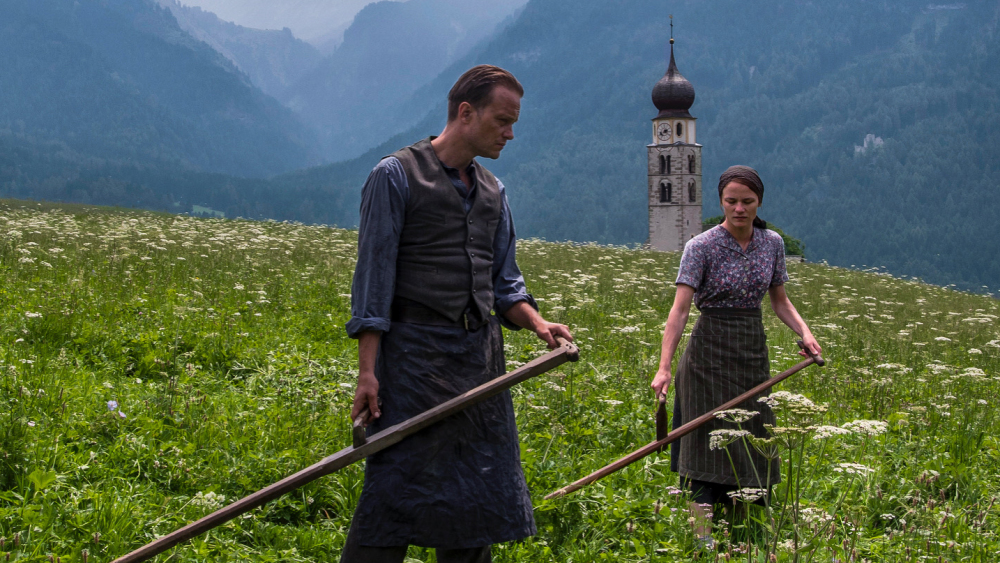
Terrence Malick has returned. There was a time when that phrase was a lot more significant. Not because the relevance or quality of Malick’s films have dropped per se, but because of how frequently he now releases his projects of void-like notions. Since his acclaimed outing of The Tree of Life, it hasn’t been a strange occurrence to see a new outing from him every 2-3 years. And while A Hidden Life is plausibly his most devoted work of art since the former, I don’t think it assumes the role of this grand payoff of artistic integrity that others might perceive it to carry.

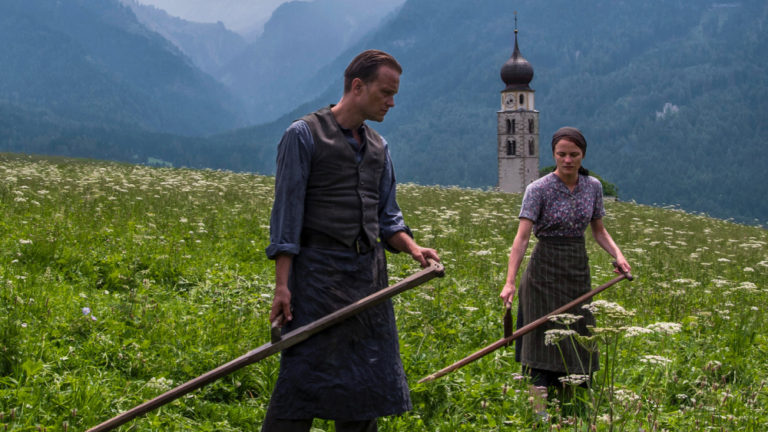
There’s no condemning Malick’s eye for imagery. We’ve taken note of this in his previous projects and even so with the most recent string of impromptu contemporary-set films. There are flooring instances of countryside scenery throughout the film. DP Jörg Widmer (who has never worked with Malick prior fascinatingly enough) is an absolute marvel. The elegance of using natural lighting against the depicted Austrian landscape is a challenge in itself. Yet Widmer amply construes every ounce of frame through the entrancing picture-esque terrain that in some ways resembles that of desktop wallpaper (which is more of a compliment than anything). It’s all positioned at the center of this conflict by displaying beauty even at the stigma of affliction, albeit intermittently.

While complaints are evident about the somewhat swift and unorthodox editing style, I think it sits well as an underlying companion for the film. The movie, moreso the first hour, entails a lot of exposition and implementation of the main relationship at hand (as expected) through the lens of these very compiled factions of clips. Comparing it to something episodic has become an over-hashed trope of detail for recent films, but this principle of editing feels more like an exertion of creative power rather than a gimmick – especially since it was Malick who edited it himself. It aides vastly in keeping the audience to the fullest depth of intrigue even with its slow-burning culmination of action.

I reward the film’s diligence and centerpiece of focus in its runtime, as it really does expand itself across the entire 175 minute span. It stays committed through this wobbly way of extrapolating sympathy from the viewer. These sequences of greenery and wildlife that instill you into a state of home, which then eventually switches to a brief dialogue/voiceover of the characters justification or explanation of their actions. It feels overtly acquired yet not earned. It’s actually what induced my loss of early interest that I had for the film. Diehl and Pachner both give very humane performances, despite them being directly subdued under the conscience of the movies themes of decadence that can be bombarding at times. The two of them are both equally integral for the movie’s subtext of conflict and the core testament at heart. Which all in all, is actually no small feat considering this physicality the film has morphed into it.

There’s a lot of interesting sentiments about one’s own belief system and the triviality of behavior relating to the film’s setting, but it’s never in a semblance of cohesion. And even when it rarely is, it’s not enough to galvanize the viewer back in to it’s narrative. Once it’s all said and done, there’s a very drab bookend kind of closure. It feels relatively resolute just due to how grueling the emotional buildup to it is, but universally I just don’t think it’s thorough enough in terms of resonance. If the film had the ability to grip me all throughout it’s exploration of Jägerstätter’s resistance, then it could’ve worked well on its own.

I certainly wish I could’ve taken more from A Hidden Life, especially since his recent projects have been promising despite how little in artistic merit many have called them out for. What all of those had however, was this lingering spirit to them. The elegance of Malick’s presentation of commonality is what was so attractive. They were bombastic and exaggerated, and A Hidden’s Life’s conflict is delineated in such a monumental way. But it’s vacant of a sensibility to spark whoever may be watching it. I’m positive there’s a devout group of Malick fans out there – and even just specific audiences for that matter that are down for the ride of this one.

Overall Grade: C+

[divider]

Hear our podcast review on Episode 359:

[divider]

List: Top 5 Scenes of 2019

This week on Episode 359 of the InSession Film Podcast, we discussed the best movie scenes of 2019. Of all the year end lists we do, aside from our Top 10 of the year, this one is always the most difficult to conjure. But it’s also the most rewarding in many ways as well, as these are the moments that moved us the most, they were the most thought-provoking and will come to define 2019 in film. There are countless individual scenes that could qualify for this list, especially given how deep and consistent the year was overall, but that’s what makes this list exciting in the end. Given that there are so many to choose from, the scenes that do make our list carry a lot of weight with us. That said, here are our lists:

(Note: Please keep in mind that we each had different criteria for our selections)

JD

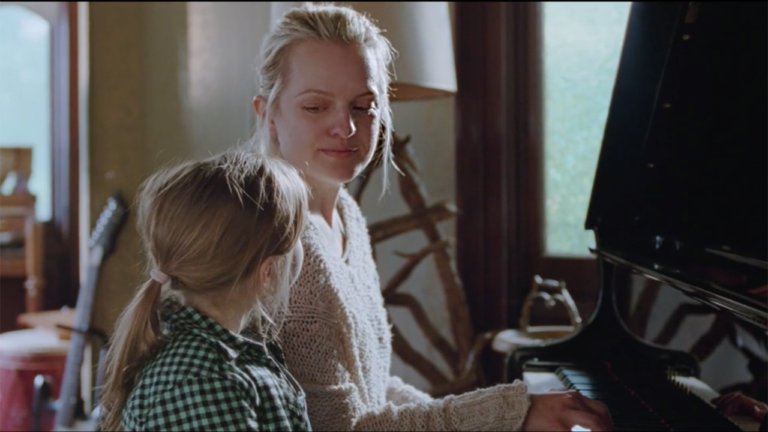
1) Piano Scene – Her Smell
2) Monte’s Play – The Last Black Man in San Francisco
3) Charlie Reads Nicole’s Letter / Coda – Marriage Story
4) Billi’s Catharsis – The Farewell
5) Kitchen Scene – Wild Rose

Jay

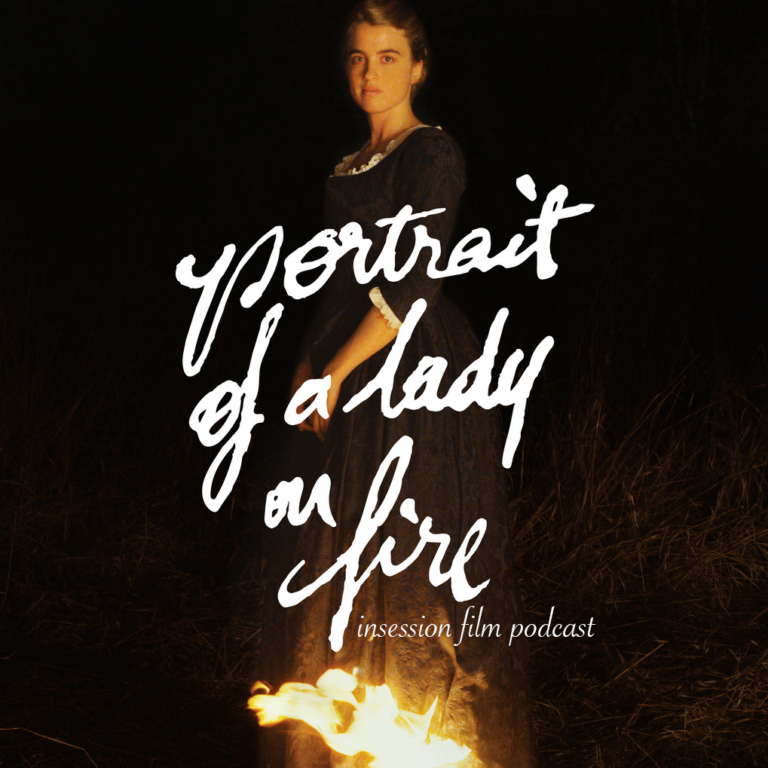
1) Orchestra Ending – Portrait of a Lady on Fire
2) Spahn Ranch – Once Upon a Time in Hollywood
3) The Piano Man Scene – Under the Silver Lake
4) The Reunion of Salvador and Federico – Pain & Glory
5) Howard Sells the Gem – Uncut Gems

Honorable Mentions (Combined)

Ending Reveals – Us
Red’s Monologue – Us
Red vs Adelaide – Us
Fun House – Us
Opening Fall – Ad Astra
Calling Dad on Mars – Ad Astra
Moon Pirates – Ad Astra
Space Monkeys – Ad Astra
Final Confrontation – Ad Astra
Jo / Laurie’s Fight – Little Women
Amy’s Business Talk – Little Women
Jo Reveals Loneliness – Little Women
Mr. Lawrence on Stairs – Little Women
Hospital Report – The Farewell
Glasgow Concert – Wild Rose
Meeting Nora – Marriage Story
Dualing Songs – Marriage Story
Opening Scene – Marriage Story
Painter Scene – A Hidden Life
Girls Montage – A Hidden Life
Thomas Wake’s Monologue – The Lighthouse
Dancing / Drunk Montage – The Lighthouse
Getting Into Lighthouse – The Lighthouse
House Escape Sequence – Parasite
The Kick – Parasite
Ending – Parasite
Dinner Celebration – The Irishman
Deciding on the Hit – The Irishman
Peggy – The Irishman
Ending Scene – The Irishman
Tony Pro Meeting in Shorts – em>The Irishman
Pretending to be Jojo’s Father – Jojo Rabbit
Window Sill Discussion – Jojo Rabbit
Robert Reaching His Boiling Point – Dark Waters
Usher Sequence – Hustlers
Bus Scene (Monte Learns of Friend’s Fate) – The Last Black Man in San Francisco
Bus Scene (Girls Talking About San Francisco) – The Last Black Man in San Francisco
Flowers in Hair – The Last Black Man in San Francisco
Bathroom Scene – Joker
Party Argument – Booksmart
Phone Call with Mom and Dad – Honey Boy
Scene With Movie Dad – Honey Boy
Opening Scene – Honey Boy
Bon Fire – Portrait of a Lady on Fire
Debating Book – Portrait of a Lady on Fire
Piano Scene – Portrait of a Lady on Fire
Lunch Silence – A Beautiful Day in the Neighborhood
Manson Attack – Once Upon a Time in Hollywood
Rick Acting with Little Girl – Once Upon a Time in Hollywood
Rick in His Trailer – Once Upon a Time in Hollywood
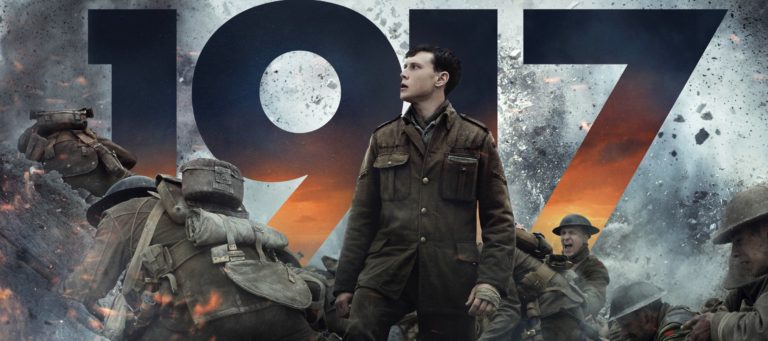
Battlefield Run – 1917
Donut Speech – Knives Out
Ending – Knives Out
Racing Scenes – Ford v Ferrari
Taking Mr. Ford for a Ride – Ford v Ferrari
Final Scene – Uncut Gems
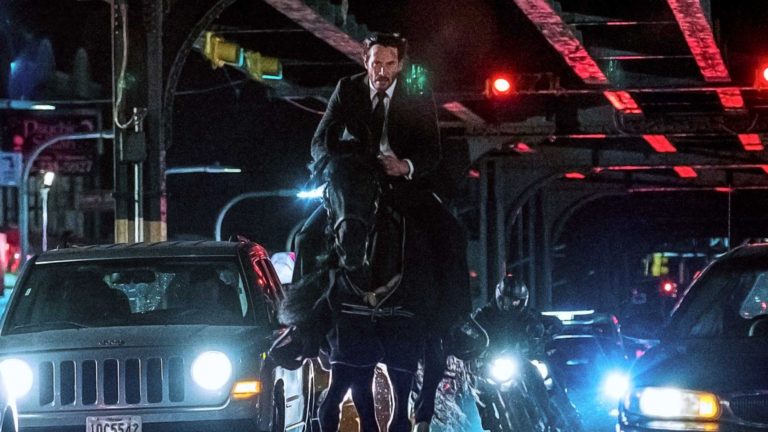
Dog Sequence – John Wick: Parabellum
Knife Fight – John Wick: Parabellum
Ending Sequence – High Life
Father / Daughter Bonding – High Life
Sex Box – High Life
Garden Death – High Life
Ending Scene – Pain & Glory
Moon Landing – Apollo 11
Newborn Baby – For Sama
Flicker Sequence – The Beach Bum
Ending – The Beach Bum
Reaction to Chewbacca on Ship – The Rise of Skywalker
The Handoff – The Rise of Skywalker
Ending – The Rise of Skywalker
Prison Table Scene with Daughter – The Mustang
Bear Sequence – Arctic
Avengers Assemble – Avengers: Endgame
Captain America Picks Up Thor’s Hammer – Avengers: Endgame
I am Iron Man – Avengers: Endgame
Hotel Scene – Ash is Purest White
Inciting Action Sequence – Ash is Purest White
Wrestling Match – The Peanut Butter Falcon
Opening Scene – High Flying Bird
Garbage On Floor Gag – Velvet Buzzsaw

Hopefully you guys enjoyed our lists and if you agree or disagree with us, let us know in the comment section below. There are so many other scenes that we wanted to mentioned, but let alone others that were more on your radar. That is to say, your list could look very different than ours given the amount of great scenes we saw in 2019. That being said, what would be your Top 5? Leave a comment in the comment section or email us at [email protected].

For the entire podcast, click here or listen below.

For more lists done by the InSession Film crew and other guests, be sure see our Top 3 Movie Lists page.

Podcast: A Hidden Life / Top 5 Scenes of 2019 – Episode 359

This week’s episode is brought to you by Patreon and our awesome listener’s like you. Sign up today and get some awesome rewards!

This week on the InSession Film Podcast, Jay fills in for Brendan as we discuss A Hidden Life and our Top 5 Scenes of 2019! JD also gives his thoughts on 1917, Portrait of a Lady on Fire, I Lost My Body and The Two Popes.

This week’s show is a little bittersweet in the sense that it’s the last show of our 2019 campaign. It was a great year for film if you ask us and were sad to see it end. However, next week is our Awards Show and Top 10, so we are excited to celebrate its greatness and what made it so special. We end 2019 on an a really high note though with Terrence Malick’s A Hidden Life, a film we really enjoyed discussing. Our best scenes conversation was equally as fun and hopefully it evokes further why 2019 will be remembered.

On that note, check out this week’s show and let us know what you think in the comment section. Thanks for listening and for supporting the InSession Film Podcast!

– Movie Review: A Hidden Life (5:40)
Director: Terrence Malick
Writer: Terrence Malick
Stars: August Diehl, Valerie Pachner, Maria Simon

– Notes / 1917 / Portrait of a Lady on Fire / I Lost My Body / The Two Popes (46:09)
It was a big week for catch up reviews. As we noted last week on the show, JD was sick and missed out on the review of Sam Mendes’ 1917, so we was eager to give his thoughts on this episode. He also gives his review for the beautiful Portrait of a Lady on Fire, the Netflix animated film I Lost My Body and the Golden Globe nominee The Two Popes. So, an extensive break segment this week, but hopefully an entertaining one.

[divider]

RELATED: Listen to Episode 355 of the InSession Film Podcast where we discussed Marriage Story!

[divider]

Top 5 Scenes of 2019 (1:17:42)
Of all the year end lists we do, aside from our Top 10 of the year, this one is always the most difficult to conjure. But it’s also the most rewarding in many ways as well, as these are the moments that moved us the most, they were the most thought-provoking and will come to define 2019 in film. There are countless individual scenes that could qualify for this list, especially given how deep and consistent the year was overall, but that’s what makes this list exciting in the end. Given that there are so many to choose from, the scenes that do make our list carry a lot of weight with us. That said, what would be your Top 5?

Top 5 Sponsor: First Time Watchers Podcast

– Music
A Hidden Life – James Newton Howard
There Will Be No Mysteries – James Newton Howard
Glasgow – Jessie Buckley
The Return of the Eagle – Atli Ãrvarsson

Subscribe to our Podcasts RSS
Subscribe to our Podcasts on iTunes
Listen on Spotify
Listen on iHeartRadio
Listen on Stitcher
InSession Film Podcast – Episode 359

[divider]

Next week on the show:

2019 InSession Film Awards

Top 10 Movies of 2019

[divider]

Help Support The InSession Film Podcast

If you want to help support us, there are several ways you can help us and we’d absolutely appreciate it. Every penny goes directly back into supporting the show and we are truly honored and grateful. Thanks for your support and for listening to the InSession Film Podcast!

VISIT OUR DONATE PAGE HERE

Movie Review: ‘Little Women’ is an inspired adaption of Louisa May Alcott’s classic novel


Director: Greta Gerwig
Writer: Greta Gerwig, based on the novel by Louisa May Alcott
Stars: Saoirse Ronan, Emma Watson, Florence Pugh, Eliza Scanlen, Laura Dern, Timothée Chalamet

Synopsis: Jo March reflects back and forth on her life, telling the beloved story of the March sisters – four young women each determined to live life on their own terms.

[/info]

There have been seven big screen adaptations of Louisa May Acott’s Little Women, the first being released over a century ago in 1917, (it’s worth adding that this adaptation has sadly been lost to time). Over the years we have seen adaptations starring the likes of Katherine Hepburn in 1933 and Winona Ryder in 1994, there’s just something about this story which has a timeless quality to it despite the novel being released in 1868.

However, with the sheer number of adaptations (the last one being in 2018), some were slightly apprehensive when it was announced that Lady Bird’s director and writer Greta Gerwig’s next film was to be her own adaptation of Little Women. How could Gerwig make this Victorian story appealing for a modern-day audience? And could she also stay faithful to the source material? Well, it’s safe to say that Gerwig proves that she is more than capable of adapting this revered piece of literature, and she does a fantastic job of updating the novel for contemporary cinema goers. Little Women is an absolute treat of a film and one that I urge people to seek out.

Little Women starts off in 1868, Jo March (Saoirse Ronan) is a teacher living in New York. She sells stories to an editor called Mr Dashwood (Tracy Letts), stories which she doesn’t put her name to and stories which she doesn’t particularly enjoy writing but does so as they make money. Jo receives news that she must return home to Massachusetts, due to her sister Beth’s (Eliza Scanlen) illness. The film’s narrative is interwoven with events that took place seven years before, where we see the sisters Jo, Beth, Meg (Emma Watson) and Amy (Florence Pugh) come of age. We watch them bicker and fight with each other, fall in love and more importantly create a profound bond together as sisters.

Jo’s main relationship is with Laurie (Timothée Chalamet) the grandson of their neighbor Mr. Laurence (Chris Cooper). The film explodes with Ronan and Chalamet chemistry, and they bounce off each other’s quirkiness in an effortlessly cool fashion. However, Jo has bigger ambitions than marriage unlike her sister Amy who has to soldier the burden of saving her family from financial ruin as her Aunt March (Meryl Streep) continuously reminds her. Jo often seems baffled by Amy’s and Meg’s decision to pursue marriage, begging Meg at one point to run away together so Meg can become an actress. In this beautiful, heartbreaking scene Meg quietly responds back with “Just because my dreams are different from yours doesn’t mean they’re not important.” A powerful message that we should all consider and take away from this film.

The film’s strengths lie with its performances and everyone shines here. Ronan captures the feistiness of Jo, a character who seems larger-than-life but also relatable in so many ways. Pugh manages to capture the inner turmoil of Amy, making her appear more sympathetic rather than simply bratty. The supporting cast are also brilliant with Laura Dern portraying the girls’ mother, a woman who is desperately trying to hold her family together while her husband is away fighting. There is such a heartbreaking tenderness to Dern performance, that we feel for her every time we witness her putting on a brave face for her daughters.

Gerwig’s direction is flawless, and she reestablishes the fact that she has an ear for dialogue. The best scenes are when the sisters are bickering, or are participating in a fast-paced conversation with each other. Gerwig directs these in the style of a Robert Altman picture, full of energy and liveliness. Gerwig doesn’t only have an ear for dialogue, but she has an eye for natural beauty and along with her cinematographer Yorick Le Saux, they manage to recreate an authentic looking New York and Massachuttes. Le Saux’s camera manages to capture the cosy intimacy inside the March home in such an effective manner that we feel like we are there curled up in front of the fire. Other highlights include Alexandre Desplat’s charming score, and Jacqueline Durran’s costume design (yes, each outfit captures the girl’s unique personalities wonderfully).

The only slight issue with the film is with Gerwig’s and editor Nick Houy’s decision to cross-cut between the two timelines, and when it first occurs it can be quite jarring. Some viewers may find this a distraction and struggle slightly to follow the storyline but once you get accustomed to the timelines then you can become swept up in all of the film’s beauty and splendor. Gerwig’s Little Women has all the hallmarks of becoming a beloved Christmas movie, and one that can be enjoyed by not only for little women, but for little men too.

Overall Grade: A

[divider]

Hear our podcast review on Episode 356:

[divider]

New Criterion Releases: January 2020

Welcome to the new decade! What hasn’t changed since they started in the 90s is the monthly release of new films as part of the collection. This time, we got a Spanish classic, two Sidney Lumet films, a Godard, and a new American screwball film to join the rest of the great 1930s. Here’s the rundown.

All About My Mother (1999)

Pedro Almodovar returns to the collection following the release of Women On The Verge Of A Nervous Breakdown and Tie Me Up! Tie Me Down! This time, it is one of his more tender films about a woman whose son is tragically killed and decides to track down the father, a trans woman he kept hidden from her son. Along the way in Barcelona, she reunites with an old friend and meets with other women with their own tragic lives. Everyone wears their heart on their sleeve and make them sympathetic whatever the circumstances, bringing the wit and heavy emotion that Almodovar always has in every film he has done. It is why not surprisingly he won his first Oscar for Best International Film.

Fail Safe (1964)

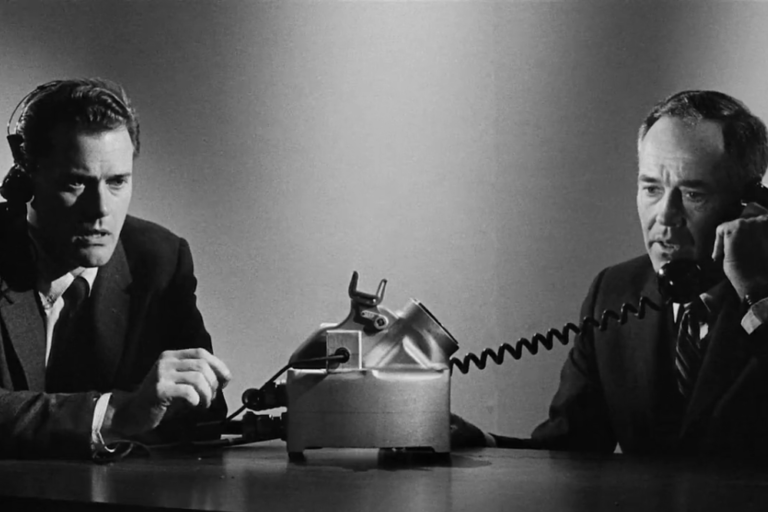
Released the same year Dr. Strangelove, Sidney Lumet’s Cold War thriller follows the scramble of the U.S. military trying to prevent a nuclear war after a mechanical failure sends one warhead heading towards Moscow. Henry Fonda is the confident, relaxed President as he scrambles to reach to his bomber crew going to Moscow and his team of advisers, including Walter Matteau as a scrupulous theorist. Both Fail-Safe and Dr. Strangelove was released by Columbia Pictures and the former failed at the box office because of the latter’s release months earlier. Later on, it would get its reevaluation as a great thriller of its time about the hair-trigger danger America and the Russians were in over a nuclear holocaust.

The Fugitive Kind (1960)

Another film by Sidney Lumet is a reissue by the Criterion from their original release nine years earlier. This one is a Southern Gothic tale written by Tennessee Williams starring Marlon Brando as an ex-con trying to go straight but finds himself in a love triangle with an unhappy married woman (Anna Magnani) and an open-minded young woman (Joanne Woodward). It did not do well upon its release, but remains a piece of underrated Tennesee Wiliams drama that taps into the same well that brought in the heartbreak of love and the pitfalls of small-town living surrounding an individual looking for a way out.

Le Petit Soldat (1963)

“The Little Soldier” as translated was filmed right after Breathless, but the politics of the Algerian War at the time, plus the depiction of torture, kept the film from being released until 1963. As his fourth film, Godard takes direct aim at the French government for their actions in an unpopular conflict, making it his most politically confrontational compared to his other works that had a direct political connection. This is also the first film he did with his muse of the Sixties, Anna Karina.

Holiday (1938)

Finally, there’s George Cukor’s romantic screwball comedy starring Cary Grant and Katherine Hepburn. Grant is a wealthy man engaged to a woman he doesn’t know well except that she’s also wealthy. Then, he meets his soon-to-be sister-in-law played by Hepburn, the rebellious free-thinker who starts to fall for him. It’s about class within a small section of a class, defying expectations made by the family, and knowing that money doesn’t bring true happiness. Two years later, Grant, Hepburn, and Cukor (along with screenwriter Donald Ogden Stewart) would collaborate on another masterpiece, The Philadelphia Story.

Follow me on Twitter: @brian_cine (Cine-A-Man)

Featured: 2020 Golden Globes Predictions

0

Tonight is the 2020 Golden Globes and it should be an interesting ceremony. Let it be known that I’m not necessarily an awards aficiondo like our own Ryan McQuade or our friends at Next Best Picture, but I pay attention enough and like to play along. So, with that said, here are my thoughts on who will win at this years Globes.

BEST MOTION PICTURE, DRAMA
1917
The Irishman
Joker
Marriage Story
The Two Popes

Prediction: I like The Irishman here. Martin Scorsese, that cast, another gangster film, and it’s great? Maybe Joker steals this, but I’m going with the former.

BEST MOTION PICTURE, MUSICAL OR COMEDY
Dolemite is My Name
Once Upon a Time in Hollywood
Rocketman
Jojo Rabbit
Knives Out

Prediction: Going with Once Upon a Time…In Hollywood as this year’s The Martian, aka the “comedy” winner that most people won’t see as a comedy. Even though humor in both films is kinda of important, at least it is in The Martian, but that’s another conversation for another time.

BEST DIRECTOR
Bong Joon Ho, Parasite
Sam Mendes, 1917
Todd Phillips, Joker
Martin Scorsese, The Irishman
Quentin Tarantino, Once Upon a Time in Hollywood

Prediction: Imagine the chaos on Film Twitter if Todd Phillips wins this award. I guess the mayhem would be somewhat appropriate to Joker, but sadly I don’t think we’ll get to live that reality. I think this is going to either Bong Joon Ho or Martin Scorsese. It would be really fun to see Joon Ho win, but I’m going with Scorsese.

BEST ACTOR, DRAMA
Christain Bale, Ford v Ferrari
Antonio Banderas, Pain & Glory
Adam Driver, Marriage Story
Joaquin Phoenix, Joker
Jonathan Pryce, The Two Popes

Prediction: This is where I think Joker gets its win. Going with Phoenix here.

BEST ACTRESS, DRAMA
Cynthia Erivo, Harriet
Scarlett Johansson, Marriage Story
Saoirse Ronan, Little Women
Charlize Theron, Bombshell
Renee Zellweger, Judy

Prediction: This may be more obvious to awards aficionados, but to me this seems slightly tougher than some of the other categories. Maybe this is Scarlett Johansson’s to lose and I’m way off base here, but I could see this going to any of the five really. That said, I’m going with Johansson in what could be a career-defining performance.

BEST ACTOR, MUSICAL OR COMEDY
Daniel Craig, Knives Out
Roman Griffin Davis, Jojo Rabbit
Leonardo DiCaprio, Once Upon a Time in Hollywood
Taron Egerton, Rocketman
Eddie Murphy, Dolemite Is My Name

Prediction: First of all, let me say that I love the nomination of Roman Griffin Davis. He’s so endearing and great in Jojo Rabbit. I also love that Dicaprio is getting a little love as I think he’s been forgotten this awards season, even though it’s a high caliber performance if you ask me. That said, I think this is either Eddie Murphy or Taron Egerton, and for some reason I kind of lean Egerton here.

BEST ACTRESS, MUSICAL OR COMEDY
Ana de Armas, Knives Out
Awkwafina, The Farewell
Cate Blanchett, Where’d You Go, Bernadette?
Beanie Feldstein, Booksmart
Emma Thompson, Late Night

Prediction: I like Awkwafina here. Ana de Armas has a great shot since Knives Out is nominated for Best Picture, but there’s something about the emotional heft of Awkwafina’s performance that I love that gets the edge here.

BEST SUPPORTING ACTOR
Tom Hanks, A Beautiful Day in the Neighborhood
Anthony Hopkins, The Two Popes
Al Pacino, The Irishman
Joe Pesci, The Irishman
Brad Pitt, Once Upon a Time in Hollywood

Prediction: This is another category where it could go in any direction, but I like Brad Pitt to win here. He had a phenomenal year and I think The Irishman will get rewarded in other categories.

BEST SUPPORTING ACTRESS
Kathy Bates, Richard Jewell
Annette Bening, The Report
Laura Dern, Marriage Story
Jennifer Lopez, Hustlers
Margot Robbie, Bombshell

Prediction: I really think Jennifer Lopez should win here. I love Laura Dern, she is the GOAT and gave a great performance in Marriage Story, but this should go to Lopez. In the end though, I think Dern does walk away with the win.

BEST SCREENPLAY
Marriage Story
Parasite
The Two Popes
Once Upon a Time in Hollywood
The Irishman

Prediction: This is kind of tough for me as I want Marriage Story or Parasite to win, but I’m dubious it’ll happen. I’m thinking this is where The Two Popes gets its recognition aside from its several nominations. It wouldn’t surprise me, though, if Tarantino wins as well. My prediction is The Two Popes, but hoping for Marriage Story.

BEST ANIMATED FILM
Frozen II
How to Train Your Dragon: The Hidden World
Missing Link
Toy Story 4
The Lion King

Prediction: Lol at The Lion King being nominated for Best Animated feature. I would love, love, love for How to Train Your Dragon: The Hidden World to pull the upset, but I’m going with Toy Story 4 to win here.

BEST FOREIGN LANGUAGE FILM
The Farewell
Les Misérables
Pain and Glory
Parasite
Portrait of a Lady on Fire

Prediction: I freaking love these nominations. Good lord, what a lineup. Can’t go wrong with any of them, but I’m going with Parasite to win.

BEST ORIGINAL SCORE
Little Women
Joker
Marriage Story
1917
Motherless Brooklyn

Prediction: I will be happy with a Joker win, but this is between Little Women, Marriage Story and 1917. I think Thomas Newman walks away with a win and some momentum leading up to the Oscars.

BEST ORIGINAL SONG
“Beautiful Ghosts,”Cats
“(I’m Gonna) Love Me Again,”Rocketman
“Into the Unknown,” Frozen II
“Spirit,” The Lion King
“Stand Up,”Harriet

Prediction: Boo the HPFA for snubbing “Glasgow” for this category. Give me “(I’m Gonna) Love Me Again,” for the win.


Movie Review: Anchored by Alfre Woodard, ‘Clemency’ offers no easy answers


Director: Chinonye Chukwu
Writer: Chinonye Chukwu
Stars: Alfre Woodard, Aldis Hodge, Wendell Pierce

Synopsis: Years of carrying out death row executions have taken a toll on prison warden Bernadine Williams. As she prepares to execute another inmate, Bernadine must confront the psychological and emotional demons her job creates, ultimately connecting her to the man she is sanctioned to kill.
[/info]

Most of us trudge through our day job, counting the minutes (or seconds) until we can clock out and live our real life. But some have more than a job, more than a career, but instead a calling. We may preach the separation of work life and home life, but how do you leave a calling behind at 5pm? In Clemency, directed by Chinonye Chukwu, that question is asked, but there are no easy answers. These callings can be rewarding for a time, but at what cost? What is left in its destructive wake?

The film follows a possible execution of Anthony Woods (Aldis Hodge), overseen by Warden Bernadine Williams (Alfre Woodard). Clemency is difficult to watch, as it opens with a nearly botched execution that sets in motion our lead’s rumination on her calling. As she says later in a powerful moment, “You can’t understand. That’s the problem. I don’t know how to fix it. I am alone, and nobody can fix it.”

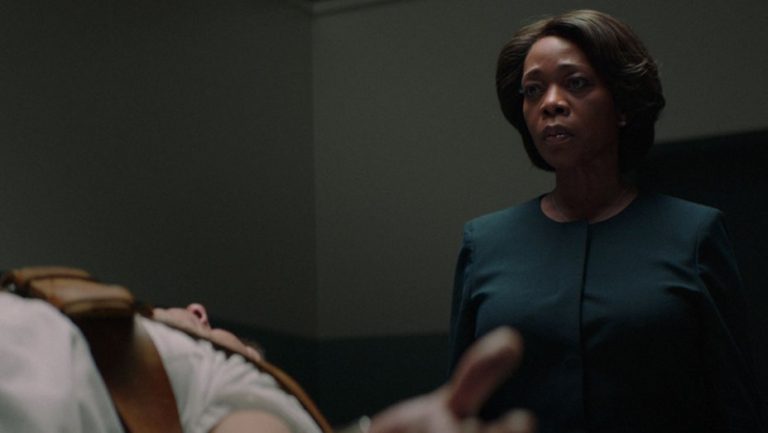
Let’s not mince words, this is Woodard’s best performance in a long and storied career. In a dramatic story like this, a showy performance may be expected, after all, a man’s life is on the line. But Woodard’s choices, to play each scene close to the vest, nearly regardless of setting, make for a much greater impact. Despite Bernadine’s best efforts, that contained sorrow, despair, and even rage finds ways to leak out.

In the face of such a reserved character, one who holds space for her inmates instead of lashing out with words or violence, it becomes necessary to follow her outside of the bars of her prison. In some moments, particularly those fueled by alcohol, she is an absolute delight and it is clear that she desperately desires a release that she will never truly allow herself. The career, the calling, trumps all of her needs. In others, she sees the world as an unfixable, untenable place, in which something is always needed of her. In expertly blocked and acted scenes with her husband, Jonathan (Wendell Pierce), we are allowed to see her pain, even if Bernadine will never get close enough for honest healing.

Aldis Hodge, whether onscreen with Woodard, or by himself, holds his own with a difficult role. Clemency challenges the audience by never giving us a clear picture of his past. This focuses our empathy in the here and now and shows us just how terrifying his lack of freedom can be. When our choices are stripped from us, what is truly left for us to do? Woodard asking him about his last meal and where he wants to be buried is soul crushing because these questions cease to matter, as does any amount of male pride. Hodge picks his moments and lets that emotion fly, sometimes in guttural, primal release.

One of the few areas to find fault with the film is that, if anything, it tries to do too much with its runtime. Obviously, most of the plot focuses on Bernadine and her mostly interior struggles. Additionally, we have not only Anthony’s solo struggle, but also a few scenes with his lawyer and his ex-girlfriend. These segments are fine, but they aren’t given enough time to breathe. His lawyer, Henry, played by Richard Schiff, who has made a career of playing angry liberals, does much the same here. It is by no means a poor performance, but feels both too much and not enough. He is given some emotional dialogue, but there is a desire for more background between these two, who have clearly become friends. Danielle Brooks, on the other hand, portraying Anthony’s ex-girlfriend Evette is an absolute powerhouse. This, sadly, is relegated to one scene, and although the reasons why are obvious, it still feels like a wasted opportunity.

But, of course, when you boil it all down, this is about Chukwu’s direction and Alfre Woodard’s face. Chukwu shows supreme confidence in not only the subtle movements of her camera but in her lead actor, as well. Nearly every important visual and emotional moment is focused for lengthy periods on Woodard and the film is the better for it. There is a supreme balance met between the character of Bernadine Williams showing nothing but strength to the people in her life and Alfre Woodard allowing the audience in to see the veneer cracking ever so slightly.

Clemency is technically about the death penalty, but it manages to not guide the audience to an answer. Bernadine is in an impossible position. Anthony is, likewise, trapped without choices. And truly, no one can help either one of them. The two characters are in such different positions, and yet, they both carry a heavy burden. Clemency is the kind of film we don’t get in the theaters very often anymore, and we should take advantage of it. Chukwu and Woodard together certainly do not tell an easily digestible story, but they do tell an absolutely necessary story of our humanity, pressed to its limits.

Overall Grade: B+

[divider]

Podcast: ‘Star Wars: The Rise of Skywalker’ SPOILERS – Patreon Bonus Content

Listen!

This week for our Patreon Bonus Content, Ryan and Jay get together to not only give their thoughts on Star Wars: The Rise of Skywalker, but they get into all the fun and gritty spoilers that come with it. It’s a long episode, longer than the film itself, so plenty of content to go around. Enjoy!

If you’re already a Patreon supporter, you can listen to this episode now on Patreon by clicking here. For those who are non-patrons, this episode will be available in a week. Stay tuned!

[divider]

HELP SUPPORT THE SHOW

To hear our bonus content episodes early, subscribe now on Patreon. In many cases, though, we offer our bonus content for free after a certain period of time and we do encourage (and very much appreciate) a small donation of $0.99 as a way to help support the show if signing up on Patreon isn’t for you. Click on the PayPal button below to donate and thanks so much for your support. You can also hear much of our Bonus Content via our mobile apps. See the information at the bottom of the post for more details.


One-Time Donation


[divider]

Mobile Apps!

Listen to all of our bonus content on our apps for just a one-time fee! Whether you have an iPhone, Android or Windows phone, our apps are available in many different ways that is convenient for you. With our mobile app, not only can you listen to all of our bonus content, but our main shows and our Extra Film podcasts as well. Click here for more info!

If you don’t want to purchase our bonus content, but still want to support us, there are other you can help us out. Click here for more info.

Podcast: Bombshell / Portrait of a Lady on Fire – Extra Film

This week on the InSession Film Podcast: Extra Film segment, Ryan and Jay discuss Bombshell and Portrait of a Lady on Fire.

Jay returns after recovering from his illness last week to talk about a pair of fascinating movies. The first is the surprisingly stylish story of Roger Ailes’ serial sexual harassment at Fox News, Bombshell. Jay Roach (the director of three Austin Powers movies and two iterations of Meet the Parents) seems like an odd fit for the film, but he has made a career transition to political films, recently. Bombshell features a stacked cast but has received fairly mixed reviews. Ryan and Jay seem to be on the same page, though!

Then, the guys cover Portrait of a Lady on Fire, Céline Sciamma’s late 18th century love story. It has been one of the most celebrated films of 2019, but it might be best known for the fact that France did not choose it as its submission for Best International Film at the Oscars. Do Ryan and Jay agree with the hype? Listen and find out!

On that note, have fun with this week’s Extra Film segment and let us know what you think in the comment section below. Thanks for listening!

– Movie Review: Bombshell (2:29)
Director: Jay Roach
Screenplay: Charles Randolph
Stars: Charlize Theron, Nicole Kidman, Margot Robbie, John Lithgow

– Movie Review: Portrait of a Lady on Fire (35:23)
Directors: Céline Sciamma
Screenplay: Céline Sciamma
Stars: Noémie Merlant, Adèle Haenel, Luàna Bajrami

– Music

Bad Guy – Billie Eilish
Summer Concerto (Violin Concerto Op.8 No.2, RV 315~ L’estate) in G minor – A. Vivaldi
The Return of the Eagle – Atli Örvarsson

We try to make this the best movie podcast we possibly can and we hope you enjoy them. Subscribe today on iTunes, Spotify or Stitcher, and please leave us a review on iTunes. You can also find us on Soundcloud, PlayerFM and TuneIn Radio as well. We really appreciate all your support of the InSession Film Podcast.

Subscribe to our Podcasts RSS
Subscribe to our Podcasts on iTunes
Listen on Spotify
Listen on Stitcher
Bombshell / Portrait of a Lady on Fire – Extra Film

[divider]

Mobile App

To hear this Extra Film episode and everything else we do, download our apps on the Amazon Market for Android and the Podcast Box app on IOS devices. The mobile app covers all of our main shows, bonus podcast’s and everything else relating to the InSession Film Podcast. Thanks for your wonderful support and for listening to our show. It means the world to us!

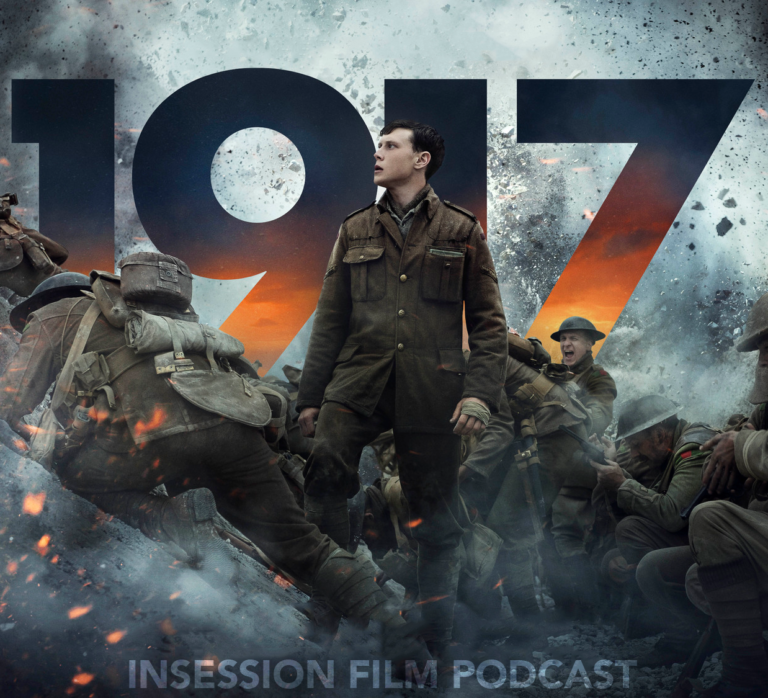
Movie Review: ‘1917’ flexes the tech at the heart’s slight expense


Director: Sam Mendes
Writers: Sam Mendes, Krysty Wilson-Cairns; Alfred Mendes (story from)
Stars: George MacKay, Dean-Charles Chapman, Claire Duburcq, Colin Firth, Benedict Cumberbatch, Mark Strong, Andrew Scott, Richard Madden

Synopsis: Two young British privates during the First World War are given an impossible mission: deliver a message deep in enemy territory that will stop 1,600 men, and one of the soldier’s brothers, from walking straight into a deadly trap.

[/info]

Small things are massively significant in 1917. Just a letter with an order, but it will decide whether 1,600 British soldiers will march head-first to their graves. Only two souls, Blake (Dean-Charles Chapman) and Schofield (George MacKay) — both lance corporals, are at the heart of the film, but they are also fitting stand-ins for all the hearts that were really there then. One tender brush of the breeze over a field later and the camera springs to life to begin the continuous take…

…that stops somewhere at the halfway mark. A black screen. While perfectly reflects the character’s mindset — unconscious — it is in every way you look at it a cheat. And for eyes trained in the ways of the eagle or by Birdman, it’s the most obvious one of them all.

By all means, feel sour — it was the technique that allows Sam Mendes’ work to stand apart from other cinematic trench mates after all. Also a valid reaction, though, is to keep hosting the thrill that you’ve encountered before the interruption. It’s actually easier to go for the latter since, seeing how 1917 has the same visual-intensive spirit as Mendes’ own Road to Perdition, the poetic nature of the frame is now intensified to a surreal degree, maximizing the film’s grip on the attention. Under a flare that Sir Roger Deakins has tasked to be a hasty midnight sun and music from Thomas Newman that now cues notes on the verge of bursting, the wakes of war look both horrific and bewitching; the structures that one must go through before the destination have been drained of life by firepower, yet the malformed dance their shadows would briefly perform suggest they have yet realized their demise. It’s a sequence that easily outshines those happened before, and even afterward, in the film. The extremity of the beauty here is both a good salve for the broken promise and a fine justification of the storytelling style that Mendes has settled on.

This stellar set-piece also legitimizes another observation: that the film is much, much more identifiable as a technical showcase. The writing from Krysty Wilson-Cairns and Mendes, whose grandfather Alfred’s “fragment” of a story provided the backbone for 1917, is compelling, the thing is it’s always made secondary to the commendable waltzing between the omnipresent camera and the seemingly straightforward blocking. Somewhat diluted, as a result, is the impact that Chapman and MacKay have fused into their effective performances as two youths who differ on what fruits soldiering will bear but united on the goodness of peace (Blake isn’t as communicative as Schofield on this front, but it’s there — his delivery of outbursts for the Boche isn’t as natural as him recalling how many kinds of cherry orchards there are from his time at home).

Also hampered is the emotional factor of the more-grueling-than-expected delivery mission, which is already limited when you know that among the enlisted are names like Colin Firth, Benedict Cumberbatch, Andrew Scott, Mark Strong and Richard Madden. Brief, their appearances are, but potent — in the sense that glamor is a pit this journey can’t navigate around. There is thus very little room for 1917 to avoid feeling like a walk through the museum.

Still, there are more rights than wrongs to be found here. 1917 is a technical challenge that was accomplished with assistance, but at least it’s accomplished. It’s a tribute to heroism with an abbreviated emotional outreach, yet it’s consistently impressive to look at and to sense the scale of. Be willing to overlook the trees and you will, like Blake and Schofield, see the forest. It’s worth doing it. Small things, massive significance.

Overall Grade: B+

[divider]

Featured: ‘Ad Astra’ – It’s Not About Space

0

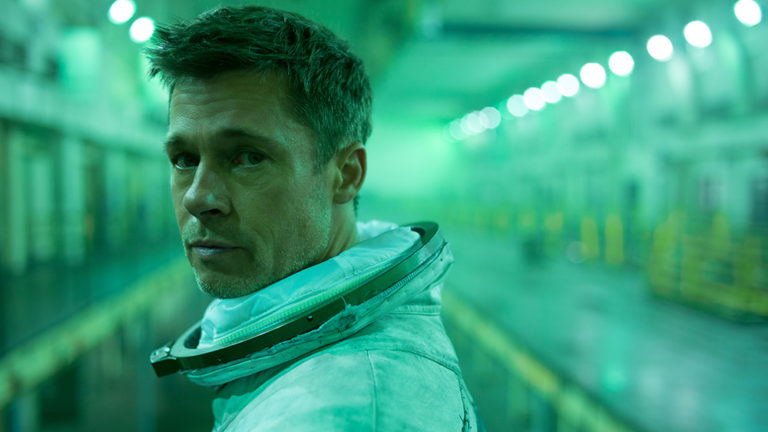
On the surface, James Gray’s Ad Astra appears to be just another spectacle driven science fiction flick which failed to set the Box Office alight. The film had a budget of a budget of $100 million and needed to earn over $150 million at the Box Office to be considered an investment. The film ended up making $127 million for 20th Century Fox and as a result the film quickly disappeared from theatres. Bearing this in mind, one might be led to believe that Ad Astra was a failure. It’s worth seeking out Ad Astra, not because it happens to be a film set in space with well choreographed action sequences and a strong performance from Brad Pitt, but because this is a film which addresses the importance of therapy and learning to let go of one’s past.

Like how Jaws isn’t really just a film about a giant shark or The Shining isn’t really about a haunted hotel, Ad Astra isn’t really about space. Yes, it may take place in space but the film could have taken place on Earth and at any time. It’s core message, themes and ideology are timeless. Like Homer’s The Odyssey which makes up the building blocks of all ‘adventure’ stories, Ad Astra is about man’s self-discovery and finding a path back to what really matters. It is also a film with a lesson: learn from the mistakes of the past. From the deepest parts of space our past threatens to kill us, a past that we once believed was glorious and faultless. Ad Astra is a fairytale for the next generations out there who are faced with unstable economy, political unrest and climate change. We can overcome the seemingly impossible.

Ad Astra follows the character of Roy (played by Pitt) who is sent on a mission in space in search of his lost father (Tommy Lee Jones), whose experiment threatens the Solar System. Roy has spent his entire life living in the shadow of his ‘hero’ father and through the course of the film he comes to learn that hat his father has actually committed a hideous crime. One could read Roy’s journey as  one going through the process of therapy: revisiting the past, confronting our pain and finding solace.

For a great portion of the film, Roy is isolated and cut off from others both metaphorically and figuratively speaking. We may not be traveling in space like Roy, but a feeling of vast isolation is something that many of us coping with depression and grief often feel. As Richard Newby writes, “Isolation, like pain, is an idea that we’ve been conditioned to believe is necessary for grand success.” Roy sets out on his journey alone, but when he sees how his father has shunned human contact for a life of isolation, Roy realises that there’s more to life than work. As Newby states, Roy’s “father is the future version of himself should he continue to sacrifice his feelings for the work and allow the sins of the father to become the sins of the son.” We mustn’t be consumed by the past, but grow and learn from it, if we are ever to escape its gravitational pull.

The character of Roy is a complex study of hyper masculinity at its worst, this warped idea that a  man is only a real man when he is alone. As David Ehrlich states “Roy McBride is the platonic ideal of contemporary masculinity — a sexy and self-sufficient space cowboy who’s tortured by daddy issues so extreme that he’d sooner die than have to deal with them.” Like Pitt’s Cliff Booth from Once Upon a Time in Hollywood, on the surface Roy looks effortlessly cool, but this coolness comes at an ultimate cost.

Throughout the film, Roy is praised for his ability to control his emotions as well as the fact that his pulse always remains steady even in the face of danger. Roy doesn’t even seem to react to his wife Eve (Liv Tyler) leaving him or the news that his father is potentially still alive. To feel anything would lead to pain and rage consuming him just like his father was consumed by rage.

Roy lives in this constant fear that he will never be good enough, not for his father nor for society’s high expectations of him. Roy confrontation with his father allows Roy to overcome his fear. He is good enough. His father pleads with him to let him go, and Roy does so. He unburdens himself from his past, and instead of giving up to the darkness of the space that surrounds him, Roy sees a way out. Gray offers us comfort in knowing that we have the potential to let go, and find ourselves back to the light.

What is remarkable about Ad Astra is that Gray set out to re-establishing what it means to be a hero. As Gray discussed in an interview, “We don’t quite understand what the word ‘hero’ means, anymore. We associate it with invincible superheroes who have unlimited magical powers — nothing bad can ever happen to them.” A hero in Gray’s eyes is someone who accepts their flaws, confronts their fear and decides to carry on with their journey even if it may seem easier to allow the vast emptiness of space to consume them.

Ultimately, we can all be like Roy. We can address the past, confront our fears, learn to let go and find our way back from the edge. Sometimes we venture into space not to find the secrets of the universe, but rather find our inner strength. Simply put, Ad Astra is more than just another space movie.

Hear our podcast review on Episode 344:

Poll: What is your favorite Terrence Malick film?

This weekend on Episode 359 we’ll be diving into Terrence Malick’s latest in A Hidden Life, a film that many (::whispers:: myself included, spoiler alert) are hailing as return to form for Malick. As expected given his poetic style, he’s somewhat of a polarized filmmaker, so maybe not everyone will agree. Either way, he makes for great inspiration for our poll this week. Even if you’re not a super fan like we are, hopefully there’s at least one or two of his films that you admire.

With all of that said, what is your favorite Terrence Malick film? Vote now!


List: Top 3 Action Scenes of 2019

This week on Episode 358 of the InSession Film Podcast, we continued our year-end wrap up by discussing our top 3 action scenes of 2019. This year was pretty good for superhero movies and action films, with the likes of Captain Marvel, Avengers: Endgame, John Wick: Parabellum and 1917. There was even great action in films like Once Upon a Time in Hollywood and Ad Astra. Regardless of type, there was a ton of great action on the screen this year and hopefully that was represented on our lists this week. That said, here are our lists:

(Note: Please keep in mind that we each had different criteria for our selections)

JD

1) Dog Sequence – John Wick: Parabellum
2) House Escape Sequence – Parasite
3) Rey vs Kylo on Death Star – Star Wars: The Rise of Skywalker

Brendan

1) Opening Fall – Ad Astra
2) Moon Landing – Apollo 11
3) House Escape Sequence – Parasite

Ryan

1) Escape from New York – John Wick: Parabellum
2) Red vs Adelaide – Us
3) Attack on Manson’s – Once Upon a Time in Hollywood

Honorable Mentions (Combined)

Final Showdown – Godzilla: King of the Monsters
Will Smith vs Will Smith Motorcycle Chase – Gemini Man
Alligator Attack – Crawl
Avengers Assemble – Avengers: Endgame
Cliff vs Bruce Lee – Once Upon a Time in Hollywood
Shootout – Dragged Across Concrete
Millennium Falcon Jumping Light Speed – Star Wars: The Rise of Skywalker
Wrestling Scenes – The Peanut Butter Falcon
The Making of the Climax of DolemiteDolemite is my Name
Jojo and the Hand Grenade – Jojo Rabbit
Burning Down the Relationship – Midsommar
Frank and Hoffas Final Encounter – The Irishman
24 Hour Daytona – Ford v Ferrari
Le Man – Ford v Ferrari
Space Pirates – Ad Astra
Space Monkeys – Ad Astra
Ending Battle – How to Train Your Dragon: The Hidden World
Ending Battle – Glass
Tracking Shot – Long Day’s Journey Into Night
Uncut Gems

Hopefully you guys enjoyed our lists and if you agree or disagree with us, let us know in the comment section below. As mentioned above, it’s been a great year for action scenes, and maybe there’s a couple that we missed on our lists here. That being said, what would be your Top 3? Leave a comment in the comment section or email us at [email protected].

For the entire podcast, click here or listen below.

For more lists done by the InSession Film crew and other guests, be sure see our Top 3 Movie Lists page.

Podcast: 1917 / Top 3 Action Scenes of 2019 – Episode 358

This week’s episode is brought to you by Patreon and our awesome listener’s like you. Sign up today and get some awesome rewards!

This week on the InSession Film Podcast, Ryan McQuade fills in for JD as the guys Sam Mendes’ 1917 and our Top 3 action scenes of 2019! Ryan also gives us his thoughts on Greta Gerwig’s Little Women while Brendan reviews Todd Haynes’ Dark Waters.

No guest this week, but thanks to Ryan for filling in on short notice once JD landed with the flu mid-way through the week. This was a really fun show, though. It should be interesting to see where people land on 1917 as some of the early buzz called it the “best war film since Saving Private Ryan.” Others have been more dubious of that claim. Either way it’s worth checking out and we hope enjoy the discussion.

On that note, check out this week’s show and let us know what you think in the comment section. Thanks for listening and for supporting the InSession Film Podcast!

– Movie Review: 1917 (5:06)
Director: Sam Mendes
Writer: Sam Mendes, Krysty Wilson-Cairns
Stars: Dean-Charles Chapman, George MacKay

– Notes / Little Women / Dark Waters (37:34)
As noted above, Ryan watned to give some love to Greta Gerwig and Little Women as he loved that film. And Brendan finally got a chance to see the Todd Haynes film Dark Waters, and decided to give his thoughts on that as well.

[divider]

RELATED: Listen to Episode 355 of the InSession Film Podcast where we discussed Marriage Story!

[divider]

Top 3 Action Scenes of 2019 (1:39:50)
This year was pretty good for superhero movies and action films, with the likes of Captain Marvel, Avengers: Endgame, John Wick: Parabellum and 1917. There was even great action in films like Once Upon a Time in Hollywood and Ad Astra. Regardless of type, there was a ton of great action on the screen this year and hopefully that was represented on our lists this week. That said, what would be your Top 3?

Top 3 Sponsor: First Time Watchers Podcast

– Music

1917 – Thomas Newman
The Night Window – Thomas Newman
To the Stars – Max Richter
The Return of the Eagle – Atli Ãrvarsson

Subscribe to our Podcasts RSS
Subscribe to our Podcasts on iTunes
Listen on Spotify
Listen on iHeartRadio
Listen on Stitcher
InSession Film Podcast – Episode 358

[divider]

Next week on the show:

Main Review: A Hidden Life
Top 3: Scenes of 2019

[divider]

Help Support The InSession Film Podcast

If you want to help support us, there are several ways you can help us and we’d absolutely appreciate it. Every penny goes directly back into supporting the show and we are truly honored and grateful. Thanks for your support and for listening to the InSession Film Podcast!

VISIT OUR DONATE PAGE HERE

List: Top 50 Criterion Channel Films

As the year 2020 begins, I have to call it the best things I invested in for movies. The fall of FilmStruck led to the rise of the Criterion Channel and the reason I have written multiple volumes of some of the best (and worst) works I’ve seen is that to spread the gospel of cinema. Now, I just came off like a snob, kind of like Scorsese’s “Marvel is not cinema” comment, but as I approach my 30th year on the Earth, I feel that my engagement with the type of cinema he and the old-timers grew up with is how I feel more connected to that the modern works of the money grab for cheap laughs and jokes that all fall flat. There is a world outside Hollywood that is more appealing and more daring in its work that the Criterion Channel has opened up a vault full of these masterworks. Here are the best of them.

Top 10

  1. The Color of Pomegranates
  2. Dreams
  3. The Virgin Spring
  4. The Times Of Harvey Milk
  5. 4 Months, 3 Weeks, And 2 Days
  6. Yi Yi
  7. Monterrey Pop
  8. Amarcord
  9. Army Of Shadows
  10. Tokyo Story

Pomegranates take the top spot because it is a dive into a culture I am blind to, a style not really seen anymore, a language of cinema that we speak of but never really hear and see, and yet a movie that sings (literally) out the beauty of an era once censored by the anti-religious Soviet machine. Sergei Parajanov’s masterpiece, loosely based on the life and poems of Armenia’s Sayat-Nova, puts together a string of chapters from the past, not to give a background on the subject, but a portrait of Armenian life, far from the politics and romanticizing the devout religion they have always been attached to. Parajanov ran afoul of the system, was imprisoned for being a homosexual, and died when the censorship that had repressed his works was finally coming out again – just like Sayat-Nova, who was executed for refusing to conform.

11-25

11. Panter Panchali
12. Yojimbo
13. The Fog Of War
14. Persepolis
15. Le Trou
16. The Night Of The Hunter
17. Hopscotch
18. Kapo
19. A Matter Of Life And Death
20. Alambrista!
21. Letter Never Sent
22. White Material
23. Kind Hearts And Coronets
24. The Bridge
25. Ace In The Hole

The film here that really surprised me was Alambrista! This film was a PBS movie, starring mostly nonprofessional actors – Edward James Olores and Ned Beatty were the main exceptions –  and it gives a direct line into the lives of the migrant worker trying to survive and not get caught by law enforcement. It is the social realism that Ken Loach, another critic of superhero movies, would widely approve of.

26-40

26. Time Bandits
27. Bob le flambeur
28. The Bad Sleep Well
29. A Room With A View
30. The Magic Flute
31. La Haine
32. The Red Shoes
33. Scanners
34. Dheepan
35. To Be Or Not To Be
36. Autumn Sonata
37. Judex
38. Police Story
39. War And Peace
40. Drunken Angel

The film I finally got to really see that I was excited about was War And Peace, produced by the Soviet Union in four parts compared to the shortened American version which doesn’t really hold up in comparison. The accomplishment it received around the world was a form of true acceptance after the years of social stagnation from the government. Even when reforms were trampled through the tank in Prague and Budapest, there was one shining hope that allowed the West to see behind the Iron Curtain and their fascinating culture.

41-50

41. Top Hat
42. Fiddler On The Roof
43. Welcome, Mr. Marshall!
44. Veronika Voss
45. Dry Summer
46. La Ronde
47. Darling
48. Billy Liar
49. Memories Of Underdevelopment
50. Cache

It’s always something different in a Fassbinder film as I wrote as my second piece on this website (link). With one of his last pictures before his early death, Fassbinder creates his own Sunset Boulevard was an aging actress, Veronika Voss, who was part of the Nazi propaganda machine and a sportswriter who befriends her. When the writer suspects a nurse is taking advantage of Voss, he goes undercover with another woman to help and discovers Voss’ nurse scamming the actress on overpriced medicine. It is inspired by an actual actress named Sybille Schmitz, who committed suicide in 1955, but her physician was charged for selling painkillers to Schmitz at a rate more than the actual rate. Schmitz’s family accused the doctor of doing this to take all of her money and help provide all the medicine needed for Schmitz to overdose on.

Follow me on Twitter: @brian_cine (Cine-A-Man)

Movie Review: ‘Dark Waters’ is one of the great surprises of the year


Director: Todd Haynes
Writers: Matthew Michael Carnahan, Mario Correa, Nathaniel Rich
Stars: Mark Ruffalo, Anne Hathaway, Tim Robbins, Bill Camp

Synopsis: A corporate defense attorney takes on an environmental lawsuit against a chemical company that exposes a lengthy history of pollution. Based on a true story

[/info]

Dark Waters tells the story of lawyer Rob Bilott and the town of Parkersburg, WV. A local farmer Wilbur Tennant (a friend of Bilott’s grandmother) tracks down the attorney at work (a large legal firm where he defends chemical companies) and begs for help. His cattle are going crazy and dying, his land doesn’t feel right, and people are sick. Tennant convinces Bilott to investigate the landfill owned by chemical giant DuPont, located next to Tennant’s farm. What he discovers is a history of pollution and negligence going back over 50 years. Bilott makes the choice to help the farmer and the town of Parkersburg and take on one of the largest and influential chemical companies in the world.

Dark Waters is an expertly crafted whistleblower drama. Mark Ruffalo shines as attorney Rob Bilott and is obviously passionate about the role and the cause he’s fighting for. The film is inspired by true events and a 2016 New York Times article “The Lawyer Who Became DuPont’s Worst Nightmare” by Nathanial Rich. I have almost no negative comments about the film. Director Todd Haynes managed to make a film filled with complicated subjects- chemistry, corporate law, medical studies, EPA regulations, etc – and made it easy to watch and comprehend. That is something I consider absolutely crucial in a “true events” movie, especially about events still going on today. The film was dramatic and filled with suspense and tension even though there wasn’t a lot of “action” happening on screen. The last time a movie made its viewers this uncomfortable with water was in 1975 with the debut of Jaws. I would bet money on the opening scene of Dark Waters being an homage to Jaws. The sense of dread and foreboding they achieved was amazing given there were no monsters or real violence in the film.  Everyone involved was great; cast and crew.  Anne Hathaway doesn’t have a ton of screen time but managed to make an impact, Bill Camp is phenomenal as farmer Wilbur Tennant, and Bill Pullman gave one of my favorite supporting performances as feisty lawyer Harry Dietzler.

The most frustrating thing about the film is that it is almost entirely accurate. How could something so terrible happen less than three hours from me and I knew nothing about it? This court case and exposure of DuPont’s negligence has been public knowledge, covered by national news, since the late 1990s. Even today, after several major legal settlements and EPA fines, there is almost zero information online. If you go to the town of Parkersburg’s wiki page there is only one sentence on the pollution that has given tens of thousands of it’s residences chronic and terminal illnesses.High levels of PFOA appearing to originate in landfills used by the DuPont chemical company have been noted in Parkersburg drinking water.” Rob Billot has not worked himself half to death for the world to ignore what’s going on with water contamination and pollution. He is still working today, trying to help every single person affected by DuPont’s (and other large corporations) carelessness.

I was lucky enough to see this with a Q&A with director Todd Haynes, Mark Ruffalo, and subject of the film Rob Bilott. All three men were very passionate about the project. Ruffalo was sent the New York Times article by several friends who knew he was active in similar political causes. Ruffalo then took the idea to Haynes and had the movie made in less than a year. Billot was involved the entire time, many people had cameos or appeared as extras in the film, and much of the movie was filmed at the real locations. They stated a few times that the goal of the movie was to educate audiences on a complex subject, a “50-year crime no one knew about” and make it watchable. I think they absolutely succeeded.

Overall, Dark Waters is a film that is hard to watch, it made me angry and depressed, but it also left me hopeful because it showed me people like Rob Bilott exist. It’s a great movie that I think was released at the right time. People need movies like this, especially when you feel powerless or hopeless about current events, because it will spark something to get you motivated to take on the world. I saw the movie a month ago and I am still riled up about it. Please go see it if you have the chance, support the film, and read the original article, get involved.

Overall Grade: A

[divider]

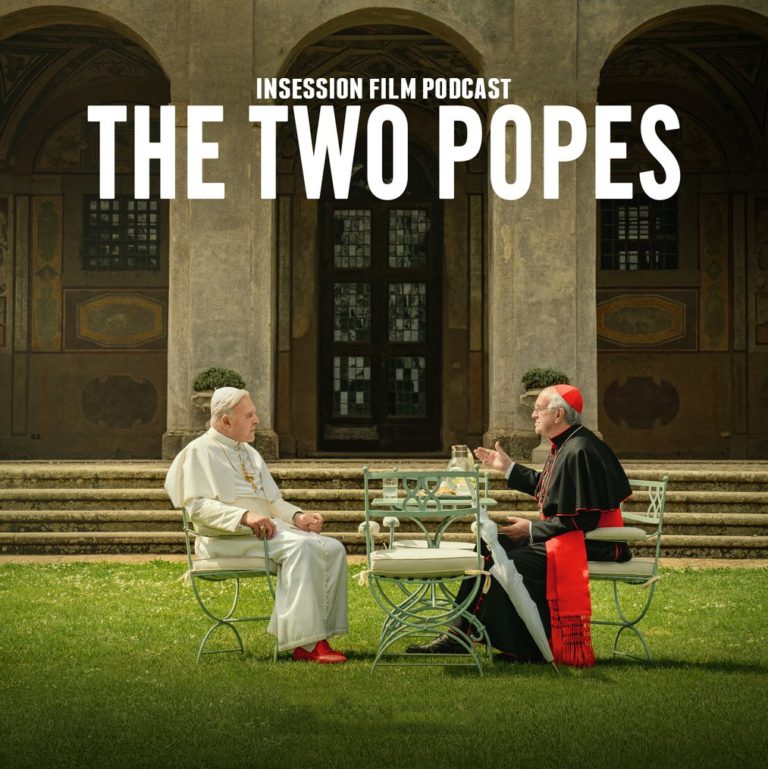
Podcast: Cats / The Two Popes – Extra Film

This week on the InSession Film Podcast: Extra Film segment, Ryan and Karen Peterson of AwardsCircuit discuss Cats and The Two Popes.

As we enter the new year, the last episode of Extra Film for 2019 is down a co-host, as Jay is out due to illness. But it doesn’t stop Ryan from inviting previous Extra Film and Chasing the Gold guest Karen Peterson to join him to discuss to polar opposite pieces of cinema. With Cats, we all get to finally hear if they hype was worth all the noise. Considered by some to be one of the worst films of the year, as well as one of the craziest things to ever be filmed, Ryan and Karen try to talk about this movie without busting up laughing.

Then, in the back half of the episode, the duo discuss the latest offering from Netflix in The Two Popes. Considered another awards contender from the top streaming service and one of the best films of 2019, the conversation led to a thoughtful points on the faith, politics and struggles within the film. It was such a good discussion, it lead Ryan to change some of his own opinions on The Two Popes.

On that note, have fun with this week’s Extra Film segment and let us know what you think in the comment section below. Thanks for listening!

– Movie Review: Cats (3:26)
Director: Tom Hooper
Screenplay: Lee Hall, Tom Hooper
Stars: Judi Dench, Idris Elba, Jennifer Hudson, Ian McKellen, Francesca Hayward

– Movie Review: The Two Popes (40:59)
Directors: Fernando Meirelles
Screenplay: Anthony McCarten
Stars: Anthony Hopkins, Jonathan Pryce, Juan Minujín

– Music
Skimbleshanks: The Railway Cat – Steven McRae, Robbie Fairchild
Dancing Queen – ABBA
The Return of the Eagle – Atli Örvarsson

We try to make this the best movie podcast we possibly can and we hope you enjoy them. Subscribe today on iTunes, Spotify or Stitcher, and please leave us a review on iTunes. You can also find us on Soundcloud, PlayerFM and TuneIn Radio as well. We really appreciate all your support of the InSession Film Podcast.

Subscribe to our Podcasts RSS
Subscribe to our Podcasts on iTunes
Listen on Spotify
Listen on Stitcher
Cats / The Two Popes – Extra Film

[divider]

Mobile App

To hear this Extra Film episode and everything else we do, download our apps on the Amazon Market for Android and the Podcast Box app on IOS devices. The mobile app covers all of our main shows, bonus podcast’s and everything else relating to the InSession Film Podcast. Thanks for your wonderful support and for listening to our show. It means the world to us!

Poll: What is your favorite Sam Mendes film?

Happy 1917 week everyone! Sam Mendes is back and his latest is a stunning technical achievement. We’ll discuss more this weekend on Episode 358, but we thought we’d use it as inspiration for our poll this week. Simply, we are asking, what is your favorite Sam Mendes film? He’s had quite the varied career so far, which makes us curious for what these results could end up being in the end.

With that said, be sure to cast your vote!


Movie Review: ‘Star Wars: The Rise of Skywalker’ spreads closure and hope throughout the galaxy


Director: J.J Abrams
Writers: J.J Abrams and Chris Terrio
Stars: Carrie Fisher, Mark Hamill, Adam Driver, Daisy Ridley, John Boyega, Oscar Isaac, Anthony Daniels and Kelly Marie Tran

Synopsis: The Resistance faces the First Order once more in the final chapter of the Skywalker saga.

[/info]

***This will be a spoiler-free review. For a full spoiler discussion, catch our Bonus Content episode coming soon. ***

From the moment you become a writer, you’re taught to cut the word “I” from your writing. With this word extermination, you have to come up with some way of making a voice shine throughout the piece you are writing. But many believe there are exceptions to the rule, especially when talking about a subject personally attached to the writer. So, when I was assigned this review of “Star Wars: The Rise of Skywalker,” caution was thrown to the wind, and I knew it would be something that I had to use. It’s because Star Wars is one of the most personal franchises in all of cinema, binding generations of people together to love something magical and profound. It’s the first film franchise I can remember falling in love with, with the rich worlds, in-depth characters, and enough memorable moments to keep me coming back for more.

But, throughout the last couple of years, the words Star and Wars have become as toxic of a topic as one can find. A fan base divided amongst themselves, throwing unobtainable expectations out left and right, seeming to be displeased with every choice made by the filmmakers. It makes for frustrating conversations, leading many, including myself, to feel like the magic of this franchise is dying. But while this may be the case, these movies are about hope, and how we should reflect hope into our world. We need optimistic films like this in the world, something where it brings joy back into our lives. So, when the credits began to roll, and the lights came up, I realized director J.J Abrams had given us the Star Wars movie we need right now.

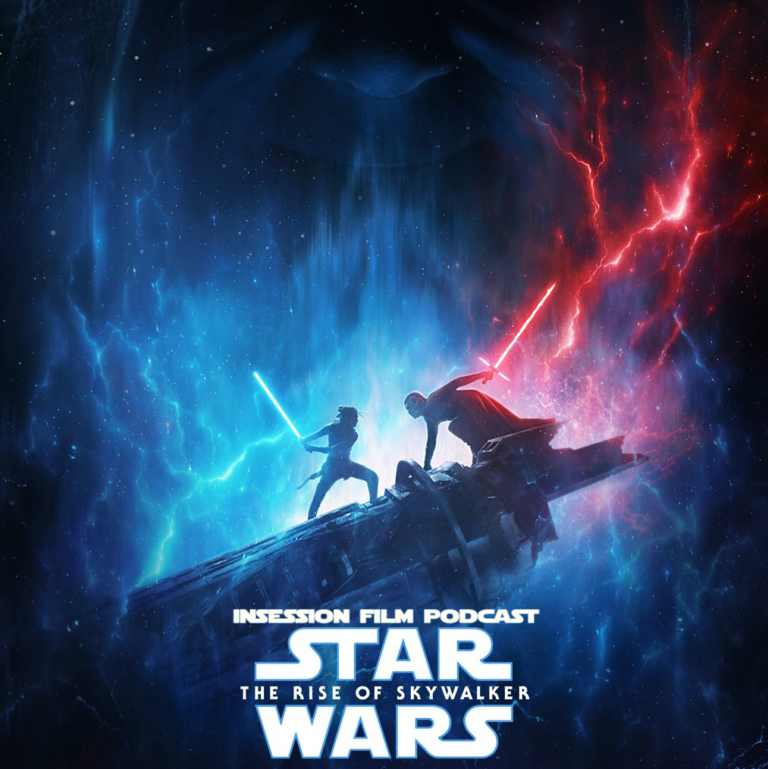
“Star Wars: The Rise of Skywalker” picks up a year after the events of “The Last Jedi,” with Kylo Ren running The First Order, destroying any threating standing in his way. While he is doing this, our heroes, Rey, Finn, and Poe, are preparing for the final showdown with Kylo and his army. At the same time, both Rey and Kylo discover an old enemy is rising from the shadows, with plans for the two advisories and the entire galaxy. Mixed with exciting new characters and old favorites, our heroes must stop Kylo, The First Order, as well as the new lingering threat, to bring peace to the galaxy.

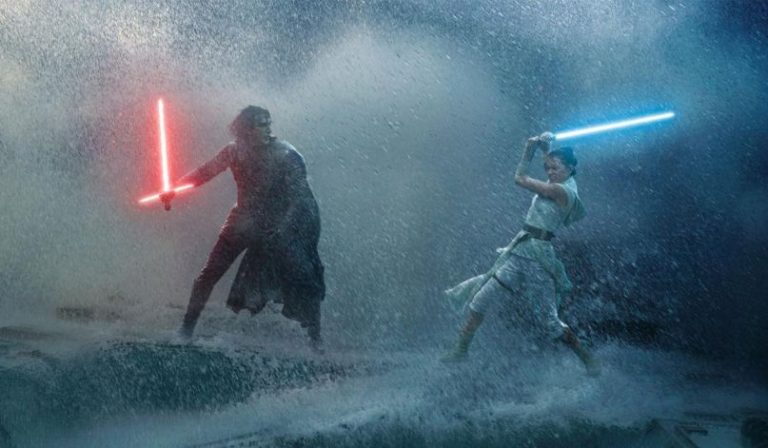
Though this movie packs many action set pieces, its character moments are what shines the most. With Rey and Kylo, we find comfort in the conclusion of their relationship, with both growing massively from when we first met them. For Rey, she discovers who she needs to be, confronting all her fears and wrapping them into a real personal transformation. By the end, we realized she is the hero we have always needed and the hero of our generation. With Kylo, he plays as the ultimate bookend to the entire Skywalker family, with an arc to rival his ancestors. Through this, we see the story of two come together as one with effortless performance and moving writing.

Along with these two, Finn, Poe, BB-8, Chewbacca, C-3PO, and many more have enough moments to leave you content with where they land. But “The Rise of Skywalker” highlights the most crucial character to conclude, General Leia Organa. Even though Carrie Fisher passed away a couple of years ago, she has a vital role, making her conclusion the real heart of the film next to Rey and Kylo. By bringing her back, “The Rise of Skywalker” delivers her a tribute she would be proud of, one fit for a princess.

I love the way “The Rise of Skywalker” leaves the saga, leading to the most stable position the franchise has been since “Return of the Jedi.” You make the case the movie did its job by getting to a “safe place” to end. But the film is more important than just a checklist to make sure everything runs to a good ending. It continues what the other entries accomplished, restoring my hope and faith in the Star Wars universe. The final shot could be considered an eye roll, but its the essence of this episodic storyline. We are always looking to the horizon, searching for answers to our problems. Star Wars has always been a place for wonder and optimism, putting us in a place to we can discover what is necessary to make a difference in our world. It’s why I cried throughout because “The Rise of Skywalker” is trying to earnestly unite us, not divide.

“The Rise of Skywalker” is a beautiful capper to not only just this new trilogy but the entire Skywalker saga. It is an action-adventure with tons of emotional pathos, leading the audience to a satisfying conclusion for all to love and enjoy. If this is the future for Star Wars films, I’d be happy and we should be so lucky.

Overall Grade: A

[divider]