Home Blog Page 39

Episode 657: Top 5 Movie Soundtracks

This weekโ€™s episode is brought to you by Him. Follow us on social media for your chance to win a FREE digital code!

This week on the InSession Film Podcast, in anticipation of Tron: Ares, we discuss our Top 5 movie soundtracks! We also discuss the box office for One Battle After Another, Kirsten Dunst’s idea for Spider-Man 4 and the Fast & Furious franchise potentially being dead.

Check out this weekโ€™s show and let us know what you think in the comment section. Thanks for listening and for supporting the InSession Film Podcast!

– Opening Banter / OBAA Box Office (0:31)
We begin this week by diving back into the box office for One Battle After Another as it’s now crossed $100 million worldwide. While that’s still far below what is needed for the film to break even, we wanted to talk about why it’s still a massive win for PTA and Warner Bros. In a 2025 context especially, Warner Bros. is likely more concerned with it winning awards, regardless of how much money it loses in the initial theatrical run.ย 

Spider-Man 4 / Fast & Furious Franchise (25:49)
Recently, in an interview with Kirstin Dunst, she had a really great idea for Spider-Man 4 that involved Peter and MJ as parents. It might be a simple idea, but it’s one that sounded really compelling to us and we felt inspired to discuss why we’d be eager to see it. Finally, we also had to talk about the fun irony of the Fast & Furious franchise potentially being dead in the water. It doesn’t look like Universal has any plans to do another film, and if it is the end for the FF crew, the last film ended in the funniest way possible.


RELATED: Listen to Episode 610 of the InSession Film Podcast where we discussed our Top 10 Movies of 2024!


– Top 5 Movie Soundtracks (49:19)
Movie soundtracks are a lot of fun. Some of them are incredibly iconic in the world of cinema. Some of them are perhaps underrated. Regardless of where they are on the spectrum, we wanted to discuss our favorite movie soundtracks and why they resonate so deeply with us. What would be your top 5 movie soundtracks?

Subscribe to our Podcasts RSS
Subscribe to our Podcasts on iTunes
Listen on Spotify
Listen on Stitcher
InSession Film Podcast – Episode 656

Next week on the show:

After the Hunt

After the Hunt. Courtesy of Amazon MGM Studios.

Help Support The InSession Film Podcast

If you want to help support us, there are several ways you can help us and we’d absolutely appreciate it. Every penny goes directly back into supporting the show and we are truly honored and grateful. Thanks for your support and for listening to the InSession Film Podcast!

VISIT OUR DONATE PAGE HERE

Movie Review (NYFF 2025): Harry Lightonโ€™s ‘Pillion’ Blends Eroticism and Emotional Introspection


Director: Harry Lighton
Writers: Harry Lighton, Adam Mars-Jones
Stars: Alexander Skarsgรฅrd, Harry Melling, Lesley Sharp

Synopsis: A directionless man is swept off his feet when an enigmatic, impossibly handsome biker takes him on as his submissive.


What does the figure of a biker symbolize? Hyper-masculinity and rebelliousness are the first descriptors that come to mind. Every time you see a biker or a motorcycle group in a film, you think about trouble and impending danger. That is how most movies typically portray them. But there are better descriptors that encapsulate the image of a biker: freedom, loyalty, and a shared identity. A motorcycle gang is inseparable; they all head towards the same route without borders. Their identity is forged through the open road โ€” a symbol of brotherhood and resistance against conformity; with each mile they travel, they become an act of defiance and unity. These descriptions align with the themes and character dynamics showcased in Harry Lightonโ€™s directorial debut, Pillion (screening at the 2025 New York Film Festival in the Spotlight section). Lighton reclaims the bikerโ€™s image from macho rebellion to queer vulnerability.

Lightonโ€™s Pillion, based on Adam Mars-Jonesโ€™ 2020 novel โ€˜Box Hill,โ€™ tells the story of vulnerability and power dynamics in modern queer relationships through the eyes of a lonely, feeble young man and his life-changing encounter with an alpha-dominant biker. Its title is aptly chosen, as the word refers to the passenger seat behind a motorcycle; the metaphors already pile up with just a single word. There have already been quite a handful of stories about bikers and the struggles of finding authentic desire and personal growthโ€“Kenneth Angerโ€™s provocative and influential short Scorpio Rising, as well as the underseen 1964 film from Sidney J. Furie called The Leather Boys. However, these particular portraits do not delve deeper into the internal and external resilience that comes with opening oneself to intimacy. Thatโ€™s where Pillion separates itself from the rest. It expands on that step-by-step process that comes with finding yourself.

The Mars-Jones source material is set in the 1970s and has a higher focus on the AIDS crisis that was occurring at the time. To change the story to a contemporary setting, Lighton had to reimagine it, to some degree, to depict the struggles queer men face today. It is a challenging task to undertake, nearly rewriting a work to recontextualize scenarios with a contemporary worldview. In this change, there is a lack of solidity, which occurs when Lighton holds back on the complexity of the characters while performing the tonal balancing act of being stark or light-hearted. However, due to its leading pair being pitch-perfect with one another, and Lightonโ€™s boldness leading to authentic depictions of the subculture heโ€™s depicting, Pillion becomes a rather meaningful picture, with a few quirks that donโ€™t crack the filmโ€™s sturdy backbone.ย 

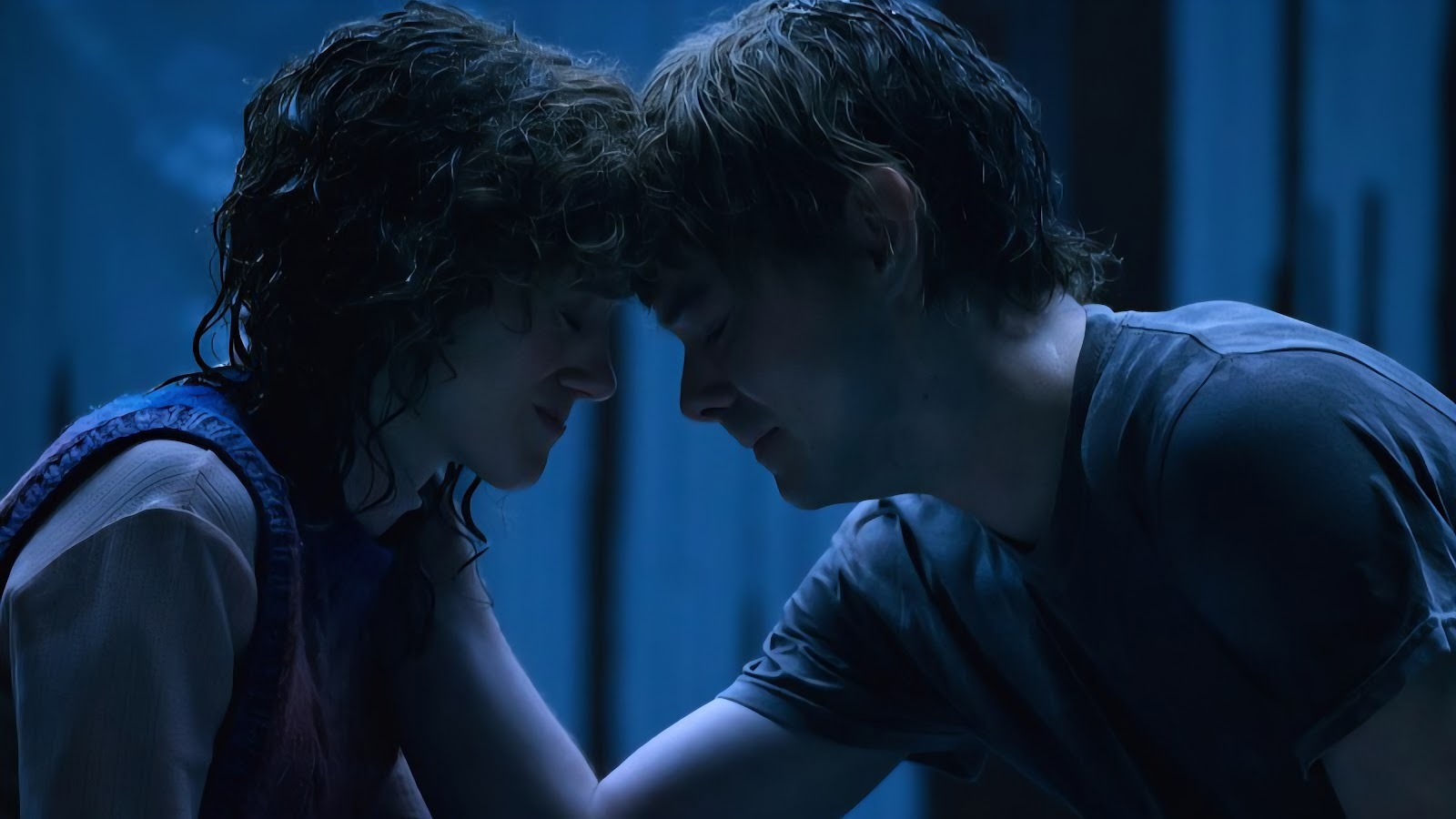
The two figures at the center of this erotic ballet are Colin (Harry Melling), a lonely young singer desperate for someone to hold, and Ray (Alexander Skarsgรฅrd), the ring-leader of a gay motorcycle club. The first time we meet Colin, heโ€™s doing a vocal performance at a local bar, which makes his date head towards the exit. The embarrassment on Colinโ€™s face says it all, and a reek of desperation oozes from his pores. The image of him sitting all alone at a bar, with Mellingโ€™s facial expressions revealing his feelings on the inside, shows us that this isnโ€™t the first time he has been in that situation. Pain lingers through the soul, as drink flows down his body. Thatโ€™s until Ray pops into the picture, where one Christmas Eve night outing shapes the course of Colinโ€™s life.ย 

From a choir boy to a submissive sexual treat for Ray, Colin finds something he didnโ€™t know he wanted in a package he wouldnโ€™t have dared to approach. But time curses the two, and Colin demands judgment in that controlling relationship, challenging the restrictions put upon him by the dominant Ray. He seeks to have a say on this bond, which helps Colin slowly forge his identity through retaliation. This isnโ€™t the first time Harry Melling plays a character who falls in love with a biker, and this devotion causes a complete shift in his being. In Amanda Kramerโ€™s campy and leather-bound Please Baby Please, Melling plays Arthur, a reserved man with inner sorrow who encounters a greaser gang as he heads home with his wife. Rather than beating them to a pulp, they taunt them. This teasing leaves a mark on the two tight-knit individuals to the point where they question their respective identities and loyalties.

Kramer has consistently explored liberation, personal freedom, and desires in her cinema, employing a highly stylized and campy approach. In that sense, Please Baby Please and Pillion are pretty different, as Lighton is not keen on utilizing splashes of neon lighting and colorful tints to play with the filmโ€™s themes. His direction is more stale visually, although it features well-framed shots that effectively convey the emotional and romantic physicality between the leading pair. However, even though one is more tame in terms of sexual elements and the other goes full-frontal, the two films are connected by Melling, who offers an excellent performance in both, and their themes of self-love. While I prefer Kramerโ€™s, as her work is more playful, cine-literate, and creative, Pillion still has quite a few tricks up its sleeve that help its story have an impact.

Nods of comedy and light-heartedness are placed amongst highly erotic sex scenes in Pillion to both shock and create sympathy for Collin as he finds his true self. These scenes help the saddening aspects on the backend of the film feel more striking than provocative. Its melancholy might be slightโ€“not utilized enough to create a wounding, long-lasting effectโ€“yet the filmโ€™s heart lies in the right place, without ever needing to play melodramatic beats to conjure faux reactions. There were moments where the comedy stood out like a sore thumb and took me out of the film. Nevertheless, what continued to drive my interest from Pillion is Lightonโ€™s depiction of the gay motorcycle club and the submissive-dominant relationships, which is where the film gets most of its personality and uniqueness.ย 

Lighton wants to create authenticity of a subculture he doesnโ€™t know much about by having people from it to help him dive into it with sincerity and attentiveness. Cinematic liberties are taken to make the narrative move along, just like any other feature, yet it is all done with genuine interest rather than disrespect. He ensures that there isnโ€™t an โ€œexoticismโ€ with the subculture, or an exploitative edge that ridicules it. For some reason, William Friedkinโ€™s Cruising comes to mind. The 1980s thriller starring Al Pacino received significant backlash from the gay community because of its portrayal of the New York gay leather scene, which included tons of hardcore sex scenes, most of them cut from the original print by the studio. Lighton also delves into the hardcore, although he doesnโ€™t go bar for bar with Friedkin in Cruising.ย 
Many perceived it as harmful and exploitative, leading to protests during filming and its theatrical release. Although the film has an authenticity, as Friedkin shot it at the actual bars with people who attended them, there is an outsiderโ€™s lens from the production that causes a loss of genuineness, which I, as a fan of Friedkinโ€™s work and the film, find disconcerting. We never connect with the members of the New York leather scene; we only see them at the bars doing highly sexual acts. Meanwhile, Lighton does the opposite. He wants us to empathize and understand them thoroughly. And that is what I admire most about the film. While other directors in the past might have treated this scene with a judgmental or stereotypical eye, Lighton protects those who gave him entry into that world by treating them with respect. This is why Pillion, even with its tonal foibles, is bold and daring; especially in todayโ€™s cinema, this is a rarity.
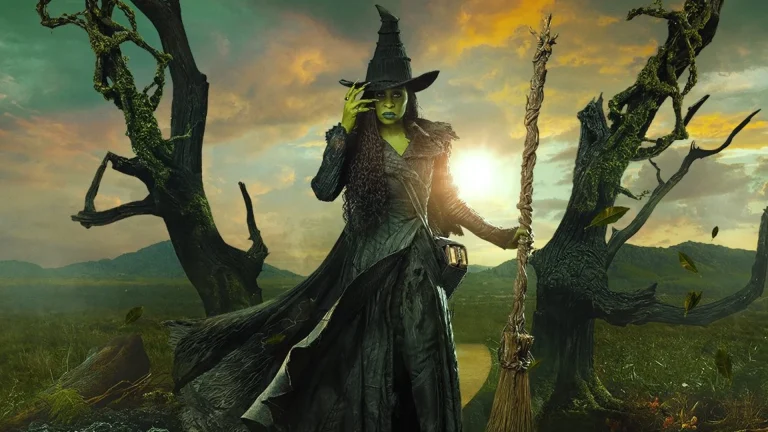
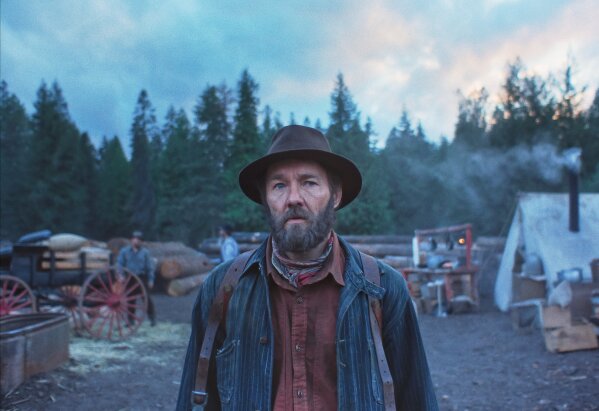

Grade: B-

Movie Review: ‘Love, Brooklyn’ Marks Rachael Holder As a Director To Watch


Director: Rachael Holder
Writer: Paul Zimmerman
Stars: Andrรฉ Holland, Nicole Beharie, Roy Wood, Jr.

Synopsis: Three longtime Brooklynites navigate careers, love, loss, and friendship against the rapidly changing landscape of their beloved city.


A lot of people donโ€™t understand how much it takes for a film to be made. There are a lot of moving parts that arenโ€™t largely seen by the public. Itโ€™s always a beautiful thing to see filmmakers that look like me being able to make the movies that they want to make without studio interference. Rachael Abigail Holderโ€™s debut feature film Love, Brooklyn is a tight, 90-minute movie that tells the story of Roger (Andre Holland). Heโ€™s an editorial writer from Brooklyn thatโ€™s going through the motions and adjusting to his once vibrant and unique Brooklyn turn into an unrecognizable place. Heโ€™s a huge procrastinator that constantly puts off his work, gets high, enjoys shopping for unnecessary things, and hangs out with two beautiful and successful women. Rogerโ€™s new fling Nicole played by the gorgeous and compelling Dewanda Wise and his ex Casey played by the always infectious and charismatic Nicole Beharie.ย ย 

Casey and Nicole are total opposites in Rogerโ€™s world. Casey and Roger have a playful relationship that is friendly and public, while Roger and Nicole are very private and laid back. Nicole has a daughter named Ally from a past relationship, which is a tough thing to get used to for Roger because he feels like heโ€™s not good with kids and that he ends up acting awkward with them. Throughout the film, we see how Rogerโ€™s interactions with the womenย  in his life affect his mood and his actions that play out. Hollandโ€™s Roger is a character that marches to the beat of his own drum. Heโ€™s single, charming, and living his life day-by-day. He reminds me of myself when I was single and just out here living life and working with no ties. The actors in Love, Brooklyn really elevate the words off the page with their great acting.ย 

Luckily, we can see this movie from more than Rogerโ€™s point of view. Roger is kind of an unreliable character and he doesnโ€™t really have a lot to him that we get in the movie. Casey is the owner of an art gallery in Brooklyn. Sheโ€™s not happy with the current state of her gallery, as developers of the neighborhood are constantly pursuing her to buy her business, plus sheโ€™s lonely. Her relationship with Roger is complicated due to their past and Rogerโ€™s present situation with Nicole. Casey and Roger are constantly hanging out together and she tends to call on him whenever she needs someone to lean on. But when heโ€™s not available, she gets annoyed and slightly jealous. Due to the vulnerability and the comedic skill that Beharie brings to her role as Casey, I donโ€™t think that thereโ€™s another actress that couldโ€™ve done a better job portraying this complex character. Now letโ€™s talk about Dewanda Wiseโ€™s Nicole. Sheโ€™s a single mother that is navigating this new life after losing her husband due to a horrible accident. Being with Roger provides an escape from her daily life. Things become a little tricky when her daughter Ally wants to spend time with Roger. Sheโ€™s welcome to the idea of it and she sets up some play time for them both. Thereโ€™s a moment in the film (that I wonโ€™t reveal) that tests her emotions and her feelings for Roger. Wise has had some good opportunities so far in her career, but this role is oneย  that will attract more attention to her, and it will hopefully lead people to delve into her filmography. If anything, I would compare this role to her first leading role as Nola Daring in the Sheโ€™s Gotta Have It Netflix tv series.ย 

Thereโ€™s no shortage of supporting characters in this film that makes it even better. For instance, Roy Wood Jr. plays Rogerโ€™s friend Alan. While he doesnโ€™t get a lot of screentime, the hilarious and wise Wood Jr. manages to create a memorable character, especially considering the limited amount he is given from the director and the script. A lot of his demeanor and personality from his stand-up specials come out in his character in this movie. Cassandra Freeman (of Peacockโ€™s Bel Air) plays Lorna, a friend of Roger, Casey, and Alan. Sheโ€™s an uppity socialite thatโ€™s constantly bragging about where sheโ€™s traveled to, the materialistic things she acquires, and more. I think that Paul Zimmermanโ€™s script is delightful and realistic, but I canโ€™t help but think that it couldโ€™ve been better with some more things added. I think the movie needed more supporting characters that couldโ€™ve interacted with the three leads. They couldโ€™ve been friends, family members, people they met on the streets, etc. The music and the cinematography in this film are like characters themselves. This and Highest 2 Lowest feature some of the best music and images of New York that I have seen this year.

A huge plus that this movie has is that there arenโ€™t really any traumatic events that happen in it regarding racism, police brutality, etc. This movie didnโ€™t need that at all. A writer will sprinkle in a dash of each of these things when a movie has a predominantly Black cast. A lot of studios must think that the only way for audiences to connect with a Black cast on an emotional level is if these things are a part of the story. If these plot points donโ€™t add anything of significance then why bother? Love, Brooklyn didnโ€™t really need those plot points because they wouldnโ€™t have added anything to the story that advanced it or made it better.ย 

The film was funded by the legendary Steven Soderbergh after struggling to find a budget. I am happy that he took a chance on Holder because a lot of big studio execs wonโ€™t give Black female filmmakers any kind of assistance unless their movie wins a ton of awards at festivals, has a plot that they really connect to, etc. Soderbergh is a pioneer in the industry and over the decades he has crafted a strong eye for new talent. Personally, I am glad that filmmakers like Holder are being given a chance to flourish and be seen.

Grade: A-

Movie Review: ‘Roofman’ is a Light-Hearted Fantasy, Tinged with Reality


Director: Derek Cianfrance
Writers: Derek Cianfrance, Kirt Gunn
Stars: Channing Tatum, Kirsten Dunst, LaKeith Stanfield

Synopsis: A charismatic criminal, while on the run from the police, hides in a hidden space of a toy store. There, he adopts a new identity and becomes involved with an employee, beginning a relationship as unlikely as it is risky.


No one could ever accuse director Derek Cianfrance of being un-serious. With a filmography that includes Blue Valentine, The Place Beyond the Pines, and the miniseries, I Know This Much is True, you come in with expectations for his films. While Roofman is a clear departure from that formula, the director still can’t help injecting the sadness of reality into the narrative.

Based on a true story, Channing Tatum stars as Jeffrey Manchester, a former Army reservist who is struggling financially. In order to support his wife and children, Jeff begins robbing McDonalds locations through the roofs and holding the employees hostage. Jeff is eventually caught and imprisoned. One day, he devises a brilliant plan to silently escape, eventually hiding out in the upper ceiling of a Toys “R” Us. He attempts to contact his friend Steve (LaKeith Stanfield) to help him escape, but has to wait six months until he returns to the country.

Jeff eventually needs to get out in the world, and meets store employee Leigh (Kirsten Dunst). Jeff poses as a government agent, but ingrains himself in the local community. Growing closer with Leigh, Jeff begins a serious relationship while lightly stealing from the store, much to the chagrin of dutiful manager Mitch (Peter Dinklage). With the date to contact Steve approaching, Jeff must decide whether to stick around in this new life or get out of town while he still can.

Jeff is such a likeable presence, the audience immediately excuses any of his criminal behavior. Yes, he uses a gun, and yes he technically robs businesses, but he is polite about it and doesn’t want to actually hurt anyone. While he has the desperation and scheme for criminality, he lacks the coldness. At one point, Steve even comes out and says as much. When a news report tells of Jeff’s escape, he laughs along until they mention he could be dangerous. He isn’t mad, he’s offended. How could anyone think he could be harmful? It’s a nice little film trick to gain audience sympathy.

Roofman' Trailer: Channing Tatum Is Criminal Living in Toys R Us

While this might be the most mainstream (and happy) Cianfrance has ever been as a director, he still can’t help injecting a throughline of sad reality. As Jeff begins to make a real life for himself, your mind starts to wander to the reality of this true story. An escaped convict isn’t going to live happily ever after and live off his spoils. There has to be some sort of ending, and luckily, the film is acutely aware of this. In particular, it hits Jeff as he is singing along at church, leading to a well of tears. It’s not only a clear pivot point for the film, it’s a staggering piece of acting from Tatum and Dunst, despite the lack of dialogue.

This film understands consequences for actions. There is no victimless crime. In order to lead this life outside the law, there has to be sacrifice and there must be people who have been wronged. Jeff might want to do the nicest possible thing, but it’s still an immensely traumatic and dangerous experience for everyone else. The audience might not want bad things to happen to Jeff, but we certainly don’t want to have bad things happen to other people just so Jeff can get away with it. It’s a contradiction the film conveys well.

Tatum is particularly suited for this role. Jeff requires equal parts silly, charming, intelligent, and dopey. For a guy who has made a long career of being a young guy, this is one of the few times he plays an adult. He is not some teenager. He is well into adulthood, but can’t figure out how to stay on the straight and narrow. I wouldn’t consider it a particularly difficult performance to pull off, but it’s an achievement in casting. Dunst doesn’t try to be anyone other than the normal woman she is. She doesn’t try to elevate herself above her station, but rather lives in contentment. As always, she is so naturalistic, it’s easy to dismiss her ability as too calm or understated.

Roofman film review | SHIFTER

Dinklage continues to subvert his on-screen persona in varying ways. He not only comes across as arrogant for no particular reason, he also takes his job far too seriously. Dinklage is the closest thing to the film’s villain, but he gets a bit of redemption. Uzo Aduba and Ben Mendelsohn play a delightful bit of comic relief as husband and wife church leaders, while Juno Temple shows up for no apparent reason as Steve’s girlfriend. It’s a very well-cast film.

It might not be as serious as Cianfrance’s previous efforts, but Roofman provides a welcome change of pace from the director. For a film about a guy who hides out in a Toys “R” Us, it’s much better than it has any right to be.

Grade: B

Podcast Review: Anemone

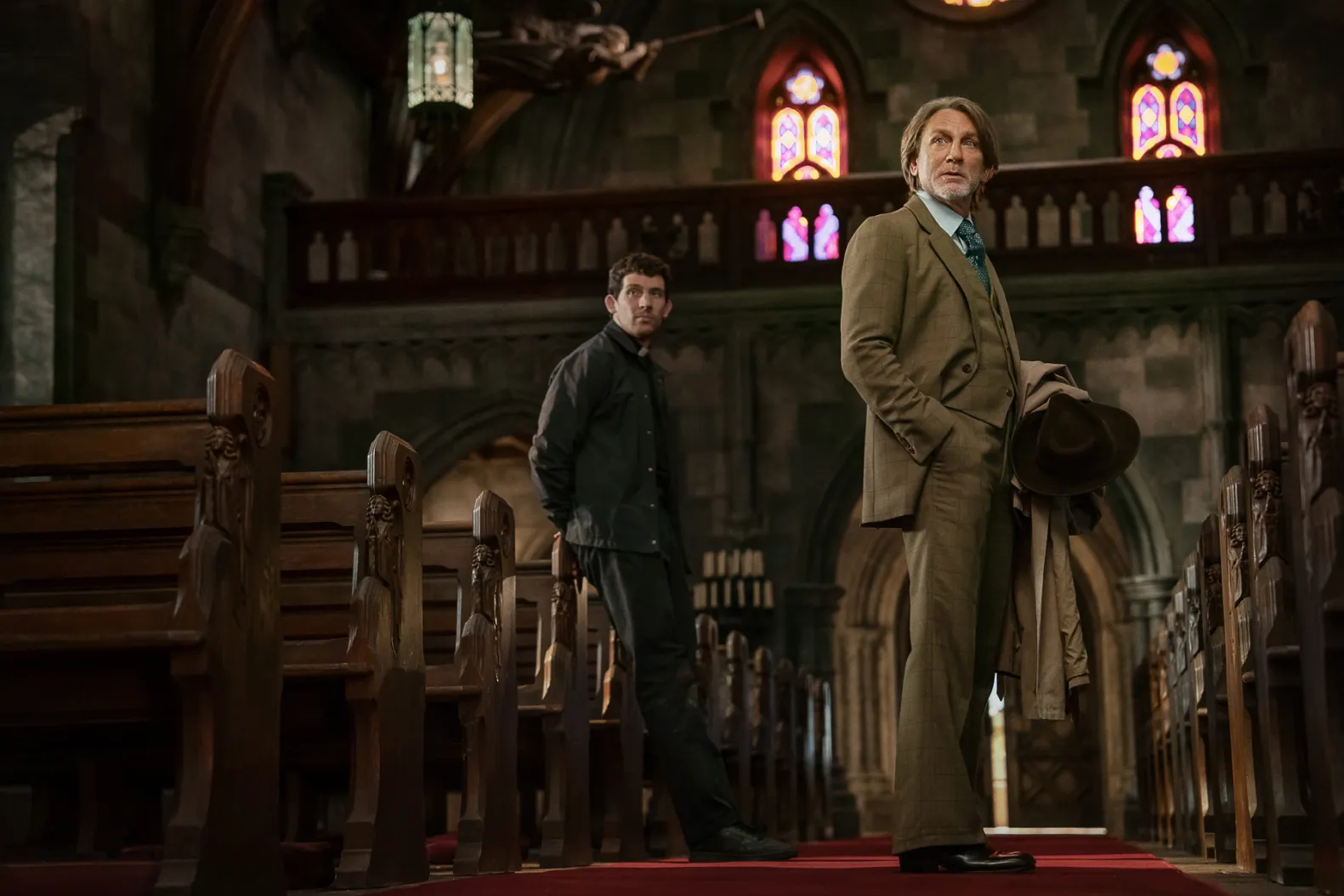
On this episode, JD and Brendan are joined by Megan Kearns to discuss Ronan Day-Lewis’ directorial debut Anemone! Of course, this film is most notable because it’s the return of arguably the best actor to ever do it in Daniel Day-Lewis. And spoiler alert, he does not disappoint at all. He’s as great as he’s ever been, and there’s something more compelling about his performance here given that he’s working with is son. Daniel may get all the headlines, but Ronan’s direction is also excellent and worth discussing.

Review: Anemone (4:00)
Director: Ronan Day-Lewis
Writers: Ronan Day-Lewis, Daniel Day-Lewis
Stars: Daniel Day-Lewis, Sean Bean, Samantha Morton

Subscribe to our Podcasts RSS
Subscribe to our Podcasts on iTunes
Listen on Spotify
Listen on Stitcher
InSession Film Podcast – Anemone

Classic Film Review (NYFF 2025): ‘Queen Kelly’ is an Unfinished Masterpiece


Director: Erich Von Stroheim
Writers: Erich Von Stroheim, Marian Ainslee, Benjamin Glazer
Stars: Gloria Swanson, Walter Byron, Seena Owen

Synopsis: A convent girl is abducted and seduced by a prince before being sent off to a brothel in East Africa.


Queen Kelly is a great cinematic experiment. A film that was never properly finished by its original filmmaker, Erich Von Stroheim, distributor Milestone Films sought to reconstruct Queen Kelly in von Stroheimโ€™s image. While a restoration of this magnitude is an arduous effort, the result is a mixed bag. The enthralling first act is broken by a Frankenstein effort of stills and incomplete scenes which amounts to something akin of a glorified PowerPoint presentation. Not to completely dismiss this effort, however, this is a piece of cinematic history that is certainly worth it to devout fans of the cinematic medium.

In the original making of the film, producer and star Gloria Swanson decided to pull the plug on financing because of the direction the film was heading. If you had seen this film previously, the only available version was the one where Swanson pulled in filmmaker Richard Boleslawski and shot an alternate ending to the film. The ending in the original release doesnโ€™t make a dramatic location change, and remains in the confines of the original narrative. In the version premiering at the 63rd New York Film Festival, Milestone pieced together elements of the original script, storyboard art, and scenes filmed by von Stroheim to make a relatively coherent narrative.

Queen Kelly is a film in two halves. The first, completed half follows an unhappy European prince, Prince Wolfram (Walter Byron), who is set to marry a mad queen, Queen Regina V. Wolfram would spend his days frolicking with other women and ogling not from afar. Queen Regina V spends her days in very little clothing, taking long baths, with her cat companion always in her arms. Regina is aware of Wolframโ€™s activities and would punish him. One day Wolfram spots a young convent woman, Kitty Kelly (Gloria Swanson), and is immediately swept away by her beauty. The remainder of the first half is about Wolframโ€™s pursuit of Kelly. The second half is an amalgamation of added intertitle cards (labeled as such to not confuse for the original intertitle cards), production stills, and completed scenes that were done by von Stroheim prior to his firing.

The first half of Queen Kelly, while a little drawn out, is captivating. While production on the film occurred prior to the enforcement of the โ€˜Hays Codeโ€™ on censorship, it is surprising to see the amount of skin and level of adulterous activity being displayed on a film from this era. Each of the three characters have their own environment that youโ€™re drawn into. Queen Regina V, for example, feels so isolating, the large black tiled bathroom sucks the air out of you. Wolfram feels incredibly shady and Kelly feels so full of life. Everything is incredibly grand and regal, from the set to the dinner.

The second half of Queen Kelly, however, leaves a lot to be desired. Now, the point of this specific restoration was an attempt to finalize von Stroheimโ€™s vision by using whatever was available. In doing so, the second half takes you out and feels more like a historical lecture on the making of the film. Which is interesting, but completely derails what happened beforehand. The film moves away from Europe and goes to South Africa and follows Kelly exclusively. Kelly was not interesting enough of a character to put the primary focus on, and what made the first half work was the dynamic between the three stars of the film. Understandably, in line with filmmaking of the time, the financier would eventually remain the star, but no favors were done for Swanson once it became her movie.

An effort of this caliber and this scale, restoring a film that was produced almost 100 years ago, then using original production elements to round out a narrative that was butchered by financier interference is commendable (to put it lightly). The restoration work on the scenes that were shot looks incredible. How the second half of the film flows, while not as tight as the completely shot first half, is done brilliantly well. The drawbacks of this experience is less about the quality of the work behind it, but the unfortunate fate of this filmโ€™s production. Milestoneโ€™s effort is well done and makes for an interesting experience in a theater.

Queen Kelly is a masterpiece that was deprived of its ability to grow. The scale Erich von Stroheim had in mind for this film was grander than anything anyone couldโ€™ve pictured at the time and we are fortunate to have a taste of it. In another reality, Queen Kelly is referenced in the same breath as films such as Nosferatu, Metropolis, or The Cabinet of Dr. Caligari. Milestoneโ€™s restoration was brilliantly done, and the Frankenstein effort is worth the 100 minute runtime.

Grade: B

Podcast Review: The Smashing Machine

On this episode, JD and Brendan review Benny Safdie’s new film The Smashing Machine, starring Dwayne Johnson and Emily Blunt! The film came in with a lot of hype surrounding The Rock’s performance and also winning the Silver Lion at this year’s Venice Film Festival, but for many reasons we discuss in the conversation, it just didn’t live up to the bill for us. Some of the film’s choices are quite baffling even.

Review: The Smashing Machine (4:00)
Director: Benny Safdie
Writers: Benny Safdie
Stars: Dwayne Johnson, Emily Blunt, Ryan Bader, Bas Rutten

Subscribe to our Podcasts RSS
Subscribe to our Podcasts on iTunes
Listen on Spotify
Listen on Stitcher
InSession Film Podcast – The Smashing Machine

Movie Review: ‘Killing Faith’ is Desperate To be Unique


Director: Ned Crowley
Writer: Ned Crowley
Stars: Guy Pearce, DeWanda Wise, Bill Pullman

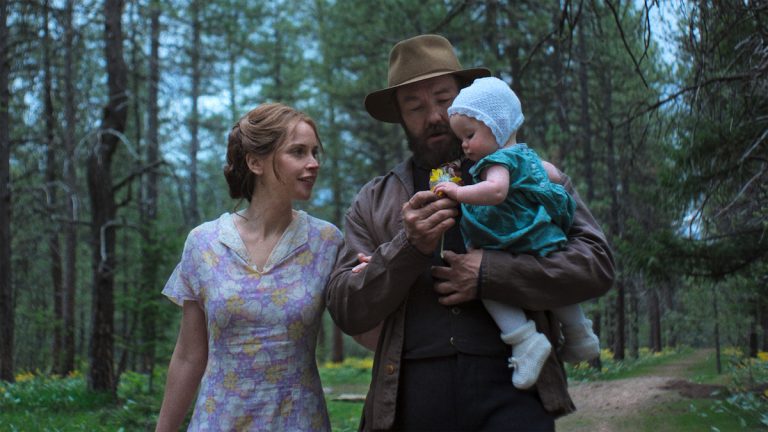
Synopsis: In 1849 a widowed doctor escorts a freed slave and her daughter across the West to find a distant Faith Healer. The mother believes the girl is possessed. The doctor suspects disease. But one fact remains-everything the child touches dies.


The Western genre that was born of the myth-making and romanticizing of the American West has been recontextualized. Most modern filmmakers, and really most Westerns after The Wild Bunch, understand the sheer brutality of that time and space in American history. This is why the modern Western has had success blending with horror. Films like Bone Tomahawk and Ravenous bring frontier horrors to their zenith. The film Killing Faith attempts that as well.

Though, Killing Faith feels almost like a dystopian film more than a Western or horror.

The barren landscape, leaders who inspire cult-like devotion, and characters driven mad by circumstance are seen throughout the film. The outside world, while present in the jabberings of Edward (Jack Alcott), seems so far away from these people or their lives. The things they encounter and the things happening to them seem so utterly wretched and horrific like they’re the last ones left alive.

Itโ€™s almost a disappointment that the religious horror elements come in at all. That is the weakest part of Ned Crowleyโ€™s script. It becomes a push and pull between Benderโ€™s (Guy Pearce) science and Sarahโ€™s (DeWanda Wise) faith, but neither is very strong in their convictions. The story doesnโ€™t give them enough motivation and the explanations are dull or thrown away like they didnโ€™t matter.

What seems to matter most to Crowley as a filmmaker is the gory set pieces. These are made all the more wickedly disgusting by the makeup team of Rocky Faulkner, Lisa Hansell, and Delano Viers. They craft some truly grim wounds and bloody faces. In addition to that is production designer Lorus Allen whose team added to the grim and gruesome nature of the land around our characters.

It’s hard to watch a film that doesn’t fully want to commit to itself. The supernatural or religious horror film is a staple of the genre, but it feels out of place in a Western. So much of Westerns is about Darwinism and an exploration of Nietzsche, the law and outlaw always in contention. The preacher character in a traditional Western shows the fallibility of man in times of crisis, but is rarely portrayed as Ross (Bill Pullman) is. The preacher is a figure of pity and it’s hard to reconcile that with the need to be a source of strength for good or evil that that archetype embodies in a supernatural horror film. It especially doesn’t make sense as Ross is the preacher, but also the town baron making his purpose even more muddied.

Though, future supernatural horror filmmakers should take note of one thing. If you want your creepy kid character to be truly creepy, have them silent. One of the strangest and creepiest scenes in Killing Faith comes near the very beginning as the child, credited as The Girl (Emily Ford), takes off her mittens and walks out to a horse minding its own business. Sarah notices The Girl has taken off her mittens, the significance of which we don’t know yet. The Girl puts her hand on the bent head of a horse and as Sarah lets out a blood curdling, “No!,” the horse drops dead. The entire time The Girl is silent. She doesn’t even make any real facial expressions. We know from this she’s bad news even if we have no clue why or what just happened. Very creepy.


Killing Faith wants to be unique. It wants to have a genre sandwich, but instead of the layers of genre fixings piled into a neat package, they spill out in odd ways and the whole thing falls apart. It’s not a poorly made film from a technical standpoint and the acting is solid, it’s just the story and plot that leave much to be desired.

Grade: D

Movie Review (TIFF 2025): ‘Hedda’ is Fascinating and Complex


Director: Nia DaCosta
Writers: Henrik Ibsen, Nia DaCosta
Stars: Tessa Thompson, Nina Hoss, Imogen Poots

Synopsis: Henrik Ibsen’s renowned stage drama from 1891 is reimagined in an epic and emotional way.


Henrik Ibsenโ€™s play โ€œHedda Gablerโ€ is a work that, since its premiere in 1891, has been regarded as one of the finest works of literature ever written, and a masterpiece that ranks among Ibsenโ€™s finest works. Hedda Gabler has been adapted to screen multiple times, with its most notable adaptation so far being the 1975 movie directed by Trevor Nunn, which earned Glenda Jackson an Oscar nomination for Best Actress. In 2025, Nia DaCosta (Candyman, The Marvels) takes on the material and puts her own spin on it, reformatting the story in some fascinating ways.

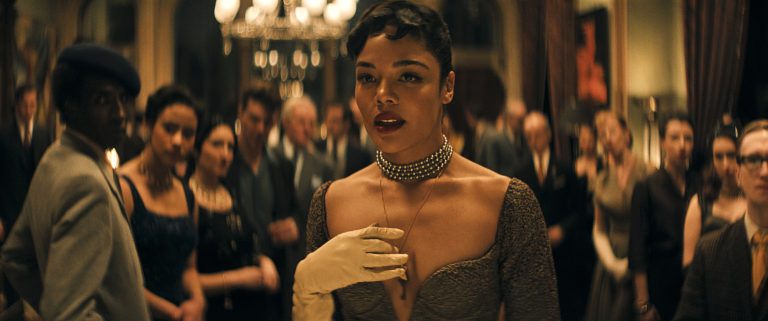
Hedda (Tessa Thompson) is a free-spirited, gun-loving, and unexpected womanโ€“much to some peopleโ€™s chagrinโ€“who is feeling bored in life and uninterested in her marriage to George Tesman (Tom Bateman)โ€“decides to host a massive party at her home and invite a whole slew of friends, colleagues, and highly established people. Things take a turn when Eileen Lovborg (Nina Hoss) arrives at the party with her recently finished manuscript that, if published, could take a post that George is gunning for. As the night progresses, the two women lock horns as they confront each other about their past and their potential future, while Hedda also works to orchestrate the events that take place in order to get on top and emerge victorious, no matter how many bridges she burns along the way.

From the movieโ€™s opening minutes, Hedda establishes this versionโ€™s titular character in a more unpredictable manner, and one that keeps challenging the social dynamics in place in 1950s England. When Hedda enters a room, she wants all eyes on her and wants to make sure everything plays out exactly how she wants, having some power over the conversations and also making people do things that they would never do so they could appear less powerful. From the outset, some of Heddaโ€™s actions seem manipulativeโ€“and some indeed are, particularly a suggestion she makes to one character in the later part of the movieโ€“but there is a complexity to her method, and understanding that it comes from a place of helplessness and silence, in a time when women were given way less agency and attention. It results in a far more feminist take on Ibsenโ€™s play, one that displays the multitudes of Hedda Gabler, the good and the bad, and Tessa Thompson is extraordinary in the role, commanding the screen in practically every frame of the movieโ€™s runtime and delivering perhaps the finest performance of her career.

Heddaโ€™s mannerisms and inflections are often minute, only giving the audience the briefest of glimpses into her psyche, and Thompson excels at making every such minute count. The most we see Hedda ever shaky in her approach is with Eileen, as a past love between them often peeks through their conversations and confrontations. Nina Hoss is equally incredible in the movie, countering Thompsonโ€™s calculated Hedda more often than not, and adds to the emotional intensity buried within Heddaโ€™s schemes, while also consistently challenged when she tries to escape her past and who she once was in Heddaโ€™s life. Eileenโ€™s manuscript is a study that could usurp everything George has built, and seeing that play out in moments where his vulnerability is also exposed leads to solid work from Tom Bateman as well. Not to be missed is Imogen Poots as Thea Clifton, who is right in the middle of the entire pressure cooker of a situation building between Hedda and Eileen, and also incredibly effective in playing someone who often represents the audienceโ€™s reactions to some of the plot developments.

Much of Hedda is built on DaCostaโ€™s effective direction, moving at a mostly brisk pace with the dialogue delivered often keeping events limited to rooms within the large estate and the partyโ€™s proceedings, with some standout sequences to anchor it like a dancing moment where Hedda makes an entire room move along to the live band playing โ€œItโ€™s Oh So Quiet.โ€ While it does still sometimes fall into that trap of feeling a lot more like a stage play than a motion picture (similar to some other plays brought to life on screen previously), it remains dynamic enough to create a solid big screen experience. Backed by a fantastic, even eerie score from Hildur Gudnadottir and Sean Bobbittโ€™s terrific cinematography, Hedda is also a technical marvel, with a booming sound design that makes every shocking moment or gunshot have a resounding effect.


Despite all these pros, however, what holds Hedda back a bit is some of its underdeveloped conflicts, particularly some subplots involving other people in Heddaโ€™s life who exist only to add some more drama to the proceedings. As a result, some of the ideas and themes that the movie is playing around with get a bit muddled towards the final act, which somewhat rushes itself to the climax. The movie also occasionally drags in the middle, as more and more yarn is spun by Hedda in her elaborate planning of the nightโ€™s proceedings, and not always landing exactly what she is thinking in those moments where she decides to do something drastic about Eileenโ€™s position. By the end however, DaCosta does succeed in creating a morally complex and ethically fascinating character study of a complex and fascinating woman who has been analyzed and studied for years, and brings out enough incredible work from the actors and crew involved to make up for some of the shortcomings.

Grade: B+

Women InSession: Agatha Christie Onscreen

This week on Women InSession, we discuss the great author Agatha Christie and the film adaptations of her work over the decades! Murder on the Orient Express has certainly been a Hollywood favorite, and it’s easy to see why that’s so compelling on the big screen, Billy Wilder’s Witness for the Prosecution and And Then There Were None are also really good. We talk about these and even a few we don’t care as much in this conversation.

Panel: Kristin Battestella, Jaylan Salah, Julia Sirmons

On that note, check out this week’s show and let us know what you think in the comment section. Thanks for listening and for supporting the InSession Film Podcast!

Subscribe to our Podcasts RSS
Subscribe to our Podcasts on iTunes
Listen on Spotify
Listen on Stitcher
Women InSession – Agatha Christie Onscreen

Movie Review (NYFF 2025): โ€˜Late Fameโ€™ Argues That Youโ€™re Never Too Long In The Tooth For A Socialite


Director: Kent Jones
Writer: Samy Burch
Stars: Willem Dafoe, Greta Lee, Edmund Donovan

Synopsis: A long time ago, Ed Saxberger wrote a book of poetry that no one ever cared about. When a group of young artists rediscover his work, he must reassess his genius. The wild card in the group is Gloria, a talented and mercurial theatre actress who toys with affections and who is all set to be admired by Saxberger.


Filmmakers like Hong Sang-soo and Jean-luc Godard have enjoyed a long-running embarrassment of riches at the hands of the New York Film Festival selection committee, to the point where it could feasibly be called those international filmmakersโ€™ home away from home. Kent Jones, on the other hand, is experiencing a singular triumph, that of premiering (in North America, at least) a film at the festival he once ran. From 2013 to 2019, the former critic/Martin Scorsese video archivist/actively-working documentarian had a hand in selecting its prestigious titles; his second narrative feature, Late Fame, is now among the selected.ย 

Greta Lee and Willem Dafoe in Late Fame courtesy of Late Fame LLC

It could feasibly be considered a wild conflict of interest if Jonesโ€™ film wasnโ€™t such a scintillating commentary on the haughtiest side of New York Cityโ€™s art scene, a portion of which tends to wander about the Lincoln Center-adjacent area on the Upper West Side with paperbacks tucked in their back pockets and Mubi and/or New Yorker tote bags thrown over their shoulders. They donโ€™t have jobs as much as they have interests that theyโ€™d sooner dub โ€œcallingsโ€ than โ€œhobbies;โ€ they say they read and write all day, eager to create something profound, but you never see them doing anything aside from talking amongst themselves and consuming copious amounts of green tea. (If the day is really dragging, they might opt for an espresso, or a martini, but never the trendy combination of the two.) They obsess about 45-year old writings because the new stuff doesnโ€™t speak to them the same way the words of people who โ€œreally livedโ€ do. They posture; rarely do they publish.

This sketch was admittedly painted with a broad brush, but in Jones and May December screenwriter Samy Burchโ€™s view, this is the exact sort of group that is worth exploring. In Late Fame, theyโ€™re known as the โ€œEnthusiasm Society,โ€ and when we say โ€œknown,โ€ we mean โ€œthey call themselves that.โ€ Their self-appointed leader, Meyers (Edmund Donovan), wears turtlenecks as though another kind of shirt has yet to be invented. The rest of the group ranges in mood, from plucky and eager to learn (Luca Padovanโ€™s Winn) to knowing everything there has ever been to know (Clay Singerโ€™s Brussard). Gloria (a hammy, delightful Greta Lee, stealing the show from the entire ensemble) is an actress and the crewโ€™s lone female companion, though itโ€™s safe to assume that this is because her own circle grew tired of her theatrics before they even started rehearsals.ย 

The odd man out is Eduard Saxberger (Willem Dafoe), because of course it is, and of course itโ€™s spelled with a โ€œu,โ€ not a โ€œw.โ€ Now a postal worker, he was a poet who once published a book called โ€œWay Past Go,โ€ but it was quickly forgotten, and so, too, was his faith in the craft. In many ways, he represents the ideal discovery for Meyers and company, a man who keeps old copies of The Village Voice in a cardboard box like childhood sports trophies, a collection that any other mortal would have tucked away in a storage unit decades ago, but he pulls it out every now and again to reminisce. Heโ€™s so much the ideal that, in an instant that disrupts Edโ€™s menial existence โ€“ one involving frequent visits to a dive bar that has his order ready at the same time every day and houses patrons who know him by name โ€“ they rope him into their circle with the promise of belated regard, adoration, and a dash of hope for the reignition of his more creative past life. Call it engagement, call it love, or call it late fame. Just donโ€™t call it a sure thing.

Jonesโ€™ film tends to be exactly that, though, principally due to the world Burch builds for the filmmaker to bring about on-screen. Late Fameโ€™s Manhattan is familiar enough while also maintaining a specificity that will attract the attention of those who possess a cursory familiarity with its makeup, and perhaps especially to those who are quick to roll their eyes at it. Itโ€™s populated by people who are more likely to celebrate those who dropped out of college to pursue the life of a struggling artist more than they merely acknowledge those who procured a Masterโ€™s degree and went on to major success. The former is the more romantic route, after all, and the tribulations that clutter its path are ones who make the man a more established champion, the lack of an expansive body of work be damned.ย 

Said appreciation for mystique โ€“ a desire for questions more than answers โ€“ does inhibit the โ€œEnthusiasticsโ€ from ever really evolving beyond caricaturistic vessels carrying a stereotypical view of literature and the craft of creation through what is otherwise a clever, thoughtful dramedy. But the groundedness with which Dafoe portrays Saxberger more than makes up for it. Like his character, this is an actor that simultaneously belongs in everything yet sticks out like a sore thumb whenever he appears. And thisย  is precisely what makes him so brilliant.

Thatโ€™s a far-too-simplistic way to describe one of filmโ€™s most prominent, beloved, and uber-gifted performers, one who has been pumping out his signature chameleonic mastery for so long that heโ€™s been able to play both Jesus Christ and Vincent van Gogh, and make them feel like inventions pulled directly from his diaries. To say that Dafoe is โ€œgreatโ€ in a film, Late Fame included, is to say that he appears in it, and one almost wishes he was starring in one that wasnโ€™t so eager to make his journey back into a world that idolizes him so obvious, its beats appearing in high definition from a mile away. His character is as โ€œreal,โ€ simply put, as Mary Kay Placeโ€™s titular character from Jonesโ€™ 2019 narrative debut, Diane, a gutting indie about family in which a womanโ€™s life becomes unrecognizable as she attempts to piece together wreckage her addicted son has left for her to piece together.ย 

Ed Saxberger might be more comfortable operating as a secondary character in that film, one where he can be the version of himself heโ€™s dedicated the back half of his years to playing. But what works most in Late Fameโ€™s favor is its commitment to that discomfort, and the fact that, when read at face value, itโ€™s a film about what we come to realize about ourselves when weโ€™re asked to peer into a past thatโ€™s less safe than the present. It could be read as a film about the cost of our dreams, the roads less traveled, or even the act of making films after once critiquing them and selecting them for participation in a major fall festival. Or, maybe, itโ€™s just about art: What it gives us when weโ€™re making it, takes away when we stop, and continues to provide as we consume it from afar, no matter how ardently we subconsciously long to return to the beautiful chaos that it produced.


Late Fame screened in the Main Slate at the 63rd New York Film Festival. It is currently seeking U.S. distribution.

Grade: B

Movie Review (NYFF 2025): ‘Blue Moon’ Reaffirms Linklater as One of the Greats


Director: Richard Linklater
Writer: Robert Kaplow
Stars: Ethan Hawke, Margaret Qualley, Bobby Cannavale

Synopsis: Tells the story of Lorenz Hart’s struggles with alcoholism and mental health as he tries to save face during the opening of “Oklahoma!”.


How lucky are we as audiences that we get two Richard Linklater films releasing in 2025? This output is quite fitting considering the first of the two films, Blue Moon, is all about duality and the multitudes contained within us as people. Itโ€™s evident in the freewheeling nature of Nouvelle Vague versus the chamber-piece format of Blue Moon. And the thematic ideas about duality are made quite clear via the pair of opposing quotes used to open Blue Moon, celebrating its New York premiere at the 63rd New York Film Festival. Of Lorenz Hart (a transcendent Ethan Hawke), Oscar Hammerstein II (Simon Delaney) described the songwriter as โ€œalert and dynamic and fun to be around.โ€ On the other side, Mabel Mercer considered him โ€œthe saddest person to be around.โ€ Itโ€™s a stark duality to create the entire baseline of the film around. This conflict is felt even more by the fact that Linklater opens his film with abject tragedy: that of the legendary Hartโ€™s lonely death, shot in a cold, dark alleyway full of trash. With its depiction comes a sad irony to wash over everything that follows. It creates tragic undertones which permeate through a film occurring entirely during a celebratory event. For Blue Moon then jumps back seven months in time, to March 31, 1943: the opening night of โ€œOklahoma!โ€ on Broadway.

The arrival of this landmark musical signifies a joyous time for countless individuals involved with the show. Itโ€™s also a moment in history of which the reverberations from its impact are still being felt. But for Hart, the night couldnโ€™t be going any worse, and the musical certainly isnโ€™t helping his spirits. So off he goes before curtain call to the bar where the afterparty is being held. Itโ€™s in this setting that the chamber-piece film truly begins. In many ways, itโ€™s a perfect fit within Linklaterโ€™s classic hangout film tempo. After all, Blue Moon primarily sees Hart fraternizing amongst the familiar faces of the bar he very clearly frequents. Yet the warm embrace of living in a specific moment commonly found in Linklaterโ€™s hangouts like Dazed and Confused or Everybody Wants Some!! isnโ€™t as present as it typically is. Mind you, the warmth stemming from an attention to period details are both visible on the screen and baked into Robert Kaplowโ€™s script. But this is a hangout film spurned on by a tragic driving force: Hart is simply seeking solace from the emotions which currently haunt him. Thereโ€™s a veil of pain thrown over this extended โ€œhangout.โ€

Lucky for audiences, Hawke is delivering a fully committed performance which allows him a ton of space to play within. Yes, Hart is a tragic figure in Blue Moon. But heโ€™s also a bit of an entertaining scoundrel. 90% of the filmโ€™s runtime must be devoted to Hartโ€™s blathering about his thoughts on theater, the state of the music business, sexual conquests, random anecdotes, and more. One might think a character like him haunting the local bartender would become frustratingly overbearing at a point. And while he may be a bit much, thatโ€™s deliberate. The charm within his behavior is part of what unlocks this character. Thereโ€™s a poetic elegance to Hawkeโ€™s character that, even when heโ€™s fully deriding something, you canโ€™t help but be equally shocked and impressed at the way he goes about conveying his opinions. The script, delivered by Hawke, becomes something thatโ€™s both beautiful and crass. Before Richard Rodgers (Andrew Scott) ever even arrives at his own party, the clashing dualities of Hart and Blue Moon feel like such fun magic on the big screen. Itโ€™s only upon Scott and Hawke finally coming face-to-face that Linklaterโ€™s film takes on an entirely new emotional weight.

Rodgers enters the bar to thunderous acclaim and celebratory remarks. Everybody wants to get a word in, and for a moment, Hart remains alarmingly silent for the first time thus far; make no mistake, itโ€™s merely a brief pause for whatโ€™s to come. After all his remarks bashing โ€œOklahoma!,โ€ Hart steps in with such lovely praise for both Rodgers and Hammerstein. The bitterness read across his face stings. Despite his intentions of hiding it, Hart isnโ€™t as great an actor as Hawke is. It makes for many comedic interactions, of which this film has several, despite the deeply sad context the jokes are stemming from. We never find ourselves laughing at Hart, but the more time spent with him, the more our laughs become somewhat pitiful. The central conflict of Blue Moon is one never directly stated between the two opposing forces. But that doesnโ€™t mean it isnโ€™t painfully obvious, causing an intentional rift in what should be a hangout among old friends. For Hart, he never reveals his true feelings to Rodgers. But the man has no issue tossing veiled insults in the direction of his now more successful (and younger) creative partner. In Rodgers, his frustrations with Hart come from a place of worry and care. Scottโ€™s performance is so touching in this regard. As he captures the excitement of a man about to be on top of the world, thereโ€™s a sad desperation in his eye as he is looking back and offering a hand desperately needed to lift up a friend and a mentor.ย 

Nearly everybody in Blue Moon sees the spiral Hart is experiencing. Most, like Eddie the bartender (Bobby Cannavale) or E.B. White (Patrick Kennedy), merely lend an ear or company alongside the chance for a free drink. Rodgers is the only one who, initially through nudges and later through shoves, makes any verbal attempt to get through to Hart. He takes action where all else believe they donโ€™t have a place in this story. Itโ€™s what makes Scottโ€™s place in this film all the more heartwarming amongst all its tragedy. Rodgers holds back his true feelings, and these attempts can be seen plain as day, as he understands that Hart needs somebody to catch him rather than explain all the reasons why heโ€™s flailing towards rock bottom. Despite the fracture between the two artists, the friendship depicted is one of simple beauty. โ€œArt waits for you,โ€ says a character at one point in the film; unfortunately, life doesnโ€™t. It flies beyond our control with no care for our pain and sorrow. But it does provide us with people to share those experiences alongside in order to ease that pain. Hart is a deeply frustrating individual, but Rodgersโ€™ pleading to provide help and displays of generous encouragement to a friend in need is as touching and beautiful a depiction of friendship as anything is. In the end, Blue Moon depicts both a heartwarming friendship and a tragic breakup. Itโ€™s a hangout that seems doomed from the very start. Hart is a man torturing himself with everything he doesnโ€™t, or simply can never, have. Hawke holds so much pain in his face, yet heโ€™s such an endearing and charming performer that youโ€™re left smiling throughout. Blue Moon is both celebratory and funereal, and how Linklater balances the two clashing tones so effortlessly reaffirms why heโ€™s one of the all-time great filmmakers.


Blue Moon celebrated its New York premiere at the 63rd New York Film Festival as part of the Spotlight section.

Grade: B+

Movie Review (TIFF 2025): โ€˜Orwell 2+2 = 5โ€™ Sees Raoul Peck at His Most Politically Urgent


Director: Raoul Peck
Writer: Raoul Peck
Stars: Damian Lewis

Synopsis: The ultimate and comprehensive documentary film about the exceptional writer George Orwell.


On the surface, Raoul Peckโ€™s Orwell 2+2 = 5 seems like a denser prospect from the documentary filmmaker who gave us the incredibly complex, Oscar-nominated I Am Not Your Negro in 2016. A documentary on one of the most prophetic figures in the history of literature seems like a daunting task, especially when thereโ€™s so much material in his archives to choose from. His most well-known work, โ€œ1984,โ€ was adapted into a litany of movies and has been analyzed in various ways, with some even using its language to describe what is happening now, in an era where totalitarianism is making a comeback and mass manipulation, through oligarchic control of the media space and on social media itself, has fractured a society to the point of no return.ย 

Of course, Peck will undoubtedly discuss the rise of current-day fascism, from Donald Trump to Giorgia Meloni, and even alt-right discourse within media itself, from Tucker Carlson to ร‰ric Zemmour and Mathieu Bock-Cรดtรฉ. In the movieโ€™s most powerful montage, Peck parallels Hitlerโ€™s rise before the Second World War with the current increase in fascist rhetoric and gestures โ€“ from Elon Muskโ€™s Nazi salute to the enthusiastic support of a brainwashed crowd as Javier Milei says, โ€œWe grab the bull by the horns!โ€ All of it is interlinked through Orwellโ€™s own writing, mostly in his personal journals, narrated by actor Damian Lewis.ย 

We โ€œmeetโ€ Orwell as he knows full well tuberculosis will consume him, and he tries to write as much as possible on his observations before he disappears. As Peck plays clips from the multiple adaptations of 1984, mainly from Michael Anderson and Michael Radford, while also not forgetting the impact Animal Farm had in popular culture, the filmmaker starts to get really ambitious and begins to discuss how his view of the world, in 1948, rings even truer today than when he wrote his literary masterpiece. Itโ€™s a lot to take inย  โ€“ and some of it doesnโ€™t work โ€“ but the message in how we are doomed to repeat our own mistakes in electing war-hungry despots who sell a message of peace, but only want to destroy the very fabric of society for their own monetary gains, is heard loud and clear.ย 

No Orwell portrait is complete without an analysis of โ€œnewspeak,โ€ a term he invented in 1984 to describe controlled language and grammar that would limit a personโ€™s ability to think. There are multiple modern-day examples of such a term that he illustrates. Yet, the most glaring one of them all is linked to how several gubernatorial bodies use precise language to appease the population that what they are doing to another nation โ€“ or country โ€“ is morally correct, when they are, in reality, committing war crimes. The movie doesnโ€™t shy away from breaking the propaganda that multiple governments have fed the media โ€“ and the public โ€“ to justify their atrocities in Ukraine and Gaza, going so far as to deconstruct Vladimir Putin, Xi Jinping, and Benjamin Netanyahuโ€™s โ€œnewspeak.โ€ย 

While public opinion is slowly shifting on what is currently occurring in Gaza, the terms used by despotic leaders to carefully tell the public that they need their support to decimate an entire population are frightening. Orwell undoubtedly played a large part in โ€œwaking upโ€ society to what their leaders donโ€™t want to know. Itโ€™s hard to turn a blind eye to what is happening in Ukraine and Gaza. However, dissonance between the total condemnation of Russiaโ€™s actions towards Ukraine, while the United States government blindly supported everything Israel was doing, made society even more divided, because, as Peck describes, Netanyahu was able to successfully weaponize the term โ€œantisemitismโ€ to โ€œsilence critics of Israeli military action,โ€ while many journalists โ€“ and citizens โ€“ had justifiable criticisms on their handling of the October 7th attack that was not at all antisemitic.ย 

โ€œNewspeakโ€ thus becomes the primary word Peck will employ to discuss Orwellโ€™s view of the world, and how it relates to the enshittification of modern-day society, through the prism of social media apps turning us into bitter, cynical individuals, and the rise of generative AI slop that prevents any ounce of human emotion and creativity. Students now openly brag about using ChatGPT to complete their school assignments instead of thinking for themselves, and the popularity of AI-generated โ€œartโ€ has diminished a society that once took pride in having creativity as its only weapon against all forms of control. Our minds are ours to keep, and no machine can take away our desire to create.ย 

Yet, as the film shows, the rise of AI poses a threat to the very notions of โ€œcreativityโ€ and โ€œindividual thought.โ€ To illustrate his point, however, Peck will employ many generative AI images created for the movie, which gives many sections of Orwell 2+2 = 5 a somewhat hypocritical posture. โ€œAI-generatedโ€ songs are also used during a section where, to transition from one segment to the next, Peck will fill the runtime with a succession of AI-generated content, as the images become further distorted. Using AI to make a point against AI seems counterproductive, though Radu Jude is also doing this in his version of Dracula (that I have not seen, but will soon), which probably means that more and more auteurs will do the same.ย 

Will this โ€œwake upโ€ AI-obsessed idiots that this โ€œtechnologyโ€ (if we can call it that) serves no purpose, when it comes to art and critical thought? There are purposeful uses, such as in science, to develop vaccines and other potential medical treatments at a faster pace, but most of the CEOs who are investing heavily in artificial intelligence arenโ€™t interested in that. Not because they donโ€™t want to cure cancer, but because they want to fill their pockets as quickly as possible. Curing disease takes time, even with AI. Creating โ€œartโ€ does not. Whatโ€™s more profitable in the short term? And what does this kill?


When you answer these questions, youโ€™re likely going to come up with the same conclusion as everyone else. I wonโ€™t dare reveal it, but the prospects of this world getting any better, through its social and political lens, are relatively low. You probably knew that society is screwed before you saw Orwell 2+2 = 5. Yet, after viewing Peckโ€™s documentary, which contains an extraordinary lucidity in its line of thinking, through the words of a real prophet, youโ€™re definitely never going to think otherwise again.

Grade: B

Movie Review: ‘The Summer Book’ is Beautiful and Moody


Director: Charlie McDowell
Writer: Robert Jones
Stars: Emily Matthews, Glenn Close, Anders Danielsen Lie

Synopsis: Follows the inspirational tale of a young girl and her grandmother spending a summer on a small, uninhabited island in the Gulf of Finland.


There are certain filmmakers whose works have a reputation. They make certain kinds of films and rarely diverge. It’s not about genre, but about the overall style. Think of M. Night Shyamalan and you can only think of “the twist.” Think of Yorgos Lanthimos and you immediately get a shiver down your spine about his nihilistic fables. The same can be said of director Charlie McDowell’s first films and their sense of unease within a seemingly common type of story. The Summer Book is very much a departure from that mold.

Tove Jansson's Summer Book film first reviews

McDowell is taking the straightforward approach with this film. Though, writer Robert Jones’ script is anything but straightforward. We are handed nothing. The story, the characters, and the little plot are drawn out in long sequences. The script feels like summer, like endless time to work, rest, and be bored. It’s concerned far less with us keeping up or understanding than establishing a vibe.

There are movies that need a lot of dialogue and a lot of plot with momentum, but there are others that just need you to exist with them. The Summer Book is a film like that. You let it wash over you like a gentle lapping of the tide. You begin to intuit many things and others slip by without notice and it doesn’t matter. The way that McDowell and cinematographer Sturla Brandth Grรธvlen interpret the script visually is often breathtaking. Not only for this incredible uninhabited island, but for the faces and objects that linger in the frame. It’s all helped by a magnificent score by Hania Rani, which is never manipulative, but languid and flowing like the story itself.

One of the most striking sequences that brings the photography, music, and the excellent skills of editor Jussi Rautaniemi, is wordless, like much of the film, but focuses on a sole character. Sophia (Emily Matthews) and her Father (Anders Danielsen Lie) leave the island and, subsequently, Grandmother (Glenn Close) alone. Grandmother takes it upon herself to do as she pleases. She goes for a swim in the ocean. She smokes the cigarettes she’s been sneaking. She walks naked through the forest. She lies on the ground, with a smile on her face that expresses her utter contentment of the moment and her connection to this island.

Much of the film’s emotional heft and the scene described above are made superior by Glenn Close’s performance. Close is an actress who is fearless when it comes to her roles. She often dives in and chews scenery with the best of them. In The Summer Book, though, Close is far more introspective. She builds her character with actions. She adds a small touch to a prop or a wry smile at the end of a thought. Her character is the glue of the film and she makes herself mesmerizing in every scene she’s in.

As much as The Summer Book is beautiful to look at and a moody piece to sit with, it also needs to give us a bit more. Films like this tend to feel frustrating after a while. Even if the film is short it can feel as if it’s taking too long. It can feel as if we’re adrift waiting for the story to pick up and rescue us from the sea of unknowing.


The Summer Book is a movie that is beautifully crafted. It’s definitely a film that you have to sit with patiently as if it’s a shy pet you want to come to you. The performances are good and the visuals are striking. It’s definitely a film to see when you’re ready to accept it rather than taking it in on a whim. Carve out more than the 94 minute runtime as you’ll want to sit and think about the waves lapping against the shore long after the film is finished.

Grade: B

Chasing the Gold: Craft Categories

On this episode of Chasing the Gold, Shadan is joined by Jacob Throneberry to discuss the craft categories below the line and offer up their first predictions of the season! Next week we’ll focus on the categories that get the headlines, but we can’t overlook the great below the line categories either. And there are going to be some great races this year. Best Original Song could be really fun given the immense success of Kpop Demon Hunters and Wicked coming soon. Make-up and Production looks really enticing as well. Lots to be excited about and we cover the gamut on this episode with the craft categories.

Check out this week’s show and let us know what you think in the comment section. Thanks for listening and for supporting the InSession Film Podcast!

Subscribe to our Podcasts RSS
Subscribe to our Podcasts on iTunes
Listen on Spotify
Listen on Stitcher
Chasing the Gold – Craft Categories

Movie Review: ‘Shell’ is Mostly Empty, Despite Moss and Hudson


Director: Max Minghella
Writer: Jack Stanley
Stars: Elisabeth Moss, Kate Hudson, Kaia Gerber

Synopsis: Desperate to reclaim her career, once-beloved actress Samantha Lake is drawn into the glamorous world of wellness mogul Zoe Shannon -only to uncover a monstrous truth beneath its flawless surface.


Shell is a cluster of frustration; not only does the film from Mike Minghella have an interesting and timeless premise, but its retro-futuristic aesthetic and score are relegated to a film that barely goes below the surface. It feels like a made-for-TV film with its underwhelming script and messy tone. Barely tapping into the talents that the filmโ€™s lead performance possesses, it fails to balance its ambitious swings and campy attempts at relevance. It approaches beauty standards in clever ways that fall short of its potential.

Samantha (Elisabeth Moss) is an aging actress who is losing out on roles to women who are younger than her simply because of their age and looks. A once-established actress who worked on a television show when she was younger, she finds that her age is a topic that is coming up more and more. There was a time when she was getting invitations to meet with directors for parts instead of having to read for them. But that time is over, and Shell shows the pressures that aging actresses are under to stay looking young, even for parts that are written for older women. The painful part of it all is that Samantha is not even old, but her natural, untouched-by-doctors appearance stands out in a sea of perfectly polished, youthful faces.

When Samantha is introduced to Zoe Shannon (Kate Hudson) at the company Shell, sheโ€™s apprehensive at first; itโ€™s a new procedure that improves not only the bodyโ€™s health but also stops the aging process. And with a frontwoman like Zoe, its allure is heightened. Sheโ€™s a woman who claims to be in her late 60s but has the appearance of someone decades younger. Thereโ€™s no doubt that the intended results of this treatment are possible, but, as with everything in life, there is a cost. As Samantha and Zoe form a newfound friendship shared over their mutual interest in one another and their profession, it becomes clear that this miracle procedure has more side effects than benefits.

At first, Samantha stands against these types of procedures, and itโ€™s honestly refreshing that she doesnโ€™t bend immediately to the newest end-all-be-all of beauty enhancements. After she loses a part to Chloe Benson (Kaia Gerber), who she used to babysit, their reconnection sparks a new sense of self-consciousness within Samantha. Writer Jack Stanleyโ€™s best work is handling a conflicted Samanthaโ€”trying to convince herself these procedures arenโ€™t needed but tired of losing roles and only being known for a nostalgic show. She battles against beauty standards that she at first doesnโ€™t adhere to, being her natural self, but quickly becomes radicalized by the thought of fading into irrelevancy before sheโ€™s able to reach her career potential.

The premise of Shell is the most interesting part of the film, especially when the background of the treatment and its potential side effects are revealed. Thereโ€™s no doubt this film will get compared to others with similar plots like The Substance and even Skincareโ€”both films releasing around the same time that this one premiered at the Toronto International Film Festival in 2024. What makes Minghellaโ€™s different is that this has much more humor, leading to an inconsistent tone from the get-go. Scenes where Samantha is having a fragile moment after losing a part get interrupted or circumvented with jokes that donโ€™t land. For being labeled as a dark comedy horror, much of the laughs are at the expense of the very women it’s trying to uplift with its antiโ€“plastic surgery themes and messaging.

Outside of a handful of blemish removals, the horror is severely lacking. With the film written by a man and directed by one as well, thereโ€™s a feminine touch that is sorely missed. Even with the filmโ€™s opening scene, thereโ€™s a glimmer of hope that it will live up to its body horror potential, but itโ€™s not revisited in a memorable way until the filmโ€™s final momentsโ€” which is a little too late for any kind of effectiveness. Samantha is a character that isnโ€™t really explored beyond her career that is fading; her motivations arenโ€™t compelling enough to empathize with her decision to undergo an experimental treatment of this level. More focus goes to twists that take away from many of the filmโ€™s topical themes.

What does work in Shell is the performances from Moss and Hudson; both are acting circles around the filmโ€™s dull script. Moss brings a realness to her approach to Samantha; being an actress herself, she knows more than anyone the pressures women in the industry face. Playing Samantha with reluctance but also curiosity, she often pretends to think these procedures are worthless but ends up in an office consultation regardless. Paired with Hudson as an ambitious pioneer in the beauty worldโ€”much like Mossโ€”she brings a level of experience in this industry that makes the character of Zoe that much more intriguing to watch. Both bounce off each other well and never let themselves get too comfortable with their friendship.

Shell has production design that is wasted on a film that often is shot resembling a made-for-streaming series that gets canceled after a season or two. Scenes are framed in ways that donโ€™t show the true beauty of the sets used. Susie Manciniโ€™s design work brings together a retro-futuristic look that does a lot of heavy lifting in the filmโ€™s visual department, with Samanthaโ€™s apartment being the piece that sticks out the most. Cell phones double as watches that also double as spy devices, coming in handy to record conversations. Thereโ€™s a soft color palette used that brings a sense of relaxation and evokes glamorous luxury, especially with how clean everything is. This is in stark contrast to the chaotic energy that the film finds itself in as it progresses. Matched with an equally impressive, poppy score from Eldad Guetta, Shell excels in its craftier aspects.

What Shell lacks in its strong message and uneven tone is slightly made bearable by effortless performances from Moss and Hudson, who take a script devoid of a feminine touch and inject their own experiences to make it worth checking out. With films out there touching on the subject of altering oneโ€™s appearance for societyโ€™s acceptance in more compelling ways, Shell falls short of standing out.

Grade: C

Movie Review: ‘Time Travel is Dangerous’ Errs in Its Focus


Director: Chris Reading
Writers: Chris Reading, Anna-Elizabeth Shakespeare, Hillary Shakespeare
Stars: Ruth Syratt, Megan Stevenson, Brian Bovell

Synopsis: Best friends Ruth and Megan run a vintage shop in Muswell Hill. Stumbling across a time machine, they embark on trips to the past to stock their shop with no idea of the irreparable damage they’re causing to the fabric of the universe.


Time travel is a concept that has an indelible imprint on pop culture. Since H.G. Wells’ 1895 novel, “The Time Machine,” we have thought and speculated about what would happen if someone could travel to the past or the future, faster than just aging forward in real time. Time travel has become a well explored trope and an excellent source of comedy plots. There is no way that going to the past or future from this present wouldn’t be inherently funny to an outside observer.

Time Travel is Dangerous taps this comedy vein and finds some precious metals. The idea of two antique shop owners using a time machine to get antiques before their time is funny. Ruth (Ruth Syratt) and Megan’s (Megan Stevenson) forays into the past are full of good sight gags. The two of them being an ugly tourist archetype and interrupting the goings on around them for their own shallow thoughts is also amusing. Though it’s mostly the concept that’s amusing because there’s a major stumbling block in the actual structure of the film.

The problem with the film is that in addition to time travel shenanigans, it also employs the mockumentary format. In and of itself, the mockumentary can be fun and funny, but director and co-writer Chris Reading, along with his co-writers Anna-Elizabeth and Hillary Shakespeare, never seem to grasp the logic of it. Even though mock is in the portmanteau name of the genre, the other side of it, documentary, has rules. There are sequences that the camera crew are seemingly a part of that they physically couldn’t be, one because the time machine is an old bumper car that seats two and two because there are fantasy sequences within the film. This is a bit of a nitpick, but it’s sloppy filmmaking to employ the genre trappings if you aren’t going to fully commit.

It also doesn’t help that the focus of the story is on the wrong couple of characters. Ruth and Megan are fine. They have their moments, but their stupidity is grating and their friendship is toxic. It would have been much more interesting to be more focused on the members of T.E.S.T.I.S., a group of science enthusiasts and inventors. The story of Ralph (Brian Bovell) and Robert (Johnny Vegas) who had a science education show in the ’90s is also much more fascinating than Ruth and Megan. The members of the science group, the interpersonal politics, and the goofiness of self-elected chairman Martin (Guy Henry) is where the real comedy comes from.

There’s also the fascinating sojourn into The Unreason, a dimension beyond time and space where lost things end up, and it is there that picks the plot up. The production design of The Unreason is eerie and haunting. The people trapped there, playing a nonsensical game that they’ve been making up rules for for eons, are a very fun addition as is Gavin the Octopus (Brian Blessed) who terrified Ralph and Robert, but is quite pleasant when you get to know him. It’s the type of place we’ve all imagined when something disappears from our lives with no reason or logic.


Time Travel is Dangerous is far more amusing than funny. For some of us it will be a laugh out loud kind of comedy. It has the DNA, but for most of us it will be an amused smirk sort of experience. It’s not poorly made, but it does take narrative and genre swings that make for a tepid experience at times. The strange, wonderful clips of Ralph and Robert’s show save some of it and the folks in T.E.S.T.I.S. save some more, but all in all it’s a bit of a shrug. It’s the kind of movie you put on when you’re in the mood for something light and aren’t put out by the experience on the other side.

Grade: C

Op-Ed: A Look Back (and Up) At ‘The Martian’ 10 Years Later

In 2015, Ridley Scott’s The Martian earned seven Oscar nominations, critical acclaim, and made $630 million dollars worldwide box office. Even when reaching those highs, time (and cable-television repeated viewings) has only enhanced its reputation and impact.

Matt Damon stars as Dr. Mark Watney, a botanist astronaut studying Mars alongside Commander Lewis (Jessica Chastain), pilot Martinez (Michael Pena), systems operator Johansson (Kate Mara), flight surgeon Beck (Sebastian Stan), and navigator Vogel (Askel Hennie). When a solar storm threatens their work, Lewis orders an evacuation. Watney is hit by a piece of debris during the evacuation and believed to be dead. The rest of the crew head back towards Earth.

Watney wakes up alone and alive on the planet, and makes his way back to the habitat. Following some self-surgery, Watney begins to settle in long-term and contacts NASA. Back on Earth, missions commander Vincent Kapoor (Chiwetel Ejiofor) and NASA Administrator Teddy Sanders (Jeff Daniels) discover Mark is alive, and round up all available resources in order to bring him back home.

Tonally, this film expertly balances the realities of a constant life-or-death situation, while still having intelligent fun. For a film that deals with astrophysics, space travel, and botanical characteristics, the script never manages to talk down to the audience. At the same time, the characters equally never dumb down the message to layman’s terms. It’s a testament to how much trust Scott has in the audience.

Scott himself is not exactly known for his gentle touch and light energy. Outside of 2003’s Matchstick Men, Scott has no track record of directing anything you could consider fun. While not the ideal directorial candidate on paper, he fits this material like a glove. A guy like Scott knows how to let the story and atmosphere breathe and enrich the story, with Alien, Blade Runner, and Gladiator as some of his prime examples. Few other directors know how to utilize the cinematography and let the art direction do much of the legwork. Not only has the film aged well, it’s a cable television staple. Rarely can you make it a week without seeing The Martian on FXX or TBS. The immense rewatchability is another Scott staple, though this is easily the most fun of his films.

More than anything, this film is an idealized version of humanity and technology. There is a celebration of technology, education, engineering, and collaboration necessary to achieve new astrological heights. There is no political slant, as the only recognition of politics involves congressional approval of missions and a brief one-sided conversation with an invisible president. In fact, the entire climax of the film is only possible because of inter-country collaboration between China and the United States. It’s about harmony and academic understanding in order to achieve a shared goal of good. It’s wildly refreshing.

With all these things going for it, Damon’s career-best performance brings it all together. While this is by no means a stretch of a character from Damon’s own persona, that is why he is so well-cast. Few other actors can bring the charm, likeability, intellect, motor-mouthed delivery, and energy, matching everything Watney needs to be. You may be able to point to the physicality of the Bourne films, or the dramatic moments of The Departed and The Talented Mr. Ripley as the signature Damon roles, but few match the highs of what he is able to achieve here.

For a film where a single character is the main focus of every conversation and occupies much of the screentime alone and talking to a camera, the film focuses quite a bit on the talented ensemble. The space crew each do a nice job, especially Chastain, who leans into her inherent leadership qualities. The NASA group on the ground gets much more of a narrative focus. Ejiofor and Benedict Wong share a fun chemistry, while Daniels fits his most Jeff-Danielsian modern role. Mackenzie Davis and Donald Glover both have some standout scenes as some of the lower-level NASA employees who both play a big role.

The years later, The Martian has only grown in popularity and achievement. When the time comes for subsequent anniversaries, I would expect its reputation to grow even more so.

Movie Review: ‘Coyotes’ is a Bit of a Dog’s Dinner


Director: Colin Minihan
Writers: Tad Daggerhart, Daniel Meersand, Nick Simon
Stars: Mila Harris, Brittany Allen, Kate Bosworth

Synopsis: Trapped in their Hollywood Hills home, a family fights for survival when caught between a raging wildfire and a pack of savage coyotes.


The cold opening of Colin Minihanโ€™s horror/comedy Coyotes promises some delectably deserved deaths for the insufferable. Kat (Katherine McNamara) is an influencer walking her tiny dog, Gigi, in the Hollywood Hills. Sheโ€™s on the phone to a โ€œfriendโ€ boasting of her ahead of the crowd charms and vibe when her dog interrupts her by running into a bush. Her tone which is literally the worst plus her desperate selfie taking barely hides the desperation to be relevant. Desperation of another kind stalks her in the form of a pack of coyotes who, due to wildfires, have begun encroaching more into the environment of the โ€œelites.โ€ The influencer finds herself torn apart (and roadkill) by the wild animals and ending up with probably her biggest news story the next day as a corpse.

As much as there could be quite biting (pun intended) satire in the script penned by Tad Daggerhart, Daniel Meersand and Nick Simon, Coyotes only occasionally brushes against it. Instead, the film favors an assortment of oddball characters to complement and contrast with the main family of the piece headed by Scott (Justin Long), a comic book artist whose success has come with the price tag of maintaining his creative output to keep an aspirationally large roof over the heads of his wife Liv (Kate Bosworth) and his young teen daughter Chloe (Mila Harris).ย 

On the day before a major storm, Scott employs Devon (Kier Oโ€™Donnell), an exterminator, to rid his house of rats. Devon, who is a tad too invested in his job, explains that the house is much cheaper than Scott realizes in terms of construction. It is, and looks, expensive, but as for its value as a sturdy property? An illusion. Scott should be paying attention to that information but like many things in his life he chooses to gloss over it. With the storm incoming Liv suggests that he might want to trim a tree that could cause a problem if blown over. Scottโ€™s reaction is that heโ€™s been told there are all kinds of things he was meant to panic over in the past, like swarms of killer bees, that never amounted to anything. In the case of the tree, heโ€™s wrong as it knocks out power to the house and to the house of his coked-up neighbor, Trip (Norbert Leo Butz) who is entertaining Julie (Brittany Allen) a โ€œwoman of the nightโ€ and conspiracy believer.

The storm means that the coyotes have come even further into civilization, and they arenโ€™t as cowered as they are usually when dealing with humans. In fact, they are mercilessly on the attack and more sinisterly attacking without necessarily finishing off their human prey, making for some particularly nasty gore. Unfortunately, the impact of some of the deaths is significantly lessened by the strangely AI-like coyote design. Whenever the pack faces one of its potential victims it appears to be grounded in a different reality where they each have a separate relationship to gravity. The AI-like (I canโ€™t be definite if the coyotes are AI generated as much as I canโ€™t be definite they are not AI generated) coyotes are difficult to overcome in terms of threat value as they pull the viewer out of the film with their artificiality and make the practical puppets used in sections appear ludicrously cheap also.

If one is able to move beyond the coyote design (which I must admit I wasnโ€™t) and suspend disbelief, Coyotes has some funny moments that mostly come from the complete inability of the characters to come to terms with their new reality. Terrible things canโ€™t happen to people whose main issues are late food deliveries or a bad hair day. Itโ€™s funny when a demanding diva ends up engulfed in a fire from her own poolside grill, or when an ultra-rich manchild ends up as meat in his jungle-outfitted mansion.ย 

Inability to โ€œman-upโ€ is the core issue with Scott and his family drama. Scottโ€™s lack of prowess with a saw or anything handyman related is given equal weight to his hemophobia. How is he going to man up and protect the family who are already disappointed in his lack of involvement in their lives? Although both Justin Long and his real-life wife Kate Bosworth are both quite affable screen presences, the manufactured family drama is relatively weak, and they have trouble selling it as a subplot. Even in the tight 92-minute runtime it is extraneous and causes a drag with the only payoff being that a heartfelt apology delivered to Liv by Scott isnโ€™t heard.


Coyotes is a movie that struggles to be what it promised and without the true throughline of satire to give the film teeth the comedy is primarily goofy, the drama tedious, and the horrorโ€ฆ unfortunately too artificial. It wastes its own potential and the generally good performances of Long, Bosworth, Butz, and especially Allen who also provides the soundtrack. Coyotes is a bit of a dogโ€™s dinner.

Grade: D+

Episode 656: Sports Movie Draft

This weekโ€™s episode is brought to you by Caught Stealing. Follow us on social media for your chance to win a FREE digital code!

This week on the InSession Film Podcast, in anticipation of The Smashing Maching, we have a sports movie draft! Specifically talking about sports movies that are based on true stories. We also discuss the box office for One Battle After Another, AI actresses and the new trailer for Avatar: Fire and Ash.

Check out this weekโ€™s show and let us know what you think in the comment section. Thanks for listening and for supporting the InSession Film Podcast!

– Opening Banter / OBAA Box Office (0:31)
We begin this week by diving back into the world of the box office as One Battle After Another became Paul Thomas Anderson’s biggest opening to date. It’s still likely never going to make its money back, but between its initial release, its inevitable re-release once it gets Oscar-nominated and premium VOD sales, it may eventually cut those losses in half. Either way, kudos to Warner Bros. for putting up the money knowing they would likely lose something financially on the film.

– AI Actress / Fire and Ash Trailer (25:41)
With all the talk surrounding AI “actress” Tilly Norwood this last week, we had to talk about how nonsensical it all is and the fight against this new movement. Thankfully, many agencies were vocal about how they were not pursuing the AI, but at what point does it begin to change? If at all? Sadly, this probably won’t be the last time this happens. To make things better, though, we followed that up by discussing the new trailer for Avatar: Fire and Ash and boy does it look epic.


RELATED: Listen to Episode 610 of the InSession Film Podcast where we discussed our Top 10 Movies of 2024!


– Sports Movie Draft (43:40)
For our draft this week, inspired by The Smashing Machine, we wanted to discuss sports movies. Specifically those that are inspired by true stories. Many sports movies are, but obviously some of the great ones (Rocky, Mystery Alaska, Bull Durham) are complete fiction. Funneling the criteria that way certainly made for some fun conversation, especially when we got to the back half of the draft where a lot of the films were about the same in quality. We also did not include documentaries here, which complicated matters further. Who do you think won the draft?

Subscribe to our Podcasts RSS
Subscribe to our Podcasts on iTunes
Listen on Spotify
Listen on Stitcher
InSession Film Podcast – Episode 656

Next week on the show:

Tron: Ares

Courtesy of Columbia Pictures

Help Support The InSession Film Podcast

If you want to help support us, there are several ways you can help us and we’d absolutely appreciate it. Every penny goes directly back into supporting the show and we are truly honored and grateful. Thanks for your support and for listening to the InSession Film Podcast!

VISIT OUR DONATE PAGE HERE