Director: Byung Sung-hyun
Writers: Byung Sung-hyun, Lee Jin-seong
Stars: Sul Kyung-gu, Hong Kyung, Sho Kasamatsu
Synopsis: In 1970, a communist group in Japan hijacks a passenger plane and diverts it to Pyongyang, North Korea. A mysterious fixer called “Nobody” – whose name and background remain unknown – devises a covert operation under the order of Park Sang-hyeon, Director of the Korean Central Intelligence Agency, to bring the plane to a safe landing at all costs. Seo Go-myung, an elite Air Force lieutenant, is unwittingly pulled into the mission and faces the unthinkable task: outsmart the hijackers onboard and double hijack the plane from the ground. With everything at stake, can this daring mission succeed?
Byung Sung-hyun’s Good News is a difficult film to describe, as it expands upon the relatively simple premise of the hijacking of a plane and turns into an insane genre blender over the course of its 136 minutes. It doesn’t always work, but Sung-hyun’s cogency in his messaging is much braver than the bevy of Hollywood films that masquerade as political thrillers with little to no backbone nowadays. It starts out as a historical drama tracking the events that led up to the hijacking, but becomes a completely different object by the time Sung-hyun begins developing his central characters at the heart of the picture – a mysterious figure known as “Nobody” (Sul Kyung-gu) and Air Force lieutenant Seo Go-myung (Hong Kyung) – who are trying to find a solution to get the hostages out of the airplane safely.
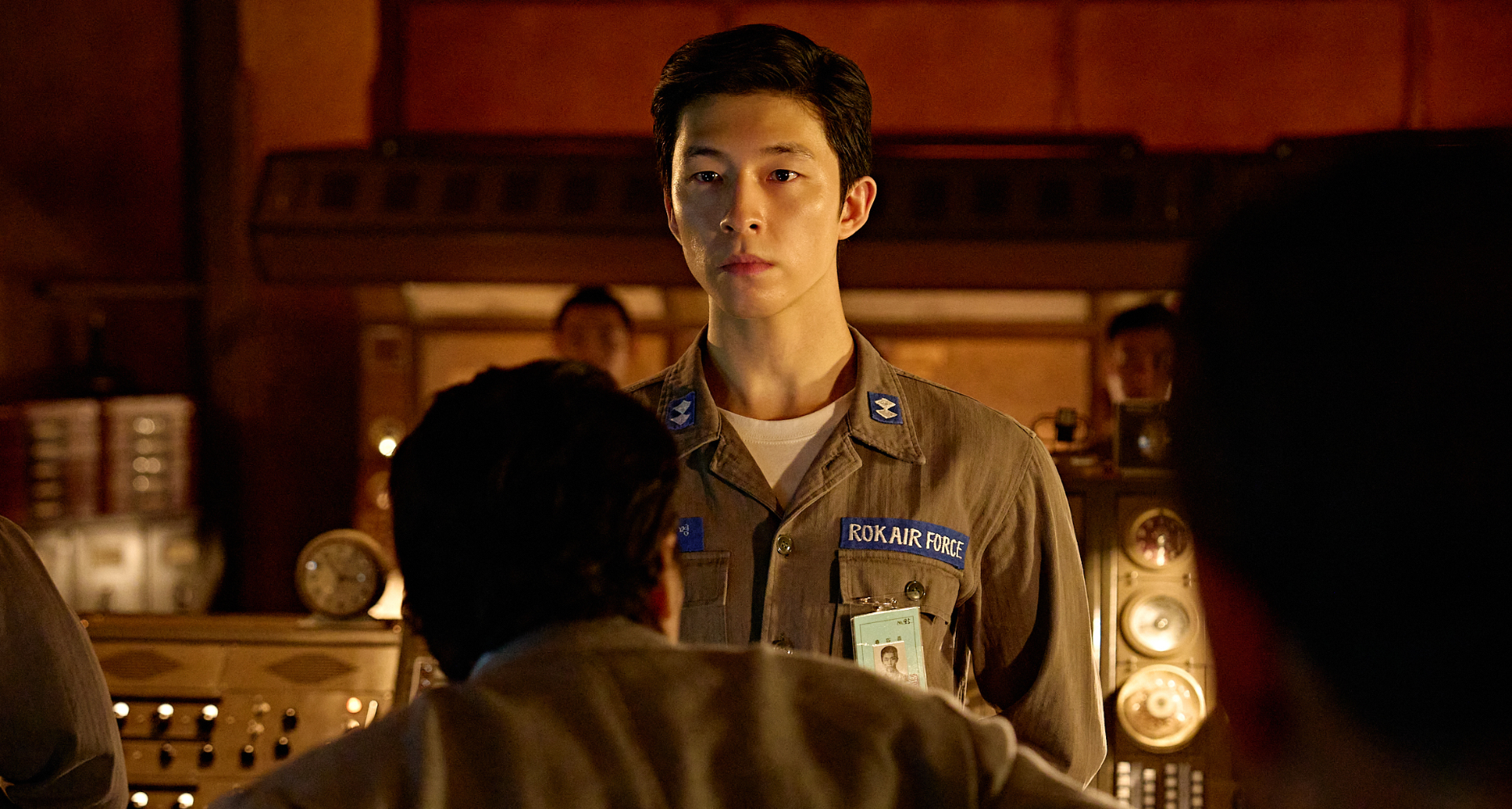
The film is a mordantly funny excavation of gubernatorial incompetence as they attempt, by any means necessary, to bring the plane down with no casualties, and everyone gets put through the wringer. Sung-hyun spares no prisoners, from the figures who scramble a plan in fooling the terrorists hijacking the plane that they’ve landed in Pyongyang, North Korea, to the terrorists themselves who haven’t even learned the basics of “Hijacking 101” before doing so. Everyone is ridiculed, even you, the viewer, for your attempts in wanting to sympathize with these self-centered idiots who will only perform actions if it benefits them – and them only. If saving as many hostages as possible will improve their own gains, then that’s what it will be. If letting them die is more convenient, they won’t hesitate.
At times, it’s darkly funny and never lets up on its visual juxtapositions of incompetent people paralleled by even more incompetent people. In other sections, the movie sags and seems to exhaust rather than enthrall. Sung-hyun divides his story into five chapters, each of varying quality. The first three are probably the strongest, though the sections in between prime the audience that the film will run out of steam and go around in circles. For instance, there’s a tribute to Sergio Leone’s The Good, the Bad, and the Ugly near its midsection, which, while well-intentioned, is terribly misplaced.
Characters also suffer at the brunt of a relentless desire to make audiences laugh as much as possible, especially in its back half, where a revolving door of people are introduced and quickly disappear, making the narrative feel more convoluted than meaningful. Still, Sung-hyun’s eye can’t be overstated. With the aid of cinematographer Jo Hyoung-rae, he crafts images of real kinetic power, especially during sequences of high-spirited tension. The camera spins in a thousand different directions, and always responds to the energy the performers bring to the movie, especially Kyung-gu, whose latest collaboration with Sung-hyun may be his best yet.
The mystery shrouding “Nobody” may be the film’s central plot point, which unfolds in unexpected ways by the time it reaches a sobering conclusion, with a better use of the song “Blue Moon” than Richard Linklater’s film of the same name. Revealing how it’s employed would rob you of the realization Sung-hyun illustrates at the end of his picture. Yet, his ability to convey his message so intelligently and clearly, even with such a scattershot narrative, is honestly the most commendable aspect of Good News.
It may not reinvent the wheel of Korean cinema, but it’s certainly an amusing affair that, if you’re willing to surrender yourself to Sung-hyun’s madness for almost two and a half hours, you may find something of note in it. Cinema should be playful and inventive, which Sung-hyun reminds us of for a sizable chunk of Good News’ runtime. If only more filmmakers with a backbone in our neck of the woods could take notes…