Home Blog Page 37

Movie Review (FNC 2025): โ€˜La Graziaโ€™ is Paolo Sorrentinoโ€™s Weakest Film


Director: Paolo Sorrentino
Writer: Paolo Sorrentino
Stars: Toni Servillo, Anna Ferzetti, Massimo Venturiello

Synopsis: A widowed Italian president faces moral crises over euthanasia legislation and pardoning killers while grappling with his late wife’s infidelity during his final months in office


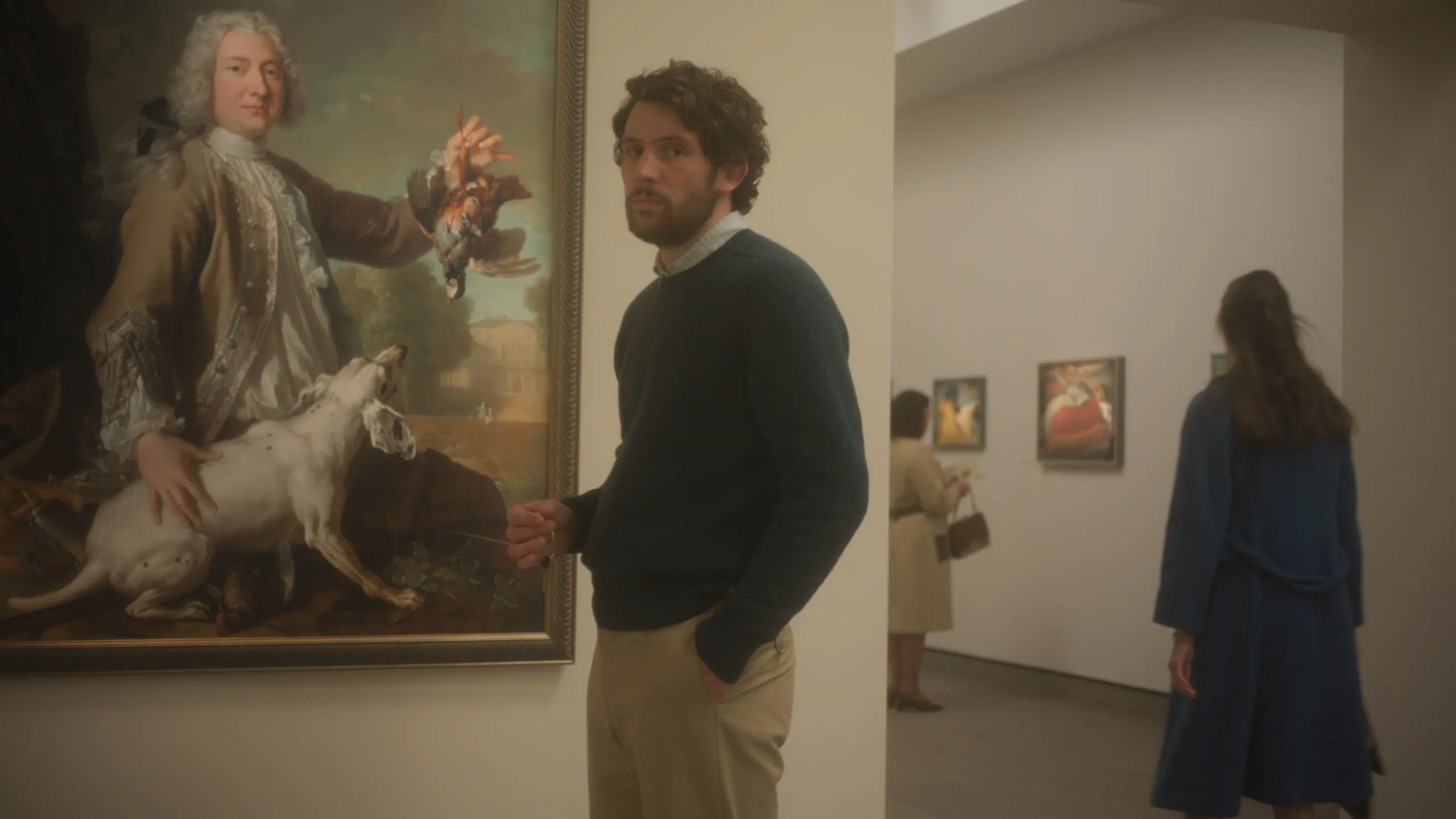
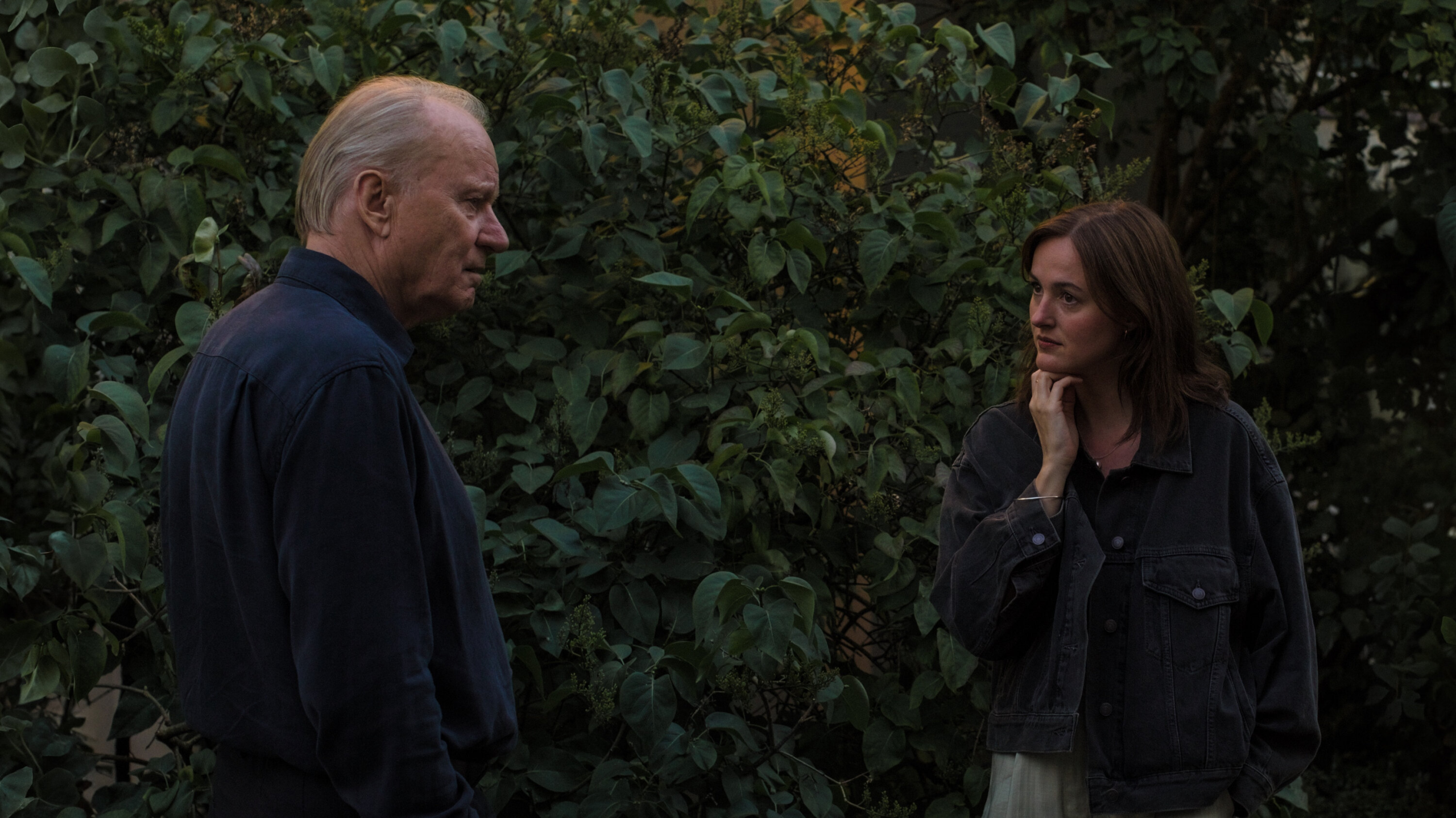
After playing one of the most corrupt politicians in world history in Loro, it seems natural that an eventual subsequent logical step in Toni Servilloโ€™s continuing collaborations with Paolo Sorrentino would be to portray the complete polar opposite of a figure like Silvio Berlusconi. And now here he is, in La Grazia, playing an aging President of the Republic of Italy whose perception within public opinion is that of a saint, who arrived at an unstable time in the countryโ€™s history and accomplished more than any traditional politician would. 

This is how the movie introduces us to Servilloโ€™s Mariano De Santis, a quasi-messianic figure who, despite a rocky relationship he carries with his daughter, Dorotea (Anna Ferzetti), will be hailed as one of the most successful presidents of the country. But heโ€™s sad. Heโ€™s sad because he longs for his deceased wife, whom he has recently learned had a secret lover. Not only that, but he must grapple with the responsibility of signing the ultimate bills of his time in office, before returning home and reintegrating into contemporary society. Usually, the final bills of a political figure are their ultimate actions to preserve their legacy. In fact, itโ€™s their biggest moral test. Can they accomplish significant things while their time holding substantial power is limited, and will these actions have a positive or negative impact on Italy? 

In the case of De Santis, these bills are no easy task for anyone holding any position of power to sign off on: a law that would make euthanasia legal in Italy, and two complex pardons of first-degree murderers who havenโ€™t necessarily shown deep remorse for their actions. The pardons are complicated enough, but the Pope (played by Rufin Doh Zeyenouin) vehemently opposes any law that would make the practice of euthanasia legal in the country, even if it may only be restricted to the terminally ill. The President stalls as much as possible on taking action on these issues, and thereโ€™s debate within his inner circle that he may not even sign them, leaving his successor, rumored to be his best friend, Ugo Romani (Massimo Venturiello), to enact them. 

Themes of melancholy and longing abound in Sorrentinoโ€™s filmography, and La Grazia is no different. His previous, divisive (read: this critic loved it), feature, Parthenope, wrestled with the ideals of youth and beauty, after its titular character (played by Celeste Dalla Porta and Stefania Sandrelli) aged significantly, and wondered if the time she spent bathing in her beauty was ultimately worth it, now that the eras have moved on, and Parthenope has reached her final years.  Sorrentino captured this with a melancholic eye for the anthropological nature of the subject he presented, giving real aesthetic immediacy to what is essentially his most visually striking film.

La Grazia, on the other hand, is melancholic through the eyes of its aging President, who attempts to make sense of a world he never understood. This is classic Sorrentino, with now an added layer of restraint? Minimalism??? Most of this 133-minute feature, which opened the Venice International Film Festival and ultimately won the Coppa Volpi prize for Best Actor, is aโ€ฆchamber piece? Held mostly inside confined spaces??? Whatโ€™s gotten into him?? 

Jokes aside, itโ€™s always refreshing when a filmmaker subverts any pre-conceived expectations we have of him and does the exact opposite of what we think he will do. Since his Oscar-winning The Great Beauty put Sorrentino on the pedestal of the great contemporary Italian filmmakers (in my opinion, the only one who has effectively captured the essence of the country since Vittorio De Sica), maximalism (or, more aptly, formal experimentation) has been his bread and butter. 

Parthenope was perhaps too visually ambitious for the layperson. However, the opulent frames of Daria Dโ€™Antonioโ€™s jaw-dropping cinematography as the protagonist navigates around Naples were often enough to bring me to tears. In La Grazia, Sorrentino takes these formal experiments out the window and crafts a patient, character-driven piece in which most of the visual choices that exacerbate the feeling of immense sadness Mariano experiences are minimal, serving to punctuate Servilloโ€™s incredible performance. Dโ€™Antonio, in her third (hopefully not last) collaboration with Sorrentino, still manages to craft some stunning images in a movie that doesnโ€™t necessarily lend itself to image-making as its top priority. Whereas a film like รˆ stata la mano di Dio or Parthenope puts scenery at the forefront, none of this is found in La Grazia

The only โ€œmomentsโ€ where Sorrentinoโ€™s eye for painterly, symmetrical compositions occur are whenever Mariano thinks of his wife, on the roof of the Quirinale, a long drag off his cigarette, attempting to figure out where he fits in a world that has essentially left him to die. Thereโ€™s also an impressively-mounted slow-motion sequence (a Sorrentino hallmark), where Mariano looks at a much older political figure having difficulty walking the carpet to shake his hand, through the sounds of KI/KIโ€™s โ€œ5 mins of acid,โ€ which eventually acts as a musical leitmotiv whenever the President has an epiphany of sorts. 

But thatโ€™s about it. The rest of Dโ€™Antonioโ€™s photography relies entirely on making Marianoโ€™s journey of self-actualization as personal as possible. Rack focuses seem to be the primary aesthetic choice for making the audience peer into the Presidentโ€™s intimacy, and they are all effective because Sorrentino is, first and foremost, a visual artist. However, his sense of aesthetics is limited when his screenplay is arguably the weakest of his career. Iโ€™ll defend Parthenope with all my life as a project that bursts with ideas and images as complex as Sorrentinoโ€™s mind. Unfortunately, La Graziaโ€™s structure is far too meandering and cyclical. It has nothing of interest to say about its alleged โ€œsaintโ€ of a President being morally (and spiritually) tested in ways he never was before his wifeโ€™s passing, and the weight that these final actions will carry within Italy if he decides to sign off on them (or not). 

When the movie ends in the void of space, as Mariano finally dreams of โ€œthe absence of gravity,โ€ one has to ask whether we learned more about his prolonged sadness when we were introduced to the character than when we left him. Unfortunately, we never fully get to peer into his psyche actively and understand why the grief he carries complicates his final tasks. Thereโ€™s a recurring challenge that Sorrentino focuses on โ€“ letting a sick and frail horse, which the President likes, continue living in pain or put him out of his misery โ€“ which should give us a clue on the difficulty he has signing a bill that would legalise an allegedly controversial practice (itโ€™s not, but thatโ€™s a story for another time). Yet, our time with Mariano, as he gazes at the animal, is so limited that we barely grasp his reasoning behind the decisions he makes and the impulses that drive the dramatic sections, which feel incredibly soapy in execution. 

Thank heavens Servillo commands the screen (one canโ€™t necessarily say he deserved the Volpi Cup, because his previous Sorrentino performances were also deserving of the award), and that Sorrentino balances out a rather gloomy scenario with Marianoโ€™s friend, Coco Valori (played by Milvia Marigliano), who acts as a much-needed comedic counterpoint to the Presidentโ€™s plight. Whenever she would appear on screen (and it was sparse), her nail-biting line delivery would often send the crowd (and me) into contagious, uncontrollable laughter. Coco Valori always gets the last laugh, even if she is responsible for the movieโ€™s most predictable reveal, which doesnโ€™t add much texture to an already bloated plot that doesnโ€™t go in the intended direction Sorrentino hopes. 

One wishes the film were more satiric than lethargically paced, and that it treaded on territories Sorrentino has explored in more formally and thematically interesting films (and television shows). The fact that La Grazia is also this aesthetically restrained somewhat dampens our excitement to see such a staunch formalist play with the camera (and the varied landscapes of Italy) as much as he did. But itโ€™s not a terrible film either. I doubt Sorrentino can make something truly atrocious, and his continued partnership with Toni Servillo and Daria Dโ€™Antonio at least ensures that weโ€™ll never be bored. His image-making usually brings me to tears, and I was waiting for it to happen in La Grazia. However, it never arrived. To say Iโ€™m bummed would be the understatement of the year.

Grade: C+

Movie Review: ‘You’re Dating a Narcissist!’ Overcomes Its Angle To Be Funny and Thoughtful


Director: Ann Marie Allison
Writers: Ann Marie Allison, Jenna Milly
Stars: Marisa Tomei, Sherry Cola, Ciara Bravo

Synopsis: An outspoken psychologist rushes to Los Angeles with her best friend to stop her lovesick daughter’s wedding, fearing the groom is a narcissist.


Dating is very tough. Anyone who doesn’t think so is fooling or lying to themselves. Yet, we do it anyway for many reasons, the top two being that society tells us we have to and the other that we are looking for the one person we think can complete us. Even finding a person who you assume is the only person you ever want to be intimate and exclusive with is not without pitfalls because people lie, cheat, and steal. This is the more gentle way to express the themes of You’re Dating a Narcissist!.

The film feels like a self-help guide masquerading as a fiction. These ideas and archetypes feel like someone has gotten hurt by someone like this in the past. The self-help angle even hits much too hard and repeats over again when a new situation arises. The film takes on the verb that the characters use to describe when Judy (Marisa Tomei) gets herself worked up. The film often goes “All Judy” and not always in a good way. Especially the video Judy is drunkenly making for her daughter, Eva (Ciara Bravo), that is intercut with the action of the film. It’s a poor device that takes away from the story.

The film’s script isn’t completely a textbook, though. Writers Ann Marie Allison and Jenna Milly have good comedic chops and a dry sense of humor that shines in many characters. The story itself is not new, but is a good take on the single mother trying to keep her child safe in the face of all that the world could throw at her. Having Judy be the focal character also lends itself to the mystery of if her instincts are right. We see a few intimate scenes with Eva and Theo (Marco Pigossi), but sticking with Judy we think we have everything figured out when it’s much more complicated than that.

One of the best subplots of the film is the presence of Judy’s best friend and colleague Diane, played by one of the best supporting comedic actresses in the business, Sherry Cola. Diane is going through her own crisis with a woman she’s been dating who she finds out is married. Through trying to deal with her own relationship issues, we get to see that Diane realizes that Judy’s not a completely rabid academic about this issue. Diane’s story is an objective point of view that grounds some of the madness.

It also helps that Sherry Cola is very funny. There’s something about her smoky voice and the way she can side eye like an absolute professional that makes Cola so fun to watch. Her one liners are simply perfect and her asides in group scenes are laugh out loud funny. Yet, she can also do vulnerability well. She’s able to find the deep sadness within Diane about having been the other woman for her girlfriend’s relationship. It makes her a perfect foil for Marisa Tomei’s manic and affecting performance.

You’re Dating a Narcissist! is the kind of film that hits you when you don’t realize it. In the midst of the madcap escapades of Judy trying to expose Theo’s behavior to Eva, there is a contemplation about who Judy is as a person in the world. This point in the film when Judy is hit with a staggering truth bomb shifts the scene without words. Director Ann Marie Allison and cinematographer Martim Vian frame Judy in the middle of the screen as she looks at us and all around her the people are speeding up to a blur. It’s as if in this moment of revelation, Judy has finally slowed down to see how she’s been acting about this whole situation. It’s a good and unexpected effect.


The film is a bit of a self-help exercise at times, which can be trying on our patience. Overall, though, it’s a funny and thoughtful film. You’re Dating a Narcissist! finds an overused label and gives real, concrete advice about how to avoid people who fit that mold. It has a great cast and good performances. It’s a film that you can watch and then call your best friend to tell them you finally understand why that previous relationship was so awful.

Grade: C

Criterion Collection: November 2025

Weโ€™re in the holiday season full-time and that means more special releases from Criterion to buy and stick in those stockings. While two films are re-releases, a collection from Iranโ€™s cinema master, a hidden film by Spainโ€™s enfant terrible, and three new Hollywood additions, including the last from a major auteur, all come aboard the C train. Mixing the audacious with the realistic and fun in each theme of these movies, even when one of those is a documentary about the psychopathy of filmmaking, hereโ€™s the list for November.

Hellโ€™s Angels (1930)

In Martin Scorseseโ€™s The Aviator, the film’s beginning shows Howard Hughes working as a perfectionist director in recreating World War I dogfight scenes. No expense was spared, moving from Los Angeles to Oakland because there are clouds in the sky to show the planes actually flying while filming these hazardous scenes. As in the film, the reception to Hellโ€™s Angels was enthusiastic, with its audacious shooting in the air to show that they were flying. In the middle of it is a melodrama about two brothers (Ben Lyon and James Hall) who join the fight amidst their love for the same woman, the blonde bombshell Jean Harlow, and the rules of engagement with the war which threatens all of them. It may not have recouped what it cost to make, but the visual experience was worth every dollar spent.

El (1953)

โ€œHe,โ€ which translates in Spanish, is Luis Buรฑuelโ€™s dark turn while living in Mexico about a woman (Delia Garces) dealing with her much older husband (Arturo de Cordova) and his obsessiveness with preventing her from being ogled on by others. Using his trademark surrealism, the young wife must navigate his paranoia to break free from his grasp that is no longer based in reality. Buรฑuel continued his attack on the bourgeoisie, regardless of where he was living at the time, and El is his midpoint feature of a resume full of thrillers, drama, and satire about the type of people he despised.

Eclipse Series 47: Abbas Kiarostamiโ€”Early Shorts and Features (1970-1989)

Before becoming a mainstream star of Iranian cinema, Kiarostami got his start making different types of movies, especially evolving around children. Seventeen of these are in this one collection, capturing the changes of the country with the Iranian Revolution of 1979 in between. Starting with his first film, Bread And Alley, all the way to his education-based documentary, Homework, those key themes and techniques which would appear in some of Kiarostamiโ€™s masterpieces, all came about through here and his gazing eye remains unmistakable. 

Burden of Dreams (1982)

Made in parallel with making his South American Amazon epic, Fitzcarraldo, director Werner Herzog allowed documentarian Les Blank to film the absolute mess of a production, which would result in a masterpiece akin to Apocalypse Now. Funding, a sudden change in cast, and very dangerous shoots were part of the chaos, yet it was seeing Klaus Kinski, Herzogโ€™s infamous collaborator, publicly losing his mind and threatening people left and right, while the natives found themselves in the middle of their livelihood threatened by these strange foreigners. Itโ€™s Germanyโ€™s version of Apocalypse Now with the chaos of filmmaking at such a scale in the woods and this incredible documentary captures every bit of it. 

The Breakfast Club (1985)

The second re-edition is John Hughesโ€™ 80s-defining teen movie about strangers and the archetypes we had in high school serving one Saturday detention. Molly Ringwald, Ally Sheedy, Emilio Estevez, Judd Nelson, and Anthony Michael Hall give us generational-transcending performances which gave them the label the โ€œBrat Pack,โ€ a term they really didnโ€™t like, but it made everyone a permanent cultural star of the era. Now, if Criterion can give this treatment to Ferris Buellerโ€™s Day Off and Sixteen Candles, they really would have a great trilogy worth buying.

House Party (1990)

The rap duo Kid โ€˜n Play were major hip-hop influences in the early ’90s before the emergence of gangsta rap. This film, in Reginald Hudlinโ€™s debut, exemplifies the feeling with the comic touch of urban life with teenagers who just want to go out and have some innocent fun with one night getting together. Along with the rap duo, comedian Robin Harris, Tisha Campbell, and Martin Lawrence star in this teen comedy that encapsulates this short period in transitioning between the decades and the type of rap which was popular turning to a more hardcore style.

Eyes Wide Shut (1999)

The last film by Stanley Kubrick, released four months after the directorโ€™s death, was polarizing upon release, but has improved as time moved on as a worthy finale to Kubrickโ€™s career. Tom Cruise and Nicole Kidman, both married to each other at the time, play a couple whose relationship is tested after a shocking confession leads to a nighttime journey into a secret orgy with dangerous threats. Sydney Pollack and Todd Field, who then went behind the camera after making this film, co-star in Kubrickโ€™s exploration of sexual relations and the underbelly of power which has its own desires that no one knows or should know and what it means to be faithful. 
Follow me on X: @brian_cine (Cine-A-Man)

Podcast Review: Springsteen: Deliver Me from Nowhere

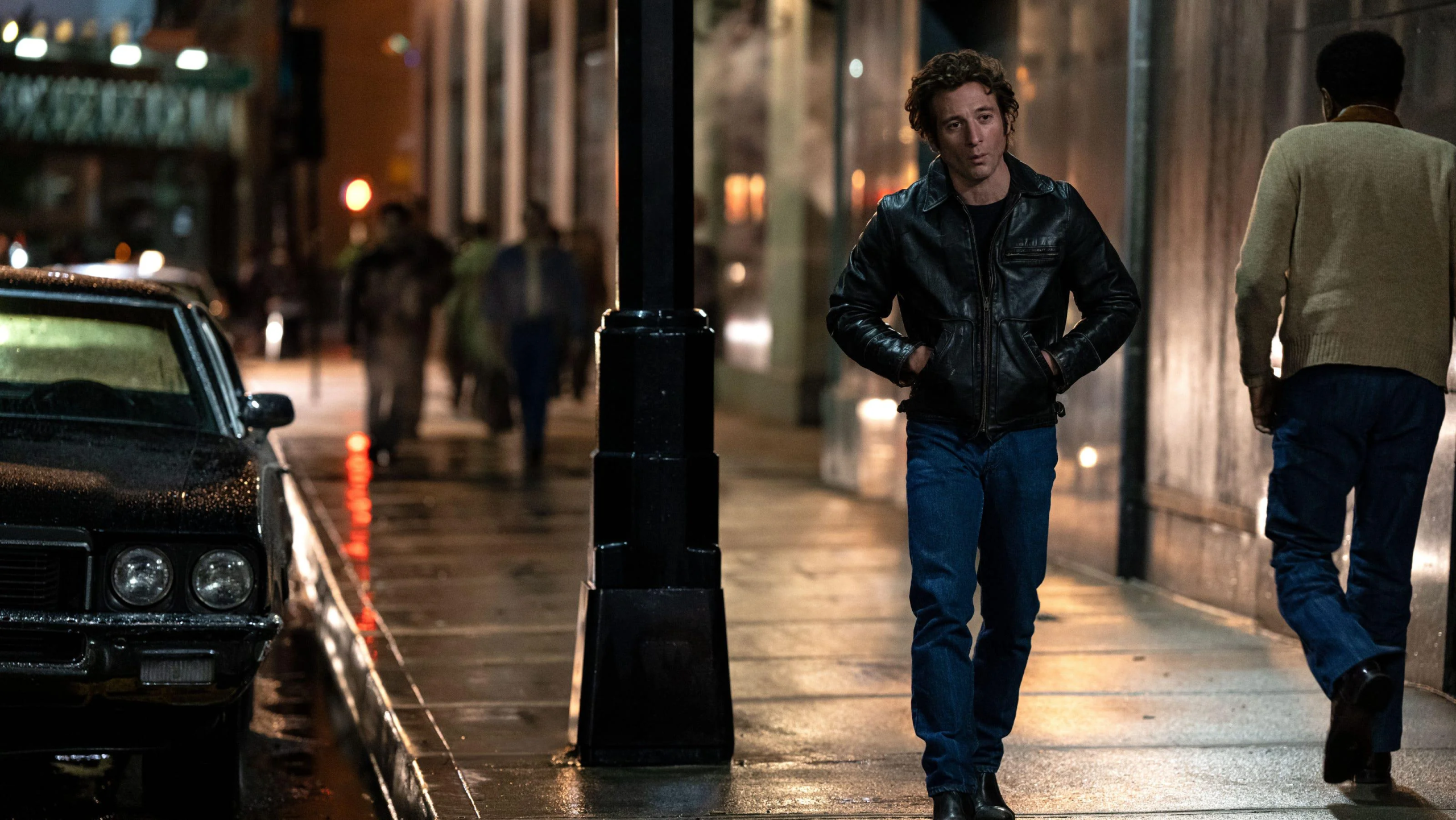
On this episode, Megan and Shaurya discuss Scott Cooper’s new film Springsteen: Deliver Me from Nowhere, starring Jeremy Allen White! While it’s not your typical biopic and there’s something to appreciate there, it’s also not a film that’s able to fully come together. It’s a solid effort despite its flaws, and White gives a really good performance as Springsteen.

Review: Springsteen: Deliver Me from Nowhere (4:00)
Director: Scott Cooper
Writers: Scott Cooper
Stars: Jeremy Allen White, Jeremy Strong, Paul Walter Hauser, Stephen Graham

Subscribe to our Podcasts RSS
Subscribe to our Podcasts on iTunes
Listen on Spotify
Listen on Stitcher
InSession Film Podcast – Springsteen: Deliver Me from Nowhere

Women InSession: Folk Horror Movies

This week on Women InSession, once again being in spirit of Halloween, we discuss our favorite folk horror movies! There are so many great films that fit this mold, from The Witch to Midsommar to The Wicker Man, and so many others, we had a great time talking about why these films are so effective and resonate.

Panel: Kristin Battestella, Megan Kearns

On that note, check out this week’s show and let us know what you think in the comment section. Thanks for listening and for supporting the InSession Film Podcast!

Subscribe to our Podcasts RSS
Subscribe to our Podcasts on iTunes
Listen on Spotify
Listen on Stitcher
Women InSession – Folk Horror Movies

Movie Review: ‘The Perfect Neighbor’ Shines a Necessary Light


Director: Geeta Gandbhir
Stars: Susan Lorincz, Ajike Owens, Franklin Baez-Colon

Synopsis: A minor disagreement between neighbors in Florida takes a lethal turn, with police body camera footage and interviews probing the aftermath of the state’s controversial “stand your ground” laws.


Netflixโ€™s The Perfect Neighbor is bound to ruffle a few feathers, considering the political climate. The film takes raw footage from police body-worn cameras and dash cams. Directorย Geeta Gandbhir uses them to draw a heartbreaking portrait of systemic and intergenerational racismโ€”a toxic combination of socially inherited issues that is built into state (and soon, probably federal) law. In this case, the suspect, a woman named Susan Lorincz, an older adult Caucasian woman, used the police to enforce control over a friendly neighborhood community, swinging a hammer of fear.

Or, in this case, a pair of scratched-up rollerblades and a sharp, umbrella-like stick. Unfortunately, she pictured a handgun and bullets as the carrots.

The Netflix documentary film covers the case, showing Lorincz calling the police a dozen or so times because neighborhood children are yelling and screaming in the streets. Sometimes she claims they are on her property and tells the responding officers, โ€œIโ€™m the perfect neighbor.โ€ She claims she is threatened almost every time, yet never thinks about putting up a surveillance camera to capture the supposed adolescent criminals. Nor does she seem to understand that her landlord has permitted the kids to play on the lot of land adjacent to her rental.

Yet somehow, Lorincz is not cited or arrested by the police for repeated accusations without proof, which is a misdemeanor involving the misuse of emergency services, false reporting, or even harassment. Though the officers do not have a problem calling her โ€œpsychoโ€ under their breath as they walk away. Lorincz was almost arrested for trespassing and attempting to break down a gate on private property (the reasons for her presence were never fully explained). Even though she lied on camera and was about to be arrested, she avoided handcuffs with a sob story, appearing as though an officer went over to, we can only assume, work out an arrangement to avoid jail time.

The events that transpire afterward are ripped from the headlines, powerful and vital, making the hairs on your skin stand on end and anger rise from your heart. A crime documentary that plays out like a profound thriller, raw and heartbreaking, that is just as much about racial dynamics as it is about the deep fractures in a justice system that too often protects power over truth. Since the birth of the term โ€œKarenโ€ in that Central Park case, the weaponizing of the police by citizens in power has shone a light on macro-racism that can no longer be ignored.

There is no one playing for the camera in this documentary film, except for the suspect when lying to police about harmless or innocuous activities. In this case, Lorincz invokes the โ€œStand Your Groundโ€ law, which has acquitted 17% of white defendants in deadly crimes and only 1% of those with a biological condition of higher melanin production due to genetic adaptation. Gandbhirโ€™s documentary is a stunning, jaw-dropping example of biased exploitation and does what only the best narrative films doโ€”not show a glimpse of an America you donโ€™t want to see, but rather our reflection in the mirror.

The viewer may wonder if what transpired would have even made the papers without social media, cell phone recordings, or those pesky body-worn cameras. All of this is magnified almost viscerally through Alfredo De Laraโ€™s cinematography, Viridiana Liebermanโ€™s virtuosic editing, and Laura Heinigerโ€™s haunting score. The Perfect Neighbor places you in the middle of an impossible-to-escape nightmare, using emotional manipulation to drop the viewer into the case and allow them to make their own judgments.

Which, I bet, will expose more racist attitudes lurking in the shadows than we could possibly know.

You can stream The Perfect Neighbor exclusively on Netflix!

Grade: A

Chasing The Gold: Jafar Panahi’s Excellent Script From ‘It Was Just An Accident’ Stands Out As Deserving Of Honor

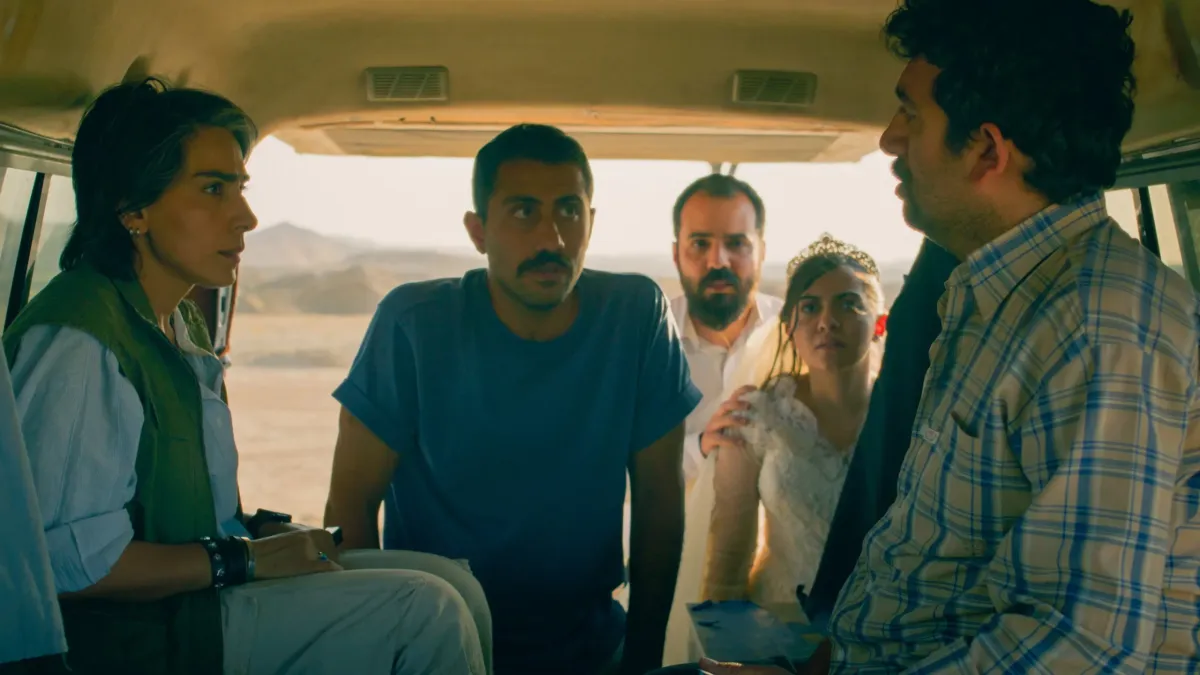
Overwhelmed. Shocked. Saddened. Furious. Stunned. These are but a few of the emotions which may flow through an audience while watching Jafar Panahiโ€™s It Was Just an Accident, part of the Main Slate at the 63rd New York Film Festival. But these emotions arenโ€™t just a testament to the power present within Panahiโ€™s Palme dโ€™Or-winning film. These emotions are all integral to the very scenario Panahi has crafted with this masterful work of cinema. There are times in life where we can feel so much. Itโ€™s an overwhelming sensation as universal as knowing the sun will rise and set with each passing day. In such moments, our very personalities can warp as theyโ€™re overtaken by some of the primal driving forces of humanity. We might find ourselves focused on a singular thought: a painful memory or a rage-inducing reminder. It can be something that shakes us to our very foundation. One of the central questions presented in the script of It Was Just an Accident is just how much will we let such feelings affect us? In more succinct terms, what happens if we allow them to fundamentally change who we are as people? This question is given all the more weight by this being the first film Panahi has made since Iran lifted the ban on his filmmaking. Regardless, It Was Just an Accident was still made in secret, and Panahiโ€™s script in particular serves as a testament to the power cinema can wield. Within words on a page, such a singular personal dilemma can translate into a universally understood thriller. Itโ€™s a marvel to watch unfold before your very eyes.

It Was Just an Accident is many things. Oftentimes, itโ€™s operating as a supremely dark comedy. Much of the scenario Panahi has crafted is, at surface value, a comedy of errors of sorts. Vahid (Vahid Mobasseri) believes fate has brought him to the soldier that tortured him during imprisonment. This is only found out after the introduction, devoid of any context, subverts expectations. Without any anchor to ground us, Panahi keeps his audience on our respective toes as we try to get some semblance of understanding into whatโ€™s occurring. By the time we understand who Vahid is stalking in a not-so-nonchalant manner, itโ€™s already too late: Vahid has him tied up and tossed into a hole. But before he can finish the job, an inkling of doubt seeps into his mind. And so Panahi halts the startling tension he so immediately created for a comedic set of interactions. Vahid gets sent from person to person, all of whom were also potentially tortured by this man, in the hopes of having his doubts alleviated. At face value, Panahiโ€™s scenario is played for laughs. But itโ€™s slyly toying with much more tragic undertones. And this subtext continuously bubbles up to the surface over the course of the filmโ€™s runtime. Many of the characters Vahid entangles within this kidnapping all have their own reactions to the potential of being brought face-to-face with the pain of their past. In this hunt for alleviating doubt comes not just a quest for confirmation bias, but it dredges up emotions which have startling implications for the very souls at the center of this story. That Panahi juggles such lofty emotional weight with the obvious and palpable thrill of whether or not they kidnapped the right man is one of this scriptโ€™s sharpest, and most cinematic, features.

Beyond the tonal balance of It Was Just an Accident, another of its scriptโ€™s most impressive feats is how effortlessly it allows each character their own distinct moment to shine; part of this is undoubtedly due to the impressive slew of performances. But the moral dilemma Panahi is grappling with through this imagined scenario is just staggering. Through the five central characters of It Was Just an Accident comes the opportunity for five varied emotional responses. Each one differs greatly, but the depths all seem to stem from the same source. In some instances, there is an immediate and blind fury unleashed on the film. In others, there’s an innate sadness. Itโ€™s not just for themselves, but for their country as a whole. Some characters want to merely put it all behind them and attempt to move forward. But the opportunity of potential vengeance before them toys with any semblance of peace which might have been found in the years since. Through Vahid, the moral quandary is grappled with in all sorts of ways. Panahiโ€™s script is allowing himself the space to work through his own singular emotions. And in doing so, he is able to present his audience with a single question: is there any correct solution? Each emotional response is written with both respect and a validating hand. With such cruel and unjust punishments being doled out, can anybody be blamed for seeking vengeance and retribution however best they can? Panahi never presents his audience with an answer. He instead provides his audience with the question and allows us to ponder the possibilities. Yet all the while his script remains a tightly wound thriller until the film feels bound to snap under the pressure. Lucky for us, it never does. It instead finds a way to pivot entirely. In the extended penultimate scene and coda, Panahi finds one final method to keep his audience glued to their seat and shocked when the credits roll.

Comic elements find themselves entangled in the thriller aspects of It Was Just an Accident. The moral dilemma of these characters is always present. But in the end, Panahi chooses to close his script with a pair of equally haunted scenes. The first sees an extended one-take broken out into three monologues of sorts. Theyโ€™re not traditionally delivered in any sense. The trio of warring voices are all breaking into the frame in the hopes of having their voices heard and their emotions felt. Itโ€™s a sequence wherein Panahi doesnโ€™t allow his audience a moment to breathe. In the final scene, which immediately follows, Panahi does quite the opposite. And in doing so, he makes it so that we wonโ€™t want to breathe for even a moment. Itโ€™s a sequence best experienced within the context of the film, so it wonโ€™t be dissected here. But what can be said about it is this: for all the emotion and moral reckoning Panahi has packed into the words of his script, his ability to equally do the same without a word spoken or written is wildly impressive. Silence is universal in that what an audience is feeling during a moment of reflection is often far more powerful than anything that can be directly shown. Thereโ€™s a universality to the unknown, and what provides us more of a quandary than that of wrestling with our own internal feelings? Panahi is making a direct statement on his own internal emotions while posing the question to his audience. Itโ€™s proof of a filmmaker who understands the power of cinema is in being able to connect with an idea or set of ideas more than anything else.

In this regard, the script of It Was Just an Accident excels. Some of the best screenwriting examples are those which imbue reality with a cinematic splendor, all the while never removing the real-world impact of such an emotional response. Panahiโ€™s script, though rooted in the specificity of his living under an authoritarian regime, is written with a universal pen. It allows his ideas and emotions to transcend beyond language and personal experience, morphing into a cinematic vehicle which is bound to stun audiences whether theyโ€™re aware of the context surrounding the filmโ€™s creation or not. Itโ€™s a stellar example of mining personal experience in a way which breaks down any conceivable barrier of entry. Itโ€™s a human tale that anyone can relate to; and itโ€™s told through an experience and a reckoning that Panahi is bravely grappling with.


It Was Just an Accident screened at the 63rd New York Film Festival as part of the Main Slate section.

Movie Review: โ€˜Christyโ€™ Would Be Down For The Count Without Sweeney


Director: David Michรดd
Writers: Mirrah Foulkes, Katherine Fugate, David Michรดd
Stars: Sydney Sweeney, Ben Foster, Merritt Wever

Synopsis: Tells the story of Christy Martin, the most successful female boxer of the 90s.


There are a few genres in American film that are so stable, so typical that they have turned stale. The biopic is certainly high on that particular list, but the sports film is right there alongside it. When you combine these two genres, there is a real opportunity to break new ground and take some actual risks. This is even more so when the subject of your biopic has a past that could be seen in a negative light. And letโ€™s not forget that womenโ€™s boxing, especially in the 1990s was seen as more of a sideshow than a sport! And yet, despite all of these opportunities, Christy plays it completely safe at nearly every turn.

The film begins with Christy (Sydney Sweeney) as she figures out what โ€œher thingโ€ is, namely boxing. Much has been made of Sweeneyโ€™s transformation, and for good reason. No movie star can be truly unrecognizable, but she certainly gets close. But the physical side is not the only bit of change. Her performance here is a stunner, as she removes all signs of glamour and stereotypical beauty. This is replaced with a focus and desire to compete that would fit in with the best boxing films on record. The problem, really, is that she is given little to work with from the script, penned by Mirrah Foulkes, Katherine Fugate, and director David Michรดd.

One of the glaring issues that the film has is predictability, and not solely because this reviewer lived through the time period covered. Given the fact that we know who Christy Martin is, when we are introduced to her trainer, James V. Martin (Ben Foster), even the dullest viewer will know that the two will end up married. However, Foster is so cartoonishly evil that we are also left grasping at straws for why she would agree to a relationship. There is some leaning towards the idea of compulsory heterosexuality as Christy is forced, mostly by her mother, Joyce Salters (a constantly whispering Merritt Wever), to give up her romantic relationships because of โ€œhow it would look.โ€ 

The entire world seems to be against Christy finding even a modicum of happiness, and there is an interesting movie hidden in there somewhere. Unfortunately, Michรดd bows to convention and takes us through Christy Martinโ€™s career, bout by bout. The boxing sequences are entertaining enough to watch, but they certainly do not push the envelope in terms of style. Ryan Coogler and Maryse Alberti in Creed, this is not. Sweeney handles herself very well, as do her partners, including the great Katy Oโ€™Brian.

Oโ€™Brian plays Lisa Holewyne who is an opponent of Martinโ€™s, and is attacked repeatedly by the titular character for her sexuality. This opens up a truly interesting dichotomy. Martin is a closeted woman, who begins to lash out at others who are living their truth. Now, this is not a radical or surprising development, but the way that Sweeney and Oโ€™Brian play it is nearly magical. In between curses and epithets, you can see that Martin is deeply wounded. And instead of meeting her in kind, Lisa sees her pain without ever putting a name to it. The gentle nature of Oโ€™Brianโ€™s performance will come as no surprise to those of us who have seen Love Lies Bleeding, but her soft smile and understanding fills the screen between her and Sweeney. Sadly, Oโ€™Brianโ€™s character is nowhere near the focus, and that is to the filmโ€™s detriment.

As the movie plods along, hitting all of the expected beats, it is easy to wonder why it is worth your time. In order not to spoil too much, vagueness is necessary. But every reason to watch this film occurs in the last 30-40 minutes of runtime. When James finally goes from bad to worse (everyone knew it was coming), Sweeney goes into overdrive. All of the rage and battle saved for the ring, is now unleashed into the real world. The fierceness of her gaze as she recovers and takes her place in her new world is truly something to behold. Now that the obstacles of thinly drawn characters have been removed, there is a time to shine. It is only a shame that, at this point, the film is winding down. Just when the viewer might be getting locked in, the credits and post script roll.

Working within a genre is always a challenge. There are moments that you have to hit, especially in a biopic about a person who is still alive. This doesnโ€™t mean that there is no opportunity for risk. Christy offered so many of these chances, but the film chooses to travel straight down the middle and they are deeply lucky to have actresses like Sweeney and Oโ€™Brian who can carry this to a winning decision, even if just barely.

Grade: C

Episode 659: Top 5 Hangout Movies

This weekโ€™s episode is brought to you by Koffee Kult. Get 15% OFF with the code: ISF25

This week on the InSession Film Podcast, in anticipation of Richard Linklater’s new film Blue Moon, we discuss our Top 5 hangout movies! We also discuss the latest Star Wars news, Warner Bros. selling itself off and a new Fast & Furious update.

Check out this weekโ€™s show and let us know what you think in the comment section. Thanks for listening and for supporting the InSession Film Podcast!

– Opening Banter / Star Wars & Steven Soderbergh (10:50)
After some opening banter where we talk about the upcoming holidays, we begin the show by talking about the recent report that Steven Soderbergh was tapped to make a Star Wars movie with Adam Driver before it was killed by Disney. Why they would do such a terrible thing, we’ll never know, but we had to talk about it.ย 

– Warner Bros. / Fast & Furious Update (38:54)
In other news, it was announced that Warner Bros. is still taking offers with Paramount/Skydance offering them another package. Netflix seems to be in on the negotiations as well. Given the year Warner Bros. has had, grossing over $4 billion at the box office, this seems insane. Is the industry over? Certainly feels like it. Speaking of, we talked about Fast & Furious once again because it might not be over after all given the latest tease by Vin Diesel.ย 


RELATED: Listen to Episode 610 of the InSession Film Podcast where we discussed our Top 10 Movies of 2024!


– Top 5 Hangout Movies (1:01:42)
Nobody makes a great hangout movie like Richard Linklater. We’re excited for Blue Moon as he delves into that type once again, and it provoked us to want to talk about our favorite hangout films. There are countless examples, and narrowing them down to just five felt impossible, but boy did we have a great time with this list (it’s so rich we may do it again some time). With that said, what would be your top 5 hangout movies?

Subscribe to our Podcasts RSS
Subscribe to our Podcasts on iTunes
Listen on Spotify
Listen on Stitcher
InSession Film Podcast – Episode 659

Next week on the show:

Bugonia

Courtesy of Focus Features

Help Support The InSession Film Podcast

If you want to help support us, there are several ways you can help us and we’d absolutely appreciate it. Every penny goes directly back into supporting the show and we are truly honored and grateful. Thanks for your support and for listening to the InSession Film Podcast!

VISIT OUR DONATE PAGE HERE

Movie Review: ‘She Walks In Darkness’ is Intriguing Historical Fiction


Director: Agustin Diaz Yanes
Writer: Agustin Diaz Yanes
Stars: Susana Abaitua, Andres Gertrudix, Iraia Elias

Synopsis: A young Spanish civil guard goes undercover within ETA, the Basque separatist group, spending over a decade locating their hideouts in the South of France.


Europe is a patchwork group of countries that fought for centuries in order to draw the maps that exist today. In the second half of the 20th century, Europe saw a great deal of upheaval brought about by political movements of ethnic or cultural minorities that saw their chance to take back their ancestral lands in order to self govern. The Balkan nations after the fall of communism fought and redrew their corner of Europe to better reflect the cultural makeup of the region. Northern Irish peoples have wished for a long time to not be a part of the United Kingdom and to join with the rest of their island, the Republic of Ireland. For centuries Chechnya has attempted to buck the rule of Russia and establish their own autonomy. The same goes for the Basque people whose ancestral home is a patch of land that is encompassed by four provinces of Northern Spain and three provinces of Southern France.

She Walks in Darkness is a film that uses historical cases of violence perpetrated by the Basque separatist group ETA against the government of Spain. The film uses history as a basis for the story and not the true story of any one person within the Civil Guard, a national police force, or ETA. Instead of “based on a true story,” the filmmakers opted for a phrase like, this could be one of the many stories.

It’s a bold choice not to base the film on any one account. It’s kind of like a lot of films set during World War II. There are people present at historical events, but those people may be a fabrication or amalgam of people who existed. It gives the filmmakers more room to play with the tension and the suspense of the story. In many ways it also prevents someone from calling out falsities. The assassins who reenact real killings are never named, so that it’s less about the people who perpetrated the killings than the fact that they happened in that way.

Though, for a story about a sting of this magnitude and dedicated work, the film feels a bit dull. The tension is too thin in many scenes where it’s supposed to be overwhelming. There are some tense scenes, which include the opening. Before we even meet Amaia (Susana Abaitua), we watch her as she silently hands over the keys to a car to two men. The men drive away and Amaia goes on with her day as a teacher, which is intercut with scenes of a politician leaving city hall to get a meal. It’s kids singing and then the death song of bullets as the assassin does his duty and gets away.

It’s probably a problem with the period that the film encompasses. The main sting operation takes over a decade to come to fruition. There is a lot of waiting and investigative police work that goes into the operation. It feels as if we could have seen a couple of flashbacks, but stayed in the moments where Amaia closes in on the locations of the zulos, secret caches of weapons and materials, to give us more dramatic tension. Itโ€™s almost as if Amaia has no conflict or tension with her. Even with Amaia’s fiance’s all too subtle attempts to get her back to their real world, the job feels like there’s no great questions for Amaia. She’s a true believer from the beginning and rarely wavers. All of the characters are very black and white in that way. Their motivations are gray, but their actions are on those two poles.


She Walks in Darkness is an intriguing piece of historical fiction. There is enough to it that it will keep your attention. It’s a film that does the procedural and archival footage elements well. It just feels like we are kept at an emotional arms length most of the time. We never really have a deep affection for characters on either side. It feels like the film could be much tighter and have had a smaller scope and could have been something to behold. It is worth the watch, though, if you have a curiosity about this piece of Spanish history.

Grade: C

Movie Review (Middleburg Film Festival 2025): ‘Train Dreams’ Is a Lyrical Wonder In The Greenest of Valleys


Director: Clint Bentley
Writers: Clint Bentley, Denis Johnson, Greg Kwedar
Stars: Joel Edgerton, Clifton Collins, Jr., Felicity Jones

Synopsis: Based on Denis Johnson’s beloved novella, Train Dreams is the moving portrait of Robert Grainier, a logger and railroad worker who leads a life of unexpected depth and beauty in the rapidly-changing America of the early 20th Century.


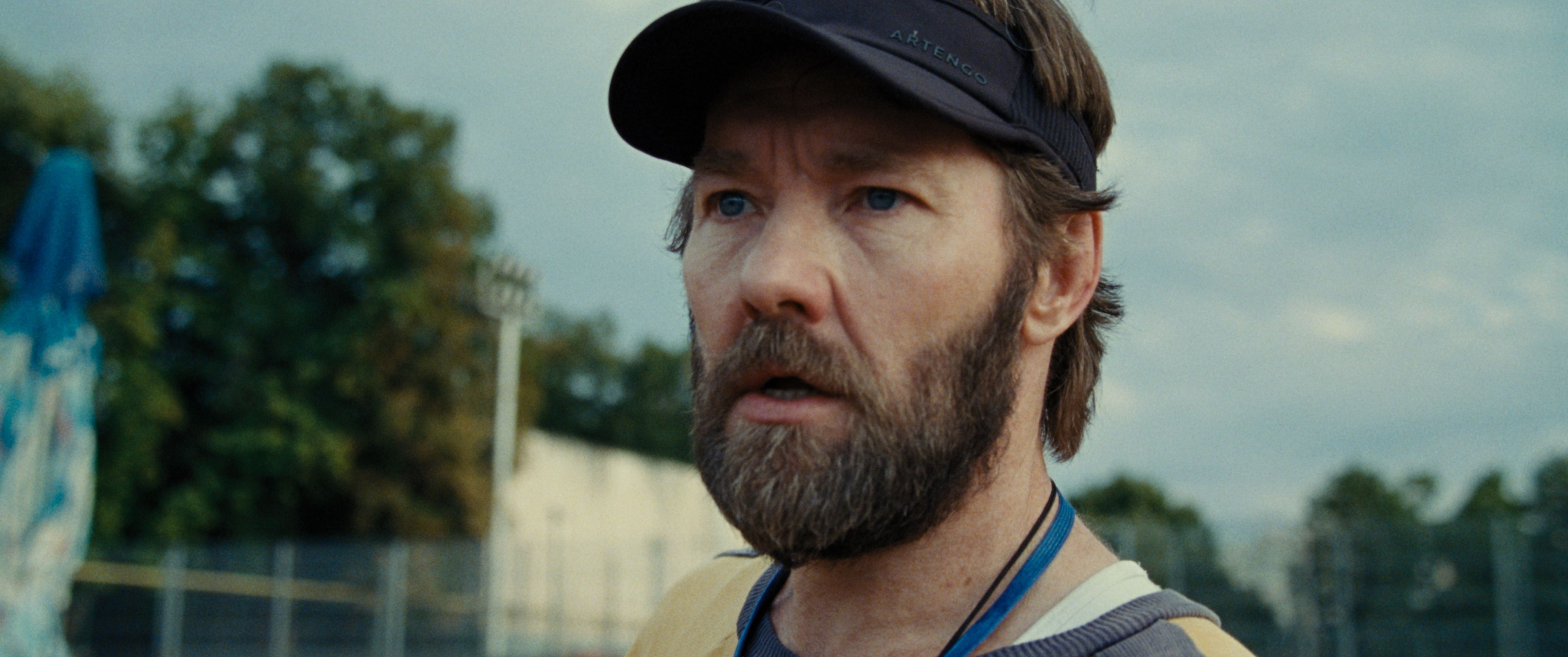
Robert (Joel Edgerton) is a rugged man who comes from no family and goes to work as a logger in the early 20th century, a job full of beauty and danger. He cuts down tree after tree to help clear a path for a new train that will cut through and cross rivers. Itโ€™s a deep blue-collar job that doesnโ€™t pay much, but the people he meets are veterans of the trade and know the serious dangers, such as trees suddenly falling and striking workers. Robert sees some of that, and after a brief period of remembrance, they just go back to work. Itโ€™s a life of solitude he accepts until he falls in love with Gladys (Felicity Jones) and has a child with her.

Living in their cabin built by Robert, life is mixed because he has to work but it means being away from his family from time to time. Itโ€™s something neither he nor Gladys like, as she wants him to settle down and start a farm on the fertile land they live on. They are surrounded by nature with beautiful scenery that only Washington State and Idaho could bring, but there are other violent tendencies that take place. Besides falling trees, Robert watches others act murderously onto others, and more horrifyingly, what mother nature can do to its more scenic areas. 

It is man-versus-nature throughout the story, even as the movie goes decade by decade following Robert into old age. He talks about the heavy labor needed to build a bridge for trains, only to see a concrete and steel bridge for cars built thirty years later, making their wooden bridge obsolete. At some point, Robert gets himself into the city which has rapidly changed, especially when he sees a television and live satellite shot of astronaut John Glenn in his ship orbiting the moon. A woman tells Robert this and he doesnโ€™t believe it, showing how far isolated he has been and refuses to leave the wild where he was born. 

The supporting cast in their short roles all manage their time perfectly. William H. Macy is a standout as an explosive expert loved by the crew, while Kerry Condon plays a solitary woman working in the park service where Robert lives, having her own set of hidden grief. The smaller roles, other loggers, the storekeeper, and even a red dog that suddenly appears to accompany Robert all fill in the holes on Robertโ€™s life path. It feels like a trance at times meeting these figures and rolling along the years filled with nightmares Robert has about what he has seen and the lack of closure with certain events. 

Based on Denis Johnsonโ€™s novella with Will Pattonโ€™s stone-voiced narration, director Clint Bentley and his co-writer, Greg Kwedar, turn to a more poetic story that is set in the past rather than the now. Moving from prison in New York state to the Pacific Northwest, the humanism they bring falls heavily on our consciousness with every scene moving time-to-time through Robertโ€™s prism. Heavy doses of Terrence Malick can be seen through Adolpho Vessoโ€™s lush cinematography, capturing that continuous โ€œmagic hourโ€ lighting, the fierceness of fire, and snow being clear as the sky. Bryce Dressnerโ€™s score uses various instruments to create this country-like melancholy backdrop to accompany the whole life of a singular man.ย 


Train Dreams manages to float through the feelings of Robert as he goes on with his life, holding the pain he feels and rarely expresses it. Itโ€™s about the regrets of not acting upon things he couldโ€™ve stopped, and the reflection of how back he has held himself from going forward with the times. The capsule of this period from 100 years ago is something long gone, yet Bentley is able to put out a subtle drama based on visions and meditation on what life can bring, even to someone who is left alone and yet makes valuable connections to others.

Follow me on X: @brian_cine (Cine-A-Man)

Grade: A-

Movie Review: ‘The Twits’ is Disgusting and Surprisingly Emotional


Directors: Todd Demong, Phil Johnston, Katie Shanahan
Writers: Phil Johnston, Meg Favreau
Stars: Margo Martindale, Johnny Vegas, Emilia Clarke

Synopsis: Two orphans join forces with a family of magical animals to save their city from the powerful Mr. and Mrs. Twit, the meanest, smelliest, nastiest people in the world.


Author Roald Dahl’s fictional worlds value comeuppance for characters deemed rude. He created many stories and characters where truly horrific fates befell people. The thing is, the fates stuck. The baddest of the bad didn’t learn their lessons, they were smote by the righteous. The most despicable of Dahl’s creations, the Twits, were so awful that the people who knew them cheered their deaths. The film, The Twits, attempts to take this story in a different direction.

Much of Phil Johnston and Meg Favreau’s script focuses on empathy. A large plot device is that Beesha (Maitreyi Ramakrishnan) and Bubsy (Ryan Anderson Lopez) can speak to the imprisoned Muggle-Wumps, creatures needed by the Twits to produce an energy source from their tears, because of their capacity for empathy. These two, the other orphans at the orphanage, and Mr. Napkin (Phil Johnston), their caretaker, seem to be the only people in town with the capacity for any empathy, though.

This story gets existentially bleak when we see the politics at play in the town. The Twits run for mayor of Triperot on a platform that these “others,” orphans and the current city administration, have stolen wealth right out from under everyone by not allowing Twitlandia, the Twits dream amusement park, to open. They use the same straw man tactics that have swayed voters to elect populist candidates the world over. Just like in our lives, it works and the Twits gain the power they need to do as they please. Even with the moral of the story to choose empathy over selfishness, you kind of wish these kids didn’t and let the Twits be taken down by the “Dreaded Shrinks.”

The story’s focus on bringing moral complexity is also given a boost at the details of what family can mean. In a scene that feels like Pixar in its heyday, Beesha is getting a pep talk from Mary Muggle-Wump (Natalie Portman) about accepting the family she’s got. Mary works up to getting Beesha to admit that she deserves love. You almost get whiplash as the gross-out humor is so rampant that you feel like there isn’t any substance to the film besides Twits=bad, orphans=good, but this little tidbit hits you in the chest. There are a few moments like this weaved in and out of the story, it just always feels a little out of place, if affecting.

The animation effects are the real thrill to the film. Each character has a unique design and you can almost smell the stench of the environment through your television. There are several scenes where it looks like a camera rig was attached to a running character, used to greatest effect when Mrs. Twit is in hot pursuit. The other animated effect that brings aย  strange and wonderful joy to the film are the dance moves of several characters. Mr. Napkin had his dance cut off way too soon, but the shoulder shimmy made it seem like it was going to be something truly special. The same with an unnamed townswoman present when several people bail the Twits out of jail. She dances like no one’s watching to the strange beat of a homemade marimba and you won’t be able to take your eyes off her.


The Twits is filled with disgusting humor and visuals to match. Yet, it tries to have its ickiness with a bit of emotional heft. A scene where there’s confusion between the words diarrhea and diorama is a bit nauseating, if clever in its wordplay. In many ways this is pale in comparison to many other animated films, but in a strange way it also works. The Twits is an able adaptation of its source adding some much needed empathy to a story that lacks much of it.

Grade: C

Podcast Review: After the Hunt

On this episode, JD and Brendan discuss Luca Guadagnino’s new film After the Hunt, starring Julia Roberts and Ayo Edebiri! Last year was a capstone year for Guadagnino with Challengers and Queer, two films that we (among many other critics) championed all year. This year he’s back with After the Hunt and it’s one of his most polarizing films to date. The reviews haven’t been very good and the debate on social media is very back and forth. So where do we stand? You guessed it…

Review: After the Hunt (4:00)
Director: Luca Guadagnino
Writers: Nora Garrett
Stars: Julia Roberts, Ayo Edebiri, Andrew Garfield

Subscribe to our Podcasts RSS
Subscribe to our Podcasts on iTunes
Listen on Spotify
Listen on Stitcher
InSession Film Podcast – After the Hunt

Movie Review (NYFF 2025): Pietro Marcelloโ€™s โ€˜Duseโ€™ is a Flawed Portrait of a Theatrical Icon


Director: Pietro Marcello
Writers: Letizia Russo, Guido Selei, Pietro Marcello
Stars: Valeria Bruni Tedeschi, Fausto Russo Alesi, Fanni Wrochna

Synopsis: After retiring from her legendary stage career, actress Eleonora Duse feels an irresistible call to return to the theater during Italy’s turbulent period between WWI and the rise of fascism.


Eleonora Duse, or better known as Duse, is an Italian actress deemed by many as one of the greatest of her time, making her name with the works of Gabriel Dโ€™Annunzio and Henrik Ibsen, both respected playwrights whose works were elevated by the actressโ€™ presence in their plays. She changed theatrical performance completely in Italy, becoming a legendary silhouette for future generations to follow. Even to this day, her work is celebrated by modern actresses working the stage. Outside of Europe, her name may not be known as much, yet her impact is felt. Italian filmmaker Pietro Marcello wants to celebrate Duseโ€™s career, influence, and prowess in a biopicโ€”Duse (screening at the 2025 New York Film Festival in the Main Slate)โ€”that captures her later years post-WWI. Throughout Duse, you feel Marcelloโ€™s admiration for the theater legend, with a focus on Valeria Bruni Tedeschi, who plays the stage legend. However, the picture is quite contrived in its approach to tell this part of Duseโ€™s life, being both hollow and confused concurrently.

Duse begins with the glimpse of a fallen star, the image of its central subject (played by Bruni Tedeschi) trying to hold her head high amidst the tolls of WWI and an ailment slowly killing herโ€“the tuberculosis makes her frail. The people still revere her and shower her with praise, although she hasnโ€™t performed in nearly a decade. However, Duse knows very well that the image the people have of her from before is one she canโ€™t seem to deliver nowadays. After a near-death experience, Duse decides to re-enter the world of theater, even if she is still ill and burned by the traumatic experiences that cast her aside from the arts. She ventures forth with hopes to reignite her fire and inflame the hearts of the people who want to traverse the theater stage of grace and damnation. 

Her daughter, Enrichetta Checchi (Noรฉmie Merlant), opposes this grand return to protect Duse. She begs that her mother bow out of this new stage play and focus on resting. But Duseโ€™s mindset is difficult to change. Pietro Marcello uncovers this late stage of Duseโ€™s career through her declining health and the rise of fascism in Italy. However, there is no insight into the political, cultural, and psychological changes, with the focus instead on the importance of performance. It is pretty disappointing that this is the road Marcello went for, as her story is so deeply embedded in the protest through the performance of the time that not including a proper deep dive into such limits the filmโ€™s vision. 

The first half of Duse adapts the contrived biopic format, where characters yell and loudly exclaim at each other so loudly that it becomes farcical and unintentionally hilarious. One canโ€™t help but laugh at the dramatic excessiveness in each dialogue; regardless of the conversation, it feels like a life-and-death situation, leading to disbelief from the viewer. Marcello has always been great at directing his actors to great performances, like Juliette Jouanโ€™s revelatory role in Scarlet or Luca Marinelliโ€™s in Martin Eden. Here, everyone, even Tedeschi on some occasions, seems lost, either overly performing even the most simple gestures or toning things down for a second, so that later they can shout their hearts outโ€“a tonal disbalance that becomes an unbearable experience. 

In the second half, things shift a bit, and Marcello begins to properly dissect the figure of Duse, exploring her vulnerability and thirst for independence, as well as her worsening sickness and elevated figure. The political angle of using art as a means for resistance, the only thing Duse has left to give to the world, is expanded upon through the Italian directorโ€™s silent, restrained direction. He has reined it in and, almost immediately, Duse, both the character and the film, become more vivid and engaging, which begs the question of why Marcello opted for a louder and over-dramatized synthesis on the meaning of Duse, not only as an actress, but as a revolutionary figure, in the first half of the film. It reminds me of Bradley Cooperโ€™s approach to his Leonard Bernstein biopic, Maestro.ย 


The film is loud and expressive for most of its runtime, focusing on performance and flash rather than nuance or a dissection of a career. Like Duse, Maestro lands in between celebration, homage, and absurdityโ€“coming primarily from Cooperโ€™s inability to contain his performance. Yet, when Cooper tones down the film and lets it breathe, you begin to see some honest, fascinating ideas about the subject of his film. Duse has more of these moments than Maestro, and Marcello is more prone to explore the Italian actressโ€™ impact, yet both are true misfires due to mishandling in tone and breadth. It lacks the poetic nature of Marcelloโ€™s previous works and the urgency found in telling Duseโ€™s story. In the end, Duse is too cautious to capture the fire that once made the actress immortal.

Grade: C

Chasing The Gold: Is 2025 the Year of Double Digit Nominations?

The 2025 Oscar year is starting to shape up to a year filled with nomination behemoths.With the festival season wrapping up and the awards calendar beginning in earnest, letโ€™s take a look at the prospects of three or more films receiving ten or more Oscar nominations, and the historical precedence of such a feat.

The History of 10+ Oscar Nominations

While 10+ Oscar nominations in a single year is much more prevalent these days (thanks in large part to an expanded Best Picture lineup and additional categories), it first happened back in 1937 with Best Picture winner The Life of Emile Zola.  Since then, a total of 105 films have managed to do so.

But what about the same year?  Two films have earned ten or more nominations in the same year 28 times, beginning in 1939 with Gone with the Wind and Mr. Smith Goes to Washington, and most recently in 2021 with Dune and Power of the Dog.  Three films in the same year is much more rare, happening only four times in total (1964, 1977, 2023, and 2024).

The all-time record is four films with 10+ nominations in the same year, which belongs to 2019.  Once Upon a Timeโ€ฆin Hollywood, The Irishman, 1917, and Joker all ended up with double-digit totals, but still managed to not win Best Picture.  In fact, when two or more films have more than 10+ nominations, only nine times (1967, 1977, 1981, 2012, 2013, 2015, 2018, 2019, 2021, and 2024) has none of those films won Best Picture.

2025 Contenders

One Battle After Another
Low-end nominations: 9 (Picture, Director, Actor, Supporting Actress, Supporting Actor, Adapted Screenplay, Casting, Film Editing, Original Score)

High-end nominations: 15 (Actress, Supporting Actor, Supporting Actress, Cinematography, Costume Design, Production Design)

There is a world where this could be the most nominated film in the history of the Academy.  While that is certainly a stretch, itโ€™s not out of the realm of possibility if the Oscar voters really take to it.  It has a chance for not only 15 nominations, but six acting nominations, which would also be a record.  Even conservatively, it might get to double-digit nominations without breaking a sweat.

Sinners
Low-end nominations: 9 (Picture, Director, Original Screenplay, Casting, Cinematography, Film Editing, Original Score, Original Song, Sound)

High-end nominations:13 (Actor, Supporting Actor, Production Design, Makeup and Hairstyling, Costume Design)

A low-end of nine nominations is one thing, but to do it without an acting nomination is another. Only ten of the 105 films with 10+ nominations have done so without a nominated actor (most recently, 2021โ€™s Dune).  The crafts are really where Sinners will get a chance to shine, as the musicians and technicians are expected to make the biggest nomination impact.

Marty Supreme
Low-end nominations: 6 (Picture, Director, Actor, Supporting Actress, Original Screenplay, Film Editing)
High-end nominations: 12 (Supporting Actress, Original Score, Production Design, Costume Design, Cinematography, Casting)

With a strong showing at the New York Film Festival, Josh Safdieโ€™s period piece probably needs more eyes on it to truly gauge its validity, but the response has still been overwhelmingly positive.  This is the film with the lowest floor of nominations, but period crafts will always have a chance when it comes to the Oscars.  The Academy has a tendency to go for โ€œmostโ€ when it comes to things like Production Design and Costumes, so it might not have the flash to get all the way to 10+.

Hamnet
Low-end nominations: 8 (Picture, Director, Actress, Supporting Actor, Adapted Screenplay, Cinematography, Costume Design, Production Design)
High-end nominations: 11 (Film Editing, Original Score, Casting)

While Chloe Zhaoโ€™s adaptation might be in-contention for Best Picture, there isnโ€™t a ton of wiggle room to get to ten.  The artisans Zhao has assembled are not exactly the most well-known, so people like Max Richter might be side-stepped for someone like Alexander Desplat or Trent Reznor.  Regardless, ten is well within reach for this film.

Wicked: For Good

Low-end nominations: 9 (Picture, Actress, Supporting Actress, Casting, Costume Design, Makeup and Hairstyling, Production Design, Original Song, Sound, Visual Effects)

High-end nominations: 13 (Director, Supporting Actor, Adapted Screenplay, Film Editing)

I almost didnโ€™t include this film, because no one has actually seen it.  While Iโ€™m not expecting it to be awful, I am personally not overestimating its chances.  Even without Picture or Acting, there are plenty of below-the-line nominations for the film to receive.  If the acclaim for the first film is matched here, more than 10 nods should be done with relative ease.

My Prediction

One Battle After Another, Sinners, and Hamnet all end up with 10+ nominations, but Marty Supreme and Wicked: For Good fall a bit short.  And yes, one of those will end up as the Best Picture of the year.

Movie Review (Middleburg Film Festival 2025): ‘Rental Family’ Is a Surprisingly Touching Dramedy About Human Connections


Director: Hikari
Writers: Hikari, Stephen Blahut
Stars: Brendan Fraser, Takehiro Hira, Mari Yamamoto

Synopsis: An American actor in Tokyo struggling to find purpose lands an unusual gig: working for a Japanese “rental family” agency, playing stand-in roles for strangers. He rediscovers purpose, belonging, and the beauty of human connection.


Our excursions into Asia from an American point-of-view always play out the vast differences between the West and the Pacific Rim. Itโ€™s sometimes comical, such as human size and social norms that could be a little bit baffling to those who know nothing. Even for those who have lived in Asia for years, there are always those blind spots and things they discover. In Rental Family, director Hikari (37 Seconds) takes us through the sentiment business that is unique to Japan and foreign to others: the selling of sentimentalism through another figure who is not a member of your family.

Brendan Fraser stars as an American actor named Phillip who has been living in Tokyo for the last seven years doing all sorts of gigs from a toothpaste commercial to being a pirate in a TV movie, all speaking Japanese. Itโ€™s not the role or pay Bill Murrayโ€™s character in Lost in Translation would get, but Phillip gets by fine. Then, he gets an unusual offer which Phillip isnโ€™t aware of, but is common in Japan. Heโ€™s at a funeral of someone he doesnโ€™t know, but is there paid as an extra, even though itโ€™s not a movie. Philip meets Shinji (Takehiro Hita), the man who hired Phillip and runs the rental family agency; there are people who hire actors as stand-ins to be a friend or a family member in various social events, such as that funeral, and the next gig for Phillip, a wedding.

Itโ€™s something Westerners canโ€™t comprehend, but this is an actual thing. Japan has created a sub-industry in acting where someone is rented out to play a role in something and has been a thing for decades. Since the end of the COVID pandemic, however, business is booming as it helps people who are lonely and need to fill this void in whatever they need someone to do. Even in his time in Japan, Phillip learns this and shows that his cultural values still clash with Japanese culture, forcing him to adapt to this other side as a professional actor. Two key roles test him and how he goes along with this job, including playing the abandoned father of a young girl whose mother needs him to help get his daughter into a top school.

Overall, Phillip finds this unexpected joy in giving people some happiness in their life, even though heโ€™s acting the part. The other job Phillip does is impersonating a journalist who interviews an aged actor (Akira Emoto) who hopes heโ€™s not forgotten when he dies as his memory fades away. Phillip is not supposed to get too close to the clients, but it becomes very difficult when heโ€™s intervening in their lives that is fraudulent, yet Phillip has to help. These perils are also seen on the side of Aiko (Mari Yamamoto), another rental family actor who plays the role of mistress of a married man and has to take a slap in the face – literally – as part of the job.


Rental Family is a comedy-drama that is surprisingly heartwarming as it is touching on the artificials that could cause more harm than good, which concerns Phillip in the beginning. But, this is something common in Japan, and Phillip, who is semi-proficient in speaking the language, just has to do something to plug the gap in peopleโ€™s lives. They are there to sell emotions, mixing a clientโ€™s fantasy with their own reality for whatever reason. It is something that Hikari and her co-writer, Stephen Blahuther, bring to light in a neat way with the performances tender and charming and very easy to love.

Follow me on X: @brian_cine (Cine-A-Man)

Grade: A

Podcast Review: It Was Just An Accident

On this episode, JD and Brendan discuss the Palme d’Or winning film from Jafar Panahi It Was Just An Accident! Panahi is one of the most captivating filmmakers working today given that most of his films have been made illegally due to his arrests in Iran. So, it’s quite evident how personal It Was Just An Accident is for him, but it’s also stunning in how well it translates globally, despite the cultural specificities at play.

Review: It Was Just An Accident (4:00)
Director: Jafar Panahi
Writers: Jafar Panahi
Stars: Channing Tatum, Kirsten Dunst, Ben Mendelsohn, Peter Dinklage

Subscribe to our Podcasts RSS
Subscribe to our Podcasts on iTunes
Listen on Spotify
Listen on Stitcher
InSession Film Podcast – It Was Just An Accident

Movie Review: ‘Black Phone 2’ Falls Short Of Its Predecessor


Director: Scott Derrickson
Writer: Scott Derrickson, C. Robert Cargill
Stars: Mason Thames, Madeleine McGraw, Ethan Hawke

Synopsis: As Finn, now 17, struggles with life after his captivity, his sister begins receiving calls in her dreams from the black phone and seeing disturbing visions of three boys being stalked at a winter camp known as Alpine Lake.


Blumhouse is on yet another attempt at making a new horror franchise stick beyond its first film with Black Phone 2. The sequel to a rather successful start with 2021’s Black Phone brings audiences to 1982. Helmed again by director Scott Derrickson, The Grabber (Ethan Hawke) is back and doing his best to evoke Freddy Krueger. With its welcome use of Super 8 footage to nail the dreamlike world the film takes audiences into, there’s not enough within the film itself to warrant a sequel. Its repetitive story points and on-the-nose ’80s slang prevent Black Phone 2 from reaching the level of unease of its first installment.

For those wondering how The Grabber is still around to justify a sequel, he now exists in a world like something out of A Nightmare on Elm Street 3: Dream Warriors. His grasp on his victims is still strong, even impacting a now-teenaged Finney (Mason Thames) and his younger sister Gwen (Madeleine McGraw). From the start, it’s apparent just how deeply Finney is scarred from his previous encounter with The Grabberโ€”getting in bloody fistfights at school and secretly smoking joints while his family sleeps. But it didn’t just alter his life; Gwen has been experiencing nightmares that feel all too real to her. And given her interest in spirits and ghouls, she’s labeled as a weird kid, similarly to how her brother is treated.

These nightmares of Gwen’s get worse and worse as nights blend together. She finds herself unsure of what is real and what is fake, with the only person understanding the torment being her brother, who would rather forget everything he has gone through than face it. When both begin to hear phones ringing in the distance, Gwen seeks out whatever information is being relayed to her, while Finney answers with a simple, “I can’t help you.” Derrickson explores both Finney and Gwen well, while making Black Phone 2 more centered on Gwen’s story as she explores these psychic powers she’s developing, leading her to uncover information about unsolved disappearances at a Christian youth camp that holds a connection to Finney and Gwen in tragic ways.

While Derrickson is exploring Gwen’s nightmares is when Black Phone 2 is at its most engaging, creating unsettling, blood-soaked moments giving audiences a peek into the past of not only the camp but specifically The Grabber. Using grainy footage to put Gwen in the past allows the audience to feel as helpless as Gwen is to what she’s being put through. These nightmare moments are disturbing, but as the film goes on, they become one too many. While the film’s final act is where Gwen’s two worlds combine, it’s such a step away from what made the first effectiveโ€”a realistic and terrifying child abduction that mostly works in the realm of tangible fears. Finney often gets his trauma pushed aside to explore more victims of The Grabber, not allowing his character to wrap his head around his experiences.

Where Black Phone 2 excels is in its performance from McGraw, but it’s not enough to keep this film from being flat-out boring. While The Black Phone had its own issues, the story felt engaging because it’s a human fear every childโ€”and even adultโ€”has experienced: being abducted so close to home by a man with a scary van, and being held in an unknown location with no way of reaching your loved ones. The choice to take this film into a new realm with supernatural elements takes away from how truly horrifying The Grabber was established to be, and how ambiguous his life was to a point. And while the film ramps up the supernatural aspects, the stakes don’t rise to the film’s potential, coming across as Freddy Krueger with an identity crisis. Hawke barely is given enough screen time within this sequel to match his performance in his first outing, often feeling like he wasn’t even on set to film.

While McGraw is the film’s shining star with her spunky comebacks and take-charge attitude, the film’s script leaves more than you’d want to be desired. Written by Derrickson and C. Robert Cargill, the dialogue tends to come off as cringey attempts to establish the film’s time period more than anything, with Gwen offering an overdose of ’80s slang that doesn’t fit the film’s uneasy tone. Outside of the nightmares, the writing is at its worstโ€”especially with new additions to the franchise’s roster, with camp workers and diehard religious couple Barbara (Maev Beaty) and Kenneth (Graham Abbey), and Gwen’s love interest Ernesto Arellano (Miguel Mora), who had a brother also killed by The Grabber. Their inclusion in the film adds more comedic moments that don’t fit within a film about children being brutalized.
Derrickson’s utilization of Super 8 footage mixed with blizzard conditions is what pulls this film across the finish line. While Gwen, Finney, and Ernesto embark on their drive to this camp in the chilly mountains of Colorado, there’s stunning camerawork while the trio is inside the car, showing emergency workers saving lives during an unprecedented snowfall, while also showing the teenagers pushing through and driving toward danger. When the nightmares begin in Gwen’s cabin, she’s completely isolatedโ€”being the only person staying in the female bunksโ€”and while the Super 8 footage kicks in, it creates an atmosphere that allows dangers to hide in the shadows and an overwhelming helplessness.

While there are plenty of aspects of Black Phone 2 that fall short of being as impactful as the first, the snowy nightmaresโ€”led by McGraw’s strong performanceโ€”allow the film to hold your attention long enough to skate to the film’s credits.

Grade: C

Movie Review: ‘Bugonia’ Is Flawed, But Once Again Demonstrates Lanthimos’ Directing Prowess


Director: Yorgos Lanthimos
Writer: Will Tracy
Stars: Emma Stone, Jesse Plemons, Aidan Delbis

Synopsis: Two conspiracy-obsessed young men kidnap the high-powered CEO of a major company, convinced that she is an alien intent on destroying planet Earth.


It brings this Greek film critic a particular joy to see just how far Yorgos Lanthimosโ€™ career has come. Both his skillset and singular voice have always been clear, but itโ€™s tough to imagine anybody seeing 2009โ€™s Dogtooth (his arguable breakout film) being able to predict his rise to becoming an Oscar darling. Perhaps most exciting about this transitional journey packed with excellent films is that heโ€™s never lost the elements of the cinematic Greek Weird Wave. In fact, Lanthimosโ€™ ability to alienate his audiences while simultaneously crafting undeniable entertainment vehicles for the masses is deeply impressive.

Any cinephile should be thrilled that such a distinct filmmaking voice is so present in modern cinema. That he and the incredible Emma Stone are honing this voice together is more than just the cherry on top of an exciting cinematic sundae. It instead feels akin to a complimentary dessert dish in its own right. Since her Oscar-nominated role in Lanthimosโ€™ The Favourite, she has starred in every film of his moving forward. She even starred in his silent short film, Bleat, made in Greece, which has screened less than a handful of times worldwide due to its stringent presentation requirements. This creative partnership clearly enriches both Lanthimos and Stone, allowing each party to take bolder swings and innately convey the absurdity present in any particular filmic scenario. Bugonia, Lanthimosโ€™ latest film and third this decade, reaffirms this notion of playfulness among them and their understanding of what the other brings to the big screen. And while it may not reach the heights of any of their previous collaborations, Bugonia presents a fascinating worldview grappling with several ideas.

Despite still remaining widely accessible, Lanthimosโ€™ films post-The Favourite have been brushing up against the audiences he has amassed. His feature films have often reckoned with the state of the world in some way. But the subtext feels as if itโ€™s becoming more and more textual with each new entry into the Lanthimos oeuvre. Importantly, each film takes an interest in how an individual, or select group of individuals, handle their current place within their respective society. For Bella Baxter in Poor Things, she takes on the harsh realities and injustices of the world with a hope that things can become better. It may be partially fueled by naรฏvetรฉ considering her origins, but itโ€™s a noble (and excellent) film exploring such endeavors.

Kinds of Kindness is a particularly alienating triptych of stories depicting people that are breaking down as the systems they rely on begin to fail. Itโ€™s a film which actively feels like Lanthimos wants to toy with his Oscar audiences. And despite not being written by Lanthimos, Bugonia feels like quite the extension of this overarching idea of failing systems found in his previous film. Furthermore, Bugonia feels distinctly interested in alienating its audience considering thatโ€™s the entire conceit of the film to begin with. Bugonia is ultimately a film which is reckoning with the devastating, and ultimately tragic, ways we have alienated ourselves from one another.

Bugonia follows the 3-day aftermath of CEO Michelle Fullerโ€™s (Stone) kidnapping at the hands of Teddy (Jesse Plemons) and Don (Aidan Delbis). The ticking clock structure which breaks this film into chapters exists due to Teddyโ€™s vehement belief that Fuller is an alien. He believes the only time to contact her off-world leaders is during an upcoming eclipse. If that seems a bit silly on paper, thatโ€™s because it is; but Lanthimos has always been able to balance disparate tones across his filmography. Of course Teddyโ€™s conspiracy-riddled theories and overall scheme is ridiculous. But the comedic edges of Bugonia never dull its most shocking moments. Though thatโ€™s not to say every emotional beat of this film works without a hitch. Despite Will Tracyโ€™s script intentionally keeping the audience, and Fuller, at armโ€™s length, the emotional resonance of Bugonia feels a bit sparse as its many ideas bounce around a packed runtime which also feels a bit too long. Itโ€™s a strange disconnect between narrative and pacing, but it still manages to make way for a propulsive and absurd third act. But Bugonia has much to work through before getting to its bound-to-be spoken about finale.

The intent of this film, like many of Lanthimosโ€™ works, is to discomfort his audience as he addresses realistic issues through absurdist means. And in these uncomfortable realities comes a series of emotions which are fully understandable. In the case of Bugonia, itโ€™s that of several tragedies. While exploring corporate greed and the ways in which the upper class belittle and look through through the working class, Bugonia allows Lanthimos to depict the evils of society warping those at its center. Teddy is an antagonistic force of this film in some ways. But due to Plemonsโ€™ incredible performance, he comes across as a man who has simply broken. The film certainly doesnโ€™t forgive him at any point. Nor does it excuse his actions.

But it’s interesting the ways in which Lanthimos and Tracy attempt to convey some sympathy for Tracy. One could argue heโ€™s a sort of tragic figure, if only in the sense that cases like his seem avoidable if massive companies, such as the veiled pharmaceutical one at the center of this film, actually cared about the people they purport to serve. While it may not always work for the film, Bugonia is full-blown tragedy in the classical Greek sort of way. Thereโ€™s a dark humor present in Teddyโ€™s hair-brained conspiracy, but that never belittles the harrowing, deeply sad reality of the situation. If this film is to serve as a mirror for its audience, the reflection reveals a damned image for its audience and humanity at large.

To think of how deep a hole Teddy has fallen into is frightening. And itโ€™s within those depths that Teddyโ€™s actions and behavior, however tragic, are never justified. One just needs to see how Lanthimosโ€™ direction and Tracyโ€™s script focus on Teddyโ€™s manipulation of his sweet cousin, Don. Through such unnecessary collateral damage, Bugonia sees the filmmakers painfully questioning how we could let something like this ever happen in the first place. Perhaps itโ€™s not something somebody just stumbles into. Itโ€™s only through a series of emotionally heightened circumstances and a refusal to engage with them in meaningful, therapeutic ways that people such as Teddy can find themselves in such a dangerous echo chamber. But the culpability doesnโ€™t solely rest with any one person.

Bugonia makes it clear as day that the upper class and corporate greed have caused irreparable damage to a wide majority of the population. Having been allowed to run rampant for so long, the consequences of such actions now have roots running deep in the very fabric of modern society. Itโ€™s through these roots that Bugonia finds its strongest angle into the avoidable tragedy of this story. This is more than just a kidnapping being presented by Lanthimos. Itโ€™s a damning indictment on humanity at large.

Given, Bugonia may not feel like the most fully thought-out indictment of upsetting societal truths like conspiracy-fueled lunatics or corporate greed due to occasionally flat characterization and a somewhat stalled pace. But a bonkers narrative development (which remains admirable despite its own thematic flaws) and excellent performances allows Bugonia the space to feel like another example of why Lanthimos is one of our most exciting contemporary filmmakers.

Grade: C+

Movie Review: โ€˜Shelby Oaksโ€™ is a Promising but Deeply Flawed Debut Feature


Director: Chris Stuckmann
Writer: Chris Stuckmann
Stars: Camille Sullivan, Michael Beach, Sarah Durn

Synopsis: A womanโ€™s obsessive search for her missing sister leads her into a terrifying mystery at the hands of an unknown evil.


The landscape of the YouTuber or content creator to filmmaking pipeline has been a fascinating one to witness over the past few decades. From shameless quick cash-ins like the Fred movies to more successful ventures in quality, like the recent surge of the Philippou brothers with Talk to Me and Bring Her Back. What I find most interesting about it, however, is the variation of creators; people like Philippou just got their start making silly short-form skits on their channel, which acts as a completely different voice of experience compared to Chris Stuckmann and his very first feature film, Shelby Oaks; which went from a Kickstarter lead project to a now Mike Flanagan-produced movie being distributed by Neon.

Stuckmann has always adored film, and before his channel also got its start making home movies of his own, the influence of his love for film and love for all things horror specifically oozes all over Shelby Oaks. From its creative blend of documentary and found footage filmmaking to the great use of creating tension through dark spaces and restraint from typical jump scares, it’s clear that Stuckmann has an eye for direction and knows how to craft a compelling image even with limited resources. However, the clear inspirations Stuckmann has as a fan of the horror genre also hamper its effectiveness as the film goes on. What starts relatively fresh slowly forms into a culmination of horror conventions and messiness that leads to a final feeling of dissatisfaction within its final reveals. It leads to Shelby Oaks being a fine but frustrating debut feature; one that has more than enough promise to prevent it from being a totally empty experience, but also a film that struggles under the weight of all itโ€™s clearly influenced by. 

Shelby Oaks starts within a documentary-like format, following the story of Mia (Camille Sullivan) and her search for her now long-lost sister Riley (Sarah Dunn). Before her disappearance, Riley made a channel of her own with three of her friends entitled โ€œThe Paranormal Paranoids,โ€ and they were famed for their exploration of the paranormal and whether their encounters with the supernatural were real or not. Things took a turn for the worse when, after exploring the abandoned town of the titular Shelby Oaks in 2008, all three of Rileyโ€™s friends were brutally murdered, and Riley herself is seen in video footage going into a room and seemingly disappearing out of thin air. With her faith in law enforcement low and her husband, Robert (Brendan Sexton III), doubtful of her ideas, Mia puts it on herself to find her missing sister and learn of the evil secrets that have been circulating around them both since her youth. 

The clearest appeal of Shelby Oaks from the get-go is its loving mesh of found footage and documentary-style horror filmmaking, and it’s a creative way for Stuckmann to make use of limited resources, while also adding to the film’s terror. The Blair Witch Project inspirations lurk all over the camera work, with a constant sense of always feeling like something is there that you arenโ€™t seeing, or a relentless ambiance of scrappy camera movements and cracked windows that matches well with the filmโ€™s entire tone. It isnโ€™t just the presentation that keeps Shelby Oaks initially creative at first, but Stuckmannโ€™s direction behind the camera always keeps things from being completely boring within more familiar territory. He particularly has an understanding of when to use restraint during a scare, but also how to use the quiet stillness of the dark to a horror film’s advantage when it comes to the placement of the camera while setting up tension.

Where Shelby Oaks starts to unravel is when it consistently falls into becoming a mesh of overused horror film beats from its inspirations, rather than the more inspired and unique sensibilities it initially possessed. A lot of the reveals near the movie’s climax are often more satisfying not only because of its similarities to other recent genre fare, but also because of its loss of any creative builds of tension that it initially started with. Even for the fair amount of scenes that are genuinely well done throughout the film, others are more silly than scary when the film decides to play with the more demonic forces in the narrative. 

This messiness continues to reside within the screenplay as well, with over-explanations of certain supernatural plot points. Even the main characters themselves are a bit underwritten here. While there’s obviously a fair amount to be learned about them from the documentary portion of the film, there was never a moment when I could feel like I knew them, and rather, the movie was just telling me what I should know about them. This issue mainly resides in the character of Mia, specifically here, where, despite Sullivanโ€™s solid performance, she is only ever defined by her looking for her sister.ย 

Shelby Oaks has so much passion at its core, and you can see its director bursting at the seams with his love for horror and found footage, but the film struggles to carry the weight of its ambitions under genre conventions that can leave it more stale than fresh. However, even if it is an imperfect debut at its center, it shows promise of more inventive fare yet to come from Stuckman rather than middling genre fare.

Grade: C+