We offer our bonus content for free, but we do encourage and appreciate a small donation of $0.99 as a way to help support the show. Click on the PayPal button below to donate and thanks so much for your support. You can also hear all of our Bonus Content via our mobile apps. See the information at the bottom of the post for more details.
[divider]
Mobile Apps!
Listen to all of our bonus content on our apps for just a one-time fee! Whether you have an iPhone, Android or Windows phone, our apps are available in many different ways that is convenient for you. With our mobile app, not only can you listen to all of our bonus content, but our main shows and our Extra Film podcasts as well. Click here for more info!
If you don’t want to purchase our bonus content, but still want to support us, there are other you can help us out. Click here for more info.
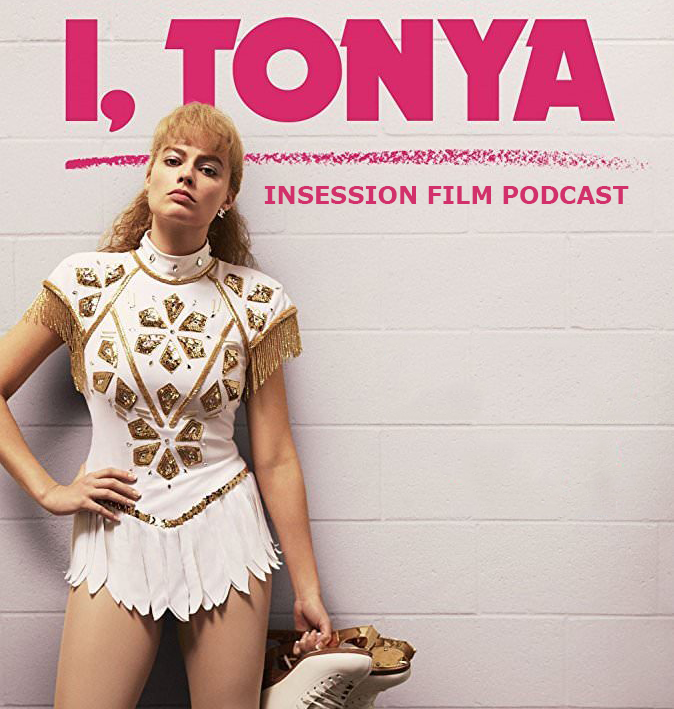
This week on the InSession Film Podcast: Extra Film segment, we discuss I, Tonya starring Margot Robbie and Allison Janney – who could/should be nominated for Oscars in the next month or so. We also review Cartoon Saloon’s third animated feature film in The Breadwinner and JD gives his thoughts on Wonder since he missed out on that review last week.
As you’ll hear on the show, both of these films are worth seeking out once they become more available. It should be interesting to see how they effect awards season as well, as both are likely to get at least one Oscar nomination.
With that said, have fun listening to this week’s Extra Film segment and let us know what you think in the comment section below. Thanks for listening!
– Movie Review: I, Tonya (4:46) Grades
Brendan: A-
JD: A
– Movie Review: The Breadwinner (37:12) Grades
Brendan: A-
JD: A-
We try to make this the best movie podcast we possibly can and we hope you enjoy them. Subscribe today on iTunes and Stitcher and please leave us a review on iTunes. You can also find us on Soundcloud, PlayerFM and TuneIn Radio as well. We really appreciate all your support of the InSession Film Podcast.
To hear this Extra Film episode and everything else we do, download our apps on the Amazon Market for Android and the Podcast Box app on IOS devices. The mobile app covers all of our main shows, bonus podcast’s and everything else relating to the InSession Film Podcast. Thanks for your wonderful support and listening to our show. It means the world to us!
[divider]
Help Support The InSession Film Podcast
If you want to help support us, we would greatly appreciate it! For more info, CLICK HERE.
Director: Guillermo del Toro Writers: Guillermo del Toro, Vanessa Taylor Stars: Sally Hawkins, Octavia Spencer, Michael Shannon, Richard Jenkins, Michael Stuhlbarg, Doug Jones
Synopsis: An other-worldly fairy tale, set against the backdrop of Cold War era America circa 1962. In the hidden high-security government laboratory where she works, Elisa’s life is changed forever when she and co-worker Zelda (Octavia Spencer) discover a secret classified experiment.
[/info]
Guillermo del Toro is one of the most compelling directors working to date, and his latest film The Shape of Water is another great example of why he’s so revered among film fans. In fact, The Shape of Water could be del Toro’s best work since Pan’s Labyrinth back in 2006. There’s an aura of compassion and empathy poured into every scene that gives this film a striking pathos.
If you know del Toro’s sensibilities as a filmmaker, it will come as no surprise that The Shape of Water is another adult fairy-tale that fully embraces its fantasy from the opening frame. The opening sequence is very dream-like in its visual representation, with voiceover narration from Richard Jenkins that lays out the foundation for this fairy-tale – “the princess without voice” and “the monster who tried to end it all” he even says at one point. From the onset, del Toro is playing in a cinematic playground that he thrives in and it’s beautifully alluring on every level.
The film is centered on a mute woman named Elisa (Sally Hawkins), who works as a cleaning hand at a secret government facility. Her work is mundane, but she has her best friend Zelda (Octavia Spencer), who talks constantly, to keep her company. One day she finds out that this facility is housing a creature of some sort, with human-like qualities, and she immediately has empathy for him. She starts bringing him food, she plays music for him and even teaches him some sign language. Scientist Dr. Robert Hoffstetler catches wind of this and is intrigued by the humanity of it, but there are Cold War implications to having this creature around, and this puts science and Elisa’s newly formed relationship on the back-burner.
The central plot plays out like a 50’s noir, also giving The Shape of Water a captivating dramatic urgency. There’s an escape attempt, Russians may or may not be involved and there’s an investigation that threatens Elisa and everyone around her. Michael Shannon gives an invigorating performance that re-energizes the film whenever he’s on screen. He chews on del Toro’s dialogue in ways that make you love to hate him.
While The Shape of Water has del Toro’s signature fingerprint all over it, there’s something about its dream-like quality, the film’s use of magical realism, Alexandre Desplat’s mesmerizing score and the lingering pathos revolving around its central romance that makes this experience singular and unique among del Toro’s other works. Del Toro wonderfully establishes his usual aesthetic and darker undertones, while fully embracing the film’s sexuality and passion. That is to say, The Shape of Water is endearing and surreal in its romance, similar to something like La La Land, but it also has fun playing with its bizarre premise – à la Crimson Peak.
As a result, yeah, the film is a bit weird in places, but that’s what makes it so charming and enjoyable. That, and Sally Hawkins. Her performance, along with del Toro’s vigorous direction, overcome any potential pitfalls that could come with this territory. Without saying a word, Hawkins conveys visceral loneliness and empathy. Her chemistry with Doug Jones – who plays the amphibious man creature – is also great in making the romance come alive.
Dan Lausten’s cinematography, coupled with del Toro’s vision for this film, is astounding and renders some breathtaking imagery at times. The use of green hues are visually appropriate given this story, but thematically it also adds nuance to these characters and how they deal with loneliness throughout the film.
The Shape of Water is no doubt one of del Toro’s best films yet. It’s a film that isn’t afraid to be transparent in its romance – there is vivid nudity at times which will be awkward for some audiences – and it takes full advantage of what this world has to offer. The characters are endlessly enjoyable thanks to a great ensemble cast that doesn’t feature any weak link. It has one of the best scores of the year, and the music overall is a major driving force. The Shape of Water is a rich and satisfying experience that I cannot recommend enough.
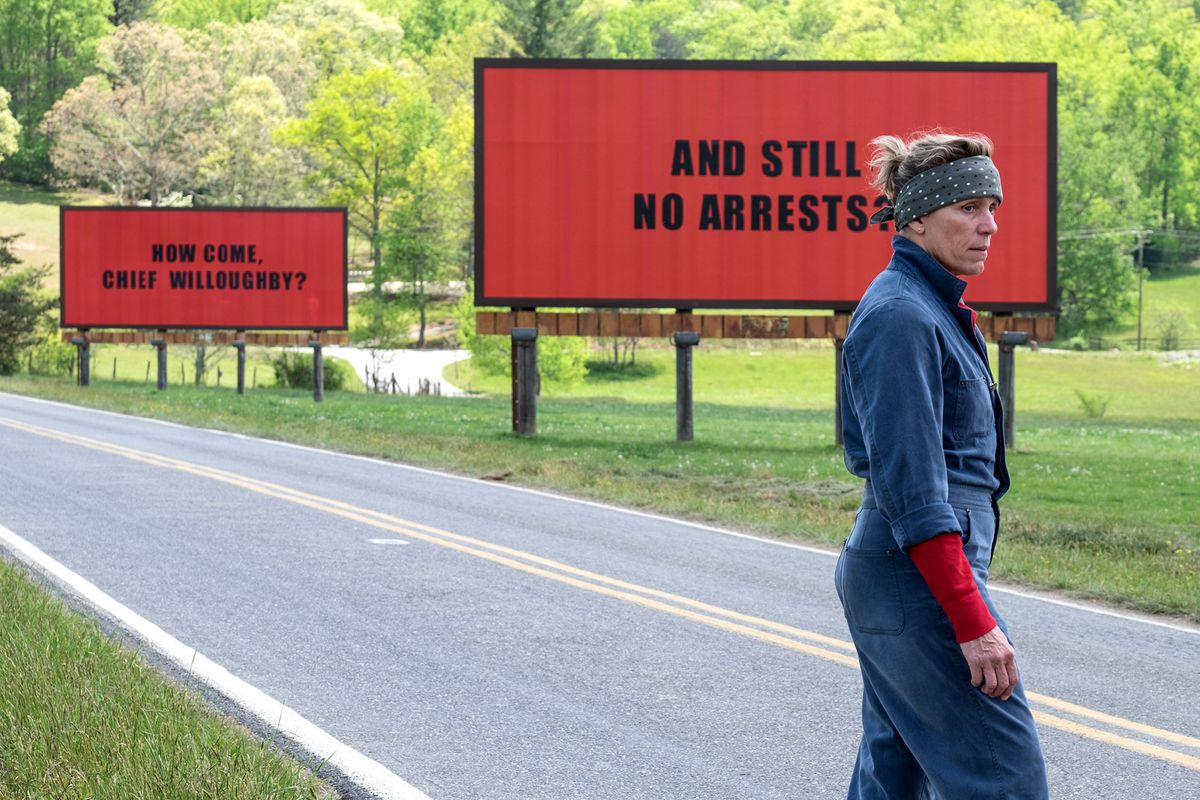
For our poll this week, inspired by Three Billboards Outside Ebbing, Missouri, we are talking about the great Frances McDormand. Her work for the Coen brothers is second to none, but she’s done some other great work as well that should be recognized. And we thought it would be great to honor her this week by talking about our favorite movies that she’s participated in throughout her career.
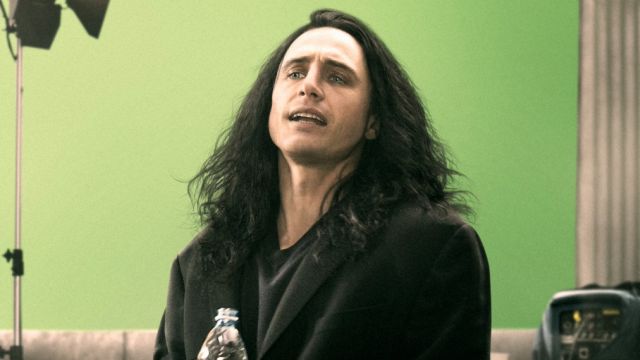
Director: James Franco Writers: Scott Neustadter (screenplay by), Michael H. Weber (screenplay by) Stars: James Franco, Dave Franco, Seth Rogen, Zac Efron
Synopsis: When Greg Sestero, an aspiring film actor, meets the weird and mysterious Tommy Wiseau in an acting class, they form a unique friendship and travel to Hollywood to make their dreams come true.
[/info]
Don’t judge a person by their vampiric and three-quarters stoned cover, indeed, for they know how to make life advantageous. With the ability to turn a disheveled look into additional personal mystique and proof of incompetence – a 2003 “gem” of acting-directing-writing called The Room – into an enduring achievement, it’s befuddling that we have yet to pronounce Tommy Wiseau’s last name as “wise-au.” Sure, “weez-au” is what the diction teachers go by, but it fails to acknowledge the man’s niche form of genius.
Not quite like its shell, too, is A24’s movie-about-Wiseau’s movie, which despite the title isn’t much of a dive into the subject. That’s no reason to tear yourself apart, either, as what The Disaster Artist is – the formation of said subject’s finest creation – is just as compelling, not to mention loaded with veritable laughs and startlingly heartfelt. It’s the Christmas for, and of, comedy.
The story begins in a San Francisco acting class where Greg Sestero (Dave Franco) sees his acting dreams receive a beatdown from the coach. Judging from the stifled frustration and slouching as he returns to his seat, it isn’t the first time this happened. It might be the last, though, after he witnessed (and presumably heard Dave Porter’s operatic score) a long-locked cast-mate named Tommy Wiseau (James Franco) went all-out – groaning, climbing, chair-tossing and air-thrusting – in a rendition of A “NOLA” Werewolf in SF, minding not the snickers and perplexed eyes. The sheer confidence, tight-lippedness about his background and determination in pursuing a spot among celluloid stars – Greg continually finds a reason to befriend Tommy, and soon enough the duo decide to road-trip it to Hollywood to find success. It’s no spoiler that both guys, like their real counterparts, found it, even if their method is being involved in the “Citizen Kane of Bad Movies” rather than a critical darling or an award-winner.
“Nobody respect my vision,” Tommy wailed at one point. Well, the awards circuit ought to once The Disaster Artist lands in theaters. Utterly committed is the elder Franco’s work here, as actor and director, though more so being the former where unpredictability gets to thrive. The performance, defined by a brand of sense interpretable as near-delirium, is a masterfully tuned one; it lives up to the built-in weirdness that the marketing emphasizes yet ultimately gives more voice to the narrative’s more embraceable elements – a relationship’s phases and expectations-versus-reality – that writers Scott Neustadter and Michael H. Weber are adept explorers of. As a result, those foreign to the “Oh, hai” can still enjoy the film as a genre entry well-aware that the ha-ha fruits grew up high are worth a pick. And for those who have known the cult classic by heart? There is room here to see it as a dream made true, however unrefined, more than exclusively a subpar production that avoided oblivion.
At times, The Disaster Artist does chip immersion when it hosts an array of faces known for their fame, comedic oeuvre or appearances in fares co-starring James Franco. “Chip” is the keyword as the effect of “film one moment, SNL-esque playground” the next can be overlooked; the “Hey, that’s Judd Apatow” (or Alison Brie, Paul Scheer, Hannibal Burress, Seth Rogen, Zac Efron and so on) moment hoards the spotlight only milliseconds before it is rightfully evicted by James’ acting, a most enthusiastic turn from his younger brother Dave, d.o.p. Brandon Trost’s amiable faux-documentary style, or all of the above. The film’s finest reels emerge when the latter happens in which the Francos’ actually brotherly chemistry sparks, equally palpable are the elation when their characters find common ground and the sears in times not so. Consequently, nothing is gimmicky or shortcut-taking when one Franco casts another, just a nifty tribute to the real Greg and Tommy’s nearly blood-brothers dynamic and the heart of the 2013 memoir that the film adapted from.
After The Big Sick and Lady Bird, here is another remarkable tutorial for life delivered through the most outstanding of personalities and the most compact of films. And if they can court the big splashes which cinema desires on a more regular basis than tentpoles, let’s see more of youse. They hero.
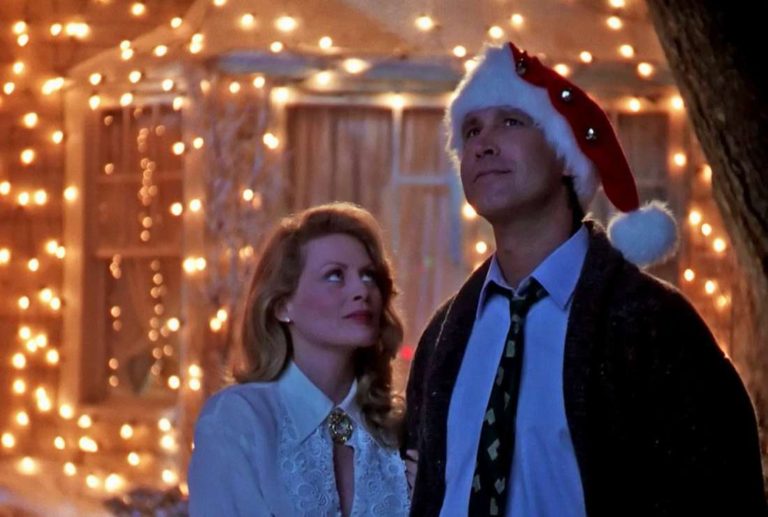
This week on Episode 249 of the InSession Film Podcast, inspired by Pixar’s Coco and Greta Gerwig’s Lady Bird, we discussed our favorite movies about tradition. Tradition is something that every culture clings onto in some way or another, and movies have wonderfully tapped into how that effects our lives. Whether it’s holiday traditions or other rituals that we abide by everyday, there are countless examples in film of how traditions guide us – for better or worse – and hopefully you enjoy our lists as we explore that for our Top 3 this week. On that note, what movies would make your list? Here are the one’s that made ours:
**Please keep in mind that we each had different criteria for our selections**
JD
1) The Nightmare Before Christmas
2) Kubo and the Two Strings
3) Roman Holiday
Brendan
1) Nation Lampoon’s Christmas Vacation
2) Fiddler on the Roof
3) Selma
Honorable Mentions (Combined) Remember the Titans, Night of the Living Dead, What We Do in the Shadows, Brooklyn, The Hunger Games, The Village, It’s a Wonderful Life, How to Train Your Dragon, Elf, Mulan, The Big Sick, The Color Purple, Ratatouille, Far From Heaven, Carol, Princess Mononoke, Life of Pi
Hopefully you guys enjoyed our lists and if you agree or disagree with us, let us know in the comment section below. As noted above, there are countless examples of tradition in film that could make your list, depending on what traditions you participate in or value the most. That being said, what would be your Top 3? Leave a comment in the comment section or email us at [email protected].
This week on the InSession Film Podcast, we discuss Pixar’s latest in Coco and our Top 3 movies about tradition. We also dive head first into Greta Gerwig’s directorial debut Lady Bird, starring the great Saoirse Ronan.
Boy, oh boy, is this a fun episode. We always enjoy talking about Pixar and we struggled to contain our excitement for Lady Bird. This week’s episode may be a little longer than usual, but hopefully our energy and enthusiasm made up for that time difference. You can also hear Brendan give his thoughts on Mudbound during the first break segment – as he missed out on that review on our latest Extra Film podcast.
On that note, check out this week’s show and let us know what you think in the comment section. Thanks for listening and for supporting the InSession Film Podcast!
– Top 3 Movies About Tradition (39:45)
Tradition is something that every culture clings onto in some way or another, and movies have wonderfully tapped into how that effects our lives. Whether it’s holiday traditions or other rituals that we abide by everyday, there are countless examples in film of how traditions guide us – for better or worse – and hopefully you enjoy our lists as we explore that for our Top 3 this week. That said, what would be your top 3?
Main Review: Three Billboards Outside Ebbing, Missouri
Top 3: TBD
[divider]
Help Support The InSession Film Podcast
If you want to help support us, there are several ways you can help us and we’d absolutely appreciate it. Every penny goes directly back into supporting the show and we are truly honored and grateful. Thanks for your support and for listening to the InSession Film Podcast!
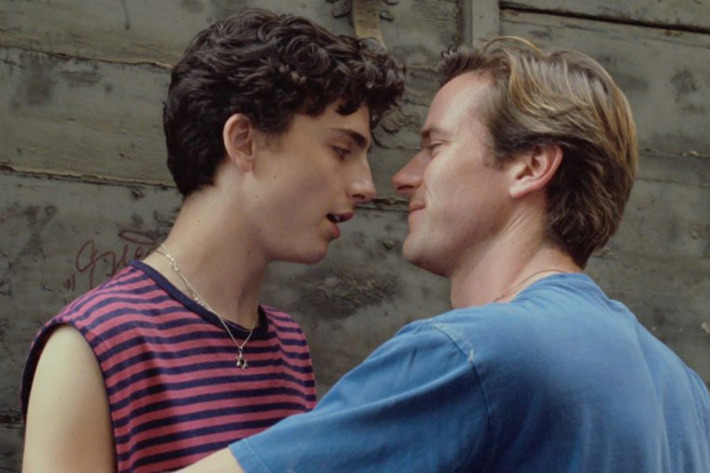
Director: Luca Guadagnino Writers: James Ivory, André Aciman (novel) Stars: Timothée Chalamet, Armie Hammer, Michael Stuhlbarg
Synopsis: In 1983, the son of an American professor is enamored by the graduate student who comes to study and live with his family in their northern Italian home. Together, they share an unforgettable summer full of music, food, and romance that will forever change them.
[/info]
Luca Guadagnino’s timeless evocation of a sun-drenched 80s summer filled to the brim with temptational escapades, and a burning desire of longevity through love and romance, is stunningly, Call Me by Your Name. Guadagnino takes viewers back to the past, in a time much simpler only with the tangibility of lust being more attainable than ever. This making for an equally palpable air and atmosphere that our main characters breath in. Not only is this a major step towards LGBTQ filmmaking, but mutually for modern cinema in the coming years.
As of recent memory, Guadagnino’s established a delicate trademark style with his two previous films, I Am Love and A Bigger Splash. Both of which detail the jealousy and envious ridden environment of forbidden love, and are virtually identical narratively and structurally. Evidently, this is his magnum opus of the trio. Breaking free from his restrained genre choices, he manifests a transcendent sensation of first love in a spiritual, never-ending summer effortlessly. Allowing us to take part in psychedelic disco parties and passionate days spent with the ones you love. He purposefully builds the off-screen chemistry of Chalamet and Hammer—which is in fact so charismatic, that when come time for on-screen scenes to be acted out, the fierce energy stemming from their existential bond becomes genuine. Guadagnino has to be in consideration for director of year honors, as his artistry bleeds through every shot.
This has a strong chance at being crowned one of the most superior ensemble casts of 2017. Albeit their overlooked, this cast incorporates actors in the youth of their career and experienced veterans, making for a solution of everything here. Timothée Chalamet is this year’s truly *big* breakout star. One can’t demonstrate how exceptional he is at such a young age. Demonstrating how vital he is to the development of his character Elio, and indeed for the film too. Simply electrifying but that finale fully displays the range he’s willing to reach out to. Armie Hammer and the extraordinary Michael Stuhlbarg round out the premier bill, hopefully allotting all three of them with Oscar noms (or wins) from The Academy would be the cherry on top of this journey.
Within the first opening seconds John Adams’ contemporary piano piece, “Hallelujah Junction” rings through the auditorium as we pan across a plethora of ancient European statues, so “nonchalant” as Elio’s father (played by Michael Stuhlbarg) refers to them as in the latter part of the movie. This soundtrack, oddly enough doesn’t feel like a soundtrack. Being more of a compilation of songs and symphonies, it flawlessly exudes the free-willed attitude that occupied the 1980s era in which the film takes place. Sufjan Stevens contributes his own sentimentally sound songs in such ways that feel emotionally connected to him. Further proving his uncanny ability as a lyricist by helming the two earth-shattering melodies, “Mystery of Love” and “Visions of Gideon”, both of which echo throughout every lasting frame from the tear-inducing cinematography, taking immediate effect from the opening montage and eventual resolution.
Sayombhu Mukdeeprom, the director of photography, commits on not making any shot too dense. We’ve seen films rely on mid-shots and close ups in an attempt to expose the emotion in a character’s face for the given sense of realism that the character isn’t completely capable of giving. Here, he throws all of that out of the window. Every second consists of a loose shot. There’s hardly any tightly-knit close-ups but whenever there is, it’s composed and serene. Due to the marvelous blocking from Guadagnino and the gorgeous camerawork from Mukdeeprom, their material is the most ingenious when utilizing wide-shots, as they show how people tend to be the most coy when exhibiting their feelings. This is true throughout the entirety of the film and it’s never used as some blatant trope. Especially whenever the ending approaches because that’s when we see it fully grow to its potential. I won’t say much of anything, but the finale is absolute perfection. Immaculately mixing the warming and grieving vibes of the situation.
Call Me by Your Name is as uplifting as it is heartbreaking. It questions our aspirations of endearment but maintains the sensual romance between the two young men at its core. It’s not of effort to classify it as a conventional coming-of-age film, nor a depiction of post-pubescent discovery. It’s at the near end of childhood and the peak of adulthood, settling on that uncertainty of being unsure about what you’re feeling and what’s going on internally and externally. It’s one for now, one for the decade, and one for the long-term future. Hopefully people identify with the exquisite themes of exploration and see a part of themselves in Elio because as this movie showed us, nobody forgets the first time they fell in love.
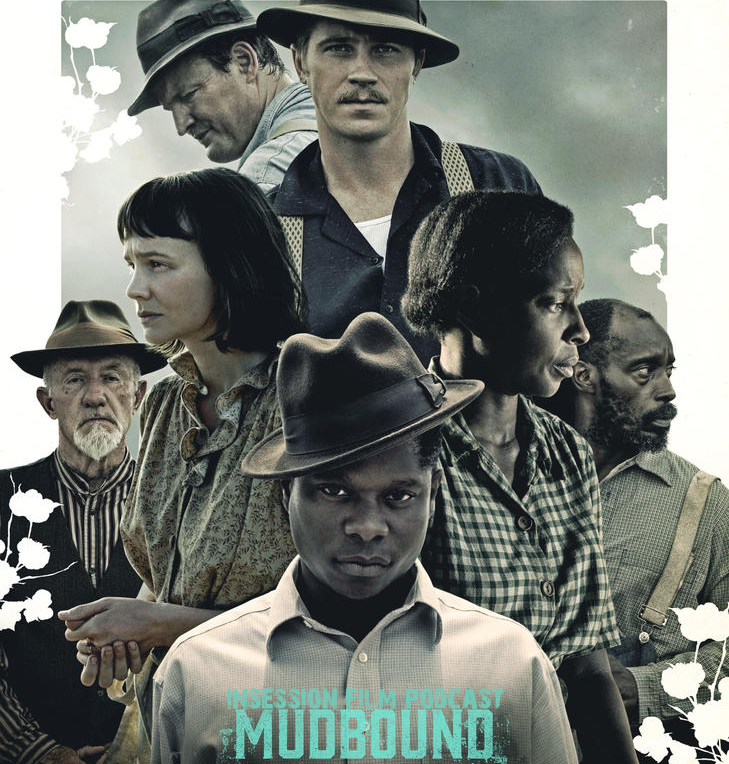
This week on the InSession Film Podcast: Extra Film segment, we discuss the latest film from Netflix in Mudbound and the latest from director Stephen Chbosky in Wonder.
You have to love this time of year, where the quality of films are starting to ramp up as we near awards season. There is a chance that neither Mudbound or Wonder will have an impact this year, but it’s nice to have high quality films that couple with all the awards darlings out there right now.
With that said, have fun listening to this week’s Extra Film segment and let us know what you think in the comment section below. Thanks for listening!
– Movie Review: Mudbound (5:28) Grades
Vince: A
JD: A-
– Movie Review: Wonder (44:15) Grades
Vince: A-
Brendan: A-
We try to make this the best movie podcast we possibly can and we hope you enjoy them. Subscribe today on iTunes and Stitcher and please leave us a review on iTunes. You can also find us on Soundcloud, PlayerFM and TuneIn Radio as well. We really appreciate all your support of the InSession Film Podcast.
To hear this Extra Film episode and everything else we do, download our apps on the Amazon Market for Android and the Podcast Box app on IOS devices. The mobile app covers all of our main shows, bonus podcast’s and everything else relating to the InSession Film Podcast. Thanks for your wonderful support and listening to our show. It means the world to us!
[divider]
Help Support The InSession Film Podcast
If you want to help support us, we would greatly appreciate it! For more info, CLICK HERE.
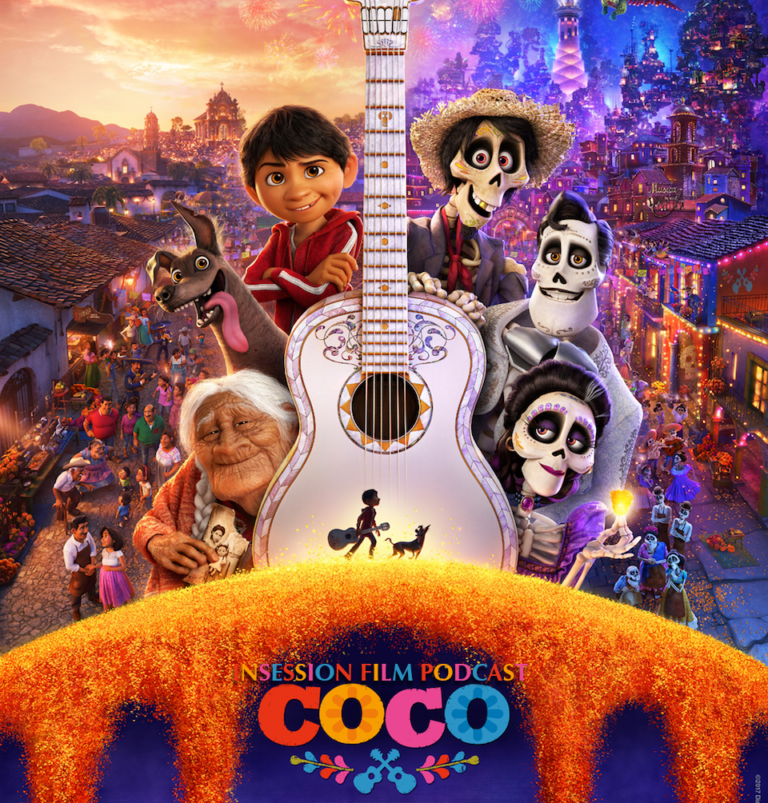
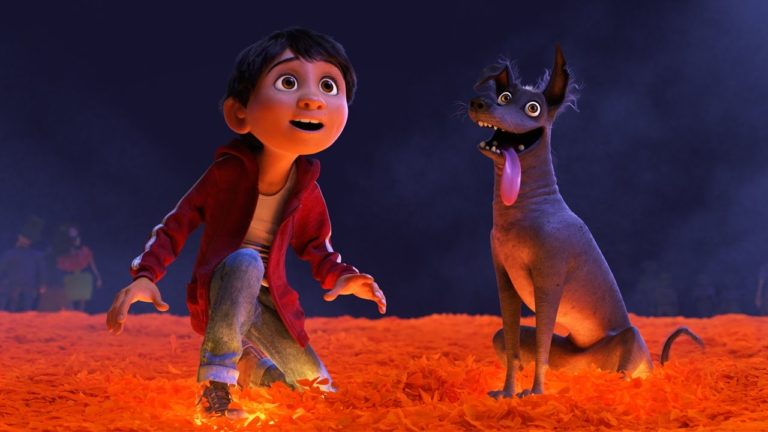
Director: Lee Unkrich, Adrian Molina (co-director) Writers: Lee Unkrich, Jason Katz, Matthew Aldrich, Adrian Molina Stars: Anthony Gonzalez, Gael García Bernal, Benjamin Bratt
Synopsis: Aspiring musician Miguel, confronted with his family’s ancestral ban on music, enters the Land of the Dead to work out the mystery.
[/info]
Spectre said “The dead are alive,” and that’s certainly true when the audacious (and imagined) Dia de los Muertos parade is on screen. Afterward it’s only steady givings for a living viewer to spirit away since those who were supposed to have – and have gone – from James Bond’s past, while referencing the provocative phrase, spook the spy with a wheezing boo. There should be a petition for a cut where everyone is in their calavera costumes? That would have been worth the while.
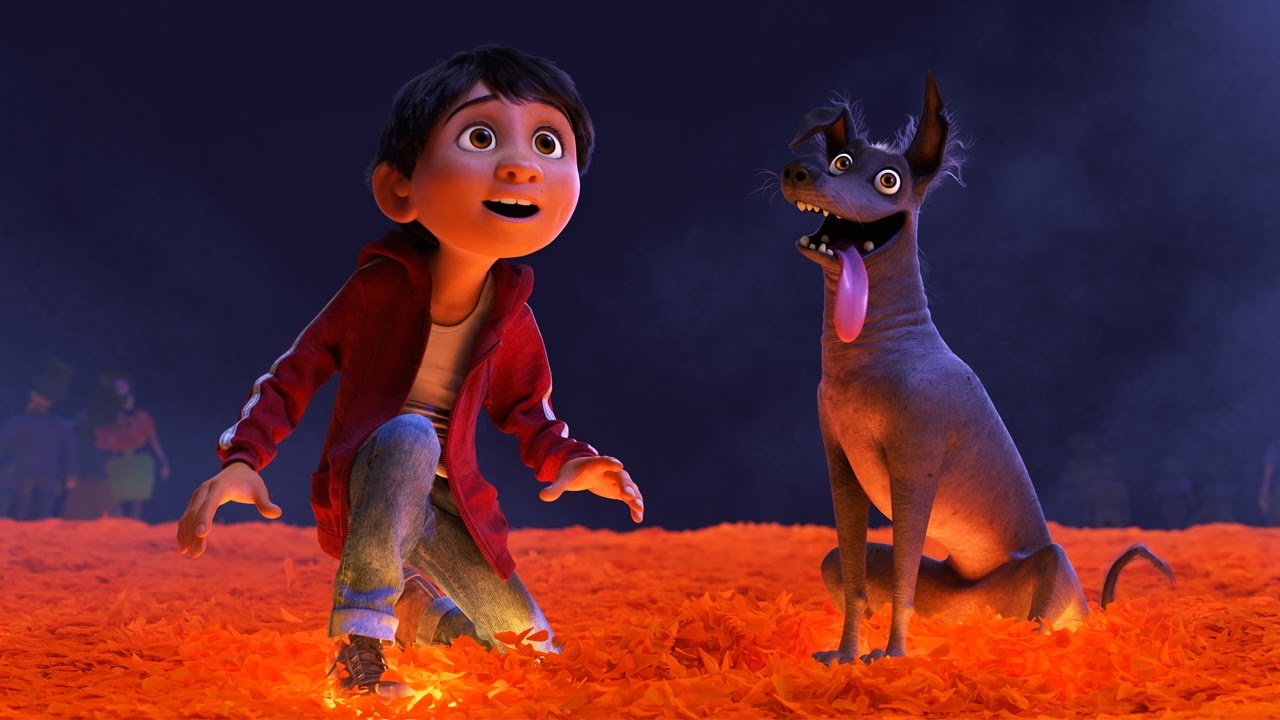
With Coco, this little dream can be considered as realized although Pixar-ized. Here, the dead are more than just alive; they are festive, hyperkinetic, masters of crooning, sensitive, educative and – as it happened at this writer’s screening in Houston – able to get the whole house roaring.
In the film, joyful 12-year-old Miguel (Anthony Gonzalez) is framed as a musician-in-bloom in a clan who considers music a curse, whose every rebellious act denotes an admiration for, and later on a need to prove his kinship to, Ernesto de la Cruz (Benjamin Bratt), a singing phenomenon who was not saved by the bell. Expectedly, the struggle reaches a tipping point, and afterward Miguel is vaulted into the Land of the Dead. Departed relatives are there to greet him, so that’s nice, but staying with them any longer and Miguel will become a skellington. As told by Miguel’s roguish friend and regular Frida Kahlo impersonator Héctor (Gael García Bernal), if his living relatives are to forget him, he will move on to a realm unknown as marigold-colored dust. No need to declare anything. No need to cross any Flower Bridge.
“This looks like 2014’s The Book of Life,” said the elephant in the room. True, again the Mexican holiday is the setting, the protagonist has suppressed dreams, and the footage has a propensity to be melodic, but Coco doesn’t rip off what Fox did here. Don’t let the irrational outrage diminishes the facts that Pixar’s work is again proving that Dia de los Muertos is more than production value, and the kind of love being explored here is more transcendent, more introspective, and more familial. As a result, the script from Adrian Molina and Matthew Aldrich (from a story by them and Jason Katz and Lee Unkrich, who also directs) does a wondrous thing: letting the ebullience of a single culture to tell, and coexist, with the universal ideas of mortality and memory. Oceans, superheroes, ants, toys, a Parisian kitchen, a brain and now all the way to the Mexican afterlife, it seems like no universe is too daunting for the Luxo Jr.-branded animators to perform a thorough and superlative exploration.
Well, maybe not mythical Scotland. Or that second visit to autopia.
But even Pixar’s rainiest of days still offer frames of sunlight with notable evolution in animation, lighting and attempts to replicate the behaviors of an actual camera. Coco is the studio’s most cinematic film to date – at least prior to Brad Bird’s The Incredibles 2, maybe – with tangible textures (those bones!), soft-focusing, and goosebumps-inducing angles that rival a tentpole production (from a competent director). And even more incredible still is having this attribute match up with the film’s mainly samba-like pace, rapid in the doling-outs of story beats, gags from Dante (Miguel’s loose-lingua canine), and new delightful sights. It’s as if every aspect is catered to the heart-thrumming and swoon-worthy scoring from Michael Giacchino.
Don’t worry – beneath the maracas and trills Coco doesn’t forget its characters. Placing Gonzalez, Bernal, Bratt, Renée Victor (as Miguel’s stringent, flip-flop twirling Abuelita) and Alanna Ubach (as the fiery, fiercely independent Mamá Imelda) in more of those entrancing, well-staged moments would have been nice, but for those snappier times everyone remains on beat. Earned tears will be drawn, both of joy and of the more common variant.
Due to its release date, Coco is a Thanksgiving film in the U.S., but that isn’t as awkward as it sounds. If reunion, connection and appreciation isn’t happening over turkey, perhaps go see this. While the youngsters can enjoy the great animation, adults should take home the idea that emotion is the only graspable and usable item in the subsequent plane. And so, there should be something to remember here – if not what you have just seen then it is a look at those whose living form is now a mind-bound specter.
Overall Grade: A
[divider]
Hear our podcast review on Episode 249, coming soon.
2017 has been a crazy year in so many ways, but it’s also been (ahem) wondrous when it comes to film. We’ve seen some great indies, some phenomenal blockbusters and for some reason great films with “wonder” somewhere in the title. Depending on who you ask regarding these titles, you may get mixed responses, but we are fans of all of these films in some way or another. So, we were wonder-ing which of these films you liked the best, and thought it’d be appropriate to ask for this week’s poll.
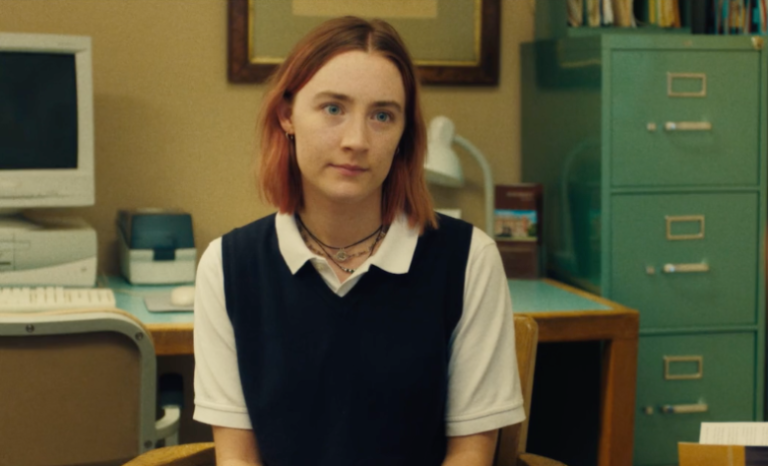
Director: Greta Gerwig Writers: Greta Gerwig Stars: Saoirse Ronan, Laurie Metcalf, Tracy Letts, Lucas Hedges
Synopsis: The adventures of a young woman living in Northern California for a year.
[/info]
Life’s funny, authoring this “take it easy” doctrine while implying that to “sprout wings” is the only method to earn all the goodness. It’s a struggle that coming-of-age films tend to capture best, seeing that its protagonists can, no matter how illogical, always uncover a reason to reject jadedness and its grownup-approved virtues. Being in this category, Lady Bird tells a familiar narrative, but its lead has, rather brilliantly, managed to package it with freshness that entertains and prompts reflection.
Lady Bird follows Christine (Saoirse Ronan), who is often seen grilling her mother, Marion (Laurie Metcalf), for not letting her – someone with an avian nickname – to realize East Coast-uni dreams and fantasies of settling in culture-rich places. Anywhere but Sacramento, to sum things up. California’s capital city isn’t a backwater place though it is amusingly depicted as so here, a move that effectively captures the character’s mindset. And so, to further avoid being engulfed by the ordinary, Christine decides to adopt “Lady Bird” – in quotes in writing – as her actual name. What is weirdness to others is a life philosophy for her, asserting that circumstances can cage Lady Bird’s body but never her dreams.
“Greta Gerwig isn’t in Lady Bird, and yet is,” is a thought that makes itself known often while watching the film. It isn’t distracting as it sounds (promise) and isn’t that much of a brain-twister, really, considering the actress’ name is after “directed by” credit (this is her first time in the seat solo) and the title character shares Frances Ha’s angst and sharpness (the screenplay is also Greta’s). Gathered are the usual suspects of this genre – school plays, proms, age-influenced clashes, popularity contest, the crowd cooler than your best friend, and love’s varying brushes – but sharp scripting and punchy performances across the board still make their presence welcoming. Dynamics between Lady Bird and the surrounding souls of her age are a trove of glee, with highlights among them are those with her two classmates Julie (Beanie Feldstein, effortlessly handing out the laughs) and Danny (a lively Lucas Hedges).
Equally golden are Lady Bird “matches” with the adults, especially the ones with her foil Marion, which are – naturally – designed to earn the most spotlight. Lady Bird, for the most part, can’t be more different than Marion, but Ronan can always match the level of intensity or gravitas that Metcalf has brought along. The result is every mother-and-daughter spar is a joyous verbal even when the contents – money, college, and future – are hard-hitting material, not to mention besieged by a discrepancy in how the different generations perceive the times differently. Lady Bird is set in a post-9/11 world – not too long after the tragedy as the background TV and radio broadcasts prove – and so the stressful atmosphere is always half-a-breath away. It’s a meaningfully woven detail that adds layers to the characters who, like the country then (and regrettably still is), unclear about the future and unstable regarding well-being.
But whether the stage is set for another familial conflict or a burst of organic laugh (best use of Justin Timberlake’s Cry Me a River yet), Ronan is a gale-force. The footage, which is already radiating, receives even more lumens when she is around reversing her modest, shy, and God-aware persona in last seen in Brooklyn or grudgingly letting go of a possible future. In every swing between the emotional polars, Ronan subtly shows that her character is evolving, adding more (proverbial) magenta-colored feathers to better understand, see, and roll with the world’s unfathomable workings. A winning performance, undoubtedly so, as it alone enables the film to be a universal portrait despite focusing on just one person, a message that life’s experienced can relate even though doing the imparting is a still-learning lass.
Now that’s funny.
Overall Grade: A
[divider]
Hear our podcast review on Episode 249, coming soon.
Director: Joe Wright Writers: Anthony McCarten Stars: Gary Oldman, Lily James, Ben Mendelsohn
Synopsis: During the early days of World War II, the fate of Western Europe hangs on the newly-appointed British Prime Minister Winston Churchill, who must decide whether to negotiate with Hitler, or fight on against incredible odds.
[/info]
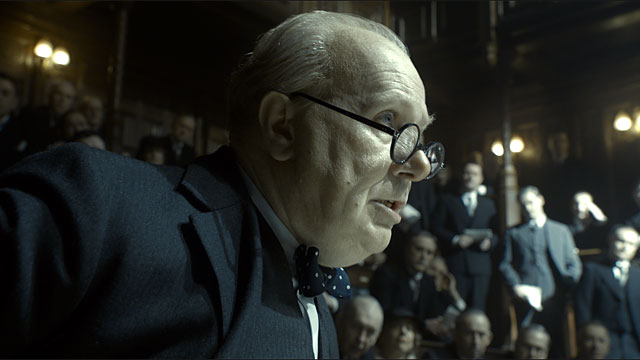
Joe Wright is certainly no stranger to The Academy, as two of previous films from the mid 2000s received immense acclaim from critics and audiences around. So does it really come as a massive jolt that a Winston Churchill biopic, starring Gary Oldman, directed by said director has Oscar contentions written all over it. Most notably however, Darkest Hour isn’t afraid to break free from traditional biopic mastery. Reinforcing a more light-hearted sense of sheathing mature subject matter all the while achieving the evident, threat-filled feeling that was present in the midst of World War II. Alas, it fails in seeking an escape from the grips of its tainted Oscar-baitish ways.
Quite easily the talk of the town regarding Darkest Hour was the hype surrounding Gary Oldman’s portrayal as the iconic political figure of past England’s Prime Minister, Winston Churchill. Not to sound over dramatic, but Gary Oldman IS Winston Churchill. It’s as if we’re witnessing a second incarnation of Churchill throughout the entirety of the 125 minute runtime, credited to Oldman’s mesmerizing encapsulation of him. He nails all of Churchill’s mannerisms, down to something as simple as his trademark peace sign. Definitely the clear-cut frontrunner to take home the Oscar for Best Actor this year, as deserved. Despite his overwhelming presence, Lily James and Ben Mendelsohn, although nothing substantial, manage to squeeze in their share of acting chops when Oldman isn’t completely stealing a scene.
Joe Wright brings something so unorthodox to this genre of biopics. He maintains the insurmountable ultimatum brewing between Churchill and the nation of England but it’s with the traverse levels of comedy that gives it an upbeat edge over most true story films that are being thrown out into mainstream media. Immediately taking effect within one of the first scenes of the film, we get a glimpse of Churchill’s comical ways as he heckles his personal secretary Ms. Layton (played by Lily James). It makes for an entertaining hook for the viewer inside of us but keeps our eyes glued to the screen asking for more of him. The tone remains like that throughout the entire film. Establishing it fairly early how Wright did is somewhat unprecedented, but truly remarkable. Certainly no issues here with the screenplay and direction.
Darkest Hour doesn’t carry a whole lot of baggage with it. But the types it does, are relatively crucial. Even with its magnificent writing and direction, there’s a couple of useless scenes and transitions that are just makeshift for the films development. It doesn’t necessarily cause the film to stop progressing nor tampering the story, but it slows it down to the point where it begins to become an issue. Additionally, that Oscar-bait feeling that it’s so desperately being attached with kills everything it’s attempting to include. It stains everything that Darkest Hour is thriving off of which is a huge disappointment to myself and audiences alike.
Despite the unsavory feeling that the film’s sole purpose was to position itself in a category more appealing to The Academy, there’s no denying the invigorating depiction of not backing down when hope is lost, and how someone is willing to step forth as a leader. Gary Oldman is a surefire to win, and Joe Wright has never been better. The real question is, what film will voters adore more? Darkest Hour or Dunkirk? Well, we’ll just have to wait and see.
This week on Episode 248 of the InSession Film Podcast, inspired by DC’s latest in Justice League, we discussed our favorite acts of justice in film. There are many reasons one would seek justice, and boy, has cinema done a great job of reverberating exactly that over the years. Whether it be small moments within a film, or perhaps the entirety of the movie is set on the idea of justice, either way the satisfaction of righting wrongs has been viscerally displayed countless times since the inception of the art form. There are a million options for this list, but we hope we gave it all the (ahem) justice it deserves. On that note, what movies would make your list? Here are the one’s that made ours:
**Please keep in mind that we each had different criteria for our selections**
**SPOILER ALERT – given the nature of this topic, some of our picks below do feature some spoilers**
JD
1) The Thin Blue Line – The movie itself.
2) Bicycle Thieves – Crowed seeks justice for Antonio stealing the bike.
3) Mad Max: Fury Road – Furiosa seeks justice for mothers.
Brendan
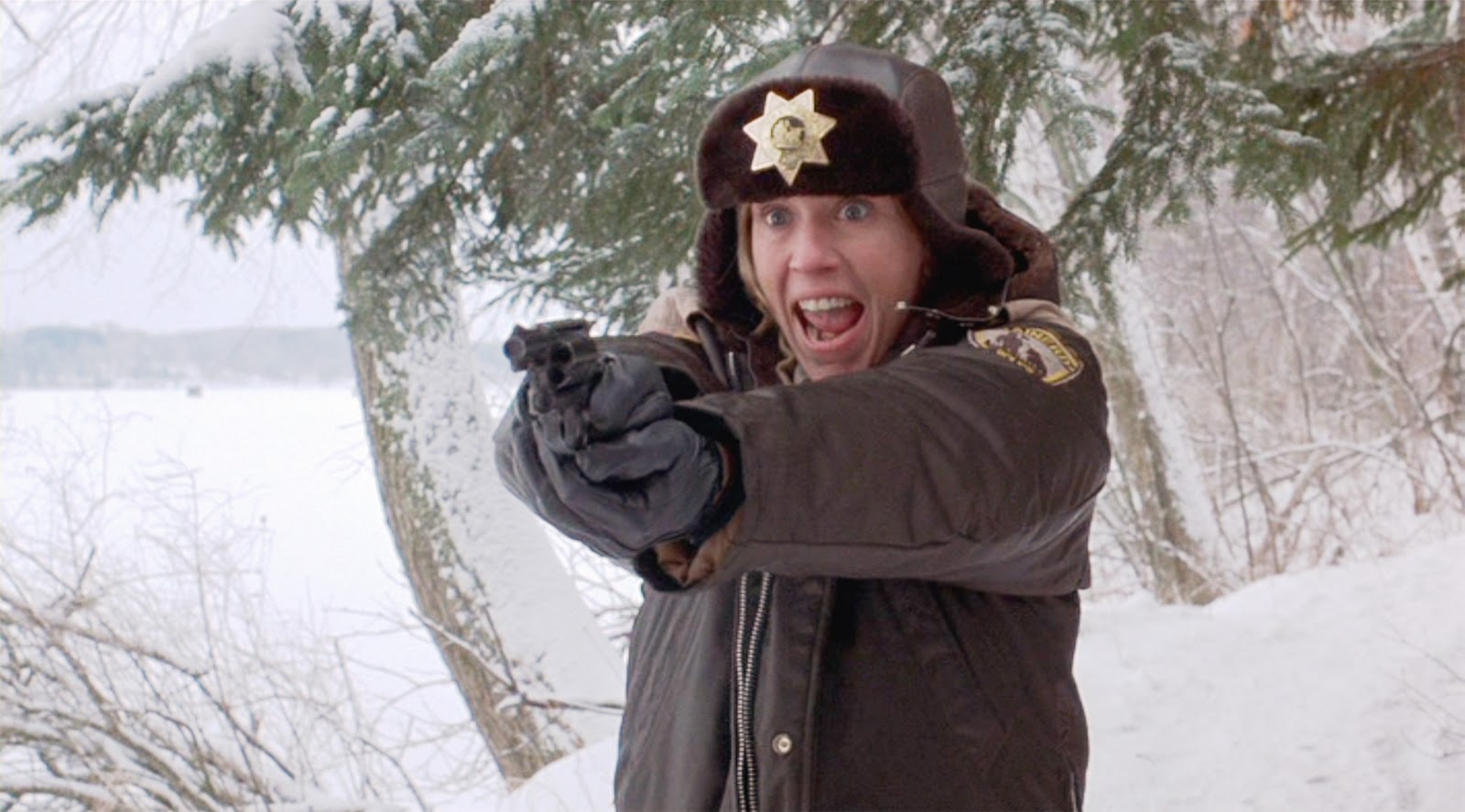
1) Fargo – Marge captures Gaear.
2) 12 Angry Men – Young man on trial is found not guilty.
3) Thelma and Louise – seek justice for rape.
Dan
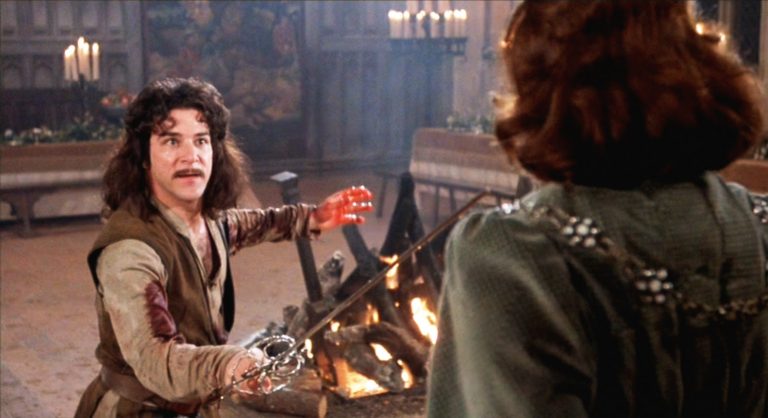
1) The Princess Bride – Inigo Montoya seeks justice for father’s death.
2) M – Police offers and crime-lords seek justice on man committing murders.
3) Toy Story – Toys take revenge on Sid.
Honorable Mentions (Combined)
Acts of justice in these films – The Shawshank Redemption, The Lion King, Pulp Fiction, Django Unchained, Gladiator, Road to Perdition, The Departed, Taxi Driver, Mystic River, Unforgiven, Dead Man’s Shoes, Michael Clayton, The Act of Killing, The Look of Silence, Kill Bill, Jackie Brown, To Kill a Mockingbird, The Godfather, Drive, Blade Runner, Sicario, Zodiac, Batman, Rocky III, Rocky IV, The Help, The Fugitive, Taken, John Wick
Hopefully you guys enjoyed our lists and if you agree or disagree with us, let us know in the comment section below. Acts of justice are in no short order when it comes to film, and I’m sure there are many examples we missed that would make your list. That being said, what would be your Top 3? Leave a comment in the comment section or email us at [email protected].
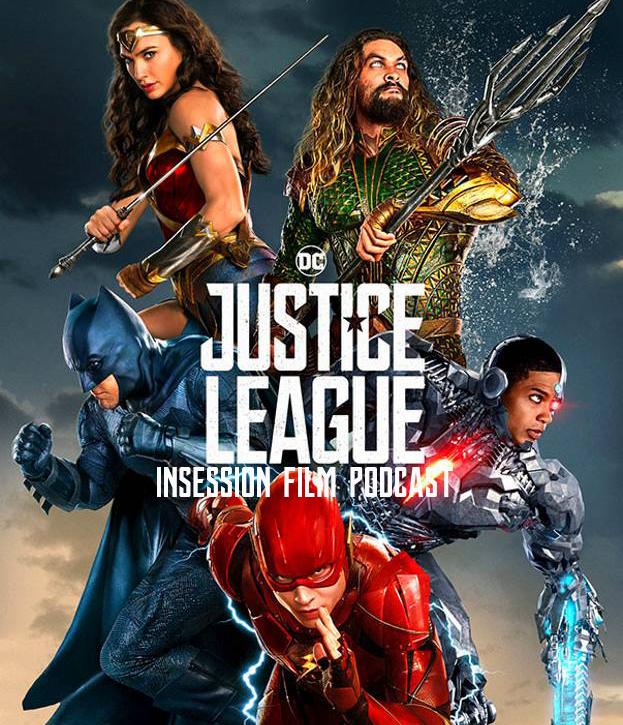
This week on the InSession Film Podcast, Dan Clark from the Cinema Geeks podcast joins us to discuss Zack Snyder’s latest entry into the DCEU in Justice League. Using that film as inspiration, we discuss our favorite acts of justice in film and we end the show by talking about the future of the DCEU.
Big thanks to Dan for joining us this week, we are big fans of GeekCast Radio and all of the great shows they have over there. Please be sure to check them out if you have the time. Additionally to our main segments this week, we also discuss a tweet that garnered lots of fun responses on Twitter and superhero teams for our poll. We had a lot of fun and we hope you enjoy it as much as we did.
On that note, check out this week’s show and let us know what you think in the comment section. Thanks for listening and for supporting the InSession Film Podcast!
– Movie Review: Justice League (3:28) Grades
Brendan: C+
JD: B-
Dan: B-
– Top 3 Acts of Justice (37:52)
There are many reasons one would seek justice, and boy, has cinema done a great job of reverberating exactly that over the years. Whether it be small moments within a film, or perhaps the entirety of the movie is set on the idea of justice, either way the satisfaction of righting wrongs has been viscerally displayed countless times since the inception of the art form. There are a million options for this list, but we hope we gave it all the (ahem) justice it deserves. That said, what would be your top 3?
– The Future of the DCEU (1:24:49)
The DCEU has seen its fair share of failures – along with some successes – and it’s made for a franchise that is polarizing among fans and critics alike. So, where do we go now? Justice League hasn’t performance well at the box office, Ben Affleck is rumored to leave his role as Batman and the behind-the-scenes at Warner Bros. seems very reactionary. Given all of that, we thought it would be fun to discuss the future of the DCEU and where we’d like to see it go in the next few years.
If you want to help support us, there are several ways you can help us and we’d absolutely appreciate it. Every penny goes directly back into supporting the show and we are truly honored and grateful. Thanks for your support and for listening to the InSession Film Podcast!
Synopsis: The story of a young boy in the Midwest is told simultaneously with a tale about a young girl in New York from fifty years ago as they both seek the same mysterious connection.
[/info]
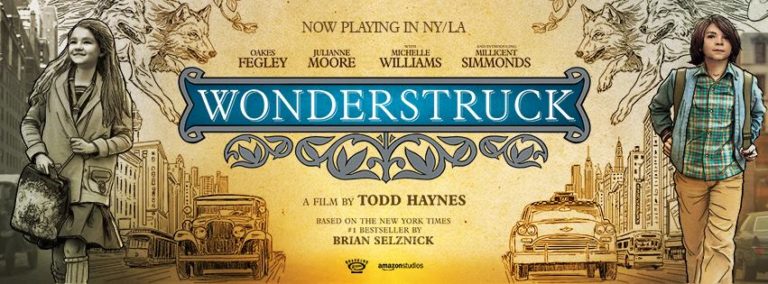
Surely, Todd Haynes is one of our most curious directors, a man who exemplifies a curiosity in setting, genre, narrative, and drama. One takes a look at the filmography of Todd Haynes and even expresses their own curiousness; how can the director of Far from Heaven and Carol transition from films like Safe and onto the Bob Dylan “biopic” I’m Not There? Haynes strikes a remarkable balance in his films, not one of them is like the other, and yet they are all very clearly his films, through and through; that’s the sign of a great director, the ability to maintain such visual grandeur and consistency with an underbelly of experimentation.
Then it should be appropriate that Wonderstruck is a very curious little film in its own right. Based on the book by Brian Selznick, who wrote the script here (his work was also adapted a few years earlier into Martin Scorsese’s Hugo), Wonderstruck is a rather simple film of childlike wonder (pun intended), less fantastical than its marketing has made it out to be. It’s a film that relishes in the curiosity of childhood, where a child’s most introspective question is simply, “Where do I belong?” And sometimes that destination, while rewarding, isn’t always the grandest. It’s the simplicity of such curiosity that makes Wonderstruck so authentically innocent, and a rather gorgeous family film.
Split between two timelines (New York, 1927 and the Midwest, 1977), Wonderstruck follows two youths on a search for familial reconnection; there’s Rose (newcomer Millicent Simmonds), a young deaf girl who travels to New York City to rekindle her relationship with her silent film star mother (Julianne Moore, in one of two roles here), and then there’s Ben (Oakes Fegley of Pete’s Dragon fame) who too suffers his own unfortunate deafness and travels to New York in search for his unknown father. The back-and-forth narrative has garnered mixed responses from audiences already, and to be fair it is rather jarring and perhaps doesn’t always work, but there is purpose in Rose and Ben’s respective parallels, even if their lives are separated by fifty years of history. That purpose is in relation to both Rose and Ben’s childhood desires, an equally shared curiosity in needing to fill a familial void, something no child can fully bear, and instead of being majestically told with a constant narrative momentum, the film’s narrative remains gentle and simple, maintaining that most important sense of curiosity. And even better still, there is also pathos, mostly due to Fegley and Simmond’s respective performances; especially Simmonds, who is a revelation in the 1927 sequences.
Todd Haynes also chooses to depict each timeline with its own unique sense of place; the 1927 sequences evoke the look, feel, and sound of a 1920’s silent film (that’s a disservice, it is a silent film), whereas the 1977 sequences remain colorfully gritty and musically soulful, a truly urban aesthetic. Much like the film’s narrative, this choice could be seen as visually choppy, but yet again there is a thematic purpose, and a necessary one. Overlooking how gorgeous each segment is to behold, Todd Haynes and cinematographer Ed Lachman use their crafts to demonstrate the importance of visual storytelling, as it relates to familial legacy; the film goes out of its way to symbolically show how simple objects close to us (a bookmark for instance) have their own stories and legacies within them, hence why museums play such a crucial part in this story. Silent films are the same way, as they have the ability to evoke so much by not needing to speak; Rose’s affection for this cinematic art goes beyond her mother’s silent acting career, but also in her only way to communicate without hearing (there’s a moment when she leaves a movie theater that is plastered with signs of the upcoming talkies, and it’s devastating knowing that this would be a regression for her). Filming Rose’s timeline exactly as that form of artistic expression she can actually understand, it adds a further sadness to the film entirely (Carter Burwell’s gorgeously moving score also helps, too).
The beauty of Wonderstruck is not in its visual grandness, but in the lack of grandeur within its soul. Haynes and Selznick understand that the authenticity of childhood curiosity is in its simplicity, but to children the small and the intimate can still feel like an out-of-this-world oddity (just as the late and great David Bowie sang in “Space Oddity”). That disparity, emulated by the film’s grand aesthetics juxtaposing its intimate narrative, is the heart of childhood innocence, seeing the big in the small, making the final collision of both timelines rather heartwarming. Sure, the final revelation is mostly a 10-minute exposition dump, but at least there’s a continued thematic intention, showing that what our eyes perceive is truly worth a thousand words (much of the ending is all told visually too).
The film’s narrative minimalism won’t work for everyone, and I must admit at first I wasn’t sure it worked for me. And even still, I can admit there are some flaws here; at one point, Ben meets a new friend named Jamie (Jaden Michael), and while their friendship is so beyond endearing, it leaves me wondering if it was necessary or not (or maybe I just don’t care). And yet I was still greatly moved by Wonderstruck, but more moved as I pondered on the film afterward, finding a way to sneak up on me like untold legacies do. It may be a family film, but this is still a Todd Haynes film, just one you can also take your children to. What better way to introduce your kids to Todd Haynes, especially if they’re curious like Rose and Ben?
Director: Zack Snyder Writers: Zack Snyder, Joss Whedon, Chris Terrio, Stars: Ben Affleck, Gal Gadot, Jason Momoa, Ezra Miller, Ray Fisher
Synopsis: Fueled by his restored faith in humanity and inspired by Superman’s selfless act, Bruce Wayne enlists the help of his newfound ally, Diana Prince, to face an even greater enemy.
[/info]
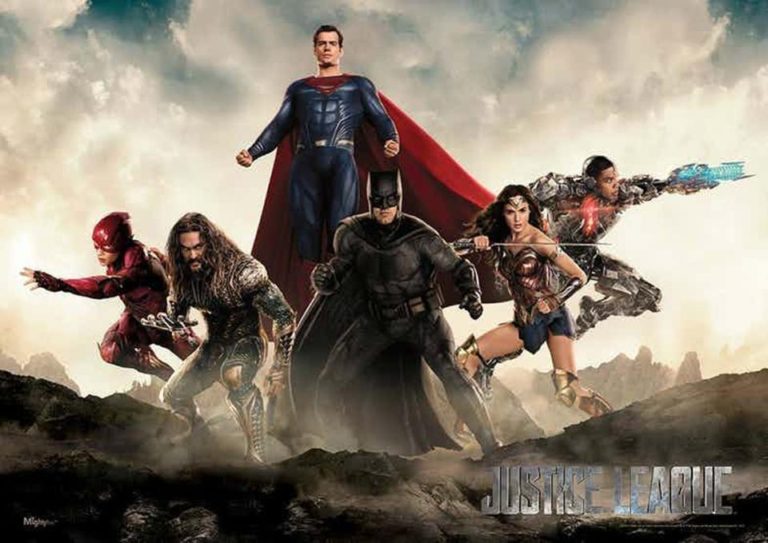
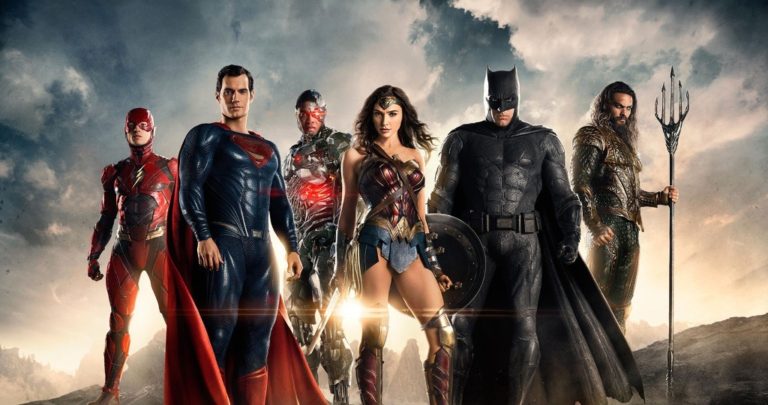
So grey has been DCEU’s run that a particular fictional billionaire could go into crisis. The sentiment thickens when Justice League is considered, a film that has encountered hurdle after hurdle from 2007 toward the brink of release. With one heartbreaking shutdown at the 90-percent mark (when Mad Max’s George Miller was on board), 10th-ish-hour director switch, costly tone-lightening/color-adjusting/mustache-removing reshoots, fans and anti-fans needlessly baring fangs (aiming for jugulars over the runtime, sigh), allegedly sexualized costumes, a rotten rat of a producer, and that Rotten Tomatoes’ score fracas, mustering just 0.5 more layer of anticipation for the film is a legitimate struggle.
But “Holy Optics, Batman!” as the final cut is an entertaining romp even with apparent blemishes.
As indicated through director Zack Snyder’s trademark emphatic slo-mo and Sigrid’s dreamy take on Leonard Cohen’s Everybody Knows, the world of Justice League is a devolved one: aimless, at times rainy, hostile to thy foreign neighbor, no Superman (Henry Cavill) and some bug-esque monsters. These are Parademons, minions of one axe-wielding Steppenwolf (Ciarán Hinds) who wants to use three “mother boxes” to burn and turn our world into theirs. And so, “find support” replaces “arrest goons” as the first item on Wonder Woman (Gal Gadot) and Batman (Ben Affleck)’s to-dos.
Although the faces to search for are known – identified in Batman v Superman as Aquaman (Jason Momoa), The Flash (Ezra Miller) and Cyborg (Ray Fisher) – there’s still excitement when meeting them up close. Momoa, with a head-swimmingly delightful show of cocksurety, is easily the best of the three and a fan-favorite, not to mention the finest host for visual treats that are readily supplied by d.o.p. Fabian Wagner (whose 1.85:1 ratio choice breaks with previous films, a move similar to what Seamus McGarvey did with The Avengers). Aquaman also marks the debut of a potential new leaf that DCEU should assume from here on: when appropriate, let’s have laughs, and if possible do so at the world’s end.
There are clear traces though in which writers Chris Terrio and Joss Whedon find crafting the downright gleeful banter, which unlocks characters’ previously missing abilities (Cavill and his Superman do court laughs! Amy Adams’ Lois Lane now has chemistry! Miller shouldn’t be typecasted as a psycho, folks!), a too-enjoyable activity that they forget to address pacing issues. Here we go again, the second coming of BvS’ central issue where the main plot is halted to unfurl the reasons one should care for the new trio and care more for the old guards. Thanks to affecting performances, especially between Miller and Billy Crudup (as Flash’s wrongly incarcerated dad), the drag in these character beats is more tolerable, save for a late-game farmhouse reunion with a soapiness that test limits.
Conventional wisdom advises against mentioning Marvel in a DC venture, but something has to be said about the paltry villainy on display here. Universes thought to be uncrossable become precisely so through this department, considering Steppenwolf has copied Thor: Ragnarok’s Hela (or all of MCU’s villains, really)’s “Menacing, In Fashion Only” page. Not even all the honey inherent in Hinds’ voice can save the character, who has been brought to life with underwhelming digital wizardry. Well, at least he blends well into the yet-again pixel-packed third act now dunked in red instead of blue. That’s a shame, as an all-out spectacular “protect the mother box” sequence on Themyscira sees Steppenwolf appropriately oozing apocalypse, a trait akin to Days of FuturePast‘s murderous Sentinels that would have let the fear of those who oppose him breaches the fourth wall.
“You can’t save the world alone,” the poster suggests, and luckily a consistent thread of unity behind the camera and sparkling camaraderie in front prevent Justice League from embracing a darker fate. It’s not all spotless due to the CGI and clear occasions where the Whedon touch trounces Snyder’s, but in the end the gears do come together.
Overall Grade: B
[divider]
Hear our podcast review on Episode 248, coming soon.
Director: Kogonada Writers: Kogonada Stars: John Cho, Haley Lu Richardson, Parker Posey
Synopsis: A Korean-born man finds himself stuck in Columbus, Indiana, where his architect father is in a coma. The man meets a young woman who wants to stay in Columbus with her mother, a recovering addict, instead of pursuing her own dreams.
[/info]
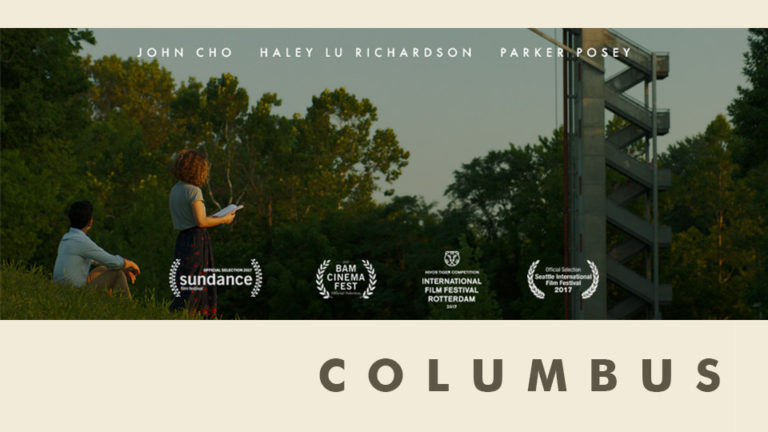
Film encompasses a means of visual interpretation, a form of structure, design, symmetry, and juxtaposing means. In that sense, can we also call film a form of architecture? Kogonada’s answer is a well-rounded ‘yes’ with his debut film Columbus, a film ready to join the conversation among the finest directorial debuts of the past few years. Kogonada urges us to consider film and character as its own form of architecture, in the same way an architect him/herself strives to display a sense of modernity; this is not just achieved superficially, by way of camera angles and music, but in character most especially. In Columbus, character and architecture become completely synonymous, displayed in the way all architects view their own work – human.
Columbus follows Kasey (Haley Lu Richardson), a young woman battling her own juxtaposing means; remaining in Columbus, IN to take care of her recovering addict mother, or further pursuing her own desires in architecture, which she has currently put on indefinite hold. Her desires are challenged when she meets Jin (John Cho), a perceivably upper class literature translator who finds himself stuck in Columbus, IN on account of his comatose father, a professor in architecture. Together, they share walks and talks about not just architecture, but reflect on their own hopes and wants, leading to an introspective balance between the two of them. Kasey, who remains truthful in her love and affection for her mother, finds herself being less truthful to herself; the same can be said for Jin and his own father, which makes for a rather saddening dichotomy. Jin and Kasey couldn’t be more different (in appearance, Jin certainly appears more “well off”), but buried deep within they aren’t any different at all; it’s that internal symmetry that masks their outer appearances, providing the film with its genuine pathos. This is an architect at work, and character is the architect’s creation.
And so are his aesthetic choices, as Kogonada also employs a craft behind the camera as well. Columbus is one of the best shot films of the year, because its use of cinematography is appropriate and right. We are immersed into a real sense of place, where visual structure and form have their own deeper meanings; a somber glass reflection as Kasey discusses a favorite building to Jin (appropriately facing their refracted inner selves), the use of structure symmetry and perpendicular angles, the way the inside of various rooms feel so inescapable, and how outside feels almost too open, looming, and uncertain. Such a use of angles mirrors Jin and Kasey’s own relationship, a relationship that wisely remains romantically ambiguous, and shows how symmetrical the two really are despite being in opposite physical ends. Elisha Christian and her camerawork should be in contention for Best Cinematography this year.
Not to give all the credit to Kogonada and his wonderfully subtle direction and gentle script (though trust me, he deserves much of it) but the structure would all come crashing down without John Cho’s and Haley Lu Richardson’s immediate chemistry. Haley Lu Richardson especially; she evokes pain and joy almost simultaneously, communicating her internal struggle by facial expressions alone. In her subtlety, she gives one of the best leading performances of the year, and much like the film’s wonderful cinematography, it would feel wrong to say such a performance is among the most underrated and under-discussed of the year.
But sadly, this can be said about the film as a whole, which shares those same underseen notions. Columbus is criminally buried among a sea of other great films (all of which are still worthy of discussion), but we should be smart enough to comprehend them all simultaneously; after all, Kasey has that same ability with regard to various architectural facts. Kogonada turns Columbus into a glorious study of not just architecture, but the art’s own hidden meaning, about the line between complacency and modernity. Modernity itself is what architecture is meant to reflect, only to been seen as the film’s biggest irony with two characters who refuse to let themselves progress forward, but in the end we have to. It’s a complete and wonderful arc, made by a wonderful architect.
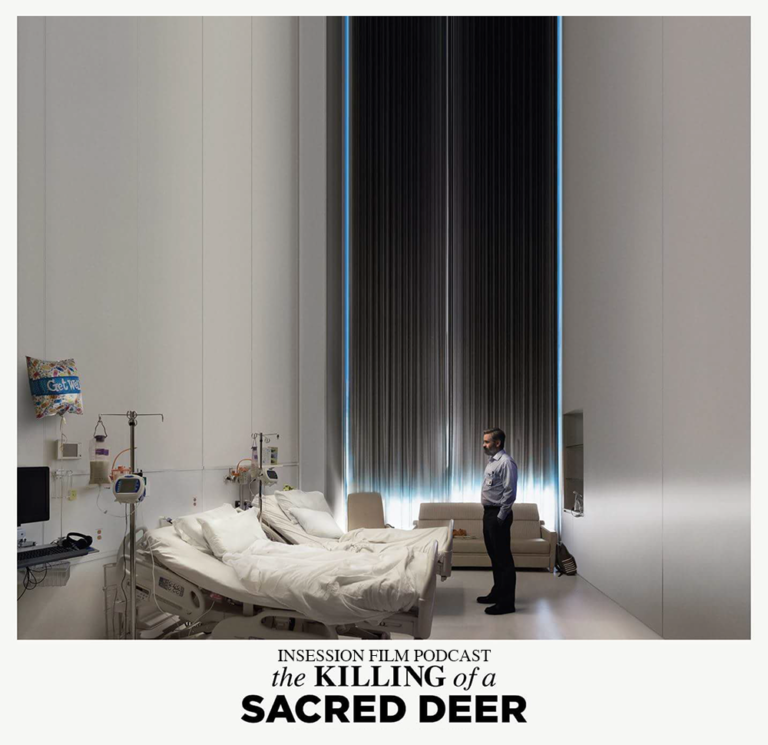
This week on the InSession Film Podcast: Extra Film segment, we discuss a pair of deadly films in The Killing of a Sacred Deer (Yorgos Lanthimos) and Murder on the Orient Express (Kenneth Branagh).
When we decided to pair up these films, we knew there would be some similarities given their titles, but we were surprised how closer they ended up being despite tonally being the antithesis to one another. And that made for a really interesting and unique show, along with some fun arguing over The Killing of a Sacred Deer.
With that said, have fun listening to this week’s Extra Film segment and let us know what you think in the comment section below. Thanks for listening!
– Movie Review: The Killing of a Sacred Deer (4:16) Grades
Brendan: C-
JD: A / C+
– Movie Review: Murder on the Orient Express (40:03) Grades
Brendan: B
JD: B+
We try to make this the best movie podcast we possibly can and we hope you enjoy them. Subscribe today on iTunes and Stitcher and please leave us a review on iTunes. You can also find us on Soundcloud, PlayerFM and TuneIn Radio as well. We really appreciate all your support of the InSession Film Podcast.
To hear this Extra Film episode and everything else we do, download our apps on the Amazon Market for Android and the Podcast Box app on IOS devices. The mobile app covers all of our main shows, bonus podcast’s and everything else relating to the InSession Film Podcast. Thanks for your wonderful support and listening to our show. It means the world to us!
[divider]
Help Support The InSession Film Podcast
If you want to help support us, we would greatly appreciate it! For more info, CLICK HERE.
Well this weekend should be interesting as we dive further into the DC Extended Universe with Justice League. As many of you already know, we’ve been mixed on the DCEU thus far, with the exception of Wonder Woman – which we really liked overall. I’m not expecting Justice League to reach those heights, but perhaps just a slight drop off would be ideal.
One of the more intriguing aspects to this film for me is its change in tone. Whether it be Warner Bros. and DC wanting to update their approach or the addition of Joss Whedon (and our hearts still go out to the Snyder family), the trailers have indicated something more lighter and funnier than what we got in Batman vs Superman or Man of Steel. While I’m certainly not against superhero films that are inherently more “serious” in nature, something about those two films did not work for me. I respect Zack Snyder’s style and thematic approach to those films, but in execution the experiences were dull and lacking coherency (and for the record – it’s more of a scripting problem for me – not Snyder’s direction). I’m not sure what changed the minds of DC’s headhanchos, but the change of pace for Justice League feels a bit refreshing.
It’s funny too (no, literally, the trailers are humorous), my favorite aspect to the film’s marketing has been newcomers Jason Mamoa and Ezra Miller as Aquaman and The Flash respectively. They both look really fun and seem to be perfect for those roles. As mentioned above, I really liked Wonder Woman and Gal Gadot was incredible in that film. She’s by far one of the biggest reasons I’m eagerly anticipating Justice League. And if you go back and listen to our BvS review, you’ll hear me talk about how Ben Affleck’s Batmans was my favorite part of that film. I already like the individual players involved that we’ve already met, but these newcomers look amazing to me. The banter and comradery appear to be top-notch and I cannot wait to see how it all unfolds. (PS – I have no opinion on Cyborg)
So…Justice League also needs a Superman and I’m guessing the Man of Steel shows up at some point in the film. I like Henry Cavill in the role, I’ve mostly been mixed on the writing of the character to this point. I’m interested, however, to see how his “death” affects Lois Lane – something we saw a glimpse of in the last trailer. I hope the film fully realizes that in Lois, as it could be an interesting dynamic that we have yet to see in a superhero film of this caliber.
The last thing I want to touch on for Justice League is its (new) composer Danny Elfman. I understand that a lot of people were upset when Junkie XL was kicked off the project, and I can sympathize, I love him as well. But I do want to stand up for Elfman, who has made a name for himself as one of the better composers working today. His score for Big Eyes is vastly underrated, he did great work on the animated Epic from a few years ago, as well as Corpse Bride and Frankenweenie. This is also the same man who gave us the iconic Spider-Man theme in the Sam Raimi films, the iconic Batman theme in Tim Burton’s film and he composed all of the great music in The Nightmare Before Christmas – one of the best animated films of all-time. Hell, he was even nominated for an Oscar for his score to Men in Black. So let’s put the pitchforks down and stay calm, Elfman is a solid composer who will bring (ahem) justice to the music for Justice League.
What about you? Are you excited for Justice League?
[divider]
Here’s what else is coming to the box office this weekend:
Wonder The Star Roman J. Israel, Esq The Breadwinner (limited) Mudbound (Netflix) Lady Bird (expanding)