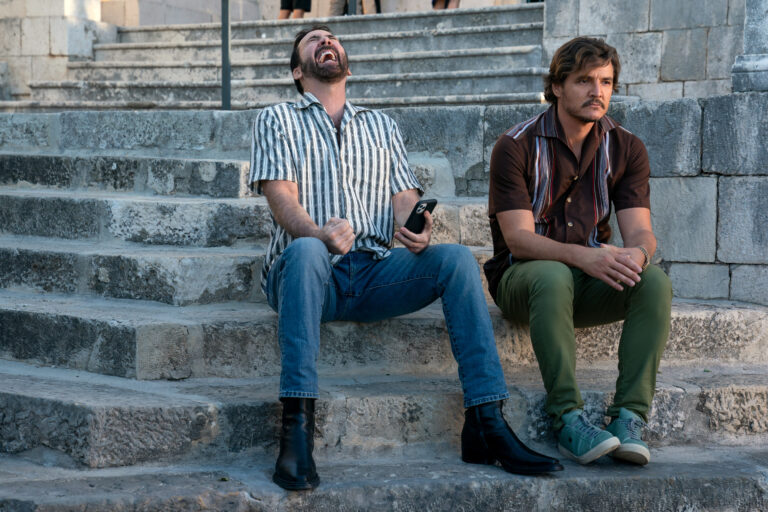
This week on the InSession Film Podcast, Ryan and Jay are joined by InSession Film editor in chief Dave Giannini as they kickstart their Ridley Scott movie series with his 1979 classic Alien! They also discuss the latest Nicolas Cage vehicle The Unbearable Weight of Massive Talent.
As much as we enjoyed Howard Hawks, it’s time to turn the page to a new series and we now turn to the great Riddler. Say what you will about Scott these days, but there’s no denying his impact on film history and the masterworks we’ve seen from him over the years. And if last year is any indication, there’s no signs of him slowing down. So, this should be a lot of fun, and to start we take a look at one of the best films of all-time, and a bonafide classic in Alien. Speaking of classics, it’s always fun to talk about the national treasure (pun intended) that is Nic Cage as well.
On that note, check out this week’s show and let us know what you think in the comment section. Thanks for listening and for supporting the InSession Film Podcast!
– Movie Review: Alien (6:30) Director: Ridley Scott Writers: Dan O’Bannon Stars: Tom Skerritt, Sigourney Weaver, Veronica Cartwright, Harry Dean Stanton, John Hurt
– Movie Review: The Unbearable Weight of Massive Talent (1:12:23) Director: Tom Gormican Writers: Kevin Etten, Tom Gormican Stars: Nicolas Cage, Pedro Pascal, Tiffany Haddish, Ike Barinholtz
To hear this Extra Film episode and everything else we do, download our apps on the Amazon Market for Android and the Podcast Source app on IOS devices. The mobile app covers all of our main shows, bonus podcasts and everything else relating to the InSession Film Podcast. Thanks for your wonderful support and for listening to our show. It means the world to us.
Times sure have changed. This is something I think of often, mainly because I spend way too much time on social media. The immediate reaction to “problematic” movies (or whatever piece of art) is immediate and often excessive. But throughout history, whether we are talking about music, movies, or physical art, times change quickly. What used to shock us sometimes no longer does or what passed for kosher would be seen now as horrific. And sadly, I think that Rambling Rose, now playing on The Criterion Channel, might be the latter. After all, we are in a time of reactionary takes, especially when it comes to sex and sexuality on screen.
Rambling Rose, directed by Martha Coolidge, is deceptively simple, plotwise. Set during The Great Depression, the film follows the Hillyer family, who have hired Rose (Laura Dern) to be a domestic servant. Rose has escaped a bad situation in Alabama, where she had been forced into a life of prostitution. As with many films featuring a character with a wild or damaged streak, Rose throws life in the Hillyer house into near complete upheaval. In lesser hands, the film would have broken no new ground, and much of that is thanks to Coolidge and a team of extremely capable actors.
The script, penned by Calder Willingham (based on his novel), shockingly does everyone involved no favors. Given his writing history (including Paths of Glory, Little Big Man, and The Graduate), the screenplay for Rambling Rose is comparatively weak. But Dern’s repeated willingness to go big with seemingly no fear aids the audience in feeling for her. This is intensely necessary because Rose performs a few actions that could lead some to abandon her completely. After all, this is a young woman who develops a crush on Mr. Hillyer (Robert Duvall), invites strange men into the house in secret, and even becomes the first sexual experience for their young son, Buddy (Lukas Haas).
This is not speaking euphemistically in any way. Buddy is a 13-year-old boy who, after Rose is rebuffed by Mr. Hillyer, pesters her to touch her breast. However, it is Rose who both decides to be in Buddy’s bed for comfort and allows him to masturbate her before panicking and begging him not to tell anyone about their tryst. This is a particularly difficult scene to process, and I think that’s exactly the point. Buddy is eager to explore, but it is still, of course, inappropriate because she is a young woman and not a child. But there is more context to be had. Rose’s character and her troubled past slowly unfolds throughout the runtime and we come to see her as a woman who has never been cared for by men and she seems to unconsciously repeat the damage that has been wrought on her. Again, her actions are wildly inappropriate but are not played as vindictive or even completely purposeful.
The gaze of this film is particularly clever. Coolidge cleverly tells the story of a damaged, frightened young woman through the age-old framing device of a coming of age story of a teenage boy. Yet, Buddy is not the protagonist. It is Rose’s story, as the name would suggest. But we see her through many different eyes. Buddy, of course, is the most obvious. But this is also a feminist story. Possibly the most powerful relationship is between Rose and Mrs. Hillyer (Diane Ladd, Dern’s real-life mother). In a particularly powerful scene, after Rose being diagnosed as a nymphomaniac, Mr. Hillyer and a male doctor discuss the possibility of a hysterectomy to solve the problem. This happens with Mrs. Hillyer in the room, but the men discuss this horrific idea without a second thought to the one person nearby who could possibly understand. Mrs. Hillyer is an educated woman and, at numerous points, rails against unfair treatment of both women and people of color. But this scene is Ladd’s big moment. Although she has stood up to her husband previously, it is a different thing altogether to stare down two men at this time, and one of them a medical expert. But Mrs. Hillyer knows that she is in the right and is willing to fight on the right side, regardless of what they will think of her. It is also a great moment for Duvall who, upon realizing just how wrong he is, shows a tremendous amount of facial control, causing his features to move from their stone fixture to something much softer, a tear sliding down his cheek. In this moment, you see a man who loves his wife and is finally willing to listen. It is a powerful moment for those in the scene, and for Rose, just off screen.
Rambling Rose, make no mistake, is absolutely a challenging film. An individual viewer’s reaction, depending on experience and sensitivity, might be quite different. It is hard to escape viewing it from a gendered perspective. If Rose was a man and Buddy was a 13-year-old girl, well that would be a different movie. But, in this critic’s opinion, this is a difficult leap to make. Everything that Rose has gone through is locked in a time and place, but more than that, it is locked to a gender, in both expression and experience. Rambling Rose garnered Oscar nominations for both Ladd and Dern, and is worth watching simply for their powerful portrayals. Our current cultural moment might have reacted very differently, but looking back to both 1991 and The Great Depression will hopefully give enough context to move past these issues.
Synopsis: The last days of an elderly couple stricken by dementia.
When talking about Argentine filmmaker Gaspar Noé, the first word that comes to mind is “provocateur.” He is a man that has done his best to test the audience’s patience when it comes to shock value and “exploitation” to the point where it makes us yell at him for what he puts on the screen. That may not be his primary goal, but he always succeeds regardless. The hallway scene in Irréversible (2002), the unsimulated sex scenes in Love (2015), or the LSD-spiked dance party that is Climax (2018, his best work to date) are examples of the cinematic behavior that is his filmography. Gaspar has never been afraid to keep viewers at a distance, although that alone may make him a unique and creative auteur. After suffering from a brain hemorrhage that happened almost more than a year and a half ago, he felt that he needed to create something that fit his current feeling. He has returned with what can be called his most “tame” film, if you could call it such (it’s a double-edged sword of sorts), Vortex.
It is odd to say that Gaspar has made a film not for the sake of disturbance or incommodity, but to show the viewer a slice of human conduction. Be that as it may, don’t expect sunshine and roses from Noé; it won’t be an easy ride. Be prepared for an experience that will devour your innards emotionally. His knife is sharpened, but he is waiting for the right moment to start piercing. Who is at the center of his new cinematic venture? A retired psychiatrist (Françoise Lebrun) and a writer (Dario Argento) working on his final book about the intersection between dreams and cinema. We viewers wander through the Parisian apartment and a couple of close locations as souls loose in a haunted house as we follow the elderly couple through a handful of gloomy days. Gaspar’s former cinematic techniques, the split-screen from Lux Æterna (2019) and the aspect of following the lead around like a lost soul from Enter the Void (2009), are put to the test here and seem more fully-fledged, causing the movie to make its mark more impactful and riveting.
Wherever they go, we go; the emptiness inside makes us float around, slowly waiting for sheer tragedy. As one goes from cogent to addled, the other tries to do his best in these situations. The tension of Climax and the unease of Irréversible don’t match what Vortex brings to the table; you’re stuck in the claustrophobic apartment until the end credits hit, and its reverberating dread doesn’t leave your mind afterward. It emotionally destroys you. Gaspar once again takes you into his realm and makes your soul ache.There are moments when you want to stop watching or looking at the screen because of the existential pain it’s oozing. A person might argue that it is an exaggeration of such pain, and in some ways, it is, however it’s very effective and deserves some points for it. The experience I had with watching this movie was similar to my first time watching Lars von Trier’s Melancholia (2011), where the ending is told at the beginning: the world is coming to an end, and there’s nothing you can do about it.
Once finished with both pictures, you just stare at your ceiling for minutes, thinking about everything. That feeling of existential angst and the thought of going through something similar haunts us all. Vortex is a unique experience that one doesn’t want to undergo again, but it still gets you when you’re least expecting it, even though you know it’s a Gaspar Noé picture. It isn’t easy to forget about what it proposes, and its alternate title, “The Edge of the World”, would have given us a more precise definition. Instead, the word vortex blatantly describes the essence and energy of these sequences that Gaspar wants the viewer to confront. Like most of his features, one does not watch this for fun or entertainment but to reflect and wander around in your conceptualizations of life. It may be the most approachable of his filmography, but steer clear from the signs. The reason why it’s “accessible” is because that misery is within reach of all. There are no shocks, “childish” dilemmas, nor deliberately terrible scenes that you want cleared from your mind. Instead, there is only a simple story that can only transcend in one manner, downwards–a downward spiral onto the realization of life.
Depressing as hell, yet structured precisely and powerfully by Noé. It is his rendition of covering the topic of old age, and who might have known that this would be the way he did it. Dedicated to “all those whose minds will decompose before their hearts,” it goes in many ways as we follow the elderly couple through this heart-aching journey. Many describe Vortex as his Amour (2012) because it goes straight to the heart of the periphery and gut-punches silently with themes of old age and death. However, different from it, this shows the arid, nitty-gritty mechanics of aging set inside an enclosed apartment, causing it to be more so a metaphor for a mental prison that each builds around themselves as our minds plunge. Although Enter the Void missed the mark on the topics of death and being a close spectator, it painted the way for Gaspar to reach a new mature light with the merciless 142-minute ride that is Vortex and deliver anxiousness without goading its audience or going into an extremist vexation. It quotes: “Life is a short party that will soon be forgotten.” This is Gaspar Noé at his most approachable and simultaneously disconsolate.
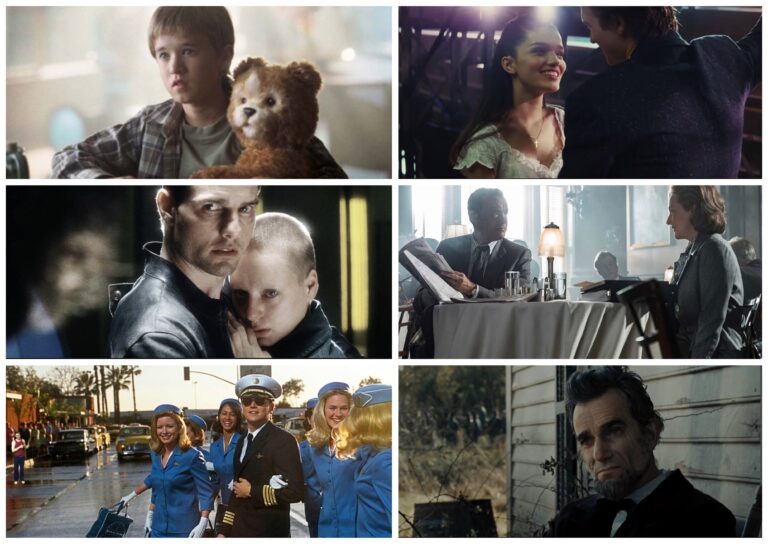
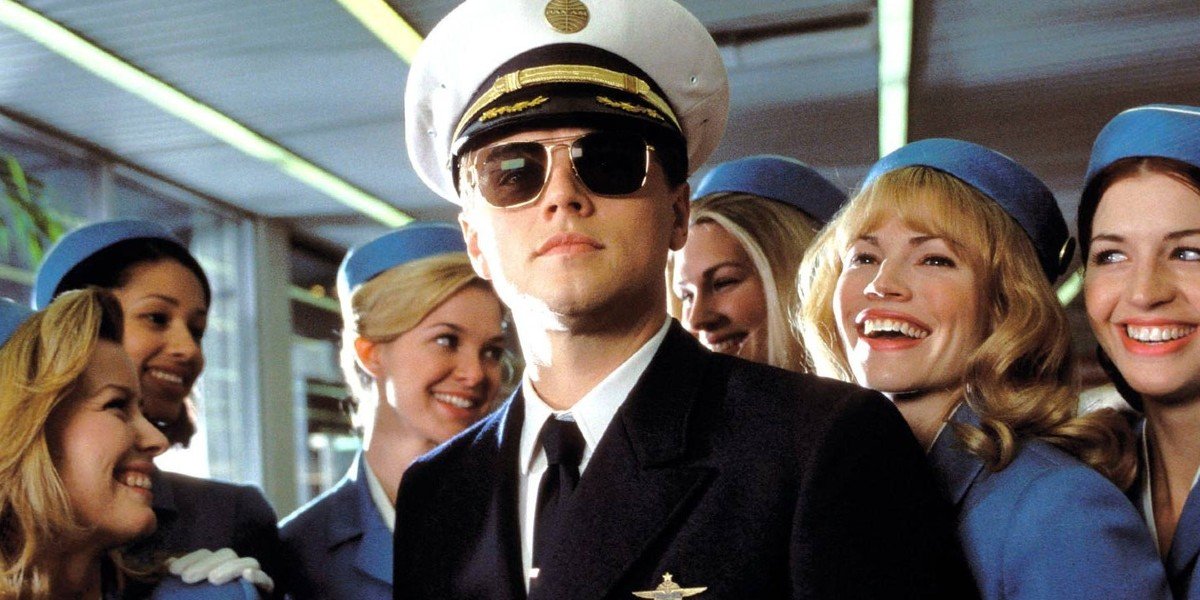
Steven Spielberg never stopped being our greatest living director. Sometimes he is so good at his job, he releases two mega hits in a single year. In 1993 it was Jurassic Park and Schindler’s List, and in 2002, exactly 20 years ago, he released Minority Report and Catch Me If You Can, one over the summer and the other over the holidays. Last weekend we reviewed the former on the main show, but this weekend we will be covering the latter, a procedural cat-and-mouse thriller that helped usher in a new kind of Spielberg film. The turn of the century saw Spielberg’s output becoming more daring and divisive, some being critically reevaluated over the past years; let’s pit them against one another.
What do you think is the best Spielberg film of the 21st century?
This week on the InSession Film Podcast, we discuss Robert Eggers’ new film The Northman and continue our Steven Spielberg Movie Series with his 2002 film Minority Report!
Given the nature of this episode, we channel our inner-most machismo as we growl our way through The Northman while talking out of breath from running during Minority Report. All joking aside, both films may be full of testosterone but we do our best to dissect their bravado to get at the pathos underneath.
On that note, check out this week’s show and let us know what you think in the comment section. Thanks for listening and for supporting the InSession Film Podcast!
– Movie Review: The Northman (4:51) Director: Robert Eggers Writers: Robert Eggers, Sjón Stars: Alexander Skarsgård, Nicole Kidman, Claes Bang, Anya Taylor-Joy
– Notes / Discussion (57:32)
Once again, due to time constraints, we don’t have anything significant for our break segment this week. However, we do have some good conversation plugging Extra Film, a guest appearance where JD joined the We Watched A Thing podcast, and our newest sponsor.
[divider]
– Steven Spielberg Movie Series: Minority Report (1:16:58) Director: Steven Spielberg Writers: Scott Frank, Jon Cohen Stars: Tom Cruise, Colin Farrell, Samantha Morton, Max von Sydow
Steven Spielberg Movie Series: Catch Me If You Can
Top 3: Cat and Mouse Movies
[divider]
Help Support The InSession Film Podcast
If you want to help support us, there are several ways you can help us and we’d absolutely appreciate it. Every penny goes directly back into supporting the show and we are truly honored and grateful. Thanks for your support and for listening to the InSession Film Podcast!
Stars: Nicolas Cage, Pedro Pascal, Sharon Horgan, Tiffany Haddish
Synopsis: In this action-packed comedy, Nicolas Cage plays Nick Cage, channeling his iconic characters as he’s caught between a superfan and a CIA agent.
No one acts like Nicolas Cage. Not even your favorite actor can bring the kind of energy Cage unleashes to any role he plays. Whether it’s dancing to Slaughterhouse by Powermad while simultaneously karate-moshing in Wild at Heart or uttering the word testicle in such a unique way in Prisoners of the Ghostland, Cage is the king of comedic, dramatic, and action overreacting. And even when he starred in trite direct-to-DVD films, he never phoned it in and was always the most memorable part of each production. And now here he is playing himself in The Unbearable Weight of Massive Talent; a terrific, albeit insanely formulaic, meta-comedy that celebrates each facet of Cage’s life with vivid humor and sharp performances from its star-studded cast.
Formulaic, because it recycles the plot of the dad who was never around for his wife (Sharon Horgan) and daughter (Lily Sheen), too busy wrapping himself in stardom and achieving his career goals. Of course, part of the gist is that they’ll eventually reconcile in the end when Cage will learn about the value of family through the events that will transpire once he accepts the invitation to attend Javi Guttierez’s (Pedro Pascal) birthday party for one million dollars. What the actor doesn’t know is that Guttierez has kidnapped the daughter of a politician, with the hopes that he will drop out before the election so it will be rigged in the favor of the other candidate. He then becomes a spy for the CIA, partially by agreeing to feature in a screenplay written by Javi, which aims to revive Cage as the star he truly is.
Yeah, we know exactly where the movie is going from the scene where Cage screws up his daughter’s birthday party, but that’s a lousy framing device for an otherwise incredible time at the movies. Initially, Cage wanted no part in the film, which is understandable, because it relives most of his career through fun, but extremely subtle jokes: his greatest movies, his misfires, you name it.
If you’ve not seen most of Cage’s work, most of the jokes may go completely unnoticed, but some of the funniest bits from the film involve Cage recreating a certain vibe from a film he previously starred in, whether it’s using the two golden guns from Face/Off, or, through his alter ego Nicky Cage, delivering an insatiably coked-up performance à la Wild at Heart and Vampire’s Kiss. In any case, Cage is incredible through and through and has surprising amounts of fun playing himself. It’s surprising to see him so involved, because, once again, he wanted no involvement in the film and thought it was a terrible idea. Director Tom Gormican had to convince him by penning a letter to him, and he then saw the potential for the film to be good. It’s great that Cage sees the potential for the movie to be an incredible time, and knows he has to pull it off, not only for himself but for his die-hard fans who would adore seeing Nic Cage being the most self-referential he can be. And his reflexive posturing allows him to deliver one of the best portrayals of his late career and likely one that will be remembered as one of his best ever.
And whoever came up with the idea to team up Nic Cage with Pedro Pascal is a goddamn genius. Both of them share amazing chemistry together, building up one of the greatest bromances in any film of the 2020s, thus far. Pascal’s highly cartoonish accent adds lots of depth in his characterization of a bonafide Cage superfan with a dark background, but Gormican continuously subverts his character arc in surprising ways, which allows Pascal to take his character to new heights with Cage, through hilarious, but also melancholic scenes in which they reflect about the history of cinema. There isn’t anything more cathartic than seeing Nicolas Cage cry over Paddington 2 and being proven wrong about how any movie can have significance if we attach our personal feelings towards a particular scene or a fleeting moment from a film.
Growing up, one of my favorite movies of all time was Superman III. It isn’t a very good movie, I get it, but imagine if you’re six years old and are watching Superman soar in the sky for the first time and save people from danger. The impression it etched in my memory is permanent, and since I saw it as a child for the first time, I may have easier feelings towards it when I’ll eventually rewatch it as an adult, because the effect it had on me was different from, say, a die-hard Superman fan who thought Richard Lester ruined the character when he made Clark Kent fight drunk Superman. So when Pascal’s character speaks of Paddington 2 as a bonafide cinema classic or reflects on the time he spent with his father bonding over Guarding Tess, a lesser-known Cage film, we can relate to it, because any movie can have a profound impact on us, which is something stars don’t necessarily realize. But when that specific moment occurred in The Unbearable Weight of Massive Talent, everything made sense, and the movie becomes more than a reflexive meta-comedy on Cage’s career, but a celebration of the art of cinema, acting, and the feeling we get once we see a damn good movie that will have an impact on our lives, one way or another.
It’s also great when you’ve got actresses like Sharon Horgan playing Nic Cage’s ex-wife and elevating clichéd material through her brilliant acting skills, and at times even upstaging Cage in sequences in which you think you know where it’s heading, only for Horgan’s character to react in a completely different way than you’ve imagined. Gormican nails the comedic timing for each actor who has a substantial role in the film, allowing them to not only showcase their passion for Cage’s work, but have a sequence in which they’ll go head-on and show that they can be just as wild as Cage is.
And that’s where The Unbearable Weight of Massive Talent succeeds. It may have an insanely formulaic story, but Gormican subverts enough character arcs to make it enticing, and its acting showcase from Cage having a total blast with Pascal, to Horgan delivering yet another skillful character were enough to make the movie a must-see at a cinema, with a crowd that adores Cage’s work and knows his movies. And if you were ever a fan of his work, in any capacity, it should be seen immediately, even if you weren’t following his later outings. Sure, most of his direct-to-video stuff weren’t good, but he was amazing in them. Cage has consistently proven to be one of the most versatile actors working today. I would even be willing to call him the greatest actor of our time. Throughout his illustrious career of classics and lousy movies, he’s never turned in a bad performance. Yes, you’ll find a bad Nic Cage movie (there are plenty). But you’ll never find a bad Nic Cage role. Go ahead and try to give me the worst role of Cage’s career. That’s right, there are none.
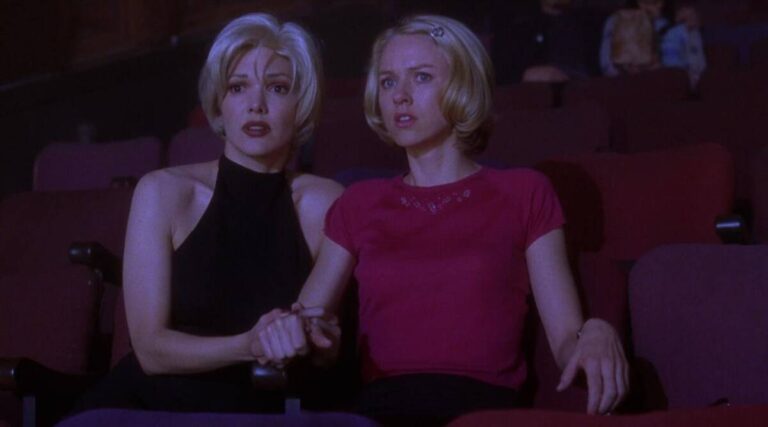
As humans, we are doomed to fail. We do not like to fail, it causes us to swallow change – even if we do not want to. Regardless, it is a fact of life. As failure rears its ugly head, most people shut it out as if a Trojan Horse of falsehood invades our brains. And this phenomenon is not unique to a particular demographic of people, anyone is susceptible to detaching themselves to the reality they live in. It’s a depressing ouroboros that will be present until our eventual demise. The complexity within these ideas are grand in scope, however, David Lynch captured its very essence with his film Mulholland Drive. We all dream, but what happens when reality comes and forces us to accept our failures?
Mulholland Drive follows Naomi Watts as Betty Elms – landing in Los Angeles to fulfill her dream as an actress in Hollywood. When Betty arrives at the apartment she will stay in (courtesy of her Aunt Ruth), she finds a confused woman (played by Laura Elena Harring) who was involved in a severe car accident the night before. The car accident in question causes her to develop amnesia. Due to her amnesia, the woman examined a poster of the 1946 film Gilda, starring Rita Hayworth, and believed her name was Rita.
Betty attempts to assist Rita in discovering who she really is. After stopping at Winkie’s Diner, Rita examines the waitress’s name tag that says “Diane”. Rita starts to recall a woman named Diane Selwyn. Afterwards, Betty and Rita begin to search for Diane Selwyn.
The first half of Mulholland Drive has many events and characters that do not impact Betty and Rita’s storyline. In a way, it’s as if Lynch is slowly placing puzzle pieces in front of you where the pieces don’t fit. Meticulously and painstakingly placing these ideas into your mind with no rhythm to accompany it. What is the significance of the botched assassination attempt? Why do the elderly people in the taxi carry such expressive faces?
As the film progresses, and the puzzle continues to blur, another movie is occurring at the same time. Enter filmmaker Adam Kesher (Justin Theroux) who is at wits end with his career and his marriage. Studio executives are shoving a woman named Camilla Rhodes (Melissa George) down his throat to play the lead role in his new movie – against his will. Adam’s wife is having an extramarital affair with a man named Gene (Billy Ray Cyrus – yes, THAT Billy Ray Cyrus). Nothing seems to be going right for Kesher, however, his borderline slapstick unfortunate events are slowed in lieu of Betty and Rita’s story.
There is a significant event that foreshadows the end of the movie. In Winkie’s Diner (the same one Betty and Rita were in), a neurotic man named Dan (Patrick Fischler) recounts a nightmare he had the night before to a man named Herb (Michael Cooke). The nightmare occurs at that exact Winkie’s Diner involving Herb, where Dan states Herb will be standing at the counter – looking back at Dan. Then both Dan and Herb would go outside – walking towards a spot behind the diner. At which point a man emerges, frightening Dan endlessly.
After telling the story, Herb – rejected from the story itself – proceeds to pay for the meal him and Dan had had. Dan turns and realizes the nightmare is reality, seeing Herb at the same spot he was in in the dream. They both step outside, following the steps described by Dan. The man behind the diner, shows himself, causing Dan to fall in terror.
The man behind the diner is a representation of our unwillingness to accept our failures. It’s stowed away, deep into our subconscious, digging away at ourselves. The fear extracted out of Dan is the sense of reality coming and enveloping him.
Consistently throughout the movie a blue box and blue key are shown, and only near the end of the movie is the box opened. At which point the dream ends, and reality sets in. The movie now splits between the former illusive reality and the actual reality. Betty is actually Diane Selwyn – a depressed and failed actress who is having an affair with successful actress Camilla Rhodes (who was Rita in the illusive reality). Adam Kesher’s story remains the same except Camilla is dating Kesher and he is now detached from the prior borderline slapstick acts of misfortune.
Dreams are the summation of hopes and our own known bits of reality. With that in mind, Mulholland Drive’s illusive reality is an implosion of the bits and pieces of the actual reality. The hitman is actually being hired by Diane to conduct a hit on Camilla. The mystic phrase spoken predominantly throughout Adam Kesher’s storyline, “This is the girl”, is given a horrifying meaning. Camilla was actually hired in the real world because she slept with Kesher.
Once Diane finally accepts reality she is then faced with the elderly couple in which her illusive counterpart, Betty, once had a positive relationship with. The elderly couple embodying the fear of one’s own reality slowly reaches for Diane. Diane is unable to bear the cross she now carries and commits a horrifying act in response.
The puzzle pieces are feverishly put together in front of our very eyes. What makes Mulholland Drive so perplexing is all of this information is given to the viewer in the span of twenty minutes. You are given so much to digest in the first portion of the movie, then when it cuts to the real world you are forced to digest so much in a short span of time.
Mulholland Drive is best described as a horror film. In the typical sense, horror films put us in a box – preparing us for what is to be seen. Lynch’s approach to horror is more abstract and fills the viewer with unease in themselves. Leaving the viewer to ponder upon themselves, to digest what had been seen. When we saw the man behind the diner, we all knew he was coming. But the meaning behind the man makes it infinitely more horrifying.
The reality of our own failures is horrifying. David Lynch as a filmmaker is empathetic toward his subjects but doesn’t shy away from the reality of their own shortcomings. Diane isn’t a bad person for failing or being incapable of receiving an acting role. She held true to herself, even when Camilla would rather sleep with the director to gain a role, and paraded it in Diane’s face. Although her hiring a hit on her former lover is not representative of a good person, a moment of weakness is not the summation of one’s self worth (even weighing the gravity of her action). Diane is not wrong for dreaming, she is just an unfortunate product of pursuing one’s dream.
Stars: Anna Cobb, Holly Anne Frank, Michael J. Rogers
Synopsis: Alone in her attic bedroom, Casey becomes immersed in an online role-playing horror game, wherein she begins to document the changes that may or may not be happening to her
Back in the day, when YouTube was rising to the top of the social media food chain, the term creepypasta was all over the website. The content creators doing these types of videos told stories about death and violence of the supernatural and existential horrors “lurking” around us in the dead of night. The primary purpose was to scare viewers, mostly younger ones, and cause the stories to be shared worldwide. Throughout the years, many tales of these “demons” have been created; however, the ones that have stood out are the Smiling Man and Slender Man, which later got formed into both a videogame and film. Although the word creepypasta is not said or mentioned during Jane Schoenbrun’s festival favorite, We’re All Going to the World’s Fair, it helps to understand the world it is creating and interpret its themes in-depth. In addition, it also benefits that the film is set amidst the pandemic’s confinement and the modern generation’s social media uprising.
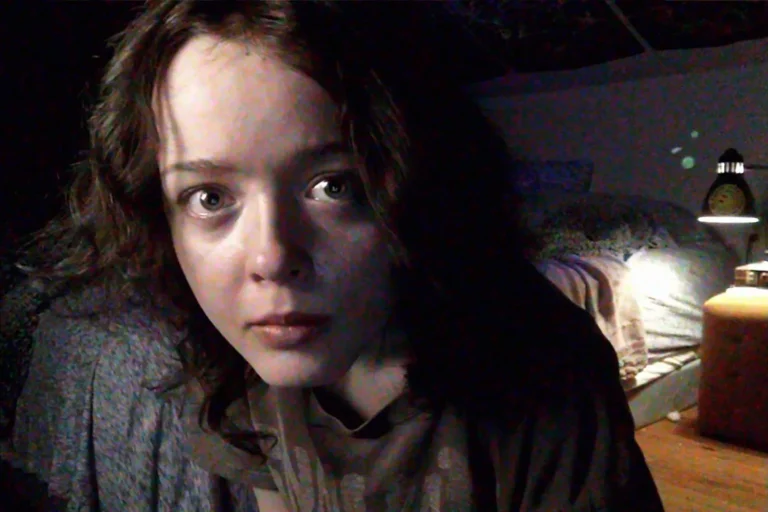
The film opens with Casey (Anna Cobb) doing some audio and screen tests before she starts filming her YouTube video in her attic bedroom, just to make sure everything goes right. Casey is almost quivering; there’s a tear hanging in her eye. She says that she will attempt to do the world’s fair challenge, which seems to be an internet-game trend, and that game is supposed to cause changes of some sorts to the people who play it. By this point, we don’t know anything about the challenge itself or the main protagonist. She says the phrase “I want to go to the world’s fair” three times and causes a puncture in her finger with a pin so that she can wipe the blood across her screen. This is the process that needs to be done in order to begin said challenge. It is followed by a series of strobing lights, indicating that the game has initiated. Casey needs to explore and encounter what’s left of this creepypasta-esque trend. As these changes begin to appear, she documents them via various uploads to her channel and does research by watching other videos of the diverse experiences players have gone through.
There are mentions about losing the sensation of one’s body or bodily modifications, like a slowly growing fungus in the arm (which is a quick yet great sequence of slight body horror). Casey doesn’t know if she wants to keep the act of the game going, but another player, JLB (Michael J. Rogers), tells her to continue–to go deeper into the rabbit hole of the world’s fair. Reality and fiction begin to intertwine once Casey’s videos become more worrisome because she keeps interacting with the trend. The viewers don’t know if it’s an act or if she’s actually suffering from the symptoms of this trend. Due to having limited resources, Schoenbrun had a significant obstacle to overcome in terms of delivering its spooks. On occasion, it does provide some unnerving moments that dwell within the aching isolation of being a young soul, particularly during the days of confinement, as well as some intriguing concepts about individuality – how we are perceived by others versus ourselves. Some scenes linger for the right amount of time so that they can be soaked in atmospheric dread.
Those sequences where we simply witness Casey undergoing the strange effects or when she’s having some personal conversations with the camera are the most exciting and effective because of their meditative sensation, Alex G’s transient score, and Anna Cobb’s refined performance. However, the rest of it doesn’t reach satisfying or engaging grounds for the most part, primarily because of its lack of tension, slow pacing, and unpolished screenplay. It is far more interesting and creative than some of its contemporaries like Paranormal Activity. Yet, it doesn’t come close to the low-budget success of The Blair Witch Project, even though they are two different styles. Another problem that hurts the We’re All Going to the World’s Fair experience is that it holds back too much of the mystery. So, there is much to explore and analyze, albeit when the film restrains too much without the required suspense, it gets hard to be wholly immersed in its narrative. Schoenbrun’s vision is distinctive, so I will give points where they are due, and I will be anticipating their next project. Unfortunately, the World’s Fair doesn’t amount to its potential thematically and narrative-wise.
This week on the InSession Film Podcast, Ryan and Jay conclude their Howard Hawks Movie Series with a double bill of Gentlemen Prefer Blondes and his classic western Rio Bravo!
It’s been quite the journey, but this sadly marks the end of our Howard Hawks Movie Series. His eclectic mix of films have been really fun to talk about and here we are ending on a fascinating note with a musical and a western. The two films couldn’t be more different, but it’s what makes him a captivating filmmaker.
On that note, check out this week’s show and let us know what you think in the comment section. Thanks for listening and for supporting the InSession Film Podcast!
– Movie Review: Gentlemen Prefer Blondes (4:51) Director: Howard Hawks Writers: Charles Lederer Stars: Jane Russell, Marilyn Monroe
– Movie Review: Rio Bravo (4:51) Director: Howard Hawks Writers: Jules Furthman, Leigh Brackett Stars: John Wayne, Dean Martin, Ricky Nelson, Angie Dickinson
We try to make this the best movie podcast we possibly can and we hope you enjoy them. Subscribe today on iTunes, Spotify, or Stitcher, and please leave us a review on iTunes. You can also find us on Soundcloud, PlayerFM, and TuneIn Radio as well. We really appreciate all your support of the InSession Film Podcast.
To hear this Extra Film episode and everything else we do, download our apps on the Amazon Market for Android and the Podcast Source app on IOS devices. The mobile app covers all of our main shows, bonus podcasts and everything else relating to the InSession Film Podcast. Thanks for your wonderful support and for listening to our show. It means the world to us.
Starring: Mira Sorvino, Lisa Kudrow, Janeane Garofalo, Alan Cumming
Synopsis: Two dim-witted, inseparable friends hit the road for their ten-year high school reunion and concoct an elaborate lie about their lives to impress their classmates.
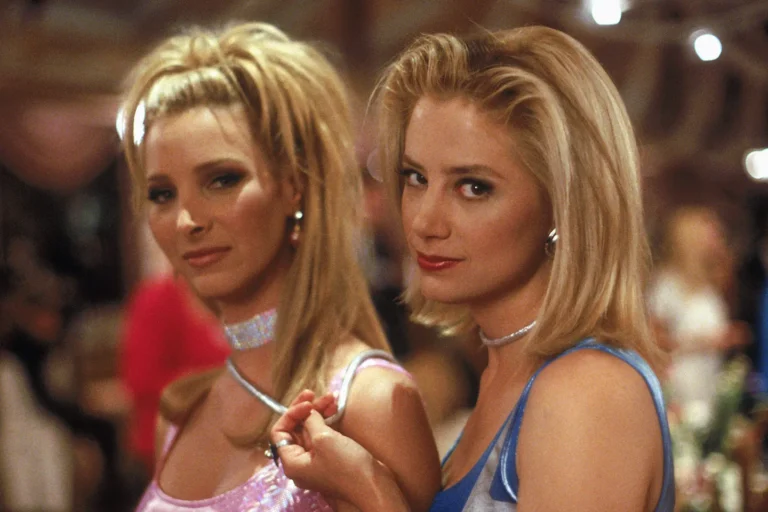
Released theatrically at the end of April 1997, Romy and Michele’s High School Reunion became an immediate favorite for anyone lucky enough to discover it among all the major action films being released at the time. And the film, directed by David Mirkin and starring Mira Sorvino as Romy and Lisa Kudrow as Michele, is one of the rare 1997 comedies that has endured. In the last few weeks alone, Sorvino and Kudrow made an appearance together at the Screen Actors Guild Awards, followed soon thereafter by a sit-down on The Late Late Show with James Corden. The two are still active in the industry, still look basically the same as they did twenty-five years ago—might a sequel finally be in the cards?
Whether or not we ever get a second installment, Romy and Michele’s High School Reunion is quirky, entertaining, comedic perfection, still just as funny and witty today as it was back then, with director Mirkin allowing most of the humor to come through the lovable characters rather than specific situations in the plot. You know the story: Ten years have passed since high school, and Romy and Michele are still best friends, living together in Venice, California. When they receive word about their high school reunion, they decide to go pretending they’re a lot more successful than they actually are.
The movie works on so many levels. It’s one of the ultimate hang-out movies, spending time with Romy and Michele a pleasure from scene to scene. It’s a great road-trip movie, plenty of drama and hijinks on display as the duo head by car from southern California to Tucson, Arizona. It’s a comedy that plays with surrealism, the middle of the narrative featuring one of the weirdest and longest dream sequences ever in a studio movie. And it’s so ultra-smart, even if the protagonists might be a bit on the dumber side.
Sorvino and Kudrow both arrived at the project at high points in their careers. Sorvino signed up shortly after winning the Academy Award for Best Supporting Actress for her performance in Woody Allen’s Mighty Aphrodite, and Kudrow had just completed her second year on Friends. Their chemistry together must not have been guaranteed, but from the first scene, their love for one another is clear, each practically finishing the other’s sentences. Sorvino and Kudrow made a tremendous screen pairing that is the number one reason why this film has endured for so long.
Another top reason this remains a giant cult classic is the amazing supporting cast Mirkin assembled for the production, the ultimate stand-out being Janeane Garofalo as Heather Mooney, a successful inventor who still hates everything to do with her high school days with Romy and Michele. The second half of the 1990s marked the era of inspired Garofalo film performances left and right, and this one’s the best, her sarcasm dark, twisted, and hilarious. Alan Cumming is also memorable as the nerd with a crush on Michele who also goes on to do great things with his life, and Julia Campbell eats up every second of her delicious screen-time as the one-time head cheerleader Christie Masters who’s always treated Romy and Michele as bugs to be squashed.
The incredible songs interspersed throughout are also a reason you can continue hugging this movie over and over again. With plenty of flashback scenes to Romy and Michele’s time in high school in the 1980s, the film provides a stellar soundtrack of ‘80s hits, like Time after Time, Venus, and Dance Hall Days. The score by Steve Bartek is a winner, too, especially in that aforementioned dream sequence that pushes the narrative in a different direction and gives the viewer a lovely sense of unease. Along with the fantastic screenplay by Robin Schiff, Mirkin’s direction, and the extraordinary cast, the music plays a huge part in my love for this film.
What stuns me to this day is how the higher-ups at the studio allowed Mirkin to make this comedy R-rated, profane not just in its language but oftentimes in its shocking crudeness. The film overall has a beautiful sweetness to it, in the friendship between Romy and Michele, in the period flashback scenes, in the iconic closing musical number, that some might have pushed Mirkin into delivering a PG-13 rating so younger kids could see it. If the film had been made just a couple years later, there might have been pressure from the studio to either tame the content way down or go more for the gross-out a la There’s Something About Mary.
Thankfully, Romy and Michele’s High School Reunion is everything it needed to be, the comedy always coming back to the central characters, never betraying them just to get a laugh from the viewer. I could watch this movie every year and never get sick of it. Sure, it didn’t get any Oscar nominations, it might not have the prestige of big 1997 releases like Contact and Titanic, but it’s one of the 1997 films we keep returning to because it’s just so goddamn perfect. I still have hope for a new sequel starring Sorvino and Kudrow that would allow us more time to spend with these characters, but if all we ever get is the original from twenty-five years ago, I still consider us very lucky.
Monica Vitti, who died on February 2nd this year at the age of 90, is to Michelangelo Antonioni as Liv Ullman was to Ingmar Bergman in being the ultimate muse to interpret the director’s feelings in their movies. Antonioni’s works were always about the visual, never about the complete plot of the story (I wrote about his career previously, Michelangelo Antonioni’s Stories Have No Ending, if you want to check it out.). He was such a unique director with his own brand of filmmaking that Antonioni needed somebody to be his symbol of existentialism in a post-war world. Somehow, through Monica Vitti, he was able to display his ambiguous feelings on the political, social, and economic standards of the time.
Going against her fellow contemporaries such as Sophia Loren, Gina Lollobrigida, and Claudia Cardinale, Vitti would emerge as one of the leading ladies of Italian cinema in the 1960s. Her career was just beginning when she met Antonioni, a newcomer in film directing, while doing stage work in Milan and then was cast in the internationally polarizing L’Avventura. Vittiplays a woman going on vacation with her lover and another couple on a yacht when suddenly a friend goes missing. As they try to find her, it is Vitti who starts to lose interest in finding her friend and instead shows interest in the missing woman’s lover. It was an international sensation for better or for worse – the crowd at Cannes jeered throughout the screening – but for the critics and filmmakers who loved it, it put Antonioni and Vitti on the map.
These feelings for their work were transferred over in L’eclisse in which Vitti plays a woman who ends her engagement with one man and begins to pursue another relationship with a stockbroker, played by Alain Delon. Vitti is the expression of discontent with materialism and money making, a reflection of Italy’s economic boom after the war. Yet, the irony is not lost on who she is pursuing as she cannot escape her desire for something different, exploring the interchangeability a person has when the feelings are just right. This time, the reaction at Cannes was more positive and, after the success of Antonioni’s previous film La Notte, avant-garde’s newest master was cinema’s most daring storyteller.
The last major collaboration with Antonioni was his first color film Red Desert, in which she co-starred with Richard Harris as the wife of an industrialist who remains emotionally disturbed following a car accident. Technology looks beautiful and is a sign of progress, but in Antonioni’s world, people still have the inability to adapt to new concepts and causes unevenness to our psychological side. Vitti is away from the city and isolated by the largeness of these factories and the surrounding landscape that are bright, maybe too bright. Thus, her neurosis is confirmed when she has no pleasure in making love to her husband and later remarks, “We are all separate.”
Vitti’s performances were based on expression and movement rather than dialogue, almost a throw back to the silent film days. She moves in sync with Antonioni’s pacing and silence, from hope to despair, place to place. Love is a commodity that is always there but she never feels content with it. Her beauty is convincing, as a man would fall for her, but instead of physical love, Antonioni, who was in a relationship with Vitti, was more interested in the psychological. His existentialism is drawn out through her, interpreting the auteur’s cold and distant films into something emotionally relatable. Post-Antonioni, Vitti would explore more roles, even in comedies, continuing to rack up acclaim and rarely stepping out of Italian productions.
Vitti once remarked, “I am three dangerous things: a woman, an actress, and not married, so I suppose I’ll work until I’m 90.” While she retired in the early 1990s, Vitti remained one of her generation’s most versatile performers in Europe, a symbol of a celebrated era in cinema. Even after she dropped out of the spotlight due to her diagnosis of Alzheimer’s disease, Vitti was still considered forever immortal.
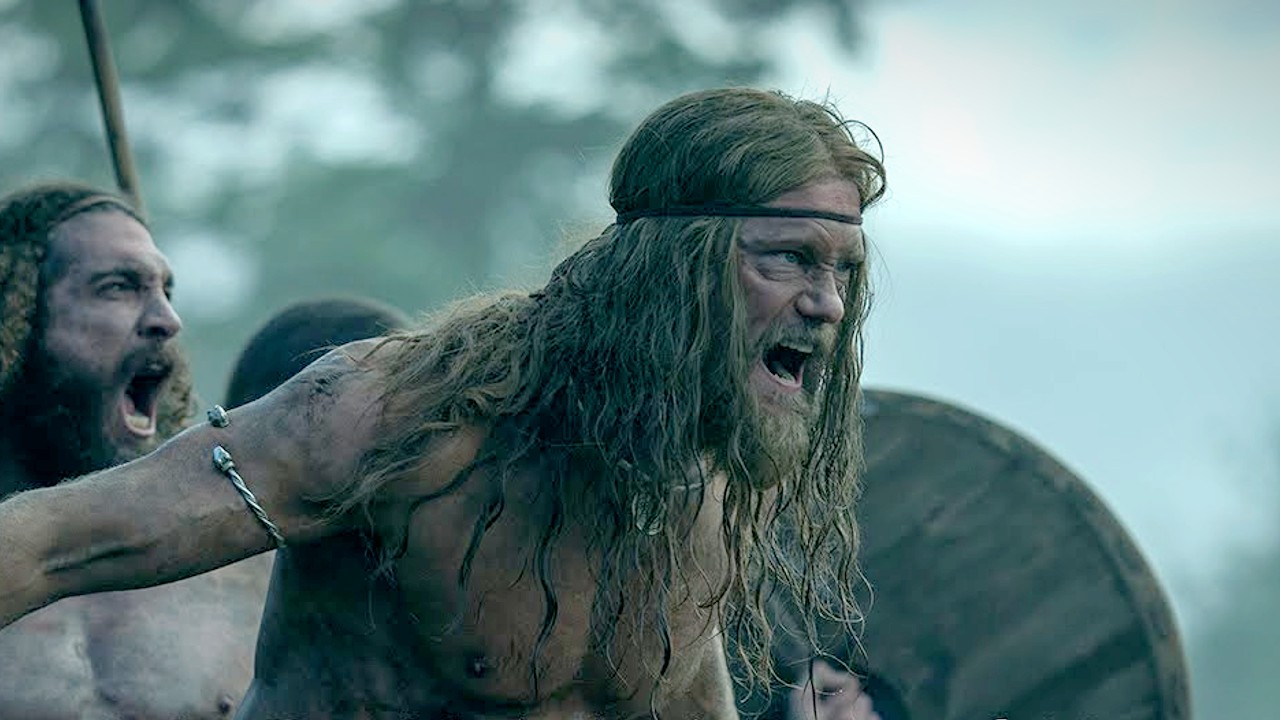
As Hiccup taught us, to live the life of a Viking is an “occupational hazard.” Perhaps this is why movies about Vikings, or Norsemen, are often some of the most epic and adventurous stories ever told. Whether steeped in fantasy or the histories of the Viking Age, films depicting the people of Scandinavia will always go big, and this weekend’s The Northman appears to be no exception.
With that said, what is your favorite Vikings movie?
This week on the InSession Film Podcast, we continue our Steven Spielberg Movie Series by discuss his 2001 polarizing film A.I. Artificial Intelligence and the great Brent Allen joins us to review Fantastic Beasts: The Secrets of Dumbledore!
Big thanks to Brent for joining us on the show this week to talk Fantastic Beasts. He’s a massive Harry Patter / Wizarding World fan, so it was great to get him back on the show as we dive back into that universe. As for A.I., we’ve been anticipating this review for such a long time. We even joked on Episode 137 (seven years ago!!) that we needed to feature this movie on the show. Well, it’s finally time. It’s one of our longest reviews, but one of our most thorough and incredibly rewarding.
**Show Note: We had some technical difficulties with JD’s microphone, so please be patient with us as his audio quality isn’t what it is normally.
On that note, check out this week’s show and let us know what you think in the comment section. Thanks for listening and for supporting the InSession Film Podcast!
– Steven Spielberg Movie Series: A.I. Artificial Intelligence (6:43) Director: Steven Spielberg Writers: Steven Spielberg, Ian Watson (screen story by) Stars: Haley Joel Osment, Jude Law, Frances O’Connor, William Hurt
– Notes / Discussion (1:17:24)
We don’t really have anything significant for our break segment this week. We knew that we would spend a lot of time on our two reviews, so we kept this section pretty brief. We do, however, have another Blu-ray contest coming to you this week. So follow us on social media for your chance to win!
– Movie Review: Fantastic Beasts: The Secrets of Dumbledore (1:26:25) Director: David Yates Writers: J. K. Rowling, Steve Kloves Stars: Eddie Redmayne, Jude Law, Ezra Miller, Dan Fogler
Review: The Northman
Steven Spielberg Movie Series: Minority Report
[divider]
Help Support The InSession Film Podcast
If you want to help support us, there are several ways you can help us and we’d absolutely appreciate it. Every penny goes directly back into supporting the show and we are truly honored and grateful. Thanks for your support and for listening to the InSession Film Podcast!
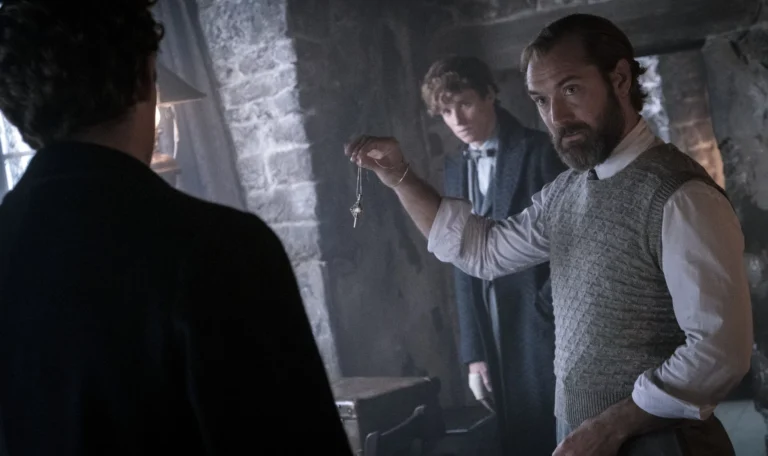
Synopsis: Albus Dumbledore assigns Newt and his allies with a mission related to the rising power of Grindelwald.
As we have witnessed in the past, prequel series for blockbuster franchises tend to carry a negative connotation. I have seen countless prequel series in my day, and the majority of them attempt to re-create what came before it and, generally, fail miserably. Warner Bros arguably has some of the best movie franchises under their belt. They were able to show such love and care to the original Harry Potter series. And if you ask me, there isn’t a bad film in the entire collection. Warner Bros has the means and the determination to adapt J.K. Rowling’s novels to the silver screen, and it paid off tremendously. But somewhere along the way, the studio took a woeful turn with the Fantastic Beast films. And much like the first two entries in this prequel series, the Magic of the wizarding world has vanished.
Fantastic Beasts: The Secrets Of Dumbledore is the better film out of this new prequel series, but that doesn’t hold a lot of weight as this latest entry is a dud. This film clocks in around 2 hours and 20 minutes, and the pacing is horrendously slow. The first two acts of this film feel like a pure exposition of the plot, and I quickly lost interest as the story progressed. It wasn’t until the third act that things finally started to get somewhat interesting with the foreshadowed build-up of the conflict between Albus Dumbledore (Jude Law) and Gellert Grindelwald (Mads Mikkelsen). The chemistry they had was passable; however I found it very difficult to view Grindelwald as a proper threat. I understood his objective of rising to power and changing the world for the “better” by seizing control of the wizarding world. His rise to power was done in a different way than Voldemort from the original series. I adored what director David Yates was trying to convey, but it’s a major part of the film that did not work for me.
Outside of Dumbledore Grindelwald, . the rest of the characters’ story arcs were forgettable. At the start of this franchise, Credence Barebone (Ezra Miller) was the major hazard of the series. I think his journey was properly set up in the first two films, but it seems as though he gets cast aside from the spotlight, and all of the attention shifts to Grindelwald. I understand the direction they are trying to build up to. But I wanted them to go further into the relationship of Credence’s origin being a Dumbledore. We do get some answers along the way but it’s glossed over in the third act. Dan Folger (Jacob Kowalski) serves as the comedic role (yet again), and it works for a bit, but then it starts to get stale. And yet, I enjoyed his story arc the most out of the whole cast. Another issue I had was the lack of Tina Goldstein (Katherine Waterson), who is easily the best character in this franchise and only had a few minutes of screen time. But when she does come into the fold, she steals the stage.
I think that it is fair to say that no one, not even a Potter Head such as myself cares about the Fantastic Beasts prequel films. They are a hollow attempt of giving Harry Potter fans a reason to see a new story told in the wizarding world. There are so many stories and avenues that Warner Bros. could have given us such as a new trilogy about Voldemort’s origin and rise to power during the time the original Order Of The Phoenix was established. This series first started off in the right direction by trying something new. We were given new characters in the wizarding world to connect with on a deeper level, but it has evolved into something that is different and unrecognizable. The magic of the wizarding world is fading quickly and Warner Bros. should pull the plug on this sad attempt of a prequel series while they still can.
Director: Eva Husson Writer: Alice Birch Stars: Odessa Young, Josh O’Connor, Colin Firth
Synopsis: A maid living in post-World War I England secretly plans to meet with the man she loves before he leaves to marry another woman
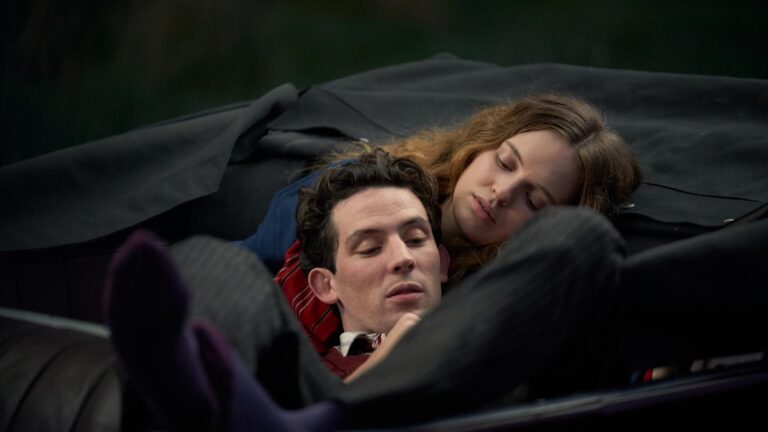
Maid Jane (Odessa Young) works for a wealthy couple (Olivia Colman and Colin Firth) who are still grieving the deaths of their sons in the First World War. She soon meets up with one of the neighbors, Paul (Josh O’Connor) and the two fall in love. But, due to their differences in class, it is an affair that must be kept a secret, even as Paul gets engaged to another woman who he isn’t completely sure he even likes. It happens per the title, the honorable Sunday when Jane has off while her employers head to church during the Easter season. It is 1920s Victorian values England where such trysts are not permitted or socially acceptable and people must keep their emotions intact.
It feels a lot like an old Merchant-Ivory production in which they embedded themselves in stories of doomed love from an era long forgotten. However, the world after the horrors of a shocking war are still felt in this era with so many young men missing; Colman’s striking scene of breaking down for a moment and then attempting to compose herself is the fracture of a nation’s fabric following the earth-shattering violence. In fulfilling those desires, Paul and Jane do not hold back from those conservative values and follow their heart, even as they know it is not going to last.
For French director Eva Husson, her third full-feature film and her first in the English language, the strong sensuality is in contrast to the strong depictions of group sex and drugs from her maiden feature, Bang Gang (A Modern Love Story). She graduates from modern teenagers engaging in debaucherous behavior to a solid period piece on willful inhibitions to go beyond their social class. Odessa Young, a relative newcomer, gets swept up and shows her vulnerability in her character, such as wandering through the halls naked looking at what could have become if she were permitted to be with Paul.
However, there is no emotional gut punch when the major twist of fate is revealed because it isn’t as if we don’t expect what’s coming. Even as the story jumps forward to Jane in her later years married to an intellectual, it becomes obvious that a tragedy is around the corner. The pacing is fair, but it doesn’t take a firm grasp of the plot moving through the second and third acts. This is likely because the film is deeply faithful to the novella by Graham Swift that it’s based on and doesn’t expound on their surroundings. The film is content at being simply two-dimensional.
Mothering Sunday is not a heavy-duty tearjerker, but a tidy, lamentable story of fleeting love amongst social constraints. It’s similar to previous films including Maurice, Lady Chatterley’s Lover, and Atonement, albeit milder, yet not a bore that could have easily befallen with this type of story.
Director: Pierre Perifel Writer: Etan Cohen Stars: Sam Rockwell, Marc Maron, Anthony Ramos, Craig Robinson, Awkwafina, Richard Ayoade, Zazie Beetz
Synopsis: Several reformed yet misunderstood criminal animals attempt to become good, with some disastrous results along the way.
Early on in the film Sam Rockwell’s suave and fourth-wall-breaking Mr. Wolf utters the line, “… I’m the big bad Wolf, the villain of every story,” and it couldn’t be more true if it tried. Throughout history, fairy tales and fables have used the “Big Bad Wolf” as the main villain for their stories. Whether he’s trying to fool Little Red Riding Hood or blow down the three little piggies’ houses, this cunning and predatory creature has been used as a metaphor for danger as long as stories have been told.
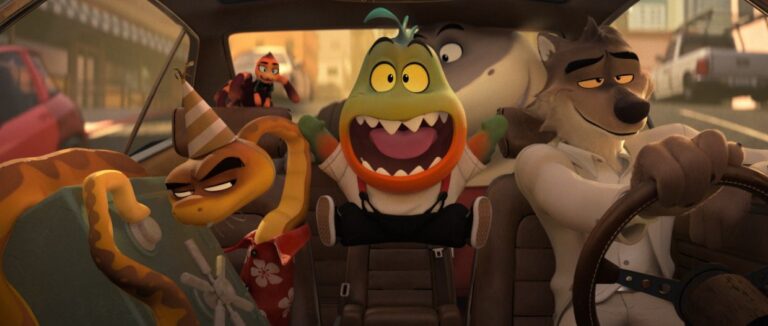
Like Mr. Wolf, the rest of his crew are made up of creatures who have never quite been given their fair share. Mr. Wolf’s crew of “Bad Guys” are made up of his best friend Mr. Snake (Marc Maron), the tech-whiz Ms. Tarantula (Awkwafina), the master of disguise and diversions Mr. Shark (Craig Robinson), and finally the aggressive and gassy Mr. Piranha (Anthony Ramos). After being called out by Governor Diane Foxington (Zazie Beetz), the “Bad Guys” attempt to steal the seemingly unattainable Golden Dolphin trophy that is being presented to the model humanitarian Professor Marmalade (Richard Ayoade). However, when Mr. Wolf, for the first time in his life, feels what it’s like to be seen as a “good guy,” he attempts to turn another leaf and leave the bad guy life behind.
Similar to Disney’s 2012 film Wreck-it-Ralph, The Bad Guys pegs the question: What if we don’t have to be “bad guys?” The story of this film basically follows the emotional quote spoken by Ralph at the end of that film, “I’m bad, and that’s good. I will never be good, and that’s not bad. There’s no one I’d rather be than me.” What if these bad guys can use what makes them bad to ultimately make them good? What this film tries to get across is that people are not inherently born good or bad, and you can’t judge a book by its cover because you never know who someone truly is until you know them. It’s not an idea that is too difficult to grasp, but it is one that can be applied to every aspect of life.
Everyone knows Disney is animation. They have been around the longest, and they, both Disney Animation and Pixar, have built a reputation that can only be matched by very few. DreamWorks Animation, founded in the mid-90s, attempted to give the animation behemoth a run for its money, and for a while, they were doing it. DreamWorks was becoming the studio for animation, but over the past decade or so their films couldn’t quite connect the same way as they once did. This paved the way for studios like Sony Animation – mostly projects led by Phil Lord and Chris Miller – to fill the spot left by DreamWorks to compete with Disney. Sony Animation has been able to do this by changing the definition of what an animated film can be.
For an incredibly long time, the boundaries of animation were restricted to primarily 2D animation. Over the years, the boundaries of what can be done have been pushed and changed, and that’s where The Bad Guys excel the most. This is the first film released by DreamWorks in quite some time that really attempts to be more creative with their animation. Throughout the film, The Bad Guys take various animation styles and meld them into one which let the film become one of the more visually appealing outings from the studio. There are traditional 2D and 3D animations, but there are also moments throughout which you feel like you are watching a comic book or an anime. The flashy shifts in visual style should be something that keeps the viewer, no matter the age, engaged with what is happening on the screen.
While the heists themselves may be visually appealing, similar to the themes of the film, they aren’t that thought-provoking and remain fairly restrained and straightforward throughout. This ease of access allows for kids watching the movie to not be overwhelmed by the complexities of certain heists, but as an adult, you can’t help but wish it was a little less on the nose. Although, between every fart joke in the movie there are also well-placed homages to classic heist cinema, including a pretty well pulled off George Clooney reference.
Ultimately, what The Bad Guys boils down to is a lot of fun. The heists and themes are easy enough for kids and the references should reel in the adults. It’s not a thinker, and it doesn’t have to be, but it’s an enjoyable time nonetheless. The biggest standout is the animation as this film is one of the flashier ones in DreamWorks’ filmography.
Synopsis: Steve Glew spent the 1990s smuggling rare pez dispensers into the USA from Eastern Europe, making millions of dollars. It was all magical until his arch-nemesis, The Pezident decided to destroy him.
Comedy has mined the documentary format for so long because when people are in a room talking to a camera, they often let their guard down. They will tell the truth and it’s often unvarnished in a way that is shocking or funny. At times, The Pez Outlaw feels like it could be a part of a season of Netflix’s now canceled American Vandal, which spoofed the kind of low stakes crime that this film is about.
The details of the story are so strange and funny that they can cause you to question what the real truth of the story is. Steve Glew as a subject is a bit unreliable, as he has a high opinion about what he did and how he got away with his schemes. It’s even fascinating how he believes that the president of Pez USA had it out for him, and him alone. It would be easy to dismiss Steve’s paranoia as vanity, but in the grand scheme he was right in some ways. In other ways, he was very, very lucky.
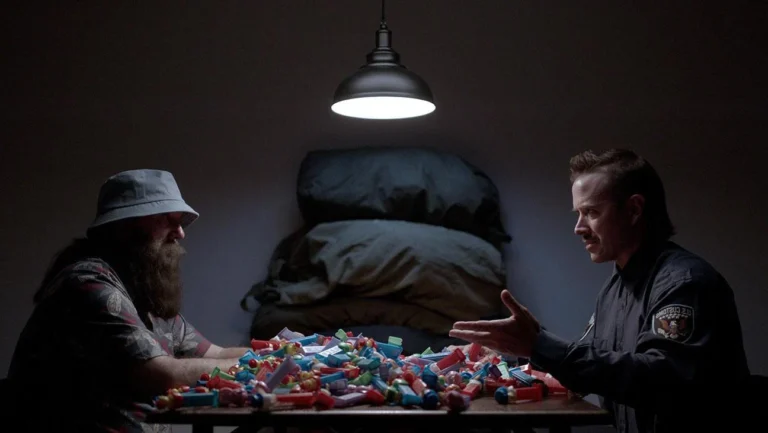
Directors Amy Bandlien Storkel and Bryan Storkel stage dramatic reenactments of Steve’s exploits, with Steve playing himself. These fantasies are well shot and are an homage to the kinds of stories Steve himself loves. The scenes add to the larger than life persona that Steve inhabits. It adds to the possibility of some of the events being exaggerated over time. Almost always after one of Steve’s declarative statements there would be an expert to refute or clarify. Though, after one of those reenactments, Steve’s greatest feat was that he essentially was able to do what he did because of a clerical error on Pez USA’s part, which puts us firmly in Steve’s camp.
We like stories of the little guy taking on the man. We like the underdog. Much of documentary filmmaking is exposing truth or giving a slice of life that we normally wouldn’t see. With Steve’s story, we get the truth about the way the American system is unfair to the working poor and the slice of life about a collector who’s able to bring about a titanic shift in his corner of collecting. Steve is an underdog who filled a marketplace and made people happy.
Collecting, and especially collecting things marketed mostly to children, boggles the minds of some people. It’s a hobby that requires patience, money, and more patience. A documentary like The Pez Outlaw only requires that you buckle in and enjoy the roller coaster of the truly strange tale of how Steve Glew got rich and then fell back down to Earth in the early ’90s. It’s a funny and enthralling story that will likely send you to see what big brands have not done the proper paperwork that could make you quite a bit more financially comfortable.
Ok, let’s talk about a dirty word in cinema (and generally, art circles). Melodrama. Be honest, what do you think of when you hear that word? Over the top, silly, ingenuine, not realistic? Do you want to roll your eyes? If that is your reaction, that’s totally fine and common, but you’re really missing out on some great, stylized work. And in a world where people are supposedly craving films that look different, that have a point of view, that don’t simply blend into the blockbuster background, the melodrama (of any era) might be a wonderful place to find just that. And, if you want an education in melodrama, there is absolutely no better place to start than the work of Douglas Sirk. And the Criterion Channel is giving you one last chance this month to view one of his seminal works, All That Heaven Allows.
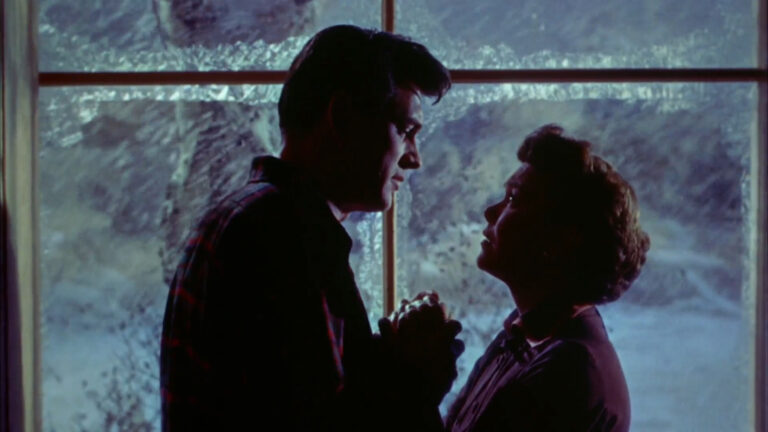
All That Heaven Allows is a relatively simple story, characterization-wise, as most melodramas are, but it has a hook that most, if not all, viewers can latch on to. Cary Scott (Jane Wyman) is a well off widow who lives in New England. Despite being consistently (and uncomfortably) wooed by any number of suitors, she becomes interested in Ron Kirby (Rock Hudson), who she is not societally matched with for a number of reasons. He is younger, of a lower station, and basically uninterested in material wealth. But he is a good man, down to earth, and, besides his work, only focused on Cary. This makes a nice change, as her other suitors are connected to that material world, and aggressively try to convince her that they are a match without truly being interested in who she is as a person.
Sirk uses not only the beauty of his two leads but also the beauty of nature to show a better world and opportunity for them both. Any time the film moves back to the world of polite society, the visuals become darker, even hidden. When Cary and Ron are together, everything stops for them. In their first interlude, Ron pulls down a branch between their combined view and gently explains its root, sharing his passion with her and she, for her part, is enraptured. But this is not a one-way interaction. They are both interested in one another and quickly fall in love. This quick tumble into infatuation still feels genuine, even for the more cynical viewers. When Cary accepts Ron’s proposal, it feels soon, but also worthy of a swoon.
But, true to life, reality crashes the party. Cary has a life separate from Ron, which not only includes societal pressures but two adult children. Sadly enough, it still feels revolutionary to have an older woman paired with a younger man in a romantic relationship. Unsurprisingly, Cary is met with disapproval on all sides, including from her children, who are also harassed about this new relationship. Soon after, Cary sacrifices her own happiness for her grown children. Despite rooting for Cary and Ron, it is an understandable reaction. But this is where All That Heaven Allows goes from good to great.
In a lesser movie, there are a few options. Cary could simply say forget these kids and reach for that brass ring. Or, moments later, she could realize that Ron is right for her and do the same thing. But the script from Peg Fenwick goes the extra mile. In what feels like an actual betrayal, her adult kids convince her that they should probably sell their house as one will be working overseas and the other is getting married. The realization of the worthlessness of Cary’s sacrifice flashes across Wyman’s face and yet, this long passed opportunity for romance is not necessarily a foregone conclusion. Will he still love her after his own betrayal?
In the most melodramatic moment of the film, Ron, trying to get her attention when she has second thoughts (again), has the snowy ground fall out from under him, which leads to his unconsciousness. Of course, when Cary realizes this she goes to him and they finally consummate this relationship. To this viewer, the most important part isn’t even the fact that there is a “happy ending.” It is that neither of them are now willing to let the world, even including her own children, dictate how they should live their lives.
A more varied streaming service, like the Criterion Channel, allows our envelopes to be pushed. Even if it’s based in a genre that isn’t always your cup of tea, film education and entertainment allow us, as viewers, to experience new stories, new styles, and different visual aesthetics that open us to beauty, sadness, love, and detail that we may have missed.
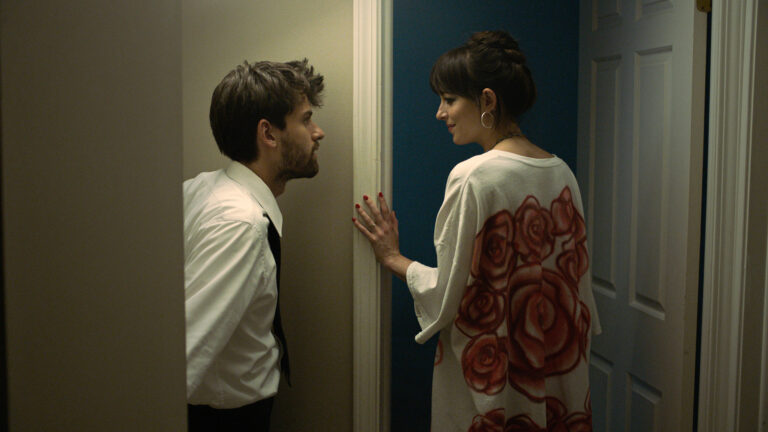
Director: Cooper Raiff Writer: Cooper Raiff Stars: Dakota Johnson, Cooper Raiff, Evan Assante, Leslie Mann
Synopsis: A young man who works as a Bar Mitzvah party host strikes up a friendship with a mother and her autistic daughter.
After the astonishingly mature, if laughably named, S#%!house, it was unlikely that writer/director/actor Cooper Raiff could avoid a slump. Yet, with Cha Cha Real Smooth, Raiff pulls off another coup of intimate and genuine storytelling.
Where another writer may stop and conclude a scene, Raiff has the exceptional ability to extend it, to build on it to get to the heart of the matter. He’s a writer who has patience with characters and lets them breathe, live, and expand into something more than a character on the screen. This acumen with character on the page in combination with his thoughts behind the camera is where Raiff shines. He lets the scenes he creates take on a life of their own. They’re long, unpredictable, and often uncomfortable in the best ways.
Raiff and cinematographer Cristina Dunlap create some terrific scenes. One of their best is a long tracking shot in which we follow a drunk Andrew (Raiff) as he spirals after learning Domino (Dakota Johnson) won’t be attending this particular Bar Mitzvah. Many people sense that something is off about Andrew including his mother (Leslie Mann) and little brother, David (Evan Assante), before the camera shifts to David’s perspective as he takes his girlfriend aside to have their first kiss. There’s even a terrific sight gag thrown in as Andrew references the host of the party is dressed like a clown, the camera pans to a table and, indeed, Mr. Schindler is wearing a clown outfit and very unamused by Andrew’s behavior and unprofessionalism.
This is the superb balance Cooper Raiff has struck with Cha Cha Real Smooth. The film has deep, honest conversations between people, but sometimes the funniest joke can come from the most dramatic situation. Other times, the joke precedes a moment of startling drama. This film isn’t about walking a fine line, but about ignoring the line and presenting a human as they are and as flawed and myriad as they are.
There is a scene late in the film in which Andrew knows his hopes about his relationship with Domino are falling through his fingers. He heads to his car as Domino’s fiancé, Joseph (Raúl Castillo), pulls into the driveway. In another film we would hate Joseph, and would consider him the antagonist, but in Cha Cha Real Smooth, Joseph is just someone trying his best. He stops Andrew and he tells Andrew that yes, he’s a dumb kid, but he has his heart in the right place. Essentially, the antagonist of the film is the barriers people put up to keep people from accepting their whole selves.
Cha Cha Real Smooth deals with mental health in a real way. Characters exist with depression, bipolar disorder, and autism, but it doesn’t define who they are. There is nuance and acceptance, as well as honest attempts at understanding. There are no scenes in which the cast overacts the worst aspects these conditions can manifest. The conditions are treated as a part of these character’s daily lives and that’s a credit to both Raiff’s script and the actor’s performances.
Leslie Mann has ventured into the territory of dramedy before, but she is on such a different level with Cha Cha Real Smooth. She is so grounded and measured in her performance. She brings a warmth and aching to the role. While she never makes it explicit, her expressions and her body language show that her character is trying so hard to keep herself together, to anchor herself in family stability. It’s quite a beautiful turn for Mann.
There is so much to write and to gush about Cha Cha Real Smooth. It’s a film that breaks rules and makes us reflect on who we are. Cha Cha Real Smooth is a movie that reminds you life is hard, but if you’re paying attention, the good stuff will stick around in your memory. Cooper Raiff has hit on something utterly divine and it will be a pleasure watching his career from here on.
The 75th Cannes Film Festival line-up has officially been revealed and with more films to be added at a later date, it is already proving to be a festival not to miss. Continue reading below to see the official line-up and which films are competing for the Palmes d’Or prize.
OPENING FILM
Z (COMME Z) – Michel HAZANAVICIUS (Out of Comp)
OFFICIAL COMPETITION
HOLY SPIDER – Ali ABBASI
LES AMANDIERS – Valeria BRUNI TEDESCHI
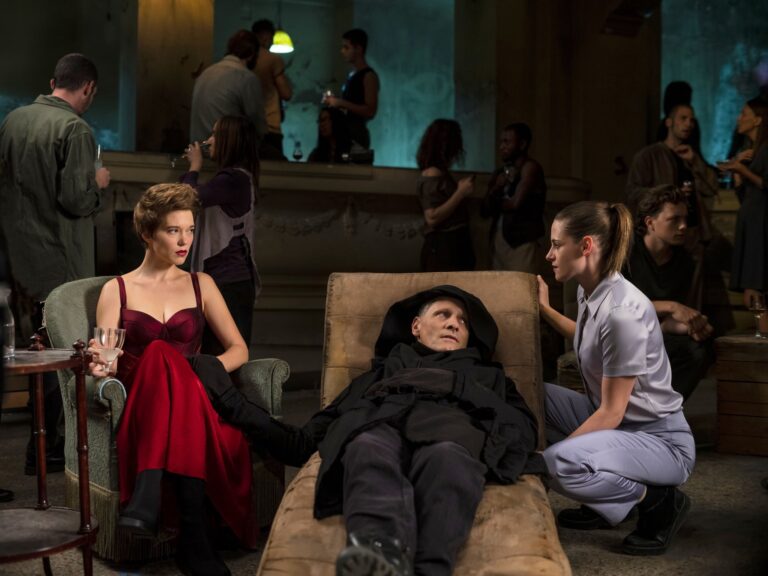
CRIMES OF THE FUTURE – David CRONENBERG
TORI AND LOKITA – Jean-Pierre et Luc DARDENNE
STARS AT NOON – Claire DENIS
FRÈRE ET SŒUR – Arnaud DESPLECHIN
CLOSE – Lukas DHONT
ARMAGEDDON TIME – James GREY
BROKER – KORE-EDA Hirokazu
NOSTALGIA – Mario MARTONE
RMN – Cristian MUNGIU
TRIANGLE OF SADNESS – Ruben ÖSTLUND
HAEOJIL GYEOLSIM (DECISION TO LEAVE) – PARK Chan-Wook