

Home Blog Page 136

Movie Review (Sundance 2023): ‘Eileen’ is Two-Thirds of a Great Movie  


Director: William Oldroyd

Writers: Luke Goebel, Ottessa Moshfegh

Stars: Anne Hathaway, Thomasin McKenzie, Shea Whigham, Jefferson White

Synopsis: A woman’s friendship with a new co-worker at the prison facility where she works takes a sinister turn.


Few things are more frustrating than a movie capable of greatness that suddenly takes a sharp left turn in its third act to become a story that frustrates more than it satisfies, and that’s the case of Eileen, a mostly solid drama thriller based on the award-winning Ottessa Moshfegh novel. The character study work is excellent, the performances are all fine, and the gorgeous cinematography by Ari Wegner gives a vivid sense of place. For a long while, Eileen has the absorbing slow burn effect of the similarly themed Carol, with its period Christmas setting, and two female characters finding a strong emotional connection with each other. 

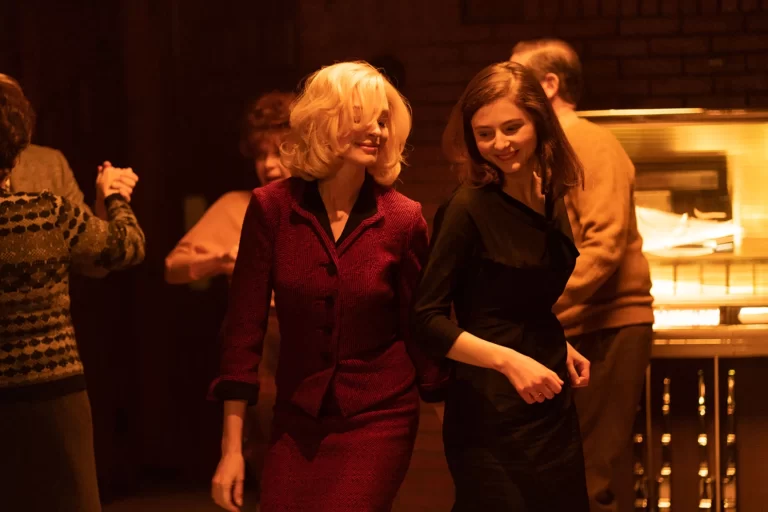
The story tells of a young woman named Eileen (Thomasin McKenzie) who works at a men’s prison in 1960s Massachusetts. Her job doesn’t offer much excitement day to day, to the point where she imagines herself having sex with one of the security guards. Eileen’s life at home isn’t any better, her alcoholic father often screaming at her from the top of a staircase. She needs something to shake things up, and soon, in comes Dr. Miss Rebecca St. John, the prison’s newest prison psychologist played by a blonde Anne Hathaway. They share a flirtatious glance as soon as Rebecca is introduced to her co-workers, and soon thereafter they’re chatting in empty hallways and storage rooms, Rebecca lighting up a cigarette and projecting an aura of confidence and authority. They meet up for a drink, go dancing. Eileen thinks she might be falling in love.

Director William Oldroyd (2016’s Lady Macbeth) infuses the first riveting hour with a delicate, absorbing pace, allowing Rebecca to remain just enough of a mystery to have the viewer become entranced with her the same way Eileen is. The characters slowly reveal themselves to be more complicated than they appear on the surface, Rebecca clearly uninterested in the men who come on to her, wanting instead to hold Eileen until the late hours of the night on that dance floor. Hathaway and McKenzie are fantastic in this stretch of the movie, feeling authentic to the time and place and in their affection for each other. Hathaway particularly hasn’t played a character this sensual and mysterious in years.  

When Rebecca invites Eileen over to her house late at night, Eileen thinks she might get lucky with the older psychologist, and during an intimate chat around the kitchen table, the flirtations increase to the point where the two might even kiss. But then that crazy twist occurs, Rebecca reveals something she’s done almost no viewer will see coming, and it’s at this moment that the film Eileen goes off the rails into dark thriller territory that is semi-interesting to be sure, but also ultimately brings the movie down, especially on an emotional level. The decision Rebecca makes feels forced, not entirely true to her character, and not keeping in line with all the events that came before. What Eileen herself goes on to do is even more troubling, and out of character, her hallucinations somehow manifesting into a moment of shocking violence.

In some ways, this third act shift might have worked if the screenwriters Goebel and Moshfesh had dealt with it in a more nuanced way and with more time spent with the characters. This is a criticism I rarely throw at movies these days, but I would’ve liked Eileen to be twenty minutes longer because as it stands with its brief ninety-seven-minute running time, the film falls pretty flat at the end. You’re supposed to believe that one of the main characters has enjoyed an epiphany that will send her life in a better direction, but the final scenes go by so quickly that it’s difficult to be emotionally affected by the story’s outcome.

I read Moshfegh’s novel in college, and the weakness of the film’s third act plays much better in the first-person written form through Eileen’s eyes, Moshfegh allowing that later scene of suspense to breathe over the course of many pages. The motivations of the characters are better fleshed out, too, but in the movie, everything happens too abruptly to care about the genre elements of the story. Our interest and hearts are with that intriguing relationship between Eileen and Rebecca, and that becomes lost in the final act, Hathaway’s presence especially absent when we want to see more of her.

Alas, there is lots to like about Eileen, with plenty of standout achievements at the technical level as well as a variety of excellent performances. Hathaway, as I said, is divine, so charismatic throughout the first half and clearly relishing this role. McKenzie, a New Zealand actress who’s been great in films like Leave No Trace, Jojo Rabbit, Last Night in Soho, and The Power of the Dog, is a tremendous talent you can’t look away from, and who gives Eileen the right balance of vulnerability and danger. I liked Eileen; I’d go as far as to say it’s two-thirds of a great movie. But it’s nowhere near Carol great, that’s for sure. 
GRADE: B- 

February 2023: Criterion Collection

We have eight movies for you in the shortest month of the year, including an arthouse trilogy getting re-released for 4K. Going in for the first time is another Shakespeare adaptation, but the first of arguably his most famous plays, a duo of films from a French literature champion, and a biting social satire aimed at White Hollywood’s failure to treat Black actors seriously. Also, another re-release of one of the 1990s most legendary comedies that served as a platform for several A-list actors.


Romeo And Juliet (1968)

Releasing on Valentine’s Day, William Shakespeare’s star-crossed lovers’ tragedy has been adapted multiple times, but most notable is Franco Zeffirelli’s version starring newcomers Olivia Hussey and Leonard Whiting. Like his contemporary Luchino Visconti, Zeffirelli uses his opera-directing knowledge to get the most out of the story with gorgeous costumes, striking production design, and crisp cinematography capturing every ounce of romance and drama Zeffirelli squeezes out of this timeless tale of forbidden love. The film won two Oscars and was nominated for Best Picture.

Note: After the announced release from Criterion, both Hussey and Whiting sued Paramount Pictures for emotional and mental distress, claiming sexual abuse by the now-deceased Zeffirelli. As they were minors during the shoot, they claim that they were filmed naked without their consent. 


Two Films By Marguerite Duras (1975-1977)

Already a success as an author, Duras, who received an Oscar nomination for the screenplay to Hiroshima, Mon Amour, moved into the director’s chair where she continued on with her themes of love and lonesomeness. Her most noted directorial work is India Song, in which an ambassador’s wife in 1930’s India has affairs while watching the world she knows to go into decay. Her second film, Baxter, Vera Baxter is a study of a woman’s existential crisis while living in a villa and tells a stranger how she has come to this moment. These two films add to Dumas’ mastery of a radical style of French literature which made a permanent mark across two mediums. 


Hollywood Shuffle (1987)

Writer/director/actor Robert Townsend hit the sweet spot with his satire on the industry amongst African-Americans looking to make it big. Inspired by times he was told he wasn’t “black enough” for a Black role, Townsend goes against the usual Black stereotypes that have plagued Hollywood for decades, writing interesting skits and fascinating characters for all audiences to laugh at and understand the misconception of Black characters written by White producers. It’s a hidden independent gem that gets to the core of a past Hollywood that lacked natural diversity.


Dazed And Confused (1993)

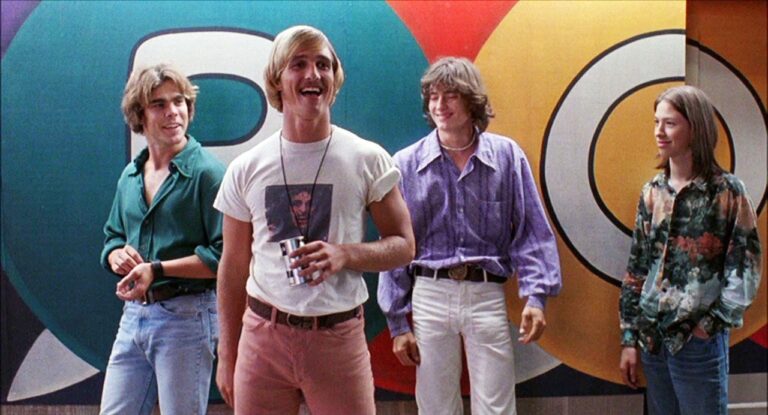
In the first of two re-releases, Richard Linklater’s coming-of-age masterpiece around one day in 1976 started up the careers of several significant actors. Matthew McConaughey’s scene-stealing breakthrough performance, Ben Affleck, Jason London, Milla Jovovich, Parker Posey, Adam Goldberg, and others started their exposure here, which initially didn’t do well at the box office. The soundtrack of the 70s mixed with plenty of weed humor fulfills a moment in time that holds up many years later.


Three Colors Trilogy (1993-1994)

The second re-release is a trio of masterpieces for the Polish auteur Krzysztof Kieślowski marking 30 years since the release of Blue, the first film followed by White and Red. All three connected with the French themes of liberty, equality, and fraternity and touch on different subjects, each with its own color palette and accompanied by Zbigniew Preisner’s haunting score. Juliette Binoche, Julie Deply, and the late Jean-Marie Trintignant star in what were Kieślowski’s final works before his death, marking the finale to a storied career with one of cinema’s most artistic accomplishments of the century. 


Follow me on Twitter: @brian_cine (Cine-A-Man)

Movie Review (Sundance 2023): ‘Bad Behaviour’ is a Waste of Talent


Director: Alice Englert

Writer: Alice Englert

Stars: Jennifer Connelly, Ben Whishaw, Alice Englert

Synopsis: The film is a dark comedy about Lucy, a former child actress who seeks enlightenment at a retreat led by spiritual leader Elon  while she also navigates the close yet turbulent relationship with her stunt performer daughter, Dylan.


Occasionally – or even often, to be completely honest – I blindly jump into movies exclusively due to the cast listing or the leading actor/actress. Bad Behaviour is one of those films for me. Jennifer Connelly holds that star factor that, independent of the type of story she gets herself into, I’m in. That said, I genuinely didn’t know anything about Alice Englert’s feature directorial debut. After sitting through little less than two hours of growing frustration, I wish I knew the protagonists would be such terrible, despicable, toxic human beings.

Obviously, Bad Behaviour wants to make a point by following uninteresting, stressful characters that seem to destroy any source of joy in their path. The issues inherent are just too many for viewers to actually care about it. From the extremely unbalanced tone to the messy narrative structure, Englert isn’t able to focus her thoughts, falling off a precipice into dull, repetitive scenes lacking true sentiment. There’s even a fully animated sequence that comes out of nowhere – like many other moments – which pushes the viewers further away from the story instead of reeling them in.

Motherhood will never cease to be a topic worthy of in-depth study. More specifically, mother-daughter relationships can be incredibly complex, just like any other parent-child bond. All families share different ways of living. From making mistakes to learning from them, from dealing with trauma to avoiding it, the presence and support from our closest family members is vital for moving forward in a healthy manner. There are clear attempts at exploring why the mother, Lucy, and the daughter, Dylan, feel so separated from each other. I kept waiting for the momentum to shift… and it did. It’s just a pity that this only occurs midway through the final act of Bad Behaviour.

Until then, it’s a never-ending sequence of nonsensical displays of hateful dialogue and unreasonable actions. One has to endure characters constantly hurting others, whether it’s verbally or physically, and most of the time, it feels miserably hollow. It’s one of those movies that survives due to the dedicated performances from the cast, but even concerning this aspect, it’s a shame that such a brilliant actor like Ben Whishaw is so wasted.

Nevertheless, Connelly warrants all the praise. An all-in, powerful performance from an actress that didn’t deserve to lead such a disappointing flick. In the midst of all the confusion, the viewers can still rejoice at the fact that they’re witnessing a phenomenal actress demonstrating all of her talent and commitment to a role. Englert is also pretty good, much better than in exploring the mother-daughter theme.

A final note: I’m unaware of how much of a personal project this is or even if it’s personal at all. Still, Bad Behaviour is one of those films I just couldn’t connect with in any shape or form. There’s a layer of exaggeration and overdramatization that makes it all feel fictional and less grounded. And that, to me, turns into a massive obstacle to overcome. I hope others can feel the opposite.

Grade: D+


Movie Review: ‘A Man Called Otto’ is Wholesome, but Little Else


Director: Marc Forster

Writer: David Magee

Stars: Tom Hanks, Mariana Treviño, Truman Hanks

Synopsis: Otto is a grump who’s given up on life following the loss of his wife and wants to end it all. When a young family moves in nearby, he meets his match in quick-witted Marisol, leading to a friendship that will turn his world around.


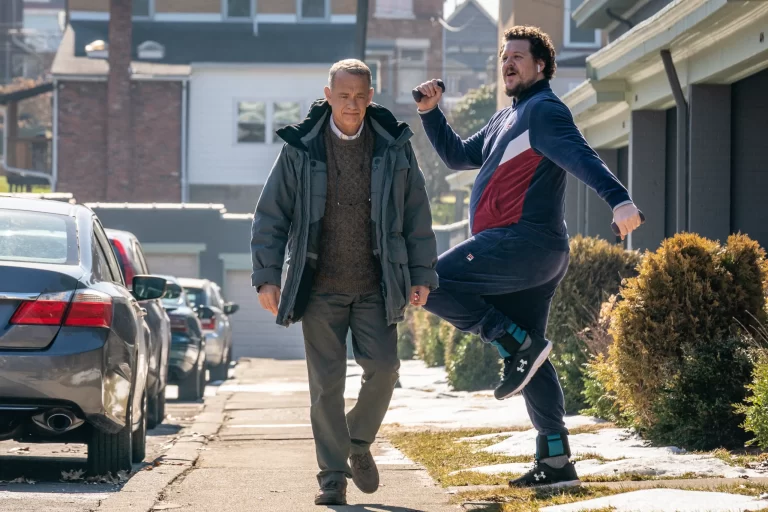
Some movies come along, and defy deep description. A Man Called Otto, based on the best seller “A Man Called Ove” by Fredrik Bachman, is one such film. Honestly, it’s nice, and it pains me to write a review that is less than glowing. It seems to not aspire to be much more than a vehicle for Tom Hanks to move from grumpy to, well, nice, something we already associate with America’s Dad. Even if you have not read the excellent source material, there are no great surprises contained within.

The story focuses on Otto (Hanks), a grumpy, suicidal man who has recently lost his wife and is dealing with varied annoyances, including new neighbors and a realty group trying to swoop in and take his and his neighbor’s properties from under him. Forster is an interesting director, but here he seems uninspired and content to let Hanks carry the weight, without a great deal of cinematic assistance. He centers most of his work on flashbacks featuring young Otto (Truman Hanks) and his soon to be wife, Sonya (Rachel Keller).

Alright, so here’s the elephant in the room. Truman Hanks, Tom’s son, struggles a bit here. Luckily, he is playing a character that tends to not emote and is obviously socially awkward. But even with these limitations, he is just not an engaging actor. This is especially true when paired with Keller, who, with limited screentime, is instantly memorable, and like Otto, we just want a little more time with her. A moment of accidental violence involving Sonya is really the only attempt at cinematic movement from Forster, and even this is unimaginative and bland. We, of course, feel the pain, of the after effects of this, but the moment is more than a bit muddled.

But I told you it was nice, so it’s not all bad. The aforementioned neighboring family, headed by Marisol (Mariana Treviño), along with her husband and two (soon to be three) children truly save the movie. At her introduction, she is certainly a lot to handle, but she grows on you, and on Otto, to everyone’s advantage. Marisol is truly the only person willing to both stand up to him and care about him. Her consistent positivity sometimes strains credulity, but the script does a lovely job at pushing her and Otto together in ways that eventually make sense. I won’t tell you what happens, but trust me, you already know.

Another thing that it does very well is a balancing of difficult tones. Some of this is due to the elder Hanks’ easy manner of performance, some is the source material, but you do have to give credit to the script, penned by David Magee. After all, this is a heartwarming comedy about a man who desperately wants to die so he can be close to his wife, who has passed.  Hilarious, right? And yet, somehow these disparate tones find a way to work together. A Man Called Otto is sometimes funny, sometimes sad, sometimes heartwarming, but never surprising. 

It does make me wonder how this film would come off with a few changes. As great as Tom Hanks is, in general we know he is a nice guy, so we are just waiting for him to break and become exactly that. And lord, if we had an actual actor playing the young version, instead of paying the nepotism price, simply because, for good reason, Truman bears a passing resemblance to Tom. 

At its heart, A Man Called Otto is really a film about community, and how important it is to connect. It is really hard to hate on that.  It’s a good message. It’s, again, nice. But it’s definitely not memorable. Many other films have done this better. A Man Called Otto is not a waste of time by any stretch, but it also does not demand your attention in any strong measure. Traveling with this character in the framework of a novel, being connected to his emotions and thoughts is a better fit. Here, though, it all feels a bit like a big grumpy act, just waiting to be corrected.

Grade – C

Movie Review: ‘JUNG_E’ is Yeon Sang-ho’s Weakest Effort Yet


Director: Yeon Sang-ho

Writer: Yeon Sang-ho

Stars: Kang Soo-yeon, Kim Hyun-joo, Ryu Kyung-soo

Synopsis: On an uninhabitable 22nd-century Earth, the outcome of a civil war hinges on cloning the brain of an elite soldier to create a robot mercenary.


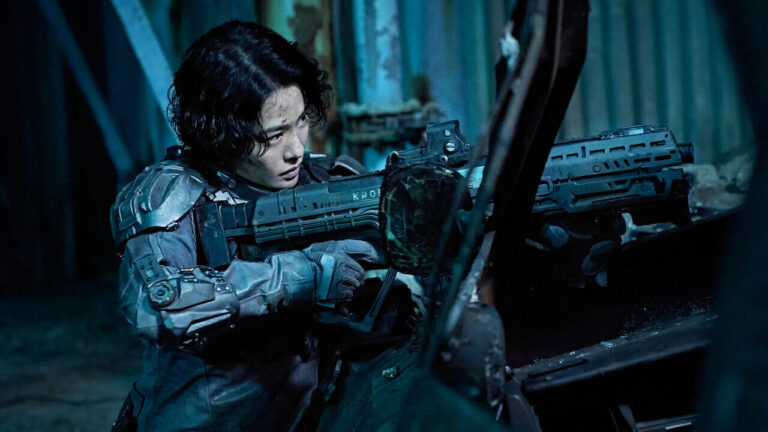
You may have not realized that Train to Busan director Yeon Sang-ho has a new movie out on Netflix called JUNG_E, because the streamer barely promotes their content, even when a high-profile filmmaker is at the helm (and it’s part of the reason why I’m still baffled that All Quiet on the Western Front got nominated for so many Academy Awards). But Netflix may have not wanted to promote JUNG_E partly because it’s not very good, even if it has some attractive visual-effects-driven action set pieces at its core. 

Many will watch the movie for Kang Soo-yeon’s last performance, who passed away suddenly in May of last year. She plays Yun Seo-hyun, the team leader at Kronoid Laboratory, who are creating androids by the name of JUNG_E after her mother, Yun Jung-yi (Kim Hyun-joo), the most decorated soldier in South Korea and a war hero, who died in combat. The film is a moral quest between Yun, who doesn’t want Kronoid to use Jung-yi’s mind to create JUNG_E, and Kim Sang-Hoon (Ryu Kyung-soo), the director of Kronoid who wants to replicate JUNG_E into an army of Androids. 

And most of it is pretty boring. Running at only 99 minutes, the film’s pace feels amazingly lethargic, but also skimps on good character development. The only thing that held my attention was its visually staggering action sequences, beautifully shot by Yoo Ji-sun, bringing an elaborate visual palette to the movie. Sang-ho creates a great sense of rhythm and kineticism during those sequences, held together by a magnetic performance from Kim Hyun-joo, who hits all the right emotional notes as JUNG_E/Jung-yi. 

There isn’t that big of a difference between JUNG_E and Jung-yi. They both possess the same emotional qualities, since they share the same brain, but the scene in which she (brutally) finds out she is an Android feels devastating. It’s the only scene that has legitimate emotional weight, in part because Sang-ho uses the action not necessarily as a cathartic device to make the audience hoot and holler at the screen (it is badass, I won’t lie), but as a driving force for JUNG_E’s central emotion. Jung-yi wanted to go back to her daughter, who was in surgery at the time, but will unfortunately perish at the same time and place, even though it’s a simulation.

Those moments are rhythmically involving, because Sang-ho creates an amazing sense of rhythm and tension within the action scenes. There are no wasted moments within the climax either – with eleven minutes before the movie reaches its end, out comes one of the most exciting third act endings in Sang-ho’s career. A beautifully shot subway chase of robots fighting robots! It never disappoints. 

However, it happens way too late for the audience to care about what’s happening on screen. Sure, the performances are all great, especially Hyun-joo as the film’s titular character, but the characters severely lack in development, most notably Soo-yeon. Her final performance is emotionally investing, but the character isn’t as compelling as Sang-ho thinks it is. There are many holes left in her arc by the time the film ends. And whether it was intentional or not, it feels as if something was missing to truly lock the audience into the movie. Flashy action sequences are one thing (and they’re all amazingly executed), but if the story doesn’t support it, you only have one piece of the puzzle. Because of this, JUNG_E falls amazingly flat on its face, and it may be the reason why Netflix didn’t want to market this in the first place (but they never market anything anyways). 

Grade: C-

Poll: What is the best football movie?

“Huck it, chuck it, football!

While this line isn’t even from a football movie, it perfectly embodies the excitement Americans feel about the sport. Not all football movies have been great, but if you love the sport you’re bound to feel excited either way, and that’s the power it has. Next week we’ll see the release of 80 for Brady, a different angle on the genre, and one that shows how that excitement for the sport won’t go away any time soon, even in old age.

With that said, what do you think is the best football movie?


Movie Review (Sundance 2023): ‘Infinity Pool’ is a Flashy, Shocking Bore  


Director: Brandon Cronenberg

Writer: Brandon Cronenberg 

Stars: Alexander Skarsgård, Mia Goth, Cleopathra Coleman, Thomas Kretschmann  

Synopsis: James and Em Foster are enjoying an all-inclusive beach vacation in the fictional island of La Tolqa, when a fatal accident exposes the resort’s perverse subculture of hedonistic tourism, reckless violence and surreal horrors.


“Boring” wouldn’t seem to be the first word that comes to mind with a new movie directed by Brandon Cronenberg (Possessor) and starring Alexander Skarsgård and last year’s break-out Mia Goth, but after an intriguing opening that sets up the characters and environment, Infinity Pool gets so weird so fast that it becomes difficult to care. This is one of those flashy, well-made genre films that will have its fans, but I found it to be a frustrating medley of several other projects that told their unusual stories with more depth and precision.

Infinity Pool has the feel of The White Lotus at the beginning, a novelist named James (Skarsgård) and his wife (Cleopatra Coleman) staying at an elusive beach paradise in the country of Li Tolqa. It’s a place where the rich come to get away with anything they want, including murder, and where director Cronenberg chooses to transplant his characters into a place that slowly devolves into Hell. Goth plays Gabi, who recognizes James from his latest book she’s read, and she invites him and his wife to a dinner that leads to a late-night car ride that results in a violent death and a terrifying fate for James. 

I’m all for weird movies that don’t play it safe, that shock and disturb and refuse to play by the roles, but these kinds of films need to have interesting characters to care about and a compelling narrative that pulls you toward a satisfying conclusion, and Infinity Pool has little of that. Part of the problem begins with Skarsgård, sad to say, because although he’s given lots of great performances, especially in season one of Big Little Lies and as Amleth in last year’s The Northman, he usually fares better as a villain or as an intimidating figure to be feared. The character of average Joe who’s often scared and looking wide-eyed doesn’t suit him as well, and casting someone more vulnerable like Andrew Garfield, Paul Mescal, or Dev Patel would’ve allowed an offbeat story like this a better chance at success.

Mia Goth, alternatively, is perfect casting for the film, her roles in both X and Pearl two of my favorites from last year; the problem is her character doesn’t stand out much from those better, more emotional turns she’s given us in genre fare in recent months, and her delivery in Infinity Pool doesn’t have the same power as her delivery in Pearl, especially. The character feels underwritten, one meant to coast by on her charisma alone, and Gabi needs more to do, especially as the story begins to spiral into several chaotic directions.

You can’t fault Cronenberg for going bold with some choices, most memorably with a close-up of someone’s body part that seems impossible to have made it into an R-rated movie. But it’s this kind of moment that turned me off early on, there is no specific reason why this explicit shot exists other than to shock the viewer. Later, when science fiction elements take over, including clones of the characters we’ve already met, Cronenberg delights in a variety of ways of executing those clones to an outrageous extent. And as the story descends more and more into madness, any meaning the story was supposed to have seems to be lost, and any enjoyment rests simply on the surface of the filmmaker’s aesthetics. 

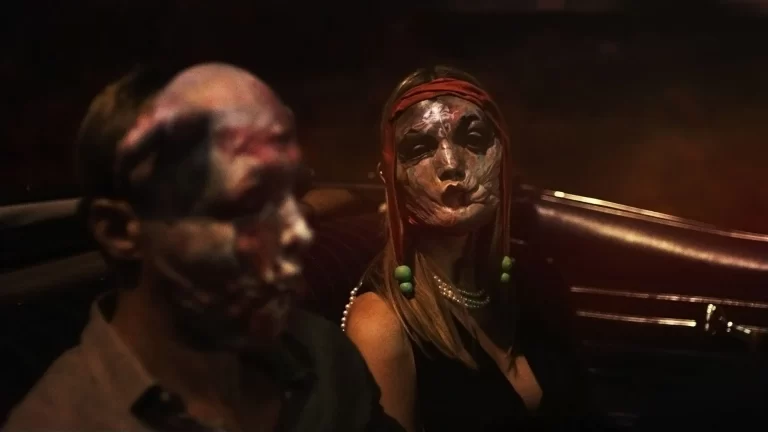
And for all its outrageous images, there’s too much of a feeling of déjà vu. A seemingly never-ending scene involving a hit-and-run feels ripped right out of I Know What You Did Last Summer, even in the direct dialogue between the characters that happens after the crash, and as much as I enjoyed the hypnotic images of the characters wearing weird masks on the way to a late-night event, this sequence reminded me too much of Eyes Wide Shut, which Stanley Kubrick accomplished better in terms of style, substance, and the arc of the main character. 

By the time we reach the final act of the absurdly long two-hour running time, I had stopped caring about what was going to happen to the characters, and that is death for me in any movie. A film can be slow, weird, uneventful–fine. But if the characters aren’t pulling me through a story like they should, I check out. Writer/director Brandon Cronenberg’s father David understands how to blend sharply written characters with horrific situations in masterpieces like The Fly, Dead Ringers, and A History of Violence. Infinity Pool, on the other hand, is a disappointing late January release that will likely come and go, and here’s hoping next time Brandon Cronenberg will use his talent for dazzling visual storytelling for something more involving on a narrative level.

GRADE: D

Movie Review: ‘Plane’ is the Perfect Action Throwback


Director: Jean-François Richet

Writer: Charles Cumming and J.P. Davis

Stars:  Gerard Butler, Mike Colter, Yoson An

Synopsis: A pilot finds himself caught in a war zone after he’s forced to land his commercial aircraft during a terrible storm.


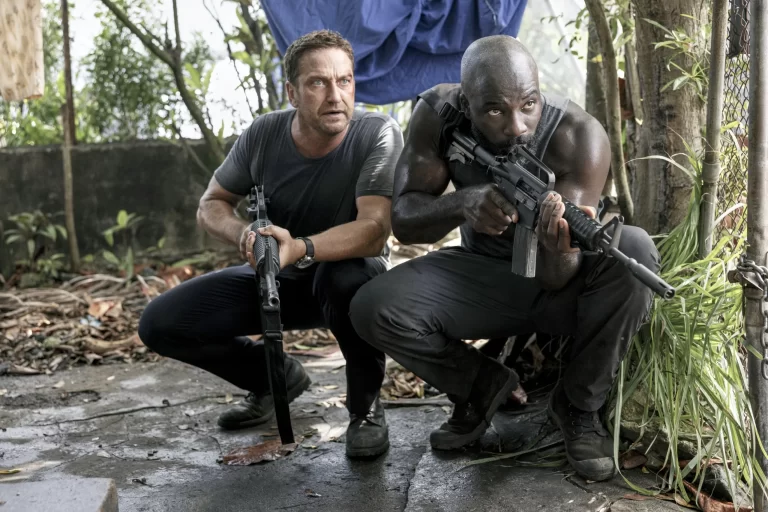
Plane is an action film that seems to have come out of a time machine, straight from 1996.  Its one-word title, simple premise, and reliance on action stars are all relics from a time long past. Gerard Butler once again shows why he is an action hero, and French director Jean-François Richet shows why action is his favorite genre to work in. Plane is an electrifying, albeit conventional, action film that is greater than the sum of its parts.

The film follows Captain Brodie Torrance ( Butler) on an ordinary New Years eve flight from Singapore to Tokyo, that turns out to be all but ordinary. Amongst the 14 passenger flight is homicide suspect Louis Gaspare (Mike Colter), and the flight path is set over the South China Sea and through an ongoing, but temporary, lightning storm. When the storm doesn’t blow over as Brodie’s superiors said it would, the plane is struck by lightning, and forced to land on a dangerous, war-torn island while waiting for rescue. The premise is simple, with an ensemble cast of characters who could be described in a sentence each. Captain Brodie is quick on his feet and willing to go down with his ship. Louis Gaspare is haunted by his past and seeks redemption. Brodie’s co-pilot, Dele (Yoson An), follows orders and can’t wait to see his family. Bonnie (Daniella Pineda) is the lead flight attendant who sees her co-workers as family. Junmar (Evan Dane Taylor) is the leader of terrorists who will stop at nothing to have more power. The passengers of the flight are all self-centered. These characters have little going on under the hood, and moments of depth are few and far between. On paper, the story is a familiar action-survival flick with little for the audience to attach too. 

And yet somehow, this never seems to matter when watching the film, because each performance gives so much more to each character. Butler plays a wonderful Scottish pilot, as he commits to the role completely, in spite of its shallow caricature. Colter gives Louis an empathetic exterior that enables the audience to care for him despite how little character there is on the page. An is stellar in the role of Dele, being immediately likable and lending weight to the increasing stakes of the film. Every actor commits to their roles with 100 percent sincerity, and it disguises the weaknesses found in the script. 

Plane’s greatest strength, appropriately, lies in its action. The film is full of sequences and setpieces that are all completely different in style and genre. It has races, chases, shootouts, and brawls. It even hast stealth missions and ticking bombs, and it all works together to create a visceral experience that is unpredictable from moment to moment. The film feels fresh and exciting in every sequence because the action has drastically changed from the start of the film. What once was a race through a storm evolves into an all out war on a tarmac, and it’s a beautiful sight to see. The editing and sound design puts the momentary risks front and center, and never lets you forget what is at stake for our characters. And when the action ends, the film takes a breath, slowing down to remind the audience of how important it is that these characters make it off the island. 

It’s action filmmaking that is simple and to the point, lacking any fat that could weigh down this plane. And while it may be a cliched, familiar story we’ve seen a hundred times before, it’s shown in a way that feels exciting and fresh in the moment. Plane is a film that is an experience to behold in cinemas, and an entertaining one at that. 

Grade: C+

Movie Review (Sundance 2023): ‘Fair Play’ is a Romance Thriller Not To Be Missed

Sundance Movie Review: ‘Fair Play’ is a Rip-Roaring Romance Thriller Not To Be Missed


Director: Chloe Domont

Writer: Chloe Domont 

Stars: Phoebe Dynevor, Alden Ehrenreich, Eddie Marsan, Rich Sommer, Sebastian De Souza  

Synopsis: An unexpected promotion at a cutthroat hedge fund pushes a young couple’s relationship to the brink, threatening to unravel far more than their recent engagement.


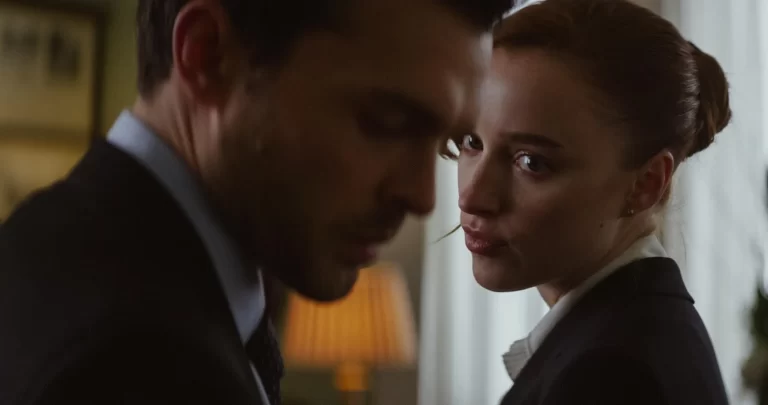
When I read that Fair Play sold to Netflix for a whopping twenty million dollars, I was not surprised. The first film I saw at this year’s Sundance Film Festival, Fair Play immediately drew me in with a memorably twisted opening scene that sees a young couple get engaged in a bathroom after a sexual mishap. They have chemistry, they’re in love, so why don’t they tell all their friends and family the good news? Well, as it turns out, Luke (Alden Ehrenreich) and Emily (Phoebe Dynevor) have an unusual relationship in that they both work as analysts at a hedge fund where romantic relationships violate company policy. 

The two keep their relationship a secret behind closed doors, even relish their misconduct as they sneak glances at each other in the work elevator, but their happiness together comes crashing down when Emily becomes the sudden choice to become the hedge fund’s new portfolio manager, a high-stakes position at the company she insisted Luke would get. Campbell (Eddie Marsan), the owner of the company, makes it clear Emily is more valuable than Luke ever was, and the balance of power starts to slowly chip away at the love and intimacy between the young couple, eventually to an explosive effect. 

This feature directorial debut of Chloe Domont—she’s directed episodes for the television series Billions and Ballers—has an intriguing set-up that makes you care about the characters and features a high-stakes finance company setting that is fascinating from minute one, but it’s the ratcheting up of tension in the second half that makes Fair Play a true stunner. Other filmmakers might not have gone for the throat the way Domont does with Luke and Emily, but she never backs down on just how ambitious and, at times, completely insane these characters are when it comes to their work and the images they want to project to everyone else. 

There are scenes of startling chaos, Luke’s jealousy for Emily’s promotion making him quietly seethe with rage until he finally explodes at her in their condo, Emily unloading on him with even more antipathy, their relationship not only turning sour but shockingly dangerous by the film’s third act. Domont has written a brilliant screenplay that manages to make the two leads realistic even when their situation turns scary, mean, and positively Shakespearean toward the end. She understands the finance world, too, the setting always believable and continually adding to the tension, and she never forgets to make the movie entertaining, the narrative eventually bordering on the thriller genre, not a single moment wasted within its running time. 

Of course, none of Domont’s astonishing writing and directing would matter if the actors didn’t match her talent, and do they ever. Phoebe Dynevor gives an astonishing performance that will be talked about in the months to come; her confidence, sexiness, and intelligence coming through in every scene. I love how she never allows Luke to tear her down, always stays true to her values and self-worth. She’s most well-known for Bridgerton, of course, but this project will put her on the map for more juicy modern roles in cinema. Alden Ehrenreich hit a road bump in 2018 with his starring role in the underperforming Solo: A Star Wars Story, but Fair Play should bring him right back to the top as an in-demand dramatic actor, his later scenes emotionally raw and intense as Luke’s mental stability begins to crumble.  

The supporting cast is top-notch as well, like Rich Sommer and Sebastian De Souza, and especially Eddie Marsan as a ruthless, intimidating figure at the hedge fund who will pretend to be your friend until you make a decision that loses his company money. He says rotten things to Emily when she makes a bad financial call, he sneers in the face of Luke when he makes a plea to further his career. He’s the kind of boss who can make or break you with the snap of his fingers, and Marsan delivers a brilliantly modulated performance that should be remembered come awards-time. 

Fair Play is a harrowing drama that features one mesmerizing scene after another. Just when you think Domont won’t go that far, she does, and takes the characters into even deeper realms of Hell. A later scene in a bathroom that slightly emulates the main characters’ first scene in a bathroom is ugly and brutal, and the final scene, which I wouldn’t dare give away, sticks the landing in the most amazing way. There might be one too many scenes of the characters screaming at each other in the second half, but I loved almost everything about this; it’s one of my two favorites from the Sundance Film Festival. If you’re a fan of tense romantic thrillers that will challenge you, surprise you, and totally astonish you, Fair Play is a movie not to be missed. 

GRADE: A-


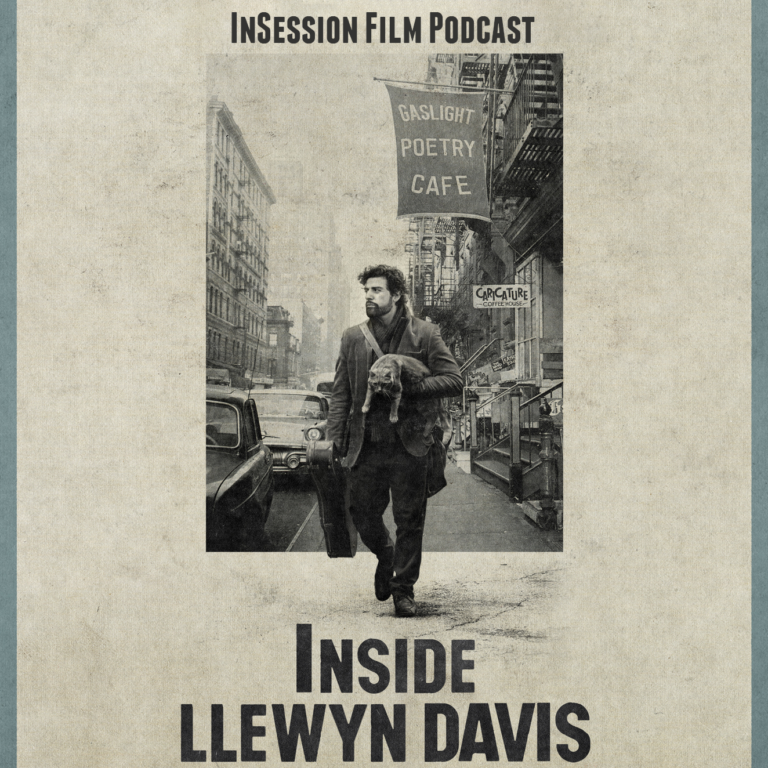
Podcast: Inside Llewyn Davis / 2013 Retrospective – Episode 518

This week’s episode is brought to you by Audible. Sign up today and get a FREE audiobook!

This week on the InSession Film Podcast, it’s our 2013 Retrospective as we review Inside Llewyn Davis and revisit our Top 10 Movies of 2013! Plus, we have a *big* announcement at the beginning of the show.

This week’s show is all kinds of sentimental for us. We launched InSession Film back in 2013 and in a week’s time we’ll be celebrating our 10th anniversary. So revisiting the films from our first year was really fun and nostalgic. It’s a great year and Inside Llewyn Davis is without question among the best film to come out in 2013. It’s also serendipitous because we are ending where we began. This show marks the end of an era. The podcast isn’t going anywhere, but our announcement at the beginning of the show articulates a new phase that will begin next week.

On that note, check out this week’s show and let us know what you think in the comment section. Thanks for listening and for supporting the InSession Film Podcast!

– Review: Inside Llewyn Davis (13:05)
Director: Joel Coen, Ethan Coen
Writers: Joel Coen, Ethan Coen
Stars: Oscar Isaac, Carey Mulligan, Justin Timberlake, John Goodman

– Notes / Discussion (1:21:06)

This week for our break segment, we keep things pretty brief once again, but we reiterate our opening announcement and how that effects next week’s show.

[divider]

RELATED: Listen to Episode 516 of the InSession Film Podcast where we discussed our Top 10 Movies of 2022!

[divider]

– 2013 Retrospective (1:29:51)

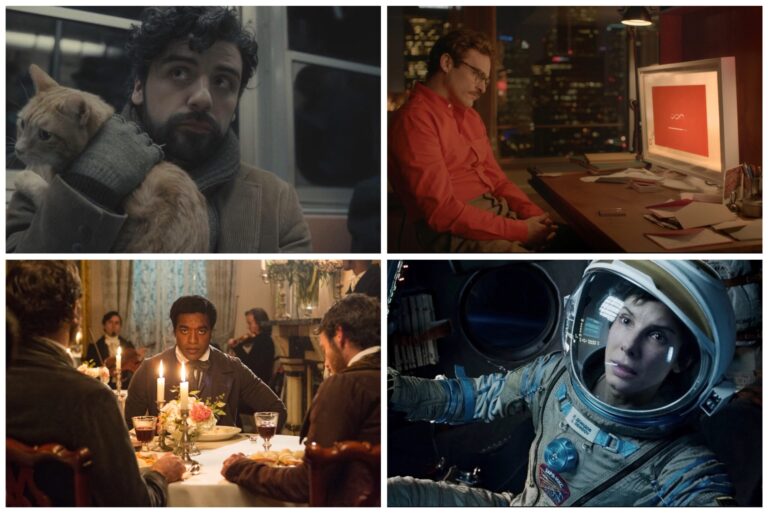
As noted above, it was really fun to look back at the films of 2013, which we covered in real time when they initially came out. It’s already a great year for film, but it holds a special place in our hearts with it being the first. That aside though, there’s so much to love with films like Her, 12 Years a Slave, Gravity, Nebraska, Before Midnight, The Act of Killing, and of course Inside Llewyn Davis, among many others. Spring Breakers is polarizing, but a film we quite loved and champion. Others like Short Term 12, Like Father Like Son, Rush, Stories We Tell and Captain Phillips also stand out that year. It was also a noteworthy year for comedies with The World’s End, About Time, Frances Ha and This is the End leading the way. And hey, we don’t love The Wolf of Wall Street, but we recognize most of you do love that film. Either way, there’s plenty to love about 2013 and we had a great time talking about why it’s a great year for film.

Show Sponsor: First Time Watchers Podcast

– Music

Fare Thee Well – Oscar Isaac, Marcus Mumford
Hang Me, Oh Hang Me – Oscar Isaac
The Return of the Eagle – Atli Örvarsson

Subscribe to our Podcasts RSS
Subscribe to our Podcasts on iTunes
Listen on Spotify
Listen on Stitcher
InSession Film Podcast – Episode 518

[divider]

Next week on the show:

Top 5: Sundance Movies

Discussion: Oscar nominations

[divider]

Help Support The InSession Film Podcast

If you want to help support us, there are several ways you can help us and we’d absolutely appreciate it. Every penny goes directly back into supporting the show and we are truly honored and grateful. Thanks for your support and for listening to the InSession Film Podcast!

VISIT OUR DONATE PAGE HERE

Movie Review: ‘Women Talking’ is Lacking the Right Director


Director: Sarah Polley

Writers: Sarah Polley and Miriam Toews

Stars: Claire Foy, Rooney Mara, Jessie Buckley

Synopsis: Do nothing. Stay and fight. Or leave. In 2010, the women of an isolated religious community grapple with reconciling a brutal reality with their faith.


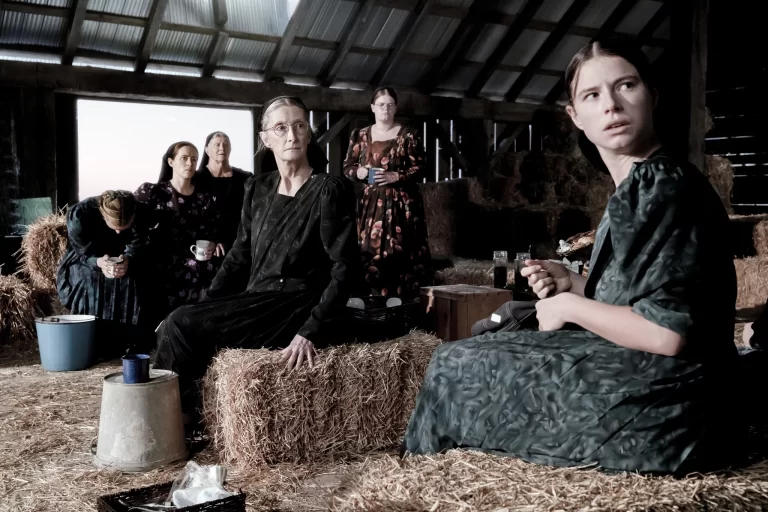
In 2009, women in a Mennonite community in Bolivia realized that they had been victims of sexual assault. These assaults happened while they were asleep and drugged by men in the community. The women were lied to, and told that the evidence of the assaults were punishments by God. Finally, the men were arrested.  This story is the basis of Women Talking, directed by Sarah Polley.

Thankfully, the film spares the audience from having to see the brutal attack take place on these women and children. What the film (based on the novel of the same name by Miriam Toews)  focuses on is the aftermath, the women deciding what to do. Do they stay and forgive, as their religion tells them to, or do they leave. This might seem like a simple question, but the film shows us how complicated both of these options are.

The entire film Women Talking is made up of these women debating, discussing, and planning. The dialogue is well-written, as well as faithful to the book. The questions they are faced with show what a difficult situation these women are now facing. Should they forgive the men? What if not all of the men are guilty? What will happen to the boys left behind? Where will they go? The film unfortunately never gives a specific year for the film’s setting, which could have made more of an impact.  Looking at these women in their pioneer style dresses, it is difficult to remember that these events occurred within the past 20 years. The only indicator that this happened within the past 100 years is a truck that comes though the village in the middle of the film, that plays the song “Daydream Believer.” Yes, not giving a specific time period does add to the timelessness of the tragedy, but I think it’s important for all of us to realize things like this are still going on in these isolated communities all over the world. Givinga time and place would also allow audiences to realize just how far behind these women are with the rest of the world. 

This film completely depends on the performances of the actresses. The standout in the film is Claire Foy, who plays Salome. Salome stands out because she is the most relatable character. We feel her rage against her attackers. She seems like the most modern of the women, because she won’t simply follow the religious beliefs she has grown up with. Mara Rooney plays Ona, the young woman now pregnant with the child of one of the attackers. Ben Whishaw plays August, a man and outsider in the community, who keeps the notes from the discussions the women have. He is clearly in love with Ona, who wants to remain independent. Sadly, because of the screenplay, these women have very little to actually do.  With very few exceptions, these women don’t seem like real, actual human beings.  They seem like sound pieces. Salome comes across as “the angry one” while Ona comes across as “The Saintly One.” Frances McDormand (who plays Scarface Janz) is barely in the film. While the novel focuses on solely the discussions of the women, the film could have provided more content to fully understand the lives of these women, as is the advantage of the cinema form. It’s sad that these wonderful actresses are hamstrung by the limitations of the written word. 

However, the visuals of the film are quite lovely. The interludes of music, written by Hildur Guðnadóttir, in which we see the children in the community playing, and doing their chores, is haunting. The colors of the costumes add a much needed brightness to the film. Polley also doesn’t show the faces of the men in the village, which is an effective way to separate them from the women in the film. The audience does indeed feel the isolation that these women live in, which drives home the difficulty of their choice, should they leave. 

Although the premise of the film does have tremendous potential, in the end, Women Talking does little to deliver on that opportunity. The talented cast is wasted on a very preachy screenplay, which quickly becomes tiresome to listen to at length. The characters aren’t developed in a way that makes them particularly distinguishable or memorable. Sidney Lumet made 12 Angry Men a riveting drama, despite all of the action taking place in a single room. It is possible, with the right filmmaker, that this film could have been more interesting than it was. Instead, it was sadly disappointing.  

Grade: C

Chasing The Gold: I’d Like To Thank The Animators

Thirteen years ago, around this time, the first Avatar film was garnering buzz for its awards run. There were whispers from journalists and a question entered into the public consciousness. Could an actor in a fully motion capture performance break into an acting category at a major awards show?

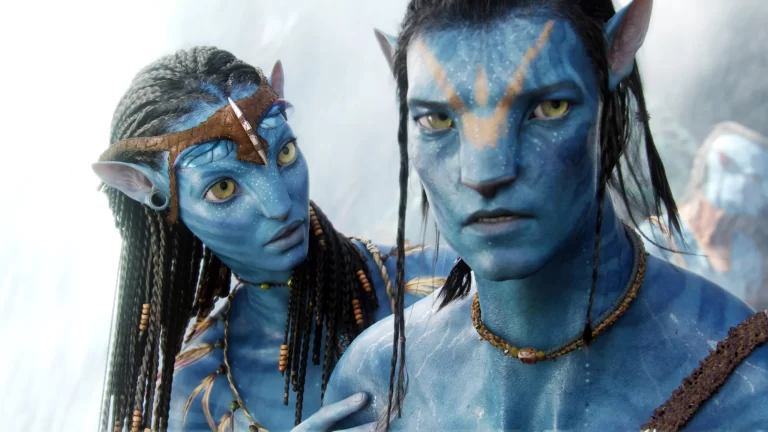
Acting is typically defined as the performer’s physical manifestation of character. It includes facial expression, the physicality of the body, and an emotional reaction to the story and plot. With modern technology, these elements can be captured and rendered. An actor on a set with various rigs, dots, and skin tight suits still performs the role, but how they look is completed later. It was a marvel thirteen years ago to watch the raw footage of Zoe Saldaña’s performance alongside the finished CGI composite. Credible alien life on screen suddenly seemed more plausible and palatable. We connected with Saldaña and the Na’vi because of the care taken to animate the actor. Of course, there wouldn’t have been a believable Neytiri without the simply incredible Gollum. 

The closest an actor has gotten to the big shows with a motion capture performance is Andy Serkis for playing Gollum in The Lord of the Rings trilogy. You can make arguments that the three performances nominated for The Irishman because of digital deaging or Christopher Plummer’s digital insertion into All the Money in the World came closest, but those aren’t truly motion capture, just ways around certain unpleasant images. And by closest, of course, I really mean major publications were doing profiles and reviews that touted the performance as “Oscar worthy.” Yet, it didn’t seem far off the mark because the role is so important, especially to The Two Towers, and utterly indelible in the minds of all who see those films. If Serkis showed up in heavy makeup and costume we would have laughed at him and not with the deviousness of Gollum.

That performance opened up an avenue that the physical act of the performer on set, moving with the other performers is pivotal to the believability of those performances. A few years after Lord of the Rings, Serkis was whispered about again when he made King Kong larger than life. He followed that up with acclaimed performances in the prequel series to the Planet of the Apes. He showed us that these types of characters could have a soul. There’s a direct link between Serkis’ work with motion capture and the Marvel Cinematic Universe’s Thanos, Groot, and Rocket Racoon. Though, Rocket and Groot bring up another point of contention.

On set Rocket’s movements and lines were performed by director James Gunn’s brother Sean, while his wonderful voice was provided by Bradley Cooper, likely in a plush sound studio on the Disney lot. Then the animators took the footage, matched the expressions, added flourishes, made the character move in a way no human possibly could, and covered it in a sheen to match the lighting of the scene. The same happened with on set Groot Terry Notary and “more emphasis on the Groot” voice Vin Diesel. Does the animation team also get credit for the performance?

This has plagued those that have tried to garner support for vocal performance being included on an award shortlist in the past. While that actor is experiencing and emoting like they would on a set with the camera turned to them, they aren’t creating the motion of the character. The voice actor has little to do with how the character is presented to the audience visually. They record their portion before the animation is completed so they can’t know fully how their vocal influence affects that process. Yet, without their contribution and effort the story would fall flat.

The last vocal performance to gain any sort of traction amongst award voters was Scarlett Johansson as Samantha in Her. Unlike any performance mentioned, Samantha was a completely vocal character. There was no animation or movement to represent her on screen. All we knew is Joaquin Phoenix’s Theodore had an earpiece in to represent Samantha. In this performance there is life, passion, and energy. It was something pure and sensual in a way that film doesn’t broach all that often with character. More often than not in film, the disembodied voice is exposition, but this voice had an intangible emotional weight.

Because of the complicated nature of awards bodies, it’s unlikely we will see a major award nomination go to a motion capture or vocal performance. Even with the lone shouts from the back of a crowded theater for Terry Notary’s notable work as Gordy in Nope, it’s likely that it will take something revolutionary for voters to move beyond the tangible. Actors are very protective of their craft and the only thing they want enhancing each other’s performance is the original special effect of the editor compiling the best takes of each scene. 

The only real whispers this year have been for Jenny Slate and Isabella Rossellini’s affecting work in Marcel the Shell with Shoes On. No one has mentioned Zoe Saldaña’s name in the same breath as the technical achievements of Avatar: The Way of Water. Though, with more money and more eyes on the superhero and tentpole spectacles, the awards bodies could shift. There is momentum behind Angela Bassett’s performance in Black Panther: Wakanda Forever after all, and it would put her in a very small club of actors lauded for their performances in superhero features, and the only one not playing a villainous clown.

Maybe all it will ever be is whispers among those that watch more than a few movies a year. It may be that too many filmmakers see how the sausage is made. Every time they think of the motion capture performer they think of the uncanny valley broached in Ruben Östlund’s The Square in which Terry Notary’s performance artist, Oleg, takes his performance much too far. They see the silliness inherent in putting one’s self out there in a new way. It’s different and it is still niche in spite of decades of use, but it is acting in the way we’ve always known it. It’s just a different way of looking at the craft.

The easy solution is right in front of us. There should be a separate category for this type of performance at award shows. It would be so easy to create the category, Best Vocal/Motion Capture Performance. It’s also not without precedence. In 2002, the Critic’s Choice Awards featured the category of Best Digital Acting Performance in which Gollum, Dobby, and Yoda were the nominees. Award shows, and especially the Oscars, are always desperately looking for validation for their television presentations and a new category could bring more eyes. This category would invite more tentpoles and blockbusters to the prestige table and give the actors who sweat their dots off some much needed recognition. This has been the argument to add stunt ensembles to the award shows as well as those performers are much more prevalent in large scale filmmaking. Though, until the day when studios find it more financially viable to digitally manipulate the facial features of the stars of their biopics rather than slather them in pounds of makeup, this new style of acting won’t be recognized for the art form it is. It will take some titanic shifts in the landscape of filmmaking. That, or Marvel could surprise us and Judi Dench is the voice behind M.O.D.O.K. in the upcoming Ant-Man and the Wasp: Quantumania, thus assuring her Best Supporting Actress nomination next year and immediately switching up people’s thinking about acting. Did someone say Maggie Smith for Galactus?

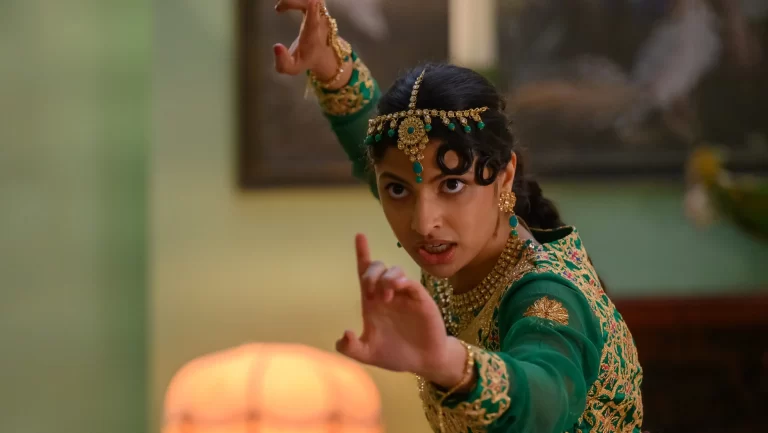
Movie Review (Sundance 2023): ‘Polite Society’ Unleashes Real Comic Fun


Director: Nida Manzoor

Writer: Nida Manzoor

Stars: Ulli Ackermann, Pritom Ahmed, and Sophie Aislin

Synopsis: Ria Khan believes that she must save her older sister Lena from her impending marriage. After enlisting her friends’ help, she attempts to pull off the most ambitious of all wedding heists, in the name of independence and sisterhood.


Cinephiles add films to their watchlists for several different reasons. Maybe it’s from their favorite director, writer, or actor. Perhaps it belongs to a beloved (sub)genre. Sometimes it’s literally just because it’s part of some cinematic universe or another type of franchise. Nowadays, moviegoers are less likely to go to the theater or click play exclusively due to how much the story got their attention. One of the most extraordinary things about covering Sundance is that the vast majority of films are completely unknown. No marketing campaign or overwhelming hype surrounding them whatsoever. I wanted to watch Polite Society because its premise had everything to leave me with an ear-to-ear smile…

And it did. Nida Manzoor delivers a movie that looks straight out of a true comic book. Emphasis on the “true” adjective there. When it comes to film adaptations, adjustments are made to the narrative, characters, costumes, and overall visuals due to how extremely colorful and children-oriented this type of source material usually is. Since studios think a more set-in-our-world kind of tale is more broadly accessible, everything gets a more “realistic” look. Polite Society barely does any of those expected modifications, but don’t let my words mislead you: it is an original story.

It’s relatively easy to see similarities with the series Ms. Marvel. Not only the Pakistani culture is also proudly (re)presented on-screen – costumes, music, traditions, family heritage, and more – but the whole movie is packed with light humor, fun action scenes, and a pretty cool wedding ceremony that, of course, doesn’t quite go as planned. Polite Society embraces the intentional over-the-topness of it all, which might be a major issue for some viewers. Tonal balance is a very tricky filmmaking aspect to get right; but personally, I highly enjoyed Manzoor’s creativity and boldness in going all-in.

From the witty song choices to the hilariously epic use of slow-motion, without forgetting the stylized title cards, Polite Society is arguably the most distinctive film of the festival, whether viewers end up loving it or not. The cast understands the mission, contributing to the incredibly energetic atmosphere with amusing performances. Priya Kansara works perfectly as the relatable protagonist, Ria Khan, a young woman who dreams of becoming a stuntwoman. When her very close sister – beautifully interpreted by Ritu Arya – changes plans and moves on from her own dreams, Ria doesn’t take it well.

Hence, in the middle of so much chaos, Polite Society explores Ria’s mixed feelings – jealousy, fear of failure, will to protect – within the themes of sisterhood, self-belief, and life balance. Part of me wishes that these topics would have been more profoundly developed, but there’s nothing wrong with focusing on an entertaining, action-driven flick. Obviously, keeping in mind the main character’s dream job, the stunts are pretty great. Once again, I wish there was more choreography and long takes involved – a lot of throwing against and through things – but it’s undoubtedly fun to watch.

The generic screenplay doesn’t hold any major surprises, which basically makes the viewer’s enjoyment rely exclusively on the crazy feel and look of Polite Society. If the action doesn’t really impress you or if the purposefully exaggerated tone is too much to handle, then this may not be for you. But if Manzoor’s maximalist style conquers your full attention, then you’ll hardly leave unsatisfied. Final remark to Nimra Bucha’s phenomenal performance – yet another Ms. Marvel similarity.

Grade: B


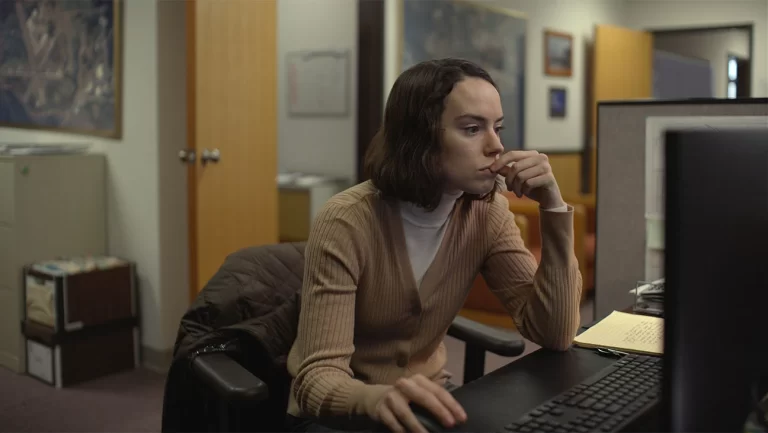
Movie Review (Sundance 2023): ‘Sometimes I Think About Dying’ Explores the Bland Office Existence


Director: Rachel Lambert

Writers: Stefanie Abel Horowitz, Kevin Armento, and Katy Wright-Mead

Stars: Daisy Ridley, Dave Merheje, and Ayanna Berkshire

Synopsis: Fran, who likes to think about dying, makes the new guy at work laugh, which leads to dating and more, now the only thing standing in their way is Fran herself.


To this day, “slow-burn” remains a characteristic that either gets people excited or immediately worried. The reasons are pretty simple. On one hand, a slow film can be one of the most immersive cinematic experiences a viewer might have, if done right. From atmospheric technical attributes to characters worth the emotional investment, if the viewers connect with the subject matter, they’ll easily lose themselves on the big screen. On the other hand, it can also become one of the most challenging movies to get through if it’s meaninglessly boring. Sometimes I Think About Dying is somewhat in the middle of these two poles.

Something about this film got my attention. Daisy Ridley definitely stands out from the cast, but personally, I found the seemingly generic premise to hold great potential. Sometimes I Think About Dying sets its action in a small town, following Fran (Ridley) living her utterly boring, uneventful daily life. Fran wakes up early, walks to her dull desk job in a dull office space, takes care of dull spreadsheets, returns home, has a dull microwaved dinner, and sleeps early. Get the gist? Essentially, she lives a dull (!) life where nothing really impactful occurs any day.

That is, from her perspective. Fran isolates herself from any sort of social interaction. Depression, anxiety, insecurity, or simply lack of interest are real-life issues that many viewers will easily relate to, even if they can only associate a small part of their lives with it. Personally, as someone who, in fact, works at a desk every single day, whether at the office or at home, the repetitive nature of the job inevitably creates some phases of pure tedium. Honestly, if not for the wonderful group of co-workers and friends surrounding me, I’d be much more like Fran, which is what Sometimes I Think About Dying does excellently.

It’s a sad, depressing, even tiresome experience, but that’s just part of life. Not everyone is constantly happy. Not every day is a great day. The movie succeeds because it’s so relatable and lifelike. Without realizing it, the audience develops a strong connection with the protagonist, elevating one of the most beautiful, inspirational final shots I’ve seen recently. Obviously, the cast does a good job of forming that bond with the viewers, especially Ridley, who genuinely gives a career-best performance. Her microexpressions go a long way in showing how her character evolves throughout the runtime.

Sometimes I Think About Dying is wrapped by bland aspects: an almost squared aspect ratio, typical camera angles, a colorless palette, a sleep-inducing score (Dabney Morris), and short, sparse dialogue – most of the talking in this film is mere background noise. Fran’s random, weird dreams are the most stimulating parts precisely because they break that overall monotony. Still, as purposefully bland as it might be, director Rachel Lambert is able to grab the viewer’s attention. As a fan of The Office, the witty humor really worked for me, but I can’t deny the fact that I’m never watching this movie again.

This is one of the most frustrating things about being a cinephile. I totally understand the filmmaker’s intention, themes, and messages. I even personally relate to some of it. However, in the end, the repetitive structure and “nothing happens” narrative undeniably lower the replay value. In addition to that, there are many topics that I couldn’t find a reason to invest in due to a lack of connection with the other characters. Still, after a good night’s sleep, I actually feel more positive than yesterday, so maybe it’s a film that will grow on me over time.

As one character puts it, “it’s hard being a person”. And with that, I can fully relate to.

Grade – B-


Movie Review (Sundance 2023): ‘The Pod Generation’ Doesn’t Get Beyond It’s Generic Teaching

[info]

Director: Sophie Barthes
Writer: Sophie Barthes
Stars: Emilia Clarke, Chiwetel Ejiofor, Rosalie Craig, Vinette Robinson

Synopsis: A couple in futuristic New York use technology such as detachable artificial wombs and pods to start their family.


Personally, sci-fi premises grab my attention more than others. Cinema is supposed to transport people into another world, even if it’s one heavily based on our own. In The Pod Generation, the viewers are taken to the XXII century, where literally everything has become technological, artificial, or simply unnatural. From something as mundane as making breakfast and working in a desk job to going outside to breathe in the fresh air, everything must have some sort of advanced technology involved. Obviously, that also includes having a baby. Right?

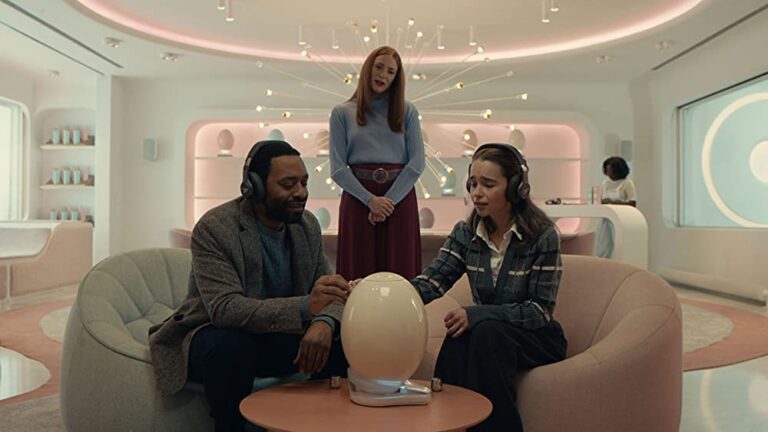
Rachel (Emilia Clarke) and Alvy (Chiwetel Ejiofor) are a couple at that stage of life where becoming a family starts to be a priority. However, while Alvy is a firm believer in following nature’s course and supports a natural procedure, Rachel is more driven towards an artificial conception through a highly capable, detachable womb/pod that looks like a very fancy, futuristic egg. Writer-director Sophie Barthes explores human evolution, our increasingly worrying dependence on technology, and what kind of impact that might have on our culture.

In a somewhat unsurprising narrative, the thematic study is both the best and worst of The Pod Generation. Barthes is able to create enough scenarios to share meaningful messages about the topics above, especially how the emotional connection between humans can never be replaced by state-of-the-art science. In addition to that, the growing reliance on technology to do anything for us is already negatively affecting our (lazy) lifestyles, as well as people’s lack of care for Mother Nature. Finally, educating children is filled with dangerous shortcuts to avoid the frustrating yet necessary parts of the process of raising a kid.

Unfortunately, The Pod Generation doesn’t get much beyond the generic teachings with these messages. Besides some tonal problems with switching between the satirical, comedic parallelisms and the more dramatic, intimate relationship issues, the admittedly intriguing premise doesn’t reach its full potential due to the superficial, repetitive takes on the main themes. By constantly trying to prove yet another point that viewers had already understood, Barthes forgets precisely about the so-crucial genuine bond between the viewers and the protagonists, even making the whole film feel overlong.

That said, The Pod Generation contains remarkable world-building and fantastic production design (Clement Price-Thomas) that got me invested in such a believable, futuristic environment. I found myself looking around the screen often, fully immersed in the movie’s gorgeous aesthetics. Evgueni Galperine and Sasha Galperine’s score also stands out, particularly in moments where the characters enter a meditative state of mind, usually surrounded by nature, whether real or manufactured. Clarke and Ejiofor also contribute with excellent performances.

Somewhere out there in a parallel reality, there’s a slightly more cohesive script filled with inspirational dialogue scenes that fully takes advantage of these outstanding technical attributes. It’s just not quite this one.

Grade: C+

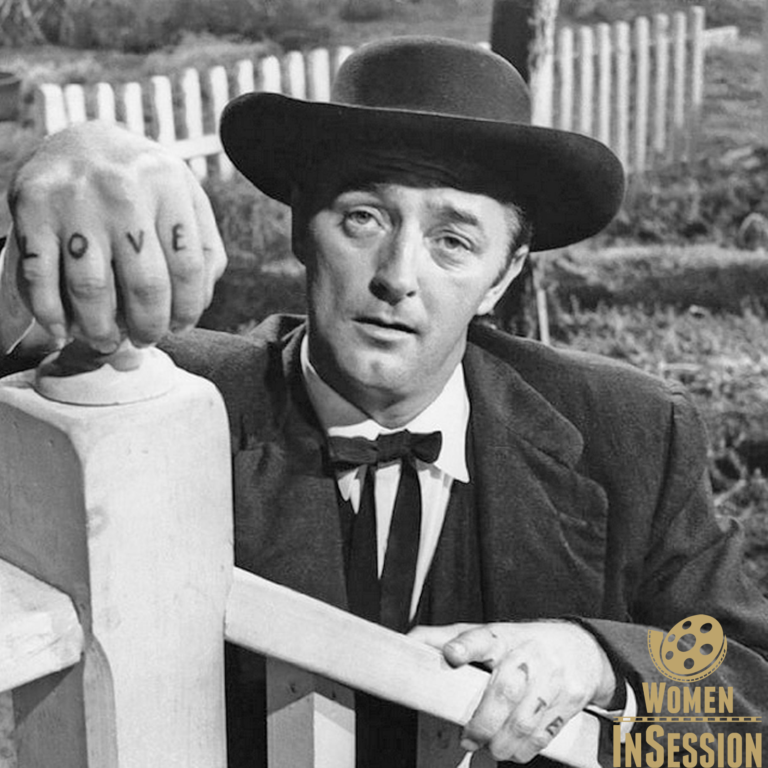
Women InSession: Robert Mitchum Retrospective – Episode 22

This week on Women InSession, we dive into the life and career of the great Robert Mitchum!

Panel: Kristin Battestella, Zita Short

On that note, check out this week’s show and let us know what you think in the comment section. Thanks for listening and for supporting the InSession Film Podcast!

– Music

The Return of the Eagle – Atli Örvarsson

Subscribe to our Podcasts RSS
Subscribe to our Podcasts on iTunes
Listen on Spotify
Listen on Stitcher
Women InSession – Robert Mitchum

[divider]

To hear this Extra Film episode and everything else we do, download our apps on the Amazon Market for Android and the Podcast Source app on IOS devices. The mobile app covers all of our main shows, bonus podcasts and everything else relating to the InSession Film Podcast. Thanks for your wonderful support and for listening to our show. It means the world to us.

Movie Review: ‘Alice, Darling’ Examines Abuse Without Exploitation


Director: Mary Nighy

Writer: Alanna Francis

Stars: Anna Kendrick, Charlie Carrick, Kaniehtiio Horn, Wunmi Mosaku

Synopsis: A young woman trapped in an abusive relationship becomes the unwitting participant in an intervention staged by her two closest friends.


Hollywood often tries to deal with very sensitive topics in an exploitative manner, even if sometimes the filmmaker’s intention couldn’t be further from that. From highly divisive recent films like Blonde and The Son, without forgetting how even Joker was received by some viewers, every theme connected to real traumas, tragedies, or health conditions should be addressed respectfully and with a clear, insightful, meaningful message behind it. Directed by Mary Nighy in her feature directorial debut and written by Alanna Francis, Alice, Darling is the latest movie to tackle abusive love relationships.

I tend to slowly ease the reader into my thoughts about each film, but this time, I feel the urge to share why Francis’ screenplay is so brilliant right off the bat, despite not being able to avoid the typical subgenre formulas. It won’t surprise anyone who’s used to this type of storytelling, but Alice, Darling distinguishes itself due to its beautiful treatment of every character usually involved in situations like Alice’s (Anna Kendrick), i.e., someone caught in a claustrophobic, suffocating relationship with a toxic partner who removes all will, freedom of choice, and joy from their counterpart.

Let me start with the boyfriend, Simon, portrayed by Charlie Carrick. Many movies choose to focus their story on the physical violence within the love affair, hence the comments regarding how serious real-life issues are frequently over dramatized, exploiting the victims’ pain for the sake of entertainment. Alice, Darling doesn’t do that. Not only does it rarely depict what causes Alice so much distress – short, quick-edited flashbacks are the only information source for practically the entire film – but it highlights how equally damaging and traumatic the emotional, psychological violence is compared to an actual beating.

There are several memorable, vitally important lines of dialogue spread throughout Alice, Darling. One of them is the protagonist’s “but he doesn’t hurt me”. Alice doesn’t truly believe this, nor does she think violence can only be achieved by physical means. However, her whole being is already so affected by unbelievable levels of manipulation and control that it’s complicated to think rationally. The “why doesn’t he/she just leave the relationship then?” is one of the most incomprehensible, hypocritical reactions one can encounter about this topic since it’s relatively simple to understand that this isn’t something straightforward.

Space and time away from the toxic source might be a “solution”, but solid support is always necessary, especially from friends and family. Here comes a lovely demonstration of female friendship featuring two fantastic performances from the supporting cast. Kaniehtiio Horn and Wunmi Mosaku join forces in interpreting two different kinds of a true friend. While the former always speaks up, shares her honest opinion, and doesn’t ignore the elephant in the room; the latter plays a moderator-like role, trying to understand and respect every perspective but also stomping her feet when things get way beyond a reasonable point.

Both characters are crucial for Alice’s predictable yet compelling arc of rediscovering herself. Alice, Darling is quite detailed in exploring the distinct ways the protagonist is psychologically disturbed. Pulling her own hair, constantly checking her phone, putting makeup on as soon as she gets up, taking sexual pictures of herself to send to Simon, isolating herself from any joint activity with her friends, losing her mind for dropping an earring in the lake… everything Alice says or does is somehow manipulated by how Simon treats her.

Mike McLaughlin’s cinematography is filled with close-ups of Alice’s reaction to every tiny little detail that might not be to Simon’s liking, even if he’s miles away, creating a nerve-wracking, tense atmosphere. Owen Pallett’s score also increases the anxiety levels. Still, this is Anna Kendrick’s show. Everyone is used to seeing the actress in lighter, more comedic roles, but she displays tremendous dramatic potential. Undoubtedly, a career-best performance that highly elevates Alice, Darling. One can only wish she continues down this path.

Personally, my only major issue is connected to a subplot of a missing girl. In addition to occupying way too much screentime, this storyline doesn’t add anything to the main plot, holding a thematic connection to Alice’s arc that only slightly reinforces a clear message viewers had already picked up on. Fortunately, Alice, Darling ends with a not-that-subtle, yet sweet, gorgeous final shot, closing out the protagonist’s arc with a cathartic, noteworthy moment that I will leave unspoiled for the audience to see for themselves.

Alice, Darling brilliantly tackles the sensitive topic of abusive relationships. Alanna Francis’ script stands out with a profound, respectful look into an emotionally disturbed with a career-best performance from Anna Kendrick, but also into the genuine best of female friendship. A non-exploitative look into how psychological violence can be as traumatic as any other kind of physical abuse, as well as how insanely difficult it is to leave such a toxic relationship. Mary Nighy cannot escape the subgenre’s formulaic boundaries, but she should be proud of such an enlightening, impactful feature directorial debut.

Grade B+


2022 InSession Film Awards Winners – Staff Picks

We have an important update to our InSession Film Awards. We now have our winners as voted on by our staff and writers!

Note: Winners are in bold

Best Picture

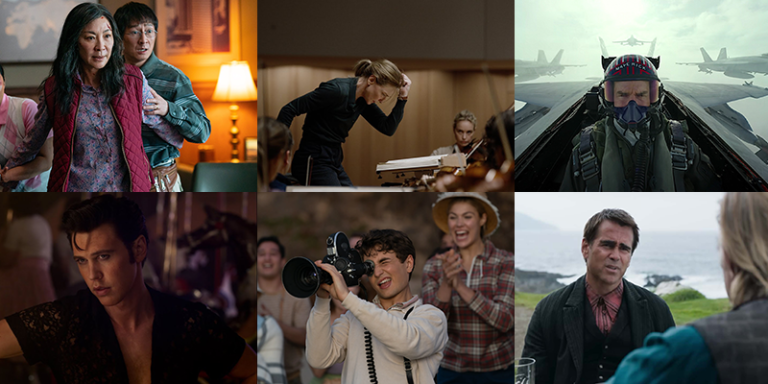
The Banshees of Inisherin
The Fabelmans
Avatar: The Way of Water
Decision To Leave
Everything Everywhere All At Once
Aftersun
RRR
Tár
Pinocchio
All Quiet on the Western Front
Top Gun: Maverick
Nope
Glass Onion: A Knives Out Mystery
After Yang
Bones and All
Women Talking

Best Actor

Colin Farrell – The Banshees of Inisherin
Paul Mescal – Aftersun
Austin Butler – Elvis
Brendan Fraser – The Whale
Bill Nighy – Living

Best Actress

Cate Blanchett – Tár
Michelle Yeoh – Everything Everywhere All At Once
Danielle Deadwyler – Till
Mia Goth – Pearl
Viola Davis – The Woman King

Best Actor Supporting Role

Brendan Gleeson – The Banshees of Inisherin
Mark Rylance – Bones and All
Ke Huy Quan – Everything Everywhere All At Once
Paul Dano – The Fabelmans
Barry Keoghan – The Banshees of Inisherin

Best Actress Supporting Role

Kerry Condon – The Banshees of Inisherin
Stephanie Hsu – Everything Everywhere All At Once
Dolly DeLeon – Triangle of Sadness
Janelle Monae – Glass Onion: A Knives Out Mystery
Angela Bassett – Black Panther: Wakanda Forever

Best Director

James Cameron – Avatar: The Way of Water
SS Rajamouli – RRR
Jordan Peele – Nope
Todd Field – Tár
The Daniels – Everything Everywhere All At Once

Best Original Screenplay

Everything Everywhere All At Once
The Banshees of Inisherin
The Fabelmans
The Menu
Tár

Best Adapted Screenplay

Glass Onion: A Knives Out Mystery
After Yang
She Said
All Quiet on the Western Front
Women Talking

Best Cinematography

Avatar: The Way of Water
The Batman
Nope
RRR
Tár

Best Documentary

Moonage Daydream
Navalny
Fire of Love
All The Beauty and All The Bloodshed
Is That Black Enough For You

Best Foreign Language Film

Decision To Leave
All Quiet on the Western Front
RRR
Happening
EO

Best Animated Movie

Marcel The Shell With Shoes On
Guillermo del Toro’s Pinocchio
Puss in Boots: The Last Wish
Turning Red
Strange World

Best Original Score

Nope
The Batman
Black Panther: Wakanda Forever
Everything Everywhere All At Once
RRR

Best Use of Song (Original or Pre-Existing)

Aftersun – “Under Pressure”
RRR – “Naatu, Naatu”
Guillermo del Toro’s Pinocchio – “Ciao, Papa”
Top Gun: Maverick – “Hold My Hand”
The Batman – “Something in the Way”

Best Opening/Closing Credits Sequence or Scene

RRR
Top Gun: Maverick
Aftersun
Pearl
Tár

Best Overlooked Movie

Kimi
After Yang
The Menu
Pearl
Ambulance

Best Surprise Movie

Kimi
RRR
Prey
Pearl
Barbarian

Best Surprise Actor/Actress

Gabriel LaBelle
Stephanie Hsu
Amber Midthunder
Frankie Corio
Janelle Monae

Best Movie Discovery

Austin Butler
Barbarian
Vengeance

Danielle Deadwyler
Fresh

[divider]

Be sure to hear the 2022 InSession Film Awards on Episode 516!

2023 Oscar Nominations Predictions

The 95th Academy Awards will take place in early March, but first we have nomination morning next week (Tuesday, January 24th) where we’ll finally learn who makes the cut and who gets snubbed. The Oscars discourse so far has been, as always, a fascinating rabbit hole with some categories inserting some intriguing drama. For example, in Best Actor there appears to be four locks, but who gets that fifth slot? What’s up with Supporting Actress this year and does Stephanie Hsu pull of the upset and replace Jamie Lee Curtis (the answer is yes)? The Fabelmans were not embraced by the BAFTA’s, but surely that doesn’t mean the same thing for Hollywood right? I mean, it’s Steven Spielberg for crying out loud. And then there’s Best Picture, a category with mysteries of its own. There will be plenty to discuss in the coming weeks, but come Tuesday I just want to see a Paul Mescal nomination. At any rate, here are my final predictions for the 2023 Oscar nominations.

JD’s 2023 Oscars Nominations Predictions

Best Picture:
Everything Everywhere All at Once
The Fabelmans
The Banshees of Inisherin
Top Gun: Maverick
Elvis
Babylon
TAR
Avatar: The Way of Water
All Quiet on the Western Front
The Whale

Best Actor:
Colin Farrell – The Banshees of Inisherin
Austin Butler – Elvis
Brendan Fraser – The Whale
Bill Nighy – Living
Paul Mescal – Aftersun

Best Actress:
Cate Blanchett – TÁR
Michelle Yeoh – Everything Everywhere All at Once
Danielle Deadwyler – Till
Ana de Armas – Blonde
Viola Davis – The Woman King


Best Supporting Actor:

Ke Huy Quan – Everything Everywhere All At Once
Paul Dano – The Fabelmans
Brendan Gleeson – The Banshees of Inisherin
Barry Keoghan – The Banshees of Inisherin
Eddie Redmayne – The Good Nurse

Best Supporting Actress:
Angela Bassett – Black Panther: Wakanda Forever
Kerry Condon – The Banshees of Inisherin
Stephanie Hsu – Everything Everywhere All At Once
Hong Chau – The Whale
Dolly De Leon – Triangle of Sadness

Best Director:
Steven Spielberg – The Fabelmans
Daniel Kwan / Daniel Scheinert – Everything Everywhere All at Once
Martin McDonagh – The Banshees of Inisherin
Todd Field – TÁR
Edward Berger – All Quiet on the Western Front

Best Adapted Screenplay:
Women Talking
The Whale
Glass Onion: A Knives Out Mystery
She Said
Living

Best Original Screenplay:
The Fabelmans
The Banshees of Inisherin
Everything Everywhere All At Once
TÁR
Aftersun

Best Animated Feature:
Guillermo del Toro’s Pinocchio
Marcel the Shell with Shoes On
Puss in Boots: The Last Wish
Turning Red
Wendell & Wild

Best Documentary Feature:
Fire of Love
All That Breathes
Navalny
All the Beauty and the Bloodshed
The Territory

Best International Film:
All Quiet on the Western Front
Decision to Leave
Close
Argentina, 1985
EO

Best Cinematography:
Top Gun: Maverick
Empire of Light
The Fabelmans
All Quiet on the Western Front
Elvis

Best Costume Design:
Elvis
Babylon
Everything Everywhere All at Once
The Woman King
Black Panther: Wakanda Forever

Best Film Editing:
Everything Everywhere All At Once
Top Gun: Maverick
Elvis
The Banshees of Inisherin
The Fabelmans

Best Makeup and Hairstyling:
The Whale
Babylon
Black Panther: Wakanda Forever
The Batman
Elvis

Best Original Score:
Babylon
Guillermo del Toro’s Pinocchio
The Banshees of Inisherin
The Fabelmans
Women Talking

Best Original Song:
“Naatu Naatu” from RRR
“Ciao Papa” from Guillermo del Toro’s Pinocchio
“Hold My Hand” from Top Gun: Maverick
“Lift Me Up” from Black Panther: Wakanda Forever­
“new body rhumba” from White Noise

Best Production Design:
Elvis
Babylon
The Fabelmans
Everything Everywhere All At Once
Avatar: The Way of Water

Best Sound:
Top Gun: Maverick
Everything Everywhere All At Once
All Quiet on the Western Front
Avatar: The Way of Water
Elvis

Best Visual Effects:
Avatar: The Way of Water
Top Gun: Maverick
The Batman
Black Panther: Wakanda Forever
All Quiet on the Western Front

Well do you agree or disagree? Let me know in the comment section below or you can tweet me @InSessionFilm. Enjoy watching nomination morning!

Poll: What is the best film of 2013?

The year 2013 is a nostalgic one for InSession Film. Not only was it a great year in film (arguably the best of the 2010’s), it was also the year of our inception. Ten years ago we began this weird cinematic journey, so it only makes sense for us to look back at the year that shaped us as film critics. Hard to believe these films are turning a decade old this year!

What do you think is the best film of 2013?