Home Blog Page 135

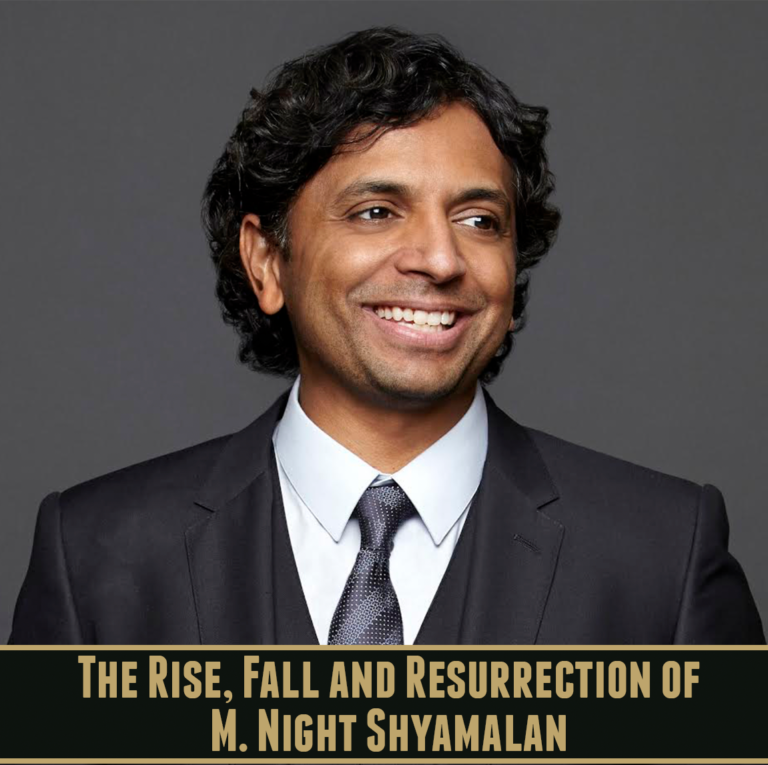
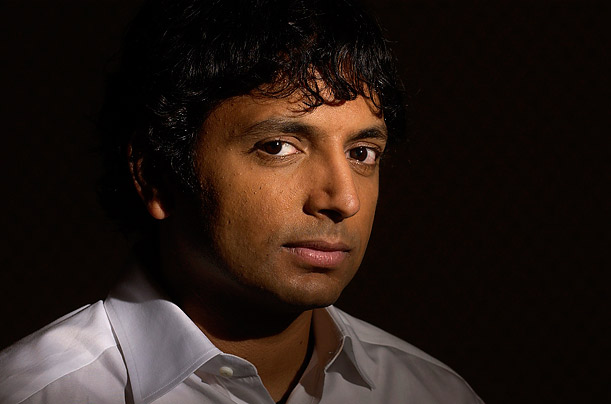
Podcast: The Rise, Fall and Resurrection of M. Night Shyamalan – Episode 520

This week’s episode is brought to you by Koffee Kult. Get 15% OFF with the code: ISF

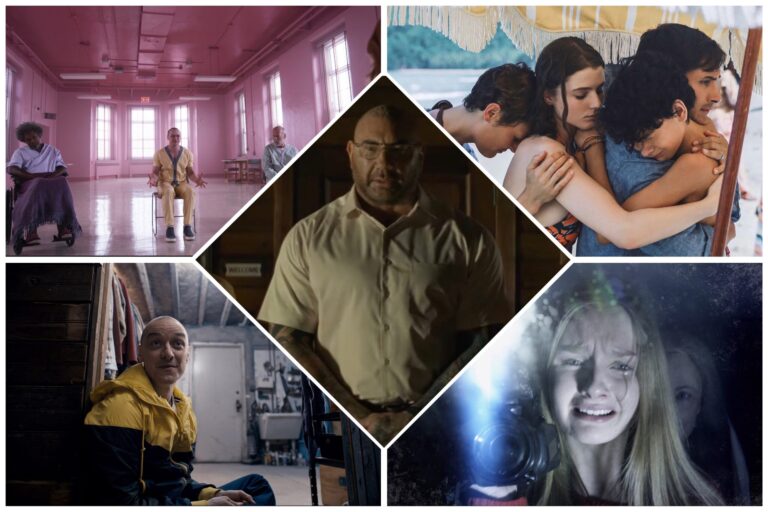
This week on the InSession Film Podcast, we discuss the rise, fall and resurrection of the great M. Night Shyamalan. He’s had a fascinating career and we had a great time delving into its distinct phases. Say what you will about his filmography on the whole, but The Sixth Sense, Unbreakable and Signs is one hell of a run. The Village is quite great as well. But what can you say about The Lady in the Water, The Happening, The Last Airbender and After Earth? It was a bad run and yet that didn’t stop him. The last eight years has been very compelling. Perhaps a bit uneven, but he’s shown some great ambition that we’ve loved.

Also, don’t miss the end of the show where we feature a little Q&A segment where we answer some listener questions.

On that note, check out this week’s show and let us know what you think in the comment section. Thanks for listening and for supporting the InSession Film Podcast!

– Discussing M. Night Shyamalan (5:18)

The Rise: The Sixth Sense, Unbreakable, Signs, The Village
The Fall: The Lady in the Water, The Happening, The Last Airbender, After Earth
The Resurrection: The Visit, Split, Glass, Old, Knock at the Cabin

[divider]

RELATED: Listen to Episode 516 of the InSession Film Podcast where we discussed our Top 10 Movies of 2022!

[divider]

– Listener Q&A (1:28:30)

We answer a few questions about the podcast and what we think about DC’s announcement last week.

Show Sponsor: First Time Watchers Podcast

– Music

Flow Like Water – James Newton Howard
Flight – Hans Zimmer
The Return of the Eagle – Atli Örvarsson

Subscribe to our Podcasts RSS
Subscribe to our Podcasts on iTunes
Listen on Spotify
Listen on Stitcher
InSession Film Podcast – Episode 520

[divider]

Next week on the show:

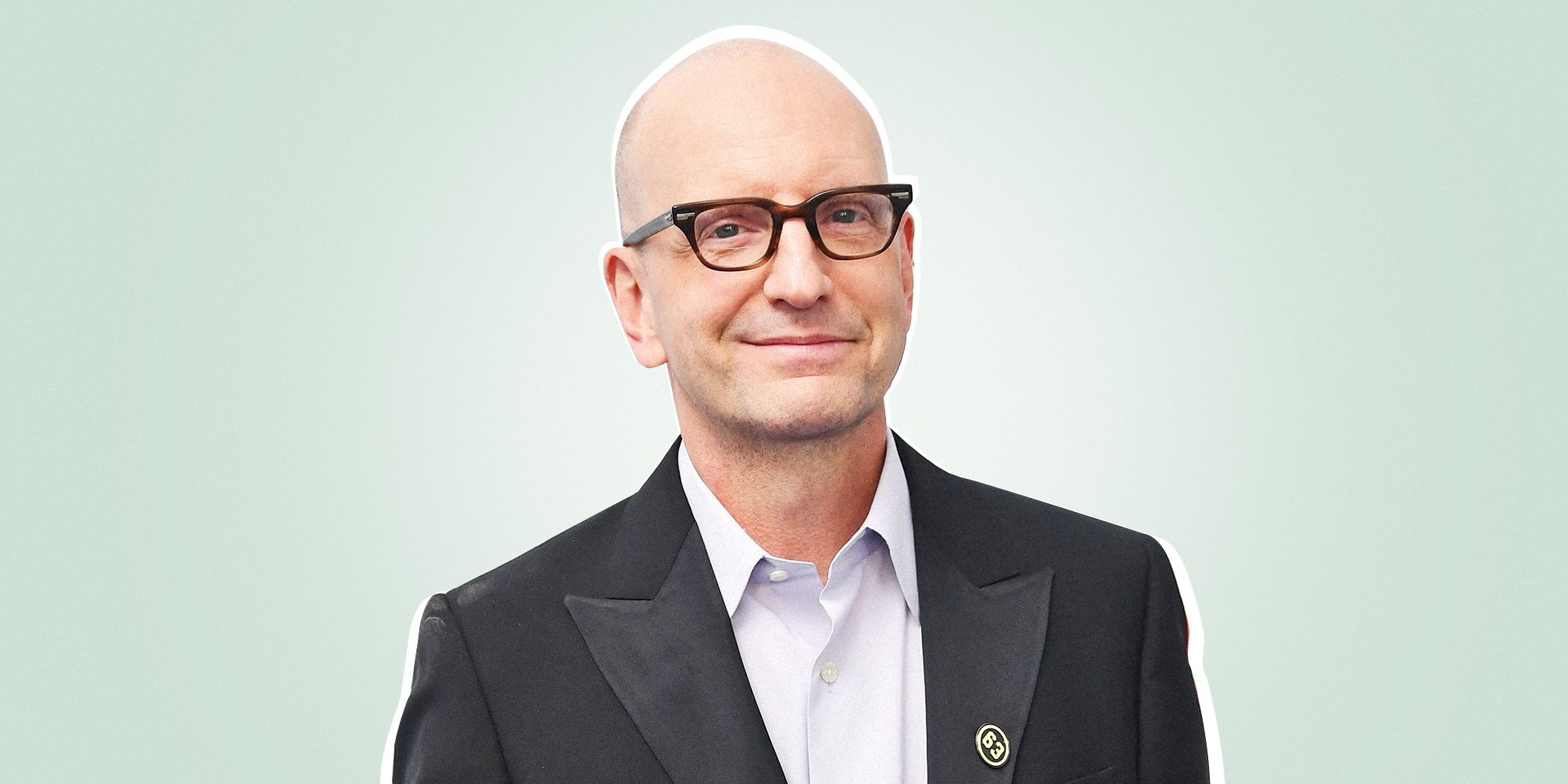
Discussing Steven Soderbergh

[divider]

Help Support The InSession Film Podcast

If you want to help support us, there are several ways you can help us and we’d absolutely appreciate it. Every penny goes directly back into supporting the show and we are truly honored and grateful. Thanks for your support and for listening to the InSession Film Podcast!

VISIT OUR DONATE PAGE HERE

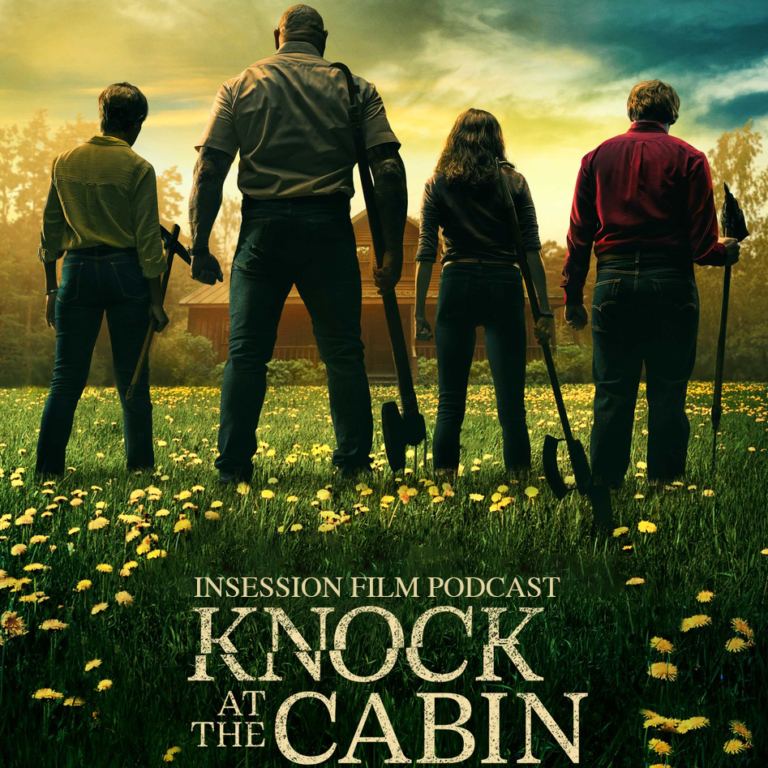
Podcast Review: ‘Knock at the Cabin’

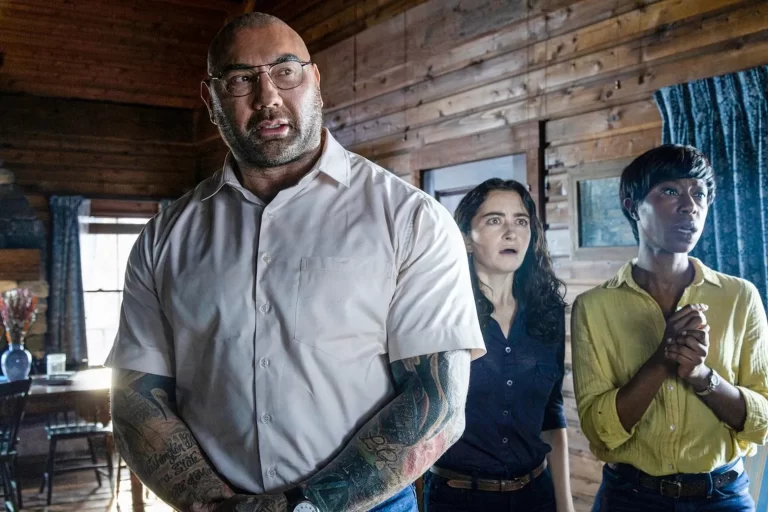
On this episode, JD and Brendan review M. Night Shyamalan’s new film Knock at the Cabin! We discuss everything from the “twist” to the filmmaking to the great performances, and so much more.

Review: Knock at the Cabin (3:17)
Director: M. Night Shyamalan
Writers: M. Night Shyamalan, Steve Desmond, Michael Sherman
Stars: Dave Bautista, Jonathan Groff, Ben Aldridge, Rupert Grint

Subscribe to our Podcasts RSS
Subscribe to our Podcasts on iTunes
Listen on Spotify
Listen on Stitcher
InSession Film Podcast – Knock at the Cabin

Movie Review: ‘The Banishing’ Uses Shame as Commentary


Director: Christopher Smith

Writers: David Beton, Ray Bogdanovich, and Dean Lines

Stars: Jessica Brown Findlay, John Heffernan, Anya McKenna-Bruce

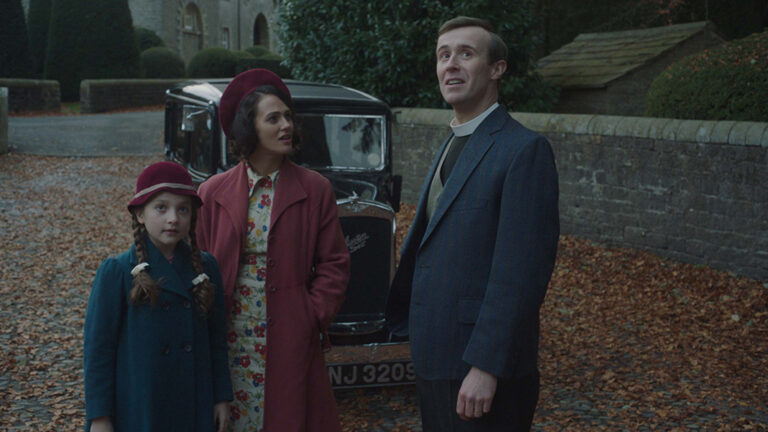
Synopsis: The Banishing tells the story of the most haunted house in England. In the 1930s, a young reverend, his wife and daughter move into a manor with a horrifying secret.


Vicar’s wife Marianne (Jessica Brown Findlay) joins her husband Linus (John Heffernan) at his new ominous Morley Hall post where Linus butts heads with local occultist Harry Reed (Sean Harris) and his secretive, threatening superior Bishop Malachi (John Lynch) in director Christopher Smith’s (Black Death) 2021 interwar parable The Banishing. Marianne’s daughter Adelaide (Anya McKenna-Bruce) finds hooded dolls in the playroom and both begin seeing doppelgangers and hearing bumps in the night – further dividing Linus and Marianne’s frosty relationship. As the history of previous religious orders comes to light; past evils, present sins, and continental whispers of war merge into fresh fear and violence for the young family.

Damaged olden bibles warn of controlling one’s sexual immorality before blood, hangings, and “emigrated to Australia” cover ups provide this pastoral vacancy. Unconsummated repression, Grace at the table, and scripture on wrongful lust and passion establish the tension in The Banishing before peepholes, heavy breathing, lingering paganism, red hair fears, and defaced texts. Heavy crosses high on the wall look down upon the bed – only the church can see one through tough times, and this pent-up generation between wars makes for a great backdrop to the horror, tombs, and rumors of Nazi occult. The previously burned down monastery history and the suspect manor built on top the ruins are forewarned up front rather than chopping up and delaying the story for the audience. Call and response or hide and seek games give the chance to explore the rusty, industrial basement, and dark corridors visualize the horrors in the mind sneaking up on you when we try to forget them.

These characters are shamed into facing who they are, and the struggle to look oneself in the mirror is worse when their reflections don’t match. Is it the distortion of who we are versus who we present or images from the past pressuring us to escape ourselves? Objects move by themselves and chilling hooded figures approach in the garden as the delayed seeing of oneself committing bloody acts of violence leaves the viewers questioning which side of the mirror we’re watching. Townsfolk whisper about men who convince others to do bad things because torture brings one closer to god, but church sanctioned thugs silence those who speak of past drownings and behind closed doors suspicions. Distorted consequences and disturbing vignettes in the final act escalate as counter rituals and biblical readings combat secrets, medieval mutilation, and calls for the dirty to confess their heretics. Candles snuff out as premonitions and delirium mount in the race to save innocents with proper rectification. Unfortunately, power will corrupt even the most peaceful if good men do nothing – leading to frightful desecrations and real world evil. 

The previous wife at Morley Hall is said to have done things unbecoming a vicar’s wife, but Jessica Brown Finlay’s Marianne tries to tell her husband it is okay to share a bed. She is admired for her fiery spirit yet chastised for having previously given up her out of wedlock daughter and lying that the child was her sister’s. Young Anya McKenna-Bruce as daughter Adelaide does what she has to do with spooky toys, creepy play tea parties, and eerily telling Marianne she is not her mother.  There is no precocious excess necessary as the denials fester and evil awaits to shame Marianne. Legs open birthing imagery and visions of Marianne pregnant and institutionalized for her condition exacerbate the stigma as she is called a slut for cherishing her child’s conception. 

Women are upheld as dutiful yet condemned as sinful, and such secrets leave Adelaide open to evil exposure. Marianne sought solace in the church, but the institution giveths or takeths away as needed. His congregation is small, attendance is poor, and John Heffernan’s (Dickensian) new vicar is surprised his wife has come to join him. Linus is angry at their mute housekeeper for wearing a superstitious pendant when not praying, kneeling, lighting candles, and wondering why evil exists. He won’t help unzip Marianne’s dress, yet yells at her for wanting to donate the house’s unused metal for a war drive that’s not their business because it is the property of the church. She doesn’t think he should correct her if he is not going to touch her like a wife, but he is content to look the other way, assured that England is completely safe and hushing her for saying the church alone will not get them through their troubles. 

Linus’ sermons proclaim that violence only begets violence and that war is a sin, and locals call him out for saying that The Great War deceased were sinners. The Banishing shrewdly addresses history and closed mindedness with horror as the current men of Morley Hall drive the past darkness and fear. Their shortcomings and exploitations spread division rather than unity, and the villagers also confront Bishop Malachi (John Lynch), a cruel leader who knows everyone’s secrets. He snaps the increasingly repressed, drunken Linus in place, warning him against Harry Reid (Sean Harris) as so called charlatan occultist. Linus demands everything be clean and refuses to hear the local history from Reed, but Harry asks what his vice is, for Morley Hall will use it against his family. 

Unlike cutting corners often seen in low budget horror, The Banishing is filmed as a drama with open church spaces, long hallways, and stairs making room for in camera bizarre, foreground and background multiples, doubles on the ceiling, and figures coming and going through the looking glass. Well lit natural lighting highlights the gardens, wallpaper, woodworks, and antiques; but most of the costly manor is shuttered with faulty electricity, humble furnishings, a playroom with vintage toys, and dolls without eyes. There’s no gross out horror or torture porn, but flashlights and cold blue schemes herald the eerie nursery ward with dolls in the cribs. Orange firelight and red lights provide horror coloring, yet the ecclesiastic motifs, religious iconography, and ritual in The Banishing are meager.

The church as an institution looms large but its customs are not steeped in daily life. Period undergarments, however, add a then scandalous lingerie allure to contrast the innocent gramophone, retro phone ring ring, vintage cars, and demure hats. Taking inspiration from the real life Borely Rectory, The Banishing could simply be described as a straightforward haunting with our protagonists trying to bring peace to the past tortured. Thankfully, the sophisticated storytelling doesn’t underestimate the audience with the jump scares, cool effects, and frights a minute but instead provides viewer food for thought as the past and present images merge. The interwar period setting anchors the slow burn unease as chilling introspection, social commentary, and “thoughts and prayers” metaphors in The Banishing ask who we show others versus who we really are. Just like our contemporary social stigmas and cancel culture, this house feeds on your shame, and our past is always waiting in the mirror, forcing us to look over our shoulder, and haunting our lives.    

Grade – B+


Movie Review: ‘Knock at the Cabin’ is M. Night Shyamalan’s Best in Decades


Director: M. Night Shyamalan

Writers: M. Night Shyamalan, Steve Desmond, and Michael Sherman

Stars: Dave Bautista, Jonathan Groff, Rupert Grint

Synopsis: While vacationing, a girl and her parents are taken hostage by armed strangers who demand that the family make a choice to avert the apocalypse.


While its messaging may be muddled due to narrative changes from its source material, Paul G. Tremblay’s ‘The Cabin at the End of the World’ (2018), which might have given it a darker and dread-filled tone, Knock at the Cabin marks M. Night Shyamalan’s return to form, delivering his strongest feature in decades since the severely underrated The Village (2004). 

 Knock at the Cabin centers around a family, Eric (Jonathan Groff) and Andrew (Ben Aldridge), who are vacationing with their adopted daughter Wen (Kristen Cui), at an isolated cabin in the woods. Everything seems to be going fine, and the skies are blue; however, something will ruin their peaceful break and turn it into a nightmare they won’t return the same from. A martyr-like quarter, led by Leonard (Dave Bautista), is invading their home to make an impossible choice that might change the fate of the earth. Alongside Leonard, there’s Remond (Rupert Grint), Adriane (Abby Quinn), and Sabrina (Nikki Amuka-Bird), all of whom have traveled from afar to get to the cabin. They try to convince the family that if one of them isn’t sacrificed in a couple of hours, the world will commence its end. Like Signs, M. Night’s latest centers around the faith and beliefs of  characters in an uncertain predicament. While in the Joaquin Phoenix-led picture, it’s aliens; here, four people are invading a home, proclaiming that the world will end in a couple of hours if they don’t sacrifice one family member. 

Eric and Andrew are baffled by this decision, mainly because they don’t believe that sacrificing one of them will actually stop the end of the world, even if it is true that it is going to happen. So, Knock at the Cabin relies on deceit and fear to fuel its simple yet thematically multilayered premise. It brings to mind Mike Tolkin’s film The Rapture, where a woman finds God after living an empty and amoral life, only to have her faith tested once she encounters a man. Both films play with people getting their convictions stretched by vessels who proclaim that bad things will happen. Although there almost aren’t any subplots attached to this primarily one-location picture, two movies are running simultaneously during Knock at the Cabin’s runtime. However, you can’t see one of them until the very end. The first and most discernible one can be taken from the film’s title alone: the home invasion thriller mixed with a cabin in the woods movie. 

The other is an “end of the world” movie, in which the apocalypse breaks the sky in half, and everything is in flames – utter destruction caused by disastrous mayhem. M. Night Shyamalan has played with these subgenres of films before (cabin in the woods, sort of, with The Visit and end of the world with The Happening). Yet, in Knock at the Cabin, he gets bolder with his narrative choices to subvert our expectations and more creative to keep us hooked and on the edge of our seats during its thrilling sequences. The first movie, the home invasion thriller, is its priority, as the duelings between faith, belief, and ignorance are being fought. This is where we get the main confrontations, and the film’s tension arises because of their dialogue. The second movie, the end of the world disaster flick, is primarily showcased through TV footage, although later on, we begin to see glimpses of catastrophe through the snap of Shyamalan’s fingers. 

When the line “humanity has been judged” is spoken, the audience starts to see disastrous events occurring… or are they? That second movie is happening, but we don’t see it. The outskirts of this one-location thriller have bright skies and beautiful green forests. Shyamalan plays with the setting and the television recordings to make us (and the characters in the film) believe that something terrible is happening, even though we can’t perceive it at the moment. This intertwining between the two co-running pictures creates a cinematic dynamic that creates tension from both inside the cabin and outside – what’s going on (or what isn’t going on) out there in the world. It is crafty and bold to use such a mechanism because the audience might lose interest in the former and want to see the latter due to the primarily theatrical presentation of its narrative. Yet, M. Night keeps us hooked due to some well-crafted scenarios of violence and claustrophobic camerawork by cinematographer Jarin Blaschke (known for working with Robert Eggers). 

Since his “comeback” (when he began self-financing his films), whether you like the features so far or not, Shyamalan has been slowly lifting his directorial game. Many stylistic decisions work in its favor while adding some heft to the film’s themes. He leans more into letting the camera breathe by not cutting at every single moment, except when there’s a scene of violence, and doing closeups of the actors’ faces, leaving the audience closely observing for the minute details that might decipher is Leonard and his crew is telling the truth regarding upcoming damnation or not. I think the main problem with Knock at the Cabin is that occasionally M. Night Shyamalan doesn’t stop himself regarding his features’ ideas. He pours all of them without restraint, and occasionally it feels forced (sometimes even silly) rather than adequately put together. Whether it is dialogue choices or the addition of KC & The Sunshine Band’s ‘Boogie Shoes’, there are moments that take you off the experience for a quick second because it doesn’t fit the tone it was setting up. But, at least it all adds to a unique experience where he engages us by not doing the same shtick or stories. 

The second issue I have with this film is the changes M. Night made to the source material, which ends up giving Knock at the Cabin a lesser darker tone in comparison. The dialogue in Paul G. Tremblay’s book is rougher and somber. And although M. Night occasionally pours some dread onto the scenery, most of the time, it is being handled by the performances more so than dialogue being said. Everyone brings their A-game here, notably Dave Bautista, who we can call the best wrestler-turned-actor of all time and has nailed the sensible-yet-intimidating character portrayal. Then there’s Jonathan Groff, who does not have the intensity that his co-lead Ben Aldridge has when it comes to the nail-biter sequences. Yet, still, Groff balances his performance by focusing more on broken mental stability, coincidentally standing out when the camera is doing a close-up on him. Another actor that nails the balancing act tension of “we come in peace” and fiery intensity is Abby Quinn, whose eyes are haunting yet sincere. There’s nothing to complain about when it comes to the cast overall.

In addition to the plethora of ideas M. Night is putting onto the screen, the ending has also been changed; the final death (or sacrifices) are not the same in the film as in the book. The original climax is more tragic than what M. Night concocted. Although, if you have seen some of the director’s work, you know he wasn’t going to do that ending because it was quite “shocking”. M. Night Shyamalan isn’t a director that dwells on shock factor, so I can see the reasoning behind the change, but I would’ve liked it if he went full throttle with that narrative decision. This same dilemma happened with his previous feature Old. Pierre Oscar Levy and Frederick Peeters’ graphic novel was very depressive and melancholic, and M. Night didn’t replicate those emotional sensibilities onto the screen as much as he could. It seems to me that although he could, M. Night doesn’t want to put the audience into a hypnotic, melancholic trance because it loses some of its potential popcorn entertainment. 

I would have liked it if he expressed these themes with their full force rather than planting them at half their strengths. Sure, Knock at the Cabin is compelling and moves the viewer, but it could have been more gripping and emotionally titillating than the final product. The director’s latest work shines bright despite the fact that it’s mostly a gloomy picture; M. Night delivers his best film in many years. It might not surpass The Village, but it does provide a glimpse of what’s to come for the director-screenwriter’s future projects – and it has me, and hopefully many, excited. 

Grade: B+

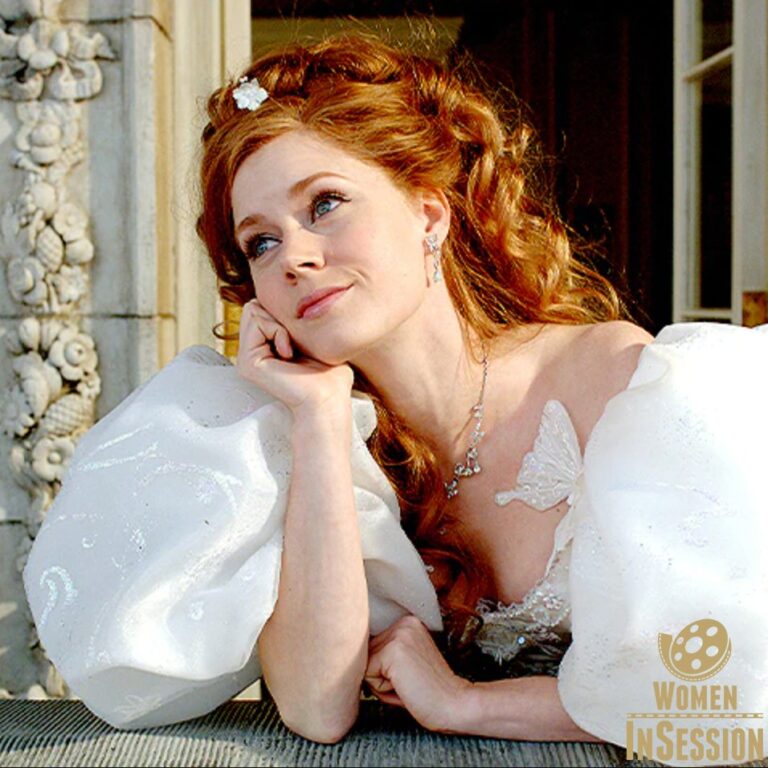
Women InSession: Amy Adams (Part 1) – Episode 24

This week on Women InSession, we talk about the great Amy Adams and what makes her such a magnetic actress. For Part 1, we specifically talk about her comedic and more light hearted films.

Panel: Kristin Battestella, Amy Thomason, Shadan Larki

On that note, check out this week’s show and let us know what you think in the comment section. Thanks for listening and for supporting the InSession Film Podcast!

– Music

The Return of the Eagle – Atli Örvarsson

Subscribe to our Podcasts RSS
Subscribe to our Podcasts on iTunes
Listen on Spotify
Listen on Stitcher
Women InSession – Robert Mitchum

[divider]

To hear this Extra Film episode and everything else we do, download our apps on the Amazon Market for Android and the Podcast Source app on IOS devices. The mobile app covers all of our main shows, bonus podcasts and everything else relating to the InSession Film Podcast. Thanks for your wonderful support and for listening to our show. It means the world to us.

Podcast Review: ‘Close’

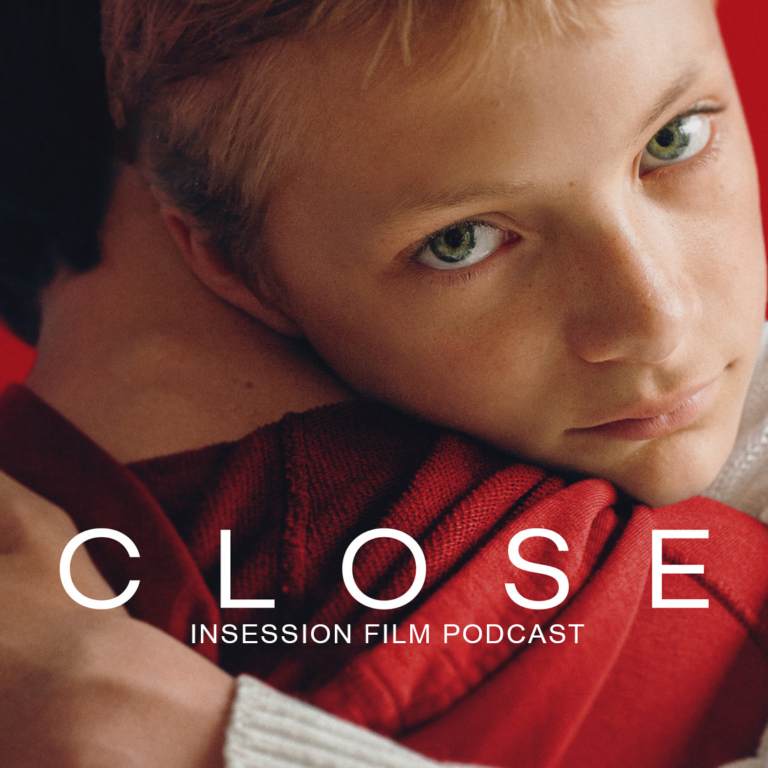
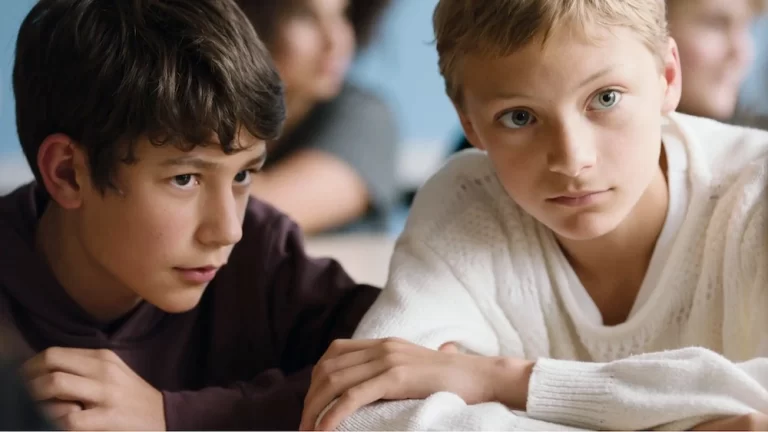
On this episode, Brendan and JD review Lukas Dhont’s new film Close, starring Eden Dambrine and Gustav De Waele!

Review: Close (4:37)
Director: Lukas Dhont
Writers: Lukas Dhont, Angelo Tijssens
Stars: Eden Dambrine, Gustav De Waele, Émilie Dequenne

Subscribe to our Podcasts RSS
Subscribe to our Podcasts on iTunes
Listen on Spotify
Listen on Stitcher
InSession Film Podcast – Close

List: Karim Ahmed’s Top 10 of 2022

This film year is probably the most normal since the pandemic. From huge blockbuster movies delivering enormous box office to the quiet indies that always come out of nowhere and surprise you, 2022 had a lot to offer on both fronts. Sadly for me, I didn’t actually get to see a lot of the new releases this year. And while I still have a lot of blind spots to watch, these are the films that I thoroughly enjoyed watching. 

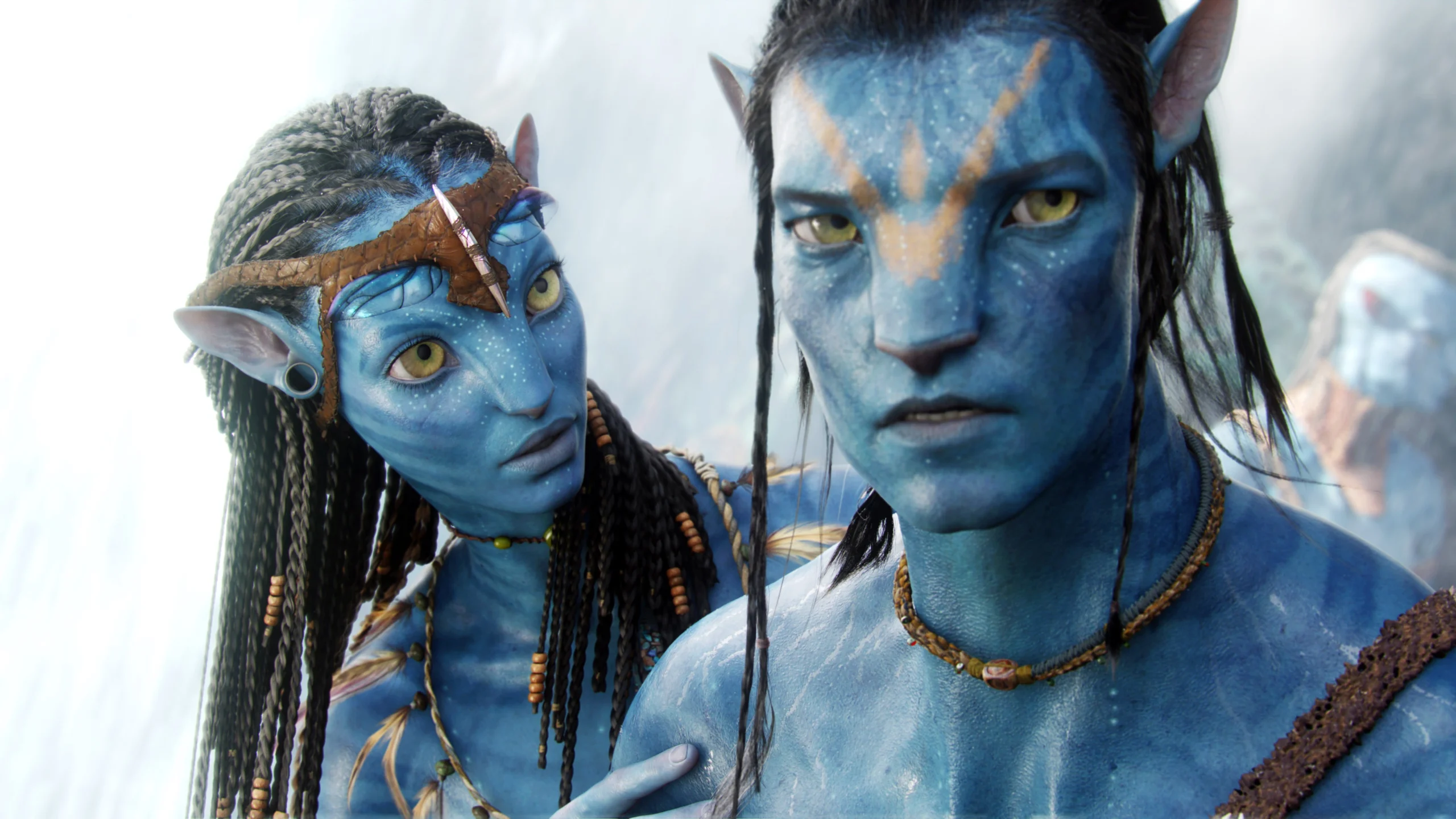
  1. Avatar: The Way of Water

James Cameron’s long-awaited return is worth the wait. Cameron’s second installment in the Avatar franchise surpasses the first one in almost every aspect, and it was the most fun time I had in a movie theater all year.

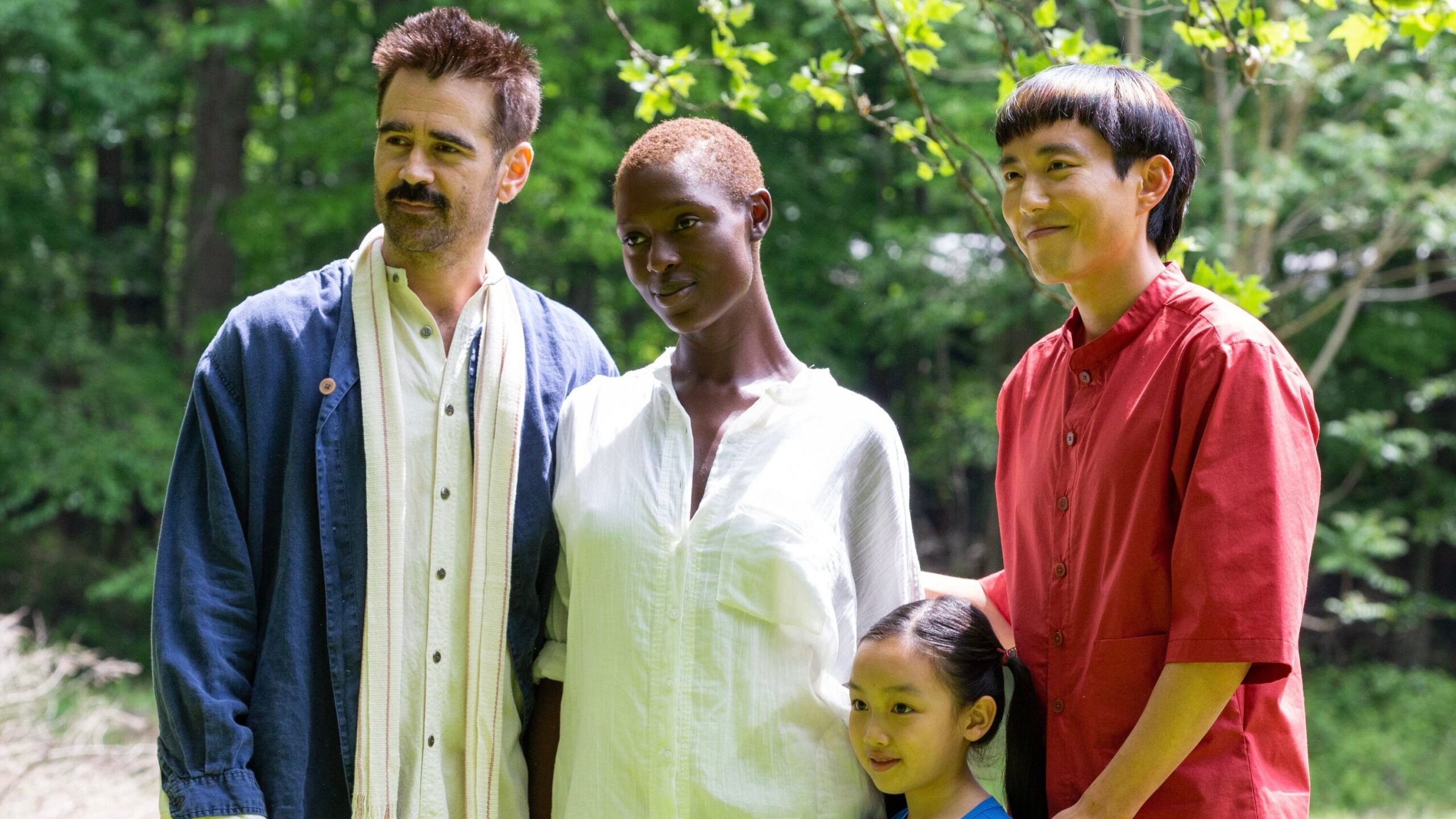
  1. After Yang

One of the films I saw earlier in the year, but it stuck with me until the end. Kogonada’s delicate film about loss and grief is an emotional rollercoaster that will leave you thinking about it long after its ending.

  1. Holy Spider

A devastating depiction of the true events that took place in Iran between 2000 and 2001. Ali Abbasi’s thriller is a chilling watch that kept me unsettled throughout the film and left me completely destroyed at the end.

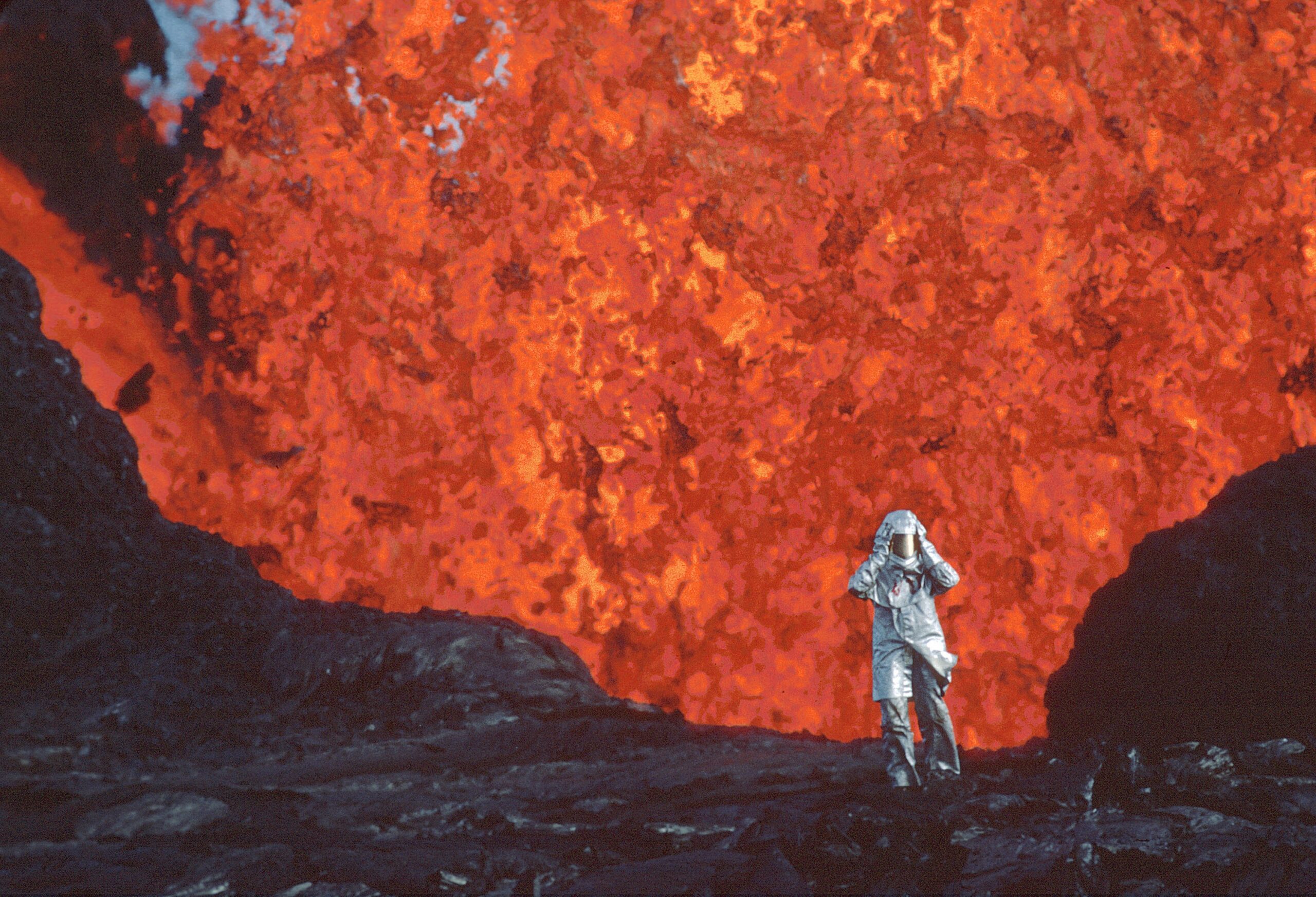
  1. Fire of Love

The most romantic love story I’ve seen all year comes from a documentary about volcanoes. It is not something I expected to write in my end-of-year list, but here we are. The story of this unnatural couple that risks their lives to study volcanoes is something you must see to believe, and the stunning footage captured along the journey are scenes you won’t forget. Fire of Love is easily the best documentary I’ve seen all year

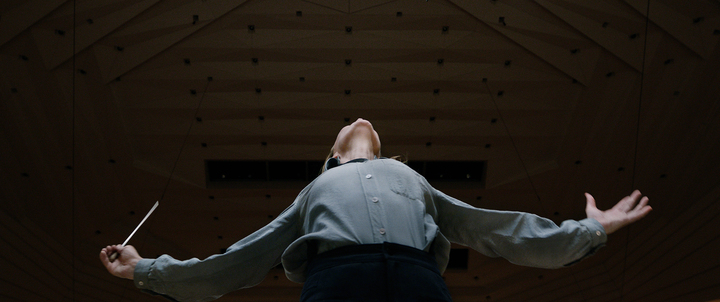
  1. TÁR

Probably need five more viewings to fully comprehend everything happening in this film. Todd Field’s epic presents a masterful character study of egotistical figures and their exploitation of power. The film is anchored by a magnificent performance by Cate Blanchett that rivals her career’s best.

  1. Nope

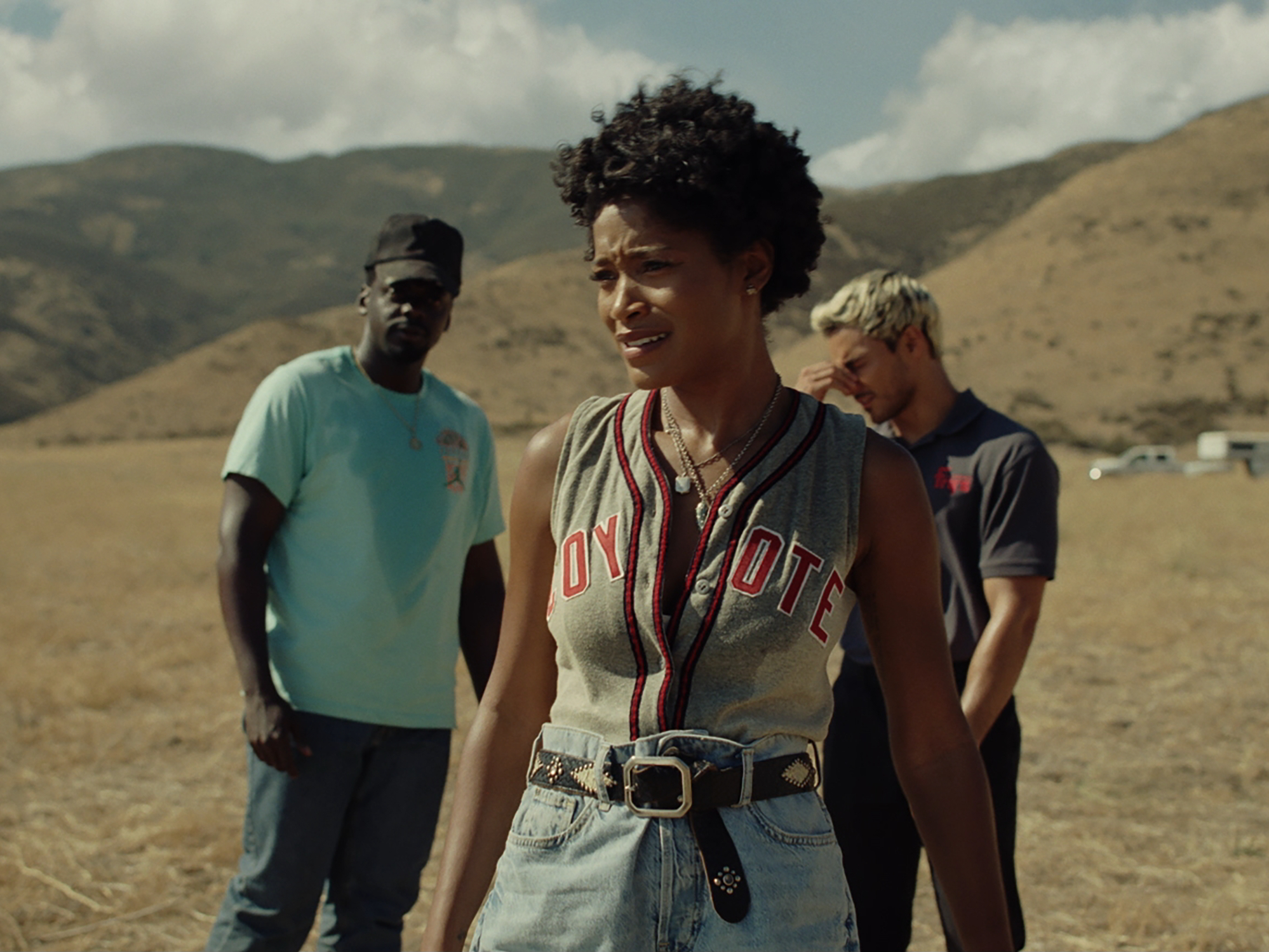
Jordan Peele is on a roll; his latest film, which seems to have somewhat of a mixed reaction, checked all the marks for me. Peele’s exploration of our obsession with spectacle is only the tip of the iceberg, and each viewing left me with something new to think about. Nope is a deeply layered film and one that I wanted to revisit the most of anything I saw last year.

  1. Close

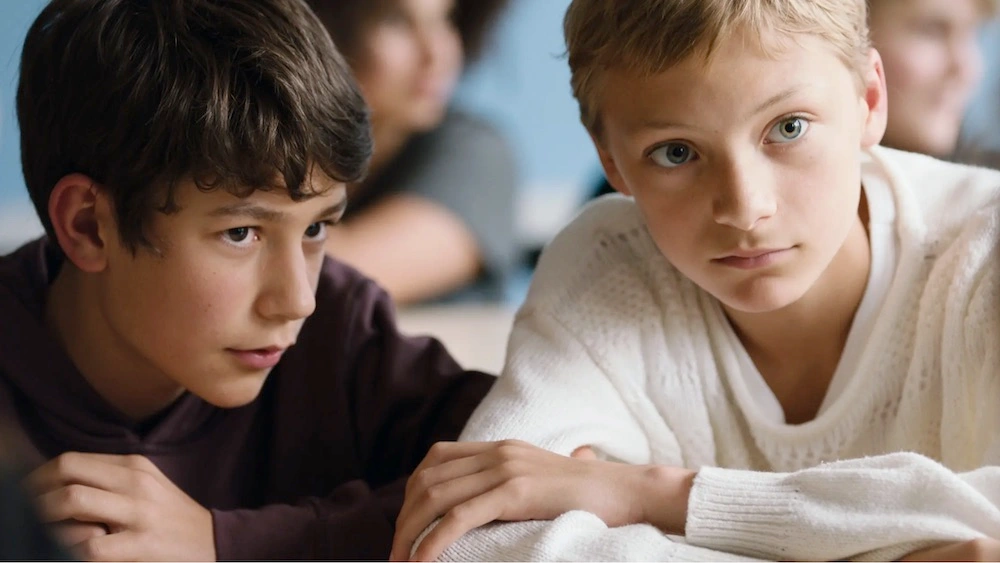
The Grand Prix winner of the 2022 Cannes film festival exceeded my expectations. What Lukas Dhont is able to accomplish with this story of the dissolution of friendship between two teenagers is not an easy feat. The film is charged with soul-crushing emotion, even though it can be overdramatic at points.

  1. Aftersun

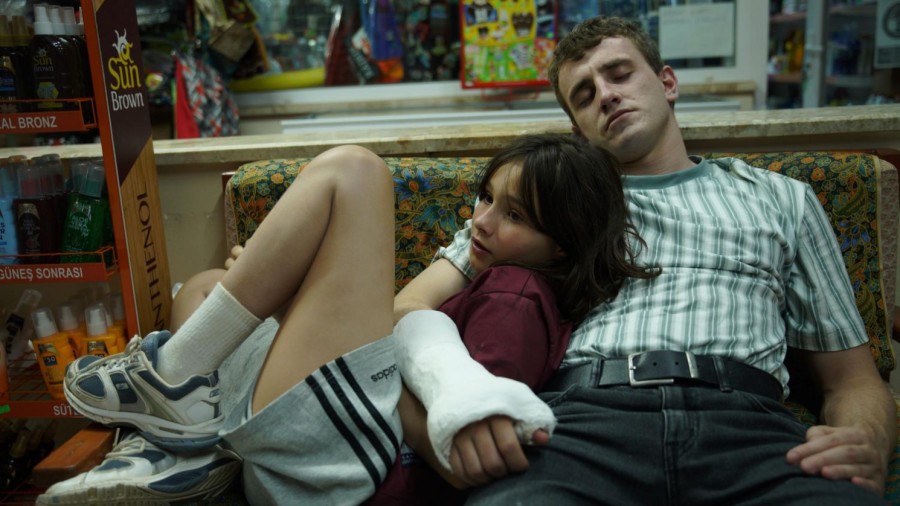
Charlotte Wells might have the most impressive feature debut I’ve seen in years; I’ve never seen a director so assured of their craft like this in their first film. The film is extremely intelligent in how it tackles its story and themes; it’s emotionally devastating and endlessly empathetic. The central father-daughter relationship is one of the most captivating things put to film in 2022; Paul Mescal and Frankie Corio are effortlessly mesmerizing.

  1. The Banshees of Inisherin

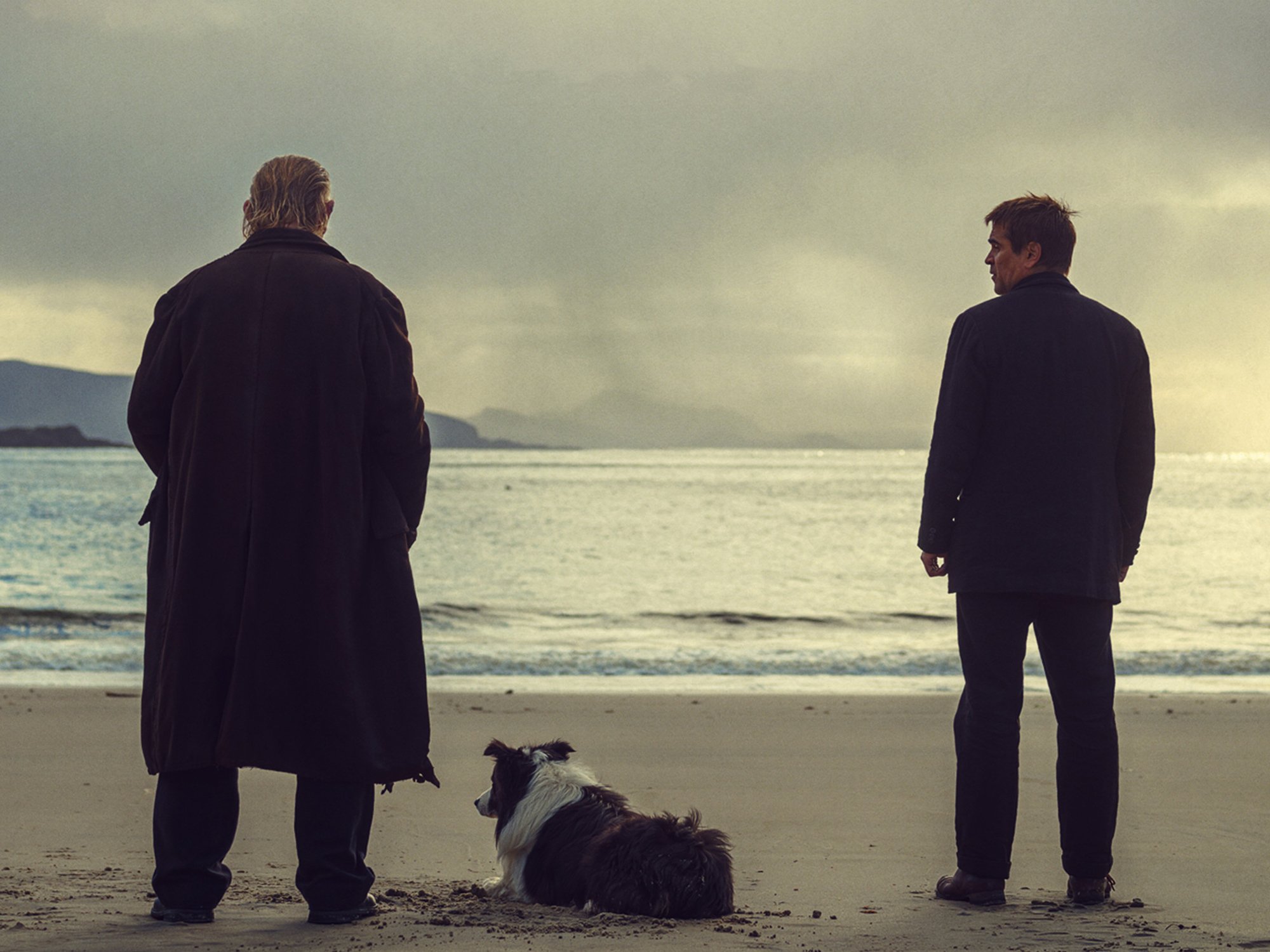
Ironically, this is the second story on this list about the dissolution of a friendship. This time, it’s longtime friends rather than teenagers who push each other away. Watching Martin McDonagh’s latest was a highlight of the year for me; Colin Farrell and Brendan Gleeson take this richly cynical story to a whole new level. McDonagh’s gift for crafting these melancholy, tragic comedies is outstanding, and it was fantastic seeing it on full display here.

  1. Decision to Leave

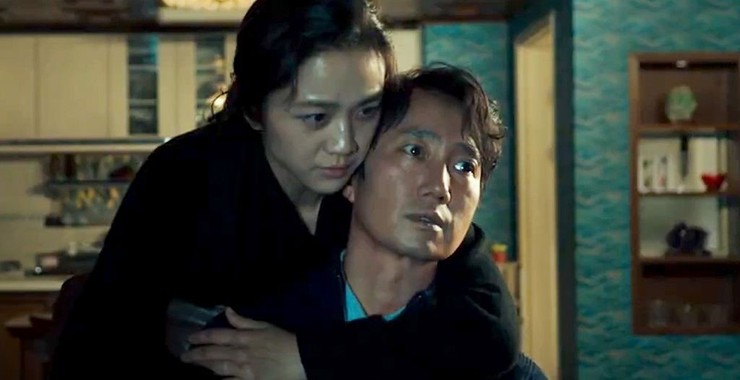
I adored this film and immediately started watching it for the second time right after the end of my first watch. Park Chan-wook’s Hitchcockian romantic thriller about desire and love had me from the opening shots of the film and didn’t let go till its devastatingly beautiful ending. Decision to Leave is an instant classic for me, and it was marvelous to see a world-class filmmaker deliver one of his best.


Mike Leigh & His Films For The BBC

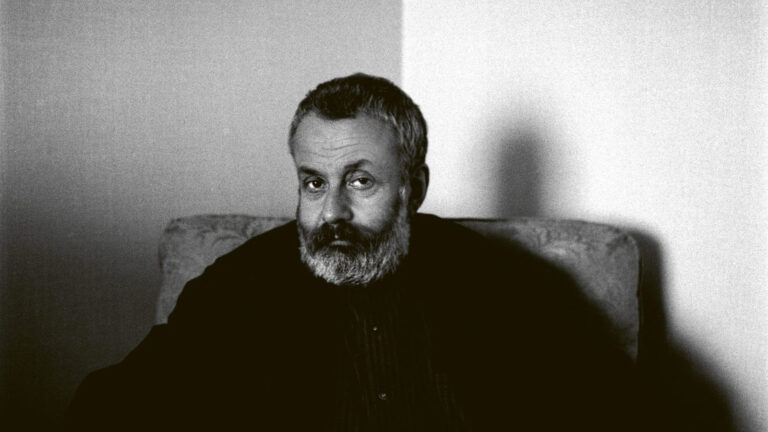
In January, the Criterion Channel released a series of TV films directed by Mike Leigh, better known for his works from the 1990s onward, including Naked, Secrets & Lies, Vera Drake, and Happy-Go-Lucky. Leigh’s work method stands out on its own with his improvisational skills with his actors in exploring each character and building it around his story, nailing every detail down before a final script is made. Leigh was a student at the Royal Academy of Dramatic Art, or RADA, where many great actors trained and even became President; including John Gielgud, Kenneth Branagh, Peter O’Toole, Alan Rickman, and Albert Finney. But Leigh would instead switch over to being behind the camera and has directed several of his fellow RADA alumni in his films.

Between his first theatrical film Bleak Moments (1971) and his follow-up High Hopes (1988), Leigh would make several TV films playing mainly on the British Broadcasting Corporation, BBC. He was hired by Tony Garnett, a producer known for his collaboration with Ken Loach, who was then brought in to help run the anthology drama series Play For Today where other TV films were made and broadcast from 1970-1984. Leigh would make several films for the series, including Knock For Knock, Kiss Of Death, and Four Days In July, receiving critical acclaim, and later getting his opportunity to stay with full-length movies outside of TV. Getting the opportunity to watch these movies for the very first time, here are three of my favorite movies by a master of social realism. 


Hard Labour (1973)

His first movie for the BBC was this grounded piece of domestic life amongst the working class with a family that lives in a housing estate. The mother (Liz Smith) is a cleaning lady for a middle-class couple who minds her own business while her son (Bernard Hill) is a car mechanic trying to make ends meet with his wife. Despite her hard work, the cleaning lady eventually realizes that her employer does not value her. Leigh would continue making stories set within the working classes and their point of view, unable to attain the wealth to raise their status in society. Similar themes would come up in theatrical releases Meantime, Life Is Sweet, and All Or Nothing.


Nuts In May (1976)

One of the more acclaimed films in Mike Leigh’s work in this series is this comedy about a couple (Alison Steadman and Roger Sloman) who spend a weekend camping and find themselves constantly interrupted by other campers. The peace and quiet become a challenge in their own relationship as to how much they can tolerate the intrusions from their routine, descending into a farce. Nuts In May was shot on location entirely in Dorset at real-life tourist locations, giving an almost neo-realist feel, except for the use of professional actors. It’s a comical story of a generational gap of values among various personalities reflecting the movie’s time.


Abigail’s Party (1977)

Adapting his own stage play for television, Leigh directed this satire of manners amongst two middle-class couples in one evening. After inviting their new neighbors, Beverly and Lawrence find themselves diving into alcohol and begin dishing out their complaints against each other. The conversations go into various topics and lifestyles amongst their class, speaking with distinct accents that identify where they are from. As the chaos increases with irritating neuroticism and tempers exposing their insecurities, an unexpected event cuts the discourse in half. The teleplay remains one of the most acclaimed TV shows in the history of British television and has been revived continuously for the stage. 

Leigh himself has recognized the popularity of his film. He looked back in retrospect and stated in an interview, “Of course, I recognize the enduring popularity of Abigail’s Party. It still hits a nerve about the way we live. It’s real even though it’s apparently a heightened and comic play. It’s a reflection of the realities of how we live on several different levels. It’s about aspirationalism and materialism, love and relationships.”


Follow me on Twitter: @brian_cine (Cine-A-Man)

Poll: What is your favorite M. Night Shyamalan film post-comeback?

Serious question: Has M. Night Shyamalan made a comeback? Or, has the current cinematic landscape made us more appreciative of his wonky directorial methods? Whatever the answer, a new Shyamalan release has lately garnered far more excitement than it used it, despite those still ready to critique him to shreds. But ever since The Visit, the Indian-born and Pennsylvania-raised filmmaker has been met with reappraisals and reevaluations, making him one of the most fascinating and unpredictable storytellers working today. The fact remains, no one is making movies like him nowadays, and that’s refreshing.

With that said, what is your favorite M. Night Shyamalan film post-comeback?


Movie Review: ‘M3GAN’ is More Comedy Than Horror


Director: Gerard Johnstone

Writers: Akela Cooper, James Wan (story)

Stars: Allison Williams, Violet McGraw, Ronny Chieng

Synopsis: A robotics engineer at a toy company builds a life-like doll that begins to take on a life of its own.


The promotion for M3GAN may have been short, with a trailer only being released less than a month before the release of the film itself, but it quickly took the internet by storm. The life-like doll for which the film is named was being hailed – especially by gay twitter – as being iconic for her high camp. She was dubbed “the yassified Chucky”, and it was clear almost immediately this film was going to be a hit. Indeed, the marketing campaign quickly leaned into its inevitable cult classic status, really playing up every slay that M3GAN was going to serve when the film finally hit theaters. As a January release horror movie, it’s definitely filled with all the cliches that you would expect, but the main draw to this film is just how perfectly it is able to use the horror genre to make an incredibly hilarious film.

Gemma (Allison Williams) is a toy designer at a high tech company, and decides to design a life-like doll as a passion project at work. To convince her boss of its potential success, she pairs it with her niece Cady (Violet McGraw), and continues to use the pair and relationship as demonstrations for what exactly this doll can do. However, due to her eagerness to complete the project, she overlooks putting in some severely important safety procedures, and M3GAN (Amie Donald, voiced by Jenna Davis) quickly becomes possessive of her new friend, and violent to those around her who might threaten that relationship. Information moves fast on the internet, and twitter knew that it had struck gold with this trailer. While staying true to its horror roots, there are more funny moments than there are scary ones. There’s, of course, the iconic dance that’s shown in the trailer, but there are so many more unexpected moments that really surprise and entertain throughout.

Allison Williams is a grounded and realistic core to this film, and I was incredibly impressed by child actor Violet McGraw’s performance as well, but of course, it’s the titular character who steals the film. The perfectly curled blonde hair, the oversized baby doll idea, the button nose, and of course, the snarky pout that this doll has gives it a look that drag queens and models alike only strive for, it’s hard not to be drawn to her.

And at the end of the day, that’s what there really is to it. It’s easy to see how this film could have easily been lost in the endless shuffle of smaller horror movies that are slated for a January release – a month that is typically known for not doing very well at the box office – and instead just being forgotten to time. But M3GAN has the camp, serves, and slays (literally) that just makes gay people go wild, and maybe there’s not much else. It falls back on horror tropes for the story’s convenience, but M3GAN herself keeps things fresh and fun throughout. It’s a fun experience, and is filled with insane moments that will have you belly laughing endlessly, while also having genuinely scary moments as well. The writing is a bit surface level and predictable, but it’s so easy to overlook all of that when you’re having a time that’s as fun as this movie is.

Grade: B+

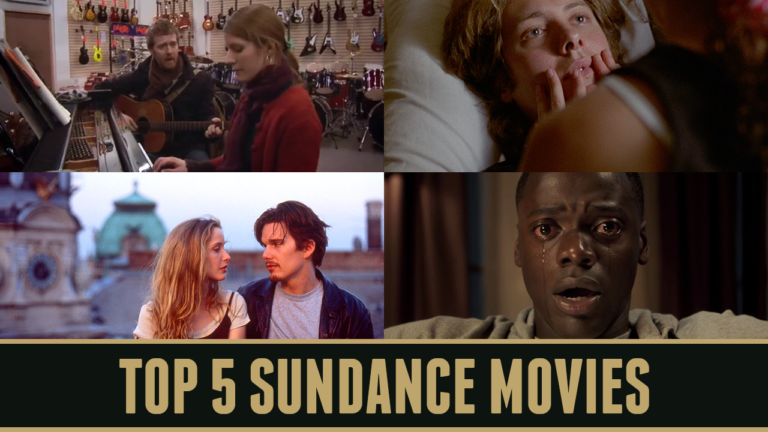
List: Top 5 Sundance Movies

This week on Episode 519 of the InSession Film Podcast, we discussed our favorite movies that premiered at the Sundance Film Festival. Sundance has seen some great films over the years, including some all-timers, making this exercise both really fun and challenging simultaneously. We’ll see in time how 2023 stacks up historically, but for now, we focus on what’s made the festival so compelling since its inception. That said, here are our lists:

(Note: Please keep in mind that we each had different criteria for our selections)

JD

1) Get Out
2) Once
3) Take Shelter
4) Sex, Lies and Videotape
5) Brick

Brendan

1) Before Sunrise
2) Au revoir les enfants
3) The Last Black Man in San Francisco
4) Mary and Max
5) Cobain: Montage of Heck

Ryan

1) Sex, Lies and Videotape
2) Before Sunrise
3) Once
4) Leave No Trace
5) IN Bruges

Jay

1) Hoop Dreams
2) Manchester By the Sea
3) Blue Valentine
4) Heathers
5) In Bruges

Honorable Mentions (Combined)

Missing, Blood Simple, On Golden Pond, Sophie’s Choice, Hoosiers, Moonstruck, The Grifters, Clerks, Reservoir Dogs, Raise the Red Lantern, Reality Bites, Bound, Chasing Amy, Lost Highway, American Psycho, Love & Basketball, The Virgin Suicide, Sexy Beast, Waking Life, Man on Wire, Kung Fu Hustle, Hard Candy, Mysterious Skin, Half Nelson, Little Miss Sunshine, The Science of Sleep, Garden State, Thank You for Smoking, Away From Her, In Bruges, Sugar, Transsiberian, The Visitor, 500 Days of Summer, Moon, Sin Nombre, Winter’s Bone, Martha Marcy May Marlene, Beasts of the Southern Wild, Before Midnight, Fruitvale Station, The Spectacular Now, Boyhood, Calvary, Frank, Whiplash, The End of the Tour, Brooklyn, The Witch, The Raid 2, Hunt for the Wilderpeople, Swiss Army Man, The Big Sick, Call Me by Your Name, Columbus, Hereditary, A Ghost Story, Blindspotting, Eighth Grade, Leave No Trace, Mandy, Private Life, Wildlife, Apollo 11, The 40-Year-Old Version, Minari, The Nest, The Sparks Brothers, Fire of Love

Hopefully you guys enjoyed our lists and if you agree or disagree with us, let us know in the comment section below. There are many great films to premier at the Sundance Film Festival and perhaps your list looks different than ours. That being said, what would be your Top 5? Leave a comment in the comment section or email us at [email protected].

For the entire podcast, click here or listen below.

For more lists done by the InSession Film crew and other guests, be sure see our Top 3 Movie Lists page.

Chasing the Gold: SAG Anonymous Ballot #1 2023 From Academy Queens

It is my pleasure once again to be posting here on InSession. Like last year, I was able to speak with a member of SAG about their opinions on the nominees and, of course, who they voted for this time around.

This year I spoke with an east coast SAG member with several years in the business who you may have seen in an infamous HBO show from a couple of years ago. We’ll refer to them as “SAG Voter” here.


Transcribed by Zach Youngs


Joey Gentile: Hello, shall we dive in?

SAG Voter: I’m ready.

JG: Perfect. Let’s start with Supporting Actress.

Hong Chau, The Whale: That was a terrible film. Just awful from staging to script. Hong Chau stands out, though. I’m surprised to see she made the cut, but even in a bad movie like this one the good performances can come through.

Jamie Lee Curtis, Everything Everywhere All At Once: Honestly? What’s the hype about this performance? I’m surprised, yet not surprised she made the list. Because of that I’m a little disappointed she took this spot. I thought she was much more memorable in her brief stint on New Girl.

Angela Bassett, Black Panther: Wakanda Forever: She was so excellent in the first Black Panther, I’m excited she’s finally getting some recognition for this role. I’m glad this film showed up here rather than getting lost in the stunts or ensemble category. She deserves the individual accolades.

Kerry Condon, The Banshees of Inisherin: I was thrilled when she made this list. She deserves so much recognition and praise for this performance. She’s so good in the film I just wanted more and I have no doubt we’ll be seeing Kerry Condon’s name on many ballots in the future.

Stephanie Hsu, Everything Everywhere All At Once: She could have easily been overshadowed by Jamie Lee Curtis or dismissed because of the length of the dildo scene. But, I’m so glad the SAG did right by her. It’s a fantastic performance.


My vote is for ANGELA BASSETT. What can I say, she is the queen! You can tell she’s been disappointed by how it all turned out in the film, but this is her victory lap.


JG: There were a couple of ways that could have gone. Let’s see who you’re into for Best Supporting Actor.

SV: Off we go.

Ke Huy Quan, Everything Everywhere All At Once: I love the comeback narrative for him. This was the perfect role for him to shine with. There’s no doubt in my mind he’s going to walk away with this prize.

Eddie Redmayne, The Good Nurse: As much as I love Eddie, the overacting in his face was over the top and too distracting. I enjoyed the film and it is a very good performance, but yeah, I couldn’t get fully into it.

Brendan Gleeson, The Banshees of Inisherin: It’s not his best and really he is the co-lead, so what is he doing in the supporting race? Brendan Gleeson is the kind of actor who really brings it and he is phenomenal as always, but he’s not the strongest performance of the film.

Paul Dano, The Fabelmans: If only this was for his work as The Riddler in The Batman. He is a good dad, but there are other performances in this film that deserve more recognition.

Barry Keoghan, The Banshees of Inisherin: He’s my favorite funny, little guy. Barry Keoghan is the go to for these types of parts and he packs so much into a small part. He’s got so much potential and shows a lot of it here.


It was a tough call, but I have to stick with the actor who stuck with me the longest. I love an underdog, so BARRY KEOGHAN gets my vote.


JG: You threw a curve ball at me with that one.

SV: Like I said, I love an underdog.

JG: Shall we move on to Best Actress?

SV: Yes, please.

Ana de Armas, Blonde: Marilyn Monroe has to be spinning in her grave. This movie makes me so angry. I won’t dismiss Ana de Armas outright, it was a fine performance, but I can’t abide this god awful, (bleep)-ing movie.

Michelle Yeoh, Everything Everywhere All At Once: It’s about time! Her body of work is filled with terrific performances and I’m so glad she’s finally getting the recognition she deserves from her peers in SAG. She’s the best of the cast for sure and even though she’s a frontrunner, I worry she won’t be the name called on the night.

Danielle Deadwyler, Till: I love her. Her approach and performance were astounding to watch. You can see in interviews she’s done about the performance how much the history of this tragedy weighed on her and brought about what we see on screen.

Cate Blanchett, Tár: Tár really didn’t work for me. It’s an aggressively OK film. Cate Blanchett is good and she’ll likely walk away with it on awards night. She’s got that great campaign and is so beloved. She’s a shoo-in if I ever saw one.

Viola Davis, The Woman King: Just amazing. She’s so good here. Everyone in The Woman King is so good. This film needs more hype and more attention. Gina Prince-Bythewood should be nominated for every award she’s eligible for. Such a good performance.


My vote has to go to DANIELLE DEADWYLER. She’s so compelling in a way that all the other actresses were not.


JG: All right, are we ready for Best Actor?

SV: (laughs)

JG: Is there something I should know?

SV: (laughs again) Oh, let me tell you all about these actors.

JG: Can’t wait.

Adam Sandler, The Hustle: I don’t understand how this happened. This film, this performance is not for me at all. It was all campaigning. There were under the radar events and lots of glad handing. Obviously it worked because look at Adam Sandler over here living his best life. Not for me at all.

Austin Butler, Elvis: You’re from Anaheim, be from Anaheim! That (bleep)-ing accent was awful! This man deserves no praise. This man shouldn’t even be spoken of in this conversation.

Brendan Fraser, The Whale: I love Brendan Fraser and I wish this nomination was for a better movie. This film does not portray obesity in the best light and I want people to warn friends struggling with their weight that this film should be avoided at all costs. His performance is great, but I can’t vote for him because of the film it’s in.

Colin Farrell, The Banshees of Inisherin: He’s so good in this film. I love that he’s getting this praise and recognition. With this, plus The Batman, Colin Farrell’s having a phenomenal year. This performance has all of my heart.

Bill Nighy, Living: I got to see Living at a film festival a year ago and loved it. I wish this film had a better marketing push and I’m so glad this performance made it into SAG. It’s about time Bill Nighy got the recognition he deserves.


COLIN FARRELL is my man. Couldn’t love this performance more.


JG: Wow, some strong feelings with that one. Should we move on to Best Acting Ensemble?

SV: Let’s do it.

Women Talking: All of the performances were strong, the actors perfect, the film, though… not so much. The performances are overshadowed by the issues discussed and you get too bogged down in the story. It really makes you feel bad about yourself.

The Fabelmans: It’s a solid cast, but the whole movie fell flat for me. Movies about movie making aren’t always my favorite.

Babylon: This movie is also about movie making, but it is more fun than The Fabelmans. It’s got a strong ensemble led by Diego Calva and Margot Robbie, but the overall movie fell flat. It’s a shame because I loved La La Land so much.

Everything Everywhere All At Once: I didn’t see this movie until I got a screener of it and I honestly just didn’t get it. I enjoyed it, the performances are great, but it’s not earth-shattering work.

The Banshees of Inisherin: This one gets my vote. Hands down my favorite film of the year. From leads to day players, every single performance is amazing. I love it and it’s brooding, Irish melancholia.


JG: Perfect, let’s go around the horn for the rest of the categories.

SV: Here we go.

STUNTS FILM: Top Gun: Maverick

MALE TV: Taron Egerton

FEMALE TV: Emily Blunt

MALE DRAMA: Bob Odenkirk

FEMALE DRAMA: Jennifer Coolidge

MALE COMEDY: Steve Martin

FEMALE COMEDY: Rachel Brosnahan

ENSEMBLE DRAMA: Better Call Saul

ENSEMBLE COMEDY: Only Murders in the Building

STUNTS TV: Andor


SV: I was so disappointed Andor didn’t get in anywhere else. I was even on the nominating committee.

JG: I suppose you win some, you lose some.

SV: Such a good show!

JG: Thanks for taking time out to talk to me today.

SV: Thank you.

JG: Until next year!

 

Movie Review: ‘You People’ Confronts Generational Attitudes With Sophomoric Humor


Director: Kenya Barris

Writer: Kenya Barris and Jonah Hill

Stars: Jonah Hill, Lauren London, Eddie Murphy

Synopsis: Follows a new couple and their families, who find themselves examining modern love and family dynamics amidst clashing cultures, societal expectations and generational differences.


While you embraced him with television’s Blackish (and you probably found his remake of Shaft dismissible), Kenya Barris’s latest, You People, brings to Netflix’s steaming waves his brand of biting comedic commentary on race. While the script has no problem filling the air with irreverent humor and absurd characters, he is unafraid to abandon a sharp and distinct point of view. One that attempts, not always successfully, to examine different generations’ thoughts on oppression and race relations that surface during those times of change.

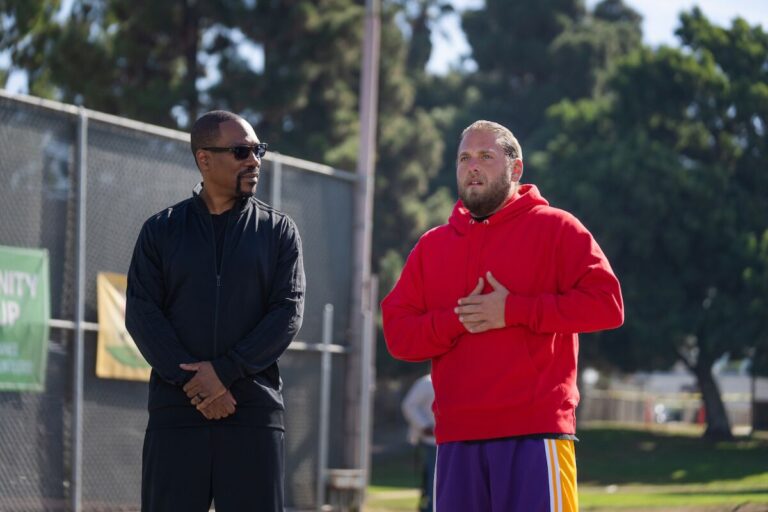
The story follows a new couple, a financial investor named Ezra (Jonah Hill) and stylist Amira (Lauren London). They met when Ezra jumped into the wrong car – he thought Amira was an Uber driver because the vehicle and the person matched the description. (Evidently, he never thought to check the license plate). She immediately thinks he feels it’s his “God-given white right” to jump in the back of her inexpensive car and order her around. However, Ezra manages to turn things around, explaining that she drove the same car and looks much like the driver. It’s a “23andMe” situation, he explains. (The script allows her to agree with his assessment). While following the rules of romantic comedies regarding “cute” ways to meet, he is immediately smitten with her. Why? Well, Aaron Sorkin once wrote men love being insulted by women because it makes them feel loved, so now we have our answer.

Ezra is passionate about podcasting and hosts one discussing race and other social issues with his best friend, Mo (SNL alum Sam Jay), called the “Mo and E-Z show.” Ezra comes from a Jewish family. His mother, Shelley (Julia Louis-Dreyfus), keeps setting him up with women from their synagogue. It’s no different for Amira. Her father, Akbar (Eddie Murphy), tries to set her up with respectable young black men blindly, which is literal. She figures it out because he keeps feeding them quotes about James Baldwin. Akbar is a proud man and a loyal follower of Louis Farrakhan. As you can imagine, things do not go well for Ezra, especially when she asks Amira’s parents for her hand in marriage. Keep in mind this is even before Amira introduces her to them. You can then imagine how the first dinner between the families will go.

Barris co-wrote his film with Jonah Hill. You People owes an obvious debt to Guess Who’s Coming to Dinner?, while putting on its modern comedic spin. Watching Hill squirm around Murphy’s Akbar needling him, especially their bachelor party trip or barbershop (that includes an Anthony Anderson cameo), has a handful of solid belly laughs.

The film has some hilarious performances outside of Hill and Murphy. Deon Cole has one of the more humorous guest spots in the movie, wanting room to grow into his role of a wedding planner. And it’s almost shocking how surprisingly funny and effective David Duchovny is with Barris and Hill’s script. As the now suddenly comically skillful actor keeps talking to Amira or any member of her friends or family about the iconic rapper, actor, presenter, and personality, Xzibit. Trust me. His toast is a stunner.

While the film isn’t perfect – the chemistry between the leads, an ending that plays it too safe, guest stars like Rhea Perlman have virtually nothing to do, and there is an odd choice of almost episodic transition choices between scenes that are distracting to the point of ruining the story’s flow – the film is refreshingly blunt. How? By allowing ruminating thoughts to simmer to the surface, which can be side-splittingly funny. That’s because the script works. After all, Barris wants to deconstruct the argument of the social construct of race. (Social scientists today prefer to describe race now in terms of “ancestry”). 

For example, an article from the Harvard Divinity School tackles a Judaism case study (2018) that discovers members of the Jewish community have not only taken on a racial identity but it was thrust upon them at the turn of the 20th century. Amira’s family is African American and part of the Nation of Islam, which takes on the prejudicial brand of Islamophobia. There is an experience here of intersectionality that many viewers may not be aware of or understand.

Some may argue that the film has much to say about the older generation’s attitudes toward race relations dressed in modern-day trappings, like podcasts and style. However, that is rather the point of this Barris comedy. He is looking at how an older peer group’s views have affected the younger one, which is growing increasingly multicultural by the day. (Read Frey’s 2018 book, “Diversity Explosion,” and how this boom will reshape the country in the future).

Barris is fearless in confronting these issues, albeit in a sophomoric way, about views that must be addressed even in today’s increasingly self-aware society. And that includes the nescient behavior (or ignorance) when it comes to showing off someone who is Black as a member of the family or friend (Dreyfus) or an evident lack of respect for the LGBTQ+ community (Murphy). Barris is dismantling the issues between generational attitudes to show growth. As Jane Elliott would say, the writer/director here embraces the sentiment of getting the phrase “I don’t see color” out of our lexicon.

It’s a conversation and a case in point when Amira confronts her future mother-in-law at the rehearsal dinner, which will be hard to hear but necessary. And the issue of Shelley and Akbar, if not for us, but for the next generation.

Grade – B

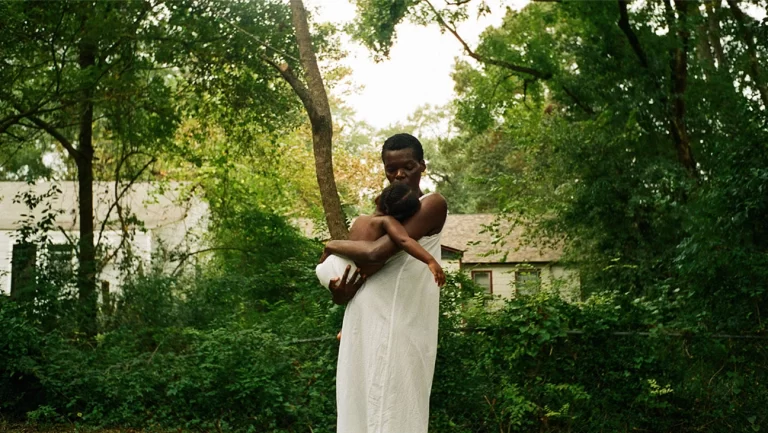
Movie Review (Sundance 2023): ‘All Dirt Roads Taste of Salt” is a Lovely Visual Poem with Little Story  


Director: Raven Jackson

Writer: Raven Jackson 

Stars: Moses Ingram, Sheila Atim, Chris Chalk

Synopsis: A decades-spanning exploration of a woman’s life in Mississippi and an ode to the generations of people, places, and ineffable moments that shape us.


One of my favorite scenes in Spike Jonze’s Adaptation takes place at a packed screenwriting seminar. Charlie Kaufman (Nicolas Cage) is there to find inspiration for his new adaptation of The Orchid Thief from screenwriting guru Robert McKee (Brian Cox), and at one point Charlie asks if it’s possible to write an entire movie about flowers. He says, “Sir, what if the writer is attempting to create a story where nothing much happens?” McKee responds, “You write a screenplay without conflict or crisis you’ll bore your audience to tears.” I had this scene in my mind a lot while watching All Dirt Roads Taste of Salt, one of the quietest, most plotless films I’ve ever seen. The film is so much without story or conflict or crises for ninety minutes that I’m not sure if I should dismiss it or applaud it, but sadly I can’t deny that the act of watching it is often a chore.

That’s not to say that All Dirt Roads Taste of Salt doesn’t have a lot of worthy attributes. I’ve often admired movies that deal with the passage of time and have a specific sense of place, and this film has both to an extraordinary degree, writer/director Raven Jackson giving us glimpses of a Black woman in four different decades in Mississippi. Jackson is in no rush to put a plot into motion. She’ll often spend minutes with a camera roaming around a couple of characters playing or working outside, saying little or nothing to each other, the sunlight hitting their faces, the days warm and long. For the first hour, All Dirt Roads Taste of Salt is almost a silent film, long stretches without any dialogue at all, the characters’ expressions and the exquisite cinematography doing all the work. 

Indeed, the most impressive aspect to All Dirt Roads Taste of Salt is its sumptuous cinematography, so striking I’m sad a more involving story wasn’t provided to back up all these powerful images. Just a shot of a creaky front porch has the ability to take your breath away. The colors are astonishing, and what I particularly admired were all the little details she gives us that bring this place to life, the close-ups of the land, the way the camera often follows characters but fails to show their faces fully in the frame. At one point, a character urinates on the ground, and a shot of at least twenty seconds follows that shows the urine slowly forming into a stream that starts to rush down the side of a dirt hill.

In essence, All Dirt Roads Taste of Salt had the makings of a great movie, potentially a masterpiece, if a riveting story had been presented as well. I didn’t need wall-to-wall dialogue. I didn’t need the entire film to focus on one relationship between two people. I’m all for following a character over many years or decades—Richard Linklater has captured these things beautifully in films like Boyhood and the Before trilogy. A film can be lyrical, quiet, and meditative. They can have little plot, that’s fine. I would argue at least eighty percent of movies these days have too much plot, with a ridiculous focus on that standard three-act screenplay structure robbing so many promising films of greatness. 

However, the main problem with All Dirt Roads Taste of Salt is that the lack of story takes its toll after a while, which offers the audience almost zero emotional connection with the characters. Jackson gives us authentic, lived-in moments with the characters played by talented actors like Moses Ingram, Sheila Atim, Chris Chalk, and Zainab Jah, but those moments don’t make much impact because we’re not given access to who these people are, what they want, who they love, how they dream. A moment early in the film of a young man and woman holding each other is beautiful to look at, but as the camera pans around their hugging bodies, the man crying, the woman looking pensive, I’m unclear about the circumstances surrounding their pain, and thus, I’m unmoved. 

Most frustrating of all is that the film ends on a memorably gorgeous note, the incredible score swelling as the title’s meaning comes into focus. If the movie that came before it had told slightly more of an accessible story, these final few minutes might have brought tears to my eyes, but because the characters always remain so on the surface rather than living, breathing human beings, I found myself admiring the ambition of the overall movie rather than surrendering myself to it. All Dirt Roads Taste of Salt certainly has worthy qualities, and I look forward to Raven Jackson’s next feature, but overall, the film needed more story, dialogue, and stronger developed characters to pull me through. 

GRADE: C+

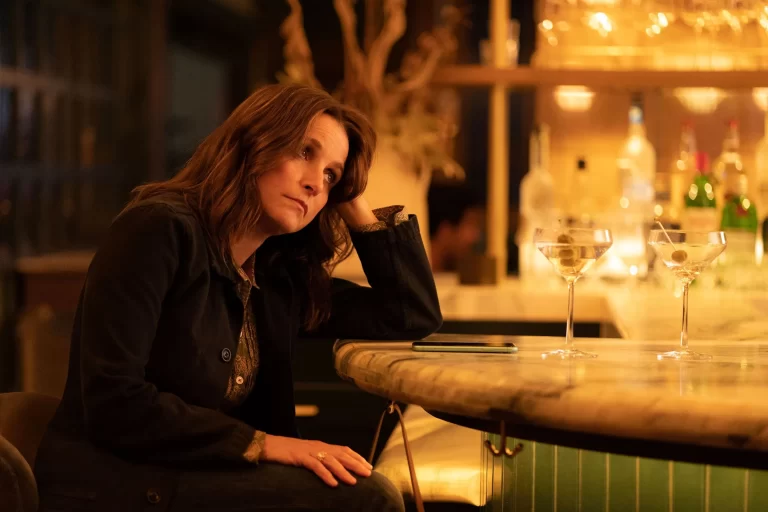
Movie Review (Sundance 2023): ‘You Hurt My Feelings’ is Pure Bliss for Holofcener Fans


Director: Nicole Holofcener

Writer: Nicole Holofcener

Stars: Julia Louis-Dreyfus, Tobias Menzies, Owen Teague

Synopsis: A novelist’s longstanding marriage is suddenly upended when she overhears her husband giving his honest reaction to her latest book.


Only a handful of filmmakers have a voice that’s so distinct you know within seconds of the beginnings of their movies exactly who made it, and that’s always been the case of the great Nicole Holofcener. Since her enchanting 1996 feature film debut Walking and Talking, Holofcener has written and directed many sharply observed, very funny, endlessly entertaining slices of life about women, relationships, and families. Lovely & Amazing from 2002 is a quiet ensemble masterpiece, and 2010’s Please Give was one of that year’s most underrated gems. I’ve loved her collaborations with Catherine Keener, but it was a delight in 2013 to see her make a film starring Julia Louis-Dreyfus, a role that earned the actress a Golden Globe nomination and gave her one of her richest performances on film. 

Therefore, I was thrilled to learn Holofcener and Louis-Dreyfus had reteamed on a new movie—this might have been my most anticipated title at the Sundance Film Festival—and You Hurt My Feelings doesn’t disappoint. This is a breezy, beautifully acted movie that is easily one of Holofcener’s best, possibly the most laugh-out loud comedy she’s ever made. In the first scene. You are cracking up at an oddball situation in a therapist’s office, and the laughs rarely stop for the next ninety minutes. Holofcener has a skilled way of depicting realistic characters in truthful situations we can all relate to while she never forgets the humor and surprises in every given situation. This movie is a complete delight.

The central conflict to You Hurt My Feelings is not a big thing, isn’t a catastrophic life-or-death situation; it all rests on Beth accidentally spying on her husband Don and overhearing him talk about why he doesn’t like her newest book. You see, Beth takes her writing very seriously, and she’s been hard at work on her first novel for a couple of years. She’s had her husband read more than twenty drafts, and every time he’s told her how great he thinks her book is. When Beth discovers Don has been lying this whole time and is actually sick of her manuscript, she wonders if she can ever trust him again, and their marriage, which has remained strong for so long, finds itself at a potential breaking point.

There’s a lot more going on throughout the narrative—this is a Nicole Holofcener movie, after all. Don works as a therapist, and we’re given many scenes of him struggling to connect with his patients who are slowly making his life miserable. Beth and Don have a son Eliot (Owen Teague) who works at a marijuana dispensary and who’s looking to follow in his mother’s footsteps as a writer—in his case, a playwright. Beth works as a creative writing professor and loves chatting about her life’s woes with her sister Sarah (Michaela Watkins) and tries her best to take care of her ailing mother (and judgmental) mother Georgia (Jeannie Berlin). 

Despite all the moving parts, Holofcener, like always, brings the story elements so seamlessly, the outrageously funny circumstances never outweighing moments of honesty and emotional resonance. She revealed in the Q&A following the film’s world premiere at Sundance that she spends a couple years writing and revising her screenplays, and you can tell; there’s not an ounce of fat on You Hurt My Feelings, every scene having a clear purpose, but never feeling like mere pieces of a larger whole. Everything flows together with cohesion and thematic richness that at the same time always manages to be blissfully entertaining.

The cast is terrific from the top down, especially Louis-Dreyfus, whose struggles as a writer are funny and relatable, the way she walks into a bookstore to put her published memoir in a more featured spot, the way she tries to get a lesbian couple at a bar to share in her misery. She’s a performer that pulls you in and never lets go, and this film marks one of her best turns yet. Tobias Menzies and Louis-Dreyfus have a natural chemistry together, and his flipping out about her sadness in his lying offers plenty of great comedy, as do his interactions with his patients at work. Watkins and Berlin have some fine moments in supporting roles, and Amber Tamblyn and David Cross almost steal the movie as two of Don’s patients. If the film has one weakness, it’s that Beth and Don’s son Eliot could be better fleshed out, the character overly whiny at times, but that’s a minor quibble. And besides, his pursuit of being a playwright leads the narrative to its winning, pitch-perfect conclusion.

Nicole Holofcener is a true original, and I’m so happy to tell you her newest film is fantastic. It begs the question, what is better? To tell the truth to your partner or to build them up with a little white lie? From the beginning, you’re in the hands of a master who’s made half a dozen home runs before, and at this point it’s clear she’ll never strike out. You Hurt My Feelings is as good as Enough Said, if not better, and I hope she makes more films with Louis-Dreyfus. The two have a kinship that works beautifully on a narrative level, and here’s hoping we don’t have to wait another ten years for their next collaboration. 

GRADE: A-

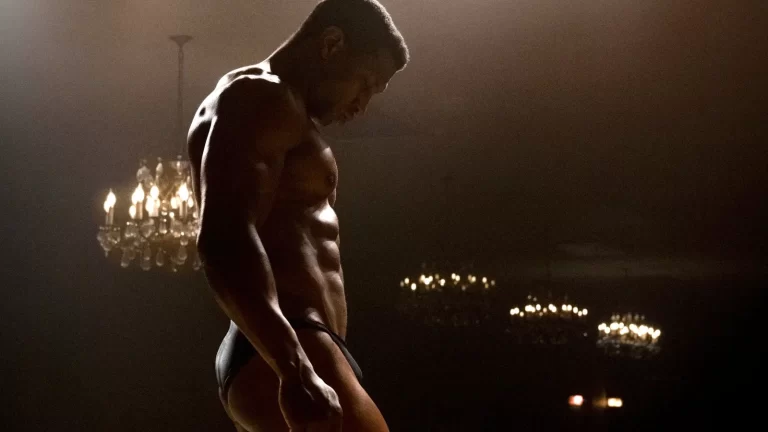
Movie Review (Sundance 2023): ‘Magazine Dreams’ Fails Jonathan Majors


Director: Elijah Bynum

Writer: Elijah Bynum 

Stars: Jonathan Majors, Haley Bennett, Harrison Page, Taylour Paige

Synopsis: A Black amateur bodybuilder struggles to find human connection in this exploration of celebrity and violence.


There’s one very good reason to see the drama Magazine Dreams, and that reason is Jonathan Majors, who gives a stunning, complex performance as amateur bodybuilder Killian Maddox, a man dedicated to his profession but totally adrift when it comes to the rest of his life. This rage-filled character brings to mind the kind of antiheroes Robert De Niro played in Raging Bull and especially Jake Gyllenhaal played in Nightcrawler, those with physical transformations that have to be seen to be believed. Majors bulked up for real to a remarkable extent to play this character, and yet it’s the empathy and authenticity he gives to Killian that makes this such a remarkable performance. 

Majors, who has been on a roll lately with an acclaimed turn in Devotion and with anticipated performances in the upcoming Ant-Man and the Wasp: Quantumania and Creed III, gives the kind of bravura, awards-friendly portrayal of pain and passion that every actor dreams of, but what sadly holds him back from greatness is a movie that meanders when the tension should be escalating and a story that should be wrapping up instead of overstaying its welcome for an additional twenty minutes. Majors is game for anything, as he proves in this movie, but the narrative doesn’t always give him a lot to work with and sometimes even undermines the great acting he’s doing.

This is not to say that Magazine Dreams doesn’t include effective scenes of power. My favorite stretch of the film involves a subplot about a dinner date Killian has with a checkout worker (Haley Bennett) he meets at the grocery store. His asking her out is endearingly awkward, his refusal to do so at first, walking away, then turning around to see if she’s interested. He’s so consumed with perfection in his bodybuilding career that the act of asking a pretty woman on a date seems alien to him; he can’t relate well to other people and struggles finding a solid line of communication. 

At the dinner, things go wrong quickly, starting with Killian ordering practically everything on the menu in front of his date, then shouting at her when she’s unaware of who one of his famous bodybuilding idols is. She gets up to go to the bathroom, and when she doesn’t return, the look on Killian’s face is priceless, one that starts as disappointment but then turns into indifference. His table is filled to the brim with plates of food, and upon asking the waitress to box up everything, he changes his mind and decides to order more food instead. In this moment we recognize Killian is incapable of finding a connection with another person and is instead too consumed with his own obsessions to allow anyone else in. 

Bodybuilding is the man’s life, after all, and the film takes us through his arduous journey to reach the top, giving us one of his many competitions where he tries to stand out among half a dozen other bodybuilders that appear as stacked as he is. But some of these stunning images only take the narrative so far. In his second feature, writer/director Elijah Bynum (Hot Summer Nights) has all the ingredients of a successful drama, with a talented actor who can draw the audience into an infatuated and disturbed character as Killian, but sadly the story rarely finds a strong rhythm to keep us engaged. As much as I admired the Majors performance, the film is often a difficult sit because, especially in the second half, Bynum splashes the screen with never-ending darkness, anger, resentment, and desolation. There’s so much pain and anguish that eventually we need a relief, one the film fails to give us. 

Nightcrawler, one of my favorite films of 2014, dealt with similar themes and pacing and a mega-obsessed character, one played by the also physically-transformed Jake Gyllenhaal, but that film more successfully pulls you through its dour story due to its thriller genre tendencies and the dynamic character relationships, namely between Louis (Gyllenhaal) and his boss Nina (Rene Russo), as well as Louis and his assistant Rick (Riz Ahmed). The tension continues to build into the third act as those professional relationships crumble and a harrowing car chase through the streets of L.A. results in a moment of genuine horror. Magazine Dreams, on the other hand, can’t match the hypnotic nature of Dan Gilroy’s propulsive storytelling. Killian’s relationship with his Vietnam veteran grandfather (Harrison Page) doesn’t add much to the story, nor does his encounter with a sex worker played by Taylour Paige. 

Worst of all, the third act stretches on and on, the movie at one point feeling like it’s coming to a satisfying conclusion, only to then continue on for another twenty minutes. Bynum is clearly a talented director, with a good visual eye, a strong sense of place, and excellent taste in casting, and Majors is terrific in the role of a lifetime, but Magazine Dreams needed a few more passes at the screenplay stage to come up to the level its brilliant central performance deserves. 

GRADE: C

Movie Review (Sundance 2023): ‘The Accidental Getaway Driver’ is a Repetitive Slow Burn


Director: Sing J. Lee

Writers: Sing J. Lee, Christopher Chen

Stars: Hiep Tran Nghia, Dustin Nguyen, Dali Benssalah

Synopsis: During a routine pickup, an elderly Vietnamese cab driver is taken hostage at gunpoint by three recently escaped Orange County convicts.


This year, my picks for the online coverage of the Sundance Film Festival could have been better. Unfortunately, throughout the week, I missed out on some films highly praised by most viewers. In addition to that, I couldn’t leave the middle ground when it came to the more divisive flicks, which left The Accidental Getaway Driver – my last screening – with the “task” of impressing me, something no other movie was able to do until now. Filmmaker Sing J. Lee provided quite an interesting premise, and despite not saving a personally underwhelming week, it left me more than satisfied.

The Accidental Getaway Driver starts as a crime flick based on a true story about a hostage situation involving a taxi driver, Long Ma (Hiep Tran Nghia), and three criminals: Tay (Dustin Nguyen), Aden (Dali Benssalah), and Eddie (Phi Vu). The first act of the film focuses on setting everything up and introducing the characters, quickly getting to the main action point. Long Ma believes he’s just going to help someone in need of a drive outside working hours until he realizes something more is going on. The beginning of the movie is efficient in getting the viewers’ attention for a slow-burn that might surprise some people.

Long Ma and Tay are undoubtedly the heart and soul of a compelling father-son drama that unravels throughout the second and third acts. Two people in different stages of life who have made mistakes in the past, dealing with the lonely consequences of such regrets. Sing J. Lee explores how profound connections to other people are a human necessity while also transmitting a message that good people can do bad things and vice-versa. People shouldn’t be defined by their mistakes but instead by how they deal with them. The Accidental Getaway Driver has many moments of pure honesty and warmth.

The final act delivers an emotionally bittersweet, compassionate ending that could’ve been much more impactful if it wasn’t for the extremely long, tiresome mid-section. The Accidental Getaway Driver unnecessarily overstays its welcome not only by taking too long to get its points across but by repeating those same messages through similar dialogue in uneventful scenes. That said, a character-driven film needs powerful performances, which Hiep Tran Nghia and Dustin Nguyen deliver. Their chemistry is on-point, elevating the whole movie with each captivating interaction.

It’s pretty rare to see critics giving their readers a sense of their mood and expectations going into a film. The truth is that life circumstances might deeply affect one’s enjoyment of a movie. Watching The Accidental Getaway Driver as the 14th flick in a week of balancing a day job with film watching/reviewing isn’t exactly the best possible condition in which I could have watched Sing J. Lee’s brilliantly directed movie. A moody slow-burn – beautiful aesthetics – at this stage of the festival would hardly leave my jaw on the floor, so I wanted to end this review by being honest and stating that The Accidental Getaway Driver probably deserves more than what I’m giving it.

Grade: B-


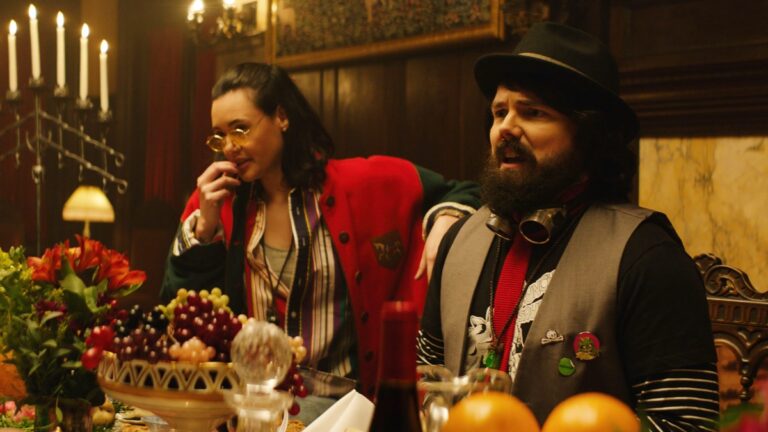
Movie Review (Sundance 2023): ‘Onyx The Fortuitous and The Talisman of Souls’ is an Acquired Taste


Director: Andrew Bowser

Writer: Andrew Bowser

Stars: Olivia Taylor Dudley, Jeffrey Combs, Arden Myrin

Synopsis: Fledgling occultist Onyx and a group of worshipers attend a once-in-a-lifetime ritual at their idol BARTOK THE GREAT’S mansion.


Before jumping into this film, I was utterly unaware of Andrew Bowser’s Youtube popularity, as well as of his character, Marcus J. Trillbury, better known as Onyx the Fortuitous. As I was mere seconds away from starting the movie, I noticed a paragraph after the official synopsis that added some information about the Youtuber and how this was his attempt to bring his famous character to the big screen, which immediately worried me. One thing is someone coming across a short video online and laughing at some random funny stuff a character says or does. Another completely different thing is making a feature-length film about that same character.

I’m going to be totally honest straight off the bat: when it comes to viewers without previous knowledge of what and who the movie is about, there’s no doubt I’m in a very, very small minority of people who will actually enjoy Onyx the Fortuitous and the Talisman of Souls. The first and main reason for this is the fact that the protagonist is an excruciatingly annoying, grating person. To be clear, this is an objective observation: Onyx is intentionally like this. Bowser constructed the character precisely to be known as “the weird guy”. Someone who talks and acts in an extremely awkward manner, which might be – and probably will be – unbearable for most viewers.

Not for the equally weird author of this review. The unique, dumb humor surrounding the entire film is right up my alley of stupidity. If the first five minutes make audiences run away, I’m interested in what Onyx the Fortuitous and the Talisman of Souls has to offer. Undeniably, there are moments in which the comedy falls flat, and Onyx is way too difficult to tolerate. In the end, the success of the movie is inherently connected to how much the audience is able to not only “get the joke” but connect with the protagonist and the story enough to help with the less entertaining phases.

The second reason is related to Bowser’s committed, proud vision. Onyx the Fortuitous and the Talisman of Souls is far from breaking any ground in the storytelling department, following a pretty generic fantastical narrative without any surprises. That said, it always holds something that, as a viewer, I’m eager to see resolved. From characters having to complete rituals and games to silly prophecies yet-to-be-fulfilled, I felt surprisingly captivated throughout the entire runtime. The third reason might also have something to do with this…

The overall production value of a film that started from absolutely nothing. A Kickstarter campaign funded Onyx the Fortuitous and the Talisman of Souls, and I can’t not appreciate this. I’m certain fans of Bowser and Onyx will absolutely love this flick, and in the end, that’s honestly all that matters since they’re both the reason why the movie was possible and its definite target audience. Nevertheless, ignoring all that, I was genuinely impressed at the cool visuals, remarkable costumes, and fun creature designs. In fact, I wish more films within this subgenre could embrace the silliness of their premise more.

The cast is also quite good. Everyone understands the assignment perfectly, embodying the over-the-topness of Onyx the Fortuitous and the Talisman of Souls. Jeffrey Combs brings back the crazy, caricatural type of villains efficiently, while Olivia Taylor Dudley serves as a kind of tonal balance, interacting with every character throughout the movie. Terrence ‘T.C.’ Carson is addictive to listen to – what a voice! – and Rivkah Reyes holds the most compelling personality, adding more heart to the story than I ever expected. Finally, the climactic ending holds an absolutely hilarious, epic one-take scene that makes the whole viewing worthwhile.

Once again, I feel the need to be clear: Onyx the Fortuitous and the Talisman of Souls isn’t for everyone. As a matter of fact, I should probably state it will barely please anyone besides its own fans. However, if the first few minutes don’t frustrate you that much for some reason, then I highly suggest giving the film a chance. It’s not going to blow your mind. The story is pretty formulaic, and the jokes don’t always land. But if this is “your jam”, then you’re not going to have a bad time at all.

Grade: B-


Podcast: Top 5 Sundance Movies – Episode 519

This week’s episode is brought to you by Koffee Kult. Get 15% OFF with the code: ISF

This week on the InSession Film Podcast, we talk about this year’s Oscar nominations and our Top 5 movies that premiered at the Sundance Film Festival!

This week’s show is also significant as it’s the beginning of a new era. The Main Show podcast will have a new format and now feature Ryan and Jay on a weekly basis. Additionally, it will all be available on video! The audio will remain the same for those who prefer to listen on Apple Podcasts or Spotify, however; you can watch the podcast and see all of our reviews on YouTube! We’re very excited for this change and we hope you enjoy the ride with us.

On that note, check out this week’s show and let us know what you think in the comment section. Thanks for listening and for supporting the InSession Film Podcast!

– Oscar Nominations (6:18)

This year’s Oscar nominations certainly came with its controversies (as always) with Best Actress creating some havoc. Andrea Riseborough getting in for an indie film is really great, but it comes at the cost of black actresses who played the game, as the majority do, and still came up short despite being more than deserving. That said, there’s still plenty to celebrate with many of the other categories, including Best Picture, which is pretty great for the most part.

[divider]

RELATED: Listen to Episode 516 of the InSession Film Podcast where we discussed our Top 10 Movies of 2022!

[divider]

Top 5 Sundance Movies (35:01)
The Sundance Film Festival has seen some great films over the years, including some all-timers, making this exercise both really fun and challenging simultaneously. We’ll see in time how 2023 stacks up historically, but for now, we focus on what’s made the festival so compelling since its inception. That said, what would be your Top 5?

Show Sponsor: First Time Watchers Podcast

– Music

Speak Up – Hildur Guðnadóttir
Falling Slowly – Glen Hansard, Marketa Irglova
The Return of the Eagle – Atli Örvarsson

Subscribe to our Podcasts RSS
Subscribe to our Podcasts on iTunes
Listen on Spotify
Listen on Stitcher
InSession Film Podcast – Episode 519

[divider]

Next week on the show:

Discussion: The Rise, The Fall and Resurgence of M. Night Shyamalan

[divider]

Help Support The InSession Film Podcast

If you want to help support us, there are several ways you can help us and we’d absolutely appreciate it. Every penny goes directly back into supporting the show and we are truly honored and grateful. Thanks for your support and for listening to the InSession Film Podcast!

VISIT OUR DONATE PAGE HERE

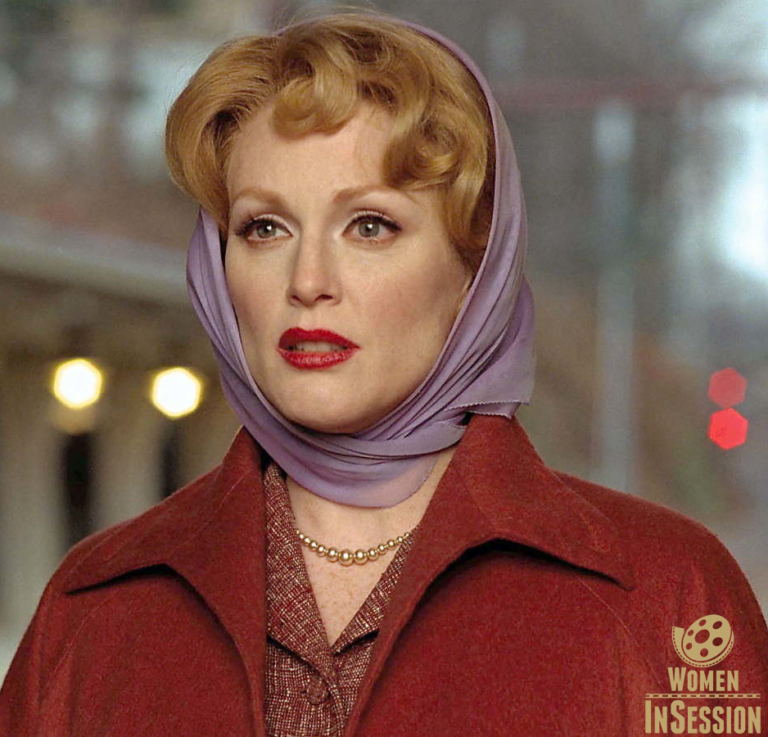
Women InSession: Julianne Moore Highlights – Episode 23

This week on Women InSession, we talk about our favorite Julianne Moore films and performances! She’s been a great actress for a long time and has a varied career, so it was really fun to talk about all of the different kinds of films she’s been in over the years.

Panel: Kristin Battestella, Zita Short, Erica Richards, Shadan Larki

On that note, check out this week’s show and let us know what you think in the comment section. Thanks for listening and for supporting the InSession Film Podcast!

– Music

The Return of the Eagle – Atli Örvarsson

Subscribe to our Podcasts RSS
Subscribe to our Podcasts on iTunes
Listen on Spotify
Listen on Stitcher
Women InSession – Robert Mitchum

[divider]

To hear this Extra Film episode and everything else we do, download our apps on the Amazon Market for Android and the Podcast Source app on IOS devices. The mobile app covers all of our main shows, bonus podcasts and everything else relating to the InSession Film Podcast. Thanks for your wonderful support and for listening to our show. It means the world to us.