Director: Marshall Curry
Stars: Julianne Moore, David Remnick
Synopsis: The New Yorker’s centennial reveals behind-the-scenes access to editors, writers, and archives of this culturally vital magazine, one of print’s last survivors.
When we speak of The New Yorker, we’re referring to one of America’s most enduring and idiosyncratic publications. Born in 1925, it has devoted itself to long-form journalism, fiction, cartoons, and that unmistakable New York voice. The magazine has straddled the literary and journalistic, the high-brow and the whimsical, and, in doing so, has built a reputation for rigorous fact-checking, sophisticated storytelling, and cover art that often speaks volumes before the first word is read. Now, in the Netflix documentary The New Yorker at 100 (directed by Marshall Curry), the magazine reflects on its century-long life as the makers shine a light on its inner workings.
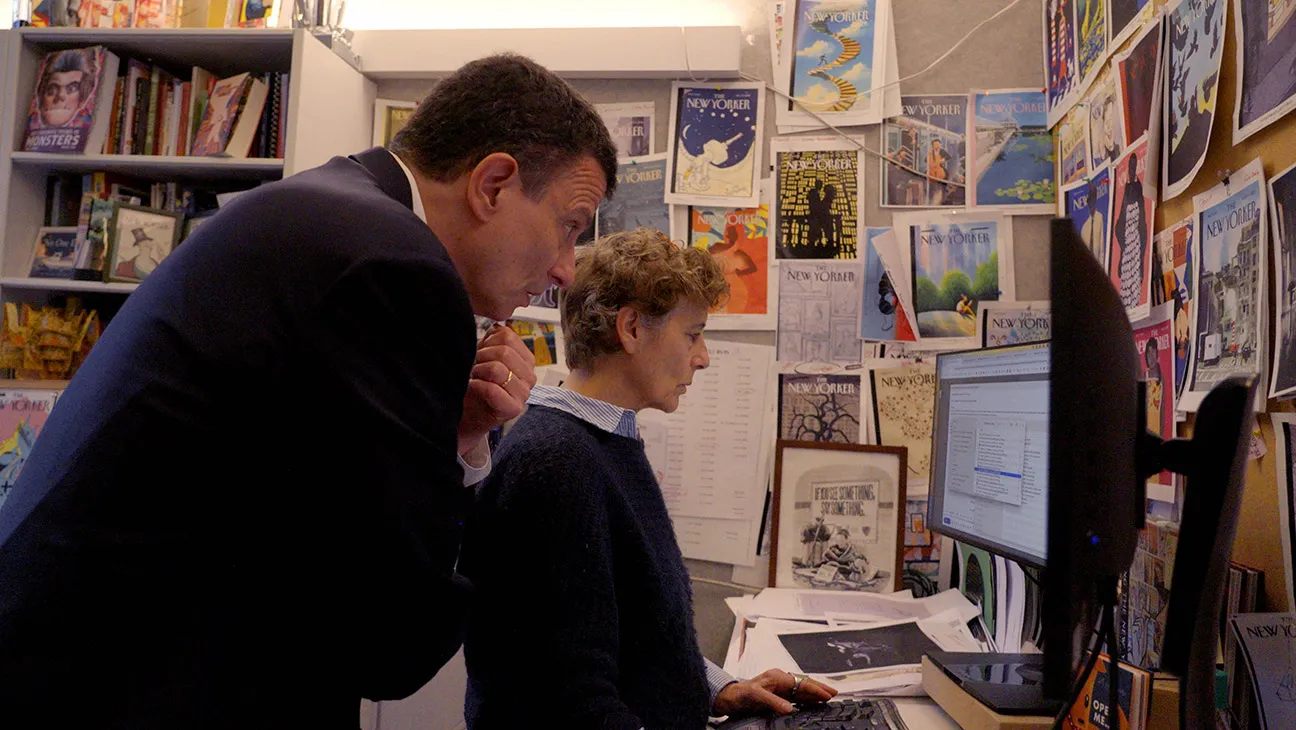
Journalism is in an age of “fake news,” battling authenticity and fighting for the audience’s attention. In this documentary, we’re invited behind the scenes: from the editorial meetings to the cartoon-selection room, from the obsessive fact-checkers to staffers debating comma usage. The New Yorker at 100 offers a satisfying peek into a world people think they know about, but this film will open their eyes. We witness the magazine’s downtown, fancy New York offices and the homes or haunts of writers, showing that, even in our digital era, this print institution still insists on craft and precision.
Visually and structurally, the film is tidy and pleasant. Like most documentaries, it uses archival material alongside present-day footage. There are bright colors, along with examples of their work and what has inspired it. Narrated by Julianne Moore (whose voice is gentle yet authoritative), we hear from contributors like Hilton Als, Roz Chast, and Ronan Farrow (plus celebrity fans such as Sarah Jessica Parker and JonHamm) to anchor the magazine’s cultural impact. There are clips from TV series and films such as Family Guy and Seinfeld, which mention The New Yorker.
However, the documentary often stays at a surface level. For an institution with such a rich and sometimes controversial past (including journalistic missteps, cultural blind-spots, and shifting editorial ambitions), the film plays it safe. The documentary needed to probe into the tensions we’re seeing in the industry, from AI to environmental factors around printing. It briefly touches on the controversy the printed covers have had, especially when they’ve printed pictures of American Presidents such as George W. Bush and Donald Trump. But I still never felt like we got to the nitty-gritty of what goes on behind the scenes of The New Yorker.
Its structure, too, sometimes leans toward a checklist: show the editing room, show the covers, show the writers, show the cartoons, celebrate the centennial. The beat-to-beat is pleasing but mundane. If you’re already familiar with The New Yorker’s history, the film offers reminders ratherthan revelations. For newcomers, it’s a fine primer, but it may feel slightly cautious to veterans of media-industry documentaries.
The interviews are enjoyable, especially when walking around NYC; they felt lively, and audiences got to see some of the famous sights. Watching artists, writers and critics work, draw, and discuss their inspirations and experiences over the years, both good and bad, is eye-opening. The section on 9/11 is very poignant and moving.
Another minor reservation: the pacing, though generally competent, occasionally lags when the film relies too heavily on talking-head interviews without sufficient counteraction. The tone remains reverent, which is understandable given the centennial context, but somewhat limits the documentary’s capacity to critique its subject as much as celebrate it.
That said, the film succeeds in making the magazine’s internal rituals accessible and, yes, even amusing (there’s a section on the fact-checkers and the word ‘vaunted’ that made me laugh). You come away with genuine admiration for the people who persist in making a magazine despite the odds. The documentary is infused with affection for the magazine’s form, for the craft of journalism, and for New York, which gives it an uplifting, feel-good quality without descending into purely nostalgic fluff.
The documentary gets very interesting, but sadly, only 15 minutes from the end. This is where we get a glimpse into how dangerous journalism can be, and how much more dangerous it’s getting. Here, the pace picks up, and we see the stresses of getting publication-ready on time and, like all good documentaries, we end with words of wisdom and a serious, hopeful attitude for the future. The New Yorker at 100 is an informative, engaging, and well-crafted tribute to a singular publication. It does not bite deeply into the messier corners of media transformation, and it skirts bigger questions about the magazine’s future. But if your interest lies in learning how the magazine has come to mean what it does, and how one small team of “obsessives” still insists on excellence, you’ll find it satisfying. For those seeking a darker, more interrogative media documentary, this might not be the boldest option. It’s worth watching, and worth reflecting on what it means for journalism’s next century.